My dear fashionistas, welcome to a new fashion story on the Mr.M blog. Some packages are opened slowly, with full attention. The long-awaited shipment finally arrived at my address. By then, I already knew enough about the 1900 brand to untie the canvas bag more carefully than usual. Inside was the 1900 Tempo Grande crossbody bag in dark brown grained leather. One touch was enough. I knew immediately that I was holding something special.
The leather has an exceptional texture and feels soft to the touch. The seams are flawless. The zipper slides without the slightest resistance. More bags pass through my hands each year than I care to admit. Yet this kind of craftsmanship stays with you.
Unboxing the 1900 Crossbody Bag: First Impressions That Last
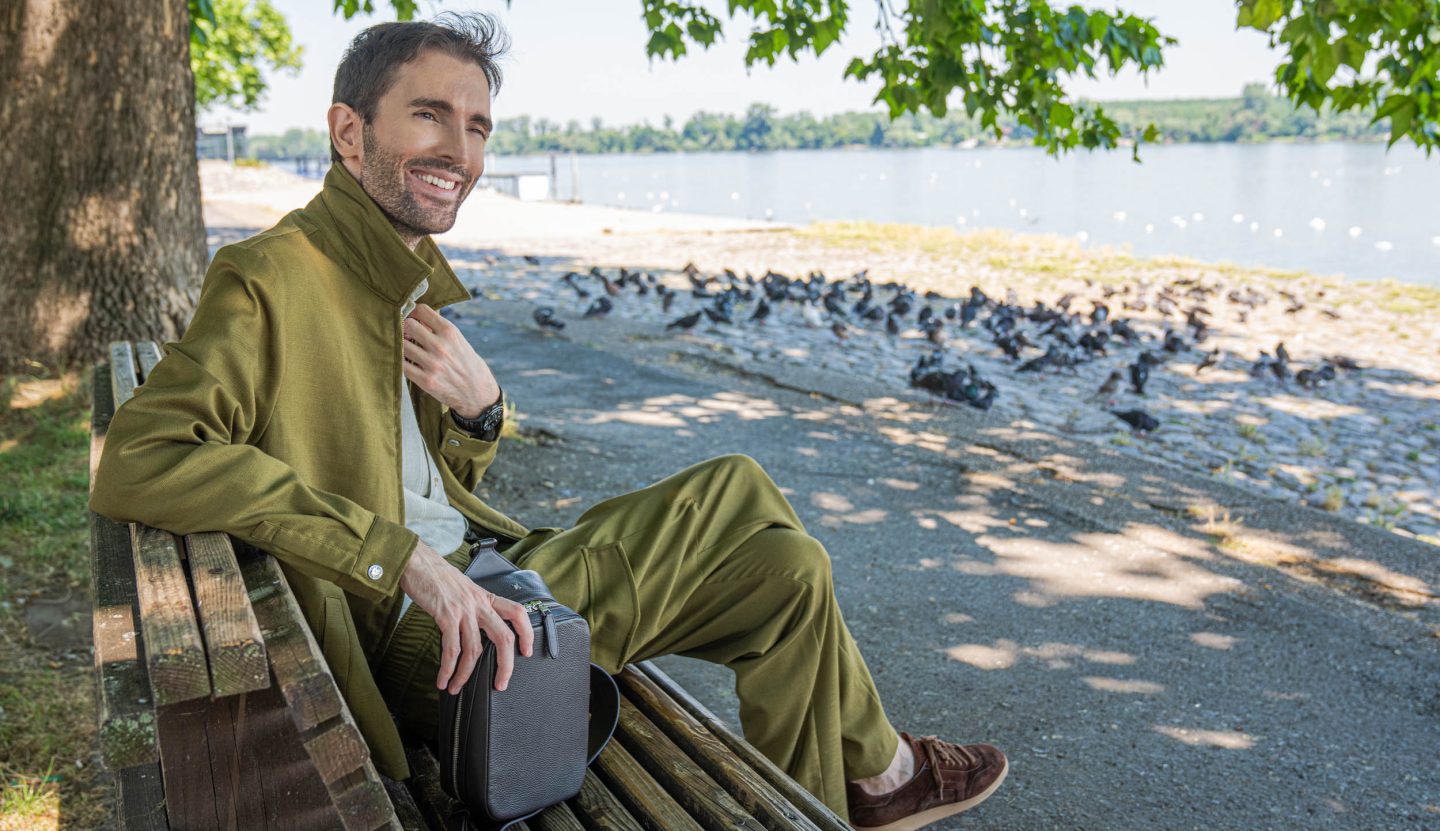
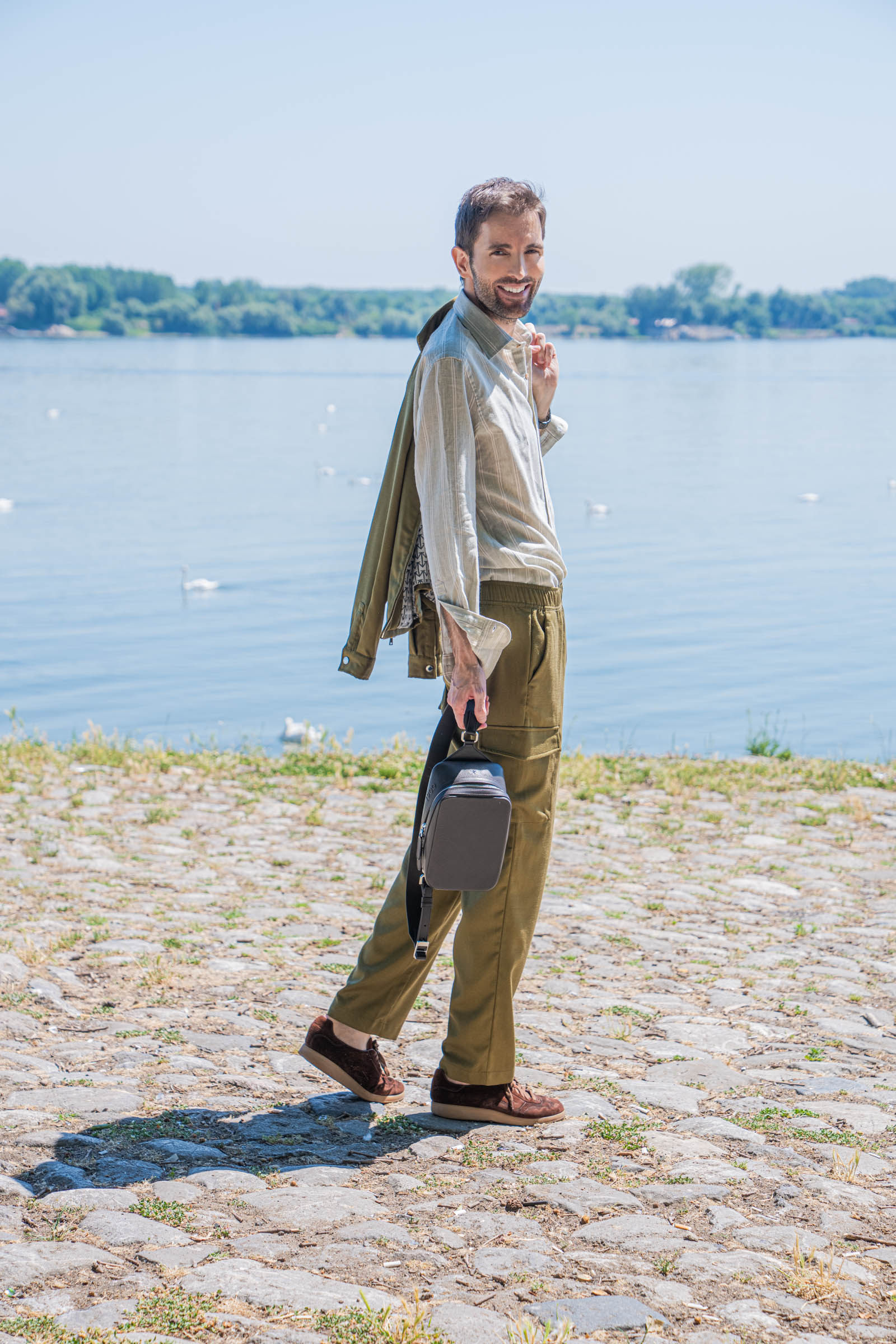
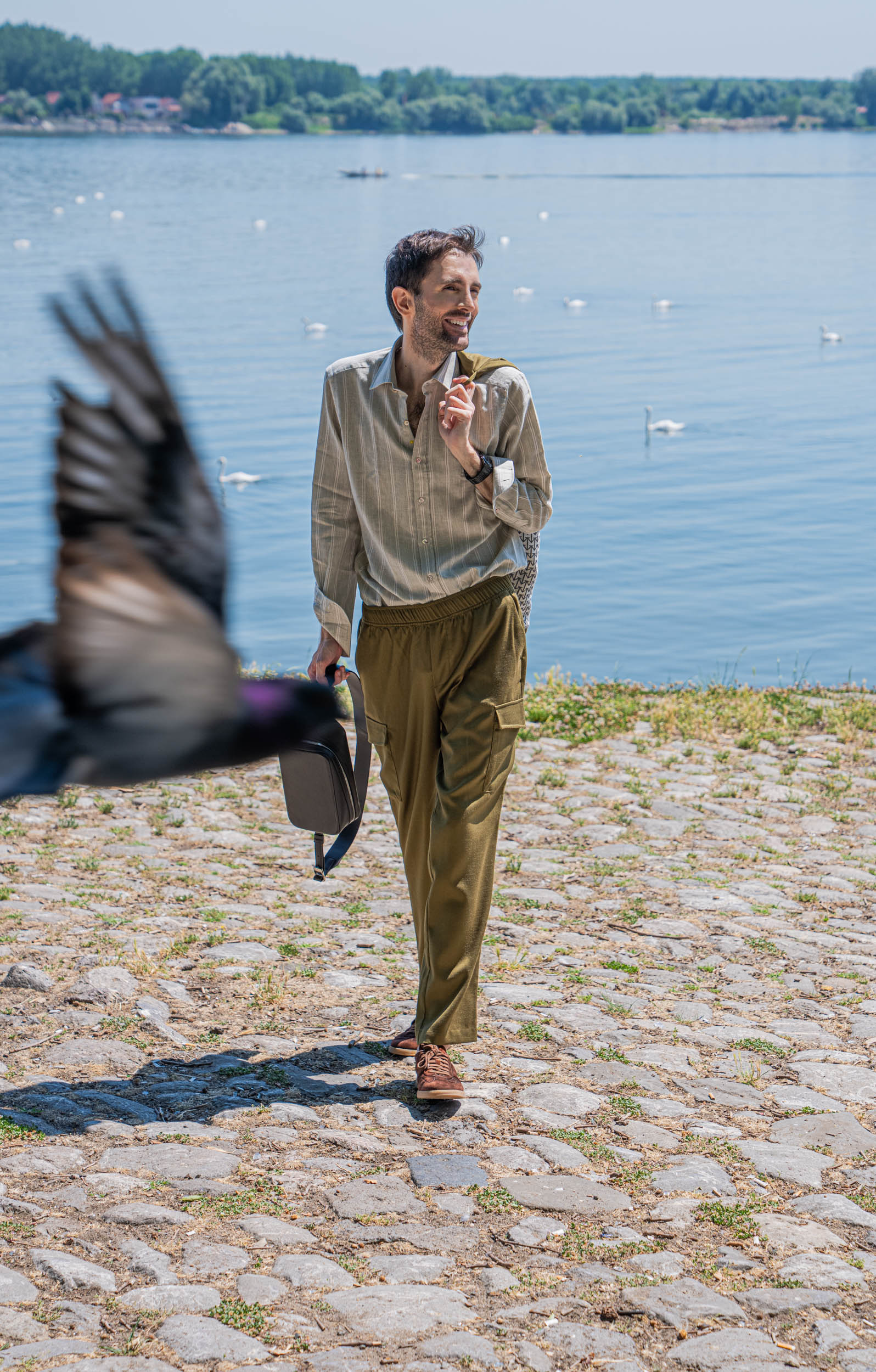
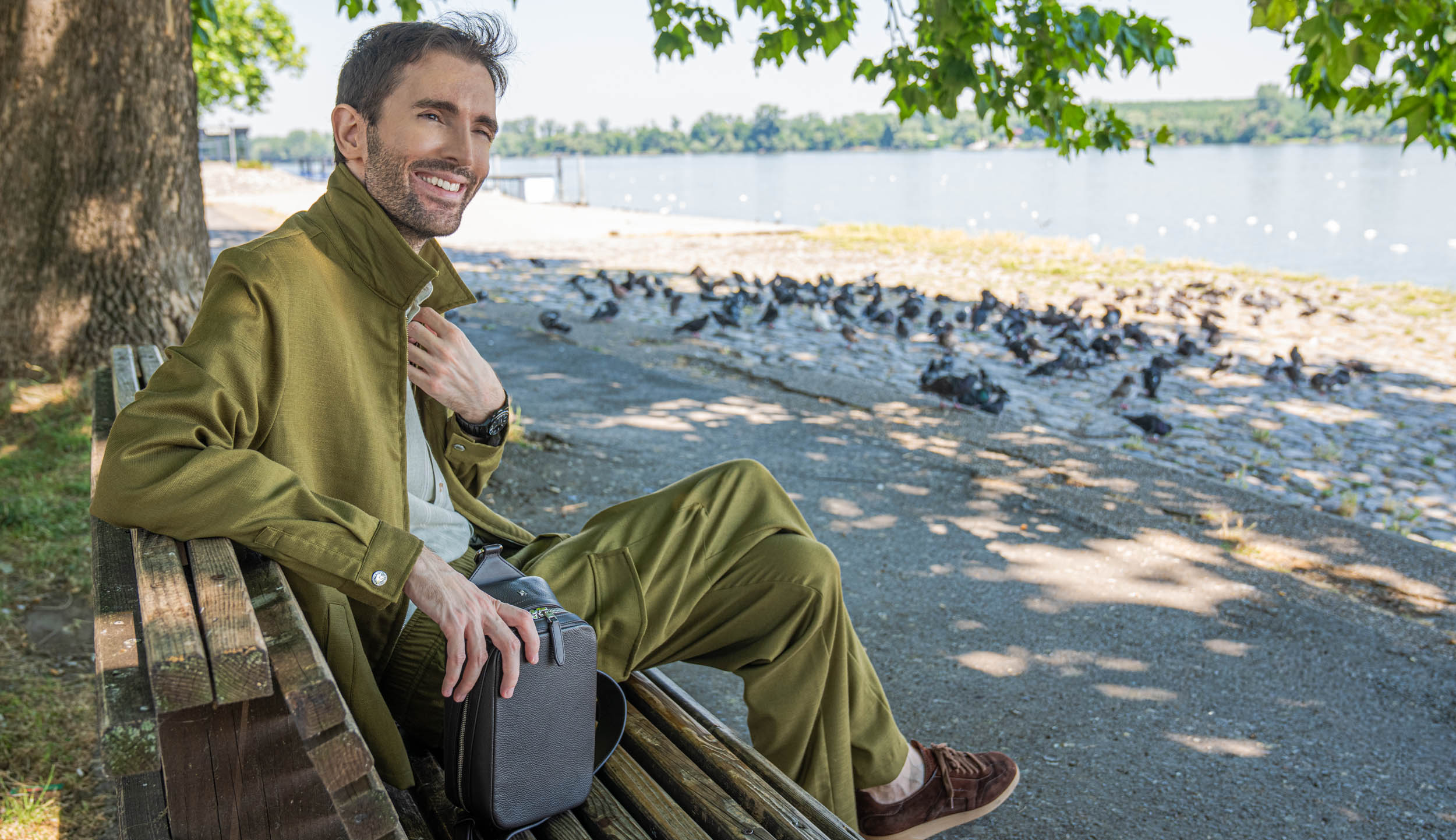
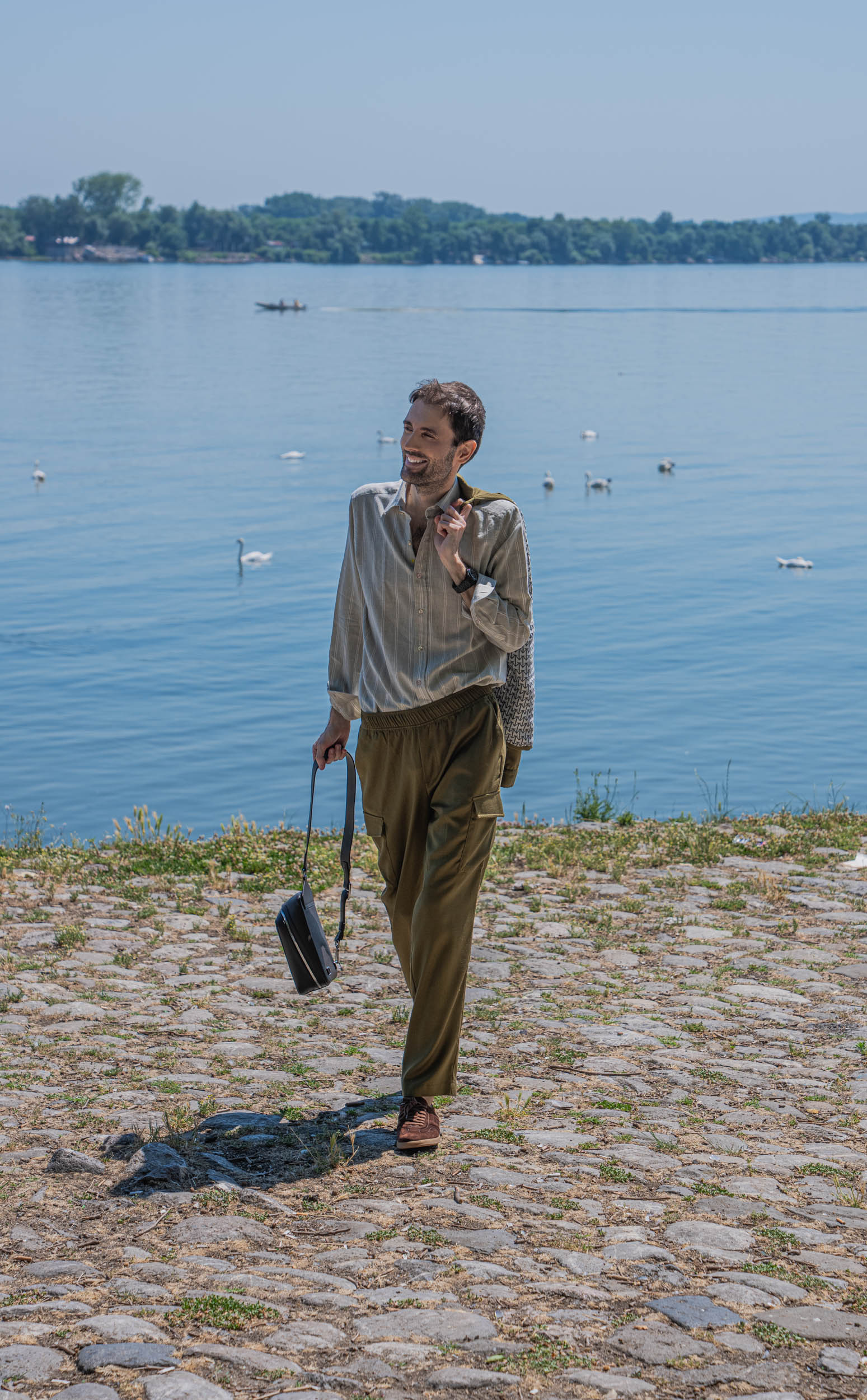
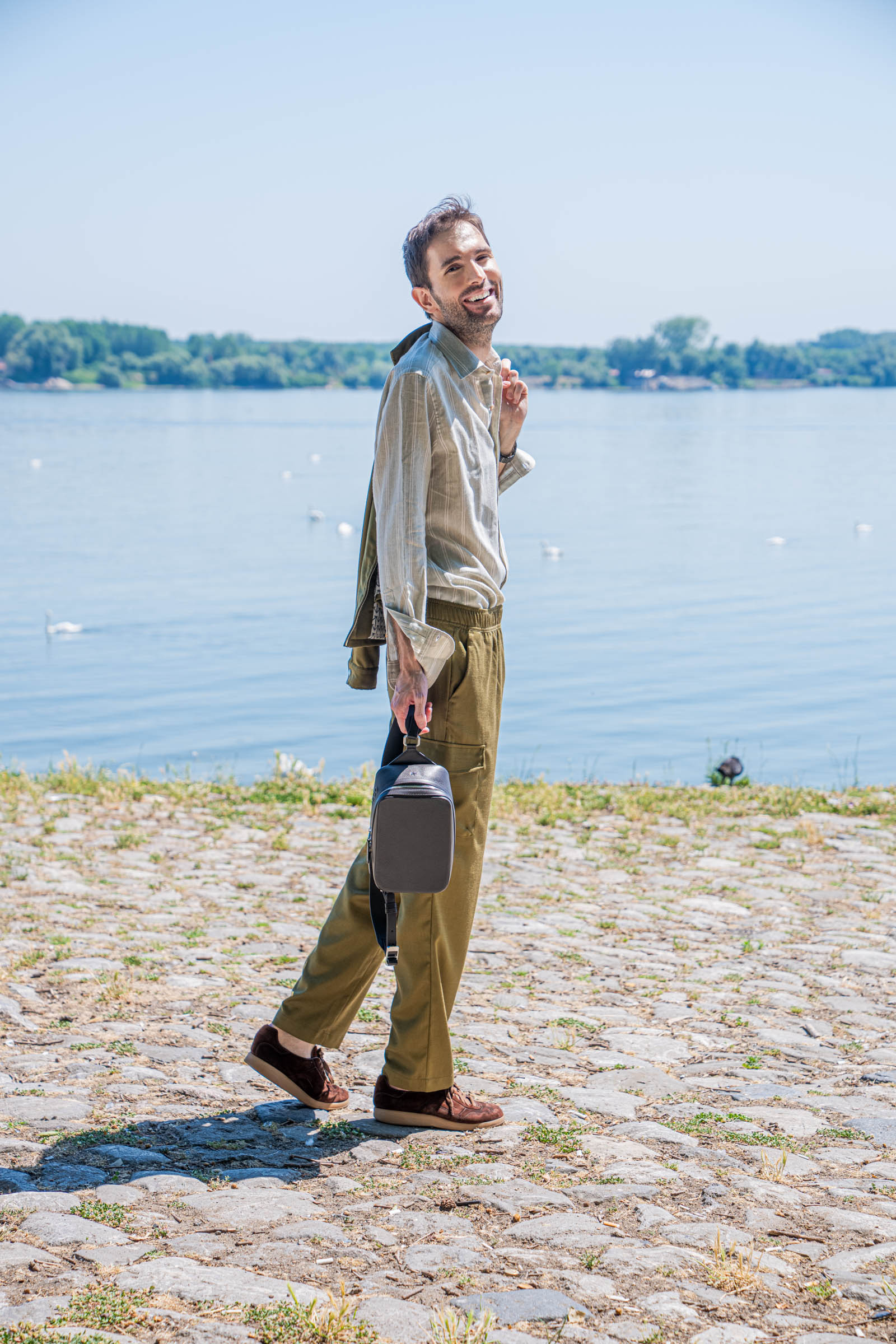
Such an item deserves the right outfit. The next day I called the photographer and took him to the Zemun quay. It is a place I have known for as long as I can remember. July, and the Danube barely moves. Swans glide right up to the shore, as if curious to see what is happening. Meanwhile, the old cobblestones give every frame a patina no photography studio can convey. A classy bag, the right summer outfit and century-old cobblestones made this post special.
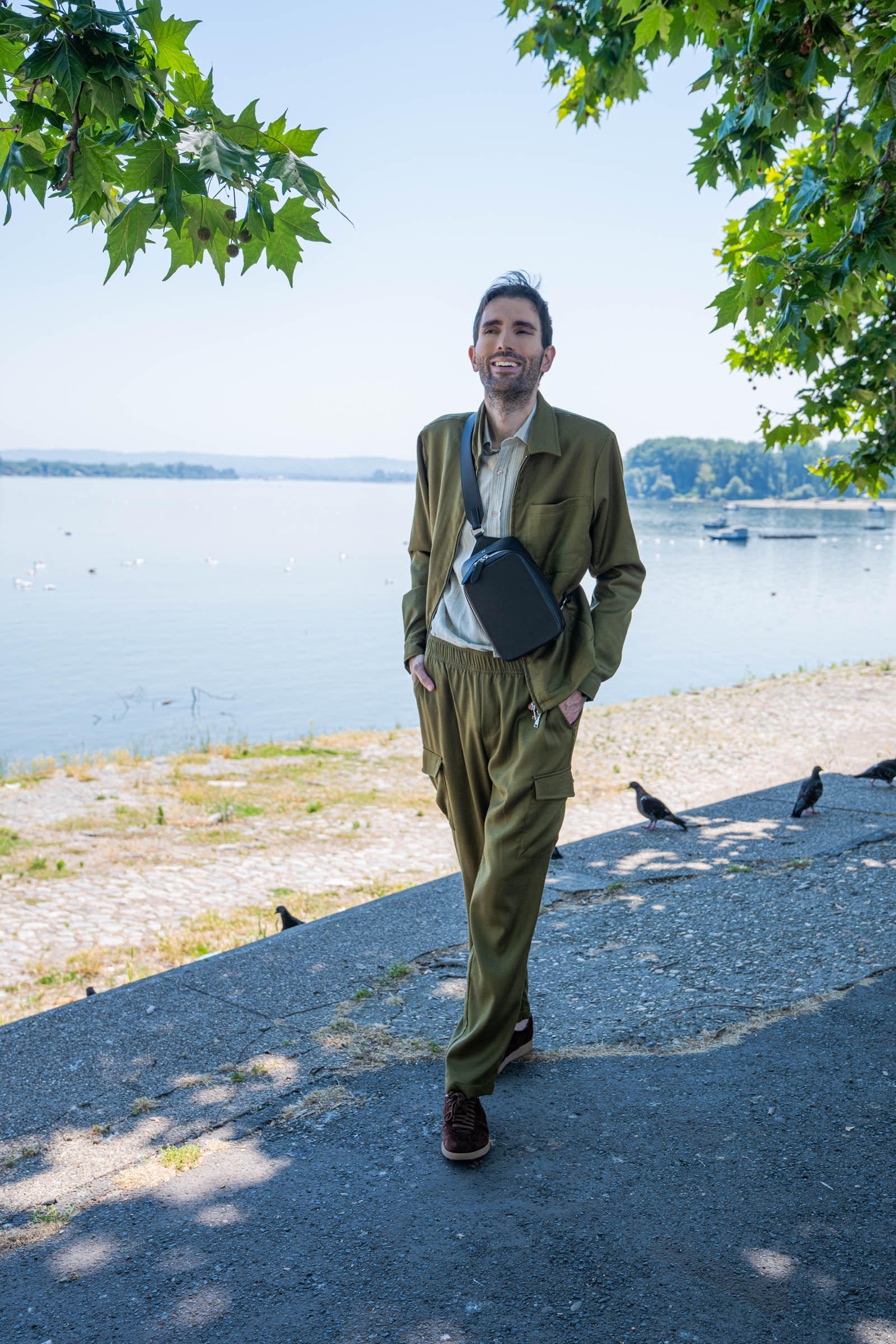
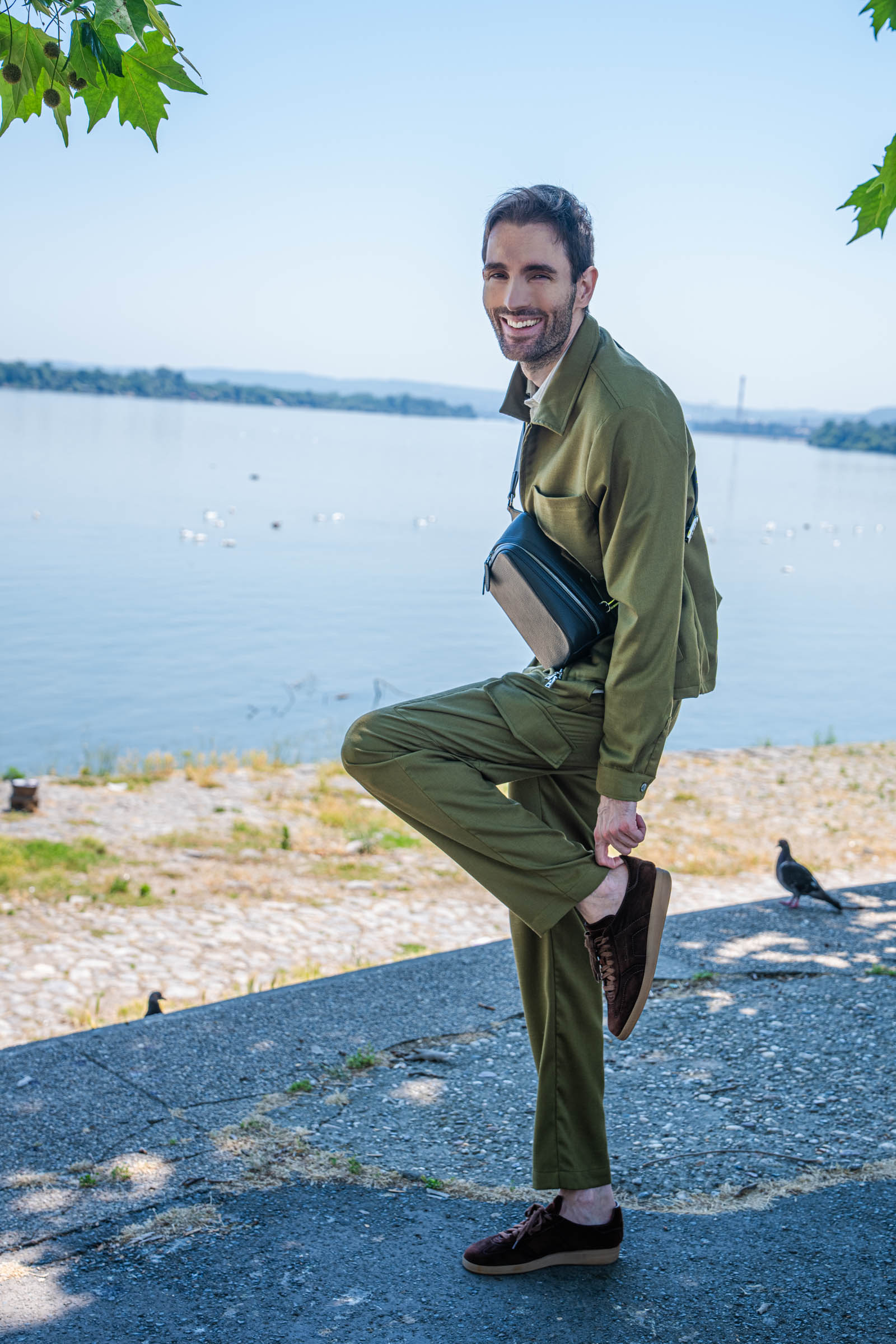
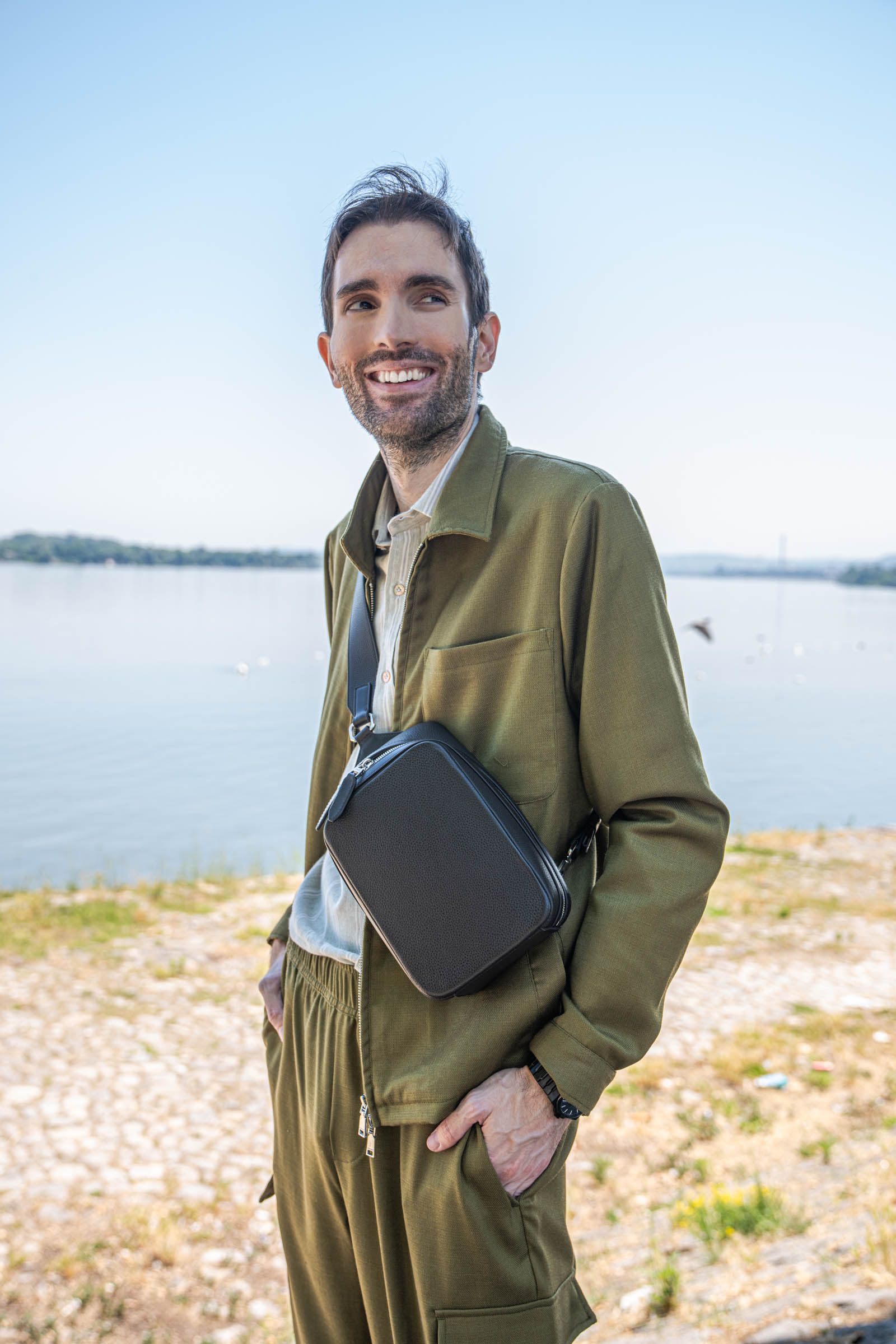
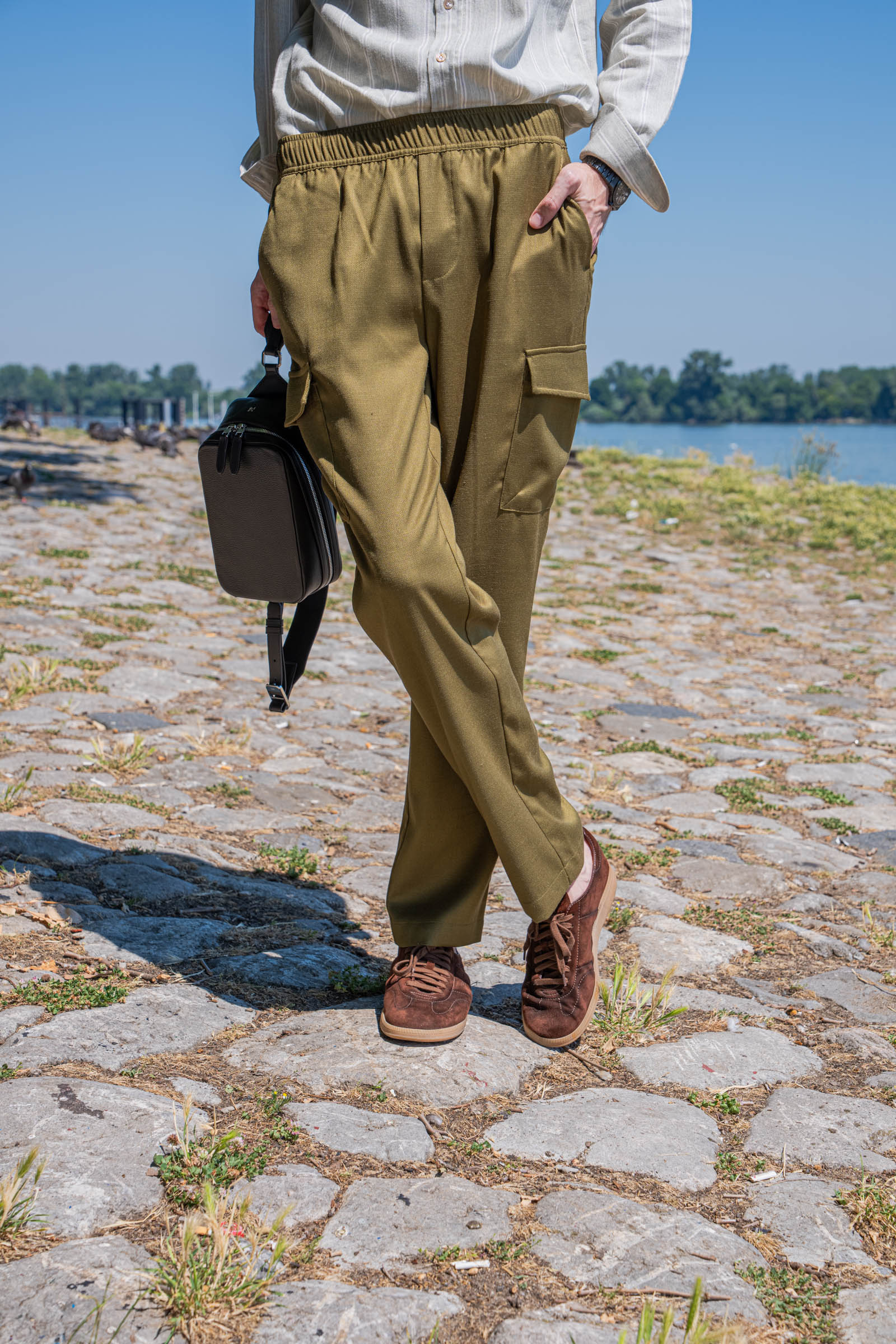
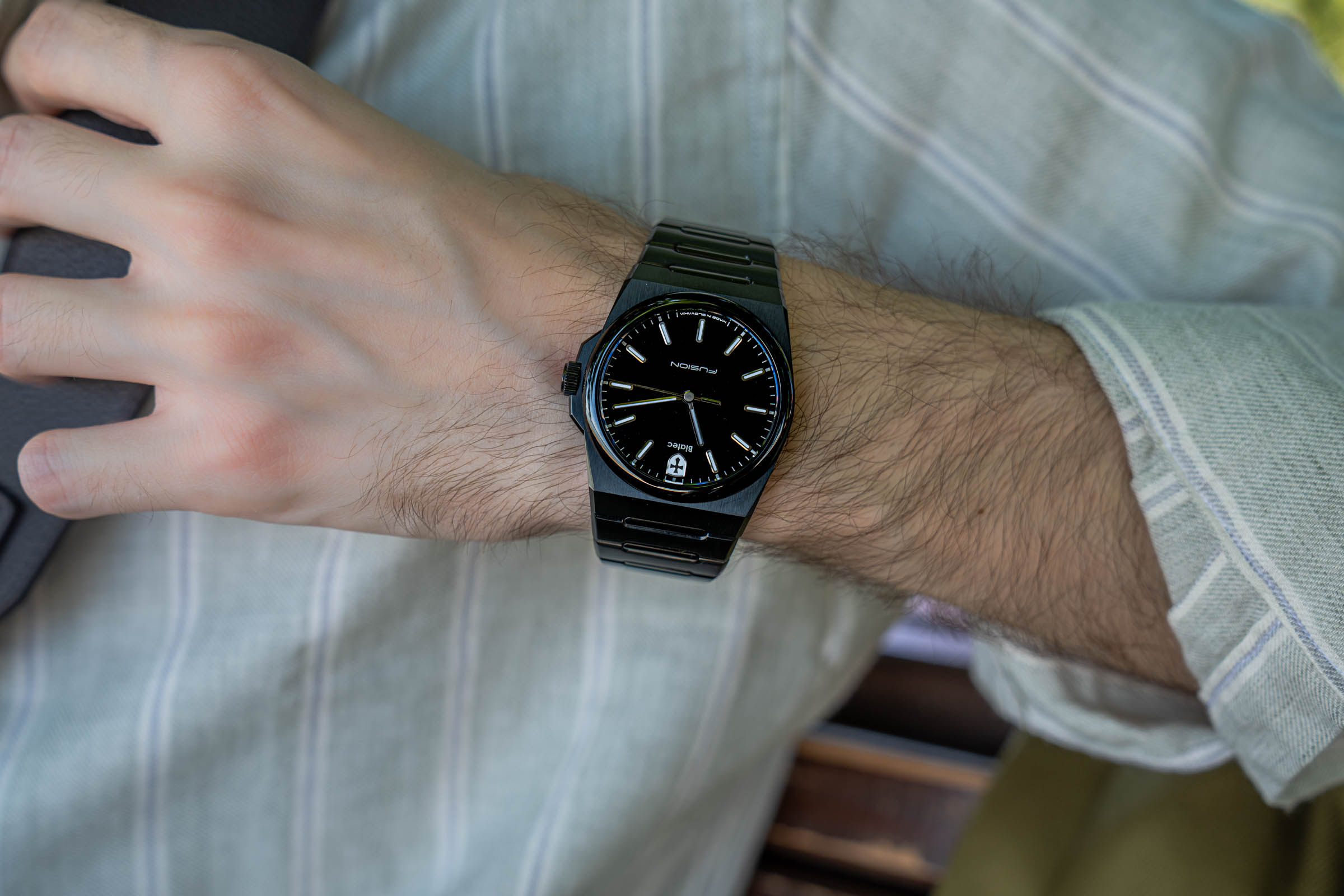
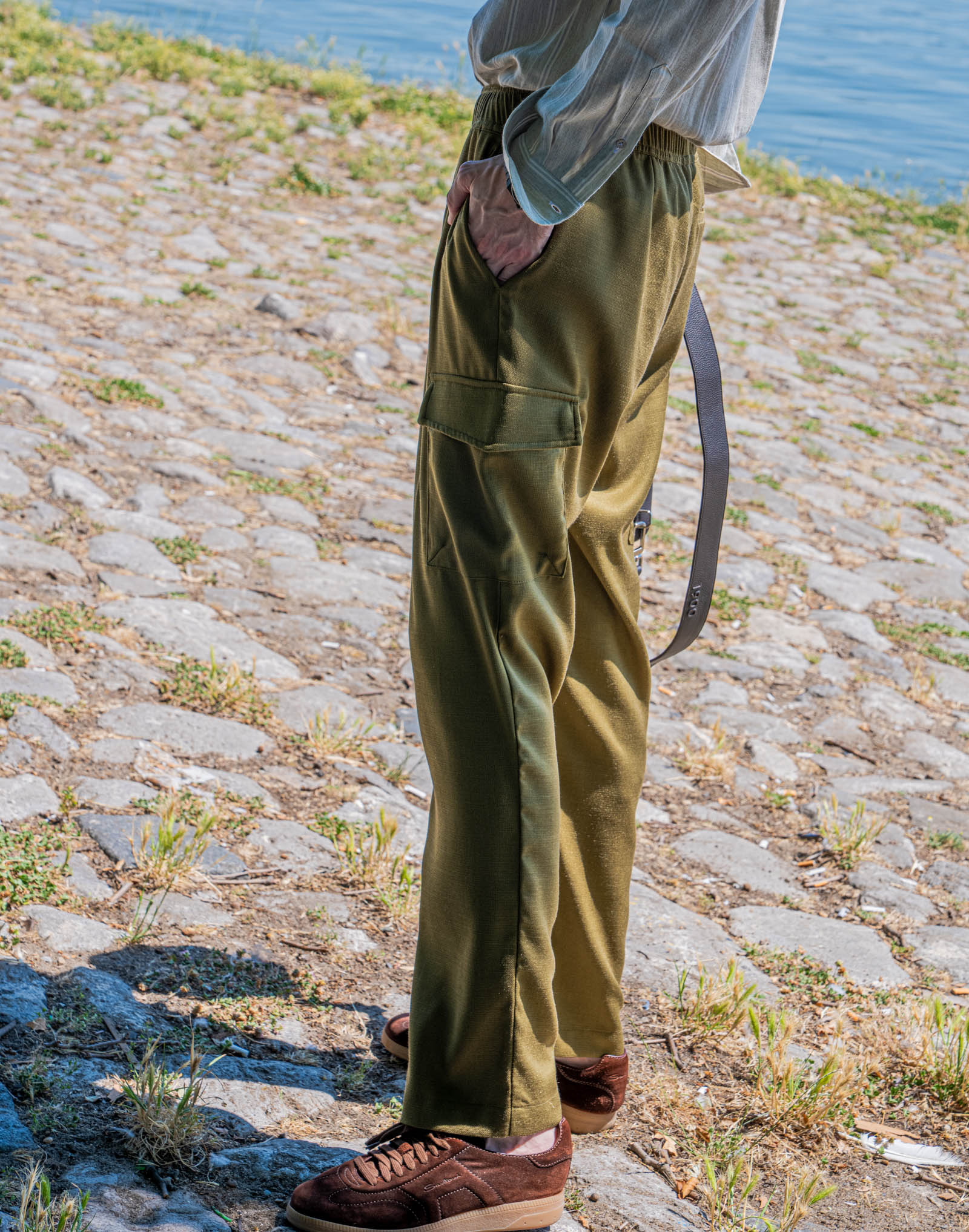
I matched the outfit in relation to the bag itself, in earth tones and summer energy. Loro Piana linen and silk blend set in olive, lightweight jacket and side pocket cargo pants. Below, a perfect Giannetto Portofino shirt with sage stripes. On the wrist is a Biatec Fusion 03, all in black, and on the feet are Santoni Oly trainers in dark brown flipped leather. Each piece has its own story. But today’s star of this fashion became the Tempo Grande crossbody bag, because behind it there is a story that fashion has not told for a long time. Get comfortable, grab your favorite summer refreshments and treats because this is going to be one long fashion adventure!
WHO IS BEHIND THE 1900 BRAND? THE STORY OF ITALIAN DESIGN AND SWISS PRECISION
The 1900 brand originated from Manifattura Ceraolo Moroni, a family manufactory with more than forty years of experience in the world of luxury. However, you could not see their name on any product until now. The reason is simple. For decades, this workshop has been designing and producing luxury packaging for some of the world’s most prestigious watchmaking and jewelry houses.
Think about what that actually means. When you buy a watch or a piece of jewelry from the highest price range, the first touch with it is the box. Its weight, the way it opens, the leather it is covered with, the satin in which the product is laid. That first impression was built by people from this factory for years, without their name ever being highlighted. They worked for others, quietly and devotedly, while the world’s biggest houses attracted attention.
Over time, the manufactory developed a special department for leather goods, where it made completely customized accessories for its customers. This is where, as they say, the desire to create something of their own was born. Something that will translate their manufacturing culture into a modern expression of luxury, this time under their own name. This is how the 1900 brand was born, and its first collection is called Tempo Grande.
I find this story particularly inspiring. I like brands that first learned the trade, and only then went to market. We see the reverse order all too often today.

WHY IS THE BRAND CALLED 1900? THE STORY BEHIND ITS NAME
I confess that at first I thought that 1900 marked the year of establishment of some old workshop. I was wrong, and in the nicest possible way. The answer lies in Roman numerals.
The initials of Manifattura Ceraolo Moroni are MCM. If you read those three letters as Roman numerals, you get exactly 1900. So the name of the brand is not a year, but a hidden signature of the family manufactory from which everything originated. A little game of numbers and letters that connects heritage with the present moment without explaining anything at first glance.
Details like this speak to me more than any advertising campaign. A brand that turns its name into a puzzle counts on the curious customer. He is counting on a man who will stop, ask questions and feel the satisfaction when he discovers a relationship. It’s the complete opposite approach from the full chest logo we’ve become accustomed to in recent years.
1900: A NAME ROOTED IN HERITAGE AND CRAFTSMANSHIP
The game doesn’t end at the brand name, by the way. The first collection is called Tempo Grande, which literally means big time in Italian. For a house that has lived off the watchmaking world for four decades, there is hardly a more appropriate name. Time is woven into every layer of this story, from the Roman numerals to the name of the bag I carry.
In addition, the name perfectly follows the philosophy of the house. They themselves say that 1900 represents the evolution of their craft, a fusion of artisanal precision, contemporary design and a modern, digital way of thinking. They sell direct, ship worldwide with no shipping costs, and produce in controlled quantities. No mass production, no hoarding. Each piece is created in our own facilities, under full supervision, from the first cut of the leather to the last seam.
1900: WHERE ITALIAN DESIGN MEETS SWISS PRECISION
One sentence on the brand’s official website sums up the whole story: designed in Italy, engineered in Switzerland. The company sits in Kriens, near Lucerne, in the very heart of Switzerland. The aesthetics and the sense of beauty, however, come from the Italian side of the Alps.
That combination is not accidental, nor is it a marketing trick. Swiss precision and Italian softness rarely meet in the same product, and when they do, the result is felt under the fingers. Italians have known for centuries how leather should look and how it should fall. On the other hand, the Swiss know how a mechanism, buckle or zipper should work even after ten years of daily use.
There is one more detail that totally bought me. The house ennobles its products with the fragrant note of the Tonatto Profumi perfume house. In other words, the bag engages not only the eye and touch, but also the sense of smell. When I first opened mine, I was greeted with a warm, discreet scent that mingled with the natural scent of the skin. A trifle, someone will say. However, it is the little things that separate a good product from the one you remember.
The values that the brand stands for sound like a list of my personal benchmarks. Authenticity without mass production. Discipline in design, where proportion, material and comfort guide every decision. Craftsmanship precision under your own roof. And finally, what they call refined rarity, items that last and stay.
1900: WHAT DOES WATCHMAKING HAVE TO DO WITH THIS BAG? THE GÉRALD GENTA INSPIRATION
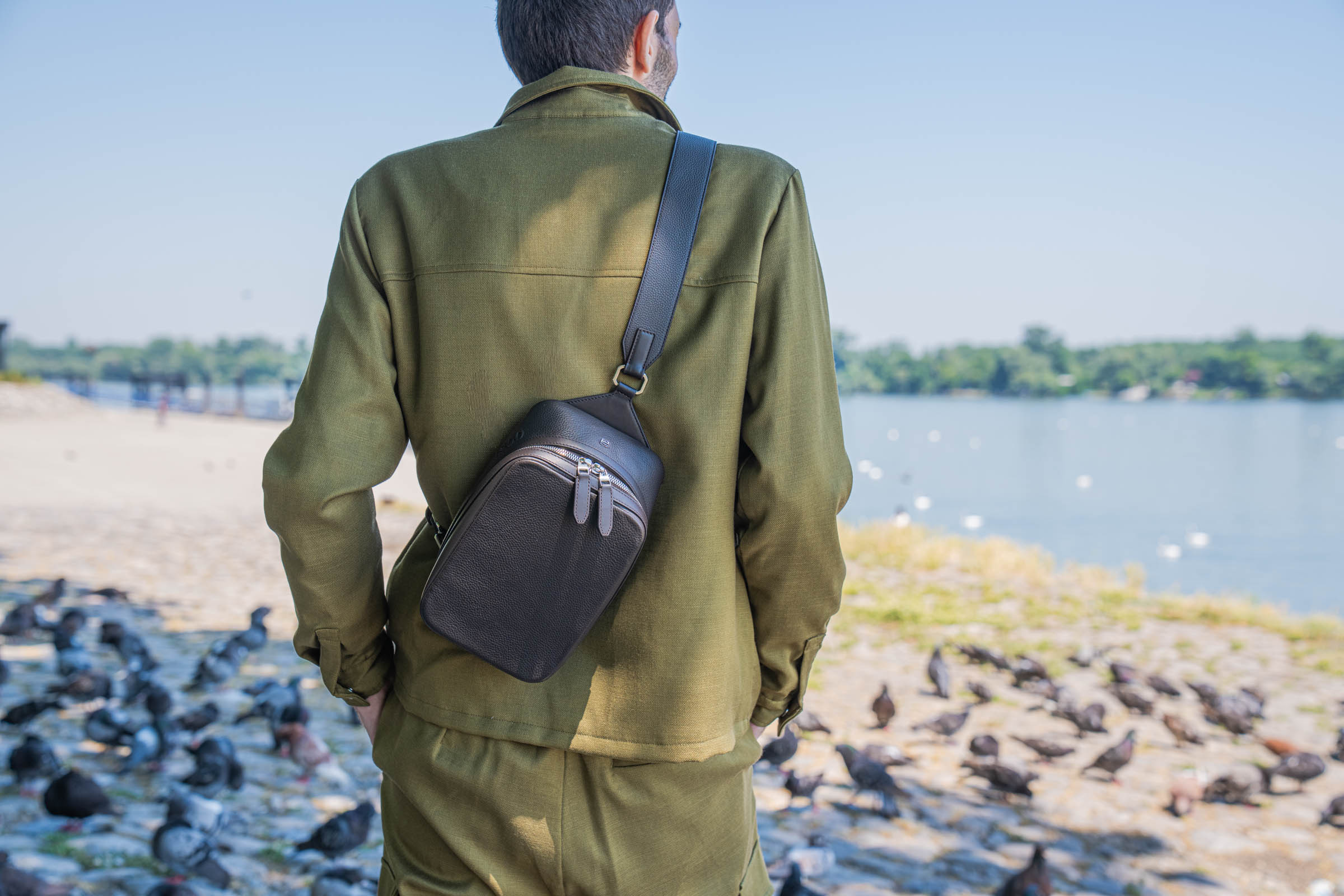
Now comes the part of the story that made me want to write this post. The metal parts on the 1900 products do not come from a catalog. The brand designs and engineers every clasp and buckle exclusively for its own collections. Moreover, their inspiration comes from a world that clearly runs through this house’s veins: high watchmaking. Specifically, from watch cases designed by the legendary Gerald of Genta.
For those who do not deal with watches, a short explanation. Genta is a Swiss designer who changed the history of wristwatches in the 1970s. His most famous works are the models where the bracelet and the case merge into one whole. The design seemed revolutionary at the time. Today, it stands as the pinnacle of elegance. A leather goods brand invoking Genta’s logic of balance therefore sets itself a very high bar. In practice, it means every buckle and every hinge must be both beautiful and perfectly usable.
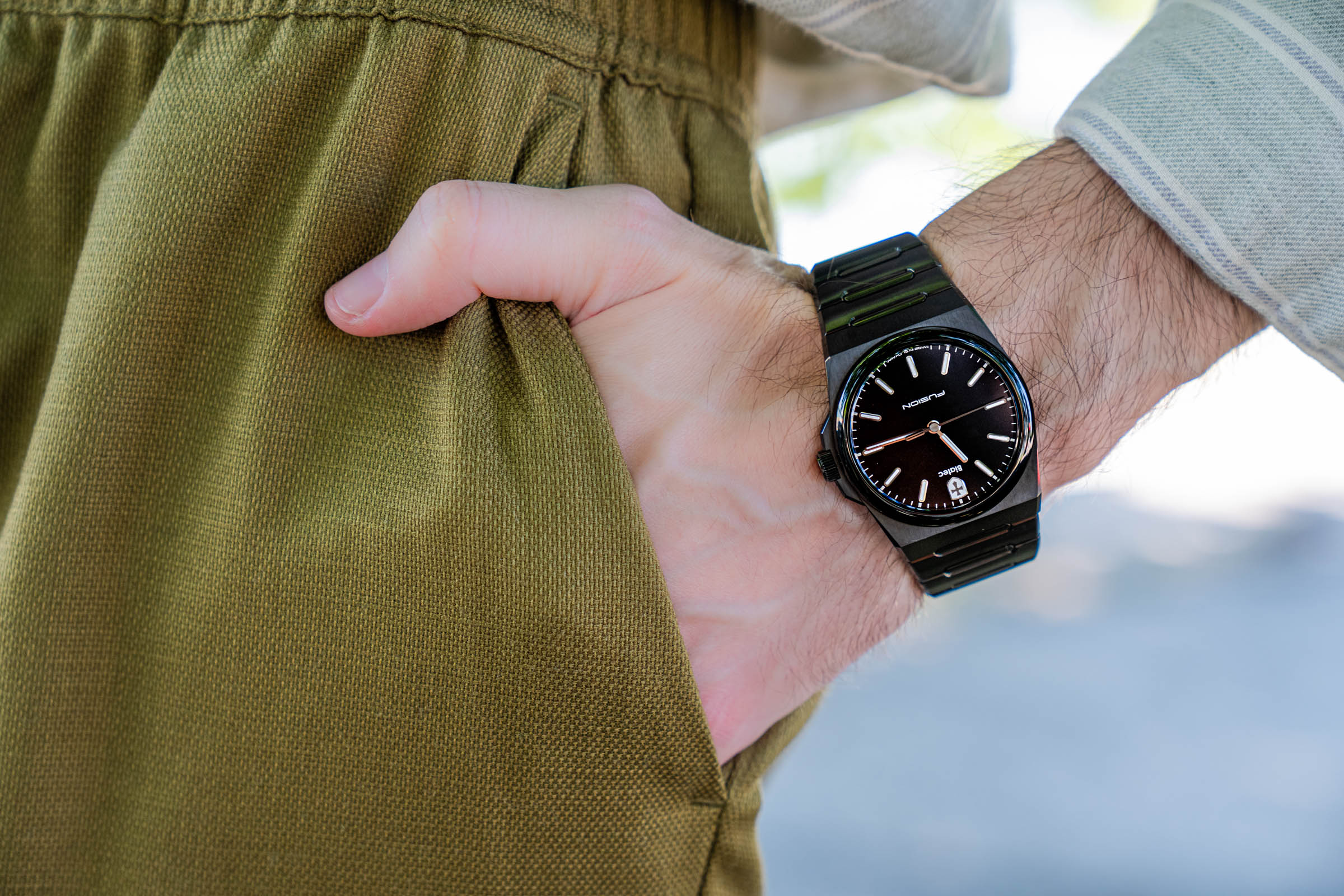
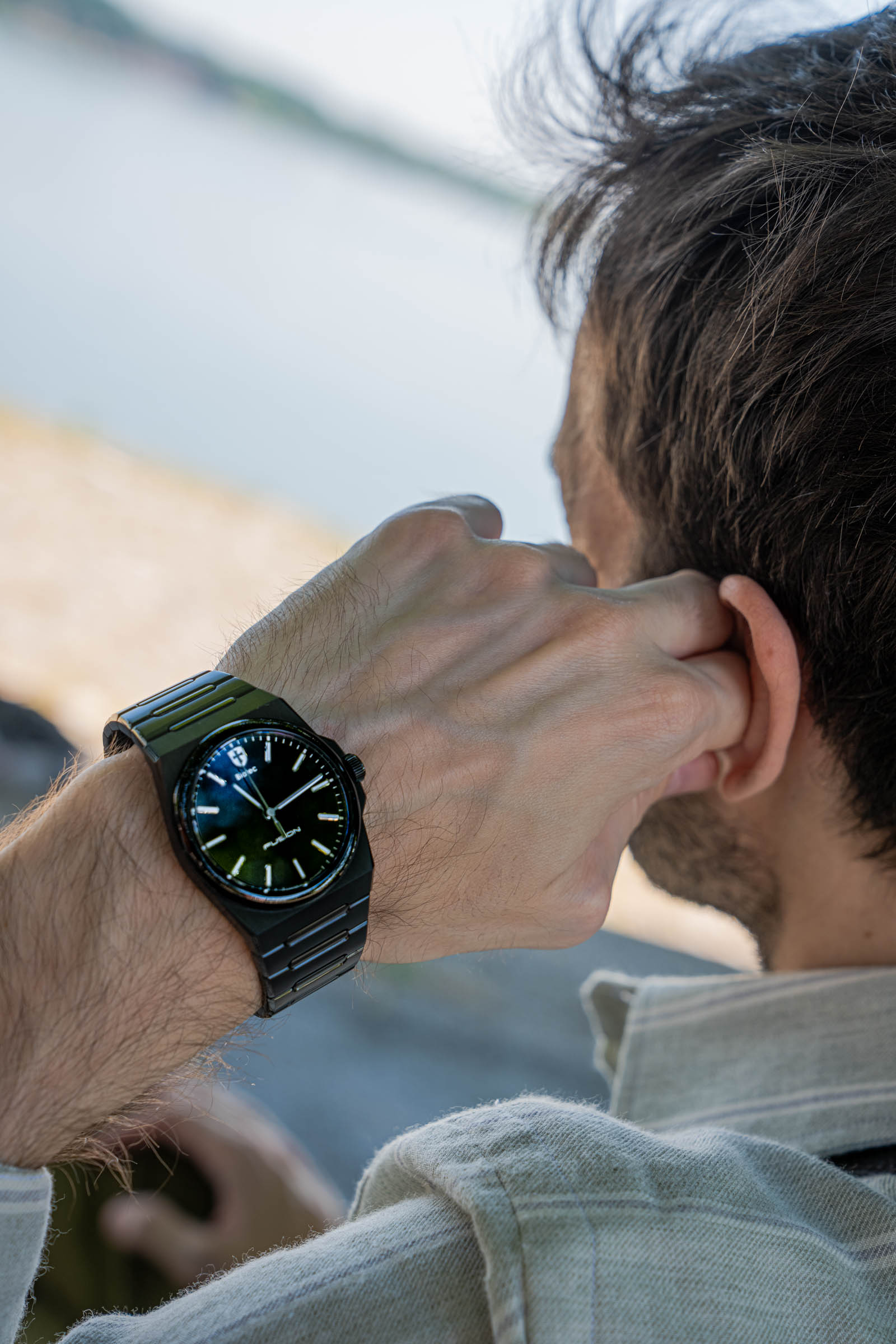
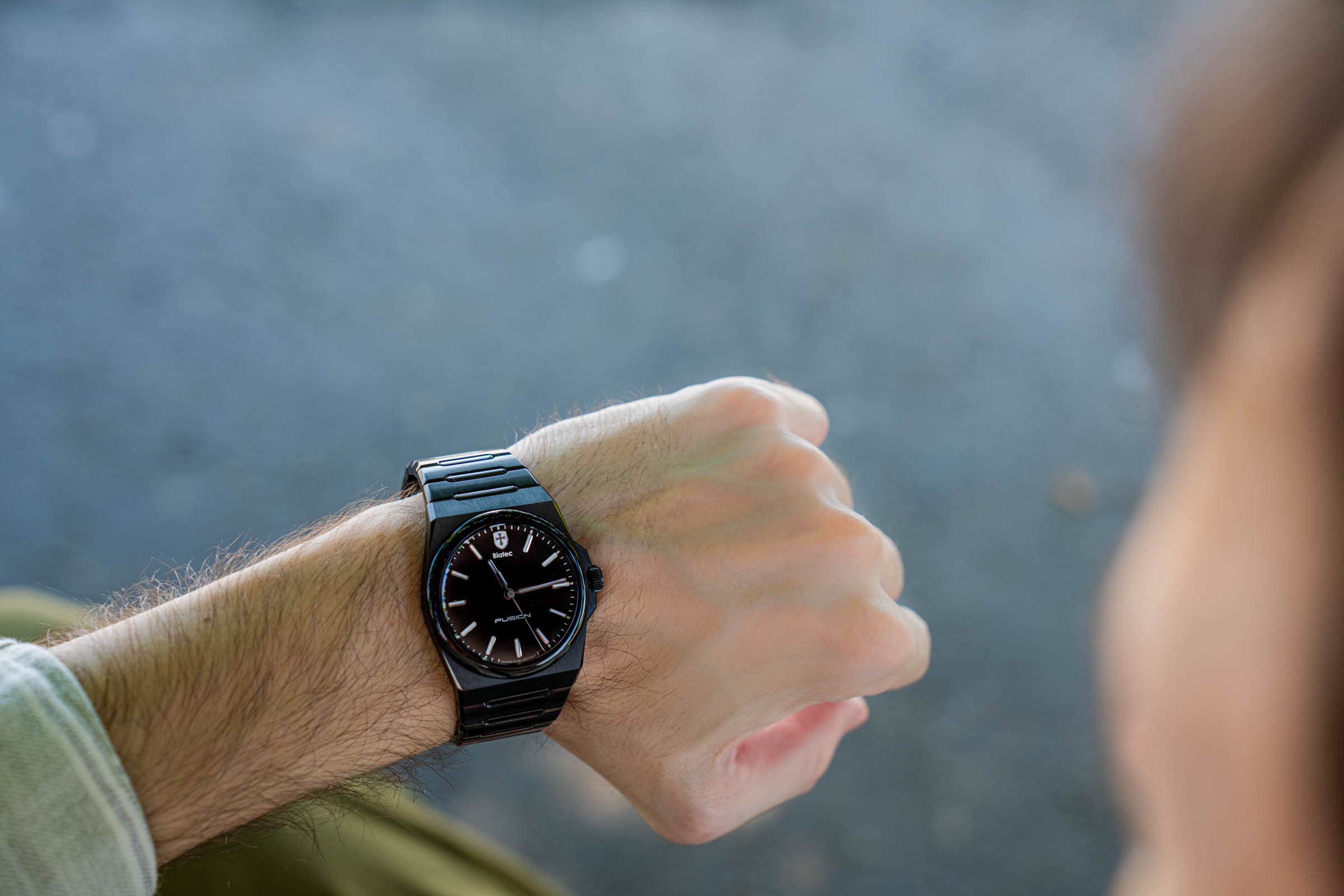
Now, look at my wrist in the photos. The Biatec Fusion 03 comes from a collection dedicated to that very concept: the merging of bracelet and case into a single form. I did not plan it when I put this combination together. Yet today, it turns out, I am wearing two different tributes to the same design idea.
One sits on the wrist, the other hangs over the shoulder. Such coincidences always make me happy. They confirm that good design speaks one language, whether it comes as a watch or as a bag.
1900 TEMPO GRANDE CROSSBODY BAG: LEATHER THAT MAKES AN IMPRESSION AT FIRST TOUCH
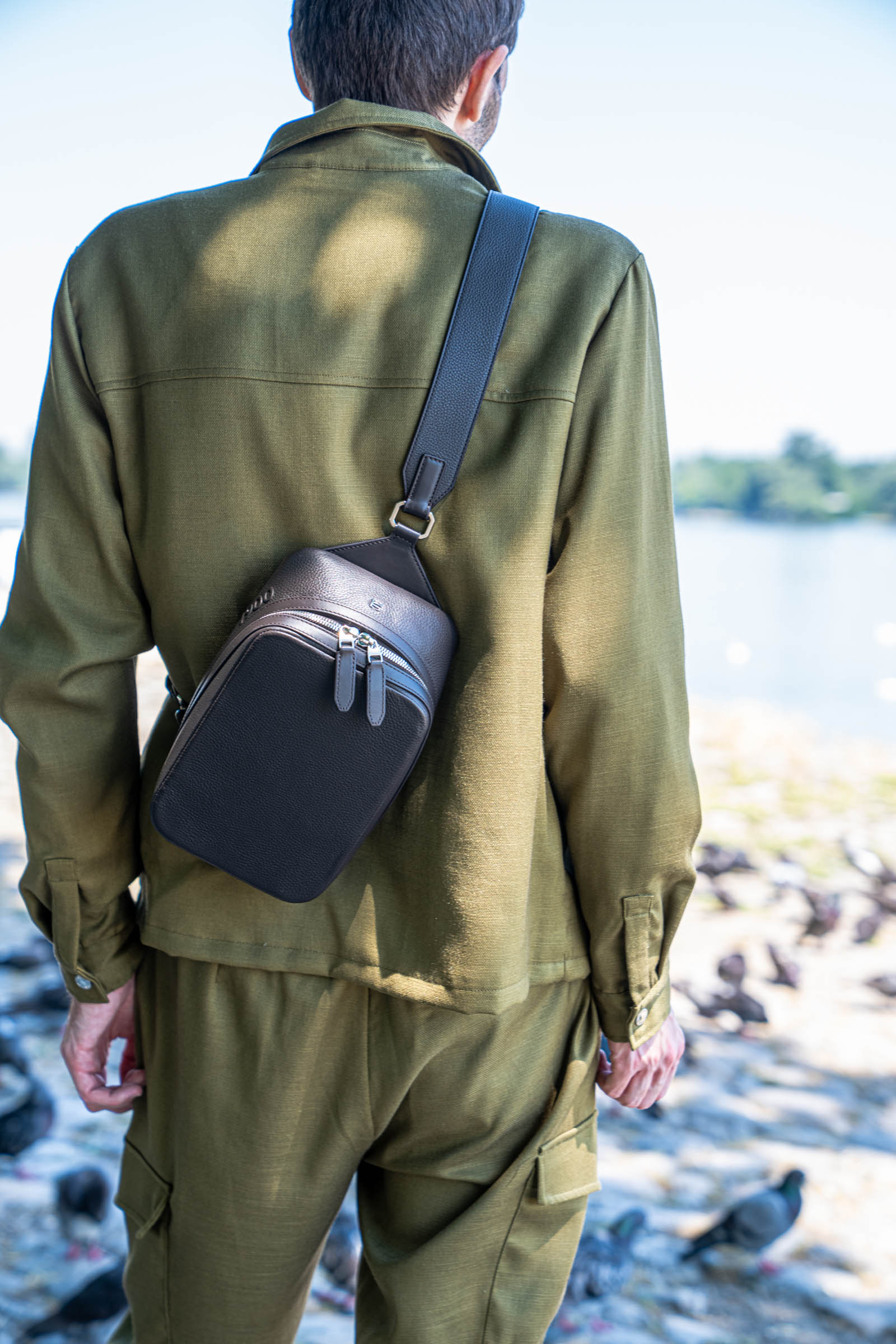
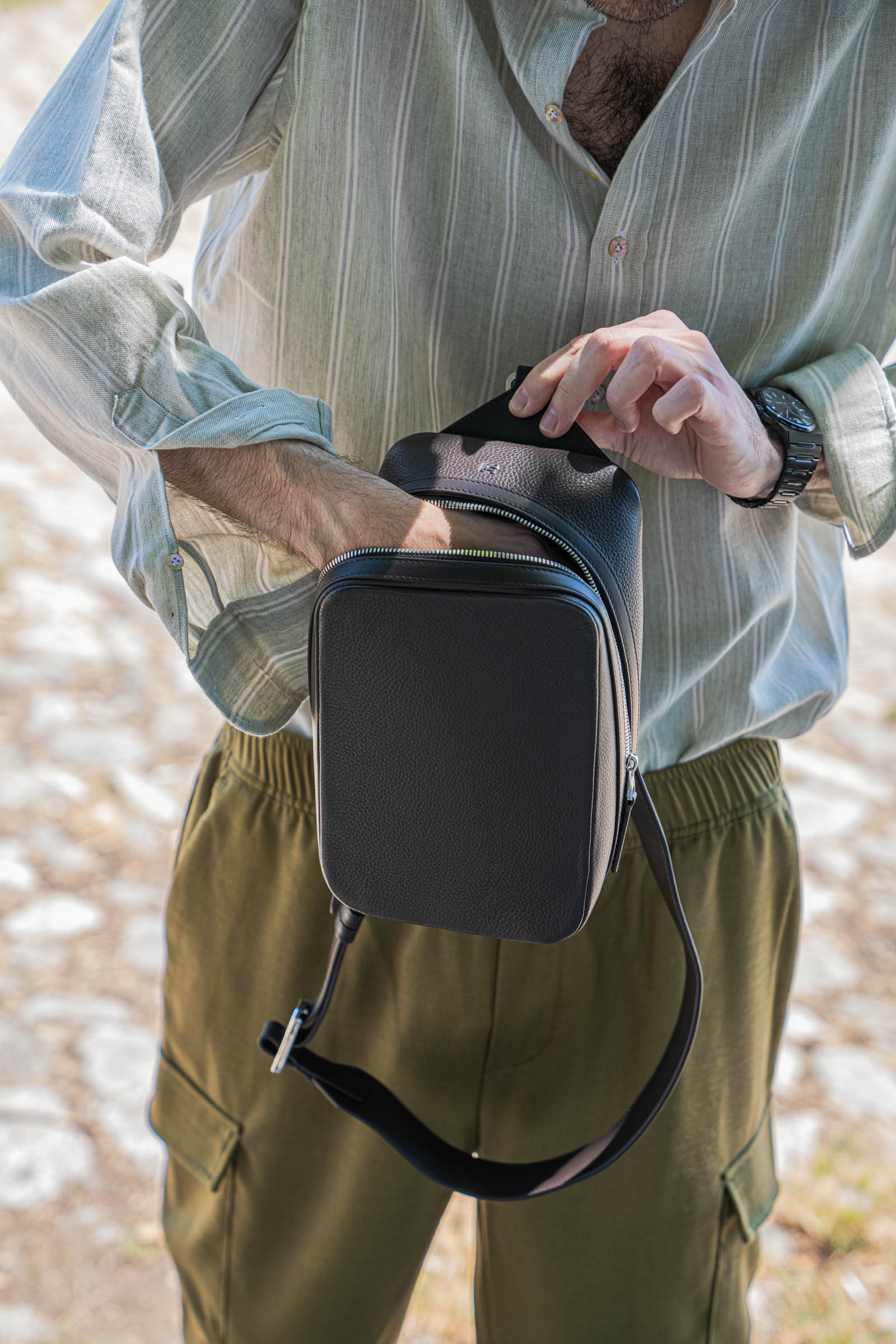
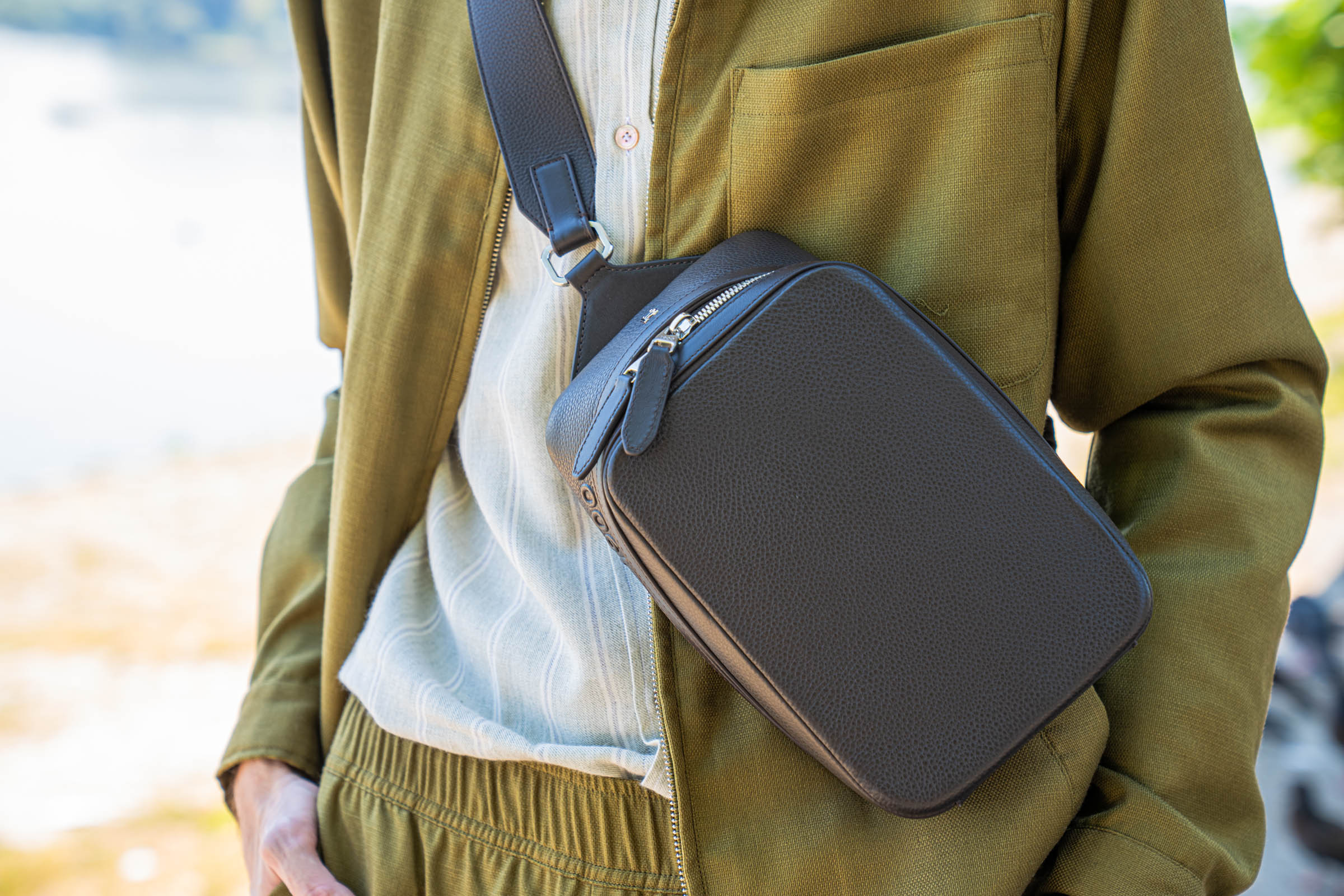
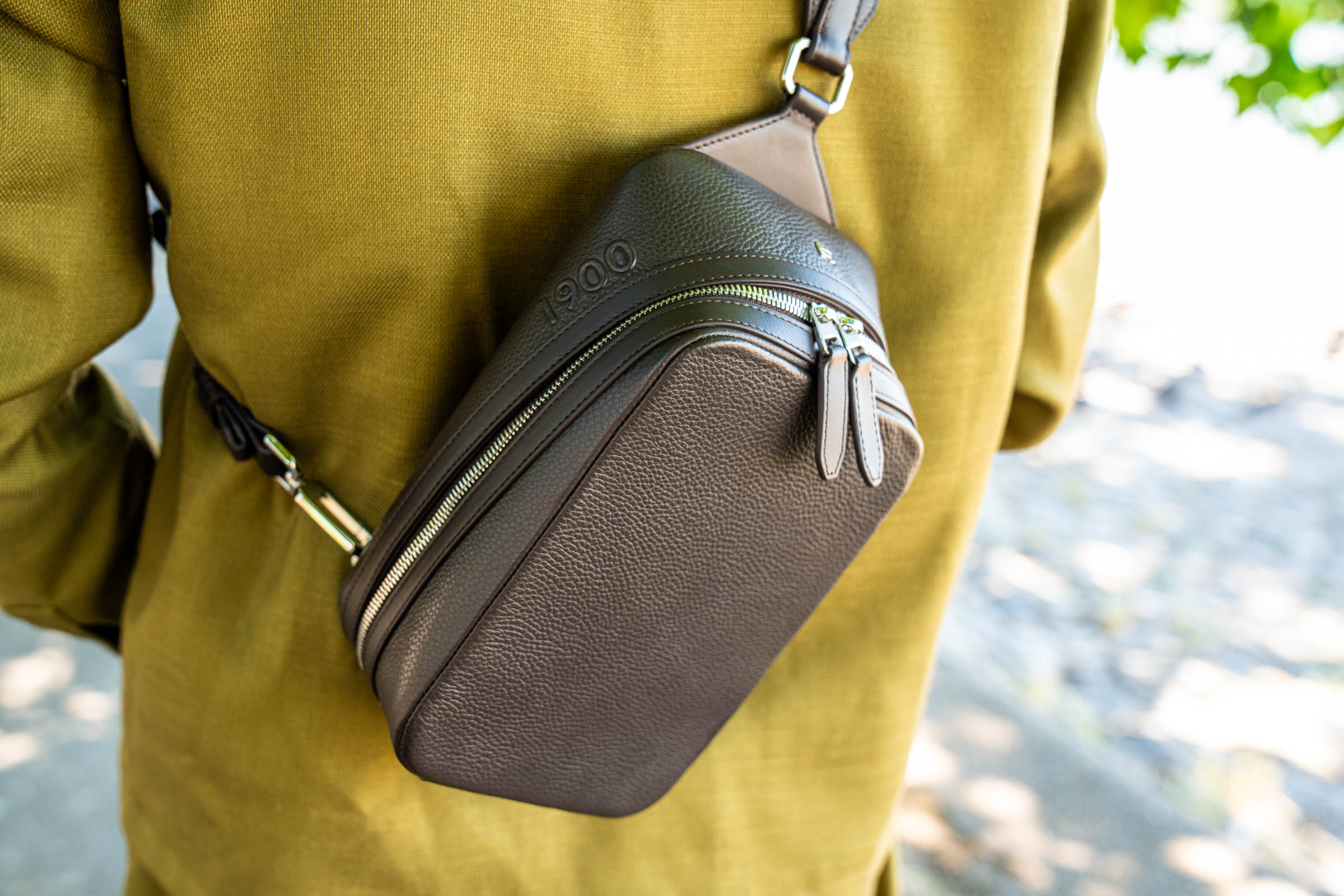
Let’s go back to the main character. The model I’m wearing is called the Tempo Grande Crossbody, in dark brown, and there’s also a black one. The dimensions are 14 by 7 by 23.5 centimeters, which is exactly the size that looks classy, and can carry everything a man needs during the day.
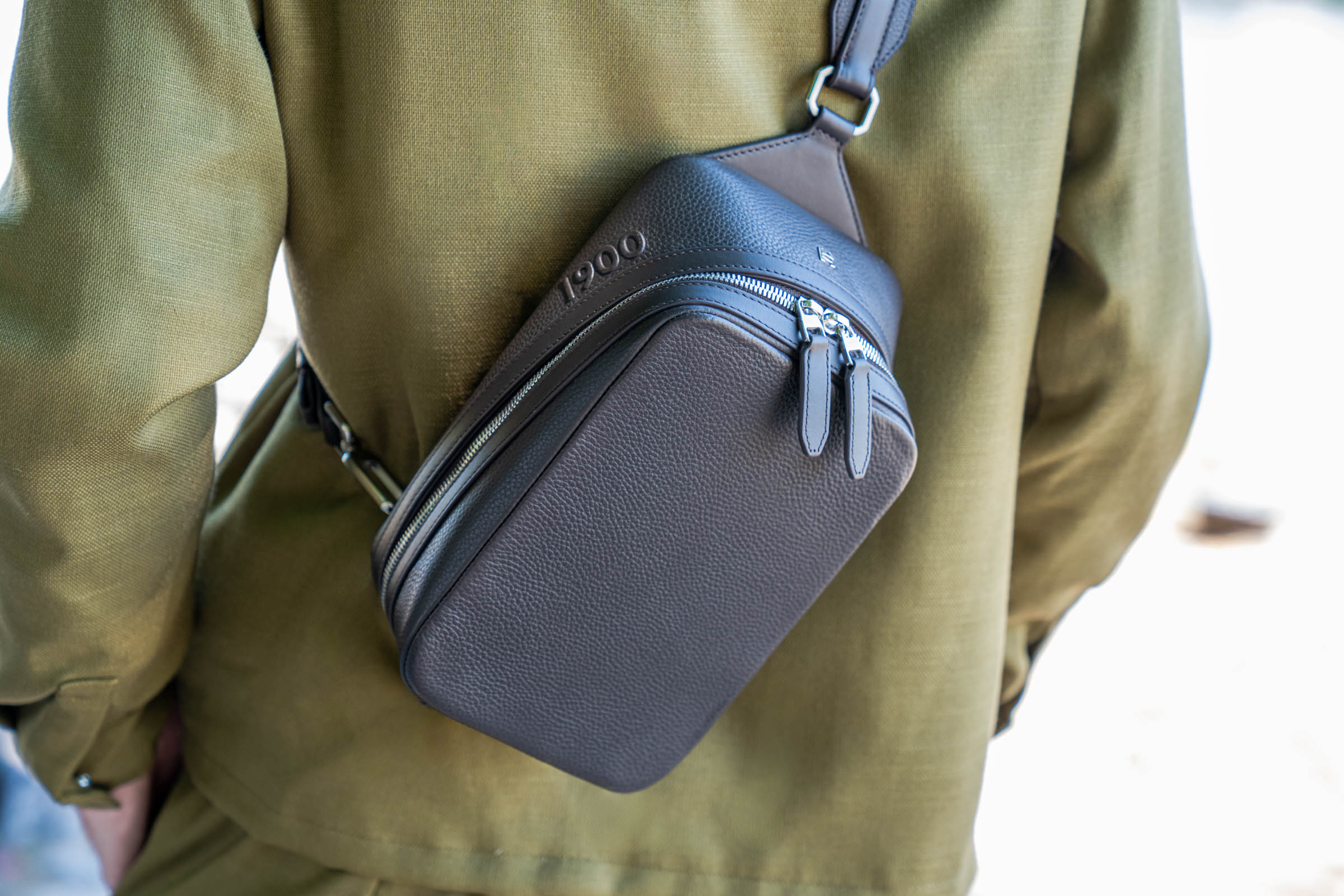
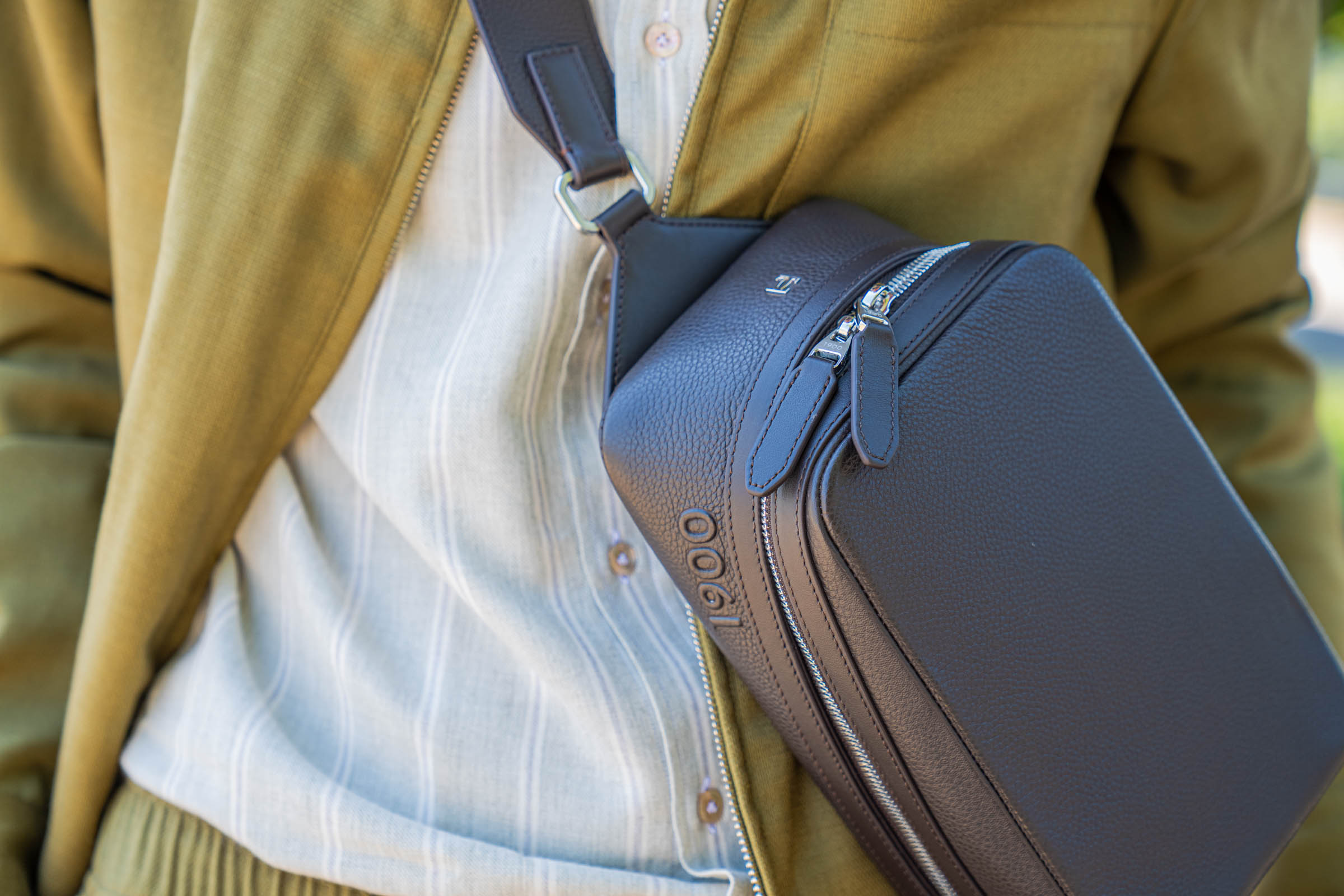
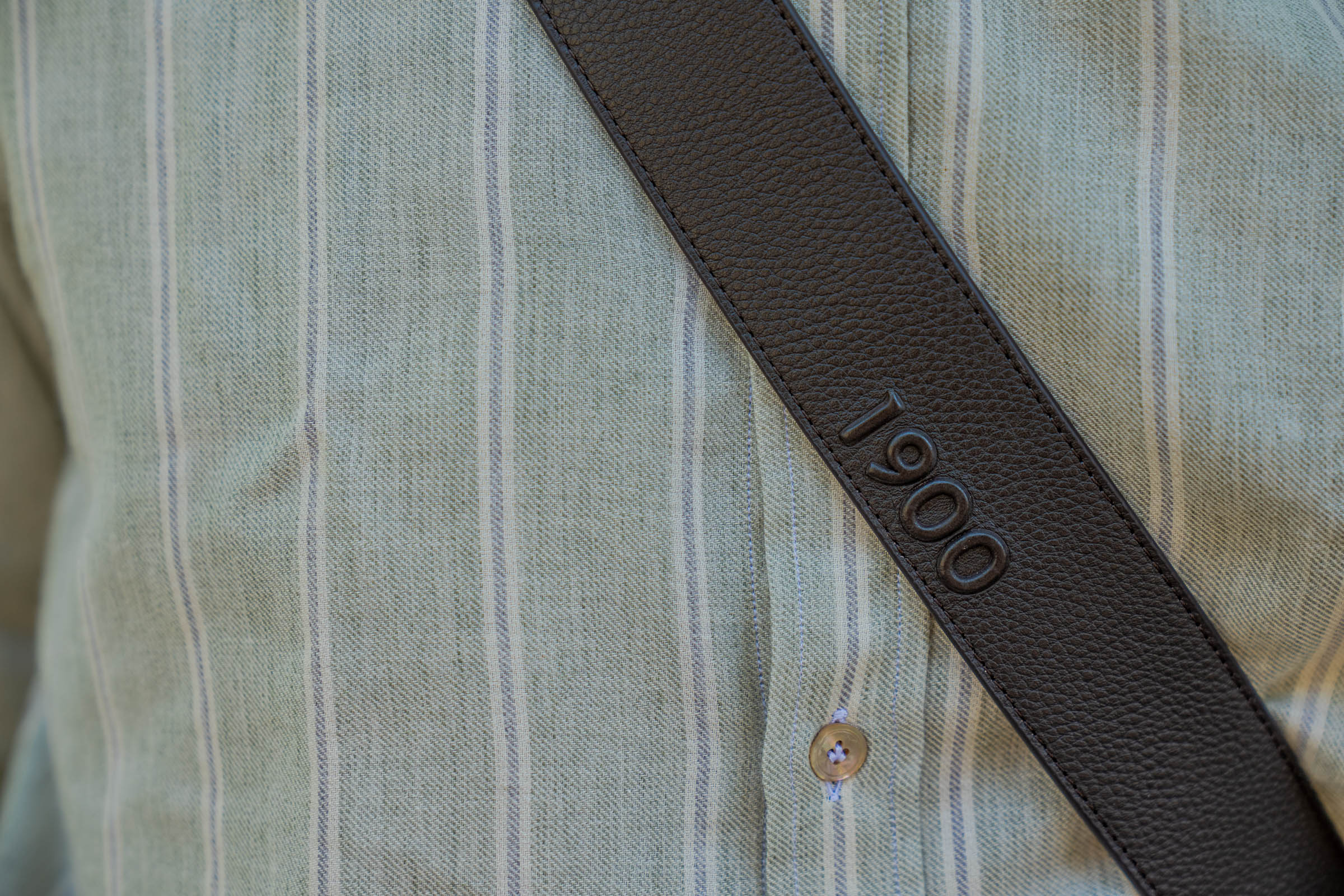
The basis is grained leather, the kind whose texture forgives small scratches and looks fresh for years. Smooth, brushed leather details run along the top panel and the zipper line. They give the bag a depth and a play of light that photos only partially capture. That contrast of two leather treatments is, for me, the most beautiful detail of the entire design. Right beside it stands the embossed 1900 number on the front band and the strap.
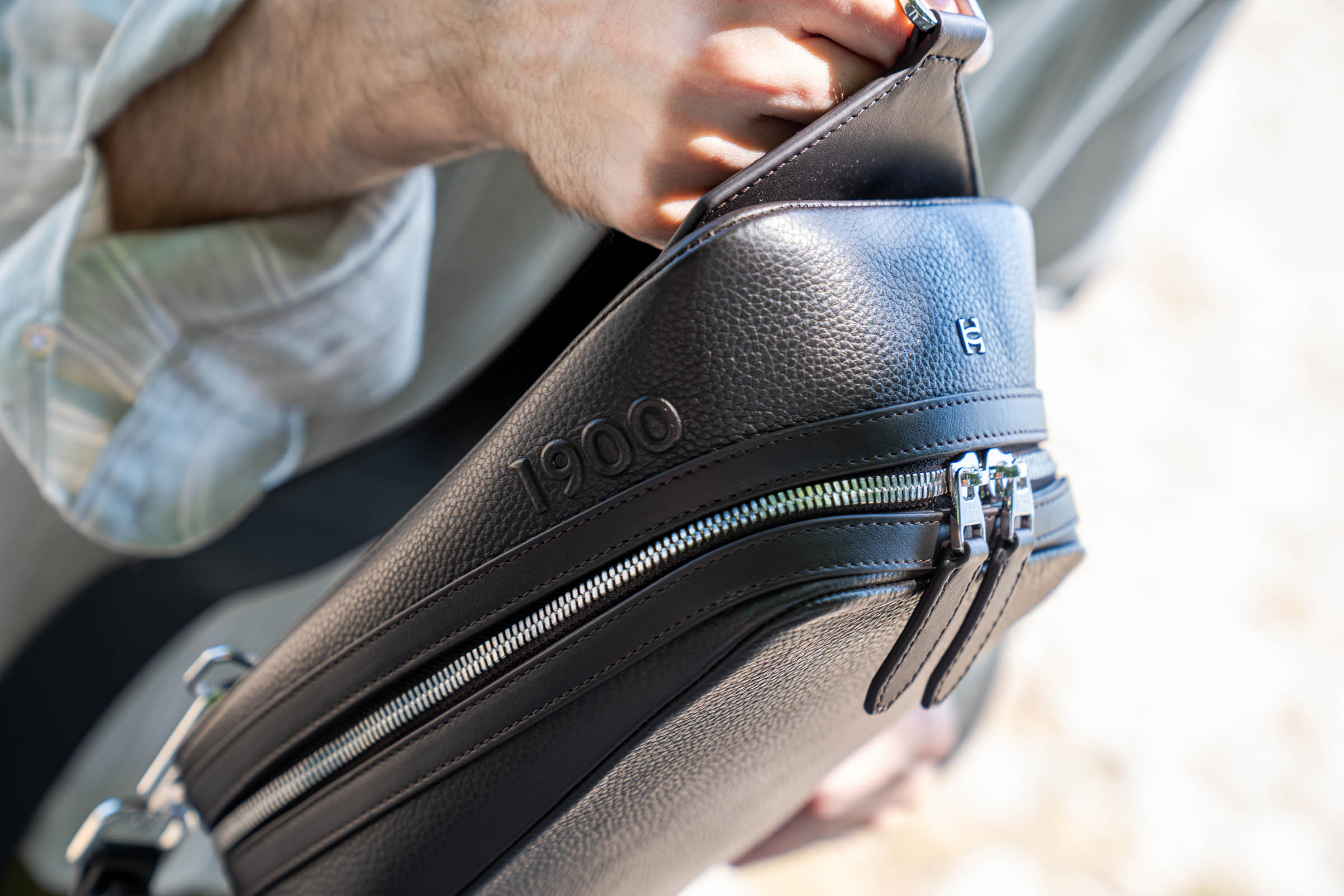
The signature of the brand is the oblique zipper, which gives the whole form a recognizable architectural line. It’s not there for decoration. Thanks to the slope, the bag opens with one wide, natural stroke of the hand. Nothing snags, even while you carry it on the chest. Leather wraps both zipper pulls for a softer grip. As for the silvery metal hardware, the pieces with the horological provenance I wrote about, it seems built to outlive me and my heirs.
A small metal monogram sits on the upper part, the only bright accent on the whole bag. Everything else is tone on tone, quiet and measured. When I hang it over my back, only the silhouette and the stamped number are visible. Exactly as much as someone in the know needs to notice, without anyone getting the impression that I’m proving myself.
1900 TEMPO GRANDE CROSSBODY BAG: WHAT FITS INSIDE?
Beauty without use value does not go well with me, especially when traveling. So I immediately put the bag through my usual test and filled it with everything I carry on a shooting day.
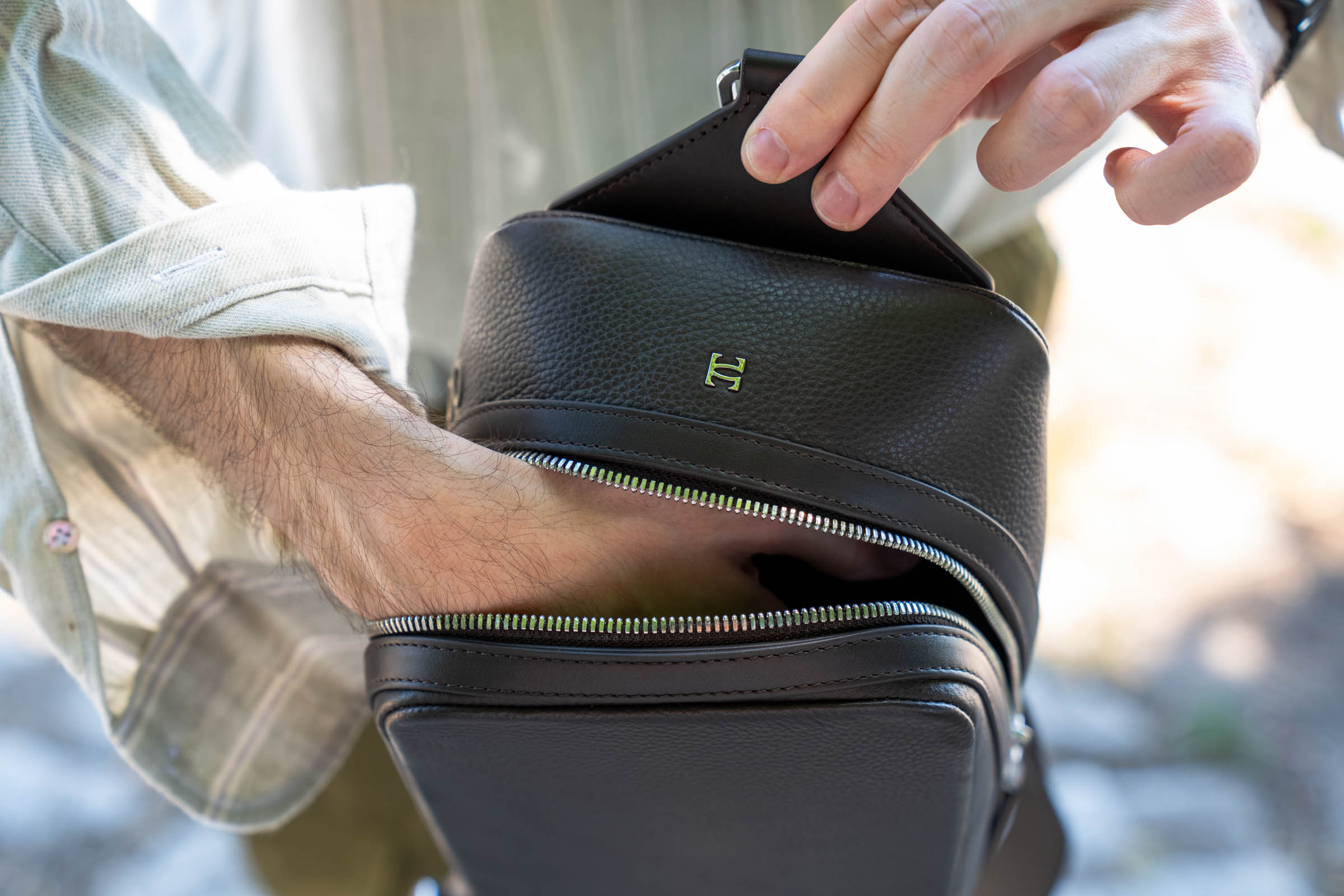
The interior is lined with cotton and divided smartly. There’s a dedicated phone pocket, card holder and key hook, so little things don’t float around the bottom like most cases of this size. Phone, wallet, keys, charger, sunglasses and one small notebook stopped without pushing. For my purposes, it’s a hit.
The strap detaches and adjusts in length, which opens up three ways of carrying. You can wear the bag across your chest, over your back or classically on one shoulder. During the day, I kept moving it from position to position. It followed me while walking, sitting on a bench, or bending down to photograph the pigeons. It never got in the way, it never turned upside down. The weight is distributed so that after a few hours you simply forget about it.
The price is 370 euros, with free worldwide shipping and customs costs included. You get leather of this quality, custom-designed metal parts and full in-house production. For 370 euros, I consider that a fair calculation. By comparison, bags from the big houses with similar features often cost three times as much. A good chunk of that difference pays for the name, not the build.
1900 TEMPO GRANDE CROSSBODY BAG: FROM CITY STREETS TO AIRPORT TERMINALS
Regular readers already know the rhythm of my life. It unfolds between Belgrade, Berlin, the wider world and the airports connecting them. That is why I judge every accessory through one question, by now second nature to me. How will it behave on the road?
The cross-body bag format shows its full value when traveling. Passport, boarding pass, phone, headphones and charger always sit within easy reach. Your hands stay free for the suitcase and a coffee. At security control, one movement takes the bag off. On the plane, it slips under the seat or into the overhead compartment. In the city, you wear it on the chest, with everything in plain sight. Travel like this once and full pockets suddenly feel like the past. So do big bags for every little thing.
The Tempo Grande crossbody bag holds one more advantage, and few people ever write about it. Dark brown grained leather looks equally at home in three very different worlds. It suits a linen set on the quay, a suit at a business meeting, a sweater on an autumn road trip. In other words, you never have to choose between the elegant and the practical. This bag covers both. Modern wardrobes keep shrinking to a smaller number of better things. In that light, such versatility is no trifle but a serious argument for buying.
OUTFIT
Jacket: Loro Piana
Shirt: Giannetto Portofino
Watch: Biatec
Crossbody bag: 1900
Trousers: Loro Piana
Sneakers: Santoni
LORO PIANA LINEN AND SILK SET: THE SHADE OF GREEN THAT DEFINES SUMMER
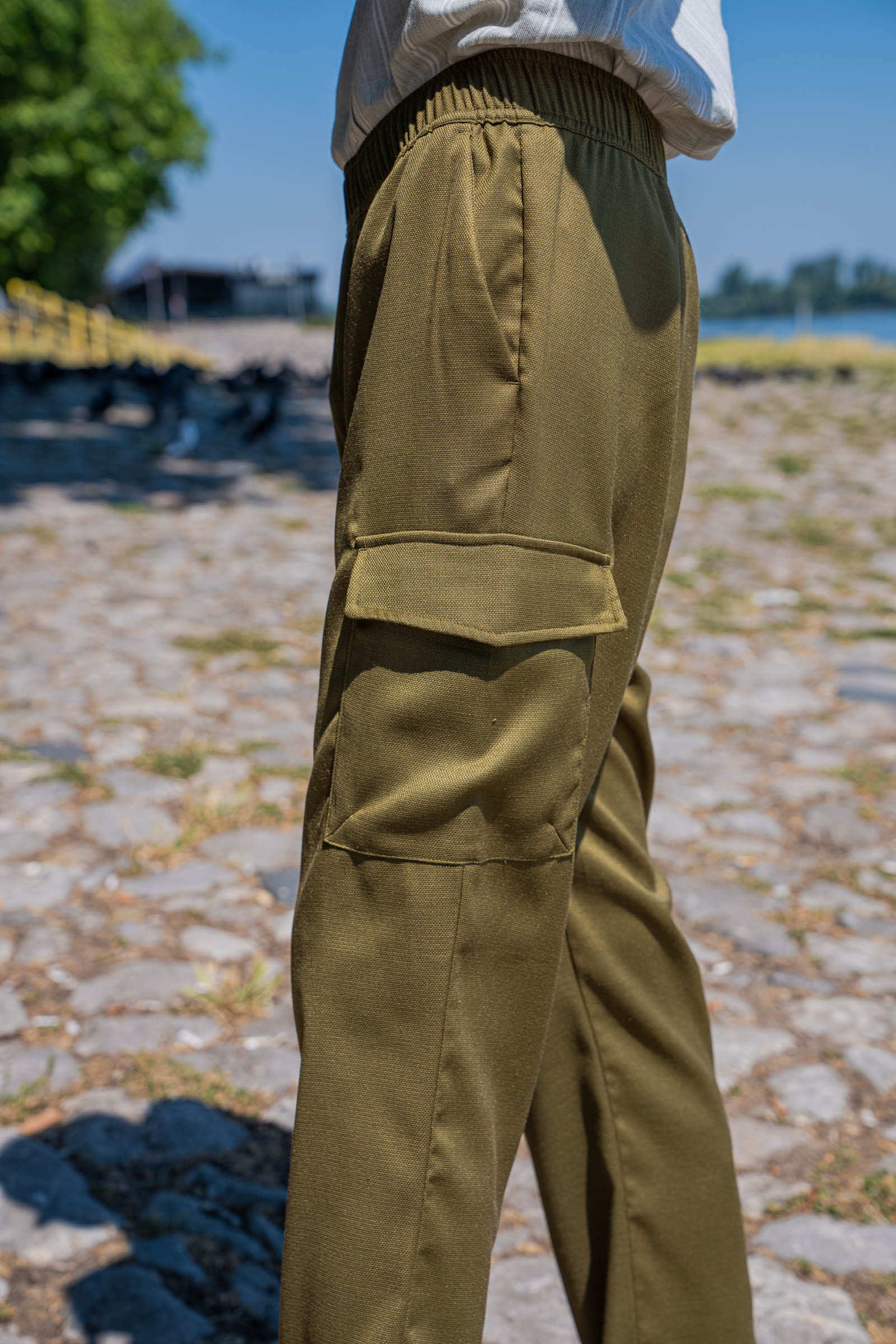
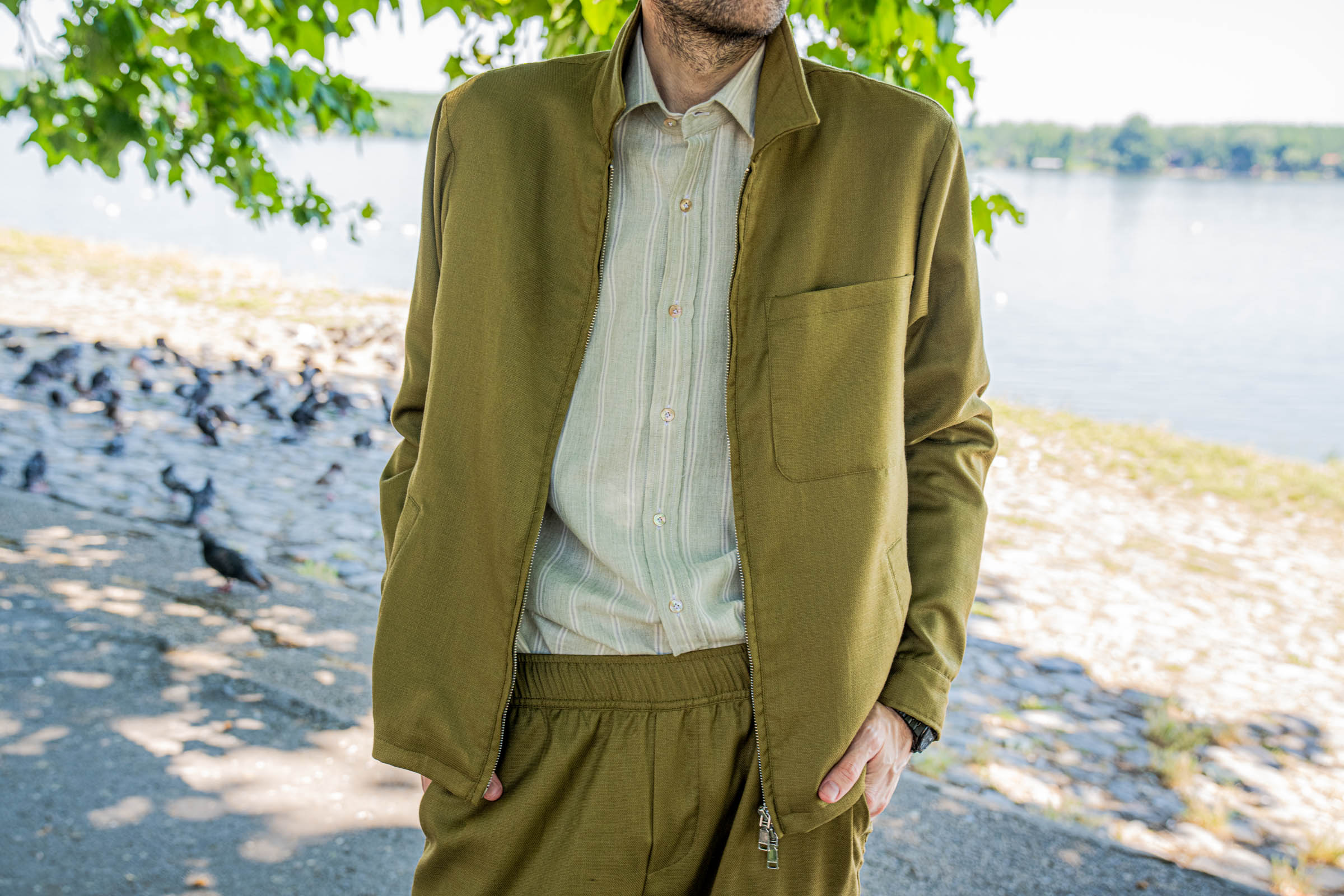
Let’s move on to the garments of today’s fashion story. Today’s combination rests on the Loro Piana set in olive green. It consists of a light zip-up jacket and matching cargo trousers. Both pieces come from a blend of linen and silk. For the summer months, that fabric is a discovery of a special kind.
Linen brings breathability and that dry, pleasant texture that breathes even at thirty-five degrees. Silk adds weight to the drape, a slight sheen and real wrinkle resistance. That solves the only serious drawback of pure linen. Put those two fibers together and you get a set with a double life. It looks as serious as a suit, yet wears as easily as a tracksuit. The trousers come with an elasticated waistband and roomy flap pockets on the thighs. In effect, a military cut receives a salon treatment.
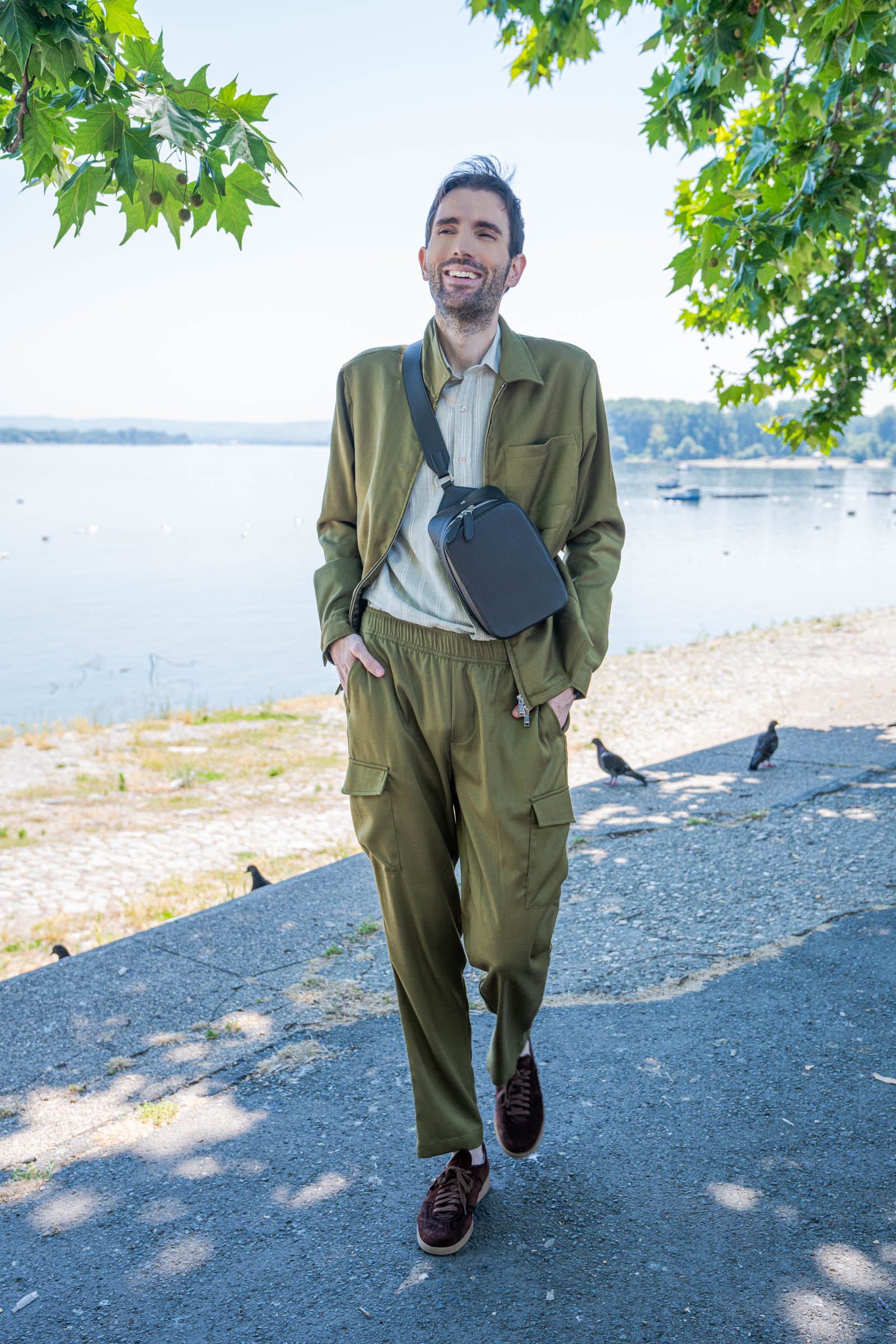
I purposely wore the jacket over my shoulders for most of the day. I wore the jacket over my shoulders for most of the day, quite deliberately. Carried that way, it reveals the lining with its small graphic pattern. There stands another example of luxury turned inward, visible only to the owner. Zipped halfway, the set feels like a modern take on the classic work suit. The fabric, however, belongs to a whole other world.
In addition, olive is the most flattering summer color for men. It flatters every skin tone, blends naturally with brown skin and doesn’t stand out too much. With the water of the Danube and the greenery of the plane trees on the quay, it looked as if it was ordered for this location.
LORO PIANA: OVER A CENTURY OF THE WORLD’S FINEST FABRICS
I have written about the Loro Piana fashion house many times, but its story deserves to be repeated. The family has traded in wool since the beginning of the nineteenth century. Engineer Pietro Loro Piana founded today’s company in 1924, in the town of Quarona in Italian Piedmont. Six generations of the same family built up that knowledge, layer by layer. Today, one simple sentence sums it all up. No one in the world processes precious fibers better.
The numbers confirm it. The house ranks as the world’s largest cashmere processor and the leading name in vicuña. That graceful relative of the llama carries a royal nickname: the queen of the Andes. Her fleece remains the finest fiber anyone can legally obtain from an adult animal. In the Inca era, only the emperor and his family had the right to wear it. Today, vicuña sits at the very top of the house’s offer. Beside it stand lotus flower fiber from Myanmar and the finest merino from New Zealand and Australia.
A turning point in recent history took place in July 2013, when the French group LVMH took a majority stake of eighty percent, in a business worth around two billion euros. Despite this, the production remained in Italy, and the spirit of the house unchanged. Loro Piana still doesn’t know about big logos. Their luxury is recognized by touch, not by reading.
That’s exactly why this kit went so naturally with the 1900 bag. Two brands, same philosophy: let the material speak for itself.
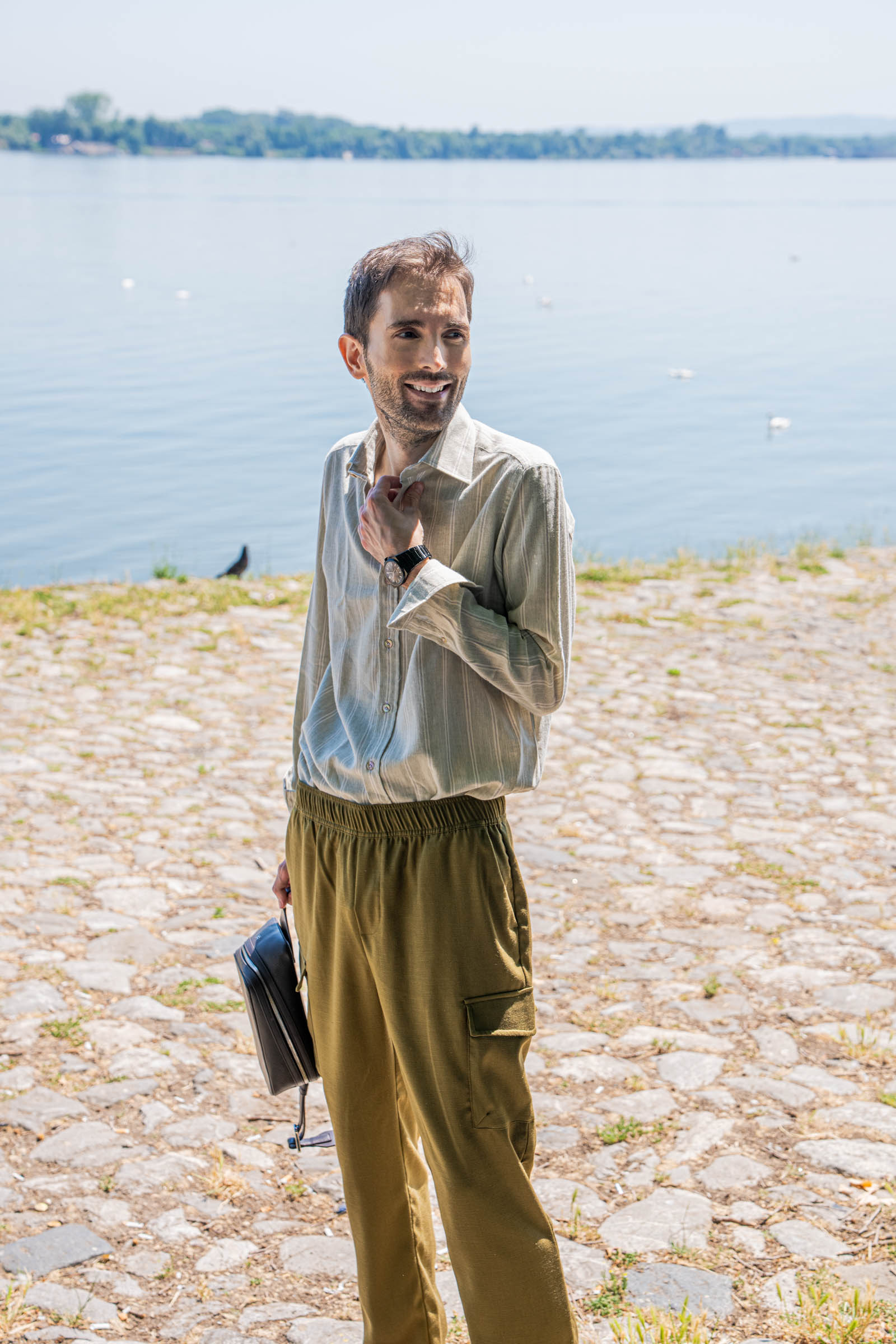
GIANNETTO PORTOFINO SHIRT: SAGE GREEN STRIPES FOR TIMELESS SUMMER ELEGANCE
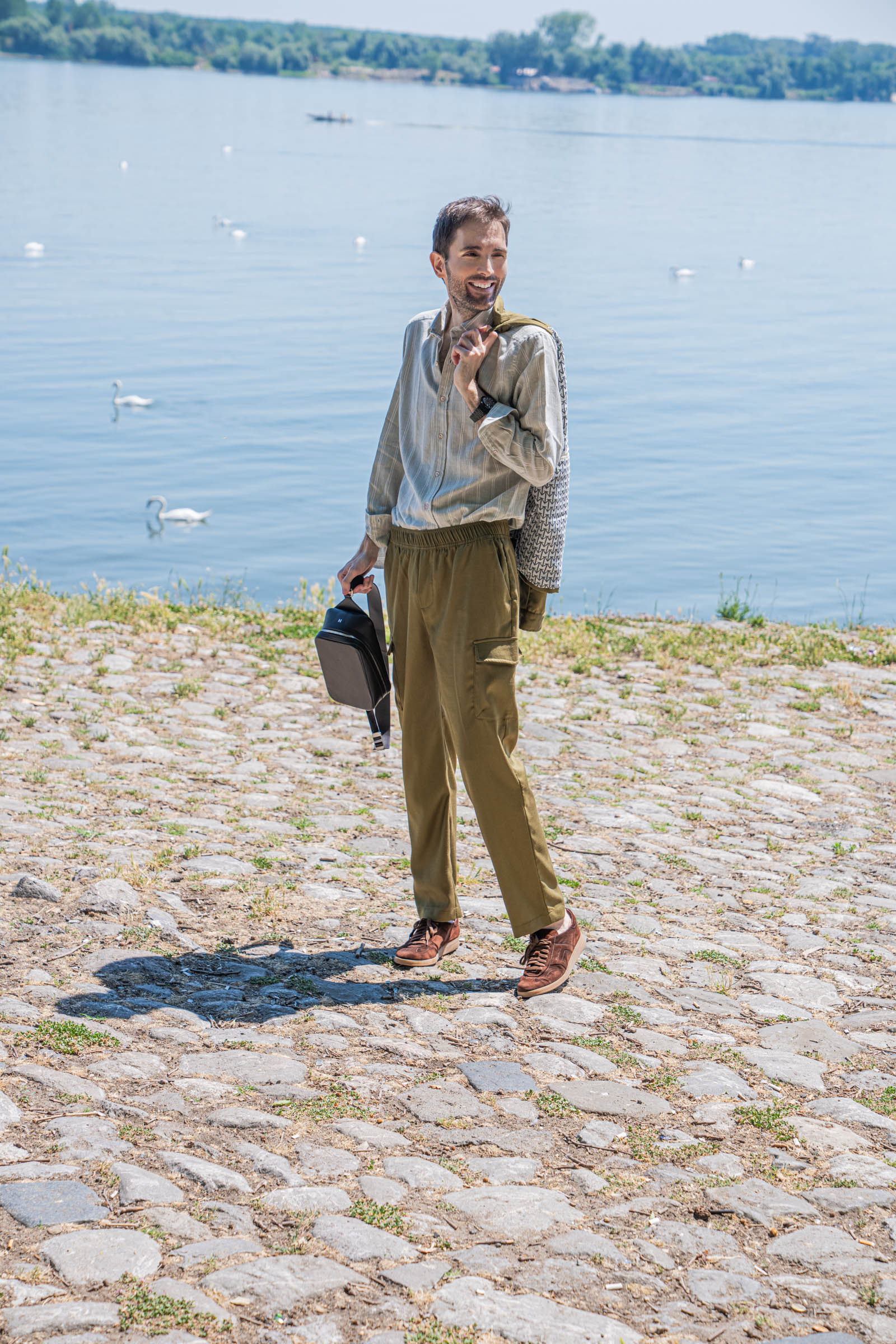
Under the jacket, I wear a shirt from the fashion house Giannetto Portofino, an Italian brand whose roots go back to 1979. It is a shirt made of a washed cotton and wool blend, in a regular cut, made in Italy.
The combination of cotton and wool in a summer shirt sounds unusual, but it has its own logic. Cotton gives softness and lightness, while wool, in a small amount, contributes to the depth of color and better fall. The process of washing the fabric further softens it, so from the first day the shirt looks as if it has been in the closet for years, in the best sense of the word. The base is a gentle, grey-green shade of sage, over which pure white stripes run. The pattern is present enough to break the monotony, and quiet enough not to compete with the rest of the combination.

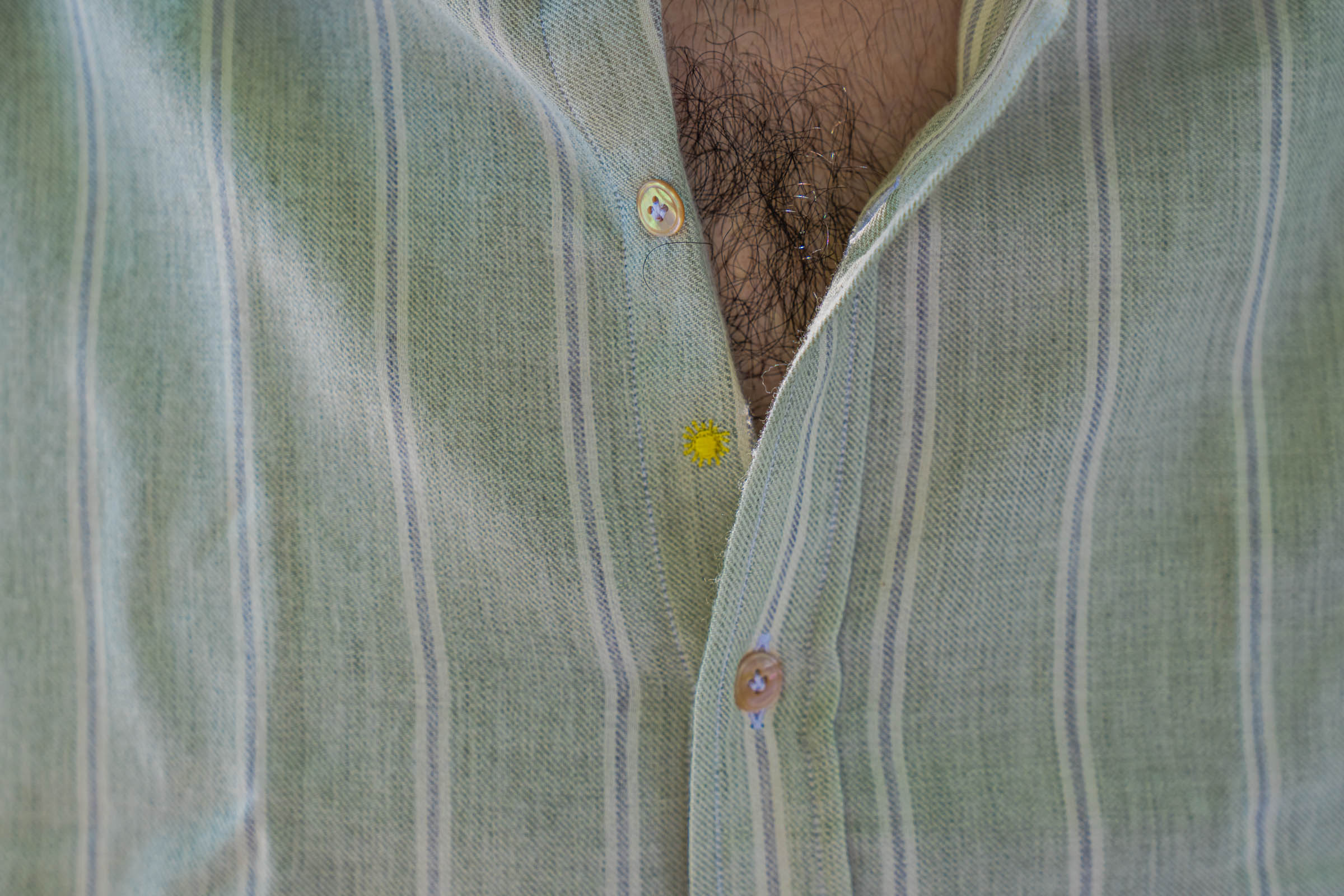
Two details set this shirt apart from countless others. The first are mother-of-pearl buttons, the iridescence of which catches the light with every movement. The other is a tiny embroidered yellow sun by one of the buttonholes, a brand signature that only those who get really close can see. Again, the same idea that runs throughout today’s text: luxury hidden in detail, intended for the owner, not the audience.
I wear it unbuttoned by two buttons, with the sleeves rolled up halfway to the forearm. With the olive set, it creates a gradation of green tones, from light sage to dark olive, which gives depth to the whole appearance.

BIATEC FUSION 03: WHERE SLOVAK HERITAGE MEETS MODERN WATCHMAKING
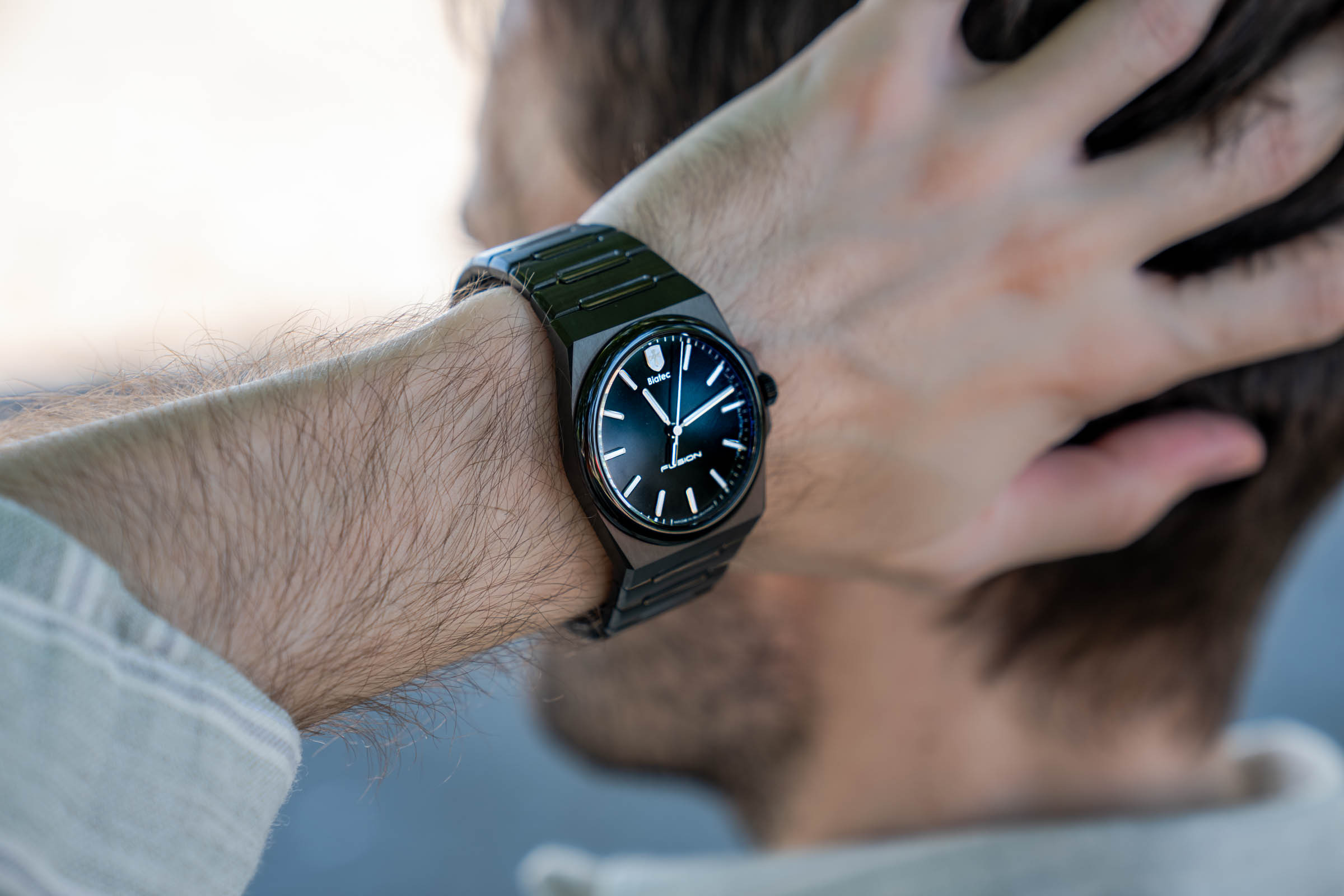
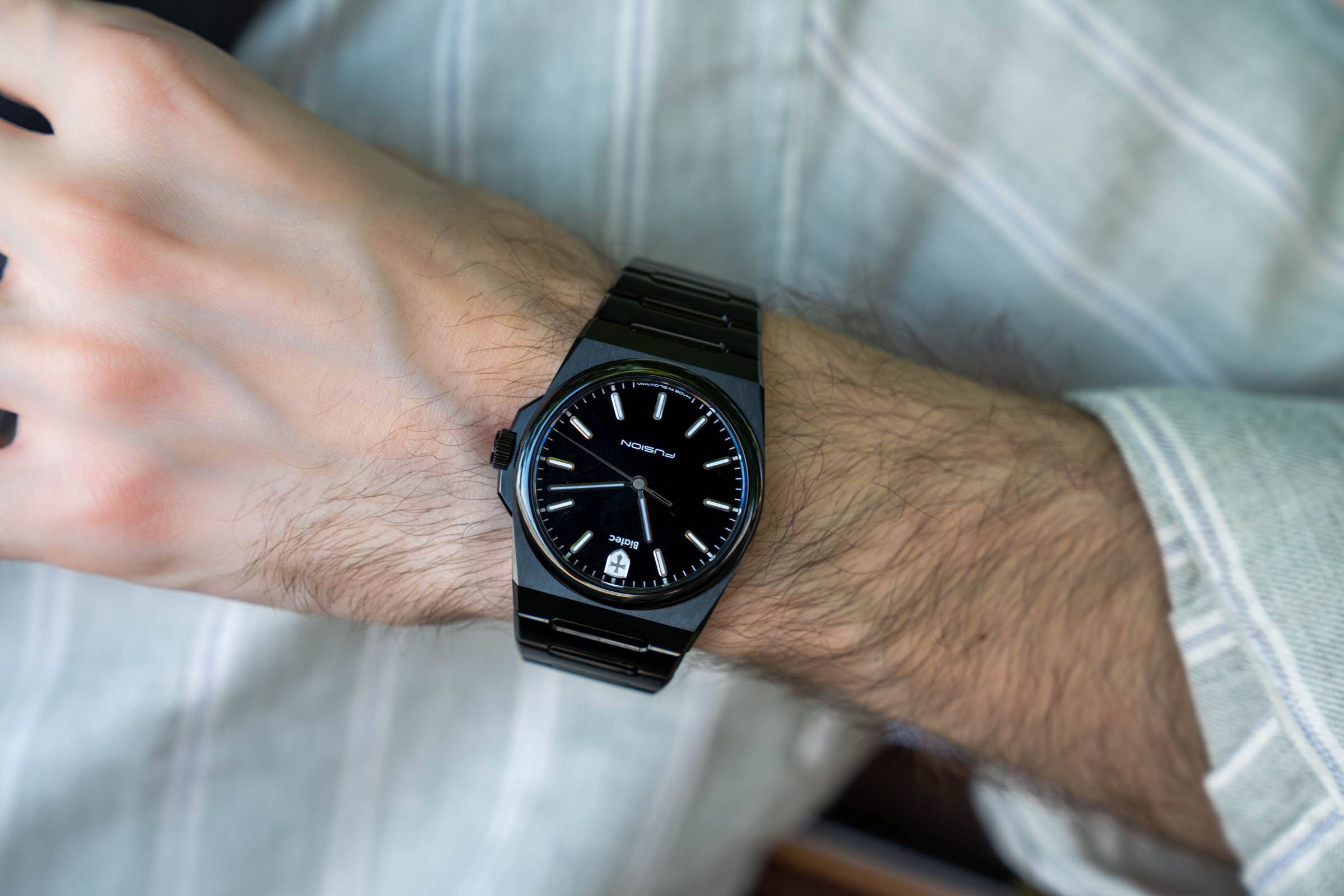
Today, the Biatec Fusion 03 ticks on my wrist. I already presented this watch to readers in a previous fashion story. In this combination, however, it takes on a new meaning. The entire Fusion collection merges the metal bracelet and the case into a single whole. At the same time, it pays tribute to the most legendary integrated-bracelet watches in horological history. Remember Genta from the beginning of this story? Then you already understand why this watch and the 1900 bag make such a natural pair.
Model Fusion 03 is the darkest in the collection. A black DLC coating covers the 316L stainless steel case. Brushed and polished surfaces alternate across it in fine contrast. At 39 mm wide and just 9 mm thin, the watch suits a narrower wrist like mine perfectly. Sapphire glass protects the dial. The transparent back, meanwhile, reveals the Swiss automatic Sellita SW300 TOP movement. It holds a power reserve of around 56 hours. Among its decorations, a gold-plated rotor and blue screws catch the eye.
The black lacquered dial has three-dimensional indexes with faceted edges and Super-LumiNova mass, so legibility is impeccable even in the strongest sunlight on the quay. Water resistance of one hundred meters means that I don’t even think about the watch by the river. I especially appreciate the micro-adjustment butterfly clasp, which allows you to expand the bracelet up to 4.4 millimeters in total. During the heat of July, when the wrist swells, that little thing is worth its weight in gold.

BIATEC FUSION 03: THE STORY BEHIND THE CELTIC COIN ON THE WRIST
The name Biatec carries a story that is more than two millennia old. Biatec was the name of a ruler, most likely a king. His name appeared on Celtic coins from the area of today’s Bratislava, in the first century BC. The Boii tribe minted them from high-quality silver and gold. One side carried the image of the ruler, the other a horseman. Over time, the name passed onto the coins themselves. Their inscriptions remain the oldest known traces of writing on Slovak soil. Small wonder they grew into a symbol of the entire country.
The founder of the brand, who registered the trademark in 2016, deliberately reached out to that heritage. Coinage and watch case making share the same language: metal, engraving, relief, precision. Even the logo of the house tells a story. It combines the Slovak double cross with the Celtic cross, honoring both ancestors and contemporaries. The watches come to life in Zvolen, in the very heart of Slovakia. Each dial proudly bears the inscription of its Slovak origin. On top of all that, the house backs every watch with a five-year warranty. That detail speaks louder about self-confidence than any advertisement could.
You have noticed, I believe, a thread that runs throughout today’s text. The manufactory that has packed the watches of the biggest houses for decades is now making my bag. A Slovakian workshop inspired by coins forges a watch on my wrist. Everything, in one way or another, revolves around time and metal.

SANTONI OLY SNEAKERS: THE SPIRIT OF THE ’70s IN LUXURY SUEDE
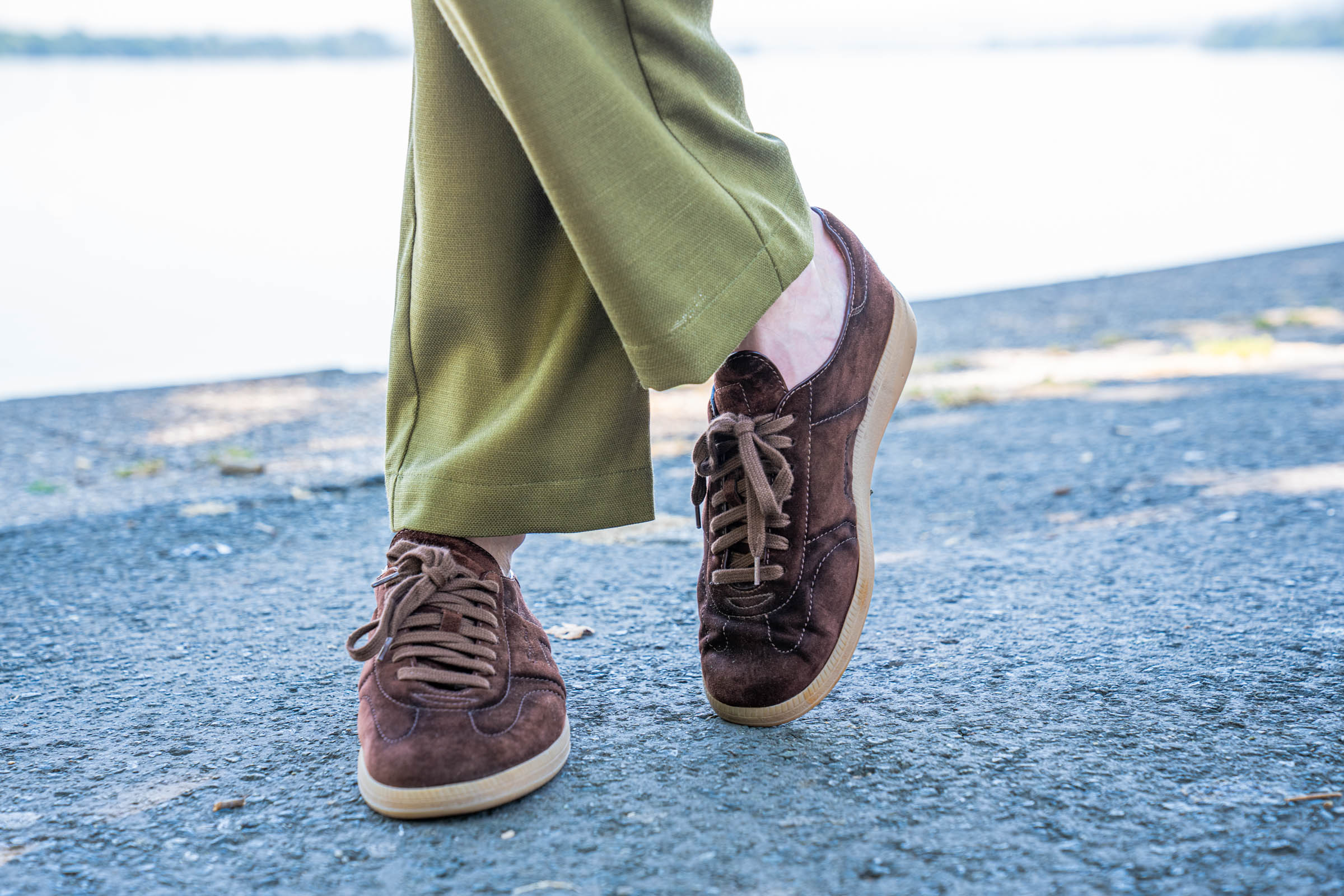
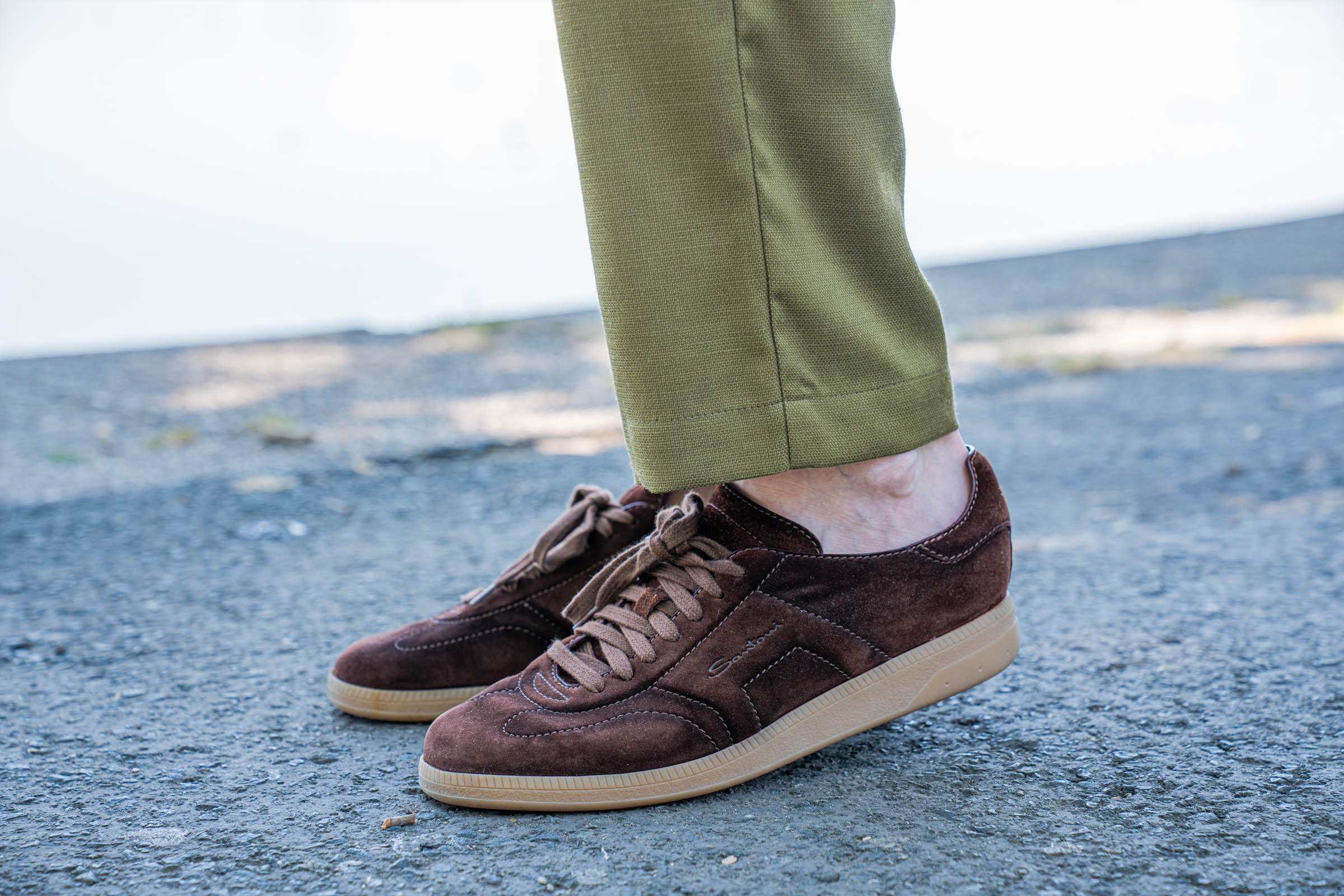
Last but not least, the shoes. Santoni Oly sneakers in dark brown flipped leather are my choice for days when the combination calls for relaxation, and I don’t agree to compromise on quality.
The story of the Santoni house is one of the most beautiful in Italian fashion. In 1975, Andrea Santoni and his wife Rosa opened a small workshop in the garage of their family home. It stood in Corridonia, a small town in the Marche region, the heart of Italian shoemaking tradition. The industry around them chased volume. Andrea chose the opposite path: superior craftsmanship, almost entirely by hand, for customers who understand the difference. His son Giuseppe carried the brand onto the world stage in the nineties. The house remains in the hands of the same family to this day. Last year they celebrated half a century of existence. Their collaborations now range from straps for a famous Swiss watch house to the world of motoring.
Santoni is best known for his hand patination of leather, a technique of applying color layer by layer, which gives each pair a unique depth of tone. The Oly line translates that artisan school into a silhouette inspired by tennis shoes of the seventies. A low, clean form, stitched like a shoe, with a caramel colored rubber sole that ages beautifully.
HOW TO STYLE EARTH TONES FOR EFFORTLESS SUMMER ELEGANCE
Today’s combination is based on one single rule, which I have been repeating to readers for years: choose colors that exist in nature and they will match themselves.
Start with olive as a base. Then add a lighter, related shade, in my case the sage from the shirt. Then ground everything with a dark brown tone, through the bag and sneakers. Finally, one all-black accent, here a watch, gives the whole thing a crispness and keeps everything from getting too soft. Four steps, not a single wrong note.
I especially recommend this approach to men over forty. Earth tones are forgiving and flattering, not looking for a perfect line or a tanned complexion. In addition, they allow the quality of the material to come to the fore, and it is the material, not the cut or the logo, that separates mature style from costumes. Linen that breathes, silk that falls, leather that ages better than we do. Those three things are worth investing in.
Also pay attention to the scale of the accessories. A bag of the format worn by the 1900 crossbody model is small enough not to distort the silhouette, and large enough to replace all pockets. Men of my generation have long resisted crossbody bags, considering them a youthful fad. We were wrong. Properly selected, in noble leather and without large inscriptions, it is today the most elegant solution for everyday life.
HOW TO CARE FOR GRAINED AND SUEDE LEATHER DURING THE SUMMER
Since readers often ask me for maintenance tips, here’s a quick reminder, because today’s combination combines two different skin types. Both are grateful, but each requires its own approach.
The full-grain leather the bag is made of is the most durable finish you could wish for. Its embossed surface hides small traces of everyday use, so it is enough to wipe it from time to time with a soft, dry cloth. Once a season, apply a thin layer of neutral skin conditioner and let it soak in overnight. Avoid direct sunlight when you are not wearing it and overfilling, because the form remembers. That, believe it or not, is the whole business.
The flipped leather on the sneakers requires a little more attention, but far less than you might think. A brush with rubber bristles after every second wear keeps the bristles straight and the color vibrant. The protective spray at the beginning of the season creates an invisible shield against dust and moisture. If they are surprised by a summer shower, let them dry naturally, away from heat sources, before brushing them. Stains from dry dust are most easily removed with an ordinary eraser.
With these few habits, both the bag and sneakers will age the way noble leather can only: more beautiful than us. And that, after all, is the essence of investing in quality.
WHO IS THE 1900 TEMPO GRANDE CROSSBODY BAG FOR?
If you’ve made it this far, you probably already know the answer. This bag is for the man who has outgrown logos and quality has not. For those who want the first touch with an object to tell them everything, without the help of advertising. For a man who appreciates four decades of quiet work behind a product, not four months of marketing planning.
The price of 370 euros places it in a reasonable part of the luxury spectrum, especially when you take into account the production in our own facilities, metal parts made according to a special design and leather that will look better in ten years than today. Along with it, the house also offers a backpack, a business bag and a travel bag from the same Tempo Grande collection, so whoever wants to can complete the whole thing.
1900: DESIGNED FOR THE MODERN MAN
I am especially glad that with this text I am opening the door to a completely new name. After all the years of writing about big houses, I am still most pleased with such discoveries: brands that are just writing the first page of their history, and already have a library of knowledge behind them. Manifattura Ceraolo Moroni waited forty years to stand under its own name. Judging by the bag I carried along the Danube today, the wait was worth it.
How did you like my outfit today? I really tried to prepare this post with lots of love and I hope you like it! If you have any questions, comments, suggestions or messages for me, you can write me below in the comments. Of course, as always, you can contact me via e-mail or social networks, which you can find on the CONTACT page. See you soon in new fashion adventures on the Mr.M blog!
Until the next fashion story, choose items that will give you pleasure in ten years. See you soon!
With Love,
Mr.M
This post is sponsored by Loro Piana, Biatec, 1900 (Manifattura Ceraolo Moroni), Giannetto Portofino and Santoni brands. This post is my personal and honest product review.
Hi Marko, I really enjoyed reading this story because it felt different from the usual luxury reviews that only focus on logos. The part about the family behind 1900 spending decades producing luxury packaging before launching their own brand was the most interesting section for me. That kind of background gives a product much more credibility than another marketing campaign. I also liked the photos from Zemun Quay because the old stone pavement and the Danube created a calm atmosphere that matched the philosophy of quiet luxury perfectly. Your olive Loro Piana outfit and the brown leather bag complemented each… Read more »
Hallo Marko, dein Beitrag hat mir wirklich gefallen, weil er nicht nur die Tasche beschreibt, sondern auch die Geschichte hinter der Marke erklärt. Gerade diese Verbindung zwischen italienischem Design und Schweizer Präzision fand ich sehr spannend. Viele Marken sprechen ständig über Handwerkskunst, aber nur wenige erklären sie so nachvollziehbar wie du. Die Fotos an der Donau wirken ruhig und elegant, ohne künstlich inszeniert zu sein. Ich besitze selbst einige Teile von Loro Piana und finde, dass die Kombination mit der Tasche hervorragend gelungen ist. Glaubst du, dass die braune Version auch im Herbst mit einem Kaschmirmantel genauso gut funktioniert wie… Read more »
Hallo Marko, ich glaube, was mir an diesem Beitrag am besten gefallen hat, war die Ehrlichkeit. Du hast nicht versucht, die Tasche als revolutionär oder lebensverändernd darzustellen. Stattdessen hast du erklärt, warum bestimmte Details im Alltag sinnvoll sind. Besonders interessant fand ich die Beschreibung der schrägen Reißverschlusslinie. Auf den Fotos wirkt sie wie ein reines Designelement, aber durch deine Erklärung habe ich verstanden, dass sie tatsächlich den Zugriff erleichtert. Auch die Informationen über die Innenaufteilung waren hilfreich. Viele Hersteller zeigen nur das Äußere, obwohl die Nutzung im Inneren entscheidet, ob man eine Tasche langfristig gerne verwendet. Als jemand, der regelmäßig… Read more »
Marko, what stood out to me was how naturally the watch and the bag connected through the story. Normally when bloggers show several products together, it feels like unrelated sponsorships placed in the same outfit. Here, the connection through Gérald Genta’s design philosophy actually made sense. I hadn’t known much about Biatec before reading your previous article, so seeing it referenced again gave some continuity. I also liked the section explaining the integrated bracelet concept because it helped readers who aren’t watch enthusiasts understand the reference. The more I read, the more I started to see the bag as a… Read more »
Olá Marko. Gostei particularmente da parte em que explicaste por que escolheste aquele local para as fotografias. Muitas vezes vemos imagens bonitas, mas raramente sabemos por que razão um lugar foi escolhido. A descrição do cais de Zemun, das pedras antigas e da água calma do Danúbio ajudou-me a compreender melhor a atmosfera que querias transmitir. Também achei interessante que o cenário não competisse com o produto. Tudo parecia fazer parte da mesma narrativa. Quanto à mala, fiquei impressionado com a combinação entre couro granulado e detalhes em couro liso. Esse contraste parece dar mais profundidade ao design. Tenho apenas… Read more »
Hi Marko, one thing I genuinely appreciated was the section where you discussed maintenance. Most reviews stop once the product is photographed, but ownership starts after that point. Your advice about simply wiping the grained leather with a soft cloth and occasionally using a neutral conditioner made the bag feel approachable rather than delicate. I have avoided certain luxury leather goods because I assumed they would require constant attention. The same applies to the Santoni sneakers. I was surprised by how straightforward the care routine actually sounds. The fact that both items are meant to age gracefully rather than remain… Read more »
Guten Tag, Marko. Ich habe den Beitrag gestern gelesen und heute noch einmal die Abschnitte über die Materialien durchgesehen. Besonders interessant fand ich die Kombination aus Leinen und Seide bei dem Loro-Piana-Set. Reines Leinen trage ich seit Jahren gerne, aber die zusätzliche Seide als Lösung für die Knitteranfälligkeit ergibt für mich absolut Sinn. Dadurch habe ich mich fast genauso für die Kleidung interessiert wie für die Tasche selbst. Was mir außerdem gefallen hat, war deine Erklärung, dass Luxus nicht nur sichtbar, sondern auch fühlbar sein sollte. Diese Philosophie zieht sich durch den gesamten Beitrag. Die Tasche scheint genau diesem Gedanken… Read more »
Hello Marko, the more I think about this article, the more I realise that the strongest theme wasn’t luxury at all, it was restraint. Almost every section returned to the idea of choosing quality over visibility. The 1900 branding is subtle, the colours are understated, the shirt hides its signature detail, and even the watch tells its story quietly. That consistency made the article feel very coherent. I also appreciated that you included actual measurements for the bag because many brands describe a product as “practical” without giving any context. Reading that it comfortably held your phone, wallet, charger, sunglasses… Read more »
Bonjour Marko. J’ai terminé ton article il y a quelques minutes et j’ai particulièrement apprécié la façon dont tu racontes l’histoire sans jamais avoir l’impression de lire une publicité. On sent que tu as réellement pris le temps d’utiliser le sac avant d’écrire. Le passage où tu expliques que la fermeture éclair s’ouvre d’un seul mouvement grâce à son inclinaison m’a semblé très concret. C’est exactement le genre de détail que l’on découvre seulement après avoir porté un produit plusieurs jours. J’ai aussi aimé la comparaison entre les grandes maisons qui vendent parfois surtout un nom et cette jeune marque… Read more »
Hi Marko, one sentence from your article stayed with me long after I finished reading it: “choose items that will give you pleasure in ten years.” That really sums up how I’ve started buying clothes and accessories over the last decade. I own fewer things now than I used to, but I enjoy every one of them much more. Your review of the Tempo Grande bag fits perfectly into that philosophy because you focused on craftsmanship instead of trends. I also appreciated that you didn’t ignore practical details like airport security, interior organisation and how the bag behaves while walking.… Read more »
Cześć Marko. Przeczytałem cały wpis bardzo uważnie i najbardziej zainteresowała mnie historia marki. To, że firma przez tyle lat pozostawała w cieniu, produkując luksusowe opakowania dla świata zegarków i biżuterii, sprawia, że patrzę na tę torbę zupełnie inaczej. Takie doświadczenie trudno zastąpić reklamą. Podobało mi się również wyjaśnienie dotyczące metalowych elementów inspirowanych projektami Géralda Genty. Jako miłośnik zegarków mechanicznych od razu zwróciłem na to uwagę. Zdjęcia nad Dunajem świetnie oddają spokojny charakter całej stylizacji. Mam jedno pytanie: czy po kilku godzinach noszenia torby pasek nadal dobrze trzyma swoje ustawienie długości, czy wymaga od czasu do czasu ponownej regulacji? To dla… Read more »
Hello Marko. I enjoyed the entire article, but I have to admit that the section about the Loro Piana outfit surprised me almost as much as the review of the bag itself. I never realised that adding silk to linen could improve the way the fabric drapes while also reducing wrinkling. That’s exactly the sort of practical information I come to your blog for. It isn’t just about showing expensive clothing but explaining why certain materials work together. I also noticed how the olive jacket, sage striped shirt and dark brown leather all shared the same quiet colour palette without… Read more »
Hej Marko! Jag uppskattade verkligen att du tog dig tid att beskriva varför just Zemun-kajen betyder något för dig. Det gjorde att bilderna fick ett personligt värde och inte bara fungerade som bakgrund. Jag tycker ofta att de bästa stilbilderna tas på platser som har en historia för personen som bär kläderna. Väskan passade dessutom väldigt bra mot de gamla stenarna och färgerna längs floden. Jag fastnade också för delen där du beskrev hur den lilla metallbrickan är den enda blanka detaljen på hela väskan. Den typen av återhållsam design tilltalar mig mycket mer än stora logotyper. Skulle du säga… Read more »
Hi Marko, what I found refreshing was that you weren’t trying to convince readers that everyone needs this bag. Instead, you explained very clearly who you believe it is designed for. The paragraph about it being intended for men who have outgrown logos but not quality felt honest rather than promotional. I recognised myself in that description. Twenty years ago I probably would have chosen something with a visible designer logo. Today I’d much rather carry something that only people interested in craftsmanship would recognise. Your explanation of the bag’s proportions also made sense. I dislike oversized crossbody bags because… Read more »
Hola Marko. Lo que más me llamó la atención fue que no presentaste la bandolera como un accesorio de moda pasajero, sino como una herramienta útil para alguien que viaja con frecuencia. Cuando leí la parte en la que explicabas cómo guardas el pasaporte, la tarjeta de embarque, el teléfono y el cargador, pensé inmediatamente en mis propios viajes de trabajo. Siempre termino buscando algo en los bolsillos del pantalón y nunca resulta cómodo. También me gustó mucho que explicaras por qué elegiste el tamaño de este modelo y no uno más grande. Personalmente creo que muchas bandoleras actuales son… Read more »
Hello Marko, I’ve read your blog for quite a while, and one thing I’ve noticed is that you rarely become excited about a product just because it’s new. That made this review more convincing to me. The section that impressed me most was actually the explanation of why the company chose controlled production instead of mass manufacturing. I think many readers overlook how much that can influence consistency and quality. I also appreciated that you described the interior rather than simply photographing it. Knowing there is a dedicated phone compartment, a card holder and a key hook tells me far… Read more »
Hallo Marko. Ik vond vooral het gedeelte over de filosofie achter het merk erg interessant. Tegenwoordig beginnen veel bedrijven met marketing en bouwen ze daarna pas een product. Hier lijkt precies het tegenovergestelde te zijn gebeurd. Dat gaf mij meteen meer vertrouwen. Ook de uitleg over de metalen onderdelen vond ik verrassend. Ik had nooit verwacht dat een leren tas inspiratie zou halen uit klassieke horlogekasten. Dat maakte het artikel voor mij veel interessanter dan een gewone moderecensie. De foto’s aan de rivier passen bovendien uitstekend bij de rustige uitstraling van de tas. Denk je dat het bruine leer na… Read more »
Hi Marko. I usually read fashion articles fairly quickly, but this one made me slow down because there were so many small details worth paying attention to. One example was the explanation about the tiny metal monogram being the only bright element on the bag. After reading that, I went back to the photographs and noticed exactly what you meant. Without that explanation I probably wouldn’t have paid attention to it. The same happened with the contrast between the grained leather and the smooth leather around the zipper. Those details are easy to miss until someone points them out. I… Read more »
Ciao Marko. Una delle cose che ho apprezzato di più è stata la coerenza dell’intero articolo. Non hai parlato soltanto della borsa, ma hai costruito una storia in cui ogni elemento aveva un motivo per essere presente. Il riferimento alla camicia Giannetto con il piccolo sole ricamato mi è piaciuto molto perché rappresenta perfettamente il concetto di lusso discreto che hai descritto più volte. Anche il fatto che la borsa abbia un solo piccolo elemento metallico visibile va nella stessa direzione. Personalmente preferisco questo tipo di eleganza rispetto ai marchi che mettono il logo ovunque. Una domanda: dopo aver utilizzato… Read more »
Good evening, Marko. I found the maintenance section surprisingly useful because it answered several questions I usually have after buying leather accessories. Many reviews stop once they decide whether something is worth purchasing, but very few explain how to keep it looking good over the years. Your advice about not overfilling the bag because leather remembers its shape was something I hadn’t really thought about before. It sounds obvious now that I’ve read it. I also appreciated the comparison with the Santoni sneakers because it showed that different leathers require different care without making the process sound complicated. Reading the… Read more »
Marko, bardzo spodobało mi się zakończenie artykułu. Nie skupiłeś się wyłącznie na cenie ani na marce, ale wyjaśniłeś, dla jakiego odbiorcy taki produkt ma sens. Myślę, że wielu mężczyzn dochodzi z czasem do podobnych wniosków i zaczyna bardziej doceniać jakość wykonania niż rozpoznawalne logo. Właśnie dlatego opis tej torby wydał mi się wiarygodny. Zwróciłem również uwagę na fragment dotyczący własnej produkcji oraz kontrolowanych ilości. To daje poczucie, że marka chce zachować wysoki standard zamiast produkować jak najwięcej. Bardzo podobały mi się także zdjęcia z Zemunu, ponieważ wyglądają naturalnie i nie odciągają uwagi od całej stylizacji. Mam pytanie: gdybyś miał wybrać… Read more »
Hi Marko, I’ve just finished reading the article from beginning to end, and I honestly think it’s one of your most complete reviews this year. What impressed me wasn’t simply the bag itself but the way every section built on the previous one. First you introduced the history of the manufacturer, then explained the meaning behind the name, connected it with watchmaking, showed how you styled it, discussed everyday usability, maintenance and finally who you believe the bag is actually for. By the end, I felt like I understood not only the product but also the thinking behind it. That’s… Read more »