
My dear travellers and lovers of unusual journeys, welcome to the new travelogue on the Mr.M blog. After exploring some of the most beautiful destinations across Central, Western and Southern Europe together, this time we’re heading north, to the land of hygge, design, regal elegance and timeless charm. Welcome to Denmark. There are cities that amaze you at first sight and cities that win you over slowly. Copenhagen belongs to the second group. I landed without high expectations, and I left with the feeling that I got to know a city that knows what it’s doing. This guide to Copenhagen was born from a few days of walking, seeing and staying at Manon Les Suites Guldsmeden which set the whole trip in a special tone.
Before starting today’s travelogue about Copenhagen, I want to express my special thanks to the United Nations World Tourism Organization – UN Tourism and Manon Les Suites Guldsmeden Hotel for supporting and promoting quality tourism around the world. Their dedication to connecting cultures and destinations is an inspiration to all of us who believe that travel enriches the soul.
The Danish capital is truly special and unique. It offers flat streets, low roofs, green towers and water at every corner. No one is rushing here, yet everything works. That’s why I wanted to write a text that can serve as a useful reminder for anyone planning a visit to Copenhagen. In the following, I will guide you through the history of the city, through the most important sights and through interesting details that you will remember only when you return home.

WHY HAS COPENHAGEN BECOME ONE OF EUROPE’S MOST POPULAR DESTINATIONS?
Copenhagen today has about one and a half million inhabitants in the wider metropolitan area. Despite this, it seems like a big town where everything can be explored on foot. That is the first thing that surprises a visitor from the south of Europe.
The city is popular for several reasons. The first is water: canals, harbors and lakes shape every walking route. The second is design, because for decades the Danes have built their reputation on simple, clean and durable solutions. The third reason is the way of life, which foreigners usually reduce to one word, hygge. This word means warmth, peace and pleasure in small things.

There is a fourth reason, perhaps the most important. Copenhagen is a city that has decided to belong to people, not cars. Wide bicycle lanes, pedestrian zones and benches by the water are not decorations. They are the result of decisions made decades ago.
For the passenger, this means a pleasant consequence. You won’t fight the crowds, you won’t look for a crossing and you won’t waste time in transport. Instead, you will walk, sit by the canal and watch the city come to life. This is precisely why many say that they liked Copenhagen more than they expected.
THE RISE OF COPENHAGEN: FROM FISHING PORT TO CAPITAL CITY
The story begins on a small island in the middle of the water. In 1167, Bishop Absalon built a fortress on Slotsholmen, an island that still bears the center of the Danish state. The Danes take that year as the official founding date of the city.
The settlement existed even before that. Fishermen and merchants came here for the calm harbor and rich herring catch. The first name was simply Havn, meaning port. Later, the city was named Købmannehavn, which translates as trading port, and over time it was shortened to København.

The settlement received city rights in 1254. The herring trade brought money, and money brought walls, churches and conflicts. The Hanseatic League repeatedly attacked the city, because German merchants did not like the competition in the Baltic.
Copenhagen became the capital in the full sense during the fifteenth century, when King Eric of Pomerania moved his residence here. Since then, everything important in Denmark has been happening in this city.
Today, Christiansborg stands on the site of Absalon’s fortress. If you want to understand how the city grew, start right there. Below the modern palace lie the remains of the first castle, and a few steps away the streets that were created much later begin.

CHRISTIAN IV’S COPENHAGEN: THE FIRES THAT CHANGED THE CITY FOREVER
If one ruler deserves the title of builder of Copenhagen, it is Christian IV. He ruled from 1588 to 1648 and left behind more buildings than anyone after him.
The city owes the Rosenborg Castle, the Round Tower, the Christianshavn district and the naval settlement Nyboder to him. The king wanted Copenhagen to become the economic and military center of the entire north. That is why he founded trading companies, built fortifications and expanded the city beyond the old walls.

The next century brought misfortunes. Large fires destroyed wooden houses, and the war with Britain at the beginning of the nineteenth century left additional scars. Each renovation changed the look of the streets, so today you see a mix of styles from several eras.
The most important fire broke out in the night between February 26 and 27, 1794. Then the Christiansborg Palace burned down, and the royal family was left without a home. A solution was found in just a few days: the crown bought two noble palaces on Amalienborg Square.
That decision still stands. The Danish royal family has lived at Amalienborg for more than two centuries. That’s why one fire from the eighteenth century still determines where you’ll see the changing of the guard.

MANON LES SUITES GULDSMEDEN: A JUNGLE OASIS IN THE HEART OF COPENHAGEN
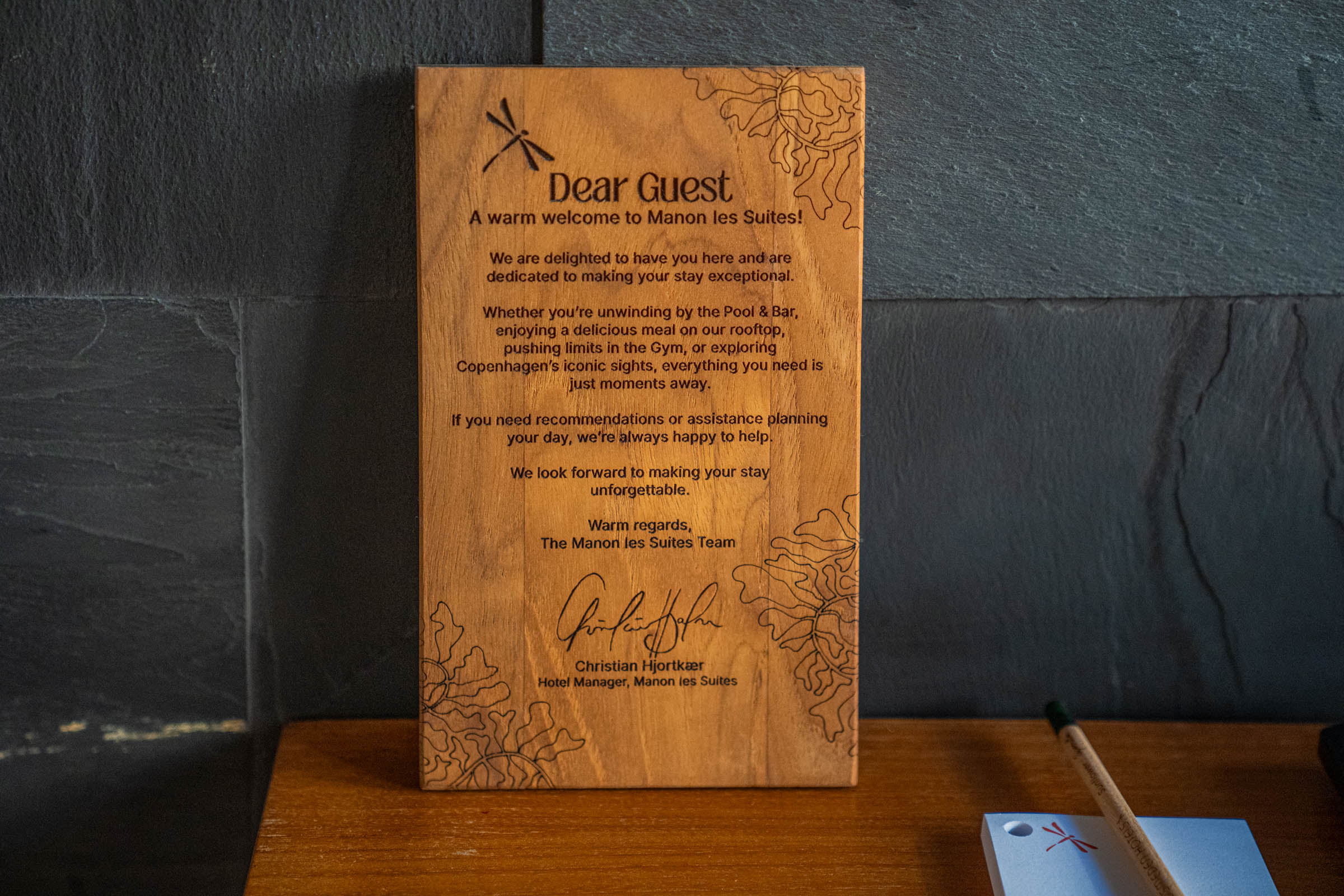
I chose the hotel carefully, because accommodation is never just a bed for me. Manon Les Suites Guldsmeden is located at Gyldenløvesgade 19, right next to Copenhagen’s lakes. Strøget and Tivoli can be reached in ten minutes on foot.
It is a five-star hotel with eighty-seven apartments. It belongs to the Guldsmeden Hotels family group, which has been building its story on sustainability and organic products since 1999. The group’s symbol is a dragonfly, so you’ll find it on bed sheets, toothbrushes and front doors.
The heart of the hotel is the Junglefish indoor pool. When you enter the atrium, it’s hard to believe you’re in Denmark. Palm trees, creepers, terracotta pots and hanging fish lamps create the feel of a tropical backyard. On the roof there is a terrace with a sauna and a Chapung restaurant, overlooking the city’s lakes.


INSIDE MANON LES SUITES GULDSMEDEN: MY EXPERIENCE IN THE CLASSIC SUITE
I stayed in the room category better known as the Classic Suite and to tell you the truth, I would have stayed there much longer. The space is divided into a sleeping area, a sitting area and a small dining area with a round table.
The headboard is made of bamboo, the bedding is soft and cotton, and the pillows have an embroidered dragonfly sign. A Marshall speaker greeted me on the dresser, along with a Casa Chaleur scented diffuser and a box of tissues in recycled paper. A large abstract painting hangs on the wall, which gives character to the whole space.




The bathroom follows the same practicality. The white tiles, teak-framed mirror and stone sink look simple and expensive at the same time. Cosmetics carry the signature of I Love Eco Essentials, with body oil, lotion, hand cream and soap.
I was most impressed by the set of trinkets on the bed: a bamboo brush, toothbrush tablets, crystal deodorant, a comb and paper earplugs. Nothing is plastic, and nothing feels cheap. This is a detail that I will remember this hotel for. In the next blog post, you can expect a detailed review of Manon Les Suites Guldsmeden Hotel.


COPENHAGEN’S NYHAVN: THE ICONIC CANAL YOU CAN’T MISS
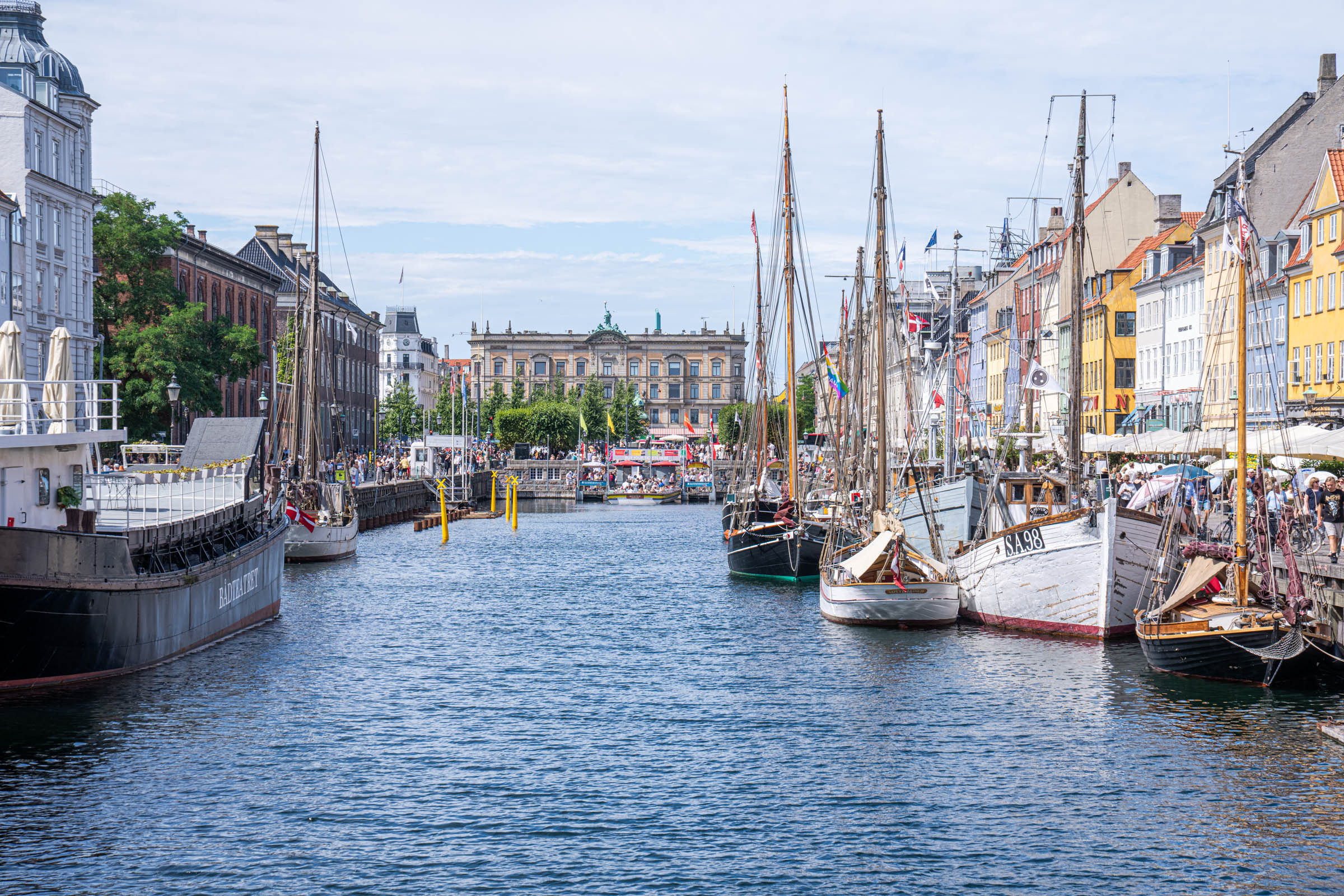
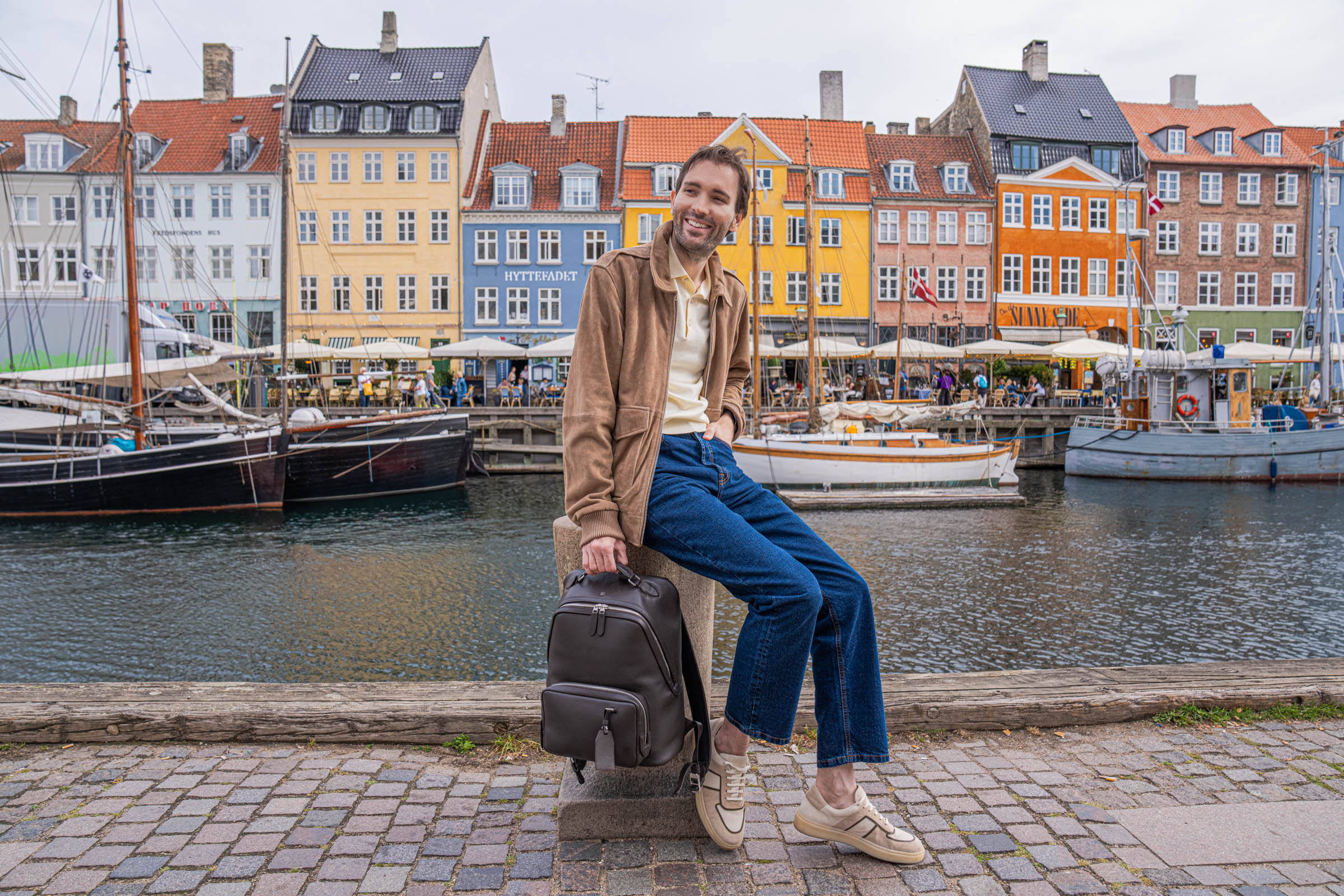
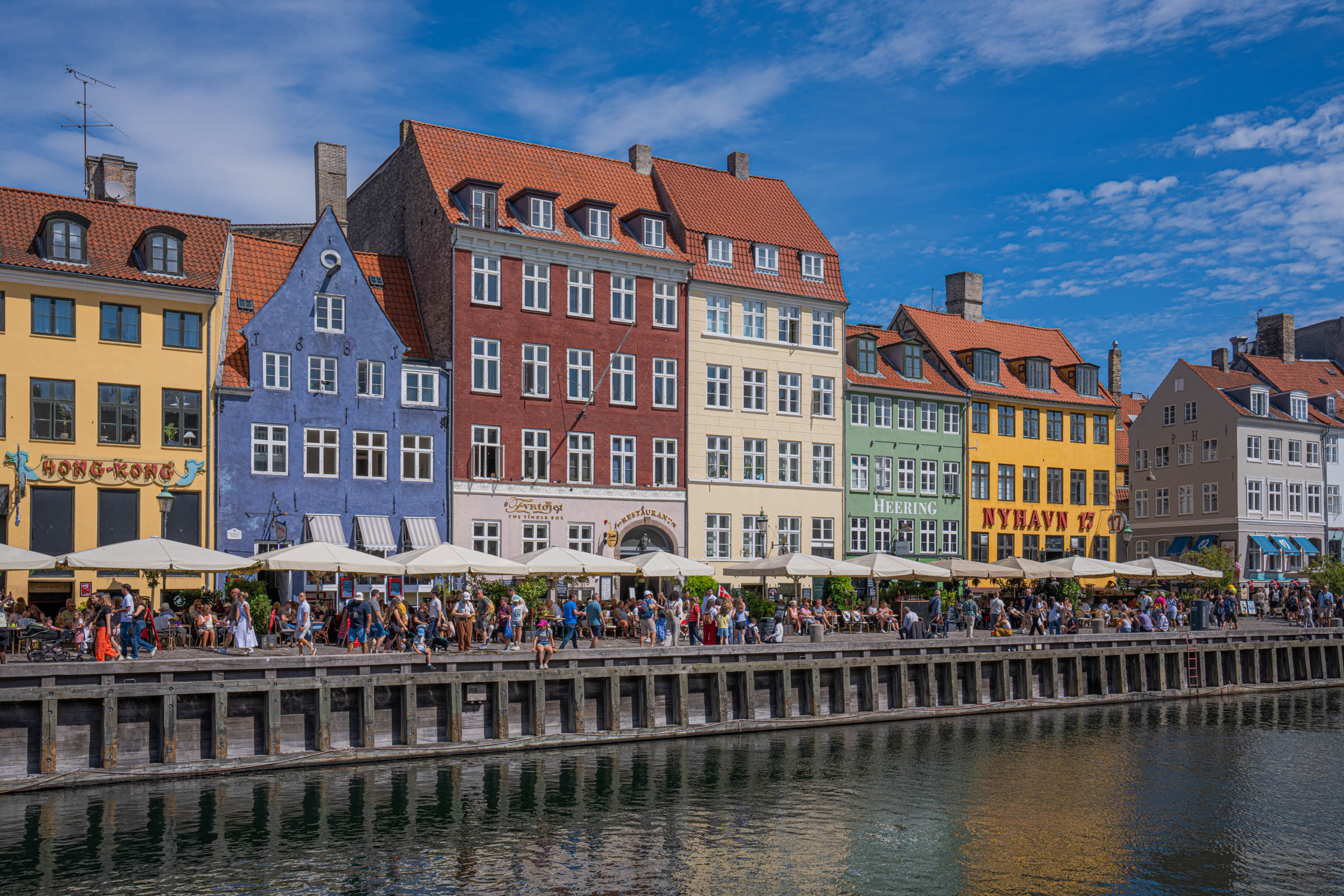
Nyhavn is the image that everyone takes home. Colorful facades, wooden ships and terraces full of people make the most recognizable sight of the city.
The canal was dug between 1670 and 1673, by order of King Christian the Fifth. It was dug by Swedish prisoners of war, and the purpose was practical: ships needed direct access to the market at Kongens Nytorv square. For centuries this was a working-class port with taverns, sailors and a bad reputation.


The oldest house is number nine and dates back to 1681. Commercial traffic stopped in 1967, and since 1977 the southern side of the canal belongs to museum ships.
Hans Christian Andersen lived here at three addresses. In house number 20, he published his first collection of fairy tales in 1835, among which The Tinderbox and The Princess and the Pea. He spent the longest period at number 67, from 1848 to 1865, and at number 18 he lived near the end of his life.
A tip from experience: come early in the morning. Around noon, the quay turns into a river of people, so a photo without crowds is almost impossible. In the morning, the light is softer, and the colors of the houses seem fuller.
STRØGET, COPENHAGEN: EXPLORING THE HISTORIC CITY CENTRE
Strøget is the pedestrian backbone of the city. The main stretch is about a kilometer and a hundred meters long, and connects City Hall Square with the Kongens Nytorv square.
It is interesting how it came about. In 1962, the city closed this street to cars, which seemed like a bold move at the time. The success was so great that Copenhagen continued on the same path and became a model for many European cities.
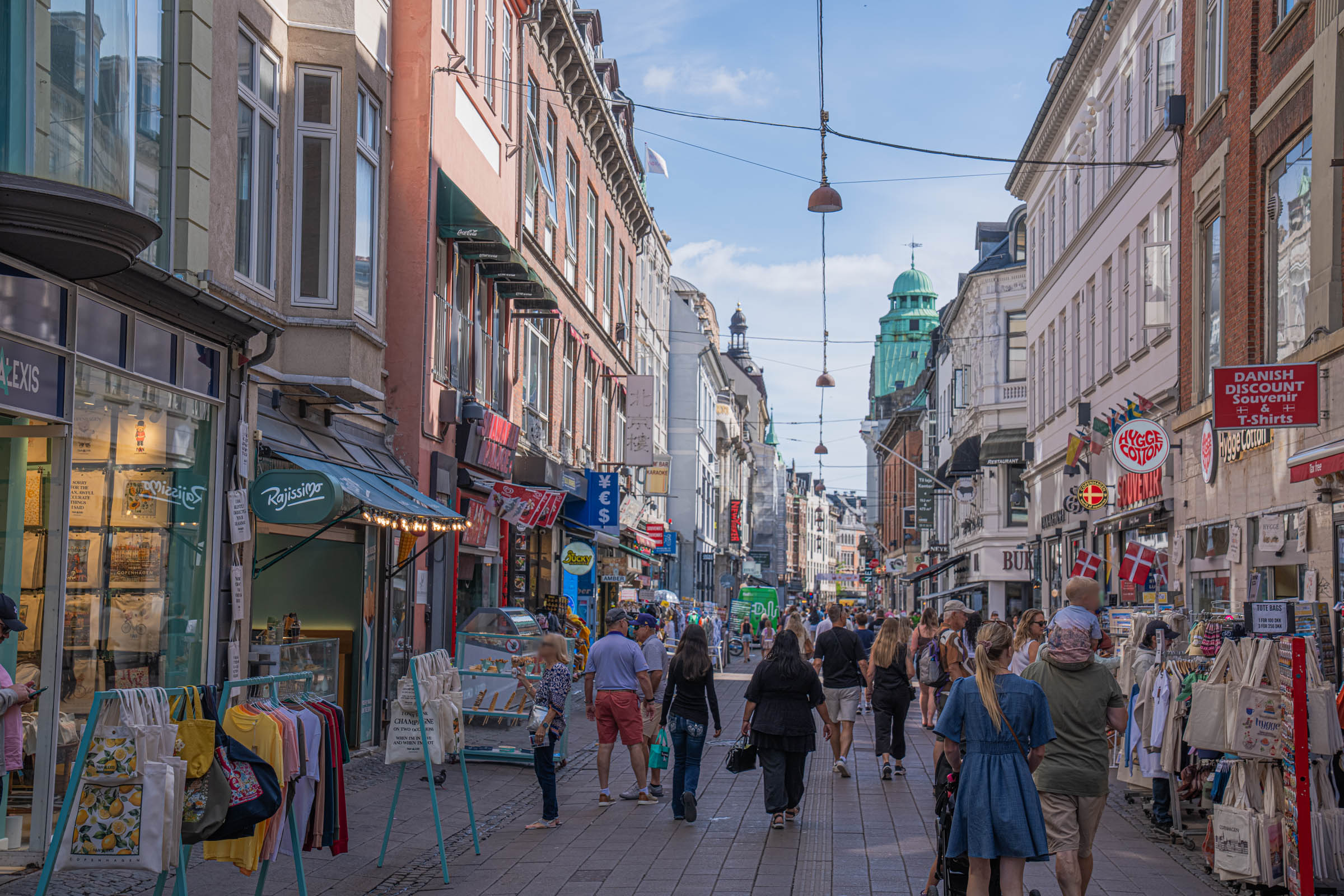


A walk on Strøget is not just about shopping. Along the way, you will pass through several squares, each with its own character. Amagertorv features the Stork Fountain from the nineteenth century and a view of the green tower of the Nikolaj Church, which today serves as an exhibition space.
A little further on are Gammeltorv and Nytorv, two old squares that look like one. There is also a city court with powerful pillars and an inscription that translates as: the country is built by law. That sentence comes from old Danish law and perfectly describes the country’s mentality.
If you deviate from the main route, you will receive a reward. The narrow streets around Højbro Plads and Kultorvet are full of small shops, flower shops and cafes. In Højbro Square stands the equestrian monument to Bishop Absalon, the man who started it all.


TOWN HALL SQUARE & TIVOLI: DISCOVERING ANOTHER SIDE OF COPENHAGEN
The western end of Strøget opens onto City Hall Square, known as Rådhuspladsen. This is the most lively place in the city and the best starting point for the first morning.
In the square stands the Dragon Fountain, with a bronze bull and a dragon in battle. Above it rises the building of the daily newspaper Politiken, one of the most recognizable addresses of the Danish press. This is where the fans gather, this is where the New Year is welcomed and this is where the pulse of the city can best be felt.
Across the square is Tivoli, a park that was opened in 1843. It is one of the oldest amusement parks in the world, founded by Georg Carstensen. The wooden roller coaster Rutschebanen has been running since 1914 and still carries passengers today.

Tivoli is not just a park for children. Gardens, ponds, theater stages and restaurants make it a place where even adults go, especially in the evening. When thousands of bulbs are lit, the entire space acts as a stage.
The impact that this park has left is also interesting. Walt Disney visited Tivoli and, according to stories that Danes love to repeat, took the ideas for his park from there. Whether that’s true or not, the connection between play and beautiful landscaping here is obvious.
Entrance to the park and entrance to the rides are charged separately. If you just want to take a walk, the first one is quite enough for you.
COPENHAGEN’S CHRISTIANSBORG & SLOTSHOLMEN: THE HISTORIC HEART OF DENMARK
Christiansborg is not just a palace. It is a building where the parliament, the prime minister and the supreme court work, which is rare in the world.
The palace stands on Slotsholmen, an island surrounded by canals. Below it lie the remains of Absalon’s fortress from 1167 and the later Copenhagen Castle. Parliament has been sitting here since 1928. The palace tower is the tallest in the city and is open to visitors free of charge. It’s worth the climb, because from above Copenhagen looks exactly as I remember it: low, green and full of towers.
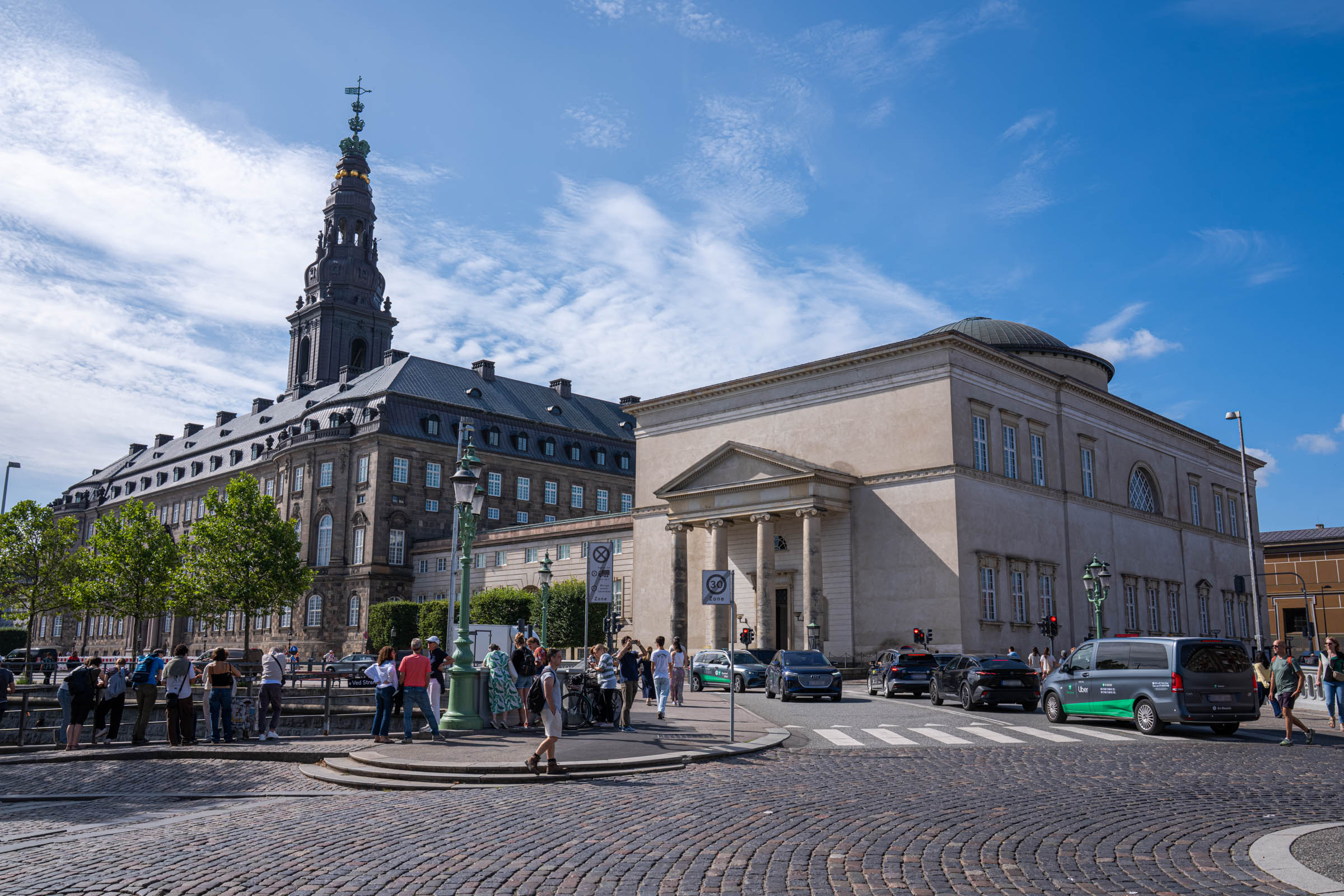

The Palace Church is also located within the complex. The interior is bright, classic and almost ascetic, with white pillars and a dome in the form of a cassette. After the splendor of other European churches, this silence pleasantly surprises.
There are several important addresses around the palace. The Thorvaldsens Museum houses the works of Denmark’s most famous sculptor, while the Royal Library has its own contemporary wing known as the Black Diamond. The Royal Library Garden is a peaceful place to take a break, and many tourists pass by without knowing it exists.
From here it is only a few steps to Gammel Strand. Boats for canal tours board here, and that ride is still the best introduction to the city.


KONGENS NYTORV & THE ROYAL THEATRE: THE ELEGANT HEART OF COPENHAGEN
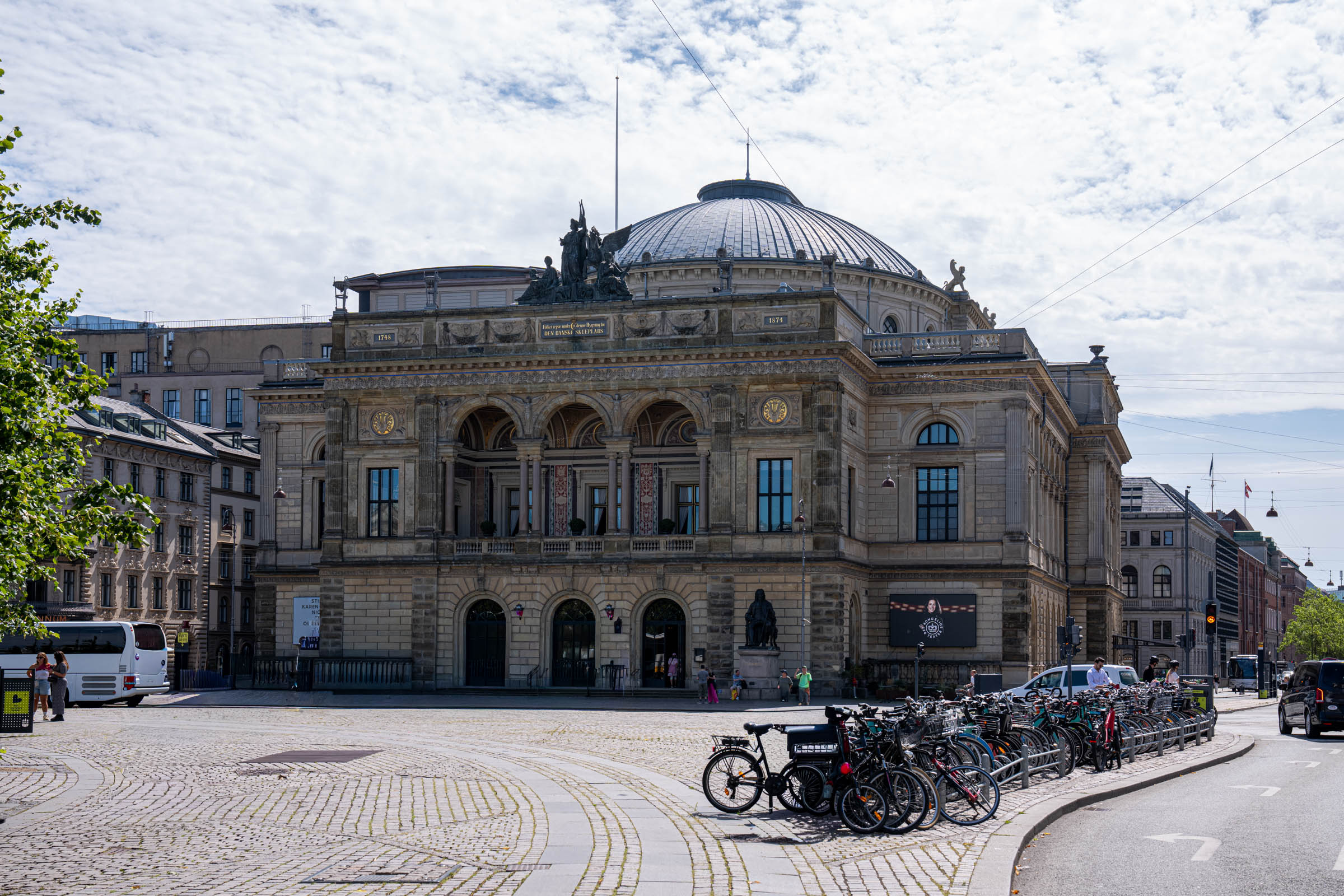
Kongens Nytorv is the largest square in the old town. It was created in the seventeenth century, when King Christian V expanded the city beyond the medieval walls.
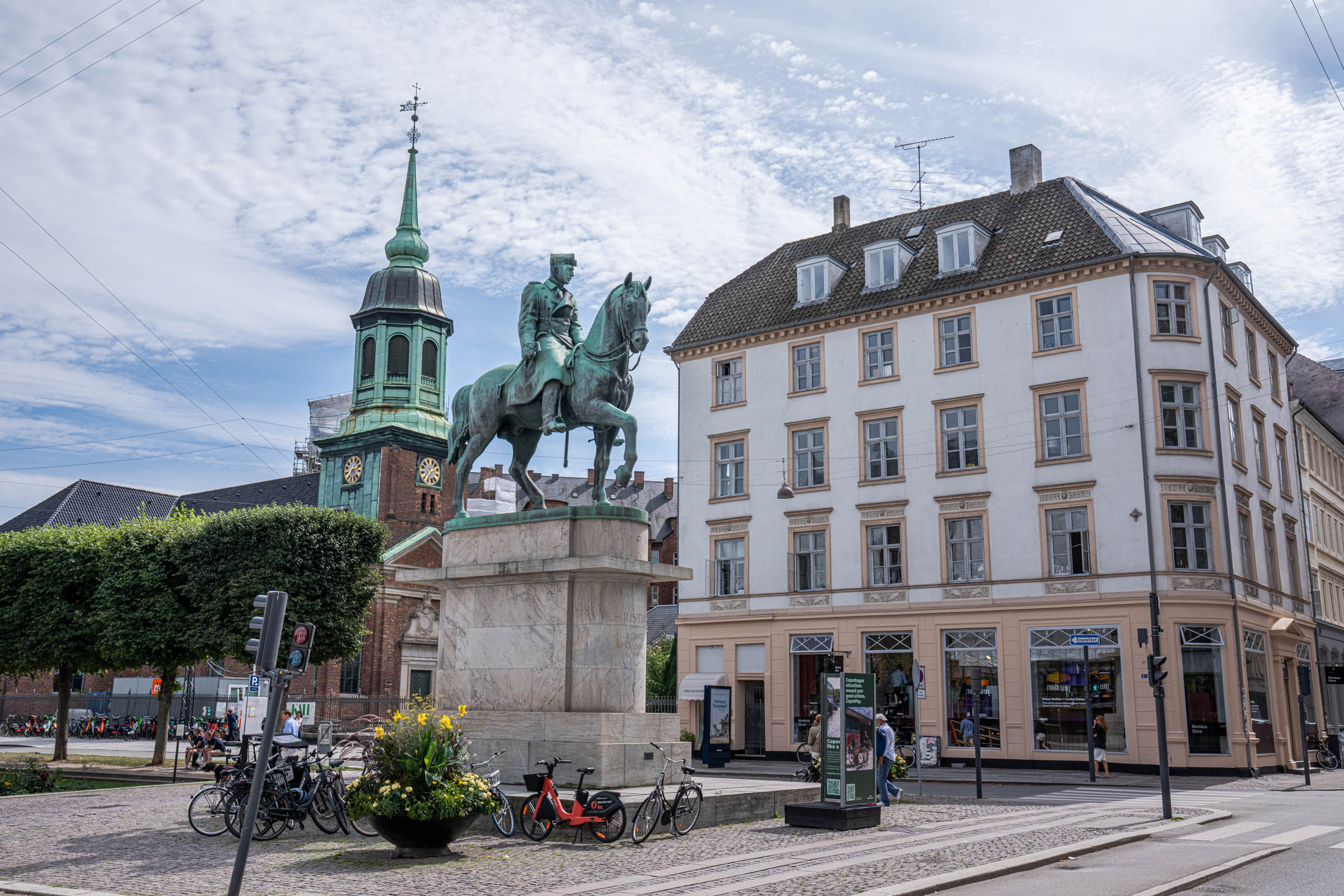
In the middle stands his equestrian monument, surrounded by flower beds and a row of trees. In summer, this is a place to sit, and in winter, an ice rink is set up here.
On the south side of the square rises the Royal Danish Theatre, a building from 1874 with a dome and sculptures on top. The Danish acting and ballet tradition has long been associated with this address.
The square is also a traffic hub. The metro line from the airport ends right here, so many travelers make their first contact with the city at this place. From here you head to Nyhavn, to Strøget or to the Royal Quarter.

AMALIENBORG, COPENHAGEN: INSIDE THE HOME OF THE DANISH ROYAL FAMILY
Amalienborg is not one palace, but four almost identical buildings around an octagonal square. They were built by noblemen between 1750 and 1760, according to the plans of the court architect Nikolaj Eigtved.
The entire neighborhood is called Frederiksstaden and was created in honor of the three hundred years of rule of the House of Oldenburg. In the center of the square stands the equestrian monument to King Frederick the Fifth, the work of the French sculptor Jacques Saly.
The royal family moved in in 1794, after the fire at Christiansborg. Since then, the palaces bear the names of kings: Christian the Seventh, Christian the Eighth, Frederick the Eighth and Christian IX.
The changing of the guard takes place every day at noon. The ceremony is short and without exaggeration, which is very Danish. The soldiers in blue uniforms and fur caps look serious, but the audience is standing only a few meters away.
The square has another value, which is the urban play of views. On one side, the axis leads to the dome of the Marble Church, and on the other to the port and the Opera House. Stand right in the middle and you’ll see how the whole city lines up.


COPENHAGEN: FREDERIK’S CHURCH AND THE DOME THAT DEFINES THE SKYLINE
The marble church is officially called Frederick’s Church. It is located a few tens of meters from Amalienborg and closes the view from the western side of the square.
The foundation stone was laid in 1749, but construction was difficult. The money ran out, so the huge unfinished building stood as a ruin in the middle of the city for more than a century. The solution came only when the banker C.F. Tietgen bought the project and financed the completion of the works.
The final appearance was given by the architect Ferdinand Meldahl, and the church was opened on August 19, 1894. Instead of expensive Norwegian marble, limestone was used, so the name of the church today speaks more about the intention than about the material.
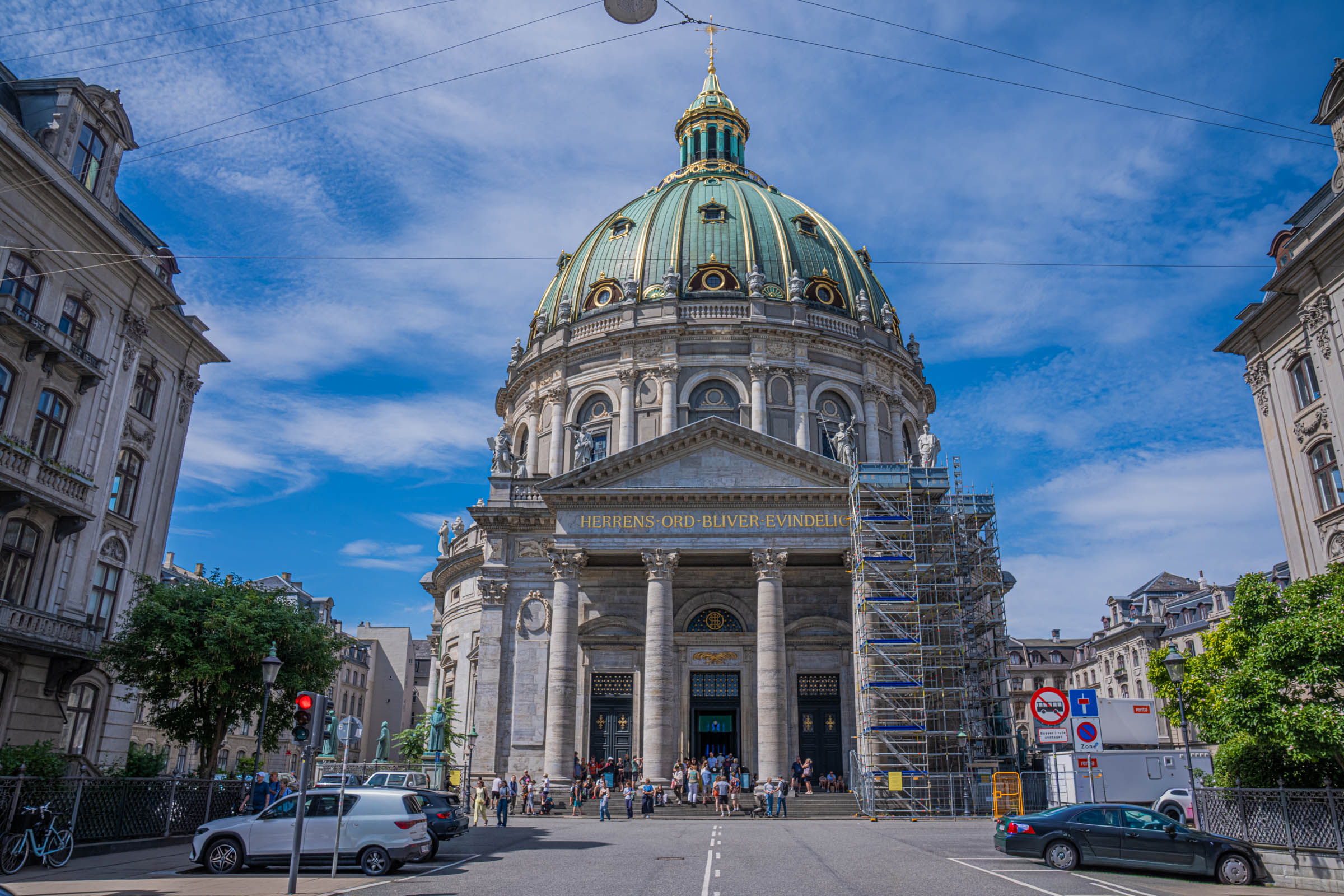

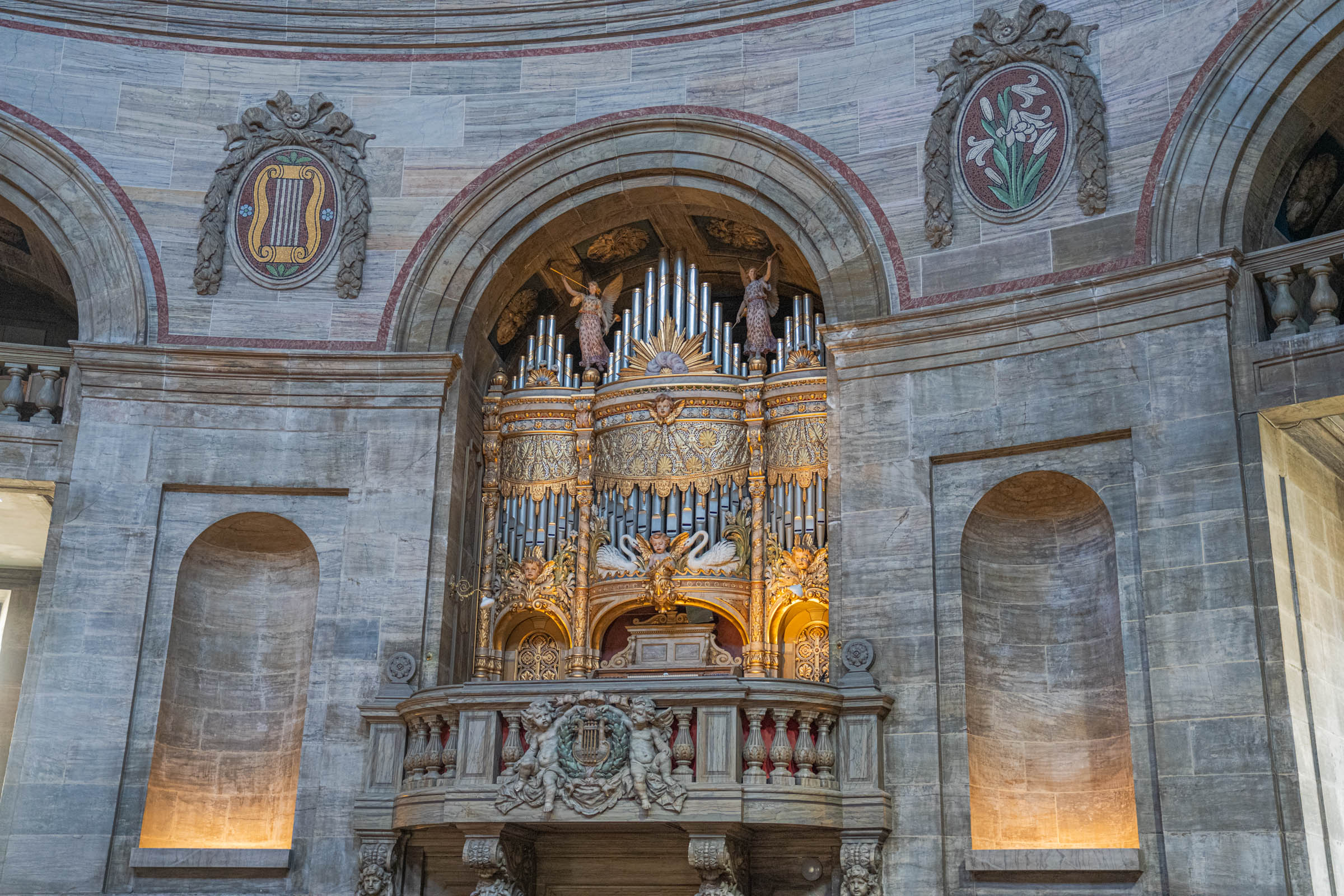
The dome has a span of thirty-one meters and is the largest church dome in Scandinavia. It rests on twelve pillars, and inside it seems incredibly light.
The interior impressed me more than the exterior. Blue and gold paintings, mosaics, a magnificent organ and a marble altar make an impression that is rarely seen in the north. The entrance is free, and in the summer there is also the possibility of climbing up to the dome.
Above the entrance there is a golden inscription, which in translation means: the word of the Lord remains forever. Statues of famous Danish theologians and thinkers, among them Søren Kierkegaard, are placed around the church.

KASTELLET, THE MILL & ST. ALBAN’S CHURCH: A HISTORIC CORNER OF COPENHAGEN
Kastellet is one of the best-preserved star-shaped fortifications in Northern Europe. It was built between 1662 and 1665, by order of King Frederick the Third and according to the plans of the Dutch engineer Henrik Ruse.
The fortress has five bastions, earth ramparts and canals filled with water. Today it is a public park, but it still belongs to the military. The red barracks are lined up along the cobblestone street, and the Danish flag flies above them.
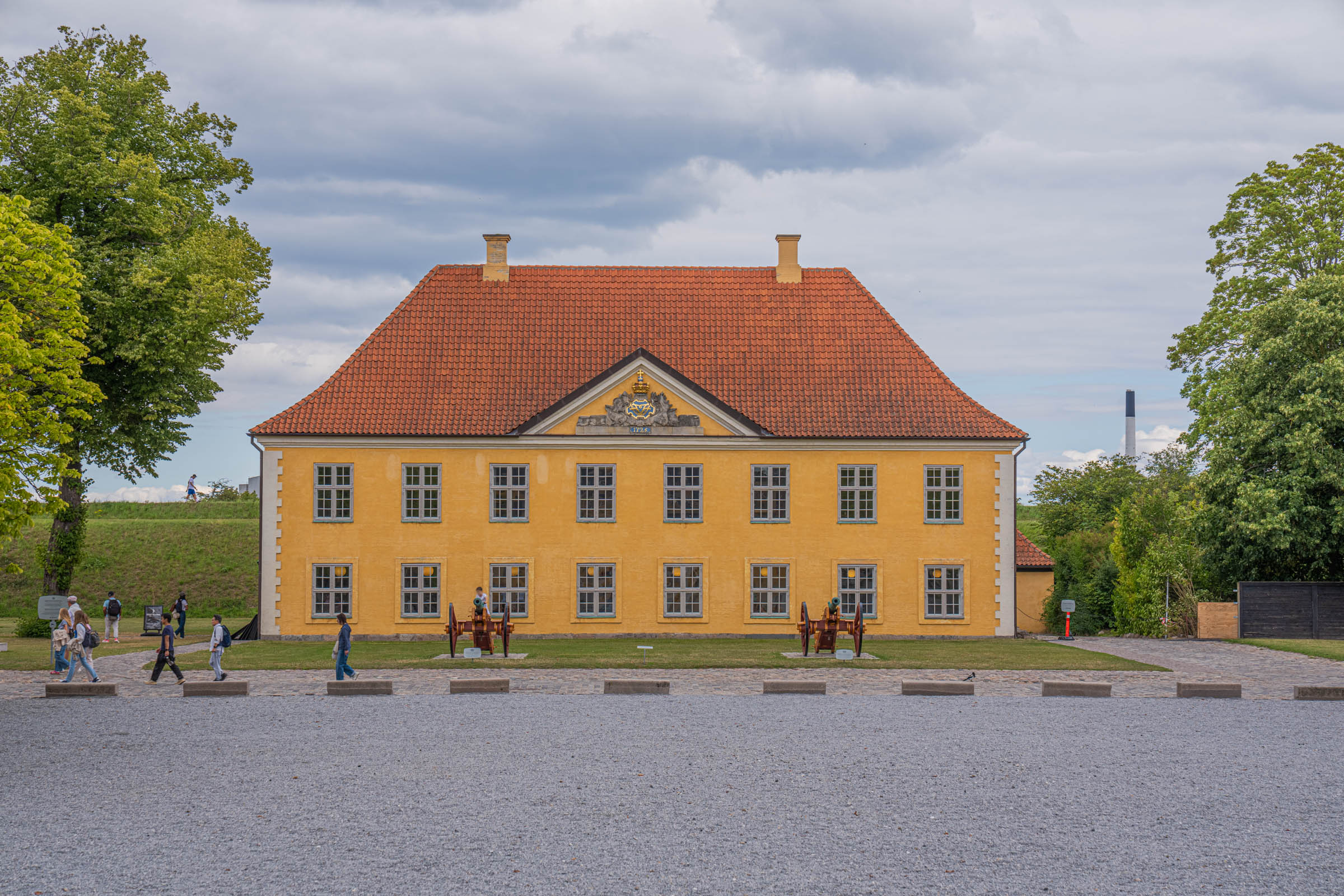
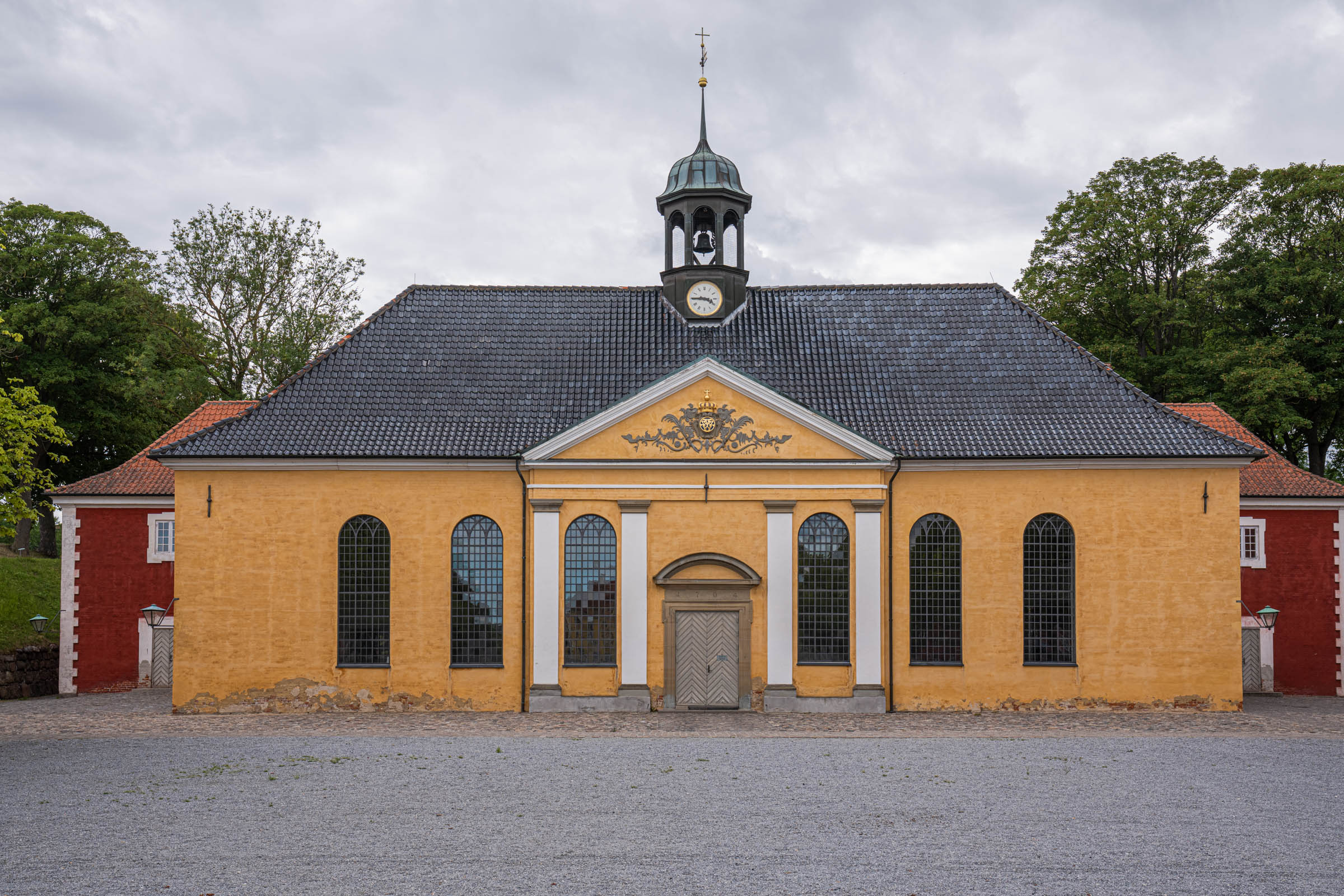
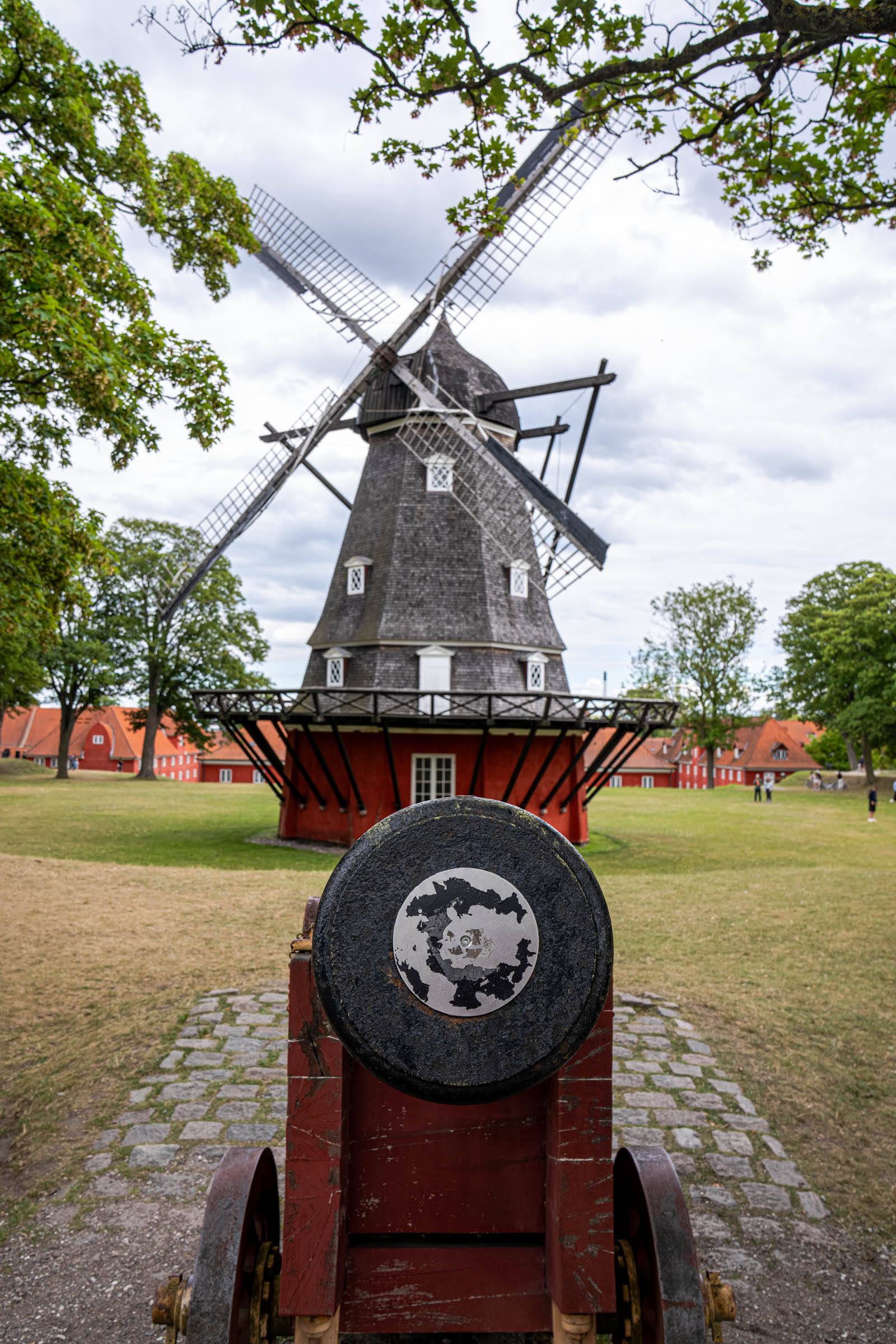
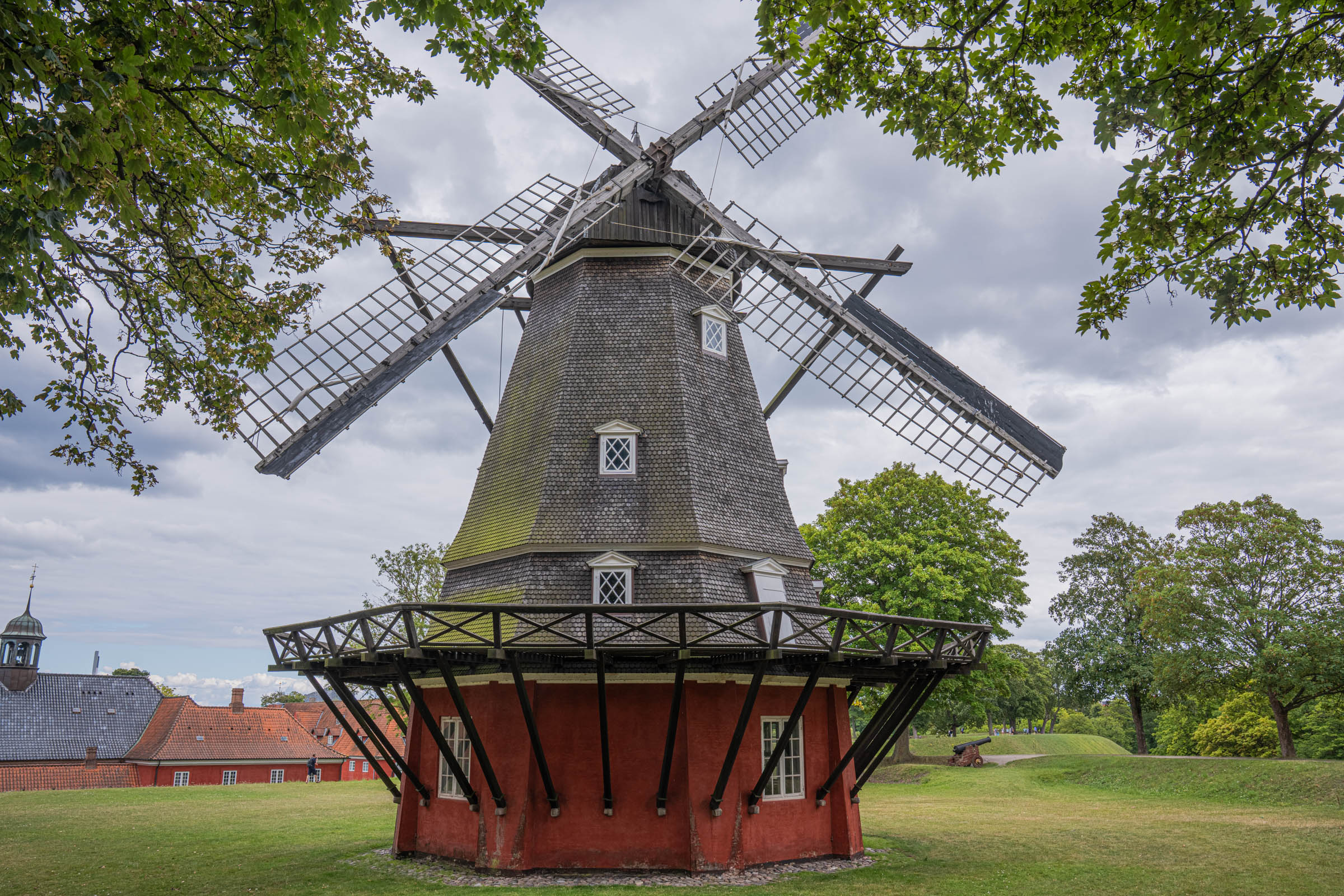
In the middle of the complex stands the yellow garrison church from 1704. On the side is a wooden windmill, one of the most beautiful sights in the city. An old cannon stands in front of him, so the joke is self-imposed: a mill and a cannon barrel in the same photo.
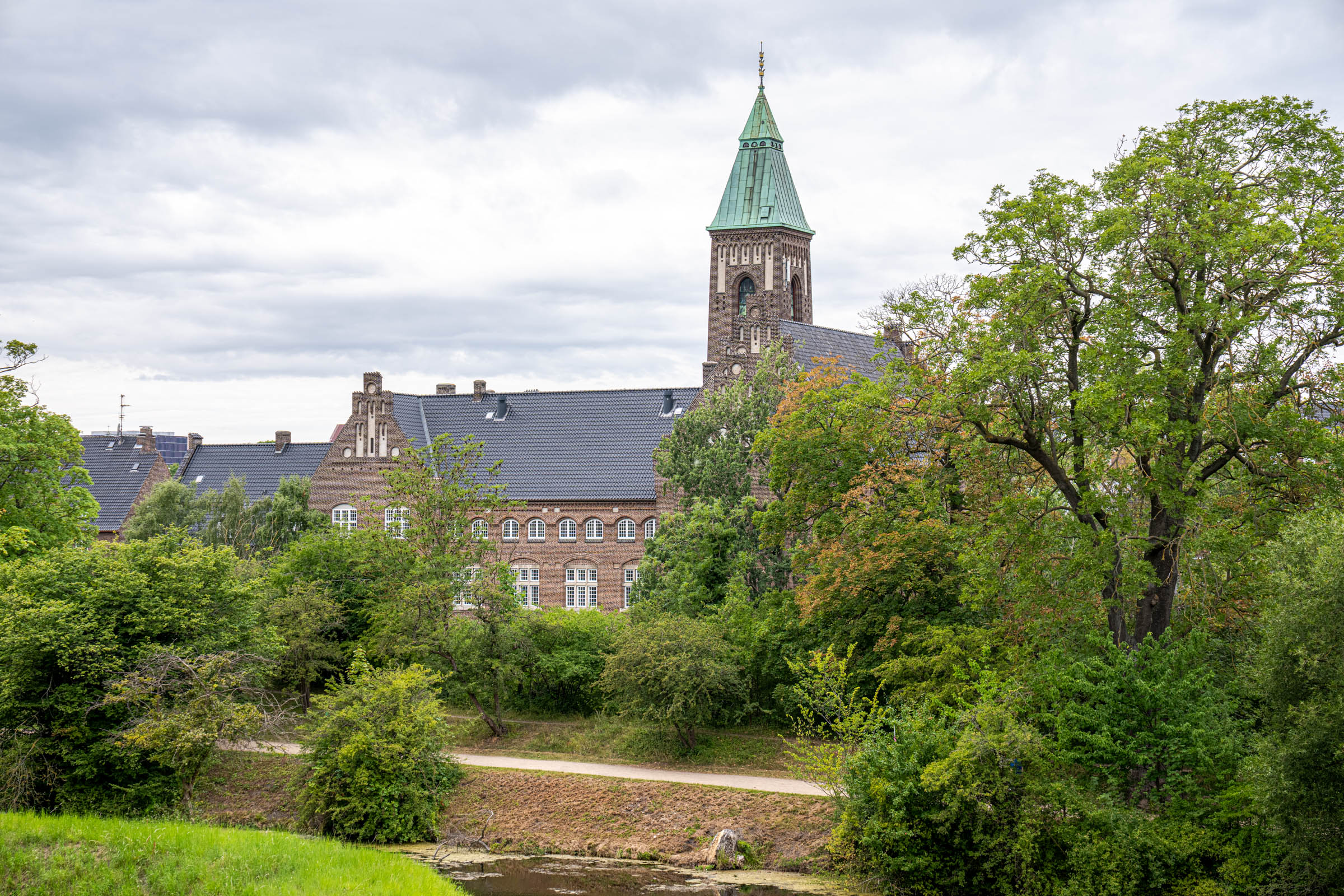
Just outside the ramparts stands St. Alban’s Church, the only Anglican church in Denmark. Its pointed tower and cobblestone walls look as if they were transported from the English countryside.
I recommend a tour around the ramparts. The walk lasts about half an hour, and along the way you can see views of the harbor, ponds with water lilies and swans. This was my most peaceful hour in the city.


THE GEFION FOUNTAIN, COPENHAGEN: THE LEGEND BEHIND THE BIRTH OF ZEALAND
On the edge of Kastellet, in Churchill Park, stands the largest monument in the city. The Gefion Fountain depicts a powerful goddess driving four oxen over rocks.
The legend is worth remembering. The goddess Gefion received from the Swedish king as much land as she could plow in one night. She turned her sons into oxen and plowed the island of Zealand, on which Copenhagen still lies today.
Sculptor Anders Bundgaard made the figures between 1897 and 1899. The pools and decorations were finished later, and the fountain was put into operation for the first time on July 14, 1908. The gift came from the Carlsberg Foundation.
The water here is not quiet. Cascades fall noisily, and in summer, visitors from all over the world gather around the fountain. Not far from there stands a monument to King Frederick IX, facing the harbor he loved.


COPENHAGEN: THE LITTLE MERMAID, THE CITY’S MOST HUMBLE STAR
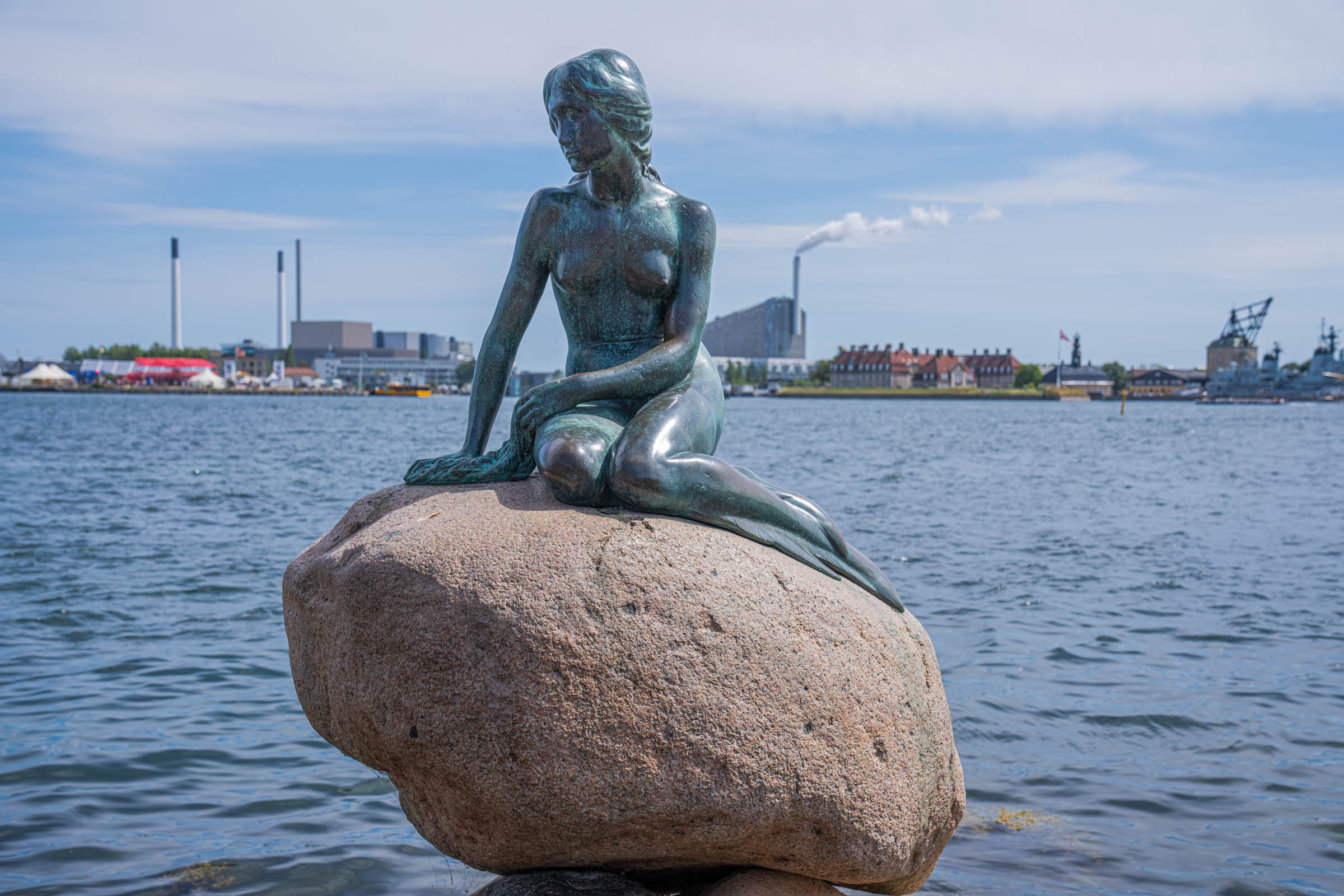
The Little Mermaid is the most photographed sculpture in Denmark and at the same time the biggest disappointment for many visitors. She is only one meter and twenty-five centimeters tall and weighs about one hundred and seventy-five kilograms.
It was unveiled on August 23, 1913. Sculptor Edvard Eriksen made it in bronze, and it was donated to the city by brewer Carl Jacobsen. He was led to this idea by a ballet based on Andersen’s fairy tale from 1837.
The story of the model is interesting. Ballerina Ellen Price refused to pose without clothes, so the body of the sculpture was modeled by the sculptor’s wife Eline.
The Little Mermaid has been through a lot. Her head was stolen, her hand was cut off, she was repeatedly covered with paint. Each time they returned it to the same stone, as if the city was stubbornly clinging to its symbol.
My advice is simple. You don’t come here just for the sculpture, but for the walk that leads to it. The journey via Amalienborg, Gefion Fountain and Kastellet takes about half an hour and is more beautiful than the destination itself.
COPENHAGEN: ROSENBORG CASTLE AND THE KING’S GARDEN
Rosenborg looks exactly how you imagine a fairytale castle. Towers with copper roofs, red brick and a moat create an image that seems unreal in the middle of the city.
It was built by Christian IV between 1606 and 1633, in the style of the Dutch Renaissance, as a summer residence. Today, the castle serves as a museum with twenty-four rooms arranged chronologically.
The cellar holds what many come for: Denmark’s crown jewels. There is also Christian IV’s crown and bejeweled sword, along with armor and silverware.


Surrounding the castle is the Royal Garden, the oldest park in the city. In summer it is full of people lying on the grass, reading or having lunch outdoors. A special part is occupied by a rose garden with low boxwood, lavender and a monument to Queen Caroline Amalie.
This park showed me something important about the Danes. They use the public space as an extension of their apartment, without fences and without rules that are visible to everyone. This is why the city seems warmer than the climate suggests.

COPENHAGEN: THE BEST MUSEUMS, PARKS & GARDENS TO VISIT
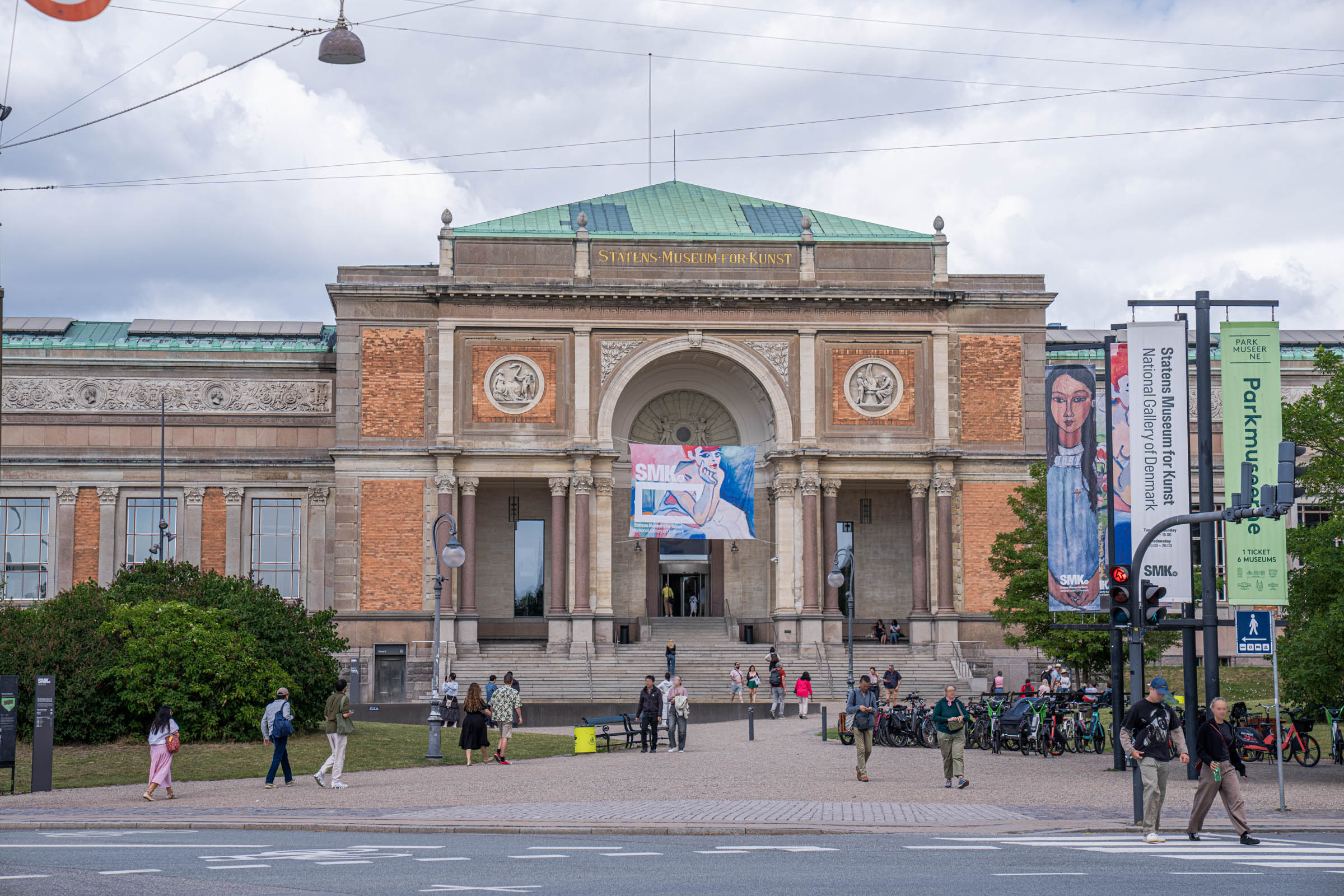
If you love art, the Statens Museum for Kunst is a must-see. The building was designed by Vilhelm Dahlerup, and was opened in 1896. The collection covers seven centuries, from old masters to contemporary works.
Not far from there is the Natural History Museum of Denmark. There is a huge meteorite in the yard, which is a detail that children remember more than any showcase.
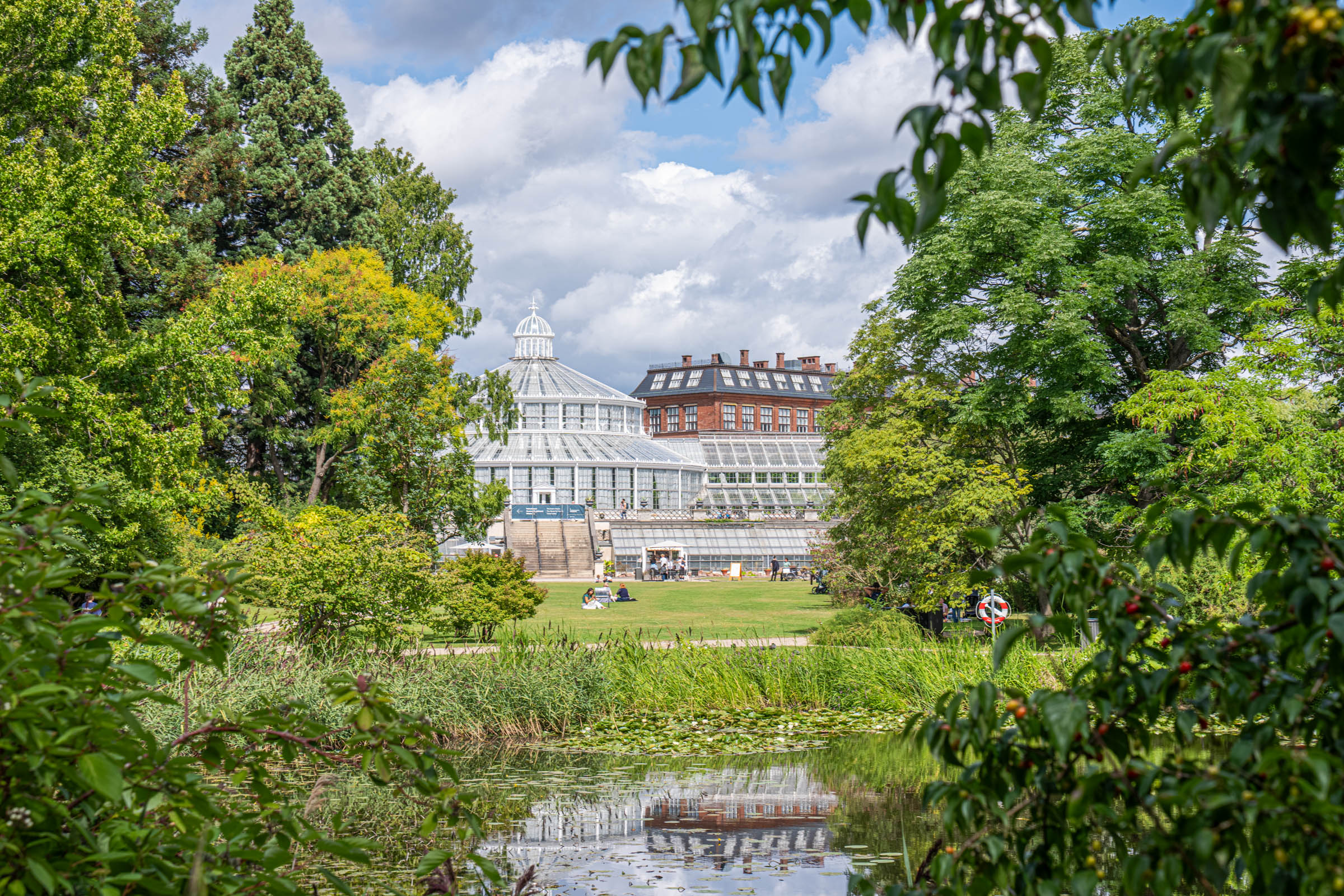
The botanical garden is my discovery of this trip. It covers ten hectares, and its heart is the glass Palm House from the nineteenth century. When you look at it over the water lily pond, you get one of the most beautiful photos in the city.
These three places lie next to each other, in an area that the Danes call park museums. One ticket covers several institutions, so it’s easy to fill up the whole day.
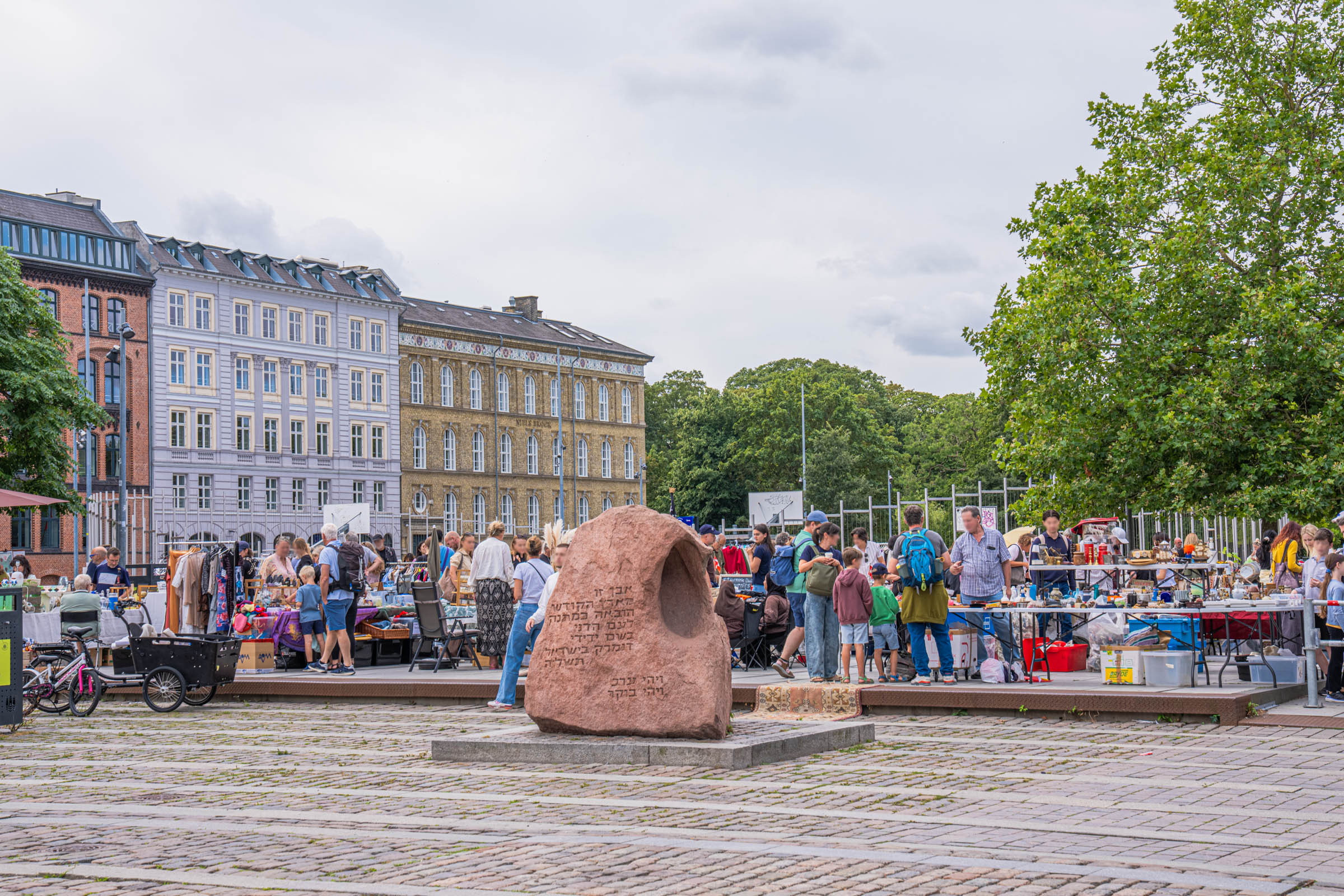
At the end of the day, I recommend Israels Plads. On weekends, there is a flea market, and people sell porcelain, books and old clothes. Nothing obligates you to buy, but the atmosphere is worth it.
COPENHAGEN: HARBOUR, OPERA & THE NEW FACE OF THE CITY
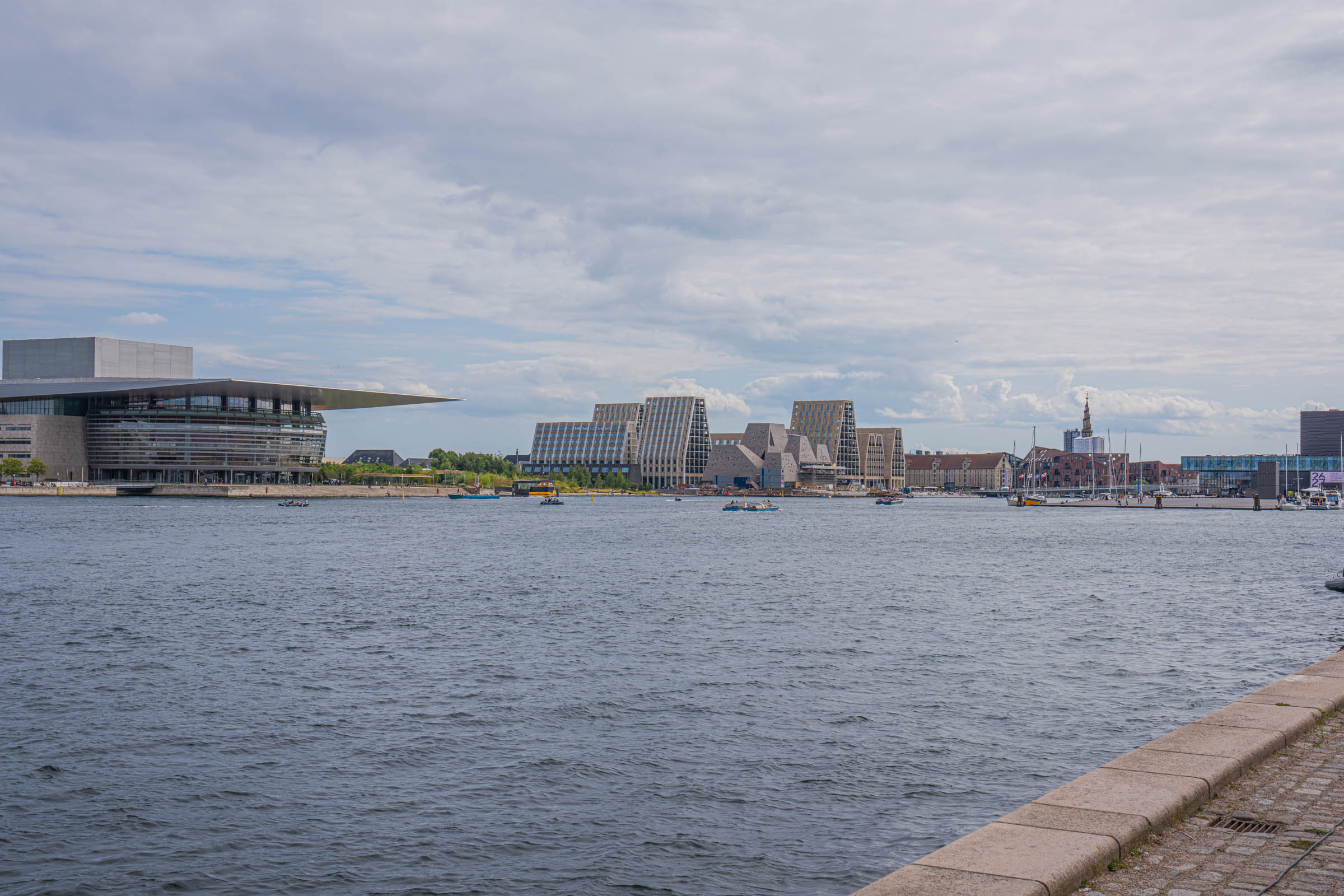
Copenhagen has turned to its port in recent decades. The old docks have been turned into residential areas, and the industrial shores into promenades.
The most impressive building is the Opera House on Holmen Island. It was opened on January 15, 2005, according to the project of architect Henning Larsen. The entire facility was a gift from the A.P. Møller Foundation to the Danish state.
The building has fourteen floors, five of which are below the water level. The flat roof hangs over the glass facade like a huge plank, and the ceiling of the main hall is covered with gold leaf.
On the other side of the water, a new neighborhood is rising with buildings in the shape of stepped triangles. The contrast is strong, but not unpleasant. The Danes know how to combine old brick and new concrete without quarreling between them.
The best way to see it all is by boat. The tour lasts about an hour and goes under low bridges, past Christianshavn and the winding tower of the Church of Our Saviour.

CHRISTIANSHAVN: CANALS, COLOURFUL HOUSES & COPENHAGEN FROM THE WATER
Across the bridge from the old town lies Christianshavn. This quarter was built by Christian the Fourth at the beginning of the seventeenth century, as part of the new fortifications and as a commercial quarter.
The settlement was created on artificial islands, so the channels here have a different rhythm. There are low houses, old warehouses and wooden ships along the water, and there are more bicycles than cars.
The most recognizable is the tower of the Church of Our Saviour, with a spiral staircase going up from the outside. The climb is not for those afraid of heights, but the view makes up for the effort.
In the same quarter is Christiania, a self-proclaimed community founded in the seventies of the last century. For some it is a free commune, for others it is a disputed point on the map. In any case, the story is part of the modern history of the city.
I remember Christianshavn because of the silence. A few hundred meters from the biggest crowds, you get a neighborhood where people sit on the edge of the quay and simply look at the water.

A TASTE OF COPENHAGEN: WHAT TO EAT IN THE DANISH CAPITAL
Danish cuisine has long been considered simple. In recent decades, that has changed, as the Nordic approach to food has gained a serious name in the world.
The basis is still smørrebrød, an open sandwich on rye bread. It goes with herring, smoked salmon, roast beef or scrambled eggs. The portion looks modest, but it fills you up more than you expect.
Street food has its champion, and that is the Danish hot dog in a bun. Hot dog kiosks have been part of the cityscape for decades and the price is one of the few that doesn’t hurt here.
For the sweet part of the day, I recommend cinnamon buns. The Danish baking tradition is serious, and the smells from the shops in the morning do the job better than any advertisement.
Coffee is a separate story. Danes drink a lot of coffee and take it seriously, so even a small bar usually offers a well-brewed brew.
Breakfast at the hotel was my favorite meal. Organic foods, homemade bread, cheeses and fresh fruit show what it looks like when someone doesn’t skimp on the start of the day.
COPENHAGEN BY BIKE: EXPLORING THE CITY ON TWO WHEELS
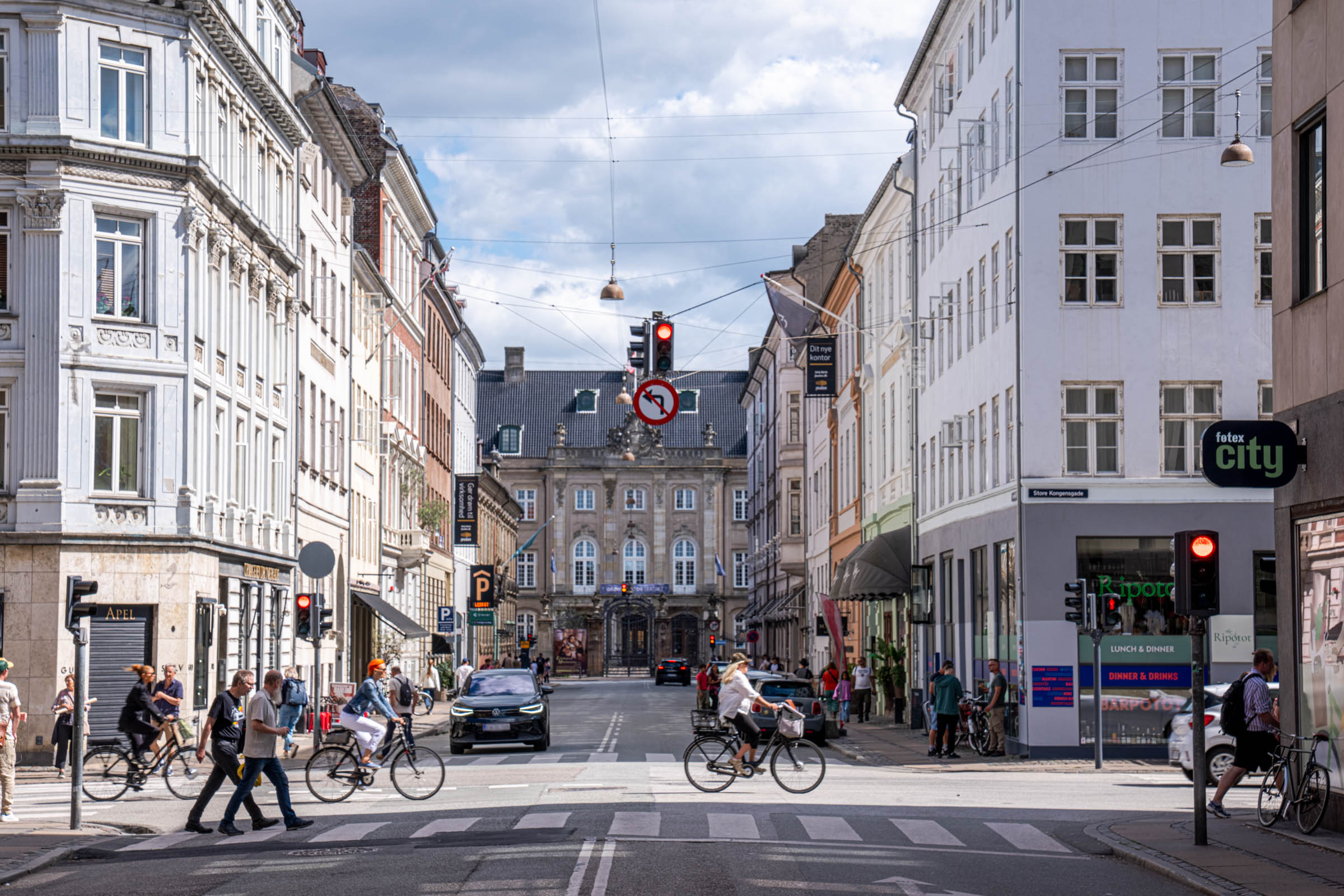
A bicycle in Copenhagen is not a hobby, but a means of transport. The lanes are wide, separated from the roadway and have their own traffic lights.
On the first day I made the mistake of standing on the bike lane to take a photo. The bell quickly reminded me of the rules. No one got mad, but I learned my lesson.
Renting a wheel is easy and well worth it if you are staying for more than two days. The city is flat, so there are no climbs to discourage you.
If you still stick to walking, count on about fifteen thousand steps a day. Bring comfortable shoes, because the cobblestones are beautiful to the eye, but hard on the feet.
COPENHAGEN: PRACTICAL TIPS FOR A PERFECT CITY BREAK
The airport is only eight kilometers from the center. Metro line M2 reaches Kongens Nytorv in about fifteen minutes, and the train arrives at the main station in just over ten.
Denmark uses its krone, not the euro. Cards are accepted everywhere, so you will practically never take cash out of your wallet.
Prices are high, no doubt about that. Restaurants, drinks and hotels cost significantly more than in southern and eastern Europe. However, there are ways to keep costs under control. Many sights are free, including the Kastellet, the Little Mermaid, the Marble Church and the Christiansborg Tower.
The best time to come is from May to September. Summer days are long, and temperatures rarely become uncomfortable. The wind is a constant companion, so a light jacket is useful even in July.
In three days you get to visit Nyhavn, Amalienborg, Christiansborg, Strøget, Kastellet and the harbour. The fourth day opens up space for Tivoli, Rosenborg and museums.
Reservations for popular restaurants are worth making in advance. The same applies to visiting Rosenborg during the summer, as the queues can be long.

COPENHAGEN STYLE GUIDE: WHAT TO WEAR IN THE DANISH CAPITAL
Danish style is restrained and practical. Neutral colors, clean lines and quality fabrics are seen at every step.
I brought a shearling leather jacket, a light knit t-shirt, straight pants, and comfortable sneakers. That combination withstood both the sun and the wind from the sea.
The tip is simple: choose layers. The weather changes several times a day, and rain can arrive without warning. An umbrella is less useful than a hood, because the wind rarely allows for a steady posture.

WHY I WILL COME BACK TO COPENHAGEN?
Copenhagen stuck in my head because of the balance. The city has a royal history but no royal pomp. It has contemporary architecture, but no coldness.
I remember the mornings the most. I left the hotel early, passed the lake and reached the canal before the world woke up. In those hours, the city belongs to those who walk.
This guide to Copenhagen does not cover everything. Christiania, the Louisiana Museum and the drive to Malmö remain for me, and that’s a good reason to return.
If you are planning a first trip, allow yourself at least three days. Copenhagen does not like to rush, and this is precisely its greatest value.
Manon Les Suites Guldsmeden proved to be the perfect starting point for such a trip. A hotel that keeps tropical warmth and northern simplicity under the same roof, a few steps from the city’s lakes and ten minutes’ walk from the old town. If you’re planning a trip to Copenhagen, feel free to put this address on Gyldenløvesgade at the top of your list.
This was my letter from Denmark. The next one is coming soon, and until then follow me on Instagram for more scenes from the capital that lives to the rhythm of bikes and water. I will definitely be back, because this city always finds a way to your heart!
With Love from Copenhagen,
Mr.M

This post is sponsored by the United Nations World Tourism Organization (UN Tourism) and the Manon Les Suites Guldsmeden hotel, as well as other local partners who selflessly supported this project. This post is my personal and honest review of the destination experience.
Hi Marko, I really enjoyed the way you described Copenhagen as a city that reveals itself slowly rather than trying to impress you immediately. That feeling is very familiar to me, because the city’s scale makes it possible to explore without constantly checking public transport. I was especially interested in your comparison between the historic centre and the newer harbour areas. The contrast between old buildings, bicycles and contemporary architecture seems to be one of Copenhagen’s strongest characteristics. Your recommendation to visit Nyhavn early in the morning is also very useful, because I imagine it becomes considerably busier later in… Read more »
Hallo Marko, dein Kopenhagen-Bericht hat bei mir sofort wieder Lust auf eine Reise nach Dänemark geweckt. Besonders schön finde ich, dass du nicht nur die bekannten Sehenswürdigkeiten aufzählst, sondern auch erklärst, wie die Stadt historisch gewachsen ist. Die Geschichte von Nyhavn fand ich überraschend interessant, weil man bei den bunten Häusern heute kaum noch an einen ehemaligen Arbeitshafen denkt. Auch dein Hinweis, früh am Morgen dorthin zu gehen, ist genau die Art von praktischem Tipp, die ich in Reiseberichten schätze. Die Kombination aus Wasser, Architektur und Fahrrädern scheint Kopenhagen wirklich einen eigenen Charakter zu geben. Jetzt würde mich noch interessieren,… Read more »
Bonjour Marko, j’ai beaucoup aimé votre manière de raconter Copenhague sans transformer le voyage en simple liste de monuments. La partie consacrée à Nyhavn m’a particulièrement intéressé, surtout lorsque vous expliquez l’histoire du canal et son ancienne fonction portuaire. Cela change complètement la façon dont on regarde aujourd’hui les façades colorées et les vieux bateaux. J’ai également apprécié vos remarques sur le vélo et les déplacements à pied, car c’est souvent ce qui fait la différence lors d’un séjour en ville. Votre description du Kastellet donne aussi envie de découvrir cette partie plus calme de Copenhague. Pensez-vous qu’il faut prévoir… Read more »
Wat een fijne manier om Kopenhagen te beschrijven, Marko. Ik vind het vooral interessant dat je de stad niet alleen als een verzameling bezienswaardigheden presenteert, maar ook aandacht besteedt aan de sfeer en het tempo van het dagelijkse leven. Nyhavn kende ik natuurlijk al van de foto’s, maar door de historische achtergrond krijgt die plek ineens veel meer betekenis. Ook je beschrijving van Strøget maakte me nieuwsgierig naar de kleinere straten eromheen. Ik ben zelf altijd meer geïnteresseerd in de plekken waar je even van de hoofdroute kunt afwijken. Zou je voor een eerste bezoek eerder aanraden om veel te… Read more »
Ciao Marko, questo reportage mi è piaciuto soprattutto perché restituisce l’atmosfera della città e non soltanto i suoi monumenti più famosi. La parte su Nyhavn è molto interessante, perché dietro quelle facciate colorate c’è una storia portuale che spesso viene dimenticata. Mi ha colpito anche il modo in cui descrivi Copenaghen come una città da attraversare lentamente. La combinazione tra canali, biciclette, piazze e architettura storica sembra davvero particolare. Ho trovato interessante anche il tuo soggiorno al Manon Les Suites, soprattutto per il contrasto tra l’esterno nordico e l’interno quasi tropicale. Per un viaggio di tre giorni, quale zona consiglieresti… Read more »
Marko, bardzo podoba mi się sposób, w jaki pokazałeś Kopenhagę jako miasto do odkrywania bez pośpiechu. Szczególnie zainteresowała mnie historia Nyhavn, ponieważ dzisiejszy kolorowy wizerunek tego miejsca zupełnie nie pasuje do jego dawnej funkcji portowej. Wartość takich informacji jest dla mnie ogromna, bo dzięki nim zwiedzanie staje się czymś więcej niż robieniem zdjęć. Ciekawie opisałeś również Amalienborg i zmianę warty, która wydaje się być jednym z tych klasycznych momentów pierwszej wizyty w Kopenhadze. Zastanawiam się tylko, czy podczas kilku dni w mieście warto przeznaczyć osobny dzień na muzea. Które z nich zrobiło na Tobie największe wrażenie?
Hola Marko, me ha gustado mucho este viaje por Copenhague porque se nota que intentas explicar la ciudad y no simplemente enumerar lugares turísticos. La historia de Christiansborg y de Slotsholmen me pareció especialmente interesante. Muchas veces uno visita un palacio sin saber qué había allí antes, y en este caso las ruinas relacionadas con la antigua fortaleza de Absalón añaden otra dimensión. También me gustó tu recomendación de recorrer el puerto en barco. ¿Crees que merece la pena hacerlo aunque uno ya haya caminado bastante por los canales? Me gustaría saber si desde el agua realmente se obtiene una… Read more »
Olá Marko, gostei muito da forma como apresentaste Copenhaga como uma cidade que recompensa quem caminha sem pressa. A descrição de Nyhavn chamou-me particularmente a atenção, sobretudo porque o local tem uma história muito diferente da imagem turística que conhecemos hoje. Também achei interessante a explicação sobre Strøget e a transformação do centro numa zona pedonal. É curioso pensar que uma decisão urbana tomada há décadas tenha influenciado tanto a maneira como a cidade é vivida atualmente. A parte sobre o Tivoli também me deixou com vontade de conhecer o parque durante a noite. Na tua opinião, vale a pena… Read more »
Your hotel choice immediately caught my attention, Marko. I have always found Copenhagen hotels interesting because many of them seem to approach Scandinavian design in very different ways. Manon Les Suites is clearly much more theatrical than the minimalist Nordic interiors one normally associates with Denmark. The Junglefish pool must create a rather unusual first impression after spending the day outside among Copenhagen’s restrained architecture. I also liked that you mentioned the hotel’s location near the lakes rather than presenting it simply as a luxury property. If someone preferred a more traditional Copenhagen atmosphere, would you personally consider Hotel Sanders… Read more »
Deine Beschreibung des Manon Les Suites hat mich neugierig gemacht, weil das Hotel offenbar einen ganz anderen Ansatz verfolgt als viele klassische Häuser in Kopenhagen. Die tropische Atmosphäre im Innenbereich wirkt auf den Bildern fast wie ein bewusster Gegensatz zur eher zurückhaltenden Architektur der Stadt. Besonders interessant finde ich, dass du die Lage an den Seen hervorhebst. Für mich ist die Lage eines Hotels oft wichtiger als eine besonders große Lobby oder ein spektakuläres Restaurant. Ich kenne Hotel Sanders bisher nur vom Namen und habe gehört, dass es eine sehr eigene Atmosphäre haben soll. Würdest du sagen, dass Manon Les… Read more »
Votre description de Manon Les Suites m’a intrigué parce que l’hôtel semble presque volontairement jouer avec les codes habituels du design scandinave. Le contraste entre les lignes assez sobres de Copenhague et cet intérieur végétal doit être assez spectaculaire lorsqu’on arrive pour la première fois. J’aime aussi le fait que vous insistiez sur les petits détails de la chambre, car ce sont souvent eux qui permettent de comprendre la personnalité d’un hôtel. La proximité des lacs semble également très agréable pour commencer la journée à pied. Entre Manon Les Suites et un hôtel plus classique comme le Nimb, lequel choisiriez-vous… Read more »
I have been following your travel stories for a while, Marko, and this one feels particularly personal. Copenhagen seems to suit your style of travelling because you can combine architecture, history, hotels and fashion without needing to rush between distant locations. I especially liked the passage about Amalienborg because the square seems much more elegant than the typical palace complexes found elsewhere in Europe. The connection between the palace and the old Christiansborg fire is also a fascinating piece of history. I wonder how different the atmosphere is around Amalienborg in the evening once the crowds have disappeared. Would you… Read more »
Marko, ho letto diversi tuoi reportage, ma questo su Copenaghen mi ha dato una sensazione particolarmente piacevole. Mi piace il fatto che tu abbia inserito anche dettagli storici, perché aiutano a capire perché la città abbia questa particolare struttura urbana. La storia di Amalienborg, legata all’incendio di Christiansborg, è un esempio perfetto di come un evento del passato possa ancora influenzare la città di oggi. Anche la vicinanza tra il palazzo, la Marble Church e il porto sembra creare un itinerario molto naturale. Mi chiedo però se la zona sia altrettanto interessante quando non ci sono cerimonie o cambi della… Read more »
Wat ik mooi vind aan je verhaal, is dat je ook de minder voor de hand liggende details van Kopenhagen benoemt. De geschiedenis achter Christiansborg en Slotsholmen vond ik bijvoorbeeld veel interessanter dan ik vooraf had verwacht. Het idee dat onder het huidige paleis nog sporen van eerdere gebouwen liggen, geeft de plek een heel andere betekenis. Ook de Royal Library en de tuin ernaast lijken me goede plekken om even uit de drukte te ontsnappen. Ik ben benieuwd hoeveel tijd je ongeveer aan Slotsholmen hebt besteed. Is dit volgens jou een gebied dat je rustig in één ochtend kunt… Read more »
Me gustó mucho tu explicación sobre el Kastellet, Marko. Muchas personas van directamente hacia La Sirenita y probablemente no se dan cuenta de que la fortaleza forma parte de un paseo mucho más interesante. La combinación de murallas, canales, edificios militares y el antiguo molino parece muy fotogénica. También me parece una buena idea caminar desde allí hacia la fuente de Gefion antes de continuar hasta la estatua. Es una ruta que parece bastante sencilla y, al mismo tiempo, permite conocer varias caras de Copenhague. ¿Dirías que este paseo es más bonito por la mañana o al final de la… Read more »
Najbardziej spodobała mi się część dotycząca Małej Syrenki, ponieważ bardzo często zdjęcia tworzą wobec tego miejsca zupełnie inne oczekiwania. Informacja o jej niewielkich rozmiarach jest naprawdę przydatna dla osoby planującej pierwszą wizytę. Zgadzam się też z Tobą, że sama droga do pomnika może być ciekawsza niż kilka minut spędzonych przy nim. Kastellet i fontanna Gefion wydają się tworzyć naturalną trasę spacerową. Zastanawiam się, czy warto przeznaczyć na ten spacer całe przedpołudnie. Czy po drodze znalazłeś jakieś miejsce, w którym warto zatrzymać się na kawę?
A parte sobre a Pequena Sereia foi uma das minhas favoritas. É interessante saber que a estátua é bem menor do que muitas pessoas imaginam antes de chegar a Copenhaga. Acho especialmente boa a tua sugestão de não tratar a visita como um ponto isolado, mas como parte de um passeio por Kastellet e pela fonte de Gefion. Isso parece tornar a experiência muito mais interessante. Também gostei da história sobre as várias vezes em que a estátua foi danificada e restaurada. Fiquei com uma dúvida: é fácil fazer todo esse percurso a pé sem precisar de transporte?
The section about Tivoli was particularly enjoyable because I think the park is sometimes reduced to being simply an amusement park. Your description of the gardens, restaurants and evening atmosphere gives it a much broader identity. I also found the historical connection with Walt Disney interesting, although I would probably want to visit Tivoli myself before forming an opinion about the similarities. The fact that the wooden roller coaster dates back to the early twentieth century makes the place even more appealing. I appreciate your clarification that admission and rides are charged separately. Would you recommend visiting during the day… Read more »
Ich fand deinen Abschnitt über Tivoli besonders gelungen, weil du den Park nicht nur als Attraktion für Kinder beschreibst. Gerade die Mischung aus Gartenanlagen, Restaurants und Beleuchtung am Abend scheint den Charakter des Ortes auszumachen. Die Geschichte des Parks seit 1843 macht ihn natürlich noch interessanter. Auch der Hinweis auf die getrennten Eintrittspreise ist für die Reiseplanung sehr hilfreich. Ich könnte mir vorstellen, dass Tivoli am Abend eine ganz andere Atmosphäre hat als am Nachmittag. Würdest du deshalb eher einen Besuch nach Einbruch der Dunkelheit empfehlen?
J’ai beaucoup aimé votre description de Tivoli, surtout parce que vous montrez qu’il s’agit de bien plus qu’un parc d’attractions. L’idée de jardins, de restaurants et de spectacles dans un même espace correspond assez bien à l’image que je me fais de Copenhague. La dimension historique du lieu est également fascinante, puisqu’il existe depuis le XIXe siècle. J’ai noté votre conseil concernant les billets séparés pour les attractions, car ce genre de détail peut facilement être oublié. Est-ce que vous pensez qu’une soirée entière suffit pour découvrir Tivoli correctement?
One detail from your Copenhagen guide that stayed with me was the idea of the city belonging more to people than to cars. That seems like a small observation, but it probably explains why Copenhagen feels so comfortable for visitors. The combination of pedestrian streets, bicycle infrastructure and public spaces sounds particularly appealing to someone who prefers walking. I also liked your warning about accidentally standing in a bicycle lane, because it is exactly the kind of practical detail that guidebooks often omit. I wonder whether you found Copenhagen easier to navigate on foot than cities such as Amsterdam or… Read more »
La tua osservazione sul rapporto tra Copenhagen e le biciclette mi ha fatto sorridere. È interessante quando un elemento della vita quotidiana diventa parte integrante dell’identità di una città. Mi piace molto l’idea di poter visitare gran parte del centro senza dover continuamente pensare ai trasporti. Anche il fatto che la città sia praticamente pianeggiante rende la bicicletta una soluzione molto naturale. Mi chiedo però se per un visitatore alla prima esperienza sia facile capire le regole delle piste ciclabili. Hai preferito usare la bici oppure camminare durante il tuo soggiorno?
Ik vond je opmerkingen over fietsen in Kopenhagen verrassend herkenbaar, ook al ben ik er zelf nog niet geweest. Het lijkt erop dat de fiets daar echt onderdeel is van de stedelijke infrastructuur en niet alleen van de vrijetijdscultuur. Vooral de gescheiden fietspaden en eigen verkeerslichten lijken me prettig. Tegelijkertijd kan ik me voorstellen dat een bezoeker in het begin even moet wennen. Je tip over niet zomaar op een fietspad gaan staan om een foto te maken is daarom heel nuttig. Denk je dat iemand die normaal nauwelijks fietst Kopenhagen toch gemakkelijk per fiets kan ontdekken?
Tu explicación sobre el diseño urbano de Copenhague me pareció uno de los puntos más interesantes del artículo. No se trata solamente de edificios bonitos, sino de cómo están organizadas las calles y los espacios públicos. La sensación de poder caminar entre el centro histórico, los canales y las zonas portuarias sin depender demasiado del transporte público debe cambiar completamente la experiencia. También me gustó la idea de que los bancos junto al agua no sean simplemente decoración. ¿Crees que esta planificación urbana es una de las principales razones por las que la ciudad resulta tan agradable para una escapada… Read more »
Bardzo zainteresował mnie fragment o tym, że Kopenhaga została zaprojektowana bardziej z myślą o ludziach niż o samochodach. To chyba jedna z tych rzeczy, które trudno zauważyć na zdjęciach, ale bardzo mocno wpływają na komfort pobytu. Podoba mi się również sposób, w jaki opisujesz miejskie przestrzenie nad wodą. Możliwość usiąść przy kanale i po prostu obserwować miasto brzmi jak idealny sposób na odpoczynek. Mam wrażenie, że właśnie takie momenty często zostają w pamięci dłużej niż kolejne zabytki. Czy znalazłeś w Kopenhadze miejsce, do którego wracałeś właśnie po to, żeby spokojnie posiedzieć?
Gostei muito da parte em que falas sobre Copenhaga como uma cidade feita para as pessoas. É uma observação simples, mas explica bastante sobre a sensação que se tem ao caminhar pelo centro. A presença constante da água também parece contribuir para esse ambiente mais tranquilo. Achei interessante saber que tantos lugares importantes ficam relativamente próximos uns dos outros. Para uma viagem de três dias, isso deve permitir um ritmo muito mais agradável. Se tivesses de escolher apenas um passeio para fazer no primeiro dia, qual seria?
I was fascinated by your description of the Marble Church because it sounds like one of those places that photographs do not completely explain. The history of the unfinished building and the eventual completion under Ferdinand Meldahl makes it even more interesting. I particularly liked the point that the name refers to the original intention rather than the final material. That kind of architectural history is exactly what I enjoy discovering while travelling. The connection with Amalienborg also makes the two sights seem almost inseparable. Did you find the interior more impressive than the exterior?
Die Geschichte der Marmorkirche fand ich überraschend spannend. Besonders interessant ist, dass das Gebäude wegen finanzieller Schwierigkeiten so lange unvollendet blieb. Dadurch bekommt die Kirche eine ganz andere historische Dimension als viele andere berühmte Gotteshäuser in europäischen Hauptstädten. Auch die Nähe zu Amalienborg macht den Besuch sehr praktisch. Ich mag solche Kombinationen, bei denen man mehrere interessante Orte auf einem Spaziergang verbinden kann. Würdest du empfehlen, die Kuppel ebenfalls zu besichtigen, wenn man genügend Zeit hat?
La partie consacrée à l’église de Frédéric m’a vraiment donné envie de la découvrir. Je trouve fascinant qu’un projet aussi ambitieux ait pu rester inachevé pendant une si longue période. Le fait que le bâtiment ait finalement été terminé grâce au financement de C.F. Tietgen ajoute une histoire presque romanesque à l’architecture. J’aime aussi le fait que vous expliquiez pourquoi on parle de “Marble Church” alors que le matériau final n’est pas exactement celui prévu à l’origine. Cela donne envie de regarder le bâtiment avec davantage d’attention. Est-ce que la visite intérieure prend beaucoup de temps?
Ho trovato molto interessante il passaggio sulla Marble Church. Non conoscevo la storia del lungo periodo durante il quale il progetto rimase incompiuto. È curioso come le difficoltà economiche possano finire per diventare parte integrante dell’identità di un edificio. Anche il rapporto visivo con Amalienborg sembra molto importante per capire la zona. Mi piace quando un itinerario permette di collegare storia, architettura e vita quotidiana senza dover prendere continuamente un taxi o una metropolitana. Secondo te è una delle chiese più interessanti da vedere a Copenhagen?
Your description of Rosenborg Castle made me add it to my imaginary Copenhagen itinerary immediately. I like historic residences that still give a sense of how people actually lived rather than feeling like empty architectural monuments. The combination of the castle, the crown jewels and the surrounding King’s Garden sounds especially attractive. I also liked your observation about Danes using public parks almost as extensions of their homes. That says something interesting about the relationship between private and public life in the city. Would you choose Rosenborg over Christiansborg if you only had time for one royal residence?
Rosenborg Castle klinkt als een plek die ik tijdens een eerste bezoek zeker zou willen zien. Vooral de combinatie met de Kongens Have lijkt me aantrekkelijk, omdat je na het bezoek meteen een rustige groene omgeving hebt. Ik vond het interessant dat je de kroonjuwelen noemt, maar het verhaal over Christian IV spreekt me eigenlijk nog meer aan. Het lijkt erop dat je daar geschiedenis en dagelijkse sfeer gemakkelijk kunt combineren. Ook de beschrijving van mensen die in het park lezen of lunchen vind ik typisch voor het beeld dat ik van Kopenhagen krijg. Zou je Rosenborg eerder in de… Read more »
Rosenborg Castle parece uno de esos lugares que merece una visita aunque no seas especialmente aficionado a los palacios. Me gusta que hayas mencionado también los jardines, porque muchas veces los viajeros se concentran únicamente en el interior del edificio. La combinación entre ladrillo rojo, tejados de cobre y el parque alrededor debe ser muy bonita. Además, la historia relacionada con Christian IV parece fundamental para entender el desarrollo de Copenhague. Me gustaría saber si el museo del castillo requiere mucho tiempo o si puede visitarse tranquilamente en una hora. Tu experiencia sería muy útil para organizar un itinerario de… Read more »
Rosenborg Castle wydaje mi się jednym z najbardziej interesujących miejsc opisanych w tym przewodniku. Architektura jest bardzo charakterystyczna, ale równie ciekawa jest historia związana z Christianem IV. Podoba mi się też to, że zwróciłeś uwagę na ogrody, a nie tylko na sam zamek. Właśnie takie połączenie zabytku i przestrzeni publicznej sprawia, że zwiedzanie nie jest męczące. Ciekawi mnie, czy korony i klejnoty rzeczywiście robią większe wrażenie niż sam budynek. Gdybyś miał polecić jedną rzecz, której nie można tam pominąć, co by to było?
A descrição do Rosenborg Castle despertou bastante a minha curiosidade. Gosto especialmente da ideia de visitar um palácio histórico e depois poder caminhar imediatamente por um grande jardim. A ligação do castelo com Christian IV também parece importante para perceber a evolução de Copenhaga. Fiquei curioso com os tesouros da coroa, mas confesso que a arquitetura exterior me atrai ainda mais. Parece um daqueles lugares onde vale a pena chegar cedo e simplesmente caminhar sem pressa. Achas que é possível combinar Rosenborg com o Jardim Botânico no mesmo período do dia?
Ich finde deine Beschreibung von Christiania interessant, gerade weil du den Ort nicht romantisierst. Viele Reiseberichte stellen solche Gegenden entweder als perfekte alternative Welt oder ausschließlich als Problem dar. Deine nüchterne Beschreibung wirkt deshalb glaubwürdiger. Gleichzeitig scheint Christiania ein wichtiger Teil der modernen Geschichte Kopenhagens zu sein. Mich würde interessieren, ob du den Besuch eher als kulturelle Erfahrung oder als normalen touristischen Programmpunkt empfunden hast. Würdest du einem Besucher, der zum ersten Mal in Kopenhagen ist, einen Besuch dort empfehlen?
The food section made me realise that I probably underestimate Danish cuisine. I knew about smørrebrød, but I had never really thought about it as something that could become a proper part of a city itinerary. Your description of rye bread with different toppings sounds simple but much more substantial than the typical sandwich. I also like the idea of stopping at a bakery for a cinnamon bun rather than planning every meal around a restaurant reservation. Copenhagen seems to reward this kind of spontaneous eating. If you had to recommend one Danish food experience to someone visiting for the… Read more »
La parte dedicata al cibo mi ha fatto venire fame, soprattutto quando hai parlato dello smørrebrød. Mi piace molto quando nei reportage di viaggio il cibo non viene trattato come una semplice lista di ristoranti. Un piatto tradizionale può raccontare molto di più sulla cultura locale. Anche l’idea di entrare in una panetteria al mattino per un dolce alla cannella mi sembra perfetta per Copenhagen. Credo che sarebbe interessante provare anche il caffè locale durante una passeggiata senza un programma preciso. Hai avuto un posto gastronomico preferito durante questo viaggio?
J’ai beaucoup aimé la partie consacrée à la gastronomie danoise. Le smørrebrød est connu, mais votre description donne vraiment envie de le découvrir sur place plutôt que de simplement en parler. J’apprécie aussi votre approche des boulangeries et des petits moments de la journée. C’est souvent ce genre d’expérience qui permet de comprendre une ville mieux qu’un restaurant très sophistiqué. L’équilibre entre cuisine traditionnelle et nouvelle cuisine nordique doit être particulièrement intéressant à Copenhague. Avez-vous trouvé que les prix étaient nettement plus élevés que dans d’autres capitales européennes?
Je opmerkingen over eten vond ik misschien wel een van de meest praktische onderdelen van het artikel. Smørrebrød kende ik natuurlijk, maar ik had nooit beseft hoeveel variaties je ermee kunt maken. Ook de Deense bakkerijen lijken me absoluut iets om tijdens een ochtendwandeling mee te nemen. Het lijkt me leuker om zo’n ontbijt spontaan te ontdekken dan alles vooraf te reserveren. Tegelijkertijd vraag ik me af hoe gemakkelijk het is om in Kopenhagen betaalbaar te eten. Zijn er volgens jou bepaalde wijken waar je beter naar restaurants en cafés kunt zoeken?
I have stayed at Hotel Sanders on a previous Copenhagen trip, so I was especially interested in your description of Manon Les Suites. The two properties seem to approach luxury from completely different directions. Sanders feels much more intimate and residential in its character, while Manon appears to make a visual statement through the atrium and pool. I think both approaches can work beautifully depending on what you want from a city stay. Your review made me curious about how you would rank them for a couple looking for atmosphere rather than the largest room. Would you personally return to… Read more »
Bei deinem Hotelbericht musste ich an das Hotel d’Angleterre denken, das ich von einem früheren Kopenhagen-Aufenthalt kenne. Das ist natürlich eine ganz andere Art von Luxus, sehr klassisch und stark mit der Geschichte der Stadt verbunden. Gerade deshalb fand ich Manon Les Suites in deinem Bericht interessant, weil dort offenbar ein völlig anderer Stil gewählt wurde. Das tropische Atrium wirkt fast wie eine bewusste Gegenwelt zum traditionellen Kopenhagen. Ich finde solche Unterschiede spannender als die Frage, welches Hotel einfach mehr Sterne oder größere Zimmer hat. Welches der beiden Konzepte würdest du für einen längeren Aufenthalt bevorzugen?
I stayed at Villa Copenhagen during an earlier visit, so your comments about Manon Les Suites immediately caught my attention. Villa has a very different sense of space and feels much more connected to the historic railway setting around the main station. Manon, from your description, seems to offer a more immersive hotel experience where the interior itself becomes part of the trip. I think that difference is important because not everyone chooses a hotel for the same reason. Your Classic Suite also sounds particularly well suited to someone who wants more than a standard hotel room. Did you find… Read more »
J’ai séjourné au Nimb lors d’un précédent voyage à Copenhague, alors votre description de Manon Les Suites m’a naturellement intéressé. Les deux hôtels semblent avoir une personnalité très différente, même s’ils appartiennent tous les deux à une catégorie assez haut de gamme. Nimb possède cette relation particulière avec Tivoli, tandis que Manon semble davantage créer une expérience à l’intérieur même de l’hôtel. J’aime beaucoup ce genre de comparaison, car le meilleur hôtel dépend souvent du type de voyage que l’on souhaite faire. Pour quelqu’un qui aime les intérieurs originaux, votre description de Manon est particulièrement convaincante. Est-ce que l’emplacement près… Read more »
Durante un mio precedente viaggio a Copenhagen avevo scelto il Radisson Collection Royal, quindi ho trovato molto interessante leggere la tua esperienza al Manon Les Suites. Sono due concetti alberghieri completamente diversi, soprattutto per quanto riguarda l’architettura e l’atmosfera. Il Radisson ha una storia importante legata al design danese moderno, mentre Manon sembra puntare maggiormente sull’esperienza visiva e sulla sensazione di evasione. È proprio questo tipo di differenza che rende interessanti i tuoi hotel diary. Mi piacerebbe sapere quale dei due sceglieresti oggi se tornassi in città per soli tre giorni. La posizione avrebbe un peso decisivo nella tua scelta?
Podczas wcześniejszego pobytu w Kopenhadze zatrzymałem się w NH Collection Copenhagen, dlatego szczególnie zainteresował mnie Twój opis Manon Les Suites. Oba hotele wydają się mieć zupełnie inny charakter, mimo że oba można traktować jako dobre bazy do zwiedzania miasta. NH Collection ma bardzo ciekawą lokalizację przy wodzie i bardziej klasyczne podejście, natomiast Manon przyciąga przede wszystkim wnętrzem. Z Twojego tekstu wynika, że hotel sam w sobie może być częścią podróży. To dla mnie ważne, ponieważ coraz częściej wybieram miejsce noclegowe nie tylko ze względu na adres. Czy po kilku dniach nadal uważałeś, że ta nietypowa atmosfera jest największą zaletą hotelu?
Ik heb eerder in Copenhagen Marriott verbleven en daarom vond ik je hotelgedeelte extra interessant. Marriott heeft natuurlijk een veel klassiekere internationale uitstraling, terwijl Manon Les Suites duidelijk een veel uitgesprokener eigen identiteit heeft. De Junglefish-pool lijkt bijna ontworpen om een hotelervaring op zichzelf te worden. Dat vind ik eigenlijk aantrekkelijker dan een indrukwekkende lobby die je na een paar minuten alweer vergeten bent. Tegelijkertijd vraag ik me af hoe rustig Manon aanvoelt wanneer het hotel druk is. Had je het gevoel dat de sfeer in het atrium ook buiten de rustige momenten aangenaam bleef?
En un viaje anterior a Copenhague me alojé en Hotel Sanders, así que tu descripción de Manon Les Suites me pareció especialmente interesante. Sanders tiene una personalidad mucho más íntima y elegante, mientras que Manon parece buscar un efecto visual mucho más sorprendente. No creo que uno sea necesariamente mejor que el otro, porque responden a dos maneras distintas de entender un hotel de lujo. Me gusta precisamente que tu experiencia permita hacer esa comparación. También me parece importante que Manon esté cerca de los lagos y no únicamente en una zona turística. ¿Dirías que la ubicación fue uno de… Read more »
Your description of Copenhagen’s harbour made me want to see the city from the water rather than only from its streets. I have heard that the harbour architecture looks completely different when viewed from a canal boat. The Opera House must be particularly impressive from that angle because of the way the roof projects over the glass facade. I also liked your explanation of how former industrial areas have been transformed into residential and public spaces. That seems to be a major part of Copenhagen’s modern identity. Would you choose a daytime canal tour or an evening one for a… Read more »
Die Beschreibung des Hafens hat mir besonders gefallen, weil man dadurch eine andere Seite von Kopenhagen kennenlernt. Viele Besucher konzentrieren sich auf Nyhavn und die Altstadt und übersehen vielleicht, wie stark sich die Stadt entlang des Wassers verändert hat. Das Opernhaus scheint dabei ein besonders gutes Beispiel für moderne Architektur zu sein. Auch die Verbindung zwischen historischen Gebäuden und neuen Wohnvierteln finde ich interessant. Eine Kanalfahrt würde ich nach deinem Bericht wahrscheinlich tatsächlich einplanen. Ist eine Stunde deiner Erfahrung nach ausreichend, um einen guten Überblick über die Stadt vom Wasser aus zu bekommen?