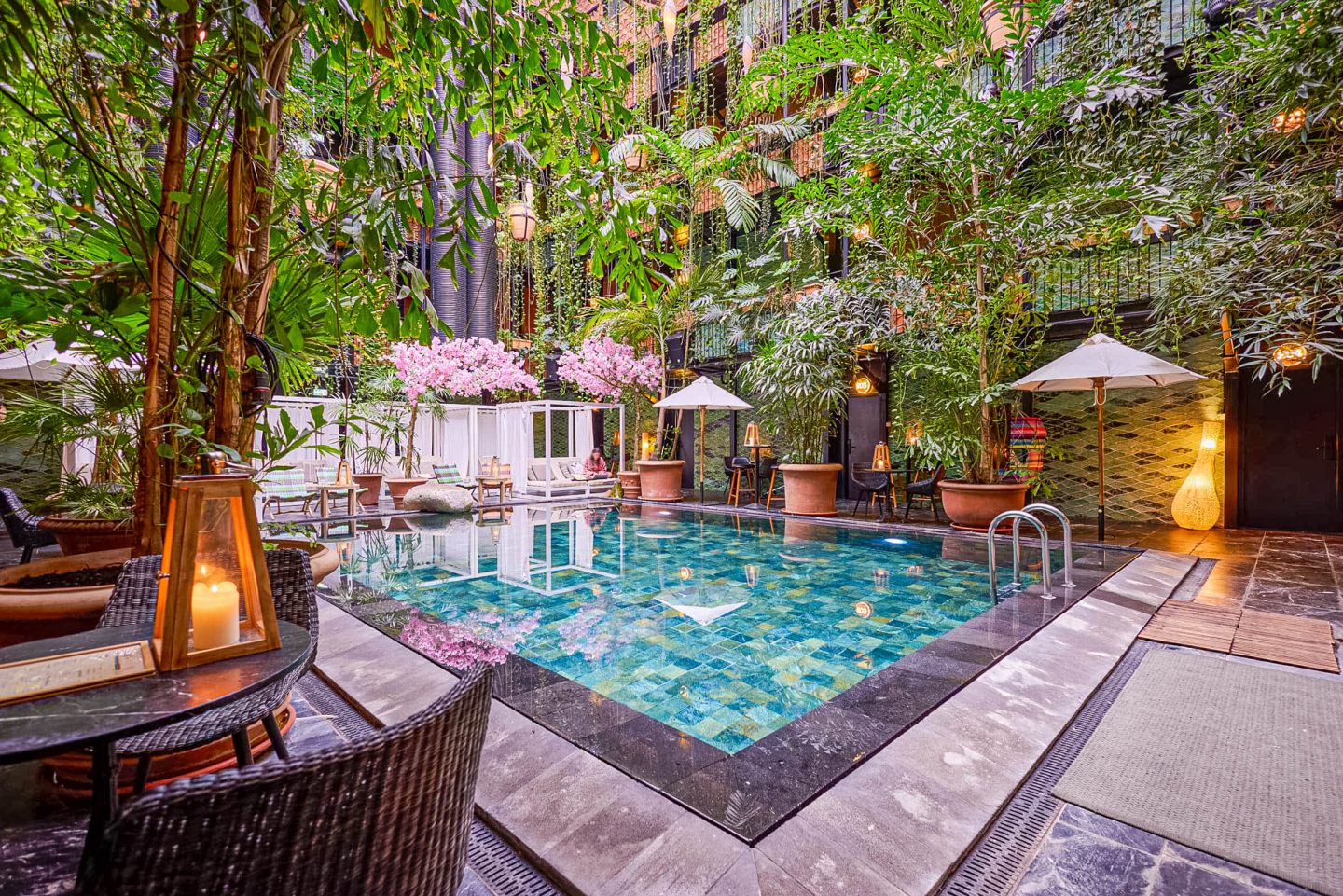
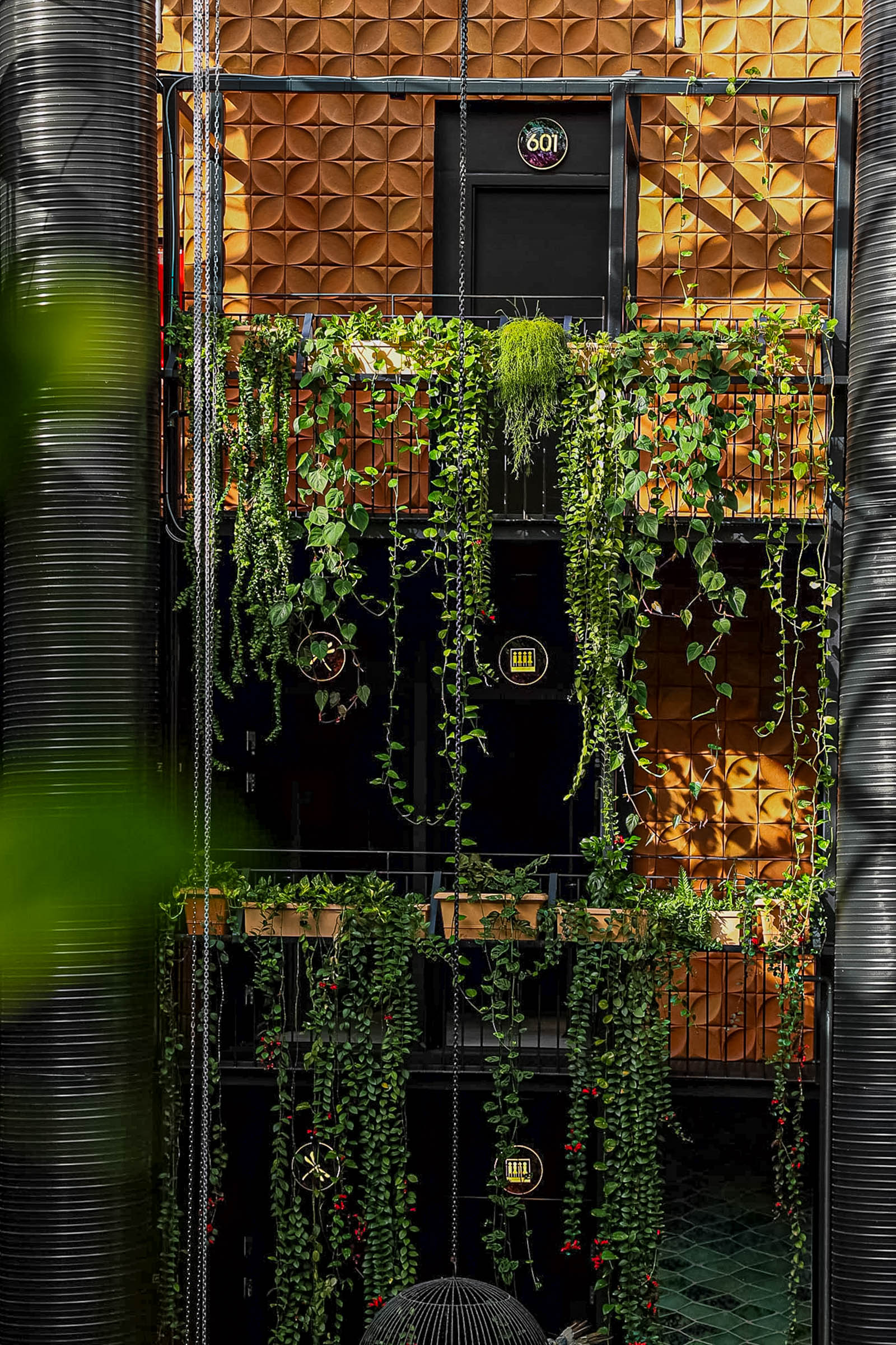
My dear travellers and lovers of unusual journeys, welcome to the new hotel review on the Mr.M blog. After so many years and numerous trips around the world, I’ve learned to distinguish between hotels that I remember for the room and the quality of service, while on the other hand, there are those that you remember for a striking sight. Manon Les Suites Guldsmeden certainly belongs to another group. As soon as you enter the building on the corner of Gyldenløvesgade and Nyropsgade, an inner courtyard opens up covered with plants falling from the floors, and below, at the bottom of that green well, a sparkling pool. Outside is the Danish capital, neat and restrained. Inside is something completely different, a jungle that you would never expect.
I spent a few days in this hotel and stayed in the Classic suite. I wanted to see if there was any real value behind the photos circulating on social media or if it was just a well thought out marketing campaign. The answer is more complex than I expected, so I tried to break it down in detail in this review. This review has been written to be useful to anyone planning a trip to Copenhagen, regardless of whether they will be staying at this amazing hotel right in the heart of the Danish capital.

MANON LES SUITES GULDSMEDEN: HOW A COPENHAGEN HOTEL BECAME A GLOBAL ICON
The answer can be summed up in one word: swimming pool. Manon Les Suites Guldsmeden has an indoor pool called Junglefish, located in an atrium that climbs through all floors of the hotel. Lush vegetation grows around it, pots and lamps hang, and Balinese decorative pillars give the whole scene a tropical character. The city’s official tourist guide describes the area as a piece of Bali in the heart of the Danish capital, and that is no exaggeration.
However, popularity does not rest on just one image. This exceptional hotel has five stars and has eighty-seven suites, which makes it one of the smaller, boutique buildings with a clear identity. In addition, the entire facility operates according to the rules of sustainable business that the chain has applied for decades, so the guest gets luxury without the usual extravagance.

The third reason is the atmosphere. Manon Les Suites Guldsmeden doesn’t try to be a cold, marble hotel with lots of glass. Instead, the space is full of teak, textiles, ceramics and contemporary painting. The furniture is handmade, and the walls in the suites are covered with dark slate, which brings weight and peace.
Finally, there is the unusual house policy. The hotel only accepts guests over the age of fifteen. That’s why there is a silence in the pool and on the roof that you don’t usually find in city hotels. For travelers looking for peace after a day spent walking, this is perhaps the most important piece of information in the entire text.

THE STORY BEHIND MANON LES SUITES GULDSMEDEN IN COPENHAGEN
The story begins far from Copenhagen. Sandra and Mark Weinert opened the first Hotel Guldsmeden in 1999 on Guldsmedgade in Aarhus, Denmark’s second largest city. From the beginning, the idea was unusual for the time: opulence based on simplicity, organic food and genuine hospitality, not on gilding.
Today, the family chain includes ten hotels in Copenhagen, Berlin, Bremen, Oslo and Aarhus, along with a villa for rent in Menton in the south of France and a luxury resort in Ubud, Bali. It is this Balinese connection that explains why the Danish hotel looks like a tropical garden.
Manon Les Suites Guldsmeden opened its doors in April 2017. The hotel was named after one of the twin daughters of the owner couple, which is the rule, not the exception, in this house. Each hotel in the chain carries the name of a family member, so behind the business name is a very personal story.
It is also interesting to note that Mark Weinert is not only the owner. He is an architect by profession and is behind the design and decoration of all hotels in the chain. That is why the objects seem like the work of one hand, and not the result of the work of external studios that change from project to project.
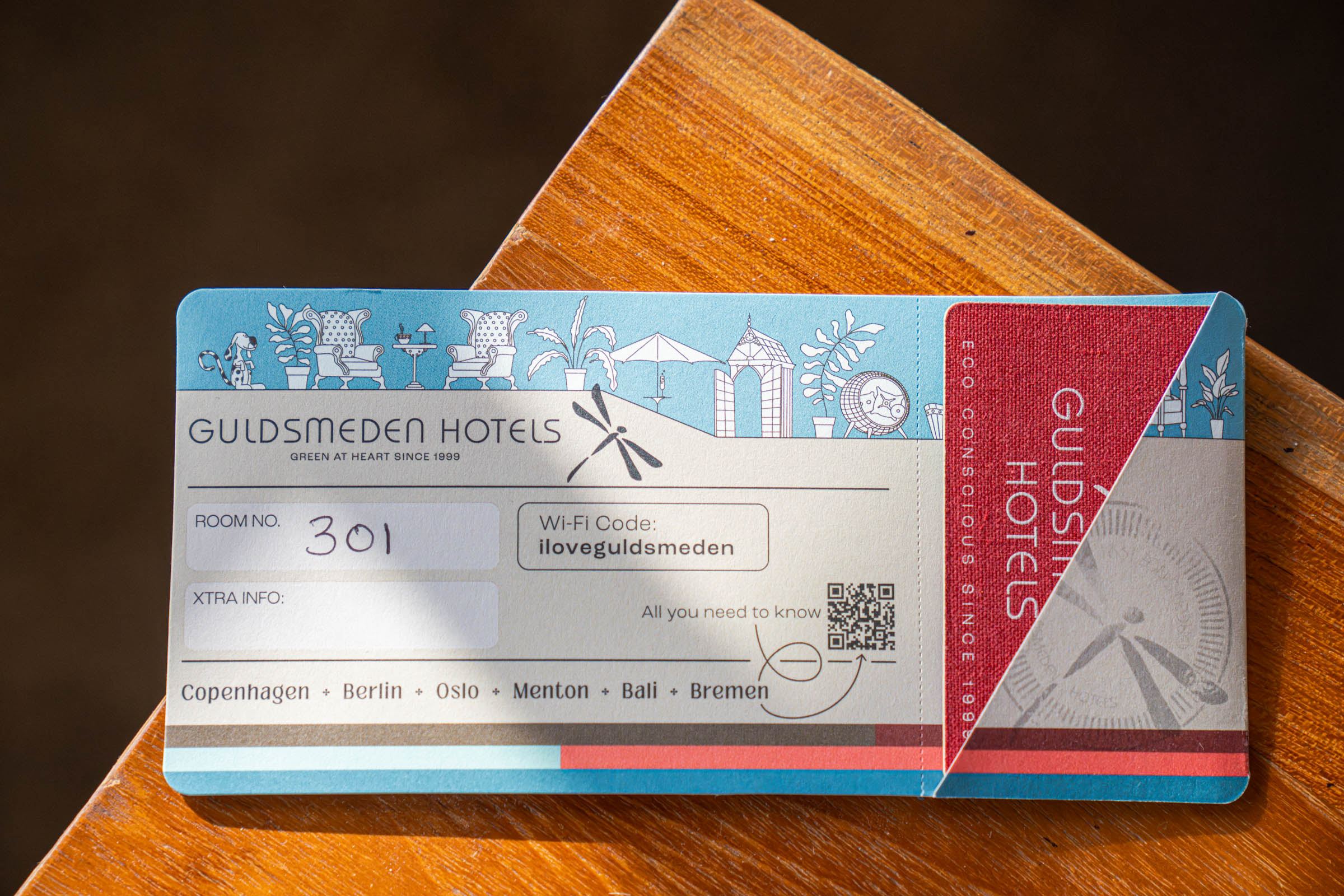
The name of the chain hides another play on words. The Danish word “guldsmed” means both a goldsmith and a dragonfly, so the dragonfly became the sign of the house. You’ll see it on the room key, on the soaps, on the wooden welcome plaque and on the rooftop, where the restaurant is named Chapung. That word in the Balinese language means, quite expectedly, dragonfly.
MANON LES SUITES GULDSMEDEN: LOCATION & HOW TO GET THERE
The address is Gyldenløvesgade 19, postal code 1600. The Manon Les Suites Guldsmeden hotel stands at the very edge of the old town, right next to the city lakes Sankt Jørgens Sø and Peblinge Sø. That position brings a double benefit. On one side you have a peaceful walk along the water, and on the other it’s only a ten minute walk to the main pedestrian street Strøget and to Tivoli.
The hotel is easily accessible without a car. The train from the airport to the Main Station takes about thirteen minutes, and from there it is a fifteen-minute walk. Another possibility is the metro line M2 to Nørreport station, then a ten minute walk. The entire journey from the plane to the reception rarely takes more than half an hour.
Vesterport station is a seven-minute walk away, and bus stops are nearby. Copenhagen is a city of bicycles after all, so it’s worth knowing that the group also rents out bicycles. The ride along the lakes to Nørrebro takes a few minutes and is the nicest possible introduction to the city.
The hotel’s surroundings deserve special attention. Nansensgade offers small wine bars and designer shops. The Ørstedsparken park, laid out on the remains of the former city walls and officially opened on October 27, 1879, is just around the corner. Its elongated lake is actually a part of an old defensive moat, so a walk through the park also has a historical dimension.
A few minutes away, the Torvehallerne market awaits by Nørreport station. This covered market made of glass and steel was opened in September 2011 and gathers over sixty sellers. For breakfast, coffee or to buy cheese and smoked fish, it is the best address in the wider center.
MANON LES SUITES GULDSMEDEN: THE ENTRANCE, WHERE THE JUNGLE BEGINS
The building of the Manon Les Suites Guldsmeden hotel does not stand out from the street. The black facade is overgrown with ivy, and above the glass door there is a board with a dragonfly and five wooden stars. That detail told me a lot right away. The category is the highest possible, but is communicated in hand-cut stars rather than gold letters.
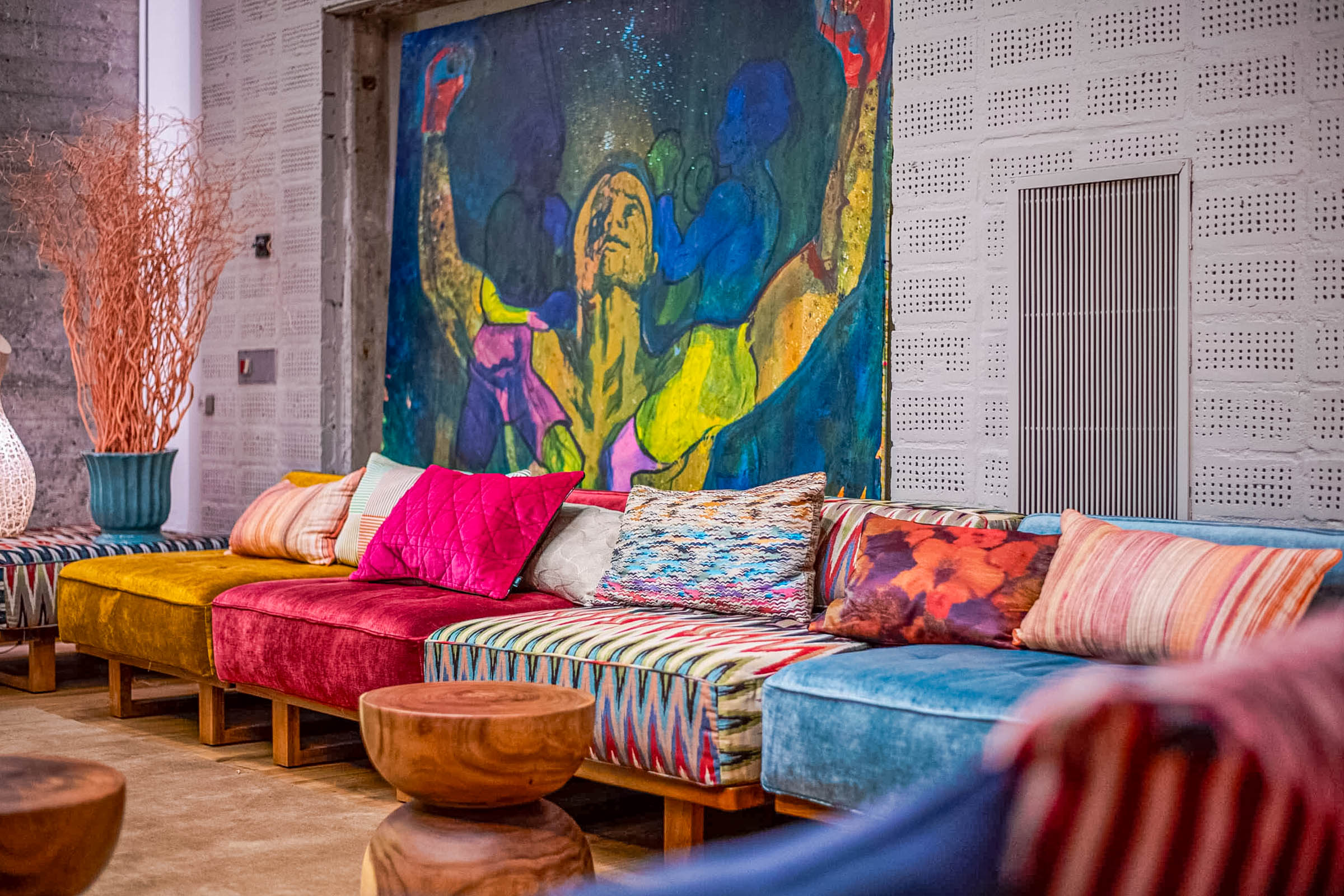
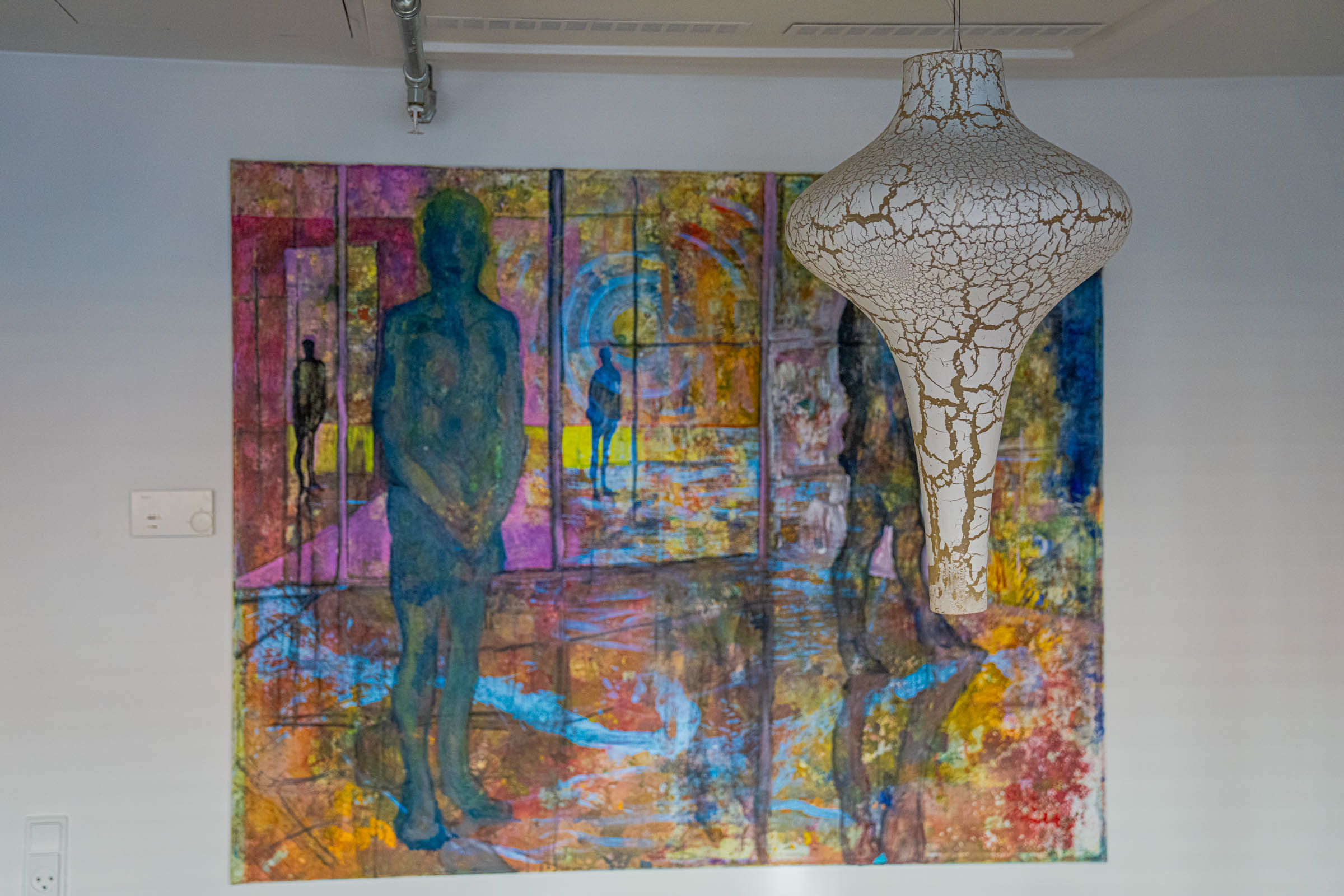
The ground floor continues the same tone. Instead of a classic lobby with a marble counter, the guest is greeted by a low lounge with saffron, raspberry and turquoise cushions. Above them hangs a large canvas with figures, and between the seats stand small tables carved from a single piece of wood.
The reception is small and deliberately inconspicuous. Check-in takes a short time, without papers scattered around the counter, and the staff immediately explains where everything is. Since the contents are spread over different floors, that short introduction really helps. Manon Les Suites Guldsmeden clearly shows the intention here: the guest should sit down, not just walk by.
THE JUNGLEFISH POOL: THE TROPICAL HEART OF COPENHAGEN
The pool is located in a sheltered atrium around which the suites are arranged. The water is warm, the light is dim, and greenery is falling from every fence. In the evening, candles and lanterns are lit, so the space takes on an almost theatrical character. I immediately understood why this shot was shared so much on social networks.
For guests of the Manon Les Suites Guldsmeden hotel, access is included in the price of their stay, which is no small thing. The pool is open every day from eight in the morning to ten in the evening. In the afternoon, between 16:00 and 18:00, the music is turned on and the bar is open, so the atmosphere changes and becomes more lively. If you are looking for complete silence, come before noon.
There is also the possibility of a daily ticket for visitors who are not staying at the hotel. It includes four hours of stay in the pool and lounge, use of the sauna and steam bath, as well as a bag with kimono, slippers and towels. The price is 995 Danish kroner per person, which includes a voucher for food and drink or breakfast. For all those who have stayed somewhere else and want to see this area, this is the only way.
I sincerely advise you to visit the pool at least twice, in the morning and in the evening. The scene is completely different. During the day, northern light comes through the glass and the plants look fresher. At night, everything sinks into a warm shadow, and the water becomes the only source of light in the space. This is exactly where Manon Les Suites Guldsmeden shows what sets it apart from other five-star addresses in the city.


WHY “JUNGLEFISH”? THE STORY BEHIND MANON LES SUITES’ ICONIC POOL
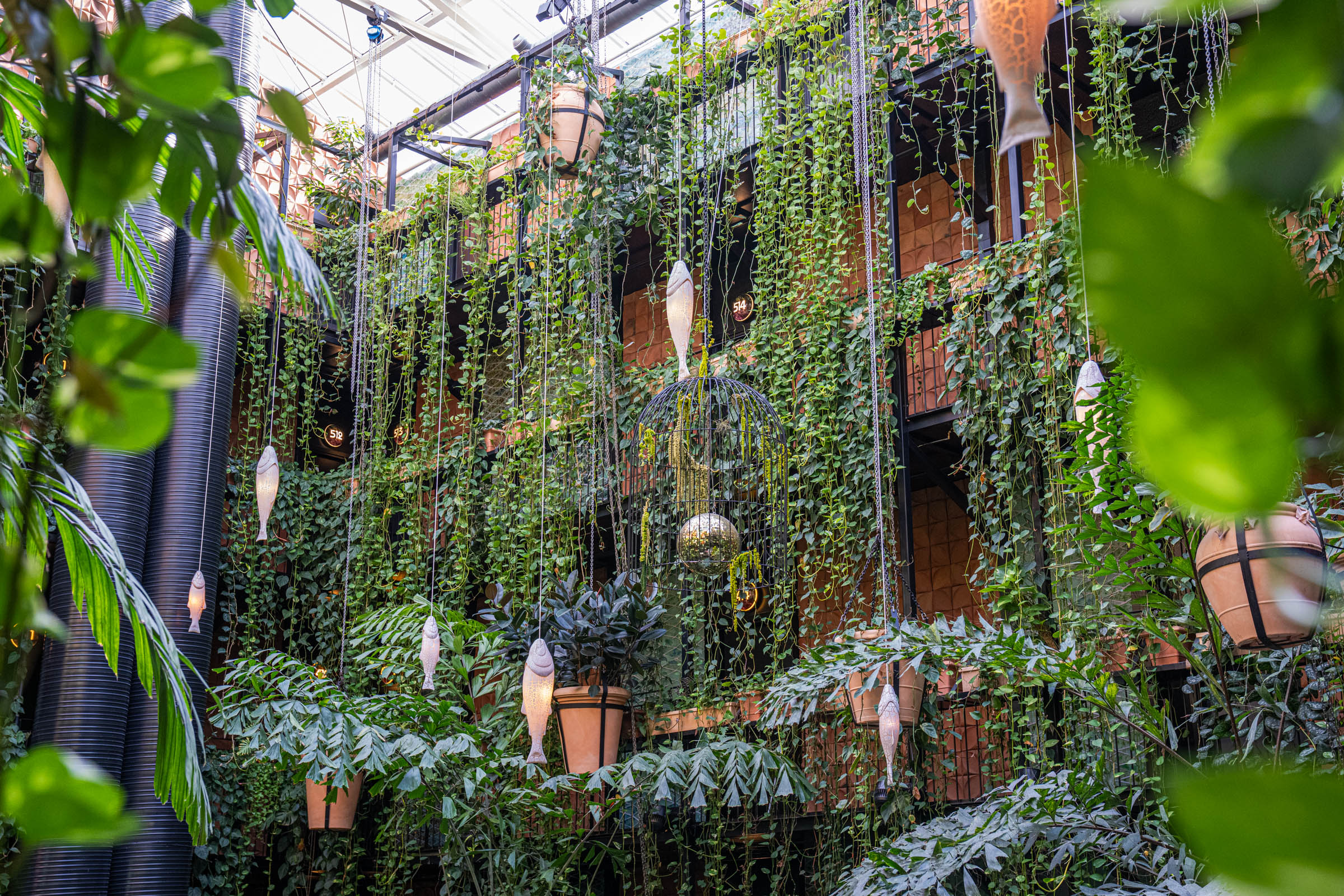
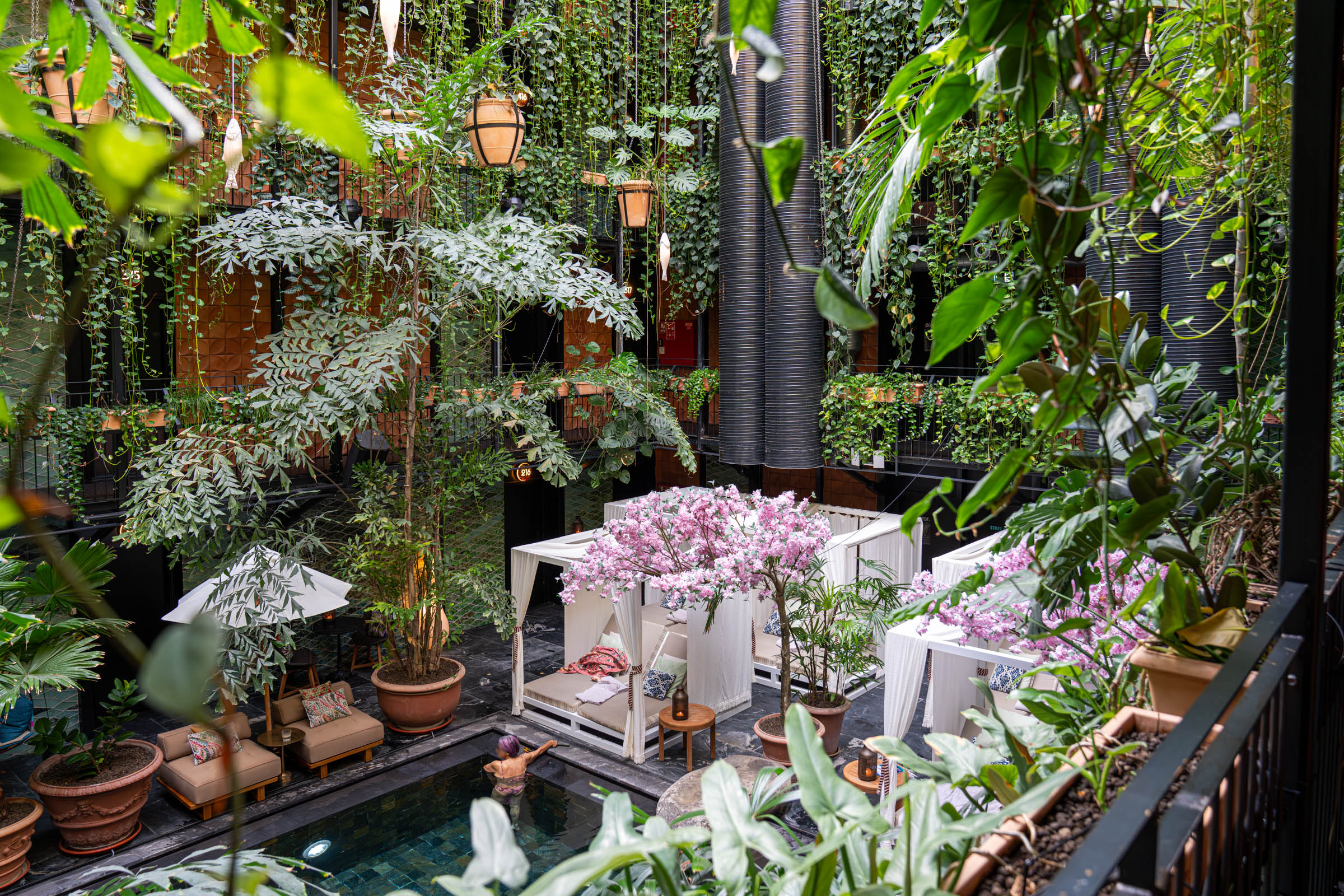
The name is not a marketing gimmick. Through the atrium, on long chains, hangs a whole school of fish made of ceramics and woven material. In the evening, they are lit from the inside, so they act like lanterns floating through the greenery. From above, from the gallery of the upper floors, the scene resembles an upside-down aquarium.
White pavilions with curtains and low beds are placed next to the water itself. Between them stand trees in pink flowers, which give color to the whole space. Above the pool hangs a large metal basket that serves as a lamp.
All this together explains why this part of the Manon Les Suites Guldsmeden hotel is so photographed. It is about a carefully composed atmosphere, but again an unreal scene that is really used every day. Guests swim, read and rest there in the afternoon, which I myself did two days in a row.
MANON LES SUITES GULDSMEDEN: ROOFTOP TERRACE, SAUNA & GYM
On the sixth floor there is a relaxation area that combines Balinese warmth and Nordic simplicity. There is a sauna, a steam bath with essential oils and a cabin with cold water from a wooden bucket. After that, you go out to the open part of the terrace, where you can sit with a drink and look at the rooftops of the city.
Opening hours follow the pool, so from eight to twenty-two hours. It’s worth checking with reception if the terrace is occupied for a private event, as this occasionally happens. The view from the sixth floor extends to the lake and the towers of the old town, so the time before sunset is the best time to visit.
The seating arrangement is unusual. Instead of rows of deckchairs, the terrace is filled with wide wooden steps turned into benches, covered with pillows with tropical and ethnic patterns. One sits on them as if on a tribune facing the sky. The afternoon sun stays there the longest, so it is the most pleasant part of the roof before evening falls.
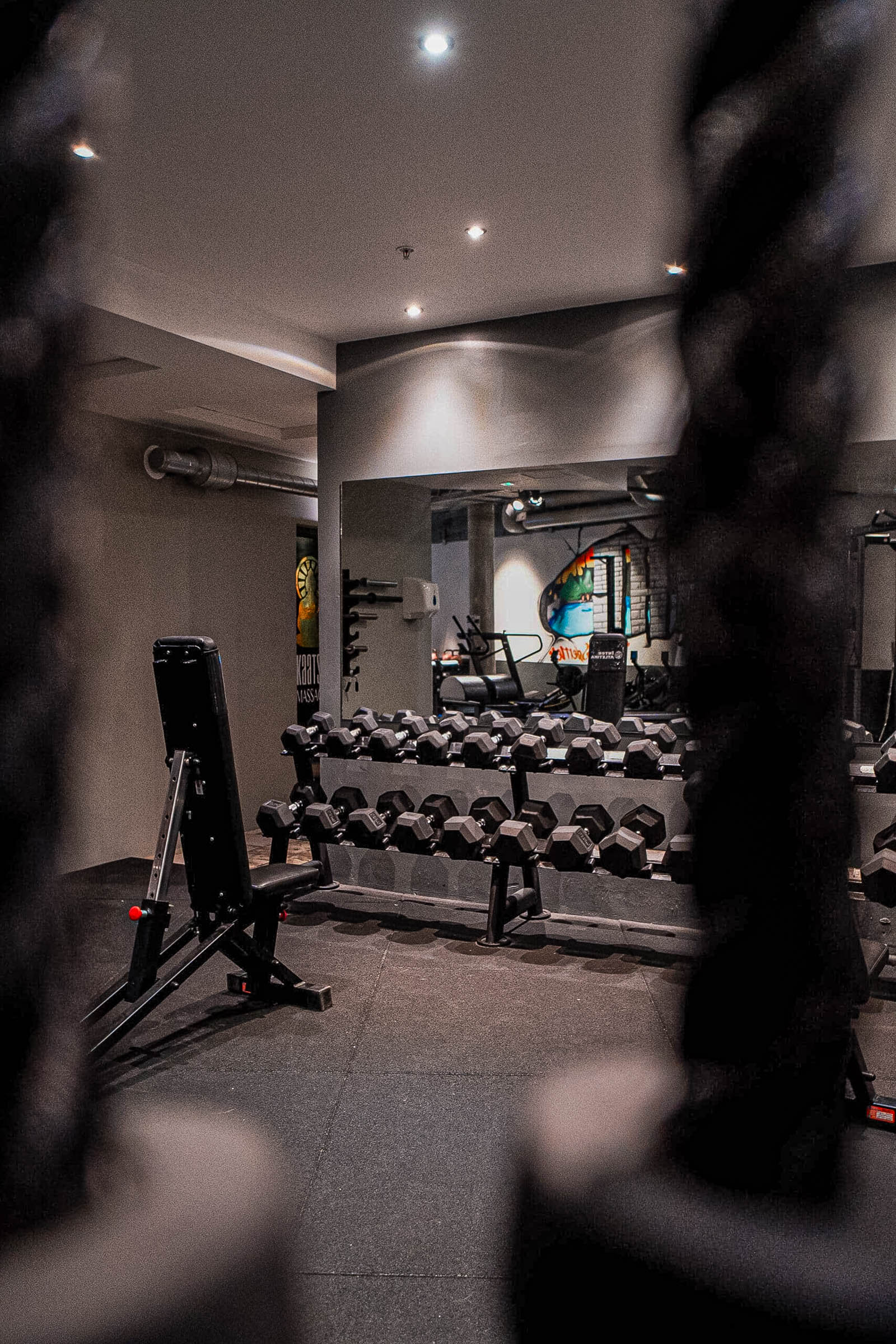
The hotel also has a gym called Jungle Gym. It is open twenty-four hours a day and is free for guests. The space is not huge, but it is equipped enough to maintain a routine during the trip. I preferred a walk around the lake, which takes about as long as a solid workout.
One note is important here. The sauna and steam room are located on the roof, so quite far from the pool on the ground floor. Some guests cite this as a disadvantage, as it involves changing clothes and taking an elevator. It didn’t bother me, but it’s fair that the information stands, especially if you plan to alternate between sauna and cold water.
CHAPUNG RESTAURANT AT MANON LES SUITES: A BREAKFAST WORTH WAKING UP FOR
The Chapung rooftop restaurant is part of the same sixth floor and represents the gastronomic heart of the house. The menu is conceived as a journey, with dishes taken from different cuisines of the world. The food is organic and has a fair trade label, which is the rule without exception in this chain.
OPENING HOURS & PRACTICAL INFORMATION
Breakfast is served every day from seven to eleven. Lunch lasts from twelve thirty to sixteen thirty, and Dinner runs from half past seven until ten in the evening, with last orders at a quarter to ten. The bar is open longer, until midnight on weekdays. It is wise to reserve a table in advance, because the restaurant also attracts guests from the city.
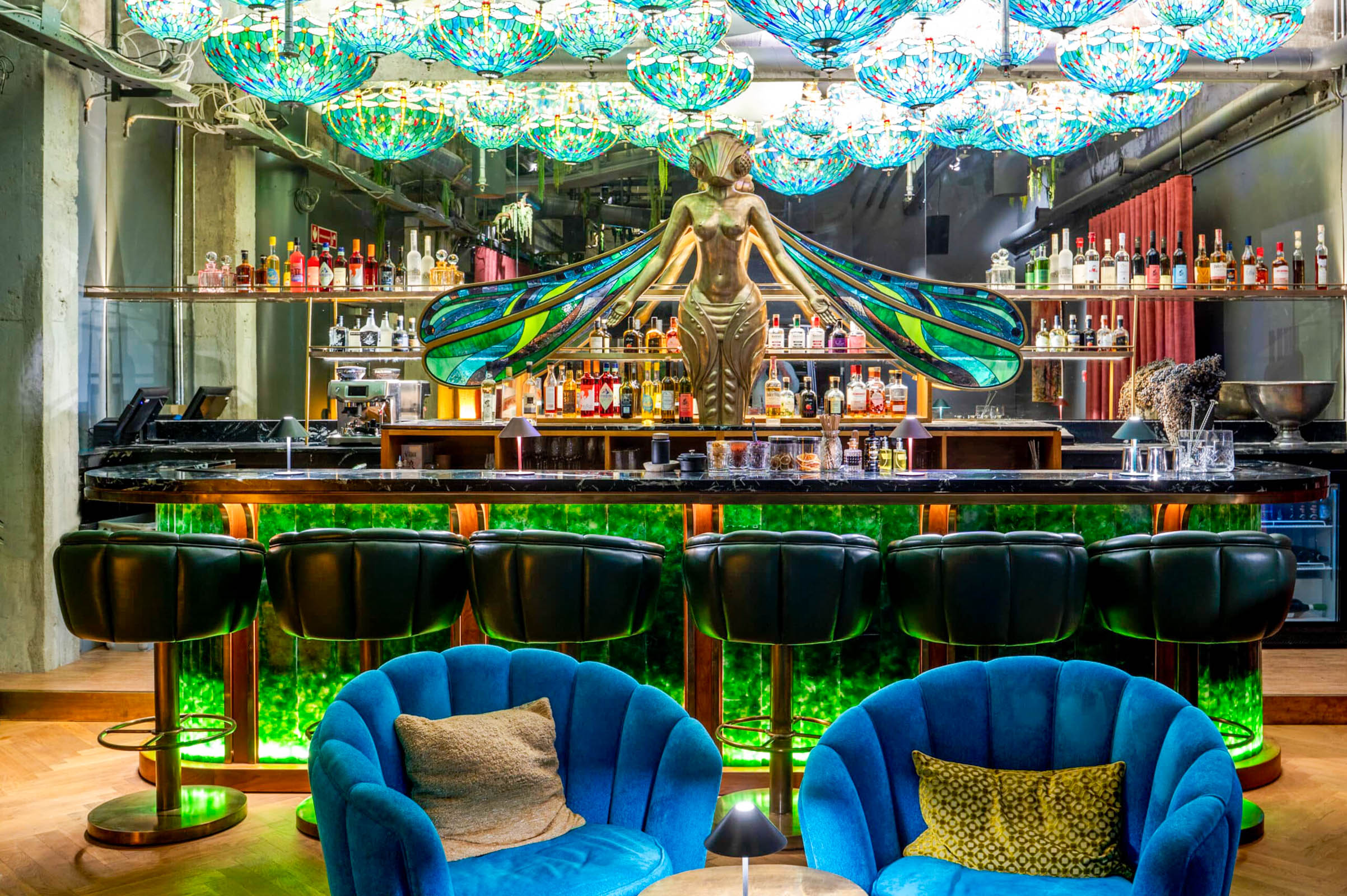
Underneath the hotel, on the lower ground floor, lies the cocktail Bar Libellule. I was expecting a dark and quiet corner, but I got something completely different. Above the bar stands a gilded figure with outspread stained glass wings, a clear nod to the dragonfly from the house sign. A row of Tiffany-style lamps hang from the ceiling, while the counter glows with a greenish glow.
The bar is only open on weekend evenings, so many guests never see it. The hotel also offers a combination of cocktails in the bar and dinner in the restaurant, which easily fits into one evening. The opening hours change from time to time, so check them when you check in.
MANON LES SUITES: AN ORGANIC BREAKFAST TO REMEMBER
Breakfast costs 325 kroner per person and is not included in all prices, so pay attention when booking. On the table there are hot and cold dishes, freshly baked bread, croissants, eggs prepared in two ways, smoked fish from the local catch, cheeses, hams and seasonal vegetables. Homemade yogurts with a mixture of black bread, seeds, walnuts and honey leave a special impression.
It is interesting that the chain applies a rule according to which groceries are not delivered by plane. Therefore, there are no exotic fruits out of season on the plate, but there are extremely fresh ingredients from the surrounding area. If you have special dietary needs, the kitchen prepares gluten-free, lactose-free and plant-based dishes. It is enough to ask for it.
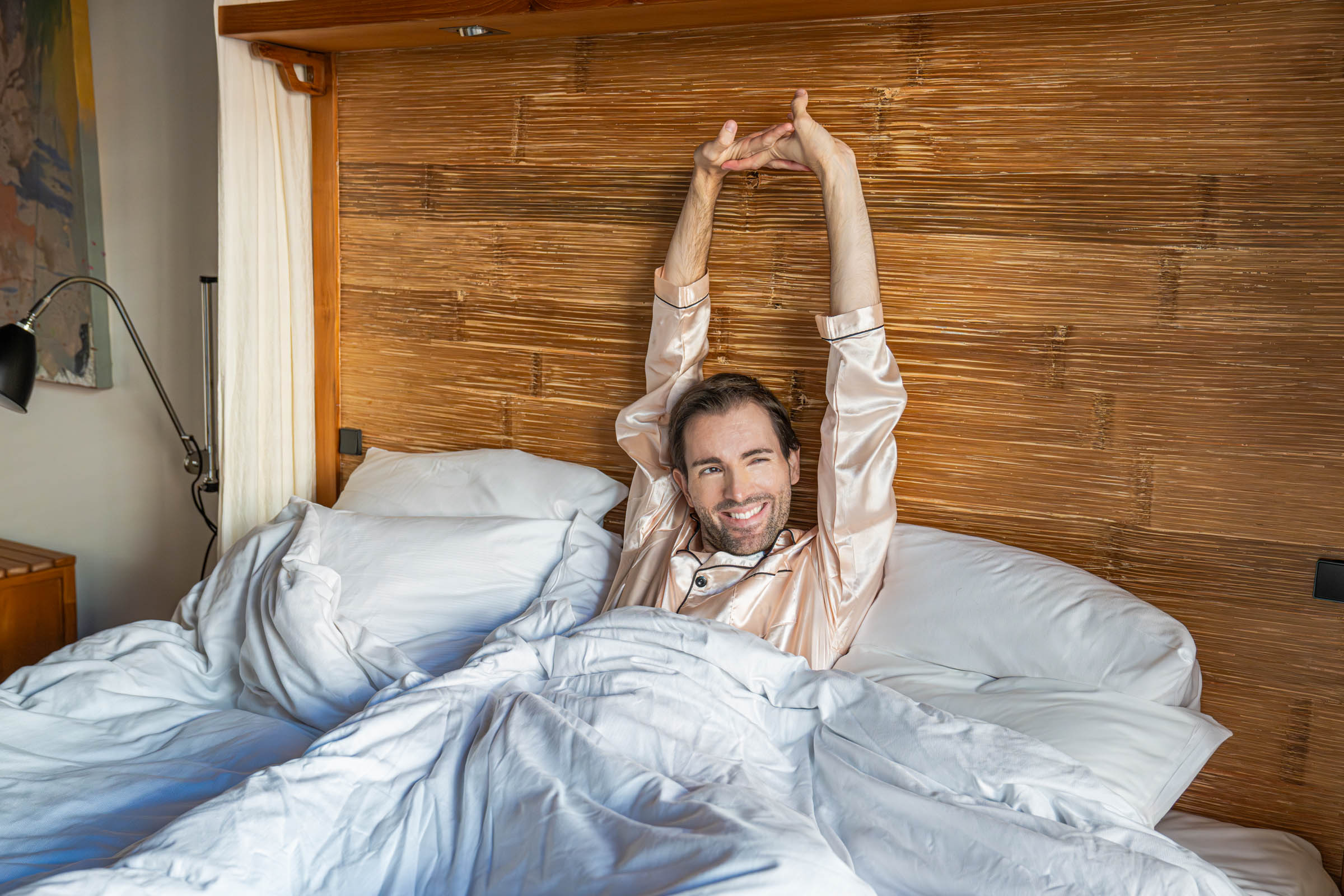

MANON LES SUITES GULDSMEDEN: MY STAY IN THE CLASSIC SUITE
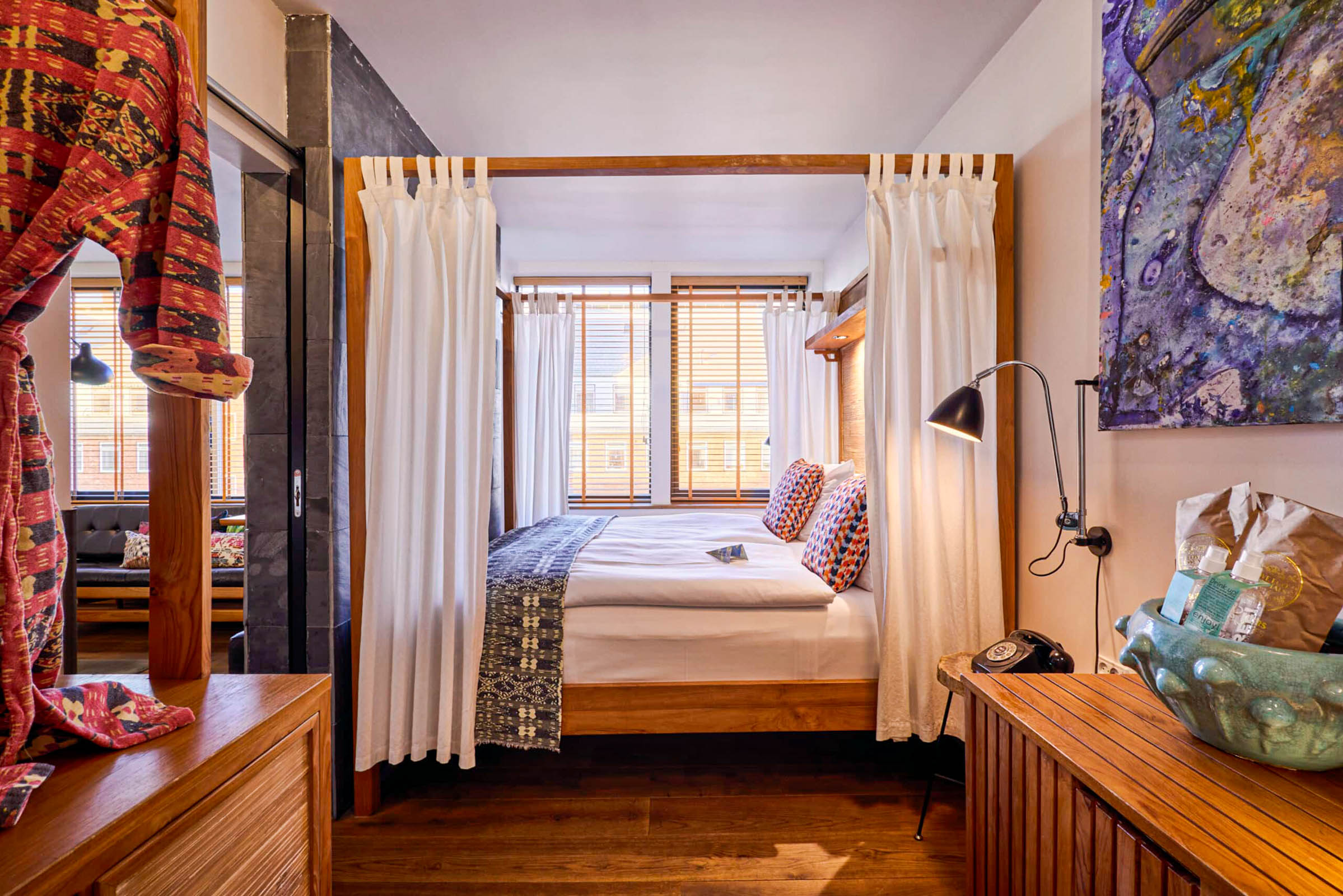
I stayed in the Classic Suite category, which in this hotel means an suite of approximately forty square meters. The space is divided into a sleeping area, a living area with seating and a small dining area. This division is a key difference compared to ordinary hotel rooms, as it allows you to work, eat and rest in separate zones.


THE CLASSIC SUITE: SPACE, LAYOUT & DESIGN
A four-poster bed stands in the center of the sleeping area. The construction is made of solid teak, and light white curtains can be pulled up to create a room within a room. Above the headboard is a bamboo covering that brings in warmth and muffles sound. The bedding is comfortable, and the pillows are chosen from a special list, which is rarely offered by any hotel.
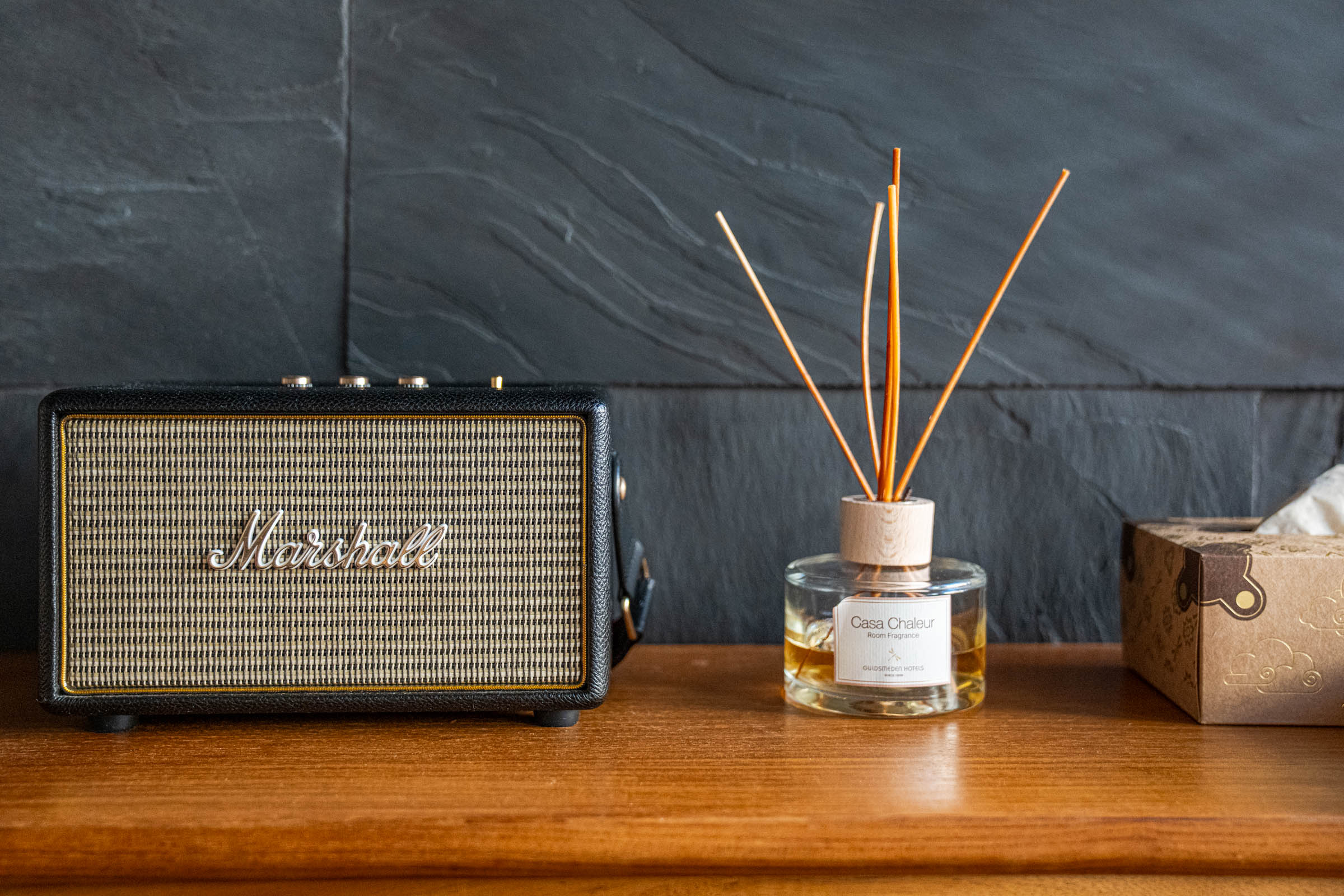
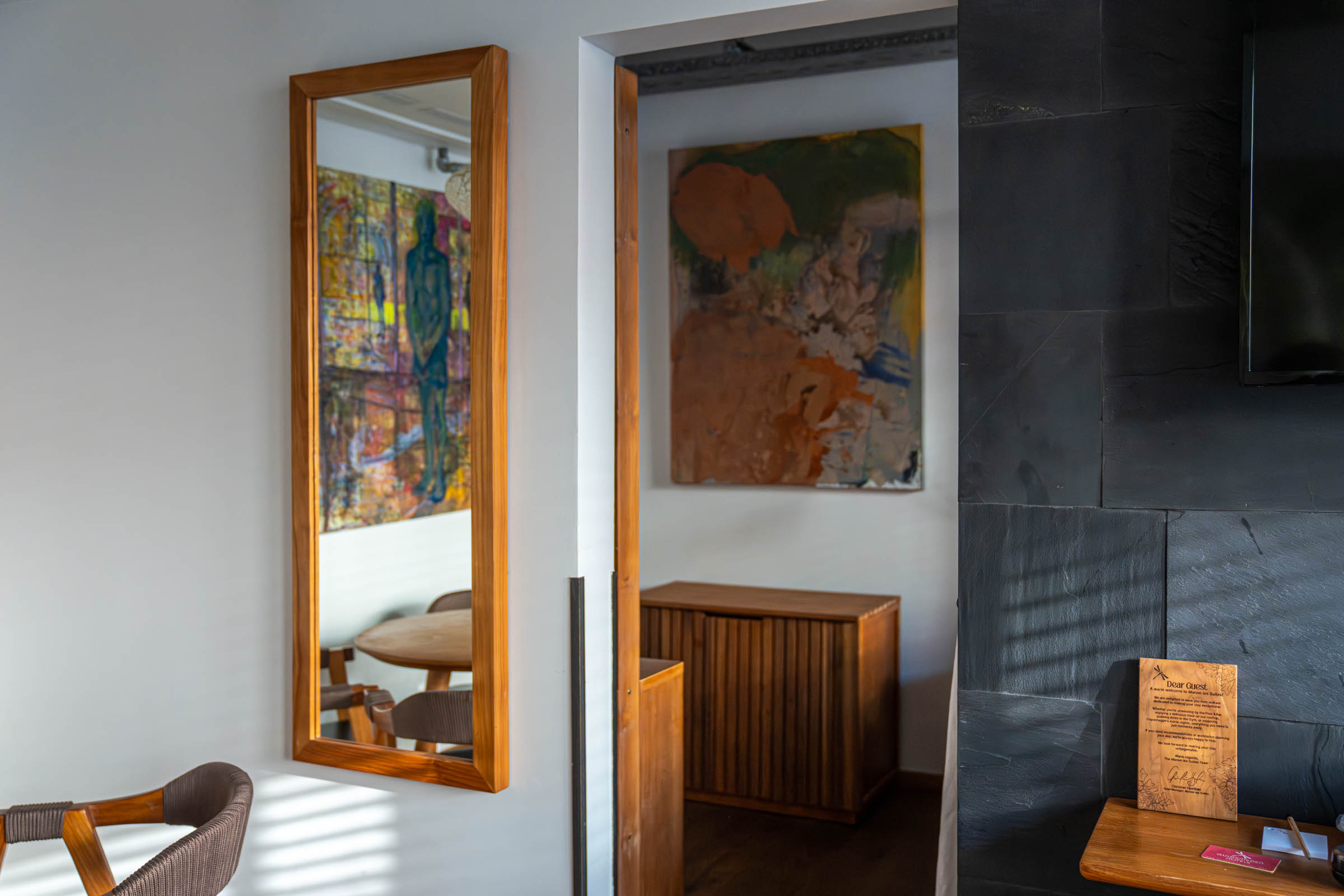
The living area is equipped with a leather sofa, a low table made of one piece of wood and large-format contemporary paintings. On the chest of drawers there is a Marshall speaker and a diffuser with the scent of a house called Casa Chaleur. The walls covered with dark slate make a strong contrast with the white surfaces and the wood.
The suite also has a small kitchen area with a fridge and coffee and tea making facilities. Don’t expect a real kitchen, but for a longer stay it’s more than enough. The floors are made of wide wooden boards, the windows have wooden shutters, and the air conditioning works quietly.

THE CLASSIC SUITE: BATHROOM, TOILETRIES & LITTLE LUXURIES
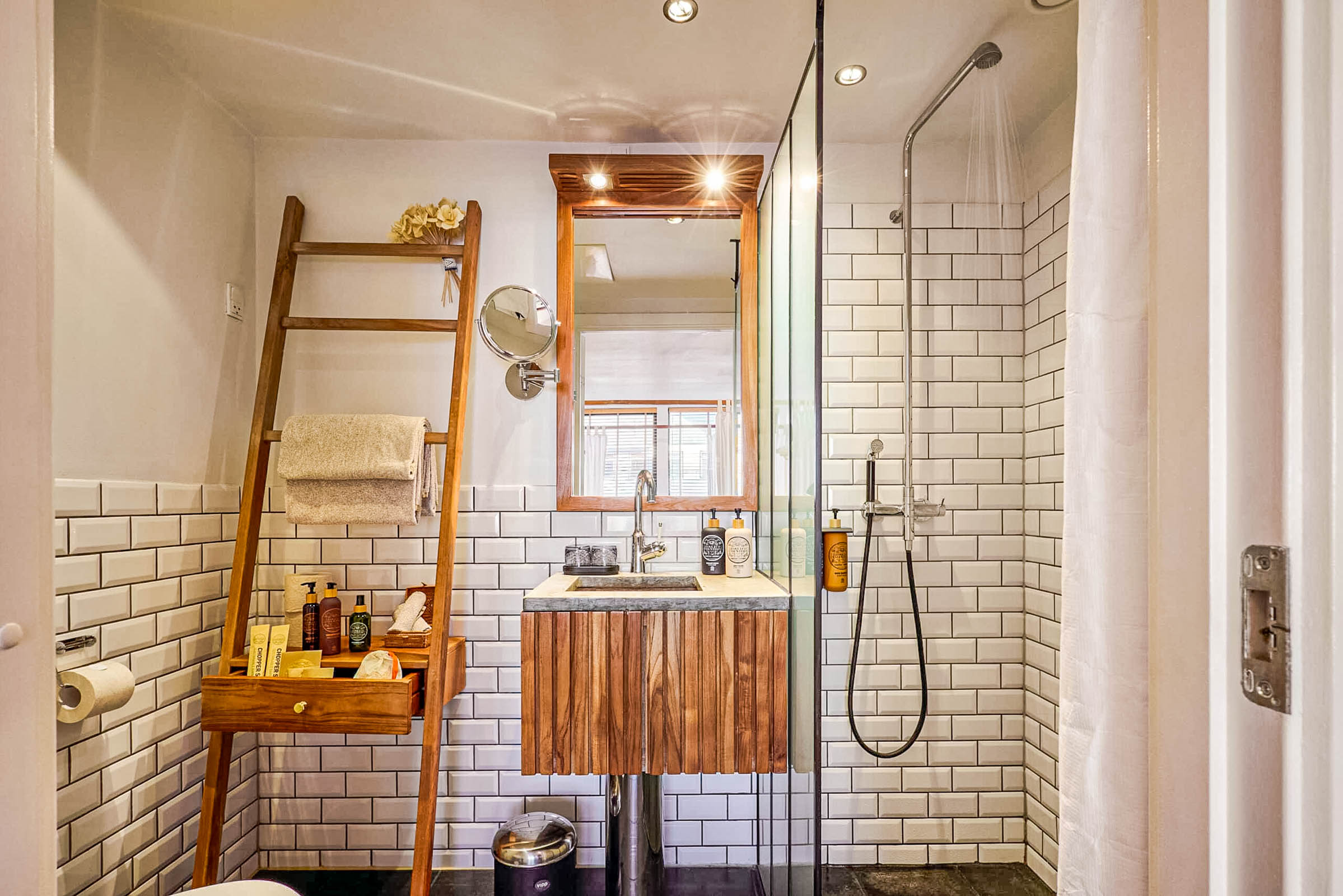
The bathroom follows the same effortless minimalistic energy. The walls are covered with white tiles with beveled edges, the sink is carved from stone, and the cabinet below it is made of teak. The shower is separated by glass and has a wide head with an abundant jet. Next to the mirror is an additional, magnifying mirror, practical for shaving.
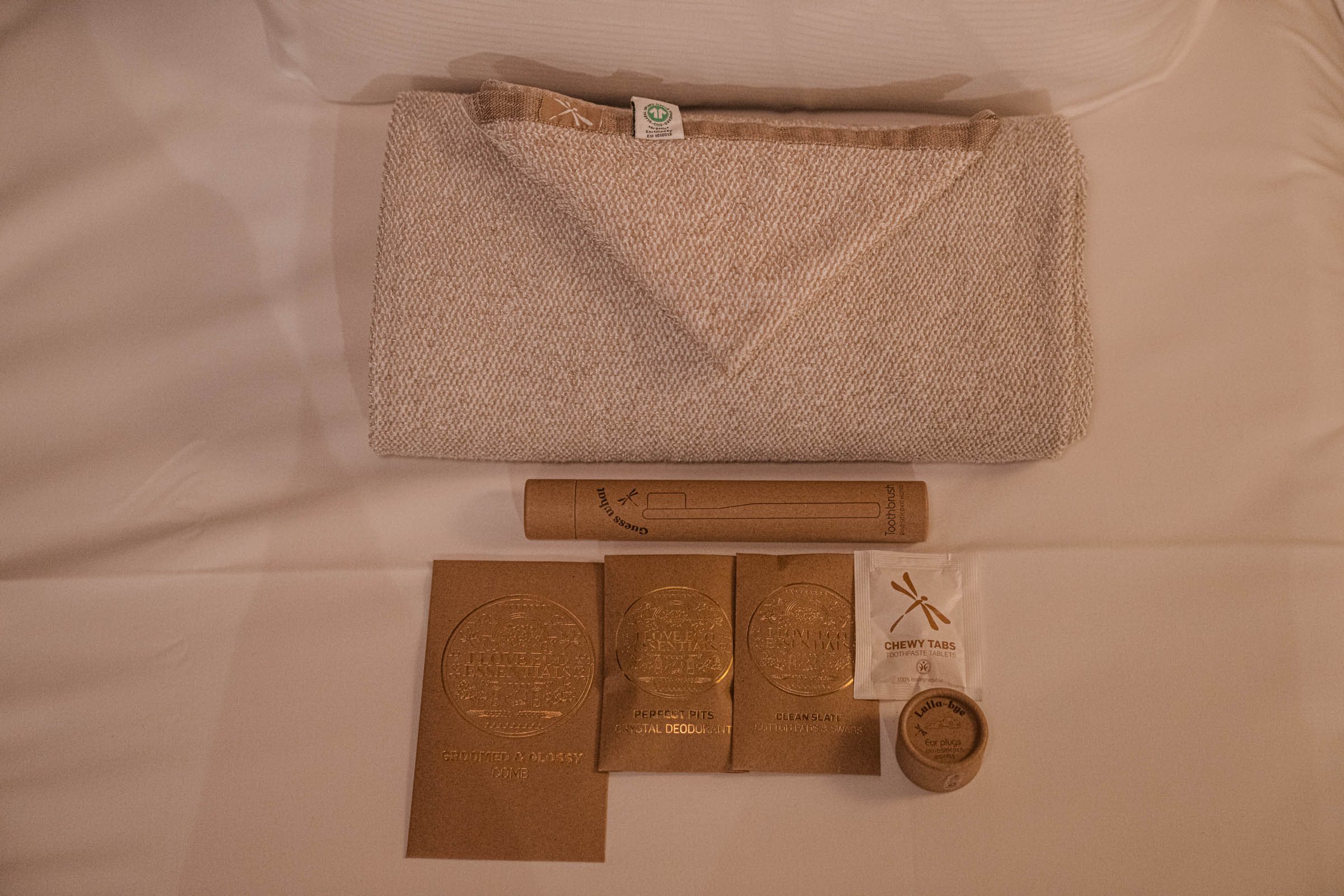
Cosmetics come from the chain’s own brand, I Love Eco Essentials, with labels of organic and natural ingredients. On the shelf in the shower are body gel, shampoo and conditioner in large, refillable bottles. By the sink are body oil, milk, hand cream and soap. All in cardboard packaging, without plastic that gets thrown away after a day.
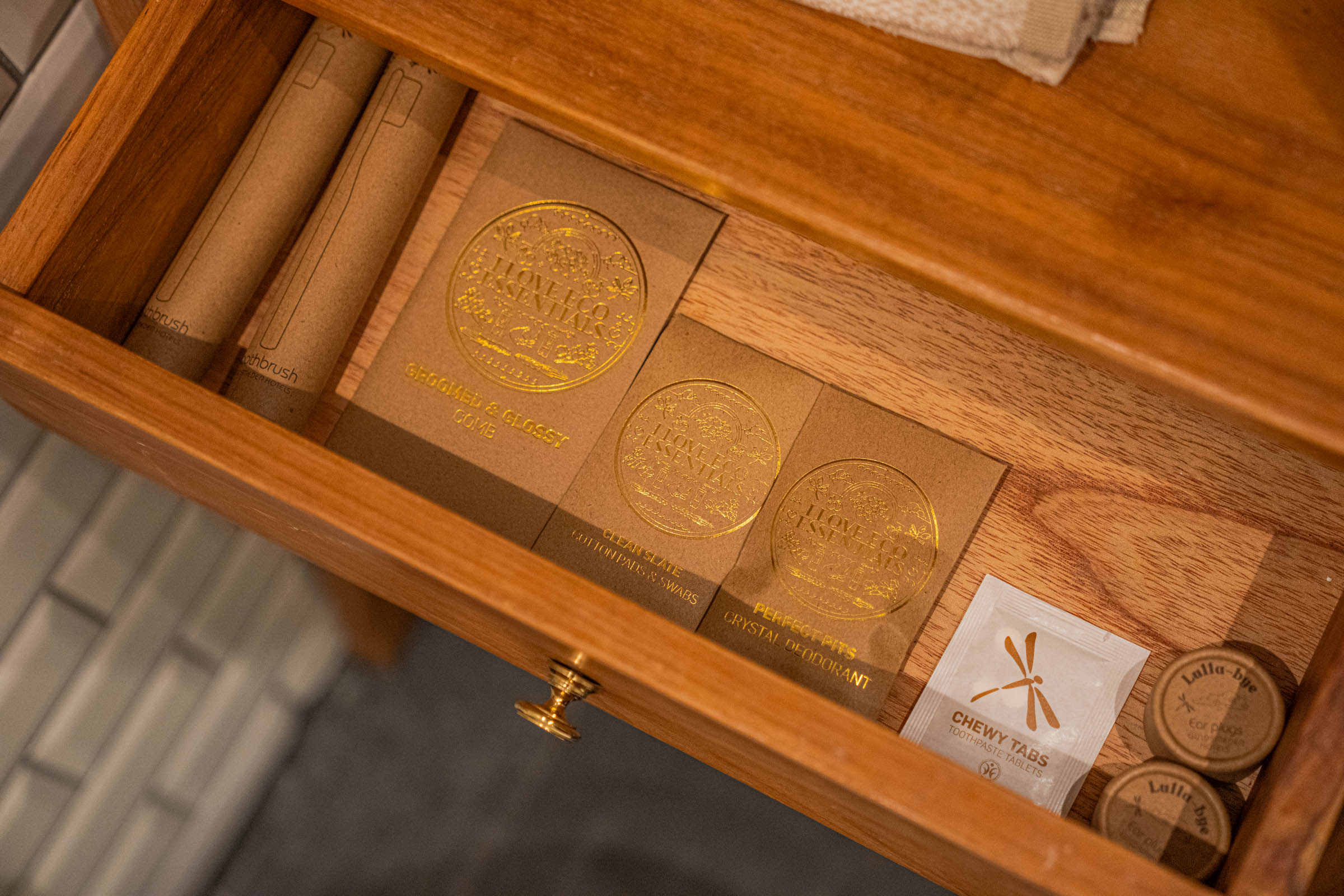
A set of trinkets is hidden in the drawer of the wooden ladder, which also serves as a towel rack. There is a bamboo toothbrush, toothpaste, comb, cotton buds, crystal deodorant and ear plugs in a cardboard box. It seems simple, but it’s actually thought through.

MANON LES SUITES GULDSMEDEN: SMALL DETAILS, LASTING IMPRESSIONS
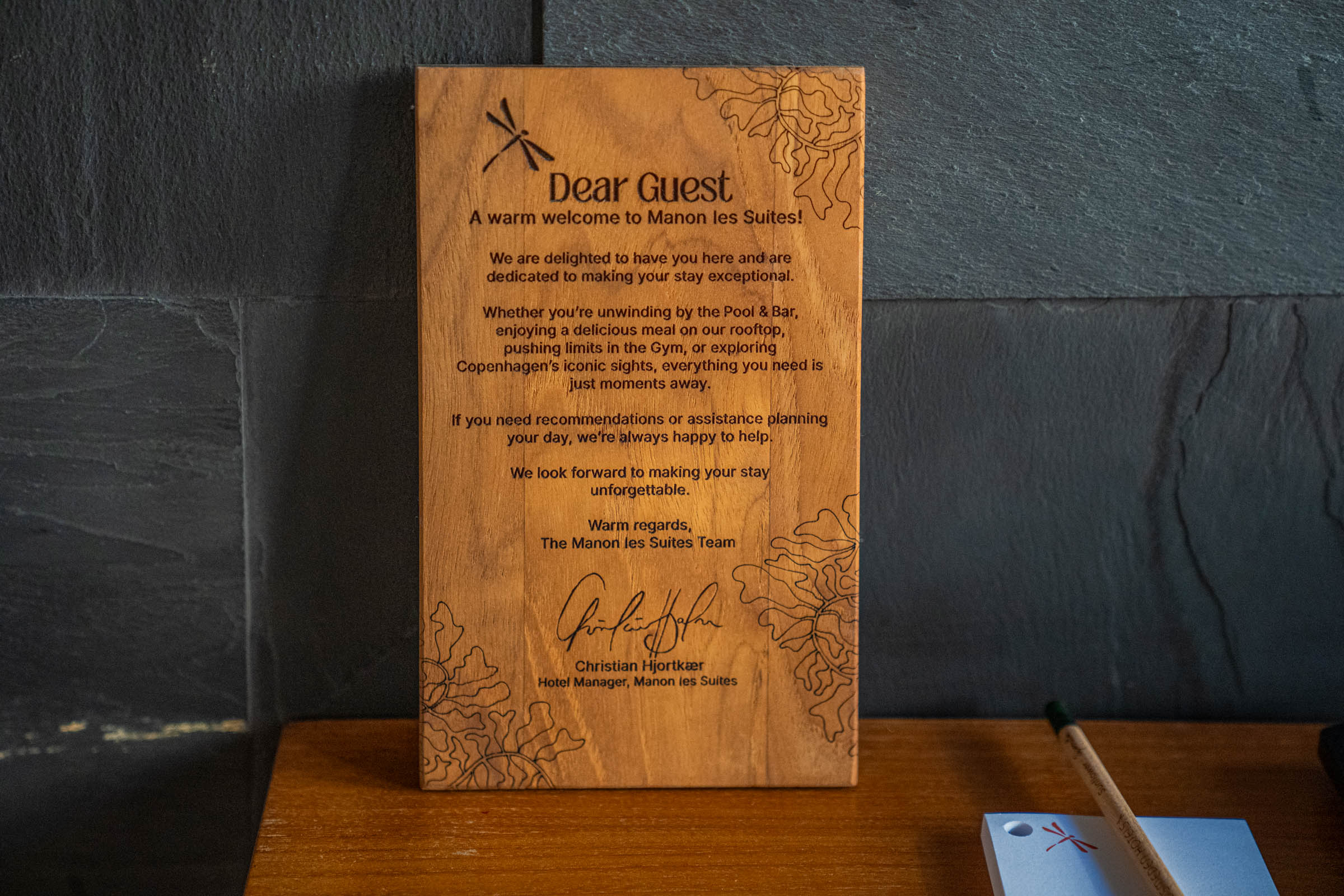
A wooden plaque with an engraved welcome letter, signed by the hotel manager, greeted me on the table. The gesture is warm and, more importantly, it feels sincere. A pen and a pad of recycled paper stood next to him.
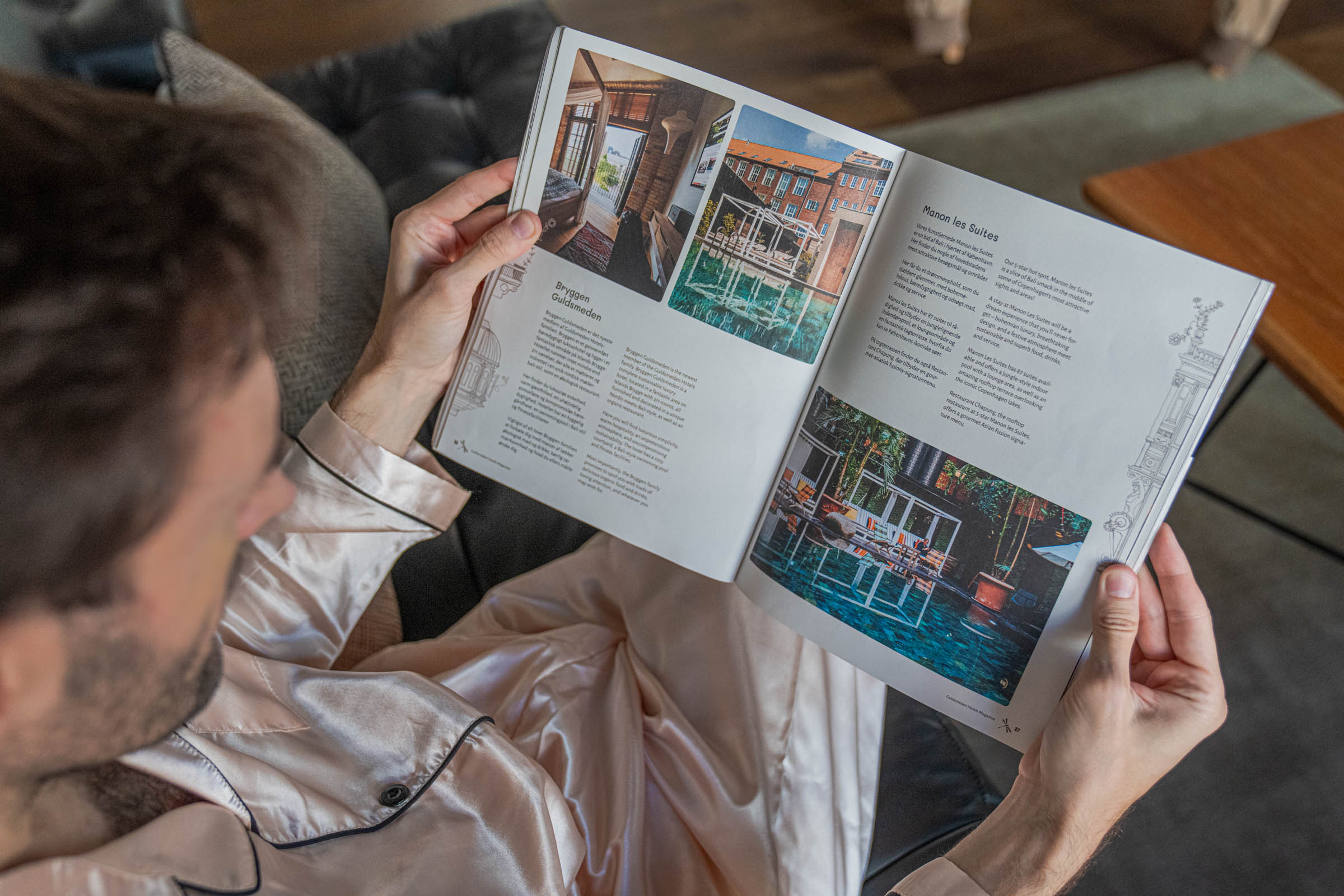
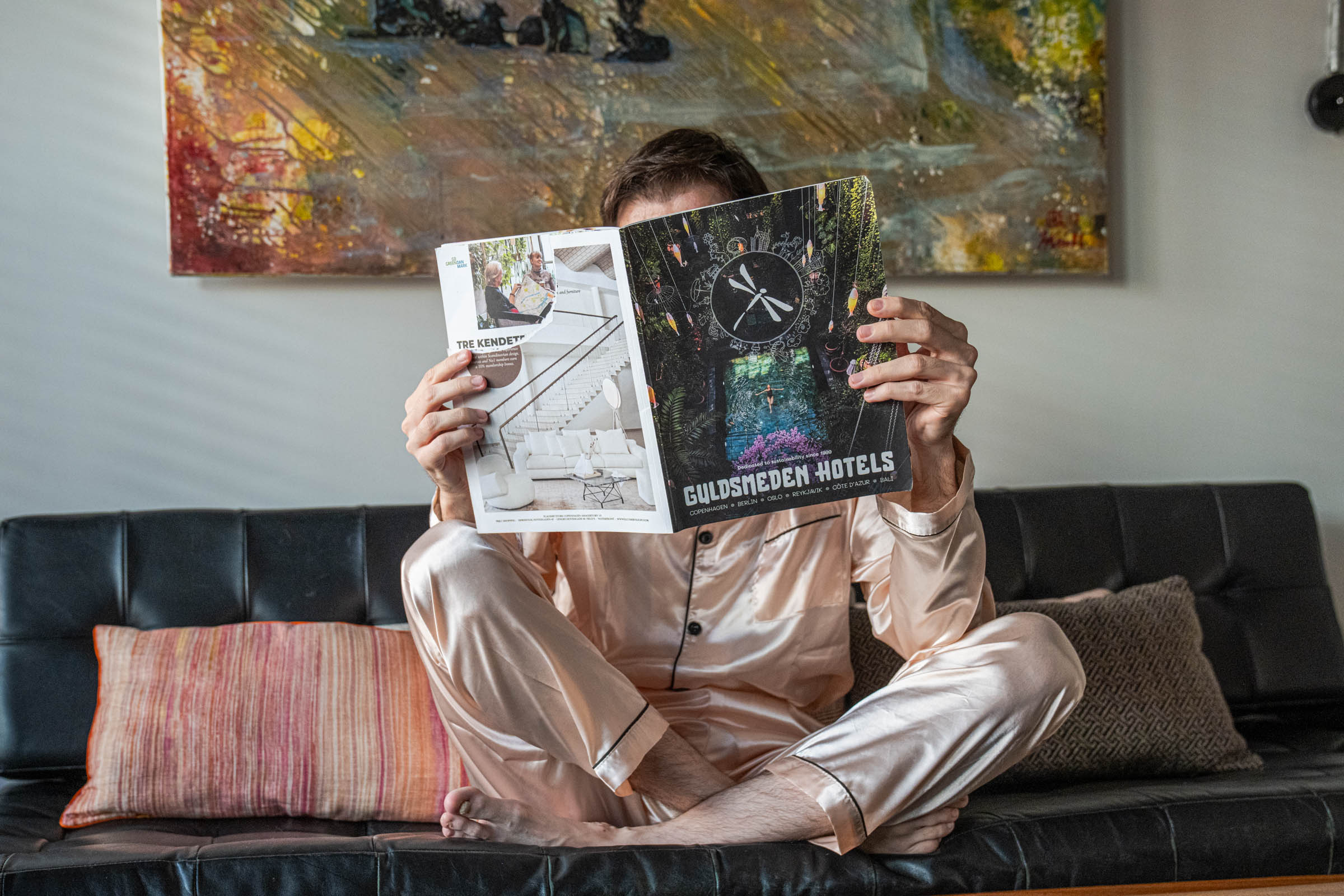
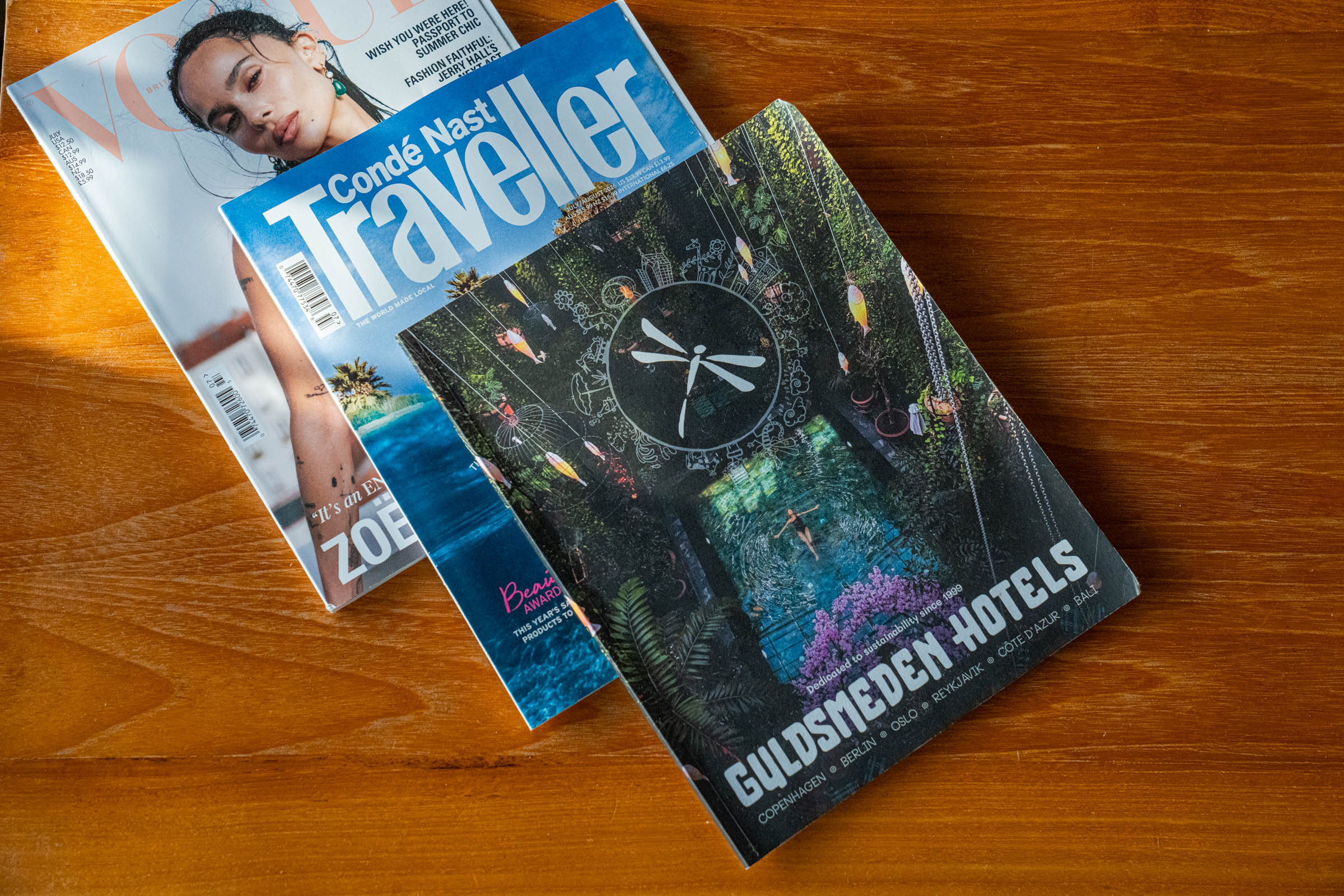
Magazines were laid out on a low table, among them the chain’s own edition. Flipping through that magazine told me more about the philosophy of the house than any prospectus. The suite also has an antique-looking telephone, which in this environment is more of an object than a device.
Dragonflies appear where you least expect them. It is embroidered on the pillows in three sizes, in a tone only slightly darker than the fabric itself. The sign of the house repeats itself throughout the entire stay, and never shouts.
What I remember most is the silence. Despite the fact that the hotel is located on a busy boulevard, the suite does not hear traffic. Manon Les Suites Guldsmeden solved that part without fanfare, and it is precisely by such things that the seriousness of a hotel is measured.
MANON LES SUITES GULDSMEDEN: LUXURY WITH SUSTAINABILITY IN EVERY DETAIL
Since its establishment in 1999, Guldsmeden has built its business around ecological principles. The hotel has Green Globe and Green Key certificates, as well as the Det Økologiske Spisemærke (Organic Cuisine Label). That sign is awarded to establishments where between ninety and one hundred percent of food and drinks are of organic origin, and the chain states that it is currently around ninety-eight percent.
The list does not end there. Bedding and mattresses bear the Prolana label, the chain’s own cosmetics line is Ecocert certified, and coffee, tea and cocoa come from fair trade. The chain has been a member of the Danish GoGreen network since 2010 and publishes annual reports on environmental impact.
In the suite, sustainability is not announced in large letters. It is simply visible. No plastic bottles, no individual packaging, no extra sheets of paper. You leave cardboard, glass and batteries on the table, and the staff sorts them further.
I especially liked the towel rule, which really works here. What you leave on the floor gets replaced, and what you hang up remains yours. Also, the hotel keeps the books and magazines left by the guests and returns them to the common areas. A small thing, but it speaks to the way of thinking.
WHAT I LOVED ABOUT MY STAY AT MANON LES SUITES GULDSMEDEN
The greatest value of Manon Les Suites Guldsmeden Hotel is precisely the atmosphere that others cannot easily copy. The pool, roof terrace and suites form a whole, and the staff behaves relaxed and without stiff formality. In addition, the size of the suite allows a stay of four or five days not to be tiring.
For some travelers, price is the deciding factor. Manon Les Suites Guldsmeden operates in the highest price range of the Danish capital, and breakfast is usually paid for separately. My experience with the overall service at the hotel was exceptional and the breakfast was excellent, the price justifies the quality and whenever I return to Copenhagen I would choose one of the Guldsmeden hotels. Both because of their locations and because of the unusual experience they provide.

WHAT TO DO IN COPENHAGEN: THE EXPERIENCES YOU SHOULDN’T MISS
Copenhagen is a city that is best explored on foot and by bike. The distances are short and the flat terrain helps. Here’s what I would set aside for a first or second visit.
COPENHAGEN OLD TOWN: THE CLASSICS YOU SHOULDN’T MISS
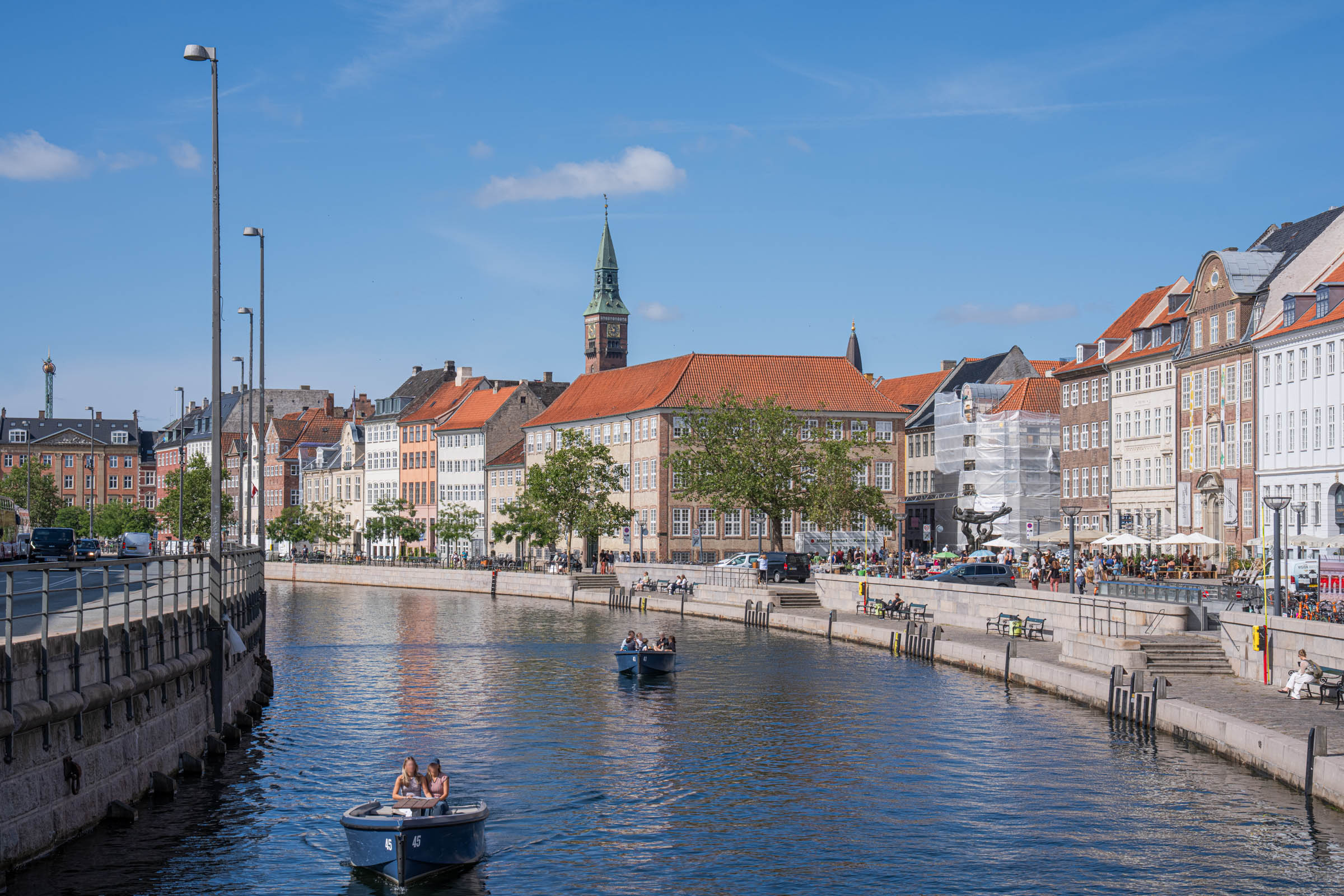
Nyhavn is the most photographed stretch in the country. The canal was dug in the 1670s, and the colorful houses along the shore were once warehouses and sailors’ inns. Hans Christian Andersen lived in several buildings on that street, which today are marked by plaques on the facades.
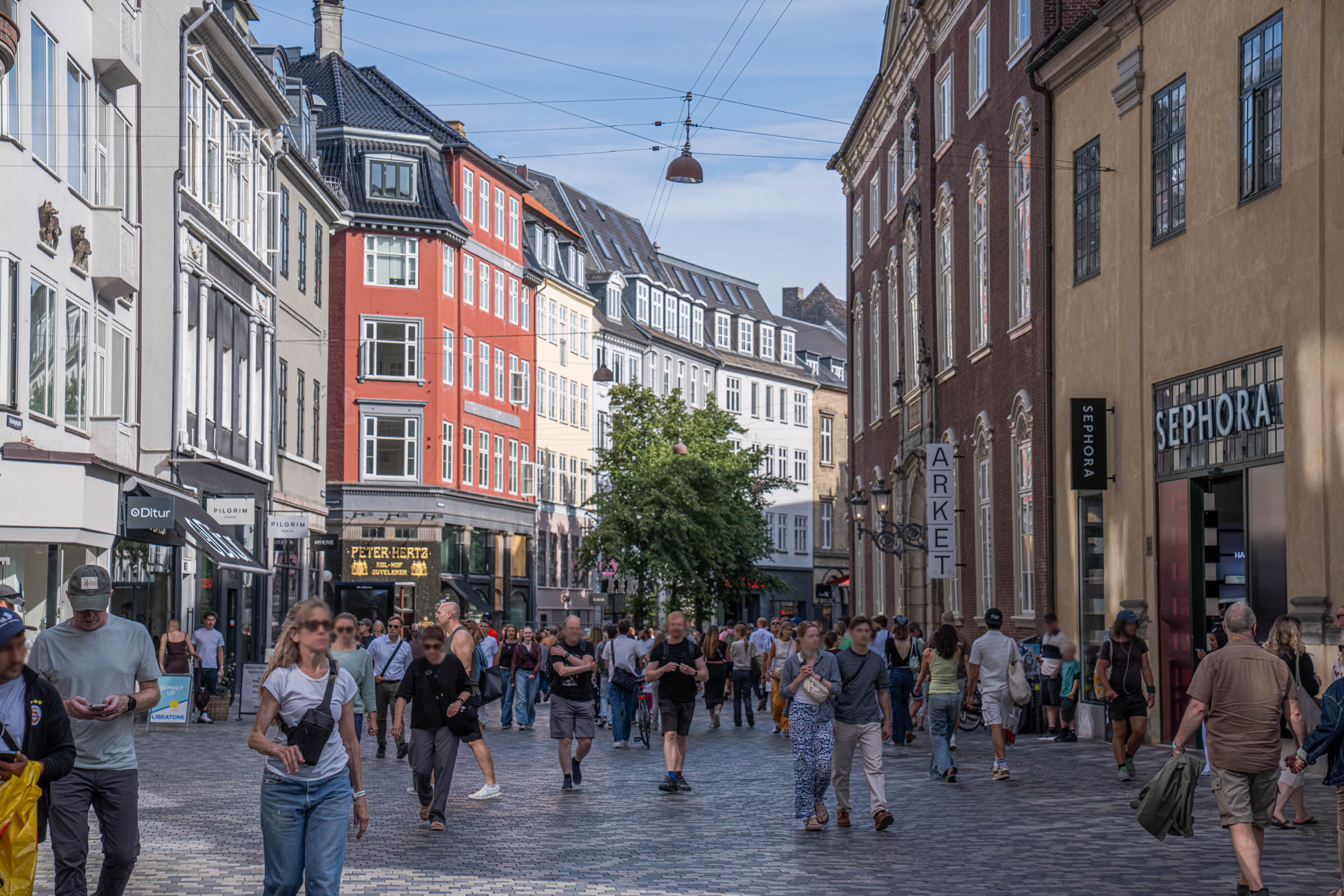
From there it’s a short walk to Kongens Nytorv and the Strøget pedestrian street, one of the longest in Europe. On the way, you pass the Round Tower, built in the time of King Christian IV, with a spiral ramp instead of stairs. Rosenborg Castle houses the crown jewels, and Christiansborg Palace is today the seat of the Danish Parliament.

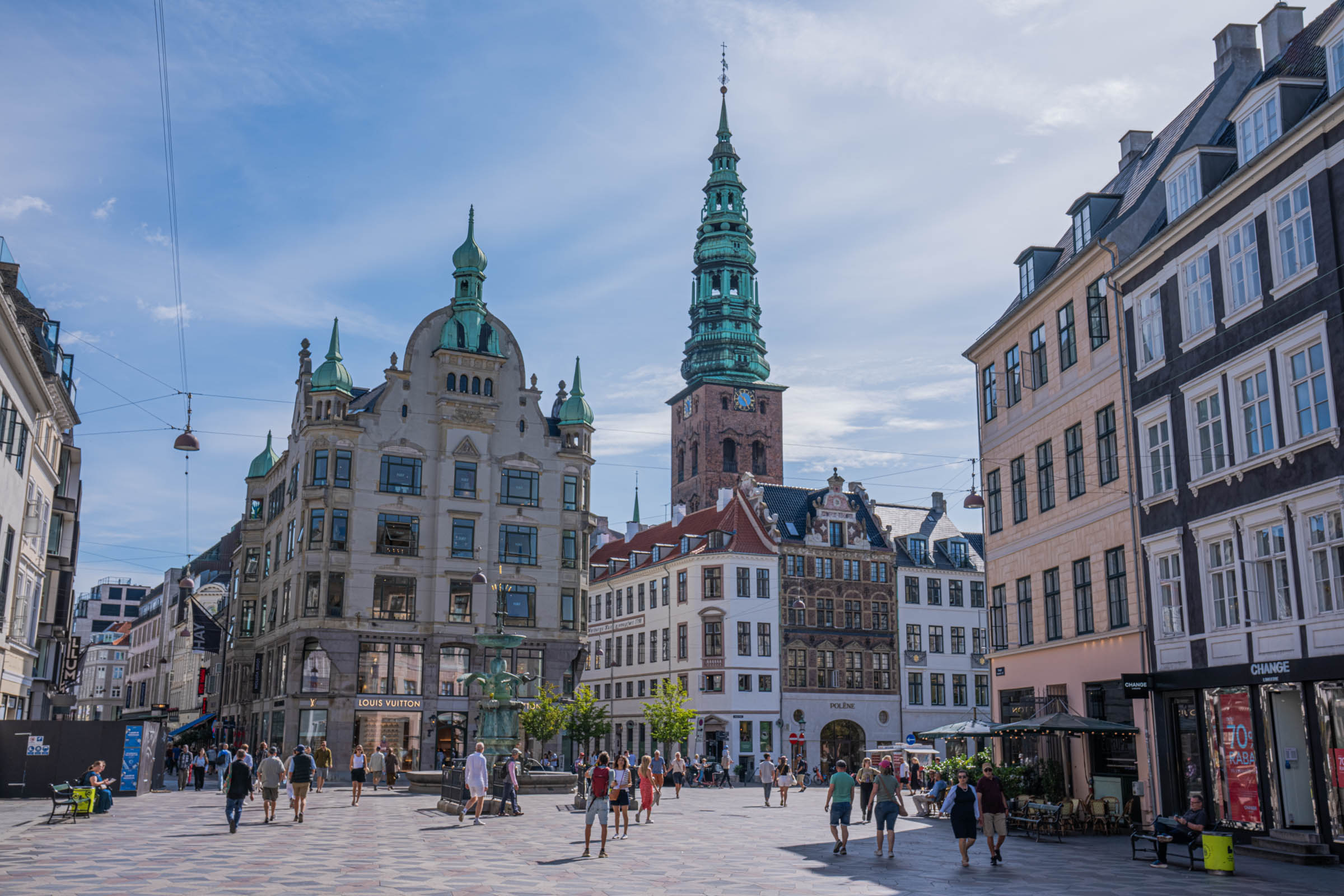
On Strøget itself, it is worth stopping at Amagertorv square. There stands an old fountain with bronze storks, a favorite meeting place of Copenhageners, while the green tower of the Nikolaj church rises above the roofs. Today, that church is not used for worship, but hosts contemporary art. A few steps further down is a row of shops and cafes with gardens.
Amalienborg consists of four rococo palaces and is the residence of the royal family. The changing of the guard takes place at noon and lasts a short time, so come a little early. Right behind the palaces rises the Marble Church with a large dome, which can be visited from the inside.
COPENHAGEN: WATER, HISTORIC FORTRESSES & GREEN ESCAPES
The Little Mermaid has been standing on a rock near the coast since 1913. It is the work of the sculptor Edvard Eriksen, and it was commissioned by the industrialist Carl Jacobsen. The statue is smaller than visitors expect, but the surrounding walk justifies the trip.
Just next to it lies Kastellet, a star-shaped fortress with a windmill and rows of red military buildings. A walk along the ramparts takes half an hour and is one of the most beautiful breaks in the city. A botanical garden with a glass palm house from the nineteenth century is located not far from there.
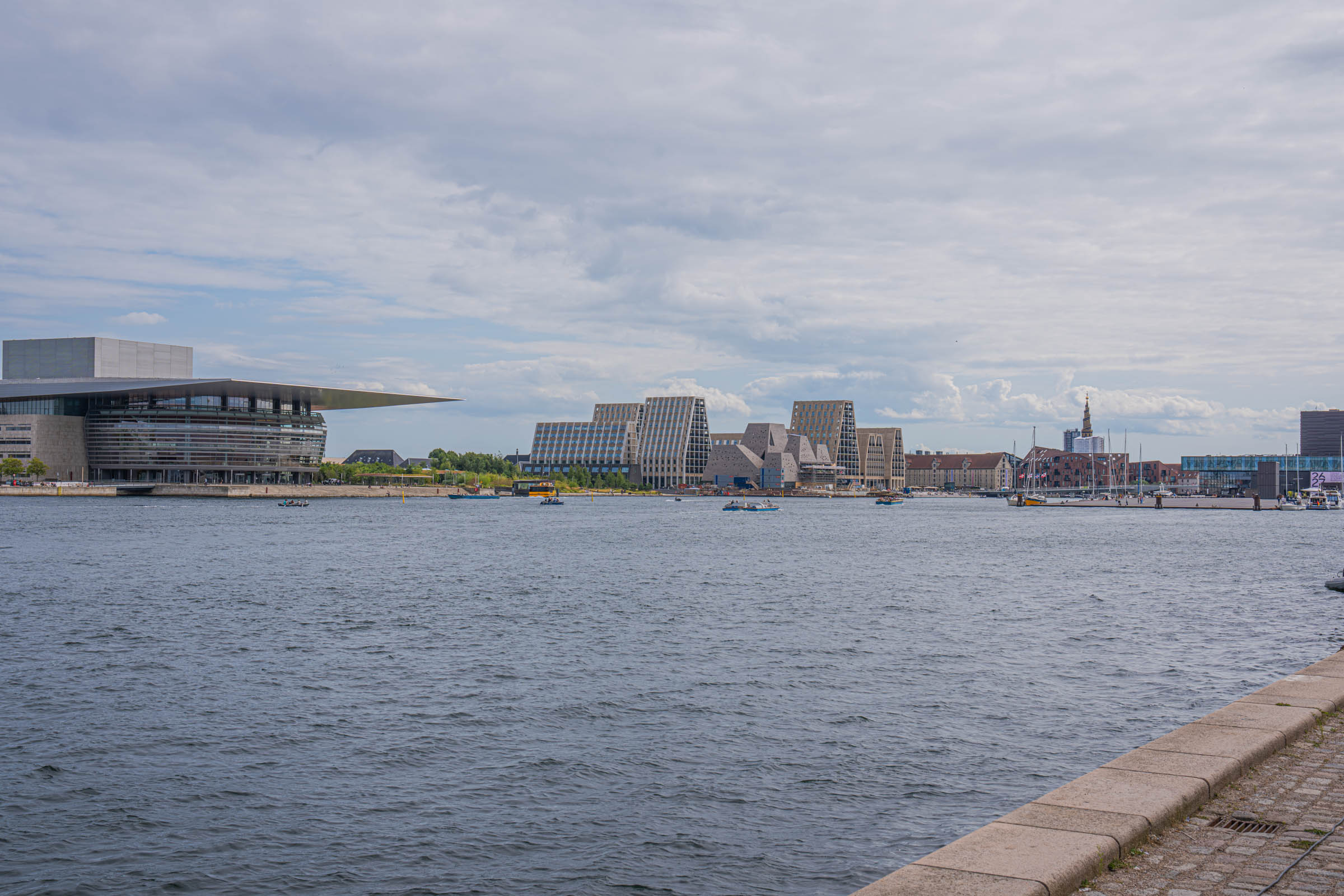
A boat ride through the canals is the best way to see the city from a different angle. Departures are frequent, and the line passes by the Opera House and modern buildings on the coast. At the end of the day, Christianshavn’s waterfront offers a view of the city’s silhouette reflected in the water.

COPENHAGEN’S BEST NEIGHBOURHOODS TO EXPLORE
Nørrebro is a neighborhood that has regularly been on lists of the world’s most interesting city neighborhoods in recent years. There are small bakeries, record stores and the Assistens cemetery, which the locals use as a park. Vesterbro offers a different rhythm, with former slaughterhouses converted into restaurants and bars.
Tivoli deserves a special place. It was opened in 1843 and is one of the oldest amusement parks in the world. In the evening, when thousands of bulbs are lit, the park looks completely different than during the day. The ticket is bought in advance online, which avoids the line.
Finally, Torvehallerne is the right place for a break. There you eat a traditional open sandwich smørrebrød, drink excellent coffee and buy cheese to take home. The market is a ten-minute walk from the hotel.

COPENHAGEN TRAVEL TIPS: WHAT TO KNOW BEFORE YOU GO
Check-in at the Manon Les Suites Guldsmeden hotel starts at 3:00 p.m., and check-out is until noon. The hotel accepts guests over the age of fifteen, so families with small children should consider other facilities of the same chain. Smoking is strictly prohibited and carries a heavy fine, which is also stated in the booking conditions.
It is worth thinking about the different suites categories. Poolside options have a direct view of the atrium, but are a bit louder in the afternoon when the bar is open. Suites with a terrace bring fresh air and a view of the city. The classic suite where I stayed seems to me to be the best ratio of space and price.
Room service is available throughout the day, with a delivery charge. The hotel also offers a personal advisor for planning the day, every day from 8 am to 6 pm, with prior notice. If you are traveling on business, there is also a meeting room for about sixty people.
The last tip is about planning. Manon Les Suites Guldsmeden fills up early and quickly, especially during the summer and during major city events. Booking two to three months in advance brings a better price and a larger selection of suite categories.

IS MANON LES SUITES GULDSMEDEN WORTH IT?
After all, my impression is clear. Manon Les Suites Guldsmeden is not a hotel you choose just for the bed and the location. It is chosen for the experience that begins the moment the door closes behind you and the city is left outside. The swimming pool in the greenery, the roof terrace and the suite made of teak and slate form a whole that is memorable.
I would recommend it to travelers who appreciate peace, space and thoughtful design. I would also recommend it to those who want luxury not to conflict with a responsible attitude towards the environment. On the other hand, if you’re looking for a classic city hotel with a grand marble lobby, you won’t find it here.
Manon Les Suites Guldsmeden proved to be the perfect starting point for such a trip. A hotel that keeps tropical warmth and northern simplicity under the same roof, a few steps from the city’s lakes and ten minutes’ walk from the old town. If you’re planning a trip to Copenhagen, feel free to put this address on Gyldenløvesgade at the top of your list.
Copenhagen is a city that rewards patient visitors. Manon Les Suites Guldsmeden fits perfectly into that rhythm, as it itself seeks to slow down. It took me exactly one morning by the pool to figure it out.
With Love from Copenhagen,
Mr.M
This post is sponsored by the United Nations World Tourism Organization (UN Tourism) and the Manon Les Suites Guldsmeden hotel, as well as other local partners who selflessly supported this project. This post is my personal and honest review of the destination experience.
Hi Marko, this was one of those hotel reviews where I could almost picture the atrium while reading it. I have been to Copenhagen twice, but I somehow never made it to Manon Les Suites, despite walking around the lakes quite a few times. The Junglefish pool sounds like the kind of place that changes character completely between daylight and evening. I particularly liked your point that the hotel is memorable for an atmosphere rather than simply for the room itself. I stayed at 71 Nyhavn on one of my visits, and the experience could hardly be more different, with… Read more »
Hallo Marko, deine Beschreibung von Manon Les Suites hat mich sofort an meinen letzten Aufenthalt in Kopenhagen erinnert. Ich war damals im Nobis Hotel und habe gerade den Gegensatz zwischen klassischer Architektur und moderner skandinavischer Gestaltung sehr geschätzt. Bei Manon scheint dagegen der tropische Innenraum das eigentliche Erlebnis zu sein. Besonders interessant finde ich, dass du nicht nur die schönen Bilder des Hotels beschreibst, sondern auch erklärst, wie sich das Konzept im Alltag anfühlt. Die Lage an den Seen gefällt mir ebenfalls, weil man damit etwas Abstand vom touristischen Zentrum bekommt. Ich hätte allerdings eine Frage zum Frühstück: Würdest du… Read more »
Bonjour Marko, j’ai beaucoup aimé ton approche de cet hôtel parce que tu ne t’es pas contenté de décrire ce que l’on voit sur les photographies. J’ai séjourné à Copenhague il y a quelques années et je logeais près de Kongens Nytorv, donc mon expérience de la ville était beaucoup plus centrée sur le quartier historique. Ce qui me frappe ici, c’est le contraste entre l’extérieur très nordique et cet intérieur presque tropical. Le Junglefish semble particulièrement intéressant au moment où la lumière naturelle disparaît. J’apprécie aussi ton attention aux détails liés à la durabilité, notamment les produits rechargeables et… Read more »
Hola Marko, me ha gustado mucho esta reseña porque transmite algo más que una simple opinión sobre un hotel. Estuve en Copenhague hace unos tres años y me alojé en una zona mucho más cercana a Nyhavn, así que Manon Les Suites me parece una alternativa bastante diferente. La combinación de diseño escandinavo y elementos inspirados en Bali resulta mucho más interesante cuando explicas cómo funciona realmente el espacio. Me llamó especialmente la atención que recomiendes visitar la piscina tanto por la mañana como por la noche, porque la iluminación debe cambiar completamente la sensación del lugar. También me parece… Read more »
Hoi Marko, wat een bijzondere hotelrecensie om te lezen. Ik ben meerdere keren in Kopenhagen geweest, maar ik had Manon Les Suites eigenlijk vooral van foto’s gezien en nooit echt overwogen om er te verblijven. Juist jouw beschrijving van de verschillen tussen de ochtend en de avond bij het zwembad maakt me nieuwsgierig. Mijn verblijf in 71 Nyhavn was totaal anders, vooral door de historische sfeer en de ligging direct aan het water. Bij Manon lijkt het hotel zelf veel meer onderdeel van de reiservaring te zijn. Ik vond het ook interessant dat je schrijft over de praktische kant van… Read more »
Ciao Marko, ho trovato questa recensione molto più interessante del classico articolo dedicato a un hotel di lusso. Sono stato a Copenaghen alcuni anni fa e avevo scelto un albergo molto più tradizionale, quindi Manon Les Suites rappresenta quasi l’opposto della mia esperienza. La piscina Junglefish sembra essere davvero il cuore del progetto, non semplicemente una piscina aggiunta per completare l’offerta. Mi piace molto anche il modo in cui descrivi il rapporto tra materiali naturali, legno e vegetazione. La parte sulla sostenibilità mi è sembrata credibile proprio perché la colleghi a piccoli dettagli quotidiani. Una curiosità: secondo te vale la… Read more »
Hello Marko, I have followed several of your hotel reviews and this one immediately stood out because Manon Les Suites has such a distinctive personality. I stayed at the Radisson Collection Royal on a previous Copenhagen trip, mainly because I wanted to experience the Arne Jacobsen connection and the central location. That hotel is almost a lesson in Scandinavian design history, whereas Manon seems much more theatrical and immersive. I actually like that distinction because it shows that luxury does not necessarily have to look formal or restrained. Your comments about the suite being divided into separate sleeping, sitting and… Read more »
Marko, bardzo podoba mi się sposób, w jaki opisałeś ten hotel, ponieważ nie skupiasz się wyłącznie na zdjęciach i pierwszym wrażeniu. Byłem w Kopenhadze kilka lat temu i zatrzymałem się wtedy w bardziej klasycznym hotelu w centrum, dlatego Manon Les Suites wydaje mi się zupełnie innym doświadczeniem. Najbardziej zaciekawił mnie basen Junglefish, ponieważ wygląda na miejsce, które samo w sobie może być powodem wyboru hotelu. Podoba mi się również połączenie tropikalnej atmosfery z duńskim podejściem do prostoty. Ciekawe jest to, że hotel znajduje się tak blisko jezior, a jednocześnie można dojść pieszo do najważniejszych części centrum. Czy Twoim zdaniem warto… Read more »
Olá Marko, gostei muito desta análise porque conseguiste explicar por que razão este hotel é diferente sem exagerar nos elogios. Estive em Copenhaga antes da pandemia e fiquei numa zona bastante central, mas nunca tinha ouvido falar do Manon Les Suites. A primeira coisa que me chamou a atenção foi precisamente a piscina rodeada de vegetação, porque parece criar uma experiência completamente diferente do exterior. Também achei interessante a forma como descreveste a sustentabilidade através de pequenos detalhes, e não apenas como uma estratégia de marketing. A localização junto aos lagos parece-me especialmente agradável para quem prefere começar o dia… Read more »
Marko, I have to admit that the phrase “jungle under a Danish roof” initially sounded like a clever headline, but after reading the full review I understand exactly what you meant. I visited Copenhagen before the pandemic and stayed at Hotel d’Angleterre, which was a completely different interpretation of luxury. The grand historical atmosphere there was impressive, but Manon Les Suites seems to offer something much more informal and personal. I particularly enjoyed your discussion of the little dragonfly details because they suggest that the design concept has been carried through rather consistently. The location near the lakes also sounds… Read more »
Hallo Marko, ich habe deinen Artikel mit großem Interesse gelesen, weil ich Kopenhagen bisher eher mit klassischem skandinavischem Design verbunden habe. Vor einigen Jahren war ich im Radisson Collection Royal und fand gerade die Architektur von Arne Jacobsen faszinierend. Manon Les Suites scheint dagegen viel stärker über Atmosphäre und Sinneseindrücke zu funktionieren. Besonders gelungen finde ich deine Beschreibung des Atriums, weil man dadurch versteht, warum der Pool mehr als nur ein Wellnessbereich ist. Auch die Tatsache, dass die Zimmer als Suiten konzipiert sind, macht für einen längeren Aufenthalt einen Unterschied. Würdest du für einen ersten Kopenhagen-Besuch eher diese Lage oder… Read more »
Marko, je lis ton blog depuis quelque temps et j’apprécie particulièrement tes critiques lorsque tu expliques ce qui se passe derrière l’image parfaite d’un établissement. J’ai découvert Copenhague avant la pandémie et j’avais choisi un hôtel près de Tivoli, ce qui rendait les déplacements très simples. Manon Les Suites me semble intéressant justement parce qu’il offre une expérience différente sans être éloigné du centre. L’idée de commencer la journée par une promenade autour des lacs avant de retrouver cette ambiance tropicale me plaît beaucoup. J’ai également trouvé intéressante ta remarque sur les heures les plus calmes de la piscine. Est-ce… Read more »
Hi Marko, this review made me reconsider what I normally look for in a Copenhagen hotel. I have always preferred historic properties, and 71 Nyhavn was one of my favourite stays because the old warehouse character is so closely tied to the city itself. Manon is almost the opposite: rather than placing you inside Copenhagen’s history, it creates a separate world within the building. That contrast is actually what makes it appealing to me. Your description of the roof terrace and the sauna also suggests there is more to the hotel than the famous pool photographs. I wonder whether you… Read more »
Marko, esta es una de esas reseñas que hacen que uno quiera volver a una ciudad que ya conoce. Estuve en Copenhague hace varios años y mi hotel estaba cerca de la estación central, así que tenía una ubicación muy práctica pero una experiencia bastante convencional. Manon Les Suites parece plantear la estancia de otra manera, casi como si el hotel fuera una pequeña escapada tropical dentro de la propia ciudad. Me interesa especialmente la relación entre el diseño y la sostenibilidad, porque muchas veces los hoteles hablan de estos temas sin que se note realmente en la experiencia. Aquí… Read more »
Marko, dit was een leuke verrassing, vooral omdat je niet probeert om van elk onderdeel van het hotel een superlatief te maken. Ik was een paar jaar geleden in Kopenhagen en verbleef toen in een hotel vlak bij Tivoli, waardoor ik vooral het klassieke stadscentrum als uitgangspunt had. Manon Les Suites lijkt me interessant voor iemand die na een dag sightseeing juist iets totaal anders wil ervaren. De combinatie van donkere materialen, hout en veel groen klinkt behoorlijk uitgesproken. Ik vond je opmerkingen over de stilte in de suite trouwens minstens zo interessant als de beschrijving van het zwembad. Hoe… Read more »
Marko, questa recensione mi ha fatto venire voglia di rivedere Copenaghen con occhi diversi. Sono stato in città prima del periodo della pandemia e avevo scelto un hotel vicino a Nyhavn, soprattutto per la posizione e per la possibilità di muovermi quasi sempre a piedi. Manon Les Suites sembra avere un carattere completamente diverso, più esperienziale e meno legato all’idea tradizionale di albergo di lusso. Ho apprezzato molto il passaggio dedicato alla colazione e alla scelta degli ingredienti locali. È un dettaglio che personalmente considero importante quando scelgo un hotel di questa categoria. Secondo te il ristorante Chapung merita una… Read more »
Hello Marko, I really enjoyed the section about the small details in the Classic Suite. The wooden welcome plaque, recycled paper, dragonfly embroidery and refillable toiletries tell me more about the hotel than another paragraph about luxury ever could. I stayed at Nobis Copenhagen once and remember being impressed by how carefully the historic building and contemporary interiors were balanced. Manon seems to approach design from a completely different direction, but the attention to detail sounds equally deliberate. I also like the fact that you mentioned the rooftop sauna being separated from the pool, because those practical observations are often… Read more »
Marko, bardzo dobrze czytało mi się tę recenzję, ponieważ pokazujesz hotel nie tylko jako ładne miejsce do fotografowania, ale jako całość. Byłem w Kopenhadze przed kilkoma laty i pamiętam przede wszystkim rowery, kanały i bardzo charakterystyczną atmosferę miasta. Manon Les Suites wygląda na miejsce, które pozwala połączyć tę północną prostotę z czymś znacznie bardziej egzotycznym. Szczególnie podoba mi się pomysł z sauną i tarasem na dachu, bo dzięki temu hotel nie kończy się na basenie Junglefish. Zastanawiam się tylko, czy przy dłuższym pobycie ta intensywna stylistyka nie zaczyna być trochę męcząca. Jak było z Twojej perspektywy po kilku dniach?
Bonjour Marko, ton article m’a rappelé mon propre séjour à Copenhague, même si mon hôtel était beaucoup plus classique. J’avais choisi un établissement près de la gare centrale et j’avais surtout apprécié la facilité d’accès aux différents quartiers. Ce qui me plaît chez Manon Les Suites, c’est que l’hôtel semble lui-même devenir une partie du voyage. Le contraste entre les façades sobres de Copenhague et cet atrium rempli de végétation doit être particulièrement saisissant lorsqu’on rentre après une journée passée dehors. J’ai également aimé ton passage sur les produits d’accueil et les emballages rechargeables. Est-ce que tu penses que l’hôtel… Read more »
Hi Marko, your review has convinced me that I have been looking at Copenhagen hotels in the wrong way. I normally choose based on location first and design second, but Manon Les Suites seems to make the design itself part of the reason to stay. I have stayed at Hotel d’Angleterre, and although the service and setting were exceptional, it is obviously a very different interpretation of luxury. What I like about your review is that you don’t suggest one is objectively better than the other. They simply appeal to different travellers. The adults-only policy is also useful information that… Read more »
Marko, besonders interessant fand ich deinen Vergleich zwischen der klassischen Vorstellung von Luxus und dem eher entspannten Ansatz dieses Hotels. Ich habe einmal im Hotel d’Angleterre gewohnt und würde es als sehr elegante, traditionelle Form von Luxus beschreiben. Manon Les Suites scheint dagegen stärker über Materialien, Licht, Pflanzen und Atmosphäre zu funktionieren. Genau deshalb finde ich deine Beschreibung des Hotels überzeugend. Auch die Lage an den Seen gefällt mir, weil man morgens nicht sofort mitten im touristischen Trubel steht. Ich hätte allerdings gerne gewusst, ob du den Weg zu Strøget und Tivoli tatsächlich so angenehm zu Fuß empfunden hast, wie… Read more »
Marko, gostei particularmente da parte em que explicas que o hotel não tenta parecer um palácio clássico. Essa diferença é importante, porque muitas pessoas associam automaticamente cinco estrelas a mármore, grandes halls e decoração formal. Já fiquei em hotéis desse género em Copenhaga e, apesar do conforto, alguns acabam por parecer muito semelhantes entre si. Manon Les Suites parece ter uma identidade muito mais própria. A localização perto dos lagos também me parece excelente para quem gosta de começar o dia caminhando antes do pequeno-almoço. Se voltasses a Copenhaga amanhã, escolherias novamente este hotel ou experimentarias outro da mesma cidade?
Hola Marko, me ha gustado especialmente que hayas hablado de lo que ocurre después de las fotografías. Manon Les Suites es un hotel que probablemente llama la atención inmediatamente en Instagram, pero tu texto intenta comprobar si esa imagen se corresponde con una experiencia real. Eso me parece mucho más útil que una simple lista de instalaciones. Yo me alojé en Copenhague en un hotel junto a Christianshavn y recuerdo que esa zona tenía una personalidad completamente distinta. Me interesa saber si desde Manon es fácil llegar andando hasta Torvehallerne y luego continuar hacia el centro. Y otra pregunta: ¿el… Read more »
Marko, I have been following your travel posts for quite some time, and I think this is one of the more visually distinctive hotel reviews you have published. I visited Copenhagen in 2019 and stayed somewhere very ordinary, so I am slightly envious that hotels like Manon have become part of the city’s luxury scene. The idea of a tropical atrium in such a northern city is unusual without being completely disconnected from the surroundings. I especially liked your observation that the hotel encourages guests to slow down rather than simply use it as a base. That feels very appropriate… Read more »
Ciao Marko, ho letto con attenzione la parte dedicata alla sostenibilità e l’ho trovata molto più interessante delle solite dichiarazioni generiche degli hotel. Il fatto che tu abbia notato gli imballaggi, i prodotti ricaricabili e persino il modo in cui vengono gestiti gli asciugamani rende la recensione molto concreta. Sono stato a Copenaghen diversi anni fa e avevo scelto un albergo tradizionale vicino al centro. Manon Les Suites sembra invece pensato per chi vuole che anche il soggiorno diventi un’esperienza. La piscina Junglefish è certamente l’elemento più fotografabile, ma credo che il vero valore sia nella coerenza del progetto. Hai… Read more »
Marko, ik volg je reisartikelen al een tijdje en deze recensie voelde bijzonder compleet aan. Wat mij vooral aanspreekt, is dat je zowel de spectaculaire kant van het hotel als de minder zichtbare praktische details bespreekt. Ik ben eerder in Kopenhagen geweest en verbleef toen in een hotel bij Nyhavn, waar de historische omgeving natuurlijk een groot deel van de charme bepaalt. Manon Les Suites lijkt de charme juist naar binnen te halen. De combinatie van tropische planten, hout en donkere materialen lijkt me behoorlijk geslaagd. Ik ben wel benieuwd hoe het hotel aanvoelt op een dag waarop het buiten… Read more »
Marko, bardzo podoba mi się Twoje stwierdzenie, że niektóre hotele pamięta się nie ze względu na pokój, lecz ze względu na jeden wyjątkowy widok. Mam podobne doświadczenie z podróżami i właśnie dlatego zainteresował mnie Junglefish. Kiedy byłem w Kopenhadze, zatrzymałem się w hotelu o znacznie bardziej klasycznym charakterze i brakowało mi wtedy miejsca, które samo w sobie byłoby częścią atrakcji. Manon wydaje się właśnie takim miejscem. Jednocześnie doceniam, że nie ukrywasz wad, na przykład odległości między basenem a sauną. Czy miałeś wrażenie, że hotel jest bardziej odpowiedni dla par, czy również dla osób podróżujących samotnie?
Marko, j’ai particulièrement apprécié la façon dont tu décris la suite comme un véritable espace de vie et pas seulement comme une chambre plus grande. Pour un séjour de quatre ou cinq nuits, la séparation entre le coin nuit, le salon et le petit espace repas doit effectivement être appréciable. J’ai séjourné au Nobis lors d’un précédent voyage à Copenhague et j’avais beaucoup aimé son équilibre entre architecture historique et design contemporain. Manon Les Suites semble avoir une personnalité beaucoup plus audacieuse. C’est précisément ce qui me donne envie de le découvrir. Est-ce que tu recommanderais de prendre le petit… Read more »
Hello Marko, one thing I appreciated about this review was that you actually explained how the hotel fits into a Copenhagen itinerary. A beautiful hotel can become surprisingly inconvenient if you have to rely on taxis or public transport every time you want to see something. The position near the lakes sounds particularly attractive because it gives you a pleasant walking route into the centre. I also liked your mention of Torvehallerne, because a market stop is often more memorable to me than another formal restaurant recommendation. I stayed at NH Collection Copenhagen once and loved the harbour setting, so… Read more »
Hallo Marko, ich finde es immer hilfreich, wenn eine Hotelbewertung auch die Umgebung ernst nimmt. Genau das ist dir hier gut gelungen. Ich war vor einigen Jahren in Kopenhagen und habe damals hauptsächlich die klassischen Sehenswürdigkeiten rund um Nyhavn und Amalienborg besucht. Die Gegend um die Seen habe ich leider viel zu wenig erkundet. Nach deinem Artikel würde ich beim nächsten Besuch wahrscheinlich bewusst dort anfangen. Das Hotel selbst wirkt für mich fast wie ein Gegenentwurf zur zurückhaltenden dänischen Architektur draußen. Hast du eigentlich den Eindruck, dass man vom Hotel aus viele Sehenswürdigkeiten wirklich bequem zu Fuß erreicht, oder würdest… Read more »
Olá Marko, uma das coisas que mais gostei neste artigo foi a comparação entre o luxo tradicional e uma abordagem mais descontraída. Já fiquei em hotéis de cinco estrelas bastante formais e, embora sejam impecáveis, às vezes falta-lhes personalidade. Manon Les Suites parece ter personalidade de sobra. A piscina rodeada por vegetação deve ser especialmente agradável depois de passar várias horas a caminhar pela cidade. Também gostei da referência ao silêncio dentro da suite, porque para mim o isolamento acústico é muito mais importante do que alguns detalhes decorativos. A minha dúvida é se o hotel continua igualmente interessante para… Read more »
Marko, llevo bastante tiempo leyendo tus viajes y me gusta que en esta ocasión hayas dedicado tanto espacio a los pequeños detalles. La historia de la familia detrás de Guldsmeden añade una dimensión diferente al hotel, porque deja de parecer simplemente un proyecto de diseño. También me pareció interesante la conexión con Bali y la presencia del símbolo de la libélula en distintos elementos. Estuve en Copenhague antes de la pandemia y recuerdo que la ciudad tenía una relación muy especial con el agua y las bicicletas. El hotel parece continuar esa sensación de calma, aunque desde una perspectiva completamente… Read more »
Marko, I really liked the fact that you included some of the less glamorous practical information in this review. Knowing that the sauna and steam room are on the rooftop rather than beside the pool is exactly the sort of detail I want before booking a hotel. I have stayed at Villa Copenhagen, which also has a strong design identity, but the atmosphere there felt much more connected to the classic grandeur of the building itself. Manon seems deliberately more playful. The sustainability aspect is another reason I would consider it, particularly because it appears to be integrated into everyday… Read more »
Marko, questo articolo mi ha fatto riflettere su quanto possa cambiare il modo di vivere una città a seconda dell’hotel scelto. In passato ho soggiornato in una struttura molto elegante nel centro di Copenaghen, con un’atmosfera decisamente più classica. Manon Les Suites sembra invece quasi una destinazione dentro la destinazione. Mi piace molto l’idea di poter passare una mattina tranquilla in piscina e poi uscire a piedi verso i laghi e il centro storico. Anche la descrizione della suite mi sembra convincente, soprattutto per chi rimane più di due notti. Secondo te il design è altrettanto riuscito dal vivo quanto… Read more »
Hoi Marko, ik vond vooral je beschrijving van de overgang van de straat naar het atrium erg sterk. Je verwacht bij een gebouw in Kopenhagen waarschijnlijk geen tropische binnentuin met een zwembad, en juist dat onverwachte contrast maakt het interessant. Ik ben eerder in 71 Nyhavn Hotel geweest en daar is het juist de historische omgeving die de ervaring bepaalt. Bij Manon lijkt het gebouw zelf de bestemming te worden. Dat zijn twee totaal verschillende vormen van luxe, en ik vind het goed dat je ze niet tegen elkaar probeert uit te spelen. Zou je voor een eerste bezoek aan… Read more »
Marko, bardzo ciekawie opisałeś różnicę między tym hotelem a klasycznymi obiektami luksusowymi. Zatrzymywałem się w hotelach, w których marmur i ogromne lobby robiły pierwsze wrażenie, ale po kilku dniach trudno było przypomnieć sobie, co właściwie je wyróżniało. Manon Les Suites raczej nie ma tego problemu. Basen Junglefish, roślinność i konsekwentne wykorzystanie drewna tworzą bardzo charakterystyczną całość. Podoba mi się też fakt, że hotel znajduje się niedaleko jezior, a nie bezpośrednio w najbardziej turystycznym punkcie miasta. Czy podczas pobytu korzystałeś z roweru hotelowego, czy większość trasy pokonałeś pieszo?
Bonjour Marko, ton article m’a particulièrement intéressé parce que tu poses finalement une vraie question: qu’est-ce qui rend un hôtel mémorable? Pour moi, ce n’est pas toujours la taille de la chambre ou le nombre de services proposés. Dans le cas de Manon Les Suites, l’atrium et la piscine semblent créer une identité très forte. J’ai séjourné à Copenhague au d’Angleterre, qui représente évidemment une forme beaucoup plus classique et sophistiquée du luxe. Après avoir lu ton article, je serais curieux de découvrir les deux précisément parce qu’ils racontent des histoires complètement différentes. Si tu devais choisir un seul endroit… Read more »
Hi Marko, your review made me realise how much a hotel’s surroundings can influence the experience. I have been to Copenhagen several times and usually stayed around the central shopping streets, so I never really thought about the lakes as part of the daily rhythm of the city. The location of Manon seems to offer a nice compromise between being close to everything and having somewhere calmer to return to. I also appreciate that you described the pool at different times of day instead of treating it as one static feature. The adults-only aspect is something I would definitely want… Read more »
Marko, dein Bericht hat mich vor allem wegen der Verbindung von Nachhaltigkeit und Design angesprochen. Ich finde es angenehm, wenn ein Hotel ökologische Aspekte nicht ständig demonstrieren muss, sondern sie einfach in den Alltag integriert. Die wiederverwendbaren Verpackungen und die Materialien in der Suite sind dafür gute Beispiele. Ich war einmal im NH Collection Copenhagen und mochte dort besonders die moderne Lage am Wasser. Manon wirkt dagegen viel intimer und stärker als Boutique-Erlebnis. Für einen nächsten Aufenthalt würde ich wahrscheinlich genau wegen dieses Unterschieds eine Suite ausprobieren. Hast du einen bestimmten Zeitpunkt am Tag, an dem du das Hotel am… Read more »