
My dear fashionistas, welcome to a new fashion story on the Mr.M blog. I have a small confession, and some of my watch friends may raise an eyebrow. For most of my life, I believed haute horlogerie had a postcode. It lived in a few Swiss valleys and a handful of German workshops, and nowhere else. Then the Peacock Divine Craft Tourbillon arrived, and that old belief suddenly started to feel a little lazy.
Its dial carries more than a thousand lines struck by hand. Inside beats a flying tourbillon caliber just 3.5mm thick. Above all, it comes from a company whose story began with four watches and homemade tools. I did not expect to be won over. Yet here we are.
In this post, I will walk you through the watch in detail, from its history to its finest finishing. Of course, I also dressed around it, because that is what I do here on Mr.M. You will meet an olive Loro Piana linen jacket, a Giannetto Portofino striped shirt, wide Visvim denim and Christian Louboutin python high-tops. Each piece earned its place. However, only one of them made me rethink an entire category.



CAN A CHINESE WATCH REACH THE LEVEL OF HAUTE HORLOGERIE?
It is a fair question, and I asked it myself. Haute horlogerie is not a price tag. In my view, it rests on three pillars: a demanding complication, serious hand finishing and a genuine sense of artistry. A watch needs all three to earn the title.
Peacock clearly understands that test. Ariel Adams, founder of aBlogtoWatch, writes that Peacock positions its tourbillons as a practical alternative to much pricier Swiss and German pieces, without chasing the lowest price. He also notes that the brand produces its movements in-house. That combination matters. Anyone can buy a movement. Far fewer companies can design one.
In a separate review, his colleague Mike Razak argued that affordable tourbillons have shattered the old illusion of exclusivity surrounding this complication. I agree with him, with one small addition. Accessibility alone would not have convinced me. What convinced me was time. Peacock gave an artist six months to take a single dial design from sketch to metal. It also hand-polishes bevels that most owners will never see. Those are not the habits of a company chasing volume. They are the habits of a true maison.
So, can a Chinese watch belong to haute horlogerie? After living with this one, my answer is yes. Still, let me show you why rather than simply tell you.


PEACOCK WATCHES: THE STORY BEHIND THE CHINESE WATCHMAKER
Every great watch hides a good origin story, and this one could fill a film. Late in 1957, seven technical workers at the Andong Metal Products Factory built their own equipment and assembled a first batch of four watches. They named them Qianjin, which means Advance. Andong is today’s Dandong, a port city in Liaoning Province. The city hosted six of China’s earliest watch factories and grew into one of the country’s biggest producers.
The Peacock name came two decades later. In the second half of 1978, the Liaoning Watch Factory launched Peacock as a new brand. Then the numbers exploded. By the mid-1980s, the factory produced more than 3.8 million watches a year and employed around 12,000 people. Very few European houses have ever operated on that scale.


Of course, the road was not always smooth. By the late 1980s, the factory had slipped into a semi-shutdown, and workers returned in large numbers only after reforms began in 2000. A 2008 reorganization created Liaoning Peacock Watch Industry Co., Ltd., and a new watch industry park opened in 2011.
Today, the brand signs its work with one simple line: Chinese Haute Horlogerie since 1957. I like that phrase more every time I read it. It sounds less like a slogan and more like a promise kept across almost seven decades.

HOW RARE IS THE PEACOCK DIVINE CRAFT TOURBILLON?
Rarity is part of the appeal. Peacock limits each color of the Divine Craft to 108 pieces and offers four dials inspired by traditional Chinese colors: Glacial Green, Petaline Pink, Skybound Blue and Obsidian Blue. Mine is reference PCG0601.01, the light Glacial Green edition.
Each shade also carries its own Chinese character. For the green, Peacock chose 泠 and linked the tone to chilled jade and the clarity of mountain springs. I find that far more poetic than the usual color names. Western brands tend to borrow from oceans or racing cars. Here, every dial reads like a line of classical verse.
Collectors will appreciate two more details. Buyers can choose their serial number, and the price sits at $4,899. For an in-house, hand-finished tourbillon, that is a remarkable figure. Most Swiss tourbillons live several price brackets higher. Still, rarity and price are only the frame. The real picture is the dial itself.

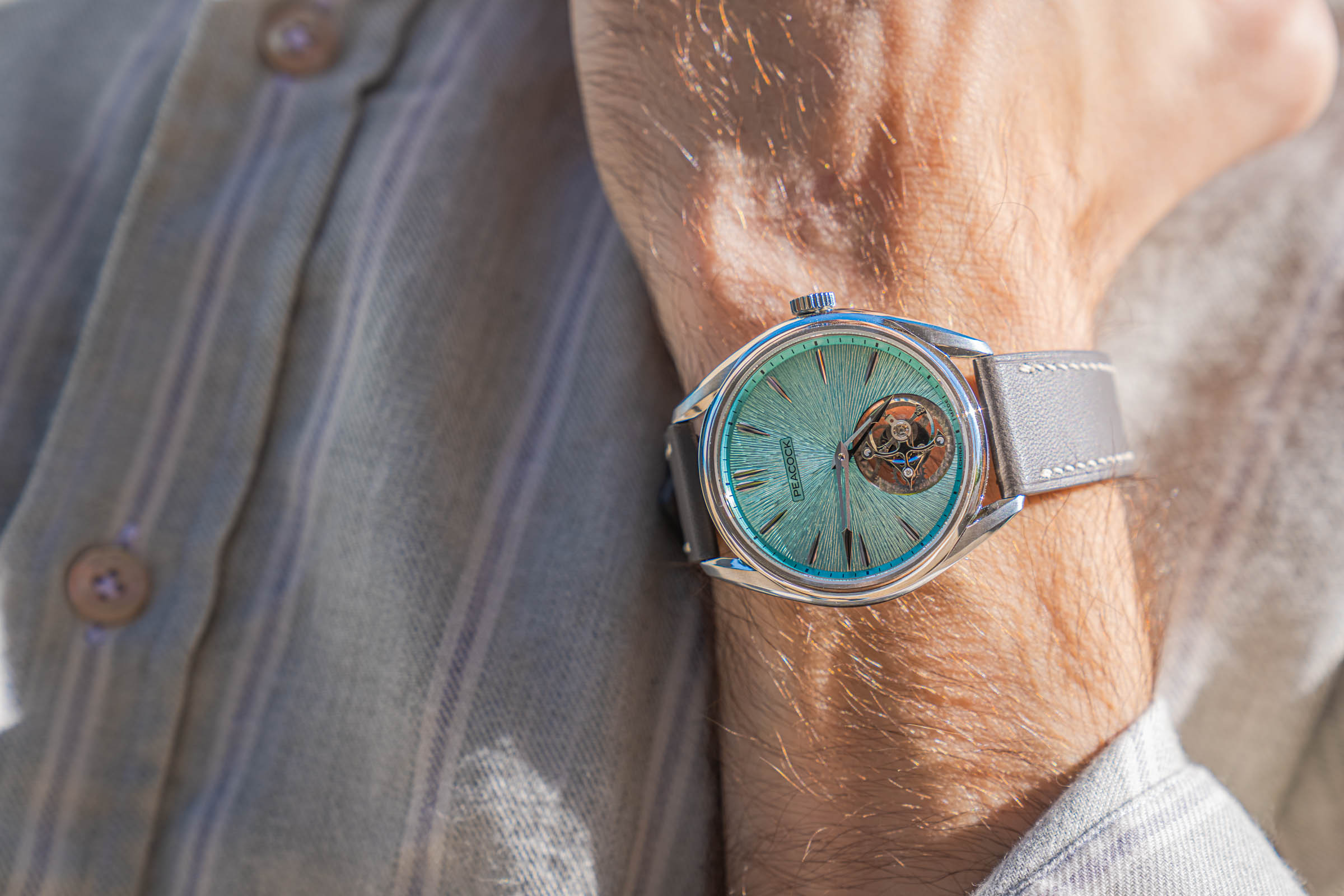
INSIDE THE PEACOCK DIVINE CRAFT TOURBILLON’S HAND-ENGRAVED DIAL
This is where the watch truly stopped me in my tracks. Peacock creates the dial through micro chasing, a traditional metal-sculpting craft rarely seen at this level in watchmaking. The artist uses three custom-made tools on a surface only 30mm wide.
The process sounds almost meditative. Each stroke begins with a hairline guide, followed by controlled hammering where a one-degree slip or a single extra gram of force can break the balance. Too light, and the metal barely responds. Too heavy, and it fractures.
The finished dial holds a three-layer radial pattern of more than 1,000 individually struck lines, shifting from coarse to fine as they move inward. On the wrist, the effect is hard to photograph and impossible to forget. Light runs across the surface like wind across a wheat field. Every new angle reveals a new halo.
Here is the part I love most. Peacock deliberately preserves the tiny traces of the human hand, so the surface seems almost to breathe. Machine guilloché aims for perfect repetition. This dial aims for life instead. Once engraved, each dial receives a coating that both protects the metal and gives it color.


WHO IS PROFESSOR ZHAO YI? THE ARTIST BEHIND PEACOCK’S DIVINE CRAFT TOURBILLON
Behind every great dial stands a great pair of hands. Here, they belong to Professor Zhao Yi, a contemporary jewelry artist from the Beijing Institute of Fashion Technology. She is known for reviving traditional techniques such as chasing and forging, and for merging lacquer with metal.
Her reputation reaches far beyond China. In 2018, she received the Cominelli Prize in Italy, one of the highest honors in contemporary jewelry. For the Divine Craft, her work took six months to move from a paper sketch to finished metal.
I find something quietly moving in this collaboration. A jewelry artist brings a sculptor’s patience to a watch dial. A manufacture brings the mechanics. Meanwhile, that Italian award closes a lovely circle, since half of my outfit also comes from Italy. Modern luxury feels most alive exactly at these crossroads.

THE PAX9610A: AN ULTRA-THIN IN-HOUSE TOURBILLON MOVEMENT
Now for the engine room. The real headline is the new in-house caliber PAX9610A, a manually wound tourbillon only 3.5mm thick. That thinness changes everything. Peacock’s earlier Classic-Grandeur Tourbillon shared an almost identical case shape at 43mm, while the Divine Craft shrinks to just 39.5mm.
The upgrades go deeper than size. The new caliber runs at 4Hz, or 28,800 vibrations per hour, instead of the older 3Hz, and its power reserve grows from 48 to 68 hours. It has 24 jewels.
Then comes the balance. Peacock fits a Gyromax balance, an innovation pioneered by Patek Philippe, which adjusts inertia through weights and keeps the hairspring in its ideal shape. According to the brand, this improves isochronism and long-term precision. Also, the spinning tourbillon cage doubles as the seconds display. Finally, Peacock sets the tourbillon with natural micro-diamonds.
Because the caliber winds by hand, my mornings now begin with a small ritual. A few turns of the crown, a quick glance at the cage, and the day can start. Honestly, I have grown very attached to that moment. This is not my first Peacock: I also wore this tourbillon in my Valentino white linen story.

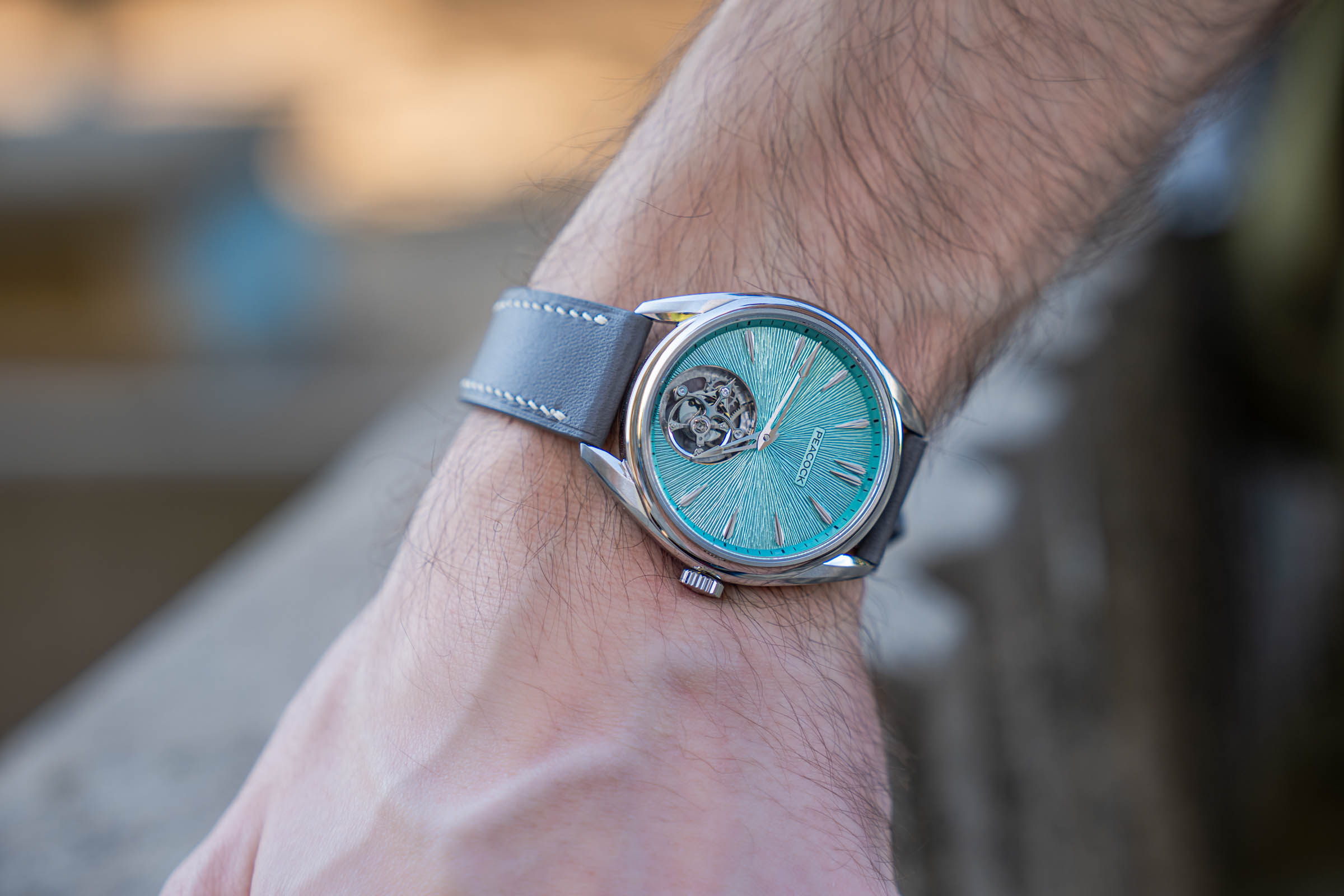
WHAT IS A TOURBILLON? THE HISTORY BEHIND ONE OF WATCHMAKING’S GREATEST COMPLICATIONS
To appreciate this cage, we need to visit Paris in 1801. That year, Abraham-Louis Breguet patented the tourbillon. His logic was elegant. Pocket watches spent most of their lives upright in a waistcoat, so gravity kept pulling the balance in one direction. By placing the escapement inside a rotating cage, Breguet spread those small errors evenly.
The next chapter unfolded in Germany. Glashütte gave the world the flying tourbillon, a design that removes the upper bridge normally holding the cage. Watchmaker Alfred Helwig introduced the idea there in 1920. Without that bridge, the cage seems to float in open space, which is exactly what you see on this dial.
Notably, most Peacock tourbillons follow the flying design, and the Divine Craft continues that tradition.
Of course, a wristwatch moves constantly, so gravity rarely pulls one way for long. Today, a tourbillon matters less as a correction and more as a statement of skill. I have no problem with that. After all, nobody buys a hand-engraved dial for practical reasons either.

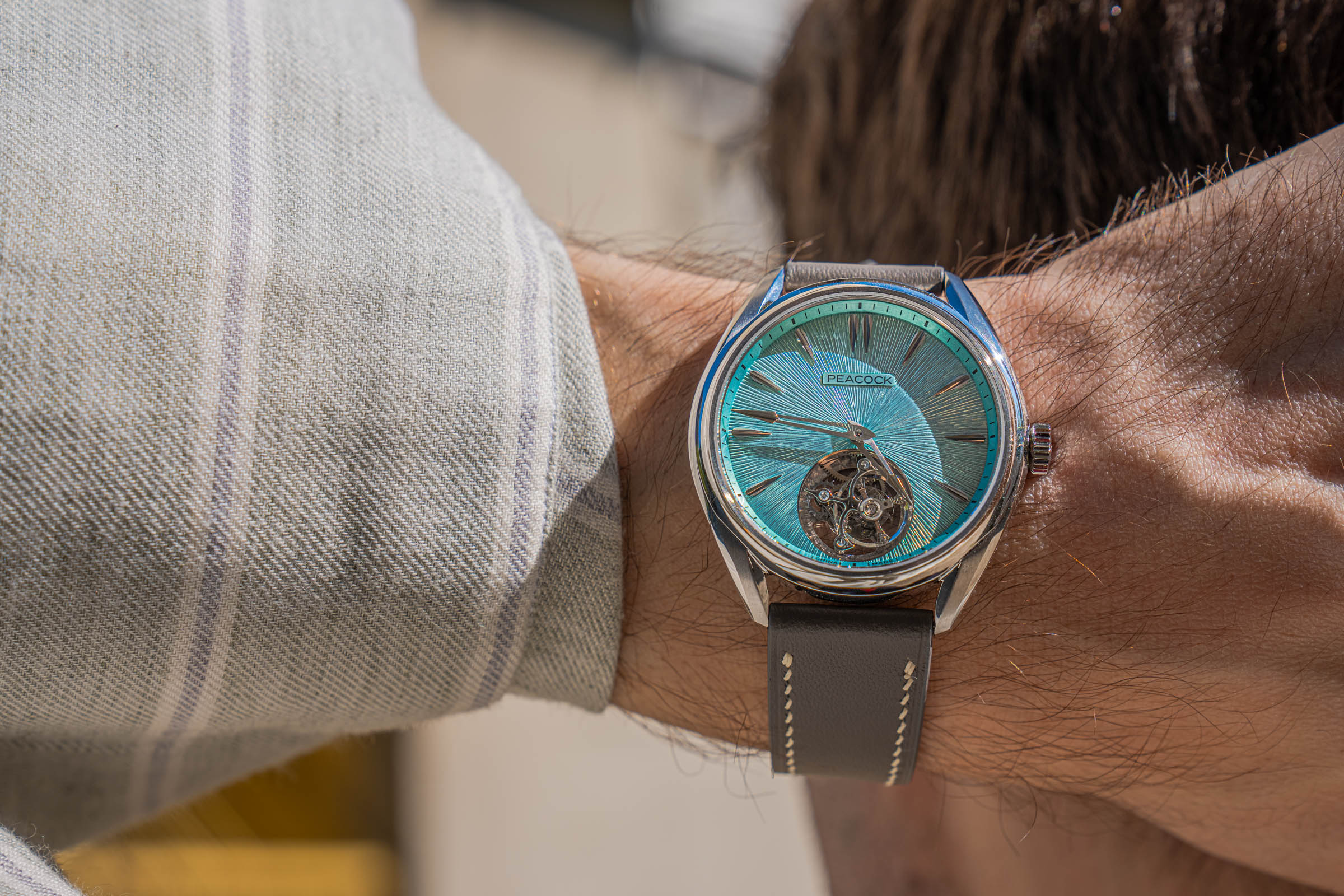
UNDER THE LOUPE: THE FINE DETAILS OF THE PEACOCK DIVINE CRAFT TOURBILLON
Turn the watch over, and the craftsmanship continues through the sapphire caseback. The main plate shows hand-finished perlage beneath circular Geneva stripes. Meanwhile, the great wheel carries a dual rotational motif, and the smaller wheels feature fine spiral patterns. The beveling includes four inward angles and one outward angle, all polished by hand until they reflect light like silk.
One story made me smile. Peacock calls the tourbillon screws Peacock Eye screws, and their 200-micron recesses come from precision chemical etching rather than machining. The team redesigned the matching screwdrivers several times, moving from brass to 316 steel and finally to high-carbon T10 steel. That kind of stubborn problem-solving tells you everything about a workshop.
The front deserves the same attention. The hollowed hands feature contrasting yin and yang brushing and end in polished domed tips. Each index is a four-sided chiseled marker with brushed flanks and a recessed core. In sunlight, those markers flash like tiny flames. Indoors, they turn soft and pearly. You will not notice any of this from across a room. Up close, however, it is pure pleasure.

HOW DOES THE PEACOCK DIVINE CRAFT TOURBILLON WEAR ON THE WRIST?
The case has a name, and it earns it. Peacock calls it Wrapped Vision, a multi-zone construction inspired by palace architecture. Mirror polish covers the edges and inner lugs, while fine brushing covers the upper and lower surfaces. A recessed inner bezel draws the eye toward the tourbillon.
Peacock crafts the case from 904L steel, which it describes as 22% harder than 316L and more resistant to corrosion. The watch measures 39.5mm with a visual profile of 38mm, is 8.9mm thick and offers 5 ATM of water resistance.
Now for a personal note. My wrist sits on the slimmer side, so I usually stay between 39 and 40mm. This watch fits me as if someone had measured first. It slides under a shirt cuff easily, yet it never disappears. Ariel Adams also described it as thin-feeling and comfortable.
The strap completes the picture. Peacock cuts it from fine-grain calfskin and reinforces it with hand-stitched waxed thread. Adams felt that the 18mm gray strap with white contrast stitching gives the light green dial a sophisticated, city-ready character. I agree completely.
One more observation. This dial adores light. In bright sun, a slight tilt of the wrist brings the hands forward instantly. At dusk, the engraved rays shimmer like water. It is a watch that rewards attention, and I happily give it.

STYLING THE PEACOCK DIVINE CRAFT TOURBILLON: OLIVE, SAGE AND INDIGO
I always dress from the most precious object outward. Here, the dial wrote the brief. Its cool green asked for a deeper echo, a soft bridge and a solid anchor.
The olive Loro Piana jacket became the echo. It repeats the green, only darker and warmer. Next, the sage-gray Giannetto Portofino shirt became the bridge. It sits halfway between the jacket and the dial, so nothing clashes. Then the indigo Visvim denim became the anchor. Its depth keeps the lighter tones from floating away.
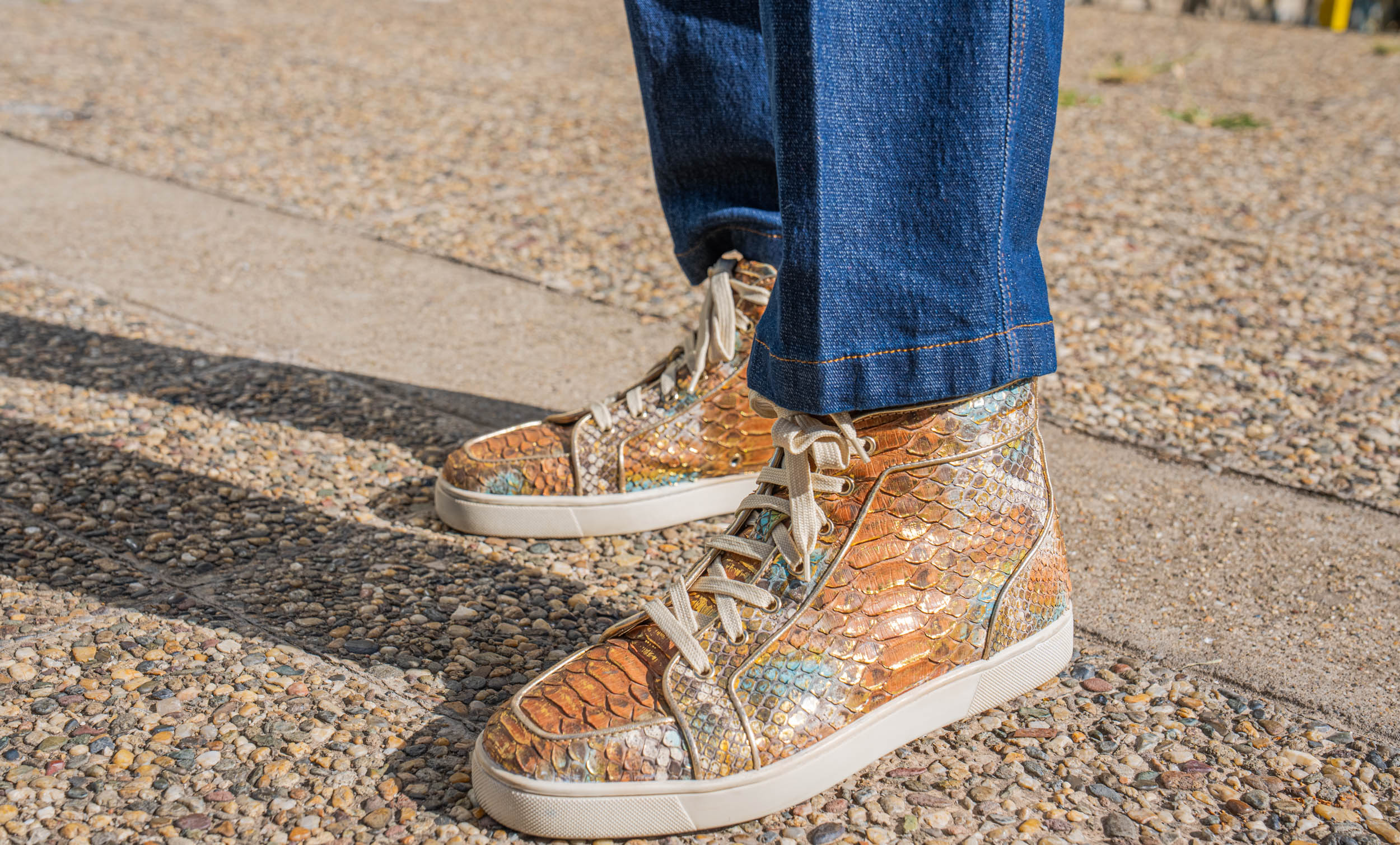
Finally, the Louboutin sneakers close the circle. Their python carries copper, gold and small flashes of turquoise. Those turquoise notes mirror the watch almost exactly. As a result, the eye travels naturally from wrist to feet and back again.
Texture tells the second half of the story. The watch brings hand-hammered metal, while the jacket brings linen. The shirt adds a washed cotton-wool blend, and the denim adds crisp twill. Python scales finish the list. Five surfaces, one calm conversation. Nothing shouts. Still, everything has something to say.


OUTFIT
Linen Jacket: Loro Piana
Shirt: Giannetto Portofino
Watch: Peacock
Jeans: Visvim
Sneakers: Christian Louboutin

LORO PIANA: WHAT MAKES THIS OLIVE LINEN JACKET SO SPECIAL?
Some names need no introduction, yet this history is too good to skip. The Loro Piana family began as wool merchants from Trivero in the early 19th century, before moving their business to Valsesia. In 1924, engineer Pietro Loro Piana founded Loro Piana & C. in Quarona.
Each generation pushed the house further. In the 1960s, his grandson Franco began exporting fine fabrics to Europe, America and Japan. During the 1970s, Sergio and Pier Luigi focused on exceptional cloth, and in the 1980s they launched the first ready-to-wear collection. Since 2013, LVMH has held a majority stake in the company. Its textile division works with cashmere, vicuña, merino wool and linen.


My jacket shows why that heritage still matters. It is an olive linen piece with a zip front, a soft stand collar and a single patch pocket on the chest. When it falls open, a printed lining appears for a brief, private moment. Linen remains my favorite fabric for changing weather. It breathes in the heat, yet it still holds its shape when evenings cool.
During the shoot, I wore it two ways. First, I simply hooked it over my shoulder. Later, I put it on and left it open. Both felt natural, which is always the mark of a good cut.
GIANNETTO PORTOFINO: WHY I KEEP COMING BACK TO THIS ITALIAN SHIRTMAKER
Regular readers know this name well, and loyalty like mine needs a reason. The story began in 1979 in Southern Italy, when Riccardo and Nunzia Sansonne set out to create garments of uncompromising quality, shaped by hand and guided by tradition. In 2000, their children Vincenzo and Stefania joined the business, and Giannetto Portofino was born.
You can feel that family spirit in the fabric. This shirt is a washed cotton-wool blend in soft sage-gray, crossed by clean white stripes. It comes in a regular fit, carries a Made in Italy label and retails for €220.


The washing is what makes it special. The shirt feels lived-in from the very first wear, while the wool adds a gentle weight and a lovely drape. Because the washed fabric drapes so softly, I wore it untucked. It moves with the body and suits wider trousers perfectly.
There is also a quiet detail I only noticed while editing the photos. The vertical stripes echo the radial lines of the watch dial. Both are fine and rhythmic, and both play softly with light. Small links like this make an outfit look considered rather than assembled.


VISVIM: HOW JAPANESE DENIM COMPLEMENTS A LUXURY DRESS WATCH
For the trousers, I looked east. Visvim founder Hiroki Nakamura spent eight years as a designer at Burton Snowboards before launching his own label. The brand began mostly with footwear and later grew into a complete apparel collection. Headquartered in Tokyo, it sells through retailers such as Bergdorf Goodman in New York and Dover Street Market in London.
Even the name has a charming backstory. The word itself means nothing. Nakamura liked logos with a V, so he searched that section of a Latin dictionary until he found vis and vim and liked them together.


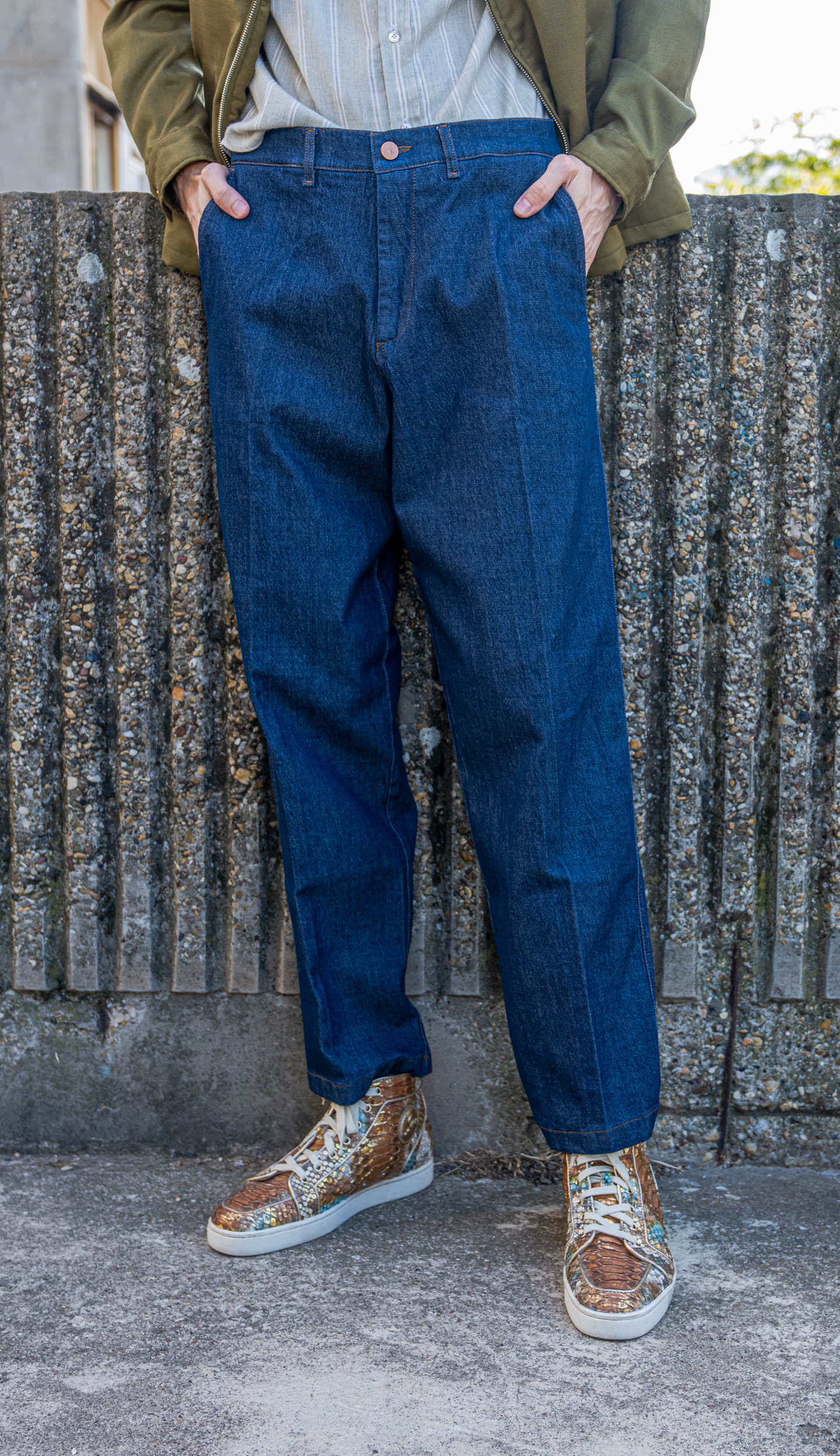
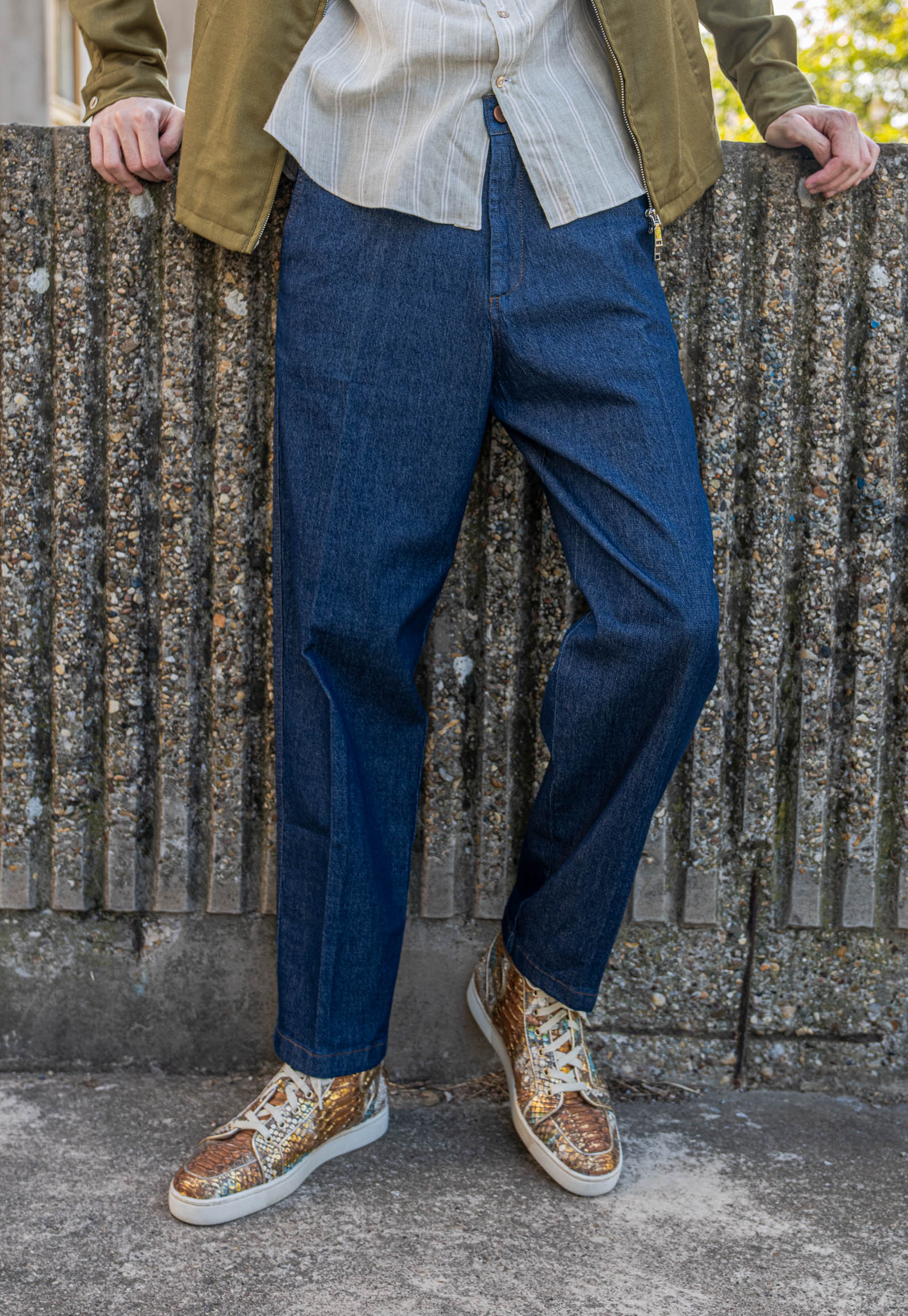
The label calls its approach future vintage, and Nakamura keeps exploring both old and new ways of weaving, dyeing and assembling textiles. You sense that philosophy immediately in this denim. My jeans come from a limited collection. They are cut wide, with a sharp crease pressed down the front. A copper-toned button and orange stitching warm up the deep indigo.
That crease is the secret. It makes jeans behave like tailored trousers. That is why they sit comfortably next to a hand-engraved tourbillon without looking underdressed. Relaxed, yes. Careless, never.

CHRISTIAN LOUBOUTIN RANTUS ORLATO: ARE PYTHON SNEAKERS TOO BOLD?
Every outfit needs one playful note, and mine comes from the ground up. Christian Louboutin opened his first boutique in 1991 in the Galerie Véro-Dodat, a covered arcade near the Louvre, after training under Charles Jourdan and Roger Vivier.
His signature red sole has a famous origin. According to the house, it appeared in 1992, when Louboutin found the black sole of his Pensée prototype too dull and painted it with his assistant’s red nail polish. Almost two decades later, in 2011, he launched a line of men’s shoes.


The Rantus Orlato is a lace-up high-top sneaker, and my pair comes in python leather on a rubber sole. The skin shifts between copper, gold, silver and small patches of turquoise. A gold-toned medallion with the designer’s signature sits proudly on the ankle.
So, are python sneakers too bold for a refined look? On paper, maybe. In practice, they unlock everything. The copper warms the cool greens, while the turquoise speaks directly to the watch. Without them, the outfit would simply be elegant. With them, it feels personal and a little mischievous.


WHAT FINE WATCHMAKING CAN TEACH US ABOUT THE ART OF DRESSING
More than I expected. First, start with your finest piece and let it choose the colors. A single hue from a dial, repeated twice elsewhere, creates instant harmony.
Second, give fine watches room to breathe. A slim case deserves clean cuffs, so avoid bulky sleeves that swallow the wrist. Let the watch appear naturally whenever your hand moves.
Third, pair precious with relaxed. A hand-engraved tourbillon looks fresher with linen and denim than with a stiff suit. In my experience, casual clothes often make fine watchmaking feel more confident, not less.


Fourth, let texture do the talking. Linen, washed cotton-wool, denim and python create interest, with just one discreet signature medallion on the sneakers.
Finally, respect the strap. The gray calfskin works here because it calms the green dial and blends with the neutral shirt. A black strap would push the entire look toward formal.
Above all, dress the way this watch was made: slowly, with intention and with a little wit.

SO, DID THE PEACOCK DIVINE CRAFT TOURBILLON REALLY CHANGE MY MIND?
It did, and I am happy to admit it. I began this story as a polite skeptic. I finish it as a genuine admirer.
The reasons are simple. This watch has roots in four handmade pieces from 1957. It carries a dial struck by an artist more than a thousand times. Its tourbillon beats inside a caliber only 3.5mm thick. Above all, it proves that haute horlogerie is no longer a question of geography. Instead, it is a question of patience, skill and respect for the human hand.
The clothes around it tell the same story. Loro Piana brings a century of Italian textile mastery. Giannetto Portofino adds a family tradition of shirtmaking. Visvim contributes Japanese curiosity, while Louboutin adds a flash of Parisian wit. Different countries, one shared belief: real luxury is crafted, never rushed.


So here is my advice. Stay curious. Look beyond the usual names, and trust your own eye. Sometimes the pieces that move you most come from places you never thought to look. And sometimes they arrive in a quiet shade of glacial green.
Now it is your turn. Would you wear a Peacock tourbillon, and if so, which model would you choose?
You can also reach me by e-mail or through social networks, all listed on the CONTACT page.
Until the next fashion adventure on the Mr.M blog.
With Love,
Mr.M


This post is sponsored by Loro Piana, Giannetto Portofino, Peacock Watches, Visvim and Christian Louboutin. This post is my personal and honest product review.