
My dear travelers and lovers of unusual journeys, welcome to a new travelogue on the Mr.M blog. After my letter from Santiago de Chile, today I am taking you to Peru and its capital, Lima. First of all, I would like to thank the United Nations World Tourism Organization (UN Tourism), local ministries of tourism, national tourism organizations and all the other partners who selflessly supported my adventure in South America. Thanks to them, I could create travelogues from several countries, as well as numerous fashion stories. I sincerely hope that you will enjoy this adventure with me.
My posts from Peru exist thanks to the selfless help of UN Tourism, the Commission for the Promotion of Peru for Export and Tourism (PROMPERÚ), the Ministry of Foreign Trade and Tourism of Peru and Swissôtel Lima.
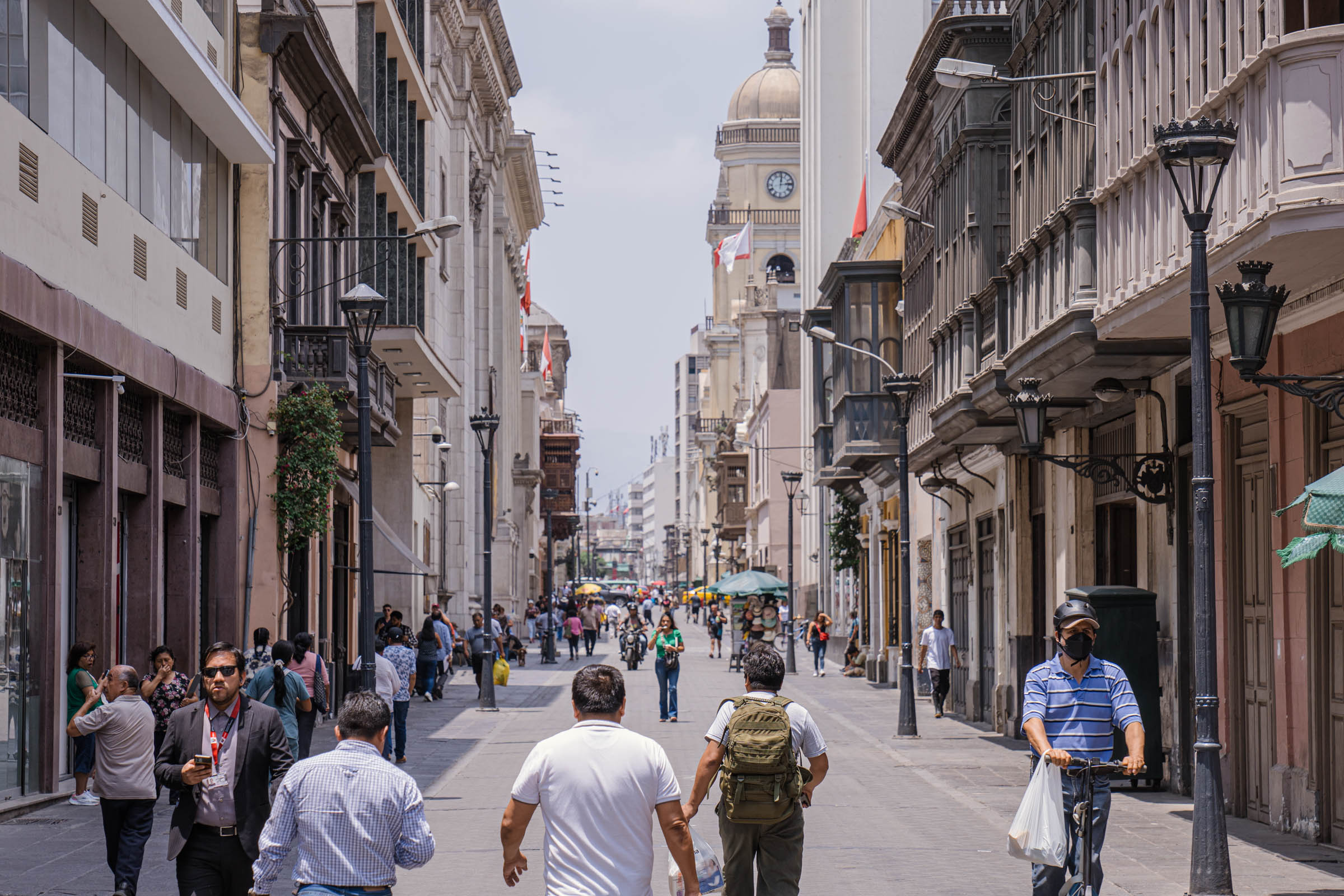
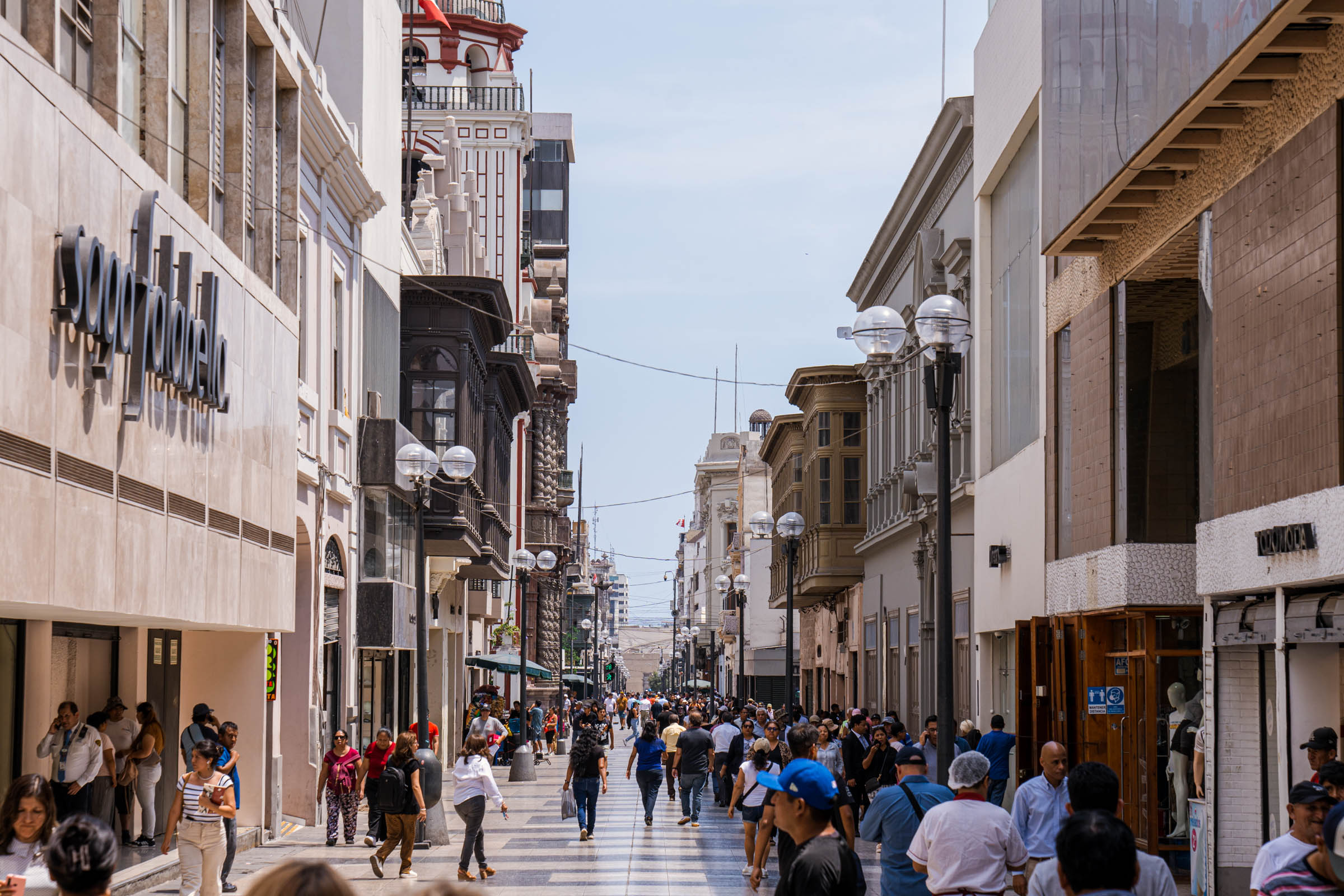
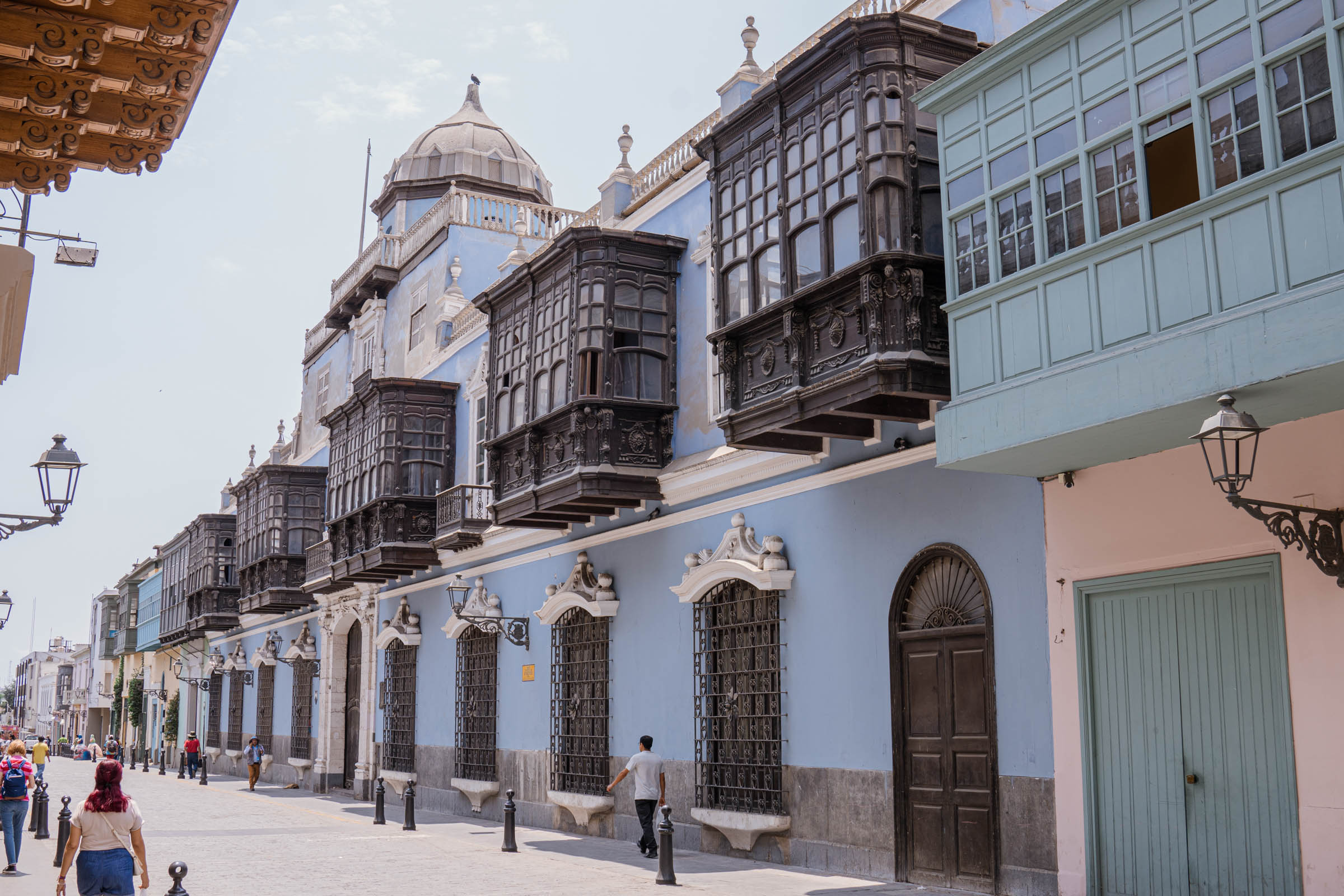
The historic center of Lima is full of pedestrian streets, old facades and wooden balconies. All of them lead to the Plaza Mayor, the main square of the city.
PERU, A COUNTRY OF THE ANDES, THE AMAZON AND THE PACIFIC
Peru, officially the Republic of Peru, lies in western South America. To the north, it borders Ecuador and Colombia, while Brazil lies to the east and Bolivia to the southeast. To the south lies Chile, and to the west the Pacific Ocean.
With an area of 1,285,216 square kilometers, Peru is the 19th-largest country in the world and the third-largest in South America. It is also a megadiverse country. A count from 2003 recorded 21,462 plant and animal species, and 5,855 of them were endemic. Its landscapes range from the arid coast of the Pacific, across the high peaks of the Andes, to the tropical rainforest of the Amazon basin.
According to the 2025 census, Peru has 34,157,732 inhabitants. Its capital and largest city is Lima, the city I will show you today.
ANCIENT CIVILIZATIONS OF PERU
The territory of Peru has one of the longest histories of civilization in the world. Its heritage reaches back to the 10th millennium BC. Caral-Supe, the oldest known complex society in Peru, flourished on the coast from about 3,000 to 1,800 BC.
Later, the Nazca culture, the Wari and Tiwanaku cultures and the Kingdom of Cusco left their mark here. Finally, the Inca Empire became the largest known state of the pre-Columbian Americas.
In the 16th century, Spain conquered the region. Then, Charles V established the Viceroyalty of Peru, with Lima as its capital. Moreover, in 1551, the National University of San Marcos opened in Lima, as the first institution of higher education in the Americas.
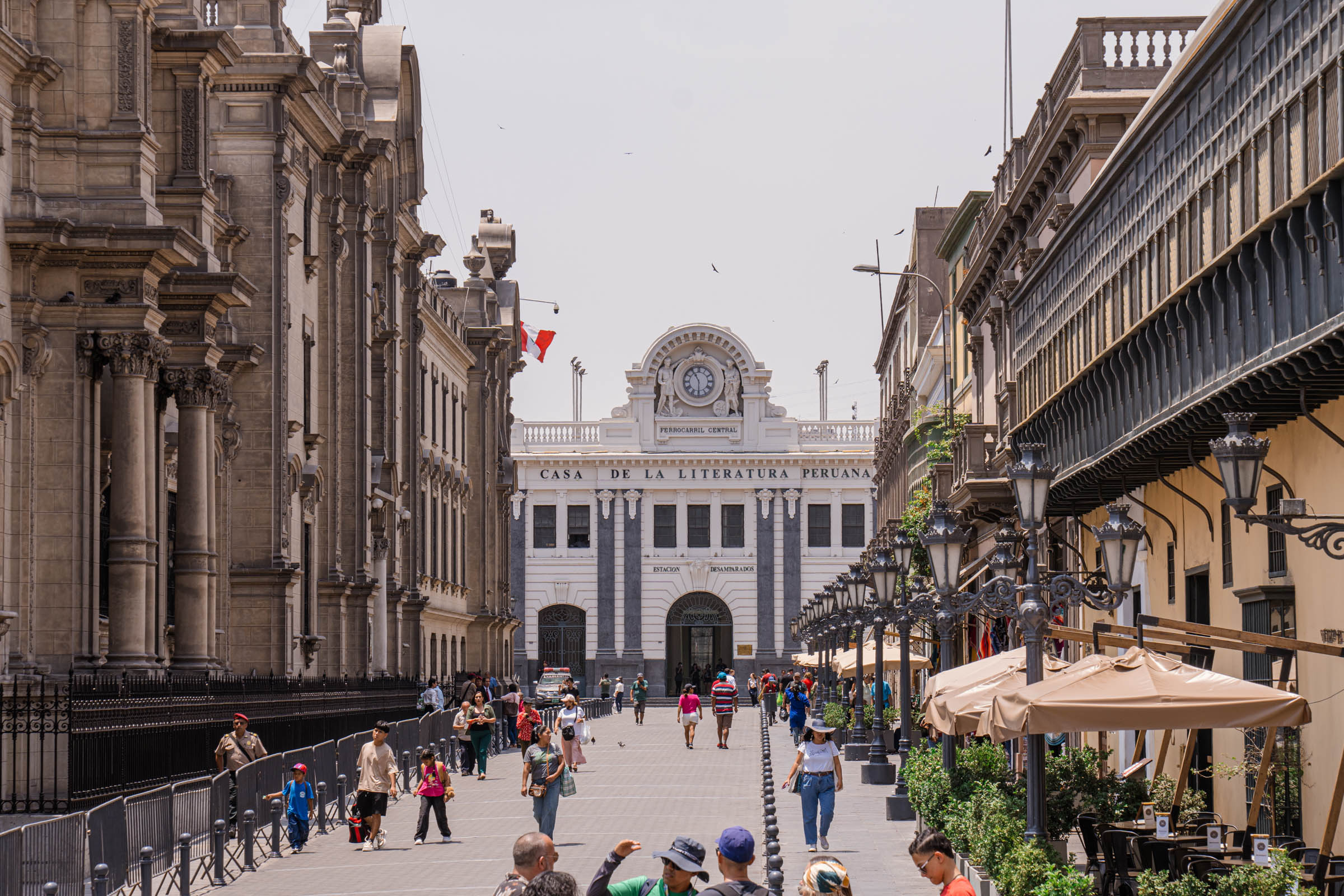
This pedestrian street, Jirón Carabaya, leads from the Plaza Mayor to the former Desamparados railway station. The building opened in 1912, and the architect Rafael Marquina designed it. The Peruvian Corporation built it in place of an older station, and trains used it until the 1990s, so it served as a station for 78 years. Since October 2009, it has been home to the Casa de la Literatura Peruana, the House of Peruvian Literature. Its permanent exhibition, Intensidad y altura de la literatura peruana, takes its name from a poem by César Vallejo. According to the Peruvian newspaper Gestión, between 1,200 and 2,000 people visit it every day.
INDEPENDENCE AND MODERN PERU
Peru declared its independence on July 28, 1821. The decisive Battle of Ayacucho, on December 9, 1824, completed it. Later, exports of guano brought a period of stability and growth, which ended with the War of the Pacific, from 1879 to 1884.
In the 1990s, under Alberto Fujimori and Vladimiro Montesinos, Peru moved toward a neoliberal economy under authoritarian rule. Then, the 2000s brought economic expansion and a reduction in poverty.
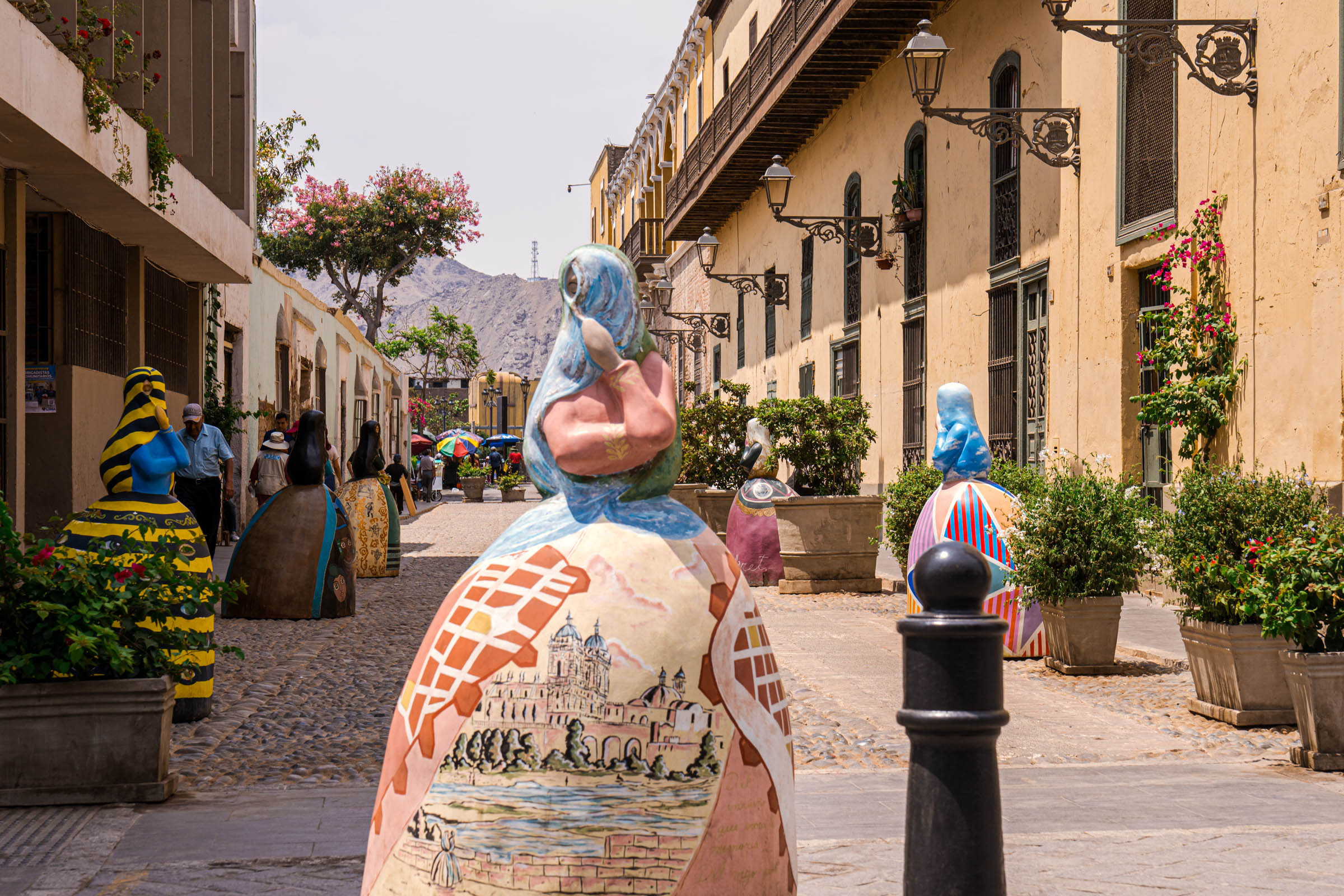
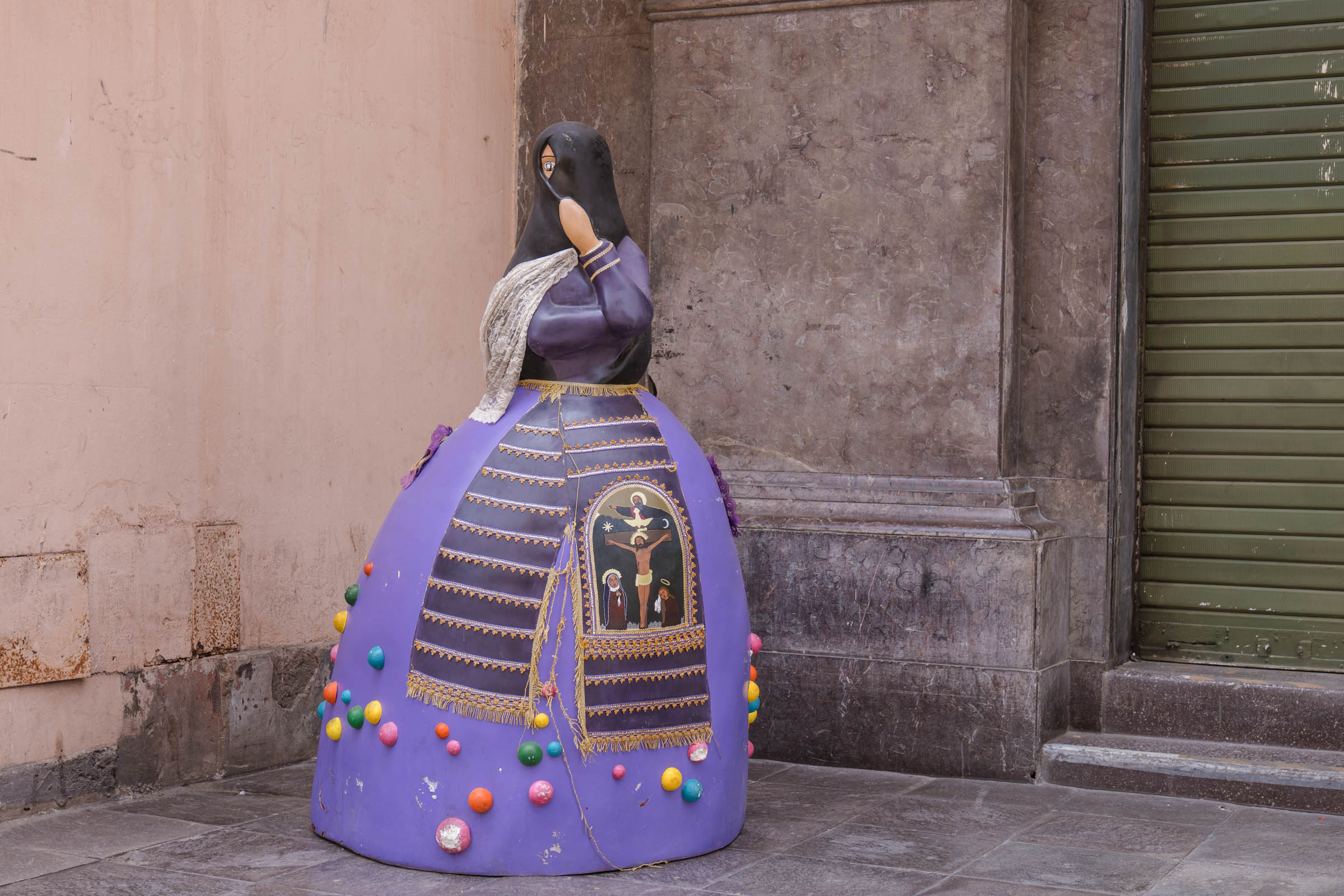
In the streets of the historic center, I also met some very colorful ladies. They are sculptures of the tapadas limeñas, the veiled women of old Lima. They wore a pleated skirt and a silk mantle that covered their shoulders and head, leaving only one eye visible. In 2021, a contest called De Saya y Manto began to fill the streets of the center with tapada statues by different Peruvian artists. The Meninas of Madrid inspired the idea.
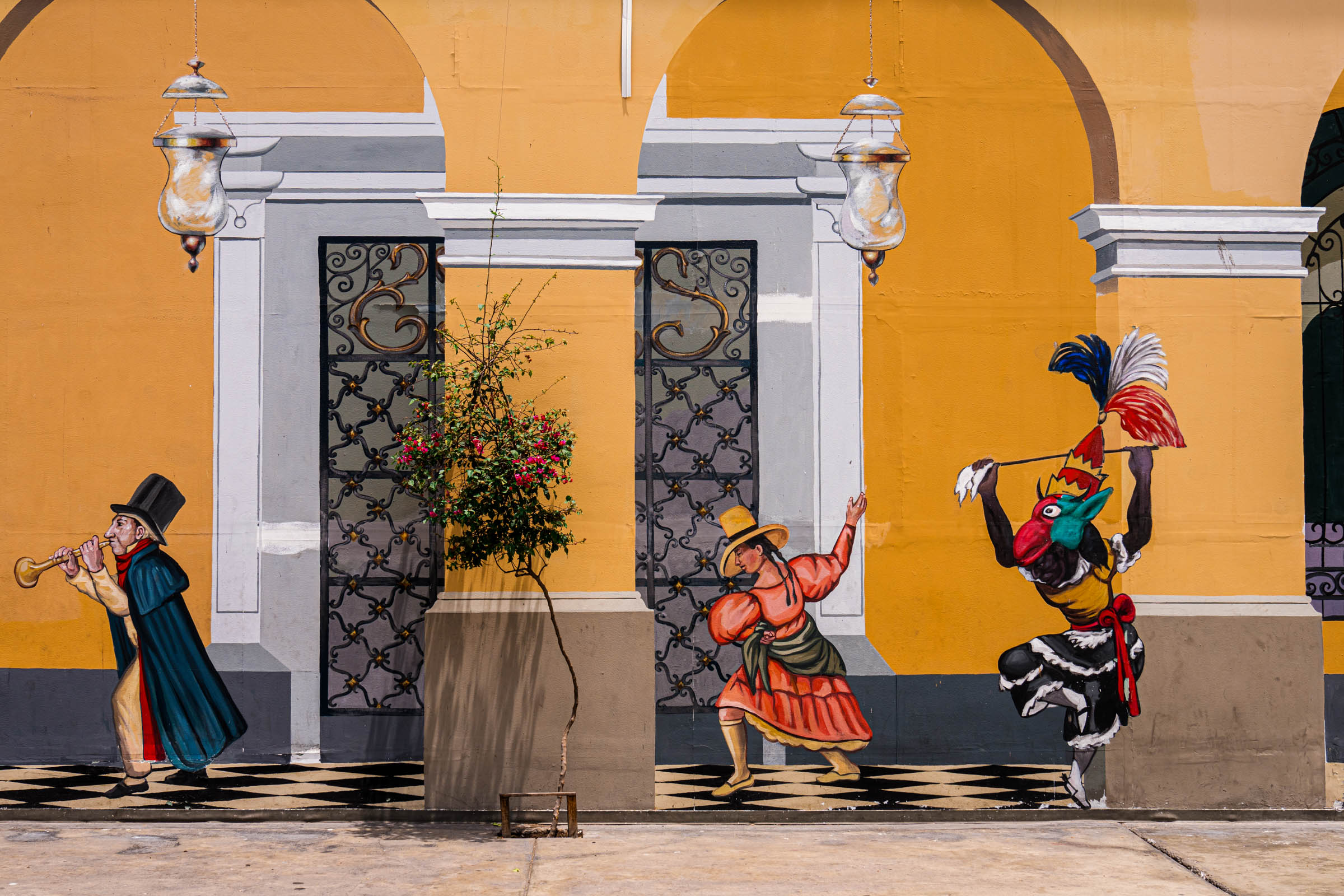
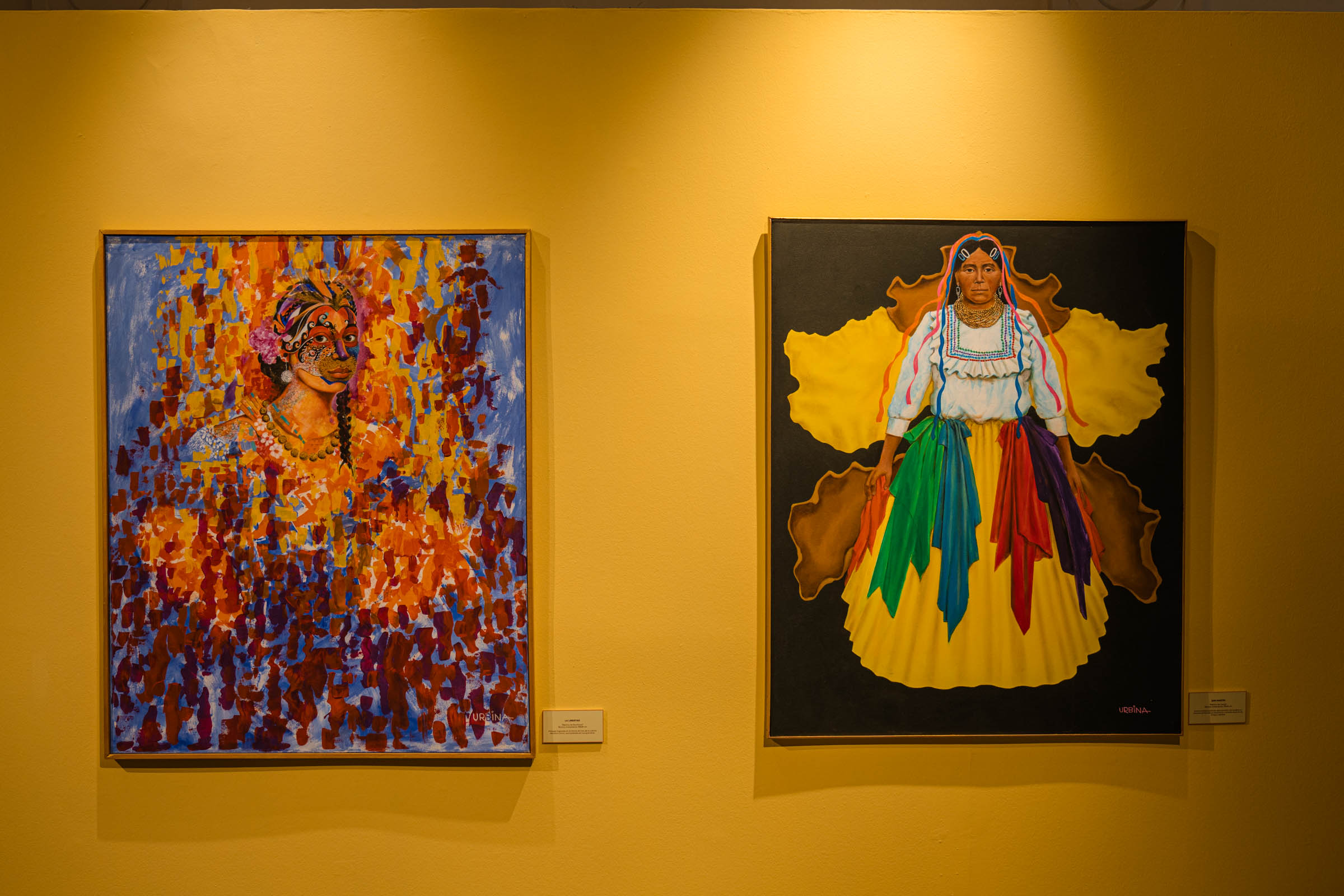
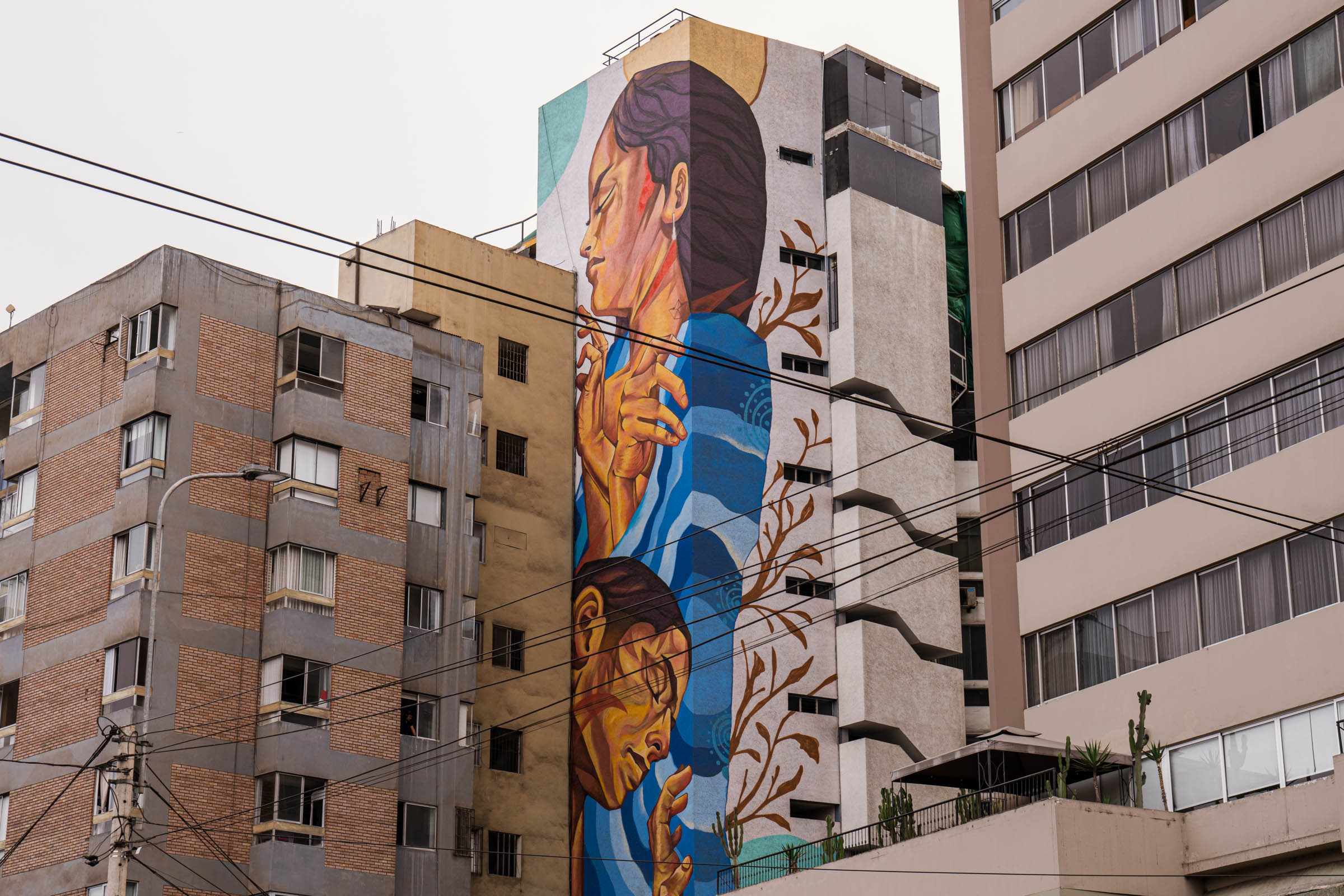
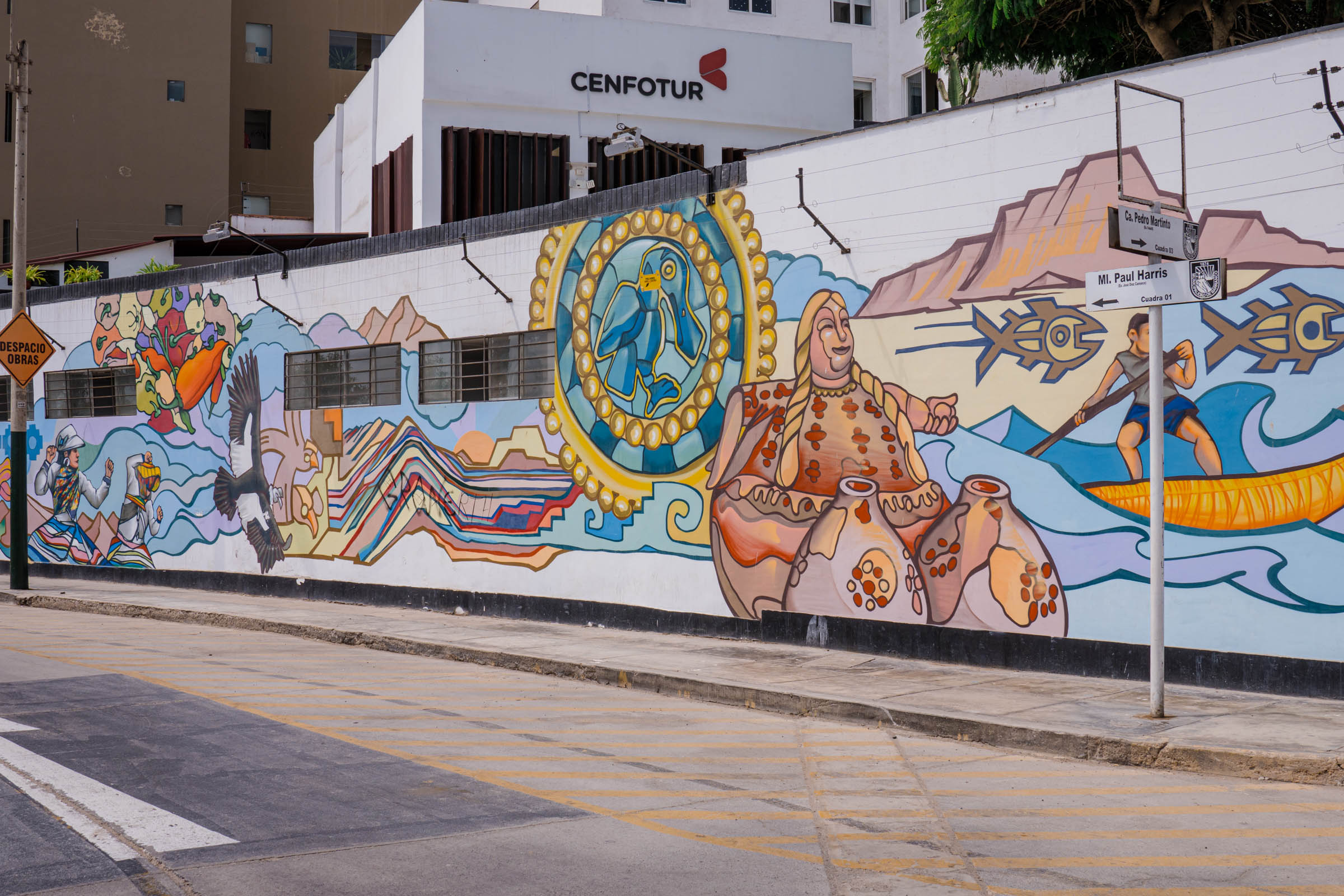
Colorful paintings of dancers and musicians also decorate some of the walls, so every corner of the center holds a new surprise.
PERU TODAY
Today, Peru is a semi-presidential republic. Services make up about half of its economy, followed by industry and agriculture. Mining also plays a big role: in 2023, it accounted for most of the country’s raw material exports.
Peru belongs to the Pacific Pumas and to the Asia-Pacific Economic Cooperation (APEC). Moreover, it is a founding member of the Pacific Alliance and a member of the Comprehensive and Progressive Agreement for Trans-Pacific Partnership (CPTPP) and the World Trade Organization. It is also regarded as a middle power.
PEOPLE, LANGUAGES AND FLAVORS OF PERU
According to the 2025 census, about 62 percent of Peruvians identify as mestizo, while about 17 percent identify as Quechua. About 9 percent identify as White, 6 percent as Black and 2 percent as Aymara. Spanish is the official language, while Quechua, Aymara and other Indigenous languages are co-official.
This mixture of cultures shaped Peruvian cuisine, which blends Indigenous, Spanish, African and Asian influences. Today, Lima is considered a global culinary capital, home to restaurants such as Central and Maido.
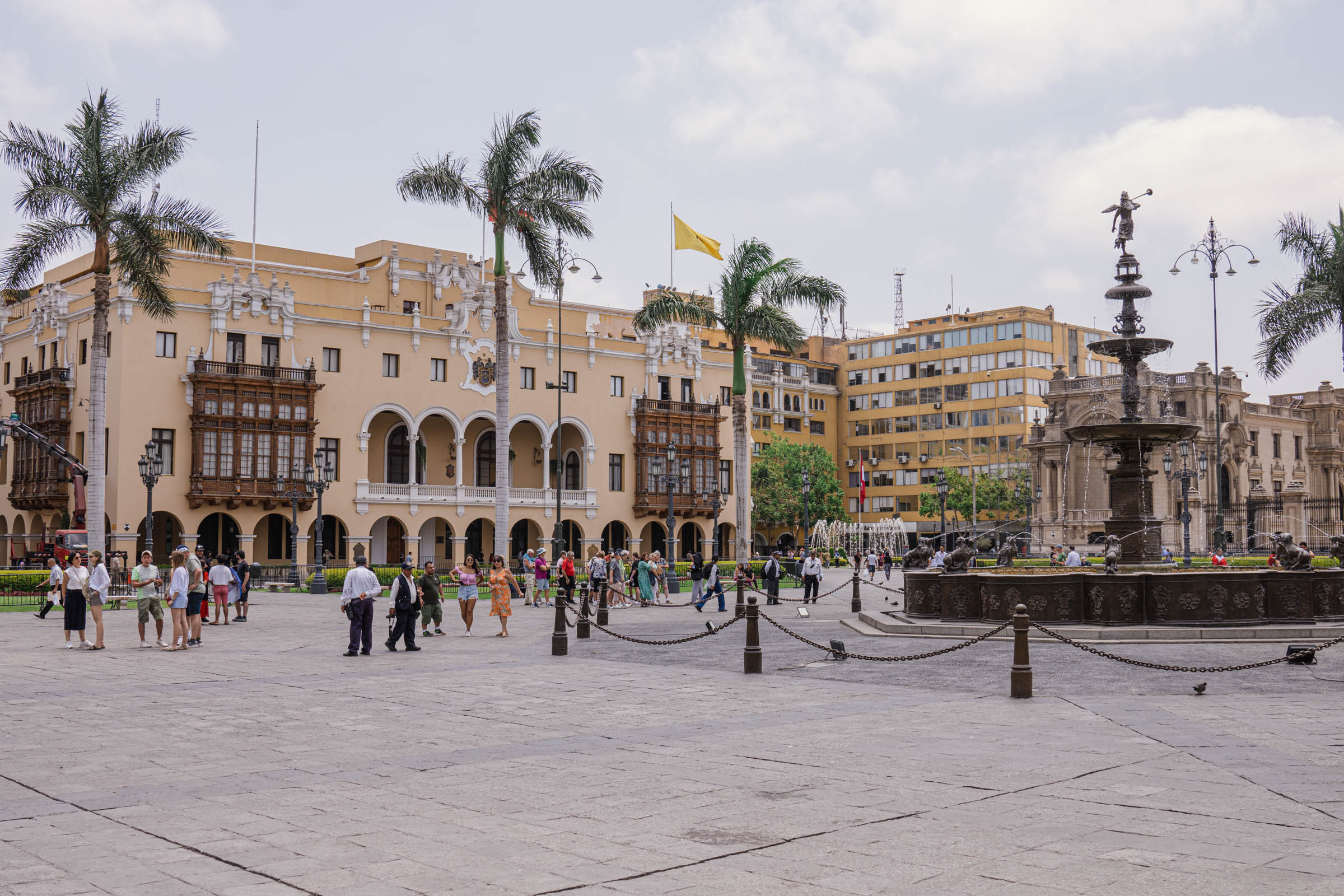
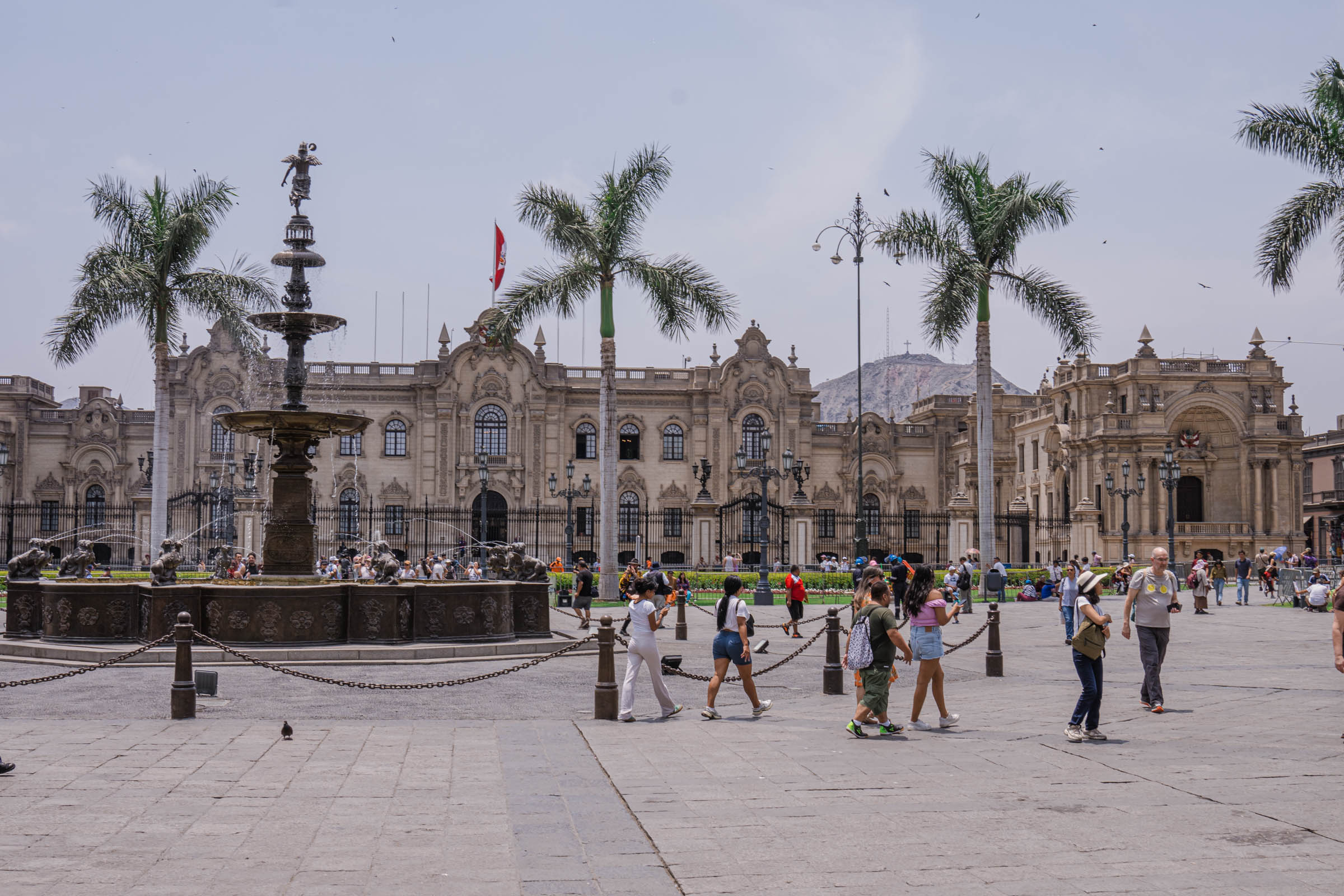
The Government Palace, the Cathedral, the Archbishop’s Palace, the Municipal Palace and the Palacio de la Unión surround the Plaza Mayor of Lima. In the middle stands its fountain, which the Count of Salvatierra inaugurated on September 8, 1651. It replaced an earlier fountain from 1578. In this photo, it stands in front of the Government Palace, also known as the House of Pizarro. The first Government Palace was built by Francisco Pizarro in 1535. Today, the palace is the seat of the executive branch and the official residence of the president of Peru. Its Neo-Baroque facade, from 1938, is the work of the Polish architect Ricardo de Jaxa Malachowski.
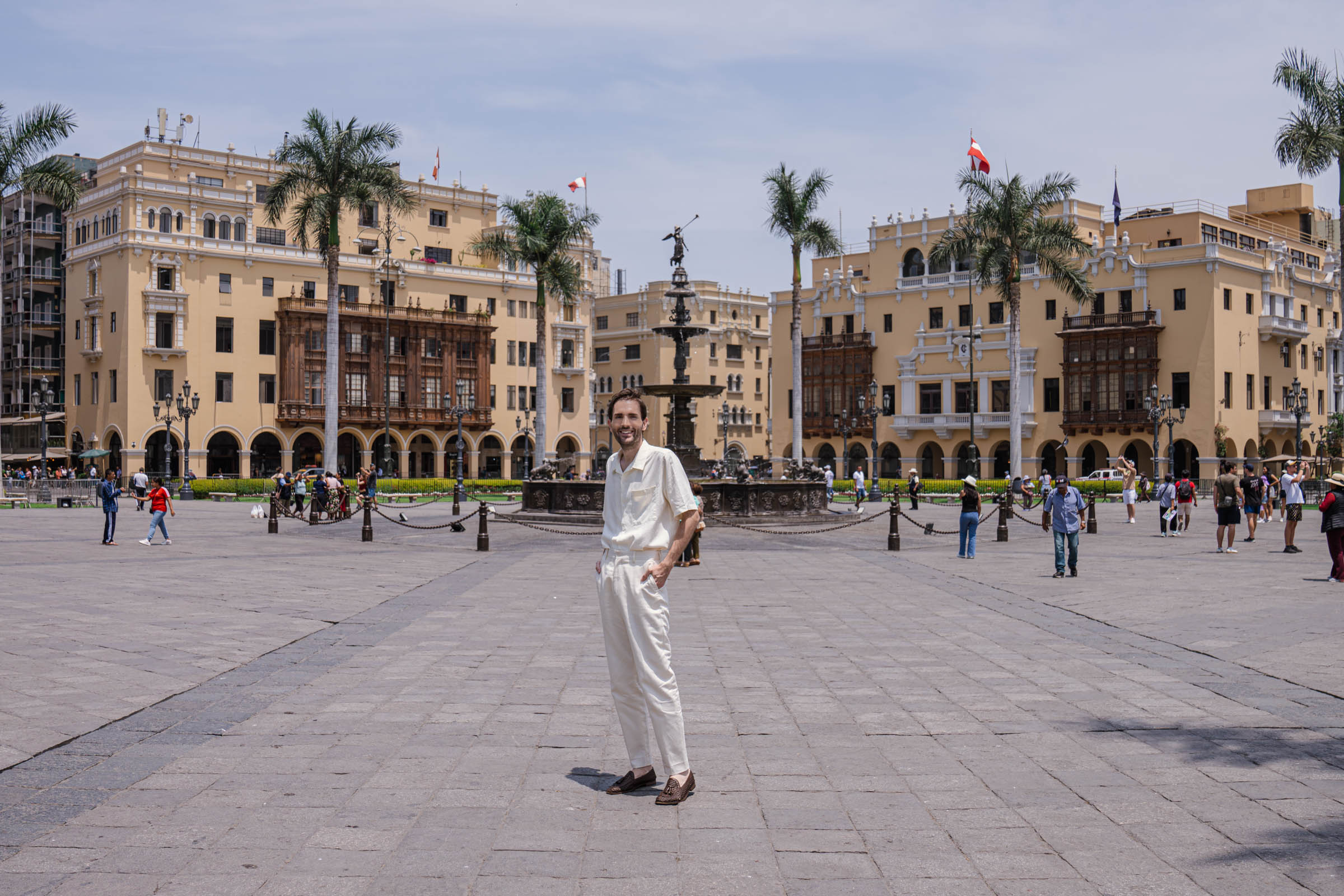
Here I am in the middle of the Plaza Mayor. Behind me are the yellow buildings of the Municipal Palace, with their famous wooden balconies. Its construction started in 1939, and it was completed in 1944, after designs by Emilio Harth Terré, José Álvarez Calderón and Ricardo de Jaxa Malachowski. Today, it is the headquarters of the Metropolitan Municipality of Lima.
HOW DID PERU GET ITS NAME?
Some theories say that the name Peru comes from Birú, a local ruler who lived near the Bay of San Miguel, in present-day Panama, at the beginning of the 16th century. Spanish conquistadors arrived there in 1522. Later, the lands further south took on the name.
The historian Inca Garcilaso de la Vega offered an alternative explanation, based on a misunderstanding between the Spanish sailors and a local man.
The Spanish crown gave the name legal status with the Capitulation of Toledo in 1529. Much later, in 1979, the country adopted its current name, the Republic of Peru.
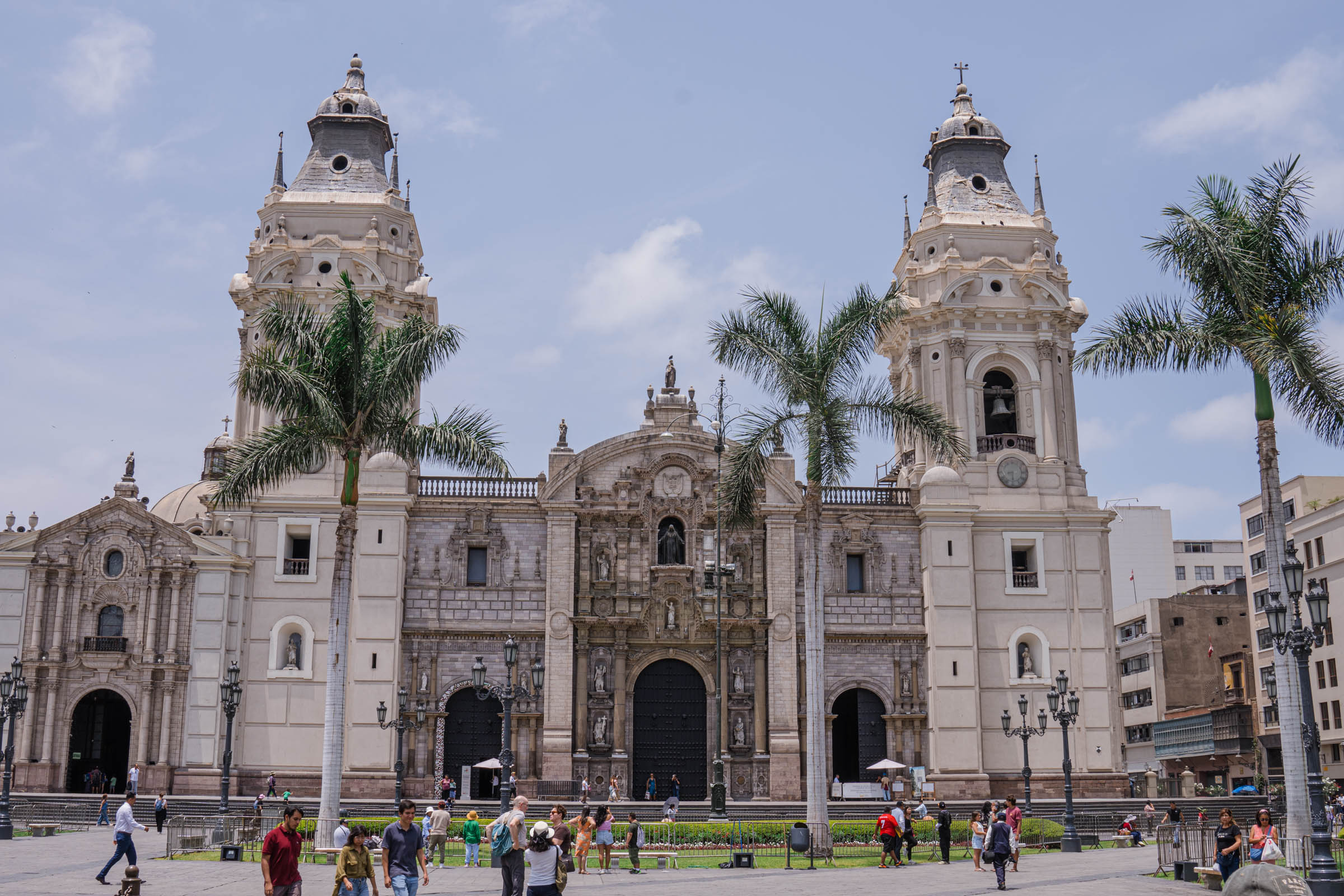
The Cathedral of Lima dominates the eastern side of the Plaza Mayor. I will tell you more about it a little later, when we visit the churches of Lima.
LIMA, THE CITY OF KINGS
The Spanish conquistador Francisco Pizarro founded Lima in January 1535. He named it Ciudad de los Reyes, the City of Kings, after the Epiphany. However, that name soon fell out of use, and the city became known as Lima.
Lima lies in the valleys of the Chillón, Rímac and Lurín rivers, on the central coast of Peru, overlooking the Pacific Ocean. The port of Callao and Jorge Chávez International Airport are in the neighboring Constitutional Province of Callao.
Lima is the political, cultural, financial and commercial heart of Peru. The Globalization and World Cities Research Network classifies it as a “beta” city. According to the 2025 census, Metropolitan Lima has about 10.1 million inhabitants. That makes it the second most populous city in South America and the largest Spanish-speaking city by city-proper population. Moreover, about one third of all Peruvians live in its metropolitan area.
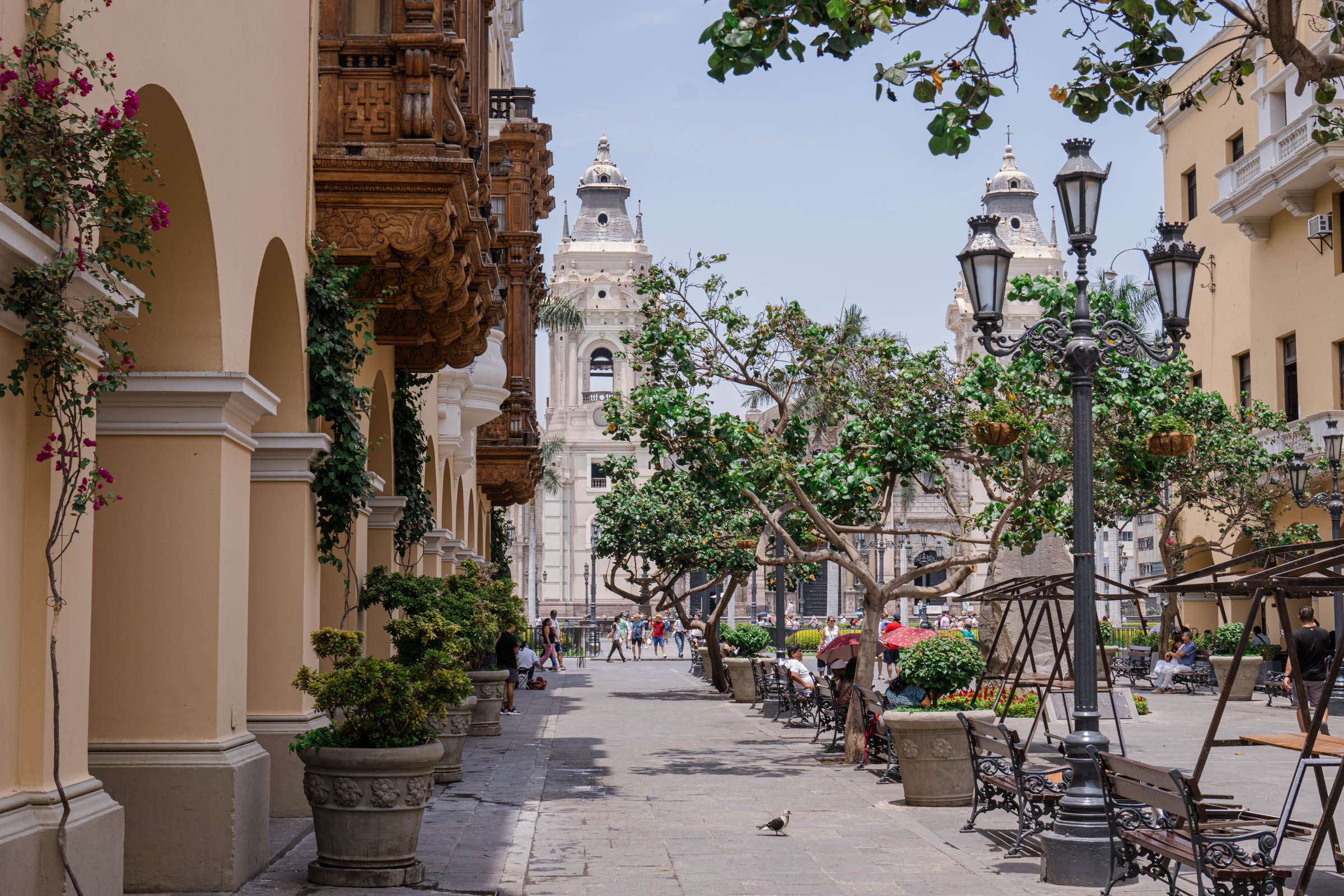
This arcade is in the Pasaje Santa Rosa, a pedestrian passage next to the Plaza Mayor. It separates the Municipal Palace from the Club de la Unión, and it connects Jirón de la Unión with Jirón Camaná. From here, you can see the towers of the Cathedral at the end.
LIMA ON THE WORLD STAGE
Lima is home to the headquarters of the Andean Community. It also often hosts major international events. In 2019, it hosted the Pan American Games, and it was selected to host them again in 2027. In addition, Lima hosted the APEC meetings in 2008, 2016 and 2024.
Then, in October 2015, the city welcomed the annual meetings of the International Monetary Fund and the World Bank. A year earlier, in December 2014, it hosted the UN Climate Change Conference. And as a fun fact, Lima also hosted the Miss Universe 1982 contest.
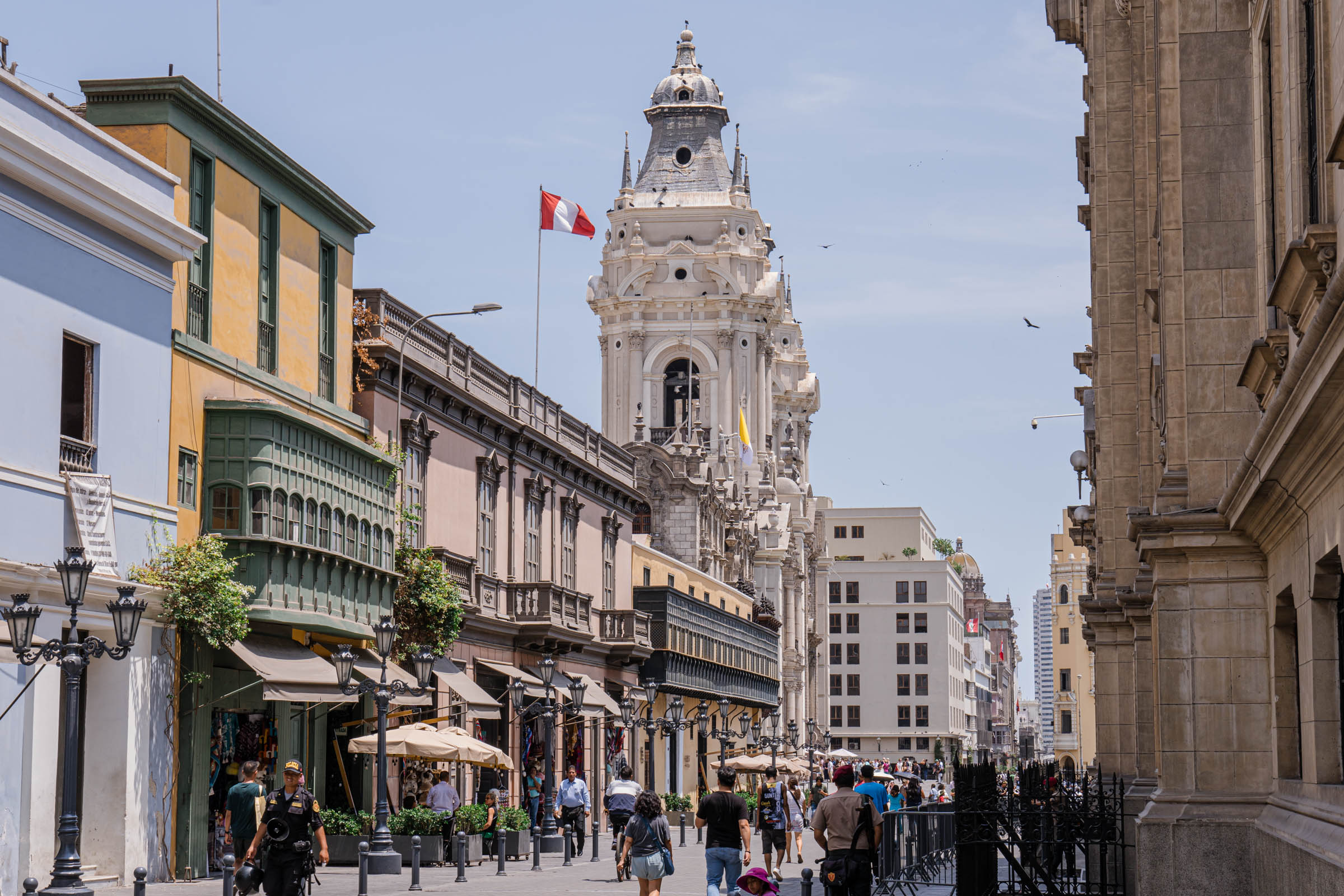
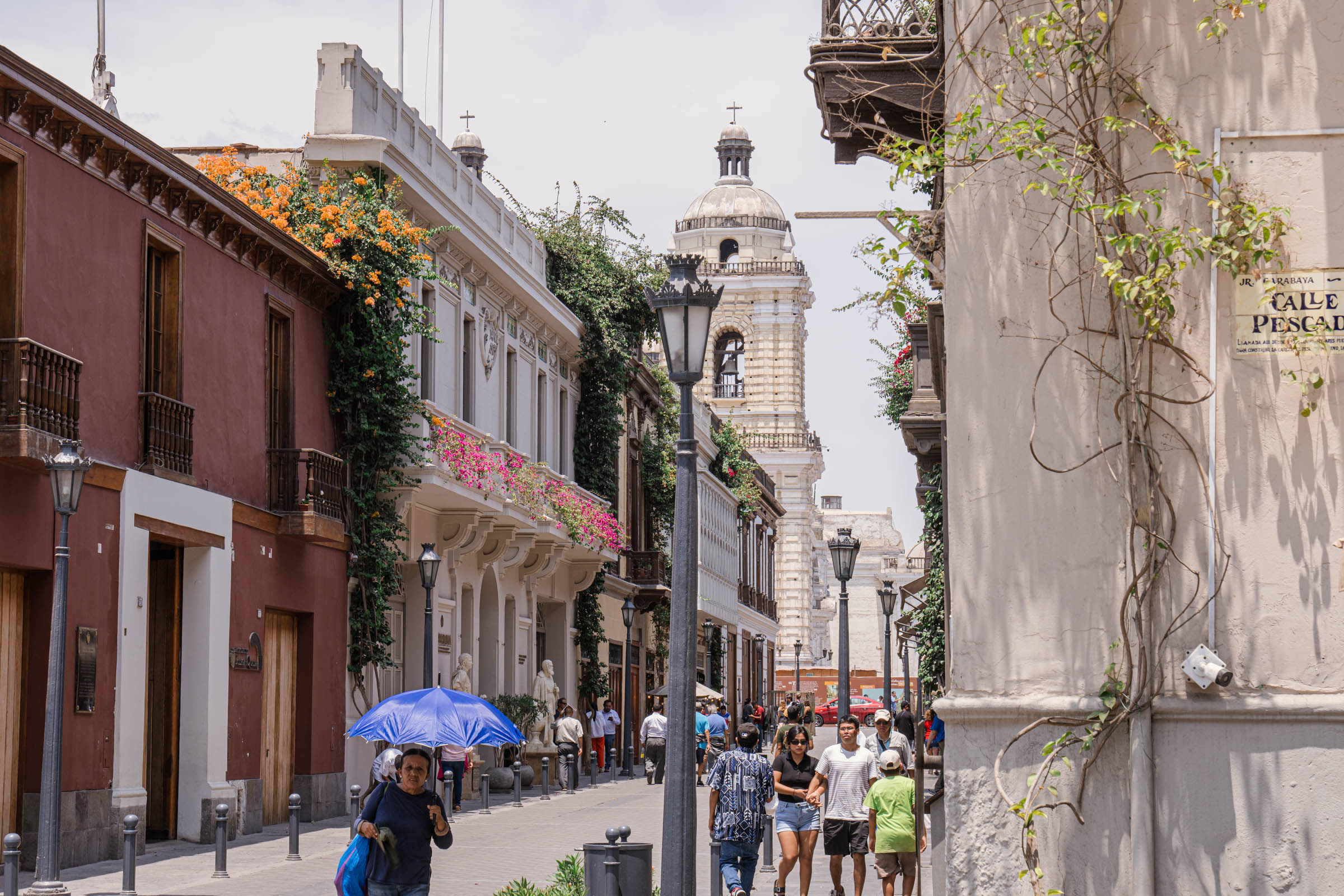
In the historic center, you can see the towers of the Cathedral from many streets. In this photo, one of them rises at the end of a street lined with colorful colonial houses.
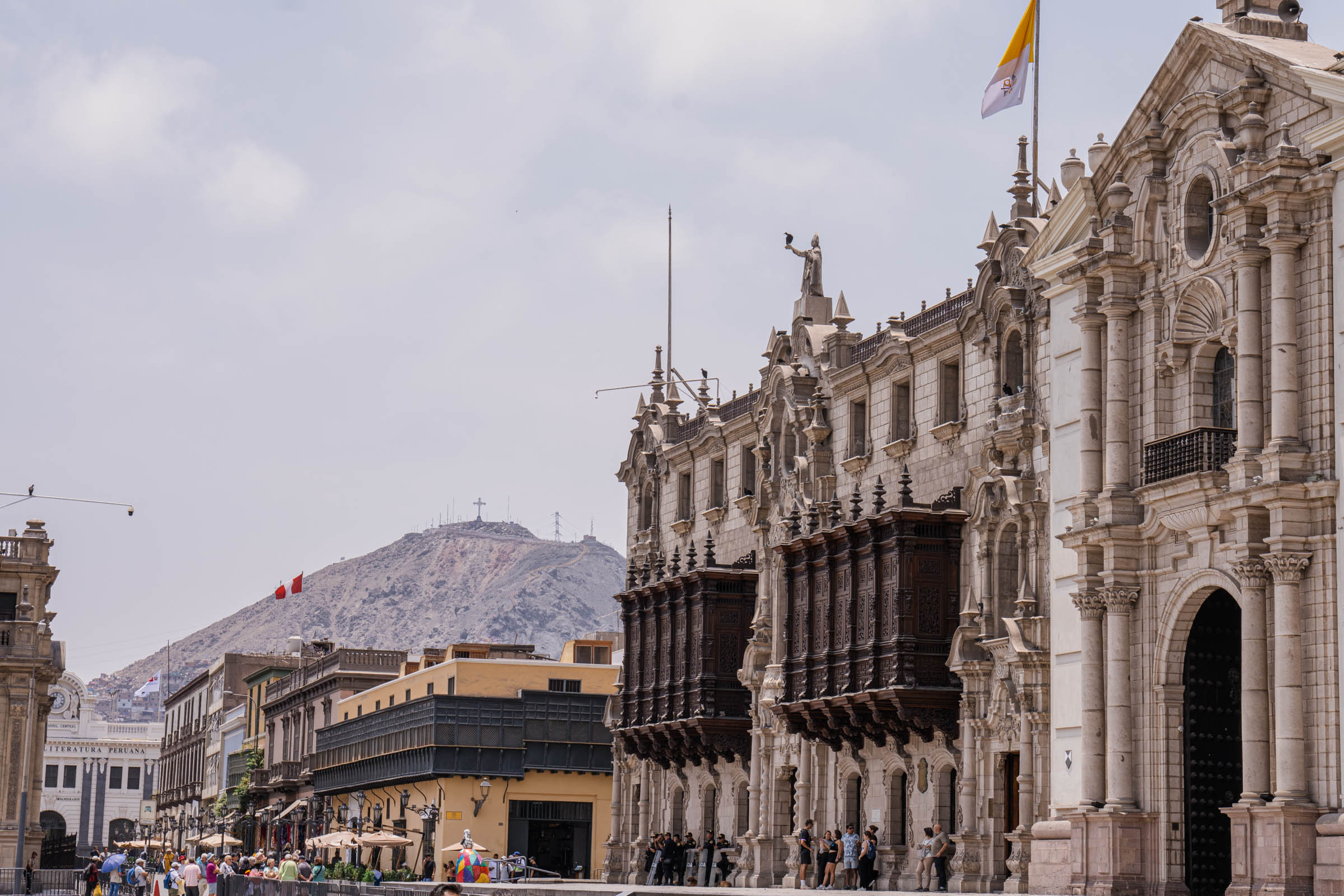
Right next to the Cathedral stands the Archbishop’s Palace. It was completed in 1924, and the Polish architect Ricardo de Jaxa Malachowski designed it using the Torre Tagle Palace as a reference. Its carved wooden balconies are among the most beautiful in the city. Today, the building houses the Museum of the Archbishop’s Palace, which you can visit together with the museum of the Cathedral.
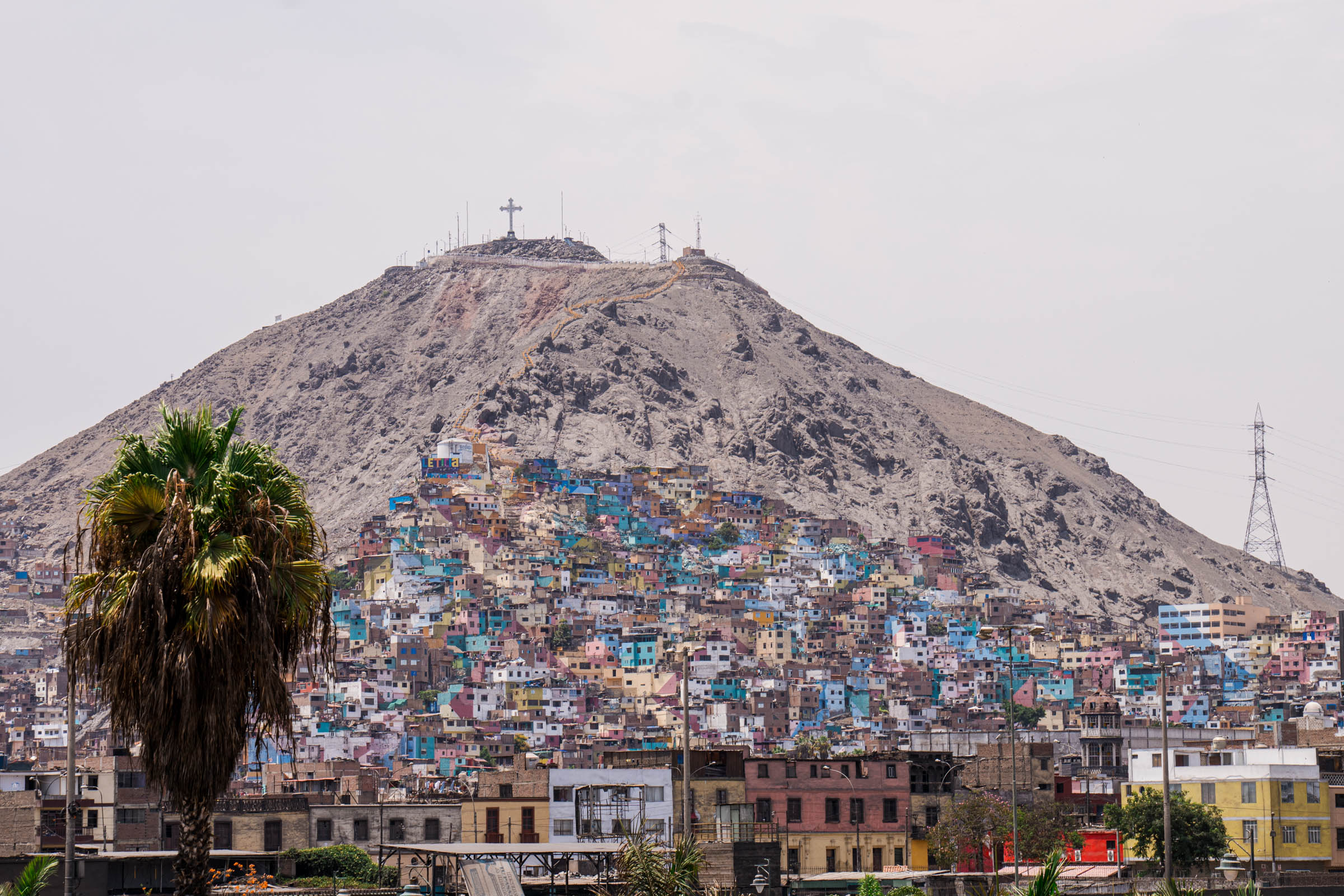
Behind the historic center rises San Cristóbal Hill, which overlooks the districts of Rímac and San Juan de Lurigancho. Colorful houses climb its slopes, and on top stands a cross inaugurated on December 23, 1928. The current cross is 20 meters tall. Since 1929, pilgrims have climbed to it on the first Sunday in May, and the hill also has a viewpoint with views over the whole city, as well as a small free museum.
HOW DID LIMA GET ITS NAME?
The name Lima most likely comes from Limaq, the name of an oracle in the Rímac Valley. In coastal Quechua, the word meant something like “speaker.”
Many people think that the name of the Rímac River means “talking river” in the language of the Incas. However, the name Rímac is a colonial standardization of an older name. In other words, the name of the city and the name of its river share the same origin.
In 1821, after the arrival of José de San Martín, Lima received the title “Heroic and Courageous City of the Free”.
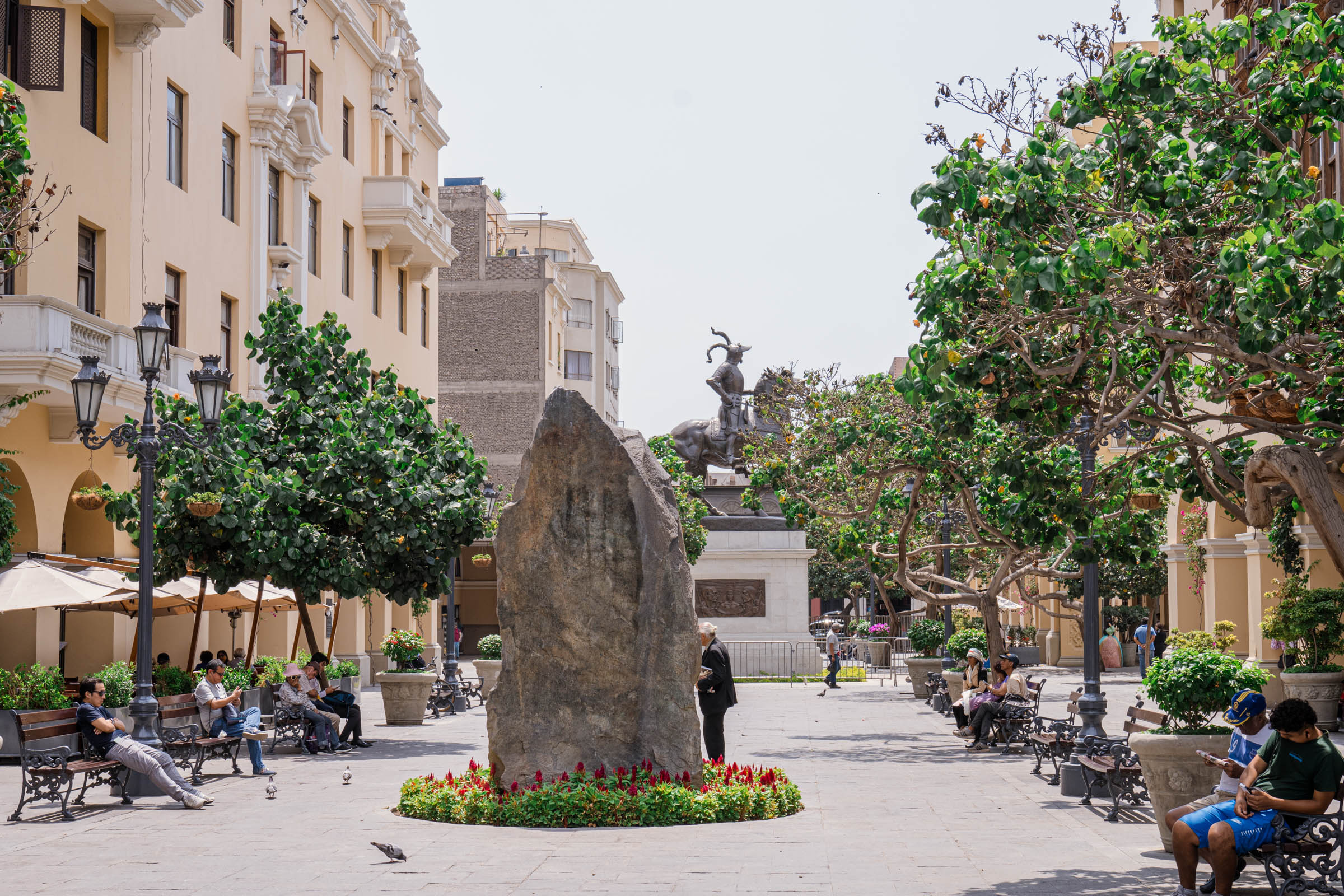
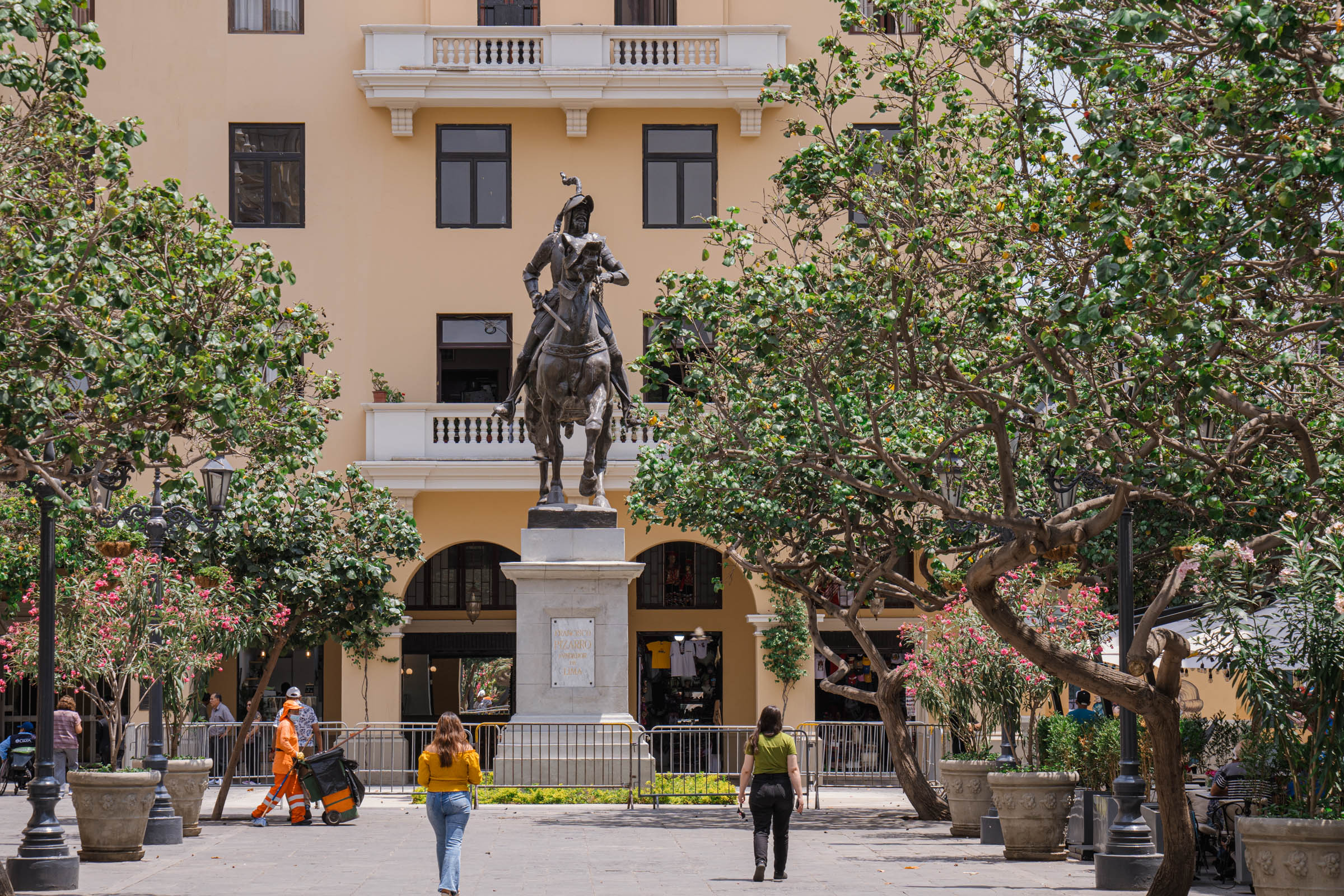
Back in the Pasaje Santa Rosa, a large stone stands in the middle of the passage. It is a wanka, an Andean ceremonial stone of 14 tons, brought from the Amancaes plain. In 1985, the mayor of Lima, Alfonso Barrantes, dedicated it to Taulichusco, the last curaca, or local ruler, of the Rímac Valley before the Spanish arrived. Interestingly, the Government Palace stands on the plot where Taulichusco once lived. Behind it, you can see the equestrian statue of Francisco Pizarro, which arrived in this passage in January 2025.
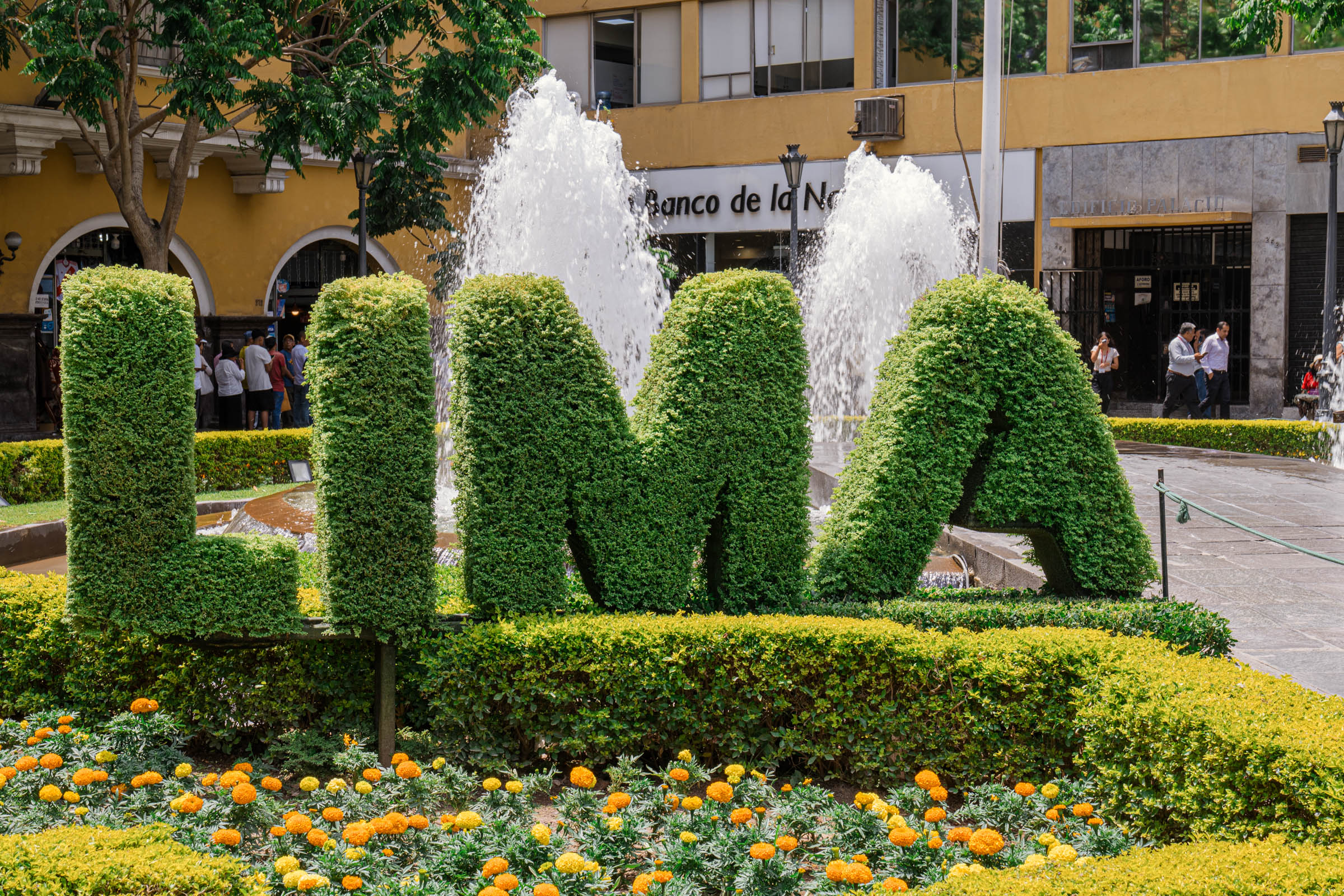
Nearby, big green letters made of plants spell the name of the city, framed by fountains and flowers.
WOODEN BALCONIES AND COLONIAL TOWERS OF LIMA
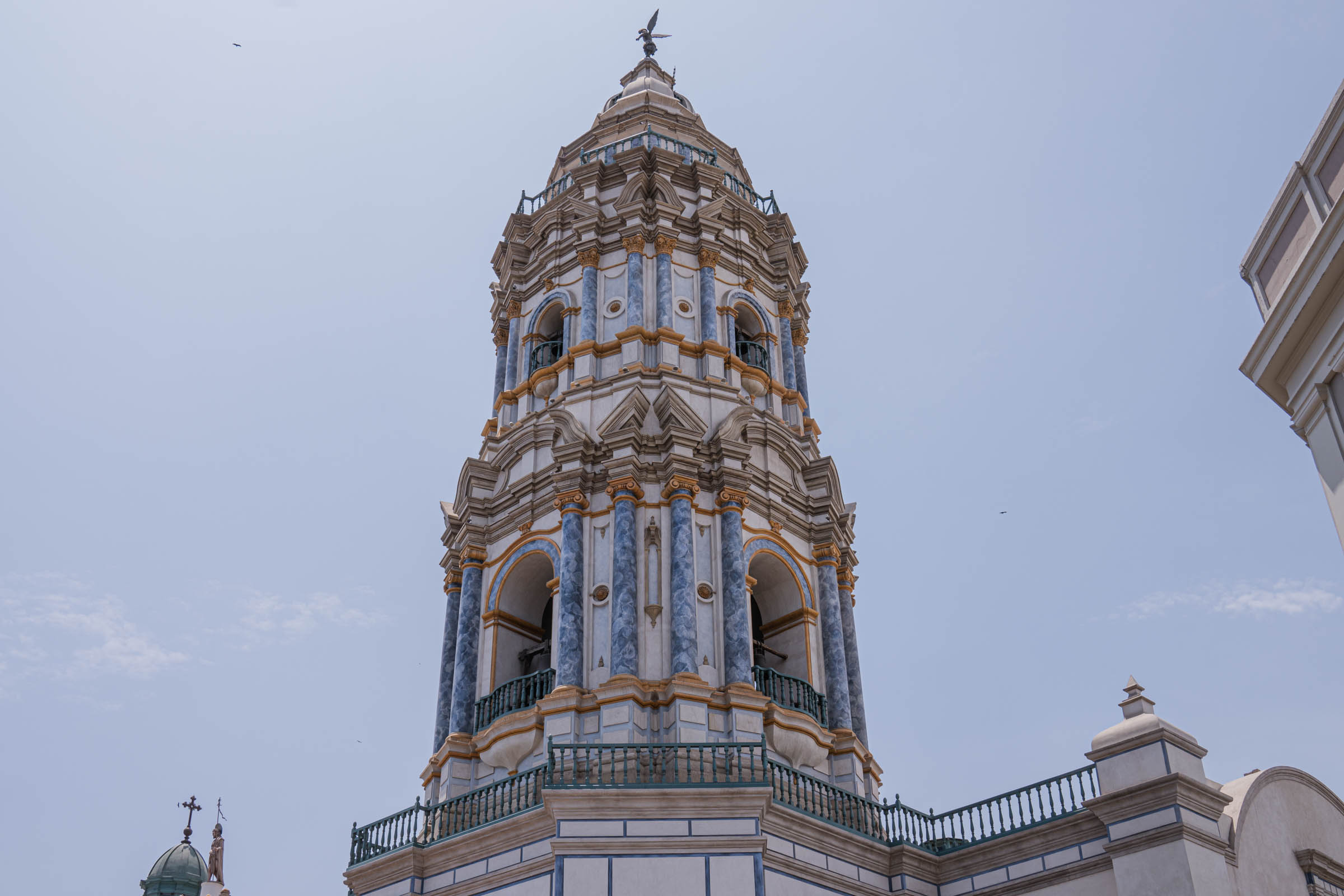
Wooden balconies are a symbol of Lima. UNESCO mentions the closed “box” balconies as one of the features of the Historic Centre of Lima. Some of the most beautiful ones decorate the Casa de Osambela, on Jirón Conde de Superunda. In the background, you can see the dome and the tower of the Basilica and Convent of Santo Domingo.
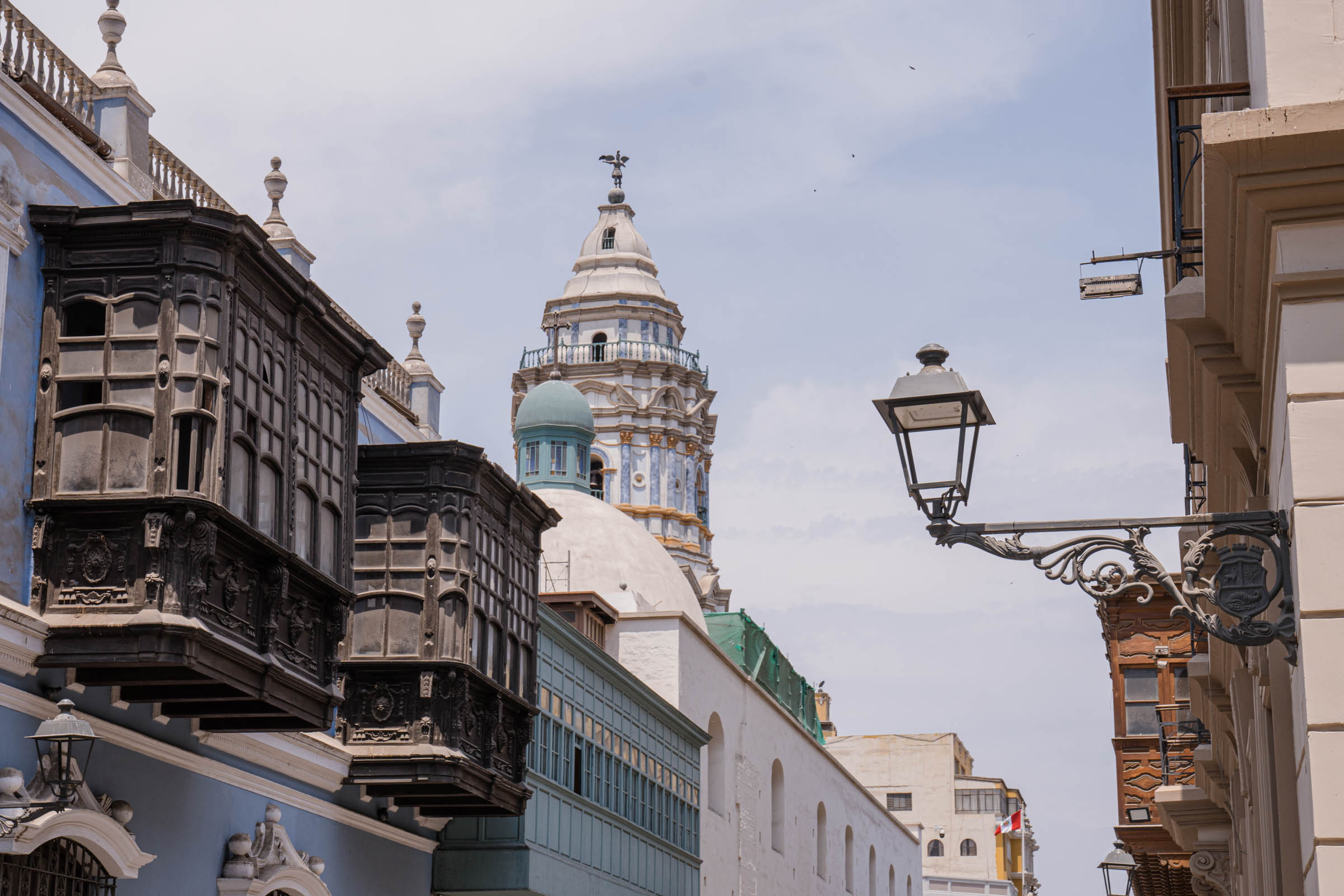
The tower of Santo Domingo is one of the landmarks of the historic center. Its blue-and-white decoration shines in the sun, and you can see it from many streets around the Plaza Mayor.
MY FIRST IMPRESSIONS OF LIMA
Creating an image of this city begins long before the plane touches the runway of Jorge Chávez International Airport. Through the window of the plane, an endless urban tapestry of buildings, hills, highways and the ocean awaits you. Even then, you have the impression that you have arrived in a city of contrasts, history and life, between the ocean and the Andes.
Lima has a mild desert climate. In winter, from June to October, gray skies and a persistent morning drizzle called garúa cover the city.
Lima is not what people from Europe and the world expect, and that is exactly what makes it irresistible and unusual. At first glance, it may not look like a postcard. It has no lush vegetation like Cusco, and no magical ruins like Machu Picchu. But Lima is the soul of Peru, the pulse of its contradictions and the link between past and present, colonial and modern, European and Indigenous.
With its millions of inhabitants, Lima hides a multitude of micro-worlds: chic Miraflores, bohemian Barranco, the historic center with its colonial heart, the port of Callao and more.
JIRÓN DE LA UNIÓN, THE MOST FAMOUS STREET IN LIMA
Jirón de la Unión is a pedestrian street in the historic center of Lima. It connects the Plaza Mayor with the Plaza San Martín, and it is always full of people, shops and street vendors. In the past, it was an aristocratic street, but over time it became completely commercial.
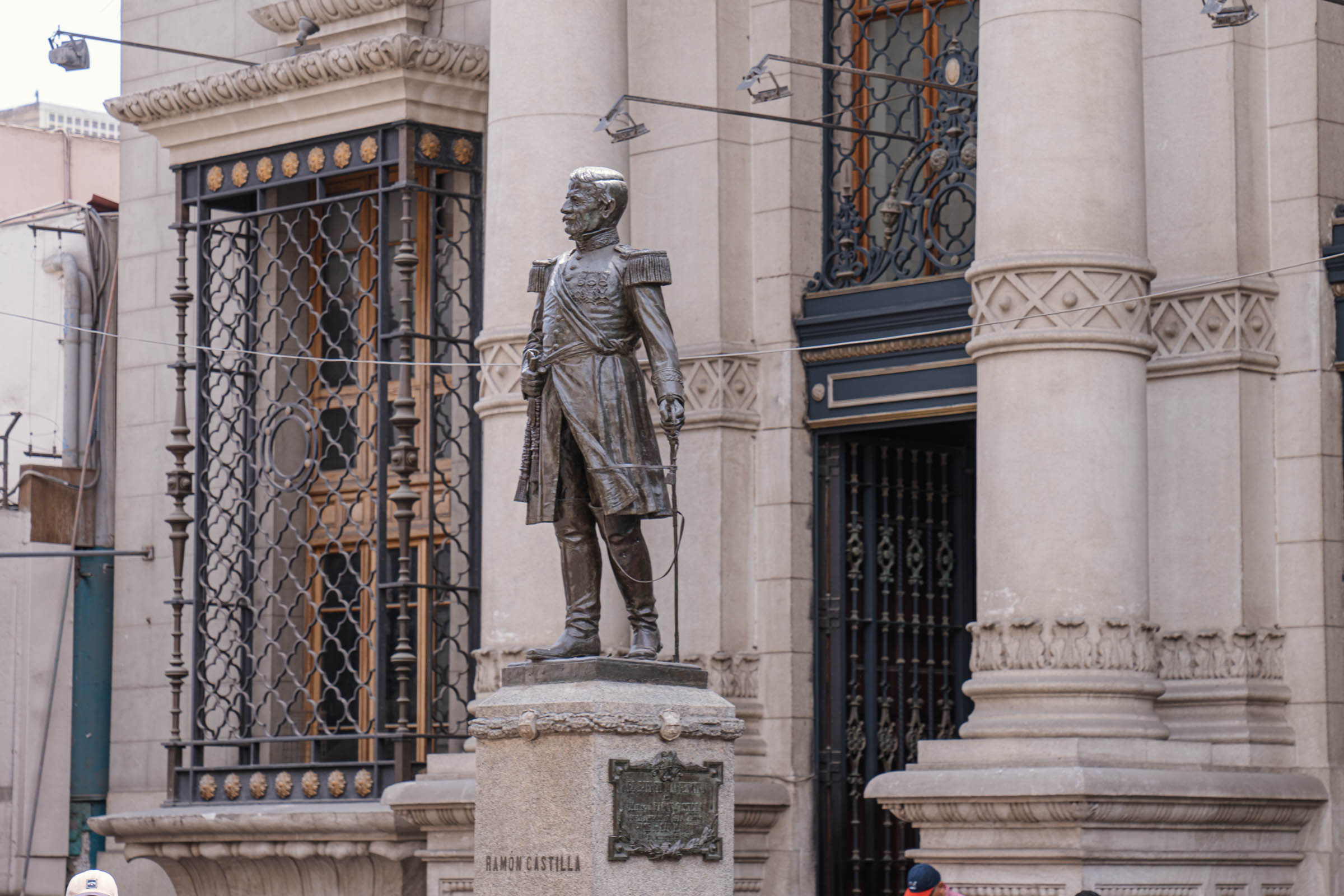
Along the street, you will find the small Plazoleta de la Merced, in front of the Basilica of La Merced. In this square stands a bronze statue of Ramón Castilla, one of the most important figures of Peru’s 19th century.
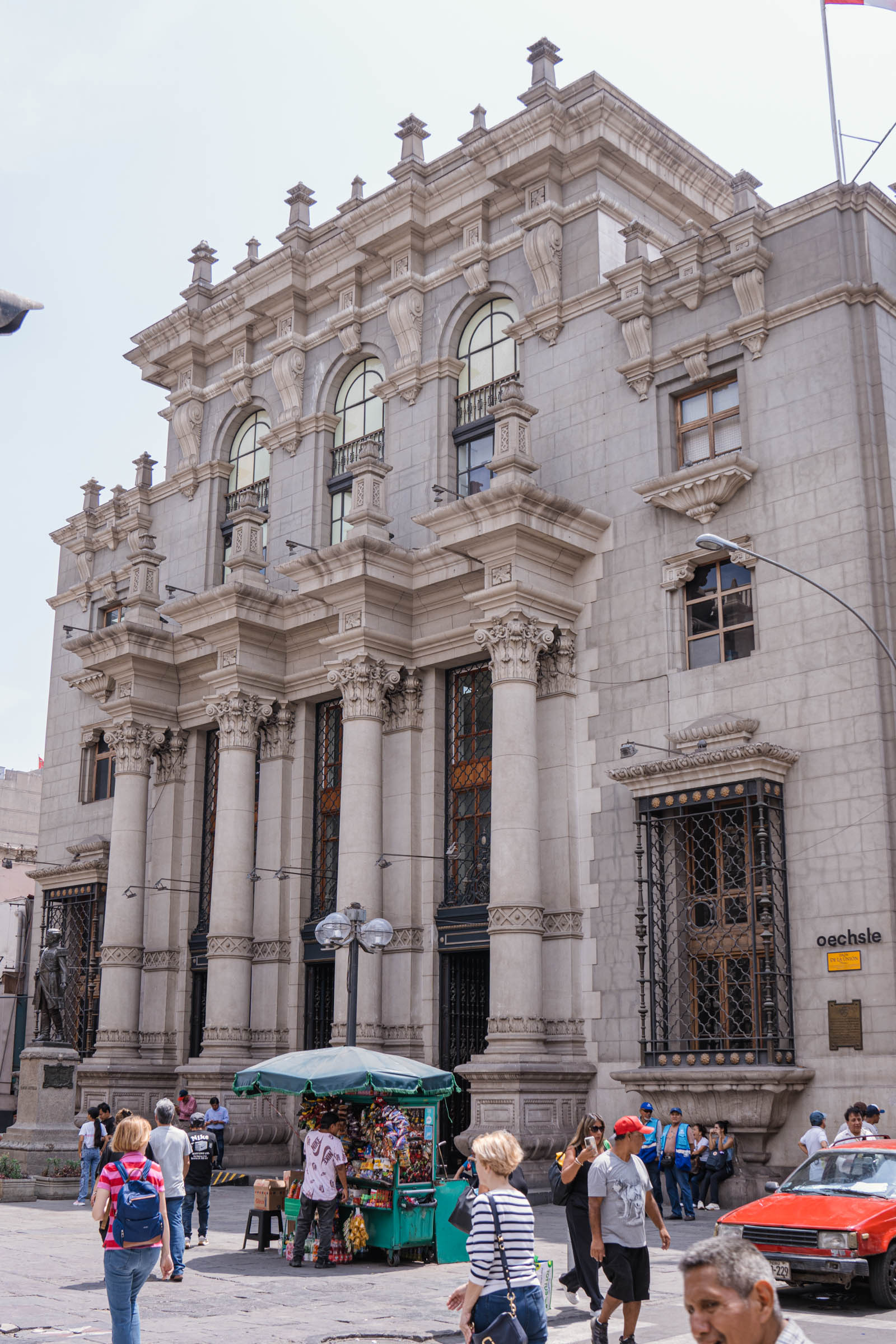
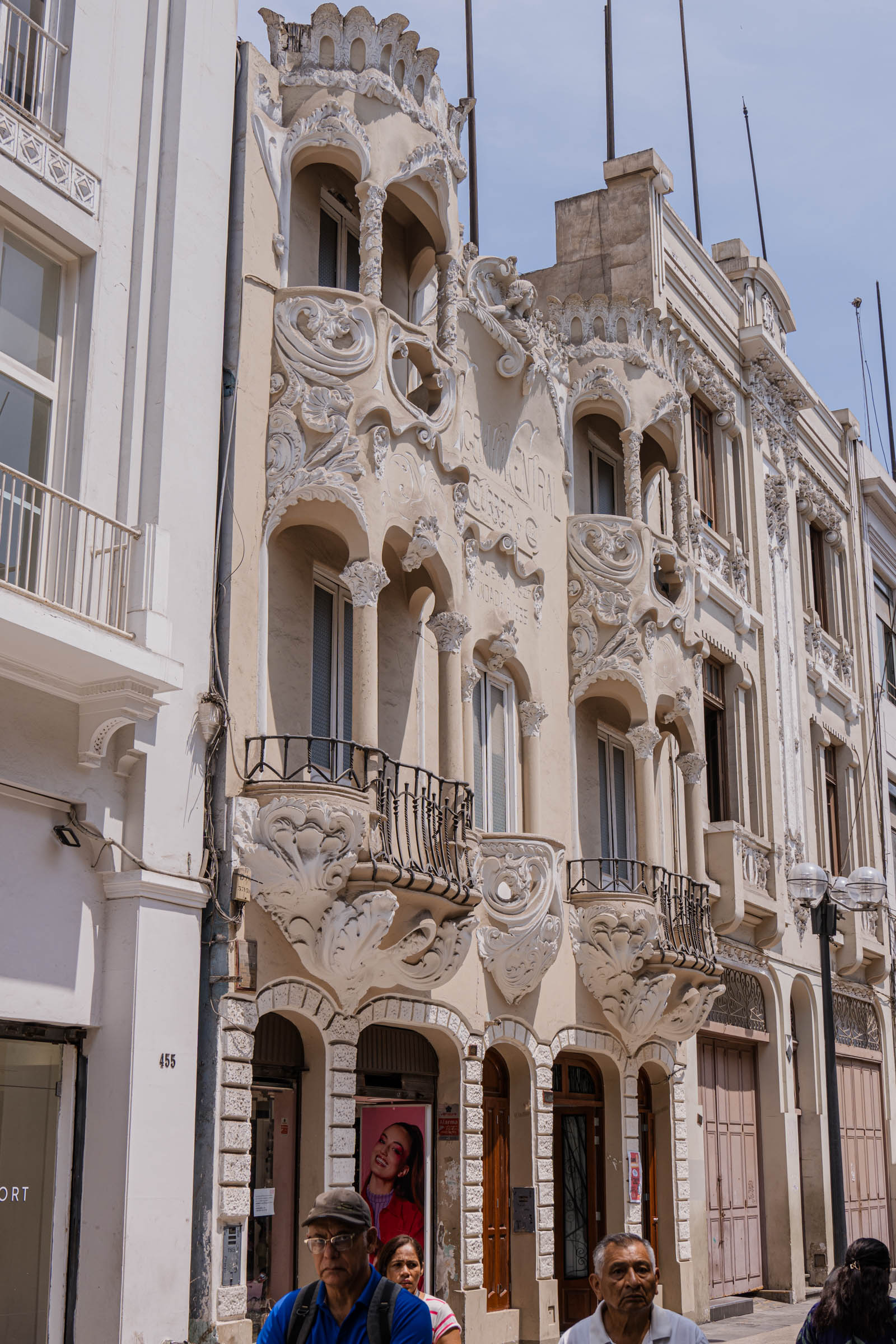
The most beautiful Art Nouveau building on the street is the Casa Courret, from 1906. It was the studio of the photography house founded by Eugène Courret, a French photographer who came to Lima in 1860. Born in Angoulême, he first worked in the studio of Eugène Maunoury, and in 1865 he bought the business. His studio became the most important one in the city in the second half of the 19th century, and it worked until 1935.
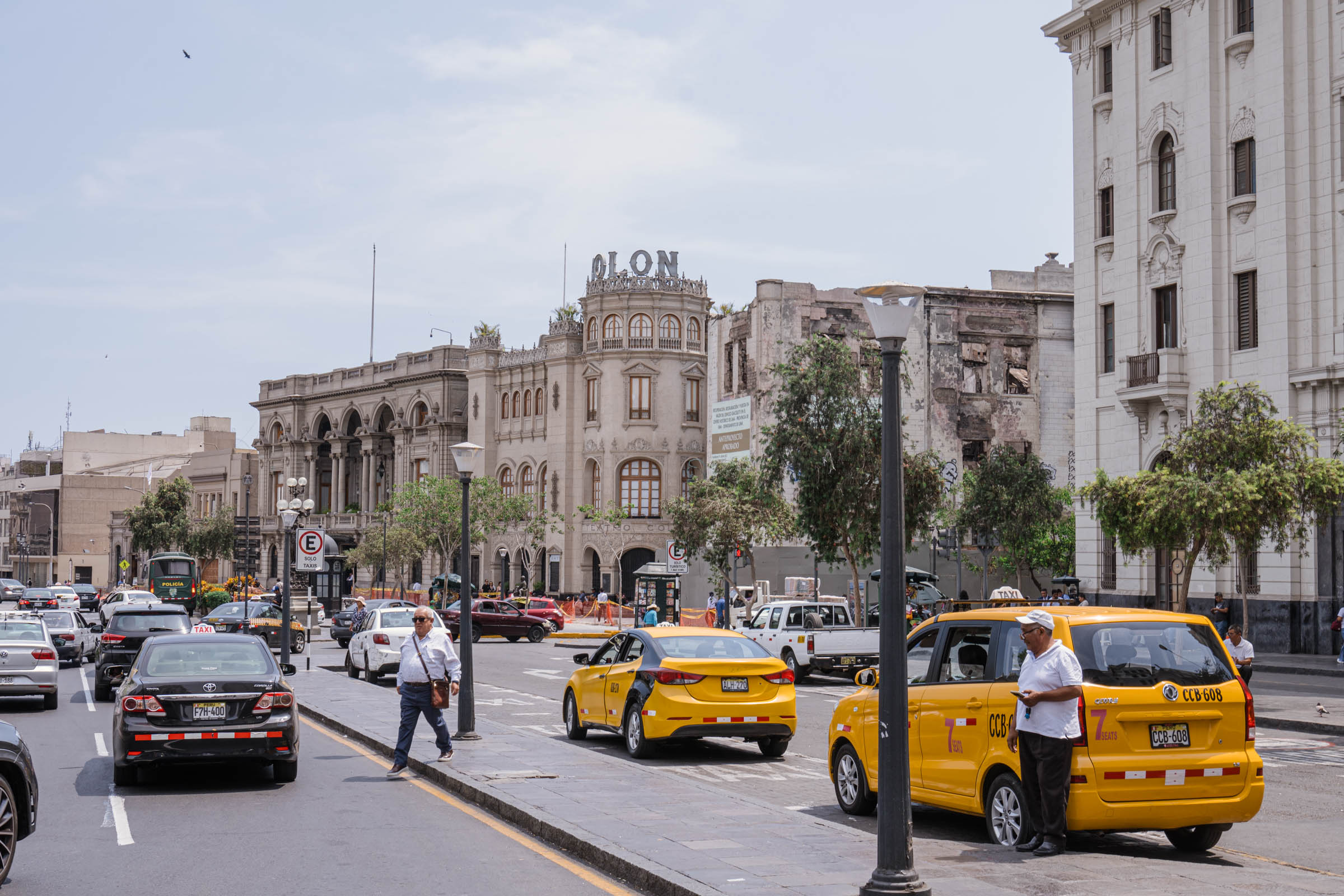
At the southern end of Jirón de la Unión, near the Plaza San Martín, stands the Teatro Colón. The theater is older than the square itself, and its elegant facade is a symbol of Lima’s early 20th century.
THE HISTORIC CENTRE OF LIMA
According to UNESCO, Lima was the political, religious and economic center of the Viceroyalty of Peru. It was also the most important Spanish city in South America until the middle of the 18th century. Today, the Historic Centre of Lima is a UNESCO World Heritage Site, together with the San Francisco convent complex.
Today, Lima is like a palimpsest: one place with many layers. Here, governments, languages, religions and identities come into contact. It is no wonder that a walk through Lima can turn into a journey through the ages.
NEIGHBORHOODS YOU MUST EXPERIENCE IN LIMA
Some of the neighborhoods that you must experience if you find yourself in the capital of Peru are Miraflores, Barranco, the historic center and Callao.
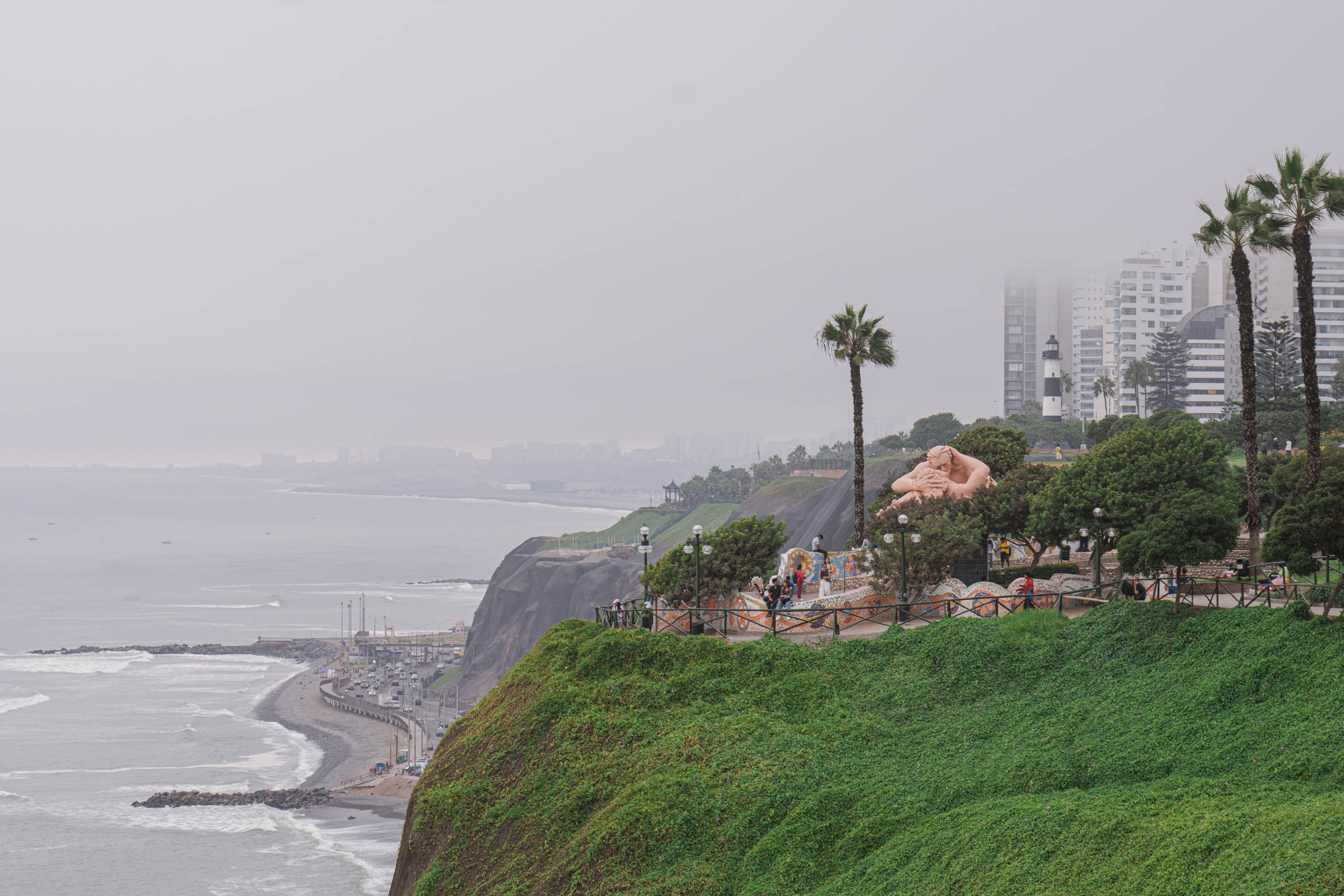
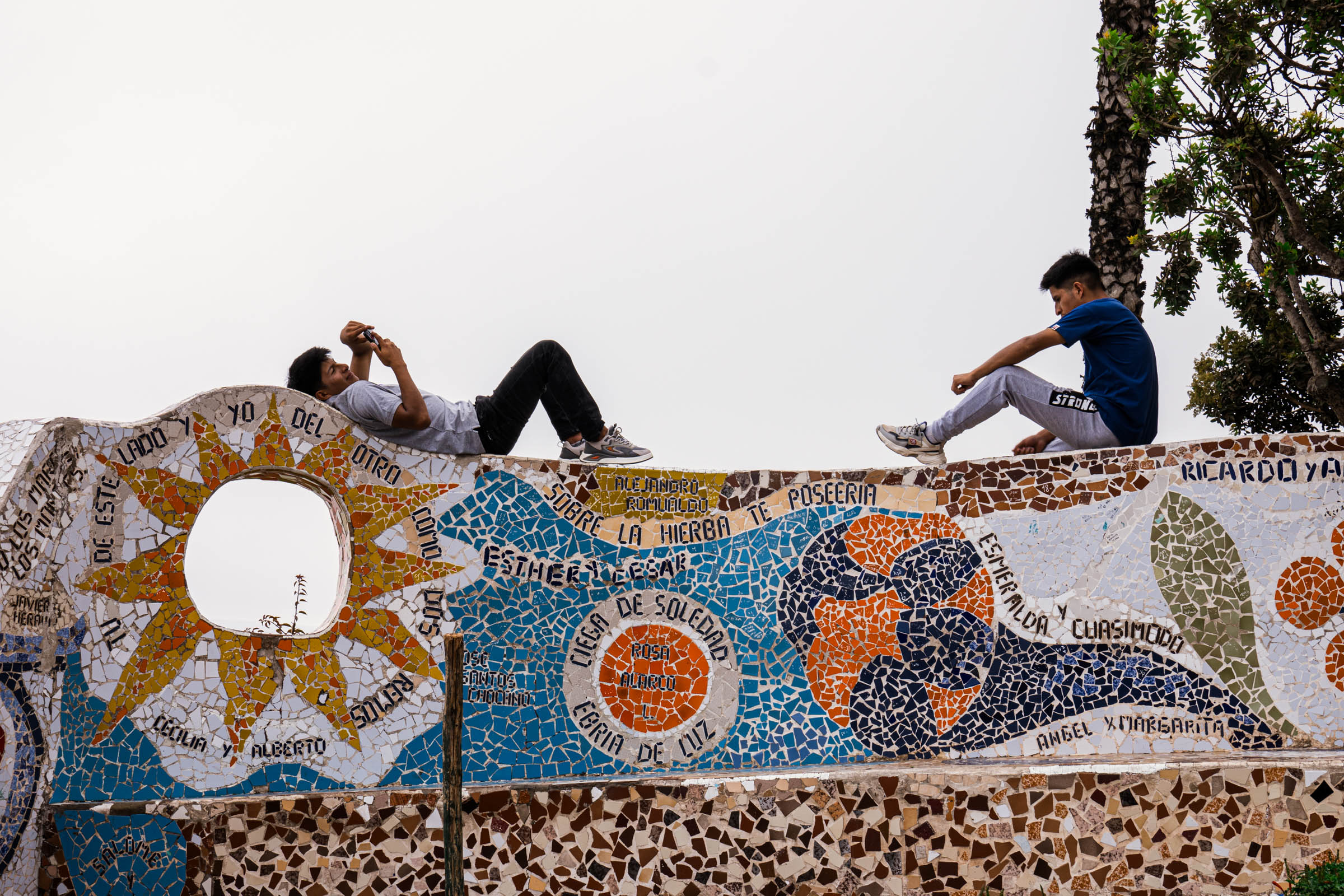
Miraflores is a modern, elegant part of Lima, with luxury hotels, shopping centers and promenades along the cliffs above the Pacific Ocean. Parks like the Parque del Amor are perfect for sunsets, while Larcomar is a must for a coffee with a view.
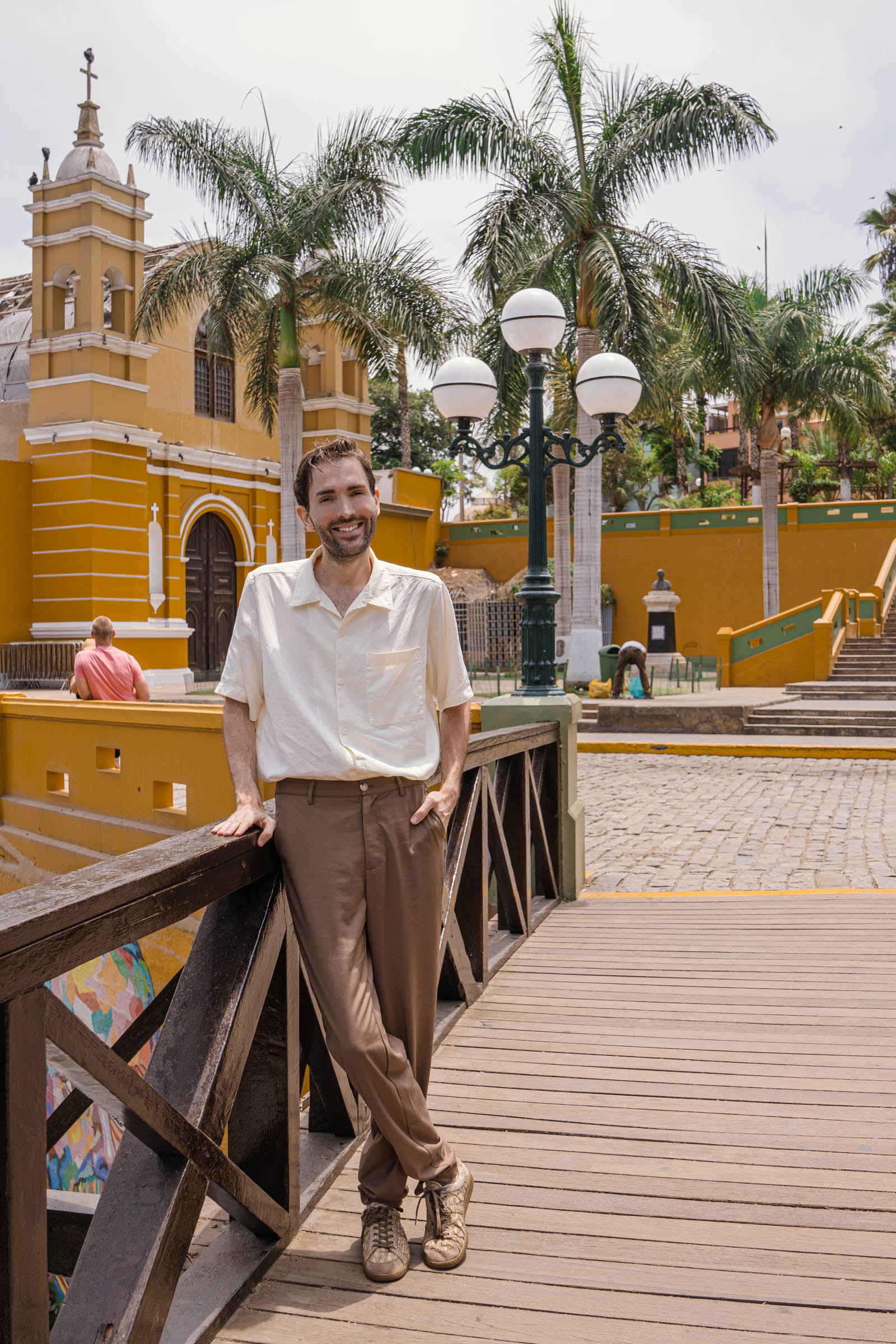
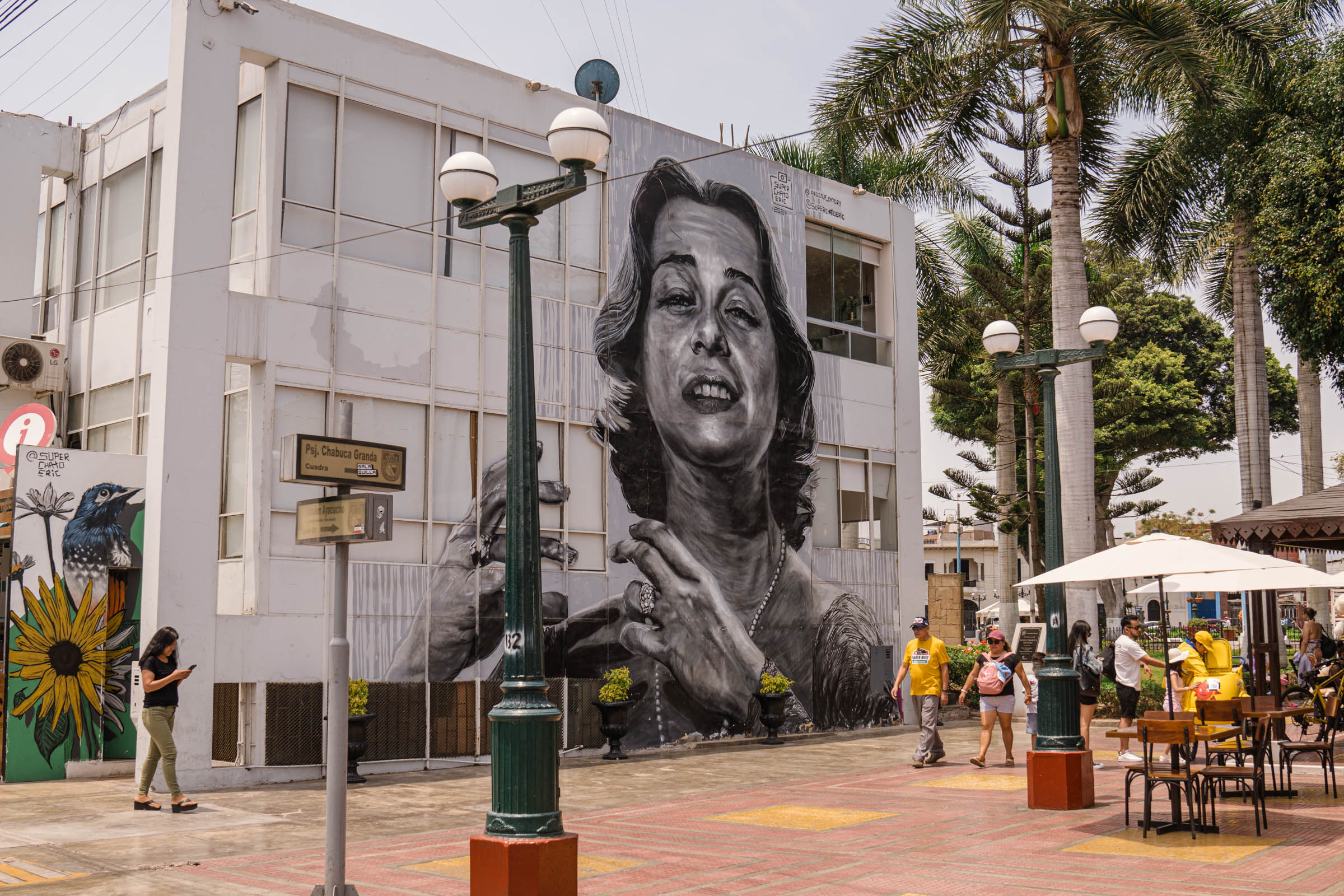
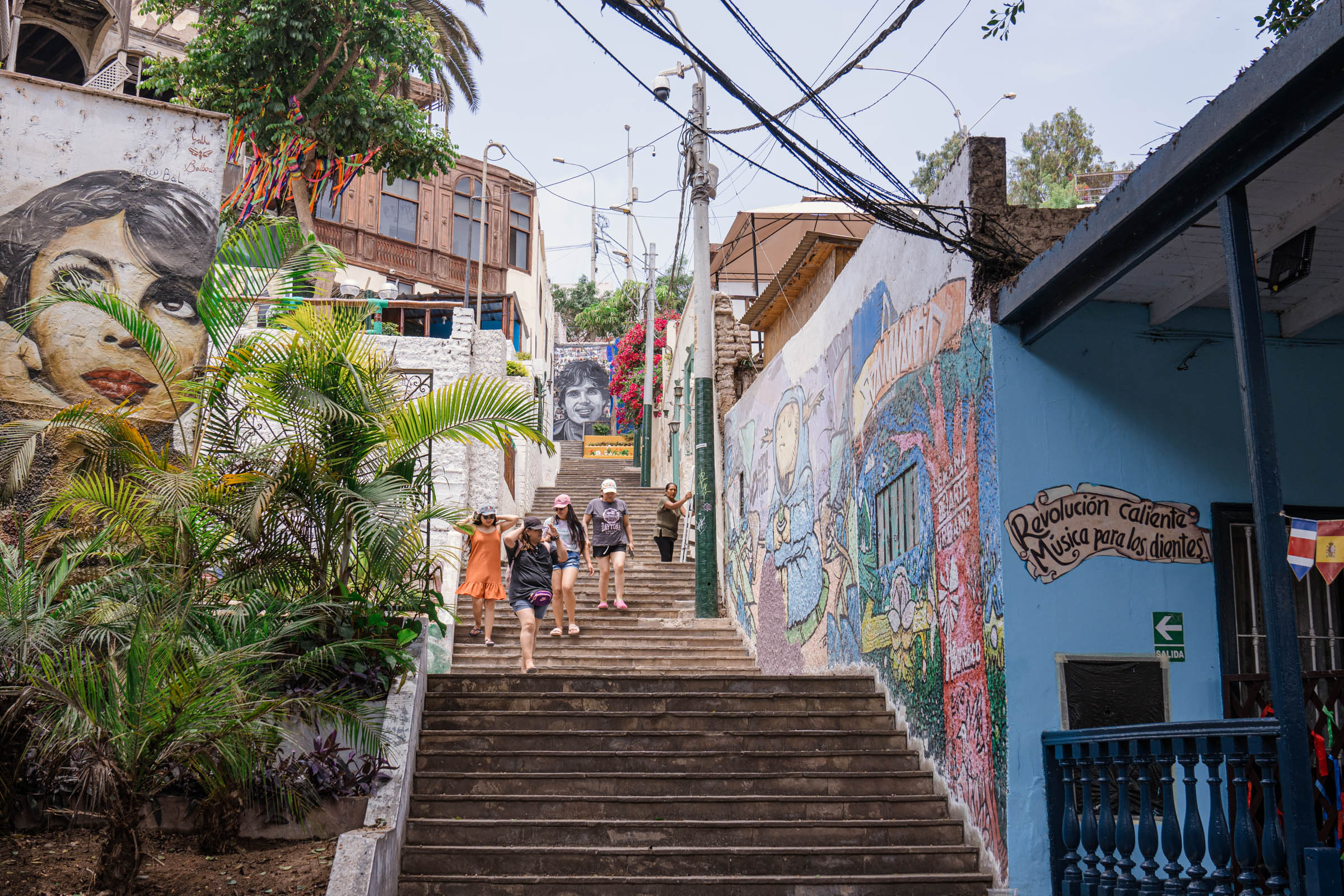
Barranco is the artistic soul of Lima. It is a bohemian district full of murals, cafés, galleries and street musicians. Everything here is about freedom of expression and nostalgia. Do not miss the Puente de los Suspiros, the Bridge of Sighs. Here I am on its wooden walkway, with the yellow church of La Ermita behind me.
FROM THE HISTORIC CENTER TO CALLAO
The historic center is the heart of Lima’s colonial past. The Cathedral, the Government Palace and the Monastery of San Francisco make its history palpable. Standing on the Plaza Mayor, you can understand how the Spanish shaped the urban space.
Callao is the port of Lima, and it has become more and more attractive for visitors. In the Monumental Callao area, at Jirón Constitución 250, you will find more than 60 graffiti murals, art galleries, design shops and restaurants. From Callao, boats also take visitors to the Palomino Islands, home to more than 5,000 sea lions, where you can even swim next to them. Nearby, the Cavinzas Islands protect Humboldt penguins.
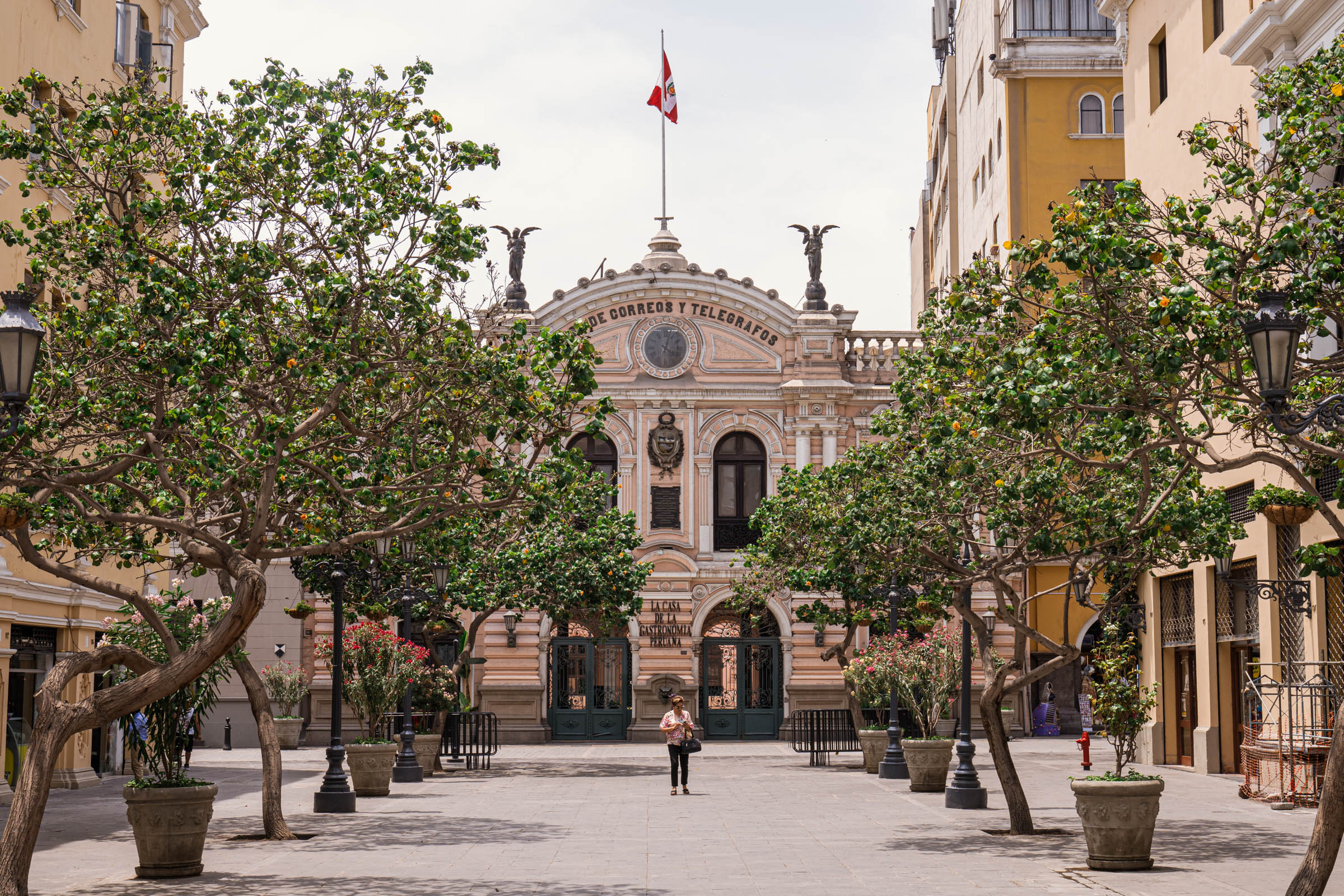
At the end of the Pasaje Santa Rosa stands the building of the former Casa de Correos y Telégrafos, the old central post office of Lima.
The equestrian statue of Francisco Pizarro now stands in this passage. According to the Peruvian newspaper Perú21, the statue arrived in Lima in 1935, changed location several times, and in January 2025 it was placed in the Pasaje Santa Rosa.
FLAVORS OF LIMA
Lima is a true gastronomic capital of South America. In 2023, Central, run by Virgilio Martínez and Pía León, took the title of The World’s Best Restaurant. Then, on June 19, 2025, Maido, the restaurant of chef Mitsuharu “Micha” Tsumura, took the No.1 spot on The World’s 50 Best Restaurants list. Maido combines Japanese techniques with Peruvian ingredients, and it opened its doors in 2009. In 2025, 50 Best also named it The Best Restaurant in South America. In the same 2025 ranking, Kjolle, Mérito and Mayta from Lima also made the list.
But the real charm also lies in simplicity. Ceviche is fresh fish marinated in lime juice, served with onion, corn and sweet potato. Lomo saltado is a fusion of Chinese and Peruvian cuisine: beef stir-fried with onions, tomatoes and soy sauce, served with potatoes and rice. Anticuchos are grilled skewers, often of beef heart, served with ají sauce. For drinks, the Pisco Sour is a must. It combines pisco, a grape brandy, with lime, egg white and sugar syrup.
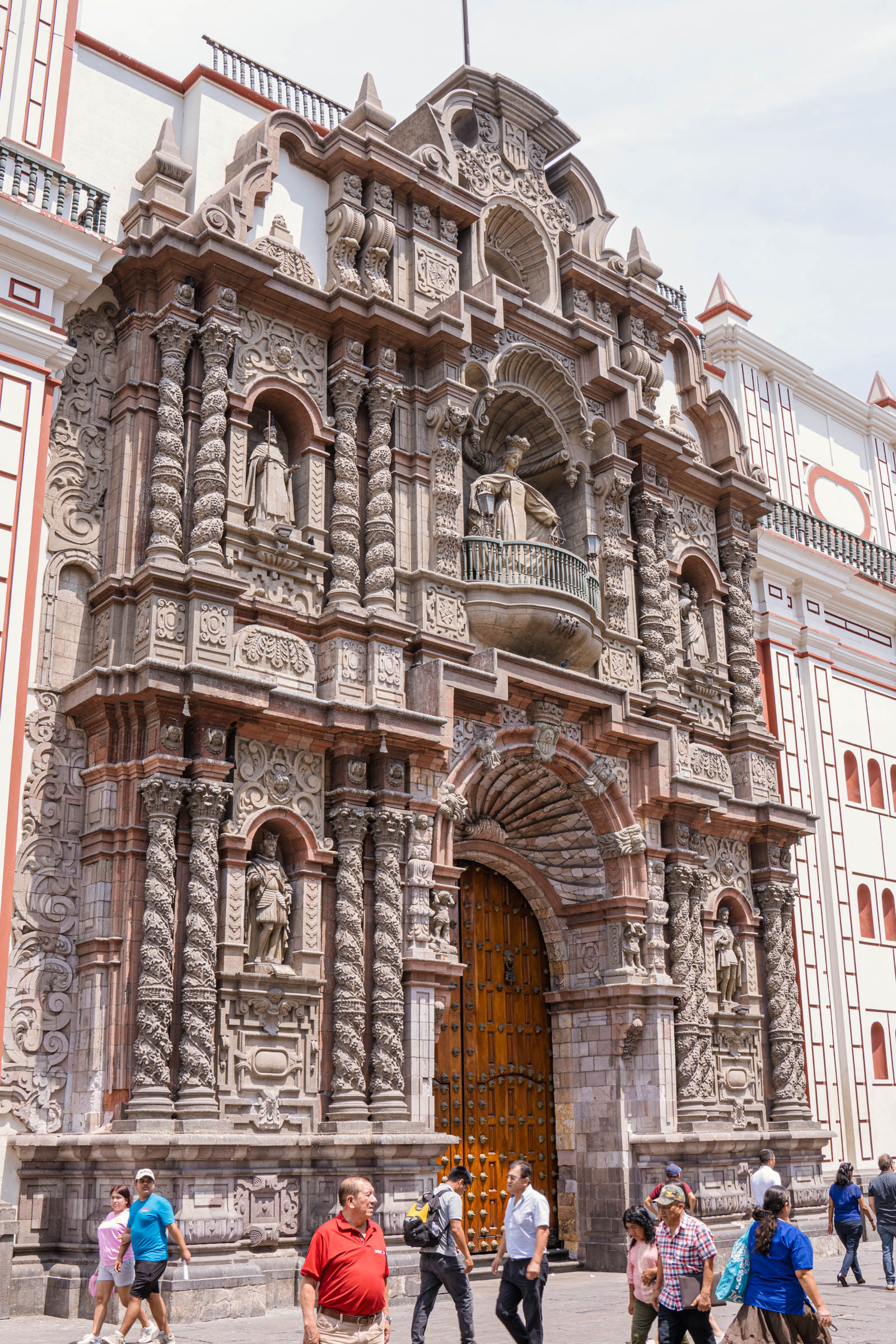
The richly carved stone facade in this photo belongs to the Basilica of La Merced, on Jirón de la Unión.
In the historic center, old ceramic plaques still show the colonial names of the streets. Here, on Jirón Carabaya, one of them recalls the old name Calle Pescadería.
LANGUAGES, MUSIC AND LITERATURE OF LIMA
In Lima, you will hear Spanish, but also Quechua and Aymara in some communities. Music comes from everywhere, and Afro-Peruvian rhythms are part of its soul.
Lima is also a city of poets and writers. The Peruvian author Mario Vargas Llosa received the Nobel Prize in Literature in 2010, as the first Nobel laureate in Literature from Peru. The singer and composer Chabuca Granda created many criollo waltzes with Afro-Peruvian rhythms. Her song “La flor de la canela” became an anthem of Lima, and in 2017 her work was declared Cultural Heritage of the Nation. If you love books, visit the Casa de la Literatura Peruana and immerse yourself in the literary soul of the country.
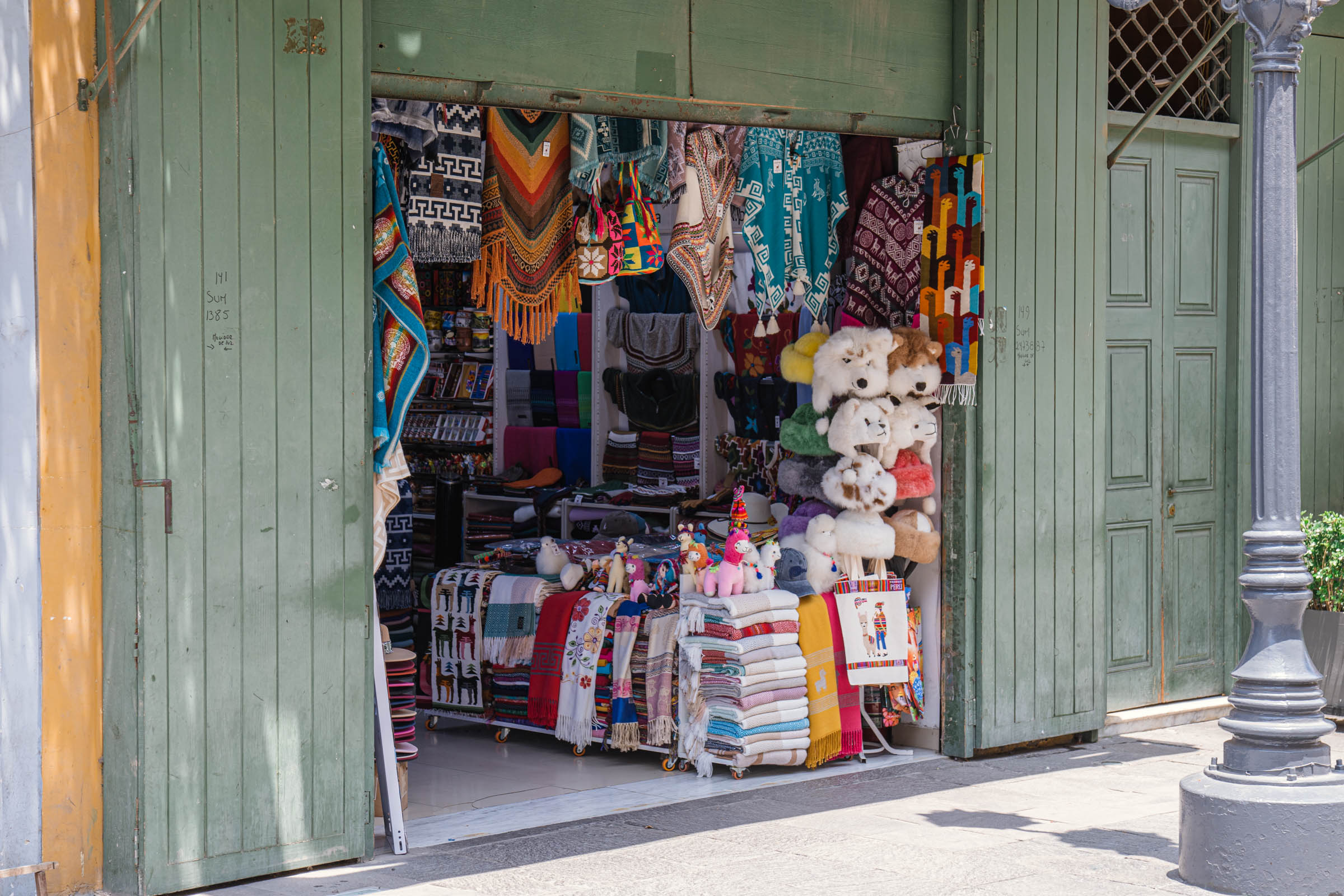
Handicraft shops are full of colorful textiles, alpaca dolls and souvenirs. It is hard to leave them with empty hands.
THE CHURCHES OF LIMA
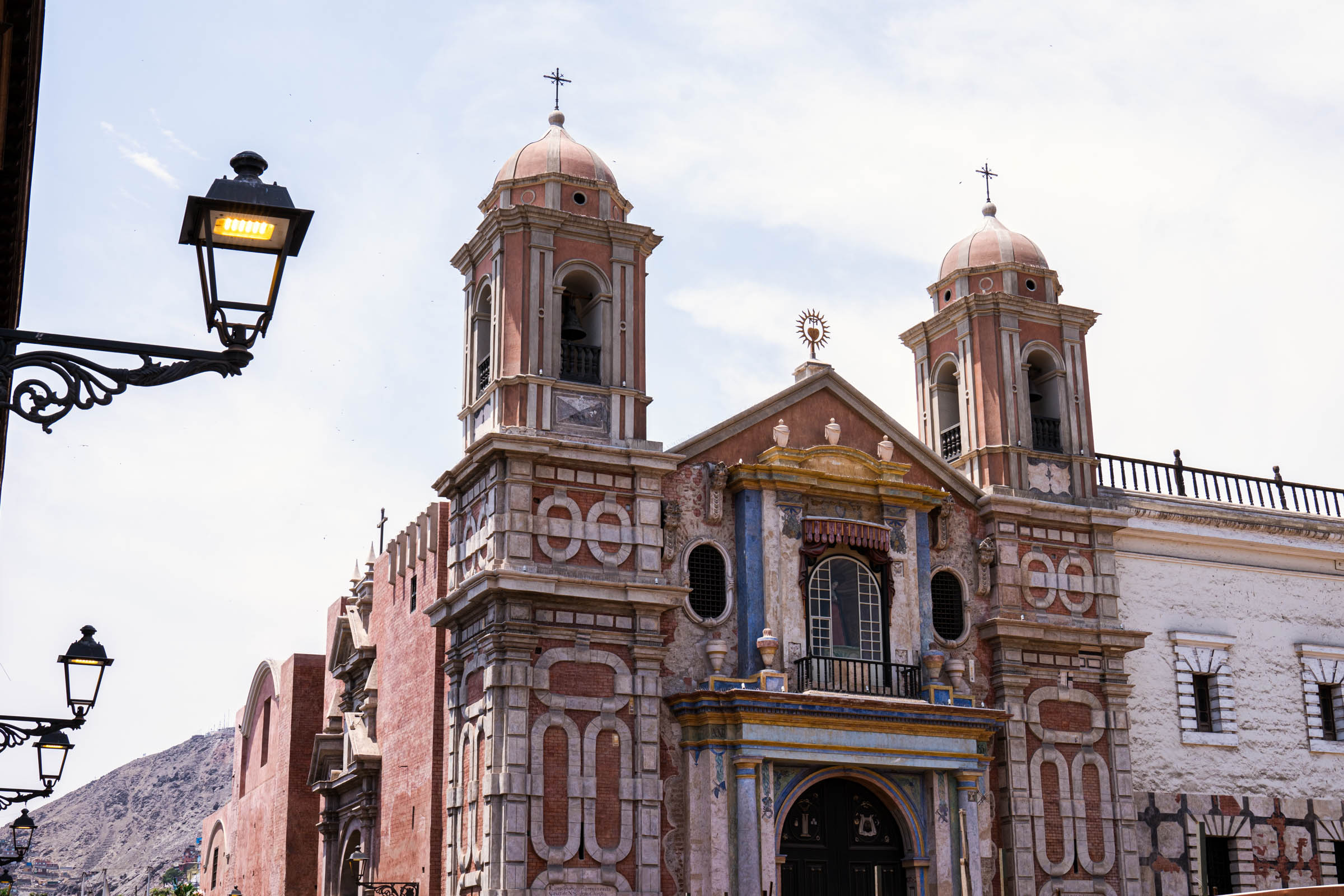
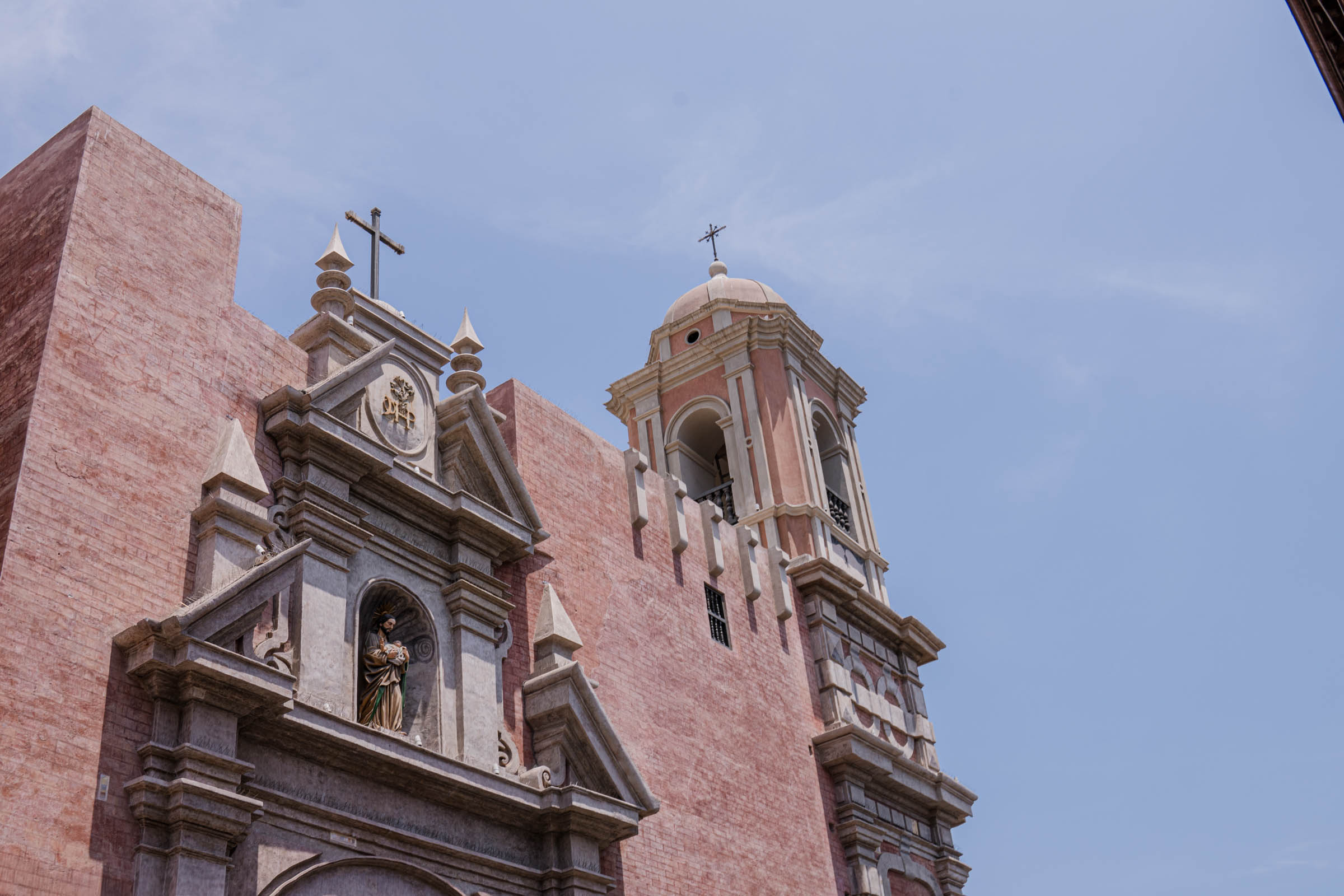
Lima is more than the capital of Peru. It is a living monument of spirituality, art and history. Here, colonial bell towers rise above busy streets, and between the smell of ceviche and the hum of traffic stand magnificent churches.
As the former heart of the Spanish Viceroyalty, Lima was a great religious center, so its historic center is full of churches, monasteries and convents. They are not only religious buildings. They are also cultural and architectural jewels, places of historical memory and local identity. If you travel to Lima, do not see them only as a tourist obligation. See them as windows into the soul of the people.
THE CATHEDRAL OF LIMA
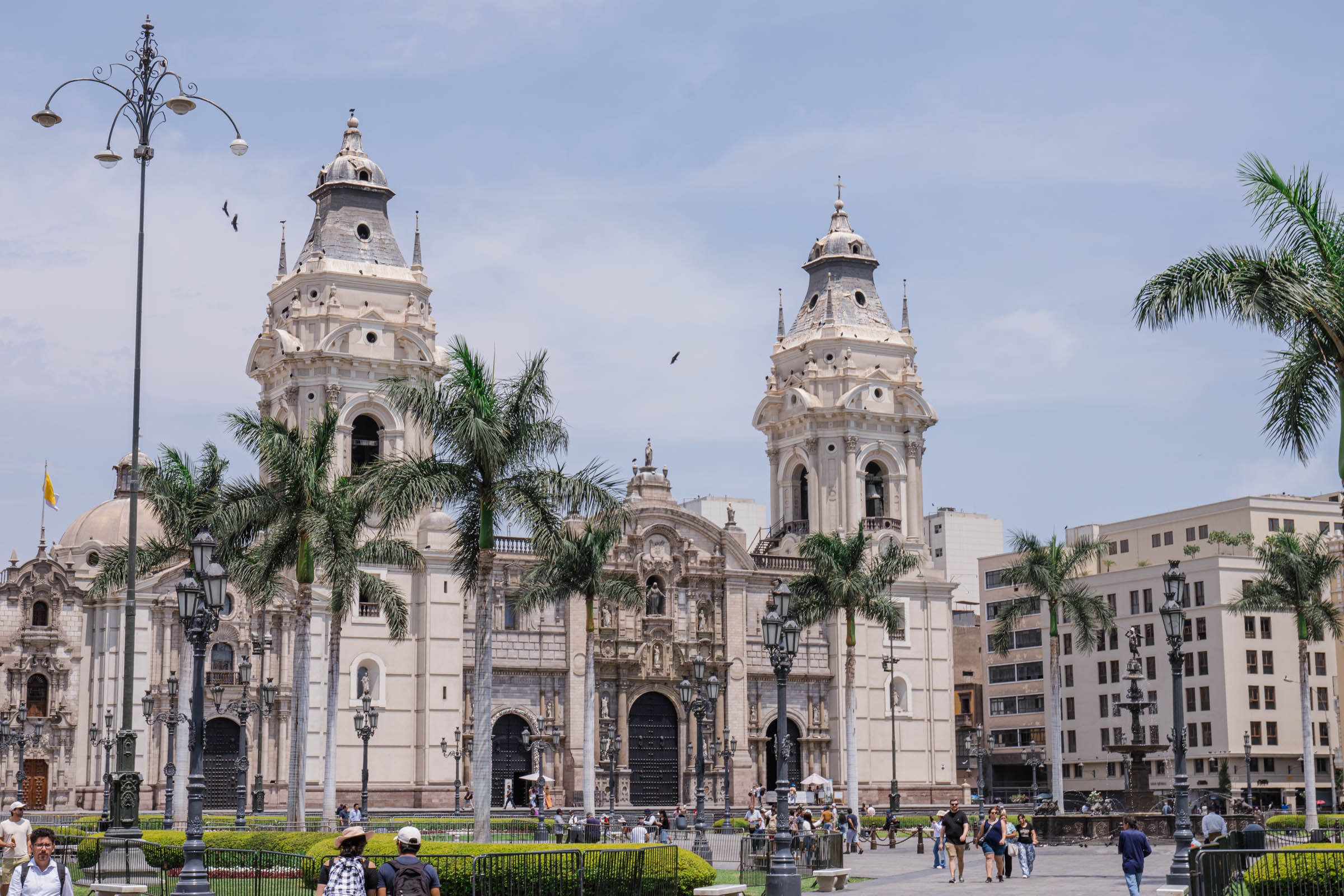
The Cathedral stands on the eastern side of the Plaza Mayor. Francisco Pizarro laid its first stone in 1535, and the first church opened in 1540. In 1541, Pope Paul III created the Diocese of Lima, and in 1542 the construction of the cathedral began.
In 1585, the architect Francisco Becerra took charge of the third cathedral, with a plan inspired partly by the cathedrals of Jaén and Seville. The consecration of the naves took place in October 1625, the builders finished the main entrance in 1632, and the towers followed in 1649.
Earthquakes changed its history several times. That is why its Gothic ribbed vaults are made of wood and stucco, which reduce the weight on the walls. The earthquake of 1687 caused great damage, and the one of 1746 almost ruined the building. After that, a reconstruction took place in three stages between 1755 and 1778. Then, the bell towers were rebuilt between 1794 and 1797.
Inside, the cathedral mixes late Gothic, Renaissance, Baroque and Neoclassical elements. Its choir stalls, designed by Martín Alonso de Mesa and made by Pedro de Noguera in the 17th century, are a true masterpiece. Among its chapels, the Chapel of Our Lady of the Antique and the Chapel of Saint Rose of Lima stand out. On weekdays, a museum tour shows its colonial works of art. In 1921, the cathedral became a minor basilica.
THE BASILICA AND CONVENT OF SAN FRANCISCO
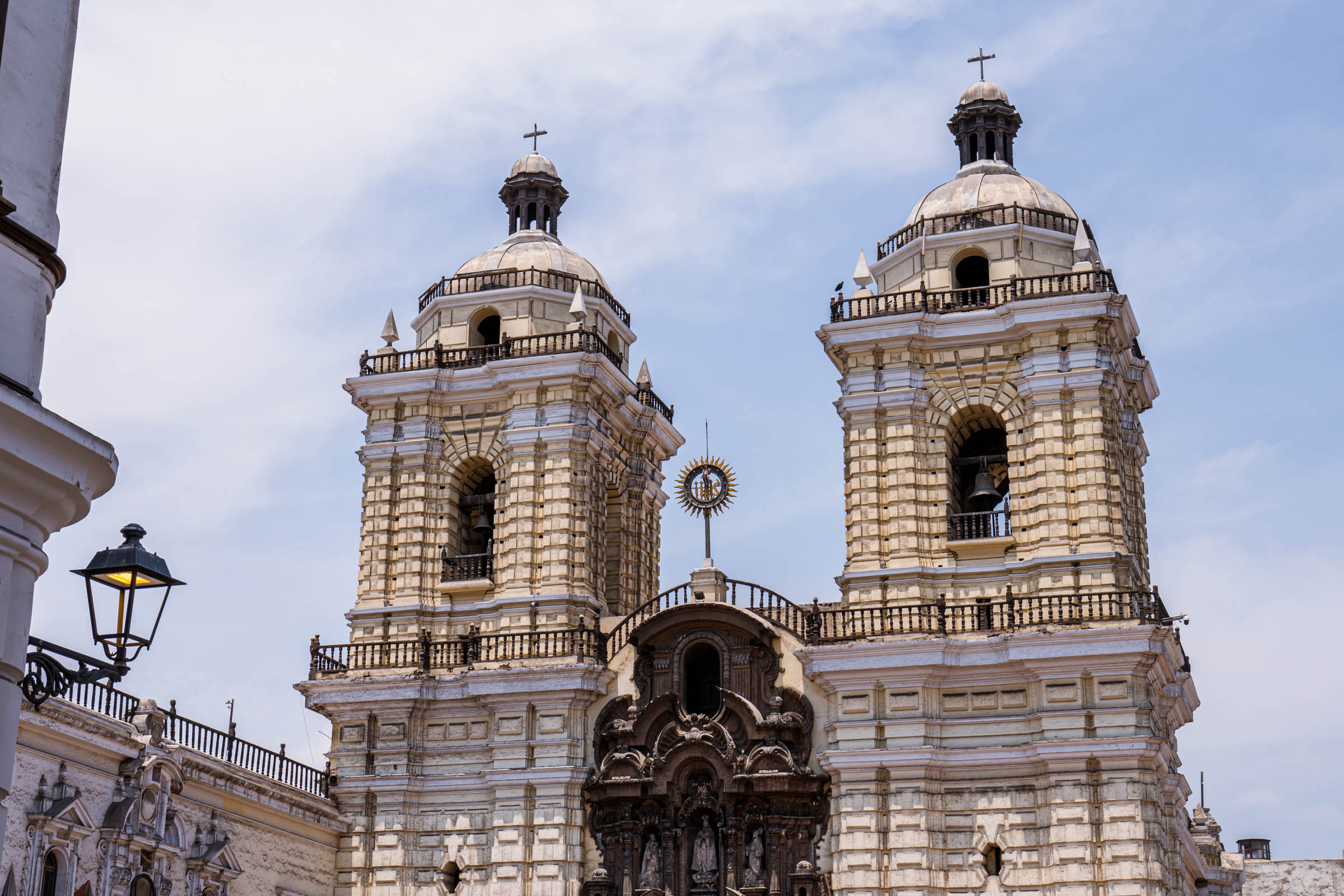
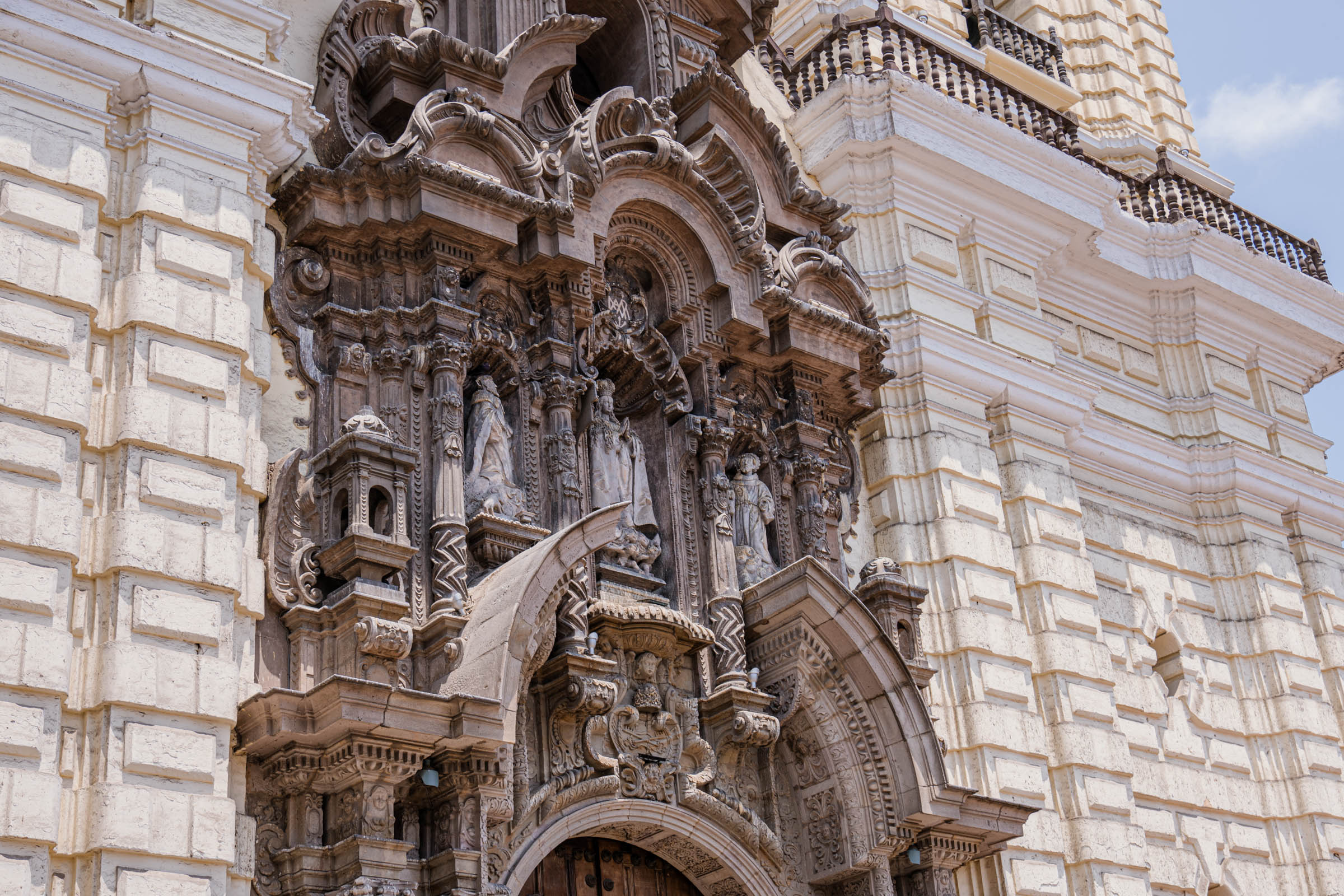
The Basilica and Convent of San Francisco stands at the corner of Áncash and Lampa streets. With its rusticated towers and its carved stone portal, it is both enigmatic and enchanting.
The construction began in 1535, and the consecration of the church took place on March 11, 1540. However, the earthquake of February 4, 1655, destroyed the convent. The builders laid the first stone of the new one on May 8, 1657, and the new convent opened on October 3, 1672. Repairs to its interior continued until 1729. The Portuguese architect Constantino de Vasconcellos designed it, together with the Liman master builder Manuel Escobar. Its facade, with rhythmic bossage and a wooden balustrade at the top, is a fine example of the Liman Baroque style.
Inside, the convent has a remarkable library with about 25,000 volumes, some of them from the 16th century. In addition, a huge canvas of the Last Supper from 1658 decorates the complex. The plinths of the cloister are covered with azulejos from 1642, brought directly from Seville, with Franciscan saints as their theme. The complex also has its own museum. In 1966, another earthquake damaged the vault of the sacristy, and specialists restored it in the 1990s.
THE BASILICA AND CONVENT OF SANTO DOMINGO
A few minutes’ walk from the Plaza Mayor stands the Basilica and Convent of Santo Domingo. After the founding of Lima, Francisco Pizarro gave this plot, on Jirón Conde de Superunda, to the Dominican order. The construction of the church and the convent took about fifty years, and it ended in the late 16th century.
Santo Domingo has a special place in the history of education. The royal decree of May 12, 1551, founded the University of San Marcos, and the university began its work in the Chapter Hall of this convent. Today, many consider it the oldest university in the Americas.
The basilica is also a place of pilgrimage, because it is closely linked to three Peruvian saints: Santa Rosa de Lima, San Martín de Porres and San Juan Macías. Moreover, the azulejos on the columns and walls of the main cloister date from 1604, and they all came from Seville. The tower rises 46 meters, and from its top you can see the port of Callao. In the past, merchants used it as a lookout to watch the cargo ships arriving at the port. Its facade and tower date from 1678, and they were rebuilt after the earthquake of 1746. In 2025, a restoration brought new shine to the facade, the tower and the bell tower.
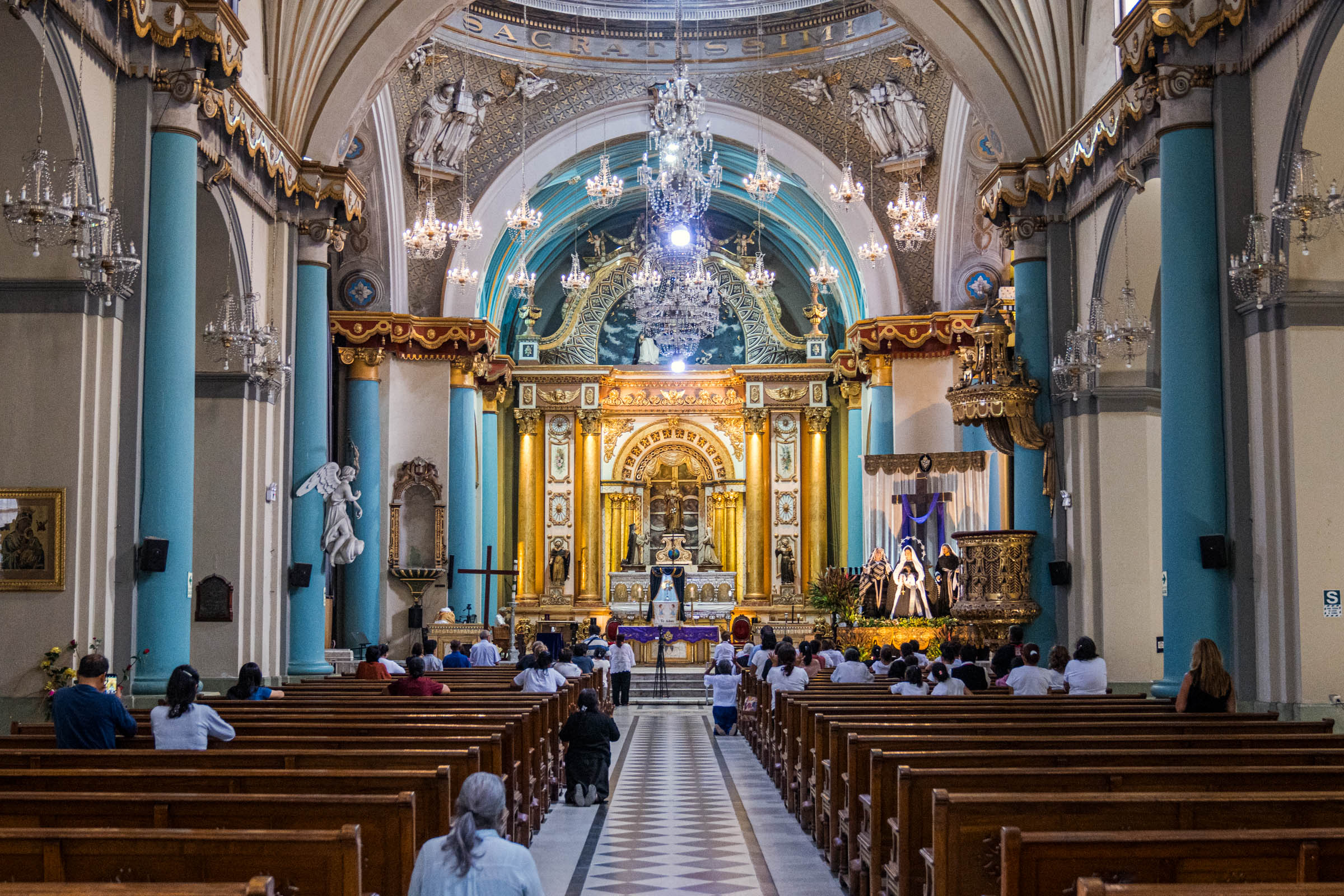
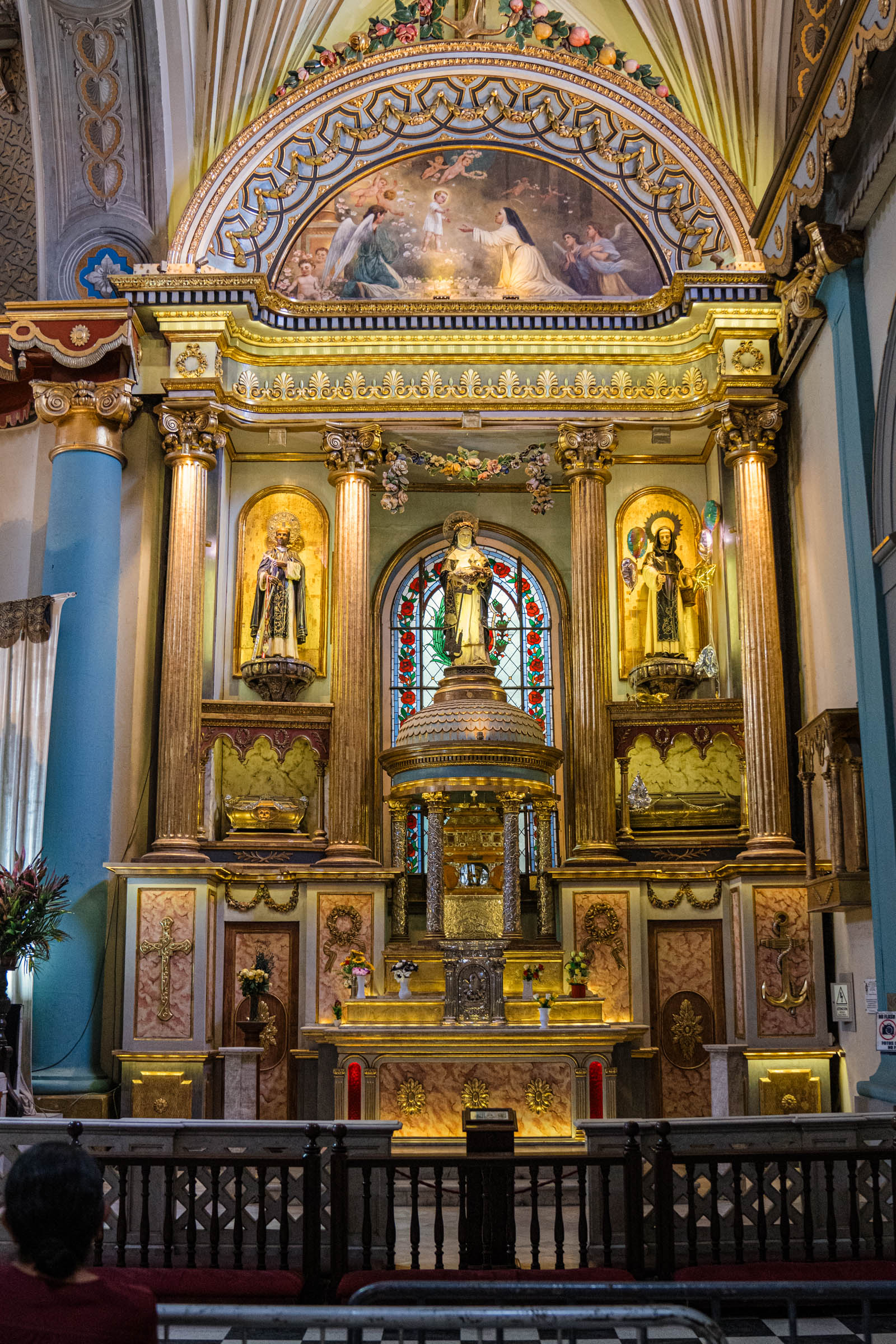
Inside, the churches of Lima impress with gilded altarpieces, painted vaults and colorful columns. Their silence offers a moment of peace in the middle of the busy city.
THE LORD OF MIRACLES
Religion in Lima is not hidden in churches. It is a living part of everyday life. The biggest religious event in the city is the procession of the Señor de los Milagros, the Lord of Miracles, which takes place every October.
The image is a painting of Christ crucified from the 17th century, attributed to an African man brought from what is now Angola to Peru as a slave. Earthquakes in 1655, 1687 and 1746 destroyed most of Lima, but the mural remained standing, which many people considered a miracle.
Today, the procession is one of the largest in the world. Hundreds of thousands of pilgrims take part, and the processions circle downtown Lima for about 20 hours. Purple is the main color of the habits, so October is known as the “purple month.” The original image stays in the Sanctuary and Monastery of Las Nazarenas, where the first and the last processions begin and end. In 1715, the City Council of Lima declared the Lord of Miracles Patron and Protector of Lima. In 2005, the Holy See named it Patron of the Peruvian People, and in 2010 the government designated it Patron of the Peruvian Catholic Church. October is also the season of Turrón de Doña Pepa and mazamorra morada, a purple pudding.
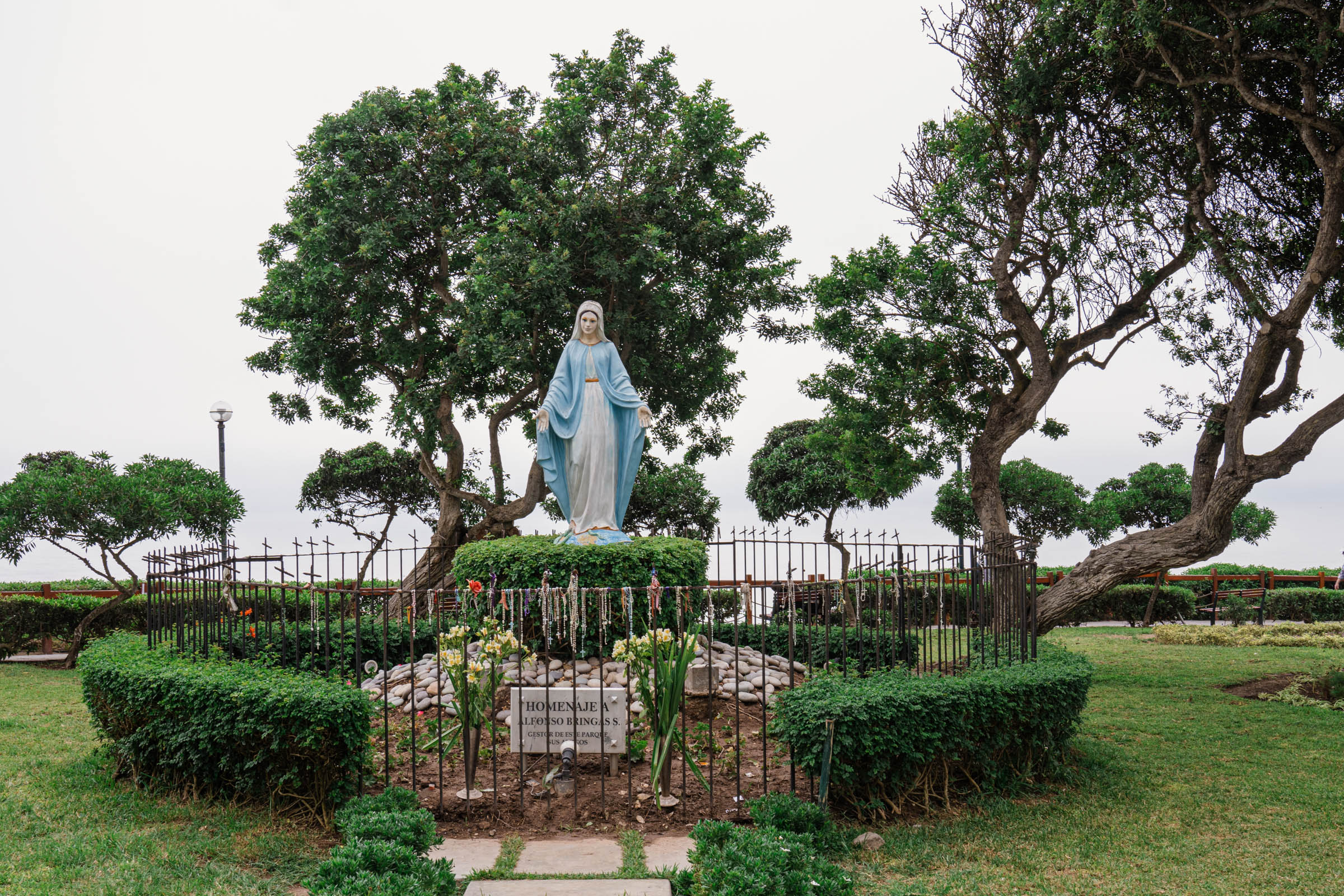
MIRAFLORES, WHERE LIMA MEETS THE OCEAN
When you find yourself in Lima, you feel that it is a city of contrasts. Colonial history meets modern glass buildings, street food meets elegant restaurants, and noisy buses meet quiet parks. Miraflores is the place where all these worlds meet, and in style.
Perched on the cliffs above the Pacific, Miraflores is a center of culture, gastronomy, nightlife and shopping. Whether you are interested in food, shopping, romance or just a quiet walk by the ocean, Miraflores can offer you all that and more.
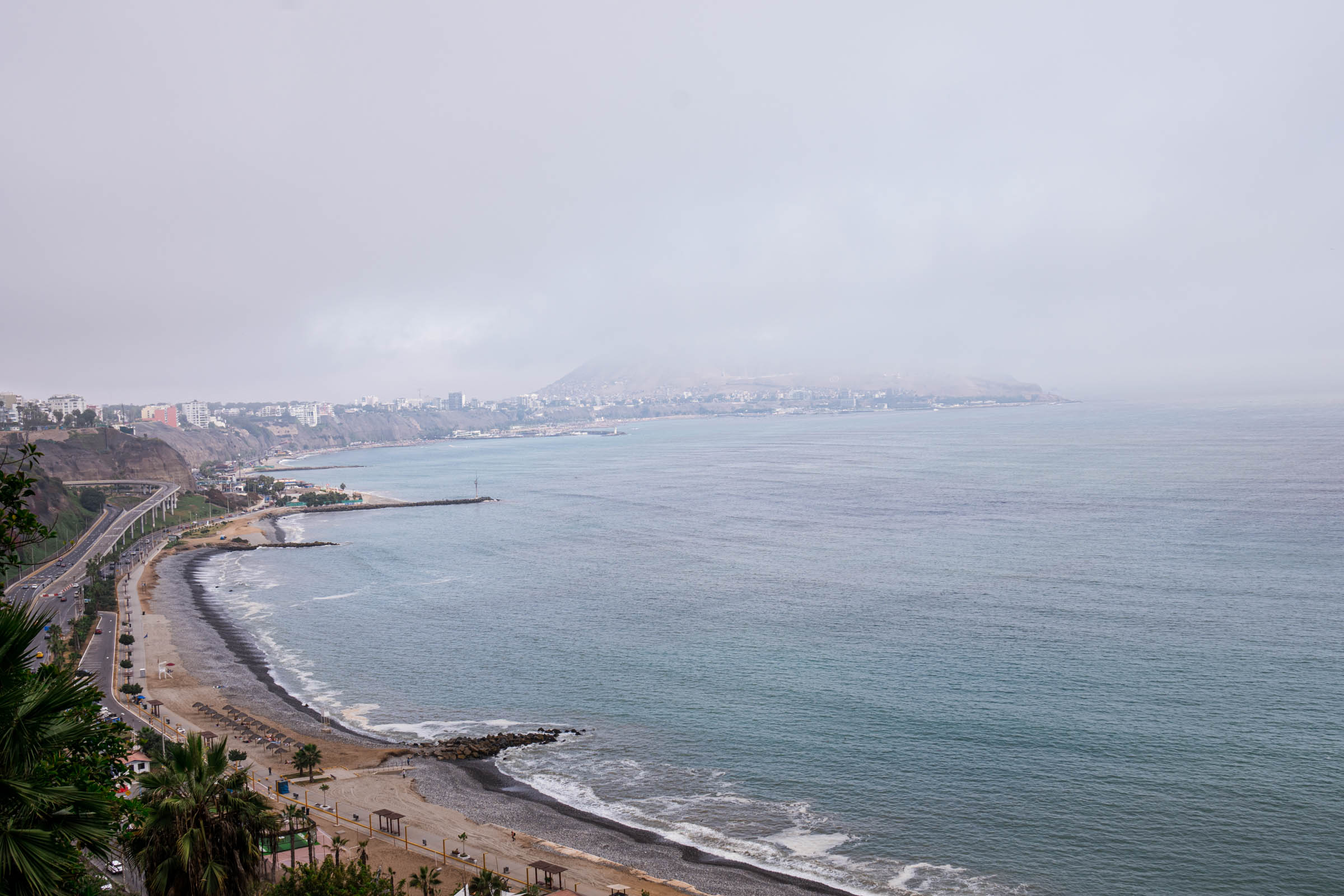
One of the first things you must do in Miraflores is walk along the Malecón, a long promenade along the cliffs above the ocean. It is perfect for a morning run, a walk with a coffee in your hand or a sunset with a view.
PARQUE DEL AMOR IN LIMA
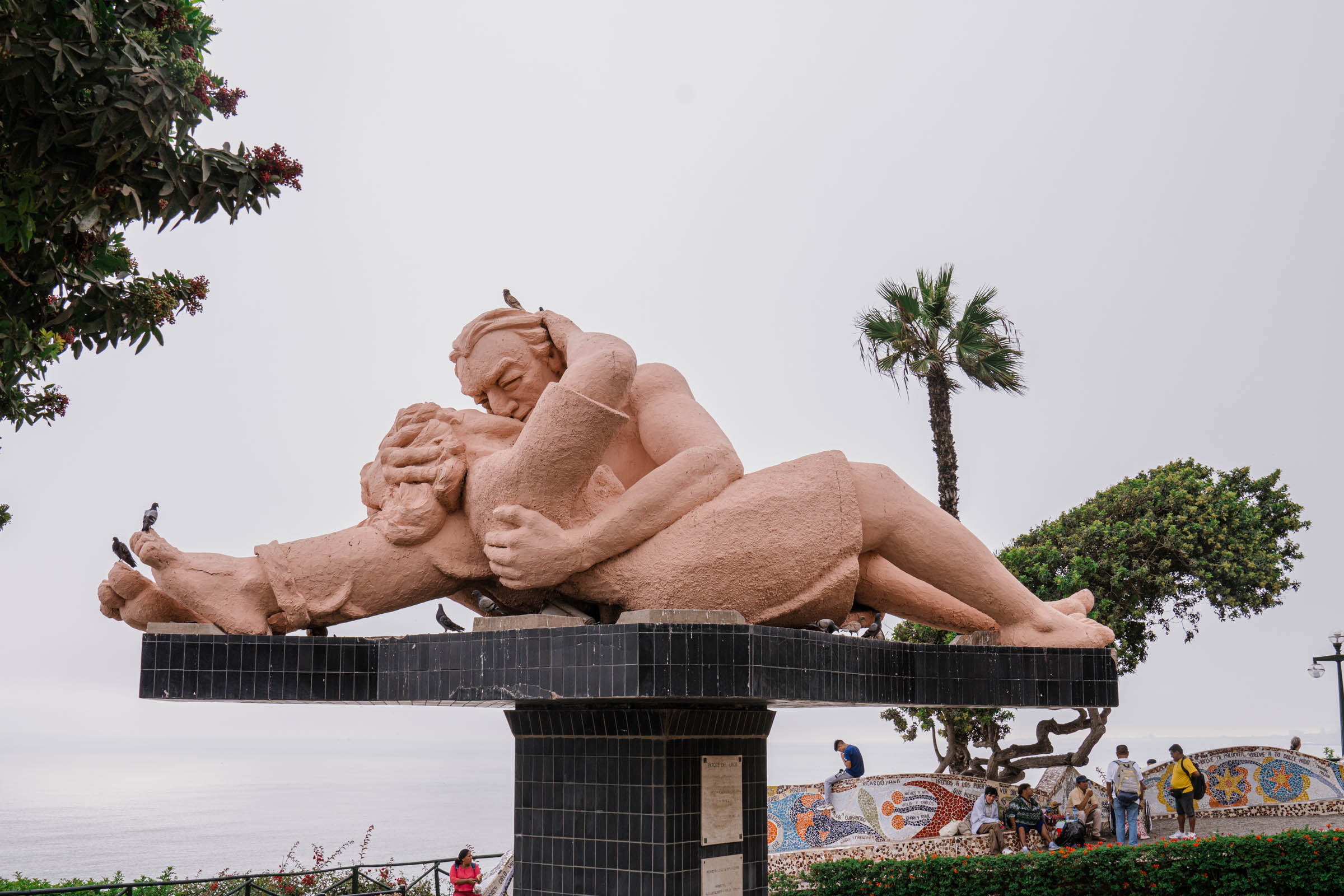
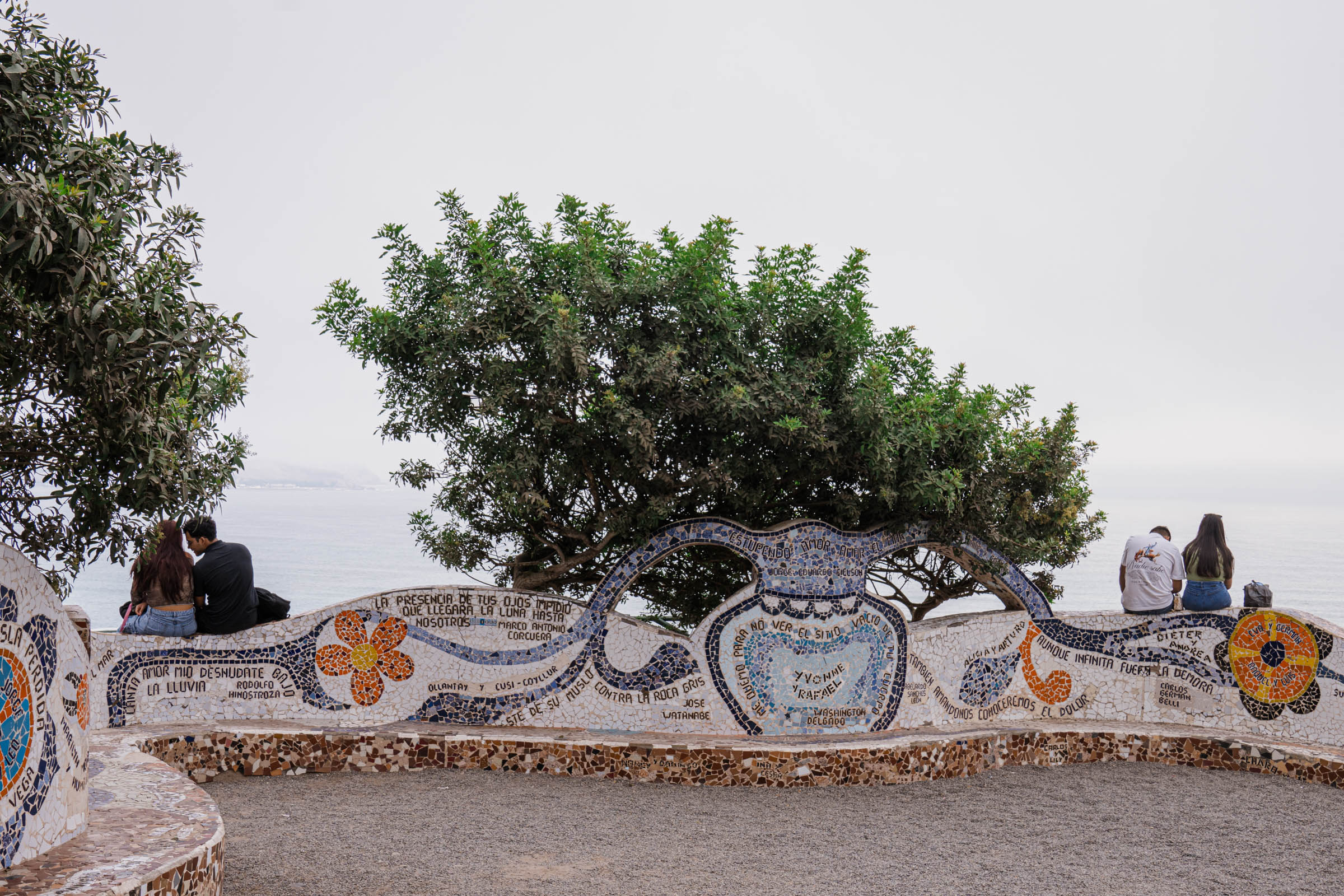
One of the most photographed places in Miraflores is the Parque del Amor, the Love Park. It opened on February 14, 1993, on the Malecón Cisneros. In 2014, it officially received the name of a former mayor of Lima, Alberto Andrade Carmona.
In the middle of the park stands El Beso (The Kiss), a large sculpture of a couple in love by the Peruvian artist Víctor Delfín. Around it, colorful mosaics carry love-themed phrases and poems in Spanish and Quechua. Their broken-tile style, called trencadís, draws on Antoni Gaudí’s Park Güell in Barcelona. The park overlooks the coast of Lima and the Villena bridge. Moreover, National Geographic magazine named it one of the most romantic places in the world.
EL FARO DE LA MARINA IN LIMA
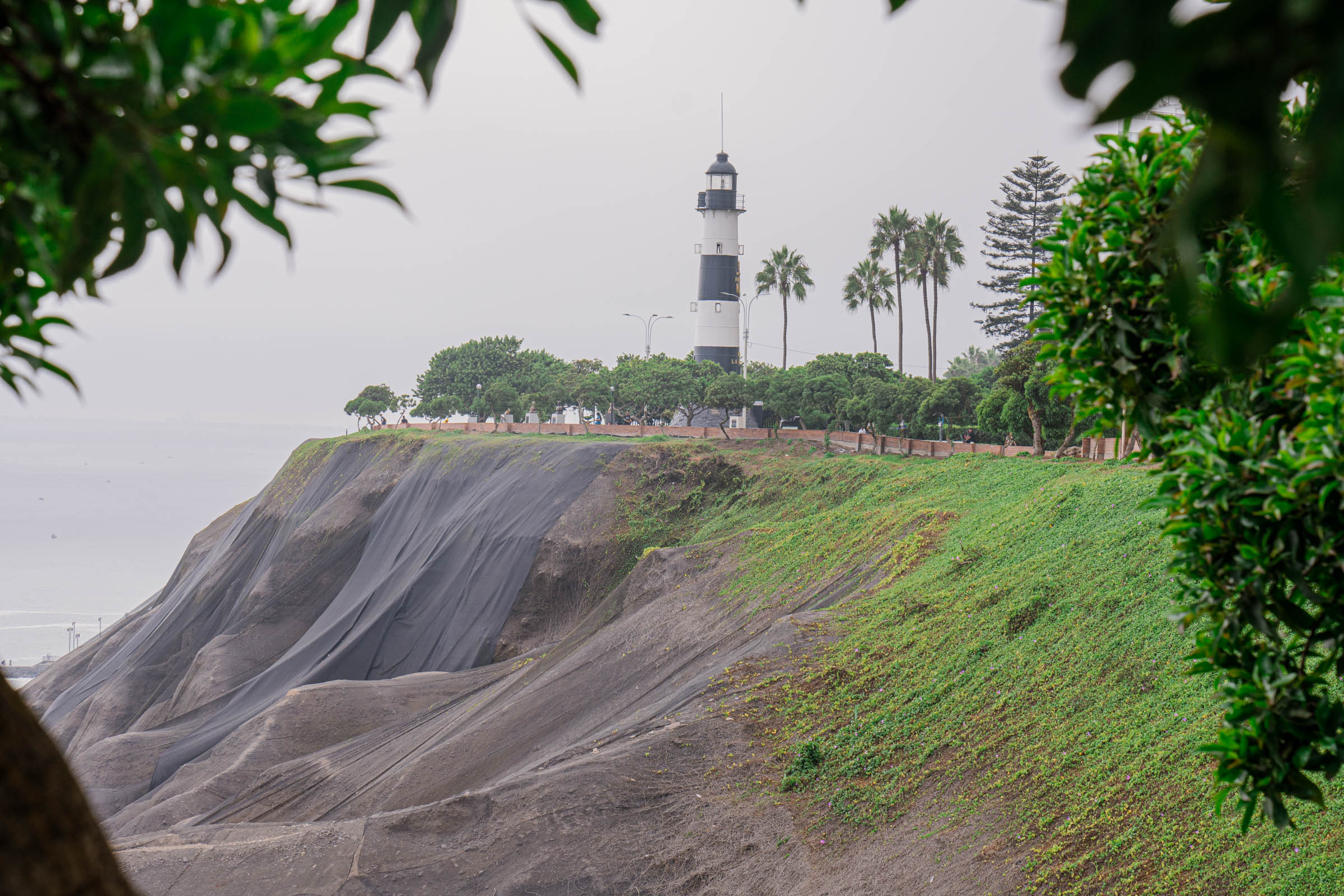
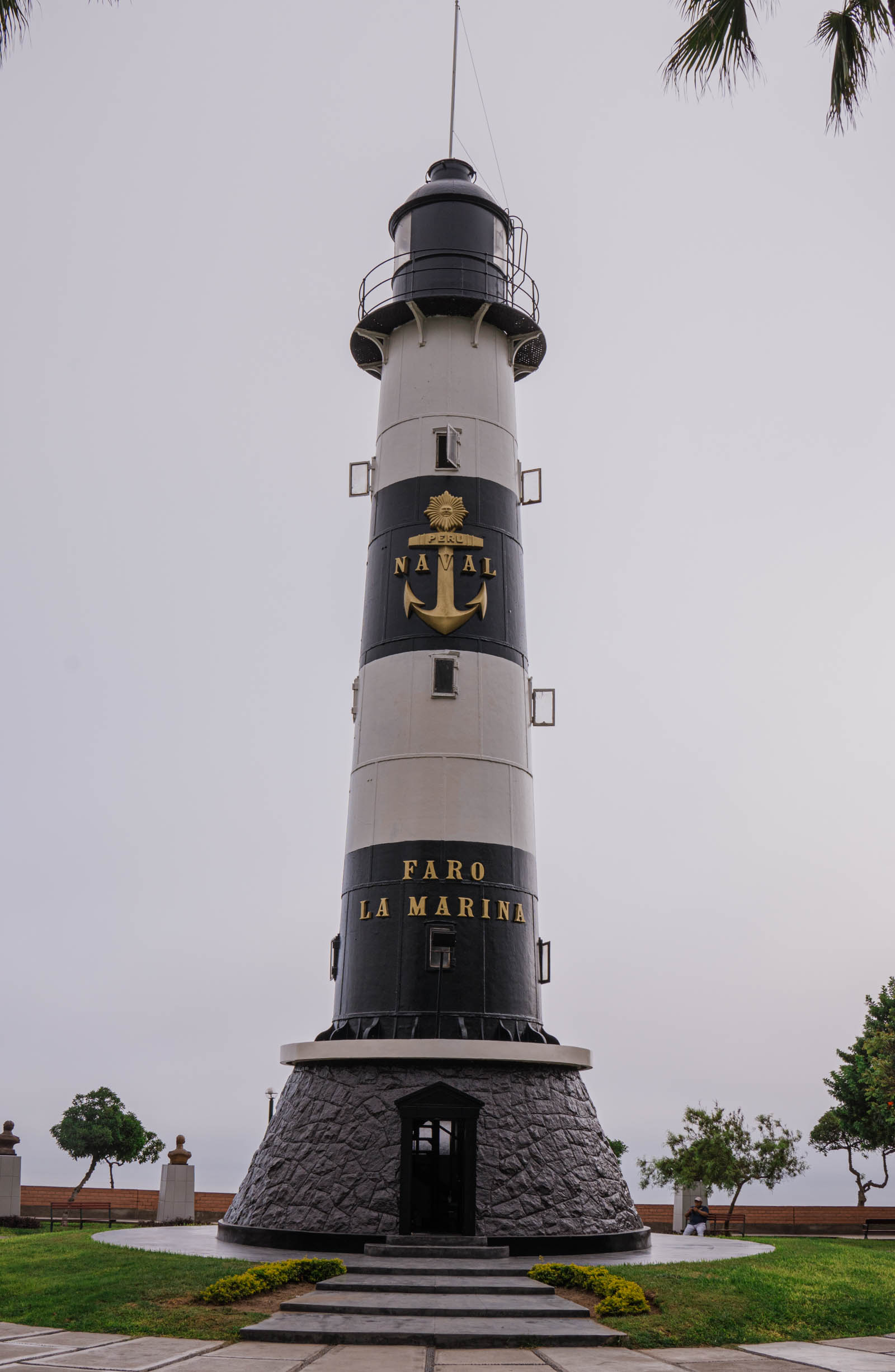
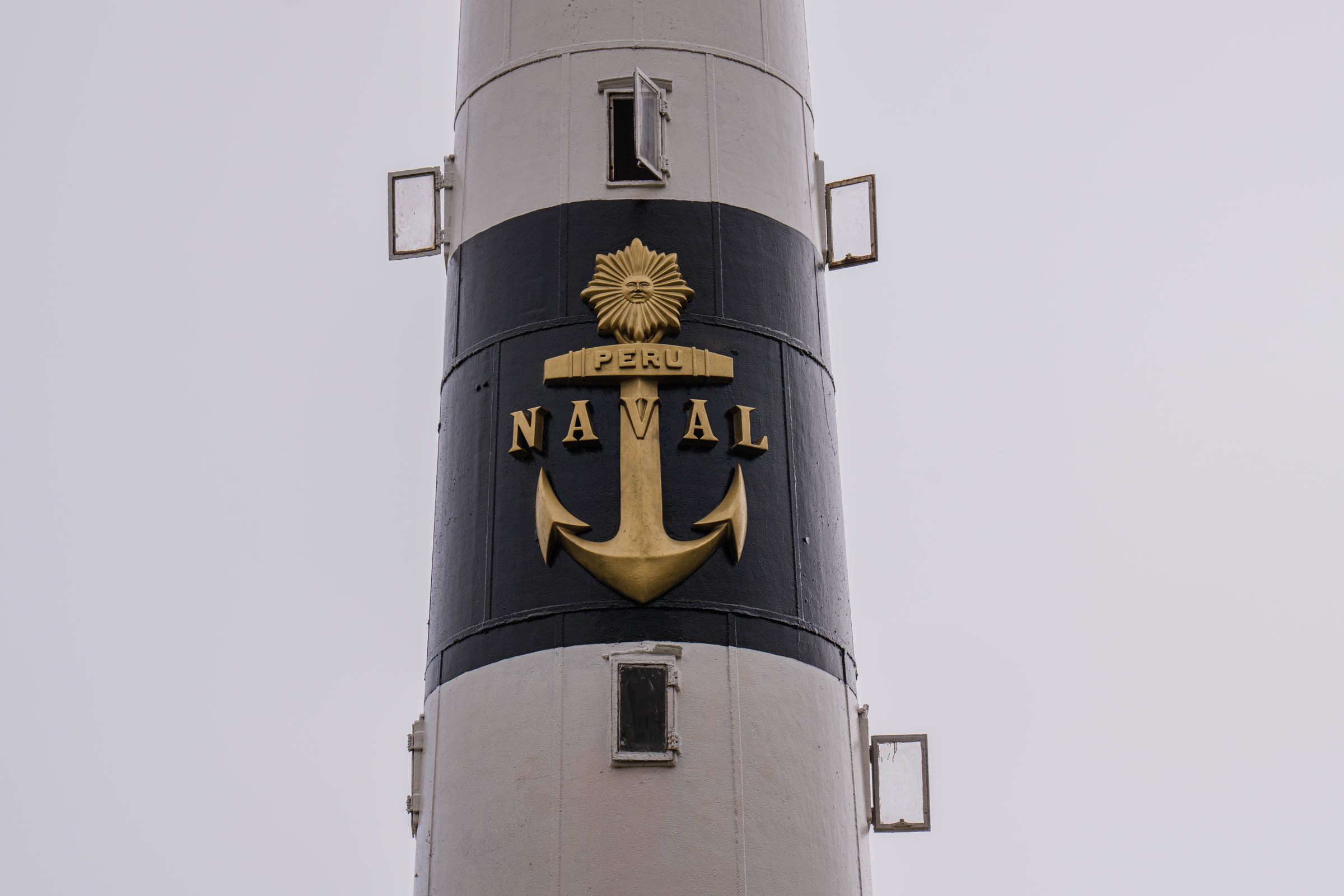
High on the cliff, where Miraflores meets the endless Pacific, stands El Faro de la Marina, the lighthouse of the Navy. Its story is surprising: it began in 1900 at Punta Coles, south of the port of Ilo, in the Moquegua region, and the lighthouse first entered service there on February 24, 1921. Then, in December 1973, the Directorate of Hydrography and Navigation of the Peruvian Navy dismantled it there and rebuilt it in Miraflores.
The lighthouse is 22 meters tall, and it is painted navy blue with two white bands. It is still active: from a focal height of 108 meters above sea level, its light reaches 18 nautical miles, about 33 kilometers, with three white flashes every fifteen seconds. Today, it stands in the Parque el Faro, which celebrates a century of Peruvian navigation. For travelers looking for a peaceful yet inspiring place, it is the perfect start or end to the day.
LARCOMAR, SHOPPING ABOVE THE PACIFIC
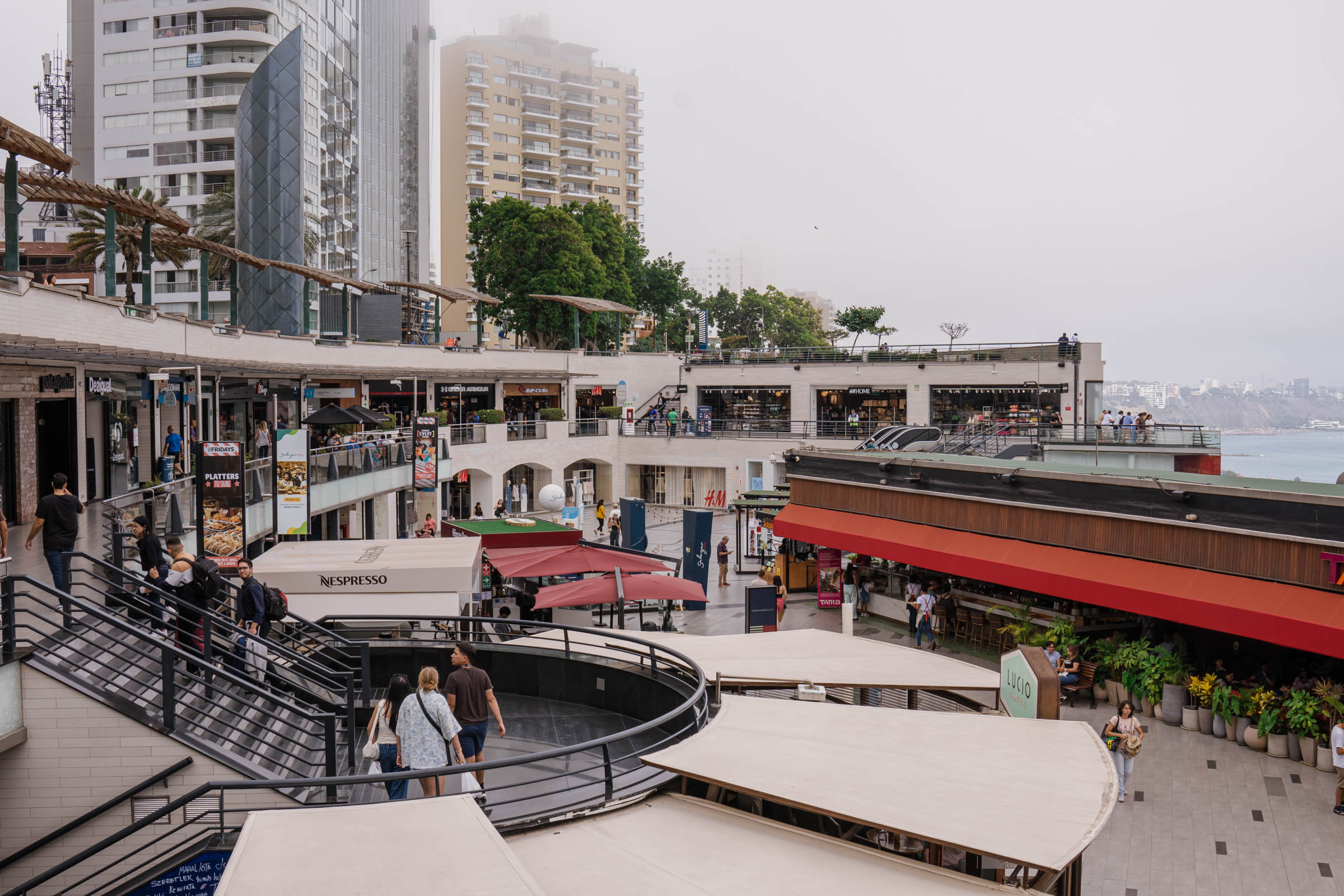
If you are a big fan of shopping, gastronomy and designer brands like me, then you must not miss Larcomar. This shopping center lies in the Alfredo Salazar Park, at the intersection of José Larco Avenue and the Malecón de la Reserva, in Miraflores. Its architect, Eduardo Figari Gold, inaugurated it on November 27, 1998.
As of 2019, it had 114 stores, and it also has a cinema. Interestingly, since 2010 it has belonged to the Chilean company Parque Arauco, the same group behind the luxury mall I showed you in Santiago.
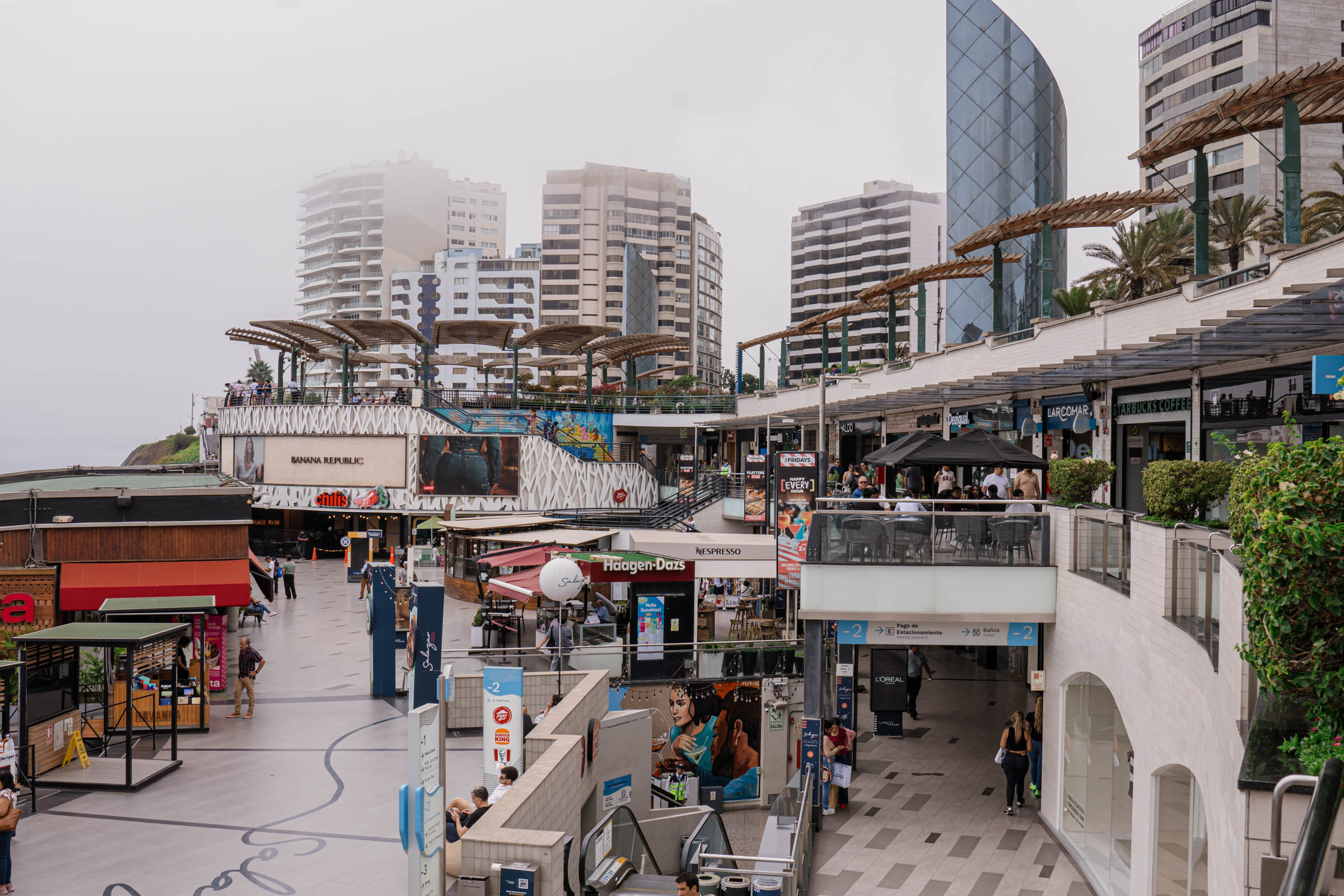
Larcomar is the ideal place to spend an afternoon when you want to combine shopping, a coffee or a pisco sour, and a view of the ocean in one place.
KENNEDY PARK, THE HEART OF MIRAFLORES
In the very center of Miraflores lies the Miraflores Central Park, better known as Kennedy Park. It covers 22,000 square meters, and it consists of two parts: John F. Kennedy Park and 7 June Park. In the park, you will also find a bust of Kennedy, inaugurated on November 21, 2003.
The park is also famous for its cats. In 1990, the municipality of Miraflores brought them to the park to deal with a rat problem. After that, the cats simply stayed. In 2019, the Peruvian news agency Andina reported that more than a hundred cats lived in the park. That is why locals also call it the Cat Park.
BARRANCO, THE BOHEMIAN SOUL OF LIMA
When you want to escape from the hustle and bustle of the metropolis, Barranco is the ideal place for you. This seaside district borders Miraflores to the north and Chorrillos to the south. It is known as a bohemian and artistic center, home to many of Peru’s leading artists, musicians, designers and photographers. In the 19th century, Barranco was a fashionable beach resort for the upper class of Lima. The district also has close ties to Chabuca Granda, the poet Martín Adán and Mario Vargas Llosa. Moreover, its municipal library, the Biblioteca Municipal Manuel Beingolea, opened in 1922 in the Municipal Park.
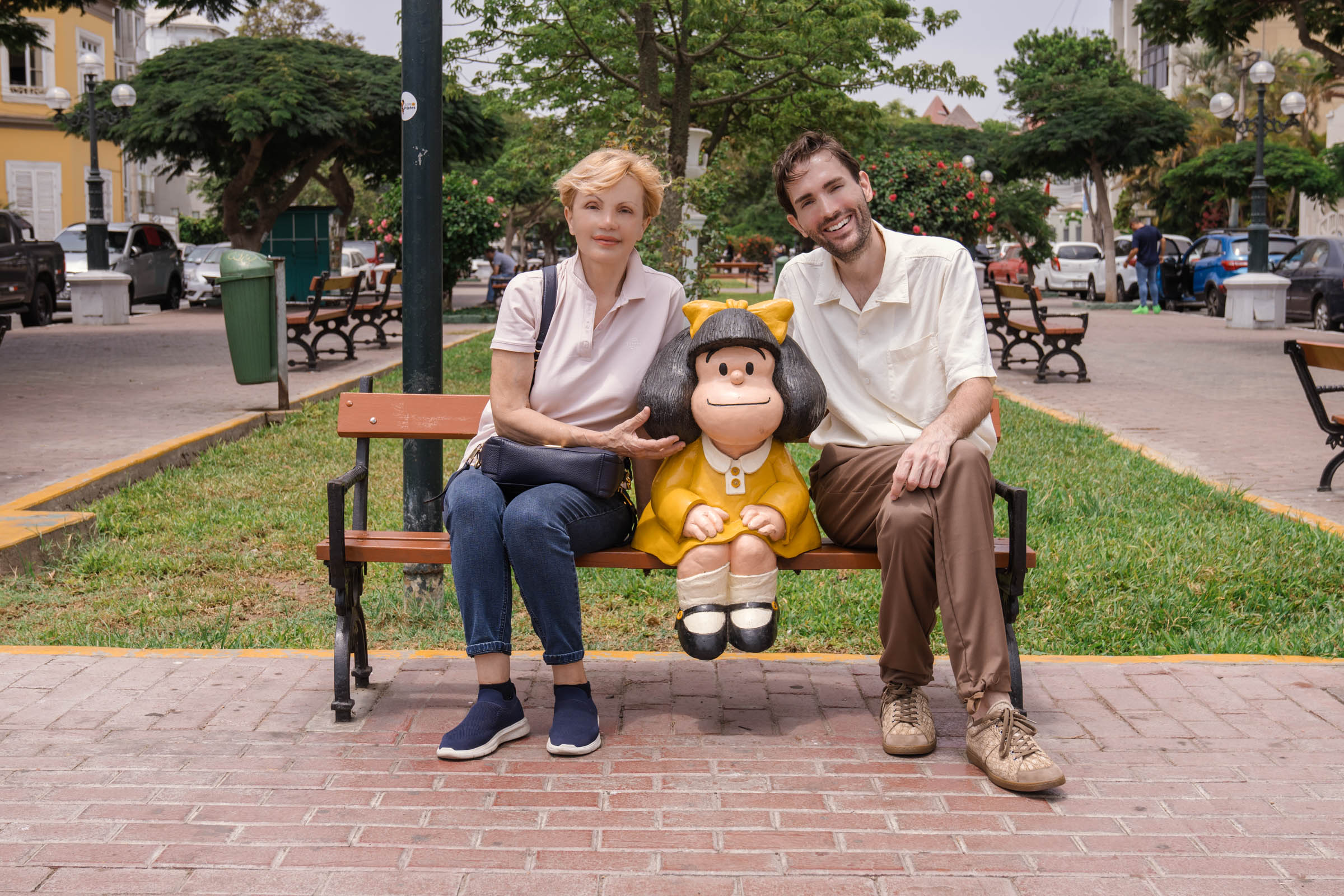
On the Boulevard Sáenz Peña in Barranco, you will find a bench with a famous little girl. It is a statue of Mafalda, the character created by the Argentine cartoonist Quino. The small fiberglass figure wears a yellow dress and a yellow bow. The Argentine sculptor Pablo Irrgang created it, and it arrived here in September 2023, as a gift from the Embassy of Argentina.
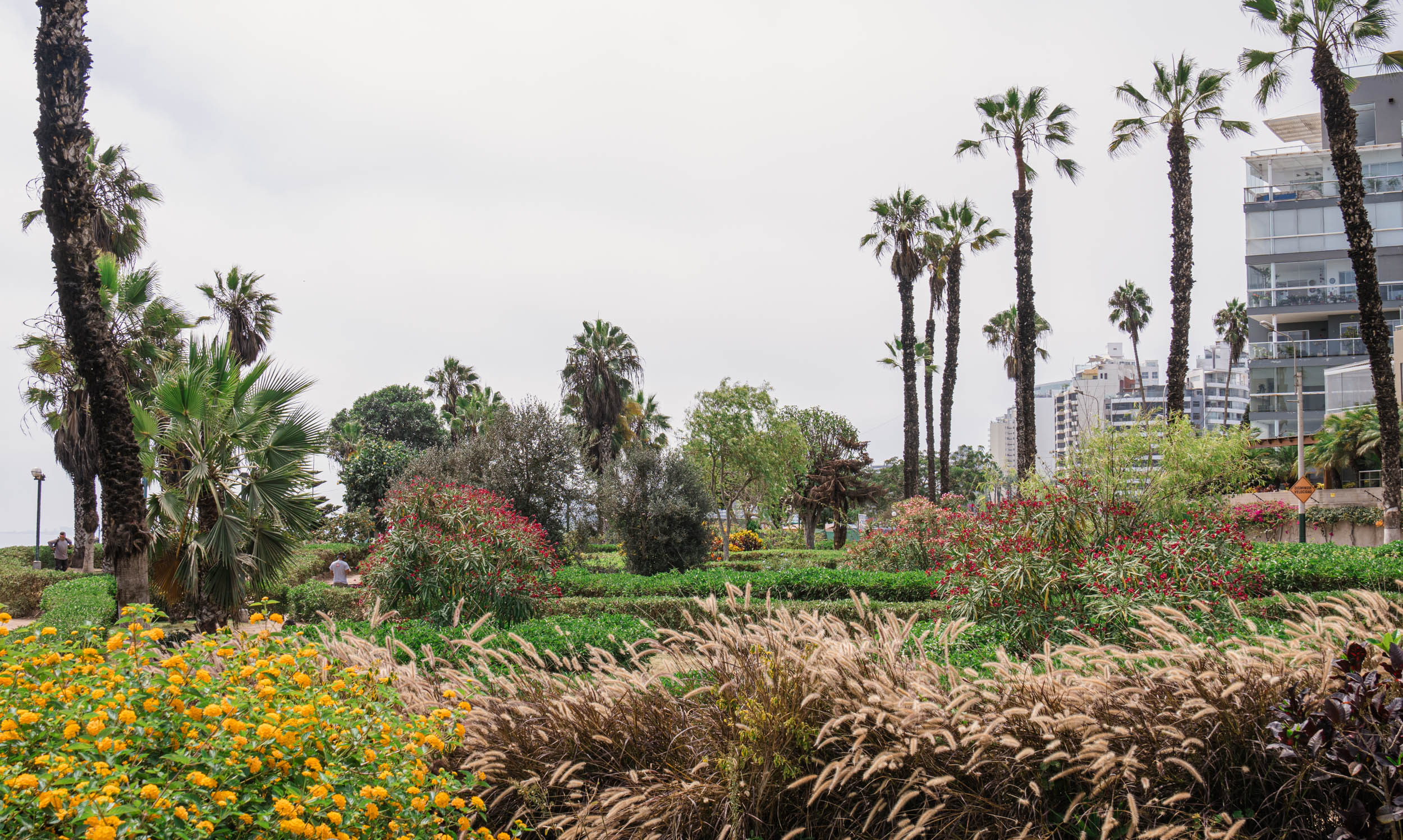
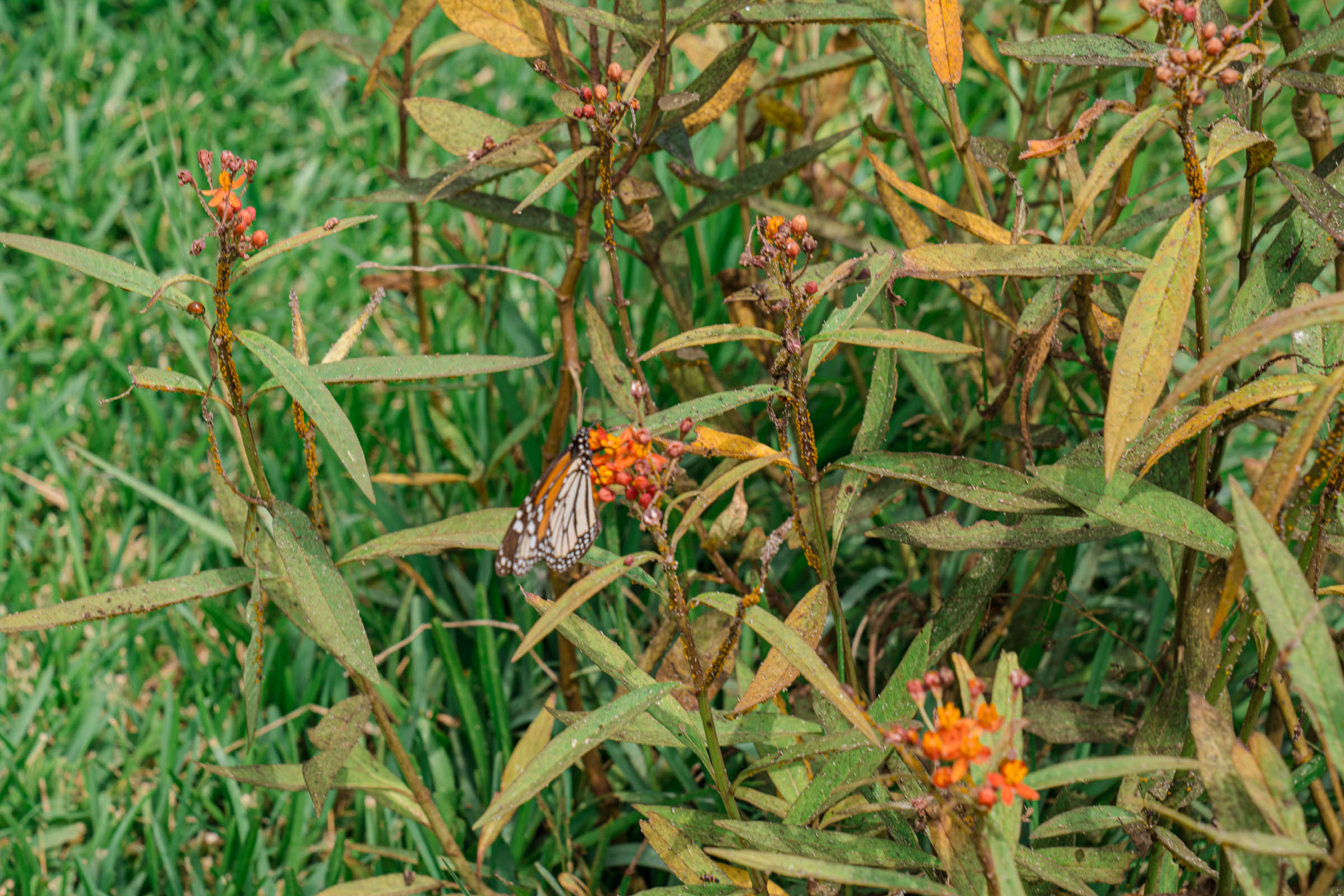
Barranco is also full of gardens and green corners, perfect for a short break during your walk.
PUENTE DE LOS SUSPIROS IN BARRANCO
The most famous landmark of Barranco is the Puente de los Suspiros, the Bridge of Sighs. It was inaugurated on February 14, 1876, during the time of mayor Francisco García Monterroso. The wooden bridge was 44 meters long, 3 meters wide, and it crossed a ravine 8.5 meters deep. During the War of the Pacific, in 1881, Chilean troops destroyed it, and later the district rebuilt it. In 2014, a full restoration reinforced it with huayruro wood and added LED lighting.
According to a local legend, if you make a wish and hold your breath while crossing the bridge, your wish will come true. In 1960, the singer Chabuca Granda dedicated the Peruvian waltz “El puente de los suspiros” to it. In 1968, she included it on her album Voz y vena de Chabuca Granda.
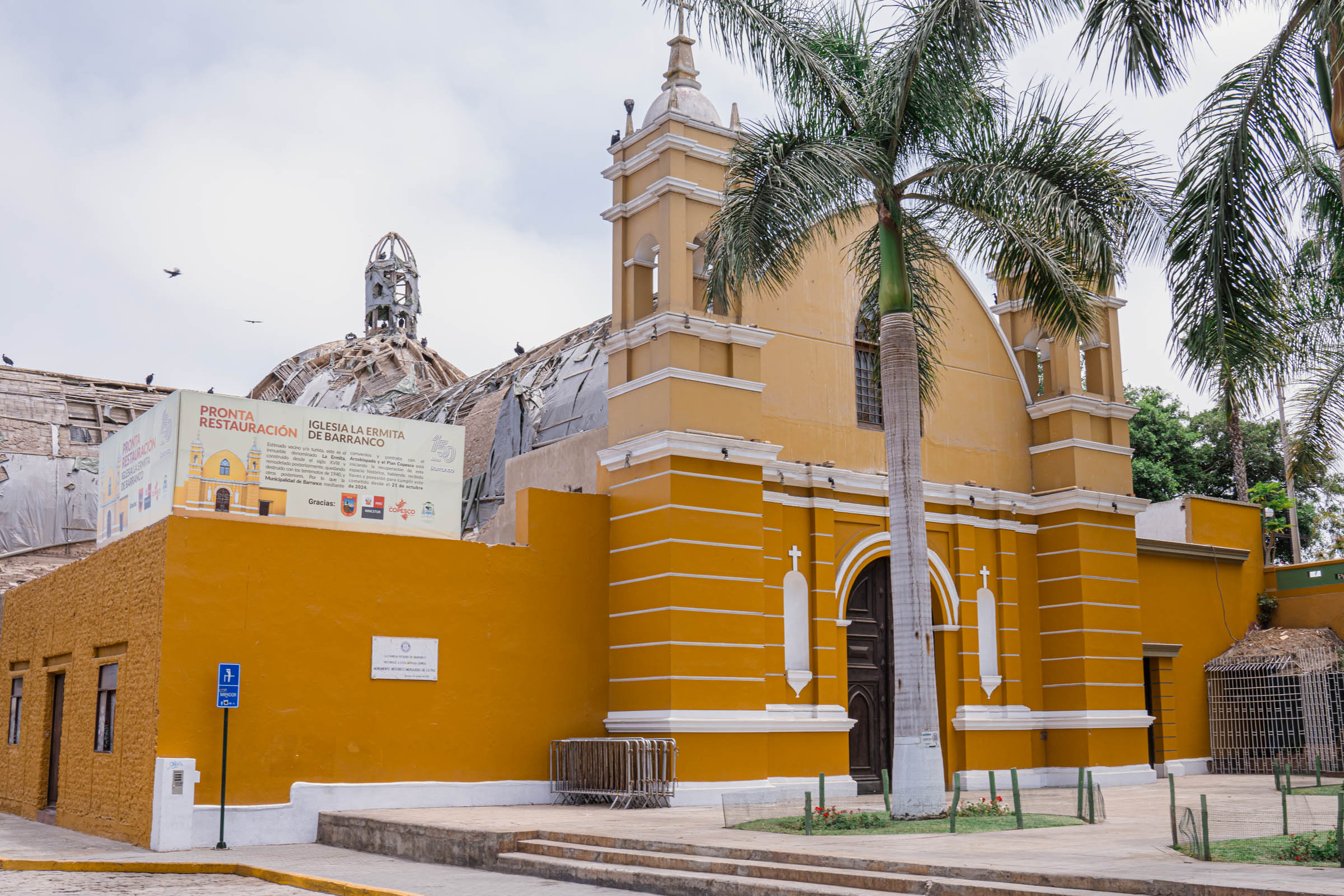
At one end of the bridge stands La Ermita, the hermitage of Barranco. It was once the capital of the district, but it has been closed since an earthquake damaged it in 1974.
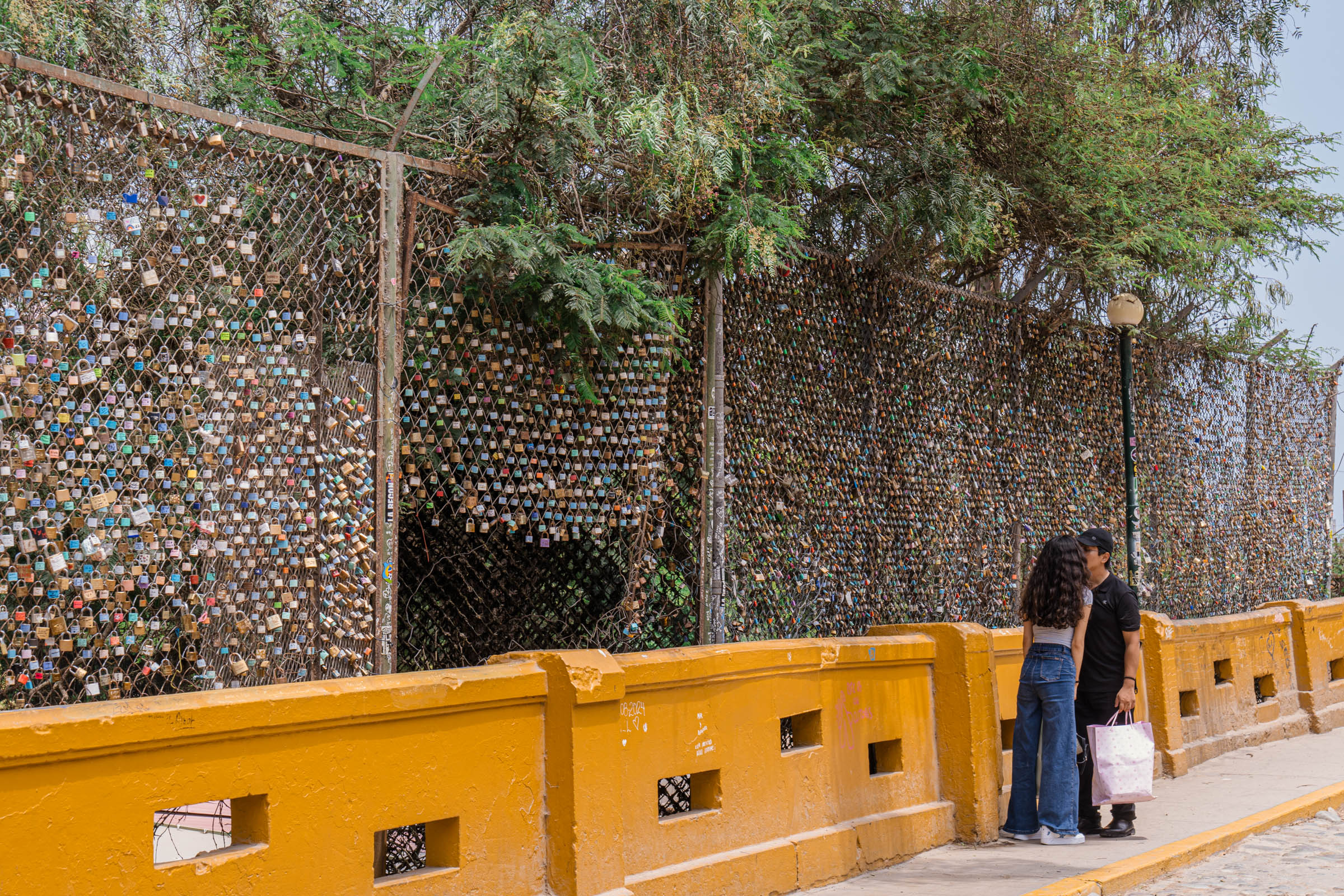
BAJADA DE LOS BAÑOS AND STREET ART IN BARRANCO
Below the bridge runs the Bajada de los Baños, a pedestrian promenade that links the center of Barranco to a footpath down to the beach. In the past, fishermen used this path on their daily way down to the sea. Today, it is full of cafés, restaurants and colorful murals.
Barranco is also known for its museums. The Museo de Arte Contemporáneo de Lima (MAC Lima) is a non-profit contemporary art museum on Avenida Grau. In addition, the Museo Pedro de Osma, in the former residence of Pedro and Angélica de Osma Gildemeister, shows a collection from the Viceroyalty period.
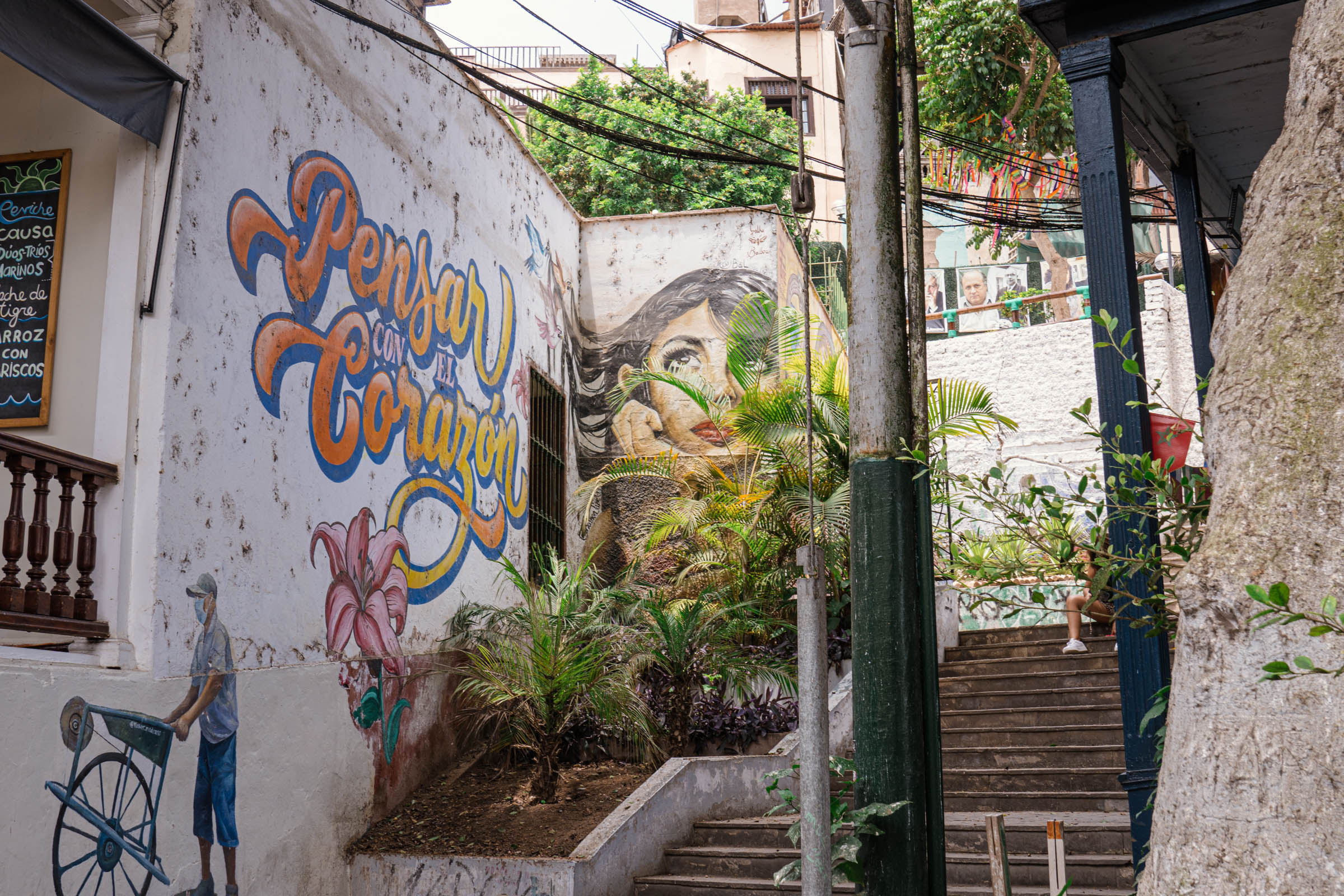
Walking through the streets of Barranco, you cannot miss the street art. Colorful murals cover the walls, and they reflect the creativity of local artists. Thanks to them, Barranco feels like an open-air gallery.
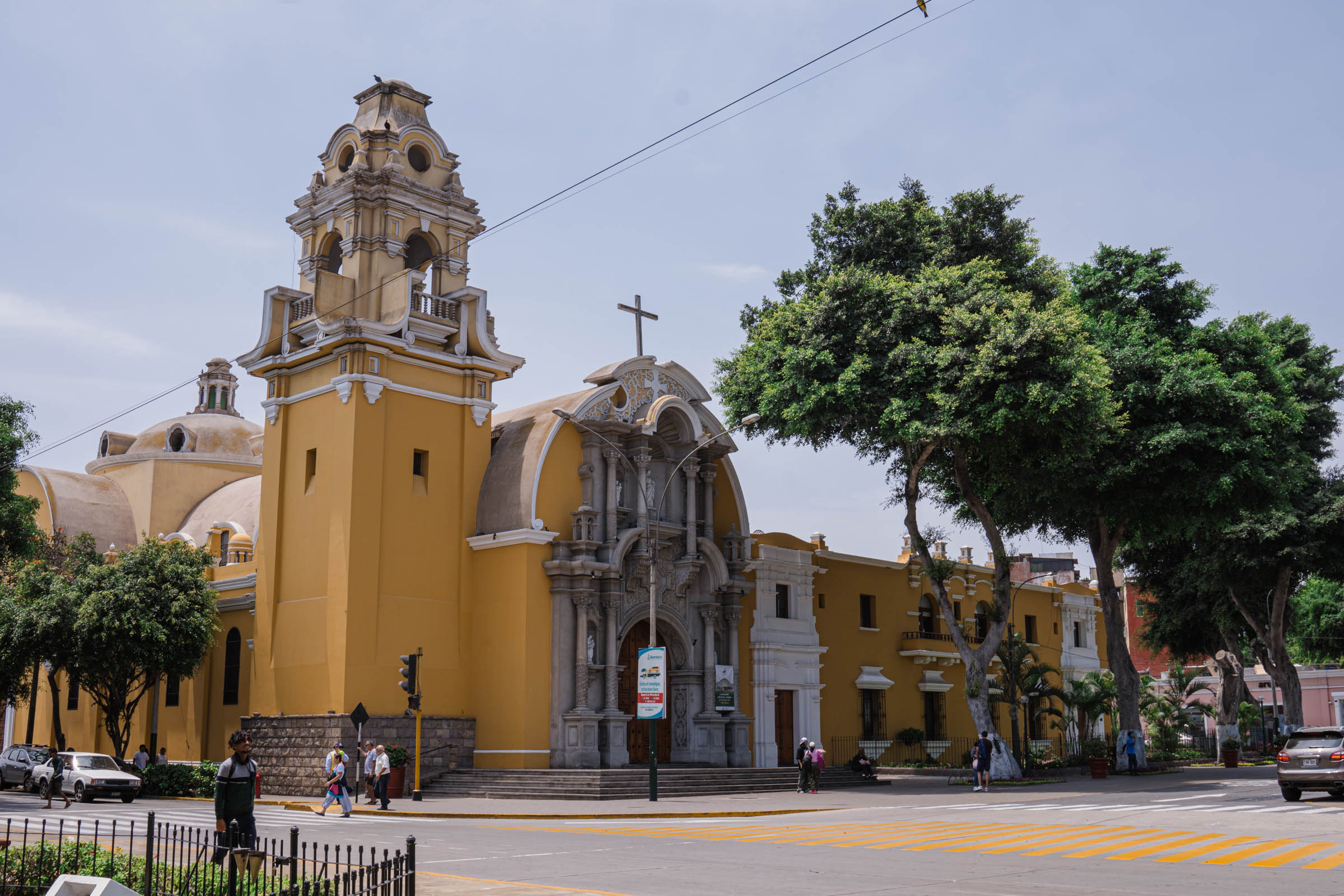
The yellow church with a tall tower is the Parroquia La Santísima Cruz. The parish church rose after the earthquake damaged La Ermita, and its consecration took place in 1963. Nearby, in 1992, the district dedicated the Parque Chabuca Granda, with a monument to the singer.
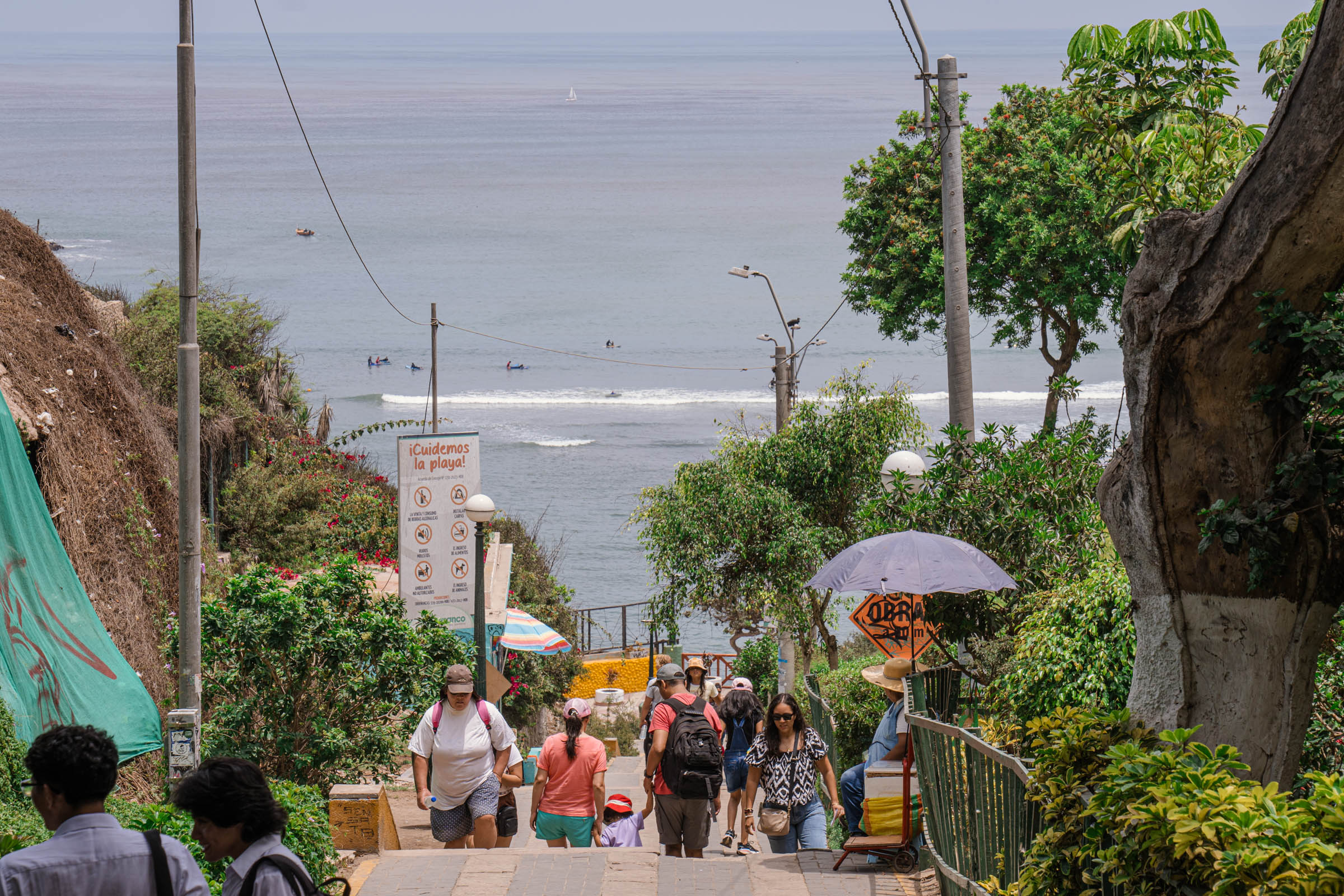
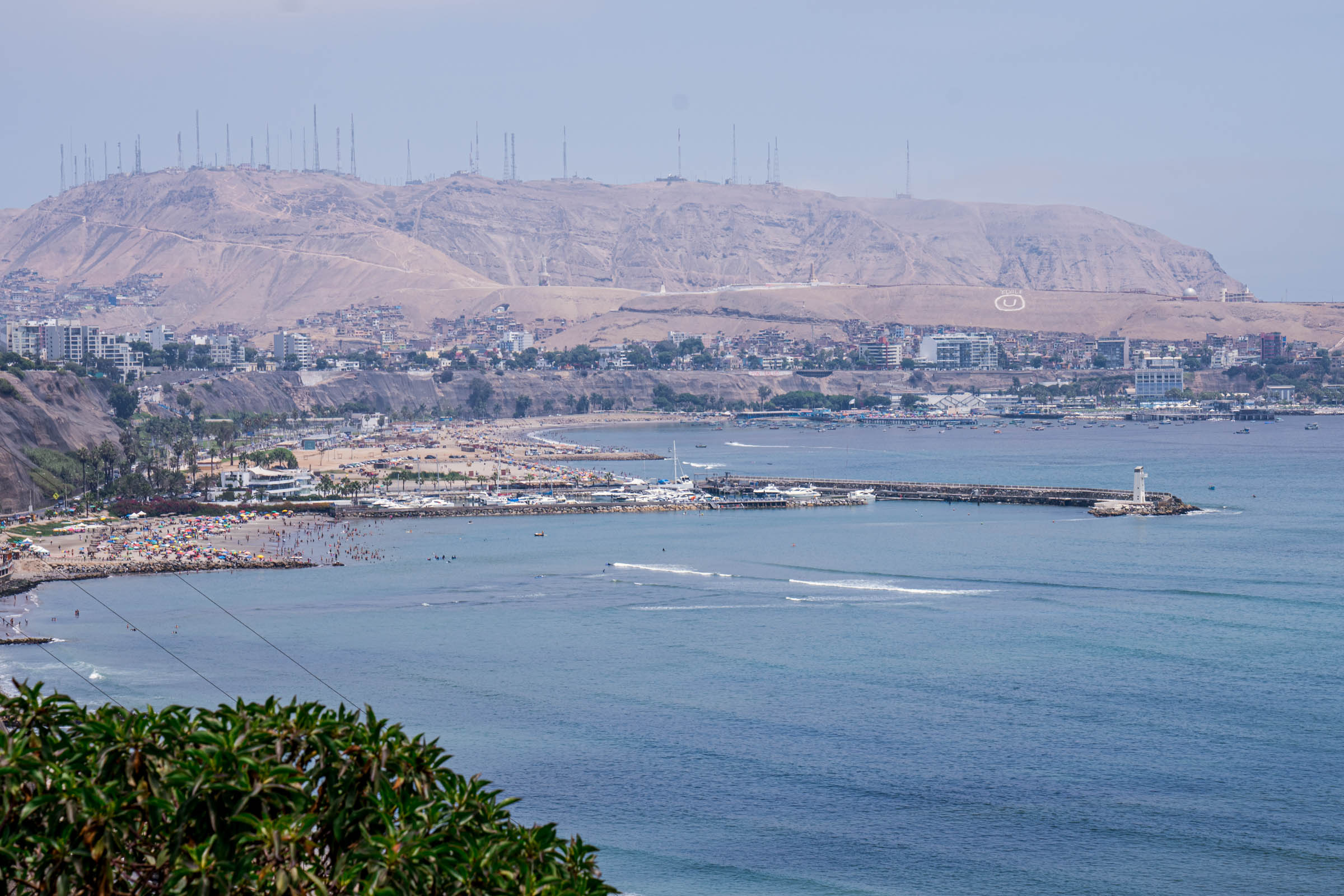
From the cliffs of Barranco, the view opens over the bay of Lima, the beaches and the endless Pacific.
CASA O’HIGGINS IN THE HEART OF LIMA
At Jirón de la Unión 554, a few meters from the Plaza Mayor, stands the Casa O’Higgins. It is a Spanish colonial building with two floors.
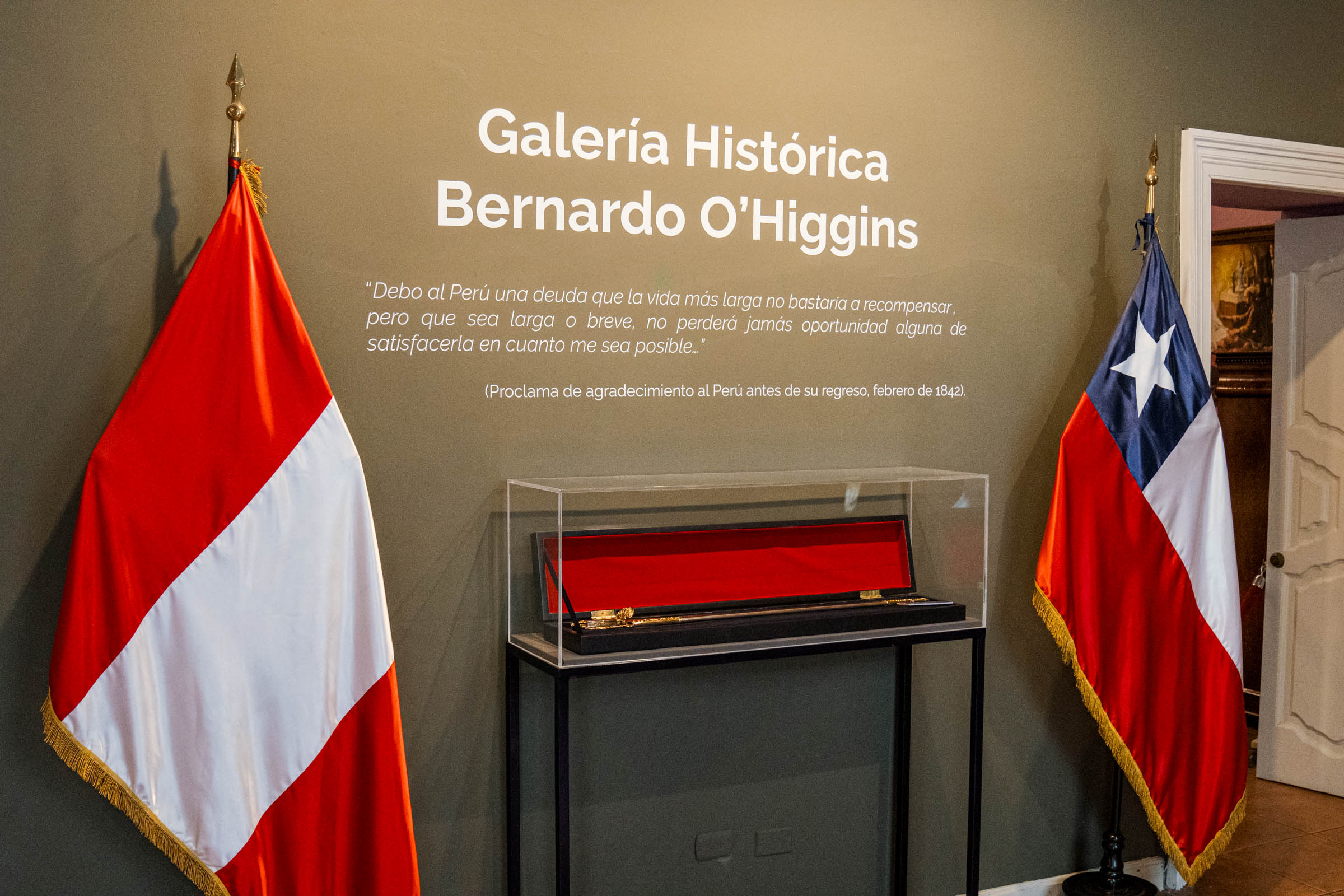
Bernardo O’Higgins was a key figure in the independence of Chile, and he became the first Supreme Director of independent Chile. He spent part of his youth in this house. Later, after he abdicated as Supreme Director in 1823, he lived here in exile in Peru.
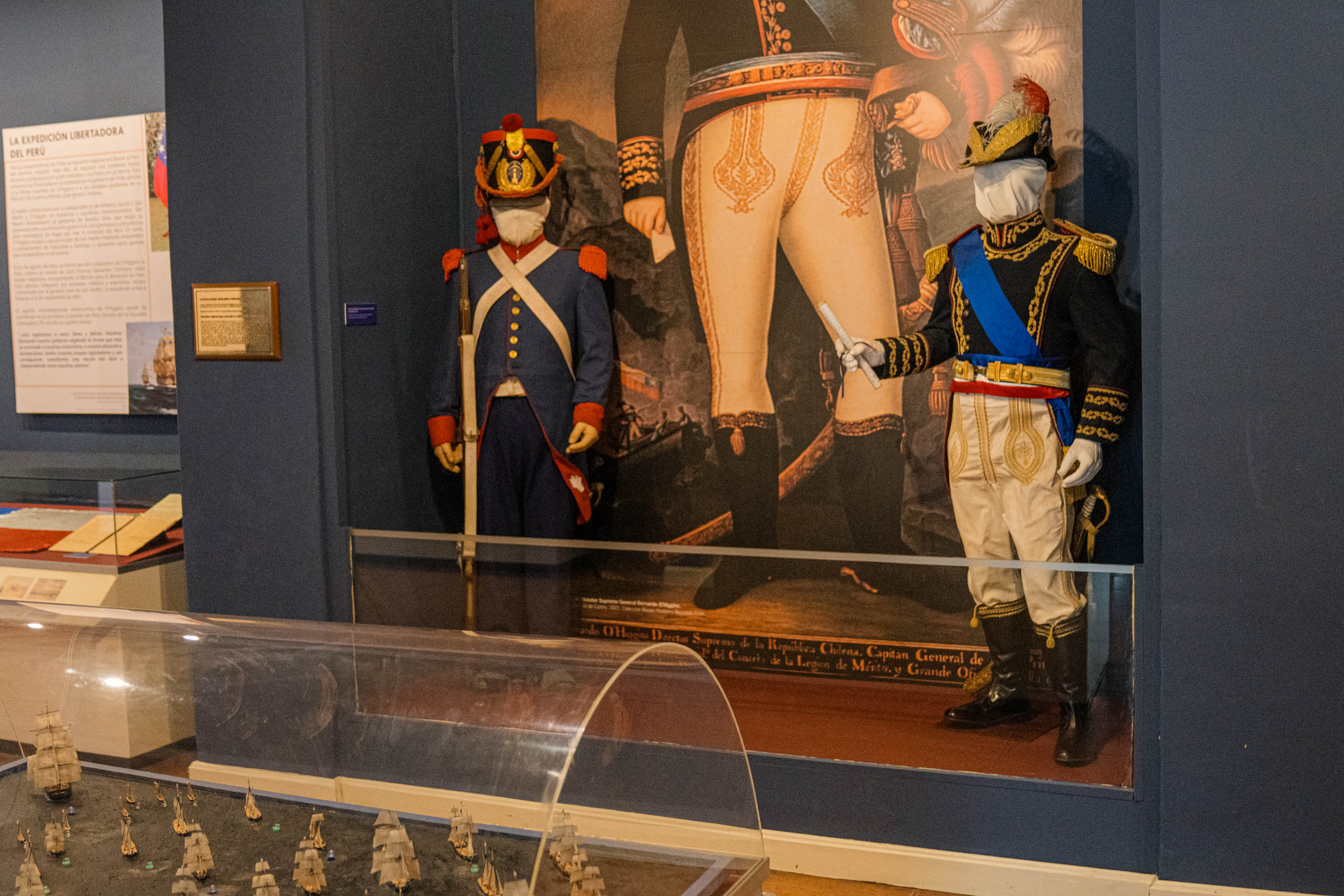
Over the years, the house had many uses. The National Club used its second floor from 1892 to 1895, the International Bank of Peru moved in from 1897, and in the 1920s it housed the Astoria restaurant. The Chilean Army funded its restoration first, and later the Chilean government contributed as well.
Since 2008, the house has worked as a cultural center of the Pontifical Catholic University of Peru (PUCP) and as a permanent space dedicated to the memory of O’Higgins. The Riva-Agüero Institute of the PUCP manages it. Inside, the Galería Histórica Bernardo O’Higgins presents his story, next to the flags of Peru and Chile. The house also hosts exhibitions, so you can always discover something new.
SWISSÔTEL LIMA IN SAN ISIDRO
If you are traveling to Lima for business, tourism or transit, and you are looking for a place that combines Swiss precision with Peruvian warmth, Swissôtel Lima could be just what you need. This five-star hotel stands at Vía Central 150, in the Centro Empresarial Real of San Isidro, Lima’s business and residential district.
San Isidro is known for its green boulevards, elegant buildings, embassies, fine restaurants and boutiques. From the hotel, the pre-Columbian adobe pyramid of Huaca Huallamarca is just a three-minute walk away. The green Olivar Park is about five minutes on foot, while the Lima Golf Club is about nine minutes away. Miraflores is a short drive away.
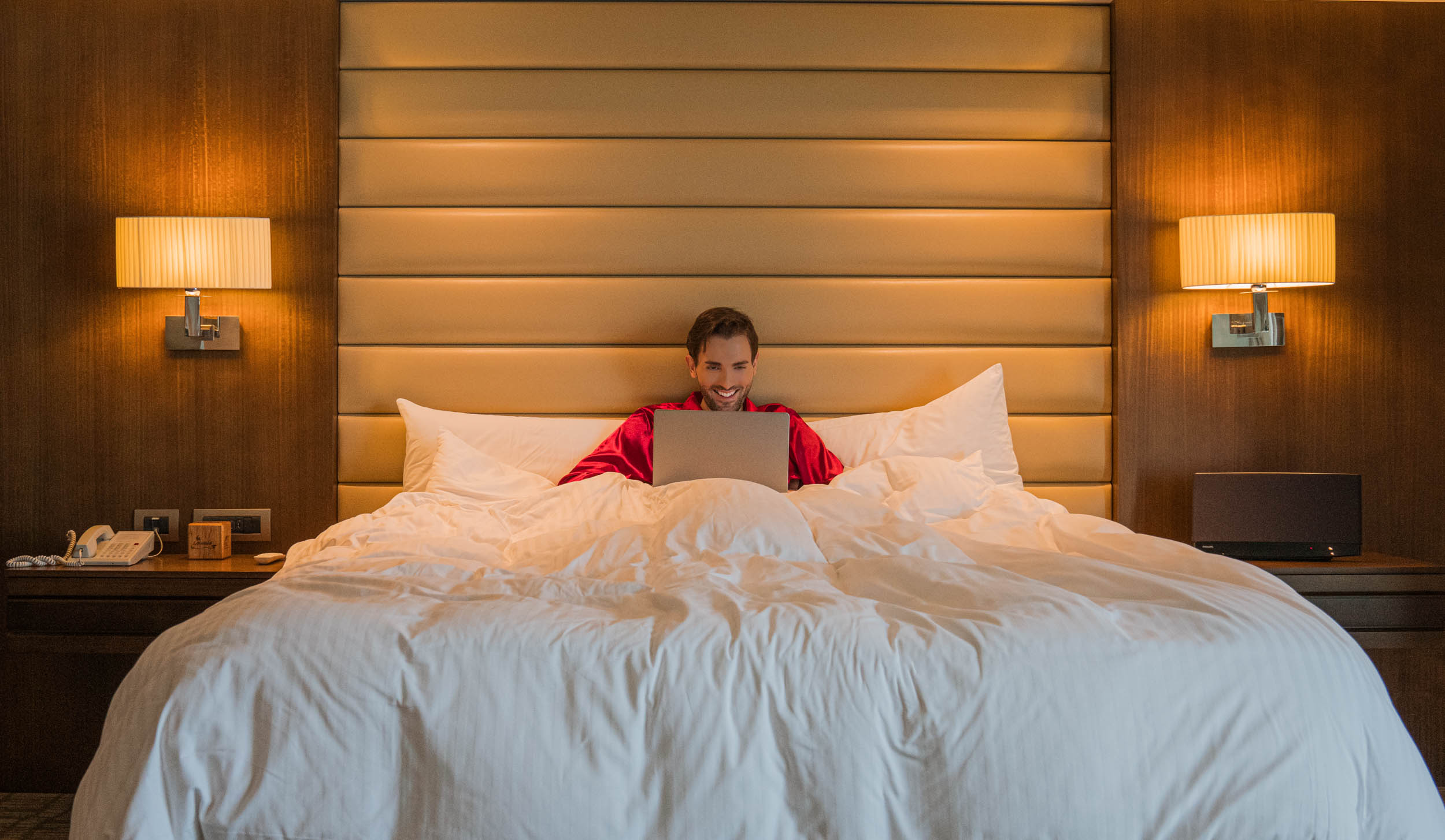
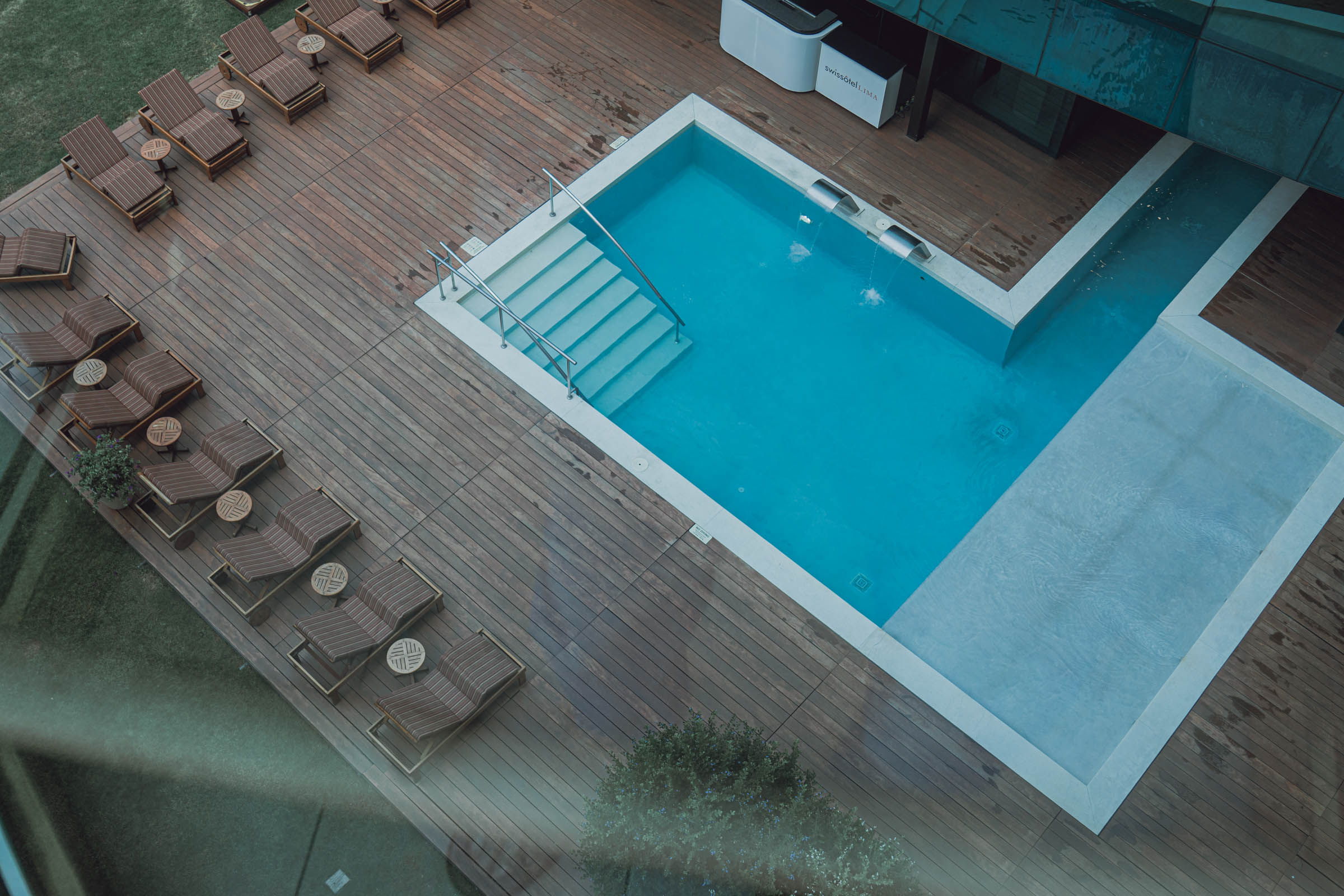
The hotel has 345 rooms and suites across 18 floors. Executive rooms offer access to the Presidential Club on the 16th floor. Moreover, the hotel has 12 meeting and function rooms, an indoor and an outdoor pool, a spa and several restaurants, including La Fondue, with traditional Swiss winter dishes.

The rooms are spacious, with minibars, espresso machines, LCD TVs and large windows, so you can easily work or rest after a long day in the city.
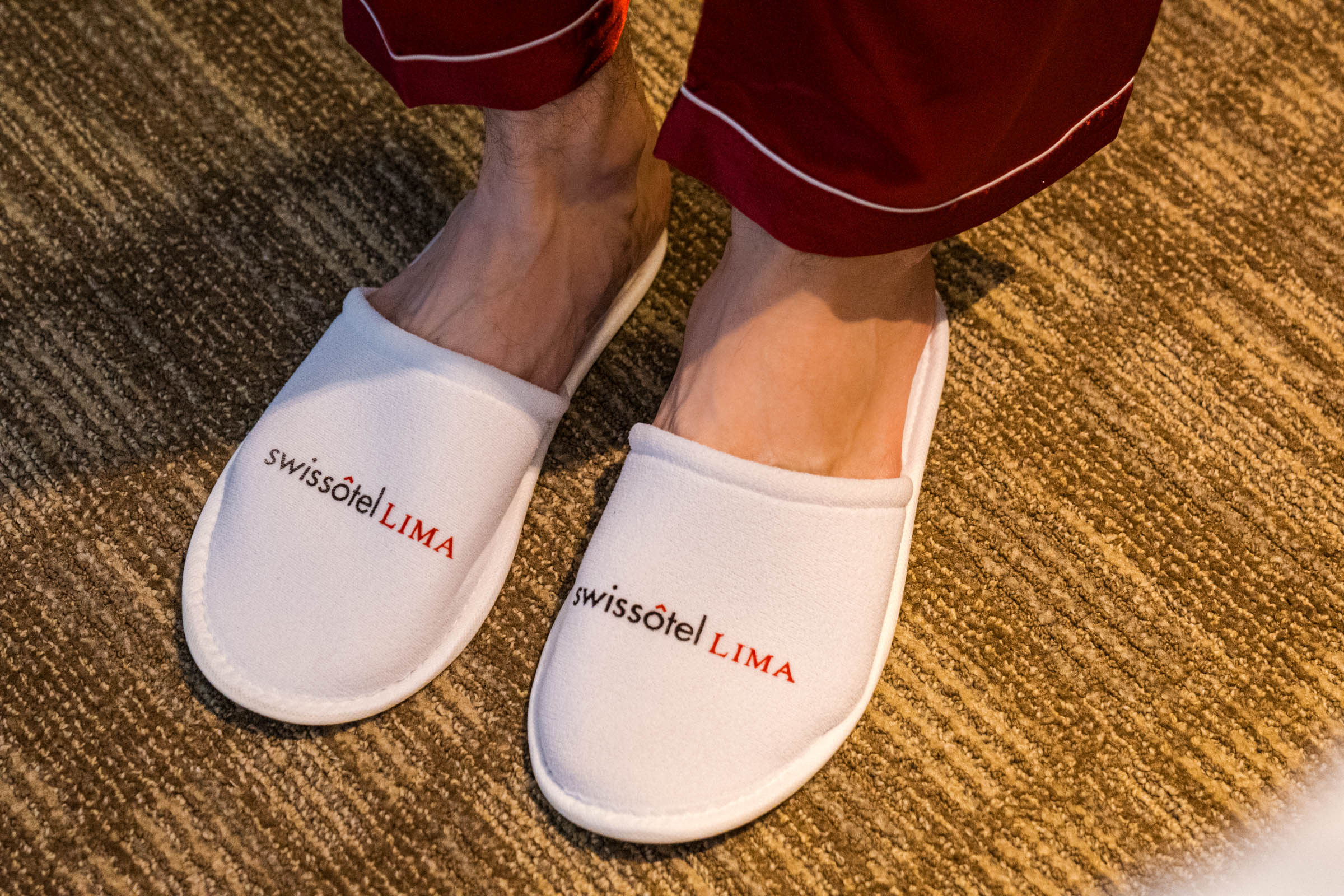
Is it worth staying at Swissôtel Lima? If you are looking for comfort, safety, professionalism and an extra dose of luxury in Lima, my answer is absolutely yes. The combination of international standards, local charm and exceptional service makes this hotel a true pearl in the heart of Lima.
A LAST WALK THROUGH HISTORIC LIMA
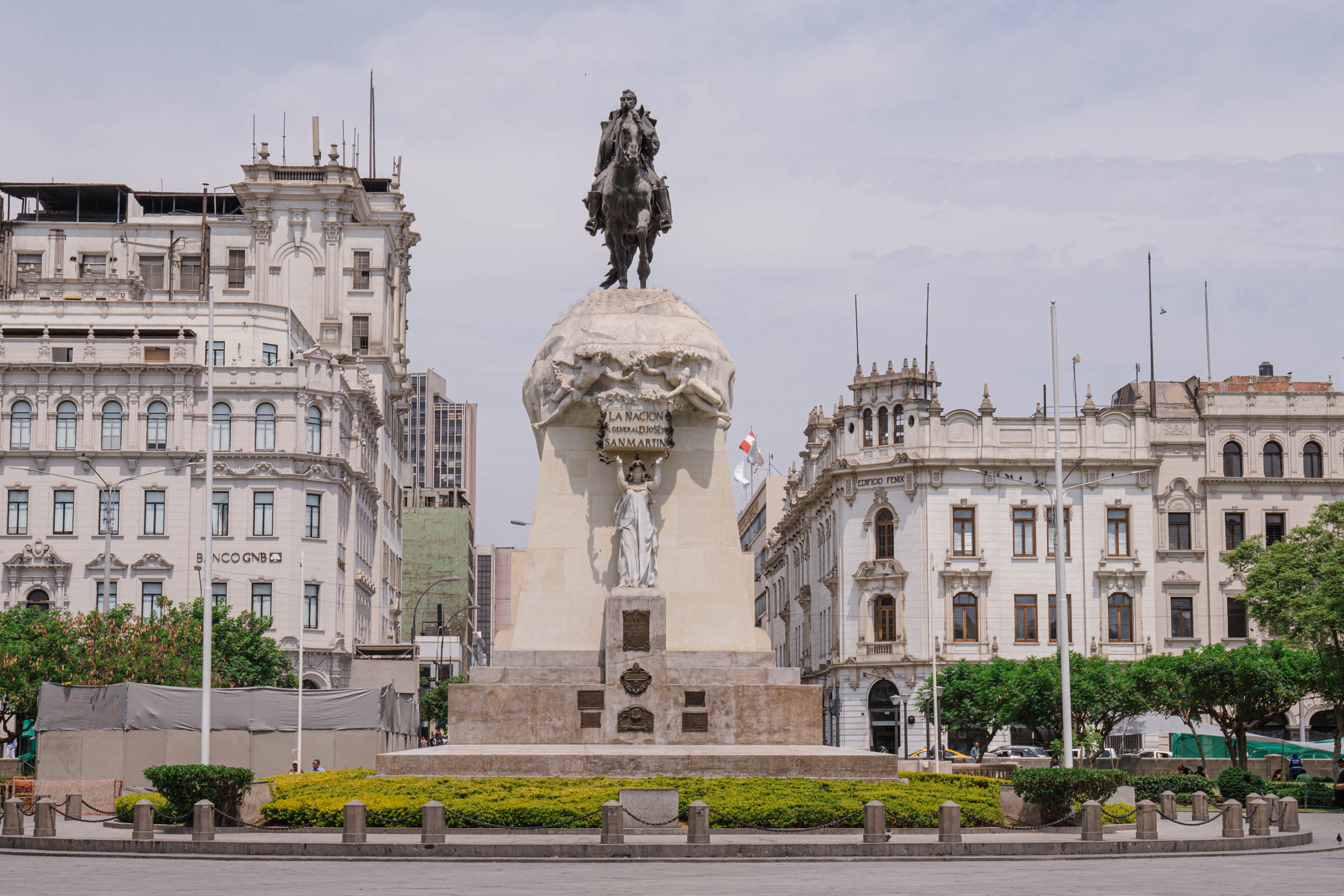
Before I say goodbye, let me take you back to the historic center. The Plaza San Martín opened on July 27, 1921, for the 100th anniversary of Peru’s independence. Today, the square is part of the Historic Centre of Lima. The architect Manuel Piqueras Cotolí designed it, while the Spanish sculptor Mariano Benlliure won the contest for its central monument. It shows José de San Martín crossing the Andes. The Teatro Colón and the Giacoletti building already stood here before the square, and the other buildings around it followed later.
On Jirón Conde de Superunda stands the Casa de Osambela, also known as the Casa de Oquendo. The merchant, banker and ship owner Martín de Osambela built it as his family residence at the beginning of the 19th century. It stands on the site of the old novitiate of the Dominican fathers. Its facade has five Louis XVI-style balconies, and its mirador allowed its first owner to watch the ships sailing into the harbor. Today, it is the headquarters of the Peruvian Academy of Language.
SAYING GOODBYE TO LIMA
My dear travelers, we have come to the end of this special travelogue from Peru. Together, we discovered Lima, its colonial heart, its churches, its elegant Miraflores and its bohemian Barranco.
This travelogue would not have been possible without the selfless help of my partners. I am also grateful to the local people who allowed me to feel the spirit of everyday life in Lima. Of course, as always, I tried my best to convey to you my impressions of this unusual experience from Peru.
A person is rich in soul if he has managed to explore the world. That is why I am glad to always find partners who help me discover new and unusual destinations.
Once again, I would like to thank UN Tourism, PROMPERÚ, the Ministry of Foreign Trade and Tourism of Peru and Swissôtel Lima for this incredible adventure. Thank you for allowing me to feel the beauty of Peruvian culture in a completely different way.
Have you ever visited Lima, or is Peru still on your travel wish list?
Feel free to leave your impressions, comments or questions below, or contact me by email and on social networks. All information is on the CONTACT page.
With love from Lima,
Mr.M
This post is sponsored by United Nations World Tourism Organization (UN Tourism), the Commission for Trade, Tourism and Investments of Peru (PROMPERU), the Ministry of Foreign Trade and Tourism of Peru, the Swissotel Lima Hotel and other local partners. This post is my personal and honest review of the destination experience.
The travelogue is as wonderful as any previous one you have written in the series of blog posts from South America. Each previous travelogue had its charm, but since I’ve been dreaming of visiting Peru for a long time, I have to tell you that I’m overjoyed that you finally started a series of posts from Peru.
Lima is a metropolis that forms the true heart of South America and Peru as well. This city has been on my bucket list for a long time, but there is no way I have more vacation days to be able to do a similar tour of South America like yours. You are really lucky to work with good sponsors to have such luxurious and comfortable trips.
Dear Marko, I really loved how your post captures Lima’s spirit as the gateway to the Andes. I spent a week wandering Barranco’s colorful streets before heading to Cusco, and your descriptions brought back that magical feeling. The way you describe the ocean breeze carrying ancestral whispers reminded me of my sunrise hike to Machu Picchu. In Buenos Aires I never felt such an ancient‑modern fusion in one city. Your recommendations for local ceviche spots are on point, I can almost taste the lime and chili. Thanks for taking me back to Peru!
Amazing travelogue Marko, I am really impressed! Your vivid storytelling of Lima made me feel like I was strolling along the Malecón again. I first discovered the city during a stopover en route to Quito, but your post convinced me to return for a longer adventure. Comparing the colonial charm of Arequipa’s white stone houses to Lima’s urban grit is spot on. I also appreciated the nod to Peru’s street art scene, one of my favorite finds in Miraflores. The echo of Inca history in every plaza is something you can’t capture anywhere else. Looking forward to exploring more off‑the‑beaten‑path treasures.
Reading this made me nostalgic for my trip to Lima last spring. I stayed in the historic center, and your account of Plaza de Armas resonated deeply. Later, I ventured to Lake Titicaca in Puno, and the cultural richness there rivaled anything I saw in Lima. Your mention of wind‑swept ruins in Pachacamac brought back memories of that afternoon exploring ancient temples. It’s clear you’ve felt the city’s pulse and ancestral legacy. Bravo for an inspiring read!
Bellissimo post che celebra Lima come porta delle Ande! Io ho trascorso tre giorni nella capitale peruviana prima di proseguire verso Machu Picchu e ho amato ogni angolo della città vecchia. Il mix di architettura coloniale e murales contemporanei è unico. La tua descrizione della Plaza San Martín mi ha fatto rivivere quel senso di meraviglia. Bellissimo anche il riferimento ai ritmi della musica criolla che si sentono nei vicoli. Grazie per questa pennellata di cultura e storia!
Me ha encantado tu manera de narrar cómo el viento trae susurros ancestrales. Yo visité Lima y luego crucé a Ecuador, pasando por Quito y Guayaquil, pero la capital peruana sigue siendo mi favorita. Tu detalle sobre los cafés de estilo bohemio en Barranco está en mi lista de imprescindibles. Además, la referencia al Museo Larco es perfecta para quienes buscan arte y arqueología. Gracias por compartir esta joya de viaje.
This post is pure travel gold. Lima always surprised me with hidden courtyards in San Isidro and impromptu folk music in the streets of Lince. Your portrayal of the city as the “gate of the Andes” perfectly captures its dynamic energy. I’ve compared it to Medellín’s transformation, but Lima has an unparalleled historical depth. Thanks for highlighting local artisans and their weaving traditions. I’ll reference your guide on my next Peru itinerary!
Dear Marko, I hope that you’re doing great! I’ve traveled extensively across South America from Rio de Janeiro to Santiago, but Lima holds a special place in my heart. Your evocative language about Andean breezes made me recall those early‑morning market visits in Chorrillos. The way you weave history into modern urban life reminded me of Bogotá’s La Candelaria district. Yet Lima’s coastal setting adds a unique dimension. Thank you for showcasing both its grandeur and everyday warmth. Already bookmarking this for my return trip!
Lima ist wirklich eine Stadt der Gegensätze, was du hervorragend beschreibst. Ich habe sowohl im Swissôtel als auch in einem kleinen Boutique‑Hotel in Pueblo Libre übernachtet und weiß, wovon du sprichst. Die Kombination aus kolonialer Architektur und kosmopolitischem Flair ist einmalig. Deine Tipps für Tagesausflüge in die Wüstenoase Huacachina fand ich sehr hilfreich. Danke für diesen rundum gelungenen Artikel!
Il tuo articolo su Lima è un’opera d’arte narrativa! Ho visitato la città durante un tour in Perù e la tua descrizione del quartiere di Miraflores è esattamente com’era, tra caffè chic e sculture moderniste. L’idea del vento che trasporta i sussurri degli antenati mi ha riportato alle mie passeggiate serali sul Malecon. Tra le tue raccomandazioni, il Mercado de Surquillo è quella che ho preferito: colori, sapori e profumi straordinari. Dopo Lima, sono stato ad Arequipa e Puno, ma nessuna città mi ha emozionato come la capitale. Complimenti per questa guida così intensa e coinvolgente!
Grazie per questa splendida immersione nella vita della città di Lima. Ho viaggiato anche a Medellín e Città del Messico, ma il fascino di Lima è indimenticabile. Il tuo racconto dell’Antiguo Barrio Chino mi ha fatto venire voglia di un vero ristorante cinese‑peruviano! La città che fonda tradizione Inca e modernità cosmopolita è davvero rara. Apprezzo anche i dettagli pratici sui migliori rooftop per ammirare il tramonto sul Pacifico. Aspetto il tuo prossimo itinerario in Sud America!
Bonjour Marko, je voudrais tout d’abord saluer votre style d’écriture et la façon dont vous avez dépeint Lima. Ton récit de Lima m’a transporté comme si j’y étais, assis sur le Malecón à contempler l’océan. J’ai visité la ville en 2019 avant de poursuivre vers Bogota, et j’ai été frappé par l’alliance du patrimoine colonial et de la modernité. Ton évocation des brises andines qui murmurent des histoires m’a rappelé mes promenades matinales dans le quartier de Barranco. J’ai également aimé ta sélection de restaurants pour déguster le meilleur ceviche. Après Lima, j’ai exploré Mendoza et Santiago, mais aucune ville ne m’a autant surpris. Merci pour cette immersion vivante et inspirante!
Il tuo pezzo su Lima mi ha fatto sognare ad occhi aperti. Appena atterrato, ho subito sentito l’aria fresca degli alisei dalla costa, proprio come descrivi tu. Sono stato anche a Cuzco e Nazca, ma la metropoli costiera ha un’anima tutta sua. La cena a base di anticuchos e l’antica leggende delle rovine di Pachacamac sono nei miei migliori ricordi. Questo tuo racconto unisce perfettamente guida pratica e atmosfera magica. Complimenti per l’articolo approfondito e affascinante!
Ho trovato il tuo post su Lima assolutamente coinvolgente. Ho scoperto la città durante un itinerario che toccava anche Cartagena e Guanajuato, ma Lima mi ha rapito con la sua storia millenaria. Le tue note sui musei di arte contemporanea e sul Museo Larco sono perfette. Ricordo ancora il contrasto tra i vicoli coloniali e i grattacieli di San Isidro. Grazie per aver reso giustizia alla bellezza e alla complessità di questa città!
Quel bel hommage à la “Porte des Andes”! J’ai passé quatre nuits à Lima avant de filer à Cusco, et chaque coin de rue regorgeait de surprises. Les contrastes entre Quartier Chinois, Miraflores et le centre historique sont parfaitement rendus dans ton texte. J’ai adoré ton clin d’œil aux danses traditionnelles dans la Plaza Mayor. Ton article donne vraiment envie de replonger dans l’atmosphère unique de la capitale péruvienne. Hâte de découvrir ton prochain billet sur l’Amérique du Sud!
Une vraie bouffée d’air andin à travers tes lignes! Je suis tombé amoureux de Lima après y avoir passé une semaine, puis je suis allé à Buenos Aires et Buenos Aires ne m’a pas autant fasciné. La fusion des cultures indigènes et espagnoles est si vivante dans la musique, la danse et l’architecture. Tes conseils pour explorer les ruines de Pachacamac sont précieux. Un article parfait pour planifier un séjour inoubliable.
Dein Artikel über Lima hat mich sofort an meine Reise 2021 erinnert. Die Beschreibung des historischen Zentrums und die Erwähnung der kolonialen Fassaden haben mir besonders gefallen. Ich war vorher in Quito und Bogota, aber Lima hat eine ganz eigene, faszinierende Mischung aus Tradition und Moderne. Deine Tipps für die besten Ceviche‑Lokale sind Gold wert. Die Vorstellung, wie der Wind die Flüsterrituale der Vorfahren weiterträgt, klingt fast mystisch. Danke für diesen inspirierenden Reisebericht!
Ein wunderbarer Bericht, der Lima lebendig werden lässt. Ich kenne die Stadt aus einem Stopover auf dem Weg nach Santiago de Chile. Deine Detailbeschreibung der Barranco‑Kunstgalerien trifft genau meinen Geschmack. Die Balance zwischen Altstadt‑Flair und moderner Skyline hast du perfekt eingefangen. Ich habe nach dem Lesen sofort Lust bekommen, den Mercado de Surquillo erneut zu besuchen. Weiter so mit diesen tollen Reisegeschichten! Mit FG, Friedrich
Qué magnífica crónica de Lima, “la puerta de los Andes”. Antes de llegar a Perú visité Santiago de Chile y Buenos Aires, pero Lima tiene una magia única. Me sentí transportado cuando describiste los murales del distrito de Barranco. Las danzas tradicionales en la Plaza de Armas suenan tan vivas como las viví. Tus consejos gastronómicos son de primera: probé un ceviche al estilo limeño que jamás olvidaré. ¡Enhorabuena por esta guía tan completa!
Tu relato es un canto a la ciudad y a sus raíces andinas. En mi viaje a Perú también visité Puno y el lago Titicaca, pero Lima fue mi base de operaciones. Gracias por la recomendación de la Librería Inglesa, donde pasé horas leyendo sobre la historia de los Incas. Me fascinó tu mención a las corridas de toros antiguas en la Plaza de Acho. Lima es un crisol de culturas que tu post ha capturado maravillosamente.
Excelente crónica de Lima, llena de evocaciones y detalles culturales. Yo viajé primero a Guatemala y Ciudad de México, luego a Perú, y Lima fue mi primer gran encuentro con los Andes. Tu nota sobre la arquitectura republicana y las fachadas art déco está muy bien documentada. Probé el mejor anticucho en un puesto callejero que recomendaste. Gracias por inspirar futuras aventuras en Sudamérica.