
My dear travelers and lovers of unusual journeys, welcome to a new travelogue on the Mr.M blog. Today, I am taking you to the green valleys of Aragua. Here, two places tell the story of Venezuela in very different ways: the historic house of the Bolívar family in San Mateo and Hacienda Santa Teresa, the home of Santa Teresa Rum. In my letter from Caracas, I showed you the house where Simón Bolívar was born. This time, I followed his family to the countryside.
At the very beginning, I would like to thank the Ministry of Tourism of the Bolivarian Republic of Venezuela (MINTUR), as well as all the other partners who supported my adventure in Venezuela. With their help, I created travelogues and fashion stories from this exotic country, from Canaima National Park to my stay at Wakü Lodge.
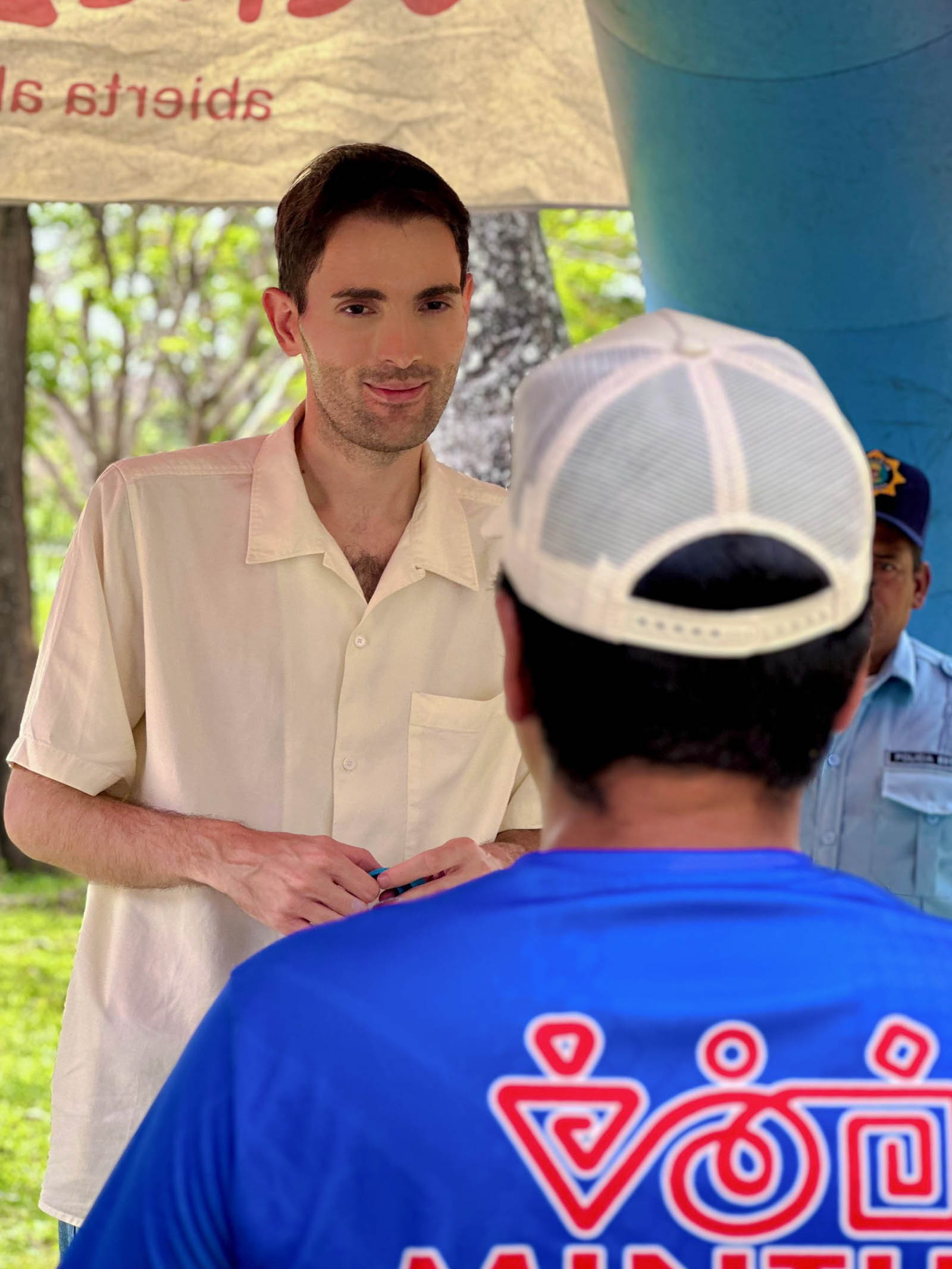
During my stay, I visited two extraordinary places in Aragua State. The first was the Casa Histórica de San Mateo and the Ingenio Bolívar, a historic estate that belonged to the Bolívar family for centuries. The second was Hacienda Santa Teresa, a famous plantation and distillery, but also the home of an unusual social project. Both places are connected with the history of Venezuela, so this day was a kind of journey through time.
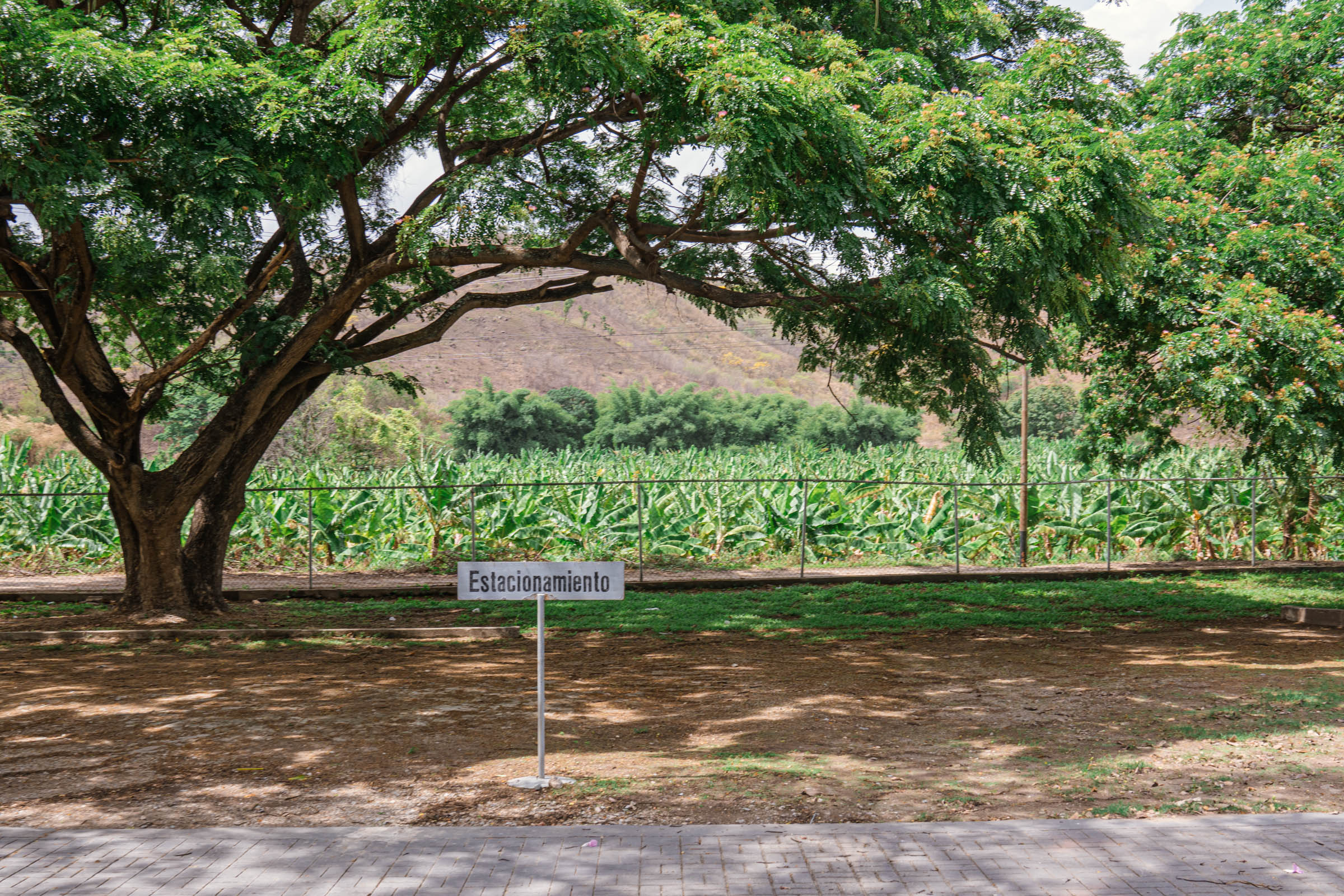
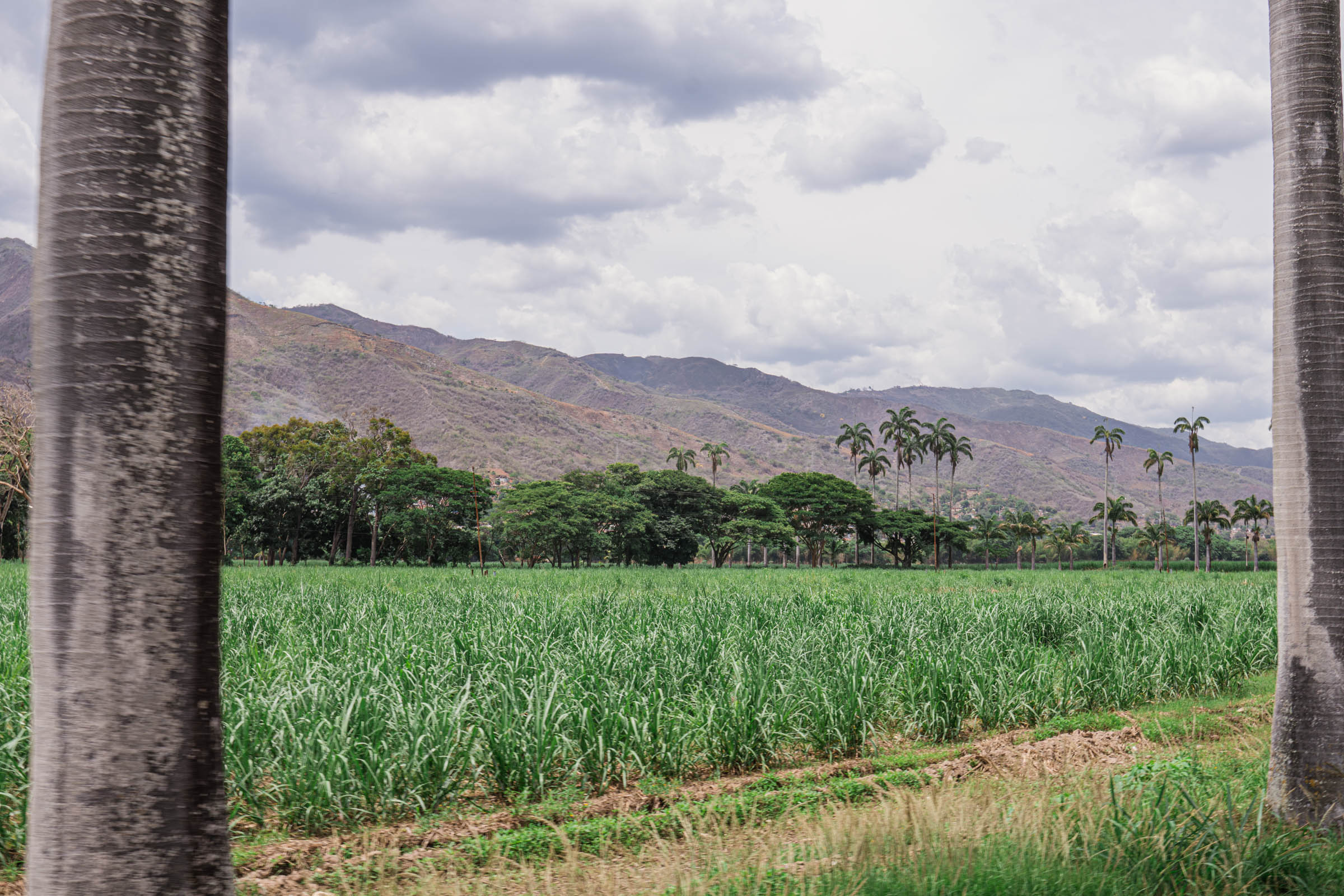
We started the day in Caracas, a dynamic city full of contrasts. As we left the city, the road took us west into the valleys of Aragua. Soon, fields of sugar cane spread out before us, shaded by huge old trees and framed by green hills.
CASA HISTÓRICA DE SAN MATEO AND INGENIO BOLÍVAR
San Mateo is a small town in Aragua State, the seat of the Bolívar Municipality, founded on November 30, 1620. Just outside it lies the former estate of the Bolívar family, known as the Ingenio Bolívar. The word ingenio means sugar mill. For centuries, this was a place where sugar cane turned into papelón, sugar and rum.
Today, the whole complex is a museum with three parts. The Sugar Cane Museum occupies the old mill, and the Museum of Arms stands across the road. Above them, on the hill, rises the Historic House of the Liberator. After a careful restoration, all three spaces reopened to visitors in 2023.
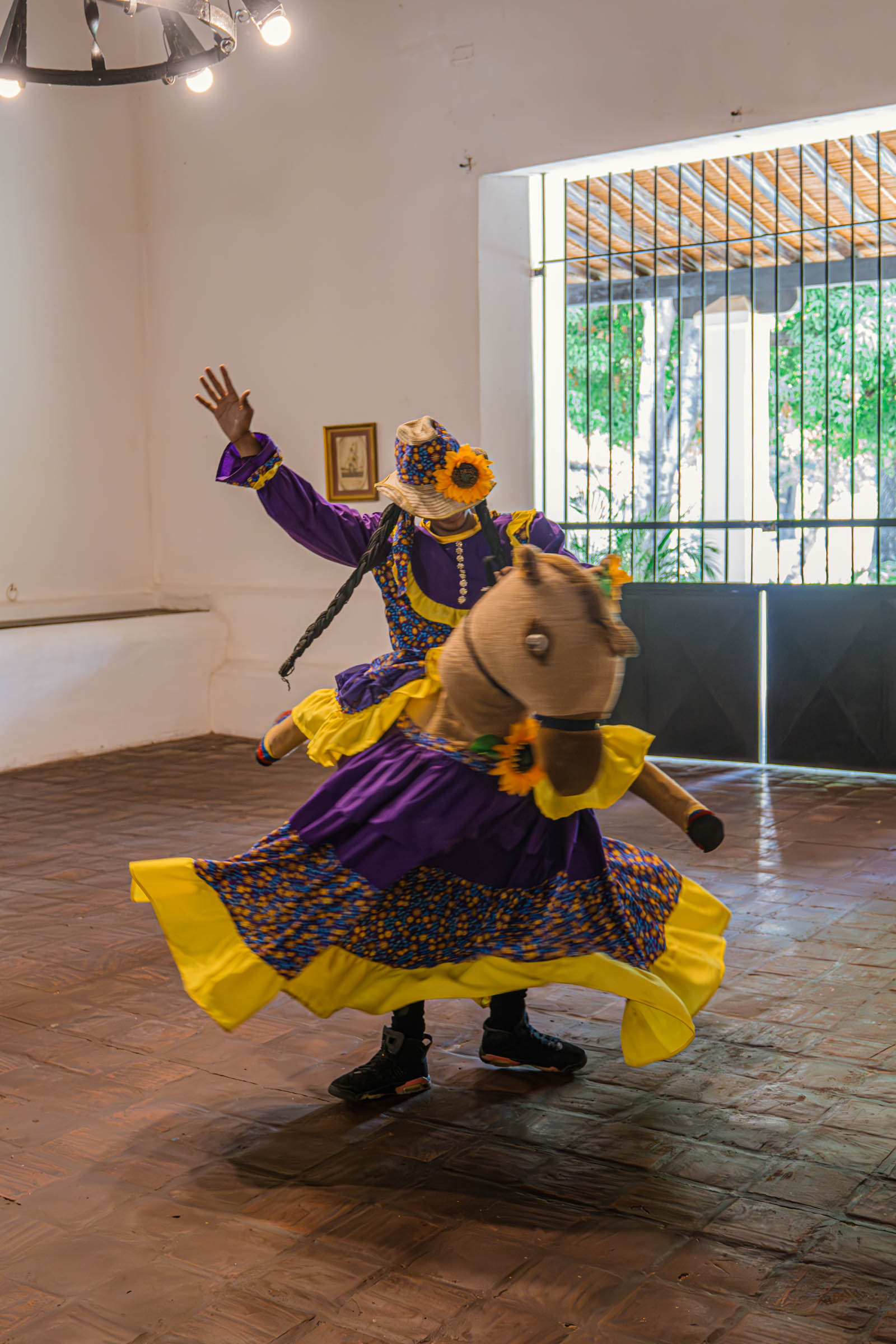
Inside one of the first rooms, a dancer in a colorful costume performed La Burriquita, a well-known Venezuelan folk dance. In it, a woman wears a costume whose lower part imitates a little donkey. Then she dances to the music as if she were riding it. It was a cheerful and very Venezuelan welcome to a place full of history.
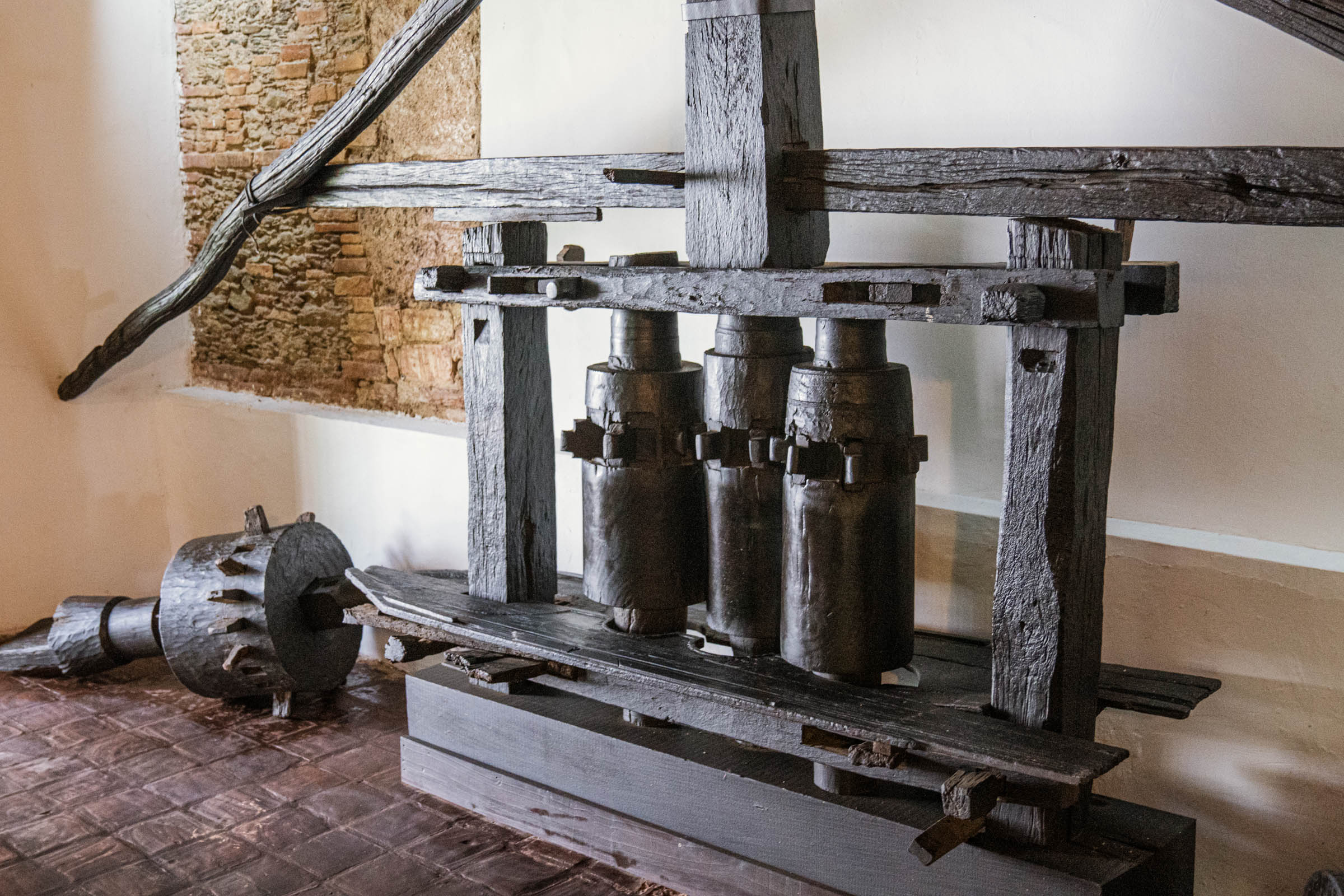
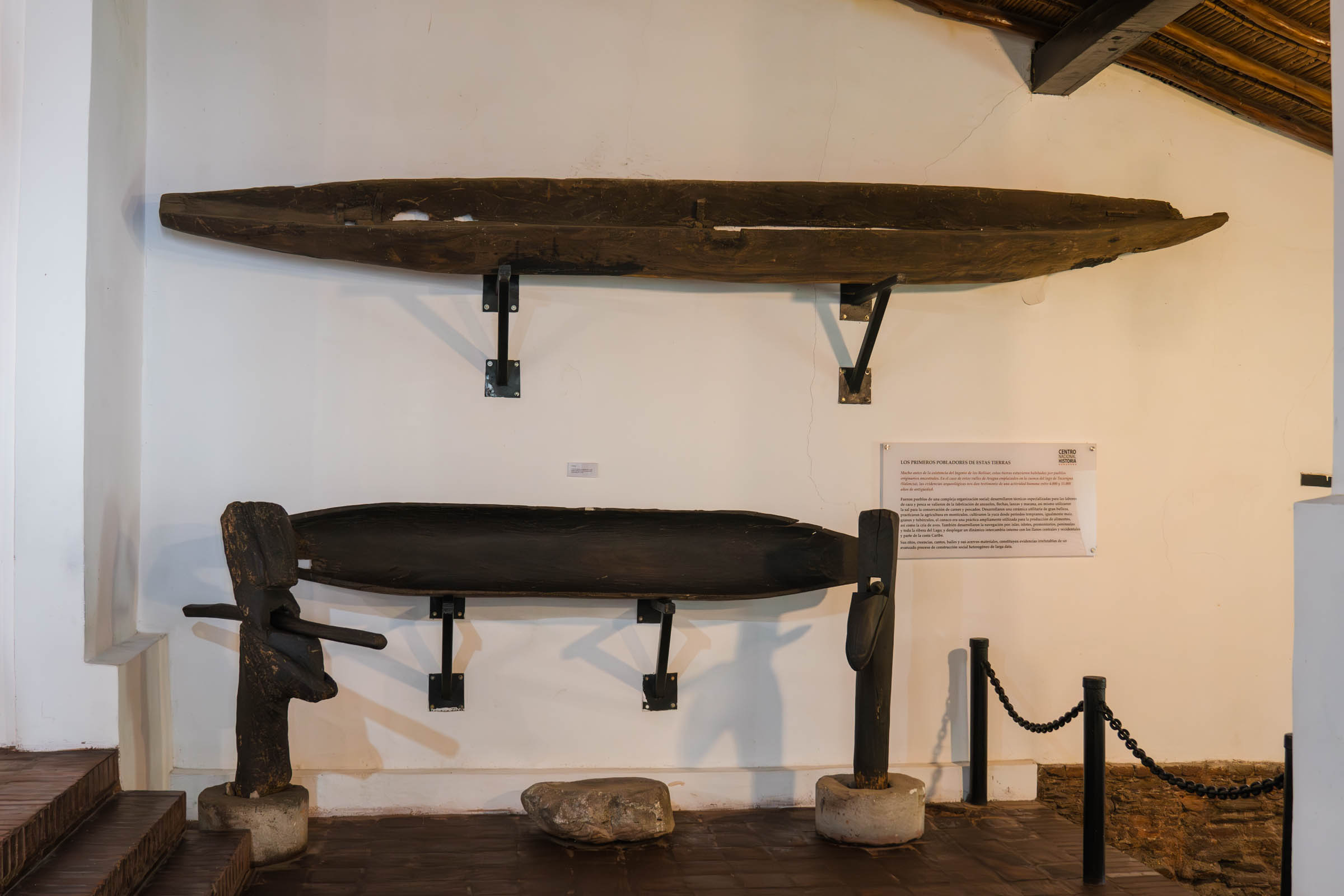
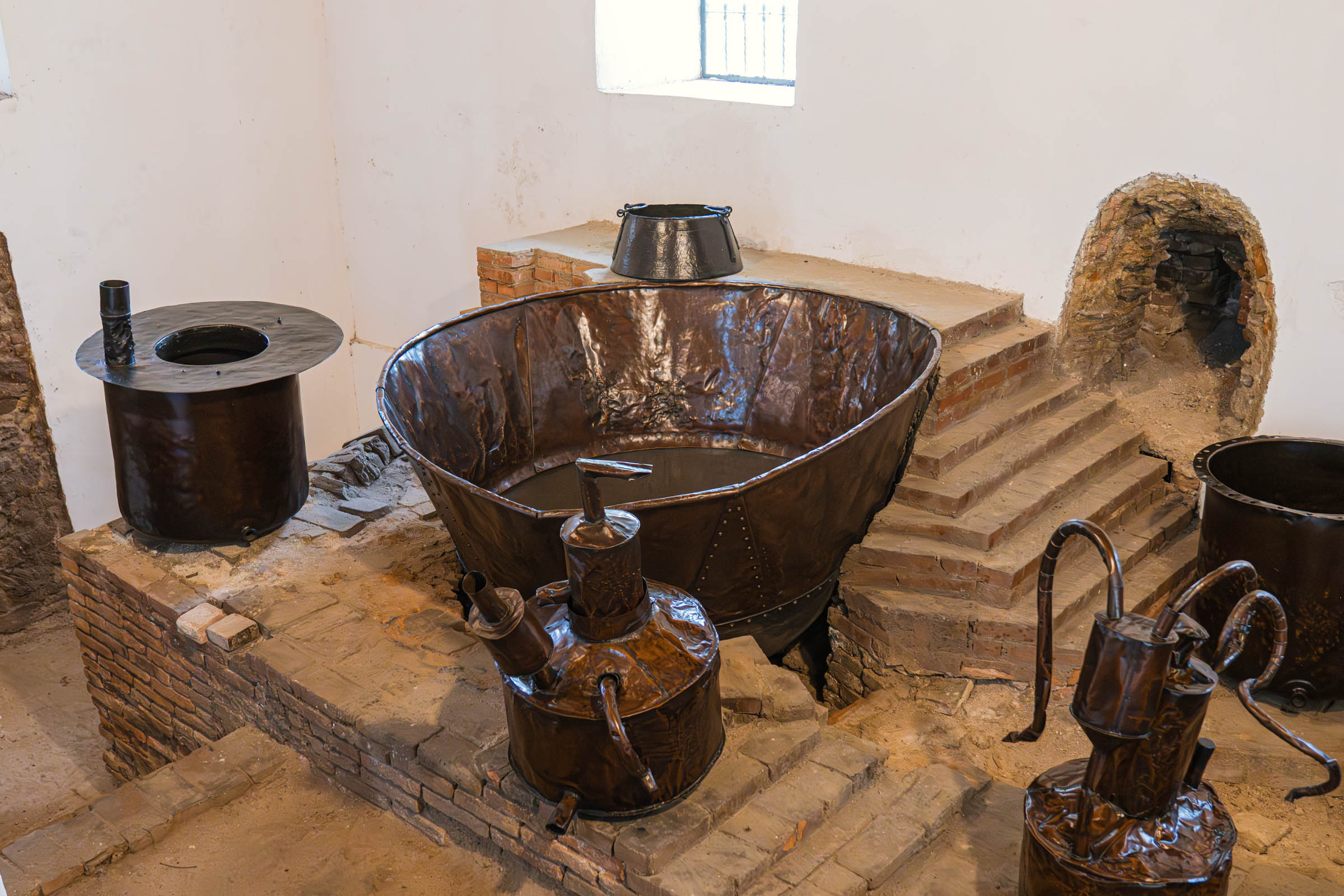
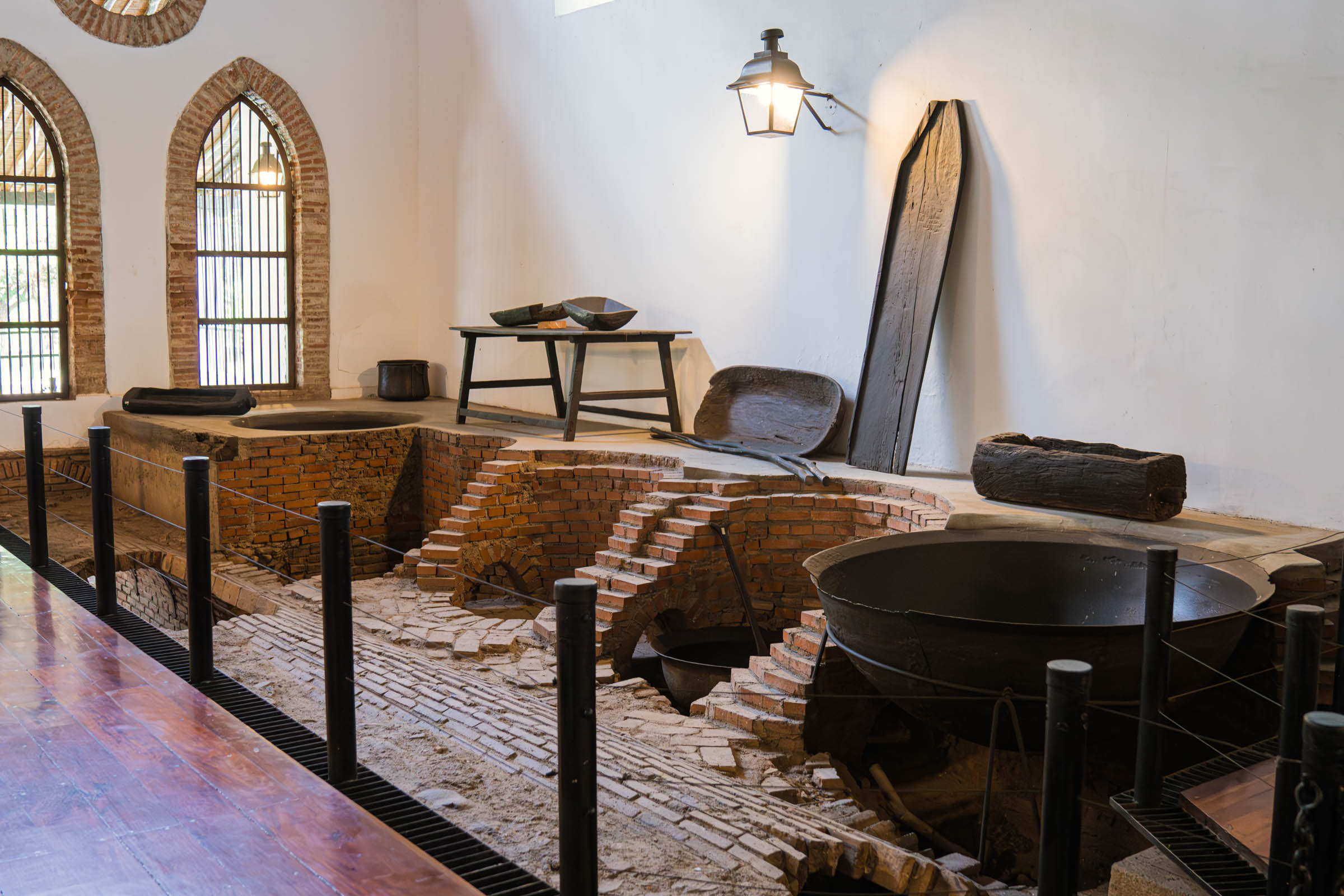
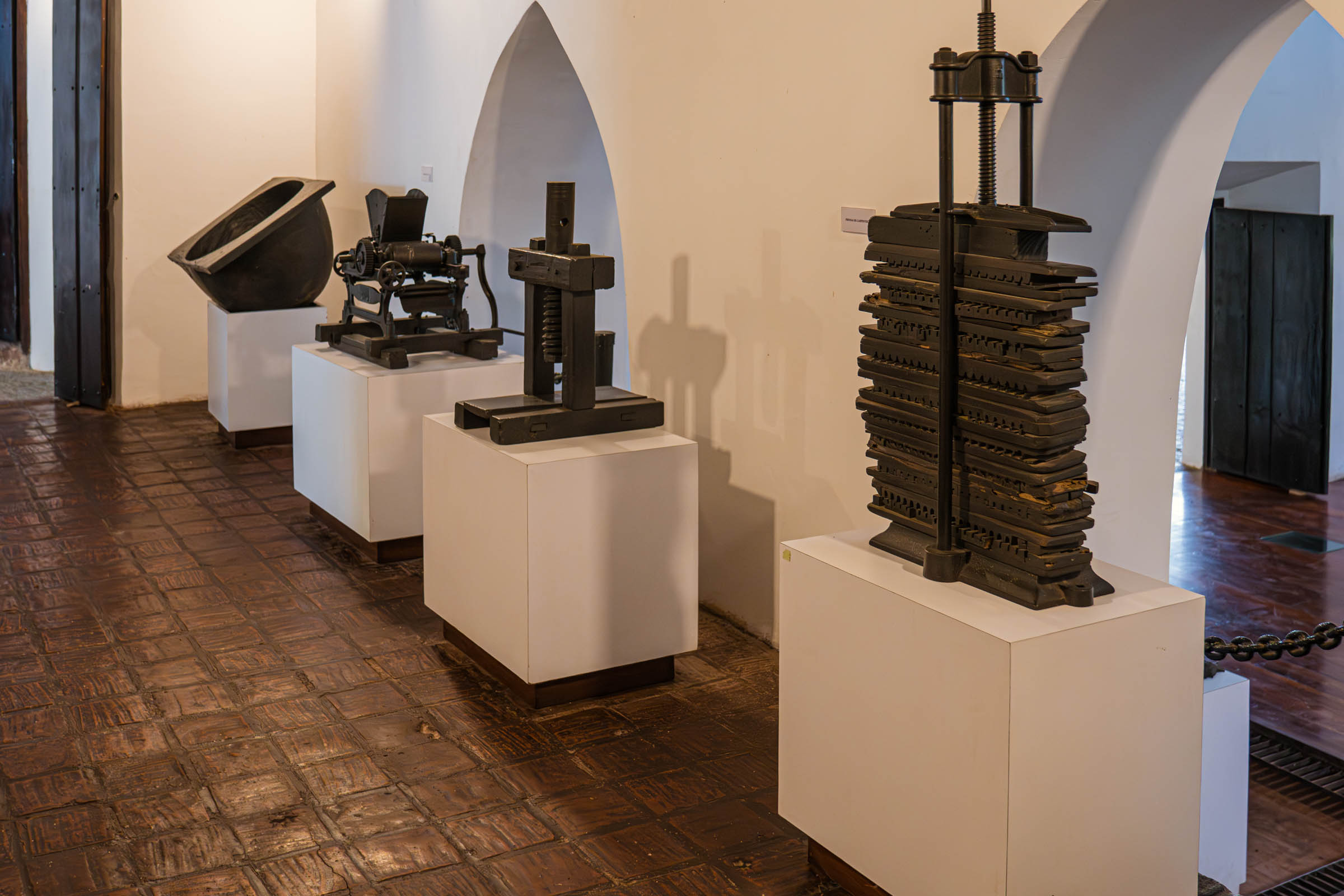
The collection of the Sugar Cane Museum begins with the machines themselves. Wooden presses, iron rollers and long wooden troughs show how much physical work went into every kilogram of sugar. In one hall, large copper cauldrons stand above the old brick furnaces, where the cane juice once boiled for hours.
HOW SUGAR WAS MADE AT INGENIO BOLÍVAR
I read the information boards in the museum with great interest. One of them explained that the land in San Mateo came to the Bolívar family at the end of the 16th century. The family kept the property until 1924, when the Venezuelan state acquired it. Besides sugar cane, the estate also produced cotton, coffee and cacao. Enslaved people did most of the hard work in the fields and in the mill.
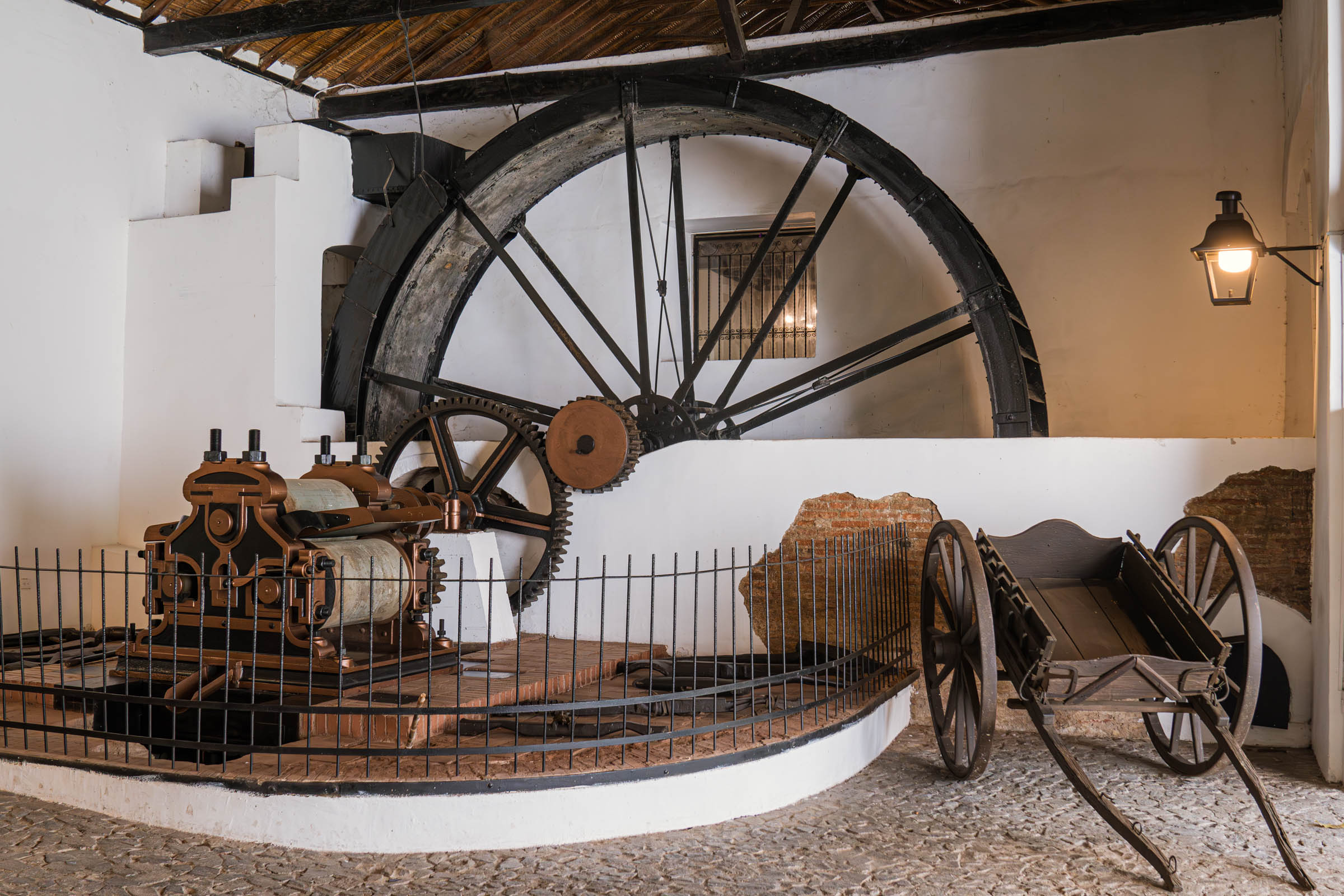
The heart of the mill was a hydraulic trapiche, a mill driven by water. According to the museum, the grandfather of the Liberator, Juan de Bolívar y Villegas, installed it at the beginning of the 18th century. It used the water of the Aragua River. A canal brought the water to the huge wheel, which then turned the rollers that crushed the cane.
The estate was famous for this technology. In 1800, the naturalist Alexander von Humboldt visited San Mateo and praised its advanced water system. Even today, you can see the great wheel, the iron gears and an old wooden cart next to it.
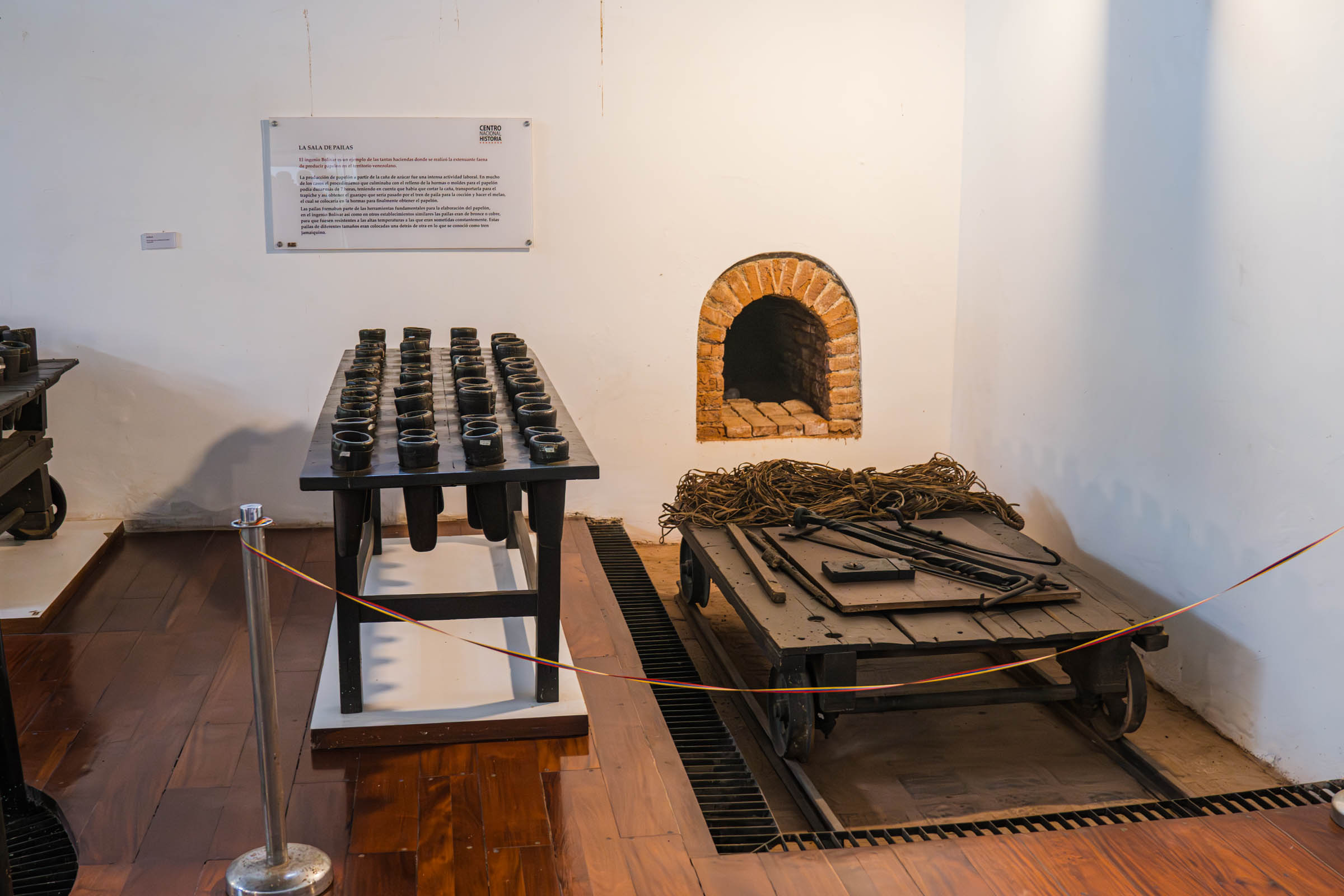
In another room, rows of dark molds stand on a wooden table. The thick, boiled syrup was poured into them to harden into blocks of sugar. Next to them, an arched brick oven reminds you how much fire and heat this work required.
THE BRICK ARCHES OF THE OLD MILL
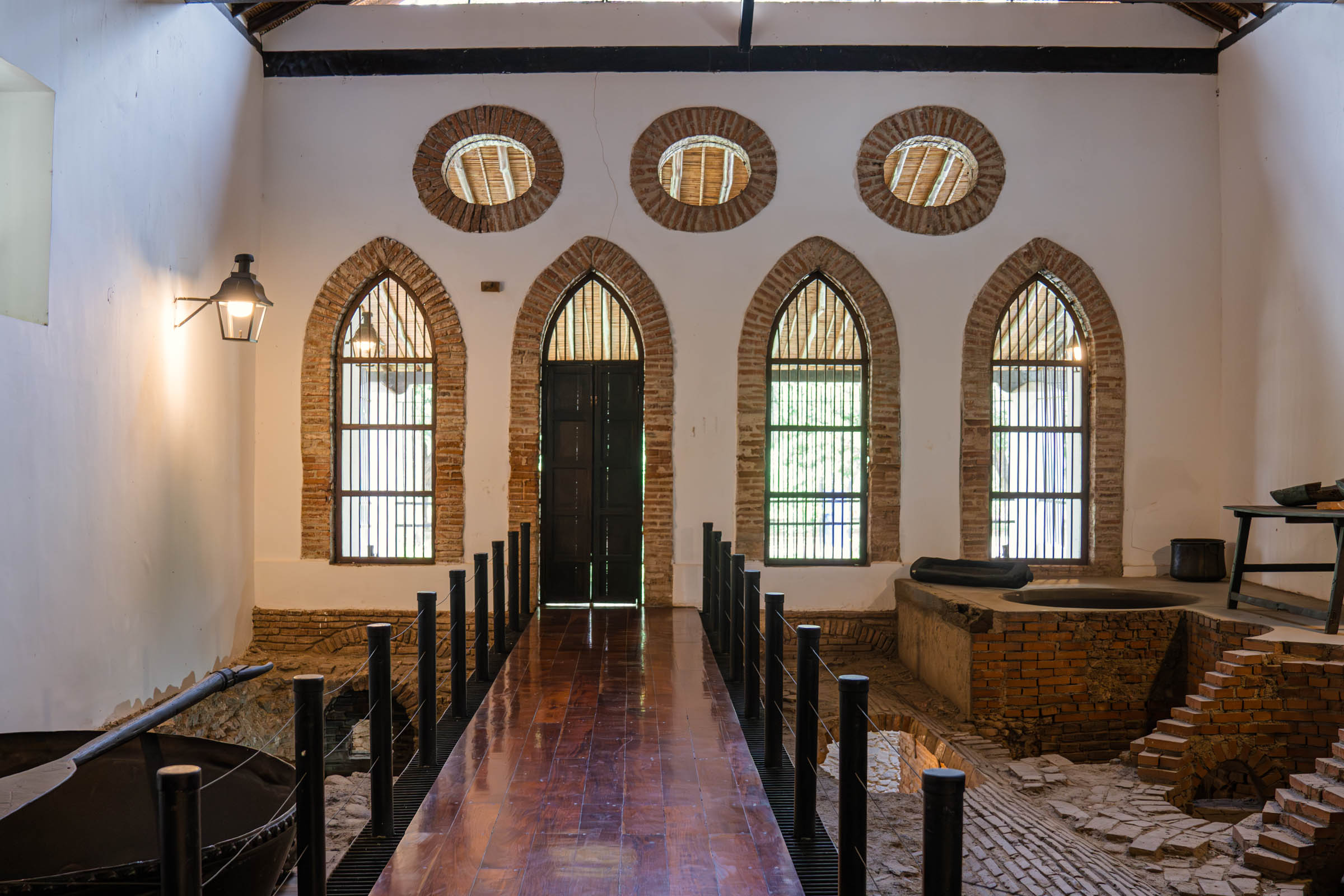
The architecture of the mill itself is just as interesting. Tall windows with pointed brick arches let soft light into the white halls. Under the wooden roofs, the floors open in places to reveal the old foundations, the furnaces and the channels of the boiling house.
Wooden walkways and metal railings lead you safely above these excavated spaces. So, you can look down at the original brickwork and imagine the heat, the smoke and the noise of the mill at full work. A large iron cauldron still stands at the bottom, as if the workers had just left it.
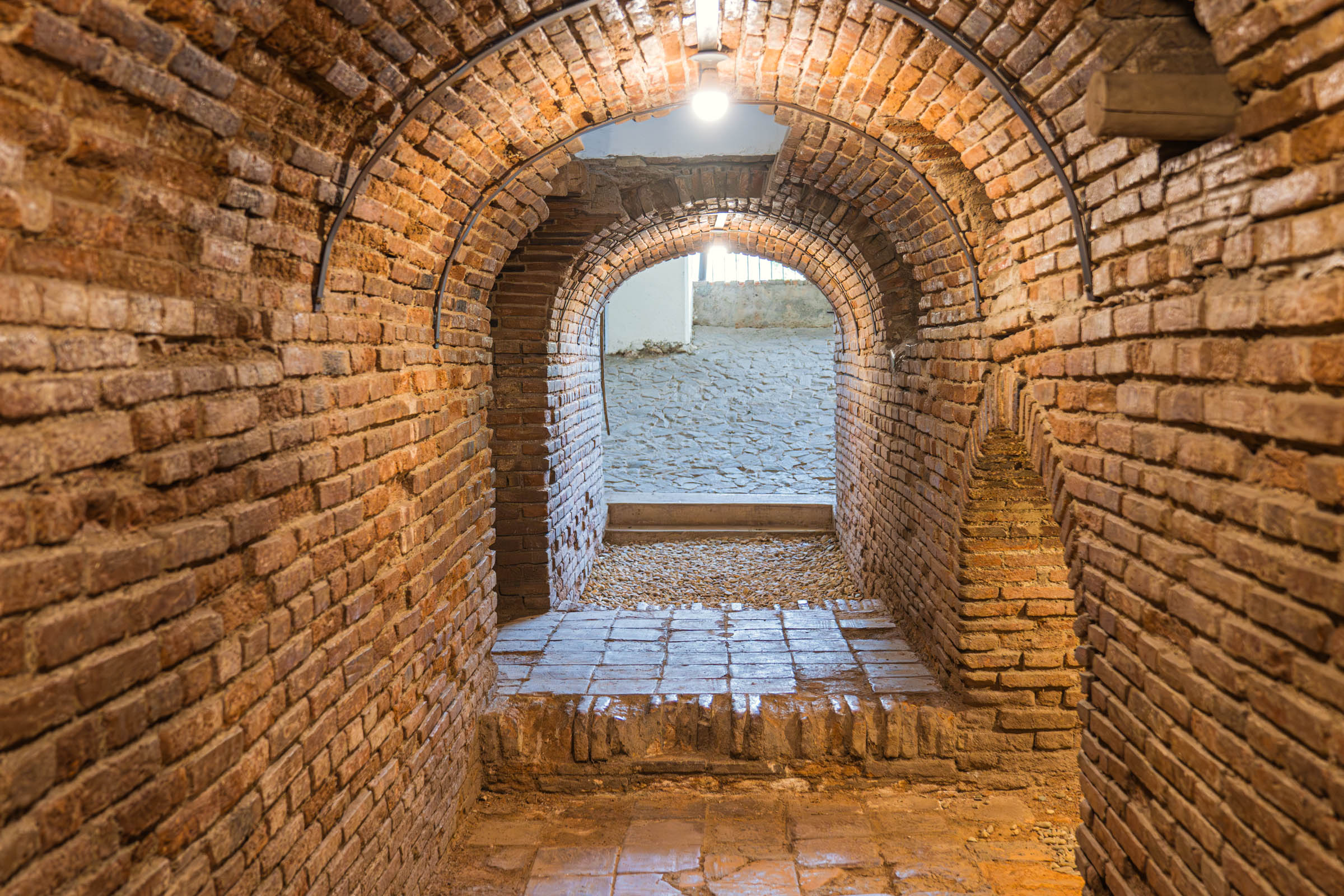
In one corner, a narrow passage with a brick vault leads under the building. Its rounded ceiling and worn steps look almost like a tunnel into the past. These simple materials, brick, stone and wood, give the whole complex its special charm.
The restoration kept the spirit of the place. Instead of hiding the traces of time, the museum shows them openly, and every wall tells its own story.
DAILY LIFE ON THE BOLÍVAR ESTATE
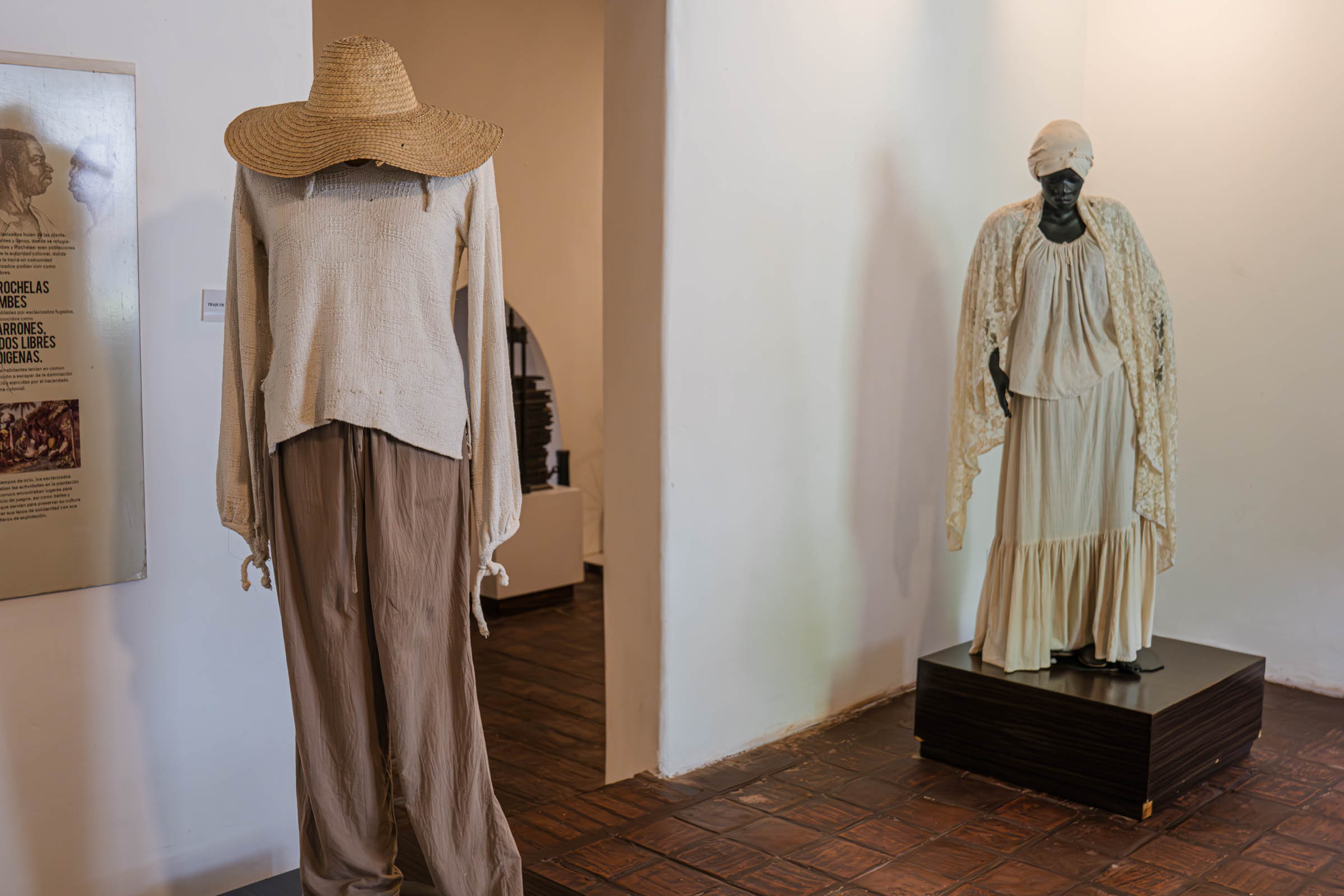
The museum also shows how people dressed and lived on the estate. In one room, two mannequins wear the simple clothes of plantation workers. One has a loose shirt, trousers and a wide straw hat, and the other a long light dress with a head covering.
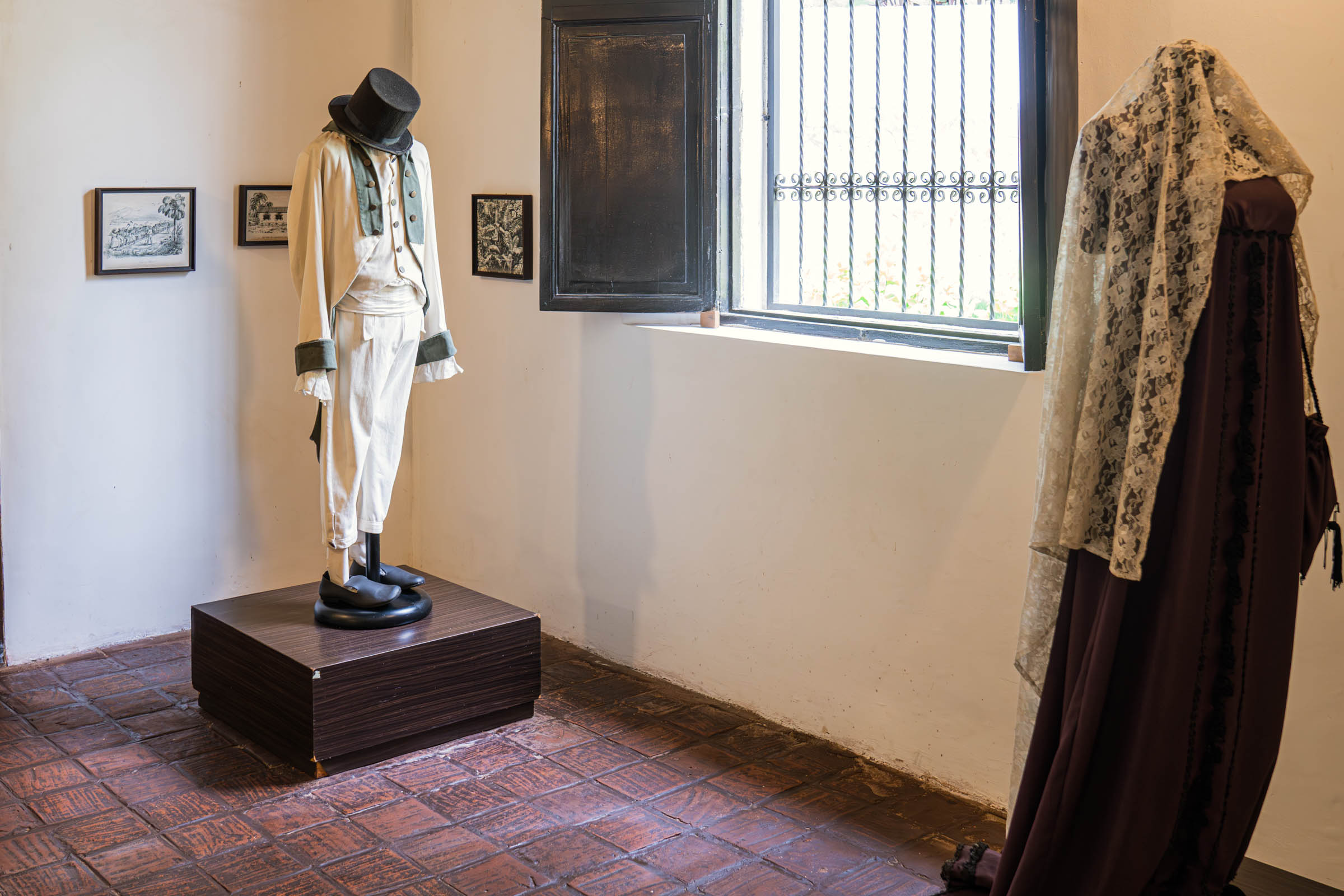
Next to them, the clothes of the colonial elite look completely different. A white suit with embroidered details and a tall black hat stands beside a dark dress with a lace mantilla. This contrast says a lot about the society of that time, where comfort and hard labor lived side by side on the same estate.
Walking through these rooms, I listened to the guide and imagined the sounds of the past. I could almost hear the creaking wheel, the boiling cauldrons and the voices in the fields. Today, of course, all this is a museum. Still, it is also a reminder of the many people whose work built the wealth of colonial Venezuela.
Later, I passed between rows of tall cane. One of the workers, dressed in a white linen shirt and a wide-brimmed hat, waved at me cheerfully. He broke a piece of cane, showed me its sweet juice and smiled, calling it the sweet life of rum.
ARCHAEOLOGICAL FINDS OF SAN MATEO
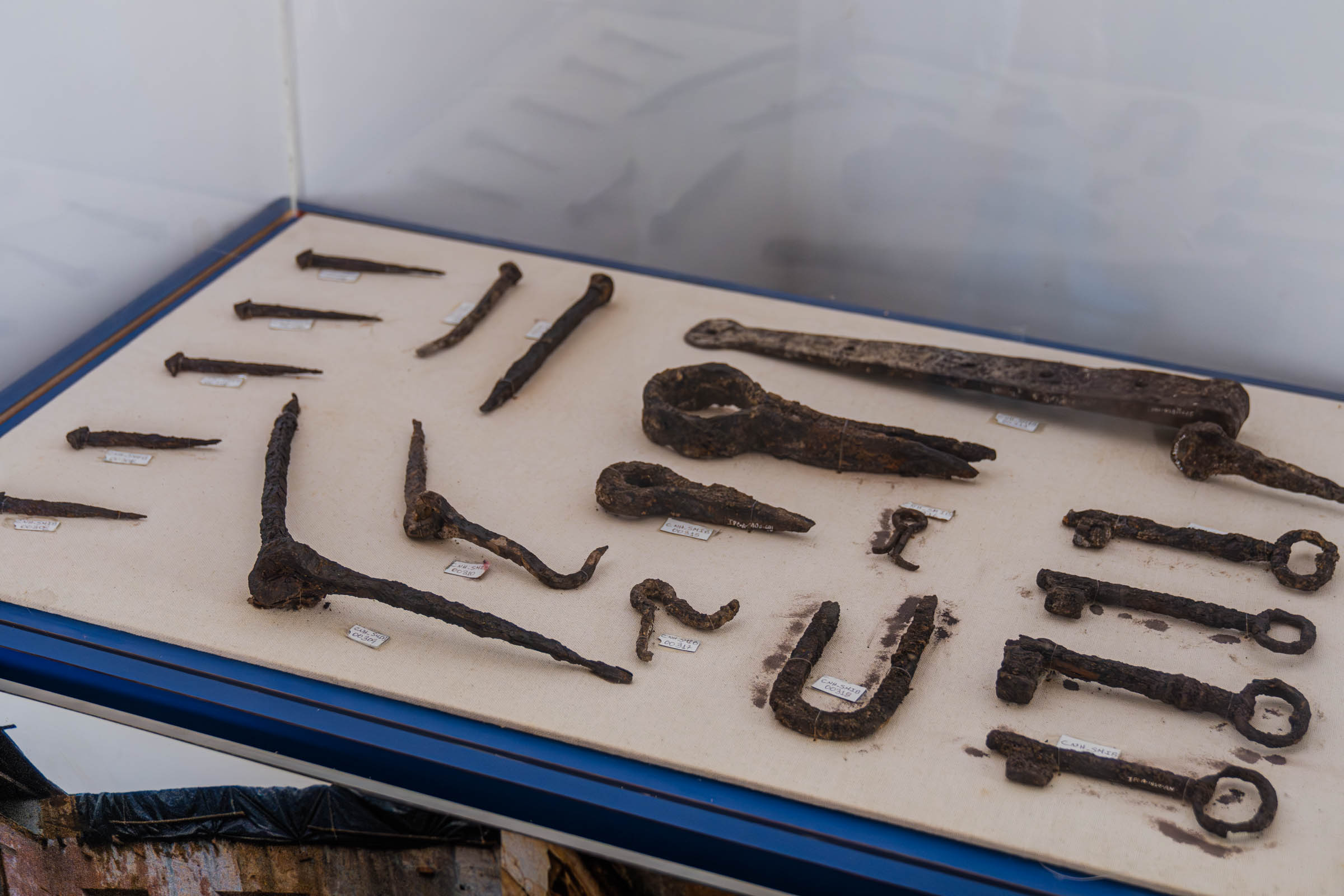
Some of the most interesting exhibits are the smallest ones. In glass cases, the museum displays objects found during the archaeological work on the estate. There are old iron keys, hinges, nails and tools, darkened by rust but still recognizable.
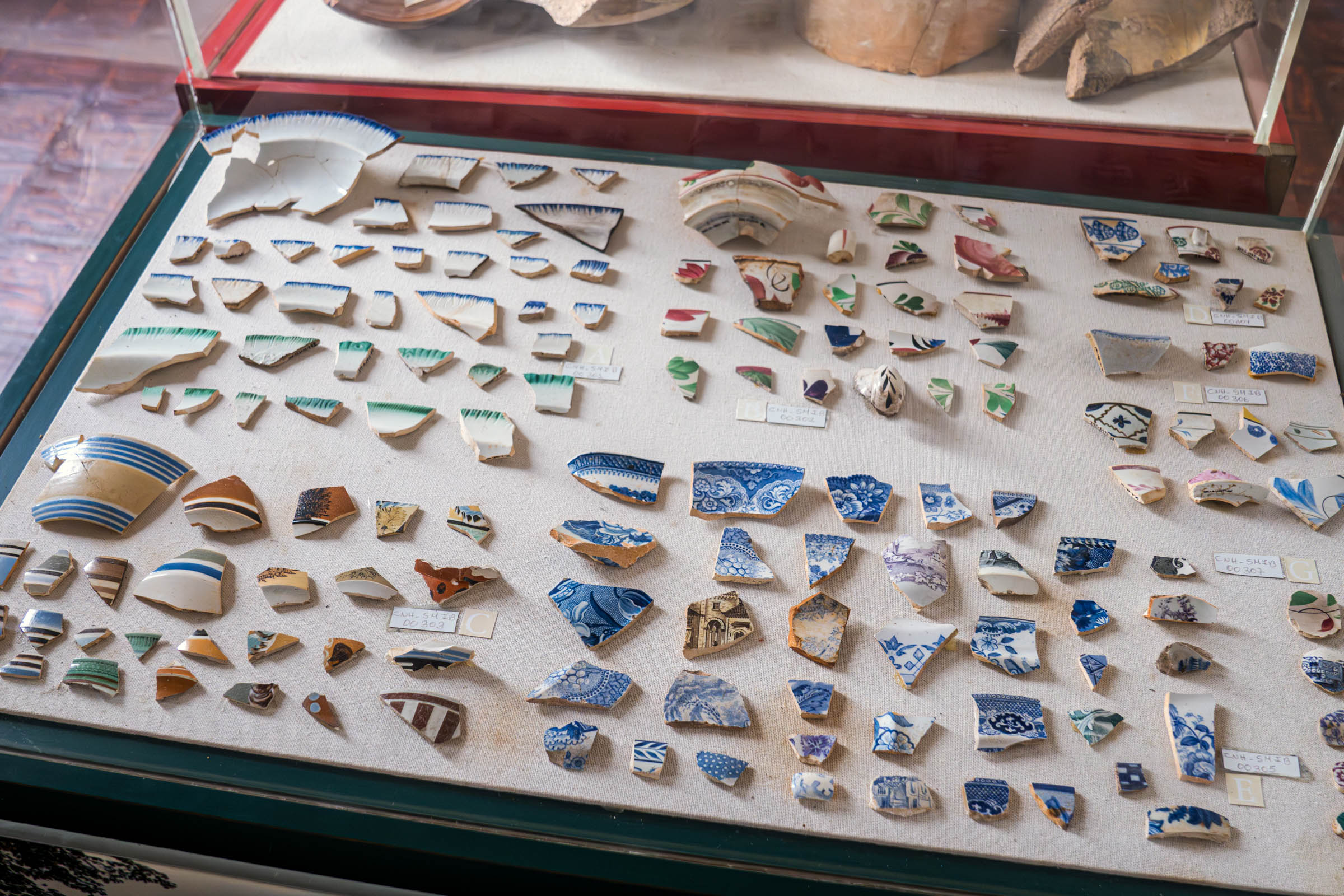
Another case holds hundreds of ceramic fragments in blue, green, white and brown. Some of them come from simple everyday dishes, while others carry elegant painted patterns. Together, they show the variety of objects that once arrived at the estate.
Nearby, small models of presses and mills stand on white pedestals. They help visitors understand how the big machines worked, step by step.
These small fragments bring the museum very close to everyday life. Every broken plate and every forgotten key once belonged to someone who lived and worked here.
THE CASA ALTA, BOLÍVAR’S FAMILY HOUSE
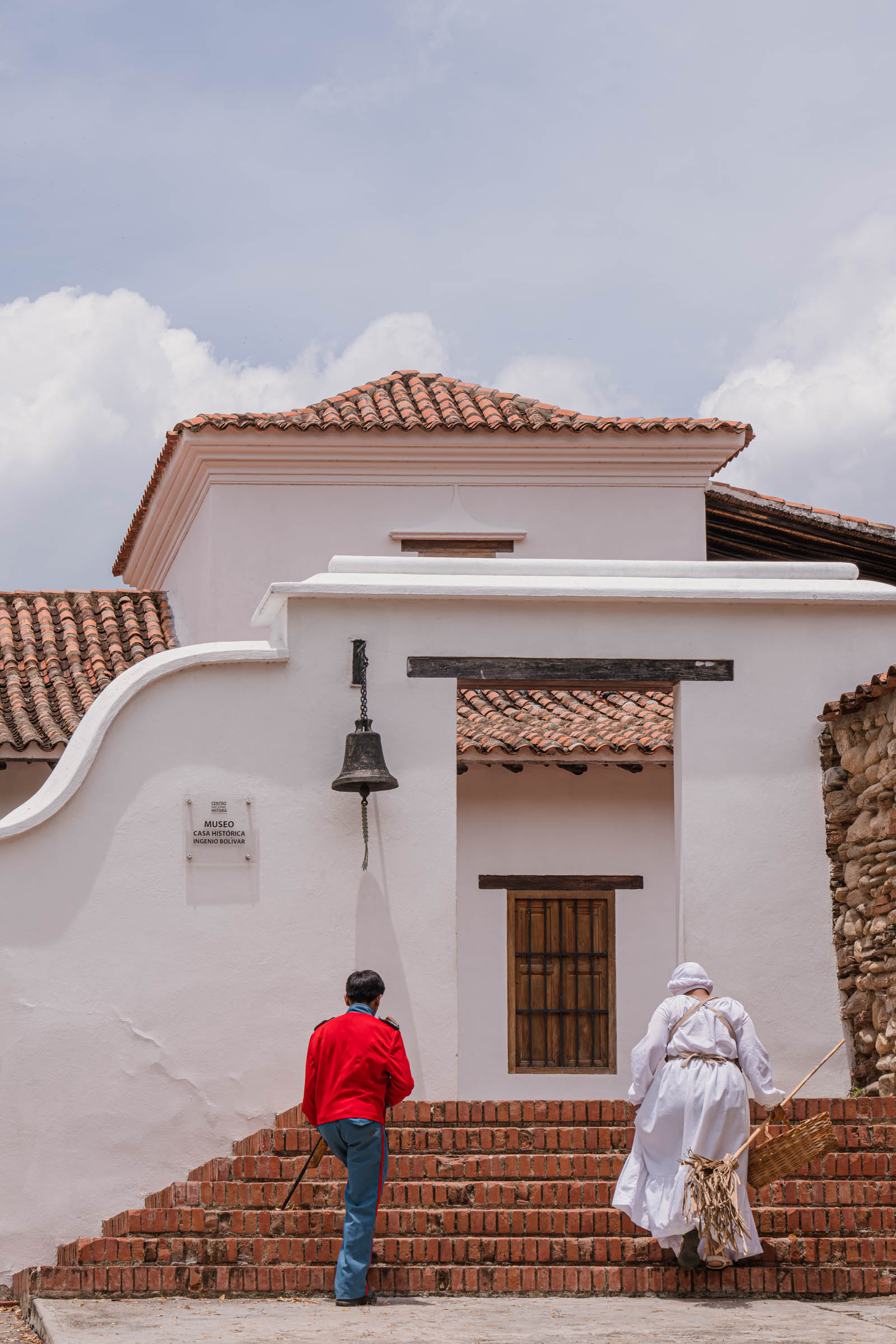
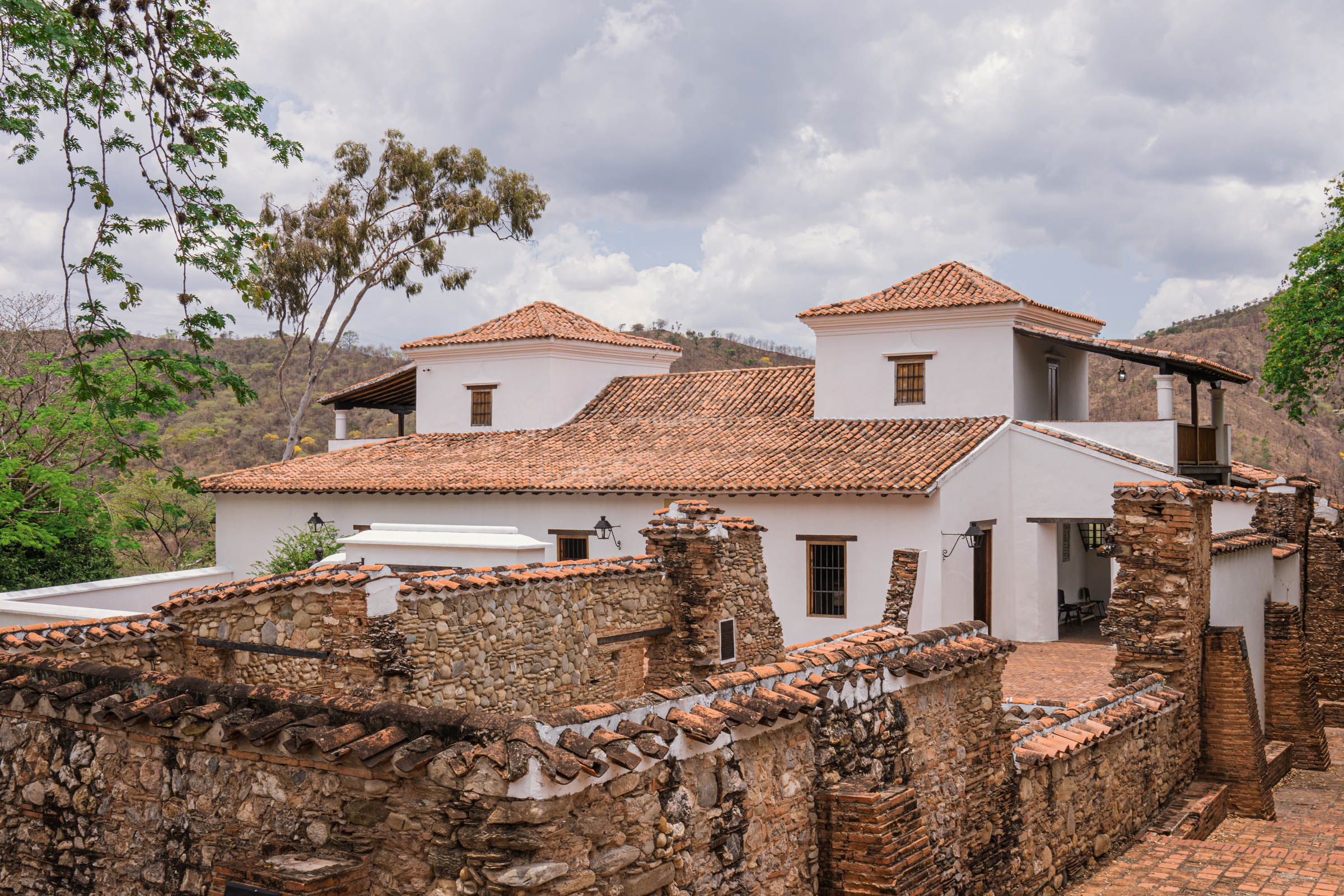
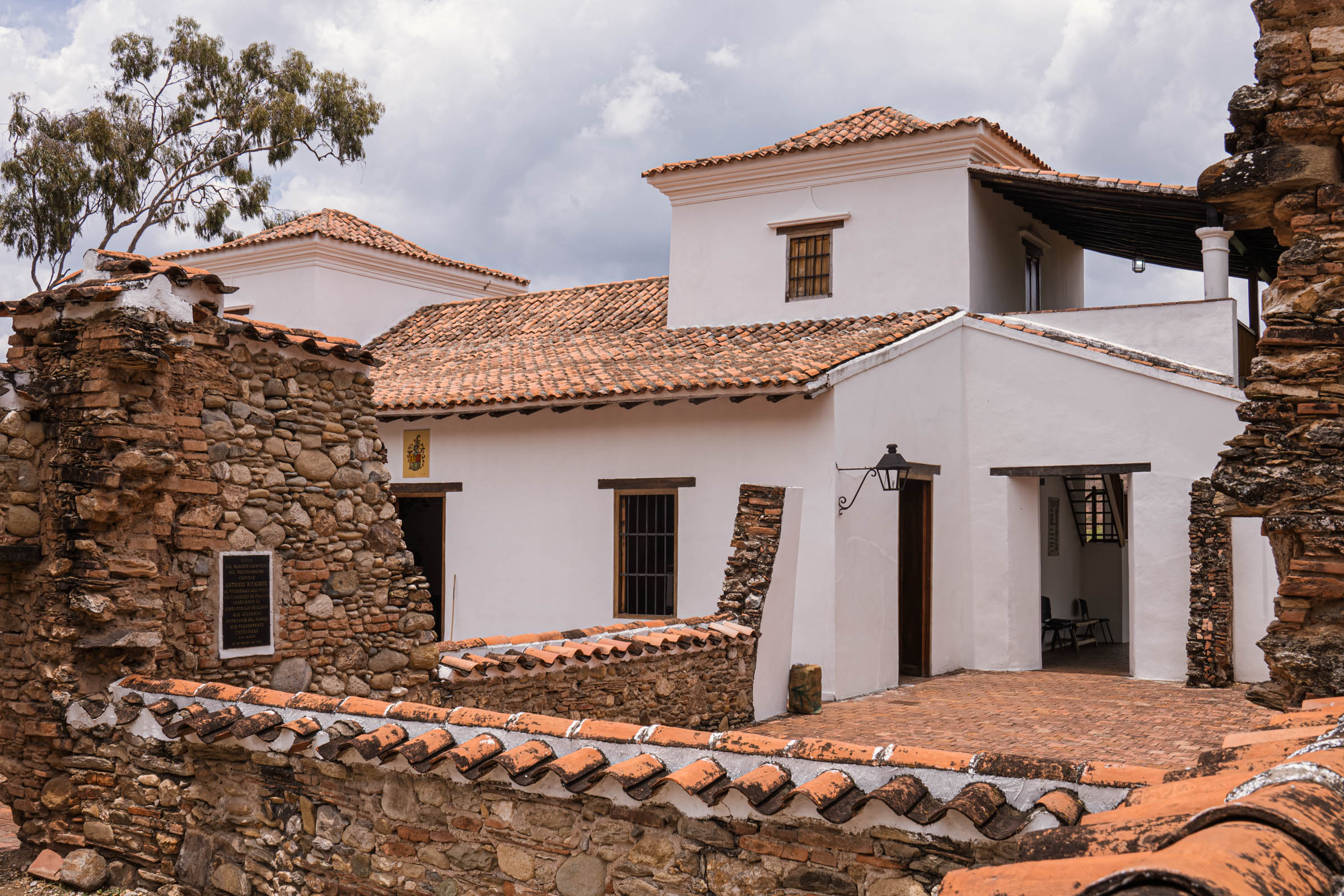
From the mill, a path leads up the hill to the Casa Alta. It was the main house of the estate, and today it is the Historic House of the Liberator. The white walls, red tiled roofs and a bronze bell above the entrance immediately catch the eye.
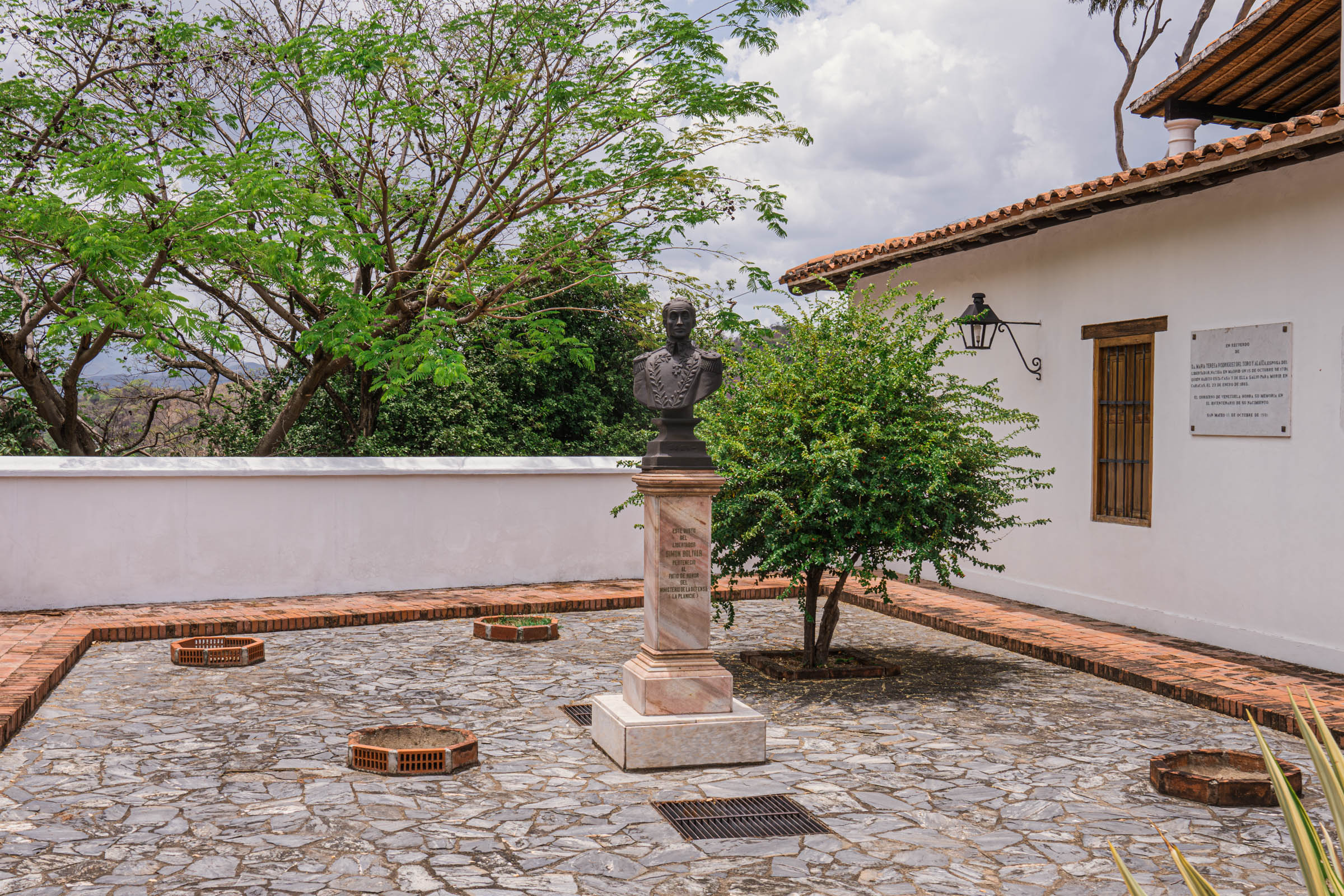
On the day of my visit, people in historical costumes walked up the brick stairs to the museum. The scene looked like a painting from the past. At the entrance to the courtyard, I paused at a stone slab with carved names and dates, from the colonial era to the wars of independence. Inside, a quiet courtyard paved with stone opens up, with a bronze bust on a marble pedestal and a few trees that give shade.
The house stands on a hill with wide views over the valleys of Aragua. In 1964, the Venezuelan government declared the estate a National Historic Monument.
SAN MATEO 1814: A BATTLE IN THE VALLEYS OF ARAGUA
The Casa Alta also played an important role in the War of Independence. In early 1814, Simón Bolívar set up his headquarters on his family estate in San Mateo. Between February 28 and March 25, 1814, a series of battles took place here between the republican army and the royalist forces. The battle ended in a republican victory.
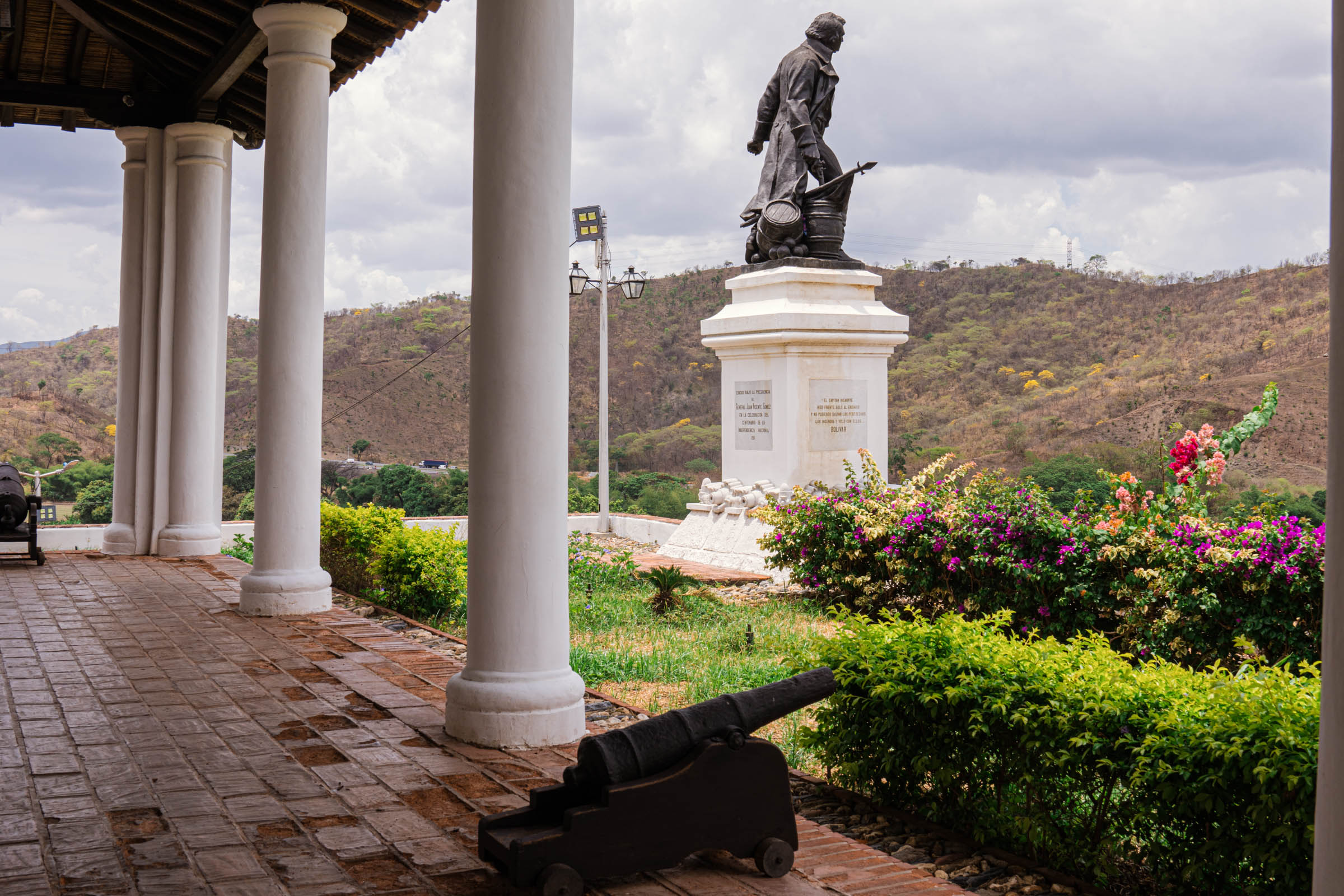
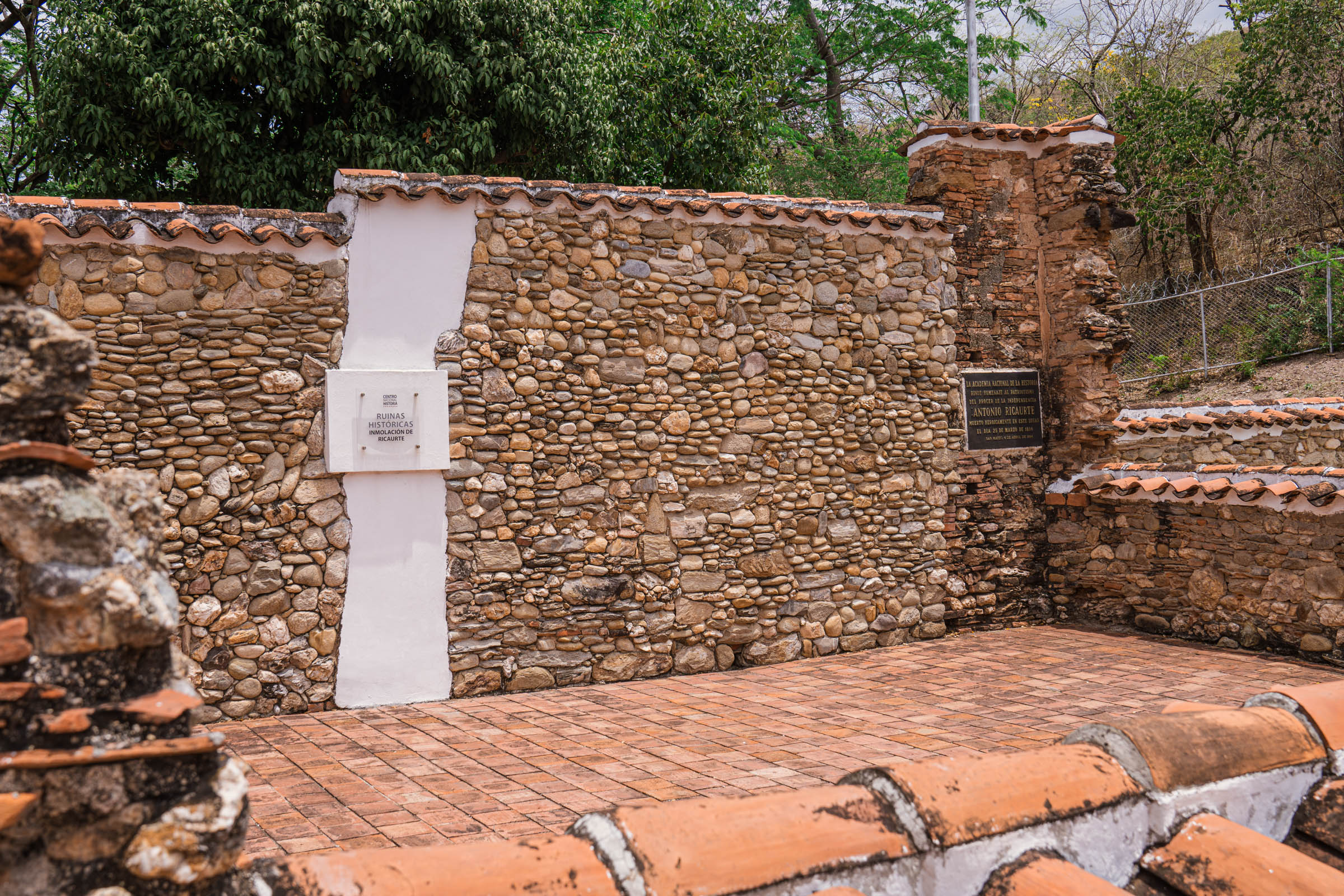
During the fighting, the main house served as the principal ammunition depot of the republican army. Its custody was entrusted to Captain Antonio Ricaurte, a young officer from Villa de Leyva in today’s Colombia, and to a small troop. Thanks to his courage, the depot did not fall into royalist hands, and Venezuelans and Colombians still remember him as the hero of San Mateo.
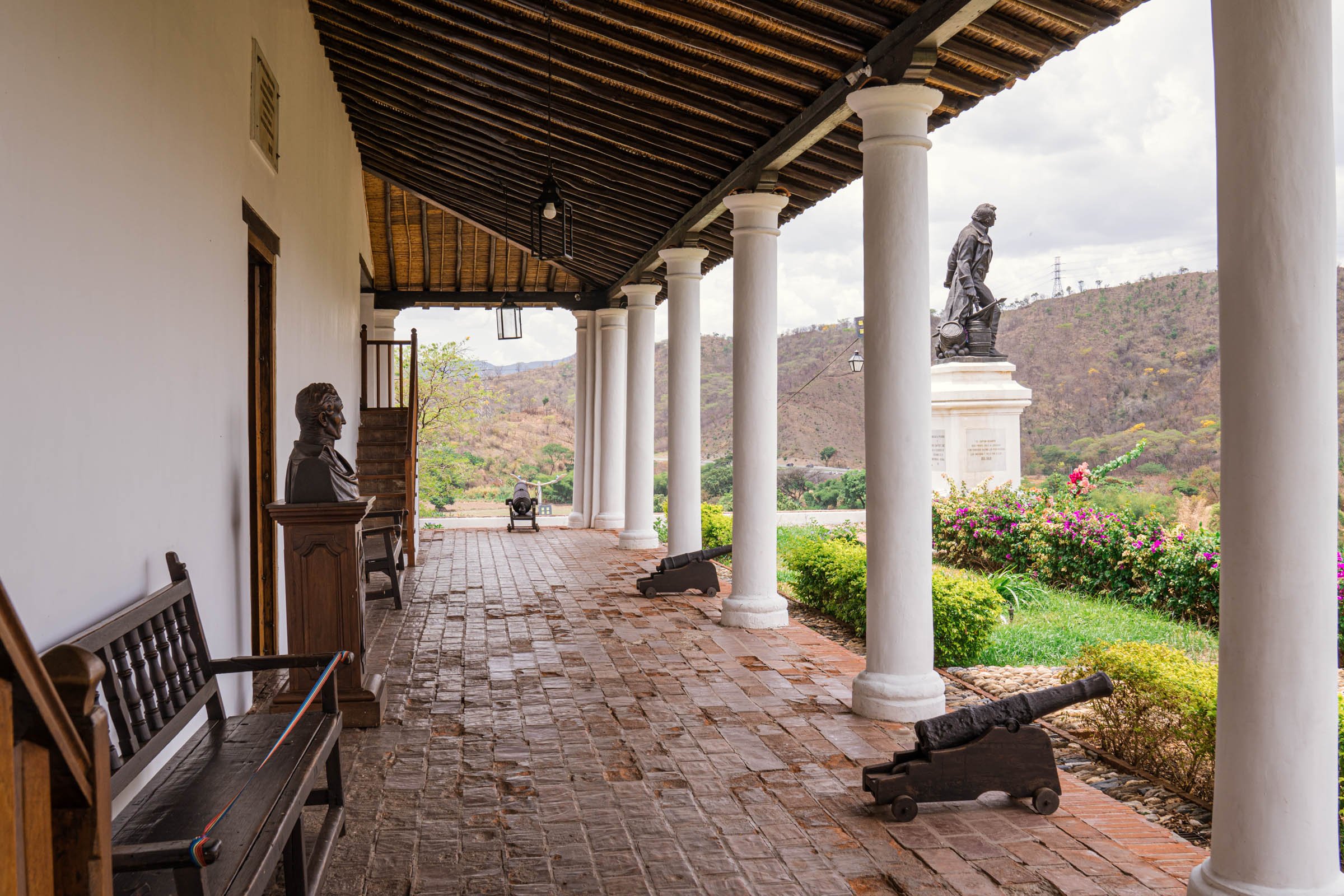
In the garden in front of the house, a monumental statue by the sculptor Lorenzo González honors him. Under the long veranda with white columns, old cannons point toward the garden full of bougainvillea.
SAN MATEO: ARCHITECTURE WITH SOUL
The house in San Mateo is a typical colonial hacienda, with a spacious courtyard, verandas and thick walls. What particularly fascinated me was the simplicity of the architecture: the modest white facade, wooden windows and doors, and yet everything inside exudes elegance and dignity.
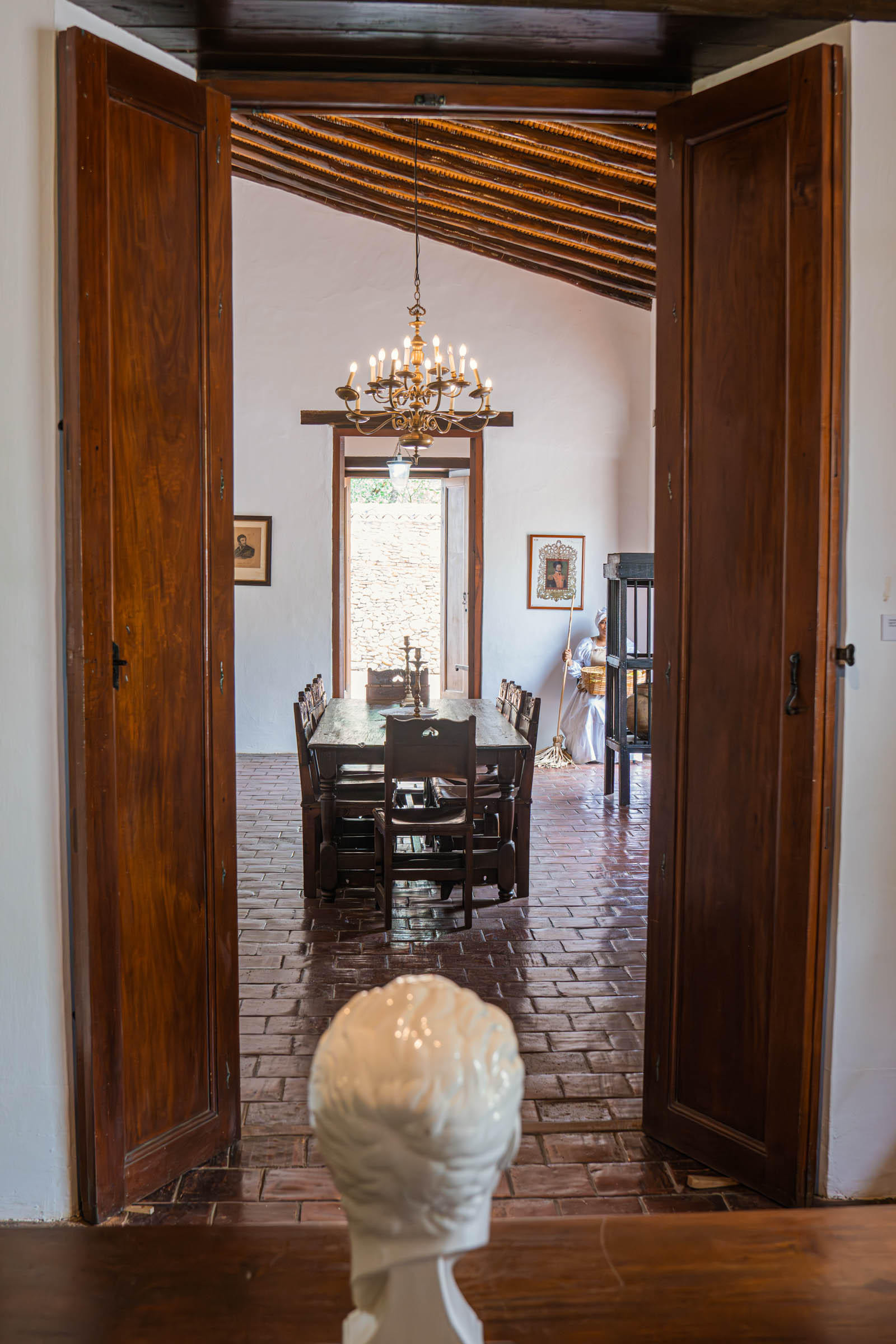
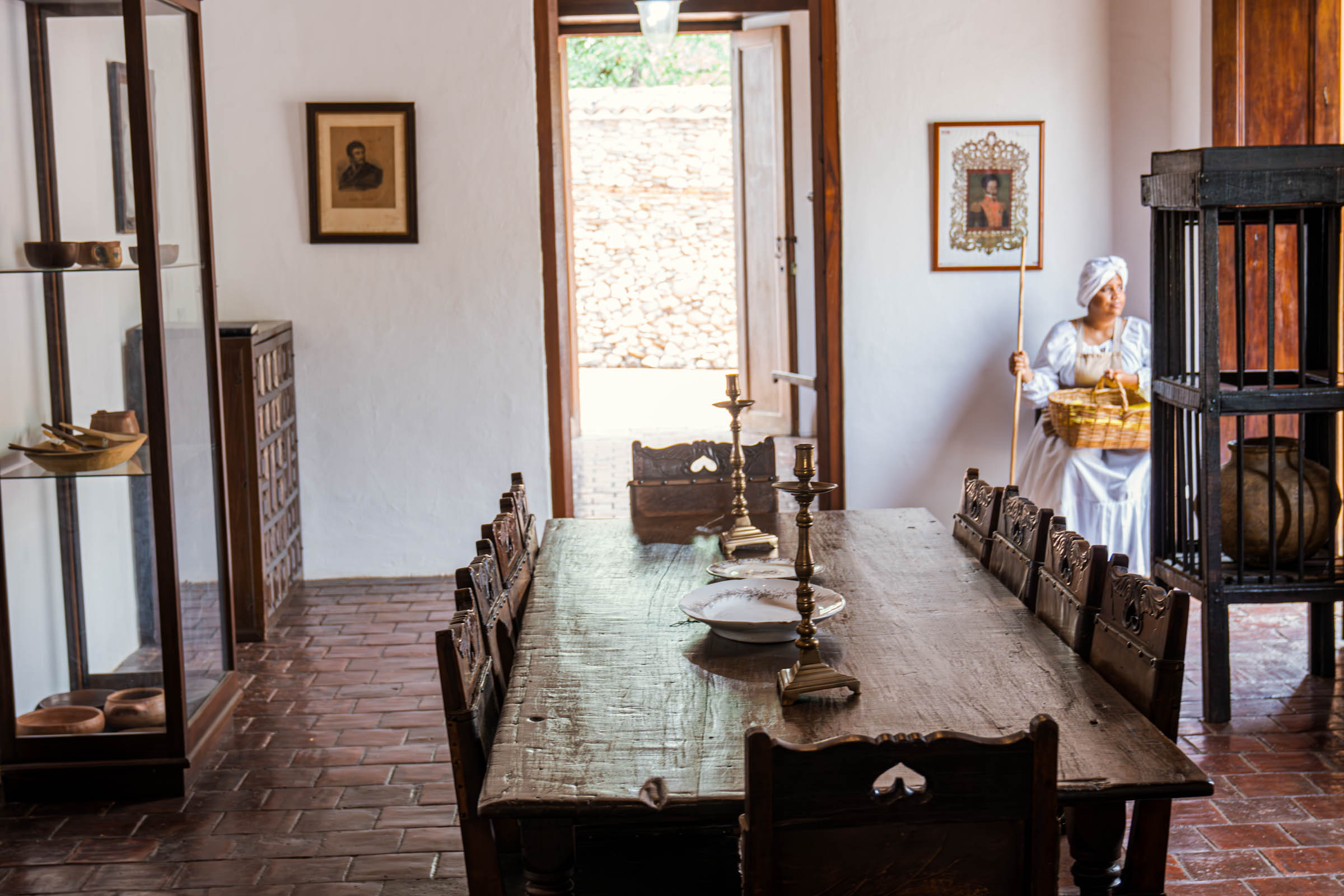
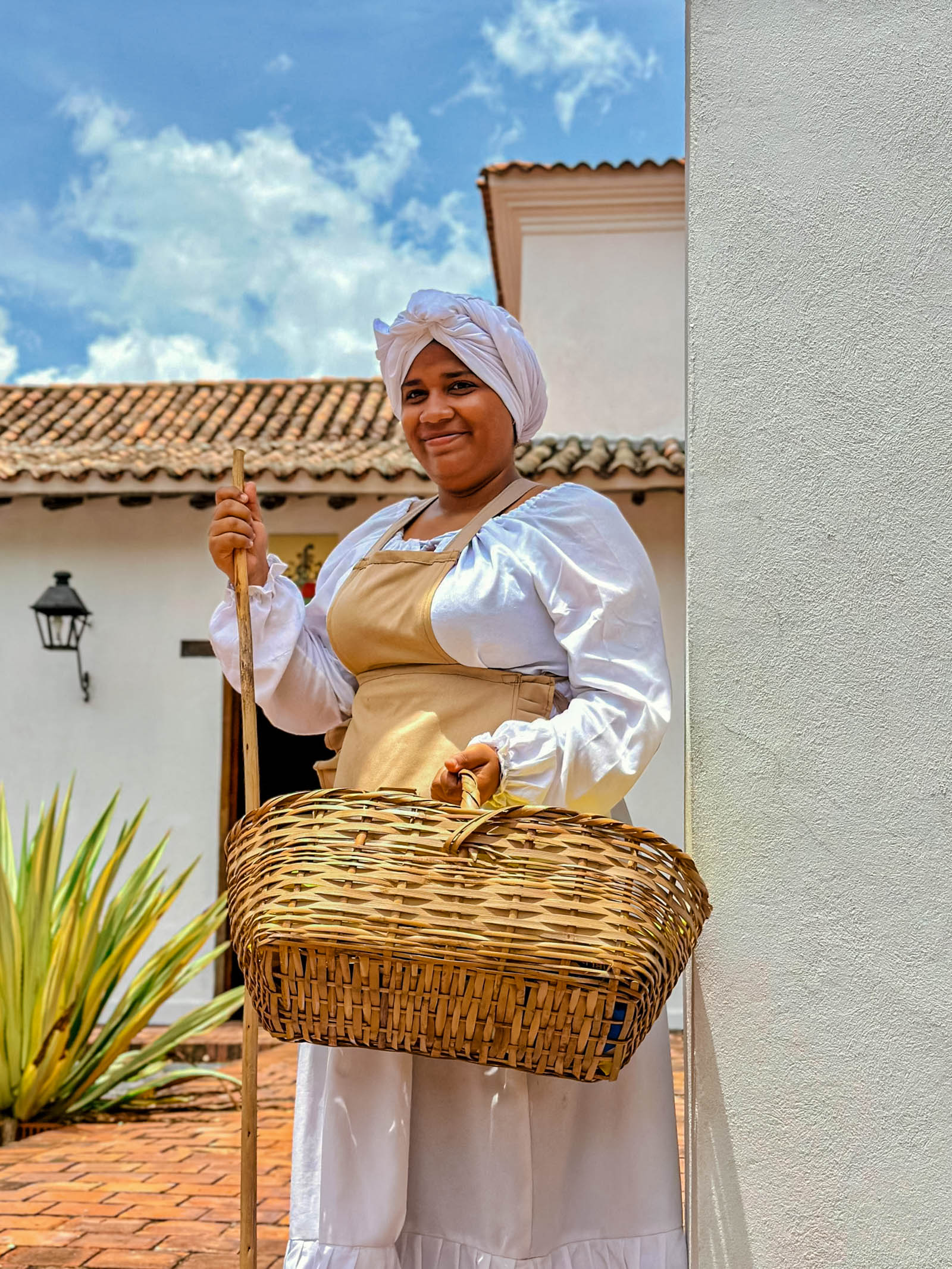
Through wide wooden doors, you look into the dining room, with a long dark table, carved chairs and a chandelier. A woman in a period dress, with a basket in her hands, completed the picture of colonial daily life.
Walking through these rooms, I imagined how Simón Bolívar received reports here and how the house became a real military headquarters in 1814. Today, the house exudes peace and quiet. Palm trees, tropical plants and birds create an idyllic atmosphere, a complete contrast to the turbulent historical events.
SAN MATEO: MUSEUM OF THE LIBERATOR
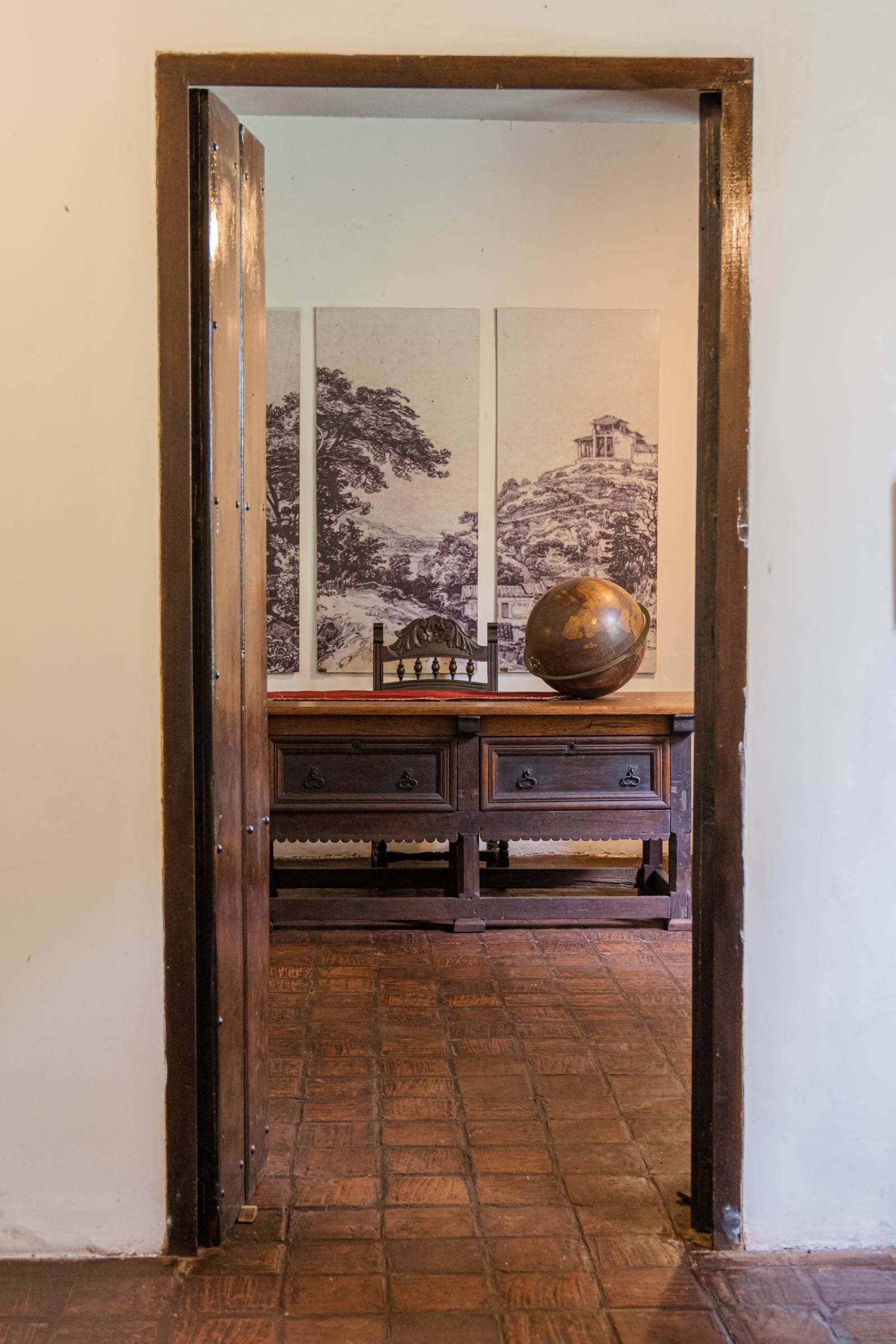
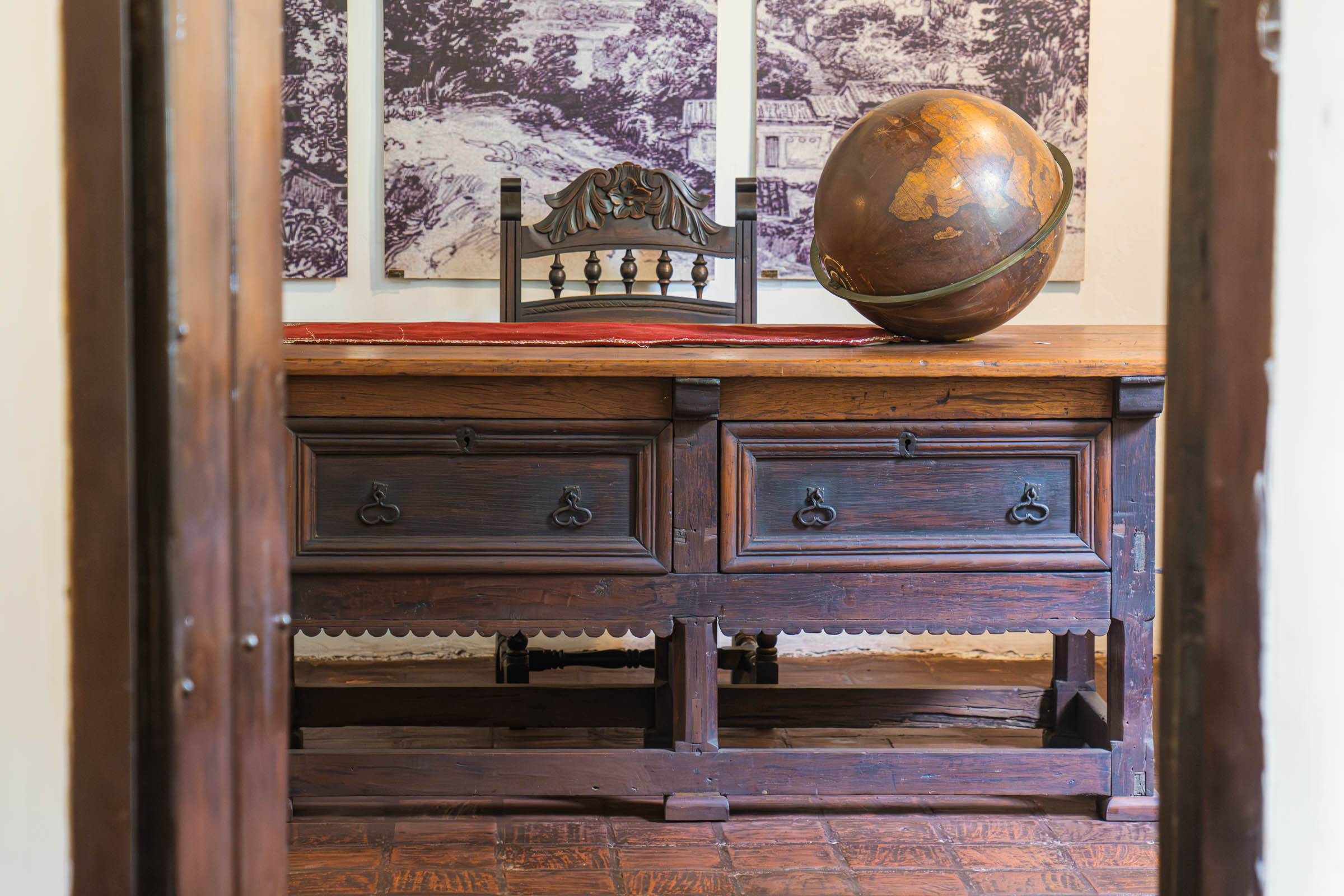
Casa Histórica de San Mateo also functions as a museum about the life and times of Simón Bolívar. In one of the rooms, a beautiful wooden desk stands in front of large black-and-white engravings. An old globe rests on top of it. It is easy to imagine maps spread across it and plans for a free continent.
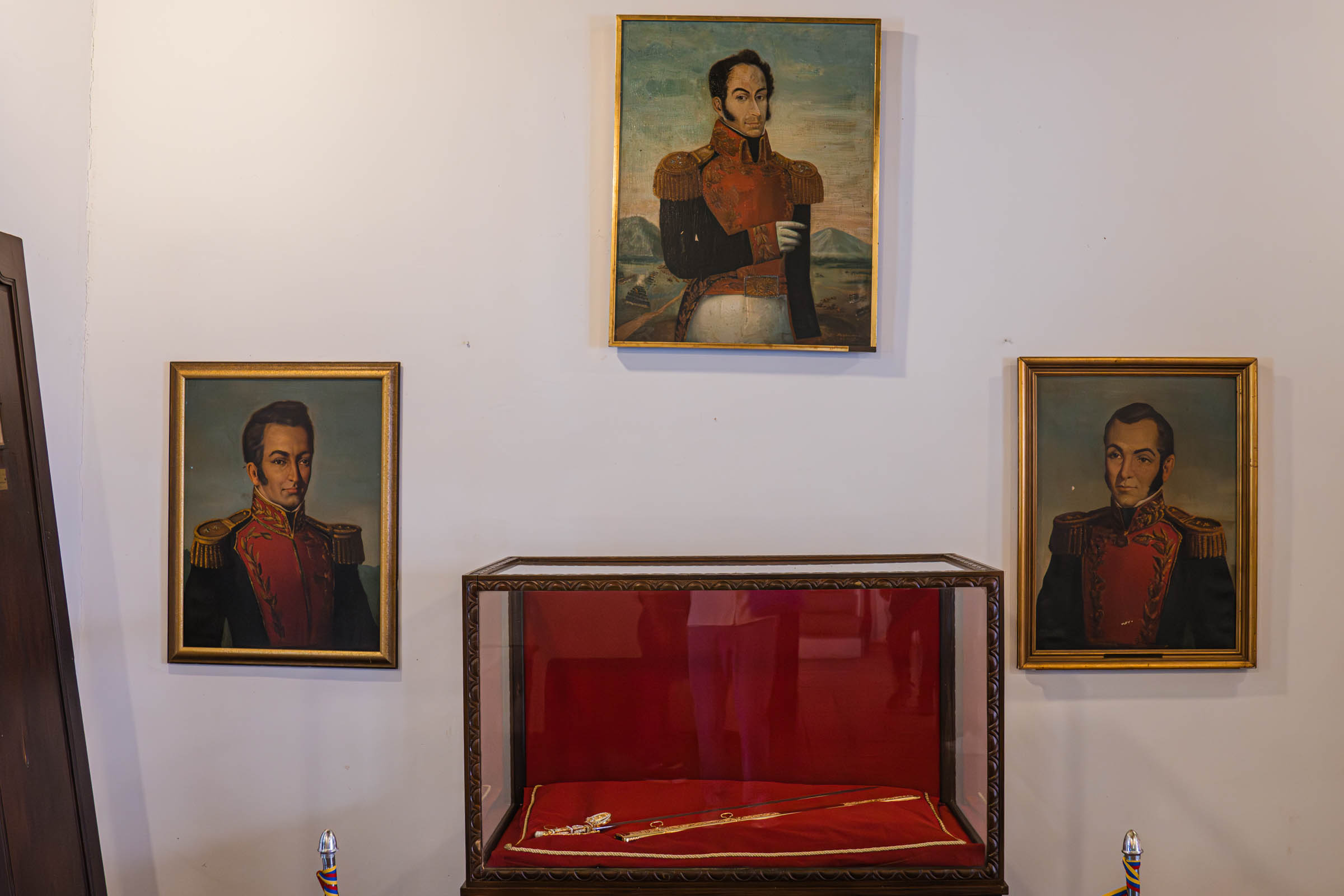
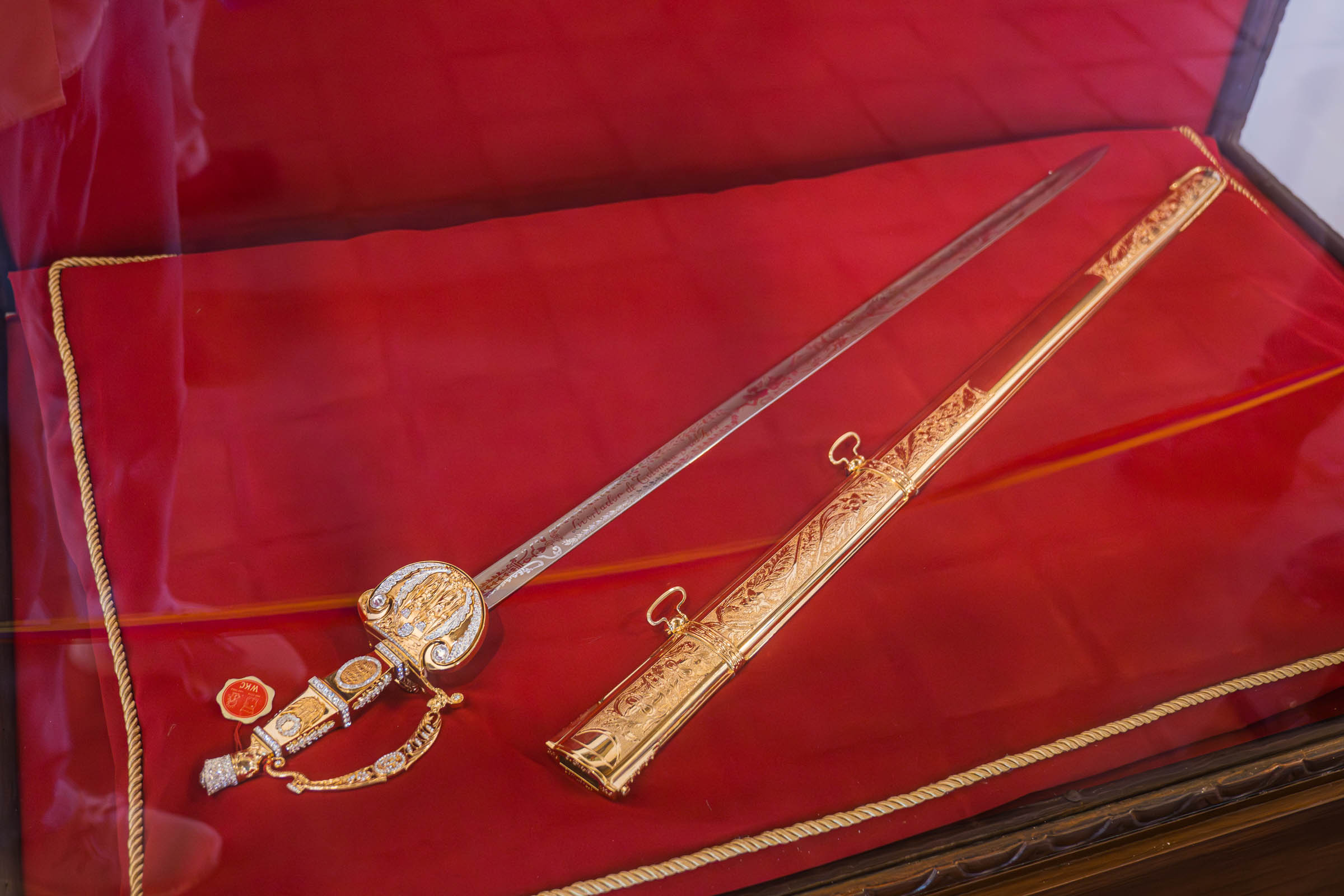
In another room, portraits of Bolívar in uniform hang above a glass case with a richly decorated sword and scabbard. Its gold details shine against the red velvet of the case.
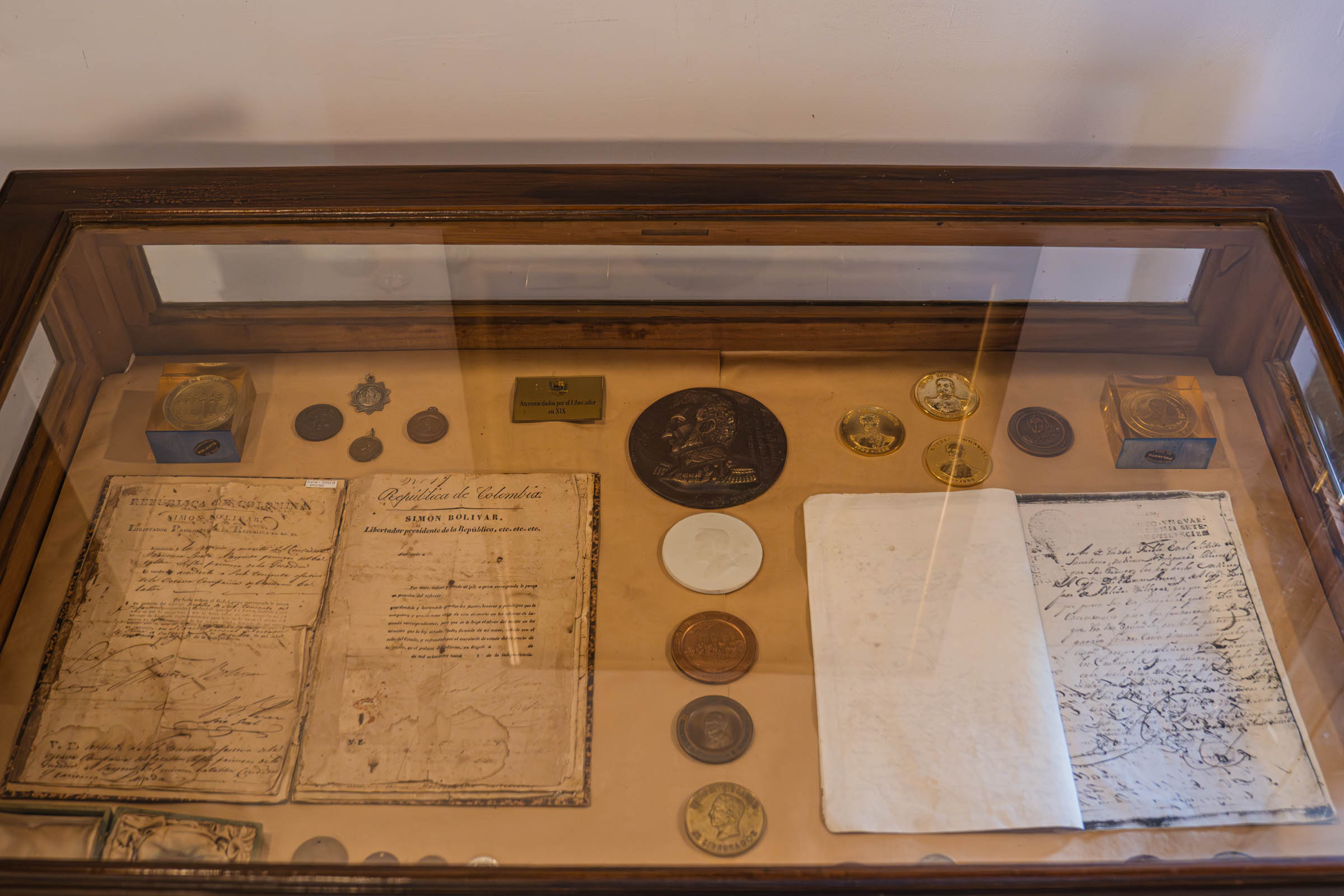
Another case holds documents, coins and medals from the time of independence. Handwritten pages, seals and commemorative medals tell the story of the long struggle that changed the map of South America.
In this way, the museum does not only show objects, but also the atmosphere of an era.
HIPÓLITA, THE WOMAN WHO RAISED BOLÍVAR
What touched me the most was the way the local guides talk about the house. Their stories are not just historical facts, but warm stories full of pride and gratitude. San Mateo is not only history, it is a living memory, where people come to remember, to learn and to inspire new generations.
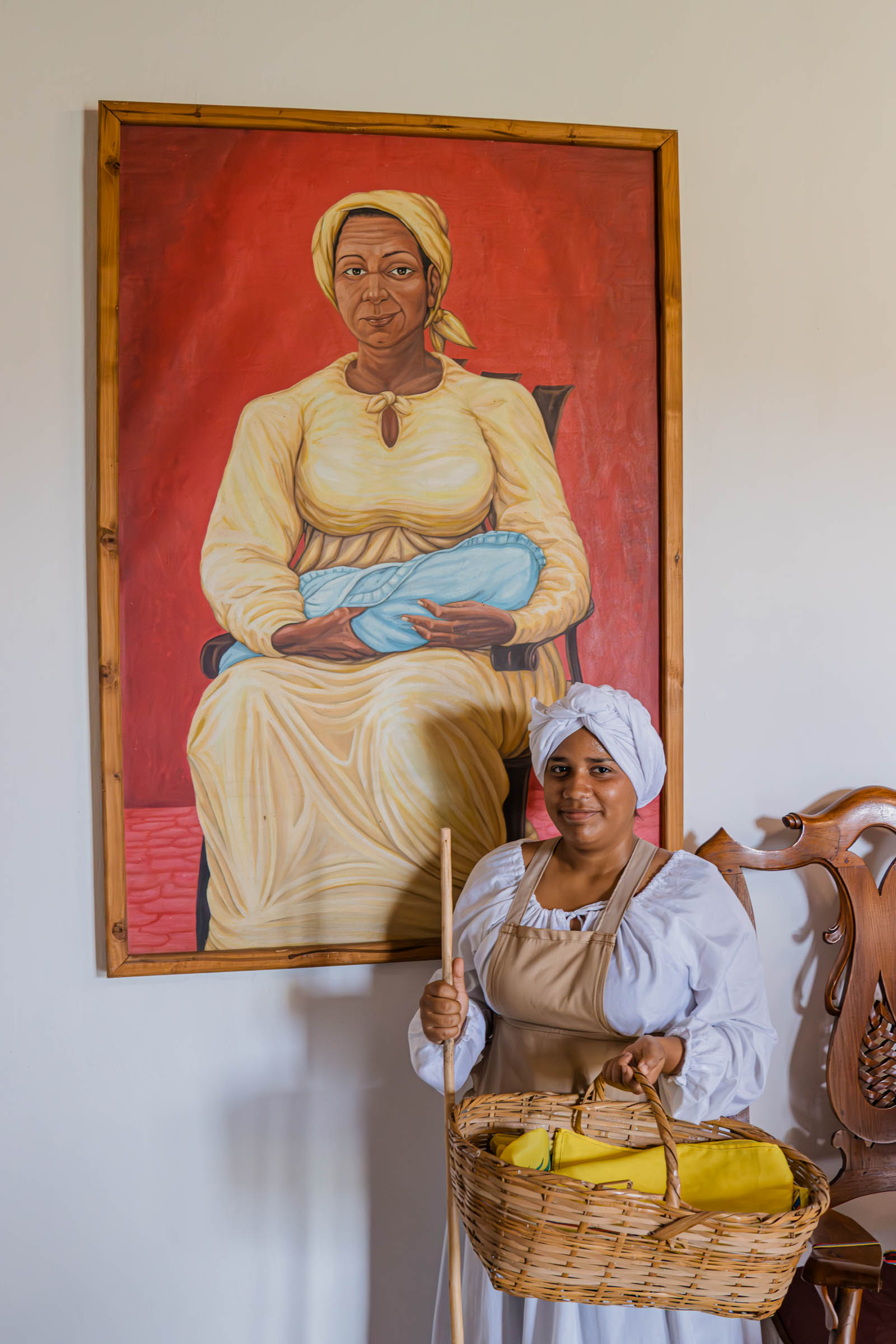
One of those stories is about Hipólita. She was born in San Mateo in 1763 and was enslaved on the family’s sugar estate. When Simón Bolívar was born in 1783, his mother was in poor health, so Hipólita became his nurse. She fed him, cared for him and guided his first steps and his first words.
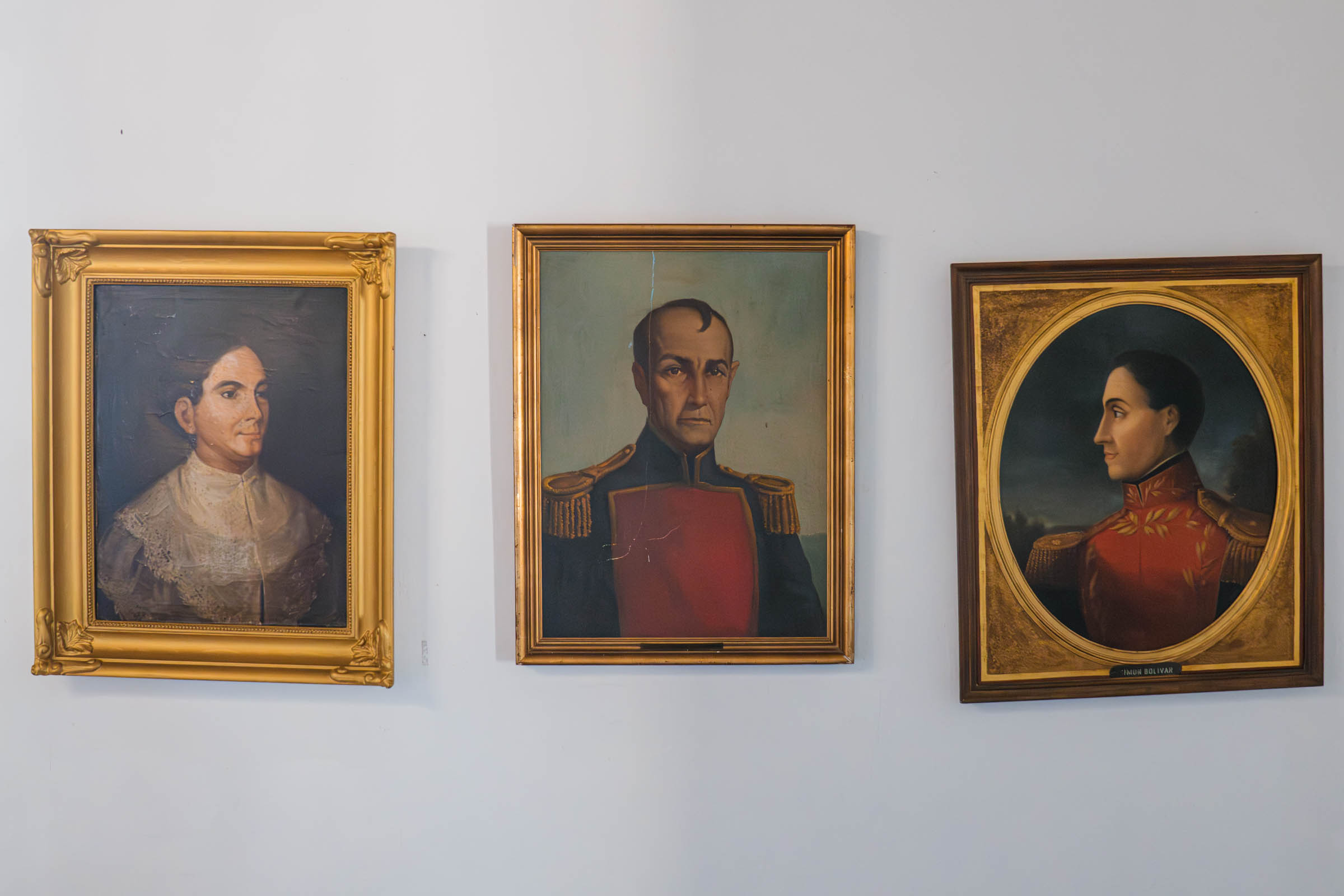
Bolívar never forgot her. In his letters, he wrote about Hipólita as the woman he considered both his mother and his father. In the house, a large painting shows her with the baby in her arms. Next to the portraits of the Bolívar family, it reminds visitors of the African heritage that shaped Venezuelan society.
BOLÍVAR’S LIFE OF CONTRASTS
A visit to San Mateo inevitably made me think about Bolívar himself. His life was full of contrasts. He came from an aristocratic family, yet he fought uncompromisingly for freedom. He enjoyed the luxury of his youth in Europe, and later he lived a difficult military life in the jungles and mountains of South America.
There are also interesting moments in his private life. On September 25, 1828, in Bogotá, Manuela Sáenz helped him escape from conspirators. After that night, Bolívar began to call her the Liberator of the Liberator. The guides did not say much about their life together. Still, that one anecdote was enough to understand how strong her influence was.
For me as a traveler, Casa Histórica de San Mateo is one of those places that leave an indelible mark. Its rooms are more than two centuries old, and its walls have survived war and reconstruction. Here, you realize that history is not just something you read in books. It is there, tangible and real.
San Mateo taught me that freedom has a high price. It also taught me that heroes are sometimes ordinary people who make one decision that changes the course of history.
SAN MATEO: WHERE HISTORY MEETS TOURISM
Today, the image of Bolívar is everywhere in Venezuela: statues in the squares and his name on streets in every city. In San Mateo, however, you meet him in a more personal way, in the house and on the land of his family.
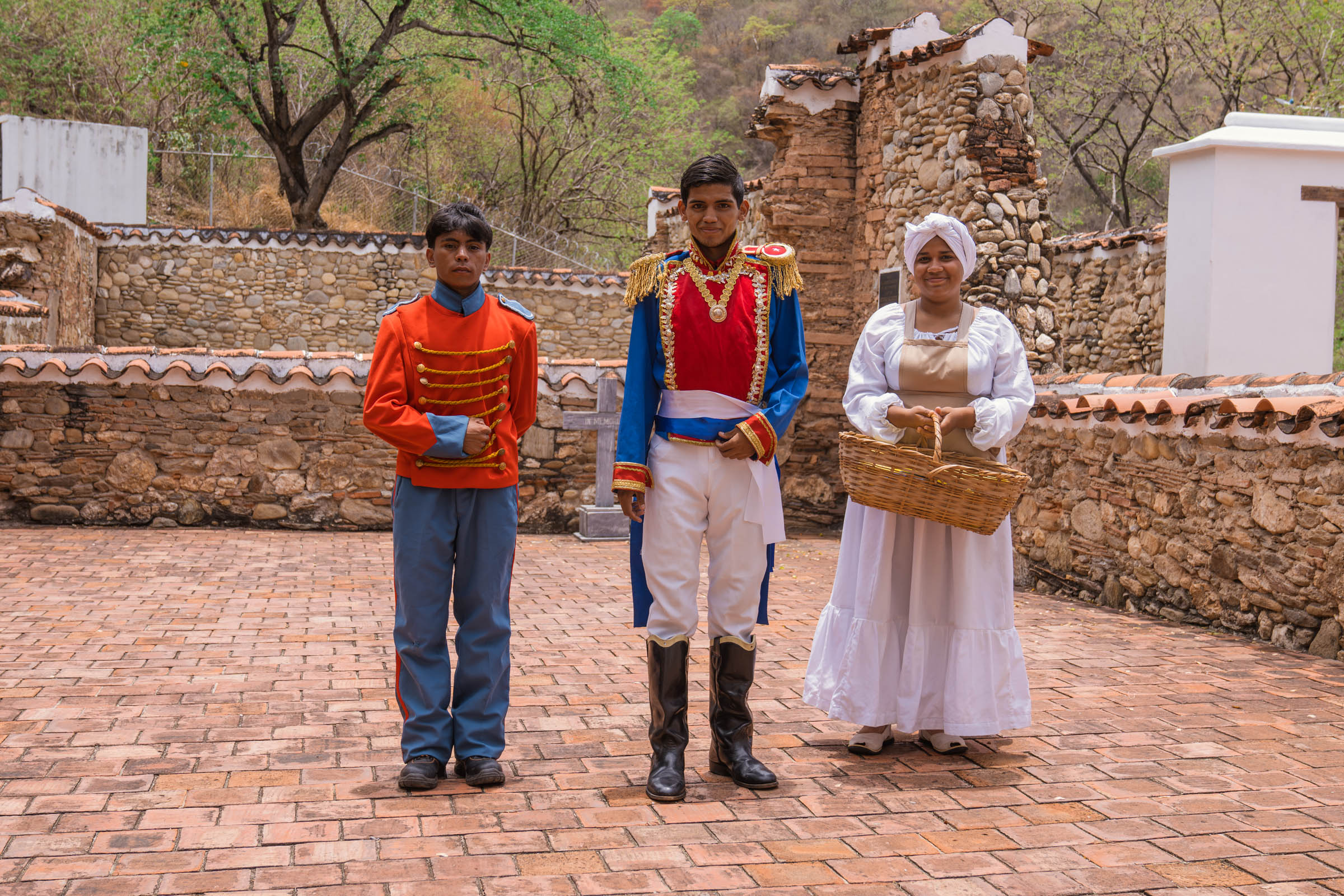
Around the Casa Alta, the old stone walls of the estate still stand, with red tiles on top and memorial plaques on their sides. On the day of my visit, a small group in historical costumes posed among them. A soldier in a red jacket stood next to an officer in a uniform inspired by Bolívar’s and a woman in a white dress with a basket.
For tourists, visiting this place is not only a historical trip. It is also an opportunity to get to know the local culture, to talk with the locals and to feel the spirit of the past.
TIPS FOR VISITING SAN MATEO
If you are planning a trip to Venezuela, put San Mateo on your list. Bring comfortable shoes, because you will walk a lot between the mill, the museum and the house on the hill. Also, be sure to take a guide, because their passion and knowledge give a special dimension to the visit.
Do not rush. Leave yourself enough time to enjoy the atmosphere of the house, to stop in the courtyard and to imagine moments from the past. And do not skip the Sugar Cane Museum. Its machines and objects help you understand the life of the whole valley.
Finally, combine San Mateo with a visit to the home of Santa Teresa Rum. Both places lie in the valleys of Aragua, so together they make a perfect day trip from Caracas.
HACIENDA SANTA TERESA, THE HOME OF SANTA TERESA RUM
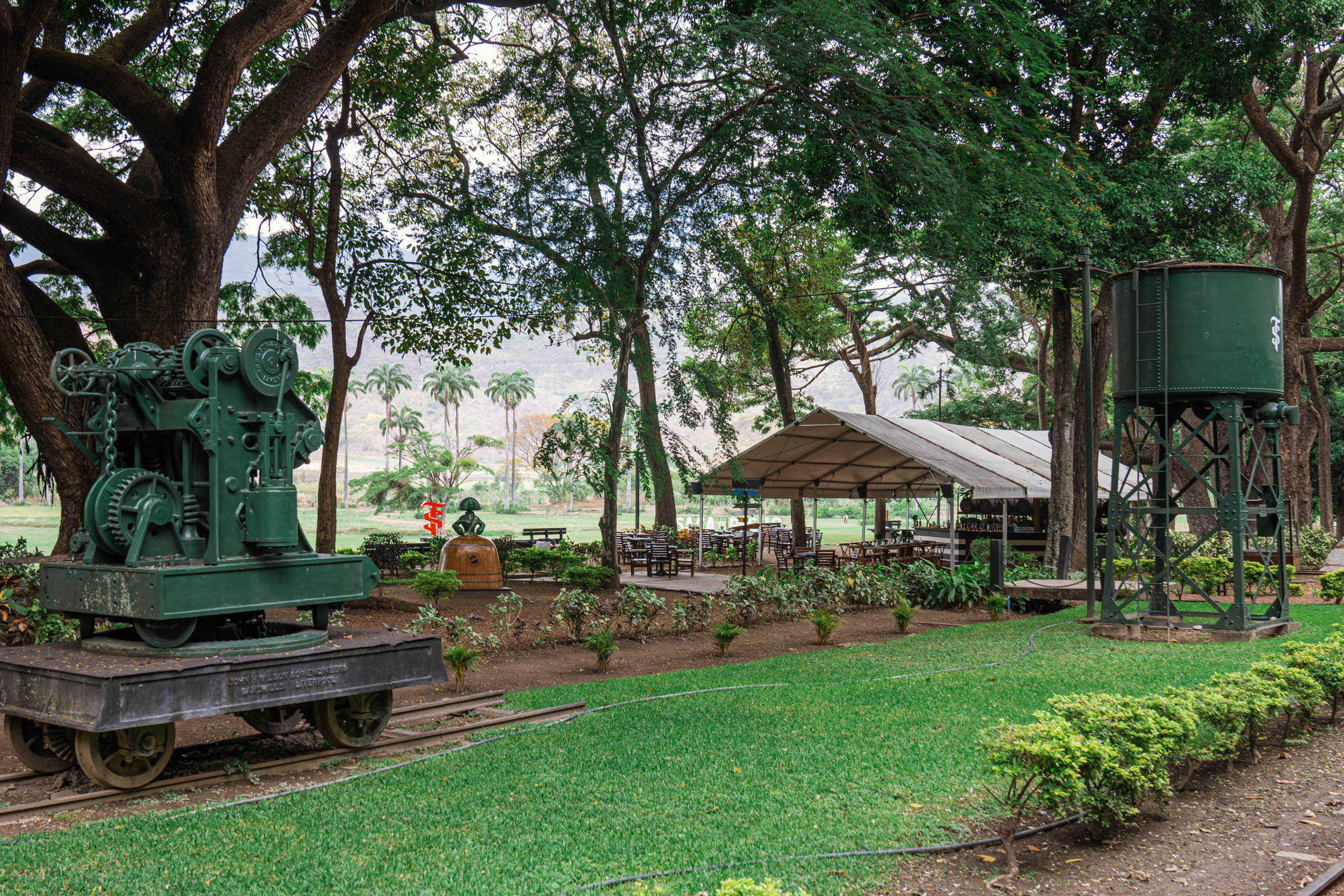
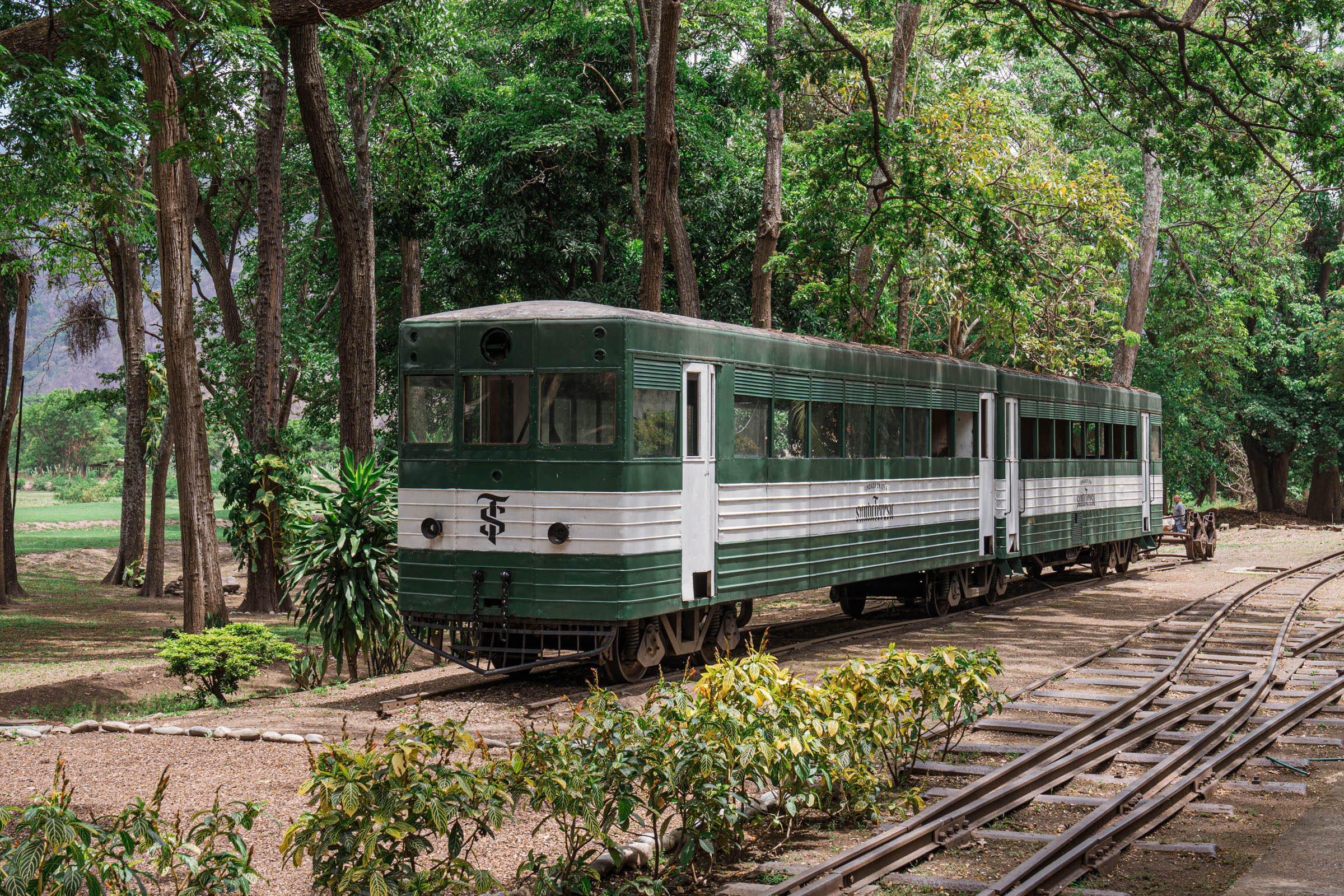
I continued my journey through the Aragua Valley to Hacienda Santa Teresa, the estate of the famous Santa Teresa Rum. It lies in El Consejo, about an hour’s drive from Caracas. Arriving here was like entering an oasis. At the main gate, I was greeted by the pleasant smell of fermented sugar cane. Old machines and a vintage engine on rails stood under the trees like open-air exhibits.
The history of Santa Teresa Rum goes back to 1796. That year, the Count of Tovar founded the hacienda in one of the most fertile valleys of central Venezuela. Coffee, cocoa and sugar cane grew here. Then, in 1885, Gustavo Julio Vollmer Ribas acquired the estate, and his family still produces Santa Teresa Rum today.
In 1909, the family registered the Ron Santa Teresa brand, the first registered rum brand in Venezuela. Today, Alberto Vollmer, a member of the fifth generation, leads the company. The estate has also become a tourist, agricultural and sports complex, with tours, a restaurant and a bar.
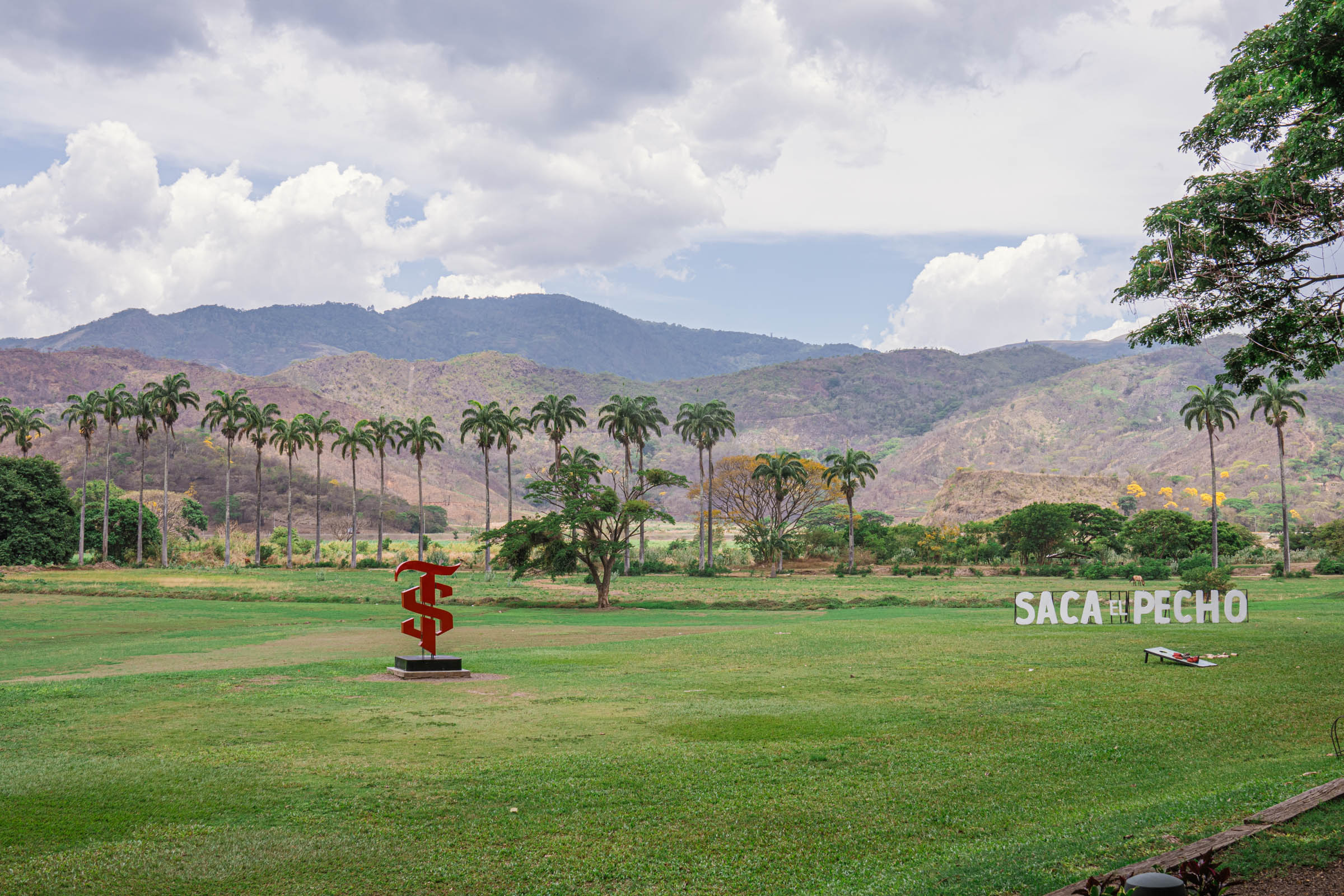
On the large lawn, a red sculpture of the ST logo stands in front of the mountains. Next to it, a sign reads Saca el Pecho, the name of one of the premium experiences of the hacienda.
THE OLD RAILWAY AT THE HOME OF SANTA TERESA RUM
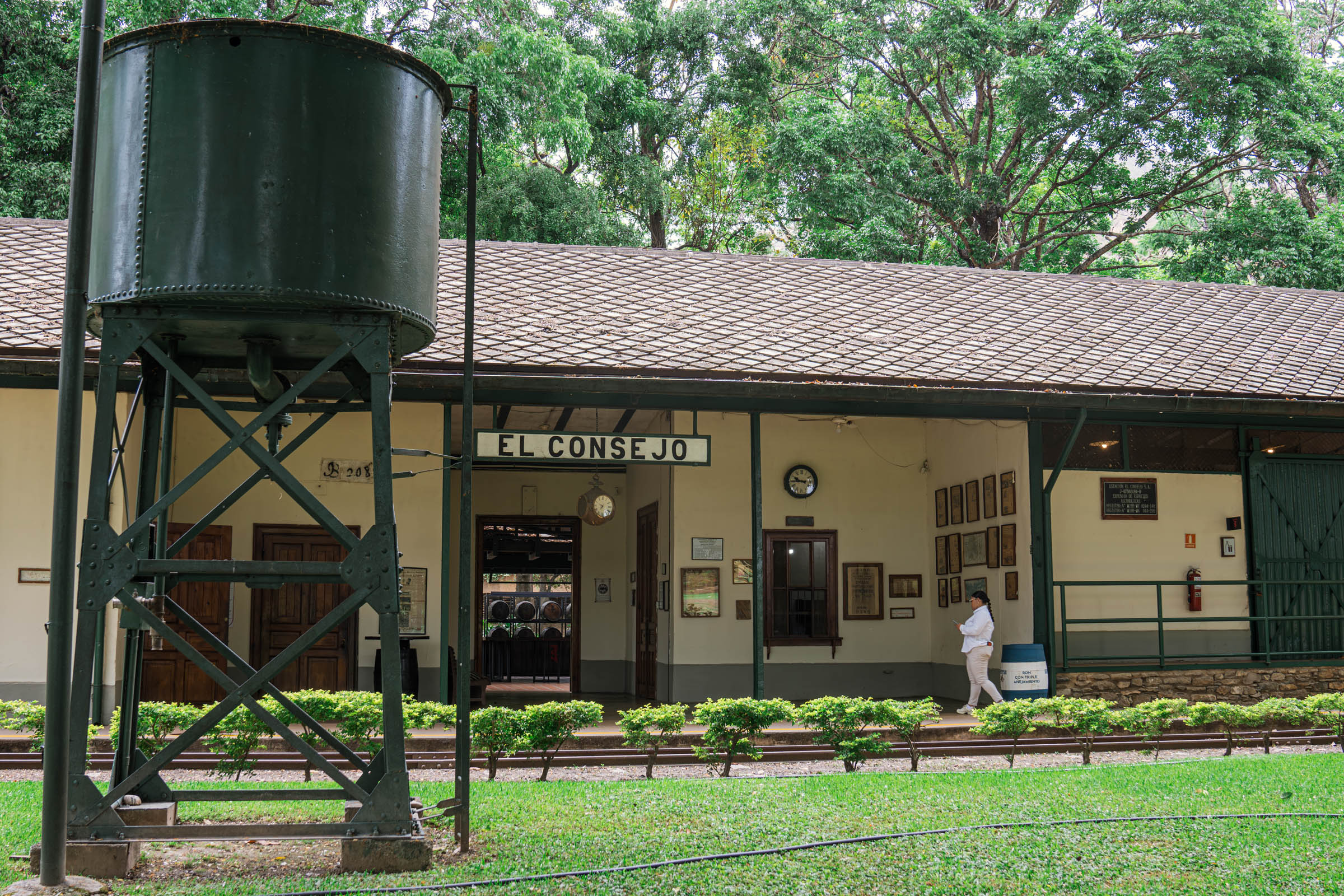
One of the most charming surprises of Hacienda Santa Teresa is its railway heritage. At the estate, I found the old El Consejo station, with its tiled roof, green details and a tall water tower in front of it.
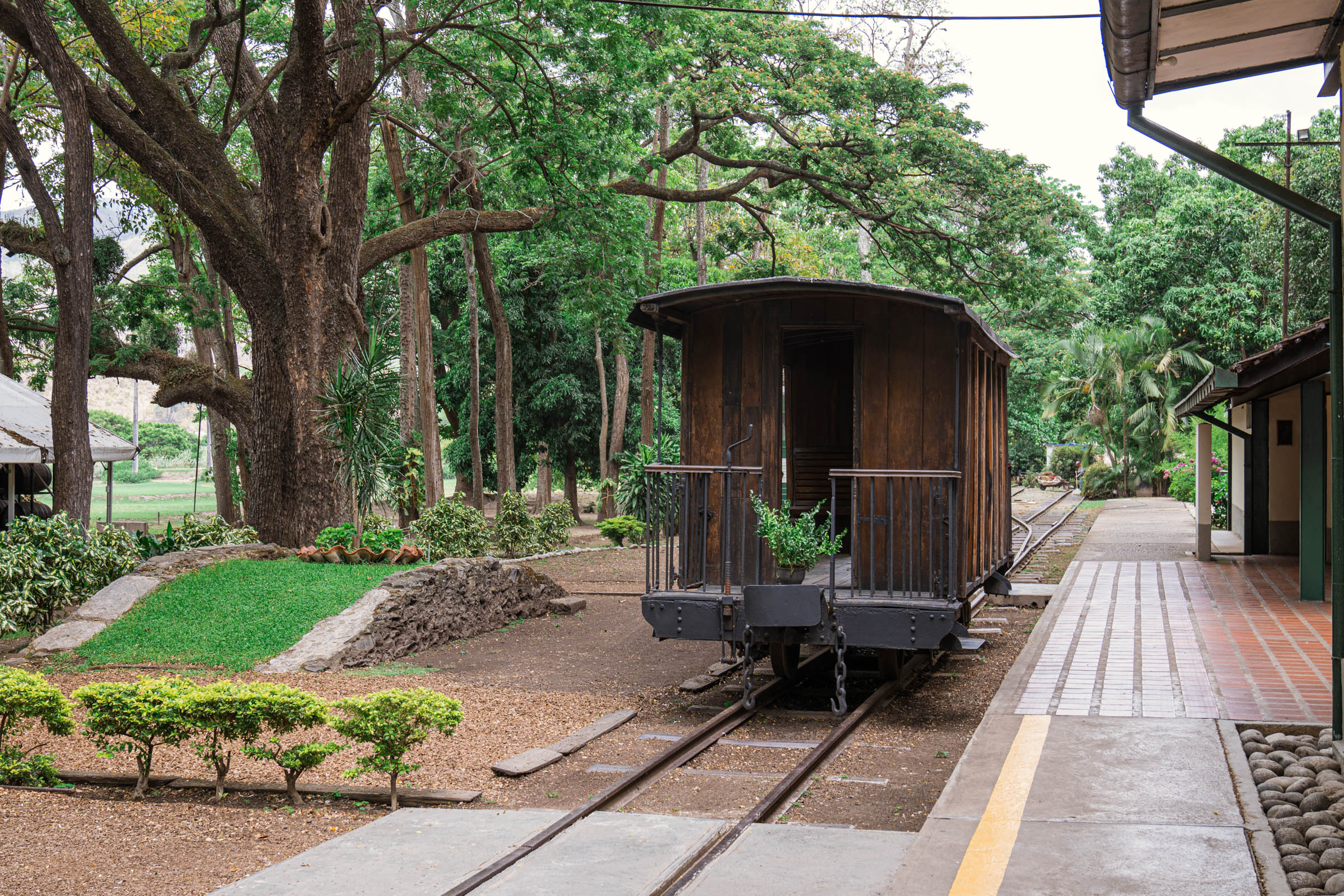
The station belonged to the Great Venezuela Railway, which connected Caracas and Valencia. The line was 179 kilometers long, it was completed in February 1894, and the last train ran in 1966. Parts of this railway are still preserved in El Consejo.
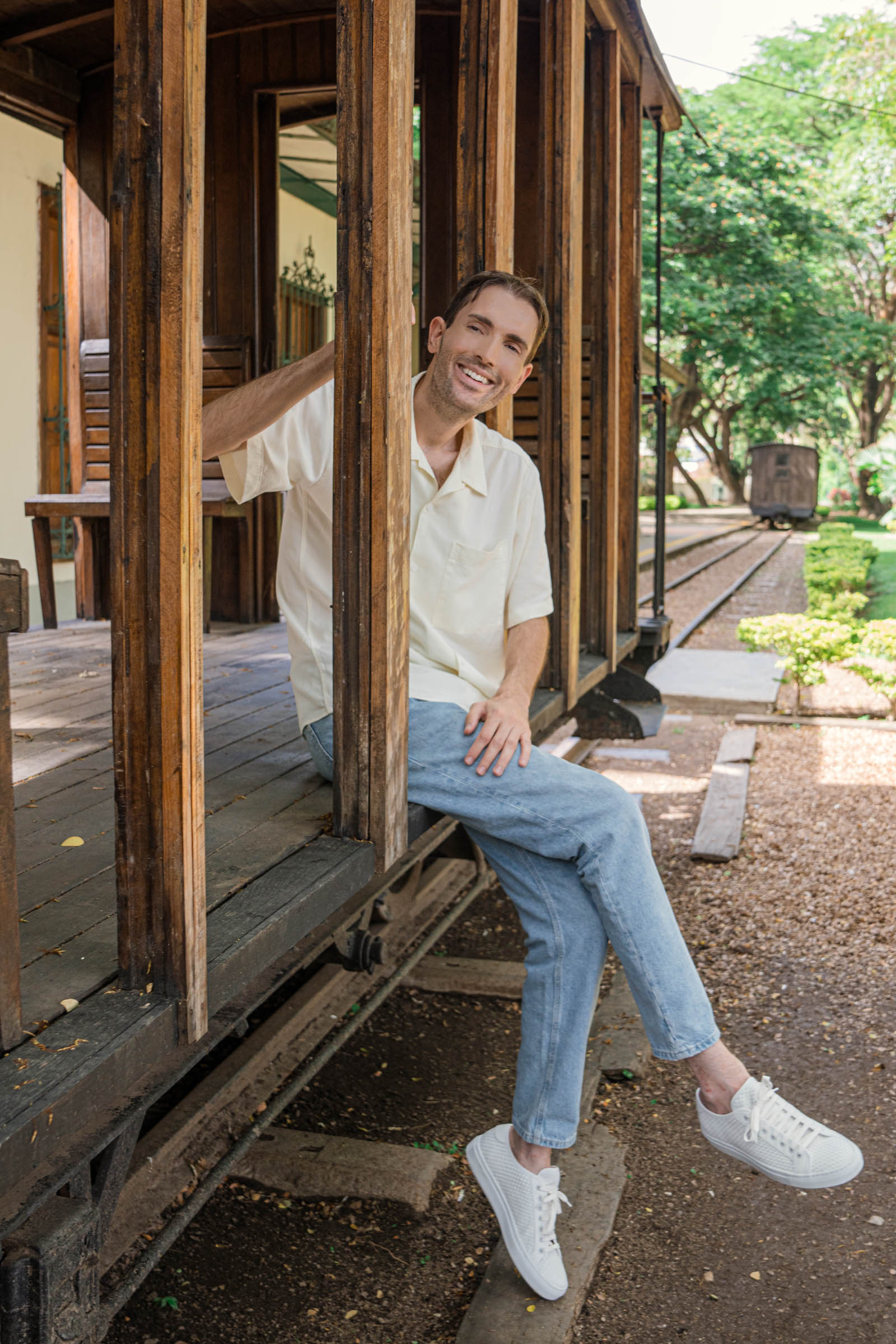
On the platform, an old wooden carriage waits on the tracks, as if the next passengers were about to board. Of course, I could not resist sitting in its doorway for a photo.
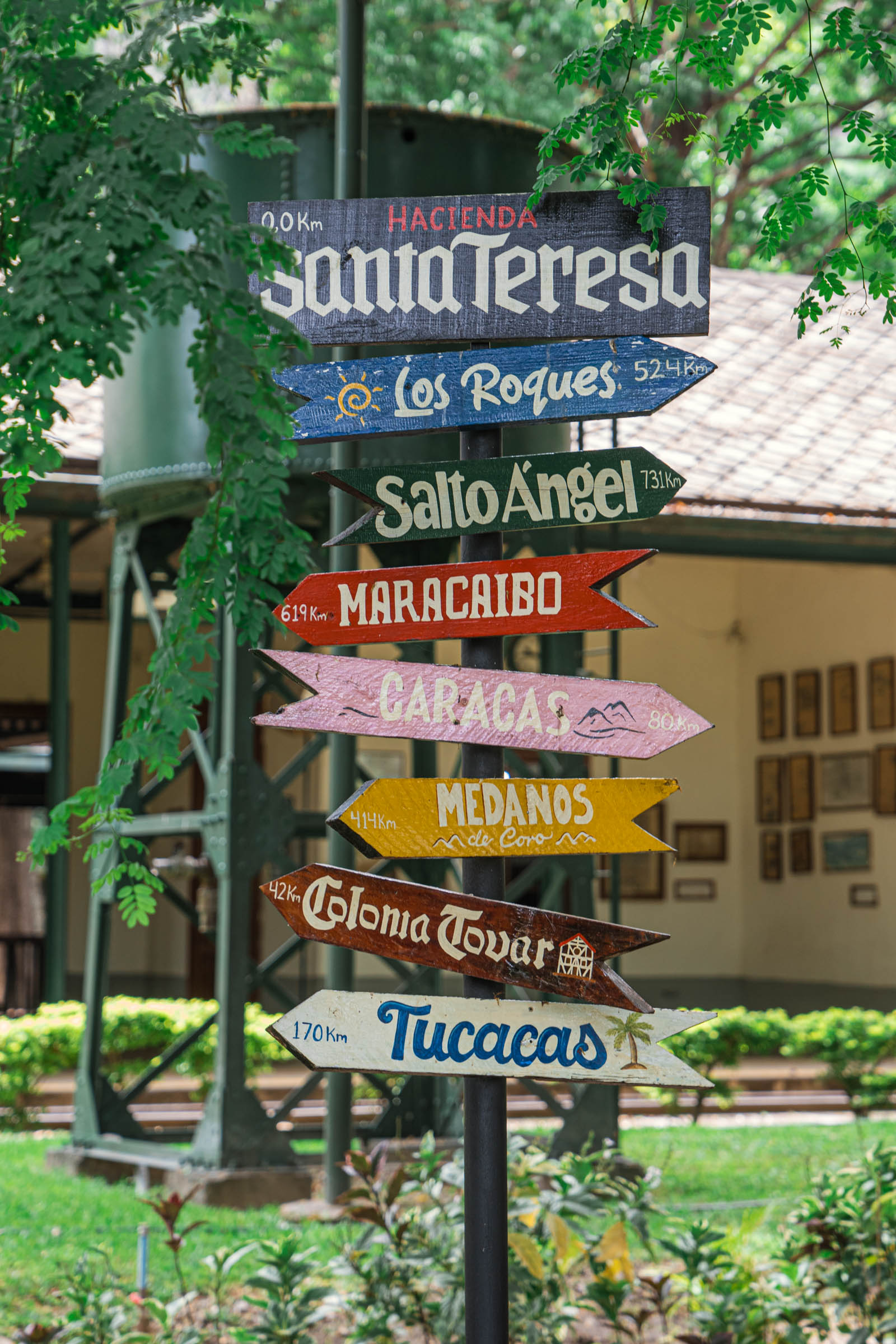
Next to the station, a colorful signpost points toward famous destinations in Venezuela. Its arrows show Los Roques, Angel Falls, Maracaibo, Caracas, Médanos, Colonia Tovar and Tucacas. It is a playful reminder of how many beautiful places this country hides.
WALKING THROUGH THE CANE FIELDS OF SANTA TERESA RUM
From the station, I walked toward the fields. Between tall palm trunks, endless rows of green sugar cane stretched toward the mountains. It was here that I truly understood that every bottle of Santa Teresa Rum begins in the soil of this valley.
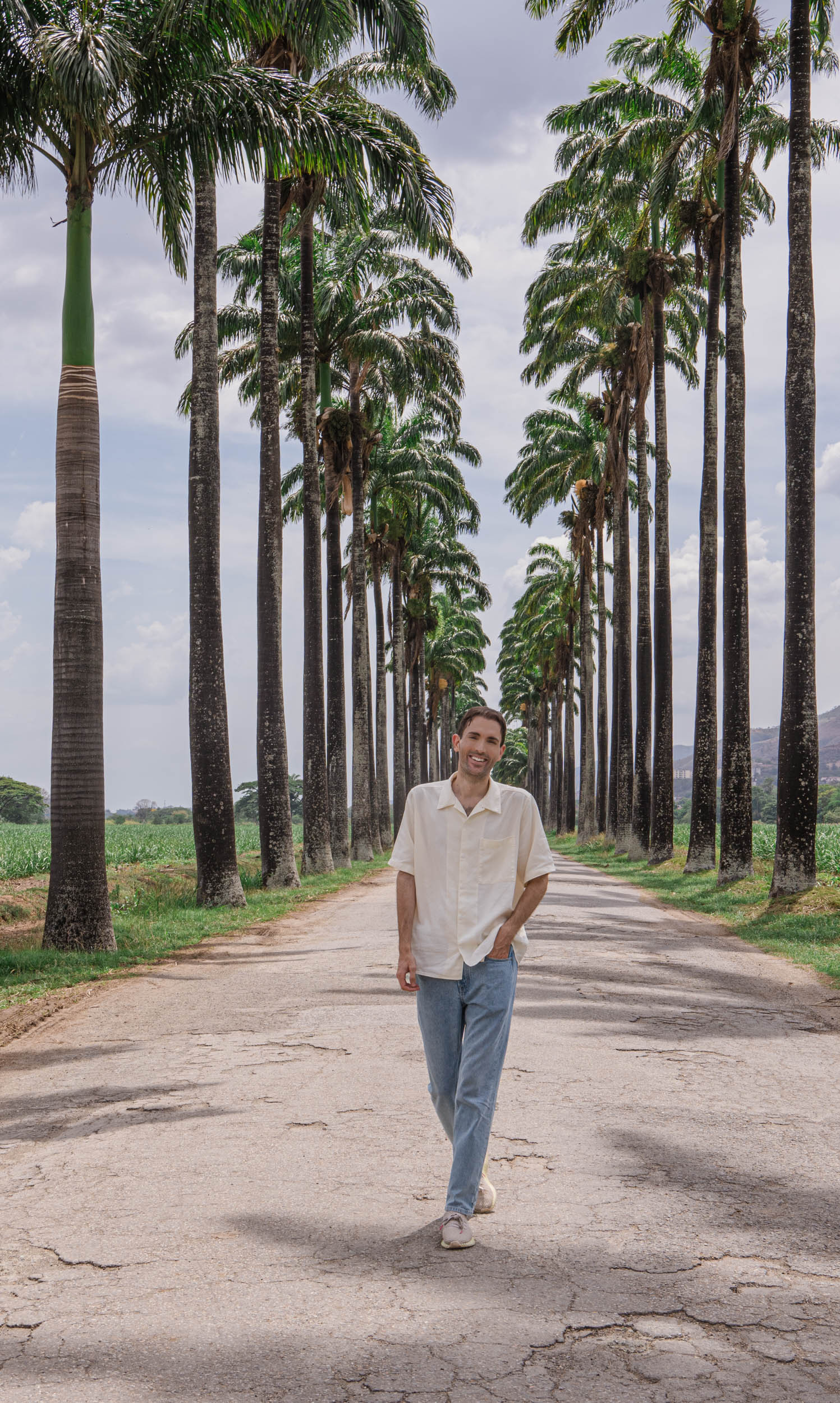
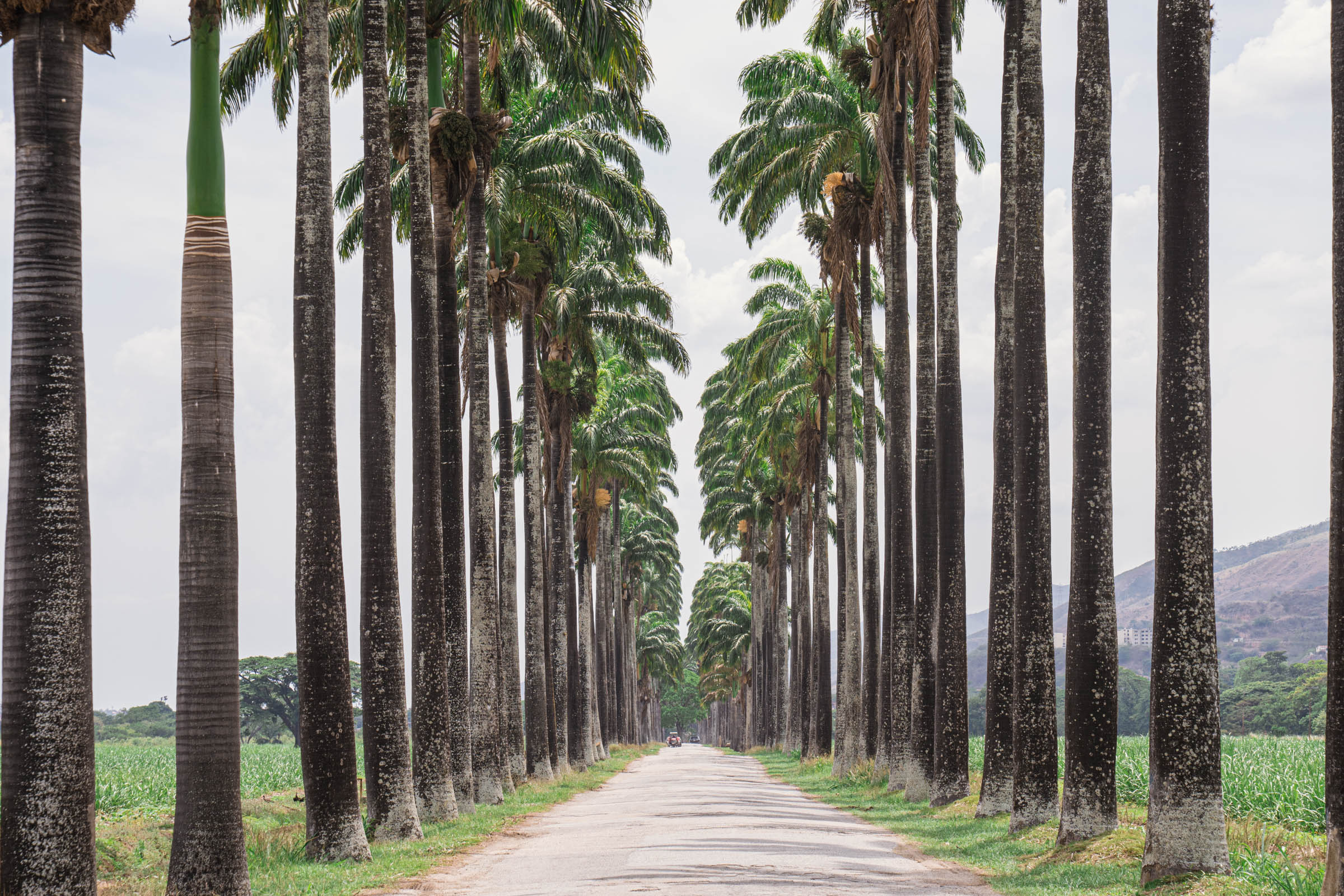
One of the most beautiful places on the estate is a long avenue lined with tall royal palms. The trees form a natural corridor, and their trunks rise like columns on both sides of the road. Walking along it, you hear only the wind in the leaves and the birds above the fields.
Today, the hacienda covers about 3,000 hectares. Besides the rum, the estate also produces Alcatraz Coffee, made by people whose work is part of a story of transformation. I will tell you more about that story a little later in this letter.
The silence of the plantation was the perfect introduction to the world of rum.
HOW SANTA TERESA RUM IS MADE
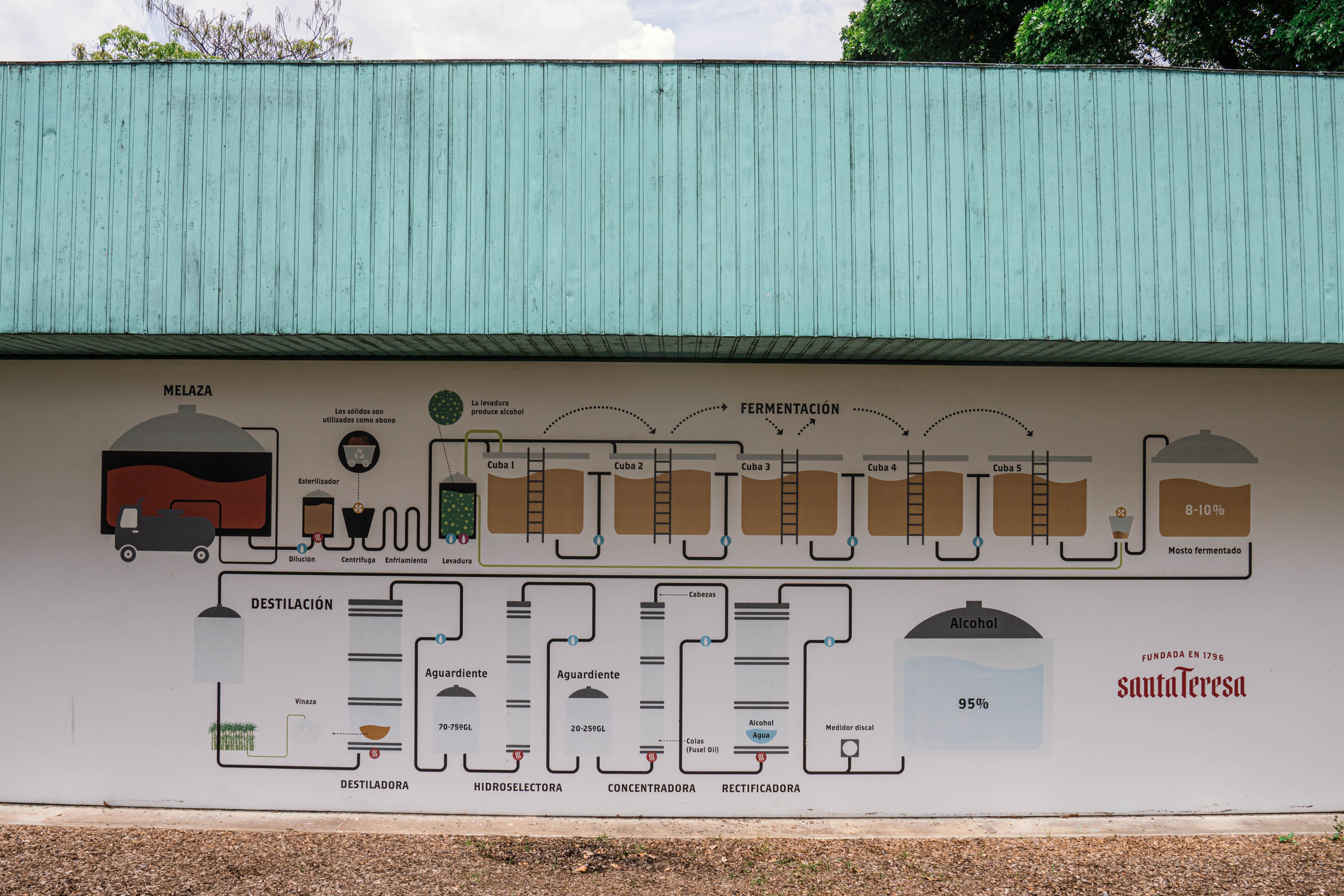
Although I came on a media trip, the guides kindly took me through the production. On one wall, a large painted diagram explains how Santa Teresa Rum is made. First the cane is milled, then the juice ferments, and finally it is distilled in tall columns and in a pot still.
The distillery of Santa Teresa Rum combines modern and traditional methods. Light and heavy rums come from the modern column distillery, while special rums come from the artisanal pot still. Then, they age patiently in oak barrels before they become part of the final blends.
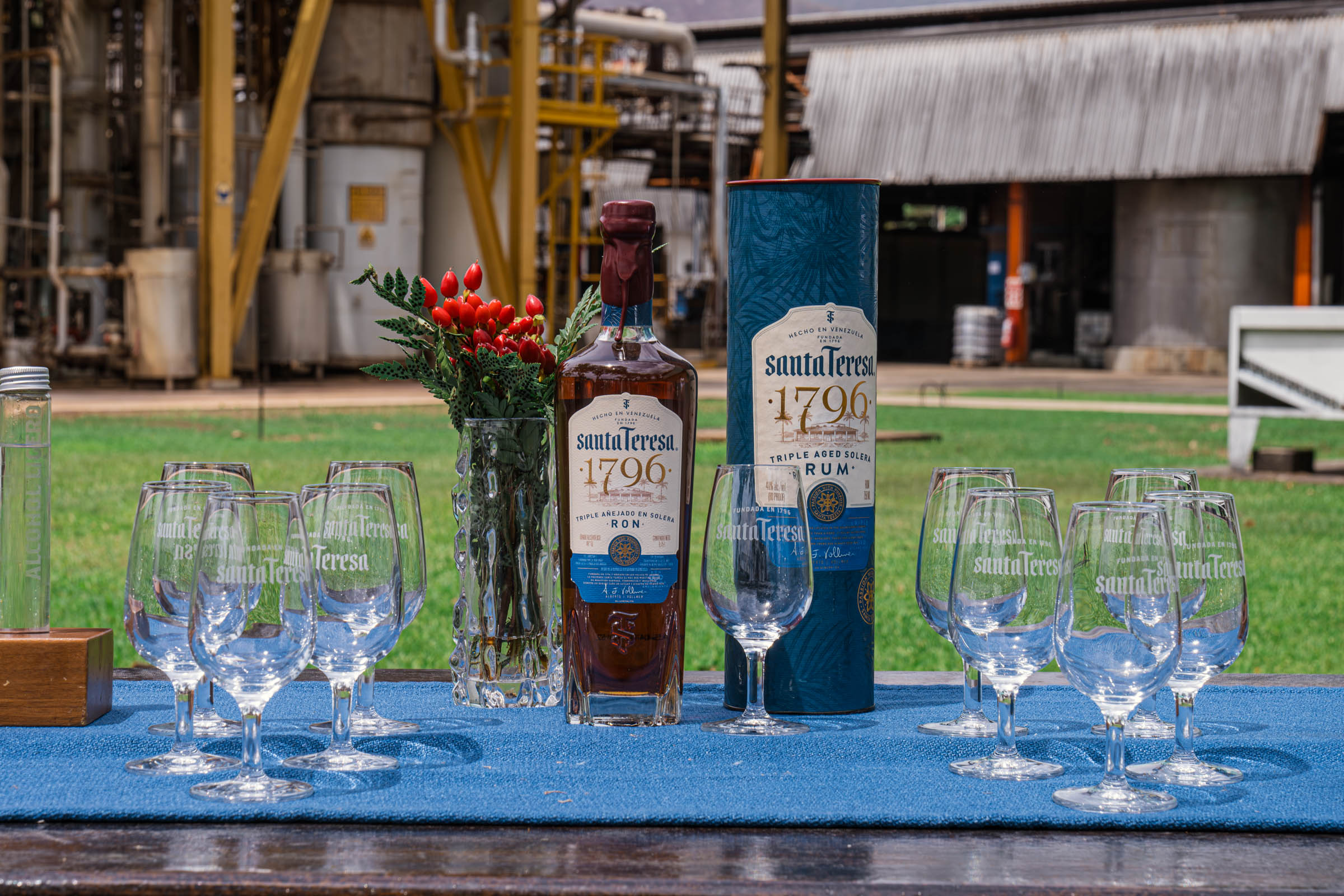
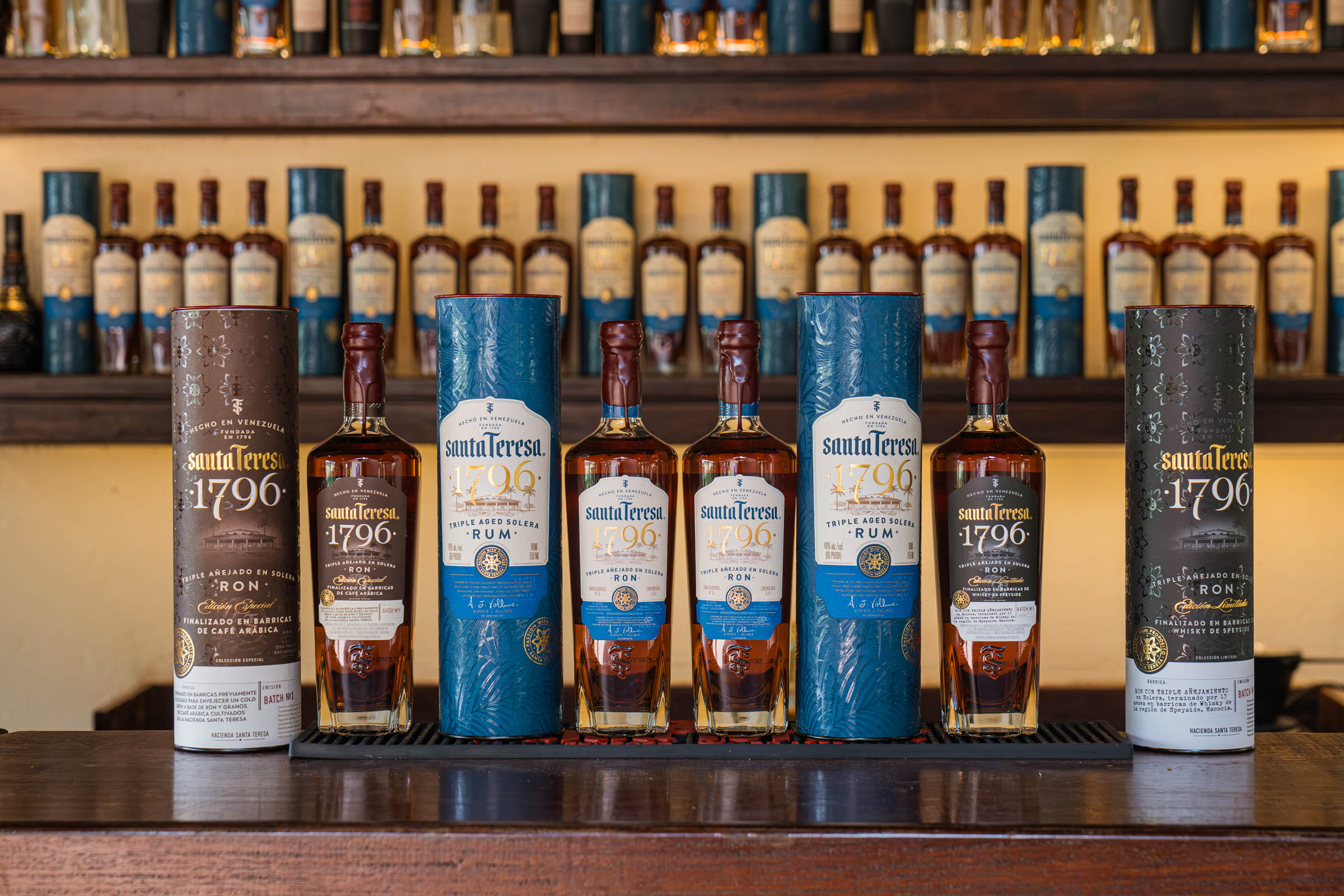
At the end of the tour, the host offered me Santa Teresa 1796, the flagship of Santa Teresa Rum. The rum was created in 1996 to celebrate the bicentennial of the hacienda, at the initiative of Alberto Vollmer Herrera of the fourth generation. Each sip brought notes of caramel and vanilla, with a hint of earthiness.
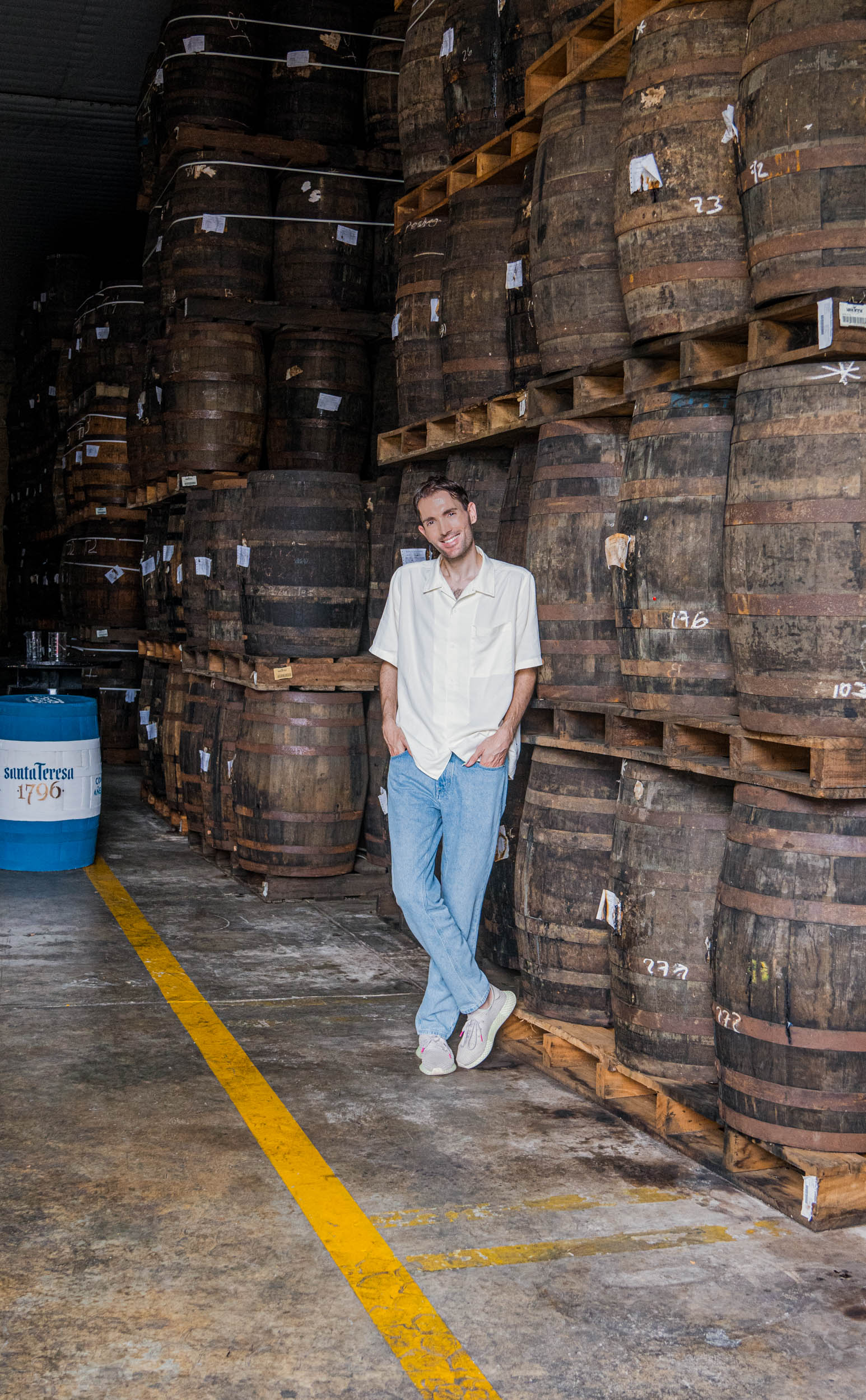
Later, I walked between tall stacks of barrels in the aging warehouse. The cool air, the smell of wood and the endless rows of casks create a very special atmosphere, almost like a cathedral of rum.
THE SOLERA SECRET OF SANTA TERESA RUM
What makes Santa Teresa 1796 so special is the solera method. In this system, barrels stand in levels. The rum from the lowest level goes into the bottles, and the barrels are then topped up with rum from the level above. So, the young rum constantly blends with the older one, which gives it exceptional depth and balance.
The solera was built in 1992, and its lowest level still contains rum from the original barrel, which has never been completely emptied. The blend that enters the solera includes rums aged up to 35 years in bourbon oak barrels.
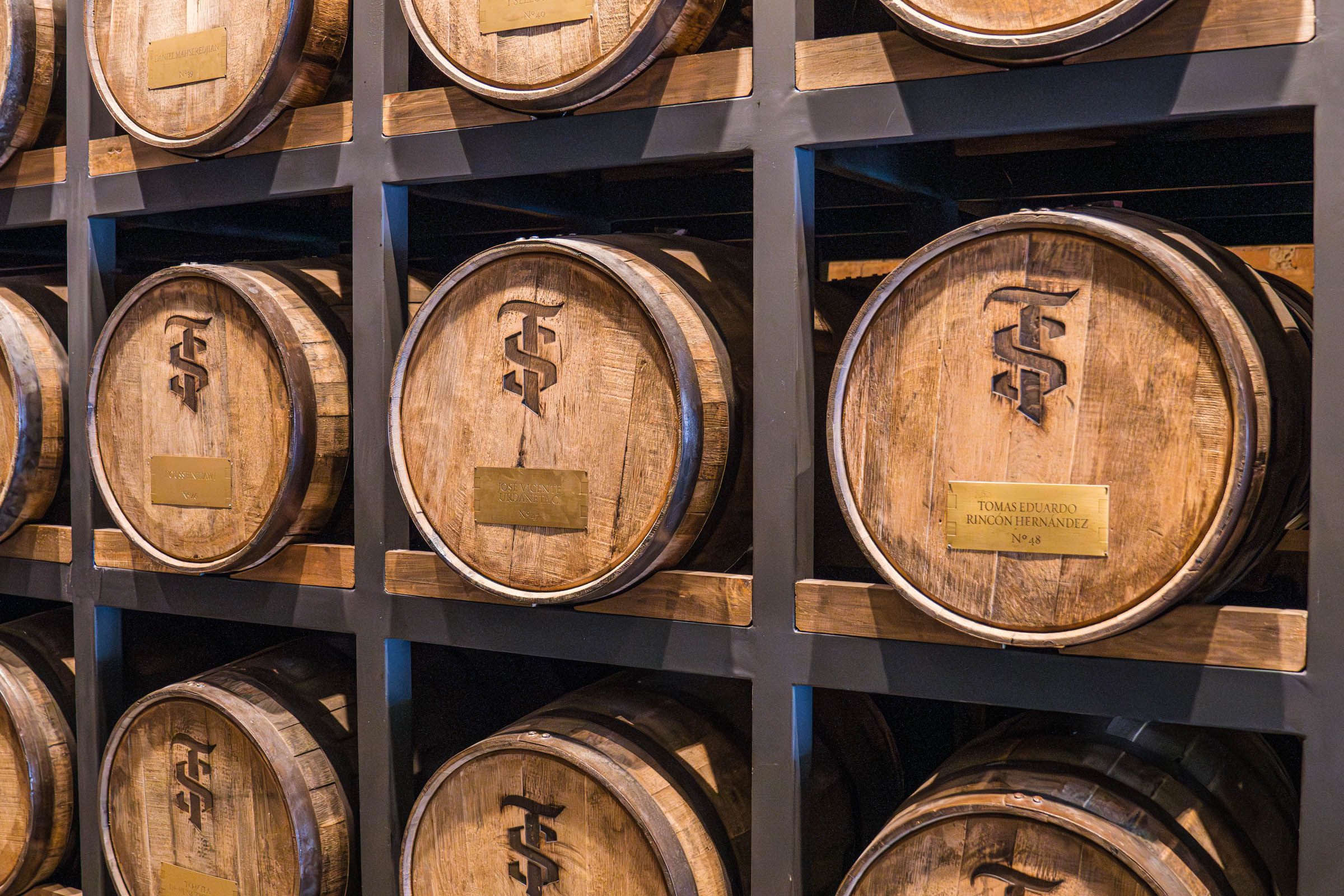
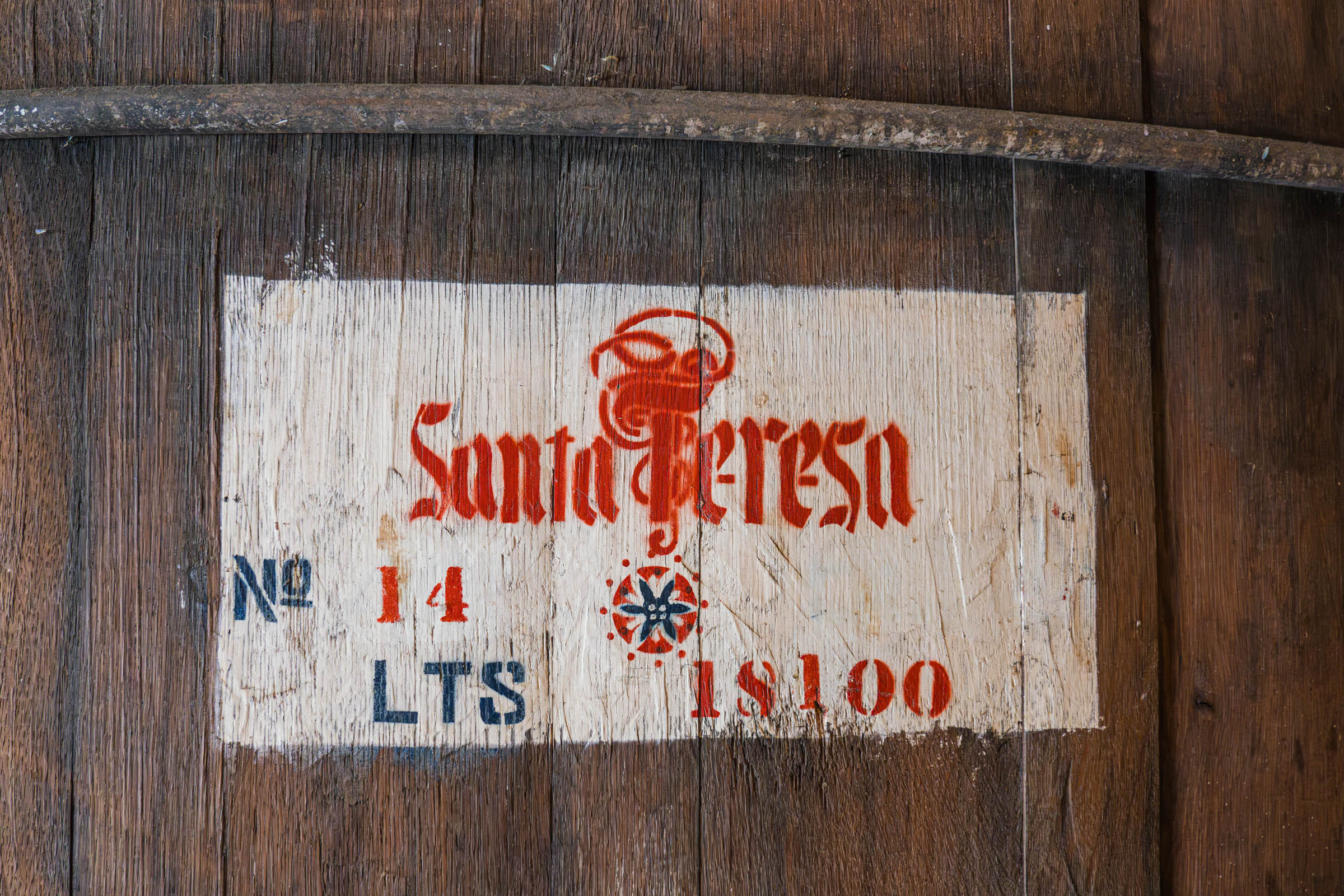
In the warehouse, I also saw rows of Santa Teresa Rum barrels marked with the ST logo and small brass plaques. Nearby stands a huge old wooden vat with the painted inscription Santa Teresa and a capacity of 18,100 liters.
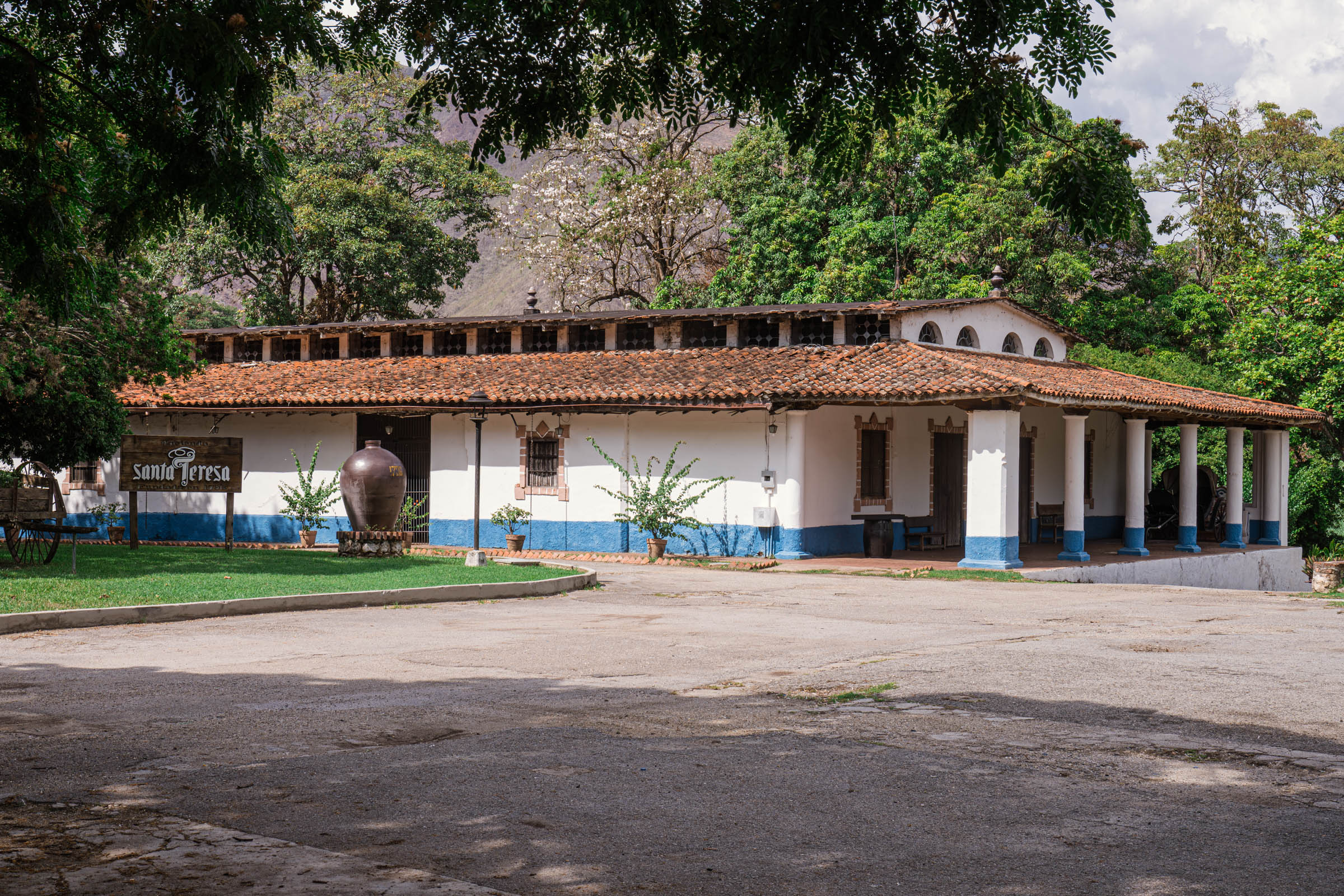
The historic buildings of the hacienda complete the picture. White walls with a blue base, red tiled roofs and a large clay jar at the entrance reflect the colonial heritage of the estate. Today, Santa Teresa Rum carries the Denomination of Origin Ron de Venezuela.
LUNCH, LOCOMOTIVES AND SANTA TERESA RUM
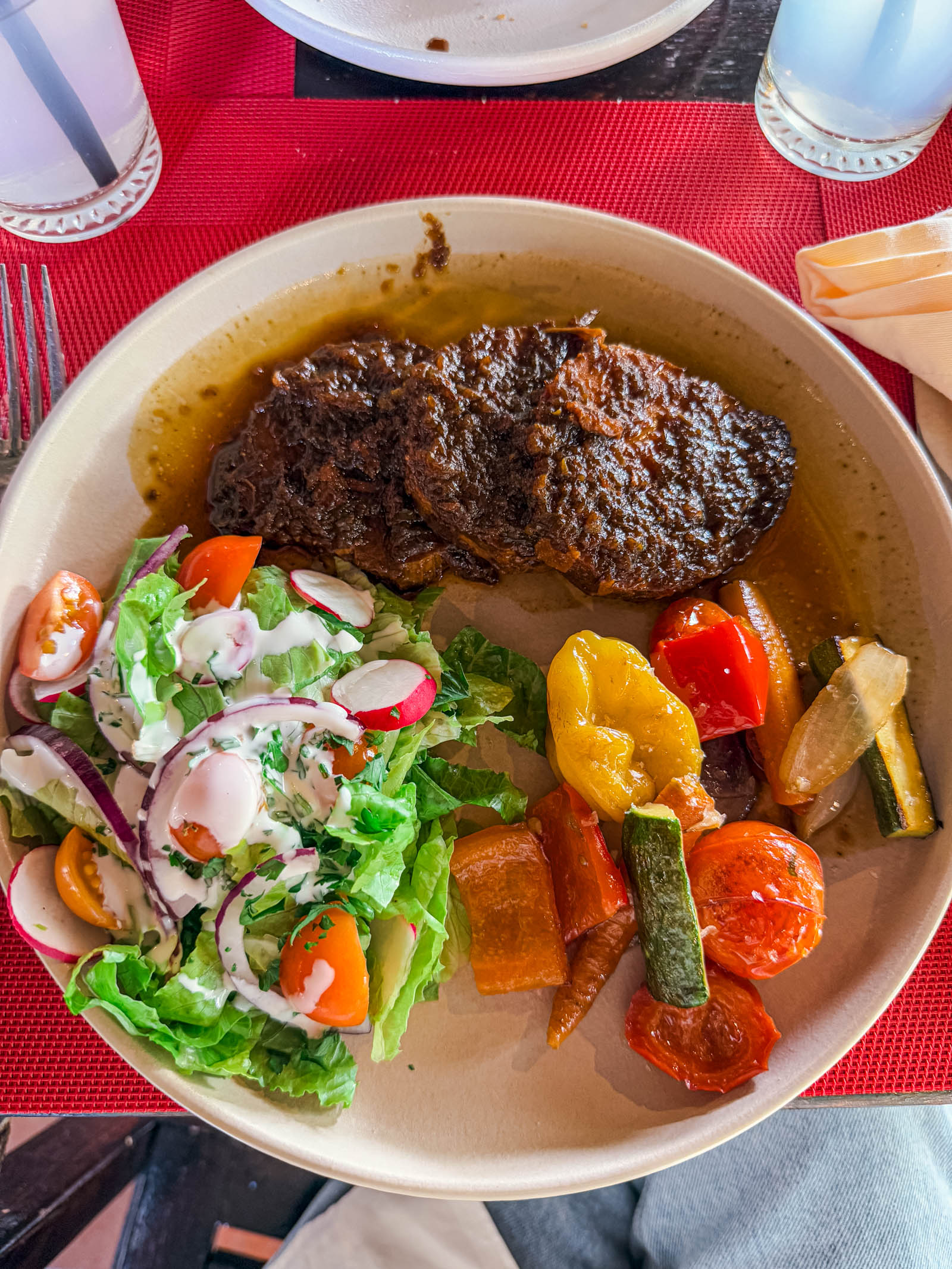
The hacienda also has a restaurant that serves Venezuelan cuisine, as well as a bar with Santa Teresa Rum cocktails. For lunch, I enjoyed grilled meat with a fresh salad and roasted vegetables, a simple but delicious meal after a long morning.
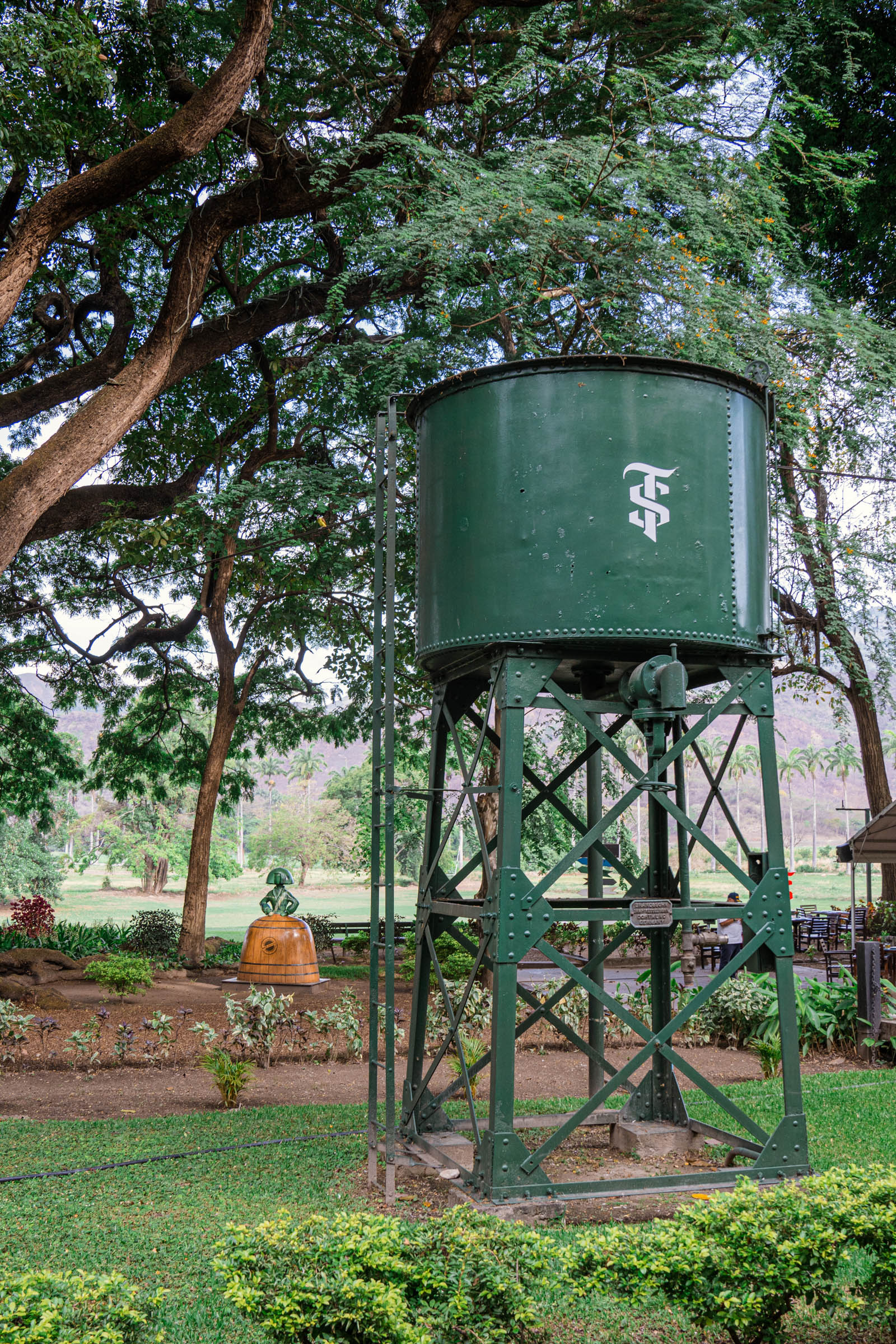
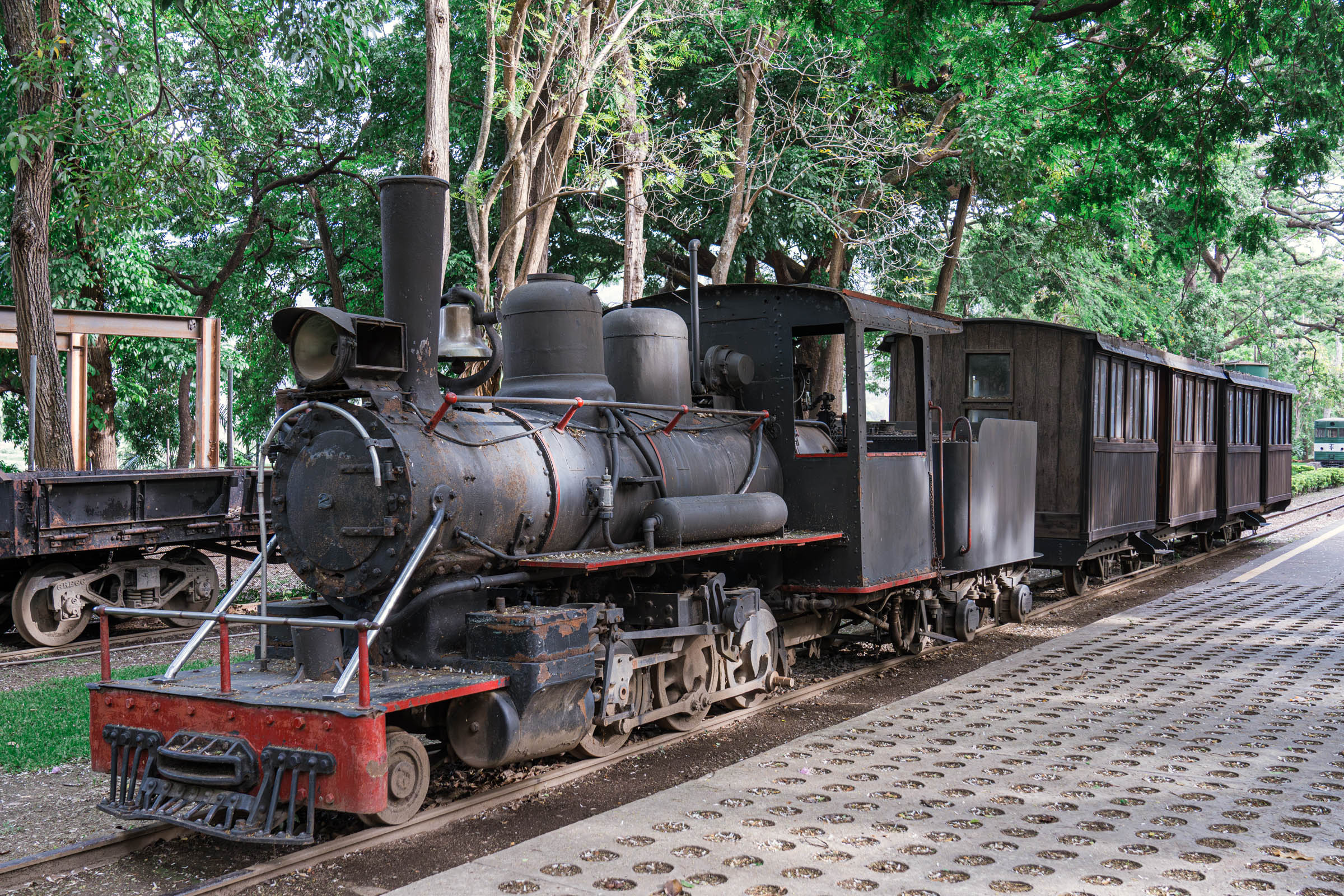
After lunch, I continued exploring the railway corner of the estate. A green water tower with the ST logo of Santa Teresa Rum stands among the trees. Nearby, an old black steam locomotive with its carriages rests on the tracks. For lovers of history and design, this part of the hacienda is a real treasure.
For visitors, the home of Santa Teresa Rum offers several experiences. You can choose the Santa Teresa Route, the Santa Teresa Tasting or a Cocktail Workshop, as well as premium experiences such as Saca el Pecho and the Santa Teresa 1796 Experience. In 2026, the hacienda is open from Thursday to Sunday, from 9 a.m. to 5 p.m., so check the schedule and book your visit in advance.
PROYECTO ALCATRAZ: A SECOND CHANCE FROM SANTA TERESA RUM
Beyond tourism and Santa Teresa Rum, my hosts also told me about a unique social program of the hacienda. It began in 2003, when three young people robbed a security inspector at the hacienda. After their arrest, the owners offered them an unusual choice. They could go to prison, or return what they had taken and work at the hacienda for three months without pay. They chose to work, and they asked that the other members of their gang also be accepted.
This is how the Alcatraz Project was born, a program of the Santa Teresa Foundation. Today, it is a social reintegration program for young people and adults with behavioral problems. It combines values-based training, education for work and restorative justice, with rugby as its main tool. Participation is voluntary.
Teamwork and responsibility are learned through joint training. The rules of rugby, respect for the opponent and discipline on the field become rules for life.
HOW RUGBY CHANGES LIVES IN ARAGUA
I attended a short presentation of this program, held by a former prisoner who shared his life story and spoke about personal responsibility. From his story, I understood that sport was only the beginning. The real change came with a new identity, because after the program, the participants get a chance to fully integrate into society.
The numbers are impressive. According to the Santa Teresa Foundation, in 2026 its rugby practice reaches 37 penitentiary centers in Venezuela, 23 for men and 14 for women. It also reaches one center in Spain. About 800 inmates have taken part, and 11 gangs have disbanded. In addition, around 2,000 children play school rugby in 17 schools, while 250 children play in the children’s league.
The project has received more than ten international awards, and universities such as Harvard have studied it as a case. Its team, Alcatraz Rugby Club, has won eight national championships.
The program director also told me about plans for organic gardens that would make the prison programs more self-sustaining. As I was leaving, one of the former participants, now a coach, waved at me with a smile.
WHAT SANTA TERESA RUM AND SAN MATEO TAUGHT ME
For me, this project was almost the highlight of the trip, because it showed how the past and the future intertwine. I was grateful that this trip brought me knowledge about colonial plantations and revolutions. Even more, it brought me human stories that you will not find in guidebooks.
During all these visits, I felt that the history and the present of Venezuela are inextricably linked. San Mateo bears witness to the past and the struggle for freedom. Santa Teresa, on the other hand, speaks of the present and the future. It shows how a better community can be built through work and dedication. So, Santa Teresa Rum is not only a story about premium rum, but also about humanity and second chances.
For me, this trip was much more than a classic tour of tourist destinations. It was a journey through history, culture and values that shaped a nation. I learned that real strength lies in people, in their willingness to work, to dream and to believe in a better tomorrow.
SAYING GOODBYE TO ARAGUA
At the end of this journey, I feel immense gratitude. First of all, I would like to thank the Ministry of Tourism of the Bolivarian Republic of Venezuela (MINTUR), which made this exceptional experience possible. Thank you for the warm welcome, the professional organization and the sincere effort to help foreigners like me experience the soul of Venezuela. I also thank Hacienda Santa Teresa for its hospitality.
I also thank the people I met: guides, hosts and locals, for their warmth and their willingness to share stories, anecdotes and memories. Through their eyes and words, history and culture become a part of us.
I leave Aragua with a heart full of gratitude and with the feeling that I was part of something much bigger than a simple trip. And I know that I will come back here again, because places and people like these remain a part of you forever.
As always, I tried to share authentic impressions, the right atmosphere and recommendations for you who like to travel in style, but also with an open heart. If you are planning your first trip to this part of the world, my guide Planning a Trip to South America will help you prepare.
Have you already visited San Mateo or Hacienda Santa Teresa, or are these places now on your Venezuelan travel list?
Feel free to leave your impressions, comments or questions below, or contact me by email and on social networks. All information is on the CONTACT page.
With love from Aragua,
Mr.M
This post is sponsored by Ministry of Tourism of the Bolivarian Republic of Venezuela – MINTUR and Hacienda Santa Teresa, as well as other local partners. This post is my personal and honest review of the destination experience.
Marko, your travelogue about Casa Histórica de San Mateo and Hacienda Santa Teresa is absolutely mesmerizing! The way you described Antonio Ricaurte’s sacrifice in 1814 gave me chills what courage it must have taken to blow up the powder magazine knowing he wouldn’t survive. I’m fascinated by the connection between Simón Bolívar’s family and this estate spanning over 200 years. The detail about Alexander von Humboldt visiting in 1800 and noting the impressive irrigation system adds such scientific depth to the history. I’m particularly moved by the Alcatraz Project using rugby to rehabilitate prisoners is such an innovative and compassionate approach. Have you tried the Santa Teresa 1796 rum? Your description of the caramel and vanilla notes with a hint of earthiness sounds incredible. How long did the rum tasting last, and did they explain more about the solera aging method? This is exactly the kind of meaningful travel experience I seek!
Hello Marko! What an extraordinary journey through Venezuelan history and culture. The story of Hipólita, the black servant who raised Simón Bolívar, is particularly touching, it shows how diverse cultural influences shaped his worldview from childhood. I appreciate how you connected the colonial past at San Mateo with the forward-thinking social programs at Hacienda Santa Teresa. The Alcatraz Project rehabilitating over 216 prisoners through rugby is remarkable, it’s been presented at Harvard as a case study! As someone interested in social enterprise, this resonates deeply with me. The Vollmer-Rivas family running the distillery for five generations (227 years!) demonstrates incredible dedication to tradition. Did you get to meet any of the former prisoners who now work as coaches? I imagine their personal stories would be incredibly powerful and inspiring to hear firsthand.
Great work Marko! Your description of walking through the sugar cane fields at Casa Histórica de San Mateo transported me right there with you. The detail about the worker in a white linen shirt breaking cane leaves and calling the juice “dissolved sweet life” is such a poetic image! I’m impressed by how you balanced historical facts with personal reflections and emotions. The museum displaying Bolívar’s weapons, uniform and personal belongings must have been incredible to see. I’m curious about the logistics of visiting both locations in one day how far apart are they, and would you recommend hiring a private guide or joining a group tour? The fact that the Venezuelan government declared this a national monument in 1964 shows how important preserving this history is. Your photos of the colonial architecture are stunning, especially the courtyard with palm trees creating such a peaceful contrast to the turbulent historical events that occurred there.
Marko, this post is a masterclass in cultural travel writing! The connection you made between Bolívar’s aristocratic background and his fight for freedom really highlights the complexity of his character. The tragic story of him losing both parents in early childhood and being raised by Hipólita adds such human depth to the historical narrative. What struck me most was the Alcatraz Project, the idea that the hacienda owners offered rehabilitation instead of prison after the 2003 break-in shows extraordinary compassion and vision. Rugby as a tool for teaching teamwork and responsibility is brilliant! I’m also fascinated by the rum production process you described, the solera method where young rum contacts older rum through layers of casks sounds like alchemy. Did you get to see the copper cauldrons and wooden barrels up close? How does Santa Teresa 1796 compare to other premium rums you’ve tried? Definitely adding Venezuela to my travel bucket list!
Hello Marko! Your Venezuelan adventure continues to amaze me with each new post. The architectural details you described at Casa San Mateo the modest white facade, wooden windows and thick walls paint such a vivid picture of colonial hacienda life. I love how you mentioned the simplicity yet elegance of the design. The story of Manuela Sáenz saving Bolívar during the 1828 assassination attempt is fascinating strong women throughout history often don’t get enough recognition! I’m particularly interested in the sustainable aspects you mentioned at Hacienda Santa Teresa the old irrigation system using water from nearby springs and the plans for organic prison gardens. This combination of historical preservation and forward-thinking sustainability is exactly what modern tourism should embrace. How was the food at the hacienda? Did they serve any traditional Venezuelan dishes paired with the rum? Your writing always makes me hungry for both adventure and local cuisine!
Well done Marko! The depth of research in this post is evident and much appreciated. The fact that the Bolívar family owned Casa San Mateo for 207 years, dating back to 1593 when Governor Osorio granted land to Simón Bolívar “El Mozo” (the great-grandfather of the Libertador), provides incredible historical continuity. Your description of seeing the old trapiche and massive manual machinery gives such a tangible sense of the colonial sugar industry. I’m amazed that Hacienda Santa Teresa was founded in 1796 and is still family-run, that’s rare anywhere in the world! The Alcatraz Project founding the first women’s rugby team in Venezuelan prisons is groundbreaking. As a rugby enthusiast from New Zealand, I’m thrilled to see the sport being used for such positive social change. Did you get to watch any of the training sessions or meet the participants? The international awards this program has received are well-deserved!
Marko, this travelogue touched my heart in unexpected ways. The emotional way the local guides talk about Antonio Ricaurte’s sacrifice, as if speaking about a close relative shows how alive history remains in Venezuela. Your observation that “San Mateo is not just history, it is a living memory” perfectly captures the spirit of the place. The contrast between the turbulent past and the peaceful courtyard today with tropical plants and birds is beautifully described. I’m particularly moved by the Santa Teresa Foundation’s holistic approach to prisoner rehabilitation professional training, psychological support AND rugby training addresses the whole person. The fact that over 200 participants from 11 criminal groups have gone through the program with impressive results gives me hope for humanity. How long was your visit to each location? I’m planning a trip to Venezuela in 2026 and trying to allocate time properly. Your recommendation to hire a guide and not rush through San Mateo is noted some places deserve to be savored!
Hallo Marko! Dein Reisebericht über Casa Histórica de San Mateo und Hacienda Santa Teresa ist außergewöhnlich bewegend und informativ. Die Geschichte von Antonio Ricaurte, der 1814 das Pulvermagazin in die Luft sprengte, um es vor den spanischen Truppen zu schützen, ist heroisch und tragisch zugleich. Die Tatsache, dass Simón Bolívars Ur-Urgroßvater das Land bereits 1593 erhielt, zeigt eine bemerkenswerte Familienkontinuität über Jahrhunderte. Ich bin besonders beeindruckt vom Alcatraz-Projekt die Rehabilitierung von Gefangenen durch Rugby ist ein innovativer Ansatz, der internationale Anerkennung verdient. Die Vollmer-Rivas Familie, die die Destillerie seit 227 Jahren in fünfter Generation führt, demonstriert unglaubliche Hingabe an Tradition und Qualität. Hast du die Gelegenheit gehabt, den Santa Teresa 1796 Rum zu probieren? Deine Beschreibung der Karamell und Vanillenoten klingt verlockend! Die Solera-Methode, bei der junger Rum mit älterem Rum durch Fassschichten in Kontakt kommt, muss diesem Destillat außergewöhnliche Tiefe verleihen. Wie lange dauerte die Führung durch die Hacienda, und konntest du die Kupferkessel und Holzfässer aus der Nähe sehen?
Großartige Arbeit, Marko! Die Art und Weise, wie du die emotionale Verbindung zwischen der historischen Casa San Mateo und dem modernen Hacienda Santa Teresa herstellst, ist meisterhaft. Die Erzählung über Hipólita, die schwarze Dienerin, die Simón Bolívar großgezogen hat, zeigt die oft übersehenen afrikanischen Einflüsse auf lateinamerikanische Führer. Das Alcatraz-Projekt ist besonders inspirierend, die Idee, dass die Hacienda-Besitzer nach dem Einbruch 2003 Rehabilitation statt Gefängnis anboten, zeigt außergewöhnliches Mitgefühl. Die Gründung des ersten Frauen-Rugby-Teams in venezolanischen Gefängnissen ist bahnbrechend! Ich bin auch fasziniert von den nachhaltigen Praktiken das alte Bewässerungssystem mit Wasser aus nahegelegenen Quellen und die Pläne für organische Selbstversorgungsgärten zeigen zukunftsorientiertes Denken. Die Tatsache, dass Alexander von Humboldt 1800 das Anwesen besuchte und das beeindruckende Wassersystem dokumentierte, verleiht diesem Ort wissenschaftshistorische Bedeutung. Hast du traditionelle venezolanische Gerichte probiert, die mit dem Rum gepaart wurden? Deine Reiseberichte inspirieren mich immer, tiefer in die Kultur einzutauchen!
Ciao Marko! Il tuo reportage sulla Casa Histórica de San Mateo e Hacienda Santa Teresa è straordinariamente ricco di storia e significato culturale. La descrizione del sacrificio di Antonio Ricaurte nel 1814 è eroica e commovente deve aver richiesto un coraggio immenso! Sono affascinato dalla continuità storica della famiglia Bolívar che possedeva la tenuta per 207 anni, risalendo al 1593. Il progetto Alcatraz è particolarmente impressionante utilizzare il rugby per riabilitare i detenuti dimostra un approccio innovativo e compassionevole alla giustizia sociale. Il fatto che oltre 216 persone siano state reintegrate nella società e che il programma sia stato presentato ad Harvard come caso di studio è notevole! Come italiano, apprezzo profondamente le tradizioni familiari, e la famiglia Vollmer-Rivas che gestisce la distilleria da 227 anni (quinta generazione!) è ammirevole. Hai avuto l’opportunità di assaggiare diversi invecchiamenti del rum Santa Teresa oltre al 1796? Il metodo solera che hai descritto sembra creare una complessità straordinaria. Le foto dell’architettura coloniale con il cortile e le palme sono bellissime!
Bellissimo lavoro, Marko! La tua narrazione della visita a Casa San Mateo è così vivida che mi sono sentita trasportata lì con te. Il dettaglio del lavoratore in camicia di lino bianco che rompe le foglie di canna da zucchero chiamando il succo “vita dolce dissolta” è poetico e memorabile! Sono particolarmente toccata dalla storia di Hipólita che ha allevato Simón Bolívar dopo la perdita dei suoi genitori queste influenze culturali diverse hanno chiaramente plasmato la sua visione del mondo. L’aspetto più ispirante è il progetto Alcatraz alla Hacienda Santa Teresa l’idea che lo sport possa trasformare le vite di persone precedentemente condannate è potente. La fondazione del primo team femminile di rugby nelle prigioni venezuelane è rivoluzionaria! Come appassionata di responsabilità sociale d’impresa, trovo che questo modello dovrebbe essere replicato in tutto il mondo. Il rum Santa Teresa 1796 con note di caramello e vaniglia suona delizioso – è disponibile per l’acquisto online o solo in Venezuela? Grazie per questa ispirazione meravigliosa che combina storia, cultura e cambiamento sociale positivo!
Bonjour Marko! Ton récit de voyage à Casa Histórica de San Mateo et Hacienda Santa Teresa est absolument captivant. L’histoire d’Antonio Ricaurte sacrifiant sa vie en 1814 pour faire exploser le magasin de poudre est héroïque et tragique un véritable acte de patriotisme. La continuité familiale des Bolívar possédant la propriété depuis 1593 est remarquable, et la visite d’Alexander von Humboldt en 1800 documentant le système d’irrigation ajoute une dimension scientifique fascinante. Ce qui m’a le plus impressionné est le projet Alcatraz utiliser le rugby pour réhabiliter les prisonniers est une approche brillante et humaine. Le fait que plus de 216 personnes aient été réintégrées dans la société et que le programme ait fondé la première équipe féminine de rugby en prison est extraordinaire! Comment as-tu trouvé le rhum Santa Teresa 1796? La méthode solera que tu as décrite avec les jeunes et vieux rhums en contact à travers les couches de fûts semble créer une complexité unique. As-tu eu l’occasion de visiter les champs de canne à sucre et de voir les anciennes machines? Ton écriture équilibre parfaitement les faits historiques et les réflexions personnelles!
Salut Marko! Ton aventure vénézuélienne continue de m’impressionner avec chaque nouveau post. La description de Casa San Mateo avec son architecture coloniale simple mais élégante façade blanche modeste, fenêtres en bois et murs épais crée une image si vivante! L’histoire de Simón Bolívar perdant ses deux parents dans la petite enfance et étant élevé par Hipólita, la servante noire, ajoute une profondeur humaine à cette figure historique. Je suis particulièrement touchée par la manière dont les guides locaux parlent d’Antonio Ricaurte avec passion, comme s’ils parlaient d’un proche parent cela montre comment l’histoire reste vivante au Venezuela. Le projet Alcatraz à Hacienda Santa Teresa est inspirant offrir une réhabilitation au lieu d’une peine de prison après le cambriolage de 2003 démontre une vision extraordinaire. L’idée que le sport peut transformer des ombres du passé en ombres d’espoir est belle et poétique. Comment était l’atmosphère générale à la hacienda? As-tu eu l’opportunité de rencontrer d’anciens prisonniers devenus entraîneurs? Leurs histoires personnelles doivent être incroyablement puissantes. Merci pour ce récit qui combine histoire, culture et espoir!
¡Hola Marko! Tu crónica sobre Casa Histórica de San Mateo y Hacienda Santa Teresa es profundamente conmovedora e informativa. Como sudamericano, siento un orgullo especial al leer sobre Simón Bolívar y su lucha por la libertad de nuestro continente. La historia de Antonio Ricaurte sacrificando su vida en 1814 para volar el polvorín es heroica un verdadero patriota que puso la libertad por encima de su propia vida. Me fascina la continuidad histórica de la familia Bolívar poseyendo la propiedad desde 1593, cuando el gobernador Osorio otorgó las tierras a Simón Bolívar “El Mozo”. El proyecto Alcatraz en Hacienda Santa Teresa es particularmente inspirador usar el rugby para rehabilitar a más de 200 prisioneros de 11 grupos criminales demuestra que la compasión y la segunda oportunidad pueden transformar vidas. La familia Vollmer-Rivas gestionando la destilería durante 227 años (¡quinta generación!) es admirable. ¿Tuviste la oportunidad de probar el ron Santa Teresa 1796? Tu descripción de las notas de caramelo y vainilla me hace querer probarlo inmediatamente. ¿Cuánto tiempo recomendarías pasar en cada ubicación?
¡Excelente trabajo, Marko! Tu relato sobre la visita a Casa San Mateo y Hacienda Santa Teresa es magistral en cómo entrelaza historia, cultura y progreso social. La descripción del museo en Casa San Mateo con las armas, uniforme y pertenencias personales de Bolívar debe haber sido emocionante, ver objetos tangibles de nuestro Libertador. Me conmueve profundamente la historia de Hipólita criando a Bolívar después de perder a sus padres estas influencias culturales diversas claramente moldearon su visión de una América Latina libre. El proyecto Alcatraz es revolucionario – la idea de que los dueños de la hacienda ofrecieron rehabilitación en lugar de cárcel después del robo en 2003 muestra visión y humanidad extraordinarias. La fundación del primer equipo femenino de rugby en prisiones venezolanas es pionera! Como colombiana, aprecio cómo has capturado el espíritu de Bolívar que trasciende las fronteras nacionales. El método solera para envejecer el ron Santa Teresa suena fascinante ¿explican el proceso en detalle durante la visita? Las fotos del patio colonial con palmeras creando un contraste pacífico con los eventos históricos turbulentos son hermosas. ¡Gracias por compartir esta experiencia inspiradora!