
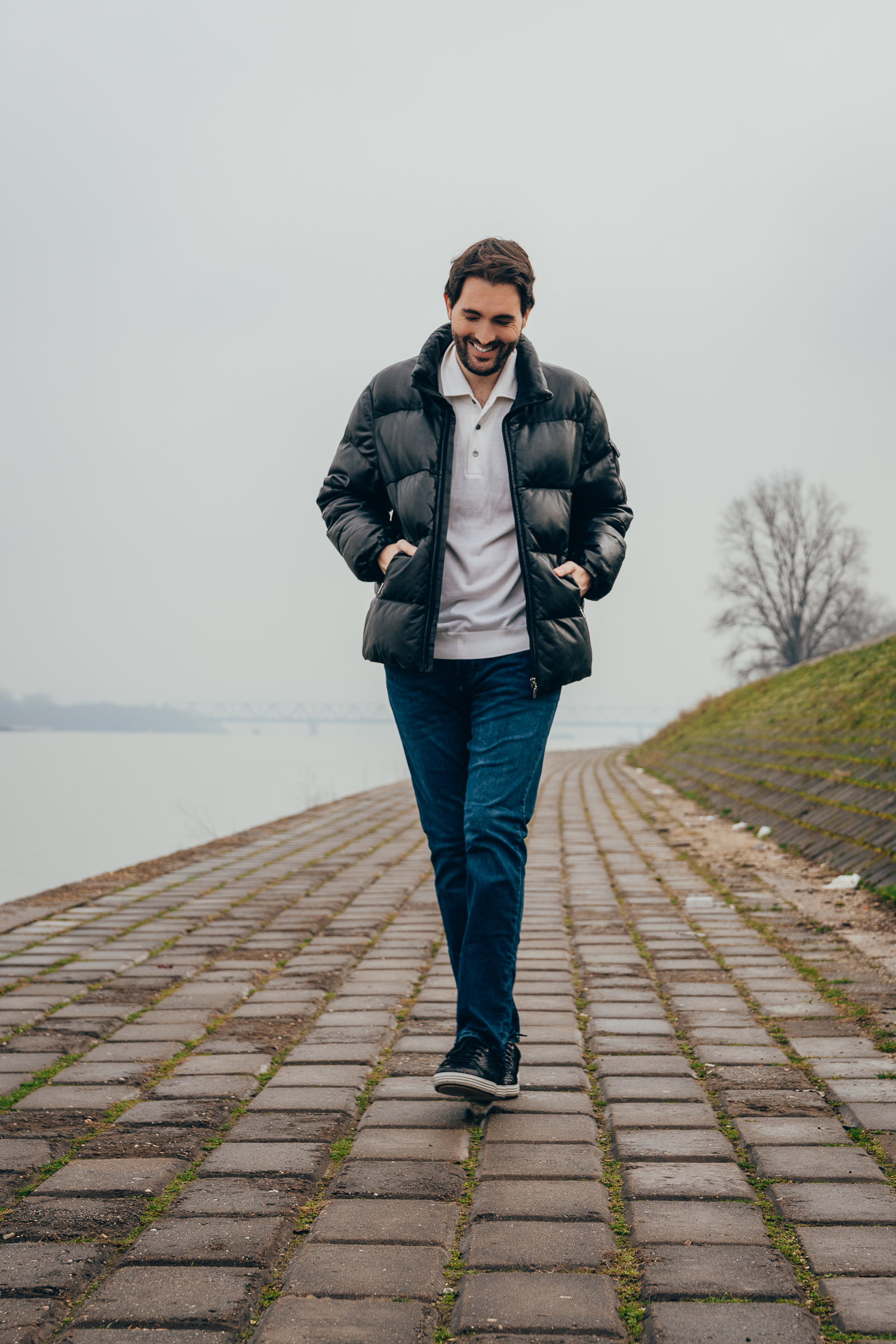
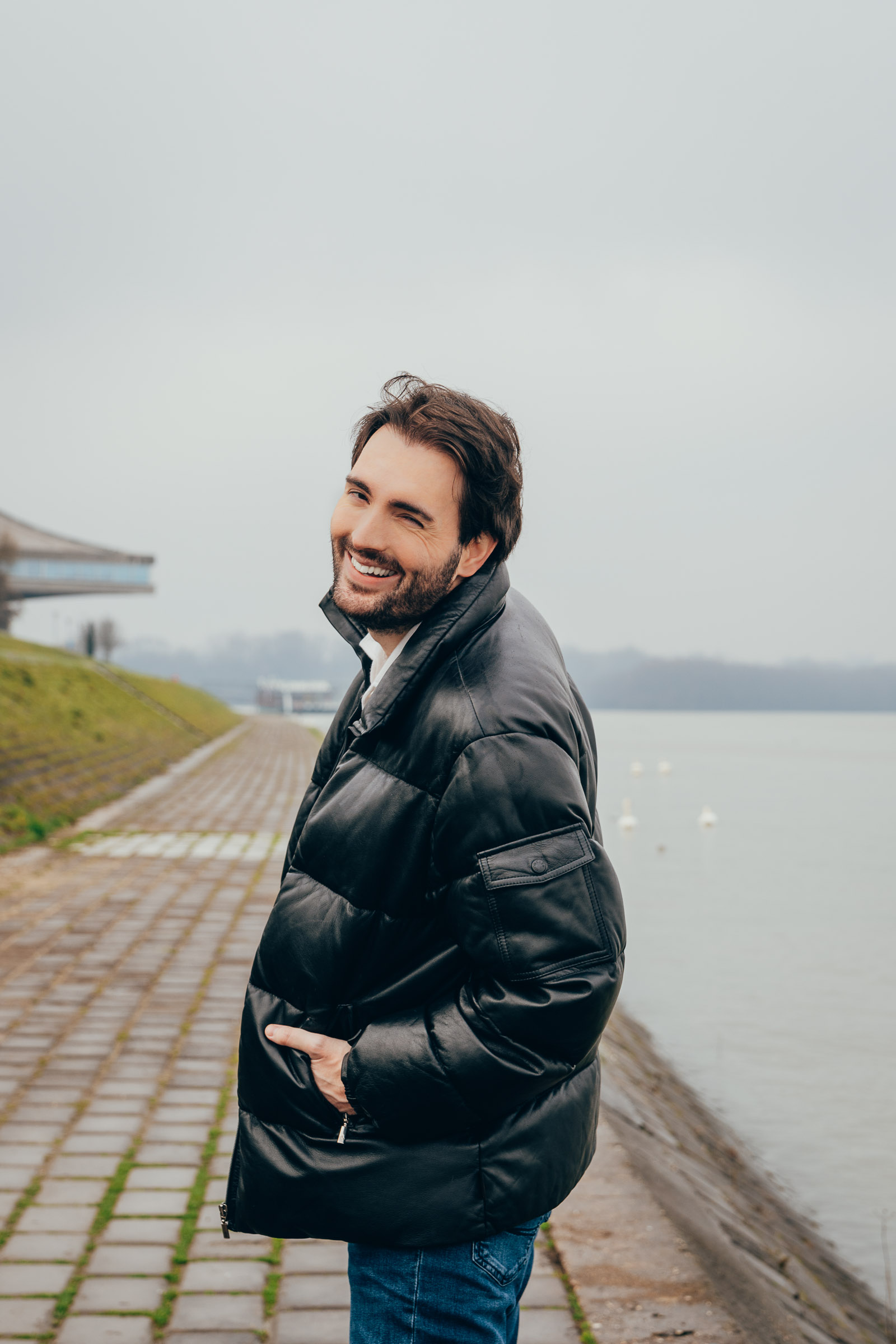
My dear fashionistas, welcome to a new fashion story on the Mr.M blog. Four swans glided past me on the Danube, and for a moment the whole quay went quiet. It was a gray winter morning in Belgrade. Fog had swallowed the far bank, and the river looked like brushed steel. I wore my black Moncler leather jacket, and I couldn’t stop smiling at the irony. Its ancestors climbed K2. This one was simply going for a walk by the water.
That contrast sums up the whole story of Moncler. The brand started in a tiny Alpine village and now lives in the great cities of the world. Its motto says it best: born in the mountains, living in the city. So today I want to take you on that journey, from a mountain workshop to Milan’s Piazza del Duomo.
Along the way, you’ll also meet the pieces that shared the frame with my Moncler leather jacket. There is Umbrian cashmere from Mauro Ottaviani, Loro Piana denim and a pair of Ferragamo python sneakers. Each one has a history worth knowing. Together, they made one of my favorite winter outfits.

WHY DID I CHOOSE A BLACK MONCLER LEATHER JACKET?
Let me start with a small confession. I love black, but I rarely wear it. For years I believed it looked too harsh next to my brown hair. Navy, camel and chocolate felt safer, so my wardrobe slowly filled with them. However, this Moncler leather jacket made me rethink that old rule.
Leather changes the way black behaves. Matte wool can look flat and severe in gray light. Leather, on the other hand, catches every bit of daylight and gives the color depth. On a foggy day by the river, that soft shine felt alive rather than gloomy.

I also wanted some contrast close to my face. That is why I chose a cream cashmere polo underneath. The light knit breaks up the black, warms the complexion and keeps the look friendly. Blue jeans then bring the outfit back to everyday life.
So here is my question for you before we go any further. Does black suit me, or should I stay loyal to my browns? Please tell me honestly in the comments. I read every message, and your opinions really do shape what I wear next.
A VILLAGE NEAR GRENOBLE GAVE MONCLER ITS NAME
Every great brand has a modest beginning, and Moncler’s is almost poetic. In 1952, René Ramillon and André Vincent founded a small company in Monestier-de-Clermont. This mountain village sits near Grenoble, in the French Alps. The name Moncler is simply an abbreviation of the village name. Once you know it, you never forget it.
The first products had nothing to do with fashion. The workshop made quilted sleeping bags, tents and a lined hooded cape for people working at high altitude. Soon the founders added quilted jackets for the workers in their small mountain factory. The men wore them over their overalls to survive the cold.
Then a famous climber noticed them. French mountaineer Lionel Terray saw how well those jackets performed. He asked the company for jackets, salopettes and gloves he could trust on serious peaks. The result was a specialist line called “Moncler pour Lionel Terray.”
I find this detail moving. Moncler didn’t begin with a marketing plan or a celebrity face. It began with workers who needed to stay warm. In my experience, the most lasting luxury always starts with a real need.

FROM K2 TO MAKALU: HOW MONCLER EARNED ITS REPUTATION
The real test came in 1954. That year, Moncler down jackets equipped the Italian expedition to K2, the second-highest mountain on Earth. Achille Compagnoni and Lino Lacedelli wore them on the climb. Their team became the first to reach the summit, and Moncler entered mountaineering history.
Only a year later, the brand returned to the Himalayas. In 1955, a French expedition reached the top of Makalu, which rises 8,485 meters above sea level. Jean Couzy and Lionel Terray were the first to stand on the summit. Yes, the same Terray who had asked Moncler for gear he could trust. Once again, the climbers trusted Moncler.
Then came Alaska. In 1964, Moncler became the official outfitter of the Alaskan expeditions that Lionel Terray organized. Around this time, the bulky double-down jacket evolved into a lighter, more aerodynamic design. According to the brand, that version was the forerunner of the iconic Moncler jacket we know today.
I always think about these expeditions when I zip up a down jacket. Today we wear puffers to cafés, airports and offices. Yet the shape, the quilting and the lightness all come from people who faced real danger at altitude. That heritage gives my Moncler leather jacket a quiet dignity, even on something as simple as a walk by the Danube.

THE COCKEREL, THE OLYMPICS AND A NEW ERA ON THE SLOPES
Skiing gave Moncler its next big stage. At the 1968 Winter Olympics in Grenoble, the brand became the official supplier of the French downhill ski team. These were the same Games where Jean-Claude Killy won all three men’s alpine events. For a young company from the nearby mountains, the timing was perfect.
That year also brought a new logo. Until then, Moncler used an outline of Mont Aiguille, the peak that rises behind Monestier-de-Clermont. In 1968, the cockerel replaced it for good. The rooster is, of course, a national symbol of France.
Today you can still spot that emblem on the felt patch that sits on the sleeve of many Moncler jackets. I love details like this because they carry history without shouting. You need to know the story to read the symbol.
Later, in 1972, Moncler began dressing ski instructors in popular Alpine resorts. As a result, its jackets became part of the everyday landscape of winter sports. The brand was now famous on the slopes. The city, however, was still waiting.
HOW MILAN’S PANINARI BROUGHT MONCLER INTO THE CITY
In the 1980s, something unexpected happened in Milan. A youth subculture called the Paninari adopted the Moncler puffer as part of its uniform. The name comes from “panino,” the Italian word for sandwich. These teenagers liked to meet in sandwich bars and fast-food spots, hence the nickname.
The Paninari loved American culture, motorbikes and premium brands. They wore their labels proudly, and the glossy, colorful Moncler jacket became a status symbol. Suddenly, a garment made for summits was shining in city squares.
At the same time, Moncler worked with French designer Chantal Thomass, who was already famous for her lingerie. She reinvented the classic down jacket with a true fashion eye. For example, she replaced zippers with buttons and introduced fur trims, satin and reversible fabrics. Her collaboration with the company lasted until 1989.
This is the moment when the idea behind the motto truly came to life. Born in the mountains, living in the city: in the 1980s, that phrase became a street reality. Personally, I think every stylish city man owes a small thank-you to those Milanese teenagers.
REMO RUFFINI AND THE BIRTH OF MODERN MONCLER
The next chapter belongs to one man. In 2003, Italian entrepreneur Remo Ruffini acquired Moncler. He launched a global reset that lifted the brand into luxury while protecting its mountain heritage. Today the company has its headquarters in Milan.
Ruffini understood that heritage alone is not enough, because a brand also needs new voices. In 2006, Moncler launched Gamme Rouge, a women’s haute couture line. Alessandra Facchinetti designed it first, and Giambattista Valli later took over. In 2009, Gamme Bleu followed for men, created with American designer Thom Browne. Both lines ran until 2017.
Meanwhile, Moncler boutiques arrived in the world’s capitals. The first urban store opened in Paris in 2007, followed by Milan and New York. In 2010, Moncler Grenoble made its debut in New York as a modern take on technical skiwear. The line never forgot the mountains, either. In March 2025, it presented its Fall/Winter collection on the runway of Courchevel Altiport, at 2,008 meters.
Then came a historic day for Italian business. On December 16, 2013, Moncler listed on the Milan Stock Exchange. Its shares closed the first day 47% above the IPO price. According to the company, it was the most successful European listing of that year. For a brand born in a mountain workshop, it was quite a summit.
MONCLER GENIUS, STONE ISLAND AND A THREE-BILLION-EURO HOUSE
In 2018, Ruffini introduced Moncler Genius. The idea was bold: invite outside designers to reinterpret the brand, each with a distinct voice. Instead of one big seasonal show, Genius brought a stream of collaborations and editorial projects. Later, during London Fashion Week in 2023, it grew into a co-creation platform spanning art, design, music and sport.
Two years after Genius began, Moncler made its first acquisition. In December 2020, it announced a deal for Stone Island that valued the Italian brand at €1.15 billion. The transaction closed on March 31, 2021. Massimo Osti founded Stone Island in 1982 in Ravarino, near Modena. Interestingly, he took the name from the two words that appear most often in Joseph Conrad’s novels.
The numbers today speak for themselves. In 2025, Moncler Group reported revenues of €3.13 billion. The Moncler brand alone generated more than €2.7 billion of that total, while Stone Island added €411 million.
Still, I don’t admire Moncler because of its revenue. I admire it because it grew so large without losing sight of its core product. Walk into any of its boutiques, and the down jacket still sits at the center of the story.
THE MAYA AT SEVENTY: A BIRTHDAY IN PIAZZA DEL DUOMO
No jacket represents Moncler better than the Maya. It is a short, hip-length down jacket with boudin quilting, the rounded horizontal channels that hold the down. Most versions feature the brand’s glossy nylon laqué, a detachable hood and a sleeve pocket with the logo patch. It looks simple, yet almost everyone recognizes it.
When Moncler turned 70, the Maya became the star of the celebration. On September 24, 2022, the brand took over Milan’s Piazza del Duomo during Fashion Week. Almost 18,000 people gathered in the square. In total, 1,952 performers, models and musicians dressed entirely in white filled the space, all wearing a special Maya 70 jacket. The number was no accident: it honored 1952, the year Moncler was founded.
That night opened a 70-day program of events around the world. Moncler also released a limited Maya 70 edition in 13 colors, including an exclusive Platinum version. On top of that, seven designers who had shaped the brand reinterpreted the Maya in their own way. Among them were Francesco Ragazzi of Palm Angels and Pharrell Williams.
The more I read about that night, the more it moved me. Very few brands could fill the square in front of Milan’s cathedral. Moncler did it with one jacket, a crowd in white and seventy years of stories. I thought of that night again when I first put on my Moncler leather jacket.
HOW TO RECOGNIZE THE CODES OF A REAL MONCLER
Over seven decades, Moncler has built a visual language that true fans read instantly. The core codes include the cockerel, the “M” monogram, the felt appliqué badge, crossed skis and even a cartoon duck mascot. Add the boudin quilting and the glossy laqué finish, and you have a signature that needs no big logo.
Unfortunately, such a famous signature also attracts copies. Counterfeiting has long been a serious problem for the brand. In 2025 alone, Moncler and Stone Island removed hundreds of thousands of fake listings and products from markets around the world.
That is why I always give readers the same advice. Buy from Moncler boutiques, the official online store or authorized luxury retailers. Check the quality of the stitching, the weight of the zippers and the evenness of the quilting. A price that looks too good to be true usually is.
A genuine piece, on the other hand, rewards you for years. You feel it the moment you put it on.
MY MONCLER LEATHER JACKET UP CLOSE
Now let me return to the Danube and to the jacket I wore. When I first saw this Moncler leather jacket in the catalog, I expected something sporty. In person, it surprised me. The black leather gives the familiar puffer shape a polished, almost tailored character.

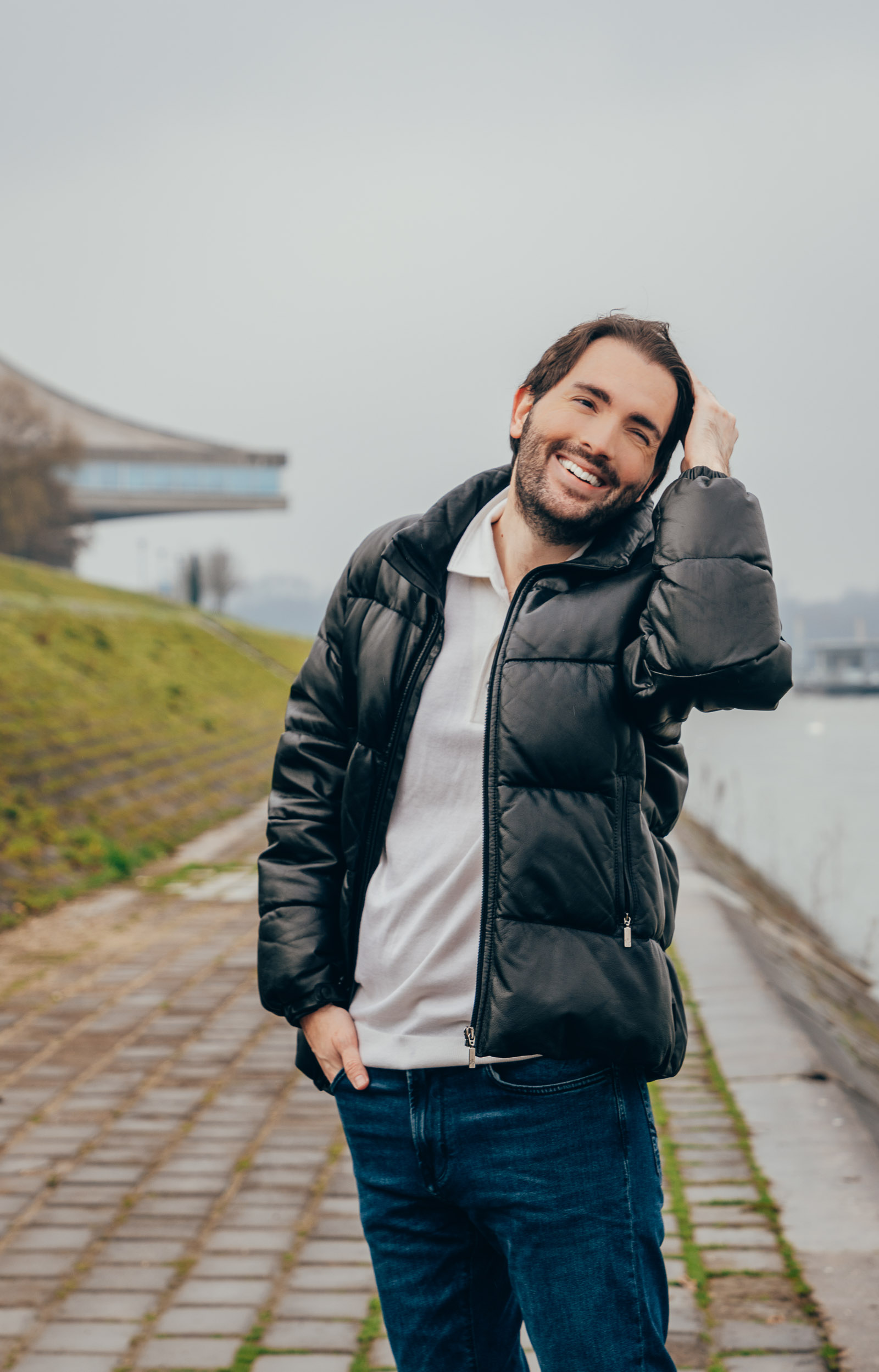
The silhouette clearly belongs to the Maya family. It has the same boxy, hip-length cut, the stand collar and the generous horizontal quilting. There is also a practical pocket on the sleeve, a detail every Moncler fan will recognize. Yet the leather calms the sporty mood and makes the whole jacket feel more grown-up.
It kept me comfortable through a long, damp morning shoot by the river. Even so, it never looked bulky in the photos. Leather follows the body more gently than glossy nylon, so the volume reads as relaxed rather than heavy.
What I appreciate most is its versatility. With jeans and sneakers, it works for a weekend walk. With gray flannel trousers and a roll-neck, it could easily go to dinner. A Moncler leather jacket like this one moves between those worlds effortlessly, and that is real value.
WHAT MAKES A MONCLER LEATHER JACKET WORTH THE INVESTMENT?
Is a luxury down jacket really worth the price? My honest answer is yes, but only if you choose wisely and care for it properly. A piece like this should serve you for many winters, not just one season.
Start with what you can’t see. Moncler states that it sources its down exclusively from DIST-certified suppliers. The brand also says its down comes from farmed geese as a byproduct of the food industry. For me, that transparency matters as much as the warmth itself.
Next, look at the construction. The horizontal quilting is not just decoration. Each channel keeps the down evenly spread, so the jacket stays warm without cold spots. On a Moncler leather jacket, those channels also give the leather its sculpted, three-dimensional look.
Leather, however, asks for a little attention. Here is what I do with mine:
- I hang it on a wide, padded hanger, so the shoulders keep their shape.
- I never store it in plastic, because leather needs to breathe.
- After rain, I let it dry naturally, far from radiators.
- Once a season, I take it to a specialist cleaner who knows leather and down.
Finally, think about cost per wear. A black Moncler leather jacket goes with jeans, gray flannel trousers and almost any fine knit. If you wear it a hundred times over a few winters, the price suddenly looks far more reasonable.
WHY THE DANUBE WAS THE PERFECT BACKDROP FOR MY MONCLER LEATHER JACKET
I chose the Danube quay in Belgrade for a simple reason. I wanted a place that felt open, calm and a little wild, close to the mountain spirit of the brand. The river gave me exactly that, right in the middle of the city.
That morning, the fog erased the horizon, so the sky and the water melted into one soft gray. Against that pale background, the Moncler leather jacket looked even richer. The contrast worked better than I had dared to hope.
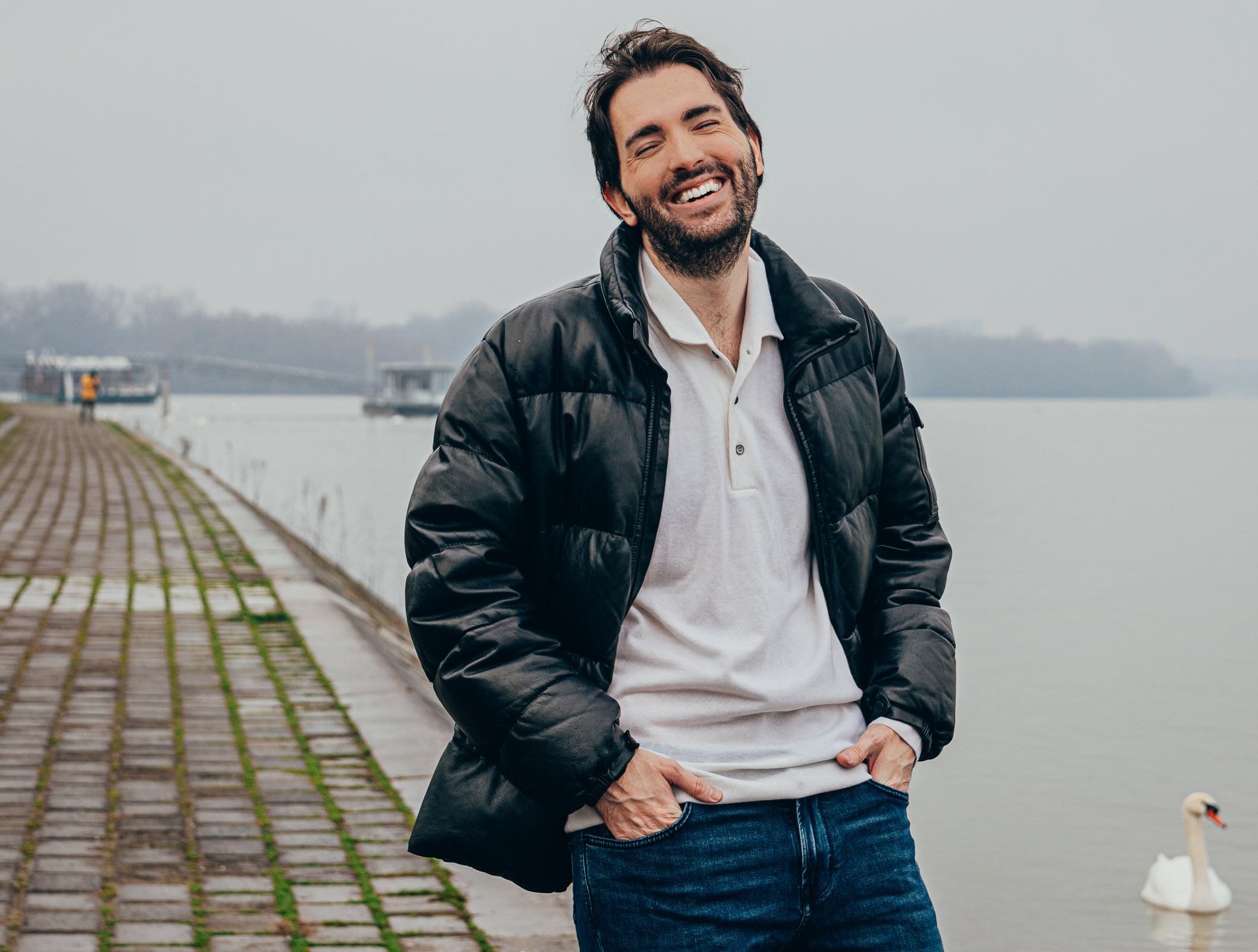
The swans became unexpected co-stars. They kept drifting closer, almost curious about what we were doing. At one point, four of them lined up perfectly in front of the lens. We couldn’t have planned that moment if we had tried. My photographer simply kept shooting, and I kept laughing, which is why you see so many smiles in this post.
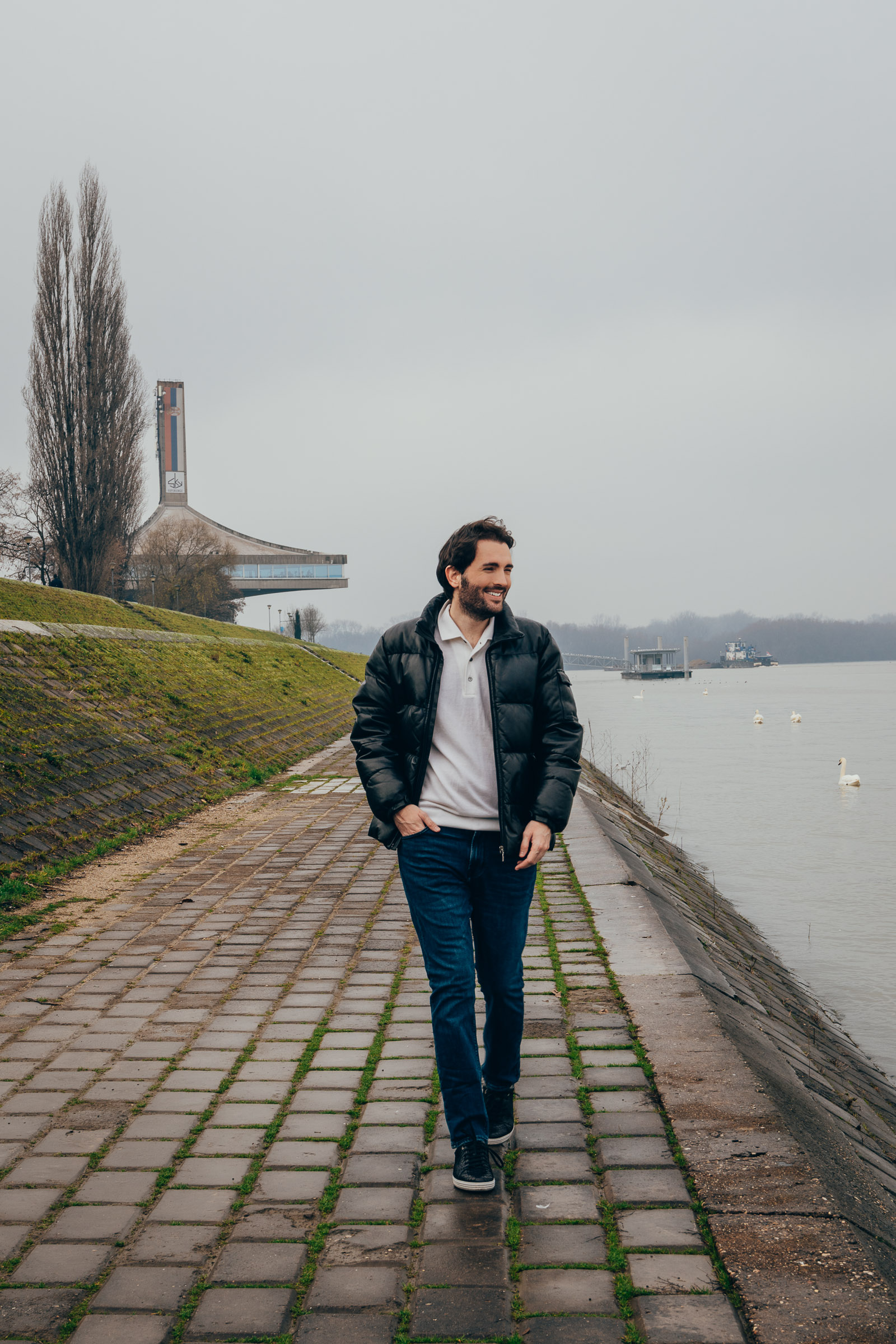
Moreover, the long paved promenade and the grassy embankment added rhythm to the photos. Old stone steps, tufts of grass between the cobbles and a bare tree on the horizon gave the shoot a quiet, cinematic mood. Belgrade often surprises visitors, and its riverbanks in winter are one of its best-kept secrets. The Danube quay has become one of my favorite open-air studios, and I also shot my Burberry trench coat story on its banks.

MAURO OTTAVIANI: CASHMERE FROM THE HEART OF UMBRIA
Under my Moncler leather jacket, I wore a piece from an Italian knitwear house I truly admire. If I had to describe Mauro Ottaviani in three words, I’d choose passion, innovation and coherence. The brand designs for modern men who live at a fast pace but still value quality and design.

The story began in 1978, when Raniero Ottaviani founded a knitwear business in Umbria. Knitwear was his passion, and it remains the heart of the company today. In 1993, his three children, Mauro, Simona and Elena, took over the family business. Inspired by their father’s work, they looked for ways to take his legacy even further.
For years, the company worked mainly behind the scenes. It offered high-level knitwear production to demanding names in Italian and international menswear. In other words, many men may have worn its craftsmanship under another label without knowing it. Later, the family launched its own brand under Mauro’s name.
Location matters here. The company sits in the heart of Umbria’s production region, an area with a deep textile tradition. That gives it access to skilled in-house craftsmanship. As a result, the search for the finest raw materials stands at the center of everything the brand makes.
THE ROMA POLO AND THE CASHLIGHT YARN
The sweater you see on me is the CL24504 Roma Polo. Mauro Ottaviani knits it from what the brand calls Cashlight, a 100% ultrafine cashmere. According to the brand, this yarn combines the carded look of classic cashmere with a lighter, more compact feel. The secret lies in twisting carded cashmere yarns together with brushed cashmere yarns.
In practice, this means warmth without weight. The knit feels soft against the skin, yet it keeps a neat shape under a jacket. The polo collar adds structure around the neck, so the outfit never looks too casual.
Its color deserves a mention too. This creamy, warm neutral sits beautifully between black leather and blue denim. It lifts the face and keeps the whole look calm. If you buy only one cashmere polo, choose a shade like this. It pairs with almost everything in a man’s winter wardrobe.
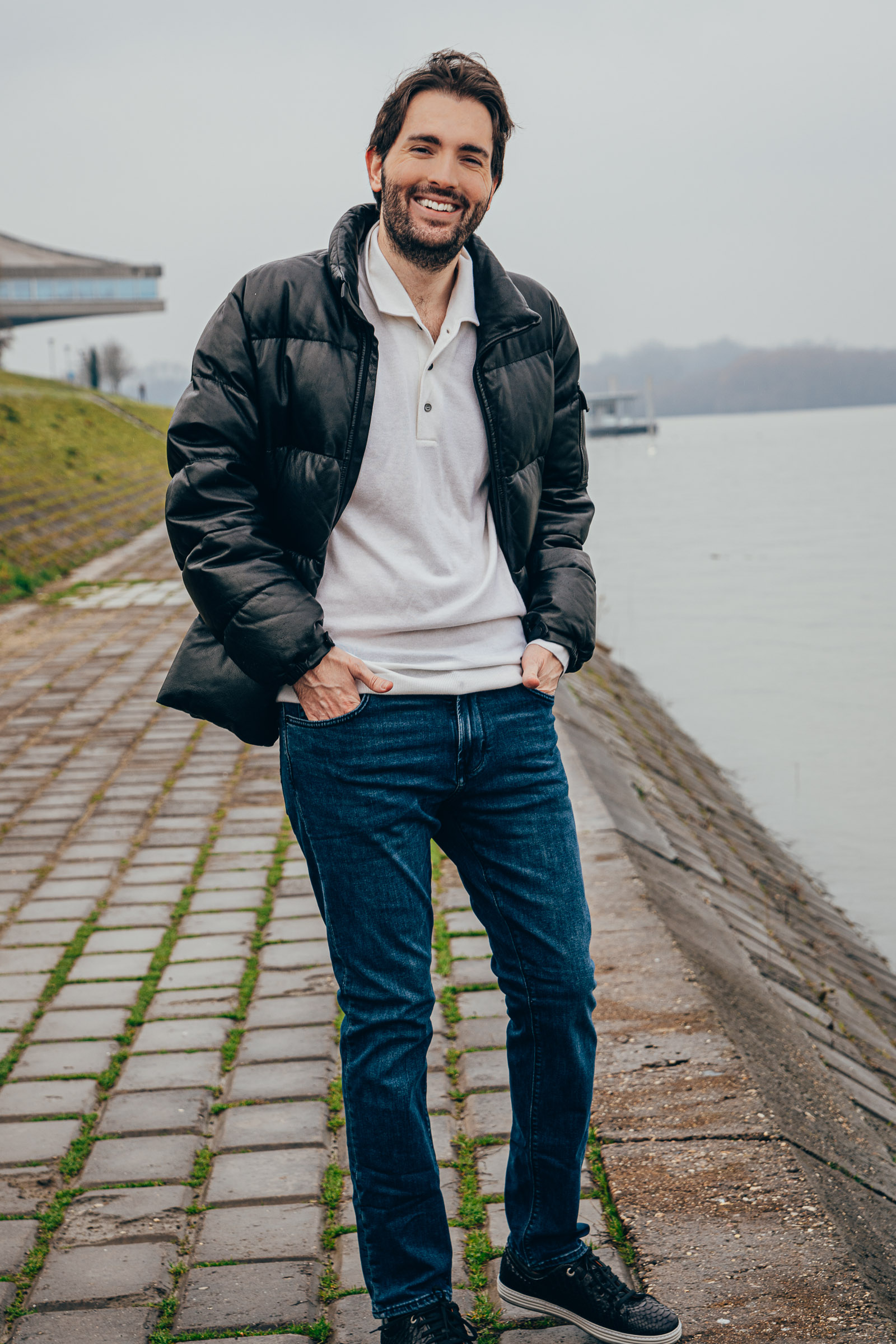
LORO PIANA JEANS: QUIET LUXURY UNDER A MONCLER LEATHER JACKET
For the jeans, I chose Loro Piana. Few names in fashion stand for understated elegance as clearly as this one. The house is often linked to quiet luxury, and for good reason. Its pieces rarely shout, yet their quality is unmistakable. For another lesson in quiet luxury, see my 1900 Tempo Grande crossbody bag story.
The family’s roots in textiles go back to the early 1800s, when the Loro Piana family began trading wool. In 1924, engineer Pietro Loro Piana founded the company in Quarona, a town in Italy’s Piedmont region. Since then, the name has become a reference point for the finest fibers in the world.
Loro Piana works with materials such as cashmere, vicuña and extra-fine merino wool. The house also introduced Baby Cashmere, a rare fiber taken from the underfleece of young goats. In Peru, the company worked with the authorities to help restart a regulated vicuña trade tied to protecting the herds. In 2013, Loro Piana joined the LVMH Group, which bought a majority stake.
My jeans are a classic mid-blue denim with a slim, clean leg. They look simple at first glance. However, the fit and the finish feel noticeably refined once you wear them. Denim from a house like this proves that casual clothing can still carry real craftsmanship.
FERRAGAMO: THE STORY OF THE SHOEMAKER TO THE STARS
Anyone who follows my blog knows how much I care about shoes. I pay close attention to footwear, whether I wear sneakers or elegant leather shoes. For this outfit, I turned to a house whose models I adore.
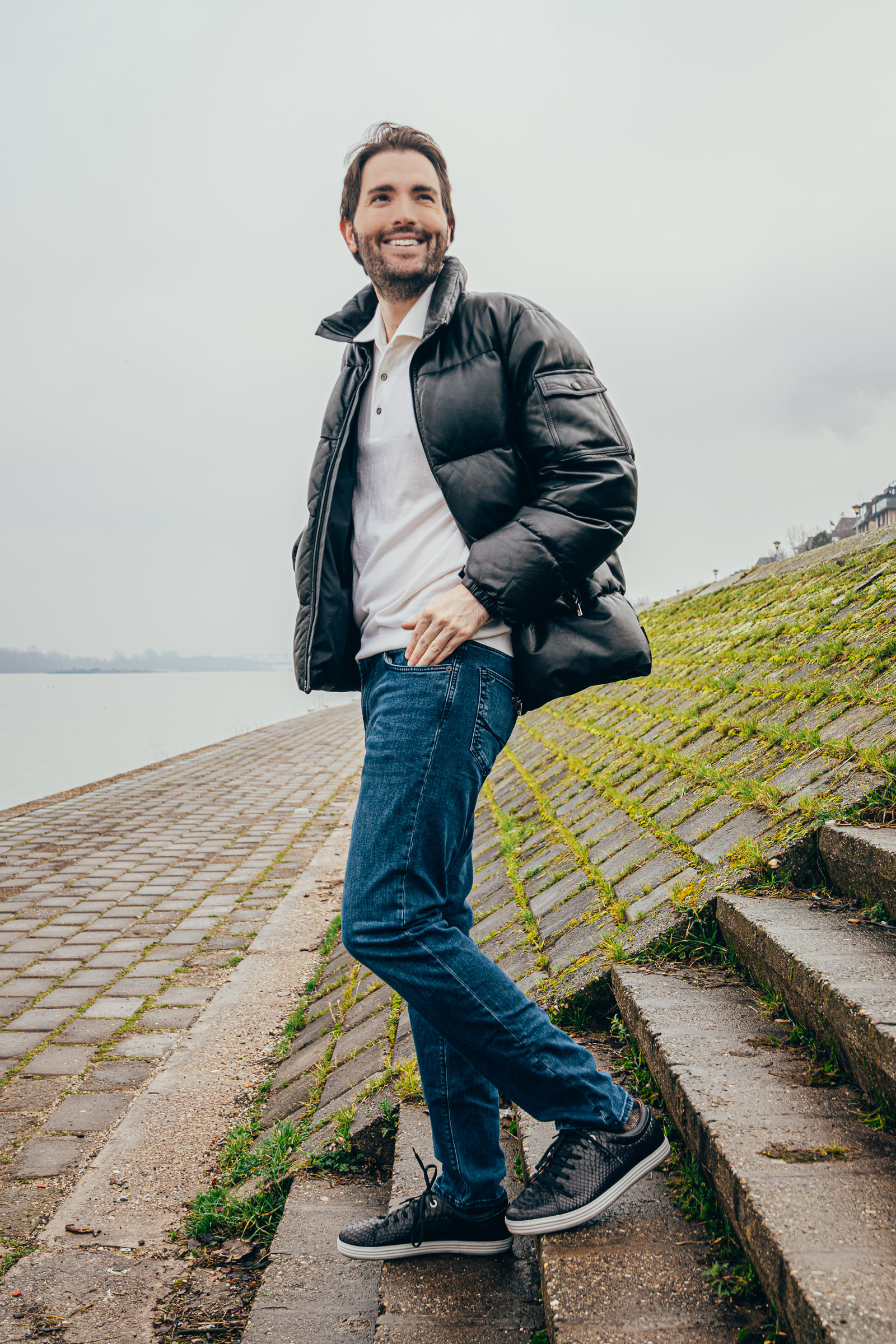
Ferragamo’s story begins with a remarkable boy. Salvatore Ferragamo was born in 1898 in Bonito, a village near Naples. He was the eleventh of fourteen children and made his first pair of shoes at just nine years old. At sixteen, he left for the United States to join one of his brothers.
In California, he found his destiny. In 1923, he opened the Hollywood Boot Shop and began making shoes for film studios and their stars. The local press soon called him the “shoemaker to the stars.” Still, he wanted to understand why beautiful shoes so often hurt. So he went on to study anatomy at the University of Southern California.
In 1927, Ferragamo returned to Italy and settled in Florence, a city famous for its craftsmen. In 1938, he bought Palazzo Spini Feroni, which has served as the company’s headquarters ever since. Today the palazzo also houses the Ferragamo Museum.
His creativity never slowed down. In 1947, he took his “invisible” sandals to Dallas, with an upper made from transparent nylon fishing line. There he received the Neiman Marcus Award, the first time it went to a shoe designer. If you love the Ferragamo legend as much as I do, read my story Ferragamo, Grace Kelly and Monaco.
FROM THE CORK WEDGE TO PYTHON SNEAKERS: FERRAGAMO WITH A MONCLER LEATHER JACKET
Salvatore Ferragamo was a true inventor. In 1937, he patented the cork wedge heel, which he developed when steel for shoe supports was scarce. Decades later, in 1978, his eldest daughter Fiamma designed the Vara pump with its famous grosgrain bow. Meanwhile, the Gancini hook, now a house signature, takes its inspiration from the wrought-iron gate of Palazzo Spini Feroni.
The house kept evolving long after his death. In 2022, British designer Maximilian Davis became creative director, and the brand shortened its name to simply Ferragamo. That move signaled a younger, more modern direction.
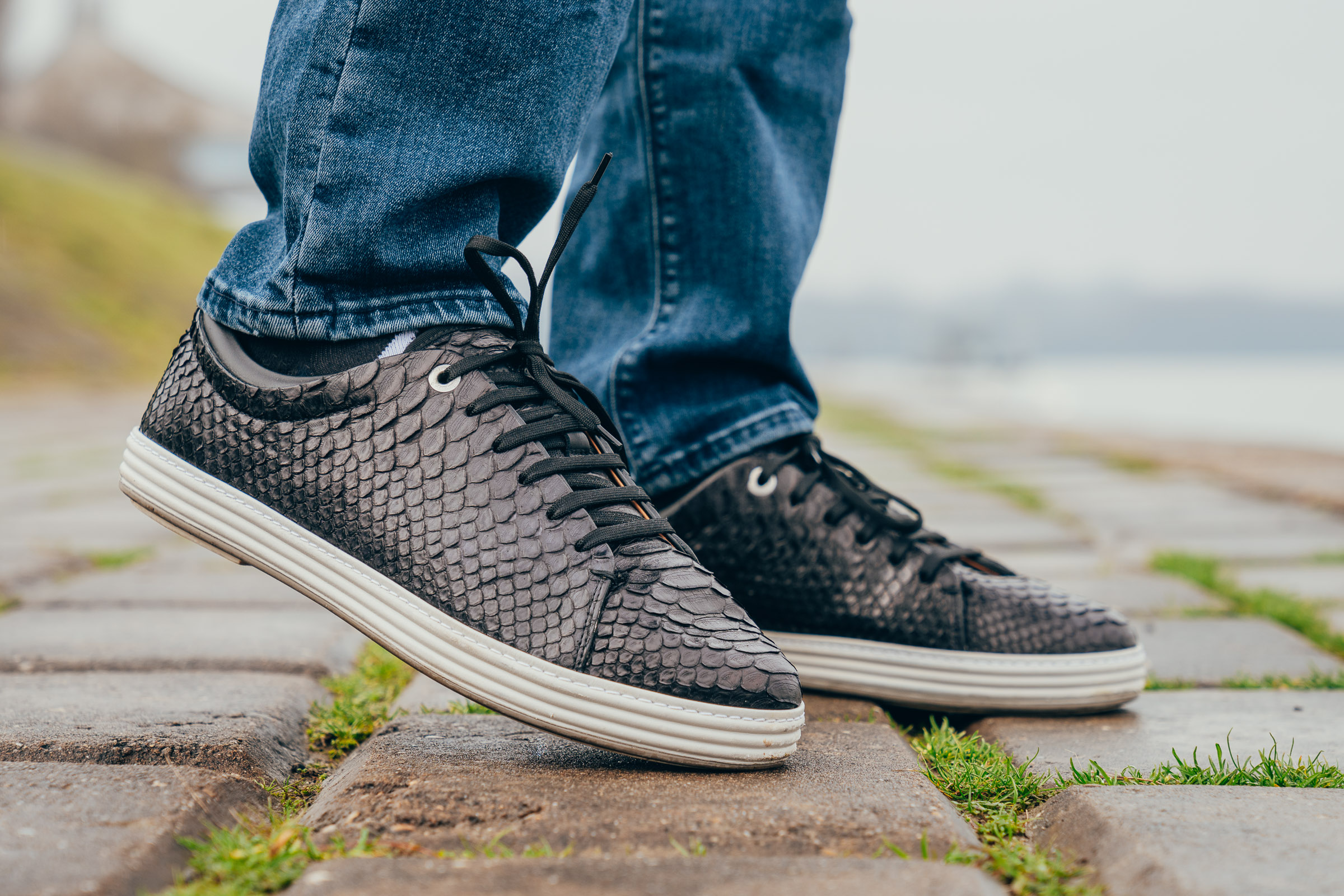
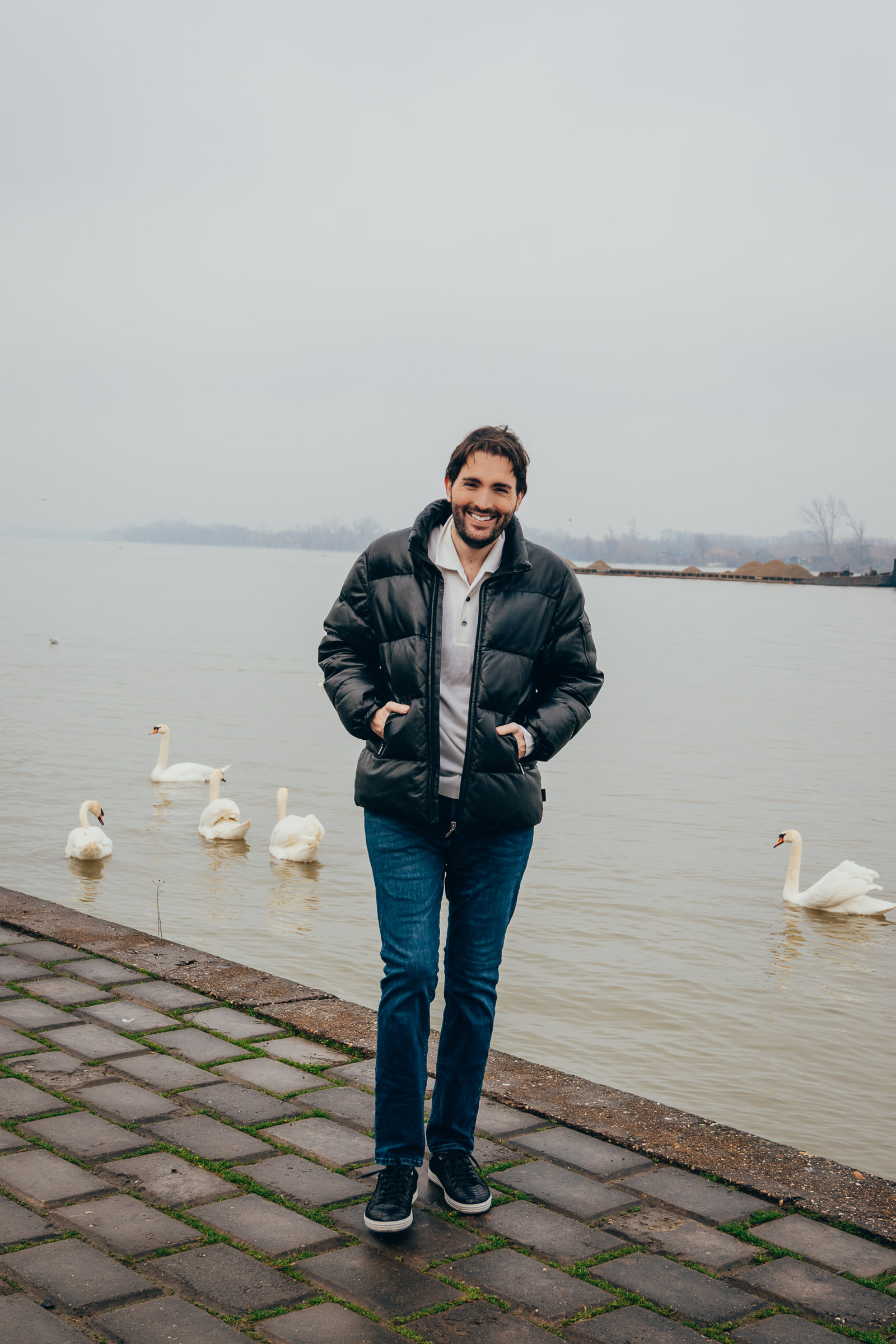
Ferragamo crafted my sneakers from black python leather. The scales create a rich, three-dimensional texture, while the white sole keeps them light and clean. They come from a spring-summer collection. Thanks to the deep black shade, though, they work perfectly with autumn and winter outfits too.
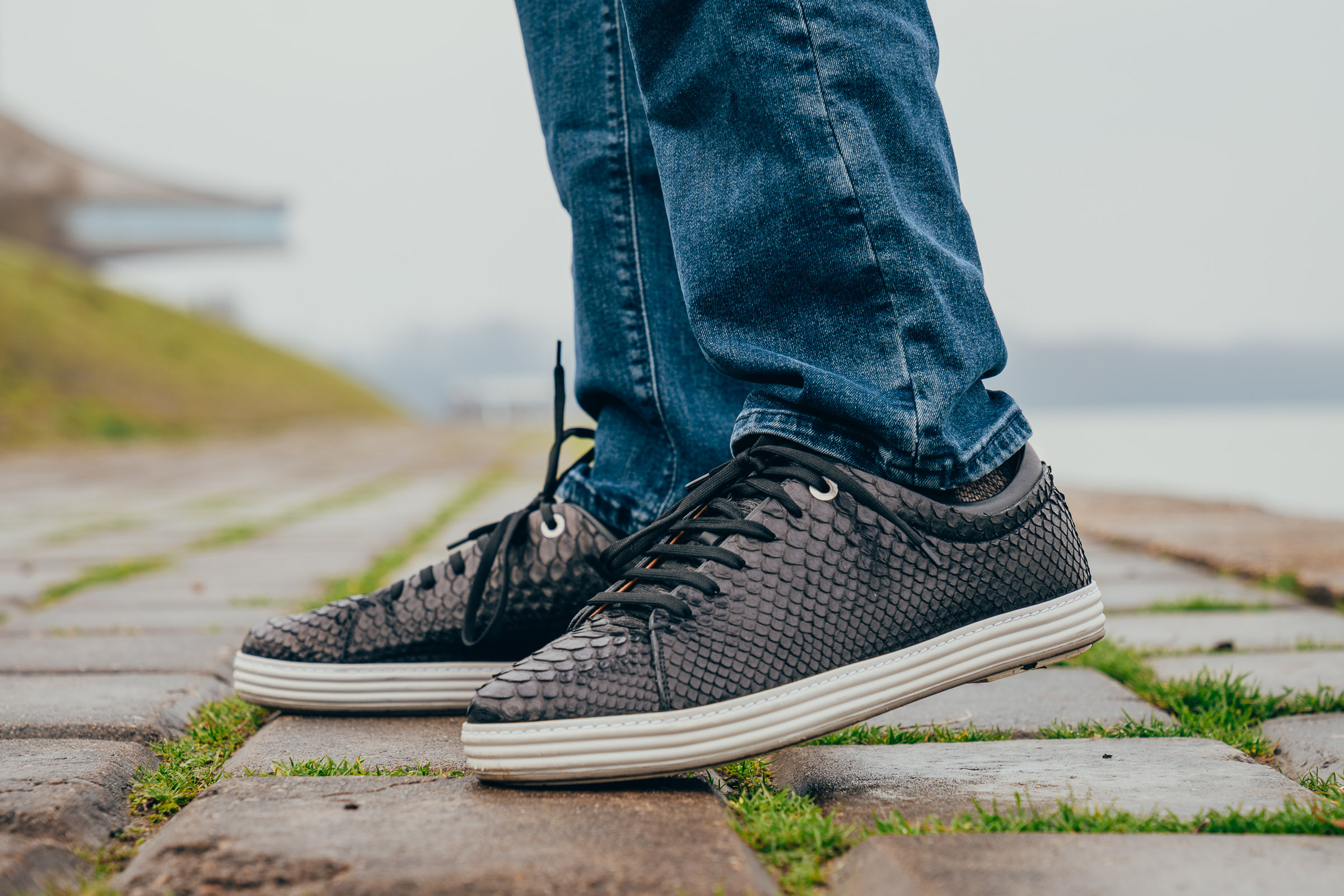

Here, they echo the black of the Moncler leather jacket and frame the blue denim from below. That is the secret of a balanced outfit: repeat one color at the top and at the bottom. The eye then reads the look as one confident line.
HOW TO STYLE A MONCLER LEATHER JACKET WITH ELEGANCE
A leather down jacket can look either refined or overly sporty. The difference lies in what you pair with it. Here are a few lessons I’ve learned from wearing mine.
First, choose fine knitwear instead of hoodies. A cashmere polo, a merino roll-neck or a thin crewneck instantly raises the tone of the jacket. Second, keep the color palette tight. Black, cream, gray and navy work beautifully together, while loud prints compete with the leather.
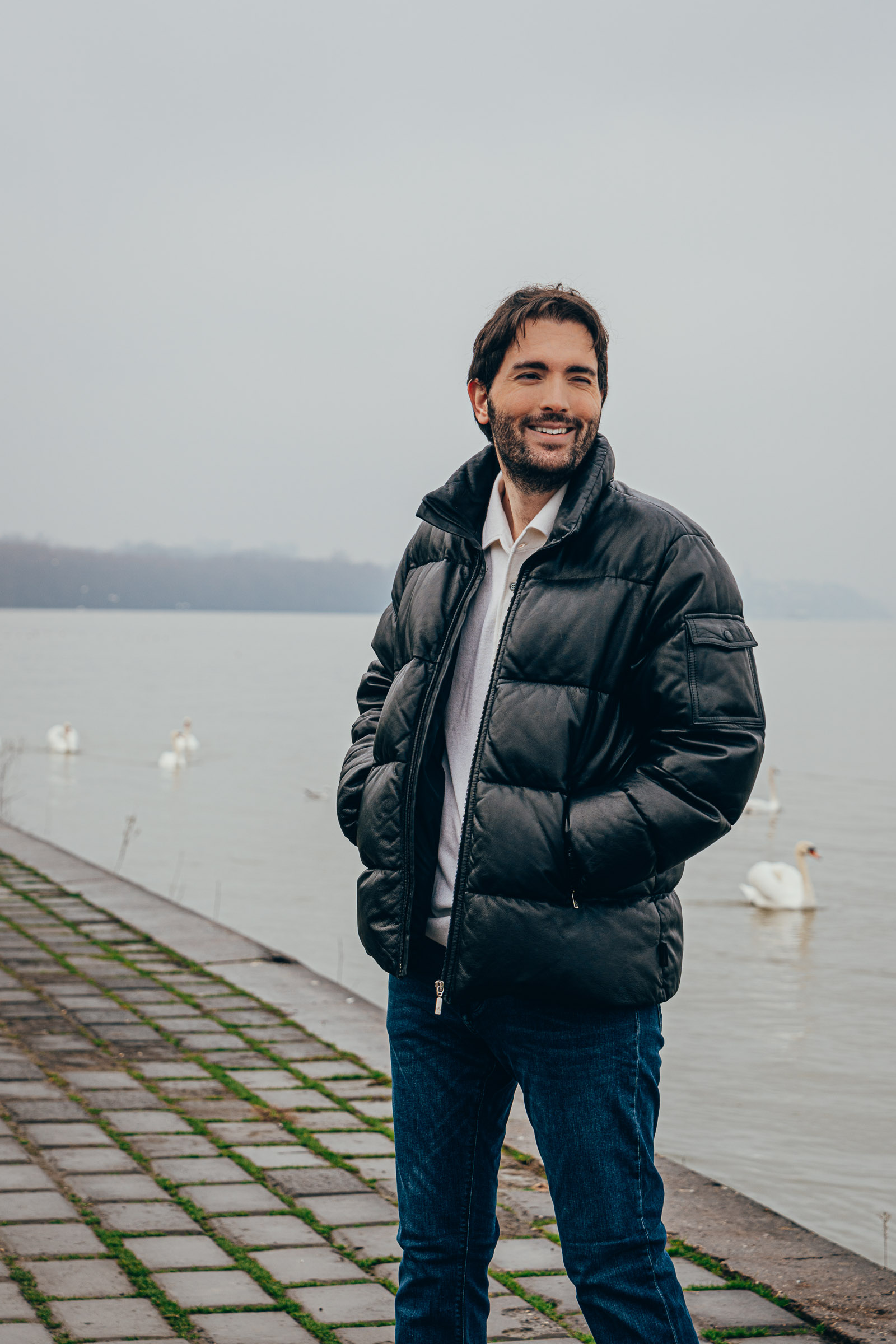
Next, think about the trousers. Dark or mid-blue jeans make the look relaxed, while gray flannel trousers make it smart. Both work, as long as the fit is clean and the length is right. Avoid heavy breaks at the hem, because they make any outfit look sloppy.
Shoes finish the story. Minimal leather sneakers, suede boots or polished Chelsea boots all suit a Moncler leather jacket. Exotic textures like python add personality, but let them be the only bold accent.
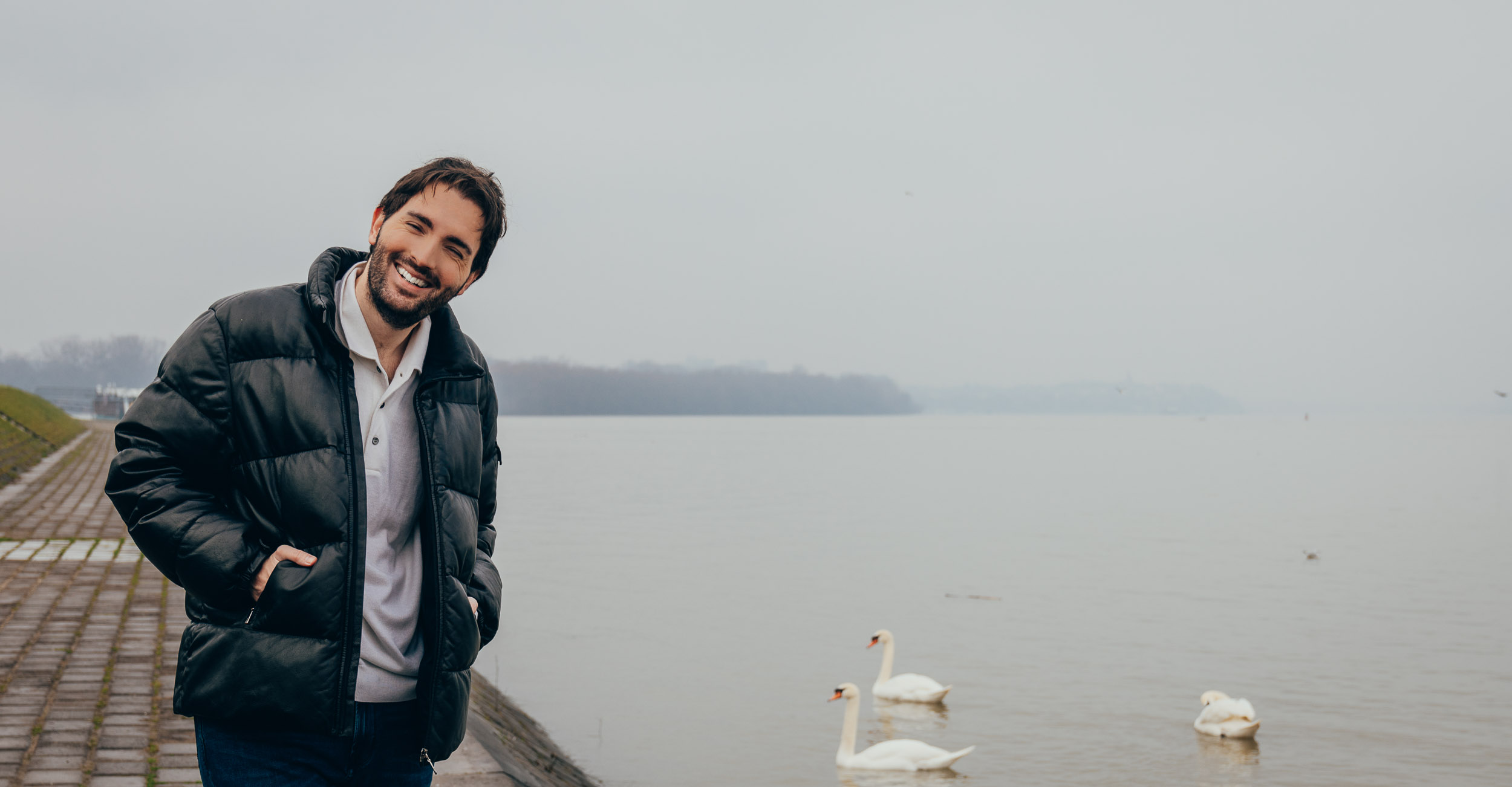
Finally, pay attention to the fit at the shoulders. A down jacket should feel generous, not oversized. When the shoulder seam sits close to your natural shoulder, the volume looks intentional and elegant.
OUTFIT:
Leather Jacket: Moncler
Sweater: Mauro Ottaviani
Jeans: Loro Piana
Sneakers: Ferragamo

FINAL THOUGHTS FROM THE DANUBE QUAY
We’ve come to the end of this winter story. Thank you for walking along the river with me and my Moncler leather jacket. Together, we traveled from a small village near Grenoble to the summit of K2, then on to Milan’s squares and Belgrade’s riverside. Along the way, we met Moncler, Mauro Ottaviani, Loro Piana and Ferragamo. Each of these houses turns craftsmanship into something you can feel every day.

I truly enjoyed preparing this post, and I hope it inspires your own winter wardrobe. Above all, I hope it reminds you that the best clothes carry a story. When you know that story, you wear the piece with even more pleasure.
Now it’s your turn. Tell me in the comments how you like this outfit. And please don’t forget my question: does black suit me, or should I return to my beloved browns?
If you have any questions, comments or suggestions, write to me below. Of course, you can also reach me by email or on social media through the CONTACT page. See you soon on the Mr.M blog!
With love,
Mr.M
This post is sponsored by the Moncler, Loro Piana, Mauro Ottaviani and Ferragamo brands. This post is my personal and honest review of their products.
Marko, the black color suits you very well, it emphasizes your elegance and uniqueness. The Moncler jacket is adorable, as are your python sneakers! You really always have fantastic fashion items in your wardrobe!
Moncler is my favorite brand, I love their stuff and have several of their jackets and sneakers. The jackets are light, nice and warm, while their shoes are very comfortable!
The jacket is really special and elegant, it suits you very well. You really should wear black more often because it looks fantastic on you! The sweater is very beautiful, the beige color is always beautiful because of its neutrality, it can be easily combined with all colors. You look amazing as always!
Lieber Marko, die Jacke ist toll! Ich habe mehrere Moncler-Jacken, aber keine Moncler-Lederjacke. Ich hoffe, bald eine Moncler-Lederjacke zu kaufen, ich bin mir sicher, dass ihr Leder sehr schön und von hoher Qualität ist!
Moncler ist eine zeitlose Marke, die ihre Spuren in der Modewelt hinterlassen hat. Ich liebe ihre Jacken, Parfums, Schuhe und Kleider sehr. Ich habe viel von ihrer Garderobe und bin ein treuer Kunde. Lieber Marko, du siehst wie immer fantastisch aus! Mit FG Felix