
My dear travelers and lovers of unusual journeys, welcome to a new travelogue from my series about Türkiye on the Mr.M blog. Over the past months, I took you across South America, and many of you wrote to me after my guide on planning a trip to South America. Today, I am taking you to a city I keep coming back to, Istanbul.
If you have followed the blog for a while, you may remember my first letter from the city of two continents and the New Year’s euphoria in the imperial city. This time, I arrived with a different plan and only a short window of time.
Türkiye is a transcontinental country. Most of its territory lies in Anatolia, in Asia, while a smaller part, Eastern Thrace, lies in Europe. Istanbul sits exactly where these two worlds meet, on both shores of the Bosphorus. So, before we start, take your favorite drink, a snack or a sweet, relax and enjoy this story about the Turkish metropolis, the crossroads of continents and colors of life.
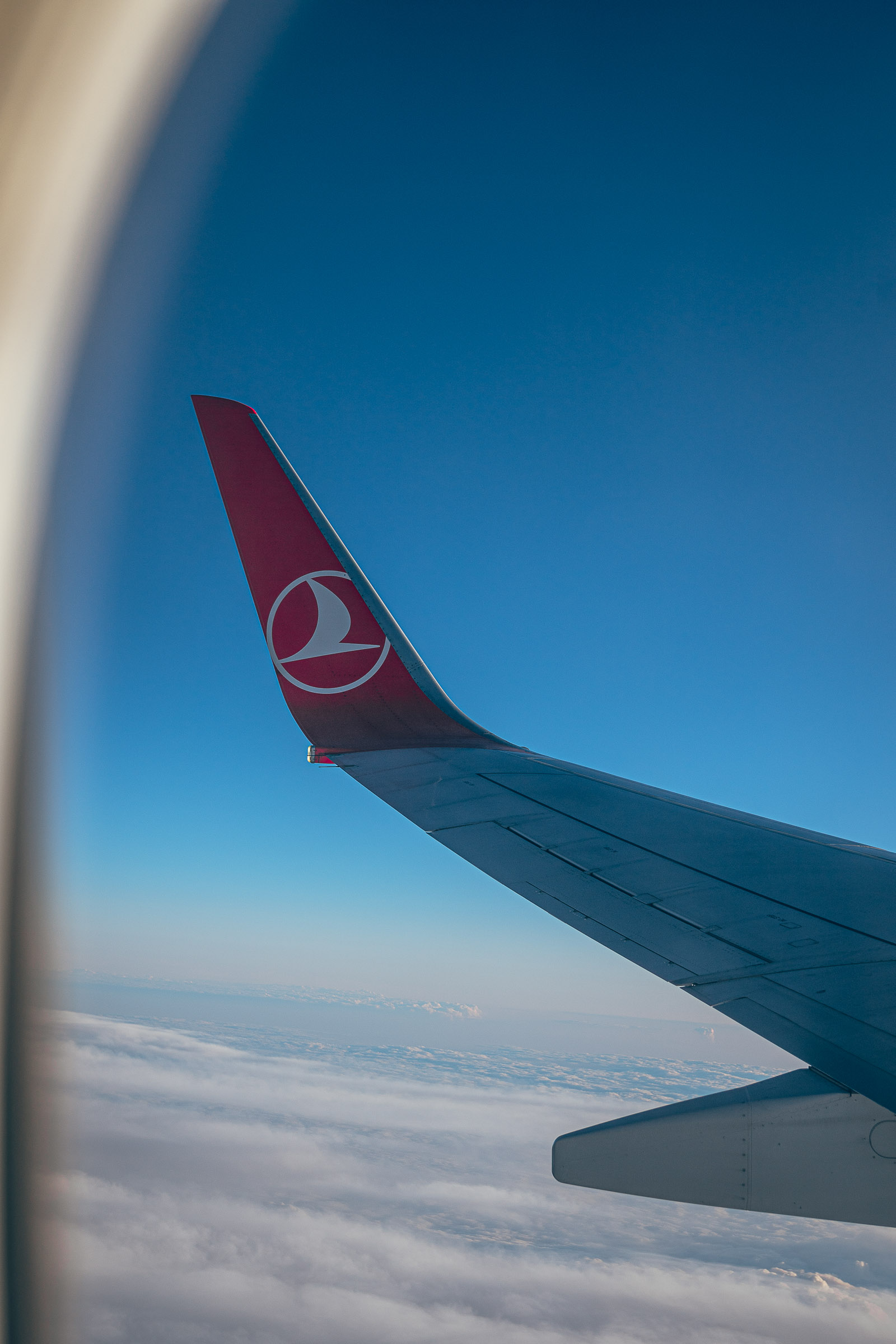
TURKISH AIRLINES AND MY STOPOVER IN ISTANBUL
How did I come to Istanbul this time? On my way to faraway Venezuela, I used one of the most practical perks of Turkish Airlines, its Stopover program. The idea is simple. When your connection in Istanbul is long enough, the airline can host you in a hotel, so you can explore the city before your next flight.
According to the official program page, at the time of writing the stopover requires a layover of at least 20 hours. Economy class passengers can get one night in a four-star hotel, while Business class passengers can get two nights in a five-star or boutique hotel. Passengers from some countries can get extra nights. However, the airline keeps the right to change these terms, so always check the current rules before you book.
During my stopover, I used every hour to experience Istanbul. I strolled through Taksim Square, took a luxurious break at Divan Istanbul and watched the sunset over the Bosphorus from Maçka Park. It was the perfect chance to slow down and absorb the spirit of the city before continuing on to Latin America.
If you have never tried it, you can also read my earlier story about the Turkish Airlines stopover program. For all those planning longer intercontinental trips, I sincerely recommend this option. Instead of a long wait at the airport, you get a short city break, and the whole trip becomes an even richer experience.
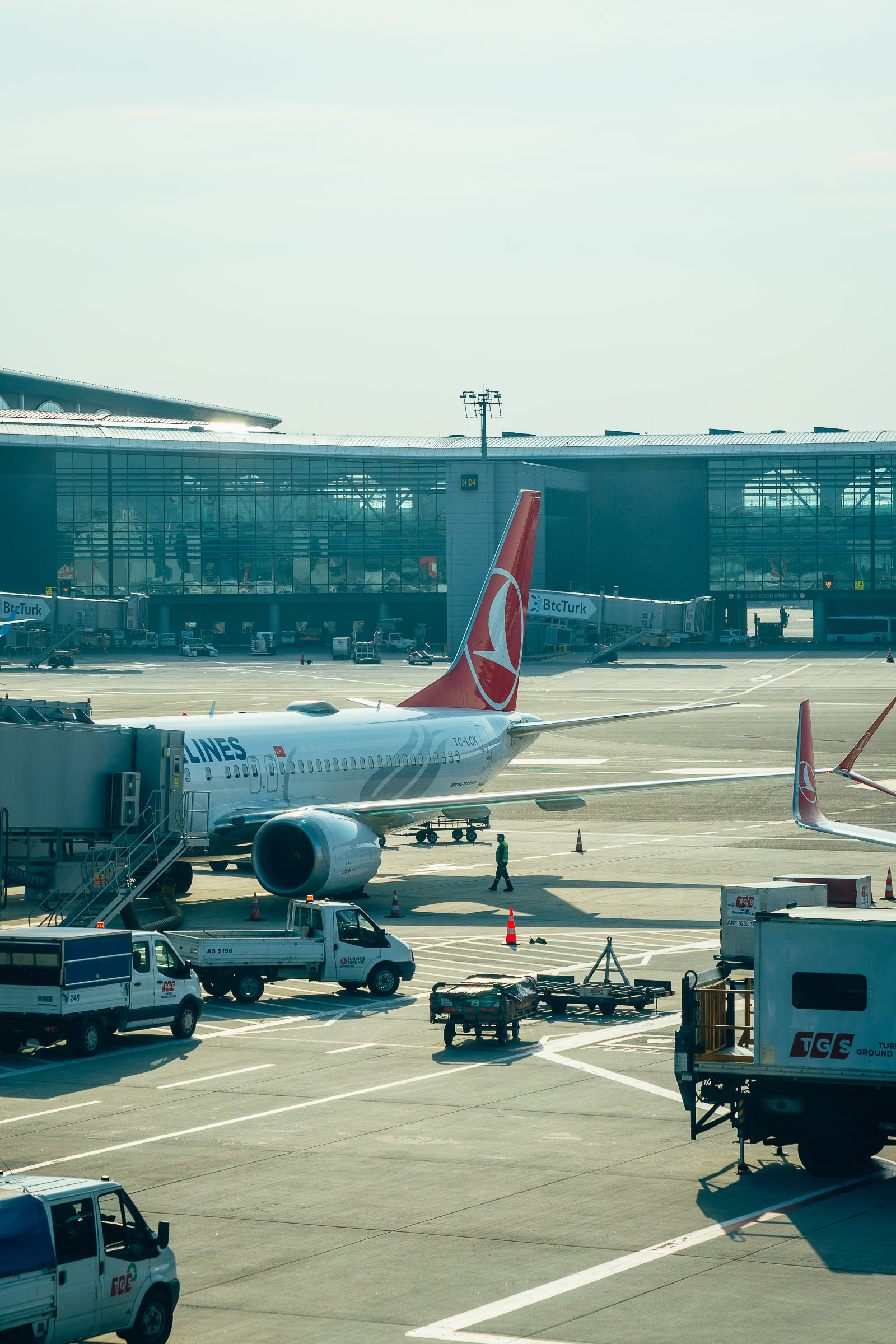
ISTANBUL BETWEEN EAST AND WEST
Istanbul is the largest city in Türkiye and the center of its economic and cultural life. According to the Turkish Statistical Institute (TÜİK), Istanbul had 15,754,053 inhabitants at the end of 2025. The city spans two continents, Europe and Asia, and the Bosphorus strait runs between them.
The Bosphorus is about 31 kilometers long and connects the Black Sea with the Sea of Marmara. At its narrowest point, it is only about 700 meters wide. Three suspension bridges cross it today: the Bosphorus Bridge from 1973, the Fatih Sultan Mehmet Bridge from 1988 and the Yavuz Sultan Selim Bridge from 2016. In addition, the Marmaray rail tunnel and the Eurasia road tunnel run beneath the water.
A walk through Istanbul is a constant mix of tradition and modern life. In the afternoon, you can drink Turkish coffee near the old walls of Sultanahmet. Then, in the evening, you can listen to street musicians on İstiklal Avenue. The city is also home to many universities, museums, theaters and festivals, so there is always something happening.
That is why I built this guide around a few neighborhoods. First, we walk through Taksim Square and İstiklal Avenue. Then we stop at Divan Istanbul and continue to elegant Nişantaşı and green Maçka Park. After a ride on the Bosphorus, we explore historic Sultanahmet, the bazaars and Dolmabahçe Palace. Finally, I share my favorite flavors and some useful tips for all those planning to visit Istanbul soon.
A SHORT HISTORY OF THE CITY ON TWO CONTINENTS
Istanbul has been the meeting point of East and West for centuries, and over time it carried many names. Greek settlers founded Byzantium here. Then, on May 11, 330, Emperor Constantine the Great inaugurated the city as the new capital of the Roman Empire. Soon, people called it Constantinople, the city of Constantine.
Over the following centuries, the city served as the capital of the Roman, Byzantine, Latin and Ottoman empires. After the Ottoman conquest in 1453, it became the seat of the sultans for almost five centuries. Then, on October 13, 1923, the Grand National Assembly declared Ankara the capital of the new Republic. Later, in 1930, the city officially adopted the name Istanbul.
It is not difficult to find traces of this rich past. Justinian’s great church and cistern, Byzantine mosaics and sumptuous Ottoman palaces stand only a short walk apart. Every era left its mark on the architecture, and almost every street tells a part of the story.
Today, Istanbul is a major world metropolis. Still, its streets exude the splendor of old times and a long history. The very mention of Hagia Sophia or the Blue Mosque evokes the imperial legacies that built them. On the other hand, the economic and cultural life of the city is ultramodern. To me, Istanbul has many faces in one. Here you can enjoy a traditional Turkish feast and then, unexpectedly, end up at a party with a DJ after midnight. However, as you walk through its squares and parks, you still feel the centuries of tradition all around you.
TAKSIM SQUARE, THE MODERN HEART OF ISTANBUL
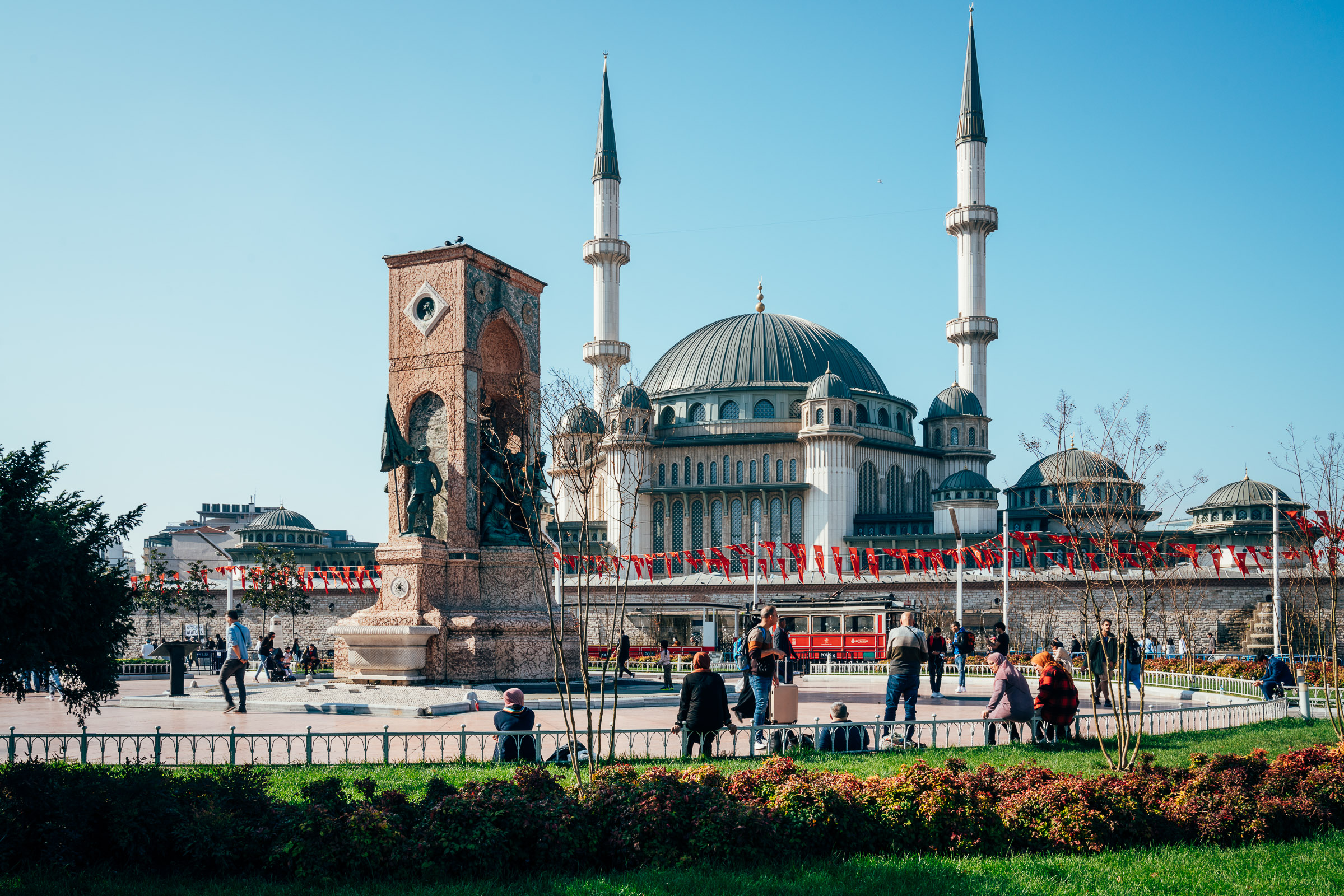
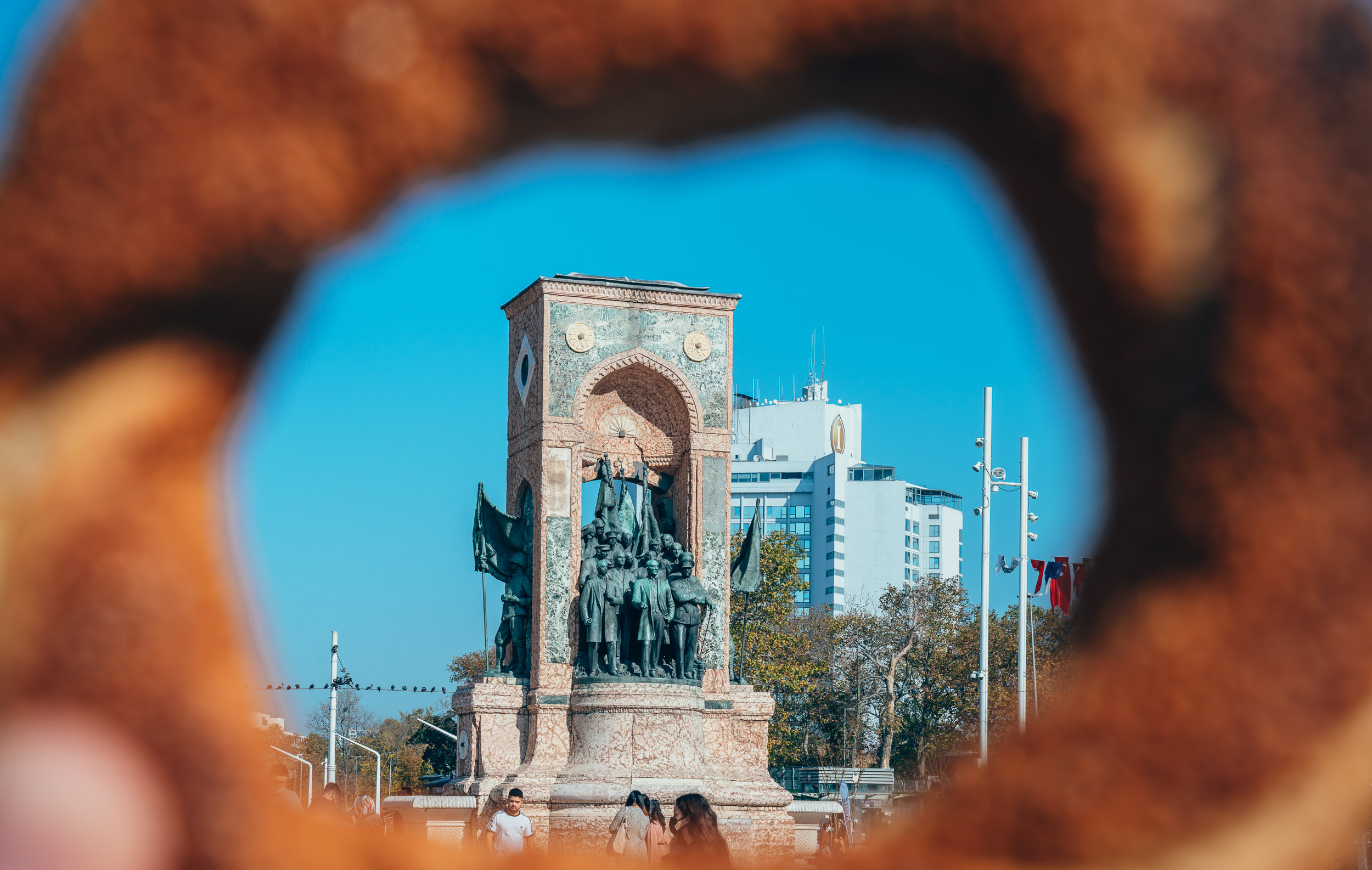
Taksim Square in the Beyoğlu district is the modern heart of Istanbul. Restaurants, shops and hotels surround it, and locals and visitors meet here at every hour. In the center stands the Republic Monument by the Italian sculptor Pietro Canonica. The monument, about 11 meters high, has stood here since its unveiling on August 8, 1928, five years after the founding of the Republic. In one of my photos, I framed it through a fresh simit, the sesame bread ring you see on almost every corner of Istanbul.
Several landmarks frame the square. The Atatürk Cultural Center (AKM), home to opera and concert halls, reopened on October 29, 2021. On the other side rises the Taksim Mosque, which opened on May 28, 2021, after construction that began in February 2017. The green Gezi Park and The Marmara hotel complete the picture.
Most importantly, Taksim is also a transportation hub. The M2 metro line stops right at the square. In addition, the F1 funicular, which opened on June 29, 2006, runs for about 600 meters down to Kabataş on the Bosphorus shore. From there, you can continue by tram toward the old town or by ferry across the water.
That is why Taksim is the perfect starting point for a city tour. In a short time, you can reach Galata Tower, Sultanahmet or even the Asian side. So, on a short stopover, staying close to this square saves a lot of precious time.
İSTİKLAL AVENUE AND THE NOSTALGIC RED TRAM
Already around dusk, the streets around Taksim come alive. Locals and tourists walk along İstiklal Avenue, sit in café gardens and listen to street musicians. You will often hear trumpets, jazz or Turkish folk music, and many cafés stay busy long after midnight.
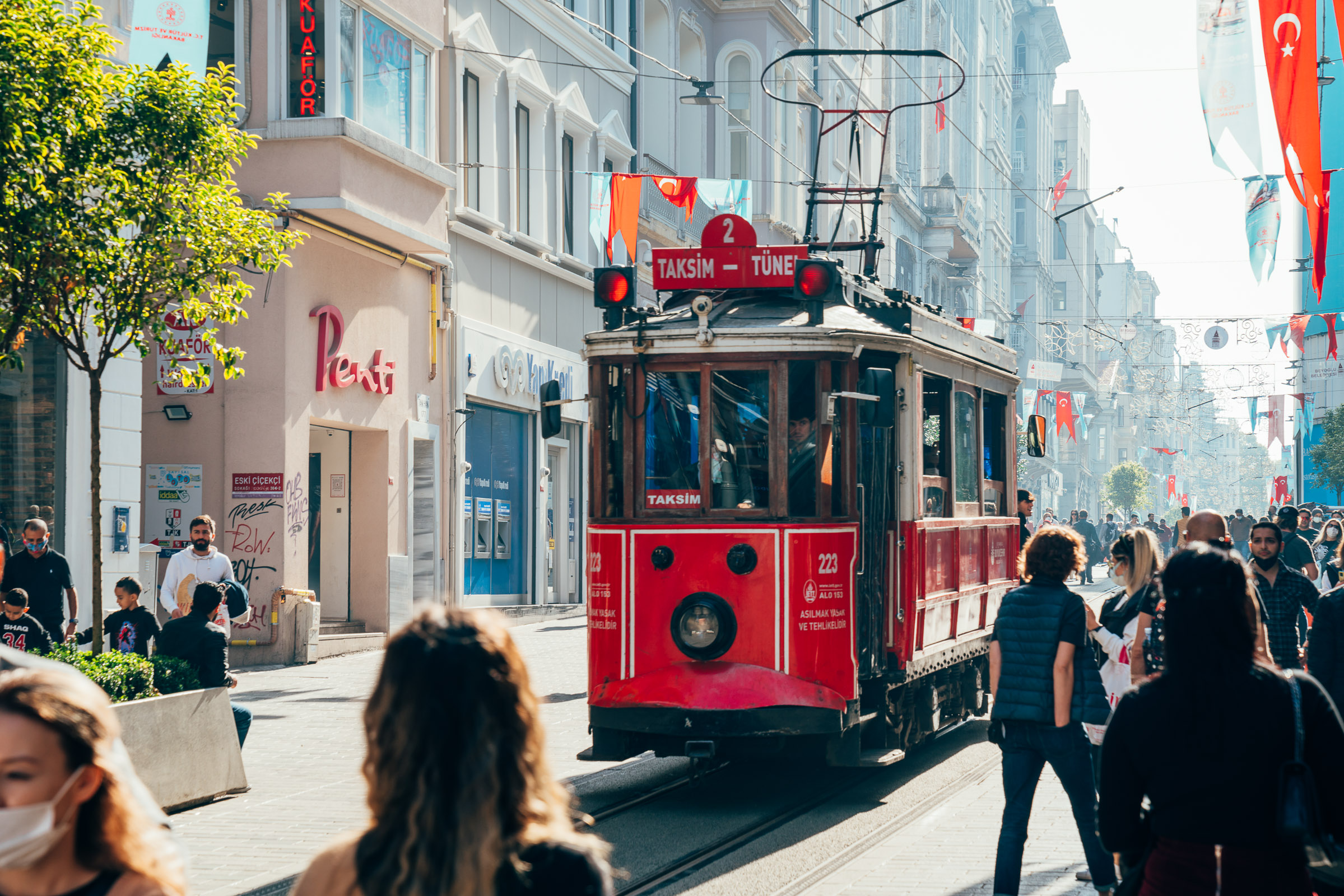
İstiklal, or Independence Avenue, is the main pedestrian street of Beyoğlu. It runs for about 1.4 kilometers from Taksim toward Tünel and is full of shops, galleries, cafés and theaters. Its symbol is the nostalgic red tram. The T2 heritage line has been running here since December 29, 1990, on a route of about 1.6 kilometers. Today it works more as a tourist attraction, but it still evokes the spirit of the early 20th century. So, don’t miss a photo or a short ride.
At the lower end of the avenue waits another treasure, Tünel. This short underground funicular opened on January 17, 1875, and it is the second-oldest underground railway in the world. It connects Beyoğlu with Karaköy, down by the water.
GALATA TOWER AND THE VIEW OVER THE GOLDEN HORN
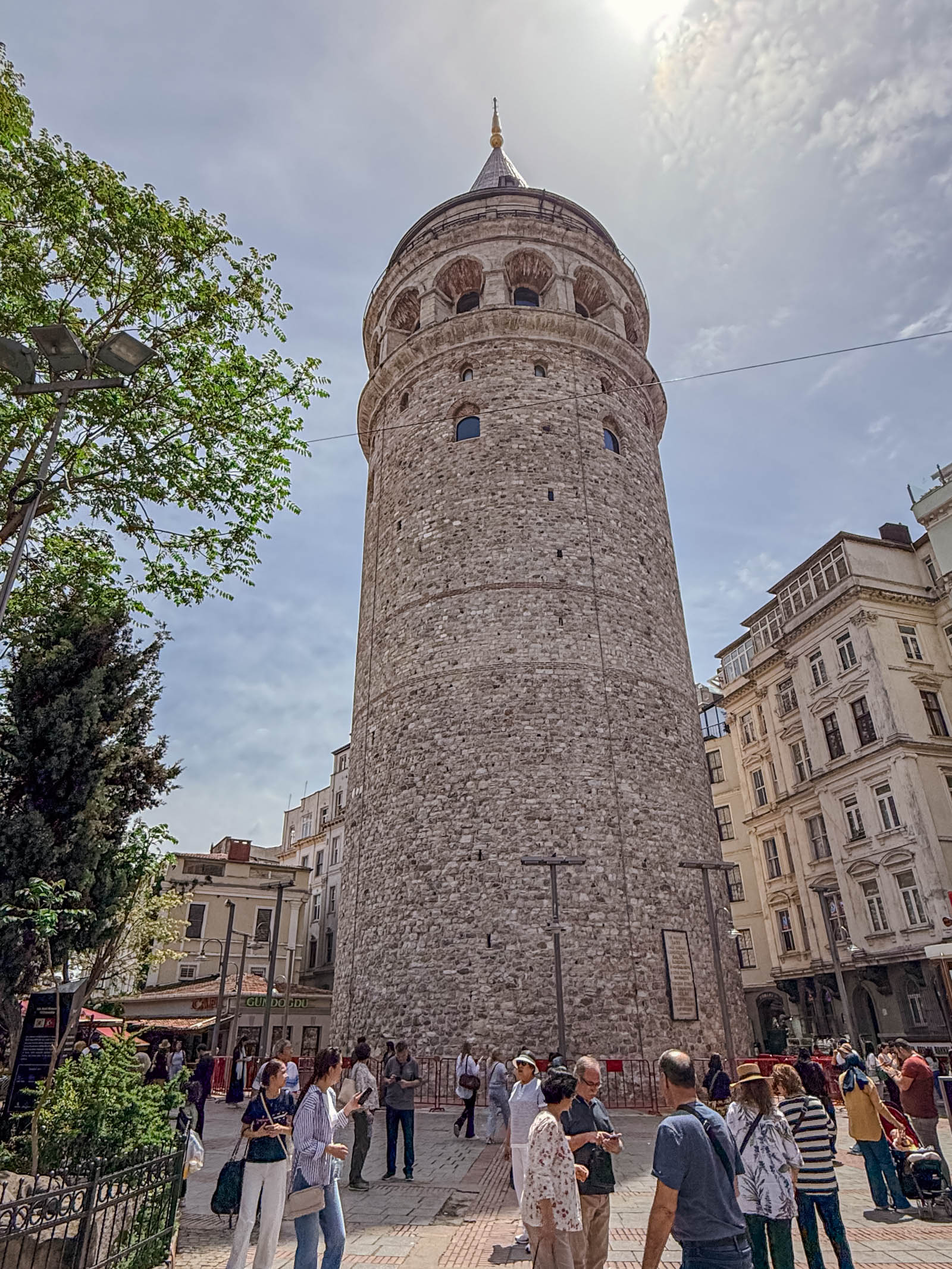
From the lower end of İstiklal, it is only a short walk to Galata Tower. The Genoese built this stone tower in 1348 as part of the walls of their colony, and they called it Christea Turris, the Tower of Christ. Today it stands 62.59 meters tall and has been a museum since 2020. After further roof and structural work, it reopened to visitors on May 25, 2024. From the balcony, you see the Golden Horn, the Bosphorus and the domes of the old town in one shot. Note that the old café at the top is gone, because the 2020 restoration removed the later additions. Of course, the tower is still one of the favorite photo spots in the city.
The tower also has its legends. According to a popular story, the 17th-century inventor Hezarfen Ahmed Çelebi flew from Galata Tower toward Üsküdar on wings he built himself. Whether you believe it or not, the view from the top makes the story easy to imagine.
My advice is to come early in the morning or late in the afternoon, when the light over the Golden Horn is softest. Afterward, get lost in the steep lanes of Galata below the tower, full of small cafés, design shops and old staircases.
DIVAN ISTANBUL, A CLASSIC NEXT TO GEZI PARK
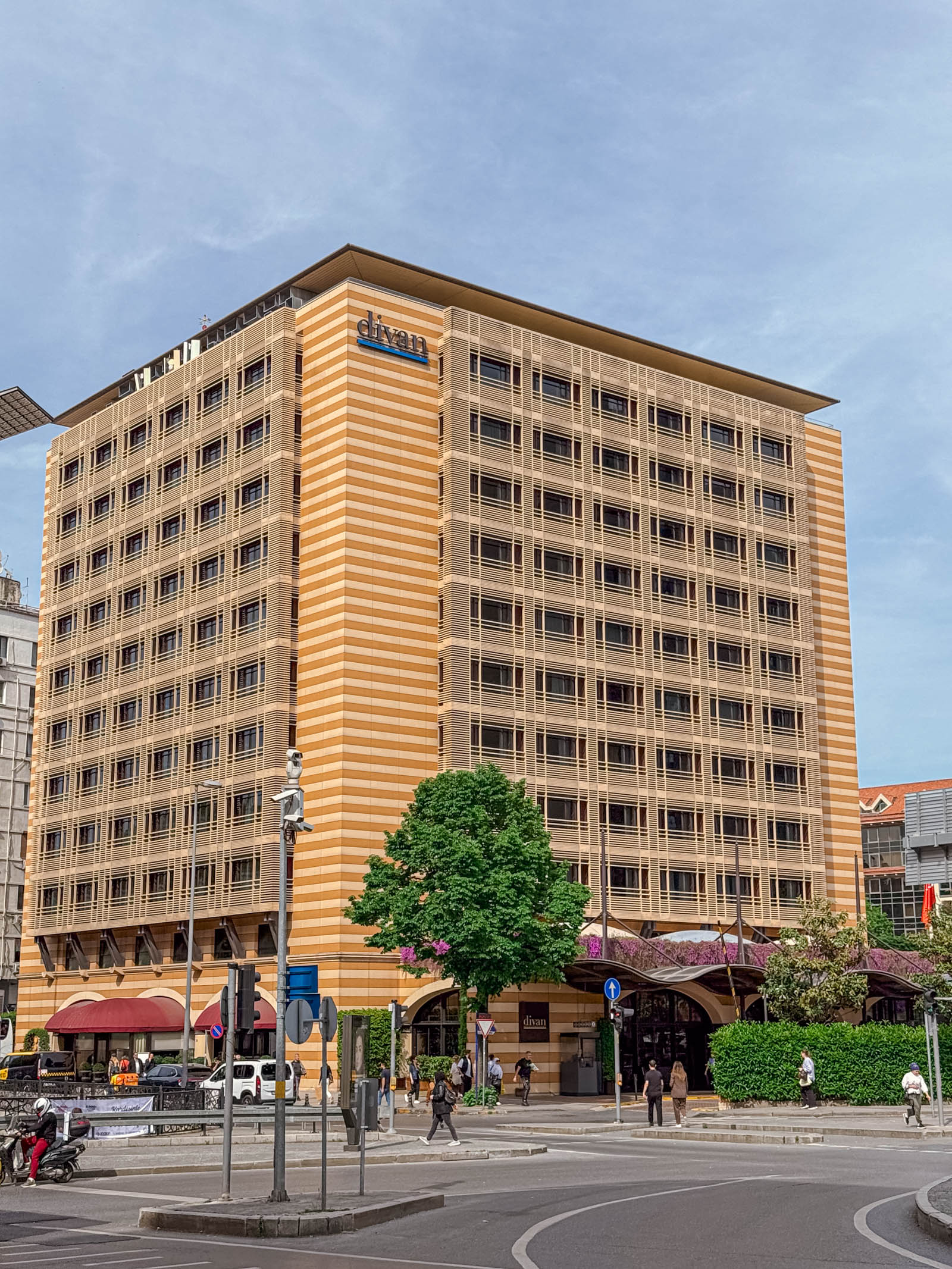
Just a few steps from Taksim Square, next to the green Gezi Park, stands the famous Divan Istanbul. Vehbi Koç opened this five-star hotel in 1956, and today it is the flagship of the Divan group. The hotel sits in Elmadağ, in the Şişli district, and has 191 rooms on 11 floors.
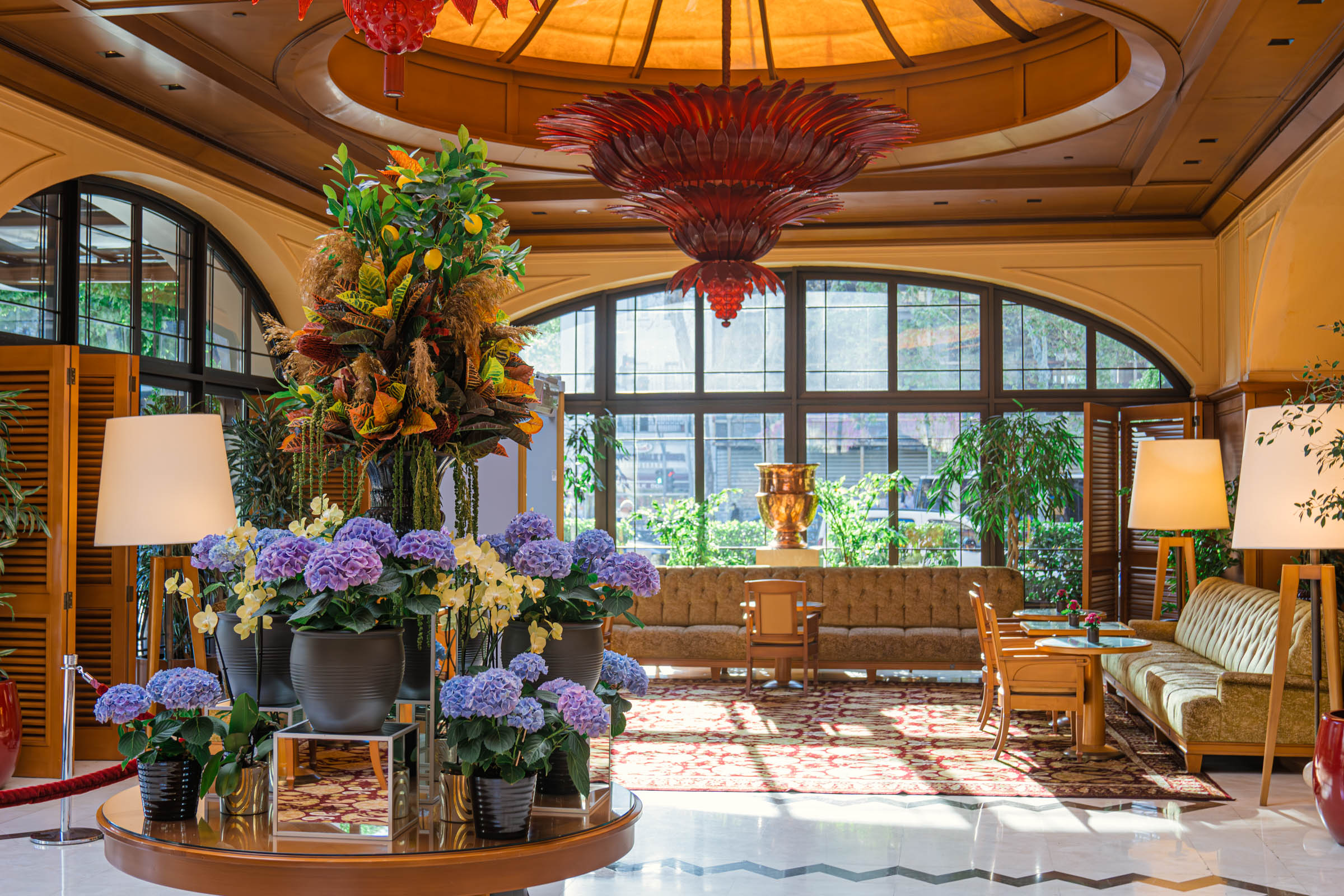
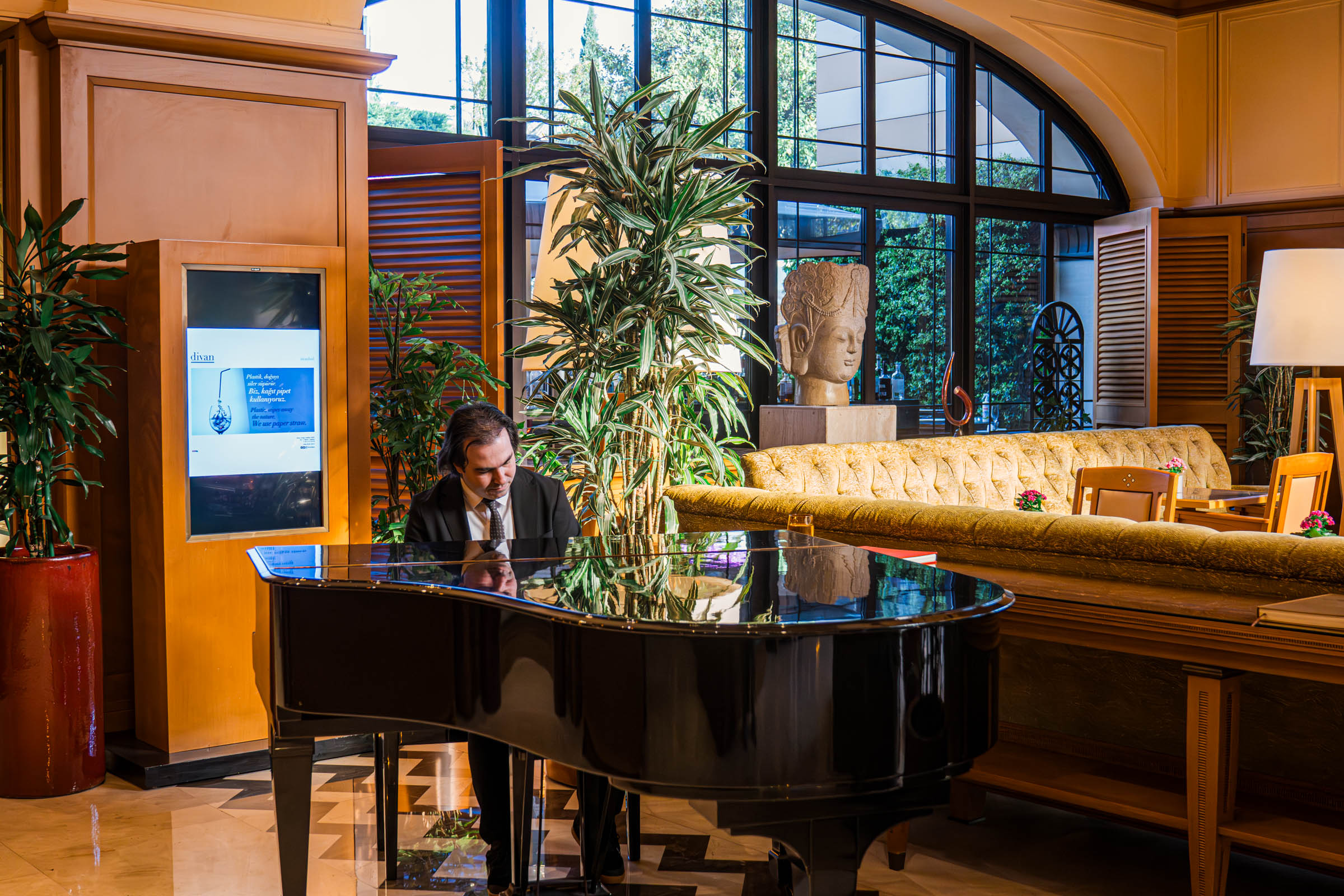
From the first moment, Divan combines oriental charm and Western elegance. In the lobby, a grand chandelier hangs above fresh hydrangeas. During my stay, a pianist filled the lobby with soft music. The interiors exude a classic style with warm lighting and elegant details, while the service focuses on attention to every guest.
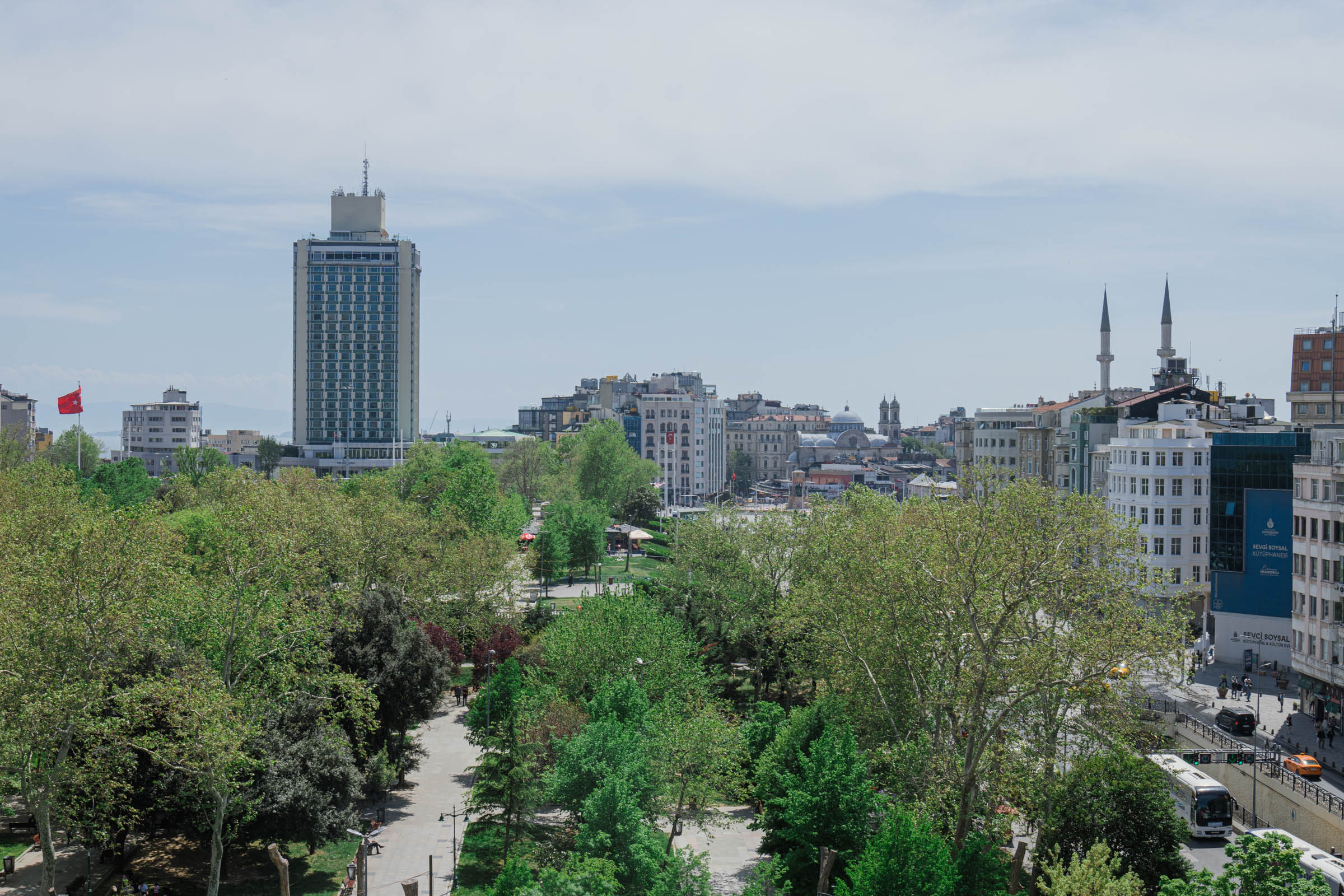
Thanks to its location, the hotel is extremely practical. In a few minutes on foot, you reach Taksim Square, İstiklal Avenue and the funicular to the Bosphorus. At the same time, the park in front of the hotel gives you a feeling of calm, which is rare in the very center of such a big city.
For me, this balance is the true luxury of Divan. You can spend the day in the noise of the metropolis and then return to a quiet, elegant base in a matter of minutes. That is exactly what you need on a short stopover, when every hour counts.
MY STAY AT DIVAN ISTANBUL
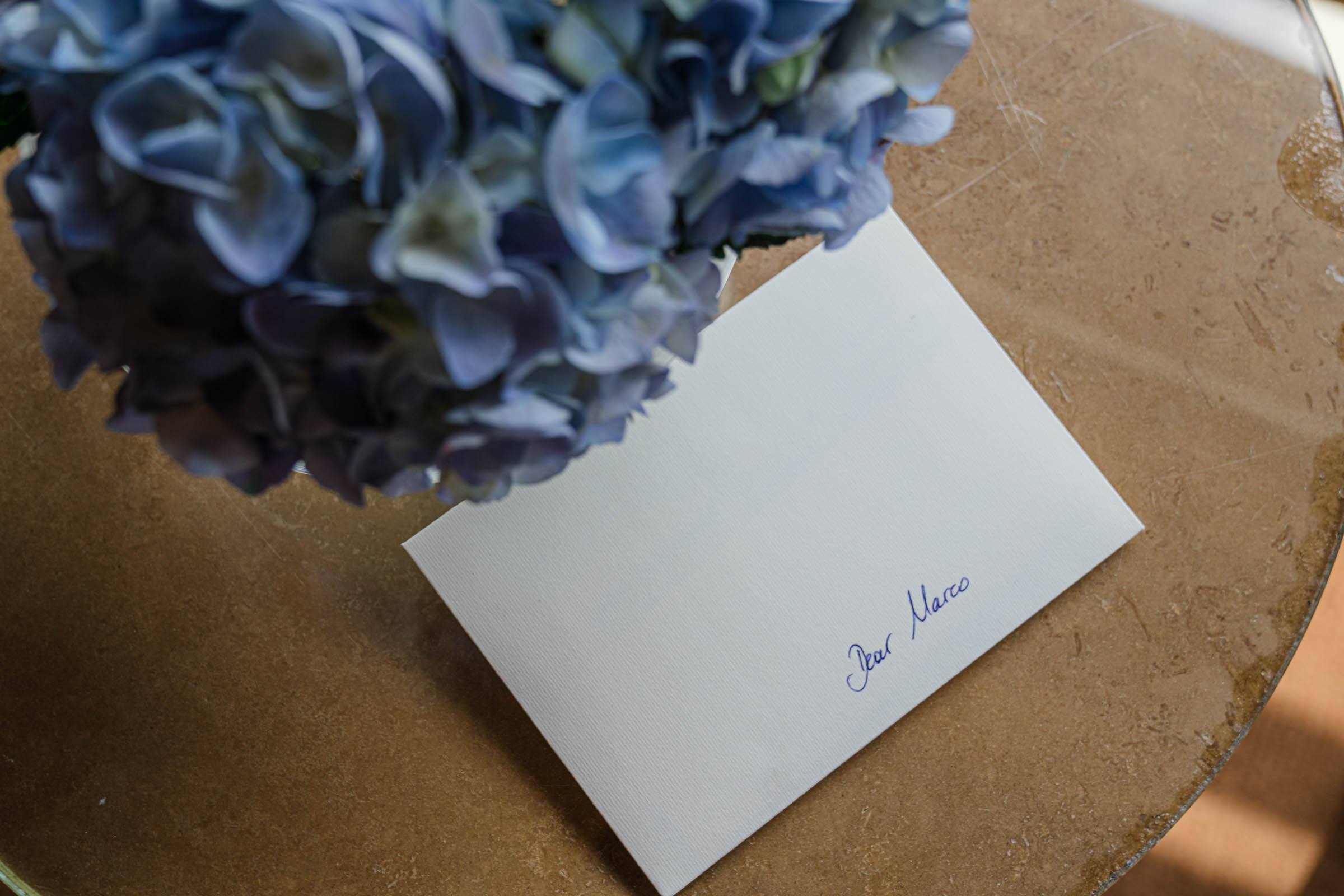
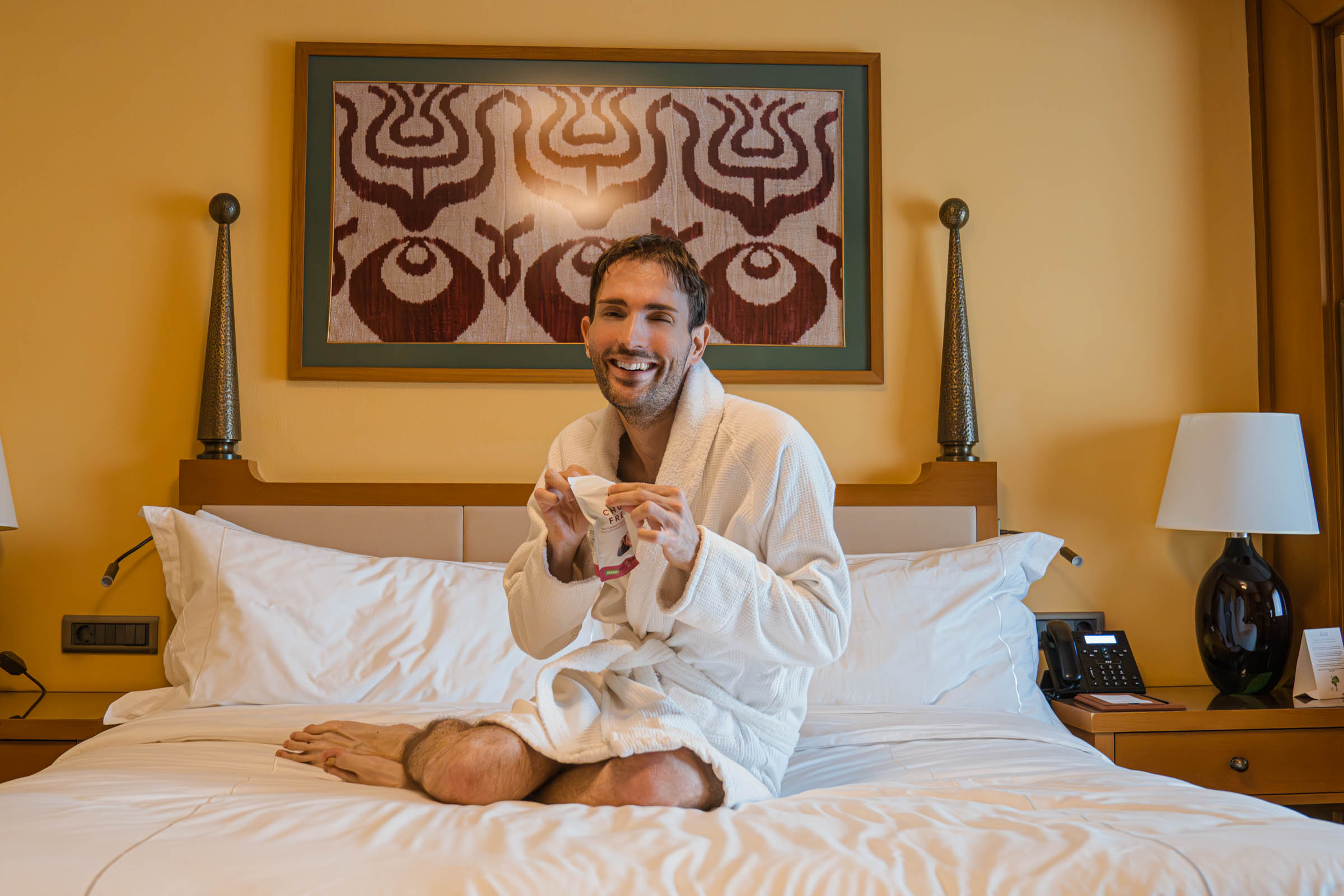
My room offered a green view over the treetops of Gezi Park, a rare sight in the center of Istanbul. Hydrangeas and a welcome card waited for me, a small gesture with a lot of style.
In the morning, I started the day slowly, in a bathrobe, with a cup of Turkish coffee. It was a quiet little ritual before going out into the city again.
Divan Istanbul is a haven of luxury with a historical pedigree, and for me it is still one of the must-see addresses for visitors to the city. In addition to a room with a view, you can also enjoy a rich Turkish breakfast. Quite simply, the hotel is glamour in miniature: top-notch service and ambience, just as the city itself brings two worlds together.
If you would like another address with a story, you can also read my review of The Bank Hotel, a remarkable combination of history and eclectic architecture.
NIŞANTAŞI, THE LUXURY SHOPPING DISTRICT OF ISTANBUL
Nişantaşı is a prestigious residential and shopping quarter in the Şişli district, on the European side of Istanbul. It includes neighborhoods such as Teşvikiye, Maçka, Osmanbey and Pangaltı. This part of the city has always been synonymous with high-end shopping. You will find long avenues full of boutiques of famous fashion houses, as well as exclusive cafés and restaurants.
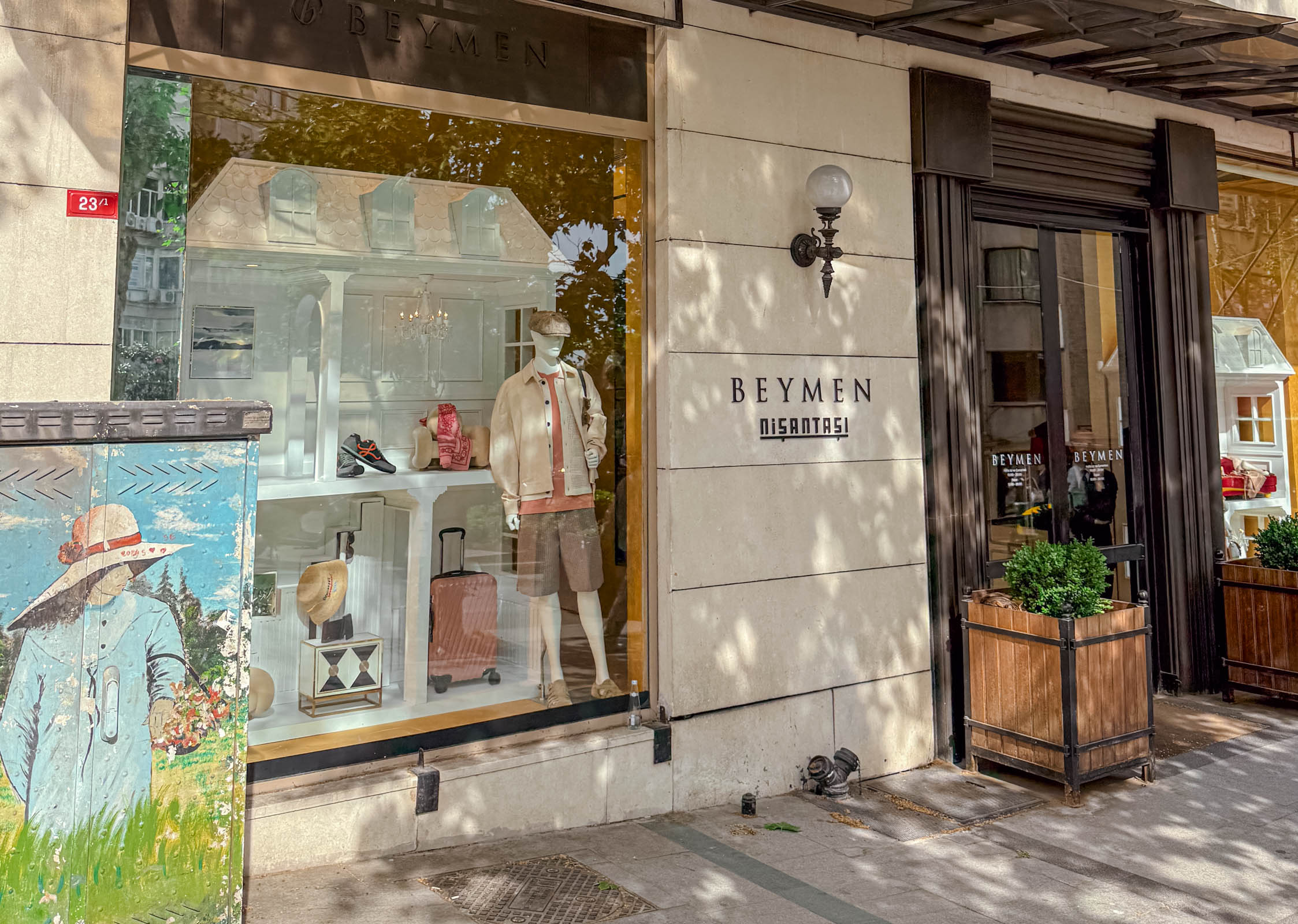
The most famous address is Abdi İpekçi Street, about 700 meters long. In terms of lease prices, it is the most expensive shopping street in Türkiye. Along it and on Teşvikiye Avenue, you will find Turkish and international luxury brands, concept stores and elegant arcades. Beymen, one of the best-known Turkish luxury department stores, also has a striking store here, with a large mural on its facade.
In contrast to the colorful and noisy bazaars of the old town, Nişantaşı exudes a quiet elegance. The streets are orderly, and the shops are airy and well lit. Through the windows of the boutiques, you see the newest collections of the great fashion houses. Meanwhile, elegant locals with expensive bags pass by, and young businessmen in suits hurry to their meetings.
What makes this neighborhood special is the mix of cultures. You will often hear English, Arabic and Turkish in the same street. So, you might see tourists leaving a luxury boutique and a Turkish family enjoying coffee in a fashion concept café next door. For more addresses, read my luxury shopping guide to Nişantaşı.
STYLE AND ARCHITECTURE IN NIŞANTAŞI
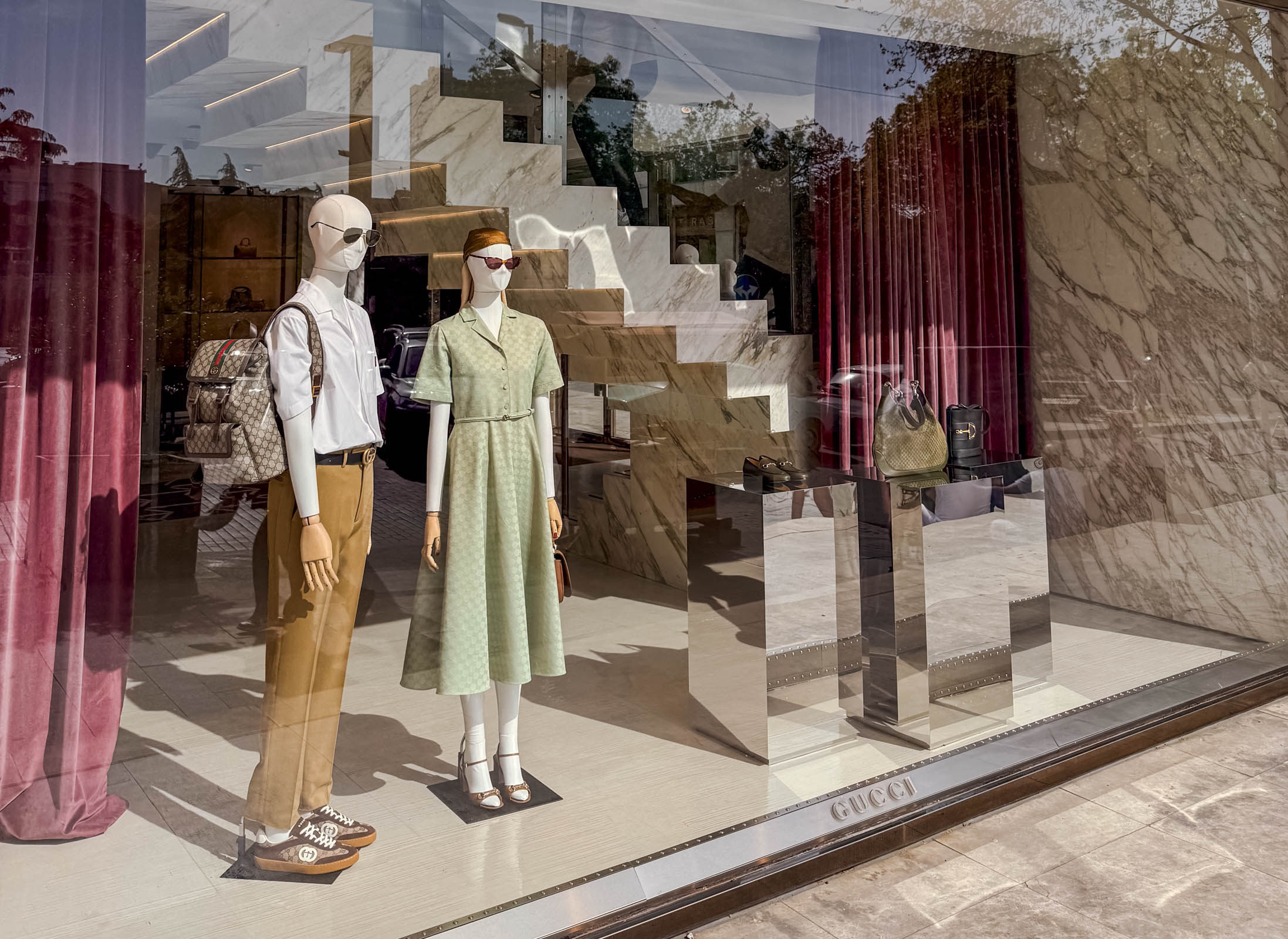
Nişantaşı is a paradise for shoppers. Fashion lovers can find everything here, from elegant dresses and men’s suits to leather jackets, bags, fine jewelry and watches. The atmosphere is polished and sophisticated. The sales staff are ready to offer exclusive treatment, and many salons also offer tailoring services.
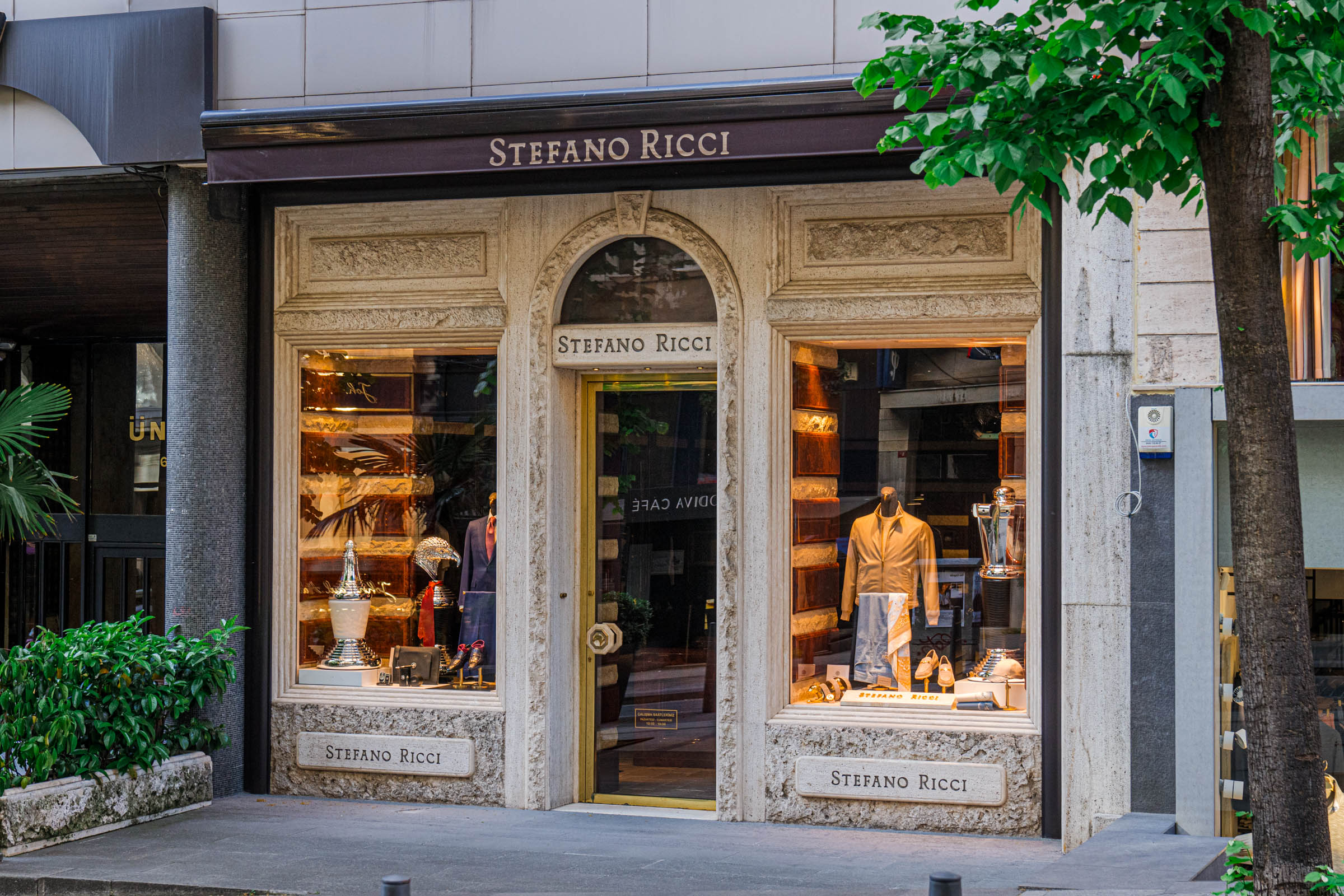
For men, the choice is especially rich. For example, the Italian menswear house Stefano Ricci has its boutique here. Nearby, the windows of Gucci and other great Italian and French houses line the streets. As a result, a simple walk easily turns into a small style tour.
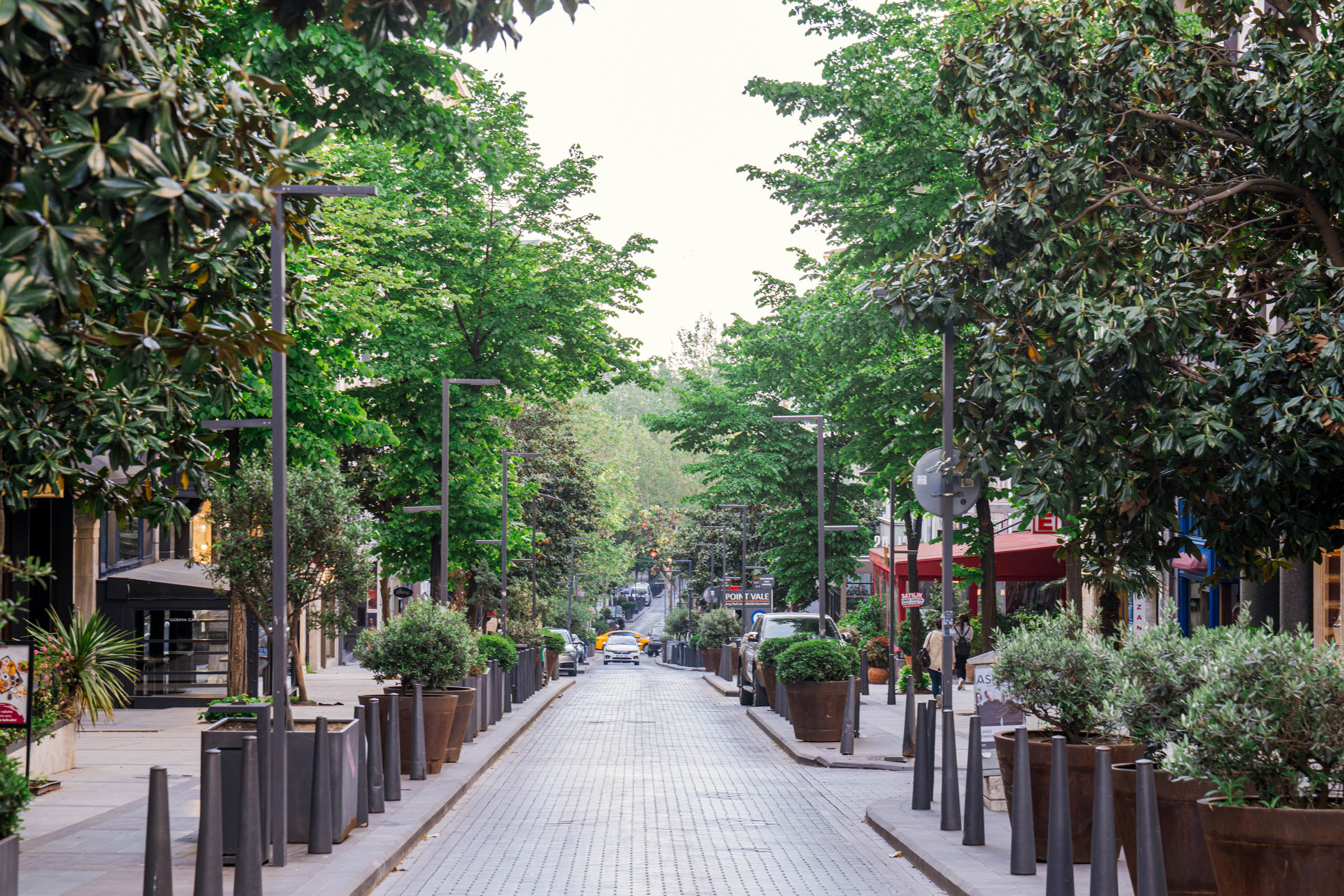
Walking through Nişantaşı is also like visiting an open-air architecture museum. Elegant old apartment buildings with ornate facades and balconies stand next to modern glass storefronts. Trees line many streets, so even in summer you walk in pleasant shade.
If you like to combine shopping with coffee, you will find gardens and pastry shops on almost every corner. Take your time, sit down, order a coffee and simply watch the street. People-watching in Nişantaşı is a style lesson of its own.
In short, Nişantaşı is a neighborhood for those who like a chic environment with a calm rhythm. Here, the spirit of Istanbul rests in a stunning blend of old and new, and each street offers new ideas for style and inspiration.
MAÇKA PARK AND THE CABLE CAR
Just south of the busy streets of Nişantaşı lies Maçka Park, also called Maçka Democracy Park. Its green slopes descend into a valley with paths, benches, sports fields and playgrounds. Tall trees provide shade, and the lawns are ideal for a picnic or a morning run. Many locals spend weekends here. After a good shopping spree, it is also the perfect place for a short break with a glass of tea.
This is also where I watched the sunset over the Bosphorus during my stopover. After a day of walking, nothing beats a quiet bench, fresh air and the golden light over the city.
A special attraction is the Maçka cable car, the TF1 line. It opened on April 11, 1993, and connects Maçka Park with the Taşkışla station near Taksim. The line is about 333 meters long. During the ride, the cabin crosses a valley about 42 meters deep. So, in just a few minutes you get a panoramic view of the park and the surrounding hills.
Don’t confuse it with the F1 line from Kabataş to Taksim. The F1 is an underground funicular, while the TF1 is a real cable car with cabins in the air. Many visitors combine the experiences: first a walk in the park, then the cable car up toward Taksim, and finally a stroll back through Nişantaşı. In this way, you get both a green escape and a view high above the city.
ISTANBUL FROM THE WATER: A BOSPHORUS CRUISE
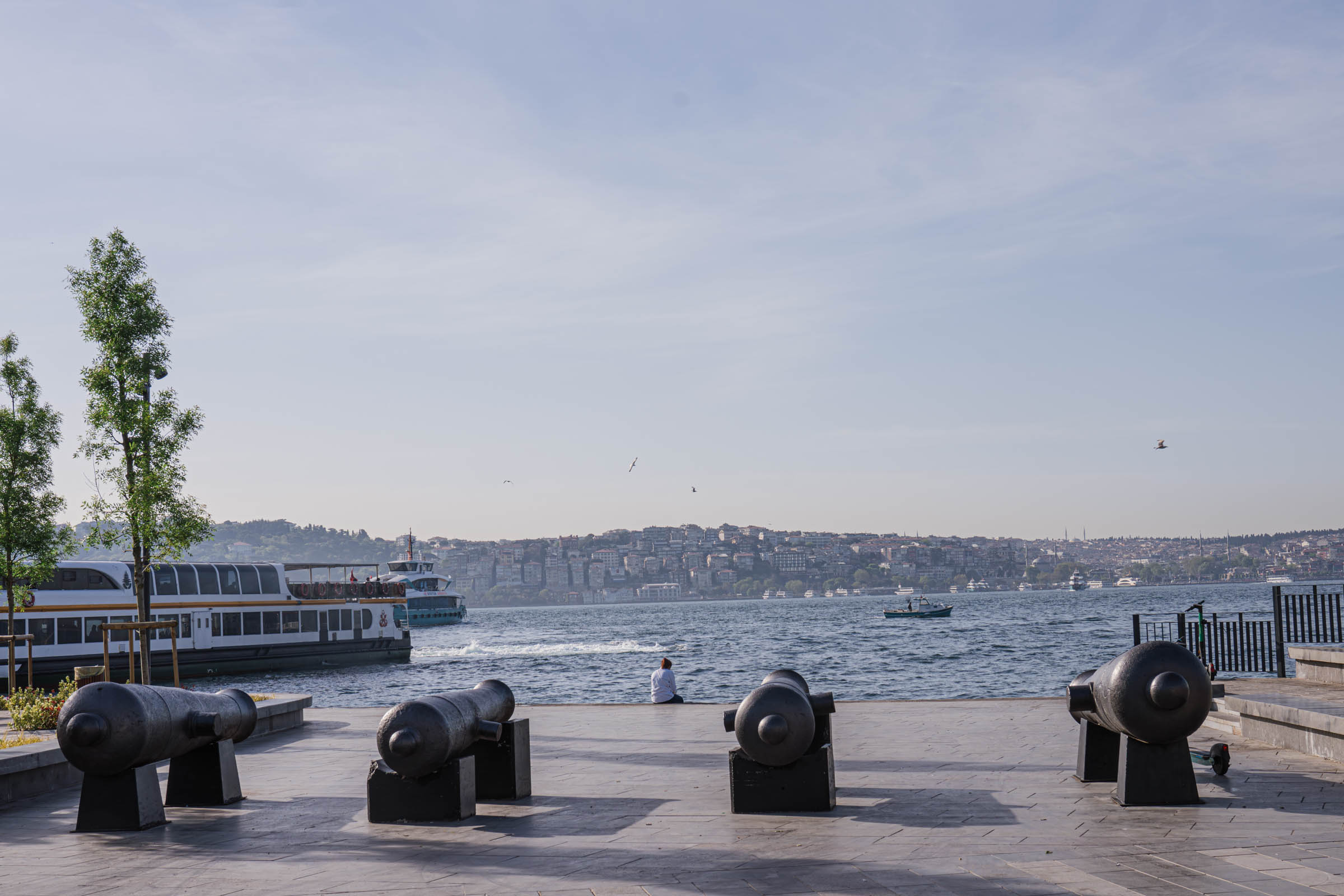
An unmissable experience in Istanbul is sailing on the Bosphorus. This strait divides the city into Europe and Asia and has shaped its history for centuries. Along the waterfront, I came across a row of historic cannons facing the water, a reminder of how strategic these shores have always been.
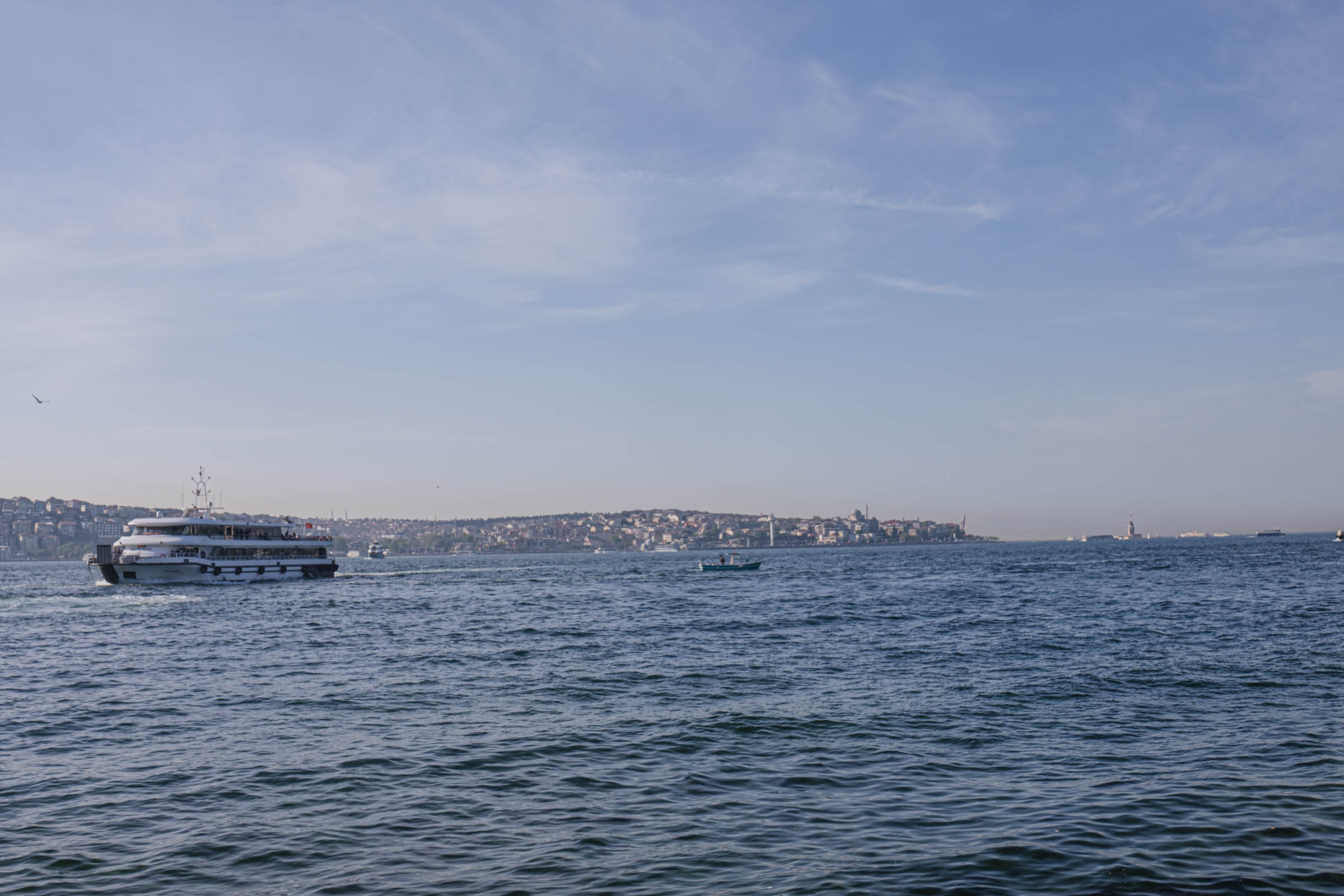
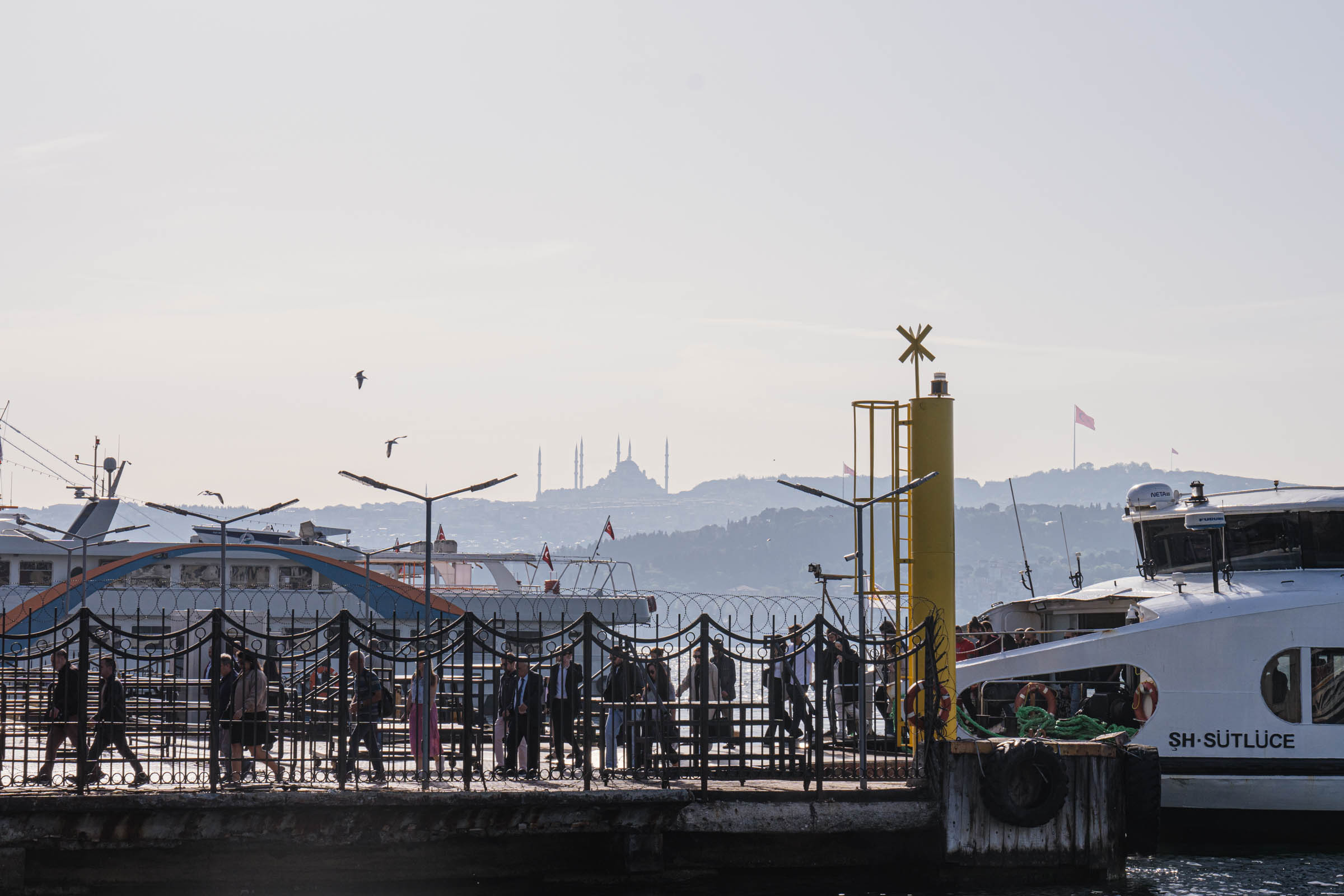
The easiest way to sail is with Şehir Hatları, the municipal ferry company. It traces its roots to the Şirket-i Hayriye, founded in 1851, and today its ferries connect dozens of piers on both continents. Besides the regular commuter lines, Şehir Hatları also sells a short and a long Bosphorus tour from Eminönü. The long tour sails all the way toward the Black Sea, while the short one turns back after about two hours. Private companies such as Turyol and Dentur Avrasya also run their own cruises.
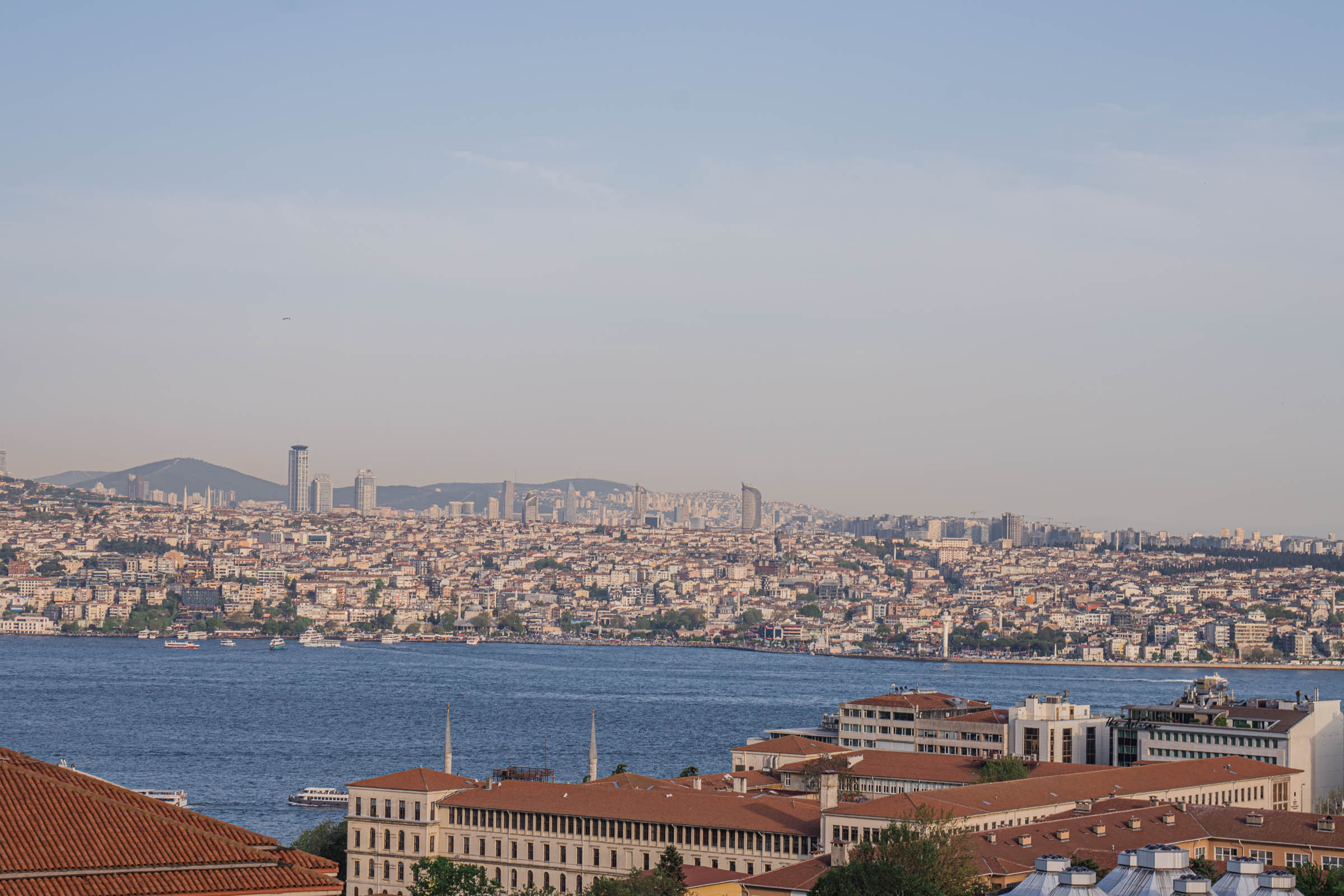
During the cruise, you see mosques, elegant waterfront mansions called yalı and the great bridges. You also pass palaces such as Dolmabahçe, Çırağan and Beylerbeyi, as well as the Rumeli and Anadolu fortresses. Many tours also offer evening cruises, when the illuminated shores sparkle like a scene from a fairy tale. However, even an ordinary commuter ferry from Eminönü to Kadıköy takes you from Europe to Asia with stunning views.
For me, the Bosphorus is the perfect blend of romance and panorama. Sit on deck with a glass of Turkish tea, or try a balık ekmek, the local fish sandwich, by the water. Then simply let the whole city glide past you.
SULTANAHMET, THE HISTORIC HEART OF ISTANBUL
Sultanahmet is the historical core of Istanbul, on the peninsula where Byzantium and Constantinople once grew. The greatest landmarks of the city stand close together here: Hagia Sophia, the Blue Mosque, the Hippodrome, the Basilica Cistern and Topkapı Palace. Since 1985, this area has been part of the UNESCO World Heritage Site Historic Areas of Istanbul.
Exploring Sultanahmet is like traveling through time. As soon as you visit one monument, another one appears in front of you. That is why I recommend dedicating at least a whole day to this neighborhood. Start early, because the lines grow quickly, and plan mosque visits outside prayer times. If the queues get too long, take a break with tea in nearby Gülhane Park and come back later.
The easiest way to reach the area is the T1 tram, which stops right in Sultanahmet. Once you arrive, leave the map in your pocket for a moment. Walk slowly, look up at the domes and minarets, and let the square guide you.
If you want to see this neighborhood through my lens, you can also read my fashion postcard from the cobbled streets of Sultanahmet. There, I combined the history of the old town with a relaxed, elegant outfit for long walks.
THE HIPPODROME AND ITS MONUMENTS
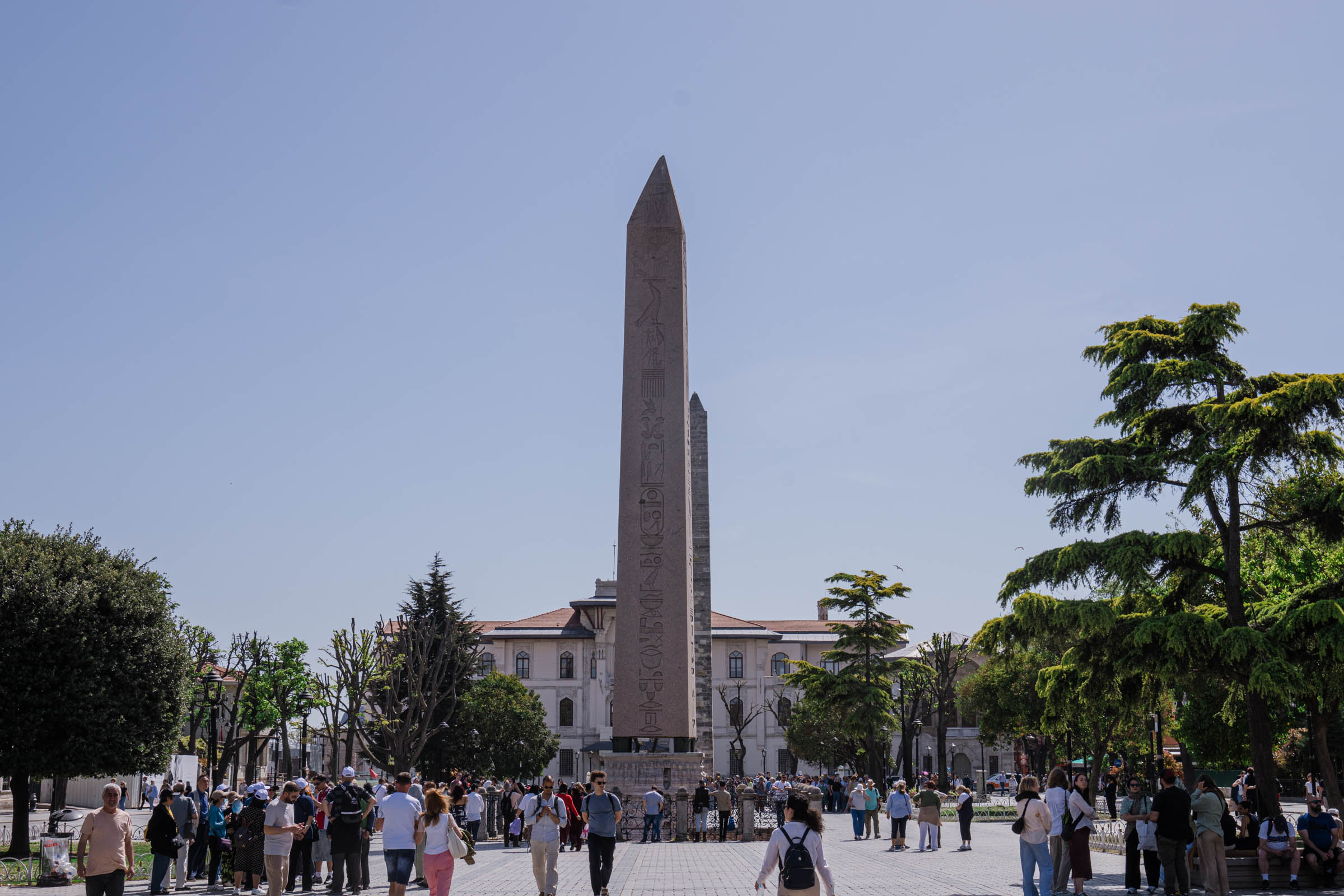
The Hippodrome, today At Meydanı on Sultanahmet Square, was once the great chariot-racing arena of Constantinople. Races and imperial ceremonies took place here. Today it is a long, open square, and three ancient monuments stand along its axis.
The oldest is the Obelisk of Theodosius. Pharaoh Thutmose III first erected it at the great temple of Karnak in Egypt, in the 15th century BC. Then, in 390, Emperor Theodosius I raised it again here, on a pedestal with carved reliefs.
Next to it stands the Serpent Column. The Greeks dedicated it at the Temple of Apollo in Delphi after their victory over the Persians at Plataea in 479 BC. Later, the column traveled to Constantinople. Its serpent heads disappeared around 1700, and one of them is now in the Istanbul Archaeology Museums.
The third monument is the Walled Obelisk, at the southern end of the square. Together, these three pieces still mark the line of the old racetrack.
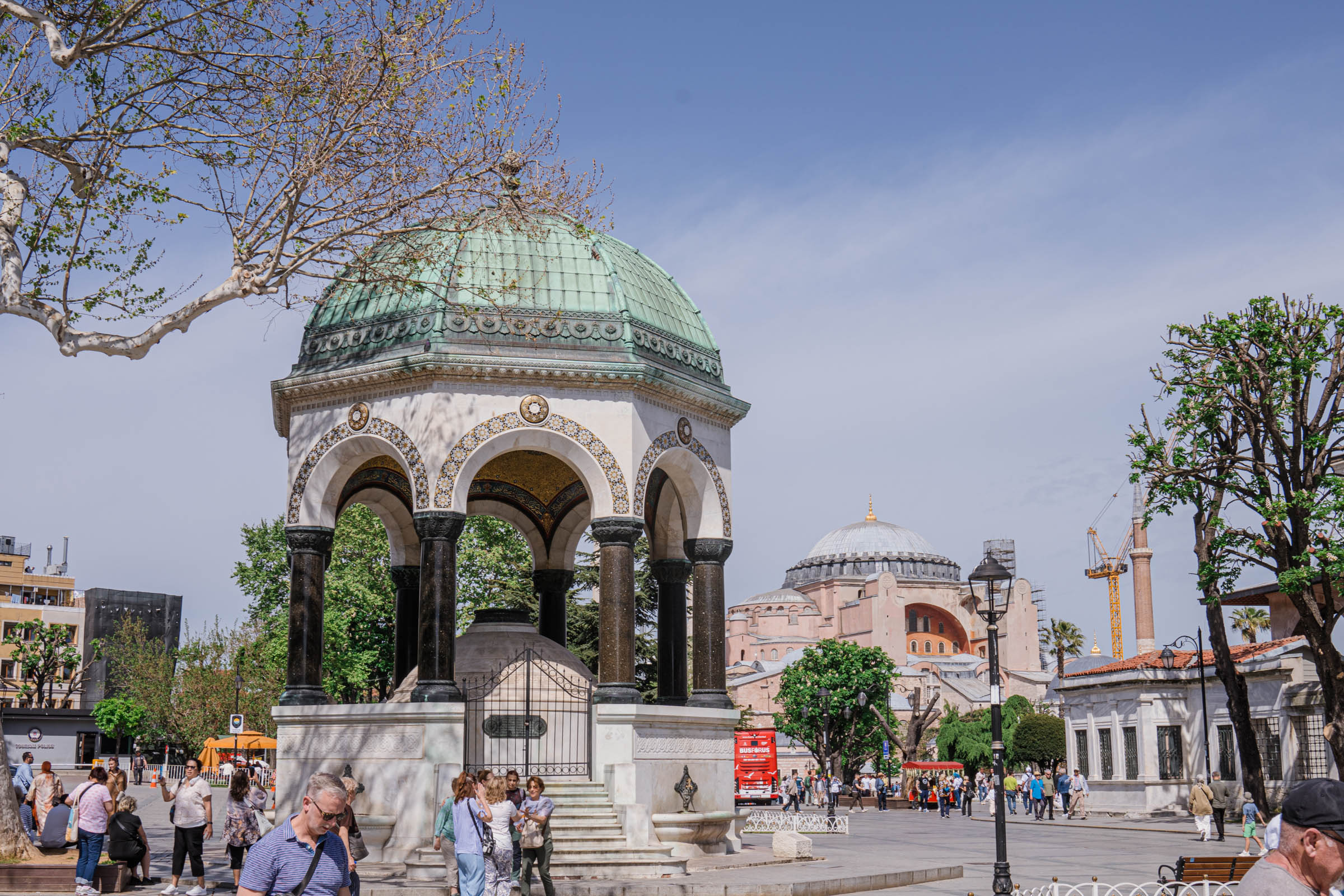
At the northern end, you will find the German Fountain. Kaiser Wilhelm II gave this octagonal, domed fountain to Sultan Abdülhamid II and the city to commemorate his visit in 1898. It opened in 1901. With Hagia Sophia behind it, the fountain makes one of the most beautiful frames in the old town.
HAGIA SOPHIA AND THE BLUE MOSQUE
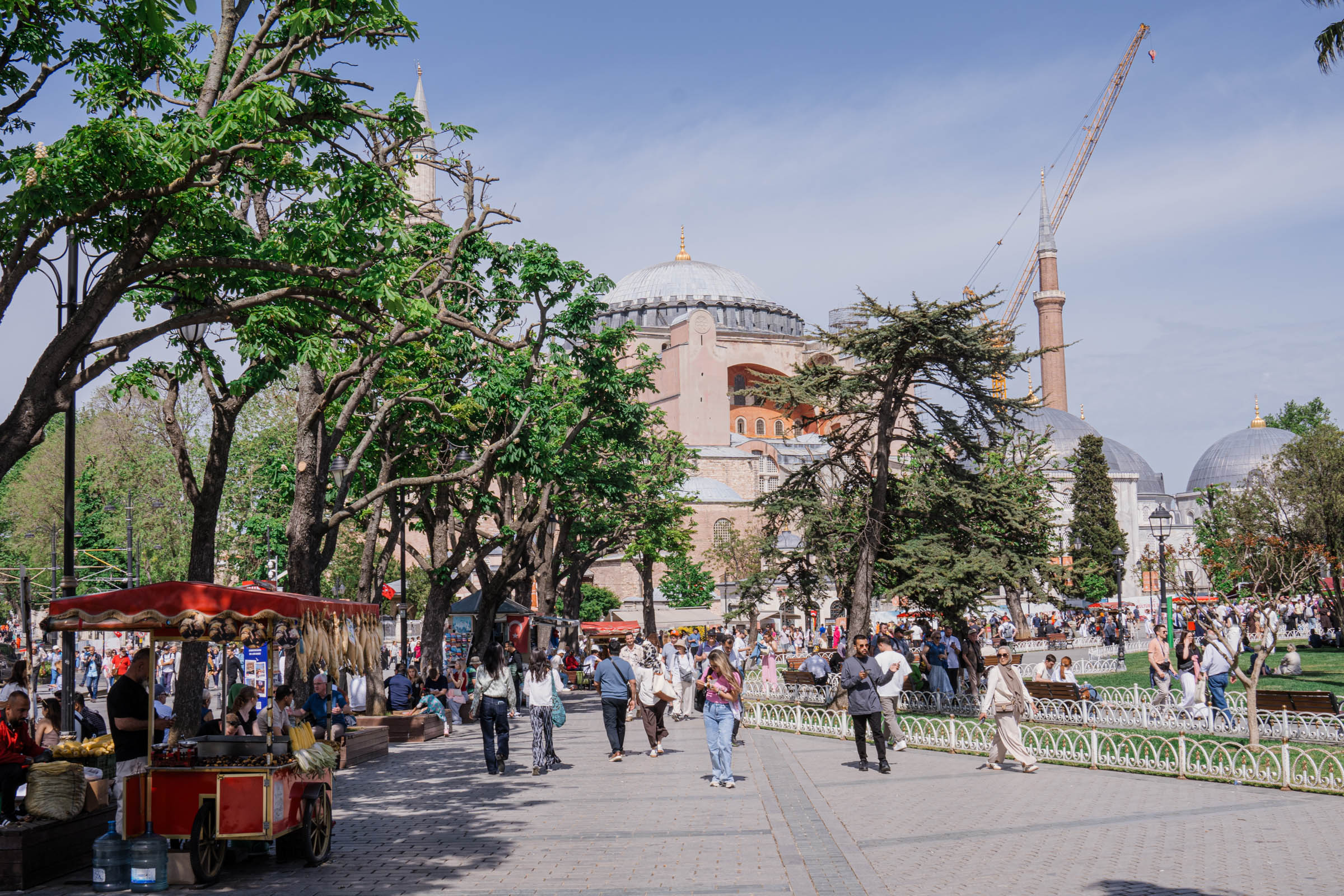
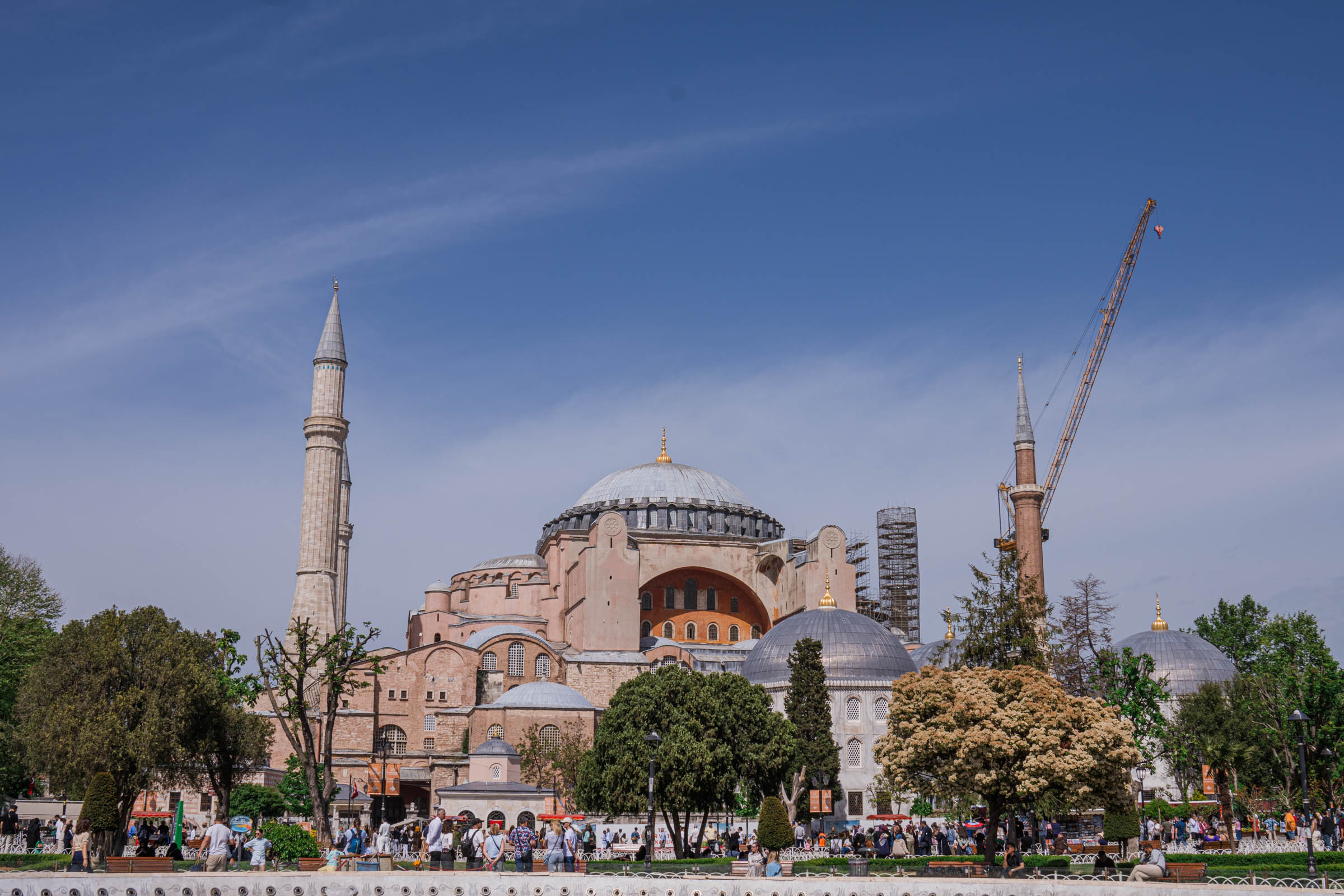
Hagia Sophia is without a doubt a masterpiece of Byzantine architecture. Emperor Justinian I built the present building between 532 and 537, and the geometers Isidore of Miletus and Anthemius of Tralles designed it. Its huge dome seems to float above an interior full of golden mosaics and marble columns.
After the Ottoman conquest in 1453, the church became a mosque. In 1935, after a government decision from 1934, it opened as a museum, and since 2020 it has served as a mosque again. Visitors are welcome outside prayer times. Over the centuries, Islamic calligraphy joined the Christian mosaics, so the building tells two stories at once.
Across the square stands the Blue Mosque, officially the Sultan Ahmed Mosque. Sultan Ahmed I commissioned it in the early 17th century, and the architect Sedefkâr Mehmed Ağa designed it. It is famous for its six minarets, rather than the usual four. Inside, more than 20,000 handmade İznik tiles with floral motifs create the blue atmosphere that gave the mosque its popular name. Unlike Hagia Sophia, the Blue Mosque was free to enter outside prayer times when I wrote this guide.
Between the two giants, simit carts wait for visitors. A warm simit and a glass of Turkish tea are the best fuel for a long day of sightseeing. Then sit on a bench and enjoy the view of two great eras facing each other across the square.
THE BASILICA CISTERN AND TOPKAPI PALACE
Just a short walk from Hagia Sophia, stairs lead you down into the Basilica Cistern, Yerebatan Sarayı in Turkish. Emperor Justinian I commissioned this huge underground reservoir in the 6th century to store water for the city. Its 336 columns, each about 9 meters high, rise from the water toward a vaulted ceiling. Inside, soft lighting and silence create a mystical mood, and the cool air is a welcome escape on a hot day. The most famous details are two Medusa heads used as column bases, one upside down and the other on its side.
Topkapı Palace stands on the hill above the meeting point of the Golden Horn, the Bosphorus and the Sea of Marmara. Sultan Mehmed II ordered its construction in 1459, six years after the conquest of the city. For centuries, it served as the residence of the sultans and the administrative center of the empire. Then, in the mid-19th century, the court moved to the new Dolmabahçe Palace.
The palace complex spreads around four main courtyards. You walk from the public courtyards to the private world of the harem and the imperial treasury. On April 3, 1924, Topkapı became a museum. Today you can see imperial chambers, priceless jewels and sacred relics, as well as terraces with views over the water. If you love history, plan at least half a day for the palace alone.
THE GRAND BAZAAR AND THE SPICE BAZAAR OF ISTANBUL
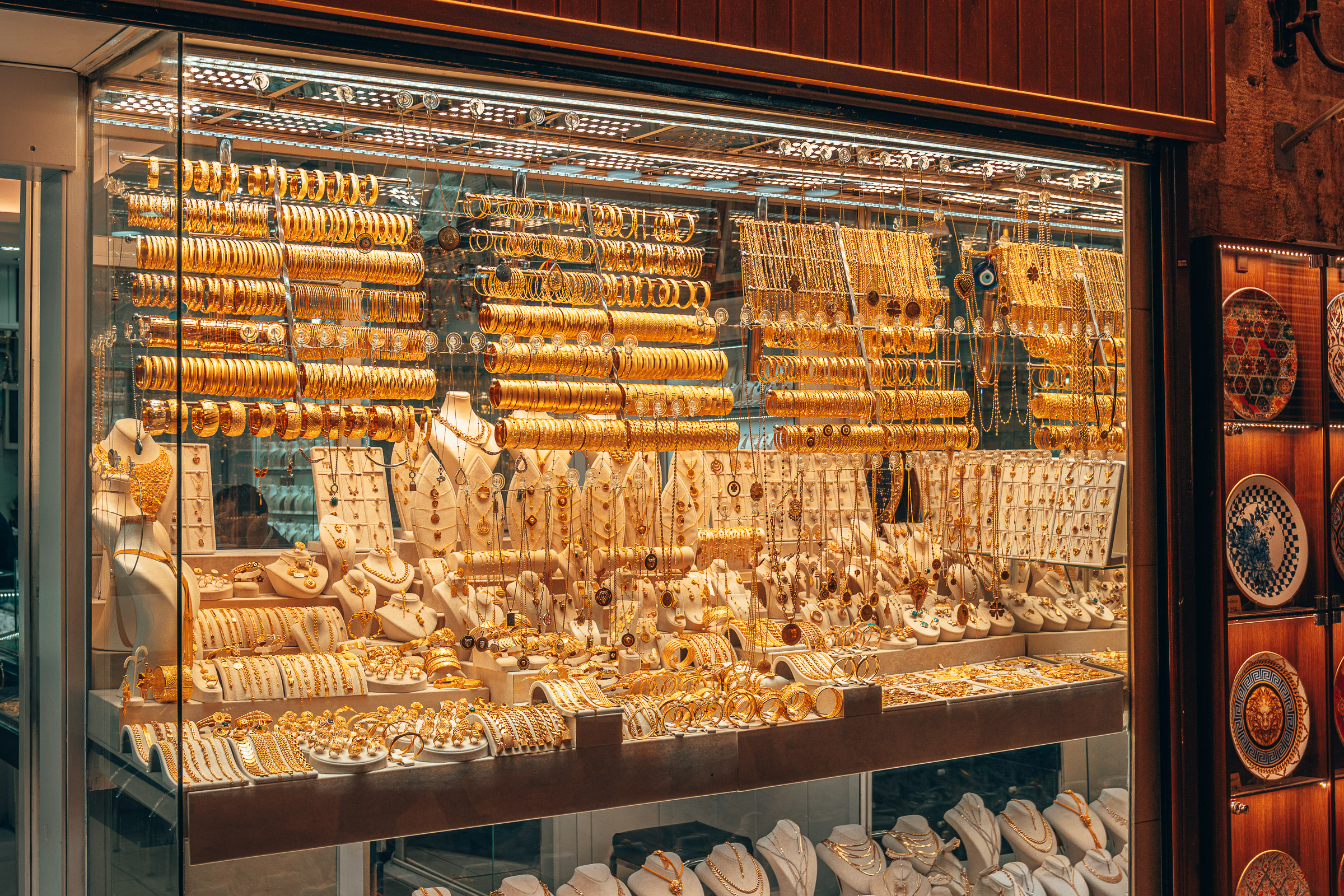
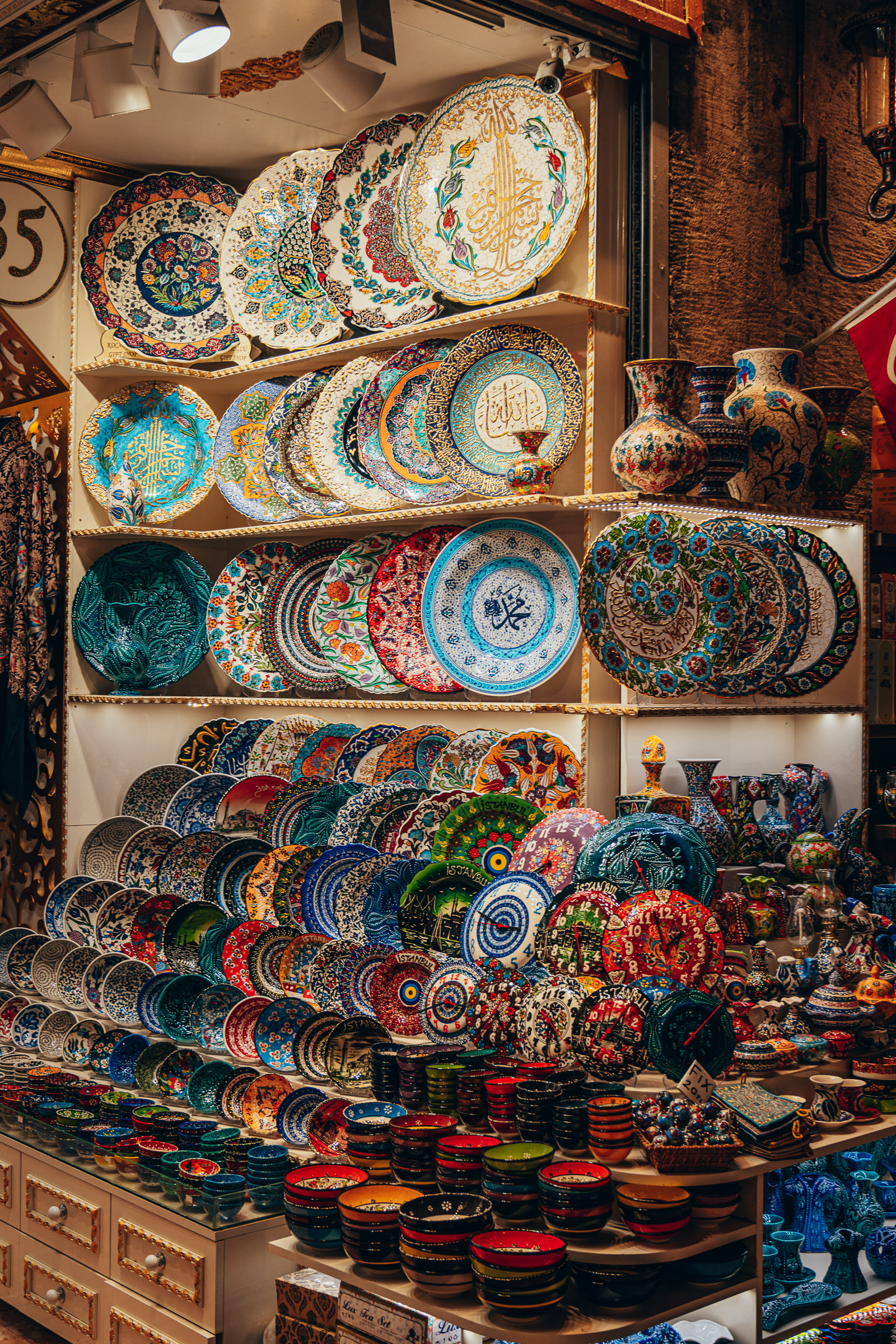
Kapalıçarşı, the Grand Bazaar, is one of the largest and oldest covered markets in the world, and its name simply means Covered Market. Construction of its core began in the winter of 1455 to 1456, shortly after the Ottoman conquest. Today it has 61 covered streets and more than 4,000 shops, and it welcomes between 250,000 and 400,000 visitors a day. Here you can find almost everything: carpets, gold and silver jewelry, leather jackets, ceramics, lamps and souvenirs. The air mixes the scents of spices, coffee and leather, and bargaining is part of the game.
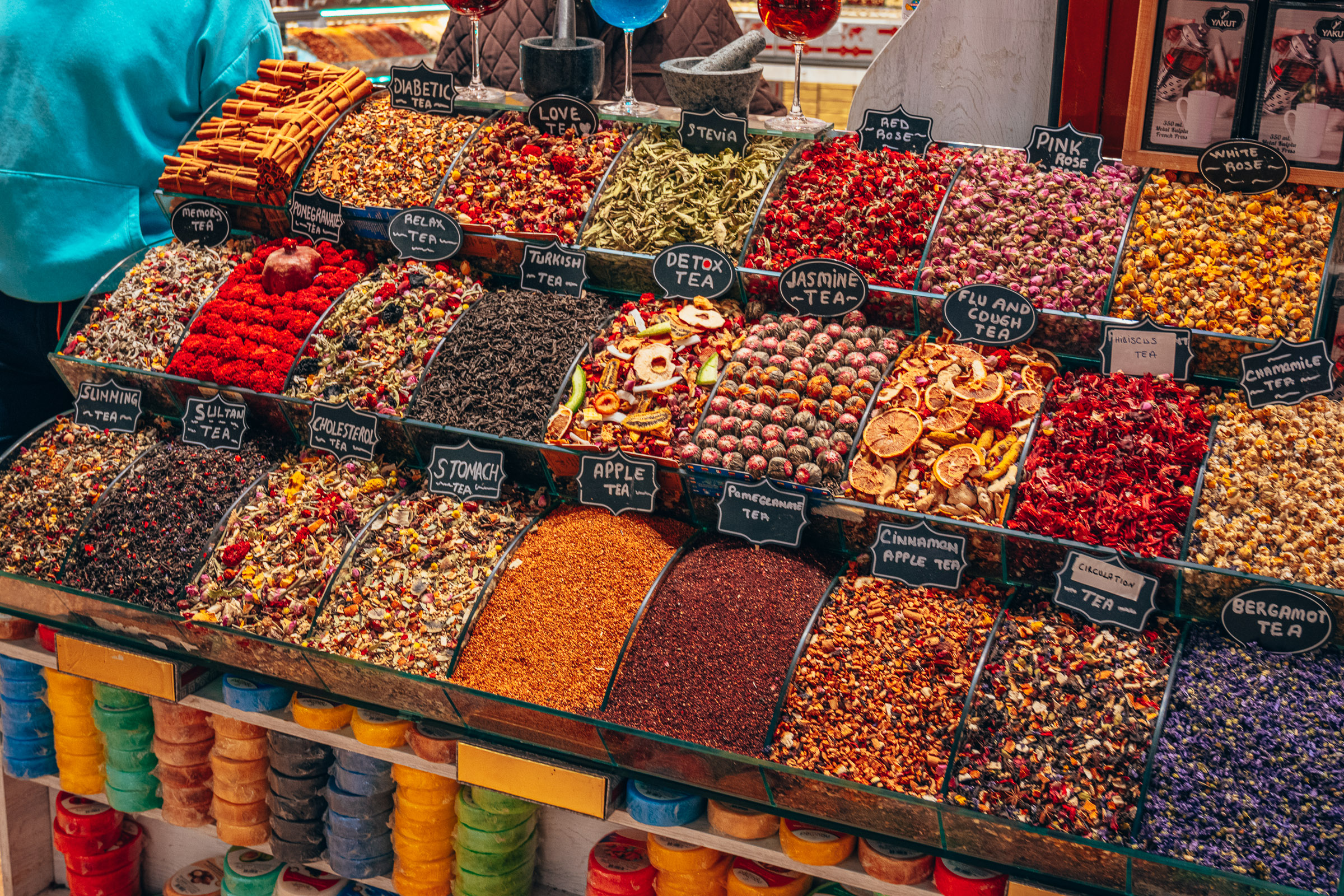
In Turkish, the Spice Bazaar is called Mısır Çarşısı, which means the Egyptian Bazaar. It belongs to the complex of the New Mosque in Eminönü. Turhan Sultan, mother of Sultan Mehmed IV, commissioned it in 1660, and the works ended in 1664. After the Grand Bazaar, it is the most famous covered market in the city. Its stalls tempt you with spices, dried fruits, nuts, Turkish delight and teas. In the past, people even called it the pharmacy of Istanbul, because it offered herbs and spices from the Middle East, India and Egypt.
At one stall, colorful dried flowers and tea blends filled every shelf. Nearby, jewelry windows sparkled with gold, and ceramic shops displayed hand-painted plates in every color. Even if you don’t buy anything, a walk through the bazaars is a real sensory experience. My advice is simple: go in the morning, before the biggest crowds, and always ask for the price before you start bargaining.
DOLMABAHÇE PALACE ON THE BOSPHORUS
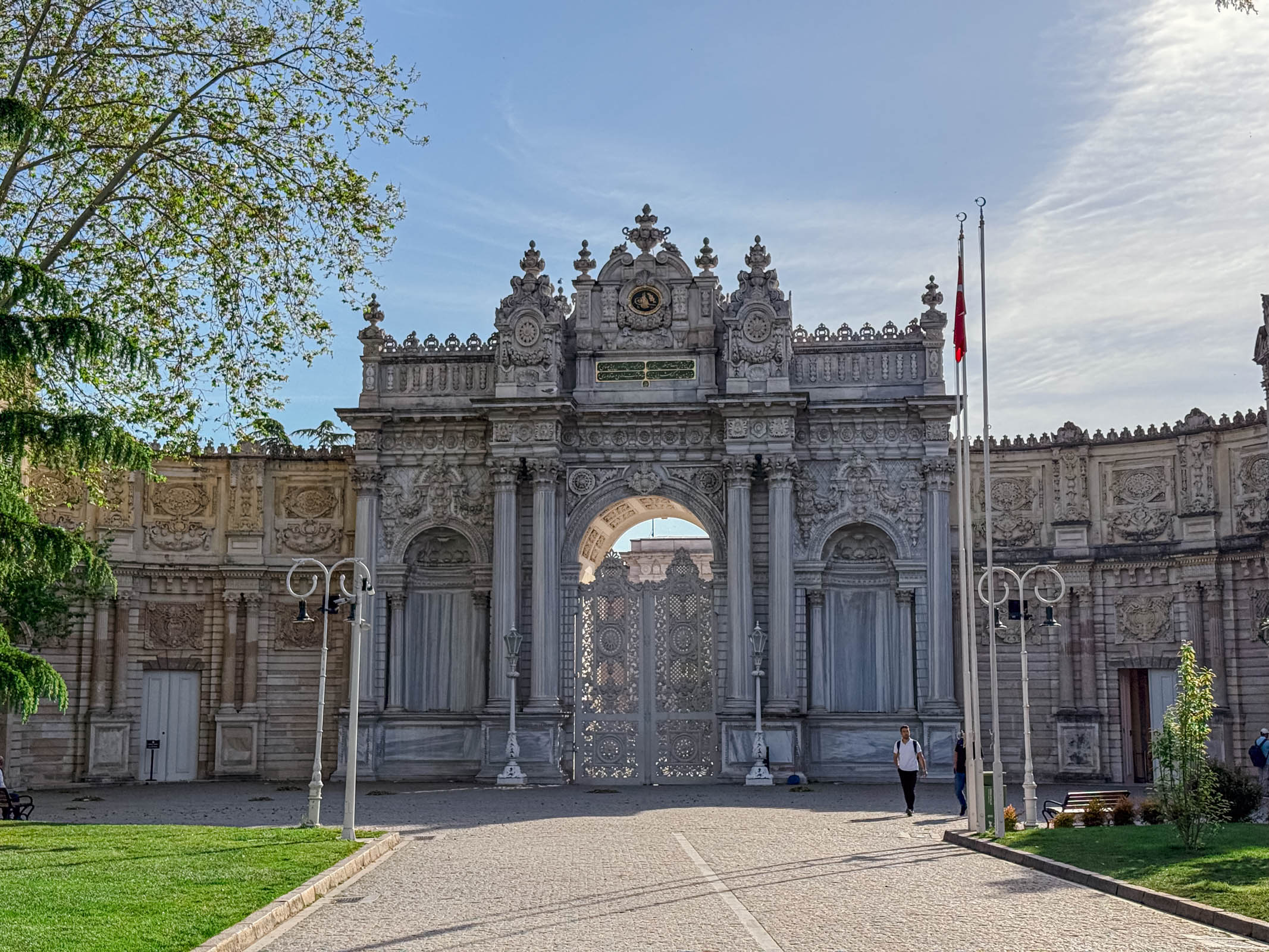
As the boat sails along the European shore near Kabataş, the Dolmabahçe area appears right by the water. First you notice the neo-baroque Dolmabahçe Mosque. Bezmialem Valide Sultan commissioned it, and it dates from the 1850s.
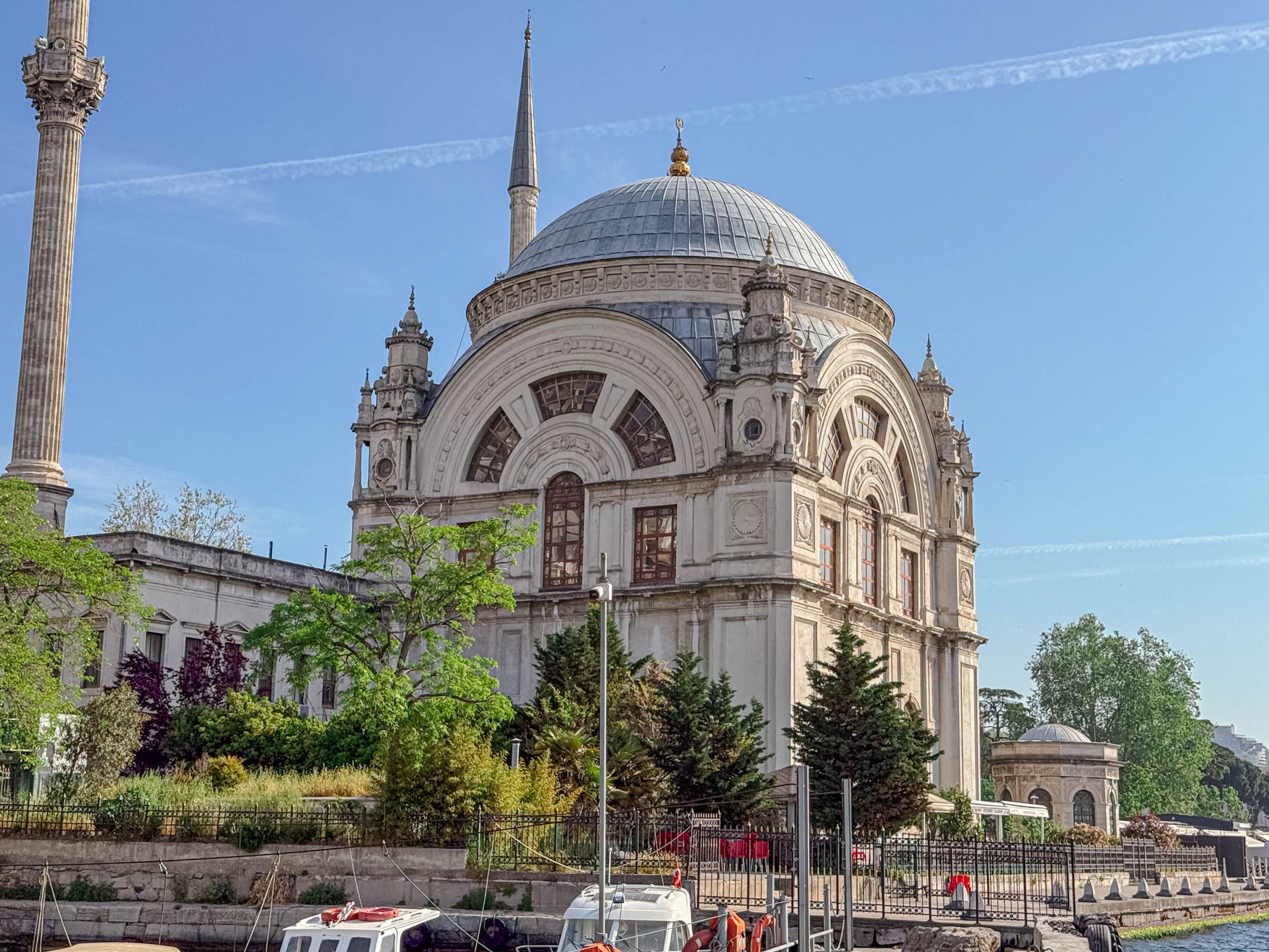
Next to it stretches Dolmabahçe Palace, the first European-style palace in Istanbul. Sultan Abdülmecid I built it between 1843 and 1856, and from 1856 it was home to six sultans. It is the largest palace in Türkiye, with an area of 45,000 square meters and 285 rooms. According to Britannica, its construction cost the equivalent of 35 tons of gold.
The architecture blends Baroque, Rococo and Neoclassical styles with Ottoman elements. Inside, the palace holds the largest collection of Bohemian and Baccarat crystal chandeliers in the world. The most famous of them hangs beneath the 36-meter dome of the Ceremonial Hall and weighs about 4.5 tons. Another highlight is the Crystal Staircase, shaped like a double horseshoe and made of Baccarat crystal, brass and mahogany.
Arriving at Dolmabahçe feels like stepping into an Ottoman Versailles. Even from outside, the ornate gates and the long facade along the water leave a strong impression. If you plan a visit, book your tickets online, especially in the busy season from April to October.
THE DOLMABAHÇE CLOCK TOWER
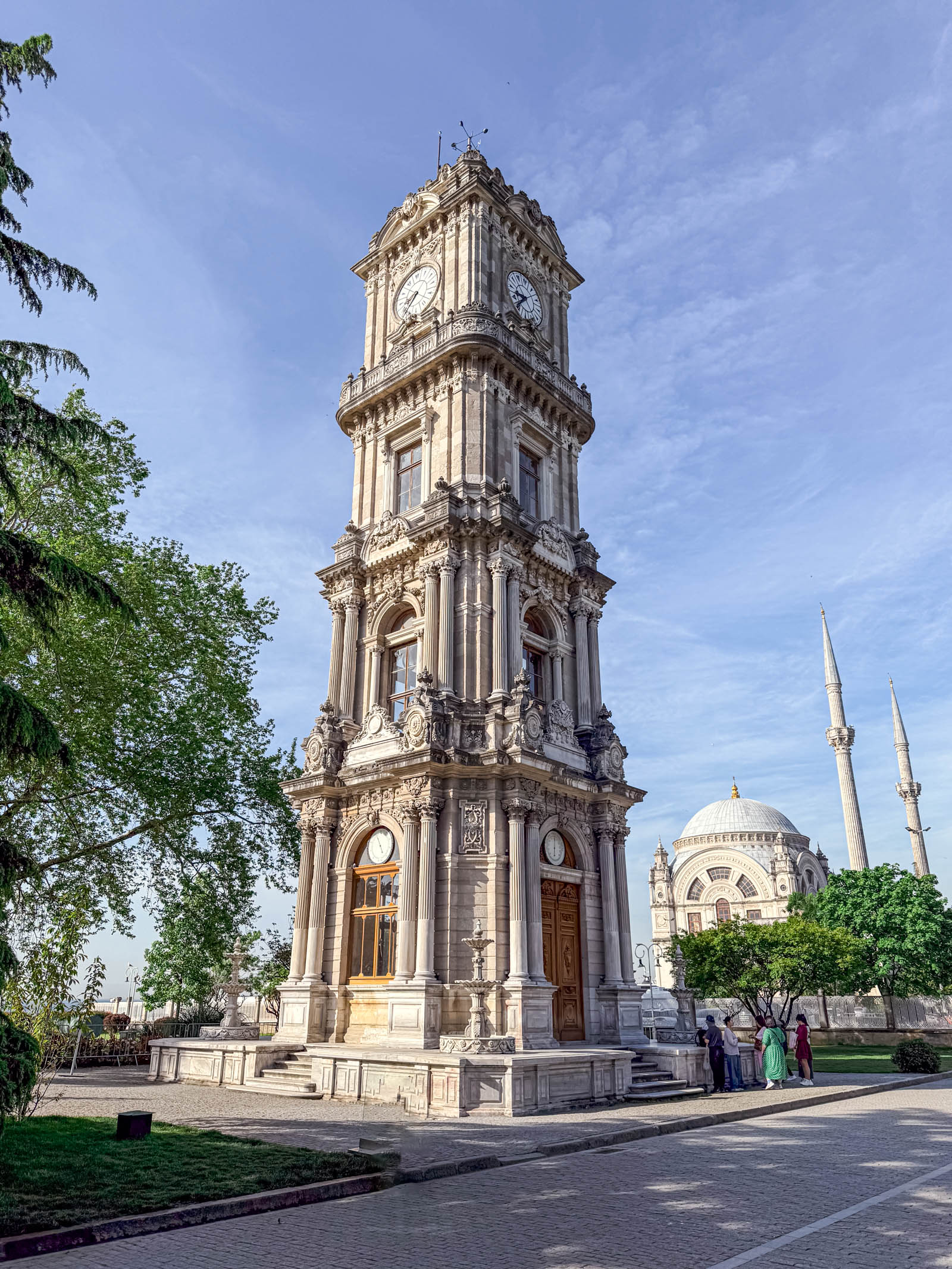
In front of the palace’s Treasury Gate stands the elegant Dolmabahçe Clock Tower. Sultan Abdülhamid II ordered it, and the court architect Sarkis Balyan designed it between 1890 and 1895. The four-story tower in Ottoman neo-baroque style rises 27 meters above the square. Two of its sides carry the tughra, the calligraphic monogram of the sultan. Abdülhamid II loved clock towers and started a campaign to build one in cities across the empire. The Dolmabahçe tower is one of the most elegant examples of that era.
Since 1979, part of the original mechanism has run on electricity, and the clocks still keep time. The tower stands on a square by the water, between the palace and the mosque. It is a lovely place for a short rest, a photo and a last look at the Bosphorus before you continue toward Beşiktaş.
THE PRINCES’ ISLANDS, A CAR-FREE ESCAPE FROM ISTANBUL
If you have an extra day, take a ferry to the Princes’ Islands, Adalar in Turkish. Nine islands lie in the Sea of Marmara, and the largest is Büyükada, the Big Island, with an area of about 5.46 square kilometers. The other larger islands are Kınalıada, Burgazada and Heybeliada. Regular ferries stop at them in that order before reaching Büyükada. Şehir Hatları ferries depart from piers such as Kabataş, Beşiktaş, Kadıköy and Bostancı.
Private cars are not allowed on the islands. In addition, in 2020, the islands phased out the famous horse-drawn carriages on animal welfare grounds. Today you explore them on foot, by bicycle or with small municipal electric vehicles. As a result, the soundtrack here is the sea and the birds instead of traffic.
The islands charm with old wooden mansions, pine forests and quiet bays. On Büyükada, the highest point is Aya Yorgi Hill, 203 meters above the sea, with a view back toward the city. You can rent a bicycle near the pier, but keep in mind that the islands are hillier than they look from the ferry. If Büyükada feels too crowded, consider Heybeliada, one stop earlier, which offers a similar atmosphere with fewer people. Finally, at the end of the day, the ferry back offers one more show: the sky over Istanbul at dusk.
TURKISH CUISINE: WHAT TO EAT IN ISTANBUL
Istanbul is also a gastronomic paradise, because its cuisine combines Mediterranean and oriental flavors. Be sure to try kebabs, köfte meatballs and lahmacun. Lahmacun is a thin flatbread with minced meat, tomato paste, garlic and spices, and it tastes best with a squeeze of lemon.
Among the classics are sarma and imam bayıldı. Sarma is vine leaves rolled around rice and herbs, sometimes with minced meat. İmam bayıldı is an eggplant stuffed with onions, garlic and tomatoes, then cooked slowly in olive oil. Its name means “the imam fainted,” and locals usually serve it at room temperature as part of a meze spread.
Breakfast in Istanbul deserves its own chapter. A traditional Turkish breakfast is rich in variety, with cheeses, olives, tomatoes, cucumbers, honey and fresh bread on the table. A specialty is menemen, eggs cooked with tomatoes, green peppers, onion and olive oil. Street food plays an equally important role. Try a simit with tea in the morning, and later a balık ekmek, the famous fish sandwich, by the water.
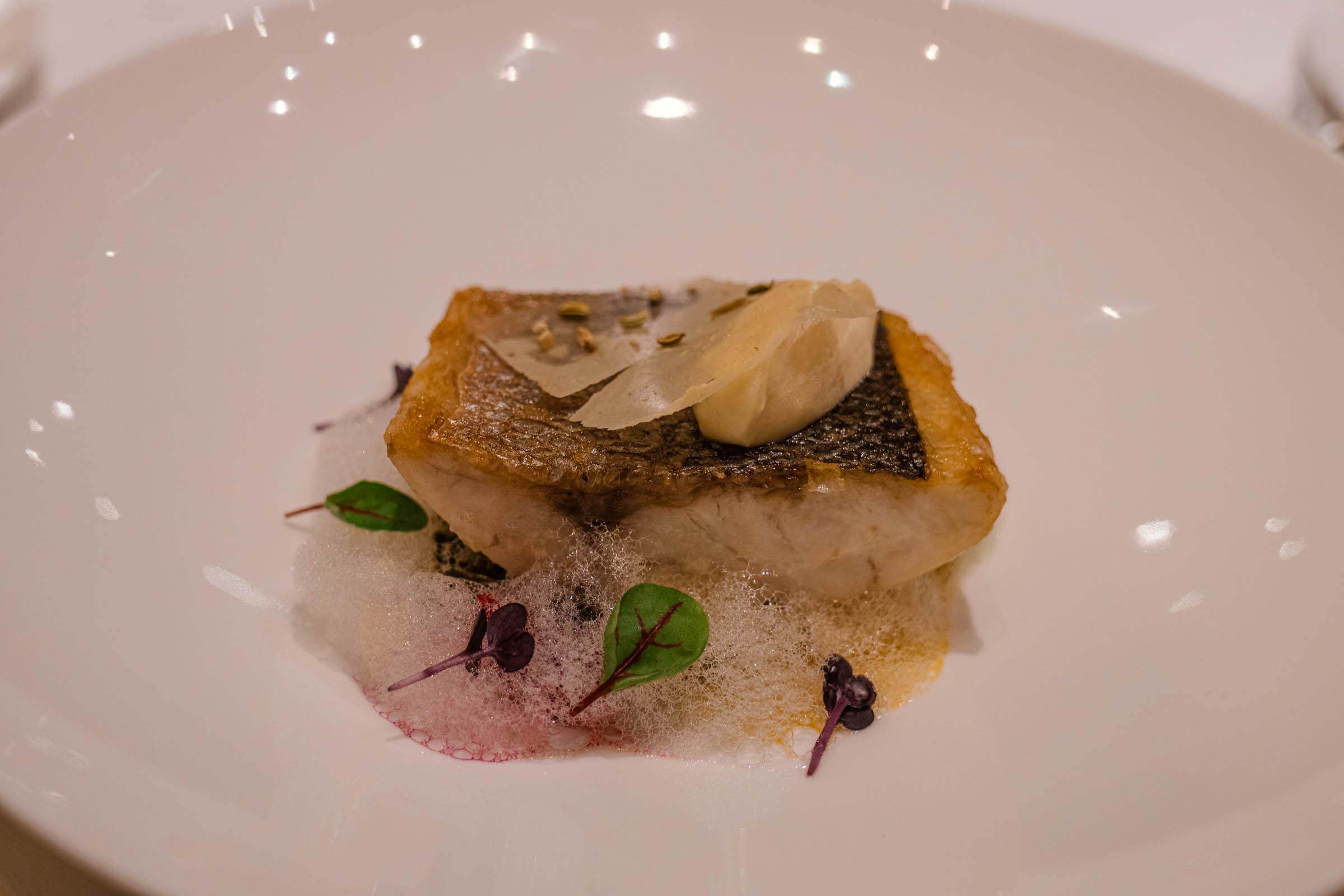
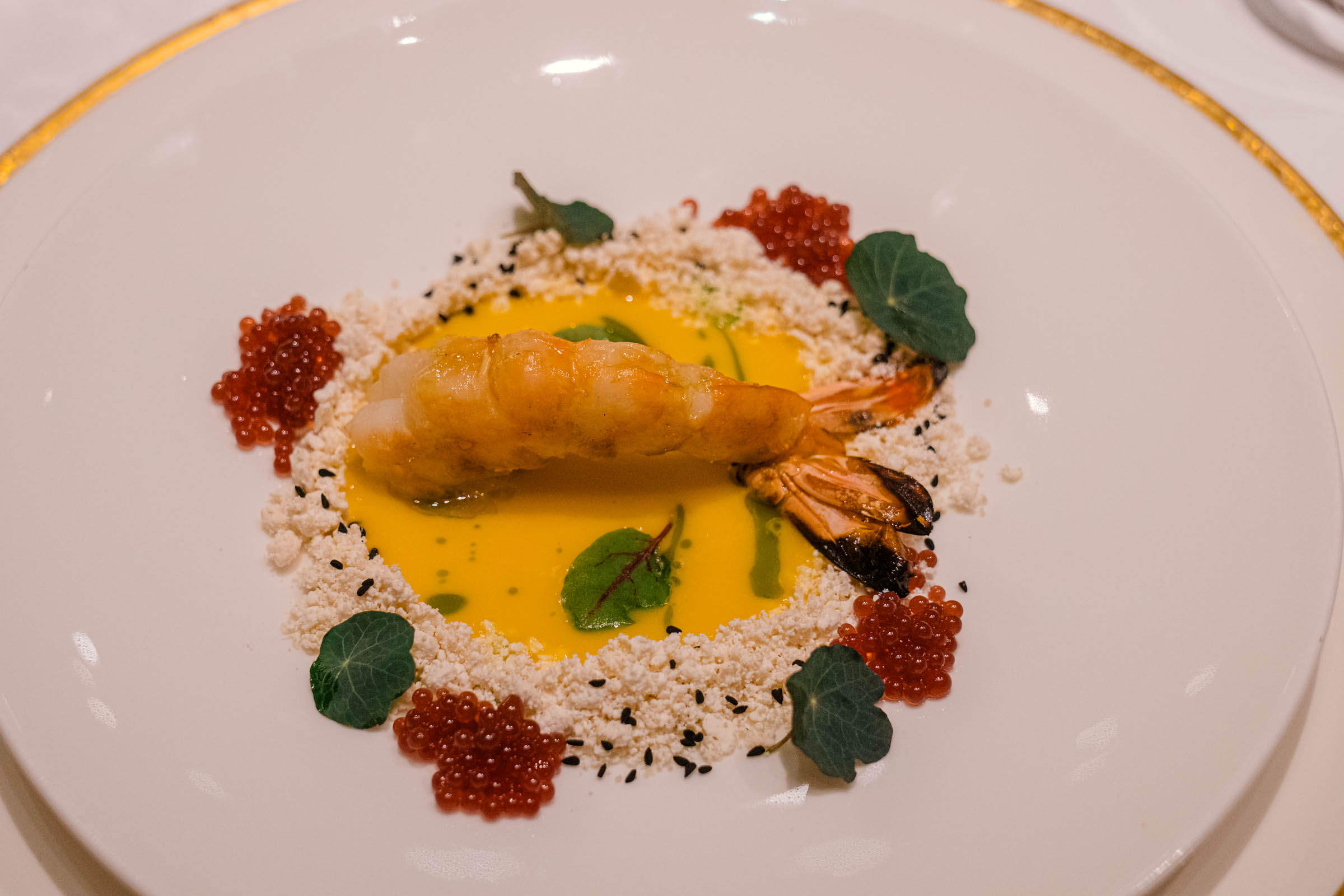
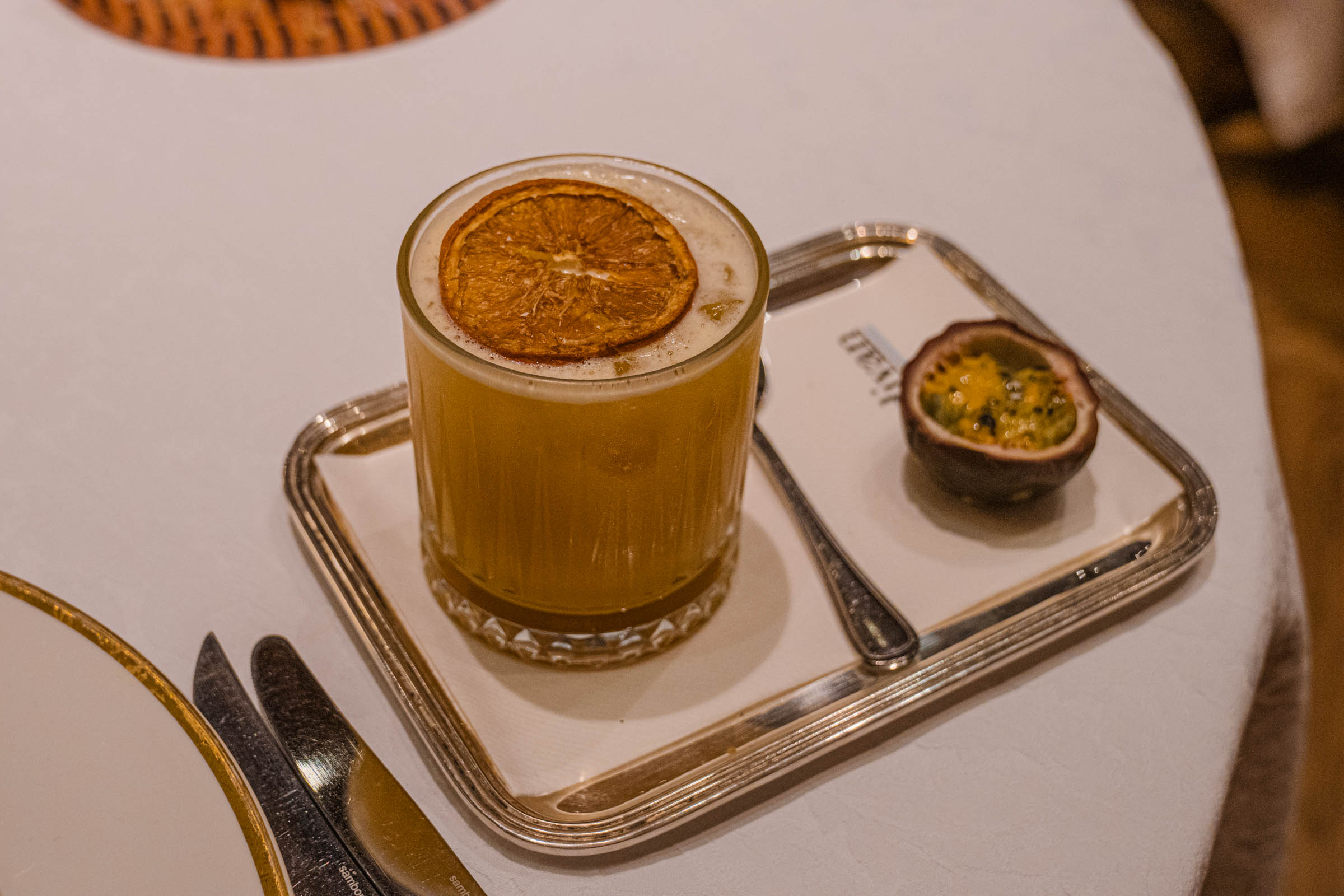
Because the city lives by the sea, fish and seafood are a natural choice. Here are a few plates from my table in Istanbul: a fish dish, shrimp and a refreshing drink with dried orange and passion fruit. Districts such as Nişantaşı and Beşiktaş are home to trendy restaurants and elegant cafés. However, some of the most authentic meals await you in a lokanta, a simple restaurant with traditional, home-style dishes.
TEA, COFFEE AND SWEETS
In Istanbul, tea is a part of every day. Locals drink it black and strong, from small glasses, and they offer it to guests at any hour. Turkish coffee is often the finishing touch after a meal, usually with a piece of lokum on the side. Another popular drink is ayran, a salty yogurt drink that pairs perfectly with grilled meat. So, whatever you order, there is always a perfect drink to go with it.
For dessert, baklava is a must: thin layers of pastry with walnuts or pistachios, soaked in syrup. Also, try Turkish ice cream, dondurma, and of course lokum, the famous Turkish delight. If you want to bring something home, the Spice Bazaar is the best place for lokum, dried fruits and tea.
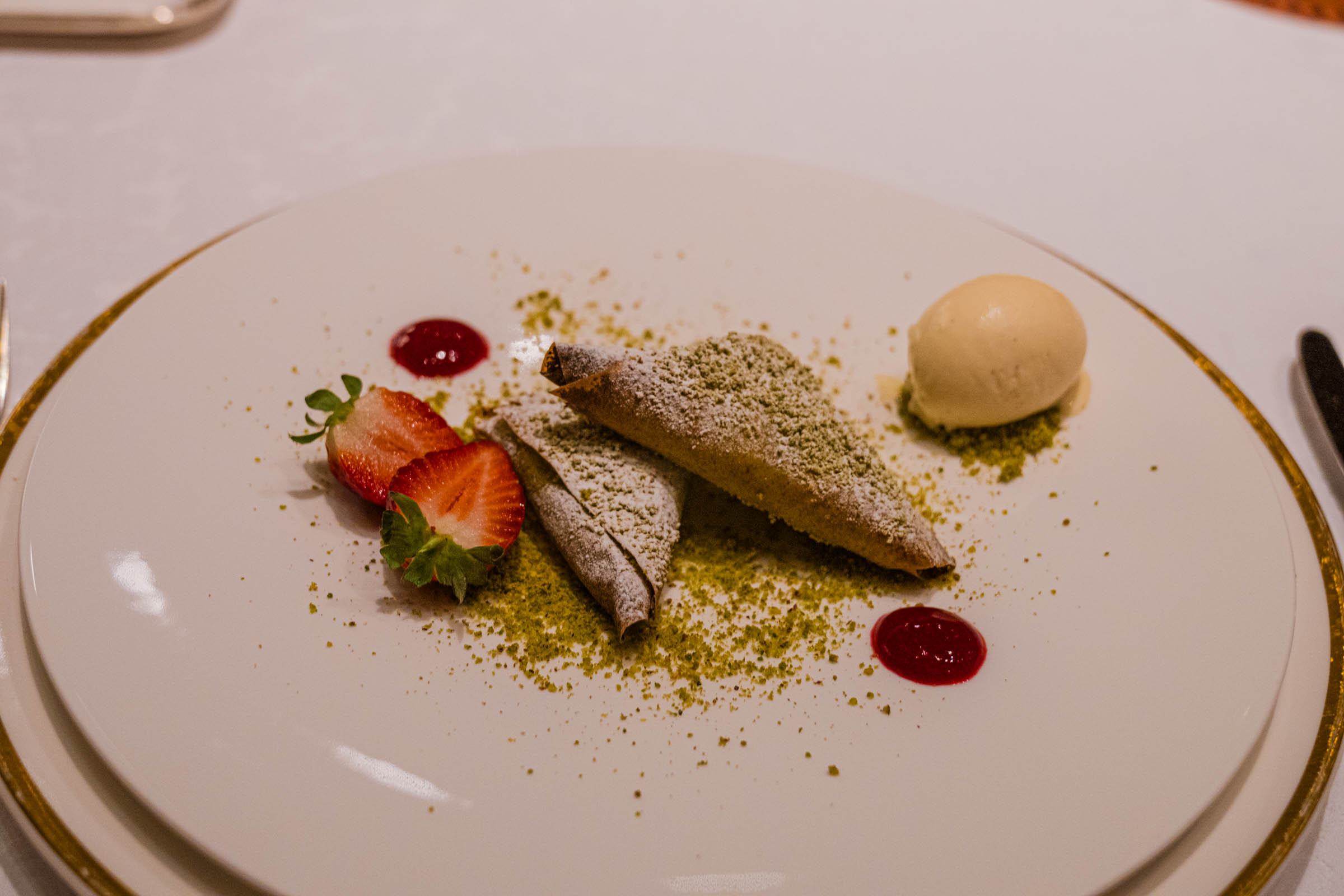
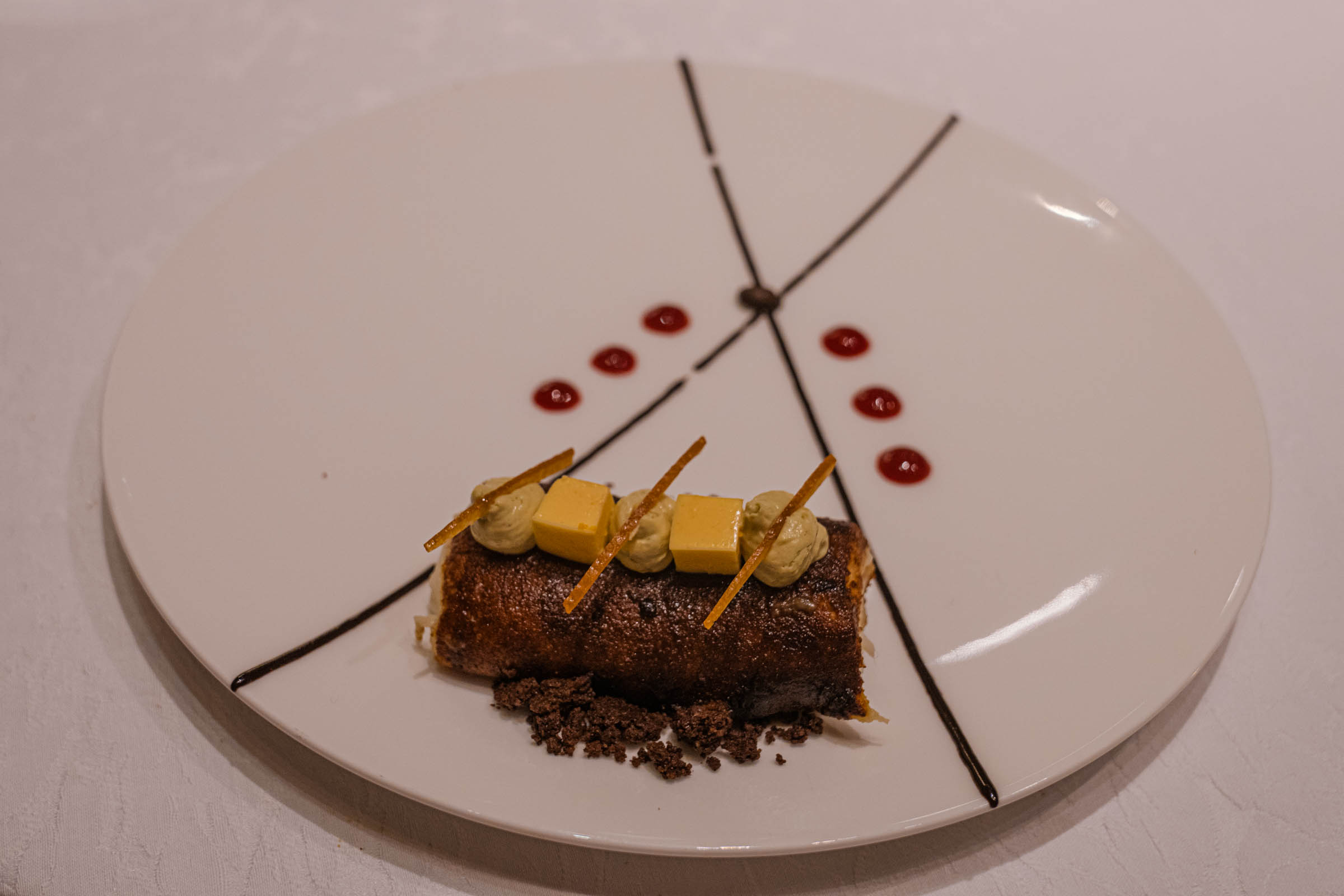
On my table, a pistachio dessert arrived with a scoop of ice cream, followed by a rich chocolate cake. Pistachio shows up in many sweets here, from baklava to ice cream, so a sweet tooth will never get bored.
Finally, remember that sweets in Istanbul are not only a dessert but also a gesture of hospitality. When someone offers you a piece of lokum or a glass of tea, accept it with a smile. It is the easiest way to feel the warmth of the city.
PRACTICAL TIPS FOR VISITING ISTANBUL
Istanbul is a city open to visitors, but like any big city, it requires basic caution. Keep your valuables safe, especially in crowded places such as trams and bazaars.
For transport, I recommend the Istanbulkart, a rechargeable smart card for almost all public transport. It works on the metro, tram, buses, ferries, funiculars and the Marmaray. You can buy and top it up at machines in stations and at kiosks across the city. As of 2026, contactless bank cards also work on public transport, but a single ride costs more than with the Istanbulkart. Visitors can also choose the Istanbul City Card, an unlimited transport card made for tourists.
Taxis are everywhere, so make sure the driver turns on the meter. The local currency is the Turkish lira, and it is wise to carry some cash for markets and taxis. In restaurants, check whether the bill already includes service. If it doesn’t, a tip of around 10 percent is a nice gesture when you are satisfied.
Finally, plan your days around the hills. Istanbul’s slopes and stairs mean you will often walk longer than you expect, so comfortable shoes are a must. The metro, the tram and the ferries are fast and practical, and a ferry across the Bosphorus doubles as a mini cruise.
MOSQUE ETIQUETTE AND THE BEST TIME TO VISIT ISTANBUL
When visiting mosques, dress modestly. Both men and women should cover their shoulders and knees, and women should also cover their hair with a scarf. If you forget one, you can usually find a scarf near the entrance. Also, remember to take off your shoes before you enter.
Prayer lasts about 30 to 45 minutes, five times a day, and mosques close to tourists during those windows. So, plan visits to the Blue Mosque and Hagia Sophia for mid-morning or mid-afternoon. Photography is allowed in most places, but put the camera away during prayer and respect the worshipers.
The best time to visit Istanbul is spring, from April to May, and autumn, from September to October. Temperatures are pleasant then, and the crowds are more moderate. Summer can be hot and humid, so pack light clothing, a hat and sunglasses. In winter, dress in layers, because it often rains and can be windy.
Language is rarely a problem. Many restaurants offer menus in English, and many young people speak English. Still, a few basic words go a long way: merhaba means hello, teşekkür ederim means thank you, and lütfen means please. Turks are very hospitable people, and it is not unusual for a shopkeeper to offer you a glass of tea.
HOW TO EXPERIENCE ISTANBUL
Traveling through Istanbul leaves you breathless, because the city is truly a bridge between East and West. Every part of this metropolis has its own story. Taksim pulsates with urban energy, Nişantaşı radiates charm and luxury, and Sultanahmet tells the stories of centuries. Meanwhile, the blue Bosphorus constantly reminds you that you are at the crossroads of civilizations.
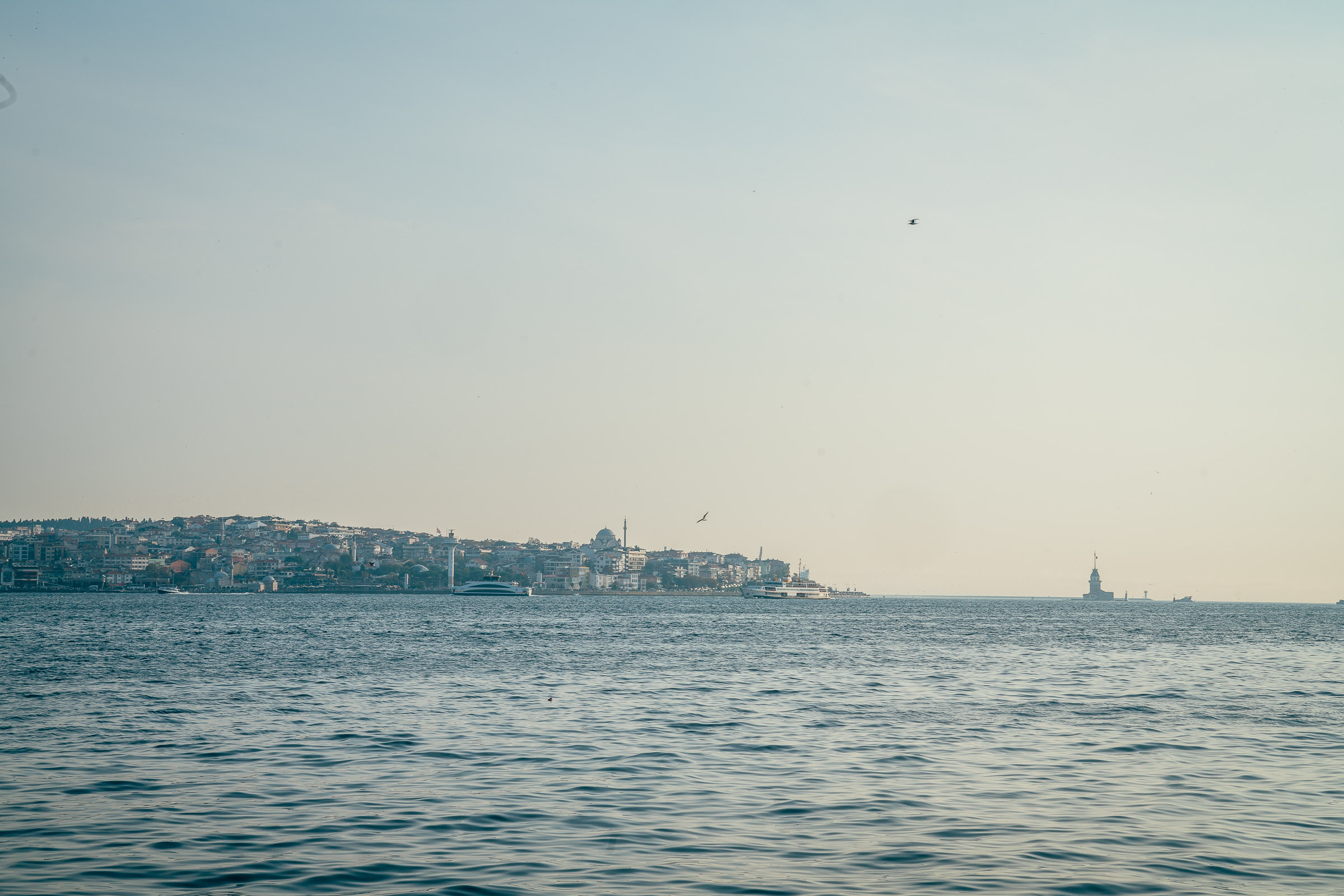
From the water, you will also spot the Maiden’s Tower, Kız Kulesi, on its small islet off Üsküdar, on the Asian shore. After a two-year restoration, it reopened as a museum on May 11, 2023. The works brought the tower back to its early 19th-century form from the time of Sultan Mahmud II. Today, boats take visitors to the islet from Üsküdar and Karaköy, and the balcony offers a rare view of the city from the middle of the water.
Istanbul will delight you in many ways. You can admire the mosaics of Hagia Sophia in the morning, explore the Grand Bazaar at noon and enjoy a balık ekmek by the sea at sunset. Around every corner, there is a new surprise: a tea seller with his tray, Turkish music from a nearby café or a baklava seller who offers you a piece to try.
Even when you return home, the image of Istanbul stays with you. The city of two continents, intertwined with history, culture and magic, charms everyone. For a moment, it becomes the city of all of us.
SAYING GOODBYE TO ISTANBUL
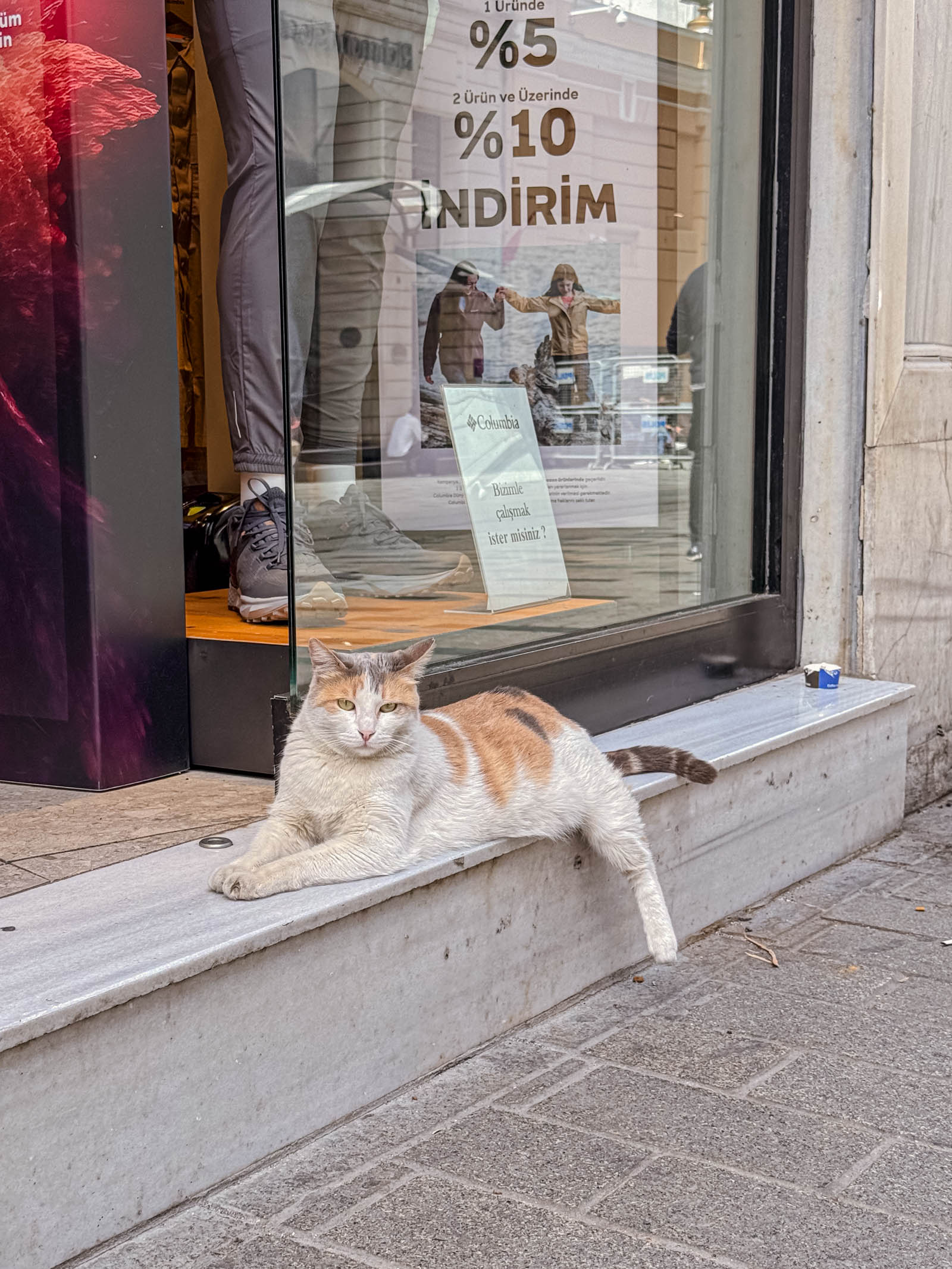
My dear travelers, we have come to the end of this special travelogue about Istanbul, where we enjoyed the beauty of this Turkish metropolis together. We walked from Taksim Square and İstiklal Avenue to elegant Nişantaşı and sailed the Bosphorus. Then we explored the treasures of Sultanahmet, the bazaars and Dolmabahçe, and we tasted the flavors of Turkish cuisine along the way. And no story from this city feels complete without one of its street cats, like this one resting on a shop step.
This travelogue would not have been possible without the support of Turkish Airlines and Divan Istanbul, in collaboration with local partners. Thanks to them, I could feel the spirit of Turkish culture and tradition firsthand. As always, I tried my best to convey my honest impressions of this unusual experience.
Have you already visited Istanbul, or is the city of two continents still on your travel wish list?
Feel free to leave your impressions, comments or questions below, or contact me by email and on social networks. All information is on the CONTACT page.
With love from Istanbul,
Mr.M
This post is sponsored by Turkish Airlines and Divan Istanbul Hotel and other local partners. This post is my personal and honest review of the destination experience.
Dein historischer Abriss von Konstantinopel bis zur heutigen Metropole hat mich beeindruckt. Ich habe sofort Lust bekommen, türkischen Kaffee vor der Hagia Sophia zu trinken. Die praktischen Tipps zur Metro-Linie M2 und zur F1-Standseilbahn sind Gold wert. Welche Erfahrungen hast du im Atatürk Kulturzentrum gemacht? Dein Artikel ist ein Muss für alle, die Istanbul erstmals entdecken wollen.
Dear Marko, great post! What a vibrant account of Istanbul’s dual identity as both an Asian and European city! I loved learning about the Turkish Airlines Stopover Program, getting luxury hotel accommodation for free sounds irresistible. Your stroll through Taksim Square and evenings at Maçka Park must have been the perfect balance of energy and tranquility. I’m particularly intrigued by the sunset views over the Bosphorus. After reading this, I can’t wait to book a layover in Istanbul before my next long-haul flight!
Your historical overview, from Byzantium to the Ottomans, truly brings Istanbul’s past to life. The way you described sipping Turkish coffee in front of Hagia Sophia made me feel like I was there. I appreciate the tip about the funicular to Kabataş; it’s so practical for travelers. The modern art concerts on Taksim and the quiet activism of Gezi Park showcase the city’s many faces. This post is a must-read for anyone planning their first trip to Istanbul. Best, Hazel
Dear Marko, I’ve been to Istanbul twice, but your guide highlighted neighborhoods I’ve yet to explore. Nişantaşı’s luxury boutiques and Maçka Park’s cable car ride sound like a dream day out. I never knew Divan Istanbul hotel welcomed protestors during the Gezi events, that really shows its community spirit. Your vivid descriptions of the hilly coast and the three Bosphorus bridges make me want to return ASAP. Thank you for packing so much in one post!
Deine Beschreibung des Stopover-Programms von Turkish Airlines ist sehr hilfreich, kostenlose Übernachtung in einem Luxushotel klingt unwiderstehlich! Der Spaziergang über den Taksim-Platz und der Sonnenuntergang im Maçka-Park müssen ein perfekter Auftakt gewesen sein. Besonders fasziniert bin ich von den drei Bosporus-Brücken und der Verbindung der beiden Kontinente. Ich kann es kaum erwarten, meinen nächsten Zwischenstopp in Istanbul zu planen!
Hi Marko! The section on Sultanahmet and the interplay of ancient basilicas with modern cafés was fascinating. You painted an incredible picture of strolling between cisterns and art galleries. I must try that garden in front of Hagia Sophia and perhaps catch a concert at the Atatürk Cultural Center afterward. Which mosque interior impressed you the most, the Blue Mosque or the new Taksim Mosque? Your perspective would help me plan my itinerary.
As a solo traveler, I often skip big cities, but this post convinced me otherwise. The nostalgia of the red tram on İstiklal Avenue sounds so charming. I can just imagine the accordion music floating through the air. Your practical advice about transportation hubs at Taksim Square will be invaluable. I’m especially keen to experience the Turkish Airlines stopover deal next month. Istanbul, here I come!
Dein Bericht über Nişantaşı zeigt, warum dieser Stadtteil als Modemetropole gilt. Teşvikiye-Straße und die Kunstgalerien dort möchte ich unbedingt besuchen. Hast du ein Lieblingscafé für eine Teepause zwischendurch? Ich danke dir für die inspirierenden Eindrücke!
Ho sempre sognato di vedere il tramonto sul Bosforo e il tuo post conferma che Maçka Park è il luogo ideale. La funivia che descrivi sembra un’esperienza unica. Consiglieresti di prenotare in anticipo il biglietto della funivia?
I’ve bookmarked this post as my go-to Istanbul planner. The breakdown of Taksim, Nişantaşı, and Maçka Park is perfectly structured for a three-day trip. I especially like that you balanced must-see landmarks with hidden-gem neighborhoods. Your recommendation to explore both continents in one stay is so spot on. Istanbul’s call has never been clearer, thank you for such an inspiring guide!
Als Wiederholungstäterin in Istanbul konnte ich deinen Text sehr gut nachvollziehen. Nişantaşı mit seinen exklusiven Boutiquen und Maçka-Park mit der Seilbahn sind absolute Highlights. Ich wusste nicht, dass das Divan Istanbul Hotel während der Proteste Hilfe geleistet hat sehr beeindruckend! Die Beschreibung der hügeligen Küstenlinie lädt direkt zu einem neuen Besuch ein.
Dear Marko, I’m planning a honeymoon in Europe, and Istanbul keeps calling to me after reading this post. The blend of centuries-old architecture and contemporary art festivals sounds magical. I’d love to relax in the Divan Istanbul spa after a day of shopping on Teşvikiye Street. Your note about Gezi Park as a peaceful oasis was spot on, I need that green break. Do you recommend any specific rooftop bars for that Bosphorus view?
L’idea di bere tè turco nel giardino davanti alla Hagia Sophia è irresistibile. La tua guida pratica alla rete di trasporti mi sarà utilissima. Consiglieresti un pass giornaliero per i mezzi pubblici o comprare i biglietti singoli?
Dein Artikel hat mich sofort motiviert, Istanbul für eine längere Zeit zu besuchen. Die Kombination aus Altem und Neuem von der Hagia Sophia bis zu zeitgenössischen Konzerten ist meisterhaft eingefangen. Ich plane einen Zwischenstopp auf dem Weg nach Asien. Hast du konkrete Hoteltipps außerhalb von Taksim?
As someone who lived in Istanbul for a year, I can attest to each of your impressions. The M2 metro under Taksim is indeed a lifesaver during rush hour. I also love how you highlighted the cable car in Maçka Park, that ride offers some of the best skyline views. The funicular to Kabataş remains my favorite quick escape to the water’s edge. Your post is an excellent refresher for returning travelers like me.
Il modo in cui descrivi Piazza Taksim come fulcro di vita giorno e notte è semplicemente coinvolgente. I locali con musica dal vivo e i ristoranti attorno mi incuriosiscono molto. Hai qualche suggerimento per un locale con cucina tipica turca autentica?
Ich war schon in Istanbul, aber dein Blogbeitrag enthüllt viele Ecken, die ich noch nicht kannte. Der Spaziergang in Sultanahmet mit Blick auf byzantinische Mosaiken und moderne Street-Art klingt perfekt für einen Tag voller Kontraste. Möchtest du mehr über die versteckten Basare berichten? Ich bin gespannt auf deine weiteren Reiseberichte.
Nişantaşı ha un’atmosfera esclusiva che mi incuriosisce moltissimo. Le boutique di fascia alta e le caffetterie eleganti sembrano un paradiso per chi ama la moda. Hai avuto modo di provare qualche dolce tipico in una pasticceria locale? Sarei felice di un tuo suggerimento!
Il contrasto tra la storia millenaria di Sultanahmet e la modernità di Taksim mi ha affascinato. Mi piacerebbe visitare le cisterne di Giustiniano seguendo il tuo itinerario. Quanto tempo hai dedicato a esplorare i mosaici bizantini?
Il tuo post è un ottimo mix tra storia, cultura e consigli pratici. Adoro come hai bilanciato luoghi famosi e angoli meno conosciuti. Istanbul è ora in cima alla mia lista dei desideri, grazie per questa ispirazione!