
My dear travelers and lovers of unusual journeys, welcome to a new travelogue on the Mr.M blog. After my letters from Lima and the Inca citadel of Machu Picchu, today I am taking you to Colombia and its capital, Bogotá. First of all, I would like to thank the United Nations World Tourism Organization (UN Tourism), local ministries of tourism, national tourism organizations and all the other partners who selflessly supported my adventure in South America. Thanks to them, I could create travelogues from several countries, as well as numerous fashion stories. I sincerely hope that you will enjoy this adventure with me.
My posts from Colombia exist thanks to the selfless help of UN Tourism, ProColombia, the Ministry of Commerce, Industry and Tourism of Colombia and Four Seasons Hotel Bogotá.
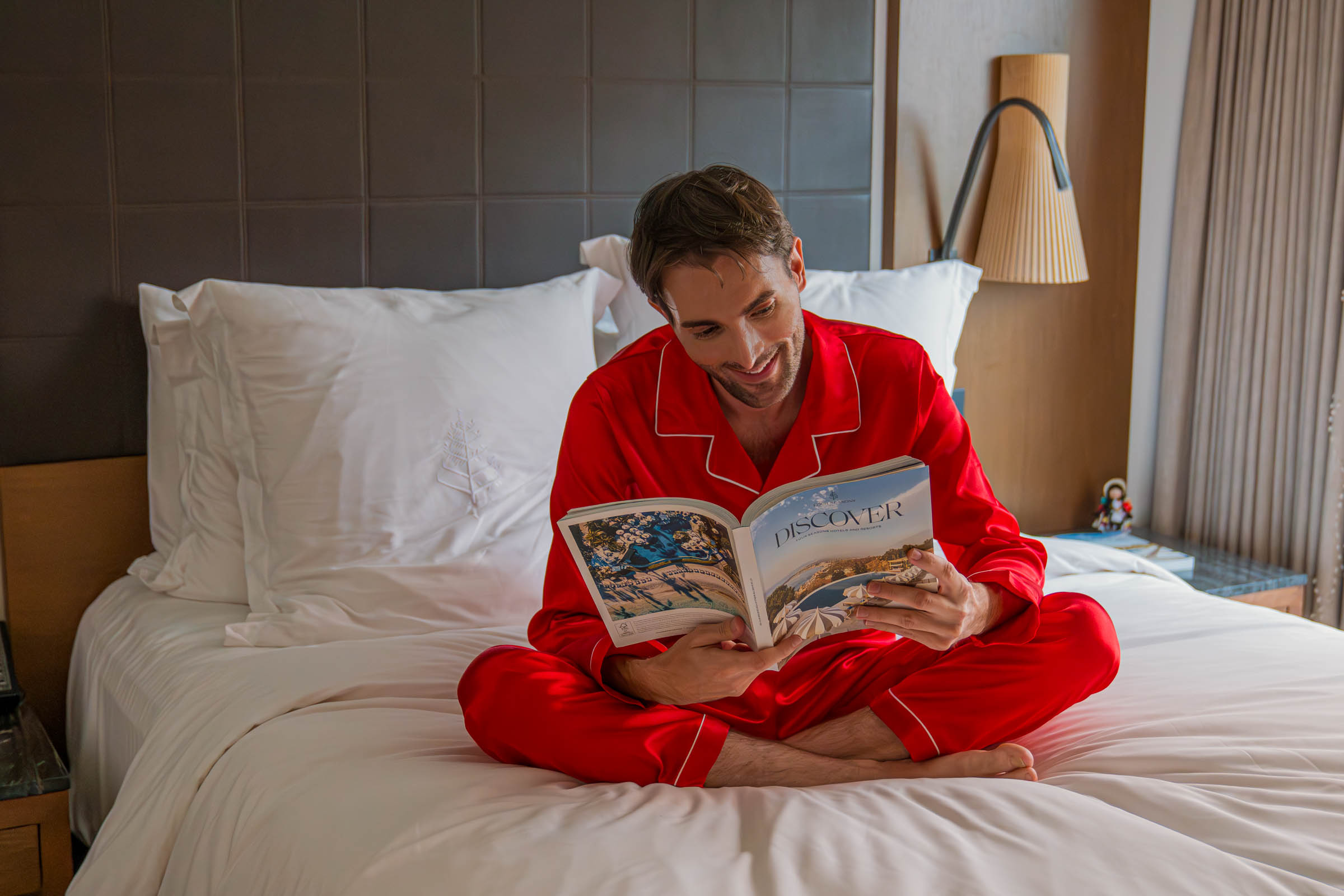
Every journey begins with a good base, and in Bogotá my base was a beautiful suite with a view of the Andes. Before I take you through the streets of the city, let me show you where I stayed.
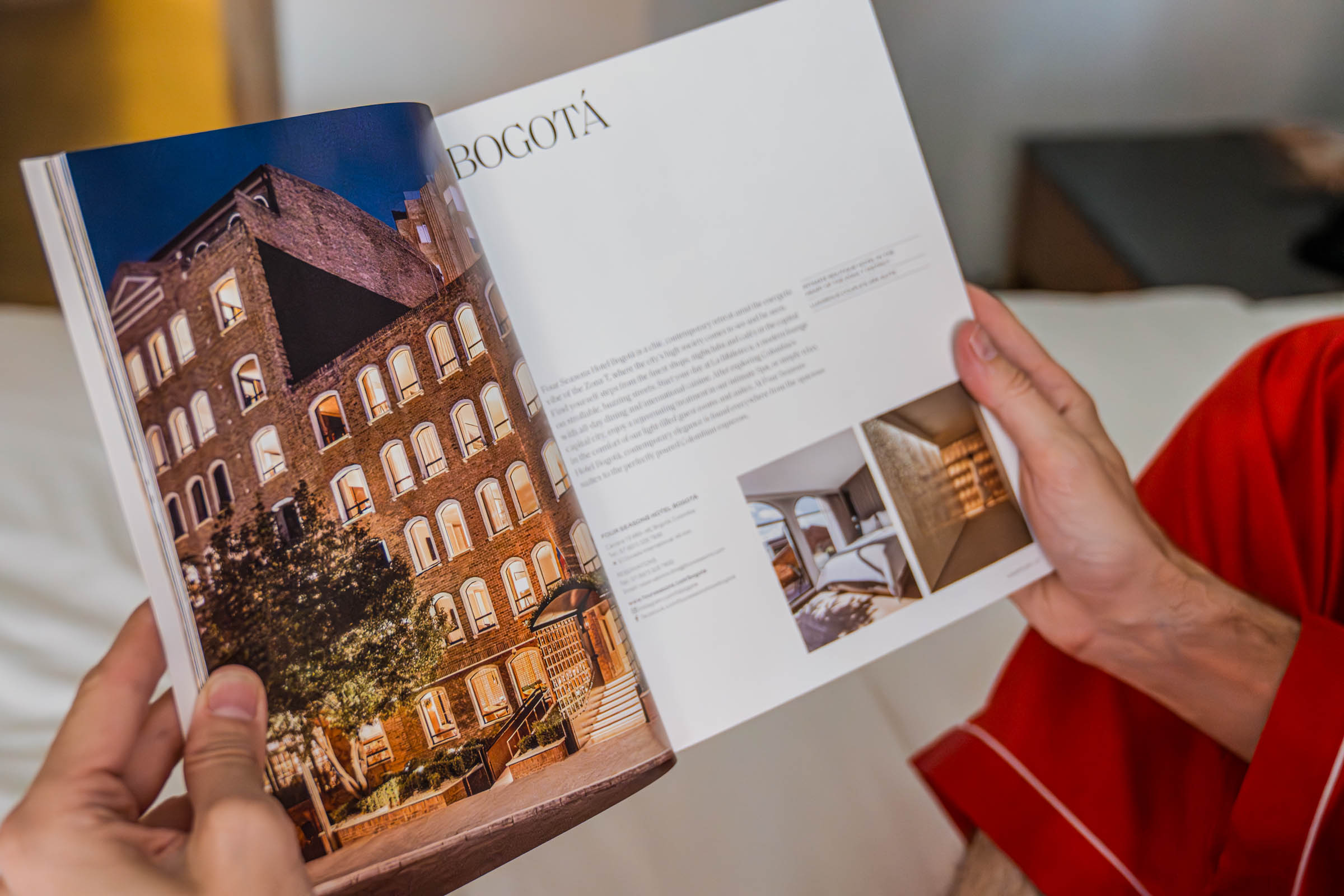
FOUR SEASONS HOTEL BOGOTÁ, MY BASE IN THE ZONA T
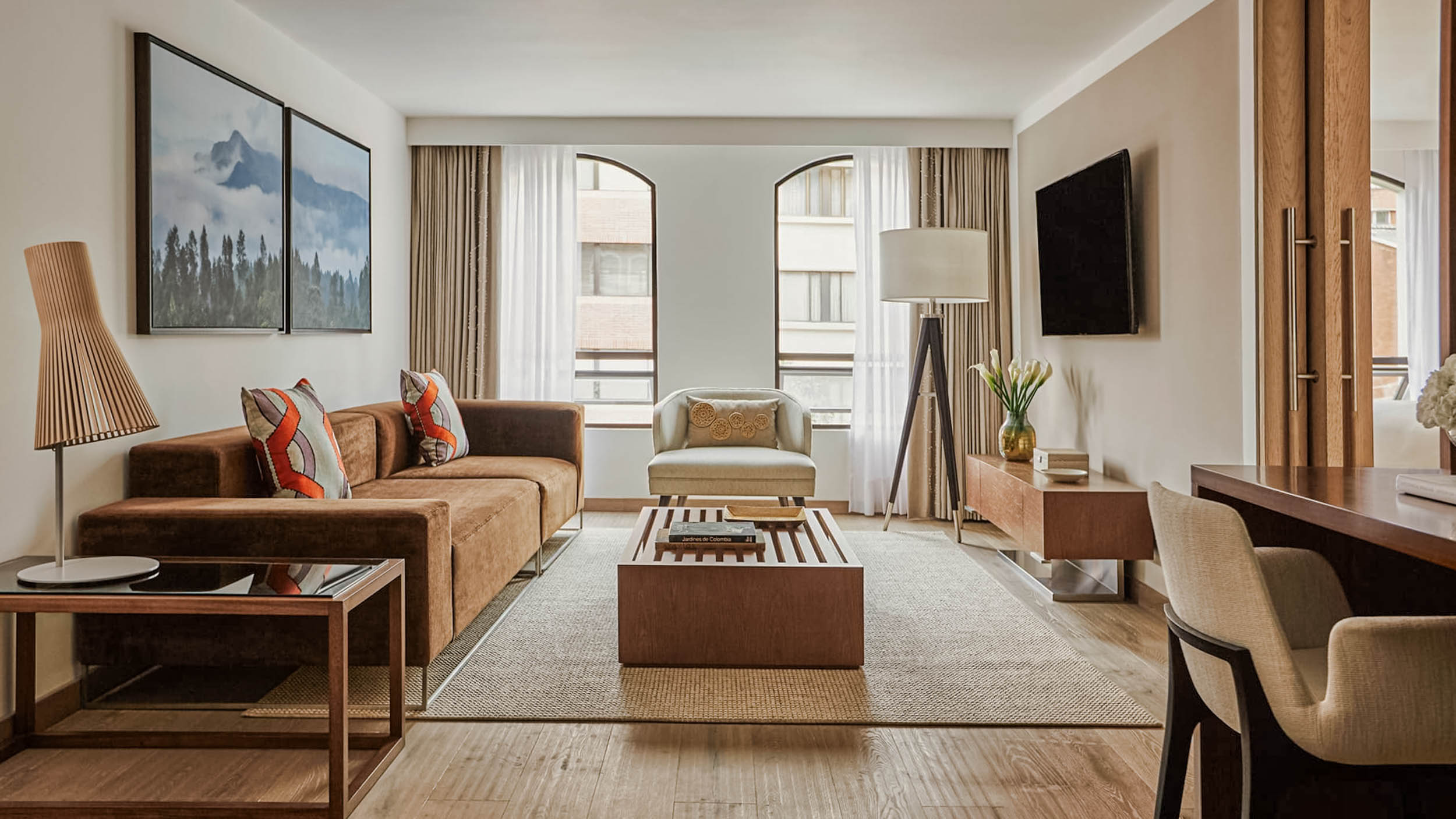
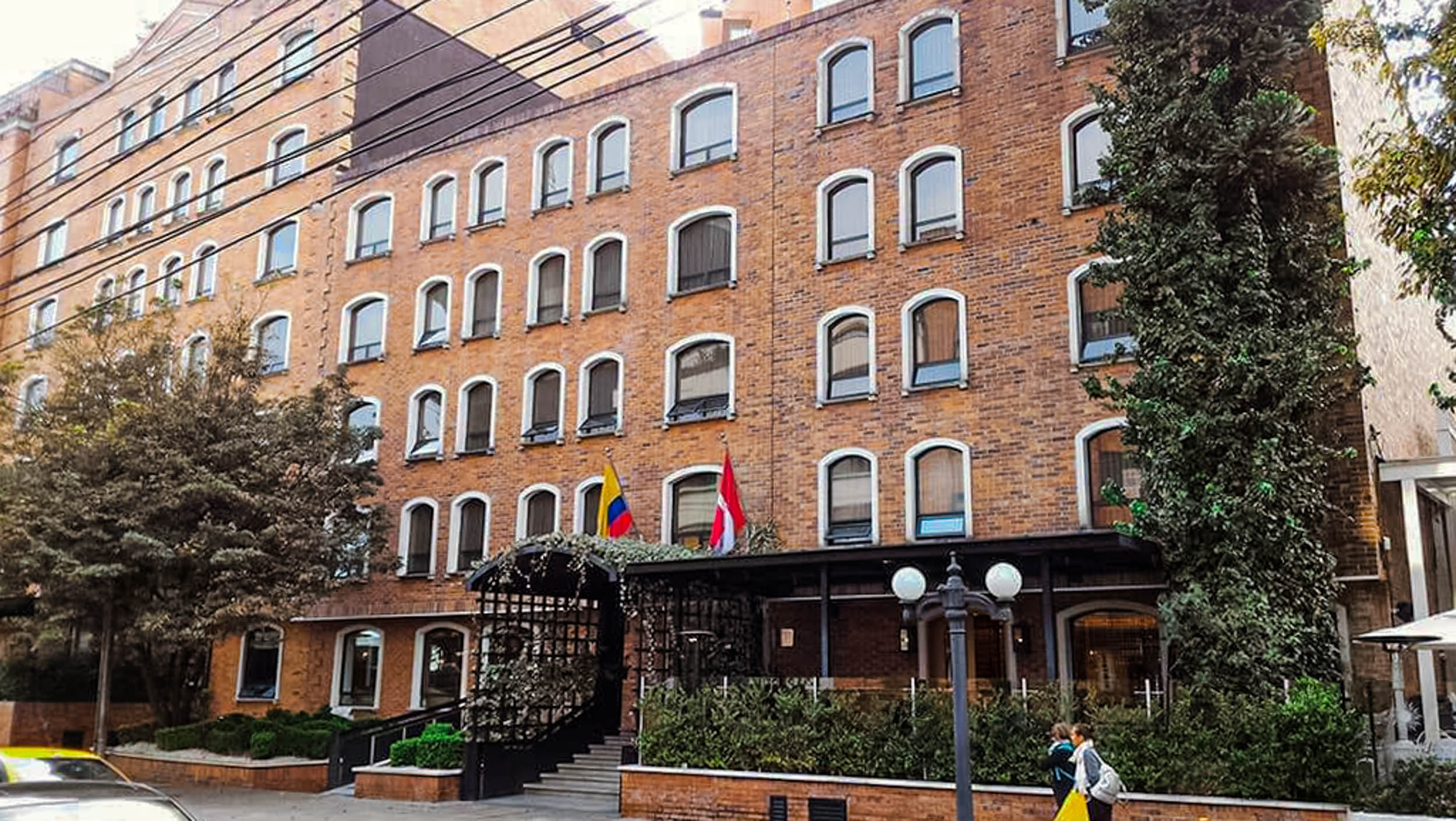
My team and I stayed at the Four Seasons Hotel Bogotá, in two One-Bedroom Premier Suites connected into one large apartment. In practice, this gave us two bedrooms, two bathrooms and plenty of room to work and relax after long days in the city. It is an ideal setup for friends or families who travel together.
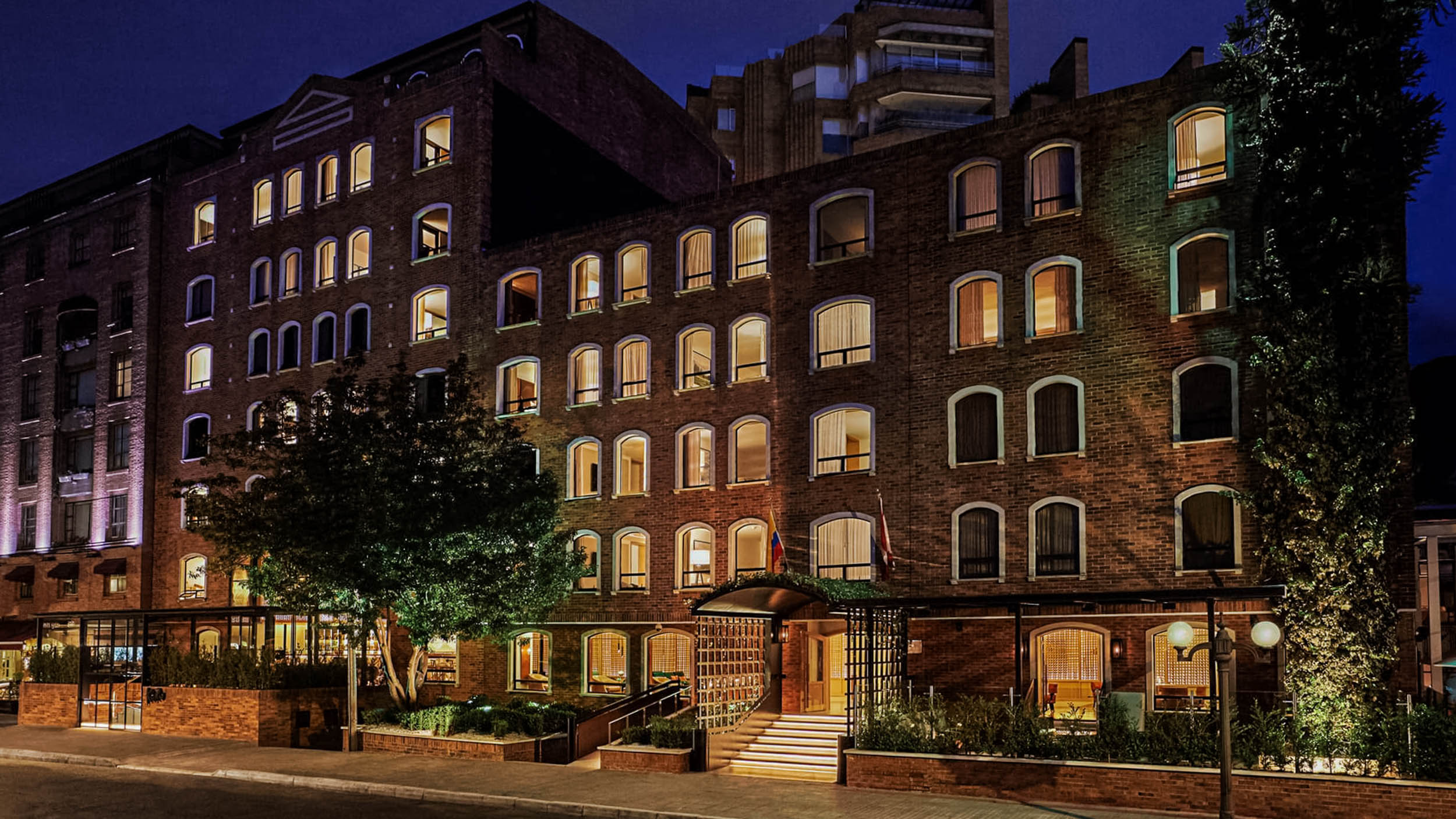
The hotel stands at Carrera 13 # 85-46, in the heart of the Zona T, the elegant shopping and dining district in the north of Bogotá. It opened in April 2016. Nearly half of its accommodations are suites, and the designer Lauren Rottet created the interiors. Inside, the style is calm and modern, with warm wood, natural fibers and neutral tones.
Each One-Bedroom Premier Suite measures 43 square meters and has a king bed, two living areas and a marble bathroom with an extra-large rain shower. In addition, every suite has a Nespresso machine, so my mornings always started with a good cup of coffee. For me, these small details make the difference between a hotel and a home away from home.
BREAKFAST, SPA AND SERVICE AT FOUR SEASONS BOGOTÁ
Breakfast was one of my favorite moments of the day. The hotel restaurant, Biblioteca, serves international and local breakfast specialties. Of course, Colombian coffee is always on the table, and on some mornings we simply ordered breakfast to the suite.
After a long day of exploring, the spa was the perfect place to recover. The idea of an “Emerald City” inspired its design. You will notice emerald and aquamarine tones, tropical greenery and the sound of water. There is also a fitness center that is open 24 hours a day.
The location is the biggest advantage of this hotel. Andino, one of the most exclusive shopping centers in Colombia, is just a short walk away, and dozens of restaurants, bars and boutiques surround the hotel. Above all, the warm welcome and the impeccable service made my stay truly unforgettable.
BOGOTÁ, A CAPITAL HIGH IN THE ANDES
Bogotá lies on a high plateau of the Andes, at about 2,640 meters above sea level, which makes it one of the highest capitals in the world. According to the projections of DANE, the Colombian national statistics office, close to 8 million people lived in the city in 2025.
The Muisca people lived on this plateau long before the Spaniards arrived, and the original name of the place was Bacatá. The city celebrates its official birthday on August 6, because on that day in 1538 the conqueror Gonzalo Jiménez de Quesada established a settlement here. However, historians still debate the exact place and the details of that founding. After the Battle of Boyacá on August 7, 1819, Bogotá became the capital of the newly independent Gran Colombia.
Today, Bogotá is a city of contrasts. In the morning, you can walk through colonial streets and visit churches from the 16th and 17th centuries. In the evening, you can dine in some of the best restaurants in Latin America. Between these two experiences, museums, mountain viewpoints, street art and elegant shopping streets wait for you.
I spent five days in Bogotá, and in this letter I will tell you how I planned them. I will introduce you to the most important sights, from the Gold Museum to Monserrate. In addition, I will recommend the best restaurants and share some useful tips. My sincere hope is that this travelogue will inspire you on your future travels.
FIRST IMPRESSIONS OF BOGOTÁ
When I landed at El Dorado airport, I was happy to see the bright light of the Colombian sun. At the same time, I immediately felt the fresh mountain air. For travelers like me who usually live at lower altitudes, this feeling is quite unusual.
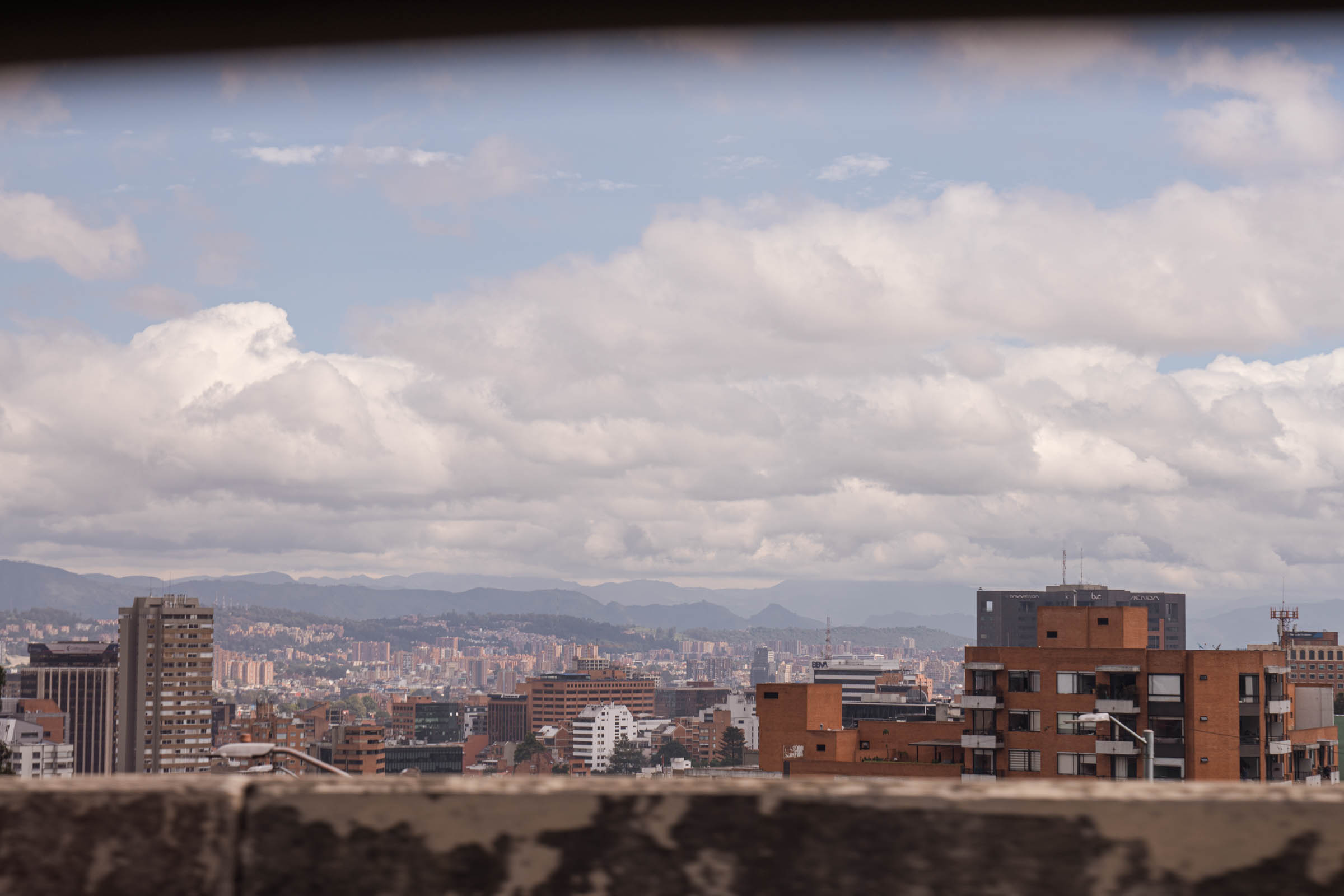
On the way to the hotel, I looked at the green slopes of the Andes that surround the city. Bogotá seemed to me like a city between peaks and clouds. Later, I looked at the panorama from my suite. I saw a dense network of streets and buildings, in real contrast to the green hills that rise above it.
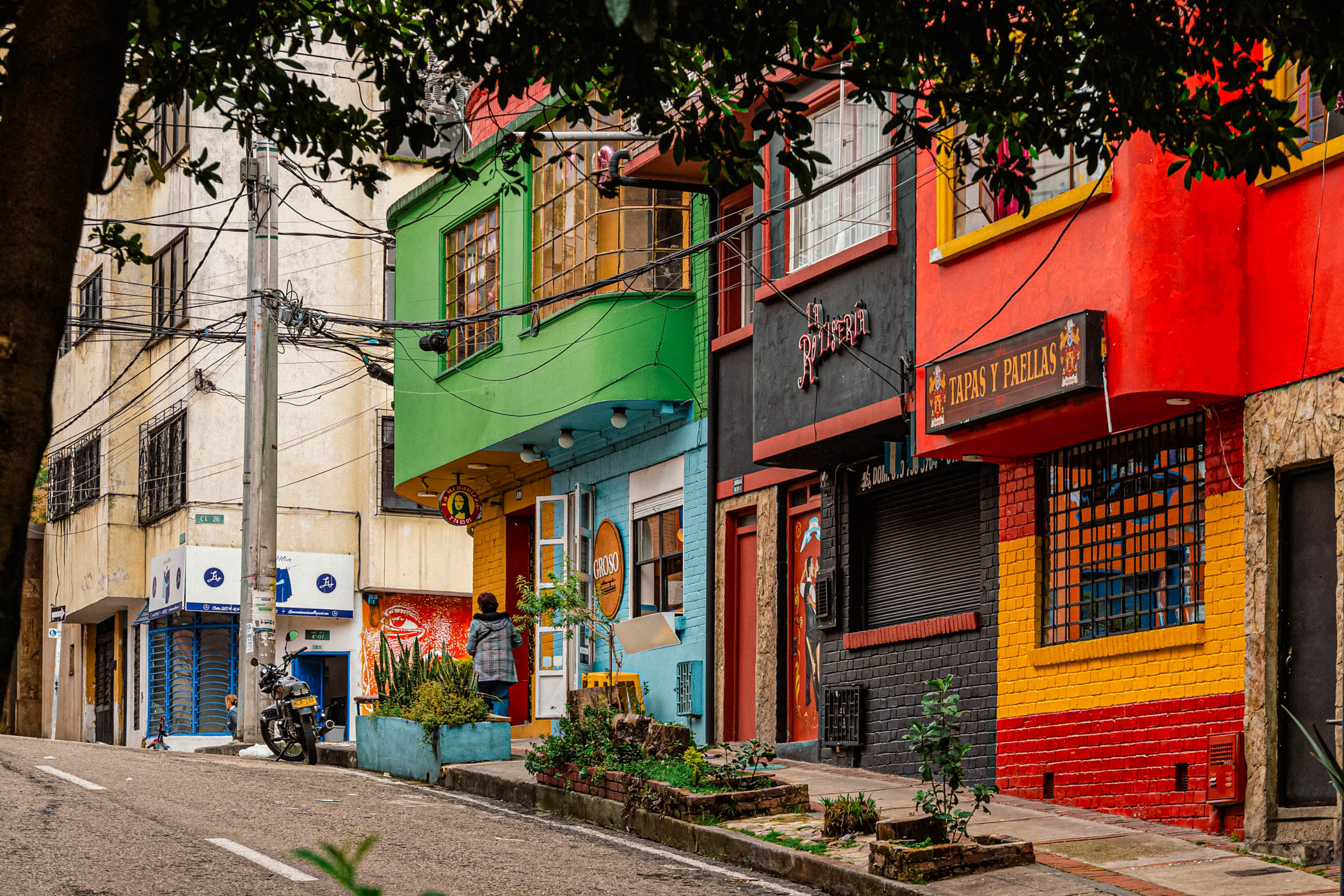
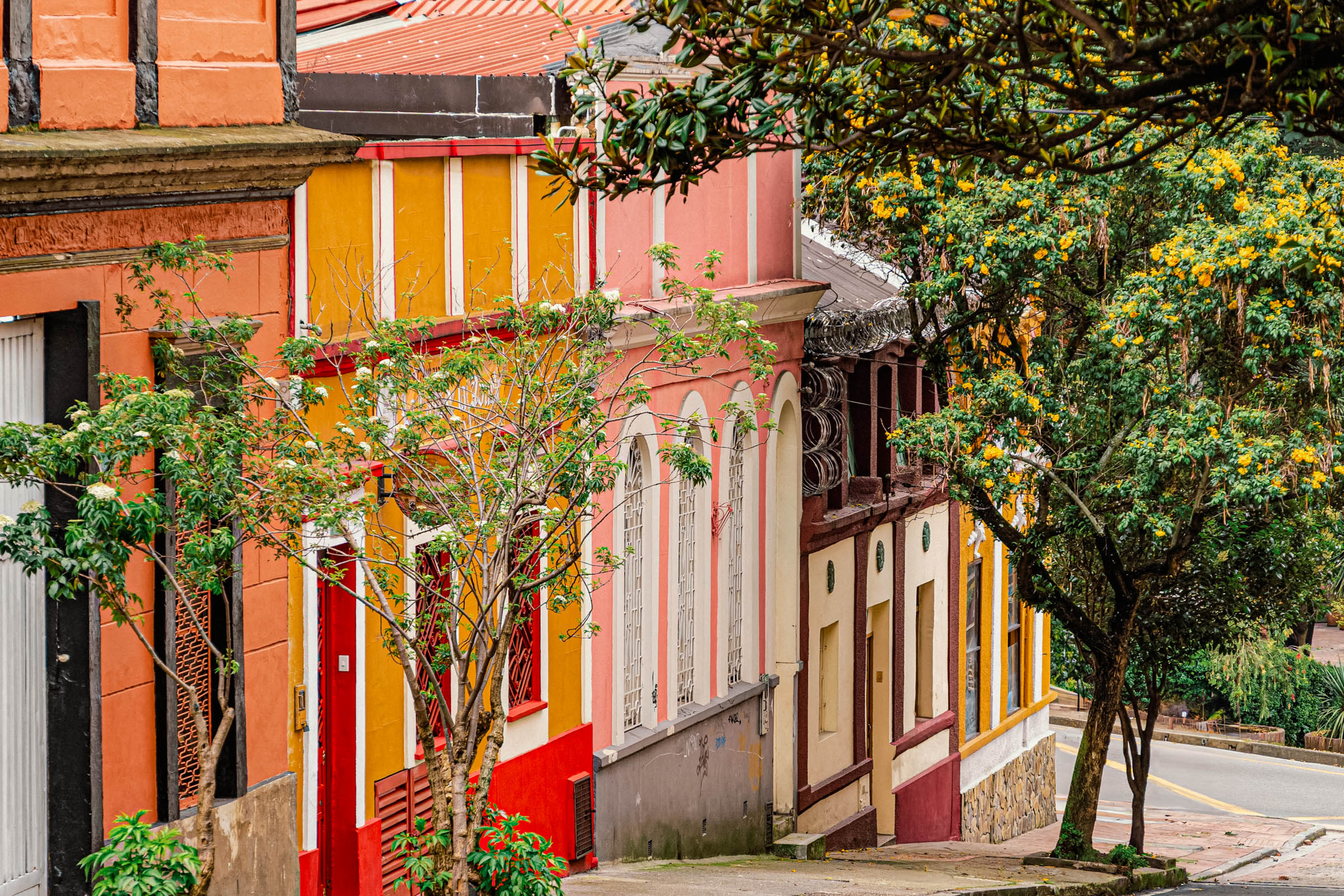
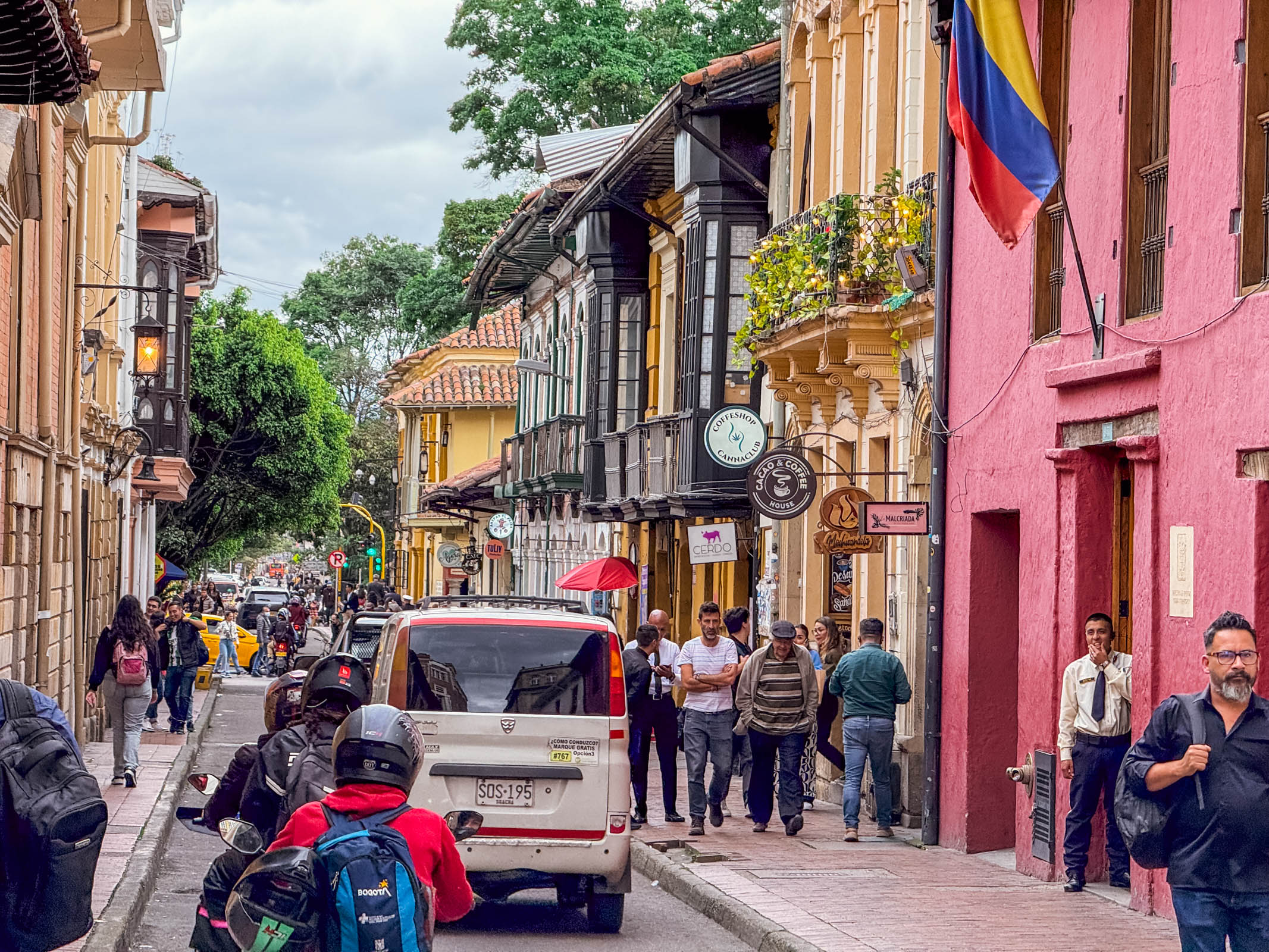
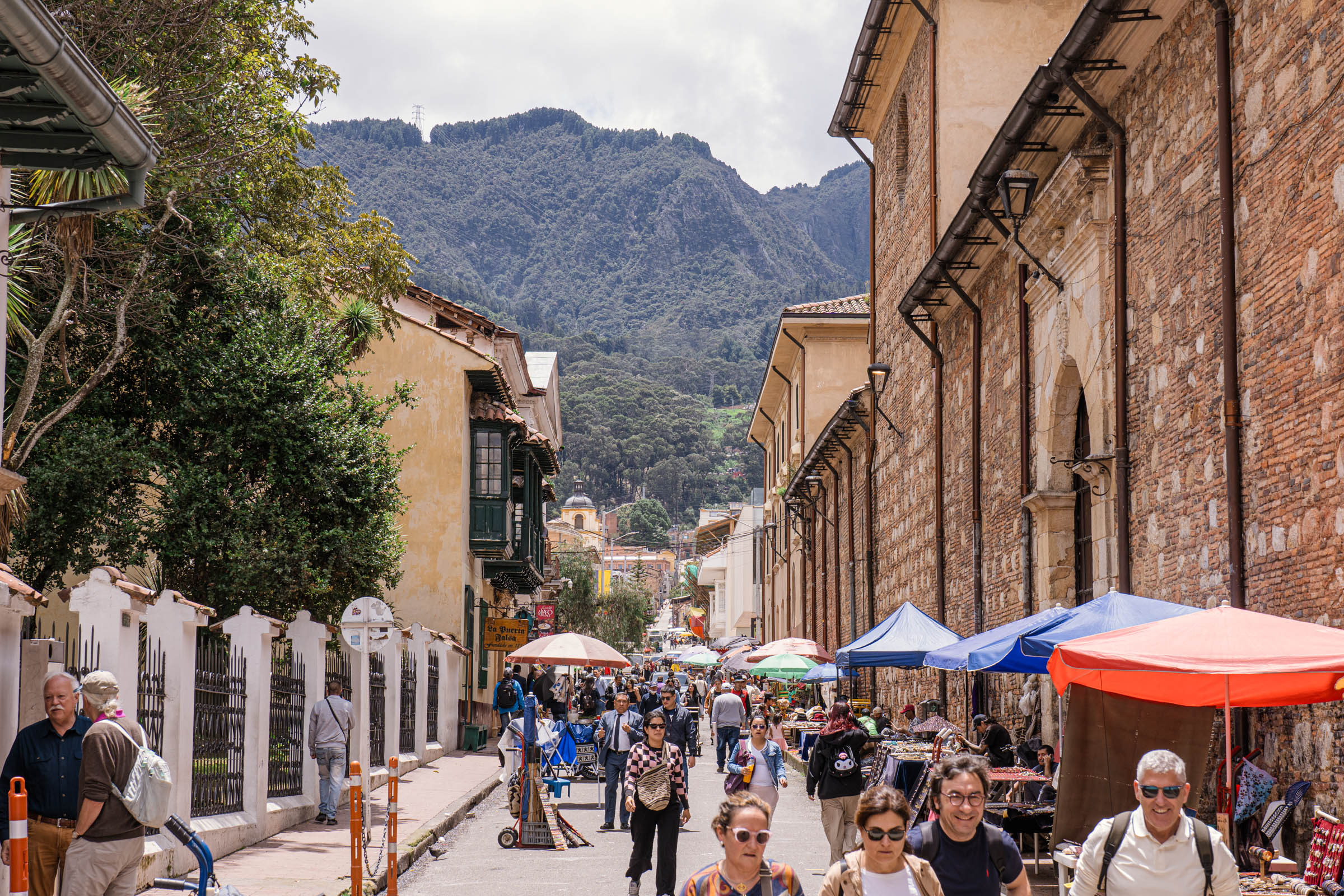
The colors of Bogotá surprised me the most. In the historic district of La Candelaria, the houses shine in bright orange, yellow, red and green. Many of them have wooden balconies, tiled roofs and flowers in the windows. As a result, every street looks like a postcard.
DAY 1: PLAZA DE BOLÍVAR, THE HEART OF BOGOTÁ
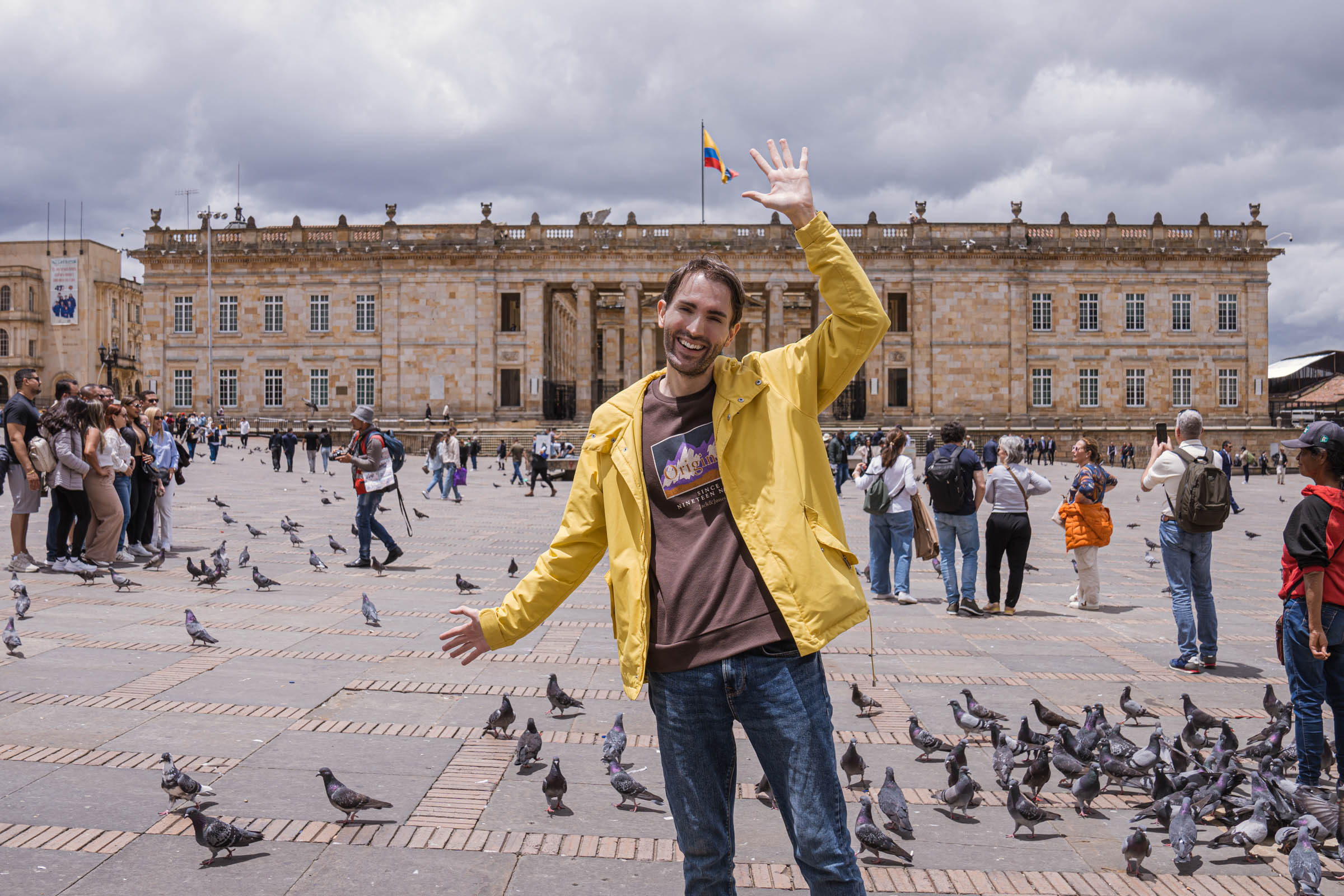
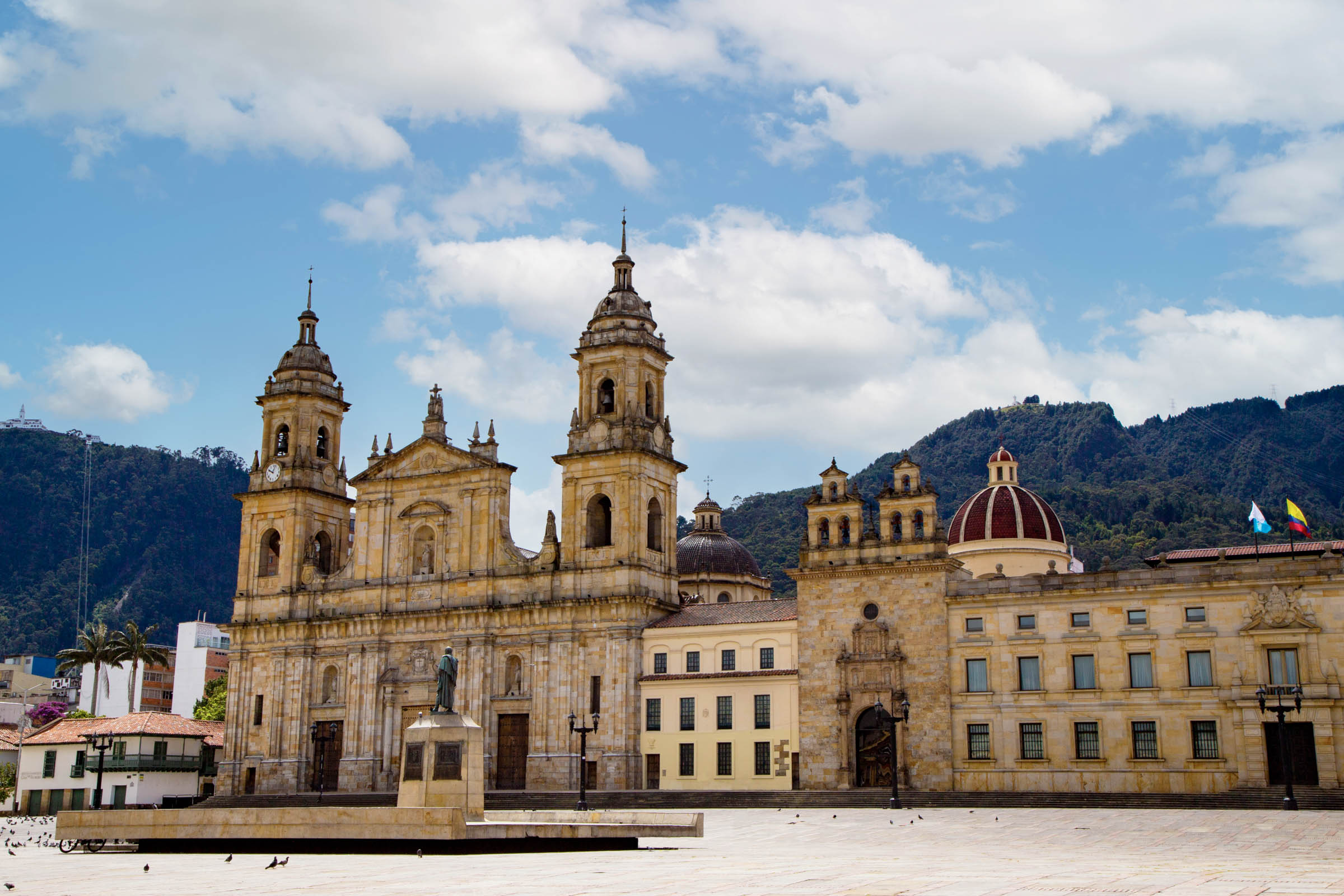
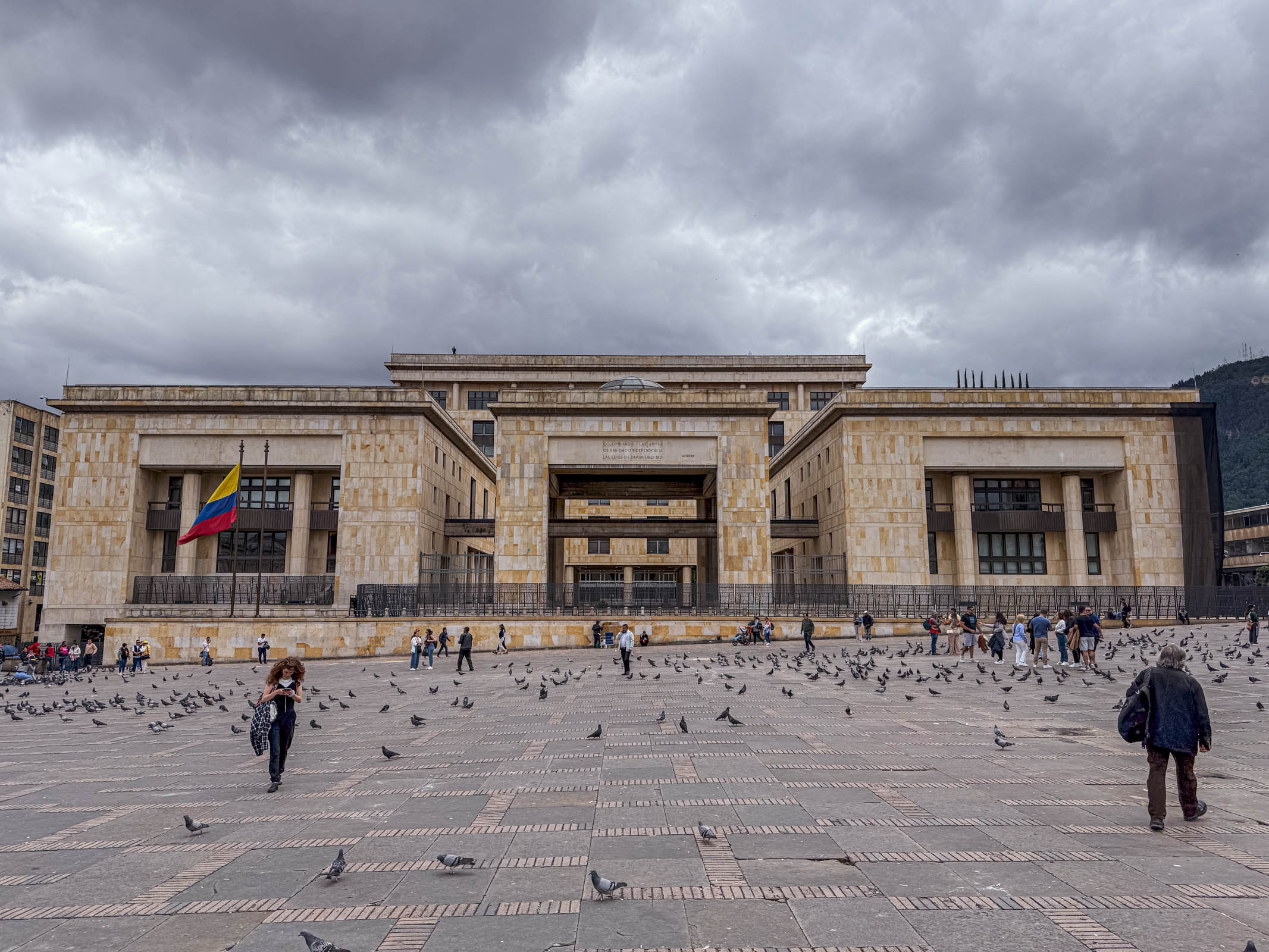
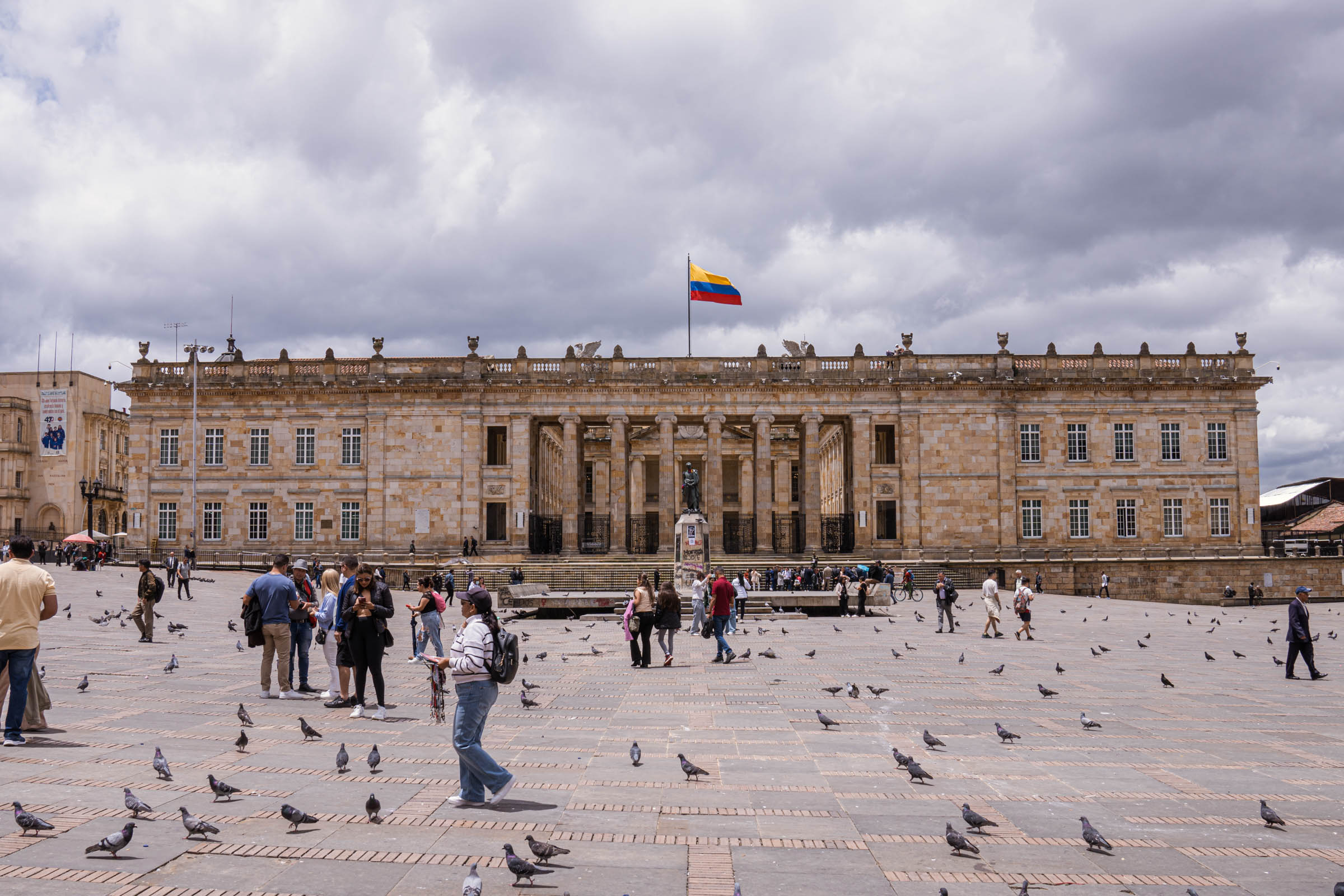
I started my first day in the very heart of old Bogotá, on the Plaza de Bolívar, the main square of the city. Until 1821, people called it the Plaza Mayor, and later the Plaza de la Constitución. It got its current name in 1846, when the city placed a bronze statue of Simón Bolívar here. The Italian sculptor Pietro Tenerani created it, and it became the first public monument in the city. Since 1995, the whole square has been a national monument.
The most important buildings of the country surround the square. On the south side stands the National Capitol, the seat of the Colombian Congress. The architect Thomas Reed designed this neoclassical building, and workers completed it in 1926. Opposite it, on the north side, is the Palace of Justice. On the east side, next to the cathedral, stands the Archbishop’s Palace, whose monumental door came from the Ferdinando Marinelli Artistic Foundry. On the west side, you will see the Liévano Palace, the seat of the mayor of Bogotá. It rose between 1902 and 1905.
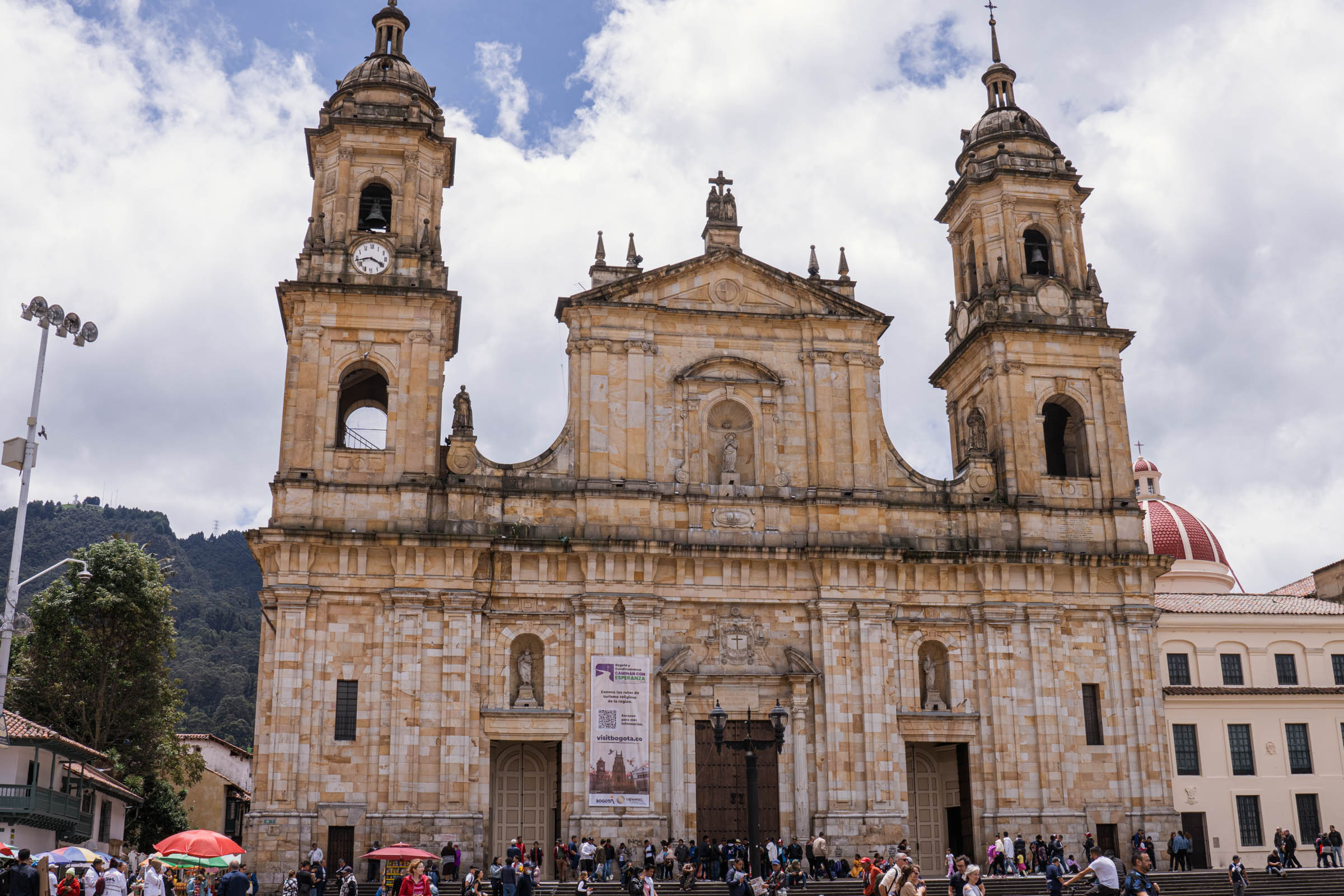
On the east side of the square rises the Catedral Primada, the Primate Cathedral of Colombia. The Spanish Capuchin friar Domingo de Petrés designed the current cathedral in the neoclassical style. Construction lasted from 1807 to 1823. Before it, three other churches stood on the same site and served as cathedrals of the city.
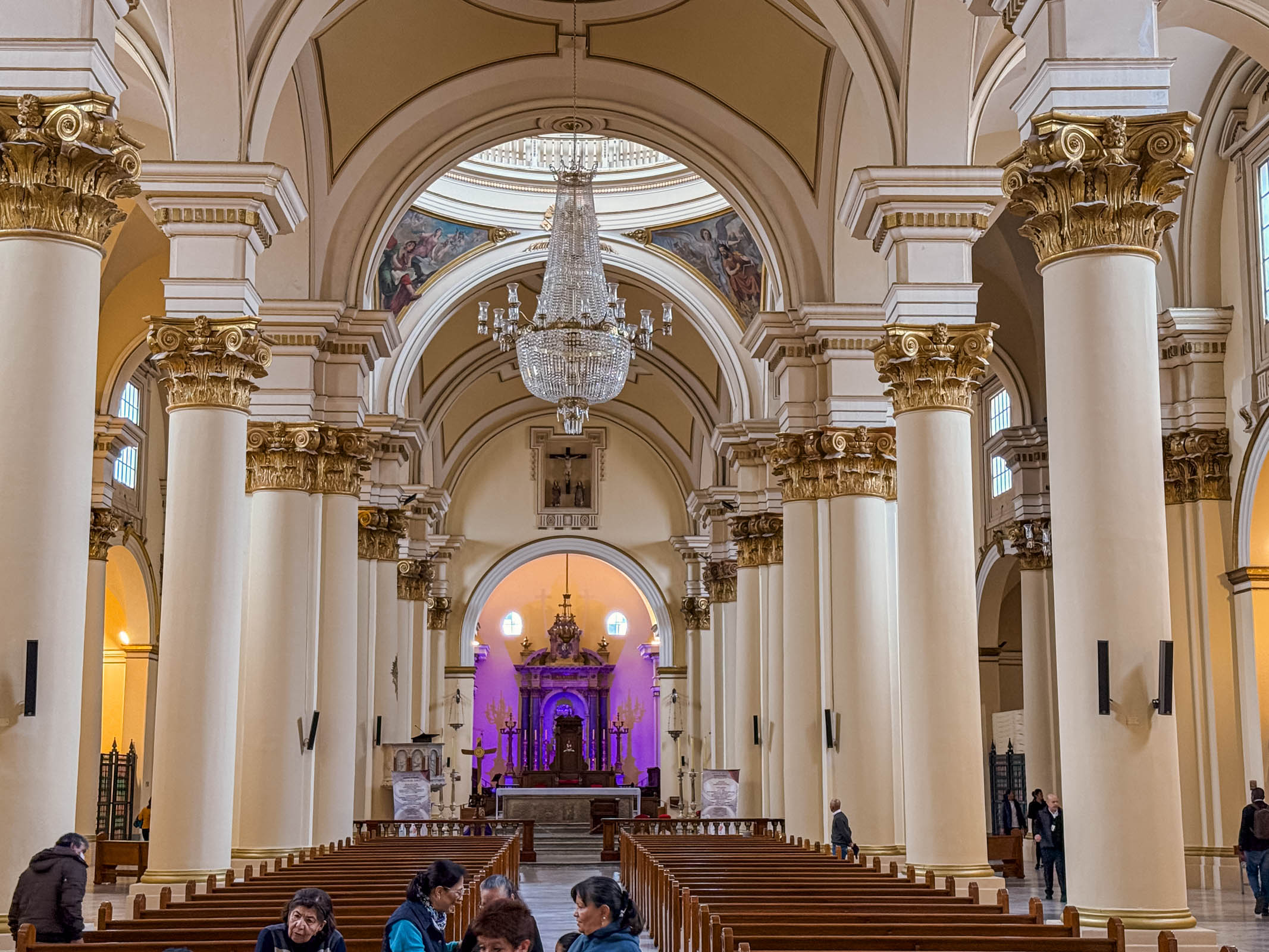
Inside, the cathedral impressed me with its white columns, gilded capitals and huge crystal chandeliers. The light enters through the high windows and gives the whole space a calm, almost festive atmosphere.
CHURCHES OF LA CANDELARIA IN BOGOTÁ
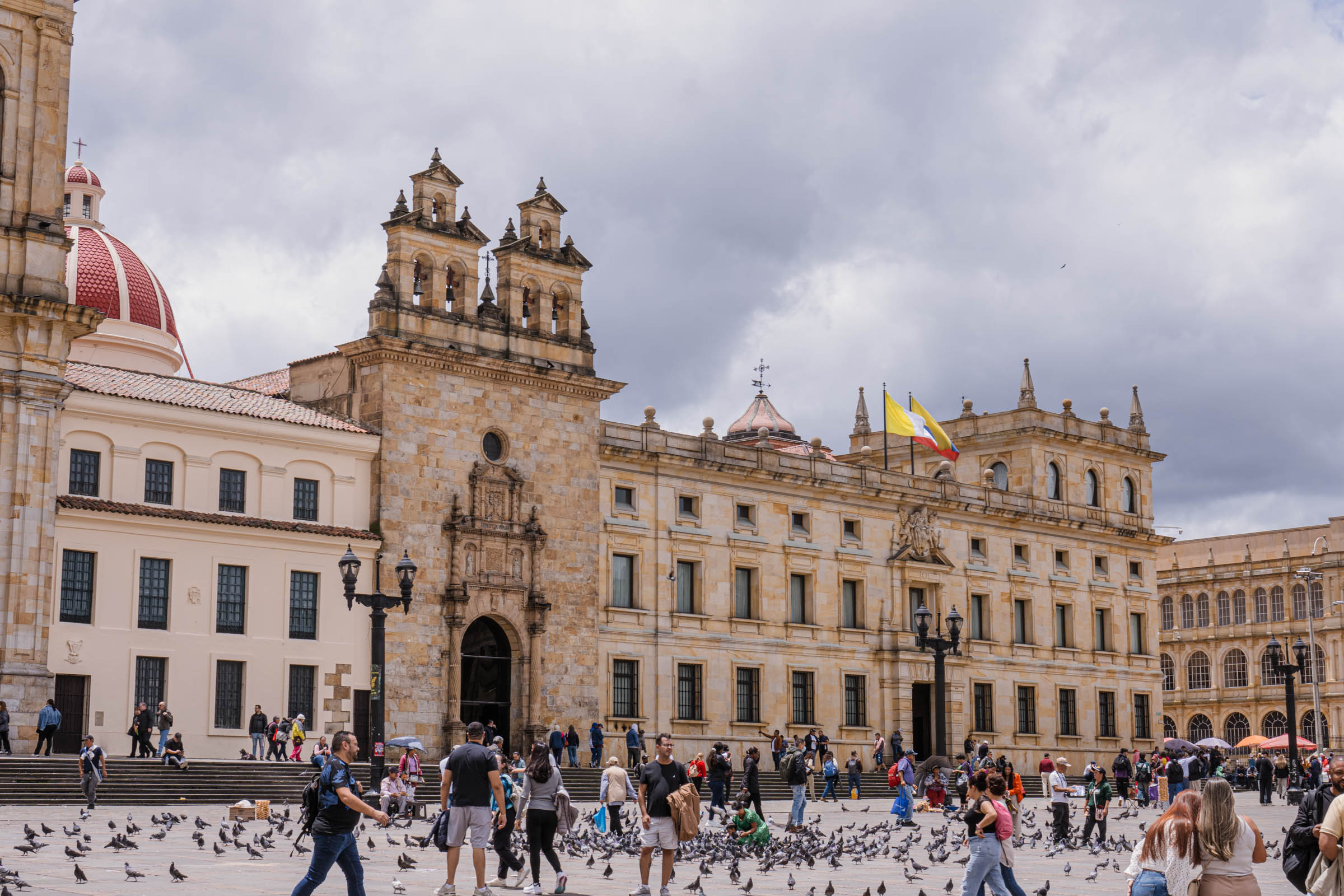
Right next to the cathedral stands the Capilla del Sagrario, a small baroque church built between 1660 and 1689. Its facade with two small bell towers looks modest from the square. However, inside it holds paintings by Gregorio Vásquez de Arce y Ceballos, one of the most celebrated painters of colonial New Granada.
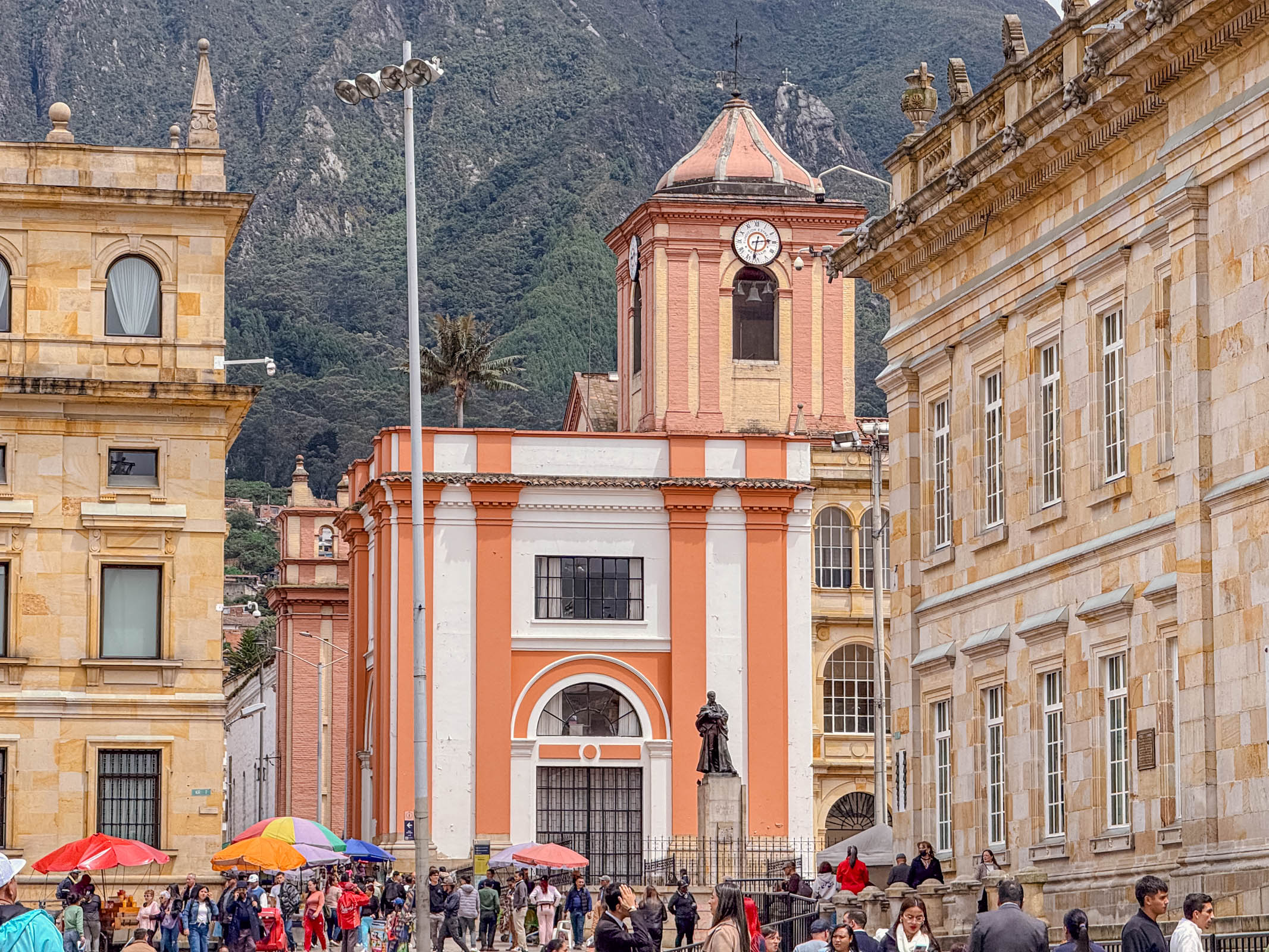
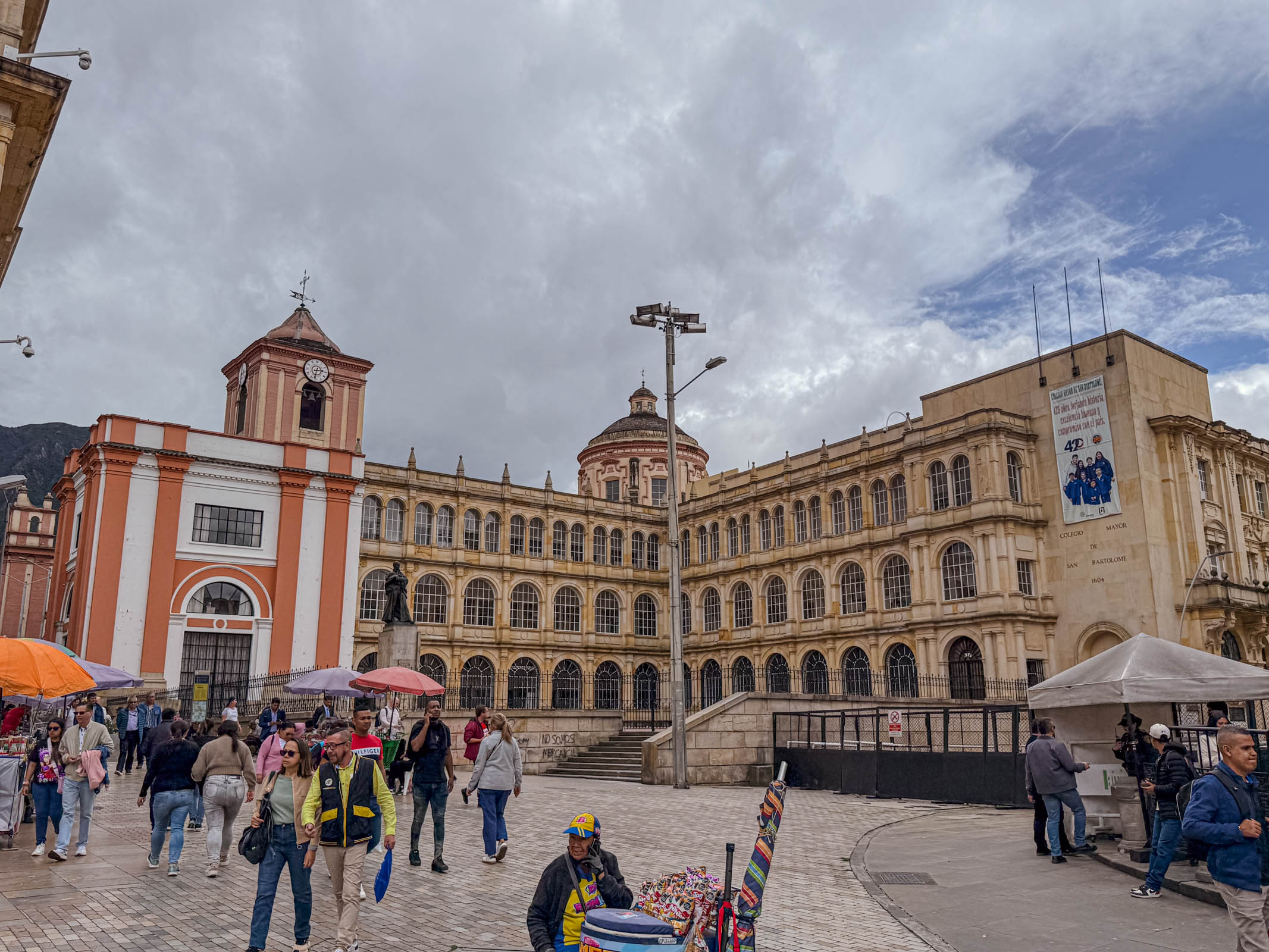
A few steps away, on Calle 10, I found the Iglesia de San Ignacio with its orange-and-white facade and clock tower. The Jesuits laid its first stone in November 1610, and the church opened for worship in 1635. Together with the Colegio Mayor de San Bartolomé and the building of the Museo Colonial, it forms the so-called Jesuit block of Bogotá.
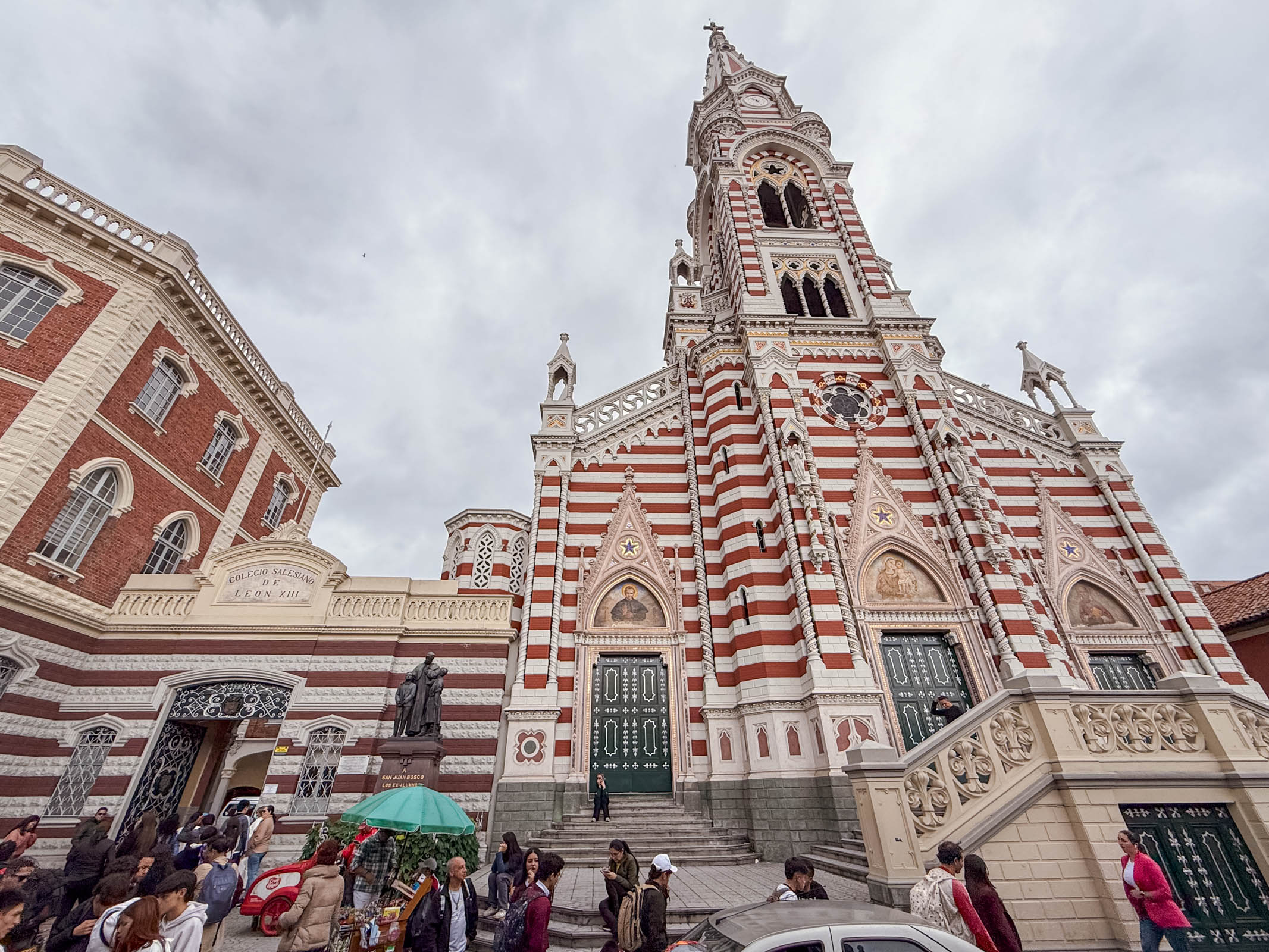
Then I walked further into La Candelaria, to the Santuario Nuestra Señora del Carmen. I am sure you will recognize this church from afar, because red and white stripes cover its tower and facade. The Italian architect and priest Giovanni Buscaglione designed it, and builders worked on it from 1926 to 1938. Its style is Florentine neo-Gothic, with Byzantine and Moorish details. For me, it is the most unusual church in the city.
CALLE 11, LA PUERTA FALSA AND THE CHORRO DE QUEVEDO
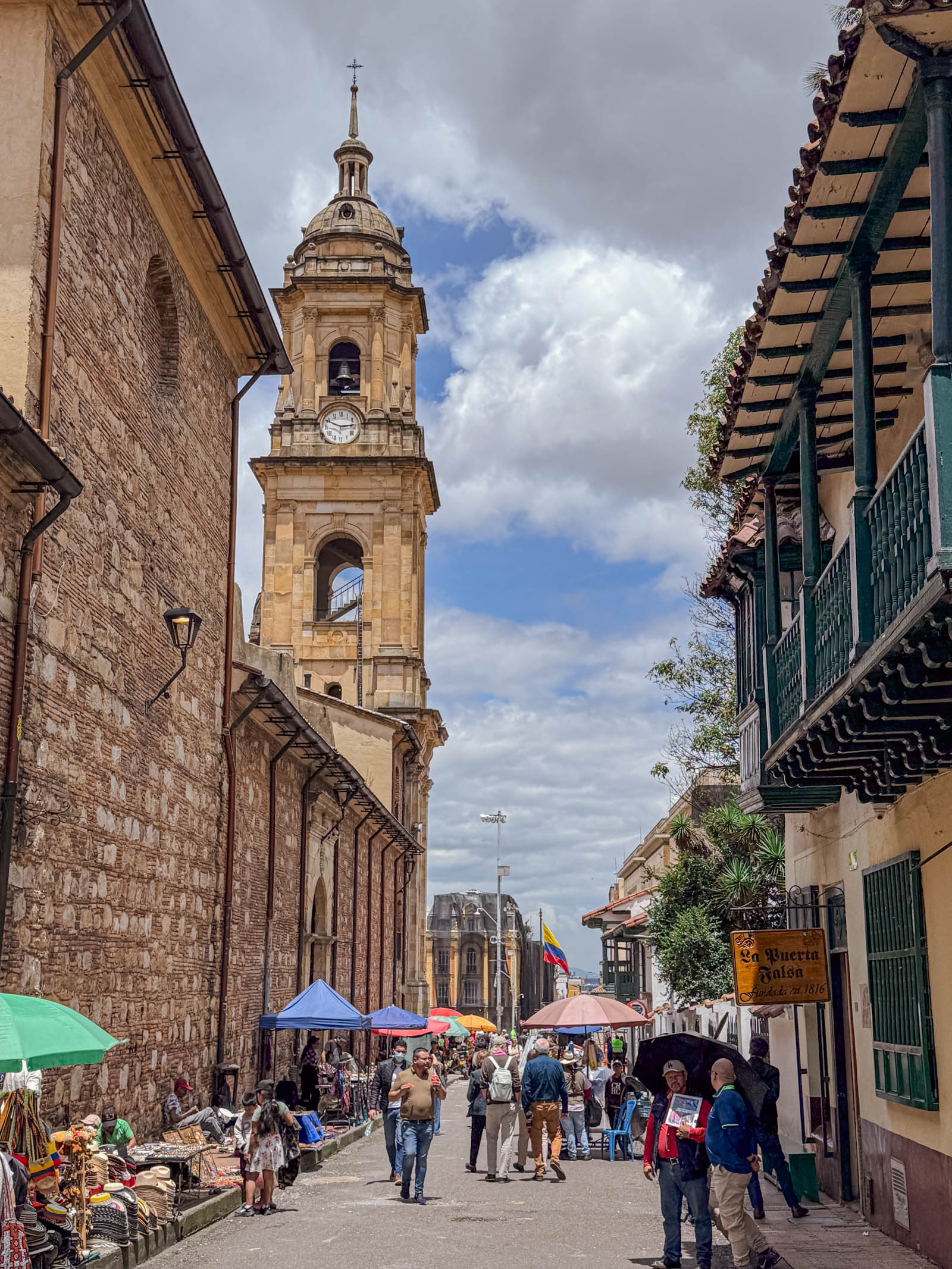
On the north side of the cathedral runs Calle 11, a lively street with artisans, small shops and colonial houses with wooden balconies. Here I noticed the sign of La Puerta Falsa, a small restaurant at Calle 11 # 6-50. It opened on July 16, 1816, and locals consider it the oldest restaurant in Bogotá. For seven generations, the same family has been serving tamales, ajiaco soup and the famous chocolate santafereño here. Locals serve this traditional hot chocolate with cheese that melts right into the cup.
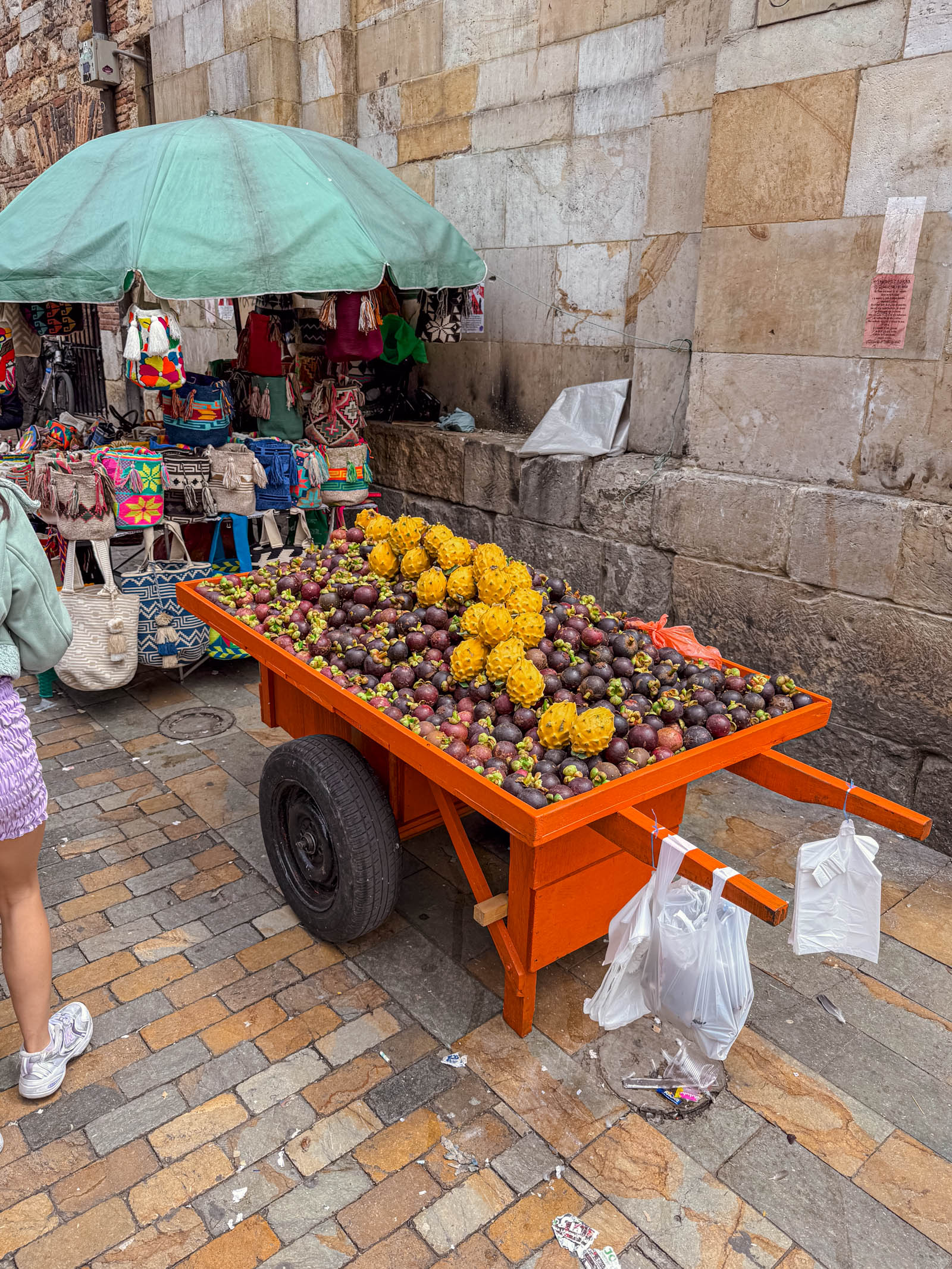
Along the streets of the center, I also saw many carts with fresh fruit. Vendors sell tropical fruits on almost every corner. Honestly, the colors of the fruit compete with the colors of the houses.
From there, I continued uphill to the Plazoleta del Chorro de Quevedo, a small square with a fountain and a white chapel. According to tradition, Gonzalo Jiménez de Quesada set up his first camp here in August 1538. This is why many people consider this square the birthplace of Bogotá. Nevertheless, historians still debate this story. Interestingly, the small chapel is relatively new. It dates from 1969, and its builders modeled it on El Humilladero, the first church of the city.
Today, the Chorro de Quevedo is a meeting place for students, musicians, storytellers and tourists. To the north of the square starts the Calle del Embudo, a narrow cobblestone street full of colorful murals and stalls with handmade crafts. Bogotá is famous for its street art, and here the walls really tell the stories of the city.
SAN FRANCISCO, THE OLDEST CHURCH IN BOGOTÁ
In the afternoon, I headed to the corner of Avenida Jiménez and Carrera Séptima. Here stands the Palacio de San Francisco, built between 1917 and 1933 as the seat of the government of Cundinamarca. It rises on the site where the old Franciscan convent once stood.
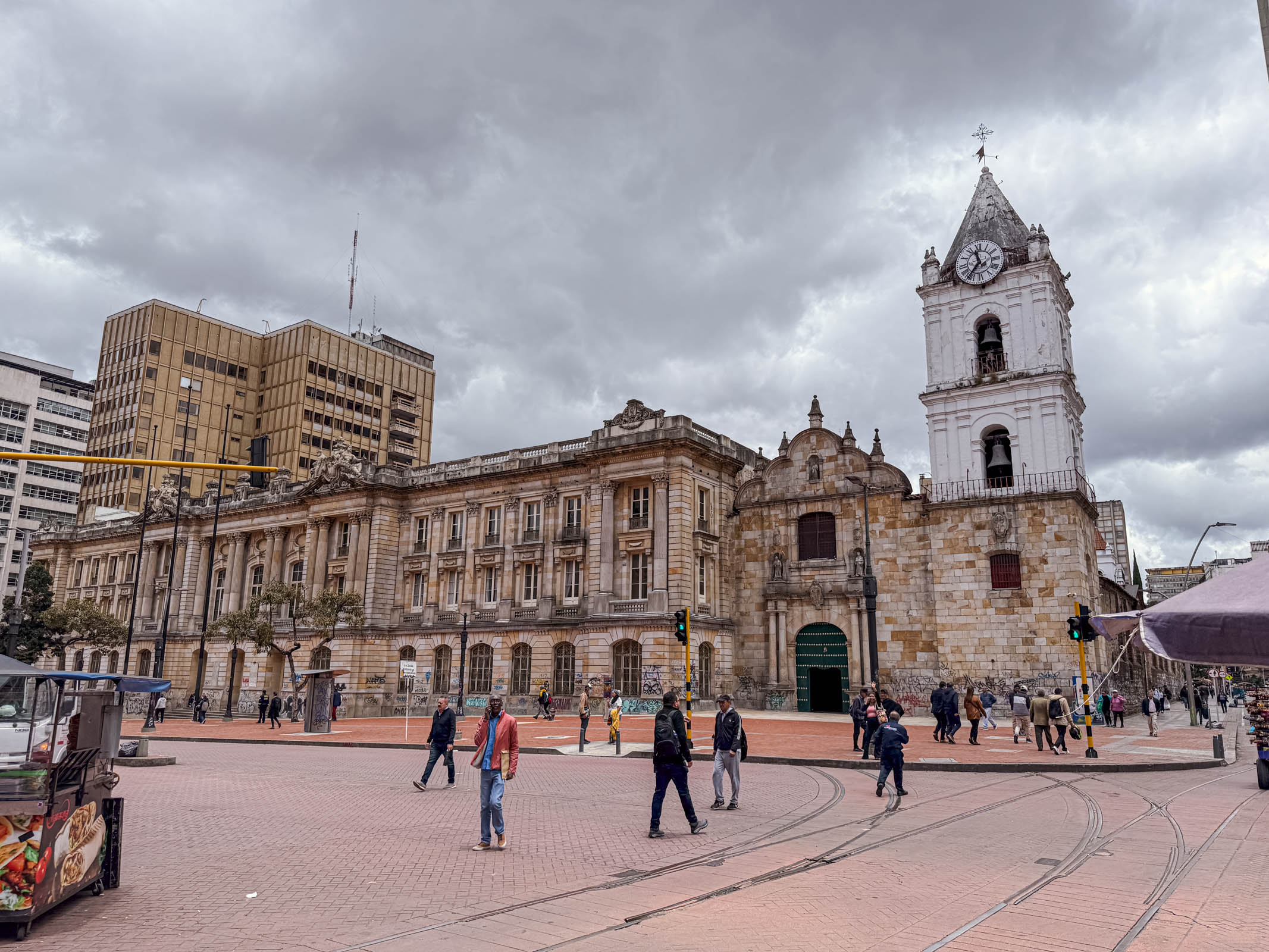
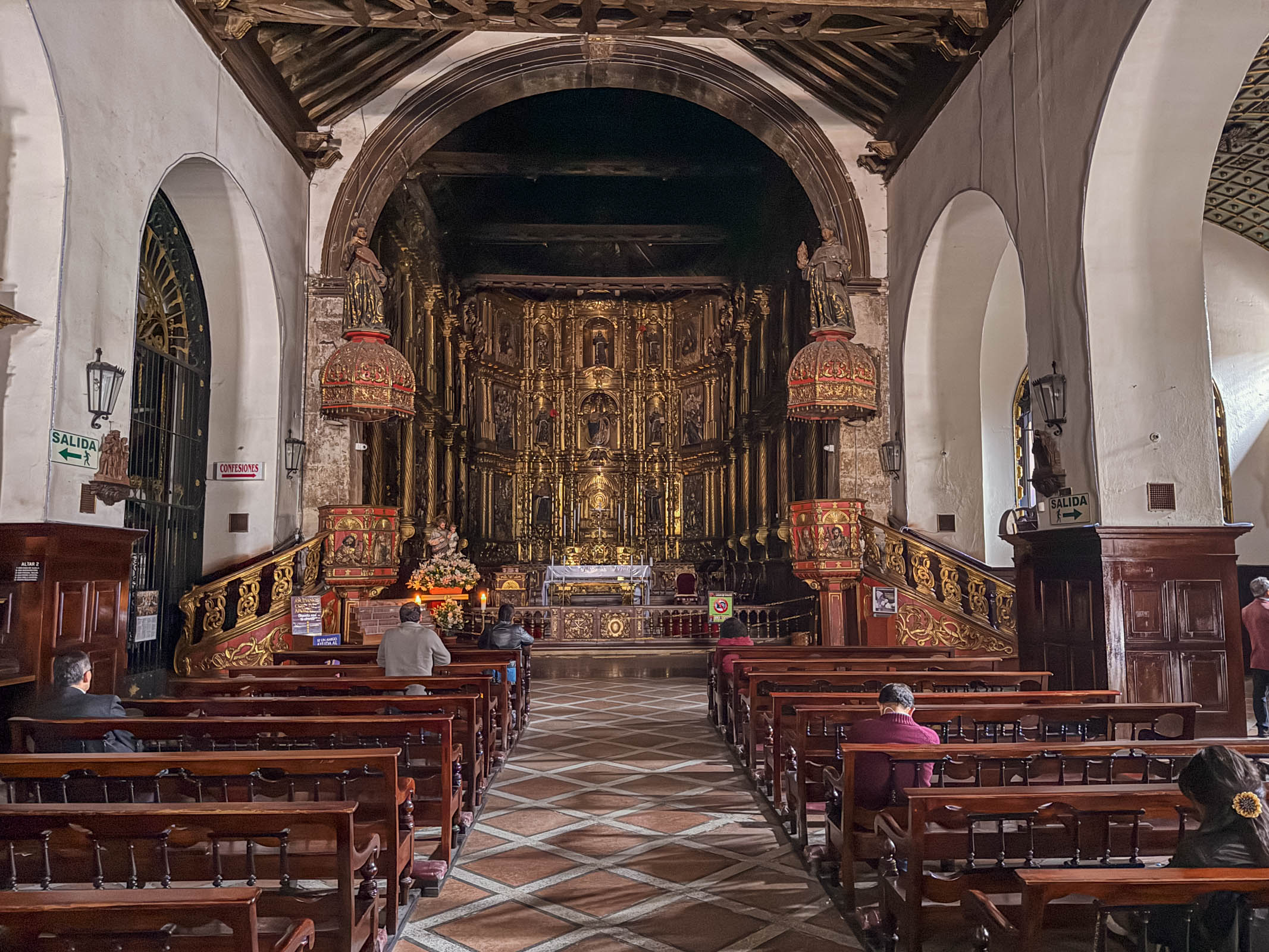
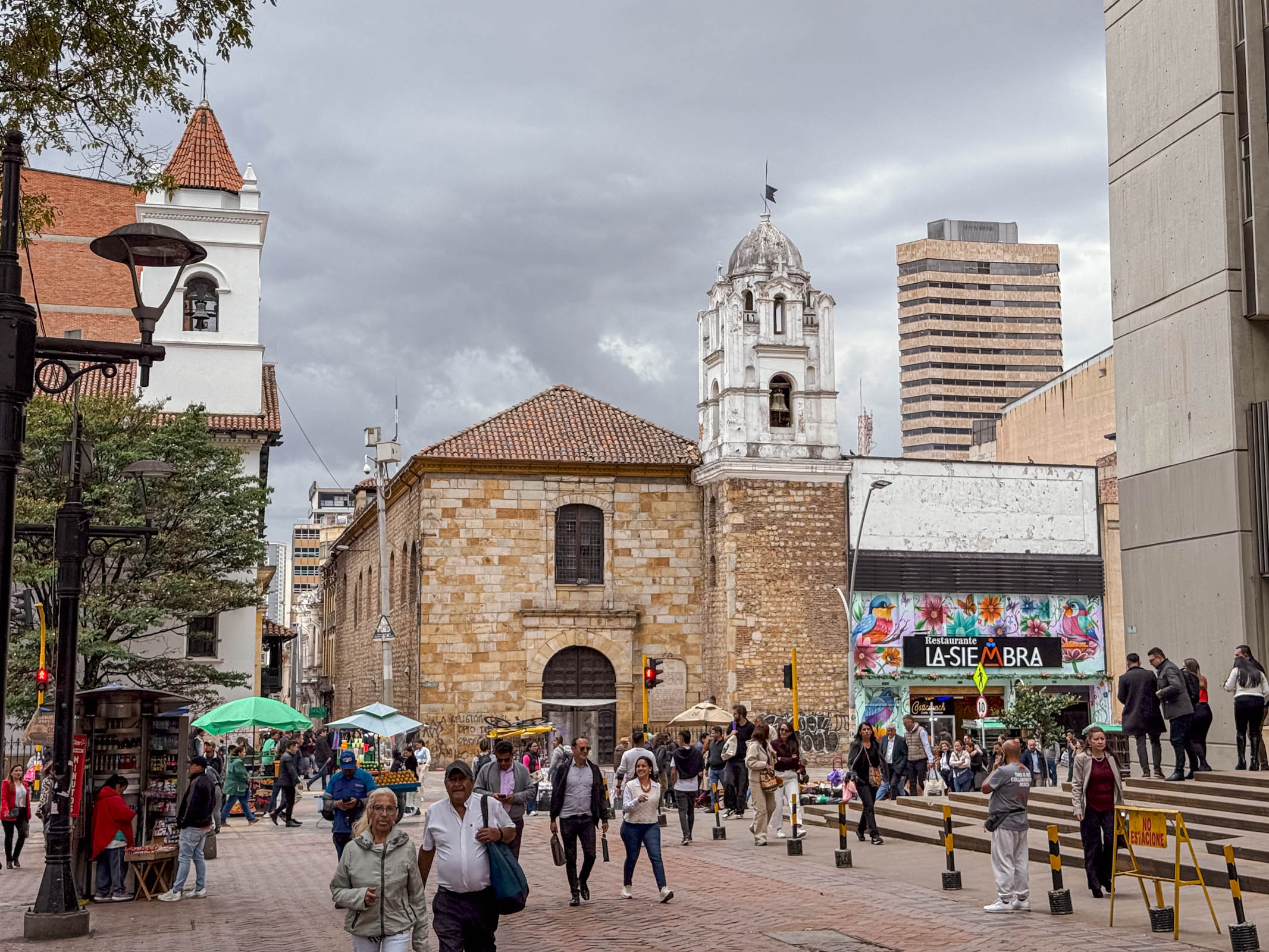
Next to the palace is the Iglesia de San Francisco, the oldest surviving church in Bogotá. Its construction began in 1557. From the outside, it has a simple stone facade and a white bell tower. Inside, however, everything shines. Its main altarpiece, made by Ignacio García de Ascucha between 1623 and 1629, is the largest and most elaborate gilded altarpiece in the city. I stood in front of it for a long time and admired the carved details.
THE GOLD MUSEUM, THE TREASURE OF BOGOTÁ
I spent the rest of the afternoon in the Gold Museum (Museo del Oro), which stands on the east side of Parque Santander. It belongs to the Banco de la República, the central bank of Colombia, and it holds the largest collection of pre-Hispanic goldwork in the world.
The story of the museum began in December 1939, when the bank bought the Poporo Quimbaya. This golden vessel weighs 777 grams, and its ancient owners used it in rituals with coca leaves. At first, the bank showed its pieces in its boardroom, and the first exhibition opened there in 1940. By 1942, the collection already counted 1,987 pieces. Since then, the collection has grown enormously. Today, it includes around 34,000 pieces of gold and goldwork, as well as about 20,000 objects of ceramic, stone and textile.
FOUR GALLERIES OF THE GOLD MUSEUM IN BOGOTÁ
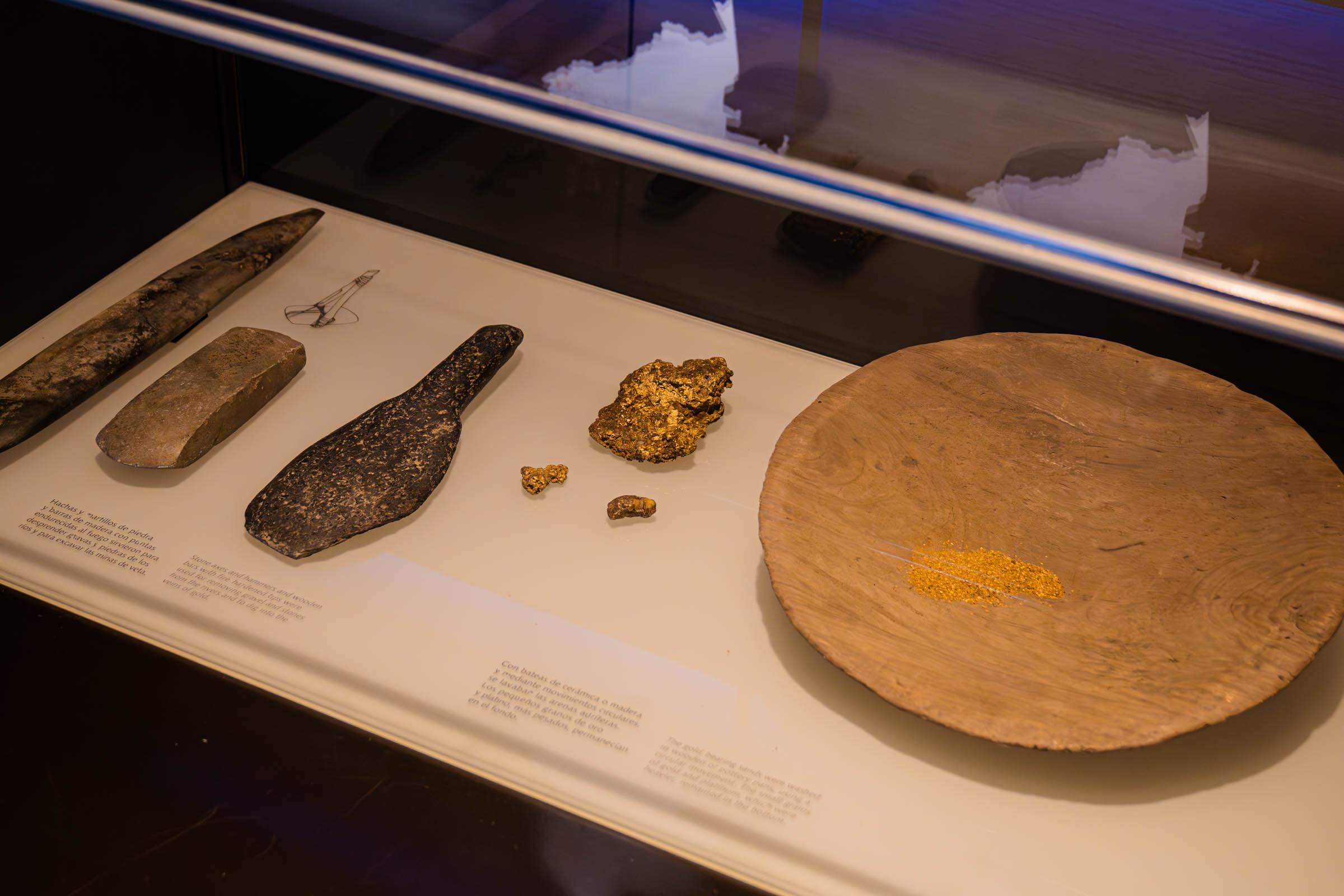
The permanent exhibition has four galleries and one interactive room. The first gallery, The Working of Metals, explains the mining techniques and the metalwork of the ancient goldsmiths. Next comes People and Gold in Prehispanic Colombia, which shows how different regions used gold in their political and religious life.
The third gallery, Cosmology and Symbolism, is a secure vault with some of the most valuable objects in the museum. It tells the story of myths, shamans and the symbols that these cultures gave to metals. Finally, The Offering explains, through gold, sound and image, the meaning of the rituals connected with gold. In addition, the Exploratorio invites visitors to think about what heritage means today.
CULTURES BEHIND THE GOLD
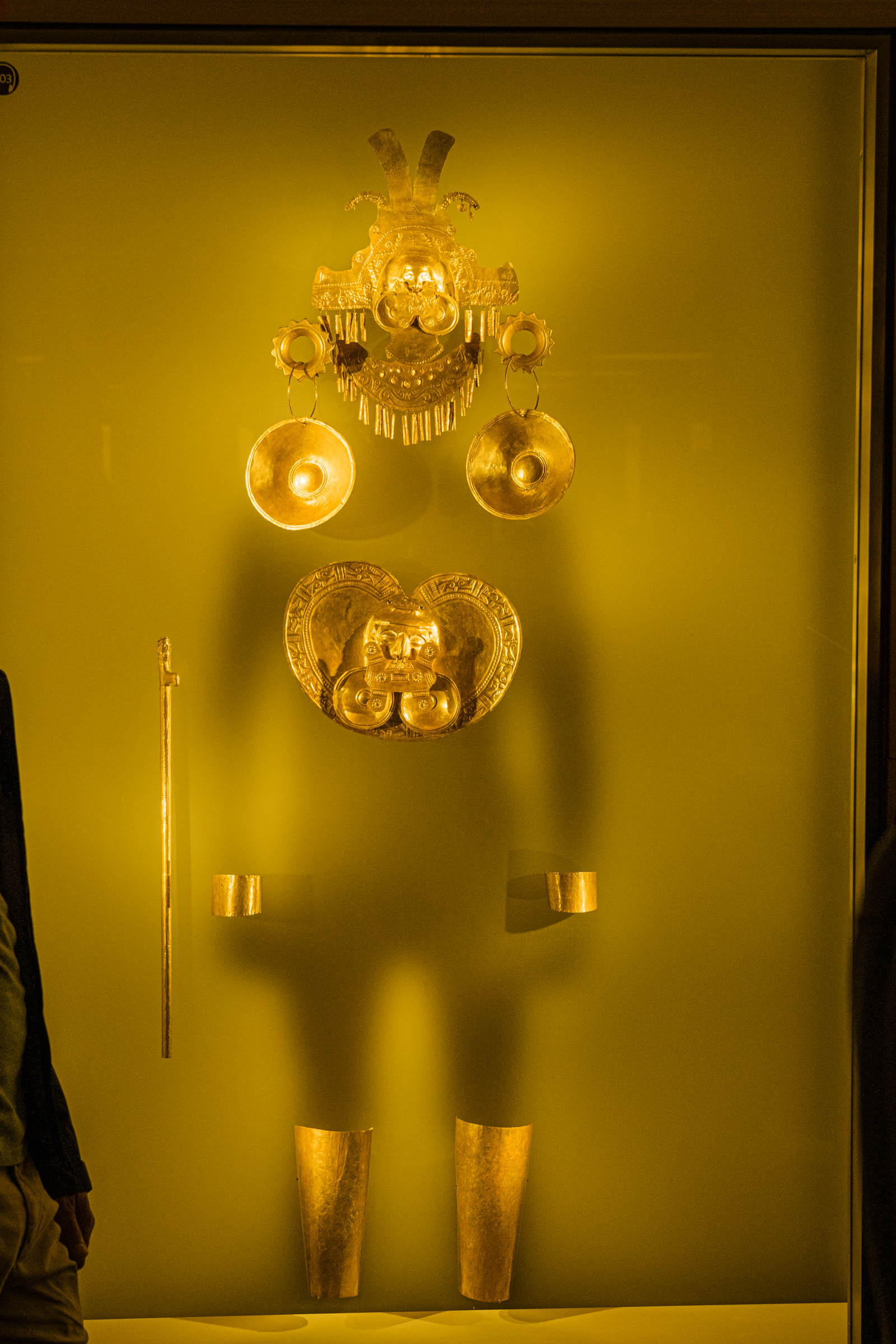
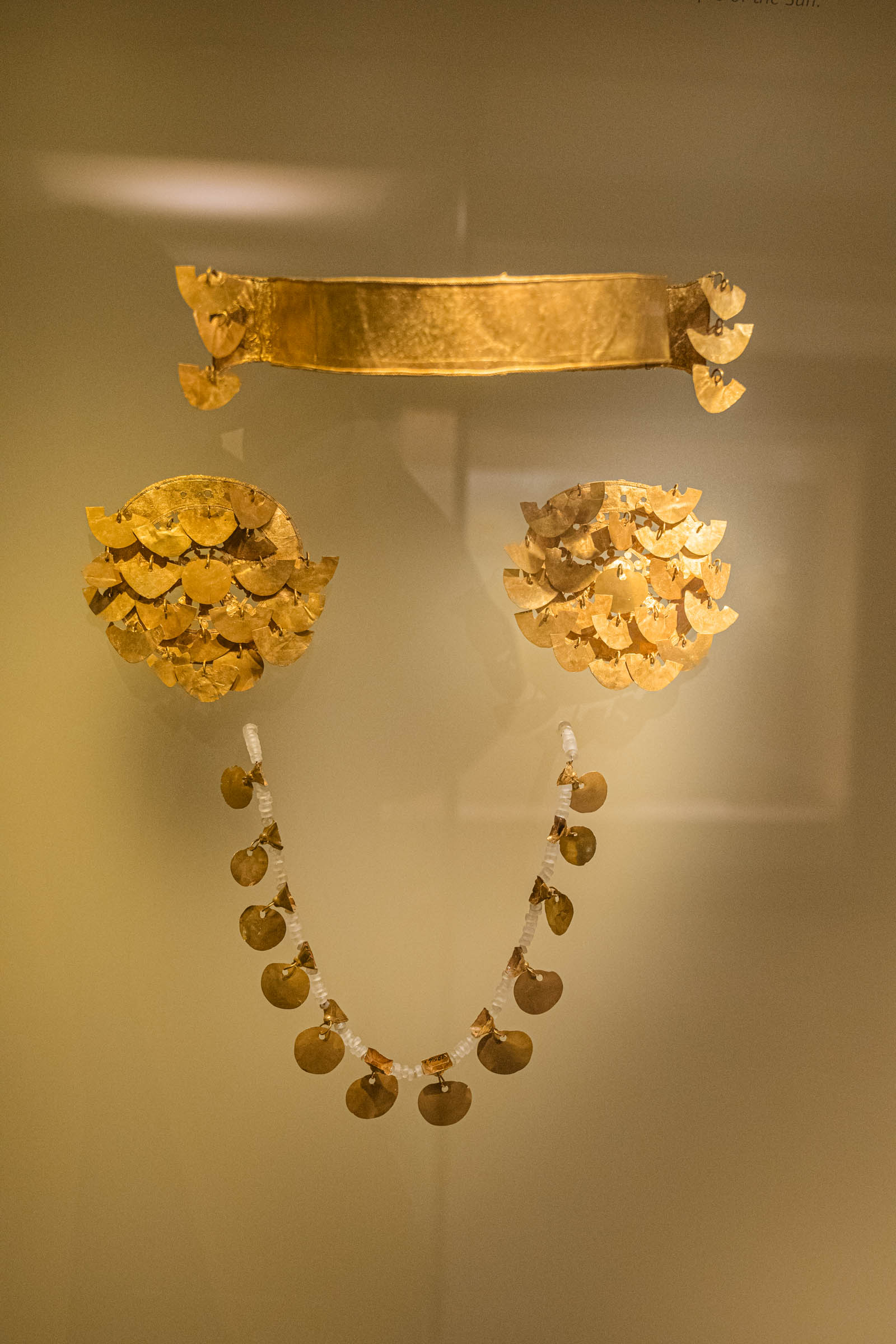
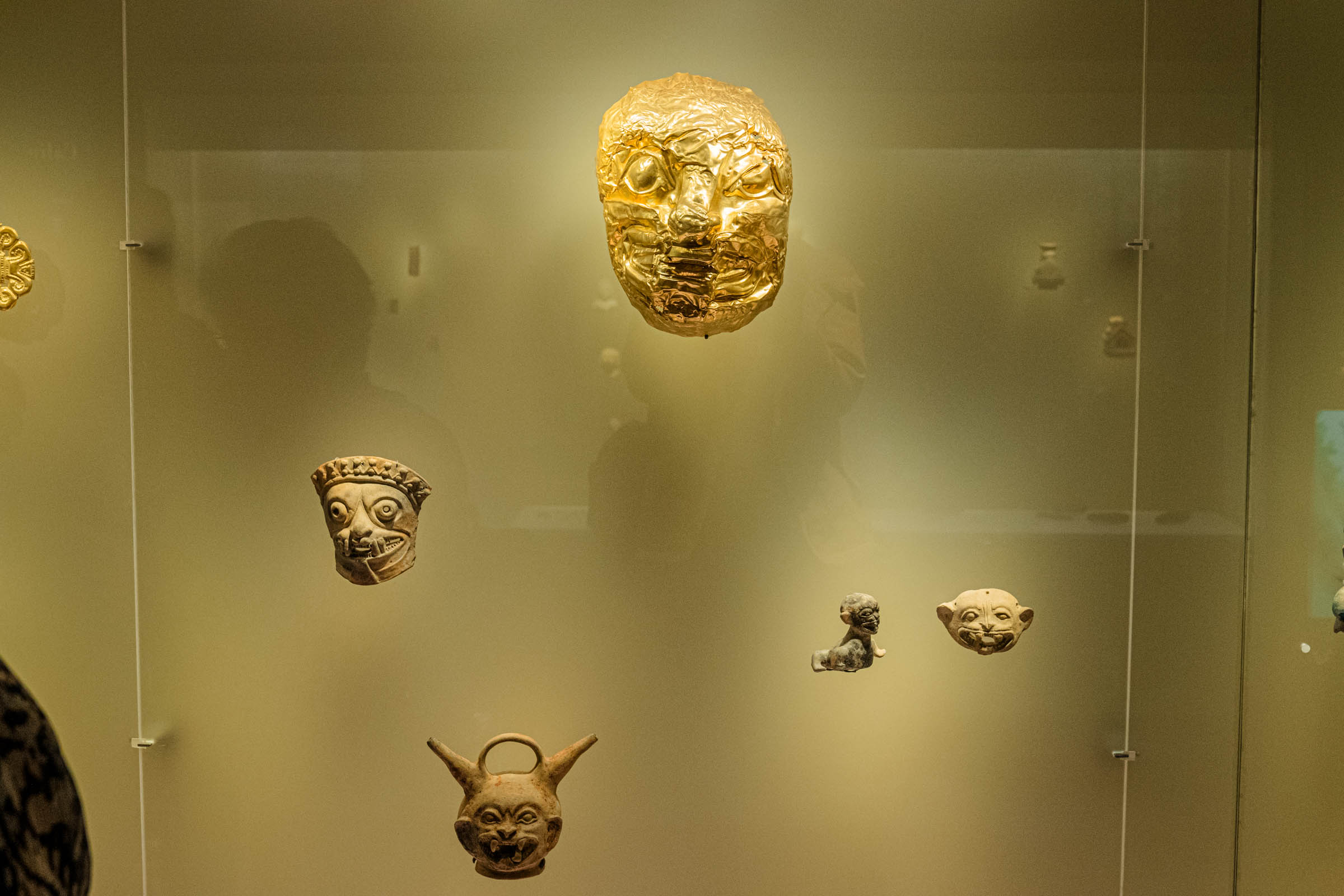
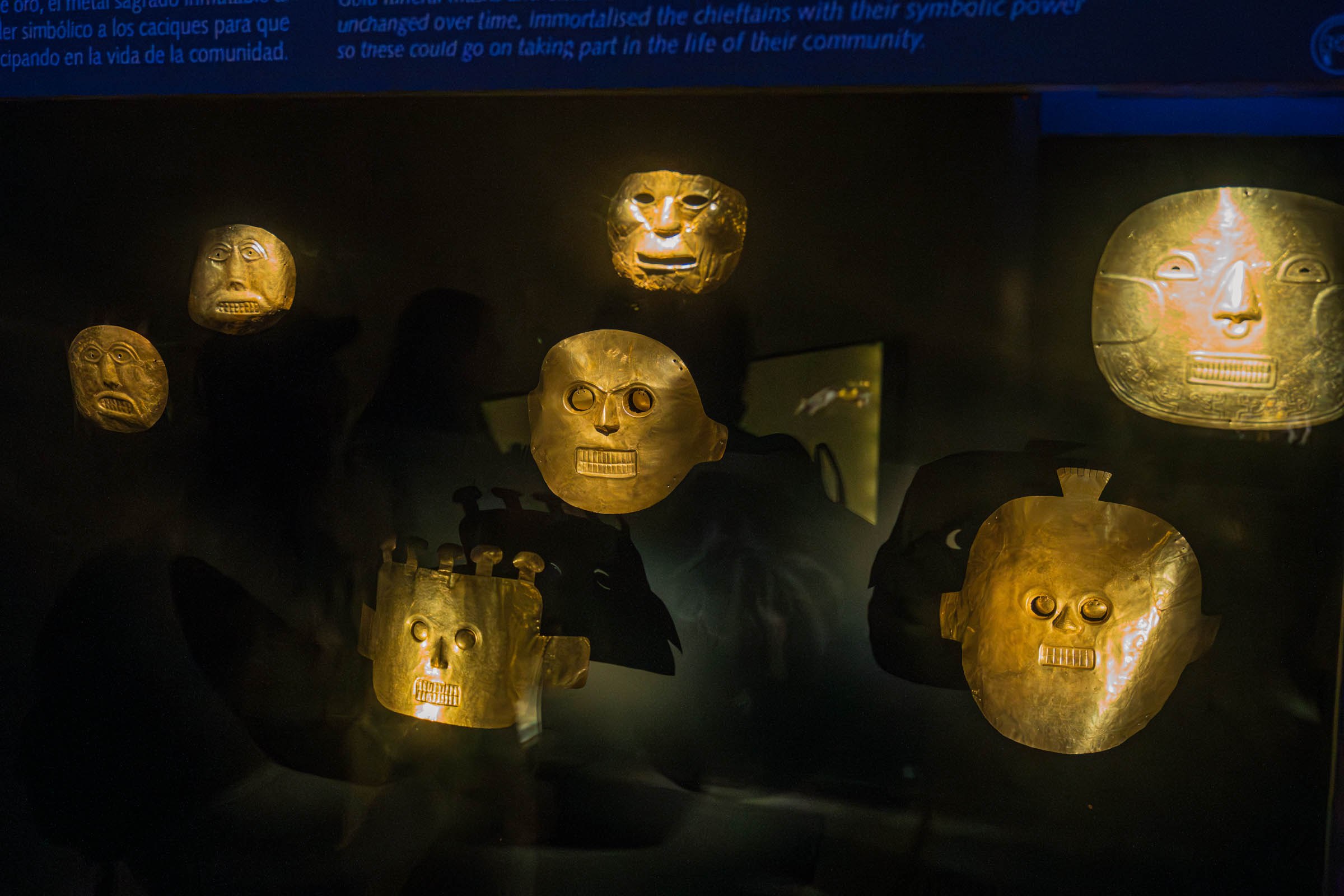
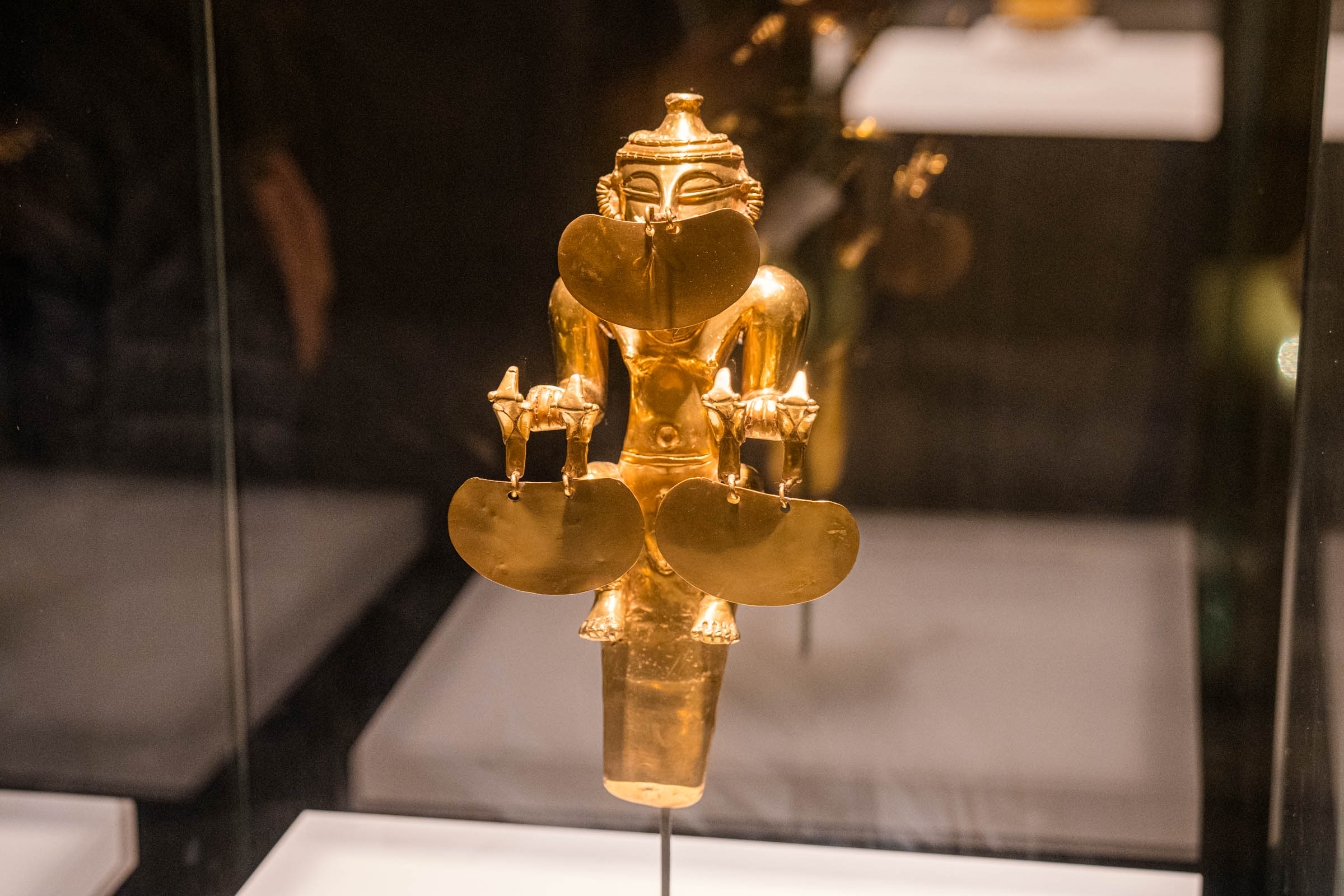
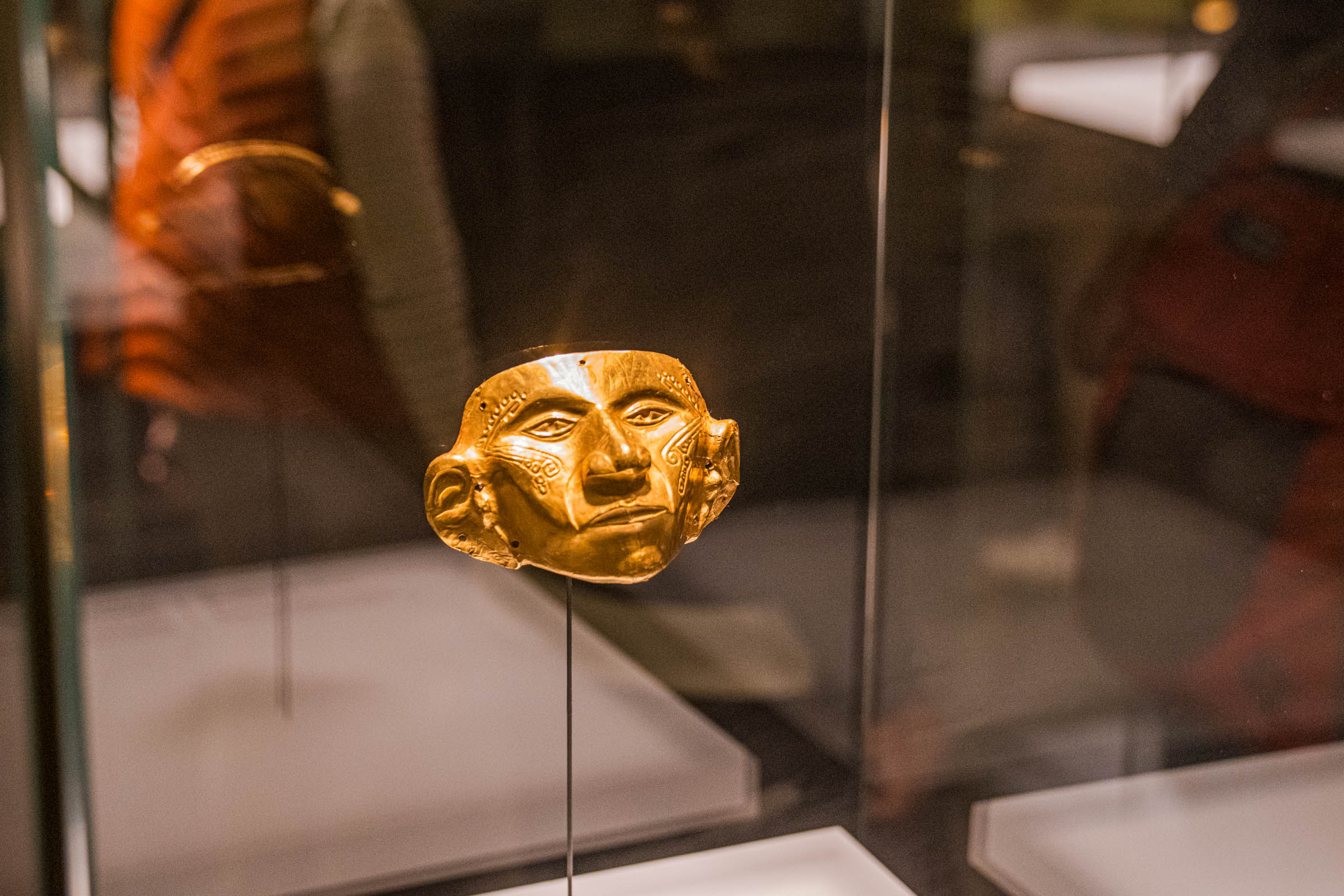
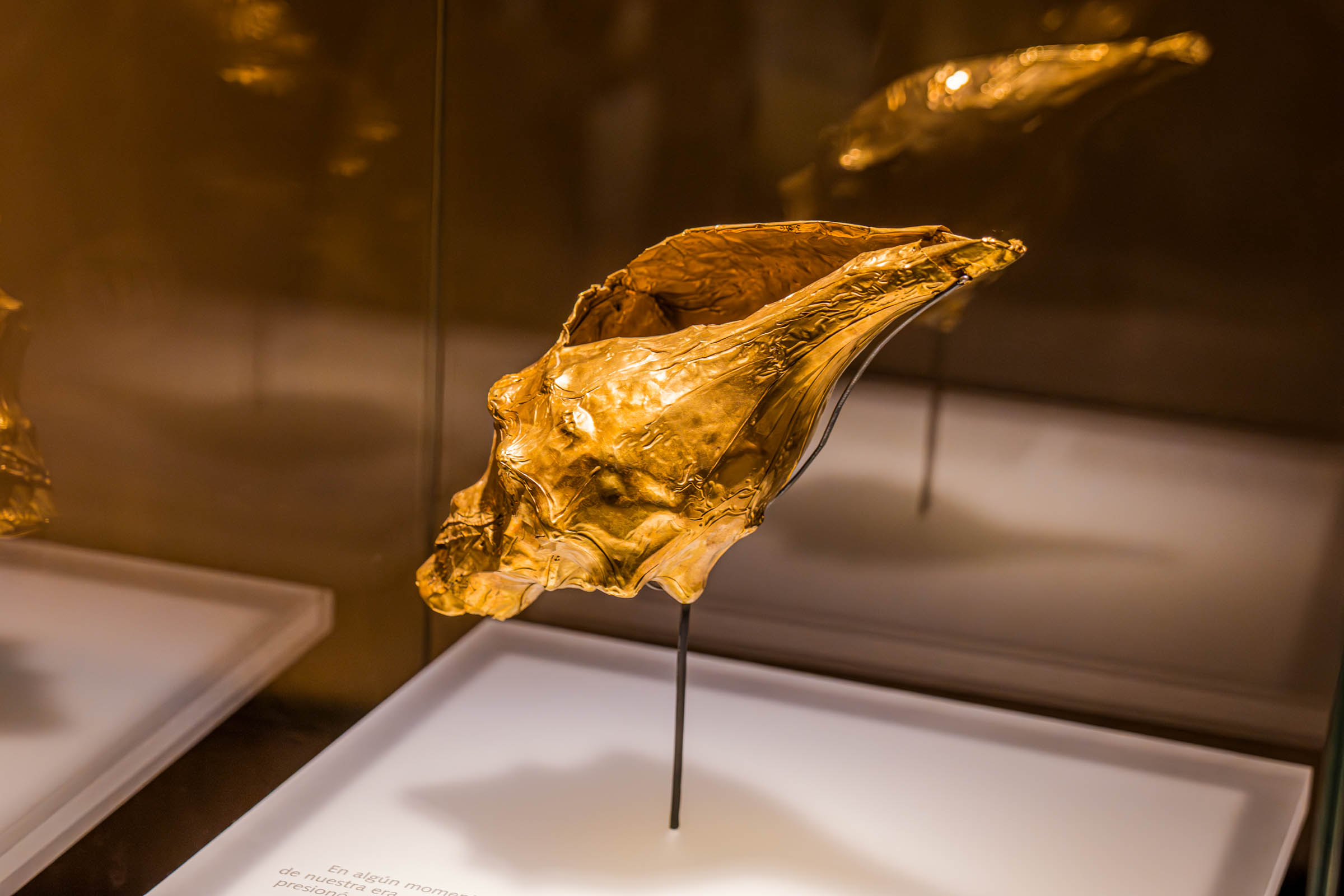
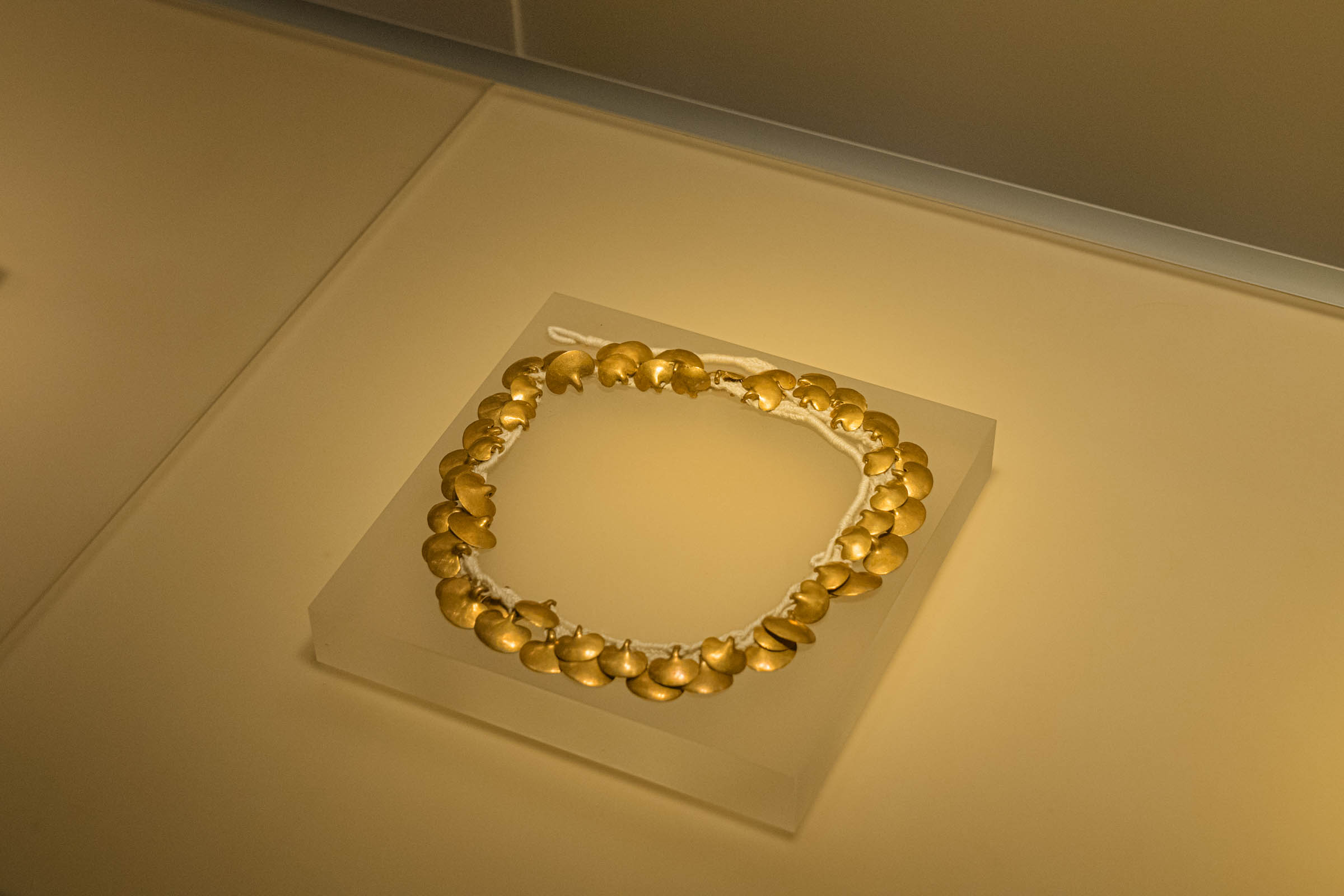
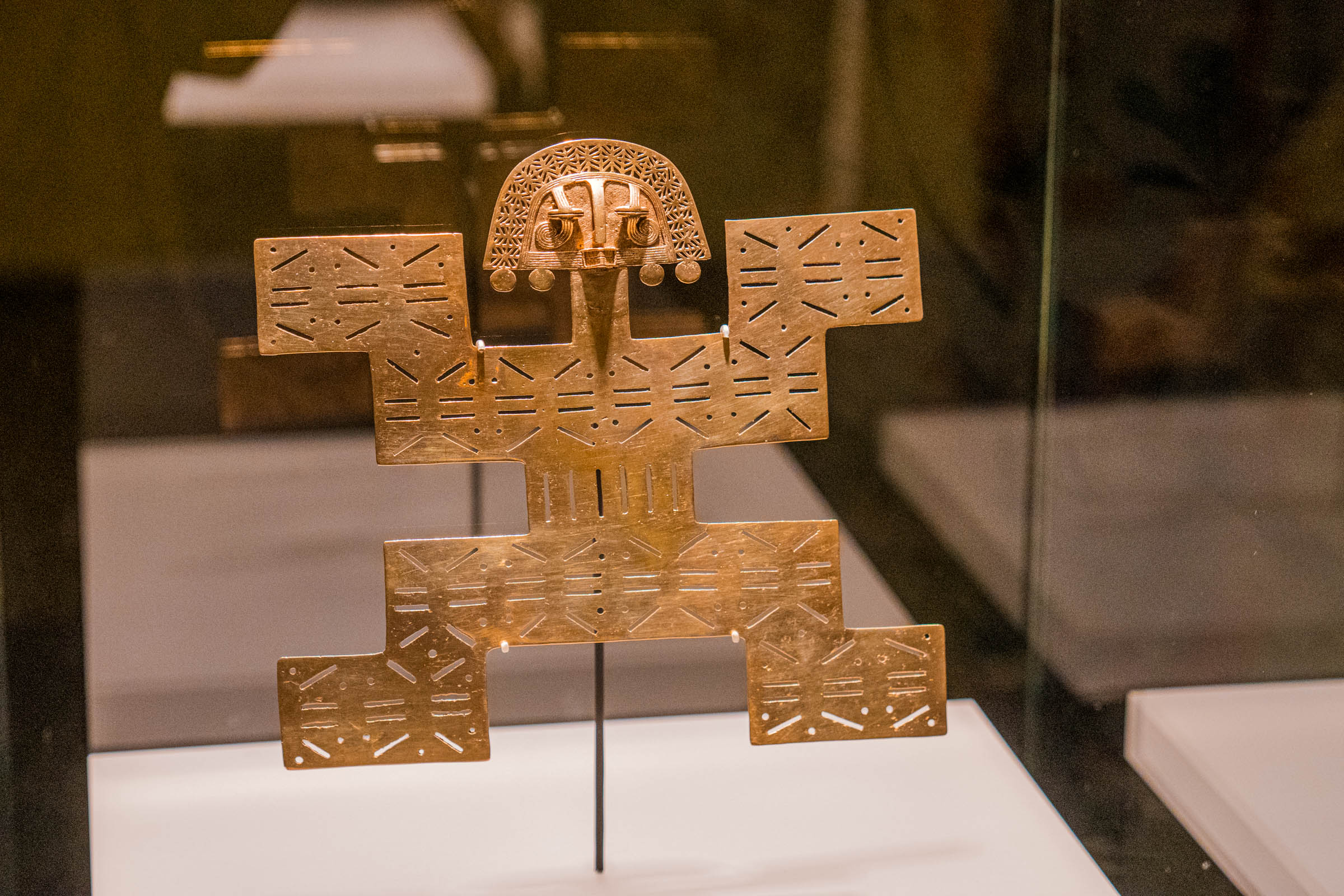
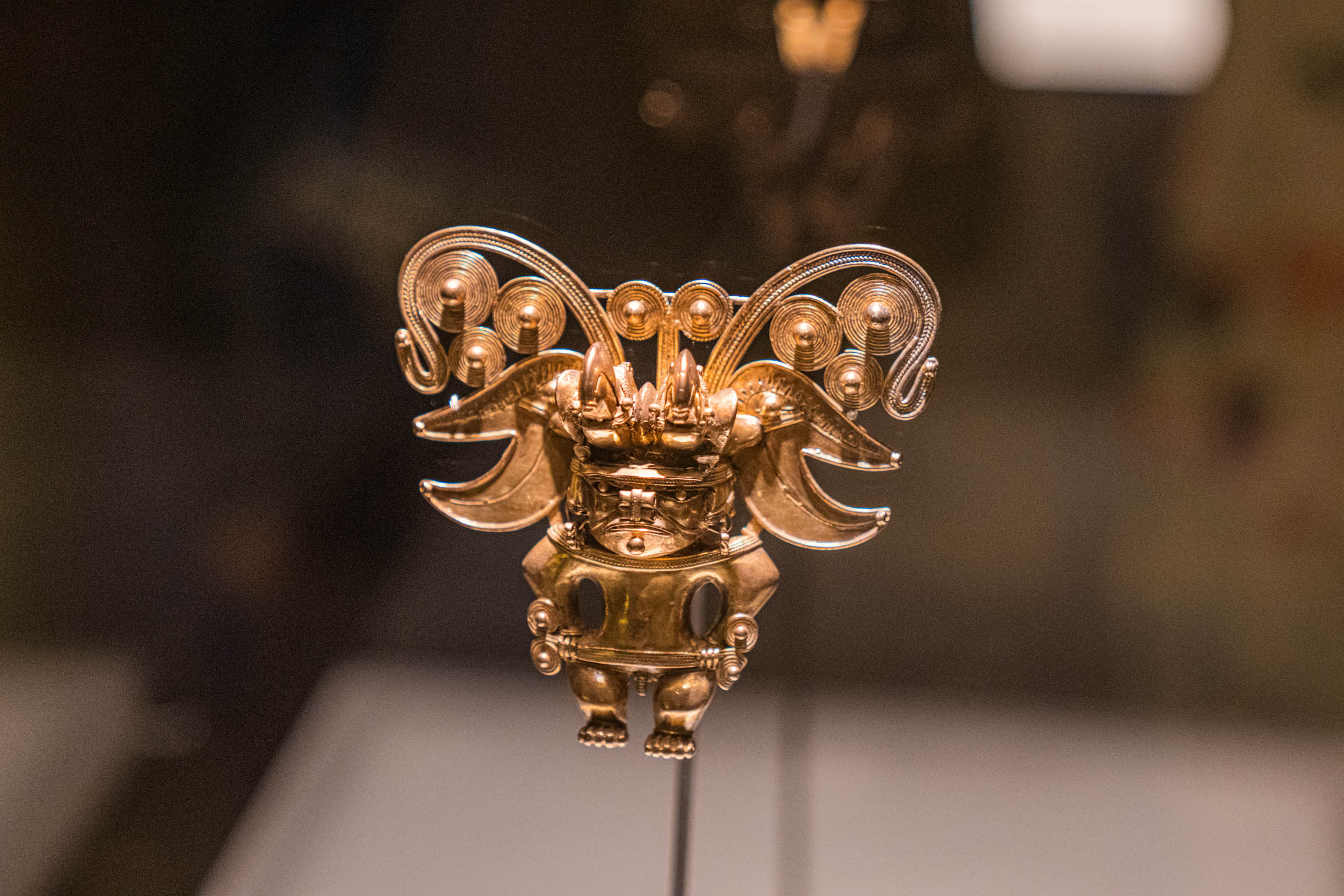
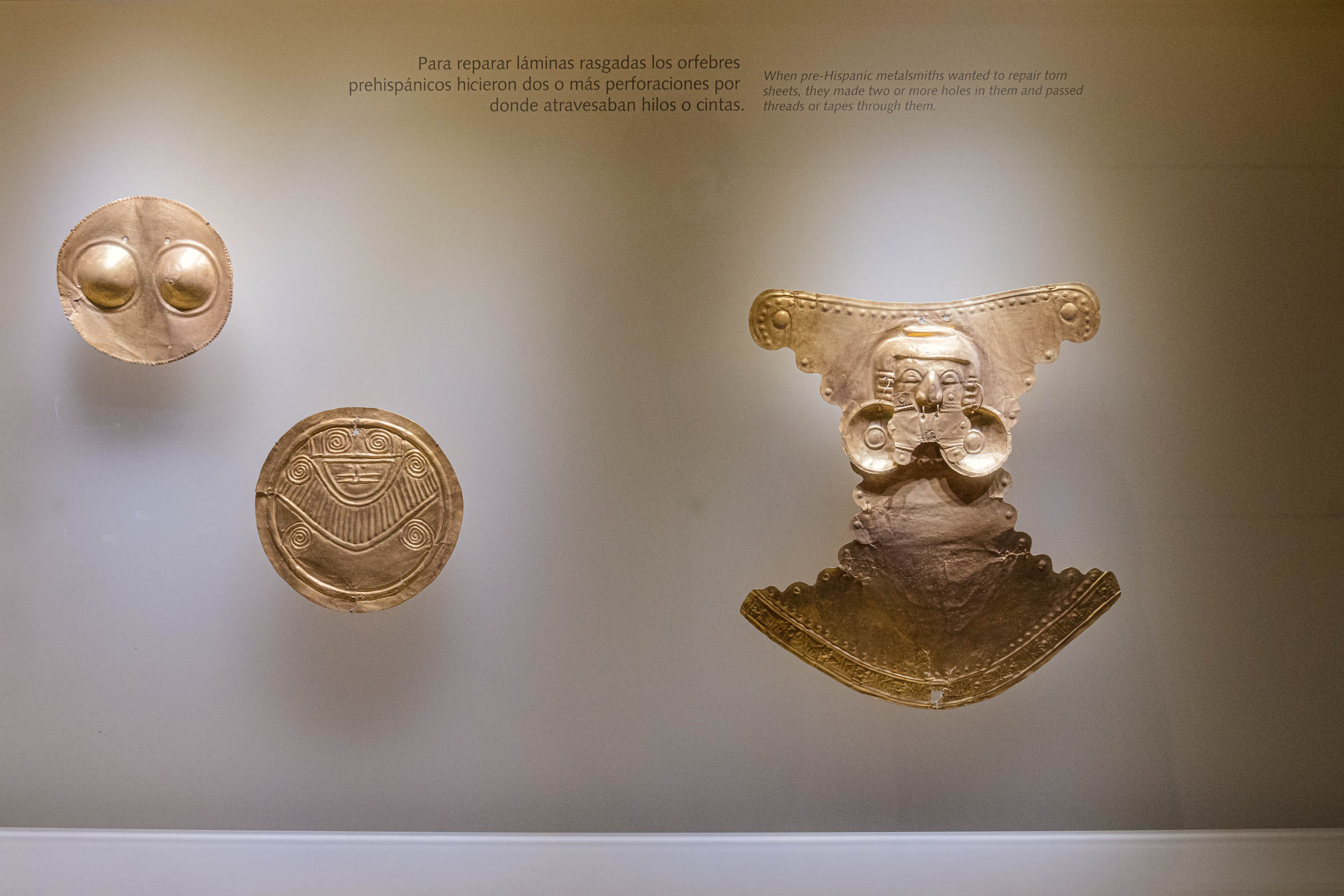
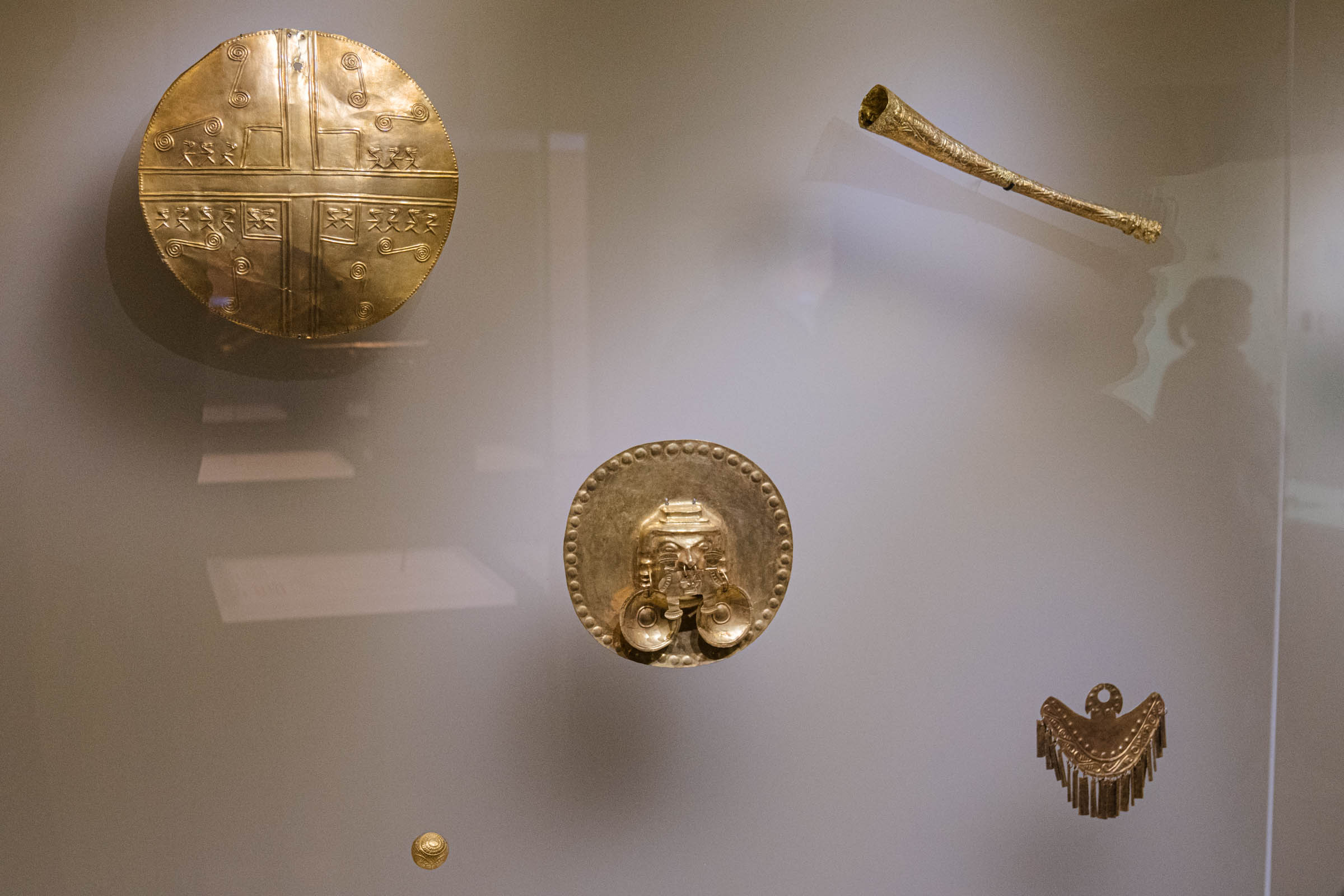
What fascinated me most was the variety of styles. Every region of ancient Colombia had its own way of working with gold. In the showcases, I saw objects of the Muisca, Quimbaya and Calima cultures. I also admired ornaments of Quimbaya women and female pectorals of the Zenú and San Agustín cultures.
For these peoples, gold had a deep political and religious meaning, far beyond its material value. Among the objects, I saw masks, pectorals, nose rings and ear ornaments. As a result, each piece in the museum tells a story about faith, power and identity.
I was also impressed by the technical perfection of the pieces. Some of them are tiny, yet they show faces, birds and geometric patterns in incredible detail.
EL DORADO AND THE MUISCA RAFT
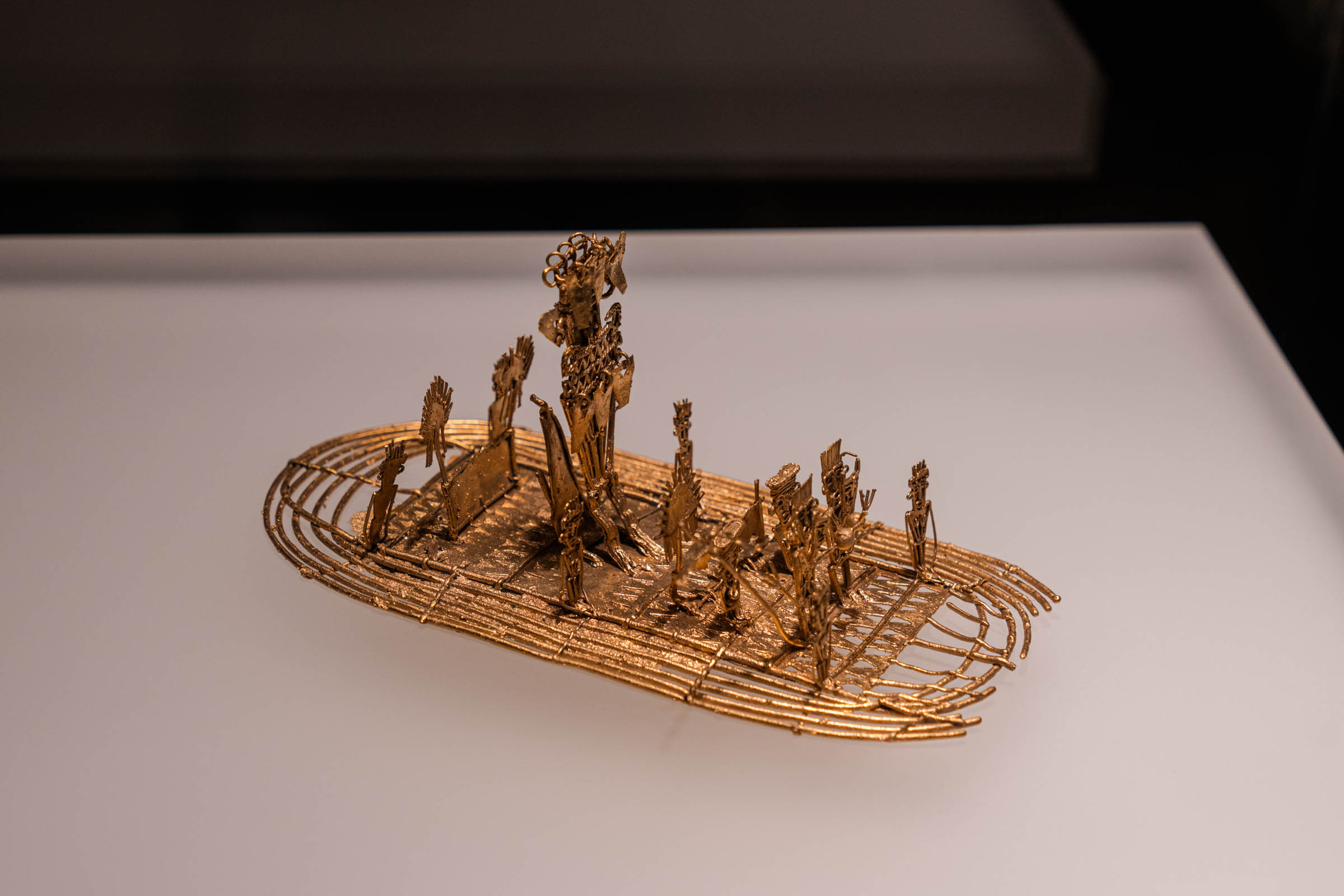
The most famous object in the museum is the Muisca raft, or Balsa Muisca. It turned up in 1969 inside a clay vessel in a cave in the municipality of Pasca. Today, you can see it in The Offering gallery.
The small golden raft shows a ceremony in which a new chief took power on Lake Guatavita. According to the legend, priests covered the new chief in gold dust. Then he sailed on a raft to the middle of the lake, where he offered gold and emeralds to the gods. This ritual gave birth to the legend of El Dorado, which later inspired European explorers to search for a mythical land of gold.
When I finally stood in front of the raft, I could hardly believe how small it is. Still, it holds a whole world of symbols, figures and stories.
MY IMPRESSIONS OF THE GOLD MUSEUM
I wandered through the halls of the museum for hours. The objects shine under the lights of the showcases, and the darker rooms give them an almost magical glow. I have visited the Louvre, the Met and the British Museum. Even so, this visit left a strong impression on me because of the clarity of its story and the beauty of its collection.
For anyone who wants to understand Colombia, its past and its identity, the Gold Museum is a must. Plan two to four hours for your visit, because you will want to see every showcase.
DAY 2: THE BOTERO MUSEUM IN BOGOTÁ
I started my second day at the Museo Botero, at Calle 11 # 4-41 in La Candelaria. In 2000, the Colombian artist Fernando Botero donated 208 works of art to the Banco de la República. Of these, 123 are his own works, and 85 come from his private collection of international artists. The museum opened on November 1, 2000, in a colonial house that served as the seat of the Archbishopric of Bogotá until 1955.
In the spacious halls, I enjoyed Botero’s recognizable figures with their generous, rounded forms. His people, animals and still lifes are full of humor, and I could not help but smile in front of many of them. In the other wing, I admired works by artists such as Picasso, Dalí, Miró, Chagall and Braque.
Free entrance was one of Botero’s conditions for the donation. Because of this, crowds often gather inside, so I recommend arriving early in the morning.
From the museum, I walked back toward the Plaza de Bolívar along Calle 10 and passed once again by the Jesuit block. The Jesuits founded the Colegio Mayor de San Bartolomé on September 27, 1604. Today, many consider it the oldest educational institution in Colombia.
FROM THE CAPITOL TO LA REBECA
After the Botero Museum, I stopped at the Librería Lerner on Avenida Jiménez # 4-35, one of the most traditional bookshops in Bogotá. Salomón Lerner opened his first shop in 1958 on Calle 14, and the bookshop has been on Avenida Jiménez since the late 1960s. I spent a pleasant hour among the shelves and leafed through a book on Colombian folk art.
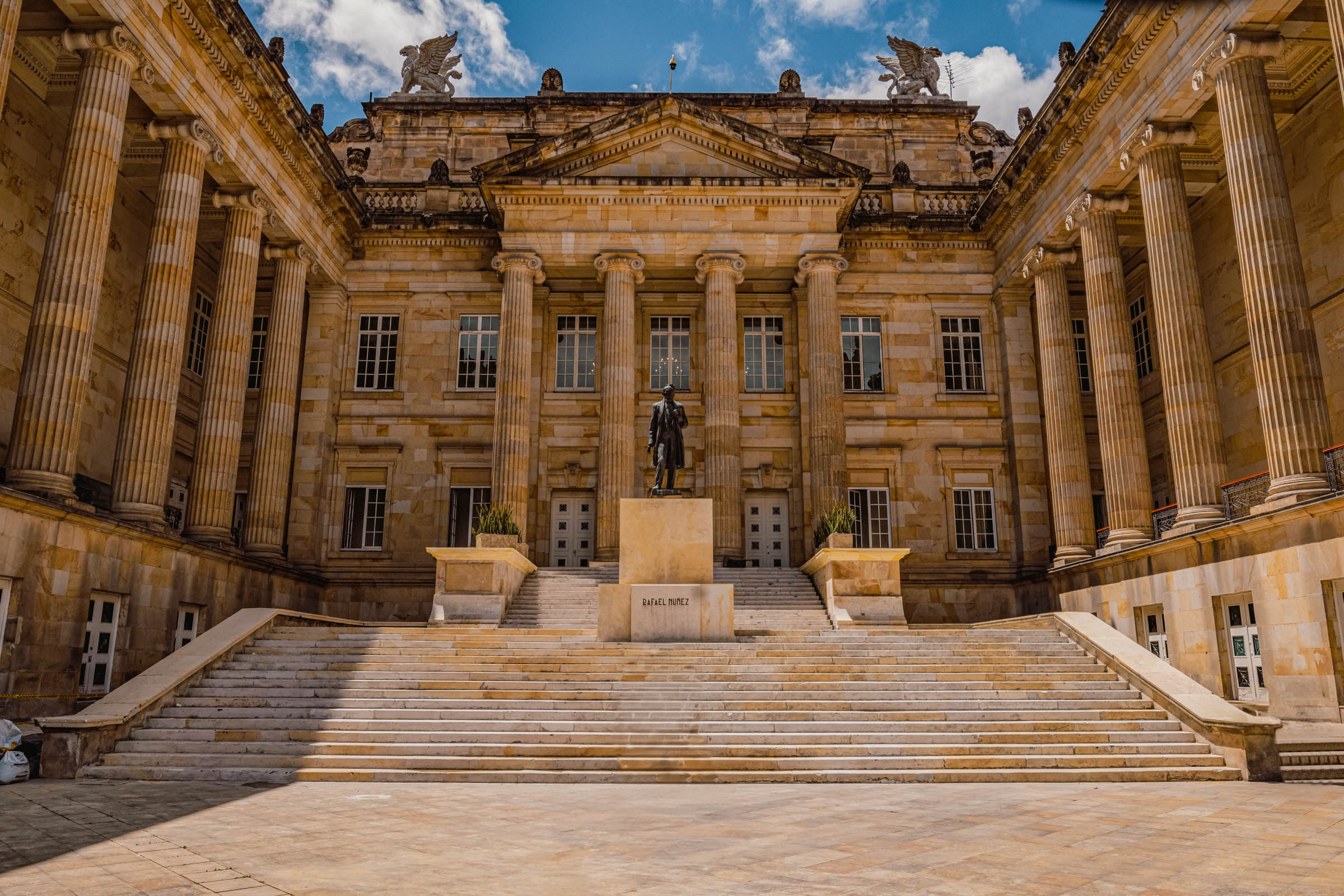
Then I went back to the National Capitol to see it from another side. On its south side lies the Plaza Núñez, which connects the Capitol with the Casa de Nariño, the presidential palace. The square opened to the public in August 2022. Since then, visitors have been able to admire the columns and the courtyard up close.
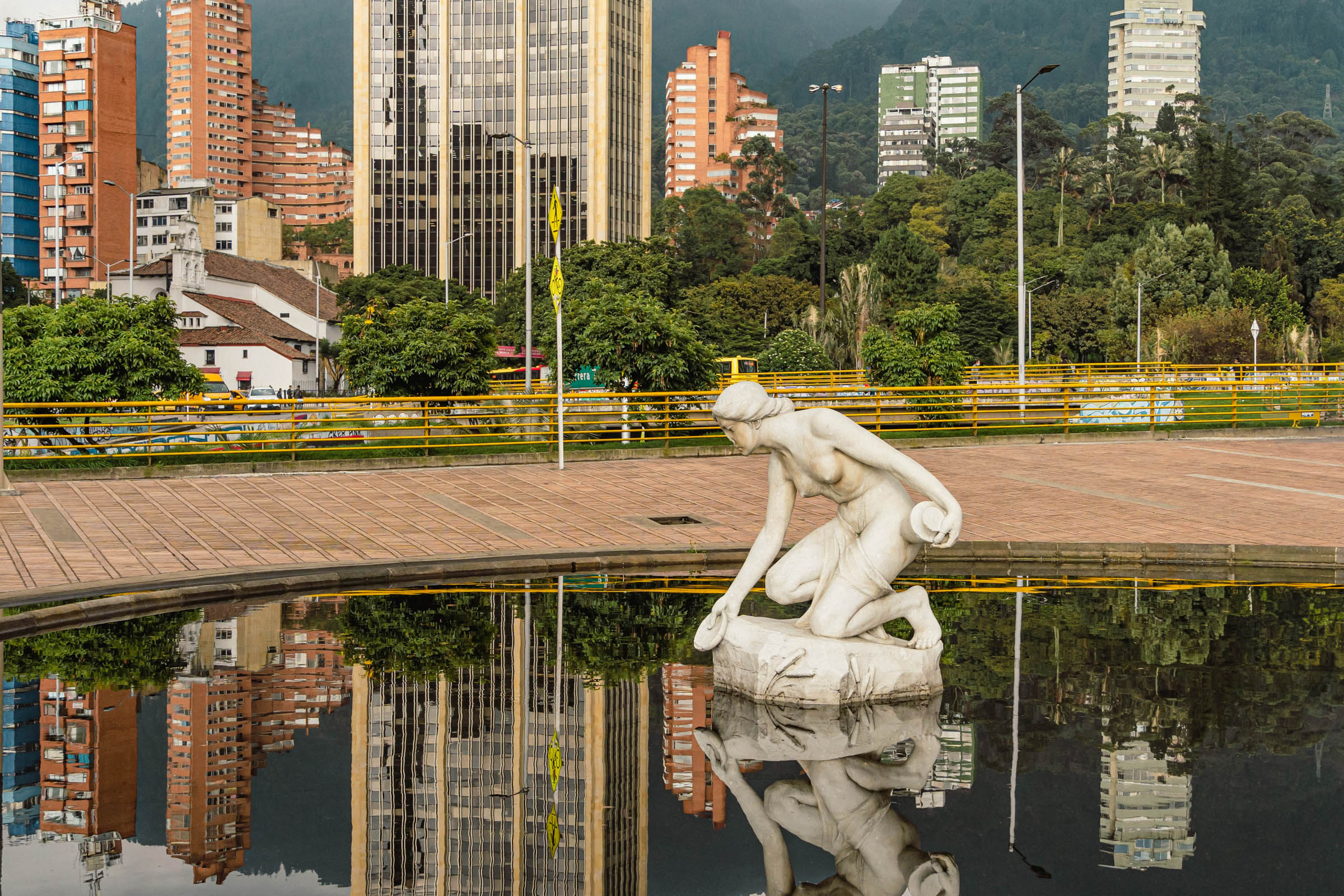
Later, on my way north, I stopped by La Rebeca, one of the most beloved sculptures in Bogotá. This marble figure of a woman gathering water arrived in the old Parque del Centenario in 1926. It became the first sculpture of a nude woman in a public space in the city. Today, it stands in a fountain between Carreras 12 and 13 near Calle 26, surrounded by the towers of the city center. Its authorship is still the subject of debate, which only adds to its mystery.
STREET ART AND COLONIAL TREASURES OF BOGOTÁ
Then I continued through the colorful streets and admired the murals. On the walls of La Candelaria, I noticed a lot of graffiti with local themes: social commentary, colorful portraits and abstract compositions full of color. At one moment, I saw a group of artists painting a new mural, while several tourists stopped to take pictures of it. For me, Bogotá is a city where an artistic surprise waits for you around every corner.
Back on the Plaza de Bolívar, I once again admired the cathedral and the Capilla del Sagrario in the afternoon light, with the green eastern hills behind them.
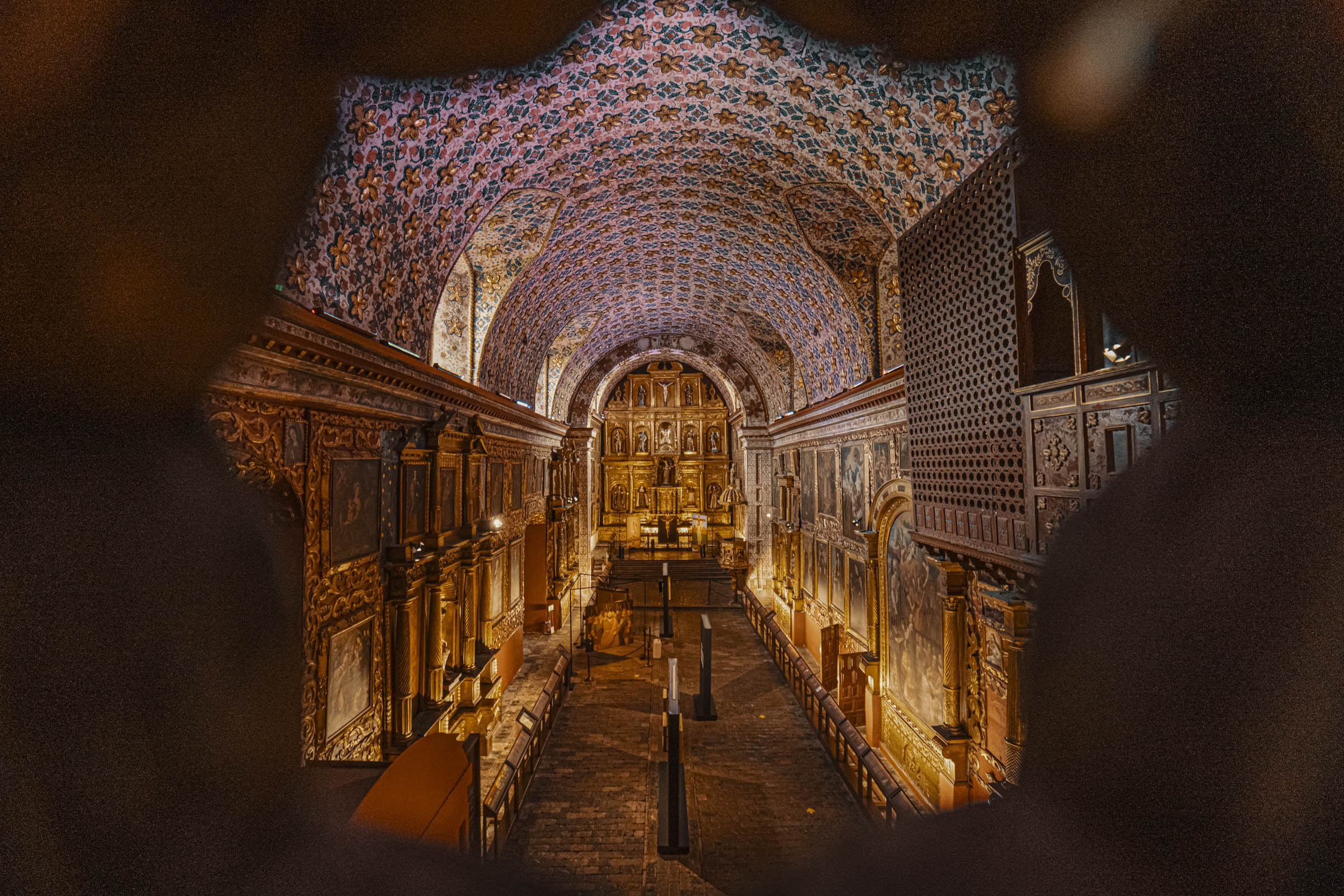
Before leaving the historic center, I visited the Museo Santa Clara, at Carrera 8 # 8-91. This was the church of the Royal Convent of Santa Clara, completed in 1647 to the design of the Spanish architect Matías de Santiago. Today, it is a museum. Golden floral motifs cover the barrel vault of its single nave. In addition, 148 paintings and sculptures of saints decorate its walls. Honestly, it is one of the most richly decorated interiors I have ever seen.
A WALK ALONG CARRERA SÉPTIMA
In the afternoon, I walked along the Carrera Séptima, the old Calle Real, which is one of the most important streets of the city. Between Calle 10 and Calle 24, it is a pedestrian zone. Here, street vendors, musicians and living statues create a real open-air festival.
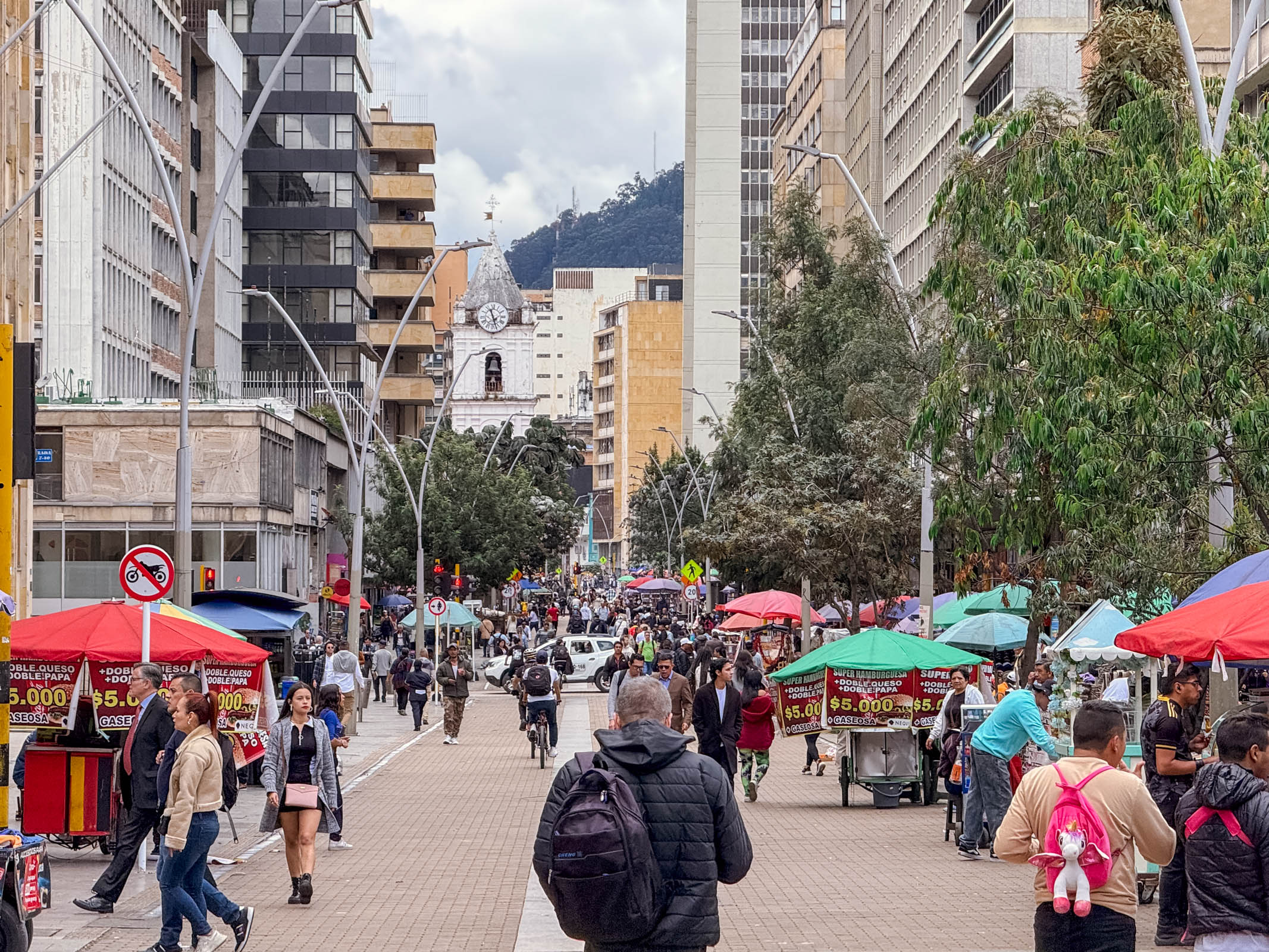
My walk ended at the National Museum of Colombia, at Carrera 7 # 28-66. The museum dates from July 28, 1823, which makes it the oldest museum in the country and one of the oldest in the Americas. Interestingly, it occupies the former Panóptico. The architect Thomas Reed, who also designed the National Capitol, planned this building as a prison. The prison closed in 1946, and the museum moved into the building in 1948.
Its building has the shape of a cross, a layout that gave the old prison its name. Today, the museum holds more than 20,000 pieces of art, history, archaeology and ethnography. Walking through its long halls, I felt like I was on a real journey through time, from the first indigenous cultures to the struggle for independence and modern Colombian art. It was an ideal contrast to the street art I had seen earlier that day.
DAY 3: MONSERRATE, THE SYMBOL OF BOGOTÁ
I dedicated my third day to Monserrate, the most famous mountain of Bogotá. Its summit rises more than 3,100 meters above sea level, and from almost any point in the city you can see the white sanctuary on its top.
There are three ways to reach the summit. The funicular railway started running in 1929. Later, on September 27, 1955, the cable car, or teleférico, opened, built by the Swiss company Von Roll. Pilgrims and those who like a real physical challenge take the 2.35-kilometer footpath with its 1,605 steps. I chose the cable car, and the cabin rose gracefully above the forest, revealing a postcard view of the city. On the way, keep an eye on the trees, because more than 80 species of birds live on the mountain.
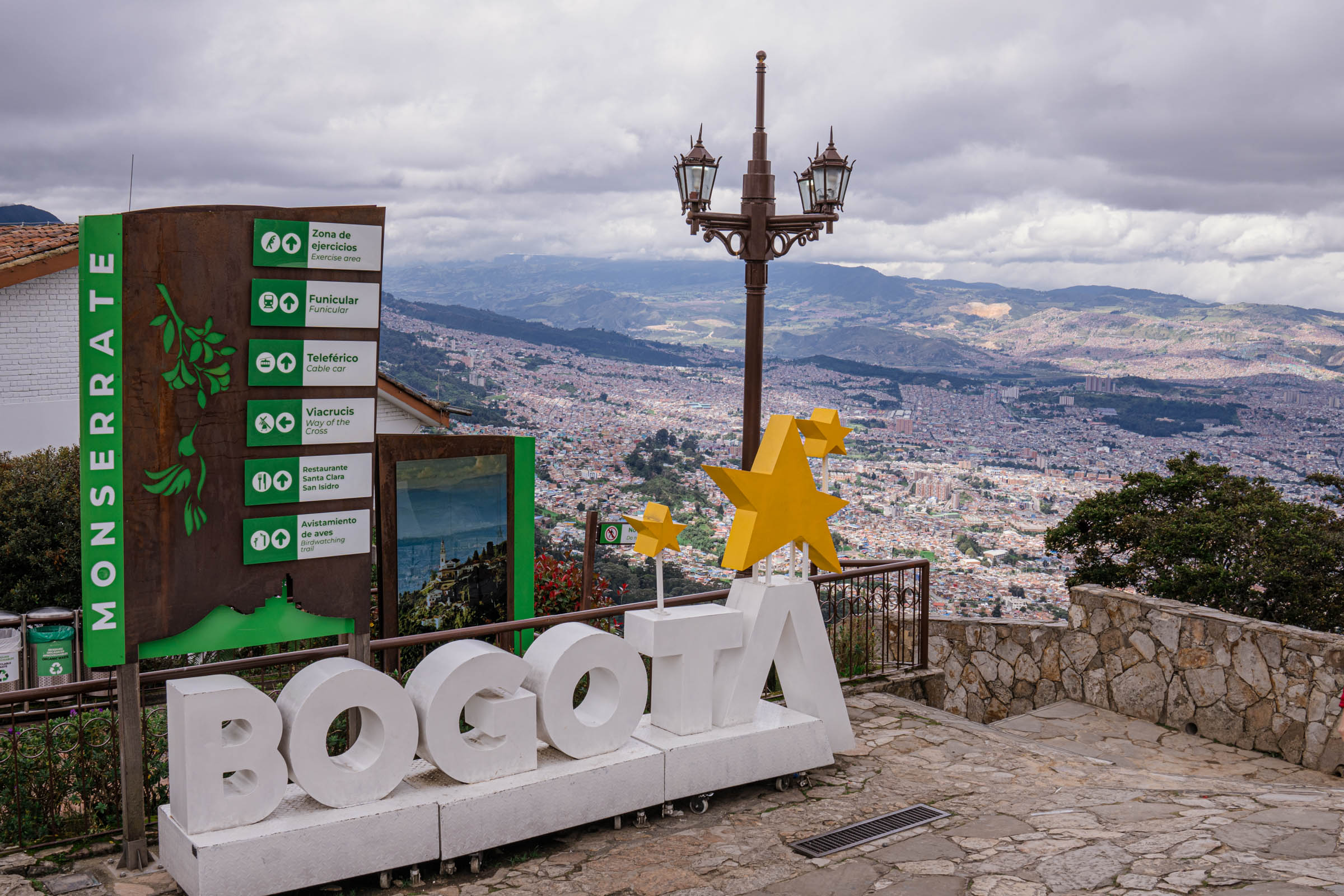
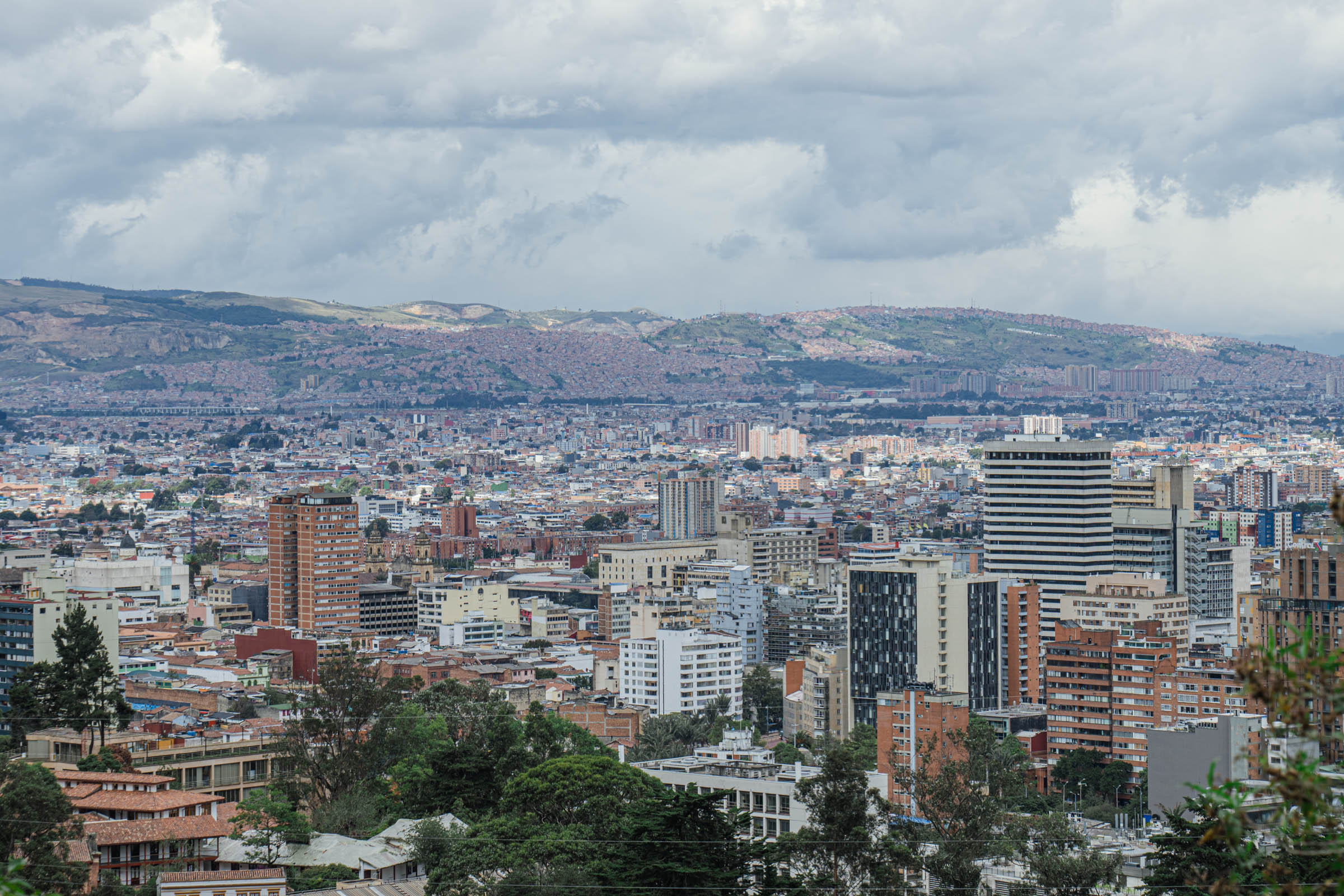
The view from the top of Monserrate is breathtaking. Below me, an endless network of streets and buildings stretched to the horizon, framed by the green slopes of the eastern hills. On one side, the clouds covered the edges of the city, while on the other, the sun lit up the towers of the center.
THE SANCTUARY OF MONSERRATE
At the very top stands the Basilica Sanctuary of the Fallen Lord and Our Lady of Monserrate. In the 17th century, the first hermitage on this mountain rose in honor of the Black Virgin of Montserrat in Catalonia. The mountain still carries that name today.
Later, the priest Bernardino de Rojas commissioned the sculptor Pedro de Lugo Albarracín to carve an image of the Fallen Christ. This image, known as the Señor Caído de Monserrate, became the center of devotion, especially after the miracles attributed to it. Since then, the sanctuary has been a place of pilgrimage for believers from all over Colombia.
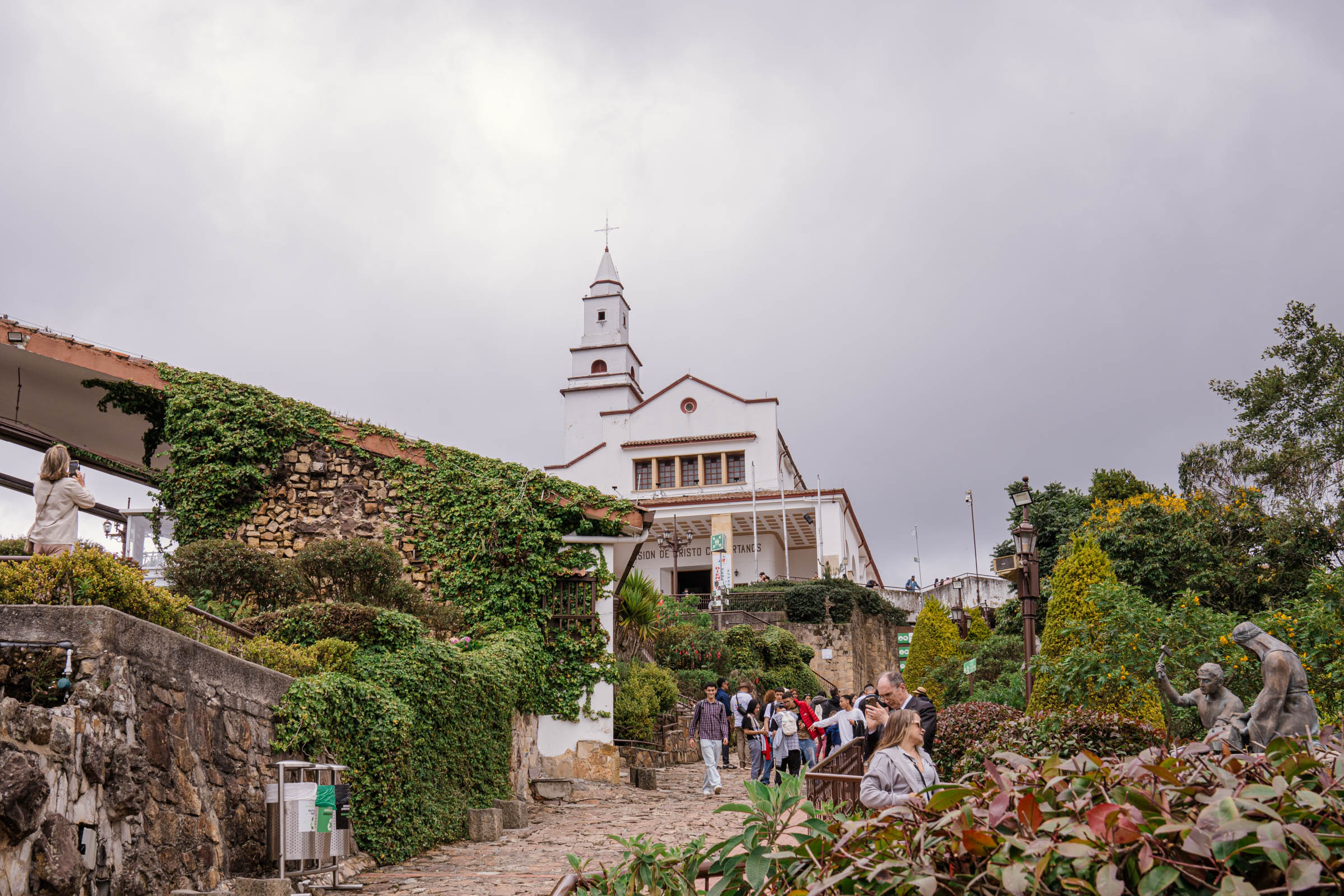
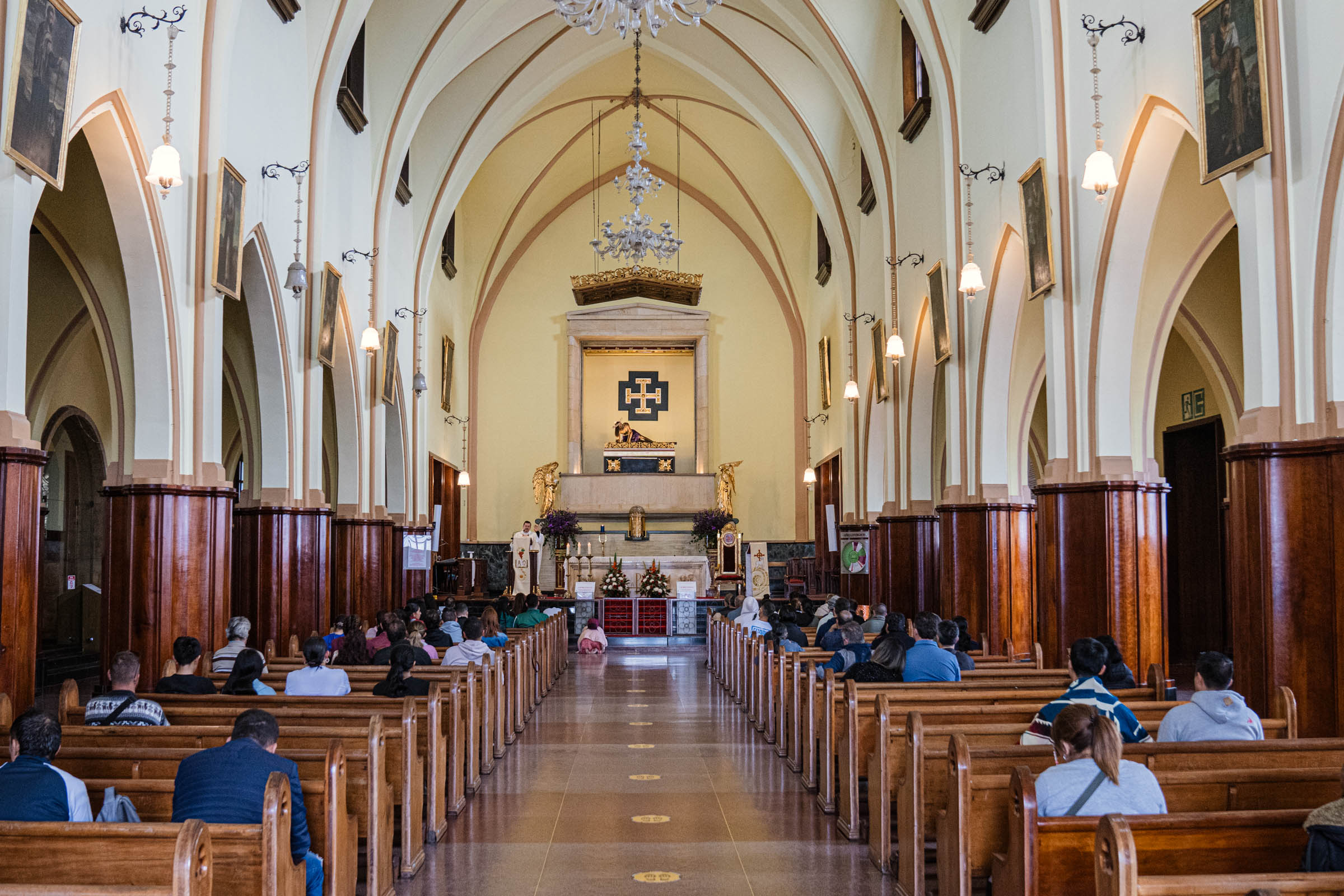
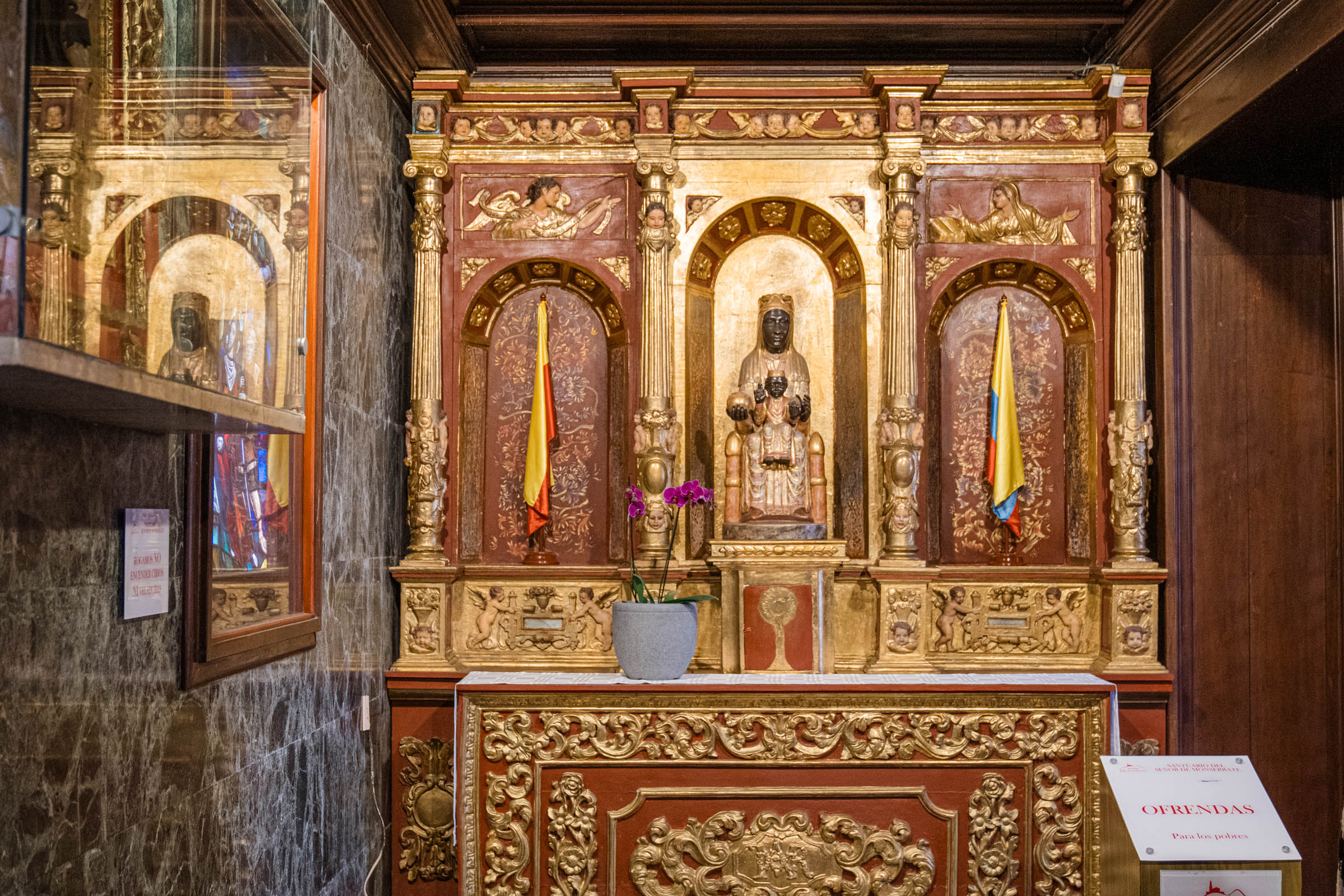
Inside, the sanctuary is simple and bright. Nevertheless, it radiates a strong spiritual energy. In one corner, I also found a small gilded altar with an image of Our Lady of Montserrat, a reminder of the origins of the sanctuary. I lit a candle and made a wish. Regardless of your beliefs, a moment of silence in this space has a calming effect.
MONSERRATE AND GUADALUPE, THE TWO GUARDIANS OF BOGOTÁ
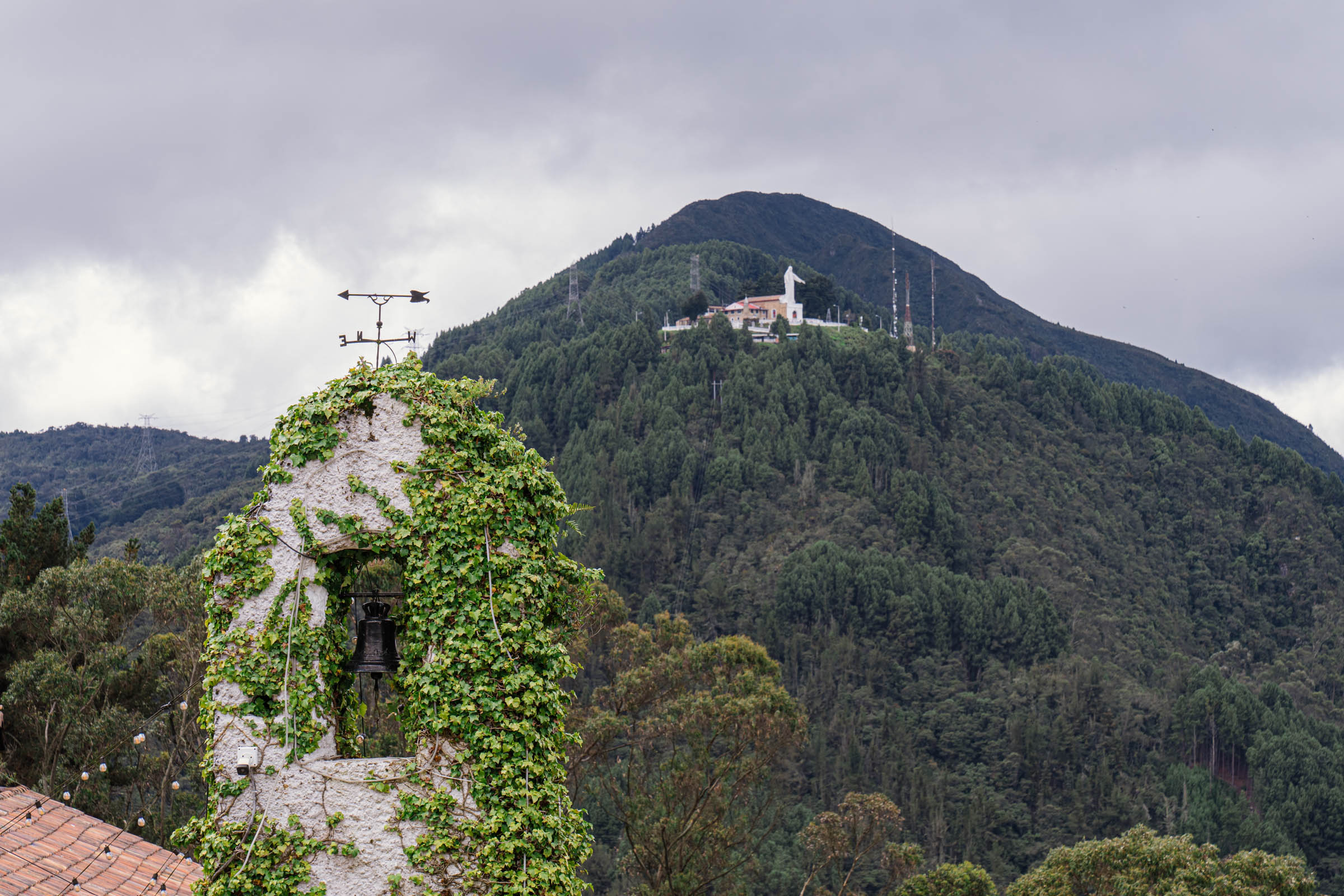
From the summit, I also had a beautiful view of the neighboring Guadalupe Hill. Its top rises more than 3,300 meters above sea level. There stands a small chapel dedicated to Our Lady of Guadalupe and a 15-meter-tall statue made in 1946 by the sculptor Gustavo Arcila Uribe. Interestingly, the statue represents the Immaculate Conception, the patron of the Archdiocese of Bogotá. Together, people call Monserrate and Guadalupe the two guardian hills of the city.
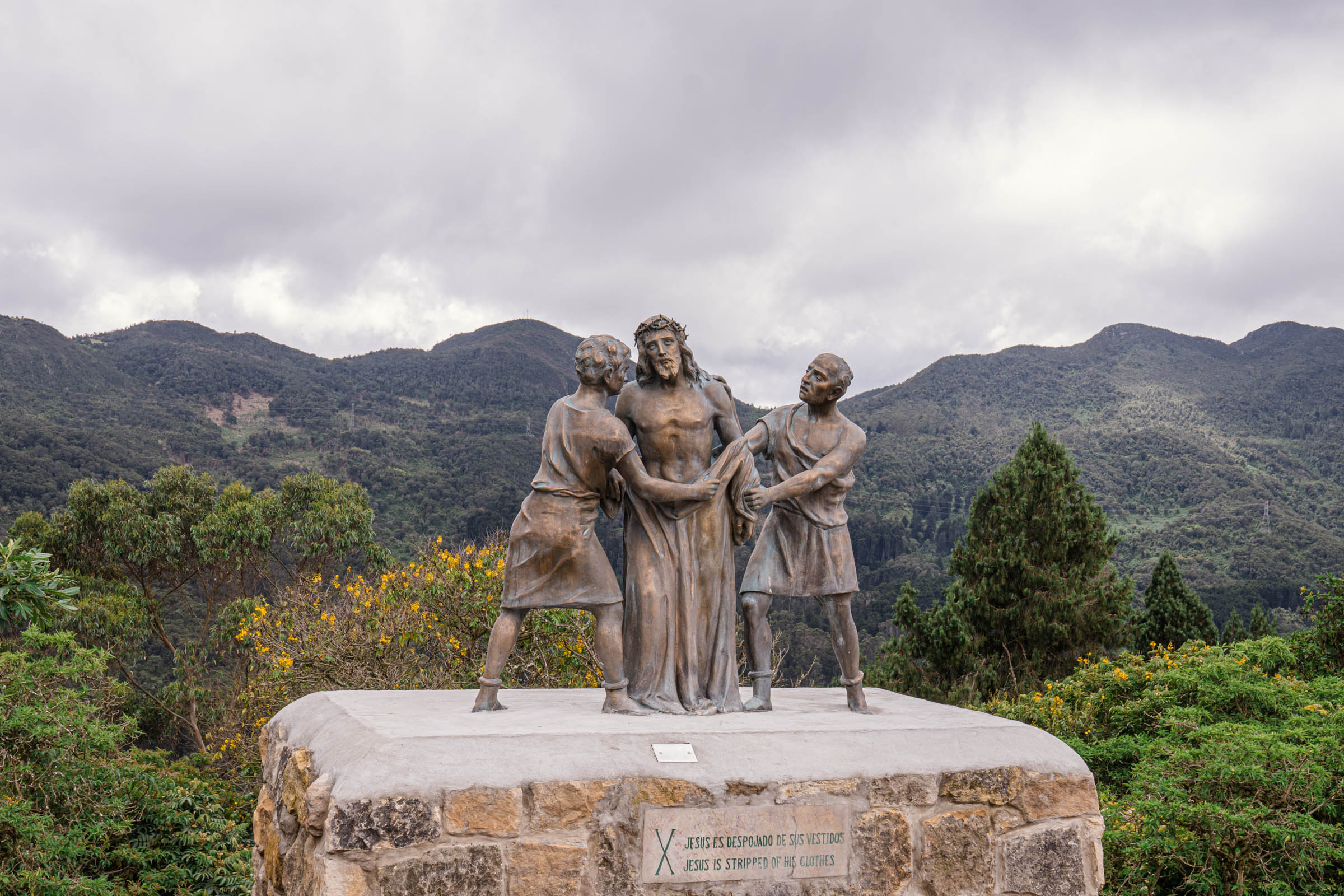
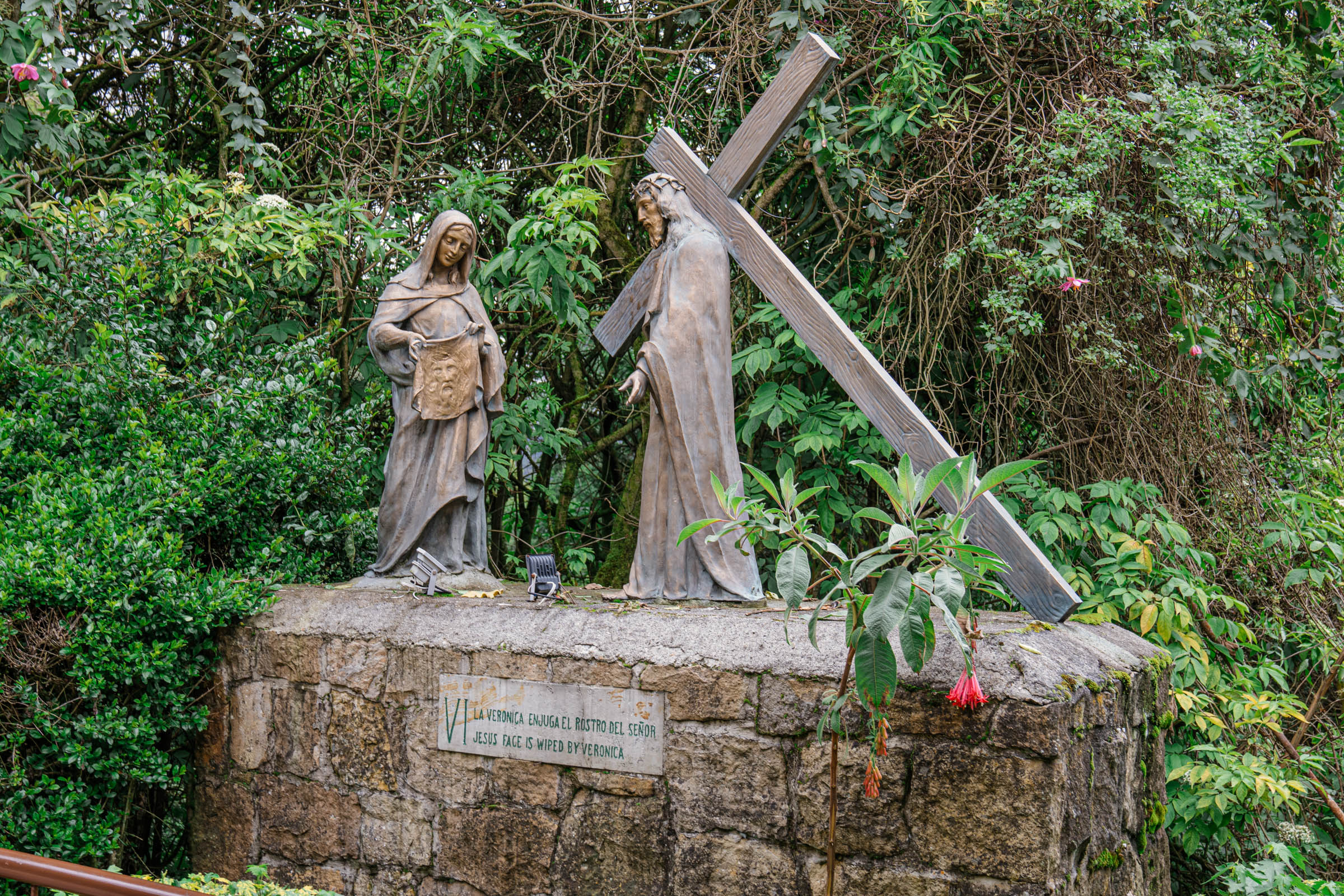
Around the sanctuary, visitors can also walk the Way of the Cross. Along the path, sculptures depict the Stations of the Cross, surrounded by green gardens, flowers and views of the mountains. I walked slowly from one station to another and enjoyed the peace of this place.
LUNCH WITH A VIEW ON MONSERRATE
For travelers who love good food, Monserrate offers another dimension of pleasure: restaurants with a view. At the summit, you will find Casa San Isidro and Casa Santa Clara. Casa Santa Clara is an unusual white wooden house, and its owners moved it to the top of Monserrate in 1979. Casa San Isidro is an elegant restaurant known for its romantic atmosphere and its views.
I enjoyed my meal with an unforgettable view. Before going down, I also ordered a hot chocolate with cheese in a small cafe at the top, just as the locals do. For me, it was one of those moments where pleasure and contemplation meet in perfect balance.
Being in Bogotá and not visiting Monserrate would be like visiting Paris and not seeing the Eiffel Tower. However, Monserrate is not only a symbol. It is also a place from which you can see the whole city at once.
PARQUE DE LA 93, A GREEN OASIS IN THE NORTH OF BOGOTÁ
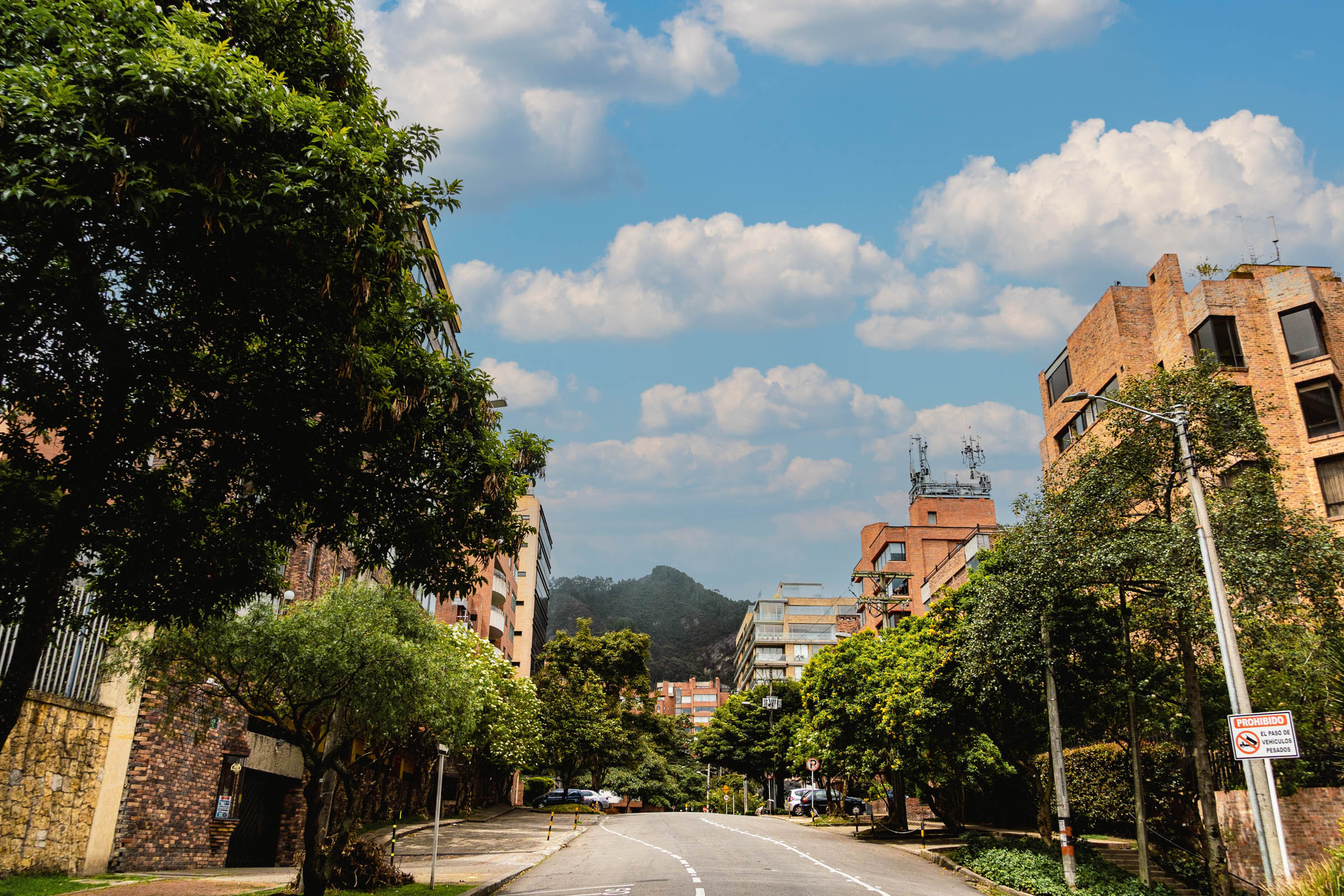
On my way back that afternoon, I stopped by the trendy districts in the north of the city. I spent a relaxing moment at the Parque de la 93, a small urban park in the El Chicó neighborhood, between Carreras 11A and 13 and Calles 93A and 93B. The city created it in 1979. Today, restaurants, cafes, bars and boutiques surround it.
I sat on a bench and simply enjoyed the relaxed atmosphere. Then the warm colors of the sunset reflected in the glass of the buildings. At that moment, I felt as if I had seen two Bogotás in one day: the one high on Monserrate and the one below, painted in the colors of life.
DAY 4: USAQUÉN, A COLONIAL TOWN INSIDE BOGOTÁ
On my fourth day, I explored the quieter and more exclusive parts of the city in the north. First, I visited Usaquén, a former colonial town that is now part of Bogotá. The Spaniards founded it around 1539 as Santa Bárbara de Usaquén. Usaquén remained an independent municipality until 1954, when Bogotá annexed it. In 1987, Colombia declared its historic center a national monument.
The heart of Usaquén is its main square with the Church of Santa Bárbara, built in 1665. Around it, cobblestone streets and old houses have turned into restaurants, cafes and craft shops. On Saturdays, Sundays and public holidays, the famous Usaquén flea market fills the surrounding streets with antiques, vintage decorations, the work of young designers and local sweets. Around the old town, the great colonial haciendas of Santa Bárbara and Santa Ana once stretched. Today, they have become elegant neighborhoods and shopping centers, such as the Hacienda Santa Bárbara mall on Carrera Séptima.
I enjoyed browsing the stalls, and I found many ideal souvenirs, from ceramic figurines to handwoven textiles. Later, I refreshed myself with a traditional tres leches cake and a homemade coffee liqueur in a small pastry shop. Usaquén is truly a balm for the eyes and the soul, because here you can feel the calmer rhythm of life in Colombia.
ZONA G AND QUINTA CAMACHO
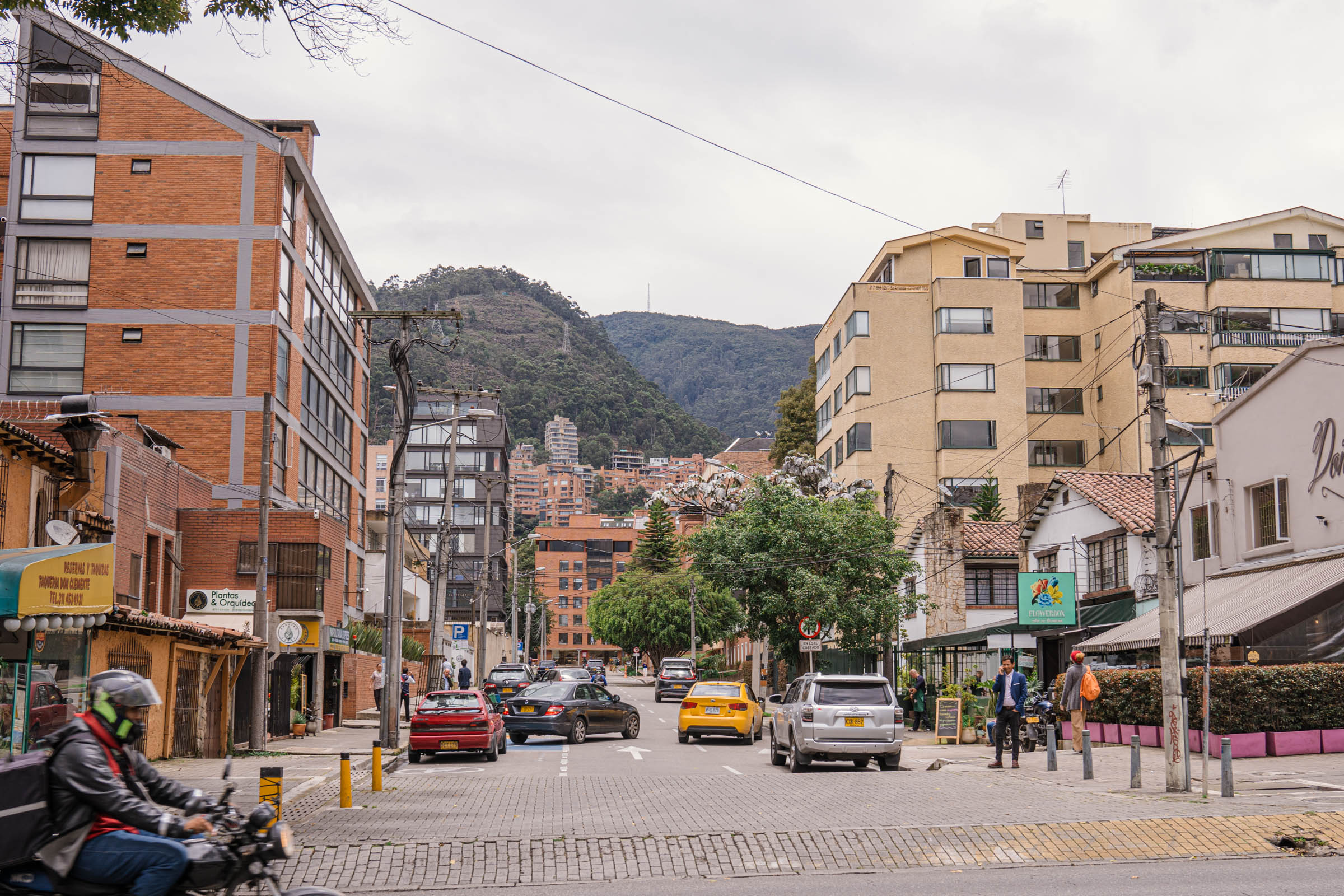
After Usaquén, I headed south toward the Zona G, one of the most famous gastronomic areas of Bogotá. Along its streets around Calle 69A and Calle 70, you will find one restaurant after another, many of them in elegant houses. Just next to it lies Quinta Camacho, a traditional neighborhood with an English charm, full of restaurants, cafes and small theaters.
I stopped for lunch in one of the restaurants and enjoyed excellent food in a sophisticated atmosphere. The tree-lined sidewalks and the quiet streets of this part of the city make it perfect for a leisurely walk.
ZONA T AND THE ANDINO SHOPPING CENTER IN BOGOTÁ
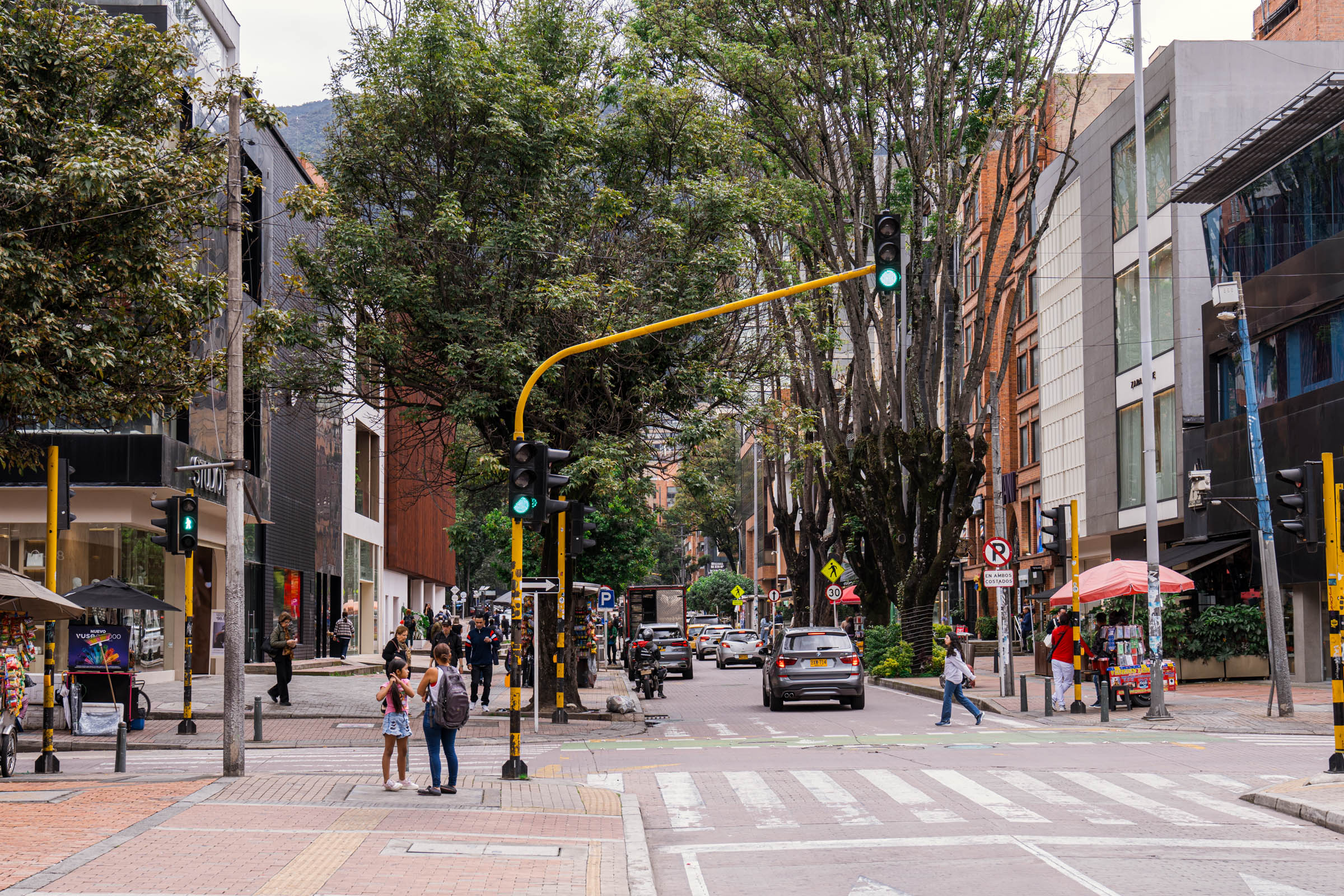
In the late afternoon, I went back to the Zona T, which is part of the famous Zona Rosa. This is the most elegant shopping and entertainment district of the city, between Calles 82 and 85 and Carreras 11 and 15. At its heart, pedestrian streets form the letter T, and their terraces are full of life from the afternoon until late at night.
Right here stands the Centro Comercial Andino, at Carrera 11 # 82-71 in the El Retiro neighborhood. It opened on September 9, 1993, and it is one of the most exclusive shopping centers in Colombia. Today, it houses international luxury brands such as Louis Vuitton, Dolce & Gabbana, Tiffany & Co., Rolex, Montblanc and Longchamp.
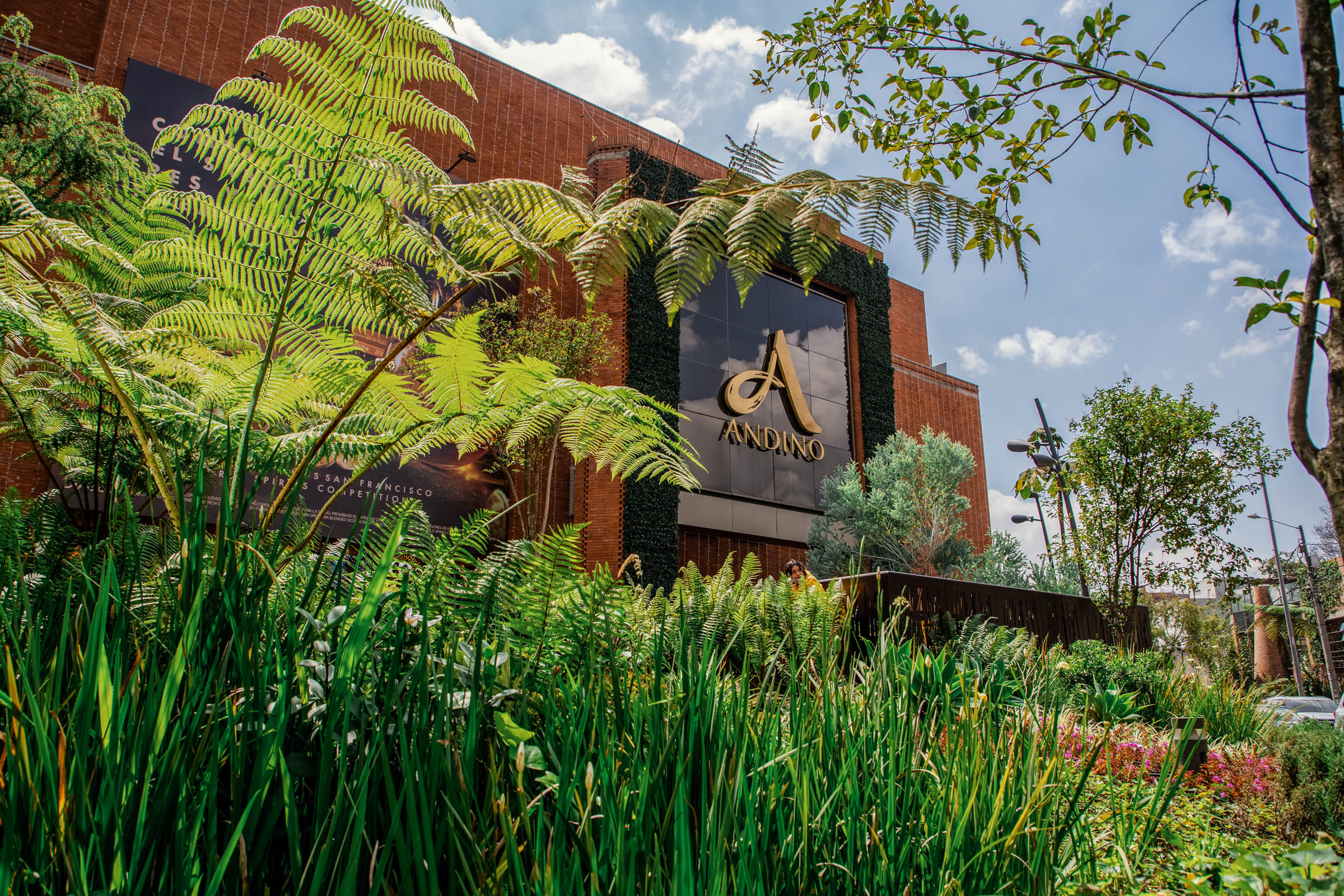
I enjoyed exploring the shops at a leisurely pace. After shopping at Carolina Herrera, where I finally bought the jacket I had been dreaming about for a long time, I walked back to my hotel. Remember, Andino is not just a place to shop. It is an urban luxury experience that shows how Bogotá combines style, culture and a modern lifestyle.
I left this area for last because the Four Seasons Hotel Bogotá, my home during this trip, stands right here. In the evening, the Zona T comes to life with an atmosphere similar to the best European districts, but with the tropical temperament of Latin America.
DAY 5: THE BOTANICAL GARDEN OF BOGOTÁ
I spent my last day enjoying the greenery of the city. I visited the José Celestino Mutis Botanical Garden, at Calle 63 # 68-95 in the Engativá district. The priest and scientist Enrique Pérez Arbeláez founded it on August 6, 1955, the same day the city celebrates its birthday. He named it after José Celestino Mutis, the Spanish botanist who led the Royal Botanical Expedition to New Granada.
The garden covers about 20 hectares, and it specializes in the plants of the high Andes and the páramo. I walked through its different sections and admired the orchids, cacti and other plants. In particular, I loved the Tropicario, a complex of greenhouses with the plants of the tropical ecosystems of Colombia. The peace and fresh air of the garden gave me new energy after the dynamic days of exploring. Interestingly, the Botanical Garden of Bogotá also helps plan and manage the green areas of the whole city, a role that few botanical gardens in the world have. In August 2025, it celebrated its 70th anniversary. After my walk, I stopped for coffee and cake in a nearby cafe and summed up the impressions of this trip.
These five days in Bogotá were an unforgettable experience. The city combined history, nature and modern luxury in a way that completely won me over. The colorful walls of La Candelaria, the views from Monserrate and the flavors of Colombian cuisine are what I will remember for a long time.
STREETS YOU SHOULD VISIT IN BOGOTÁ
Carrera Séptima: the main avenue of the city, which runs from the historic center to the north. Its section between Calle 10 and Calle 24 is a pedestrian zone. Near Parque Santander, it passes the churches of San Francisco, La Veracruz and La Tercera. Builders worked on La Tercera from 1761 to 1780. In line with the Franciscan vow of humility, they left its wooden carvings without gold leaf.
Calle del Embudo: a narrow cobblestone street in La Candelaria that starts at the Chorro de Quevedo. Colorful murals and craft stalls line it, and it is ideal for taking photos.
Avenida Jiménez: an important avenue named after Gonzalo Jiménez de Quesada. The city opened it in 1930 along the course of the San Francisco River. Its eastern end leads toward the station of the Monserrate cable car. A walk along it reveals some of the oldest buildings in the city.
Calle 82 and the Zona T: the heart of shopping and nightlife in the Zona Rosa, with luxury boutiques, shopping centers, restaurants and bars.
Parque de la 93: a stylish park surrounded by restaurants, cafes and bars. A coffee or a cocktail here is a must on every visit to Bogotá.
Calle 26 (Avenida El Dorado): the main avenue toward the airport, named after the El Dorado airport. It is not a pedestrian street, but a ride along it shows you the modern face of the city.
On Sundays and public holidays, from 7 a.m. to 2 p.m., many of the main avenues close to cars for the famous Ciclovía. In 2026, its circuit measured about 141 kilometers, and thousands of cyclists, runners and walkers fill the streets.
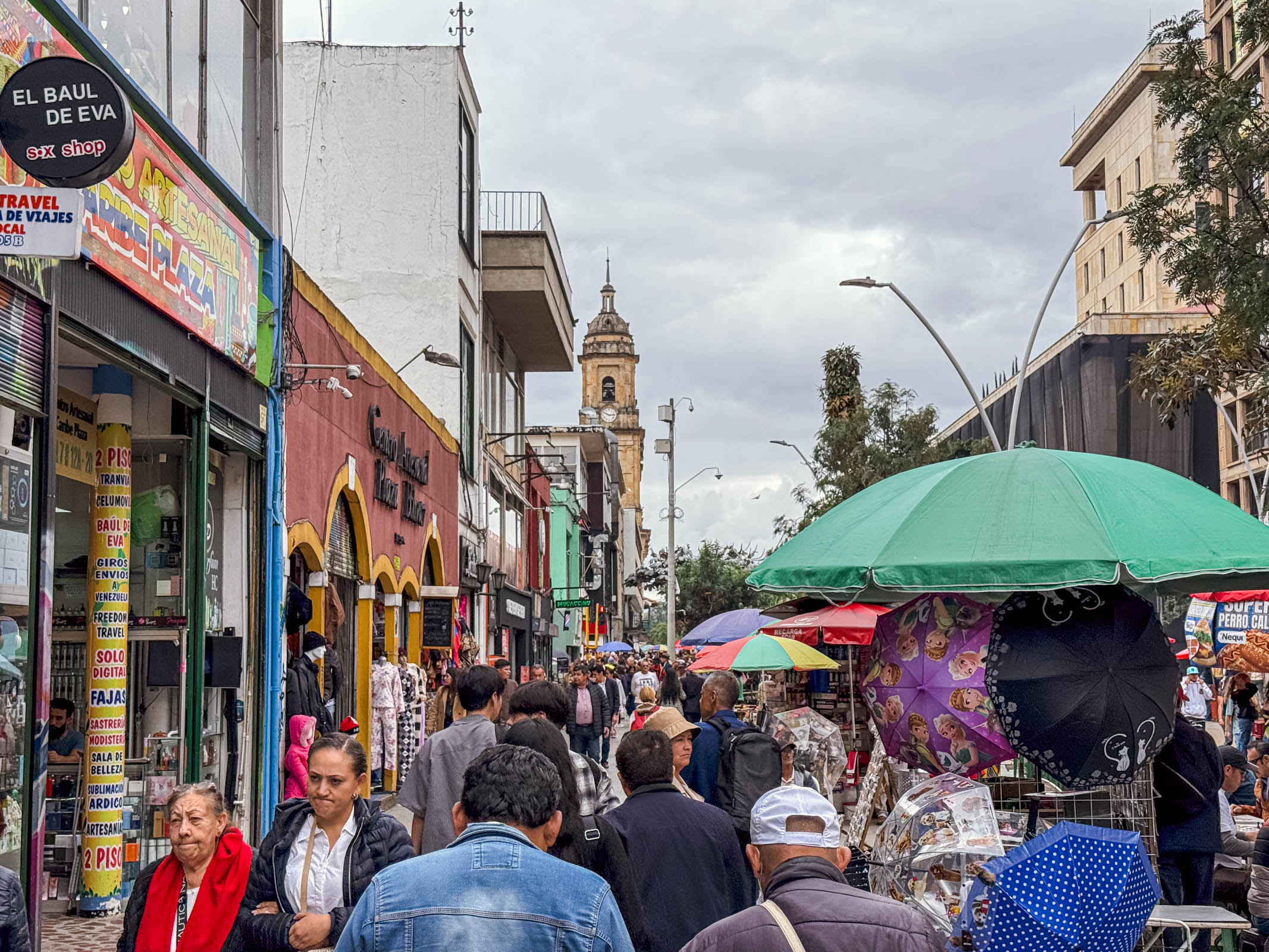
THE BEST RESTAURANTS IN BOGOTÁ
El Chato: chef Álvaro Clavijo opened this restaurant in 2017. Its contemporary Colombian cuisine reinterprets local ingredients with modern techniques. In December 2025, El Chato took the No. 1 spot on the Latin America’s 50 Best Restaurants list. It was the first time that a Colombian restaurant reached the top of this list.
Leo (Chapinero): the flagship restaurant of chef Leonor Espinosa, at Calle 65 Bis # 4-23. Her Ciclo-Bioma menu explores the ecosystems of Colombia and little-known local ingredients. Leonor Espinosa won the title of Latin America’s Best Female Chef in 2017 and The World’s Best Female Chef in 2022. In 2017, she also received the Basque Culinary World Prize for the work of Funleo, her socio-environmental foundation. On the 2025 Latin America’s 50 Best Restaurants list, Leo ranked 23rd.
Harry Sasson (Zona G): a celebrated restaurant at Carrera 9 # 75-70, led by one of the best-known chefs in Colombia. Here you will find excellent meat, seafood and pasta, as well as one of the most extensive wine lists in the country.
El Cielo (Zona G): the Bogotá restaurant of chef Juan Manuel Barrientos, at Calle 70 # 4-47. It is famous for multisensory tasting menus that border on molecular cuisine. Its sister restaurants in Miami and Washington, D.C., have earned Michelin stars.
TRADITIONAL FLAVORS OF BOGOTÁ
Andrés DC (Zona T): the city version of the legendary Andrés Carne de Res, which opened in 1982 in Chía, near Bogotá. Its lively atmosphere, grilled meat and colorful decor turn every dinner into a spectacle. Although it is informal, it is a true icon of the Bogotá scene.
La Puerta Falsa (La Candelaria): for a traditional breakfast or afternoon snack, go back to the historic center. A tamal with chocolate santafereño here, just steps from the Plaza de Bolívar, is a real taste of old Bogotá. Its menu also includes changua, a traditional milk-and-egg soup, and almojábanas, small cheese breads.
PRACTICAL TIPS FOR VISITING BOGOTÁ
Bogotá lies at about 2,640 meters above sea level, so I drank enough water and took a moderate pace during the first days. Layered clothing helped me a lot, because the mornings and evenings can be cool, while the sun is strong during the day.
For transportation, I mostly used taxi apps, which allow payment by card and are convenient and safe. However, I also carried some cash for small purchases and tips. In the evening, I avoided dark streets without public lighting and kept my valuables out of sight. In general, I felt safe in the tourist areas, but I was still careful and followed the advice of local guides.
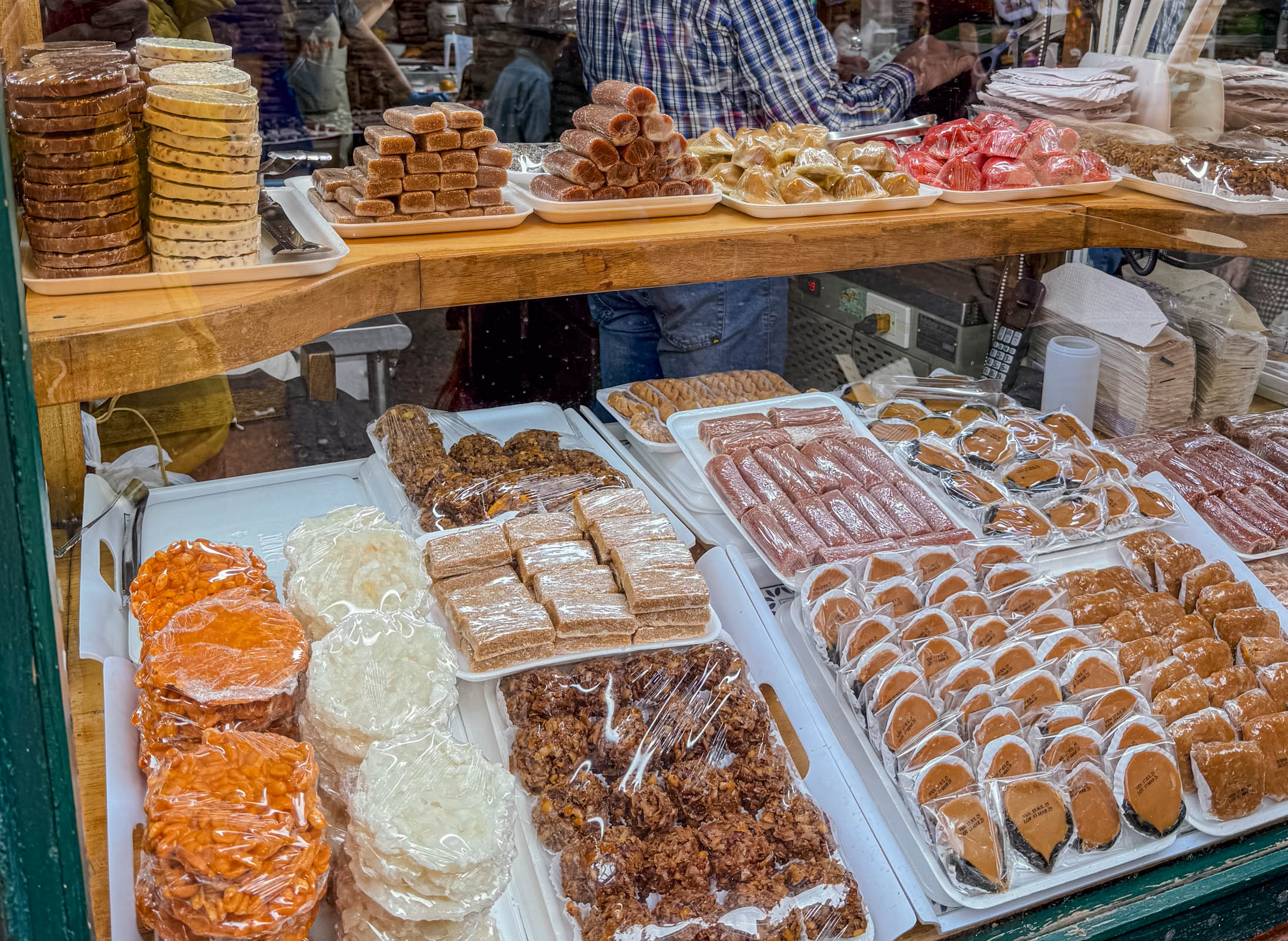
Finally, do not miss the traditional sweets of Bogotá. In the historic center, street stalls sell all kinds of traditional treats, from coconut sweets to cookies and caramel desserts. They are the perfect souvenir for anyone with a sweet tooth.
SAYING GOODBYE TO BOGOTÁ
My dear travelers, we have come to the end of this special travelogue from Colombia. Together, we discovered Bogotá, a city of contrasts, art, history and irresistible energy. We walked from the colonial heart of La Candelaria and the treasures of the Gold Museum to the summit of Monserrate and the elegant streets of the Zona T.
This travelogue would not have been possible without the selfless help of my partners. I am also grateful to the local people who allowed me to feel the spirit of everyday life in Bogotá. Of course, as always, I tried my best to convey my authentic impressions and recommendations to you who like to travel in style, but also with an open heart.
A person is rich in soul if he has managed to explore the world. That is why I am glad to always find partners who help me discover new and unusual destinations.
Once again, I would like to thank UN Tourism, ProColombia, the Ministry of Commerce, Industry and Tourism of Colombia and Four Seasons Hotel Bogotá for this incredible adventure. Thank you for allowing me to feel the beauty of Colombian culture in a completely different way.
Have you already visited Bogotá, or is this city of coffee, gold and art still on your travel wish list?
Feel free to leave your impressions, comments or questions below, or contact me by email and on social networks. All information is on the CONTACT page.
With love from Bogotá,
Mr.M
This post is sponsored by United Nations World Tourism Organization (UN Tourism), ProColombia, Ministry of Trade, Industry and Tourism of Colombia and Four Seasons Bogotá hotel and other local partners. This post is my personal and honest review of the destination experience.
Dear Marko, your post completely transported me. I’ve never been to South America, because my travels have mostly taken me to Southeast Asia and the Middle East, but Bogotá now feels urgent on my list. I loved how you painted the city not just through its landmarks, but through atmosphere and emotion. The part about the Gold Museum gave me goosebumps. Thank you for reminding us that elegance and culture can go hand in hand with adventure.
Hello Marco, I visited Bogotá two years ago and reading this felt like going back. You captured the city’s rhythm, the contrasts, the colors, and the calm in the chaos. Most travel blogs gloss over the feeling of a place, but yours truly resonates. You’ve made me want to return and see the city with fresh eyes.
Dear Marco, what an inspiring post. I’ve always been drawn to unusual destinations, and Colombia has been on my radar, but this post makes me feel like it’s time to stop dreaming and start planning. The way you describe the art scene and the café culture is exactly what I look for in a trip. Your storytelling has a cinematic quality, I felt like I was walking beside you in La Candelaria.
Lieber Marko, Ich war 2023 in Bogotá und habe dort eine unvergessliche Zeit verbracht. Dein Text hat mich emotional direkt zurückversetzt. Besonders schön fand ich, wie du das kulturelle Herz der Stadt eingefangen hast nicht nur Sehenswürdigkeiten, sondern auch Lebensgefühl. Man merkt, dass du mit viel Feingefühl schreibst.
Sono stato in Colombia l’anno scorso e ho amato Bogotá. Rivedere quei luoghi attraverso le tue parole mi ha fatto emozionare. Hai descritto perfettamente il mix tra cultura, vita urbana e raffinatezza che si respira lì. Complimenti per la sensibilità e lo stile con cui scrivi.
Ich reise oft nach Asien und Afrika, aber Südamerika war für mich bisher ein weißer Fleck auf der Karte. Dein Blogbeitrag über Bogotá hat das geändert. Die Art, wie du die Stadt beschreibst mit einem Gefühl für Kunst, Kaffee und Geschichte ist beeindruckend. Ich habe jetzt richtig Lust, die kolumbianische Hauptstadt selbst zu entdecken. Danke für diese Inspiration! Mit FG Laura
Hi Marko, you write with such detail and clarity, I could almost taste the coffee and feel the city’s pulse. Bogotá always seemed too big and loud to me, but you’ve shown me it has hidden elegance. This kind of insight is rare in travel blogs. Thank you for offering a different lens.
South America has always seemed out of reach, but after reading this, I’m rethinking everything. Your post gave me both the dream and the roadmap. From the colonial architecture to street murals and luxury hotels, it’s a blend I didn’t know I was craving. Definitely bookmarking this for future planning!
Dein Beitrag hat meine Reiselust geweckt! Ich liebe es, besondere Orte zu entdecken – in Nepal, Namibia oder Japan. Bogotá hatte ich nie ernsthaft in Betracht gezogen, aber jetzt reizt mich genau diese Mischung aus urbanem Leben, Kunst und kolonialer Eleganz. Danke für diesen Blick über den Tellerrand. FG Anikka
I’ve been to Buenos Aires and Lima, but somehow I skipped Bogotá and now I regret it. Your post brings the city to life in a way that’s both sophisticated and inviting. I love your balance between fashion, history, and place. It’s the kind of travel content I always hope to find.
Ich habe deinen Blog zufällig entdeckt und bin begeistert von deinem Stil. Bogotá klingt nach einer Stadt voller Kontraste und Charme. Besonders beeindruckt hat mich dein Abschnitt über das Museo del Oro – das steht jetzt ganz oben auf meiner Bucket List. Weiter so!
Wow, ich hätte nie gedacht, dass Bogotá so stilvoll und inspirierend sein kann. Bisher dachte ich eher an Chaos und Kriminalität, aber du hast ein ganz anderes Bild gezeigt. Ich mag, wie du Mode, Reisen und Kultur verbindest das ist selten und sehr besonders.
Il tuo racconto mi ha fatto venire voglia di partire subito. Non sono mai stato in Sud America, ma dopo aver letto questo post sento che Bogotá potrebbe essere la mia prossima destinazione. Adoro il modo in cui descrivi i dettagli della città, senza cadere nei soliti cliché turistici. Si sente il tuo amore per il viaggio e per l’estetica.
Viaggio spesso in Africa e nel Sud-est asiatico, ma il tuo post mi ha fatto capire che sto sottovalutando l’America Latina. Bogotá mi sembra una città viva, colorata e sorprendente. Il tuo modo di raccontare mi ha coinvolto come pochi. Ora non vedo l’ora di organizzare un viaggio!
Estuve en Colombia hace dos años y Bogotá me fascinó. Tu post me hizo revivir cada rincón, cada aroma, cada color. Es muy difícil encontrar escritores que capten la esencia de un lugar como tú lo haces. Ojalá más gente descubra tu trabajo.
Che bellezza questo articolo. Mi sono immaginata a passeggiare tra i murales e a bere un caffè colombiano guardando le Ande. La tua scrittura è delicata e potente allo stesso tempo. Hai un dono nel raccontare i luoghi.
Ho visitato Lima e Buenos Aires, ma Bogotá è stata una rivelazione attraverso le tue parole. Mi piace la tua attenzione per l’eleganza nei dettagli e il rispetto per la cultura locale. È difficile trovare blog così autentici e ben scritti. Bravo davvero!
¡Qué maravilla de texto! Nunca había considerado Bogotá como una ciudad para visitar, pero ahora la veo con otros ojos. Me encantó cómo integraste la historia, el arte y la modernidad. Viajo mucho por Asia, pero tu blog me hizo soñar con América Latina. ¡Gracias por abrirme la mente!
Bogotá ya era una ciudad que tenía en mente, pero después de leerte, se convirtió en prioridad. Gracias por mostrarla con tanta belleza y sensibilidad. Tu estilo es muy especial, y espero seguir leyendo muchas más aventuras tuyas.
Me encantó la forma en que relatas tu experiencia. Es un equilibrio perfecto entre elegancia y emoción. Viajar es mi pasión y ahora tengo muchísimas ganas de conocer Bogotá. Tus palabras son pura inspiración.
Lo que más me gustó fue cómo transmites los pequeños detalles: el café, la arquitectura, la gente. Se nota que viajas con el corazón y eso se siente en cada línea. Felicidades por este artículo tan cálido y profundo.
Ton article m’a donné des frissons. Je ne suis jamais allé en Amérique du Sud, mais grâce à toi, Bogotá est désormais en haut de ma liste. J’ai adoré la façon dont tu parles du café, de l’art et de la chaleur humaine. Tu as capté quelque chose de rare.
Passionné par les destinations atypiques, je voyage souvent en Asie ou en Afrique. Mais là, tu m’as convaincu d’explorer une autre partie du monde. Ton style d’écriture est fluide, raffiné et très immersif. Bogotá semble magique.
Ayant déjà visité Lima et Quito, je pensais avoir une idée des villes sud-américaines. Mais ton article m’a montré un autre visage de Bogotá. C’est une ville d’art et de style, comme tu le dis si bien. Merci pour l’inspiration!