
My dear travelers and lovers of unusual journeys, welcome to a new travelogue on the Mr.M blog. Today, we continue our adventure in Quito, the pearl of South America in the middle of the world. These last months of the year belong to this unusual country, known for its cocoa, bananas and coffee.
At the very beginning, I sincerely thank PRO ECUADOR and the Quito tourism board Visit Quito. I also thank the Dutch airline KLM and Hotel Patio Andaluz. Finally, I thank all the partners who supported my adventure in South America. With their help, I created the travelogues and fashion stories from Ecuador that you will read in the coming weeks.
If you missed my first letter from this city, read about Quito, a city colored by Baroque art and architecture. Then, discover my first fashion story from Ecuador with Sannino Napoli.
HOTEL PATIO ANDALUZ, MY HOME IN THE OLD TOWN
On every trip, the hotel is our home in a new destination. In the capital of Ecuador, my home was Hotel Patio Andaluz, in the old heart of Quito. This elegant boutique hotel occupies a colonial-style house from the end of the 16th century. Today, the house is a national monument, and its walls hide centuries of history and art.
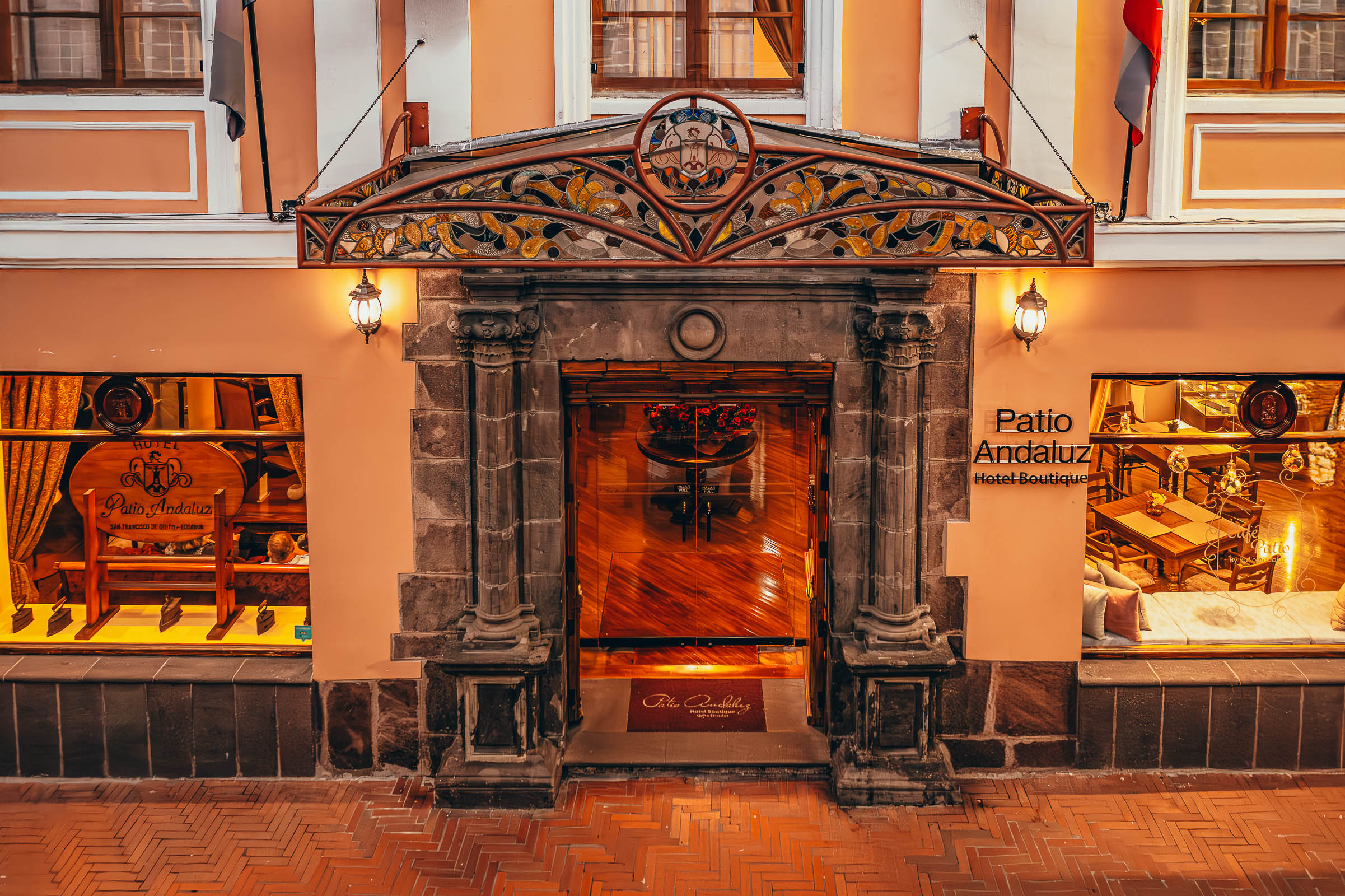
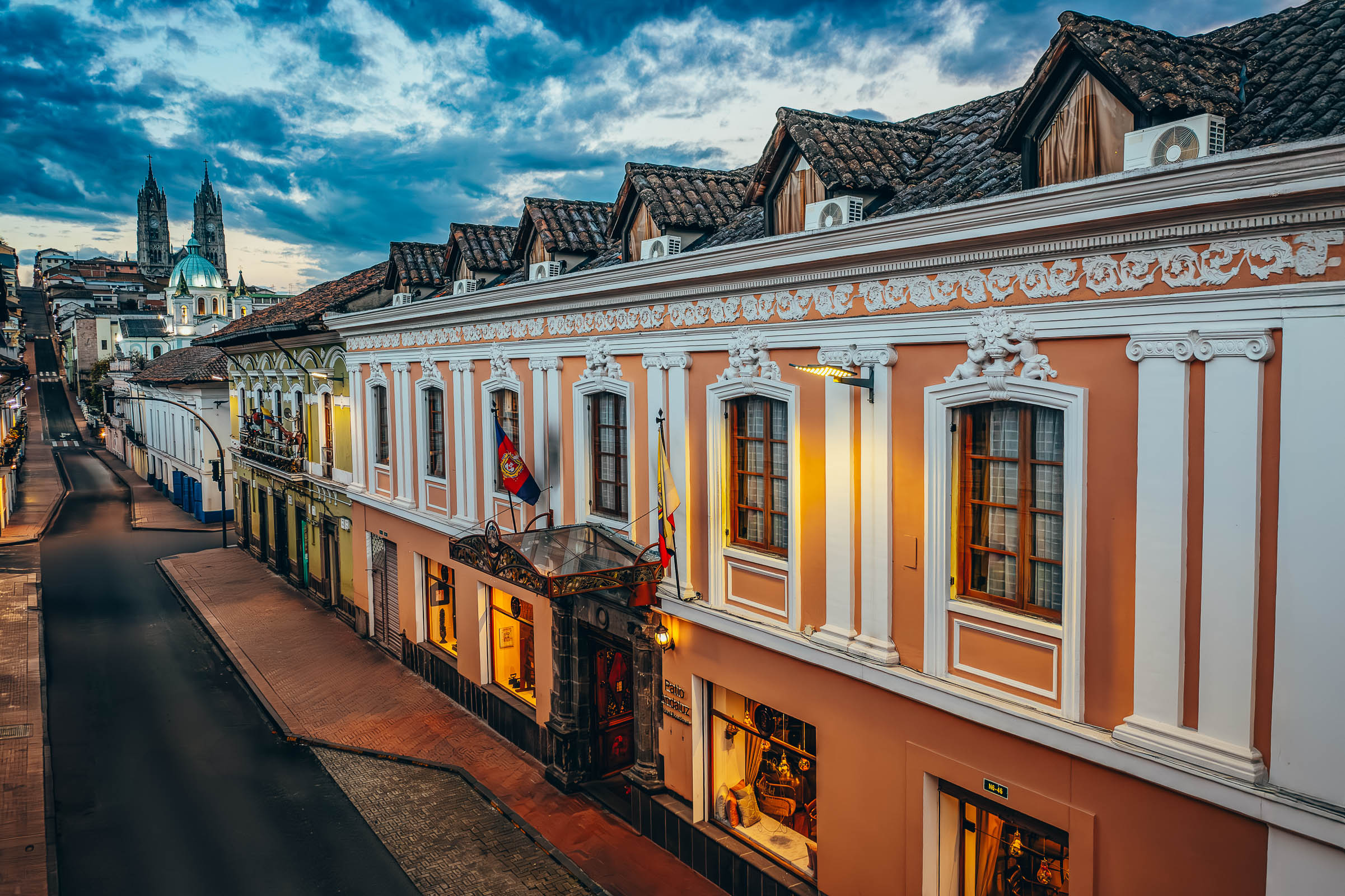
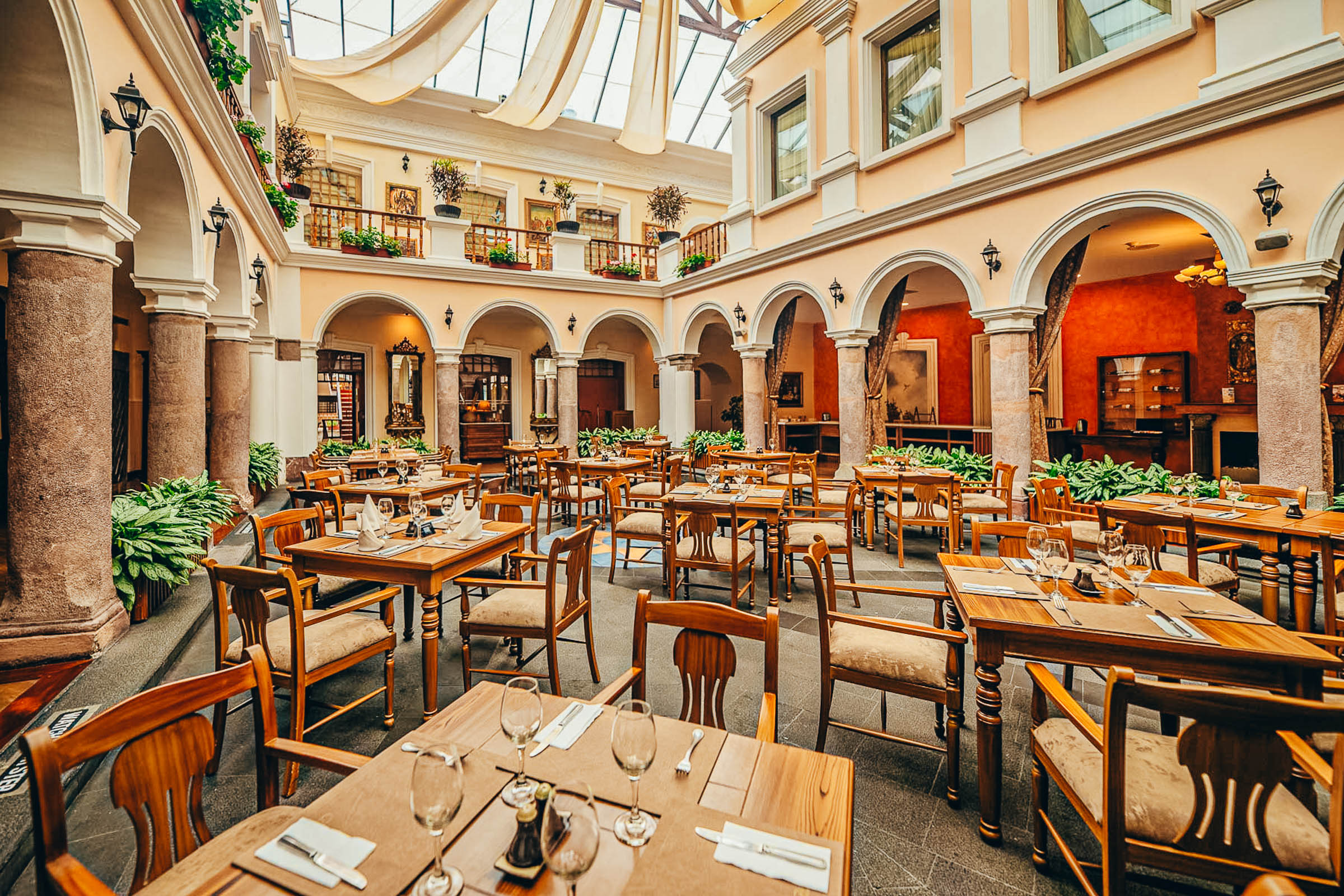
Large arches and inner courtyards fill the hotel with natural light and colorful gardens. In the main courtyard, the Rincón de Cantuña restaurant serves Ecuadorian and international dishes.
The location is exceptional. The Main Square, also known as Independence Square, is only about 150 meters away. Moreover, the church of La Compañía is only a five-minute walk away. The Sucre Theater is six minutes away, and the church and square of San Francisco seven.
Inside, the Guayasamín reading room offers a wide selection of books and a coffee station. Its walls display paintings by Oswaldo Guayasamín, the famous Ecuadorian painter. In total, the hotel has 32 air-conditioned rooms with LED televisions and free Wi-Fi.
A ROOM WITH A VIEW OF THE BASILICA
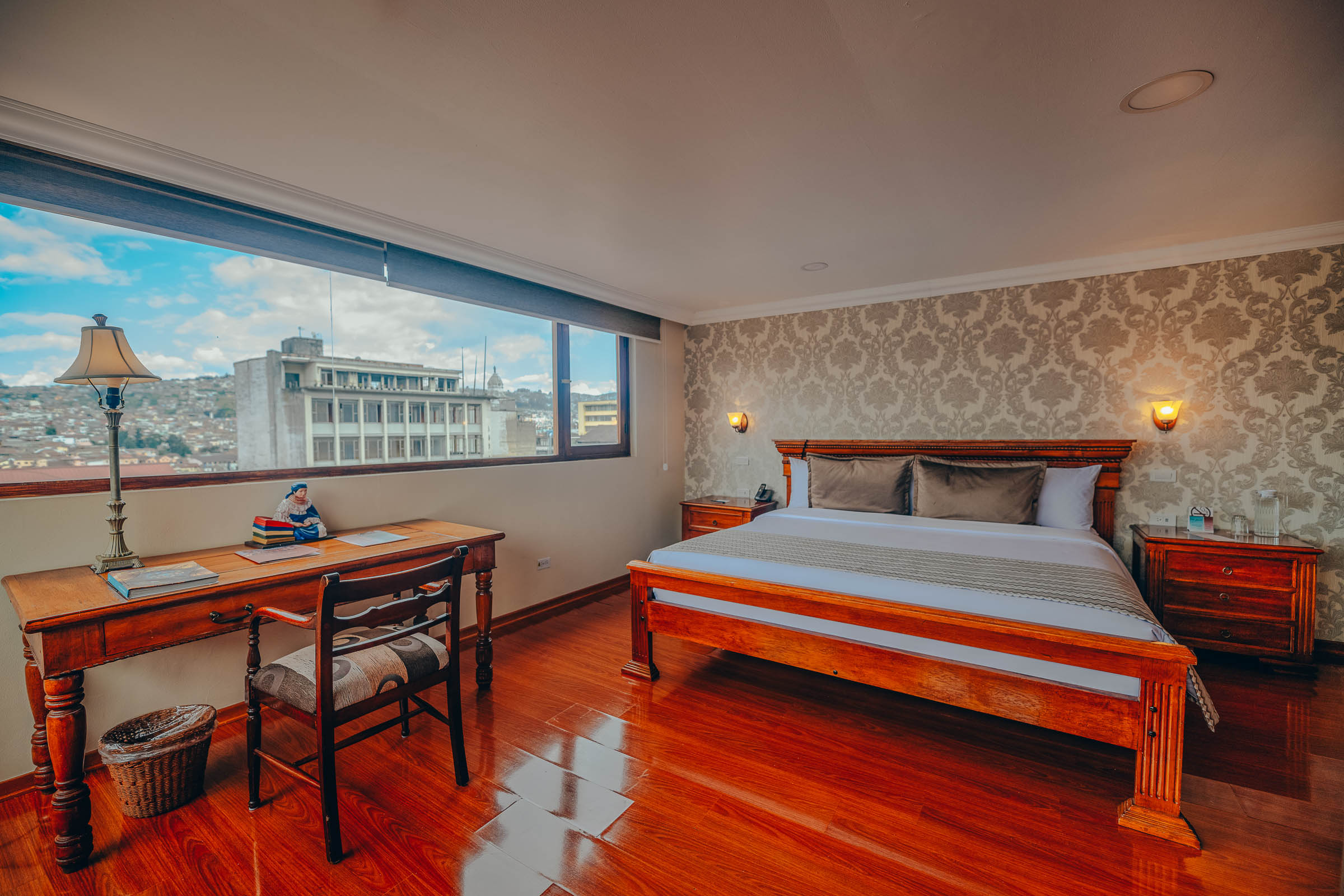
I stayed in a Superior Premium room on the fourth floor. Its view of the historic center was simply breathtaking. I felt as if I held the old town in the palm of my hand. The room also has a king-size bed measuring two by two meters and air conditioning. For evenings, there is a 32-inch LCD TV with cable channels. Every morning, I opened the curtains and saw the towers of the Basilica of the National Vow.
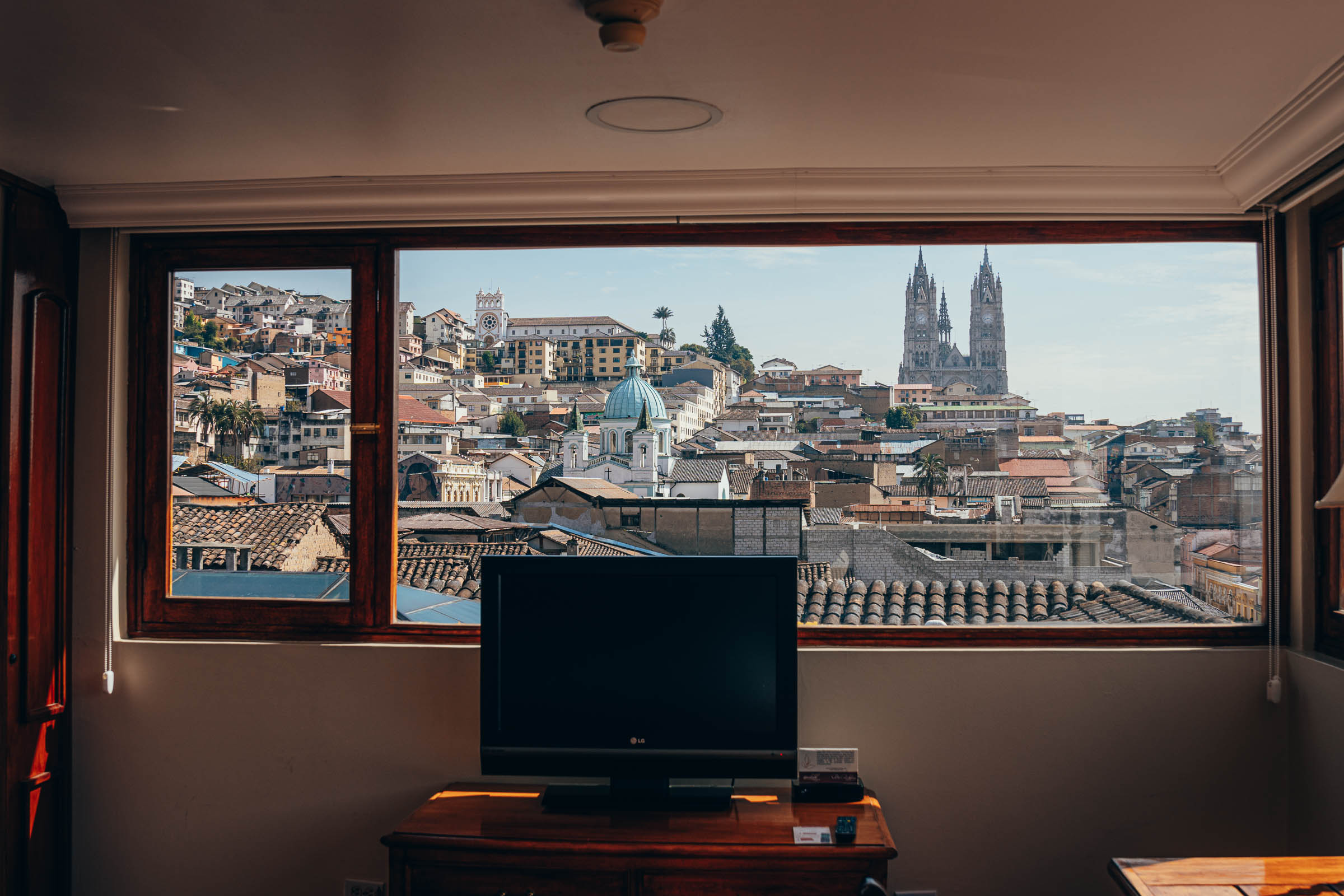
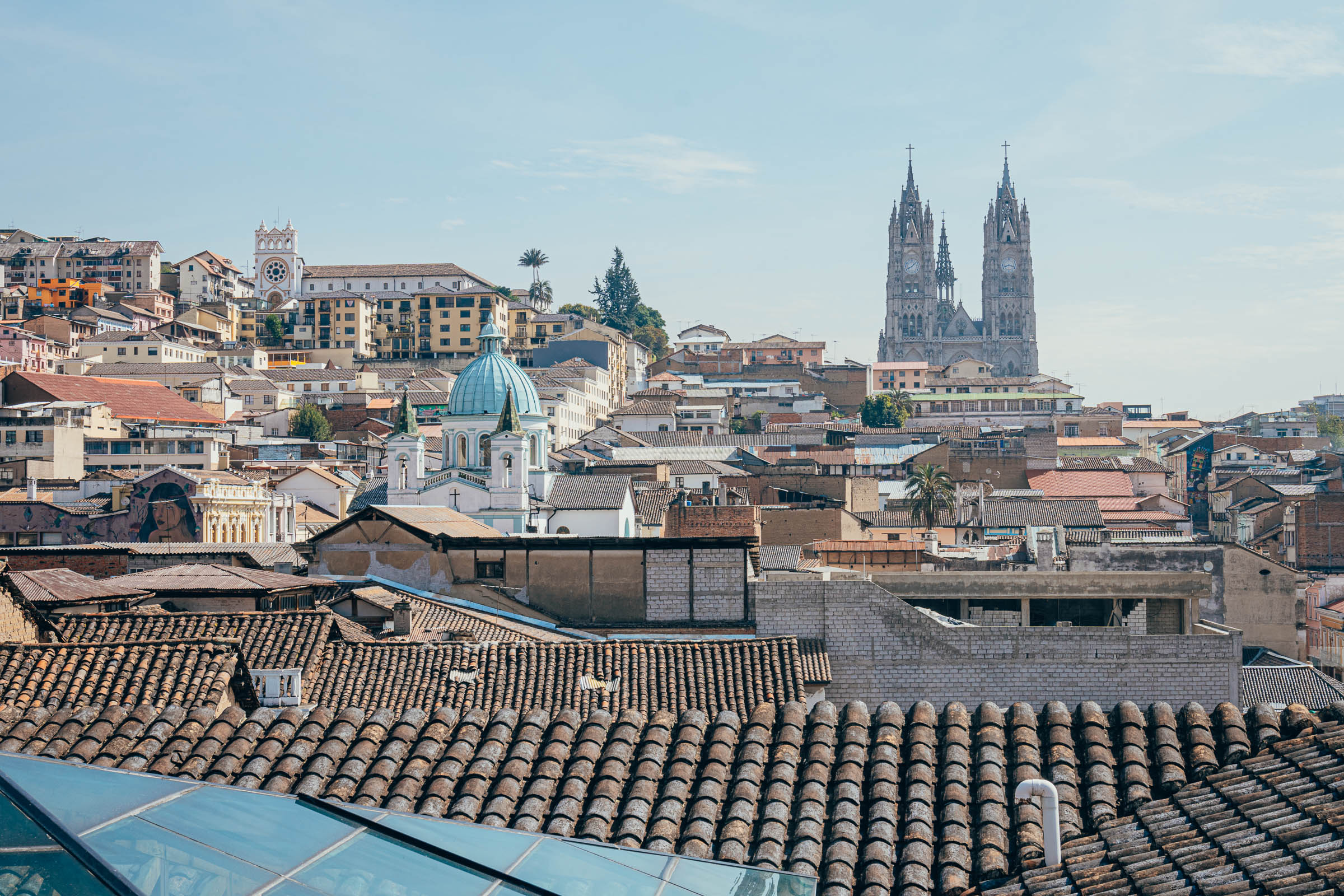
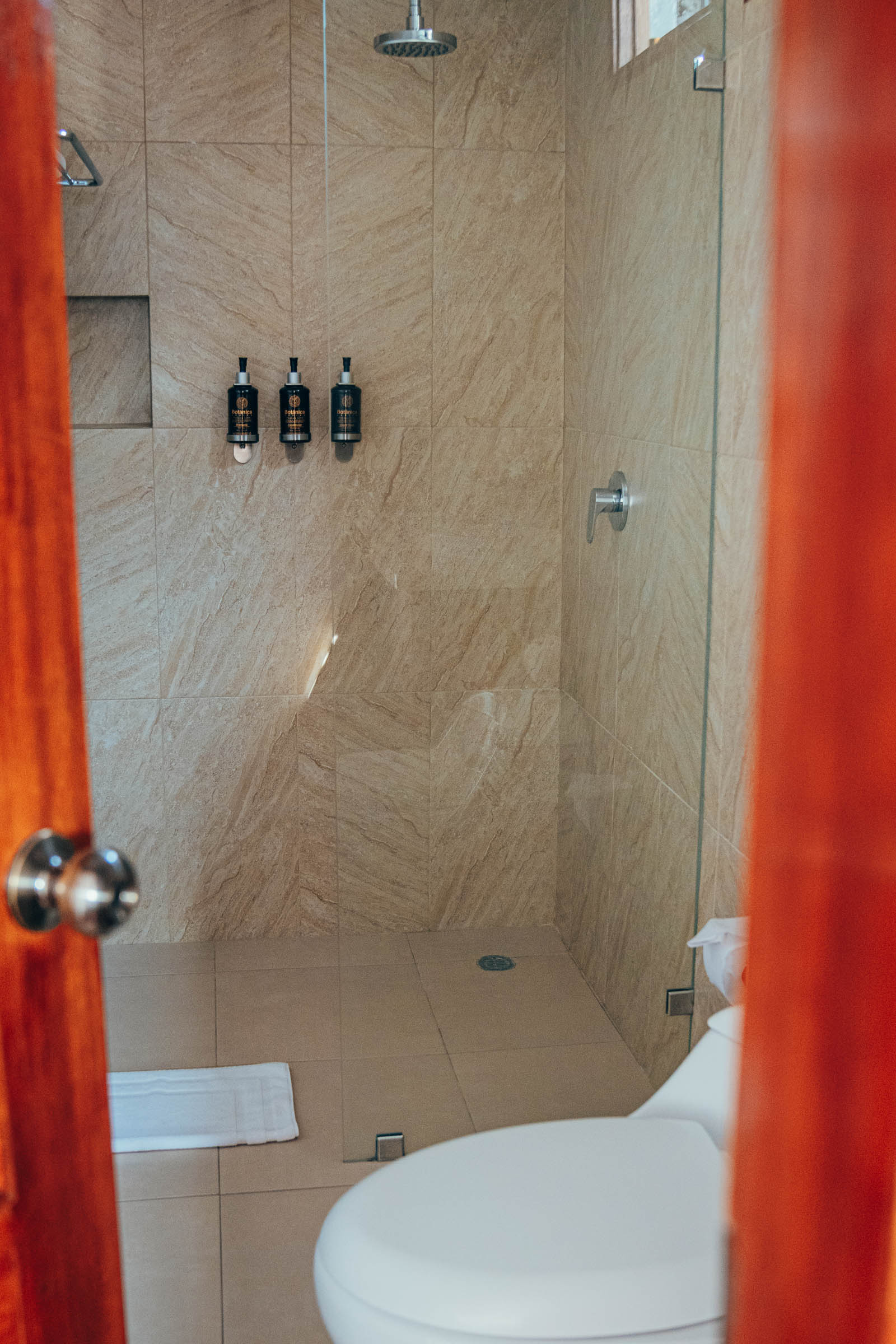
I sincerely thank the staff of Hotel Patio Andaluz for their warm welcome. My stay was exceptional, a unique experience that I will always remember!
THE BASILICA OF THE NATIONAL VOW
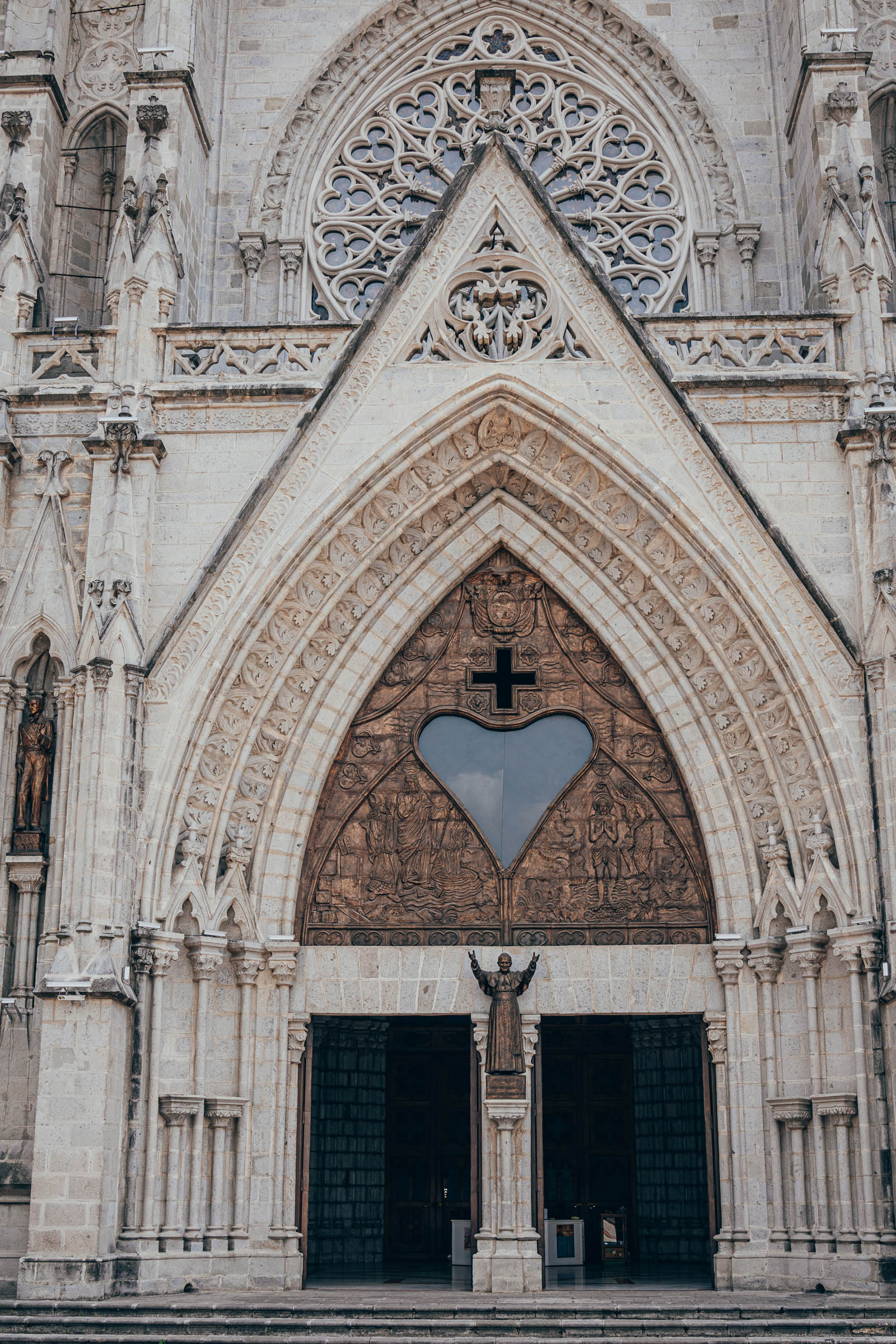
Our walk through Quito begins with the church I saw from my window every morning. The Basilica of the National Vow stands on the northern edge of the historic center. It is about seven blocks north of Independence Square. Moreover, it is the largest neo-Gothic basilica in the Americas and the most important neo-Gothic building in Ecuador.
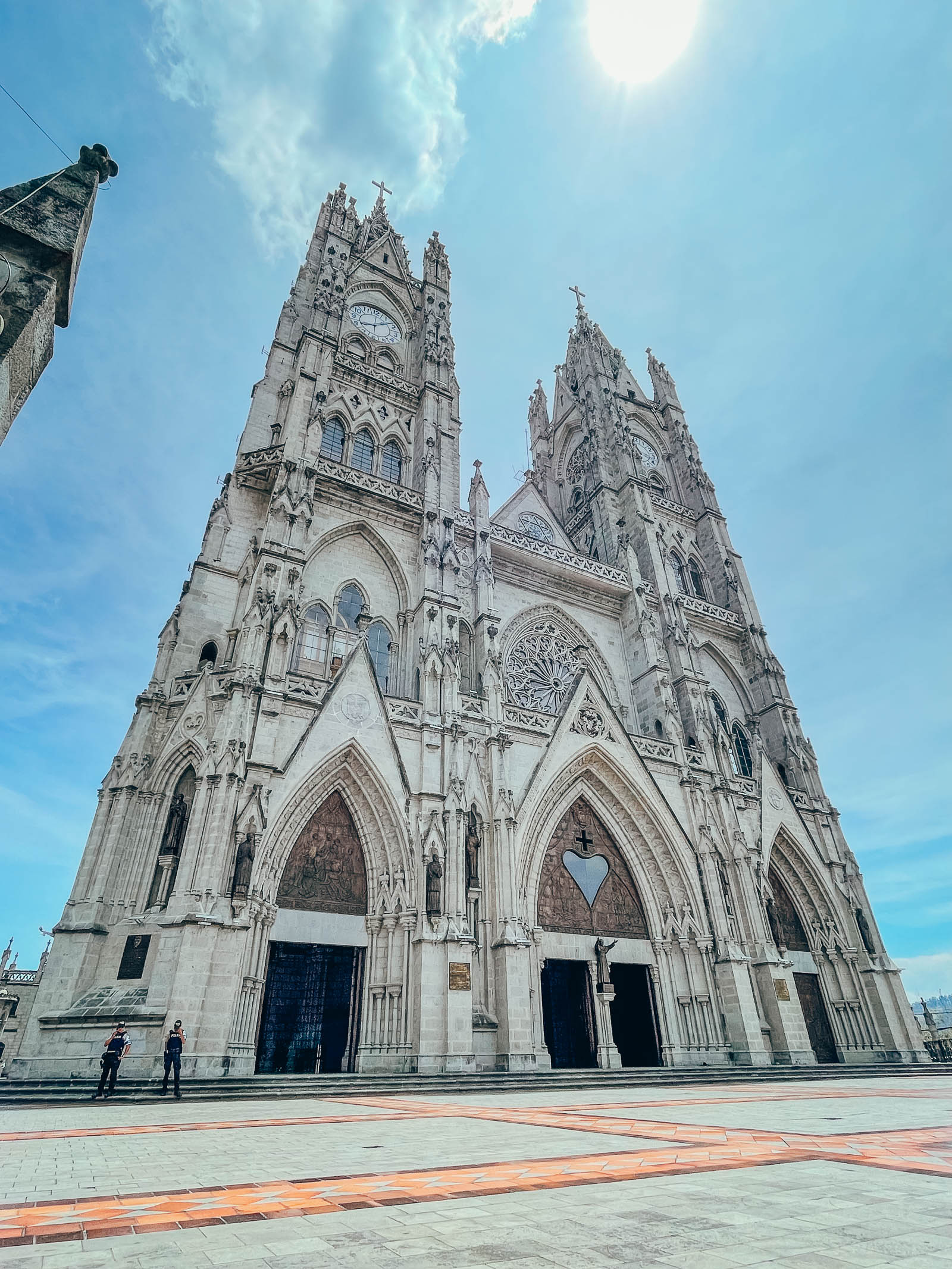
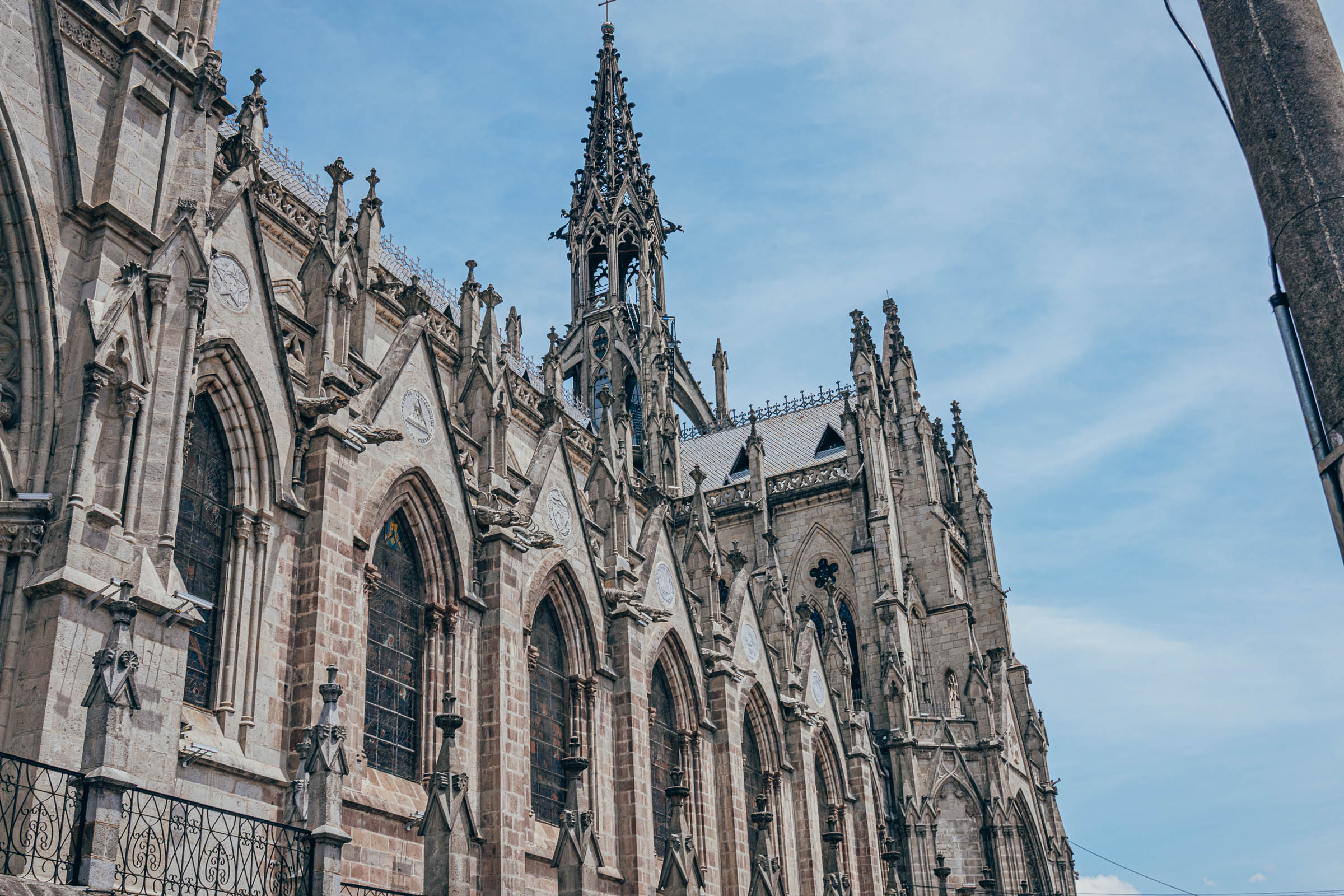
The story began in 1883, when Father Julio Matovelle proposed the idea. The architect Emilio Tarlier drew inspiration from the Bourges Cathedral in France. Even so, many visitors compare the basilica with Notre-Dame in Paris. On July 10, 1892, builders laid the first stone. Then, in 1895, the state introduced a tax on salt to continue the construction.
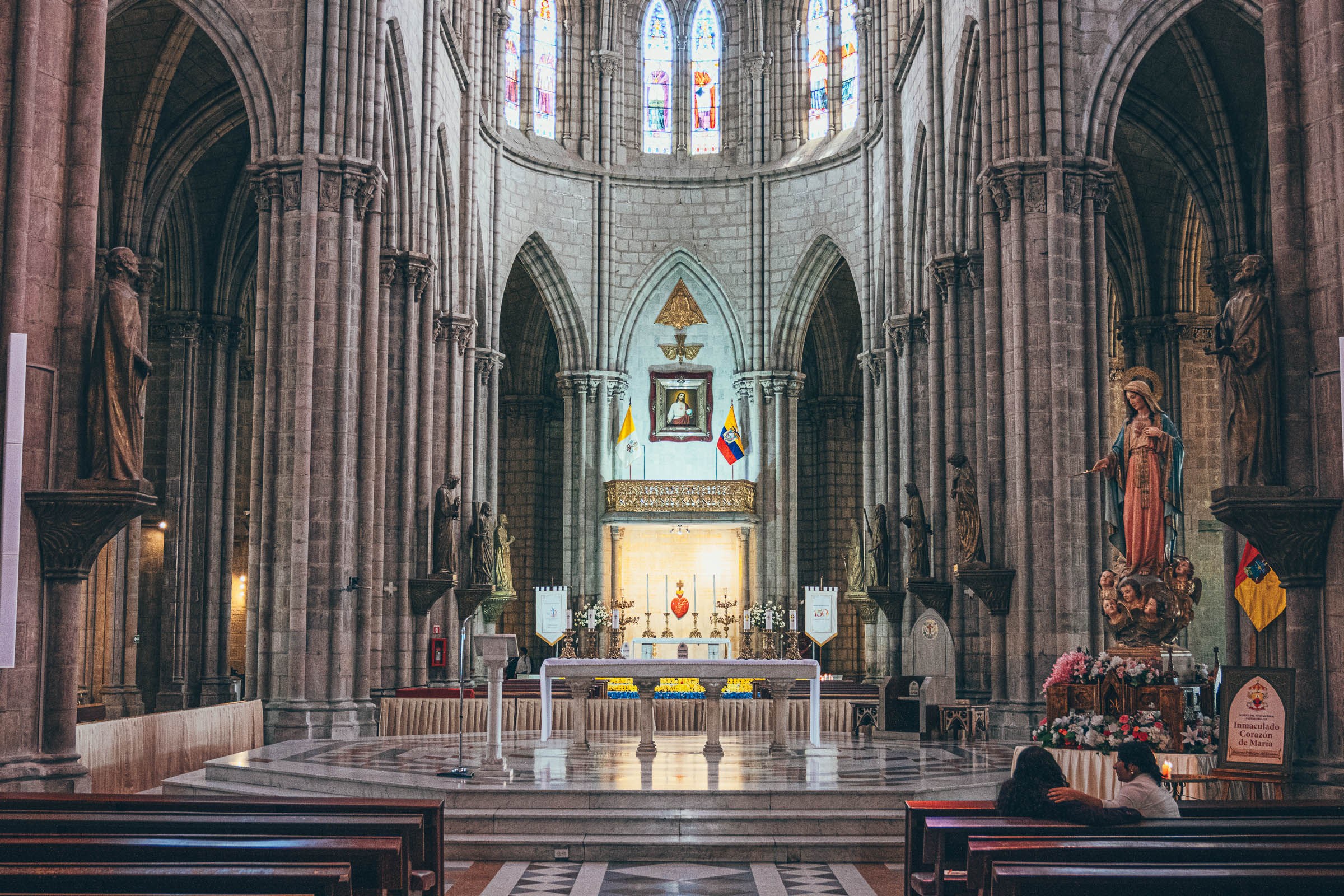
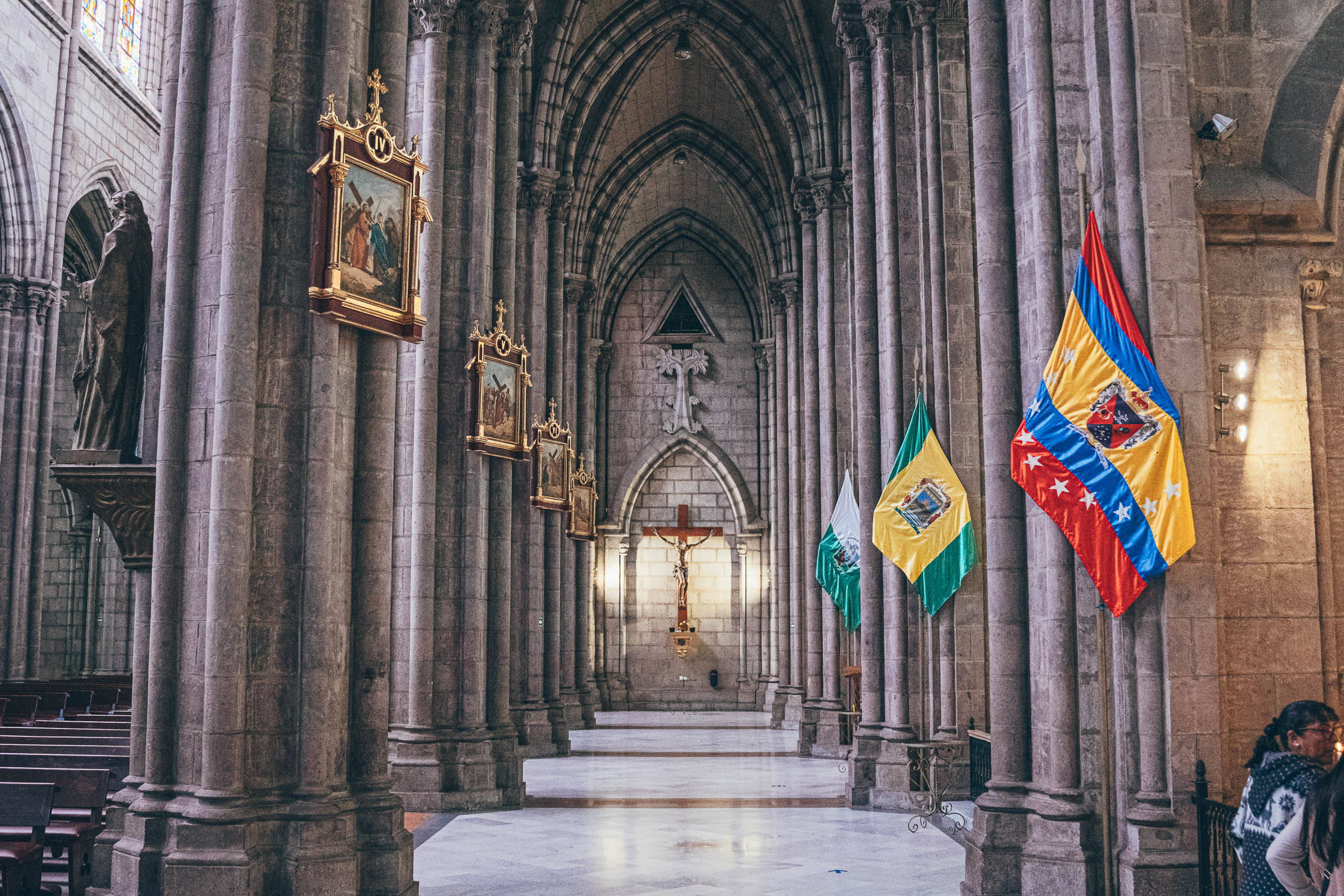
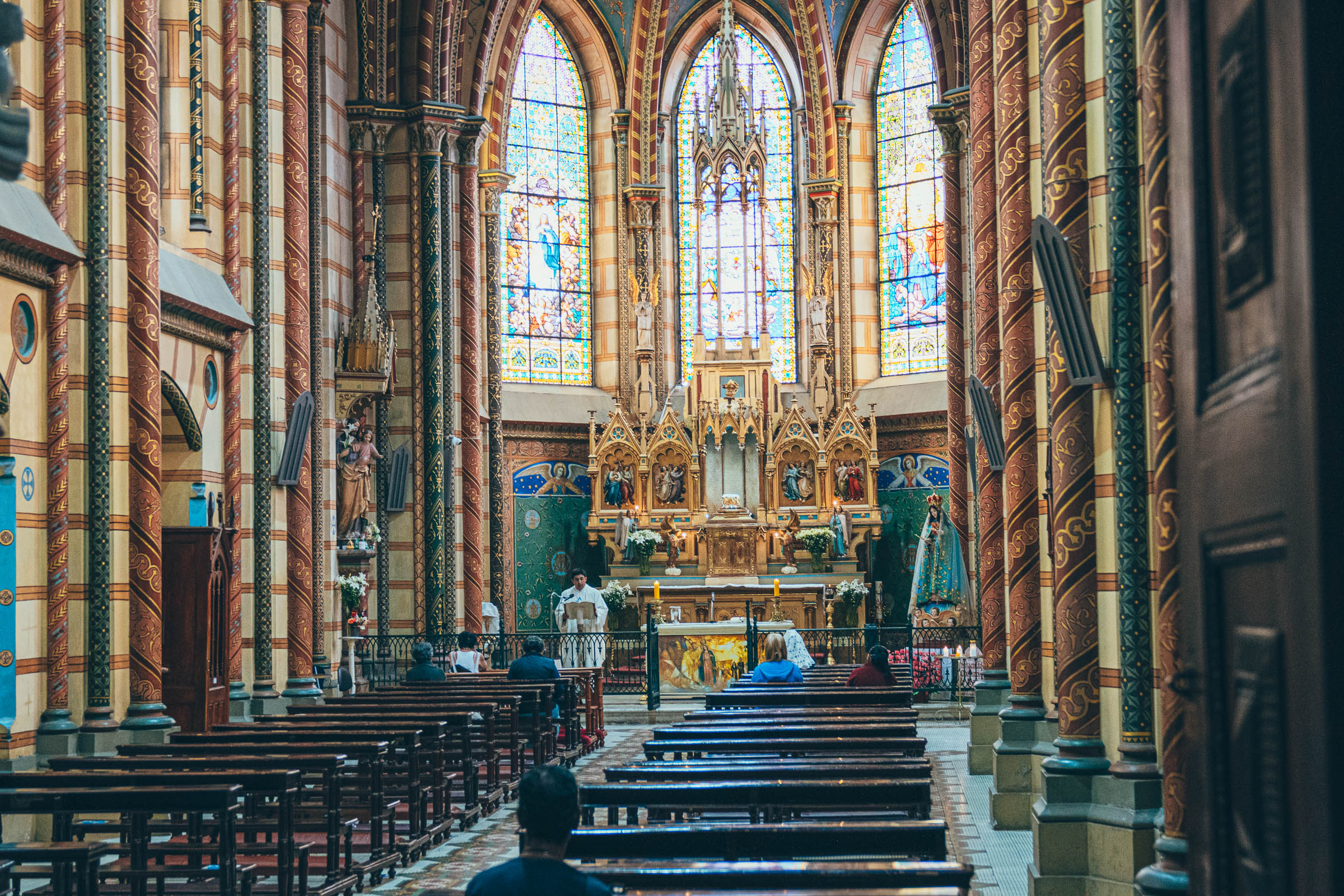
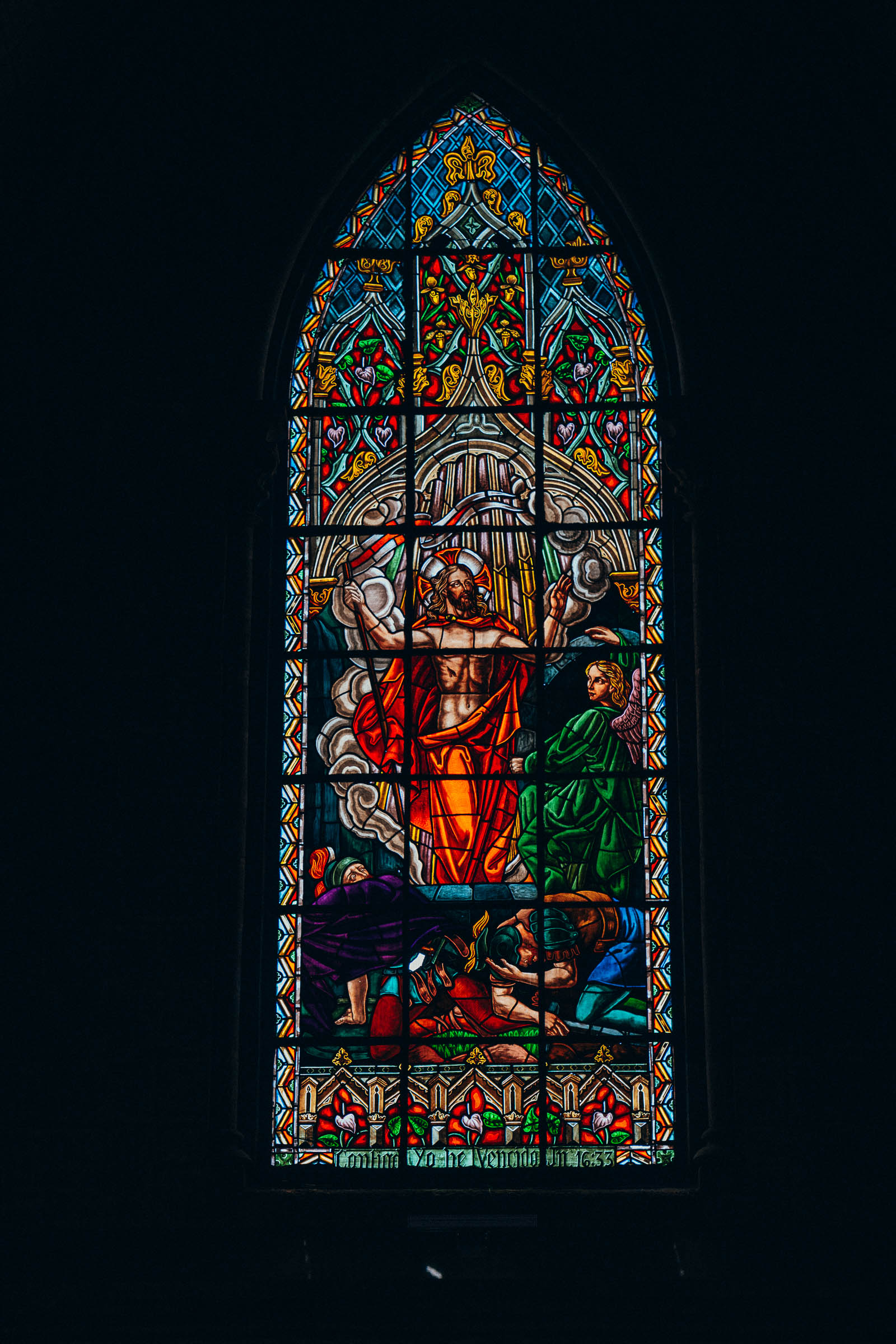
Almost a century later, on January 30, 1985, Pope John Paul II blessed the basilica. Its official consecration and inauguration followed on July 12, 1988. The nave is 140 meters long, 35 meters wide and 30 meters high, while the crossing rises to 74 meters. Inside, colorful stained-glass windows bathe the altars in light.
GARGOYLES, LEGENDS AND A VIEW FROM THE TOWERS
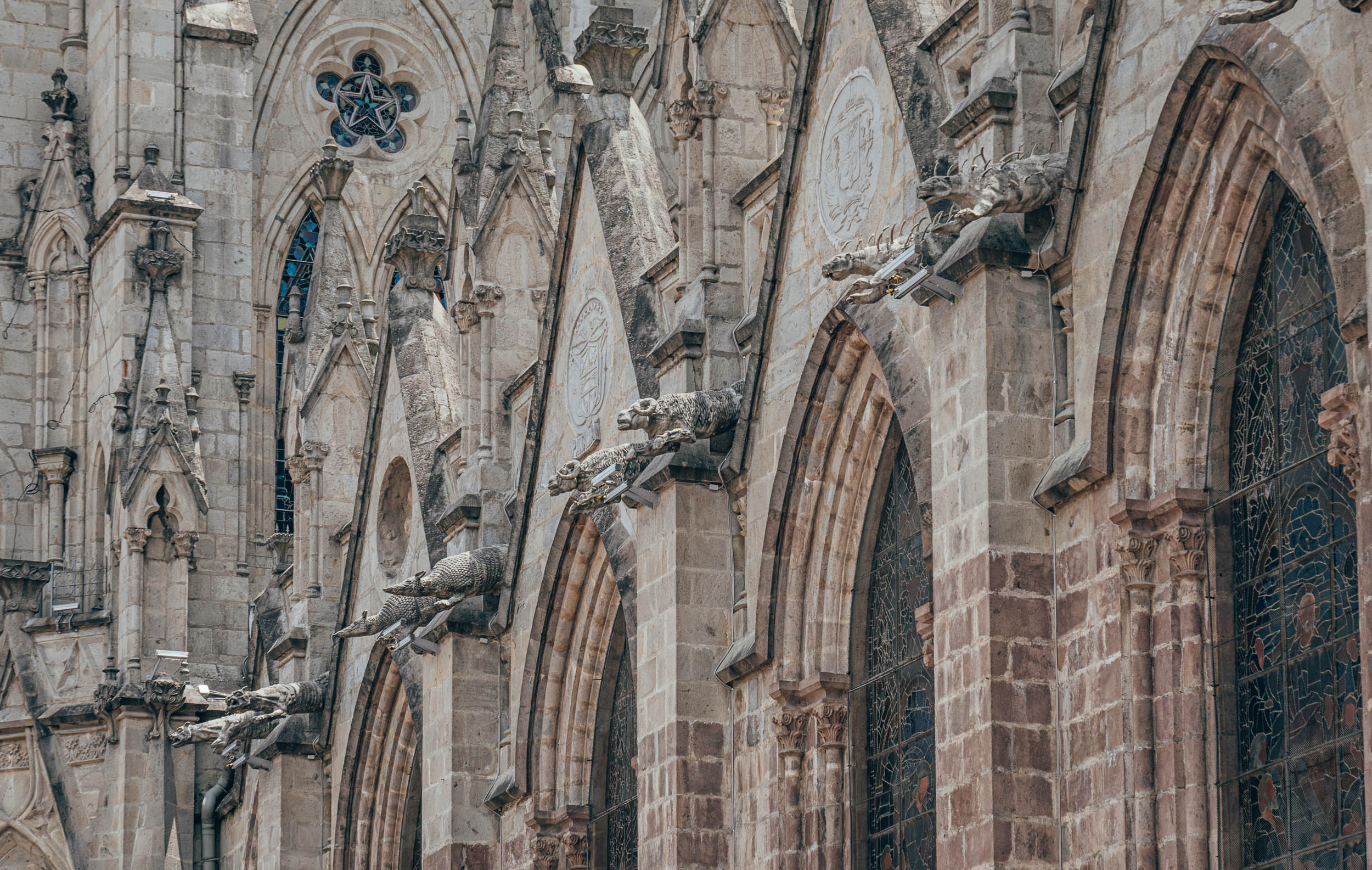
Now, look closely at the facade. Instead of classic European monsters, the gargoyles show animals native to Ecuador. You will spot armadillos, iguanas, dolphins, condors, pumas and Galápagos tortoises.
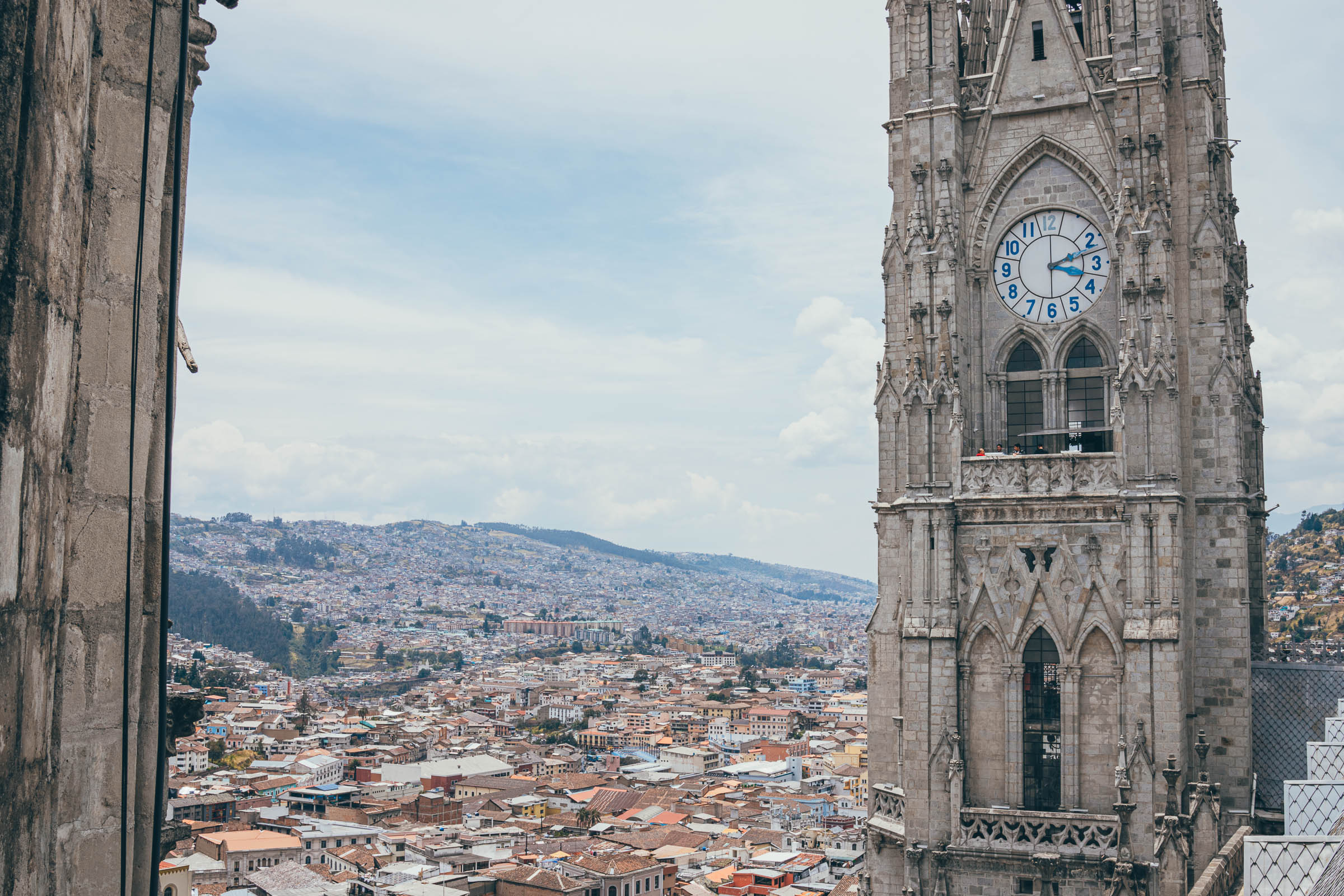
The basilica also has its own legend. Technically, it is still unfinished, and locals say that the world will end on the day it is completed. For a small fee, you can climb up to a viewing platform. From there, the whole city opens up beneath your feet.
THE VIRGIN OF EL PANECILLO
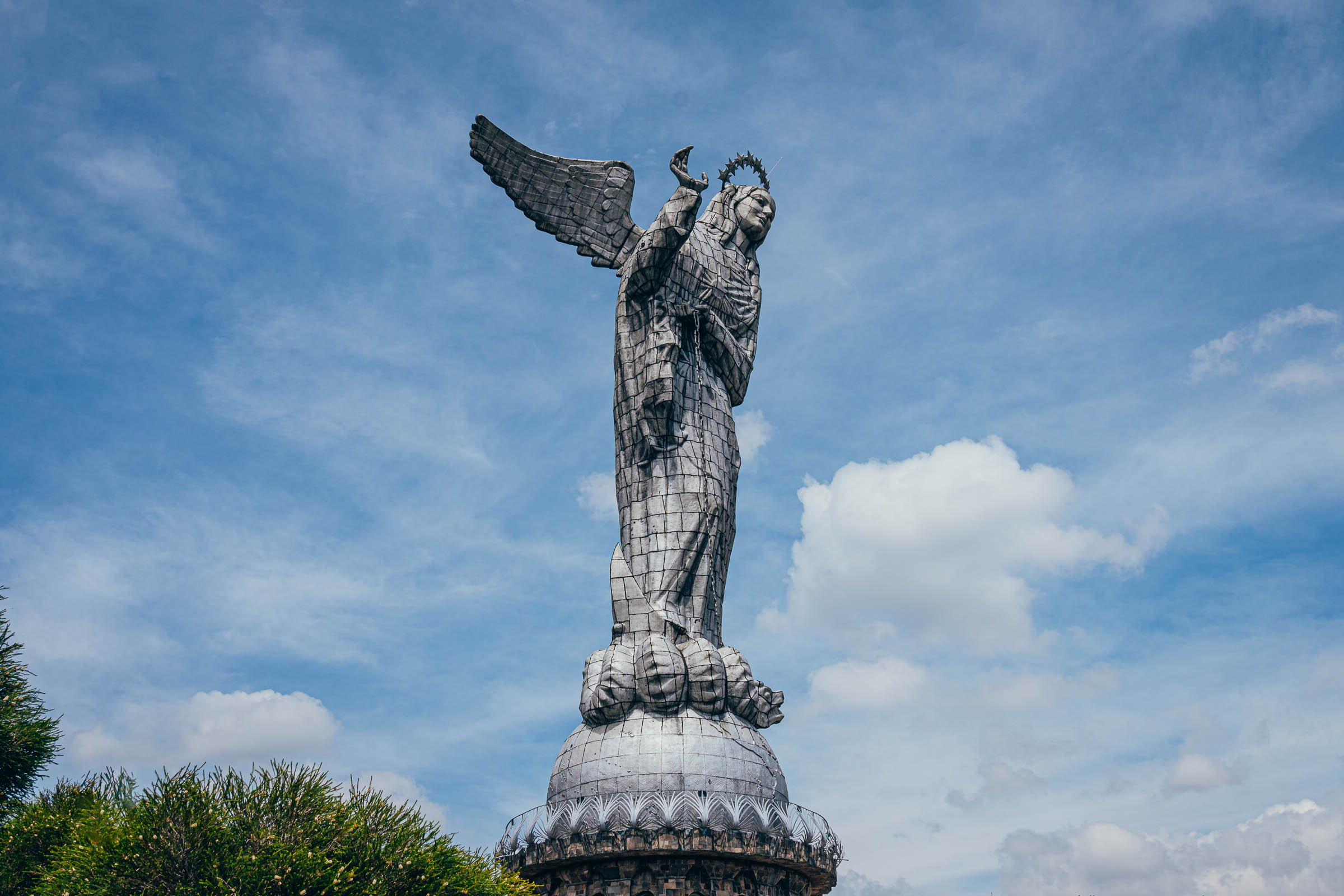
After the basilica, my advice is to visit the Virgin of El Panecillo. You can see her from most parts of Quito. She stands on top of El Panecillo, a loaf-shaped hill 200 meters high, right next to the historic center.
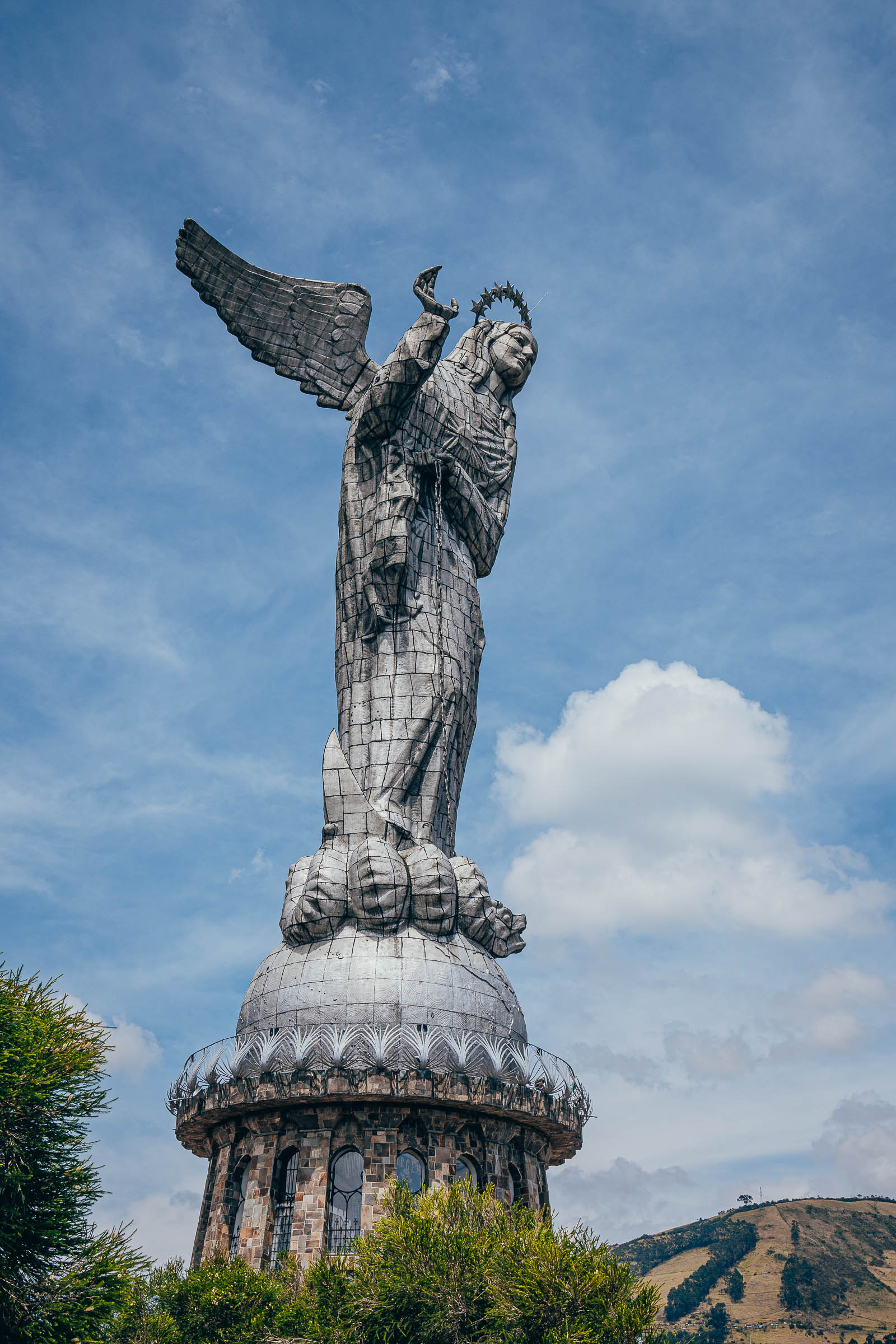
With its base, the statue is 41 meters tall, so it is taller than Christ the Redeemer in Rio de Janeiro. It is also the tallest aluminum statue in the world. The Spanish sculptor Agustín de la Herrán Matorras built it from 7,400 pieces of aluminum. He finished it on March 28, 1975. His model was a small wooden sculpture that Bernardo de Legarda created in 1734. Like the classic image of the Woman of the Apocalypse, the Virgin stands above a dragon. Every year, the site hosts Nativity illuminations and a traditional novena. If you have seen the film Proof of Life, you may remember the statue from its closing credits.
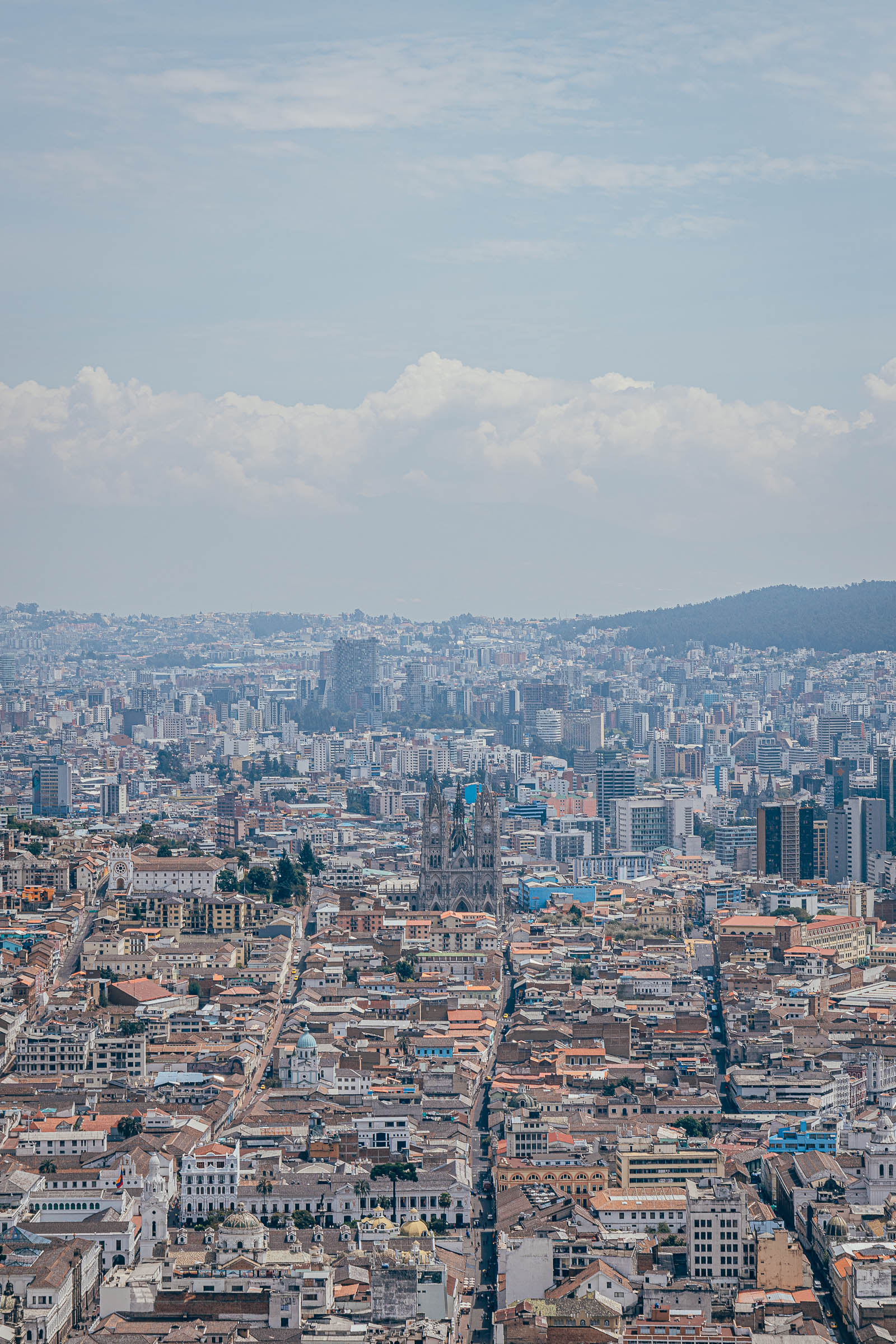
The view from the top is truly magnificent, and this was an amazing experience for me.
WHY QUITO IS THE PEARL IN THE MIDDLE OF THE WORLD
Ecuador literally means “equator” in Spanish, so the country carries the name of the line that crosses it. Colombia borders it to the north, Peru to the east and south, while the Pacific Ocean washes its western coast. Quito is the capital city closest to the equator, which runs through the northern part of the metropolitan area. That is why I call it the pearl in the middle of the world. In addition, in 1978, Quito and Kraków became the first places that UNESCO declared World Cultural Heritage Sites.
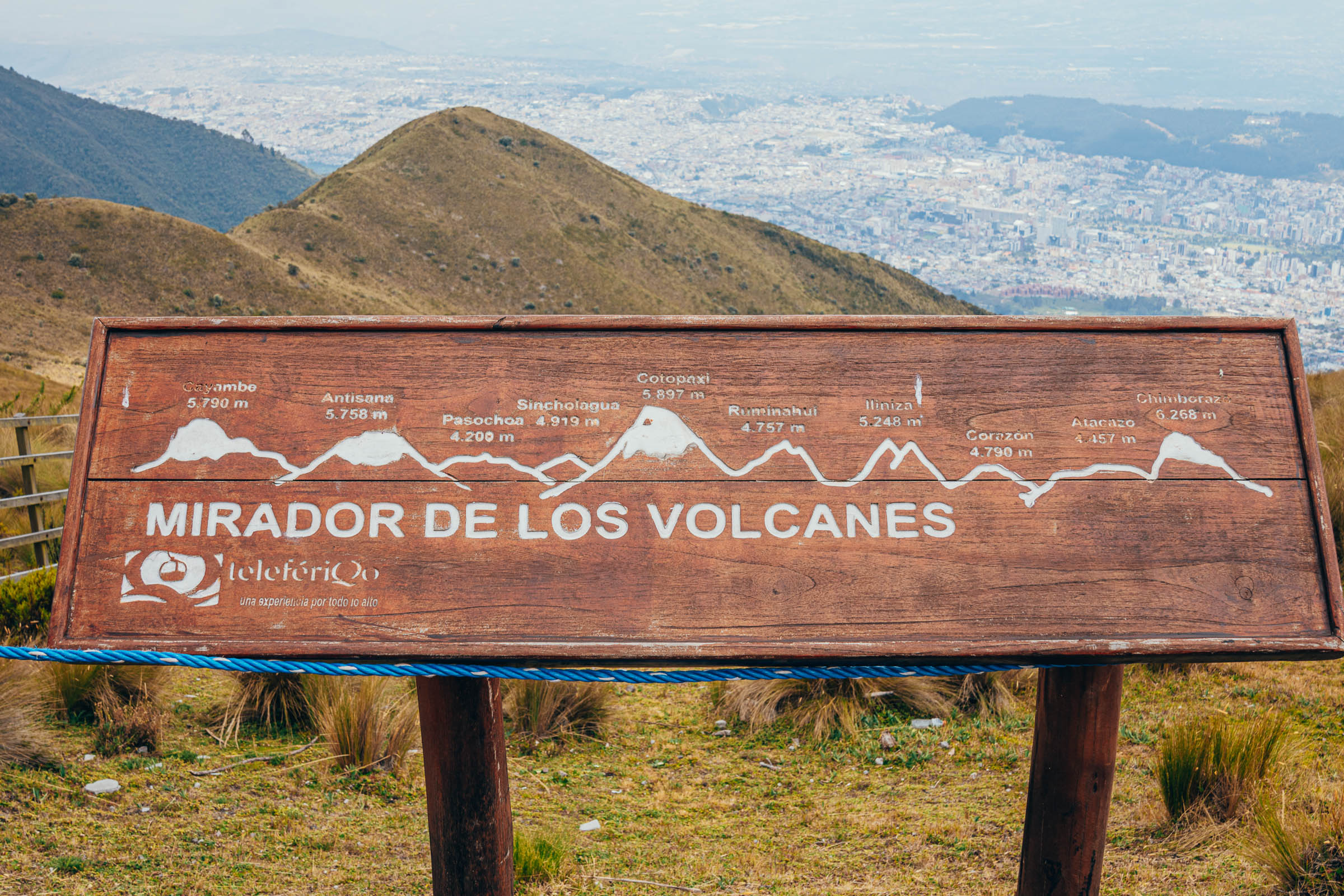
Ecuador is also famous for the Avenue of the Volcanoes. The German explorer Alexander von Humboldt gave this name to the Andean corridor south of Quito in 1802. The highest peak of Ecuador is Chimborazo, at 6,263 meters. However, the best known giant is Cotopaxi, at 5,897 meters one of the highest active volcanoes in the world. On a clear day, you can see its snow-capped cone from Quito. Finally, Ecuador is one of the 17 megadiverse countries in the world, and it also includes the Galápagos Islands.
CIUDAD MITAD DEL MUNDO, THE MIDDLE OF THE WORLD CITY
About 26 kilometers north of the center of Quito lies Ciudad Mitad del Mundo. In English, its name means the Middle of the World City. The province of Pichincha owns this complex. Its main attraction is the Monument to the Equator, 30 meters tall. The architect and contractor Alfredo Fabián Páez built it between 1979 and 1982. He used iron and concrete and covered them with polished andesite stone. An older, smaller monument now stands in the nearby town of Calacalí.
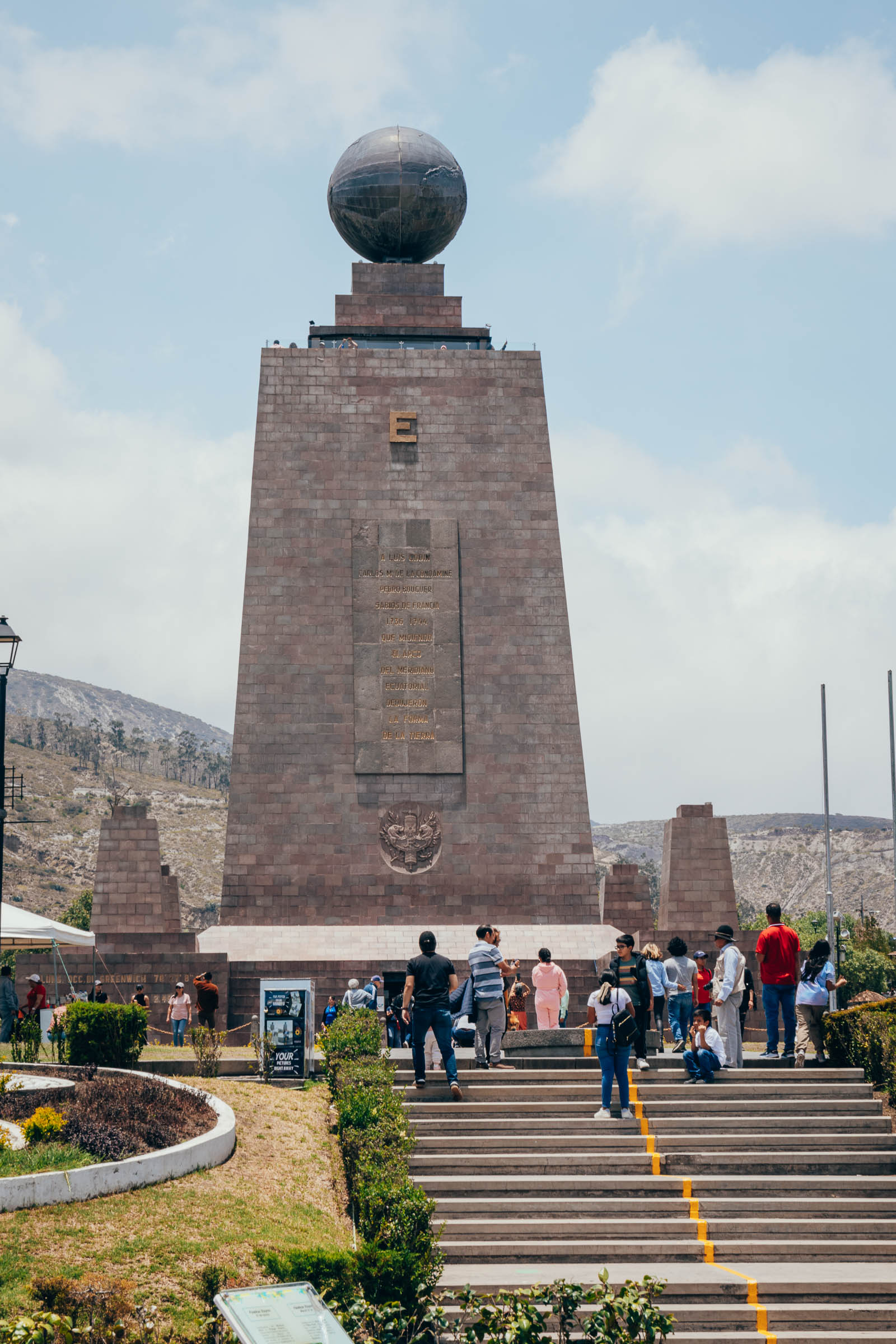
The monument honors the French Geodesic Mission of 1736. Louis Godin, Pierre Bouguer and Charles Marie de La Condamine led this famous expedition. They wanted to test whether the Earth is flattened at the poles. To do so, they compared a meridian arc near the equator with one measured in Sweden.
Here is an interesting detail: modern GPS readings place the real equator about 240 meters north of the painted line. Still, standing with one foot in each hemisphere at the Middle of the World monument is a must. Inside the monument, a small ethnographic museum presents the indigenous peoples of Ecuador. On the grounds, you will also find a planetarium, a miniature model of Quito, restaurants and craft shops. On weekends, the central plaza hosts music and cultural events.
INTIÑAN MUSEUM: EXPERIMENTS IN THE MIDDLE OF THE WORLD
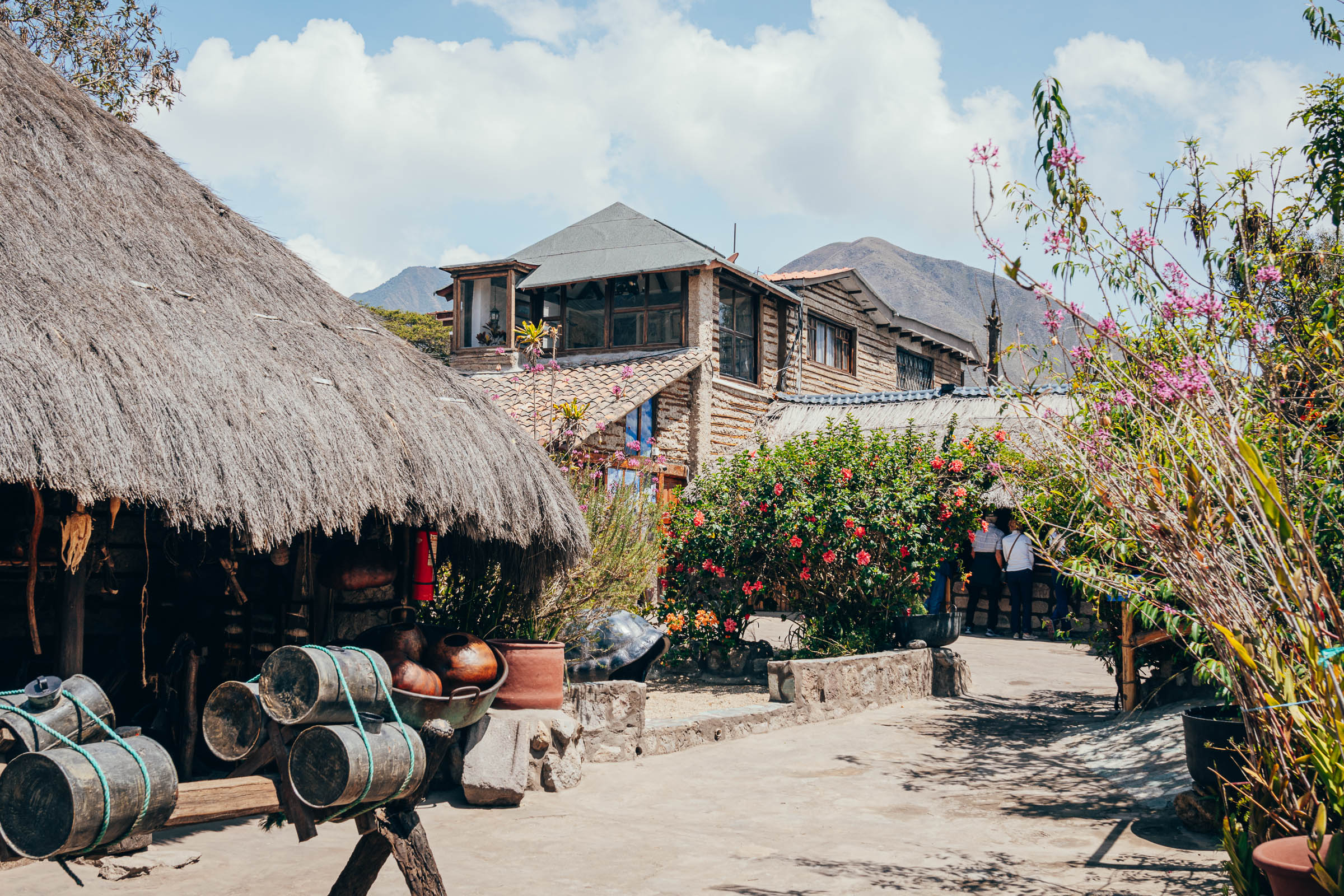
Right next to the monument, about 200 meters to the northeast, lies the private Intiñan Solar Museum. It claims its own equator line, although modern measurements suggest it no longer marks the exact spot. Still, a visit to this corner of the middle of the world is great fun, especially for travelers with children.
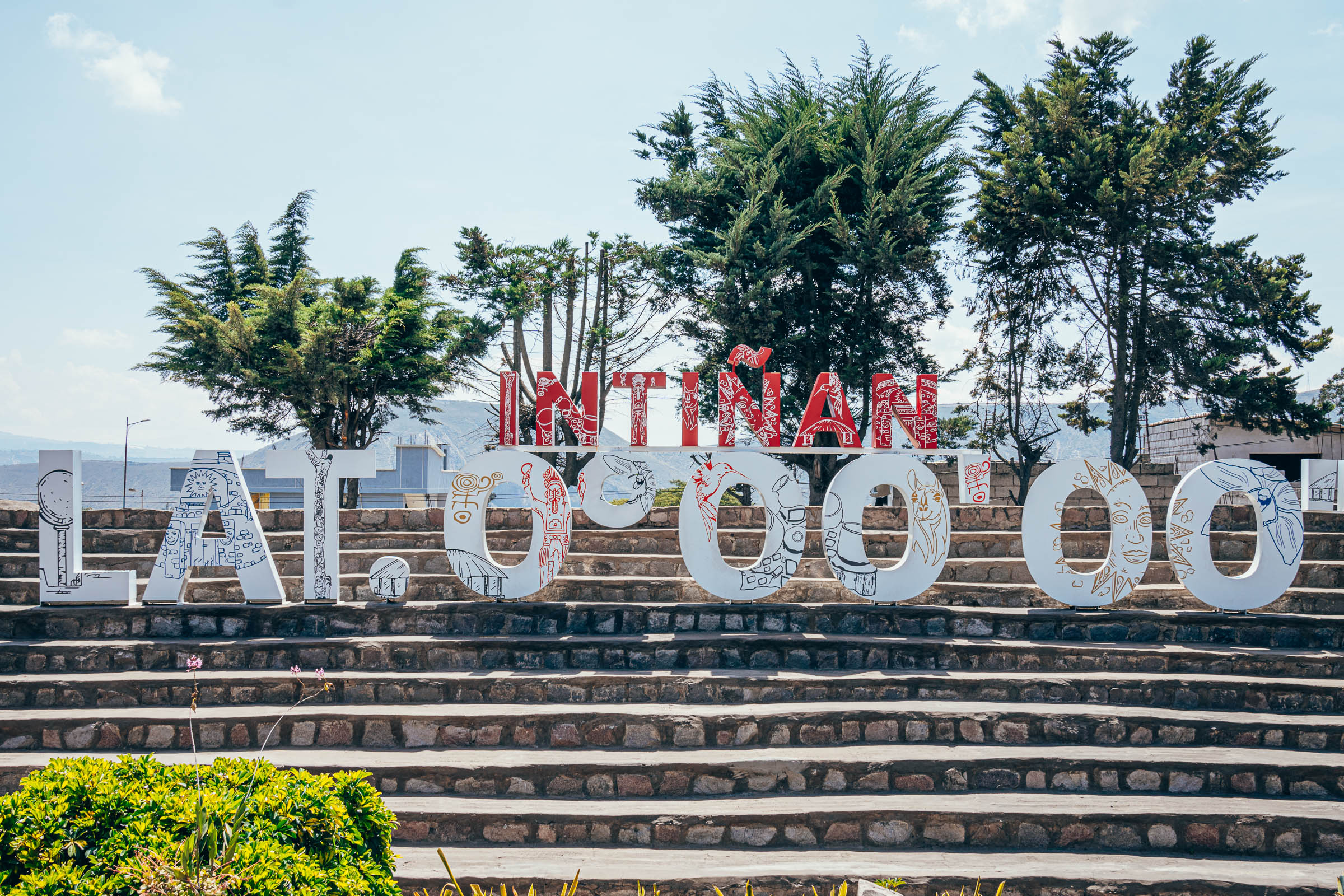
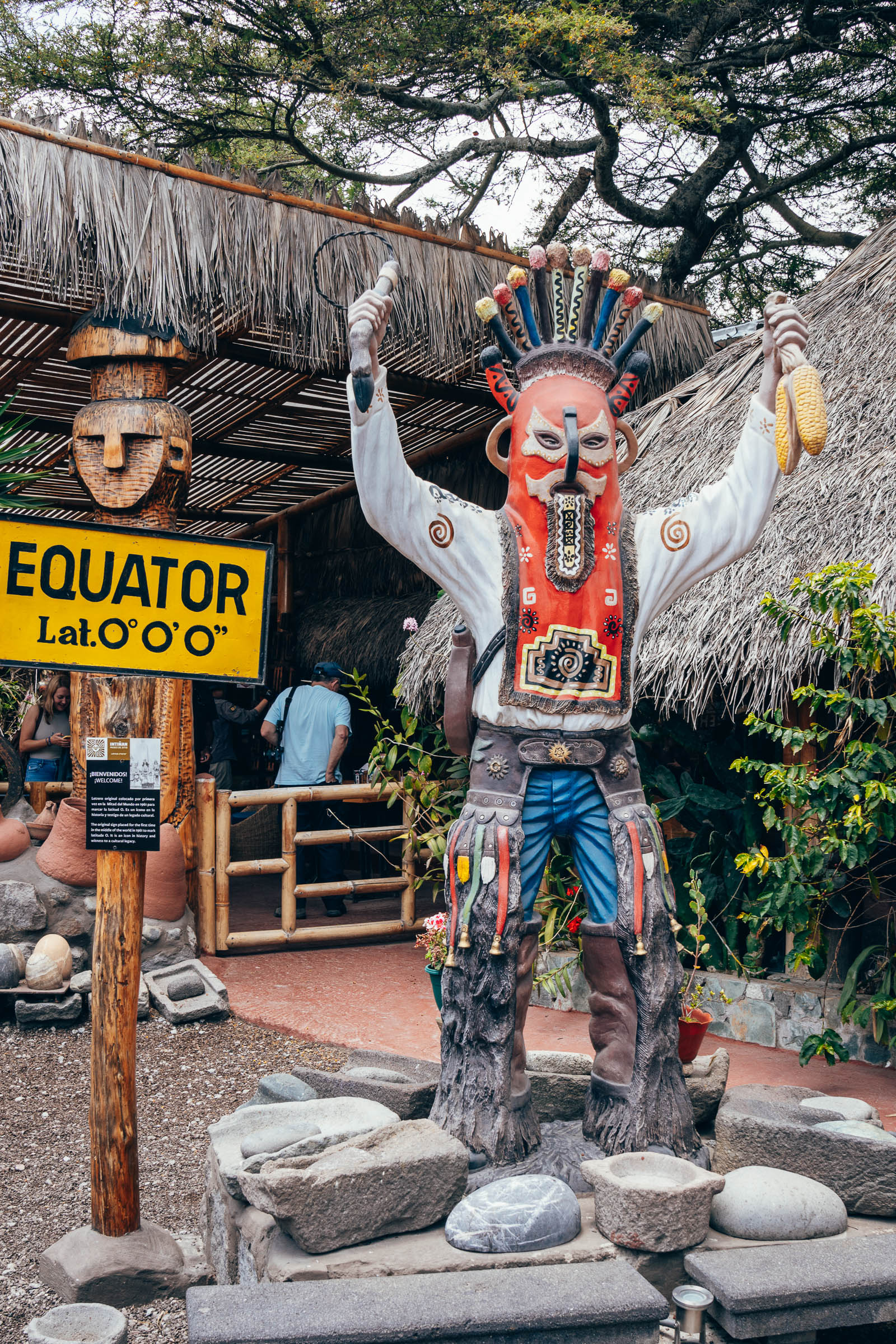
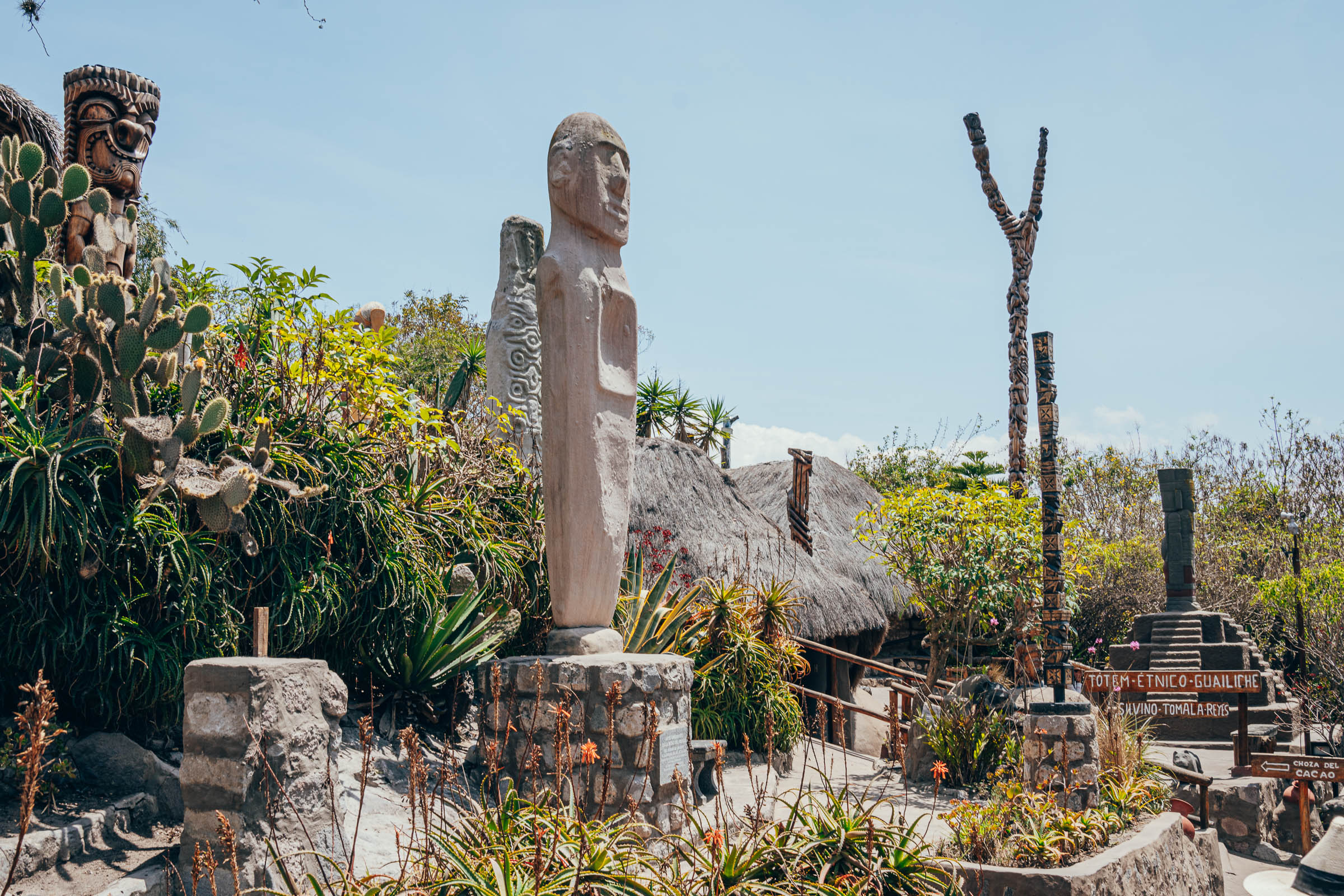
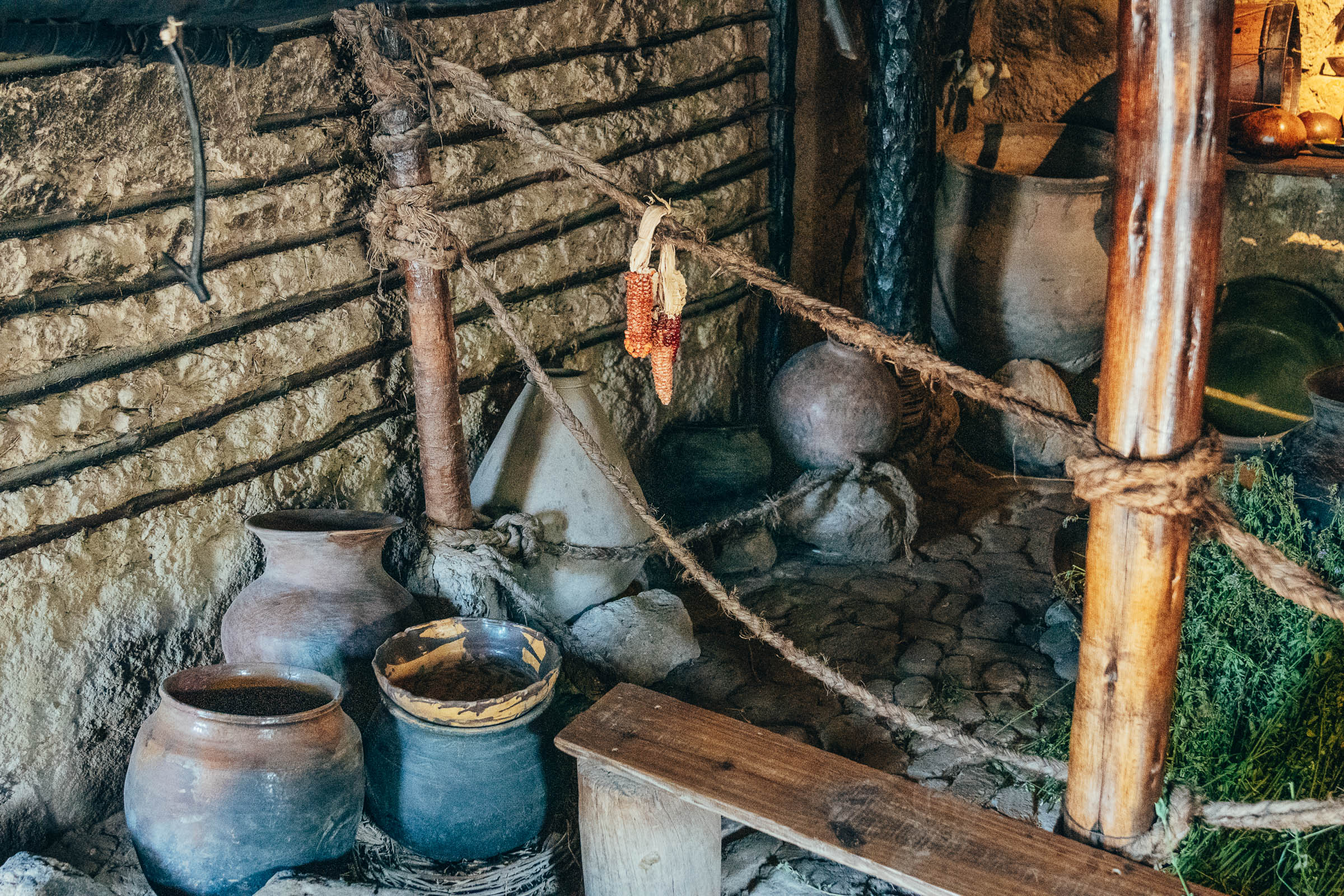
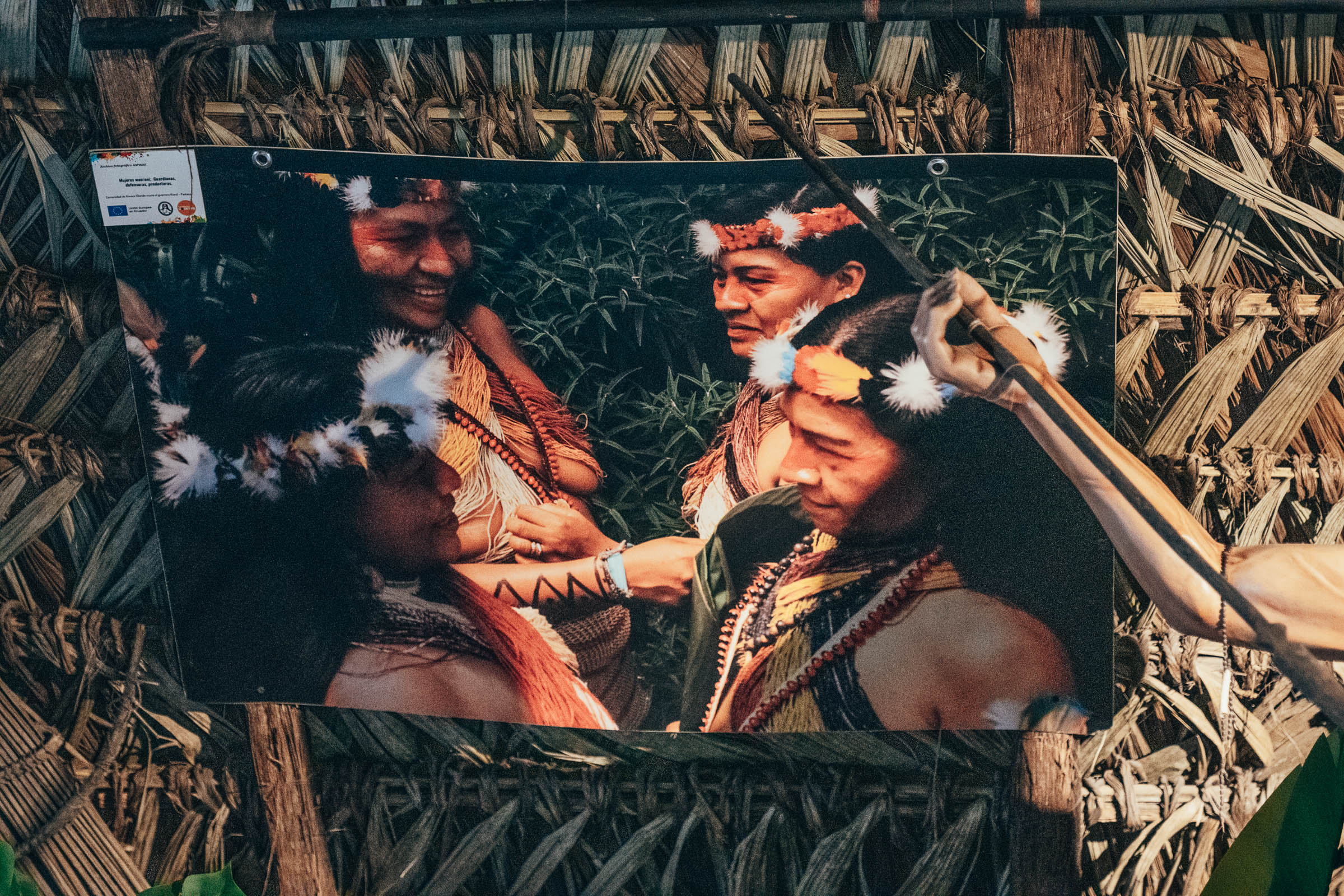
A guide leads you through the museum. First, you discover the cultures of Ecuador. Among other things, you will see a life-size dwelling of the Waorani people and a forest of carved totems. You will also see a sun clock that measures time with the sun. Meanwhile, guinea pigs and llamas wander around freely. At the end, do not forget to get a stamp in your passport as proof that you visited the middle of the world.
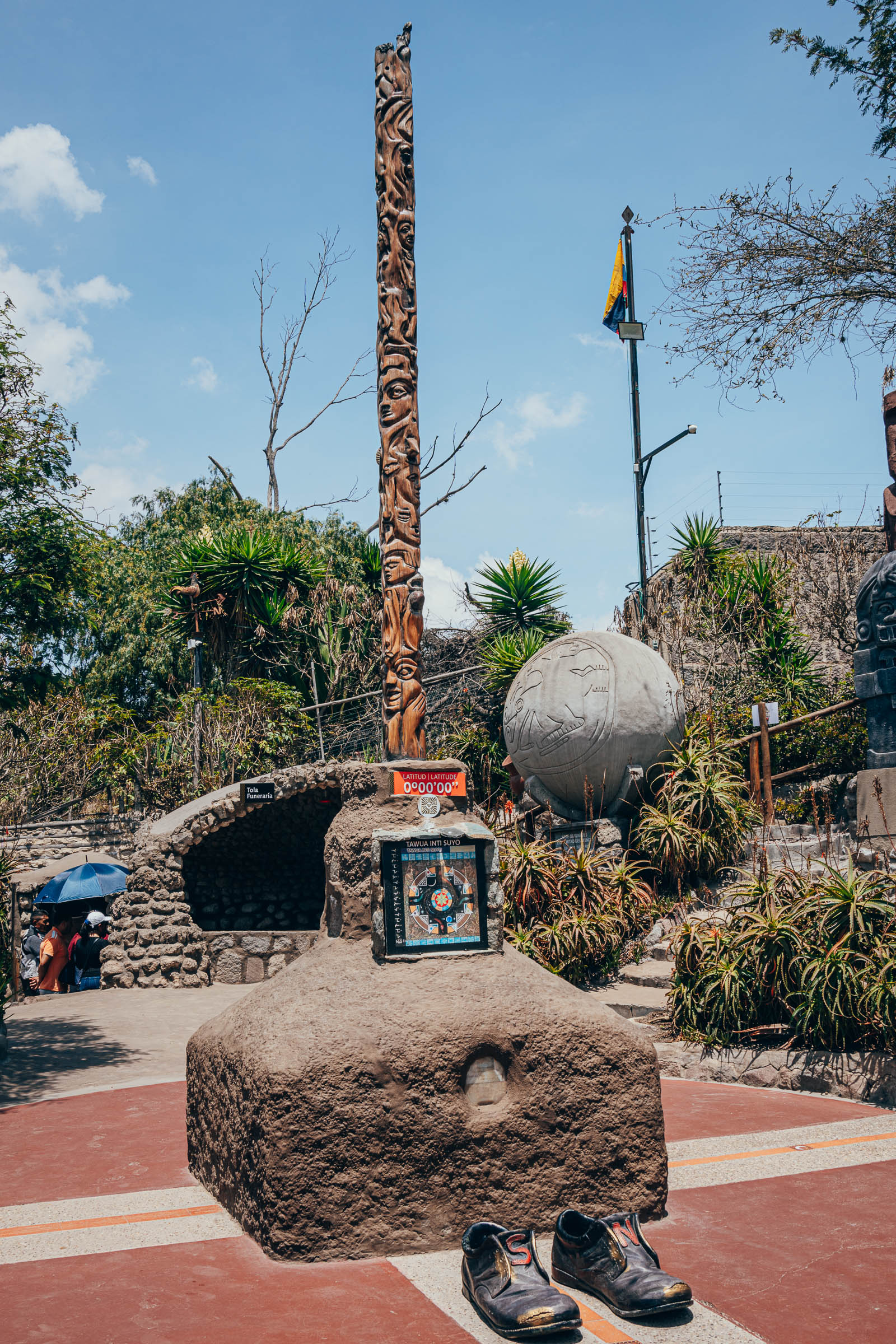
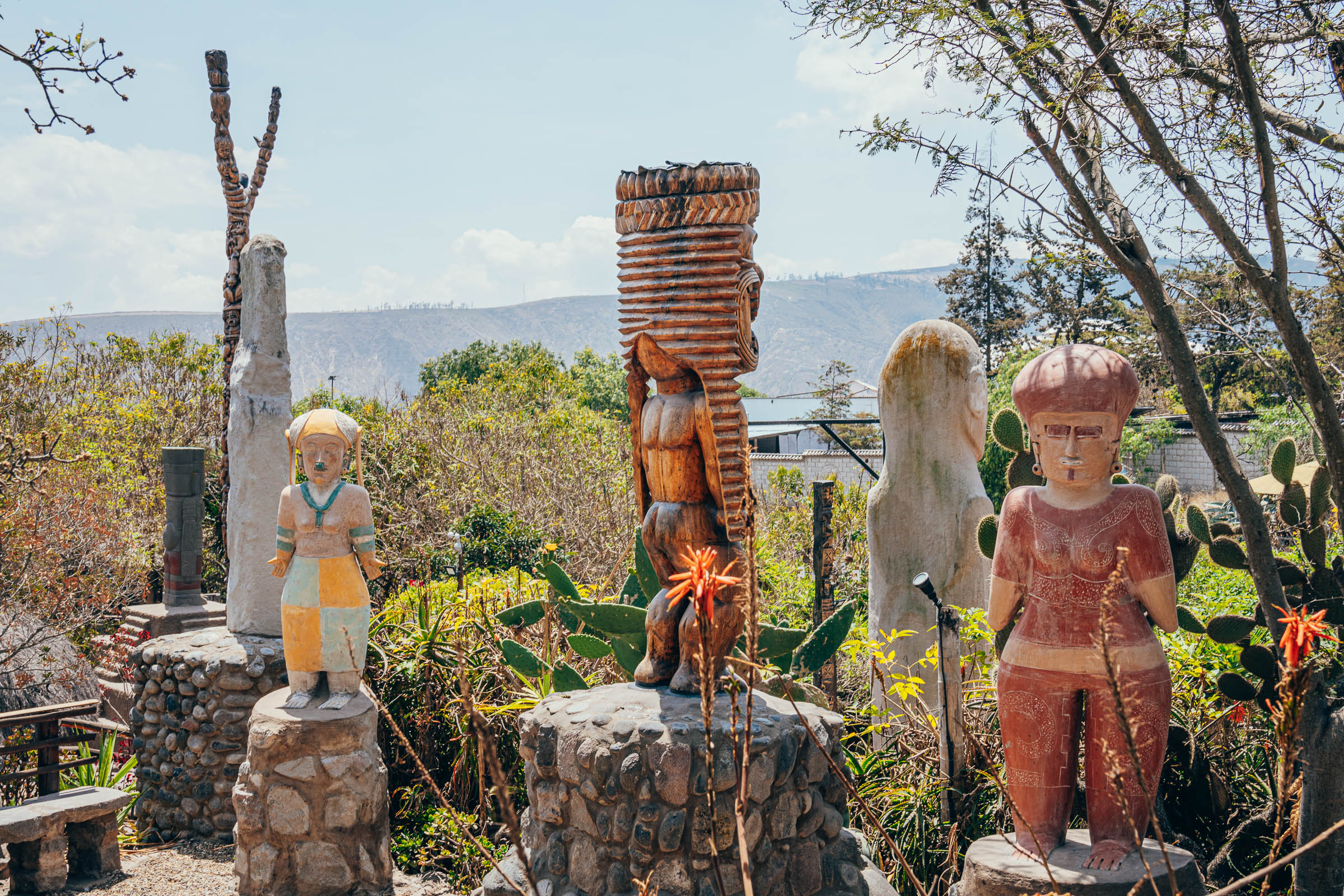
MY EXPERIMENTS ON THE EQUATOR LINE
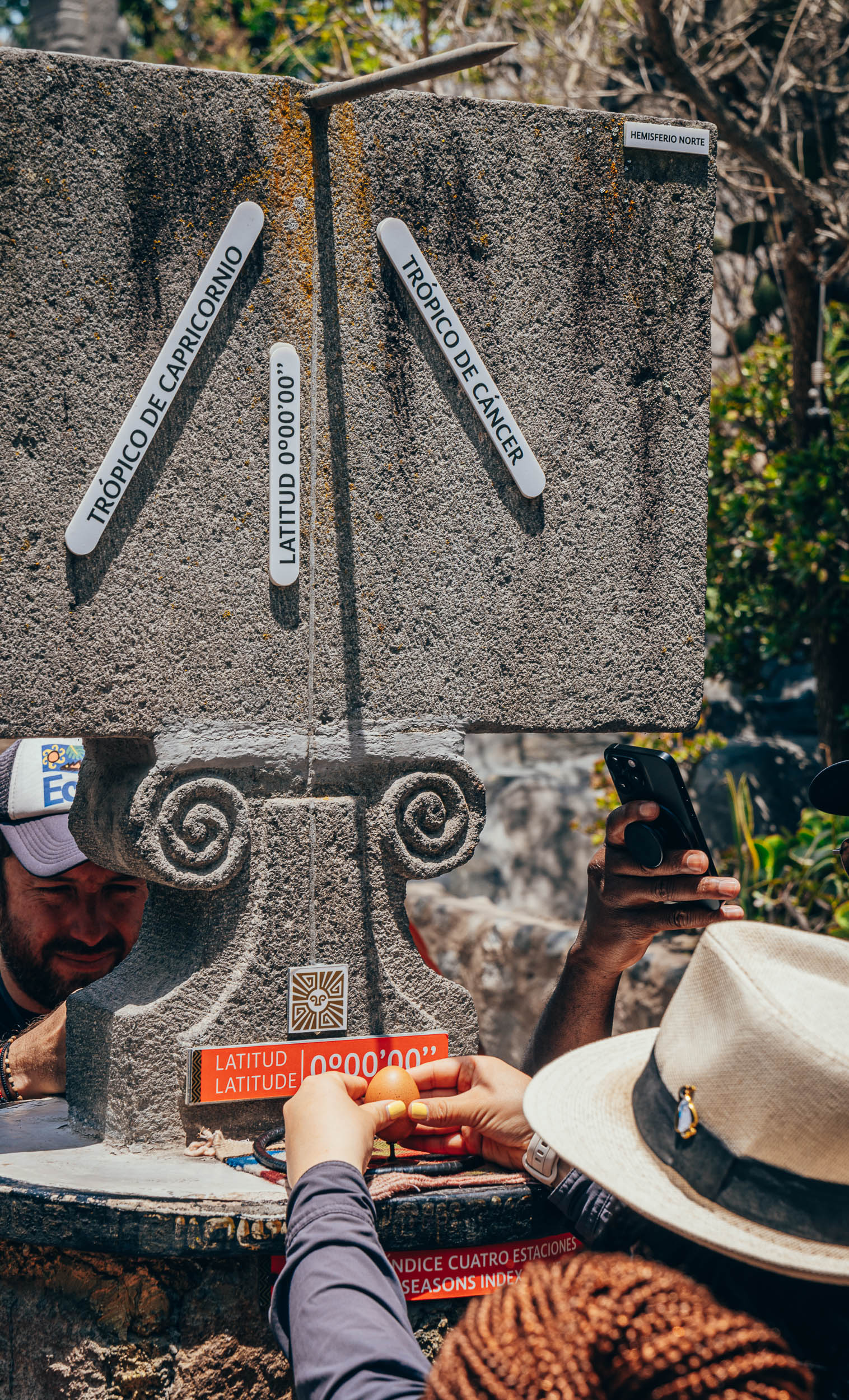
After that, the real fun begins. In the first experiment, we closed our eyes and walked along the line. Strangely, almost all visitors struggled to keep their balance. Then, the guide poured water into a sink on each side of the line, and it spun in opposite directions. It looks like magic. However, scientists explain that the Coriolis effect is far too weak to decide how water drains from a sink.
Next came a test of strength with the guide’s finger. To be honest, I am still not sure how it works. Finally, we tried to balance an egg on the head of a nail. It is not easy at all, but one visitor succeeded. I learned a lot about the peoples of Ecuador, and I warmly recommend this museum.
TELEFÉRIQO, UP THE PICHINCHA VOLCANO
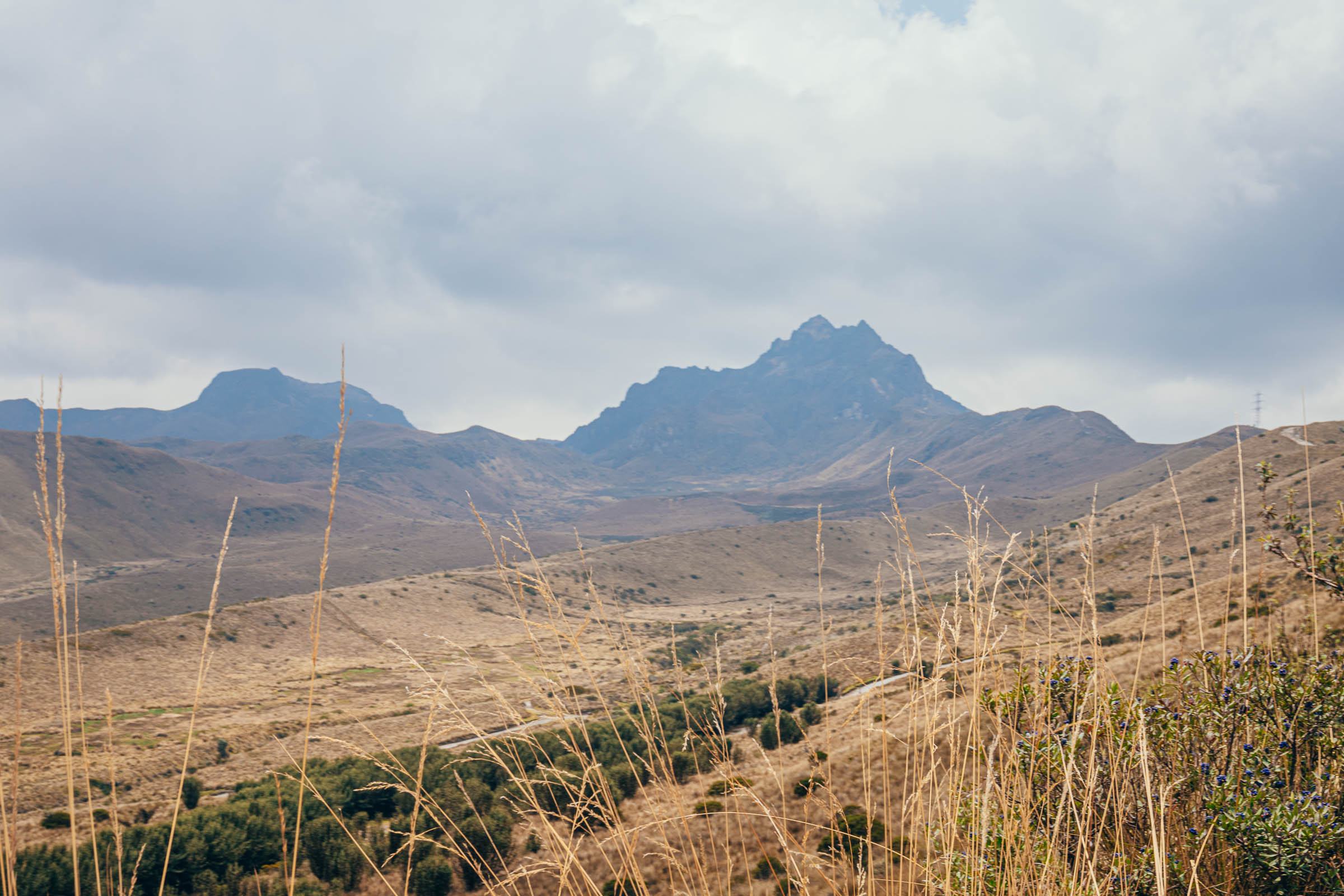
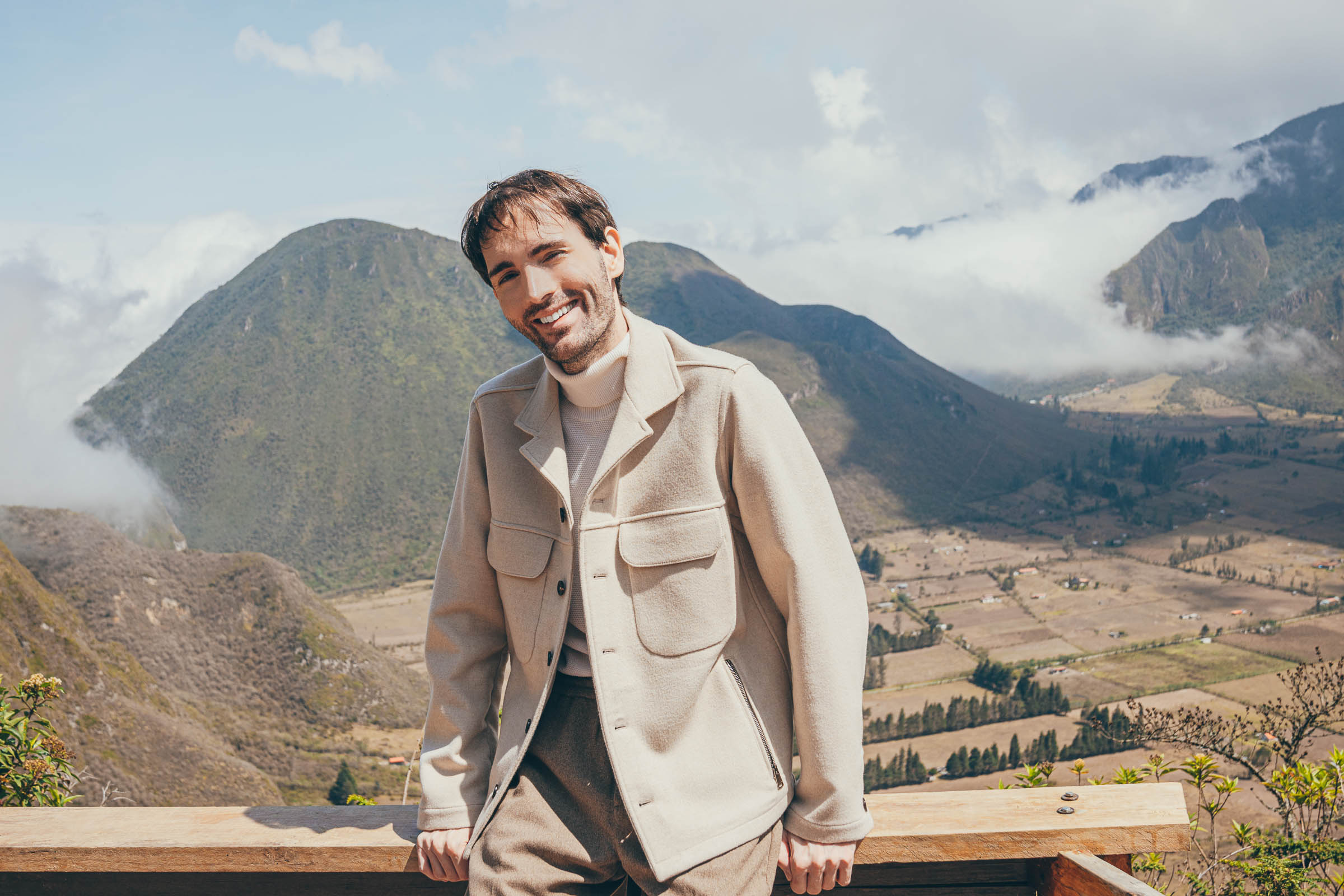
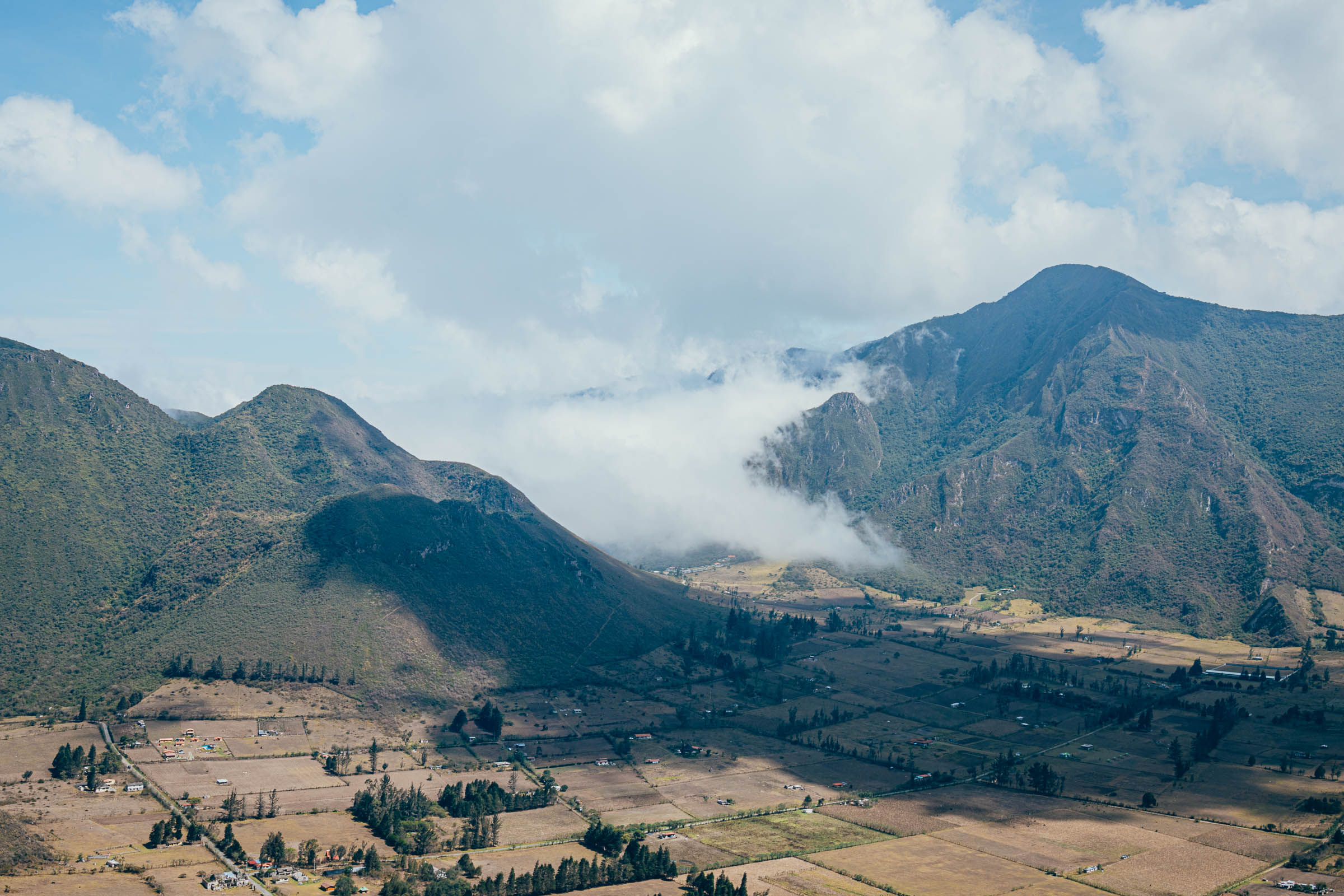
Now comes my favorite part for all lovers of mountains and incredible views. If you want unusual photos and an unforgettable experience, ride the TelefériQo. This cable car opened in July 2005. It runs from the edge of the city up the eastern side of the Pichincha volcano to the Cruz Loma lookout. At the foot of the cable car, there is also the Vulqano Park amusement park.
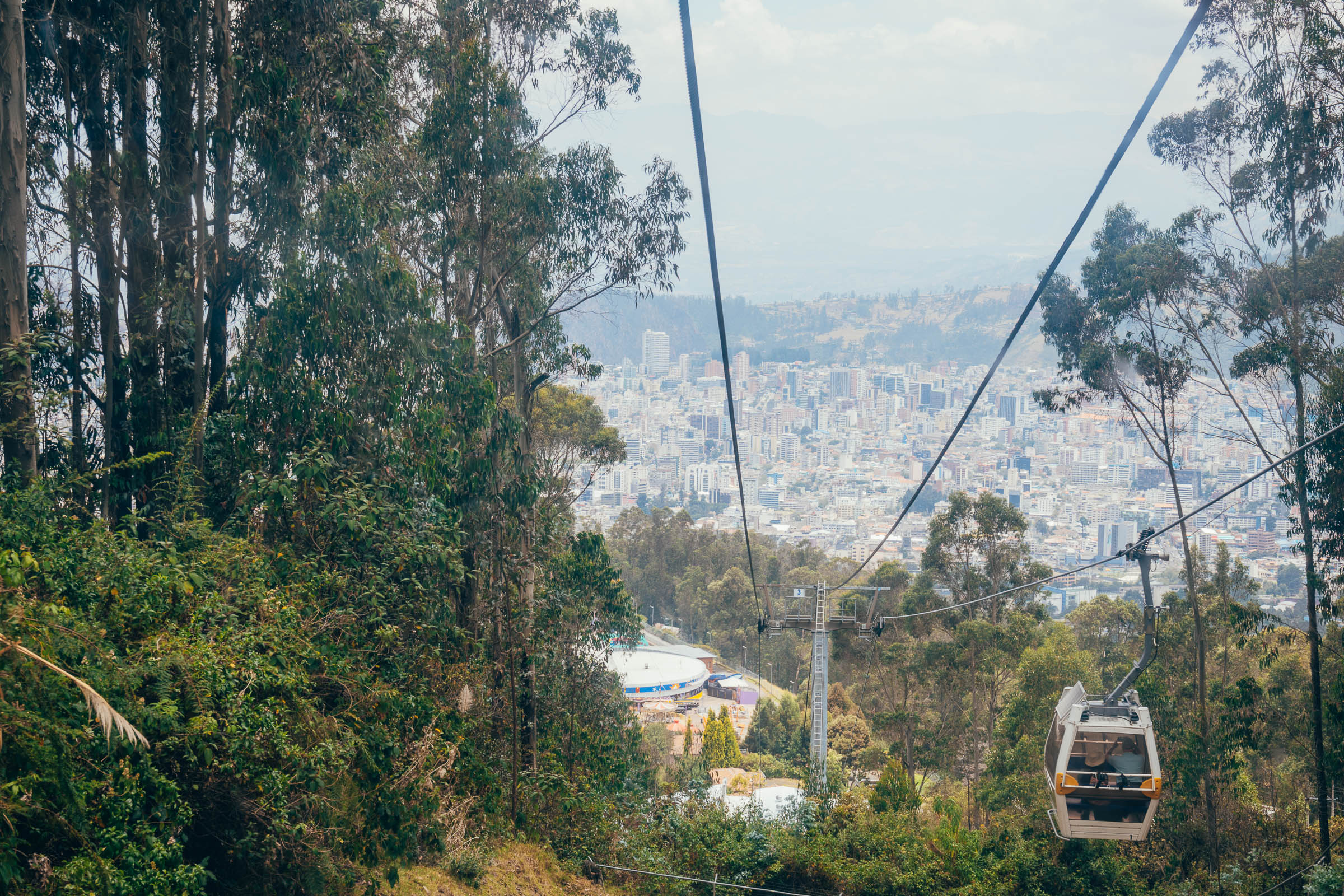
The TelefériQo is one of the highest aerial lifts in the world. Over 2,237 meters, it climbs from 3,117 to 3,945 meters above sea level. The start is already high, because Quito itself lies at 2,850 meters. That makes it either the highest or the second-highest national capital in the world.
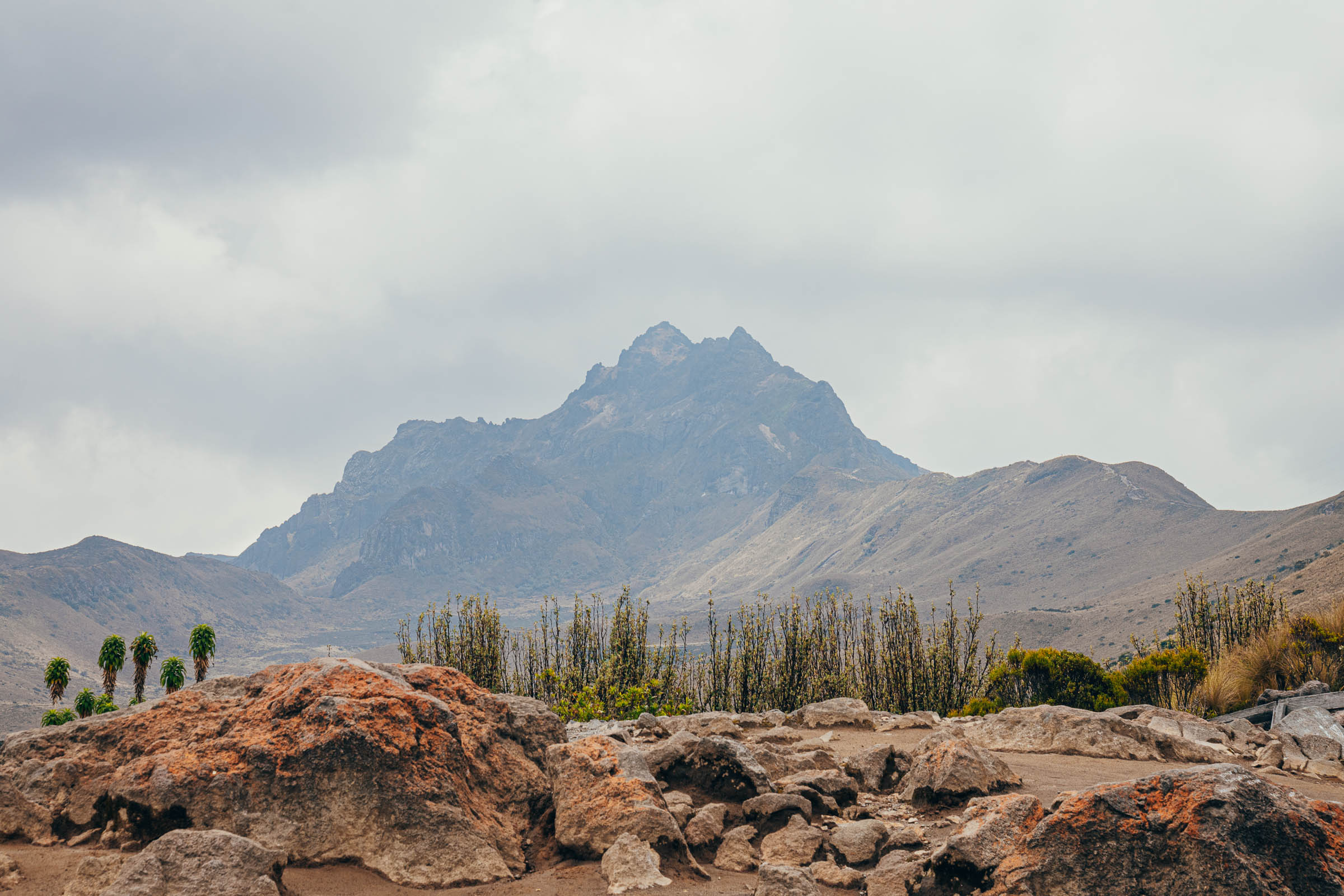
One small explanation: you are not going up a mountain, but a volcano. Pichincha has two main peaks, Guagua Pichincha at 4,784 meters and Rucu Pichincha at 4,698 meters. From Cruz Loma, hiking trails lead toward Rucu Pichincha. In October 1999, the volcano erupted and covered the city with several inches of ash. In fact, the whole province carries its name.
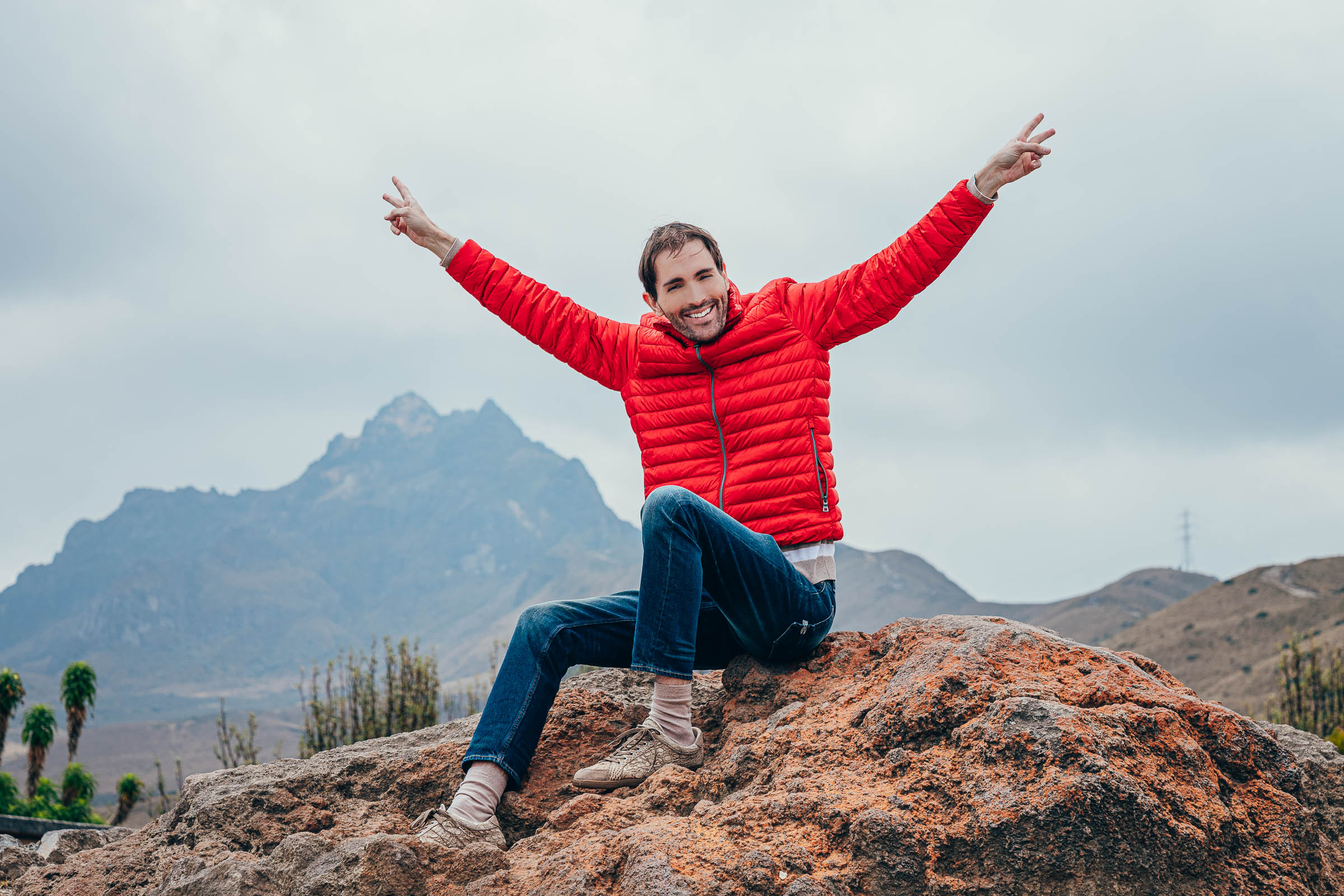
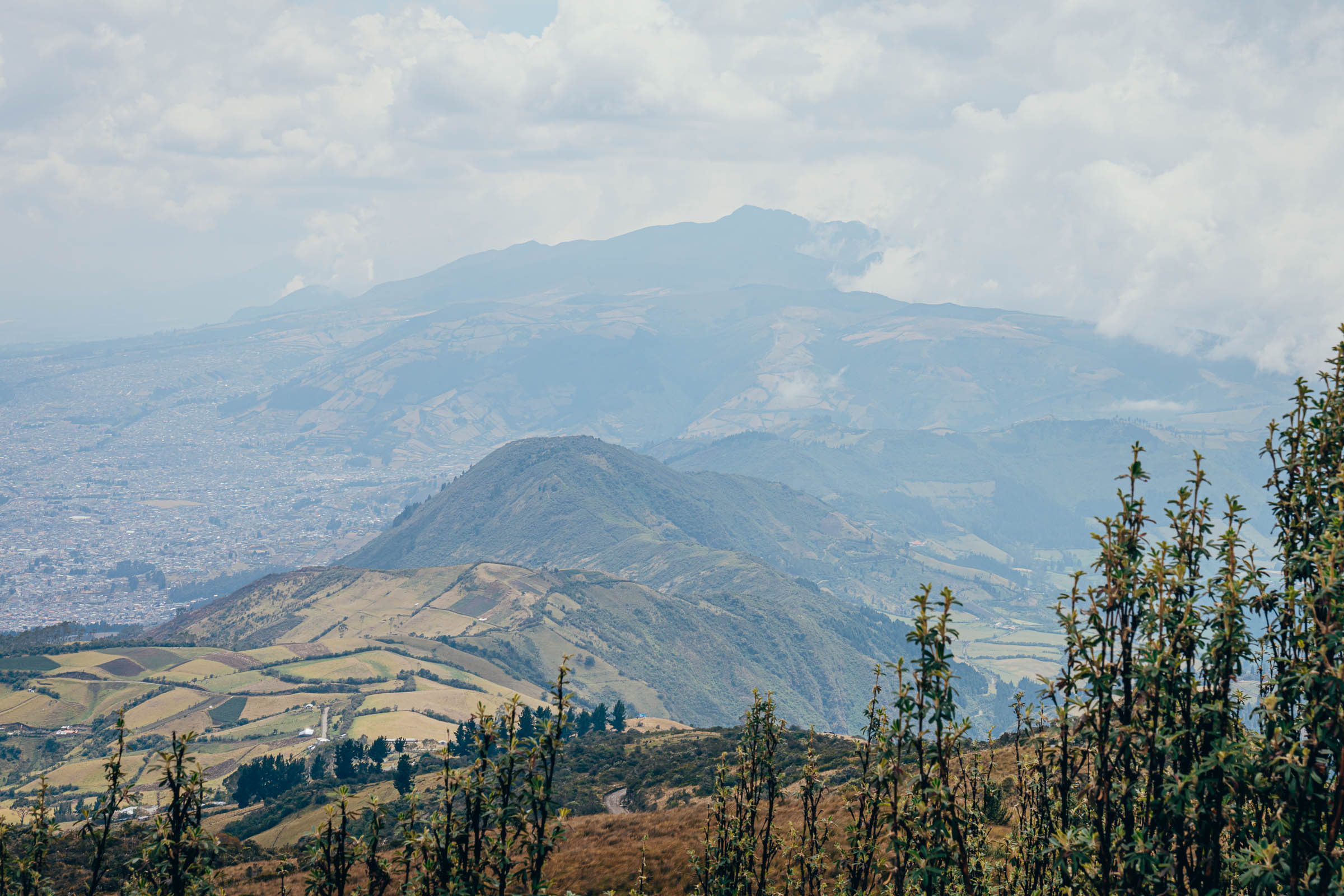
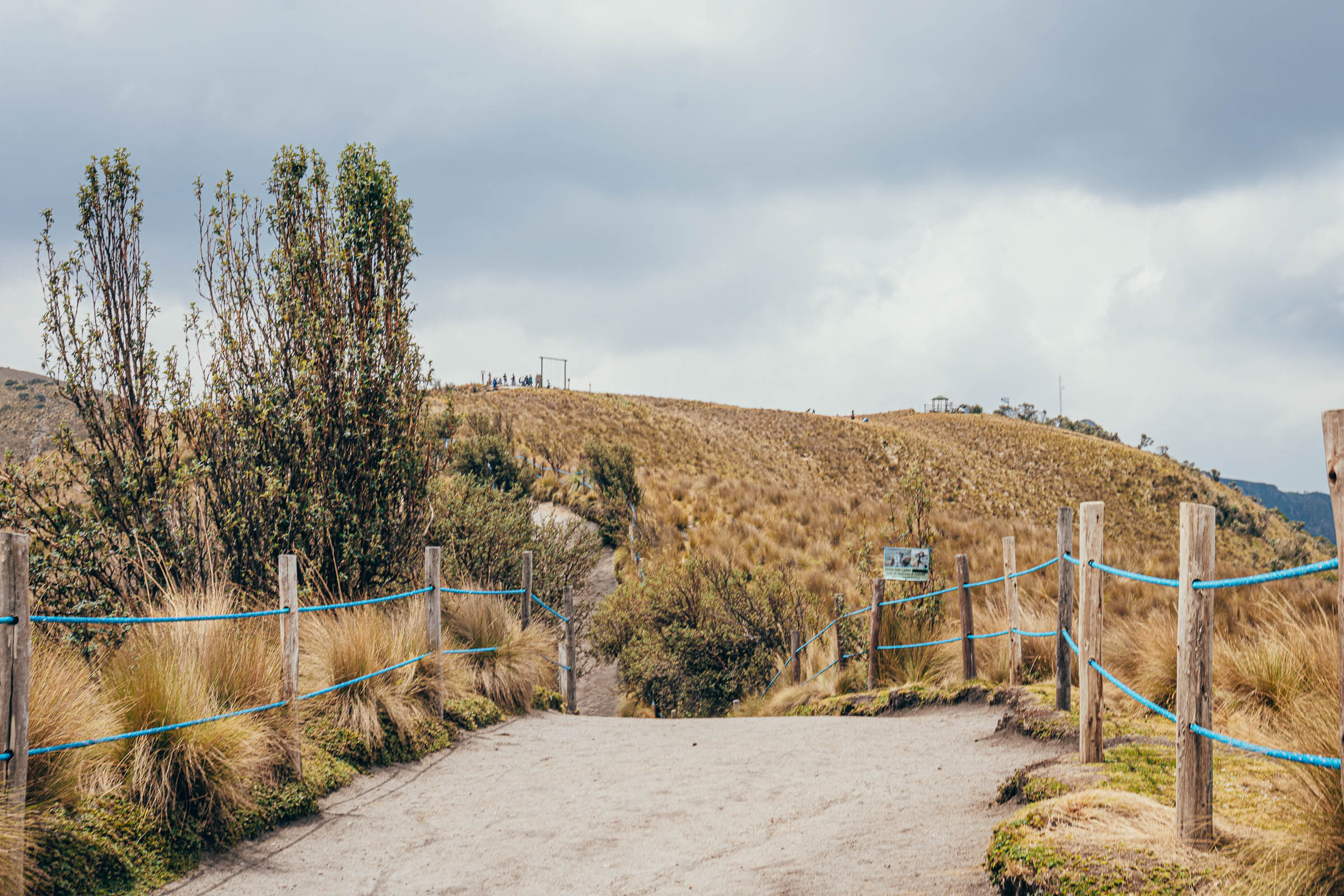
At the top, several viewpoints show different parts of the city. Our guide told us that on a clear day, you can see Cotopaxi in the distance. Unfortunately, the sky was cloudy during my visit. You will also find a swing for great photos and a few small restaurants. My tip: spend a day or two in Quito before the ride, so your body gets used to the altitude. Also, bring a warm jacket, because it can get very cold and windy at the top.
MEETING THE LLAMAS ABOVE QUITO
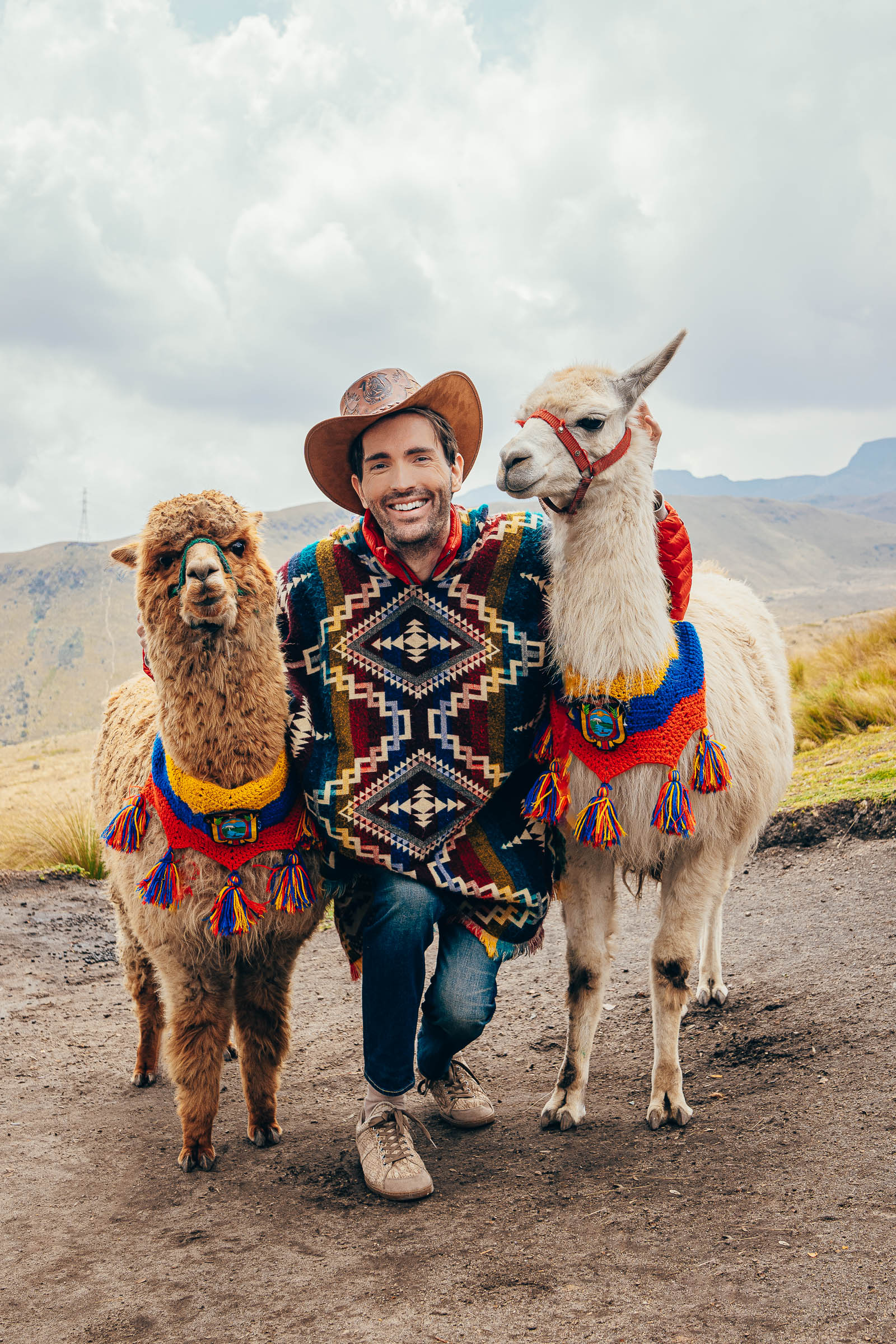
Of course, I found my favorite animals, the reason I came to South America. With them, I took one of the most beautiful photos of this trip. My tip: approach them slowly and talk to them in a soft, calm voice. In a short time, you have to gain their trust, so that the photo becomes a lovely memory.
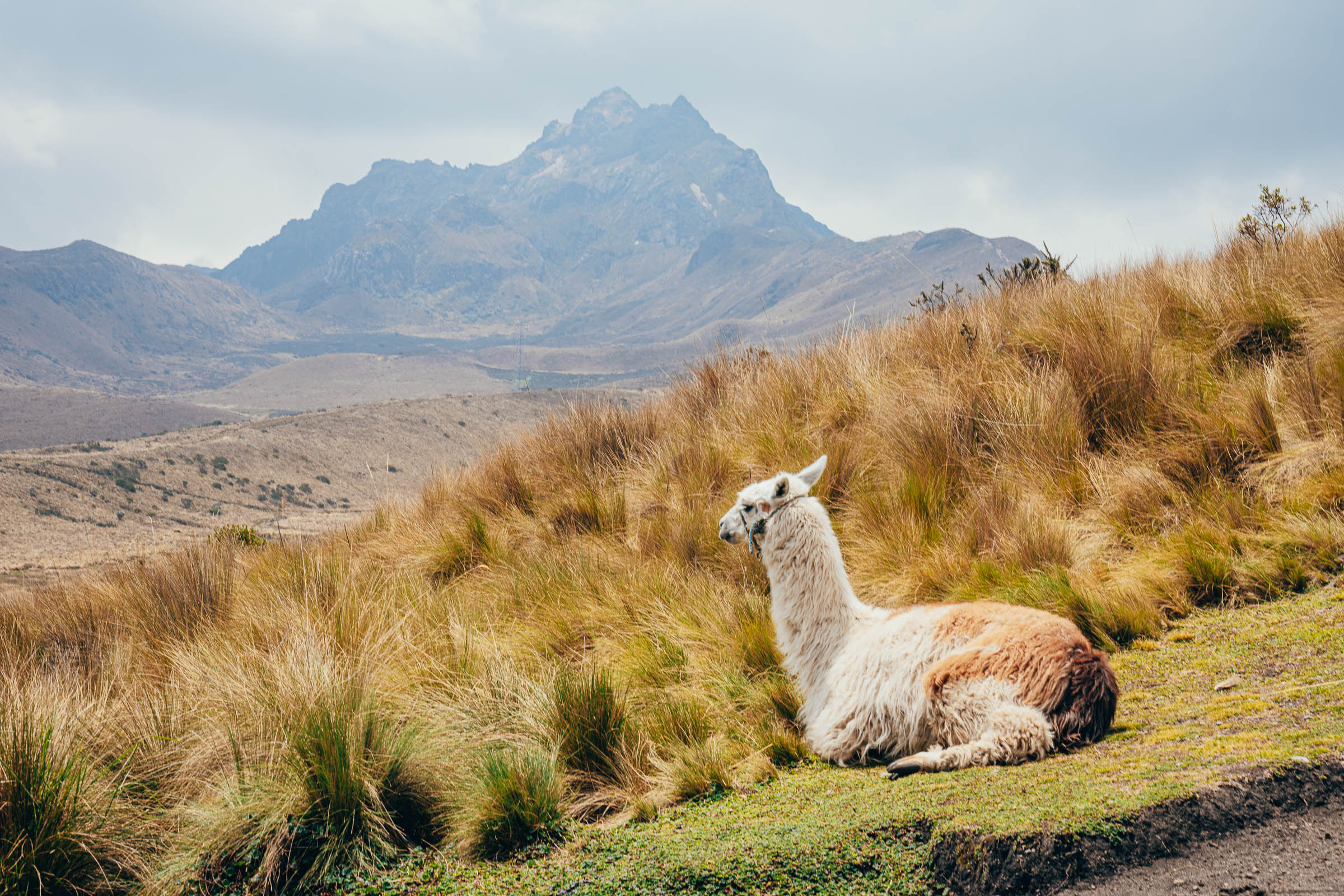
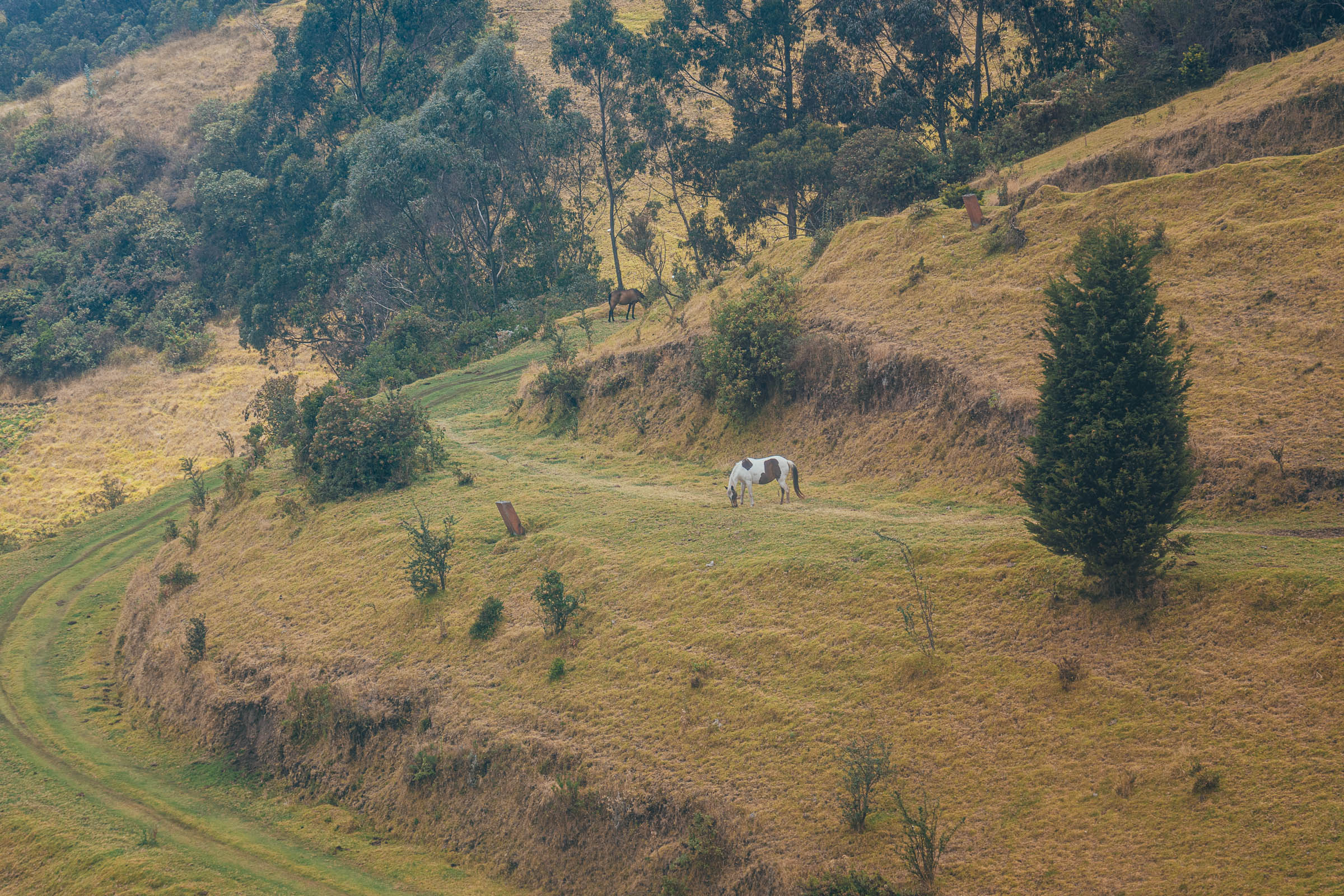
In addition to llamas, you can ride horses on certain trails and enjoy the view. The weather was windy and foggy, so I did not ride this time. That was not easy for me, because I love horses and learned to ride as a child. My advice is to check the forecast and choose a sunny day. For long walks, dress warmly, because the weather up here changes quickly.
SAYING GOODBYE TO THE MIDDLE OF THE WORLD
My dear travelers, we have come to the end of my second travelogue from Quito, the pearl in the middle of the world. This story would not exist without PRO ECUADOR, Visit Quito, Hotel Patio Andaluz and KLM. I also thank the local partners who let me feel the spirit of Ecuadorian culture and tradition. In my next travelogue, I will take you to other interesting places in Ecuador.
I believe a person grows richer in soul by exploring the world. That is why I am grateful for partners who help me discover unusual destinations in a new way.
Have you ever stood with one foot in each hemisphere?
Feel free to leave your impressions, comments or questions below, or contact me by email and on social networks. All information is on the CONTACT page.
With love from Quito,
Mr.M
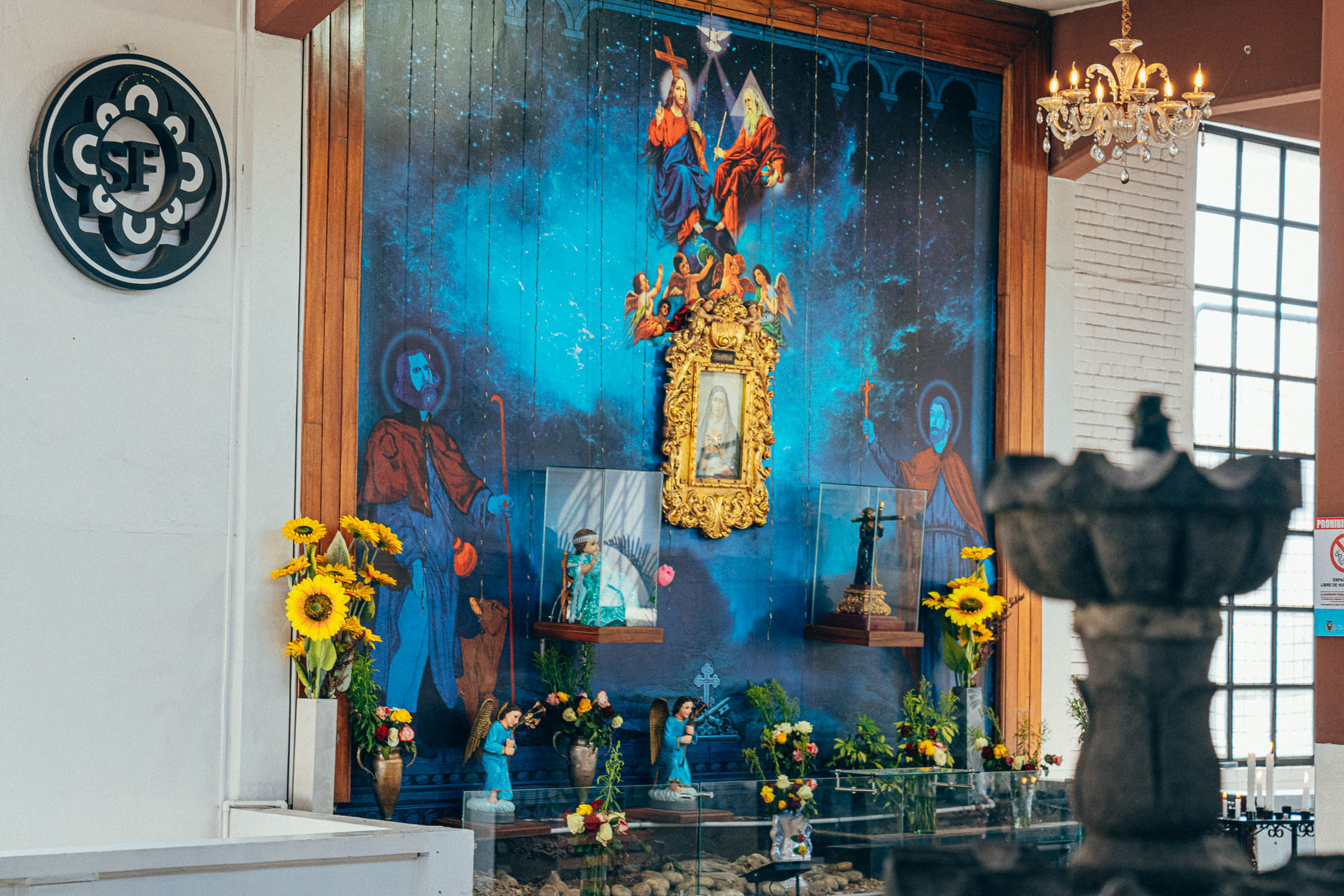
This post is sponsored by Quito Tourism Board – Visit Quito, PRO ECUADOR, Hotel Patio Andaluz, the airline KLM and other local partners. This post is my personal and honest review of the destination experience.
Dear Marko, I have just read your two travelogues about the capital of Ecuador and I can say that I really like Quito and I would like to visit Ecuador during the next year. Can you tell me if you happen to know when is the best time to visit Ecuador? Is it better during March, April, May or is it better during September – October when you went. Thank you in advance for your reply.
Dear Clement, thank you for your kind message. I can’t complain about the weather during my visit to Ecuador because I was in early October, but many guides recommended that the best time to visit Ecuador is from June to September. I hope my answer helped you. 🙂
With best regards,
Marko
Thank you for the hotel recommendations in Quito, I have booked plane tickets for February 2025 but have not booked hotels yet. I was thinking whether it is better to book a hotel in Old Quito or to go to a new part of the city, but to get to know the city better I think it is better to book a hotel in Old Quito. Can you tell me what the transport is like in Quito? Are taxis and Uber safe in Ecuador or I maybe need to hire private guide to drive me around Quito?
Dear Gabin, I thank you for taking the time to read my travelogue and write a comment. Yes, if you want to get to know Quito, it’s best to find accommodation in the old part of the city because a large number of sights are located in the old part of the city. In terms of safety, the city is really safe and because of the prices I would recommend Uber, I have used it several times and I am very satisfied.
If you want to get to know Quito a little better, you will need a local guide, it all depends on your personal preferences and how much you want to get to know the city.
Best,
Marko
Excellent travelogue, you nicely shared the story of Quito in two travelogues and really shared a lot of useful information about the city itself. I visited several countries in South America and thought about visiting Ecuador, but kept postponing the trip. I am currently thinking of doing a tour of Peru, Ecuador and Colombia for 18-21 days. Is 7 days enough to visit the main attractions and cities (without Galopagos, I am aware that you need to spend at least 6.7 days there to get to know the islands well).
Dear Jacopo, I want to thank you for taking the time to read my travelogue and share your travel plans with me. I think 7 days is enough to get to know the cities in Ecuador such as Quito, Cuenca and Guayaquil.
My advice to you is that in that case, when arriving in Ecuador, your entry airport should be Quito, and that you leave Ecuador from Guayaquil in order to save time in transport. I’m sure your adventure will be unforgettable!
Best,
Marko
Dear Marko, because of you I added Ecuador to my bucket list and I am sure that I will visit Ecuador and some other countries in South America soon. I hadn’t thought about Ecuador before, but after your travelogues I think it’s necessary to visit this interesting country.
I was a few years ago in Ecuador and it is really a great pleasure to have had the opportunity to visit such an unusual country. I didn’t have much time, less than 10 days, so I visited Quito, Galapagos and Guayaquil. I hope to return in the future to continue my adventure in Ecuador because there really is a lot to see and visit there.
Great pictures Marko, it’s really impressive how you present destinations and how you point people to numerous details and facts. Your travelogues are so detailed that a simple person has the impression that he traveled together with you, I really admire your storytelling abilities, how you manage to keep the reader’s attention.