
The canyon grows narrower with every step. The walls rise above you, the light turns from gold to pink, and the voices of other travelers slowly fade. Then, after one last bend, a slice of a carved facade appears between the rocks. I stopped right there, like everyone else. No photograph had prepared me for that first glimpse of Petra.
My dear travelers and lovers of unique journeys, welcome to the second letter from my Jordanian adventure. Today, I am taking you to Petra, Jordan, one of the most mysterious ancient cities in the world. If you missed the first travelogue, read my letter from Amman and Jerash. I would like to thank the Jordan Tourism Board for the invitation and for this unforgettable experience. In this letter, I will share the story of the city and everything you need to plan your own visit.
PETRA, JORDAN AT A GLANCE: THE ROSE CITY IN A FEW FACTS
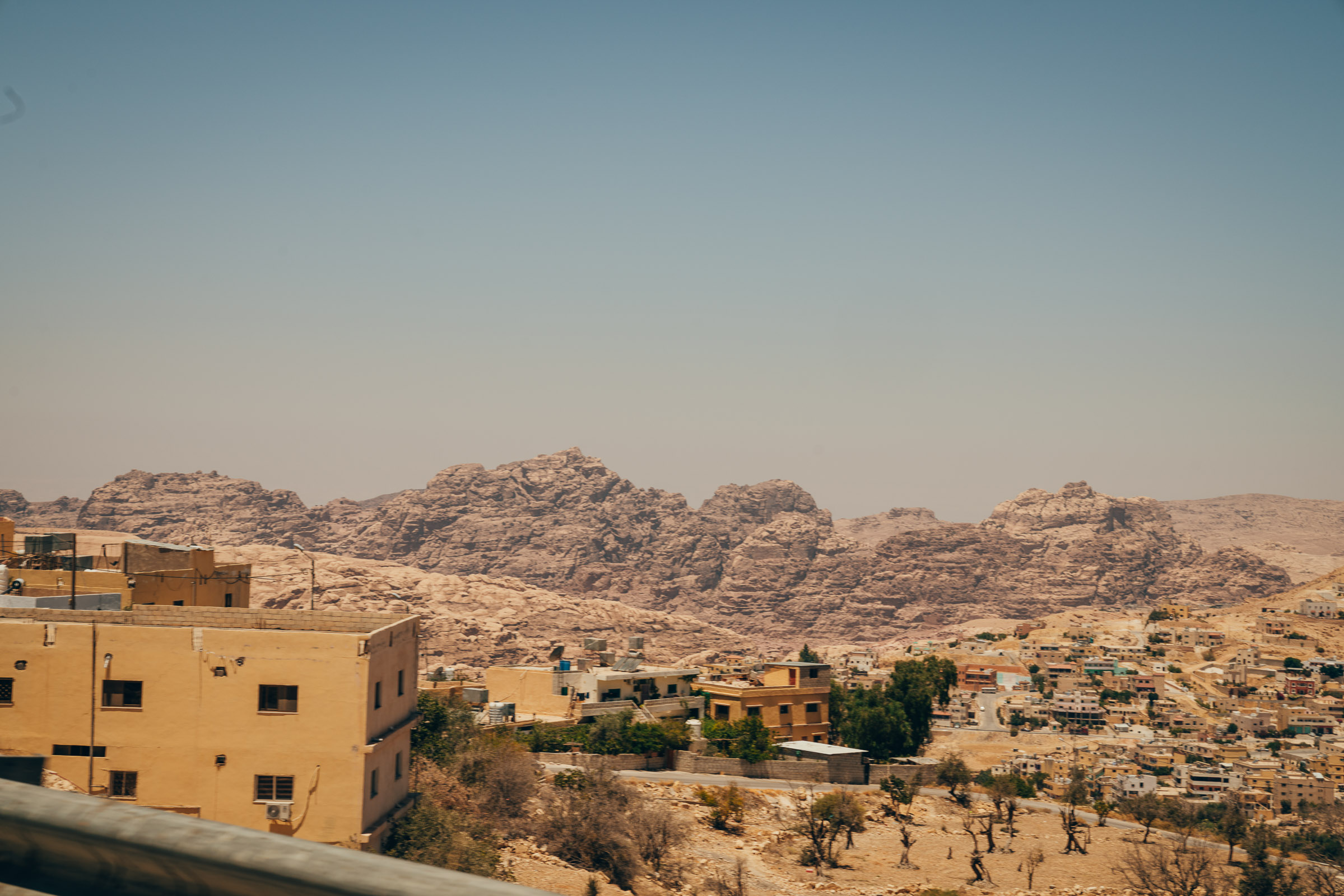
Petra lies in southern Jordan, next to the small town of Wadi Musa. Its builders, the Nabataeans, called it Raqmu. Today, the world knows it as the Rose City, because of the color of the sandstone from which it is carved. UNESCO added it to the World Heritage List in 1985. Then, in 2007, a global poll named it one of the New Seven Wonders of the World.
Petra is also the most visited attraction in Jordan. In 2023, almost 1.2 million people walked through its gate. After that, regional tensions hit tourism hard, and the number fell to 457,215 in 2024. In 2025, it recovered to 582,550 visitors. For travelers, this has one bright side: the site is calmer than it has been in years.
WHO WERE THE NABATAEANS, THE BUILDERS OF PETRA?
The Nabataeans were nomadic Arabs who grew rich from trade. Their city stood close to the incense routes, and that position made it a major trading center. By the 2nd century BC, Petra was the capital of their kingdom. They knew the desert better than their enemies, so the mountains served them as natural walls. Above all, they mastered three skills: collecting rainwater, farming dry land and carving stone.
The city reached its peak in the 1st century AD. At that time, about 20,000 people lived here. In the same period, the Nabataeans carved Al-Khazneh, the monument we now call the Treasury.
FROM ROMAN PROVINCE TO LOST CITY
In 106 AD, Emperor Trajan annexed the Nabataean Kingdom, and Petra became part of a Roman province. Trade slowly moved to the sea routes, so the city lost its importance. Then, in 363, a strong earthquake destroyed many buildings and damaged the water system. Another earthquake followed in 551. By the middle of the 7th century, Petra was largely deserted, and only the local Bedouins knew its paths.
For the Western world, the city returned to the map on August 22, 1812. The Swiss traveler Johann Ludwig Burckhardt dressed as an Arab and persuaded a Bedouin guide to take him there. Much later, in 1989, Hollywood did the rest. The film Indiana Jones and the Last Crusade turned the rose facades of Petra into a movie star.
THE FIRST STEPS: BAB AL-SIQ, THE DJINN BLOCKS AND THE OBELISK TOMB
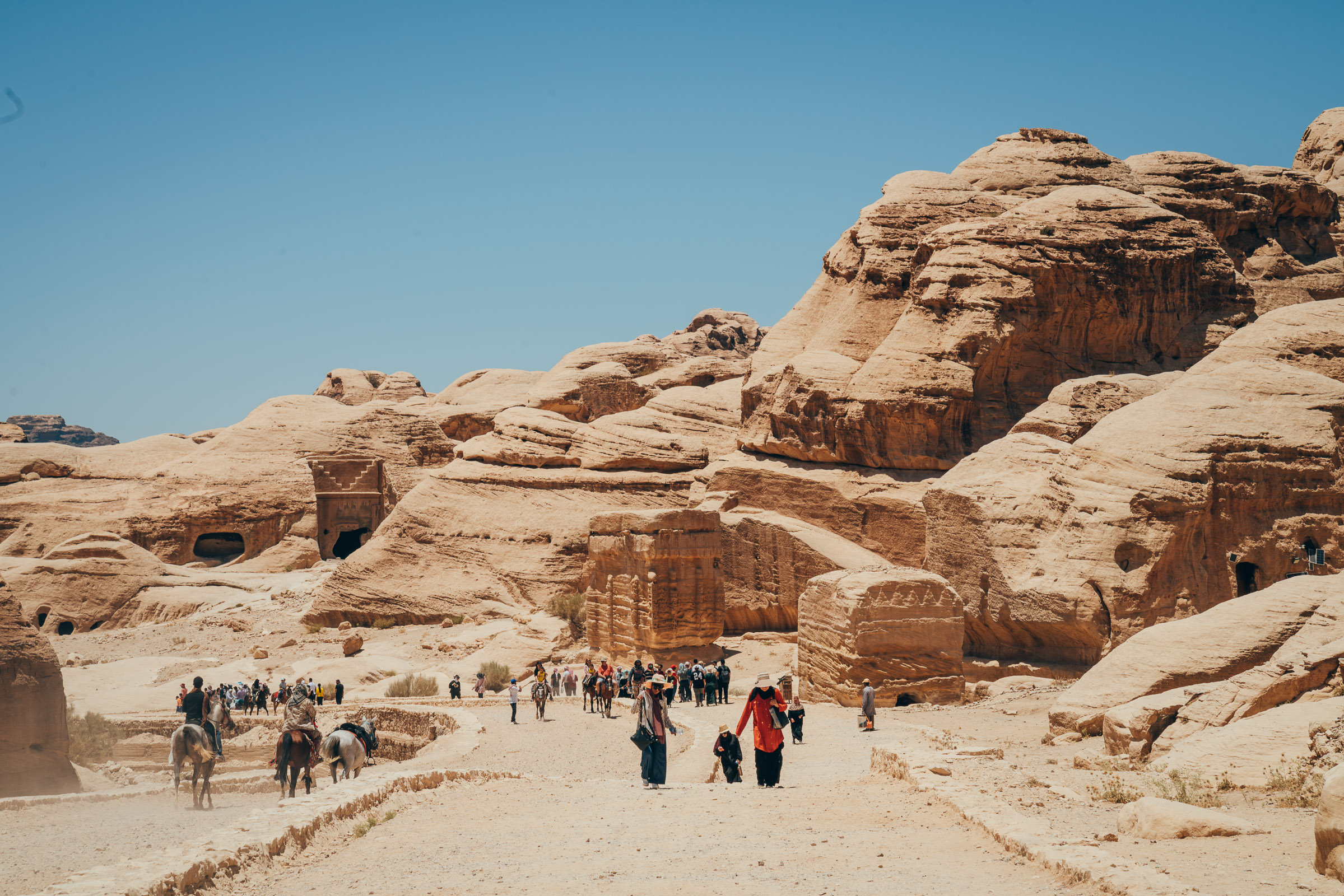
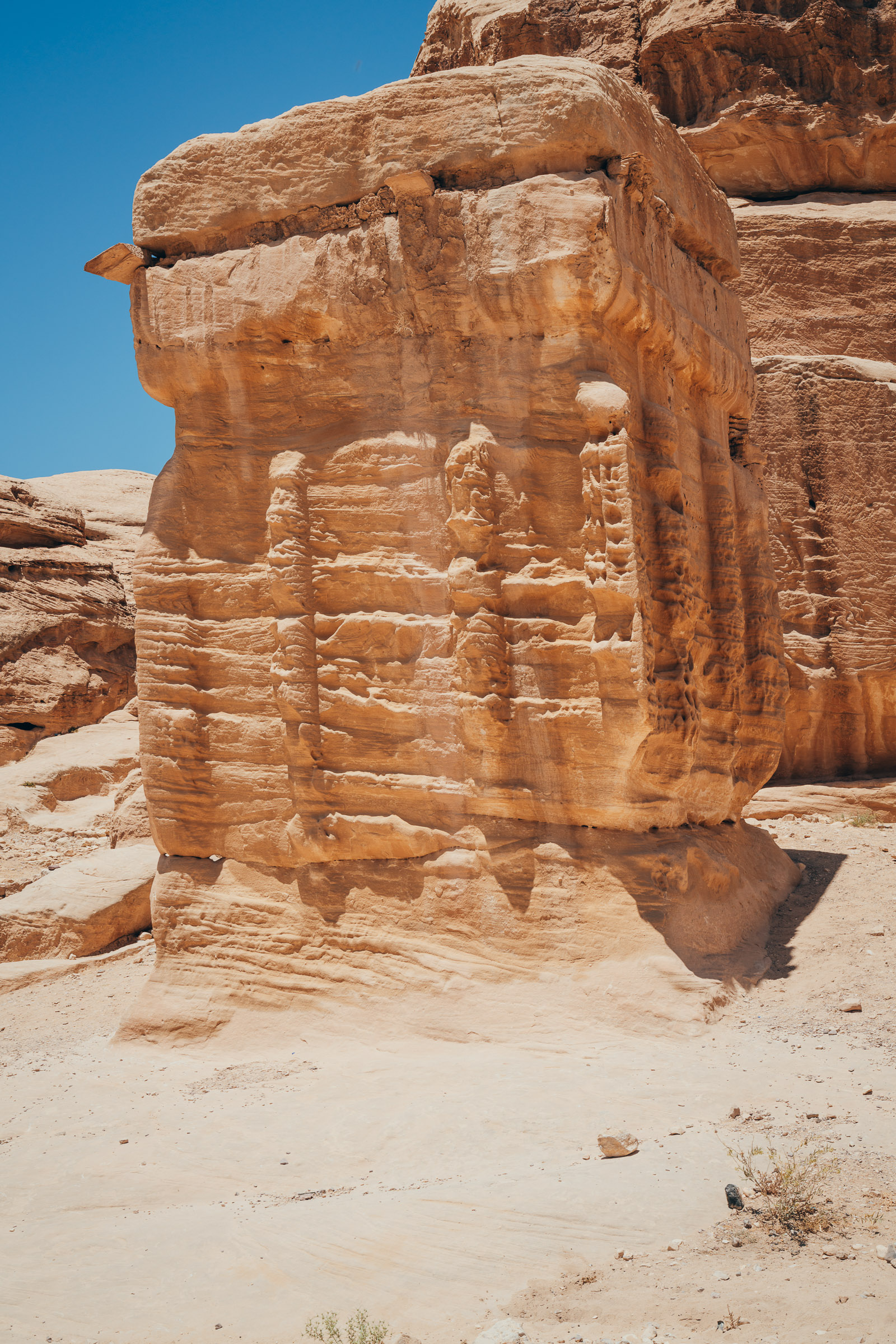
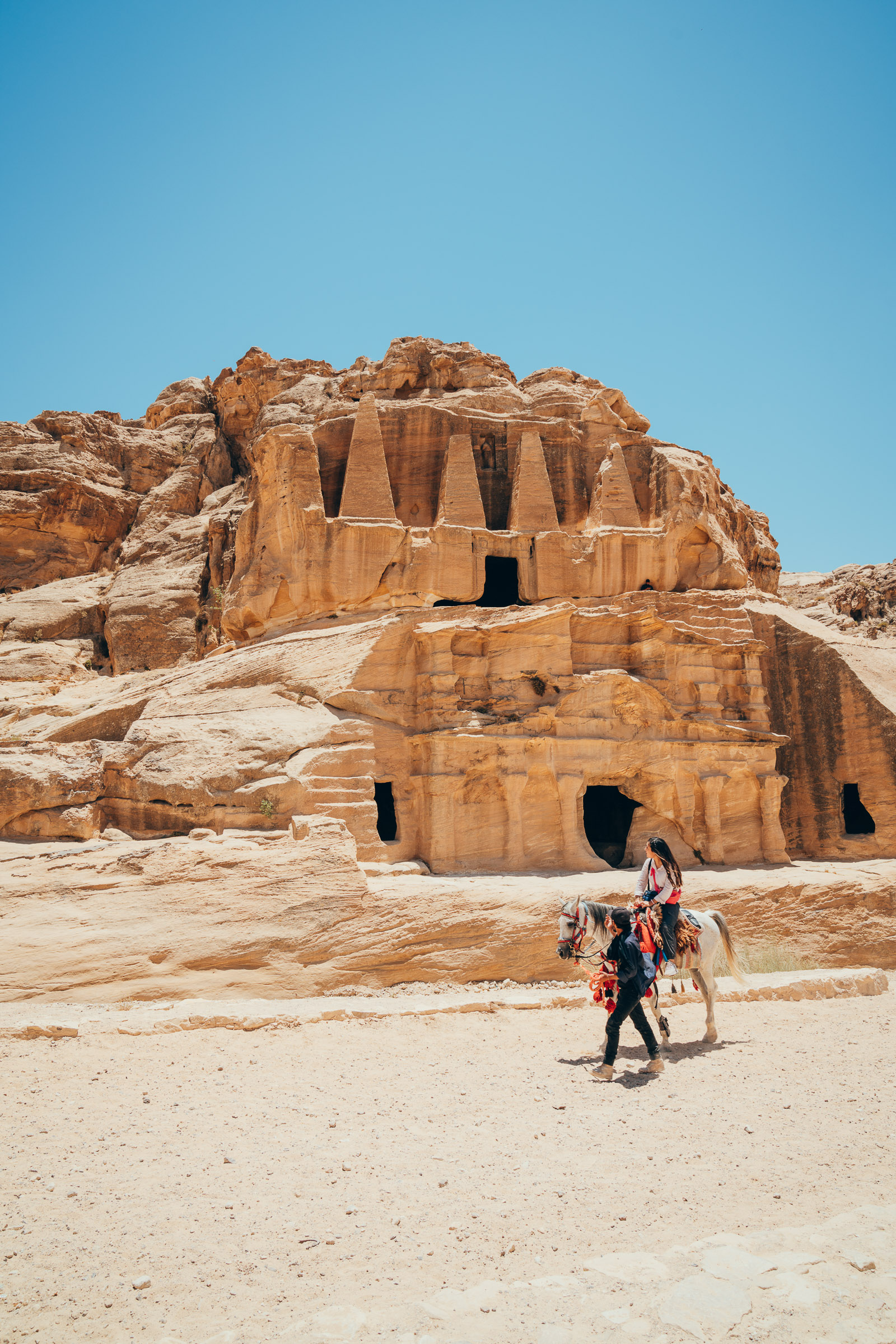
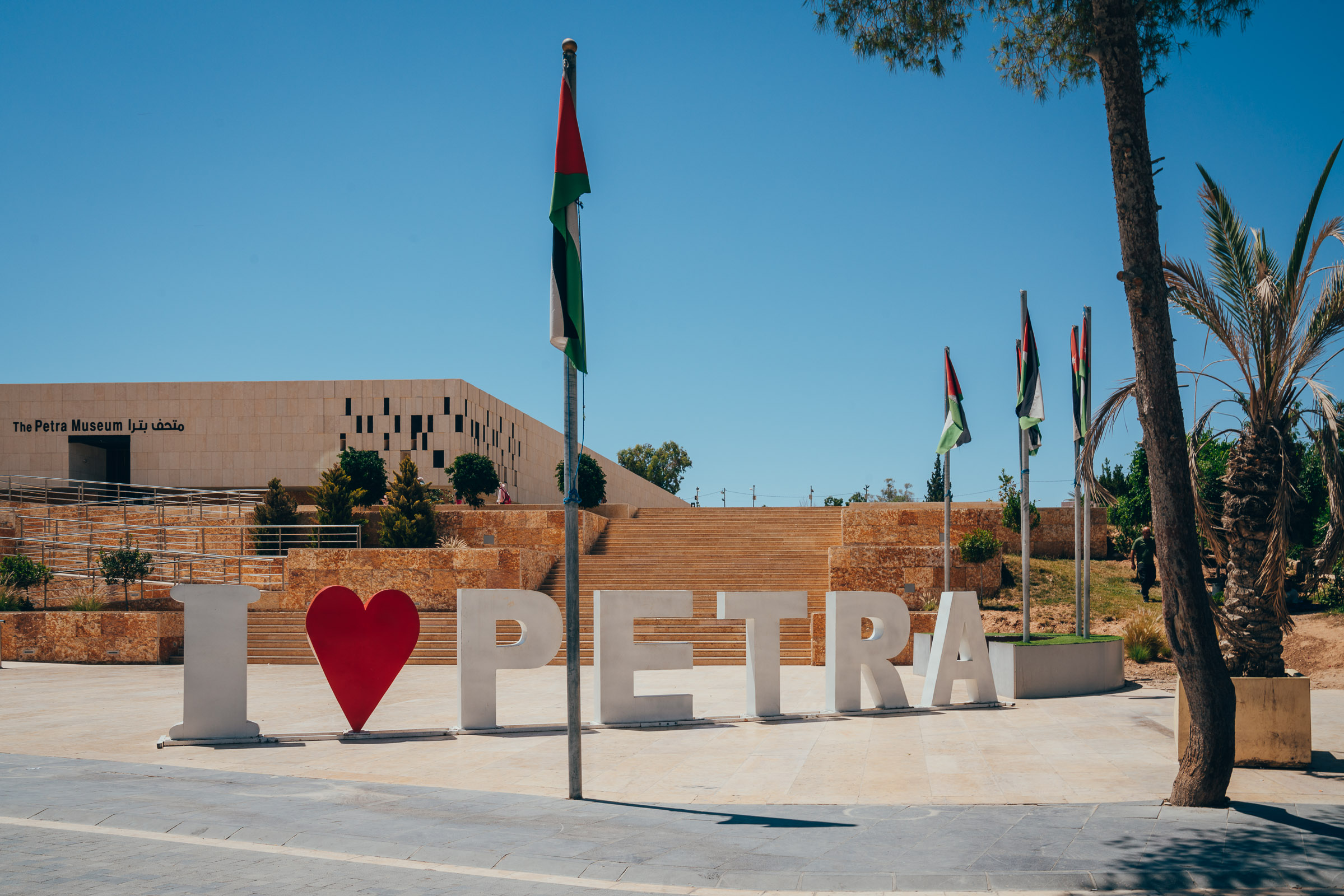
Every visit to Petra begins at the Visitor Center in Wadi Musa. From there, a wide path called Bab al-Siq leads toward the gorge. Do not rush through this part. First, you will pass the Djinn Blocks, massive stone cubes that stand alone like guardians. A little further rises the Obelisk Tomb, a facade on two levels with four obelisks on top.
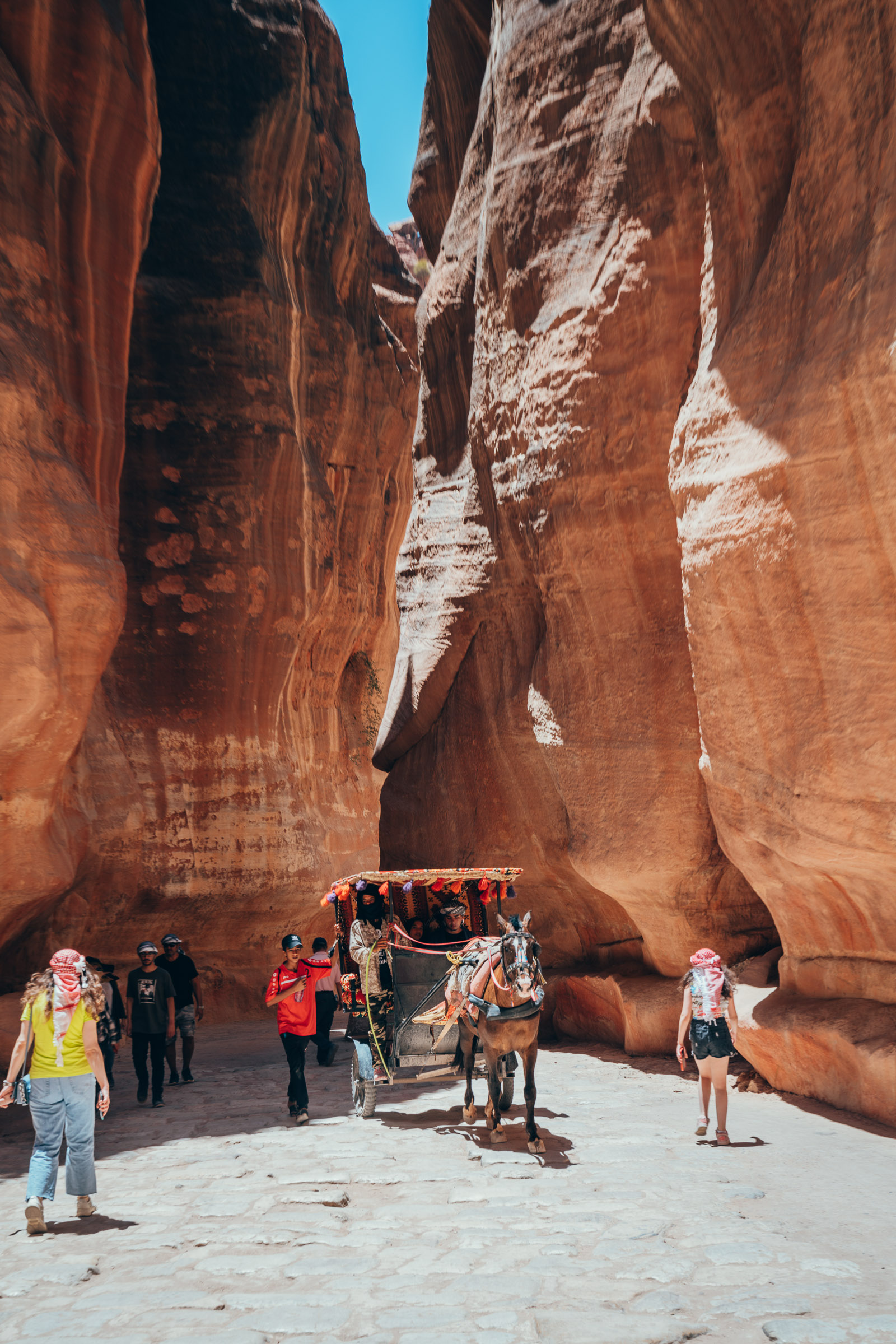
Horses wait near the gate and cover the first 800 meters to the entrance of the Siq. If you want a ride, agree on the price before you sit in the saddle. Personally, I prefer to walk, because the landscape prepares you for what comes next.
SOUVENIRS AND THE SCENT OF INCENSE
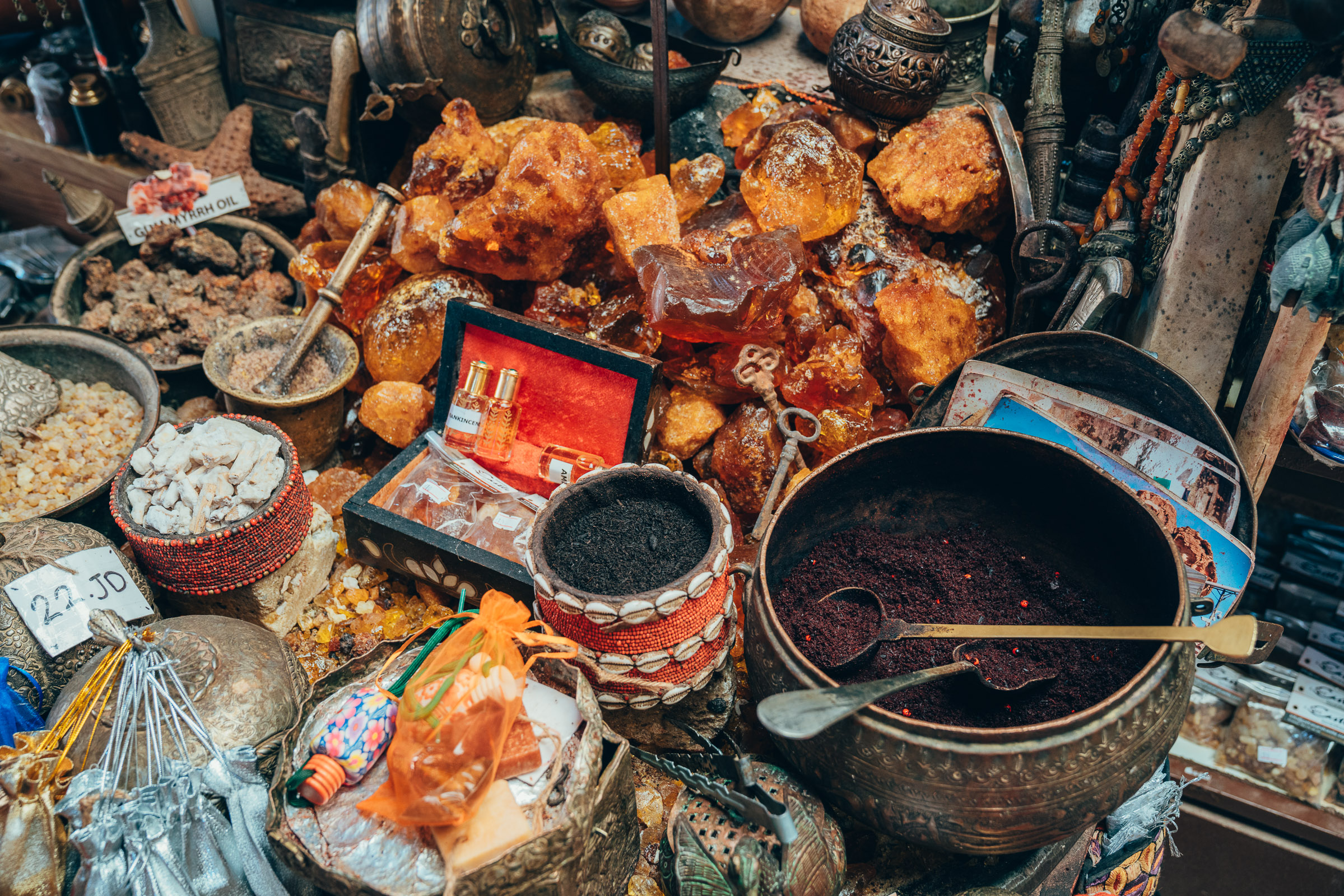
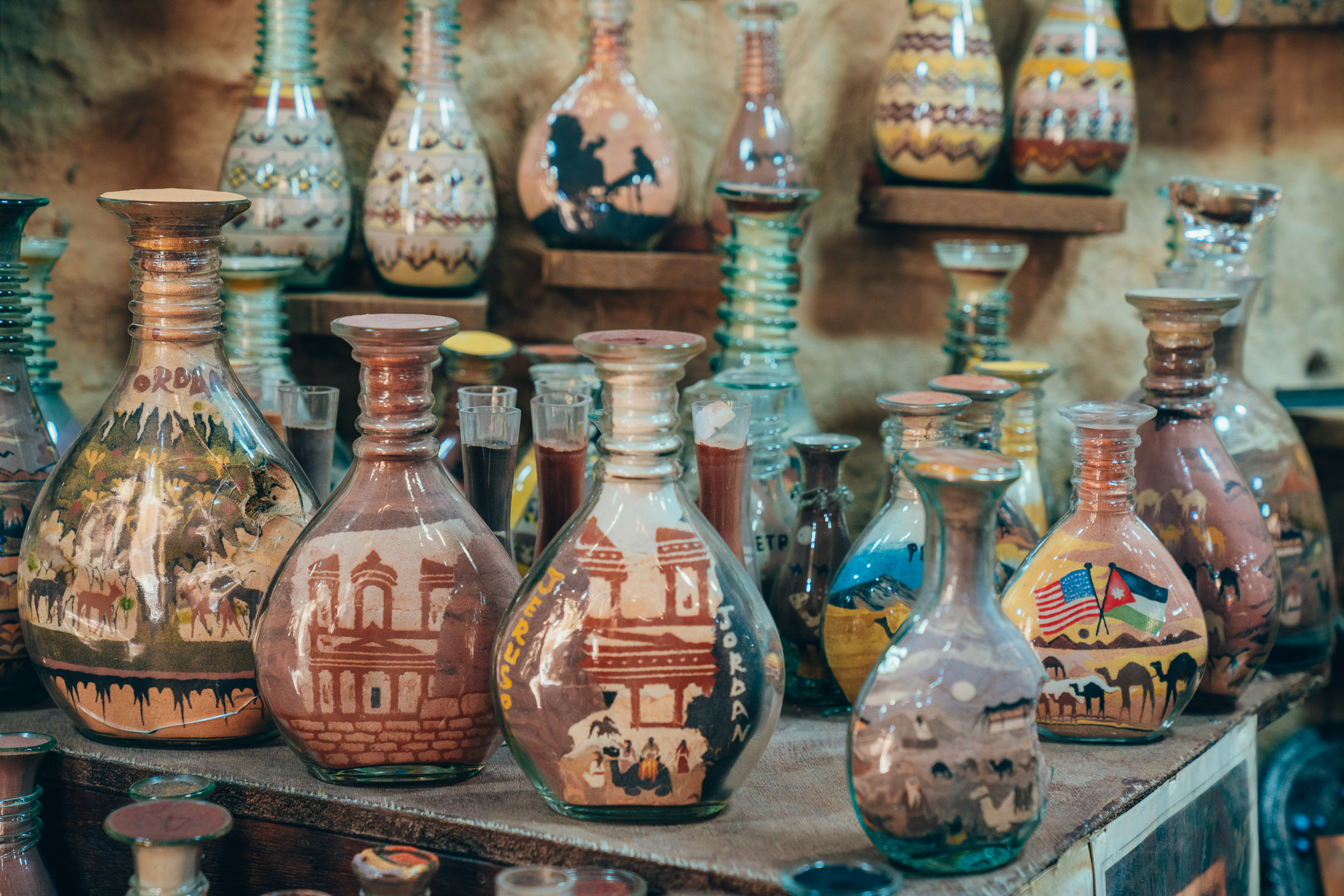
On the way, take a few minutes for the souvenir stalls. The sellers are locals, and many of them love to talk about the history of their city. I saw amber-colored resins, spices, old boxes and silver jewelry. My favorites, however, were the sand bottles. Inside each one, an artist layers colored sand into camels, dunes and even the facade of the Treasury. They are light and easy to pack. In other words, they are the perfect gift from Petra.
THE SIQ: 1.2 KILOMETERS OF SUSPENSE
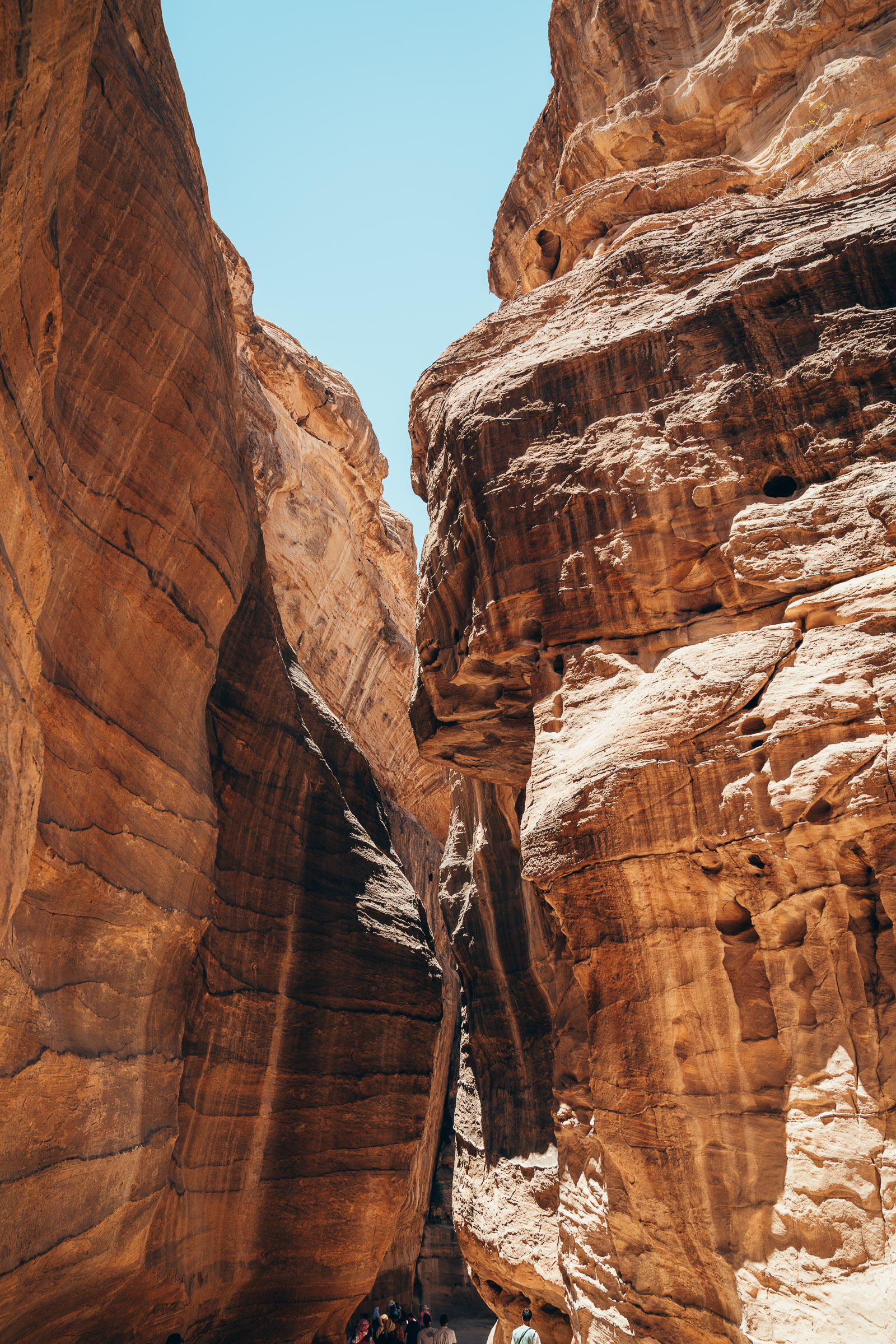
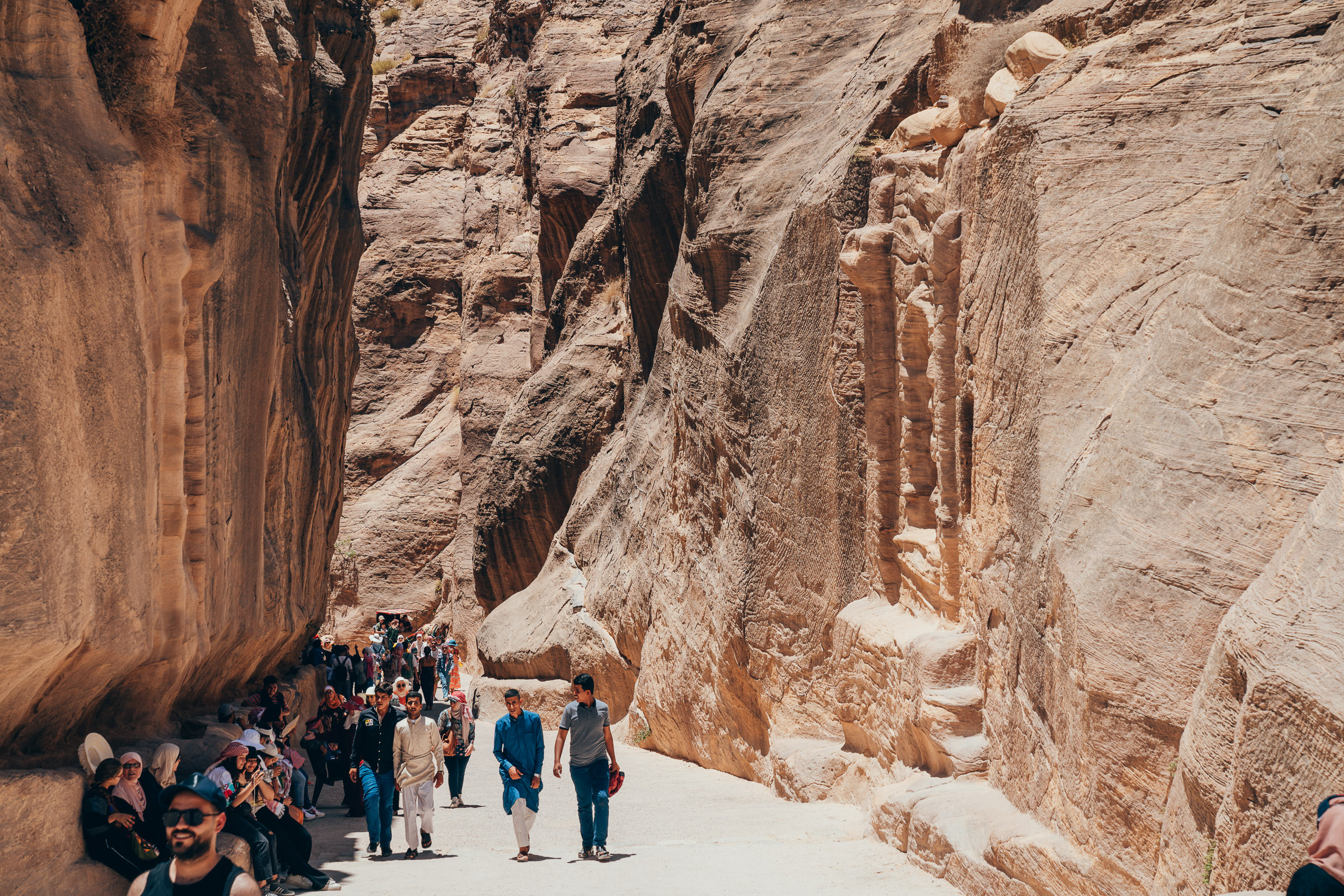
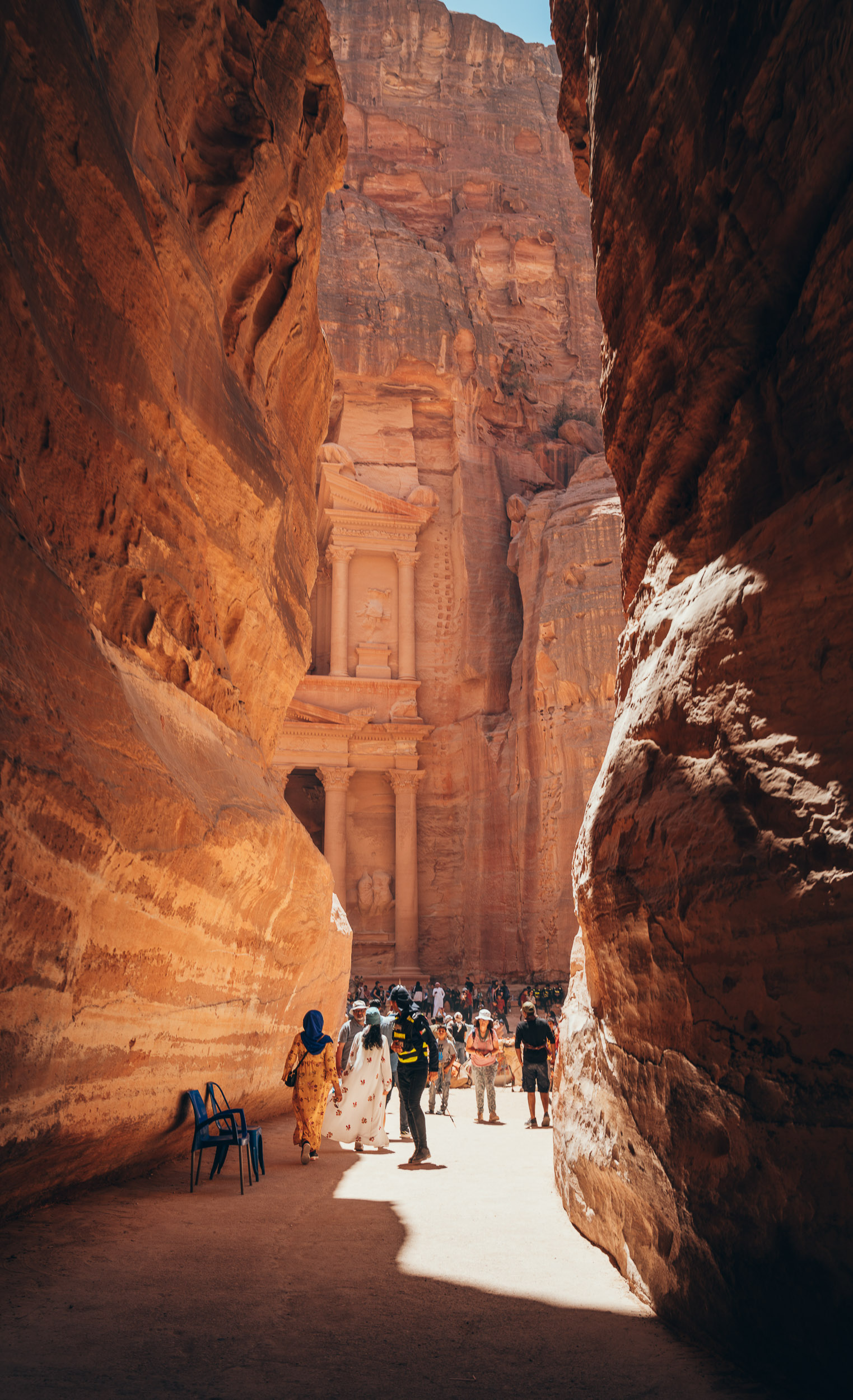
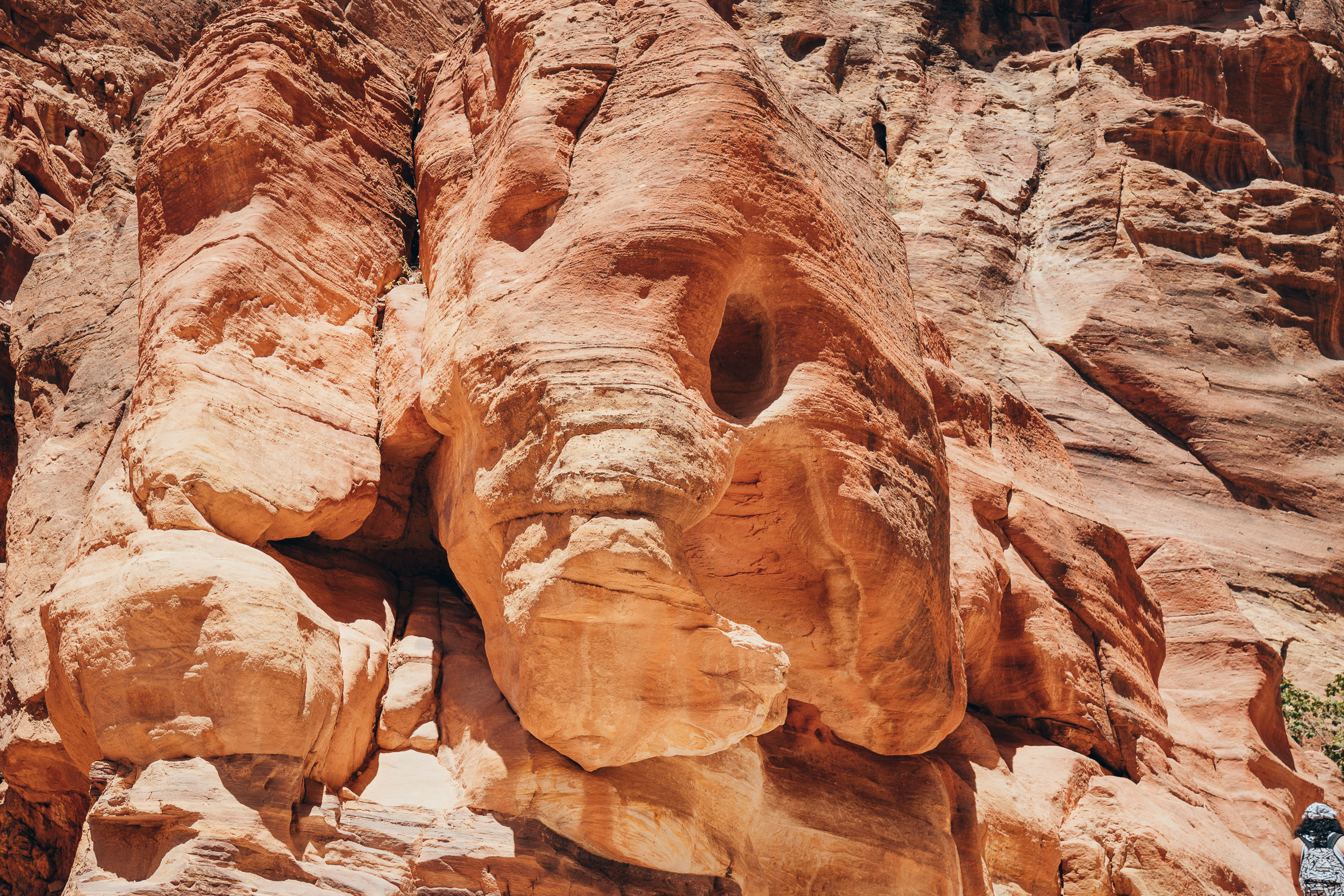
Then the rocks close in. The Siq is a natural gorge, about 1.2 kilometers long, and it leads directly to the Treasury. Its walls tower high above your head, and in some places the path becomes very narrow. Look carefully at the sides. You will notice niches and carvings in the rock, small signs that this was once a sacred road.
The Siq is beautiful at any hour, but the early morning is special. The air is still cool, the groups have not arrived, and you can hear your own steps. At the end, the walls open, and the most famous facade of Petra and of all Jordan stands in front of you.
THE TREASURY: THE MOST FAMOUS FACADE OF PETRA, JORDAN
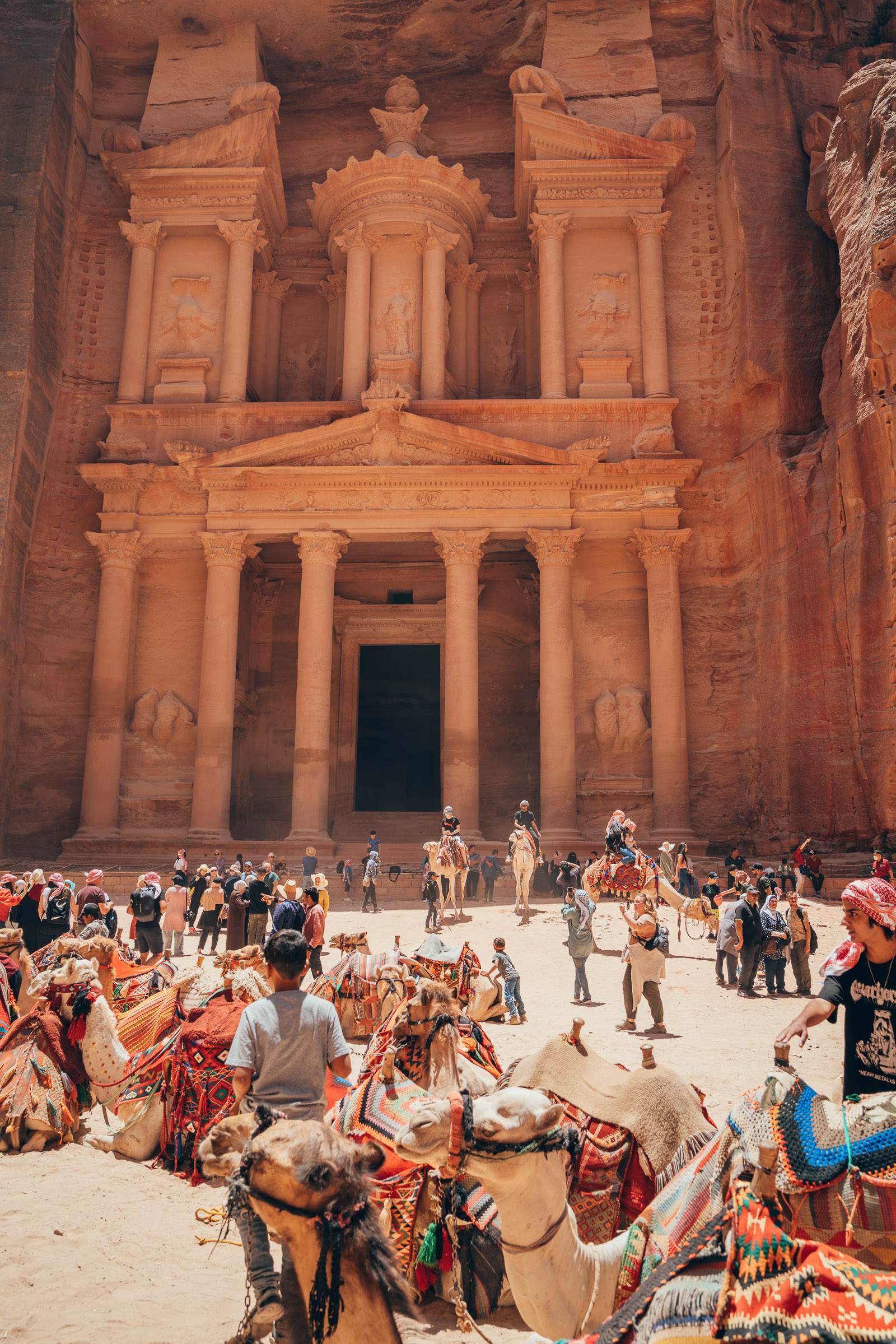
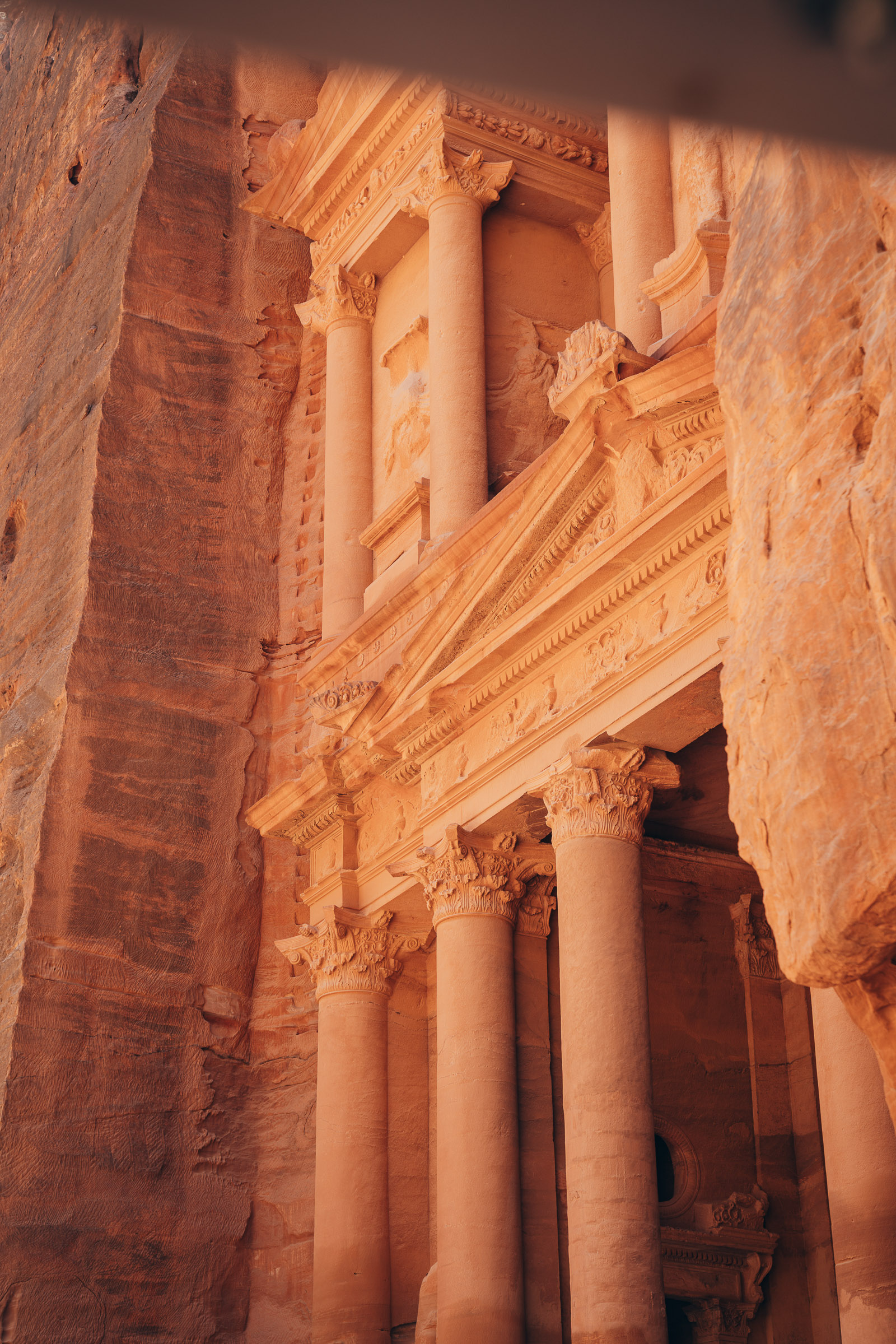
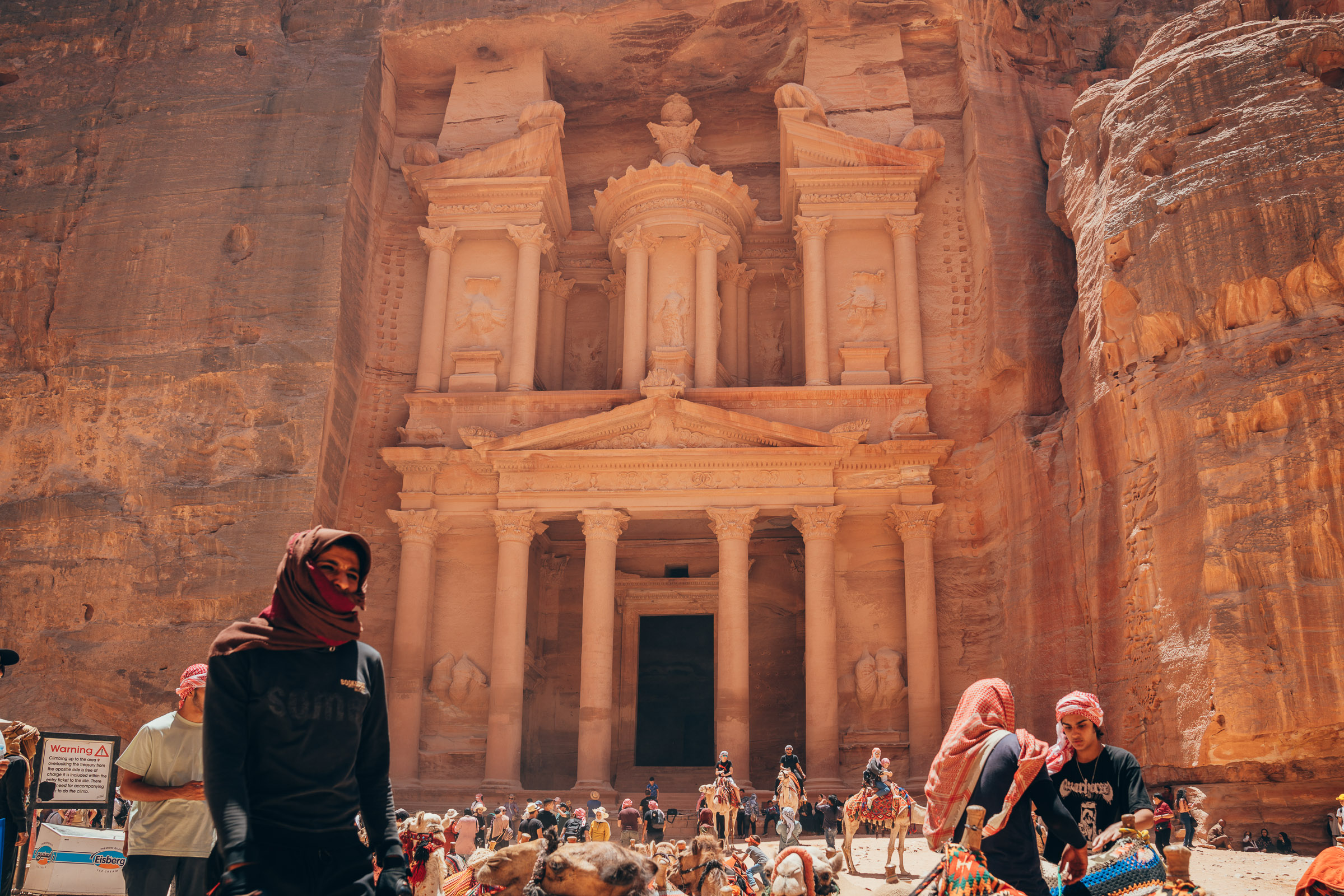
Al-Khazneh, the Treasury, is the image that the whole world connects with Petra, Jordan. According to the official Petra website, the facade is 39.5 meters high. The Nabataeans carved it directly into the pink sandstone cliff. Its style is Hellenistic, with Corinthian columns that recall the architecture of Alexandria.
On the lower level, reliefs of Castor and Pollux stand on both sides of the entrance. In Greek mythology, these twin brothers protected travelers. On the upper level, you can see dancing Amazons. Between them stands a female figure that may represent the goddess Isis. Many details have eroded over two thousand years, yet the harmony is still striking.
A PHARAOH’S GOLD: THE LEGENDS OF THE TREASURY
The name has nothing to do with money. Al-Khazneh means “treasury” in Arabic, and it comes from a Bedouin legend. According to the story, a pharaoh hid his treasure in the stone urn at the top of the facade. For generations, people fired at the urn, hoping to break it open. The bullet marks are still visible today. Of course, the urn is solid sandstone.
So what was this building? Most archaeologists believe it was a royal tomb, probably linked to King Aretas IV, who ruled from 9 BC to 40 AD. In 2003, archaeologists found two tombs below the left side of the facade. In 2024, a new excavation on the right side revealed another tomb with at least 12 complete skeletons. Clearly, the city of secrets still keeps a few.
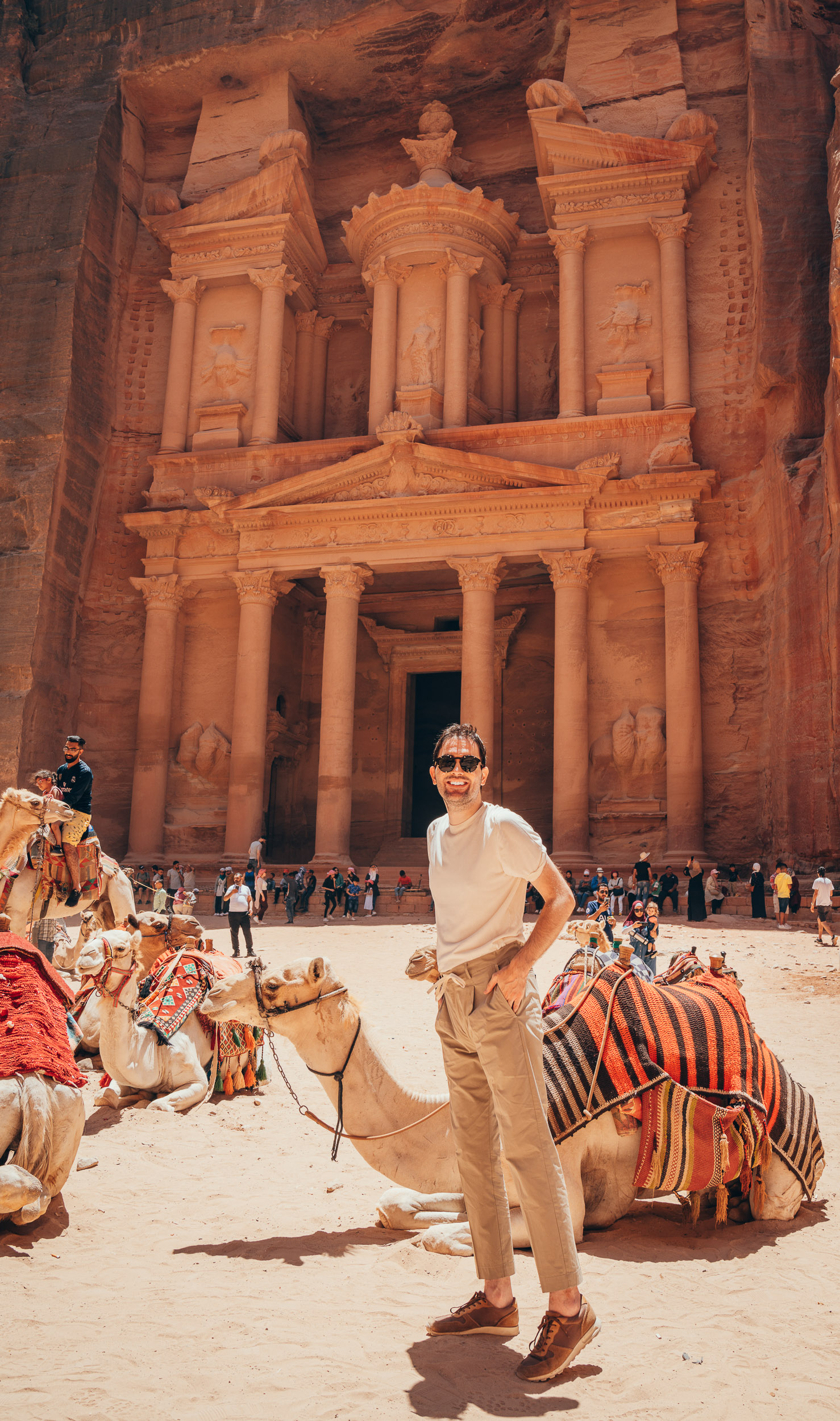
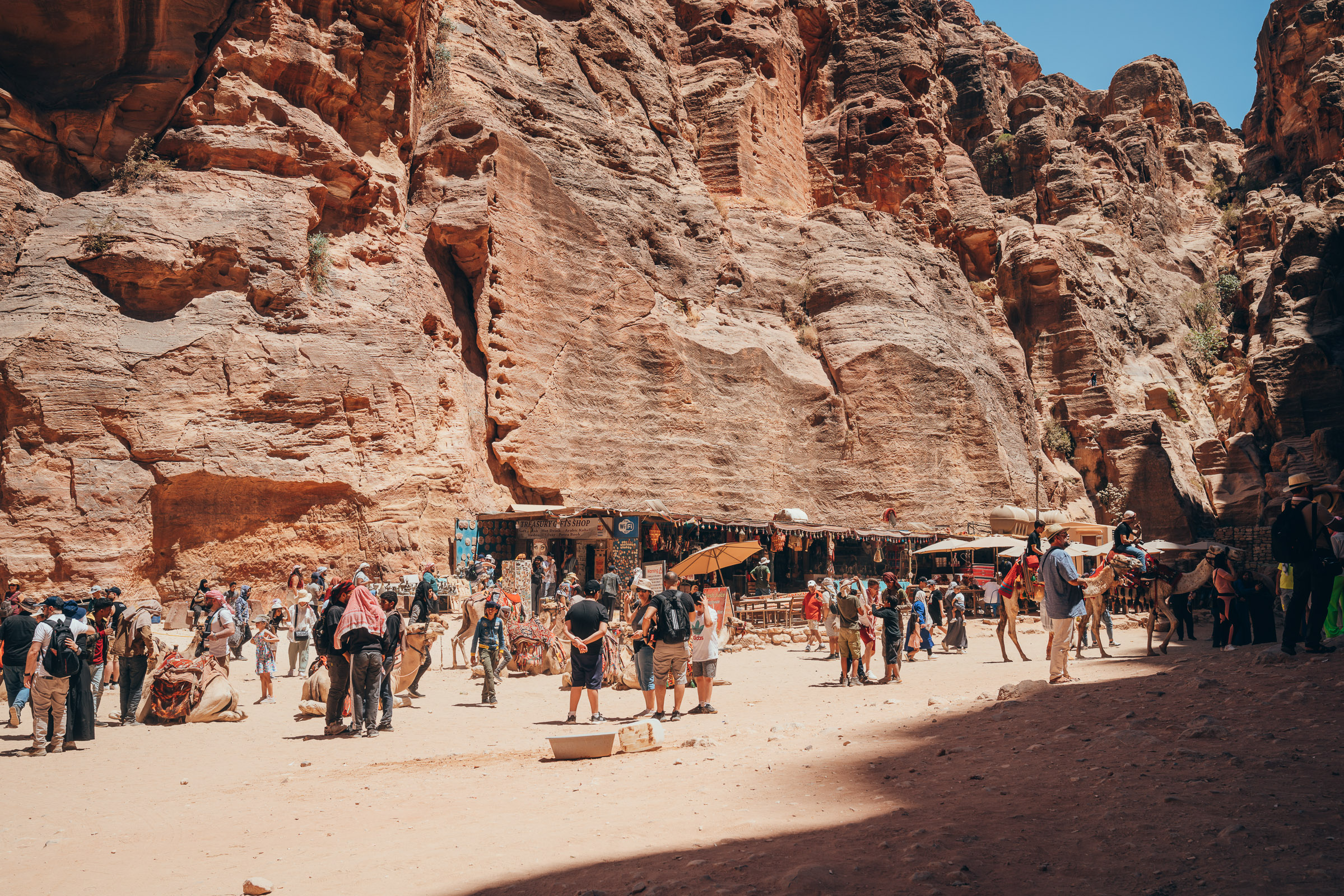
In front of the facade, the square is always lively. Camels rest in colorful saddles, Bedouins in red keffiyehs wait for visitors, and travelers from every continent look up in silence. I stood there for a long time, and I admit that I did not want to leave.
ON FOOT, ON HORSEBACK OR BY CARRIAGE: MOVING AROUND PETRA, JORDAN
Ancient Petra is much bigger than most people expect. The Main Trail from the Visitor Center to Qasr al-Bint is 3.9 kilometers long in one direction. That means almost eight kilometers of walking before you add any side trail. Therefore, comfortable shoes are the most important item in your suitcase.
During my visit, horse-drawn carriages still passed through the Siq, and camels waited in front of the Treasury. Today, electric club cars run between the Visitor Center and the Treasury every day from 7 am to 6 pm, with no booking needed. A one-way ride costs 15 dinars, and a return trip costs 25. Transport options still change from time to time, so ask at the Visitor Center what is available on the day of your visit. My advice is simple: walk in, and save your energy for the way back.
BEYOND THE TREASURY: TOMBS, A THEATER AND A CITY CENTER
Many visitors to Petra turn back at the Treasury, and that is a pity. The valley widens, and the Street of Facades leads you past rows of tombs. Then comes the theater. The Nabataeans carved it into the rock, probably during the reign of Aretas IV, and it could seat about 8,000 people. While cutting the rows, the builders sliced through older tombs, and you can still see the openings.
Opposite the theater, the Royal Tombs cover the slope of Al-Khubtha. The Urn Tomb, the Corinthian Tomb and the Palace Tomb stand side by side. Further on, the Colonnaded Street marks the old city center. Next to it, archaeologists found something unexpected. An area once believed to be a market was in fact a garden with a large pool and an island pavilion. Imagine a pool in the middle of the desert! Finally, the trail ends at Qasr al-Bint, a temple whose walls still rise to 23 meters.
THE MONASTERY: 800 STEPS TO THE LARGEST MONUMENT
From Qasr al-Bint, a path of about 800 rock-cut steps climbs into the mountains. The climb takes almost an hour, so start before the midday heat. At the top waits Ad-Deir, the Monastery, the largest monument of Petra. It is roughly 47 meters high and 48 meters wide. Its facade is simpler than the Treasury, but its size takes your breath away. If you have only one extra effort in you, spend it here.
MORE TRAILS FOR A SECOND DAY IN PETRA, JORDAN
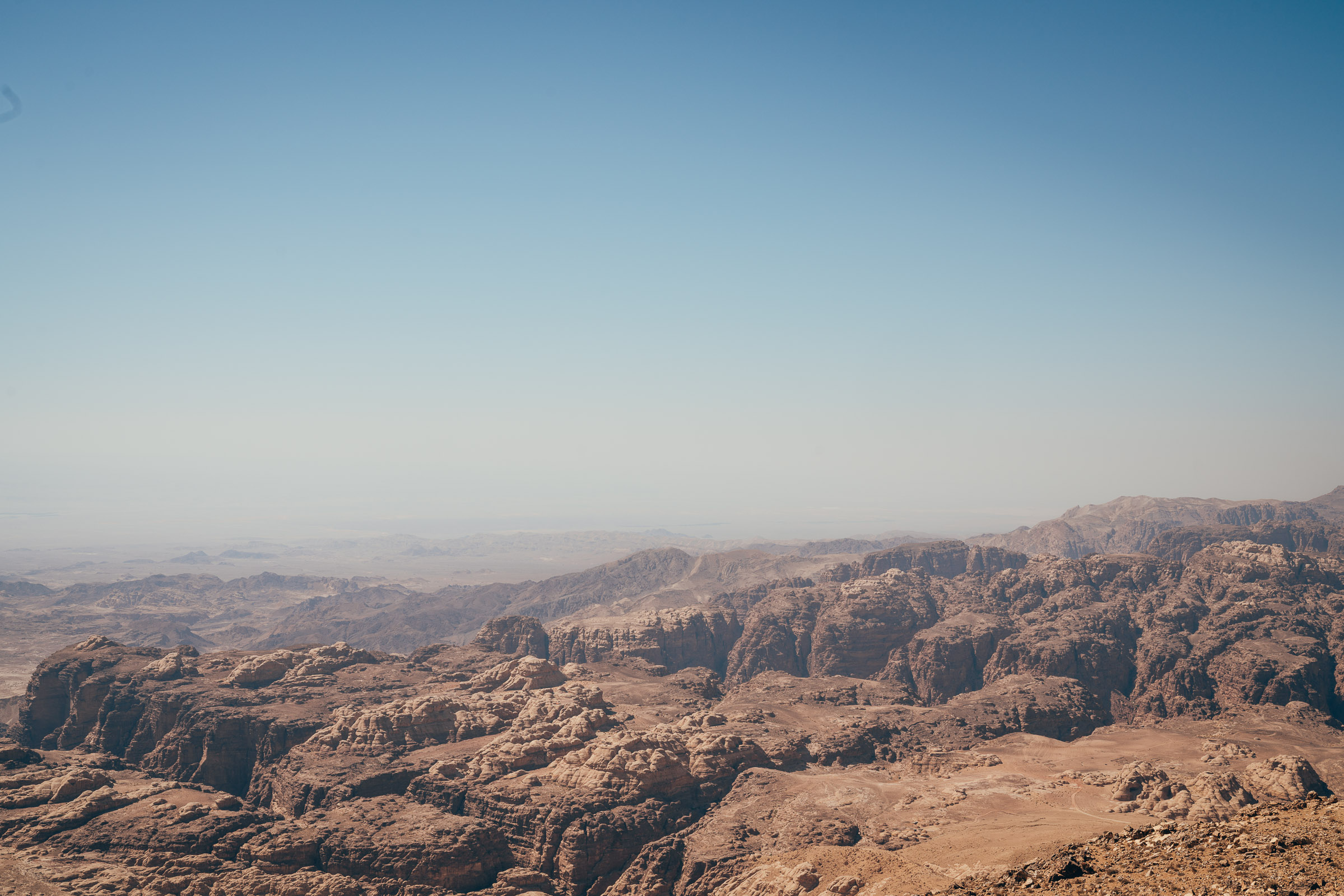
A second day in Petra, Jordan, opens the quieter side of the site. The Al-Khubtha Trail climbs steep stairs to a viewpoint high above the Treasury. From there, the famous facade looks small, and the whole canyon lies below you. The trail is hard, so take it in the morning. Another classic route leads to the High Place of Sacrifice, an ancient altar on a mountaintop.
Finally, there is Little Petra, a smaller Nabataean site a short taxi ride from Wadi Musa. A visit takes between 45 minutes and an hour and a half, and the entrance is free. From Little Petra, a back trail of about eight kilometers also leads to the Monastery. However, it is a route for experienced hikers.
TICKETS FOR PETRA, JORDAN: PRICES AND THE JORDAN PASS
Here are the prices for 2026, according to the Jordan Tourism Board and the Petra authority:
- One day: 50 Jordanian dinars, if you spend at least one night in Jordan.
- Two or three days: 55 or 60 dinars, valid on consecutive days.
- Day visitors without an overnight stay: 90 dinars.
- Children under 12: free during the day.
- Jordan Pass: 70, 75 or 80 dinars, with one, two or three days in Petra included.
The Jordan Pass also waives the tourist visa fee if you stay at least three nights in the country. Therefore, for most travelers it is the smartest choice. At the ticket office, you must show a valid passport. You can pay in cash, in dinars, or by Visa card. The site opens at 6 am, while the closing time depends on the season. Because of that, check the official website before your visit.
HOW TO GET TO PETRA AND WHEN TO GO
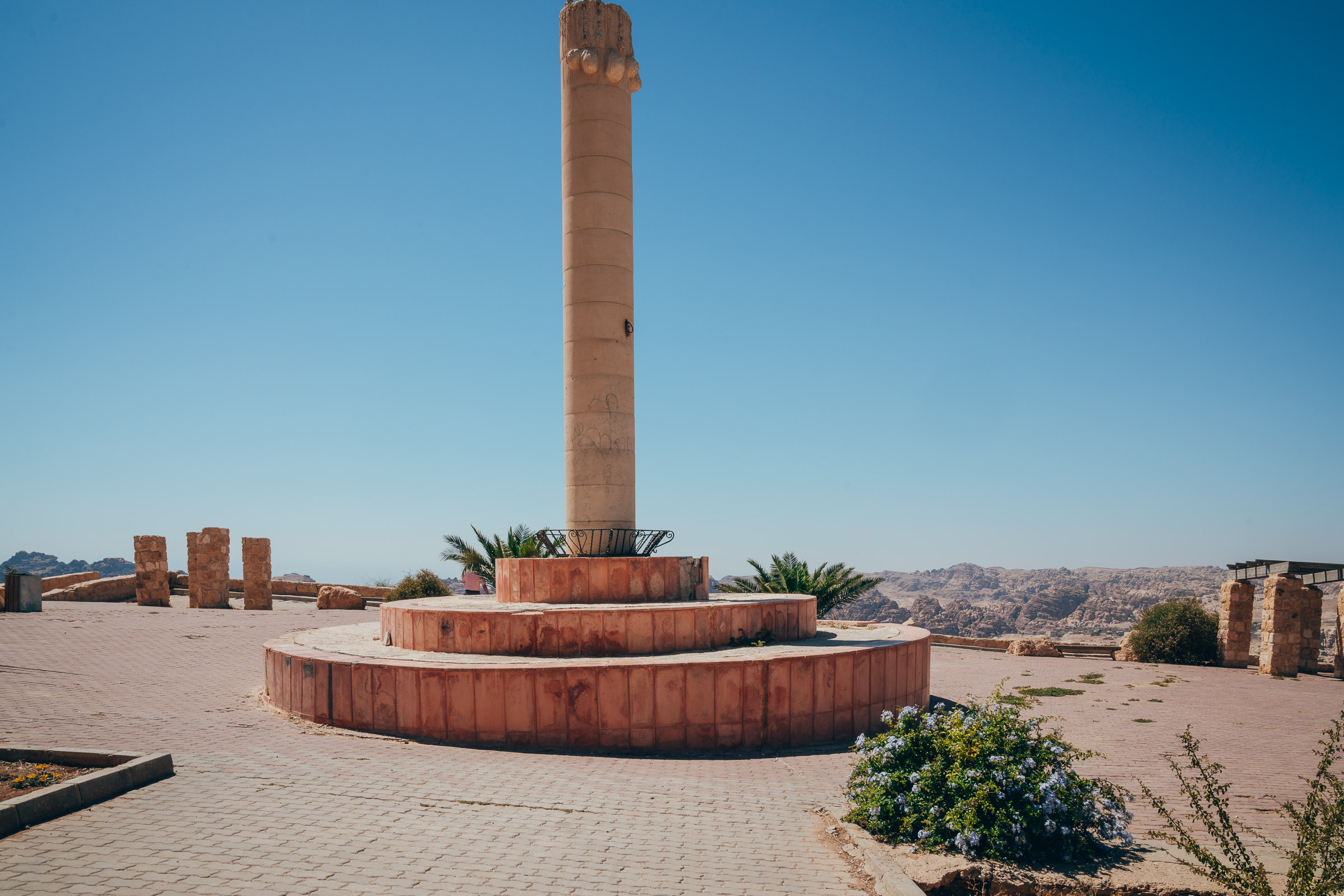
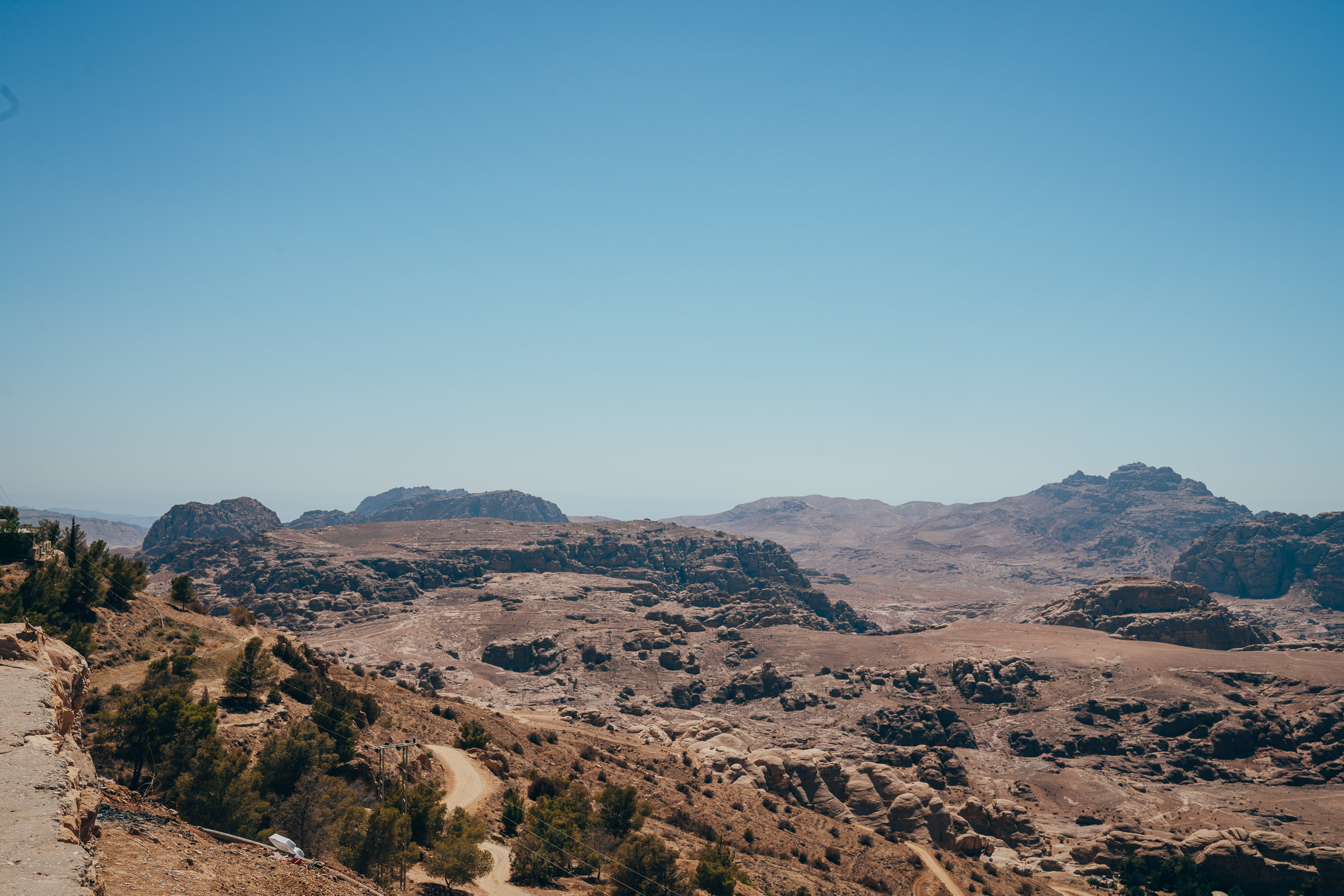
Petra lies in the south of Jordan, so plan the journey well. From Amman, the road is about 235 kilometers long. By car on the Desert Highway, the drive takes around three hours. Alternatively, the JETT tourist bus leaves Amman every morning and needs three and a half to four hours. From Aqaba, the distance is about 130 kilometers, or two hours by car.
The best seasons are spring, from March to May, and autumn, from September to November. I visited on a hot, cloudless day, and by noon the sun was merciless. So, if you come in the warm months, enter at opening time. Also, carry enough water and wear a hat.
HOW MUCH TIME DO YOU NEED IN PETRA, JORDAN?
One of my readers asked me if a few hours are enough. My answer is clear: plan at least one full day, and book a hotel in Wadi Musa. This town at the gate offers everything from simple guesthouses to large hotels. With one day, you can see the Siq, the Treasury, the theater, the Royal Tombs and the city center. With two days, you can add the Monastery and the viewpoints without any hurry. In that case, the price difference is only five dinars.
For the whole country, I recommend seven to ten days. That is enough to see the most important sights and to continue your journey rested.
WHAT TO PACK FOR A DAY IN THE ROSE CITY
A good day in Petra starts the evening before, with a well-packed bag. Here is my short list:
- Shoes: comfortable, closed and already broken in.
- Sun protection: a hat, sunglasses and sunscreen, because shade is rare after the Siq.
- Water: more than you think you need, especially for the Monastery climb.
- Documents: your passport and your ticket or Jordan Pass.
- Cash: some dinars for drinks, rides and souvenirs.
Near Qasr al-Bint, at the end of the Main Trail, you will also find restaurants for a longer break.
PETRA BY NIGHT: THE SIQ BY CANDLELIGHT
If your schedule allows, stay for the evening, because Petra has a second face after dark. Petra by Night runs from Sunday to Thursday. It starts at 8:30 pm at the Visitor Center and ends around 10:30 pm. During the show, you walk through the Siq to the Treasury after dark. The ticket costs 30 dinars, and children under 10 enter free. However, the Jordan Pass does not cover this event. You also need a valid daytime ticket or a Jordan Pass to buy it.
PETRA, JORDAN IN SHORT: QUICK ANSWERS
- How much is the ticket? 50 dinars for one day, if you sleep at least one night in Jordan.
- How long is the walk? The Main Trail is 3.9 kilometers in one direction, and the Monastery adds about 800 steps.
- Is one day enough? Yes, for the highlights. Two days are better.
- When is the best time? Spring and autumn, and always early in the morning.
MY FINAL WORDS FROM PETRA, JORDAN
My dear travelers, we have come to the end of this second letter from Jordan. Petra gave me one of those rare moments when a place is even greater than its fame. This story would not have been possible without the Jordan Tourism Board and its local partners. Thanks to them, I felt the spirit of Jordanian culture and tradition.
I believe a person becomes rich in soul by exploring the world. That is why I am grateful to every partner who helps me discover new destinations in a different way.
How did you like my story about Petra, Jordan? Have you already visited this country, or is it still on your list? If you have any questions, comments or suggestions, write to me in the comments below. As always, you can also reach me by email or on social media through the CONTACT page.
See you soon, with a new story!
With love from Petra,
Mr.M
This post is sponsored by the Jordan Tourism Board (Visit Jordan), as well as other local partners. This post is my personal and honest review of the destination experience.
Petra is an amazing place, no wonder it is on the list of 7 wonders of the world! I’m glad you visited Jordan and I love reading your travelogues because they are always detailed and full of useful information.
Jordan is my dream country, I would like to visit that country at the end of this year or in the spring of next year. How much time does it take to visit Petra, is a couple of hours enough or do you need to spend the night somewhere nearby?
Dear Nathalie, first I would like to thank you for taking the time to read my post and write a comment. If you are interested to know more about Petra and visit whole site, I recommend you to stay one whole day and to book some hotel nearby, so you can continue your journey relaxed and refreshed. If you want one nice Jordanian adventure, I would say that you need to take 7 up to 10 days to see the most important sights in Jordan. I hope that you will visit Jordan soon, so you can share your experience with me!
Have a nice day and a delightful rest of the weekend!
Best,
Marko
The pictures are like from a fairy tale! Congratulations on the incredible posts from Jordan, I enjoy your adventures like never before! Have you upgraded the equipment? I have a feeling that the pictures are different, sharper and with warmer tones!
Even as a little girl I dreamed of seeing Petra because my grandmother had pictures from Petra, my grandfather was an archaeologist and they traveled the world together! Now they are gone, but I sincerely hope that in the next couple of years my wish to visit Petra and magical Jordan will come true!