
Some cities try to impress you at first sight, but Bratislava is not one of them. It opens slowly, like a good book you cannot put down. I walked its streets for a few days, and I realized one thing: this city rewards those who slow down.
My dear travelers and lovers of unusual journeys, welcome to a new travelogue on the Mr.M blog. After a series of stories from Asia that won your hearts, it is time to return to European capitals. Before I begin, I would like to thank UN Tourism and the Radisson Blu Carlton Hotel for their support and their promotion of quality tourism. This is my personal guide to Bratislava, written for everyone who is planning a trip and wants to know what awaits them. I will share my discoveries, the flavors of Slovak cuisine and the calm of a historic hotel in the Old Town.
WHY MORE TRAVELERS ARE CHOOSING BRATISLAVA
For a long time, the capital of Slovakia lived in the shadow of its famous neighbors. Vienna is only about 56 kilometers away, while Budapest and Prague attract millions of visitors every year. However, more and more travelers are discovering that this modesty is exactly what makes Bratislava charming. It is also the only national capital that borders two independent countries, Austria and Hungary.
The city lies on the banks of the Danube. Its Old Town is small, compact and wonderful for walking, so you can see the most important sights in a single day. In modern travel, that is a rare luxury. I especially loved that Bratislava never felt crowded. You do not wait in long lines, and you do not push through crowds in front of every facade. Instead, you have time to notice the details and soak up the atmosphere.
There is another reason for the city’s growing popularity. Bratislava is easy to reach by bus, train or plane, and many travelers combine it with Vienna or Budapest. In my experience, a good meal, a coffee or a night in a fine hotel also costs less here than in the neighboring capitals. As a result, luxury feels more accessible.
BRATISLAVA: A SHORT HISTORY OF A ROYAL CITY
To understand Bratislava, you need to know its past. For centuries, the city was known as Pressburg in German and Pozsony in Hungarian. Under those names, it played a role much larger than its size. From 1536 to 1783, it was the capital of the Kingdom of Hungary. At that time, the Ottomans controlled much of the Hungarian lands. This is how a small town on the Danube became a center of power.
Between 1563 and 1830, St. Martin’s Cathedral served as the coronation church of the Kingdom of Hungary. Here, eleven kings and queens and eight royal consorts received the crown. The most famous of them was Maria Theresa. Later, the city became part of Czechoslovakia, and it has carried the name Bratislava only since 1919. Since 1993, it has been the proud capital of independent Slovakia. You can see the layers of this stormy history at every step.
BRATISLAVA: SETTLING INTO THE OLD TOWN
I arrived in Bratislava and settled right in the heart of the city, on Hviezdoslav Square. For any short trip, this decision is crucial. When you stay in the center, everything is within reach, and you do not waste time on transport.
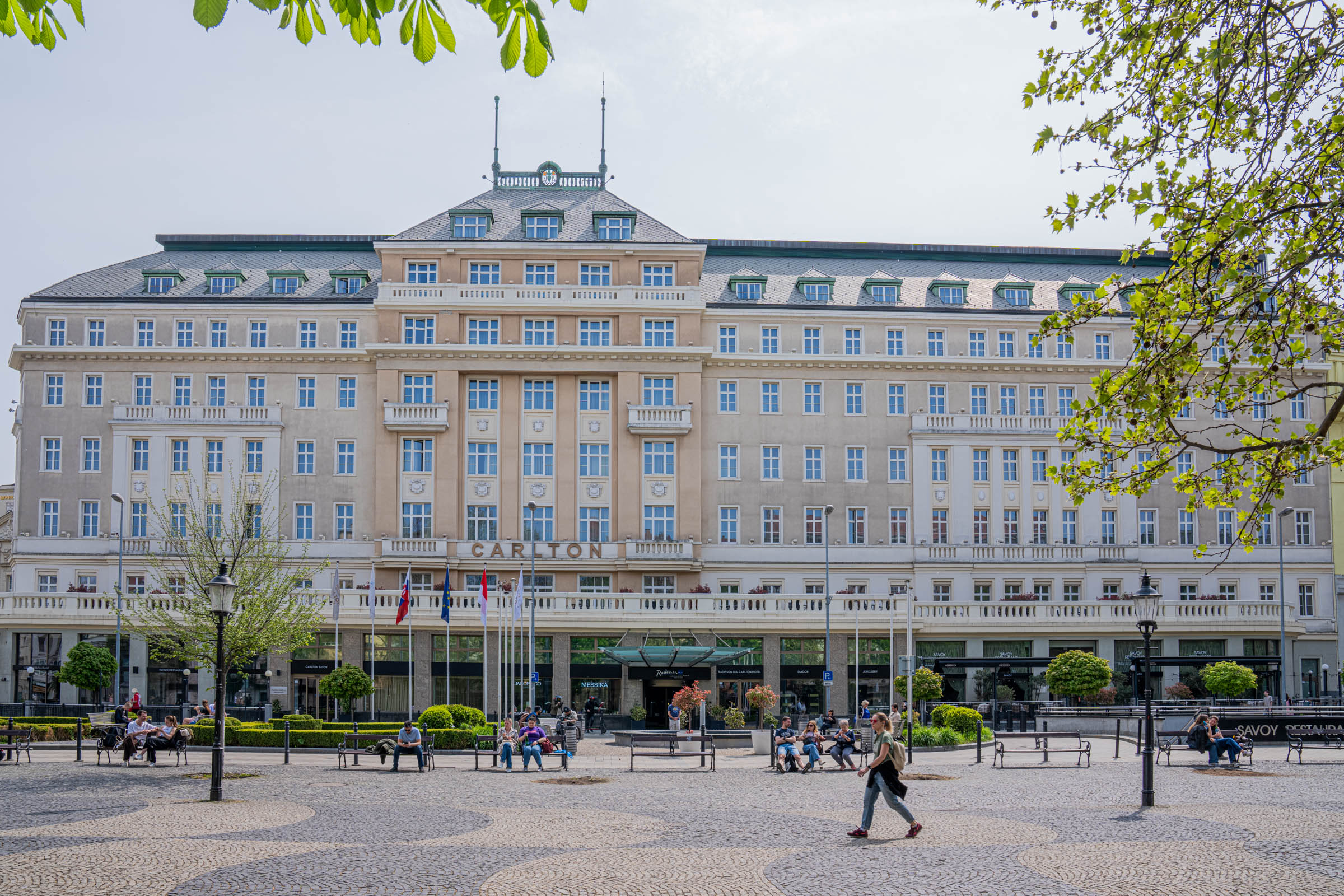
My home for this stay was the Radisson Blu Carlton Hotel. Its majestic facade dominates the square, and it feels grand and warm at the same time.
RADISSON BLU CARLTON HOTEL: A LEGEND IN THE HEART OF THE CITY
Few hotels in Slovakia carry so many stories. The history of the Carlton goes back to the 13th century, when an inn called “At the Swan” stood on this site. In 1912 and 1913, the hotelier Henrich Prüger rebuilt three neighboring buildings into the Savoy-Carlton complex, which opened in June 1913. Later, between 1925 and 1929, the complex received the unified facade we admire today.
For decades, the Carlton was one of the most important hotels in Central Europe. Its guest books include names such as Thomas Edison and Alfred Nobel, and the composer Franz Liszt was a regular guest. After World War II, however, the building slowly fell into decay, and it closed at the end of the 1980s. Fortunately, a massive reconstruction saved it, and the hotel reopened in 2001. Today, the combination of old soul and modern comfort is exactly why I chose it.
RADISSON BLU CARLTON: HISTORY MEETS MODERN COMFORT
Today, the hotel is part of the Radisson group. Its beautifully restored building combines historic architecture with contemporary comfort, and you feel that bond in every corner. Wi-Fi is free throughout the hotel. In addition, the Carlton can host conferences, galas and weddings for up to 1,000 guests.
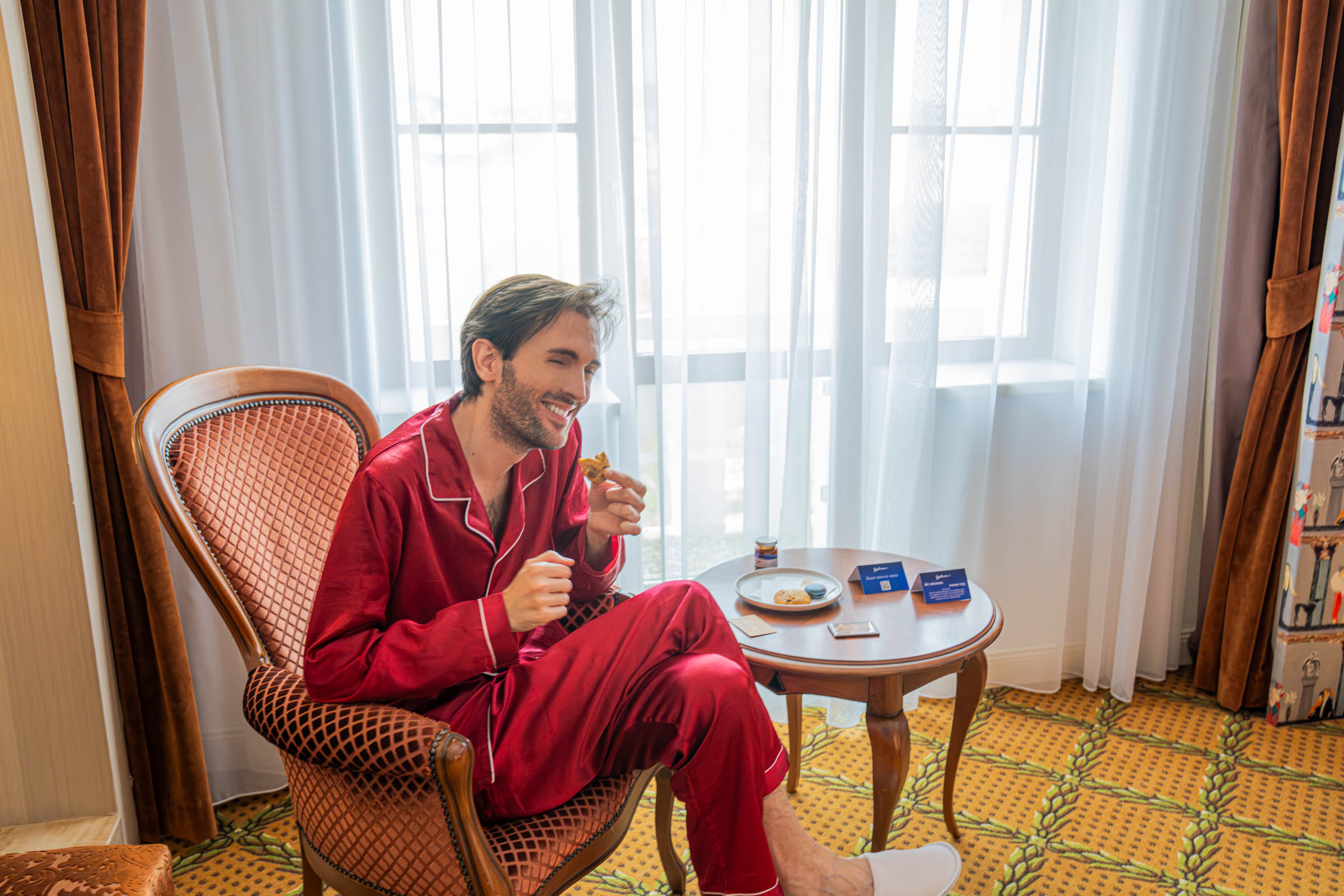
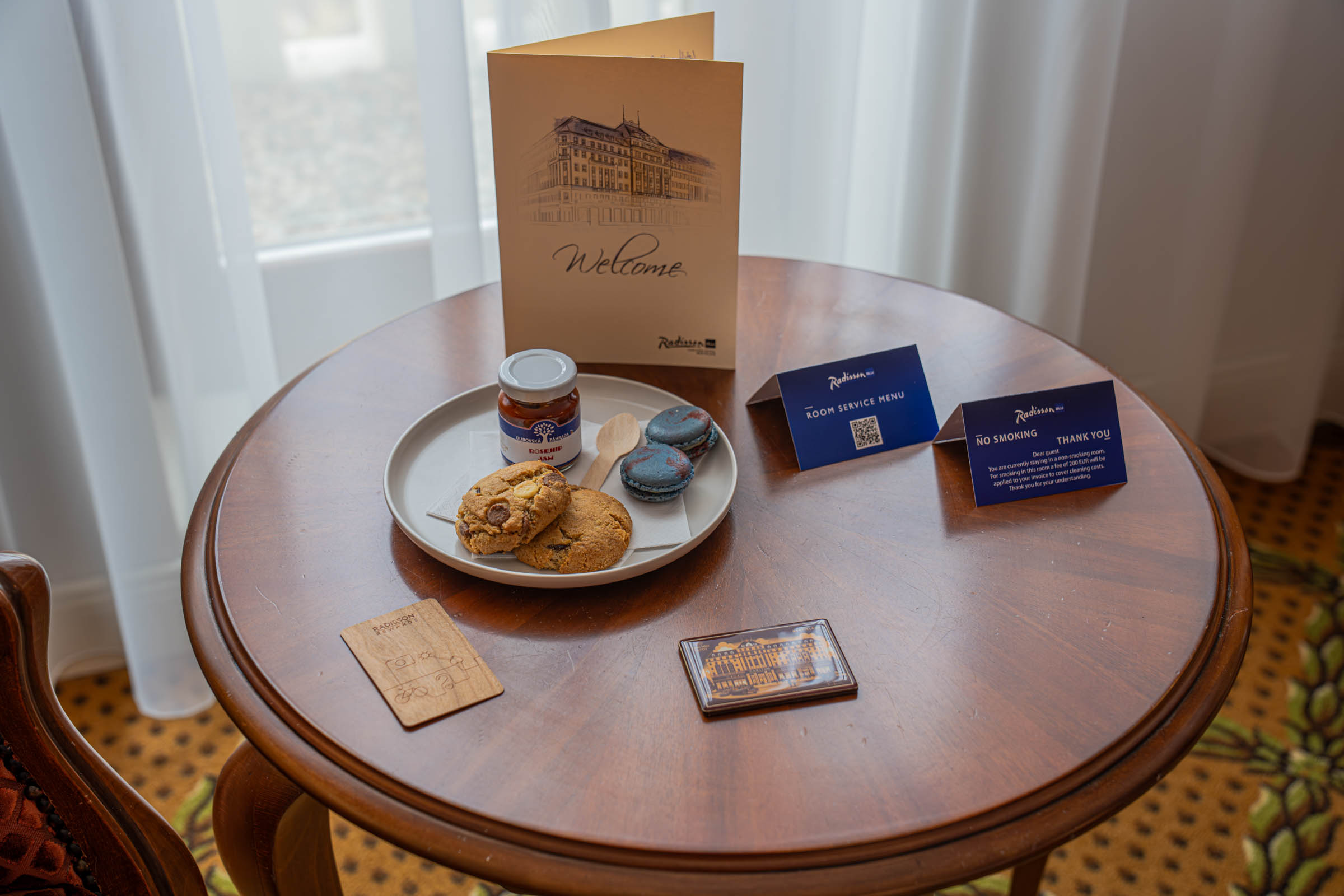
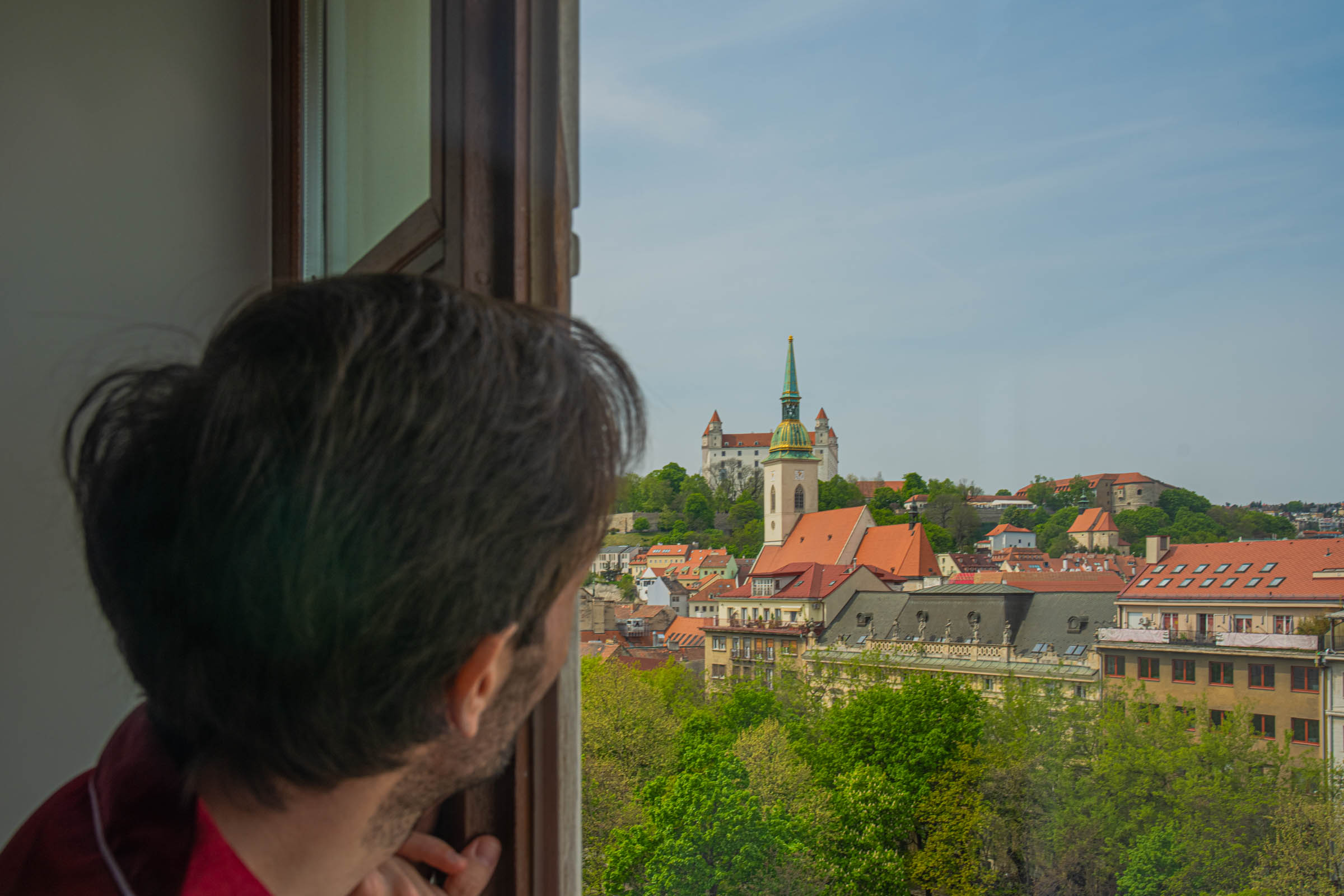
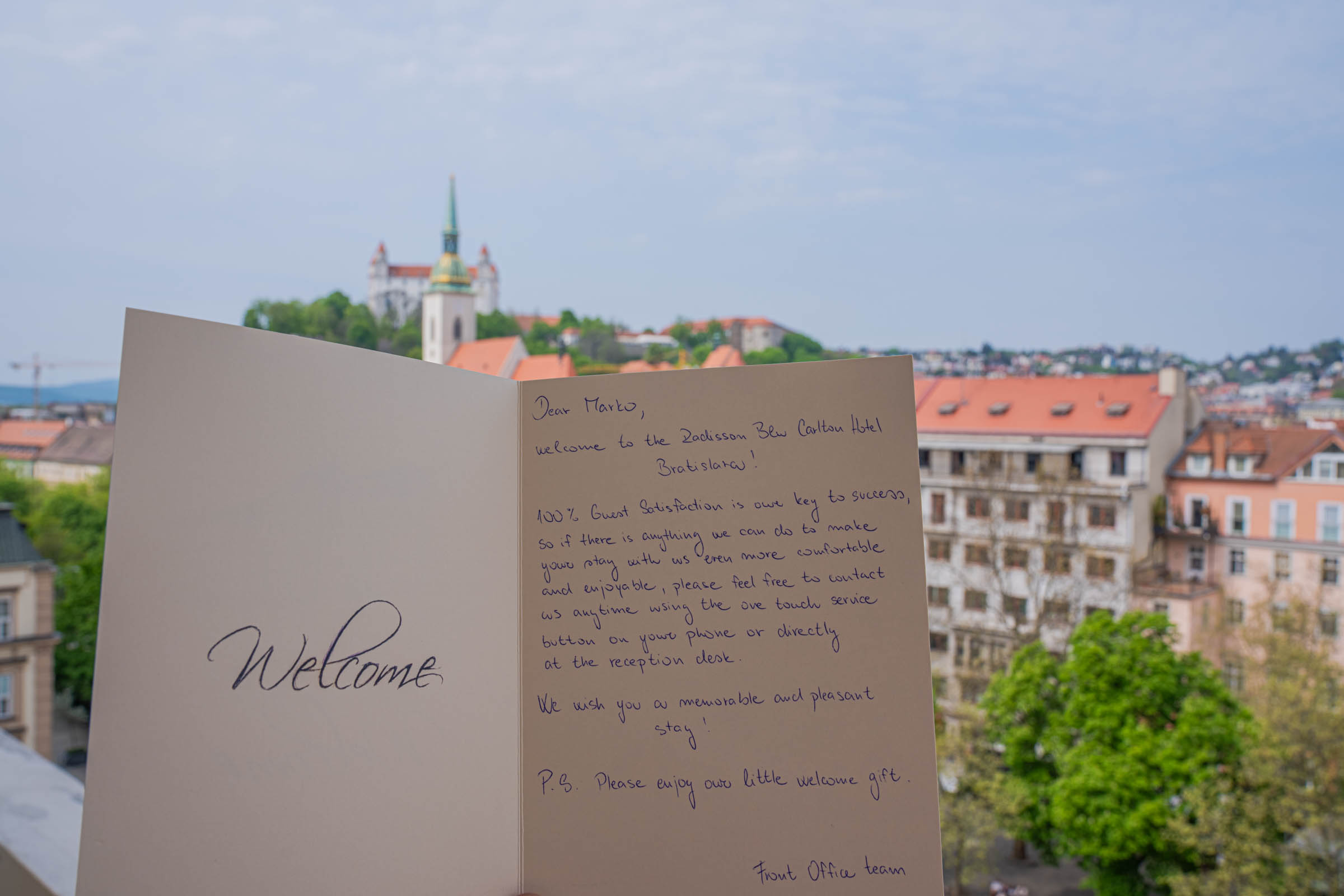
The welcome was warm, kind and personal. A handwritten greeting card waited for me on the table, next to cookies, colorful macarons and small gifts. Such gestures make the difference between an ordinary and an extraordinary stay. The location is the hotel’s greatest advantage. The Old Town Hall is less than 300 meters away, St. Martin’s Cathedral is about 310 meters away, and Bratislava Castle is less than a kilometer away.
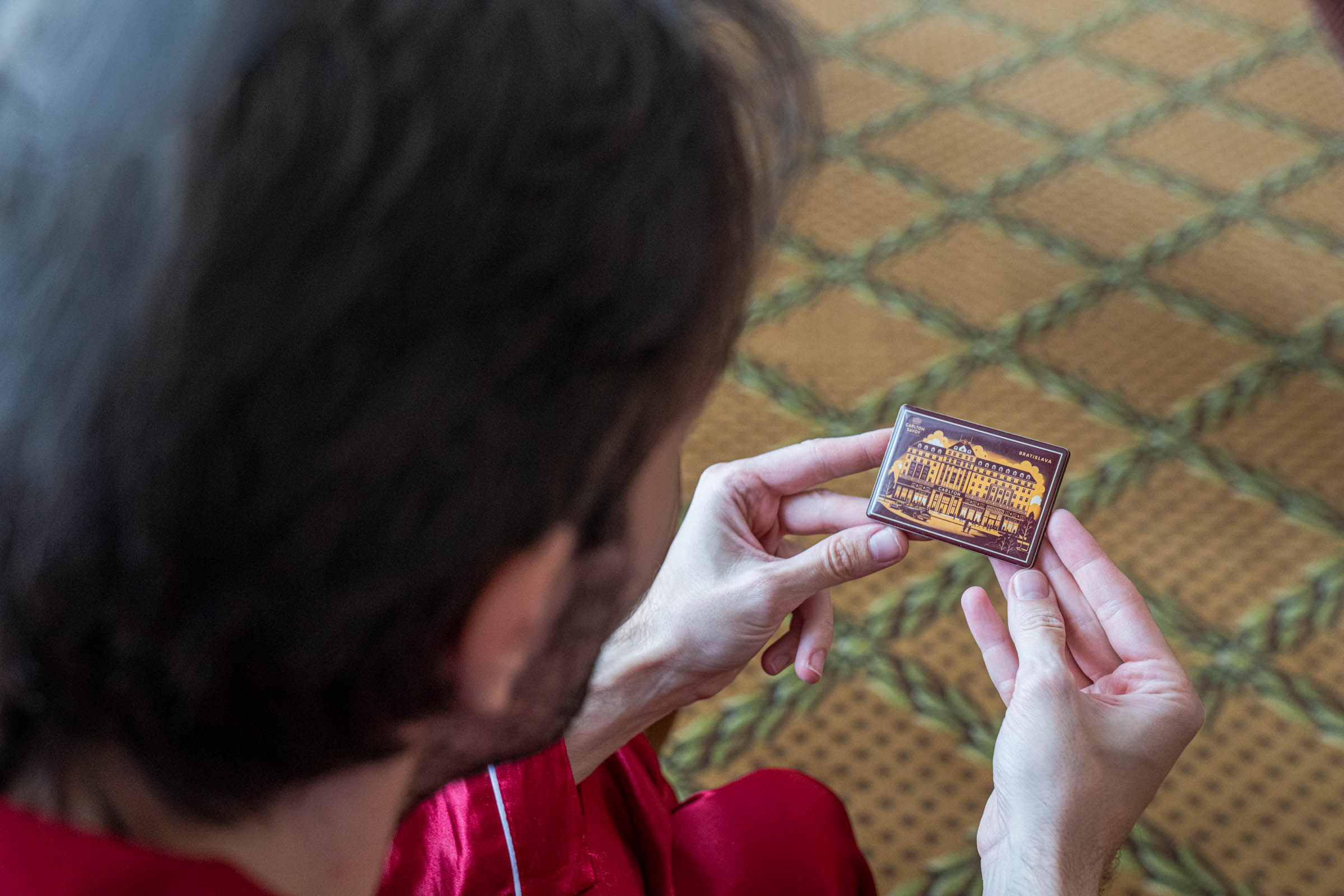
The hotel is home to the Savoy Restaurant, which serves Slovak dishes and breakfast, and to the famous Mirror Bar. In summer, a terrace invites you to dine outdoors, and room service is available around the clock. For relaxation, the Carlton Savoy Fitness and Wellness Center offers massages, a sauna, a steam bath and a hot tub.
MY JUNIOR SUITE AT THE CARLTON
My Junior Suite was a real little oasis of 48 square meters. It combines space, elegance and a warm classic style. As soon as I opened the door, I felt the spirit of the old hotel.
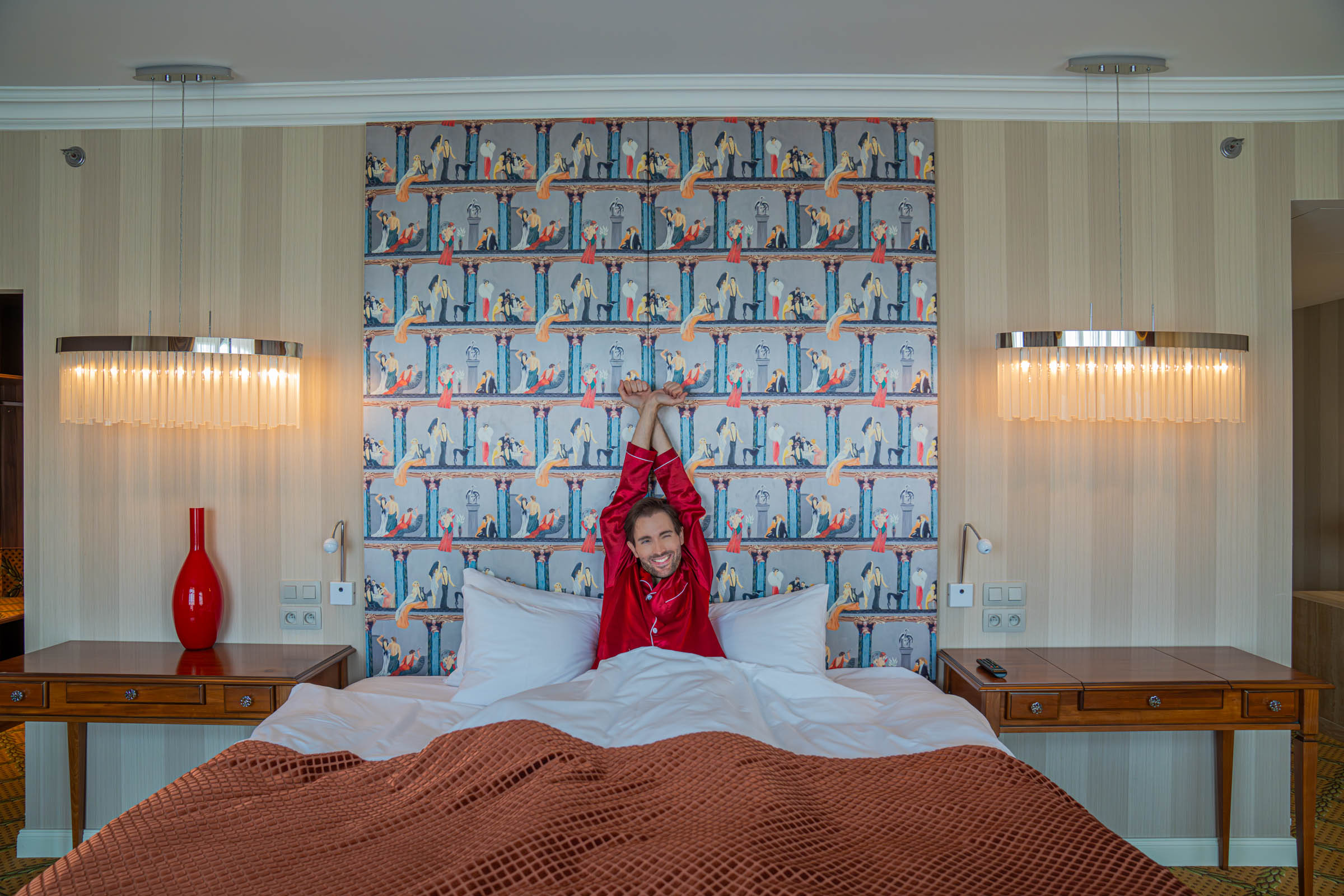
The most striking detail was the wallpaper behind the bed. Its Art Deco motif shows figures between columns, in vivid colors that never feel overwhelming. That wall gives the room an artistic, almost theatrical character. The bed was huge and extremely comfortable, with soft white linen. On each side stood a wooden nightstand, and crystal lamps cast a warm, pleasant light.
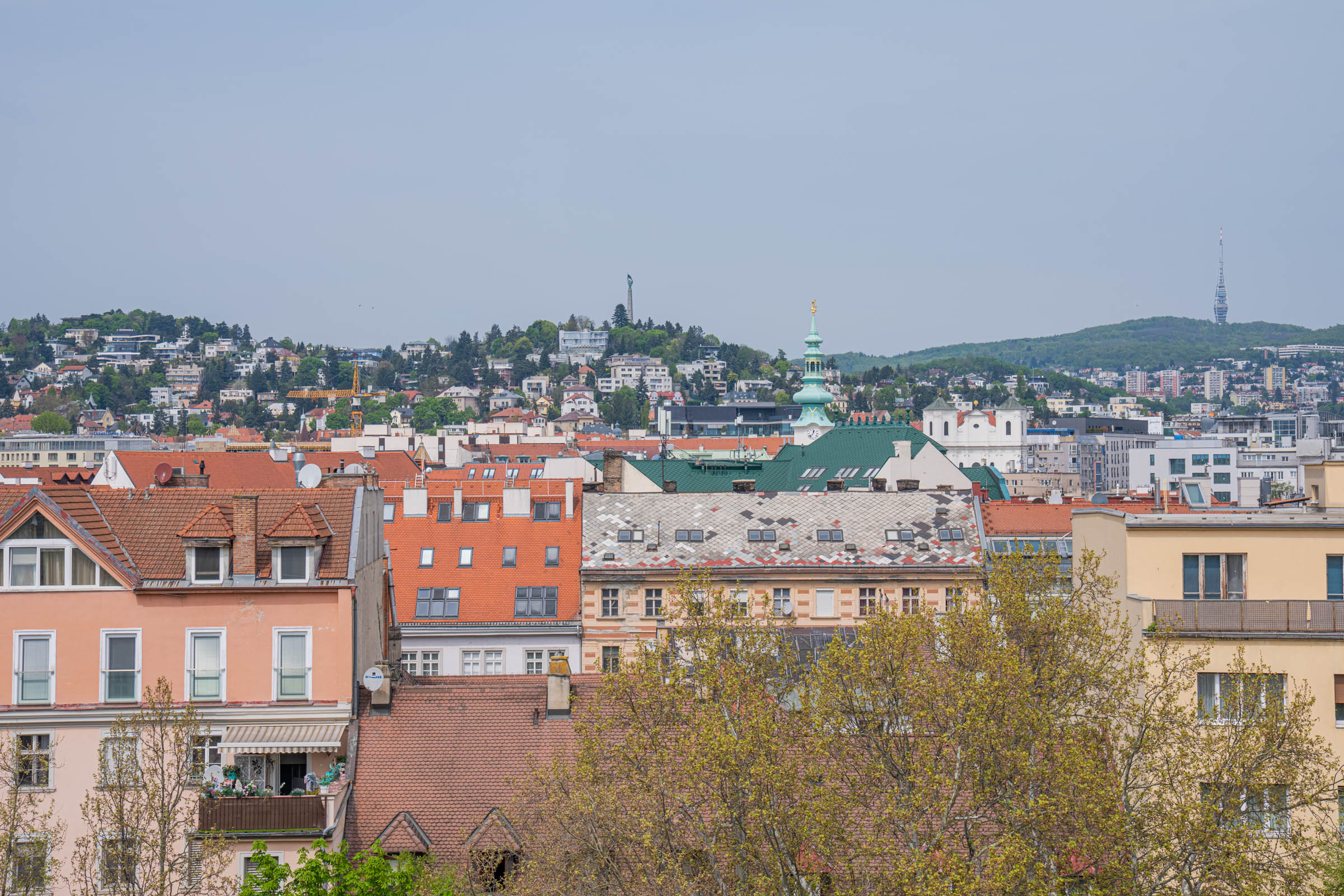
By the window, there was a small corner with an antique armchair and a round table. I sat there every morning with coffee and a cookie, while the light came through the curtains and filled the room with peace. The view was a reward in itself: towers, red roofs and the castle on the hill. I woke up to a panorama that many people only dream about.
The bathroom felt like a small temple of comfort. Marble walls and a carved vanity created a sense of opulence, and the heated floor was a real little blessing.
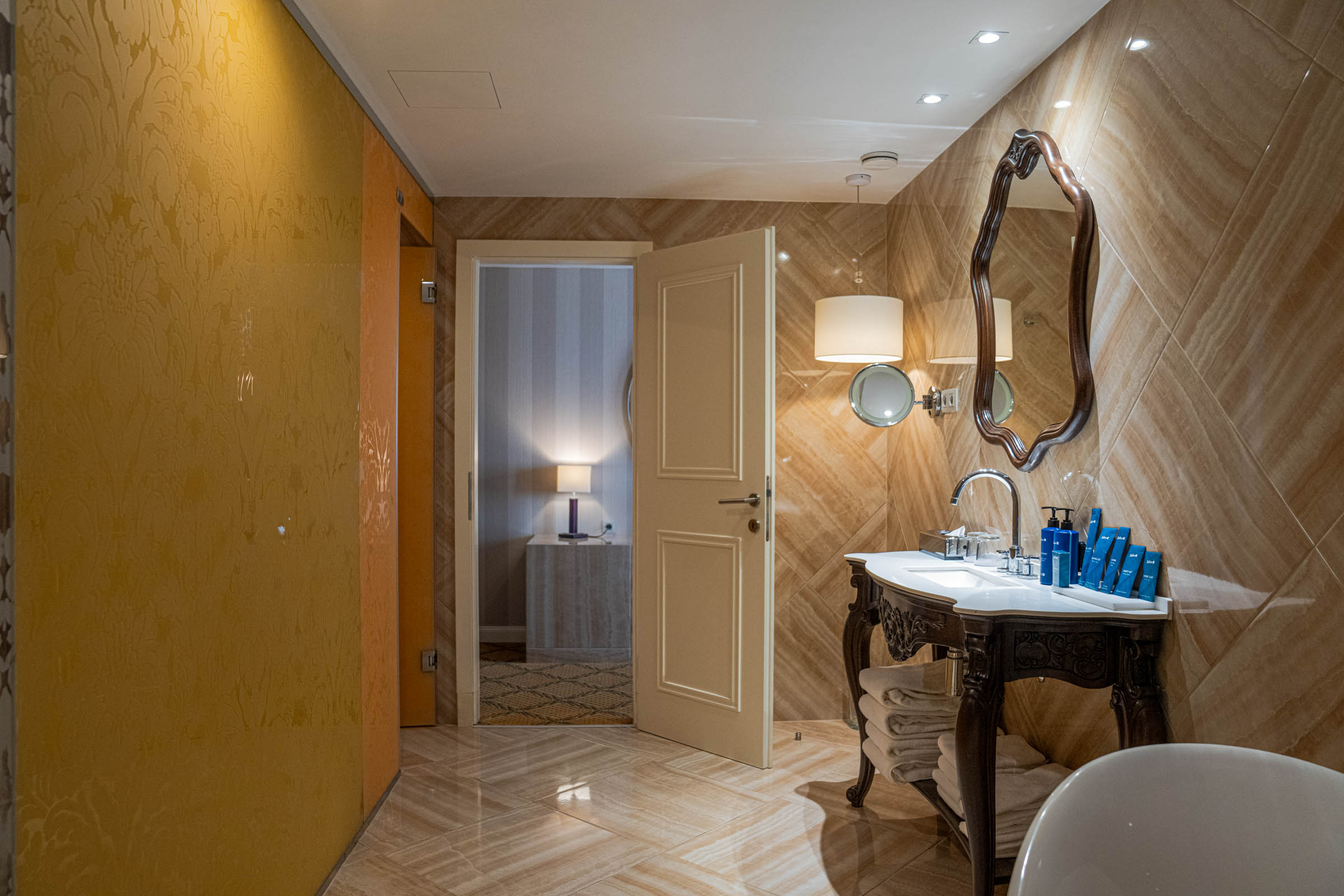
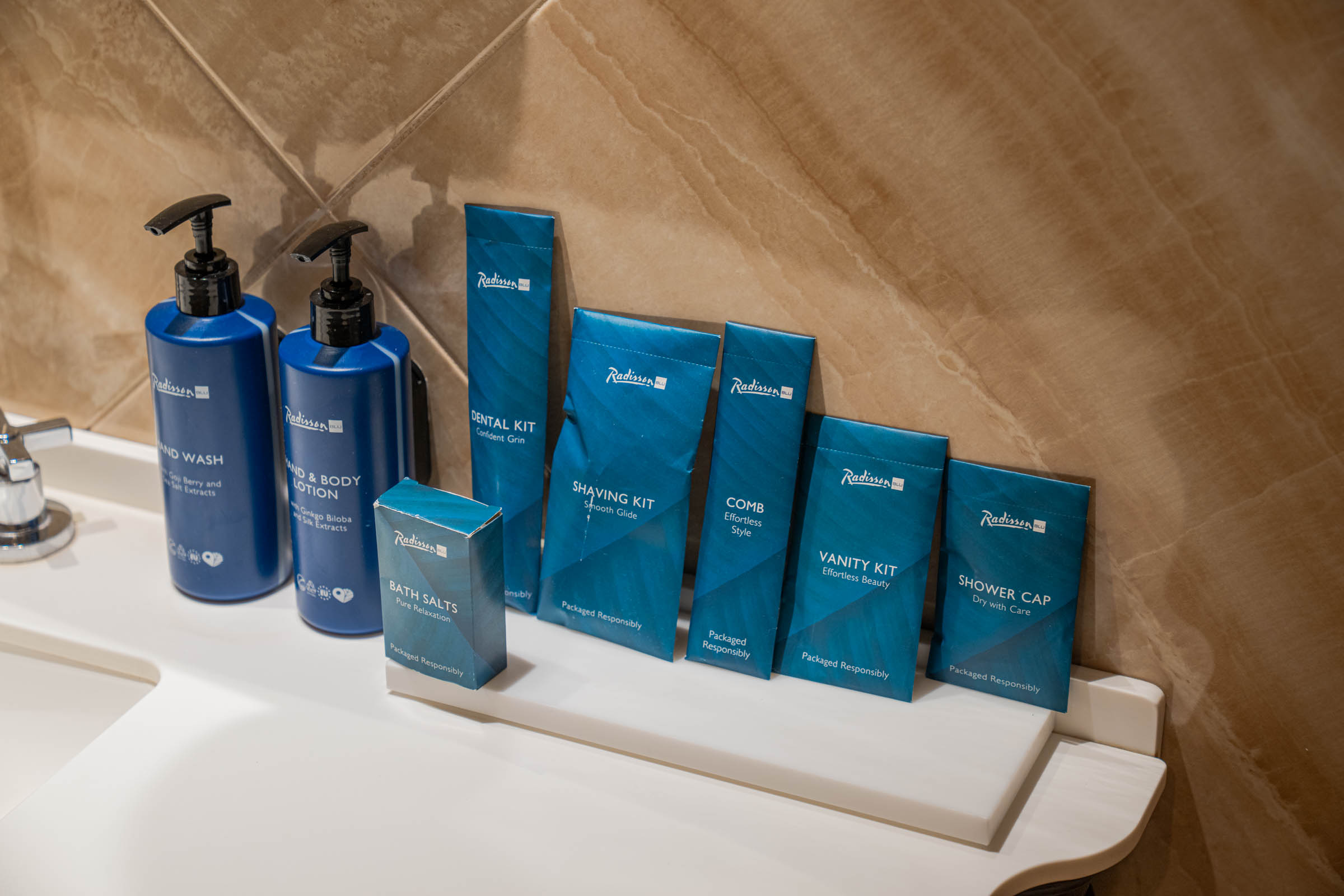
The toiletries were complete and beautifully packaged, all in the signature blue of Radisson Blu. Such attention to detail builds a guest’s trust.
BREAKFAST AND MORNING RITUALS IN BRATISLAVA
Every morning at the hotel began with the same ritual. I went down to breakfast at the Savoy Restaurant, where fresh pastries, fruit and hot dishes waited for the guests. In a hotel like this, breakfast is not just a meal. It is the introduction to a day full of walking and discovery. First, I would drink a coffee with a view of the square, and only then would I start exploring.
After a long day, the wellness area was just as pleasant. A few moments in the sauna or the steam bath gave me back my strength. So, every evening I was ready for a new dinner.
HVIEZDOSLAV SQUARE: THE GREEN HEART OF BRATISLAVA
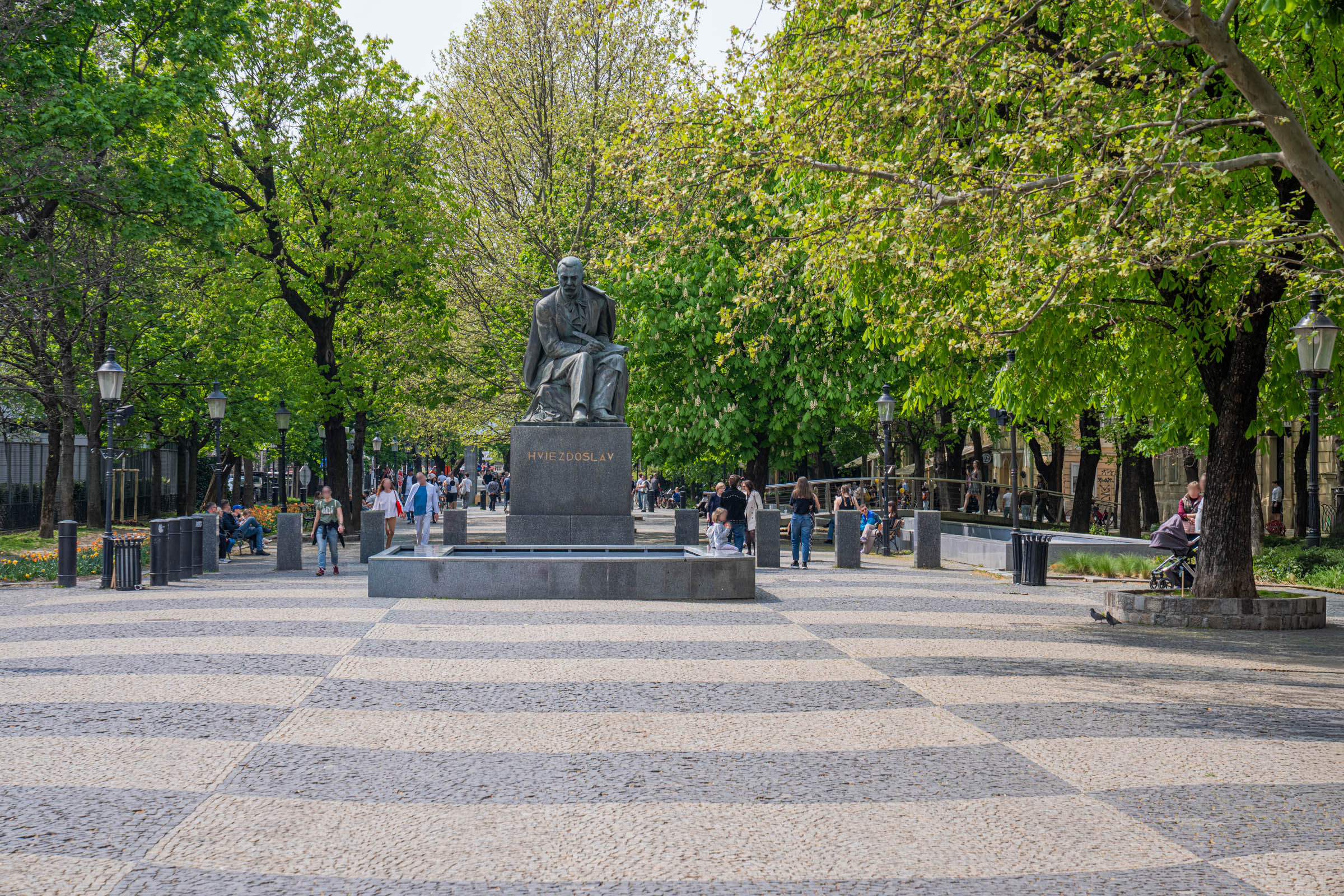
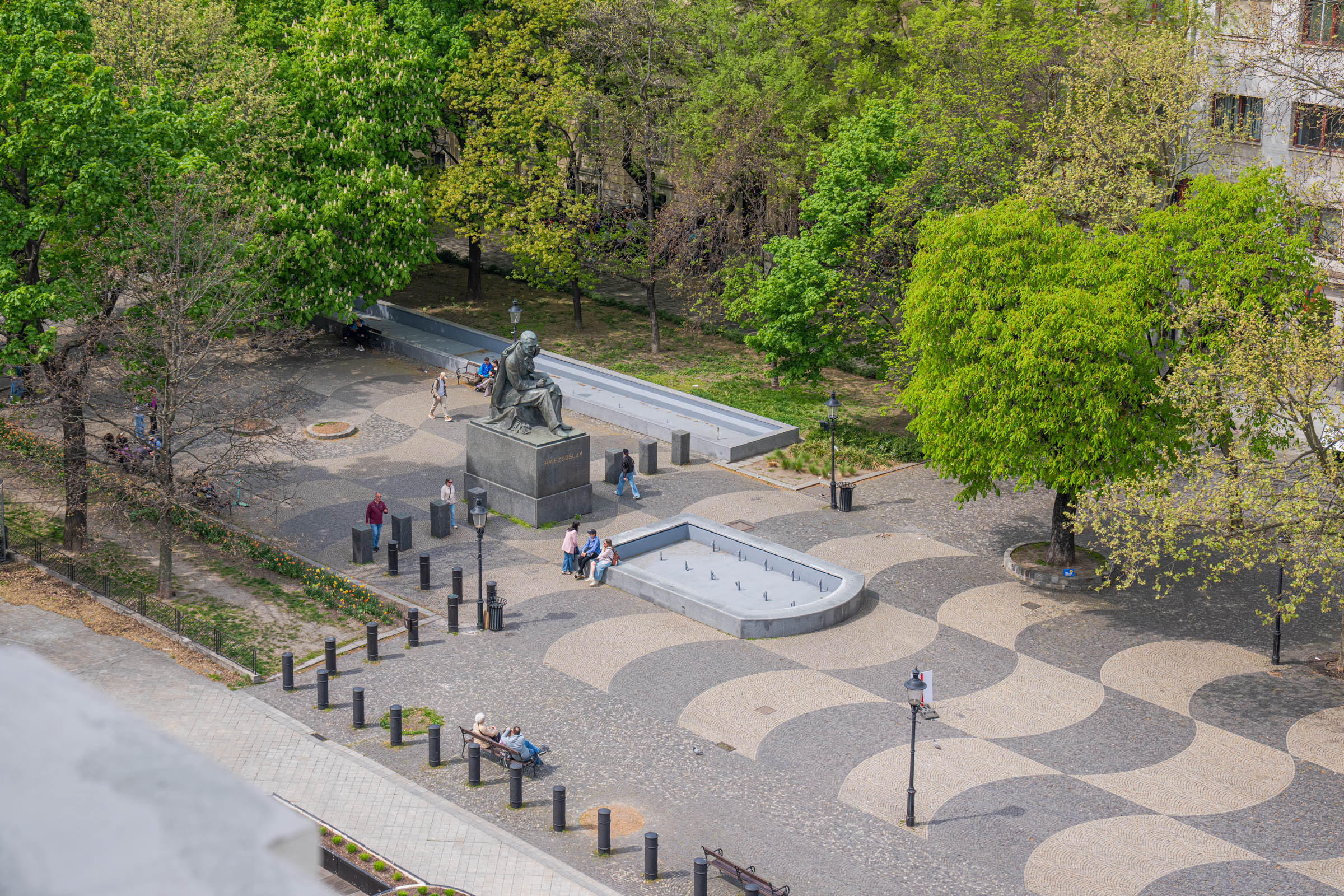
I started exploring right in front of the hotel. Hviezdoslav Square is a long, tree-lined pedestrian promenade named after the Slovak poet Pavol Országh Hviezdoslav, whose statue stands in its center. The square is full of life at any time of day. People stroll, sit on benches and enjoy their coffee, while tourists photograph the facades. That relaxed atmosphere won me over immediately.
From the hotel window, the square looks even more beautiful. The patterns in the paving meander like waves, and the trees create shady tunnels along the whole promenade. This is where the city rests and breathes.
THE SLOVAK NATIONAL THEATRE
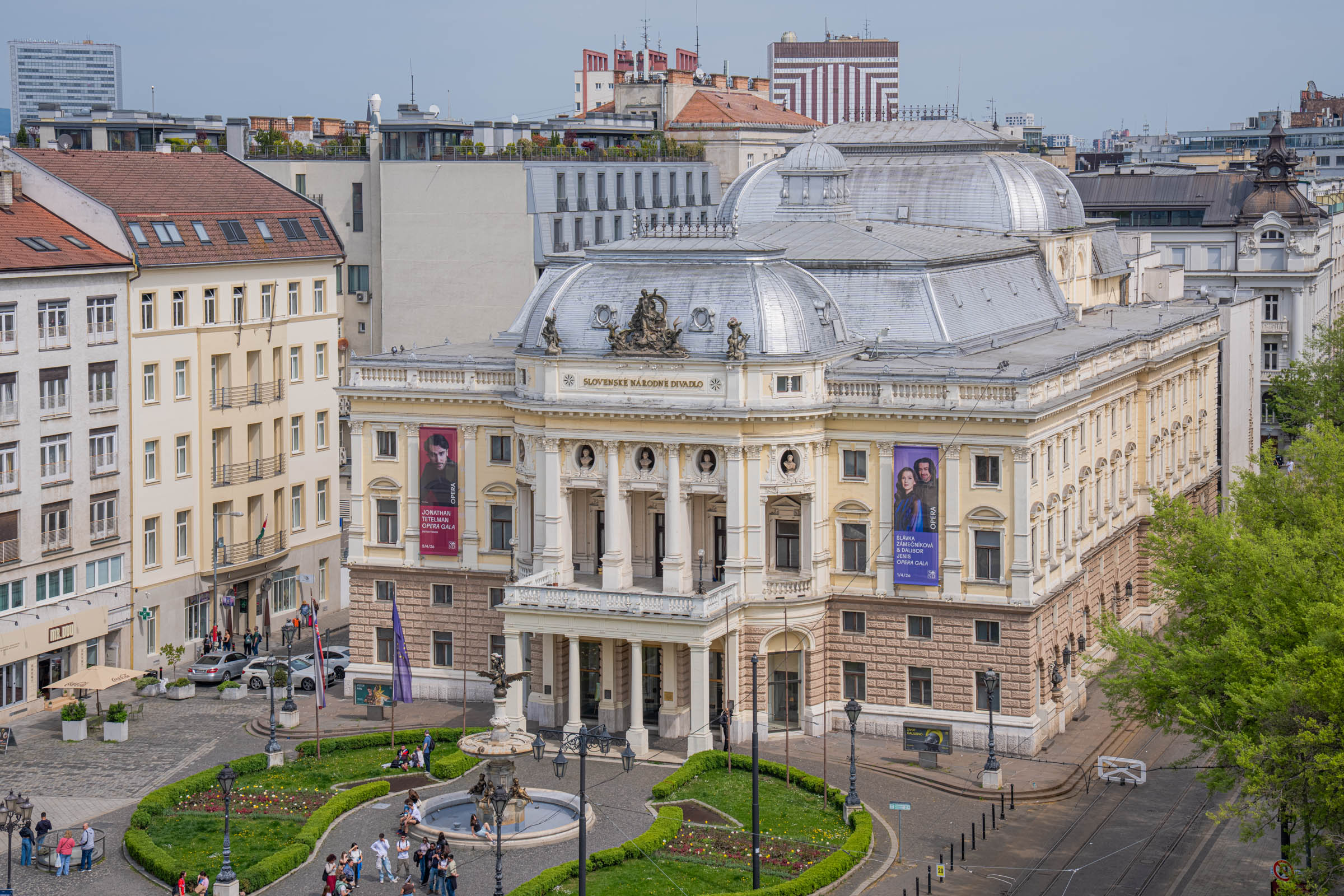
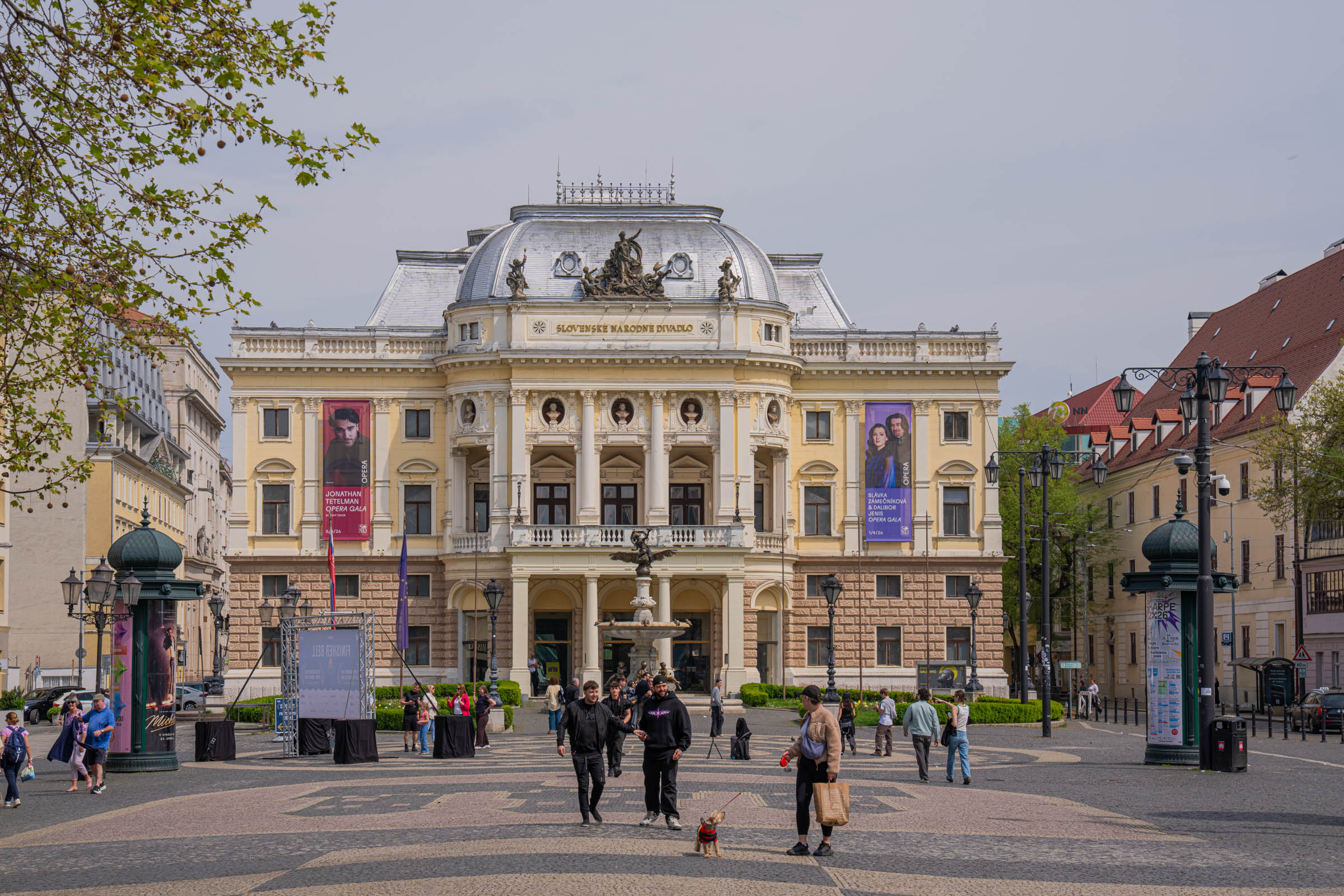
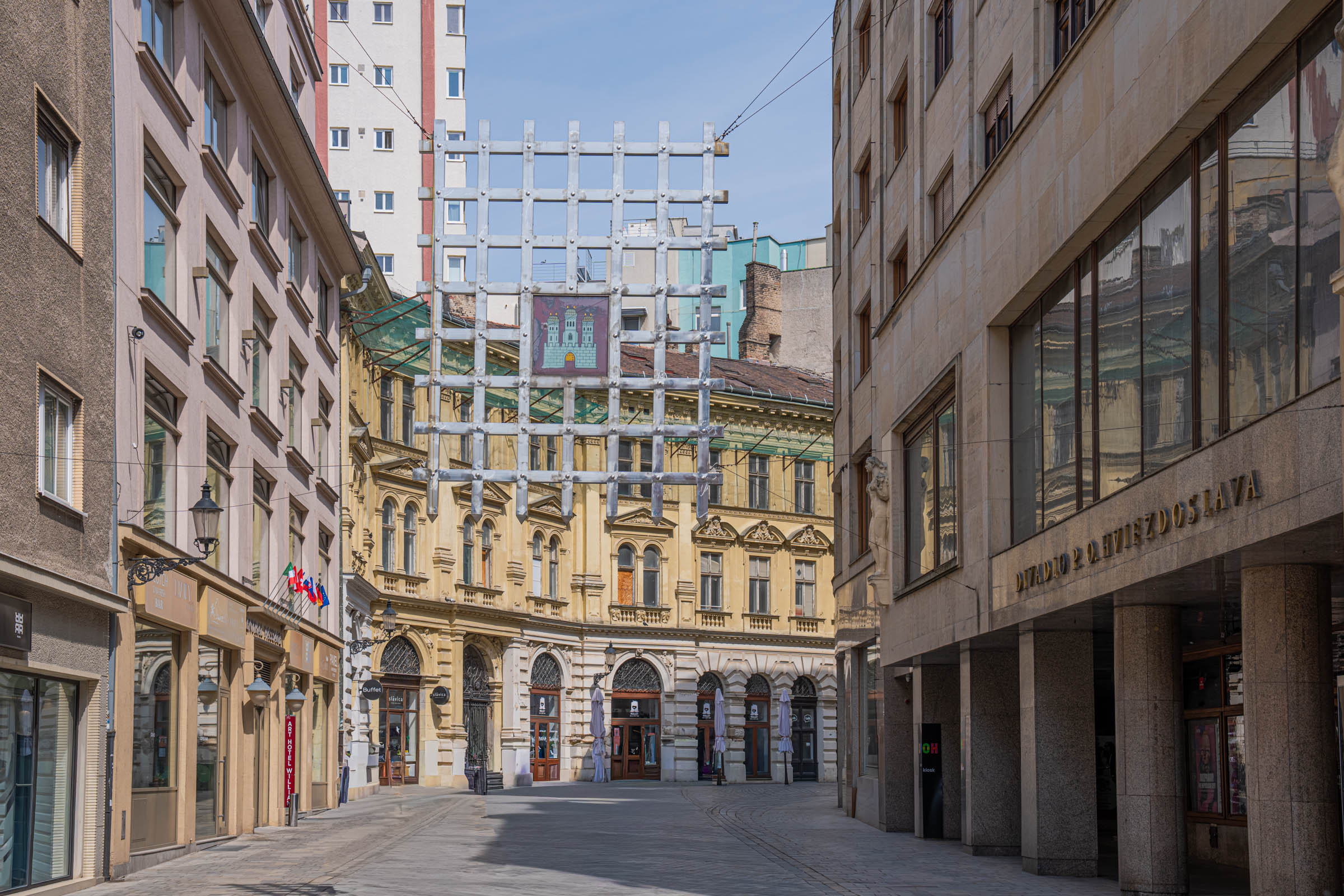
At one end of the square stands a magnificent building: the historic home of the Slovak National Theatre. The Viennese architects Fellner and Helmer designed this neo-Renaissance landmark, which opened in 1886 as the City Theatre. Its facade is breathtaking, decorated with busts and sculptures.
In front of the theater, the Ganymede Fountain by the sculptor Viktor Tilgner has stood since 1888. It shows the mythological boy Ganymede carried by an eagle to Olympus, and it is a favorite meeting point for locals and photographers. Even if you do not see a performance, it is worth stopping by, because the exterior is a true work of art. It shines especially beautifully in the late afternoon.
THE OLD TOWN AND ITS NARROW STREETS
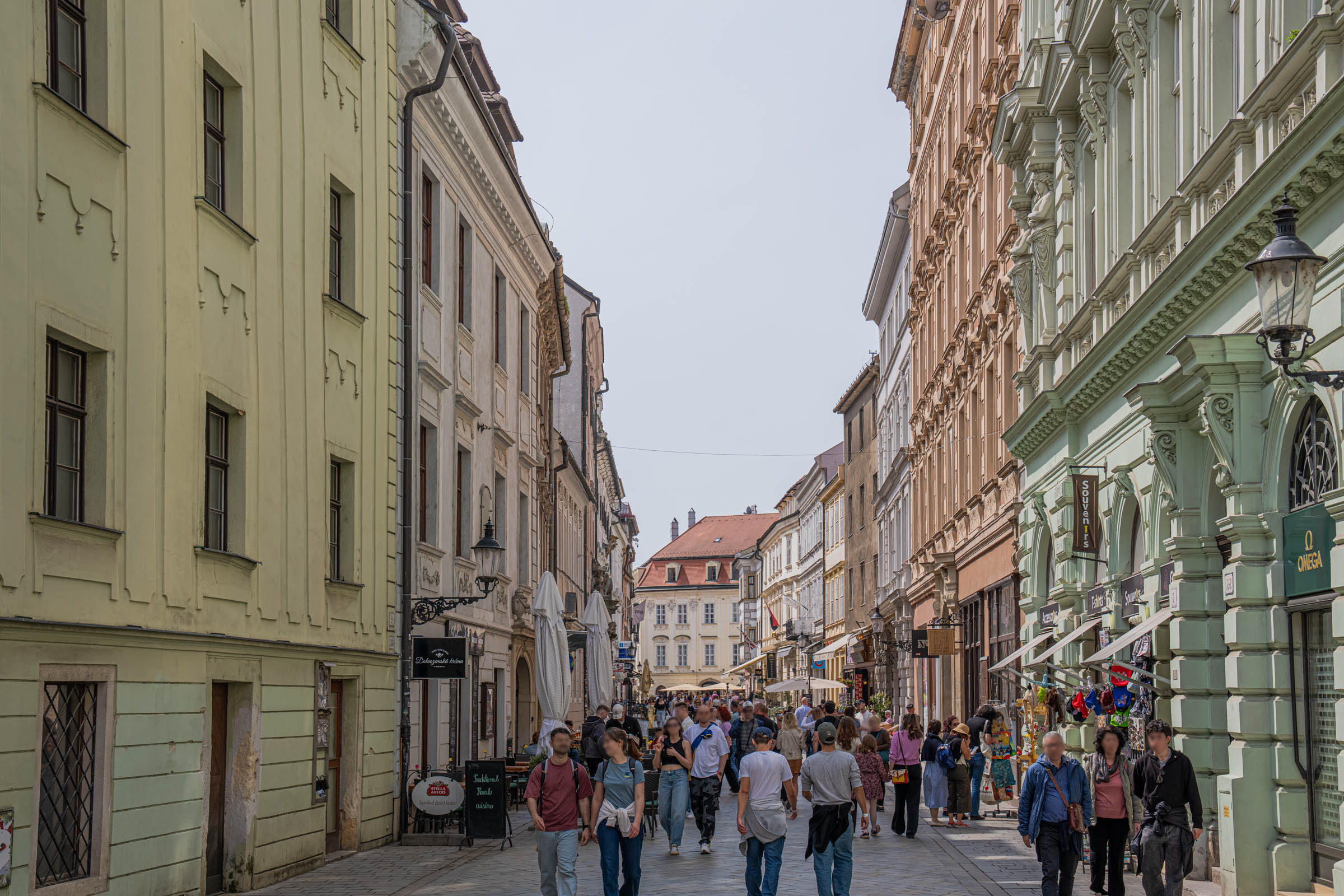
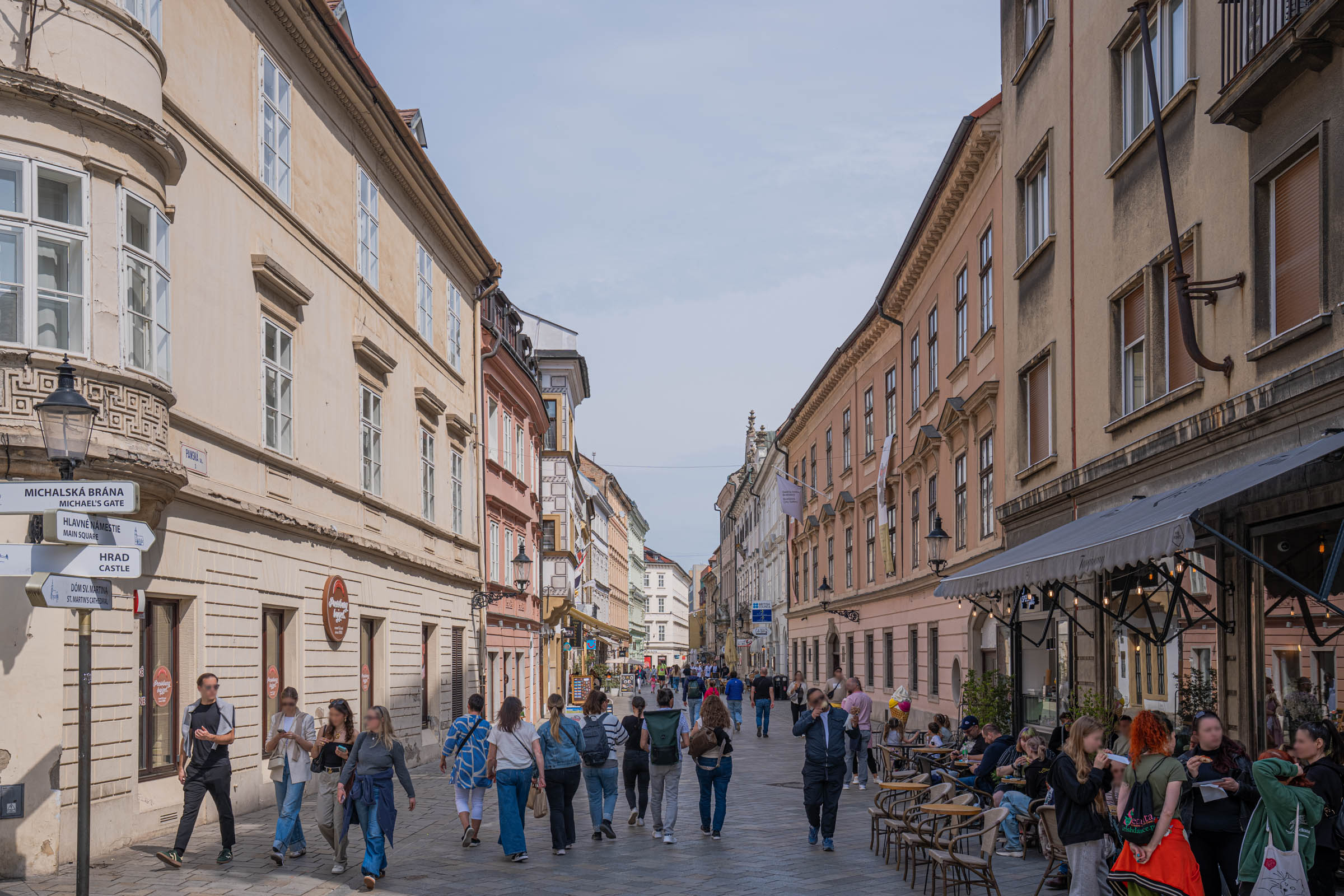
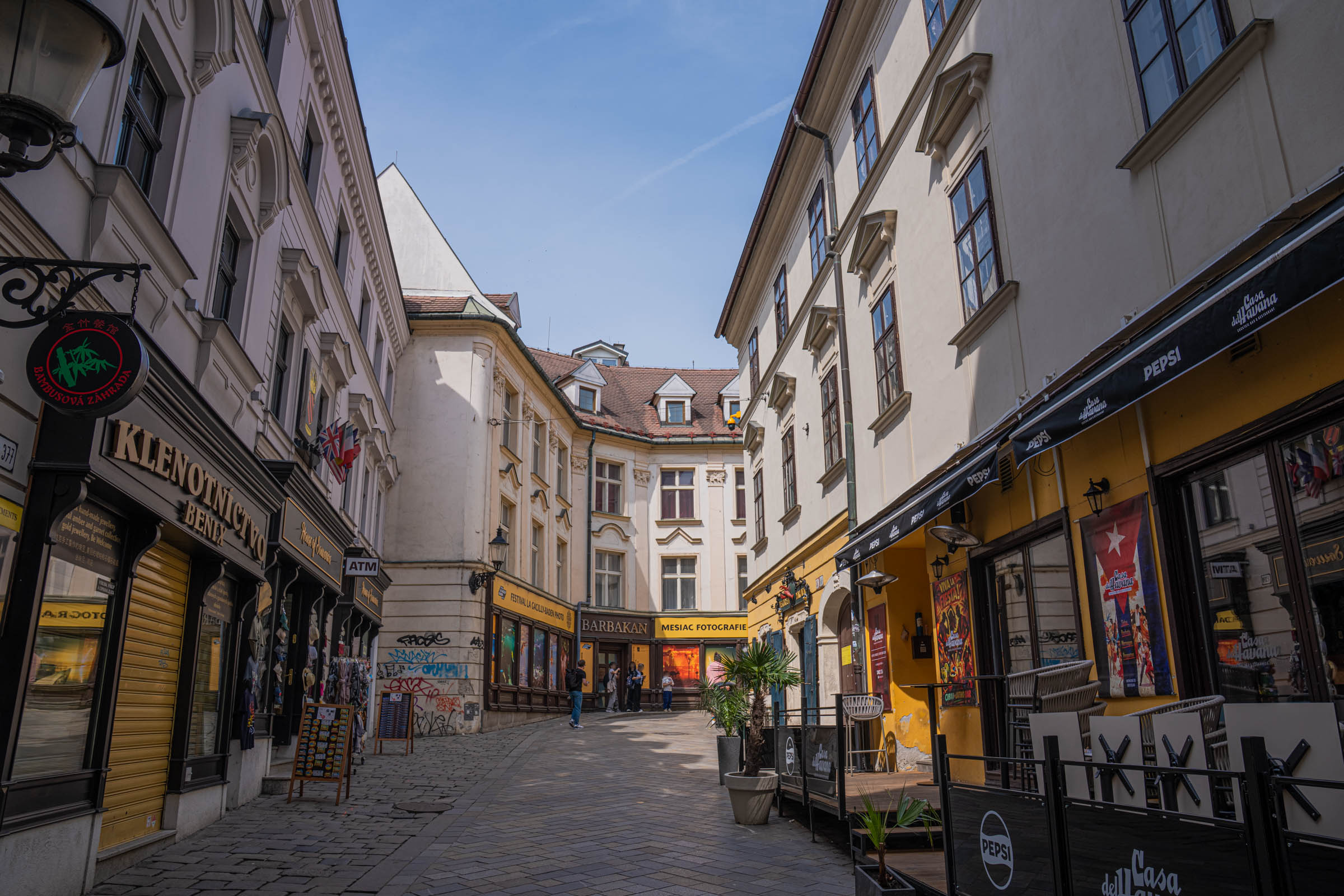
The real heart of Bratislava is hidden in its narrow streets. The Old Town is small but full of life, and every street leads to a new discovery. Facades in warm pastel tones of yellow, green and pink line the way, while shops and cafes invite you in. The scent of pastries and coffee follows every step.
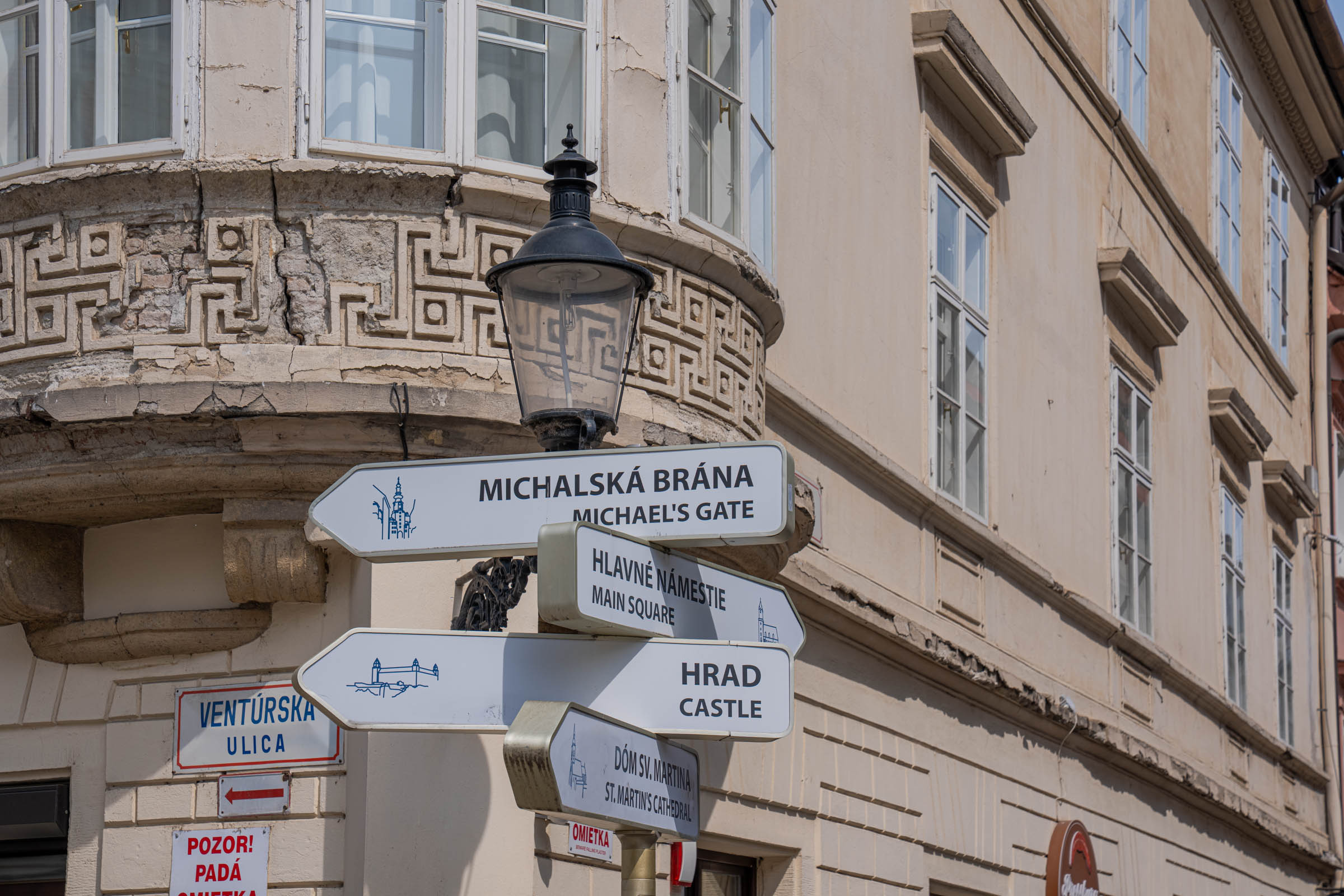
Finding your way is extremely simple. On many corners, signposts point to the main sights in both Slovak and English, so even a first-time visitor cannot get lost.
I love cities where I can find my way easily, and Bratislava is exactly like that. Within a few hours, I knew the layout of the streets, so I put the map away and let curiosity lead me. Some streets hide small galleries and museums, and I passed shop windows full of photographs and jewelry. Bratislava has a lively art scene, and you feel it most in these side streets.
MICHAEL’S GATE: THE DOOR TO MEDIEVAL BRATISLAVA
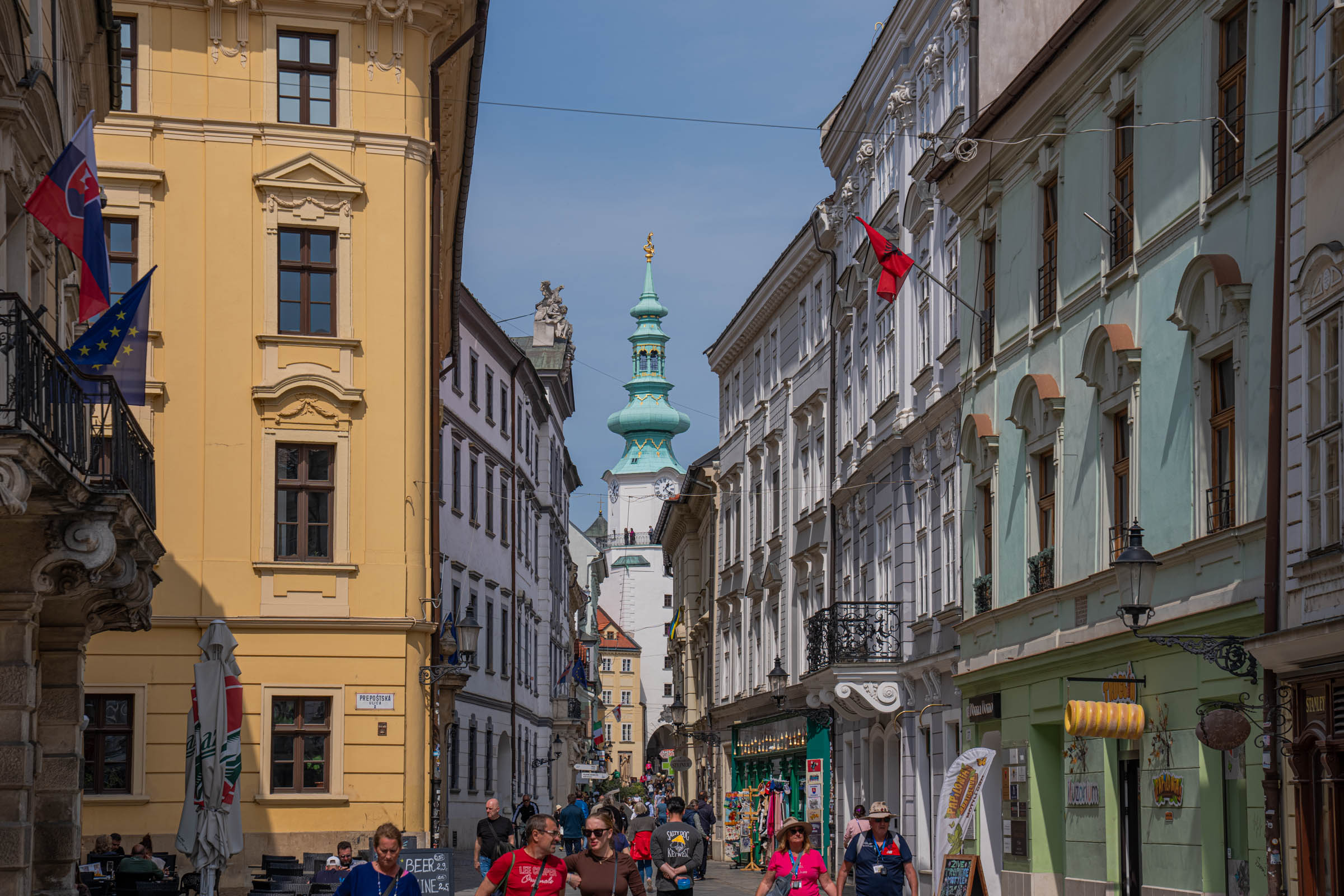
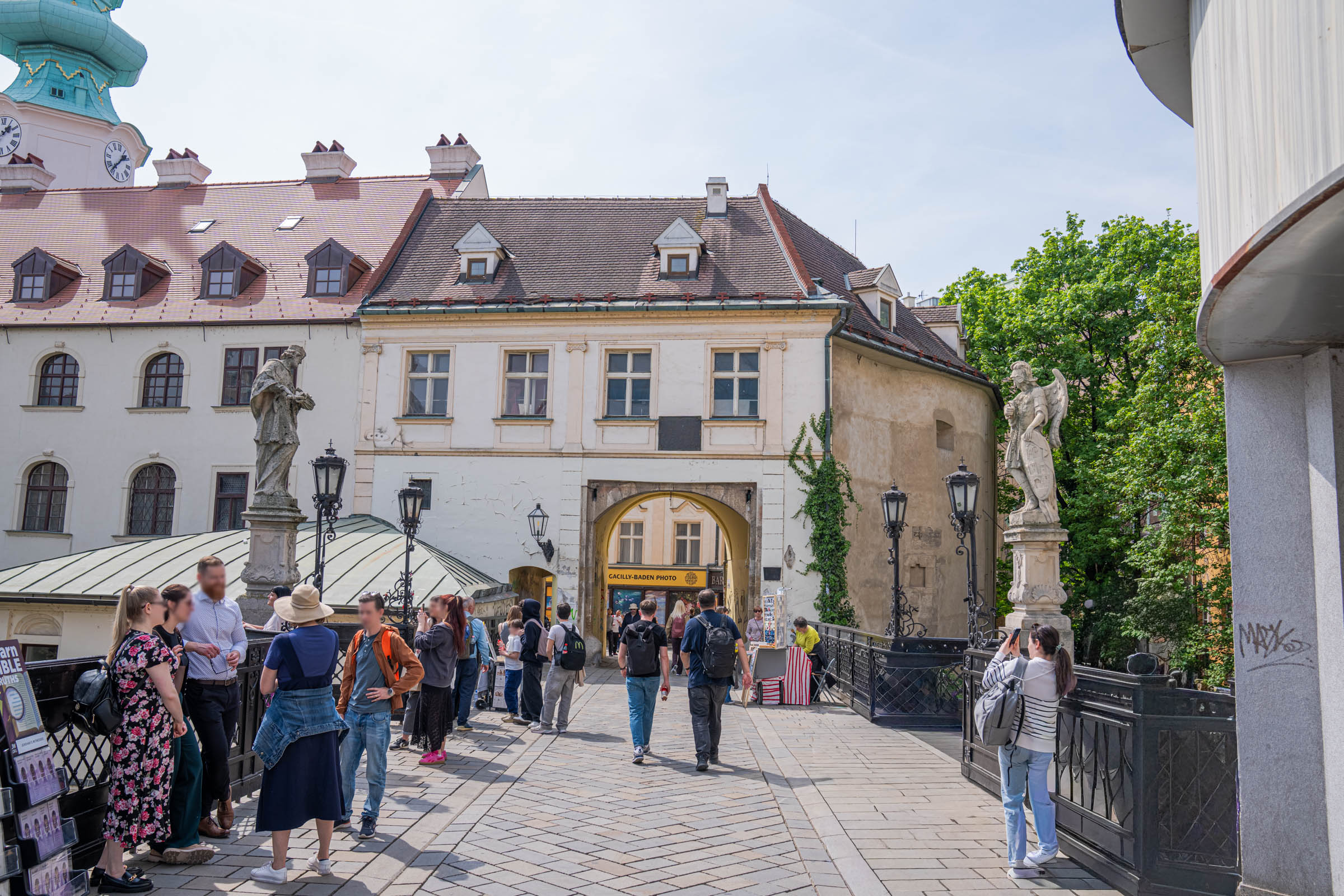
Among all the monuments of the Old Town, one stands out. Michael’s Gate is the only one of the four medieval city gates that has survived. Its tower rises 51 meters. Since the Baroque reconstruction in the 1750s, a statue of the Archangel Michael slaying a dragon has stood on top. Today, the tower houses a museum of weapons, and its viewing gallery offers a superb view of the Old Town.
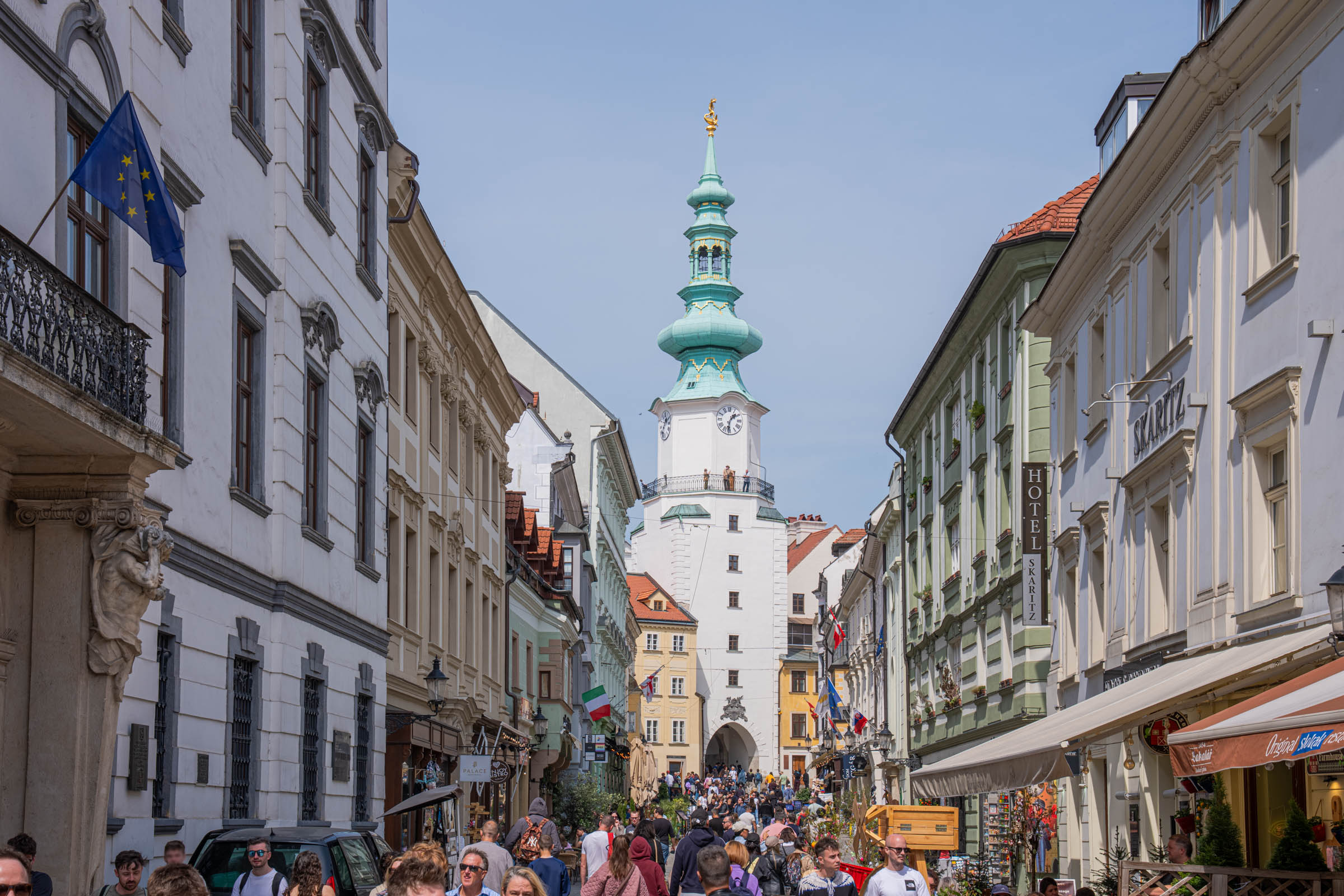
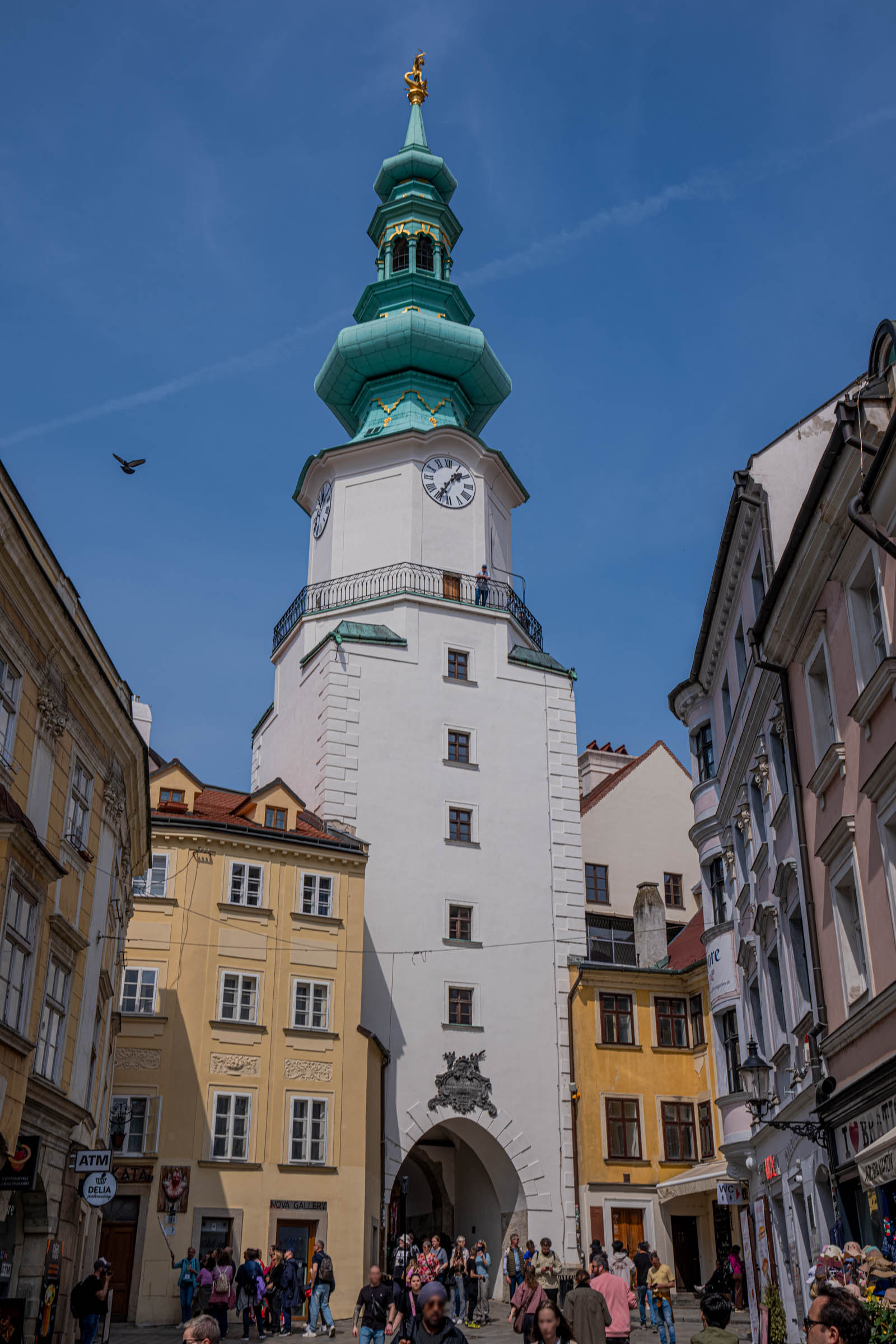
Beneath the gate, look for the “zero kilometer.” This small marker shows the distances from Bratislava to 29 major cities around the world. It is easy to miss, but it is worth finding and photographing. The approach to the gate, with its stone statues and small bridge, feels like a scene from an old fairy tale. I understood immediately why everyone stops here.
BRATISLAVA: MAIN SQUARE AND THE OLD TOWN HALL
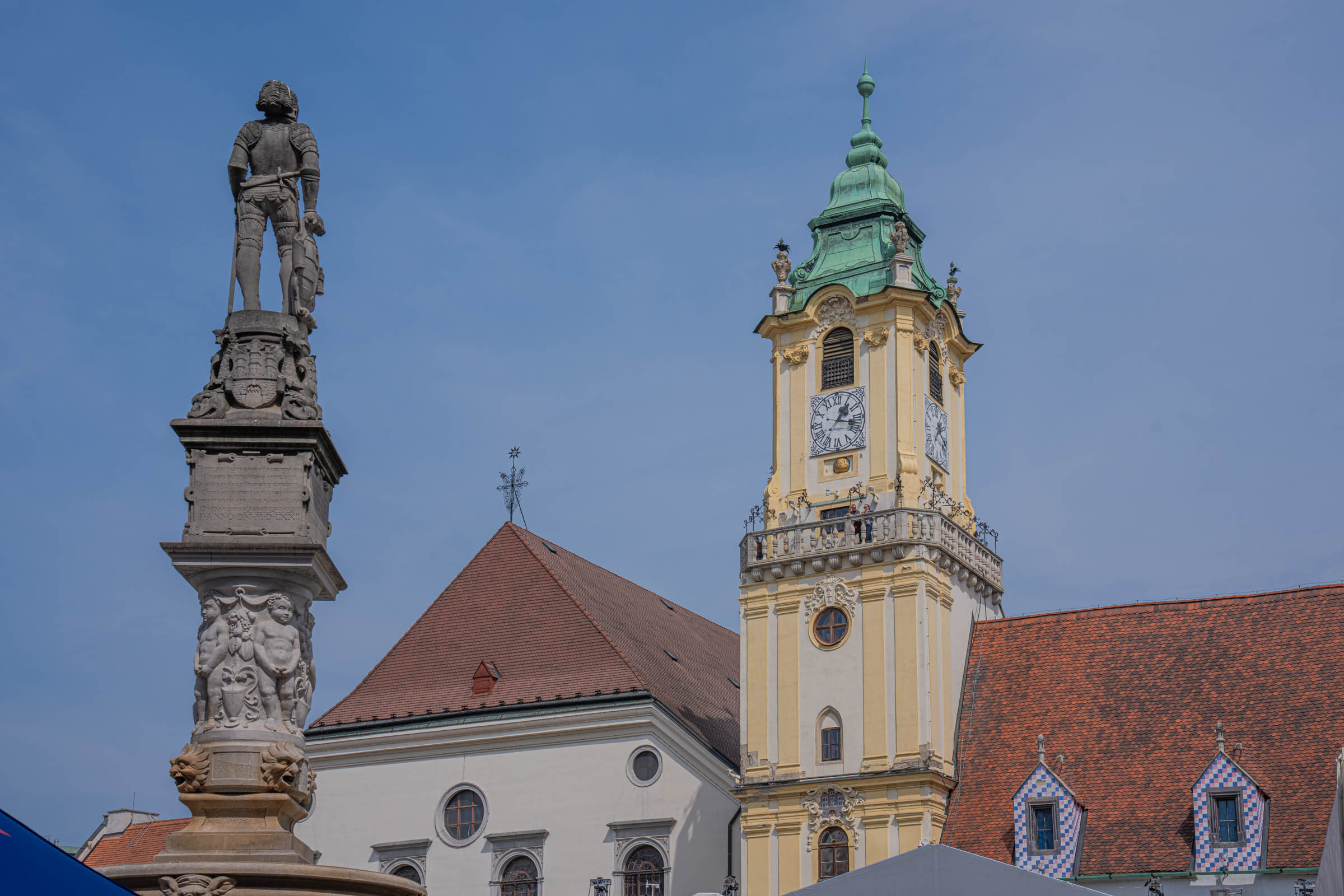
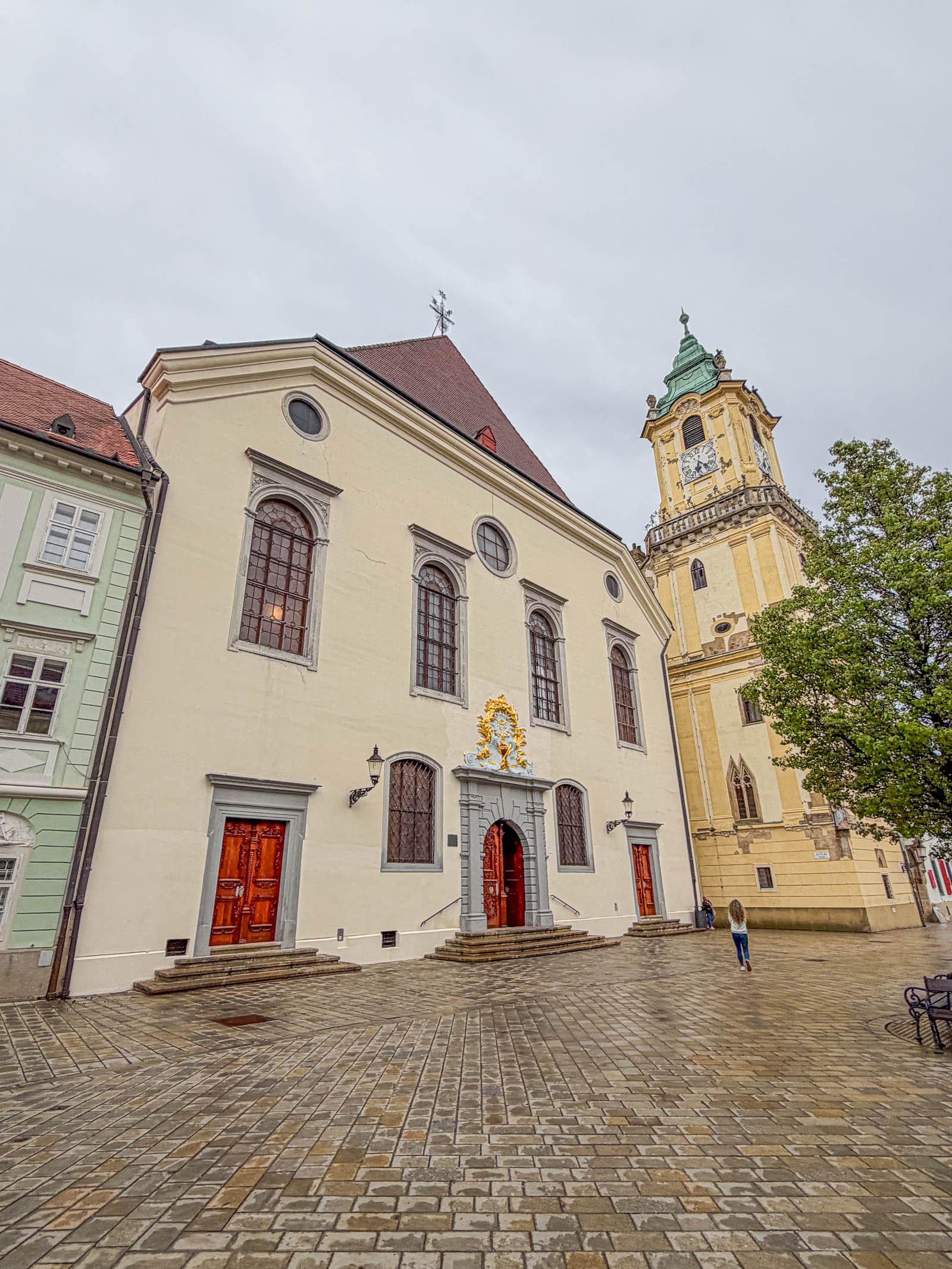
Following Michalská Street, I reached the Main Square, called Hlavné námestie in Slovak. For centuries, this was the center of trade and social life. The square is dominated by the Old Town Hall, one of the oldest buildings in the city, which today houses the Bratislava City Museum. In front of it stands the Maximilian Fountain from 1572.
The town hall tower, with its green Baroque roof and large clock, is easy to recognize. Even on a cloudy day, it looks magnificent. I stood beneath it and enjoyed the silence of the morning. Around the square, a tangle of old streets leads to new stories and facades. Here, Bratislava shows its true soul: it is a city made of small, precious scenes.
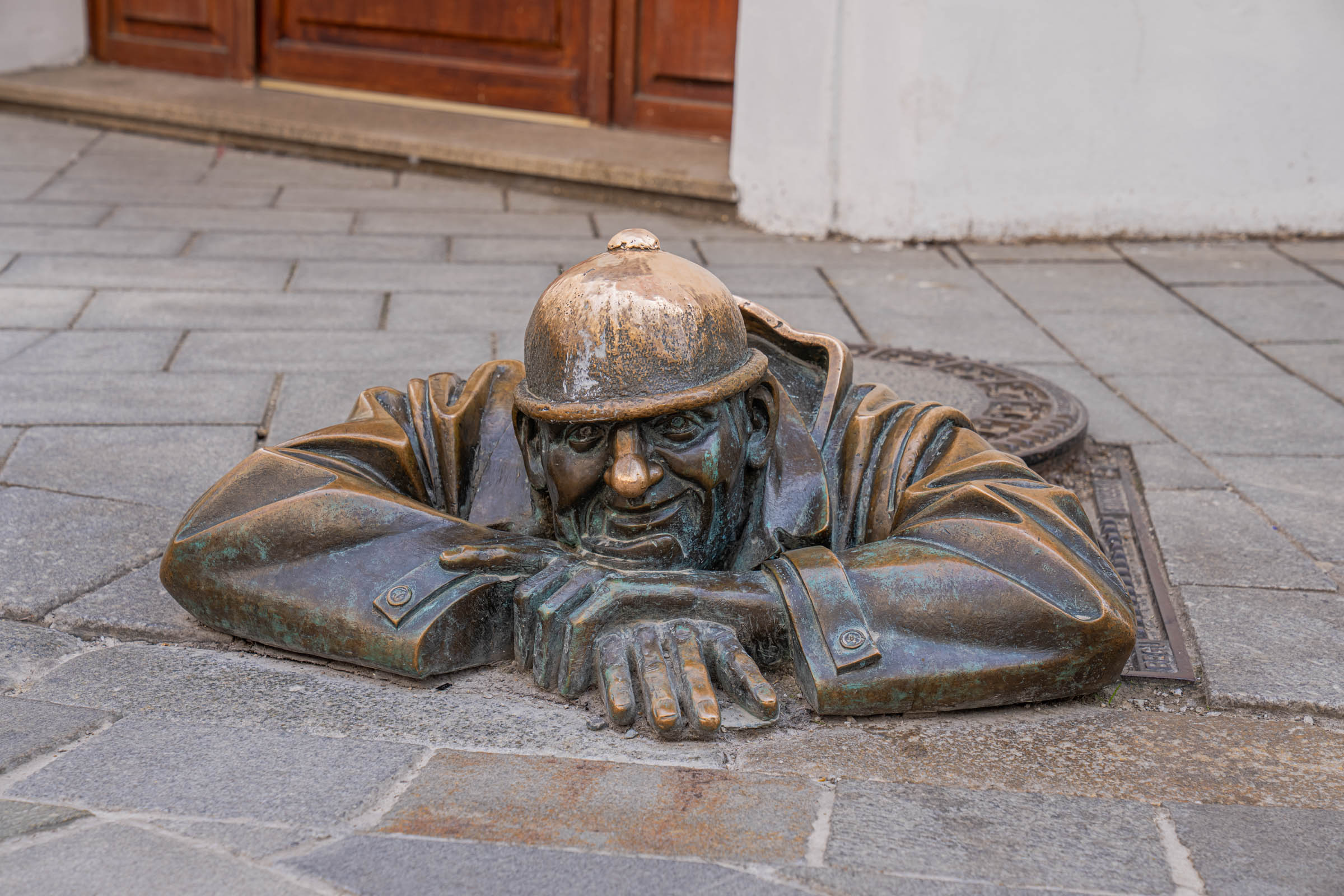
ČUMIL: THE MAN PEEKING OUT OF THE MANHOLE
Bratislava also has a playful side, with bronze statues scattered around the Old Town. The most famous of them is Čumil, whose name roughly means “the watcher.” He peeks out of a manhole at the corner of Panská and Laurinská streets, resting his chin on his arms with a wide smile. The Slovak sculptor Viktor Hulík created him, and the statue was unveiled on July 26, 1997, when the Old Town became a pedestrian zone.
Since then, Čumil has become one of the most photographed spots in the city. Some say that rubbing his head brings good luck, and I could not resist that little ritual either.
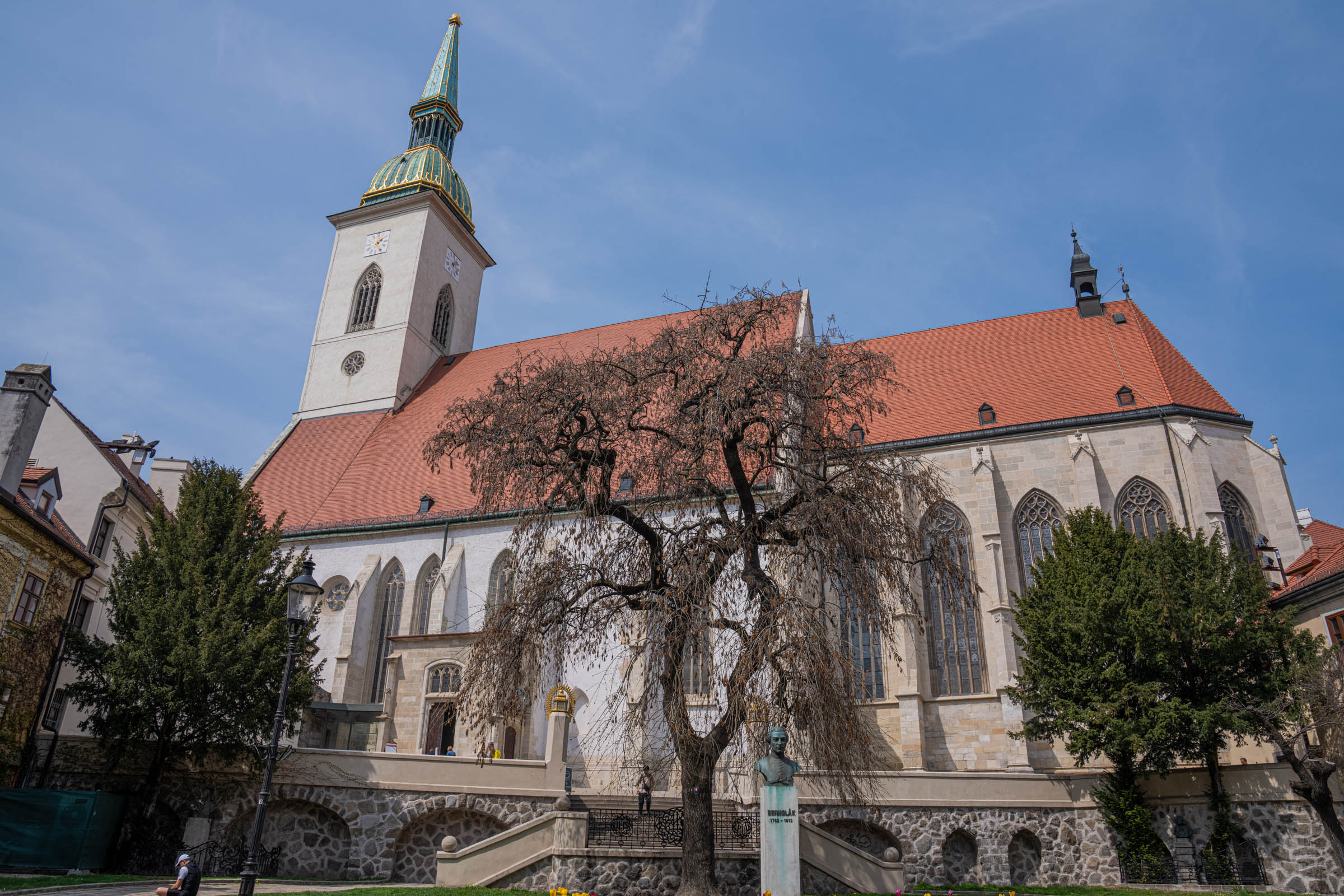
ST. MARTIN’S CATHEDRAL IN BRATISLAVA
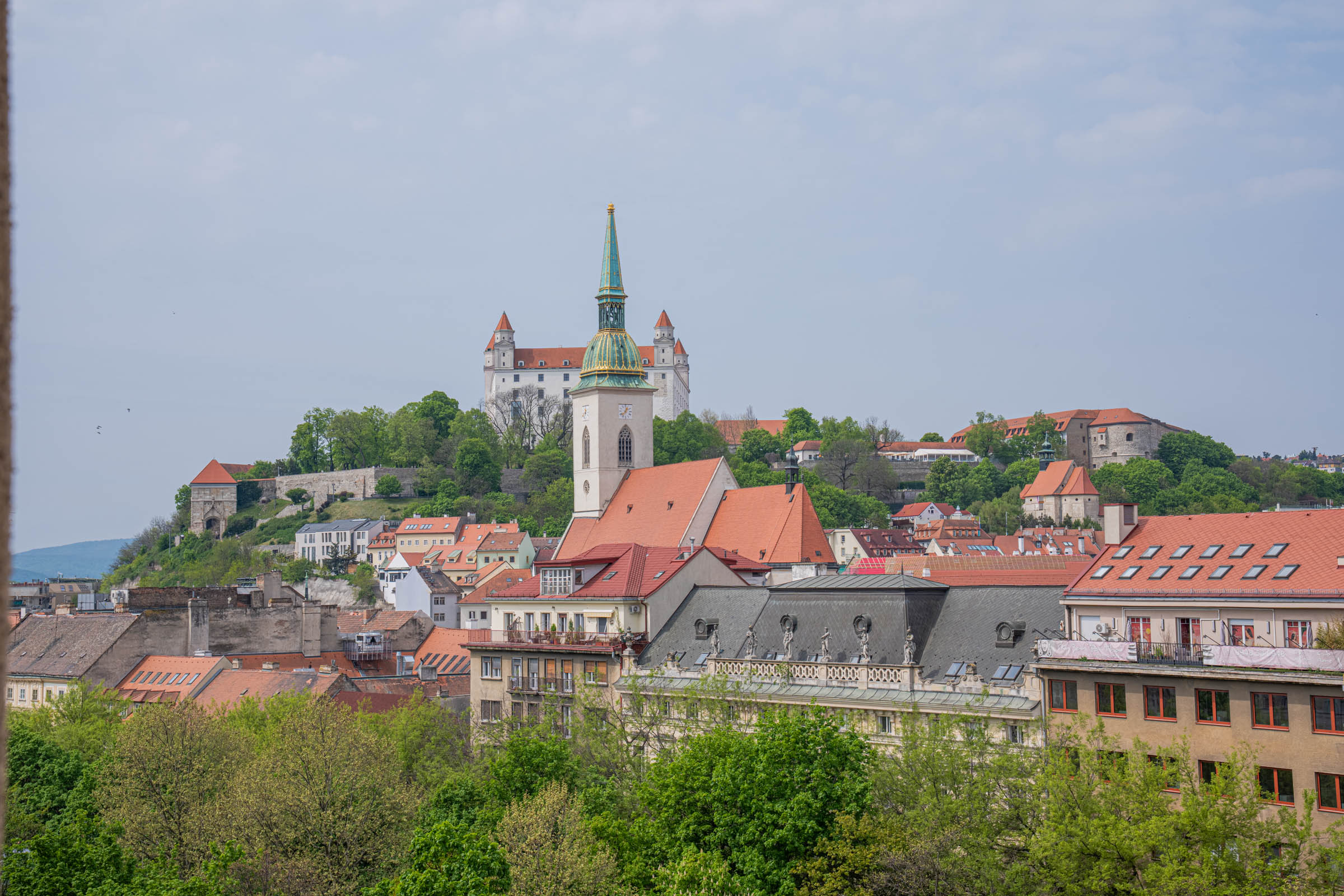
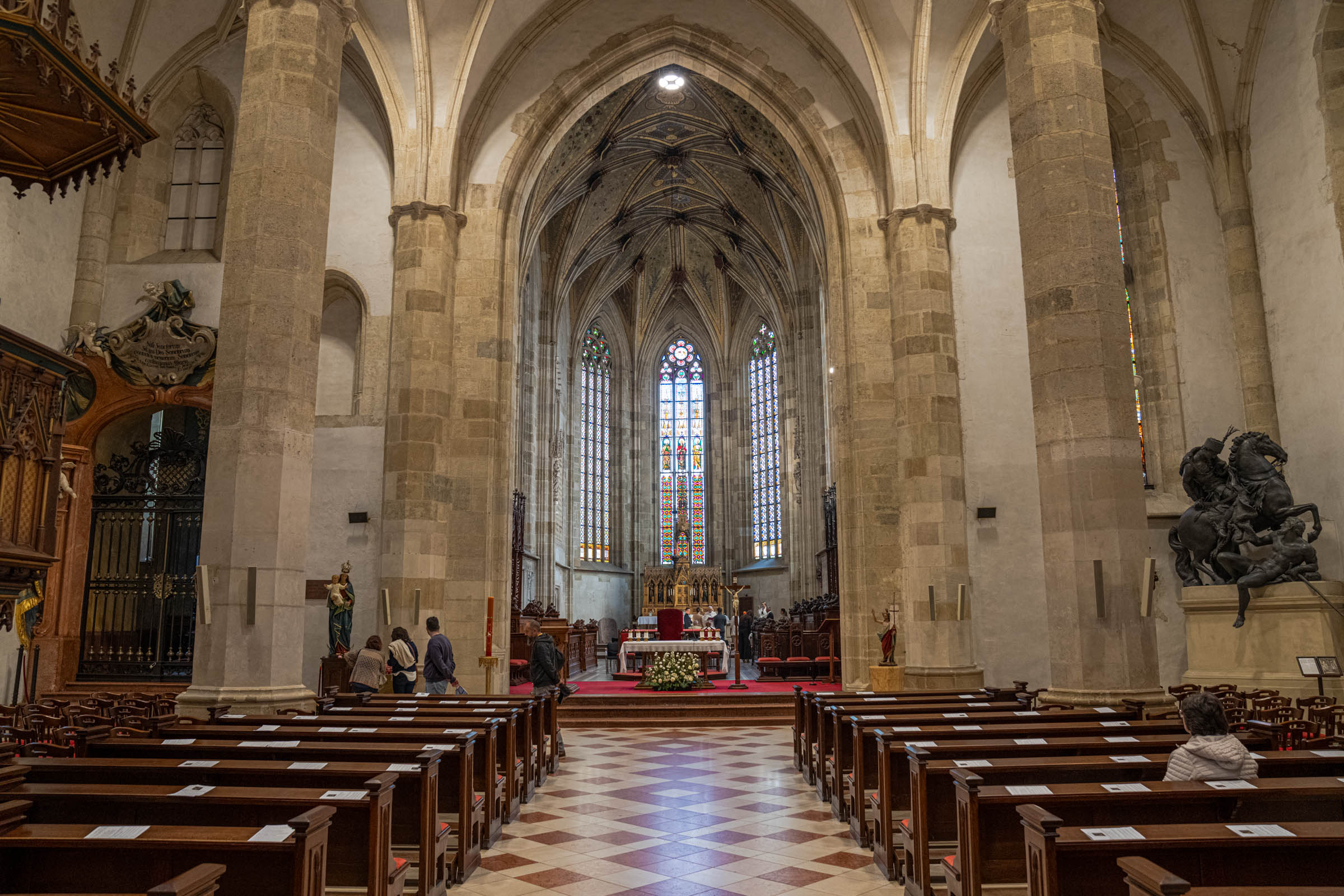
The most important church in the city deserves a section of its own. St. Martin’s Cathedral is the largest and one of the oldest churches in Bratislava, and it was consecrated in 1452. Its tower is 85 meters high and once formed part of the medieval city fortifications. Instead of a cross, a gilded replica of the Hungarian royal crown sits on top, resting on a gilded cushion. That crown recalls the glorious coronation past, and you can see it from many points in the city.
Walking around the cathedral, I felt the weight of the centuries. Inside, high Gothic vaults lead your gaze upward, and stained glass windows let in colored light. A special, calm peace fills the space.
THE BLUE CHURCH: AN ART NOUVEAU GEM
Just outside the main tourist route, a real surprise awaits. The Blue Church, officially the Church of St. Elizabeth, is one of the most photographed buildings in Bratislava. The Hungarian architect Ödön Lechner, often called the “Hungarian Gaudí,” designed it in the Hungarian Secession style, the local form of Art Nouveau. The foundation stone was laid in 1909, and the church was consecrated in 1913.
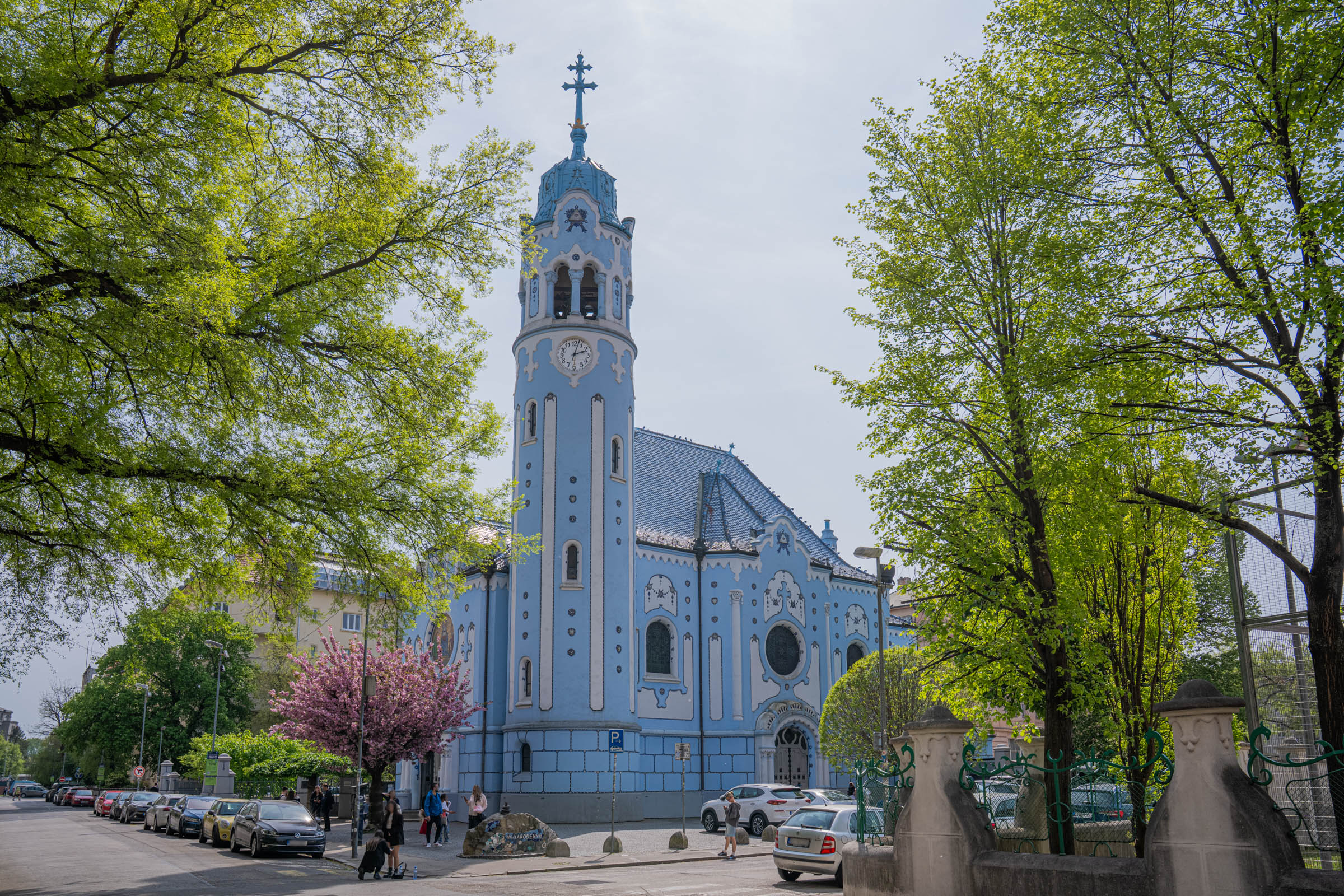
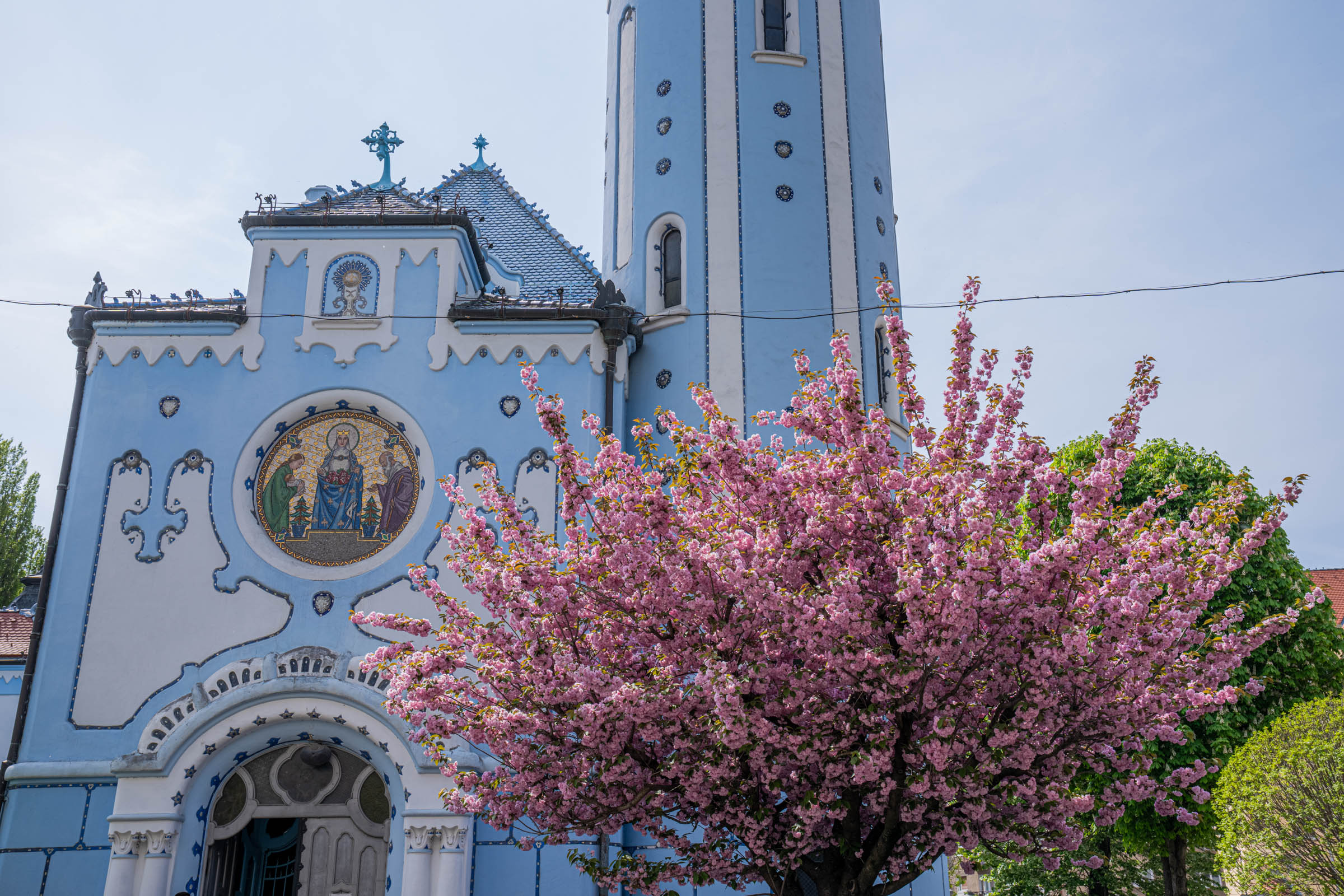
Almost everything here is blue, from the facade and the glazed roof tiles to the fence. During my visit, a cherry tree was blooming next to the church. Its pink blossoms against the blue walls looked like a fairy tale.
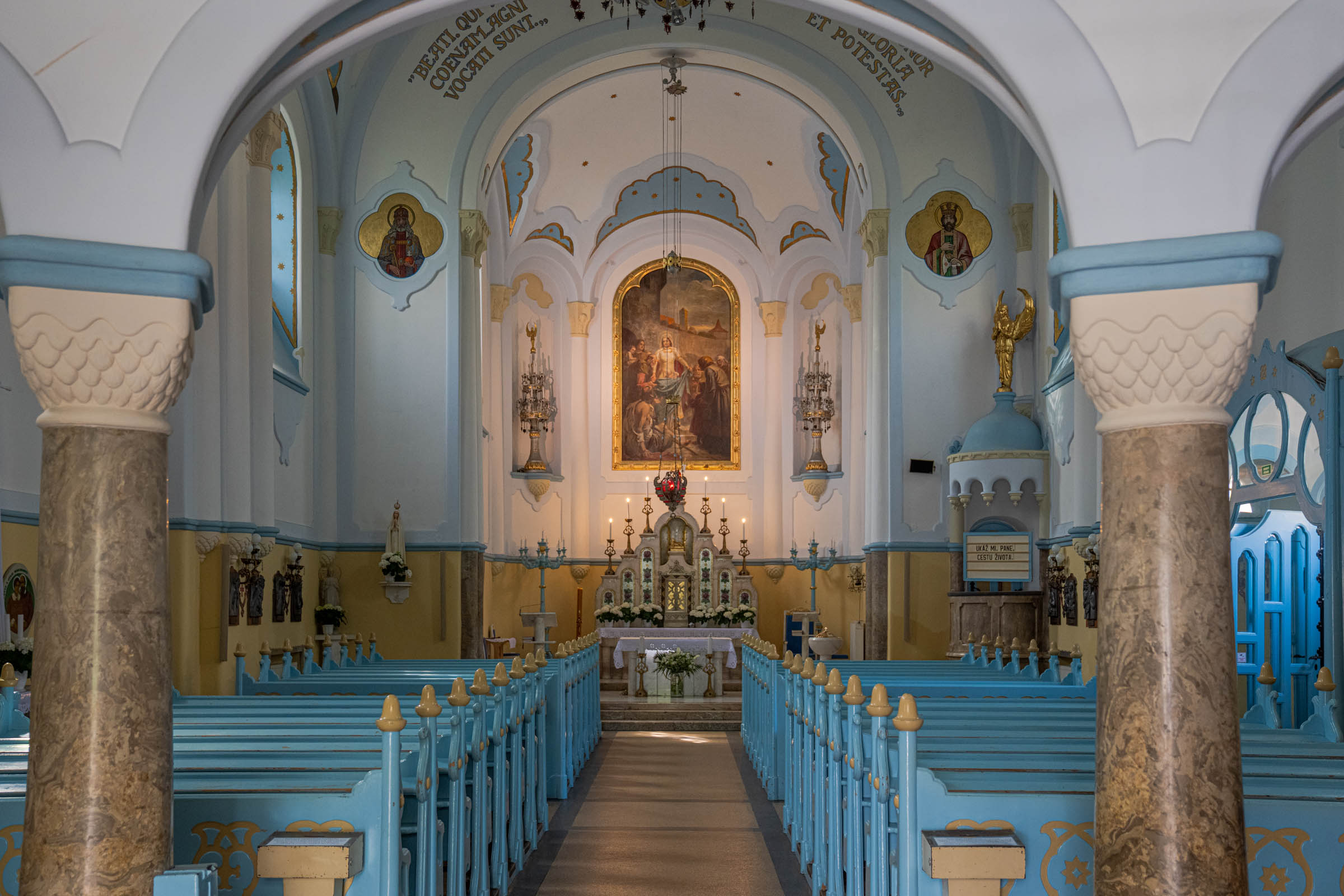
Inside, the same blue story continues. Pews, columns and vaults carry soft tones, and everything feels light and gentle. The church is a pleasant walk from the Old Town, yet many visitors skip it, which is a shame. In my opinion, it is the true pearl of the city.
BRATISLAVA CASTLE AND GRASSALKOVICH PALACE
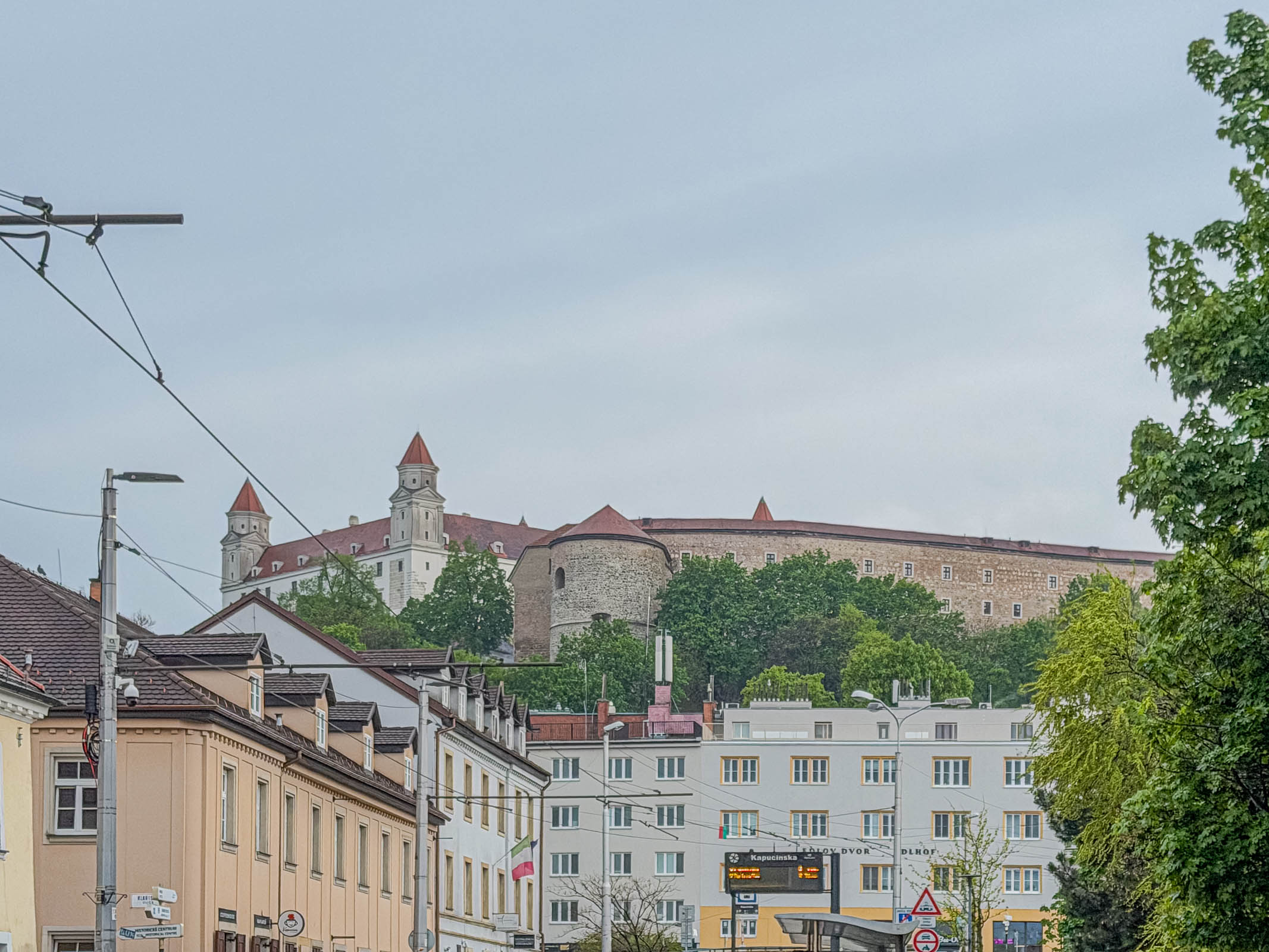
Bratislava Castle watches over the city, and its white silhouette is visible almost everywhere. Four corner towers give it a distinctive shape, which is why many people compare it to an upturned table. A pleasant uphill walk from the Old Town leads to the castle, and from its terraces you can see the Danube and far beyond. On a clear day, the view reaches into Austria and Hungary.
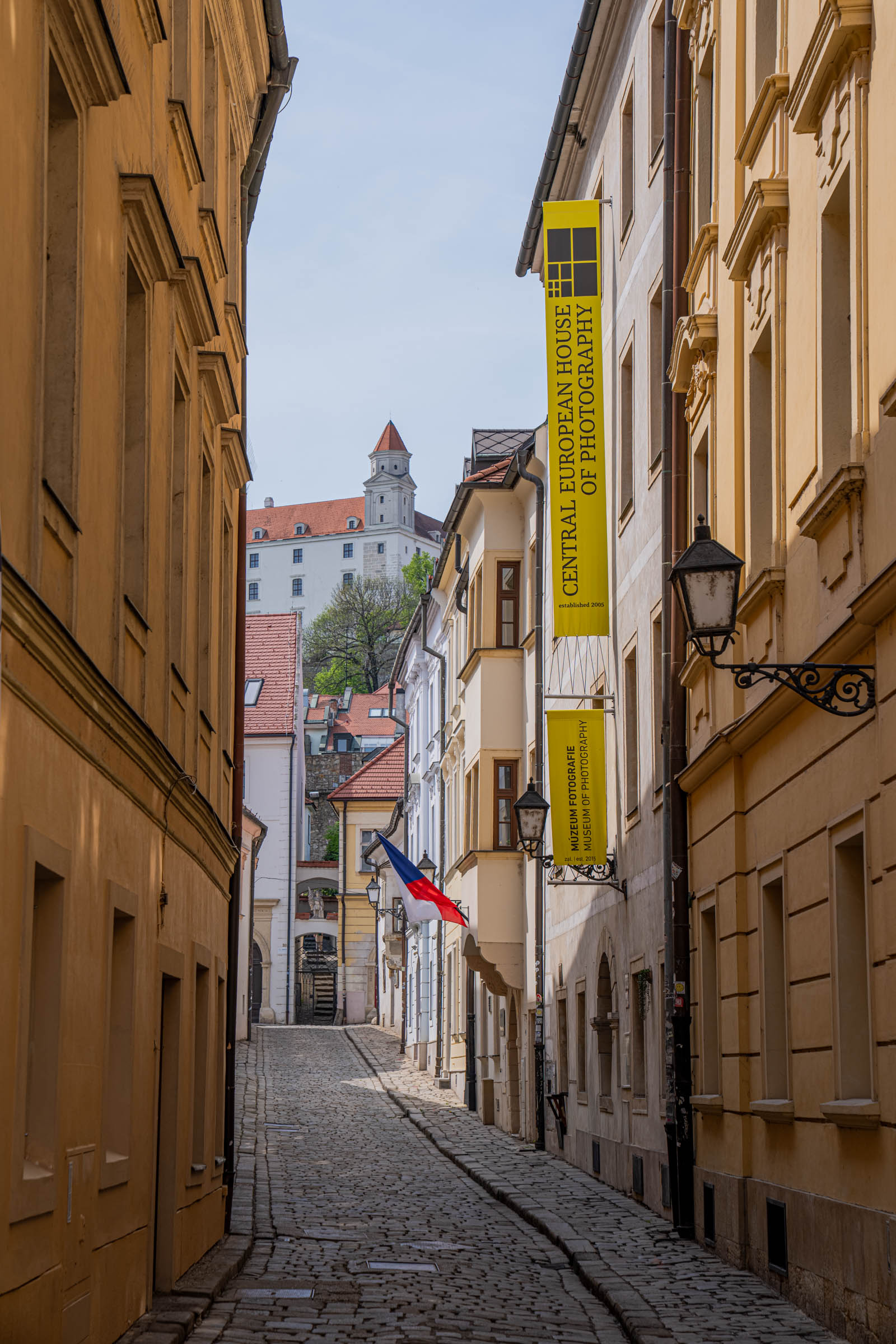
The castle has a long and stormy history. In May 1811, a fire destroyed it, and it stood in ruins for more than a century. The great reconstruction was completed in 1968, and today the castle is the home of the Museum of History of the Slovak National Museum. Even if you do not go inside, the walk is worth it for the terraces and the views.
In the northern part of the Old Town, I discovered another palace. Grassalkovich Palace was completed in 1760 for Count Anton Grassalkovich, a close friend of Maria Theresa. Since 1996, it has been the official seat of the President of Slovakia. In front of it, the globe-shaped Planet of Peace fountain adds a modern touch.
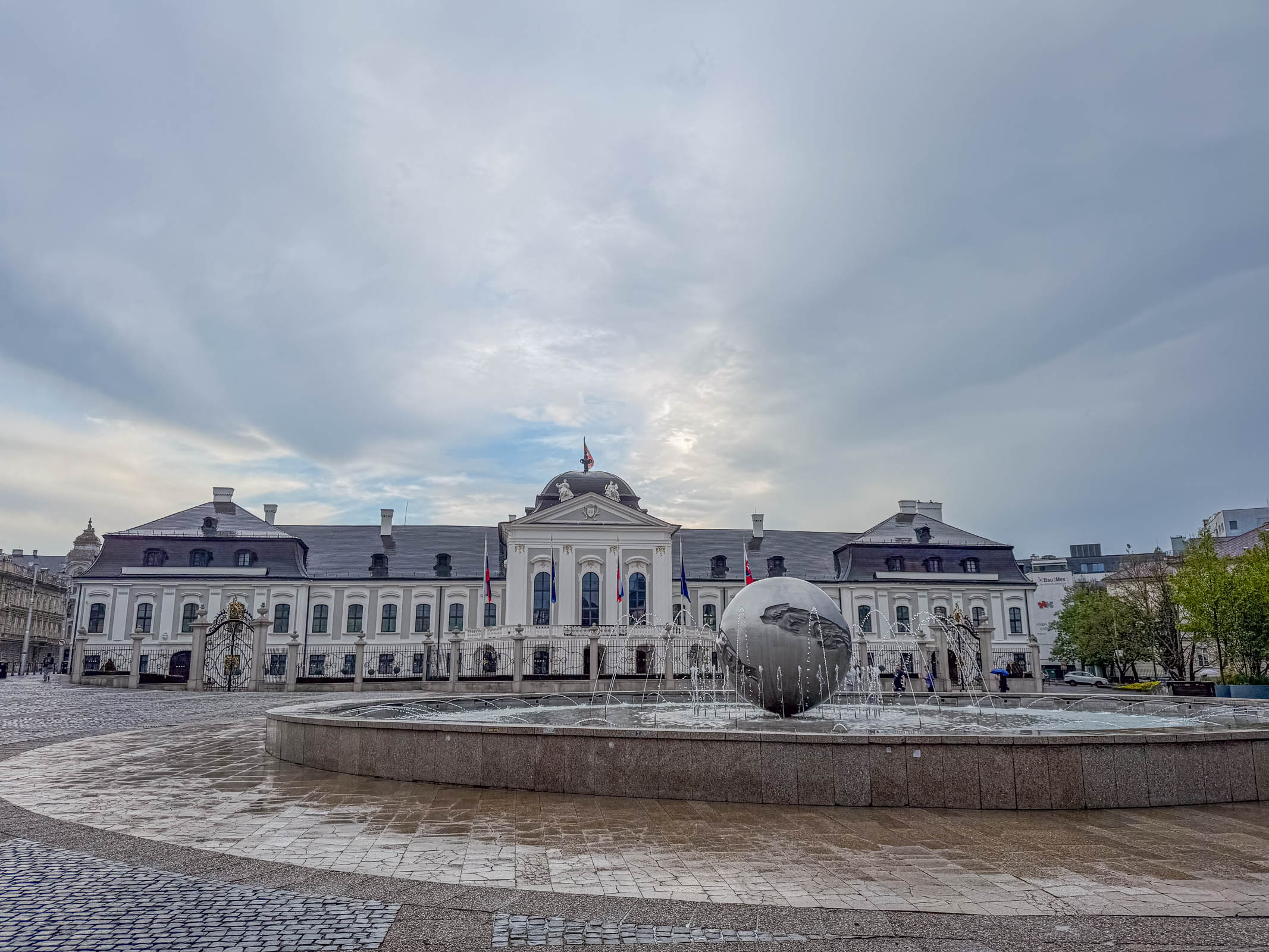
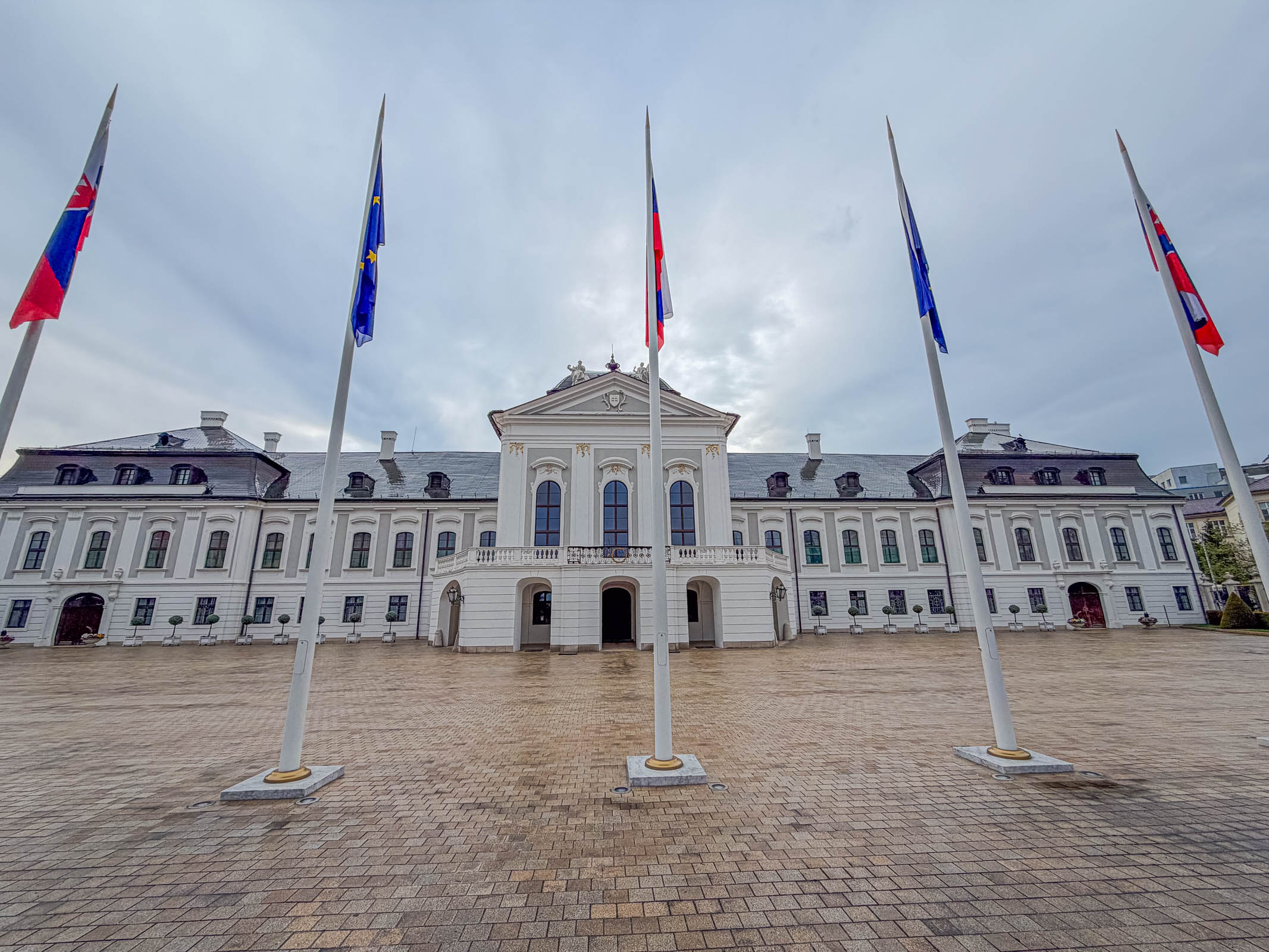
The palace is a Rococo, late Baroque summer residence. Behind it lies a French-style garden that anyone can visit for free. Ordinary changes of the guard take place every hour, and the ceremonial change with a trumpet happens at noon. I love such contrasts: the splendor of a presidential palace on one side, and quiet, modest lanes just around the corner.
THE DANUBE AND THE FAMOUS UFO BRIDGE
No story about Bratislava is complete without the river. The Danube divides the city into two parts. On one bank lie the Old Town and the castle, and on the other, the modern district of Petržalka.
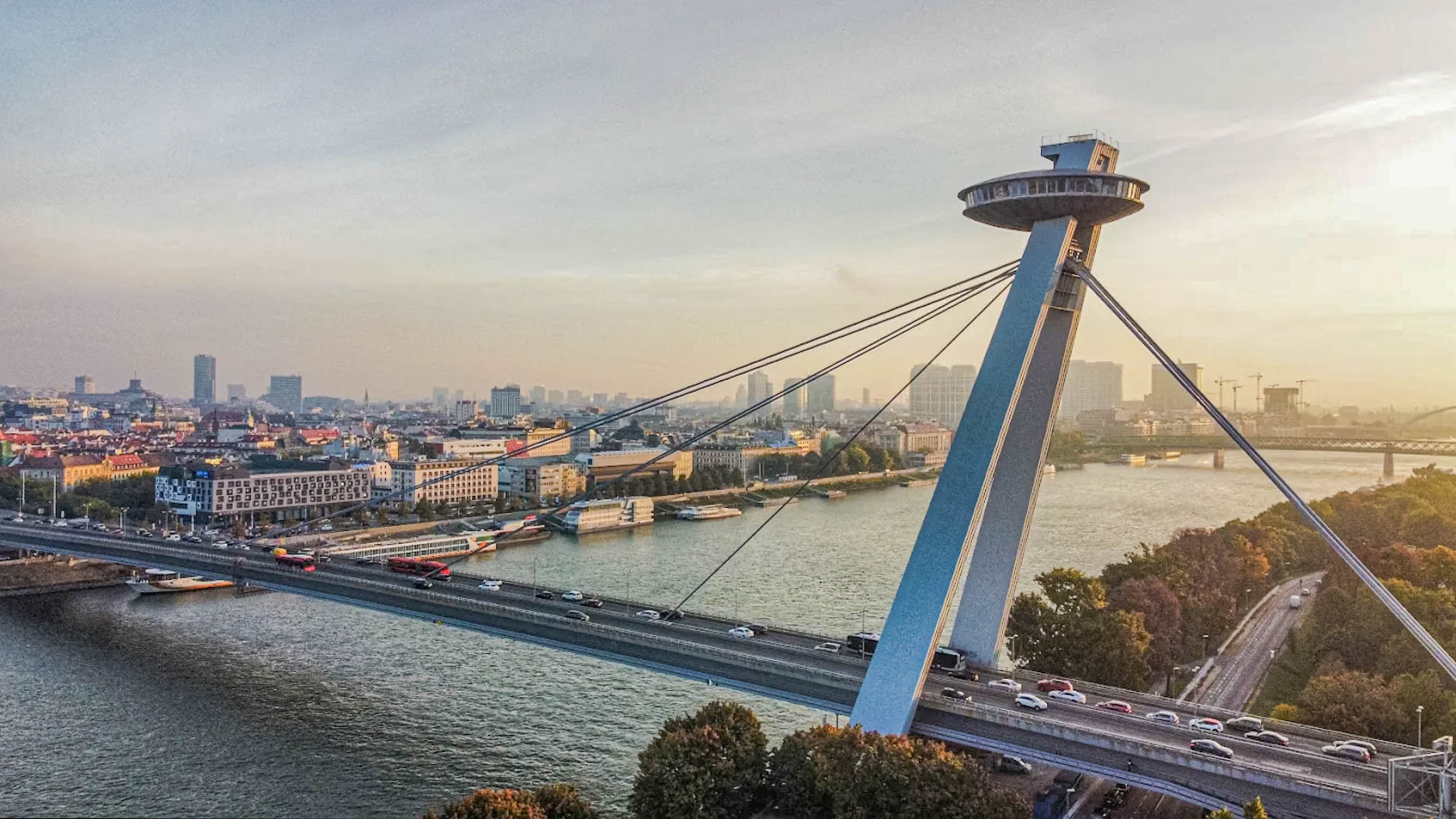
An extraordinary structure crosses the river. Its official name is Most SNP, the Bridge of the Slovak National Uprising, but locals simply call it the UFO Bridge. It was built between 1967 and 1972 and opened on August 26, 1972. The bridge has a single pylon, and on top of it sits a structure shaped like a flying saucer.
At a height of 95 meters, the UFO houses an observation deck, while the restaurant and bar sit at 85 meters. The elevator takes you up in just 45 seconds. In ideal weather, you can see up to 100 kilometers from the top. Walking across the bridge is an experience in itself. The view is most beautiful at sunset, when the light gilds the river and the roofs.
FLAVORS OF SLOVAKIA: CUISINE WORTH TRYING
We remember trips through the food we taste. Slovak cuisine is honest, warm and filling, built on local ingredients and old recipes. It is perfect after long walks. The most famous national dish is bryndzové halušky: soft potato dumplings with bryndza, a tangy sheep cheese, topped with crispy bacon. It is simple, but extremely tasty.
Bakeries are everywhere, and you should not miss bratislavské rožky. These crescent-shaped pastries are filled with poppy seeds or walnuts, and they are the perfect partner for a good coffee. Slovaks are also proud of their wines, especially from the Little Carpathians wine region near the city. The local white wines are fresh and easy to drink, and with a good meal, they turn dinner into a small celebration.
The Old Town offers a rich choice of restaurants, both local and international. Fortunately, the prices are friendly, so I ate slowly and with pleasure.
DINNER AT THE MIRROR BAR IN BRATISLAVA
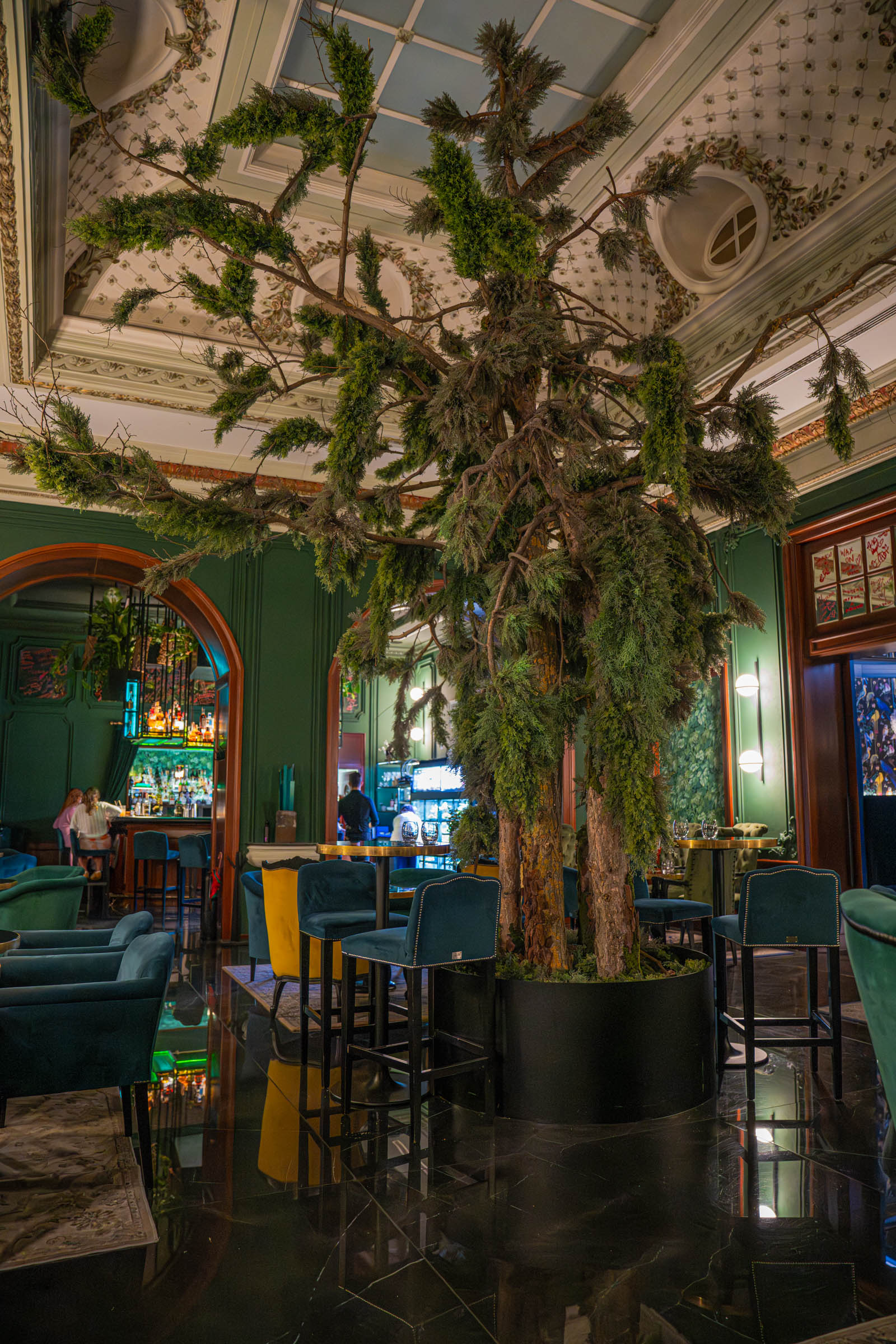
My dinner at the Mirror Bar became one of the highlights of the whole trip. The bar opened in 2019 inside the Carlton, and it quickly became the center of a new wave of Slovak cocktail culture. Inside, the space took my breath away. Its walls are a deep, luxurious green, a large tree grows in the middle of the room, and everything breathes old-world elegance.
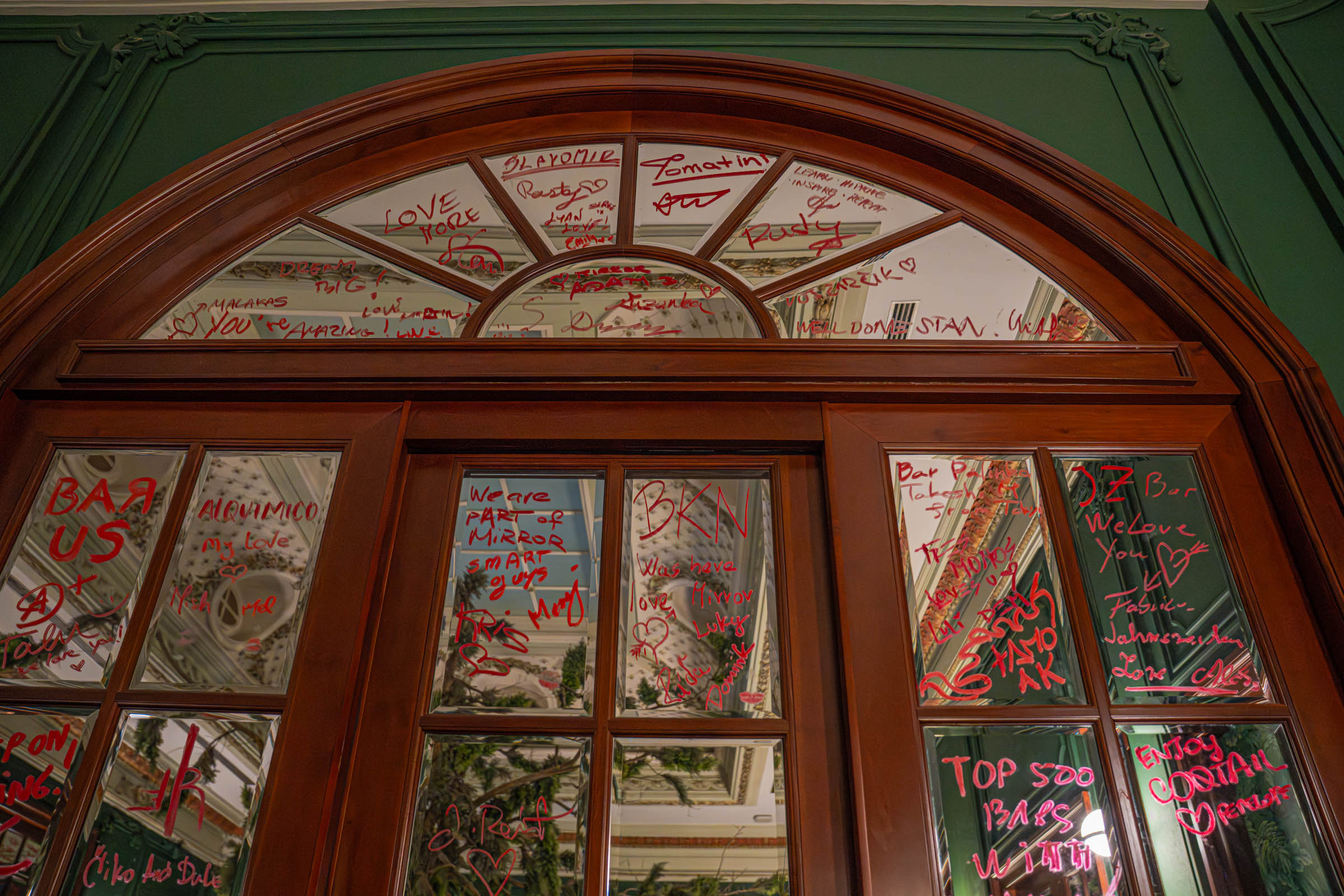
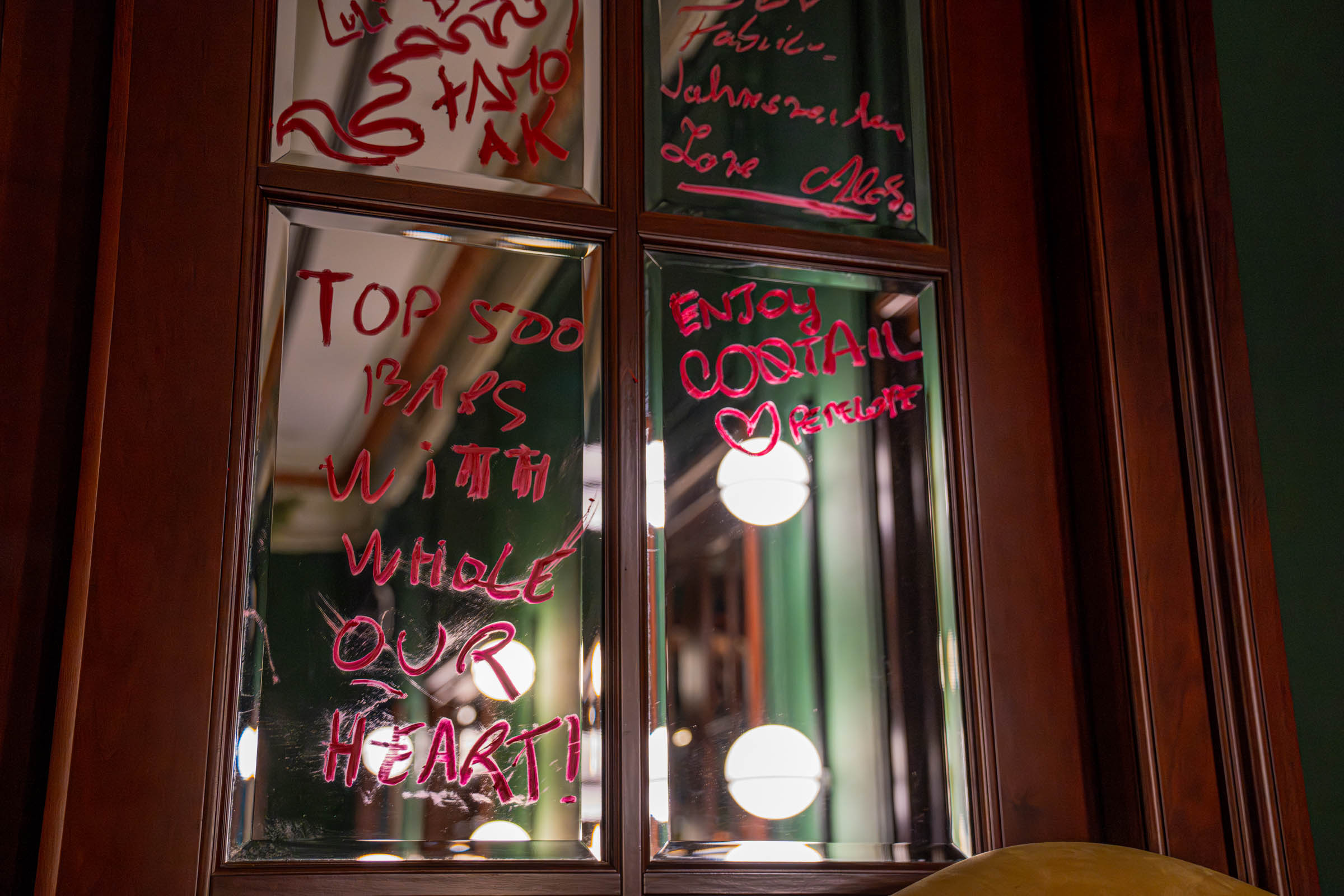
In fact, the bar takes its name from its famous mirrors, which guests cover with handwritten messages in red. That wall tells its own lively, funny story. The Mirror Bar is not just a beautiful space, though. It also enjoys a serious international reputation, and I soon understood why.
MIRROR BAR: COCKTAILS AND A DINNER TO REMEMBER
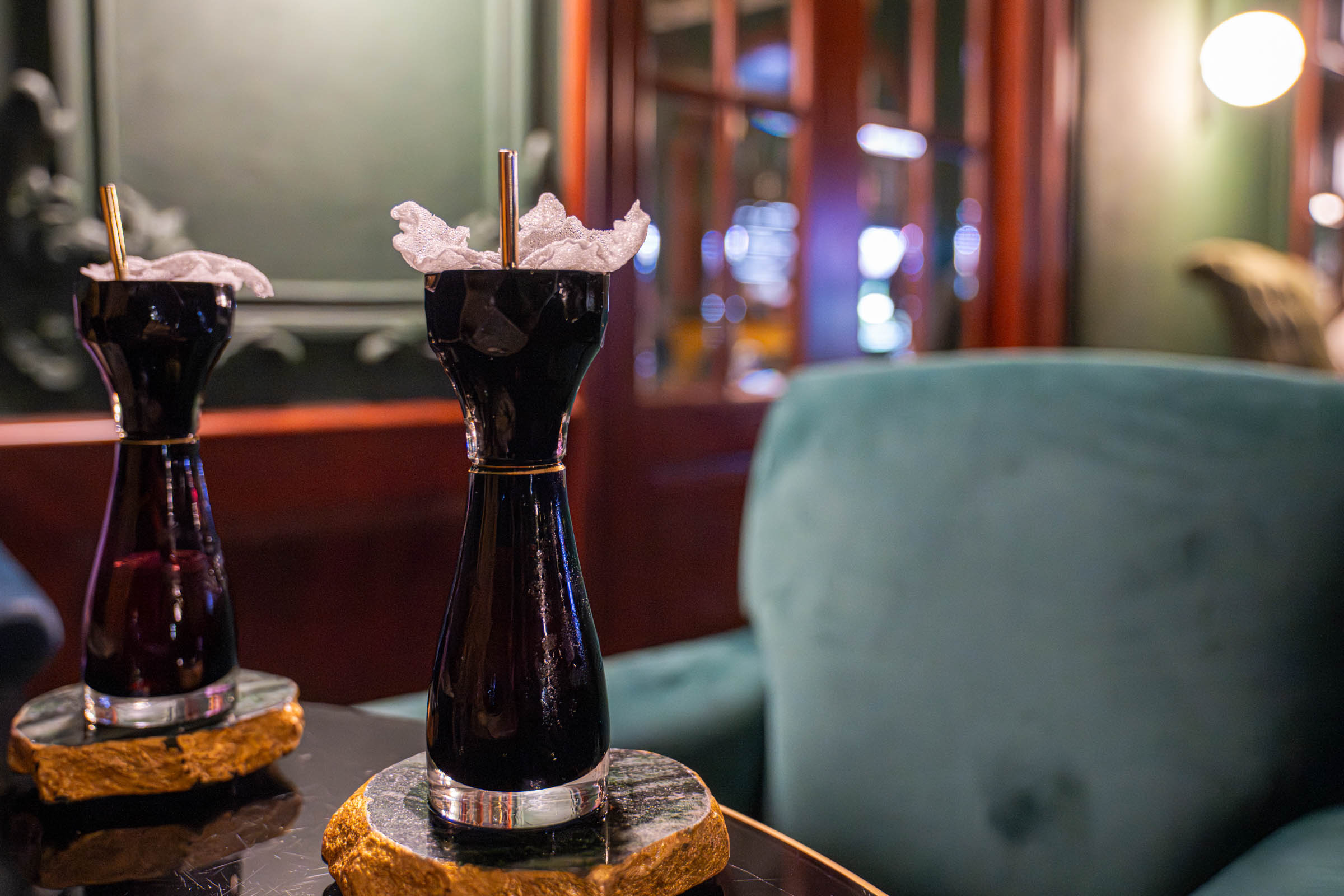
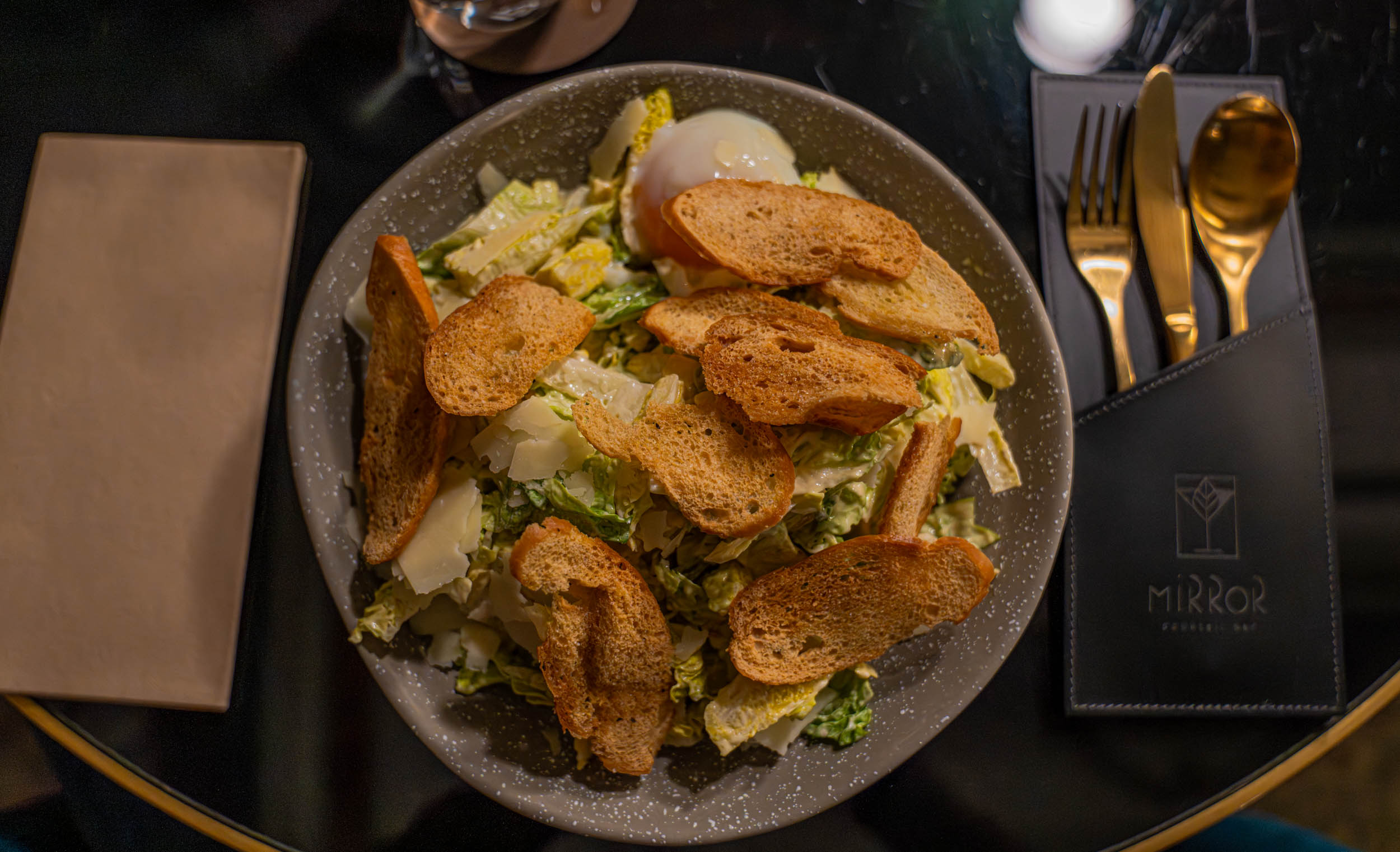
The cocktail prepared for me was a small work of art. It arrived in a dark glass with a delicate garnish on top, and its taste was layered, deep and unforgettable. I started dinner with a Caesar salad, fresh and creamy, with a poached egg and crispy croutons.
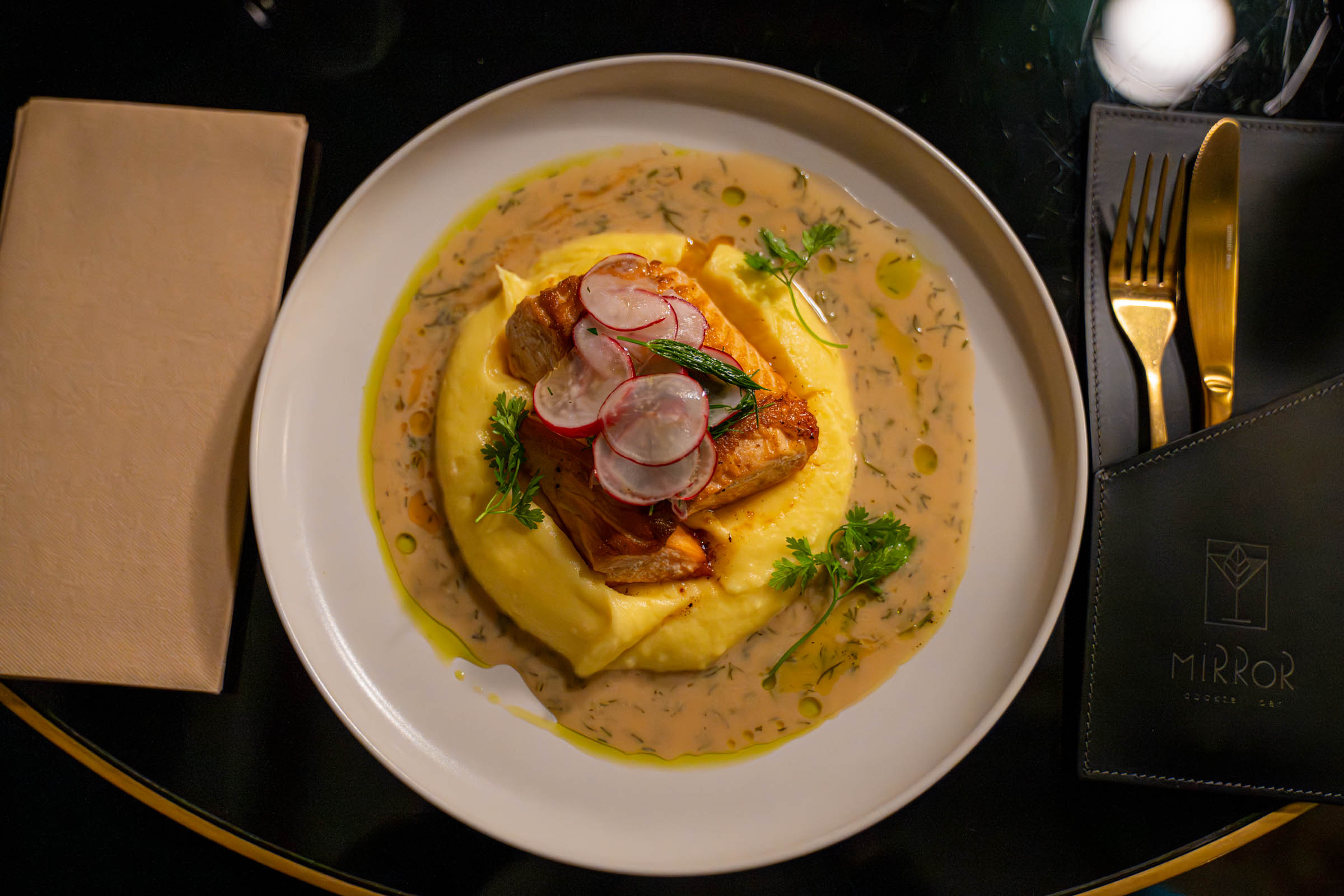
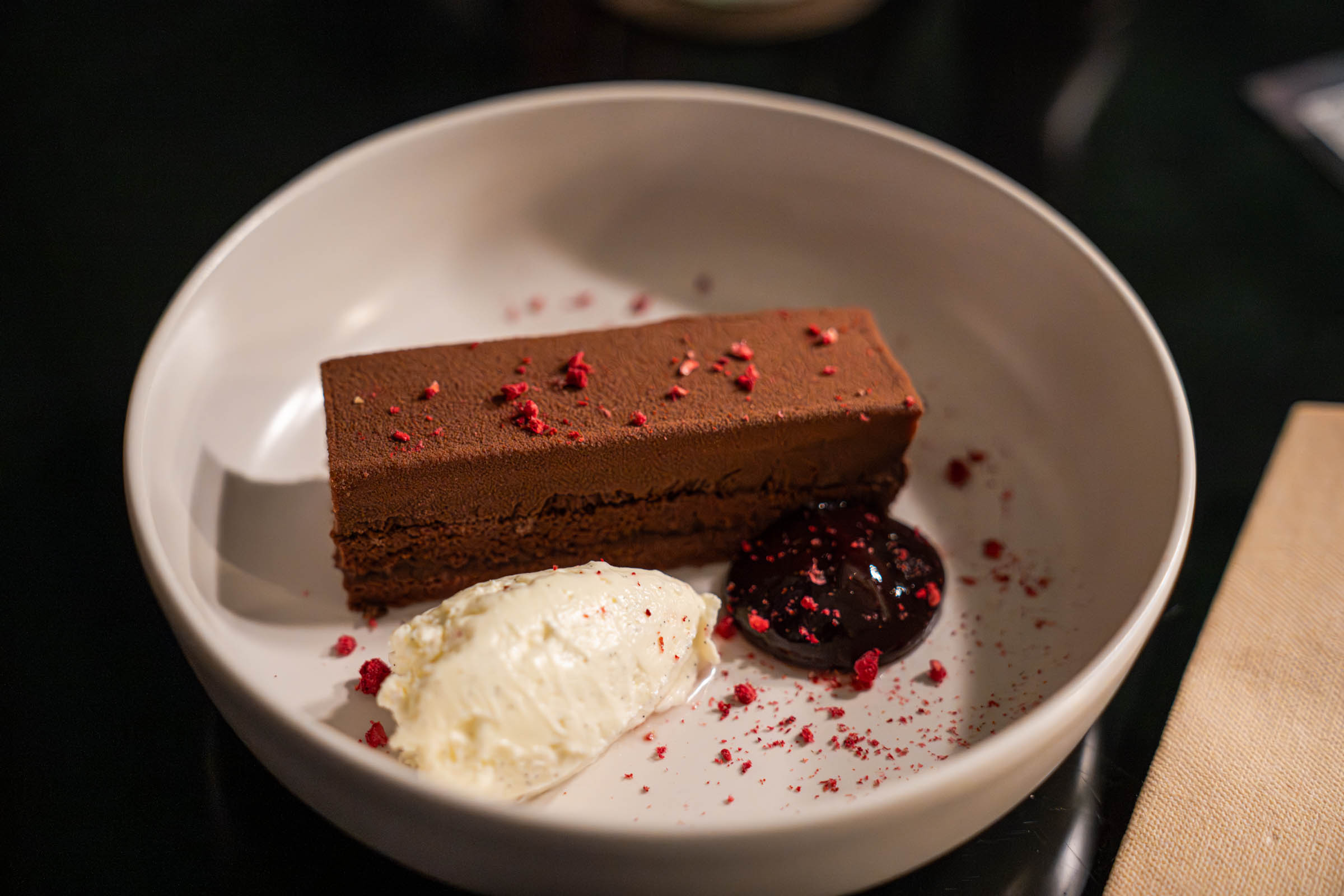
For my main course, I chose salmon with a crispy crust on silky mashed potatoes, finished with a dill sauce. Finally, a rich chocolate dessert arrived with a scoop of vanilla ice cream and a tangy raspberry note.
The recognition speaks for itself. In 2025, the Mirror Bar ranked No. 25 on The World’s 50 Best Bars, the first Slovak bar ever on the list. It also won the Disaronno Highest New Entry Award. Since my visit, it has added even more honors. In June 2026, it received the Michter’s Art of Hospitality Award and ranked No. 8 on the first edition of Europe’s 50 Best Bars, which also named it The Best Bar in Slovakia 2026. Sitting among the mirrors and the green walls, that recognition felt completely deserved.
BRATISLAVA: PRACTICAL TIPS FOR VISITORS
Before I finish, here are a few tips for everyone planning a trip. First, stay in the Old Town. You will save time and money on transport, and every sight will be within easy reach.
Second, leave time for wandering. Bratislava does not reveal itself in a hurry, and I found the most beautiful scenes by chance, simply by turning into side streets. Third, visit the castle in the late afternoon, when the light is best for photos and the Danube takes on a golden glow. Finally, book a table at a good restaurant and pair Slovak food with a local wine.
If you arrive by plane, Bratislava Airport is about 13 kilometers from the Carlton, roughly a 20-minute taxi ride depending on traffic. Vienna International Airport is 62 kilometers away, about an hour by bus.
GETTING AROUND BRATISLAVA
The beauty of Bratislava lies in its size. The Old Town is so small that you do not need a car, and I explored everything on foot. For more distant places, the city has trams, buses and trolleybuses. Still, in the center, you will rarely need them.
My advice is to spend the first day simply wandering without a plan. That way, you get the best feel for the layout of the city, and only then do you choose what to see in detail.
THE BEST TIME TO VISIT BRATISLAVA
I experienced Bratislava in full spring splendor, with trees in bloom and pleasantly warm days. In my opinion, spring and autumn are ideal, because there is neither great heat nor big crowds. Summer brings terraces and festivals, while winter has its own warm charm, when Christmas markets turn the squares into a fairy tale.
Whatever the season, bring comfortable shoes. The cobblestones are beautiful, but you will walk a lot, and that is part of the experience.
I especially love Bratislava after dark. Lanterns cast a warm light on the cobblestones, and towers shine under the spotlights. Evening is the right time for a slow walk, when the terraces fill up and music drifts out of the bars. That is when I felt the soul of the city most.
If you love Central European capitals, read my letter from Prague and my Loro Piana story on the Charles Bridge. If you are looking for a place to stay there, see my review of The Mozart Prague hotel. For more quiet luxury from the same city, see my Belstaff story from Malá Strana.
SAYING GOODBYE TO BRATISLAVA
Bratislava surprised me in the most beautiful way. I expected a stopover, but I found a real destination. This city has soul, rhythm and warmth, and they stay with you long after you return home. If you are looking for a quieter alternative to the big capitals, this is it. Bratislava offers history, beauty and relaxation, medieval gates and modern cafes, the luxury of a historic hotel and the charm of small streets.
Most of all, this city respects your time. There is no rush and there are no long queues, only space to enjoy without pressure. The Radisson Blu Carlton made my stay special with its location and warmth, and the Mirror Bar added a touch of true opulence. My letter from Slovakia ends here. I hope I have shared some of my enthusiasm with you, because Bratislava waits for the patient traveler who is ready to slow down.
Have you already visited Bratislava, or would you combine it with Vienna or Budapest on your next trip? Leave your impressions, comments or questions below, or contact me by email and on social networks. You can find all the details on the CONTACT page.
I will definitely come back, because this city simply finds its way to your heart!
With love from Bratislava,
Mr.M
This post is sponsored by the United Nations World Tourism Organization (UN Tourism) and the Radisson Blu Carlton Hotel, Bratislava, as well as other local partners who selflessly supported this project. This post is my personal and honest review of the destination experience.
Hello Marko, I’ve been following your blog since the Asia series and this one might be my favourite yet. What struck me is how you frame Bratislava as a city that “opens slowly” that matches my own memory of it perfectly. I read your Rome and Milan letters earlier this spring and there’s a real thread running through all of them: you let the place breathe instead of rushing the reader from sight to sight. The detail about the Mirror Bar making No. 25 on the World’s 50 Best Bars list was news to me, and a well-deserved one for such a small country. Thank you for taking the time to write something this considered.
Lieber Marko, was für ein schöner Reisebericht. Wir haben Bratislava vor zwei Jahren als Tagesausflug von Wien aus besucht, die fünfzig Kilometer sind ja schnell überbrückt. Damals haben wir genau dieselbe Ruhe gespürt, die du beschreibst keine Schlangen, kein Gedränge wie in Prag oder Budapest. Das Michaelertor und die kleine Null-Kilometer-Markierung darunter haben wir tatsächlich übersehen, ärgerlich im Nachhinein. Beim nächsten Mal bleiben wir länger und übernachten in der Altstadt, so wie du es empfiehlst. Deine Fotos von der Blauen Kirche machen wirklich Lust auf eine Rückkehr.
Bonjour Marko, votre lettre de Slovaquie est un vrai plaisir à lire. J’ai une question concernant l’Église bleue de Sainte-Élisabeth: peut-on visiter l’intérieur librement ou faut-il tomber sur un horaire de messe précis? Sur les photos de mes amis, on ne voit jamais que la façade, et vous semblez avoir pu entrer. J’aime beaucoup que vous rappeliez qu’elle est l’œuvre d’Ödön Lechner, ce “Gaudí hongrois” trop peu connu hors de la région. Votre conseil de flâner sans plan le premier jour me parle énormément. Merci d’avance pour votre réponse.
Great write-up, Marko. Your description of the Carlton’s location on Hviezdoslav Square reminded me of when we stayed at the Hotel Sacher in Vienna a few years back that same feeling of being in the absolute centre, where you step out the door and the whole old town is yours. The difference is that Bratislava clearly offers it at a far gentler price, which you make a good point about. I’m intrigued by the heated bathroom floors you mention; it’s the kind of small touch that I always remember long after a trip. The handwritten welcome card is a lovely civilised gesture too. We’ll be putting the Carlton on our shortlist for a long weekend.
Caro Marko, seguo il tuo blog da diverso tempo e i tuoi resoconti di viaggio sono diventati una piccola abitudine domenicale. Sono stato a Bratislava molto prima della pandemia, credo nel 2017, e devo dire che la città mi era rimasta nel cuore senza che me ne accorgessi. Ricordo benissimo la statua di Čumil che spunta dal tombino e quanta gente faceva la fila per fotografarla. La tua descrizione del castello con le quattro torri “come un tavolo capovolto” mi ha fatto sorridere, perché è esattamente l’impressione che ebbi io. Dopo aver letto anche le tue lettere da Roma e Milano, mi è venuta voglia di rifare tutto il giro. Complimenti davvero per la cura con cui scrivi.
Beste Marko, wat een prettig geschreven reisverslag. Ik heb een praktische vraag: zou je Bratislava aanraden als losse stedentrip van drie of vier dagen, of werkt het beter als onderdeel van een route langs Wenen en Praag? We twijfelen of de stad genoeg te bieden heeft om er apart heen te reizen. Jouw nadruk op het rustig ronddwalen spreekt me aan, want daar nemen wij meestal te weinig tijd voor. De UFO-brug met dat uitkijkpunt op vijfennegentig meter lijkt me een mooi begin- of eindpunt van een dag. Alvast bedankt voor je advies.
Lieber Marko, ein rundum gelungener Bericht. Wir saßen vor einigen Jahren in der Mirror Bar, lange bevor sie international bekannt wurde, und der große Baum mitten im Raum hat uns sofort verzaubert. Dass sie nun Platz fünfundzwanzig der World’s 50 Best Bars erreicht hat, freut uns wirklich, denn das Lokal hat es verdient. Die Spiegel mit den Lippenstift-Botschaften sind ein wunderbares Detail, das man so kein zweites Mal findet. Deine Schilderung des Abendessens mit dem Lachs und dem Schokoladendessert hat uns Appetit gemacht. Ein Grund mehr, bald zurückzukehren.
Hola Marko, qué reseña tan cuidada. Tu descripción del Radisson Blu Carlton me recordó a nuestra estancia en el Four Seasons Gresham Palace de Budapest hace unos años, otro edificio histórico recuperado con muchísimo gusto. Lo que más me gusta de hoteles así es precisamente lo que tú señalas: esa unión entre el alma antigua del edificio y la comodidad moderna. La diferencia es que en Bratislava todo resulta más cercano y menos abrumador que en Budapest. Me ha encantado el detalle de la tarjeta de bienvenida escrita a mano, algo cada vez más raro. Tomo nota del hotel para nuestro próximo viaje por el Danubio.
Hallo Marko, dein Beitrag ist wunderbar detailliert geschrieben. Eine Frage hätte ich zum Martinsdom: Kann man den Turm hinaufsteigen, oder ist nur das Kircheninnere zugänglich? Mich fasziniert die vergoldete Krone auf der Turmspitze, die an die elf gekrönten Könige erinnert, darunter Maria Theresia. Wir interessieren uns sehr für die Habsburger Geschichte, deshalb wäre uns dieser Punkt besonders wichtig. Und lohnt sich aus deiner Sicht eher der Aufstieg zur Burg oder der Blick von der UFO-Brücke? Vielen Dank im Voraus für deine Einschätzung.
Hi Marko, lovely piece as always. We linked Prague, Vienna and Bratislava on a trip three years ago and stayed at the Augustine in Prague, which occupies a former monastery your Carlton, sitting on the site of a thirteenth-century inn called “The Swan”, clearly belongs to that same family of hotels with a real story behind the walls. There’s something about sleeping inside genuine history that a brand-new build can never replicate. I appreciated that you mentioned the guest book once held the names of Edison, Nobel and Theodore Roosevelt; those small facts make a place come alive. Bratislava was the quiet surprise of that whole trip for us. Your letter has me wanting to go back and give it the two or three days it deserves.
Cher Marko, merci pour cette belle promenade à travers Bratislava. Nous y étions au printemps dernier et la place Hviezdoslav, avec ses tilleuls et la statue du poète, est exactement le cœur paisible que vous décrivez. Le soir, devant le Théâtre national slovaque et la fontaine de Ganymède, l’atmosphère était d’une douceur rare. J’ai trouvé comme vous que la ville se laisse découvrir à pied sans jamais fatiguer. Votre remarque sur les façades pastel, jaunes, vertes et roses, résume parfaitement le charme des ruelles. C’est un plaisir de retrouver ces images dans vos mots.
Buongiorno Marko, articolo scritto con grande sensibilità. Vorrei chiederti un consiglio gastronomico: dove hai assaggiato i bryndzové halušky migliori, in una trattoria della città vecchia o in un locale più defilato? Sto organizzando un viaggio per l’autunno e vorrei provare la cucina slovacca autentica, non quella turistica. Mi ha incuriosito anche il riferimento ai panini di Presburgo con semi di papavero e noci. Hai per caso il nome di un ristorante che ti ha convinto davvero? Ti ringrazio in anticipo e continuo a seguirti con piacere.
Marko, thank you for such a thoughtful guide. You mention visiting in full spring bloom, and that matches our own experience of travelling in the shoulder season precisely to avoid the queues you describe. Your observation that Bratislava is never crowded is exactly why we keep returning to lesser-known capitals rather than the obvious ones. I also loved your advice to see the castle in late afternoon for the golden light over the Danube it’s the sort of tip that genuinely improves a trip. We found the climb up perfectly manageable at a gentle pace, so others needn’t worry. A genuinely useful and warm piece of writing.
Beste Marko, opnieuw een genot om te lezen. Je beschrijving van het Carlton deed me denken aan ons verblijf in het Park Hyatt in Wenen, gevestigd in een oud bankgebouw net als jouw hotel een plek waar geschiedenis en modern comfort samenkomen. Toch vermoed ik dat Bratislava een veel persoonlijker en warmer onthaal biedt, zeker gezien dat handgeschreven welkomstkaartje dat je noemt. Wenen is prachtig maar soms wat afstandelijk. We hebben de twee steden destijds gecombineerd en de rust van Bratislava was een verademing. Het Carlton gaat zeker op onze lijst voor een volgende reis langs de Donau.
What a pleasure to read this, Marko. I’ve enjoyed your travelogues for a couple of years now, and I think you have a rare gift for capturing the temperament of a city rather than just listing its monuments. The line about Bratislava “rewarding those who slow down” is one I’ll remember. Your East Asia series first brought me to the blog, and it’s interesting to watch you bring that same patience to European capitals. The contrast you draw between the royal splendour of Grassalkovich Palace and the modest hidden lanes really captures what makes the place feel layered. I look forward to wherever the UN Tourism series takes you next.
Hola Marko, me ha gustado muchísimo tu carta desde Eslovaquia. Tengo una duda sobre el puente UFO: ¿merece la pena pagar la subida al mirador o las vistas desde el castillo ya son suficientes? Por lo que cuentas, desde la explanada del castillo se ve el Danubio e incluso Austria en días claros, así que no sé si ambas valen la pena. Viajamos con mi mujer, a la que le cuestan un poco las cuestas largas, y quería saber si la subida al castillo es exigente. Tu consejo de pasear sin rumbo el primer día me parece sabio. Gracias por compartir tu experiencia con tanto detalle.
Bonjour Marko, quel récit élégant. La façade du Carlton sur la place Hviezdoslav me rappelle notre séjour au Four Seasons de Prague, au bord de la Vltava, où l’on dormait aussi dans un bâtiment chargé d’histoire face au château. Vous avez raison de souligner que Bratislava offre ce même luxe d’emplacement, mais avec une atmosphère bien plus intime et des tarifs plus raisonnables. Le détail du sol chauffant dans la salle de bains est exactement le genre d’attention que l’on retient. Nous avions relié Vienne, Prague et Bratislava lors d’un même voyage, et c’est cette dernière qui nous a le plus surpris. Votre lettre nous donne envie d’y retourner.
Hello Marko, this is exactly the kind of honest guide I look for before a trip. You write that you can see all the main sights in a single day would you say one full day is genuinely enough, or did you find the extra days essential to soak up the atmosphere you describe? I’m trying to decide how to split a week between Vienna and Bratislava. I was particularly taken by your mention of the Blue Church being a ten-minute walk outside the core; it sounds well worth the detour. The zero-kilometre marker under Michael’s Gate is a charming detail I’d never heard of. Many thanks for any advice you can offer.
Caro Marko, complimenti per questo splendido reportage. La tua descrizione del Carlton mi ha riportato alla mente l’Hotel Imperial di Vienna, anch’esso un palazzo storico dove si percepisce il peso elegante del tempo passato. La differenza, come giustamente noti, è che Bratislava regala la stessa raffinatezza con un’atmosfera molto più raccolta e prezzi più umani. Trovo affascinante che l’edificio sorga dove un tempo c’era una locanda del Tredicesimo secolo chiamata “Il Cigno”. Questi dettagli storici rendono un soggiorno molto più ricco. Lo terrò presente per un futuro viaggio lungo il Danubio.
Hallo Marko, vielen Dank für diesen informativen Reisebericht. Eine praktische Frage: Wie sind Sie eigentlich nach Bratislava angereist, mit dem Zug ab Wien oder über den Flughafen? Wir überlegen, die Stadt mit einem Wienbesuch zu verbinden, und die fünfzig Kilometer klingen verlockend kurz. Ihr Hinweis, eine Unterkunft direkt in der Altstadt zu wählen, leuchtet mir sehr ein. Besonders gespannt bin ich auf die Blaue Kirche des „ungarischen Gaudí”, die ich auf keinen Fall auslassen möchte. Über eine kurze Antwort zur Anreise würde ich mich freuen.
Lovely letter from Slovakia, Marko. I’m glad you gave Čumil his moment that cheeky bronze fellow peeking out of the manhole was the first thing my wife photographed when we visited, and we did rub his head for luck just as you did. There’s a real warmth to a city that doesn’t take itself too seriously, and you capture that balance between the grand and the playful beautifully. Your description of the pastel facades in yellow, green and pink took me straight back. We’ve travelled to far grander capitals, but few left us as quietly content as Bratislava did. Thank you for the reminder to return!
What a lovely note to end on, Marko. “Bratislava awaits the patient traveller ready to slow down” that single line captures everything I hope to find when I travel these days. I’ve spent years rushing through famous capitals and have come to treasure exactly the kind of unhurried, human-scale place you describe here. The thought of breakfast with a view over the square, an afternoon climb to the castle in golden light and dinner at a world-ranked bar in the same building sounds close to ideal. Thank you for the care you put into every one of these letters; it shows on every line. Wishing you safe and inspiring travels wherever you head next.
Bonjour Marko, merci infiniment pour ce récit aussi documenté qu’agréable. Une question pratique : pensez-vous qu’une seule journée suffise pour avoir un bon aperçu de Bratislava, ou faut-il vraiment y passer la nuit pour en saisir l’atmosphère ? Nous envisageons d’y aller depuis Vienne, dont elle n’est qu’à une cinquantaine de kilomètres. Votre conseil de loger dans la vieille ville plutôt que d’enchaîner les trajets me semble toutefois très juste. La fontaine de Ganymède devant le Théâtre national a l’air d’un beau point de départ. Je vous remercie par avance de votre réponse.
Lieber Marko, ein wunderbarer Abschluss deiner europäischen Reihe. Deine Schilderung des Frühlings in Bratislava, mit blühenden Bäumen und angenehm warmen Tagen, macht große Lust auf eine Reise. Ich teile deine Meinung, dass Frühling und Herbst die ideale Zeit sind, fern von Hitze und Gedränge. Besonders schön finde ich, wie du die Stadt nach Einbruch der Dunkelheit beschreibst, wenn die Laternen das Kopfsteinpflaster in warmes Licht tauchen. Auch der Rat, unbedingt bequeme Schuhe mitzunehmen, ist goldwert. Ich freue mich schon auf deinen nächsten Reisebericht.
Caro Marko, che bel modo di chiudere il giro europeo. Dopo aver letto la tua lettera da Roma, dove descrivevi alberghi di gran classe, il Carlton di Bratislava mi sembra appartenere alla stessa nobile famiglia, pur con un’anima più intima. Noi a Roma alloggiammo all’Hotel de Russie, vicino a Piazza del Popolo, e anche lì la posizione era tutto. Mi piace l’idea di un albergo di sole 169 camere, dove l’accoglienza resta personale e calorosa. Il dettaglio della carta di benvenuto scritta a mano dice molto sullo spirito del posto. Lo segnerò senz’altro per un futuro soggiorno sul Danubio.
Hello Marko, I came to your blog through the Rome and Milan letters and have happily worked my way through the whole European series. This Bratislava piece may be the most persuasive yet you’ve genuinely made me reconsider a city I’d always written off as a mere stopover. The closing thought, that Bratislava “respects your time” and gives space to enjoy without pressure, is something I’ll carry into my own travels. It’s a rare destination that doesn’t demand queues and rushing, and you’ve sold me completely. The combination of the Carlton’s history, the Mirror Bar’s recent acclaim and that walkable old town makes a compelling case. I’ll be booking before the spring crowds arrive.
Hola Marko, qué placer leer una guía tan honesta. Tengo una pregunta práctica: ¿recomendarías Bratislava como destino propio de tres o cuatro días, o funciona mejor como parada entre Viena y Budapest? Dudamos si la ciudad da para tanto tiempo o si es mejor combinarla. Tu insistencia en pasear sin prisas nos convence, porque solemos planificarlo todo en exceso. El puente UFO con su mirador y restaurante a noventa y cinco metros nos parece un buen punto para empezar el día. Gracias de antemano por tu consejo.
Beste Marko, opnieuw een prachtig reisverhaal. We hebben twee jaar geleden Wenen, Praag en Bratislava in één reis gecombineerd, en net als jij vonden we de Slowaakse hoofdstad de meest verrassend ontspannen van de drie. De compacte oude stad, waar je alles te voet doet, was een verademing na de drukte van Praag. Je beschrijving van het Hviezdoslavovo námestie met die lommerrijke wandelpromenade klopt helemaal. Vooral de avonden, met de lantaarns op de kasseien, zijn ons bijgebleven. Dank je wel voor dit verslag dat zoveel mooie herinneringen oproept.
Marko, a really enjoyable piece. We stayed at the Aria Hotel in Prague, just below the castle, a few years back, and your Carlton sounds like the same breed, a hotel where the address itself becomes part of the experience. Walking out onto Hviezdoslav Square each morning, with St. Martin’s five minutes one way and the castle ten minutes the other, is the sort of geography one dreams of on a city break. I also appreciated your note that the hotel has only 169 keys; smaller hotels tend to feel far more personal. The art deco wallpaper behind the bed sounds like a real talking point. We’ll certainly be in touch with them before our next Danube trip.
Cher Marko, votre lettre est un véritable enchantement. J’ai particulièrement aimé le passage sur Čumil, ce petit bonhomme de bronze qui sort de la bouche d’égout au milieu de la rue. Lors de notre visite, nous lui avons nous aussi frotté la tête pour la chance, comme le veut la légende. Ces statues facétieuses donnent à la vieille ville une atmosphère bon enfant que l’on retrouve rarement. Votre description des façades aux tons pastel et des ruelles sinueuses correspond exactement à mes souvenirs. Merci de raviver de si jolies images.
Hallo Marko, herzlichen Dank für diesen einladenden Bericht. Eine Frage zur Blauen Kirche: Liegt sie zu Fuß bequem von der Altstadt aus erreichbar, oder sollte man dafür ein Verkehrsmittel nehmen? Du erwähnst einen Spaziergang von etwa zehn Minuten, das klingt sehr machbar. Die Verbindung von Jugendstil und diesem zarten Blau fasziniert mich, zumal sie dem „ungarischen Gaudí” Ödön Lechner zu verdanken ist. Wir möchten sie bei unserem Besuch auf keinen Fall verpassen. Über einen kurzen Hinweis zur besten Tageszeit für Fotos würde ich mich freuen.
Caro Marko, seguo da tempo il tuo blog e questo racconto conferma perché continuo a tornarci. Hai la rara capacità di cogliere il carattere di una città invece di limitarti a elencarne i monumenti. L’immagine di Bratislava che “si apre lentamente come un buon libro” è semplicemente perfetta. Avevo amato molto anche le tue lettere da Roma e da Milano, e ritrovo qui la stessa cura. Il contrasto tra lo sfarzo del Palazzo Grassalkovich e i vicoli più umili racconta benissimo l’anima della città. Continua così, le tue domeniche letterarie sono diventate un appuntamento fisso.
Hello Marko, thank you for a guide that’s as practical as it is poetic. You note that the signposts are in both Slovak and English is it easy to get by with English more generally in shops and restaurants? We’re a little nervous about the language barrier, though your reassurance that one “cannot get lost” is encouraging. I love that you advise spending the first day simply wandering without a plan; that’s how we like to travel too. Your tip about booking a good restaurant table and pairing the meal with local wine is noted. Looking forward to your next letter.
Hola Marko, una reseña magnífica y muy bien escrita. Tu descripción del Carlton me recordó a nuestra estancia en The Ritz-Carlton de Viena, instalado en varios palacetes del siglo XIX sobre el Ring. Son hoteles donde el propio edificio cuenta una historia, igual que tu “Cisne” del siglo XIII. La gran diferencia, como bien apuntas, es que Bratislava ofrece esa elegancia con un ambiente mucho más íntimo y precios más amables. Me ha gustado especialmente el detalle del suelo radiante en el baño, un lujo discreto pero memorable. Apunto el Carlton para nuestro próximo recorrido por el Danubio.
Beste Marko, wat een sfeervol verslag. Wij hebben enkele jaren geleden in de Mirror Bar gegeten, nog voordat hij wereldwijd bekend werd, en die diepgroene wanden met de boom in het midden zijn ons altijd bijgebleven. Dat hij nu op nummer vijfentwintig van de World’s 50 Best Bars staat, verbaast ons niets het was toen al iets bijzonders. De spiegels vol boodschappen in lippenstift zijn een charmant detail dat je nergens anders zo tegenkomt. Je beschrijving van de zalm op aardappelpuree maakt ons meteen hongerig. We keren zeker terug, alleen al voor die bar.
Beste Marko, ik volg je blog al sinds je serie over Azië en geniet telkens weer van je rustige, doordachte stijl. Wat me in dit verhaal raakt, is hoe je Bratislava neerzet als een stad die je beloont wanneer je vaart mindert. Te vaak razen we als reizigers van bezienswaardigheid naar bezienswaardigheid zonder echt te kijken. Je beschrijving van de Sint-Maartenskathedraal, de grootste gotische kerk van de stad met die vergulde kroon op de toren, maakt veel indruk. Ook je eerdere brieven uit Rome en Milaan heb ik met plezier gelezen. Ga vooral zo door, je inspireert me telkens opnieuw.
A wonderful read, Marko. Your section on Bratislava Castle and that nickname, the “overturned table”, made me smile it really does look like one from the riverbank. We climbed up on a clear morning and could indeed make out both Austria and Hungary from the plateau, just as you describe. The history of the site going back to the ninth century gives the walk a real sense of depth. I hadn’t realised the present form came from a relatively recent restoration after centuries of demolition and rebuilding. Pieces like yours are why I plan my trips around reading rather than guidebooks. Keep them coming.
Lieber Marko, was für ein stimmungsvoller Bericht. Dein Carlton erinnert mich an den Matild Palace in Budapest, ebenfalls ein liebevoll restauriertes historisches Haus im Zentrum. Wir haben damals Budapest, Wien und Bratislava miteinander verbunden, und die kleine slowakische Hauptstadt war die angenehmste Überraschung der ganzen Reise. Deine Beschreibung des herzlichen, persönlichen Empfangs mit handgeschriebener Karte gefällt mir besonders, denn so etwas erlebt man heute selten. Auch der Gedanke, in einem Gebäude mit Geschichte aus dem dreizehnten Jahrhundert zu nächtigen, hat seinen Reiz. Das Carlton kommt auf unsere Liste für den nächsten Besuch.
Cher Marko, je suis votre blog depuis vos lettres d’Asie et c’est toujours un plaisir renouvelé. Votre manière de saisir l’âme d’une ville, plutôt que d’en dresser une simple liste de monuments, est assez rare. Cette idée que Bratislava “récompense ceux qui ralentissent” restera longtemps avec moi. J’avais déjà beaucoup aimé vos récits de Rome et de Milan, et je retrouve ici la même délicatesse. Le contraste que vous décrivez entre le palais Grassalkovich et les ruelles modestes traduit parfaitement la richesse de la ville. Continuez, vos lettres embellissent mes dimanches.
Marko, what a civilised way to spend a few days. You mention the hotel’s spa with its sauna, steam bath and swimming pool, and I can only imagine how welcome that must be after a long day on the cobblestones. Your routine of coffee by the window each morning and a soak in the spa each evening sounds like the perfect rhythm for a city break. We’ve always found that a hotel with a good wellness corner turns a sightseeing trip into a genuine rest. I’m also glad you flagged the need for comfortable shoes, because those beautiful cobbles can be punishing. It all adds up to a place I’d happily settle into for several days.
Buongiorno Marko, articolo davvero piacevole e ben documentato. Concordo pienamente sulla primavera che hai vissuto, anche se per esperienza pure l’autunno regala quella stessa luce dorata sul Danubio senza il grande caldo né la folla estiva. Mi ha colpito molto il tuo consiglio di salire al castello nel tardo pomeriggio per le fotografie, perché è proprio in quel momento che la città si tinge d’oro. Anche l’idea di dedicare il primo giorno al semplice vagabondare mi trova del tutto d’accordo. Troppo spesso si pianifica ogni minuto e si perde l’anima dei luoghi. Complimenti ancora per la cura con cui scrivi.
Hola Marko, enhorabuena por esta crónica tan completa. El Mirror Bar fue para nosotros el gran descubrimiento de Bratislava cuando lo visitamos, con esas paredes de un verde profundo y el árbol en el centro de la sala. Nos pareció increíble que un bar de un país tan pequeño pudiera competir con los de las grandes capitales, y ahora veo que ha llegado al puesto veinticinco de la lista The World’s 50 Best Bars. Los espejos llenos de mensajes escritos con pintalabios nos tuvieron entretenidos un buen rato. Tu descripción del cóctel servido en aquel vaso negro me ha dado mucha envidia. Sin duda, motivo suficiente para volver.
Hi Marko, this is a terrific overview. We actually stayed at the Grand Hotel River Park, a Luxury Collection Hotel, right on the Danube during our visit, which was lovely but did mean a short walk into the old town each time. Reading your account, I can see the real advantage of the Carlton sitting directly on Hviezdoslav Square that immediacy of stepping out into the heart of everything is worth a great deal. Both have their charms, but next time I’d lean towards being right in the historic core as you were. The view of the castle and red roofs from your window sounds hard to beat. Thank you for such a balanced and useful piece.
Lieber Marko, ich verfolge deinen Blog schon seit einigen Jahren mit großer Freude. Deine Reiseberichte aus Asien haben mich seinerzeit begeistert, und nun schlägst du mit den europäischen Metropolen ein ebenso schönes Kapitel auf. Was ich an diesem Text besonders mag, ist deine ruhige, fast literarische Art zu erzählen. Bratislava als Stadt zu beschreiben, die sich „wie ein gutes Buch” langsam öffnet, trifft es genau. Auch deine Briefe aus Rom und Mailand habe ich mit Vergnügen gelesen. Bitte mach unbedingt weiter so, du bereicherst meine Sonntagvormittage.
Beste Marko, een heerlijk uitgebreid verslag. Ik heb een vraag over de Slowaakse keuken: zijn die bryndzové halušky, die aardappelnokjes met schapenkaas, ook goed te vinden voor wie niet van al te zware gerechten houdt? Ik wil de lokale keuken graag proberen, maar mijn maag is wat gevoelig geworden met de jaren. Verder klinkt je beschrijving van de Presburgse broodjes met maanzaad en walnoten erg verleidelijk. Heb je toevallig een rustig restaurant in de oude stad dat je kunt aanraden? Bedankt alvast en hartelijke groeten uit Nederland.
Beautifully written, Marko. The Blue Church was, like you, my unexpected favourite, there’s something almost unreal about that wash of pale blue across the façade, the roof and even the railings. I had no idea it was the work of Ödön Lechner until I read about him afterwards; calling him the “Hungarian Gaudí” is apt once you see his playful Art Nouveau lines. You’re quite right that too many visitors skip it because it sits outside the main core, and they miss the city’s true pearl. The cherry blossom beside it when you visited must have made the scene even more magical. A wonderful reminder of why the small detours matter most.
Cher Marko, un grand merci pour cette lecture raffinée. Le Carlton, par son emplacement sur la place principale, évoque pour moi l’Hôtel Bristol de Vienne, où nous avions séjourné face à l’Opéra. Ce sont des adresses où la situation centrale devient un luxe en soi, exactement comme vous l’écrivez. La grande différence est que Bratislava conserve une dimension humaine et un accueil chaleureux que les grandes capitales perdent parfois. Le sol chauffant et la carte de bienvenue manuscrite témoignent d’un vrai souci du détail. Nous noterons cette adresse pour un prochain voyage sur le Danube.
Caro Marko, che piacere ritrovare la tua penna. Ho visitato Bratislava qualche anno fa, collegandola a Vienna con un breve viaggio in treno, e la tua lettera me ne ha restituito tutto il fascino tranquillo. Ricordo la passeggiata fino al castello bianco con le quattro torri e la vista sul Danubio fino all’Austria. Concordo pienamente sul fatto che la città non vada affrontata di fretta. Ho apprezzato molto anche i tuoi precedenti racconti da Roma e Milano, scritti con la stessa eleganza. Spero di tornare presto e di fermarmi finalmente al Mirror Bar.
Marko, a genuinely absorbing read. I’m curious about the Slovak National Theatre, did you manage to see a performance, or only admire the neo-Renaissance exterior? We’re keen on opera and ballet when we travel, and I’d love to know whether tickets are easy to come by for visitors. Your point that the building is worth stopping for even without seeing a show is well taken. I also appreciated the historical context about Pressburg being the Hungarian capital for nearly 250 years; it explains the grandeur one wouldn’t otherwise expect in a city this size. Any practical tips on the theatre would be most welcome.
Marko, this brought back wonderful memories. I had a nightcap at the Mirror Bar back when it was still something of a local secret, long before any global ranking, and even then the room with its deep green walls and that single tree in the centre felt special. To see it land at No. 25 on the World’s 50 Best Bars and take the highest-new-entry award is genuinely heartening proof that quality doesn’t only live in the big capitals. Your point about the messages written on the mirrors in lipstick is spot on; I remember spending ages reading them. The salmon you described over potato purée sounds like exactly my kind of dinner. I may have to plan a return visit purely for that bar.
Lieber Marko, ein sehr gelungener Beitrag. Dein Carlton erinnert mich stark an das Hotel Paříž in Prag, ein Jugendstiljuwel, in dem ebenfalls Geschichte und Eleganz spürbar sind. Wir haben damals Prag, Wien und Bratislava auf einer Reise verbunden, und gerade die slowakische Hauptstadt blieb uns als die entspannteste in Erinnerung. Deine Beschreibung der Junior Suite mit der Art-déco-Tapete hinter dem Bett klingt geschmackvoll und keineswegs überladen. Der Blick auf Burg und rote Dächer aus dem Fenster ist sicher unbezahlbar. Wir setzen das Carlton für unsere nächste Donaureise auf die Liste.
Hola Marko, qué bonito leerte de nuevo. Estuve en Bratislava antes de la pandemia, en un viaje en tren que enlazaba Viena y Praga, y tu carta me ha devuelto muchos recuerdos. Recuerdo perfectamente la Puerta de San Miguel con su cúpula verde y la figura dorada del santo en lo alto. Coincido contigo en que la ciudad se disfruta despacio y sin agobios, algo que se agradece después de Praga. La Iglesia Azul me pareció entonces, y sigue pareciéndome, una verdadera joya escondida. Gracias por escribir con tanto cariño sobre un lugar que merece más atención.
Hi Marko, this took me right back. We stayed at the Aria Hotel in Budapest a few summers ago, a music-themed place full of character, and your Carlton sounds like its spiritual cousin historic, central and full of small thoughtful touches. The cookies, macarons and little gifts waiting on arrival are exactly the gestures that turn a stay into a memory, as you put it so well. I’m always drawn to hotels where the building itself has a past, and a thirteenth-century inn called “The Swan” certainly qualifies. We connected Budapest with Vienna on that trip but foolishly skipped Bratislava. After reading this, that won’t happen again.
Bonjour Marko, votre article est un régal. J’aurais une question à propos du Mirror Bar: faut-il être client de l’hôtel pour y dîner, ou peut-on réserver une table de l’extérieur? Depuis qu’il figure au vingt-cinquième rang du classement World’s 50 Best Bars, j’imagine que les réservations partent vite. Le grand arbre au centre de la salle et les murs vert profond que vous décrivez ont l’air absolument magnifiques. Nous prévoyons un séjour à Bratislava au printemps et j’aimerais beaucoup y goûter un de ces cocktails théâtraux. Merci d’avance pour vos précisions.