
Some cities greet you with noise. Stockholm greets you with water, light and a quiet kind of confidence. This Stockholm travel guide grew out of my own autumn days in the Swedish capital, from royal halls and silent museums to slow mornings in my hotel room.
I arrived under a gray sky, and still the city glowed. Saffron and terracotta facades lined the harbor, ferries crossed the bays, and copper spires rose above the Old Town like old friends waving hello. Right away, I knew this city would not be a quick stop.
Before starting today’s travelogue about Stockholm, I want to express my special thanks to UN Tourism (the United Nations World Tourism Organization) and the Haymarket by Scandic hotel for supporting and promoting quality tourism around the world. Their dedication to connecting cultures and destinations is an inspiration to all of us who believe that travel enriches the soul.
In the chapters below, you will find Stockholm’s history, its famous sights, practical tips and my honest review of Haymarket by Scandic, where I stayed in a Grande King View room. I also checked every date and name, because a travel guide to Stockholm should be accurate as well as beautiful. So pour yourself a coffee (the Swedes would call this moment fika), and let me show you around.
STOCKHOLM TRAVEL GUIDE: WHAT MAKES THE SWEDISH CAPITAL SO SPECIAL?
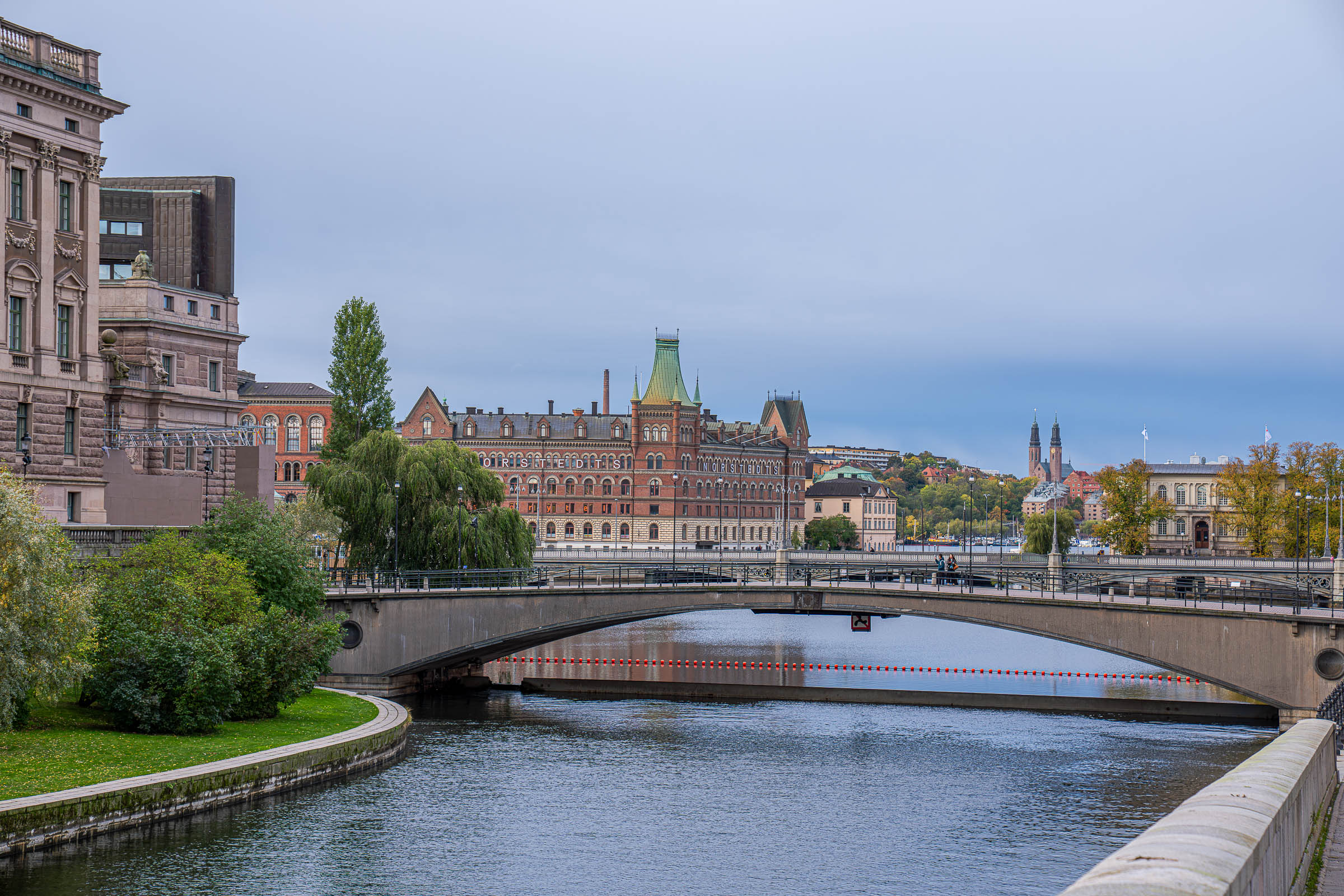
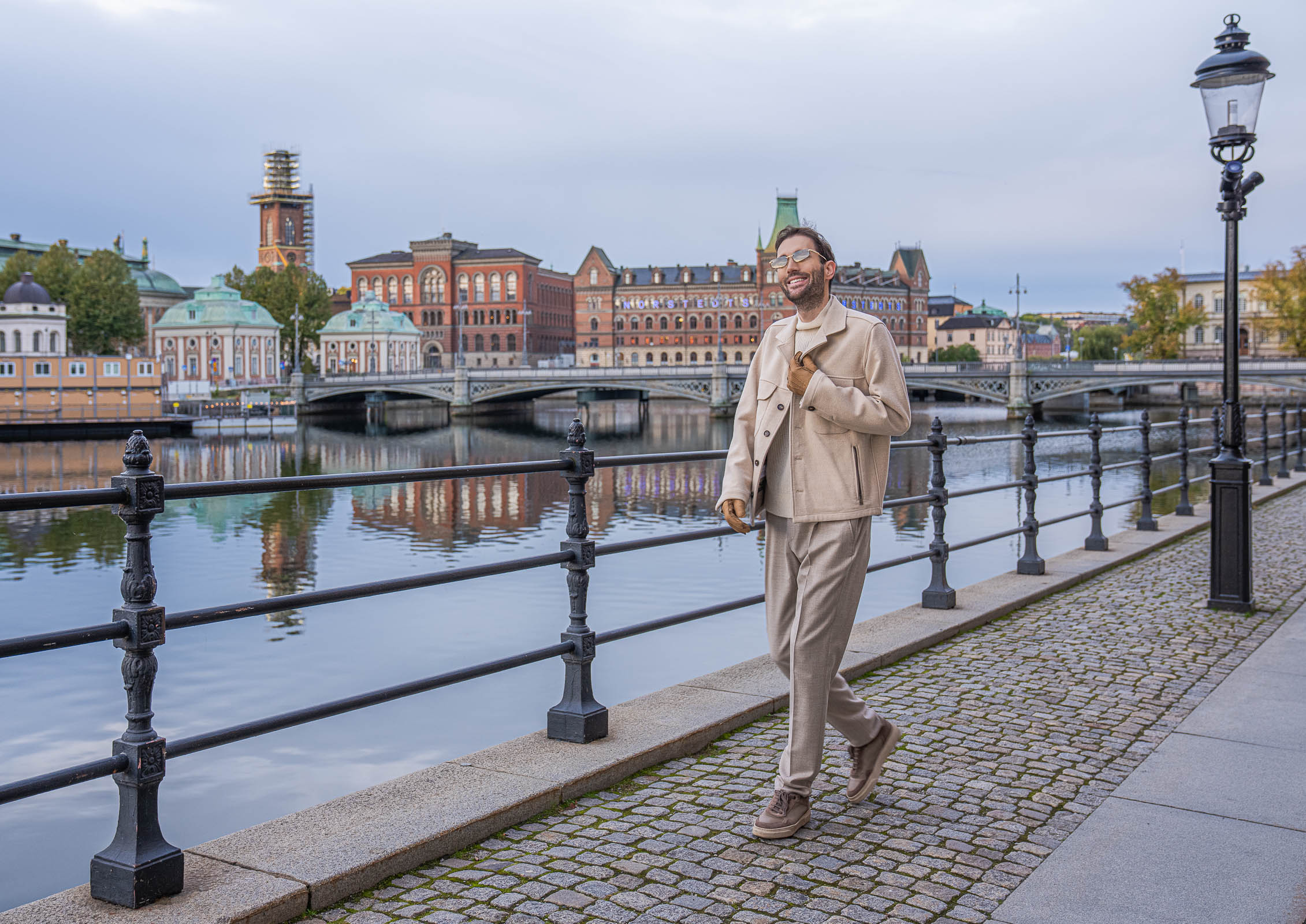
First of all, Stockholm is beautiful in a natural, unforced way. The city sits where Lake Mälaren meets the Baltic Sea. It spreads across 14 islands, and 57 bridges tie them together. That is why many people call it the Venice of the North. Water is never far away, so almost every walk ends with a view.
Secondly, Stockholm mixes old and new with rare ease. You can tour a baroque palace in the morning and browse modern design stores after lunch. The Old Town keeps its medieval lanes, while Norrmalm buzzes with shops, offices and cafes.
Thirdly, the city is green. In 2010, Stockholm became the first European Green Capital, an award from the European Commission. Parks, waterfront paths and nearby nature reserves keep the capital calm, even on busy days.
Clearly, travelers agree. During the summer of 2025, the City of Stockholm counted nearly 3.3 million guest nights. Stockholm County also set its highest summer total since measurements began in 2008, mainly thanks to strong growth in international visitors.
For me, however, the real reason is harder to measure. Stockholm feels elegant without trying too hard. People dress well, speak softly and give each other space. As a result, even a first visit feels strangely familiar. That is the first lesson of any Stockholm travel guide: this city is best enjoyed slowly.
FROM ROYAL HISTORY TO NORDIC DESIGN: WHAT IS STOCKHOLM FAMOUS FOR?
Ask ten travelers, and you may hear ten different answers. Still, a few things define the city around the world, and this Stockholm travel guide covers each of them.
The Nobel Prize comes first. Every year on December 10, the King of Sweden presents the Nobel Prizes at Konserthuset, the blue concert hall on Hötorget. Later that evening, the Nobel banquet takes place in the Blue Hall of Stockholm City Hall. Only the Peace Prize has its ceremony in Oslo instead.
Royal life is another magnet. The Royal Palace in Gamla Stan is the official residence and workplace of the King and Queen. It also ranks among the largest palaces in Europe, and the changing of the guard draws crowds to its courtyard.
Besides that, Stockholm is famous for maritime history. The Vasa Museum shows the best-preserved 17th-century ship in the world, and it is the most visited museum in Scandinavia.
Then there is the art underground. Locals proudly call their metro the world’s longest art exhibition. About 90 of its 100 stations feature sculptures, mosaics, paintings or light installations, spread along roughly 110 kilometers of track.
Finally, there is the archipelago. Some 30,000 islands and skerries stretch from the city into the Baltic Sea. In summer, Stockholmers escape there by boat, and visitors can easily follow.
In short, Stockholm is famous for prizes, palaces, ships and islands. Yet its calm everyday style may be its finest export.
A BRIEF HISTORY OF STOCKHOLM: FROM BIRGER JARL TO THE MODERN CAPITAL
People lived in this area as early as the Stone Age. However, Stockholm’s written story begins in 1252, when its name appears in letters from Birger Jarl, the powerful Swedish statesman. Tradition credits him as the founder. His fortress on the island of today’s Gamla Stan guarded the passage between Lake Mälaren and the sea.
Even the name holds a small puzzle. In Swedish, “stock” means log and “holm” means islet. The meaning sounds simple, yet the exact origin of the name is still unclear.
Over the next centuries, Stockholm grew into a busy trading town with strong German ties. Then came its darkest days. In November 1520, the Danish king Christian II ordered mass executions on Stortorget, the main square. History remembers this as the Stockholm Bloodbath. Among the victims was the father of a young nobleman named Gustav Vasa.
That tragedy changed everything. Gustav Vasa led a rebellion, became king on June 6, 1523, and rode into Stockholm at Midsummer. As a result, Sweden left the Kalmar Union for good.
In 1634, Stockholm officially became the capital. During the 17th century, Sweden grew into a great European power, and the city grew with it. Palaces, churches and warships followed, including the ill-fated Vasa.
Later, on May 7, 1697, fire destroyed most of the medieval Tre Kronor Castle. From its ashes rose the Royal Palace you see today.
Today, Stockholm is Sweden’s capital and largest city. Just under one million people live in the municipality, while the wider metro area has close to 2.5 million residents.
THE RISE OF STOCKHOLM AS AN INTERNATIONAL TRAVEL DESTINATION
Stockholm did not become a favorite overnight. Instead, a few key moments built its reputation step by step.
In 1874, the Grand Hôtel opened on the waterfront, right across from the Royal Palace. Since 1901, Nobel laureates and their families have traditionally stayed there. That tradition still gives the city a touch of global glamour every December.
Then, in 1891, Artur Hazelius opened Skansen on Djurgården. It is the world’s oldest open-air museum, and it still shows how Swedes lived across five centuries.
Six years later, the General Art and Industrial Exposition of 1897 filled Djurgården with pavilions and new inventions. During its four months, it welcomed more than 1.25 million ticket holders.
In 1912, the Summer Olympics came to town. Architect Torben Grut designed the Stockholm Olympic Stadium for the Games, and the stadium still hosts events today.
After that, music and design added new layers. In June 1976, ABBA performed “Dancing Queen” at a royal gala at the Royal Swedish Opera, on the eve of the royal wedding. Two months later, the single came out, and the rest is pop history.
Today, the story continues, and the world keeps coming back to Stockholm.
GAMLA STAN: THE HISTORIC HEART OF STOCKHOLM
Every Stockholm travel guide starts in Gamla Stan, and for good reason. The Old Town sits on the island where the city began. Narrow lanes curve uphill, and the facades glow in saffron, rust and soft pink, even under clouds.
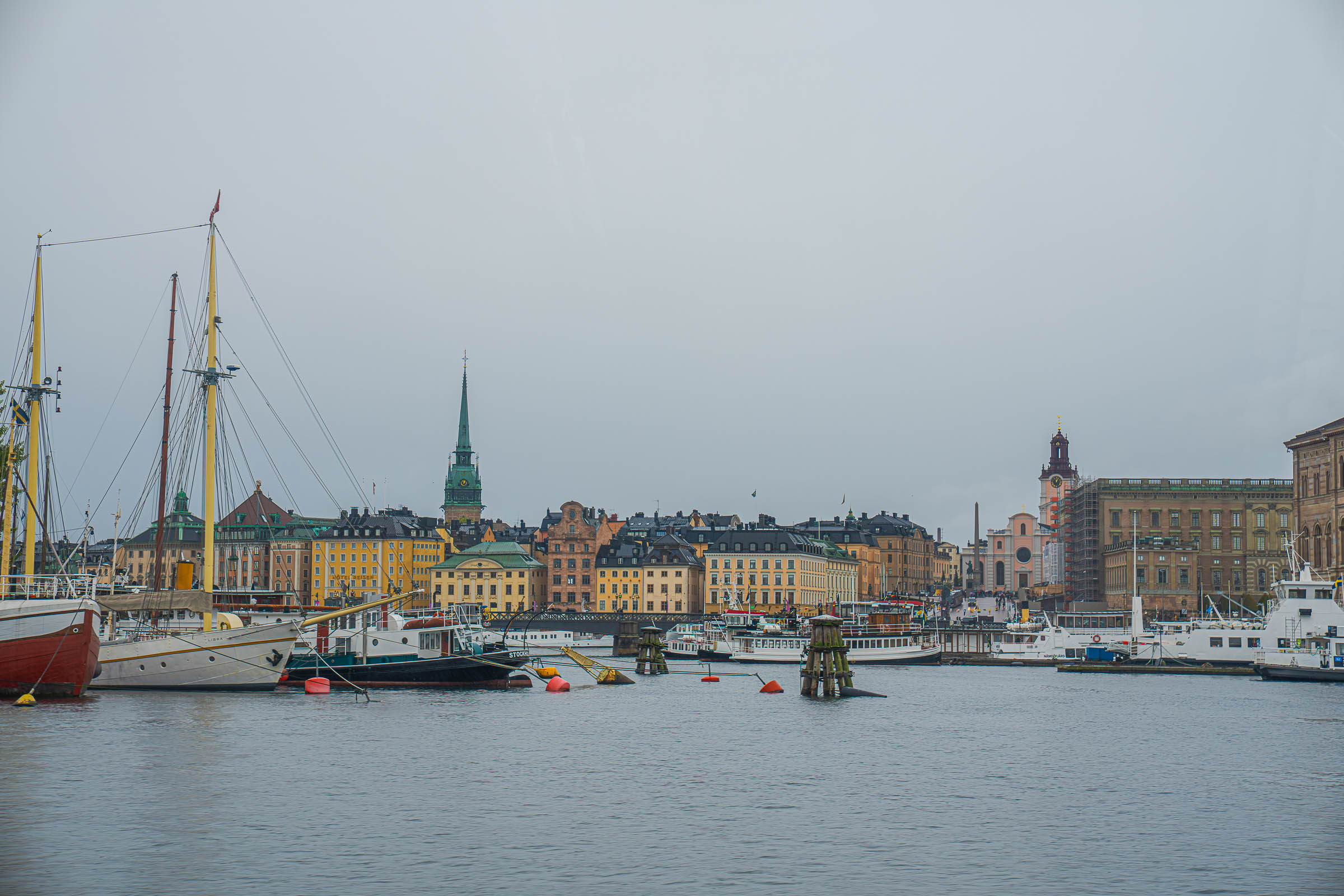
My favorite view of it came from across the water. Sailing ships rested at the quay in front of me, and the whole skyline lined up like a painted stage. Above the rooftops rose the green copper spire of the German Church. Its 96-meter tower marks the highest point in Gamla Stan. Closer to the palace, the bell tower of Storkyrkan completed the picture.
Storkyrkan, also called Stockholm Cathedral, is the oldest church in the city. Records mention its consecration in 1306. King Carl XVI Gustaf and Queen Silvia married here in 1976, and Crown Princess Victoria wed Prince Daniel here in 2010.
Stortorget, meanwhile, is the oldest square in Stockholm. Today it looks cheerful, with colorful merchant houses and busy cafes. Still, it carries the memory of 1520. In December, a much-loved Christmas market fills the square with lights.
My tip: come early in the morning. At that hour, the lanes feel quiet, and you can hear your own steps on the cobblestones. Also, wear good shoes, because those old stones get slippery in the rain.
THE ROYAL PALACE IN STOCKHOLM: THE SILVER THRONE, ROYAL CROWNS AND A GOLDEN ANNIVERSARY
The Royal Palace dominates the north end of Gamla Stan. Despite its royal role, large parts of it are open to visitors all year.
Its story begins with that 1697 fire. Even before the flames, the city architect Nicodemus Tessin the Younger had been planning a new palace. After the fire, he designed the baroque building we admire today. Construction took decades, partly because of war. When Tessin died in 1728, Carl Hårleman took over and created many of the Rococo interiors. Finally, in December 1754, King Adolf Fredrik and Queen Lovisa Ulrika moved in.
The scale still impresses. The palace has more than 600 rooms, and its facades cover about 28,000 square meters.
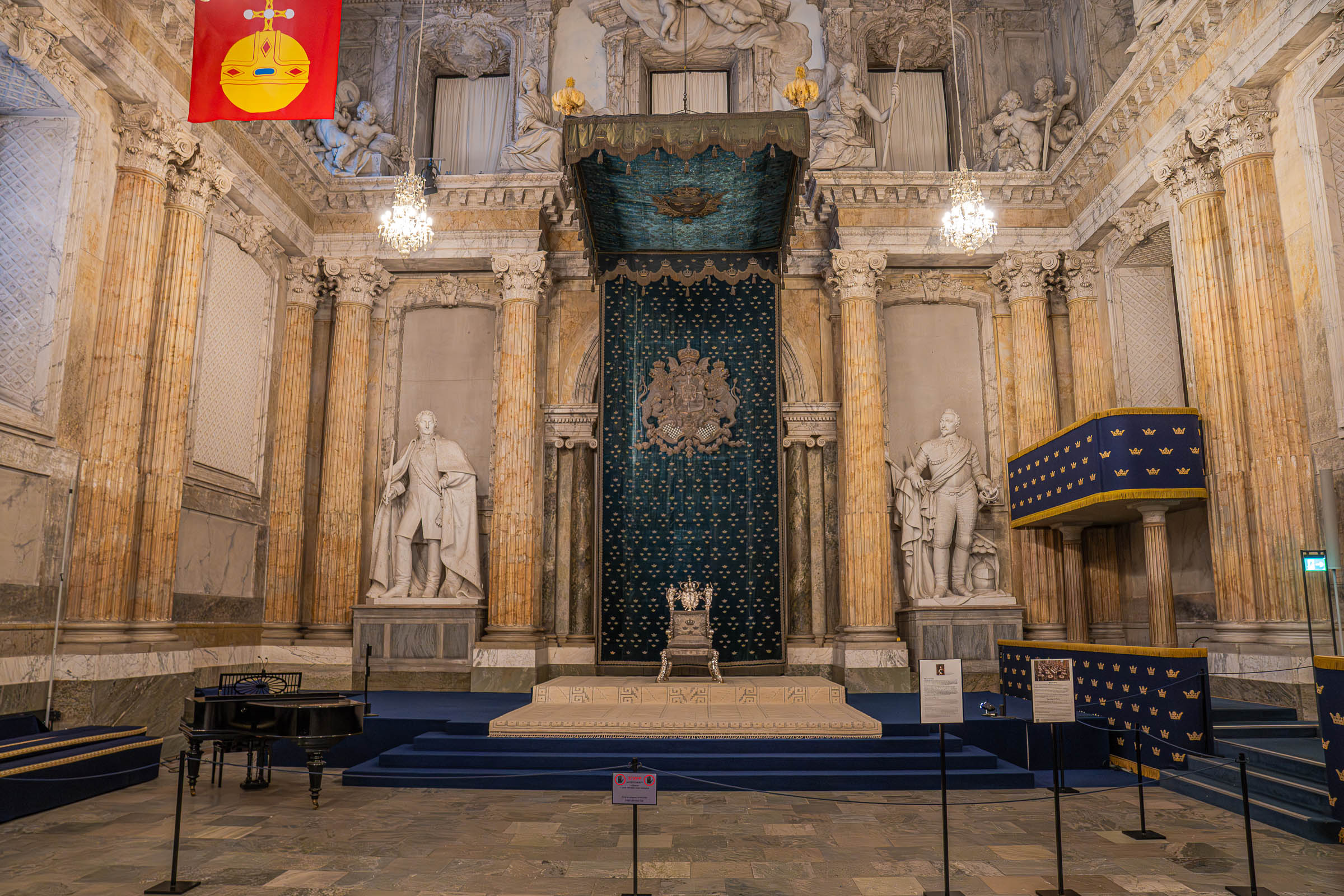
Inside, I headed first to the Hall of State. Here stands Queen Christina’s silver throne, made for her coronation in 1650. Count Magnus Gabriel De la Gardie gave it to her as a gift, and the Augsburg goldsmith Abraham Drentwett created it. Interestingly, Christina gave up the throne only four years later and left Sweden.
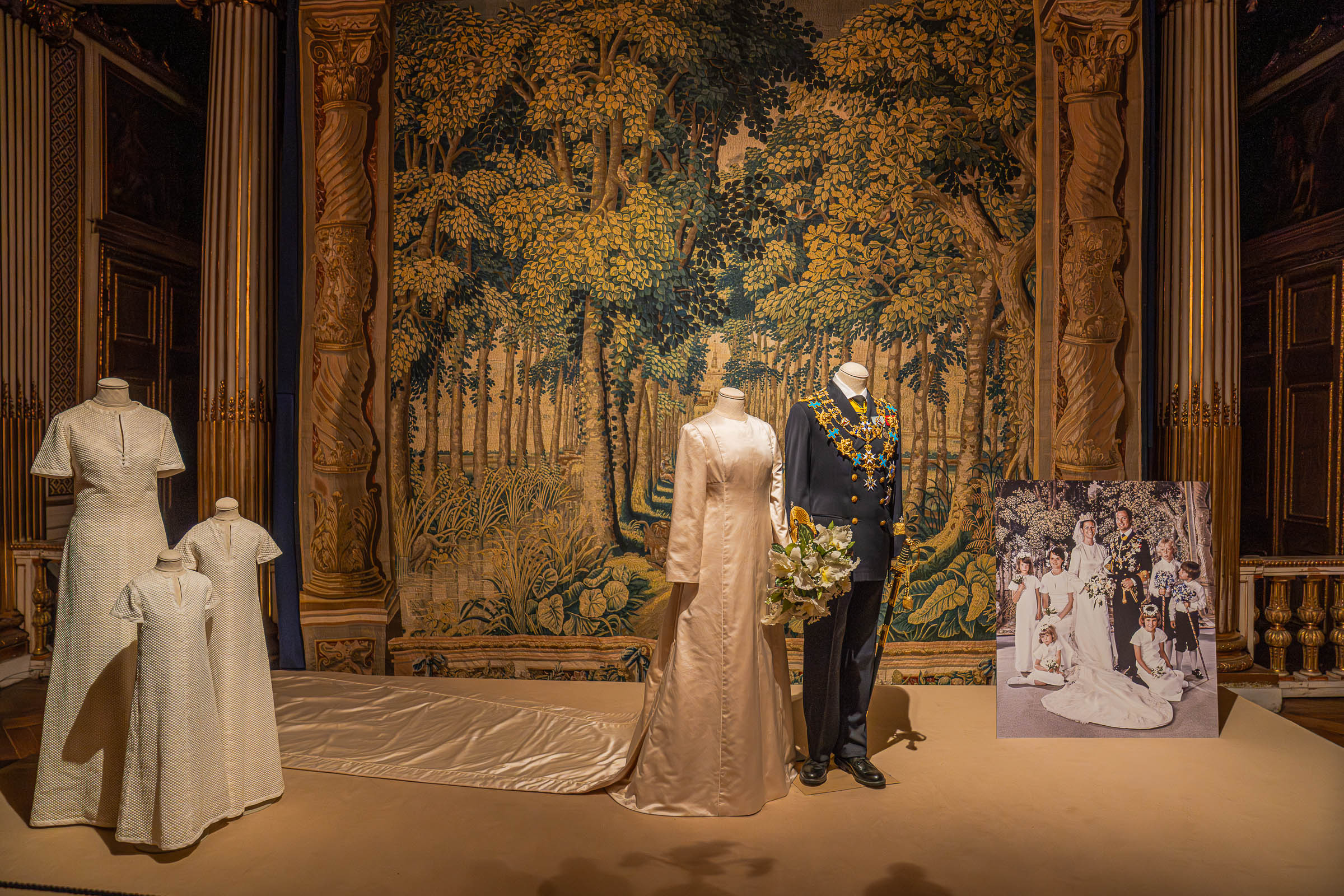
My visit fell during a special display called Gold! 50 Years Together for Sweden. It celebrated the golden wedding anniversary of King Carl XVI Gustaf and Queen Silvia, who married on June 19, 1976. For me, the highlight was the Queen’s ivory silk wedding dress by Dior, designed by Marc Bohan. Seeing it up close felt personal, almost like opening a family album.
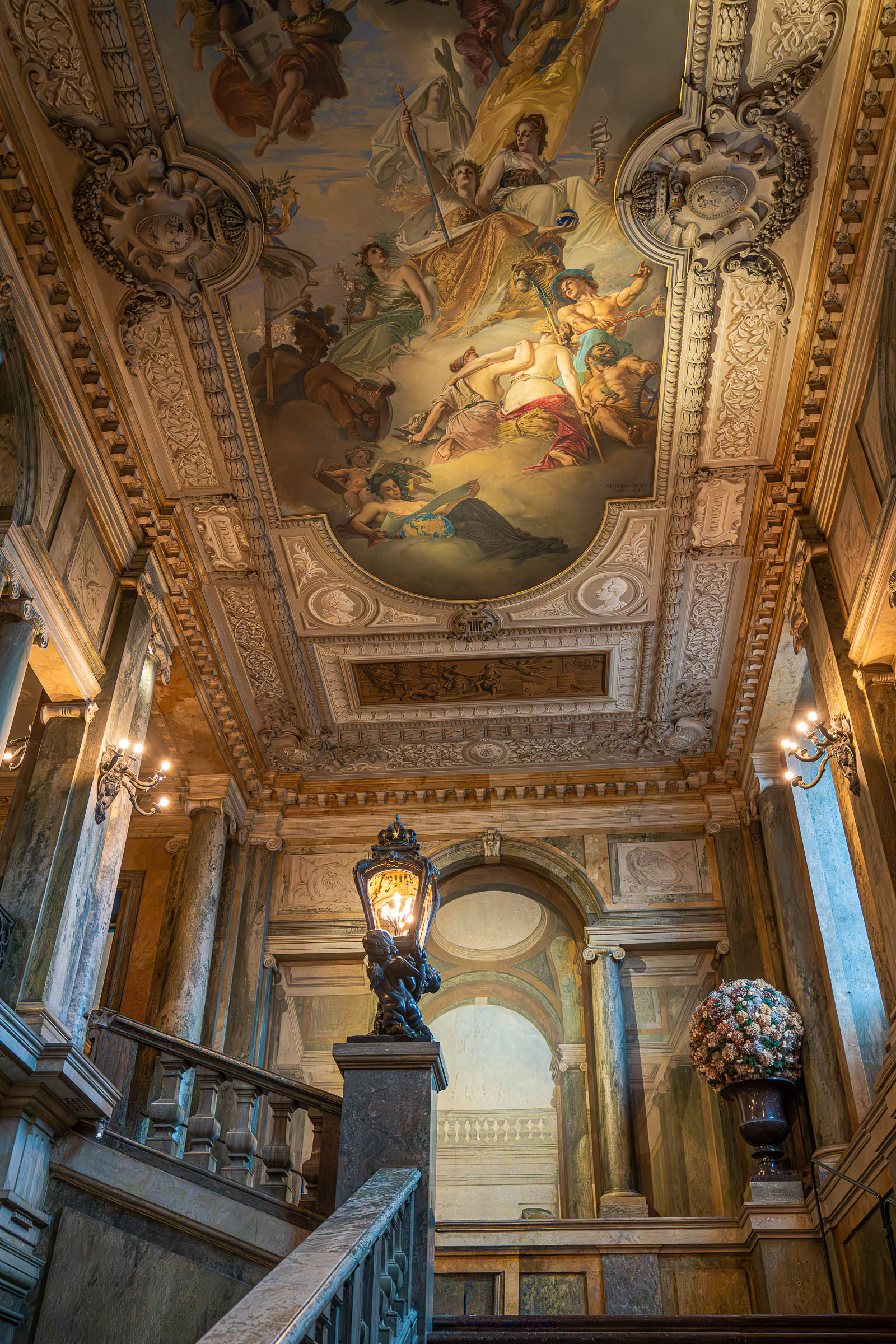
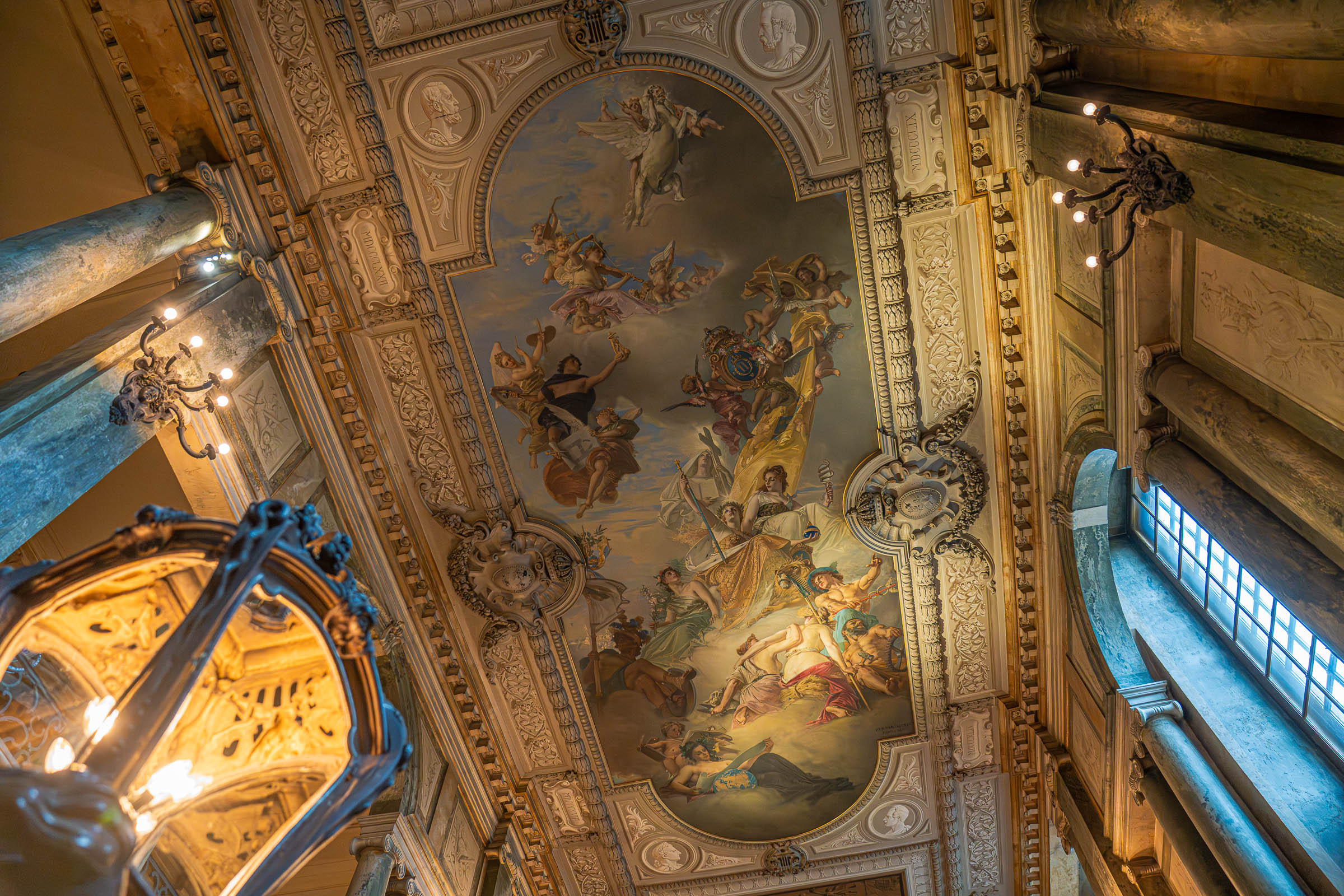
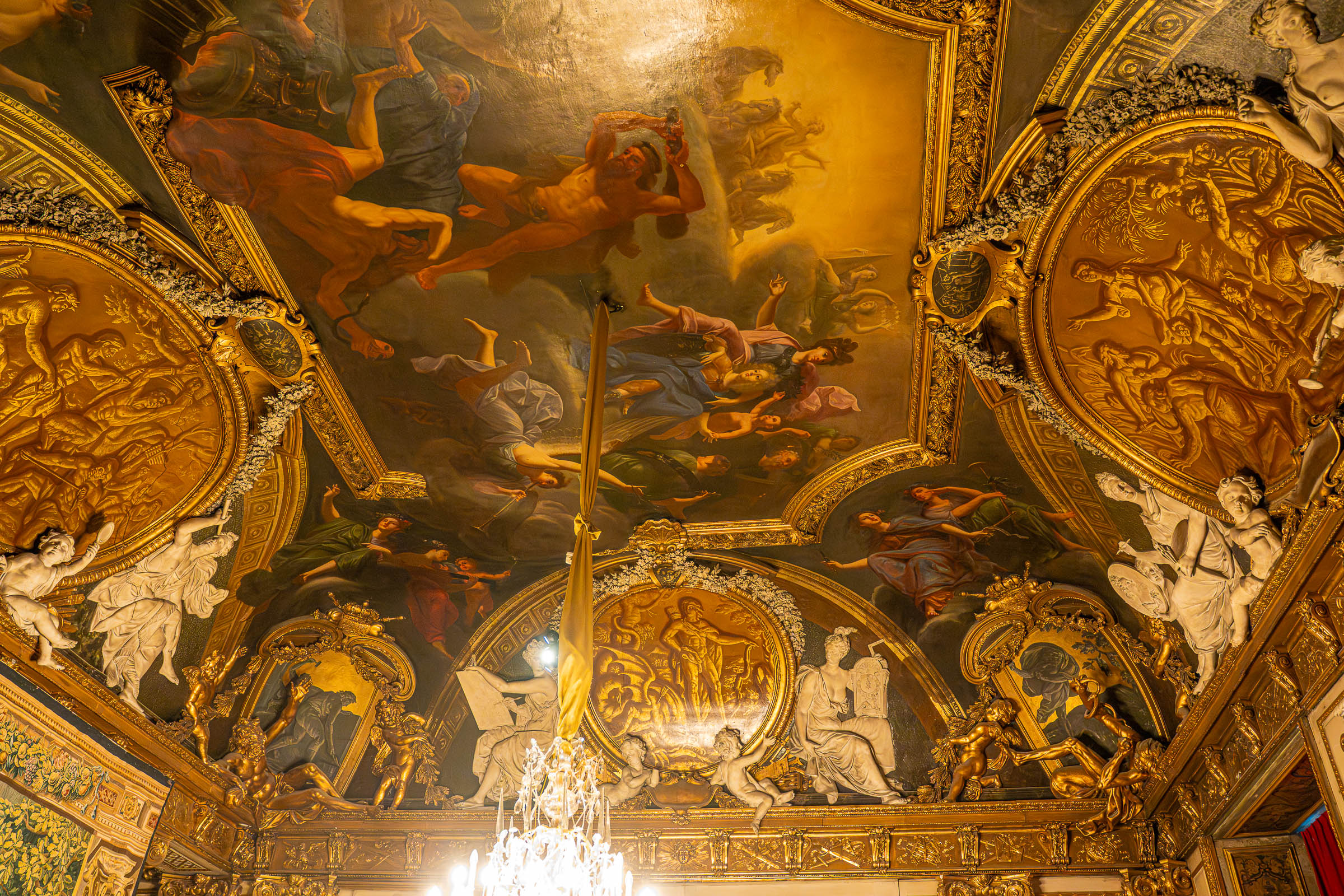
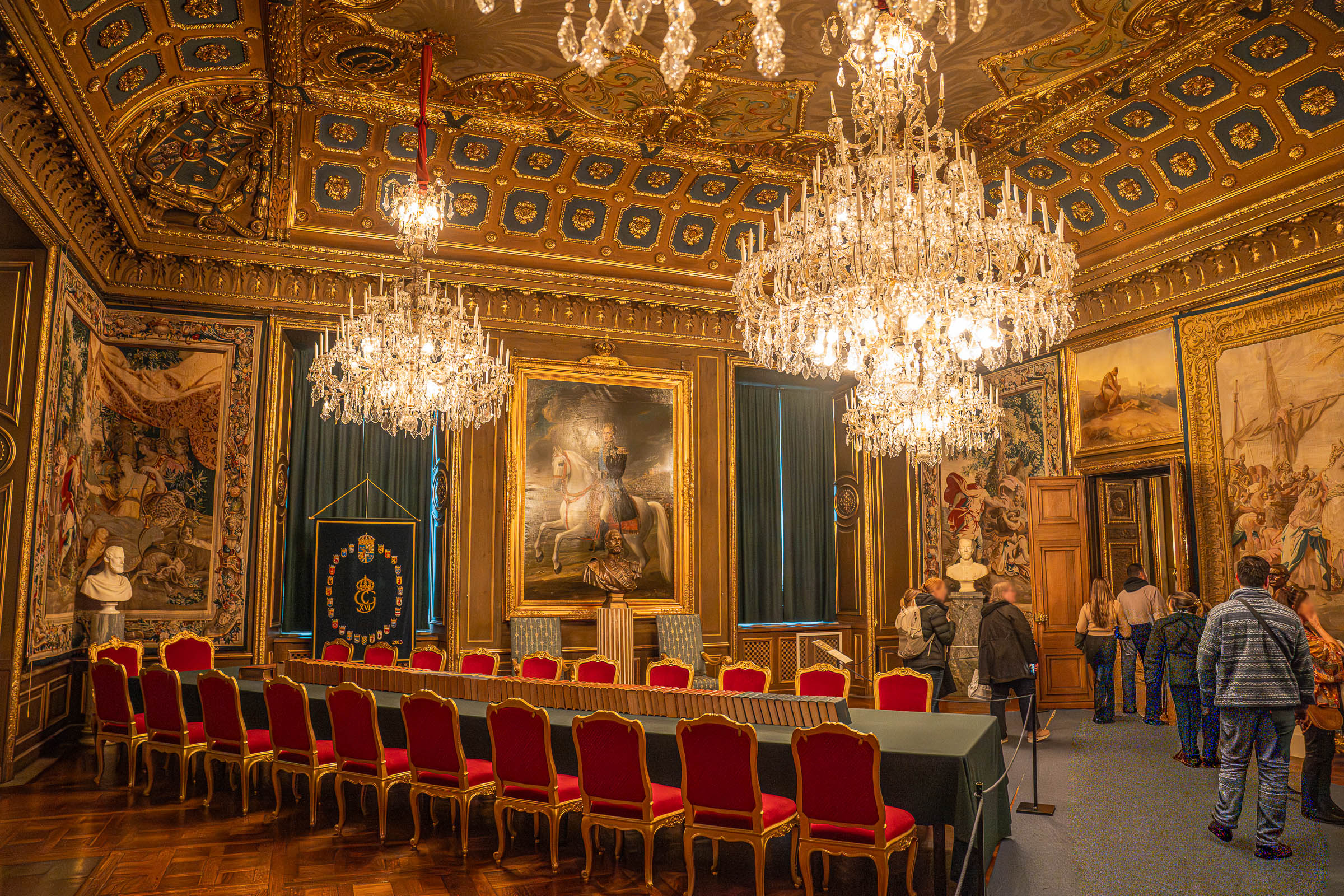
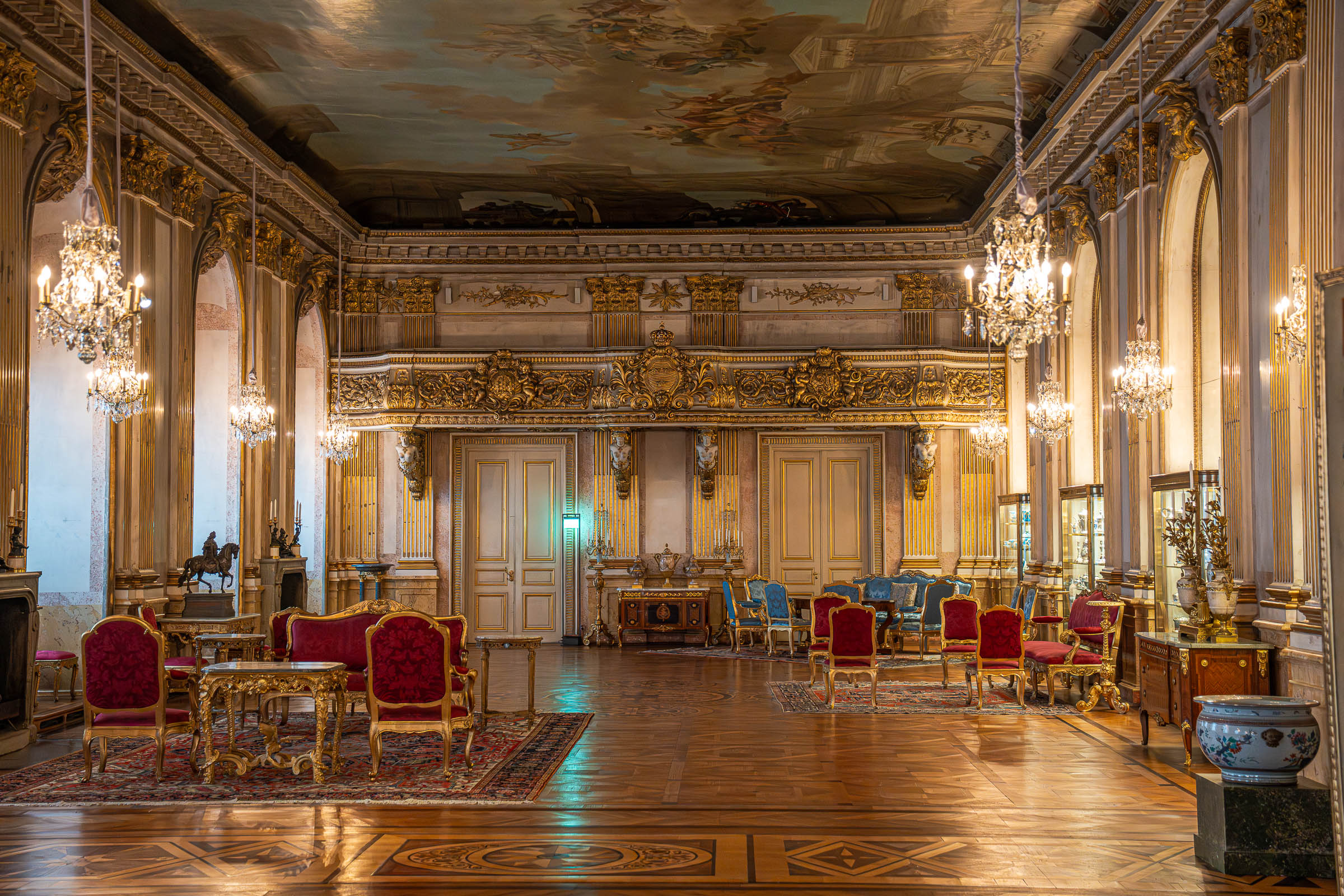
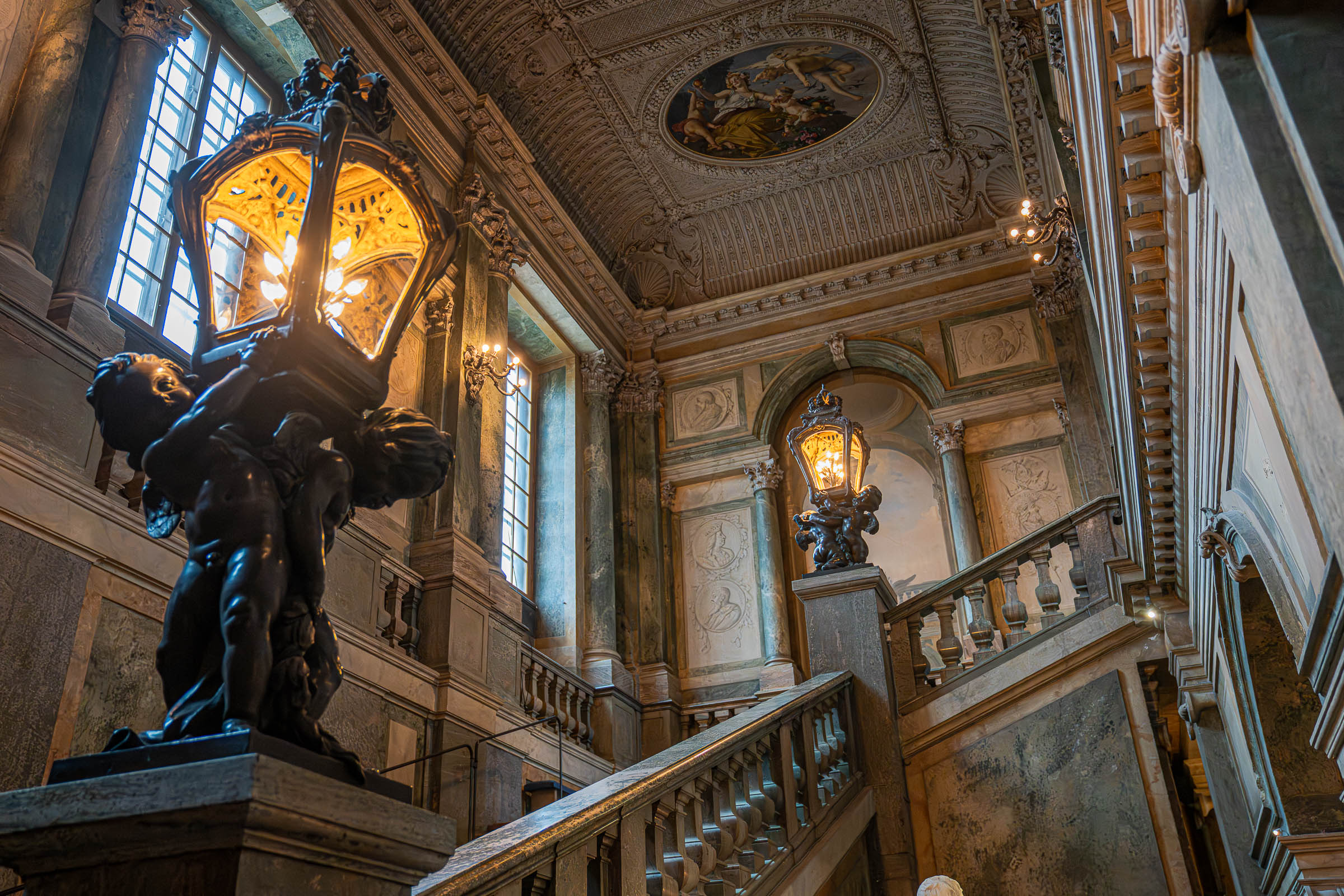
If your Stockholm travel guide allows only one royal visit, make it this one. Above all, take your time in the State Apartments. Gilded ceilings, painted vaults and grand staircases fill every corner, and each room tells its own story.
INSIDE STOCKHOLM’S ROYAL PALACE: THE TREASURY AND THE BERNADOTTE APARTMENTS
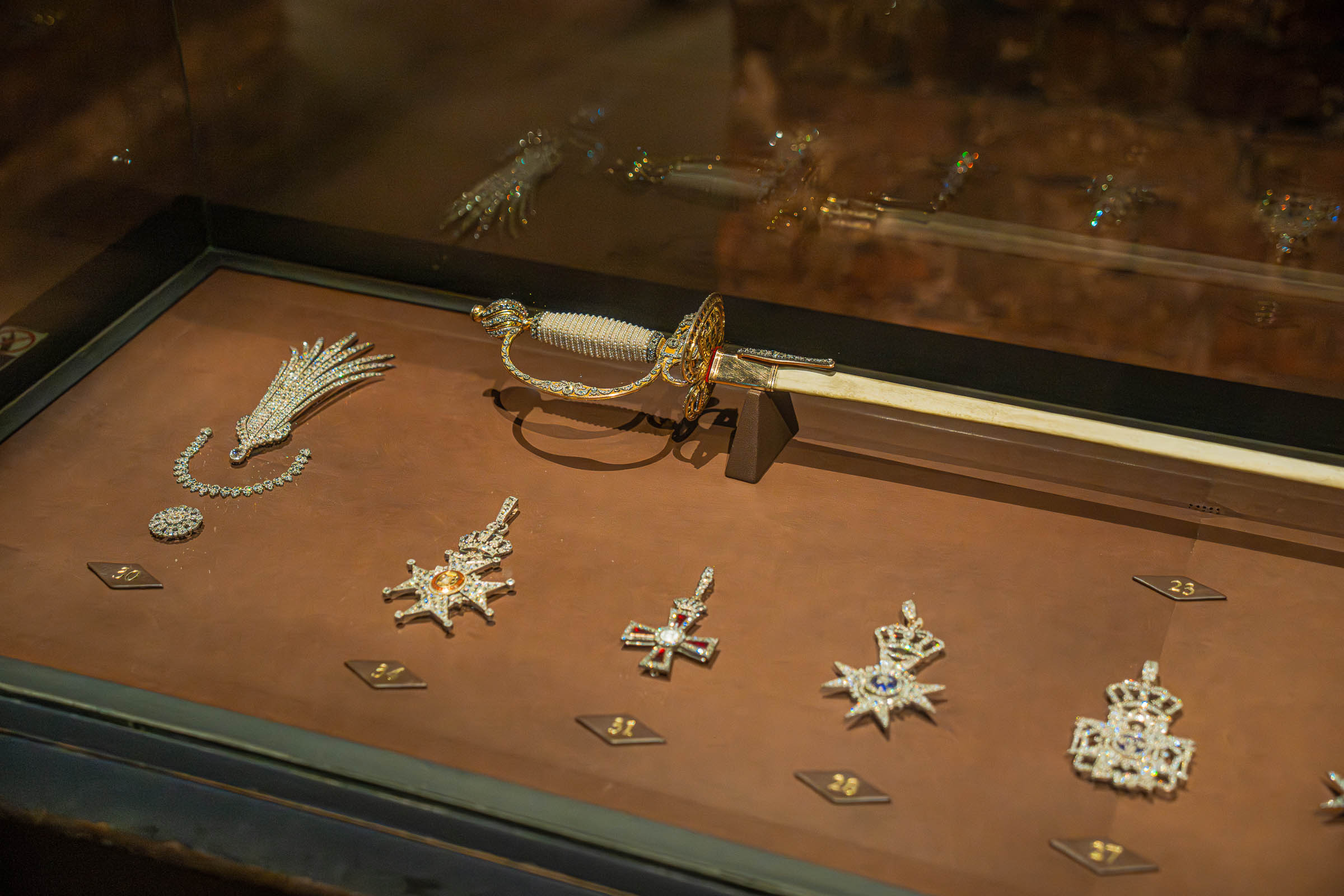
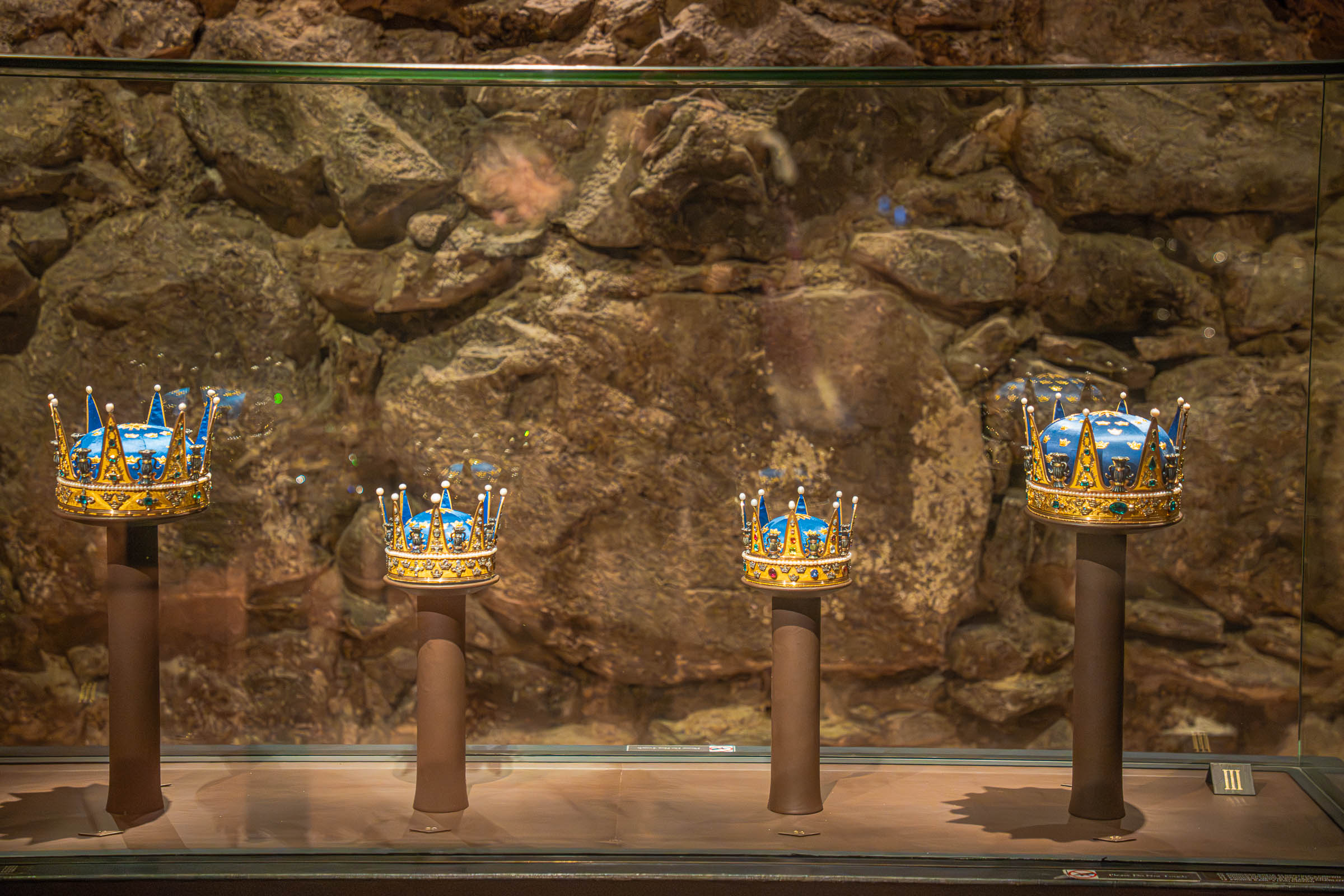
Below the palace, the Treasury waits in dark cellar vaults. Since 1970, the State Regalia have been on permanent display there.
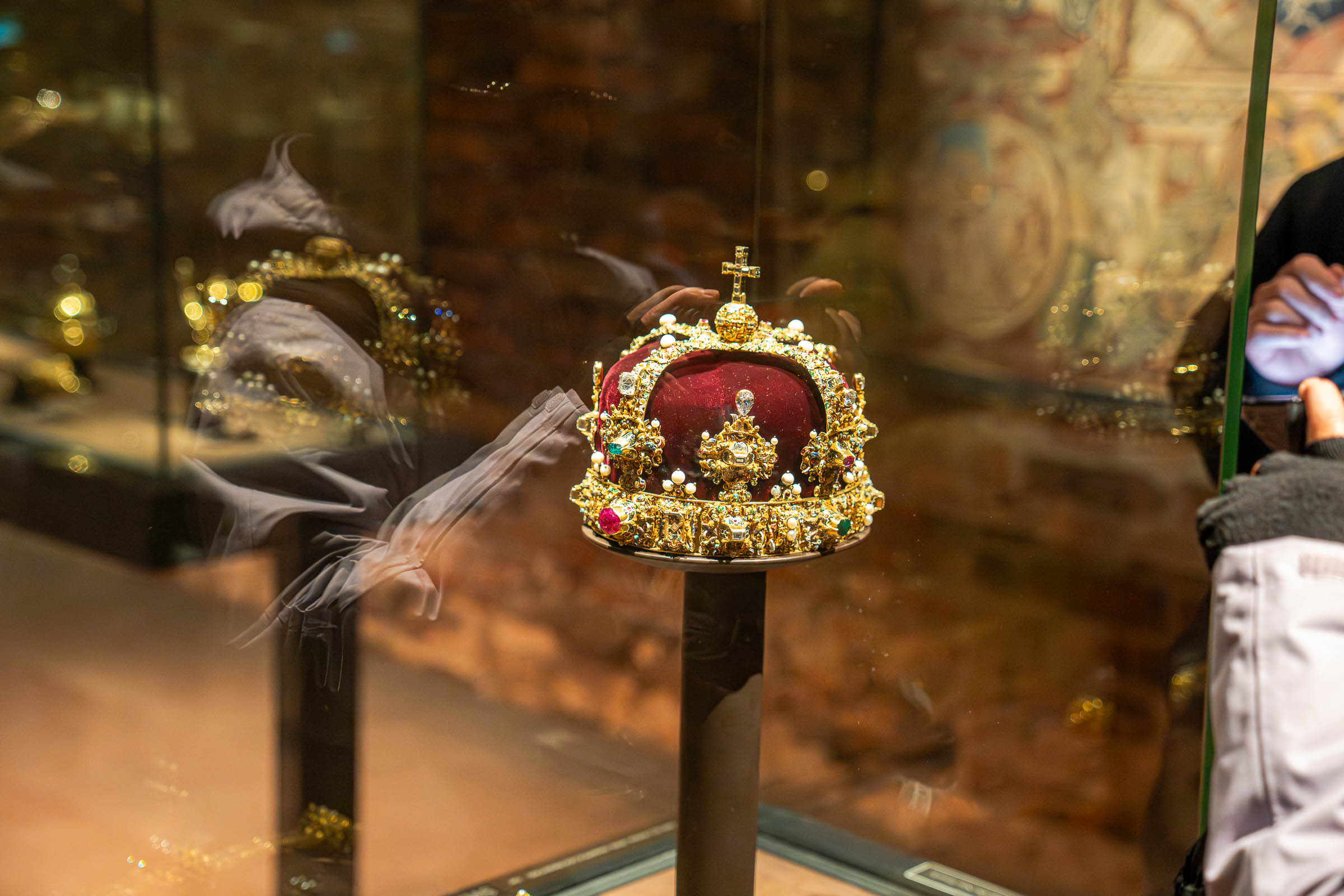
The star is the crown of King Erik XIV. A Flemish goldsmith made it in Stockholm in 1561 from 23-carat gold, pearls, emeralds, diamonds and rubies. According to the Royal Court, it is the oldest crown in the world still in use as a royal crown. Next to it rest Erik’s orb, scepter and key. Even older are the two swords of state of Gustav Vasa, the oldest objects in the collection. Smaller crowns made for princes and princesses sit on velvet nearby, and they are surprisingly charming.
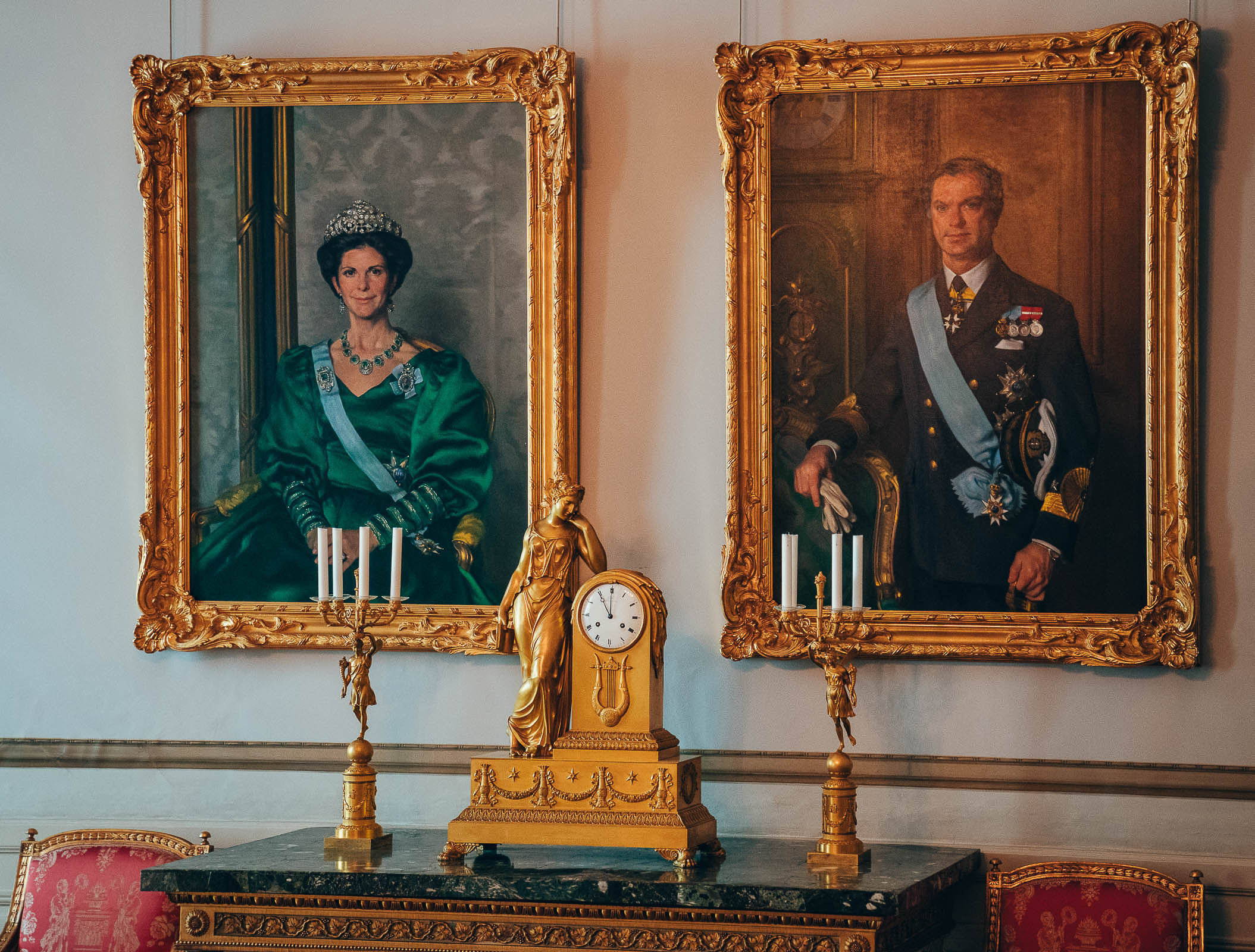
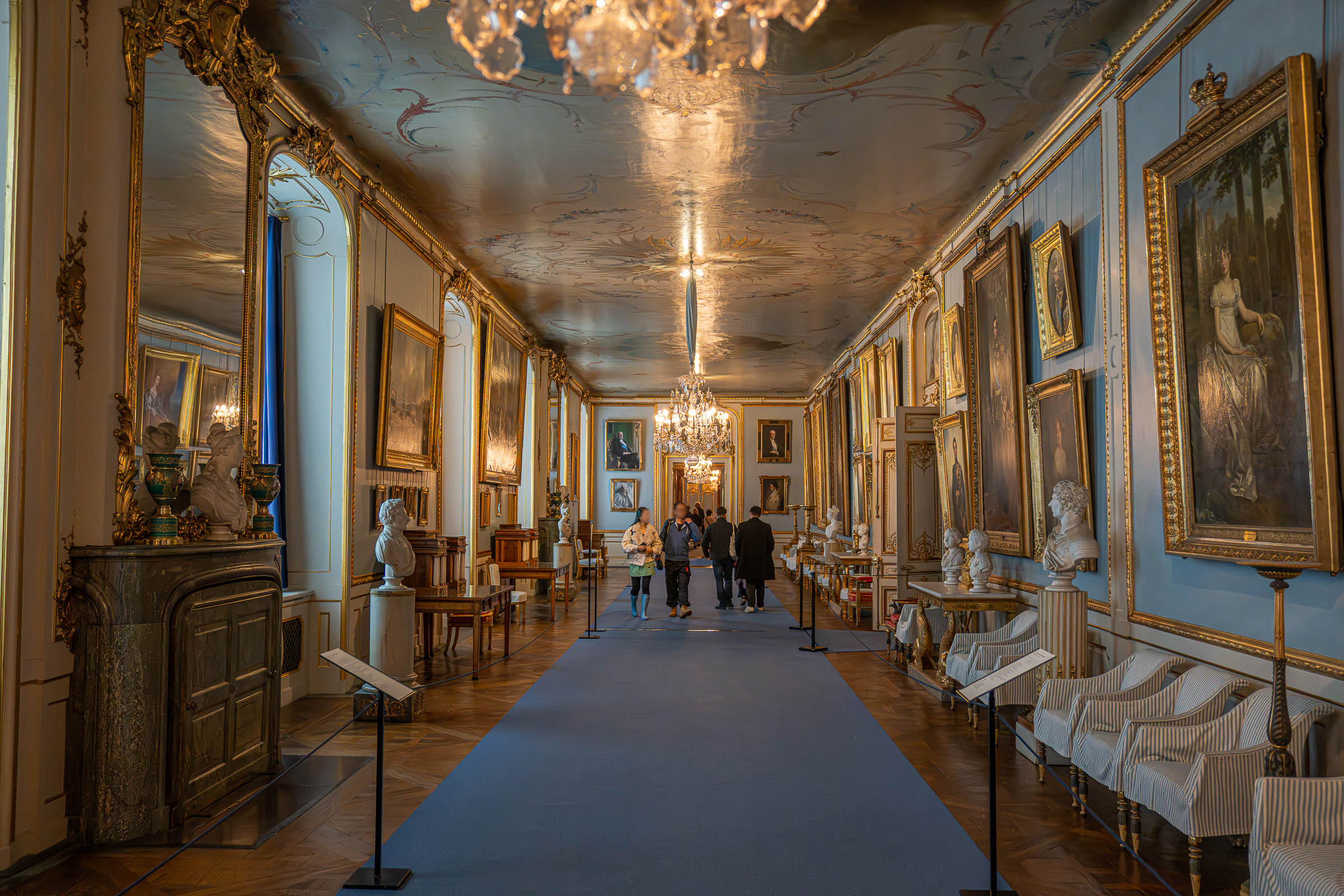
Upstairs, the mood changes. In the Bernadotte Apartments, portraits of the dynasty run from King Karl XIV Johan to King Carl XVI Gustaf and Queen Silvia. I loved the pair of royal portraits above a gilded clock. Together, they show how an old monarchy keeps its traditions while living in the present.
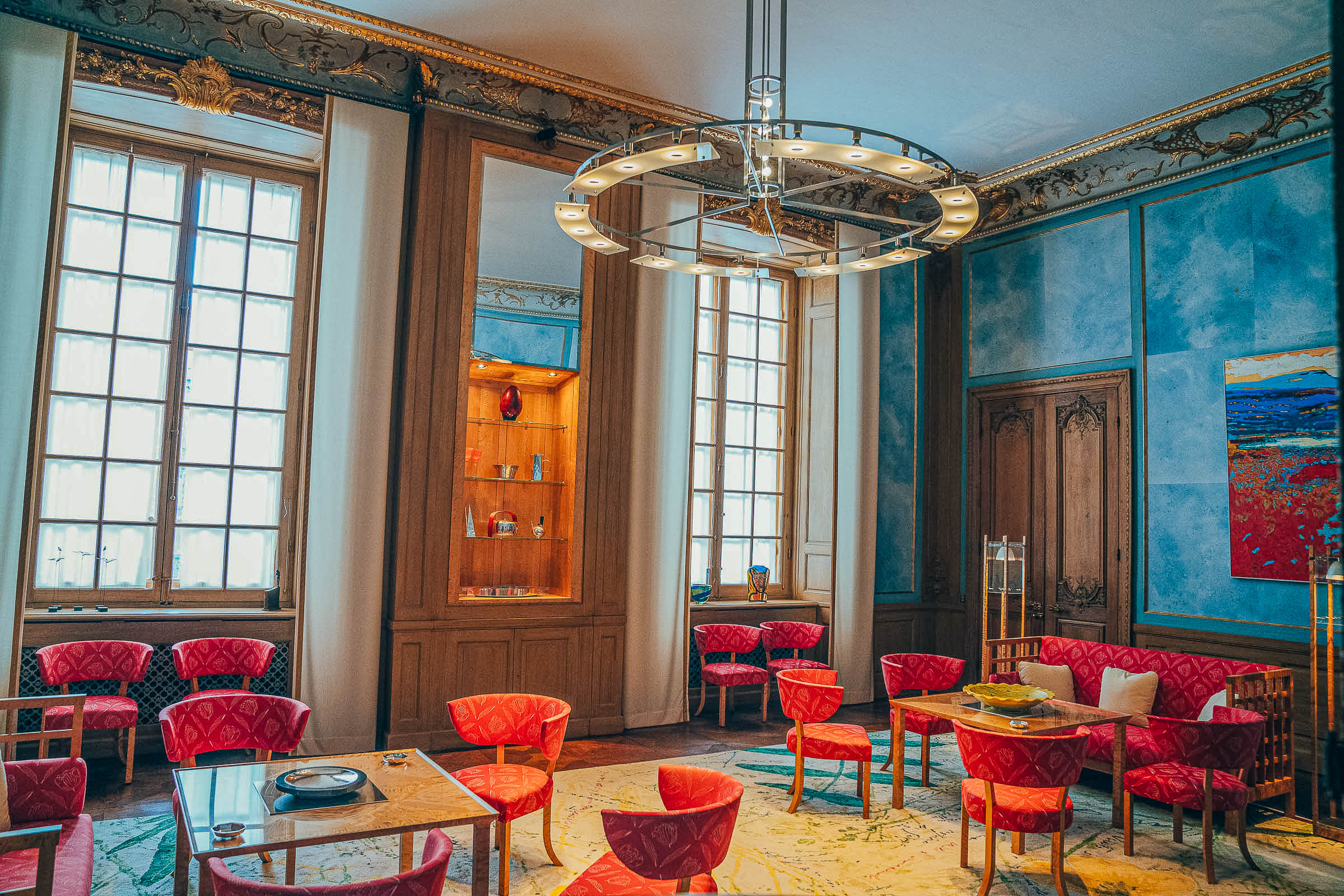
Another surprise was a bright modern room with red chairs and blue walls. The palace created it in 1998 to mark the King’s 25 years on the throne.
Here is a useful tip for this Stockholm travel guide: buy the combined palace ticket. It usually includes the Royal Apartments, the Treasury and Museum Tre Kronor, so you can follow the whole story in one morning.
NOBEL PRIZE MUSEUM: THE STORY BEHIND THE FAMOUS SIGNED CHAIRS
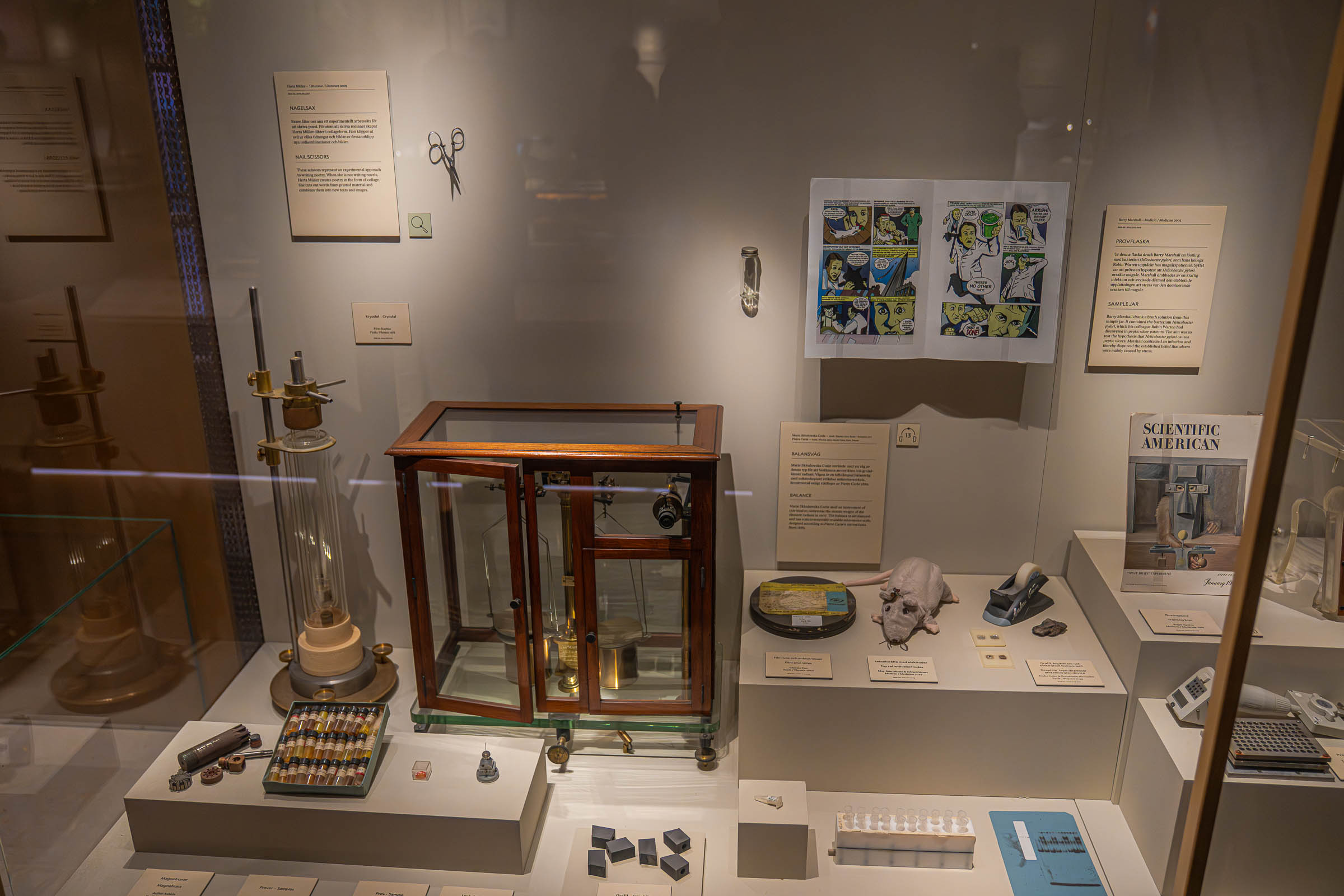
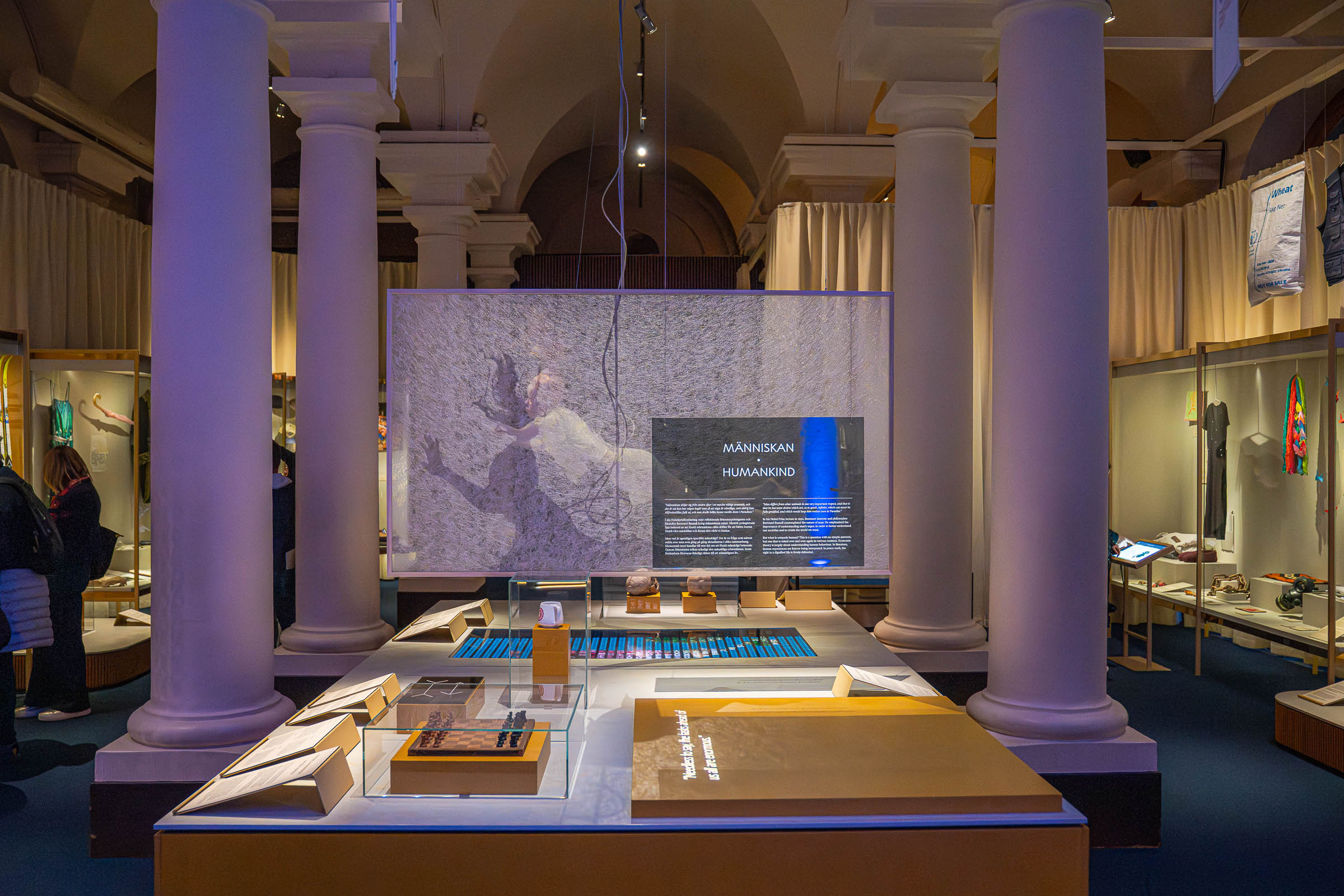
From the palace, a short walk brings you to Stortorget and the Nobel Prize Museum. It opened in 2001, on the 100th anniversary of the Nobel Prize, inside the old Stock Exchange Building. The building dates from the 1770s, and the Swedish Academy also has its home there.
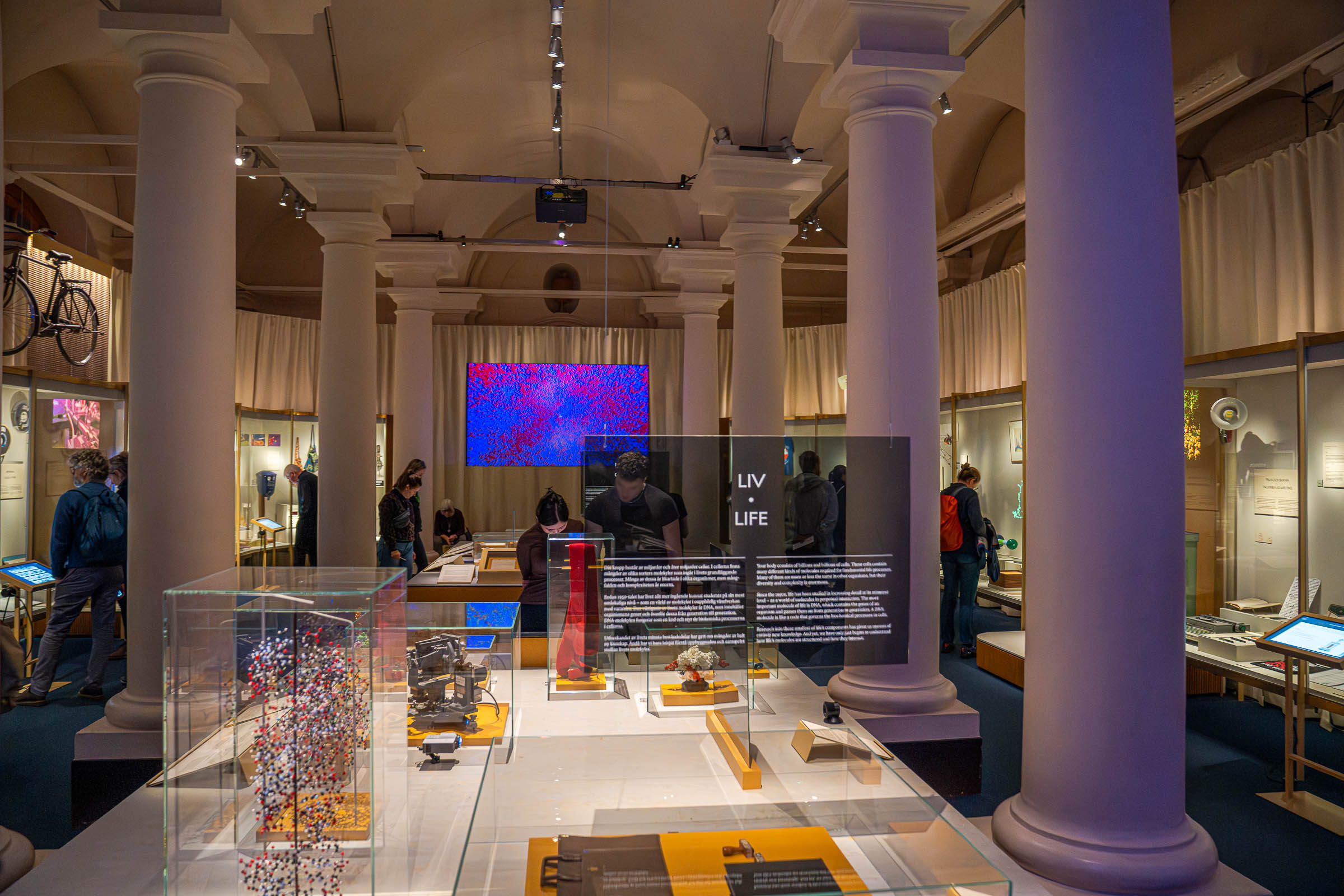
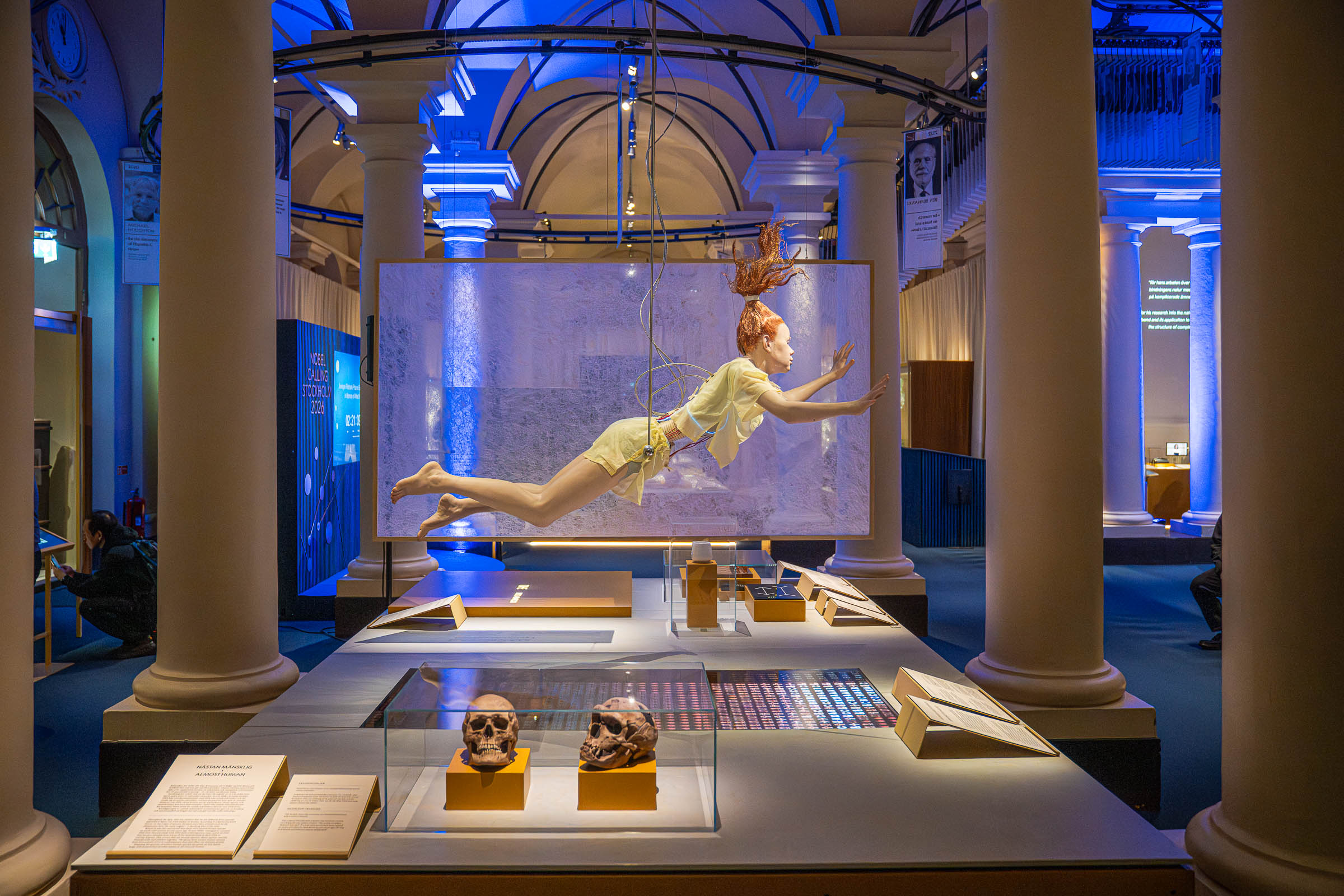
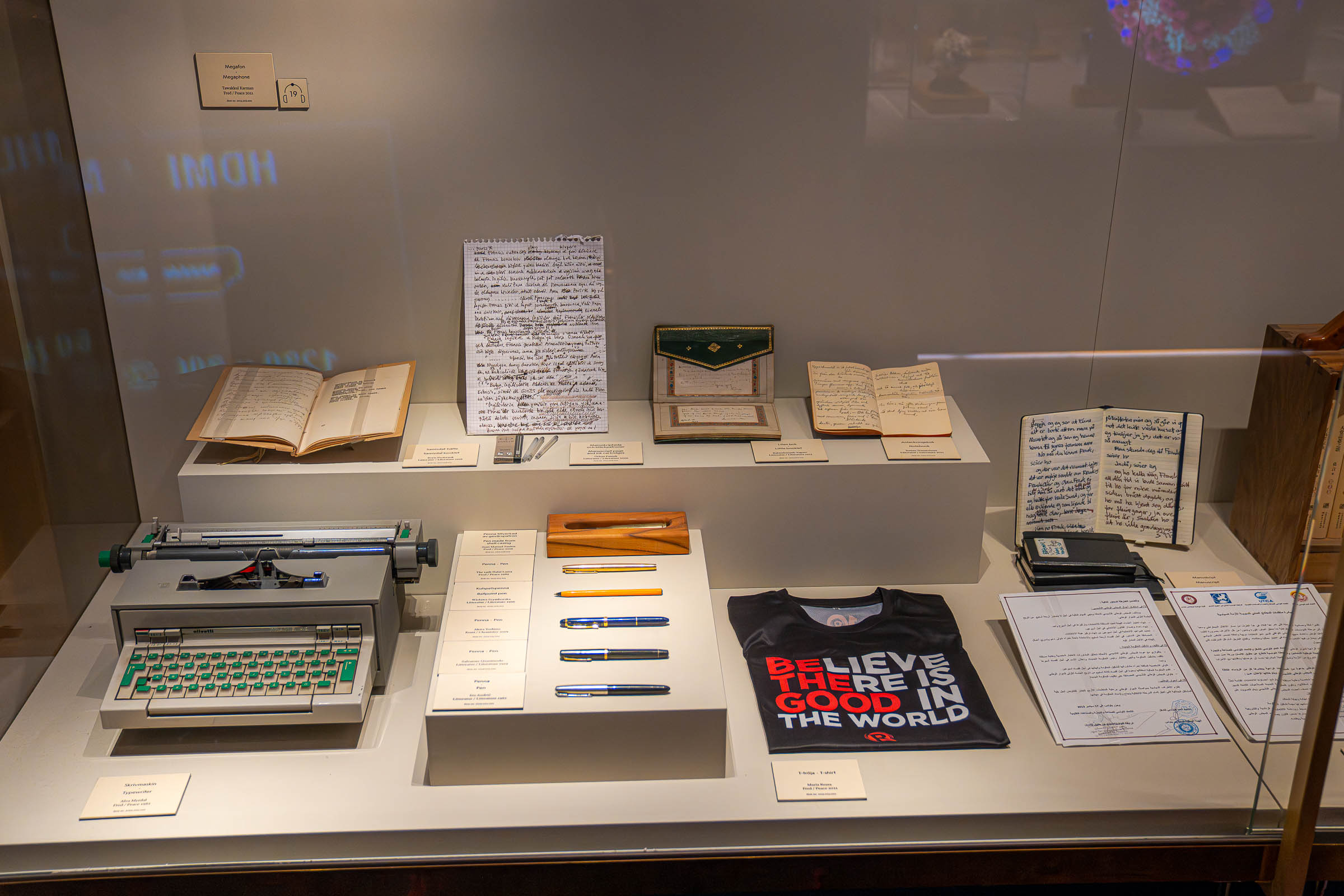
The exhibitions feel modern and thoughtful. Display cases hold objects that laureates donated, each one with a human story behind a big idea. Rather than feeling like a school lesson, the museum feels like a conversation about curiosity and courage.
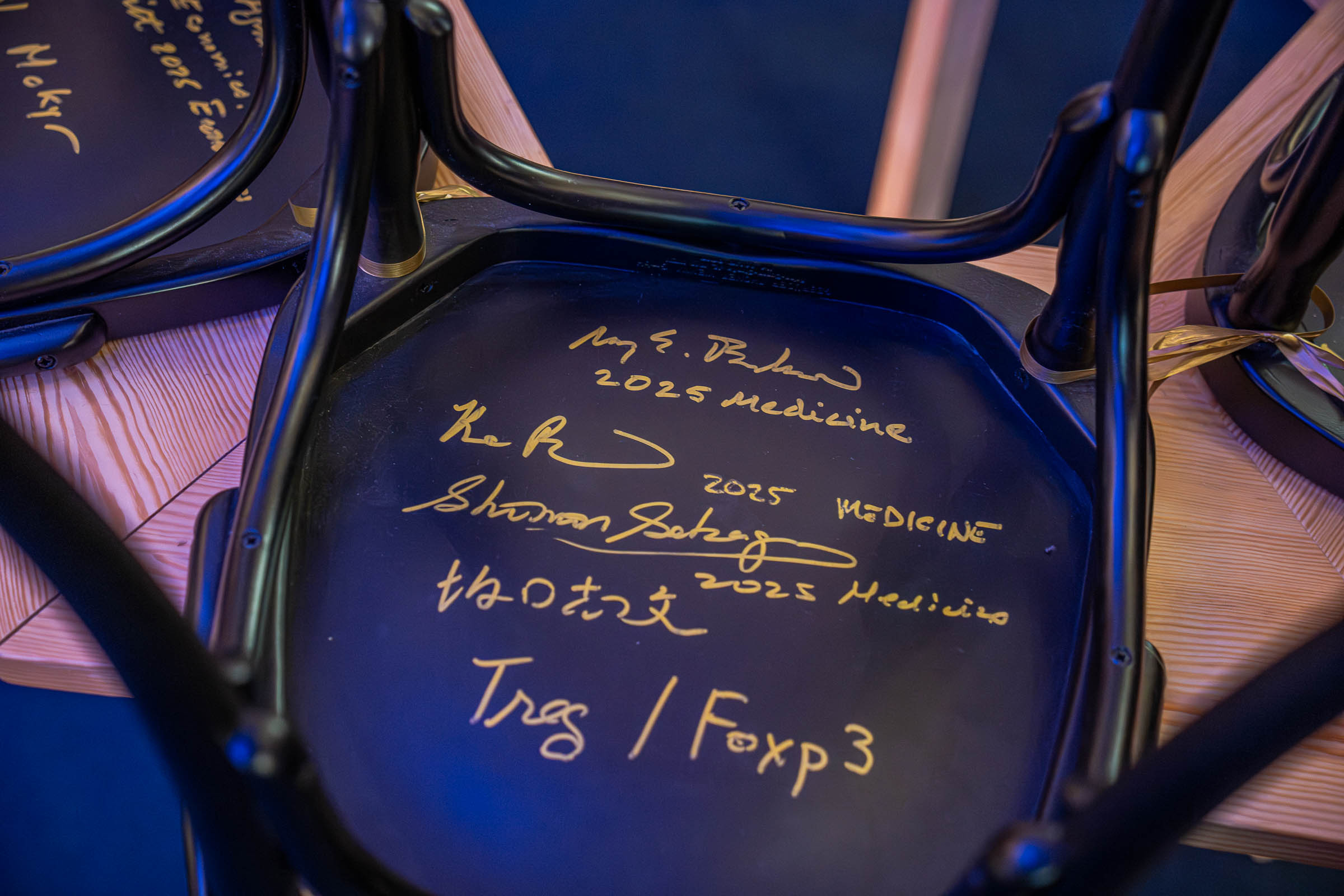
Now, for my favorite tradition in Stockholm. Laureates who visit the museum sign the underside of chairs in Bistro Nobel, a custom that has lasted since 2001. So when you sit down for coffee, you may be resting on a chair signed by a Nobel winner.
During my visit, the museum displayed chairs signed by the 2025 laureates in Physiology or Medicine: Mary E. Brunkow, Fred Ramsdell and Shimon Sakaguchi. They won for discoveries about peripheral immune tolerance: in other words, how the body keeps its immune system from attacking itself.
Before you leave, try the Nobel ice cream, which you can only find at the bistro. It is a small treat with a big story, and it tastes even better after a morning full of history. For me, this tradition alone earns the museum a place in any Stockholm travel guide.
NORRBRO, THE RIKSDAG AND THE ROYAL SWEDISH OPERA: THREE STOCKHOLM LANDMARKS
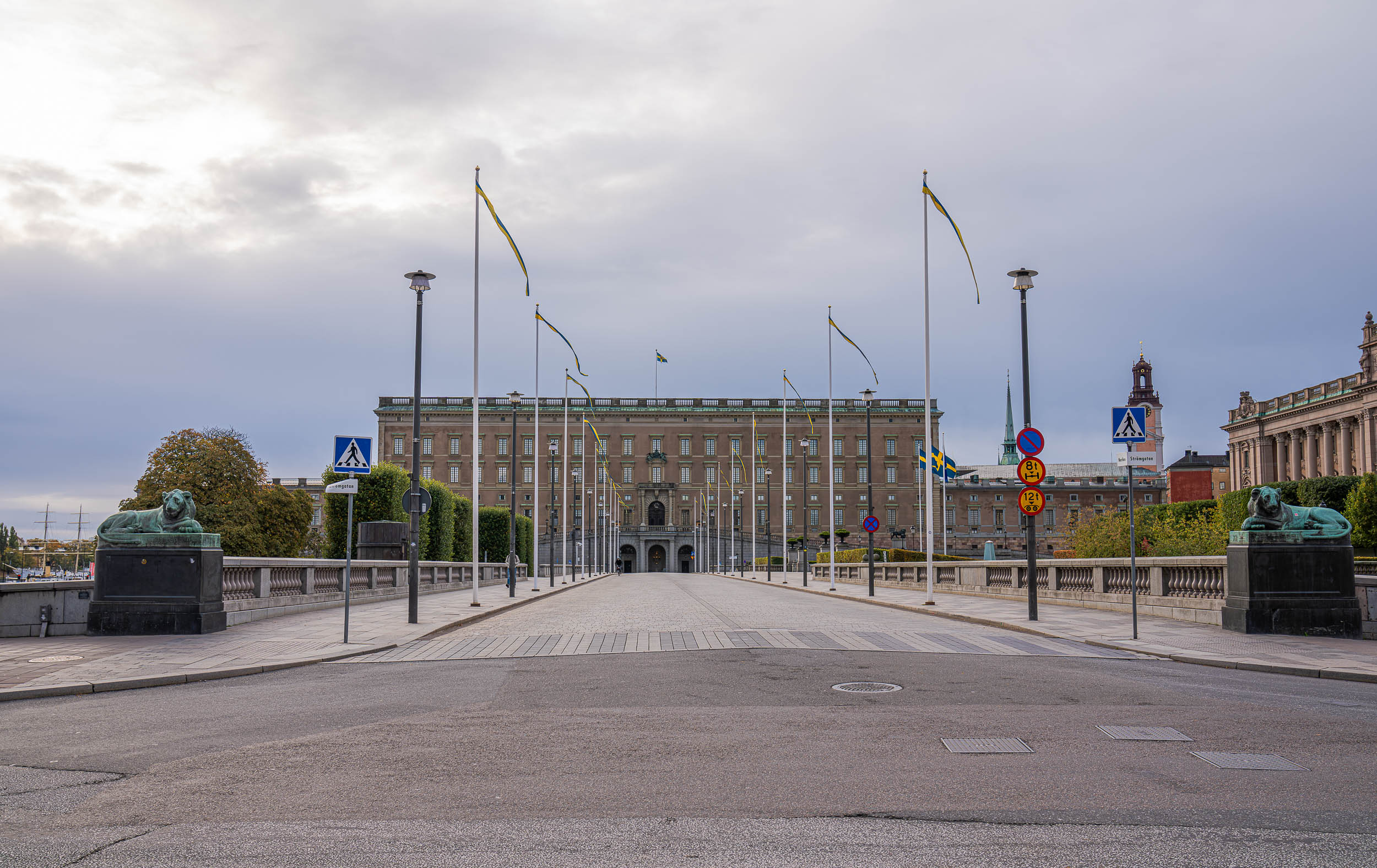
North of the palace, the Norrbro bridge carries you over rushing water, right where Lake Mälaren pours into the Baltic. It was one of the first stone bridges in Stockholm, and builders completed its northern part in 1797. At its southern end, two bronze lions guard Lejonbacken, the palace ramp, and make a perfect photo stop.
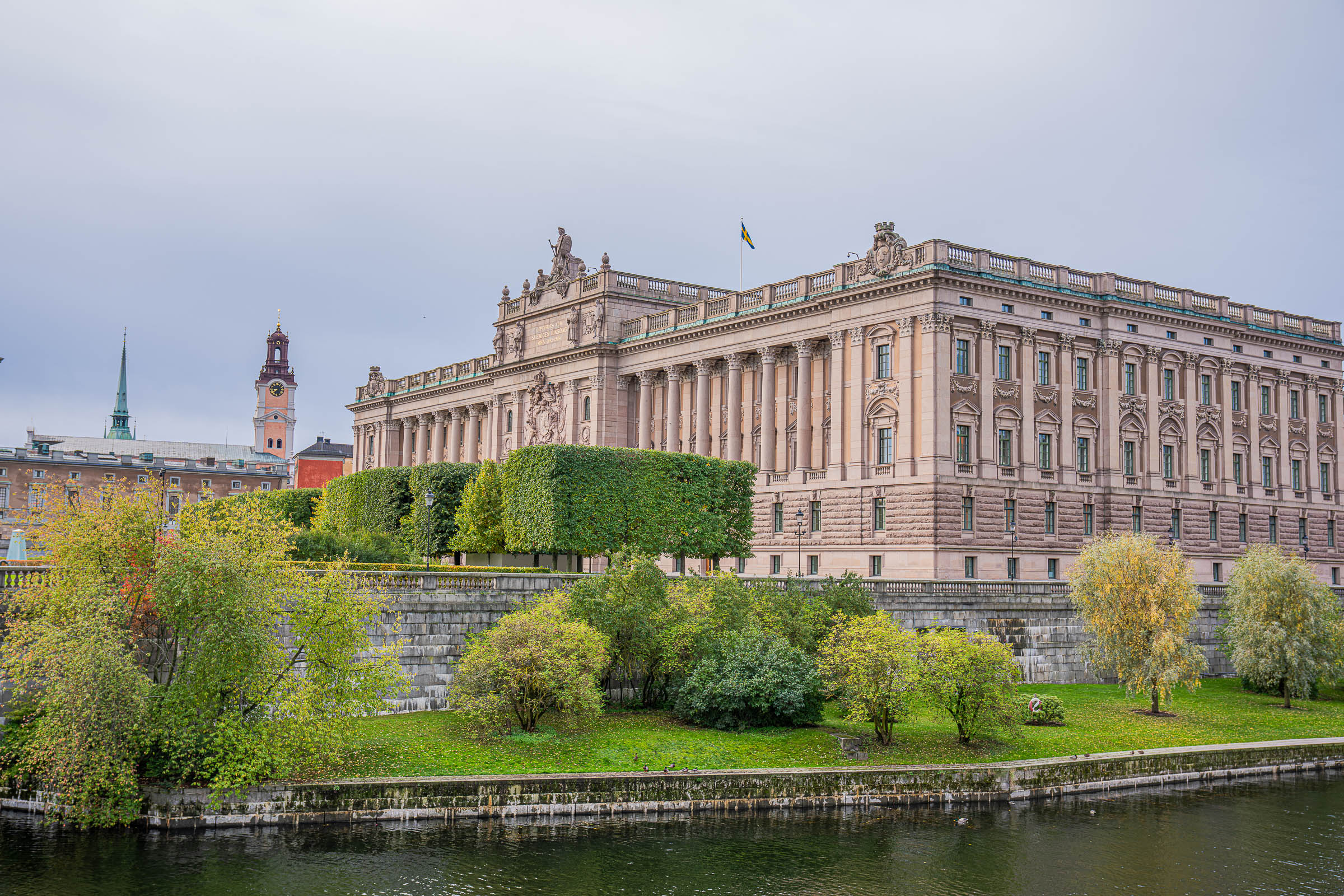
Halfway across, you pass the Riksdag, the Swedish Parliament, on the small island of Helgeandsholmen. Builders started work in 1897 and finished in 1905. Interestingly, planners made sure the building would not outshine the Royal Palace next door.
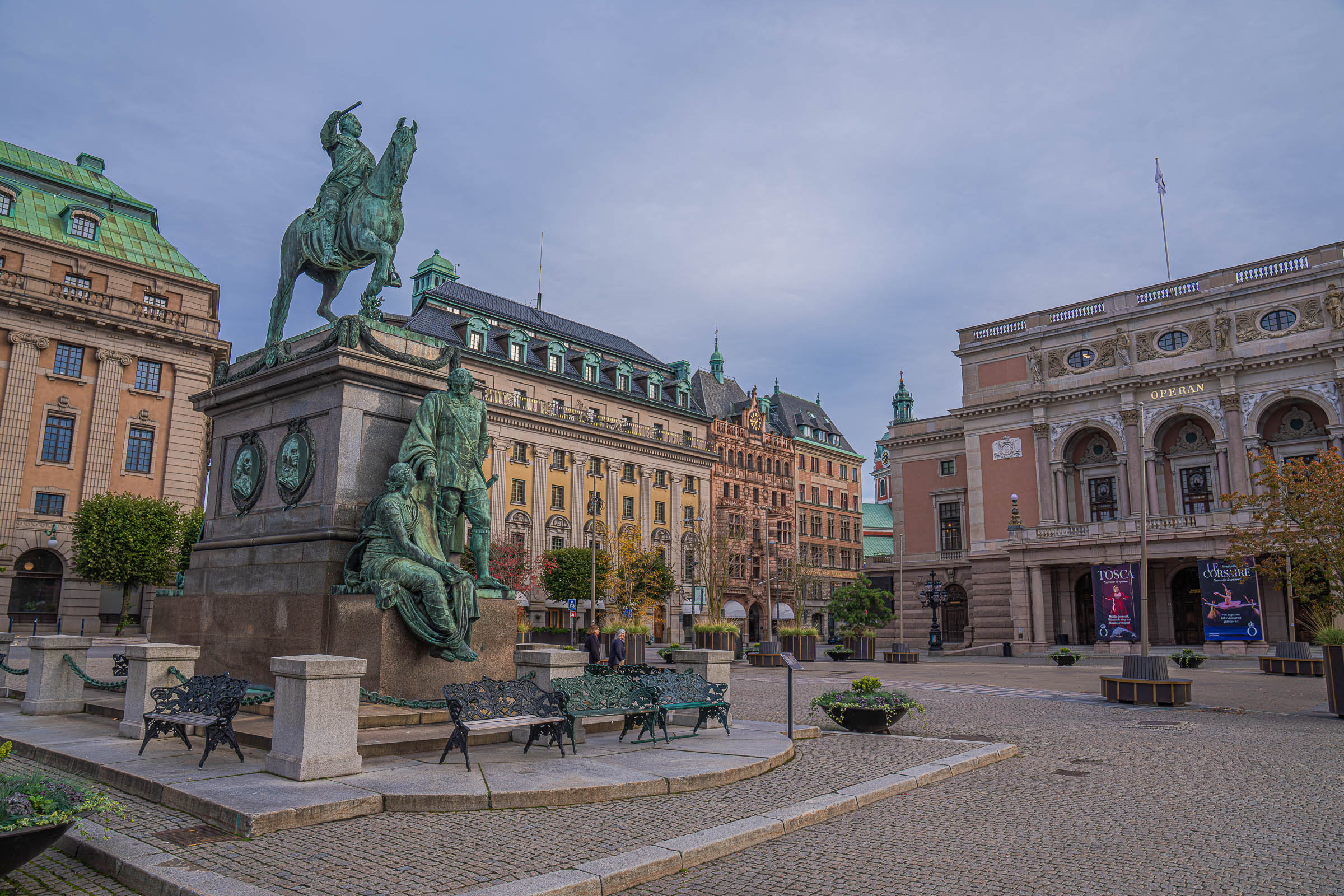
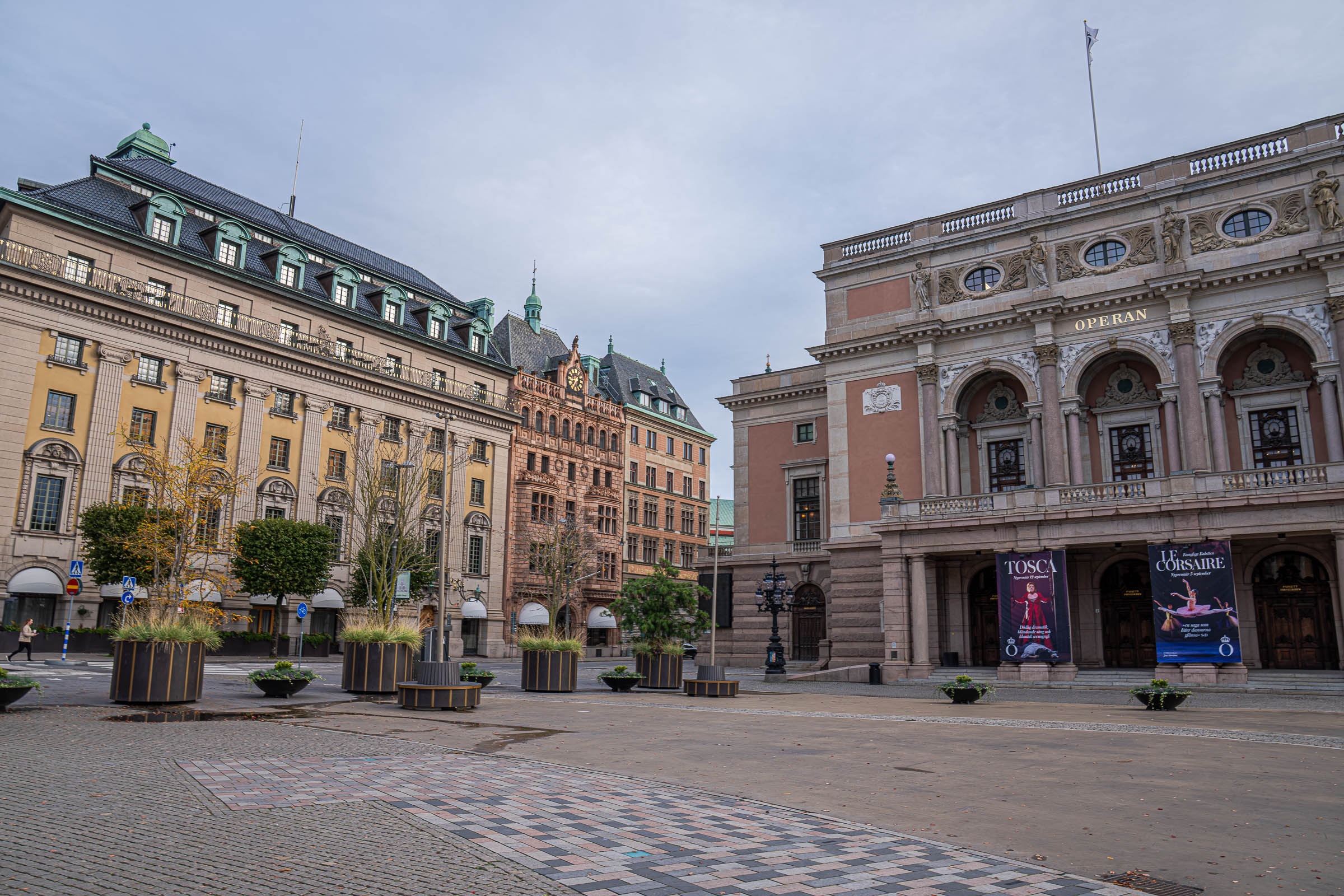
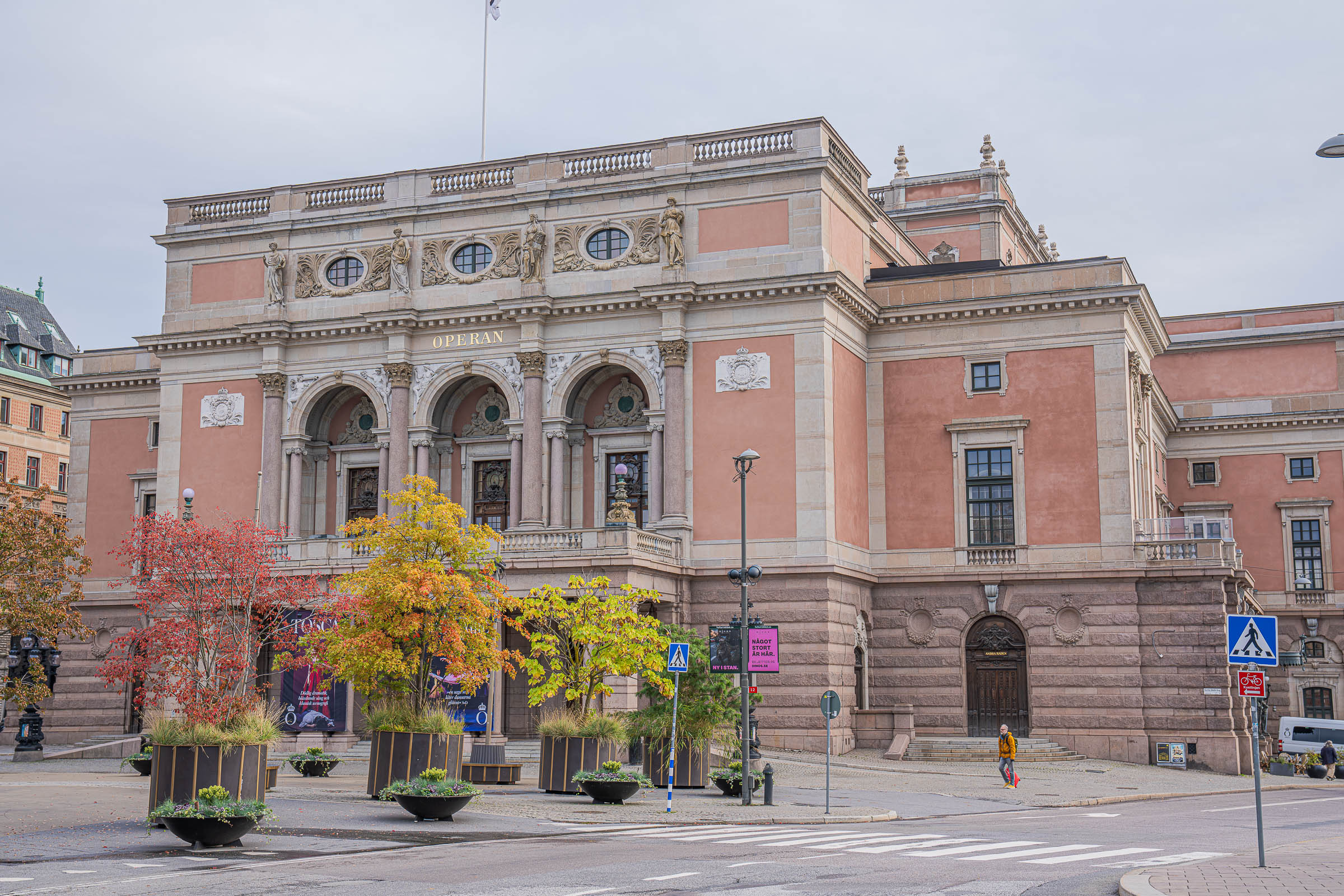
On the far side lies Gustav Adolfs torg. In its center, an equestrian statue honors King Gustav II Adolf, the “Lion of the North,” who fell at the Battle of Lützen in 1632. Across the square stands the Royal Swedish Opera. King Gustav III founded the opera company in 1773, and King Oscar II opened the current building in 1898.
The opera has its own real-life drama, too. In 1792, an assassin shot Gustav III at a masked ball in the earlier opera house, and the king died soon after. Later, Verdi turned the story into Un ballo in maschera.
During my walk, posters announced Tosca and Le Corsaire, proof that this stage is as alive as ever. If you love culture, book a performance. A ticket is also the best way to see the famous Golden Foyer.
DRAMATEN AND THE GRAND HÔTEL: WHERE CULTURE MEETS LUXURY
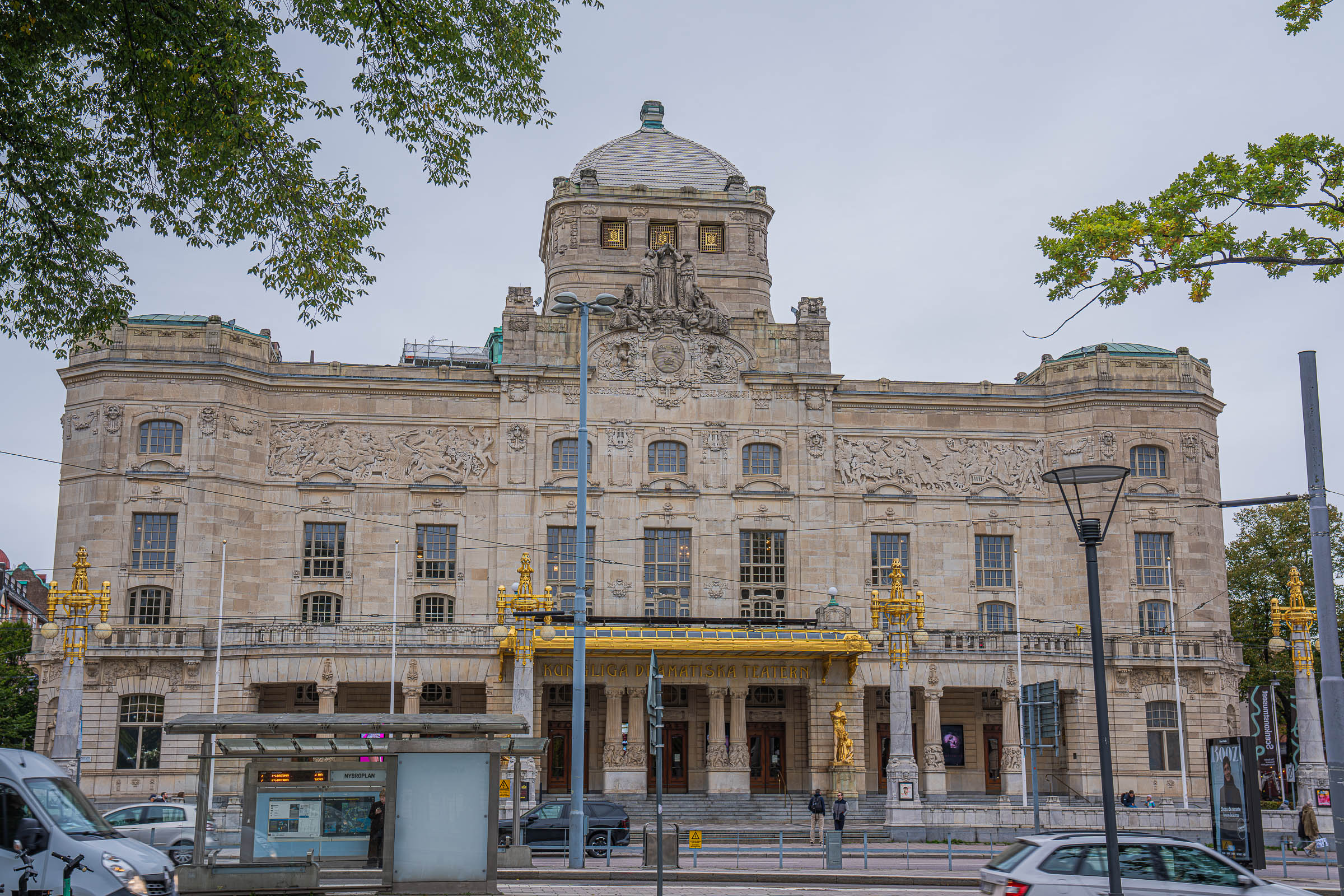
A few minutes east, at Nybroplan, the Royal Dramatic Theatre shines like a jewelry box. Locals simply call it Dramaten. King Gustav III founded this national stage for spoken drama in 1788. Its Art Nouveau home, designed by architect Fredrik Lilljekvist, opened on February 18, 1908, with Strindberg’s play Master Olof. Even on a cloudy day, the golden lamps and statues on the facade catch your eye.
Dramaten also shaped film history. Its acting school trained Greta Garbo and Ingrid Bergman, and the director Ingmar Bergman ran the theater from 1963 to 1966.
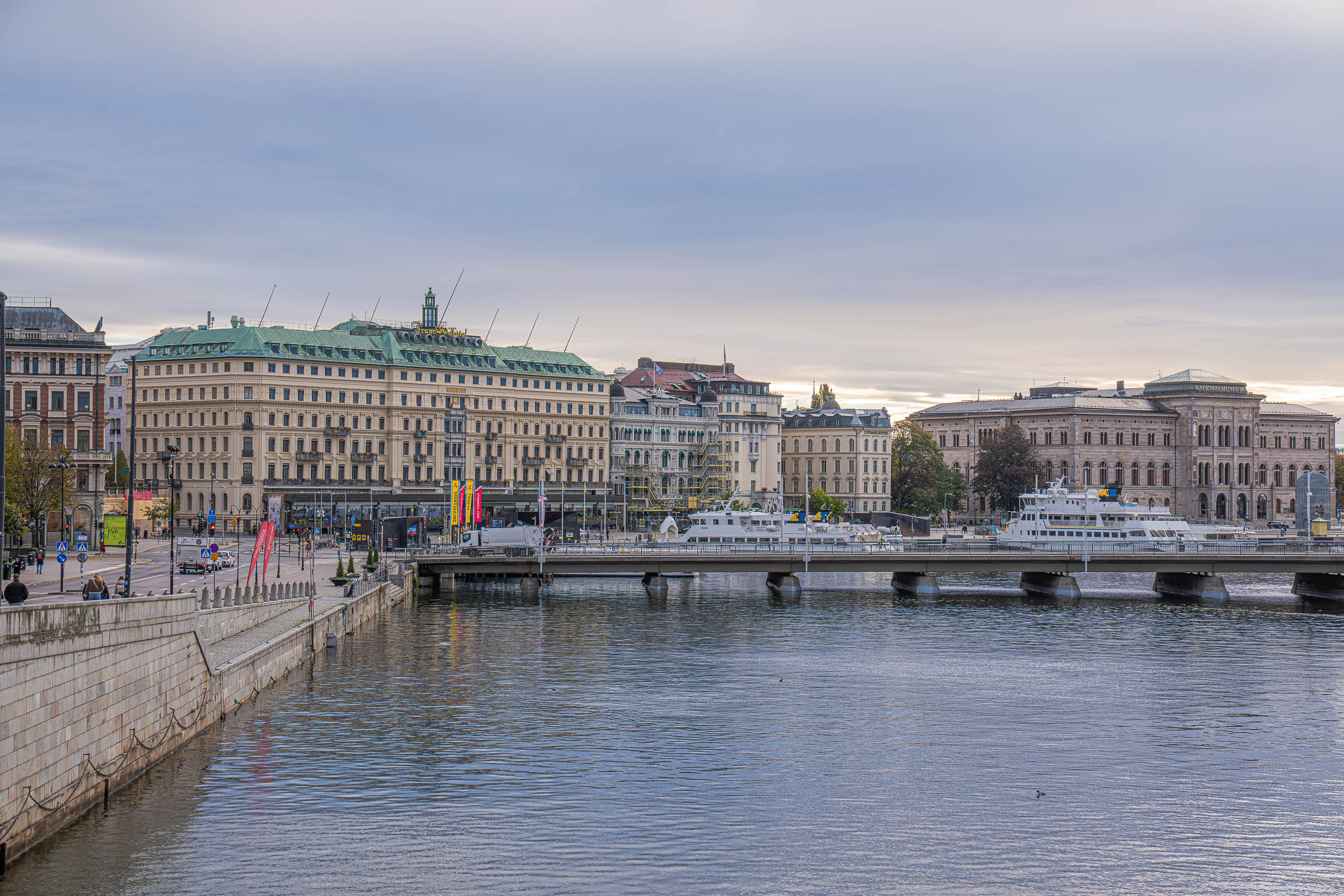
From there, stroll along the water toward Blasieholmen. On this peninsula, the Grand Hôtel faces the palace across the water, as it has since 1874. Right next to it stands the Nationalmuseum, which deserves its own chapter.
In my opinion, this stretch of waterfront offers one of the most elegant city views in Europe. Boats rock at the quays, flags move in the wind, and the palace sits across the water like a stage set. So bring your camera, but also take one quiet minute without it.
NATIONALMUSEUM STOCKHOLM: EXPLORING SWEDISH AND EUROPEAN ART
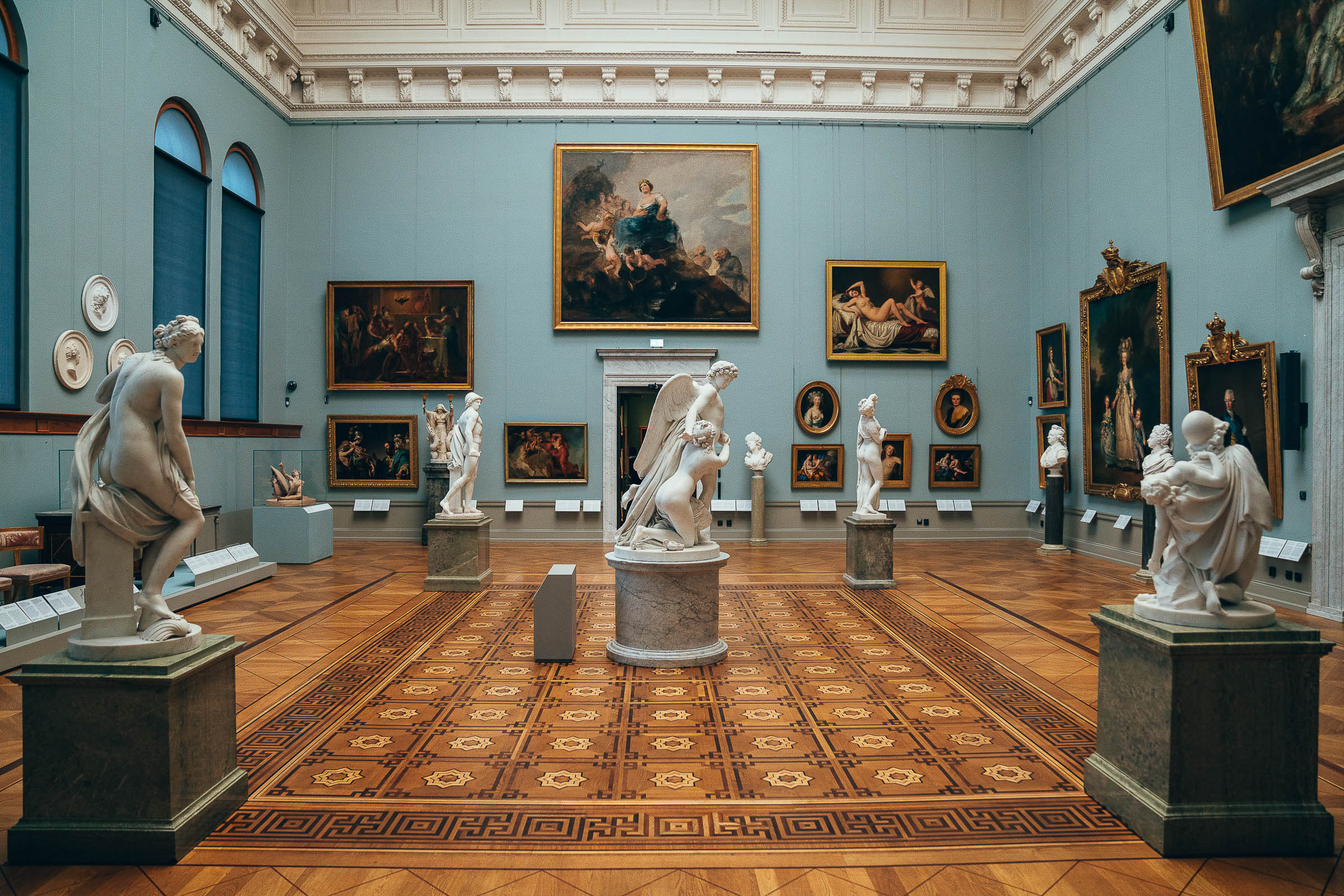
If you visit only one art museum, choose the Nationalmuseum. It is Sweden’s museum of art and design, and its building on Blasieholmen is a work of art in itself. In this Stockholm travel guide, it earns a full chapter.
The German architect Friedrich August Stüler designed it, inspired by northern Italian Renaissance palaces. The museum opened in 1866. After a long renovation, it reopened on October 13, 2018, with brighter galleries and better access.
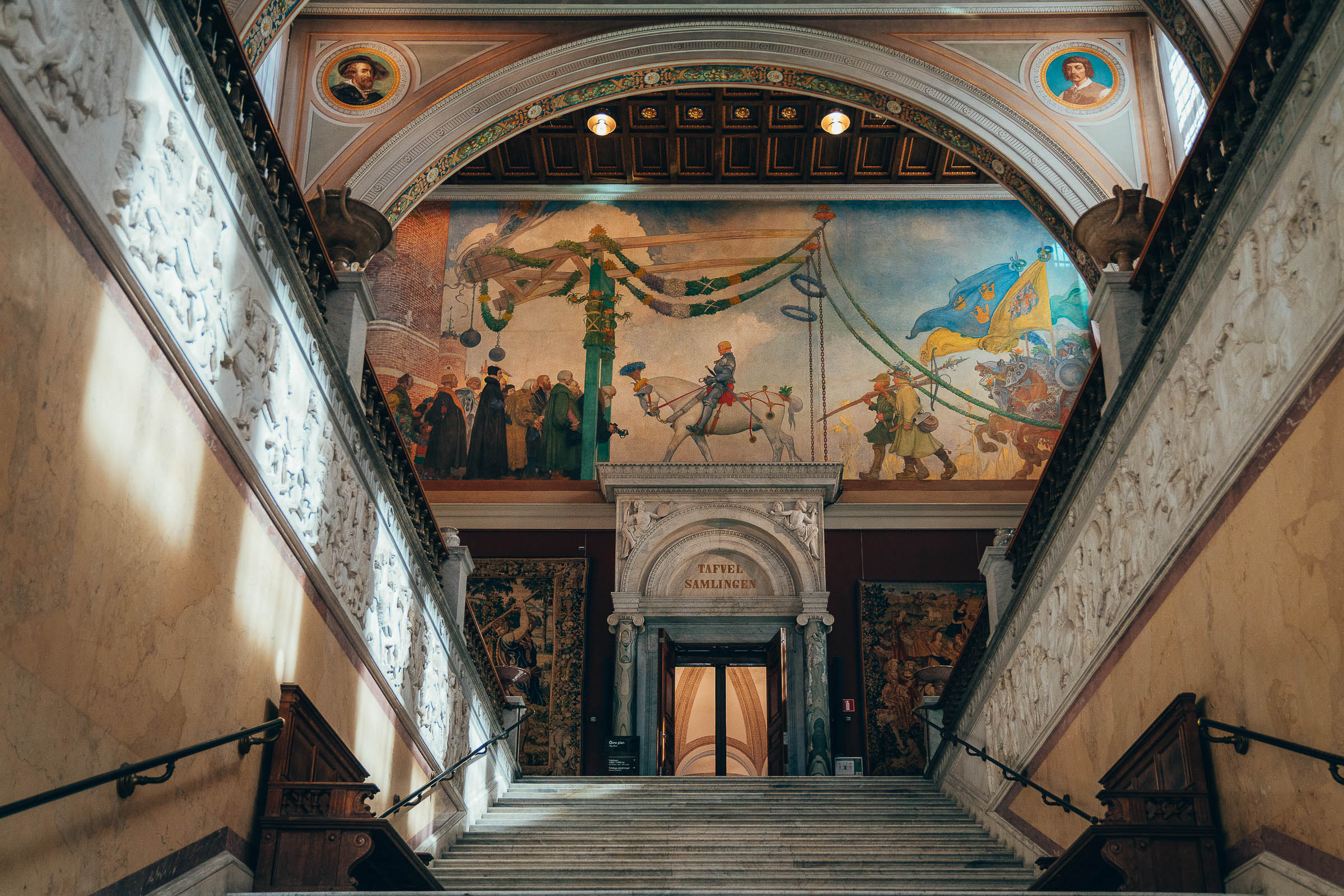
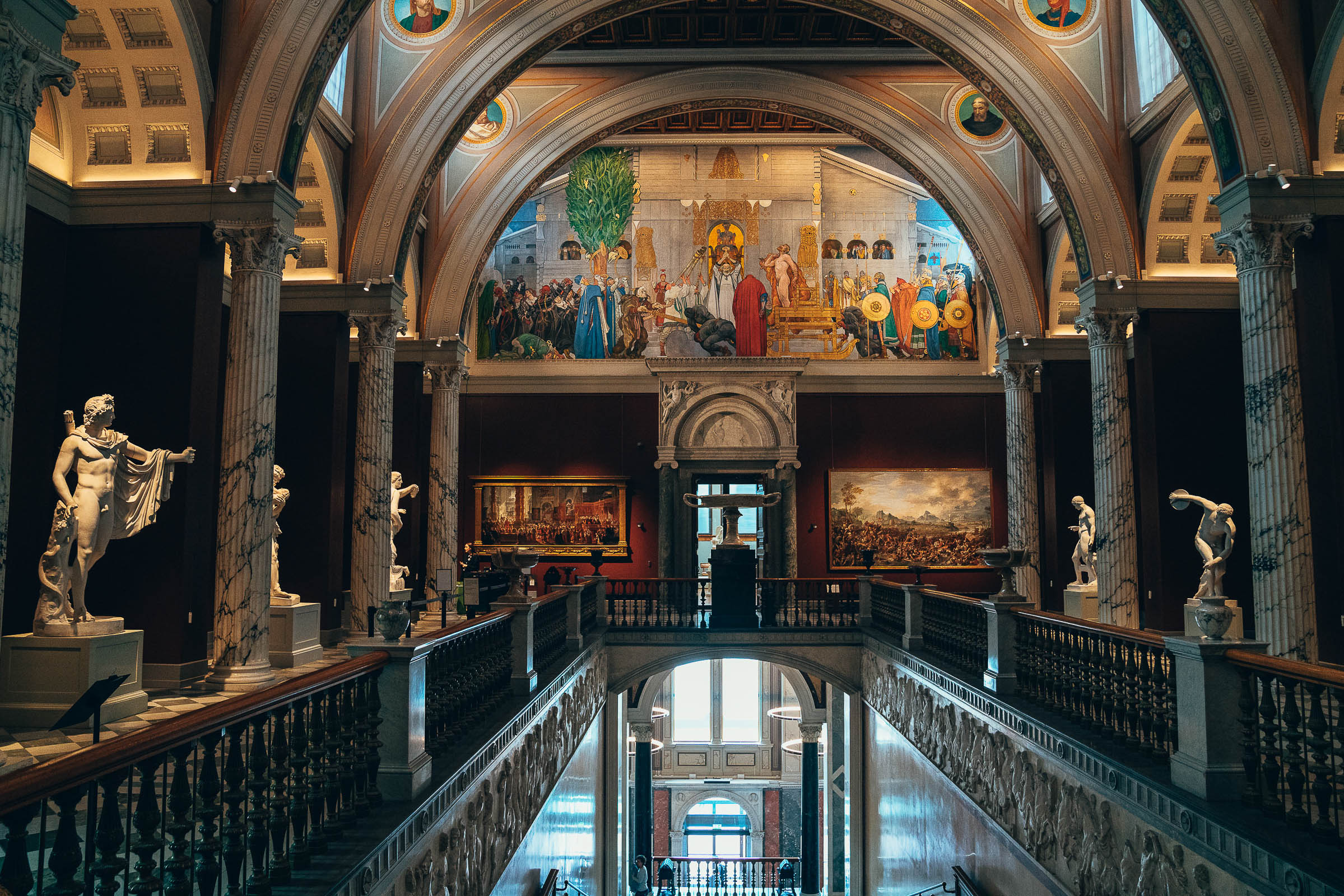
The grand staircase stopped me in my tracks. Carl Larsson painted the huge murals here. One wall shows Gustav Vasa’s Entry into Stockholm 1523, completed in 1908. The opposite wall holds Midvinterblot, or Midwinter Sacrifice, from 1915. For decades, the museum refused it, and many still call it Sweden’s most controversial painting. Today, it finally hangs where Larsson wanted it.
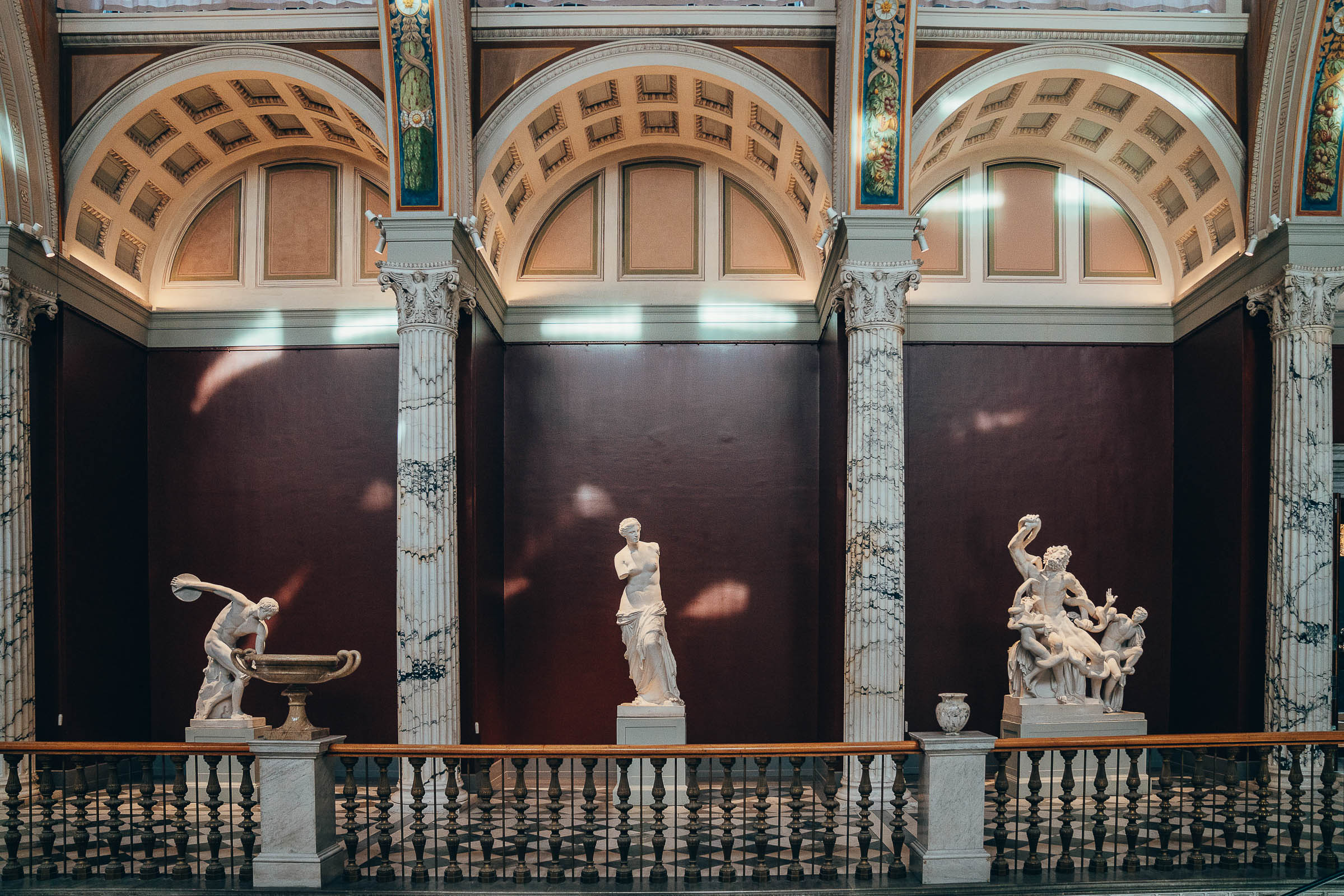
Along the upper gallery, copies of famous ancient statues, such as the Discus Thrower, the Venus de Milo and the Laocoön group, stand between marble columns. When sunlight falls across the deep red walls, the effect feels almost theatrical.
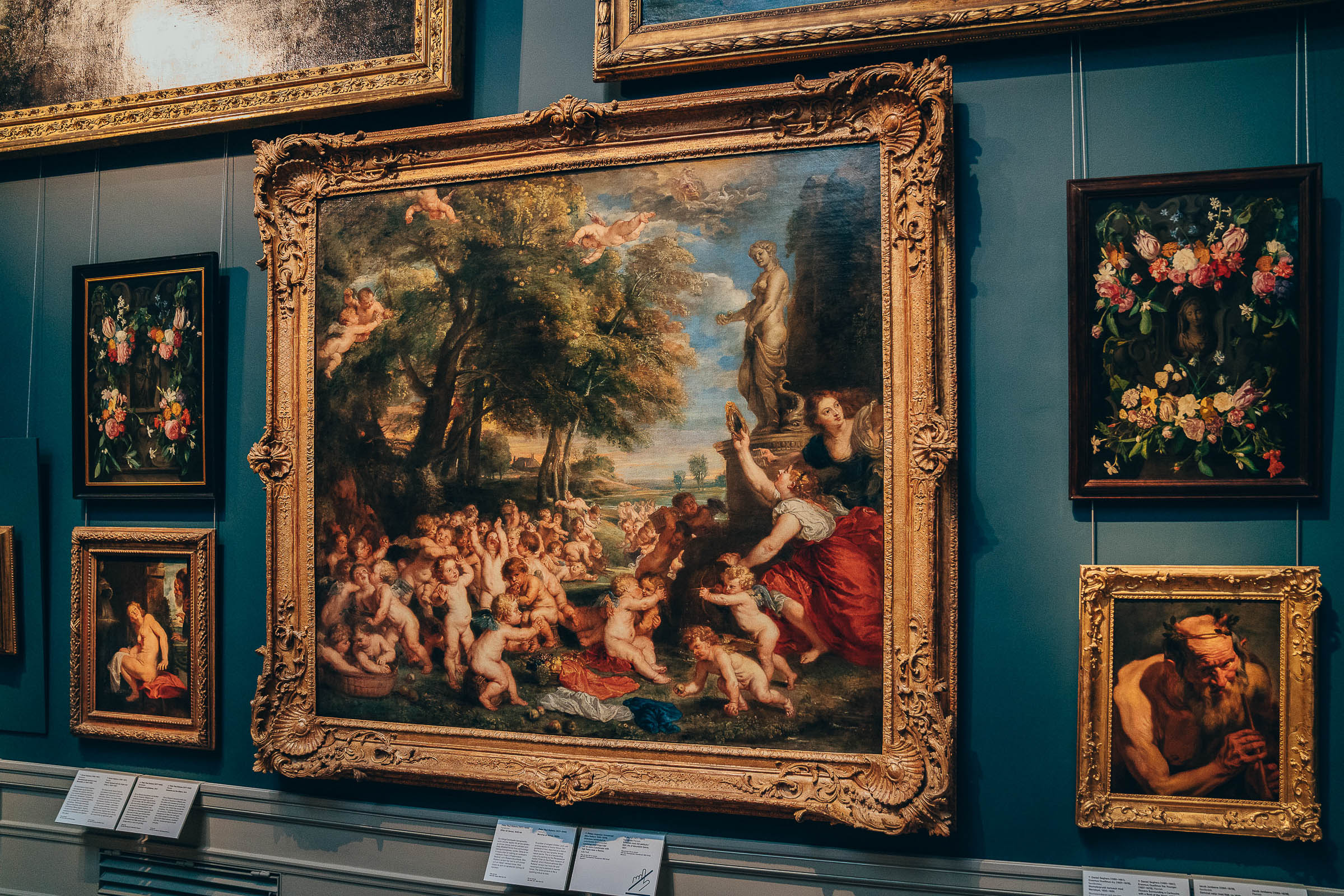
The collection itself is rich. In a blue gallery, I lingered in front of a large Rubens canvas full of playful cherubs. Then, among 18th-century works, I found Johan Tobias Sergel’s Cupid and Psyche. Sergel carved it in Carrara marble in 1787. It shows the moment Cupid spreads his wings to leave, while Psyche kneels and begs him to stay.
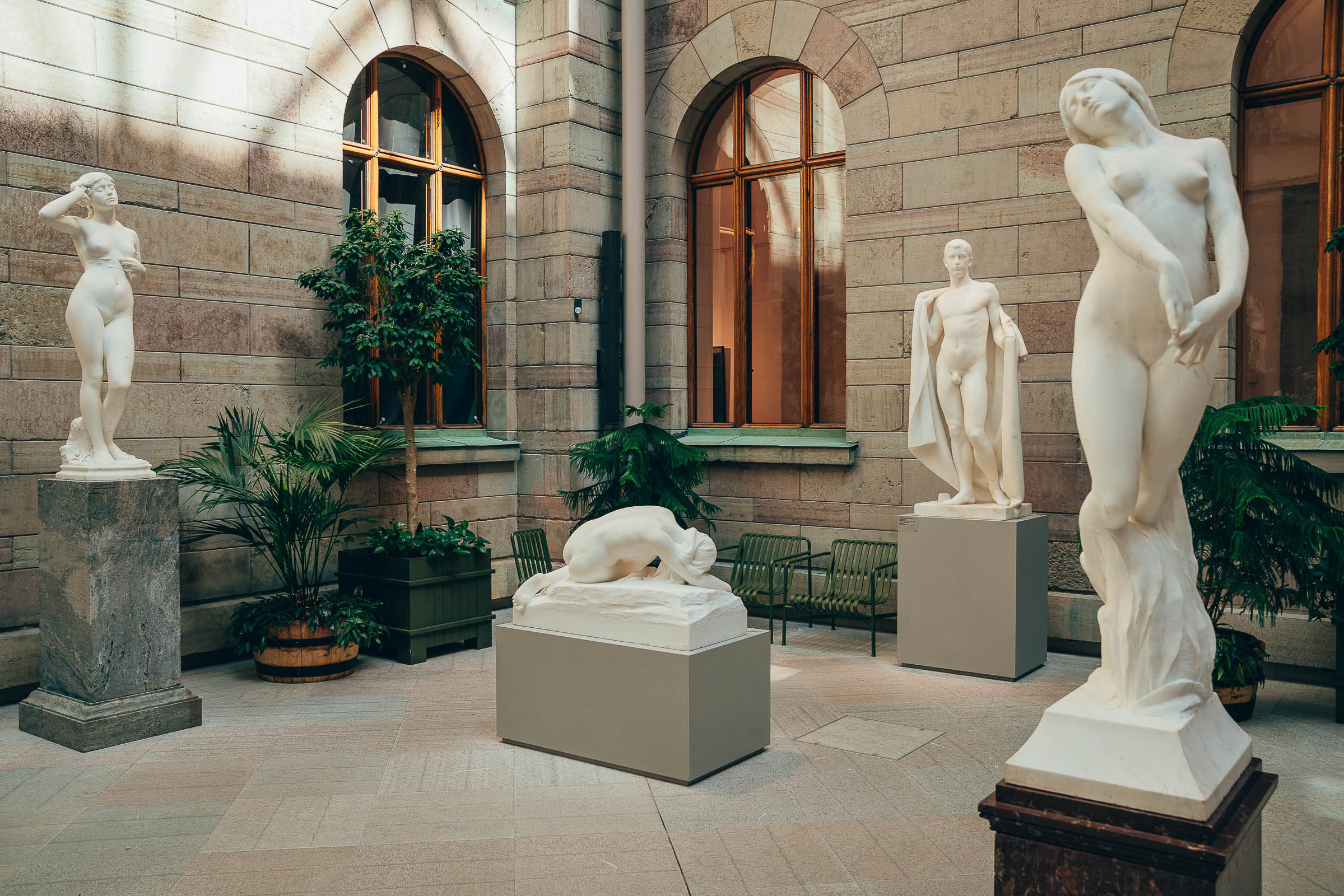
Finally, save time for the sculpture courtyard. Daylight pours in, white marble figures stand among green plants, and you can sit in total calm.
VASA MUSEUM: THE WARSHIP THAT SANK ON ITS MAIDEN VOYAGE
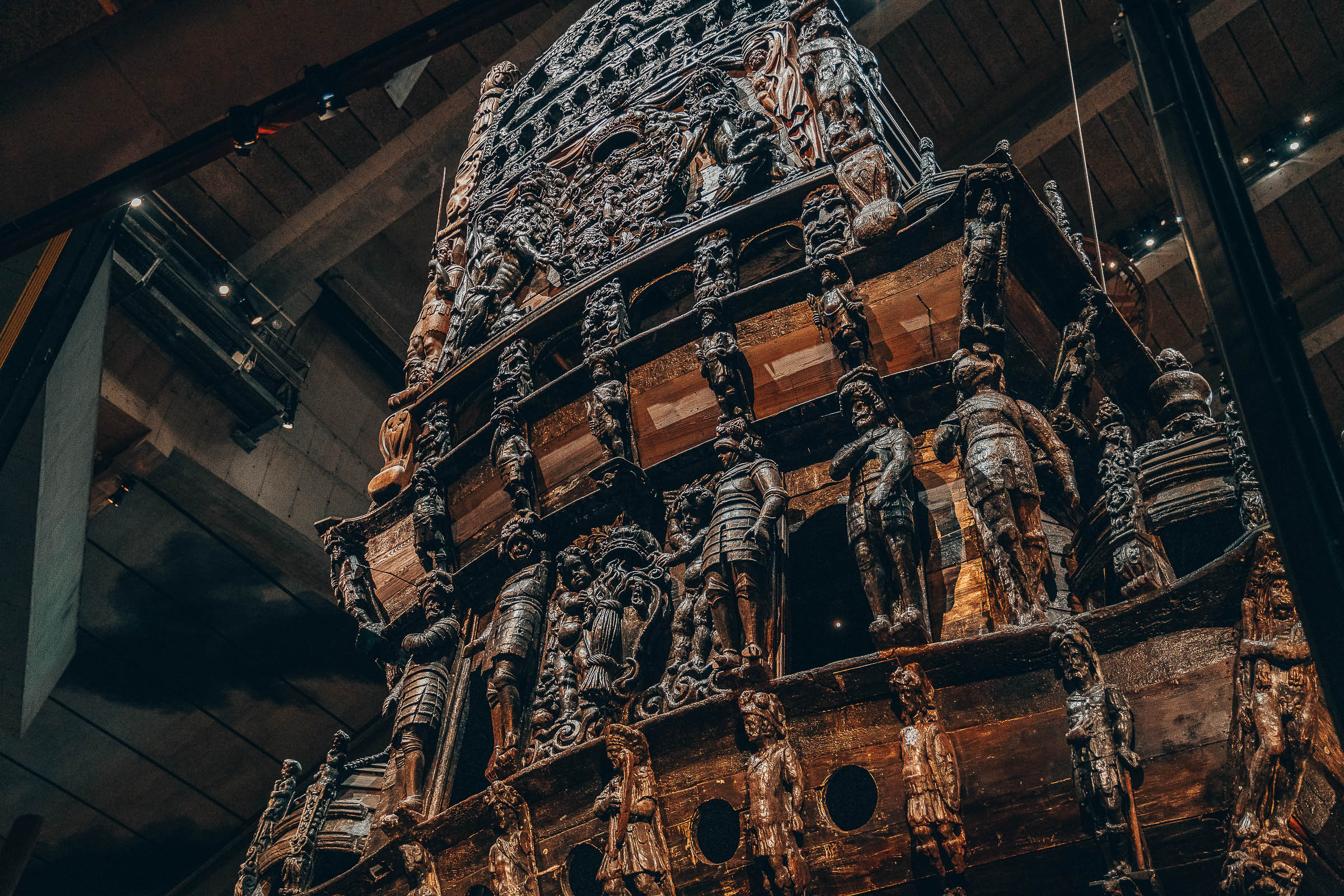
No Stockholm travel guide is complete without the Vasa, and nothing prepares you for the first sight of it. You step into a dim hall, your eyes adjust, and suddenly a 17th-century warship towers above you.
King Gustav II Adolf ordered the ship, and he wanted it to be the pride of his fleet. On August 10, 1628, the Vasa set off on its maiden voyage in Stockholm harbor. After roughly 1,300 meters, strong gusts tipped the top-heavy ship over, and it sank in front of a large crowd.
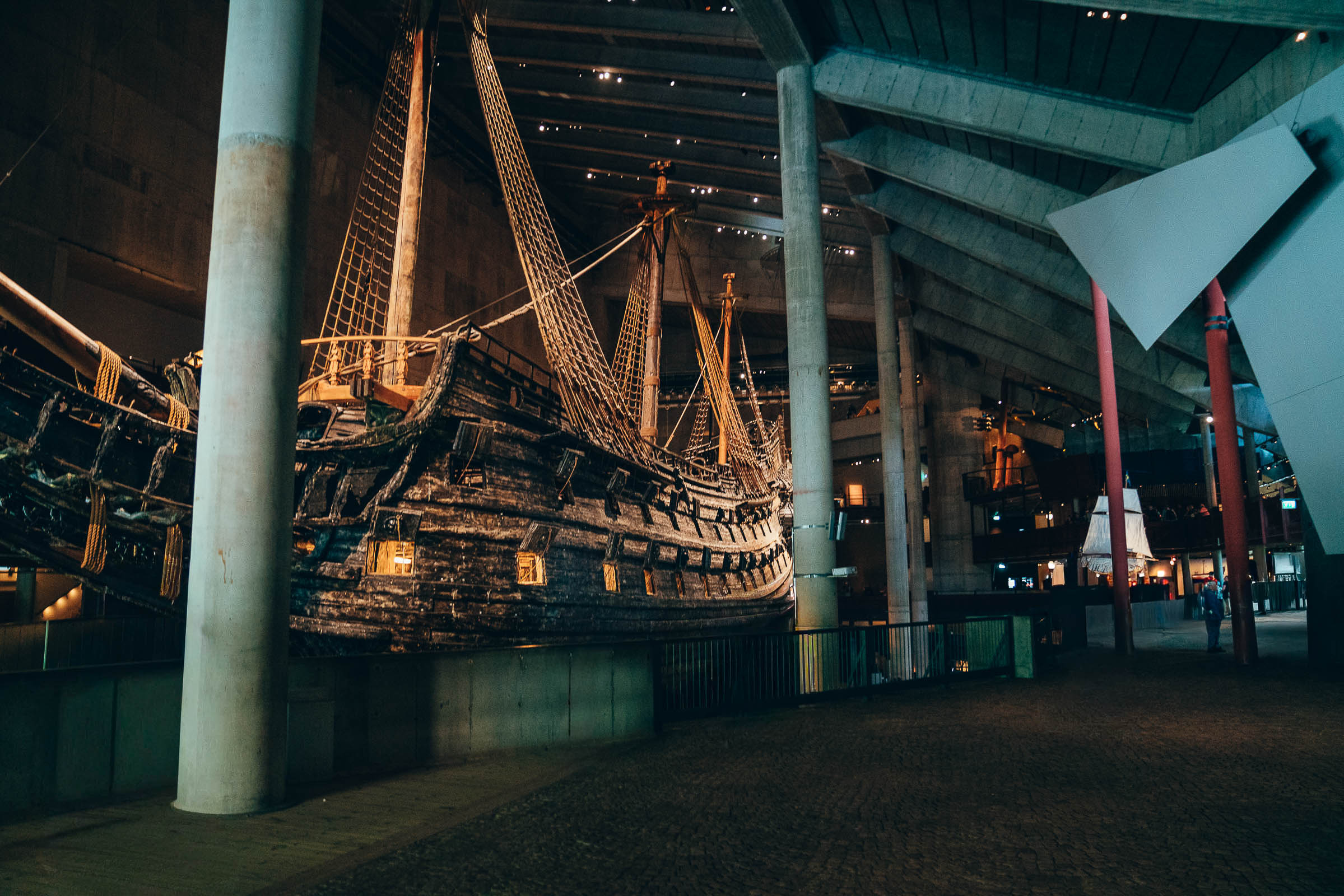

The wreck then rested on the seabed for 333 years. In the 1950s, Anders Franzén located it, and a complex salvage brought the hull back to the surface in 1961. For 17 years, experts sprayed the wood with a preservative so it would not dry out and crack. Today, more than 98 percent of the ship is original.
The museum opened in 1990, and it is now the most visited museum in Scandinavia. On its roof, three masts show the height of the original rig.
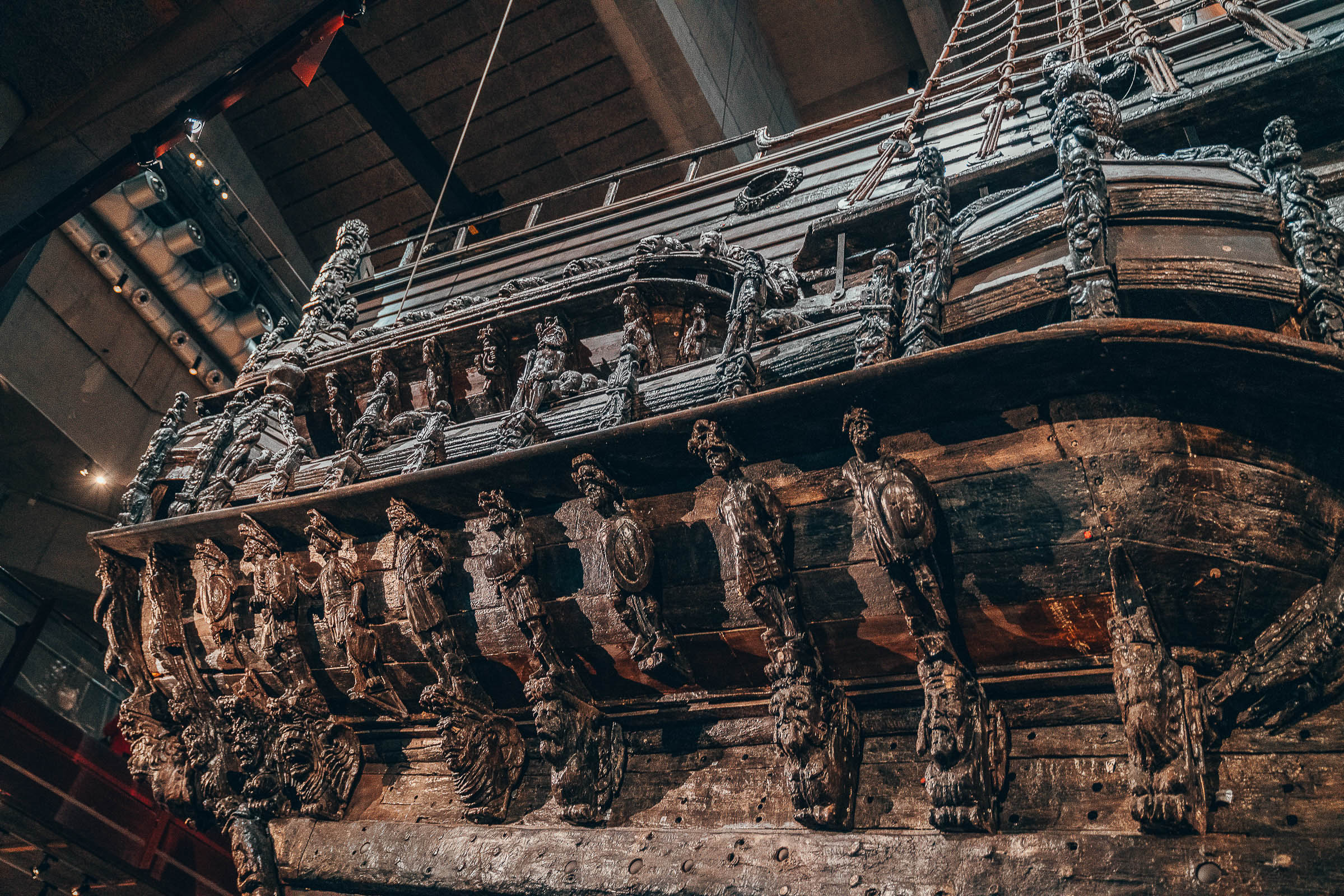
Up close, the carvings amazed me most. Hundreds of wooden sculptures cover the stern and sides, from armored soldiers to lions and grotesque faces. The king wanted this ship to impress, and it still does. Next to the hull, a detailed scale model shows how the Vasa may have looked with full sails and bright paint.
My tip: arrive right at opening or come in the late afternoon. The hall gets busy, and a quieter moment makes the ship feel even more powerful.
STOCKHOLM BY WATER: DJURGÅRDEN, FERRIES AND ISLAND LIFE
The Vasa Museum stands on Djurgården, the green island Stockholmers love for walks, museums and summer fun. For centuries, it served as a royal hunting ground. Today, it feels like a huge park with museums tucked inside.
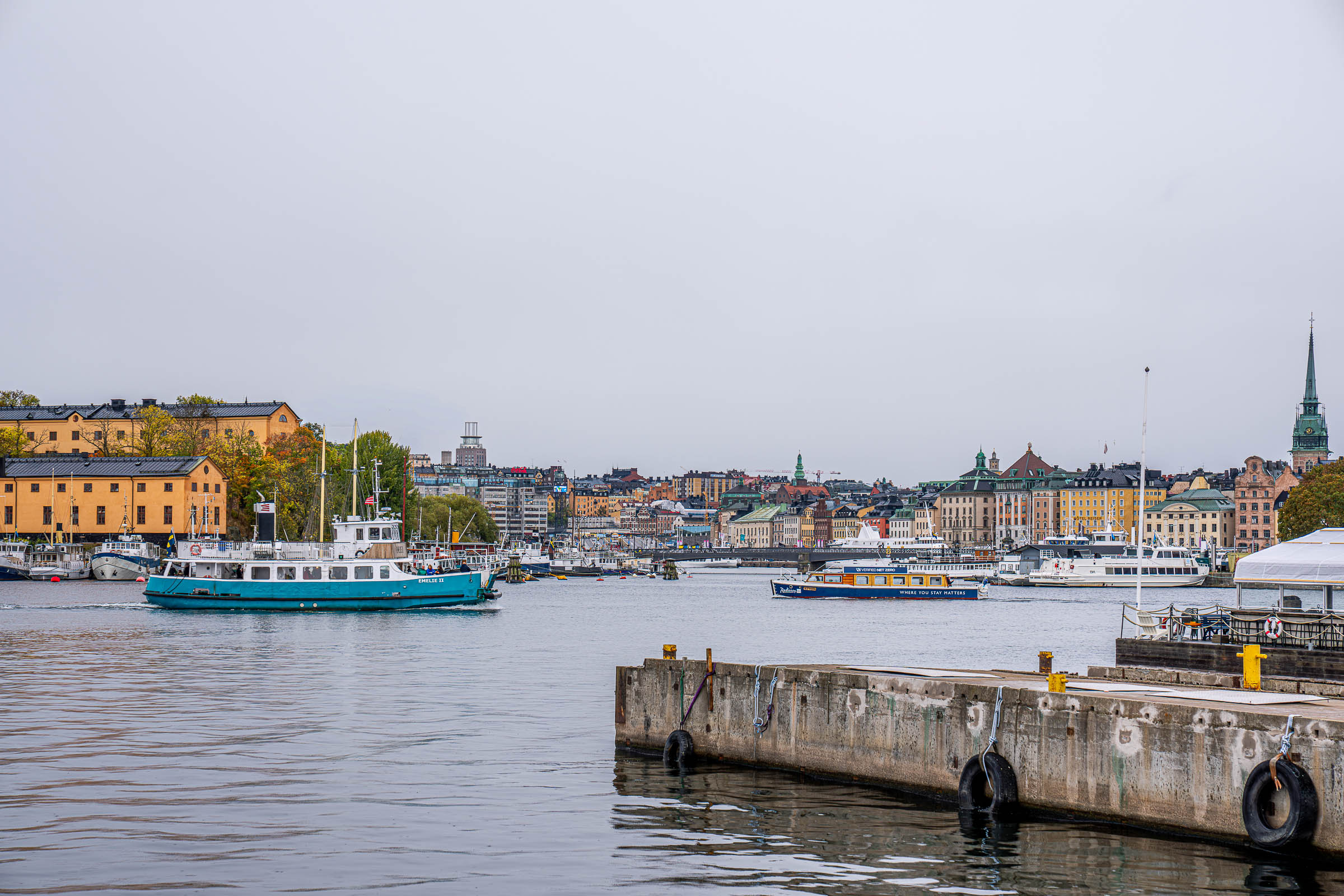
From the city-center waterfront, I looked across the bay toward Djurgården. The roof masts of the Vasa Museum rose on the left, while the towers and roller coaster of Gröna Lund filled the right. Gröna Lund opened in 1883, and it is the oldest amusement park in Sweden. Nearby, Skansen still welcomes visitors as the world’s oldest open-air museum.
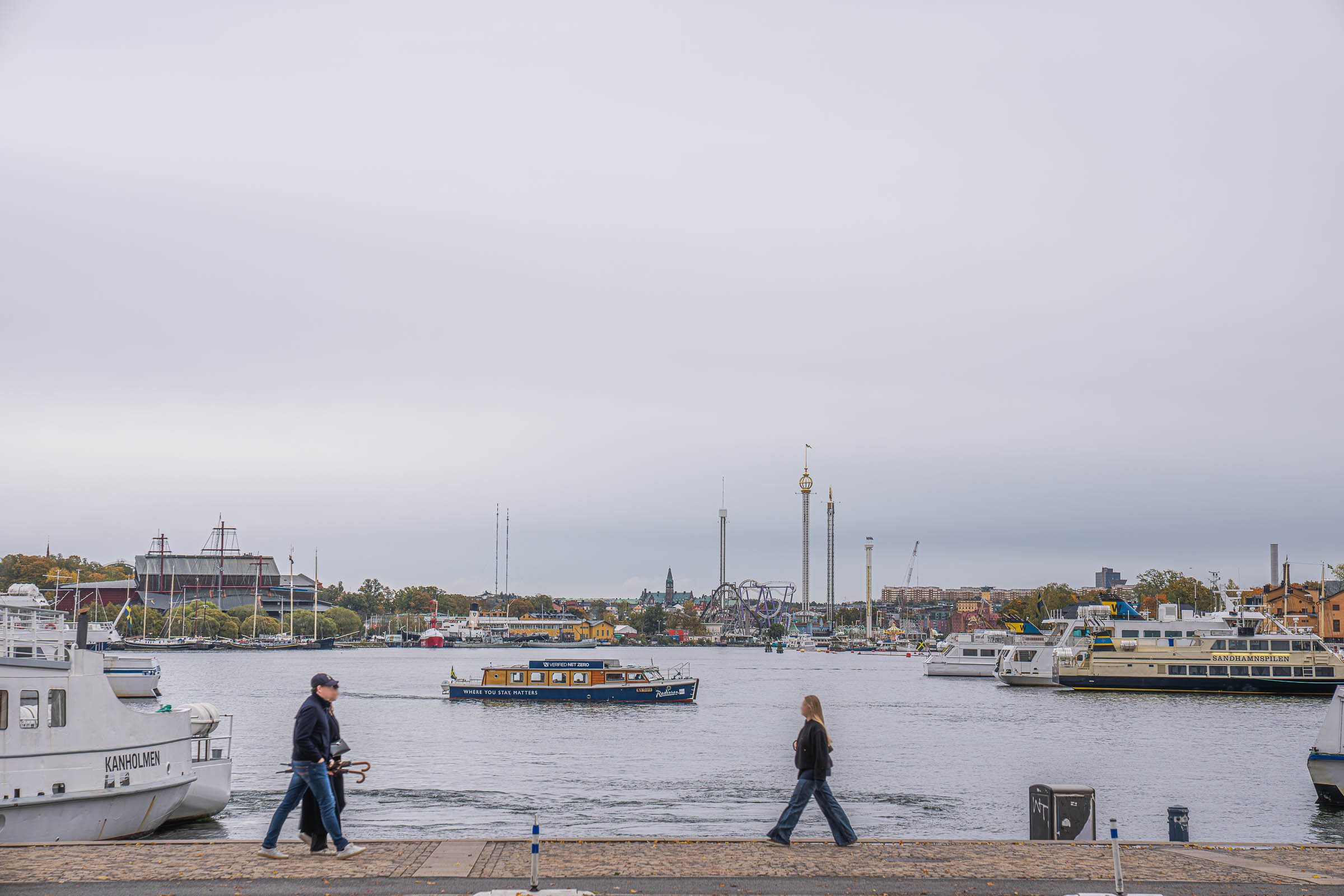
Getting there is half the fun. Boats cross the harbor throughout the day, and even a short ride feels like a mini cruise. I watched the turquoise ferry Emelie II glide past yellow waterfront buildings, with the Old Town skyline behind it. Moments like that explain Stockholm’s other nickname, “Beauty on the Water.”
If you have extra time, follow the advice of every Stockholm travel guide and take a boat into the archipelago. Its nearest islands lie only about 20 minutes from the city, and in summer they become Stockholm’s open-air living room.
Even in autumn, the water sets the rhythm. Boats leave, bridges fill, the light shifts every hour, and soon you move at the same calm pace.
STOCKHOLM SHOPPING GUIDE: FROM DROTTNINGGATAN TO BIBLIOTEKSTAN
Stockholm is a serious shopping city, and each street has its own personality. This part of my Stockholm travel guide moves from busy high streets to quiet luxury.
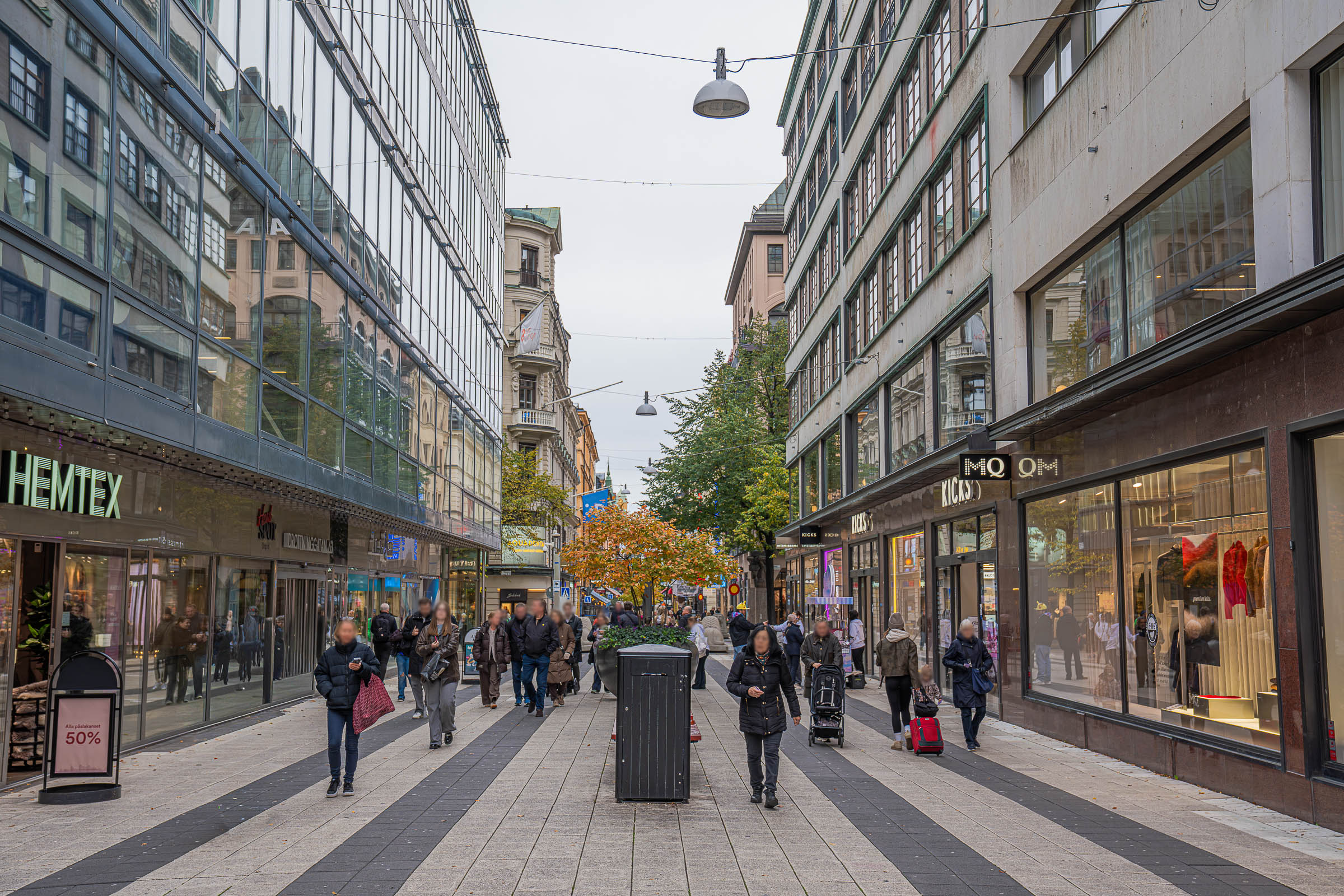
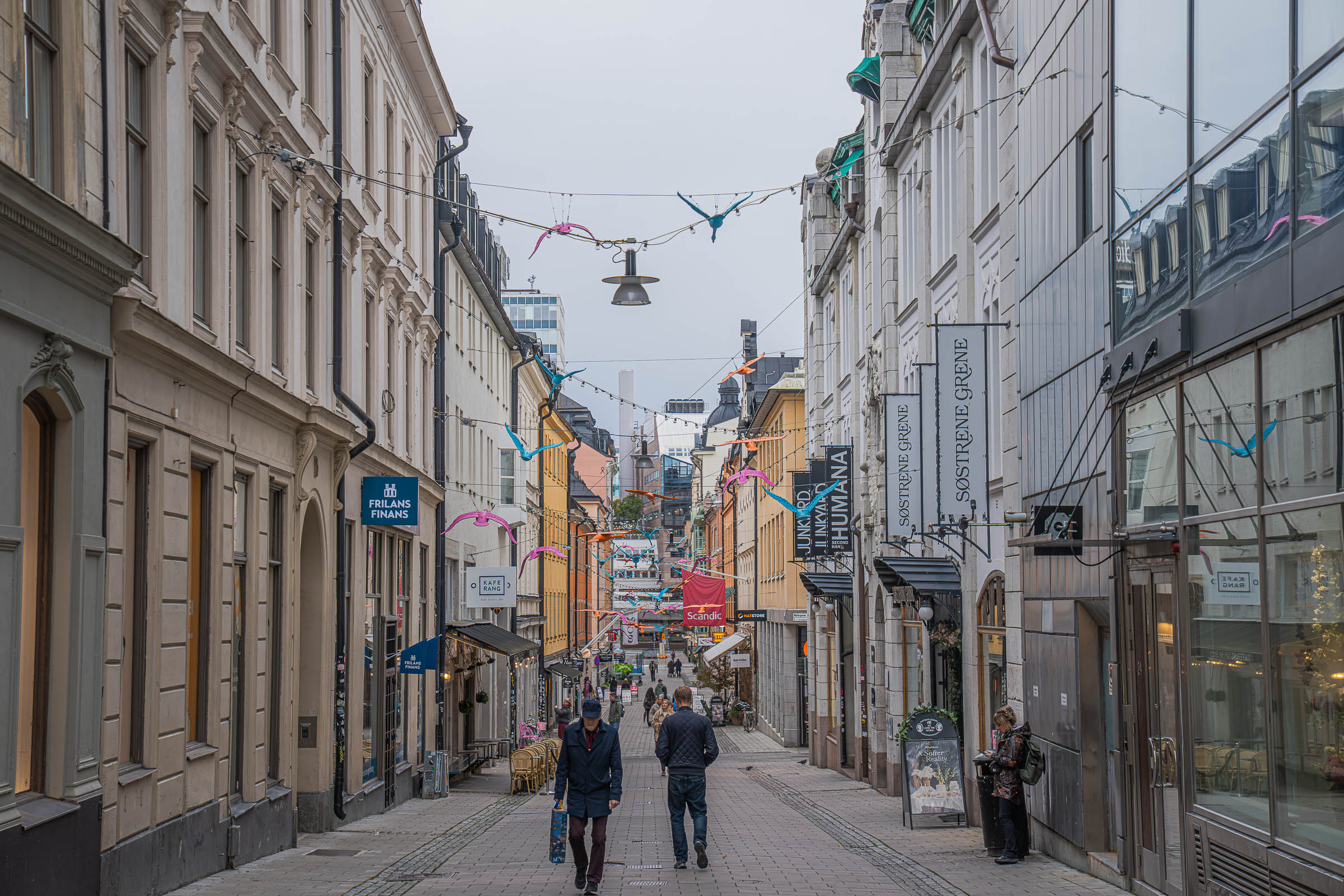
Drottninggatan is the long pedestrian spine of Norrmalm. It stretches from near the Parliament north toward Vasastan, packed with Swedish chains, cafes and souvenir shops. On a nearby pedestrian street, colorful bird decorations hung above my head, and they made the gray sky look playful.
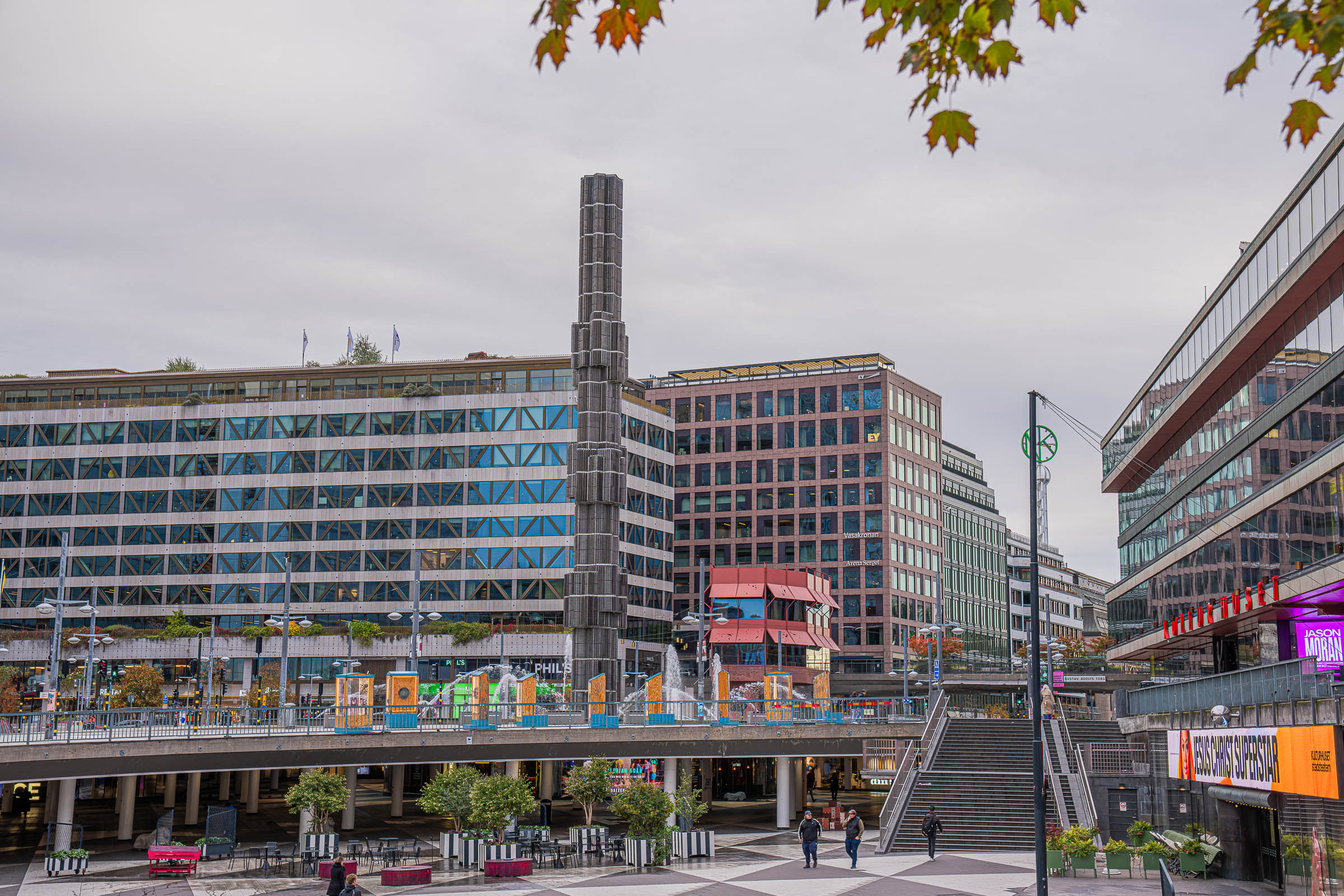
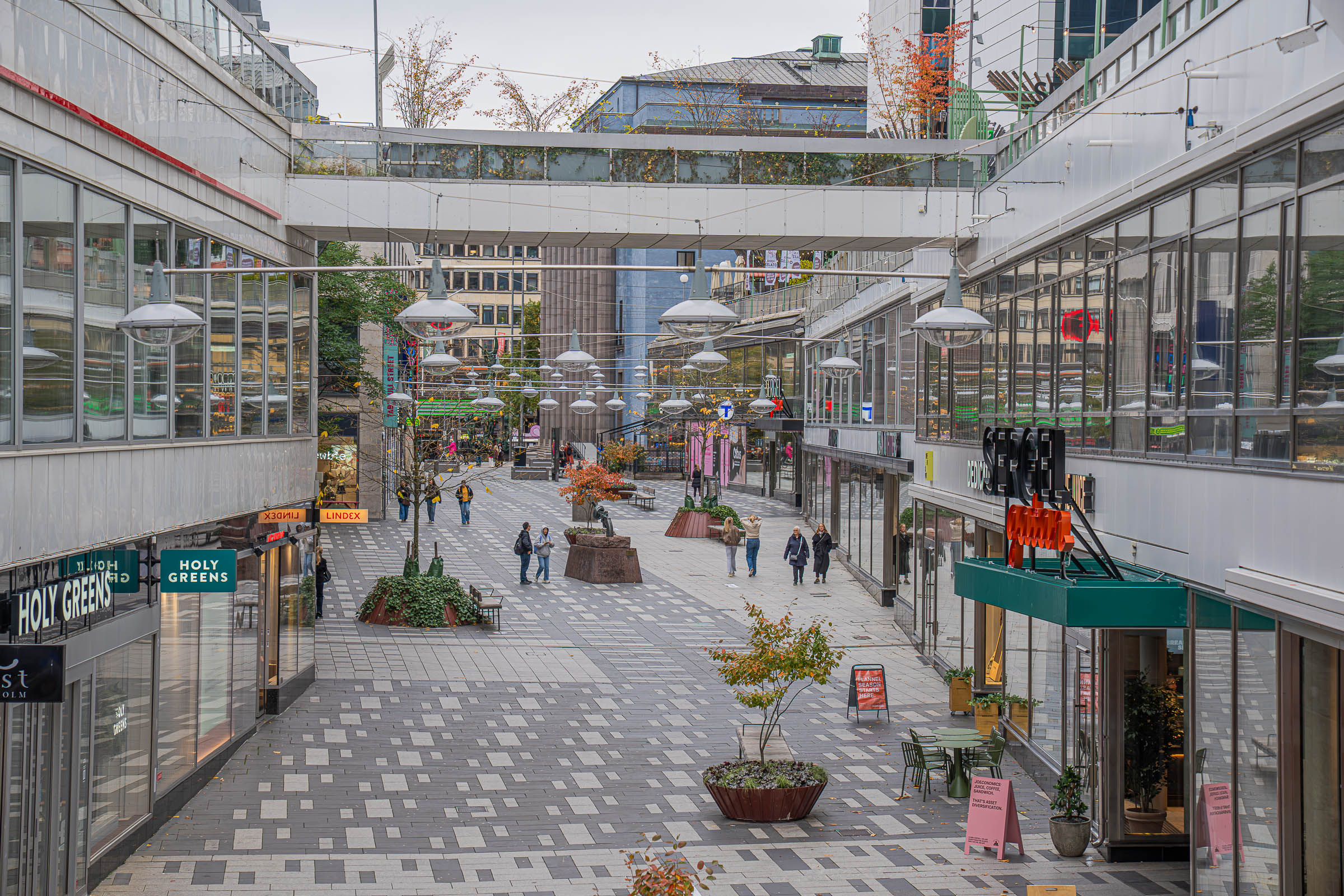
Sergels torg, the modern heart of the city, lies just off Drottninggatan. Its glass obelisk by Edvin Öhrström stands 37.5 meters tall and glows at night. On the south side, Kulturhuset, a long glass culture house by architect Peter Celsing, opened in 1974. Close by, raised walkways and autumn trees frame the pedestrian streets of Hötorgscity.
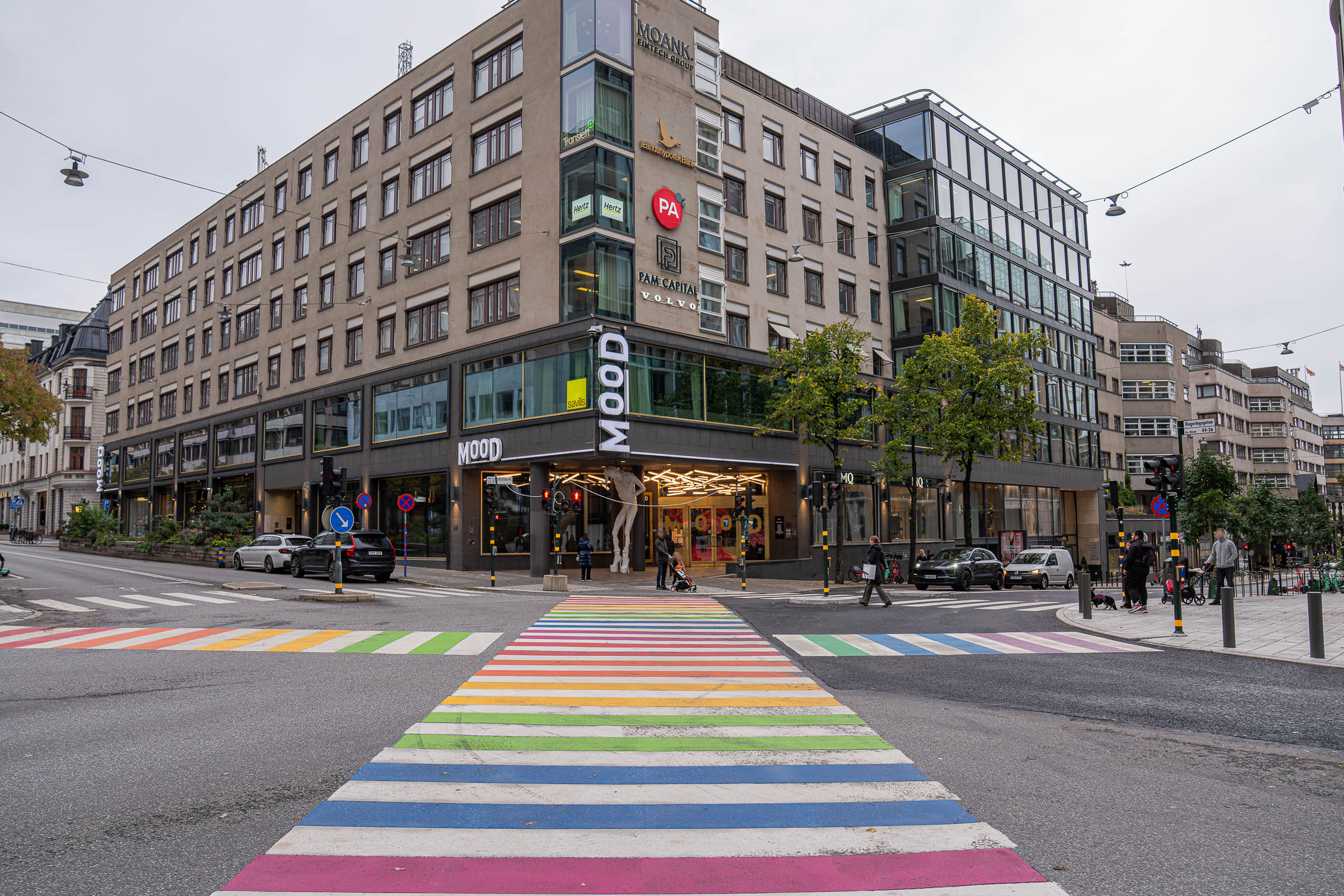
For fashion and design, I also enjoyed MOOD Stockholm on Regeringsgatan. The rainbow crosswalk outside adds a cheerful touch.
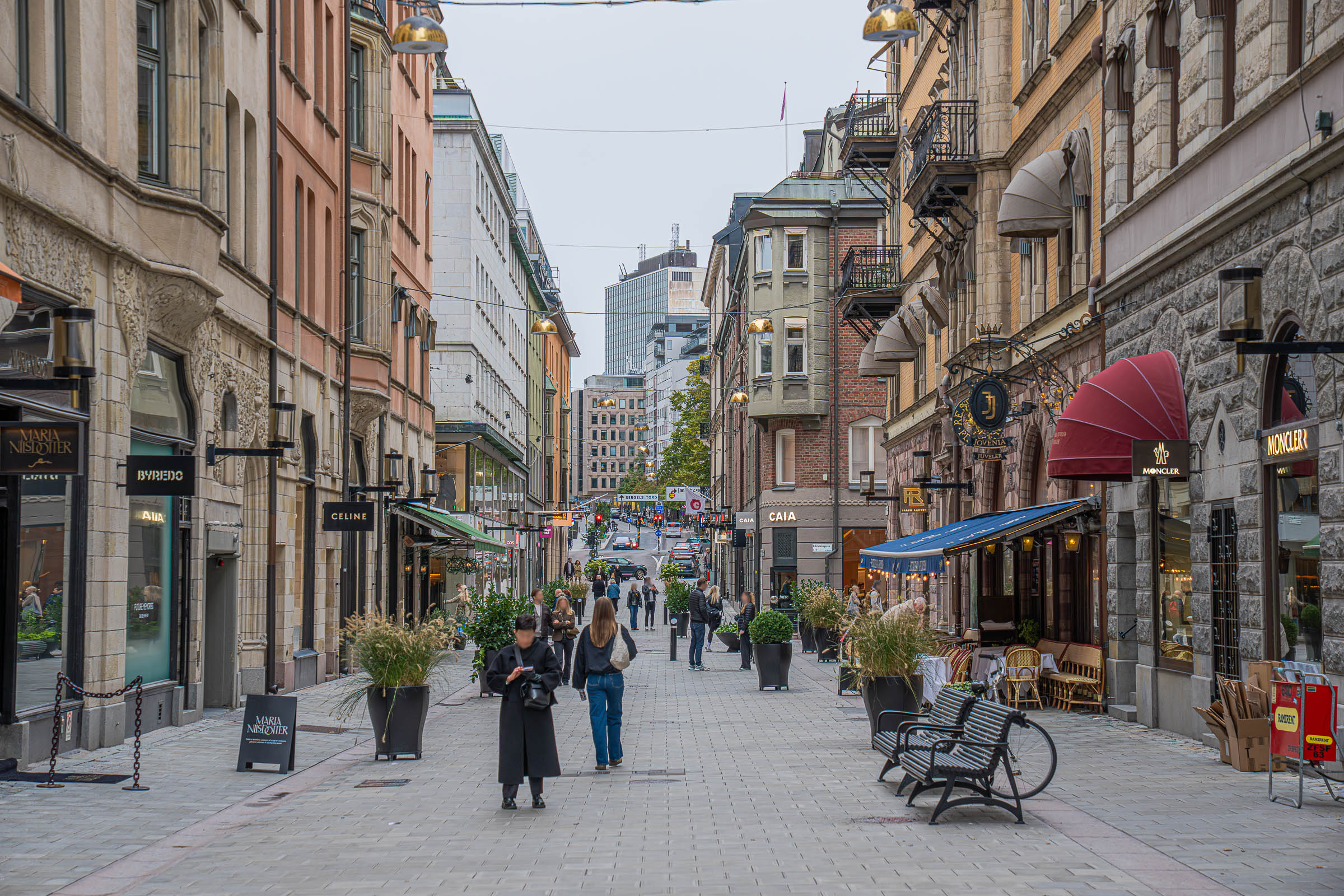
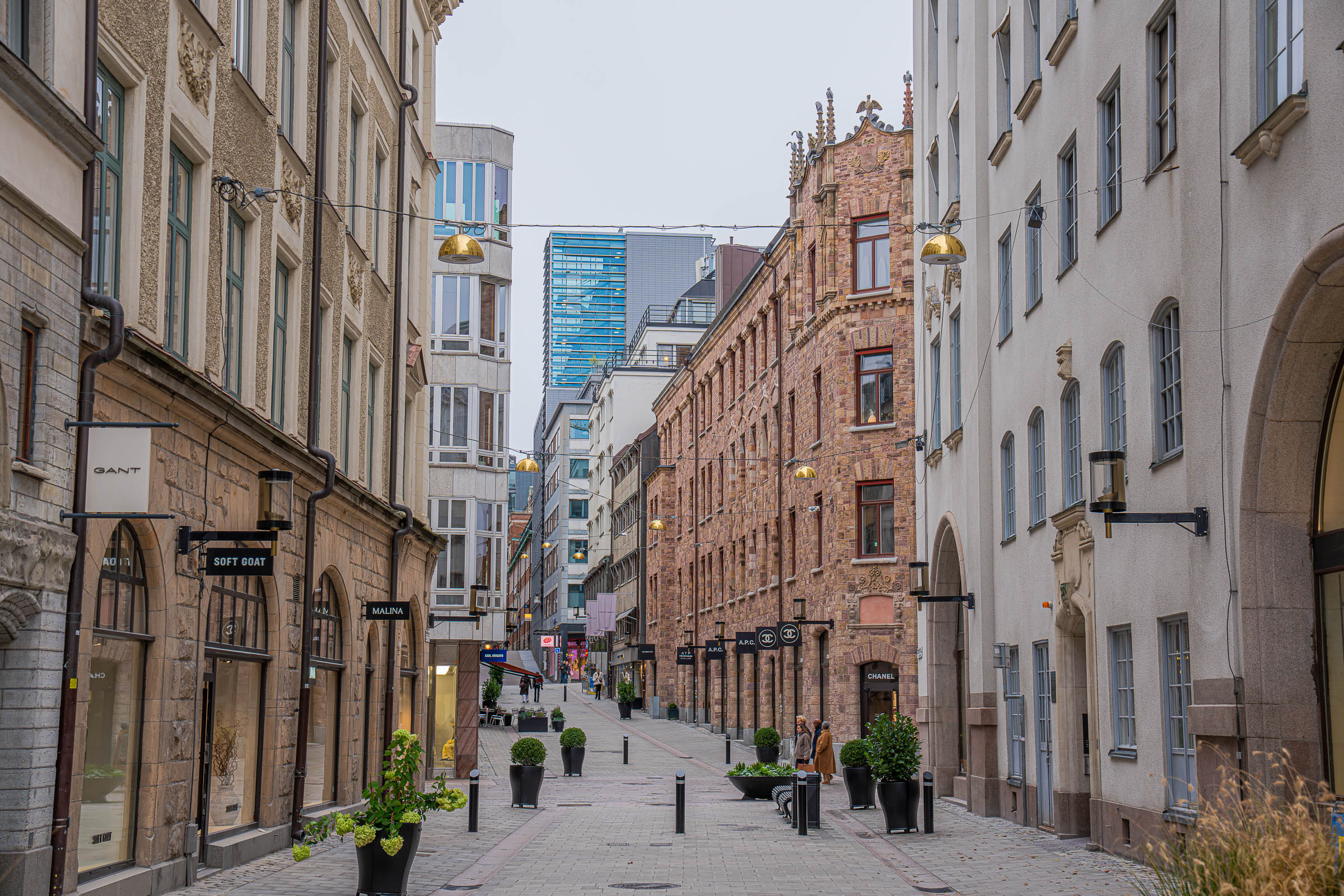
Luxury lovers should head to Bibliotekstan, Stockholm’s most exclusive shopping district. Its main street, Biblioteksgatan, runs from Norrmalmstorg to Stureplan. Here, Swedish names such as Byredo and Maria Nilsdotter sit beside Celine, Moncler and Chanel. Golden street lamps hang overhead, so the street feels more like a salon than a mall.
My style note: Stockholmers favor clean lines, dark coats and quality fabrics. So pack fewer pieces, choose better ones, and you will blend right in. For more of that Nordic restraint, see how I styled Tod’s in Copenhagen’s Nyhavn.
HAYMARKET BY SCANDIC STOCKHOLM: A REVIEW OF MY GRANDE KING VIEW ROOM
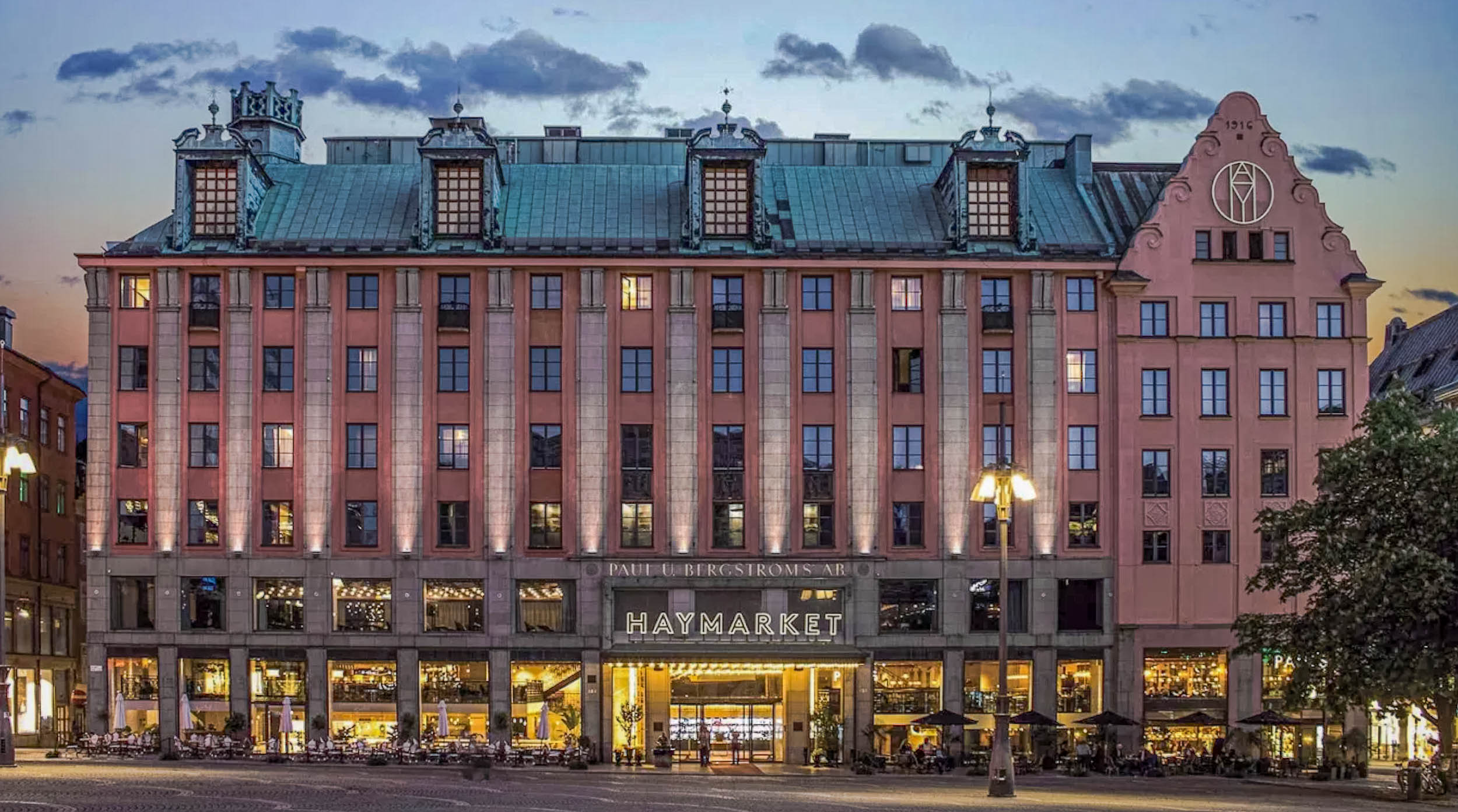
For this trip, I stayed at Haymarket by Scandic on Hötorget, and I would happily return. The hotel opened in May 2016 inside the former PUB department store. Paul Urbanus Bergström founded PUB in 1882, and his company name still runs across the facade, below a gable marked 1916. A young Greta Garbo once worked here in the hat department, long before Hollywood found her.
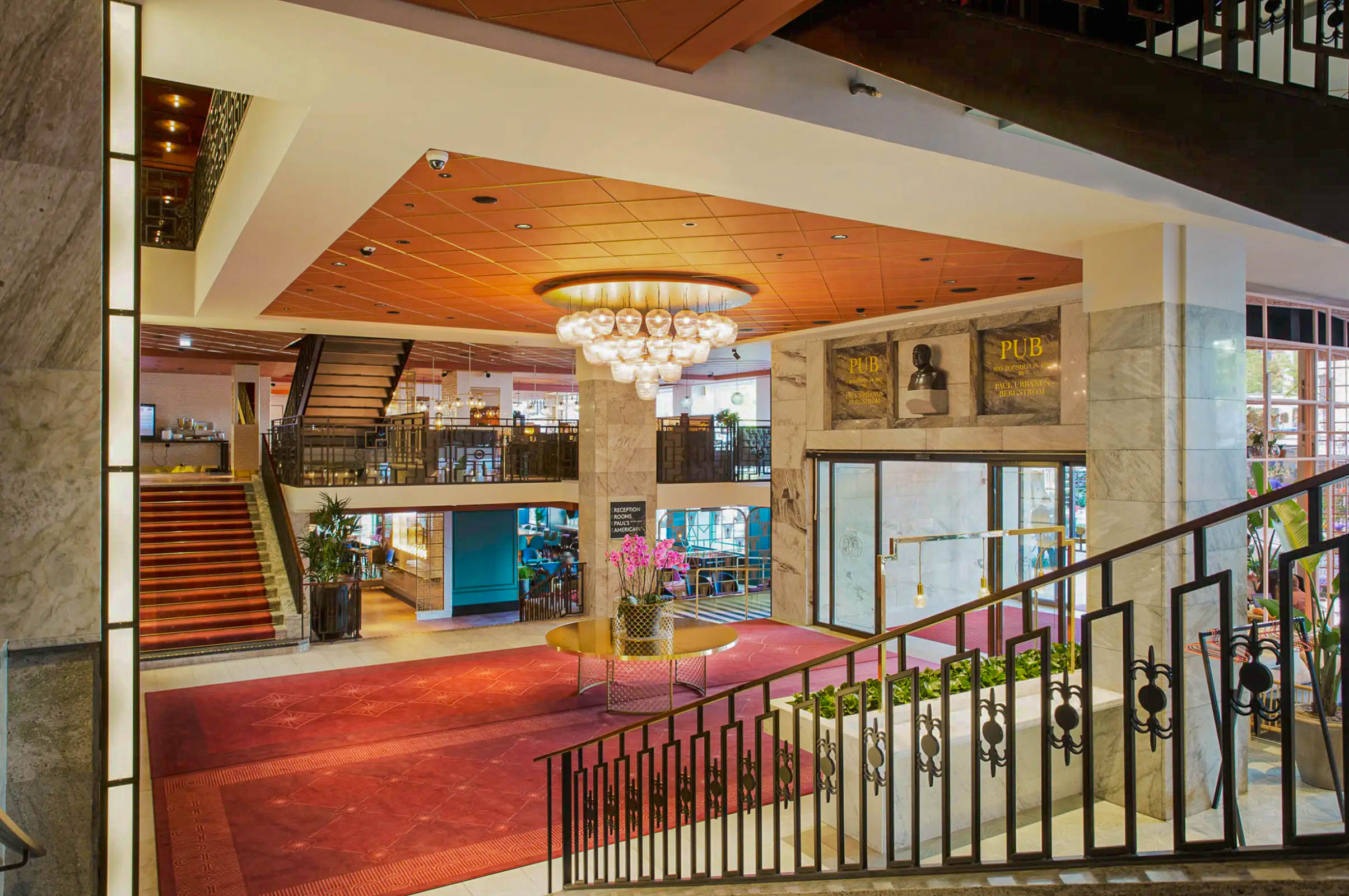
That history shapes the whole design. The hotel celebrates the 1920s with Art Deco lines, marble, brass and velvet. In the lobby, a bronze bust of Bergström watches over a red carpet and a glowing chandelier. The hotel has 401 rooms, yet it never felt anonymous to me.
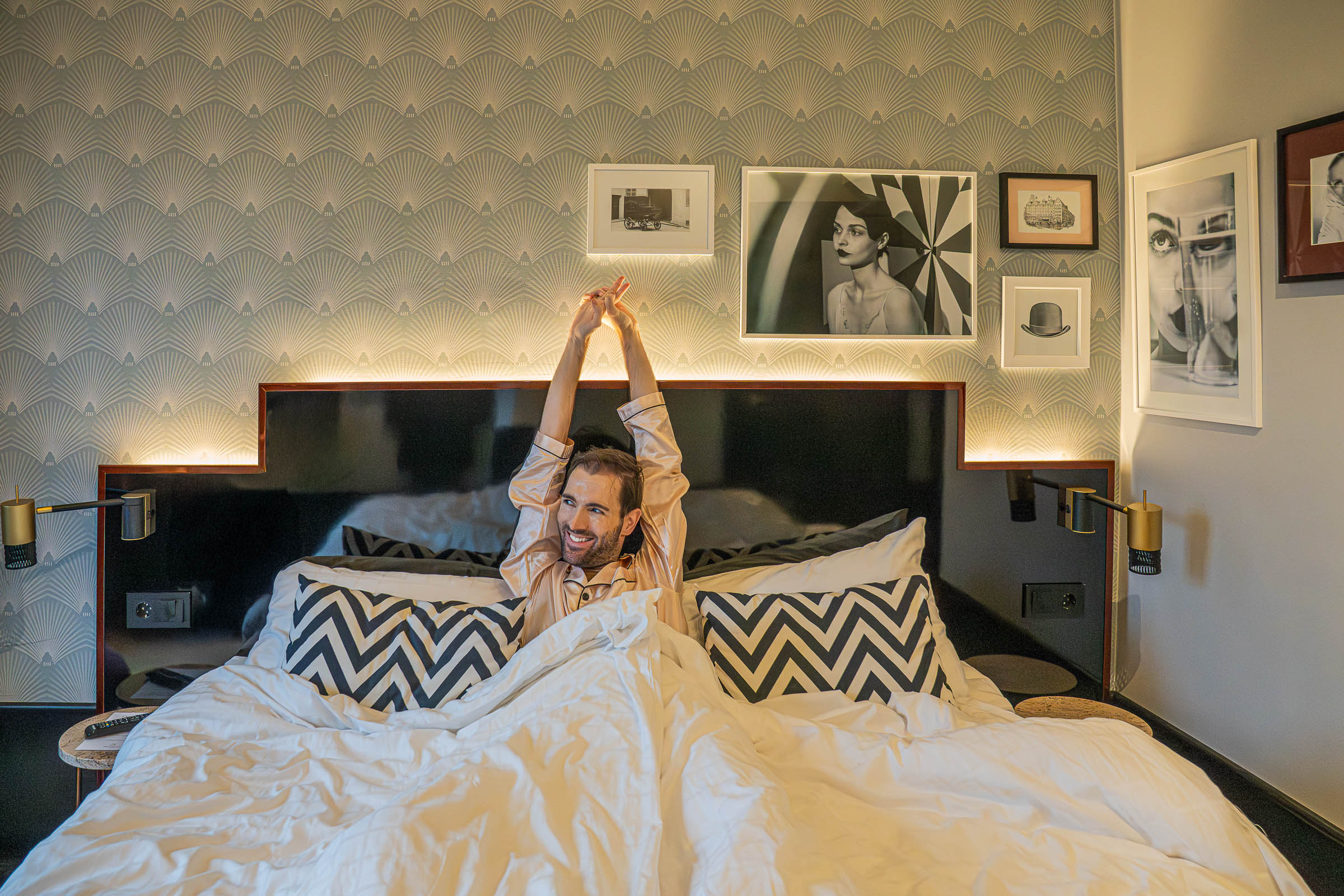
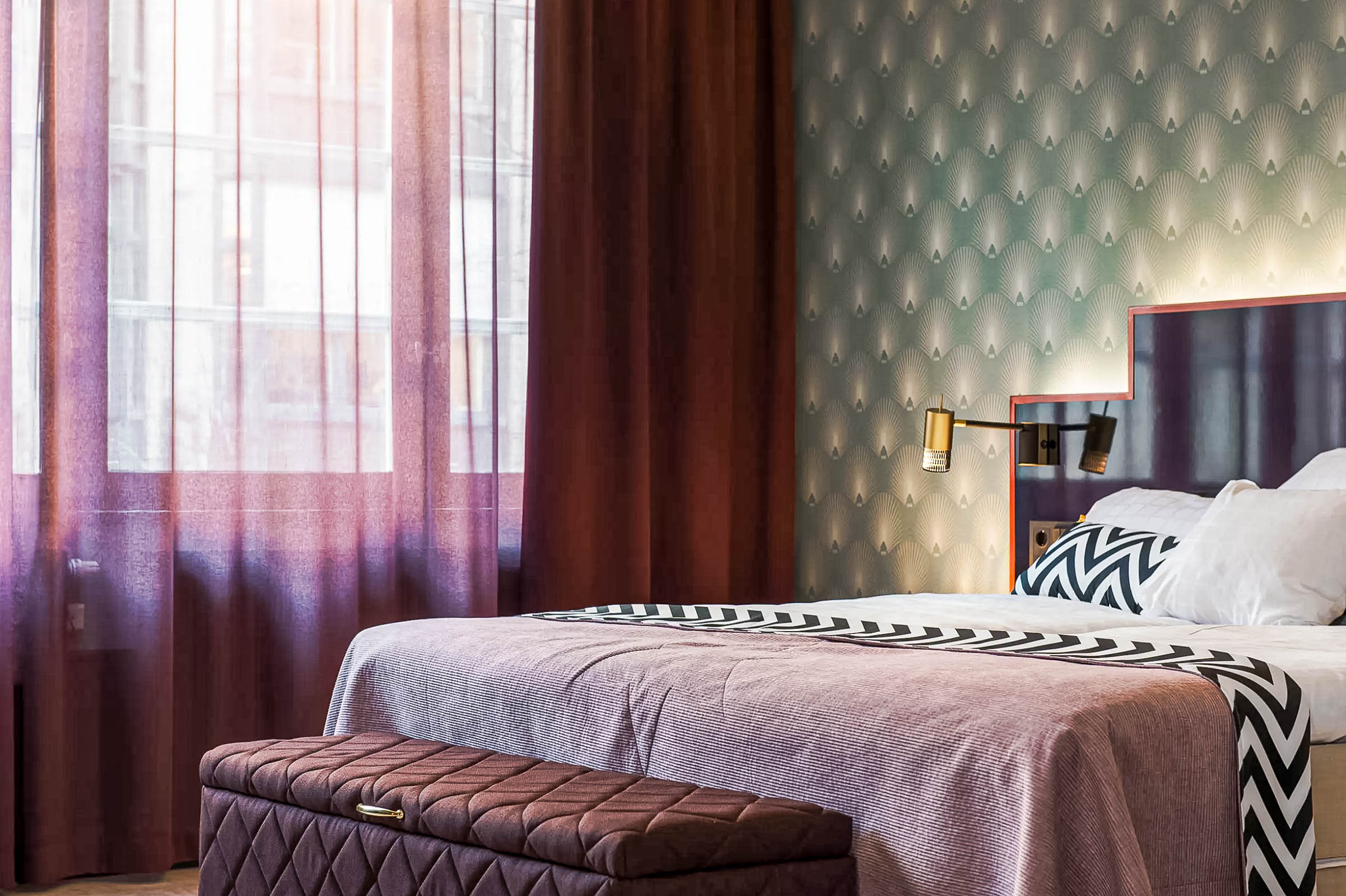
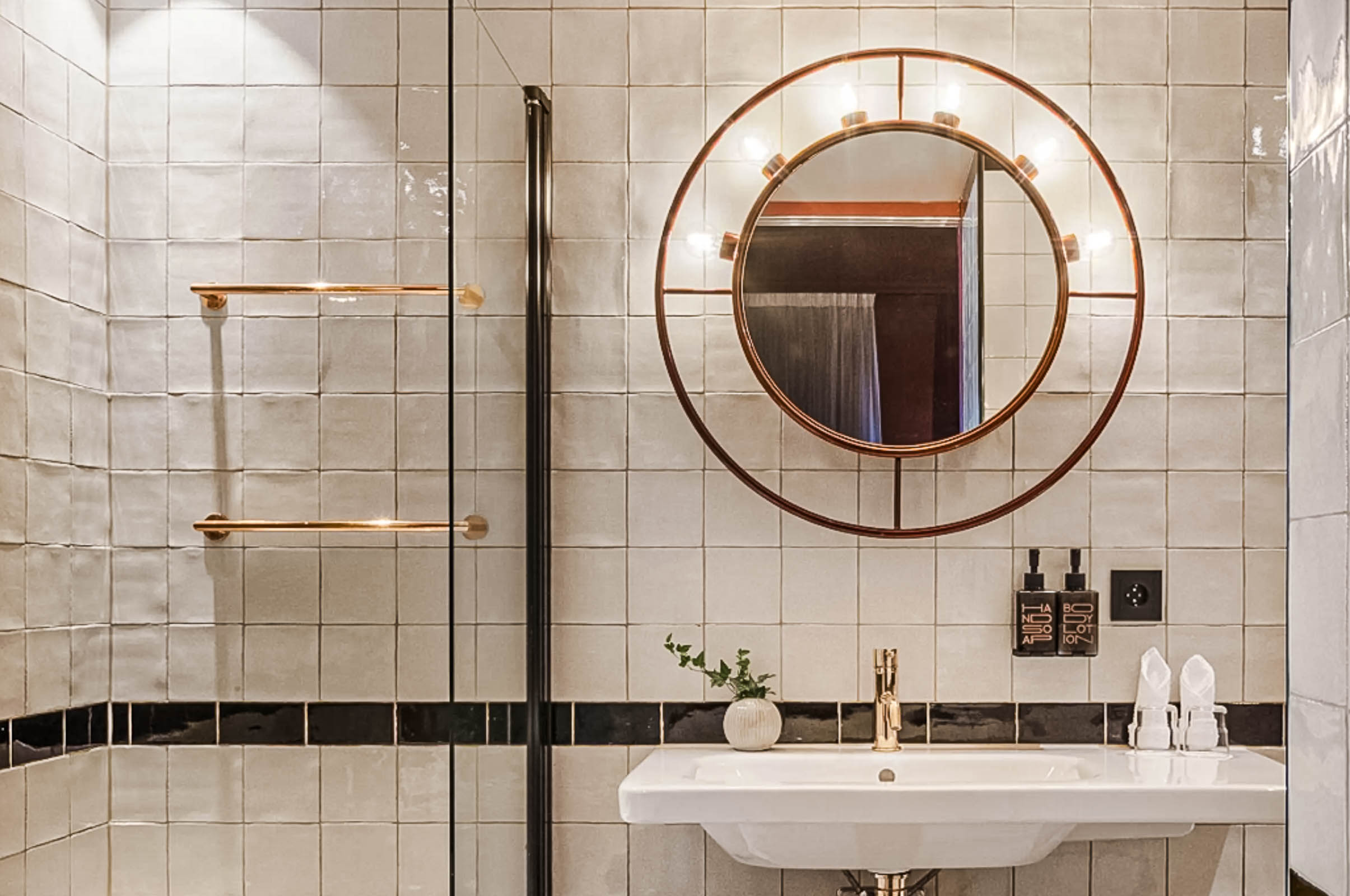
My Grande King View room felt like a private film set. Fan-patterned wallpaper rose behind a glossy black headboard with soft backlighting. Black-and-white portraits, brass reading lamps and chevron pillows completed the look. In the bathroom, a hand-painted heron mural decorated the shower under a golden rain showerhead. Best of all, my window faced the blue Konserthuset, which turned 100 in April 2026. Waking up to that view, in silk pajamas with coffee in hand, felt like pure Stockholm luxury.
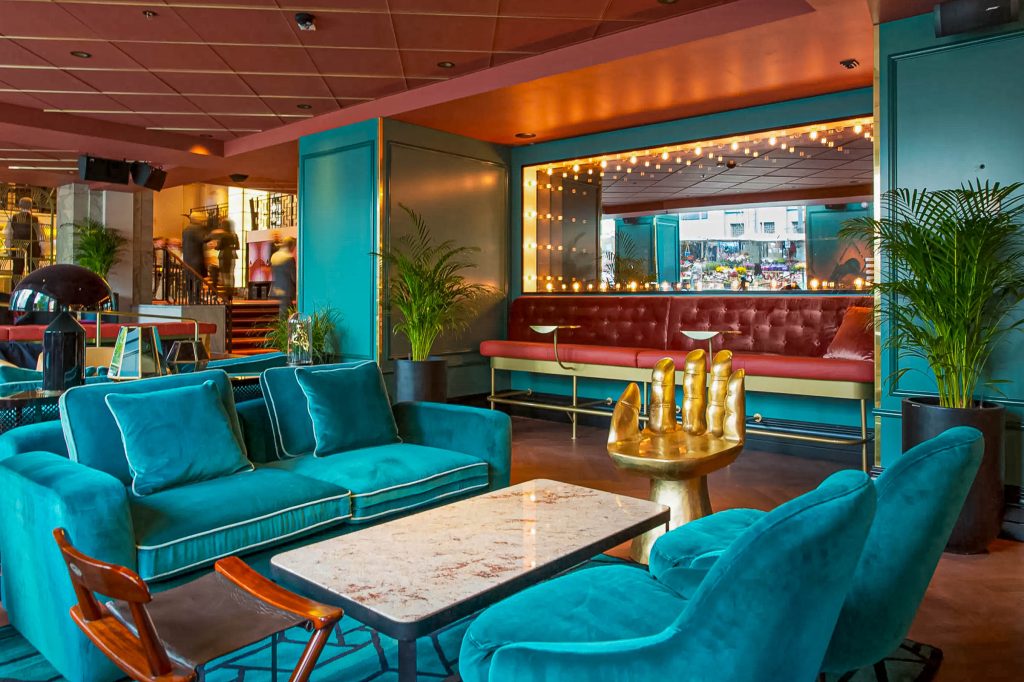
Food and drinks match the setting. Paul’s, the American brasserie one floor up, honors the founder, and my dinner there was a highlight of the stay. Gretas, the hotel cafe, pays tribute to Garbo, while the Americain bar welcomes you with teal velvet sofas and golden details.
Above all, the location is unbeatable. The Hötorget market sits right outside, Drottninggatan starts around the corner, and Sergels torg lies about 300 meters away. Plus, Gamla Stan is just two metro stops away on the green line. For history, style and convenience in one address, this is the hotel I recommend in my Stockholm travel guide. For another Scandinavian stay with real character, read my review of Manon Les Suites Guldsmeden in Copenhagen.
STOCKHOLM TRAVEL GUIDE: THE ESSENTIAL SIGHTS AND EXPERIENCES CHECKLIST
Short on time? This quick Stockholm travel guide checklist covers the sights almost every first-time visitor sees.
- Stockholm City Hall. Built between 1911 and 1923, it has a 106-meter tower and hosts the Nobel banquet in its Blue Hall. Guided tours also show the glittering Golden Hall.
- The Royal Palace and the changing of the guard. Arrive a little early for a good spot.
- Gamla Stan and Stortorget. Wander the lanes, then stop for fika on the square.
- The Vasa Museum. It is the most visited museum in Scandinavia for a reason.
- Skansen. Explore five centuries of Swedish life in the world’s oldest open-air museum.
- ABBA The Museum. A new exhibition about “Dancing Queen” opened there on October 11, 2026, marking 50 years of the song.
- The metro art. Ride a few stops and look around, because the stations are part of the show.
- Hötorgshallen. This food hall under Hötorget serves flavors from around the world.
- An archipelago boat trip. Even a short cruise shows you the city’s maritime soul.
STOCKHOLM TRAVEL GUIDE: ESSENTIAL TIPS FOR FIRST-TIME VISITORS
A few simple tips will make your first trip smoother.
To begin with, walk as much as you can. The center is compact, and many highlights sit within half an hour of each other on foot. For longer distances, the metro is fast, and its 100 stations cover the whole city.
Secondly, use the water. Ferries and sightseeing boats connect the islands, and they give you the best views for the price of a short ride.
Thirdly, plan around the light. In winter, Stockholm can have as little as six hours of daylight. In summer, by contrast, days can stretch to about 18 hours. Autumn sits in between, with soft light that suits photography.
Also, visit the big museums early in the day. The Vasa Museum and the Royal Palace both get busy, especially in summer.
As for timing, three full days cover the main sights at a relaxed pace. However, add a fourth day if you want the archipelago or a slower museum day.
Finally, pack smart layers and waterproof shoes. Stockholm weather changes quickly, and cobblestones do not forgive thin soles.
When it comes to where to stay, central Norrmalm works beautifully. From Hötorget, you can walk to Gamla Stan, the shopping streets and the waterfront, which is exactly why I chose it for this Stockholm travel guide.
STOCKHOLM: A CITY THAT STAYS WITH YOU LONG AFTER THE JOURNEY ENDS
Stockholm does not shout for attention. Instead, it wins you over slowly, with a view across the water, a quiet museum hall or a perfectly cut coat in a shop window.
I came for palaces and museums, and I found them in abundance. Yet what stays with me is the feeling of balance. Here, history and modern life sit side by side without competing. Nature reaches right into the city, and elegance feels like part of everyday life, not a performance.
I hope this Stockholm travel guide helps you plan your own visit, whether you come for royal history, Nordic design or simply the light on the water. Stay central, walk often, take the ferry and leave room for surprises.
If you are planning a wider Scandinavian journey, my Copenhagen travel guide makes the perfect next chapter.
This was my letter from Sweden. Until the next one, I will keep thinking of that blue concert hall outside my window and the copper spires glowing over Gamla Stan. Stockholm, thank you. I will be back.
With love from Stockholm,
Mr.M
This post is sponsored by the United Nations World Tourism Organization (UN Tourism) and the Haymarket by Scandic hotel, as well as other local partners who selflessly supported this project. This post is my personal and honest review of the destination experience.