
My dear travelers and lovers of unusual journeys, welcome to a new travelogue on the Mr.M blog. This time, I am taking you to the Rio Carnival, the celebration that made Rio de Janeiro famous all over the world. First of all, I would like to thank the United Nations World Tourism Organization (UN Tourism), local ministries of tourism, national and city tourism boards, and all the other partners who selflessly supported my adventure in South America. Thanks to them, I could create travelogues from Brazil and other countries, as well as numerous fashion stories. I sincerely hope that you will enjoy this adventure with me.
My posts from Brazil exist thanks to the selfless help of UN Tourism, EMBRATUR (National Tourism Organization of Brazil), Visit Brasil, Carnaval Experience and numerous local partners.
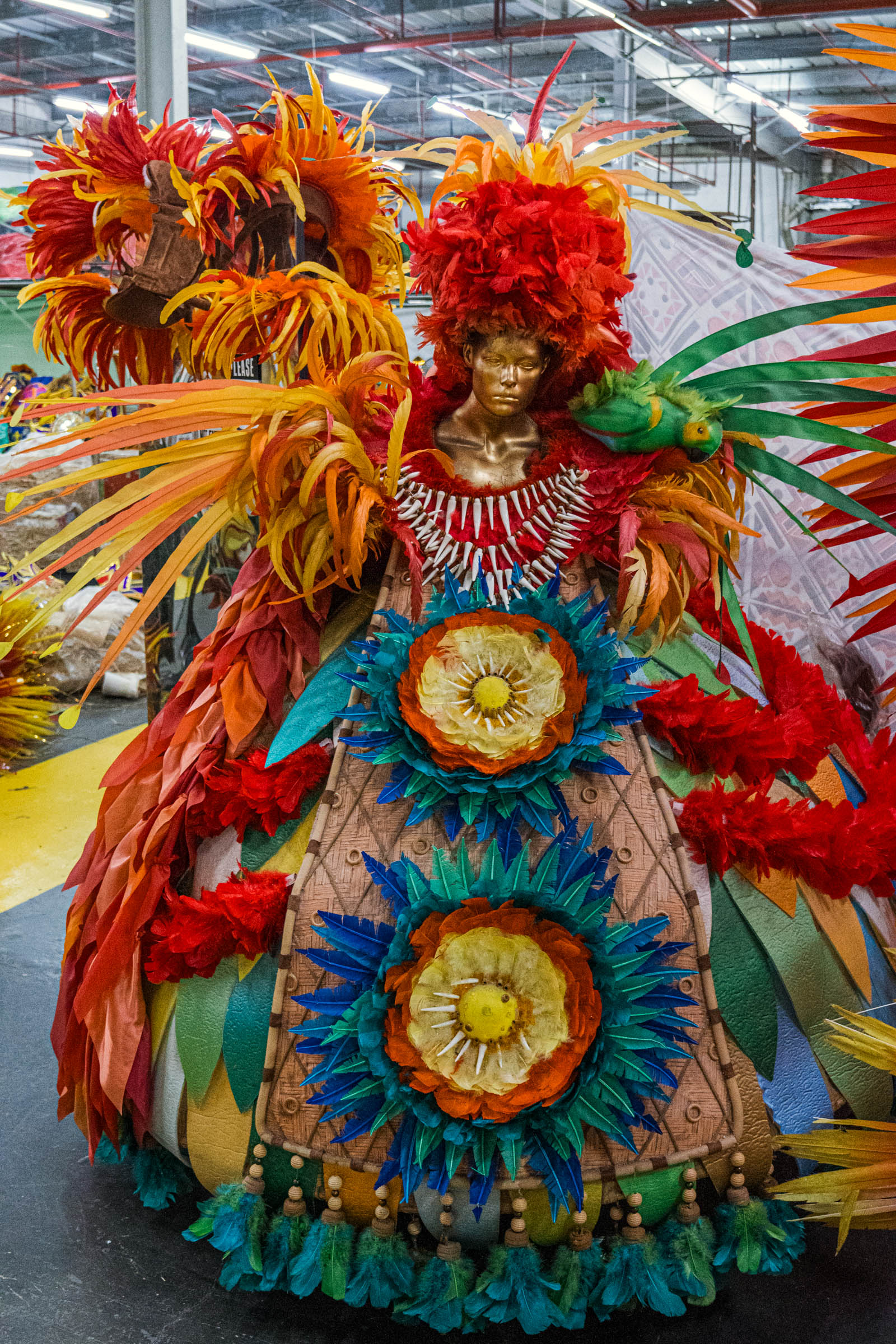
THE RIO CARNIVAL, THE BIGGEST SHOW IN THE WORLD
Many consider the Rio Carnival the largest carnival celebration in the world. Every year, it attracts millions of people from Brazil and abroad. Thanks to this event, Rio de Janeiro became recognizable on a global level. Still, have you ever wondered what the organization of this famous party looks like behind closed doors?
The Carnaval Experience team opens the doors of that hidden world. For more than ten years, they have been perfecting special visits for everyone who wants to see the Rio Carnival from an insider’s perspective. Their idea is simple. They want to present the universe of the samba schools of Rio de Janeiro. They also show how a show of this size comes to life and tell the story of how samba and the carnival of Rio were born. Besides the regular tour, they also offer a premium private tour at Samba City for those who want a more exclusive experience.
PIMPOLHOS DA GRANDE RIO, THE HEART OF THE PROJECT
Behind this whole story stands Pimpolhos da Grande Rio. It is a youth samba school and a non-governmental organization. Its mission is to promote social interaction and education through the culture of carnival. Pimpolhos is the children’s branch of Acadêmicos do Grande Rio, its “mother school” from Duque de Caxias. Together, they open the doors of the carnival universe to the general public. In addition, the children of Pimpolhos parade at the Sambadrome, in the parades of the children’s samba schools of Rio.
The Carnaval Experience program is part of the socio-economic sustainability pillar of Pimpolhos. The organization started it to diversify its sources of income and to secure the future of its socio-cultural projects. The profit from the tours goes to the children’s samba school. In other words, by taking this tour, you directly support children who learn through samba.
Acadêmicos do Grande Rio dates back to 1988, and its headquarters are in Duque de Caxias. In 2022, the school won its first title in the Special Group, the top division of the Rio Carnival. Its winning theme was “Fala, Majeté! Sete chaves de Exu.” Grande Rio has also finished second several times, in 2006, 2007, 2010, 2020 and 2025. At the 2025 Carnival, only one tenth of a point separated it from the champion.
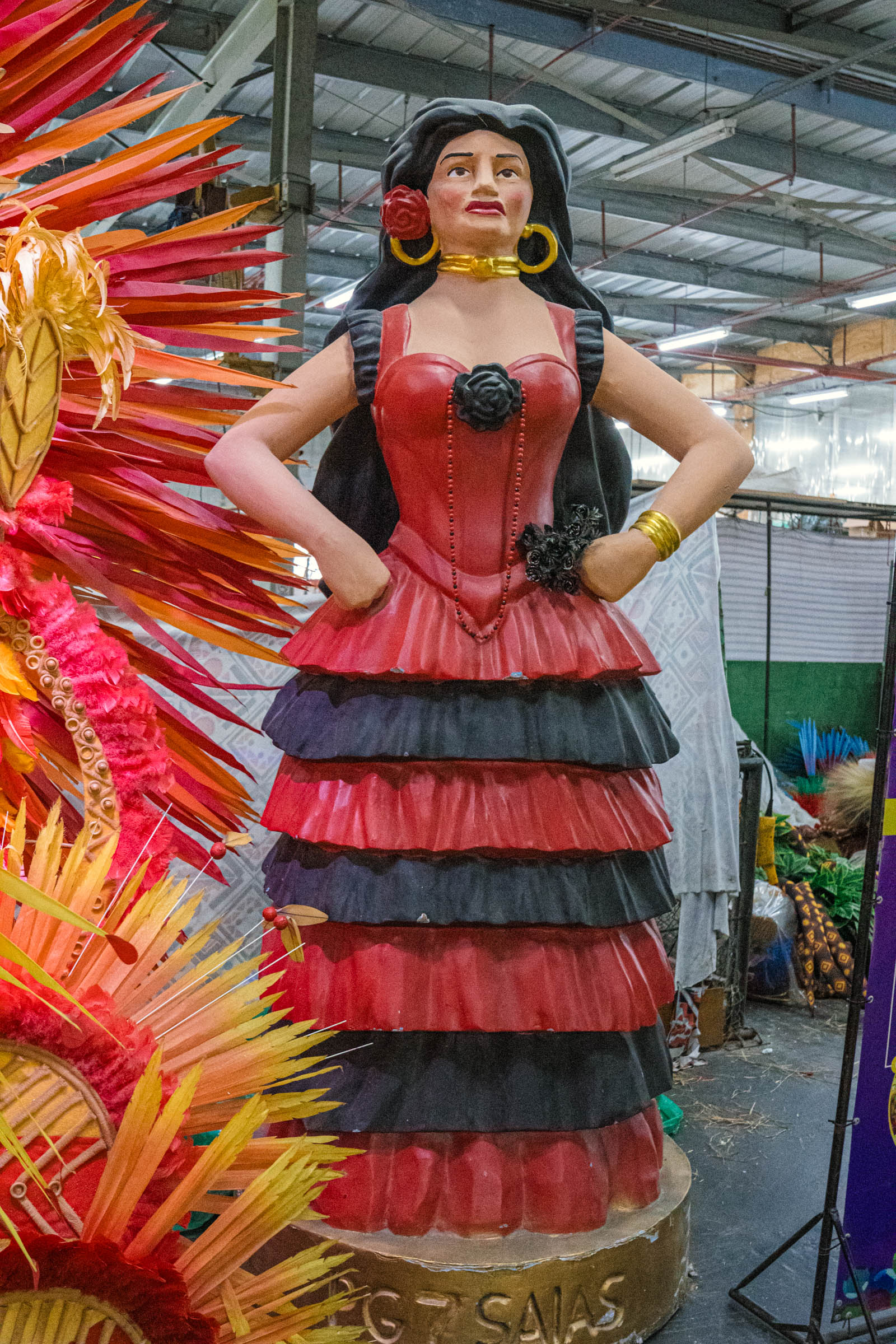
INSIDE SAMBA CITY, WHERE THE RIO CARNIVAL IS BORN
The tour takes place in Cidade do Samba (Samba City), whose official name is Cidade do Samba Joãozinho Trinta. This complex stands in the Gamboa neighborhood, in the port zone of Rio de Janeiro. The city opened it on February 4, 2006. Today, it has 14 warehouses with four floors each, and the samba schools of the Special Group and their league use them. The whole complex covers about 92,000 square meters. In Brazil, people call these warehouses barracões. That is where the magic of carnival happens all year round. Furthermore, the complex stays open throughout the year and also hosts exhibitions, events and shows.
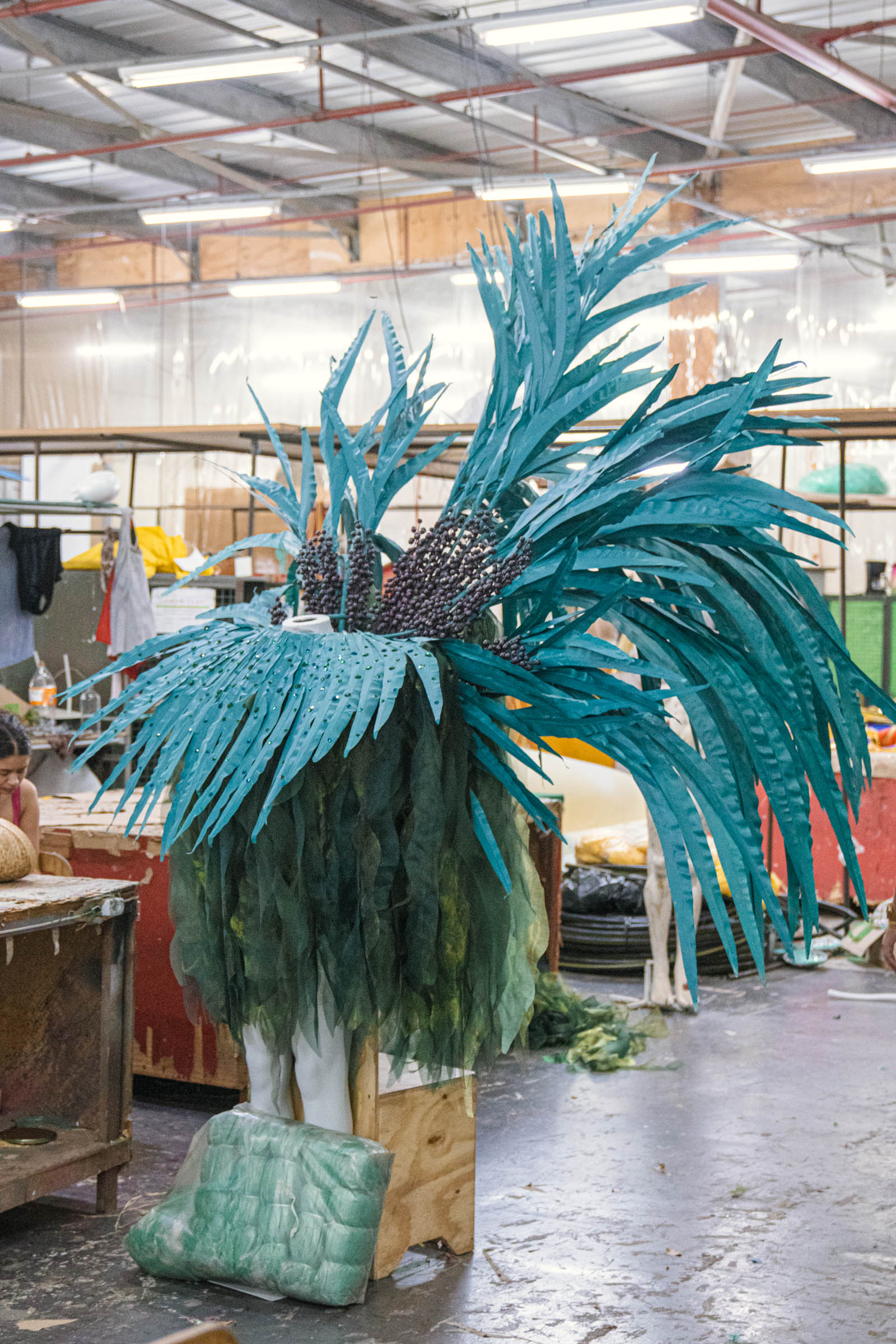
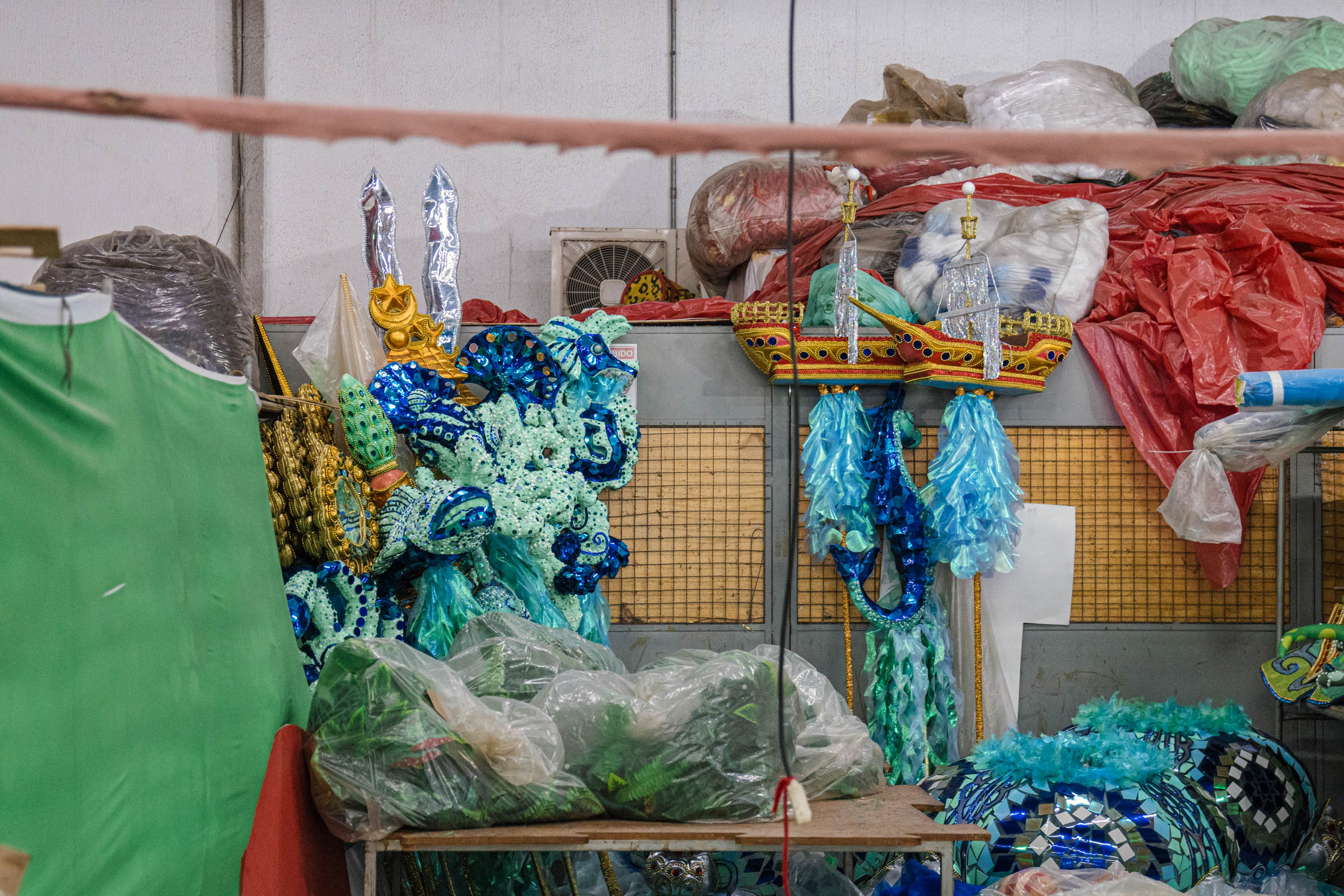
The Carnaval Experience regular tour takes you inside the warehouse of Grande Rio, the 2022 champion. During the visit, you witness how the team builds the floats and produces more than 3,000 costumes for the parade. The best part is that you can see all of this at any time of the year. So, even if you are not in Rio during the carnival, you can still feel its magic.
When you are in Rio, you simply have to experience samba! This special tour shows the artistry and imagination of all the people who invest their love and passion in the carnival. You explore what happens behind the scenes, discover some of the secrets of the parade and meet the people who prepare it.
Next, the visit continues in the exhibition room. There, you learn about the history of samba and the carnival parades, surrounded by portraits, photographs and details from previous carnivals.
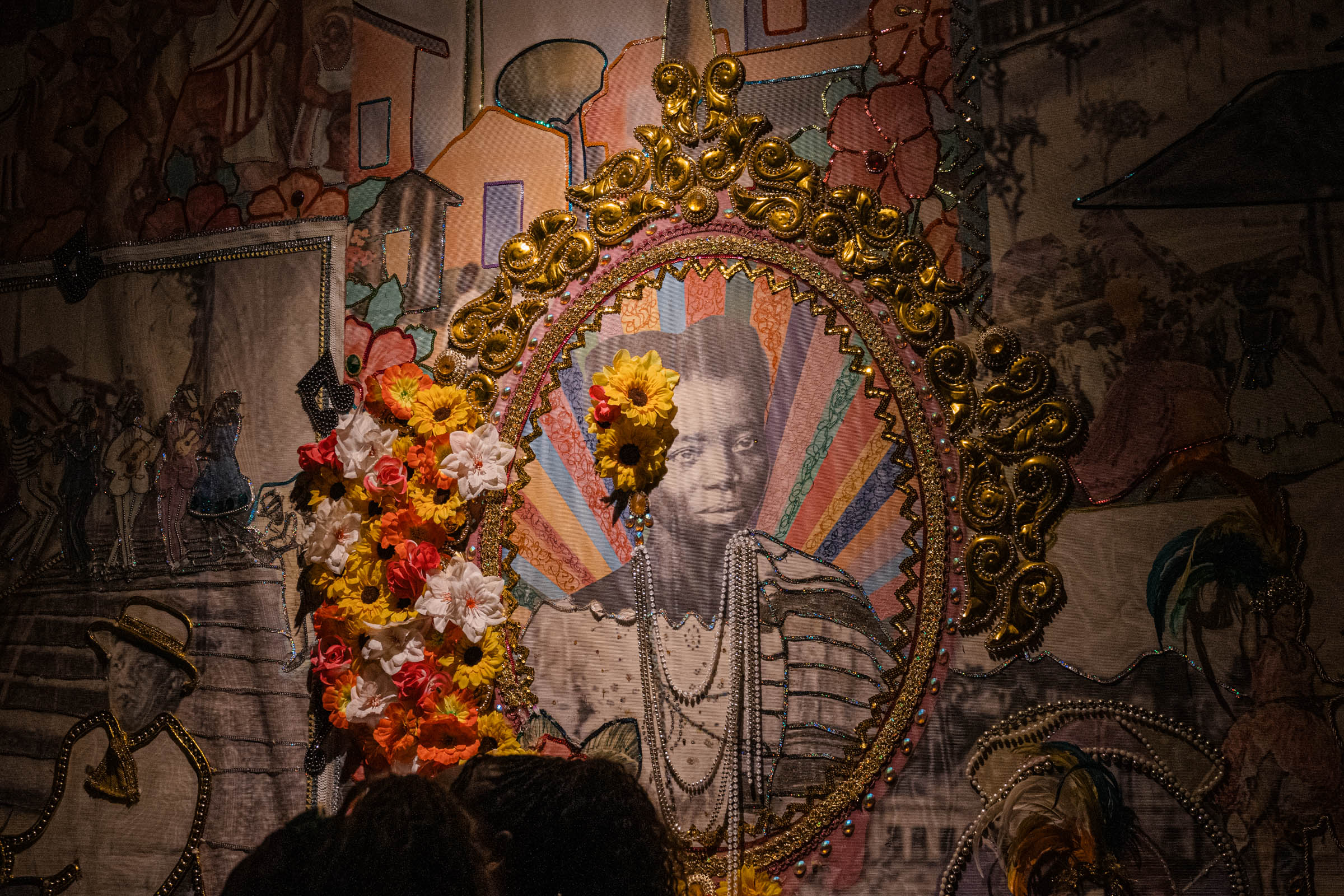
WHAT TO EXPECT FROM THE CARNAVAL EXPERIENCE TOUR
The regular tour program consists of five parts:
- A guided tour of the Acadêmicos do Grande Rio warehouse, one of the main samba schools of Rio de Janeiro.
- A lecture in the exhibition room about the history of samba and the carnival parades.
- Dressing up in costumes from previous parades and taking photos.
- A welcome caipirinha.
- A short samba class with one of the school’s dancers.
As of late 2026, the regular tour lasts about an hour and a half. It runs Monday to Saturday at 10:00, 14:00 and 16:00. The meeting point is the main entrance of Samba City in Gamboa. The guides speak Portuguese and English, and an adult ticket costs R$100. Reduced prices are also available with supporting documents. However, prices and schedules can change, so check the official website before your visit.
Have you ever wondered how the preparation calendar for the Rio Carnival works? After completing a small carnival school with the Carnaval Experience team, I will try to explain it to you step by step. I will share it just as the team explained it to me.
A WHOLE YEAR OF WORK FOR ONE SHOW
All fans of the Rio Carnival know that the big parade takes place every year in February or March at the Sambadrome Marquês de Sapucaí. The exact date depends on Easter. Many people in Europe think that the costumed parades still take place in the streets of Rio de Janeiro. That was true once upon a time. Today, however, the samba schools compete at the Sambadrome, while the streets belong to the blocos.
What you must know is that Brazilians are extremely proud of this event. For many of them, it is not just a party, but a way of life. Yet few people know that the production of the biggest show on earth lasts all year long. Preparation for the next carnival begins as soon as the last one ends. Here is how the team explained the calendar to me.
THE RIO CARNIVAL CALENDAR, MONTH BY MONTH
MARCH
Immediately after the last parade, samba schools evaluate what worked and what needs to change. At the same time, workers start dismantling the floats and other materials from the last parade. The schools also decide what they will reuse, and they separate materials for recycling and sale.
APRIL AND MAY
The schools choose the plot of the next carnival, called the enredo, and start planning again. In short, the enredo is the story and the theme that the school will tell on the avenue.
JUNE
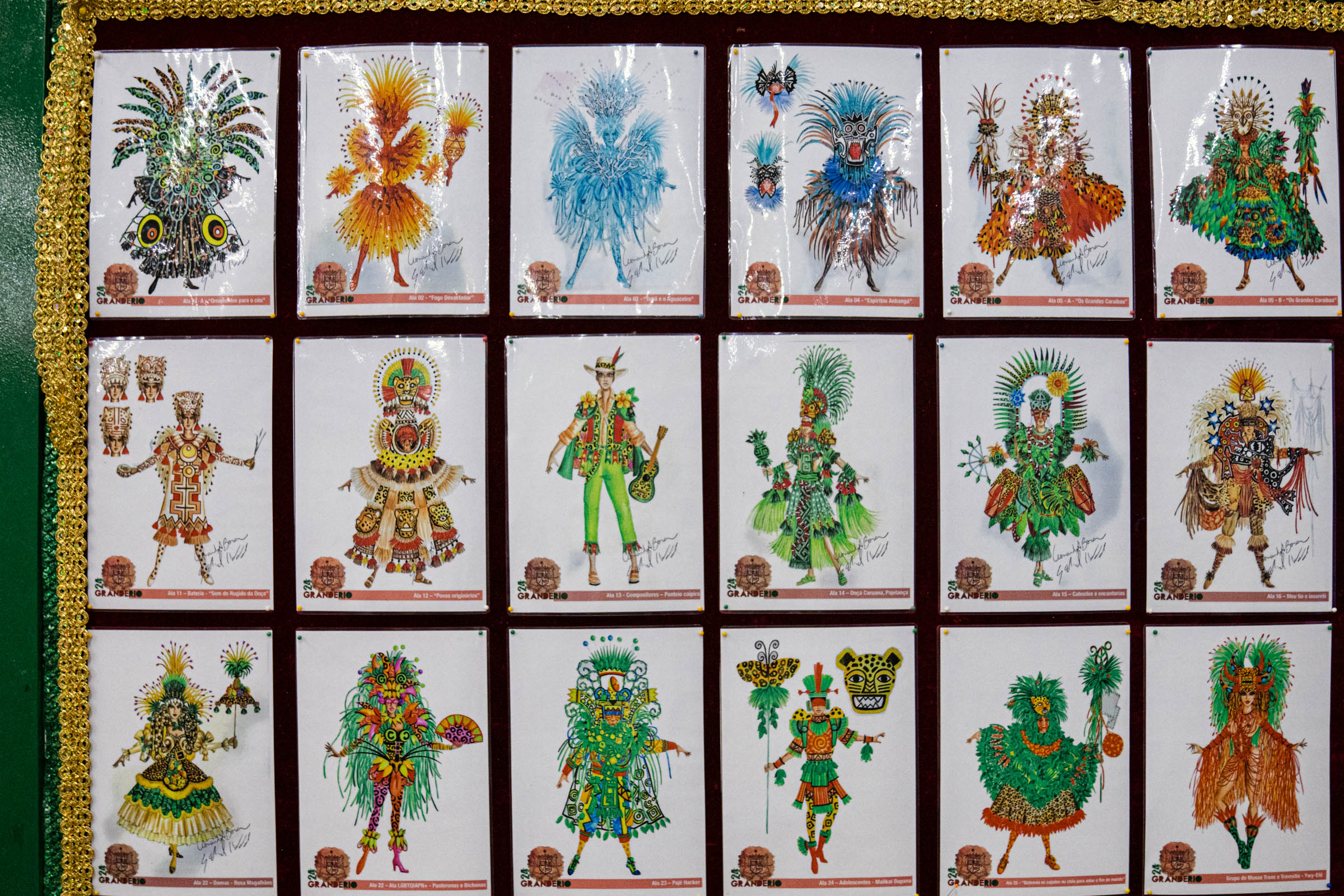
By now, the schools already have their costumes and floats conceptually ready, sketched and drawn.
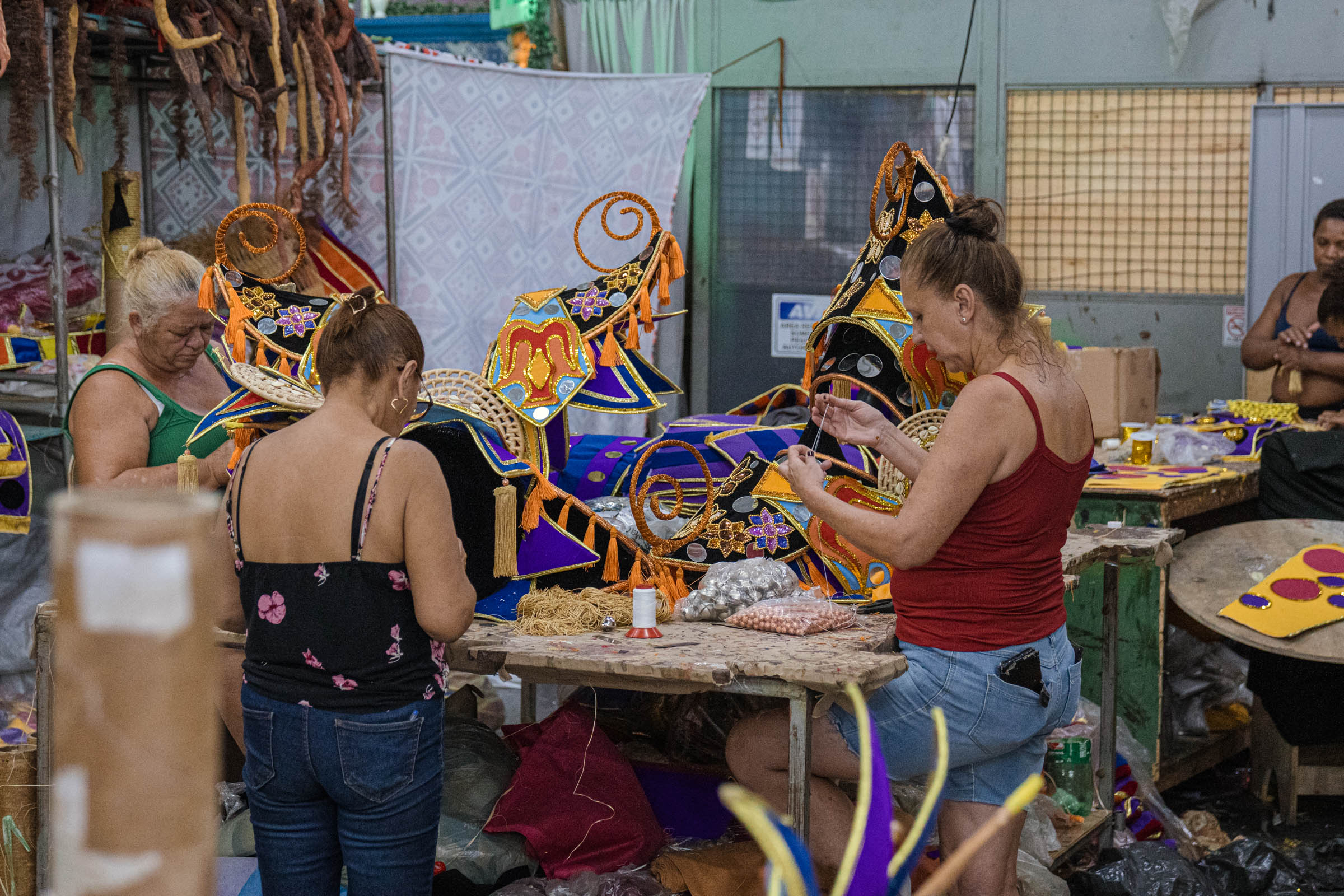
JULY, AUGUST AND SEPTEMBER
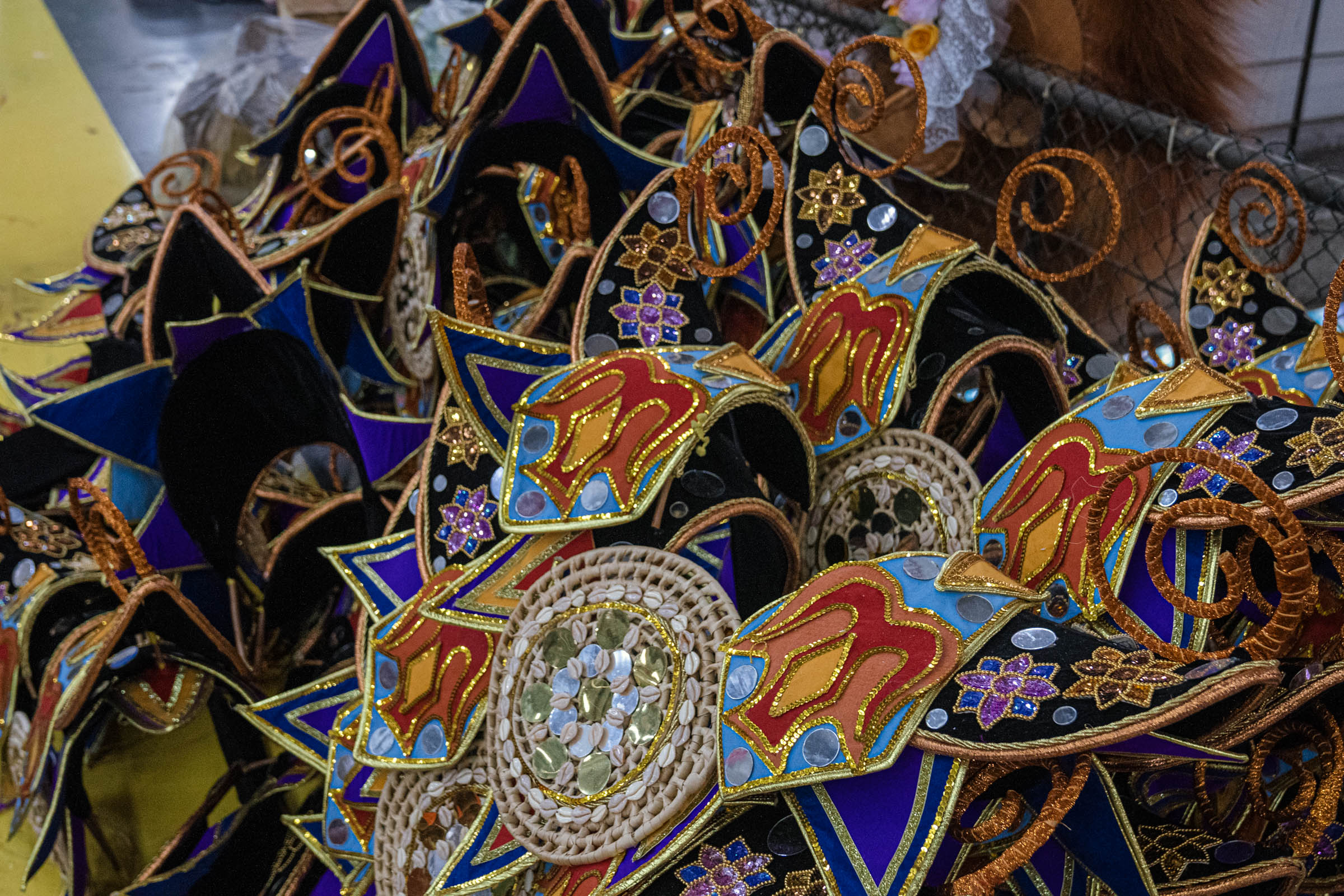
During these months, the schools make samples, trial versions of the costumes and floats. You can already see how the next carnival slowly takes shape. If you visit a samba school with the Carnaval Experience team during this period, you can discover some of its secrets and surprises. I would just ask you to remember not to take pictures of the floats.
FROM OCTOBER TO THE BIG NIGHT OF THE RIO CARNIVAL
OCTOBER
Carnival fever is in full swing. By now, each school has chosen and recorded its official samba-enredo, the theme song of the parade. For the 2027 carnival, for example, the official album with the sambas of all 12 Special Group schools came out on October 29, 2026. Rehearsals also begin, both at the courts of the samba schools and on the street. The community members who will parade take part in them. You have to know the samba by heart, be willing, excited and have a lot of love for your school!
NOVEMBER
The schools start reproducing the costumes and sculptures. At the same time, painters work on the costumes and floats.
DECEMBER
Now the focus moves to the costumes for the top of the floats. These are the most luxurious, opulent and special costumes of all.
JANUARY AND FEBRUARY
These are the two most intensive months of the whole year. Production work and numerous rehearsals are in full swing. And then, it is finally time for the parade!
After all the effort and this extraordinary dedication, the samba schools can breathe a sigh of relief, at least for a moment. The sense of duty is fulfilled. Soon after that, in March, the whole cycle starts again.
THE FUN PART OF THE TOUR
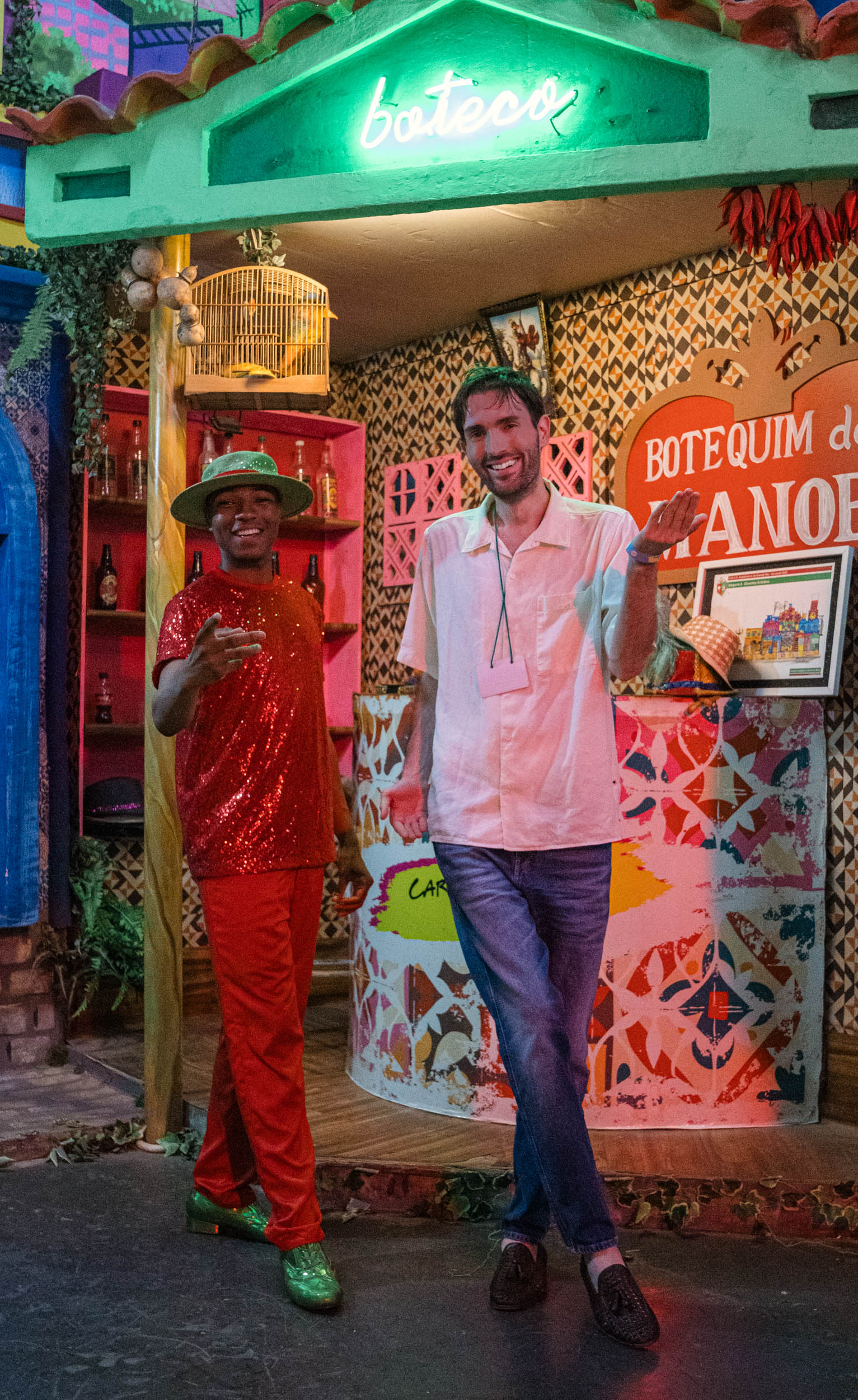
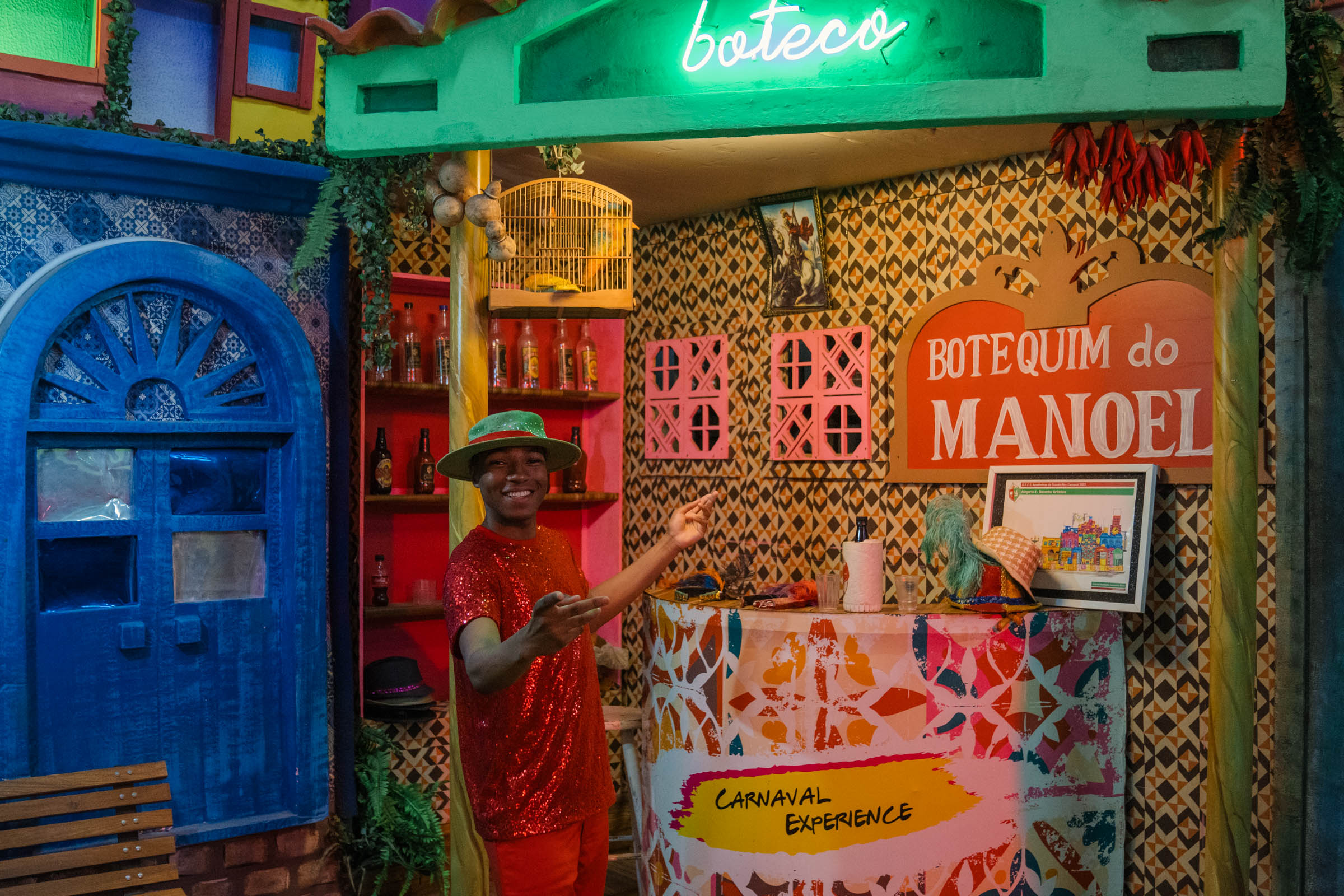
After the warehouse and the exhibition room, the visit becomes much more playful. Part of it takes place on a colorful set styled as a classic Rio boteco, the traditional neighborhood bar of the city. It has bright tiles, framed photos and plenty of colorful details.
Then comes a short samba class with one of the school’s dancers. Visitors try the basic steps of samba and follow the rhythm of the music.
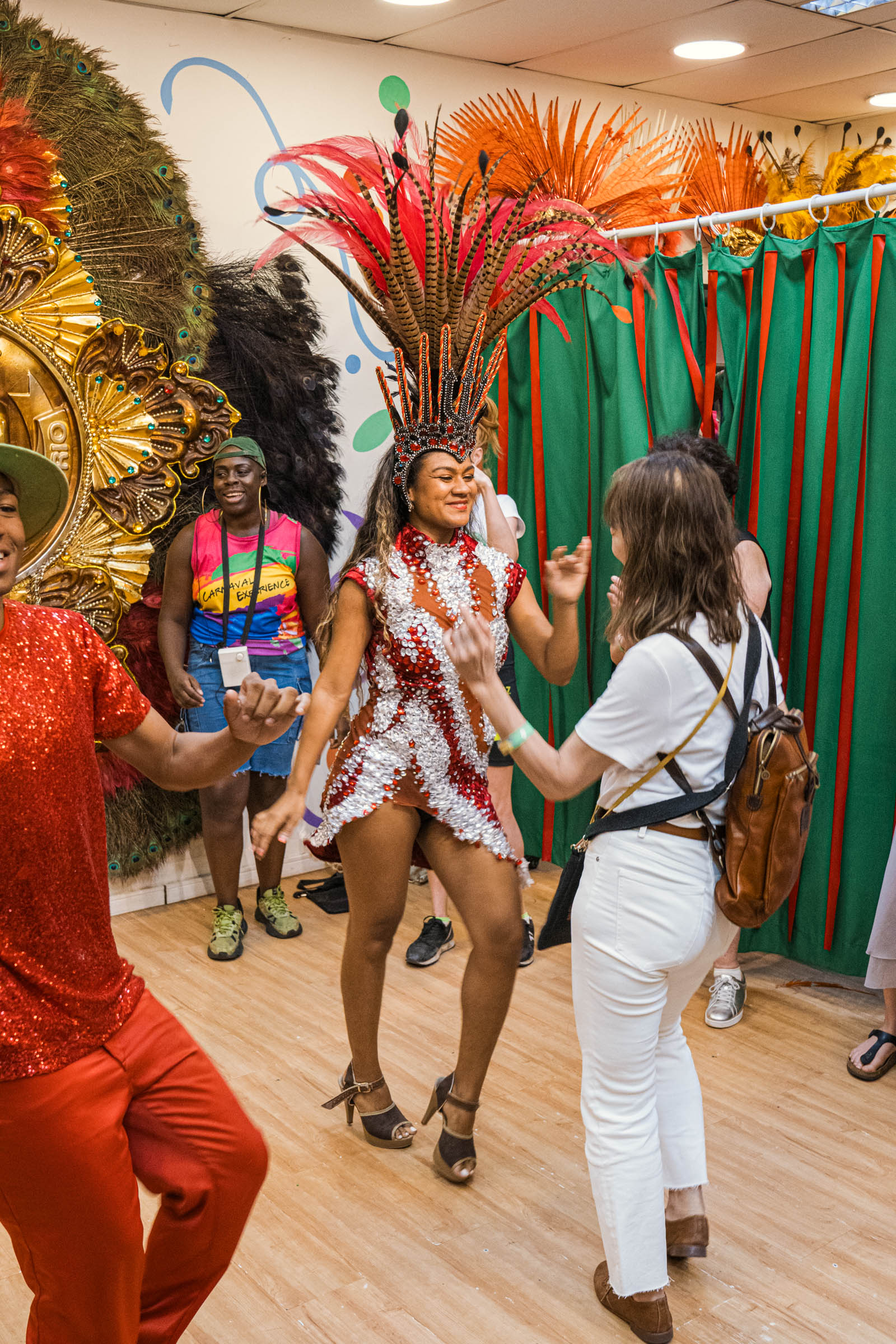
I also had the opportunity to take photos with performers in their carnival costumes. Behind us stood a spectacular backdrop decorated with feathers and golden details.
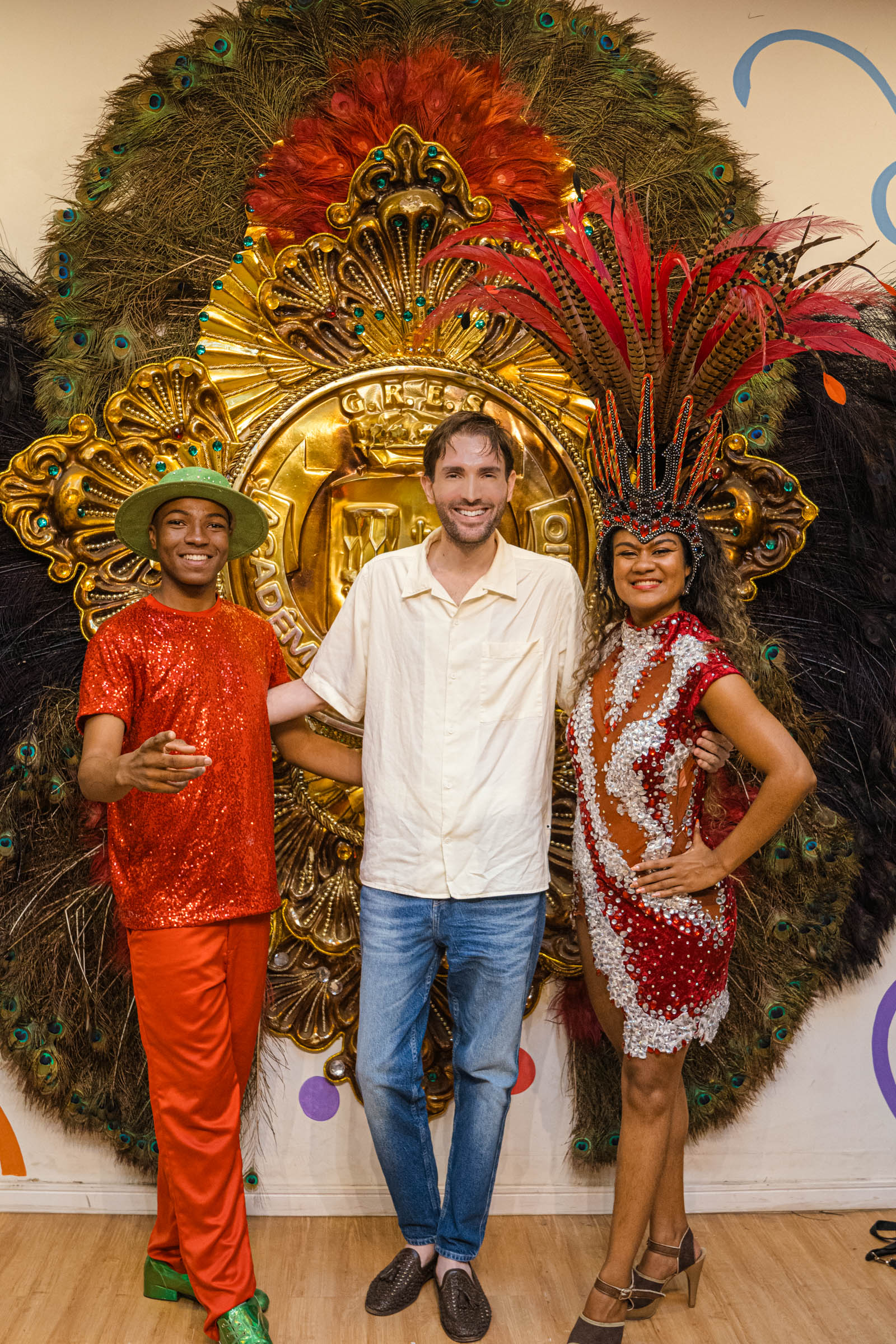
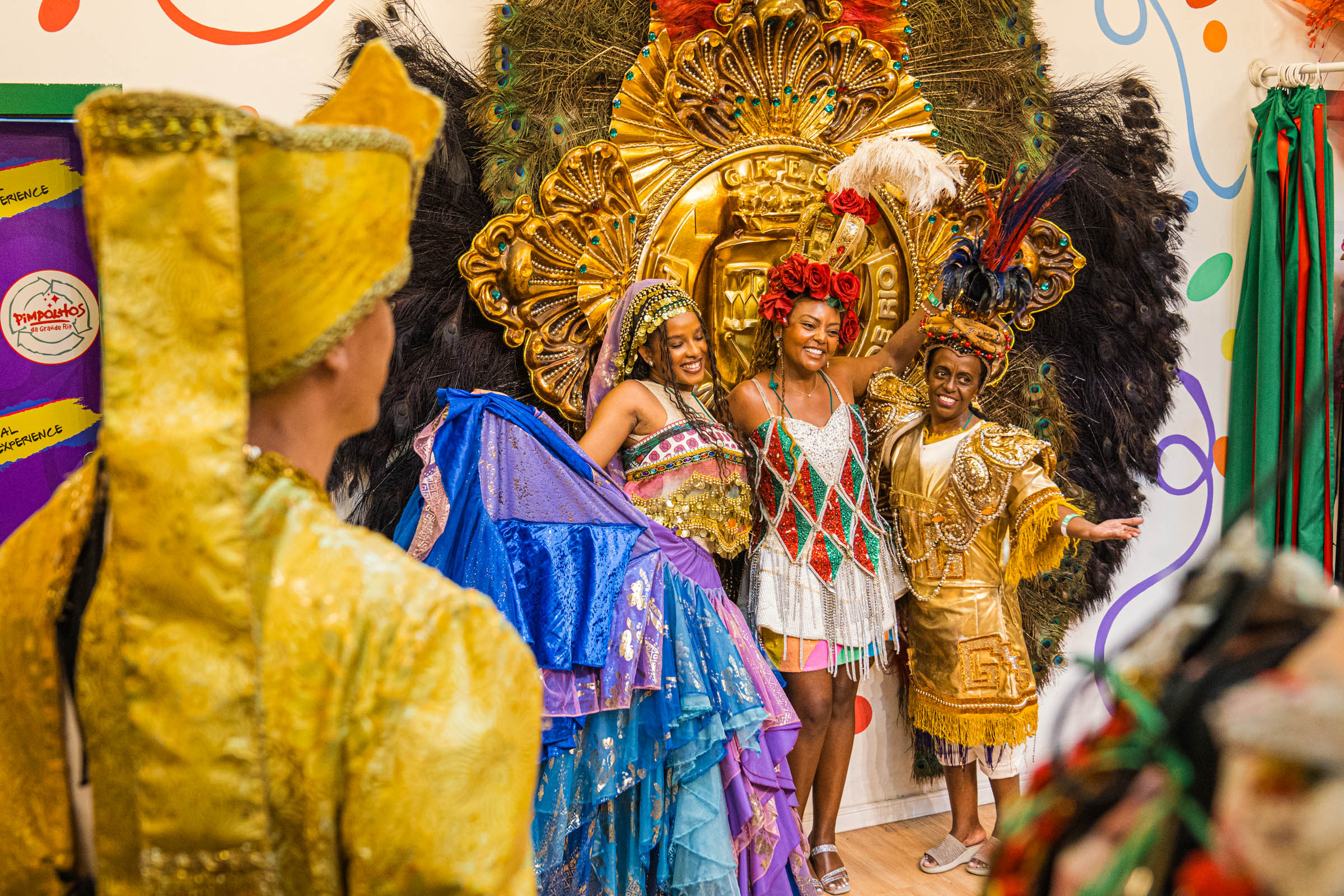
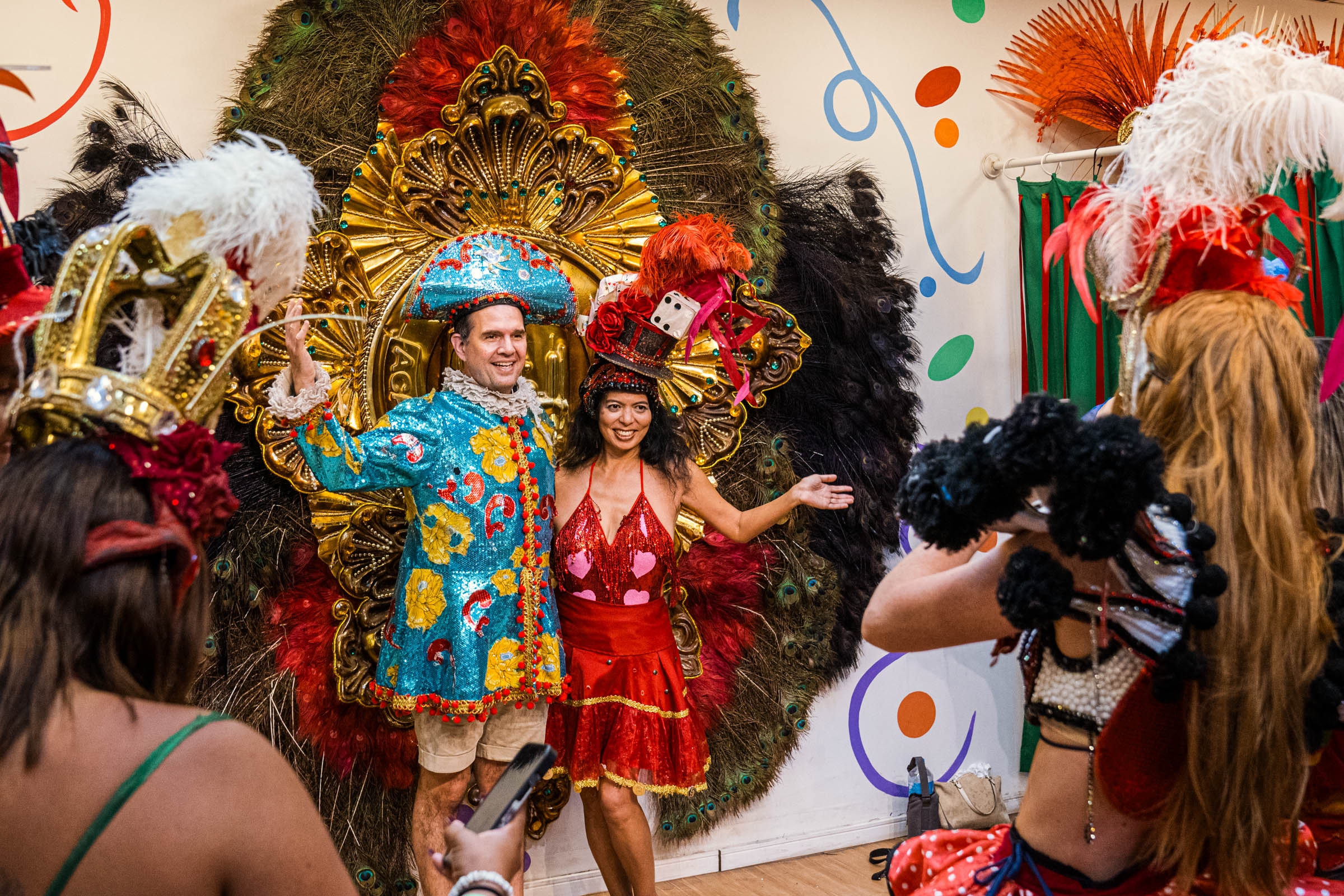
Visitors can also dress up in costumes from previous parades. They put on headpieces full of feathers and pose for photos like real carnival stars.
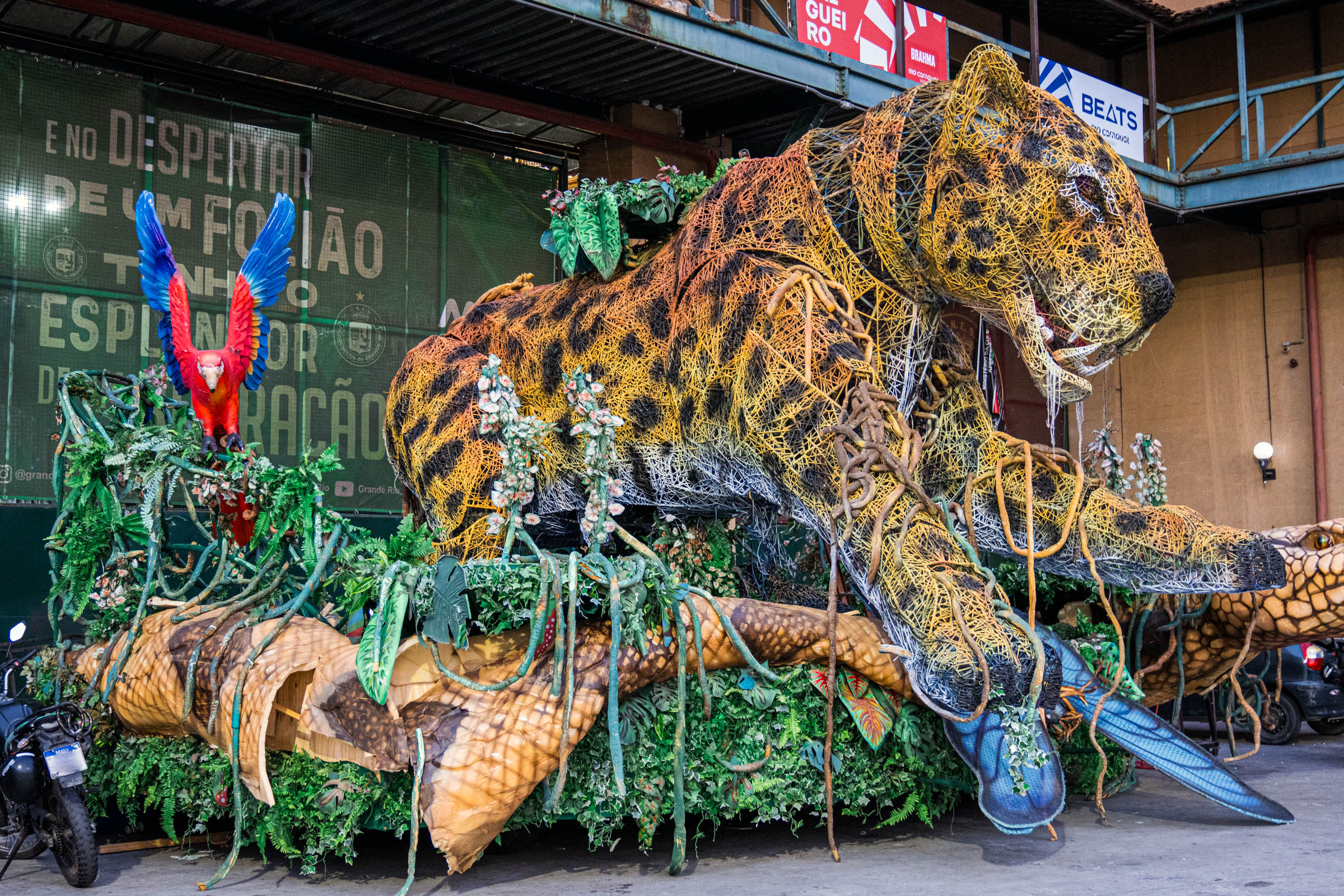
In the warehouse, you can also see parts of the floats up close. A good example is this huge jaguar sculpture. It shows the level of craftsmanship that goes into every detail of the parade.
A NIGHT AT THE SAMBADROME MARQUÊS DE SAPUCAÍ
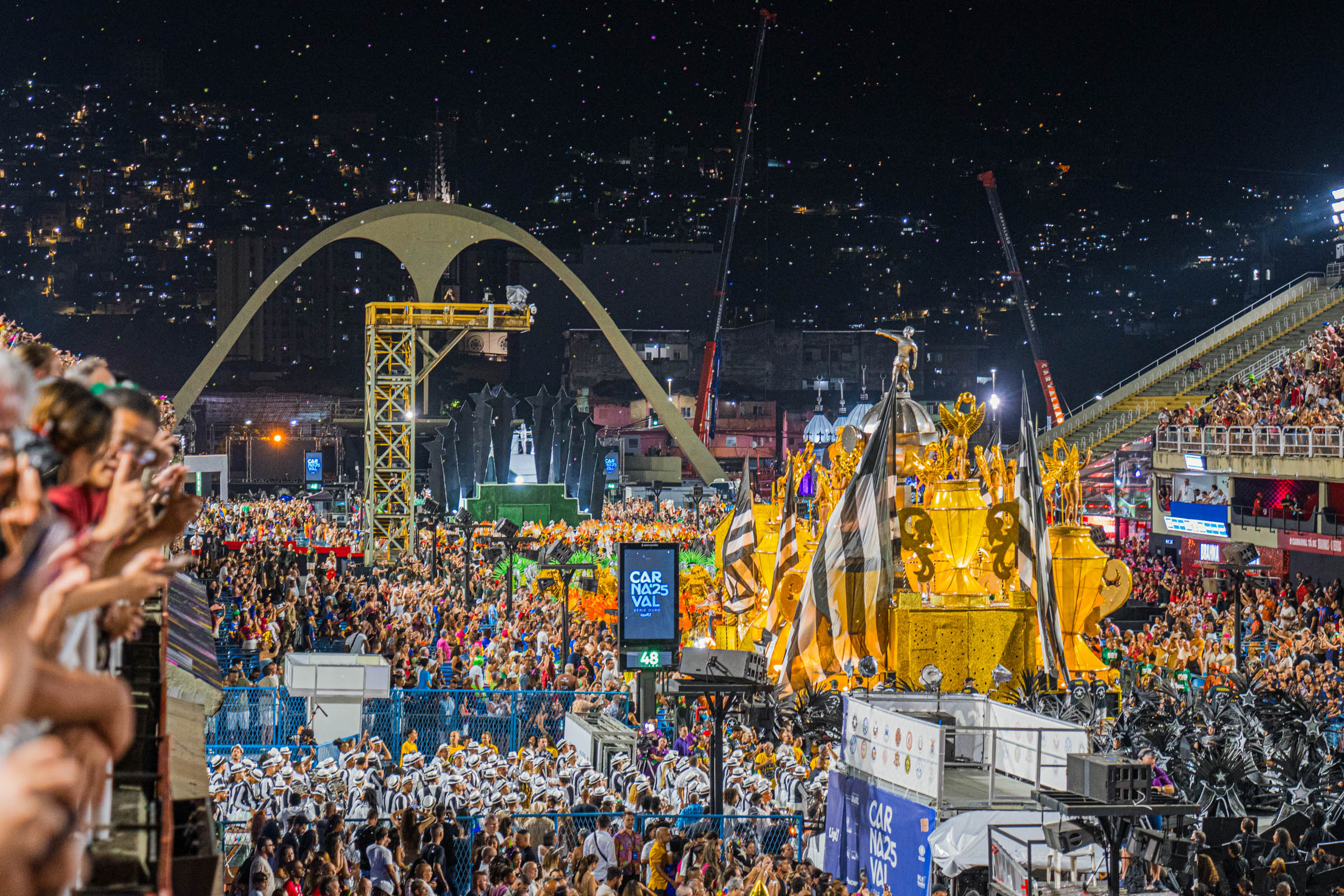
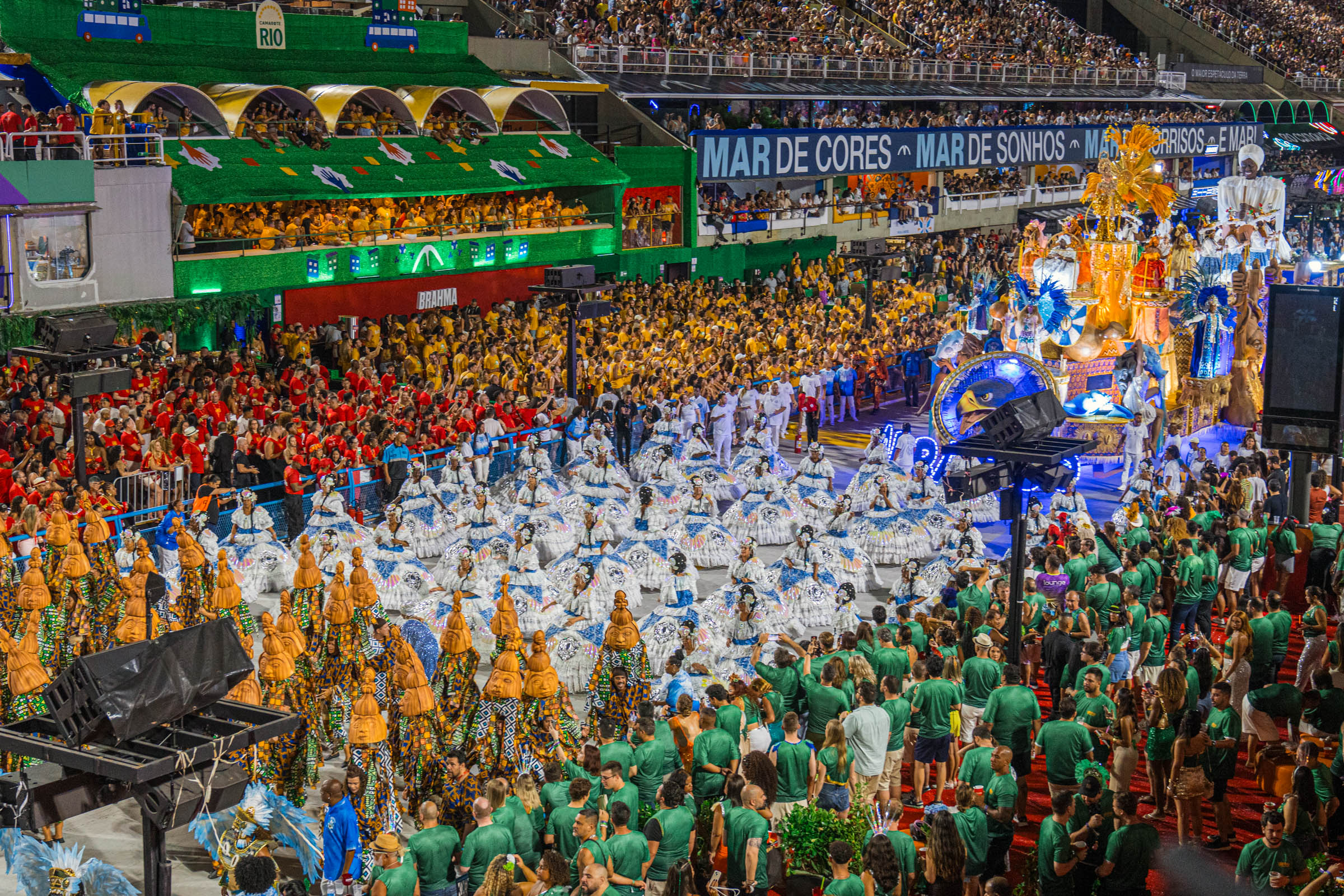
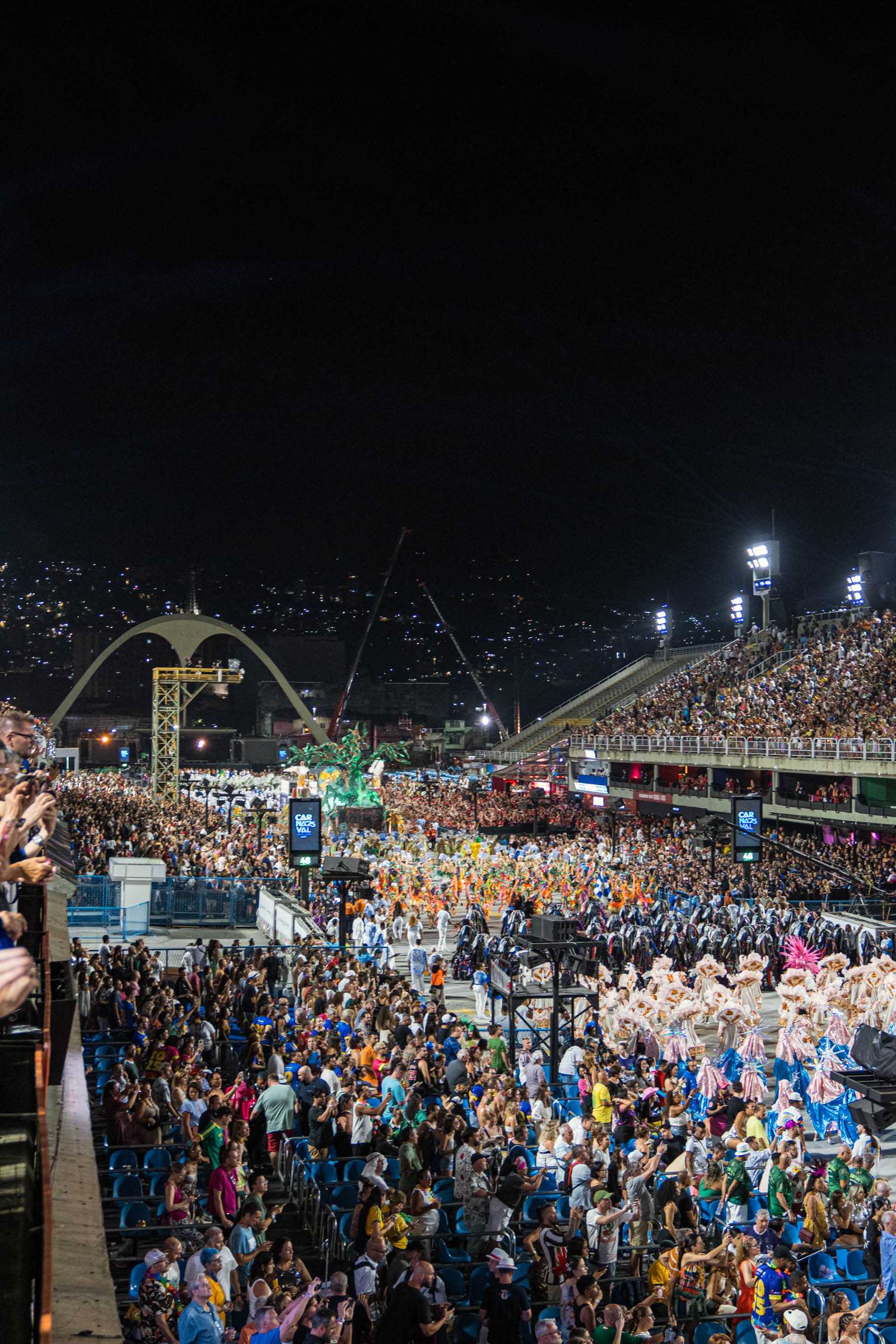
All that work leads to one place: the Sambadrome Marquês de Sapucaí. The architect Oscar Niemeyer designed its structures, and the venue opened in 1984. The parade takes place on a 700-meter (2,300 ft) stretch of Marquês de Sapucaí street, with stands on both sides. After a renovation, the Sambadrome reopened in February 2012. Later, during the 2016 Olympic Games, it hosted archery and the marathon.
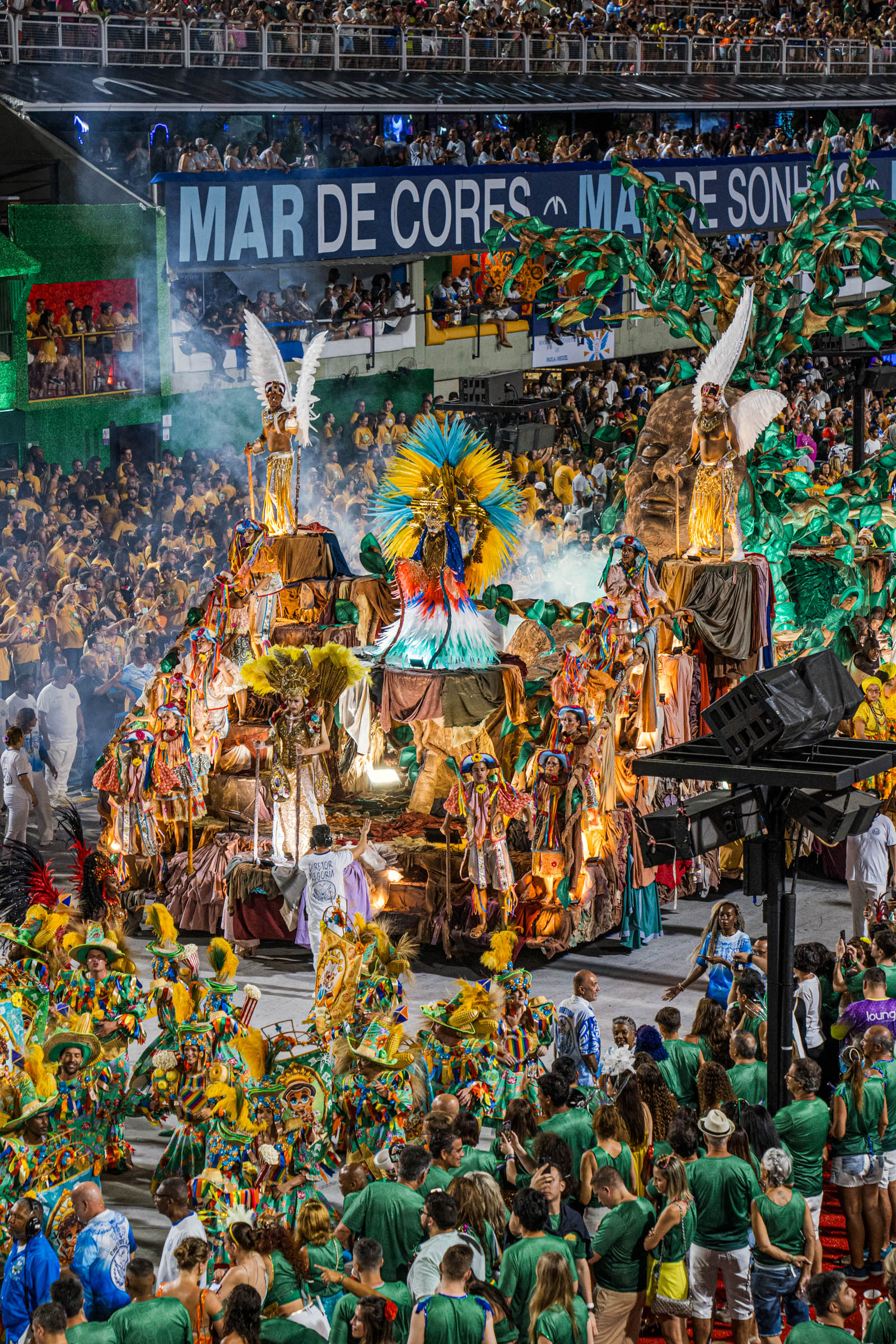
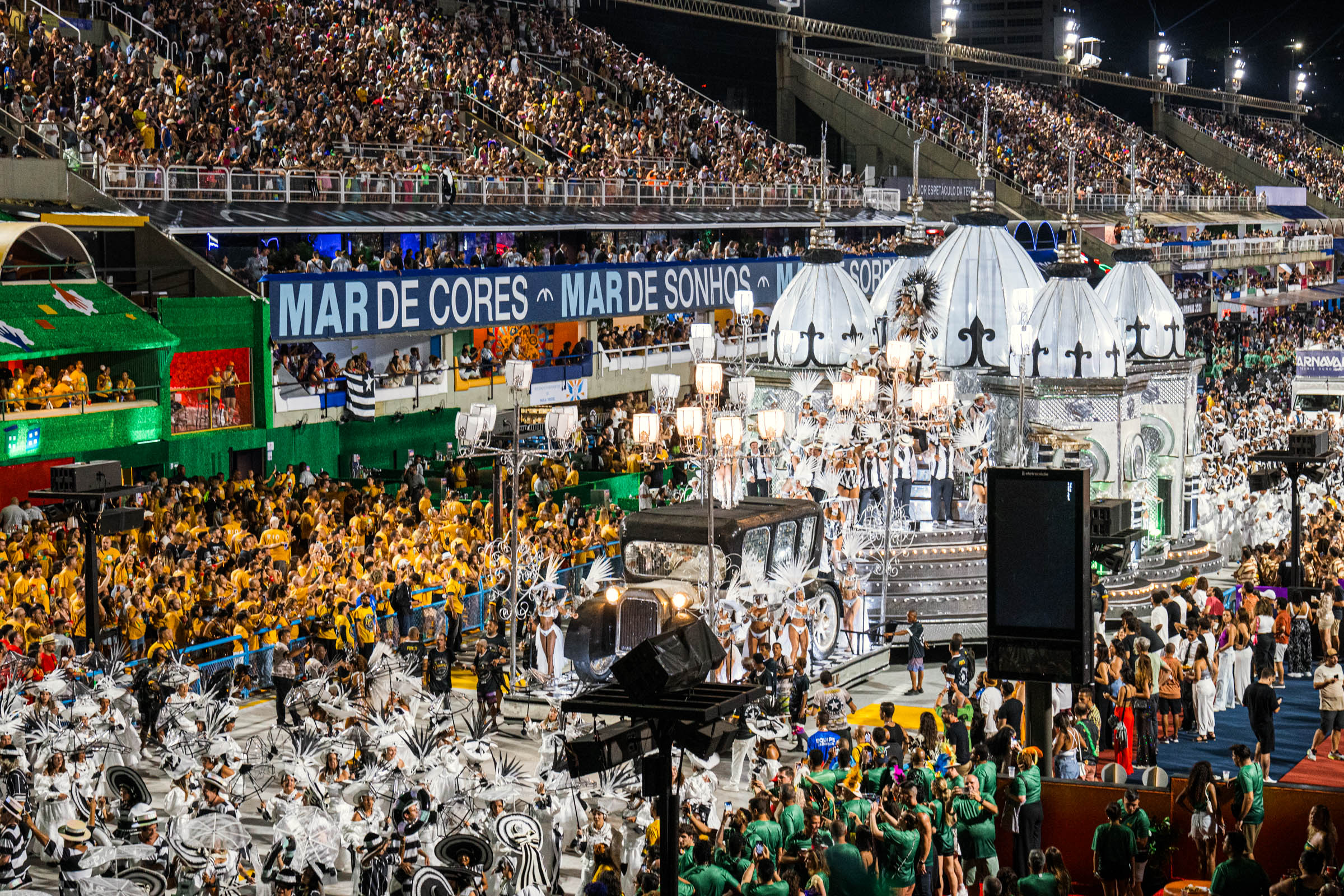
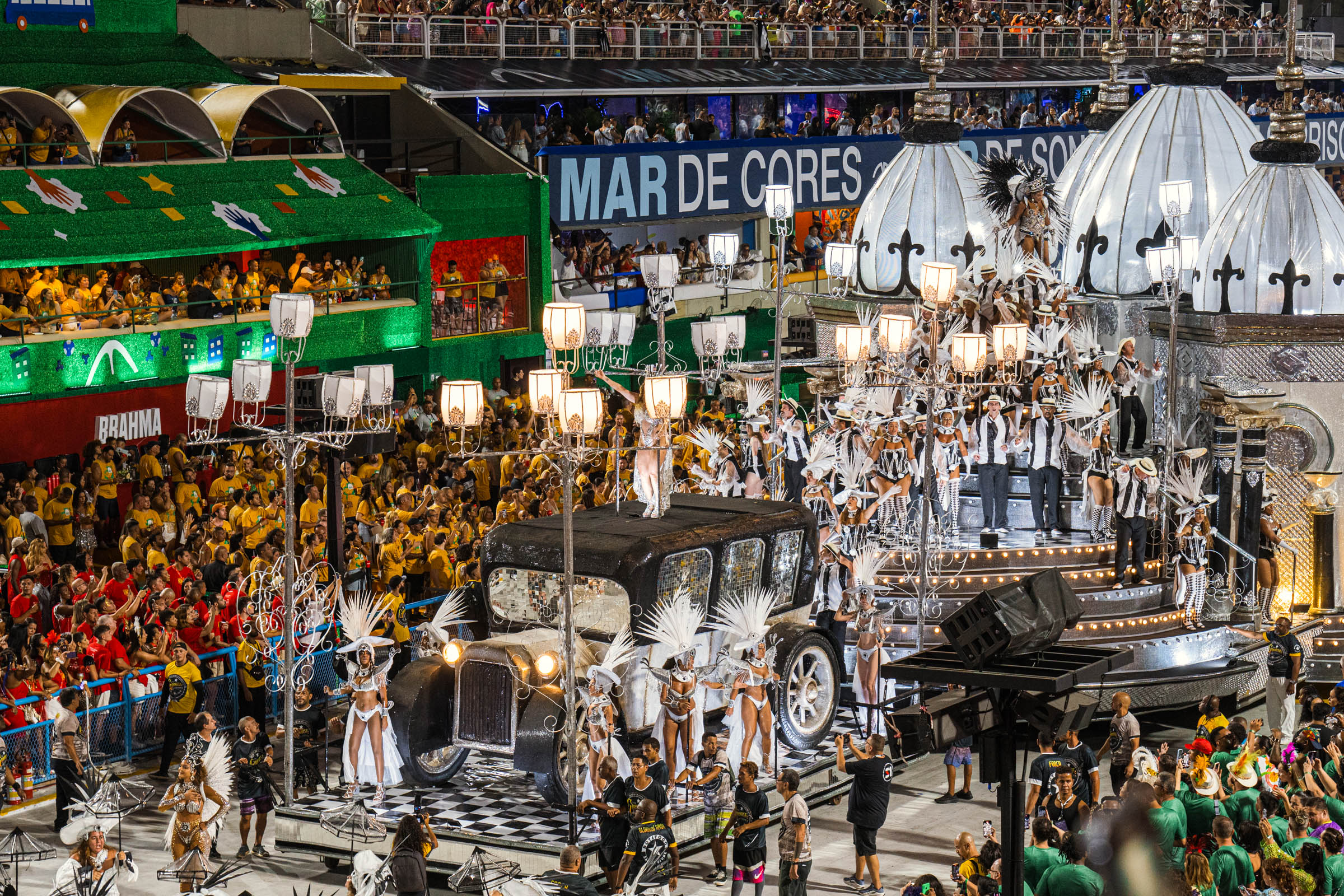
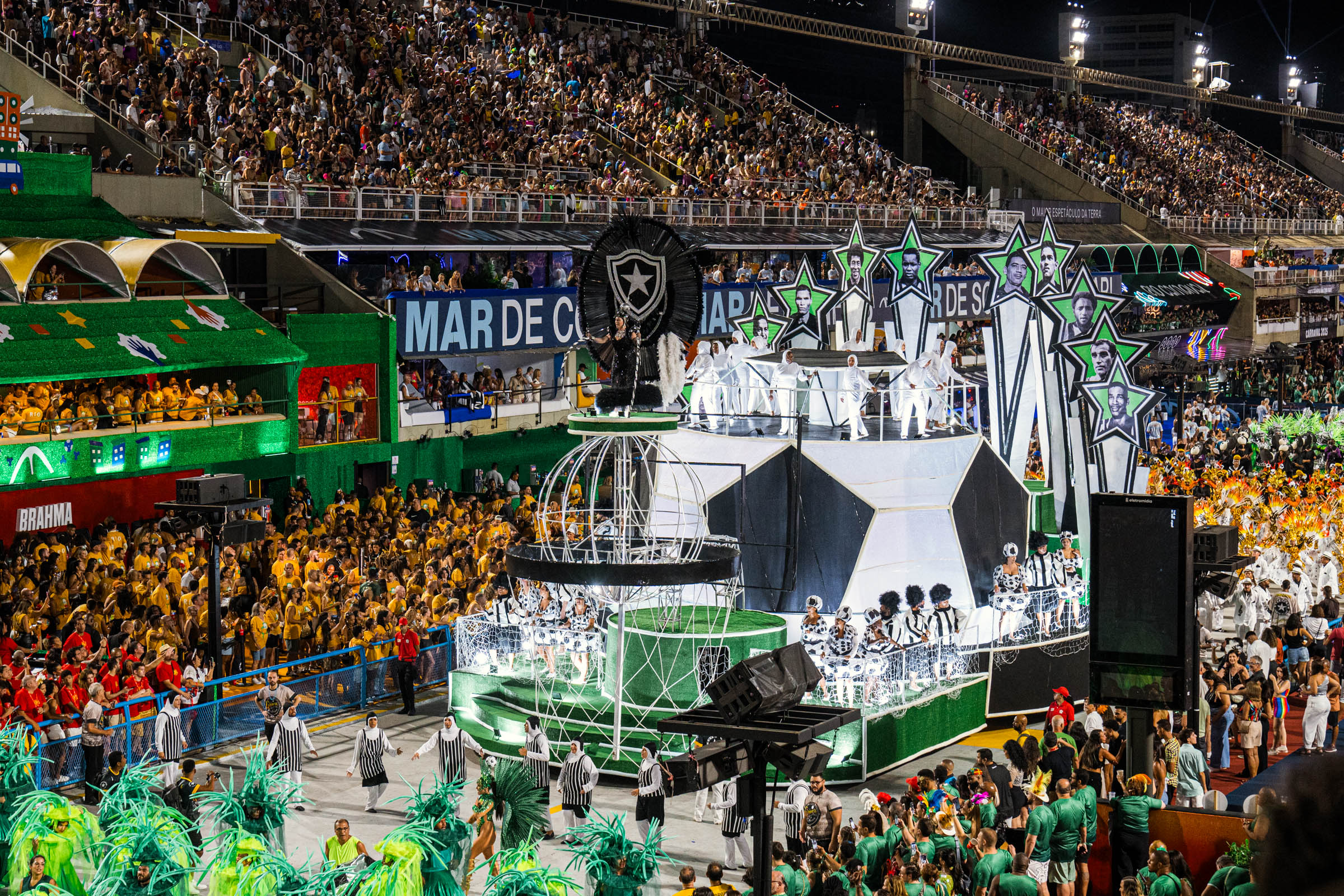
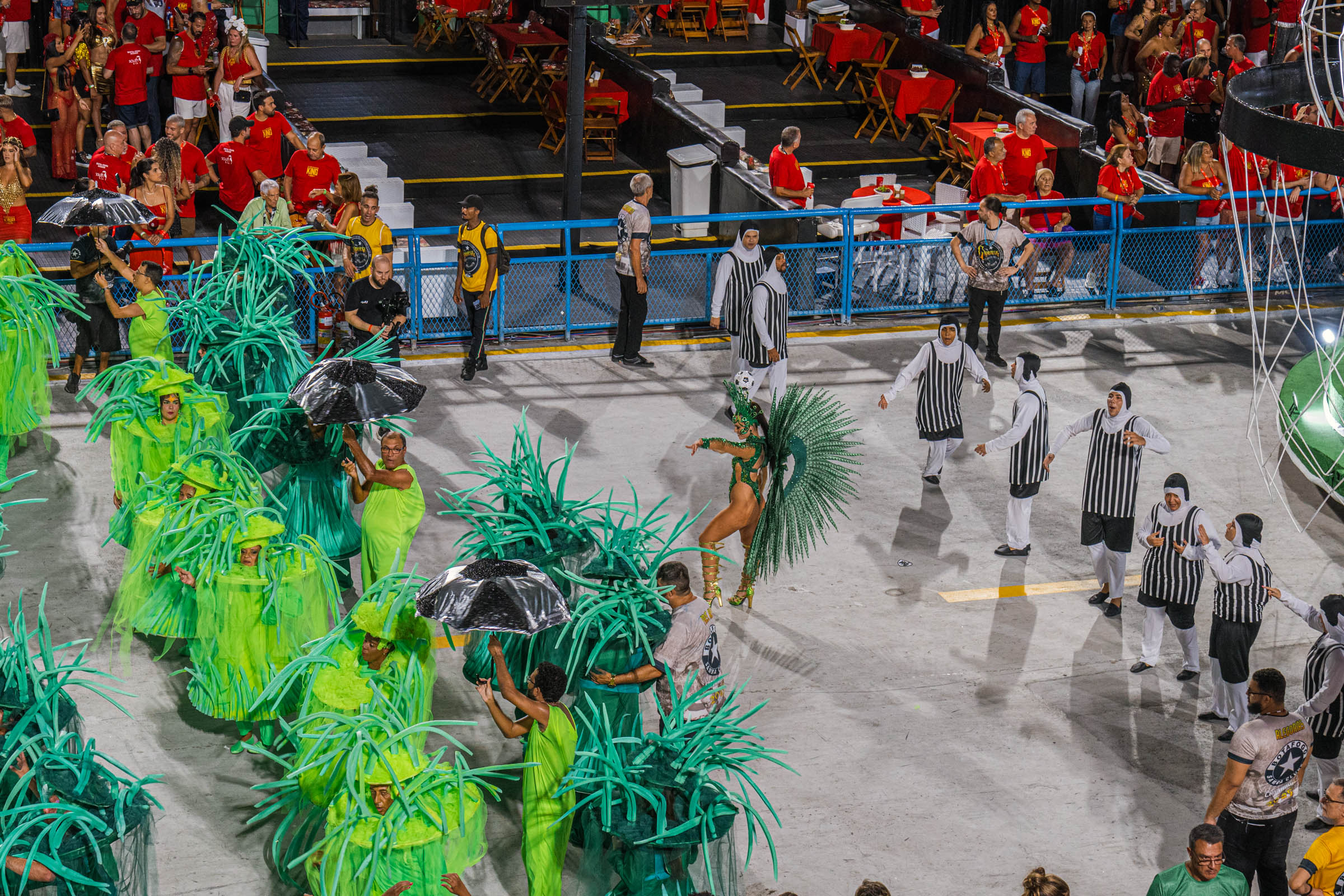
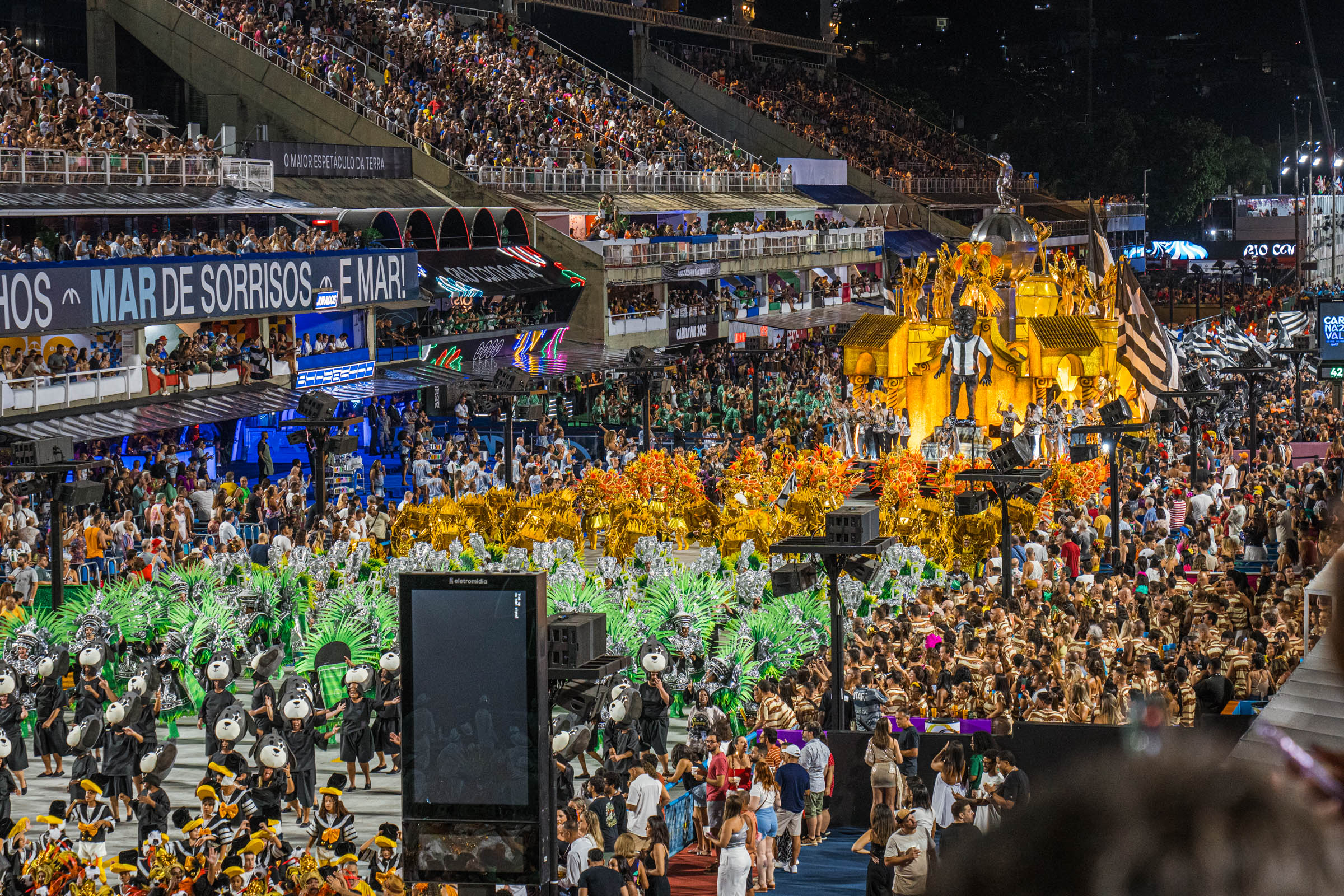
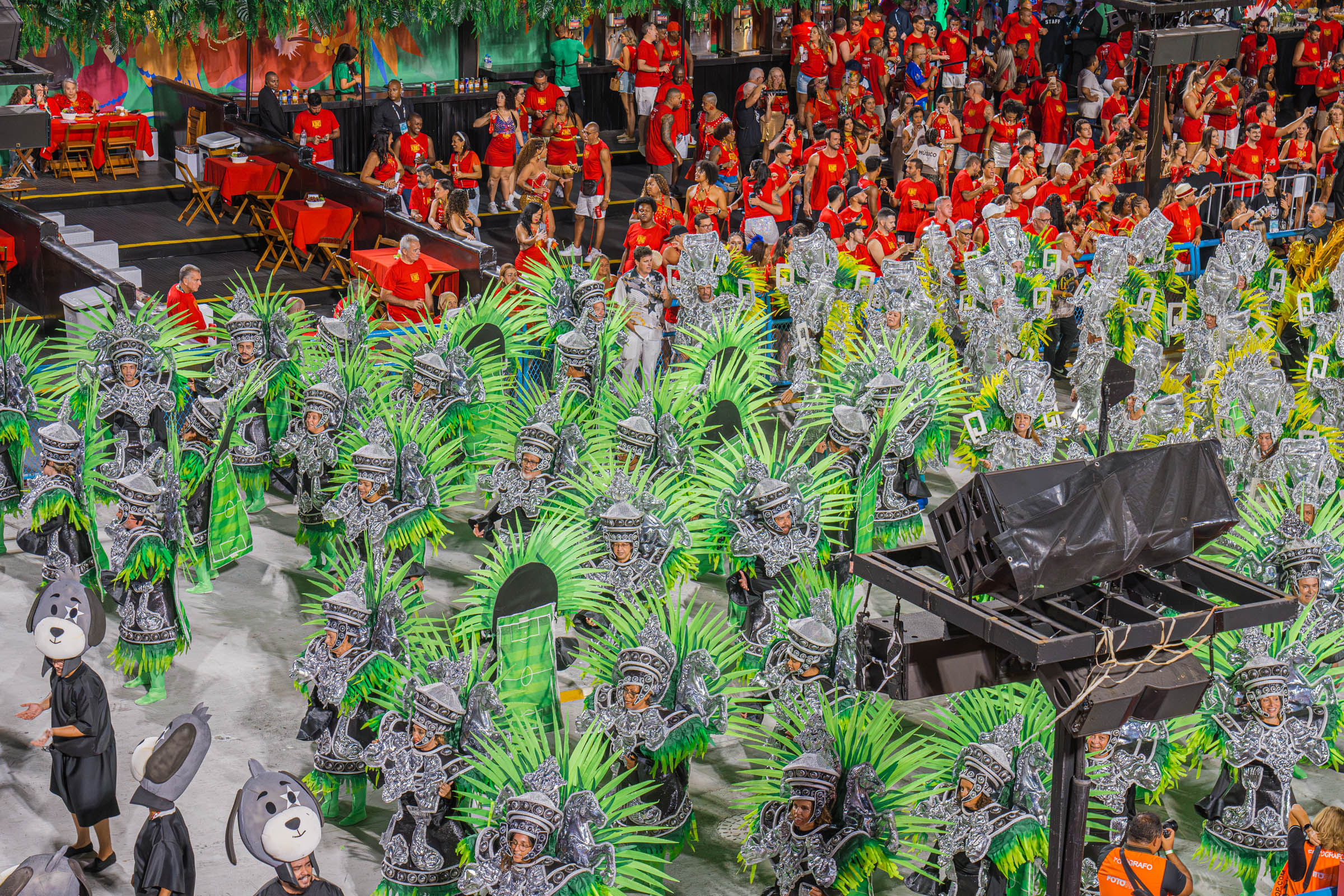
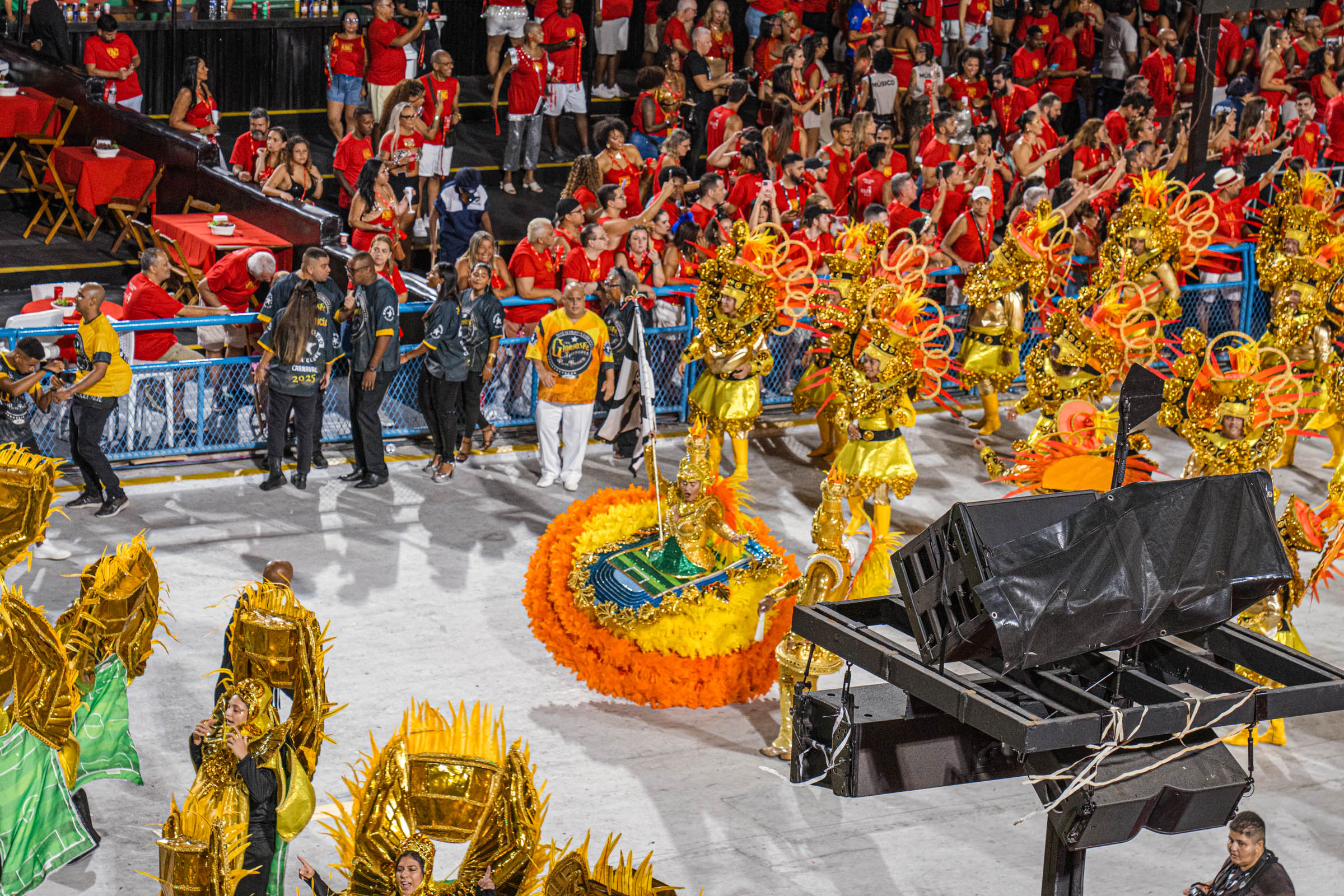
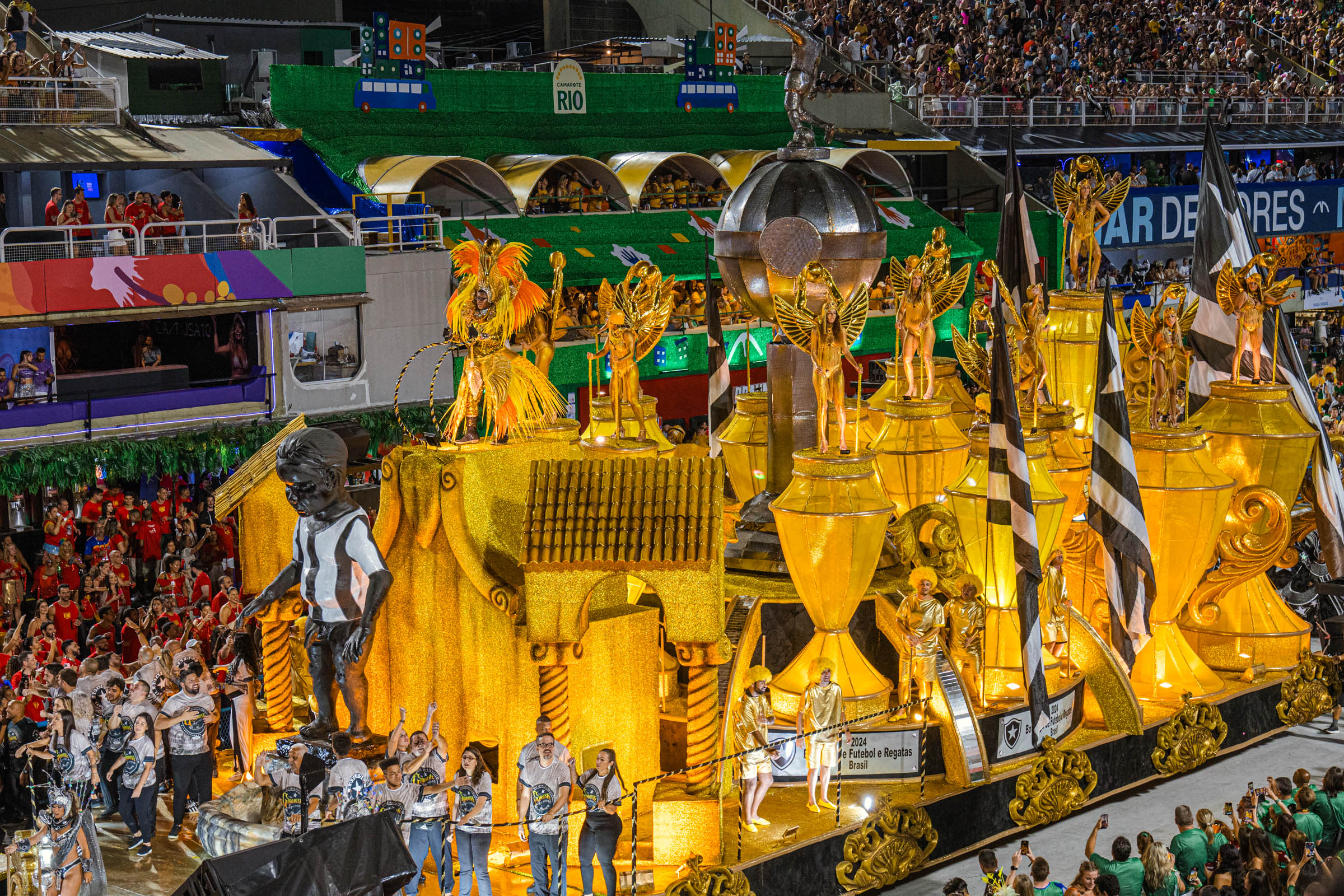
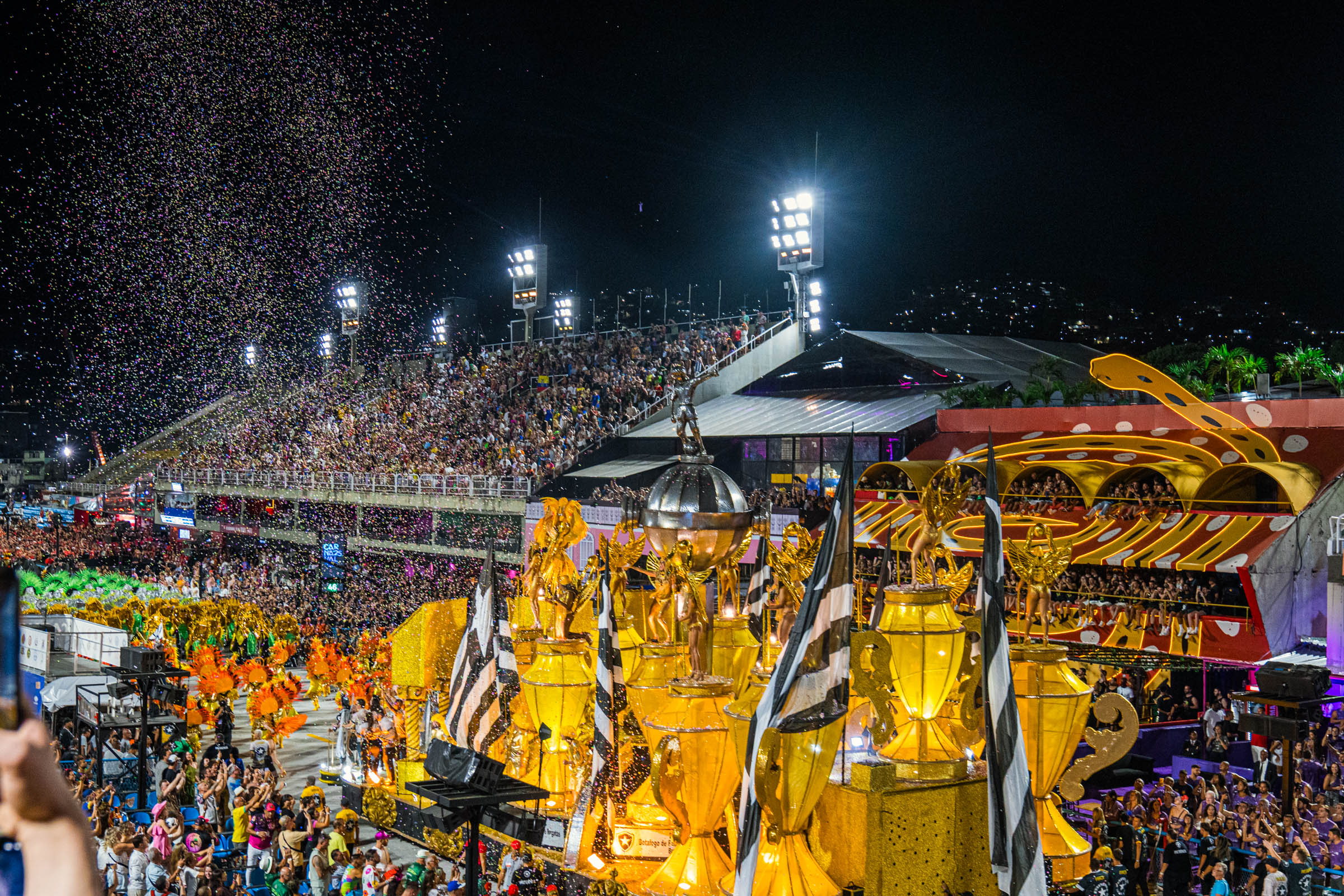
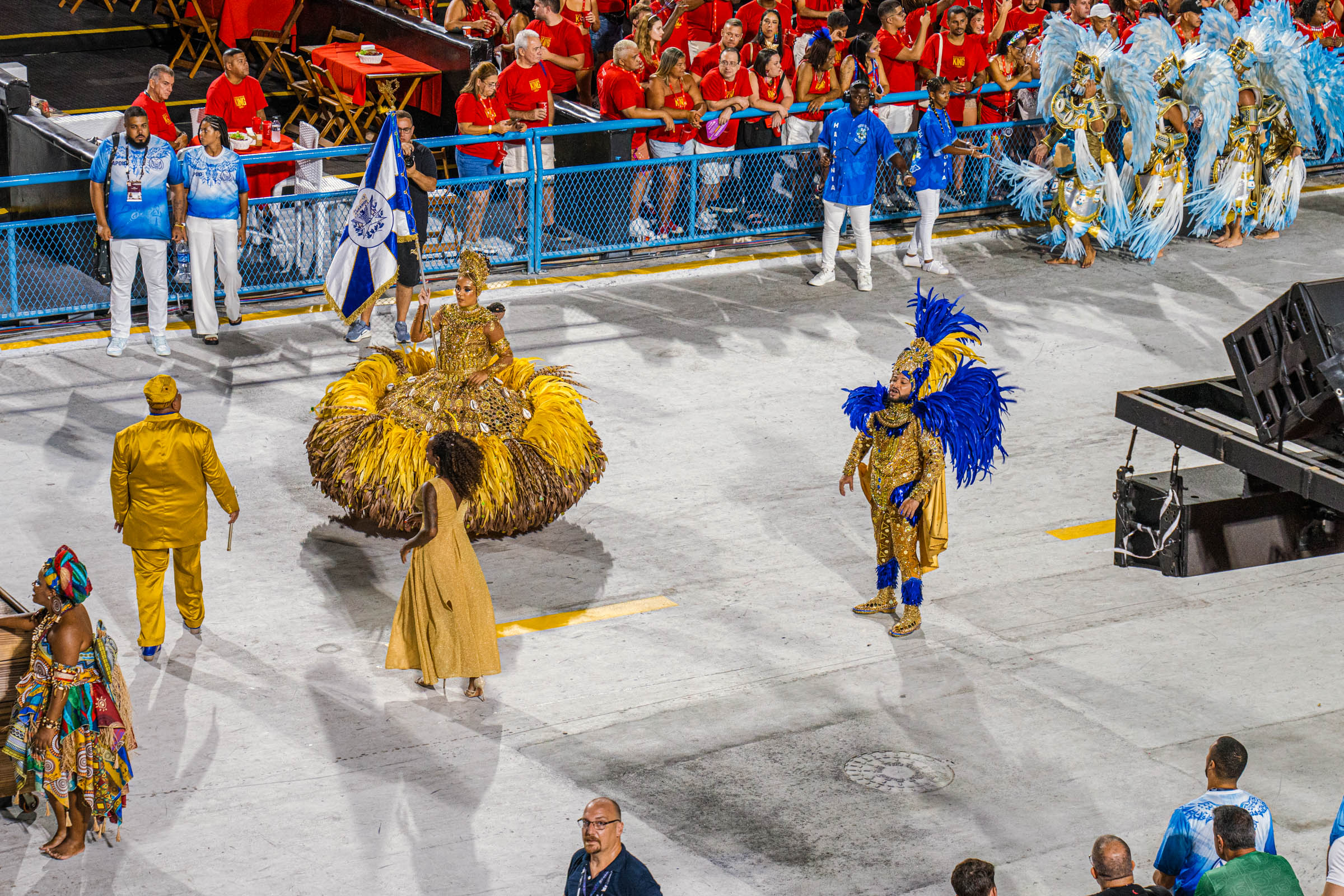
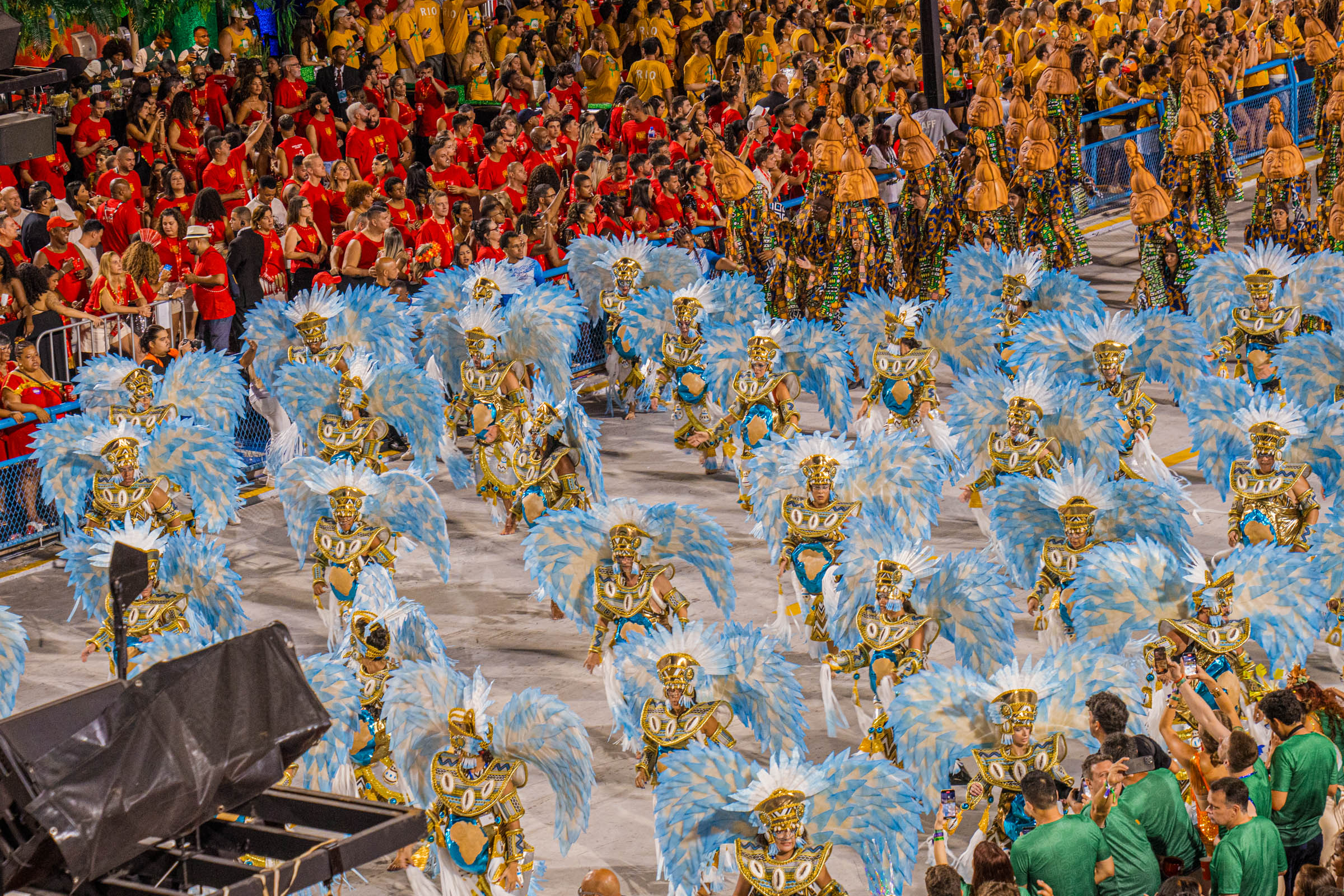
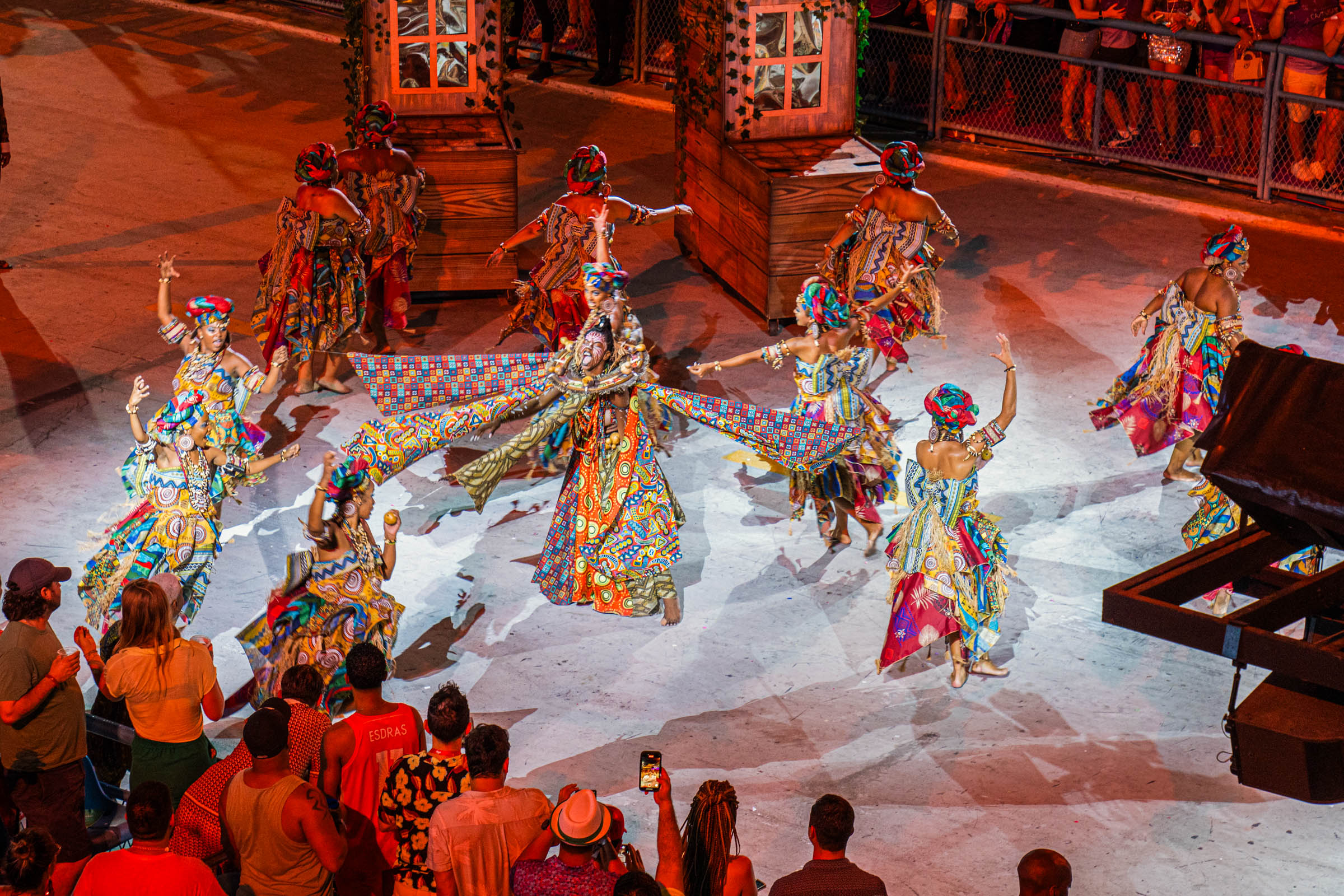
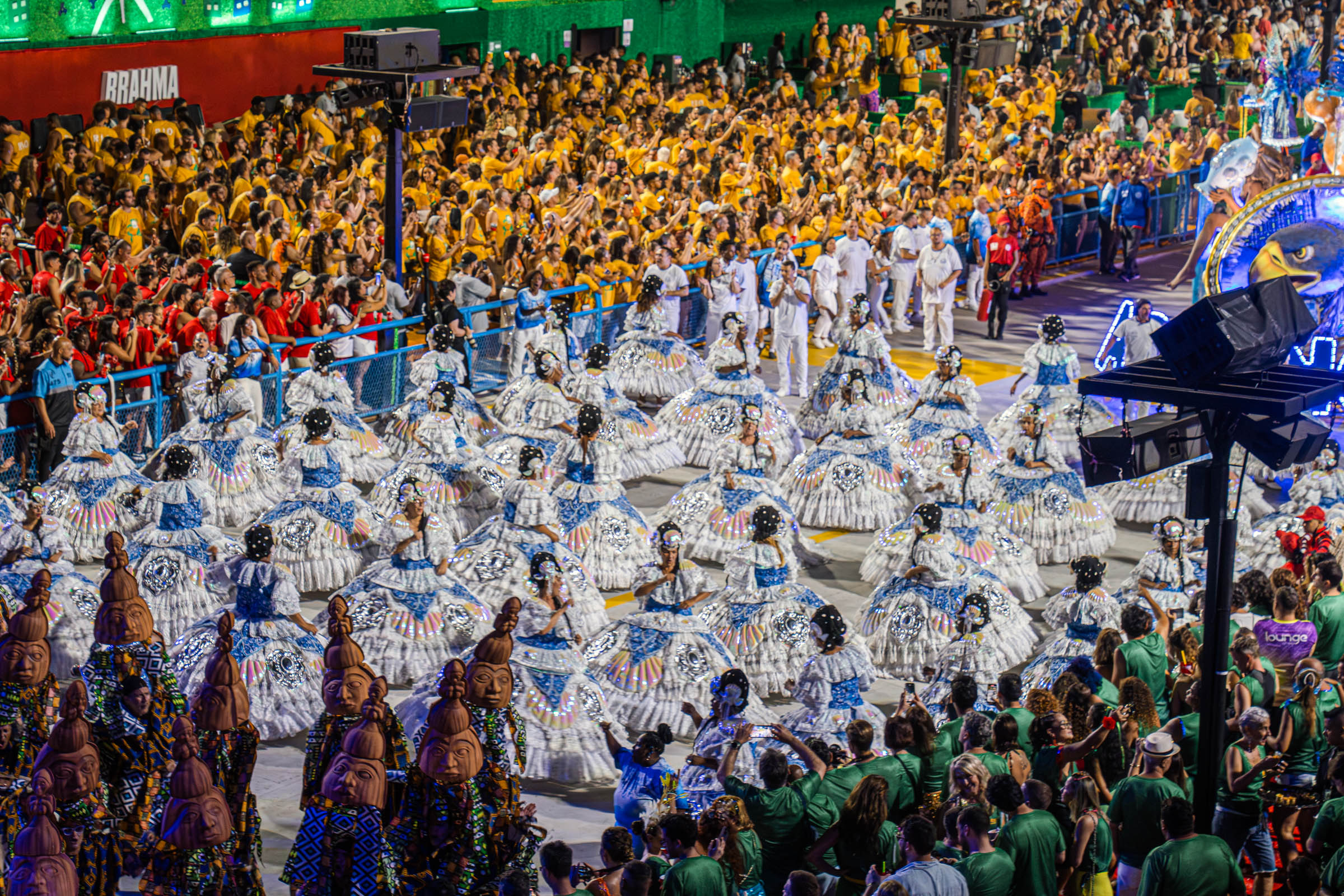
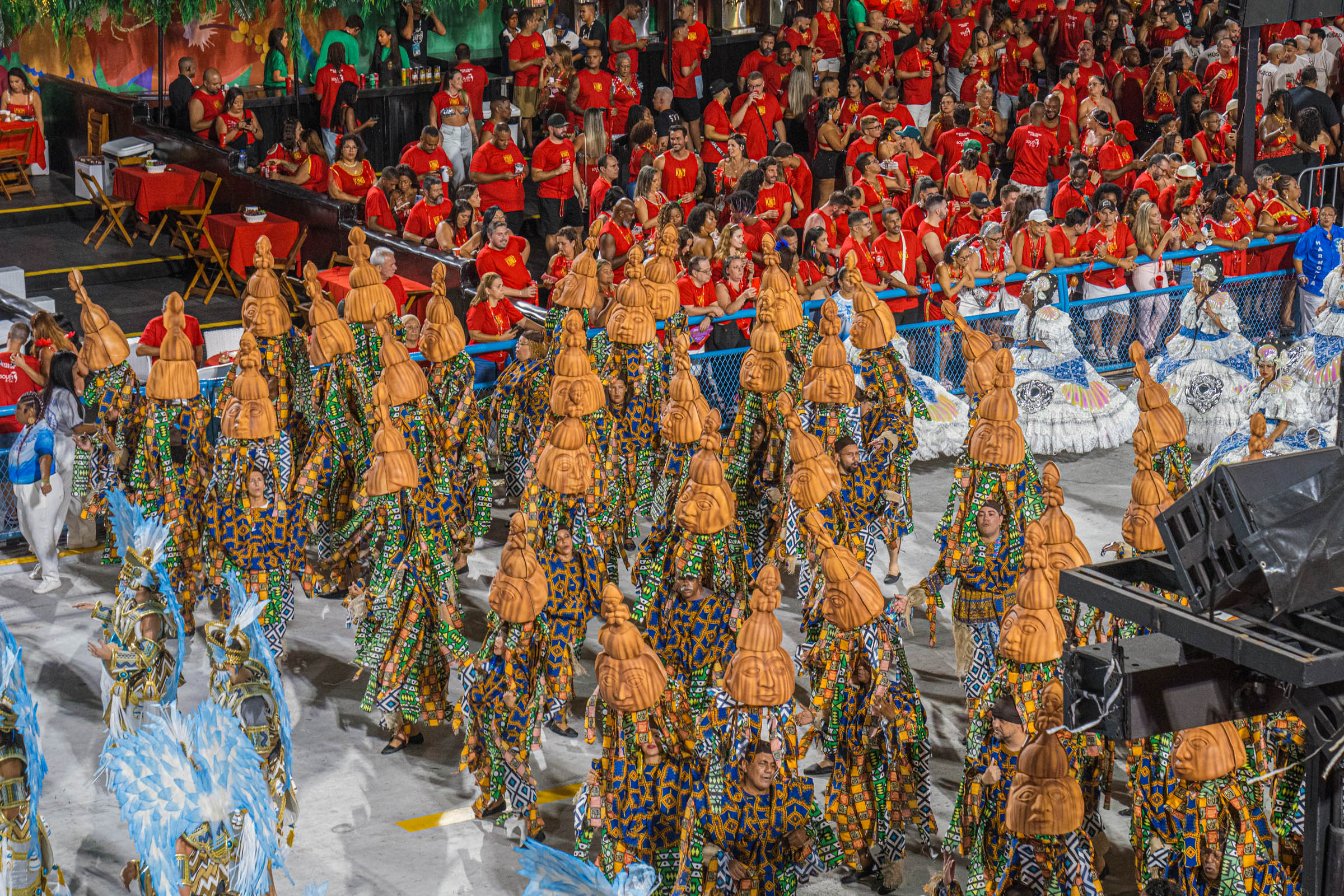
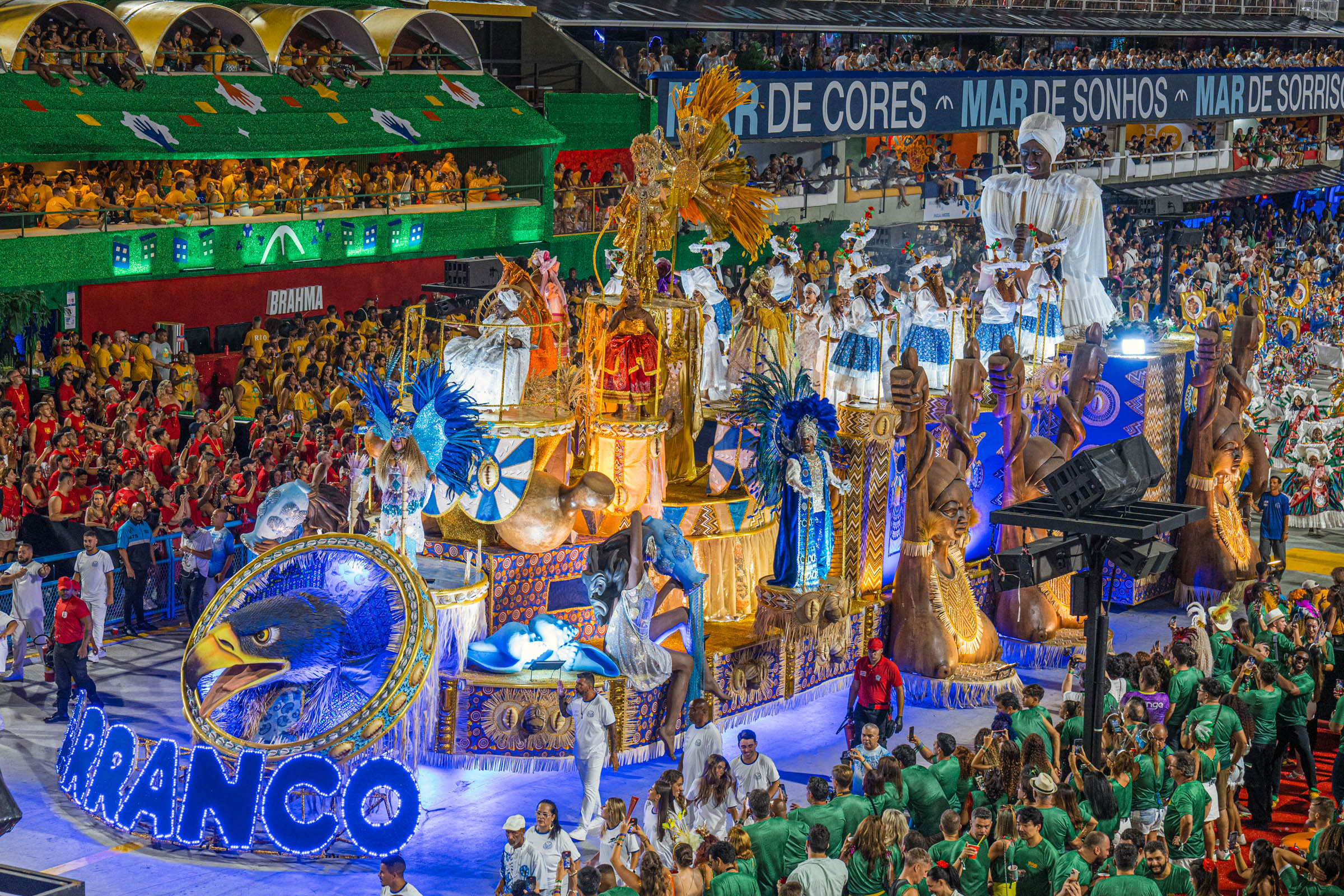
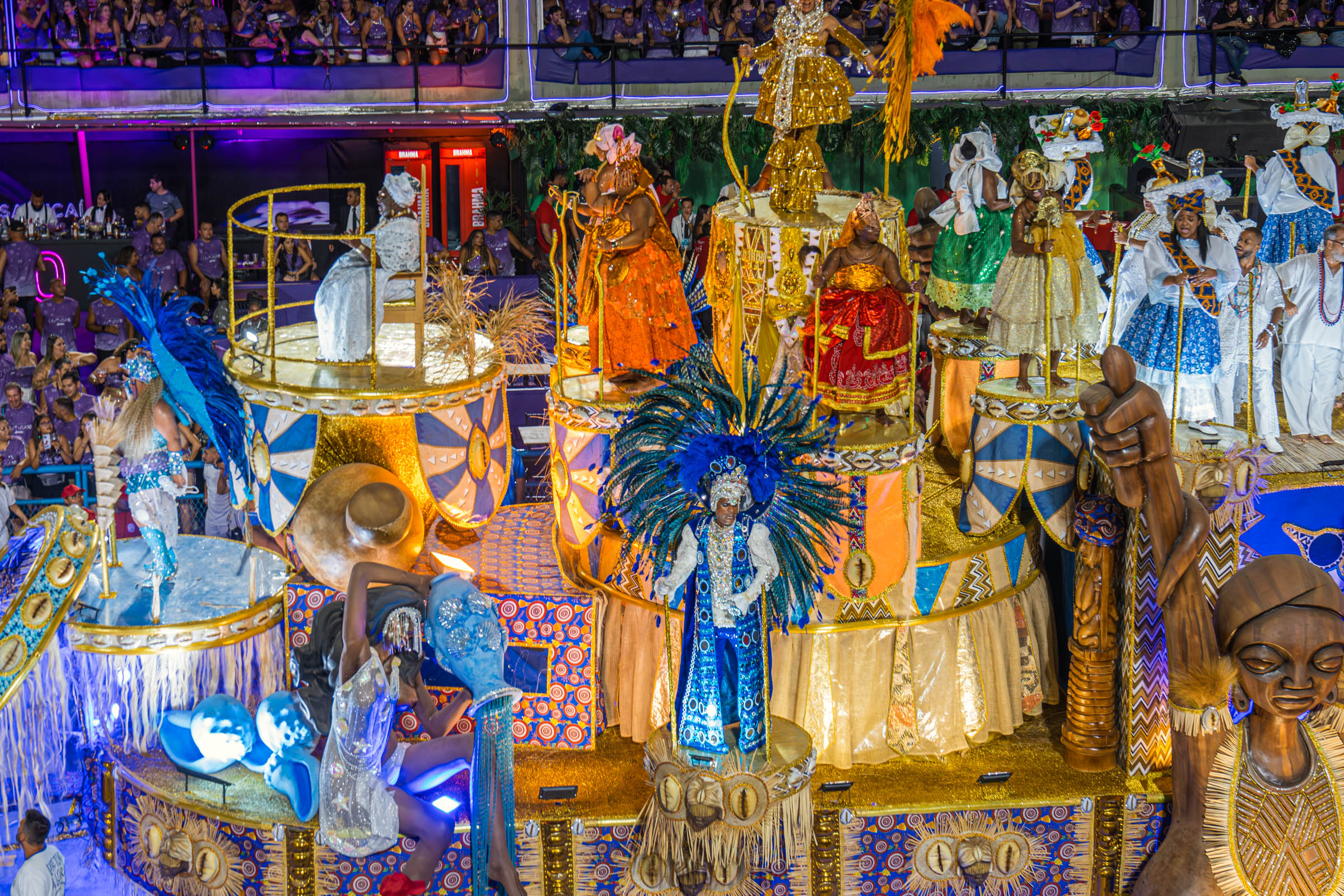
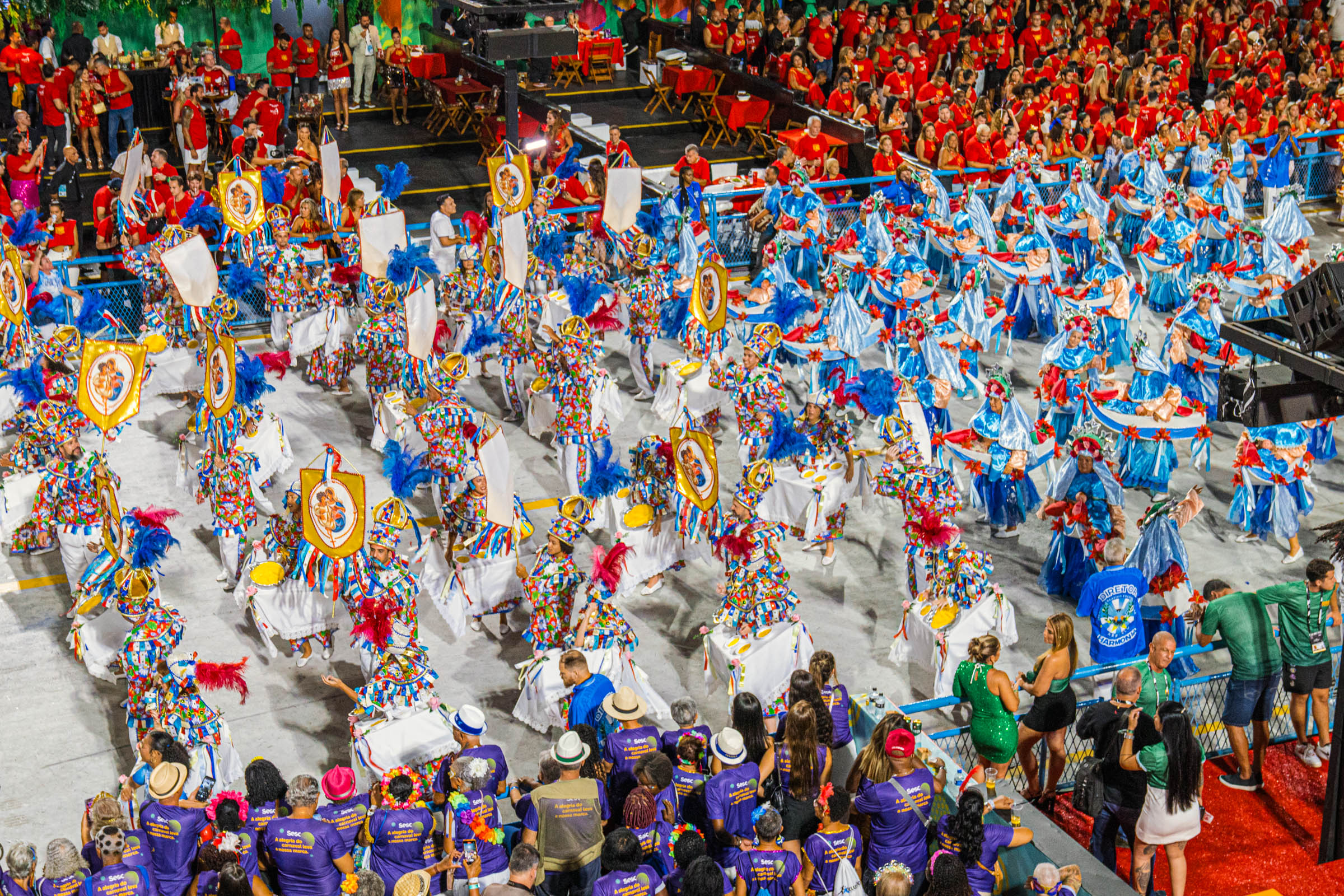
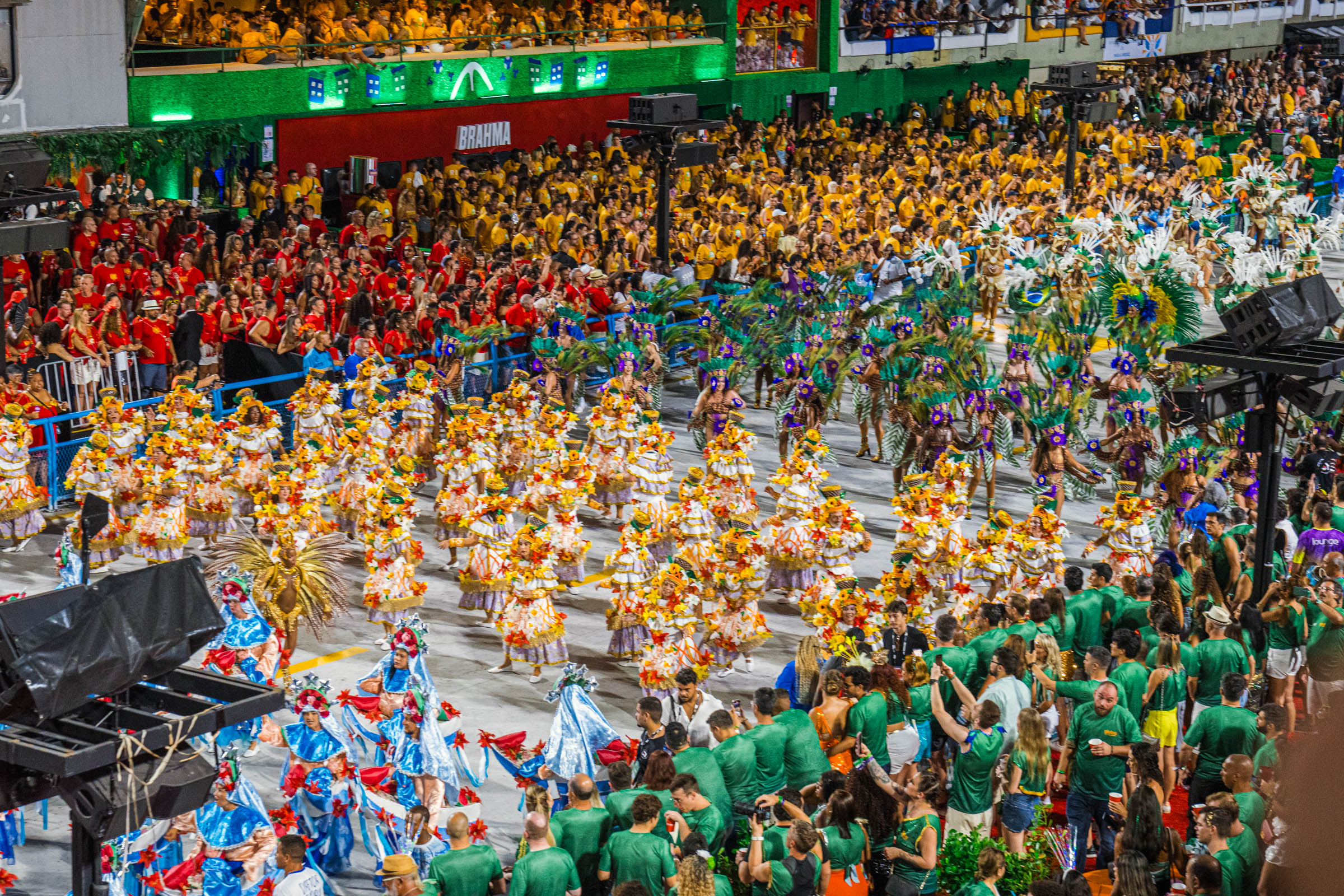
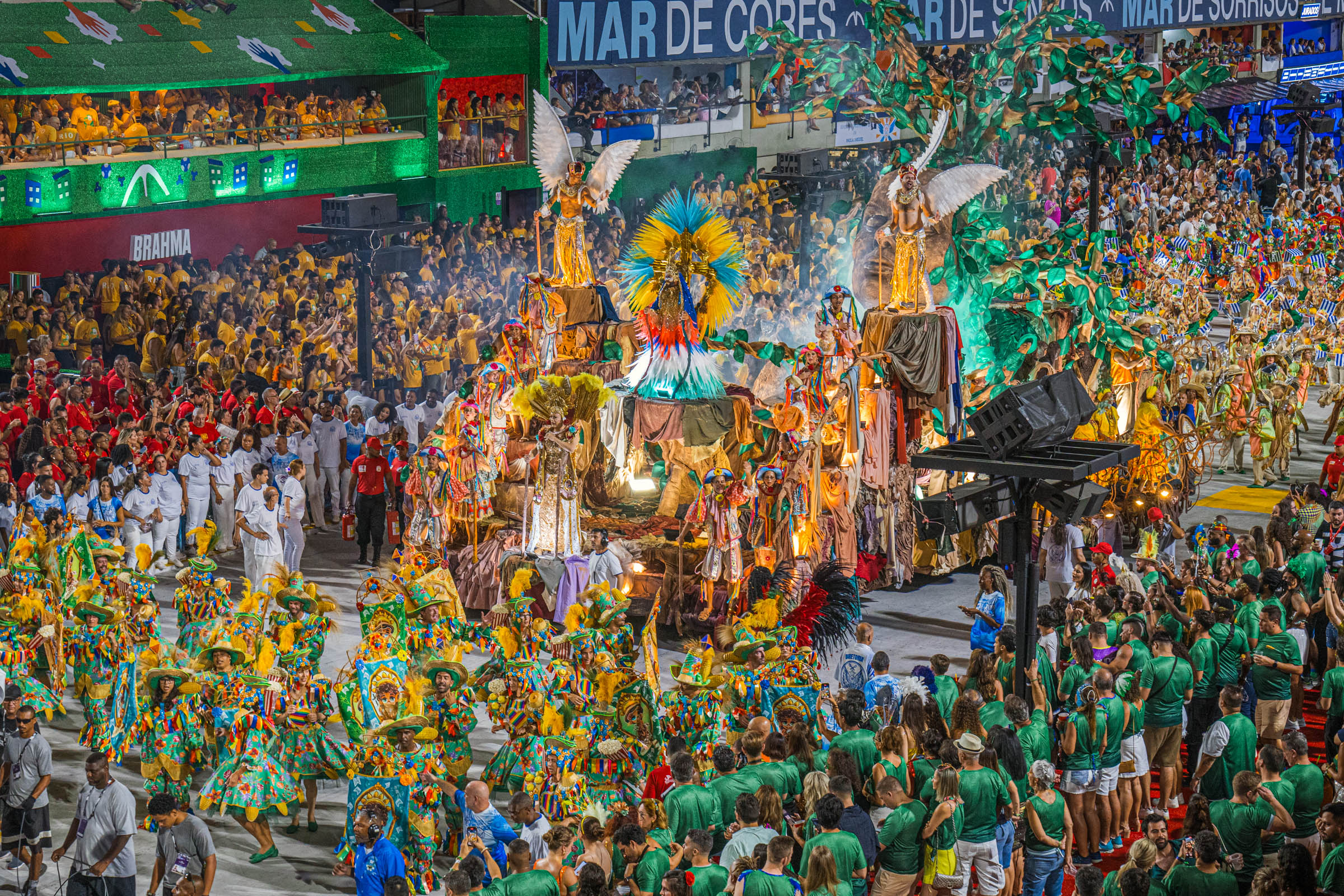
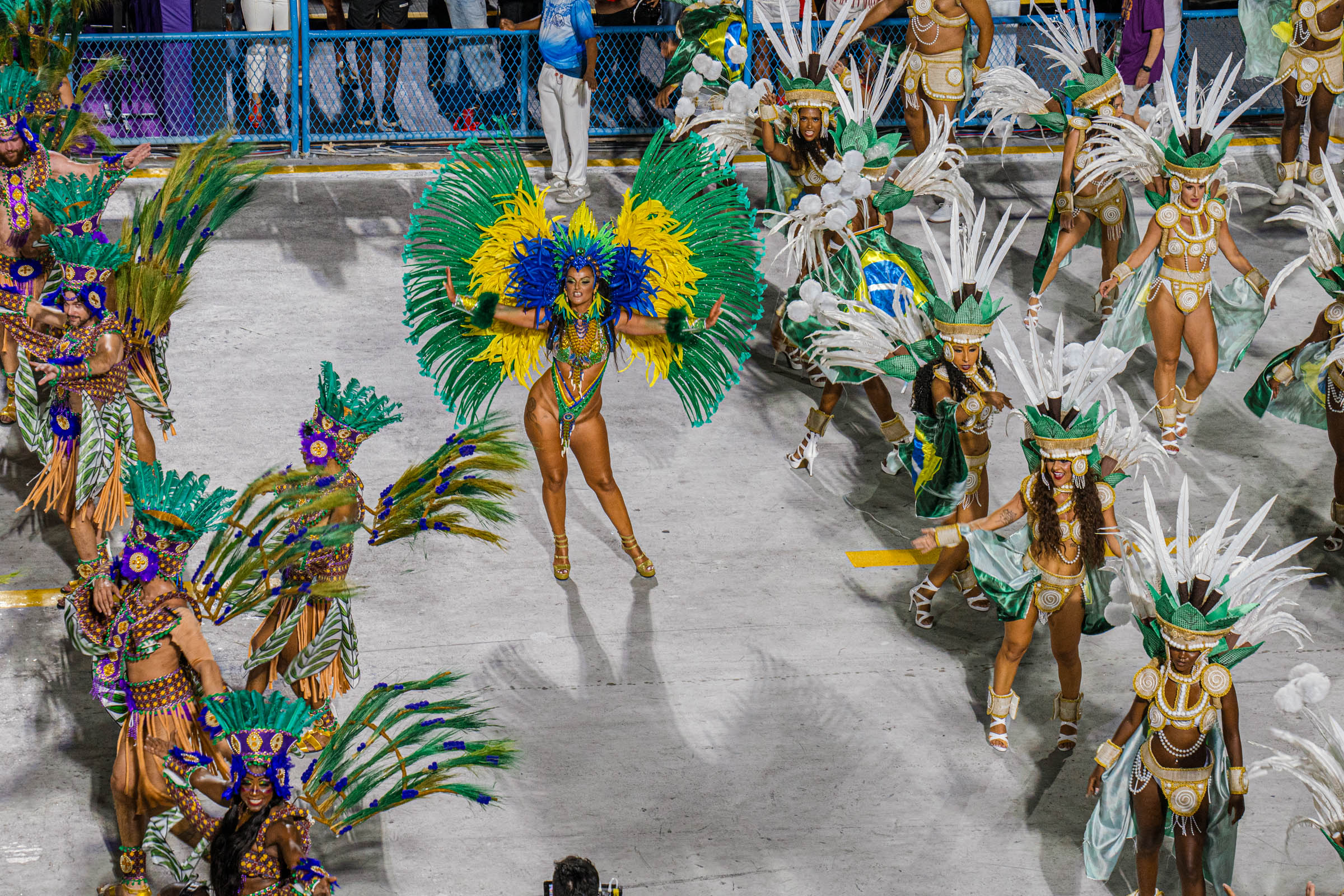
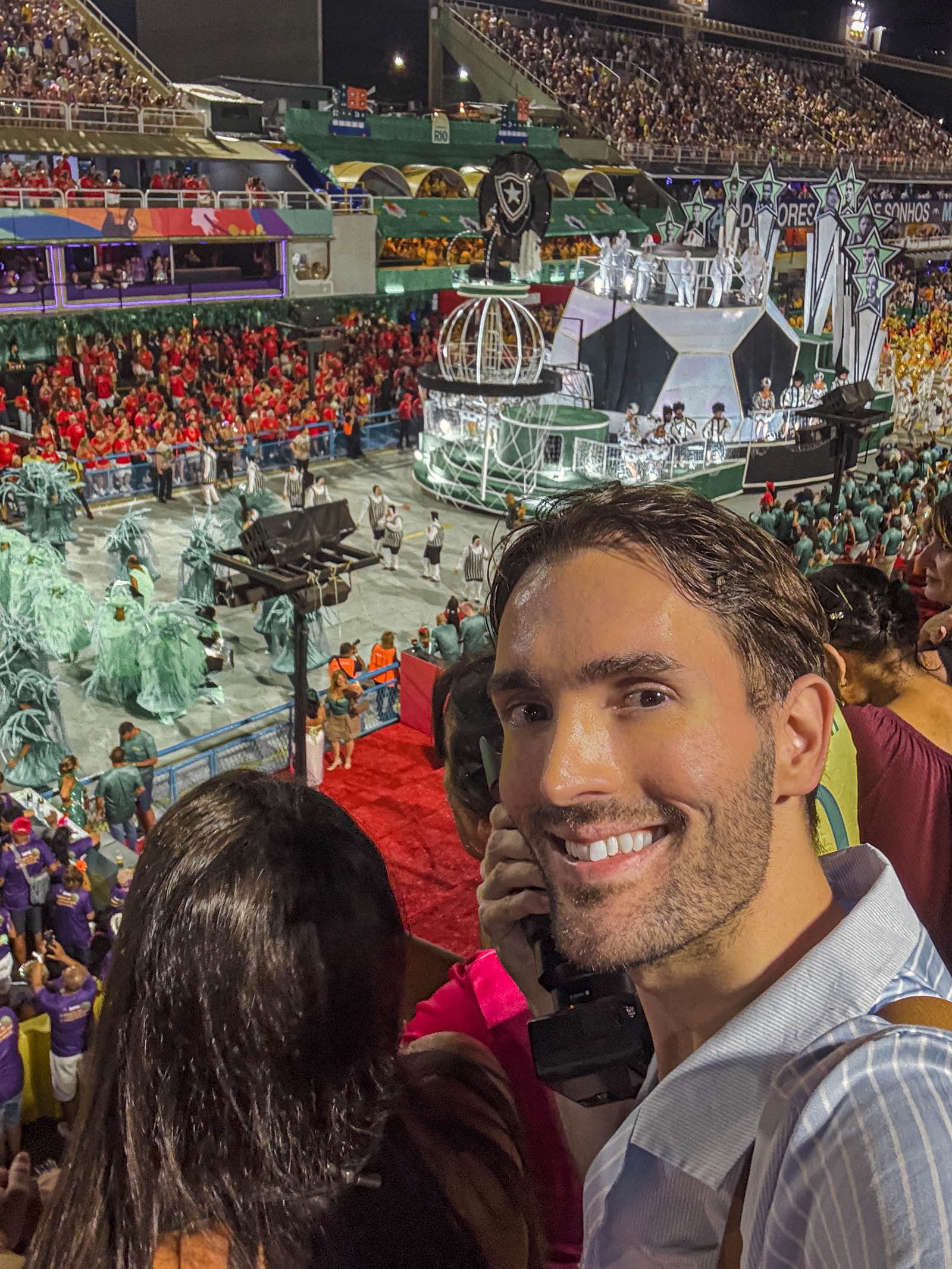
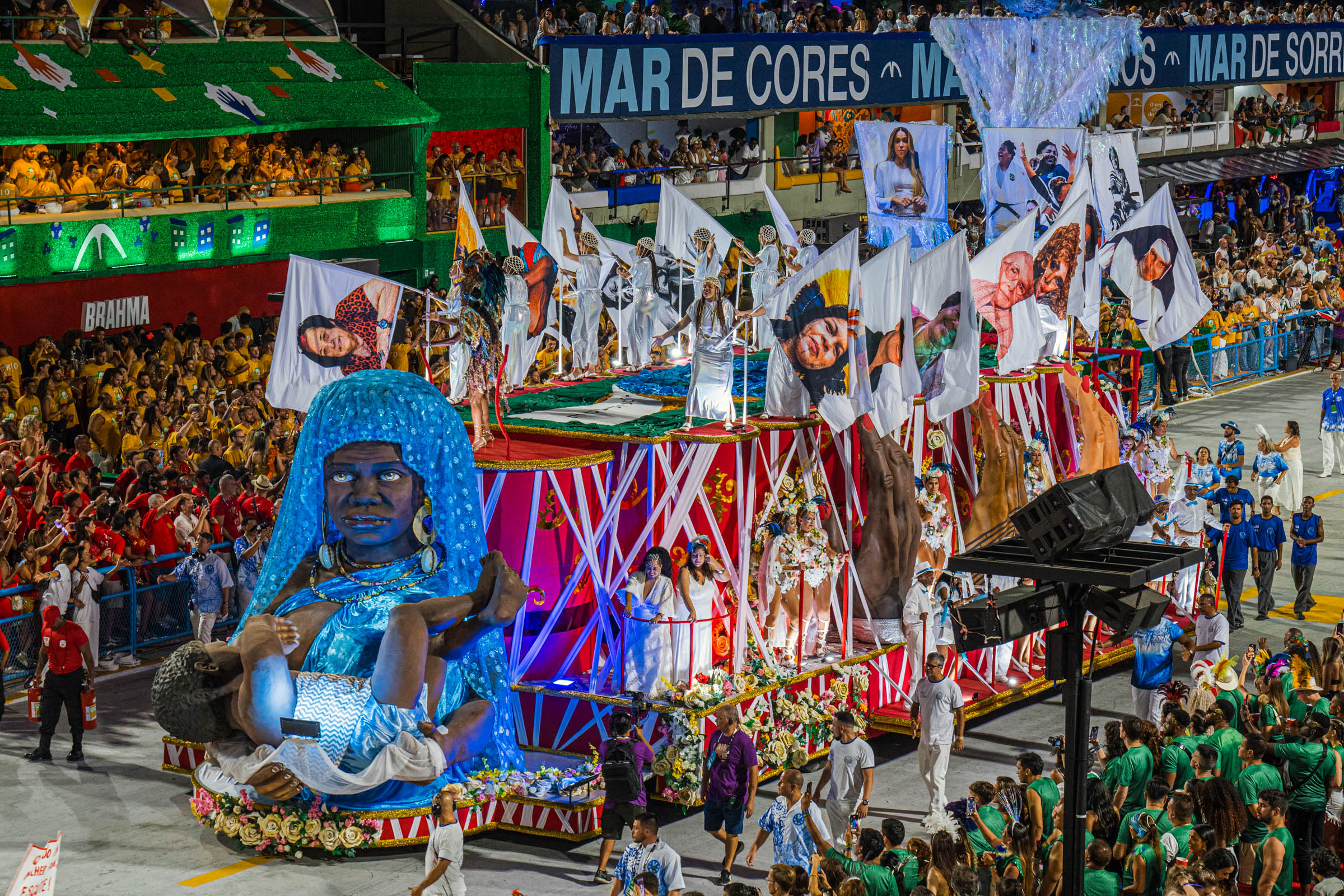
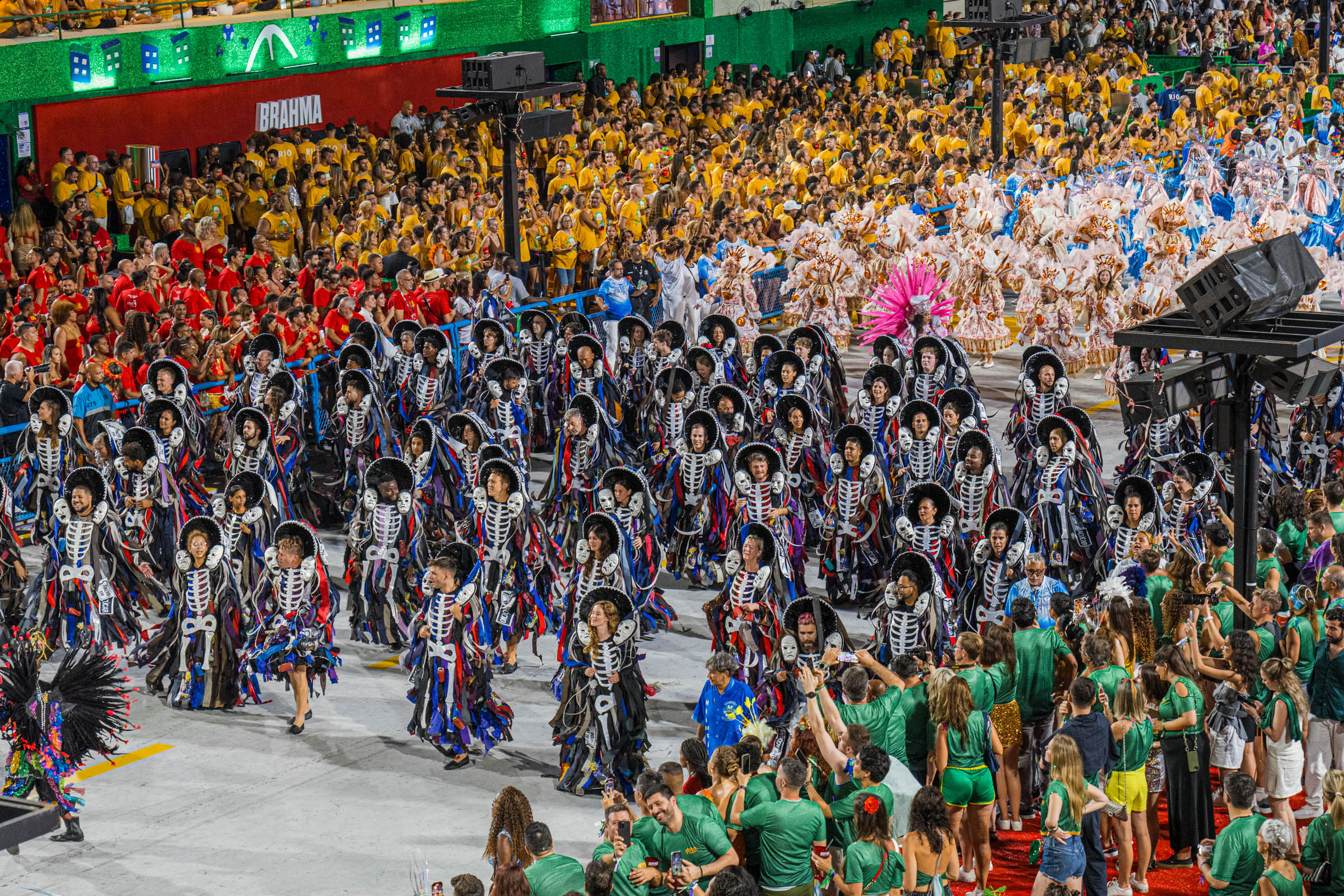
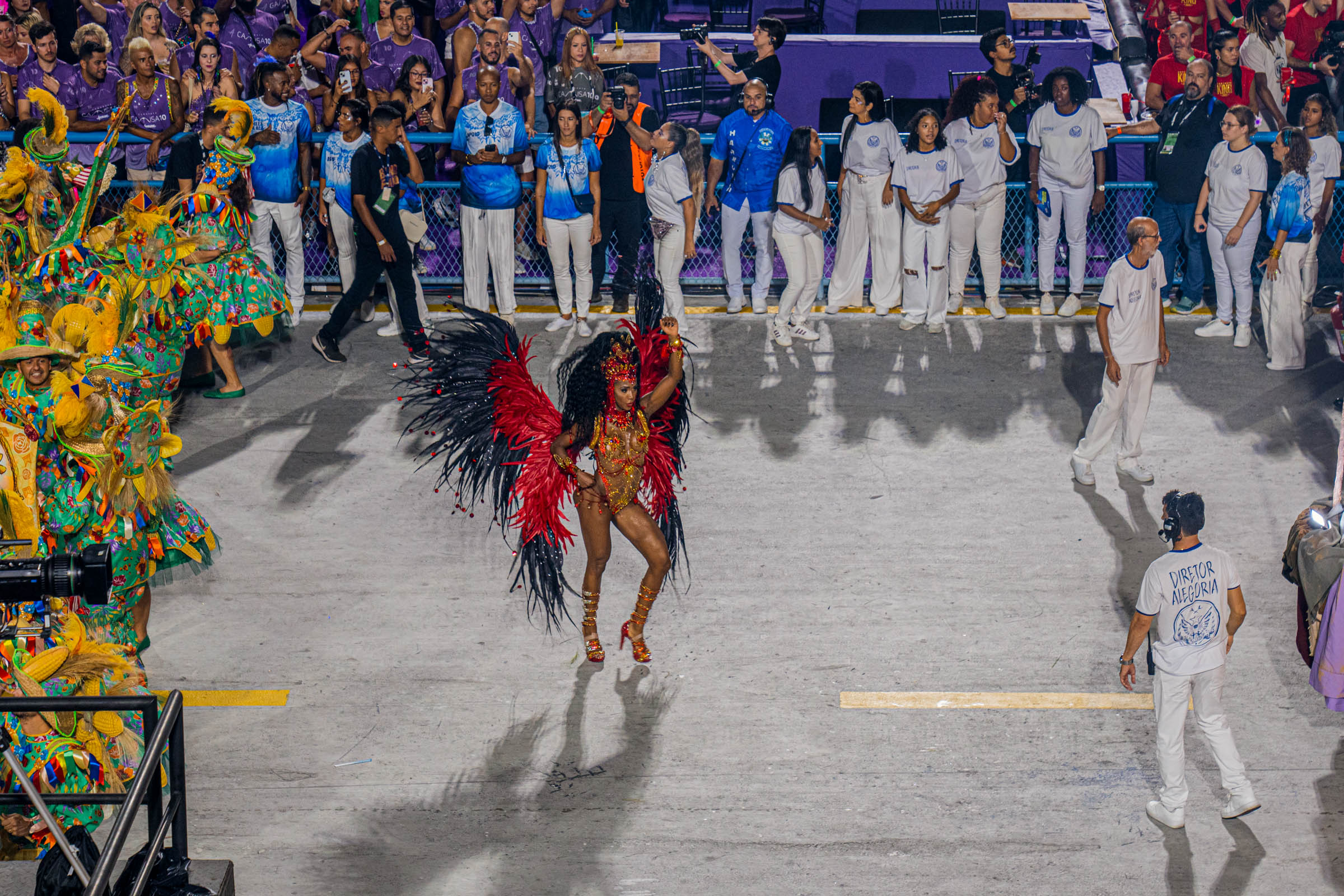
During my stay in Rio de Janeiro, I watched the parade at the Sambadrome. The photos in this story show what the samba schools brought to the avenue. There were monumental floats, thousands of costumes and the constant rhythm of the drums.
RIO CARNIVAL IN NUMBERS
The festival takes place every year before Lent. During those days, around two million people per day fill the streets of the city. According to historical records, the first carnival festival in Rio took place in 1723.
A typical Rio Carnival parade brings together revelers, floats and decorations from the many samba schools of the city. In fact, Rio has more than 200 samba schools, divided into several leagues and divisions. A samba school is a community association of neighbors who want to celebrate the carnival together. Usually, its members share the same area and a common background.
HOW A SAMBA SCHOOL PARADES AT THE RIO CARNIVAL
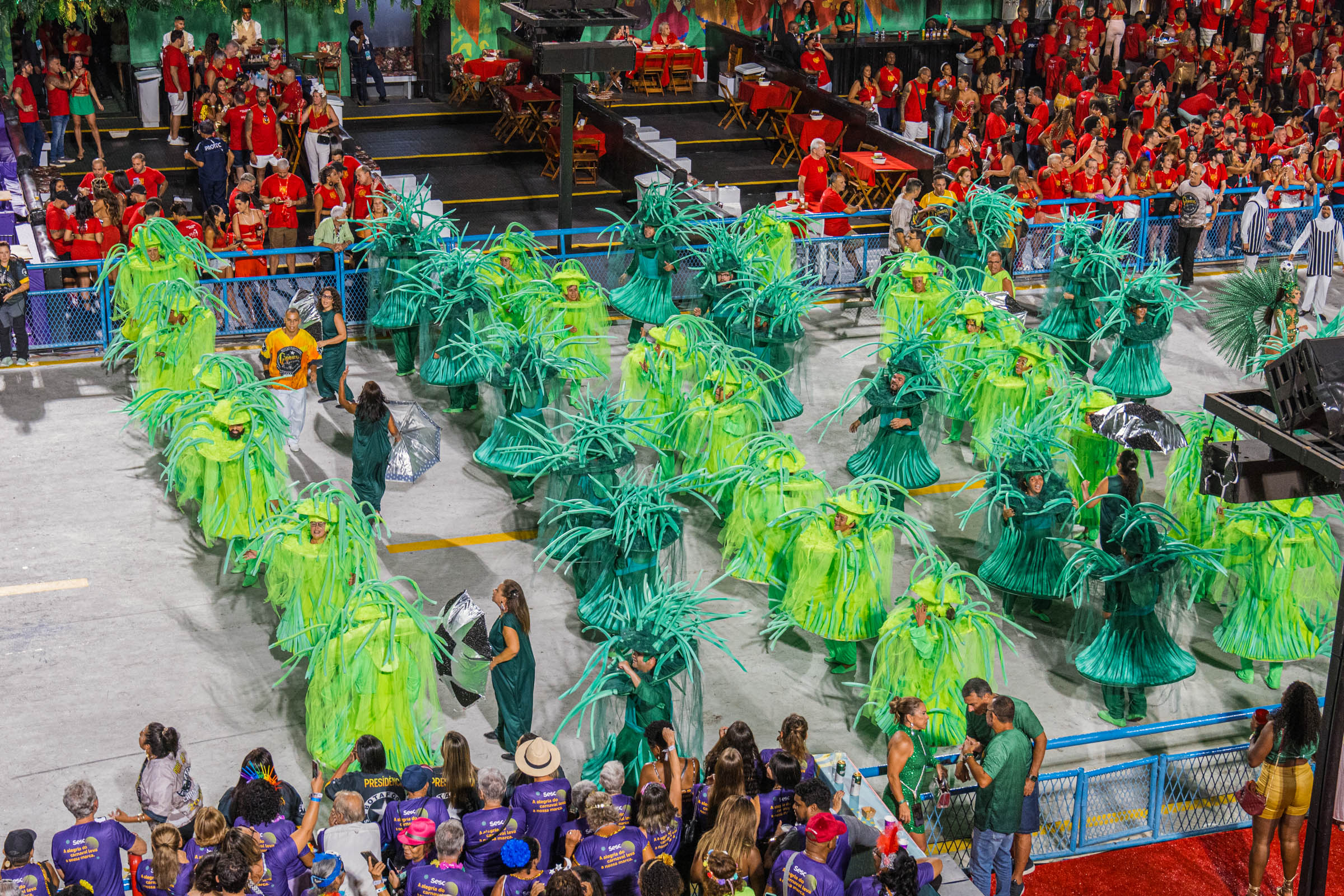
Each school follows a specific order on the avenue. First comes the comissão de frente (front commission). This group of ten to fifteen people introduces the school and sets the mood and style of its presentation. Its members usually dance a choreography in elaborate costumes that tells a short story. Right after them comes the first float of the school, called the abre-alas.
Next come the mestre-sala and the porta-bandeira, the master of ceremonies and the flag-bearer. Together, they present the flag of the school. Behind them, the school continues with its sections. Among them are the veterans of the old guard and the ala das baianas. Meanwhile, the bateria, the drum line, gives the rhythm to everyone on the avenue.
THE ORIGINS OF THE RIO CARNIVAL
How did the Rio Carnival come about? The Portuguese colonizers brought carnival to Brazil. At first, it appeared as the Entrudo, a popular street festival full of games and playful teasing. Over time, the festival acquired other forms of expression, such as masks and costumes. For example, O Moleque by Lima Barreto depicts costumes originally used in carnival and traces their European roots. In addition, carnival societies founded by the elite of the monarchy helped spread the celebration among the poor.
In 1840, Rio saw its first masquerade, with polka and waltz at the center of attention. Later, in the early 20th century, Afro-Brazilians and pardo Brazilians introduced the samba and batucada rhythms. Today, these rhythms are classically associated with the Rio Carnival. Little by little, the carnival became the most popular festival in Brazil.
THE FIRST SAMBA SCHOOLS OF RIO
During the 1920s and 1930s, blocos in Rio turned into samba schools. That way, they gained legitimacy and avoided police pressure on their street celebrations. Estácio de Sá, Portela and Estação Primeira de Mangueira first paraded in 1929, after evolving from carnival blocos. By 1930, seven samba schools were already active in the city.
Portela, one of those pioneers, remains the samba school with the most championships in history. It has 22 titles.
There were also years without the big parade. Because of the COVID-19 pandemic, the city canceled the carnival in 2021. In 2022, it postponed the celebration for the same reason, so the samba schools paraded in April instead of February.
FROM THE STREETS TO THE SAMBADROME
The parade changed its home several times. The first official parade took place at Praça Onze on February 7, 1932, organized by the newspaper Mundo Sportivo. Later, it moved to Avenida Presidente Vargas, and from 1942 to 1945 it took place at São Januário. From 1952, the city assembled temporary stands for the public, and in 1961 paid tickets debuted. In 1974, the works on the subway moved the parade to Avenida Presidente Antônio Carlos. That year, television also broadcast it in color for the first time. Finally, in 1978, the parade moved to Marquês de Sapucaí, where it remains today.
In 1983, the then governor Leonel Brizola commissioned the architect Oscar Niemeyer to design a permanent venue. Until then, the stands were temporary, and workers assembled and dismantled them for every carnival. The Sambadrome opened in 1984, and it had a side effect. It took the street parades out of the downtown area and into a ticketed space. Since then, some samba schools have followed an agenda focused on regaining public space.
RIO CARNIVAL CHAMPIONS AND PARADE NIGHTS
Over time, the number of schools grew, and the parade became longer and more tiring for the public. So, in 1984, the organizers split it. The lower-level schools paraded from Friday to Saturday, and the main schools from Sunday to Monday. That year, the organizers also chose a “super-champion.” Since they never repeated the practice, Mangueira remains the only samba school with that title.
Today, LIESA, the Independent League of Samba Schools of Rio de Janeiro, organizes the Special Group. For a long time, the group paraded over two nights, with six schools per night. In 2025, however, the competition moved to three nights, with four schools each evening. The 2026 parades followed the same format.
The 2025 title went to Beija-Flor de Nilópolis, its 15th. Its theme honored the legendary carnival director Laíla. That parade was also the farewell of Neguinho da Beija-Flor, the school’s lead singer for 50 years. As of late 2026, the most recent champion is Unidos do Viradouro. The school won its fourth title at the 2026 carnival with a tribute to Mestre Ciça, the master of its drum section. Viradouro finished only one tenth of a point ahead of Beija-Flor and Vila Isabel.
Traditionally, the champion of the second division, today called Série Ouro, moves up to the Special Group. In 2026, União de Maricá won Série Ouro, so it will debut in the Special Group in 2027. After the 2027 carnival, the two best Série Ouro schools will move up, because the Special Group will grow step by step to 15 schools by 2030. Finally, the six best schools return to the Sambadrome on the Saturday after the carnival for the Winners’ Parade, the Desfile das Campeãs.
PLANNING YOUR VISIT TO THE RIO CARNIVAL IN 2027
If the Rio Carnival is on your wish list, start planning early. As of late 2026, the Special Group parades for 2027 are scheduled for February 7, 8 and 9, with four schools each night. The Série Ouro schools parade before them, on February 5 and 6. The children’s samba schools have their parades on January 23, 24 and 30, and on February 12, when entry is free. Finally, the Winners’ Parade is planned for February 13.
LIESA sells tickets only through its official channels, operated by Ticketmaster. For example, the three-night passport for the Special Group cost R$499 and sold out quickly. Later, single nights in the special grandstands and individual chairs went on sale at R$250, or R$125 for half price. New phases follow, so watch the official announcements. And if you cannot travel during carnival, remember that the Carnaval Experience tour at Samba City runs all year round.
STREET CARNIVAL: BLOCOS AND BANDAS
While the main parade takes place at the Sambadrome, many people celebrate in other parts of the city. Street parties are very common during carnival, and locals fill them. Here, elegance and extravagance usually stay behind. Still, music and dancing are everywhere, and anyone can participate. All you need to join the fun is to jump in.
One of the most famous street groups is Banda de Ipanema. It started in 1965, and people know it as the most irreverent street band in Rio. At any given time during carnival, more than 300 bandas can perform across the city. Meanwhile, the largest organized street dance usually takes place at Cinelândia Square in central Rio.
The oldest carnival bloco in Rio de Janeiro is Cordão da Bola Preta, founded in 1918. Traditionally, it parades every carnival Saturday on Avenida Rio Branco in the center of the city. The party starts around 9 a.m. and lasts until about 2 p.m., and it is famous for its huge crowds. Several street blocos of Rio belong to the Federation of Carnival Blocks of the State of Rio de Janeiro (FBCERJ), which dates back to 1965.
SAMBA, THE HEARTBEAT OF THE RIO CARNIVAL
Dance and music are part of every aspect of the Rio Carnival. The most famous dance of the Brazilian carnival is, of course, samba. It remains popular not only during carnival, but also in communities beyond the big city centers. There, samba keeps its historical character. Meanwhile, the samba and batucada rhythms, built on drums and percussion, give the whole celebration its energy. You can feel them both on the avenue and at the street parties.
During carnival, musicians, singers and dancers perform in different locations across the city, especially in the center. In those days, the carnival gives a new meaning to everyday life. It also changes the relationship between the people of Rio and the public spaces of their city.
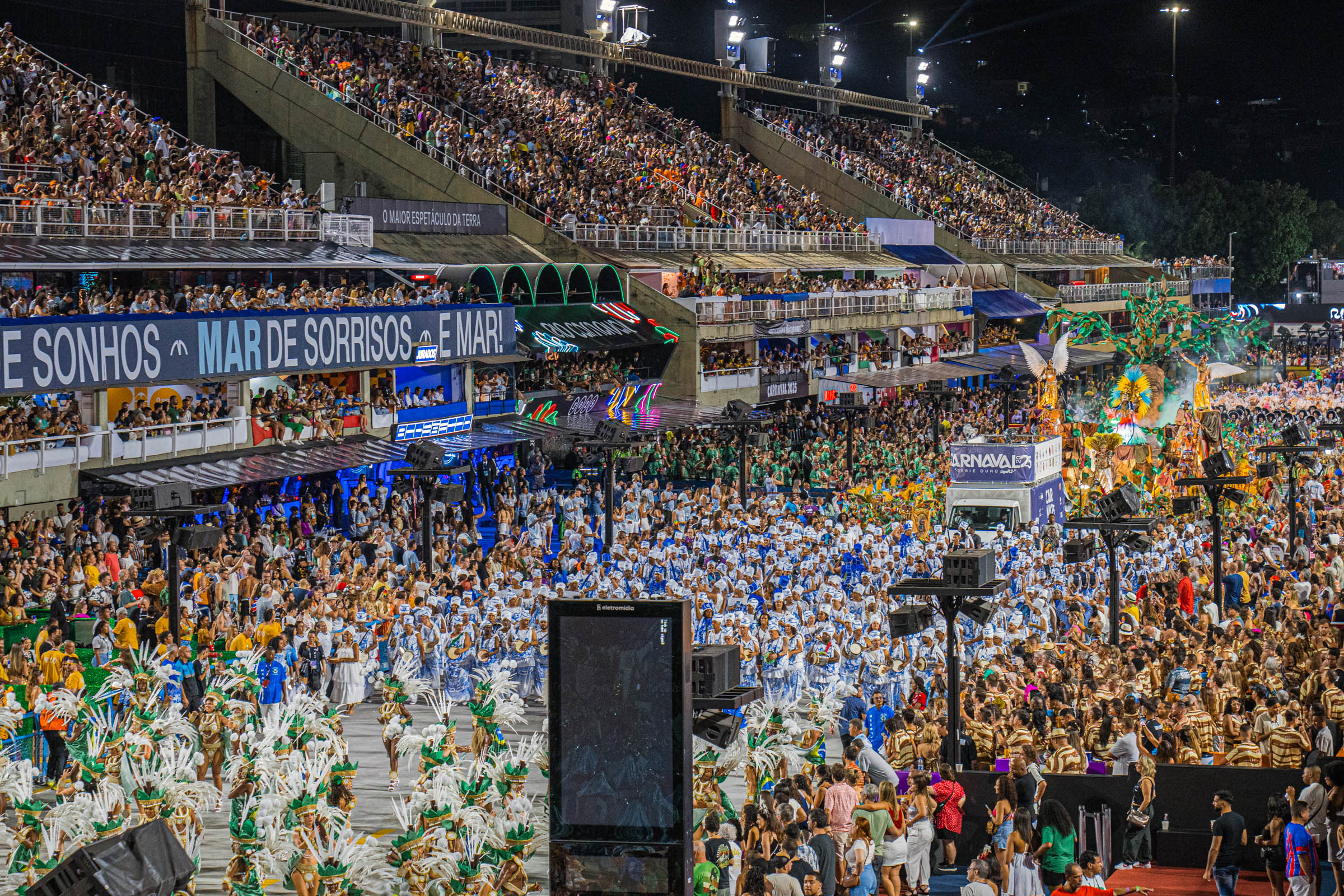
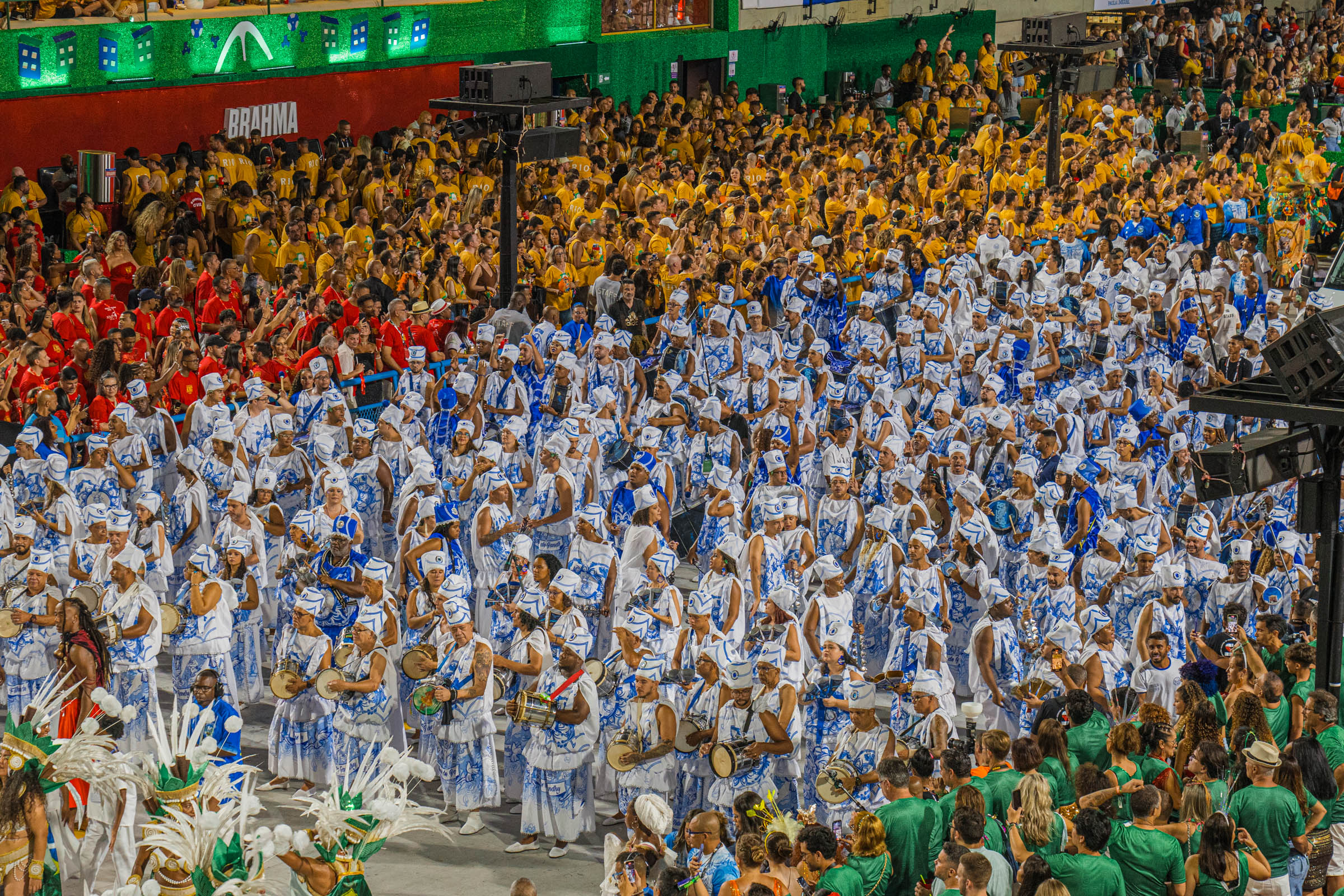
Each section of a samba school wears its own costume. Together, the sections tell the story of the enredo, from the first to the last float. The judges score every school in nine categories, including the costumes, the samba-enredo and the drum line. That is why every detail counts.
FROM THE WAREHOUSE TO THE AVENUE
In the warehouse, I saw how the teams create the floats and costumes. At the Sambadrome, I had the opportunity to see the finished result on the avenue. All the months of work that the Carnaval Experience team had explained to me came together in one night of music, dance and color.
During my stay in Rio de Janeiro, my home was the Copacabana Palace, A Belmond Hotel. This hotel represents classic Brazilian luxury on Copacabana Beach. I stayed in a Penthouse Suite with full ocean views and a private terrace. If you want to discover more of the city beyond carnival, read my letter from Rio de Janeiro. And for a dose of style, see the Brunello Cucinelli look I photographed on the Selarón Steps.
SAYING GOODBYE TO RIO DE JANEIRO
My dear adventurers, we have come to the end of this special travelogue about the Rio Carnival. Together, we enjoyed the beauty of this unusual country in South America.
Today’s travelogue would not have been possible without the selfless help of UN Tourism, EMBRATUR, Visit Brasil, Carnaval Experience and the Copacabana Palace, A Belmond Hotel. I am also grateful to the local partners who allowed me to feel the spirit of the local culture and the beauty of everyday life in Rio de Janeiro. Of course, as always, I tried my best to convey to you my impressions of this unusual experience from Brazil.
A person is rich in soul if he has managed to explore the world. That is why I am glad that I always find partners who help me discover new and unusual destinations in a completely different way.
It is an honor to cooperate with so many companies and people in the tourism sector. Once again, I would like to thank UN Tourism, Carnaval Experience, EMBRATUR and Visit Brasil for this incredible adventure. Thank you for allowing me to feel the beauty of Brazilian culture in a completely different way.
Have you ever experienced the Rio Carnival, or is it still on your travel wish list?
Feel free to leave your impressions, comments or questions below, or contact me by email and on social networks. All information is on the CONTACT page.
With love from Rio de Janeiro,
Mr.M
This post is sponsored by United Nations World Tourism Organization (UN Tourism), EMBRATUR(National Tourism Organization of Brazil) – Visit Brasil, Carnaval Experience, Copacabana Palace Belmond Hotel and other local partners. This post is my personal and honest review of the destination experience.
Dear Marko, I enjoy your travelogues from Brazil immensely and I can’t wait to see the others from South America. I’m glad you’re finally back to traveling because I’ve missed your top-notch travelogues. I have been preparing for an adventure in South America for years and your stories really help me pay attention to the organization of this trip.
Carnival in Rio is a really special experience and I always wanted to feel it! I can only imagine the level of energy and euphoria from Carnival. My ex-boyfriend was Brazilian and they are special, they just have a fiery temperament and sometimes it’s hard to see them off, but because of him I fell in love with the temperament of South Americans! Wonderful post and great pictures, I really feel like I was there with you at the carnival. Congratulations for all that you do and for sharing your impressions of your incredible adventures with us!
Well done Marko, this is really beautiful! As always, your travelogue impressed me and convinced me to check when the next Carnival in Rio is being held. It’s really nice that you explained in detail what can be expected from events in Rio during Carnival, usually travel bloggers don’t share all the useful information. It can be seen that you really enjoyed yourself in Rio this year! I am excited to see your next travelogues from South America, I am especially interested in Peru and the famous Machu Picchu since it has been on my travel bucket list for almost 15 years.
Wonderful pictures Marko, a really special experience! I love reading your travelogues, but this description of a world phenomenon like the Rio Carnival is something really special. I’m so glad for you that you’re back to travel writing and that you’ll continue to explore the world after your break.
I was at the carnival in Rio in 2018 and it is truly an unrepeatable life experience, I visited all the continents, I saw all kinds of things, I even visited Patagonia and various other unusual destinations. All that is nice, but the exchange of positive energy and that passion for Carnival in Brazil is really special and should be experienced. You managed to remind me of the wonderful moments in Rio de Janeiro that I experienced in 2018. This is my first time on your blog, my friend sent me a link to your post about carnival and I just had to send you my impressions of your article. I will definitely continue to follow the blog, as the content is totally different than what I have seen from other travel bloggers.
My biggest life dream is to feel the euphoria of the carnival in Rio! Everyone says it’s just an indescribable and incredible feeling to be a part of it. During my studies, I had a colleague from Rio and she kept telling me how her family participates in one of the samba schools and how they prepare for the carnival. It’s nice that you managed to go there and feel the charms of the Rio Carnival!
Carnival in Rio is definitely on the bucket list of almost everyone, there is simply no person who does not want to visit Rio! Your pictures are fantastic, everything just looks so real, I feel like these are my memories from the trip, as if I was there this year at the carnival. Congratulations on how you manage to convey your experience to people who read your blog and follow your work.
Der Karneval in Rio ist ein besonderes Erlebnis, so sehr es mir auch gefallen hat. Ich war dreimal beim Karneval in Rio und jedes Mal war es ein besseres und schöneres Erlebnis. Ich liebe Brasilien und bin froh, dass mein Lieblings-Reiseblogger diese tollen Eindrücke von der größten Party der Welt mit mir geteilt hat!