
My dear travelers and lovers of unusual journeys, welcome to a new travelogue on the Mr.M blog. Every day at five minutes to noon, a man in a long coat and a floppy hat walked into the Grand Café on Karl Johans gate. He sat in an armchair marked “Reserved for Dr. Ibsen” and hid behind his newspaper. That quiet man wrote A Doll’s House. More than a century later, I woke up in a suite that carries his name, in the very same building. So my Oslo travel guide starts with a clock, not a map.
Oslo rewards people who notice time. The light shifts by the hour, the museums rotate their treasures, and the city keeps its rituals. The King’s Guard changes at 1:30 p.m. every single day. Every December 10, Oslo hosts the Nobel Peace Prize ceremony. I arrived in October for my Letters from Norway series, and the city showed me two faces in one week. At first, soft gray days brought wet leaves to the paths. Then the sky turned a clean, hard blue, and the fjord began to glitter.
This Oslo travel guide follows my own route through the city. You will get the history in plain words, the places everyone visits, a few quieter corners, and my honest review of Grand Hotel Oslo and its Ibsen Suite. Read it as a letter from a friend who already walked the streets for you.
WHY OSLO BELONGS ON EVERY EUROPEAN TRAVEL LIST
Oslo is a capital that rarely feels rushed. Most places in this Oslo travel guide sit a short walk from each other, so your own feet become the best transport. On one side lies the Oslofjord, with ferries, sailboats and small islands. On the other side, forested hills rise above the rooftops.
Then there is the culture. Oslo gave the world Henrik Ibsen, whose plays still fill stages around the globe. It also gave us Edvard Munch, the painter of The Scream. Every December, the Nobel Peace Prize turns this small capital into a world stage.
Architecture is the third reason. Few cities mix old and new so calmly. A royal palace from 1849 crowns one end of the main street. Near the other end, a marble opera house rises from the water. Between them, an old shipyard has turned into a lively waterfront full of cafés and art.
Finally, Oslo suits a traveler who prefers depth to noise. You can spend a morning with a masterpiece, eat lunch by the water and end the evening at the theater, all without a taxi. So I always tell friends to treat this city as more than a stopover.
In the end, October turned out to be a smart choice. The trees in the Palace Park glowed gold and copper, and the big sights felt calm. Still, any season works if you pack layers and a little patience for the weather.
A SHORT HISTORY OF OSLO: YOUR TEN-MINUTE GUIDE
Oslo is older than it looks. According to the Norse sagas, King Harald Hardrada founded the town in the middle of the 11th century. Tradition places its birth around 1040. Around 1300, King Haakon V built Akershus Fortress on a rocky point above the harbor, and Oslo became the royal capital.
Fire changed everything. In 1624, a blaze raged for three days and destroyed most of the wooden town. King Christian IV of Denmark and Norway chose not to rebuild on the old site. Instead, he moved the city west, under the walls of Akershus, and named it Christiania after himself. His grid of straight streets still survives in the district of Kvadraturen.
The 19th century brought new confidence. In 1811, the Royal Frederick University came to life, known today as the University of Oslo. Three years later, the union with Denmark ended, and Christiania became the capital of a Norway that now shared a king with Sweden. The spelling changed to Kristiania in 1877. Full independence followed in 1905. Then, on January 1, 1925, the city took back its old medieval name: Oslo.
One more name is worth knowing. In a poem, writer Bjørnstjerne Bjørnson pictured the capital as a tiger, a symbol of its harsh side. The nickname Tiger City stuck, too. Since 2000, a bronze tiger about 4.5 meters (15 feet) long has greeted visitors outside Oslo Central Station.
For a traveler, this history explains the map. Medieval Oslo lay to the east, the 17th-century grid sits near the fortress, and the grand 19th-century avenue runs up to the palace. Keep that order in mind, and this Oslo travel guide will make sense on the ground.
KARL JOHANS GATE: THE SPINE OF ANY OSLO TRAVEL GUIDE
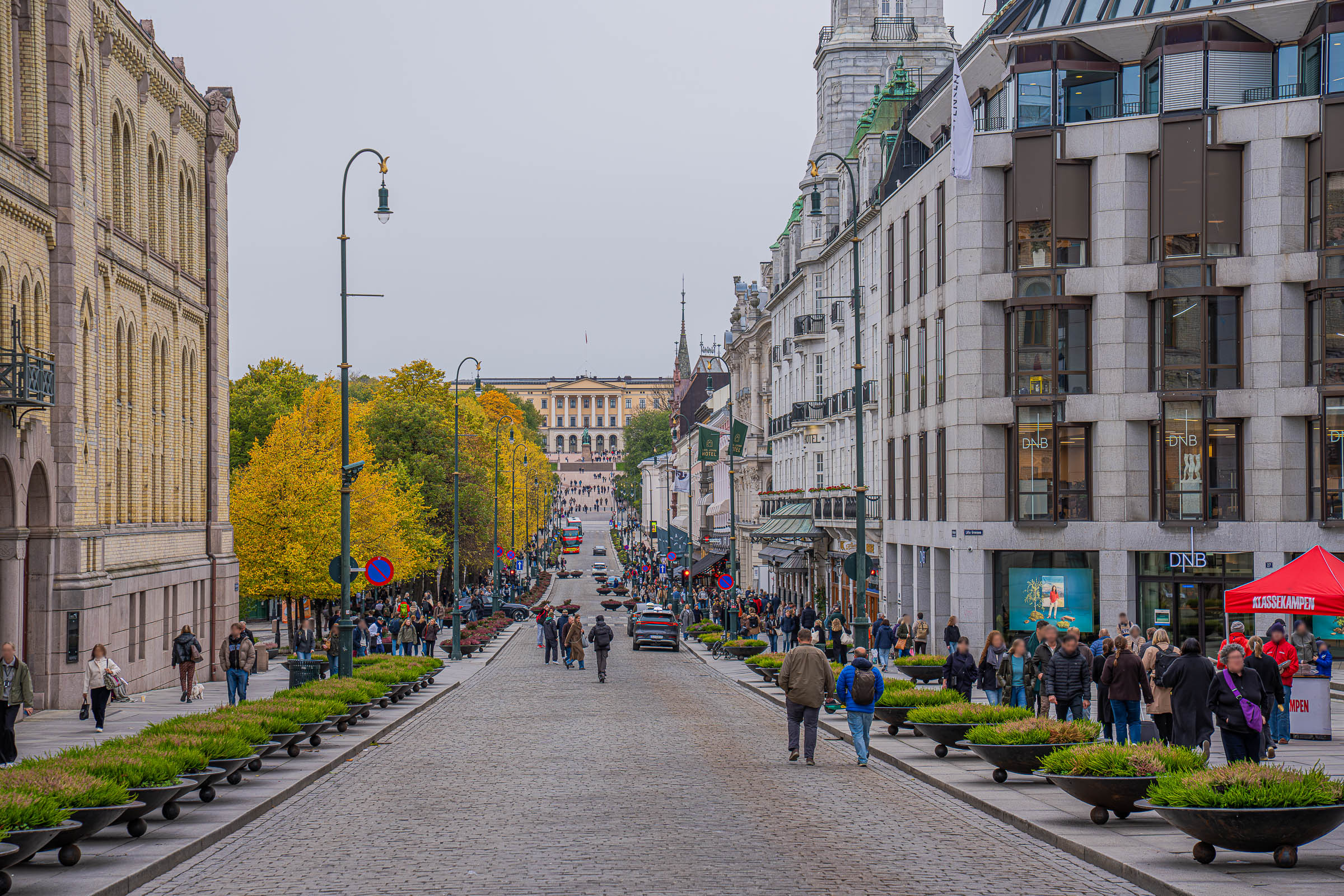
Karl Johans gate runs from Oslo Central Station up to the Royal Palace. It carries the name of King Karl Johan, and it works like the backbone of the city. Every Oslo travel guide agrees on one thing: this street is where you begin.
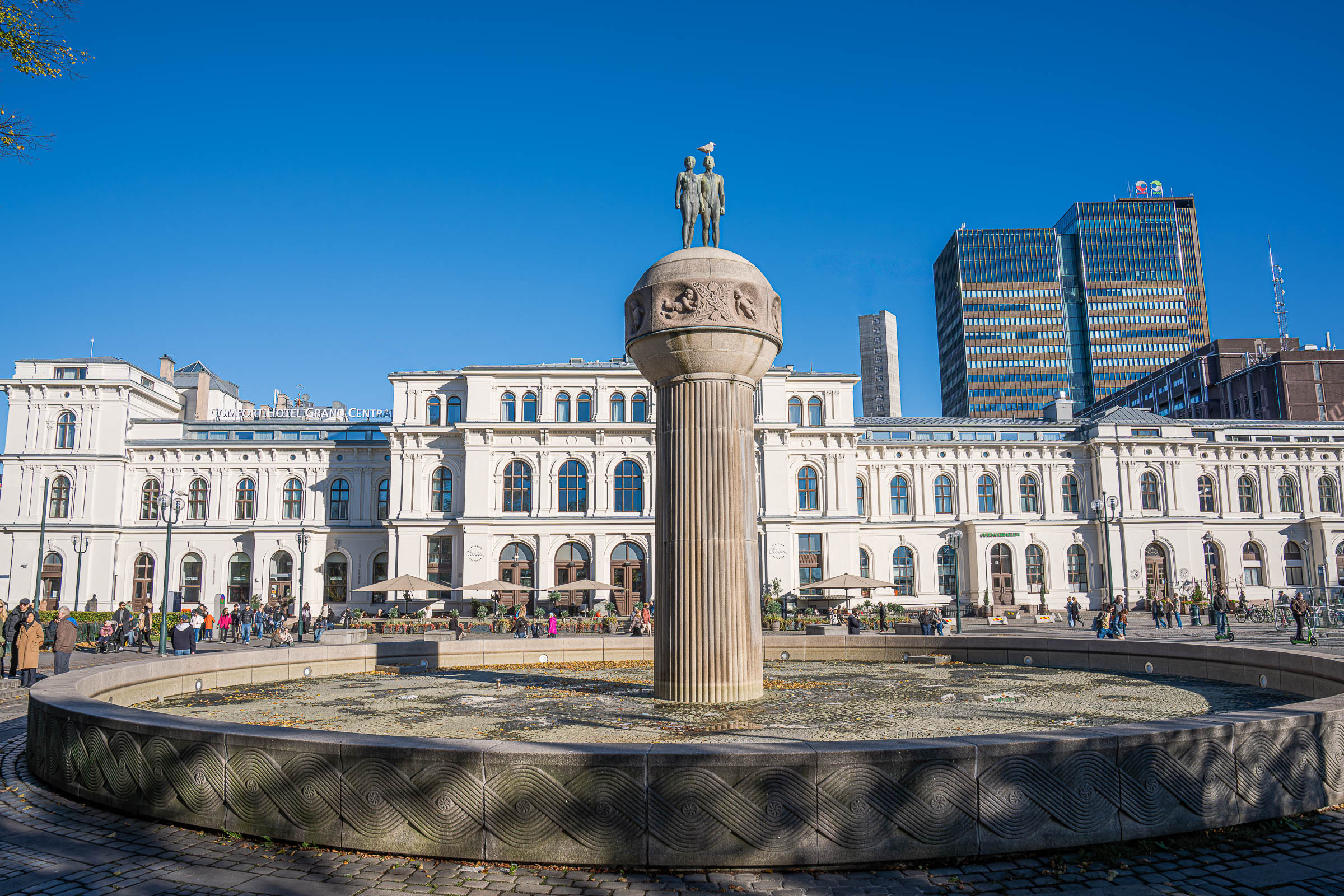
I started at the bottom, near the station. Beside the old East Station building, Østbanehallen, stands a fountain I loved at first sight. Its name is Sun and Earth. Sculptor Ørnulf Bast created its two bronze figures, a man and a woman, in 1935, and the city placed the fountain here in 1986. Behind it, the station hall from 1880 now holds shops and restaurants under its old iron frame.
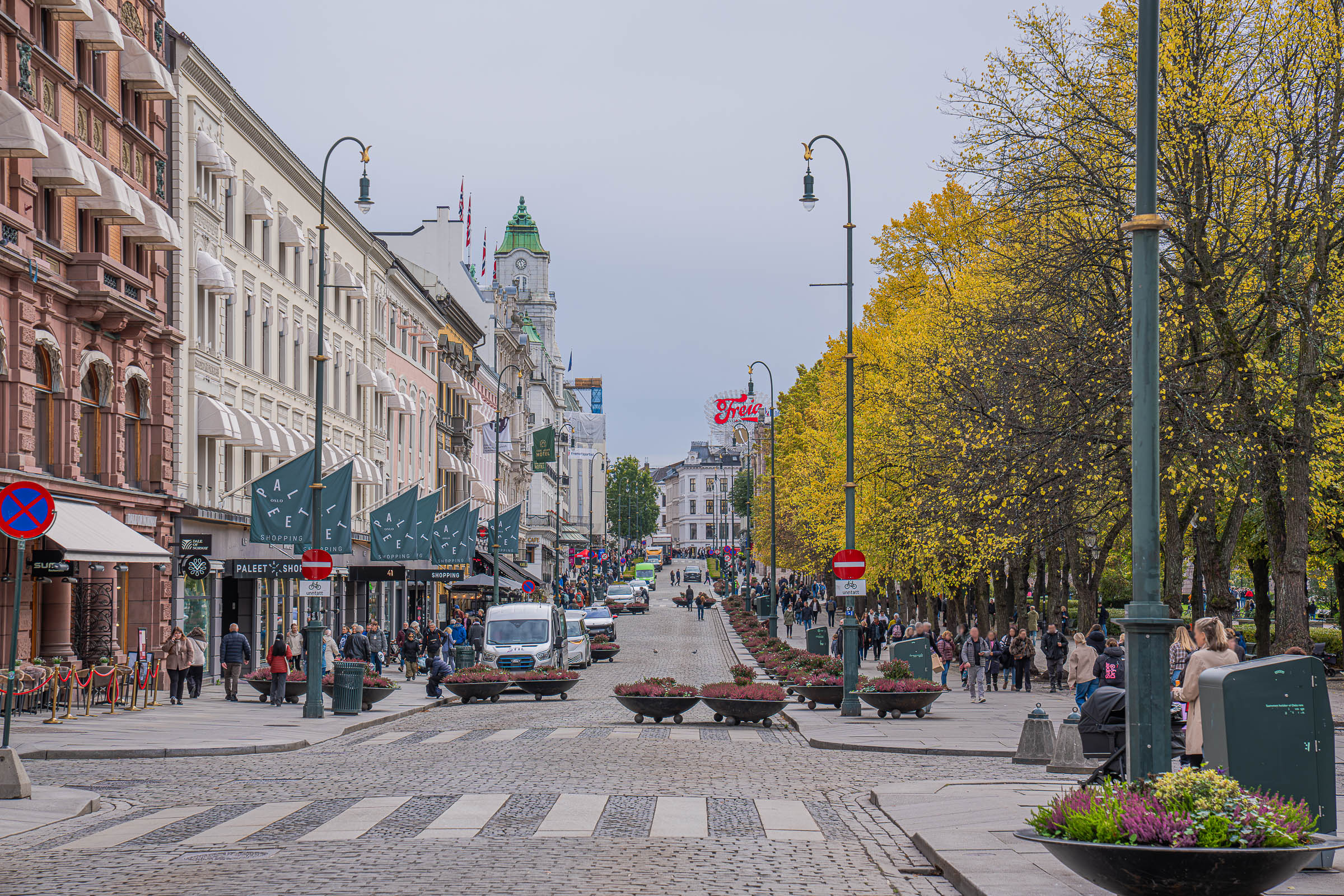
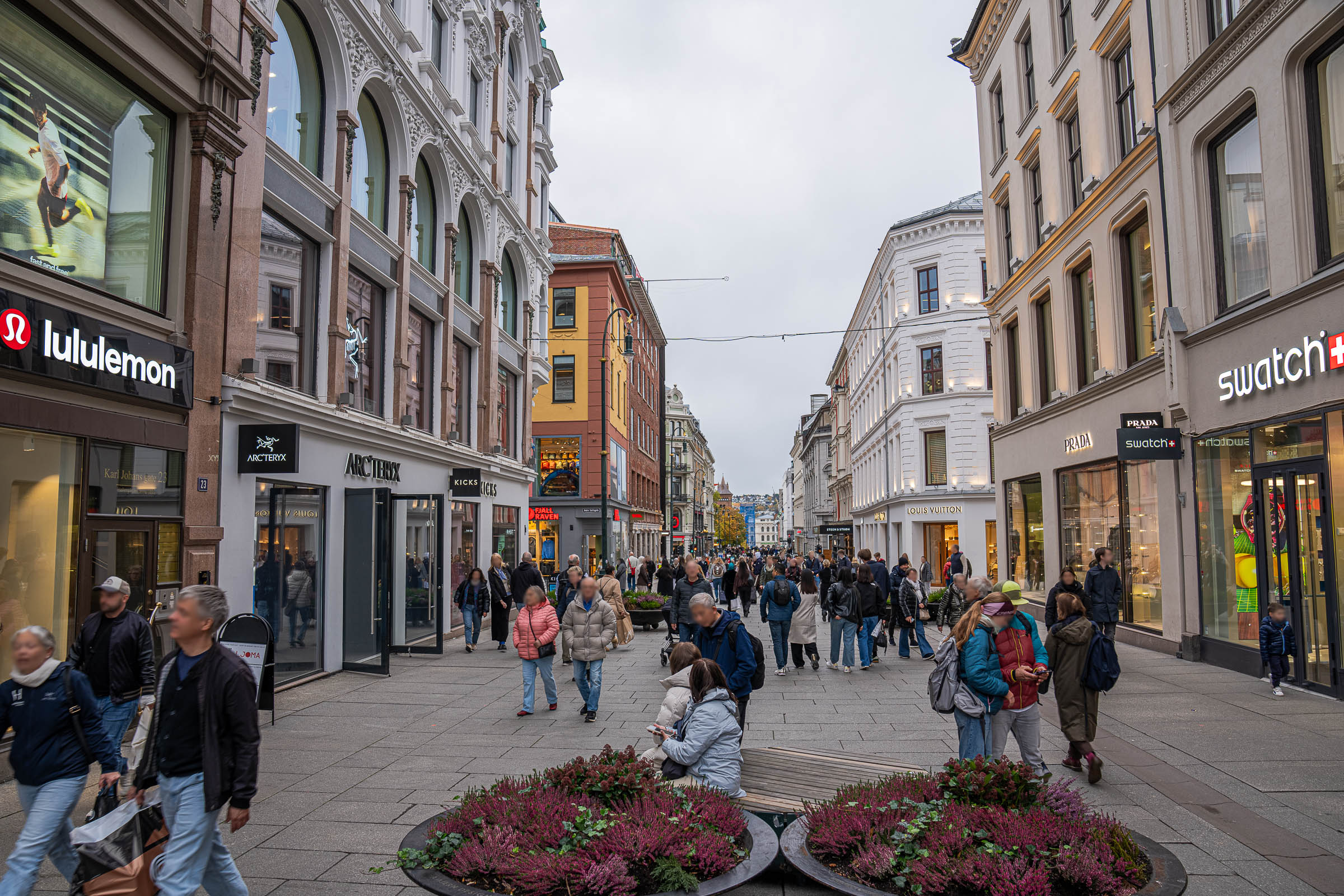
Further up, the street becomes a pedestrian promenade full of shops. Scandinavian brands stand next to global names, and the crowd moves at a gentle pace. Look up for the red Freia sign, a Norwegian chocolate brand that has become part of the scenery. Then look ahead for the green tower of Grand Hotel Oslo.
Farther on, the avenue opens into a long, leafy park strip. On one side stands the Storting, the Norwegian parliament. Across from it, the Grand Hotel has watched the square since 1874.
From here, you can see the palace on its low hill at the end of the avenue. It is the classic Oslo view, and it never gets old. Walk it once in the morning and then again at dusk. You will feel two different cities.
THE ROYAL PALACE, THE KING’S GUARD AND A QUIET PARK
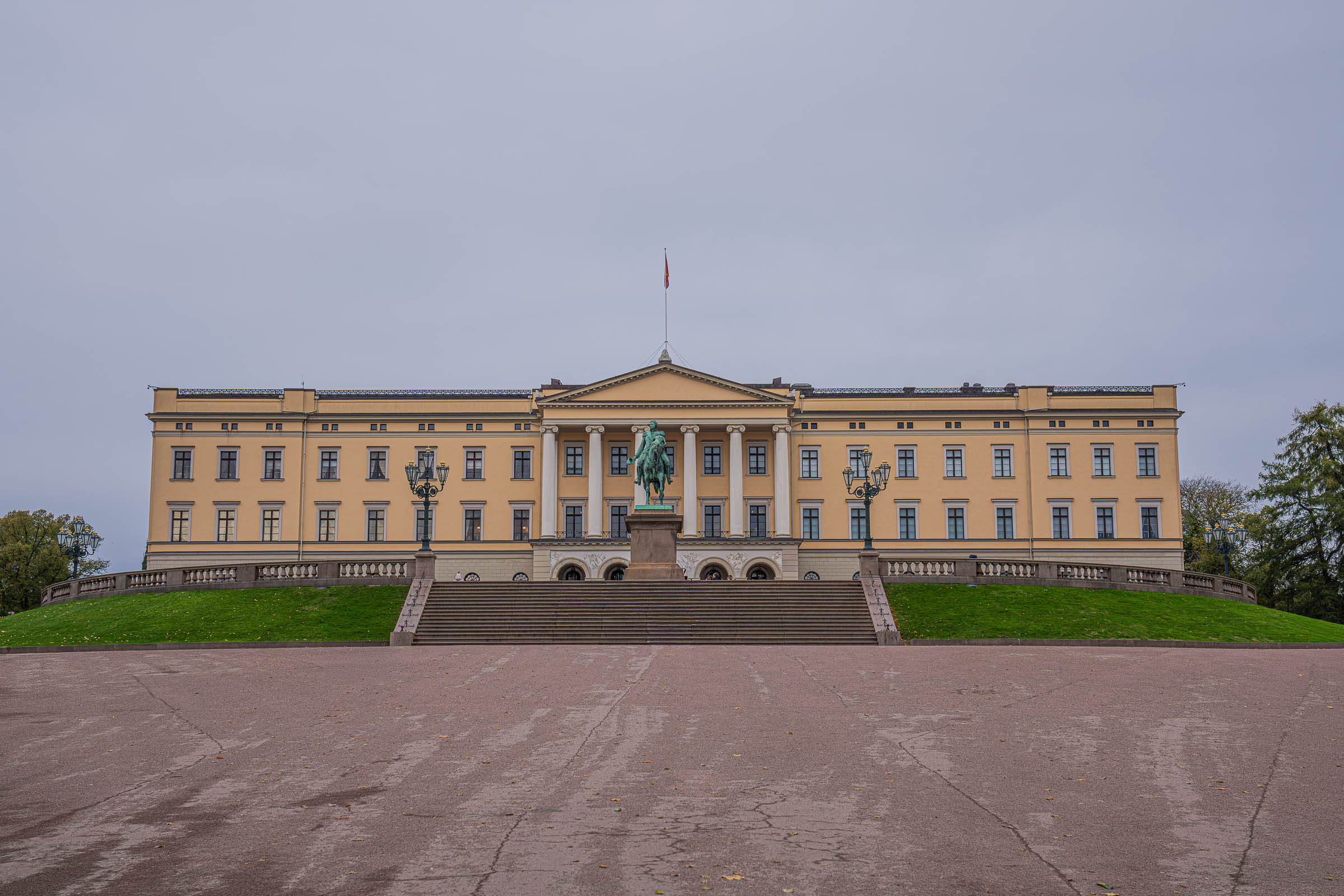
The Royal Palace looks calm and almost modest. King Karl Johan laid its foundation stone in 1825, but he never lived to see it finished. Architect Hans Linstow designed it, and the building reached completion in 1849, under King Oscar I. Today it is the home of King Harald V and Queen Sonja.
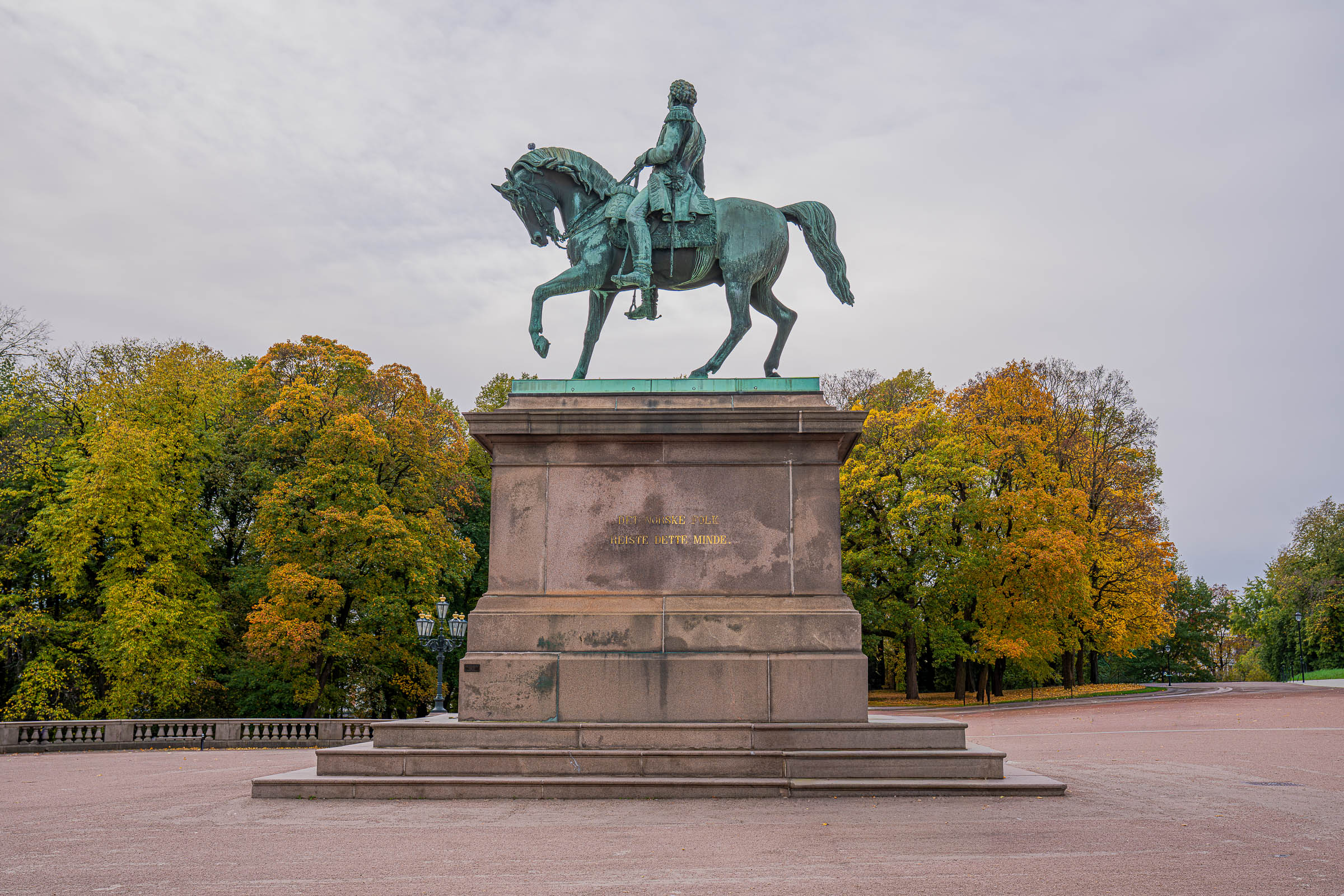
In front of the palace, Karl Johan himself sits on a bronze horse. Sculptor Brynjulf Bergslien made the statue, and King Oscar II unveiled it in 1875. Stand beside it and look down the avenue. The whole city seems to line up in front of you.
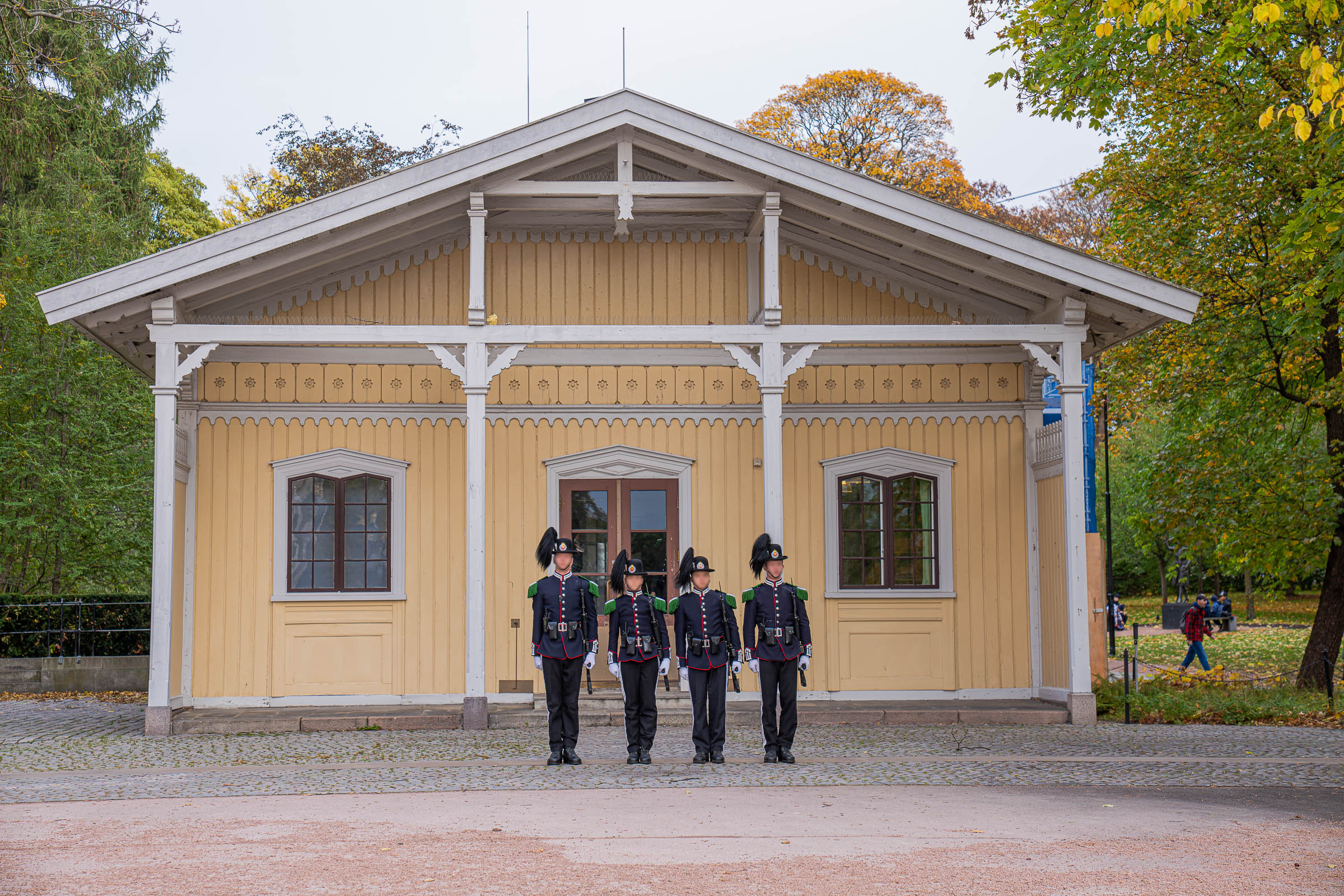
Then watch the guards, because no serious Oslo travel guide skips them. The King’s Guard has stood watch at the palace around the clock since 1888. The main changing of the guard takes place daily at 1:30 p.m., and you can watch it for free from the square. On my visit, four guards in dark uniforms and plumed hats stood in front of a yellow wooden guardhouse in the park. Their stillness felt almost theatrical.
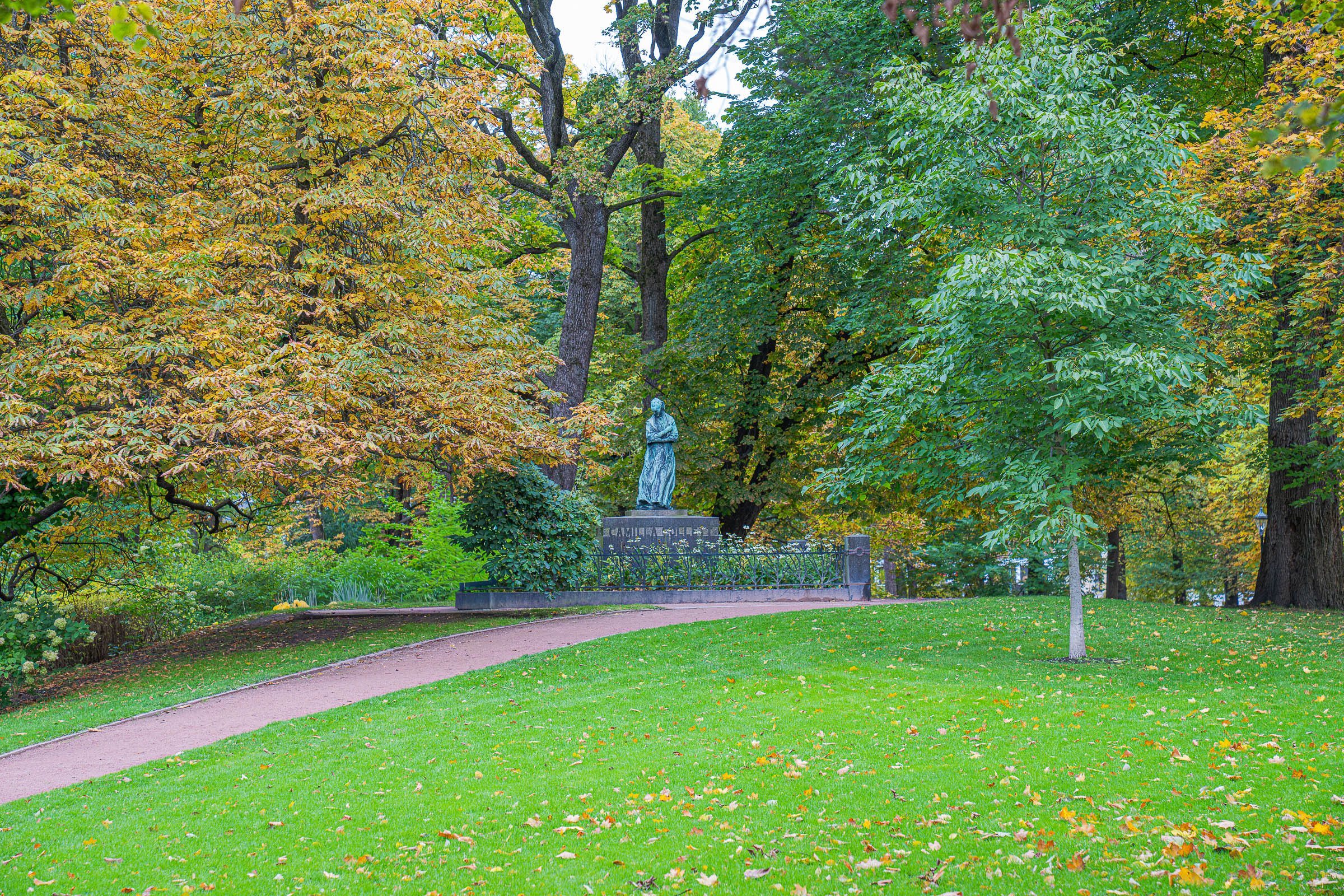
The Palace Park, Slottsparken, stays open to everyone all year. In October, its old trees glowed in shades of amber. Look for Gustav Vigeland’s statue of the writer Camilla Collett, titled In the Storm. She pulls her shawl tight against the wind. Unveiled in 1911, it became the first statue of a woman on a pedestal in Norway.
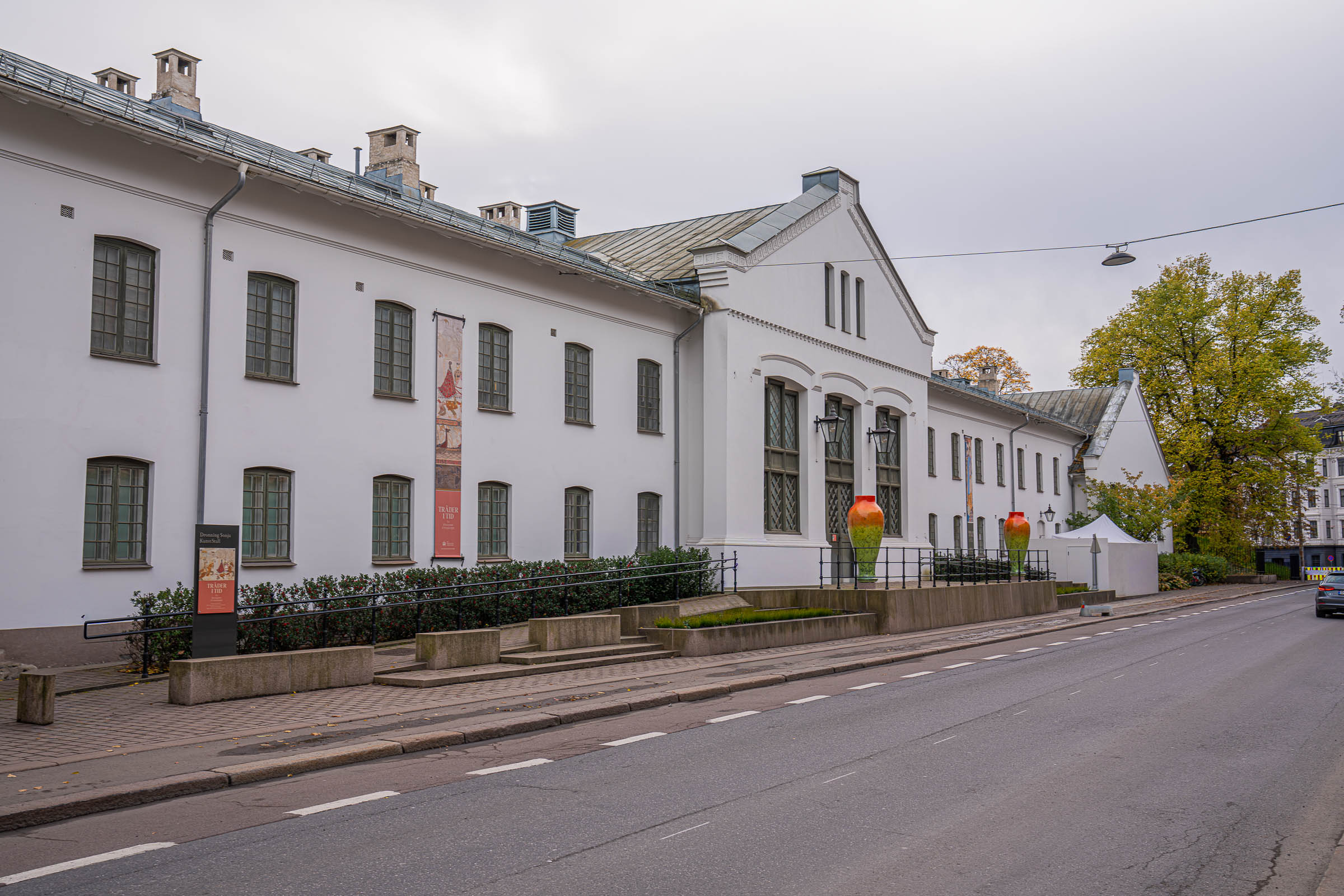
Just outside the park, the former royal stables now house the Queen Sonja Art Stable. King Harald gave the building to the Queen for her 80th birthday, and it opened to the public on July 4, 2017. Around the corner, quiet streets also show off elegant villas with dark roofs.
NATIONAL THEATRE AND THE UNIVERSITY: WHERE IDEAS LIVE
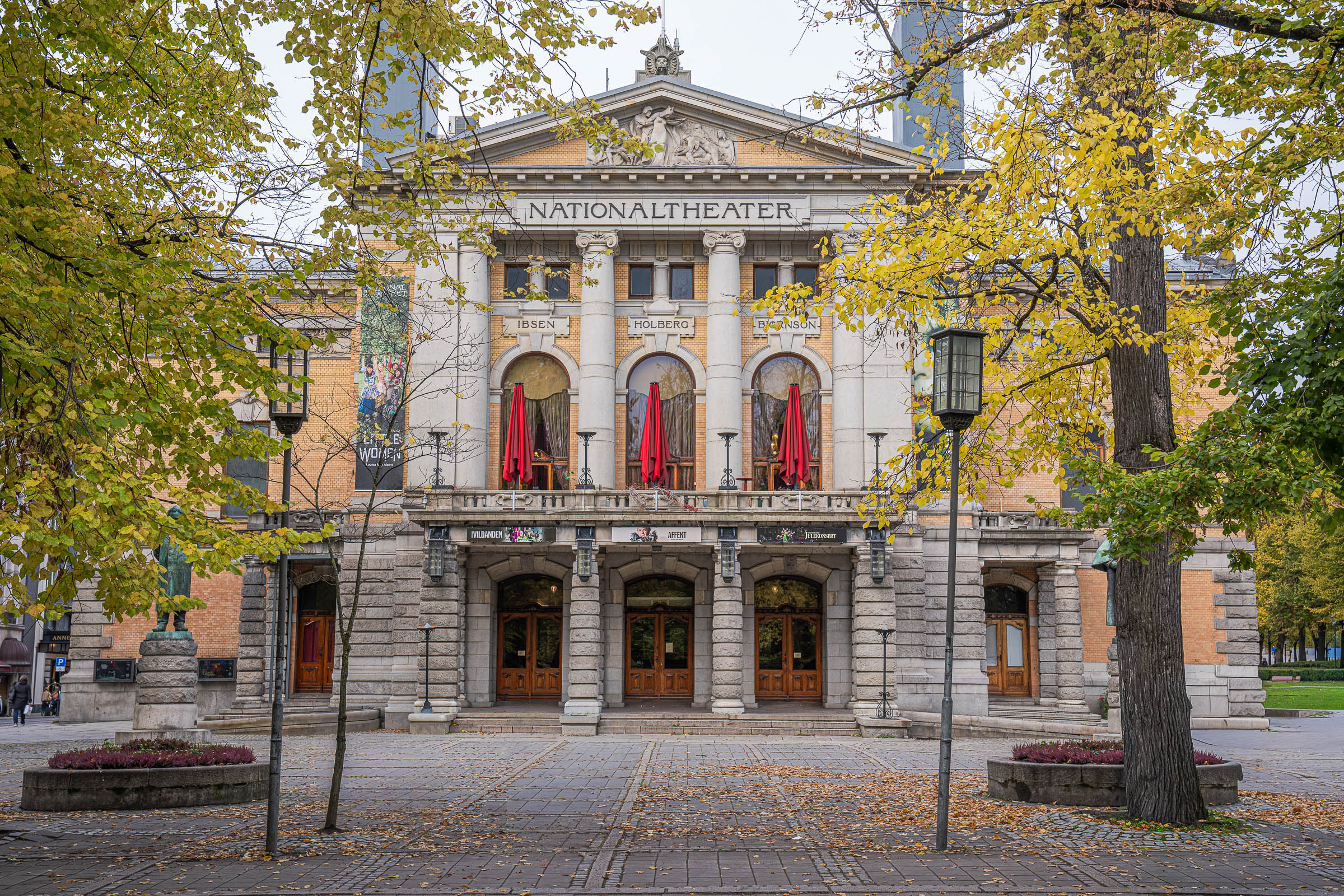
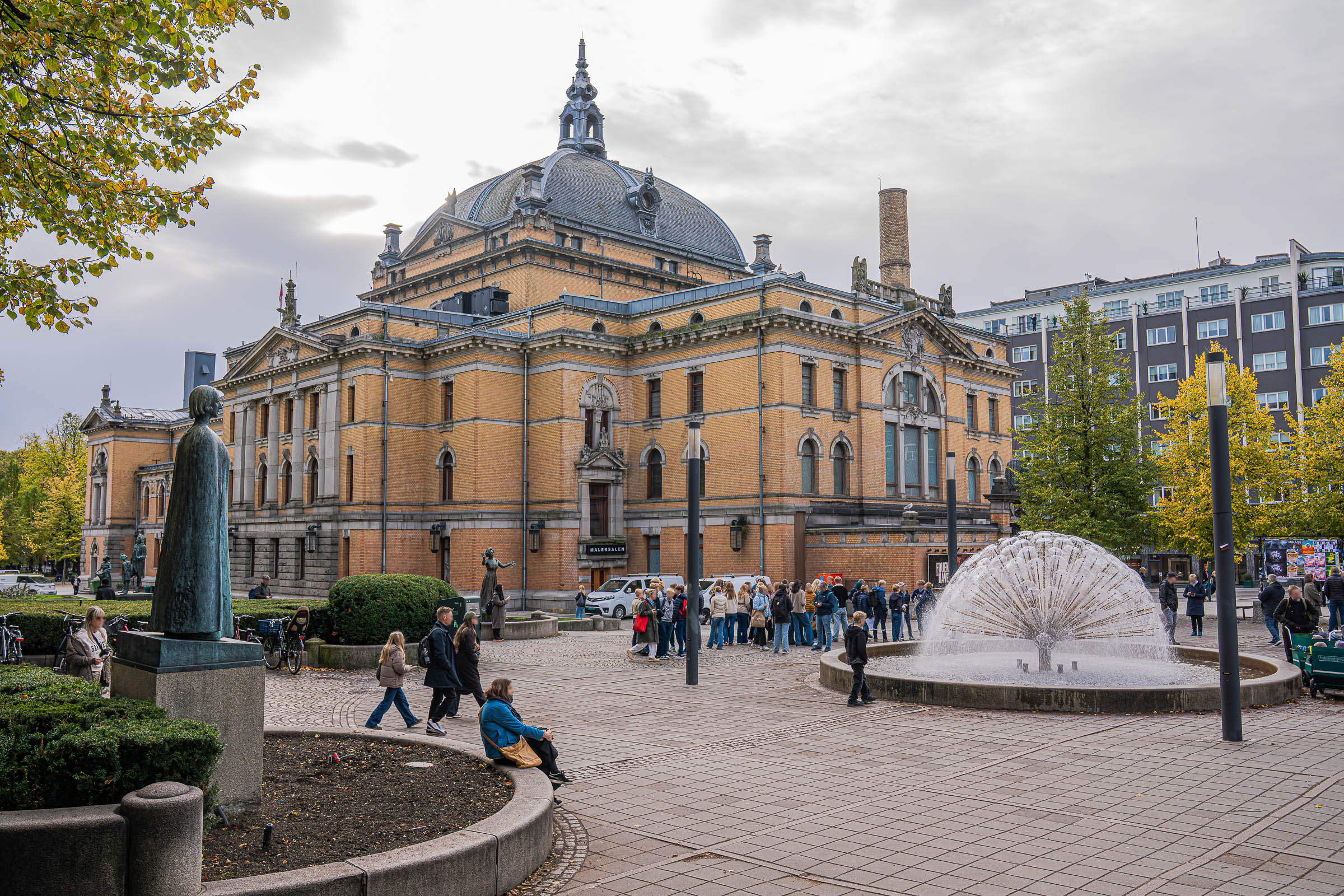
Walk back down the hill and you reach Nationaltheatret, the National Theatre. Architect Henrik Bull designed it, and it opened on September 1, 1899. Three names stand between its front columns: Ibsen, Holberg and Bjørnson. On opening night, Henrik Ibsen and his wife, Suzannah, sat in the front row.
Two bronze statues also guard the entrance. Stephan Sinding made both of them, one of Ibsen and one of Bjørnson. Critics disliked them so strongly that Sinding left the country. Ibsen took it all with grace and thought his statue was the better one.
Beside the theater, a fan-shaped fountain known as The Peacock sprays water into the air. People gather on the benches around it, especially on bright days, and the university stands just across the street.
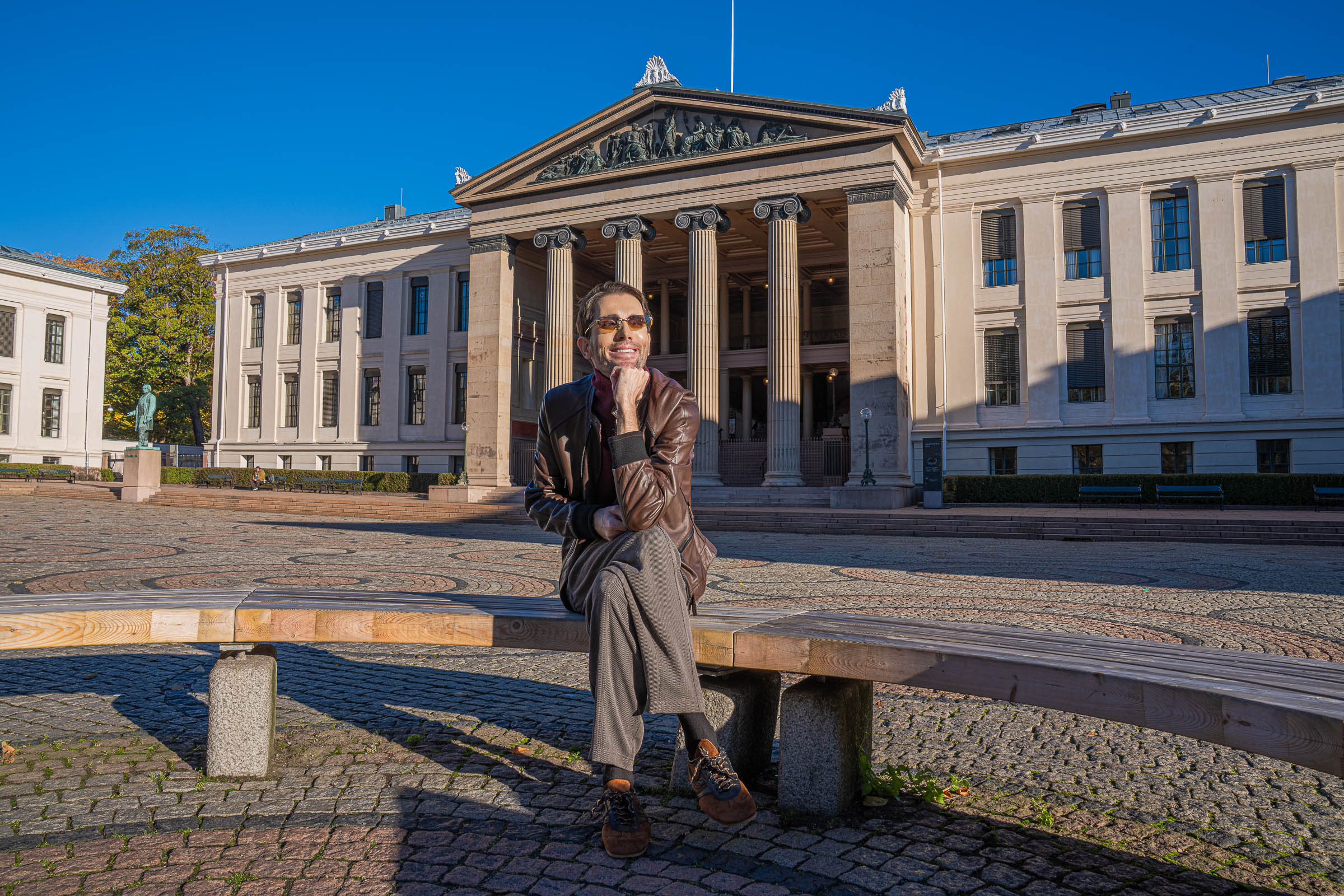
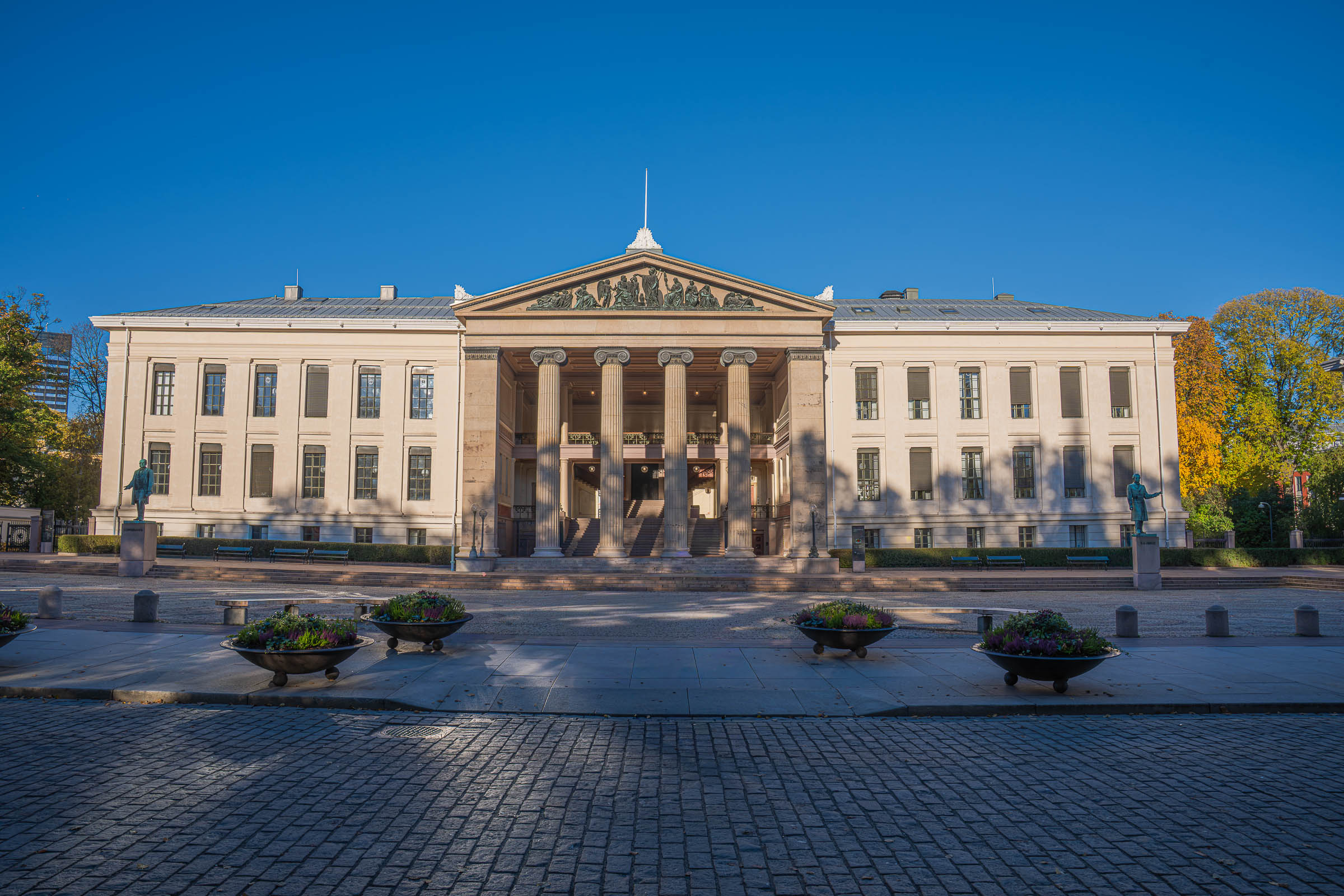
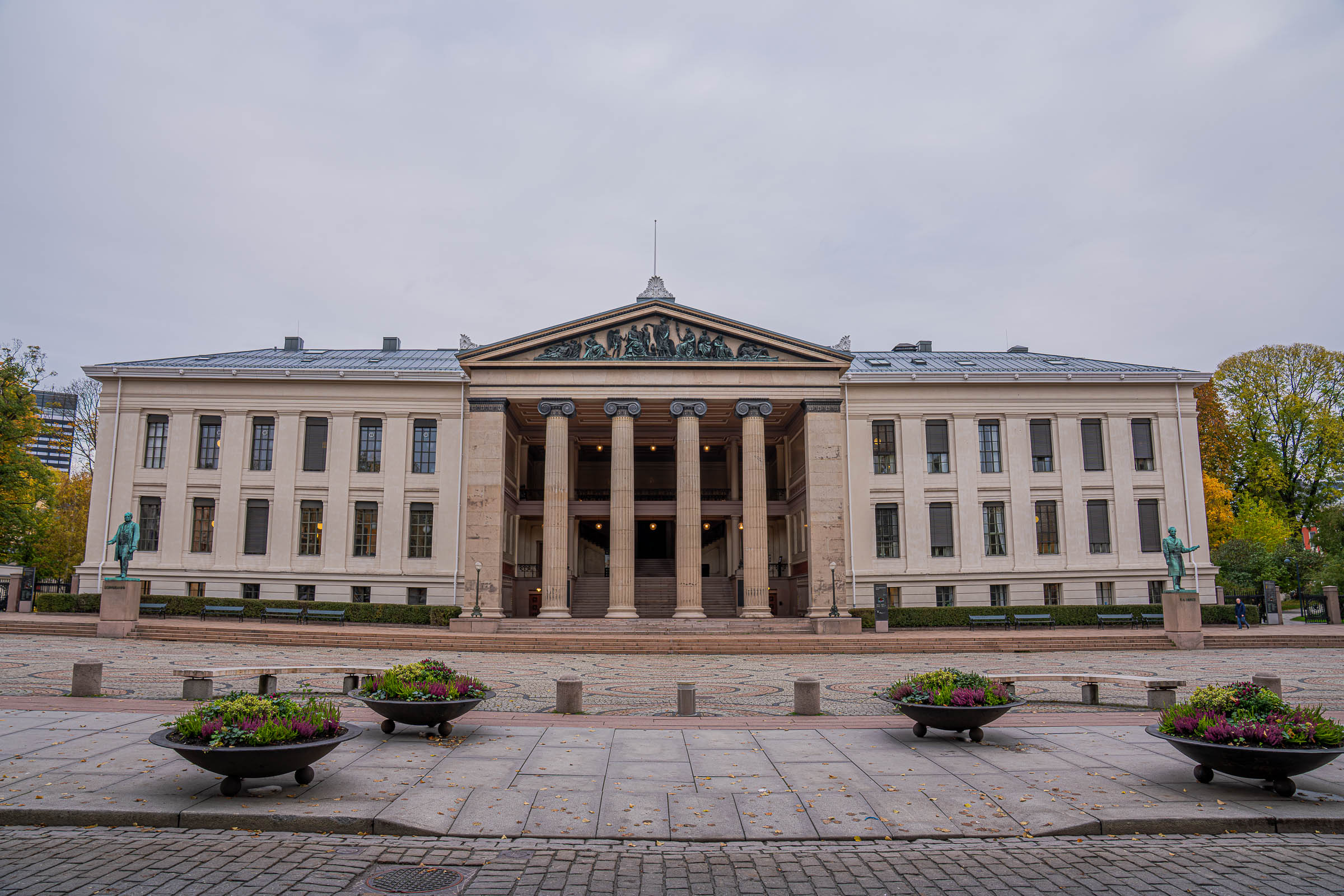
Its central building, Domus Media, looks like a Greek temple. Architect Christian Heinrich Grosch worked on it for about a decade, inspired by the Berlin master Karl Friedrich Schinkel. Four Ionic granite columns hold up the portico. Behind them lies the University Aula, where Edvard Munch’s great wall paintings have lived since 1916. From 1947 to 1989, this building also hosted the Nobel Peace Prize ceremony.
On a sunny morning, I sat on a stone bench in the square and watched the light move across the columns. It felt like a private lecture in beauty. In an Oslo travel guide for book lovers, this single block is almost enough.
OSLO CITY HALL: THE HOME OF THE NOBEL PEACE PRIZE
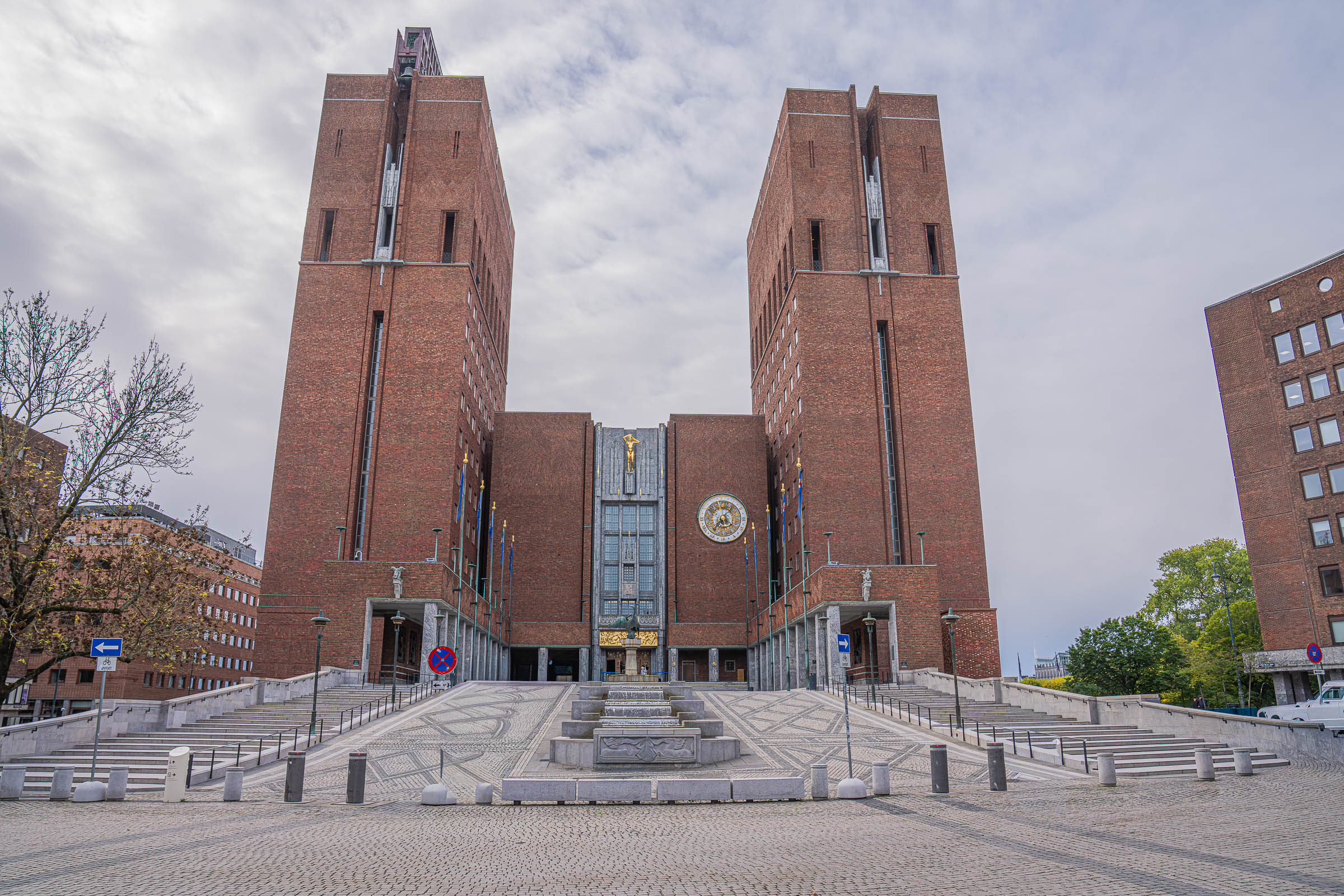
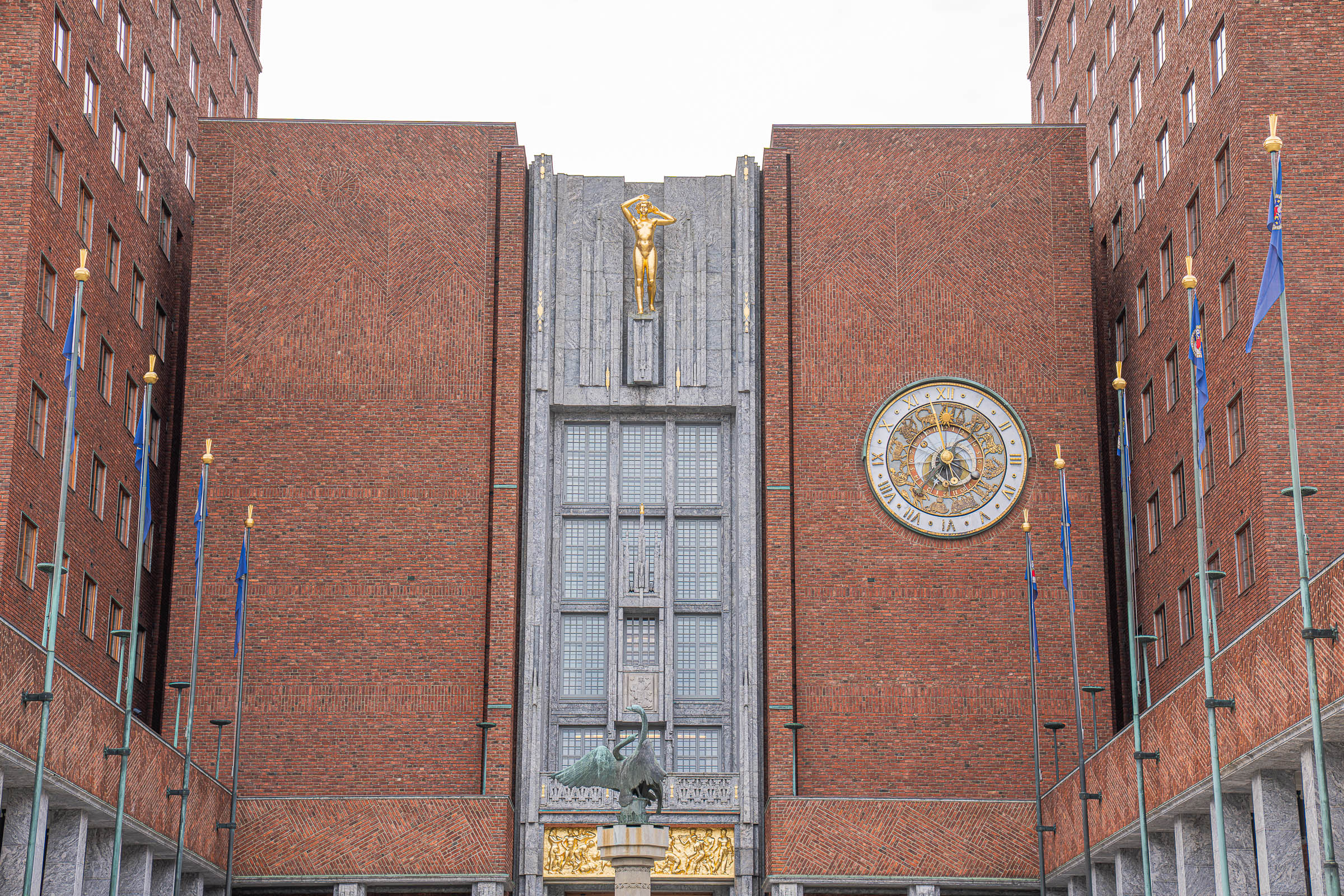
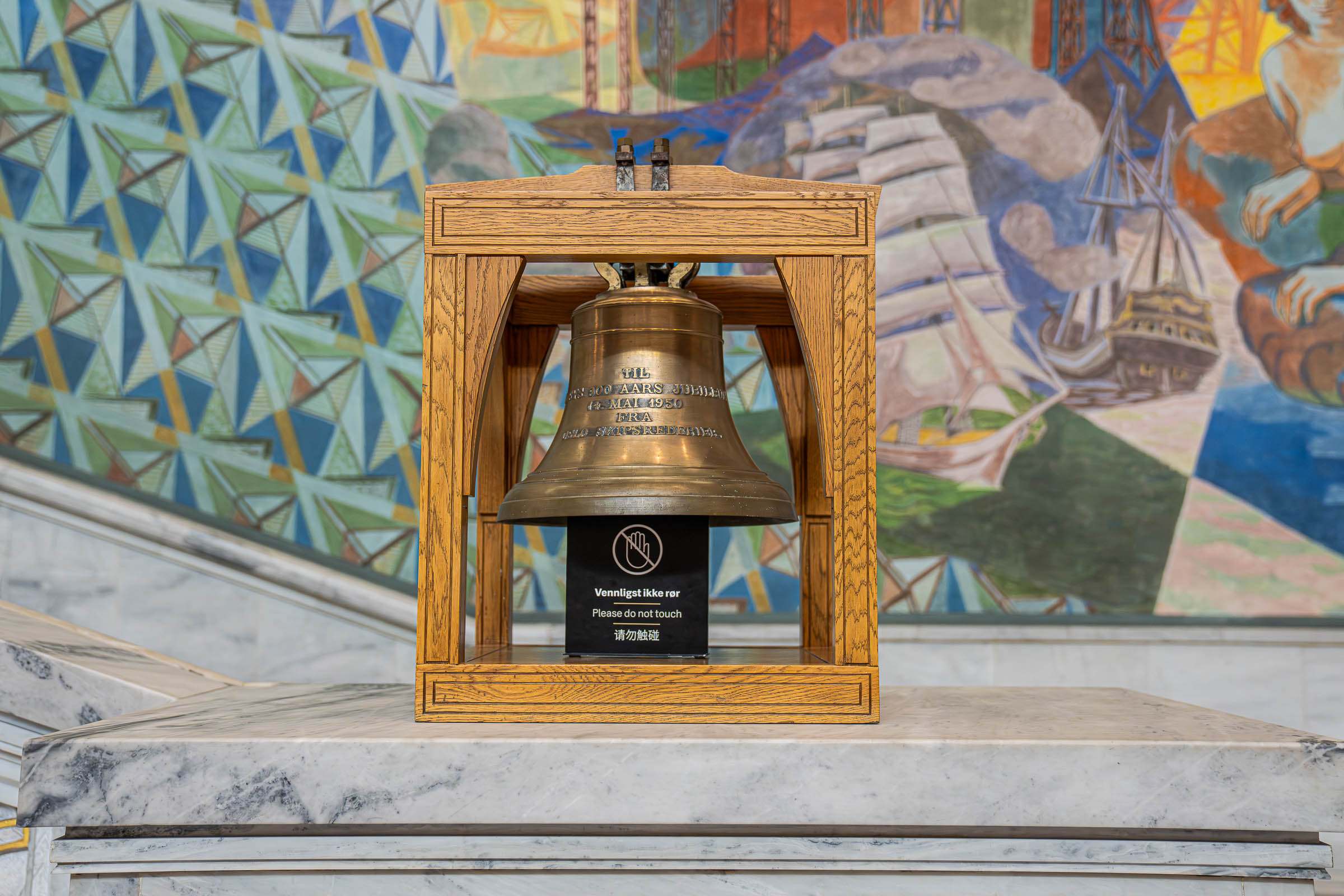
From the outside, Oslo City Hall looks like a red brick fortress with two square towers. Inside, however, it feels like a cathedral of civic life. The building opened in 1950, and every December 10 it hosts the Nobel Peace Prize ceremony. Best of all, you can walk in free of charge outside ceremony periods.
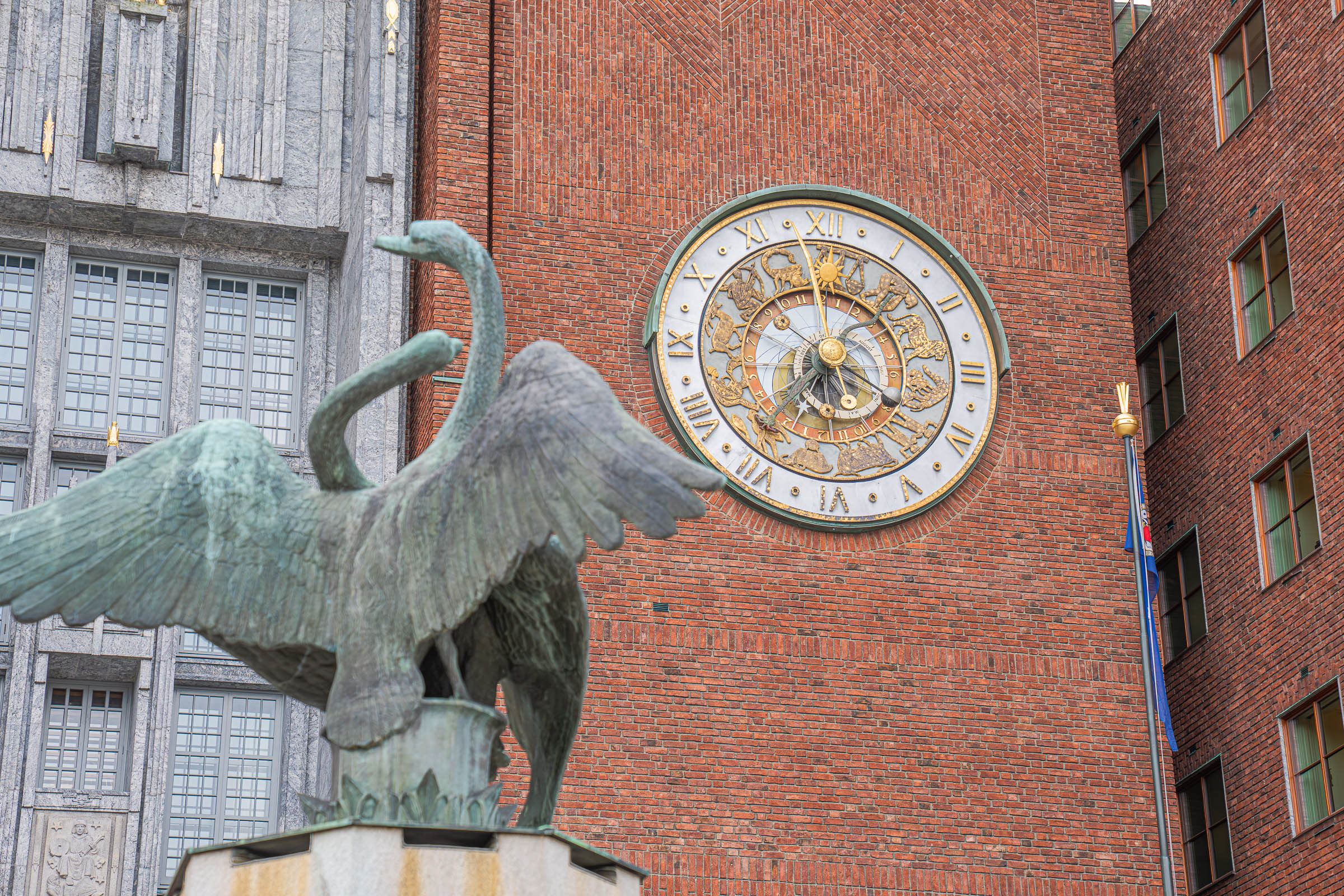
Before you enter, study the courtyard side. A large astronomical clock decorates the brick wall near the main entrance, and a bronze swan spreads its wings close by.
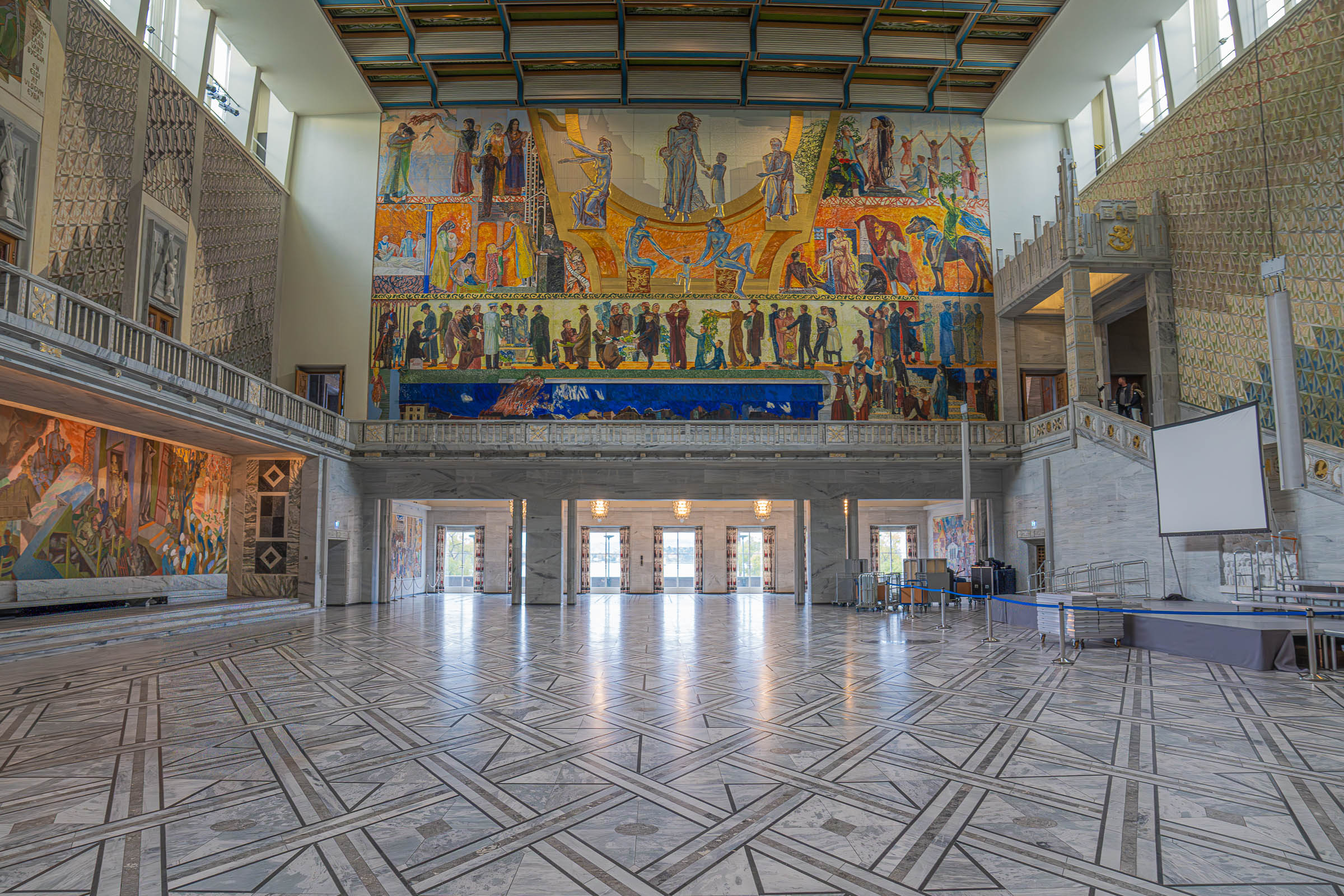
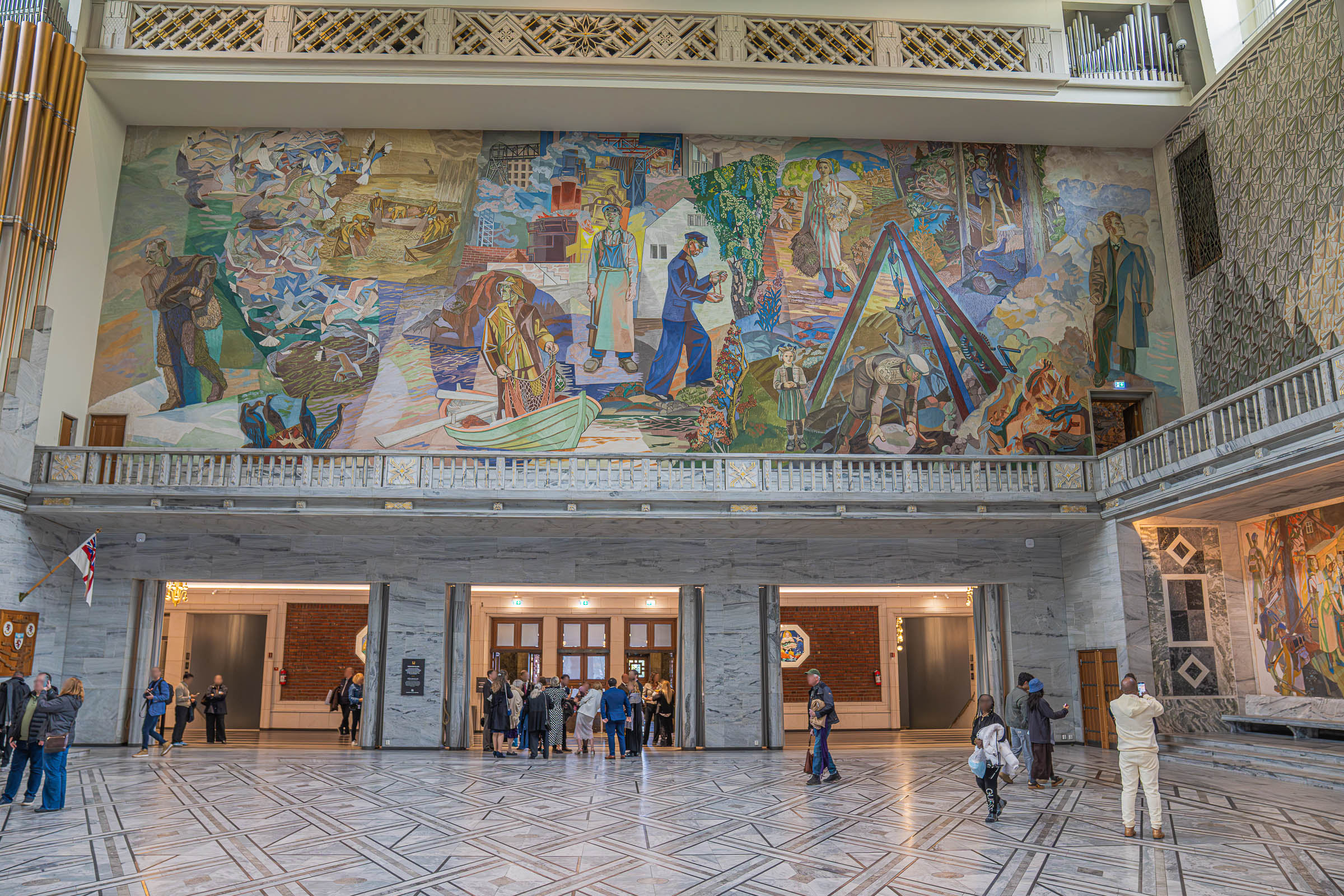
Still, the Main Hall is the star. It measures 31 meters wide, 39 meters long and about 21 meters high, and almost every wall carries art. Henrik Sørensen painted the huge south wall, known as Work, Administration and Celebration. Meanwhile, Alf Rolfsen covered the north wall with a fresco that honors fishermen, farmers and workers.
Then turn to the east wall. Here runs Rolfsen’s Occupation Frieze, about 30 meters long, which tells the story of Norway under German occupation in World War II. Rolfsen drew on his own memories. Researchers have shown how his family’s grief, including the death of his son during the war, shaped the scenes. I stood there far longer than I planned.
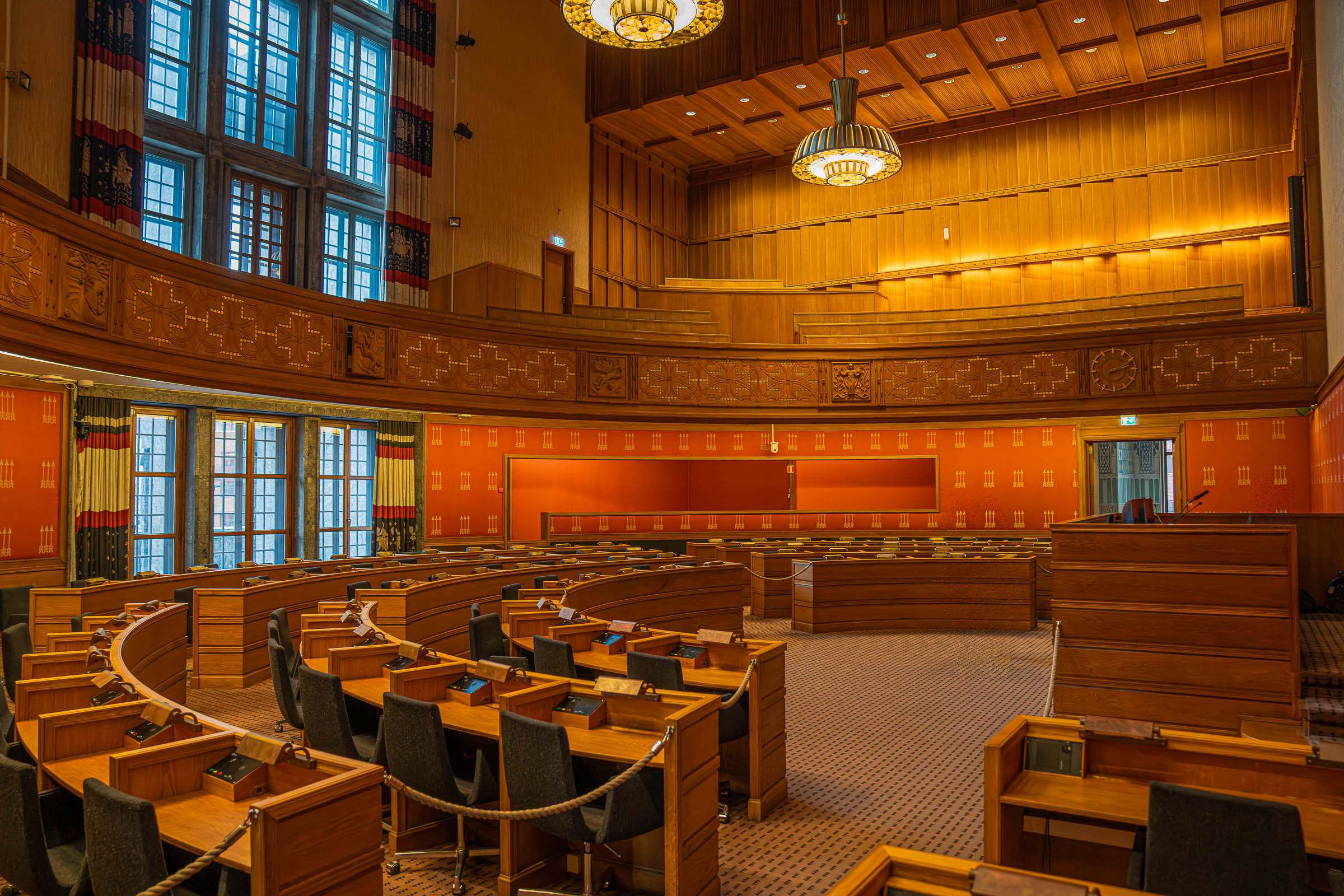
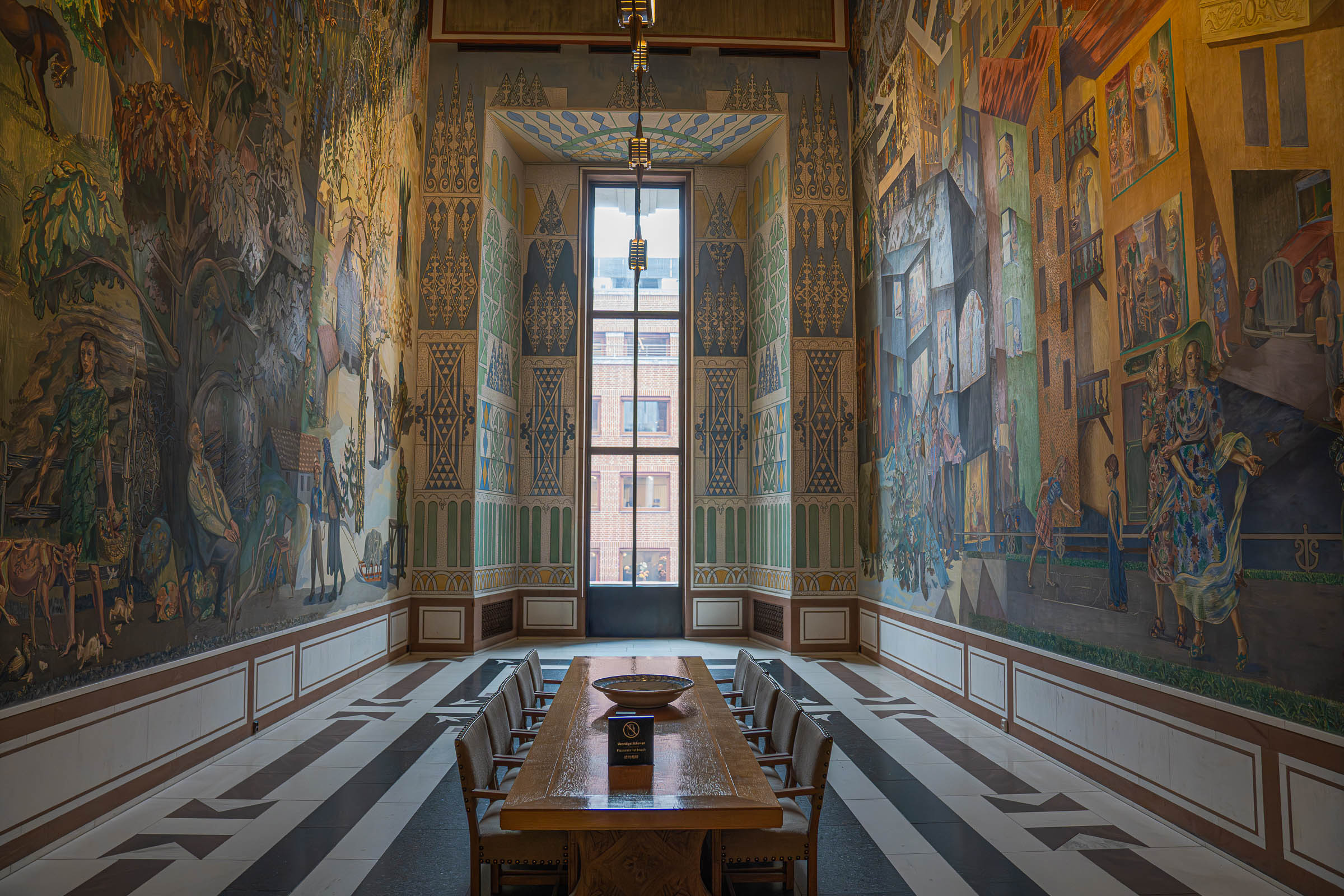
Upstairs, Per Krohg filled the East Gallery with murals of the city on one wall and the countryside on the other. The city council chamber, with its curved wooden desks, feels warm and practical rather than grand.
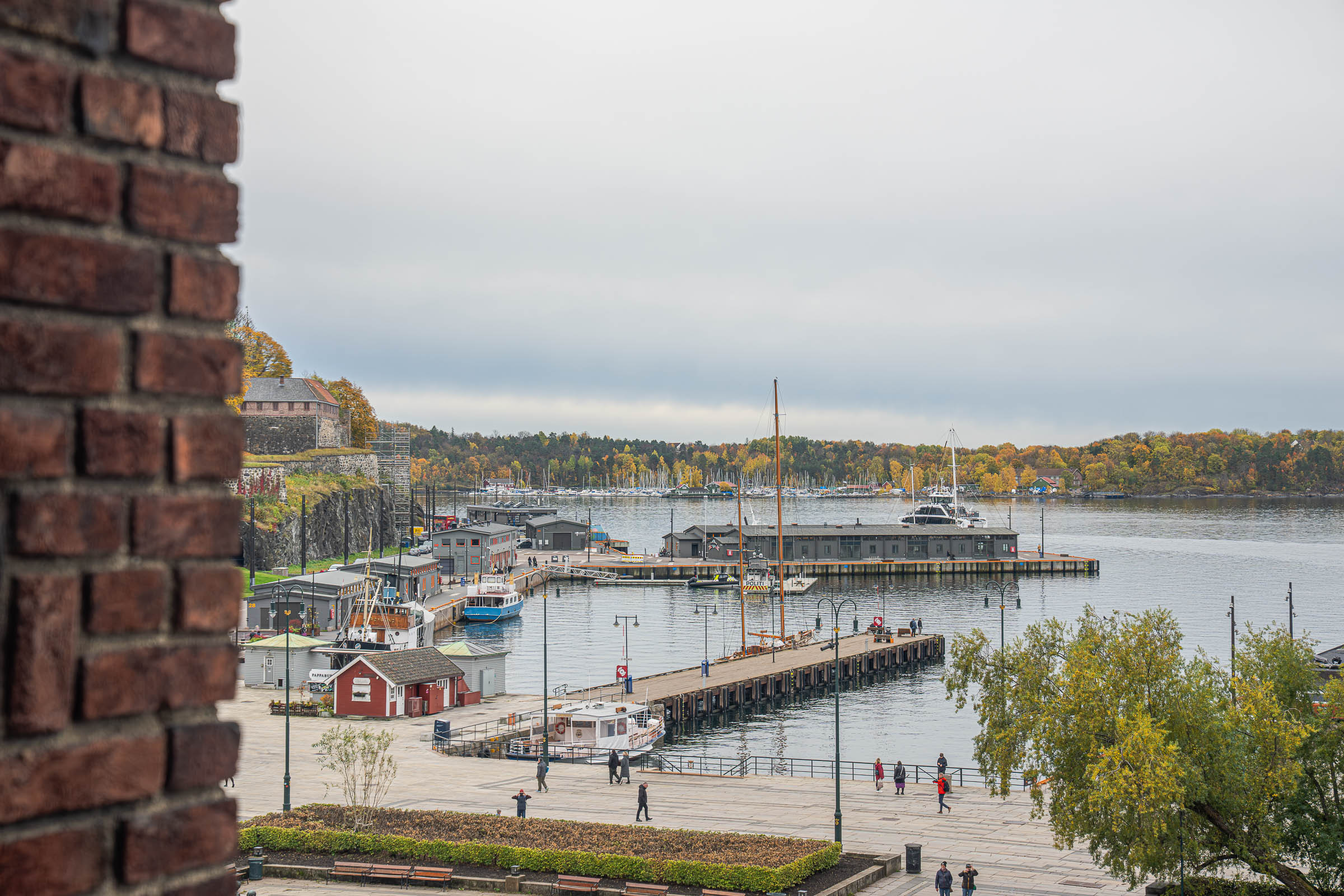
From a tall window, I looked out over the harbor toward Akershus Fortress. It is one of the best free views in this Oslo travel guide.
THE NOBEL PEACE PRIZE IN 2026: A CITY WAITING FOR DECEMBER
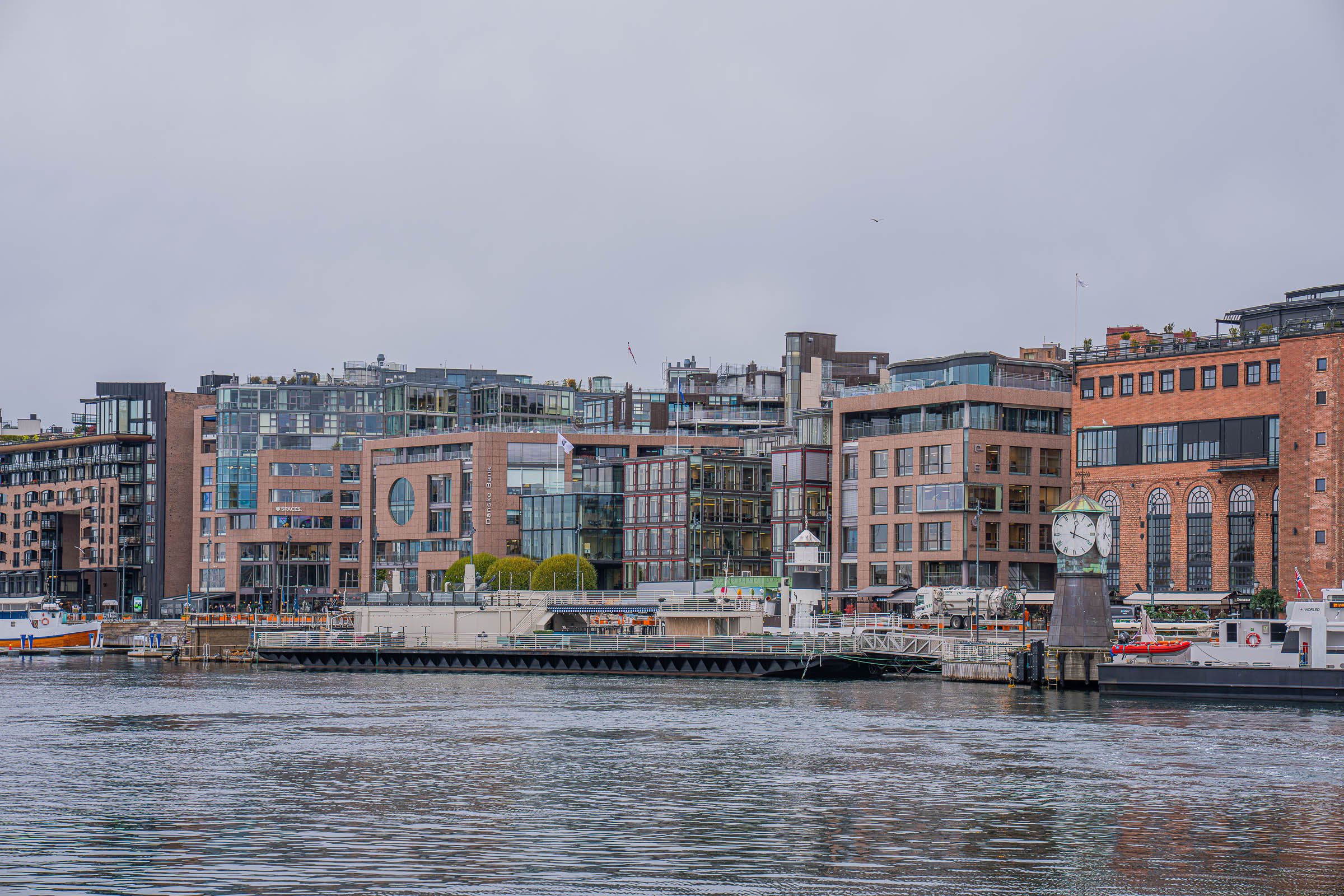
My visit came at a special moment. On October 9, 2026, the Norwegian Nobel Committee named South African jurist Navanethem “Navi” Pillay as this year’s laureate. The committee honored her “for her efforts to promote peace and international law.” Pillay served as UN High Commissioner for Human Rights from 2008 to 2014. This year also marks the 125th anniversary of the prize, first awarded in 1901.
Across the square from City Hall, the Nobel Peace Center already showed her portrait on tall white banners. The center opened in 2005 inside the former West Railway Station, a building from 1872. Its exhibitions tell the stories of laureates past and present. In any Oslo travel guide, it makes a perfect stop before or after City Hall, since the two sit only a short walk apart.
On December 10, the Main Hall of City Hall will host the ceremony. By tradition, the laureate stays at Grand Hotel Oslo, a few minutes up the street, and greets the crowds from its balcony. I found it moving to walk that same short route just weeks before the next ceremony.
AKER BRYGGE AND TJUVHOLMEN: A SHIPYARD THAT LEARNED TO RELAX
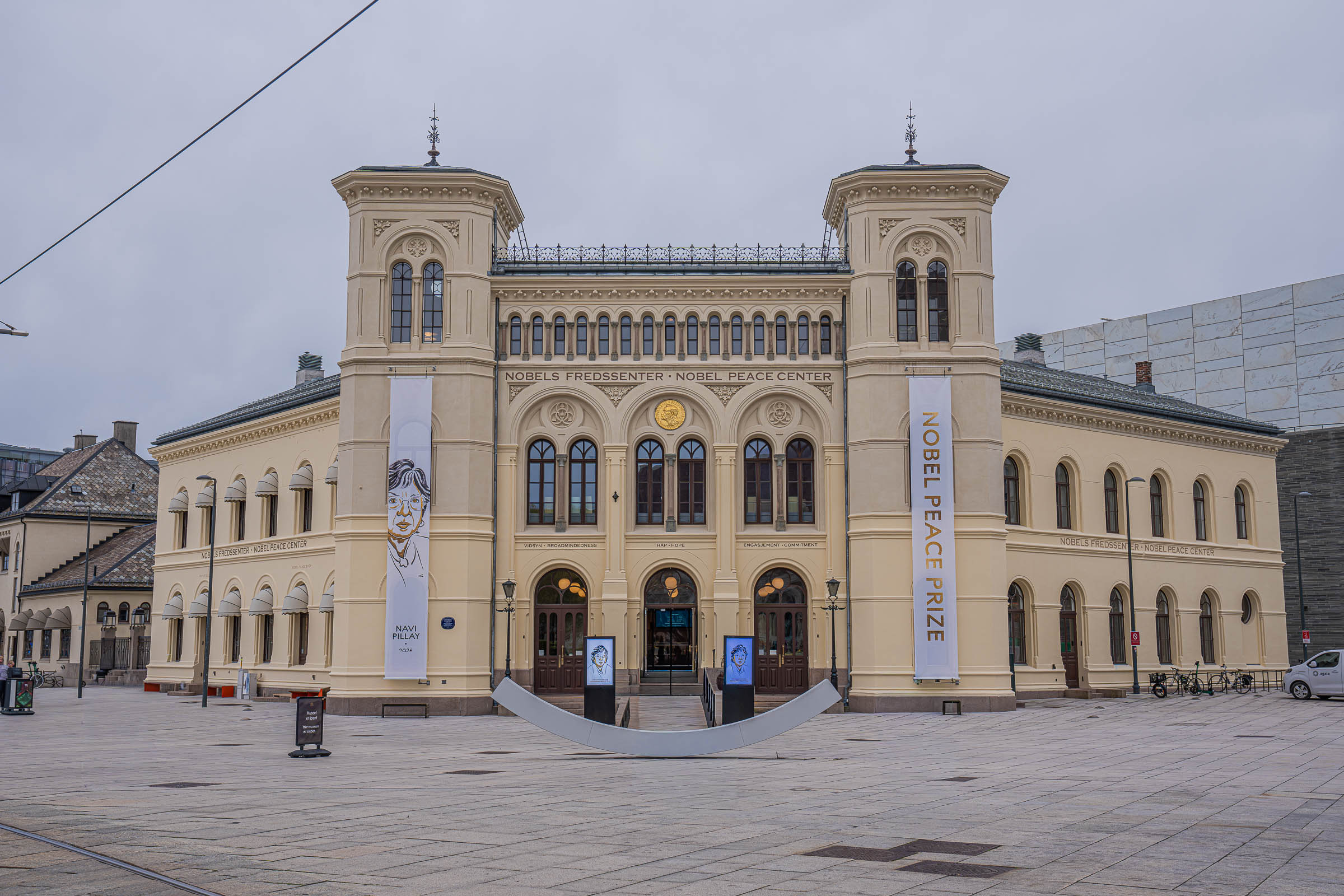
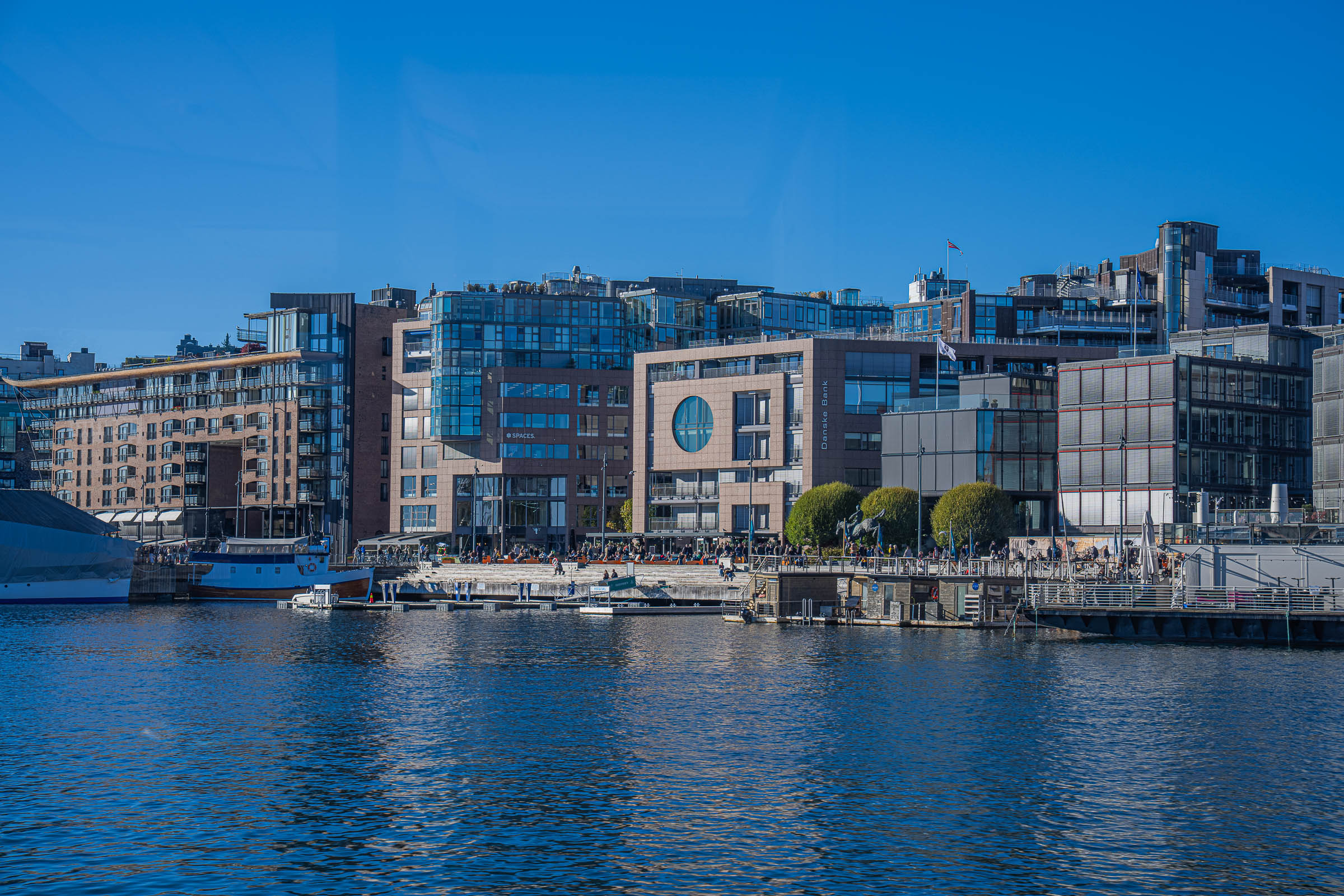
West of City Hall, the harbor changes character. For well over a century, this shore belonged to heavy industry. The company Akers mekaniske Verksted moved here in 1854 and grew into the largest shipyard in Norway before it closed in 1982. Since then, Aker Brygge has become a waterfront of restaurants, shops, offices and homes. In summer, this is where any Oslo travel guide sends you for a long lunch by the water.
On a sunny October afternoon, the outdoor tables were full. People sat on the wide steps with coffee, faces turned to the sun. The old pier clock, with its green copper roof, stood above the ferry docks, while Akershus Fortress glowed across the water.
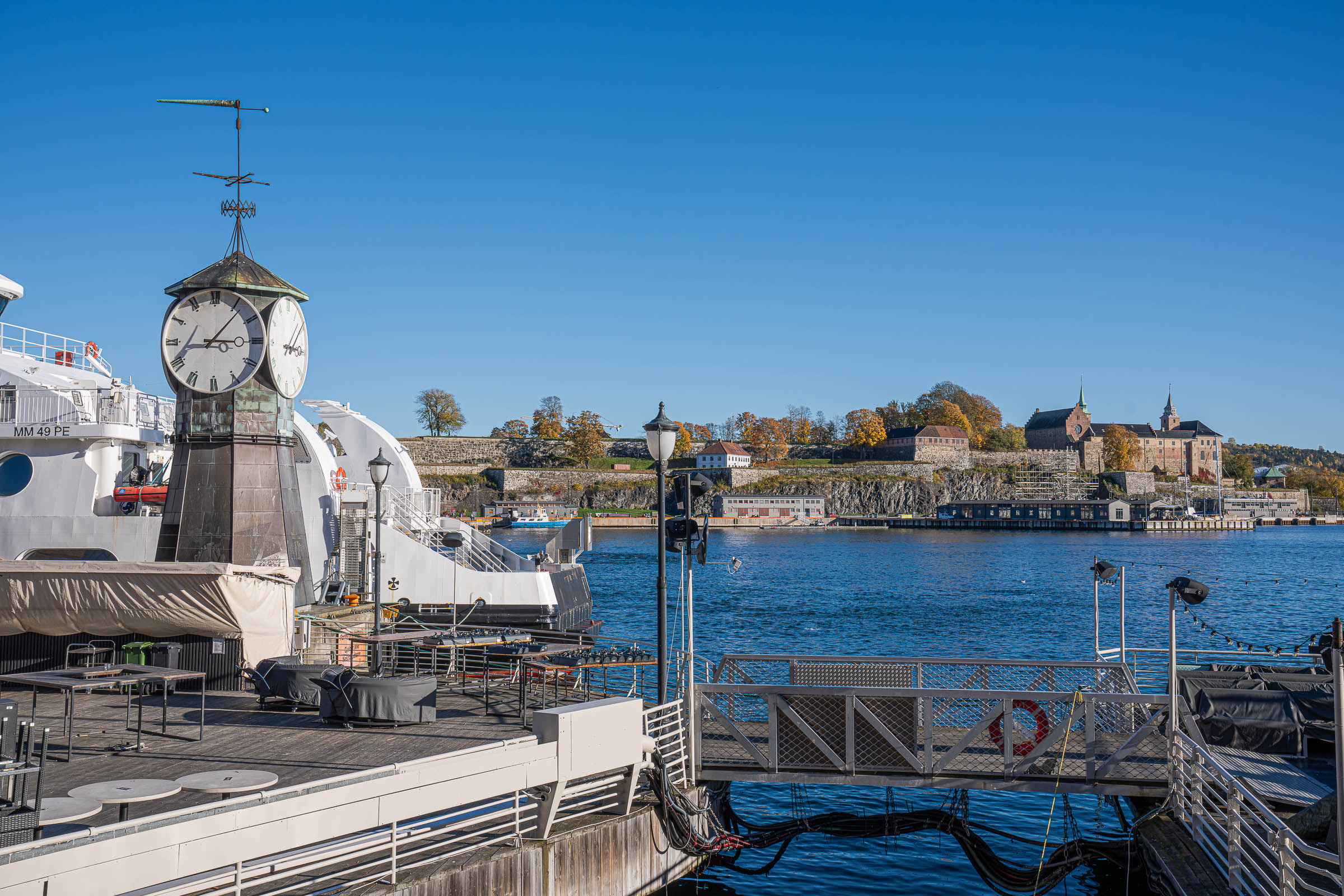
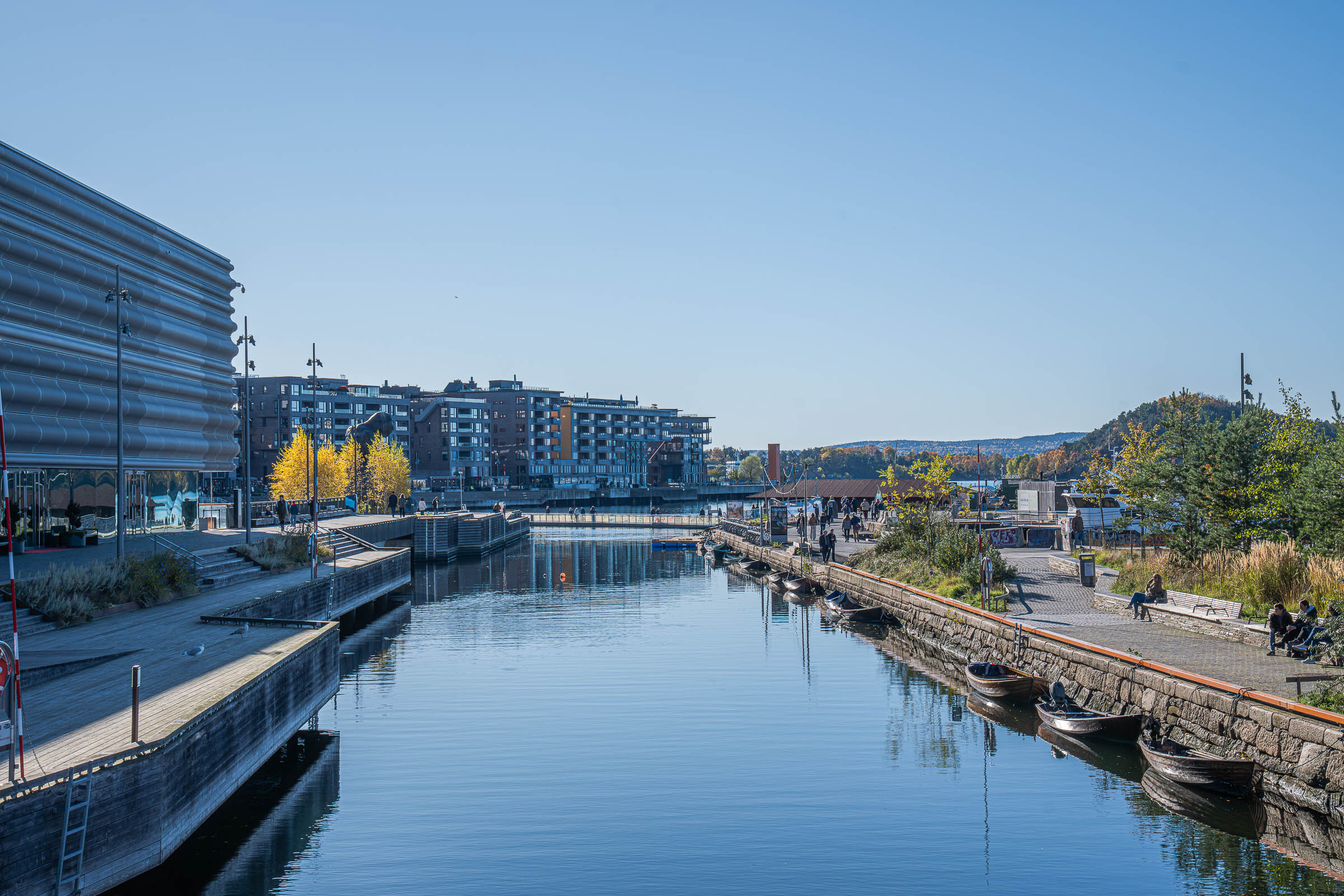
Keep walking west and you soon reach Tjuvholmen, a newer district on a small peninsula. Here Italian architect Renzo Piano designed the Astrup Fearnley Museum, which opened in 2012, along with the sculpture park around it. The park holds works by artists such as Louise Bourgeois, Anish Kapoor and Antony Gormley.
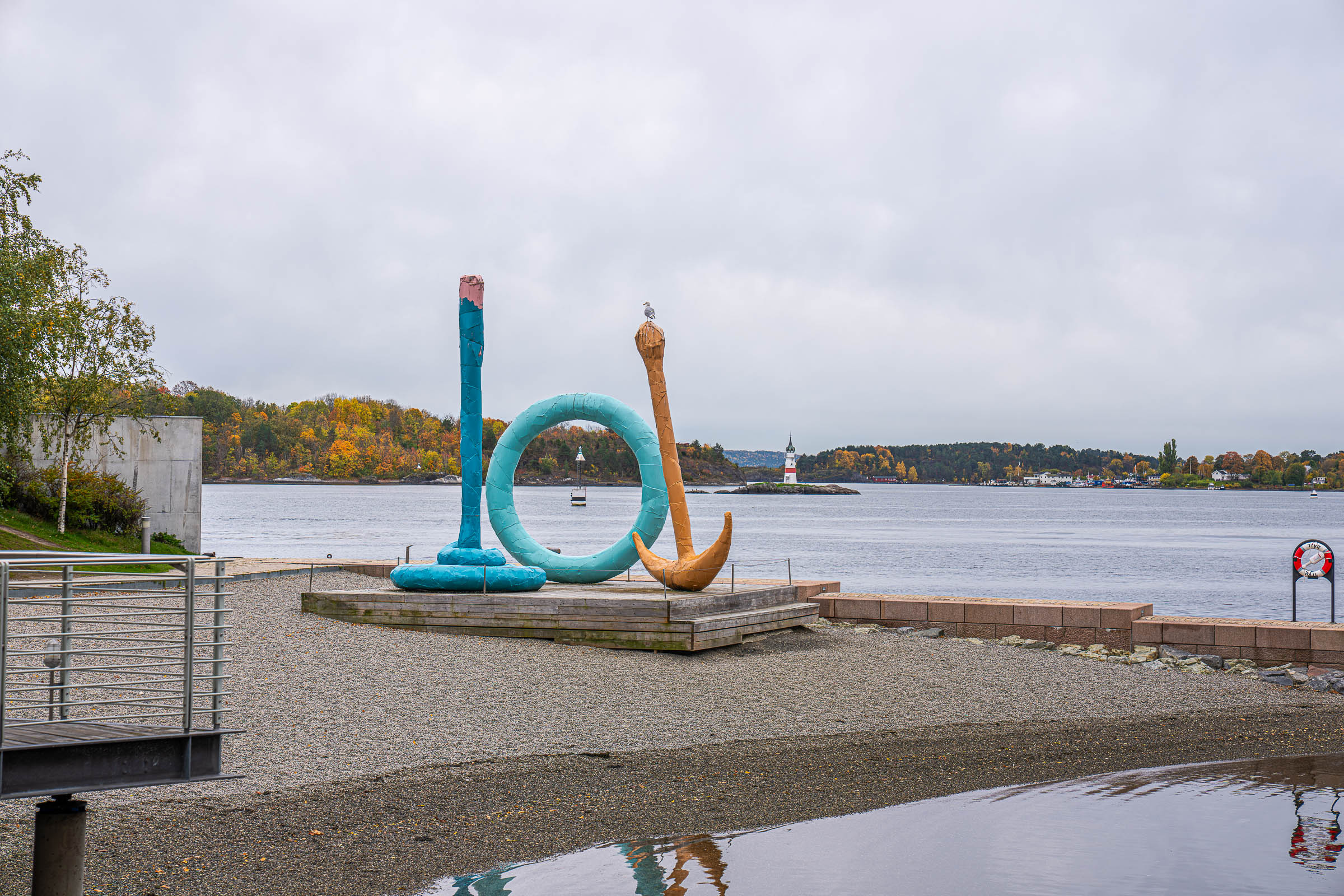
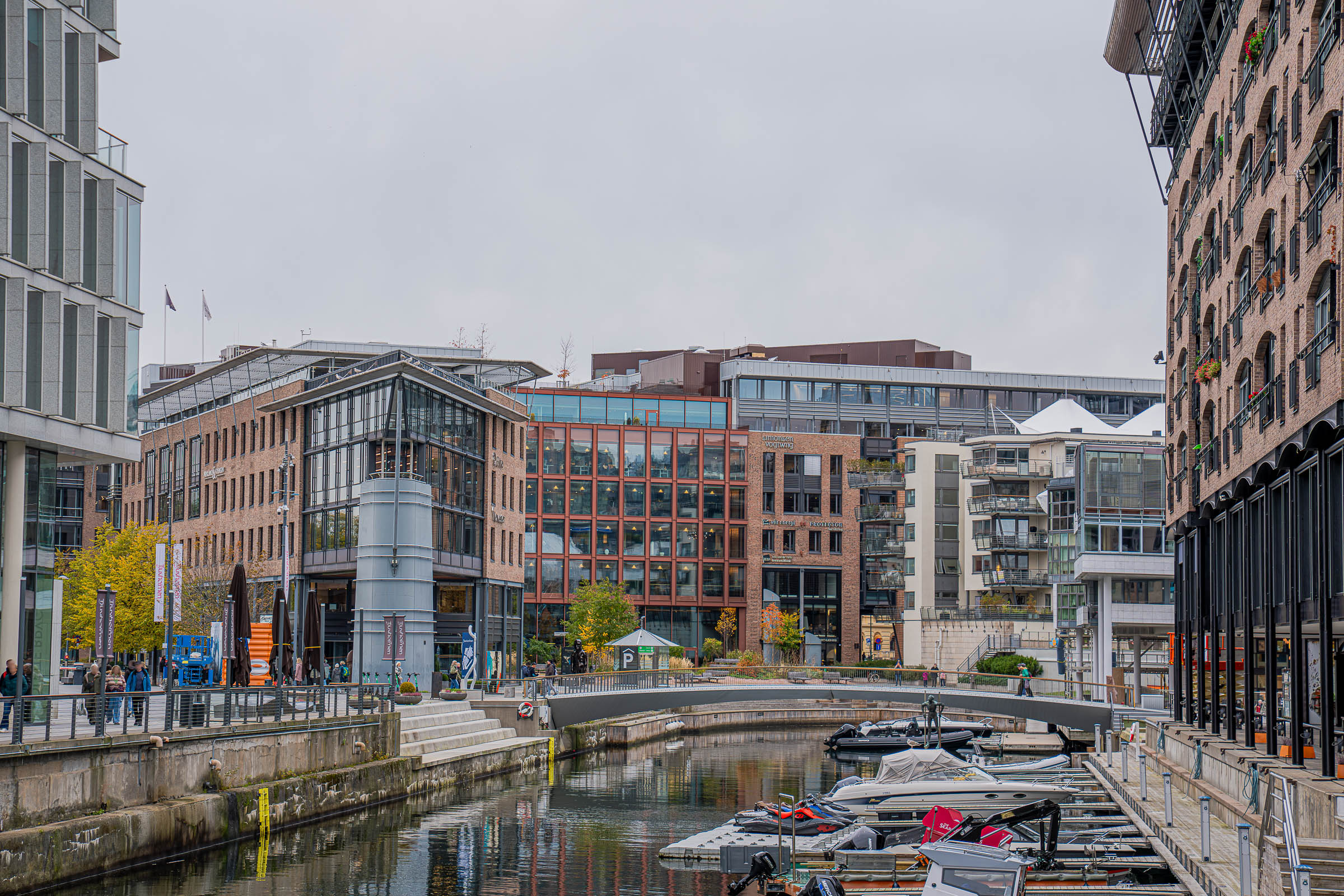
At the very tip, a small pebble beach invites summer swims. In October it belonged to the gulls and to one bright, playful sculpture on the shore. Canals cut between the buildings, and small bridges join them, so the whole area feels like a Nordic take on Venice.
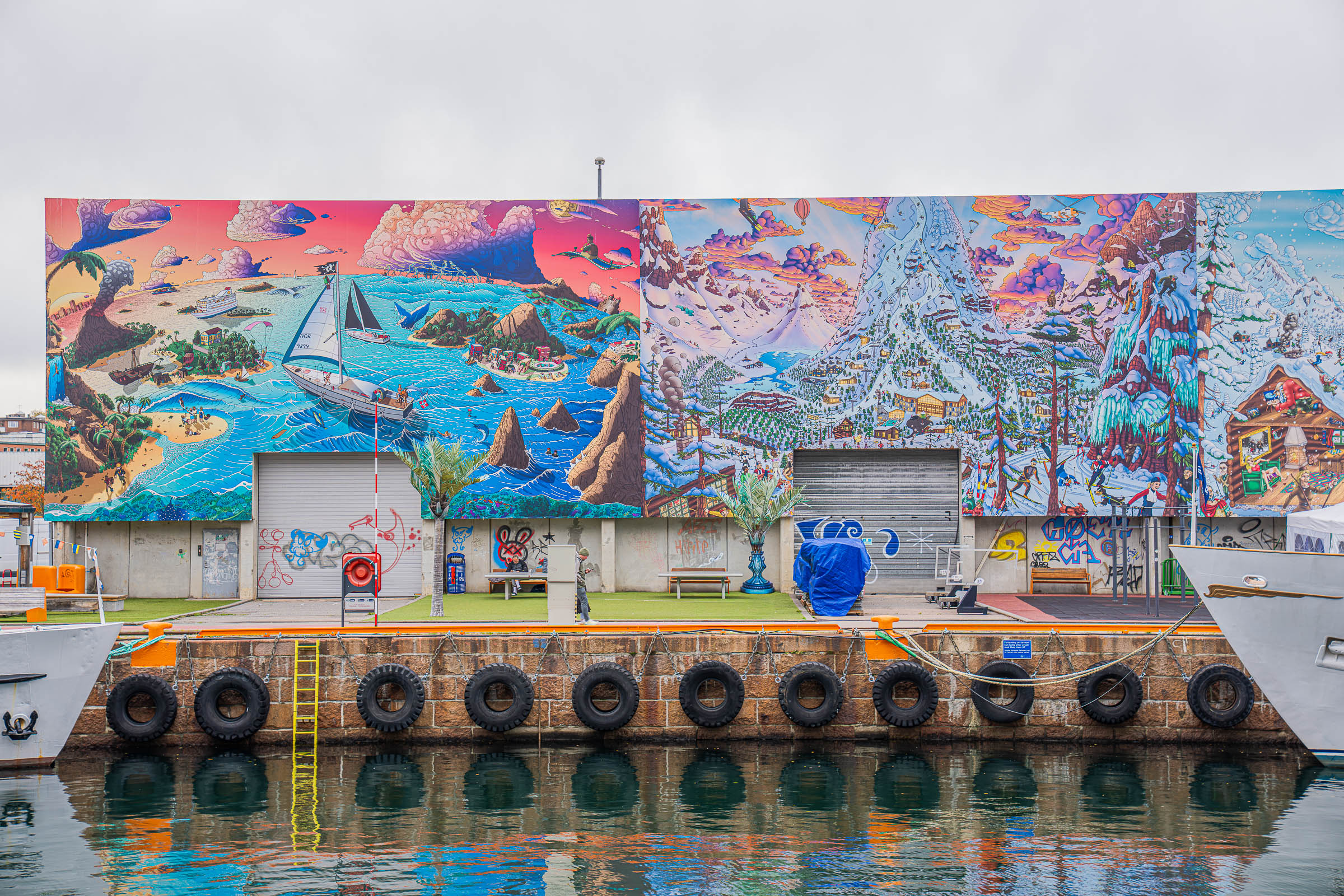
Along the waterfront, a giant mural on a harbor warehouse caught my eye. Half of it showed a tropical sea, and half showed a snowy mountain. To me, it sums up Norway nicely: summer dreams painted on a winter country.
AKERSHUS FORTRESS AND THE OSLOFJORD ISLANDS
Akershus Fortress has guarded the harbor since around 1300, when King Haakon V built it. Its stone walls, castle buildings and church towers sit high on a rocky point. The best way to read its position is from the water or from Aker Brygge, where the whole silhouette lines up above the ferries.
Today the fortress still keeps a royal role. Soldiers of the King’s Guard perform sentry duty here as well as at the palace, dressed in the same ceremonial uniforms.
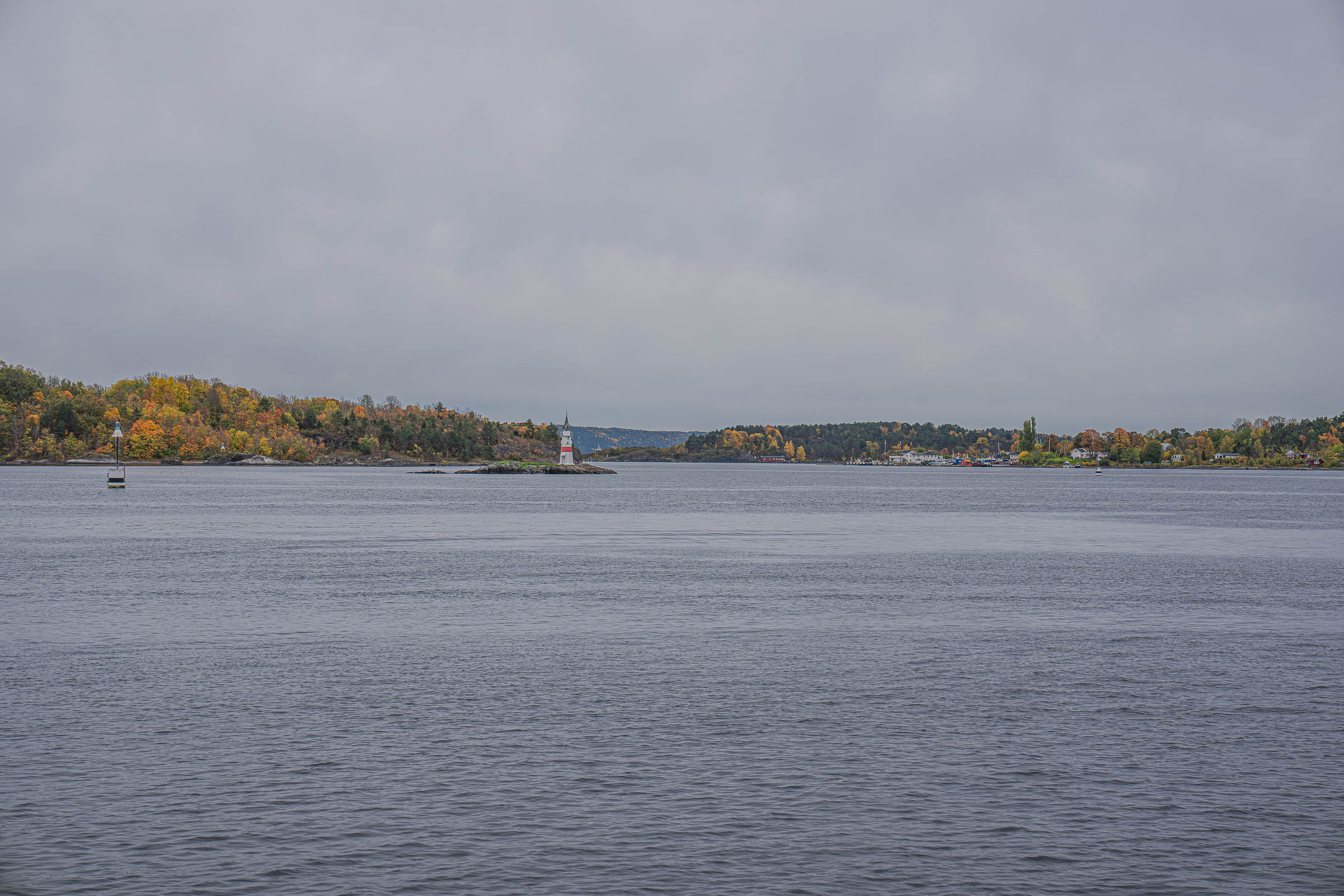
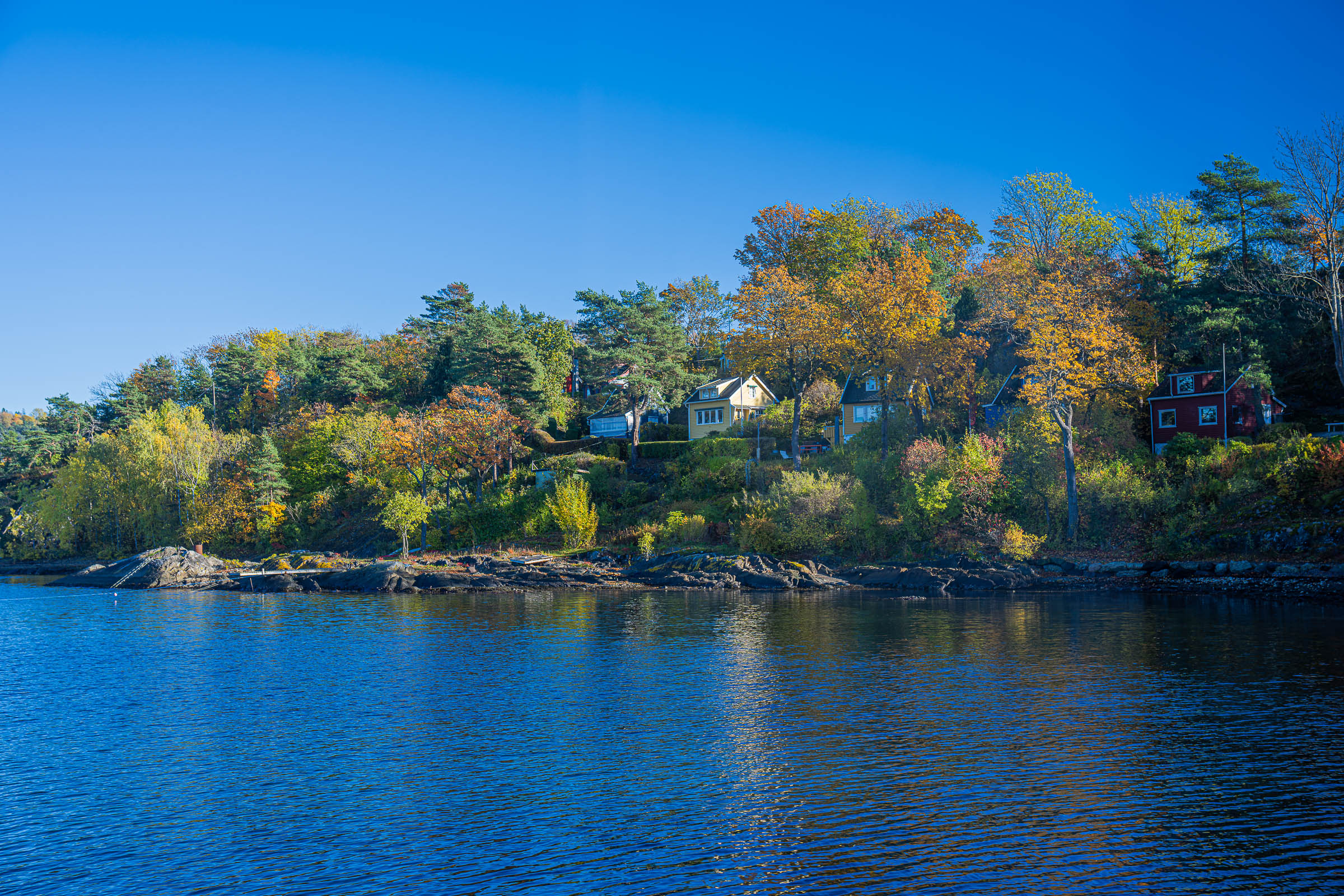
From the city center, small ferries head out to the islands of the inner Oslofjord. Out on the water, the reward was pure Norway: dark rocky shores, pine and birch in autumn colors, and small wooden cottages painted red and yellow. It looked like a children’s book about the perfect summer.
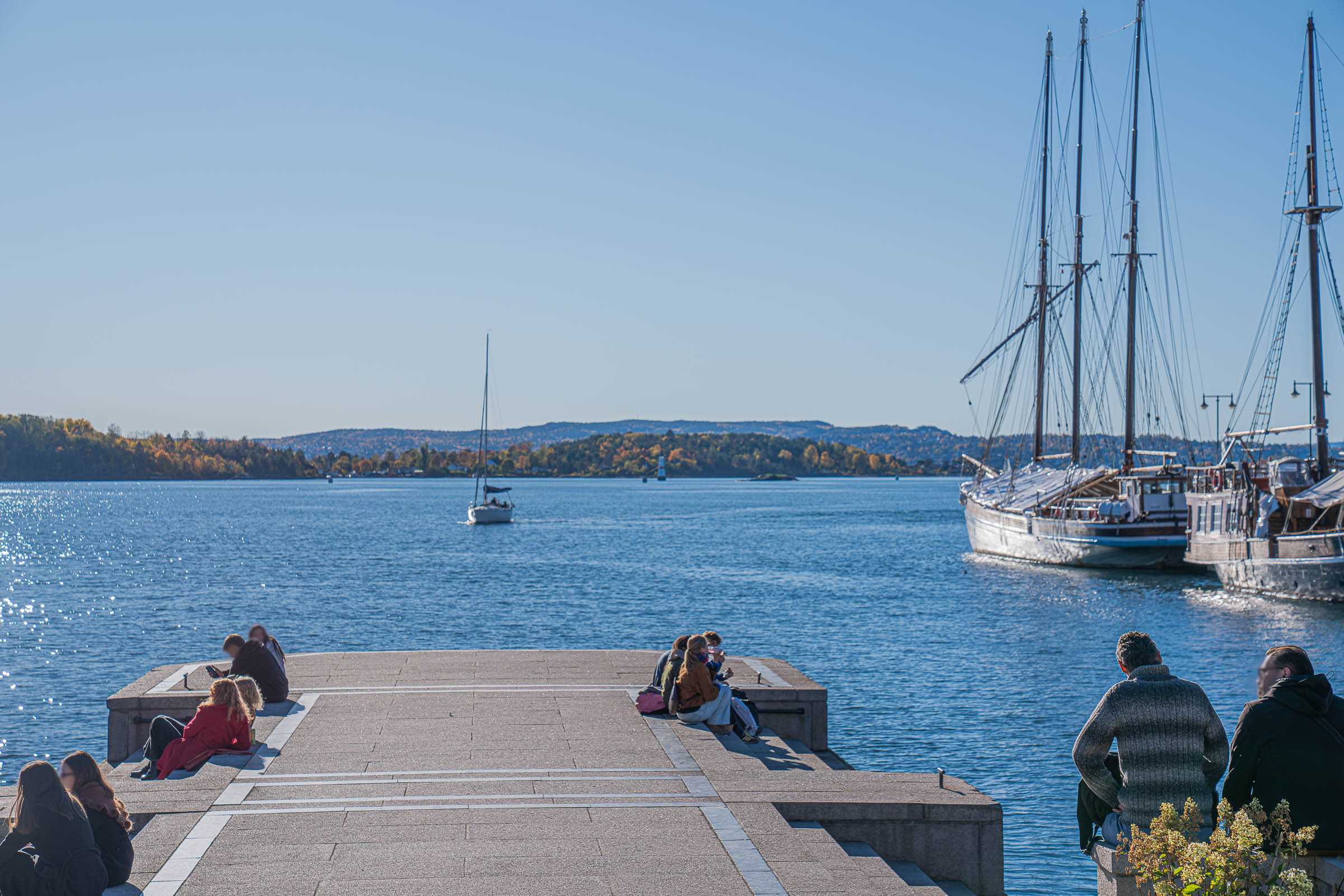
Back on shore, people sat on the granite steps of the harbor promenade. Old wooden sailing ships rested at the quay, and a single white sailboat crossed the fjord. Nobody spoke much. In Oslo, silence is part of the view.
If your Oslo travel guide has room for only one sunset, spend it on the fortress walls. The city, the harbor and the fjord all open up at once, and you will understand why kings chose this rock.
OSLO OPERA HOUSE: WHY DOES EVERY TRAVEL GUIDE SEND YOU TO THE ROOF?
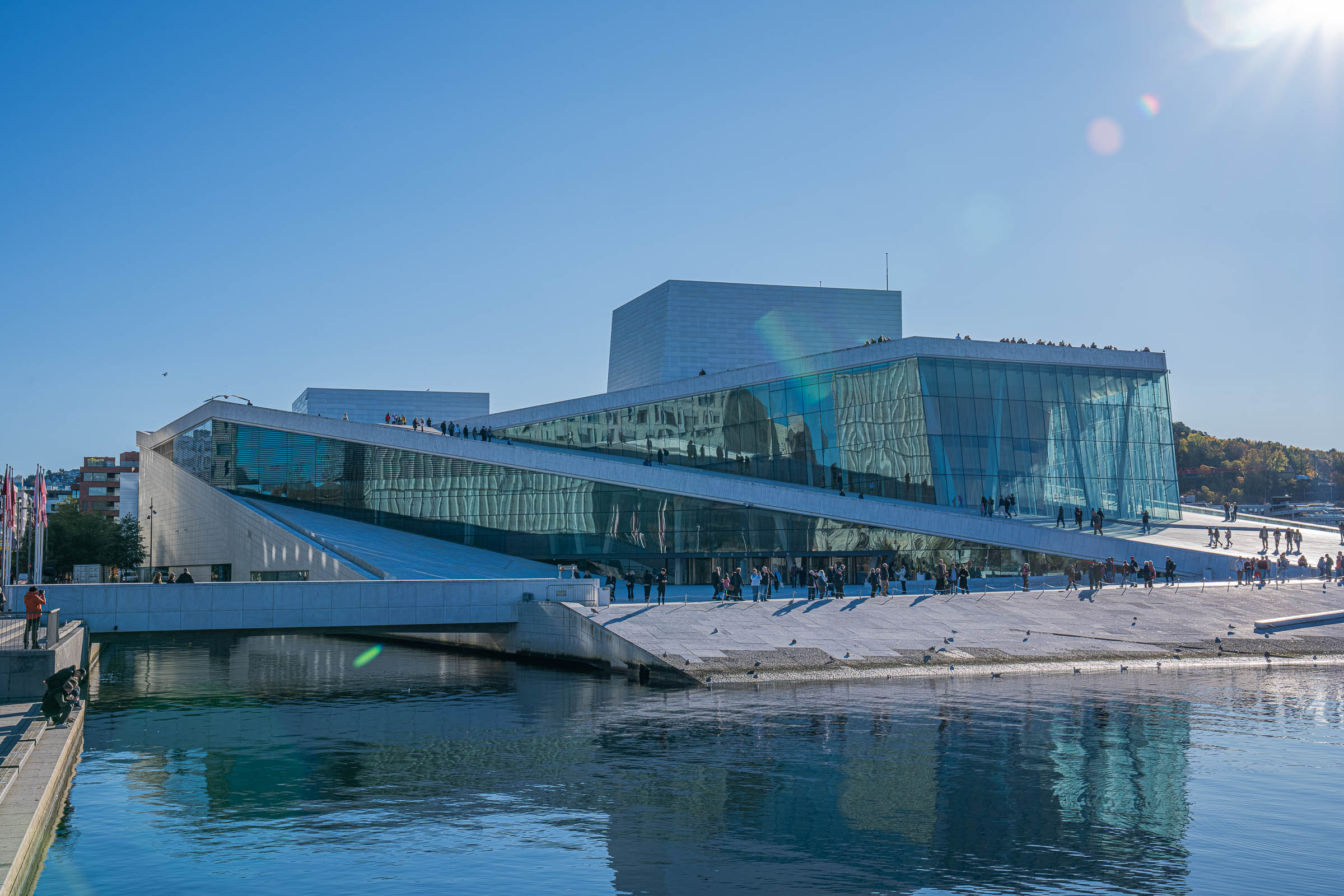
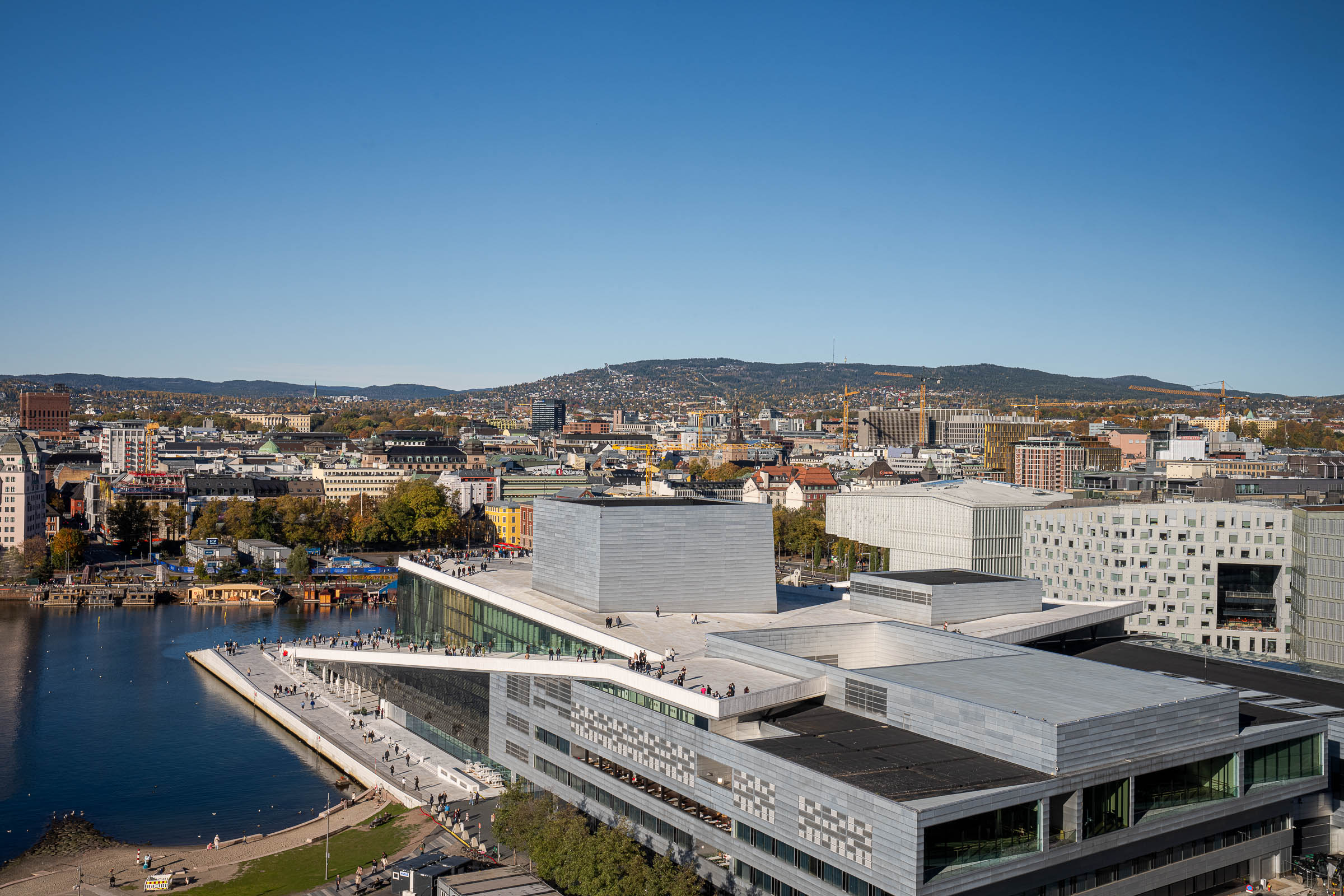
Because you can walk on it. That is the simple genius of the Oslo Opera House. The Norwegian firm Snøhetta won the design competition in 2000, and the building opened on April 12, 2008. Its sloping roof, clad in white Carrara marble and granite, rises straight out of the water like a glacier. Visit Norway puts it neatly: Norwegians climb mountains by nature, so Oslo gave them an opera house to climb.
The roof is public space, free and open around the clock. So walk up slowly. This is the one stop in my Oslo travel guide that I would happily repeat at sunset. From the top, you see the fjord on one side and the new Bjørvika skyline on the other. In winter, take care, because the marble gets slippery.
Inside, the Norwegian National Opera and Ballet performs on the main stage. Even without a ticket, the glass foyer is worth a quick look.
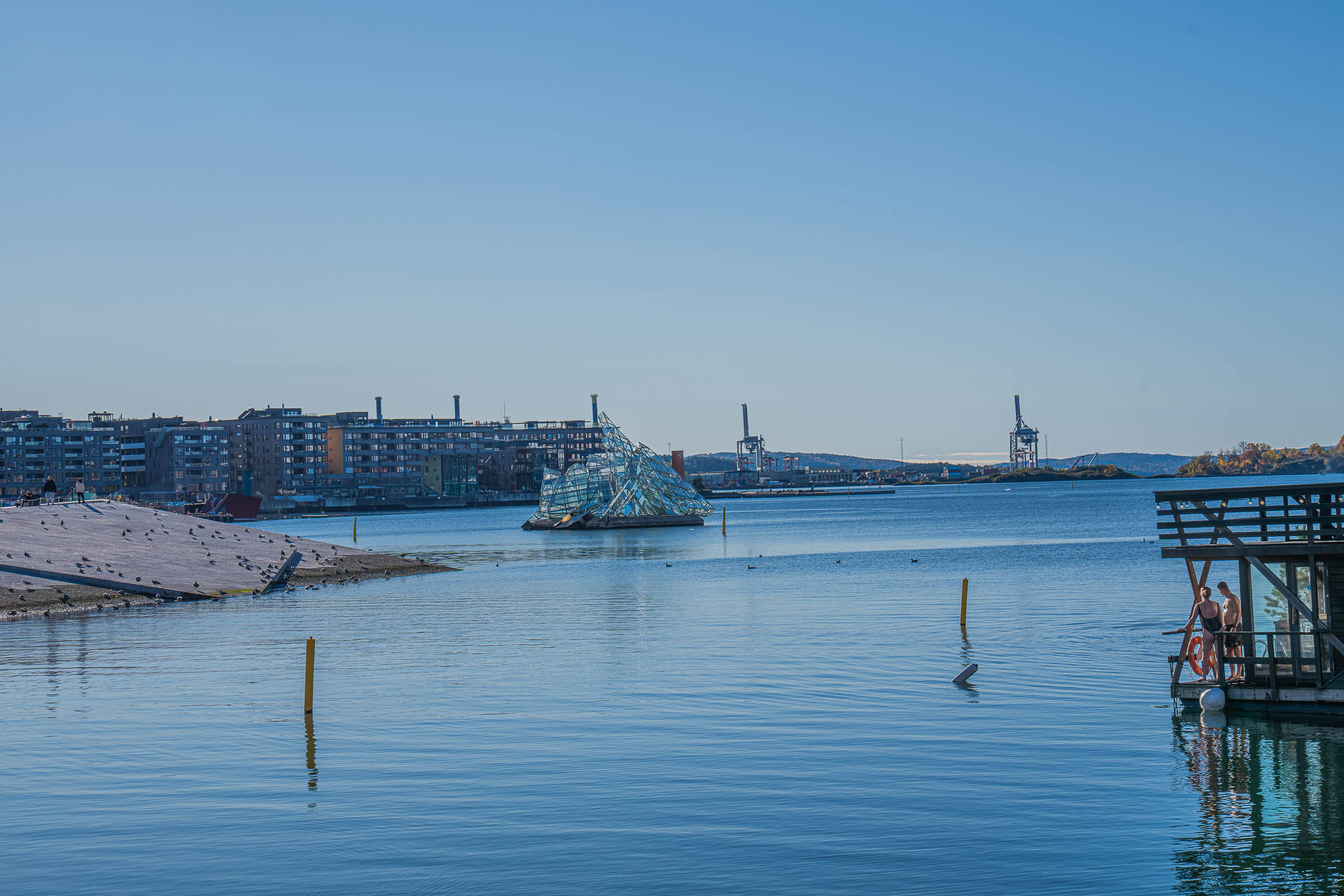
Out in the water floats a structure that looks like a sailboat at first glance. In fact, it is She Lies by Italian artist Monica Bonvicini, an iceberg of stainless steel and glass panels unveiled in 2010 in the presence of Queen Sonja. Its surfaces change with the light and the waves.
Nearby, a floating sauna sits on the harbor. I watched two brave bathers step onto its deck in swimsuits, ready for the October sea. I admired them from dry land.
Right behind the opera stands Deichman Bjørvika, the central public library, which opened in 2020. Entry is free, and the upper floors reward you with wide views.
MUNCH MUSEUM: FACE TO FACE WITH THE SCREAM
Edvard Munch died in 1944 and left his remaining works to the city of Oslo. For decades they lived in a museum in Tøyen, which opened in 1963. In October 2021, the collection moved to MUNCH, a 13-floor tower in Bjørvika by the Spanish firm Estudio Herreros. Its upper part leans toward the fjord, and locals call it Lambda, after the Greek letter.
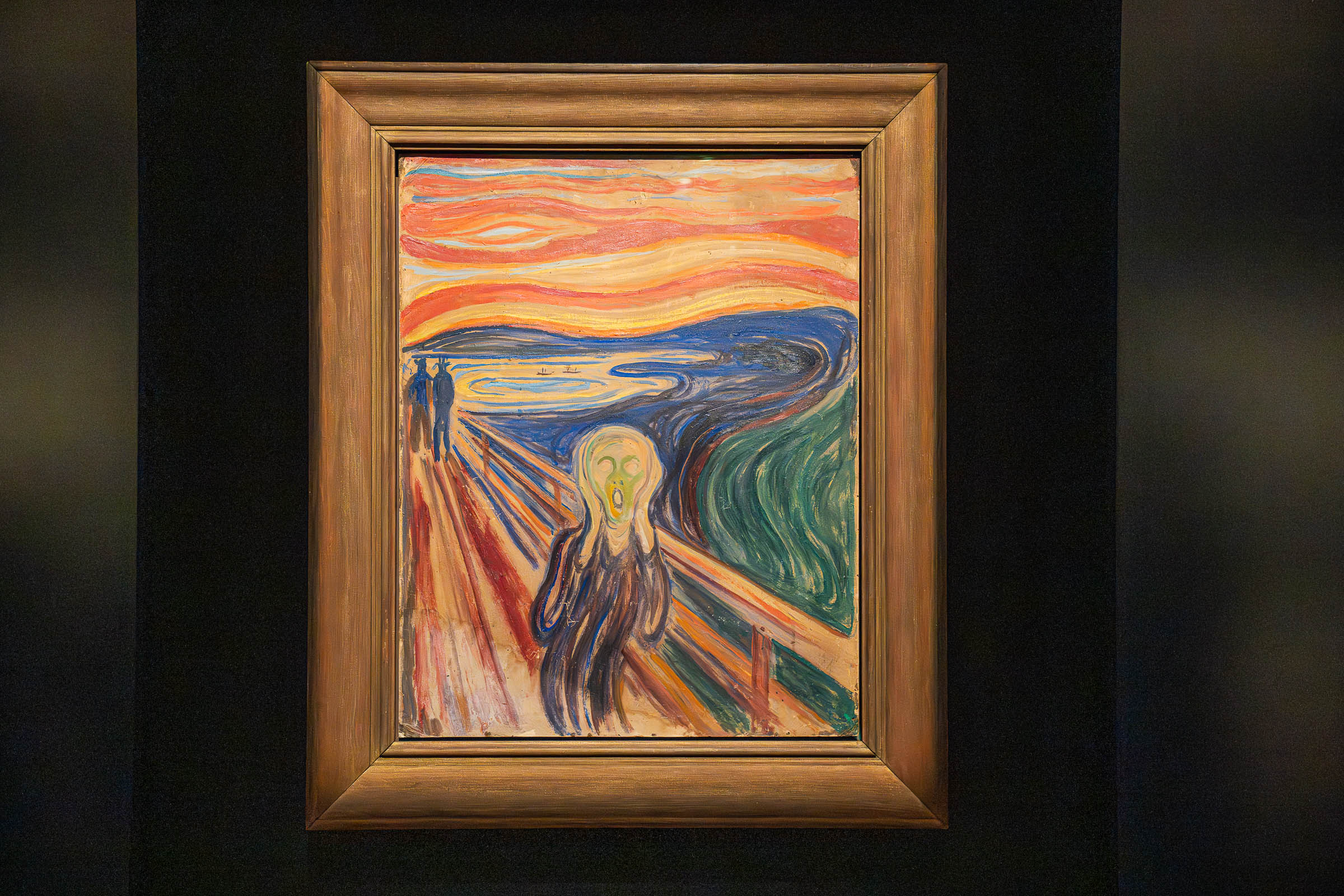
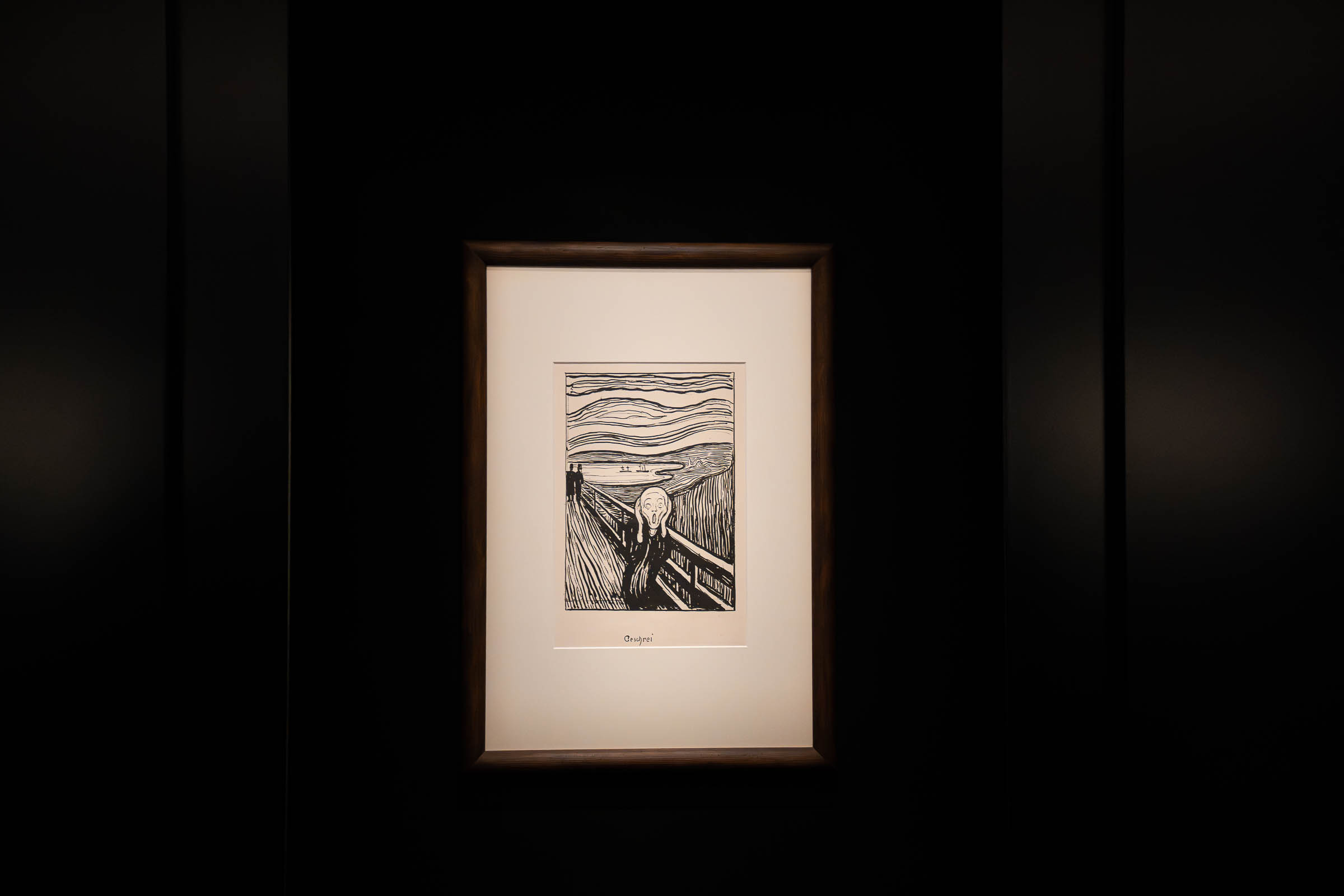
Of course, everyone comes for The Scream, and the museum handles it with care. It owns several versions, including a painting, a drawing and a print. To protect them from light, only one hangs on display at a time, and they usually rotate every hour. If you want a specific version, plan to stay a while. And if your Oslo travel guide allows only one museum, choose this one.
I saw both the painted version and the black-and-white lithograph. Standing in that dim room, I remembered how Munch described a walk at sunset. The clouds turned blood red, and he sensed “a scream passing through nature.” The view he described is real. It shows the Oslofjord from the hill of Ekeberg, only a short distance from the museum.
That link moved me more than any line in an Oslo travel guide. Oslo is not just the place where Munch worked. It is the actual landscape inside his most famous image, and you can stand in it.
BEYOND THE SCREAM: MORE TREASURES AT MUNCH
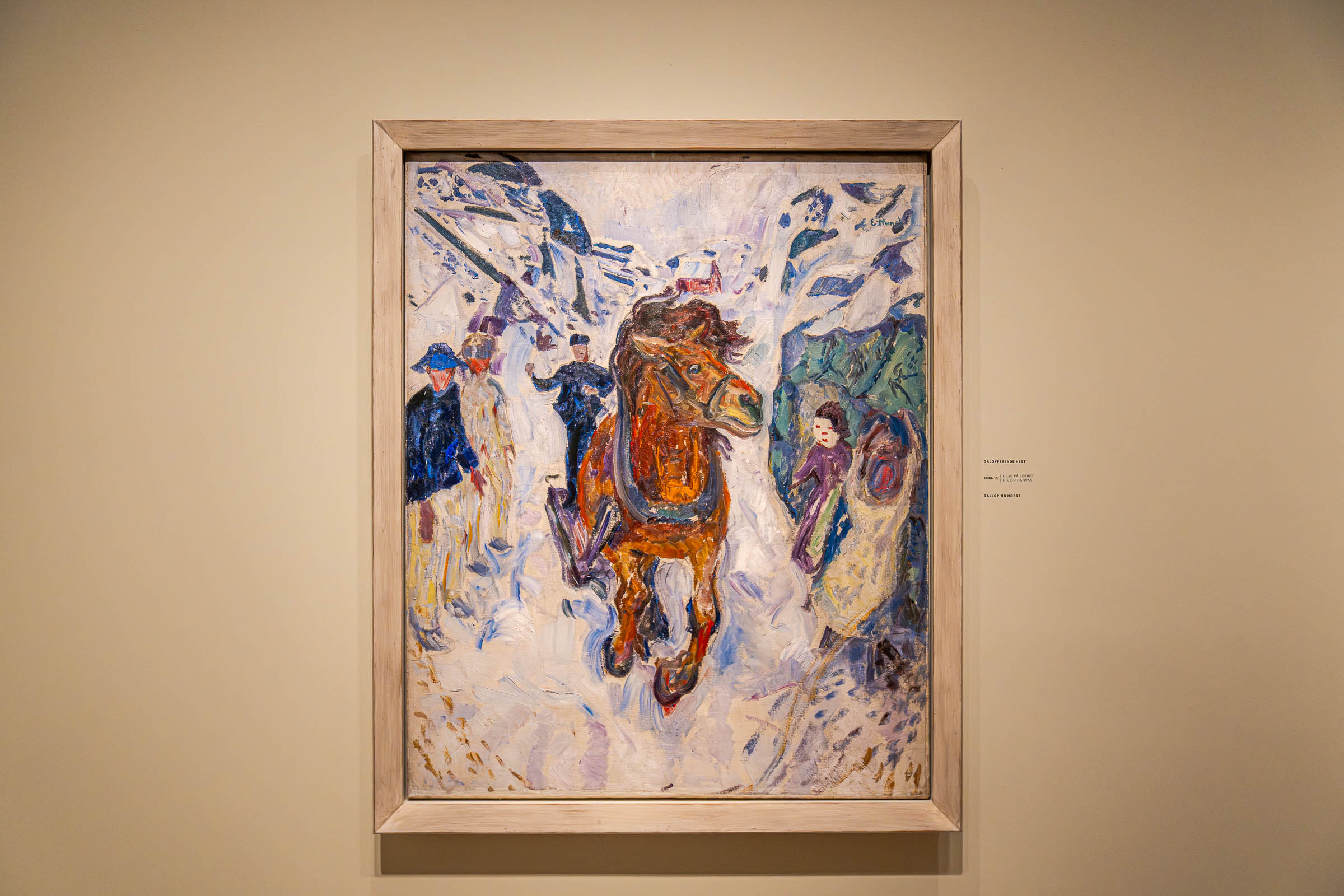
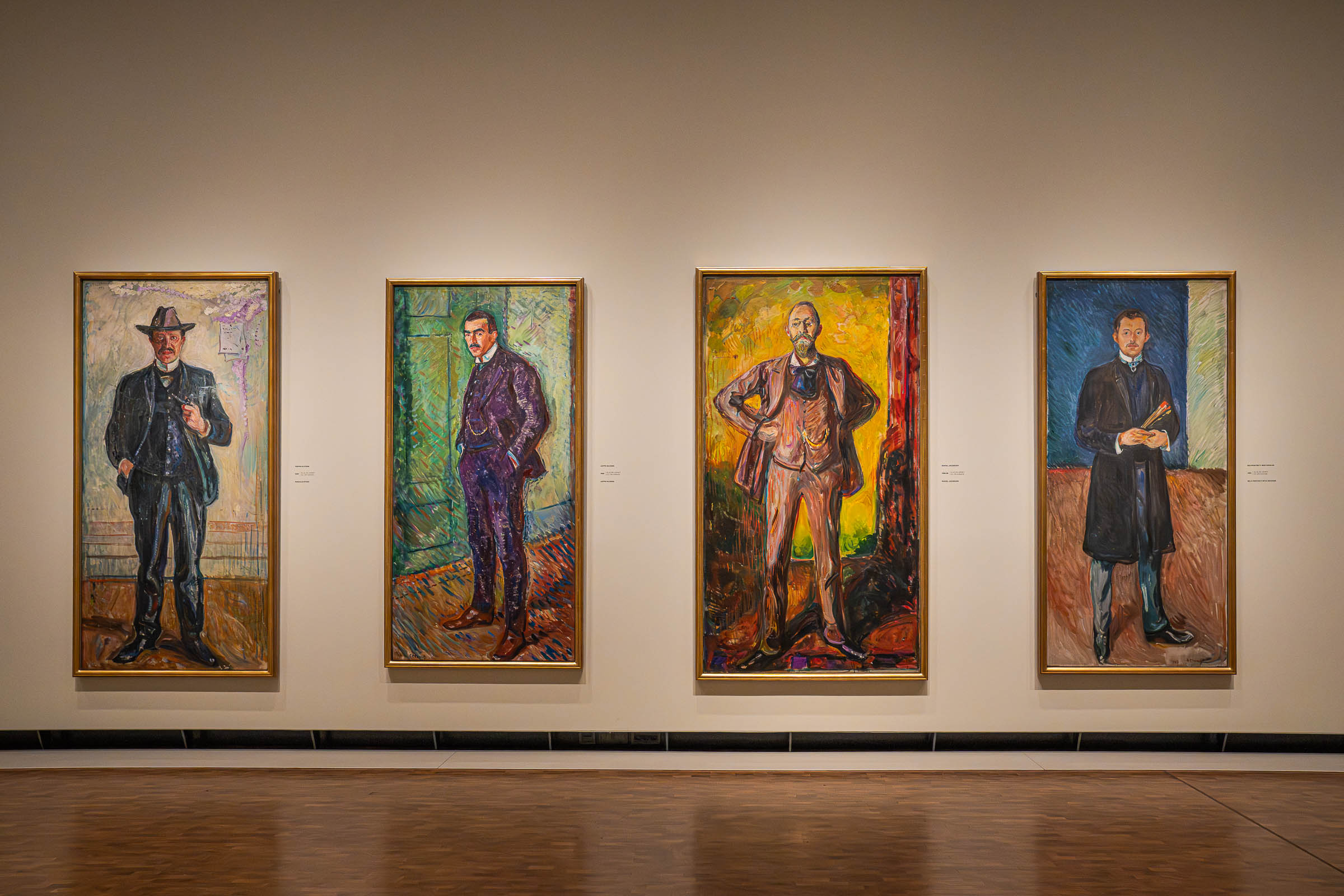
The rest of the museum is just as rewarding. I stopped in front of Galloping Horse, painted between 1910 and 1912, with a horse charging straight out of the snow. After that came a wall of four full-length portraits, proof that Munch could paint people with great confidence, not only anxiety.
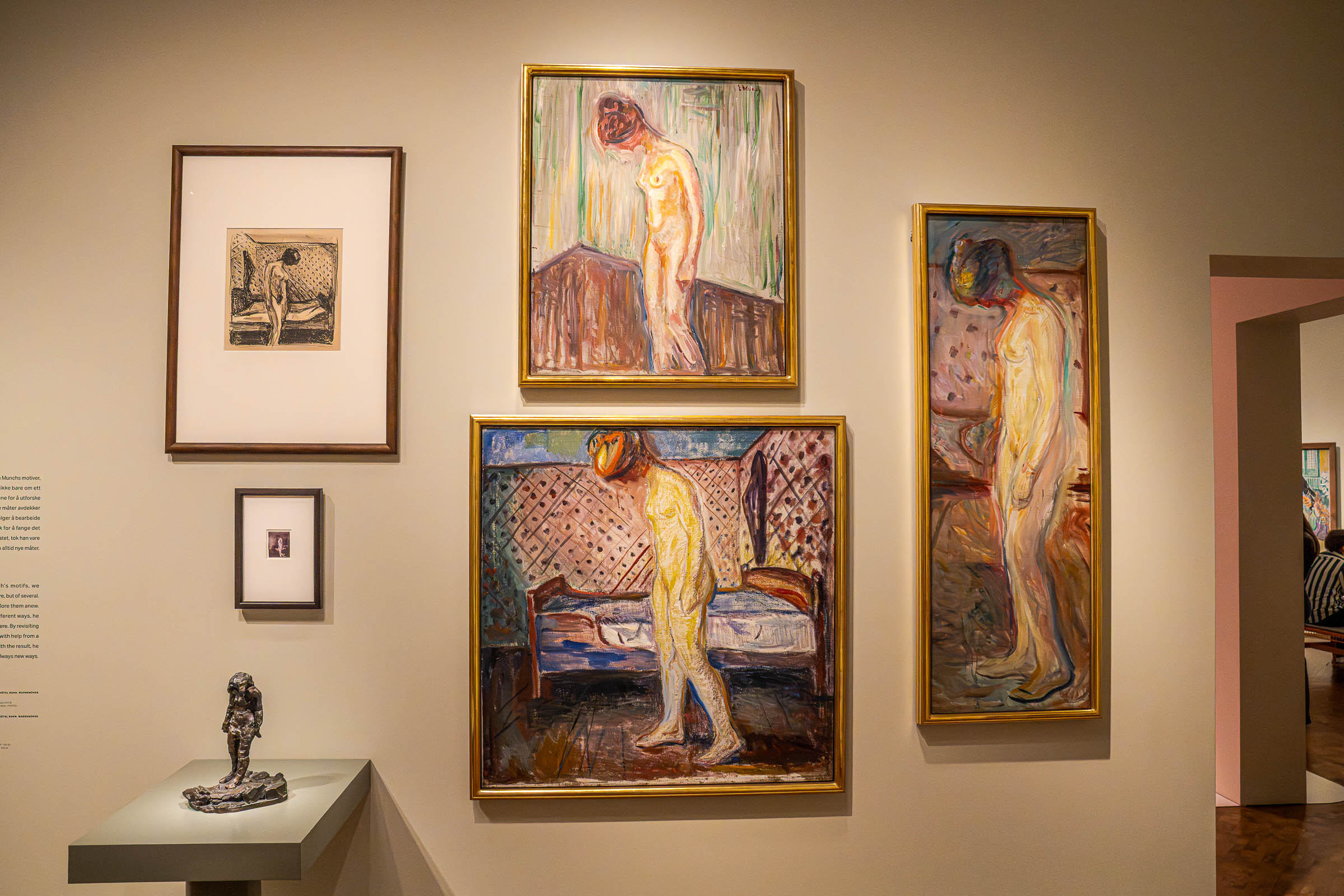
Another room traced one motif, Weeping Woman, across many forms. It began in 1907 with a photograph of a model in Warnemünde, on the German coast. Drawings, paintings and prints followed, and later a small sculpture cast in bronze. Munch liked to repeat a theme until it gave up its secrets.
Before you leave, ride up to the top floors. The view stretches over the opera roof and the city, all the way to the ski jump at Holmenkollen. Down by the water, Tracey Emin’s nine-meter bronze, The Mother, kneels in a meadow and faces the fjord. Emin has said that The Scream is the historic artwork she values most. You will meet her again later in this story.
WHERE TO EAT AND PAUSE IN OSLO
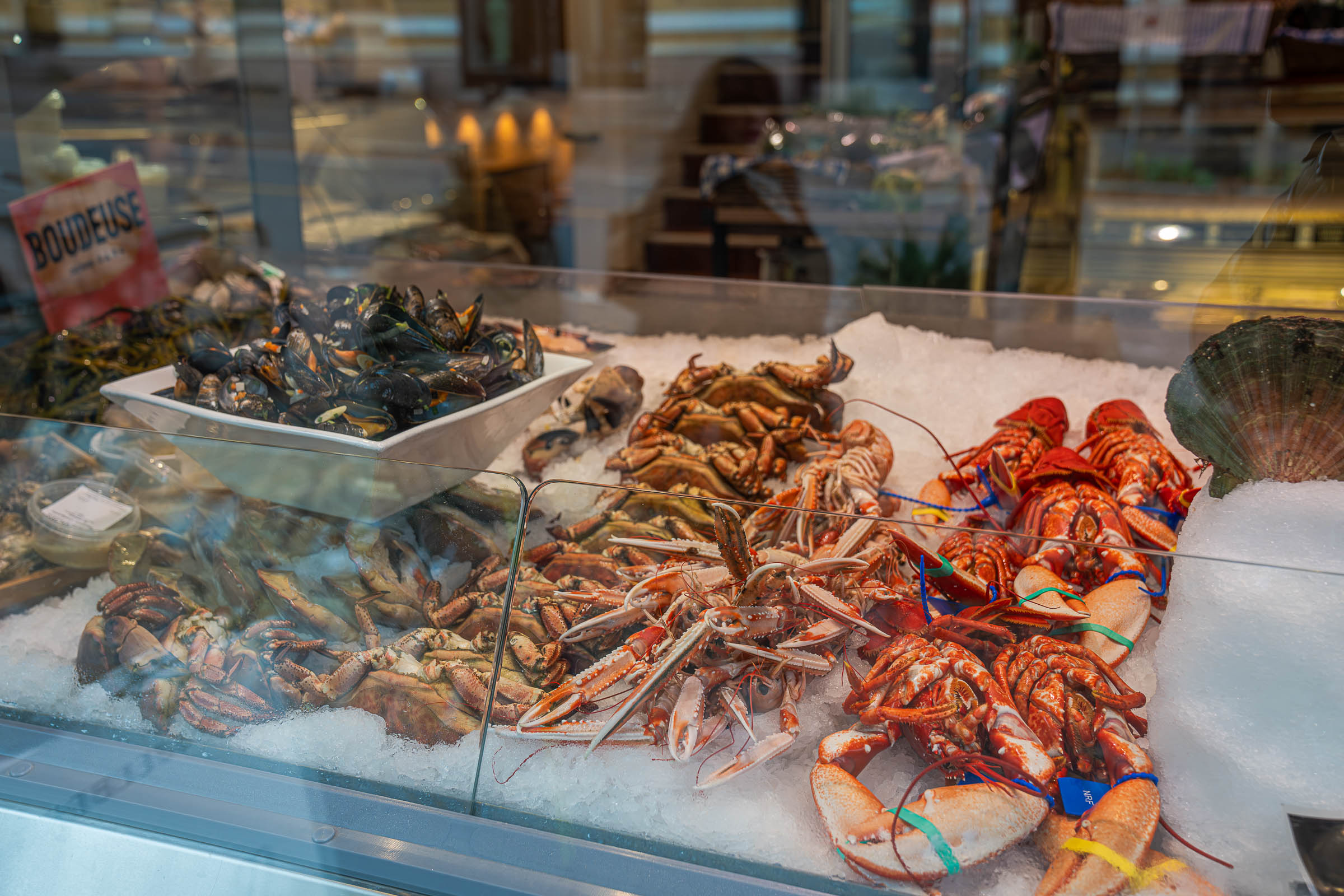
Every Oslo travel guide needs a food chapter, because this city eats well. Above all, seafood rules the menus. Through one shop window, I spotted lobsters, langoustines and mussels resting on crushed ice, a still life worthy of a museum.
For a quick, casual meal, try Østbanehallen by the central station. The renovated station hall reopened in 2015 as a food court with shops and restaurants. For history on a plate, Engebret Café has served traditional Norwegian food since 1857, which makes it one of the oldest restaurants in the city.
If you want the Scream view with lunch, go up to Ekebergrestauranten. It occupies a 1929 functionalist building on the Ekeberg hillside, with wide views over the Oslofjord. For a forest escape, the timber lodge of Frognerseteren sits high above the city, near Holmenkollen.
Budget a little more than you would at home, because eating out in Oslo is never cheap. Then balance it with the many free sights in this Oslo travel guide.
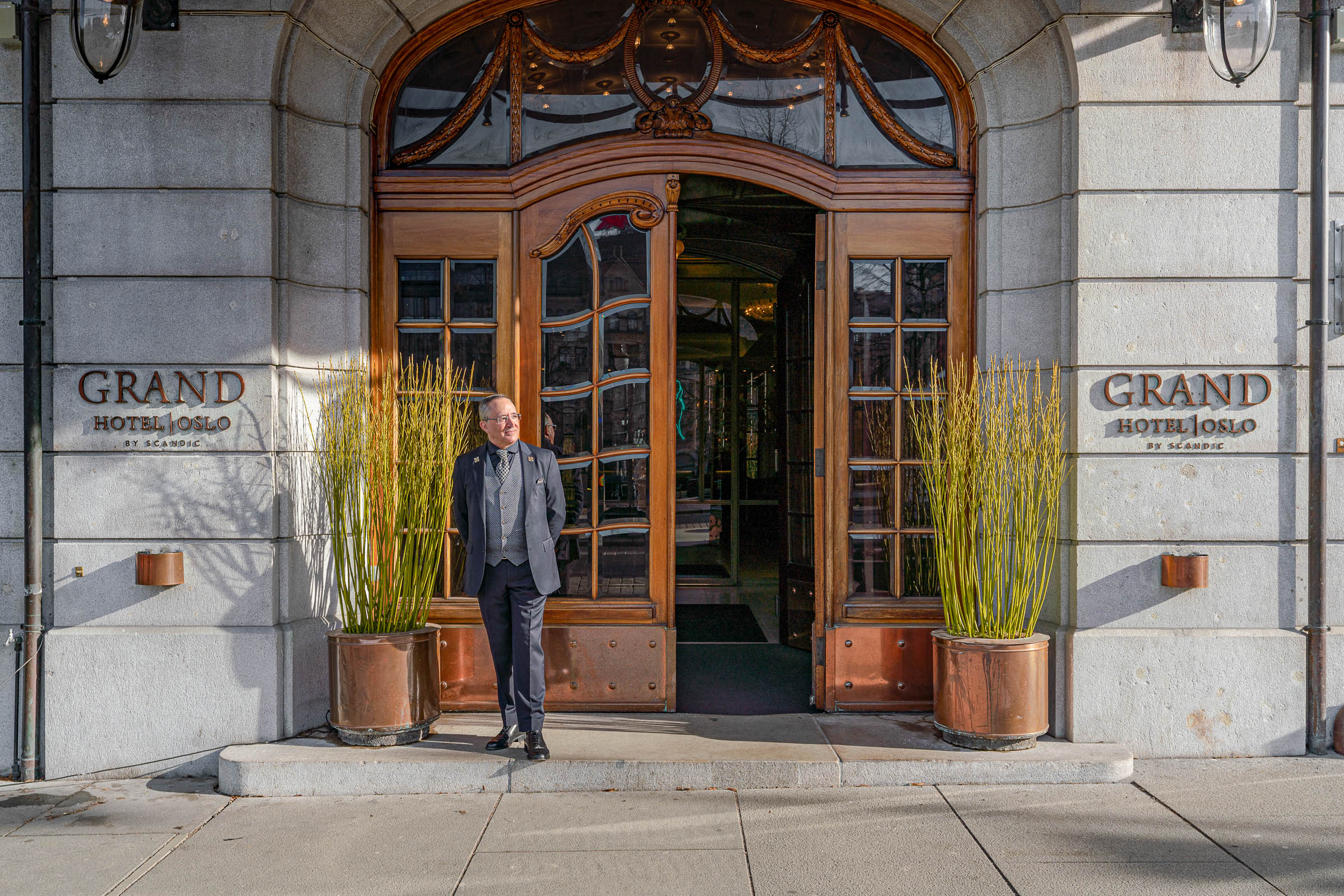
GRAND HOTEL OSLO: MORE THAN 150 YEARS ON KARL JOHANS GATE
Grand Hotel Oslo opened in 1874, when confectioner Julius Fritzner turned a professor’s private home on Karl Johans gate into a hotel. The café opened first and soon became the meeting place of the city. Ibsen came daily after his return to Norway in 1891, and at Christmas 1899 the café gave him four glasses engraved with his name, each for a different drink. Munch was a regular guest too, and Per Krohg’s painting in the Grand Café shows that whole bohemian crowd. Later, both Ibsen and the explorer Fridtjof Nansen received ovations from the famous corner balcony. Today the hotel carries the Scandic name, and it still hosts the Nobel Peace Prize laureate and banquet every December. Because it faces the parliament, every sight in this Oslo travel guide lies within walking distance.
MY STAY IN THE IBSEN SUITE
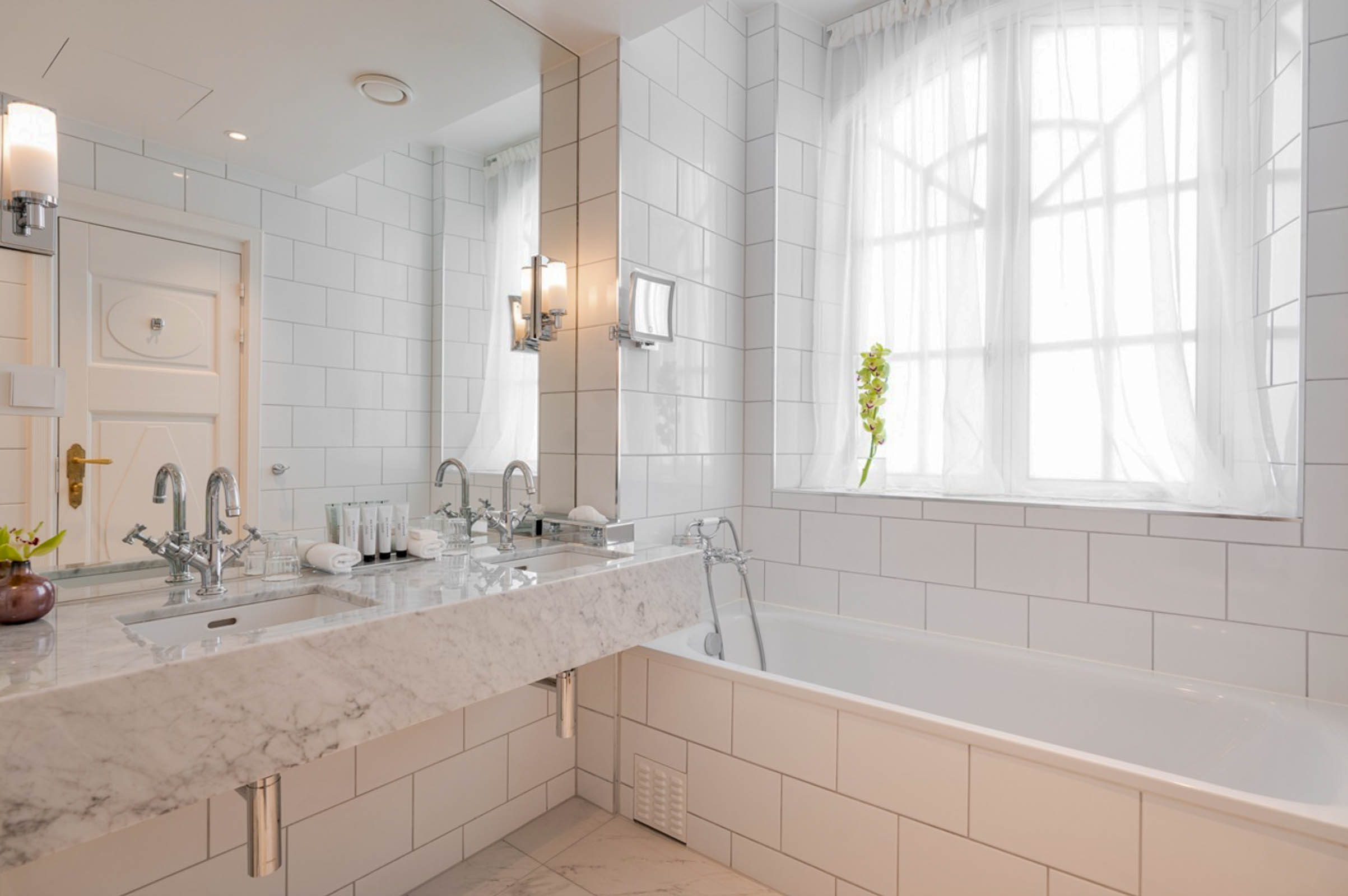
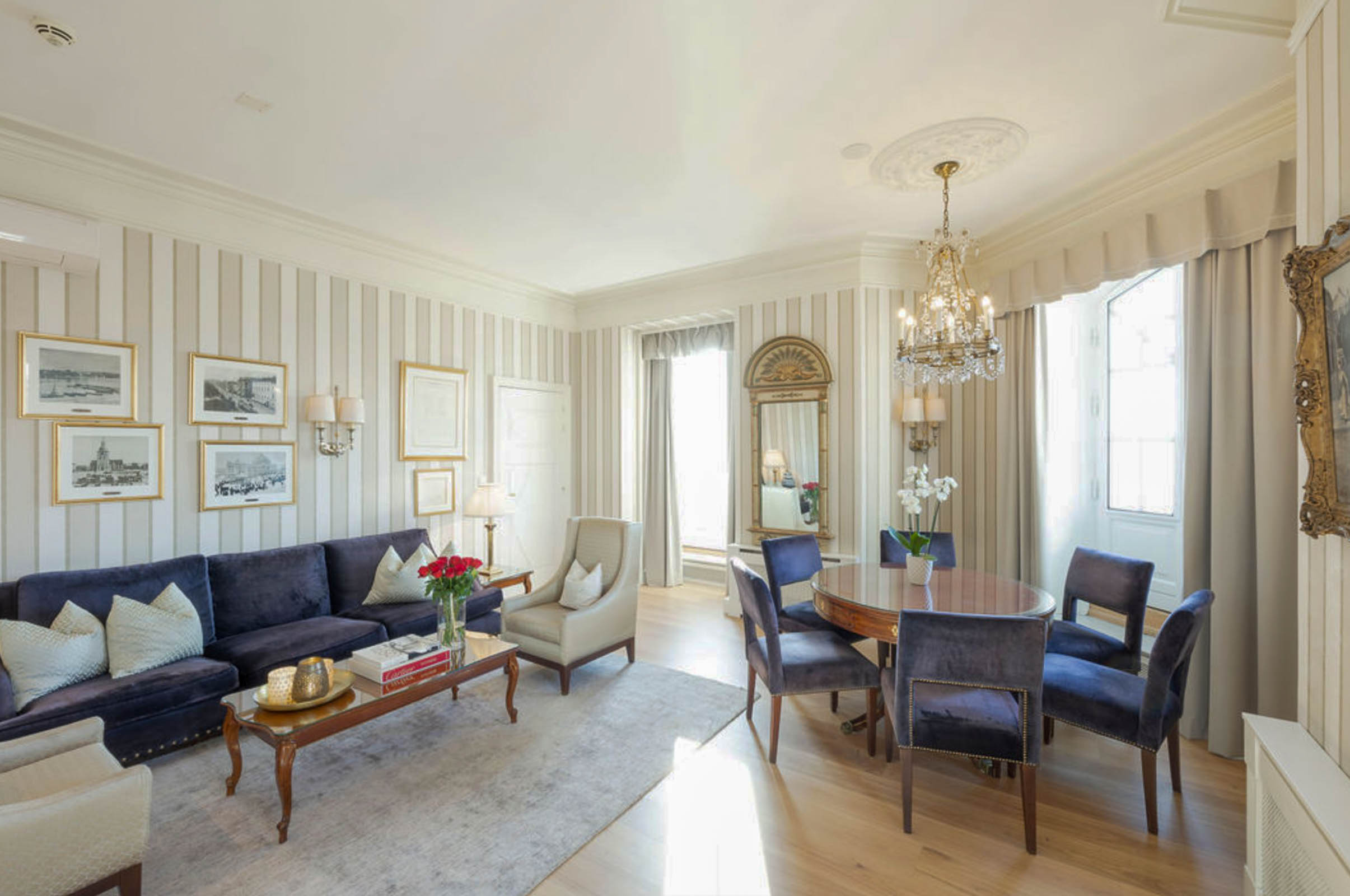
The Ibsen Suite honors the playwright with classic style. Striped walls, a crystal chandelier, a navy velvet sofa and a dining table share the living room with a gilded mirror. Black-and-white photographs of the old city also line the walls. French balconies overlook Karl Johans gate, while the bedroom has a king-size bed against gold damask wallpaper. Finally, the bathroom pairs white marble with a bathtub.

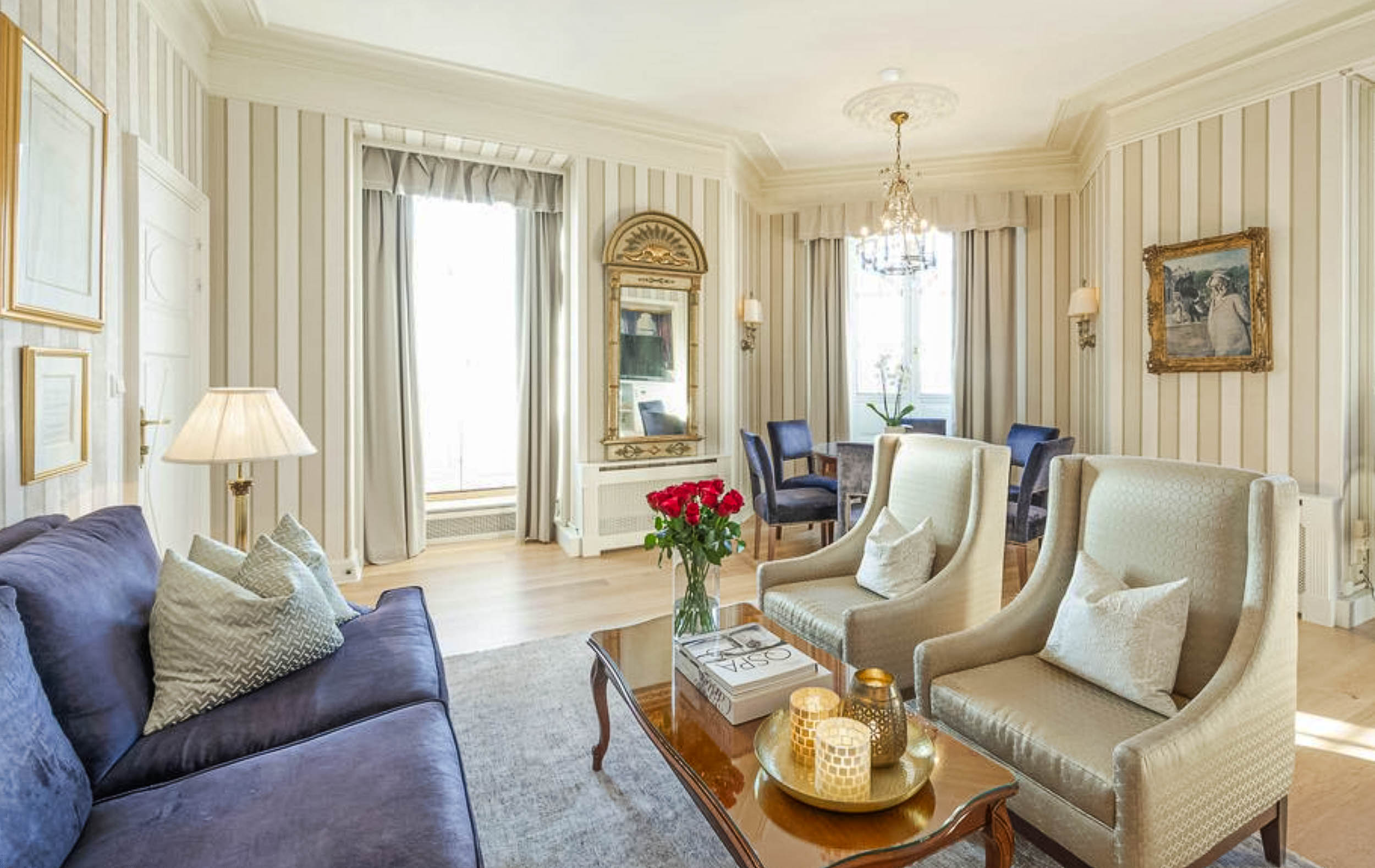
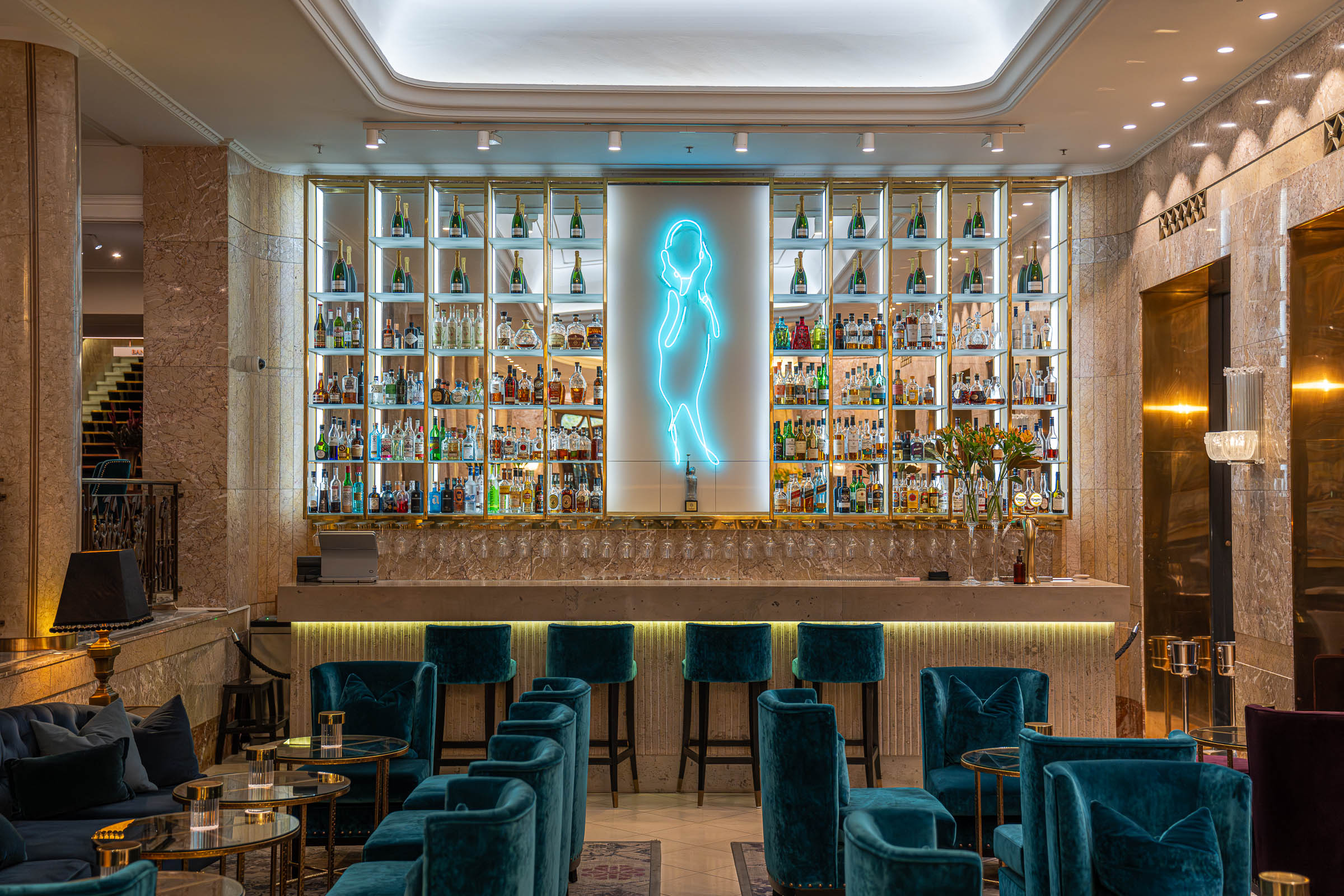
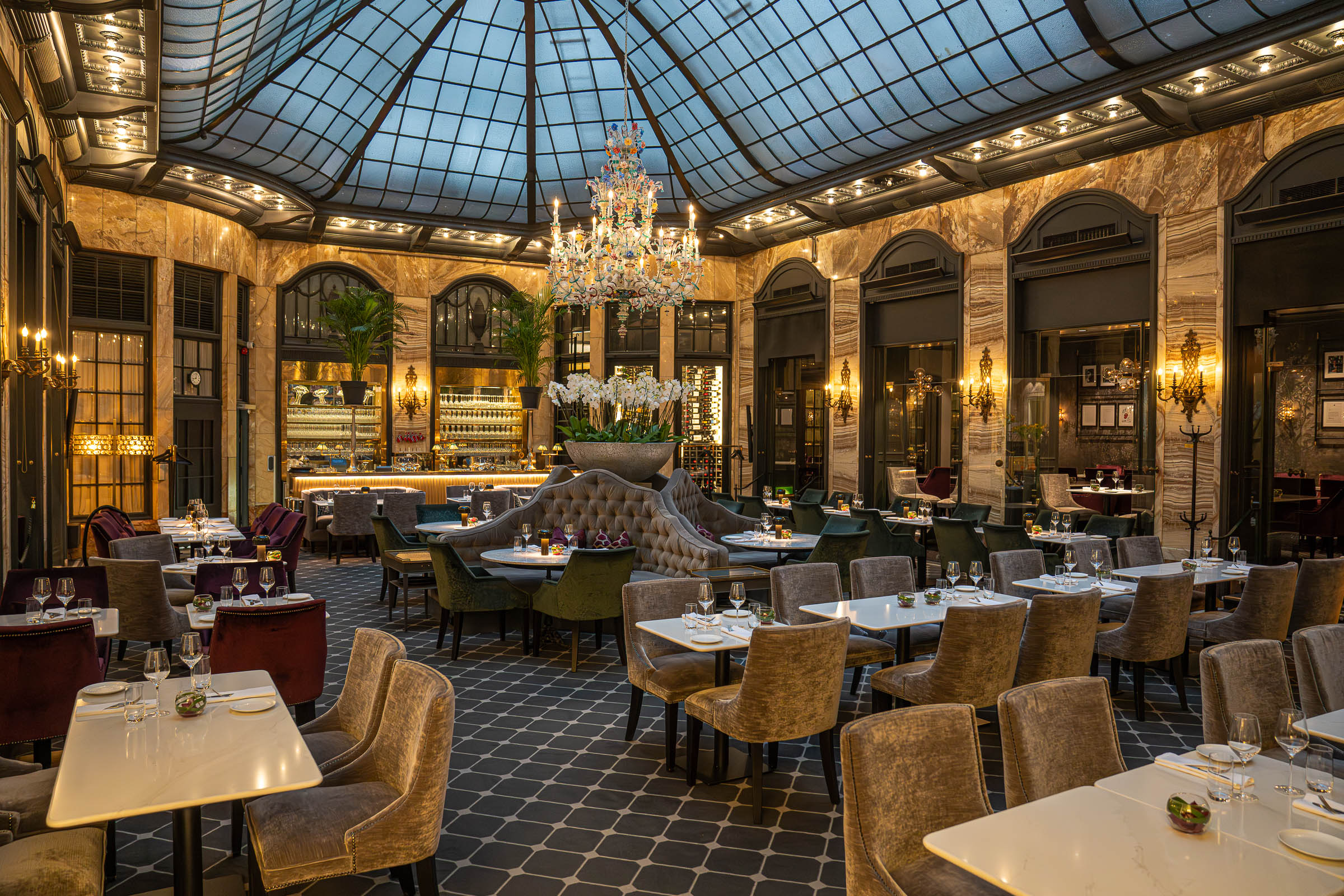
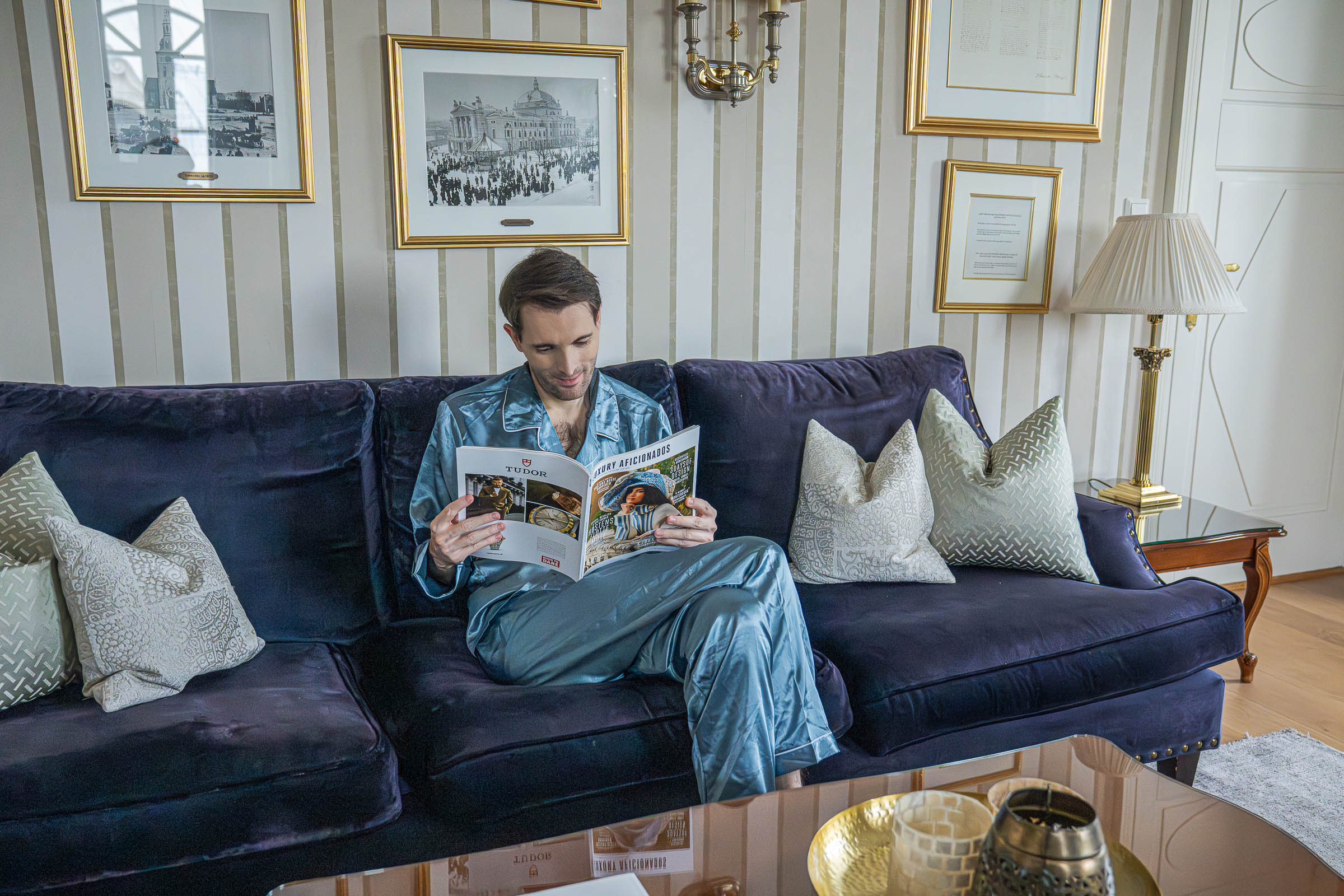
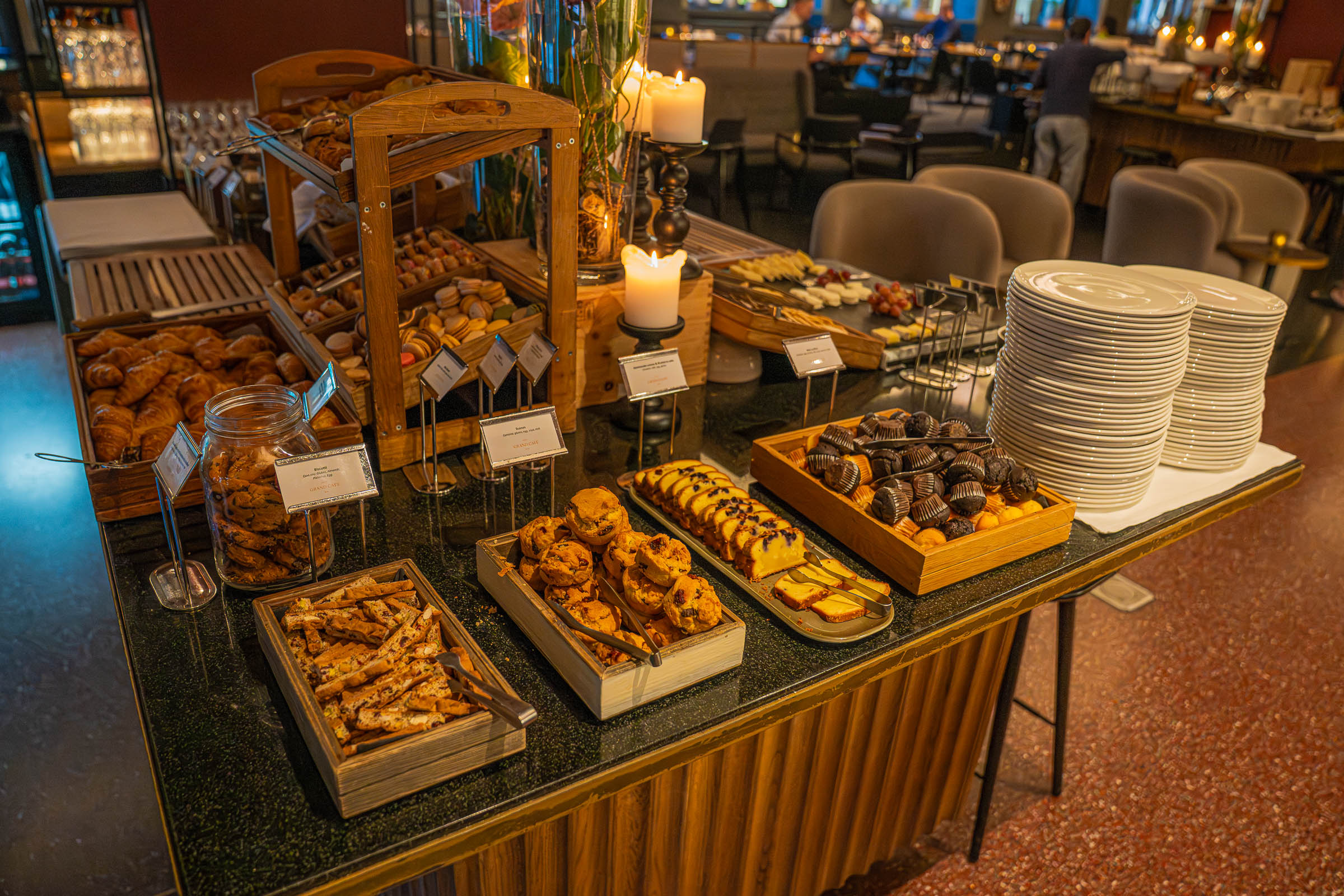
I worked from bed with my laptop and read on the velvet sofa in silk pajamas. Dinner at Palmen, under its glass roof and chandelier, felt like an evening in a winter garden. Breakfast in the Grand Café meant sitting where Ibsen once paused each day. Then, in the Othilia lobby bar, Tracey Emin’s blue neon tribute to The Scream glowed above the bottles. Service stayed warm and discreet from arrival to departure. For a traveler who loves history, this suite is the best address in any Oslo travel guide.
OSLO TRAVEL GUIDE: PRACTICAL TIPS FOR YOUR FIRST VISIT
- When to go. Summer brings long, bright evenings. I loved October for its colors and calm, but pack layers, because one day can be gray and the next bright blue.
- Getting around. The center is compact, and trams, buses and the metro fill the gaps. The Opera House lies about five minutes on foot from Oslo Central Station.
- Free highlights. Walk the Opera roof, enter City Hall, stroll the Palace Park, watch the changing of the guard at 1:30 p.m. and visit Deichman Bjørvika. All of them cost nothing.
- Museum timing. At MUNCH, the versions of The Scream usually rotate every hour, so give yourself time. Check opening hours online before you go.
- Good shoes. From late autumn, wear soles with a strong grip. The Opera roof turns slippery when it is wet or icy.
- Nobel week. If you visit around December 10, expect crowds near City Hall and Grand Hotel Oslo. Book your room early.
- Budget. Oslo is an expensive city. Plan a slightly higher daily budget, and lean on the free sights listed above.
As a rule of thumb, give the city at least three full days. Stay central, walk everywhere, and leave one afternoon for the fjord. With that rhythm, this Oslo travel guide becomes your own story rather than a checklist.
FINAL LETTER FROM MY OSLO TRAVEL NOTEBOOK
On my last evening, I walked Karl Johans gate one more time, from the station up toward the palace. The Grand Hotel tower rose above the autumn trees. Somewhere inside, the old café still remembered a playwright who never missed noon.
Oslo is not a loud city. It does not try to impress you in the first hour. Instead, it lets you discover it at your own pace: a mural here, a fresco there, a marble roof you can climb, a painting that screams in silence. For me, that is real luxury.
If you plan a trip soon, use this Oslo travel guide as a starting point, not a rulebook. Leave room for detours, because the best moments rarely appear on a map. And if you can, sleep in a room with a story. In Oslo, the Ibsen Suite at Grand Hotel Oslo gave me exactly that.
This was my first letter from Norway, written from the city of Ibsen, Munch and peace. If you missed my earlier Nordic letters, read my Stockholm travel guide, my stay at Haymarket by Scandic and my letter from Copenhagen. More letters from the North will follow, with different light and the same Nordic calm.
With love from Oslo,
Mr.M
This post is sponsored by United Nations World Tourism Organization (UN Tourism) and the Grand Hotel Oslo, as well as other local partners who selflessly supported this project. This post is my personal and honest review of the destination experience.