
My dear travelers and lovers of unusual journeys, welcome to a new travelogue on the Mr.M blog. Over the past months, I took you to Quito, Guayaquil, Lima and Bogotá, and I gathered my practical advice in the guide Planning a Trip to South America. Today, I am taking you to a country in the north of this continent, Venezuela, and to its capital, Caracas, the city where Simón Bolívar was born.
At the very beginning, I would like to thank the Ministry of Tourism of the Bolivarian Republic of Venezuela (MINTUR), as well as all the other partners who supported my adventure in Venezuela. With their help, I created travelogues and fashion stories from this exotic country. On my way here, I also used my stopover in Istanbul to break up the long journey. So, take your favorite drink, relax and enjoy this first letter from Caracas.
MY FIRST MEETING WITH CARACAS
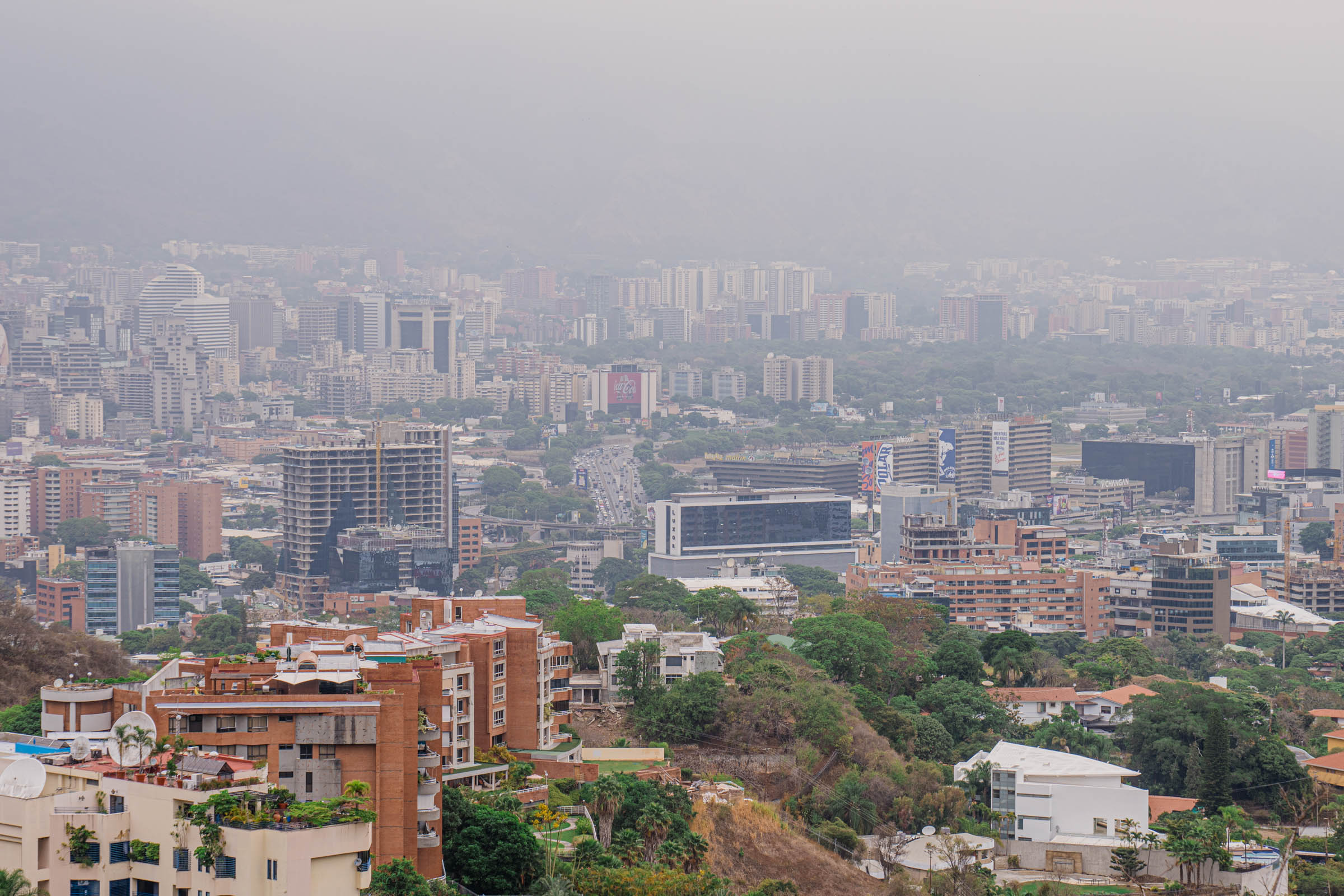
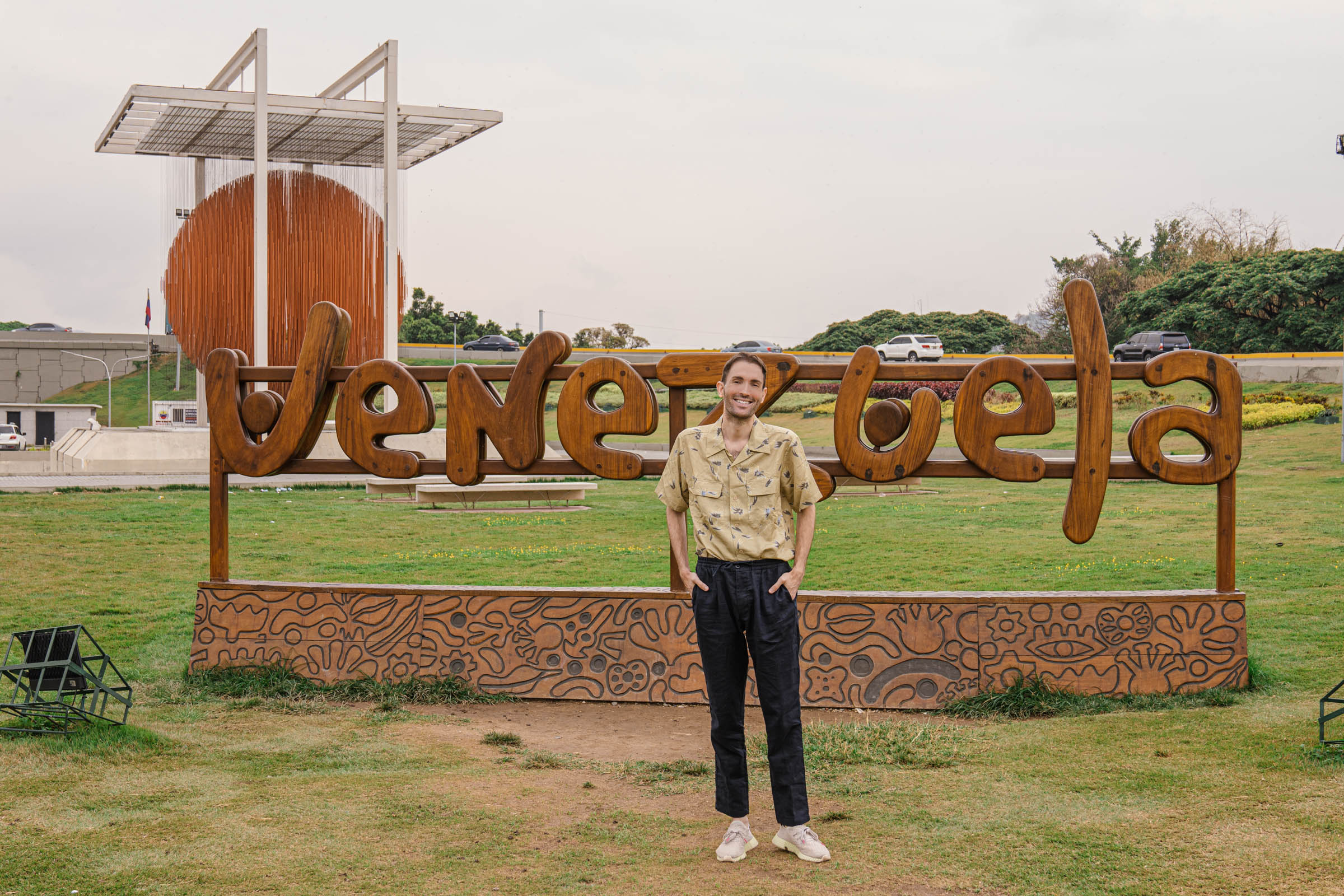
For many travelers, Caracas is still a city shrouded in mystery, contrasts and special energy. It welcomed me in a way I cannot compare with any of my previous travel experiences. From the moment the plane began its descent over the steep slopes of the coastal mountains, I knew this would be no ordinary journey.
The international airport, Simón Bolívar, sits in Maiquetía on the Caribbean coast, about 21 kilometers from downtown Caracas. It opened in 1945. The El Ávila mountain range separates the sea from the capital. So, the road from the airport winds through the mountains before it reaches the valley. Depending on traffic, the drive takes from about 30 minutes to an hour. Already on that ride, you feel the contrast of the city: the sea behind you and the urban jungle in front of you.
Caracas lies in a long valley at an altitude of about 900 meters. Above it rises El Ávila, the natural symbol of the city. The Metropolitan Region of Caracas has almost five million inhabitants. Locals like to call their city La Sucursal del Cielo, the Branch of Heaven, and also La Ciudad de la Eterna Primavera, the City of Eternal Spring.
My trip to Caracas was not accidental. I wanted to explore the city through its culture, art and architecture, and to find the traces that set it apart from other Latin American capitals.
PREPARING FOR CARACAS: VISAS, MONEY AND SAFETY
Before you pack your bags, it is important to know a few practical things that will save you time and stress.
Visas: Entry rules depend on your passport. Many nationalities can still enter Venezuela visa-free by air for up to 90 days, while others must apply for a visa before they travel. In April 2026, Venezuela also introduced an electronic visa process for travelers who need a visa. Rules change often, so always check with the Venezuelan embassy or consulate in your country before you book.
Money: The official currency is the bolívar, but in practice the US dollar dominates everyday transactions. Prices are often quoted in dollars, and hotels, restaurants and shops in the cities widely accept them. Bring cash in small denominations, because change is often unavailable. Treat credit cards only as a backup.
Safety: Before you travel, read your government’s current travel advice for Venezuela. In Caracas, I relied on trusted transport, local guides and the advice of my hosts. My personal advice is simple: never show expensive items openly, and use your camera or phone discreetly. Plan your sightseeing for the daytime, and ask locals which areas they recommend.
Language: English is not widely spoken, so a few words of Spanish help a lot. A smile and a simple “gracias” open many doors.
PLAZA ALTAMIRA, THE ELEGANT EAST OF CARACAS
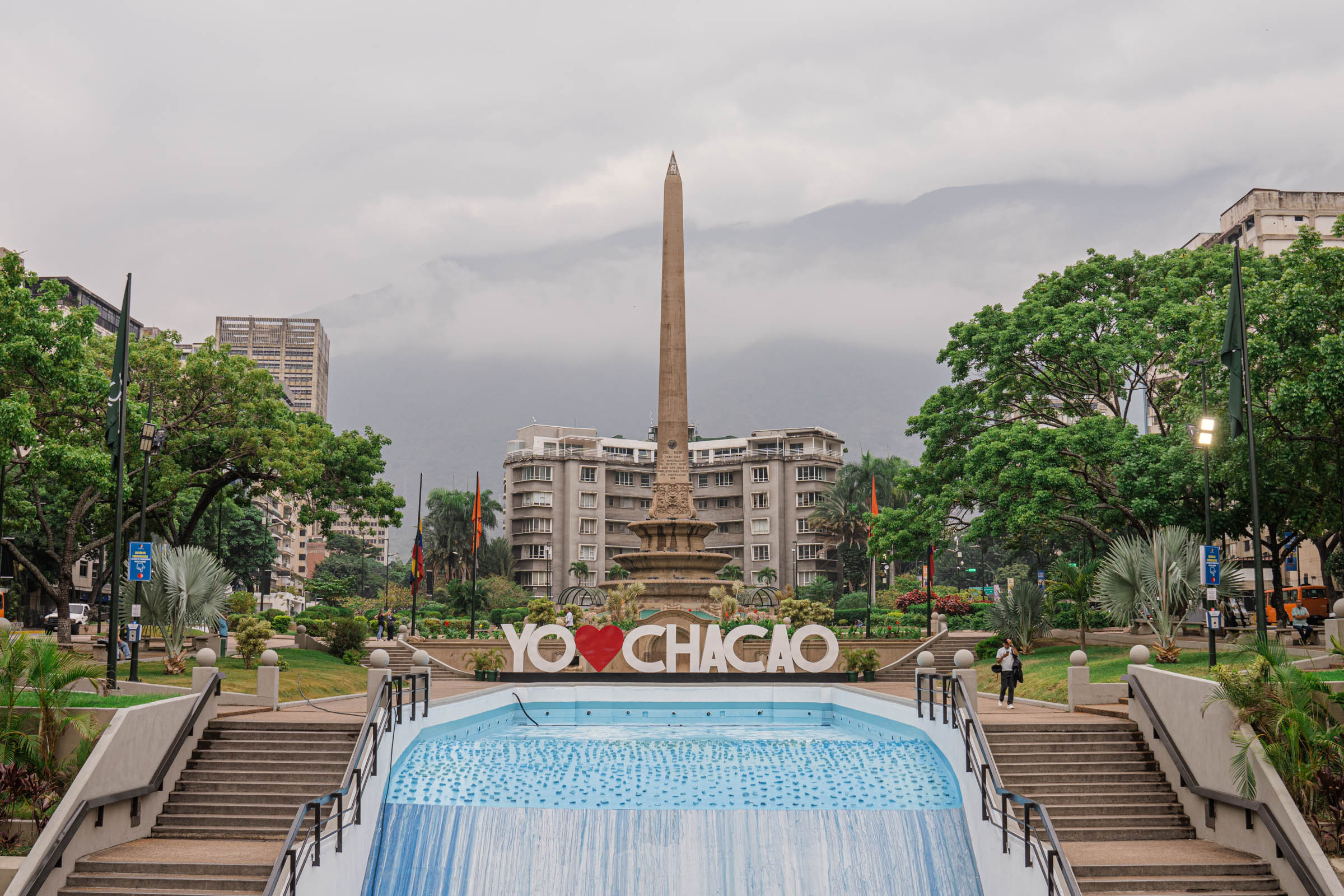
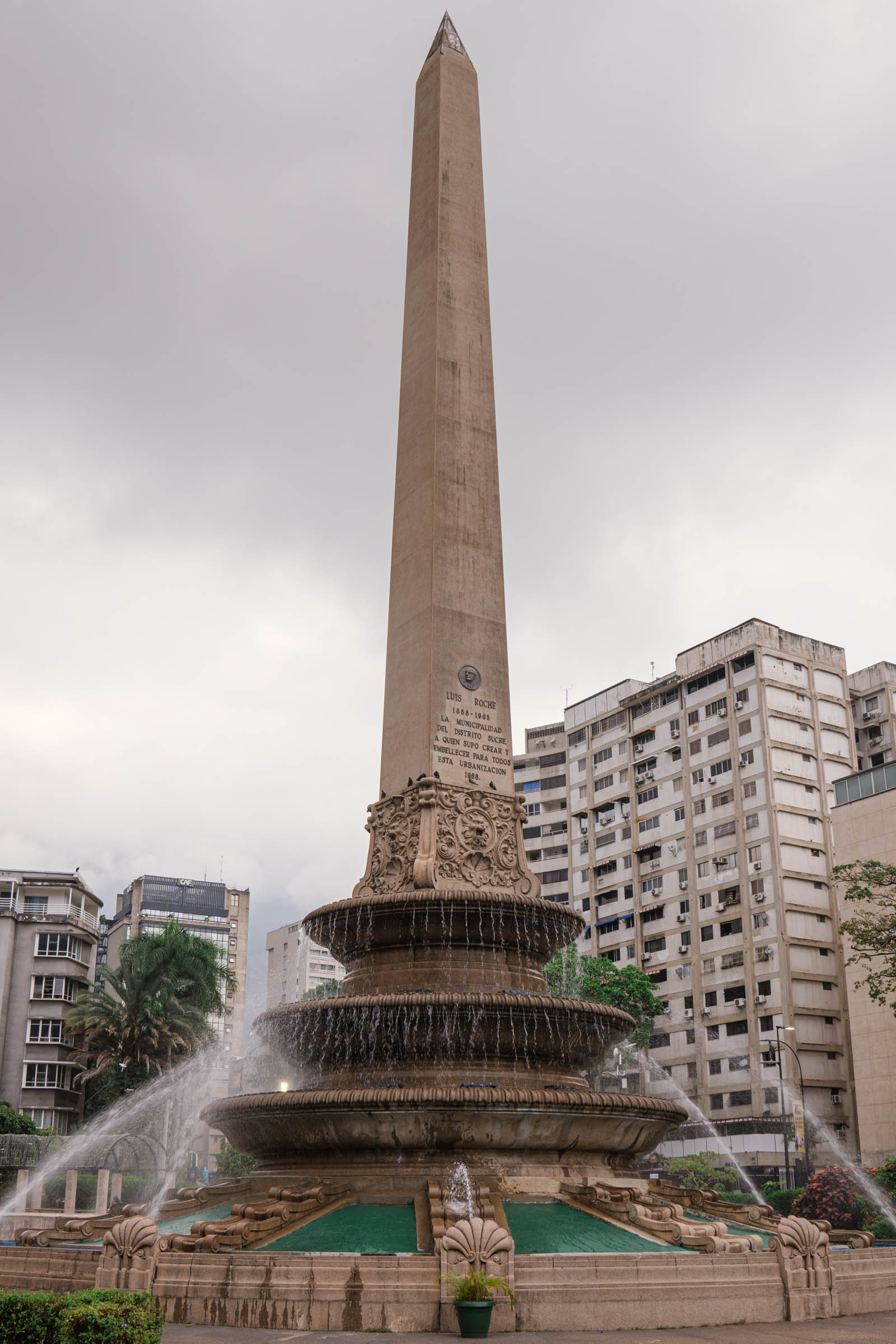
A walk through the east of the city takes you to the Chacao municipality and the neighborhood of Altamira. Its symbol is Plaza Francia, which everyone in Caracas still calls Plaza Altamira. The square opened on August 11, 1945, under the name Plaza Altamira. Then, in 1967, the Venezuelan and French governments agreed to rename it Plaza Francia.
The tall obelisk in the center is one of the landmarks of Caracas. In front of it, a water mirror and a fountain cascade down to the lower level of the square, where you will also find the entrance to the Altamira metro station. Around the plaza, modern towers, restaurants and cafés create the cosmopolitan atmosphere of eastern Caracas.
For visitors who want to feel the elegant side of the city, Altamira is the ideal starting point. Families come here for a walk, friends meet for coffee, and the mountain watches over everything in the background. I recommend coming in the late afternoon, when the light softens and the obelisk glows against the green slopes of El Ávila.
WHAT TO PACK AND HOW TO MOVE AROUND CARACAS
Thanks to its altitude, Caracas enjoys a milder climate than the hot coast, with an average annual temperature of around 22 °C. Be sure to bring light clothes for warm days, but also something warmer for the evenings, when the temperature can drop.
If you plan a trip to El Ávila, you will need comfortable shoes and a sporty outfit. I must admit that I do not own one, so this trip taught me that I need to be better equipped next time.
For transport, I used only proven options: hotel drivers and pre-arranged private services. In addition, the hotel organized transfers with drivers who knew the safest routes, which was a big plus. Taxis on the street are not recommended.
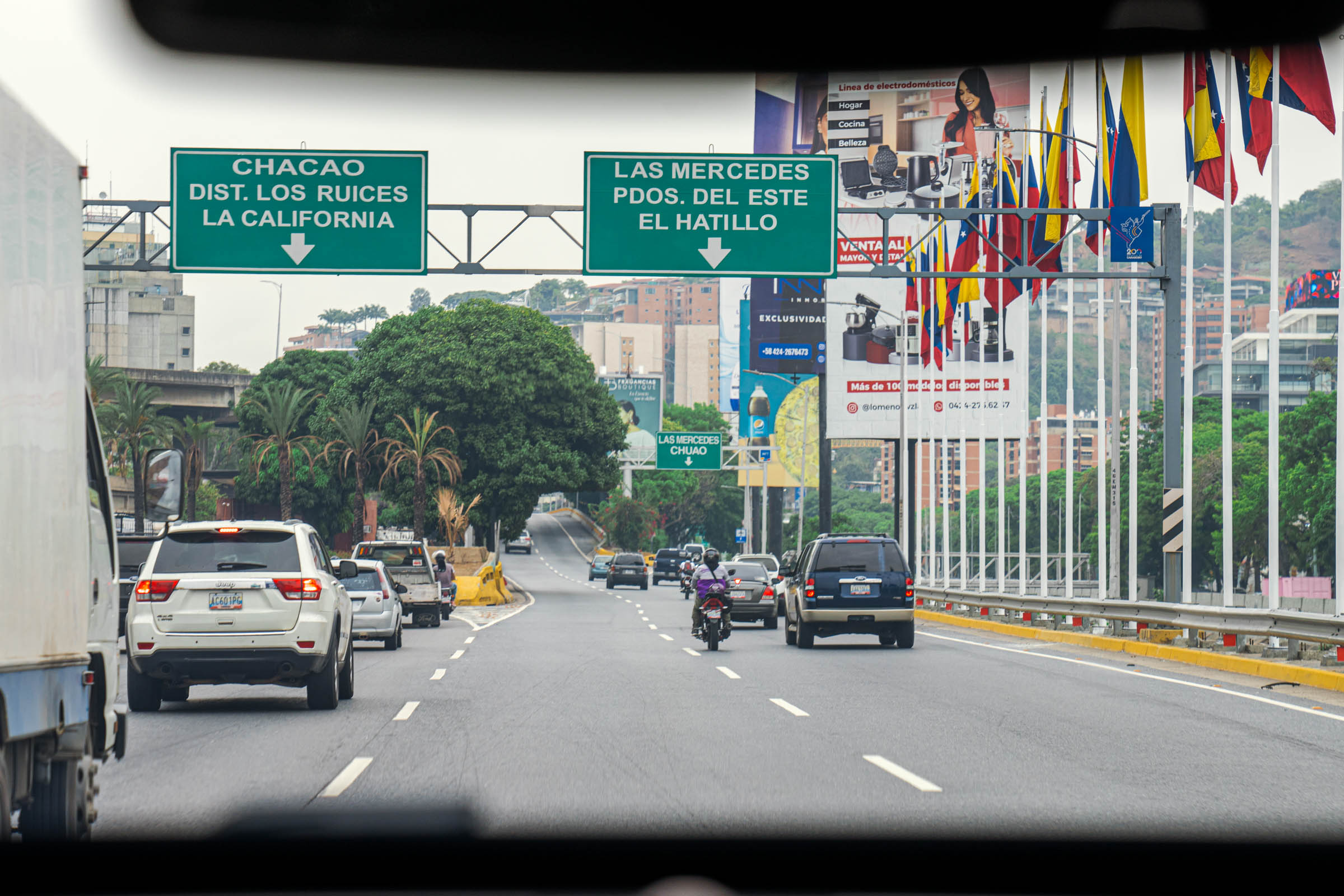
The city stretches along the valley from west to east, so distances can be long. The historic center lies in the west, while the business districts and elegant neighborhoods such as Chacao, Altamira and Las Mercedes lie in the east. That is why I recommend grouping your sightseeing by area. Dedicate one day to the old town and another to the east, and leave a separate afternoon for the mountain.
Finally, keep some patience in your suitcase. Traffic in Caracas can be heavy, especially at rush hour, so plan a little more time for every ride.
EL ÁVILA NATIONAL PARK, THE GREEN LUNGS OF CARACAS
The mountain that rises north of Caracas is protected as El Ávila National Park, officially known as Waraira Repano National Park, after its indigenous Cariban name. The park was established on December 12, 1958, and it covers 81,900 hectares of forested mountains of the coastal range. For locals, El Ávila is not just a mountain, but a place to escape from the noise of the city, where families spend weekends hiking and enjoying nature.
I decided to go up with the cable car, the Teleférico de Caracas. It first opened on September 29, 1955. After a long pause, it reopened in 2002, and in 2007 it got the name Waraira Repano. The line starts at the Maripérez station on the northern edge of the city and climbs more than three kilometers to the top of the mountain. The view from the cabin leaves you breathless: on one side you see the whole city, and on the other the Caribbean Sea.
At the top, a pleasant climate, small cafés and a long walkway along the ridge await you. I would single out the traditional snacks: arepas and churros with hot chocolate. Near the top also stands the tower of the Hotel Humboldt, a landmark of mid-century modern architecture.
I recommend setting aside at least one afternoon for El Ávila. Clouds often cover the peaks, but they usually clear later, and only from above can you understand the size and beauty of Caracas.
CARACAS, A CITY OF CONTRASTS
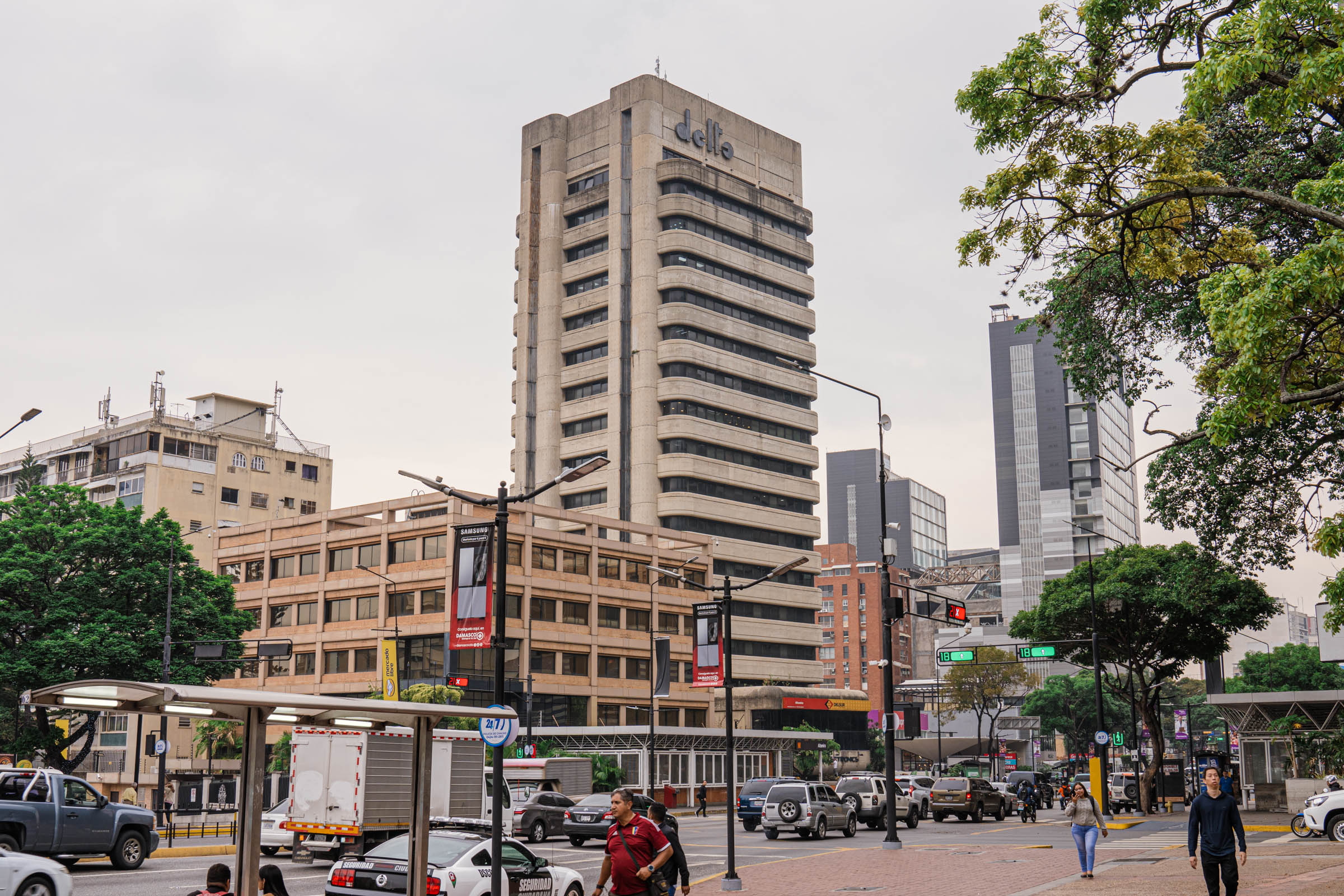
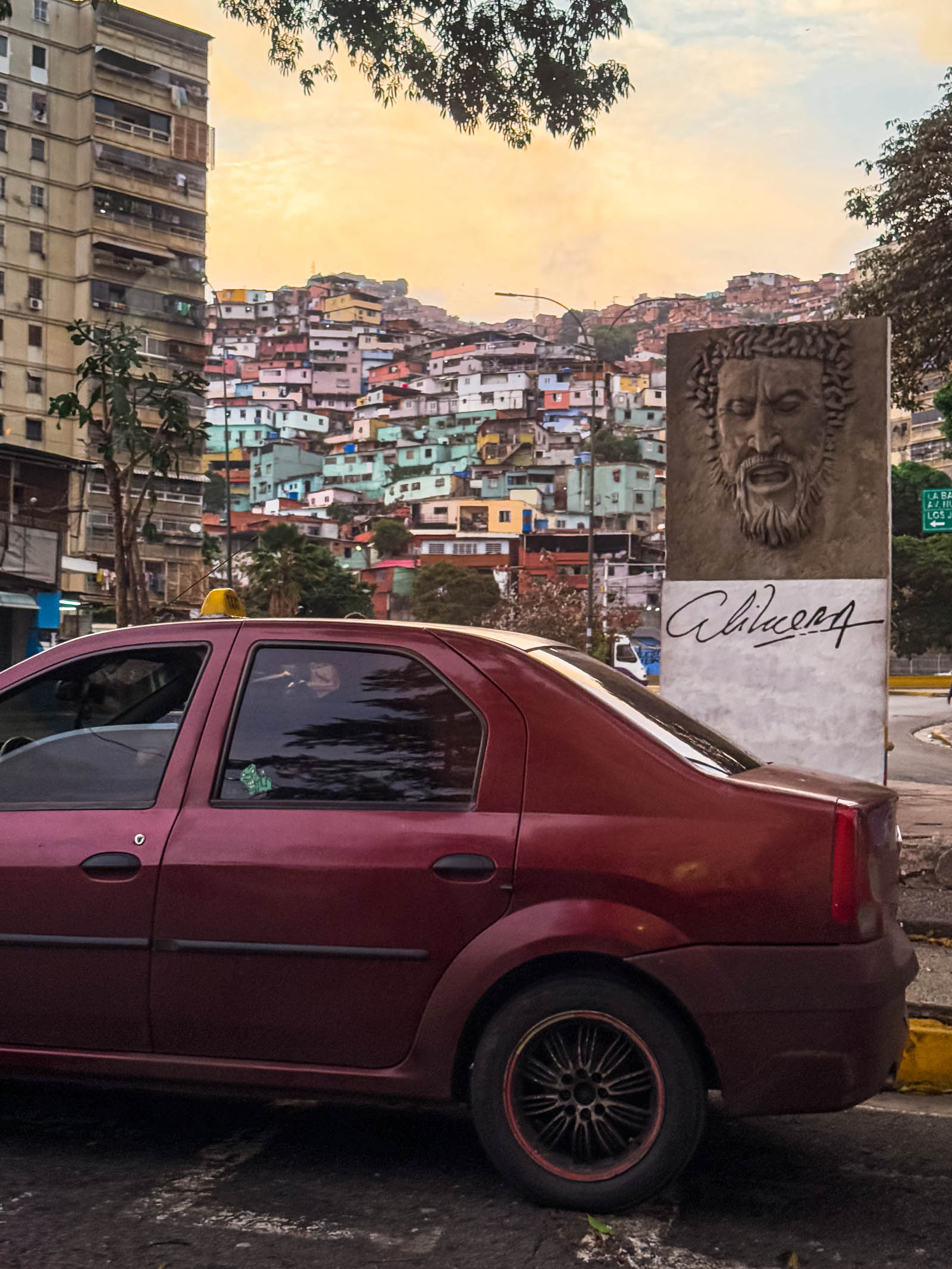
Caracas is full of contrasts. On one side, you see luxury villas on the hills and modern glass towers that testify to the economic strength of the past. On the other side, colorful neighborhoods climb the slopes, where life is much simpler.
During the 20th century, oil revenues transformed the city. Caracas grew rapidly into a modern metropolis with skyscrapers, highways, hotels and cultural institutions. At the same time, the colonial heart in the west kept its grid of streets and old squares. Today, the metropolitan area includes five municipalities: Libertador, Chacao, Baruta, Sucre and El Hatillo. Each of them has its own character.
It is this mix of luxury, history and everyday reality that makes Caracas so fascinating. In a single day, you can drink coffee in an elegant café, walk through a colonial square and then watch the colorful houses on the hills glow at sunset.
For me, the greatest charm of Caracas lies precisely in that energy. Music comes from all sides, people talk loudly and warmly, and the rhythm of the street never really stops.
EUROBUILDING HOTEL & SUITES CARACAS
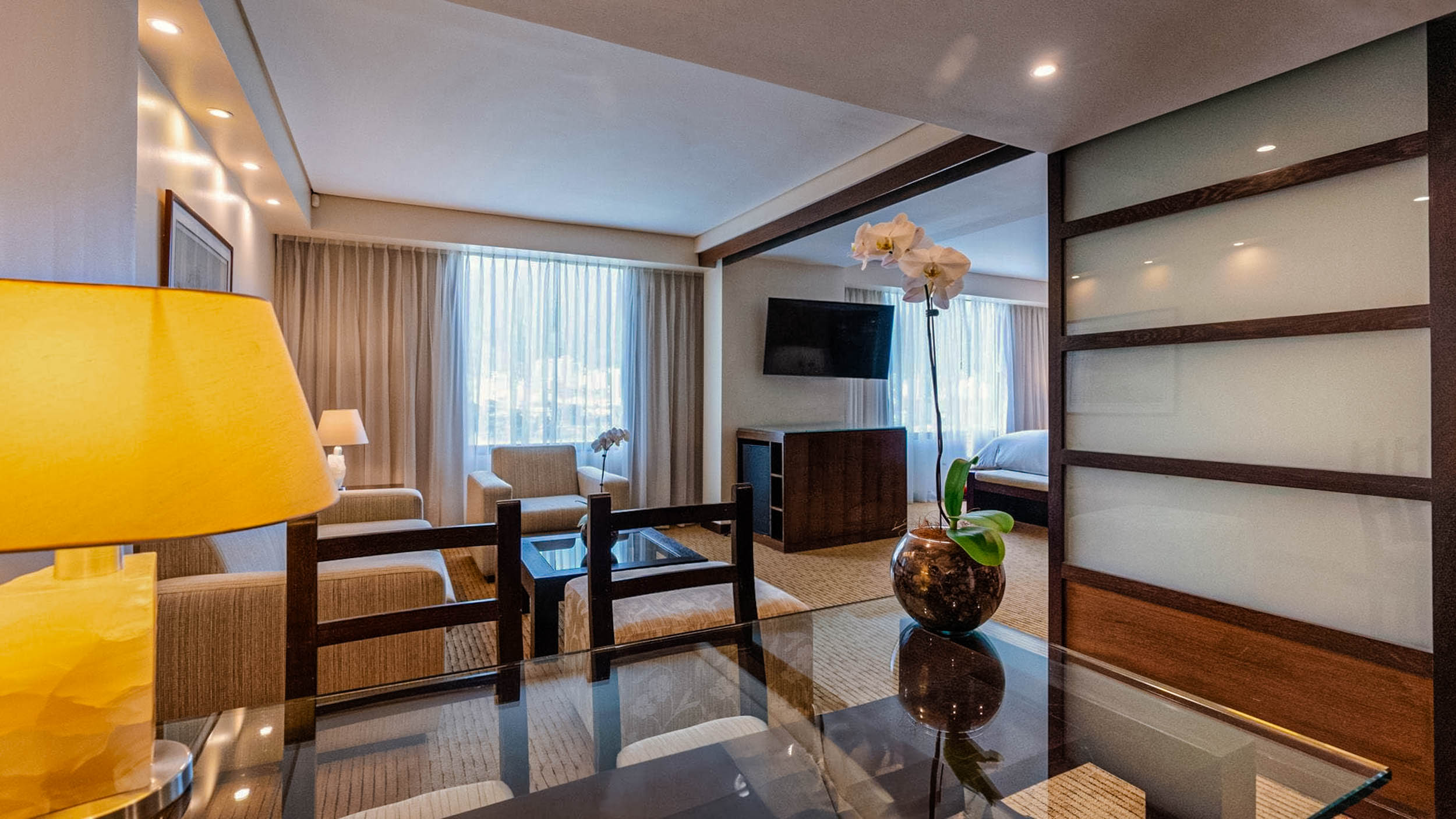
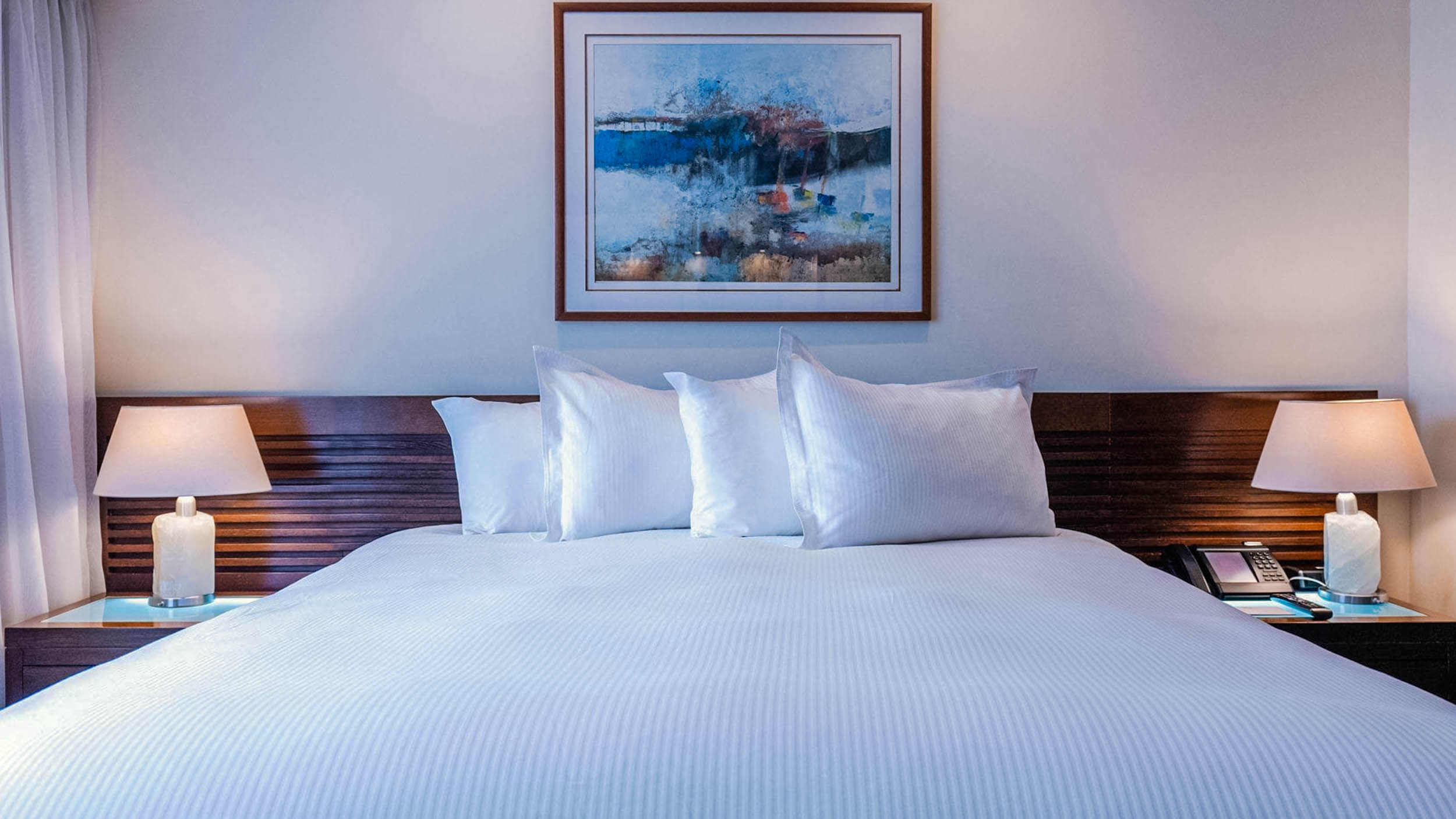
For my stay, the Ministry of Tourism chose the Eurobuilding Hotel & Suites Caracas, one of the best-known luxury hotels in the city. It was not only a comfortable choice, but also the right base where I felt safe and relaxed after exploring the city.
The five-star hotel sits in the Chuao neighborhood, close to Las Mercedes, with its restaurants and fashion stores. The Ciudad Tamanaco shopping center is within walking distance. It has 617 rooms and suites, as well as a large convention center. Its halls can host events for anywhere from 10 to 4,000 people. For relaxation, guests can enjoy a full-service spa, two outdoor swimming pools and a gym with a panoramic view of the Waraira Repano National Park.
My suite was spacious, with a view of the green mountains around the city. What especially delighted me were the early mornings, when the sun lit up El Ávila and the sounds of Caracas invited me to go out and explore.
Breakfast combined international specialties and Venezuelan classics such as the arepa, a flatbread of ground maize dough with a filling. For travelers like me, who want both luxury and peace of mind, Eurobuilding proved to be an ideal base.
FIRST IMPRESSIONS: STREET ART AND EVERYDAY LIFE
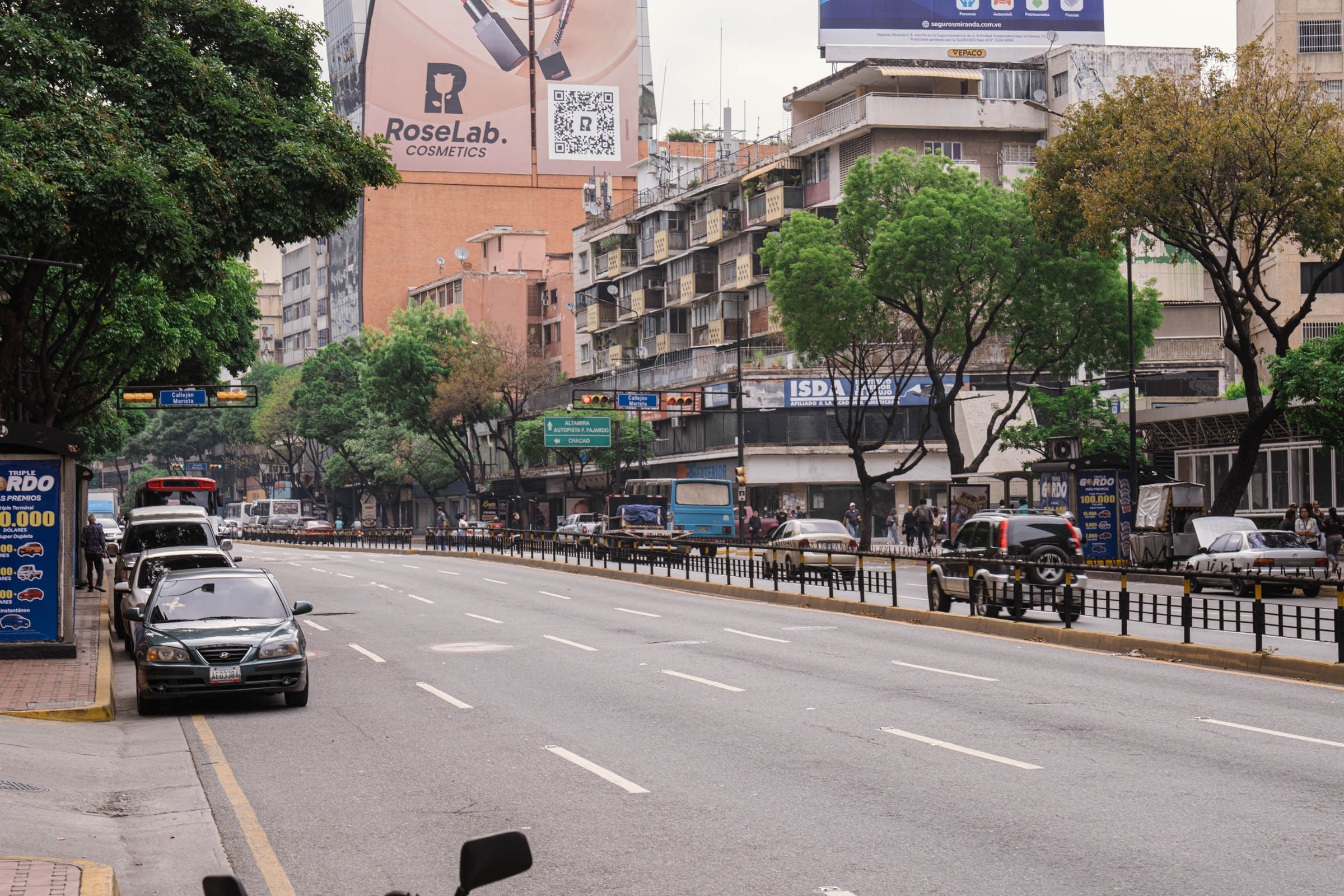
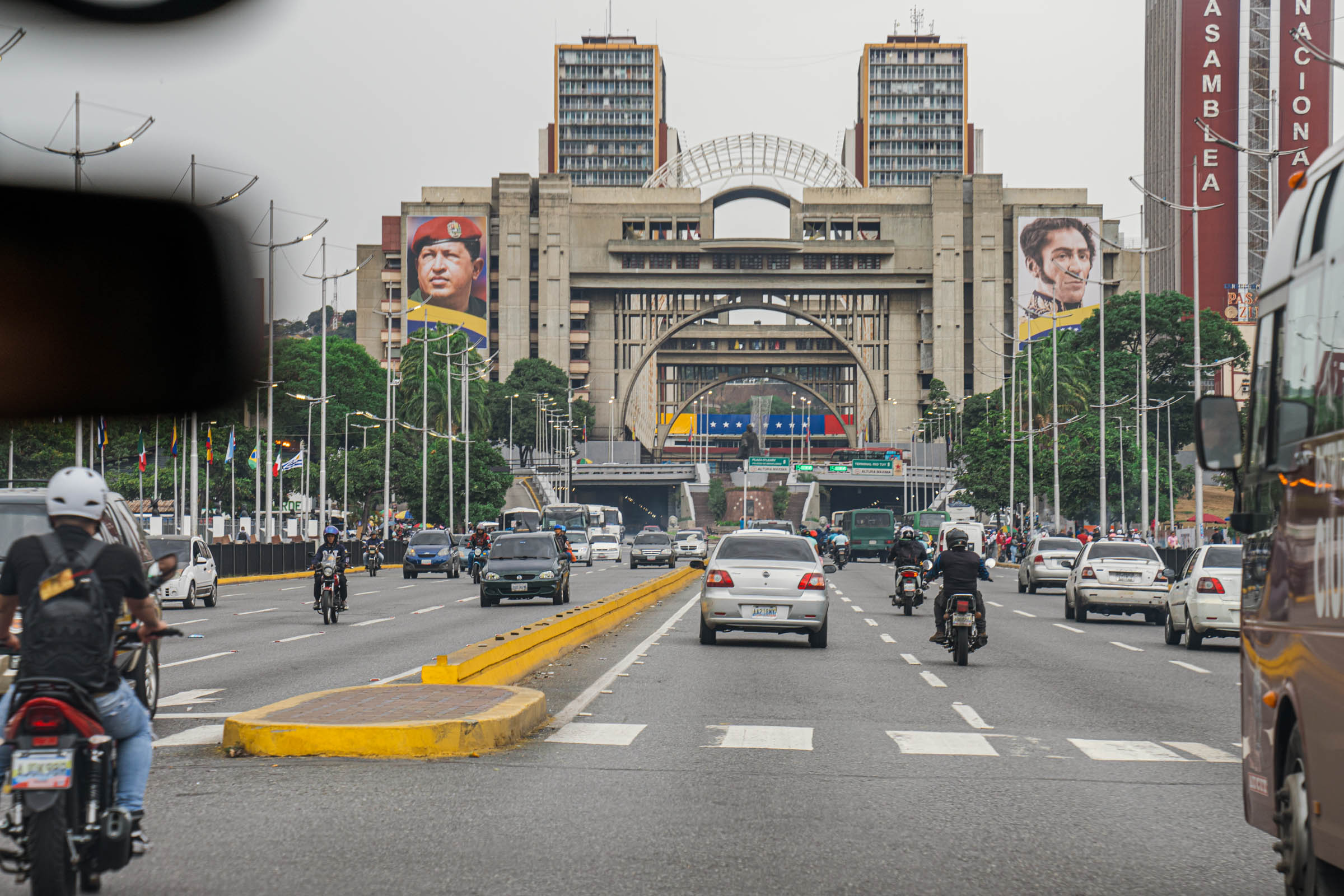
Caracas is not a city that opens up to a foreigner immediately. At first glance, it seems chaotic: traffic jams, energetic people always on the move and contrasts between modern towers and old Venezuelan architecture. However, when you relax a little and surrender to its rhythm, you begin to discover its true soul.
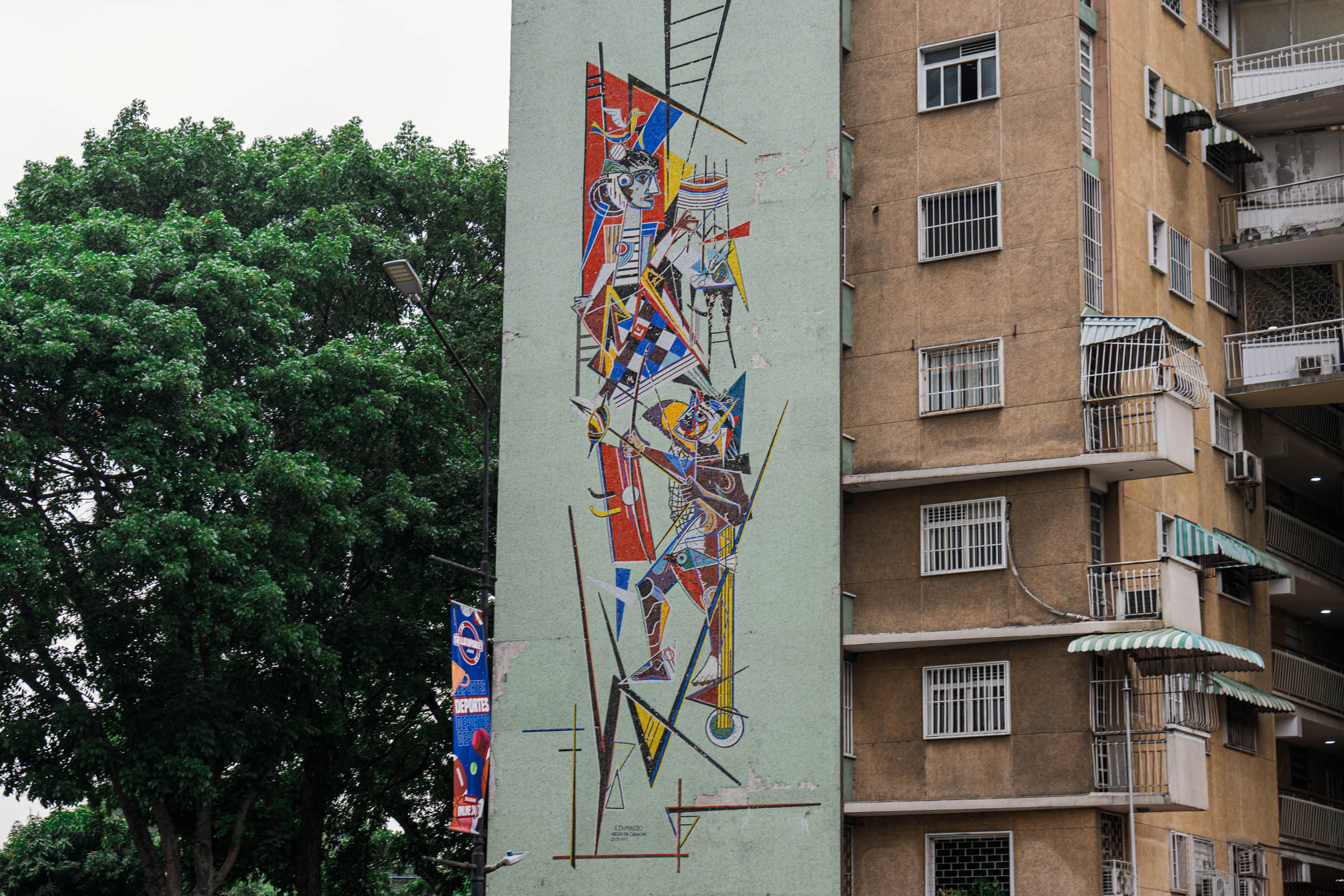
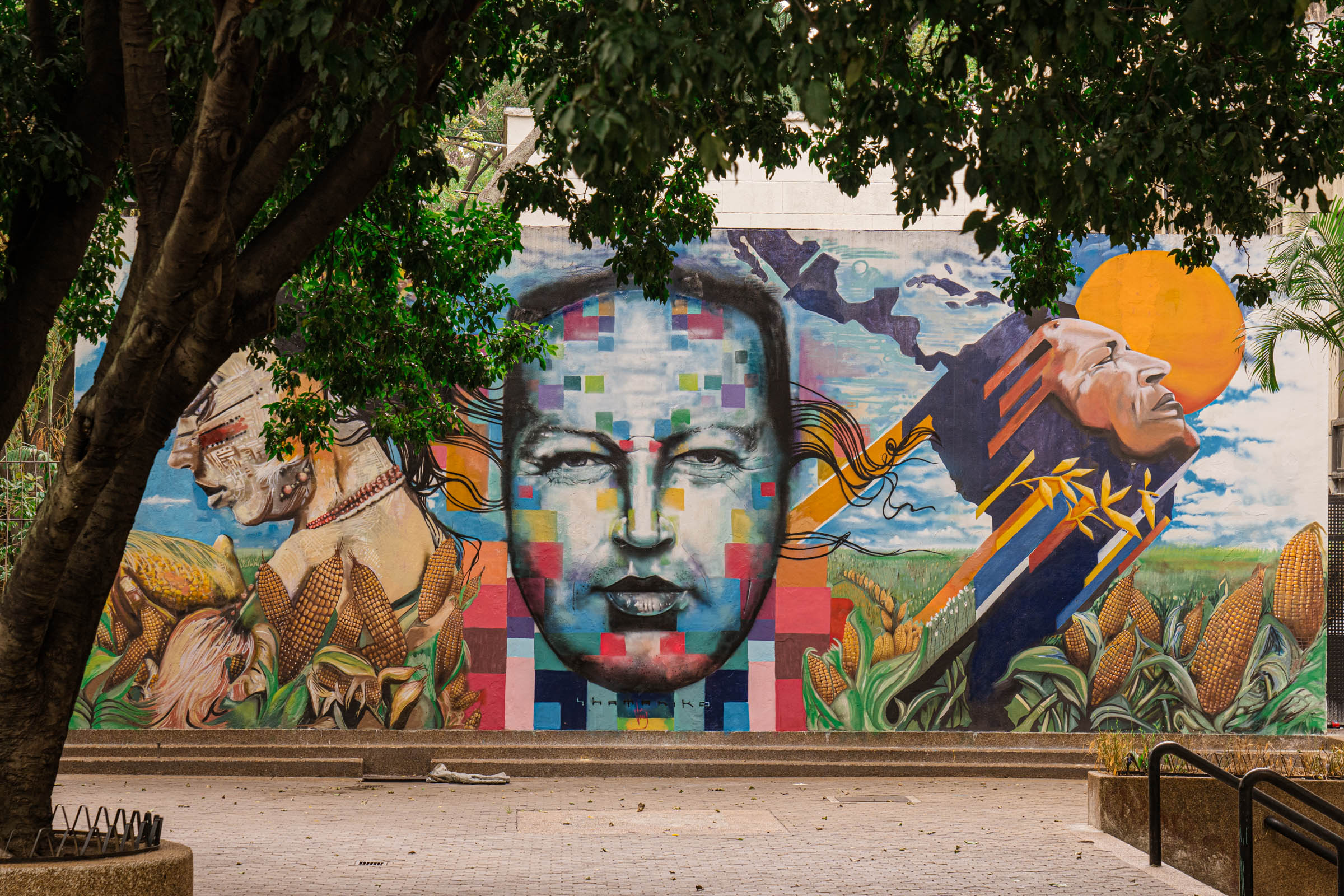
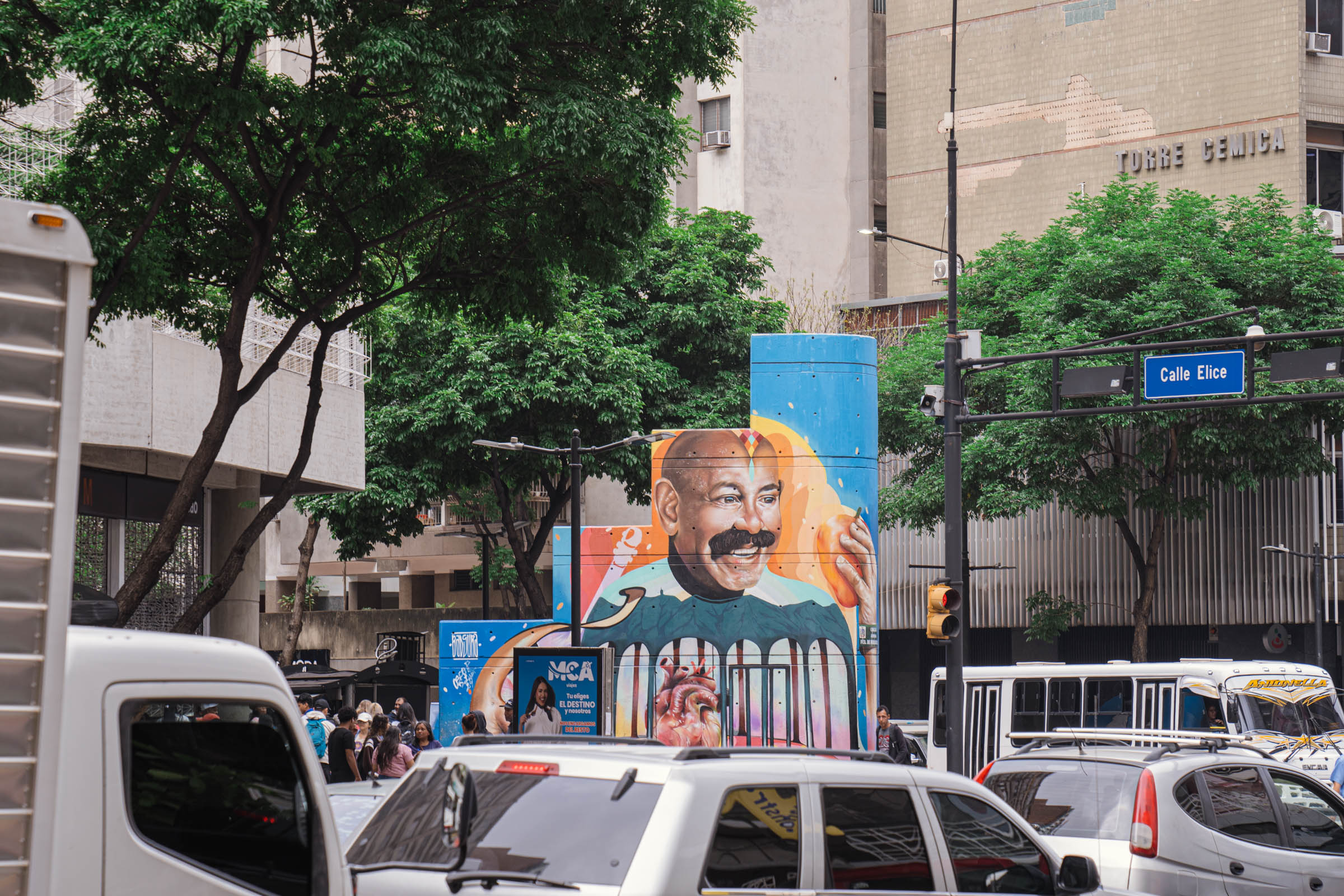
Walking through the main streets, I noticed how present art is in everyday life. Large murals cover the walls of buildings, from colorful portraits to bold geometric compositions. It is a kind of open-air museum, where every street tells its own story.
People are warm and love to talk. Even when you do not share a language, they will try to help you with gestures and a smile. I also noticed a special pride that locals have in their city and its mountain.
Often, the best moments are the simple ones: a coffee in a small café, music from a nearby shop and a short chat with a local.
CARACAS TIPS FOR LUXURY TRAVELERS
If you plan to visit Caracas as part of a luxury trip, here are a few tips from my experience:
Accommodation: Choose your hotel carefully. Besides Eurobuilding, the city offers international brands such as the JW Marriott Hotel Caracas and the Renaissance Caracas La Castellana.
Transport: Use only hotel drivers or pre-arranged private services.
Gastronomy: Focus on reputable restaurants. Caracas has a surprisingly rich dining scene, especially in Las Mercedes and the eastern neighborhoods.
Shopping: Caracas is not a typical destination for international luxury brands. Instead, look for local designers and ateliers that offer unique pieces.
Timing: Plan your outings during the day, and enjoy dinner or a cocktail in a trusted place in the evening.
For me, Caracas was a combination of unusual energy and luxurious discovery. The city reminds you that luxury does not always mean expensive brands or perfect avenues. Here, luxury means watching the sunset over El Ávila, tasting an authentic arepa in an elegant restaurant or simply feeling the rhythm of a city that pulses between the past and the future.
A BRIEF HISTORY OF CARACAS
To understand today’s Caracas, we must look into its past. Before the Spanish arrived, indigenous peoples lived in the valley. Then, on July 25, 1567, Captain Diego de Losada laid the foundations of the city. He named it Santiago de León de Caracas in honor of the apostle James, the provincial governor Pedro Ponce de León and the Caracas people who lived in the region.
In 1577, the town became the capital of the Spanish province of Venezuela. In 1591, it received its coat of arms. Its motto still reads: Seguid el ejemplo que Caracas dio, follow the example that Caracas gave. Over the following centuries, a wealthy creole elite grew rich from the cacao trade. Into this world, on July 24, 1783, Simón Bolívar was born. He later led the struggle for independence of what are today Venezuela, Colombia, Ecuador, Peru, Panama and Bolivia. That is why the name Bolívar appears everywhere, from the main square to the national currency.
At the end of the 19th century, President Antonio Guzmán Blanco started major urban reforms and built several landmarks that you can still admire today. However, the city kept its colonial character until the oil boom of the 20th century. Then, Caracas grew rapidly into a modern capital.
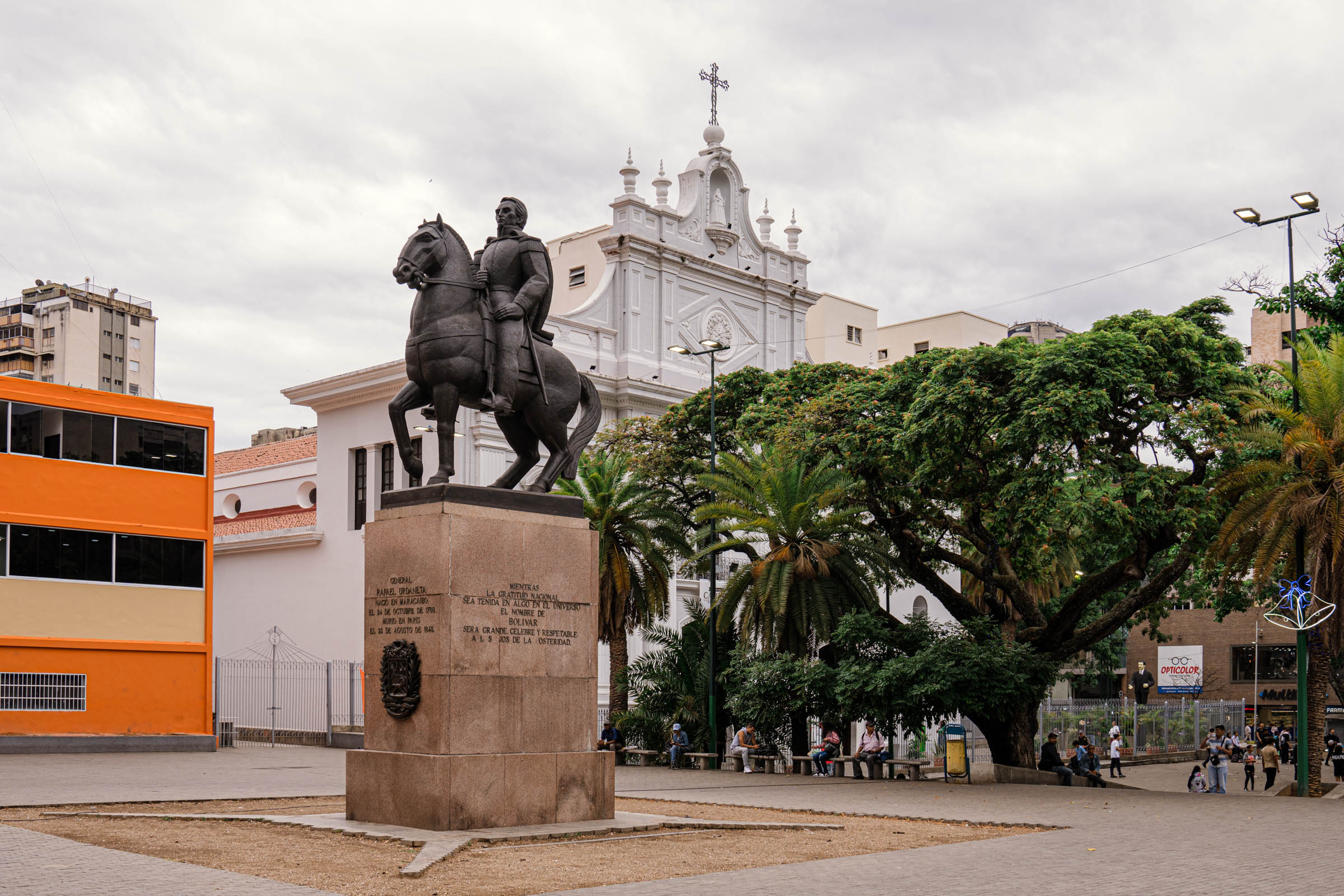
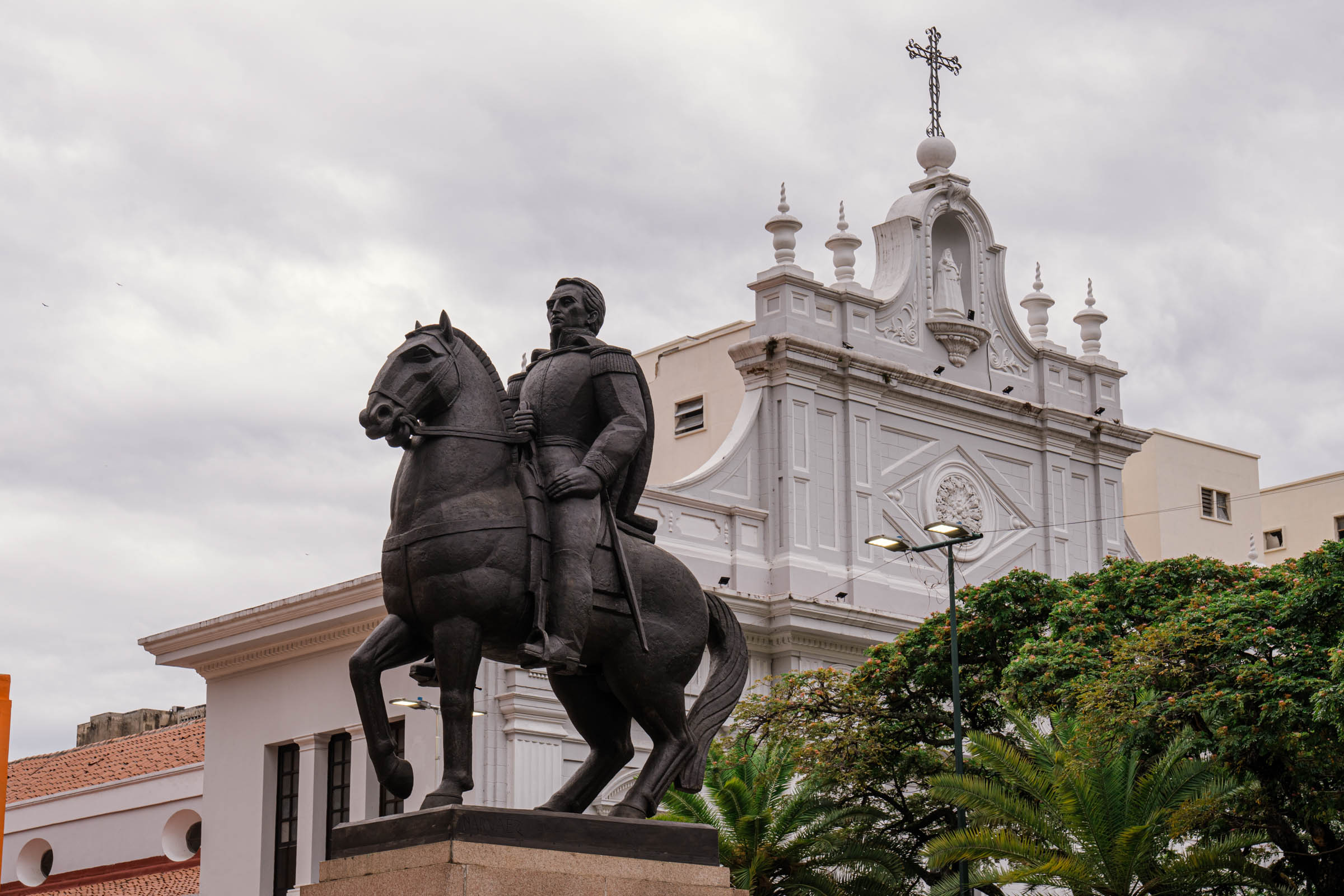
Walking through the old center today, you will often come across small squares with statues of national heroes, framed by white churches and old houses.
A WALK THROUGH THE HISTORIC CENTER OF CARACAS
The historic center of Caracas lies in the west of the valley, around Plaza Bolívar. The city still follows the grid that Diego de Losada drew in 1567, with a central plaza and the first blocks around it.
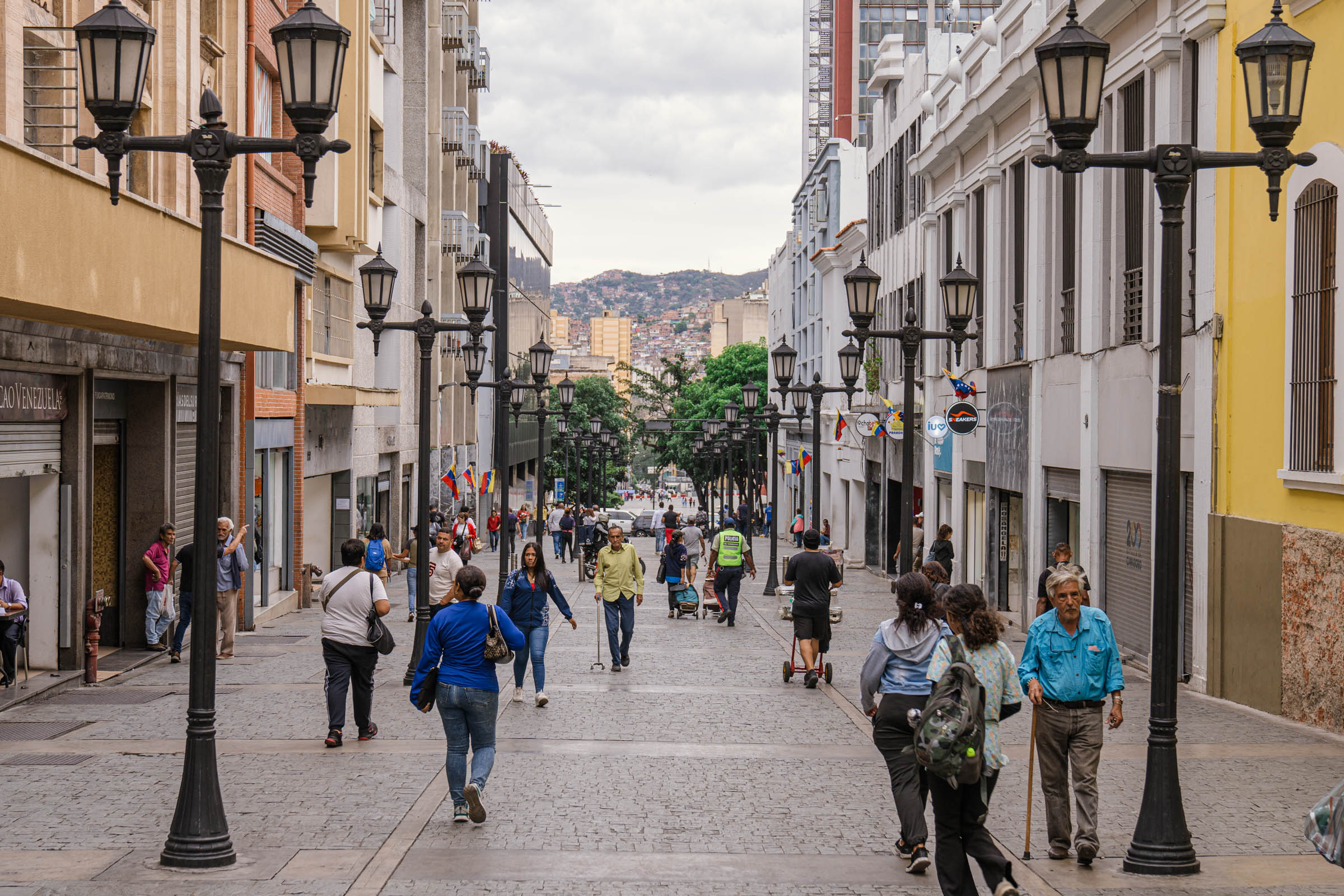
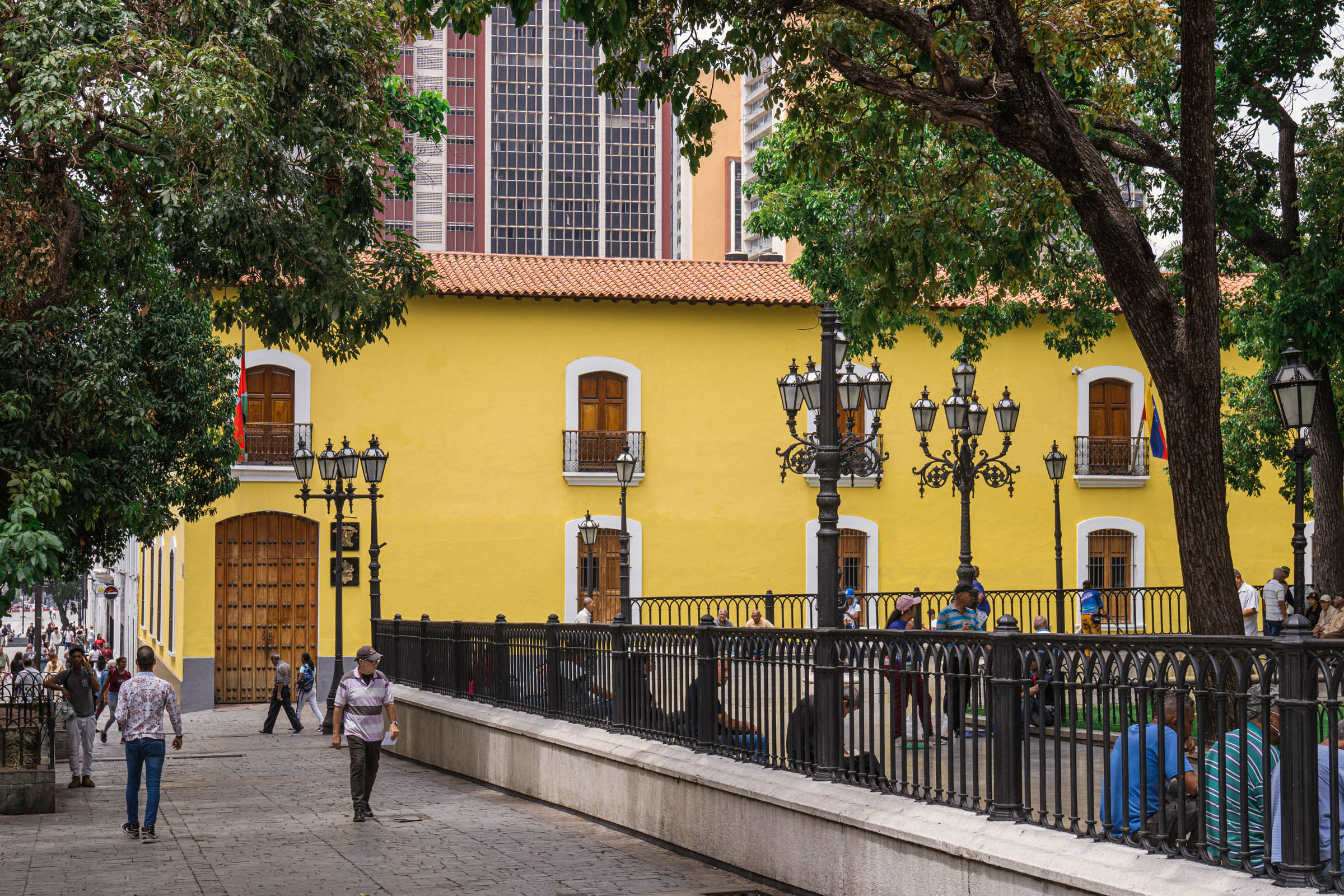
Pedestrian streets with old lamp posts lead you through the center, where locals hurry to work and street vendors set up their stands. Between modern office buildings, you suddenly find low colonial houses with tiled roofs, wooden windows and inner courtyards.
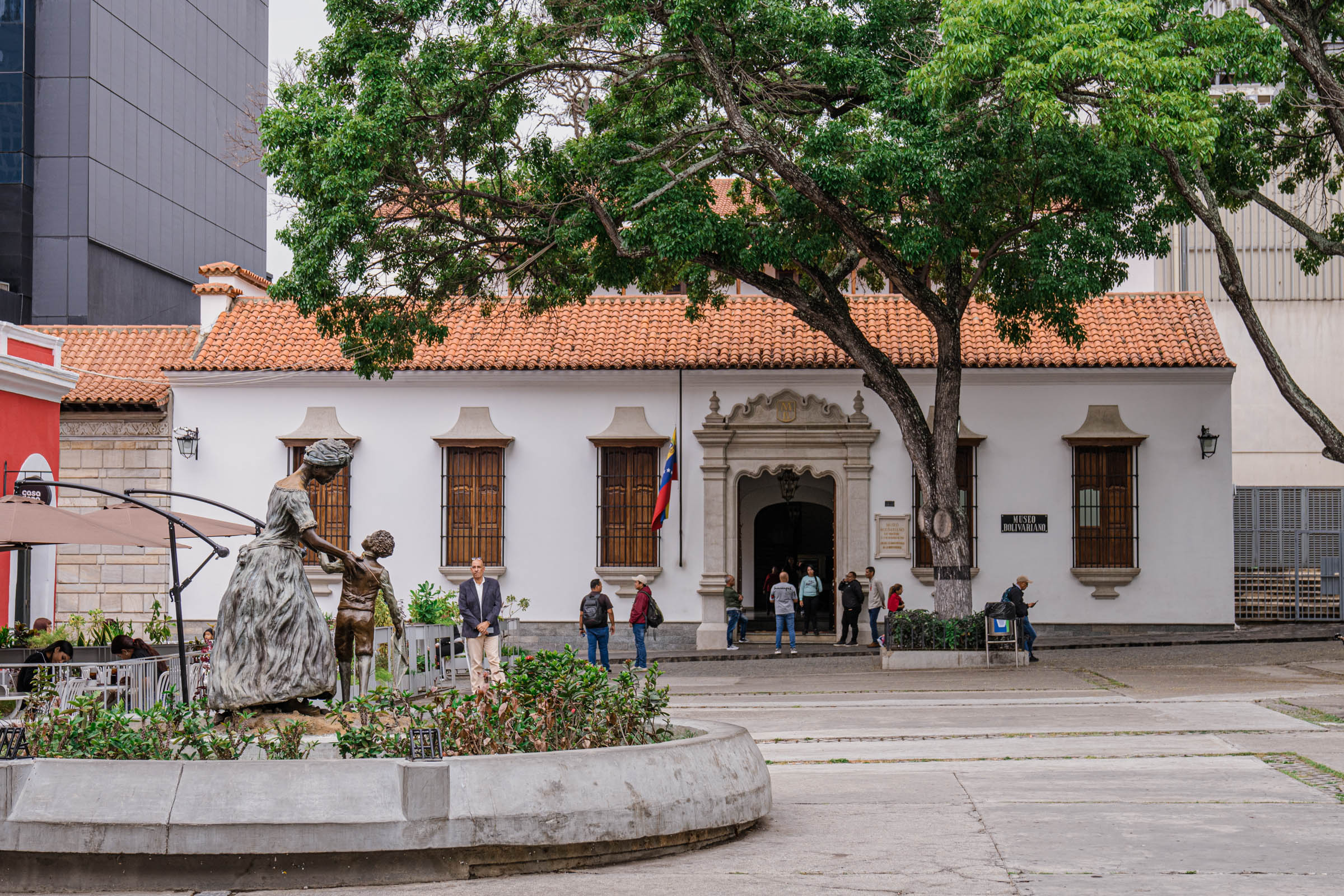
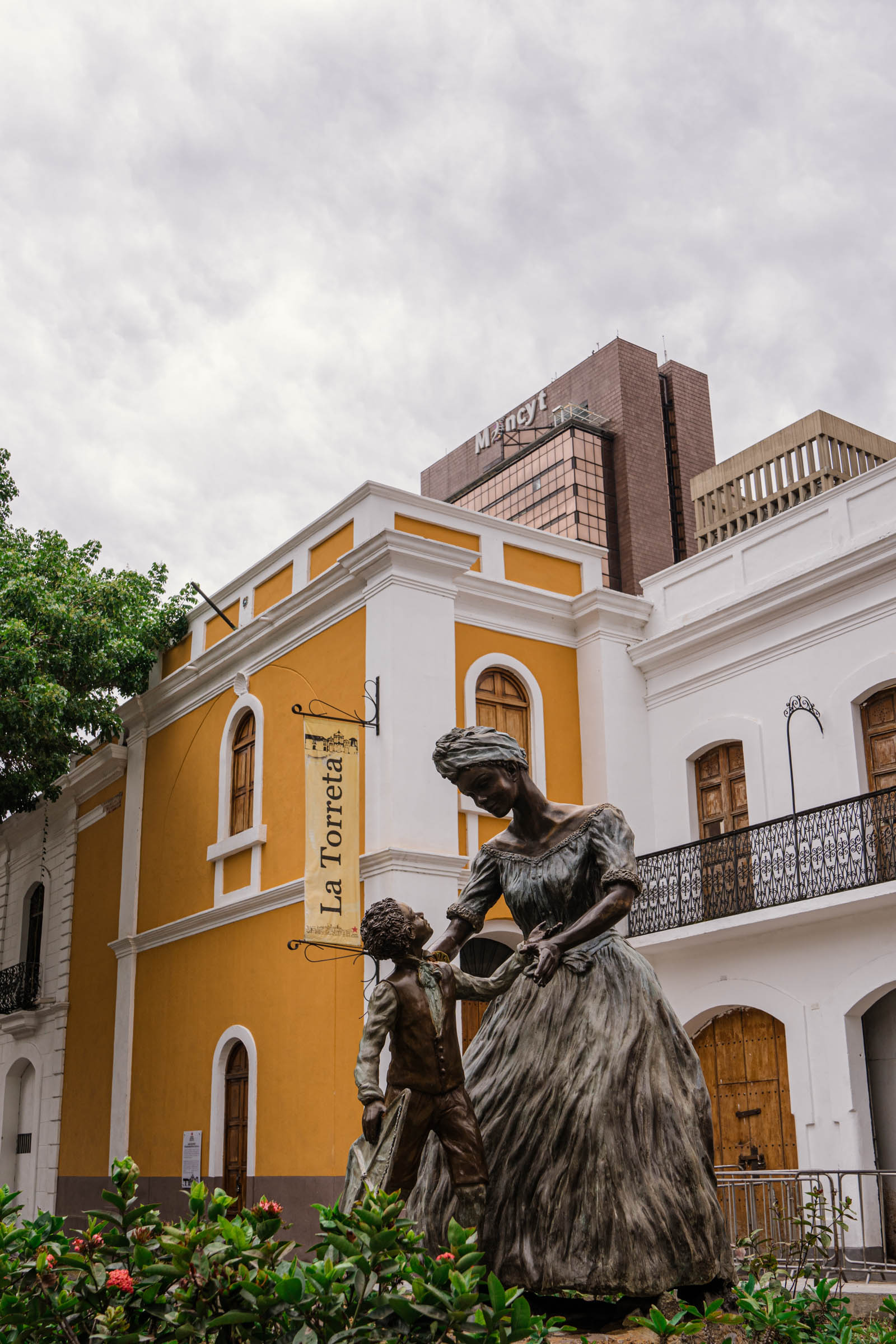
Bronze statues of historical figures stand in small squares and gardens, and the yellow and white facades glow in the tropical light. This is the part of the city where history literally comes out to meet you on every corner.
My advice is to explore the center with a local guide. A guide will show you the most interesting buildings, share the stories behind them and help you move around comfortably.
CASA NATAL: WHERE BOLÍVAR WAS BORN
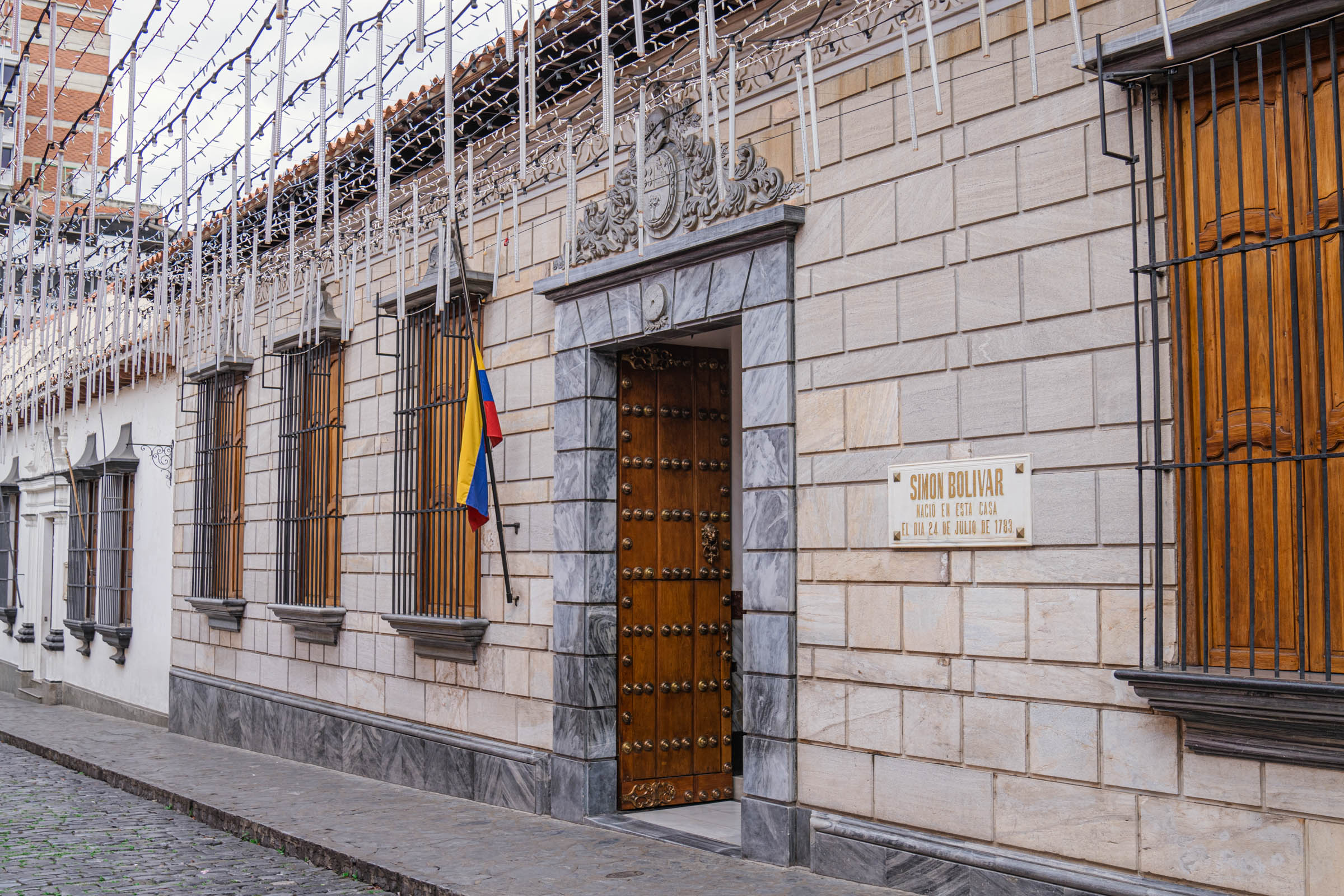
One of the most important places in Caracas is the birthplace of Simón Bolívar, the Casa Natal del Libertador. This 17th-century colonial house stands in a small street off Plaza San Jacinto, one block east of Plaza Bolívar. It is one of the few houses from the colonial era that have survived in central Caracas. Its address lies between the corners of San Jacinto and Traposos. In the old center, locals have long described addresses this way, from one named corner to the next.
The house dates from the 1640s, and the Venezuelan government renovated it in 1920. Here, on July 24, 1783, Simón Bolívar was born as the fourth child of Juan Vicente Bolívar y Ponte and María de la Concepción Palacios y Blanco. The house opened as a museum on January 5, 1921, and on July 25, 2002, it became a National Monument.
Inside, you can see original pieces of the house, objects from Bolívar’s life and two beautiful courtyards. The baptismal font in which he was baptized also stands here today. The rooms give a real insight into the way a wealthy family lived in colonial Caracas.
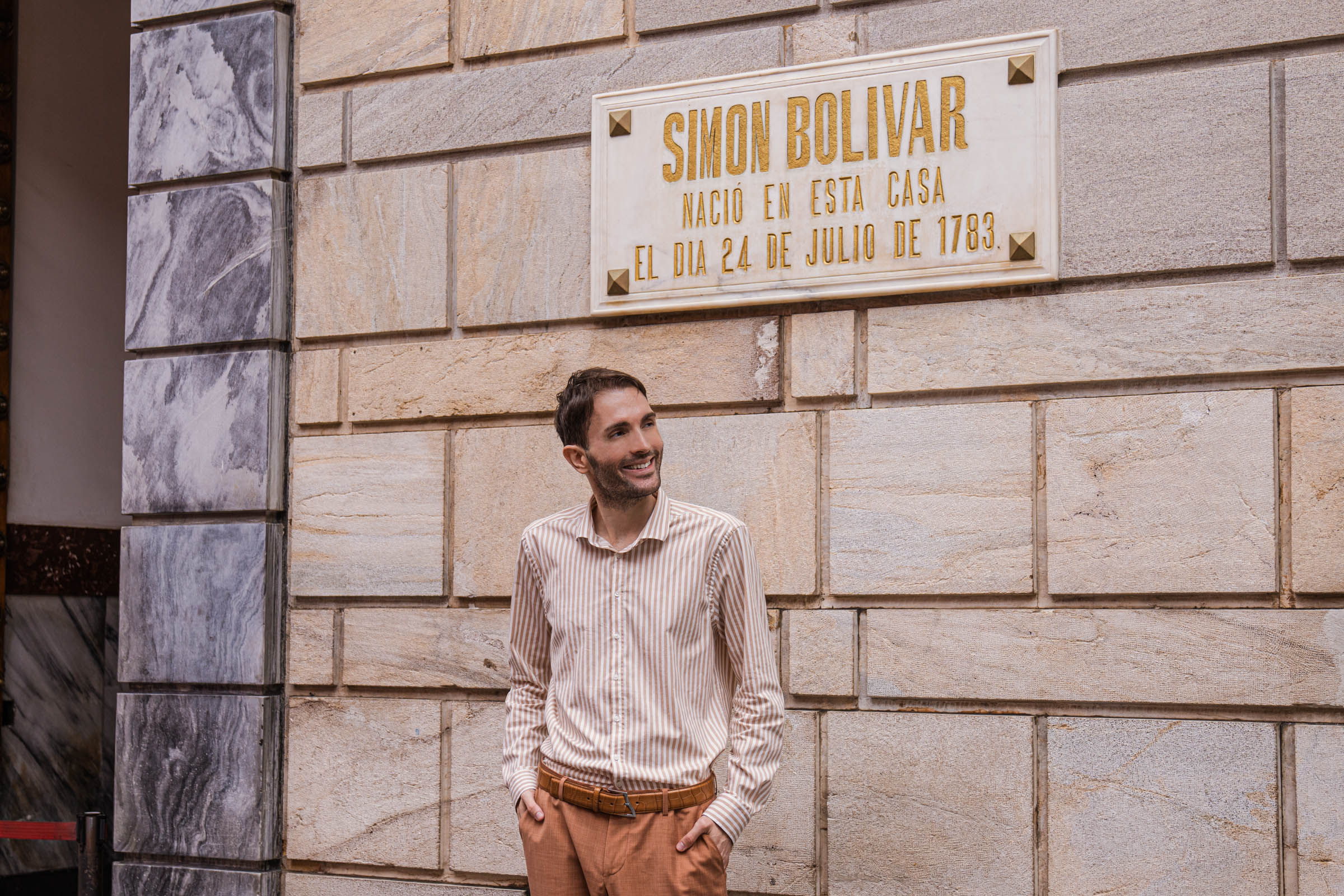
Of course, I could not resist a photo next to the marble plaque on the facade. It states in Spanish that Simón Bolívar was born in this house on July 24, 1783. Standing there, you feel how much this small house means to the whole country.
PLAZA EL VENEZOLANO AND BOLÍVAR’S FAMOUS WORDS
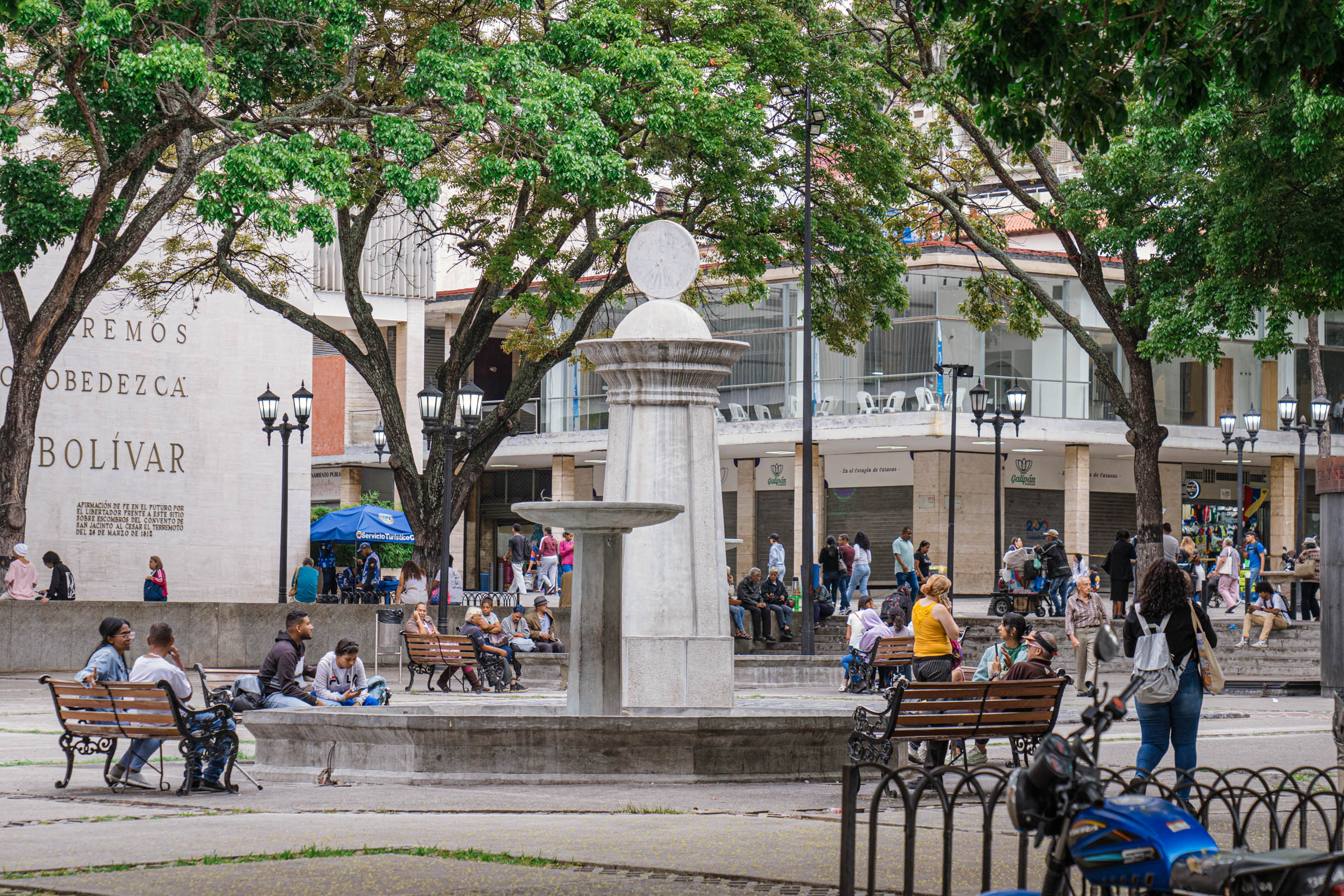
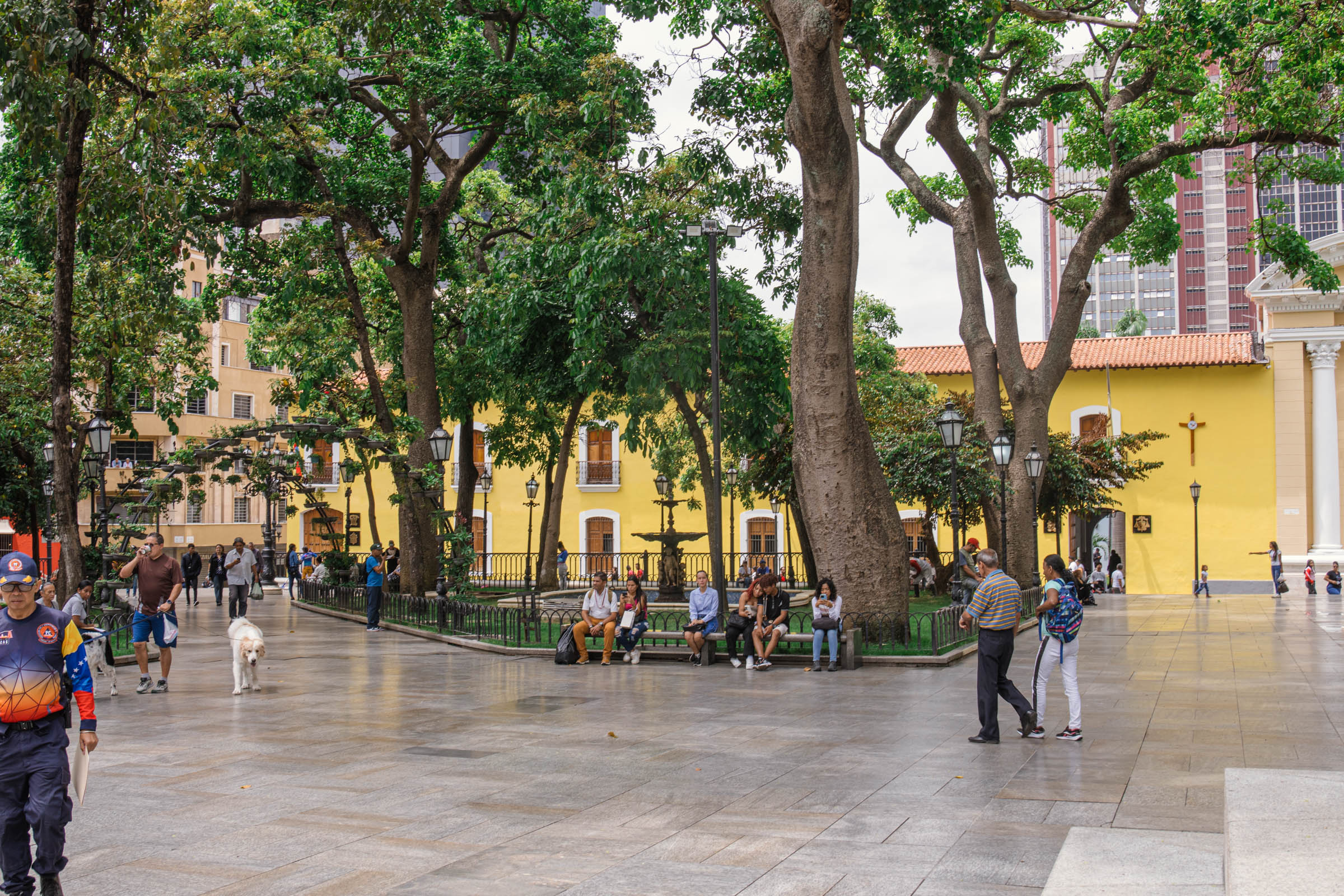
Right next to the Casa Natal lies Plaza El Venezolano, also known as Plaza San Jacinto. The square dates back to 1603, and for a long time it served as the city market. Today, it is a pleasant place with trees, benches and a fountain, where locals rest in the shade.
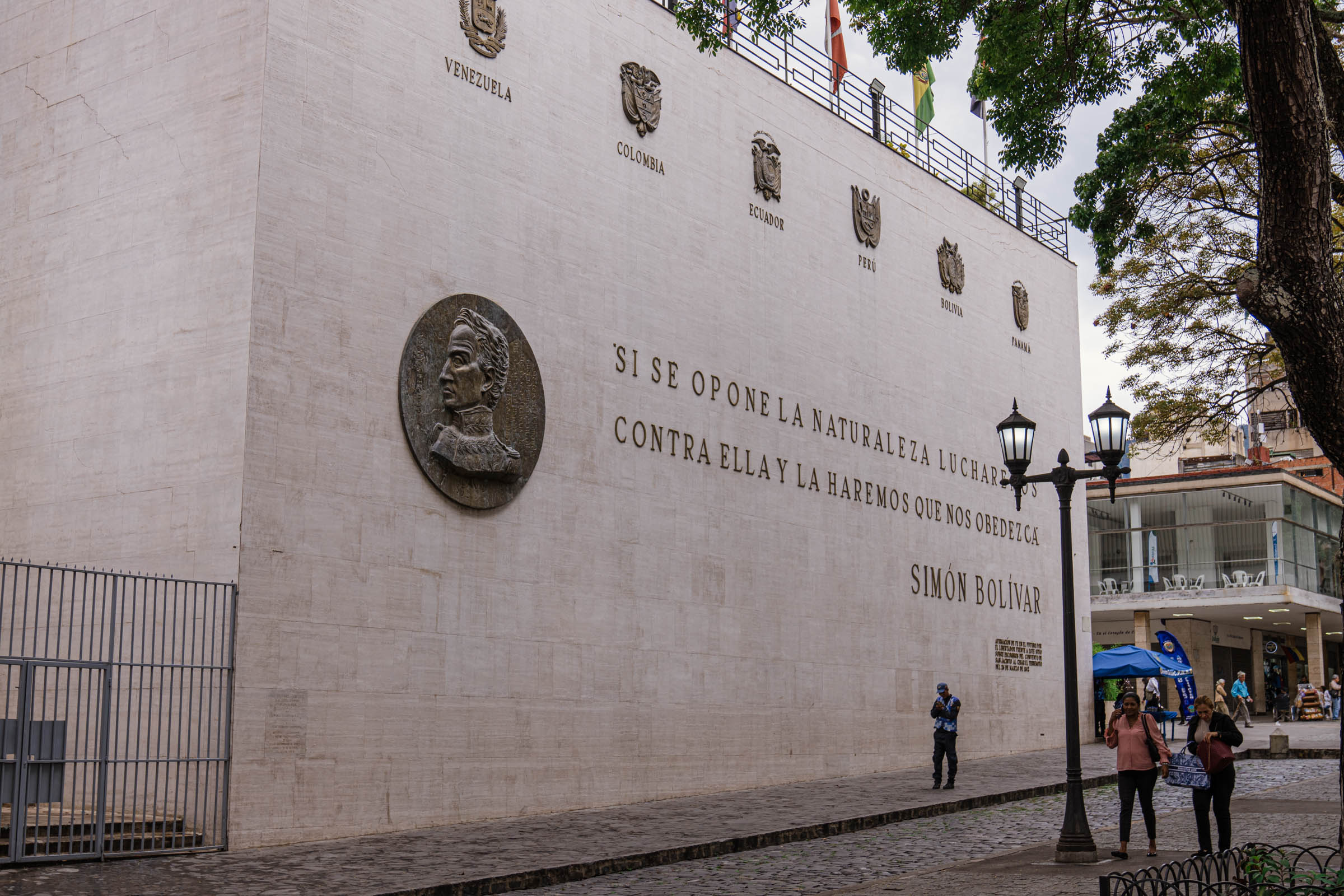
On one of the walls, large letters spell out the most famous sentence connected with this place. On March 26, 1812, a powerful earthquake struck Caracas. According to the account of José Domingo Díaz, Bolívar stood on the ruins near the square of San Jacinto and said: “Si se opone la naturaleza, lucharemos contra ella y la haremos que nos obedezca.” In English, it means: “If nature opposes us, we will fight against it and make it obey us.”
Historians still debate whether Bolívar really said these exact words. Still, the sentence became part of the national mythology, and every Venezuelan knows it.
A bronze medallion with Bolívar’s profile and the engraved quote decorate the white wall. It is a perfect place to stop, read and imagine the city two centuries ago. Nearby, you will also find the Museo Bolivariano, which President Rómulo Betancourt moved to its present site near Plaza El Venezolano.
CARACAS CATHEDRAL
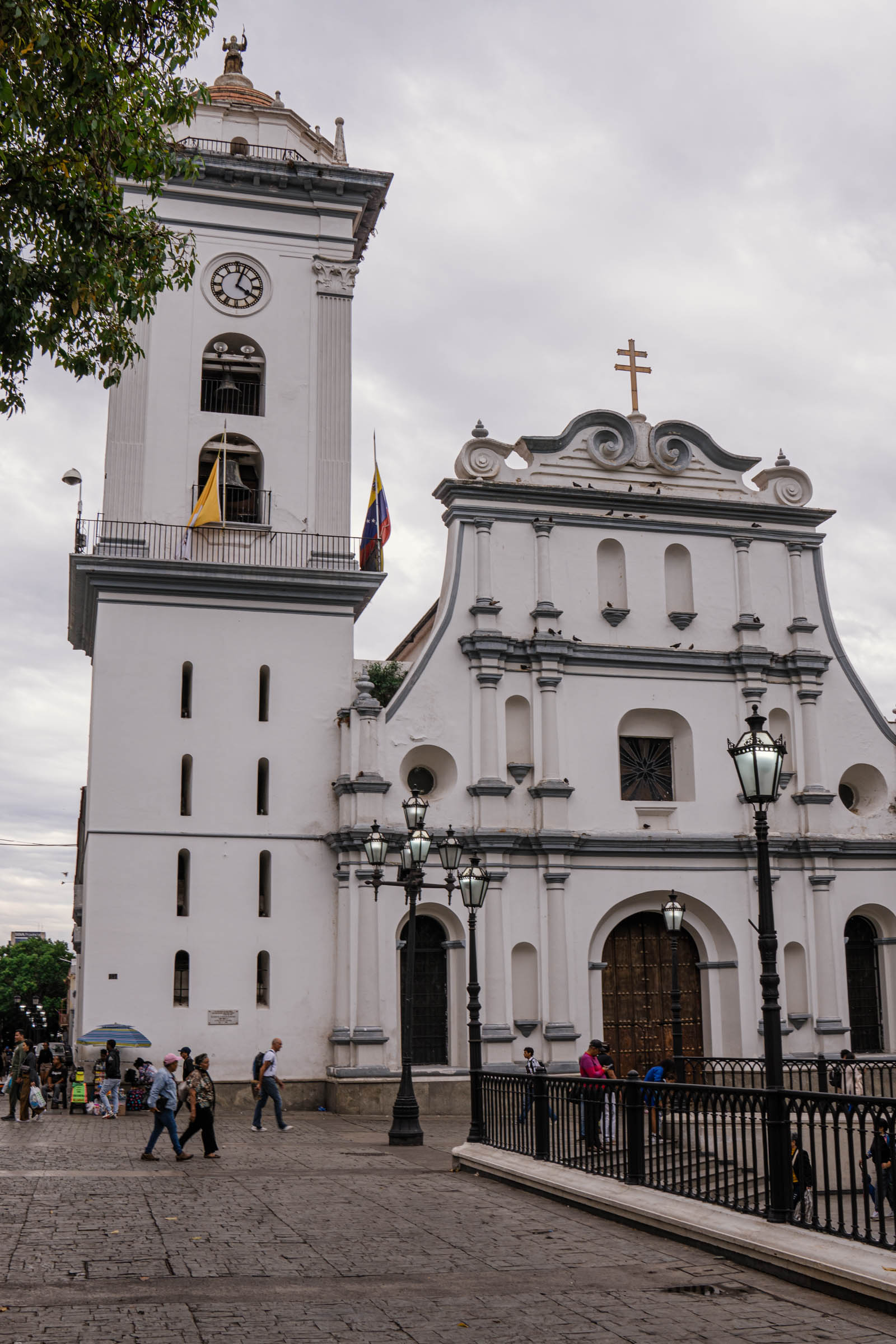
Just a few steps away, on the corner of Plaza Bolívar, stands the Caracas Cathedral, the seat of the Archdiocese of Caracas. In 1641, an earthquake destroyed the earlier church on this site. Construction of the new temple began in the 1660s under Juan de Medina, and the works ended in 1674.
The facade dates from 1771 and is the work of Francisco Andrés de Meneses. After the earthquake of 1812, the bell tower suffered damage, and later the builders reduced it to its current size. That is why the tower looks a little lower than you might expect.
Inside, gilded altars and side chapels create a solemn atmosphere. Bolívar was baptized here, and the cathedral also keeps a painting by Rubens. Its organ dates from 1711, the work of the French immigrant Claudio Febres. Next to the cathedral, the Museo Sacro de Caracas displays a collection of religious art and even has a small café.
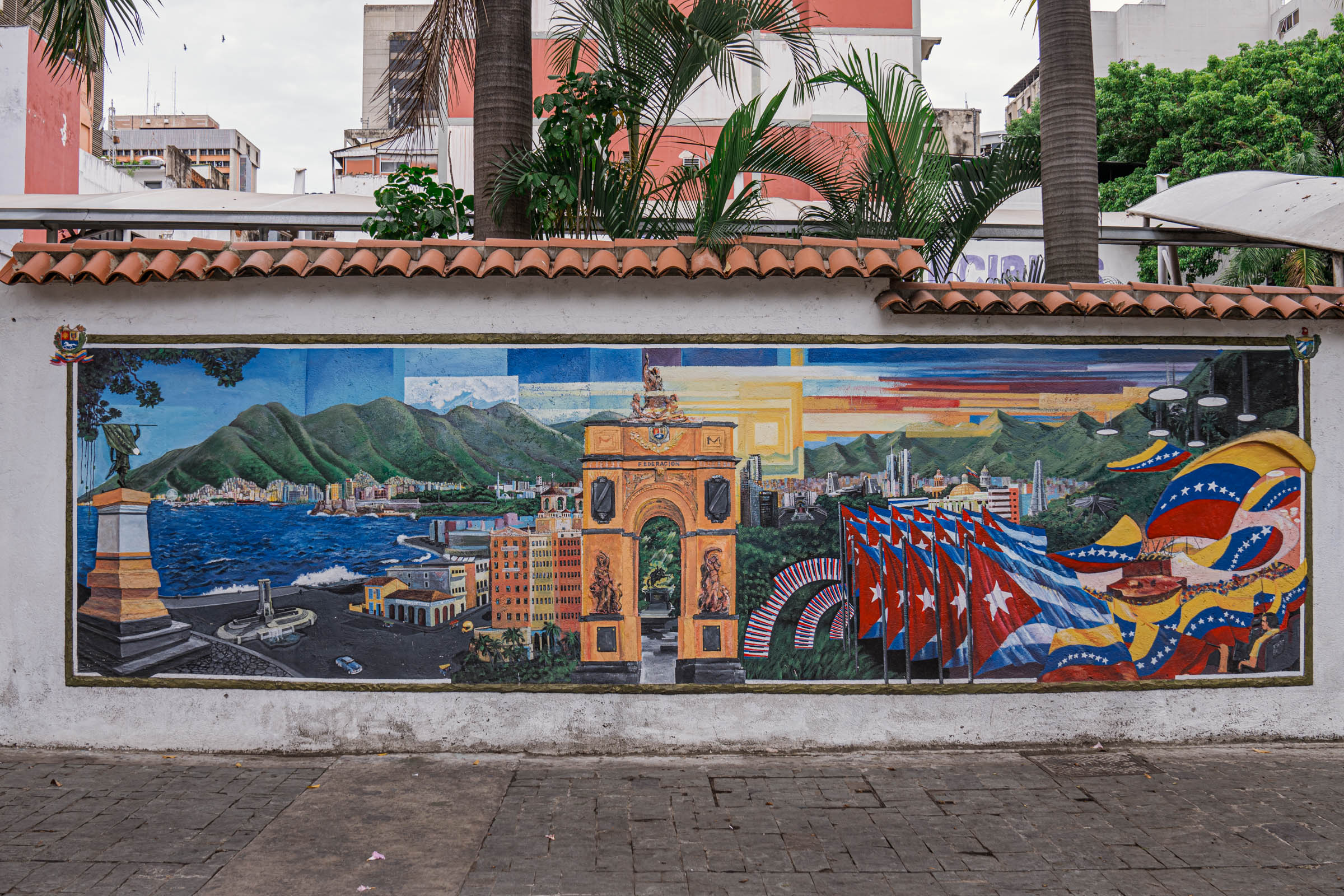
On the walls of the surrounding streets, I also found a beautiful ceramic tile mural with the landscape of Caracas, El Ávila and the old arches of the city. It is a small detail that shows how proud the city is of its own image.
PLAZA BOLÍVAR, THE HISTORIC HEART OF CARACAS
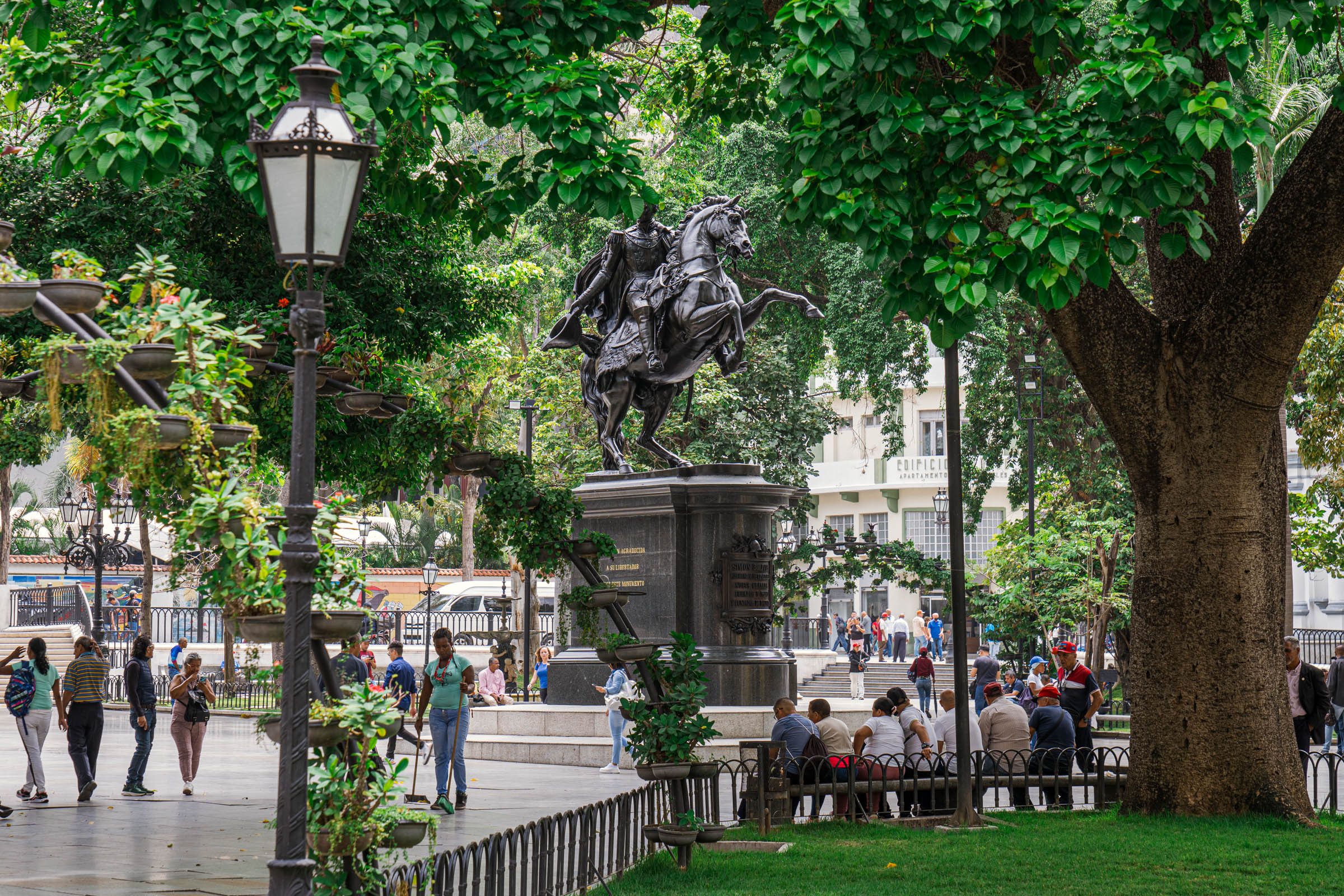
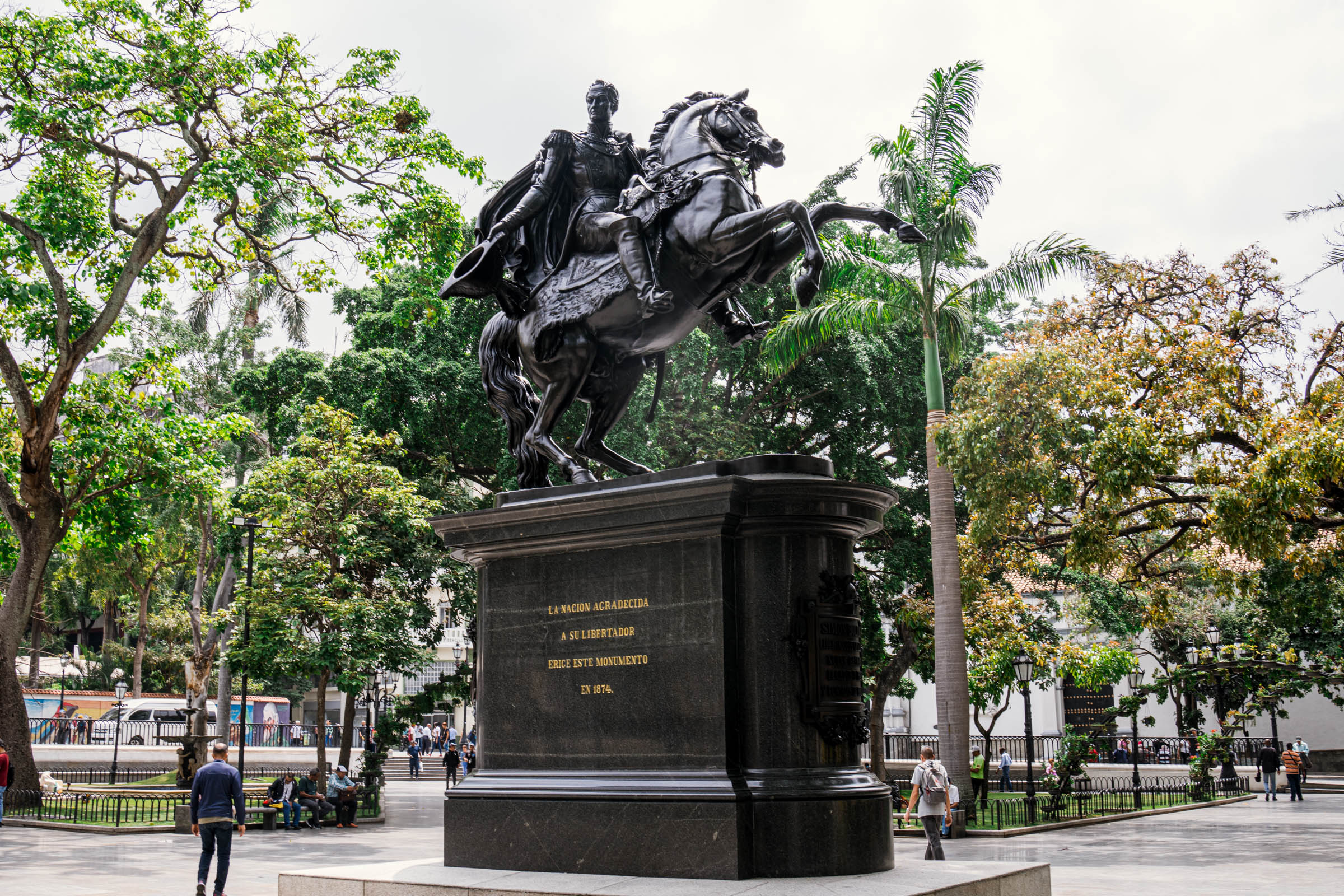
Every Latin American capital has its main square, and in Caracas it is Plaza Bolívar. The city was born right here in 1567, in the center of the first blocks of Santiago de León de Caracas. Over the centuries, the square carried names such as Plaza Mayor, Plaza de Armas and Plaza del Mercado, before it became Plaza Bolívar.
In the center stands the bronze equestrian statue of Simón Bolívar. It is a replica of Adamo Tadolini’s statue in Plaza Bolívar in Lima, and the city unveiled it on November 7, 1874. The president at the time, Antonio Guzmán Blanco, was a great admirer of Bolívar. A renewal of the square in a French style had started two years earlier, in 1872.
Important buildings surround the square: the cathedral, the Archbishop’s Palace, City Hall, the Chapel of Santa Rosa de Lima and the Casa Amarilla. Under tall trees, locals sit on benches, read newspapers and chat, while children chase pigeons.
When I visited Plaza Bolívar, I was fascinated by how alive it is. This is not only a historical landmark, but also the living heart of Caracas. Simply by watching the people around you, you get to know the real face of the city.
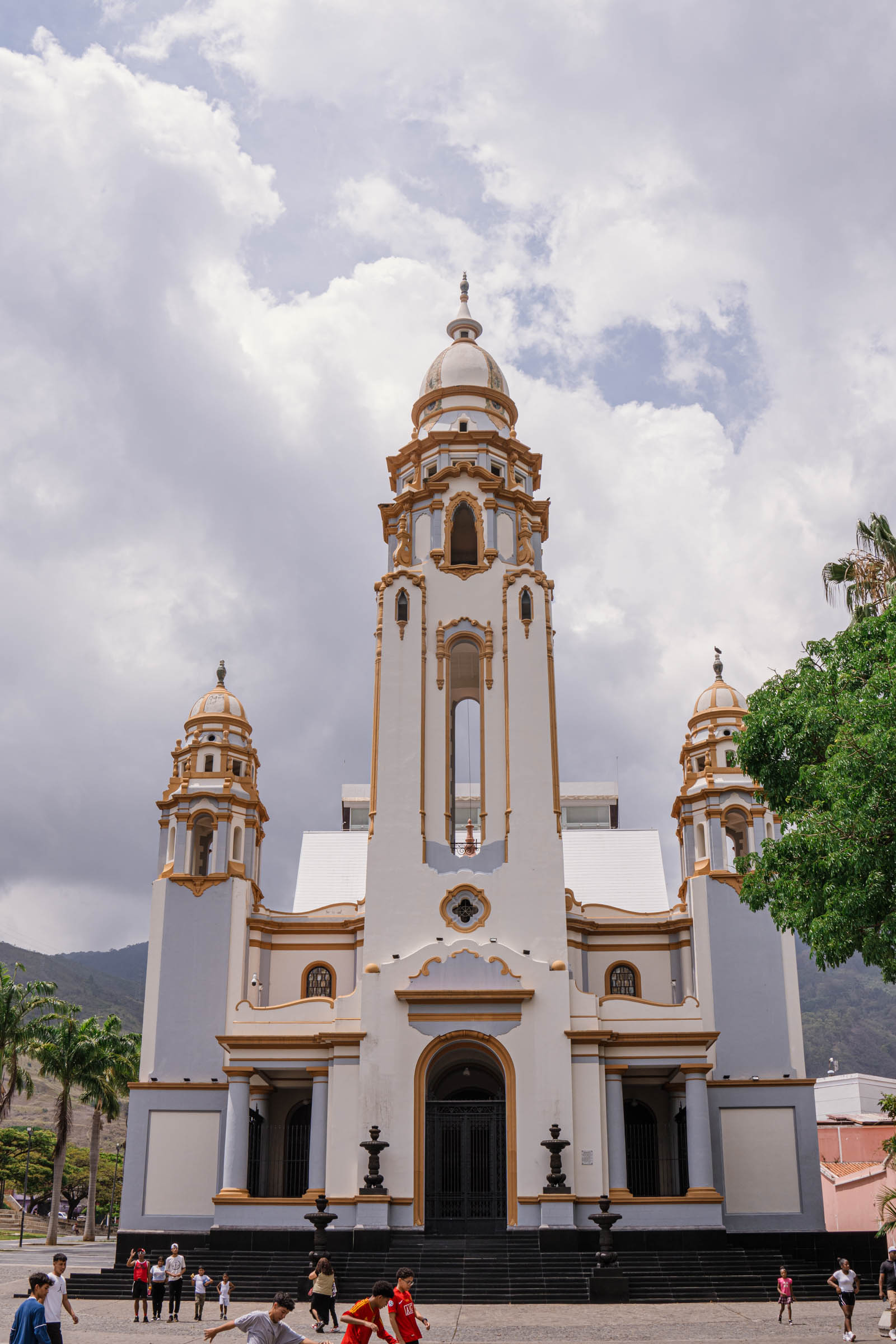
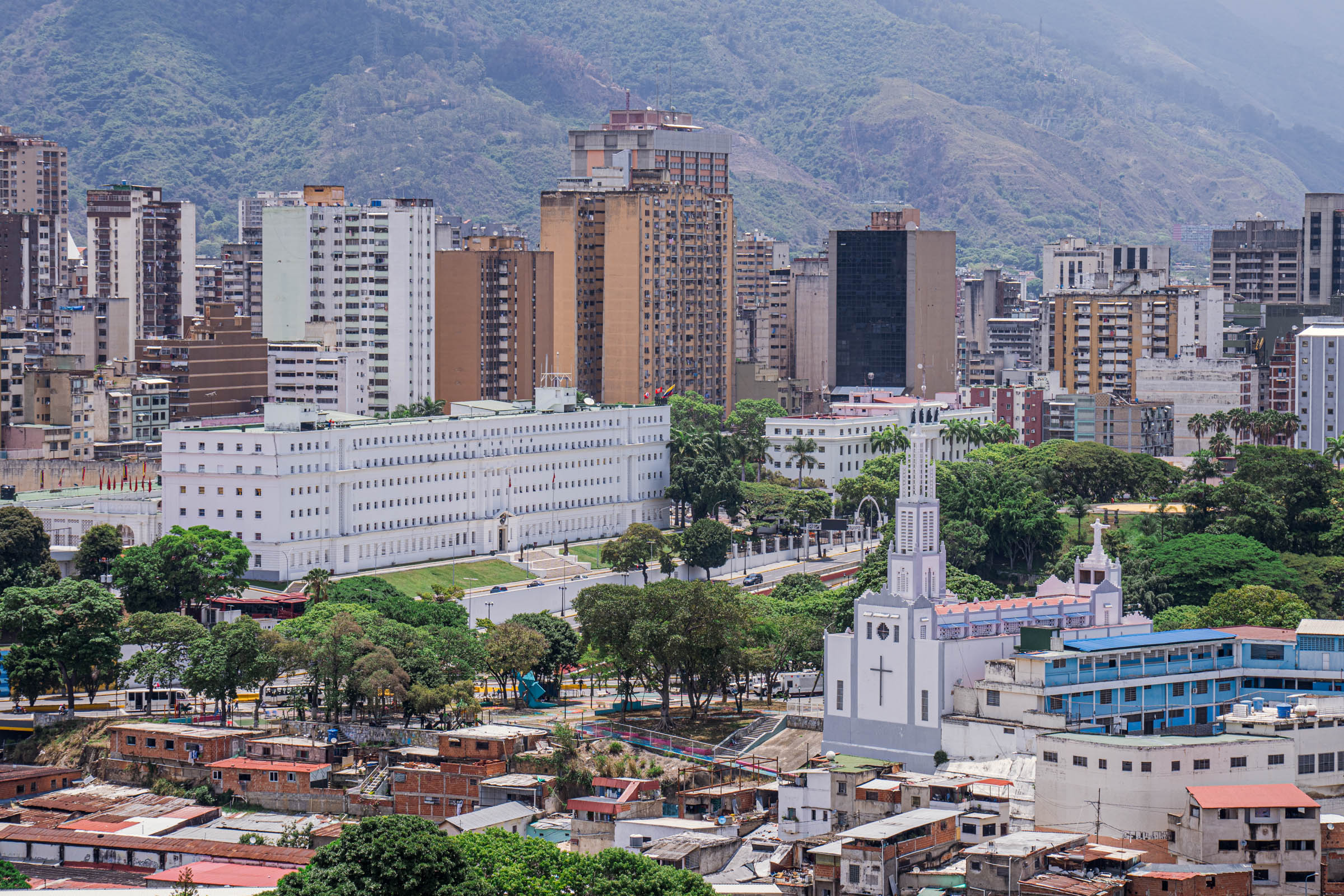
On the way north from the center, you will also see a white neo-Gothic landmark with tall spires rising against the green slopes of El Ávila. It is one of the most important national monuments of Venezuela.
THE MUSEUMS OF CARACAS
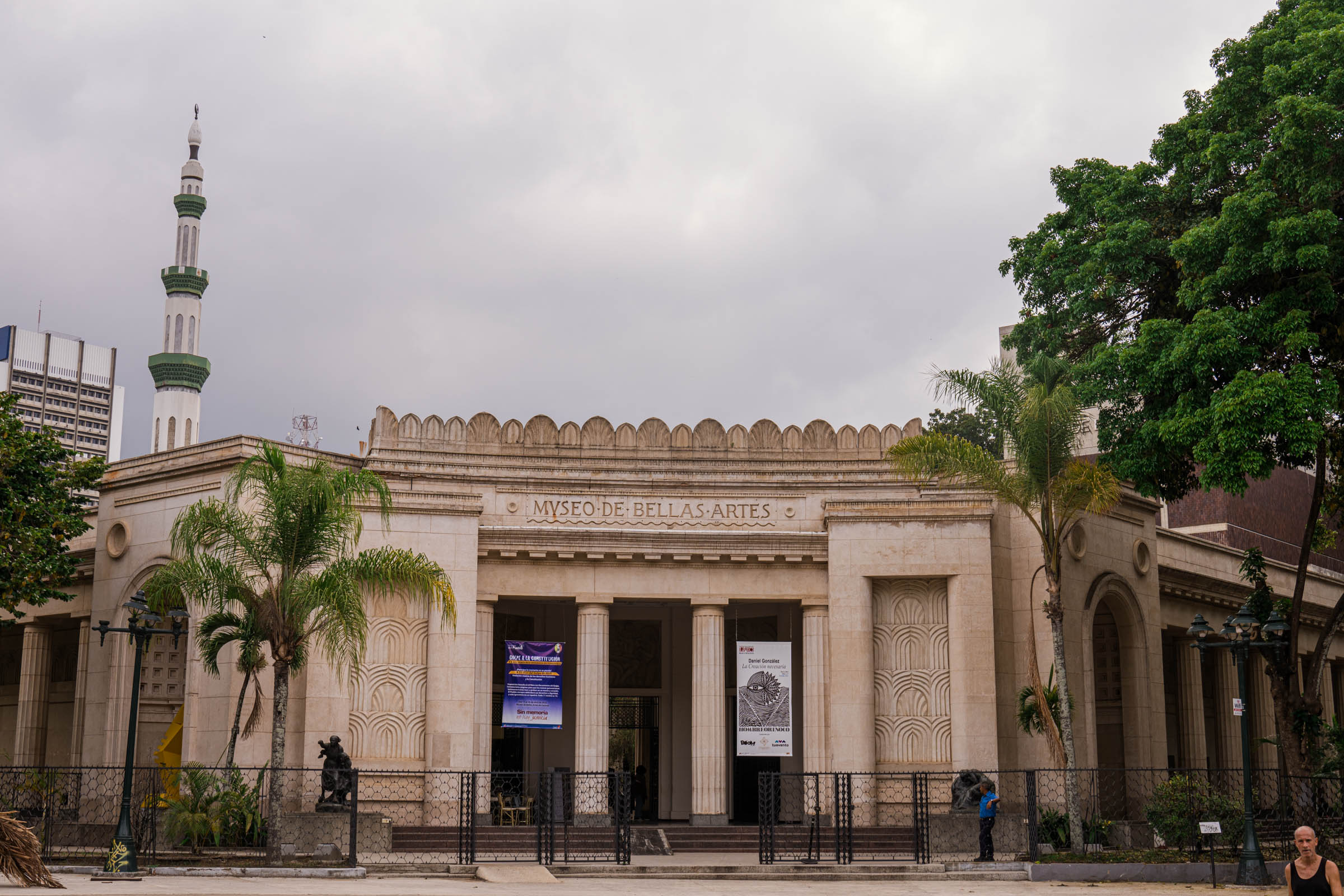
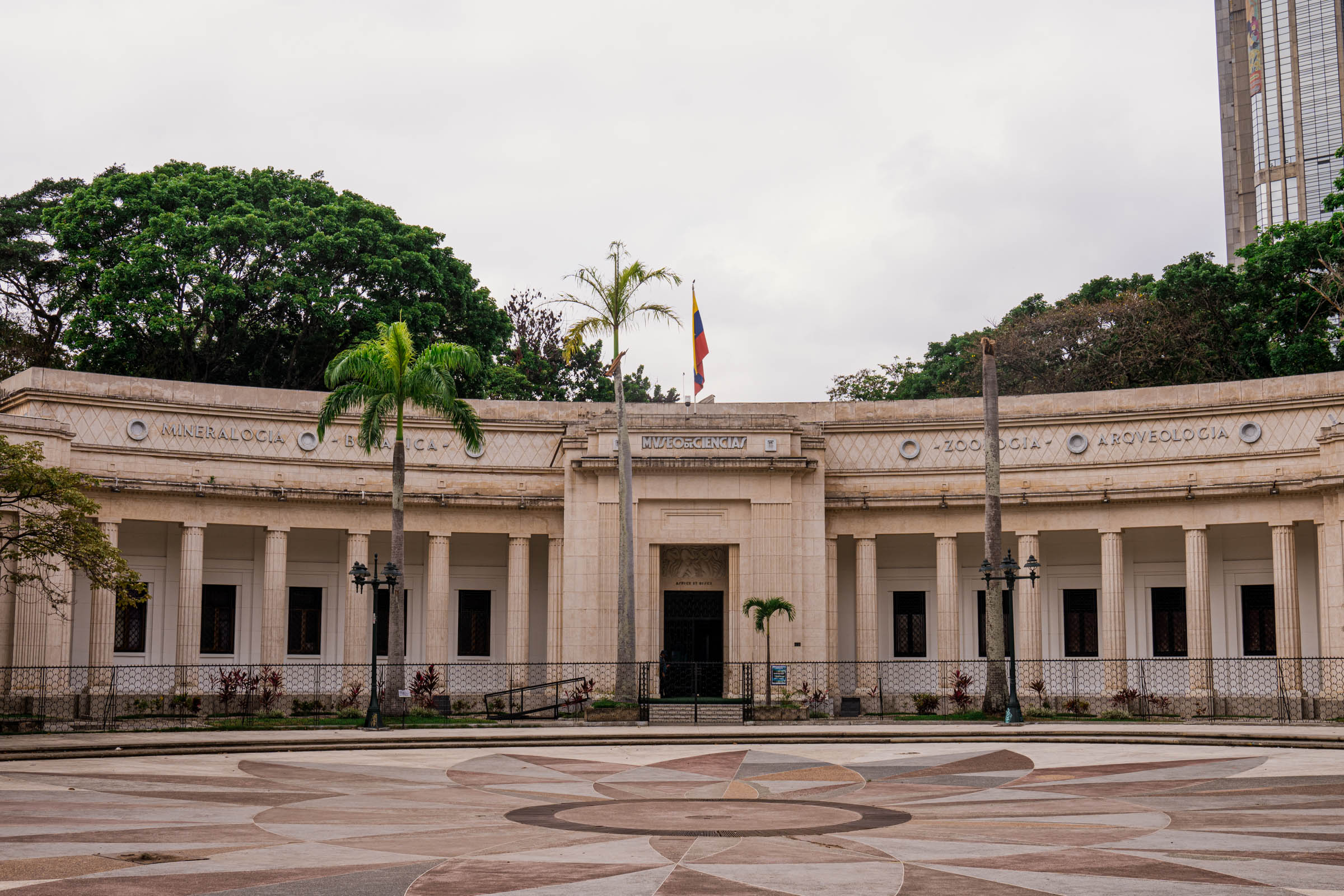
Caracas is a city of culture, although many people do not expect it. Most of its great museums stand close together in the Bellas Artes area, around the Plaza de los Museos and Los Caobos Park.
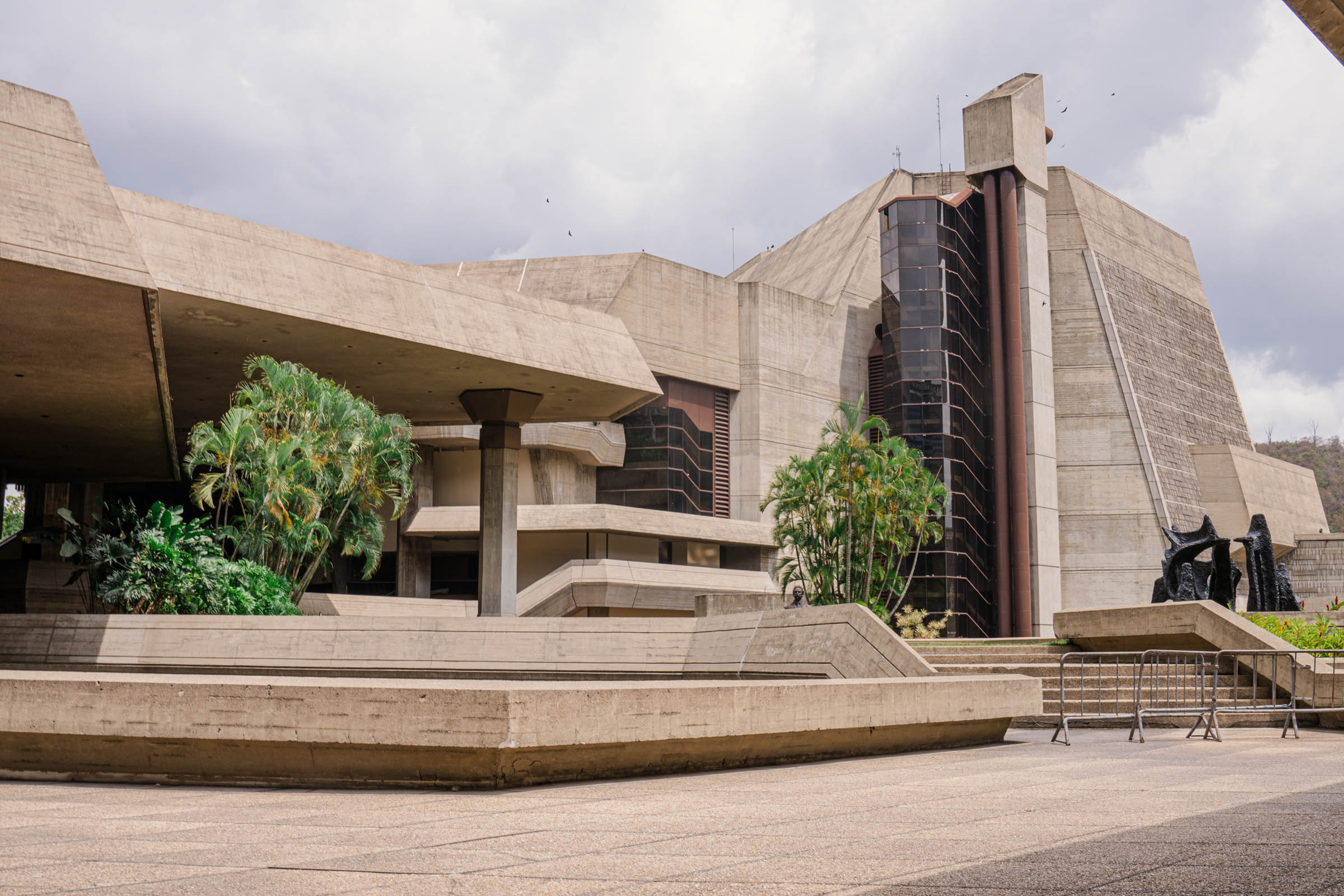
The Museo de Bellas Artes was founded in 1917. In 1938, it moved into a neoclassical building designed by Carlos Raúl Villanueva, one of the greatest Venezuelan architects. Later, Villanueva also designed its second building, a brutalist structure from the 1970s. He also designed the campus of the University City of Caracas, famous for its modernist art and a UNESCO World Heritage Site since 2000. The collections include European and Latin American art, ceramics and even ancient Egyptian art.
From 1976, the neoclassical building also hosted the Galería de Arte Nacional, one of the few museums in South America founded to show the cultural identity of a nation.
Nearby, in the Parque Central complex, you will find the Museo de Arte Contemporáneo de Caracas. The journalist and art patron Sofía Ímber founded it in 1973, and it opened to the public in 1974. Its collection includes works by Pablo Picasso, Joan Miró, Marc Chagall, Francis Bacon and Fernando Botero, as well as pieces by the Venezuelan kinetic artist Jesús Soto. It also holds one of the very few complete collections of Picasso’s Suite Vollard prints in the world.
PARQUE LOS CAOBOS, AN OASIS OF GREENERY
For a break from the bustle of the city, I recommend Parque Los Caobos, one of the oldest parks in Caracas. It opened in 1920, near the Museo de Bellas Artes and the other museums of the area.
The park owes its name to the big-leaf mahogany trees, caobos in Spanish, that grew here since the colonial era. Today, it keeps one of the most important collections of old trees in the city. Wide paths, lawns and benches attract families, artists and athletes. Near the entrance, you will also see a sculpture of the Venezuelan writer Teresa de la Parra.
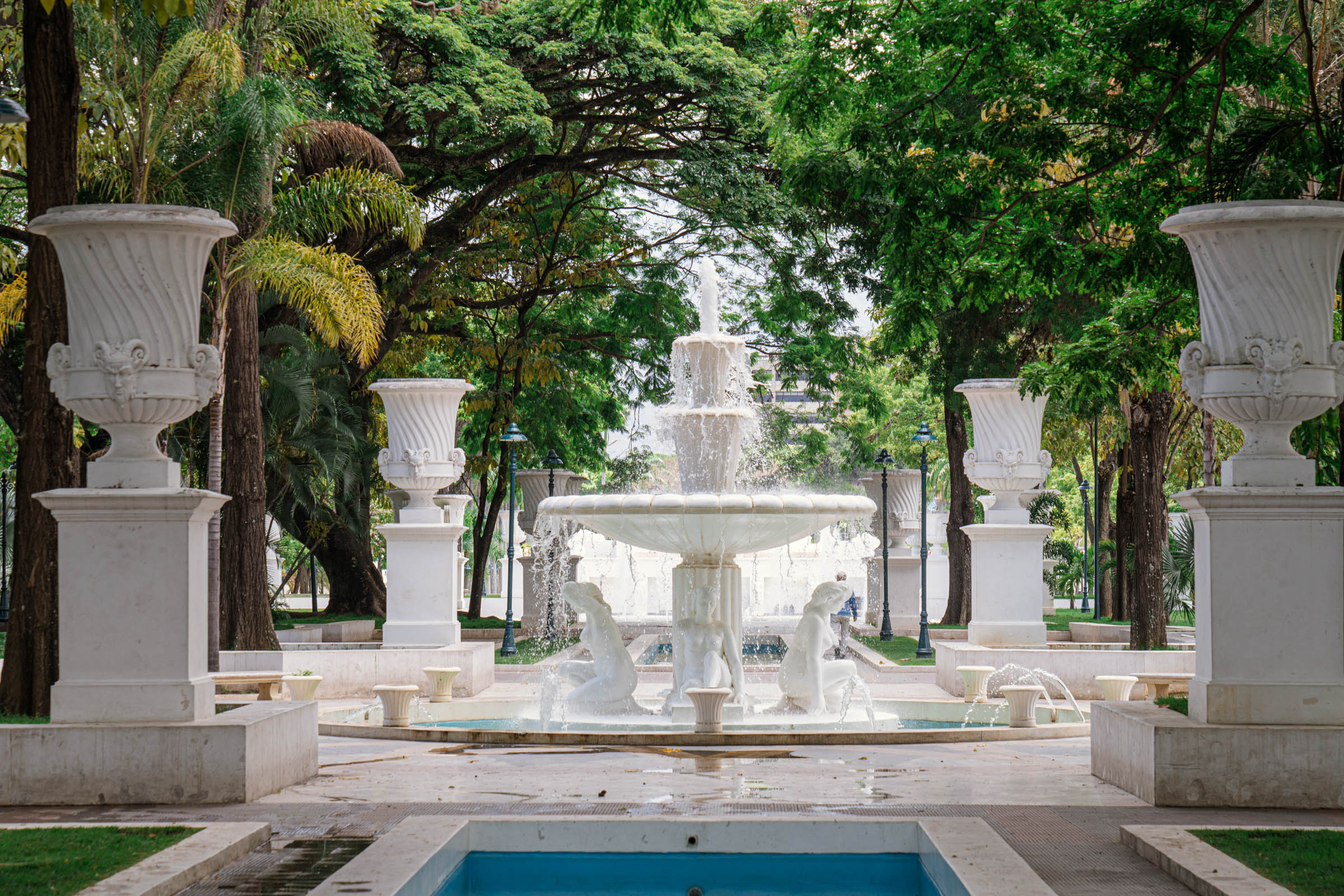
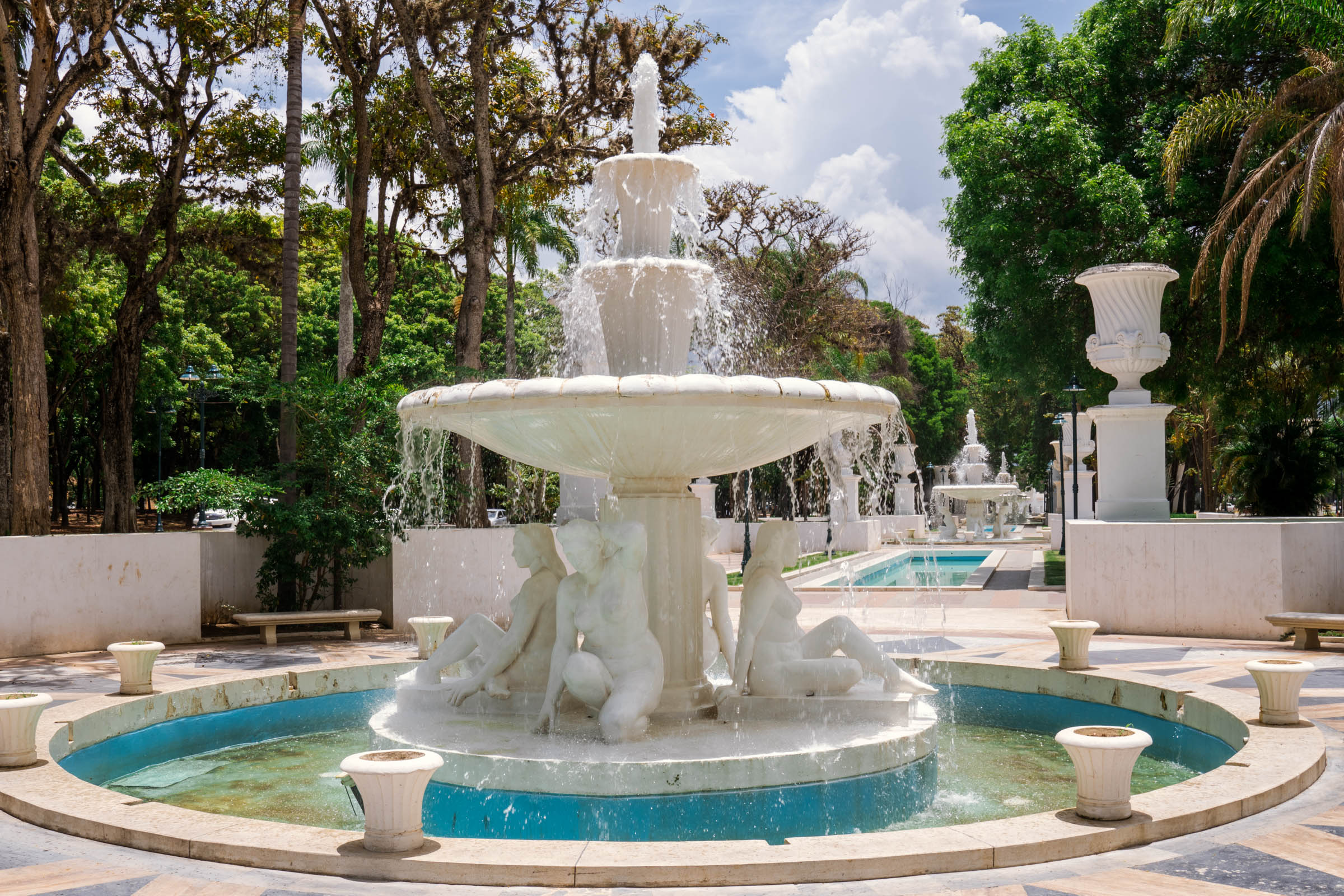
One of the highlights is the fountain known as Fuente Venezuela. Its figures represent the different regions of the country. Interestingly, the fountain first stood in Plaza Venezuela, and the city moved it to the park in 1967.
Classical urns, white fountains and the shade of old trees make this part of Caracas ideal for photos and a short rest between two museums. So, after a morning of art, take a slow walk under the mahogany trees.
PASEO LOS PRÓCERES: THE WALK OF HEROES
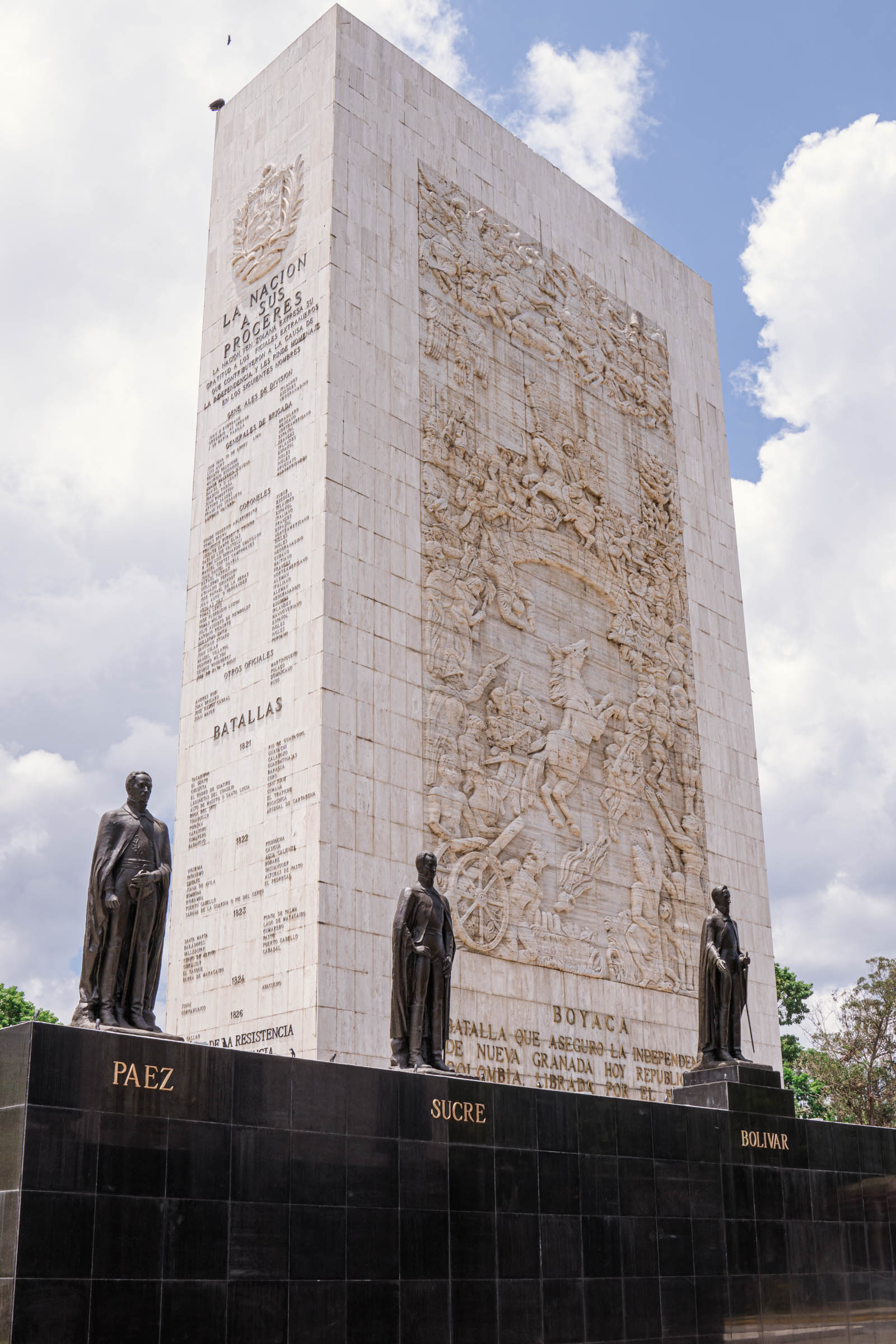
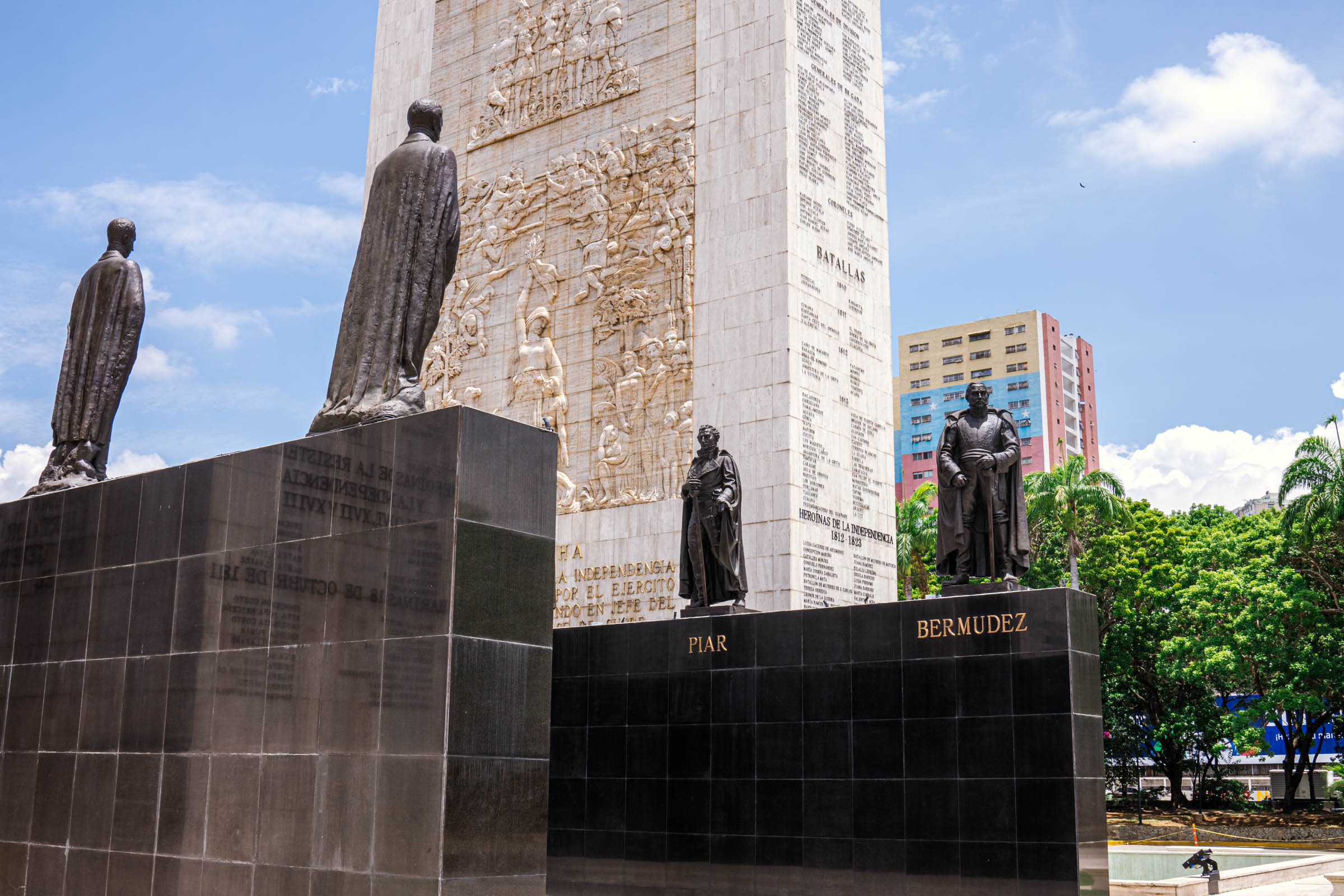
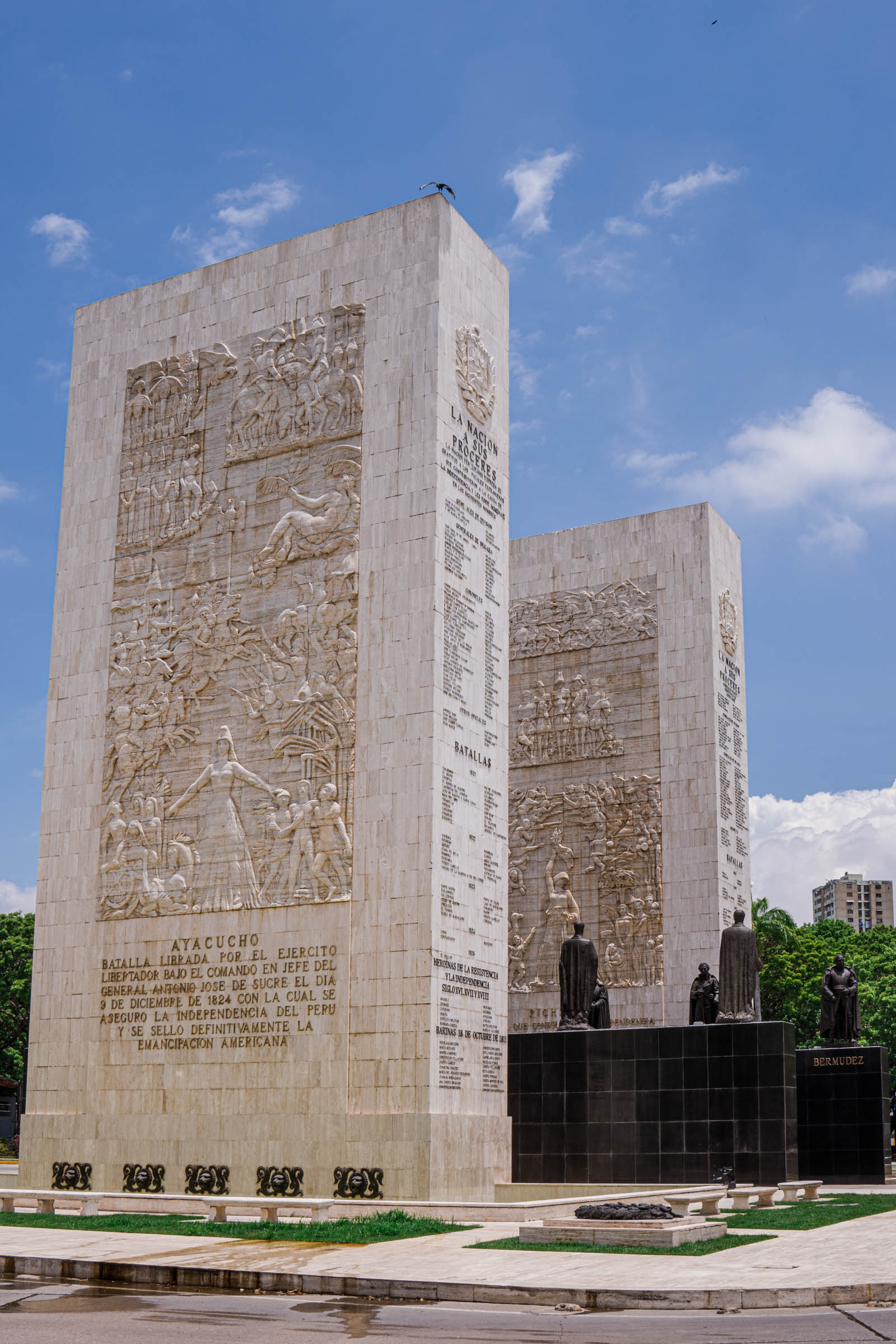
One of the most impressive monumental spaces in Caracas is the Paseo Los Próceres, the Walk of Heroes. It lies near Fort Tiuna, and it opened in 1956 under the name System of Nationality, in honor of the independence struggles of Colombia, Bolivia, Ecuador, Peru and Venezuela. Along a two-kilometer avenue, you will find fountains, gardens, monoliths and statues of the heroes of independence.
At its heart stands the Monument to the Heroes. It consists of two vertical blocks of travertine marble and two horizontal blocks of black marble, each 30 meters long. The tall white walls carry carved reliefs of great battles, while bronze statues of the heroes stand on the black marble. Among them are Simón Bolívar, Antonio José de Sucre, Rafael Urdaneta, Santiago Mariño, Francisco de Miranda, José Antonio Páez, Manuel Piar, José Félix Ribas and Luis Brión.
Two rows of lighting poles frame the space like virtual walls. Since 1993, the Paseo Los Próceres and its whole complex have been a National Historic Landmark. The scale of the monument is truly impressive, especially under a clear blue sky.
I recommend visiting in the morning, when the light falls on the reliefs and the white marble shines.
LAS MERCEDES AND THE MODERN EAST OF CARACAS
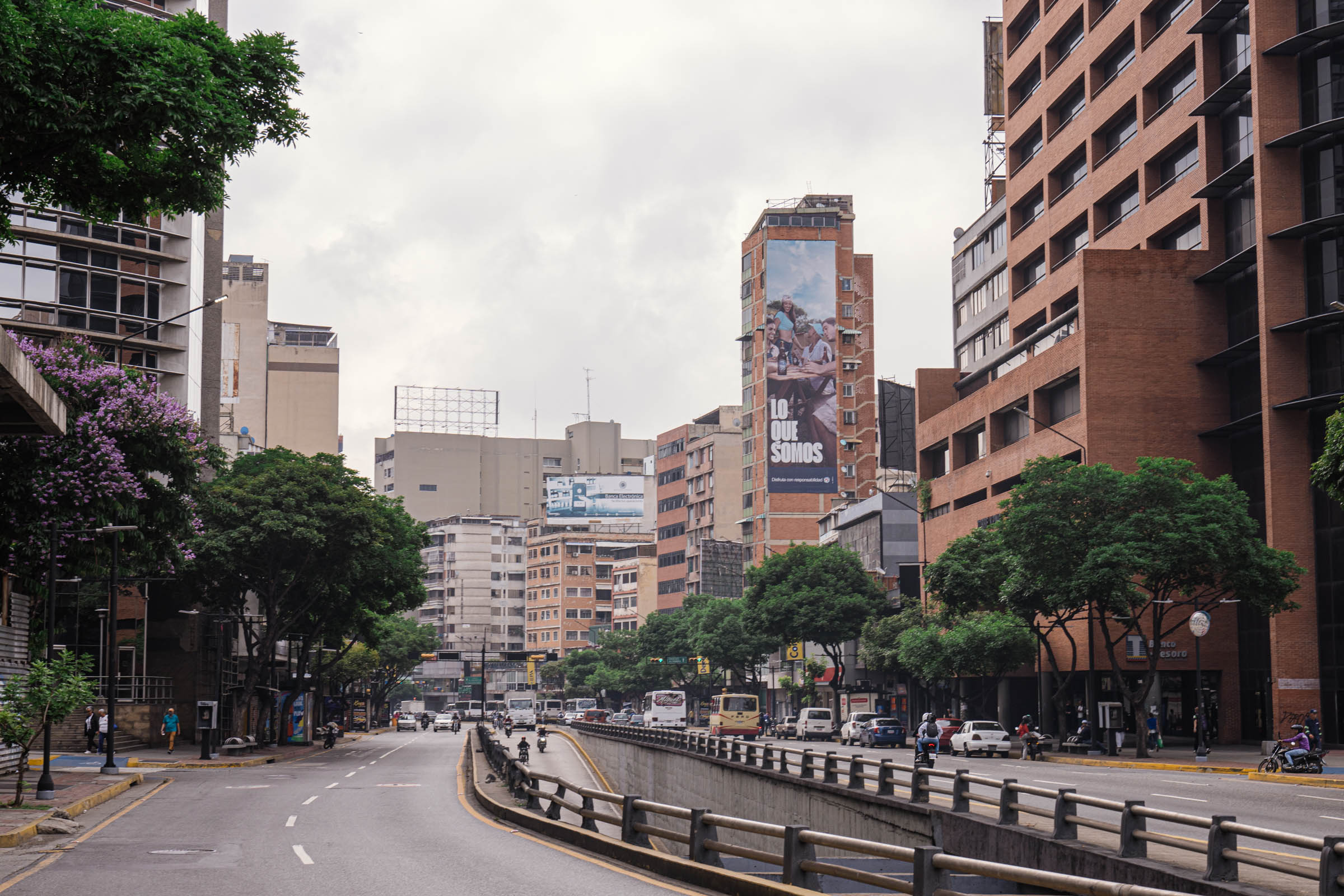
Driving through Caracas, you cannot miss the contrast between the modern towers of the eastern districts and the neighborhoods on the hills around the city.
It was especially interesting for me to explore Las Mercedes, a district in the Baruta municipality known for its restaurants, fashion stores, art galleries and nightlife. Here you will find everything from traditional areperas to international cuisine. In the 21st century, the district also got new malls, including the Tolón Fashion Mall.
Las Mercedes is where many locals go out for dinner, meet friends or simply walk and browse in the shops. The atmosphere is relaxed but elegant, and the dining scene can surprise even visitors from big European capitals.
Just east of Las Mercedes, in Chuao, the Centro Comercial Ciudad Tamanaco attracts visitors with its cinemas and boutiques. Not far away lie Chacao and Altamira, with Plaza Francia, office towers, hotels and cafés. Together, these neighborhoods show the modern, cosmopolitan side of Caracas, very different from the colonial heart in the west.
CASA AMARILLA ON PLAZA BOLÍVAR
Back in the historic center, one building on Plaza Bolívar immediately catches the eye with its bright yellow facade. This is the Casa Amarilla, the Yellow House, right across from the cathedral.
The present building is a 19th-century neoclassical structure. Earlier, from the 17th century, this site served as the royal prison. After independence, it became an official government building. In 1874, the Government Palace opened here on the same day as the statue of Bolívar in the square. Then, in 1912, President Juan Vicente Gómez turned it into the headquarters of the Ministry of Foreign Affairs.
On February 16, 1979, the Casa Amarilla became a National Historic Monument. Ten years later, in 1989, a fire on the second floor destroyed part of its artistic heritage. Although it is not always open to the public, simply observing its arcades and windows gives a special tone to a walk through the old center.
The buildings around Plaza Bolívar show many architectural styles side by side, from colonial houses to elegant 19th-century facades and grand public buildings. For me, the Casa Amarilla is proof that the elegance of architecture can be timeless.
MEETING DESIGNER RAFAEL RAMÍREZ OF RAENRRA
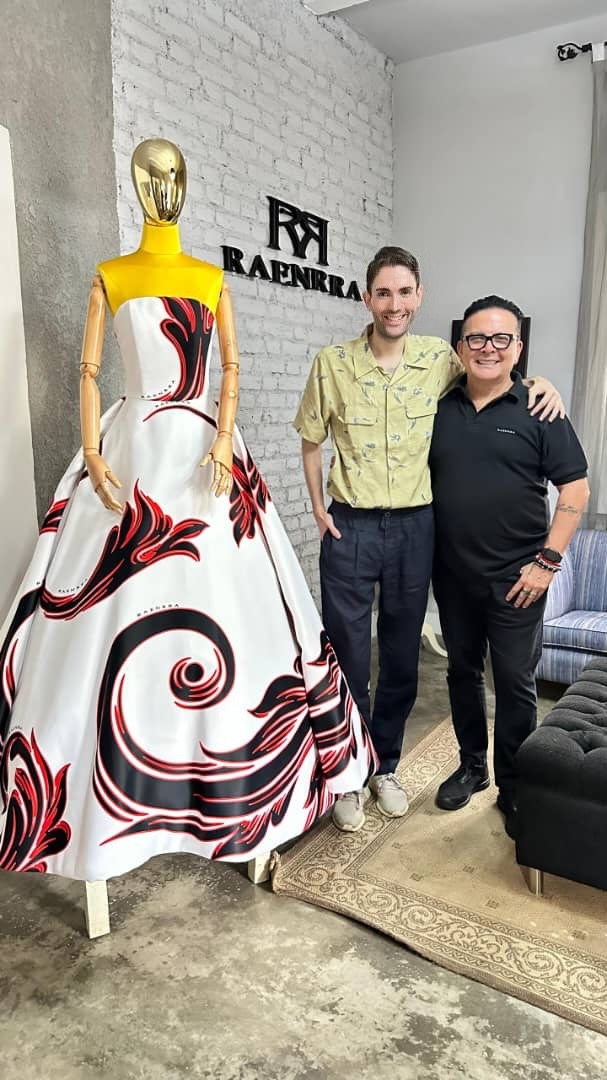
Most visitors connect Caracas with mountains, galleries and cultural institutions. I had the privilege of discovering a different side of the city’s identity: its fashion scene. During my stay, I met the Venezuelan designer Rafael Enrique Ramírez Montes, the founder of the RAENRRA brand.
His story is as fascinating as his designs. He told me how his path led from his childhood in Caracas, through engineering studies, all the way to Rome, where he studied haute couture. As he explained, RAENRRA combines Venezuelan roots and European sophistication. He also told me about his Flor de Lis 2025 collection, which he dedicated to his mother, Berta.
We spent time talking about fashion, aesthetics and the future of luxury in Venezuela. Next to us stood a spectacular gown with bold red and black patterns, a perfect example of his love for drama and craftsmanship.
As a small but precious gesture of attention, Mrs. Mom received a beautiful brooch from his special jewelry collection. That moment combined travel, culture and personal encounters, and that is exactly what makes Caracas a destination of unforgettable experiences.
CUARTEL DE LA MONTAÑA: A HISTORIC FORTRESS ON THE HILL
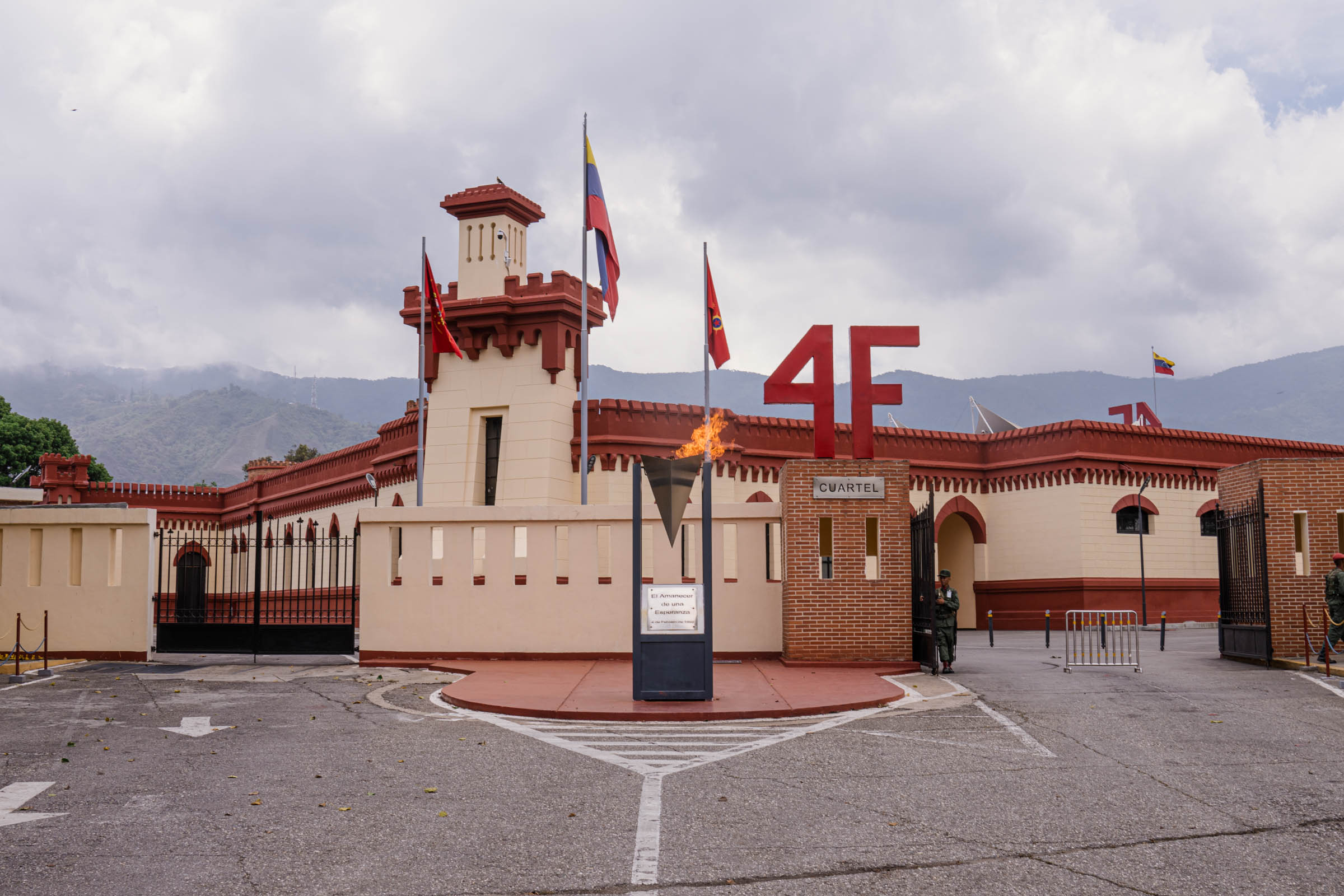
On a hill in the west of Caracas, in the 23 de Enero parish, stands the Cuartel de la Montaña, the Mountain Barracks. Its ocher walls, towers and battlements make it look like a small fortress above the city.
Architect Alejandro Chataing built the barracks between 1904 and 1906. For decades, the building served the army, and it also housed the Military Academy for a time. In 1981, it became the Museo Histórico Militar, the Military History Museum.
The site played a central role in Venezuelan political history. On February 4, 1992, Hugo Chávez led a coup attempt, and he commanded the operation from these barracks. In 2002, the building got the name Cuartel de la Montaña 4 de Febrero, or simply 4F.
Today, the complex works as a museum dedicated to Hugo Chávez and to that period of Venezuelan history. For visitors who want to understand the more recent history of the country, it offers a direct look at how this chapter is presented in Venezuela today.
INSIDE THE CUARTEL DE LA MONTAÑA
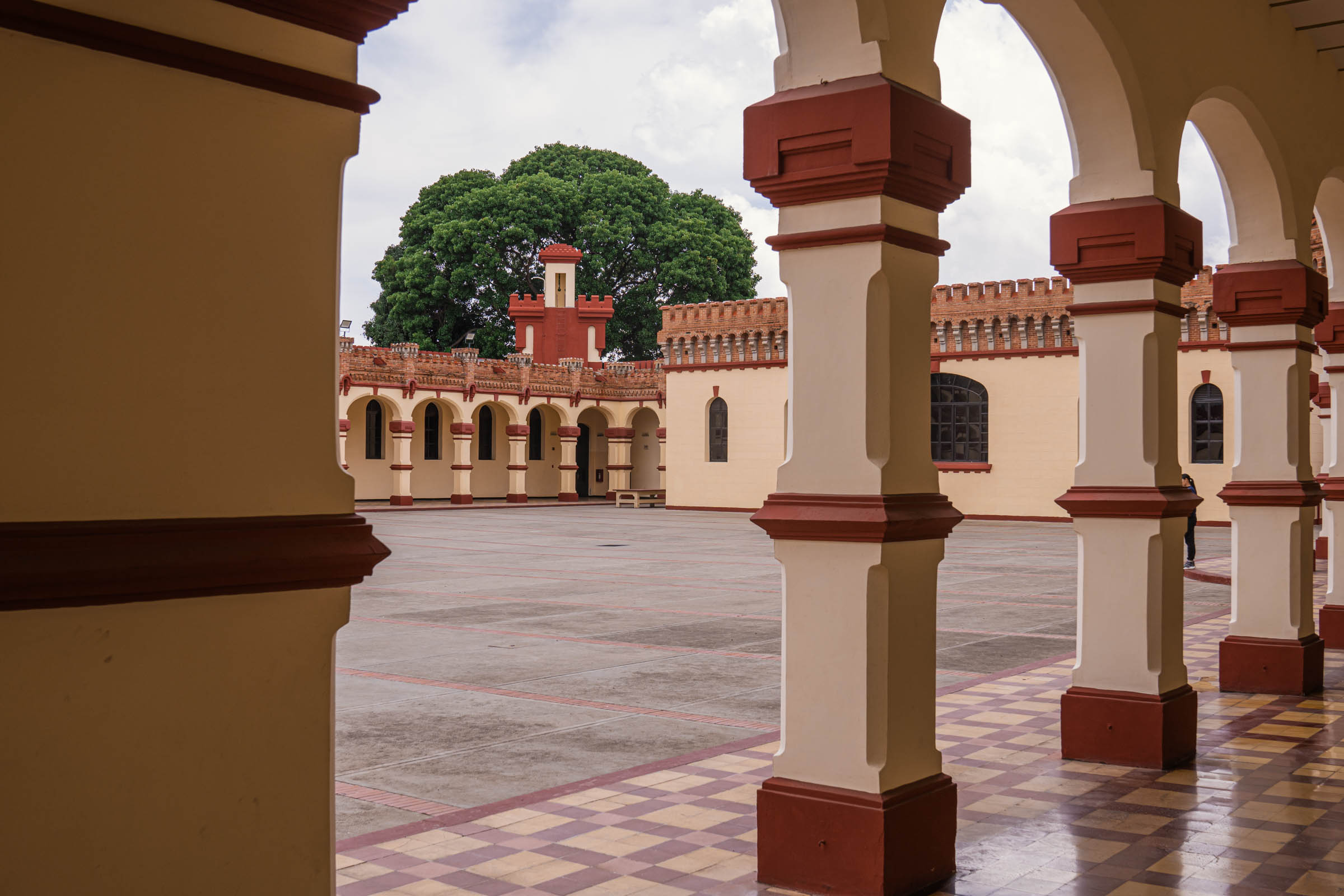
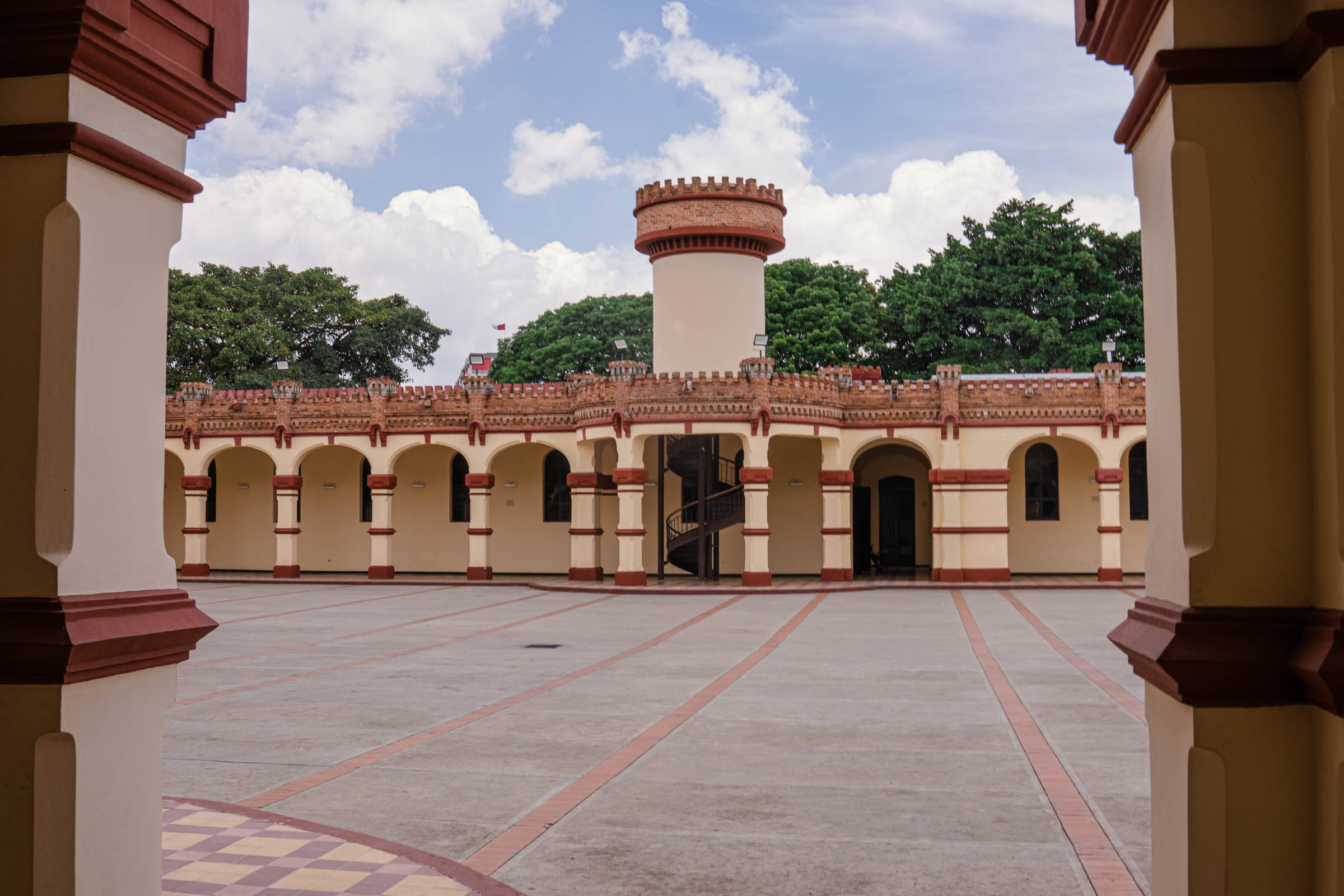
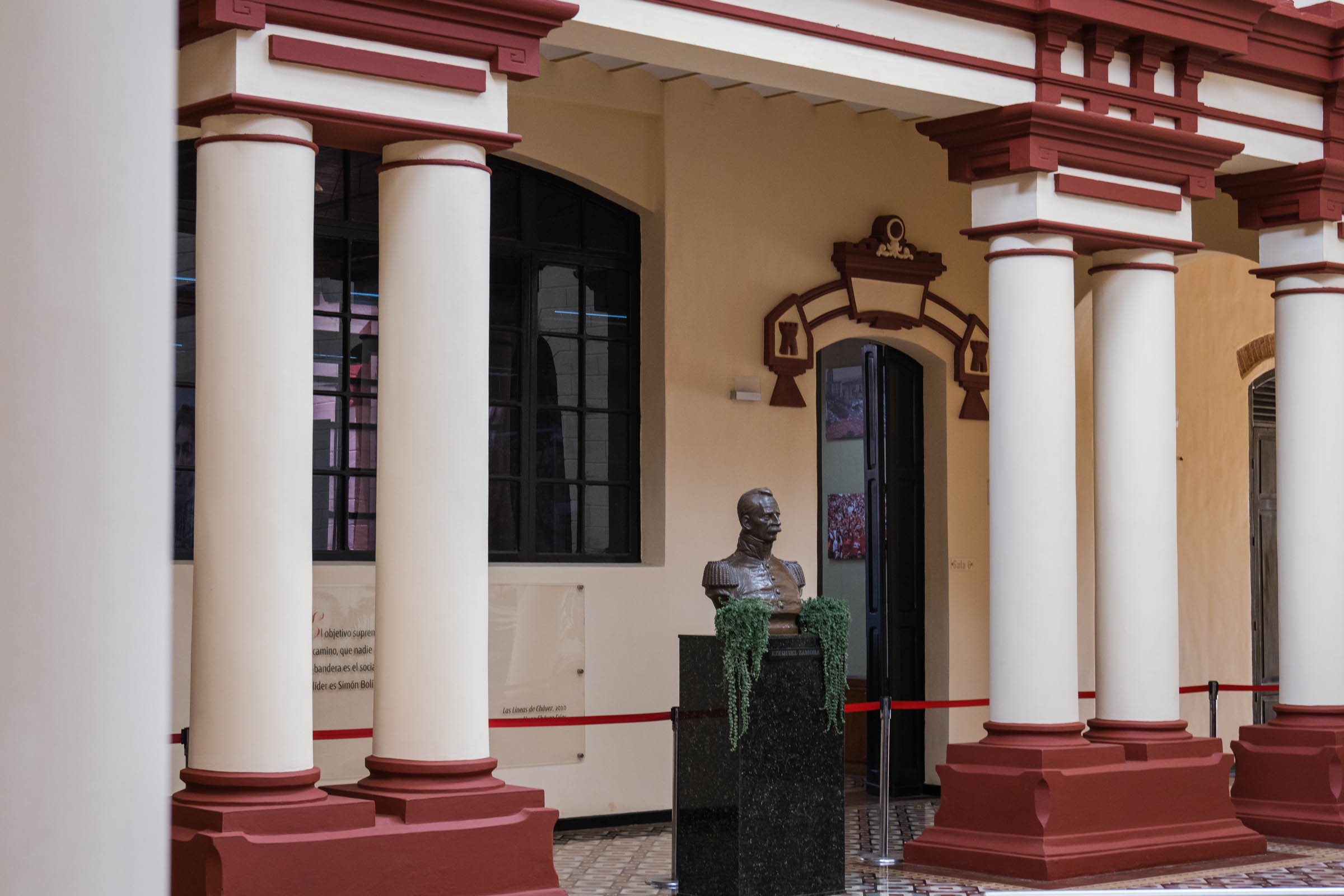
The architecture of the barracks is perhaps the most beautiful part of the visit. Inner courtyards with arcades and columns in red and cream create a calm, almost monastic atmosphere. The geometric patterns of the floor and the towers in the corners remind you that this was once a military complex.
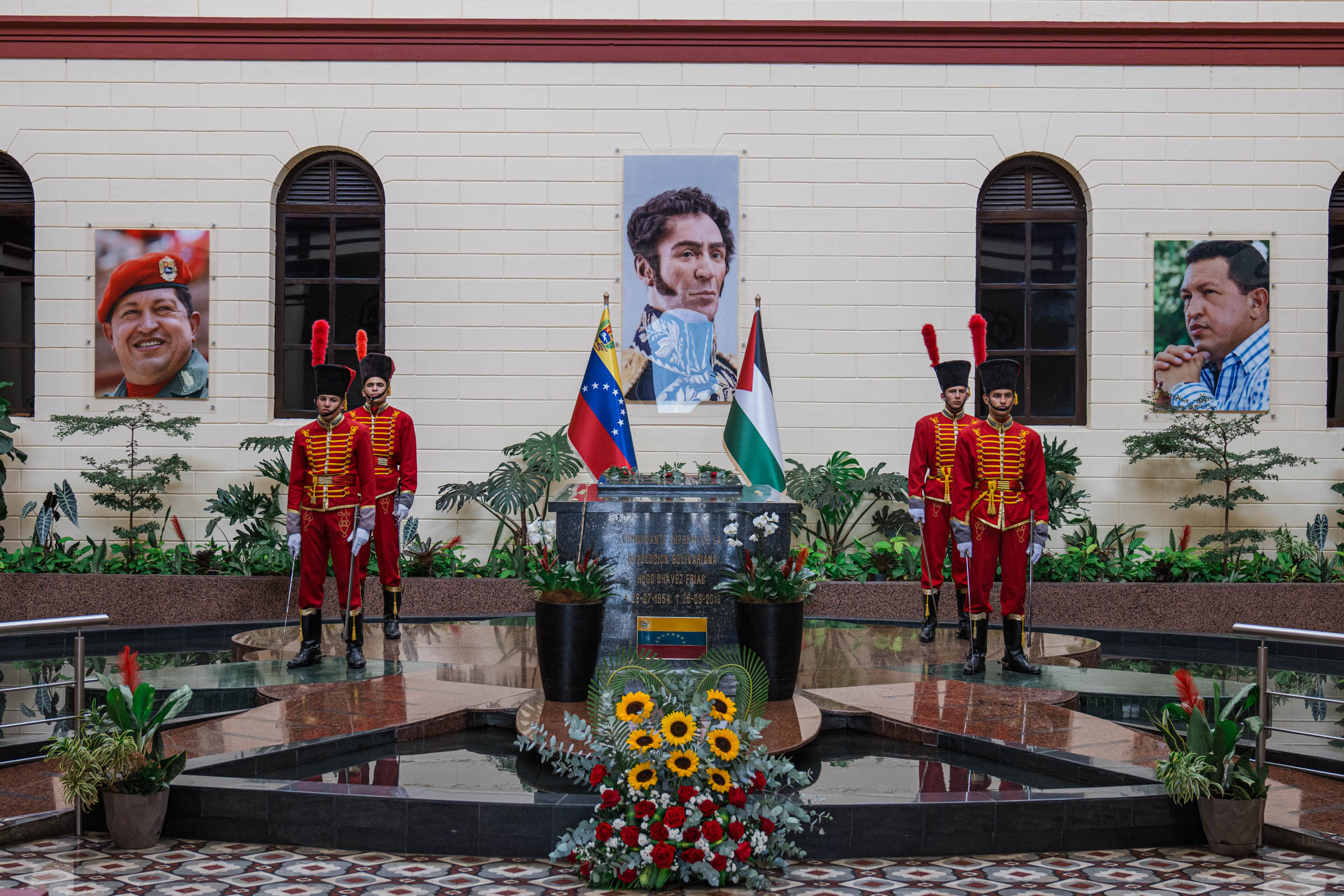
In the central courtyard, an honor guard in historical uniforms stands at attention, surrounded by flowers and large portraits.
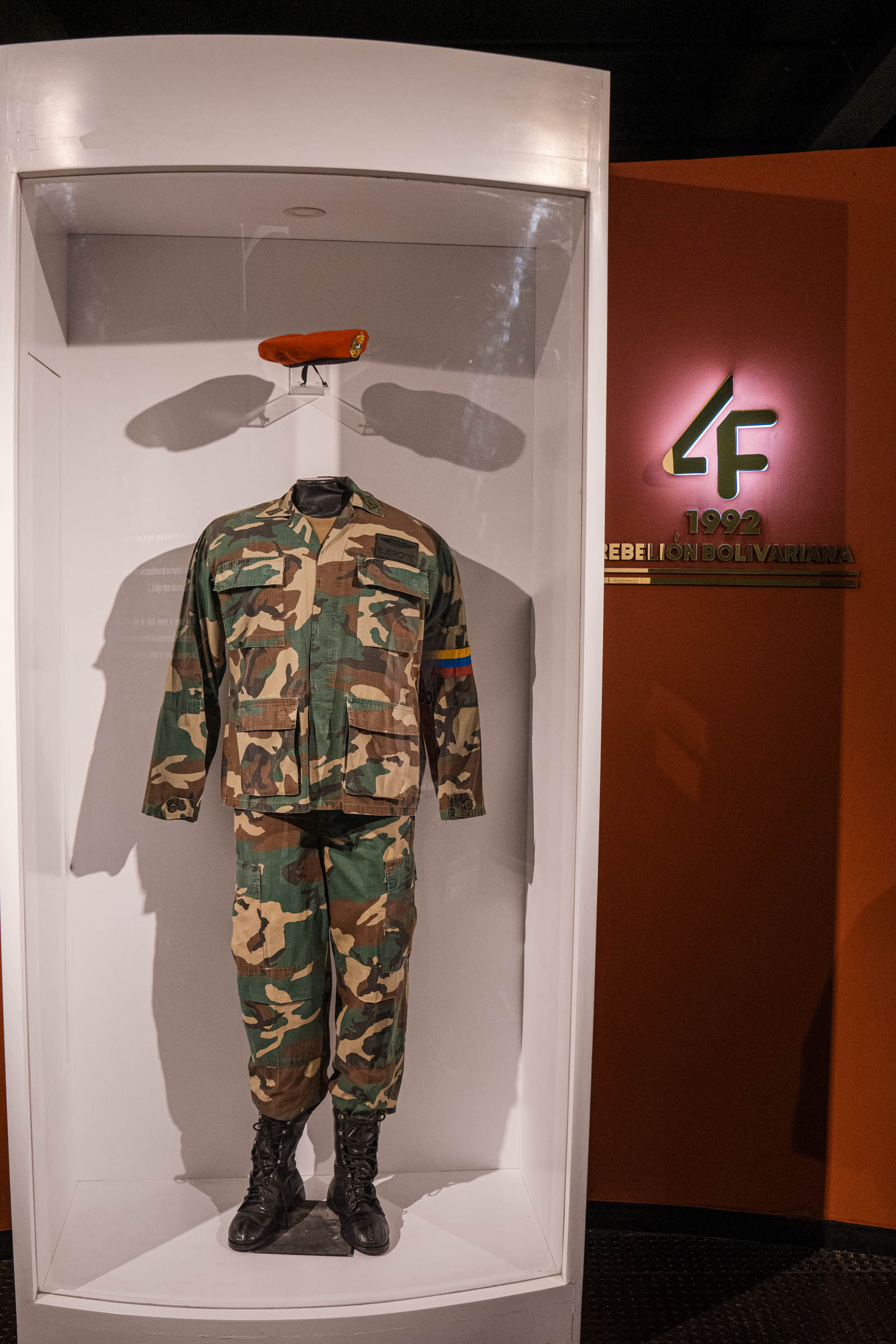
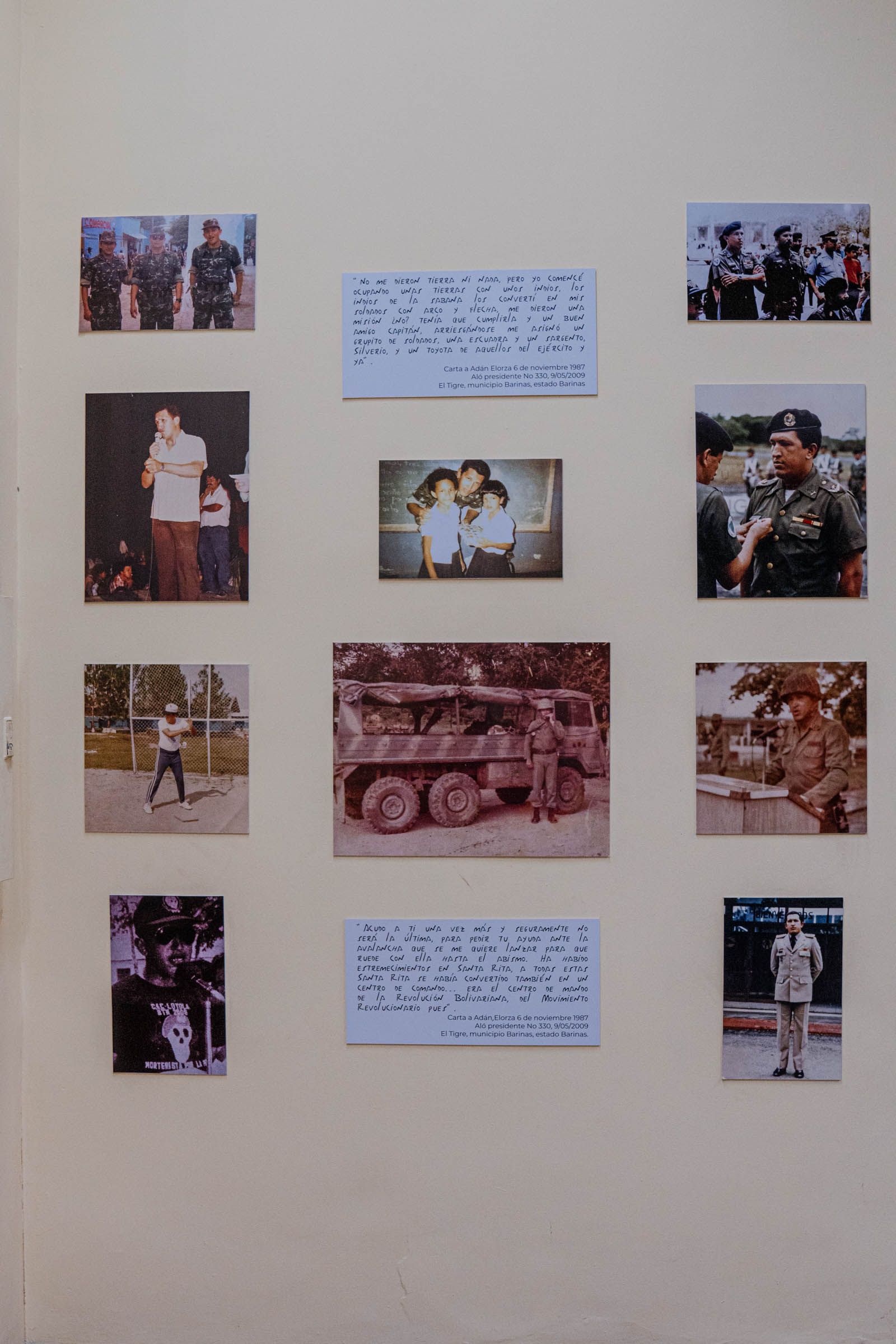
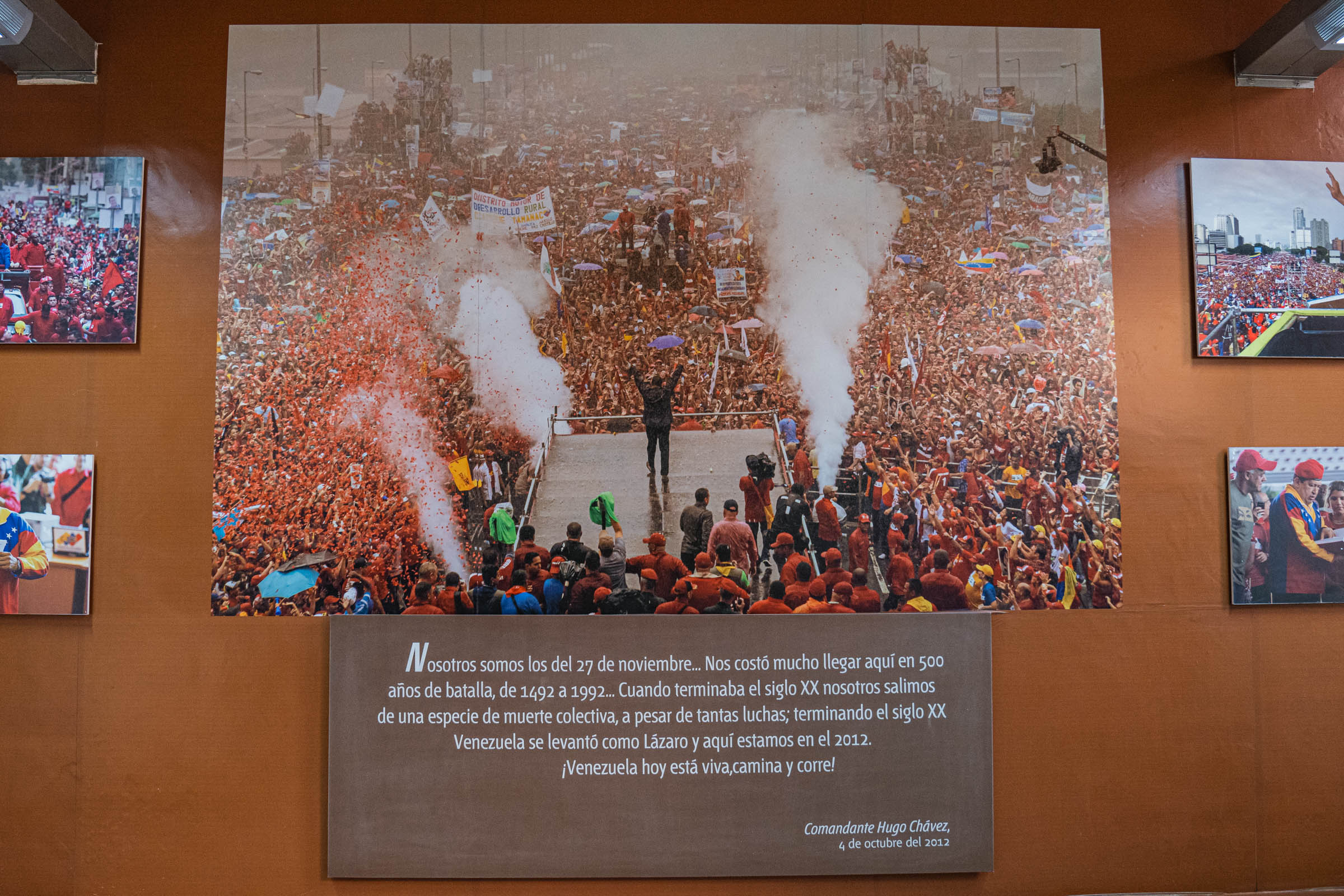
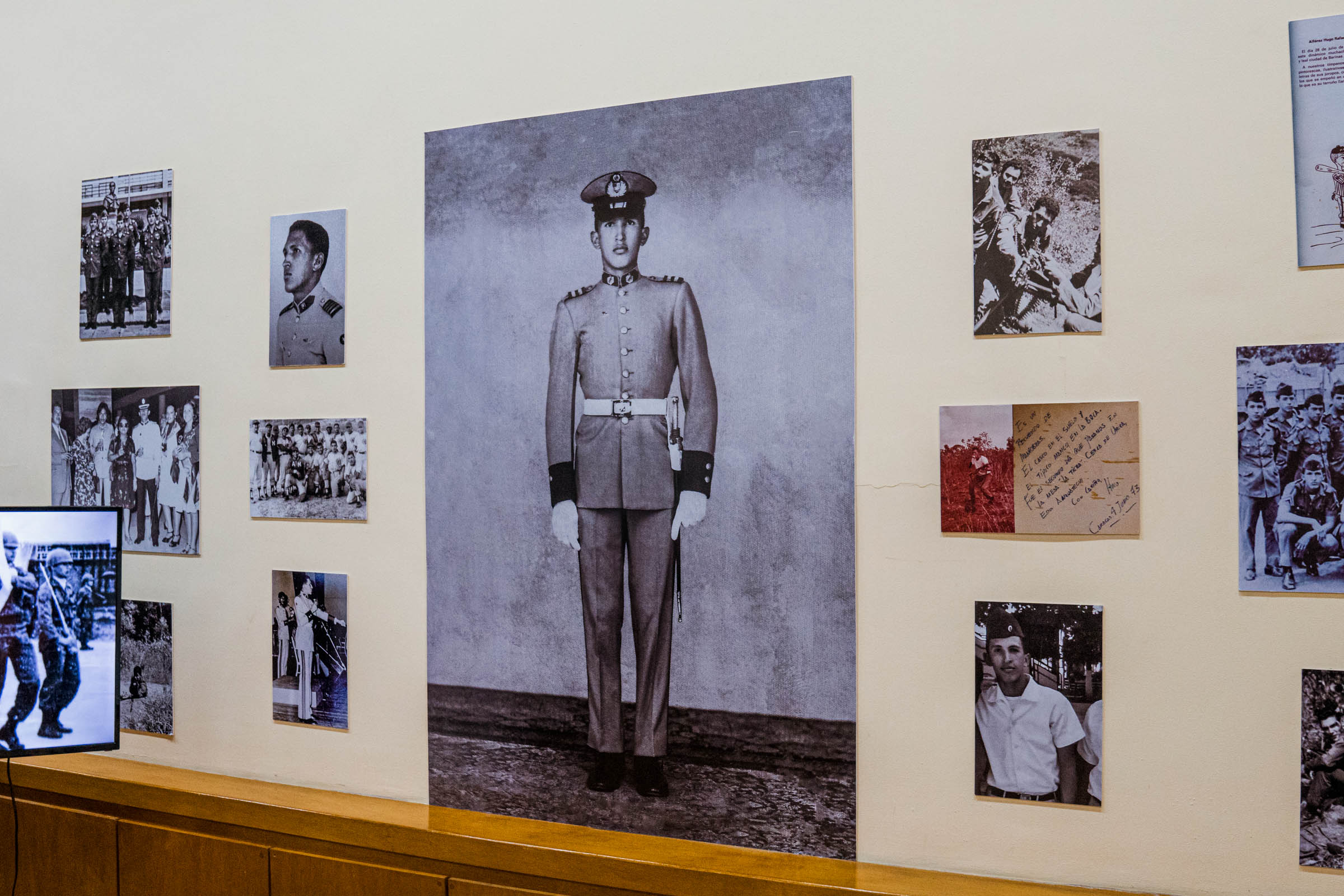
The museum rooms display uniforms, flags, documents, photographs and personal objects connected with Hugo Chávez. Large photographs show crowds, speeches and scenes from his life, and the display cases hold uniforms and memorabilia.
Guided tours explain the history of the building and the exhibits. In 2014, the site received around 800 visitors a day, and about 2,000 on weekends. Whatever your view of history, the visit gives a clear picture of how important this place is for many Venezuelans.
VIEWS OVER CARACAS FROM THE MOUNTAIN BARRACKS
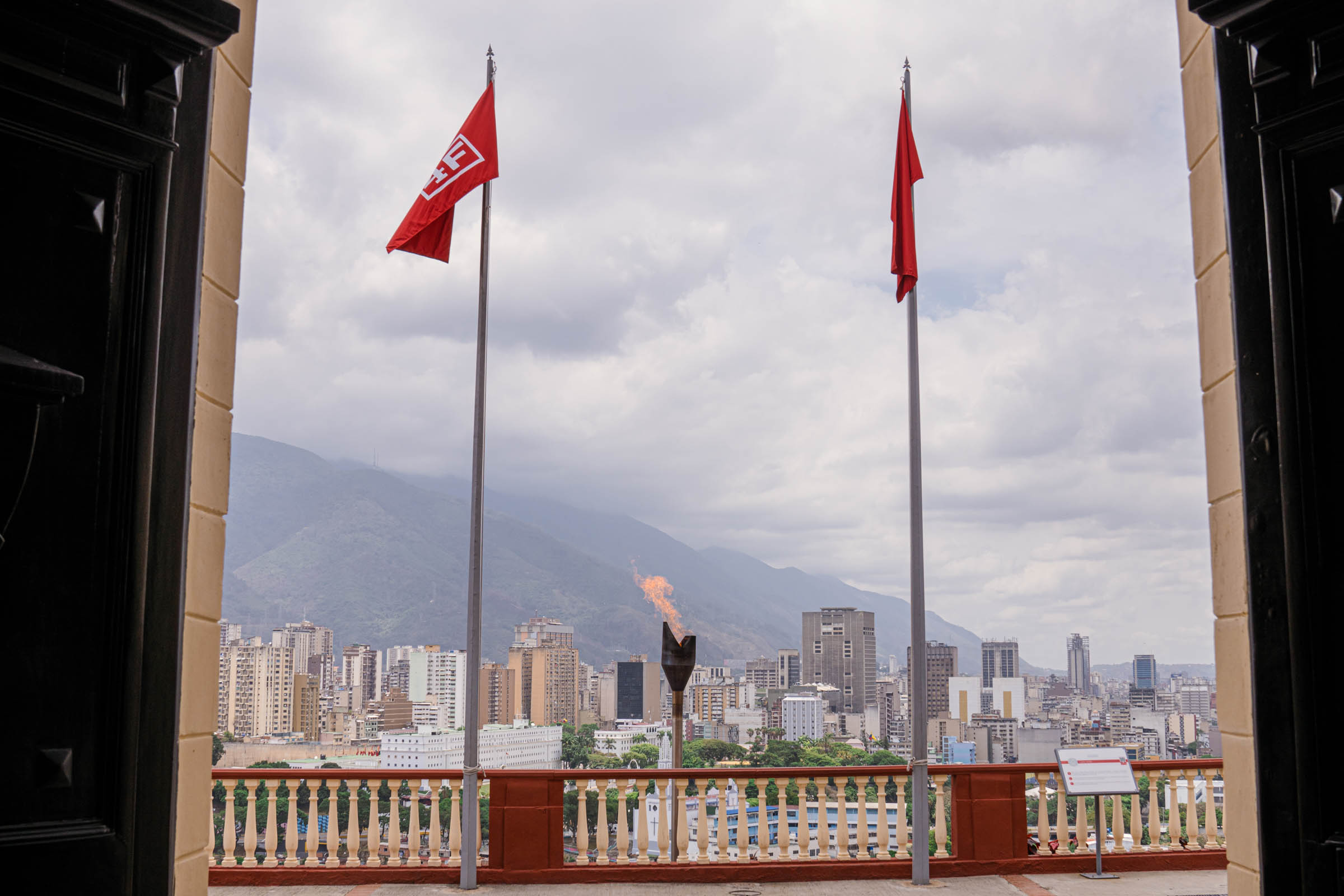
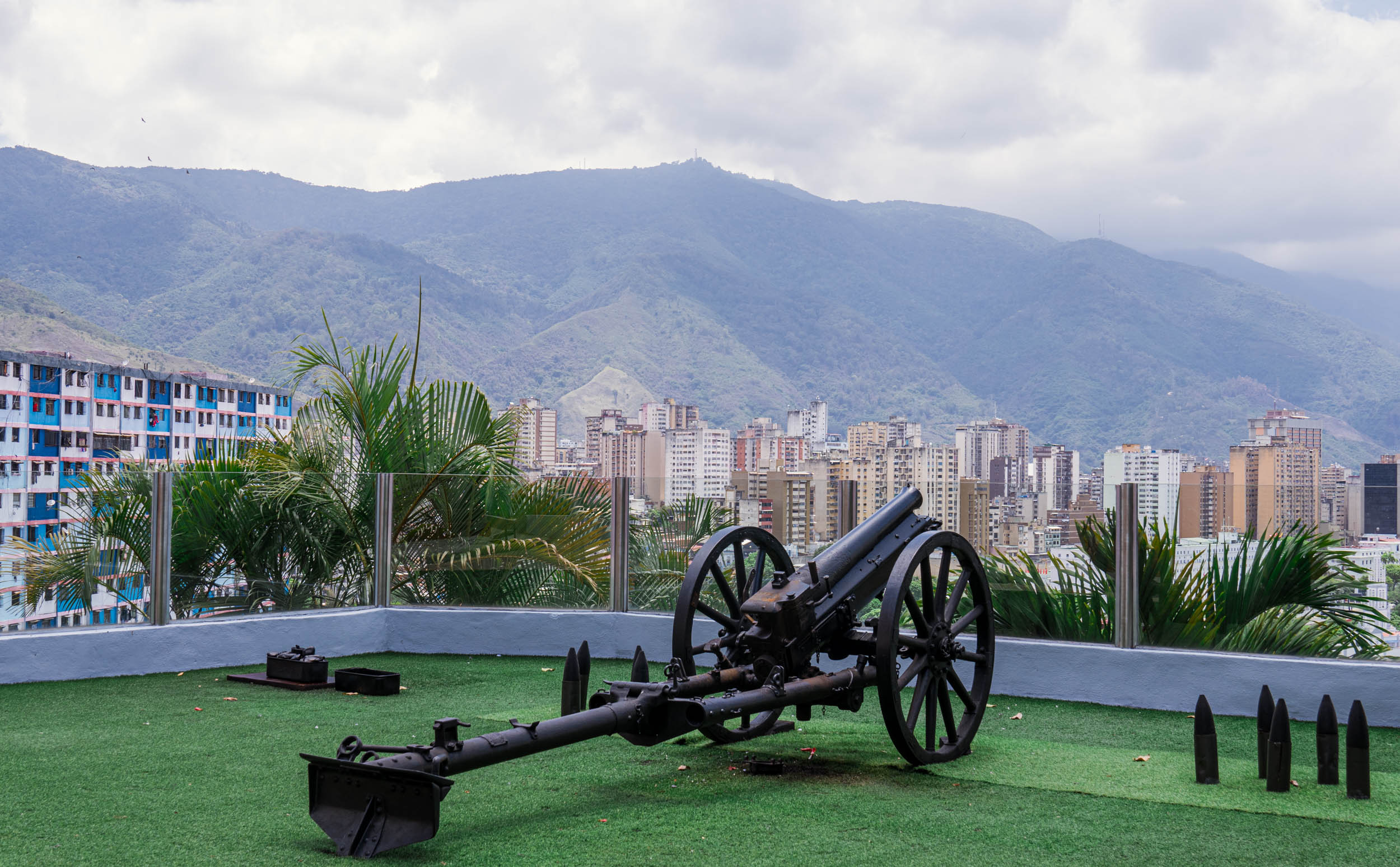
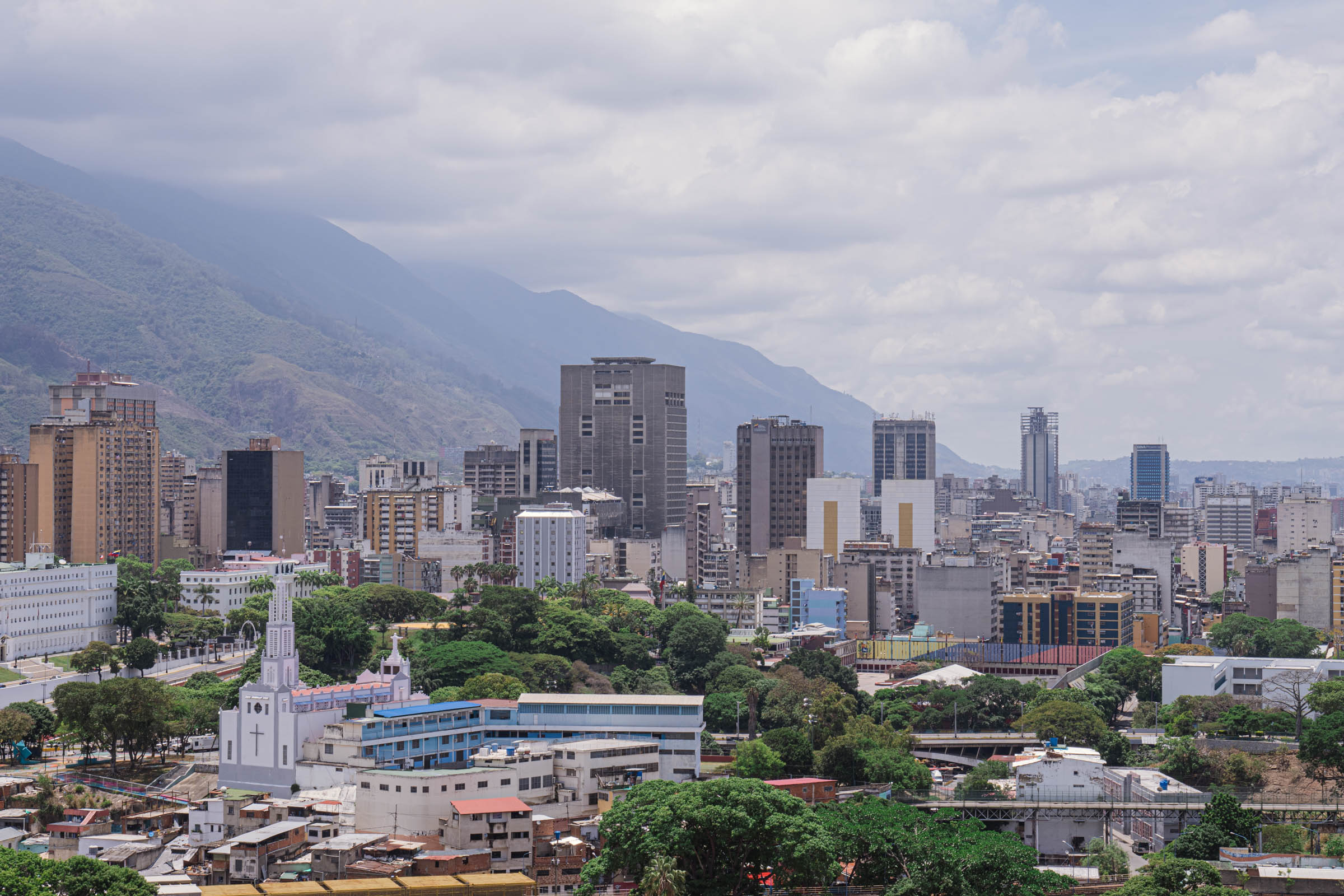
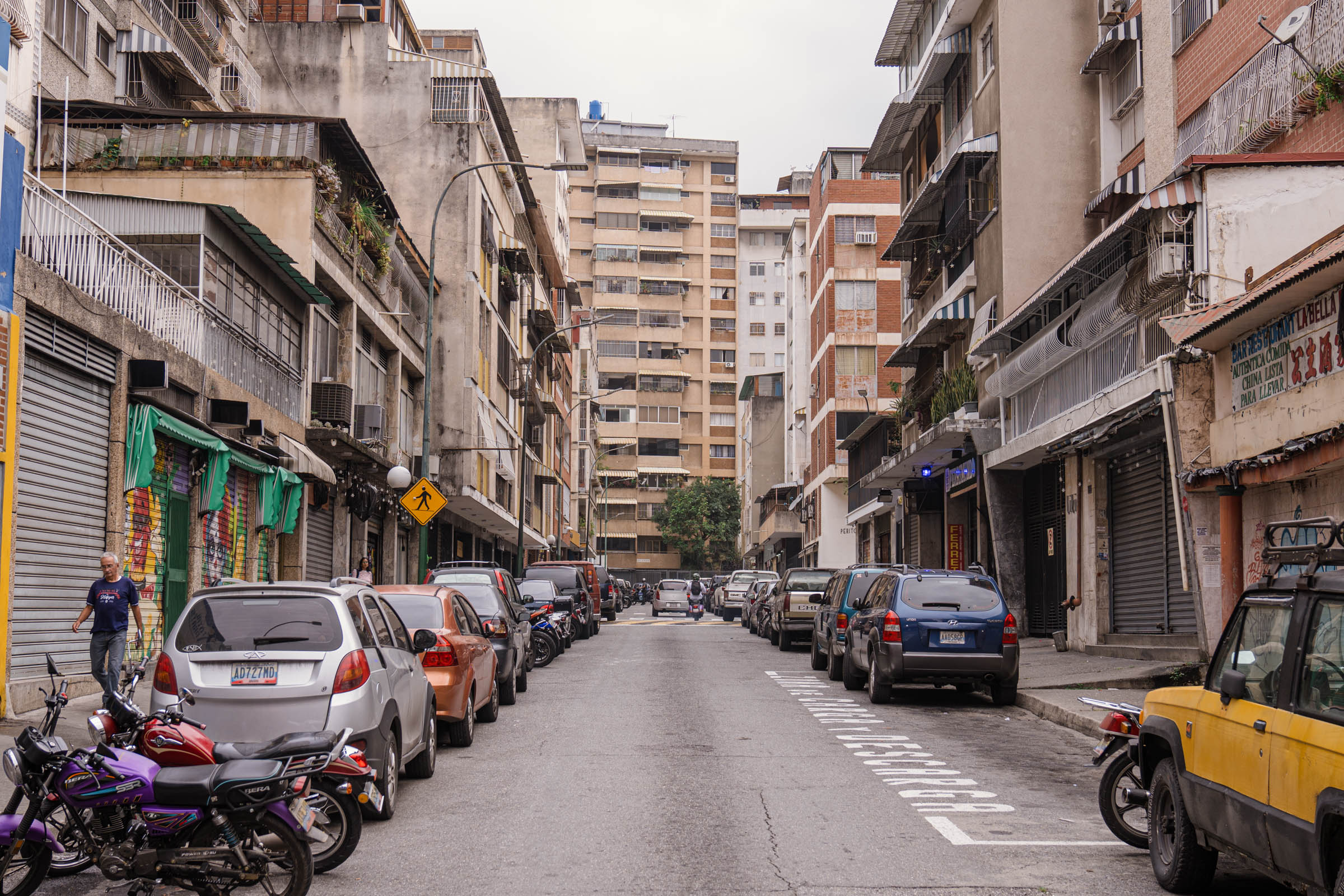
The barracks stand in a sector called La Planicie, near the Monte Piedad neighborhood. Thanks to this location, they also offer some of the best panoramic views of Caracas. From the terraces, you look over the whole western part of the city, with El Ávila rising behind the towers.
Historic cannons stand on the green lawns of the terrace, pointing toward the valley. Flags wave above the walls, and through the arched windows you see a sea of buildings stretching to the foot of the mountain.
For photography lovers, this is an ideal spot, especially when the clouds lift from the peaks of El Ávila. Take your time and enjoy the view in peace.
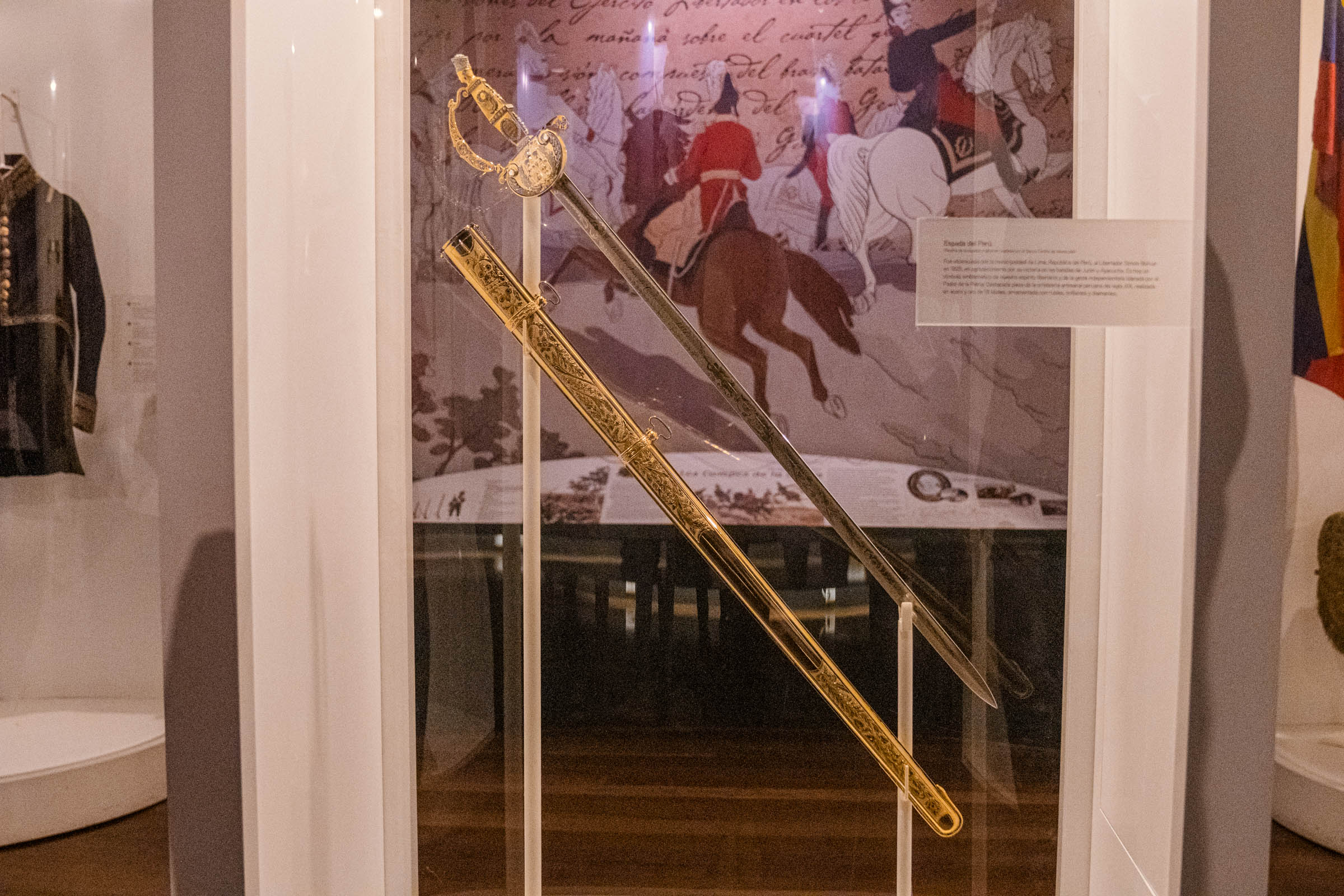
Inside, a few more rooms display photographs from military life, as well as a ceremonial sword in a glass case in front of a painting of a historical battle.
EL HATILLO: THE COLONIAL CHARM OF CARACAS
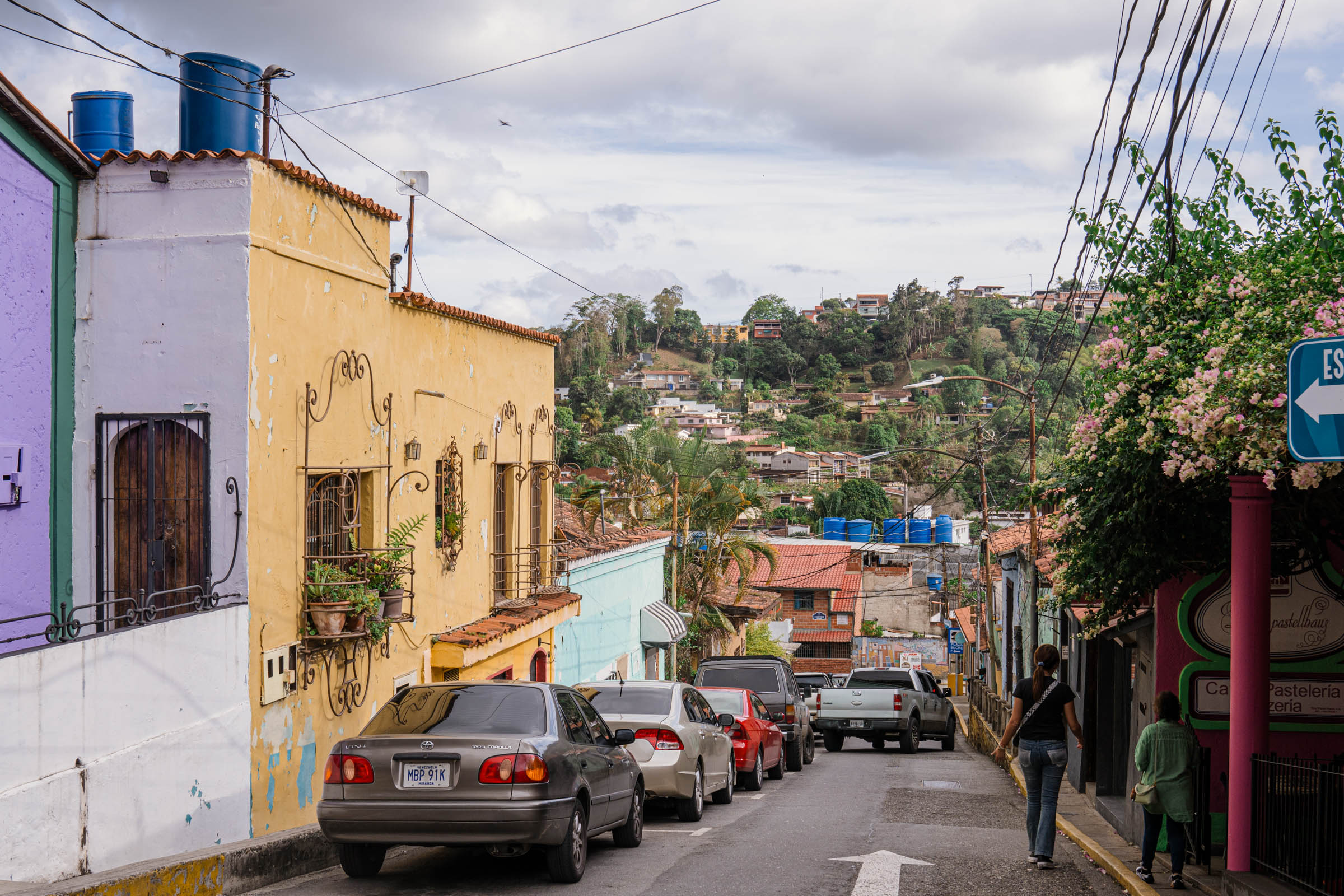
In the southeast of Caracas, on green hills, lies a magical place where time seems to stand still: El Hatillo. This picturesque pueblo of colonial character offers a perfect contrast to the busy urban life of the capital.
Don Baltasar de León García founded the town on June 12, 1784. He had arrived from Cádiz in Spain, and he donated his land for the construction of the town. An engineer planned the grid of streets and the parish church. Today, El Hatillo is also the name of a municipality of the Caracas metropolitan area, created in 1991.
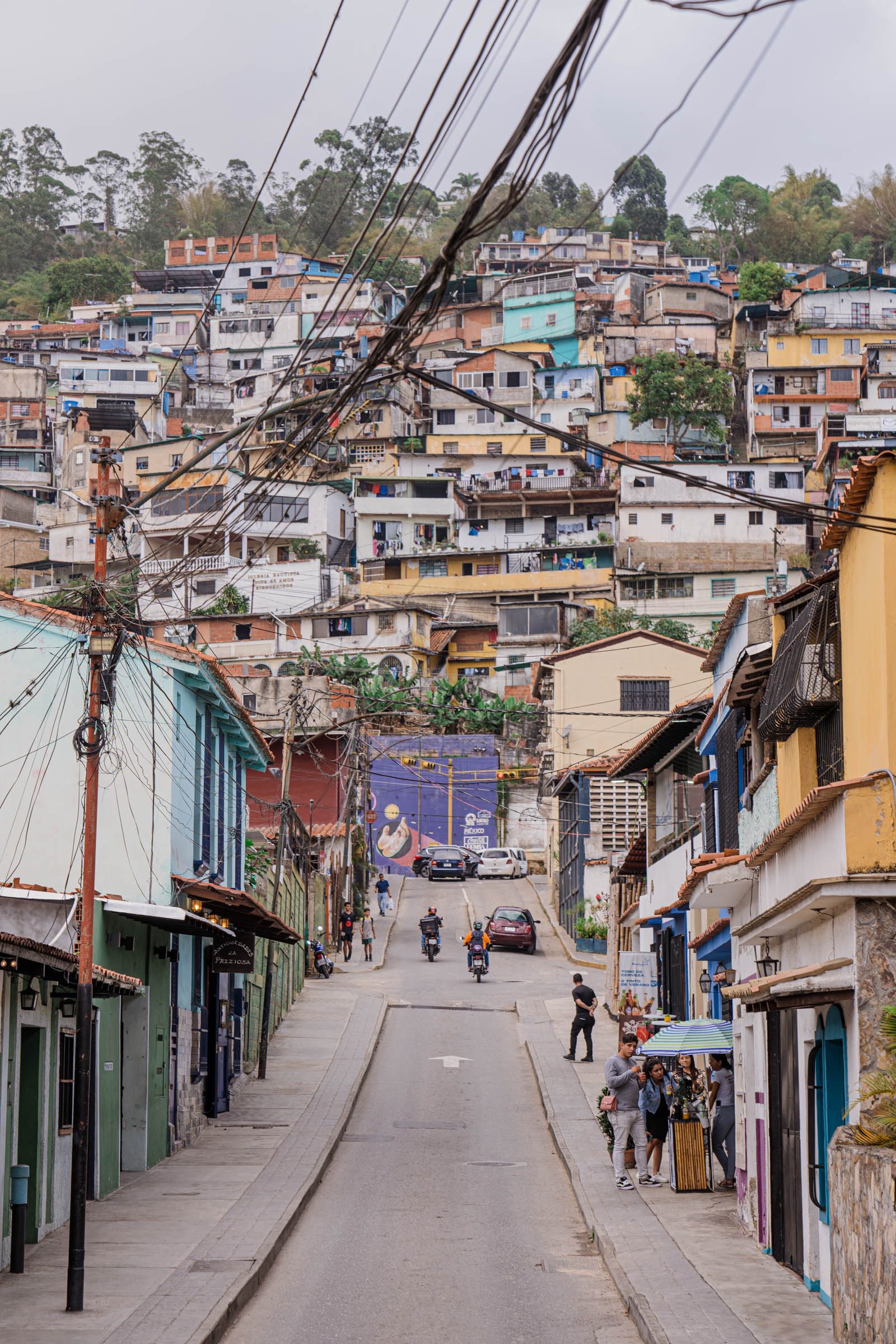
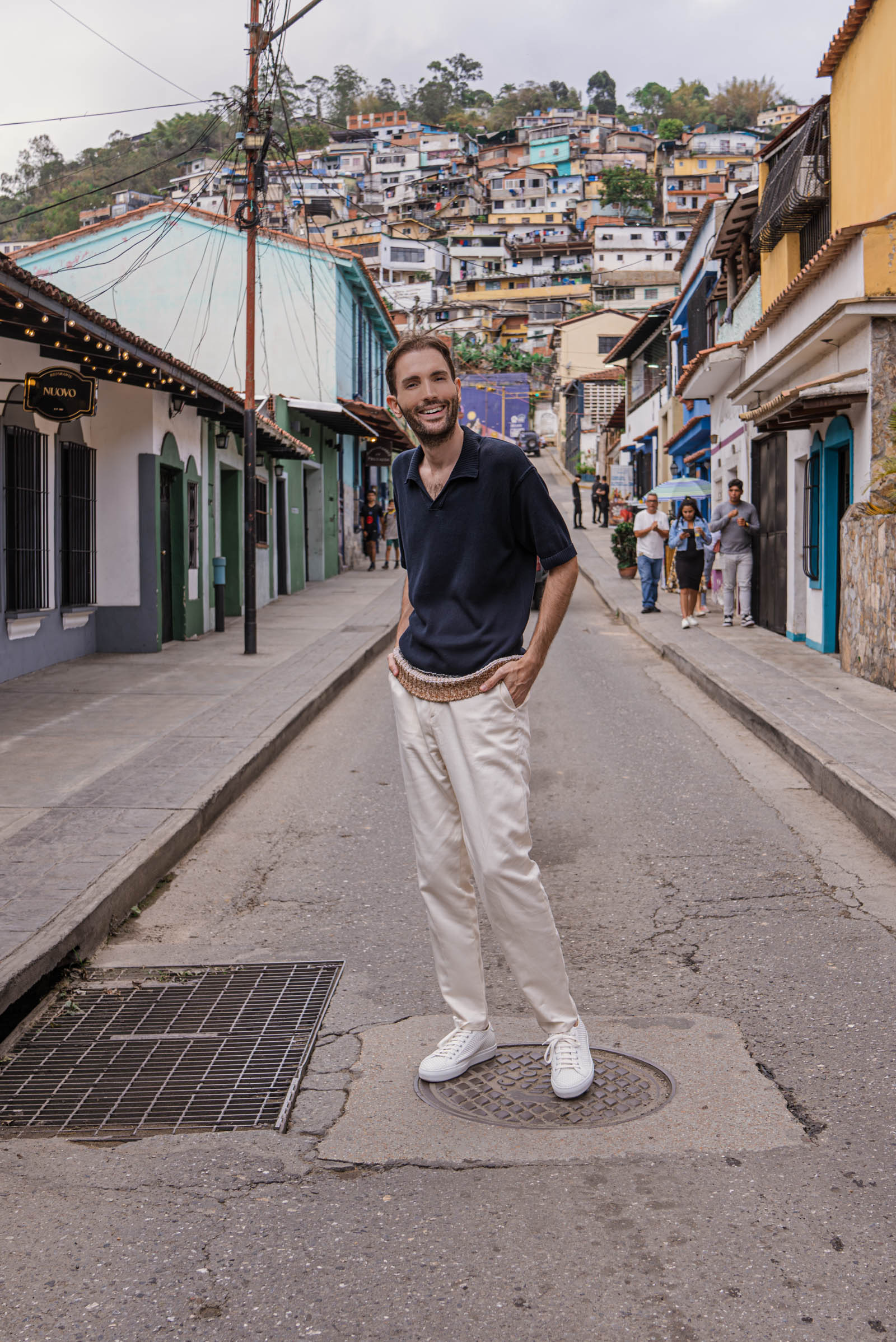
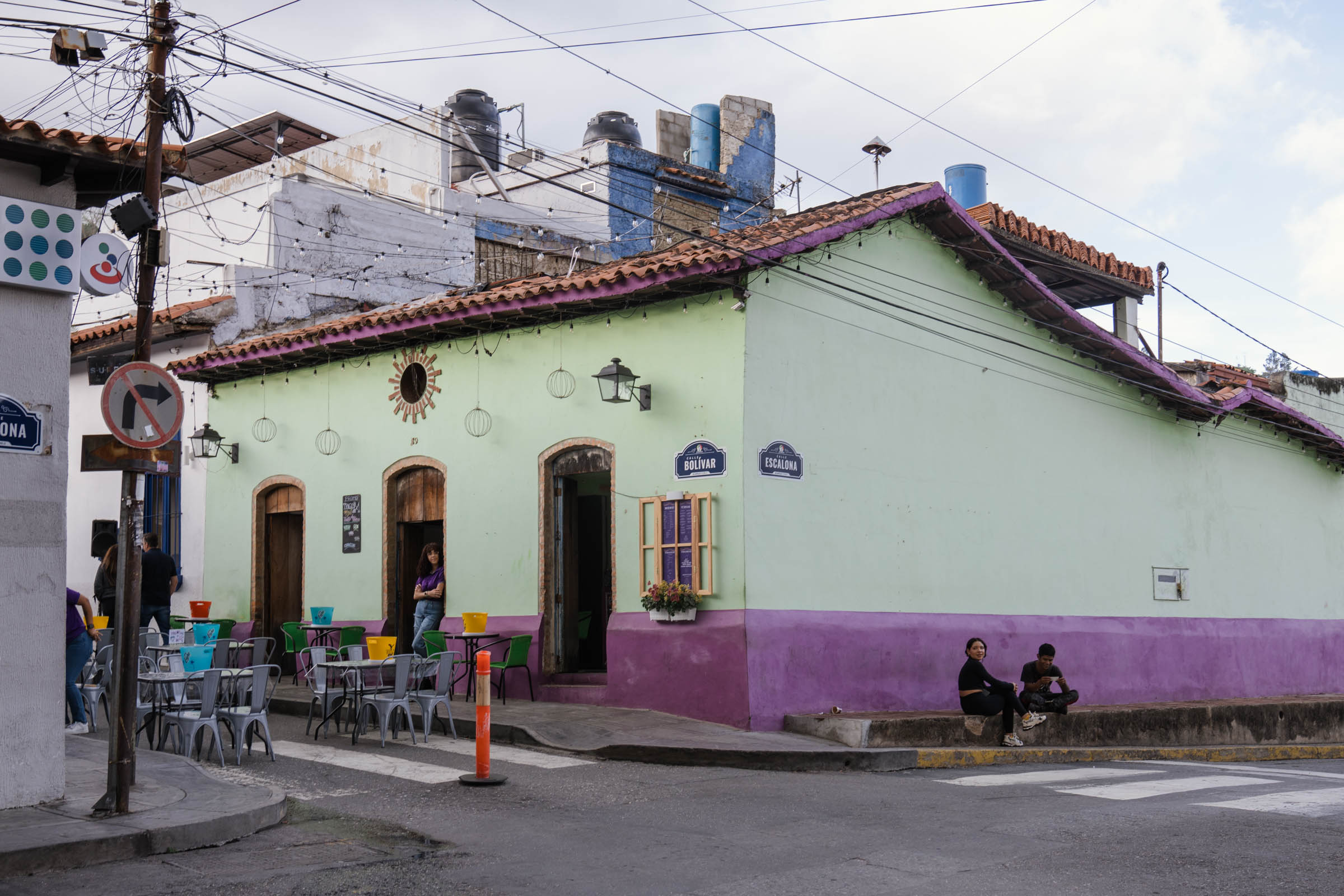
Its historic quarter lies on a narrow plain with a gentle slope, and it still preserves its traditional layout and profile. Colorful houses with red tiled roofs, wooden windows and small balconies line the streets.
Walking down the main street, you feel the relaxed rhythm of a small town, just a short drive from the skyscrapers of the capital. The municipality lies at an elevation of about 1,136 meters, so the air here feels fresh. Warm hospitality, bright facades and the smell of coffee make El Hatillo ideal for visitors who want to feel the authentic charm of Venezuela.
PLAZA BOLÍVAR AND THE CHURCH OF SANTA ROSALÍA
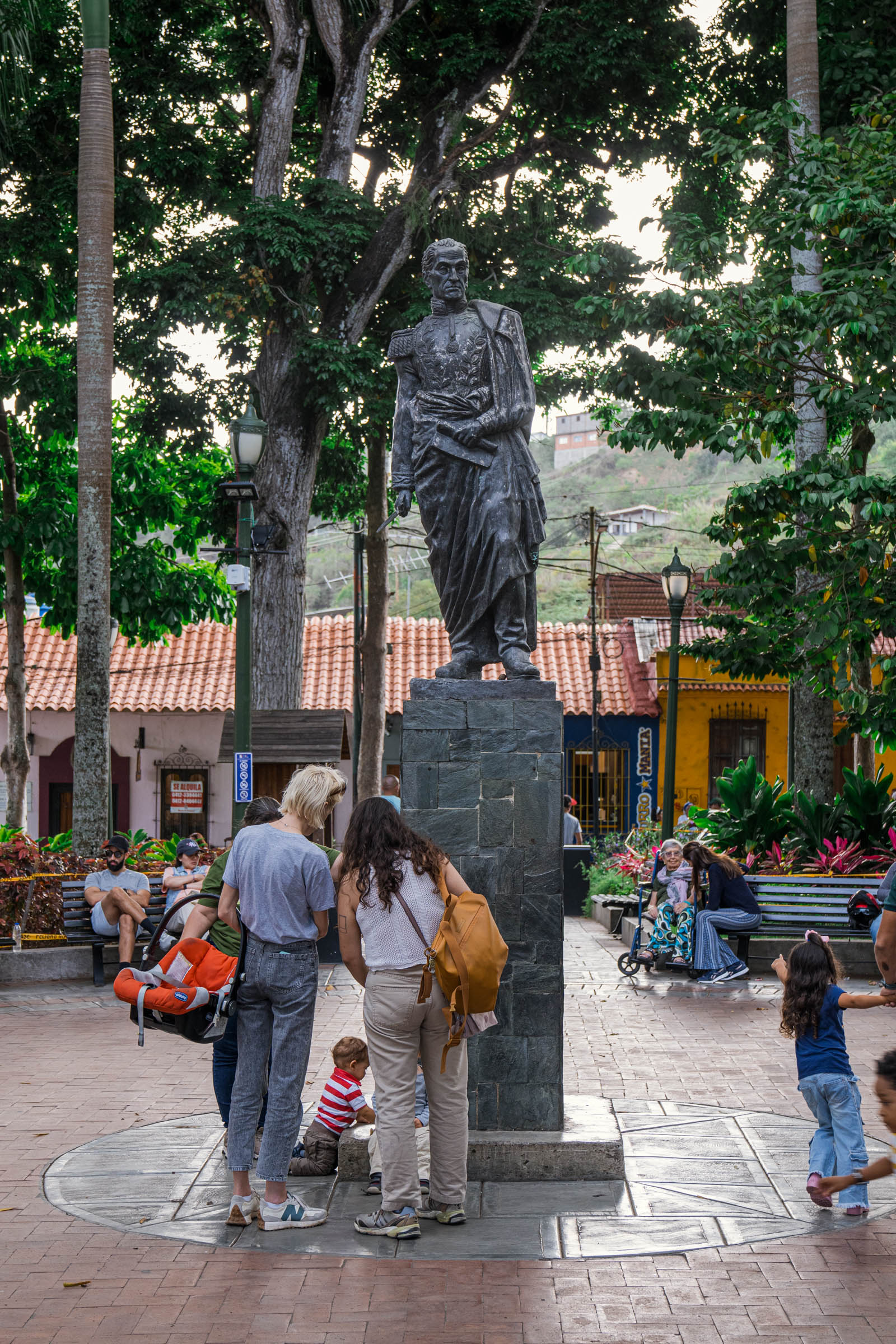
Like every Venezuelan town, El Hatillo has its own Plaza Bolívar, the heart of the pueblo. In the middle of the shady square stands a statue of the Liberator, and families and visitors gather around it all day long.
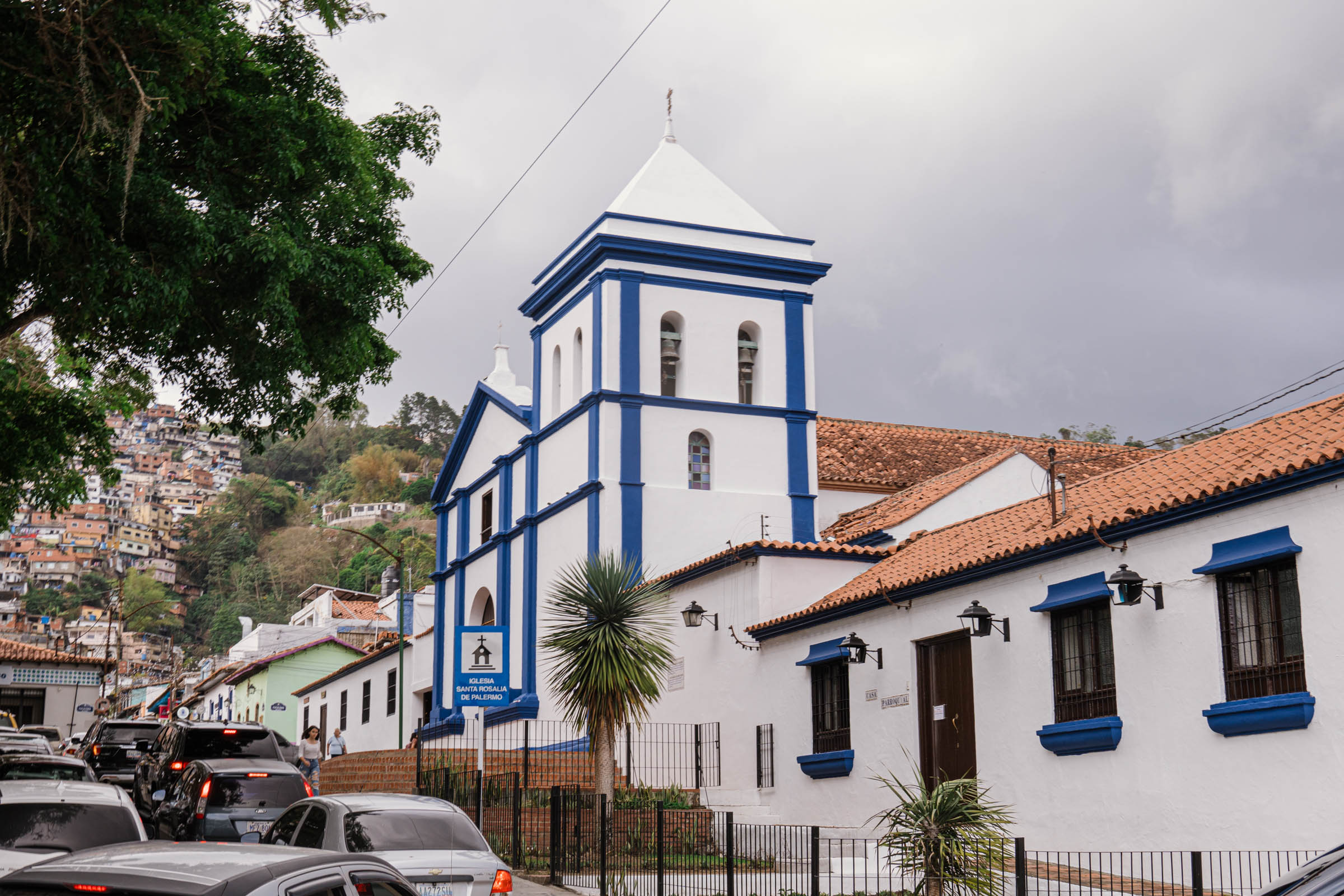
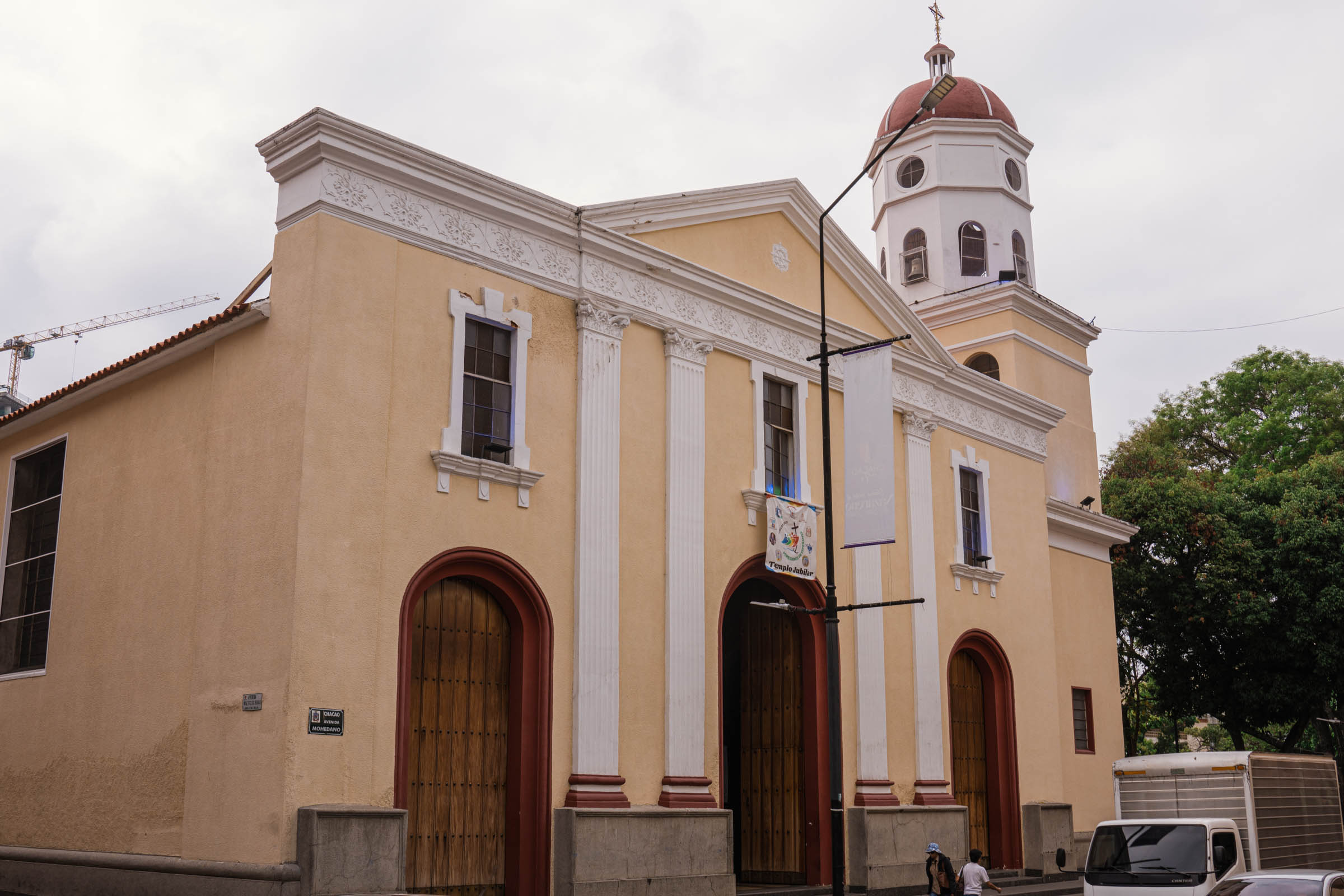
In front of the square stands the white-and-blue church of Santa Rosalía de Palermo. It dates from the foundation of the town in the 18th century, and it follows a design by the military engineer Juan Manuel Osés. Later, the architect Graziano Gasparini restored it. Don Baltasar chose this saint because he believed she had protected him from a plague during his imprisonment in Spain.
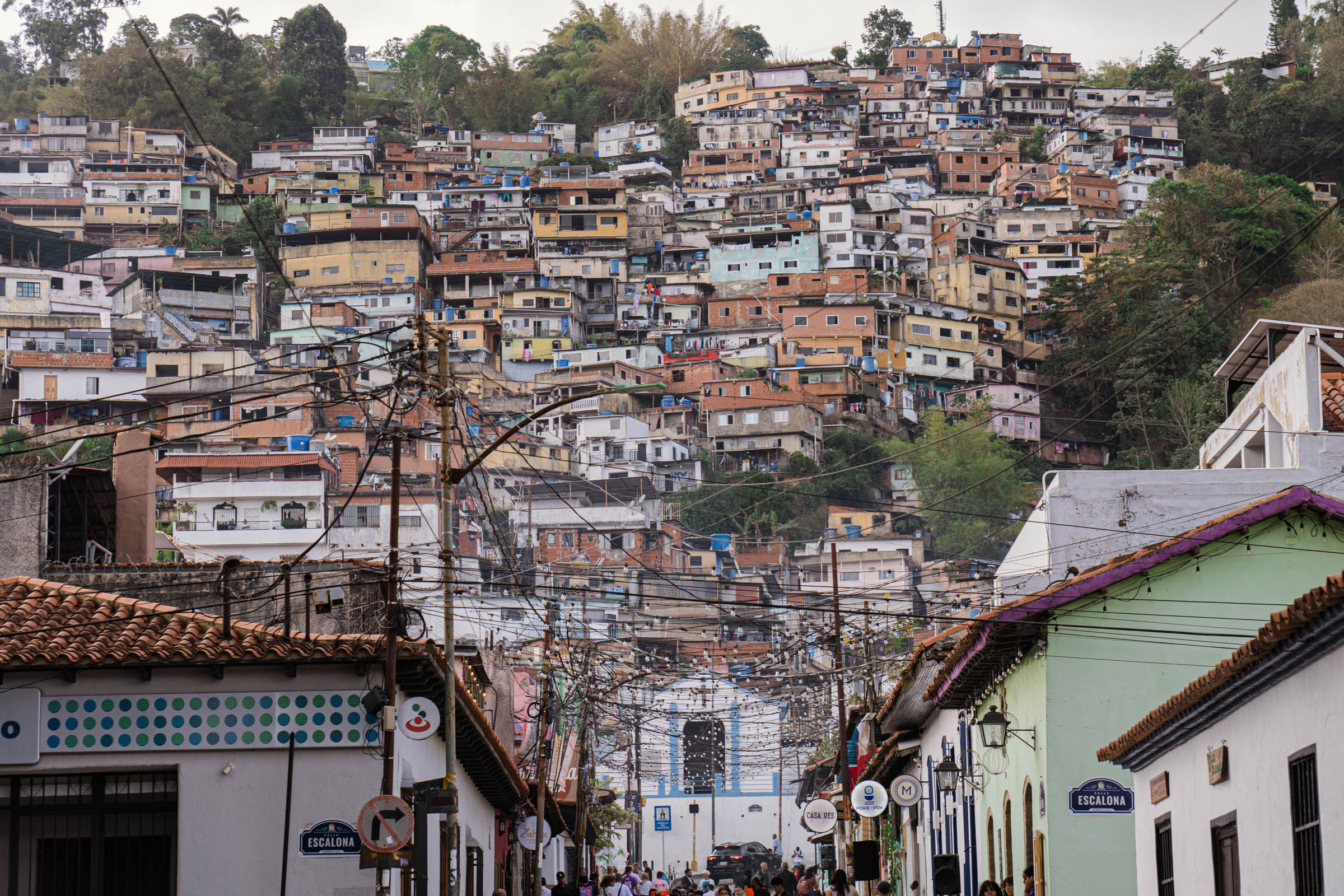
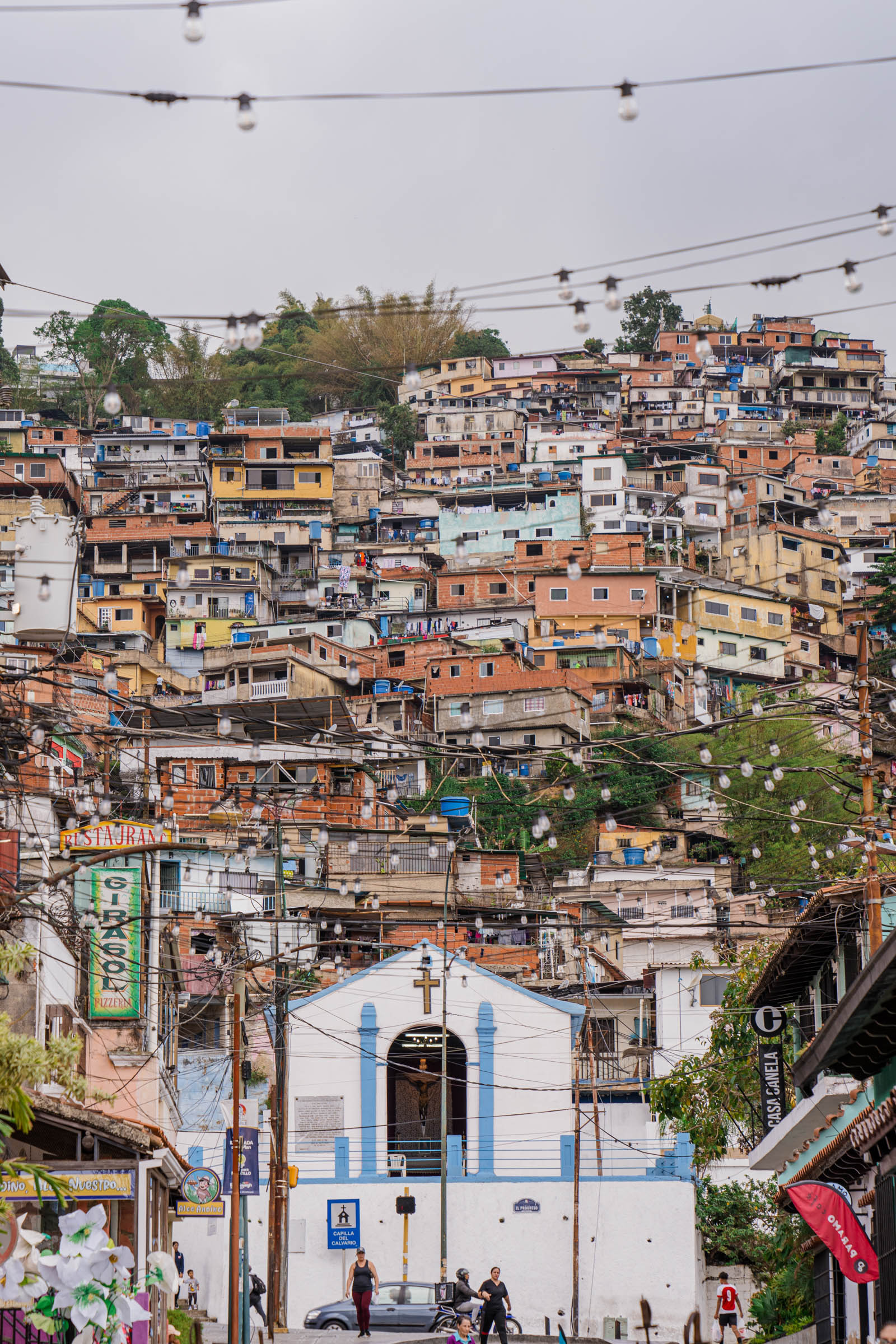
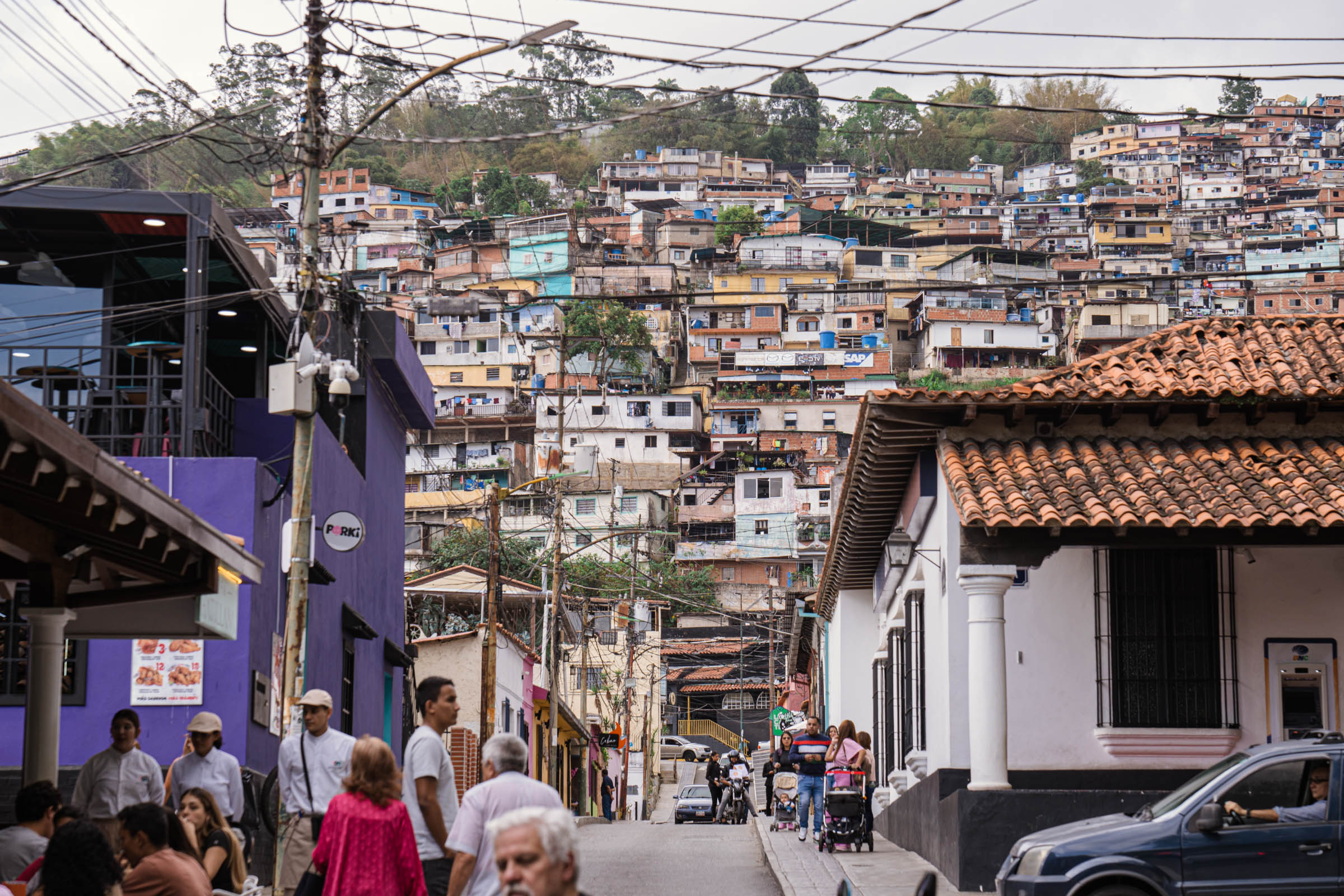
From the square, look up toward the hills. Opposite the village rises the colorful neighborhood of El Calvario, with houses that climb the slope one above the other. Local artists have painted many of its walls, so the whole hillside looks like a huge mosaic of color.
The contrast between the calm colonial square and the dense hillside behind it creates one of the most memorable views of El Hatillo.
STREETS, CRAFTS AND MUSIC OF EL HATILLO
El Hatillo is not only a place for walks, because its culture is alive and full of energy. The historic quarter grew from the chapel of El Calvario, which Baltasar de León erected in 1766 at the northern end of the quarter.
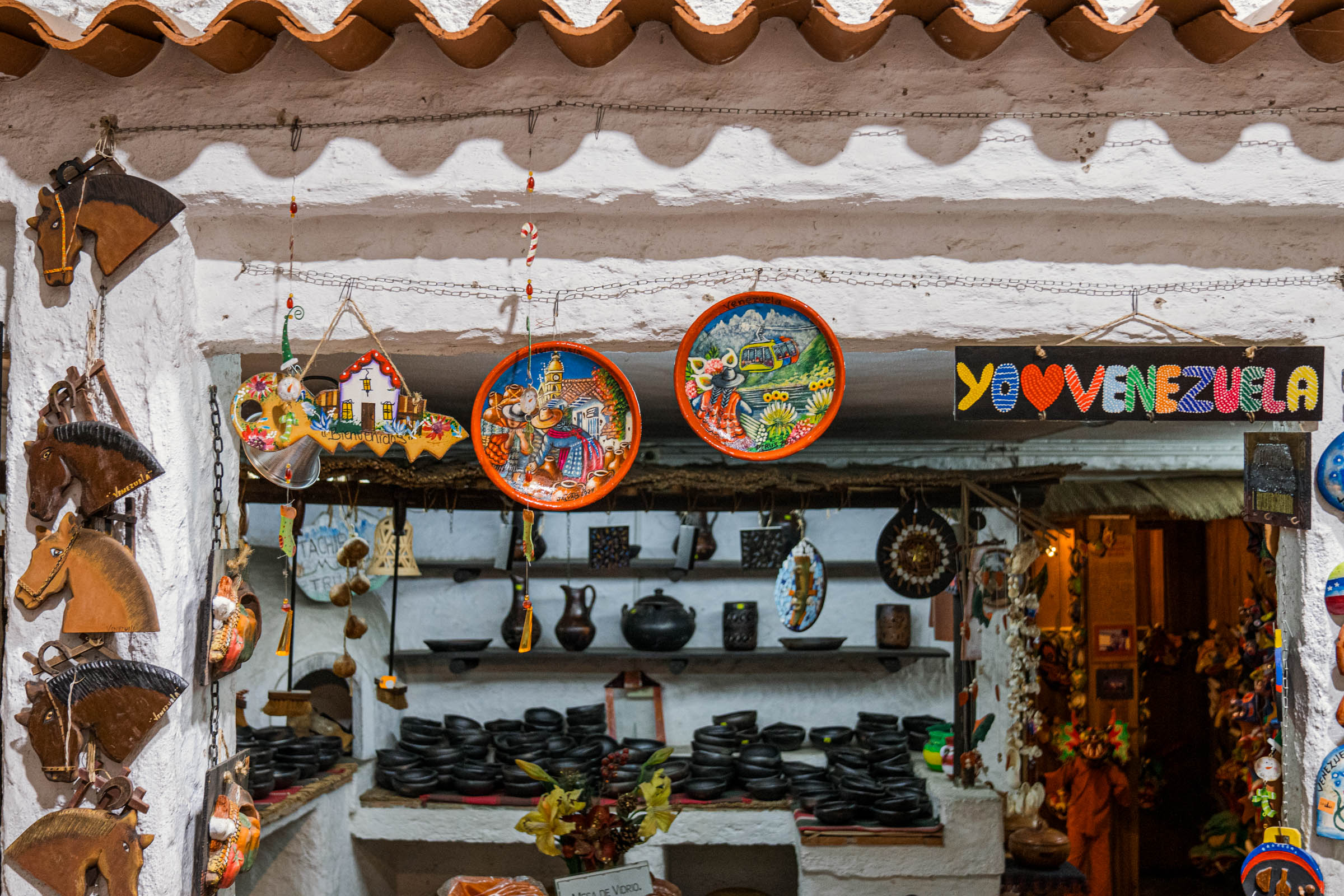
The municipality offers free guided routes that start from Plaza Bolívar. They visit the house of Don Baltasar de León, the social and cultural center, the chapel of El Calvario and the Centro Artesanal Casa Hanssi, among other places.
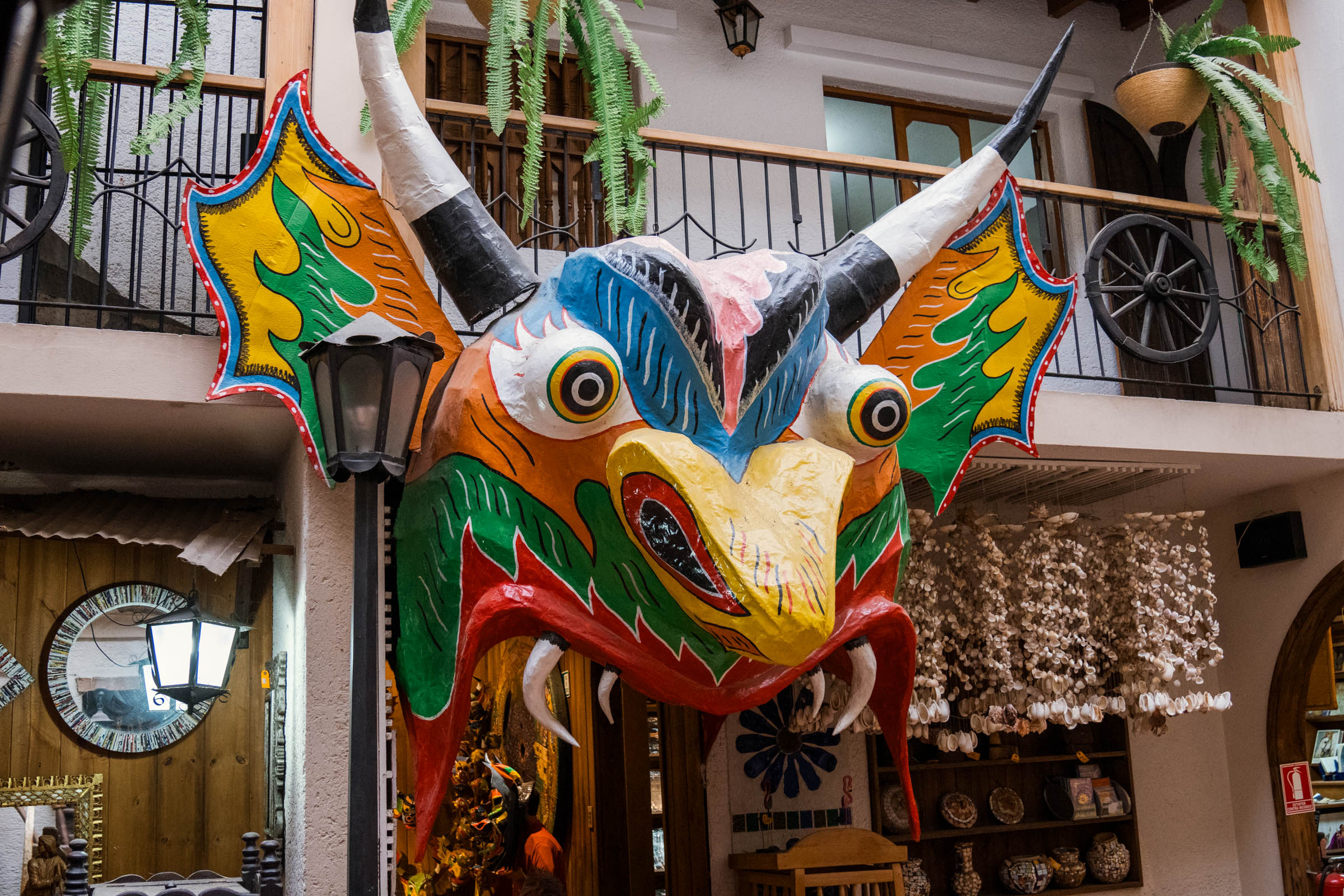
Casa Hanssi is a craft center and a paradise for lovers of handmade objects and souvenirs. Among them, you will see colorful masks with horns, painted in red, yellow and green.
Music also plays an important role in the life of the town. Every year in October, El Hatillo hosts a music festival with two weeks of concerts and street performances, from jazz and rock to traditional Venezuelan music.
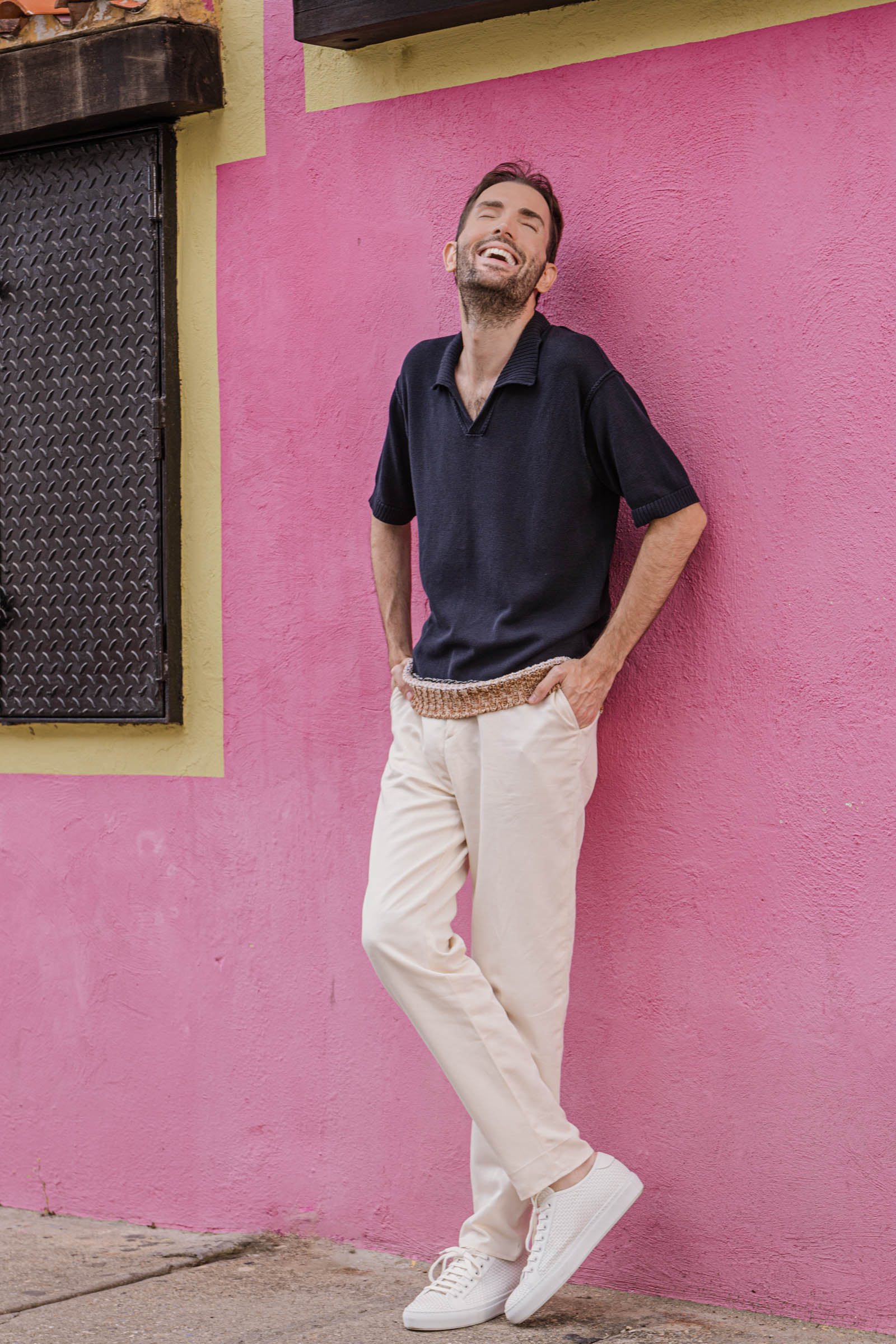
Of course, I also found a pink wall that seemed made for a photo. With its pastel houses and flower pots, El Hatillo is a dream for every photographer.
TASTES OF CARACAS: AREPAS AND MORE
El Hatillo is also a great place to discover Venezuelan cuisine. Small restaurants, cafés and sweet shops line the streets of the historic quarter, and many offer comida criolla, traditional home-style food.
The symbol of Venezuelan gastronomy is the arepa. It is a flatbread made of ground maize dough, eaten in the north of South America since pre-Columbian times. Locals split it open and stuff it with countless fillings: cheese, black beans, shredded beef, chicken or plantains.
The most famous filling is the reina pepiada, with shredded chicken, avocado and mayonnaise. According to the popular story, the name honors Susana Duijm, the first Venezuelan Miss World, crowned in 1955.
Street vendors also sell empanadas made with corn dough and filled with cheese, black beans or shredded beef. Another classic is the cachapa, a pancake made of fresh corn batter, usually served with soft local cheese. Do not leave without tasting traditional sweets, which many visitors buy to take home.
In the evening, the streets of El Hatillo fill with people who come for dinner and music. So, if you have time, stay until sunset and enjoy the atmosphere of the pueblo.
PLAZA CARACAS AND THE TOWERS OF EL SILENCIO
When talking about Caracas, people usually mention Plaza Bolívar, the birthplace of Bolívar or the majestic El Ávila. However, the city also hides lesser-known places that reveal its soul slowly. One of them is Plaza Caracas, in the very heart of the city.
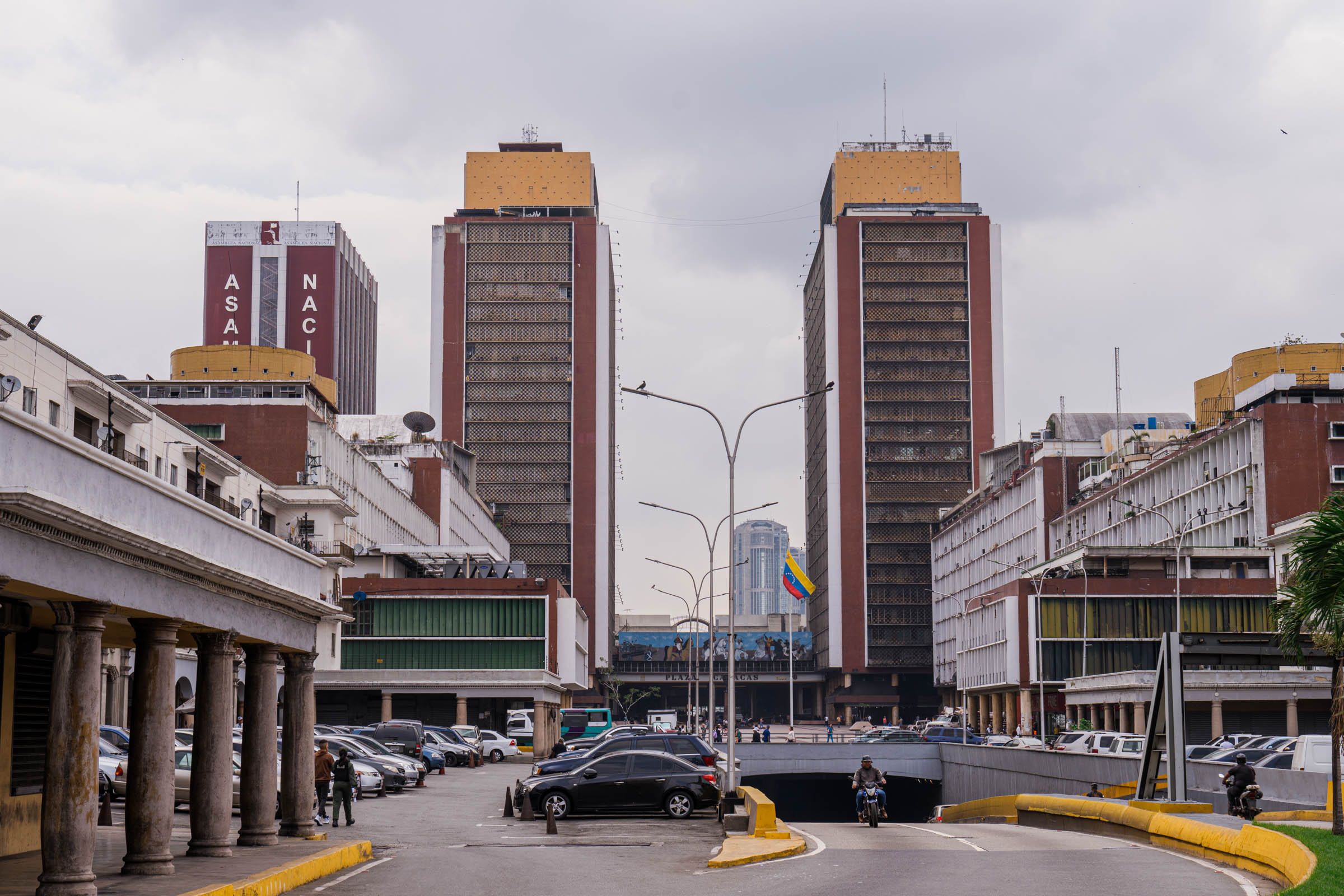
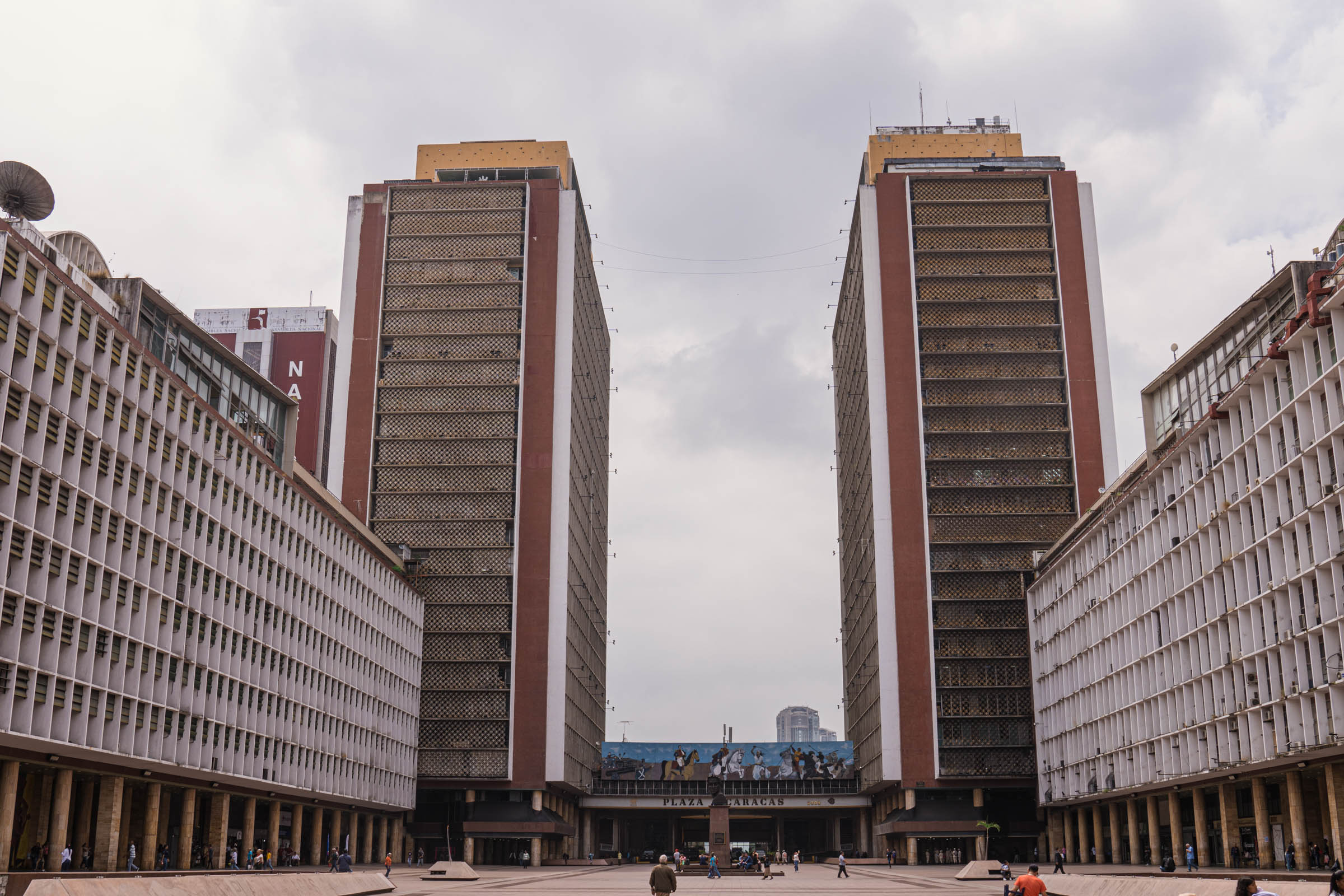
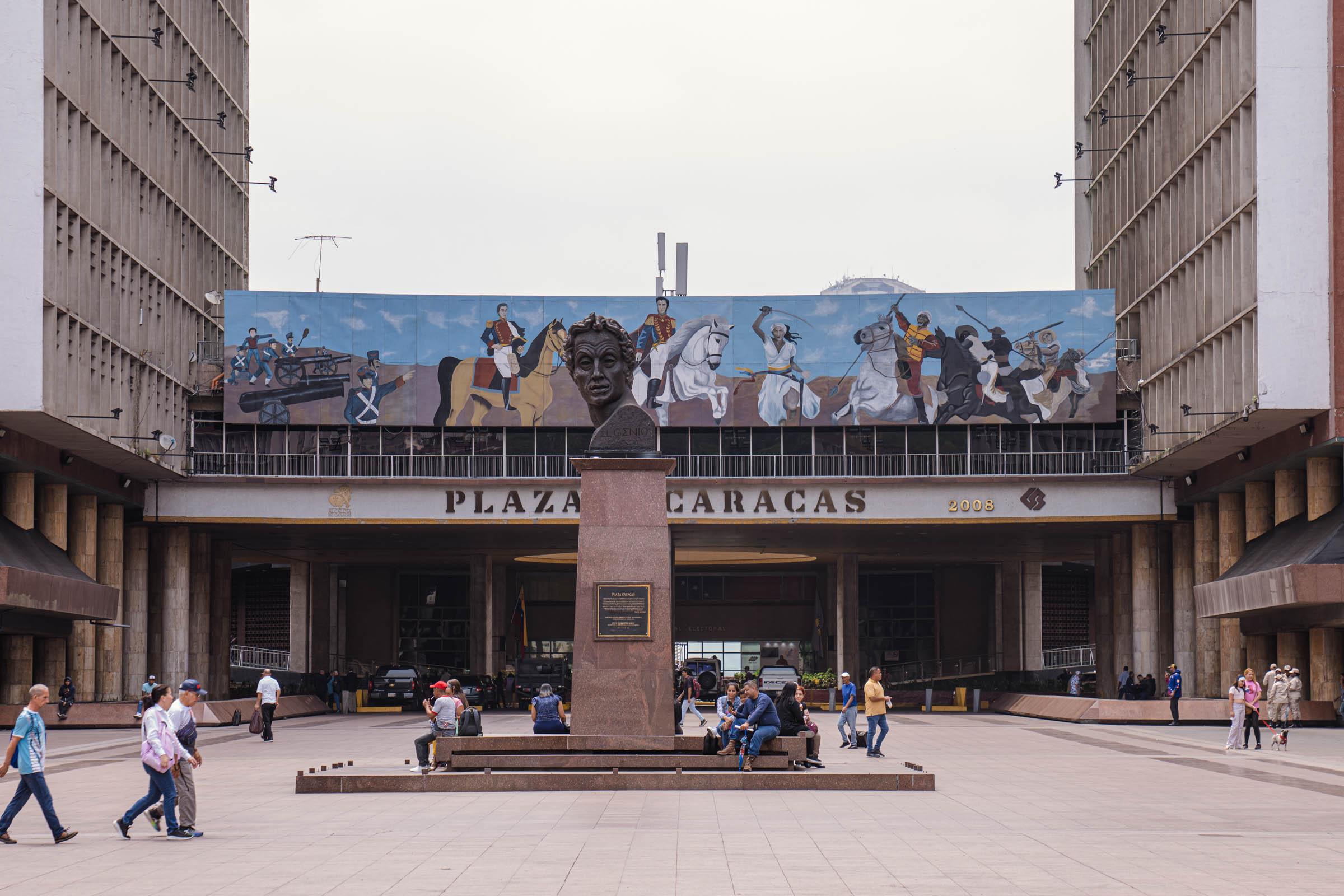
The square lies at the foot of the twin towers of the Centro Simón Bolívar, also known as the Torres de El Silencio. Architect Cipriano Domínguez designed them, and they opened on December 6, 1954. Each tower rises about 103 meters, and for many years they were the symbol of modern Caracas. The architects also designed them as the visual end point of Avenida Bolívar.
Plaza Caracas itself is younger than the towers. The city built it for the bicentennial of Bolívar’s birth in 1983. The long square lies between the lower buildings of the Centro Simón Bolívar, and its length equals two blocks of the traditional downtown.
Here you will find large murals, a statue and wide open spaces paved with stone. At its west end, the square opens toward the buildings of El Silencio and Plaza O’Leary, whose fountain features the sculptural group Las Toninas by Francisco Narváez. It is a perfect place to understand the modern dream of Caracas.
WHY PLAZA CARACAS IS WORTH A VISIT
Plaza Caracas is not a typical tourist attraction. At first glance, its monumental architecture may seem cold, because it lacks the decorative opulence of colonial squares. However, this very monumentality tells the story of an era of rapid growth and modernization.
While Plaza Bolívar embodies colonial heritage, Plaza Caracas reflects the modern dream of progress. In one day, you can visit a square full of colonial tradition and then step into a space that speaks of the 20th century.
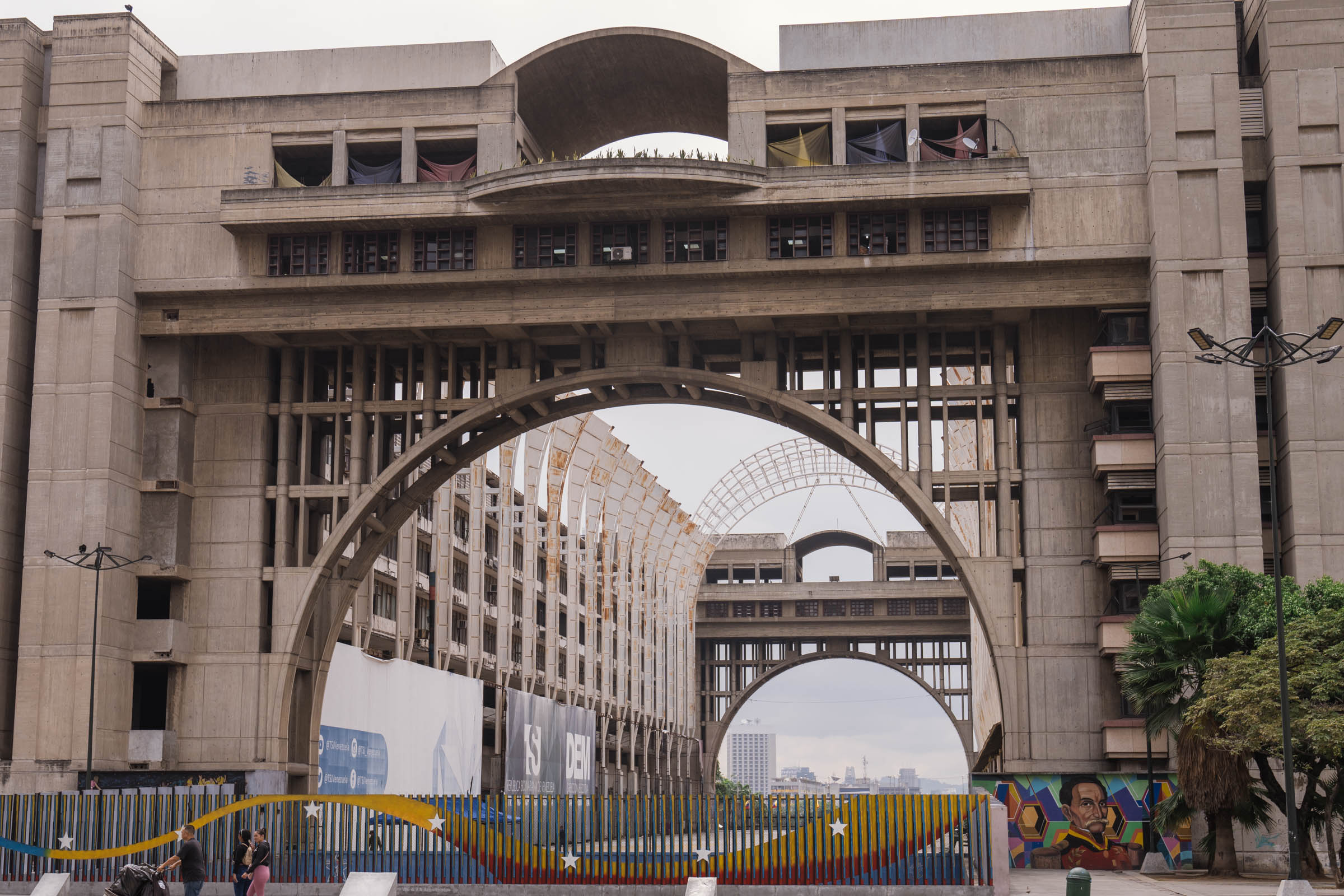
For lovers of architecture and photography, the area offers great shots of modernist facades, long arcades and the twin towers. Around it, you will also find other bold buildings from the second half of the 20th century, some of them with huge arches and concrete frames.
Safety: Visit during the day, ideally with a local guide.
Combining a visit: The square lies close to the Capitolio, the Iglesia de San Francisco and Plaza Bolívar, so combine them in one walk.
Avenida Bolívar: The twin towers close the perspective of Avenida Bolívar. This avenue is about two kilometers long, and it opened on December 31, 1949.
IGLESIA DE SAN FRANCISCO
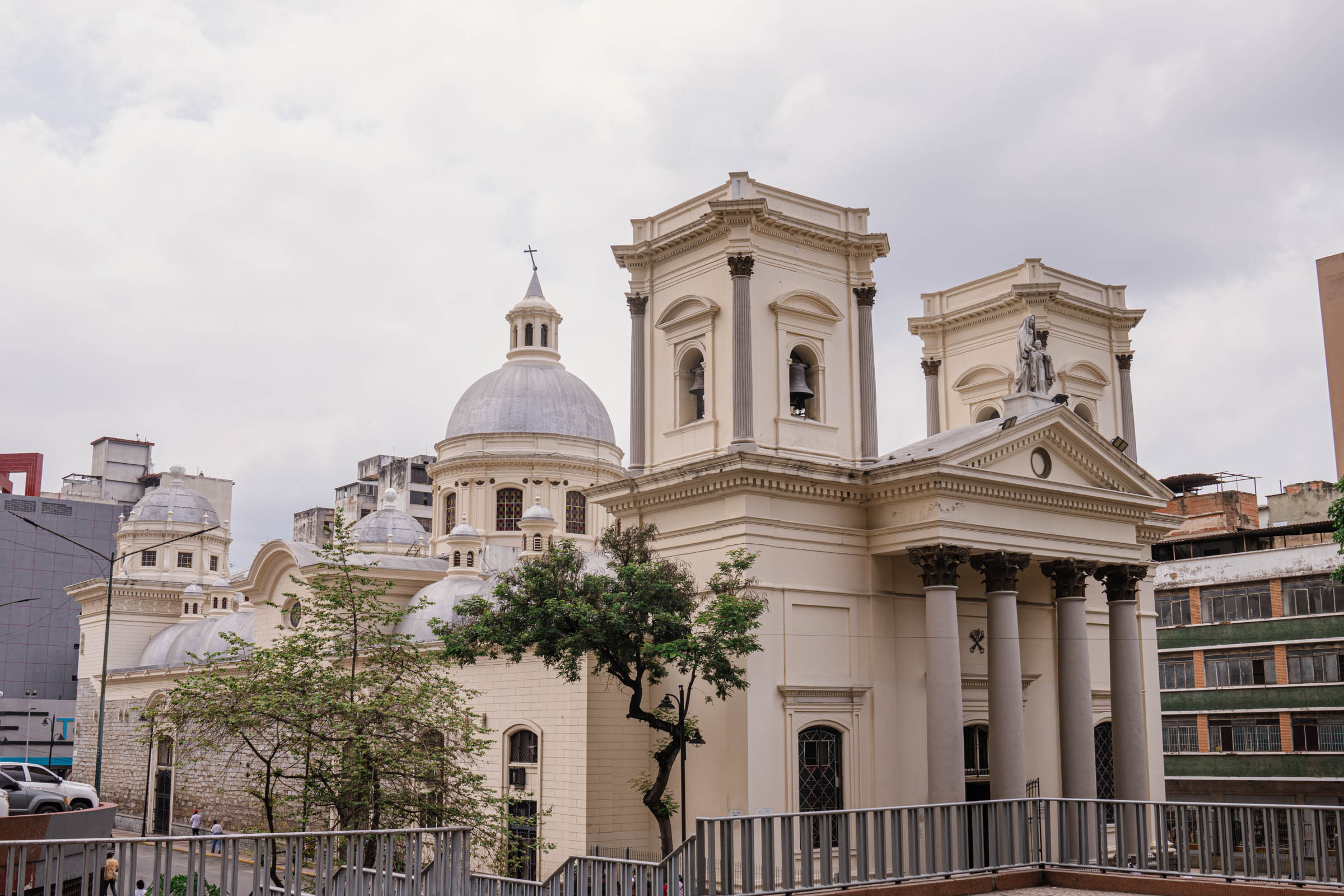
Just a short walk from Plaza Caracas stands one of the most important churches of the city, the Iglesia de San Francisco. Builders completed it in 1593 according to a design by Antonio Ruiz Ullán, as part of the Convent of San Francisco. Today, the former convent is the Palacio de las Academias, a neo-Gothic building that houses Venezuela’s national academies. Since 1965, it has been a national monument.
What makes this church truly special is its role in the history of independence. Here, on October 14, 1813, the city of Caracas proclaimed Simón Bolívar “El Libertador,” the Liberator. This followed his successful campaign of 1813, which brought him back to the capital in August of that year.
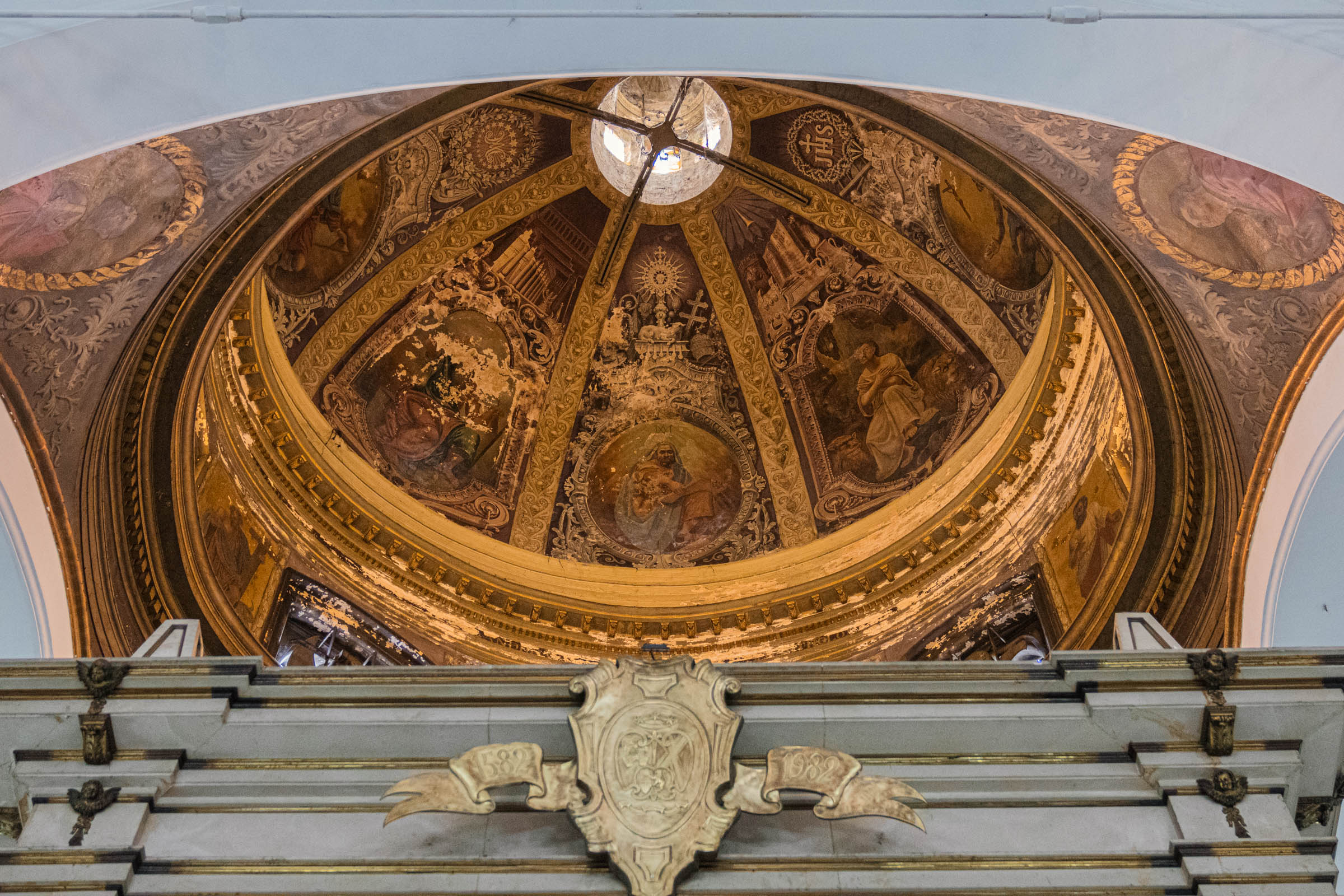
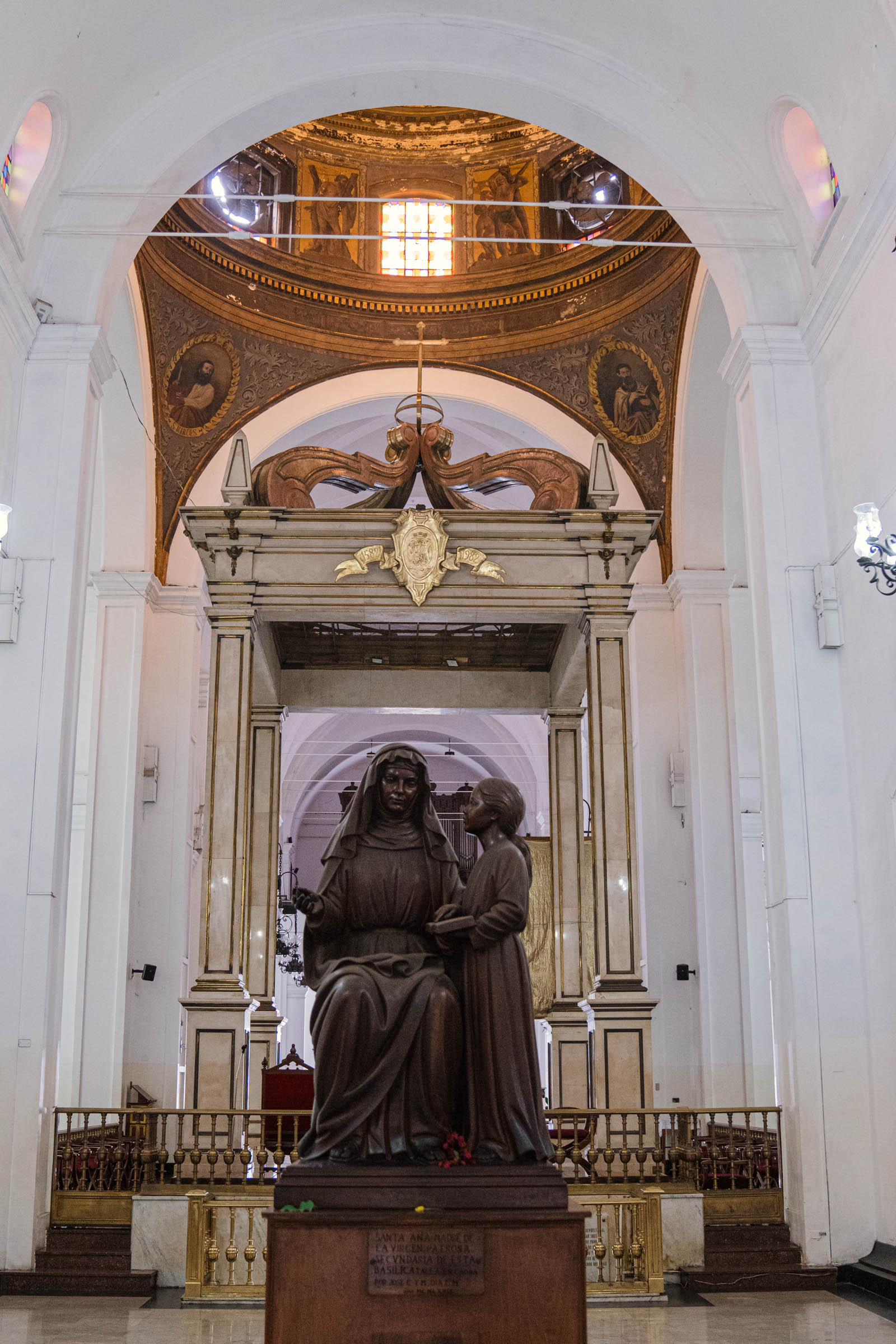
When you step inside, you see richly gilded altars from different periods of Venezuelan religious art. The dome above the altar is decorated with paintings and gold details, and the light gives the whole space a warm glow.
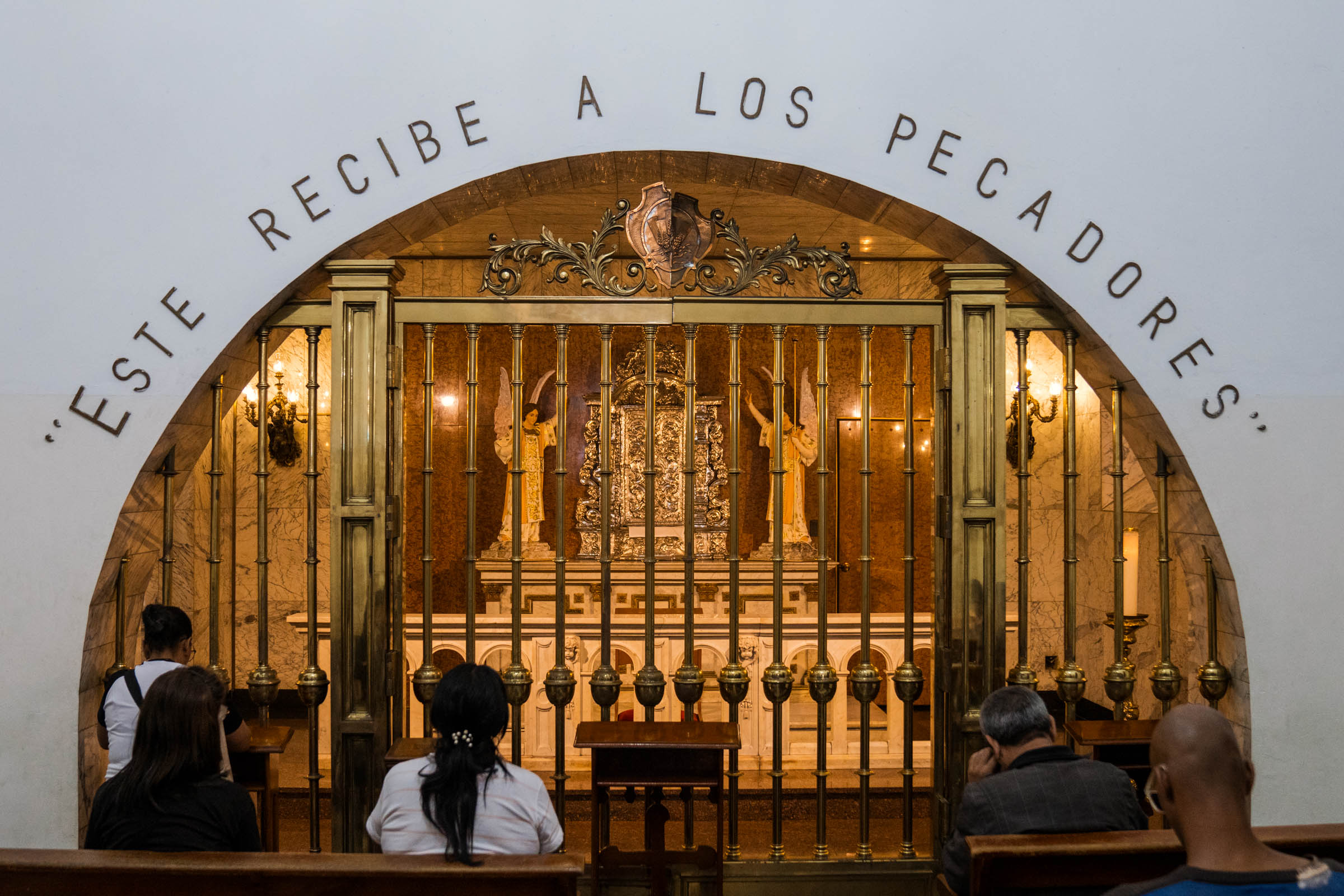
One of the side chapels carries the inscription “Este recibe a los pecadores,” which means “This one welcomes the sinners.” In another chapel, a beautifully carved statue stands under a richly decorated arch. During the 1900 San Narciso earthquake, the church suffered severe damage, but it survived as one of the great treasures of Caracas.
PLAZA VENEZUELA AND THE ART OF CARACAS
While Plaza Bolívar is the heart of historic Caracas, Plaza Venezuela represents the modern face of the city. The square opened in 1940 in the Los Caobos neighborhood, in the geographic center of Caracas.
Its great fountain comes to life at night with a play of light and water. The fountain went through five projects since 1940, and its latest version opened on August 9, 2009, with modern lighting technology.
The square is also an open-air gallery of Venezuelan kinetic art. Here stand the Christopher Columbus monument by Manuel de la Cova, the Fisicromía tribute to Andrés Bello by Carlos Cruz-Diez and the monumental aluminum sculpture Abra Solar by Alejandro Otero, about 42 meters high. The square also gives access to the Central University of Venezuela.
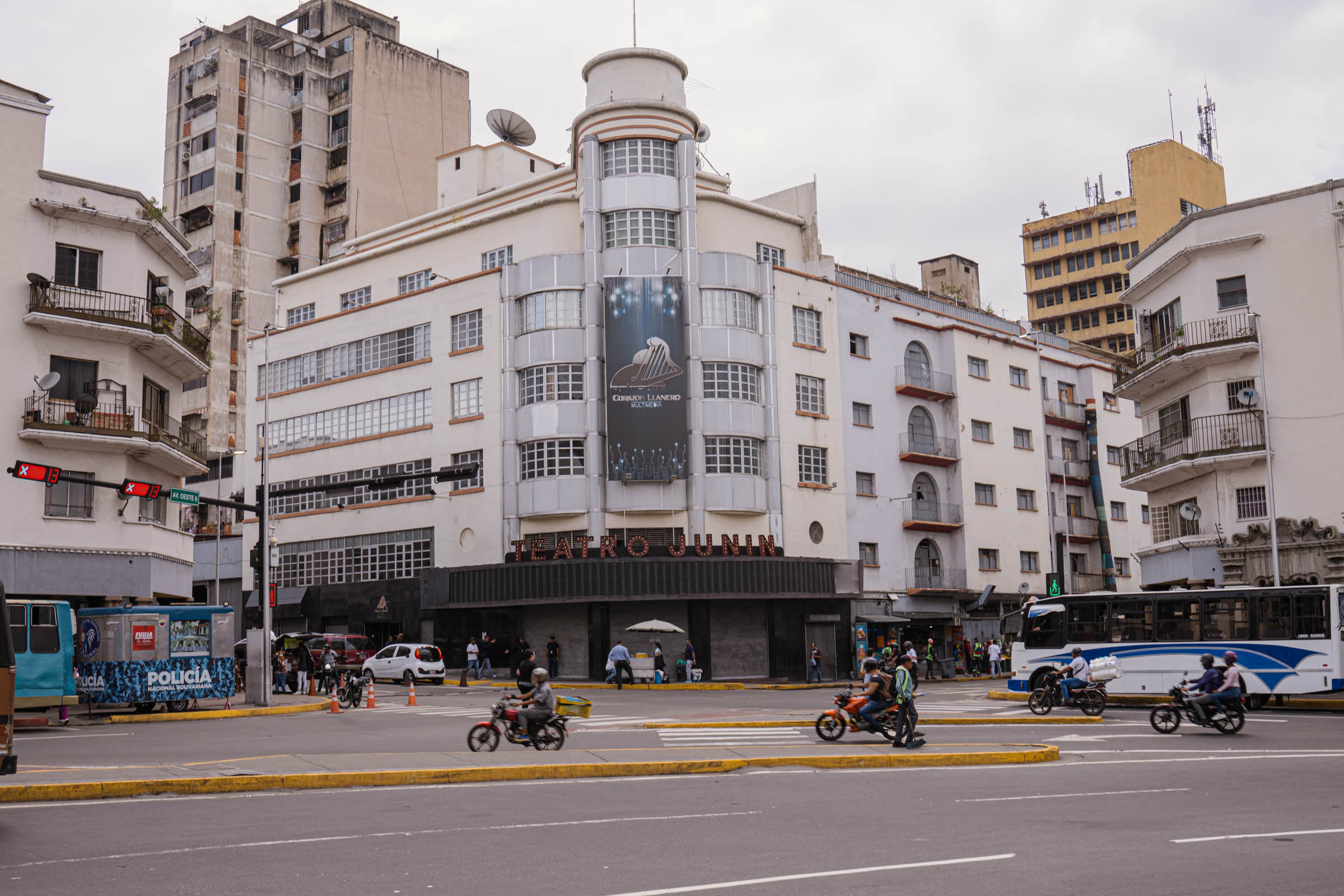
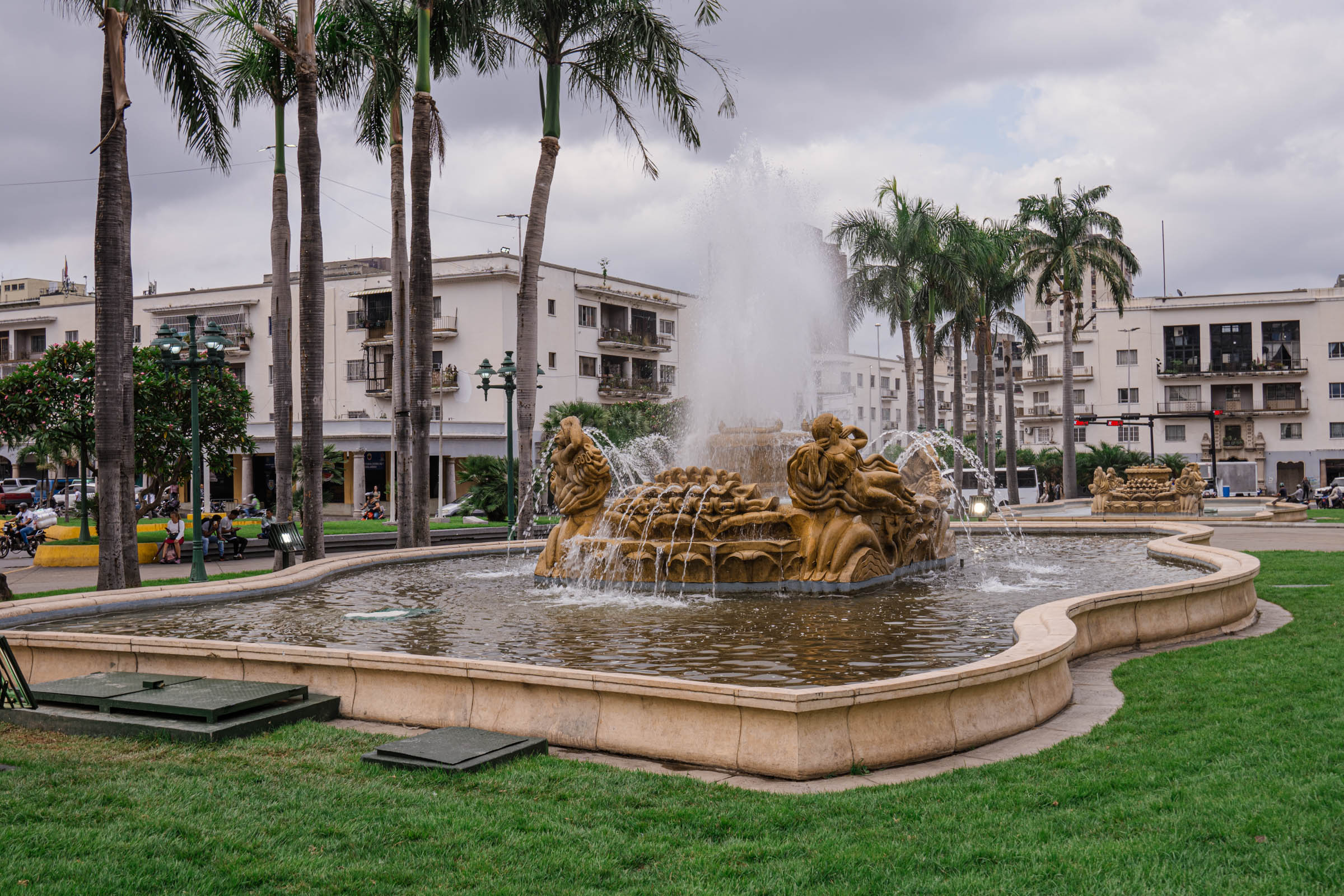
In the surrounding streets, you will see elegant buildings from the middle of the 20th century, as well as palm-lined squares with ornate fountains. For travelers who love design, this part of the city shows how art became part of everyday urban life in Caracas.
THE CAPITOLIO: GOLDEN DOMES OF CARACAS
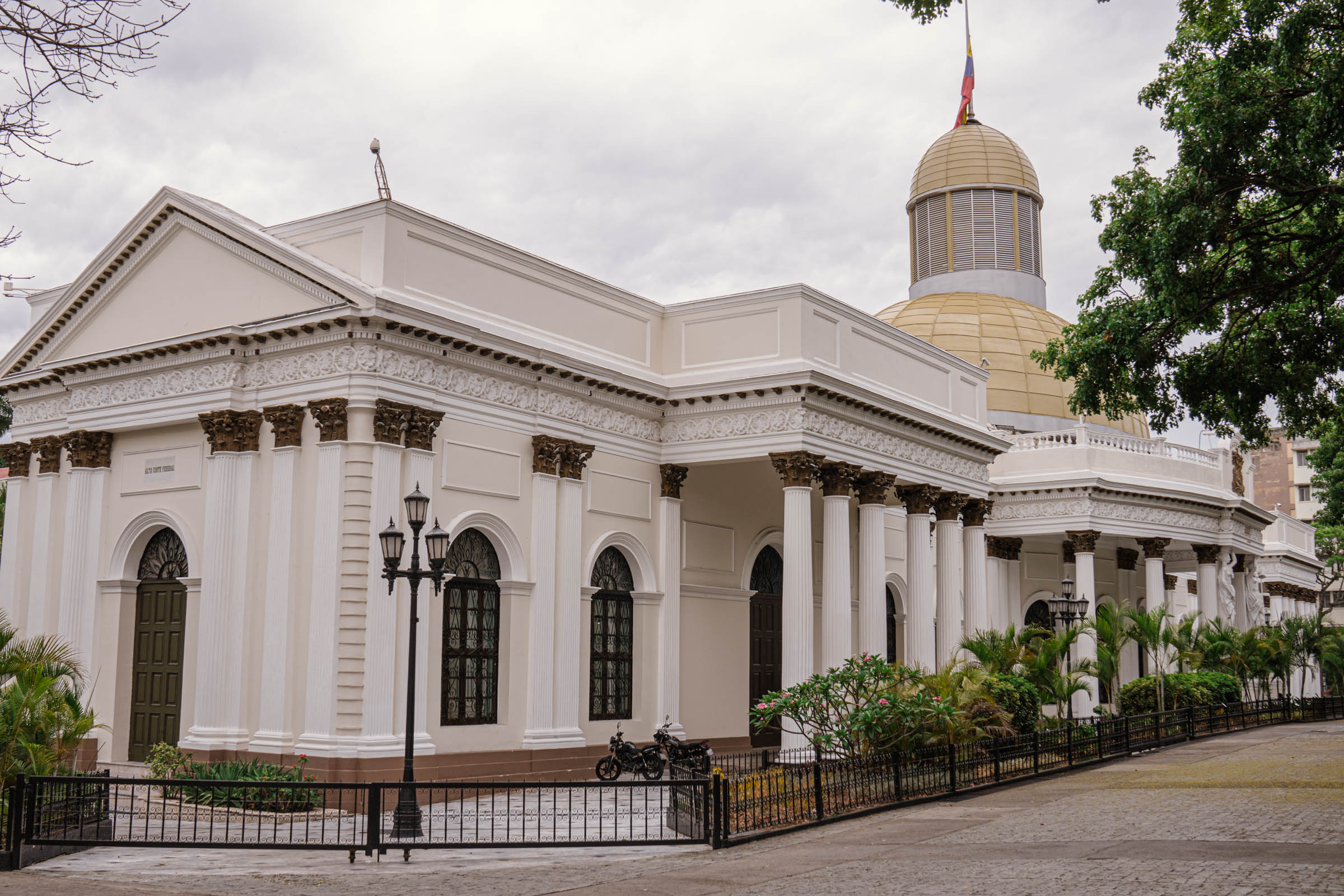
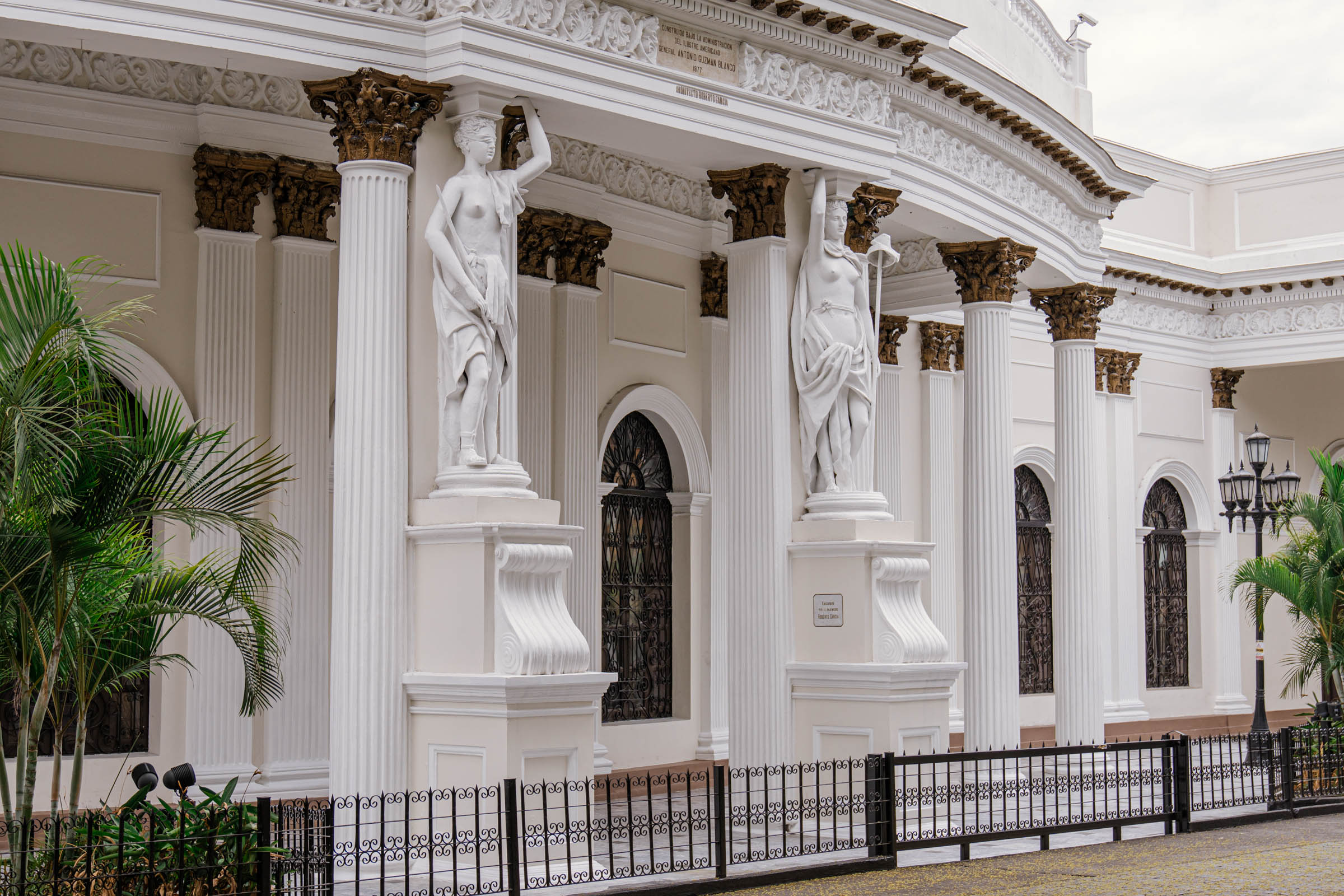
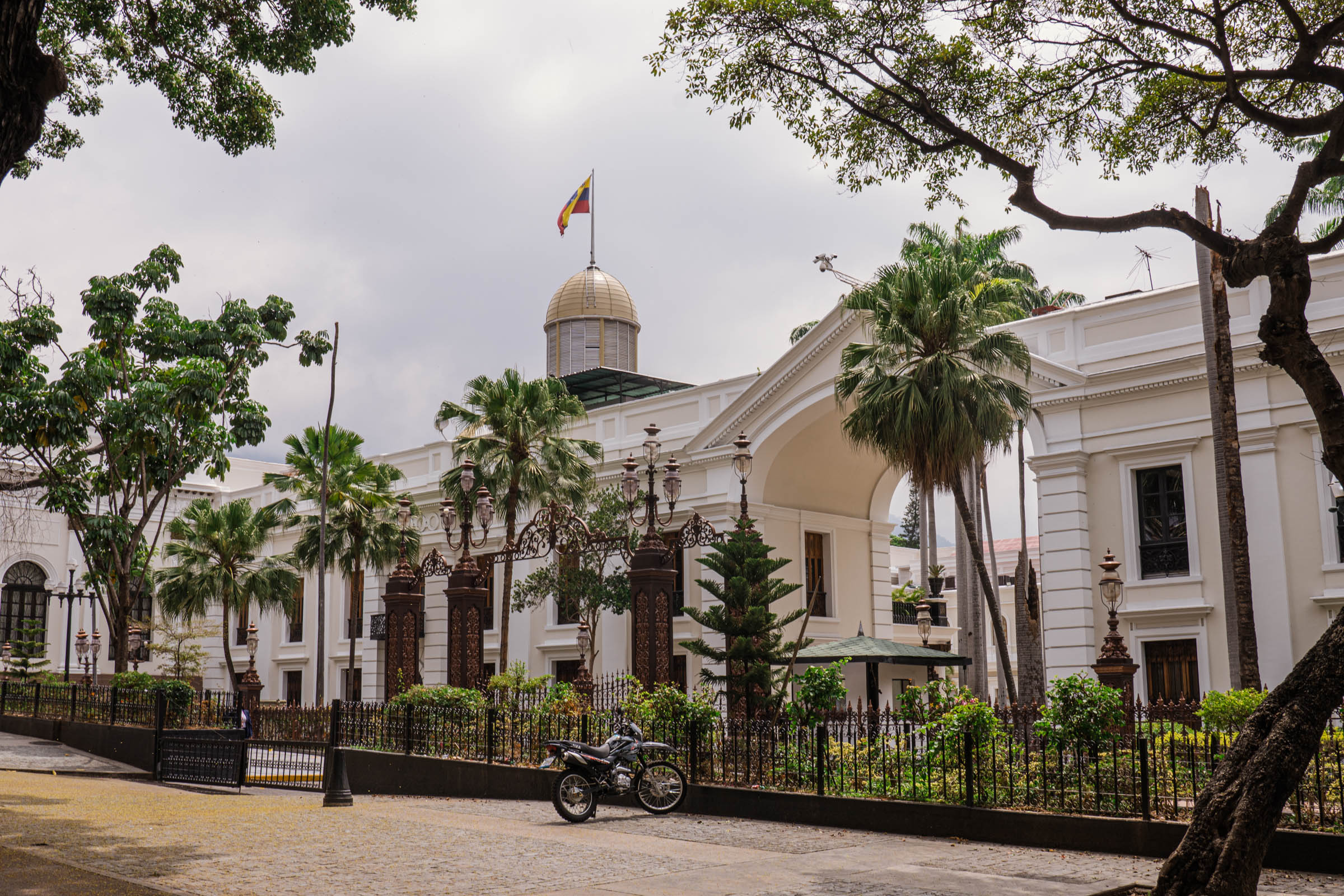
For lovers of architecture and history, the Capitolio, officially the Palacio Federal Legislativo, is a real find. It stands southwest of Plaza Bolívar and occupies an entire city block.
President Antonio Guzmán Blanco built it between 1872 and 1877, to a design by architect Luciano Urdaneta Vargas. The builders raised it on the block that the Church of La Concepción once occupied. The bright white neoclassical complex has columns, pediments and statues on its facades.
Its most famous space is the Salón Elíptico, an oval hall that opened in 1877 under a golden dome. Inside the dome, a monumental painting shows a scene from the Battle of Carabobo. The building is the seat of the National Assembly.
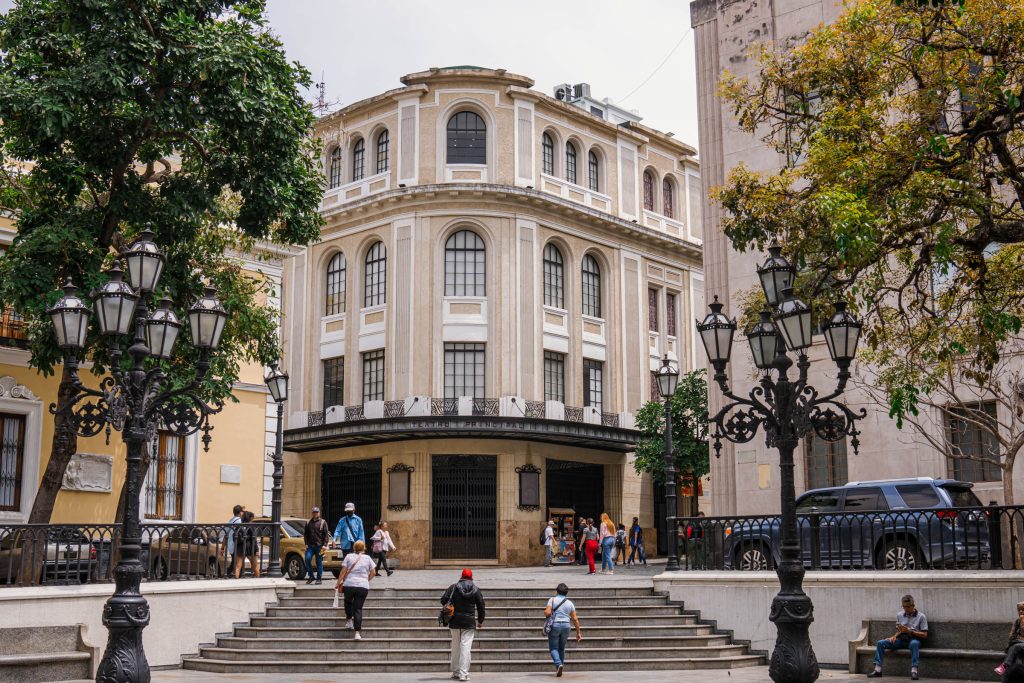
Nearby stands the Teatro Municipal de Caracas, an opera house that Guzmán Blanco inaugurated in 1881. At first, it carried the president’s name. Today, it is the home of the Municipal Symphony Orchestra of Caracas.
Among the palm trees around the Capitolio, you can still feel the elegance of the late 19th century, when the city embraced European styles.
ARCHES, UMBRELLAS AND MURALS OF CARACAS
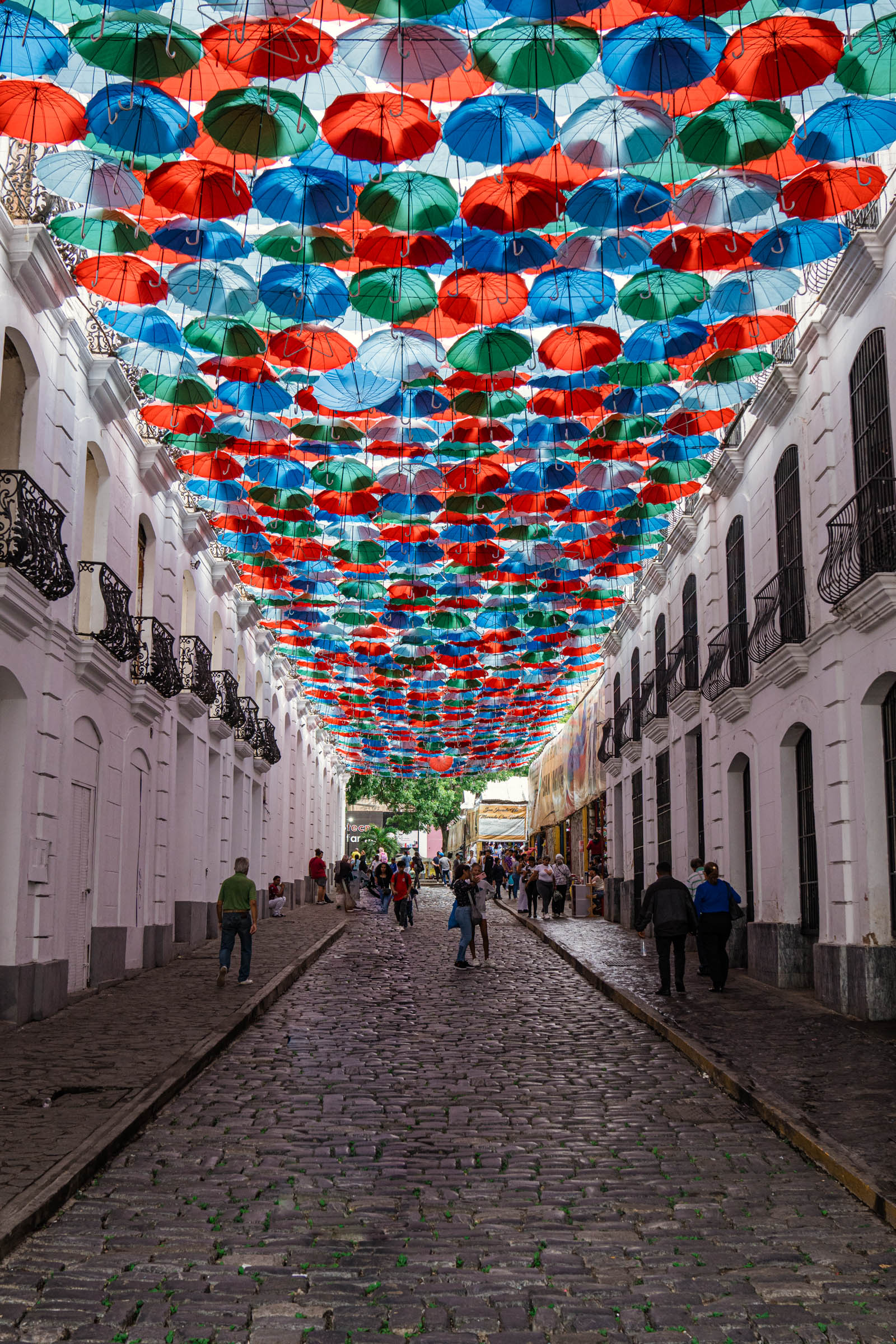
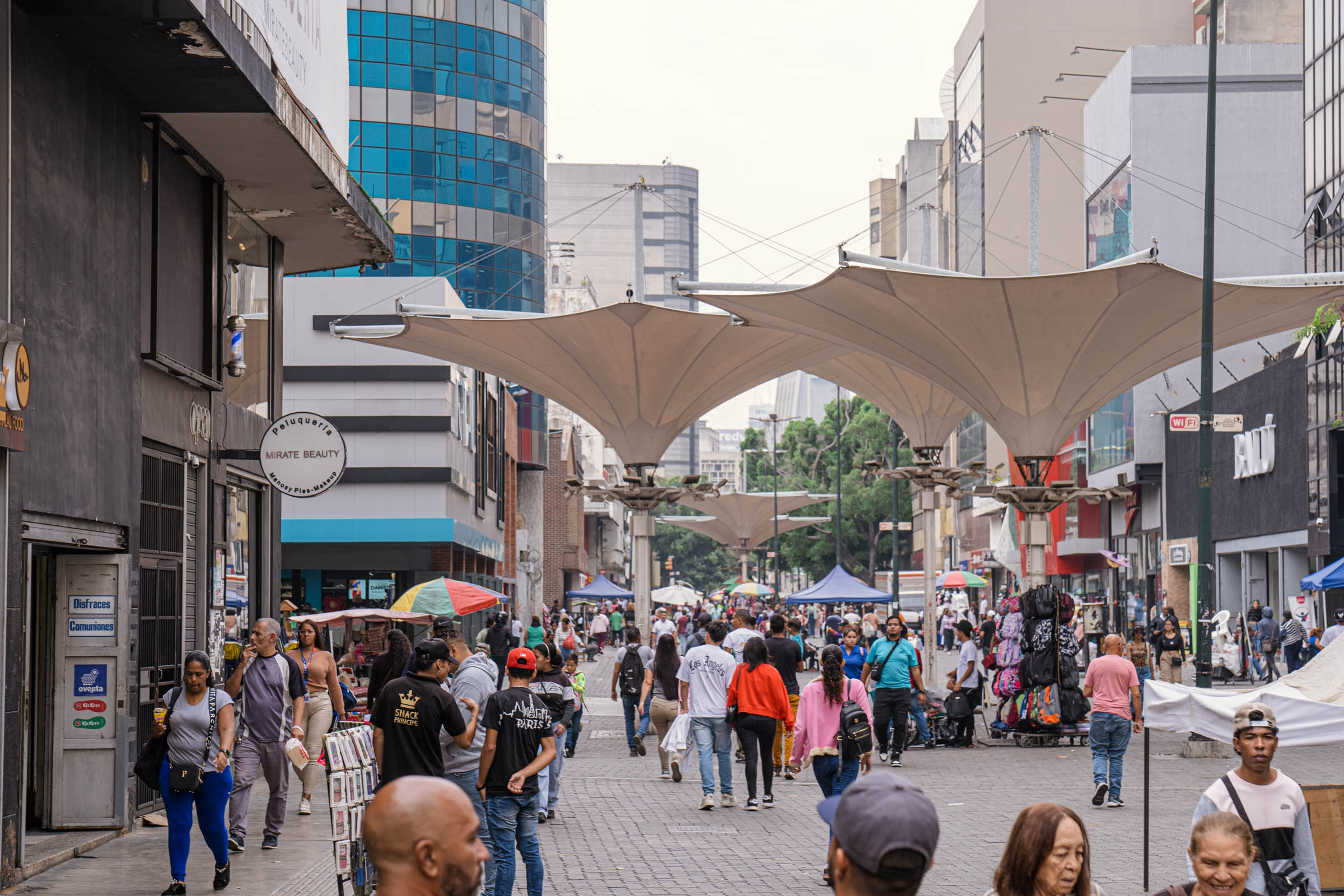
One of the most charming surprises of my walk was a pedestrian street covered with hundreds of colorful umbrellas. They float above the cobblestones like a rainbow, and they create a cheerful, almost magical atmosphere.
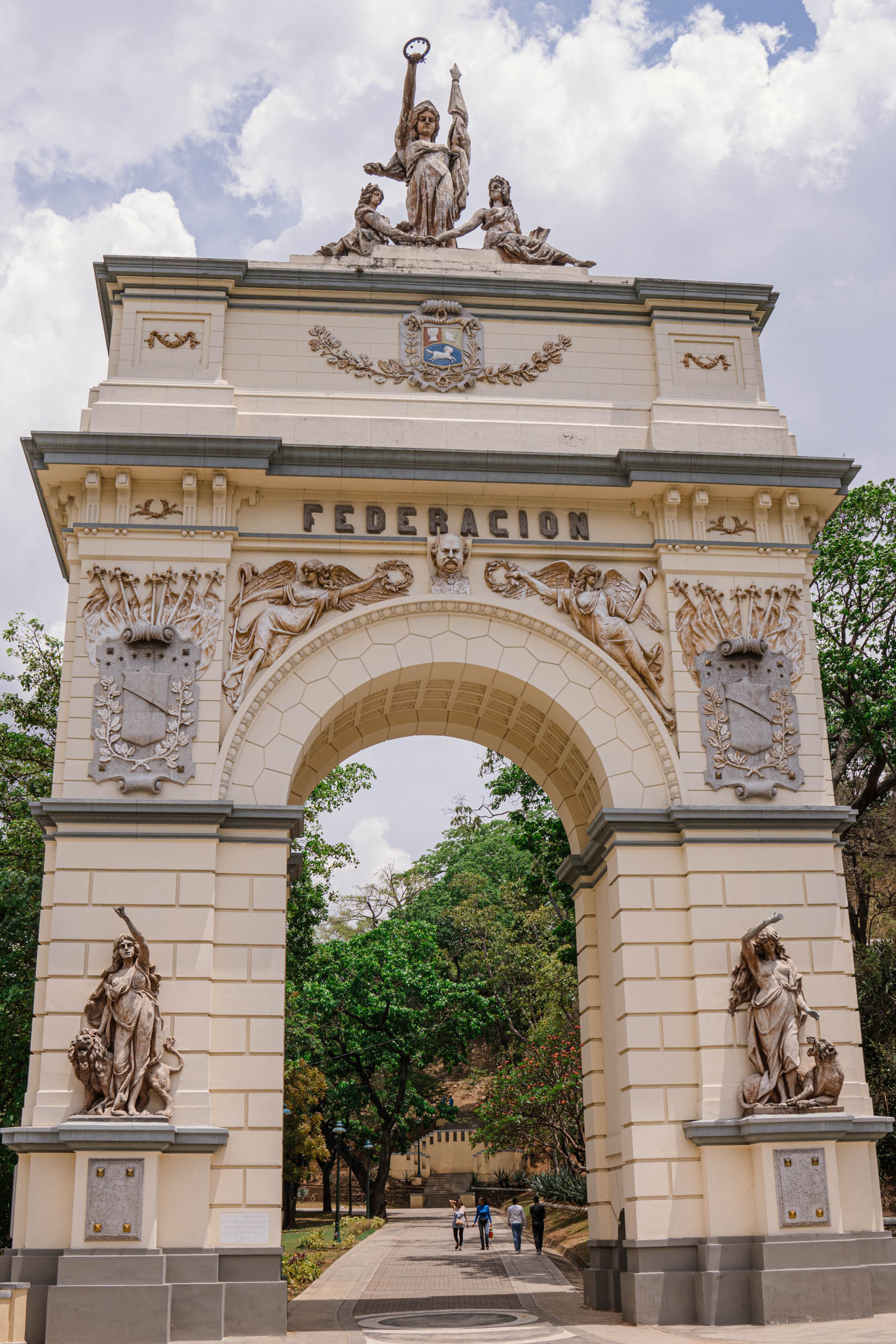
To the west of the center, in Parque Ezequiel Zamora, which locals still call El Calvario, stands the Arco de la Federación. President Joaquín Crespo inaugurated this white triumphal arch in 1895. Its statues depict scenes and symbols of the Federal War, which lasted from 1859 to 1863, and of the peace that followed.
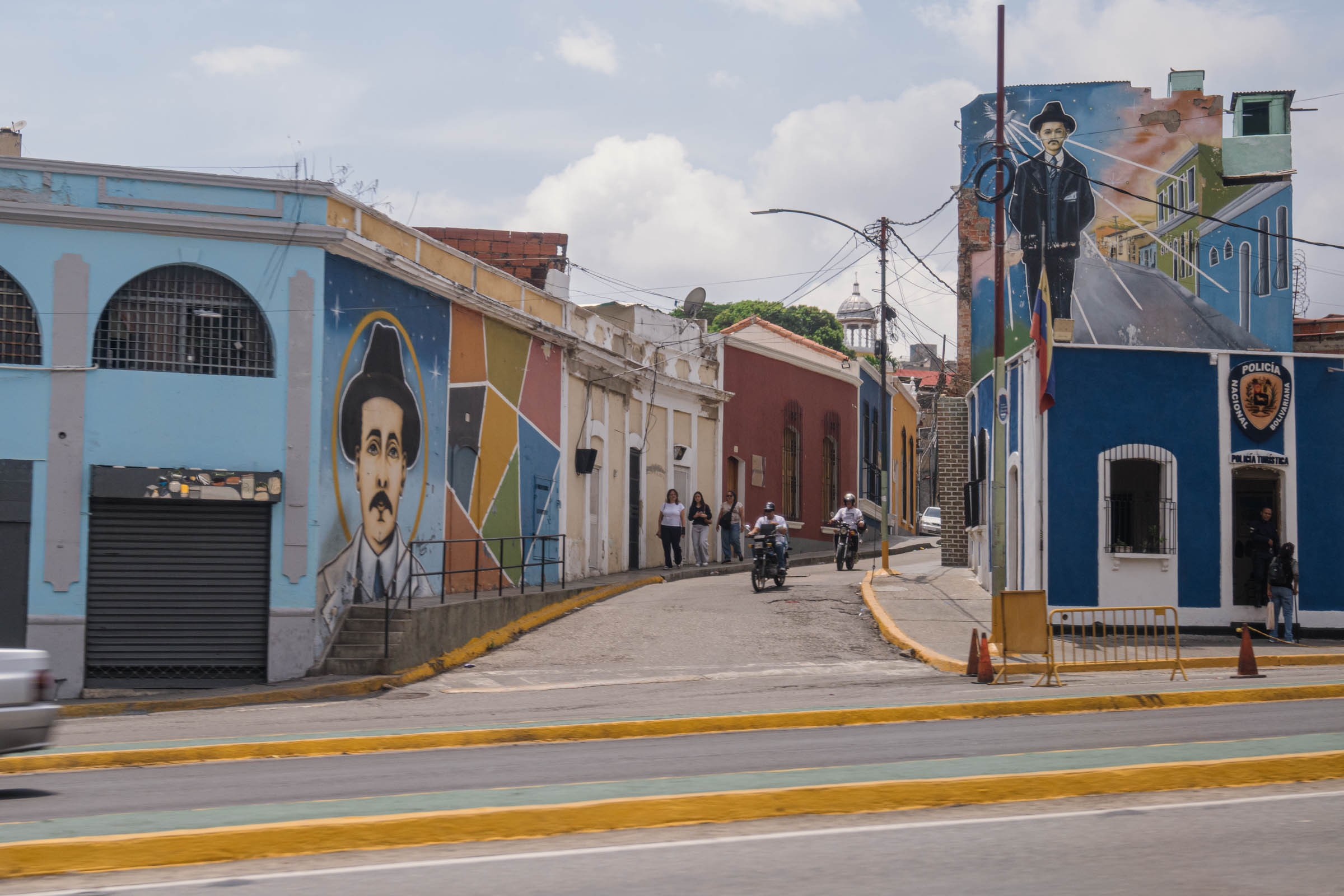
Caracas also lives through its street art. Murals tell stories of everyday life and portray famous Venezuelans, and some cover entire facades. In neighborhoods such as Bellas Artes and Sabana Grande, you will find impressive works by local artists.
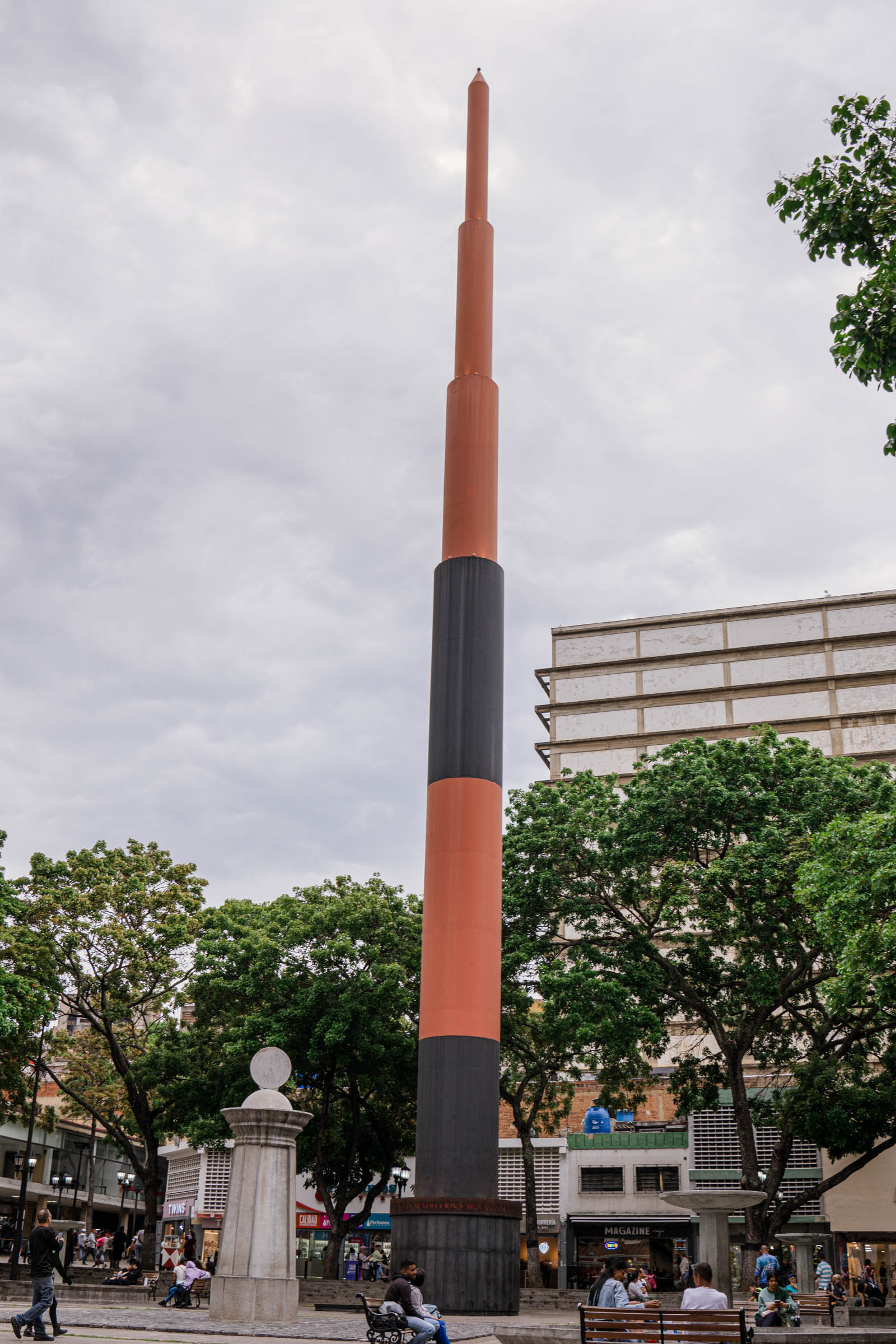
In the city, you will also see bold modern monuments and sculptures, some of them painted in strong colors that stand out against the green of the trees.
LEGENDS AND KINETIC ART
Every city has its legends, and Venezuela has many. One of the most famous is La Sayona, a vengeful spirit of a woman who appears to unfaithful men. The legend comes from the Venezuelan plains, and her name comes from saya, the long dress she usually wears. Although the story is not exclusive to Caracas, it often comes up in evening conversations.
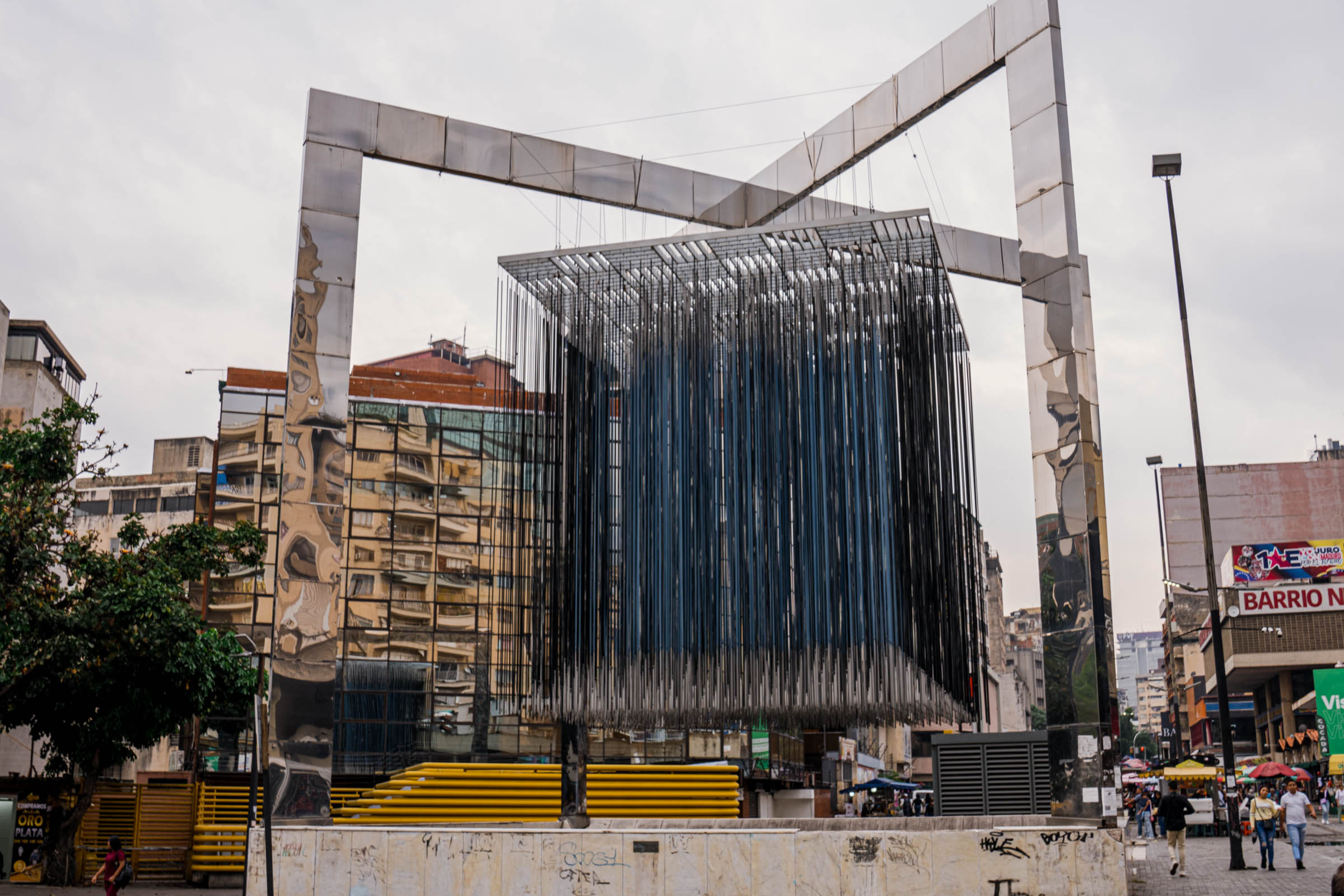
From legends, let us move on to a very different kind of magic: kinetic art. Venezuela gave the world some of the greatest masters of this movement, including Jesús Soto, Carlos Cruz-Diez and Alejandro Otero. Their works play with movement, light and perception, so they change as you walk around them.
In Caracas, kinetic art is not only in museums, but also in public spaces. Monumental sculptures with hanging metal elements seem to vibrate in the wind and sunlight. It is impossible to pass them without stopping for a moment.
GALLERIES AND THE CREATIVE SCENE OF CARACAS
Caracas offers a rich range of art galleries and cultural spaces. The most important is the Galería de Arte Nacional, which opened in 1976. Since 2009, it has occupied a new building designed by Carlos Gómez de Llerena, the largest museum building in Venezuela. Its construction began in 1989, stopped in the mid-1990s and resumed in 2006. Its collection covers five centuries of Venezuelan art, from pre-Hispanic pieces and colonial paintings to modern art.
Among the artists represented are Arturo Michelena, Armando Reverón, Carlos Cruz-Diez and Jesús Soto. The most famous piece is Michelena’s painting Miranda en La Carraca from 1896.
Another special place is the Centro de Arte Los Galpones in Los Chorros. In 1943, the engineer and inventor Melchor Centeno Vallenilla built an industrial complex here. Today, its former warehouses host galleries such as ABRA, Periférico Caracas and D’Museo, as well as bookshops, cafés and cultural events. In 2025, Los Galpones celebrated its 20th anniversary.
Here you can see works by contemporary artists, attend a concert or simply drink coffee in the company of the creative people of Caracas.
SHOPPING IN CARACAS: SABANA GRANDE AND THE MALLS
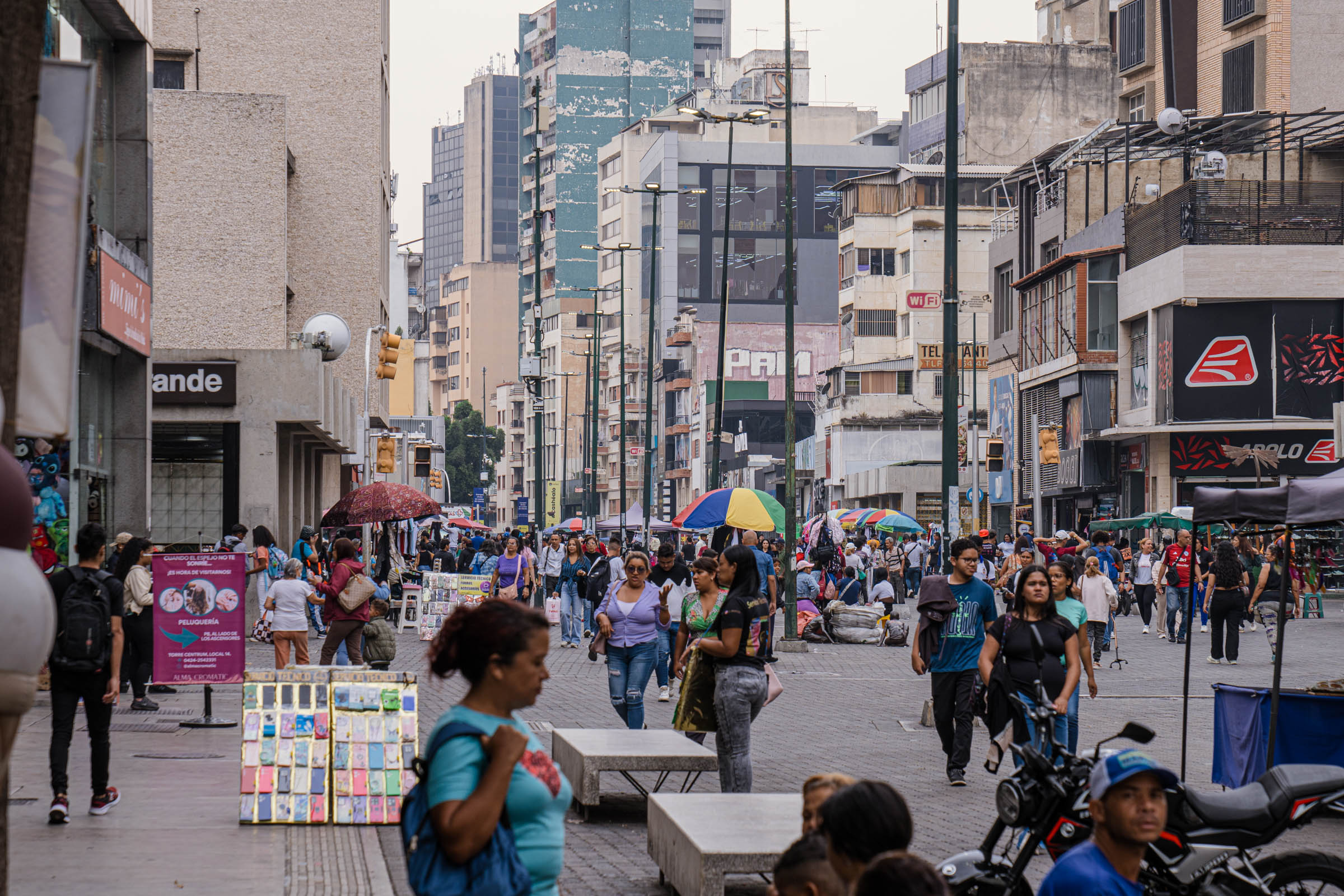
For a taste of everyday life, take a walk along the Bulevar de Sabana Grande. This pedestrian, tree-shaded boulevard stretches from Plaza Venezuela to Chacaíto, and the city completed it in 1983. In 2011, the boulevard went through a major rehabilitation. Today, white textile awnings give pedestrians shade, and three metro stations serve the area: Plaza Venezuela, Sabana Grande and Chacaíto.
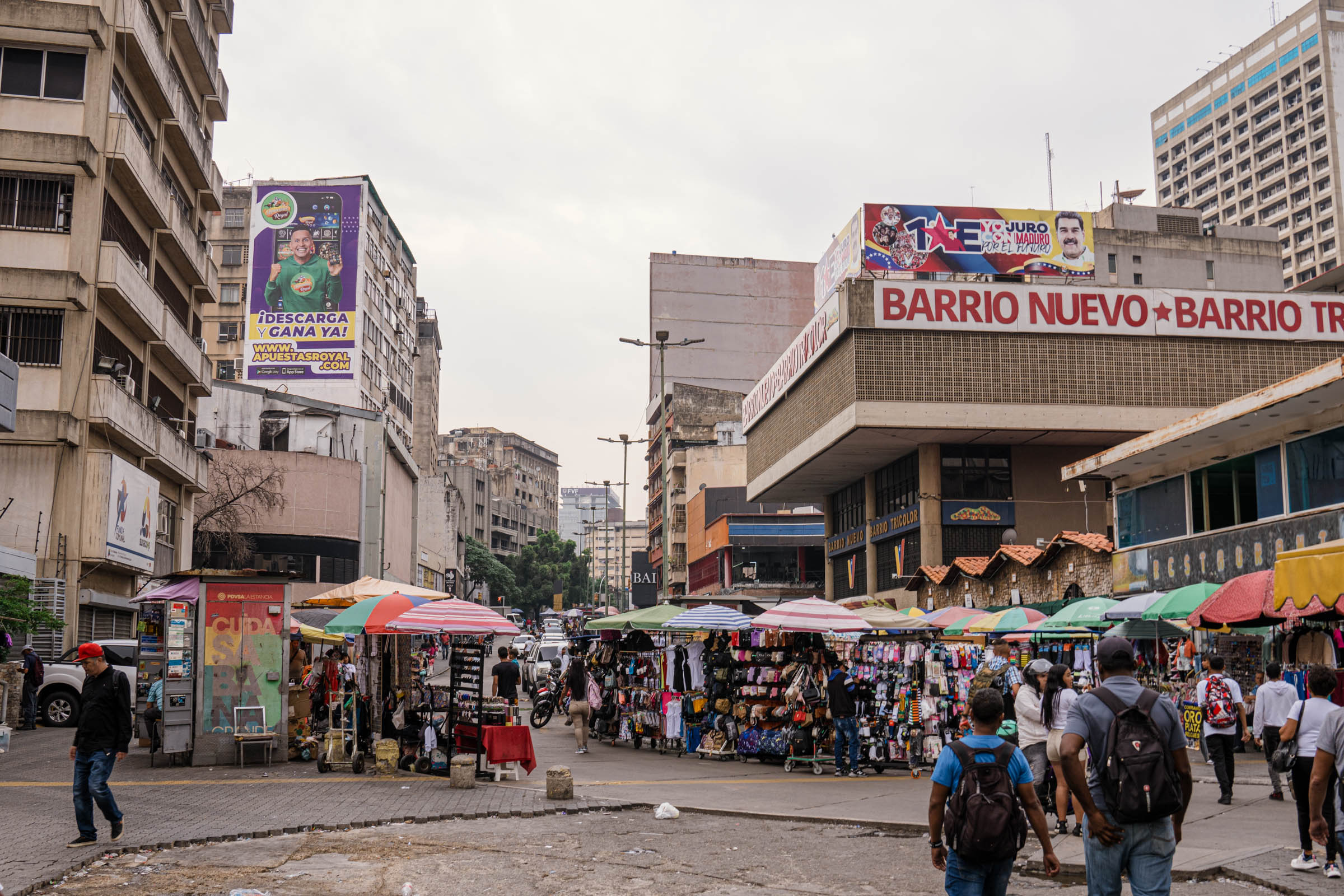
The boulevard follows the route of the former Abraham Lincoln Avenue, which the city turned into a pedestrian zone during the construction of the Caracas Metro. It is full of shops, cafés and street vendors. It is busy, colorful and loud, so keep your valuables close.
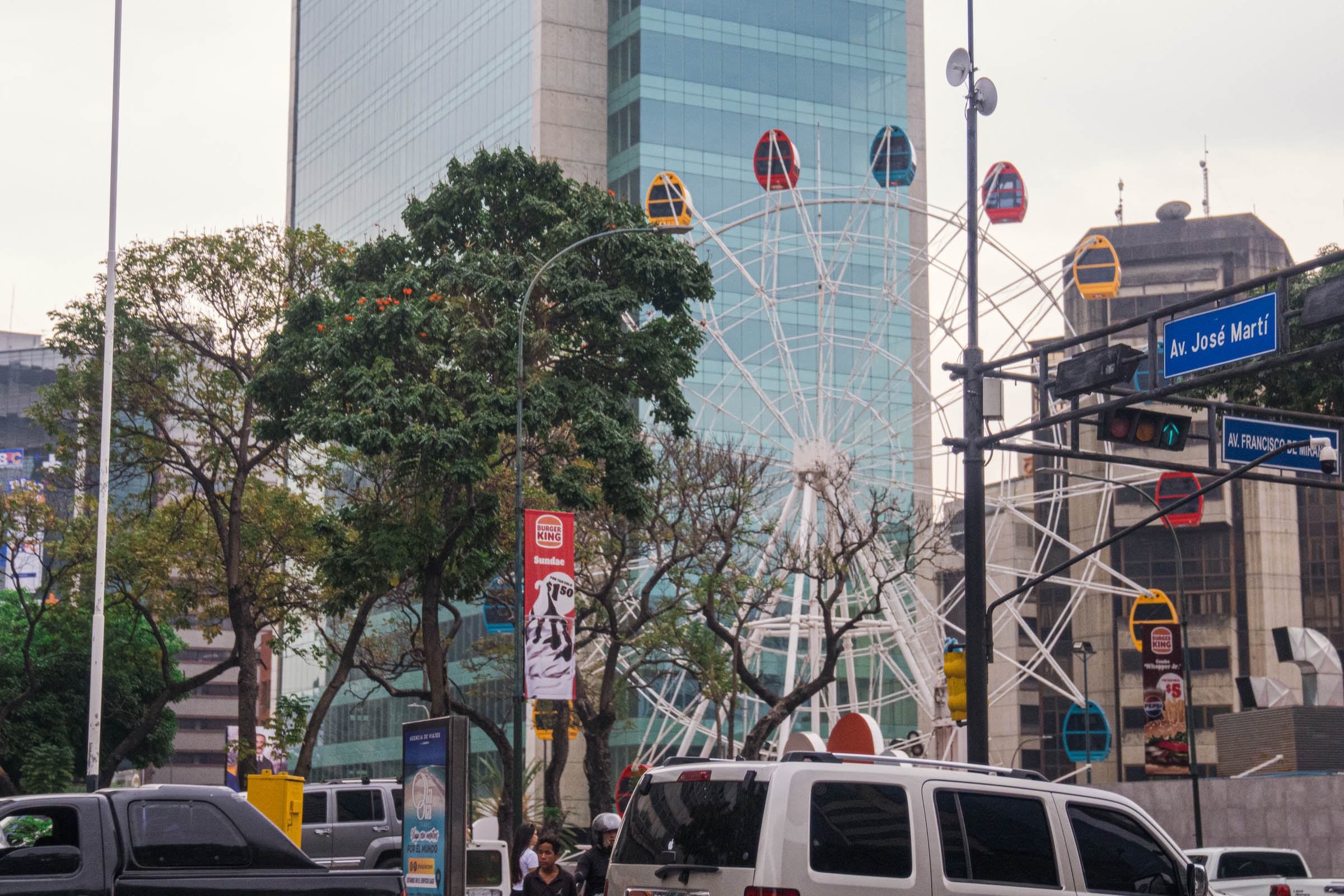
For lovers of shopping malls, Caracas offers several big names. Centro Sambil, completed in 1998, has more than 500 stores on five levels and ranks among the largest malls in South America. In Las Mercedes, the Tolón Fashion Mall gathers fashion brands, while Centro Lido stands on Avenida Francisco de Miranda in El Rosal. The Centro San Ignacio in La Castellana won recognition for Latin American contemporary architecture in 1998.
However, the true luxury of Caracas lies in smaller design shops and ateliers. There, local creators offer unique pieces, from elegant clothes to handbags and accessories that you will not find anywhere else.
THE REAL REASON FOR MY TRIP TO CARACAS: IBT
When I was planning my trip to Venezuela, many people asked me why I chose this destination. My answer has always been the same: Venezuela is a country of contrasts, undiscovered beauty and rich culture that deserves to be seen from a different angle.
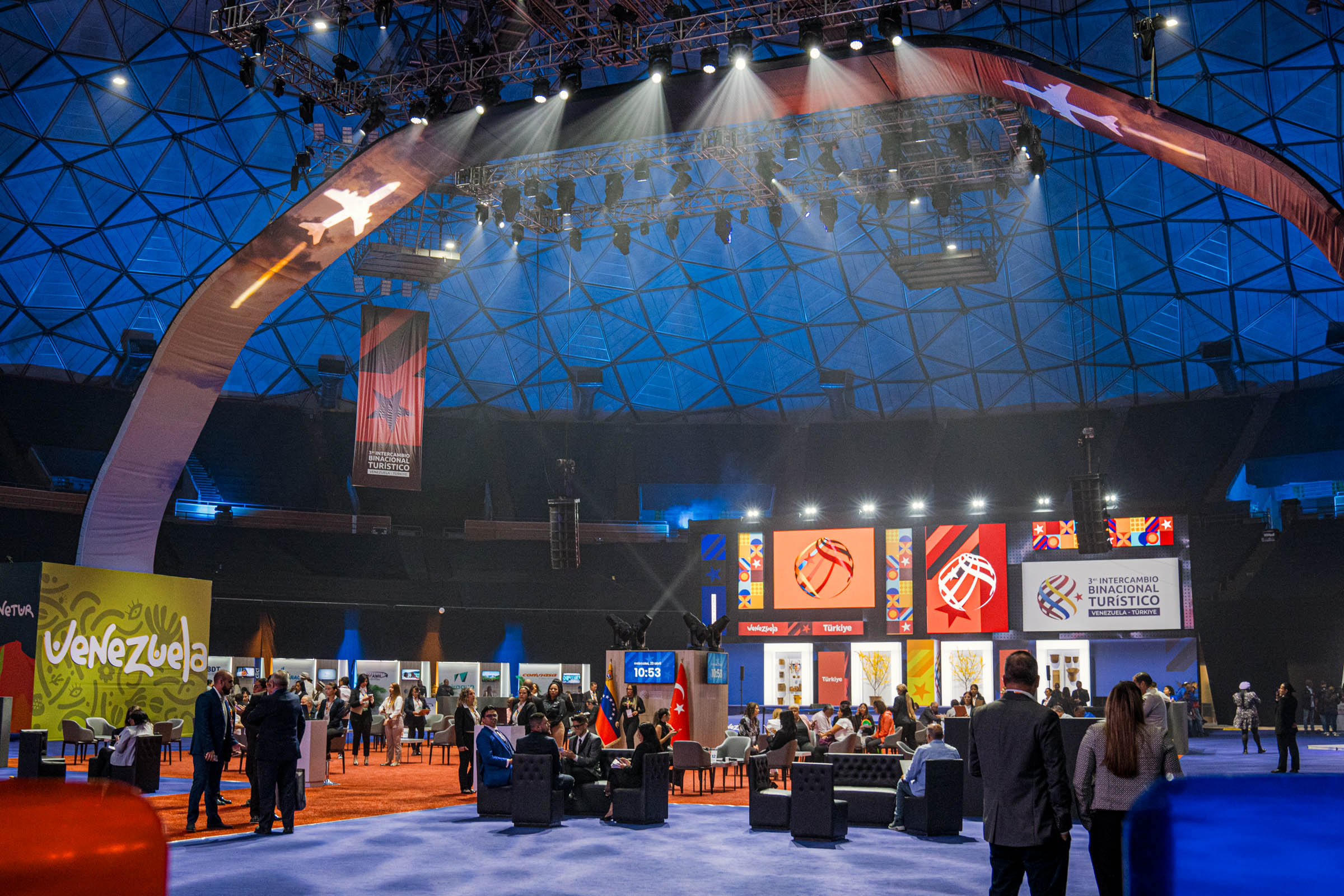
The real reason for my arrival in Caracas was an important event: the 3rd edition of the Intercambio Binacional Turístico (IBT), a binational tourism exchange between Türkiye and Venezuela. The event took place at the Poliedro de Caracas, and it brought together representatives of travel agencies, hotels, airlines, entrepreneurs and tourism promoters.
I received the invitation from the Ministry of Tourism and Leticia Gómez, the Minister of Tourism at the time. It was a great honor and a confirmation of my work. As one of the few travel bloggers from Europe at the event, I knew a unique experience awaited me. I could get to know the tourism potential of Venezuela firsthand and present it to my readers in a new way.
For me, the Türkiye connection had a special meaning, because my journey to Venezuela started with a stopover in Istanbul.
INSIDE THE IBT IN CARACAS
The idea behind IBT is simple but powerful: the exchange of knowledge, experiences and contacts. In conversations and panels, I heard about new projects, the potential of the country for tourism and the challenges ahead.
As a guest of IBT, I had the opportunity to present my travel experience and the creation of luxury travel content for an international audience. It was inspiring to share ideas with people who want to show their country in a new light.
What particularly pleased me was that the organizers recognized the importance of digital media and blogs for tourism promotion. Today, travelers trust personal stories and authentic experiences more and more. This is precisely where a travel blogger can help, with a story that inspires and motivates.
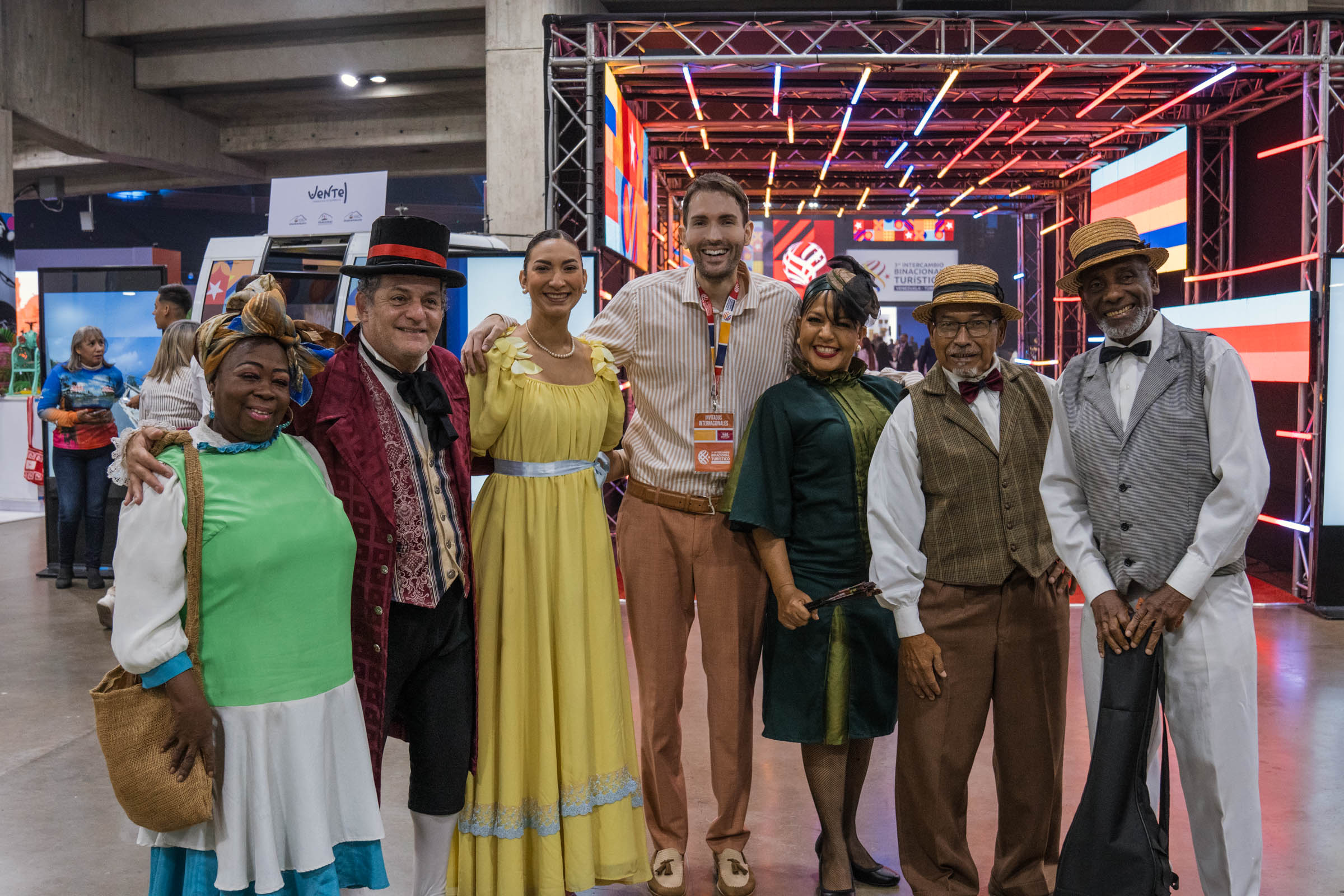
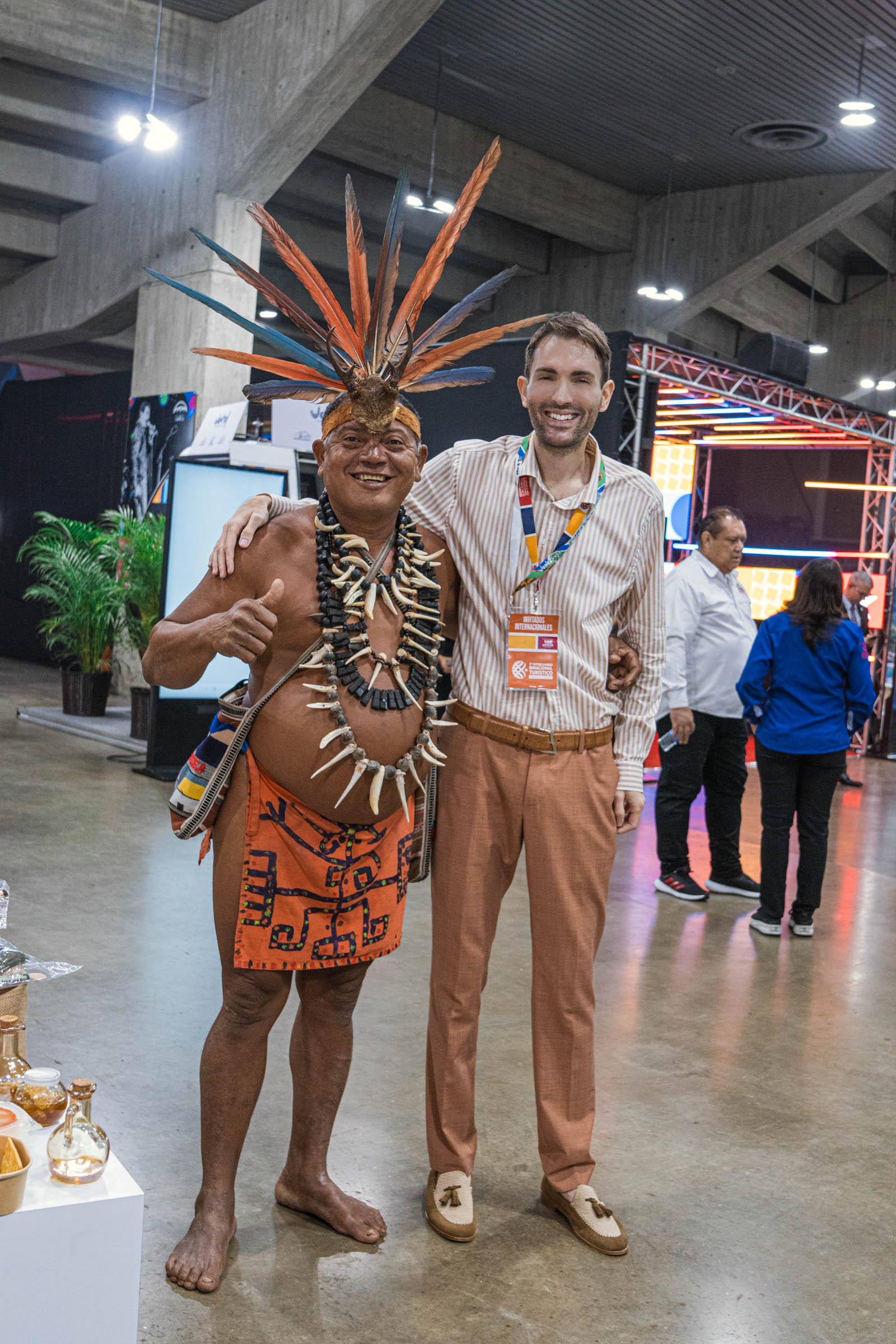
The event combined a business and a friendly tone. Next to the stands, dancers in traditional costumes and guests from indigenous communities presented the cultural wealth of the country. One of the most beautiful moments was a personal conversation with Minister Leticia Gómez about her vision of Venezuela as a destination that combines nature, culture, luxury and authenticity.
WHAT CARACAS AND IBT MEANT TO ME
Being a part of this event meant more than just a trip. For a moment, I felt like a bridge between Venezuela and Europe, someone who can present the destination through a travel and cultural prism. My mission has always been to show that luxury travel does not mean only luxury hotels and expensive restaurants. Above all, it means the experience itself: meeting a new culture, tasting different food and talking to local people.
That is exactly why my stay in Caracas gave me the chance to combine professional and personal travel. I discovered the city through official tourism initiatives, but also through streets, museums, markets and hidden corners.
Venezuela has enormous advantages, from the Caribbean Sea and its beaches, through the Andes and its national parks, to Angel Falls and the cultural heritage of the capital. To me, it felt like a destination that is just building its image in the world of luxury tourism.
When I look back, I realize that I came to Caracas for two reasons. On the one hand, I attended an important tourism event. On the other hand, I came as a curious traveler who loves to discover new faces of unexplored destinations. My advice is to see the country with your own eyes, with up-to-date travel advice and a good local partner.
THANK YOU, VENEZUELA
When I gather my impressions, I realize that I experienced much more than just a destination. Venezuela draws you into its story through landscapes, history, people and culture.
I owe special thanks to the Ministry of Tourism of the Bolivarian Republic of Venezuela (MINTUR) and to Minister Leticia Gómez for the invitation and the trust. It was not only a sign of trust, but also an inspiration to share this story with you, my loyal readers who have followed my travelogues and fashion stories for years.
Caracas revealed its contrasts to me: modern boulevards and colonial squares, luxury hotels and street cafés, a busy urban rhythm and quiet corners. What enchanted me most is the warmth of the people. That warmth turns every city into a home and every trip into a story worth remembering.
For me, this trip was more than work. I learned that luxury is not only comfort and exclusivity, but also the richness of experiences and the people who welcome you with a smile.
SAYING GOODBYE TO CARACAS
My dear travelers, we have come to the end of this special travelogue from Caracas. Together, we walked from Plaza Altamira and Las Mercedes to the colonial heart around Plaza Bolívar. We visited the Casa Natal, the museums and Los Caobos Park, climbed to the Cuartel de la Montaña and explored the colorful streets of El Hatillo.
This travelogue would not have been possible without the support of MINTUR, Eurobuilding Hotel & Suites Caracas and local partners. Thanks to them, I could feel the spirit of Venezuelan culture and tradition firsthand.
As always, I tried to share authentic impressions, the right atmosphere and recommendations for you who like to travel in style, but also with an open heart. So, thank you, Venezuela, and thank you, Caracas.
Have you already visited Caracas, or is this unusual city still on your travel wish list?
Feel free to leave your impressions, comments or questions below, or contact me by email and on social networks. All information is on the CONTACT page.
With love from Caracas,
Mr.M
This post is sponsored by Ministry of Tourism of the Bolivarian Republic of Venezuela – MINTUR and other local partners. This post is my personal and honest review of the destination experience.
Absolutely breathtaking! I have never seen a city that mixes nature and urban life so seamlessly. The way you described El Ávila rising above the city and the sunrise over Caracas gave me goosebumps. It feels like I was watching the panoramic view with you, coffee in hand, as the city woke up around me. I also loved reading about the warm welcome at the airport and how even the hotel staff greeted you with a friendly “bienvenido”. It’s such a relief to know that locals are so hospitable and proud of their city. The blend of luxury and local charm you experienced sounds perfect. Your stay at that hotel sounds fantastic, especially the spacious suite and the pool bar with local rum cocktails. Reading your description, I could almost taste an arepa at breakfast. Thank you for sharing your adventure so vividly, it truly feels like I was exploring Caracas with you!
This is absolutely incredible! Your travelogue makes Caracas sound so enchanting. I especially loved your emphasis on street art and murals, I can picture them decorating the city’s walls with so much color and meaning. The way you talk about people being proud of their city despite everything is really inspiring. I admire how you took the time to engage with locals, even if your Spanish wasn’t perfect, and still felt so welcomed. It’s wonderful that you tried so many local foods like arepas and even enjoyed a cocktail at the pool bar. The detail about the friendly “bienvenido” at the hotel was heartwarming. Did you have a favorite place to watch the sunset? Thank you for sharing your journey, I feel like I now want to explore Caracas myself!
What an amazing read! I really felt drawn into Caracas through your vivid descriptions. The contrast you mentioned between luxurious villas and simple neighborhoods makes me want to witness the city’s diversity firsthand. It’s so interesting how you combined sightseeing with safety tips, that shows a lot of responsibility and care for your readers. I’ve always thought of Venezuela as mostly wild nature and Angel Falls, but your story convinced me that its capital city has so much culture and character to offer. The mention of trying arepas and cocktails in the evening sounds delightful. Do you have any advice for first-time travelers about getting around or staying safe? Thanks for sharing this post, it’s inspiring me to plan a similar adventure!
What an immersive story! I actually had no idea that Caracas had such a vibrant hotel scene and mountain views. I’m amazed by your description of the Eurobuilding Hotel and its luxurious vibe. It sounds like the perfect spot to relax after exploring the city, with that pool bar and local rum cocktails. The way you described enjoying an arepa for breakfast really made me hungry, and your morning on the terrace with the city waking up sounds so idyllic. I love how you emphasize that luxury doesn’t just mean expensive brands, but moments like watching a sunrise over El Ávila from a hotel terrace. Did you get a chance to try their Venezuelan coffee? Thank you for inspiring me to consider Caracas in my next itinerary. I feel like I understand the city so much better after reading your post.
This post was such a delightful surprise! I’m usually skeptical about traveling to places with so many mixed reports, but you made Caracas sound truly magical. The contrast between the Caribbean sea at the airport and the mountains as you arrive is something I’d love to witness in person. Your advice on using only trusted transport and staying at nice hotels really helps ease any fears. Also, hearing how locals are friendly and proud of their city made me smile. Reading about the arepas and local cuisine reminded me why I love to travel through food. Do you have any recommendations for a first-time visitor to Venezuela? I’ll definitely keep an eye out for your future posts. Thanks again for sharing this inspiring journey!
Wow, this was such an exciting read! Your passion for travel really shines through each paragraph. Caracas seems to be a city full of surprises and beauty, especially with El Ávila towering above it. The luxurious details about your hotel stay sound amazing, but I also appreciate how you highlighted the local, authentic experiences like street art and traditional breakfasts. It feels like reading a letter from a friend who just came back from an adventure. I would love to hear more about how you prepared for this trip and any unexpected surprises along the way. Thank you for sharing such a vivid and uplifting story about Caracas, and I’m looking forward to your next posts!
I enjoyed reading this! I wasn’t sure what to expect from Caracas, but your story makes it clear why it’s called Bolívar’s hidden gem of South America. The descriptions of the city’s energy, with modern architecture standing next to colonial charm, are so vivid. I especially loved hearing about the local art and culture, it makes me want to take a stroll through the city’s streets. I also appreciate that you talk about practical details like visas, currency, and safety tips; that information will be really helpful for someone planning a visit. Did any local food or drink stand out to you as a must-try? Thank you for sharing such a detailed and authentic look at a city I might never have considered otherwise. Safe travels and keep inspiring!
Your journey sounds absolutely stunning and fearless! I love how Caracas is portrayed as a city of surprises, not just a usual tourist destination. Reading about the sky-high contrast, from sea level to mountains, makes me want to plan a trip there. The fact that you explored El Ávila and enjoyed local cuisine in five-star style really shows how versatile Caracas is. I agree that sometimes luxury is all about simple moments like listening to music in a café or watching the sunset from a hotel terrace. Did you manage to pick up any Spanish phrases or tips for talking with locals? Thank you for sharing your experience in such an inspiring way. I look forward to reading more about your travels through South America!