
My dear travelers and lovers of unusual journeys, welcome to a new letter from Japan on the Mr.M blog. In my previous letter, I took you to Kyoto, the millennial capital where time stands still. Now, I am taking you to a city that changes you with its energy. There are cities you visit, and there are cities that stay with you forever. Tokyo undoubtedly belongs to the second group.
The Japanese capital is proof that modern life can exist in harmony with tradition. You feel that tradition in narrow streets and in temples whose history goes back to the 7th century. At the same time, skyscrapers touch the clouds above them. Here, the past and the future constantly intertwine.
Before we begin, I want to thank UN Tourism and Agora Tokyo Ginza for supporting this journey. Their dedication to connecting cultures and destinations inspires all of us who believe that travel enriches the soul.
When I first dived into this sea of contrasts, I realized that nothing could have prepared me for Tokyo. You cannot simply describe this city. Instead, you have to experience it. To truly understand it, you also need a retreat where you can rest after a long day. For me, that place was Agora Tokyo Ginza, a boutique hotel that became my base in this amazing city.
SHIBUYA CROSSING: MY FIRST TASTE OF TOKYO
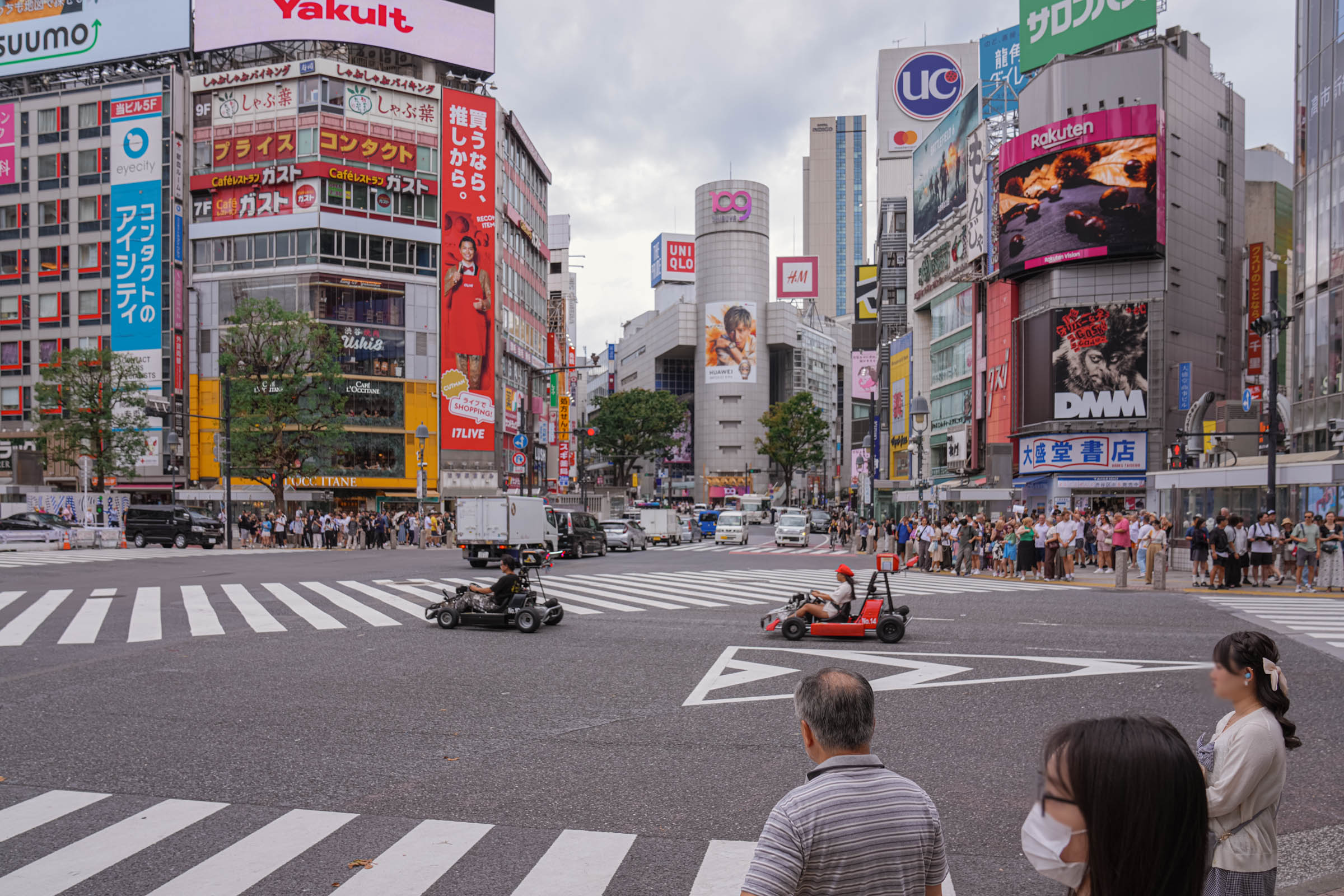
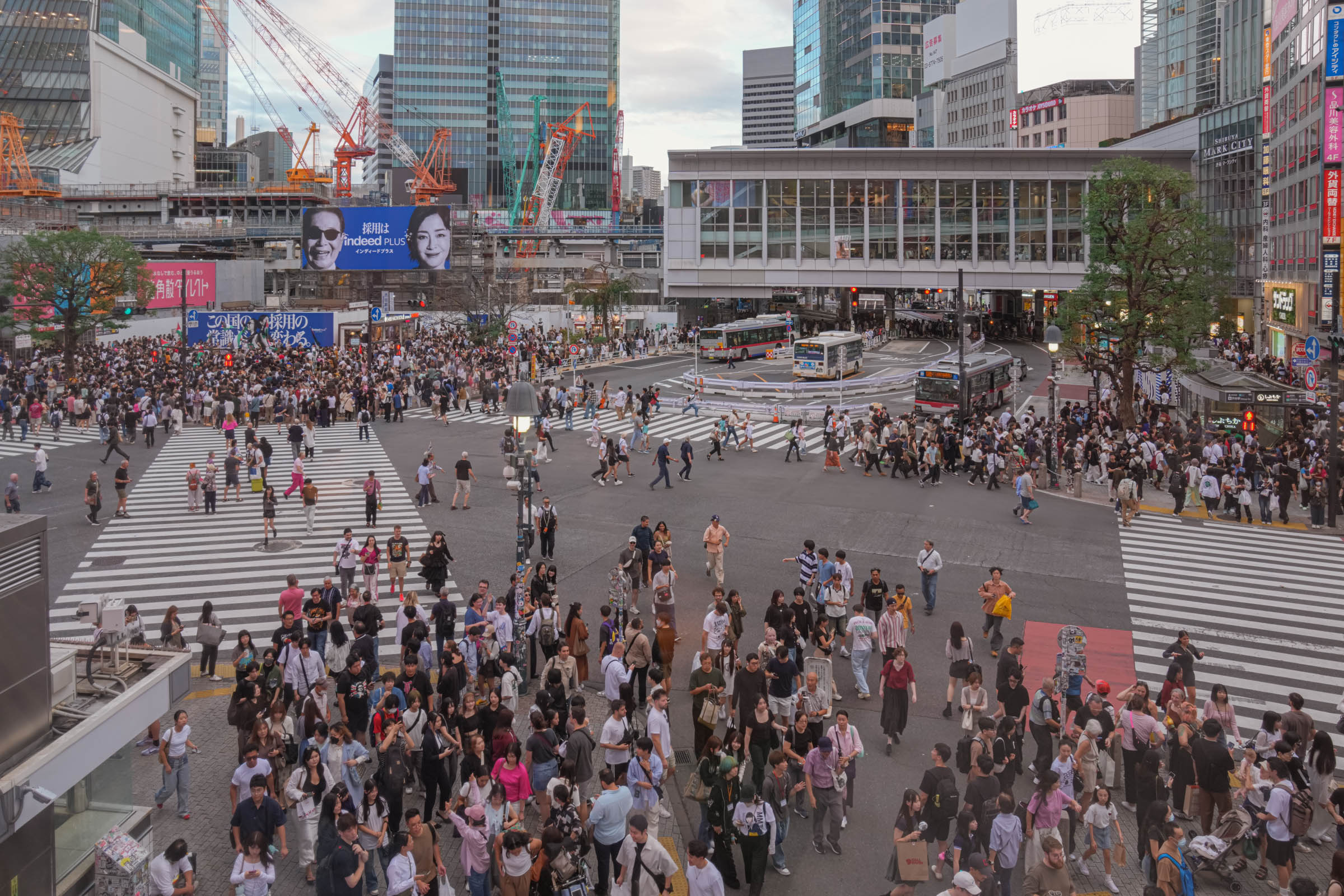
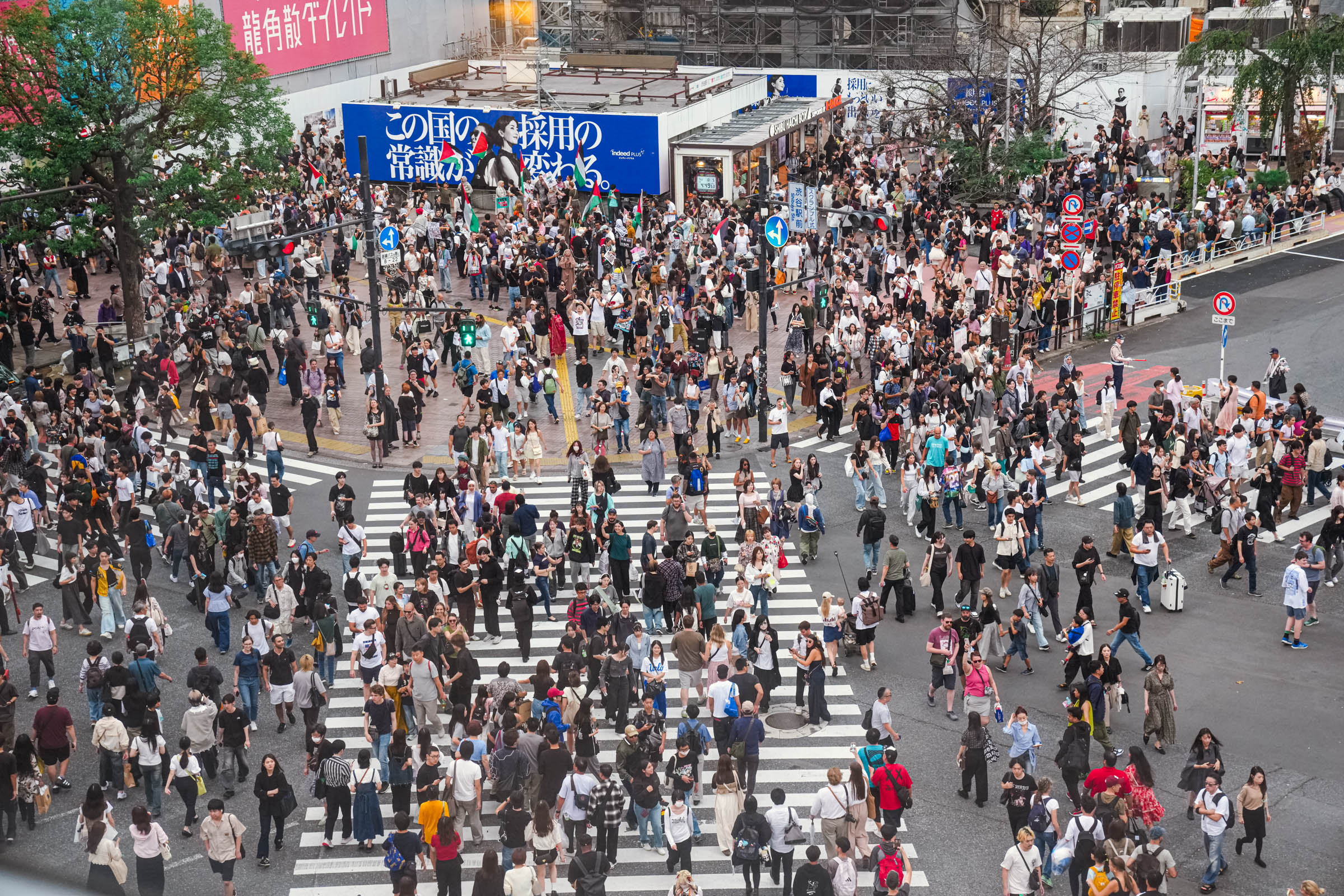
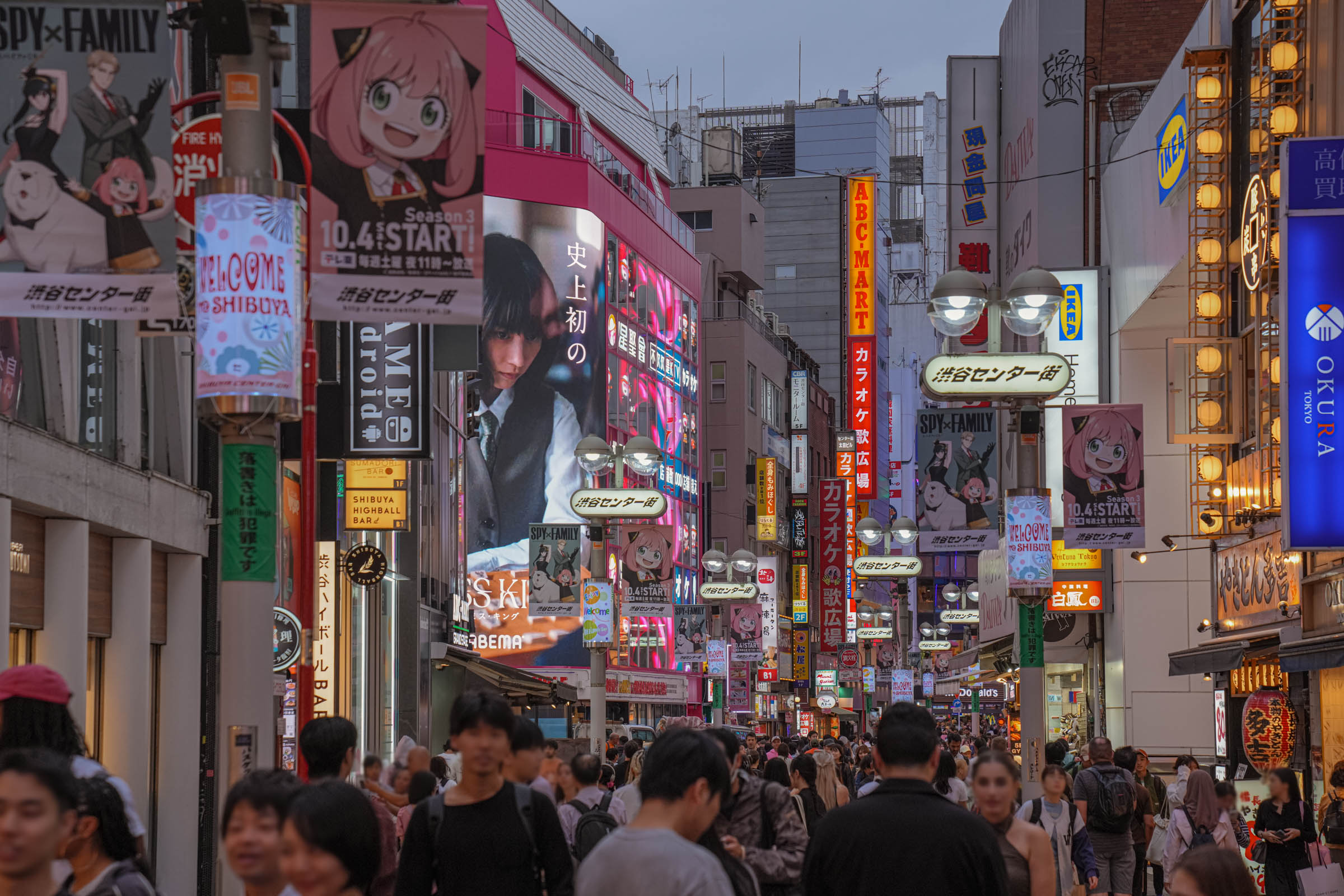
If one image symbolizes the dynamism of modern Tokyo, it is Shibuya Crossing. The scramble crossing in front of Shibuya Station opened in 1973. Many describe it as the busiest pedestrian crossing in the world. When the lights turn red for cars, people start walking from all sides at once. At busy times, as many as 3,000 people cross with a single green light. Miraculously, nobody bumps into anybody.
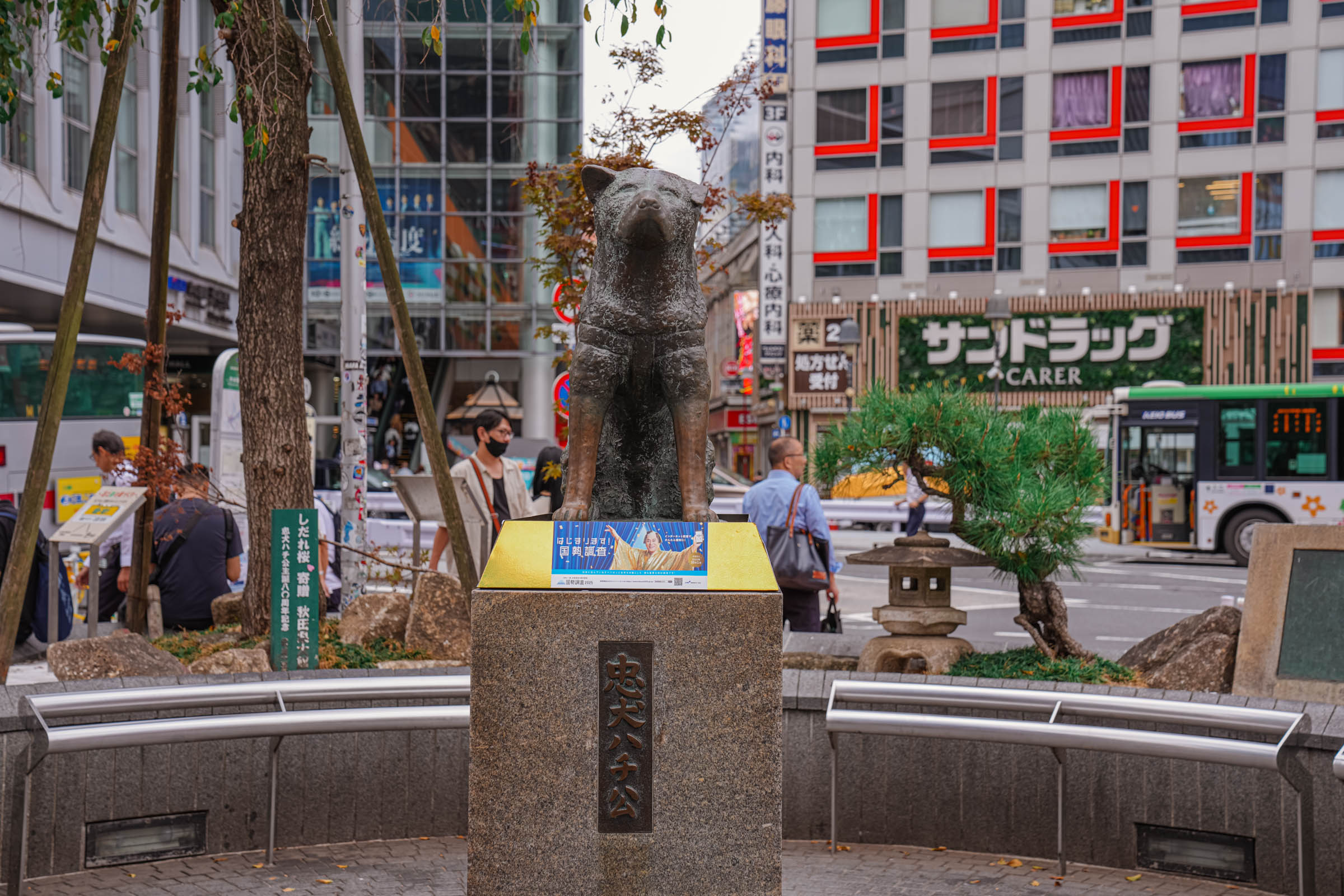
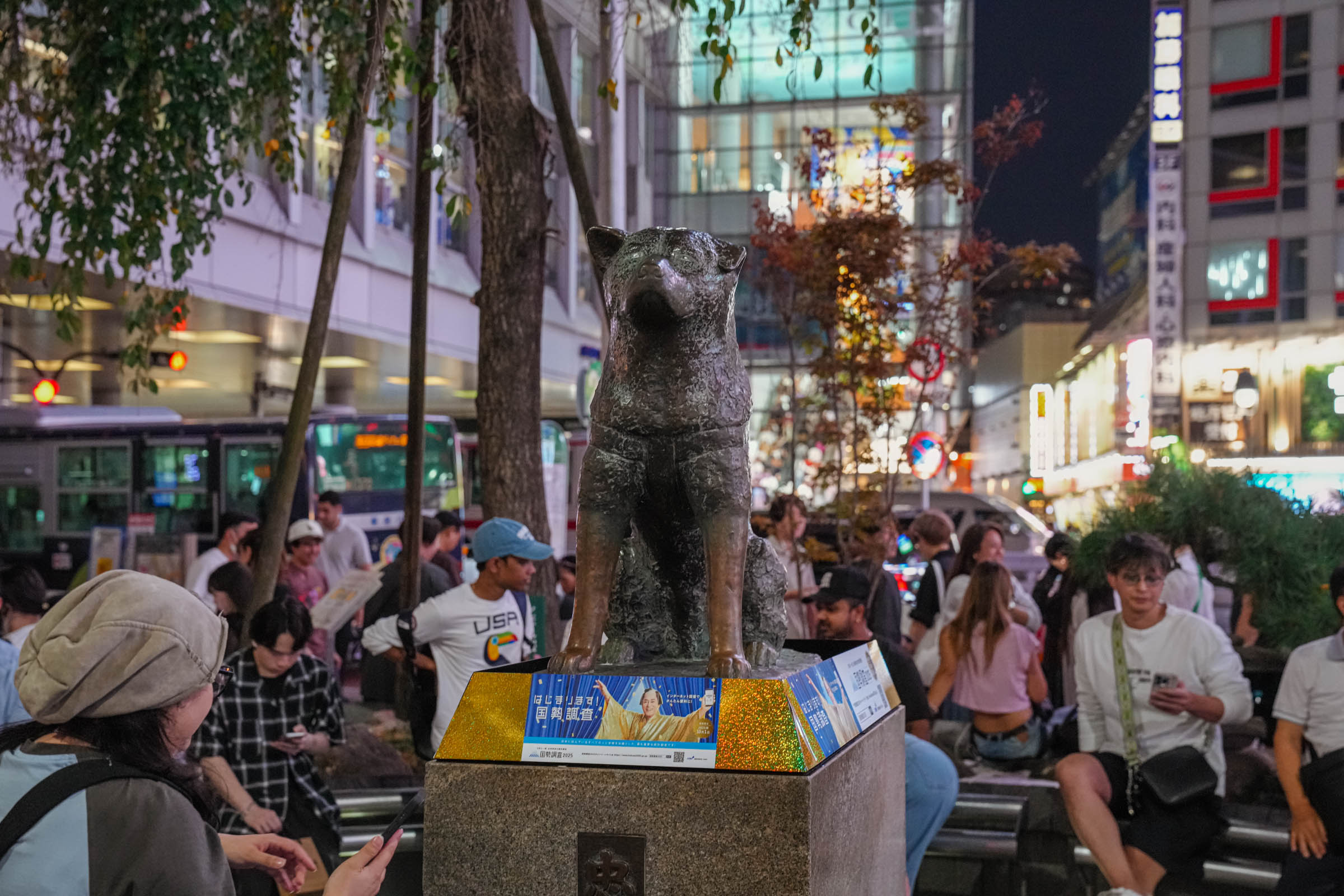
Next to the Hachiko exit stands a bronze statue with one of the most moving stories in Japan. Hachiko was an Akita dog that belonged to Hidesaburo Ueno, a professor at the University of Tokyo. Every day, Hachiko met his owner at Shibuya Station when he returned from work. Then, one day in May 1925, the professor did not come home.
Hachiko kept coming back to the station for almost ten years, waiting for him. In 1932, an article in the Asahi Shimbun told his story, and the dog became a national symbol of loyalty. Two years later, admirers unveiled a bronze statue at the station, and Hachiko himself attended the ceremony. Today, the statue is one of the most popular meeting points in the city.
TOKYO THROUGH HISTORY: FROM EDO TO THE SHOGUN’S CAPITAL
To truly appreciate Tokyo, you have to understand its transformation. Before it became the capital, the city carried the name Edo. The name means “bay entrance” or “estuary.” In 1457, the samurai Ota Dokan built a castle here, but the area remained modest for a long time.
Everything changed with Tokugawa Ieyasu. After his victory at the Battle of Sekigahara in 1600, he became shogun in 1603. He then made Edo the seat of his government. From that moment, Edo was the de facto capital of Japan, although the emperor still lived in Kyoto. The city grew at an incredible pace. By the early 18th century, about one million people lived here. That made Edo one of the largest cities in the world.
Life in Edo, however, was not easy. People built most houses of wood and very close together, so fires broke out often. The Great Fire of Meireki in 1657 burned a vast part of the city. It also destroyed the main keep of Edo Castle, which was never rebuilt.
FROM MEIJI TOKYO TO A MODERN METROPOLIS
The turning point came in 1868 with the Meiji Restoration. Power returned to the emperor, who moved here from Kyoto. At the same time, Edo got a new name: Tokyo, the “Eastern Capital.” Railways, the telegraph and Western architecture soon transformed the old city.
In the 20th century, Tokyo faced two great disasters. On September 1, 1923, the Great Kanto Earthquake and the fires that followed destroyed large parts of the city. Nevertheless, Tokyo rebuilt itself, and in 1930 it celebrated the completion of the reconstruction. Less than two decades later, the air raids of World War II devastated the city again.
But Tokyo is like a phoenix, always rising from the ashes. In 1964, it hosted the first Olympic Games in Asia. With them, the city showed the world a new and confident face. Today, according to the Tokyo Metropolitan Government, about 14.3 million people live in Tokyo itself. In the wider urban area, the United Nations counted about 33 million people in 2025. That makes Tokyo the third-largest city in the world, after Jakarta and Dhaka.
THE IMPERIAL PALACE AND THE FORMER EDO CASTLE
In the very center of Tokyo, surrounded by wide moats and green parks, lies the Imperial Palace. It stands on the site of the former Edo Castle and has been the residence of the emperors since 1868. The palace is about ten minutes on foot from Tokyo Station. Yet it feels like another world among the glass towers of Marunouchi.
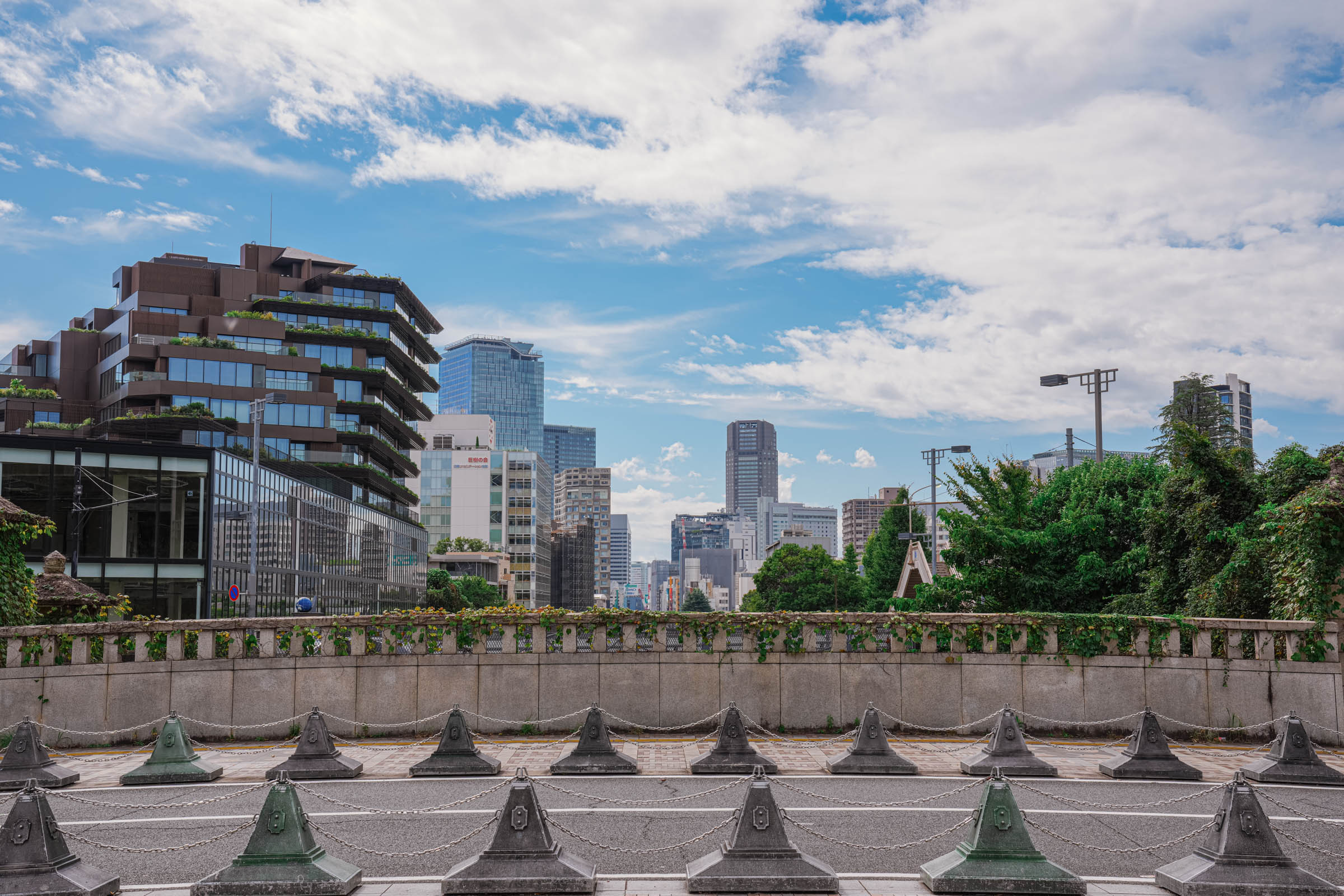
The main keep of Edo Castle, completed in 1638, was the tallest castle keep in Japanese history. After the fire of 1657, it was never rebuilt. Today, its massive stone foundation still stands in the East Gardens, which are open to the public free of charge. Keep in mind that the gardens close on Mondays and Fridays.
Nijubashi, the “Double Bridge” leading to the palace, is one of the most photogenic sights in the city. You cannot cross it, but the view from the outer garden is unforgettable. The inner grounds open to the public only twice a year. The first day is January 2, for the New Year Greeting, and the second is February 23, the Emperor’s birthday. On other days, you can join a free guided tour of the palace grounds, which lasts about 75 minutes.
GINZA: THE HEART OF TOKYO ELEGANCE
If Tokyo has a heart, it is Ginza. The name of this legendary district comes from a silver mint. The shogunate moved it here in the early 17th century. “Gin” means silver and “za” means guild, so Ginza is literally the “silver guild.” Even today, the district shines with the silver glow of luxury.
Modern Ginza rose from the ashes of a great fire in 1872. Afterward, the Meiji government rebuilt the district as a model of modernization. The British architect Thomas Waters designed its brick buildings. At first, the new Bricktown did not catch on, partly because of high rents. Even some Western visitors disliked it. Over time, however, Ginza found its own identity and became a symbol of the Japanese synthesis of tradition and modernity.
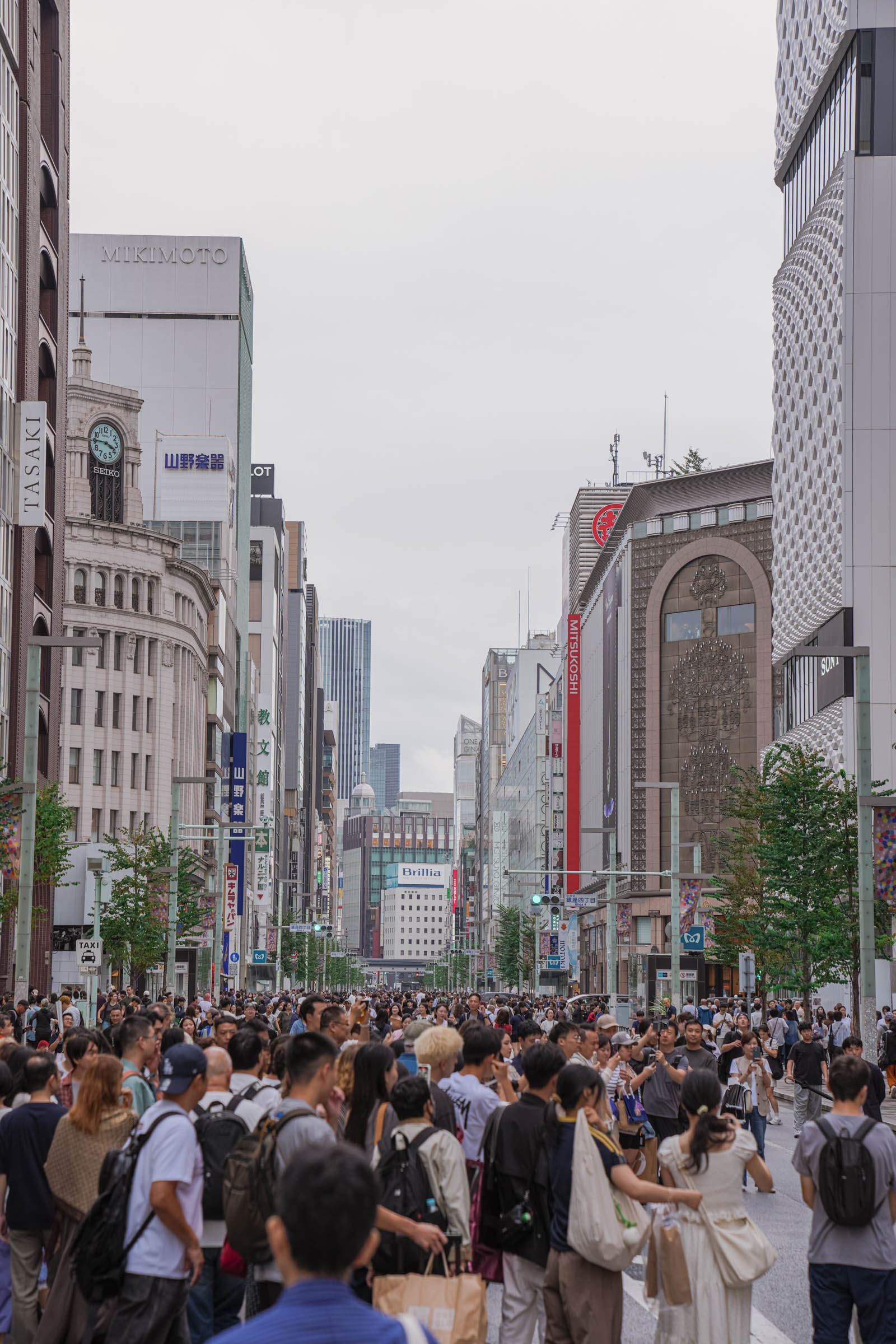
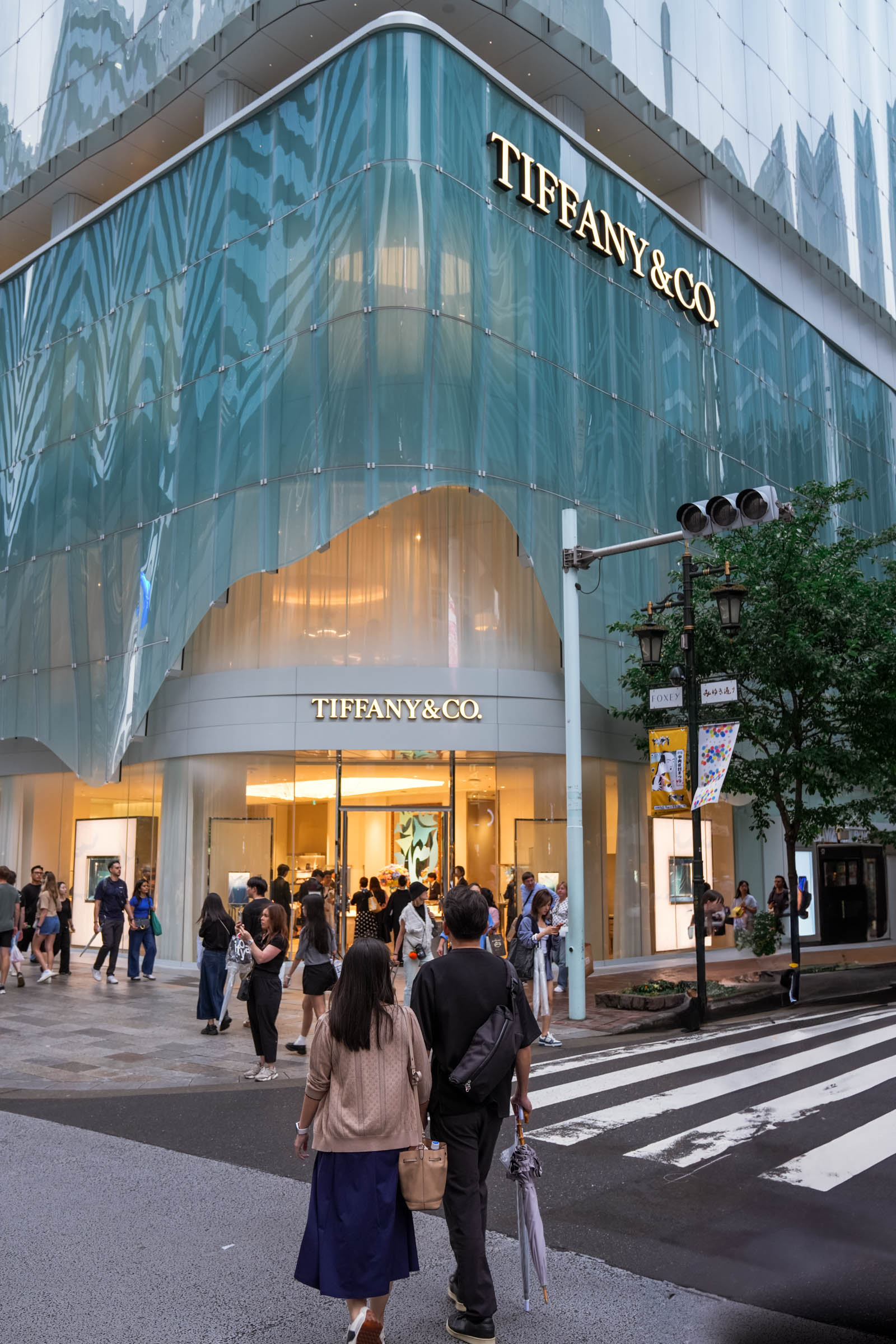
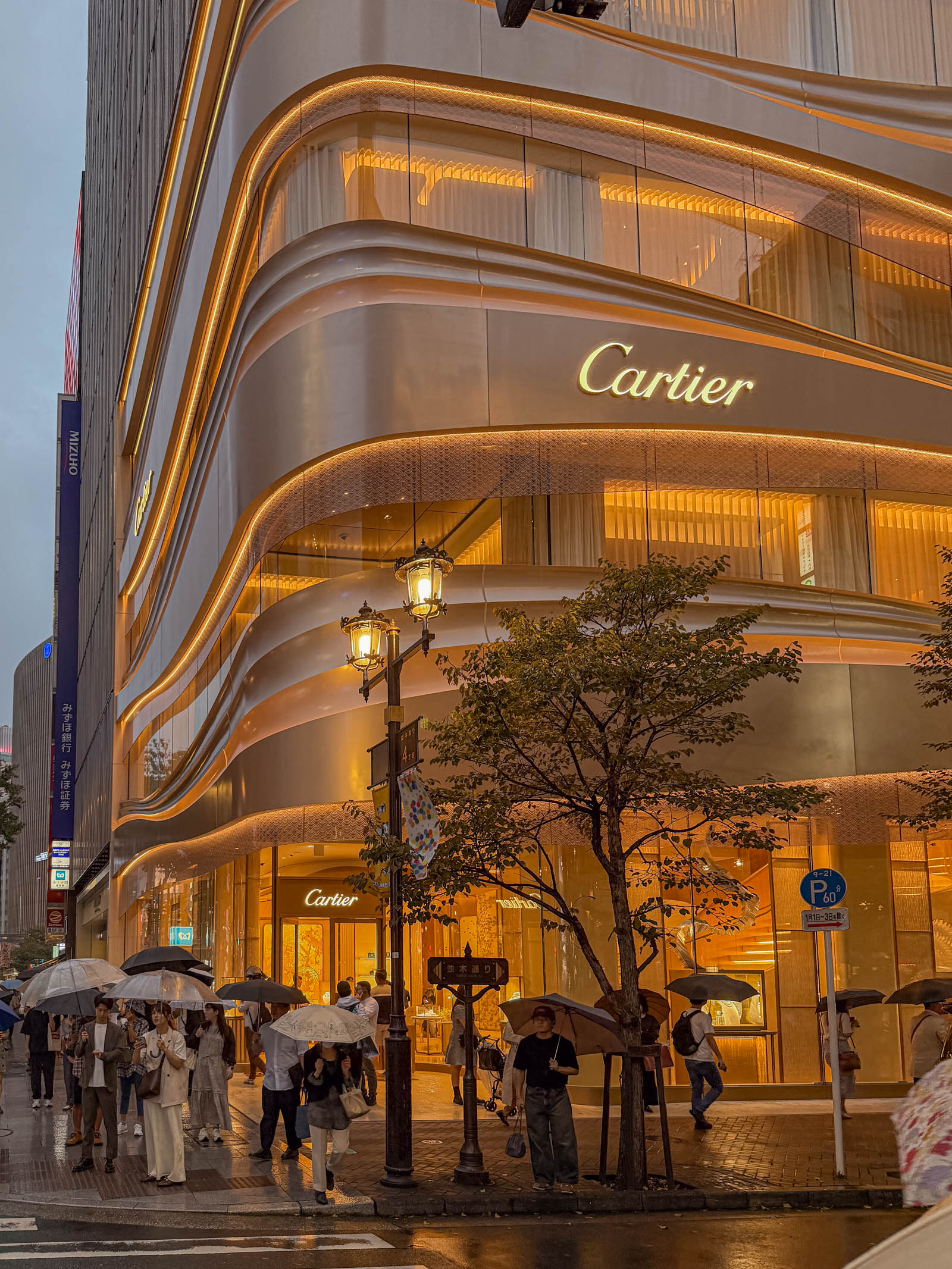
Today, Ginza is the most glamorous shopping district in Tokyo and one of the most famous in the world. Along Chuo-dori, the main boulevard, the biggest fashion houses have their flagship stores. Land here is also the most expensive in Japan. In 2026, the official land price at Yamano Music’s main store in Ginza reached 67.1 million yen per square meter. It was the highest commercial land price in the country for the 20th year in a row.
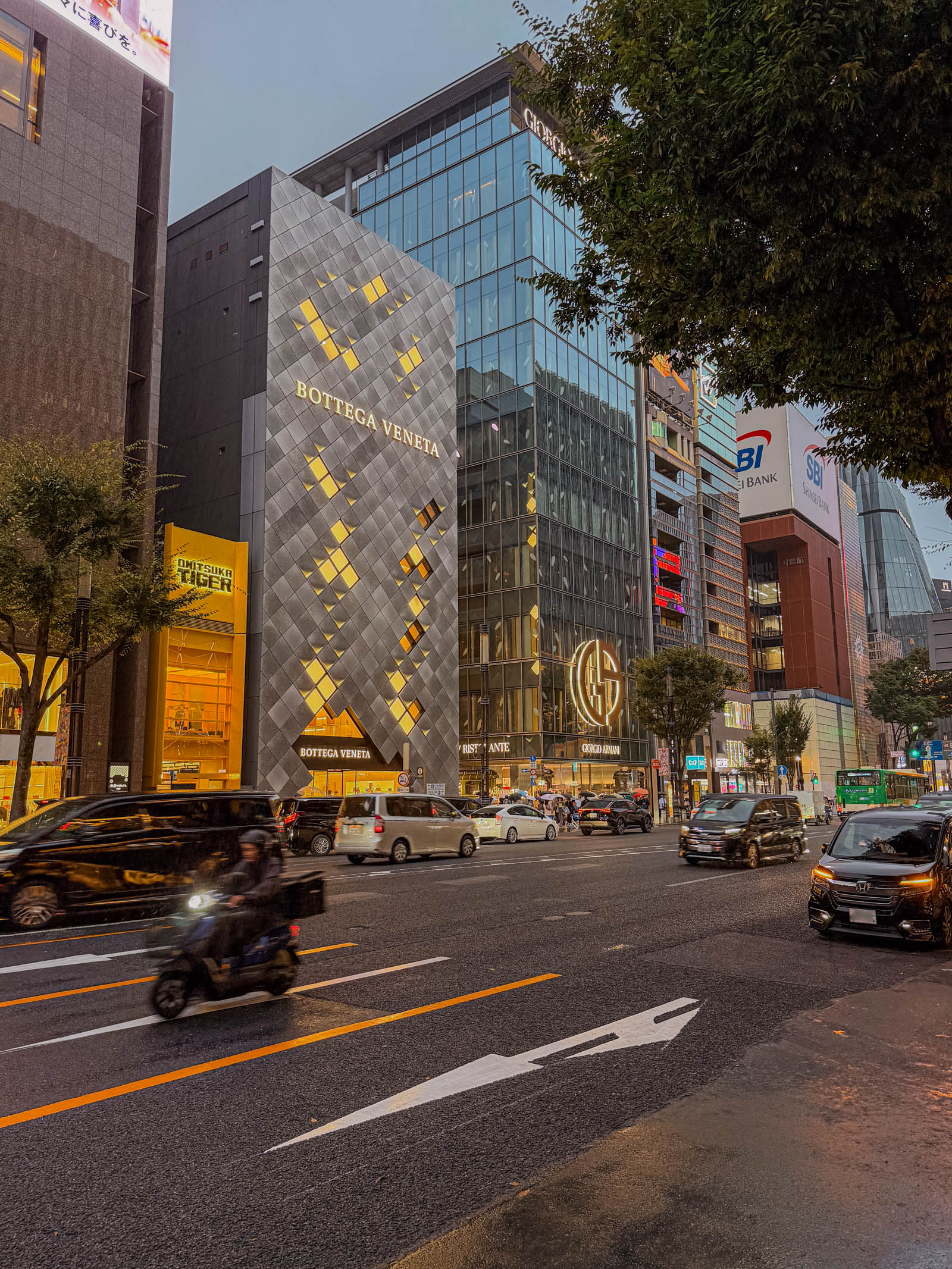
KABUKIZA AND THE WEEKEND PROMENADE
But Ginza is not only about shopping. It is also home to Kabukiza, the most famous theater for kabuki, the traditional Japanese stage art. The current building reopened in 2013 and keeps the classical elements of the earlier theater. Kabuki has a history of about four centuries. In 2008, UNESCO inscribed it on the list of the Intangible Cultural Heritage of Humanity. Interestingly, men play all the roles. Japanese people call male actors who specialize in female roles onnagata.
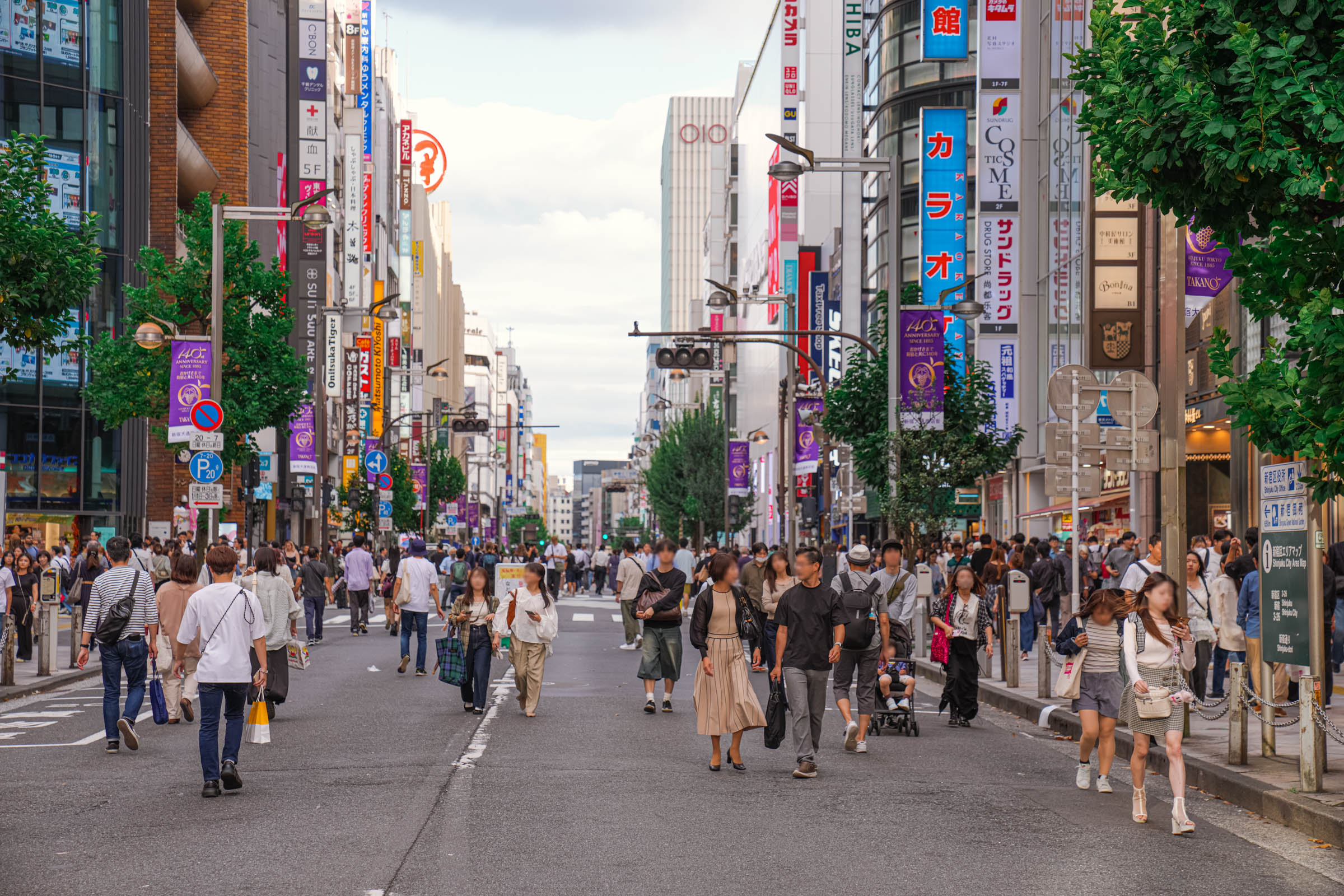
On weekends and national holidays, Chuo-dori becomes a pedestrian paradise, which locals call Hokoten. Ginza has held this tradition since 1970. From noon, cars disappear from about 1.1 kilometers of the boulevard. People then walk freely in the middle of the street until six in the evening in summer and five in winter. Here you can meet everyone, from elegant ladies in kimonos to tourists enchanted by this fusion of East and West.
AGORA TOKYO GINZA: MY SANCTUARY IN THE CITY
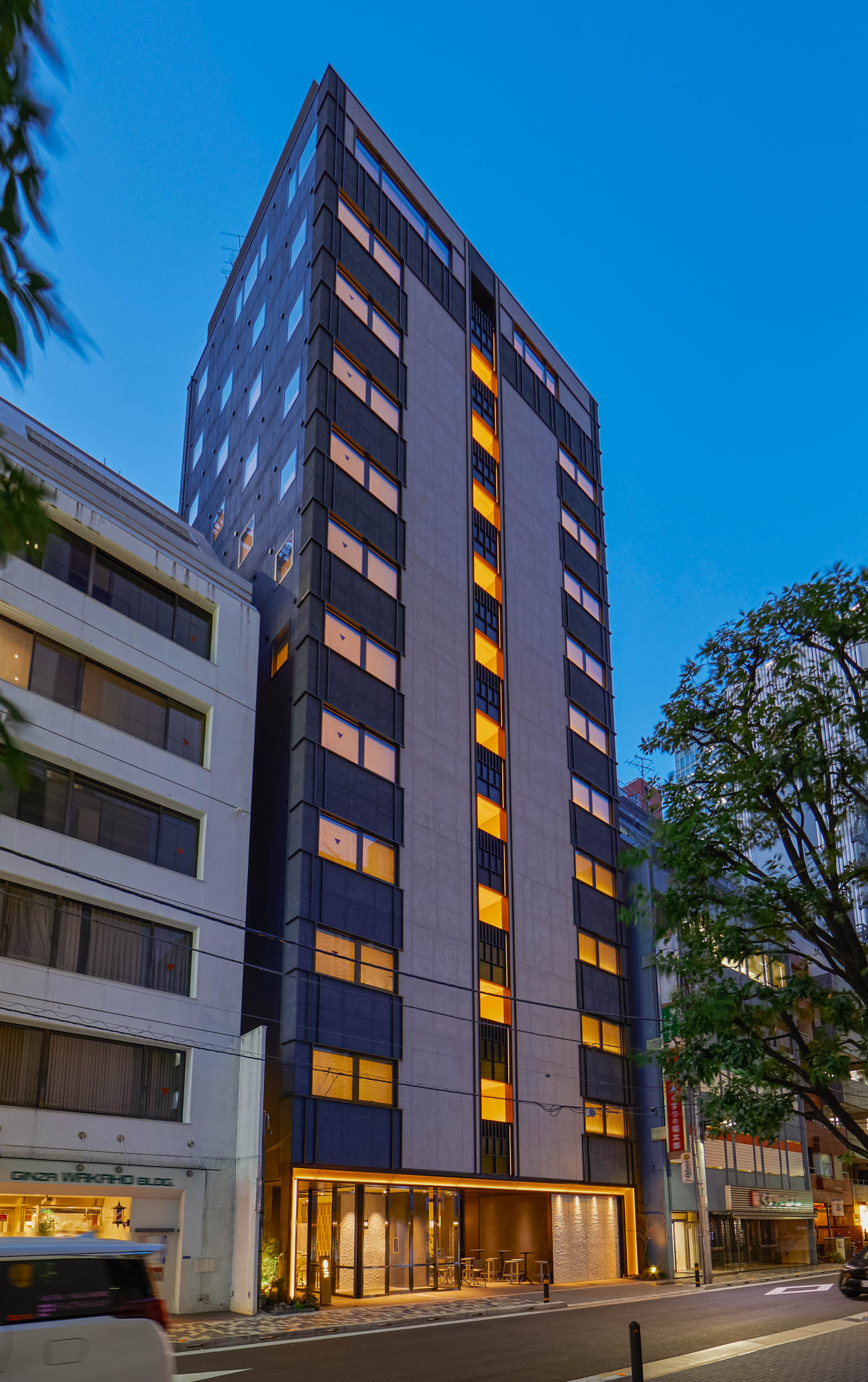
Amidst this whirlwind of luxury and tradition, I found my perfect haven at Agora Tokyo Ginza. The boutique hotel stands at 5-14-7 Ginza and has 98 rooms. According to the hotel, Higashi-Ginza Station is about two minutes away on foot, and Kabukiza only about three minutes. From the moment I entered the lobby, I felt an atmosphere that combines Japanese hospitality with modern comfort.
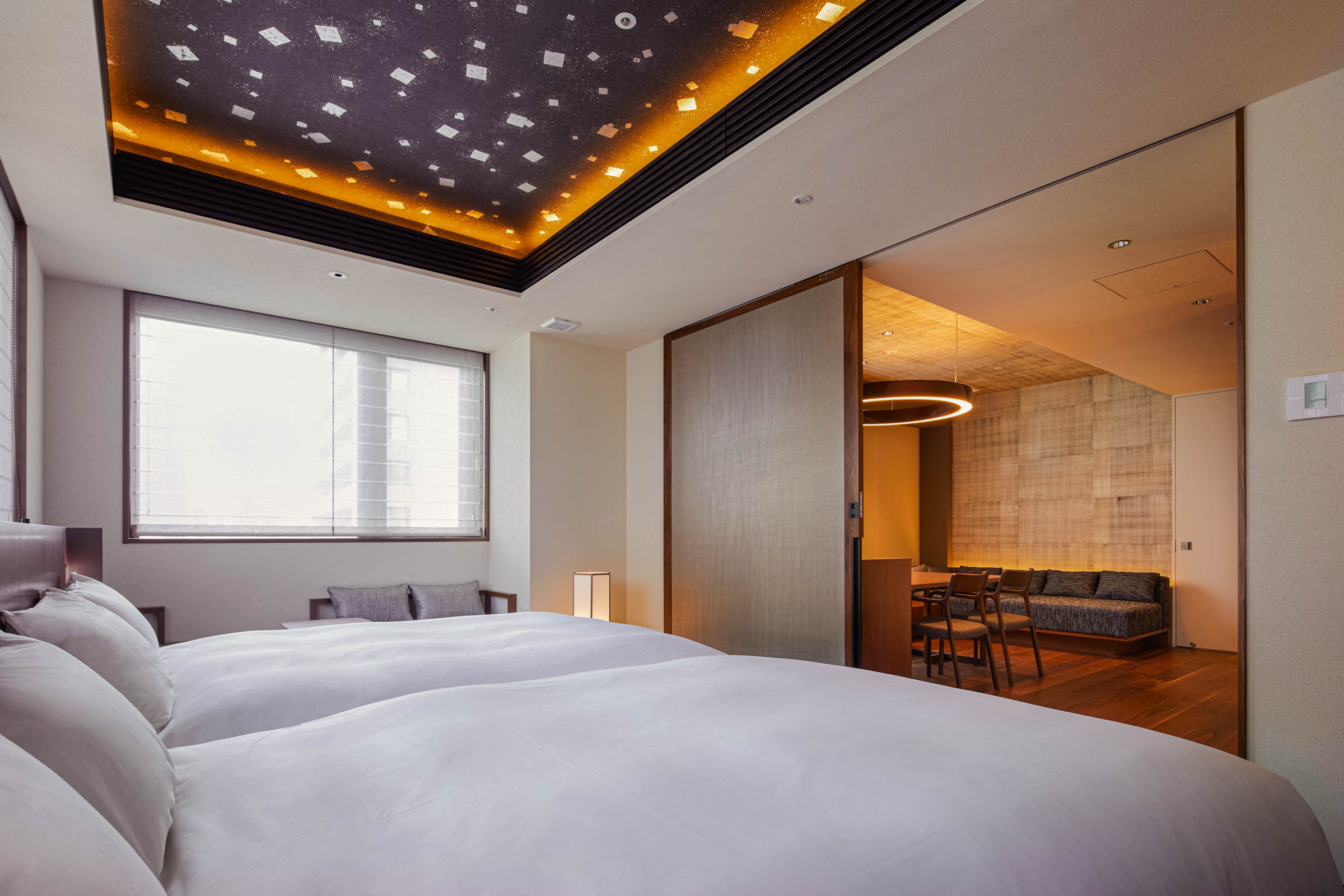
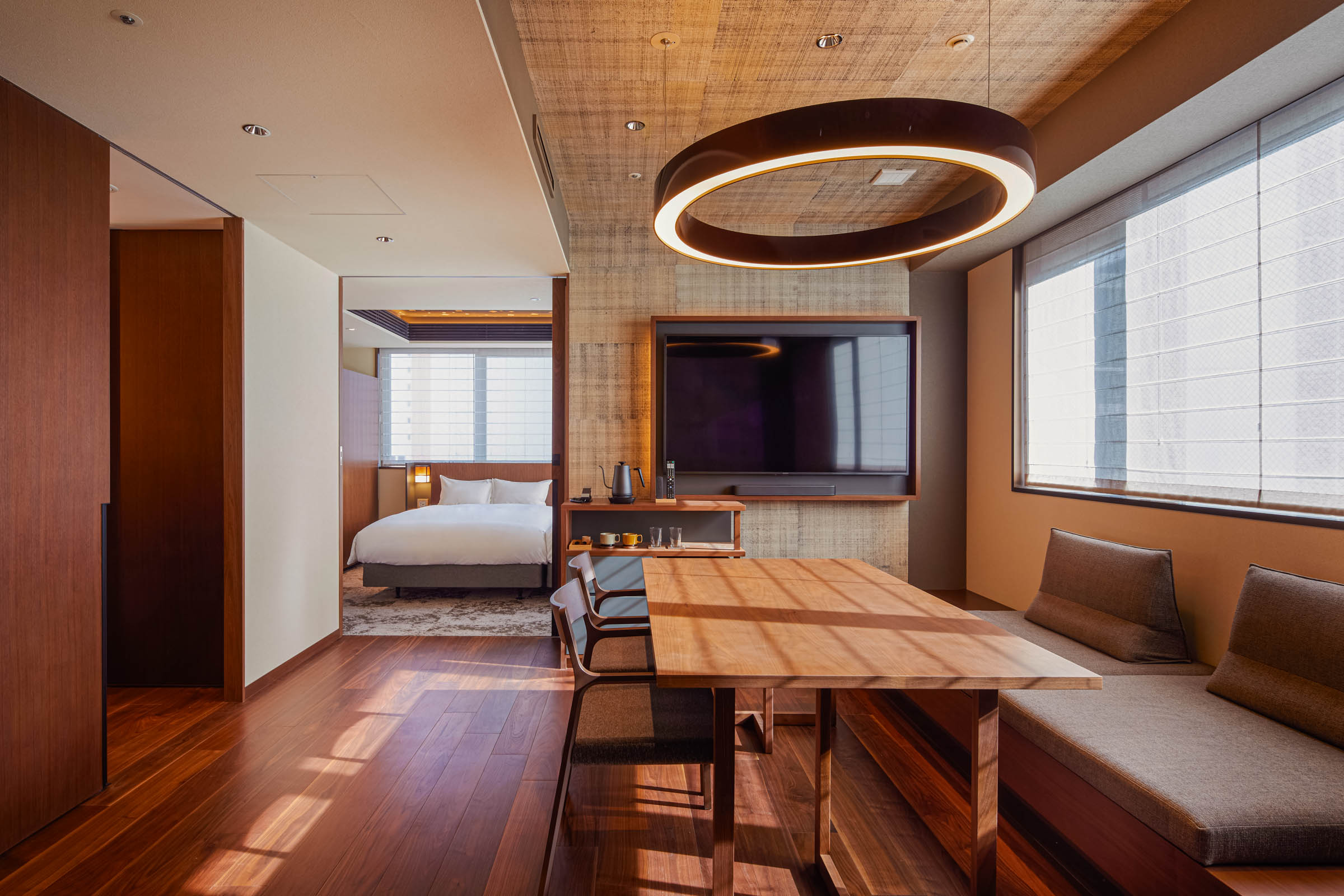
My stay in the Executive Suite was a real revelation. Japanese design knows how to make the most of every centimeter. The corridor leading to my room imitates the stone paths of Japanese gardens. It creates a sense of transition from the busy city to a peaceful retreat. Natural light filled the room, and the wooden floors added warmth to the whole space.
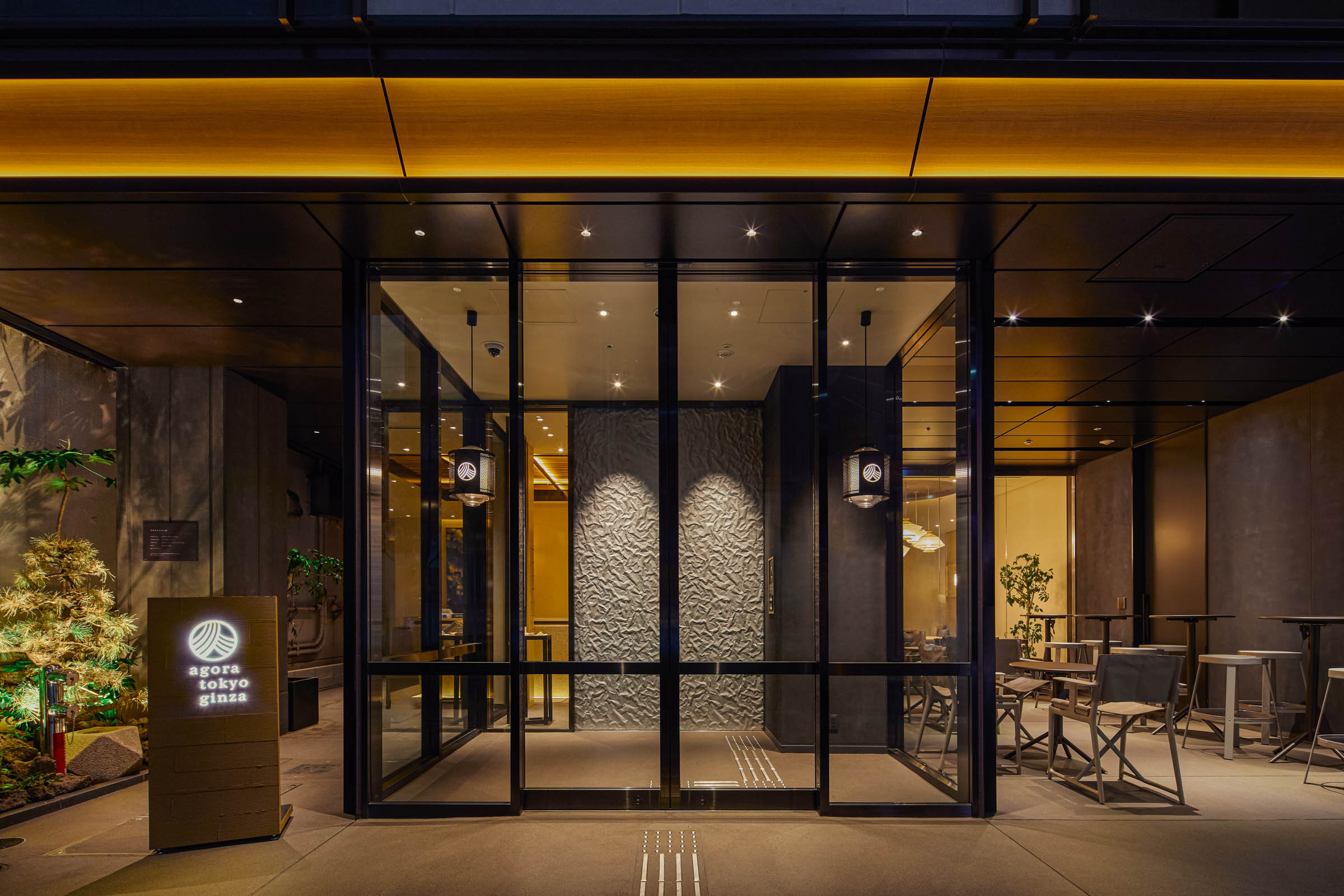
A detail that especially delighted me was the tokonoma, a traditional Japanese alcove for displaying art or flower arrangements. This element connects the modern hotel with centuries of Japanese aesthetics. In my suite, I also found a Dyson hair dryer, a pour-over coffee set and a selection of premium teas. A smart TV, Bluetooth speakers and an electric kettle completed the comfort.
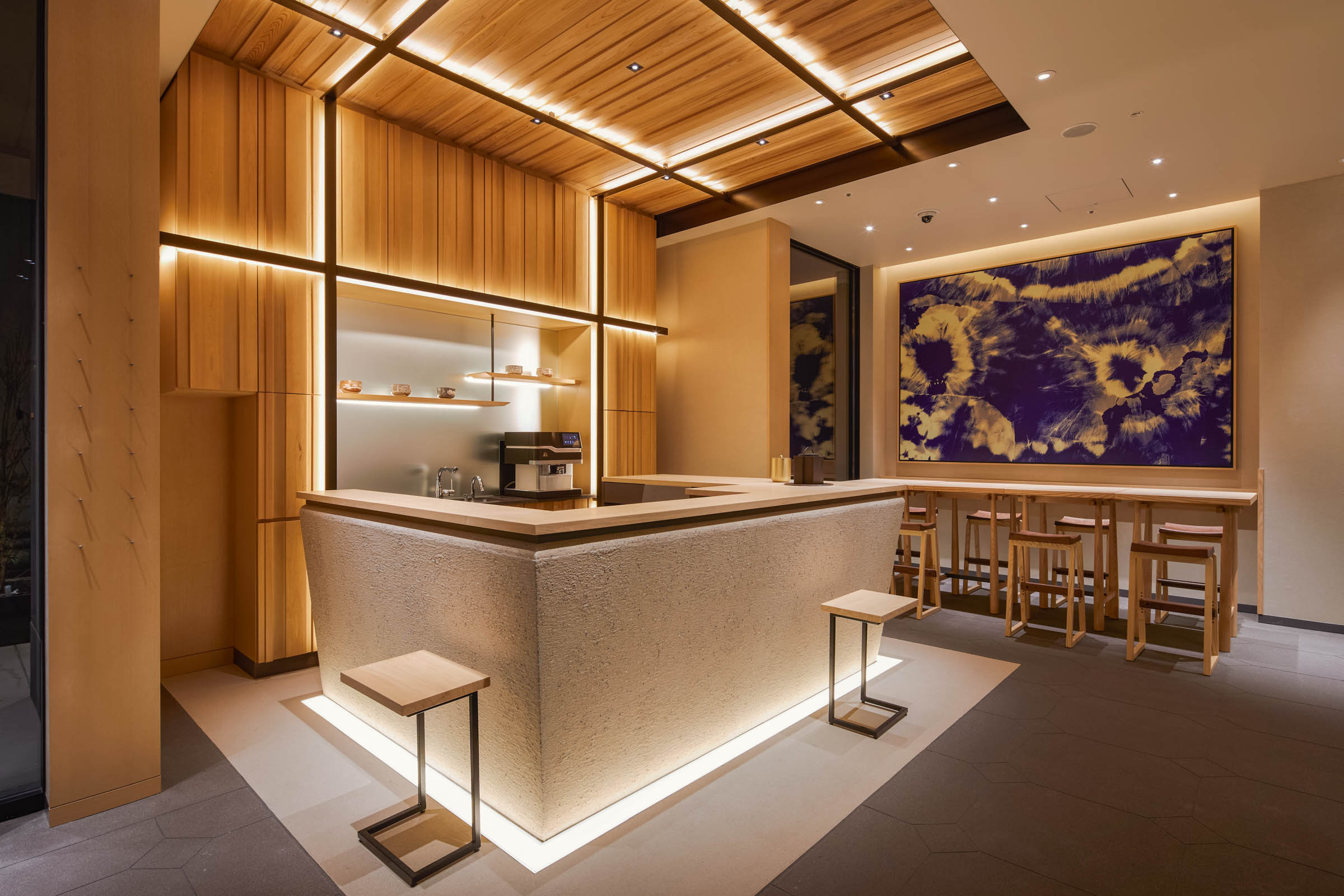
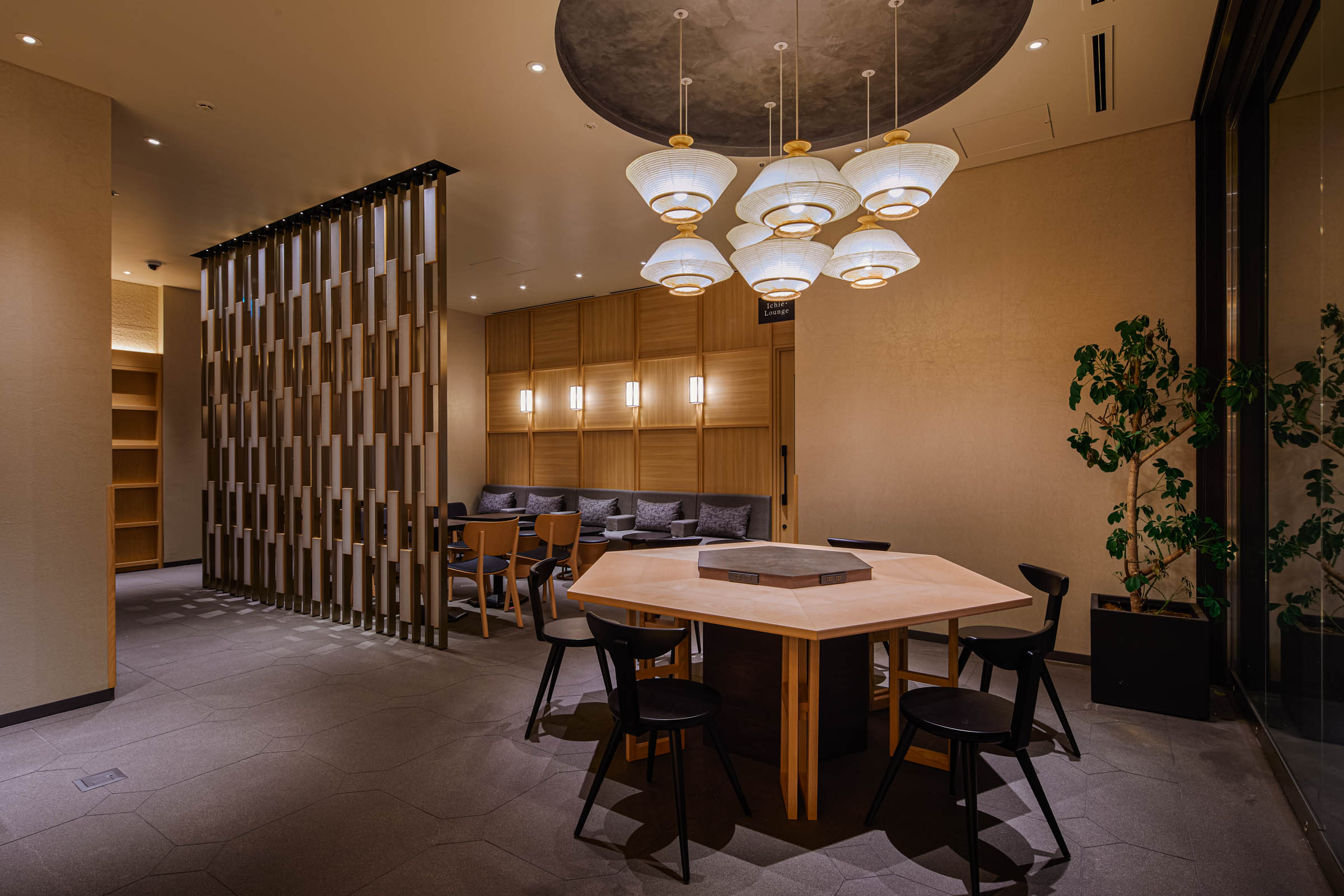
THE ICHIE LOUNGE AND A NORI BENTO BREAKFAST
What makes this hotel special is the Ichie Lounge. The hotel built this space around a stage of hinoki wood and invites guests to tea there. Here, I enjoyed Sayama green tea and browsed the Machigokoro map, the hotel’s own guide to the neighborhood. It is a calm space that blends Japanese and Western styles in perfect harmony. After a day of exploring, I also loved relaxing on the rooftop terrace under the Tokyo sky.
The friendly, English-speaking staff made everything easy. Every morning, breakfast came as a nori bento, a box of rice topped with seaweed. The hotel took its inspiration from the bento culture of the Edo period. For me, it was an authentic start to each day. Above all, the location is perfect for exploring Tokyo. The subway is right next door, the luxury shops of Ginza are a few minutes away, and kabuki is practically around the corner.
SENSO-JI: TOKYO’S OLDEST TEMPLE
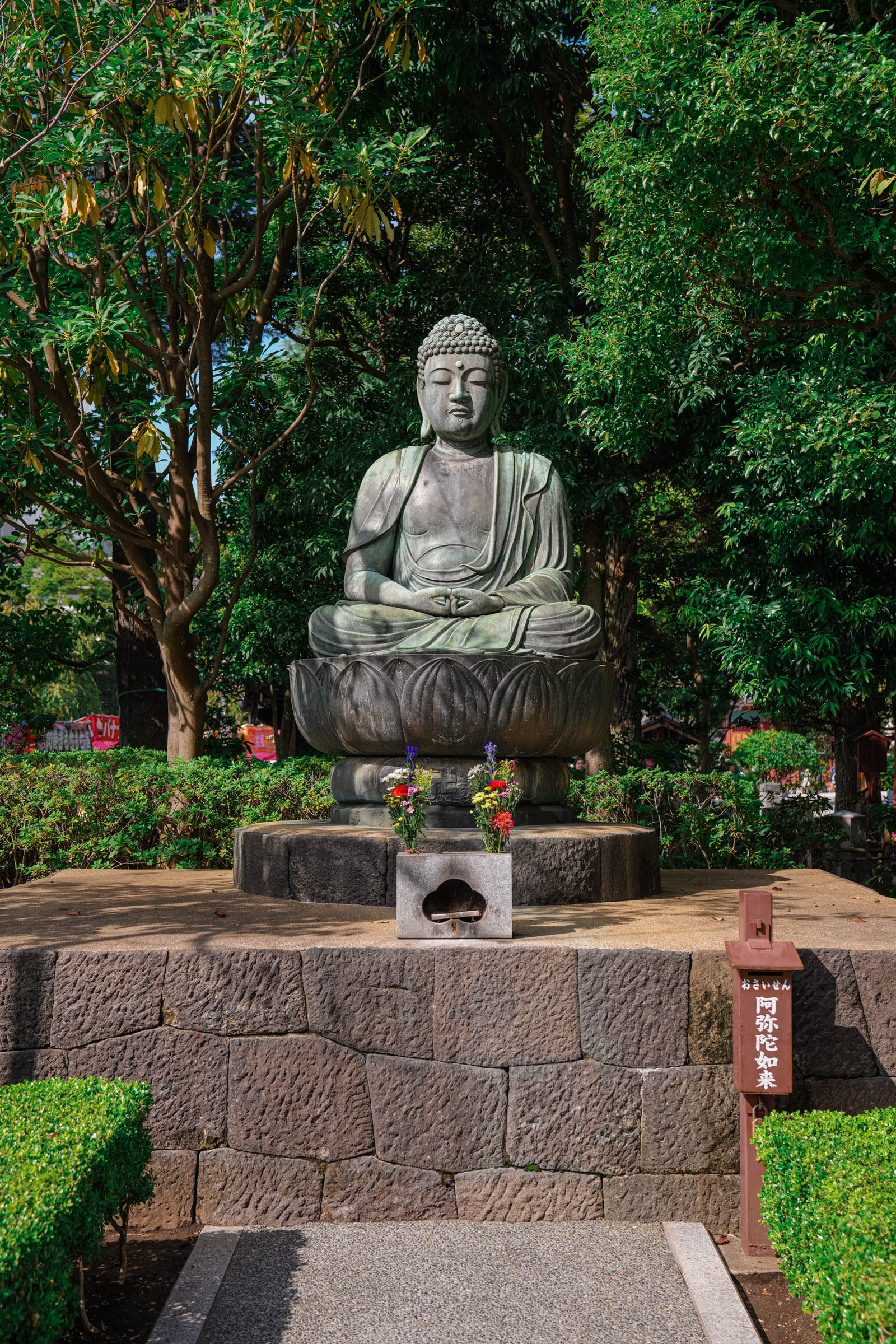
No visit to Tokyo is complete without Senso-ji in Asakusa. According to the temple, the story begins early in the morning on March 18, 628. That day, the brothers Hinokuma Hamanari and Takenari were fishing in the Sumida River. When they pulled in their net, they found a small statue inside. Haji no Nakatomo, the headman of their village, recognized it as a statue of Kannon, the Buddhist deity of compassion. He devoted himself to Buddhism and turned his home into a temple. That was the beginning of Senso-ji.
The temple has never shown the statue in public, yet that has not diminished its importance. In 1590, Tokugawa Ieyasu designated Senso-ji as an official place of prayer for the shogunate. Since then, generations of pilgrims have come here. Today, it is one of the most visited temples in Japan.
KAMINARIMON AND NAKAMISE-DORI
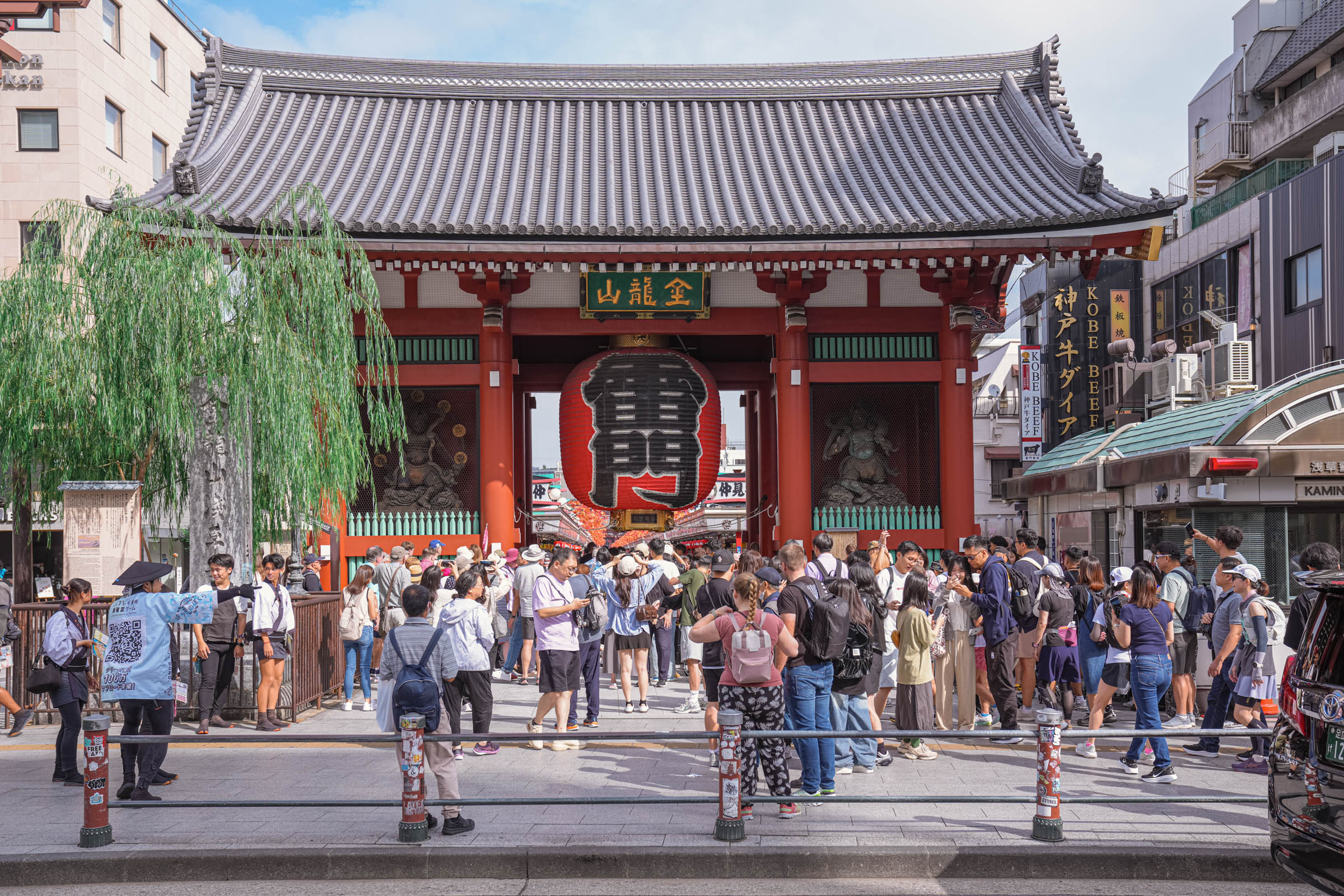
Kaminarimon, the “Thunder Gate,” marks the entrance to the temple complex. The huge red lantern in its center is 3.9 meters tall, 3.3 meters wide and weighs about 700 kilograms. It has become one of the most recognizable symbols of the city. On both sides of the gate stand statues of Fujin, the god of wind, and Raijin, the god of thunder. Under the lantern, if you look up, you will see a beautiful carved dragon.
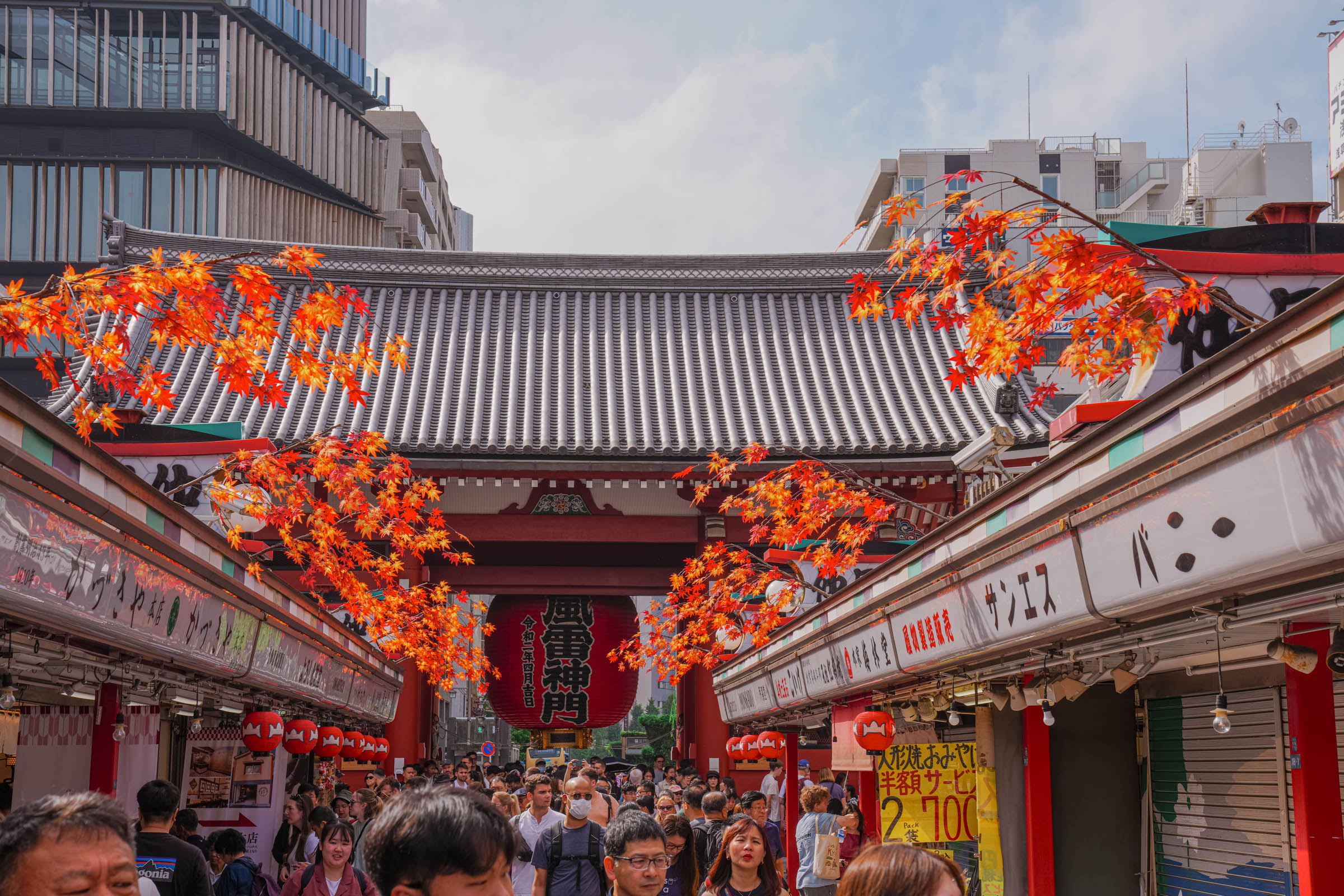
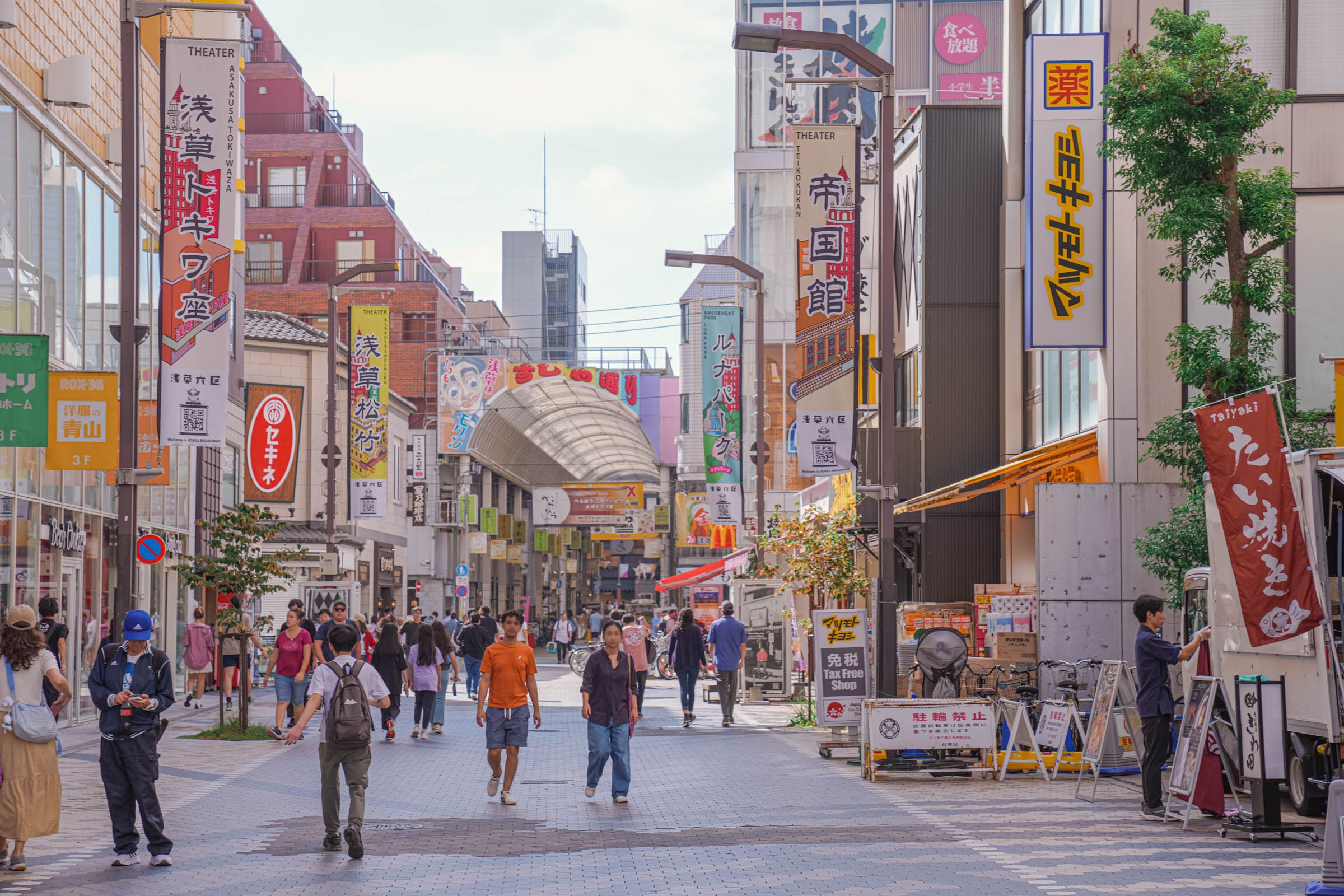
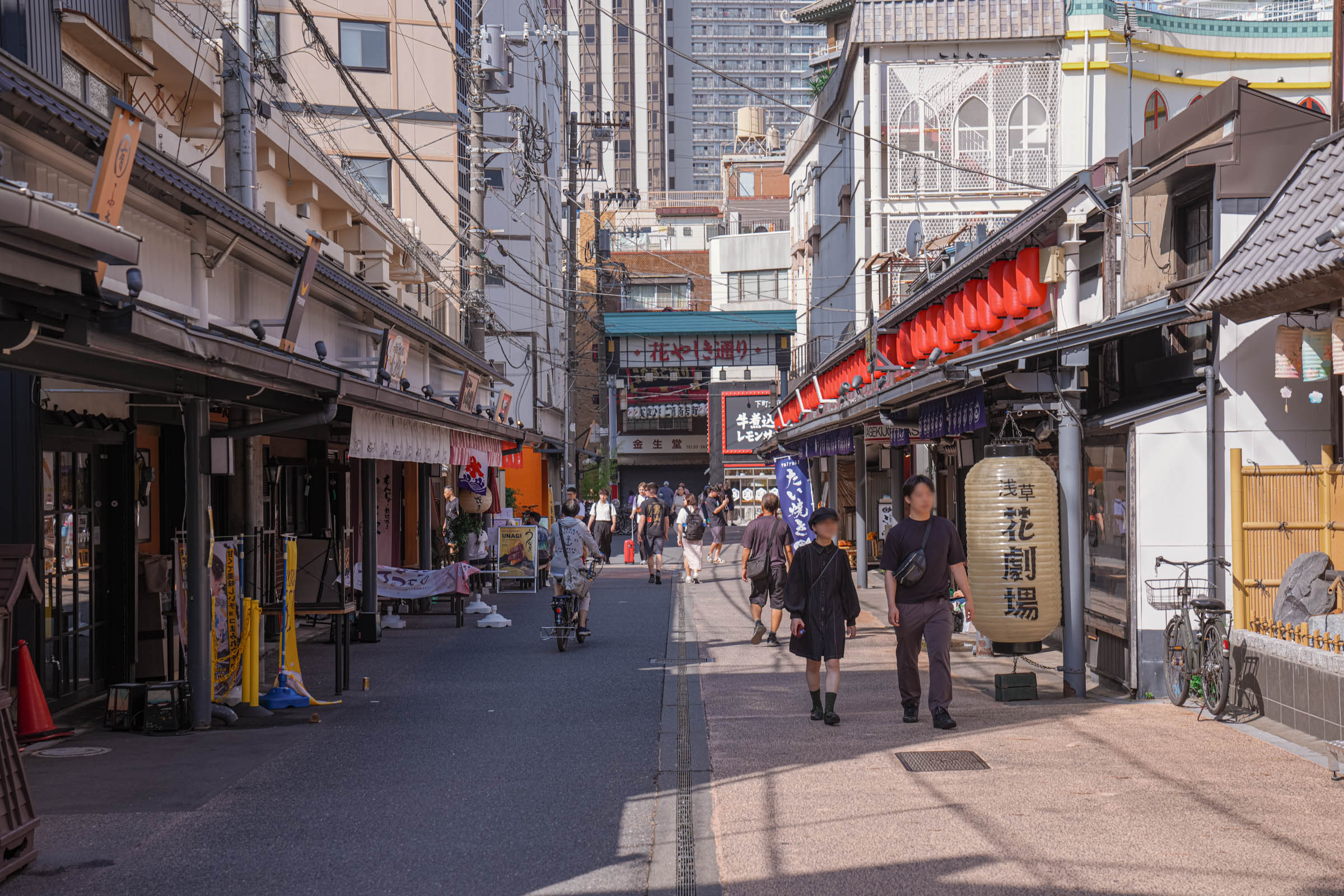
From Kaminarimon to the temple stretches Nakamise-dori, a shopping street about 250 meters long. Its stalls offer everything from traditional souvenirs and crafts to local sweets and crispy rice crackers. Walking down this street feels like a trip back in time. I felt like a guest of old Edo visiting the local merchants.
THE MAIN HALL AND THE FIVE-STORY PAGODA
During World War II, air raids destroyed the main hall. The building you see today was rebuilt in 1958, yet it still exudes an ancient spirituality. In front of the hall stands a large incense burner. Visitors wave the smoke toward the parts of the body they want to heal. I joined them in this ritual.
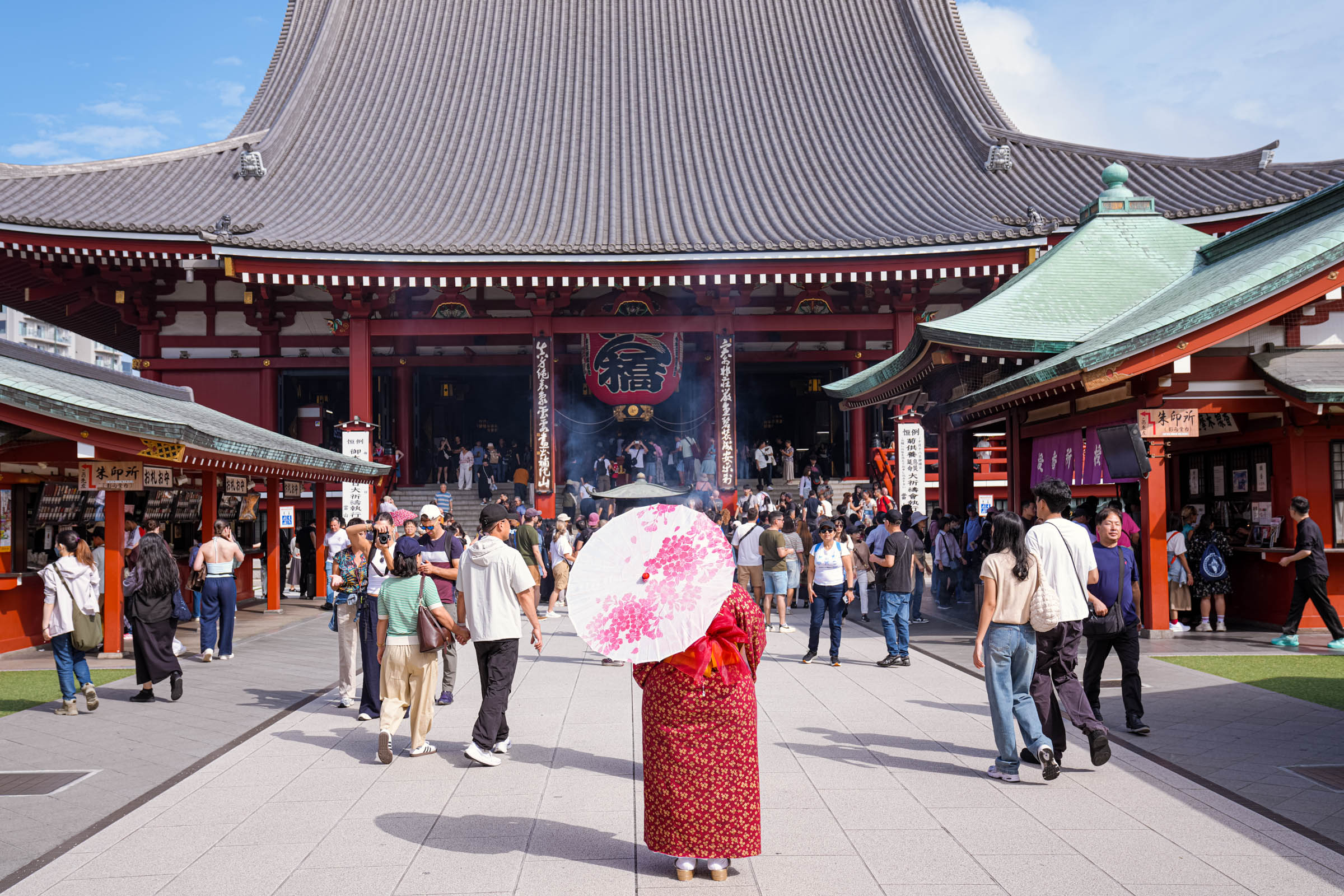
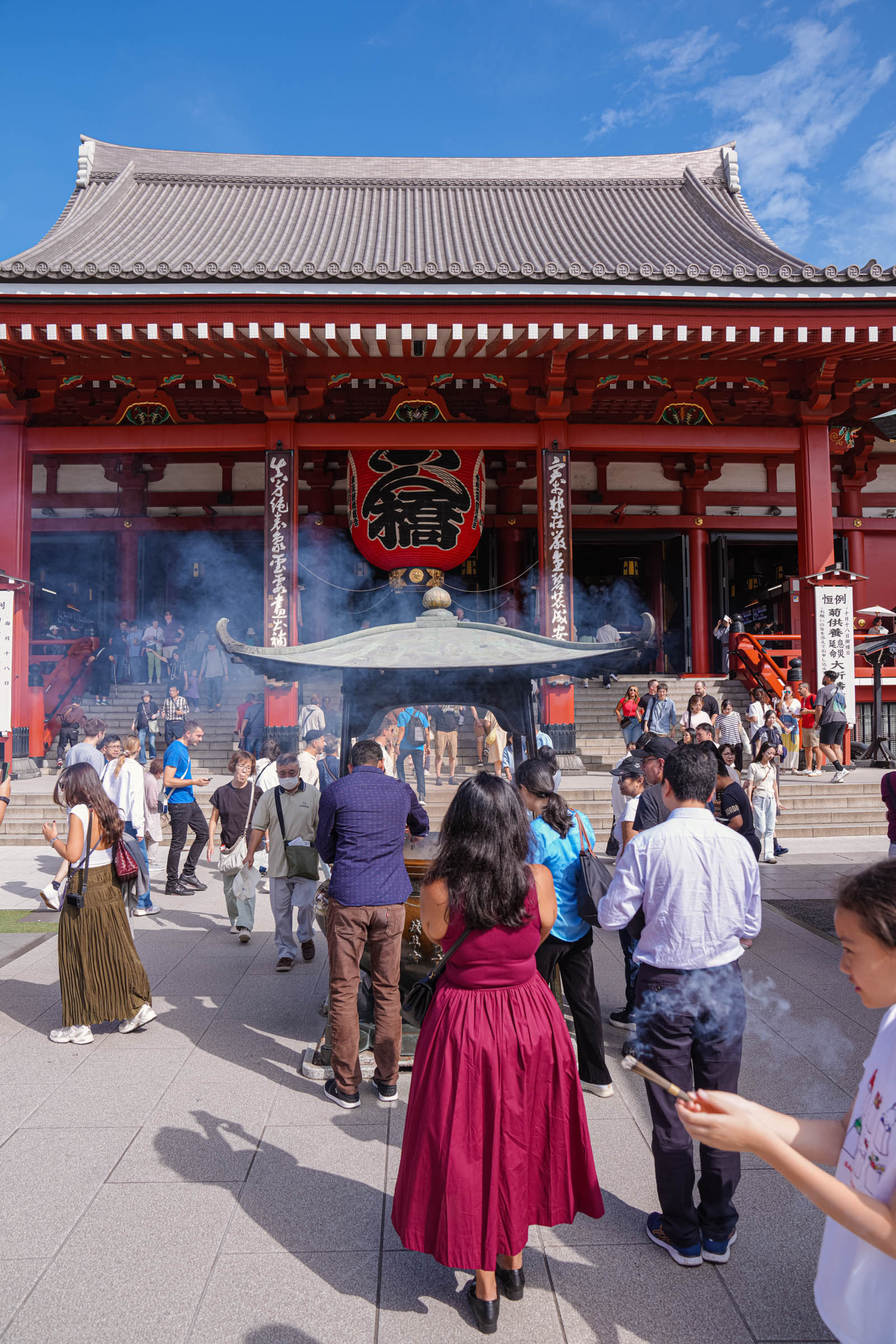
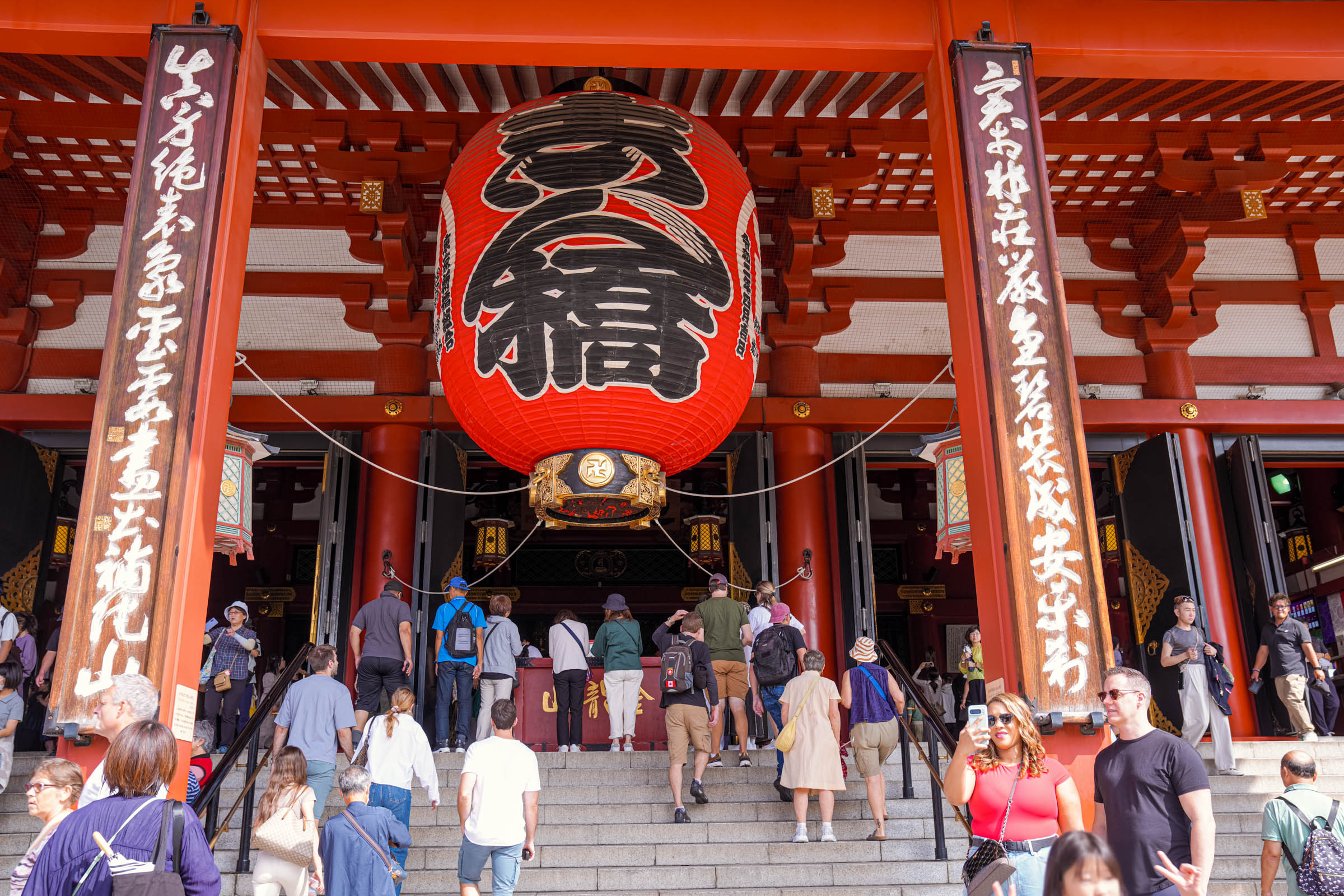
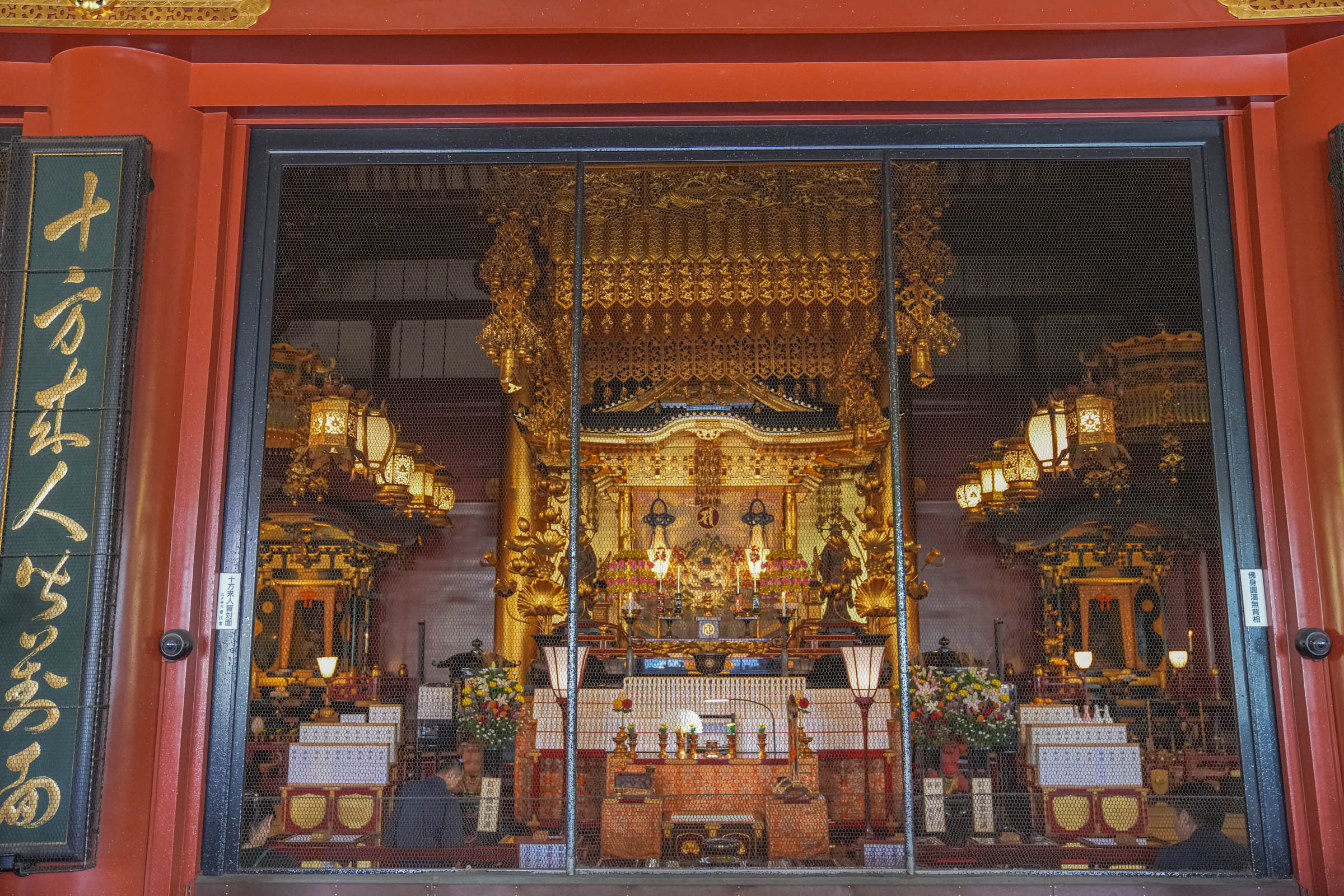
Next to the main hall rises the five-story pagoda, rebuilt in 1973, and right beside the temple stands Asakusa Shrine. Together with numerous smaller buildings, they complete a breathtaking complex.
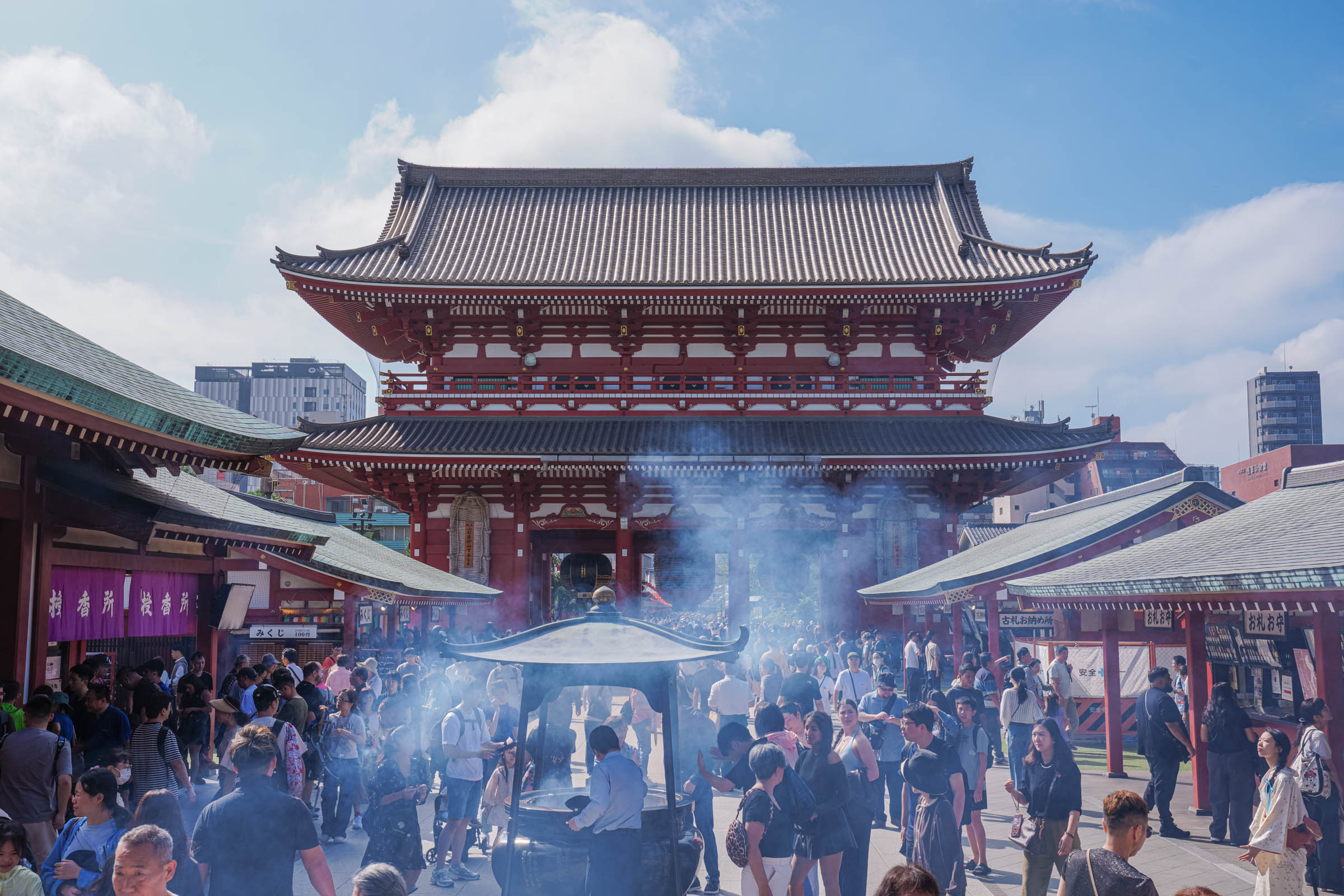
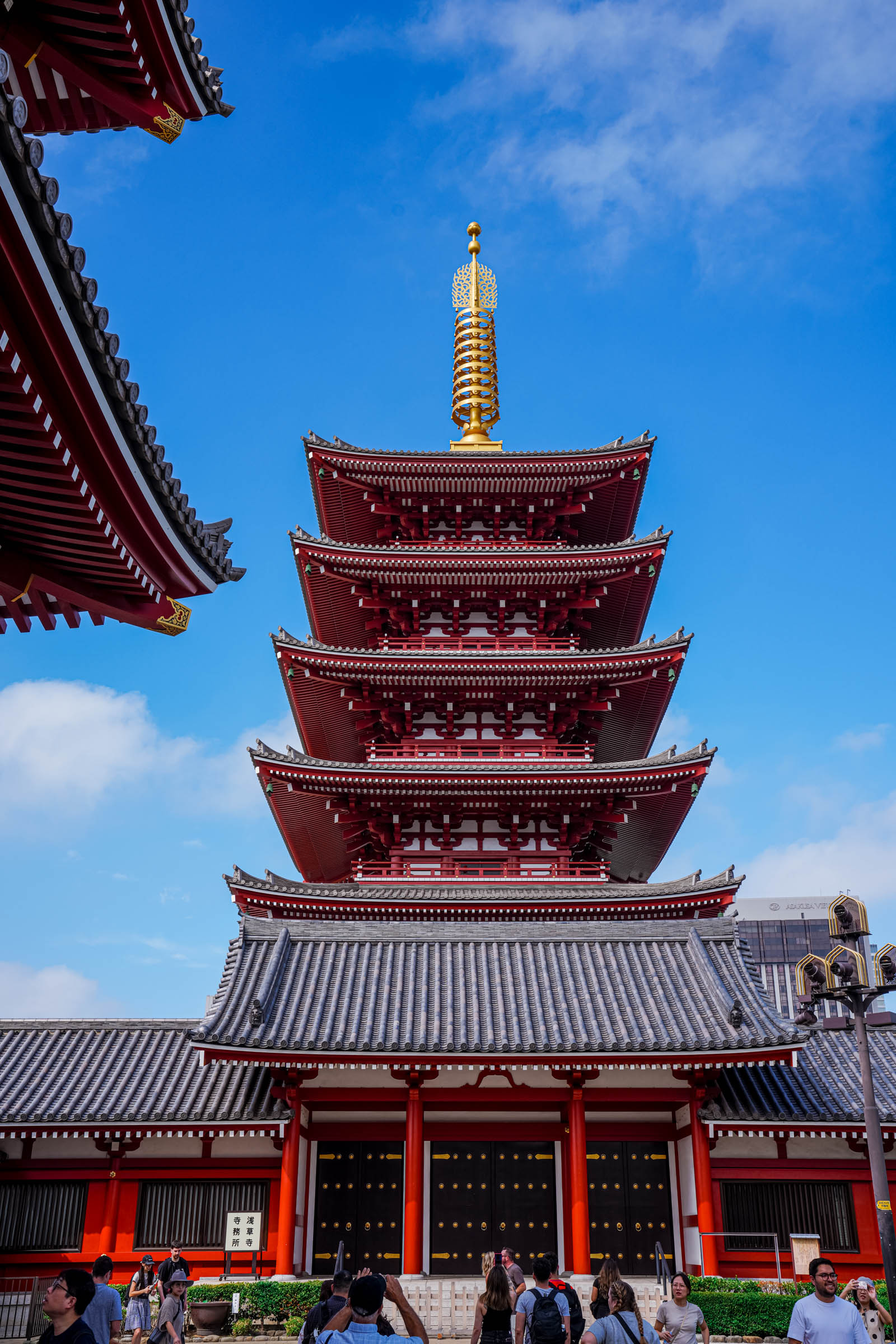
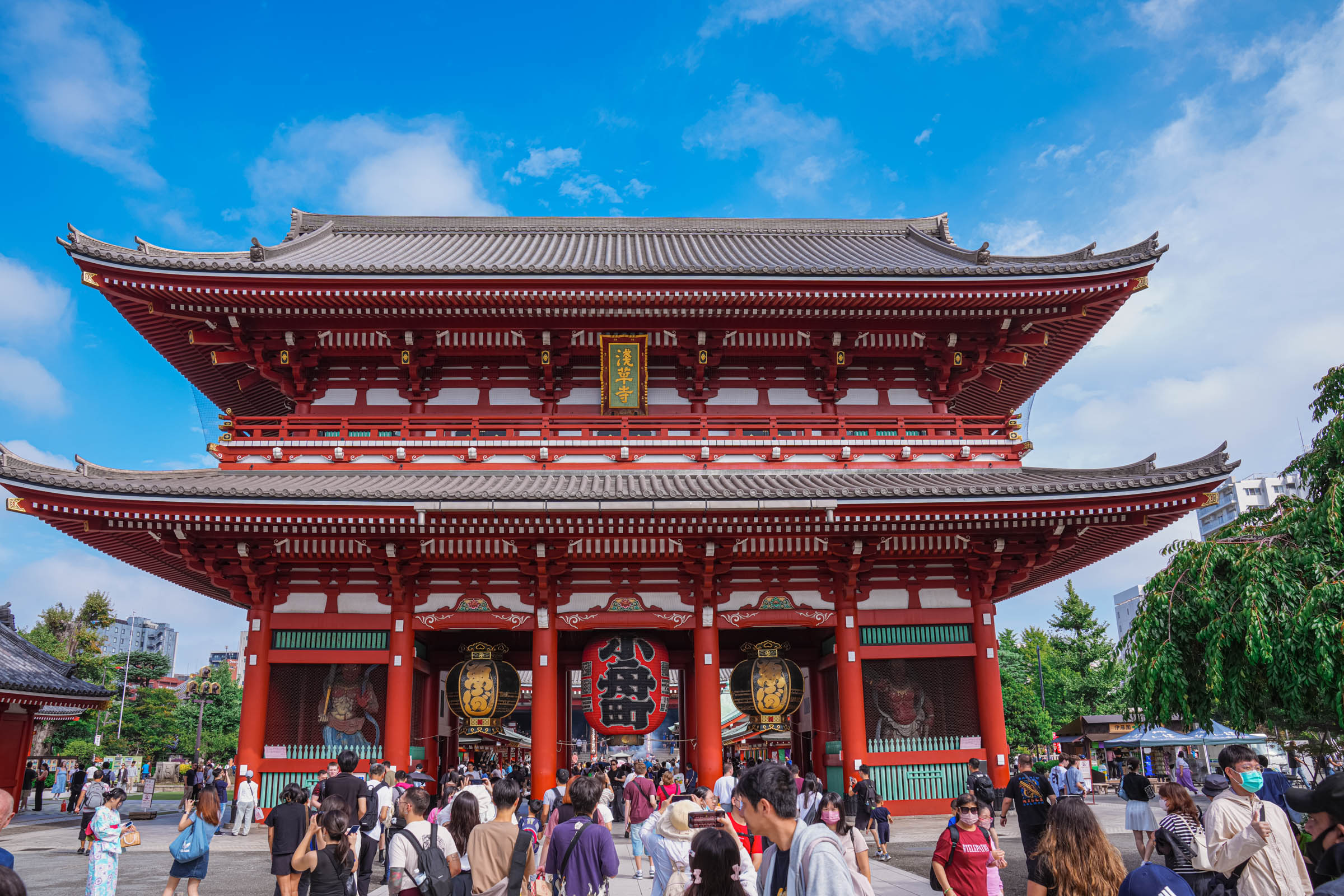
Senso-ji is always crowded, especially on weekends. Still, the crowd only adds to the authentic feel. After all, temples in Japan have always been at the center of public life.
MEIJI JINGU: A FOREST IN THE HEART OF TOKYO
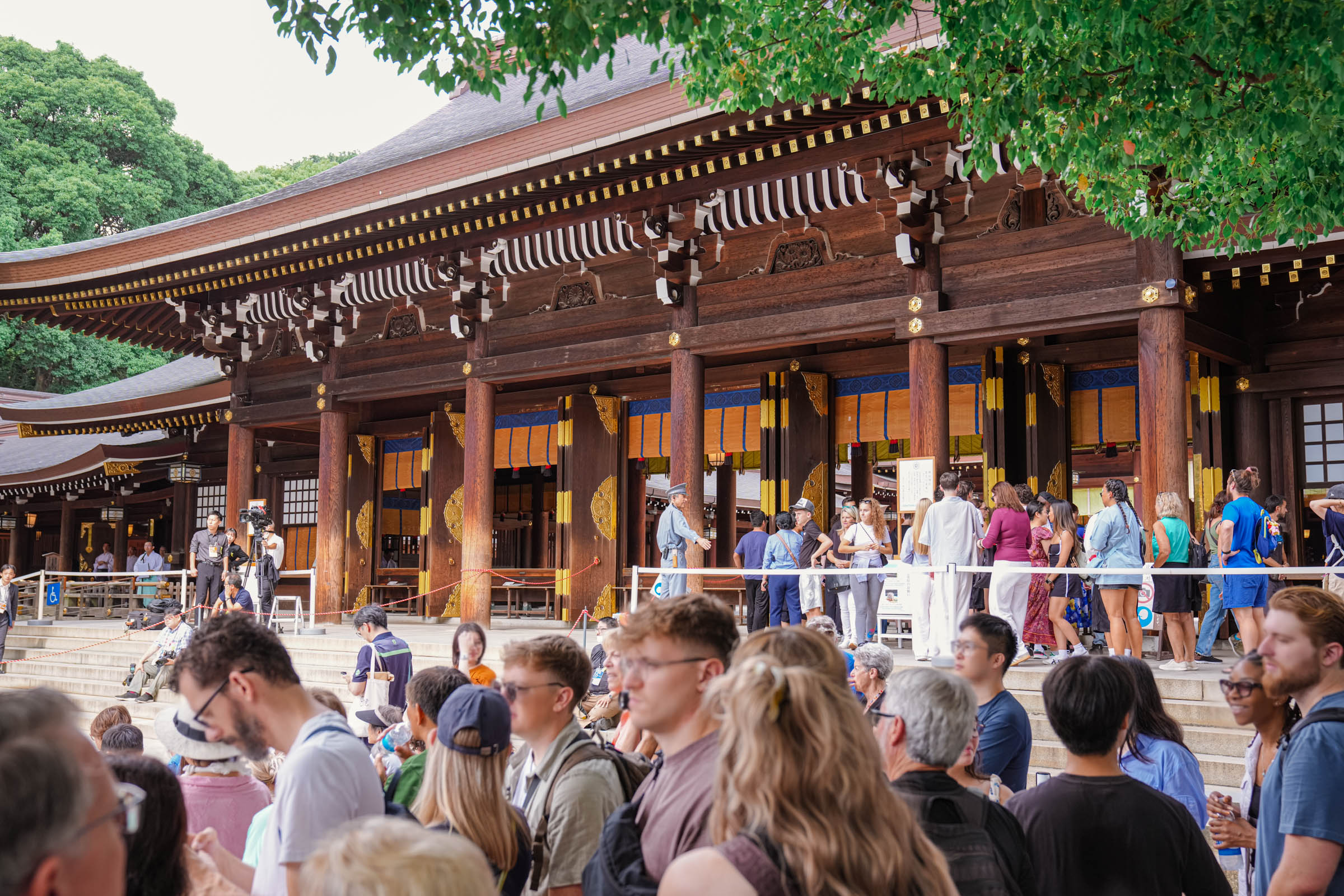
For lovers of tradition, Meiji Jingu is an oasis of peace in the middle of the metropolis. This Shinto shrine honors Emperor Meiji and Empress Shoken, who led Japan through a period of rapid modernization. Builders completed it on November 1, 1920. Its forest grew from about 100,000 trees that people donated from all over Japan. Young volunteers planted them, and today the forest is one of the greenest corners of the city.
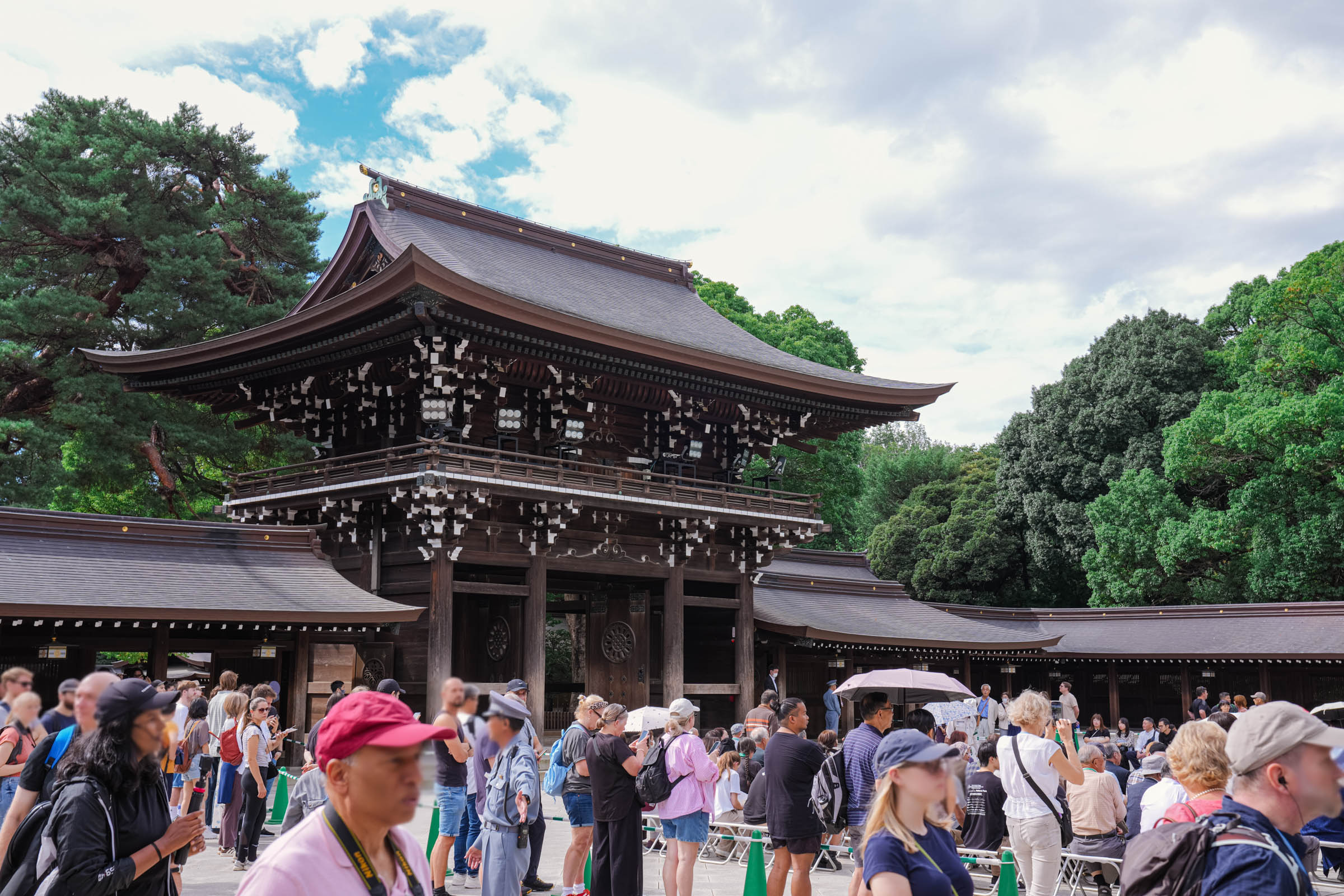
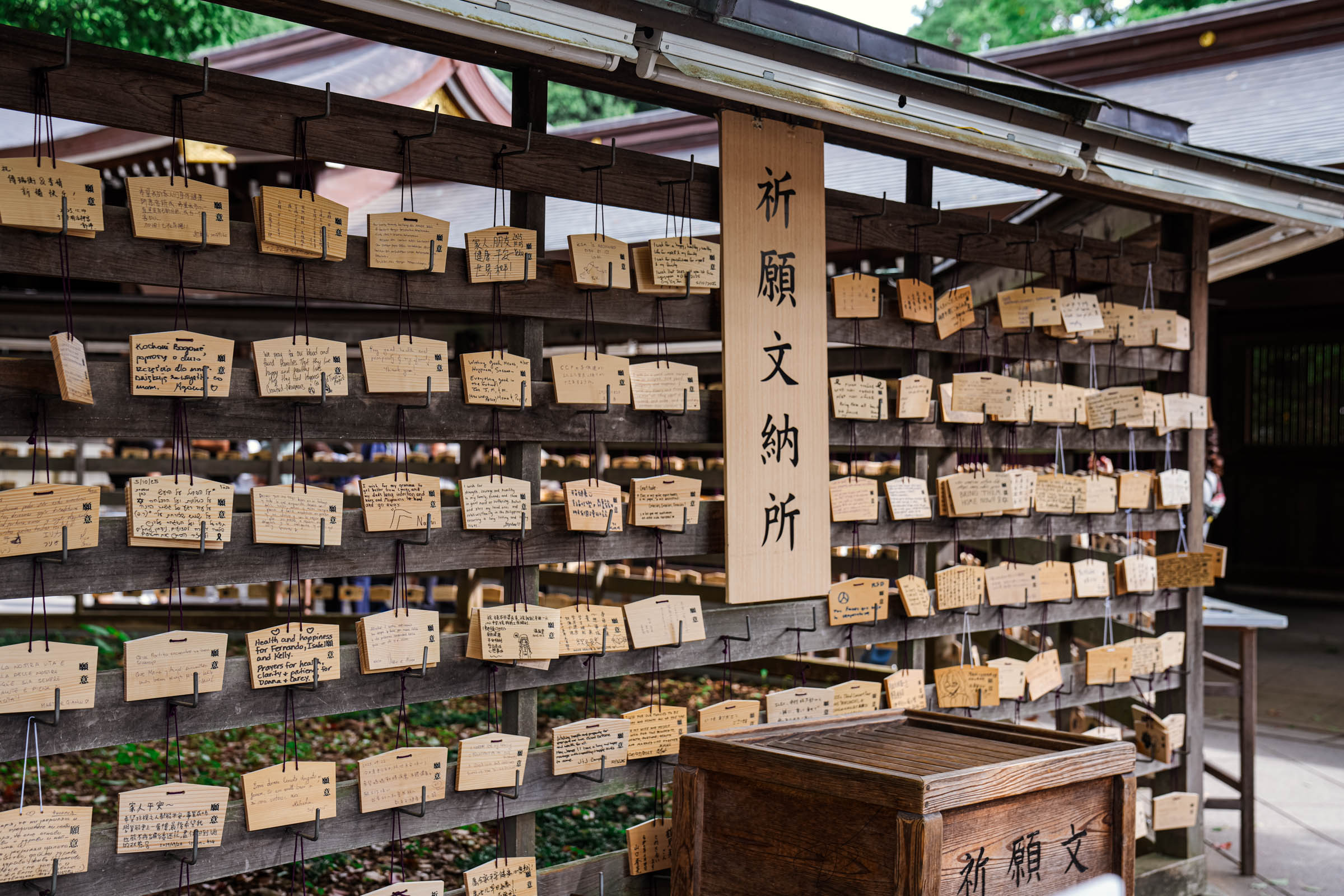
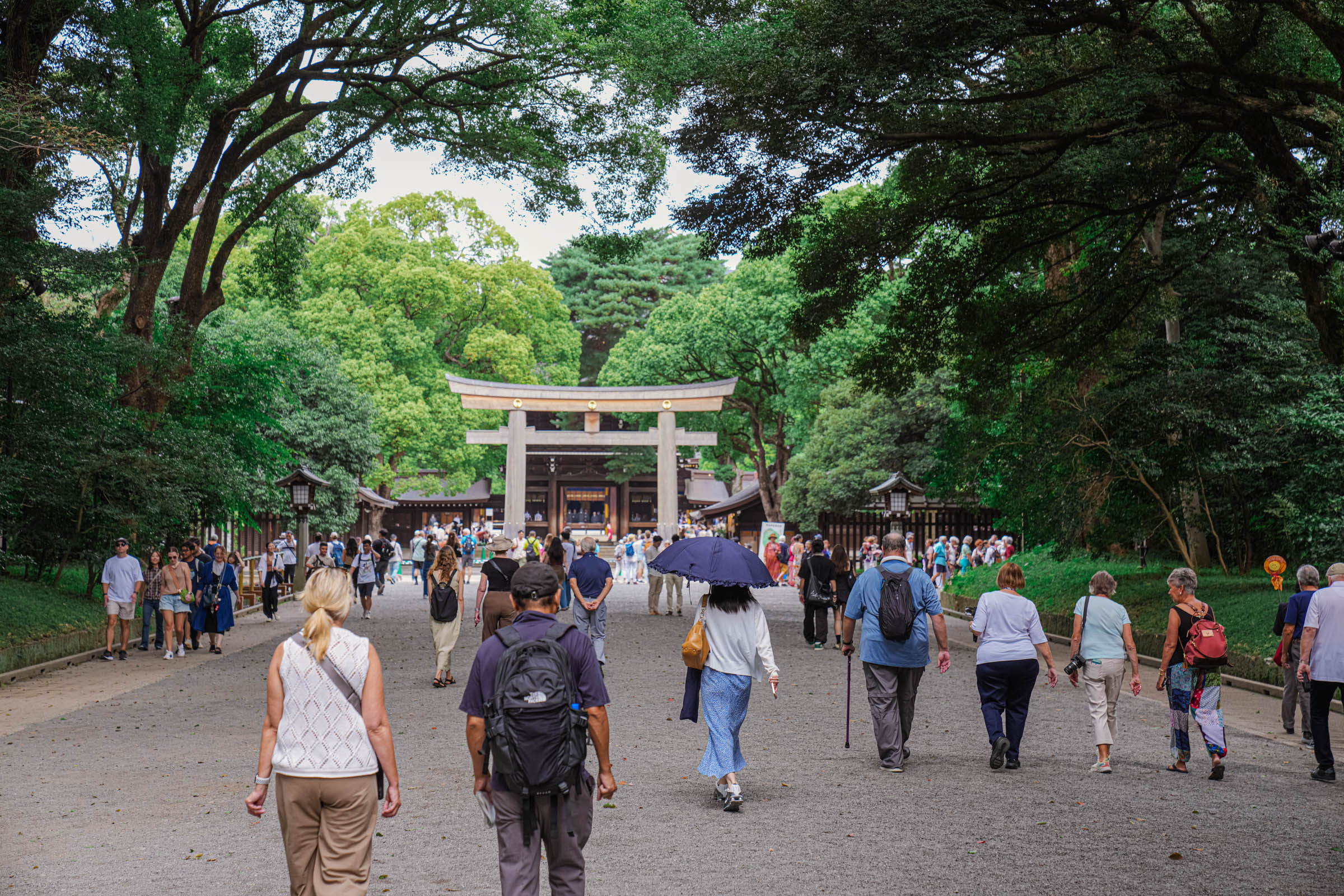
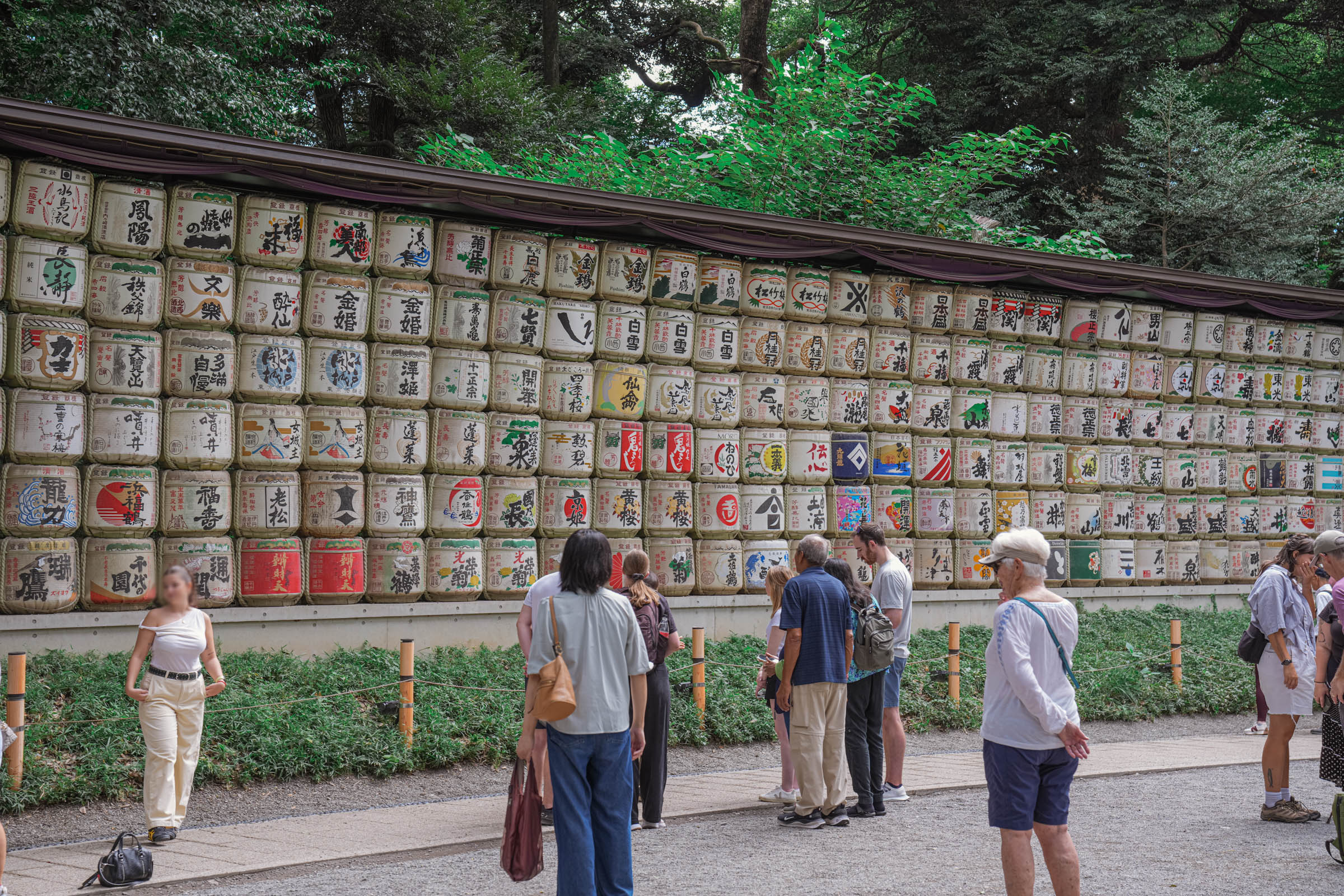
As I walked through the tall torii gates toward the shrine, the noise of the city simply disappeared. In its place came a deep peace. Along the way, I stopped in front of rows of decorated sake barrels. Sake brewers from all over Japan offer them every year in honor of the emperor and empress. Nearby stand barrels of wine from Burgundy, a reminder that Emperor Meiji also enjoyed Western food and wine.
SHIBUYA BY DAY AND BY NIGHT
Later, I returned to Shibuya to watch the crossing from above. I sat on the second floor of the Starbucks in the QFRONT building, one of the most popular viewing spots. From there, I tried to understand how thousands of people can move in all directions without a single collision. Huge digital screens play advertisements and music videos, and neon lights flicker everywhere. Interestingly, in 2025 the land in front of QFRONT had the second-highest roadside land price in Japan, right after Ginza.
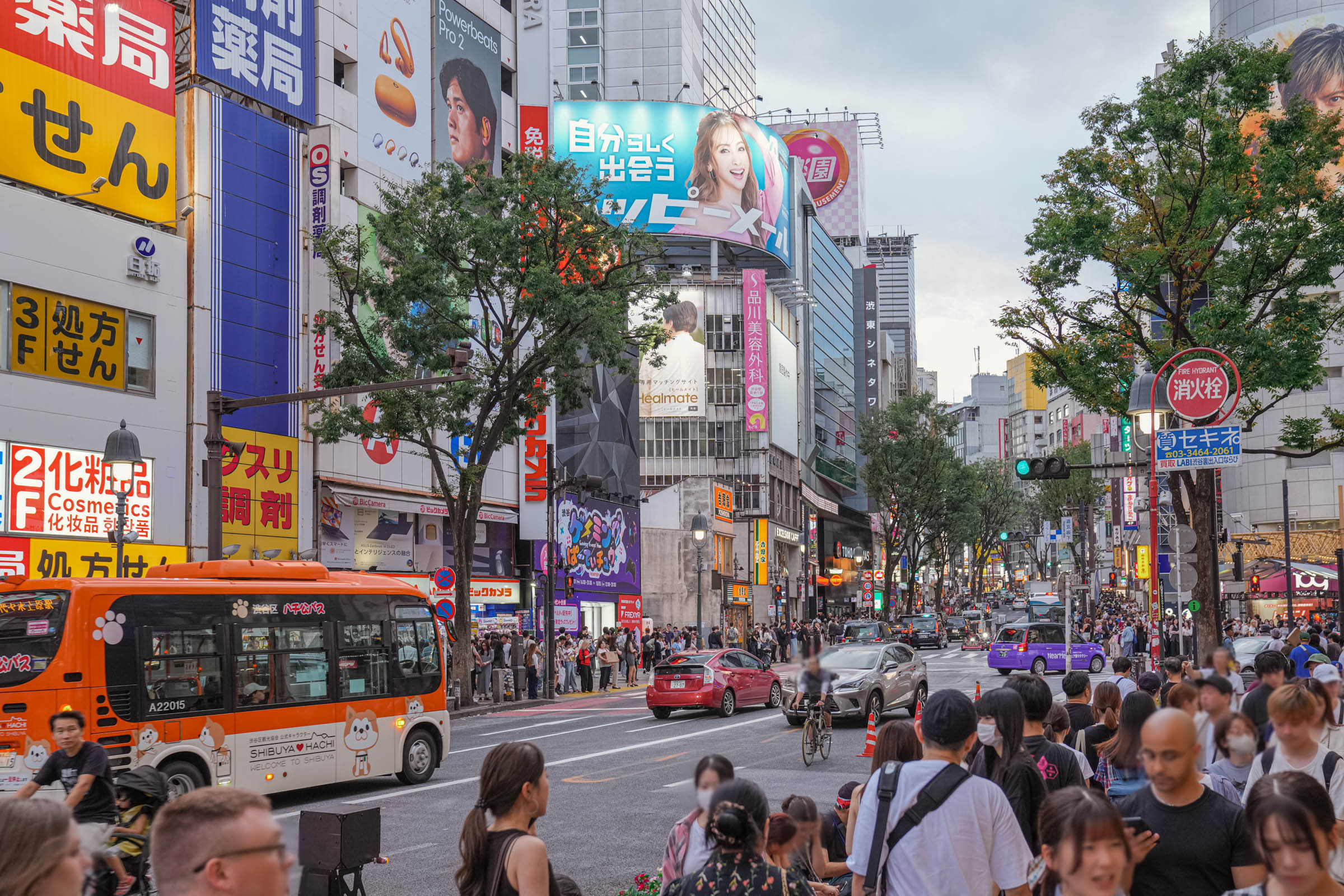
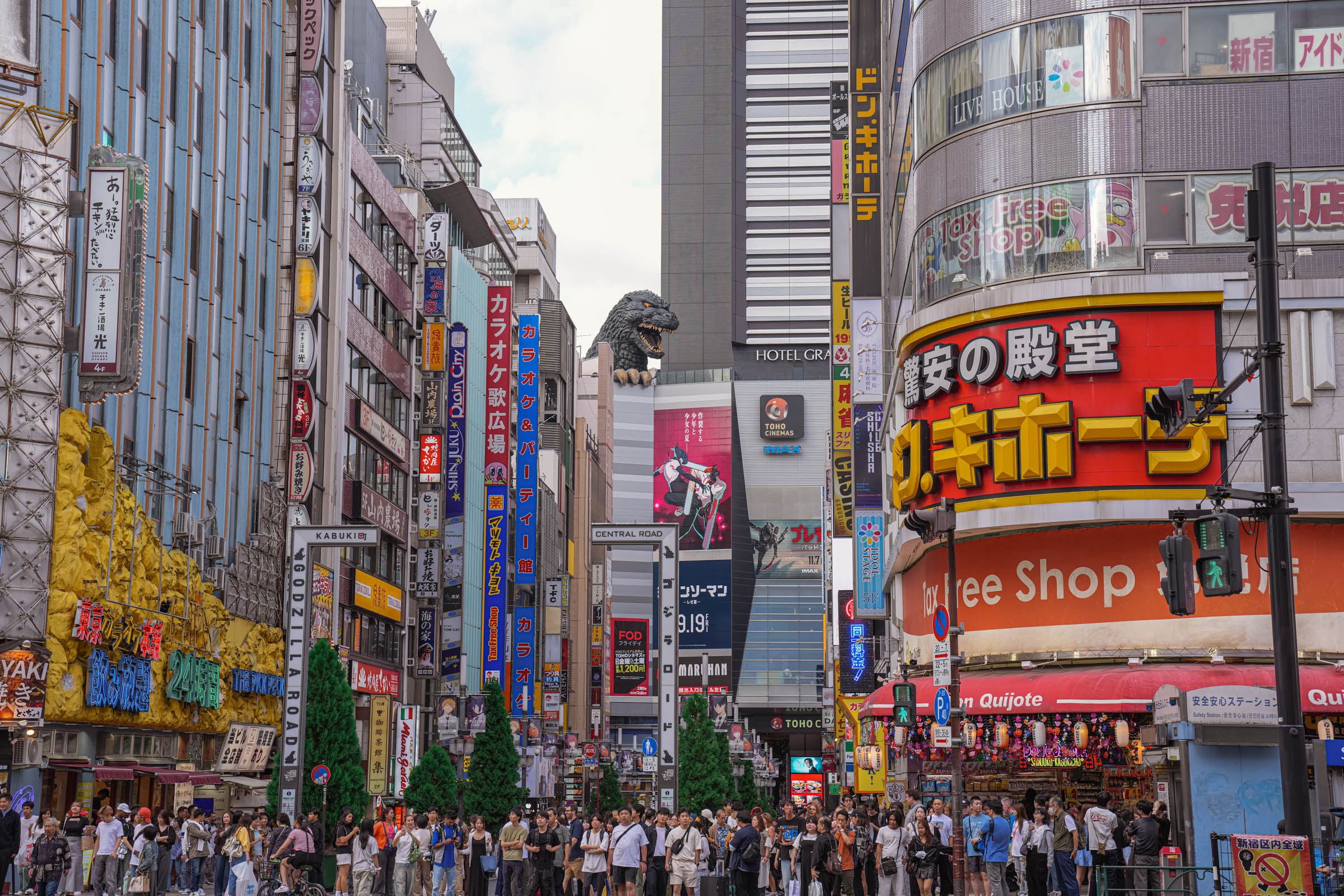
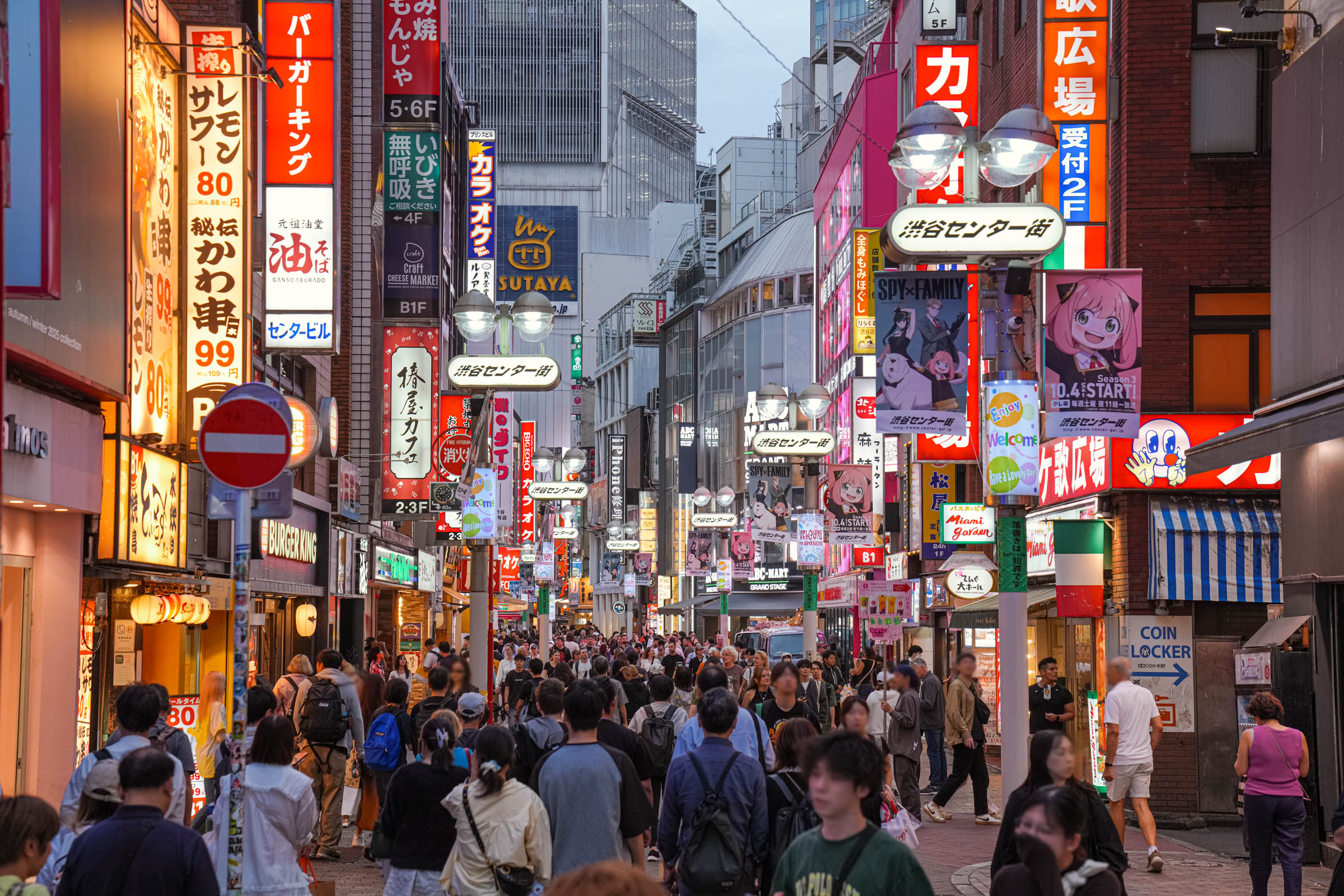
The surroundings of Shibuya are the center of youth culture and fashion. Shibuya 109, the iconic department store, has set trends for young Japanese women for decades. Meanwhile, Center-gai, a pedestrian street full of shops and restaurants, attracts young people who love fashion, music and technology. At night, Shibuya turns into a hub of nightlife, with countless bars, clubs and izakaya open until the early hours.
SHINJUKU: THE 3D CAT AND THE BUSIEST STATION
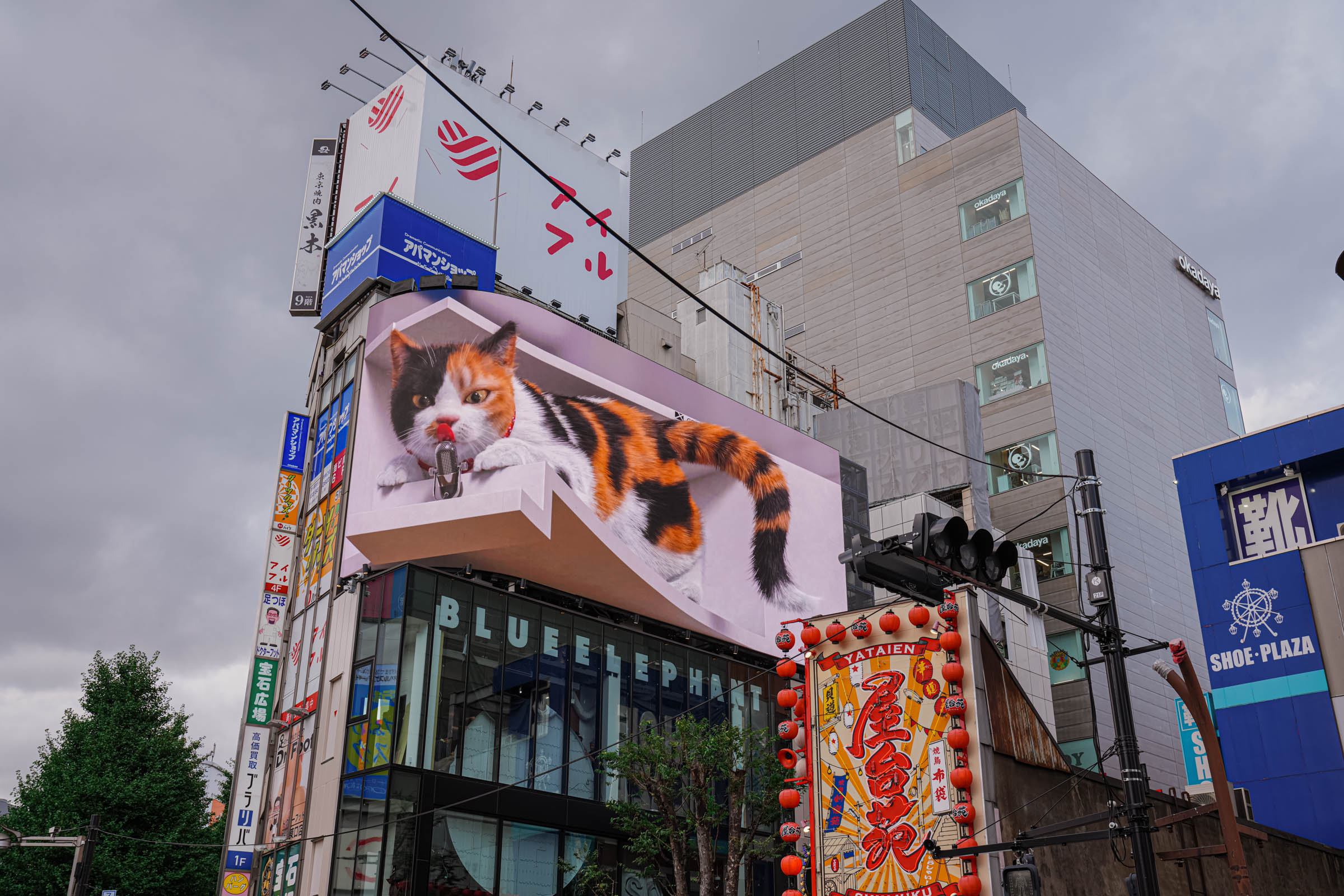
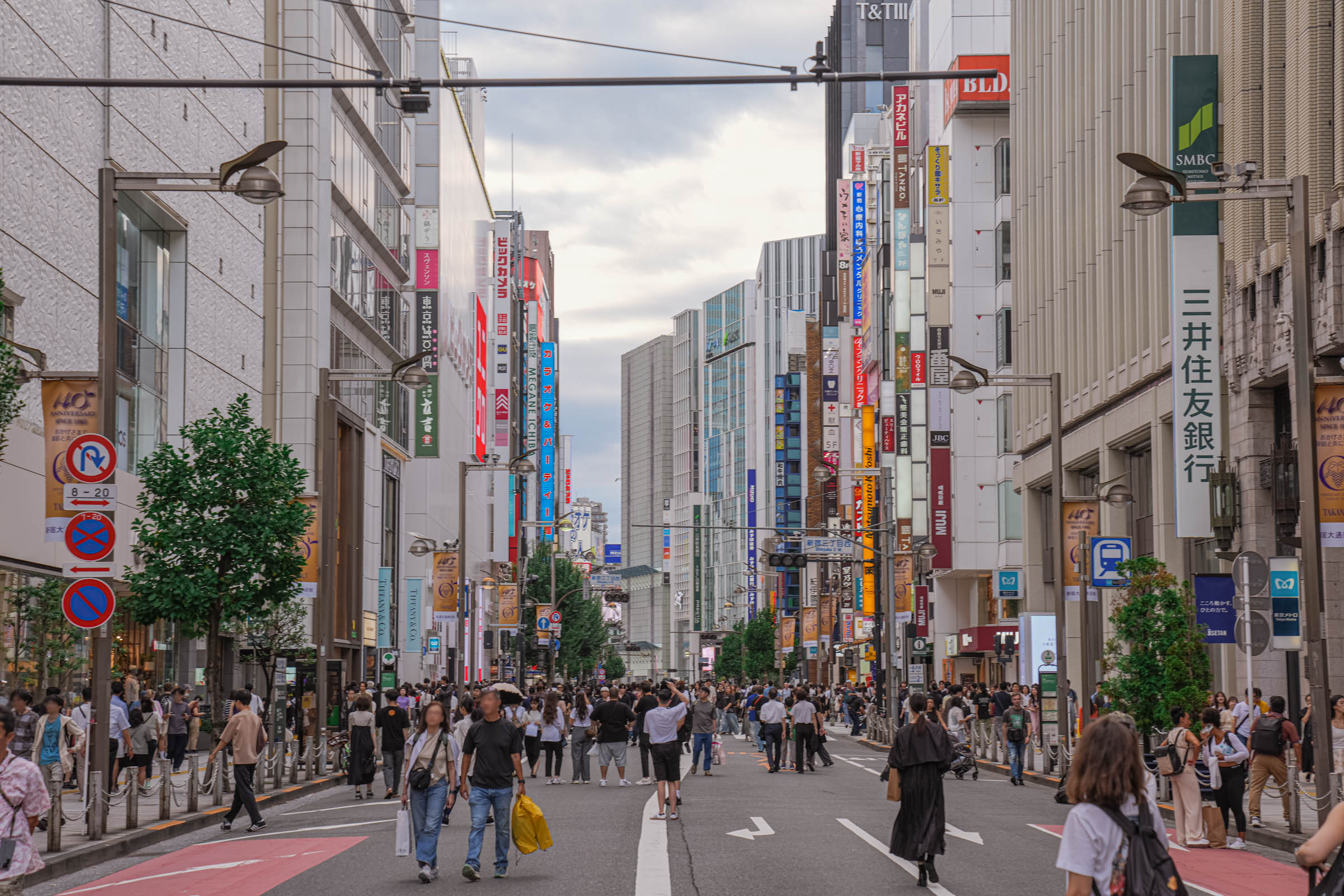
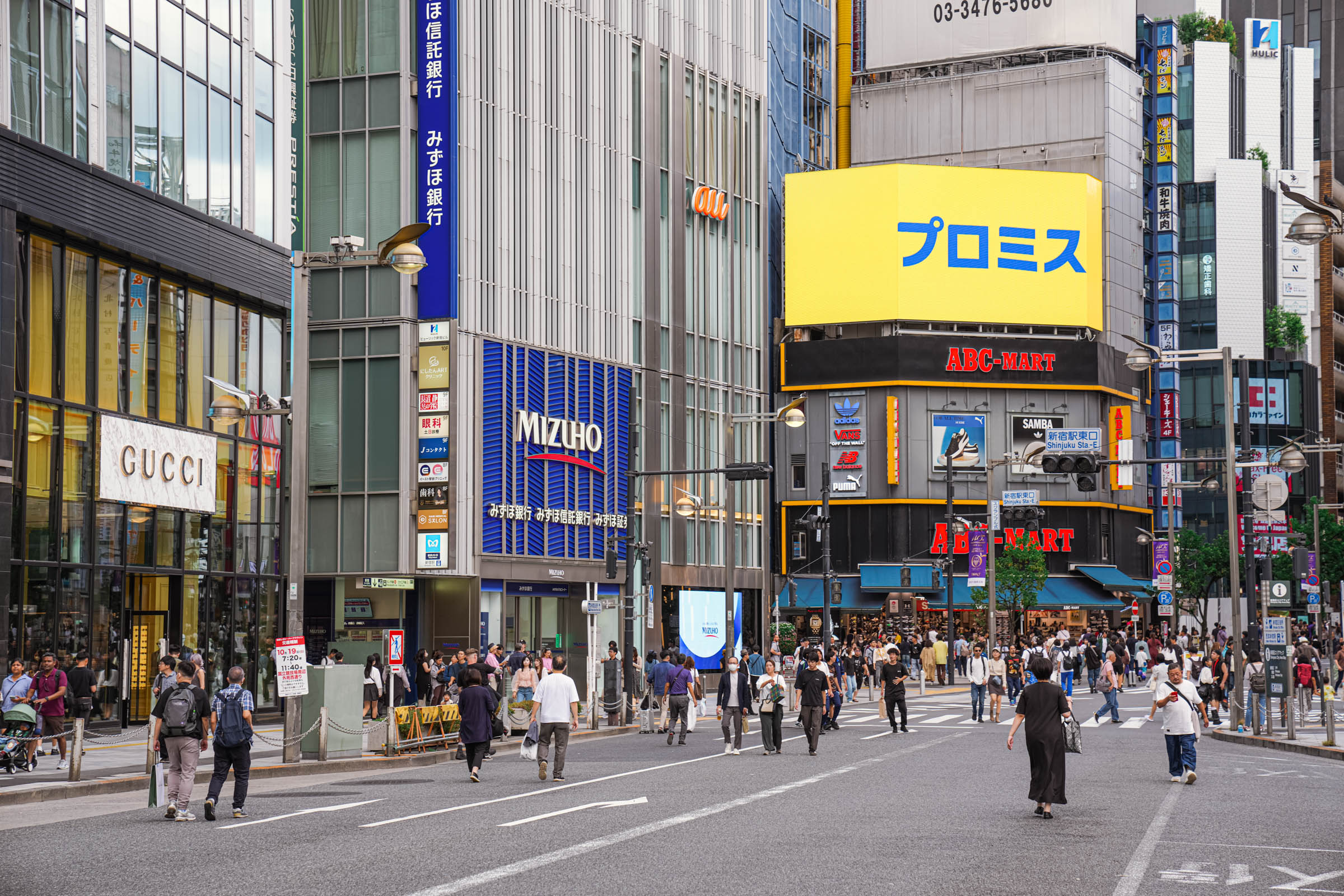
Shinjuku showed me yet another face of the city. Guinness World Records has twice named Shinjuku Station the busiest train station in the world. In 2007, it counted about 3.6 million passengers a day, and in 2022 just over 2.7 million. Right across from its East Exit, a giant 3D calico cat has watched over the crowds since July 2021. It lives on the curved screen of Cross Shinjuku Vision. Every day, it wakes up in the morning, meows at passersby and goes to sleep at night.
The subway system deserves a special mention. Together, Tokyo Metro and Toei Subway run 13 lines covering about 304 kilometers. Trains arrive and depart with remarkable precision, and the cleanliness and safety of the system leave visitors speechless.
UENO PARK: MUSEUMS, LOTUS FLOWERS AND JAPAN’S OLDEST ZOO
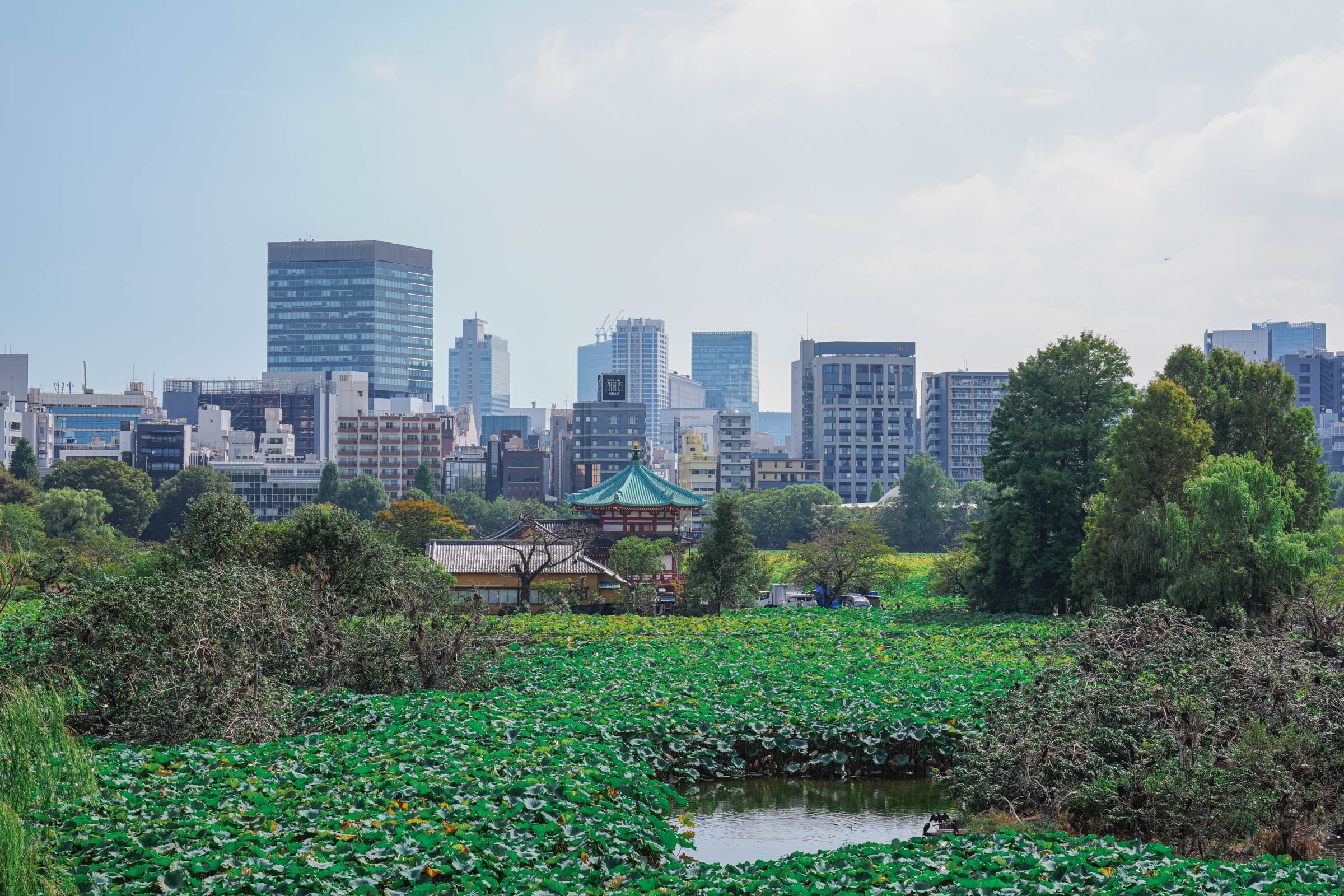
Ueno Park opened in 1873 as one of the first public parks in Japan. It is home to an incredible number of cultural institutions, including the Tokyo National Museum, the oldest museum in Japan. You will also find the National Museum of Nature and Science, the National Museum of Western Art and the Tokyo Metropolitan Art Museum. When the cherry trees bloom in spring, Ueno becomes a favorite place for hanami, the traditional viewing of cherry blossoms.
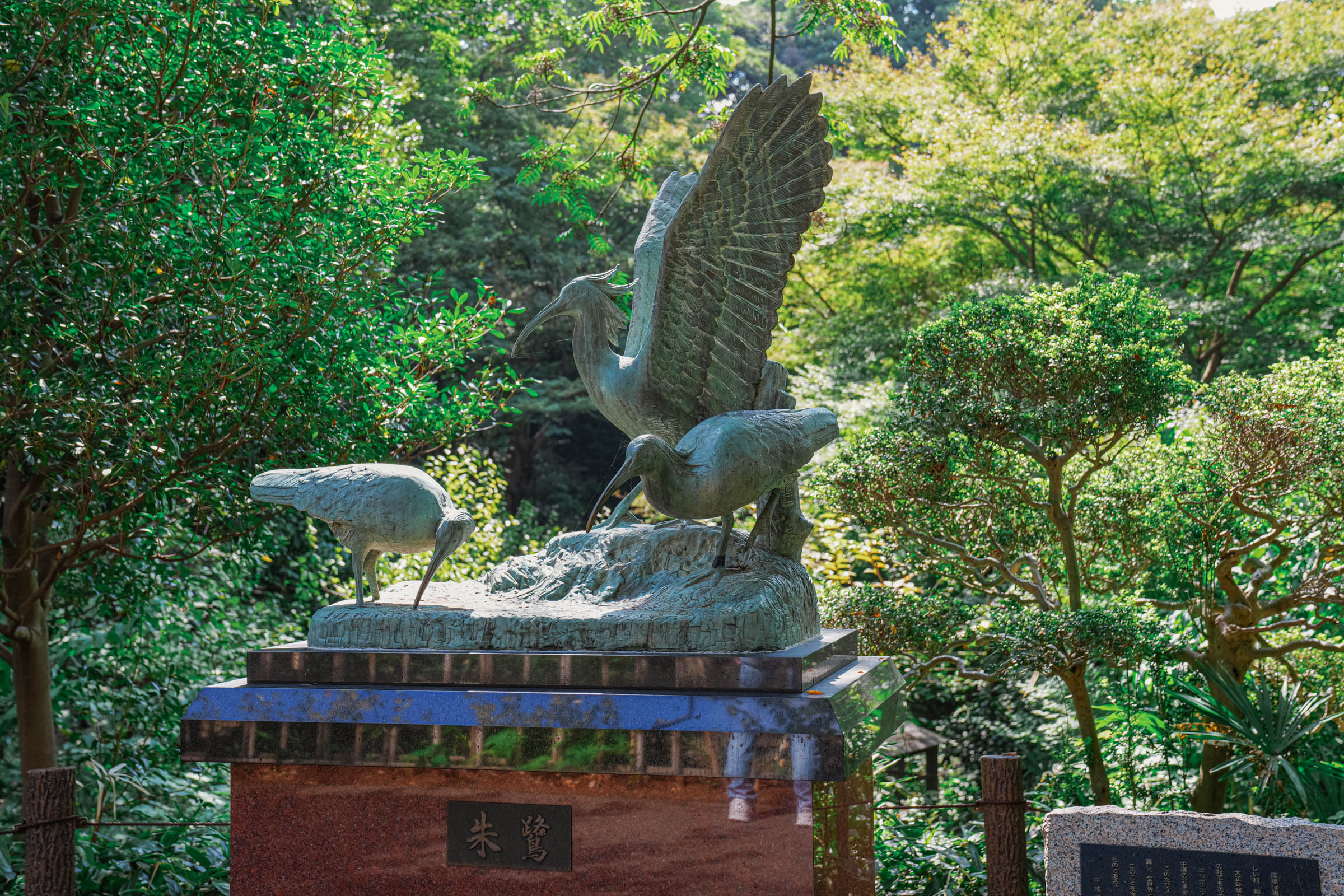
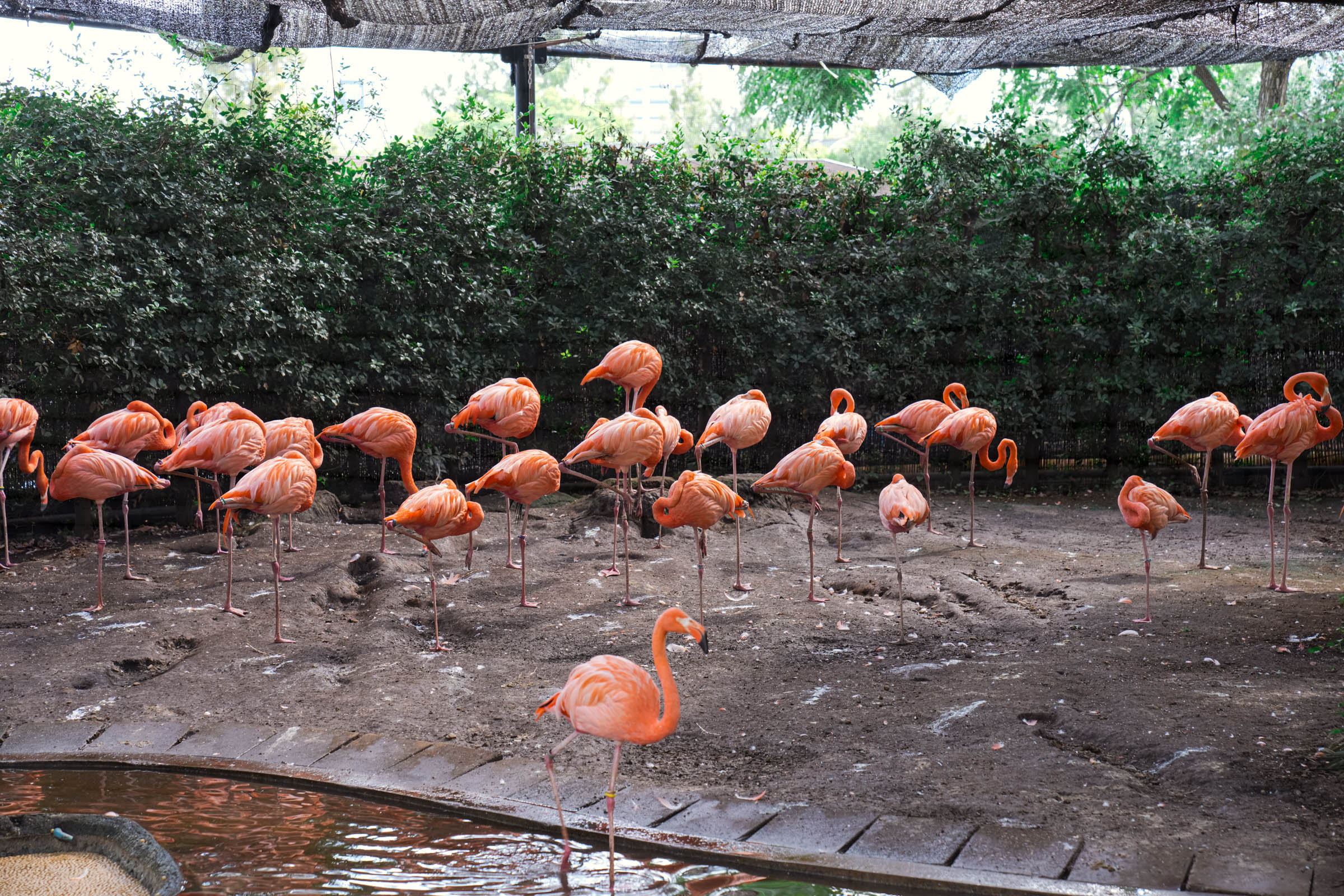
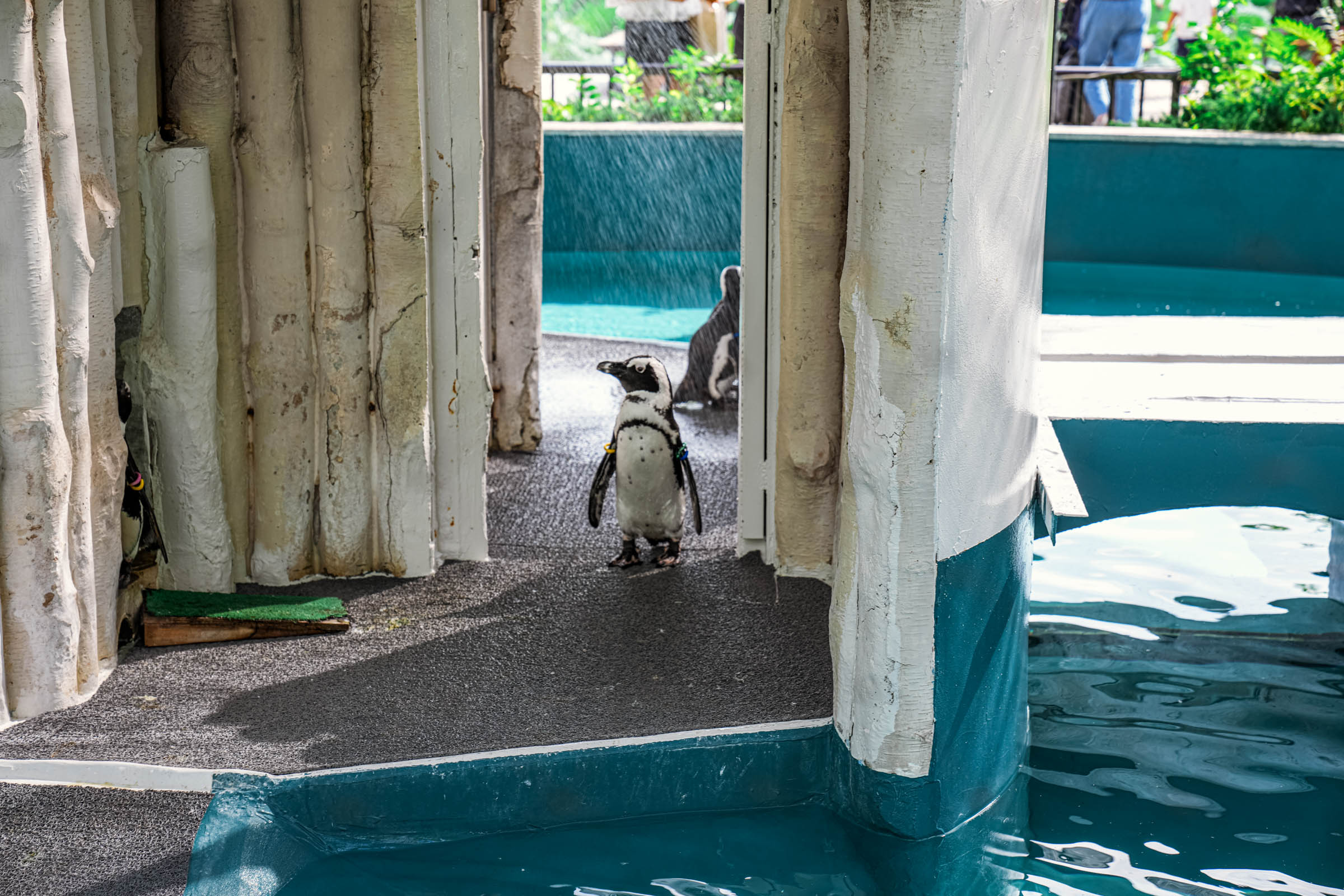
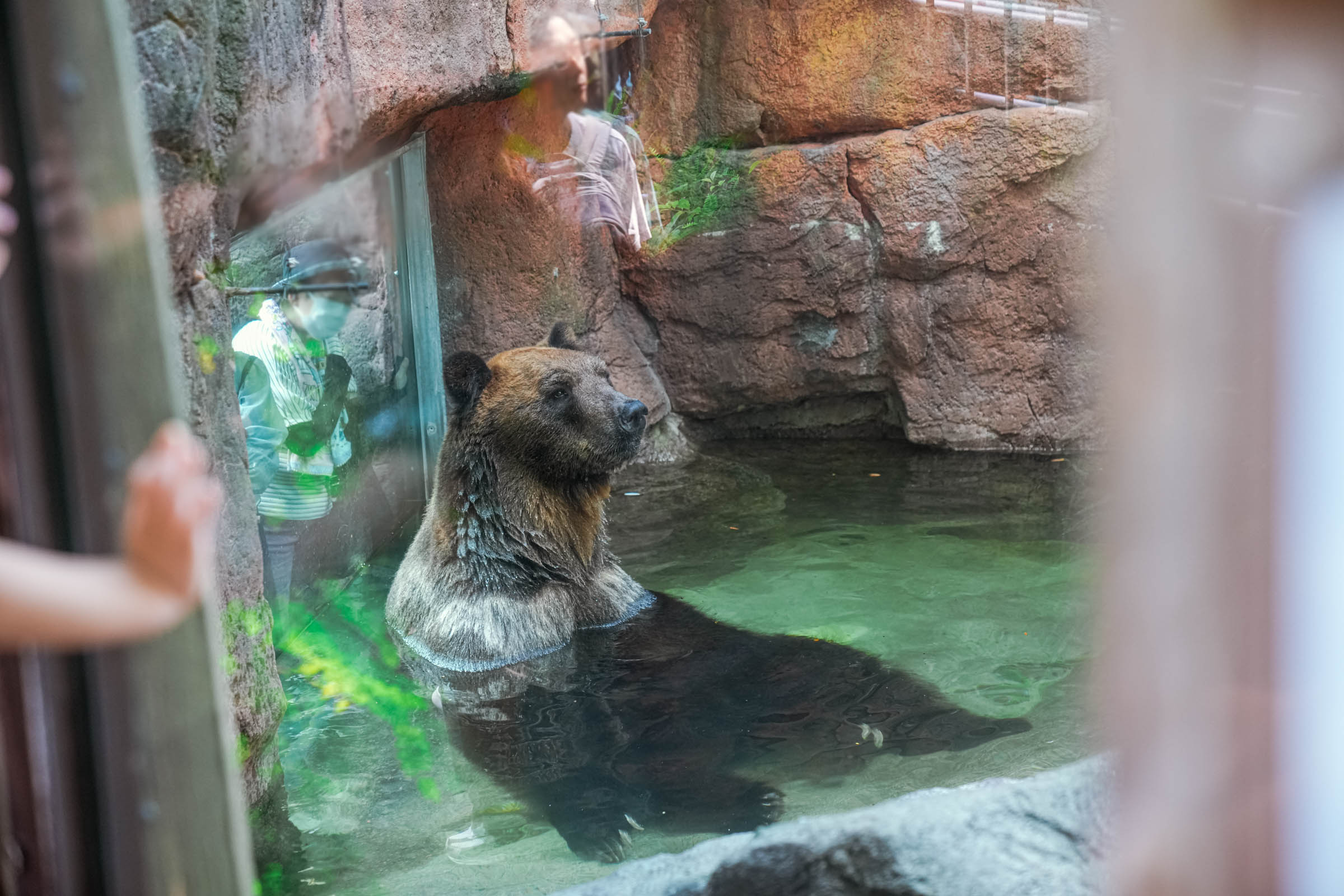
I also spent time at Ueno Zoo, which opened in 1882 and is the oldest zoo in Japan. Today, it is home to more than 2,500 animals of about 300 species. From giraffes and hippos to flamingos and penguins, I enjoyed every corner of it.
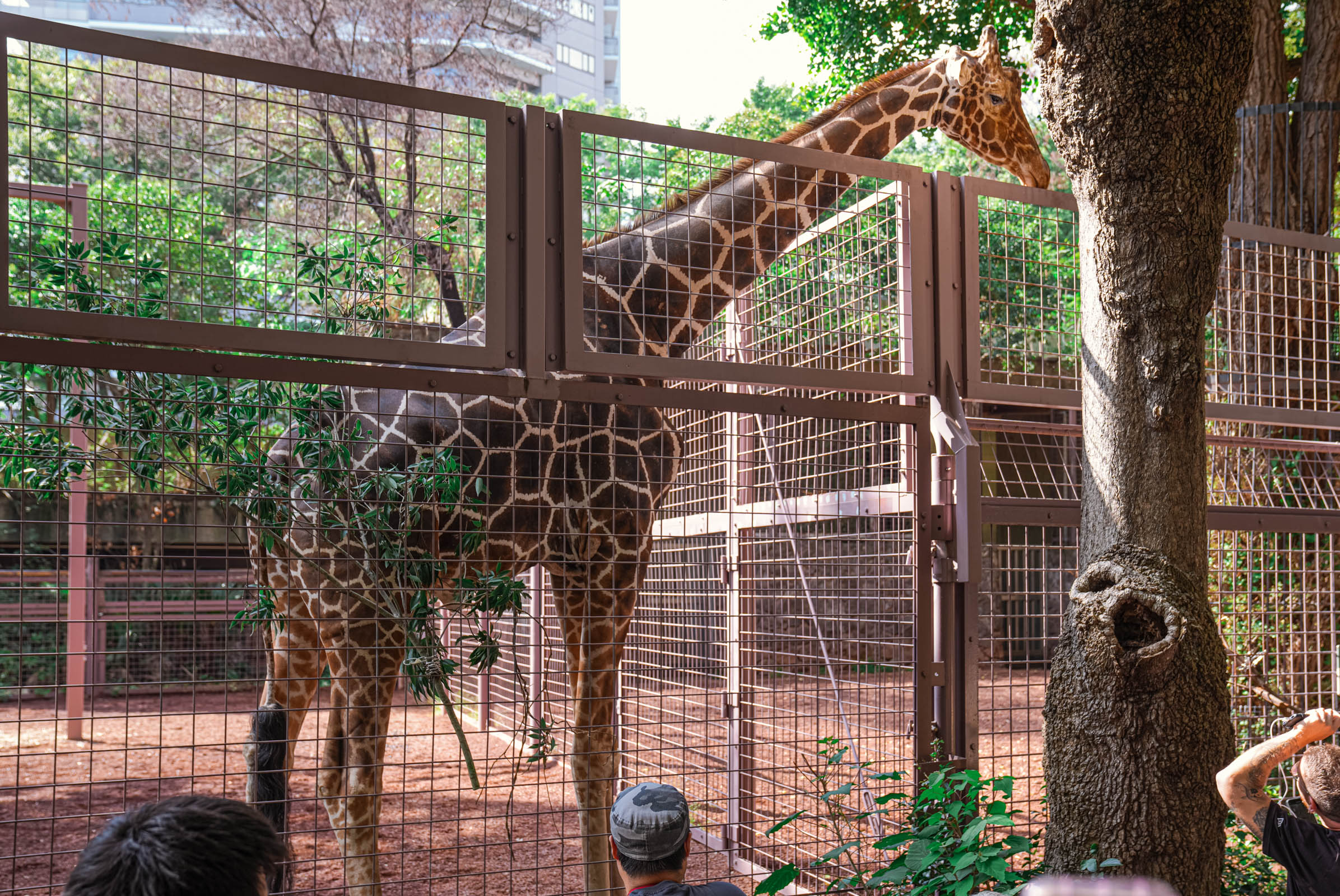
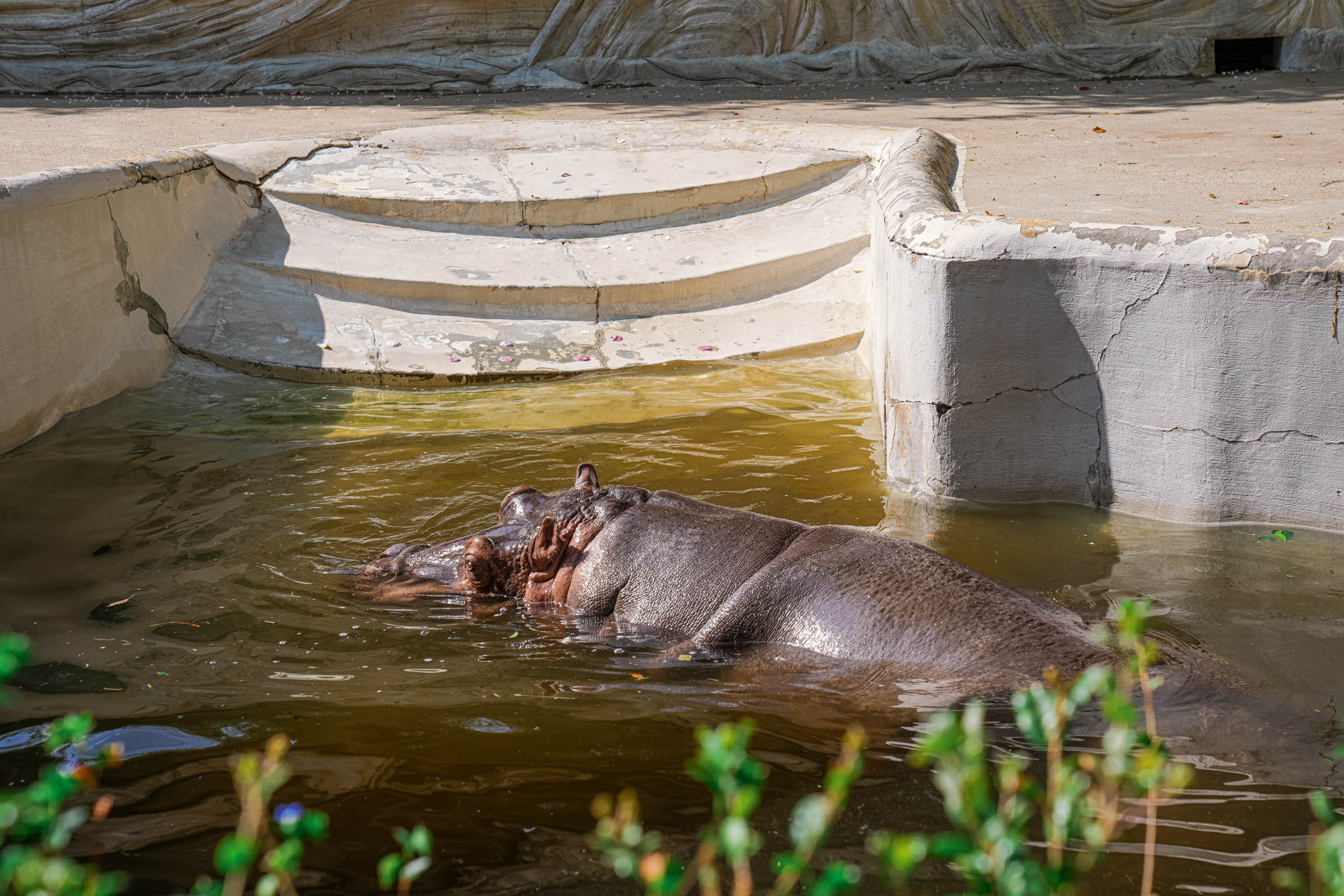
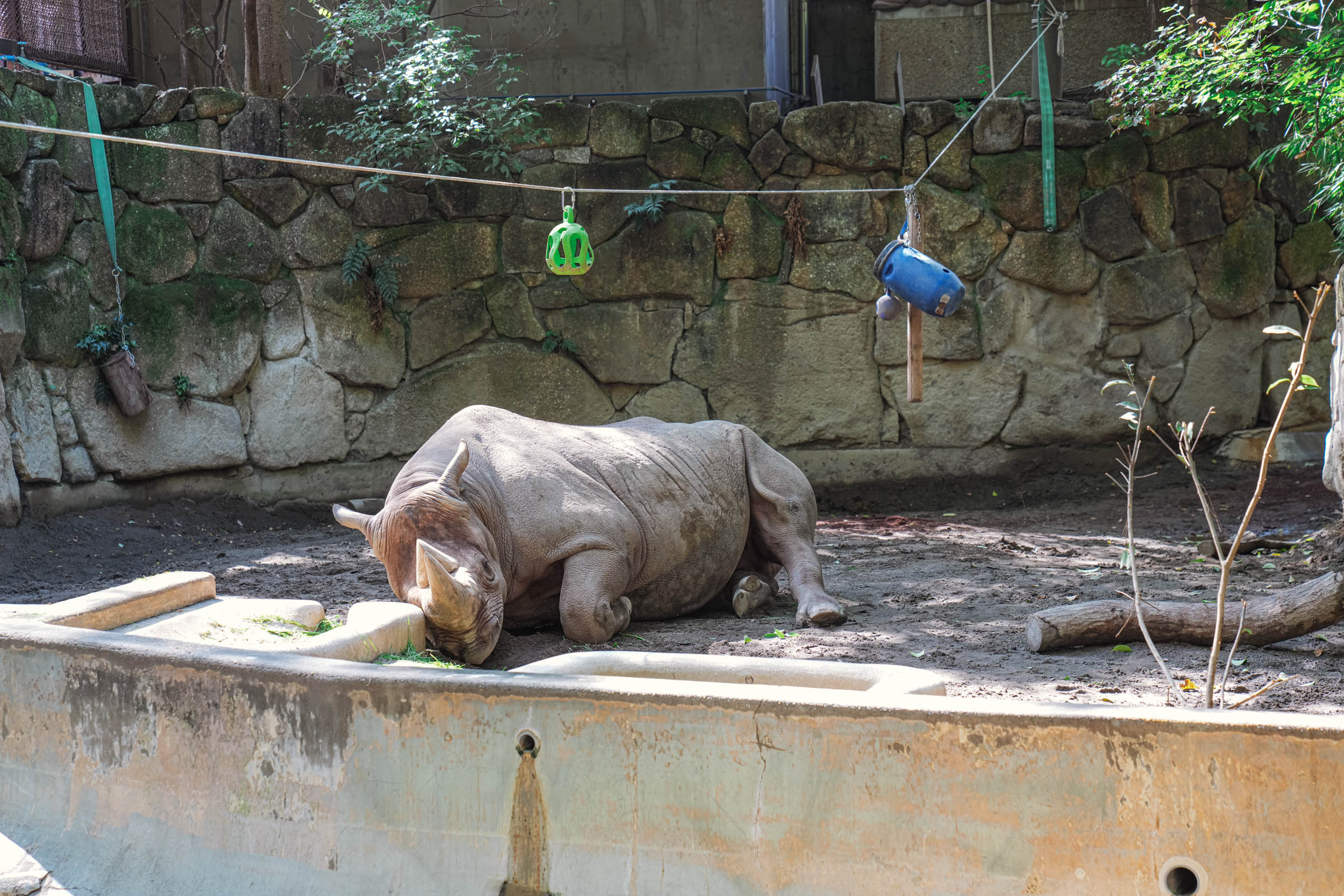
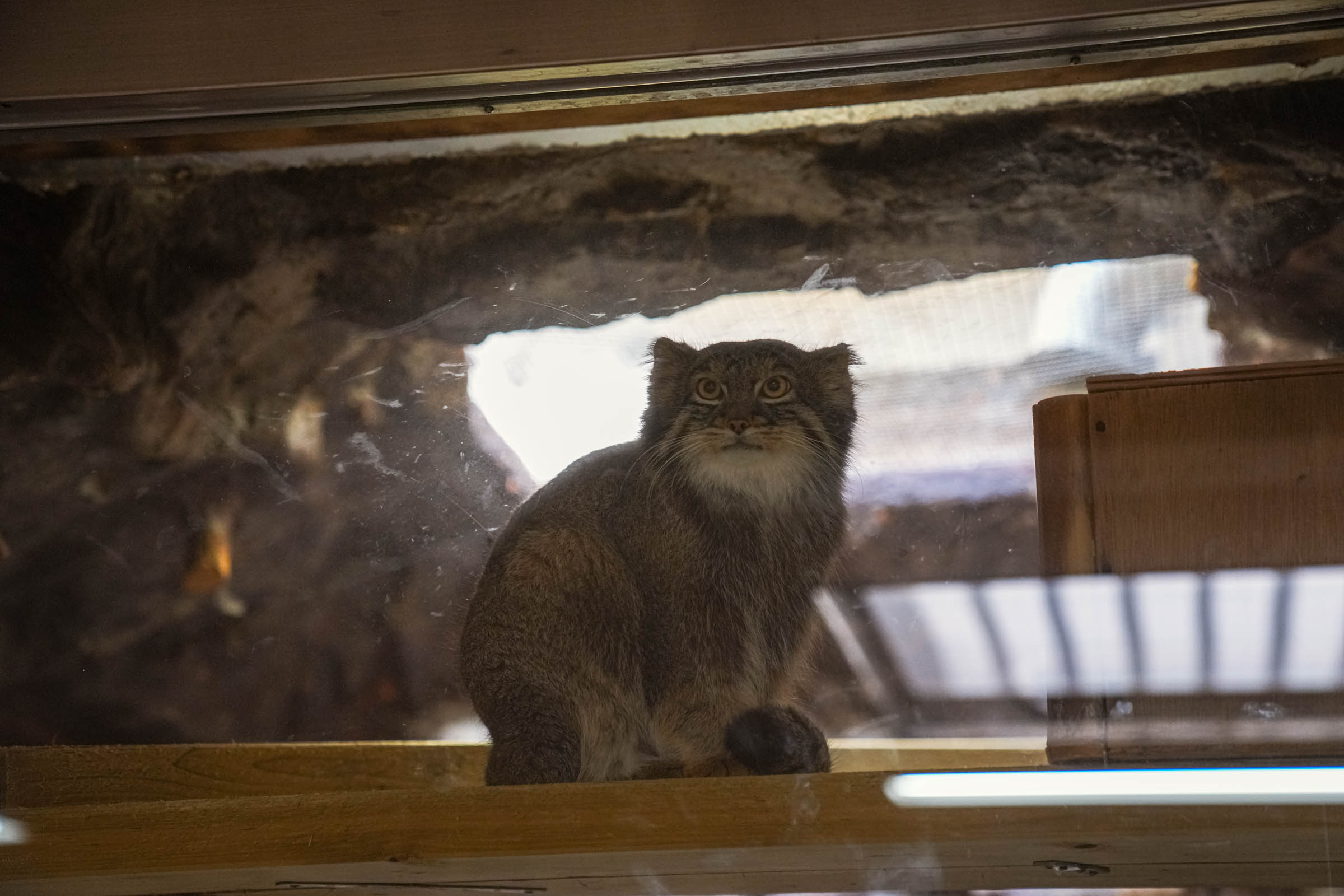
The zoo is a perfect break from museums and city streets, and it is especially lovely for families. Above all, it reminded me that even a city of millions has green corners and a slower rhythm.
TOKYO TOWER AND TOKYO SKYTREE
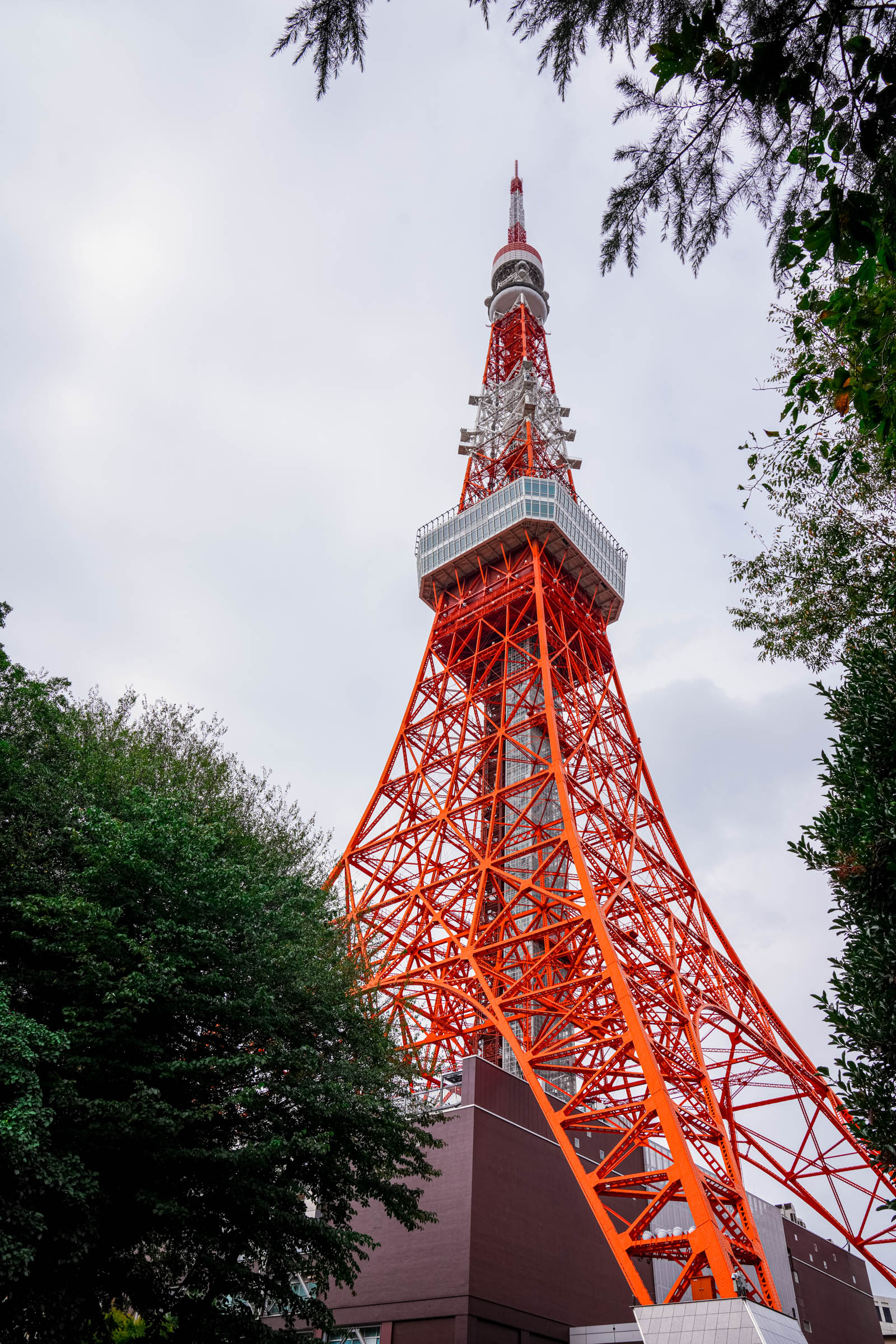
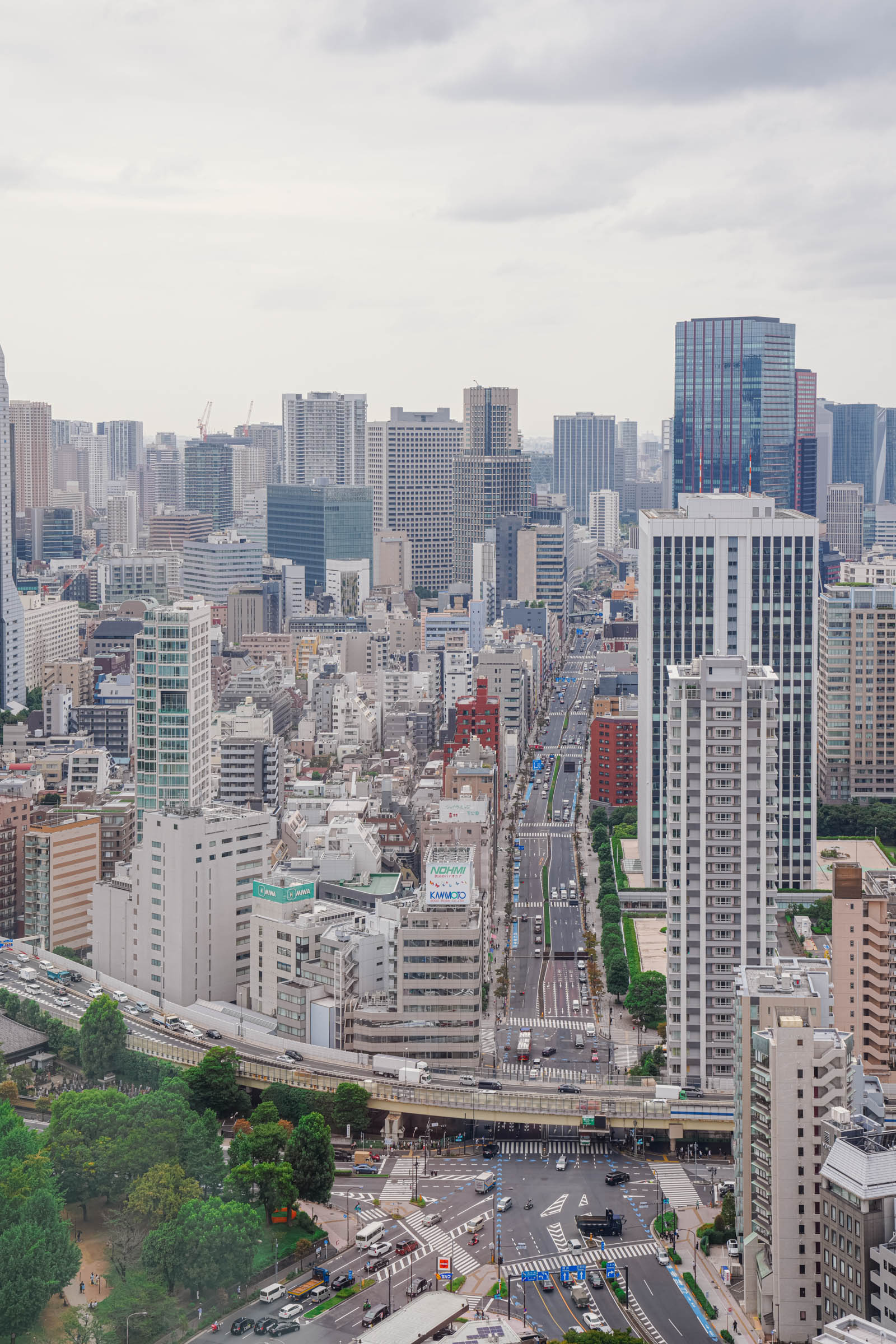
Tokyo has so much to offer that a lifetime would not be enough to explore it all. Tokyo Tower, 333 meters tall, opened in 1958, and its red and white lattice design immediately recalls the Eiffel Tower. For decades, it has been a symbol of the city and of its postwar revival.
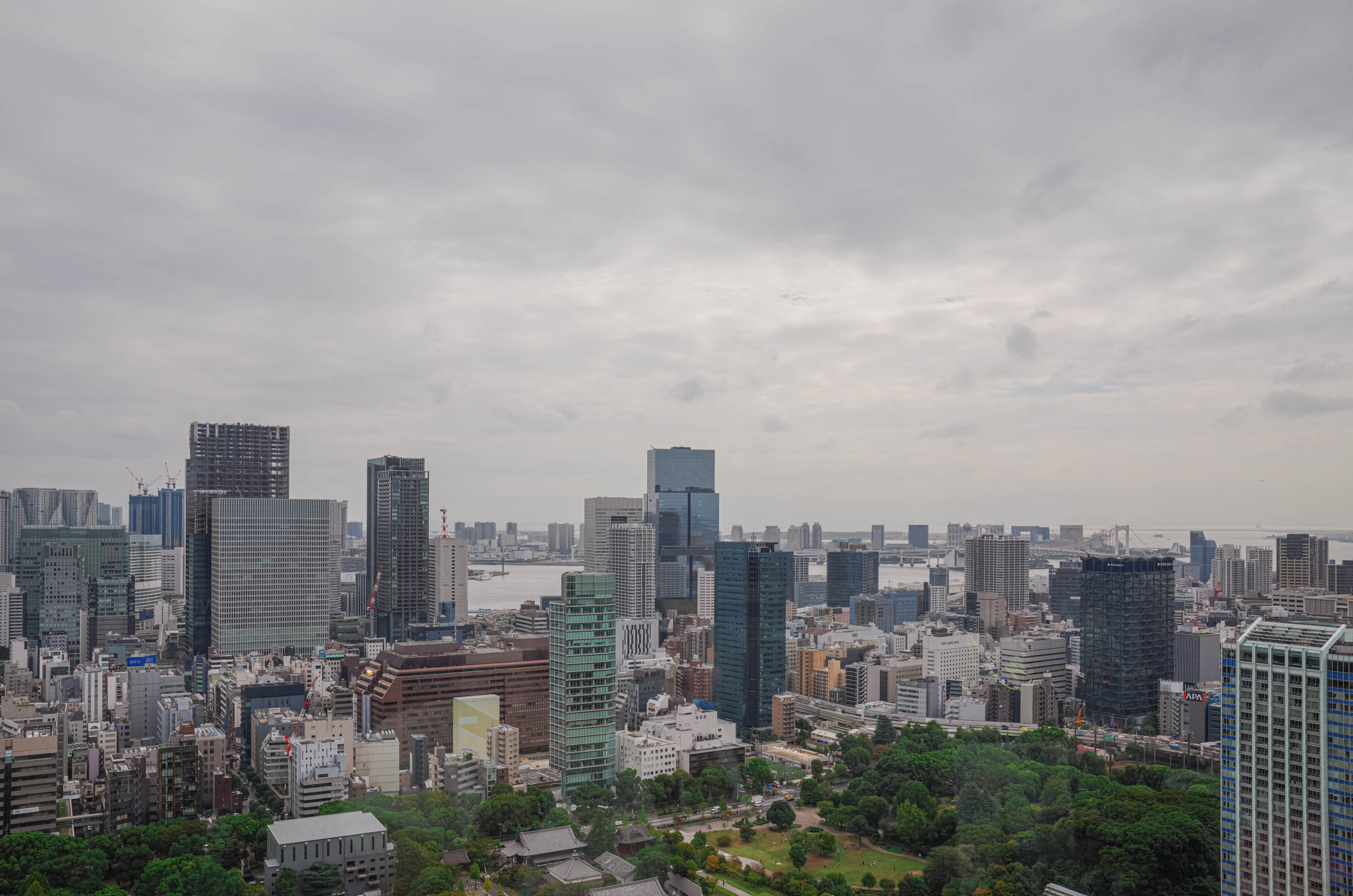
Today, Tokyo Skytree rises even higher. At 634 meters, Guinness World Records certifies it as the tallest tower in the world. Its height is not a coincidence. In Japanese, you can read the numbers 6, 3 and 4 as “Musashi,” the old name of the region. From high above, the city seems endless. On a clear day, you can even see Mount Fuji in the distance.
HARAJUKU, OMOTESANDO AND TOKYO STREET STYLE
Harajuku is the epicenter of Japanese youth fashion. Along Takeshita-dori, shops offer everything from colorful kawaii looks to gothic lolita fashion. Here, you can see the most amazing combinations. Young people express their individuality through clothes in a way that many other cultures would never dare.
Just a few minutes away, the elegant Omotesando Avenue offers a completely different atmosphere. Its luxury boutiques and architectural masterpieces make it one of my favorite streets for a slow afternoon walk.
A GASTRONOMIC JOURNEY THROUGH TOKYO
No visit to Tokyo is complete without its incredible food scene. With the Michelin Guide Tokyo 2026, the city kept its title as the place with the most starred restaurants in the world for the 19th year in a row. Still, the real magic lies in small restaurants hidden in basements and side streets. Ramen, that simple bowl of noodles in a rich broth, has become an art here. Every chef has a secret broth, from pork tonkotsu to fish dashi. Queues in front of the best ramen shops are common.
Sushi in Tokyo is a completely different experience from what we know at home. In traditional sushi restaurants, the master prepares each bite right in front of you. Many masters choose their fish at Toyosu Market. In October 2018, it took over the wholesale role of the famous Tsukiji market. In the omakase style, you let the chef choose, and you taste the seasons in a completely new way.
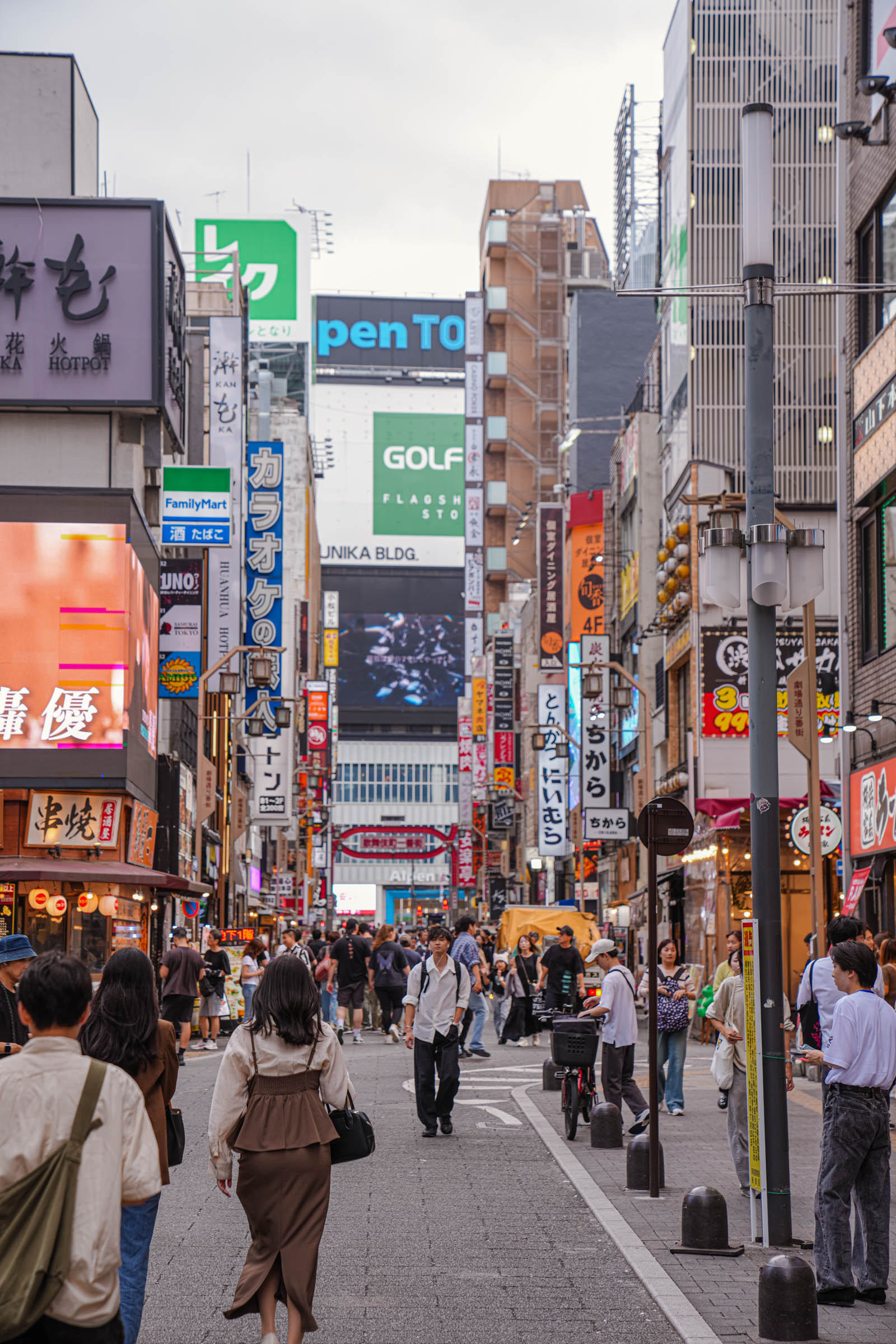
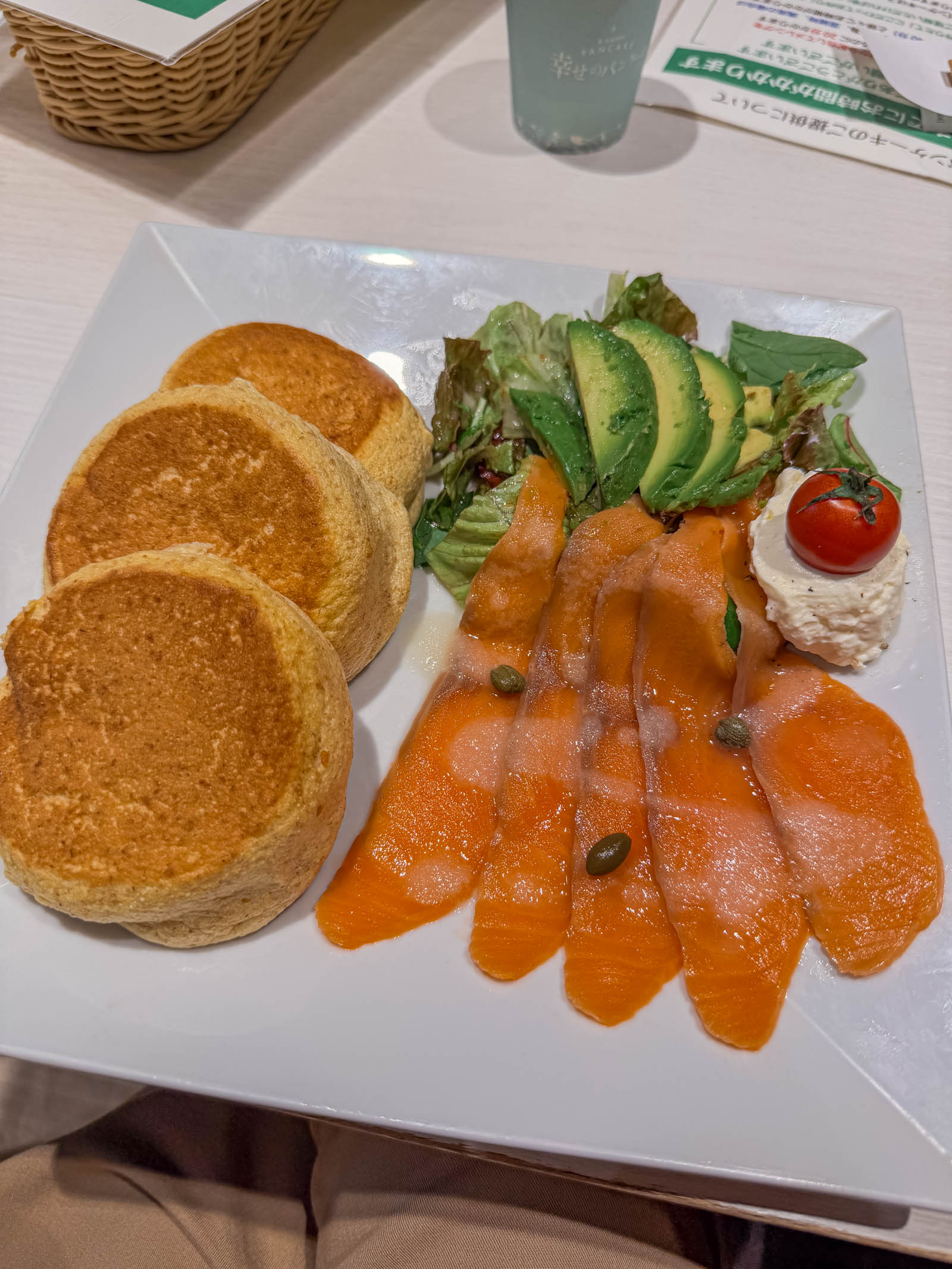
Izakaya, Japanese pubs, offer a more relaxed atmosphere, with small dishes enjoyed together with sake or beer. These are places where office workers relax after work and where friendships grow around a shared table. You can try everything from crispy karaage chicken to fresh tofu and seasonal vegetables. In Ginza, where I stayed, there are countless places like this. Many have only a dozen seats and an owner who cooks right in front of you. If you love food as much as I do, read my letter from Osaka, the culinary capital of the Land of the Rising Sun.
PRACTICAL TIPS FOR YOUR TRIP TO TOKYO
Planning a trip to Tokyo takes some preparation, but the rewards are priceless. Spring, from late March to mid-May, brings cherry blossoms and pleasant temperatures. Autumn, from October to November, offers spectacular colors and stable weather. Summers can be hot and humid, while winter brings cooler days and smaller crowds.
To move around the city, get an IC card such as Suica or Pasmo. You can top up these contactless cards at station machines. Then you use them on trains and buses, as well as in many shops. After a chip shortage, regular cards went back on sale in March 2025. For visitors, there is also the Welcome Suica card, and since May 2026 the Tourist Pasmo. Do you plan to travel further, for example to Kyoto or Osaka by Shinkansen? Then check whether a Japan Rail Pass pays off for your route.
When it comes to accommodation, location is key. Ginza offers the perfect balance between easy access to the whole city and a peaceful atmosphere. From there, you can reach the main sights by subway or even on foot.
In Japan, certain social norms really matter. In temples and shrines, behave quietly and respect religious customs. On the subway, speak softly and avoid phone calls. Tipping is not common. More and more places accept cards and mobile payments, but carry some yen just in case.
The language may seem intimidating, but most signs in Tokyo also use the Latin alphabet. People will appreciate basic phrases like “arigatou gozaimasu” for thank you or “sumimasen” for excuse me. Outside the tourist areas, English is less common. Still, translation apps and the kindness of the locals will help you.
WHY TOKYO IS WORTH VISITING
Tokyo is not a city you can fully experience in one visit. Every time I go back, I discover something new. It may be a hidden alley in Asakusa or a small temple in a residential area. Once, it was a restaurant with only six seats that served the best ramen I have ever tasted. This city is endless, like an ever-expanding universe.
What makes Tokyo special is not only its size or its history. It is the way the city manages to be both ultra-modern and deeply traditional. In the morning, you can meditate in a temple whose story begins in the 7th century. In the afternoon, you can shop for the latest technology in Akihabara. When evening comes, you can enjoy kabuki, an art with four centuries of history. This ability to embrace the new without rejecting the old makes Tokyo unique in the world.
My stay at Agora Tokyo Ginza allowed me to experience the city the right way. I had a base in one of its most fascinating neighborhoods and the comfort I needed after long days. With its Japanese details and modern conveniences, the Executive Suite perfectly reflected what this city is: a blend of tradition and innovation.
SAYING GOODBYE TO TOKYO
Tokyo is waiting for you. Maybe you are looking for the spirituality of ancient temples or the thrill of the busiest crossing in the world. Maybe you want the elegance of luxury shopping, or you simply want to get lost in a city that never stops amazing you. Either way, you will find it all here. And when you leave, you will know that Tokyo changes you and always calls you back.
Have you already visited Tokyo, or are you just planning your first trip to Japan?
Feel free to leave your impressions, comments or questions below, or contact me by email and on social networks. All information is on the CONTACT page.
With love from Tokyo,
Mr.M
This post is sponsored by United Nations World Tourism Organization (UN Tourism) and Agora Tokyo Ginza Hotel, as well as other local partners who have selflessly supported this project. This post is my personal and honest review of the destination experience.
Hello Marko, what an exceptional piece of writing about Tokyo. I visited Japan back in 2019 and stayed in Shinjuku, but after reading your detailed description of Ginza, I realize I missed so much by not exploring that area properly. The history you provided about Edo transforming from a fishing village to a megalopolis of 37 million people is fascinating and something I never fully appreciated during my trip. Your photographs of the Kaminarimon Gate brought back wonderful memories of standing there on a cool autumn morning. I am seriously considering a return trip and will definitely look into the Agora Tokyo Ginza based on your recommendation.
Hello Richard, thank you so much for taking the time to read my Tokyo article and for sharing your own experience from 2019. Shinjuku is a fantastic area to stay in, but I completely understand how easy it is to miss Ginza on a first visit Tokyo is so vast that even weeks there cannot cover everything. The transformation of Edo from that humble fishing village into the sprawling metropolis of 37 million people is truly one of the most remarkable urban stories in human history, and it is something that really hits you when you walk through the historic districts. I am glad that the photographs of Kaminarimon Gate stirred those memories of your autumn morning there, that cool, crisp air combined with the ancient atmosphere makes it unforgettable. If you do return, the Agora Tokyo Ginza is a wonderful base for exploring the area, especially with its proximity to the Kabukiza Theatre and the Tsukiji Outer Market, both within walking distance. I hope your next trip to Tokyo brings even more discoveries and unforgettable moments.
Warm regards,
Marko
Guten Tag Marko, dein Reisebericht über Tokio hat mich zutiefst beeindruckt. Ich war 2018 mit meiner Frau in Japan und wir haben damals den Senso-ji Tempel besucht, aber die Geschichte über die Fischer-Brüder, die die goldene Kanon-Statue aus dem Sumida-Fluss gezogen haben, kannte ich nicht. Deine Erklärung über die Nakamise-dori Einkaufsstraße erinnert mich an unseren Spaziergang dort, wo wir die köstlichen Reiscracker probiert haben. Die Verbindung zwischen der Tokugawa-Ära und dem modernen Tokio, die du so eloquent beschreibst, zeigt die einzigartige Fähigkeit Japans, Tradition und Moderne zu vereinen. Ich werde deinen Blog meinen Kollegen empfehlen, die eine Japanreise planen.
Guten Tag Hans-Peter, vielen herzlichen Dank, dass Sie sich die Zeit genommen haben, meinen Reisebericht über Tokio zu lesen und einen so ausführlichen Kommentar zu hinterlassen. Es freut mich sehr, dass die Geschichte über die Fischer-Brüder Hinokuma Hamanari und Takenari, die im Jahr 628 die goldene Kannon-Statue aus dem Sumida-Fluss zogen, für Sie neu war diese Legende verleiht jedem Besuch des Senso-ji Tempels eine ganz besondere Tiefe. Die Nakamise-dori ist wirklich ein Erlebnis für sich, und die Reiscracker dort gehören zu den köstlichsten Straßensnacks, die man in ganz Tokio finden kann. Sie haben absolut recht, dass Japan eine einzigartige Fähigkeit besitzt, Tradition und Moderne harmonisch zu vereinen, und die Tokugawa-Ära hat dafür das Fundament gelegt, auf dem das moderne Tokio aufgebaut ist. Es würde mich sehr freuen, wenn Ihre Kollegen durch meinen Blog Inspiration für ihre eigene Japanreise finden es ist ein Land, das man mindestens einmal im Leben besucht haben sollte.
Herzliche Grüße,
Marko
Cher Marko, quel récit magnifique sur Tokyo. J’ai eu la chance de visiter le Japon en 2017 et ton article m’a transporté directement dans les rues animées de Shibuya. Ta description du carrefour de Shibuya, où entre 1000 et 2500 personnes traversent toutes les deux minutes, capture parfaitement l’énergie unique de cet endroit. L’histoire d’Hachiko m’a particulièrement touché, ce chien fidèle qui a attendu son maître pendant dix ans est un symbole universel de loyauté. Les détails que tu fournis sur le quartier de Ginza et son histoire depuis 1612 enrichissent vraiment la compréhension de cette ville extraordinaire.
Dear Laurent, thank you so much for reading my article and for your kind words about the Tokyo piece. It is wonderful to hear that the article transported you back to the vibrant streets of Shibuya and your 2017 visit. The Shibuya crossing is truly one of those places where you can feel the pulse of an entire city in a single moment, with those waves of pedestrians flowing in every direction like a perfectly choreographed dance. The story of Hachiko is indeed one of the most touching tales in Japanese culture, and the fact that his bronze statue has become such a beloved meeting point shows how deeply loyalty is valued in Japanese society. I appreciate that you noticed the historical details about Ginza dating back to 1612 understanding the layers of history beneath Tokyo’s modern surface truly enriches the travel experience. Thank you again for your thoughtful comment.
Warm regards,
Marko
Ciao Marko, complimenti per questo splendido articolo su Tokyo. Ho visitato il Giappone nel 2019 e sono rimasto affascinato dalla capacità di questa città di unire antico e moderno in modo così armonioso. La tua descrizione del Palazzo Imperiale e dei suoi giardini orientali mi ha riportato alla mente le ore tranquille che ho trascorso passeggiando lungo i fossati. È incredibile pensare che le fondamenta del Castello di Edo risalgano al 1457 e che la torre principale, la più alta della storia giapponese, non sia mai stata ricostruita dopo l’incendio del 1657. Le tue fotografie trasmettono perfettamente l’atmosfera serena di questo luogo nel cuore della metropoli più popolosa del mondo.
Dear Antonio, thank you very much for taking the time to read my article and for leaving such a thoughtful comment. You have captured perfectly what makes Tokyo so special that seamless blending of ancient and modern that you experience at every turn. The Imperial Palace and its gardens are indeed a place of profound tranquility in the heart of the busiest metropolis on Earth, and walking along those moats gives you a sense of the grandeur that once defined Edo Castle. The history of the castle foundations dating back to 1457 under Ota Dokan, and the fact that the main tower was never rebuilt after that devastating fire of 1657, adds such a poignant dimension to the visit. I believe the Japanese deliberately chose not to rebuild it as a symbol of shifting priorities from military power toward peace and cultural development. I am truly glad that my photographs managed to convey even a fraction of the serene atmosphere you experienced during your own visit.
Warm regards,
Marko
Marko, I thoroughly enjoyed reading your comprehensive guide to Tokyo. My husband and I spent two weeks in Japan in 2018 and your article perfectly captures the essence of why we fell in love with this country. The section about the Great Kanto Earthquake of 1923 destroying 570,000 buildings and the subsequent rebuilding in just seven years demonstrates the remarkable resilience of the Japanese people. Your recommendation about getting a Pasmo or Suica card is excellent practical advice that I wish I had known before my trip. The contrast between the peaceful Meiji Shrine surrounded by 100,000 donated trees and the bustling Harajuku fashion district just minutes away truly exemplifies Tokyo’s unique character.
Hello Margaret, thank you so much for your wonderful comment and for sharing the experience you and your husband had during your two weeks in Japan in 2018. The story of the Great Kanto Earthquake of 1923 and that remarkable rebuilding effort truly speaks to the incredible spirit of the Japanese people the fact that they reconstructed a devastated city in just seven years is one of the most inspiring chapters in modern urban history. I am glad you found the Pasmo and Suica card recommendation useful, as those IC cards truly make navigating Tokyo’s complex transit system so much easier, allowing you to simply tap and go on trains, buses, and even use them for purchases at convenience stores and vending machines. The contrast between Meiji Shrine with its forest of 100,000 donated trees and the colorful energy of Harajuku just steps away is exactly the kind of juxtaposition that makes Tokyo endlessly fascinating. Thank you again for such a lovely and detailed comment.
Warm regards,
Marko
Hola Marko, tu artículo sobre Tokio es verdaderamente excepcional. Visité Japón en 2022 después de que se levantaran las restricciones y quedé maravillado por la limpieza y eficiencia del sistema de metro. Tu descripción de la estación de Shinjuku, con más de 3,6 millones de pasajeros diarios, me hizo recordar lo abrumado que me sentí la primera vez que intenté navegar por ese laberinto. La historia del shogunato Tokugawa y cómo Edo se convirtió en la capital de facto de Japón en 1603 es fascinante. Tengo una pregunta: ¿cuántos días recomiendas como mínimo para explorar Tokio adecuadamente sin sentirse apresurado?
Dear Diego, thank you very much for your kind words and for sharing your post-pandemic experience visiting Japan in 2022. Shinjuku Station with its more than 3.6 million daily passengers is truly a world unto itself, and I remember that overwhelming feeling of navigating it for the first time, the trick is to follow the color-coded signs and not be afraid to ask station staff, who are always incredibly helpful. The history of the Tokugawa shogunate establishing Edo as the de facto capital in 1603 is indeed one of those pivotal moments that shaped not just Japan but the entire region’s history. To answer your excellent question, I would recommend a minimum of five to seven days to explore Tokyo without feeling rushed, which gives you time to experience the major districts like Ginza, Asakusa, Shibuya, Shinjuku, and Ueno at a comfortable pace, with some time left for hidden gems and spontaneous discoveries. If you can extend to ten days, that allows for wonderful day trips to places like Kamakura or Nikko as well.
Warm regards,
Marko
Hallo Marko, herzlichen Dank für diesen wunderbaren Reisebericht. Die Information über den Meiji-Schrein und den umgebenden Wald mit etwa 100.000 gespendeten Bäumen aus ganz Japan hat mich sehr beeindruckt. Ich plane meine erste Japanreise für nächstes Jahr und frage mich, ob du empfehlen würdest, im Frühling zur Kirschblüte zu reisen oder ob der Herbst mit den farbenfrohen Blättern eine bessere Option wäre. Deine detaillierte Beschreibung der verschiedenen Stadtteile hilft mir sehr bei der Planung meiner Reiseroute. Die historischen Fakten über die Meiji-Restauration von 1868 und die mehr als 6.000 britischen Experten, die Japan bei der Modernisierung halfen, waren mir völlig neu.
Hallo Thomas, herzlichen Dank für Ihren freundlichen Kommentar und dafür, dass Sie sich die Zeit genommen haben, meinen Reisebericht so aufmerksam zu lesen. Was Ihre Frage zur besten Reisezeit betrifft, möchte ich sagen, dass beide Jahreszeiten ihre ganz eigene Magie haben. Die Kirschblüte Ende März bis Anfang April verwandelt Tokio in ein rosa Blütenmeer, besonders in Parks wie Shinjuku Gyoen und Ueno Park, wo über tausend Kirschbäume gleichzeitig blühen, allerdings ist dies auch die geschäftigste Reisezeit, und Hotels sollten mindestens fünf bis sechs Monate im Voraus gebucht werden. Der Herbst von Mitte Oktober bis Anfang Dezember bietet dagegen spektakuläre Herbstfarben, milderes Wetter, weniger Touristen und stabilere Wetterverhältnisse, was ihn für eine entspanntere Reise ideal macht. Die historischen Fakten über die Meiji-Restauration und die Tausenden ausländischer Experten, die Japan bei der Modernisierung halfen, zeigen, wie offen Japan in dieser entscheidenden Phase seiner Geschichte war. Ich wünsche Ihnen eine wunderbare erste Japanreise und stehe gerne für weitere Fragen zur Verfügung.
Herzliche Grüße,
Marko
Bonjour Marko, ton article sur Tokyo est une véritable mine d’informations. J’ai visité Kyoto il y a trois ans mais je n’ai jamais eu l’occasion de passer du temps à Tokyo. Ta description du théâtre Kabukiza à Ginza m’intrigue énormément, surtout le fait que le kabuki soit reconnu par l’UNESCO comme patrimoine culturel immatériel de l’humanité. L’idée que tous les rôles, y compris les rôles féminins, sont traditionnellement joués par des hommes depuis plus de quatre cents ans est fascinante. J’aimerais savoir si les spectacles de kabuki sont accessibles aux visiteurs qui ne parlent pas japonais, peut-être avec des sous-titres ou des guides audio?
Dear Sophie, thank you so much for your kind words and for taking the time to read my Tokyo article. Since you have already visited Kyoto, Tokyo would be a wonderful complement, offering a completely different but equally fascinating perspective on Japanese culture. To answer your question about Kabuki accessibility for non-Japanese speakers, the great news is that the Kabukiza Theatre in Ginza offers an English subtitle captioning device that you can rent for about 1,500 yen for a full show, which provides essential translations of dialogue and lyrics as the performance unfolds on stage. Additionally, there are single-act tickets available for around 1,500 yen, which allow you to experience about one hour of Kabuki without committing to a full four-hour performance, making it perfect for first-time viewers. Kabuki’s recognition by UNESCO as Intangible Cultural Heritage of Humanity in 2005 underscores its significance, and the tradition of male actors performing all roles, including female ones known as onnagata, has continued for over four centuries. I am confident you would find a Kabuki performance to be an unforgettable cultural experience.
Warm regards,
Marko
Hi Marko, what a beautifully written article about Tokyo. The historical context you provide about the Tokugawa shogunate and how Edo grew to have over one million inhabitants by 1720, making it possibly the largest city in the world at that time, is remarkable. I visited Tokyo in 2019 and stayed near Asakusa, and your description of Senso-ji temple brought back vivid memories. The legend about the fishermen brothers Hinokuma Hamanari and Takenari discovering the golden Kanon statue in 628 adds such depth to the temple visit. Your photographs are stunning and capture the magical atmosphere of this ancient temple surrounded by modern Tokyo.
Hello James, thank you for your thoughtful comment and for sharing your memories of visiting Tokyo in 2019. The fact that Edo had over one million inhabitants by 1720, making it possibly the largest city in the world at that time, is truly one of those historical details that puts everything into perspective this was a city that rivaled London and Paris in size centuries ago. The legend of the fishermen brothers Hinokuma Hamanari and Takenari discovering the golden Kannon statue in the year 628 is such a beautiful origin story, and knowing it transforms a visit to Senso-ji from mere sightseeing into a connection with nearly 1,400 years of continuous spiritual devotion. I find that these historical layers are what make Tokyo so endlessly rewarding every neighborhood has its own story stretching back centuries. The atmosphere of Senso-ji surrounded by the modern skyline of Tokyo is indeed magical, especially in the early morning light when the temple grounds are quieter. Thank you again for such generous words about my photography.
Warm regards,
Marko
Caro Marko, grazie per questo articolo così dettagliato e ben scritto su Tokyo. La sezione sulla gastronomia giapponese mi ha fatto venire l’acquolina in bocca, ricordandomi i meravigliosi pasti che ho gustato durante il mio viaggio nel 2018. Hai perfettamente ragione quando dici che il sushi a Tokyo è un’esperienza completamente diversa da quello a cui siamo abituati in Europa. Il fatto che Tokyo abbia più stelle Michelin di qualsiasi altra città al mondo dimostra l’eccellenza culinaria giapponese. Ho una domanda pratica: quanto anticipo consigli per prenotare i ristoranti omakase più rinomati?
Dear Giovanni, thank you so much for reading my article and for your kind words about the gastronomy section. You are absolutely right that sushi in Tokyo is a completely different experience from what we know in Europe, the freshness of the fish, the precision of the rice preparation, and the subtle balance of flavors are on another level entirely. The fact that Tokyo consistently holds more Michelin stars than any other city in the world, with over 200 starred restaurants, truly speaks to the extraordinary culinary standards maintained across the city. Regarding your practical question about omakase reservations, I would recommend booking at least one to two months in advance for the most renowned establishments, and for the truly legendary places like those with three Michelin stars, three to four months ahead is advisable, especially during peak tourist seasons. Many high-end omakase restaurants now accept online reservations through platforms or through your hotel concierge, which can be invaluable since some establishments traditionally only take bookings in Japanese. The experience of sitting at the counter and watching a master chef prepare each piece specifically for you is worth every effort of advance planning.
Warm regards,
Marko
Querido Marko, tu relato de viaje sobre Tokio me ha dejado sin palabras. La historia del perro Hachiko que esperó a su dueño durante diez años después de su muerte es conmovedora y representa perfectamente los valores japoneses de lealtad y devoción. Visité Japón en 2017 con mi familia y la estatua de Hachiko fue uno de los lugares donde más fotos tomamos. Tu descripción del cruce de Shibuya como el más transitado del mundo, con hasta 2.500 personas cruzando cada dos minutos, captura perfectamente esa sensación de estar en el corazón pulsante de una megaciudad. Las fotografías que acompañan el artículo son verdaderamente profesionales.
Dear Elena, thank you so much for your heartfelt comment and for sharing the memory of your family visit to Japan in 2017. The story of Hachiko truly transcends cultural boundaries the idea of that loyal Akita dog returning to Shibuya Station every day for nearly ten years after Professor Ueno’s passing in 1925 touches something universal in all of us. It is no wonder that his bronze statue, unveiled in 1934, has become one of the most photographed spots in all of Tokyo and one of the city’s most beloved meeting points. The Shibuya crossing, with its incredible flow of up to 2,500 people every signal change, is indeed like standing at the beating heart of a megacity, and yet there is a remarkable orderliness to it that perfectly reflects Japanese society. I truly appreciate your kind words about the photographs capturing the energy and scale of Tokyo through a lens is always a wonderful challenge. Thank you again for such a warm and thoughtful comment.
Warm regards,
Marko
Marko, your Tokyo guide is absolutely brilliant. I have been planning a trip to Japan for years and your article has provided invaluable insights that I have not found elsewhere. The detail about the Great Fire of 1657 claiming over 100,000 lives and destroying the main tower of Edo Castle, which was never rebuilt, adds a poignant layer to understanding the city’s history. Your tip about the Ichie lounge at Agora Tokyo Ginza, where guests can enjoy free Sayama green tea and browse the Machigokoro map, sounds like exactly the kind of authentic experience I am looking for. The philosophy of ichie, meaning one meeting one opportunity, resonates deeply with how I approach travel.
Hello Peter, thank you so much for your generous words about the Tokyo guide and for taking the time to leave such a detailed comment. The Great Fire of Meireki in 1657 is indeed one of the most significant events in Edo’s history, and the decision not to rebuild the main tower of Edo Castle after it claimed over 100,000 lives was a profound moment, the shogunate chose to redirect those resources toward rebuilding the homes and lives of ordinary citizens instead. I am delighted that the mention of the Ichie lounge at Agora Tokyo Ginza resonated with you the complimentary Sayama green tea and the Machigokoro neighborhood map are wonderful touches that embody the hotel’s commitment to authentic Japanese hospitality. The philosophy of ichigo ichie, meaning treasuring each encounter as a once-in-a-lifetime experience, is deeply rooted in Japanese tea ceremony culture and truly captures the essence of mindful travel. I hope that when you make your trip to Tokyo, every moment becomes one of those precious, unrepeatable encounters.
Warm regards,
Marko
Cher Marko, merci pour ce voyage virtuel extraordinaire à travers Tokyo. J’ai visité le Japon avec mon mari en 2019 et nous avons adoré explorer le quartier de Ginza. Ta description de la rue principale Chuo Dori avec les boutiques de luxe des grandes maisons françaises comme Chanel, Dior et Louis Vuitton me rappelle nos promenades du dimanche quand la rue devient piétonne avec le Hokoten. C’est vraiment une expérience unique de marcher au milieu d’un boulevard normalement réservé aux voitures. Tes photos capturent parfaitement cette atmosphère élégante et sophistiquée qui fait de Ginza un quartier si spécial.
Dear Marie, thank you for your lovely comment and for sharing the wonderful memories of your 2019 visit to Ginza with your husband. You have touched on one of my favorite aspects of Ginza the Hokoten, when Chuo Dori is closed to traffic on weekends and holidays, transforming this grand boulevard into a pedestrian paradise where you can stroll freely among the elegant boutiques of Chanel, Dior, Louis Vuitton and other great fashion houses. This tradition of making the street car-free dates back to the 1970s and has become one of Tokyo’s most civilized urban experiences. There is something truly special about walking down the center of a boulevard that is normally filled with traffic, surrounded by some of the most beautiful retail architecture in the world. The elegance and sophistication of Ginza is unlike any other shopping district, and your description of those Sunday promenades captures its essence perfectly. Thank you again for sharing those beautiful memories.
Warm regards,
Marko
Lieber Marko, dein Artikel über Tokio ist ein Meisterwerk des Reisejournalismus. Die Information, dass ein Quadratmeter Grundstück im Zentrum von Ginza über zehn Millionen Yen kostet, verdeutlicht die enorme wirtschaftliche Bedeutung dieses Viertels. Ich war 2017 geschäftlich in Tokio und hatte leider nicht genug Zeit, die Stadt richtig zu erkunden. Dein Bericht über das U-Bahn-System mit 13 Linien und 304 Kilometern Strecke sowie der unglaublichen Pünktlichkeit, die in Sekunden gemessen wird, entspricht genau meiner Erfahrung. Diese Effizienz und Sauberkeit des öffentlichen Verkehrs ist wirklich beispiellos und sollte ein Vorbild für europäische Städte sein.
Lieber Wilhelm, vielen herzlichen Dank für Ihren ausführlichen Kommentar und das große Lob für meinen Artikel. Die astronomischen Grundstückspreise in Ginza, wo ein Quadratmeter tatsächlich über zehn Millionen Yen kosten kann verdeutlichen wirklich, warum dieses Viertel als das teuerste Pflaster Japans gilt und die enorme wirtschaftliche Bedeutung dieses historischen Bezirks unterstreicht. Es ist schade, dass Sie bei Ihrem Geschäftsaufenthalt 2017 nicht mehr Zeit zum Erkunden hatten, aber das ist ein häufiges Problem bei Geschäftsreisen nach Tokio die Stadt verdient definitiv einen eigenen Urlaub. Das U-Bahn-System mit seinen 13 Linien der Tokyo Metro sowie den zusätzlichen Toei-Linien ist wirklich ein Meisterwerk der Ingenieurskunst, und die legendäre Pünktlichkeit, bei der Verspätungen tatsächlich in Sekunden gemessen werden, ist etwas, das man als Europäer kaum glauben kann, bis man es selbst erlebt hat. Sie haben absolut recht, dass diese Effizienz und Sauberkeit ein Vorbild für europäische Städte sein sollte es zeigt, was möglich ist, wenn öffentlicher Verkehr als Priorität behandelt wird.
Herzliche Grüße,
Marko
Hello Marko, this is one of the most comprehensive and engaging Tokyo travel guides I have ever read. Your description of the Tokyo Skytree standing at 634 meters as the tallest tower in the world, surpassing the beloved Tokyo Tower built in 1958, shows how Tokyo continues to evolve while respecting its history. I visited Japan before the pandemic in early 2020 and the view from the Tokyo Skytree observation deck on a clear day was absolutely breathtaking. Being able to see Mount Fuji in the distance felt like a spiritual experience. Your writing style makes me want to return immediately and explore the areas I missed during my first visit.
Hello David, thank you so much for your kind words and for sharing your experience of visiting Tokyo Skytree before the pandemic in early 2020. The Tokyo Skytree standing at 634 meters is indeed an engineering marvel and the tallest tower in the world, and it is fascinating how the height was specifically chosen because the numbers 6-3-4 can be read as “Musashi” in a traditional Japanese wordplay, referencing the old name for the Tokyo region. Your description of seeing Mount Fuji from the observation deck as a spiritual experience resonates deeply with me, there is something profoundly moving about glimpsing that sacred, snow-capped peak from 450 meters above the sprawling cityscape. The way Tokyo continues to evolve while honoring its history, from the beloved 1958 Tokyo Tower to the modern Skytree, perfectly illustrates the Japanese ability to build the future without erasing the past. I hope you get the chance to return soon and explore all those areas you missed on your first visit.
Warm regards,
Marko
Caro Marko, che articolo meraviglioso hai scritto su Tokyo. La tua descrizione del quartiere di Harajuku e della via Takeshita-dori con i suoi negozi di moda giovanile, dal kawaii allo stile gothic lolita, mi ha ricordato quanto sia unica la cultura giapponese nell’esprimere l’individualità attraverso la moda. Ho visitato Tokyo nel 2018 e sono rimasta affascinata dal contrasto tra questa strada colorata e la vicina elegante Omotesando Avenue con le sue boutique di lusso. È incredibile come in pochi minuti a piedi si possa passare da un mondo all’altro, e questa è l’essenza di Tokyo che hai catturato perfettamente nel tuo articolo.
Dear Isabella, thank you for your wonderful comment and for sharing your memories of visiting Harajuku in 2018. You have perfectly described one of the most magical aspects of Tokyo, the ability to move between completely different worlds in just a few minutes on foot. The contrast between Takeshita-dori with its explosion of kawaii culture, colorful fashion and youthful energy and the elegant tree-lined Omotesando Avenue, often called Tokyo’s Champs-Élysées, with its high-end architectural boutiques by designers like Tadao Ando and Toyo Ito, is truly remarkable. This constant juxtaposition of styles, eras and aesthetics is what makes Tokyo so endlessly stimulating and impossible to fully capture in a single visit. The way Japanese youth express their individuality through fashion, from gothic lolita to streetwear to avant-garde styles, reflects a deep cultural appreciation for self-expression that is both creative and respectful. I am so glad that my article managed to capture that essence of Tokyo that you experienced firsthand.
Warm regards,
Marko
Marko, thank you for this wonderful article about Tokyo. The section about the Imperial Palace and its East Gardens being open to the public, except on Mondays and Fridays, is exactly the practical information travelers need. I visited Tokyo with my wife in 2018 and we made the mistake of arriving at the gardens on a Monday, not knowing they were closed. Your article would have saved us that disappointment. The detail about the Ninomaru Garden being reconstructed according to the design of Kobori Enshu, a famous garden builder from the Edo period, adds cultural depth that guidebooks often miss. Your photography truly captures the serene beauty of this green oasis amid the skyscrapers.
Hello Robert, thank you so much for your comment and for sharing that practical experience about arriving at the Imperial Palace East Gardens on a Monday. That is exactly the kind of real-world traveler knowledge that I hope my articles can help prevent the gardens are indeed closed on Mondays and Fridays, as well as certain holiday periods, and it is such a common mistake that catches visitors off guard. The Ninomaru Garden, designed in the style of the great Edo-period landscape architect Kobori Enshu, is a masterpiece of Japanese garden art where every stone, tree and water feature has been carefully placed to create a harmonious composition that changes with each season. The guided tours of the palace grounds, which run twice daily, cover fascinating sites including historic watchtowers and the remains of the original castle fortifications, giving visitors a deeper understanding of the centuries of history contained within those walls. I am glad my photography captured some of the serene beauty of this green oasis, and I hope your return visit allows you to experience it in person.
Warm regards,
Marko
Hola Marko, muchas gracias por compartir esta guía tan completa sobre Tokio. La información histórica que proporcionas sobre la Restauración Meiji de 1868 y el traslado de la capital de Kioto a Edo, que luego pasó a llamarse Tokio o capital del este, es fascinante. Visité Japón en 2019 y me quedé principalmente en Osaka, pero hice excursiones de un día a Tokio y Kioto. Después de leer tu artículo, me doy cuenta de que Tokio merece mucho más tiempo. La descripción del hotel Agora Tokyo Ginza con su tokonoma tradicional y los detalles japoneses en las habitaciones suena como el alojamiento perfecto para experimentar la cultura local.
Dear Alejandro, thank you very much for reading my guide and for sharing your experience from 2019. The Meiji Restoration of 1868 is truly one of the most transformative events in world history the renaming of Edo to Tokyo, meaning “Eastern Capital” and the transfer of the imperial court from Kyoto marked the beginning of Japan’s remarkable journey toward modernization. I completely understand the challenge of trying to see Tokyo on a day trip from Osaka, while the Shinkansen makes it technically possible, Tokyo is a city that reveals its true character only to those who spend enough time to explore beyond the obvious landmarks. The Agora Tokyo Ginza with its tokonoma, that beautiful traditional alcove typically found in tea rooms and used to display seasonal artwork and flower arrangements, offers guests a genuine connection to Japanese aesthetics that many modern hotels overlook. Its strategic location right above Higashi-Ginza Station makes it an ideal base for exploring both the traditional and contemporary sides of this extraordinary city. I highly recommend dedicating an entire trip to Tokyo on your next visit.
Warm regards,
Marko
Hallo Marko, vielen Dank für diesen wunderschönen Reisebericht über Tokio. Deine Beschreibung der japanischen Gastfreundschaftsphilosophie und wie das Agora Tokyo Ginza Hotel diese mit modernem Komfort verbindet, hat mich sehr angesprochen. Ich plane, nächstes Jahr im Herbst nach Japan zu reisen, und deine Empfehlung, dass Oktober bis November stabile Wetterverhältnisse und spektakuläre Herbstfarben bietet, ist sehr hilfreich. Die Information über das Japan Rail Pass für Reisen außerhalb Tokios zum Beispiel mit dem Shinkansen nach Kyoto oder Osaka ist genau das, was ich gesucht habe. Dein Blog ist jetzt zu meiner Hauptinformationsquelle für die Reiseplanung geworden.
Liebe Claudia, vielen herzlichen Dank für Ihren wunderbaren Kommentar und dafür, dass mein Blog zu Ihrer Hauptinformationsquelle für die Reiseplanung geworden ist das ist wirklich ein großes Kompliment. Ihre Entscheidung, im Herbst nach Japan zu reisen, ist ausgezeichnet Oktober und November bieten tatsächlich stabile Wetterverhältnisse mit angenehmen Temperaturen zwischen 10 und 22 Grad, weniger Touristen als zur Kirschblütenzeit und die spektakulären Herbstfarben in Parks wie Rikugien und Koishikawa Korakuen in Tokio. Was den Japan Rail Pass betrifft, ist er tatsächlich eine hervorragende Investition, wenn Sie planen, auch außerhalb Tokios zu reisen eine einzelne Hin-und-Rückfahrt mit dem Shinkansen nach Kyoto oder Osaka kann den Preis des Passes bereits rechtfertigen, und Sie können damit auch die meisten JR-Linien innerhalb Tokios nutzen. Die japanische Gastfreundschaftsphilosophie, die das Agora Tokyo Ginza so wunderbar verkörpert, wird Ihren Aufenthalt zu etwas ganz Besonderem machen. Ich wünsche Ihnen eine unvergessliche erste Japanreise.
Herzliche Grüße,
Marko
Hi Marko, your article about Tokyo is simply outstanding. I particularly appreciated the section about the air raids during World War II, especially the devastating attack on March 9, 1945, that killed over 100,000 civilians in a single night and burned two-fifths of the city. This dark chapter of history is often overlooked in travel guides, but understanding it makes the postwar reconstruction and the 1964 Olympics all the more impressive. Your comparison of Tokyo rising like a phoenix from the ashes is apt and poetic. The cultural sensitivity with which you approach these difficult topics while celebrating the city’s achievements is commendable.
Hello Michael, thank you for your thoughtful and perceptive comment about the article. I deeply appreciate that you recognized the importance of including the difficult chapter of the air raids during World War II, particularly the devastating firebombing of March 9-10, 1945, which remains one of the most destructive single attacks in the history of warfare. You are absolutely right that many travel guides overlook this dark period, yet understanding the scale of that destruction makes Tokyo’s subsequent transformation hosting the 1964 Olympics just nineteen years later and presenting a modern, rebuilt city to the world, all the more extraordinary. The phoenix metaphor felt appropriate because it reflects not just physical reconstruction but the remarkable spirit of a people who chose to rebuild with optimism and forward-looking vision rather than dwelling in bitterness. It is important to approach these topics with cultural sensitivity while still acknowledging historical truth and I am glad that balance came through in the writing. History, even its darkest chapters, deserves to be remembered and honored.
Warm regards,
Marko
Bonjour Marko, quel plaisir de lire ton article sur Tokyo. J’ai visité le Japon en 2018 et ton récit m’a fait revivre des moments inoubliables. La description du parc Ueno avec ses nombreuses institutions culturelles, dont le Musée national de Tokyo qui abrite la plus grande collection d’art japonais au monde, m’a rappelé les heures que j’y ai passées. Le fait que ce parc soit l’un des premiers parcs publics du Japon et qu’il devienne un lieu privilégié pour le hanami au printemps ajoute une dimension culturelle importante. Tes conseils pratiques sur les cartes IC comme Pasmo ou Suica sont précieux pour tout voyageur qui souhaite se déplacer facilement dans cette métropole.
Dear Pierre, thank you very much for your kind comment and for sharing your memories of Ueno Park from your 2018 visit to Japan. The Tokyo National Museum, founded in 1872, is truly a treasure trove housing over 120,000 objects spanning centuries of Japanese and Asian art and one could easily spend an entire day exploring its galleries without seeing everything. Ueno Park itself holds a special place in Tokyo’s history as one of Japan’s first public parks, established in 1873, and during cherry blossom season it becomes one of the most popular hanami spots in the entire city, with over 1,000 cherry trees creating a magnificent canopy of pink. Your mention of the Pasmo and Suica IC cards is well noted these rechargeable cards truly simplify travel across Tokyo’s complex network of multiple train and subway operators, and they can also be used at convenience stores, vending machines, and many restaurants, making them essentially an all-purpose payment tool for daily life in Tokyo. Thank you again for such a warm and detailed response.
Warm regards,
Marko
Marko, I found your Tokyo guide to be exceptionally well-researched and beautifully written. The historical detail about Tokugawa Ieyasu winning the Battle of Sekigahara in 1603 and establishing his shogunate in Edo, transforming a modest fishing village into the de facto capital, provides essential context for understanding Tokyo today. I traveled to Japan in 2017 and spent a week in Tokyo, but I feel like I barely scratched the surface. Your description of the izakaya pubs where salarymen relax after work and enjoy small portions of various dishes with sake perfectly captures those authentic evenings I experienced in the backstreets of Shimbashi. This article makes me long for a return visit.
Hello Andrew, thank you so much for your generous words about the article and for sharing your 2017 Tokyo experience. The Battle of Sekigahara in 1600 which led to Tokugawa Ieyasu establishing his shogunate in Edo in 1603 was truly the decisive moment that set the stage for over 260 years of relative peace and the incredible growth that transformed a modest fishing village into one of the world’s great cities. Your description of those evenings in the izakaya pubs of Shimbashi perfectly captures one of the most authentic Tokyo experiences sitting among salarymen unwinding after work, sharing plates of yakitori, edamame, and other small dishes while sipping cold beer or sake is where you truly feel the pulse of everyday Japanese life. Shimbashi in particular retains that old-school, unpretentious atmosphere that has largely disappeared from more gentrified neighborhoods. A week in Tokyo only scratches the surface, as you rightly noted, and I am confident a return visit would reveal entirely new layers of this endlessly fascinating city.
Warm regards,
Marko
Ciao Marko, grazie per questo straordinario viaggio virtuale attraverso Tokyo. La tua descrizione della Tokyo Tower, alta 333 metri e costruita nel 1958 sul modello della Torre Eiffel, come simbolo della ricostruzione postbellica del Giappone mi ha commosso. Ho visitato il Giappone nel 2019 con mio figlio e abbiamo trascorso ore a osservare la città dall’osservatorio della Tokyo Skytree. Il fatto che in una giornata limpida si possa vedere il Monte Fuji in lontananza rende l’esperienza ancora più magica. Le tue fotografie catturano perfettamente l’essenza di questa città che riesce a essere contemporaneamente ultramoderna e profondamente tradizionale.
Dear Francesco, thank you for your beautiful comment and for sharing the experience of visiting Japan with your son in 2019. Tokyo Tower, standing at 333 meters and built in 1958 inspired by the Eiffel Tower, is indeed a powerful symbol of Japan’s postwar rebirth, it was constructed during the economic miracle years and quickly became an icon of hope and progress for a nation rebuilding from devastation. The view from Tokyo Skytree’s observation deck on a clear day, with Mount Fuji’s majestic silhouette visible in the distance is one of those travel moments that stays with you forever. Fuji-san holds deep spiritual significance in Japanese culture, having been a sacred mountain and a source of artistic inspiration for centuries, from Hokusai’s famous woodblock prints to contemporary photography. You have perfectly described what I believe is Tokyo’s greatest charm, the ability to be simultaneously ultramodern and profoundly traditional, where cutting-edge technology coexists with centuries-old customs in perfect harmony. Sharing that experience with your son must have made it all the more meaningful.
Warm regards,
Marko
Hello Marko, your article on Tokyo has left me deeply inspired to plan my first trip to Japan. The way you describe the contrast between the ancient Senso-ji temple dating back to 628 and the modern skyscrapers creates such a vivid picture of the city. The legend of the golden Kanon statue being repeatedly returned to the fishermen’s nets no matter how many times they threw it back is charming and speaks to the spiritual foundation of Japanese culture. I would love to know if you have any recommendations for experiencing traditional Japanese arts beyond kabuki, perhaps tea ceremonies or calligraphy workshops that would be accessible to English-speaking visitors.
Hello Victoria, thank you so much for your inspiring comment and for sharing your enthusiasm about planning your first trip to Japan. The legend of the golden Kannon statue from 628 AD is indeed one of those stories that perfectly illustrates the spiritual foundation upon which Japanese culture is built the idea that the fishermen kept trying to return the statue to the river, only for it to keep appearing in their nets, suggests a sense of divine purpose that resonates through the centuries. Beyond Kabuki, I would absolutely recommend experiencing a traditional tea ceremony, there are several wonderful venues in Tokyo that offer English-guided sessions, including Maikoya in Asakusa and Chazen near the Kabukiza Theatre in Ginza, where experienced hosts walk you through every step of this meditative ritual. For calligraphy or Shodo, places like HiSUi Tokyo in Ginza offer workshops where you can learn the art of Japanese brush writing with English-speaking instructors, and you even get to take your artwork home as a souvenir. Both experiences offer a beautiful window into the aesthetic and philosophical values that define Japanese culture.
Warm regards,
Marko
Querido Marko, tu artículo sobre Tokio es una obra maestra del periodismo de viajes. La descripción del santuario Meiji Jingu en el parque Yoyogi como un oasis de paz en medio de la metrópolis me ha traído recuerdos maravillosos de mi visita en 2018. Caminar a través del gran torii y por el sendero bordeado de árboles hacia el santuario, sintiendo cómo el ruido de la ciudad desaparece, es verdaderamente una experiencia espiritual. El detalle de que el bosque fue plantado con aproximadamente 100.000 árboles donados de todo Japón muestra el profundo respeto que los japoneses tienen por la naturaleza y sus tradiciones. Tus fotografías complementan perfectamente el texto.
Dear Fernando, thank you very much for your wonderful comment and for sharing that powerful memory of walking through the great torii gate at Meiji Jingu in 2018. You have described the experience perfectly, that gradual transition from the noise and energy of one of the world’s busiest cities into the profound silence of the forested path leading to the shrine is truly one of the most spiritual experiences Tokyo offers. The fact that this entire forest was created by human hands, with approximately 100,000 trees donated from every corner of Japan and planted by over 100,000 volunteers in the 1920s, demonstrates the extraordinary Japanese reverence for nature and community spirit. What makes this forest even more remarkable is that it was designed to be self-sustaining and today it has evolved into a thriving natural ecosystem in the heart of a metropolis of millions. Your observation about feeling the city noise disappear as you walk deeper into the shrine grounds is something every visitor notices and it perfectly captures why Meiji Jingu remains one of the most visited spiritual sites in all of Japan. Thank you for such a beautifully written reflection.
Warm regards,
Marko
Lieber Marko, dein Artikel über Tokio ist faszinierend und informativ zugleich. Die Geschichte über die strenge Gesellschaftsordnung während des Tokugawa-Regimes, die die Bevölkerung in Samurai, Bauern, Handwerker und Kaufleute einteilte, wobei die Kaufleute trotz ihres Reichtums die niedrigste Position einnahmen, war mir völlig unbekannt. Auch die Tatsache, dass die meisten Gebäude aus Holz waren und Brände so häufig vorkamen, dass kaum jemand sein Zuhause nicht mindestens einige Male im Leben verlor, gibt einen tiefen Einblick in das Leben im alten Edo. Dein Schreibstil macht Geschichte lebendig und zugänglich.
Liebe Christine, herzlichen Dank für Ihren aufmerksamen Kommentar und dafür, dass Sie die historischen Details so aufmerksam gelesen haben. Die strenge Gesellschaftsordnung des Tokugawa-Regimes Samurai an der Spitze, gefolgt von Bauern, Handwerkern und schließlich Kaufleuten ist tatsächlich eine faszinierende Ironie der Geschichte, denn die Kaufleute, obwohl gesellschaftlich am niedrigsten eingestuft, wurden oft die wohlhabendsten Mitglieder der Gesellschaft und entwickelten eine reiche Kultur des Vergnügens und der Künste in den Vierteln, die ihnen zugewiesen waren. Das ständige Risiko von Bränden in einer Stadt aus Holzhäusern war so alltäglich, dass die Bewohner von Edo eine erstaunlich pragmatische Einstellung dazu entwickelten Brände wurden sogar als „Blumen von Edo” bezeichnet, und die Feuerwehrleute gehörten zu den am meisten bewunderten Mitgliedern der Gesellschaft. Es freut mich sehr, dass mein Schreibstil Geschichte für Sie lebendig und zugänglich macht genau das ist mein Ziel, denn ich glaube, dass historisches Verständnis jede Reise unendlich bereichert. Diese Details über das alte Edo helfen uns zu verstehen, warum Tokio heute so ist, wie es ist.
Herzliche Grüße,
Marko
Marko, this is an absolutely captivating piece about Tokyo. I visited Japan with a group of friends in 2019 and we stayed in Shibuya, so your description of the famous crossing brought back such vivid memories. Watching the scramble from the Starbucks in the Q-Front building, just as you described, was one of the highlights of our trip. The fact that this crossing has appeared in countless films from Lost in Translation to The Fast and the Furious Tokyo Drift shows its cultural significance. Your writing beautifully conveys the organized chaos and energy of this iconic location. I am sharing this article with everyone I know who is planning a trip to Japan.
Hello Jennifer, thank you so much for your enthusiastic comment and for sharing those vivid memories of your 2019 trip with friends to Shibuya. Watching the Shibuya scramble from that elevated Starbucks in the Q-Front building has become almost a rite of passage for visitors to Tokyo, there is something mesmerizing about seeing that organized chaos unfold below you, with thousands of people crisscrossing in every direction yet somehow never colliding. You are absolutely right that this crossing has achieved iconic cultural status through films like Lost in Translation and The Fast and the Furious: Tokyo Drift, cementing it as one of the most recognizable urban landscapes in the world. What I find most remarkable is that despite the incredible number of people crossing simultaneously, there is an almost instinctive order to the movement that reflects the deep Japanese respect for shared public space. I am truly honored that you are sharing the article with friends who are planning their own trips to Japan, word of mouth from fellow travelers is the greatest compliment a travel writer can receive.
Warm regards,
Marko
Caro Marko, il tuo articolo su Tokyo è semplicemente eccezionale. Mi ha particolarmente colpito la sezione sulla cucina giapponese e la tua osservazione che la vera magia culinaria di Tokyo si trova nei piccoli ristoranti nascosti nei seminterrati e nelle stradine secondarie. Ho visitato il Giappone nel 2017 e ho avuto la fortuna di provare un autentico ramen tonkotsu in un locale con solo otto posti, dove il proprietario preparava tutto davanti a noi. È un’esperienza che non dimenticherò mai. La tua descrizione dello stile omakase nei ristoranti di sushi tradizionali, dove il maestro sceglie il pesce dall’asta mattutina, cattura perfettamente l’arte e la dedizione dei cuochi giapponesi.
Dear Luca, thank you for your wonderful comment and for sharing that incredible memory of the eight-seat ramen restaurant from your 2017 visit. Those tiny, intimate ramen shops where the owner prepares everything right before your eyes are truly where Tokyo’s culinary soul lives far from the tourist crowds, in basement establishments and narrow alleyways that you would never find without local knowledge or a spirit of adventure. Tonkotsu ramen, with its rich, creamy pork bone broth simmered for hours, is one of Japan’s greatest culinary achievements, and experiencing it in such an intimate setting must have been extraordinary. Your appreciation for the omakase style of sushi dining shows a true understanding of Japanese food culture the relationship between the itamae (sushi master) and the guest in an omakase setting is a beautiful dance of trust, where the chef selects the finest seasonal fish from the morning auction at Toyosu Market and presents each piece at its absolute peak of freshness and flavor. These authentic, hidden culinary experiences are exactly what makes Tokyo the unrivaled gastronomic capital of the world.
Warm regards,
Marko
Hello Marko, thank you for this wonderfully detailed article about Tokyo. The section about the Nijubashi Bridge and how it becomes one of the most photogenic sights in Tokyo when reflected in the calm water of the moat is exactly the kind of insider information that makes your blog so valuable. I visited Tokyo in 2020 just before the pandemic forced us to cut our trip short, and I never made it to the Imperial Palace area. Your description of the guided tours that take place twice daily in English and Japanese, covering historic sites like watchtowers that have survived the centuries, has added this to the top of my list for my return visit. The 75-minute tour sounds like the perfect way to appreciate this historic site.
Hello Sarah, thank you so much for your kind words and for sharing the bittersweet story of your trip being cut short by the pandemic in early 2020. The Nijubashi Bridge and its perfect reflection in the still waters of the Imperial Palace moat is indeed one of Tokyo’s most photographed scenes, and it is even more stunning in person than in any photograph. I am glad you found the information about the guided tours helpful the 75-minute tours conducted in both English and Japanese cover the inner grounds of the palace and include historic watchtowers and gates that have survived centuries, offering a perspective that you simply cannot get from the public areas alone. These tours are free of charge but do require advance registration through the Imperial Household Agency website and spots fill up quickly, so I recommend booking as early as possible. The Imperial Palace area that you missed is truly worth a dedicated morning on your return trip combining the East Gardens with a guided tour of the inner grounds makes for a deeply enriching half-day experience. I sincerely hope your return visit to Tokyo brings everything your first trip was meant to be.
Warm regards,
Marko
Cher Marko, ton article sur Tokyo est absolument remarquable. La façon dont tu décris le quartier de Ginza, depuis son origine comme atelier de frappe de monnaie d’argent en 1612 jusqu’à son statut actuel de quartier commerçant le plus glamour de Tokyo, témoigne de ta profonde connaissance de l’histoire japonaise. J’ai visité Tokyo en 2018 et j’ai été impressionné par l’architecture des boutiques de luxe sur Chuo Dori. Le fait que le gouvernement japonais ait décidé de reconstruire le quartier comme un modèle de modernisation après l’incendie de 1872, avec des bâtiments en brique de style européen, montre comment le Japon a toujours su s’adapter tout en préservant son identité unique.
Dear Philippe, thank you for your insightful comment and for your keen observation about Ginza’s fascinating evolution from a silver mint workshop to one of the world’s most glamorous shopping destinations. The name Ginza itself literally means “silver seat” or “silver mint”, referencing the silver coin minting operation that Tokugawa Ieyasu established there in 1612 and knowing this history adds such rich context when walking along Chuo Dori today. The architectural creativity of the luxury boutiques on this boulevard is remarkable brands compete not just with their products but with stunning building designs by world-renowned architects, creating what is essentially an open-air gallery of contemporary architecture. The rebuilding of Ginza after the devastating fire of 1872 with European-style brick buildings was indeed a deliberate government initiative to create a modern, Western-style district that would impress foreign visitors and signal Japan’s rapid modernization. This ability to adapt and reinvent while preserving cultural identity is perhaps the most remarkable characteristic of Japanese civilization, and Ginza embodies this perfectly.
Warm regards,
Marko
Marko, your article has reignited my passion for Japanese travel. I spent three weeks in Japan in 2018, including ten days in Tokyo, and yet your guide has shown me how much I missed. The practical advice about avoiding phone calls on the subway and speaking quietly reflects the respectful social norms that make Japan such a pleasant place to visit. Your note about tipping being considered potentially offensive is crucial information that many Western travelers overlook. The detail about the traditional Nori bento box breakfast from specialty shop Hakejoyu Noriben Yamanobori at the Agora Tokyo Ginza sounds like a wonderful way to start each day of exploration. Your attention to authentic experiences over tourist traps is what sets your blog apart.
Hello Barbara, thank you for such a detailed and thoughtful comment and I am honored that my article reignited your passion for Japanese travel even after your impressive three-week stay in 2018. You have highlighted some of the most important cultural etiquette points that can make or break a visitor’s experience in Japan, the quiet phone etiquette on the subway, the respectful speaking volume in public spaces, and especially the tipping custom, where leaving a tip can indeed be perceived as insulting, as the Japanese believe that excellent service is a standard expectation, not something that requires additional payment. The Nori bento box breakfast from the specialty shop at Agora Tokyo Ginza is indeed a wonderful way to start each morning, the careful preparation of nori seaweed with rice and seasonal accompaniments reflects the Japanese philosophy that even the simplest meal deserves attention and artistry. I truly appreciate your observation about focusing on authentic experiences over tourist traps, as that is exactly the philosophy that drives my approach to travel writing. Thank you again for such a generous and perceptive comment.
Warm regards,
Marko
Hola Marko, tu artículo sobre Tokio me ha conmovido profundamente. La historia del templo Senso-ji, el más antiguo de la ciudad que data del año 628, y la leyenda de la estatua dorada de Kanon que siempre regresaba a las redes de los pescadores es fascinante. Visité Japón en 2019 con mi esposo y pasamos una mañana entera explorando el complejo del templo, incluyendo la pagoda de cinco pisos y el santuario de Asakusa. Tu descripción del ritual de purificación con el incienso frente al salón principal, donde los visitantes dirigen el humo hacia las partes del cuerpo que necesitan curación, me trae recuerdos muy especiales de esa experiencia espiritual.
Dear María Teresa, thank you so much for your deeply heartfelt comment and for sharing those special memories from your 2019 visit with your husband. The legend of the golden Kannon statue that kept returning to the fishermen’s nets, no matter how many times they cast it back into the Sumida River, is one of those stories that transcends simple folklore and speaks to something deeply spiritual about the founding of Senso-ji in 628 AD. The incense purification ritual you described at the main hall, where visitors waft the fragrant smoke toward parts of their body that need healing is a beautiful tradition that connects visitors with centuries of devotion and faith. The five-story pagoda and the Asakusa Shrine within the temple complex each carry their own stories and significance, creating a richly layered spiritual landscape right in the heart of modern Tokyo. I am so glad that those moments of spiritual connection during your visit left such a lasting impression, as I believe these are the experiences that truly define a journey to Japan.
Warm regards,
Marko
Hallo Marko, dieser Artikel ist eine wahre Fundgrube an Informationen über Tokio. Die Details über das Große Kanto-Erdbeben von 1923, das etwa 570.000 Gebäude zerstörte und über 140.000 Menschenleben forderte, und der Wiederaufbau in nur sieben Jahren zeigen die unglaubliche Widerstandsfähigkeit der japanischen Gesellschaft. Ich habe eine praktische Frage: Du erwähnst, dass Bargeld in Japan immer noch weit verbreitet ist. Wie viel Yen würdest du empfehlen, täglich bei sich zu tragen, und gibt es Geldautomaten, die internationale Karten problemlos akzeptieren? Dein Artikel hat mir sehr geholfen, meine Japanreise besser zu planen.
Hallo Stefan, vielen herzlichen Dank für Ihren ausführlichen Kommentar und Ihre sehr praktische Frage zum Thema Bargeld in Japan. Sie haben recht, dass Bargeld in Japan trotz zunehmender Digitalisierung immer noch weit verbreitet ist, besonders in kleineren Restaurants, an Straßenimbissen und bei lokalen Geschäften. Ich würde empfehlen, täglich etwa 10.000 bis 15.000 Yen bei sich zu tragen, was ungefähr 60 bis 100 Euro entspricht und für Mahlzeiten, kleine Einkäufe und Transportkosten ausreichen sollte. Die beste Nachricht für internationale Reisende ist, dass die Geldautomaten in 7-Eleven-Konbinis, von denen es über 20.000 in ganz Japan gibt, internationale Karten von Visa, Mastercard, Maestro und anderen Netzwerken problemlos akzeptieren und rund um die Uhr verfügbar sind, mit Bildschirmanweisungen in zwölf Sprachen einschließlich Englisch und Deutsch. Auch die Geldautomaten der Japan Post Bank in Postämtern funktionieren zuverlässig mit ausländischen Karten, haben jedoch eingeschränktere Öffnungszeiten. Ich empfehle, Ihre Bank vor der Reise über Ihre Auslandsnutzung zu informieren, damit die Karte nicht aus Sicherheitsgründen gesperrt wird.
Herzliche Grüße,
Marko
Bonjour Marko, merci pour ce magnifique article sur Tokyo. Ta description de la lanterne rouge géante suspendue au centre de la porte Kaminarimon, mesurant près de quatre mètres de haut et pesant environ 700 kilogrammes, m’a rappelé le moment où je suis restée bouche bée devant cette entrée majestueuse lors de ma visite en 2019. Le détail sur les statues de Fujin, le dieu du vent, et Raijin, le dieu du tonnerre, gardant l’entrée avec leurs expressions terrifiantes, ajoute une dimension mythologique fascinante. J’aimerais savoir si tu recommandes de visiter le temple Senso-ji tôt le matin pour éviter les foules ou si l’atmosphère animée fait partie de l’expérience authentique.
Dear Amélie, thank you for your vivid comment and for that wonderful description of standing before the Kaminarimon Gate during your 2019 visit. The massive red lantern, or chochin, measuring nearly four meters in height and weighing approximately 700 kilograms, is truly one of Tokyo’s most awe-inspiring sights and I completely understand the feeling of being struck speechless by its grandeur. The guardian statues of Fujin, the god of wind, on the right and Raijin, the god of thunder, on the left, add such a powerful mythological dimension with their fierce expressions meant to ward off evil spirits and protect the temple. To answer your excellent question, I actually recommend visiting Senso-ji early in the morning, ideally around six or seven, when the temple grounds are peaceful and you can appreciate the architecture and spiritual atmosphere without the crowds, and then returning later in the day to experience the lively energy of Nakamise-dori with all its vendors and visitors. This way, you get the best of both worlds, the contemplative serenity and the vibrant cultural atmosphere that both are authentically part of the Senso-ji experience.
Warm regards,
Marko
Hi Marko, what an incredible journey through Tokyo you have taken us on. The description of the Meiji Shrine dedicated to Emperor Meiji and Empress Shoken, who led Japan through rapid modernization in the late nineteenth century, provides important historical context that enriches any visit. I traveled to Tokyo in 2017 and found the contrast between the peaceful shrine surrounded by forest and the vibrant Harajuku district just minutes away to be one of the most memorable aspects of the city. Your observation that Tokyo manages to be both ultra-modern and deeply traditional, allowing visitors to meditate in a thousand-year-old temple in the morning and shop for the latest technology in Akihabara in the afternoon, captures the essence of why this city is so special.
Hello Christopher, thank you for your thoughtful comment and for capturing so eloquently what makes Tokyo such a unique destination. The Meiji Shrine, dedicated to Emperor Meiji and Empress Shoken who guided Japan through one of the most dramatic transformations in modern history, is a place that truly embodies the Japanese ability to honor the past while embracing change. That contrast you experienced between the peaceful shrine surrounded by its engineered forest and the vibrant, youth-driven energy of Harajuku just minutes away is perhaps the single most powerful example of Tokyo’s dual nature. Your observation about being able to meditate in an ancient temple in the morning and shop for cutting-edge technology in Akihabara in the afternoon perfectly summarizes why Tokyo captivates visitors unlike any other city, it does not force you to choose between tradition and modernity but offers both in equal measure. Having spent a week there in 2017, you experienced more than most, yet as you surely sensed, Tokyo has an inexhaustible capacity to surprise and delight even its most seasoned visitors.
Warm regards,
Marko
Marko, this Tokyo article is exceptional in every way. The information about the Museum of Imperial Collections within the Imperial Palace complex, preserving over 6,000 works of art created by court artists between 1533 and 1934, is something I had never encountered before. I visited Japan in 2018 and focused mainly on Kyoto and Osaka, with only two days in Tokyo. Your comprehensive guide has convinced me that Tokyo deserves at least a week of dedicated exploration. The section on the transformation of the Tsukiji Fish Market to Toyosu is timely and useful, as many older guidebooks still reference the original location. Your dedication to providing accurate, current information is greatly appreciated.
Hello Edward, thank you for your detailed comment and for your kind words about the article. The Museum of Imperial Collections or Sannomaru Shozokan, within the Imperial Palace complex is indeed a hidden gem that many visitors overlook, housing a remarkable collection of art created by court artists spanning several centuries. I am glad this was a new discovery for you, as these kinds of lesser-known treasures are what I strive to include in my travel writing. You are absolutely right that Tokyo deserves at least a week of dedicated exploration with only two days, focusing on Kyoto and Osaka, you experienced the cultural heartland of Japan but missed the unique energy that only Tokyo provides. Your mention of the Tsukiji to Toyosu transition is an important point, the inner wholesale market relocated to Toyosu in October 2018, but the Tsukiji Outer Market remains open and thriving, offering fresh sushi, street food, and cooking supplies, so visitors can still enjoy the vibrant food culture in the original Tsukiji location. Thank you for recognizing the effort to provide accurate, current information.
Warm regards,
Marko
Ciao Marko, che articolo meraviglioso su Tokyo. La tua descrizione dell’hotel Agora Tokyo Ginza e della filosofia giapponese di ospitalità che si fonde con il comfort moderno mi ha convinto a prenotare lì per il mio prossimo viaggio in Giappone. Il dettaglio del tokonoma, quella nicchia tradizionale giapponese che di solito si trova nelle sale da tè e viene utilizzata per esporre opere d’arte o composizioni floreali, dimostra l’attenzione ai dettagli culturali che distingue questo hotel. La posizione strategica, con la stazione di Higashi-Ginza letteralmente sotto l’hotel e il collegamento diretto con gli aeroporti di Narita e Haneda, sembra perfetta per un viaggiatore come me che apprezza l’efficienza.
Dear Roberto, thank you so much for your comment and what wonderful news that my article has convinced you to book the Agora Tokyo Ginza for your next trip to Japan. The tokonoma, that elegant traditional alcove that you will find in your room, is a beautiful element of Japanese interior design originally found in tea ceremony rooms and traditional homes, where it serves as a space for displaying a seasonal scroll painting, ikebana flower arrangement or a carefully chosen art piece that reflects the time of year. This attention to cultural detail is what sets the Agora apart from many international hotel chains that could be located anywhere in the world. The location is truly exceptional with Higashi-Ginza Station literally beneath the hotel, you have direct access to both the Asakusa Line connecting to Narita Airport and the Hibiya Line, making transfers across Tokyo remarkably convenient. Additionally, the Kabukiza Theatre is just steps away, and the Tsukiji Outer Market is within comfortable walking distance, making it a perfect base for both cultural exploration and culinary adventures. I am confident you will love your stay there.
Warm regards,
Marko
Hello Marko, this is hands down the best Tokyo travel guide I have come across in years of researching Japan. Your explanation of the social hierarchy during the Tokugawa period, where merchants occupied the lowest position despite their wealth and lived in cramped wooden houses in neighborhoods like Asakusa and Nihonbashi, provides fascinating insight into Japanese history. I visited Tokyo briefly in 2019 as part of a business trip and never got to truly explore the city. Your article has inspired me to plan a proper vacation focused solely on Tokyo. The detail about the outdoor terrace on the 12th floor of Agora Tokyo Ginza available only to hotel guests sounds like the perfect place to unwind after a day of exploring.
Hello Kevin, thank you for that incredible compliment about the Tokyo guide and for taking the time to leave such a detailed comment. The social hierarchy of the Tokugawa period is indeed fascinating the irony of merchants being placed at the bottom despite often being the wealthiest members of society led to a unique cultural situation where they developed their own vibrant forms of entertainment, art and cuisine in districts like Asakusa and Nihonbashi, essentially creating the popular culture that defines much of what we consider traditionally Japanese today. I am glad my article has inspired you to plan a proper vacation dedicated solely to Tokyo, a business trip simply cannot do justice to a city of this depth and complexity. The outdoor terrace on the 12th floor of Agora Tokyo Ginza is indeed a special retreat available exclusively to hotel guests, offering a tranquil space to enjoy views of the Ginza skyline while reflecting on the day’s adventures. It is the perfect spot for a quiet moment with a cup of tea as the city lights begin to illuminate the evening sky below.
Warm regards,
Marko
Querido Marco, gracias por este artículo tan completo y apasionante sobre Tokio. La información sobre el período Meiji y cómo el gobierno japonés empleó a más de 6.000 expertos británicos, casi 3.000 estadounidenses, más de 900 alemanes y más de 600 franceses para ayudar a transformar el país en una nación moderna es extraordinaria. Visité Japón en 2018 y me enamoré de la cultura japonesa, pero nunca conocí estos detalles históricos tan fascinantes. Tu recomendación de que Tokio es una ciudad que no puede experimentarse completamente en una sola visita es absolutamente cierta. Cada vez que hablo de mi viaje a Japón, descubro algo nuevo que me perdí, y tu artículo ha añadido muchos lugares a mi lista para mi próximo viaje.
Dear Julia, thank you so much for your passionate comment and for sharing your love for Japanese culture from your 2018 visit. The statistics about the Meiji-era foreign experts are truly remarkable the fact that the Japanese government strategically employed thousands of specialists from Britain, America, Germany, France, and other nations to help modernize everything from railways and telegraphs to legal systems and military organization shows an extraordinary openness to learning that was instrumental in Japan’s rapid transformation into a modern industrial power within just a few decades. What makes this even more impressive is that Japan managed to absorb all this foreign knowledge while maintaining its own cultural identity intact, a balancing act that few nations have achieved so successfully. You are absolutely right that Tokyo cannot be fully experienced in a single visit, it is a city that reveals new layers with each return, and every conversation about Japan seems to uncover something wonderful that was missed. I hope your next trip allows you to check off many of those new items on your list, and thank you for being such an engaged and curious reader.
Warm regards,
Marko