
My dear travelers and lovers of unusual journeys, welcome to a new letter on the Mr.M blog. After my letters from Beijing, a city of imperial wonders; Hong Kong, Asia’s most vibrant city; and Shanghai, the metropolis where East meets West, my journey through the Far East continues in South Korea. Today, I want to share one of the most fascinating trips of my life, a visit to Seoul, the capital of South Korea.
First of all, I want to express my sincere gratitude to UN Tourism for the support and hospitality they provided during this trip. Their dedication to sustainable tourism and to connecting cultures inspires all of us who love to explore the world. I also owe special thanks to JW Marriott Hotel Seoul for an amazing luxury experience and attention to every detail. This letter is my dedication to a city that conquered me at first sight and that offers unforgettable experiences to every visitor.
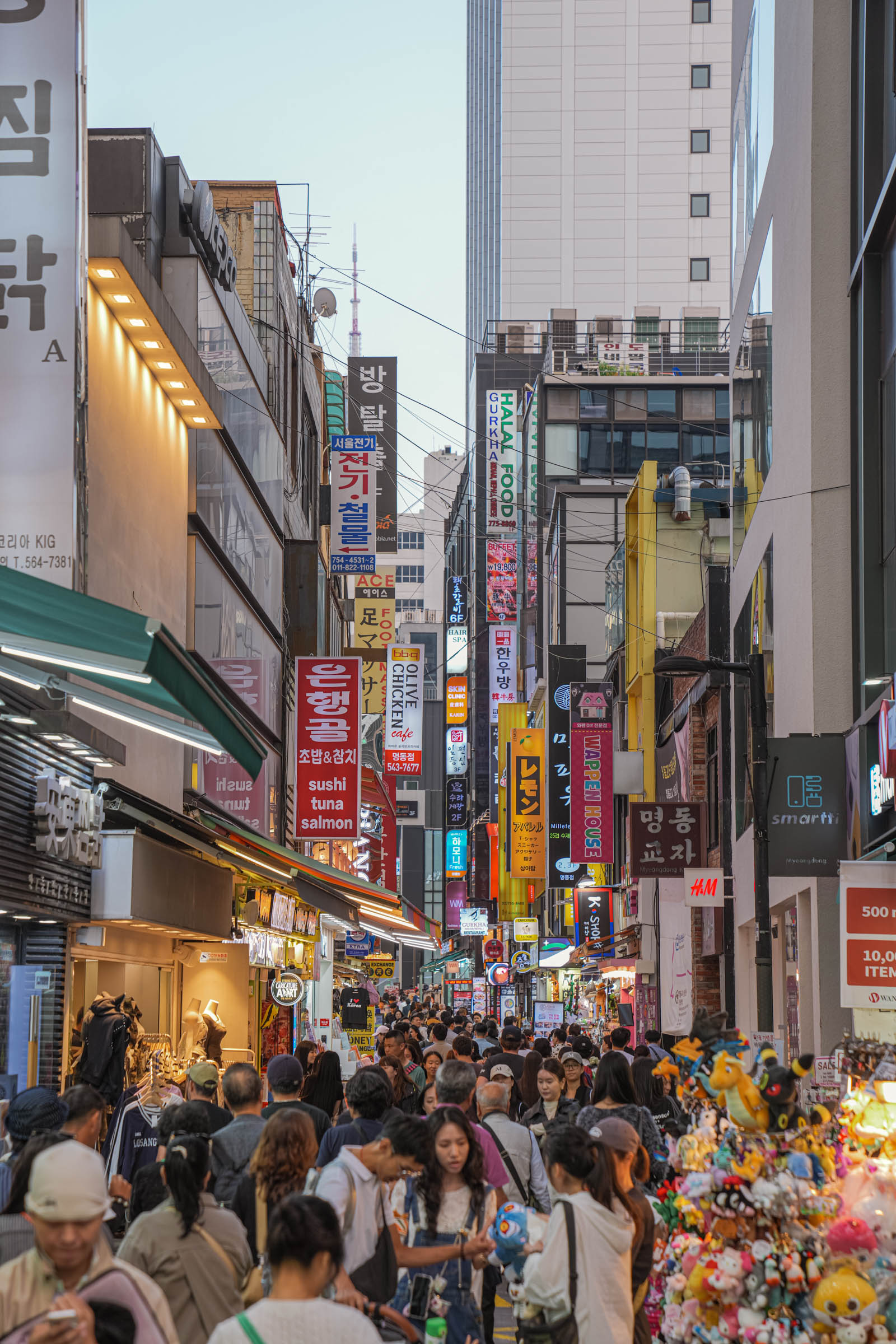
SEOUL: A MEGALOPOLIS OF TRADITION AND INNOVATION
Seoul is the capital of the Republic of Korea and the largest city in the country. The city itself covers about 605 square kilometers, and since 2016 it has had slightly fewer than ten million residents. Meanwhile, the wider capital region, with Incheon and Gyeonggi Province, is home to more than 26 million people. That is about half of the country’s population. The Han River divides the city into a northern and a southern half.
The history of Seoul goes back a long way. In 18 BC, the kingdom of Baekje founded its capital, Wiryeseong, which most historians place within today’s Seoul. Much later, in 1394, the Joseon dynasty chose the city, then called Hanyang, as its capital. Interestingly, the word seoul originally simply meant “capital city” in Korean. Under Japanese colonial rule, the city was called Gyeongseong, or Keijo in Japanese. During the Korean War, it changed hands four times and was left mostly in ruins. Despite all of that, it rose again and became one of the most advanced cities in Asia.
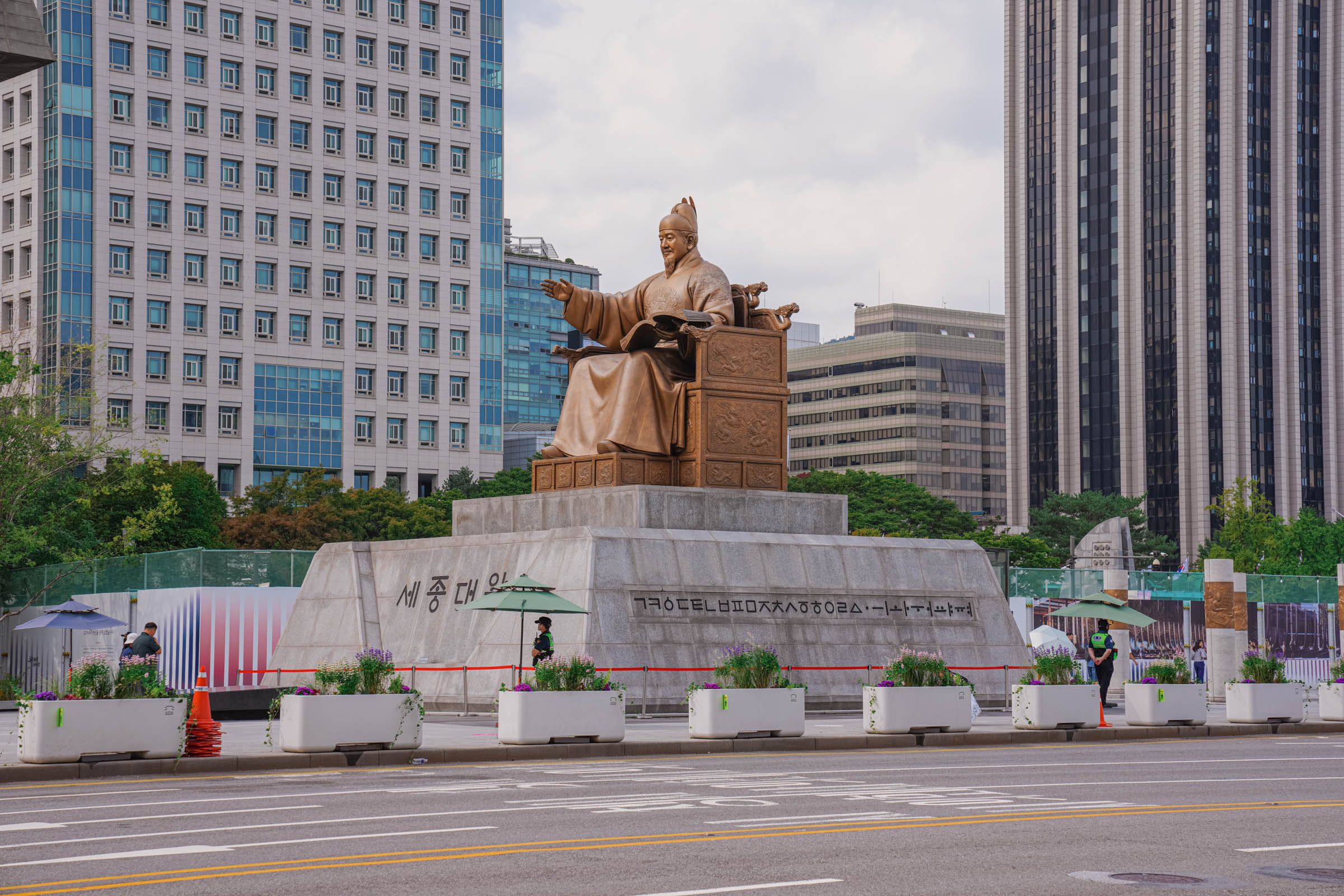
The heart of the old capital is Gwanghwamun Square, in front of Gyeongbokgung Palace. Here, a seated bronze statue of King Sejong the Great, 6.2 meters tall, has welcomed visitors since 2009. Under Sejong, the Korean alphabet was created. About 250 meters away stands the statue of Admiral Yi Sun-sin, a 16th-century war hero, which has stood here since 1968.
SEOUL’S ROYAL PALACES: WINDOWS INTO THE PAST
No trip to Seoul is complete without its royal palaces. The Joseon kings left the city five grand palaces: Gyeongbokgung, Changdeokgung, Changgyeonggung, Deoksugung and Gyeonghuigung. Gyeongbokgung is the largest of them and the first one most visitors see. However, Changdeokgung is the palace on the UNESCO World Heritage List, which added it in 1997. For those who want to avoid the crowds, Deoksugung and Gyeonghuigung are quieter alternatives. In fact, Deoksugung served as the first main palace of the Korean Empire (1897 to 1910).
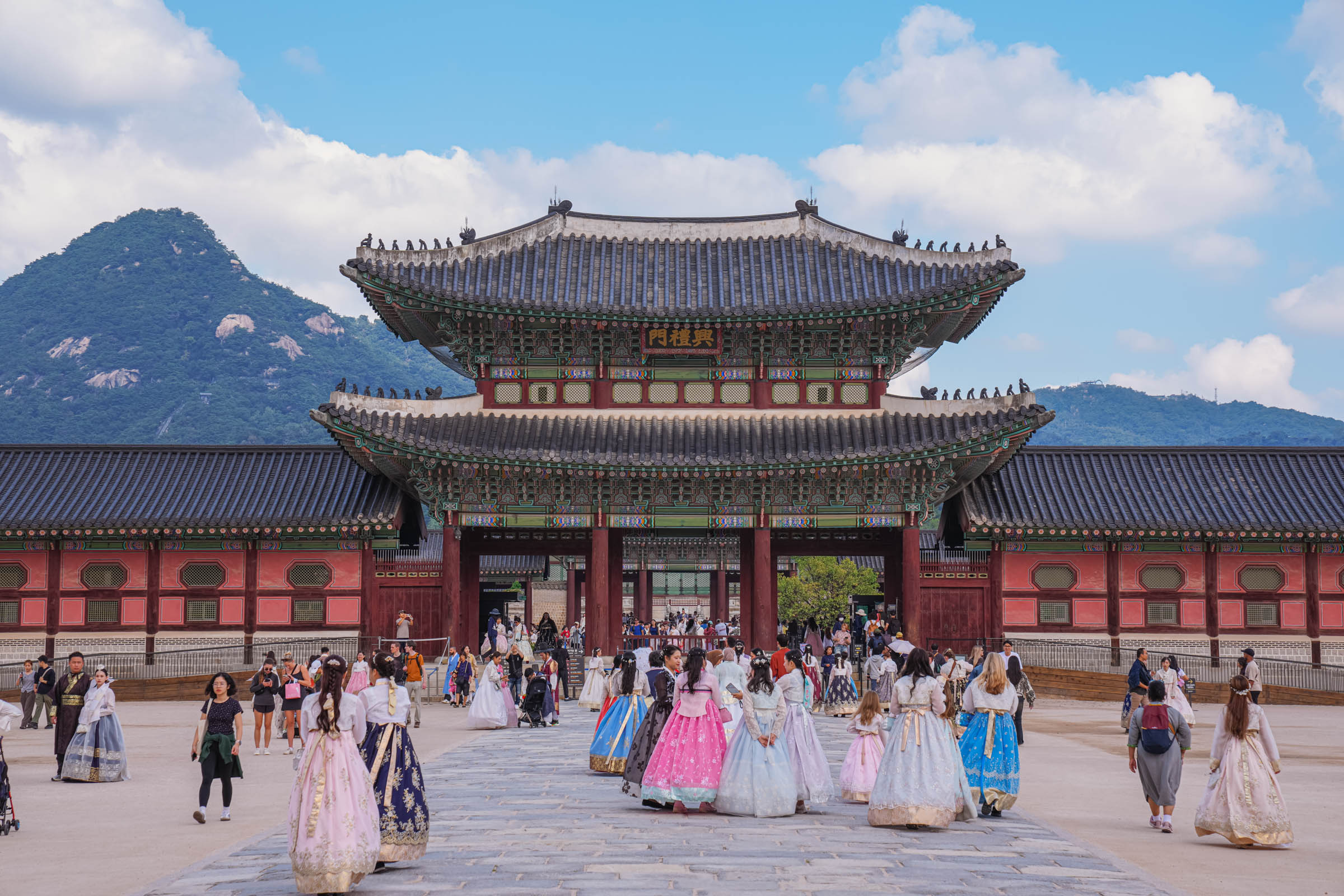
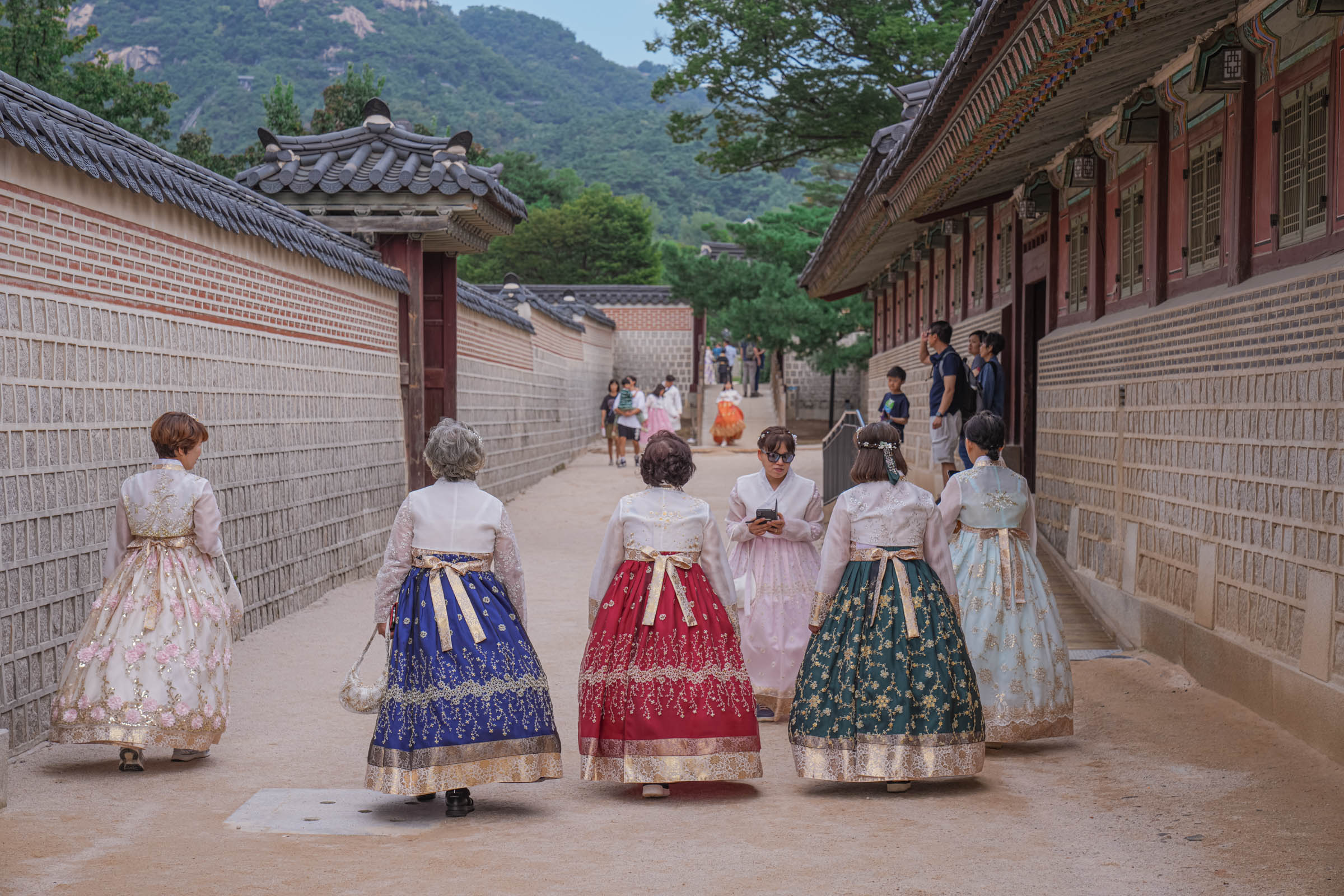
My first recommendation is simple: rent a hanbok, the traditional Korean dress. With it, you enter all the palaces and Jongmyo Shrine for free, and your photos will be truly spectacular.
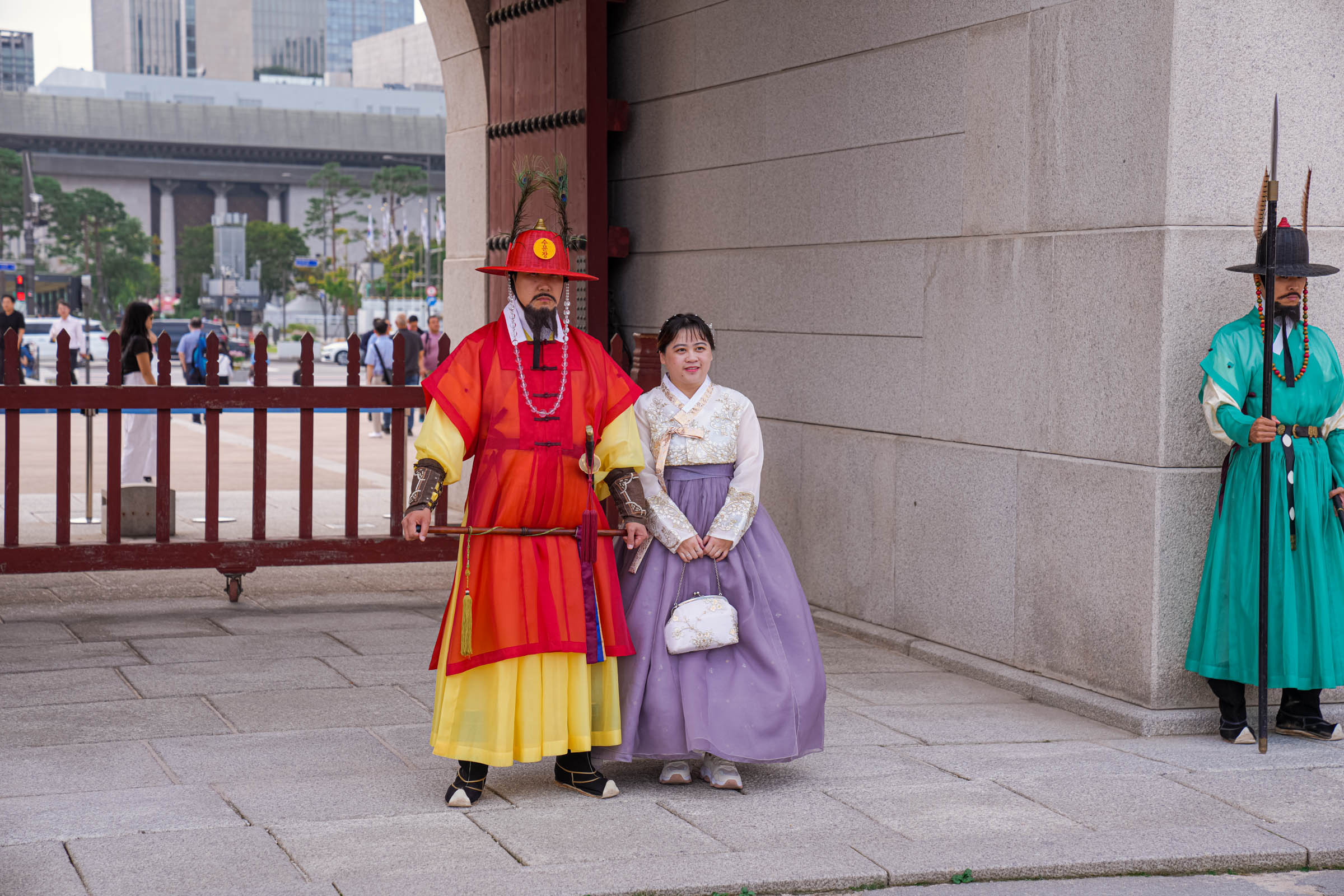
In addition, do not miss the changing of the royal guard at Gwanghwamun, the main gate of Gyeongbokgung. Guards in colorful Joseon-era uniforms perform it at 10 a.m. and 2 p.m., accompanied by a royal court band. Shorter gate guard performances follow at 11 a.m. and 1 p.m. Afterward, visitors can take photos with the guards.
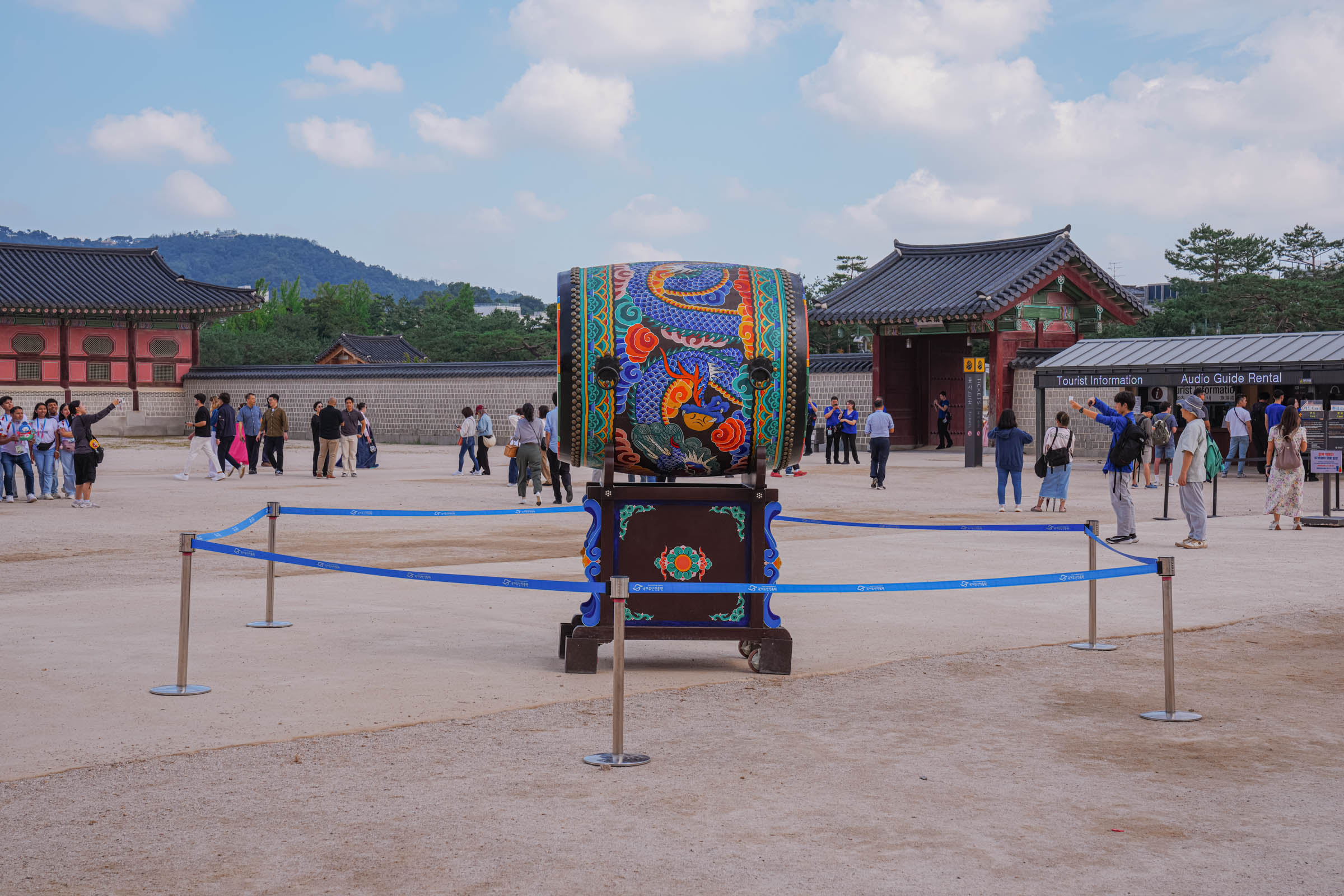
GYEONGBOKGUNG: SEOUL’S PALACE OF GREAT BLESSINGS
When I first stood in front of the massive gates of Gyeongbokgung, I felt as if I had stepped into a time machine. The name of the palace is usually translated as “Palace Greatly Blessed by Heaven.” It was completed in 1395, three years after King Taejo founded the Joseon dynasty. As the first palace of the new capital, it became the main royal residence of the dynasty.
The palace flourished in the 15th century, during the reign of King Sejong the Great. In fact, Gyeongbokgung was the very place where Hunminjeongeum, the script for writing the Korean language, was created and distributed. Today, this alphabet, known as Hangul, is one of the great symbols of Korea, and its story began within these walls.
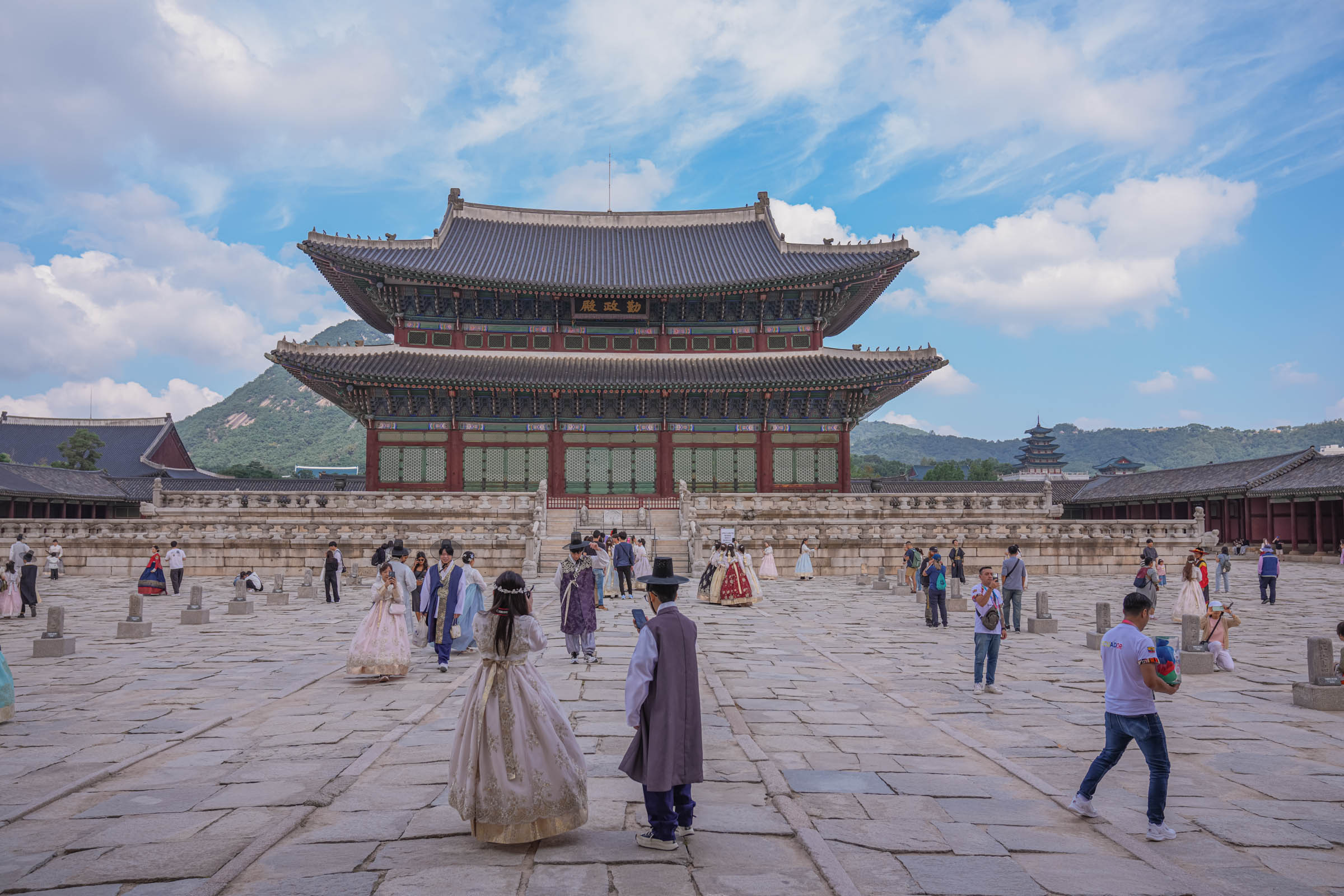
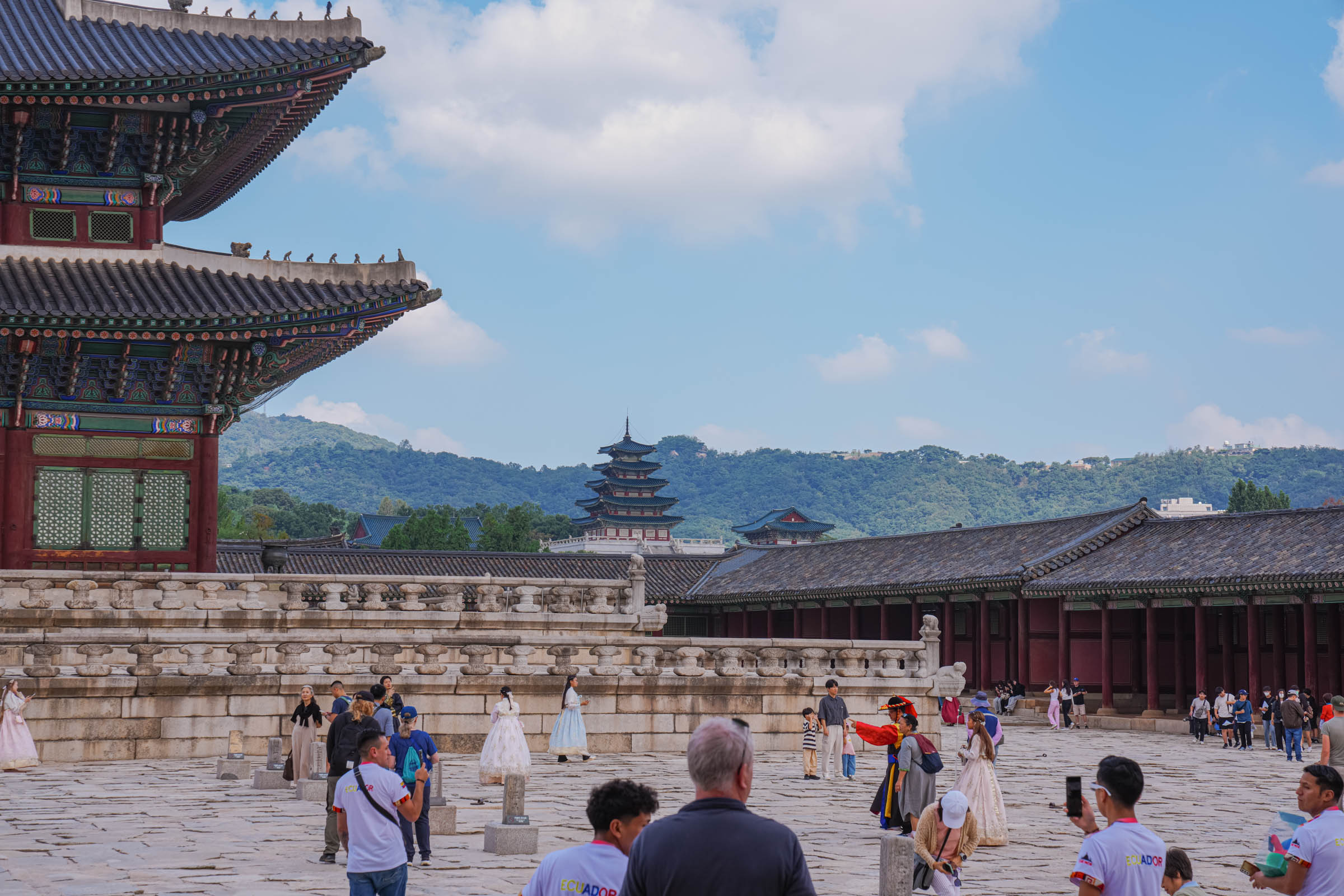
A TURBULENT HISTORY AND A LONG RESTORATION
The history of Gyeongbokgung was not easy. In 1592, during the Imjin War, the palace burned down completely. It then remained in ruins for about 270 years. Finally, in 1867, under the regent Heungseon Daewongun, it rose again as a vast complex of 330 buildings and 5,792 rooms.
However, tragedy struck again in the 20th century. During the Japanese occupation, most of the palace buildings were torn down. In 1926, the colonial government even built the massive Government-General Building right in front of the throne hall.
Since 1990, South Korea has been bringing the palace back to life. The first restoration plan ran from 1990 to 2010, and a second plan continues until 2045. Gwanghwamun, the main gate, reopened in its restored form in 2010. Thanks to this work, every visit reveals a little more of the palace’s former glory.
GEUNJEONGJEON: THE THRONE HALL OF THE JOSEON KINGS
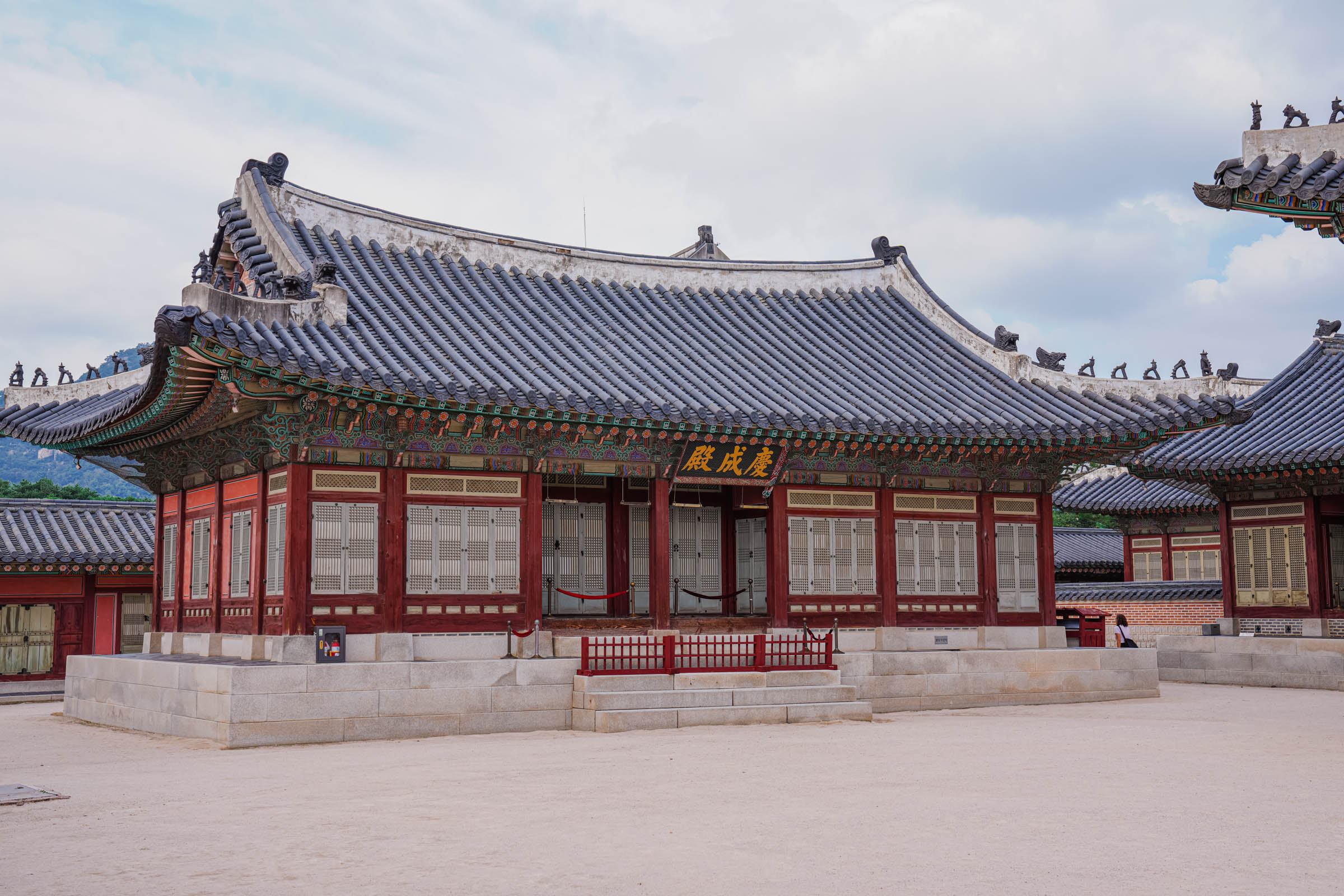
Beyond the inner gates rises Geunjeongjeon, the throne hall and the heart of Gyeongbokgung. Here, kings held their coronation ceremonies and received foreign envoys. The hall stands on a double-tiered stone terrace, surrounded by railings with carved auspicious animals. From the outside, it looks like a two-story building. Inside, however, it has a single story with a very high ceiling. Today, it is a National Treasure of Korea, formerly numbered No. 223.
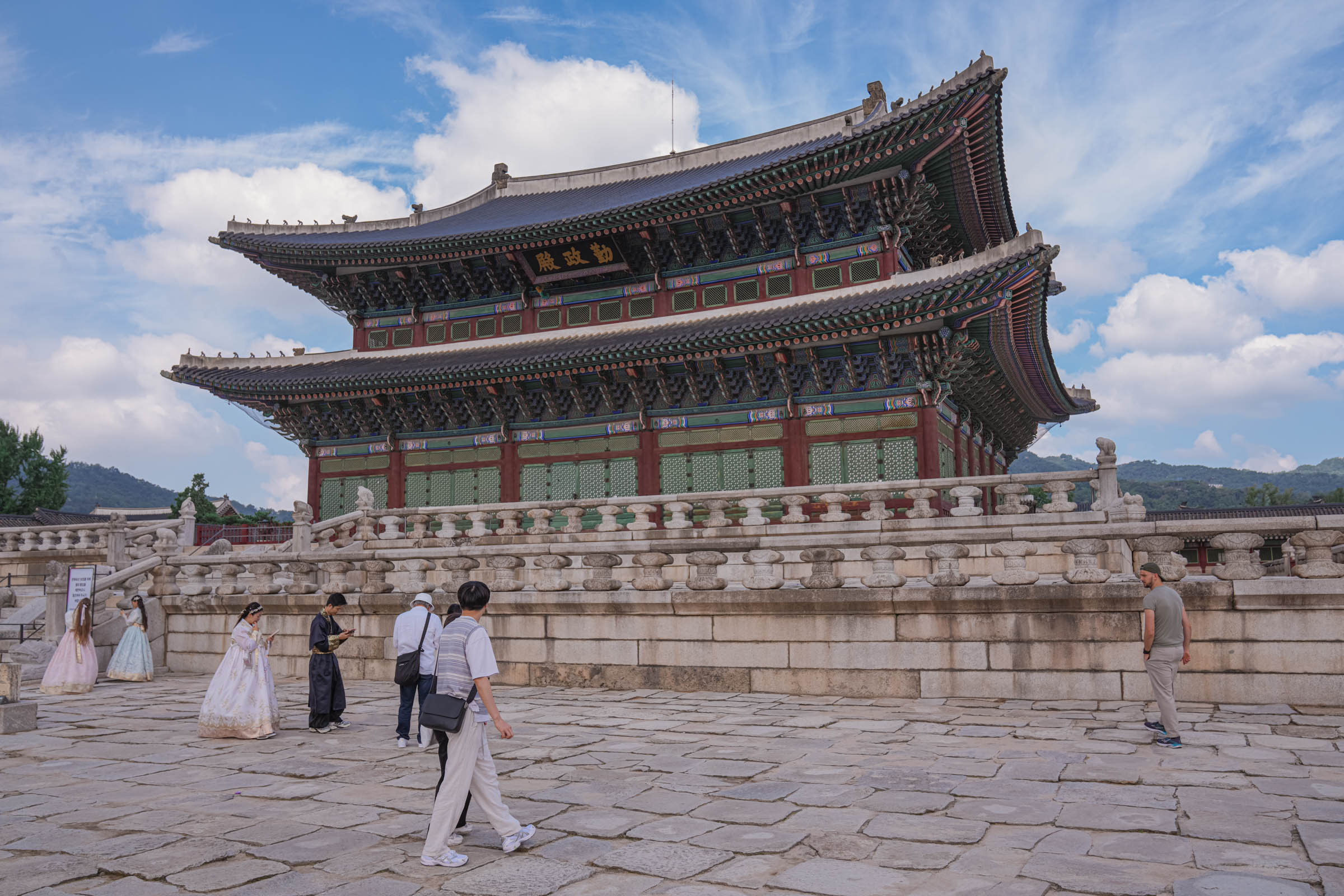
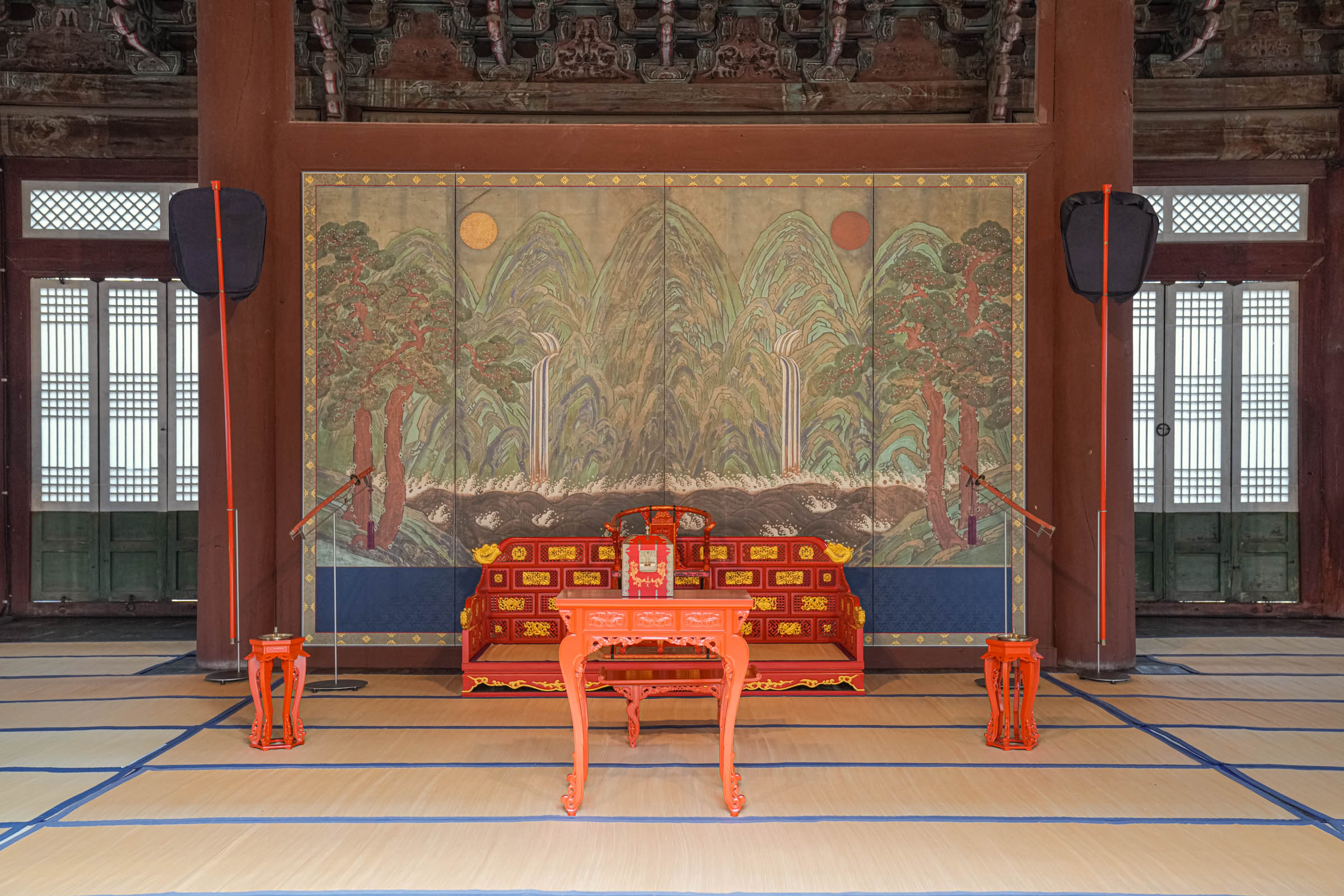
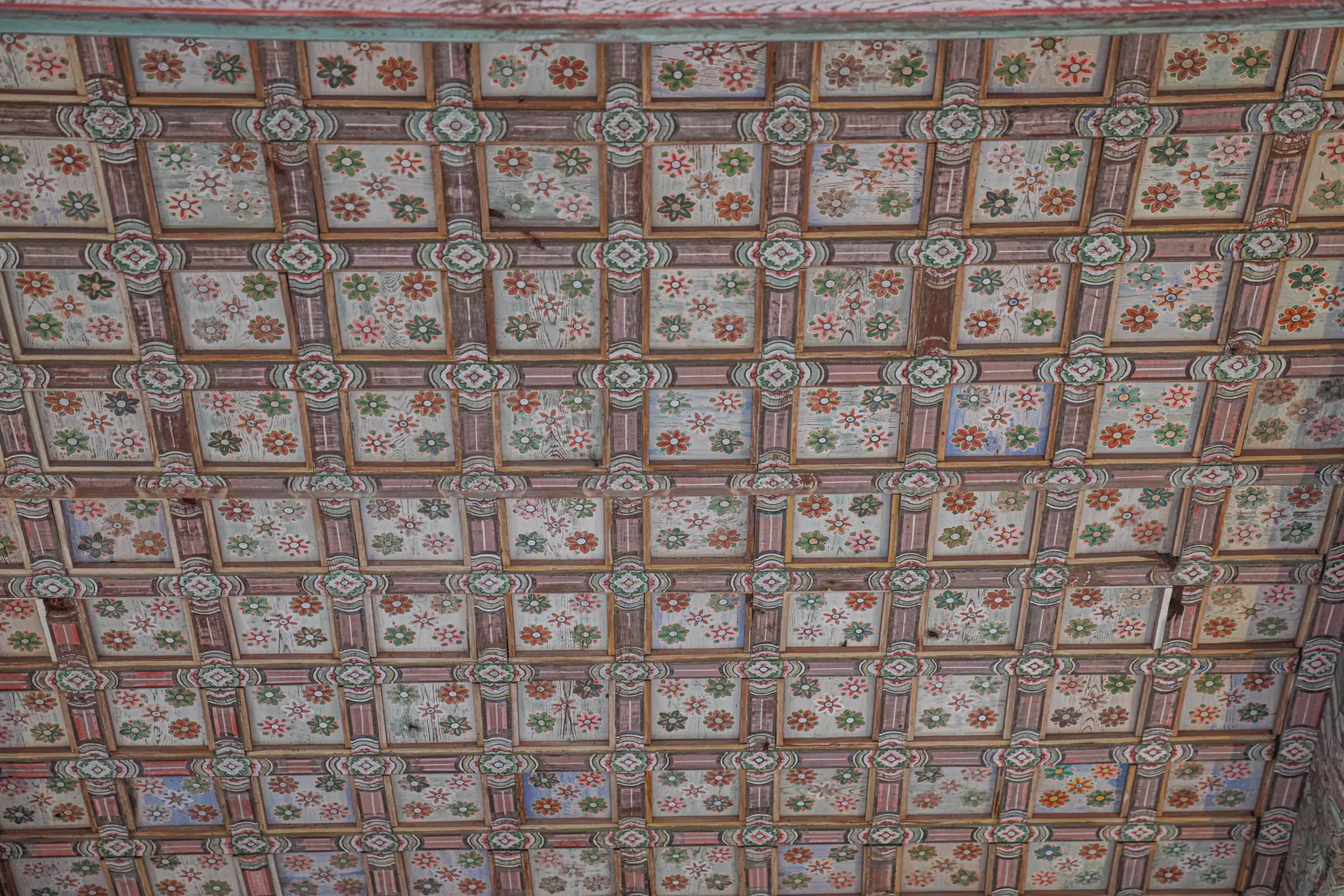
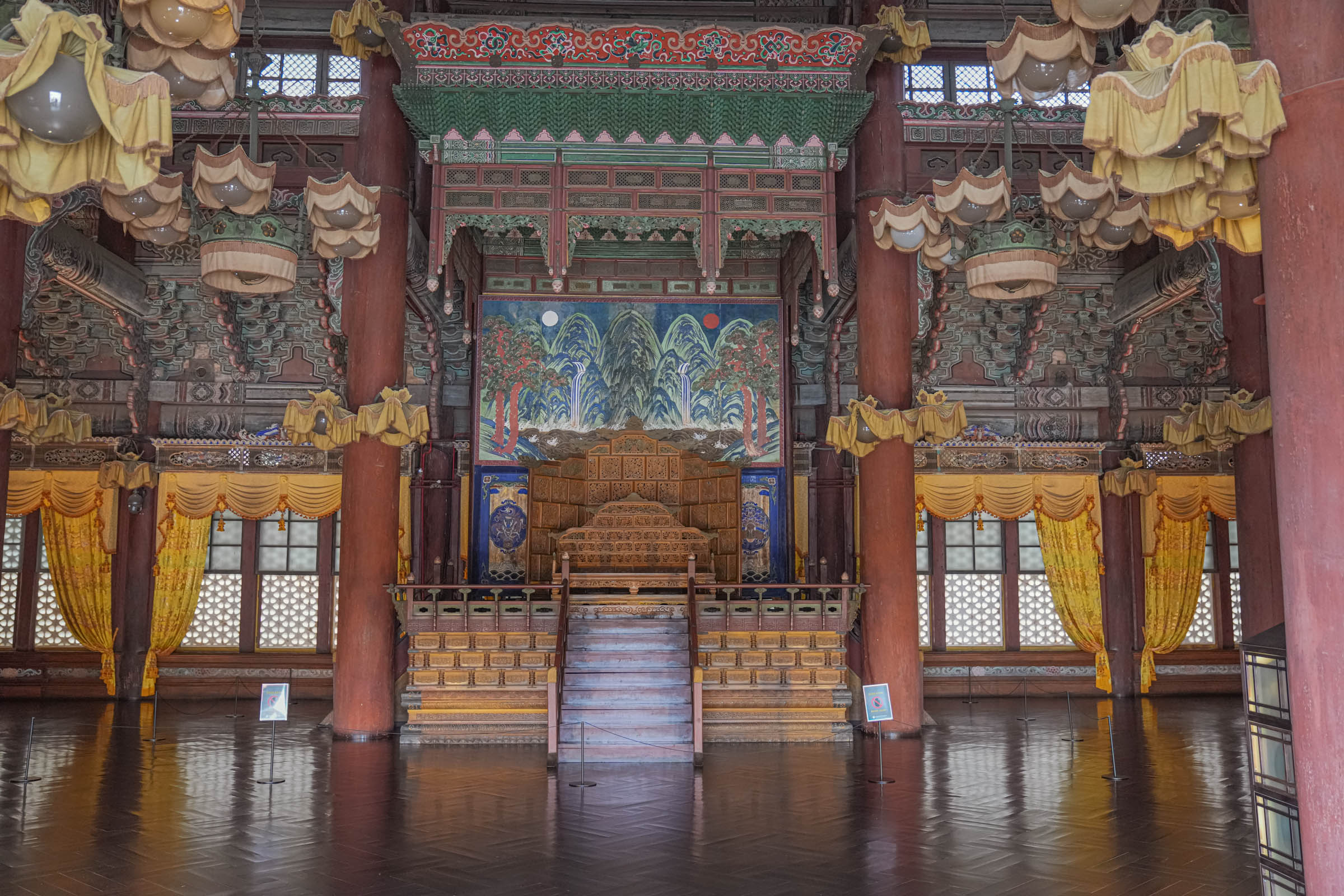
Inside the royal halls, look for the folding screen behind the king’s seat. It shows the sun, the moon and five peaks, and it is called Irworobongdo. During the Joseon dynasty, this painting always stood behind the throne. The sun and the moon symbolize the king and the queen, while the whole scene expresses royal authority. Above, richly painted ceilings turn every hall into a small museum of color.
HANBOK, GYEONGHOERU AND HYANGWONJEONG
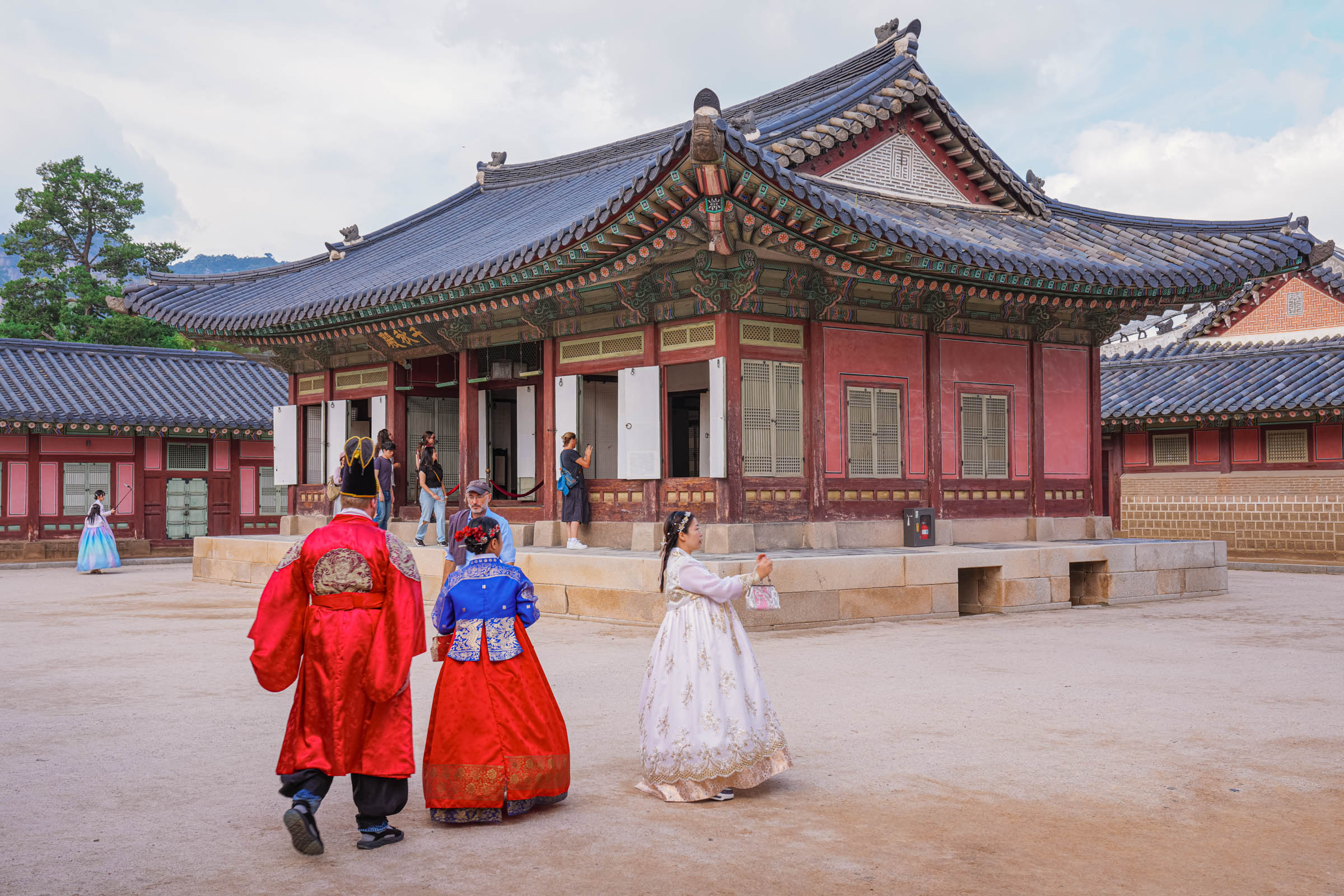
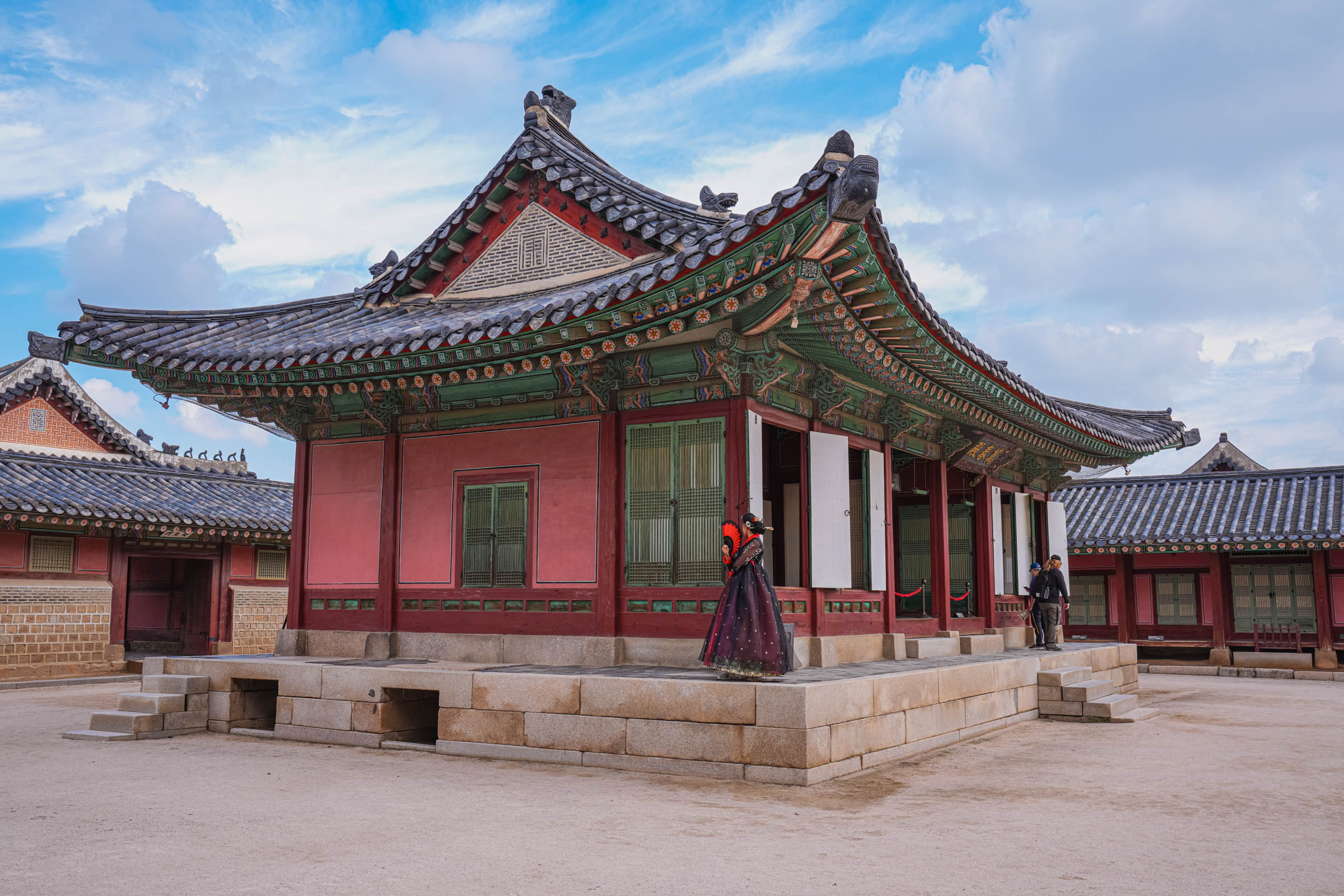
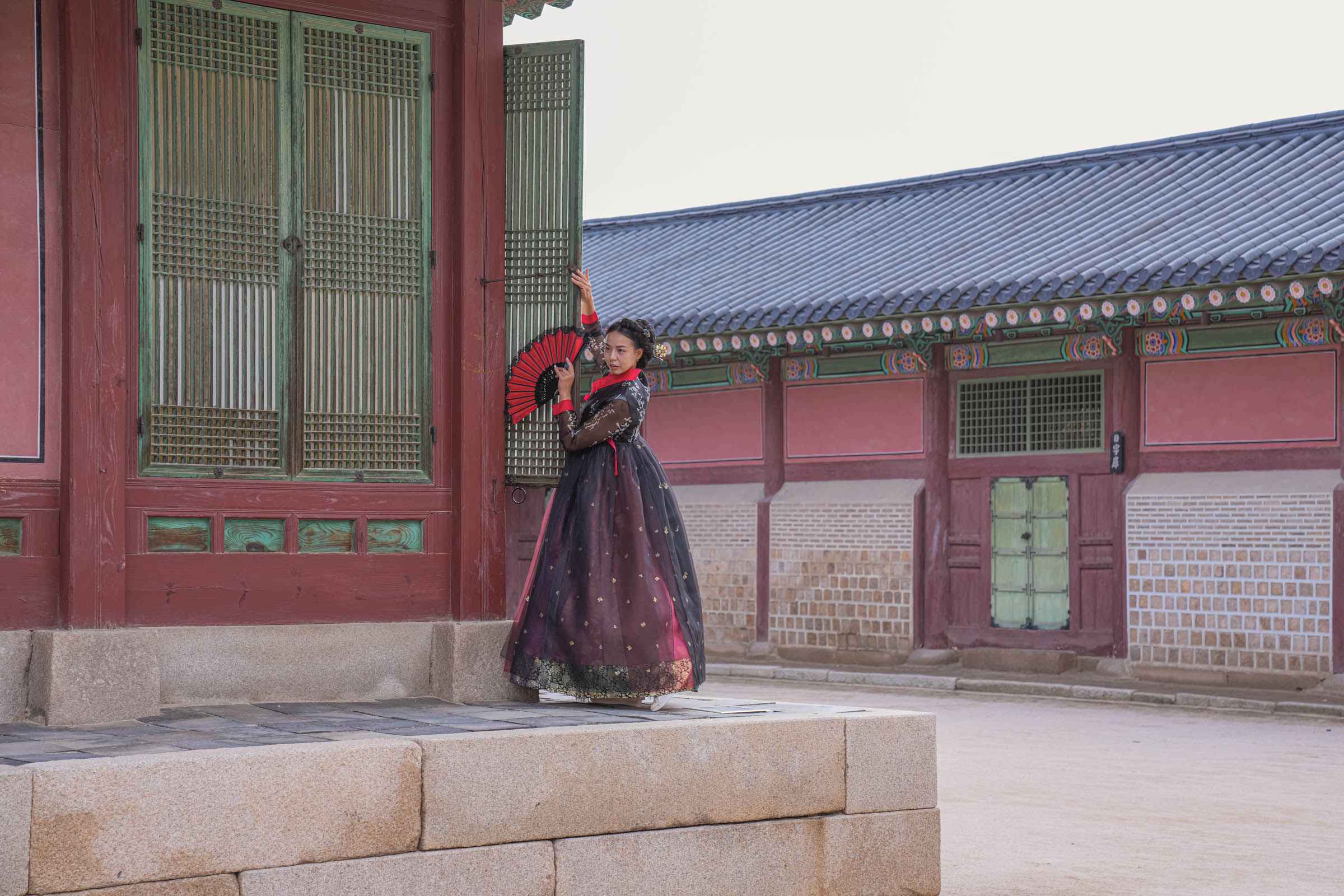
Walking through the courtyards, you will see many visitors in hanbok. Young Koreans and foreign travelers alike pose in front of the halls, and for a moment the palace looks as it did centuries ago.
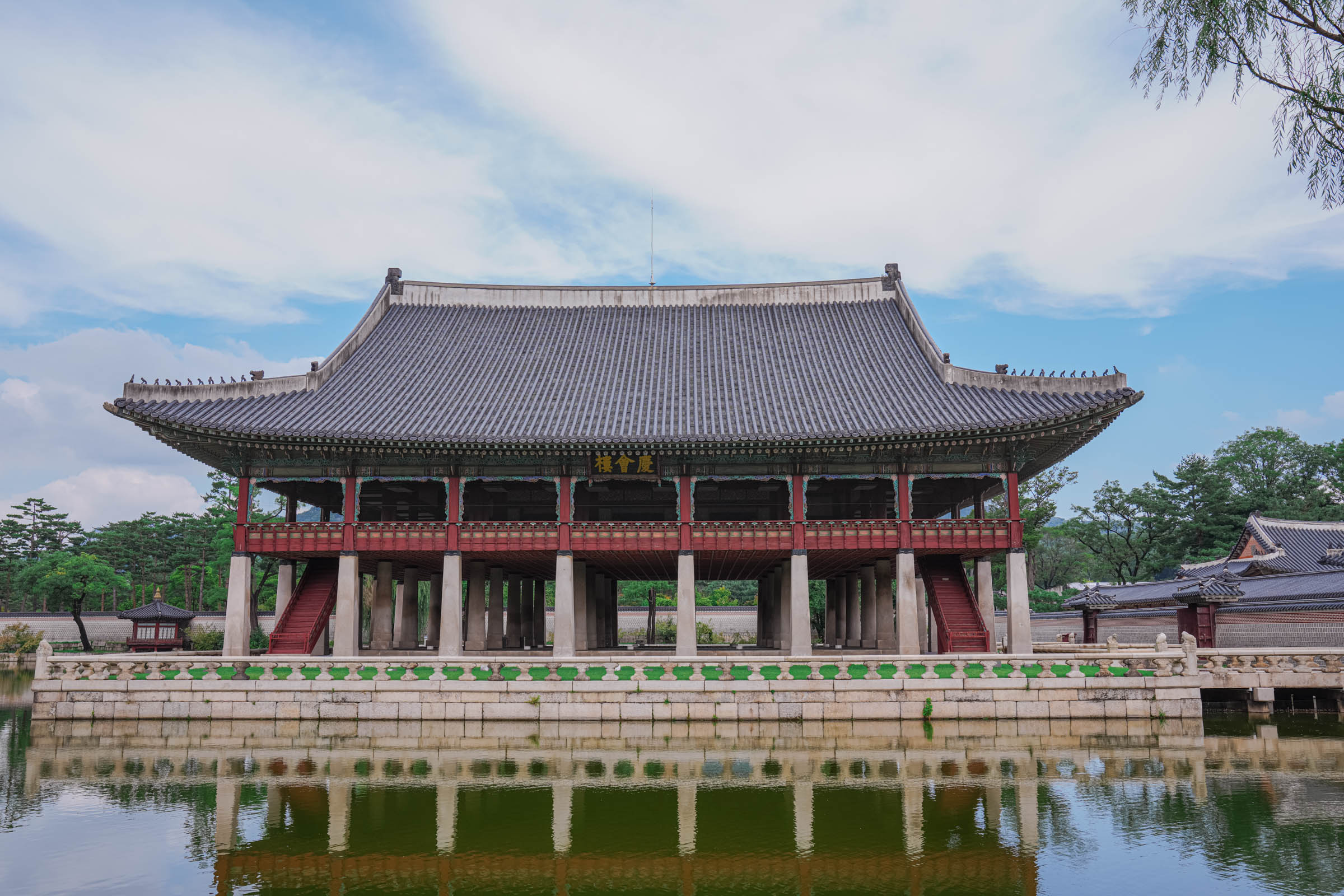
Gyeonghoeru Pavilion is perhaps the most photogenic place in the whole palace. A pavilion first stood here in 1412. Today, it rests on 48 stone pillars above an artificial pond. Its upper floor has three levels of different heights, and the highest one, in the center, was meant for the king. The reflection of the pavilion in the water creates a magical scene, especially in autumn.
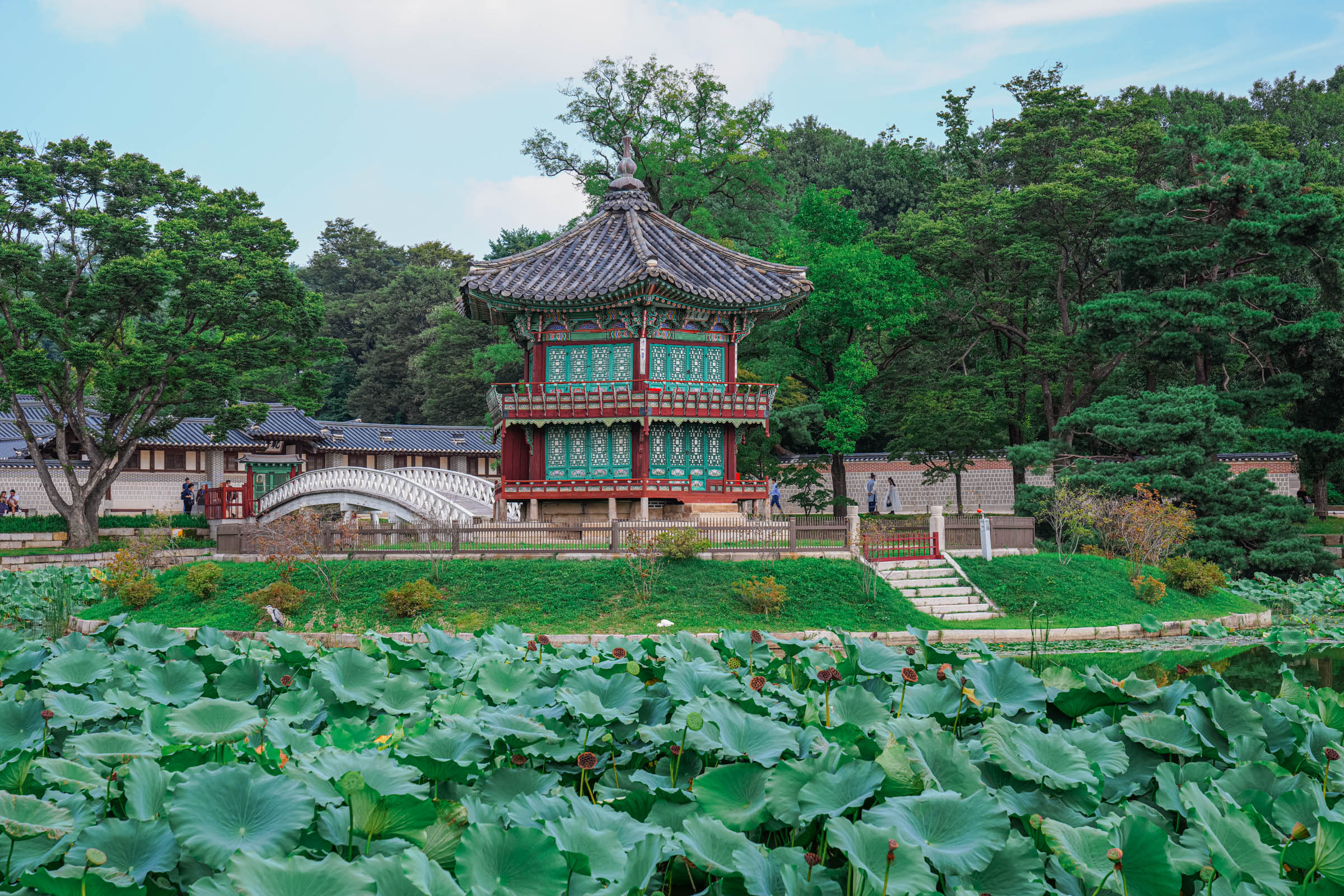
Hyangwonjeong is another gem, a small two-story hexagonal pavilion on an island in a square pond. It was built between 1867 and 1873, and its name means “pavilion of far-reaching fragrance.” Chwihyanggyo, the “bridge intoxicated with fragrance,” connects it to the shore. In the Joseon period, it was the longest wooden bridge over a pond. Since a restoration in 2021, the bridge once again has its original arched wooden form and stands in its original position.
VISITING GYEONGBOKGUNG: HOURS, TICKETS AND TIPS
As of late 2026, the palace opens at 9 a.m. It closes at 5 p.m. from November to February, at 6 p.m. from March to May and in September and October, and at 6:30 p.m. from June to August. Last entry is one hour before closing, and the palace is closed on Tuesdays. An adult ticket costs 3,000 won, while visitors in hanbok enter for free. Free guided tours in English start at 11 a.m., 1:30 p.m. and 3:30 p.m.
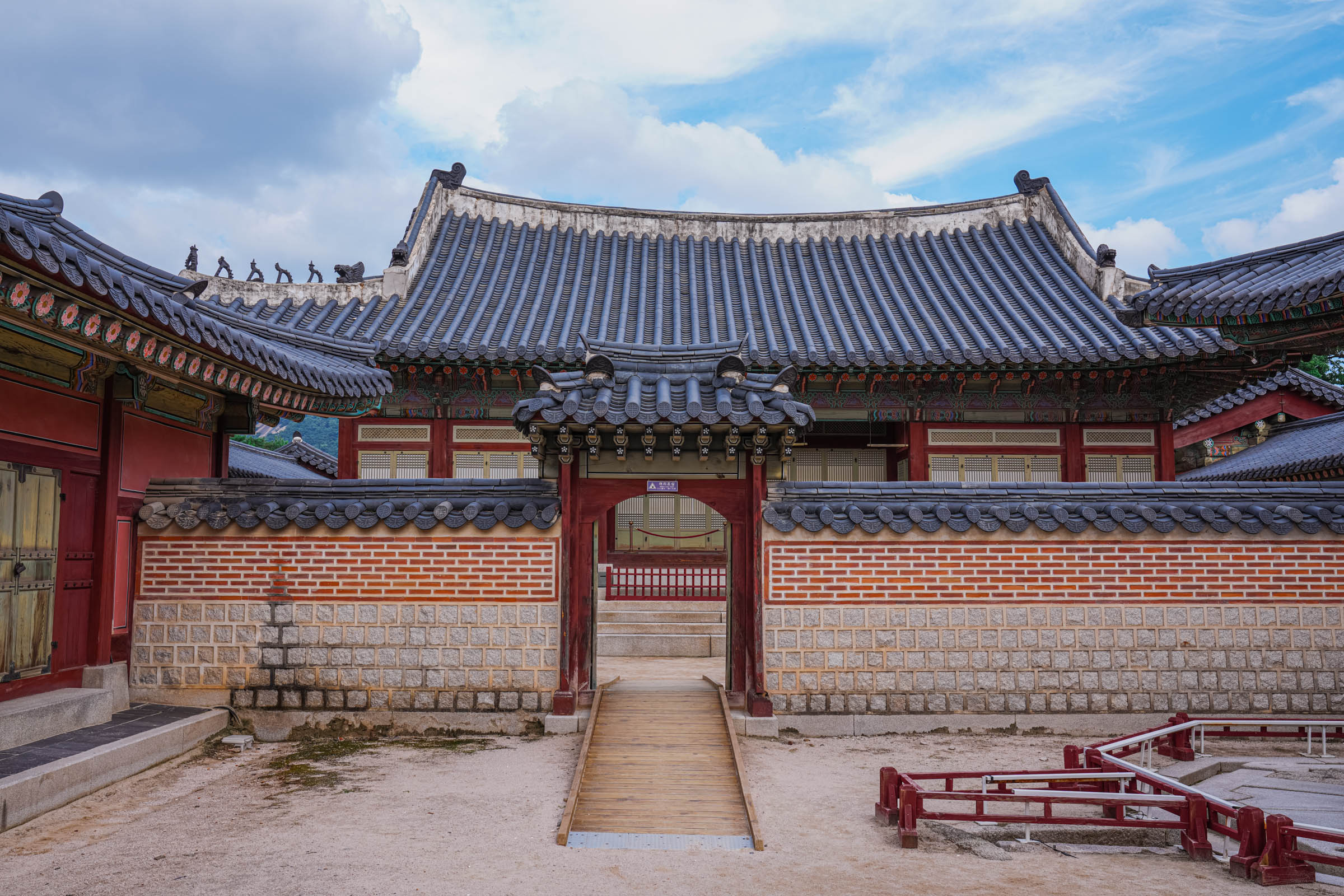
I recommend that you set aside at least two to three hours, because the palace is huge. Start early in the morning or later in the afternoon to avoid the biggest crowds. If you want to see the changing of the guard, arrive at least 20 minutes early to get a good spot. The National Folk Museum of Korea also stands within the palace grounds.
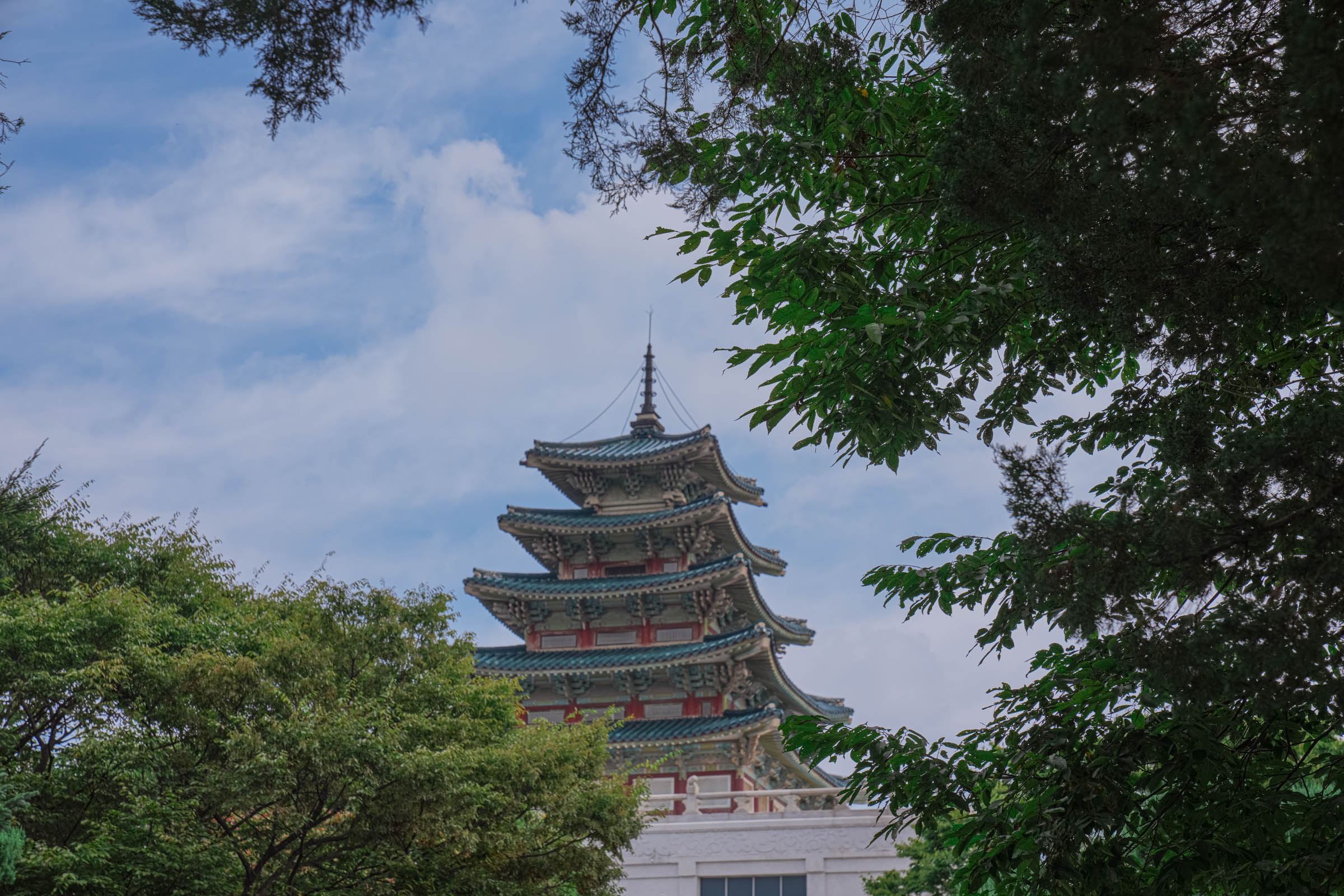
Hanbok rental shops line the streets around the palace, and a basic outfit costs about 15,000 to 20,000 won for two to four hours. Just north of the palace lies Cheong Wa Dae, the former presidential compound, which opened to the public in 2022. However, public tours ended on August 1, 2025, and the presidential office moved back there at the end of that year.
CHANGDEOKGUNG: SEOUL’S UNESCO PALACE
Unlike Gyeongbokgung, with its strict layout, Changdeokgung follows the natural terrain of the hills around it. According to UNESCO, this harmony with the landscape is what sets it apart. Construction began in 1405, under King Taejong, as a secondary royal palace.
In 1592, the war destroyed this palace too. Afterward, Changdeokgung and its neighbor Changgyeonggung were rebuilt, while Gyeongbokgung was not. As a result, Changdeokgung served as the main palace of Joseon for centuries, until 1868. Korea’s last emperor, Sunjong, lived here until 1926.
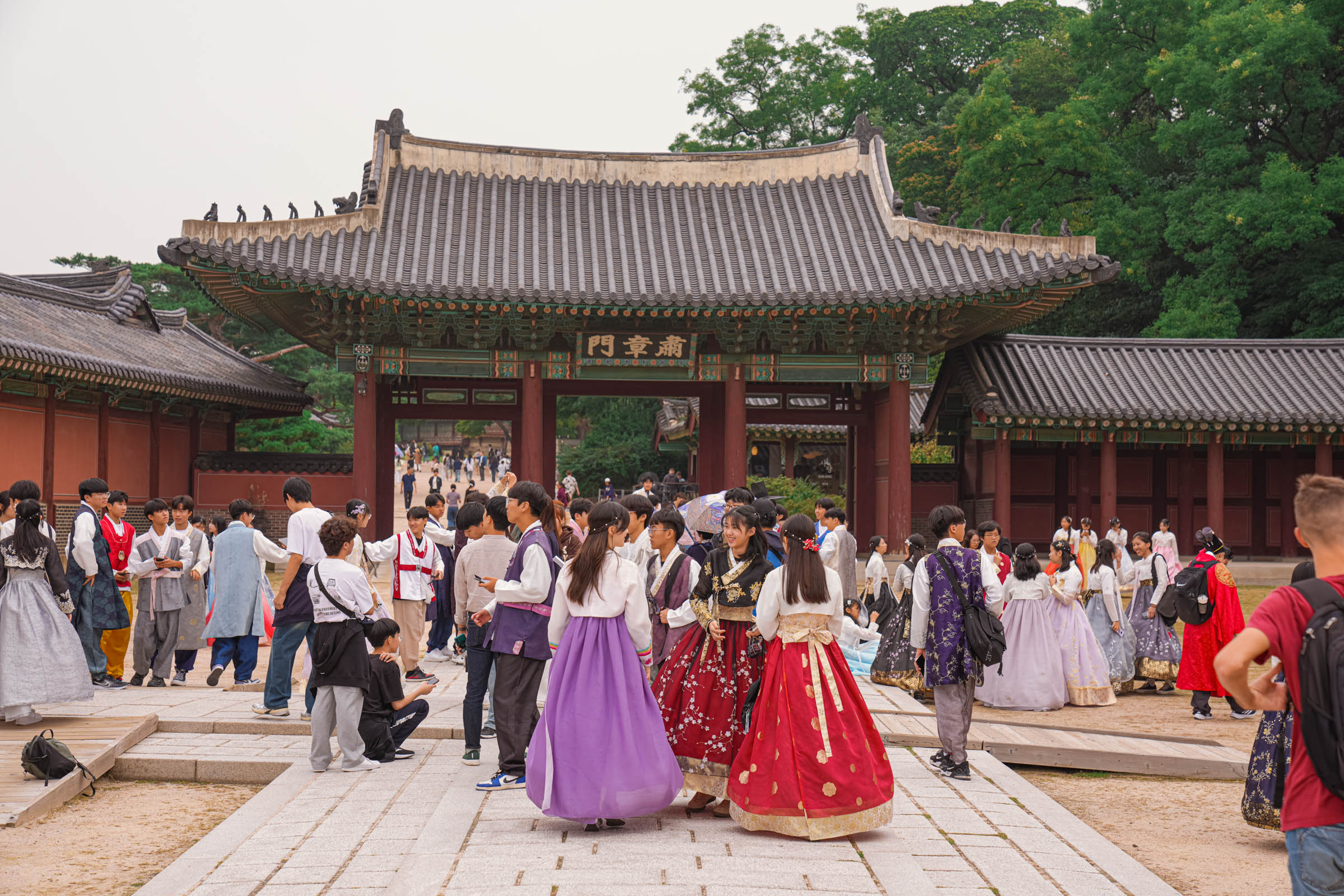
The main gate, Donhwamun, was completed in 1412 and is the oldest surviving gate of all Joseon palaces. It burned in 1592 and was rebuilt in the early 17th century. In late 2026, the heritage authorities announced its first major restoration in 29 years, with work expected to finish in 2028.
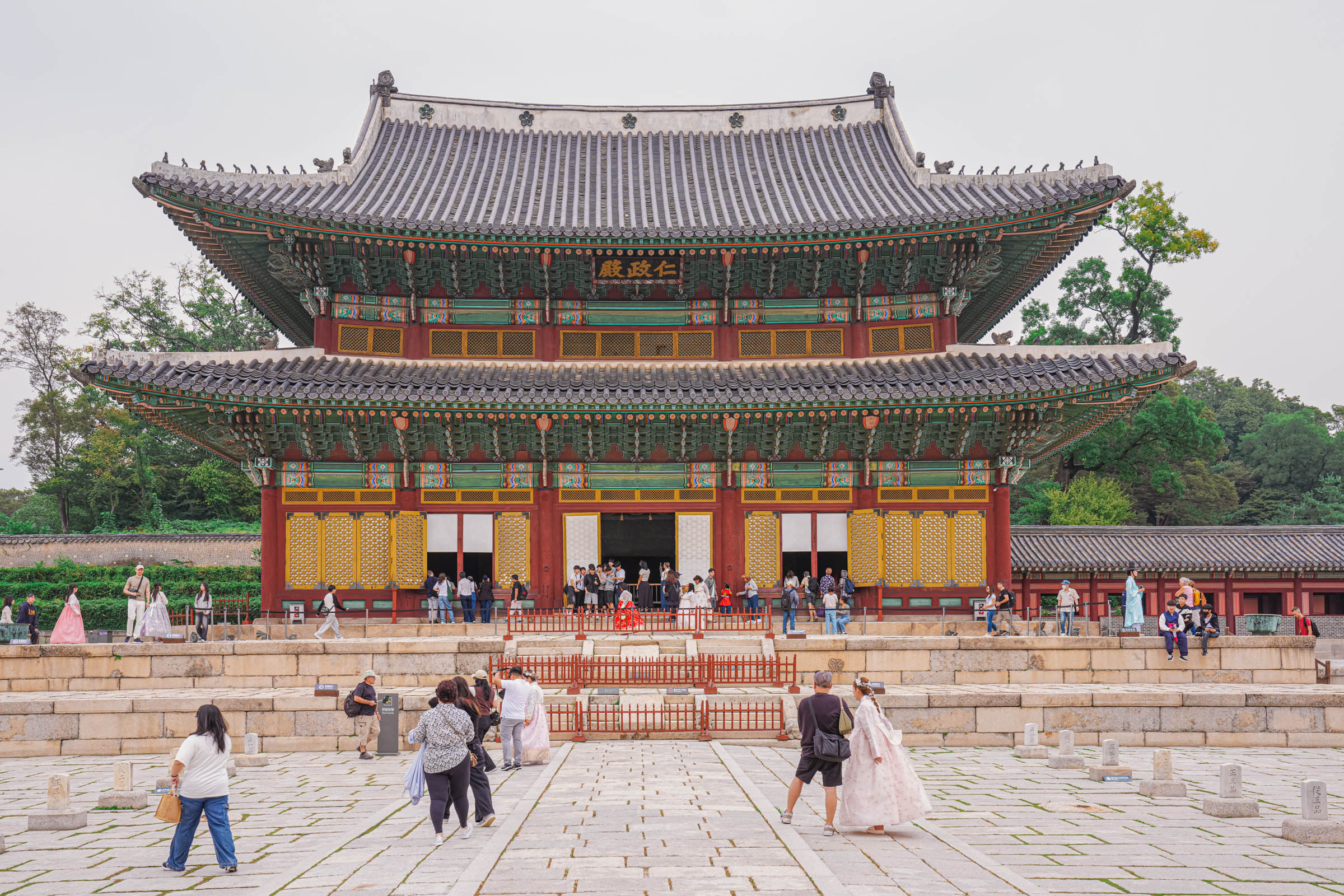
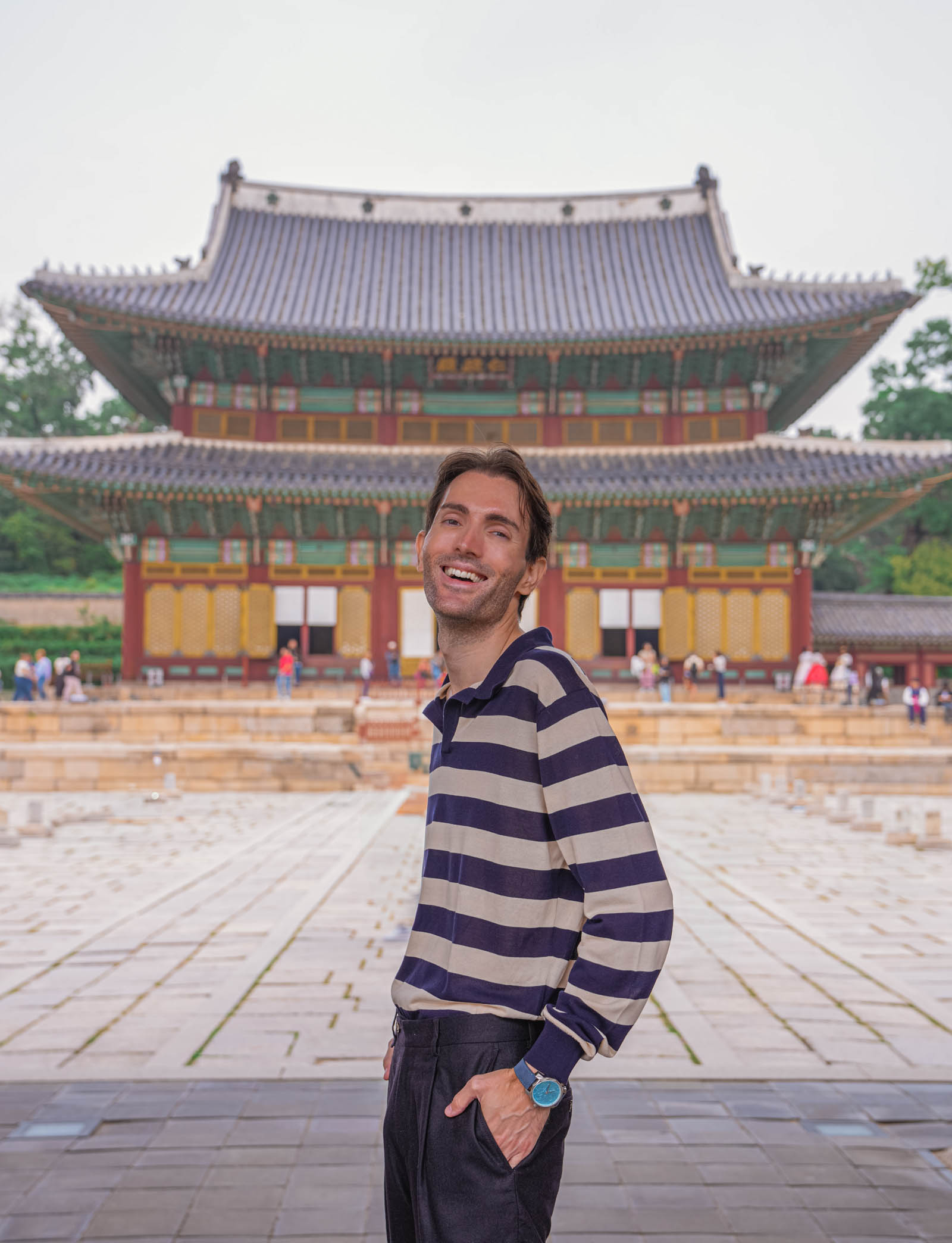
Beyond it stands Injeongjeon, the throne hall, where kings were crowned and received foreign envoys. The current building dates from 1804. Nearby, Daejojeon served as the queen’s residence. Its attached hall, Heungbokheon, hosted the final cabinet meeting before Korea’s annexation in 1910. Standing in the wide courtyard in front of Injeongjeon, you can easily imagine the ceremonies of the royal court.
CHANGGYEONGGUNG AND ITS GLASS HOUSE
Right next to Changdeokgung lies Changgyeonggung. Together, the two palaces were once known as Donggwol, the East Palace, with no boundary between them. In 1418, King Sejong built a residence here for his father, King Taejong, who had given him the throne. Later, in 1483, King Seongjong expanded it for his grandmother, mother and aunt and gave it its current name.
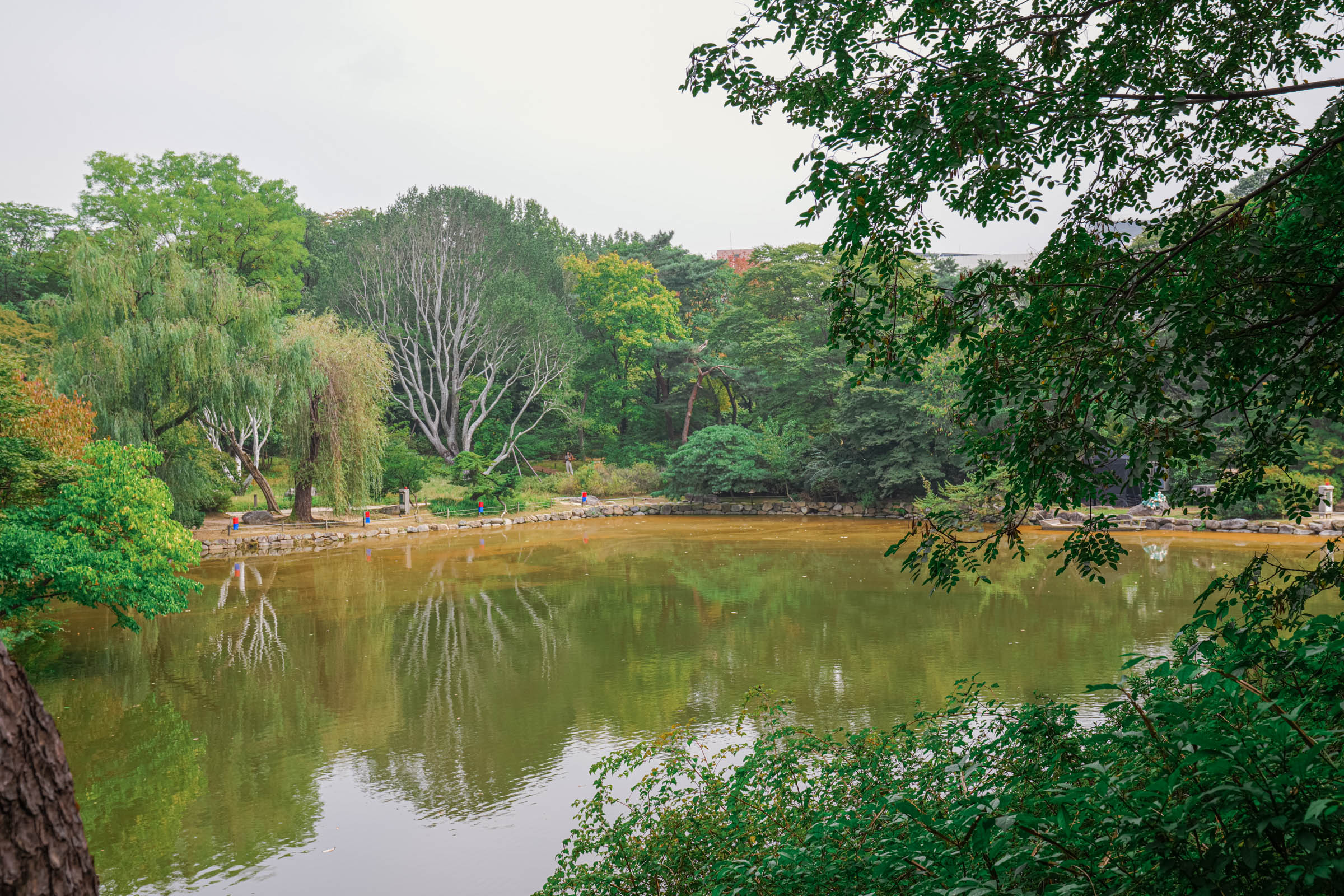
Today, Changgyeonggung is a calm, green palace, perfect for a slow walk. Chundangji Pond, with old willows on its banks, consists of two ponds. The smaller one dates from the Joseon era, while the larger one was dug in 1909 on rice paddies the king once farmed.
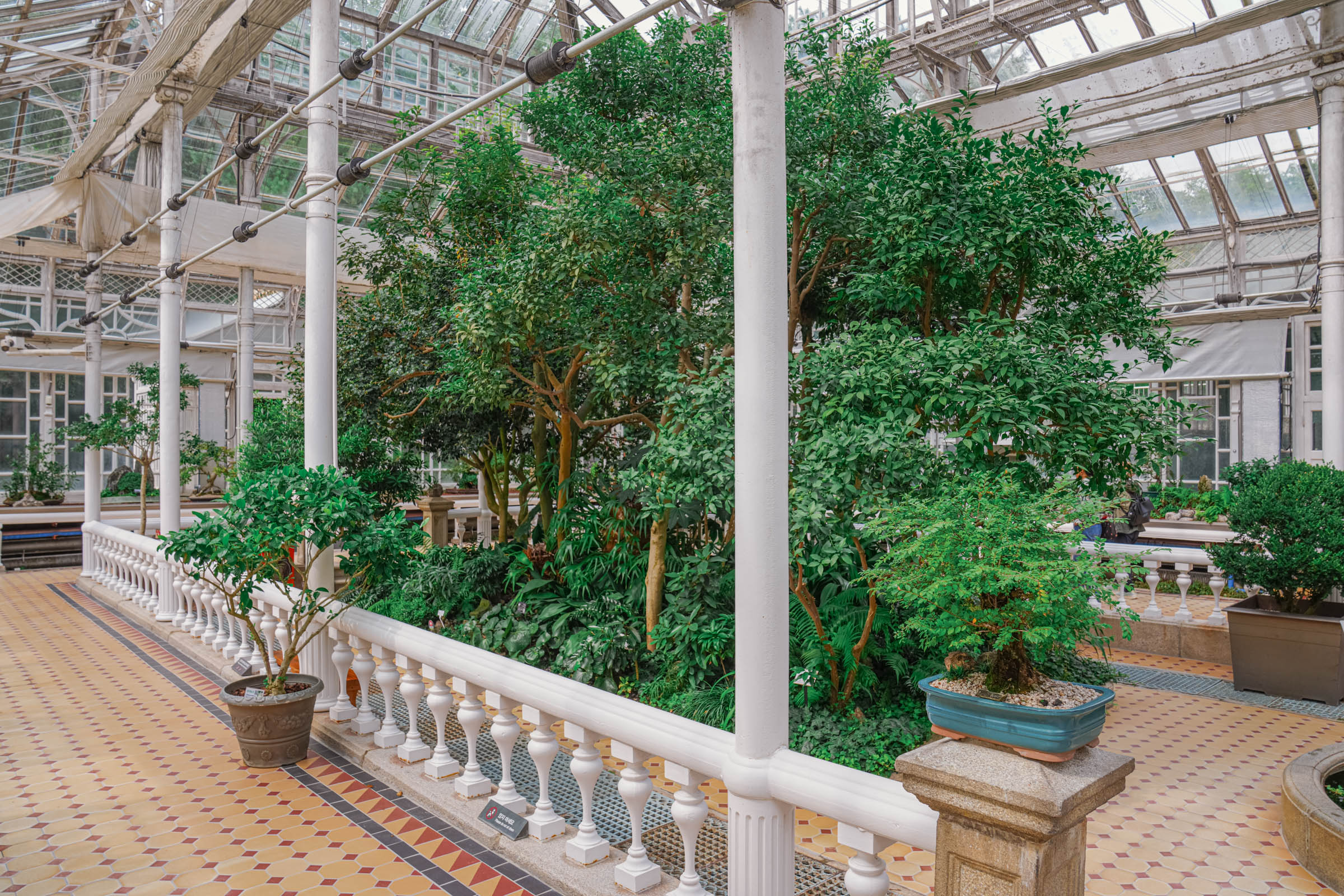
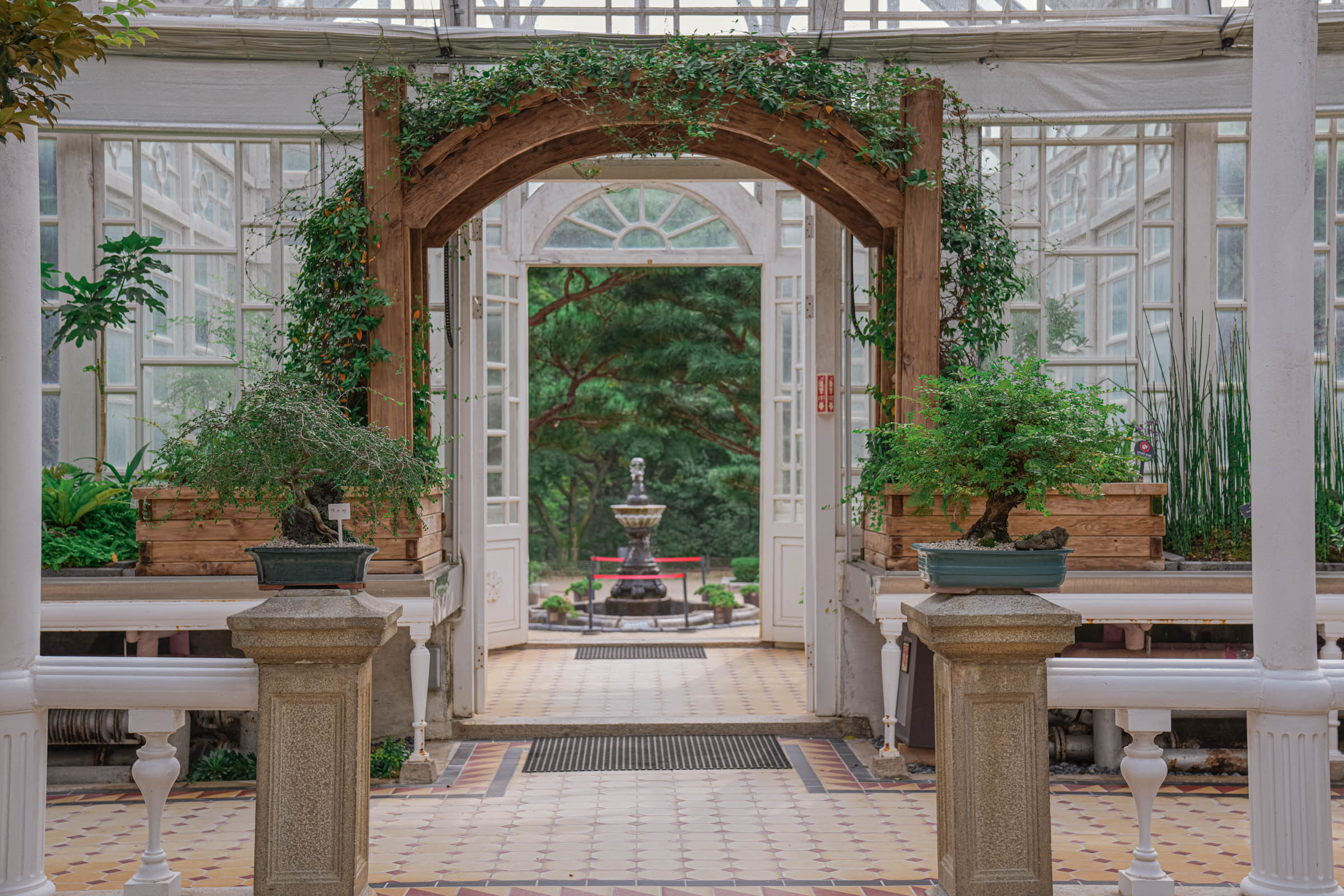
Just past the pond stands a building that seems almost out of place in a Korean palace. Daeonsil, the Grand Greenhouse, is a white Victorian-style glass house and the first Western-style greenhouse in Korea. The Japanese built it, together with a zoo and a botanical garden, shortly before they annexed Korea in 1910. Later, the palace grounds became a public park, and the palace only got its original name back in 1983. In 2004, the greenhouse became Registered Cultural Heritage No. 83.
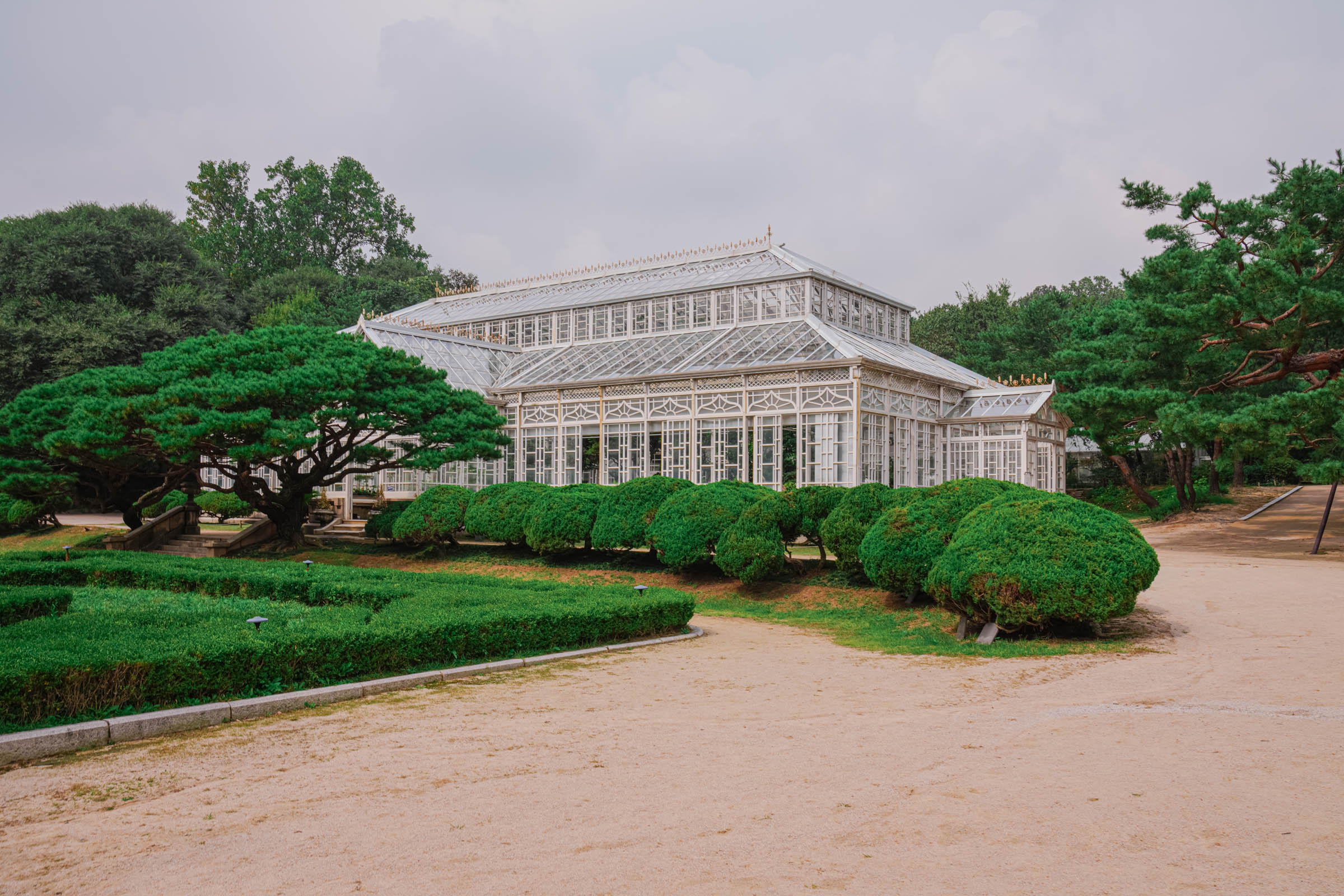
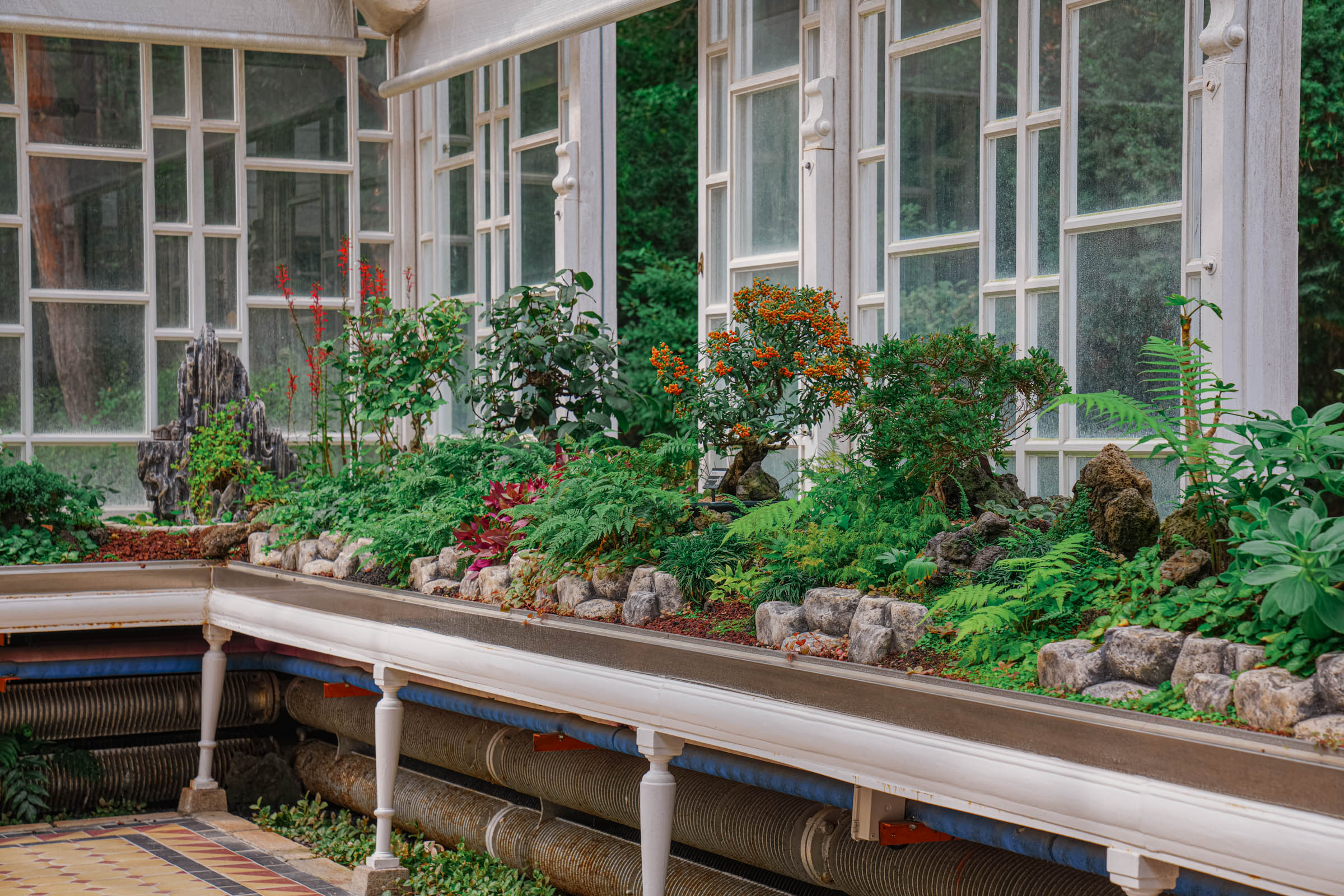
In front of it, a garden of neatly trimmed boxwood surrounds a Renaissance-style fountain. Inside, white wooden frames, arched doorways and lush plants create a romantic atmosphere. After a 15-month renovation, the greenhouse reopened to visitors in 2017.
A QUIETER SIDE OF SEOUL’S PALACES
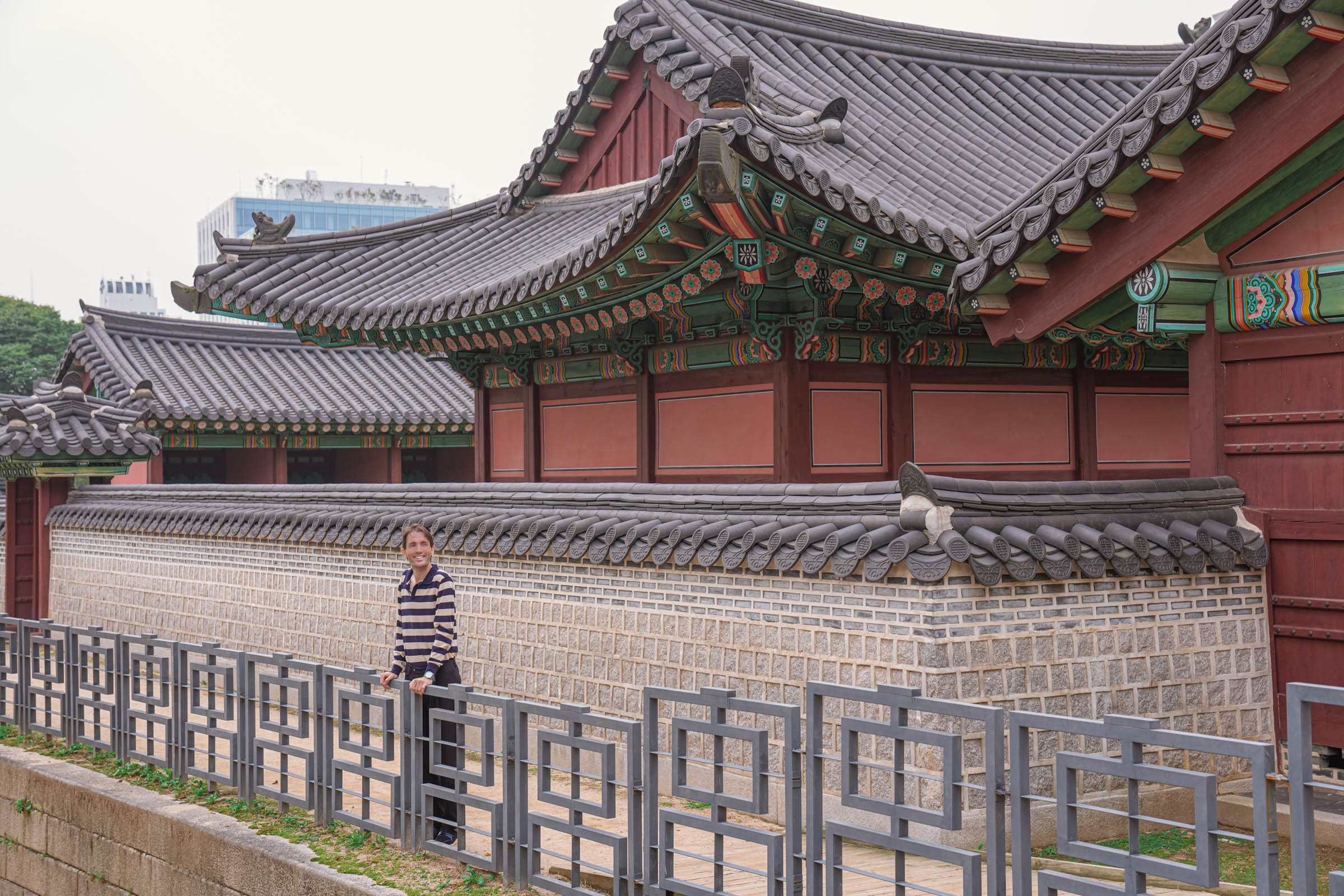
From the higher paths of the palace grounds, the view opens over tiled roofs, green treetops and the skyscrapers of downtown Seoul. Few places show the contrasts of this city as clearly.
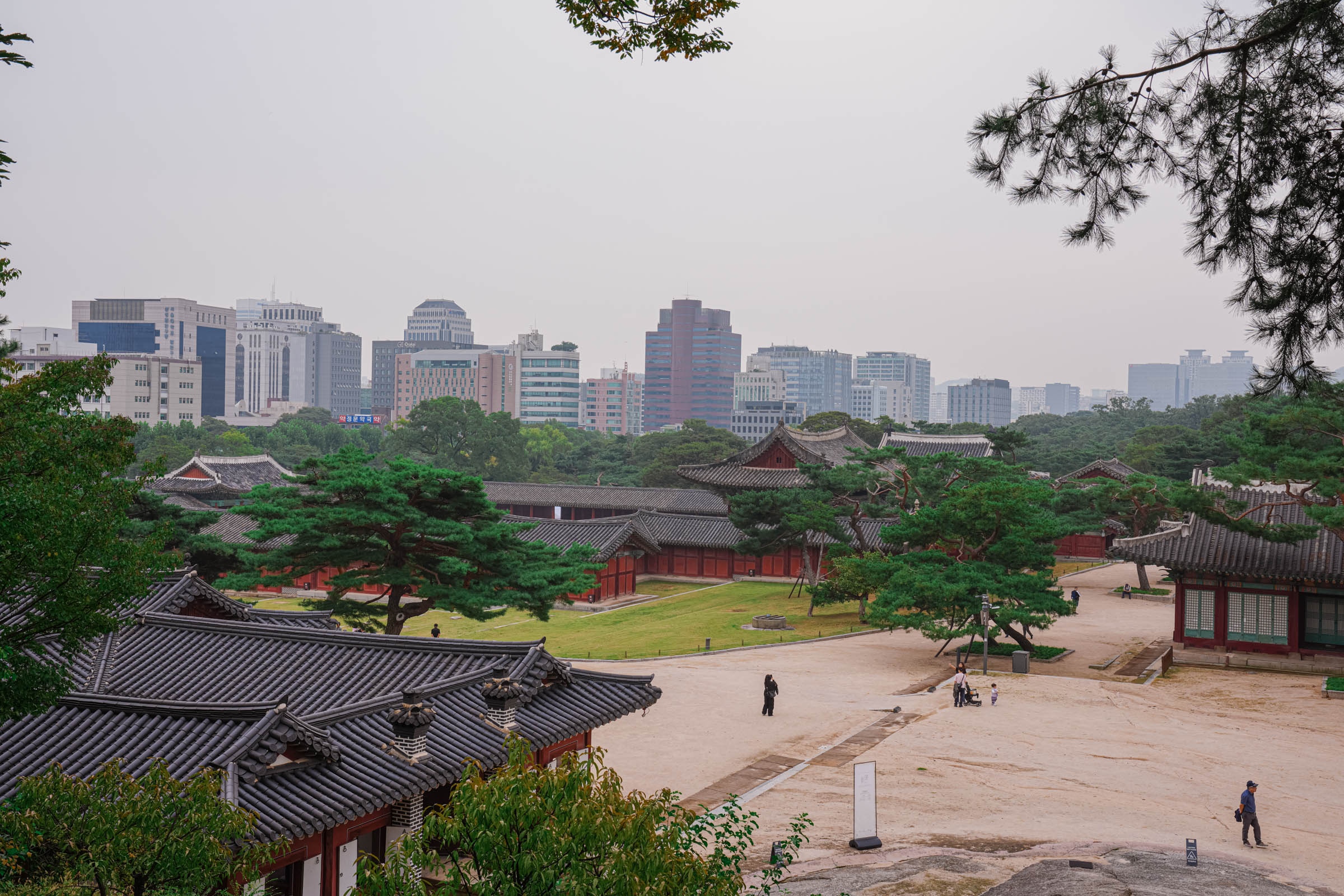
Compared with Gyeongbokgung, these grounds feel calm and intimate. In fact, Changgyeonggung served mainly as living quarters for the royal family, so many of its halls have a human rather than a monumental scale.
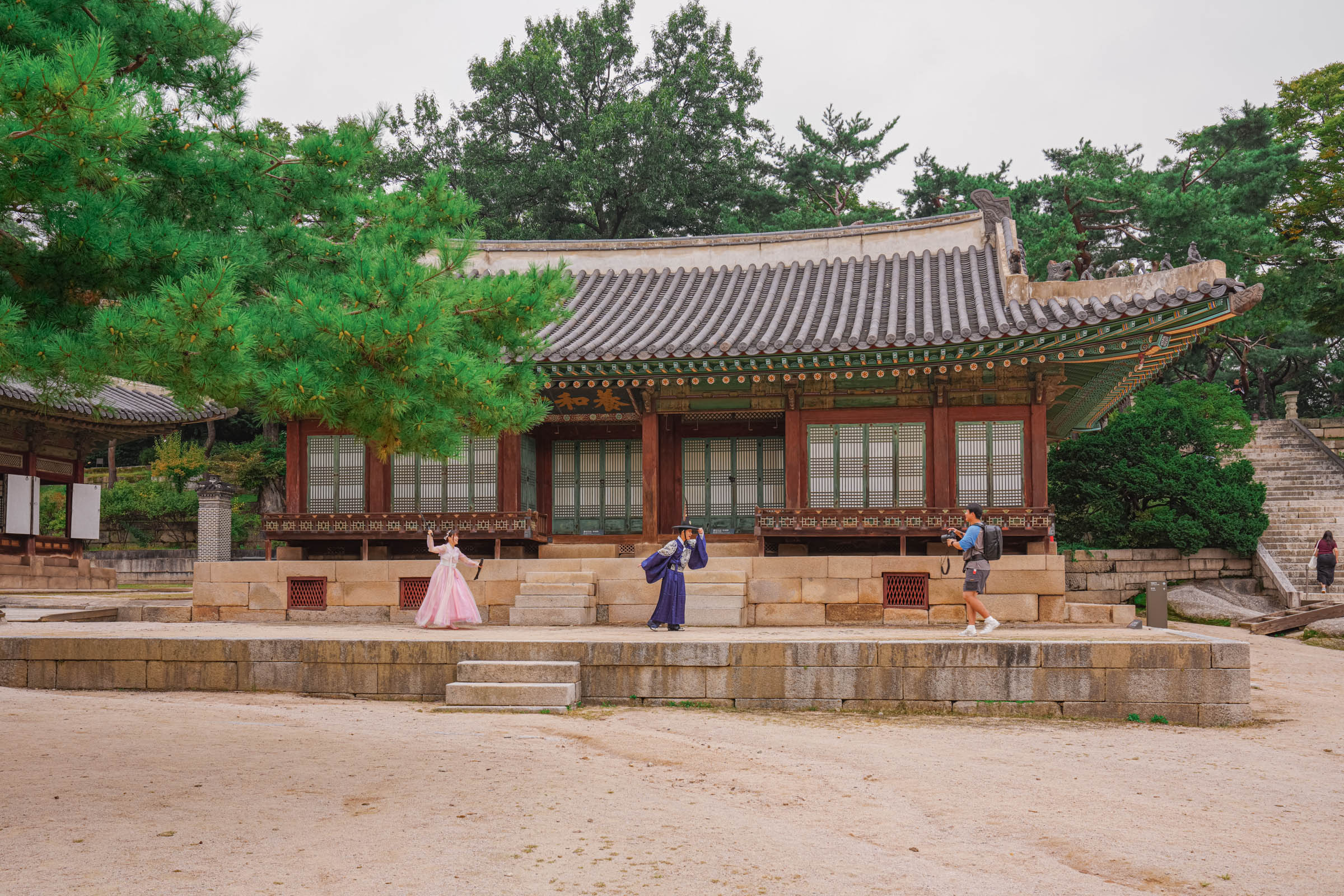
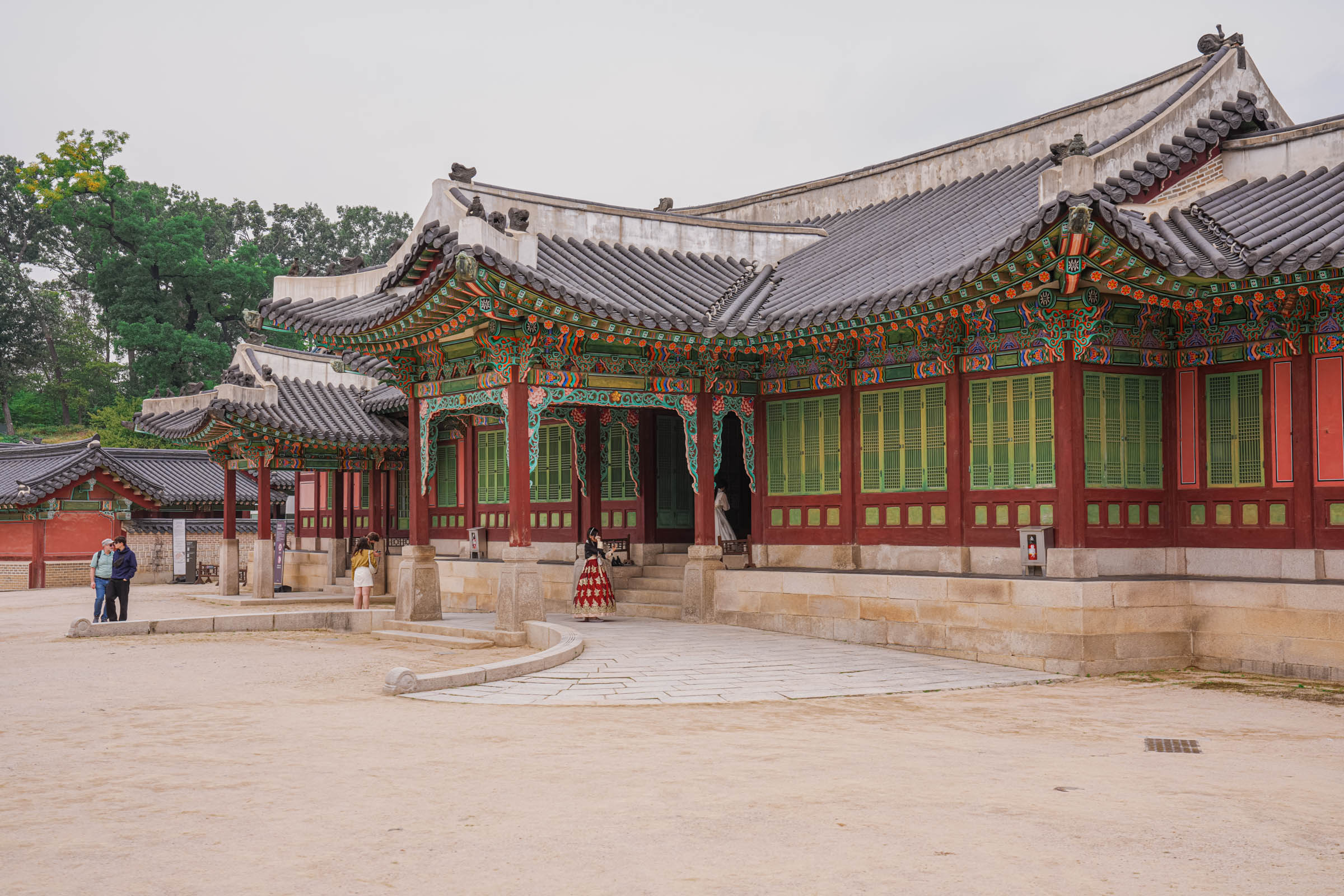
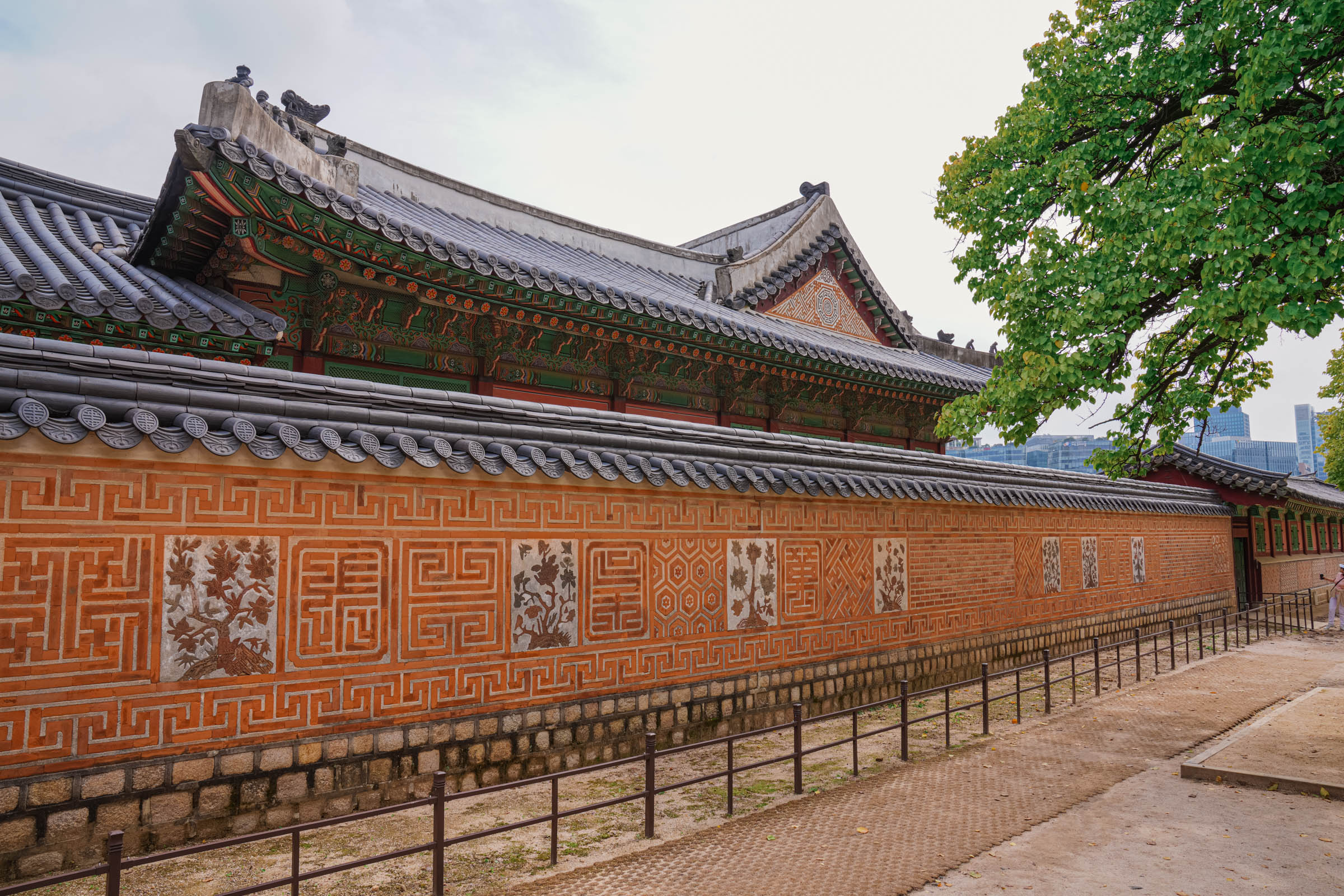
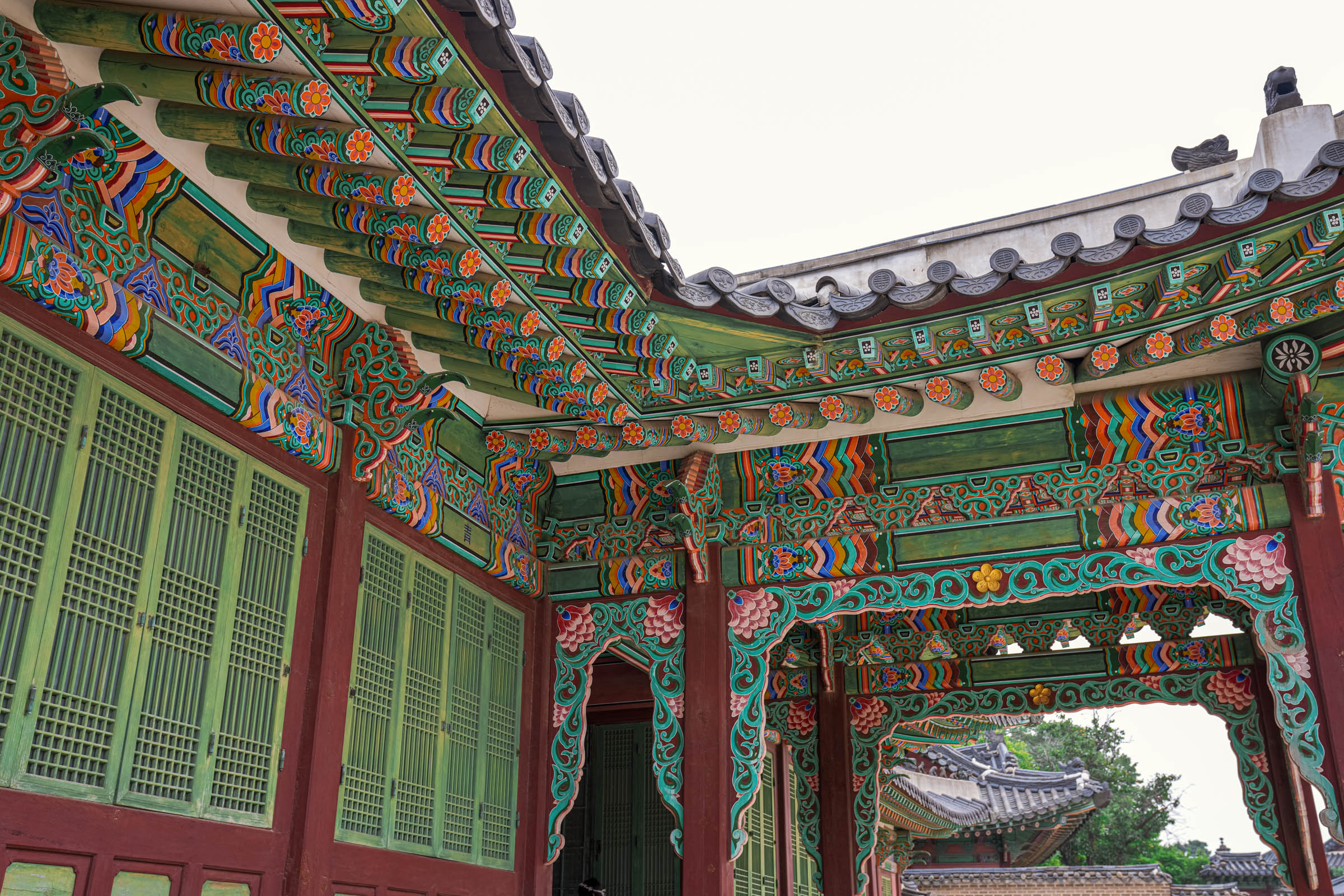
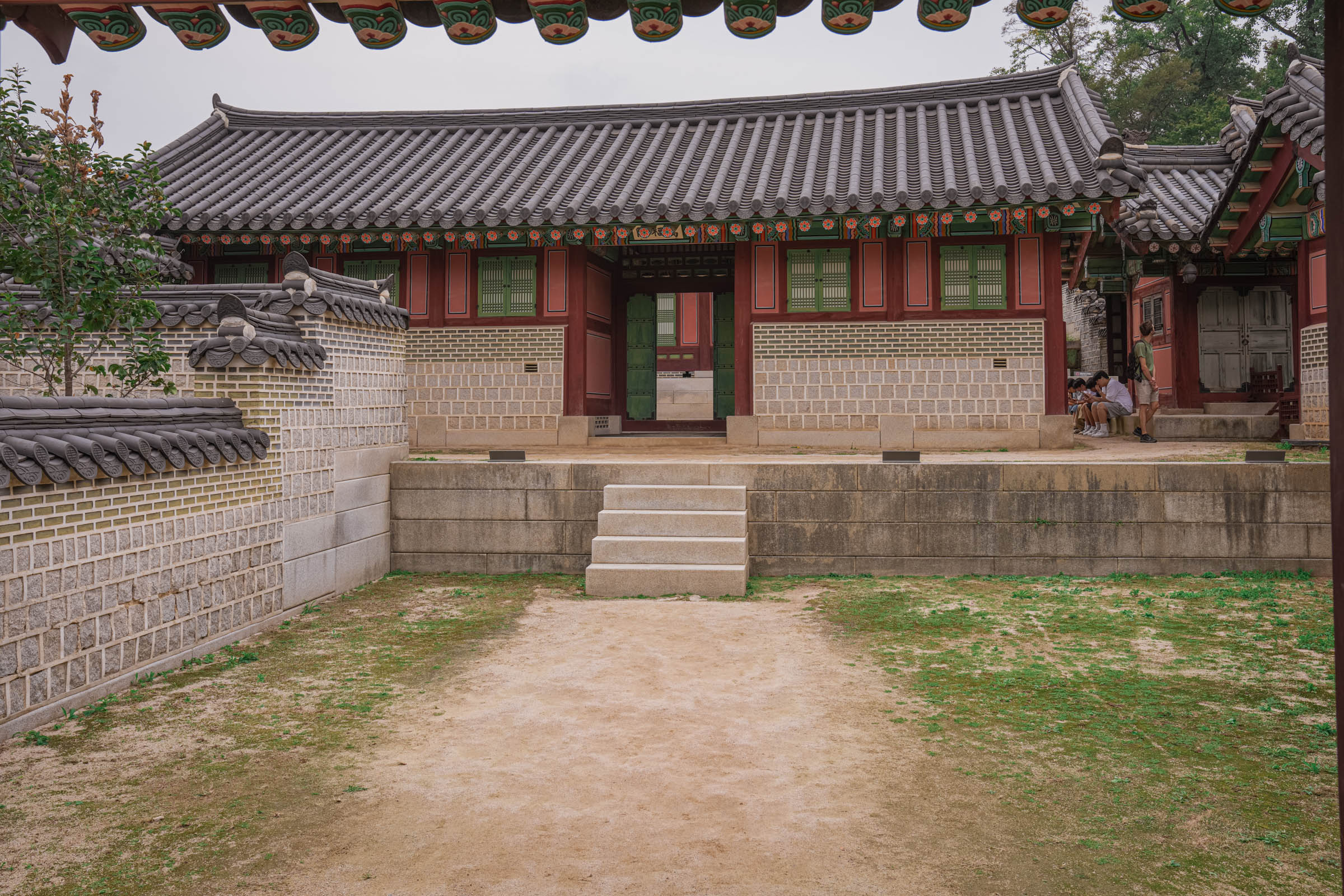
Take a moment to look up at the eaves. The beams and brackets are painted in green, red and blue patterns, and every building has its own rhythm of colors.
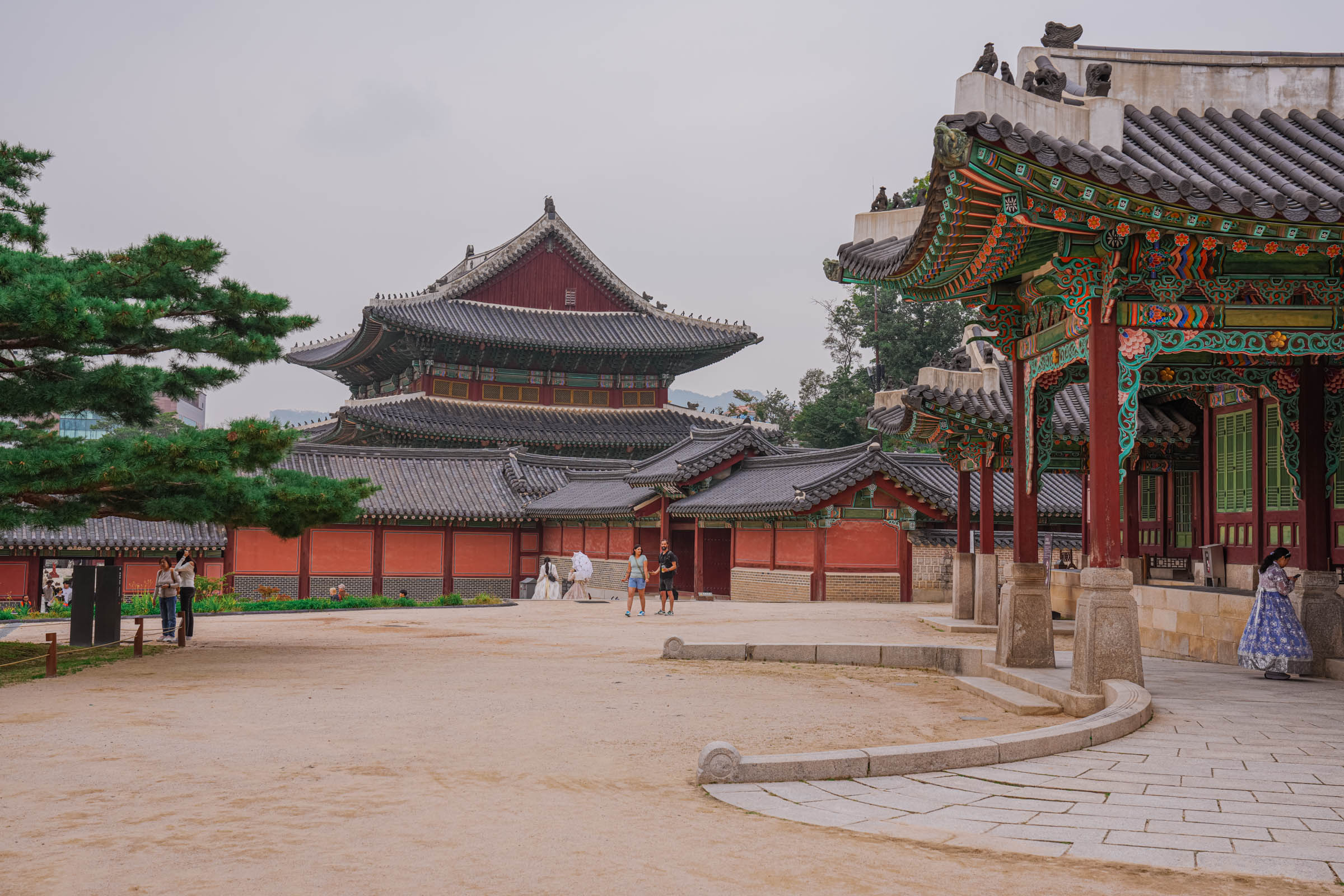
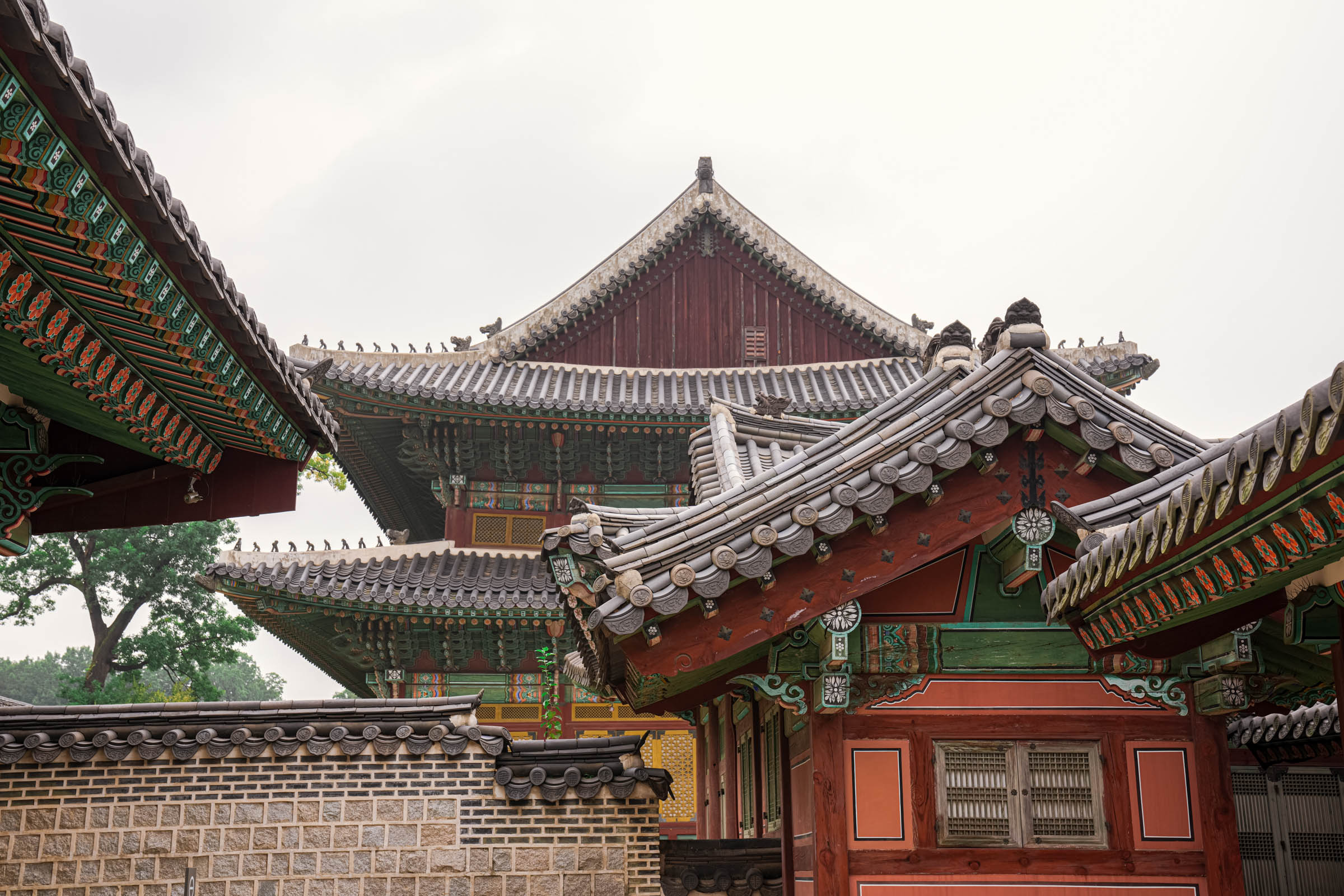
The old stone walls and quiet courtyards invite you to slow down, which is a rare luxury in a city of this size.
MYEONGJEONGJEON AND TONGMYEONGJEON
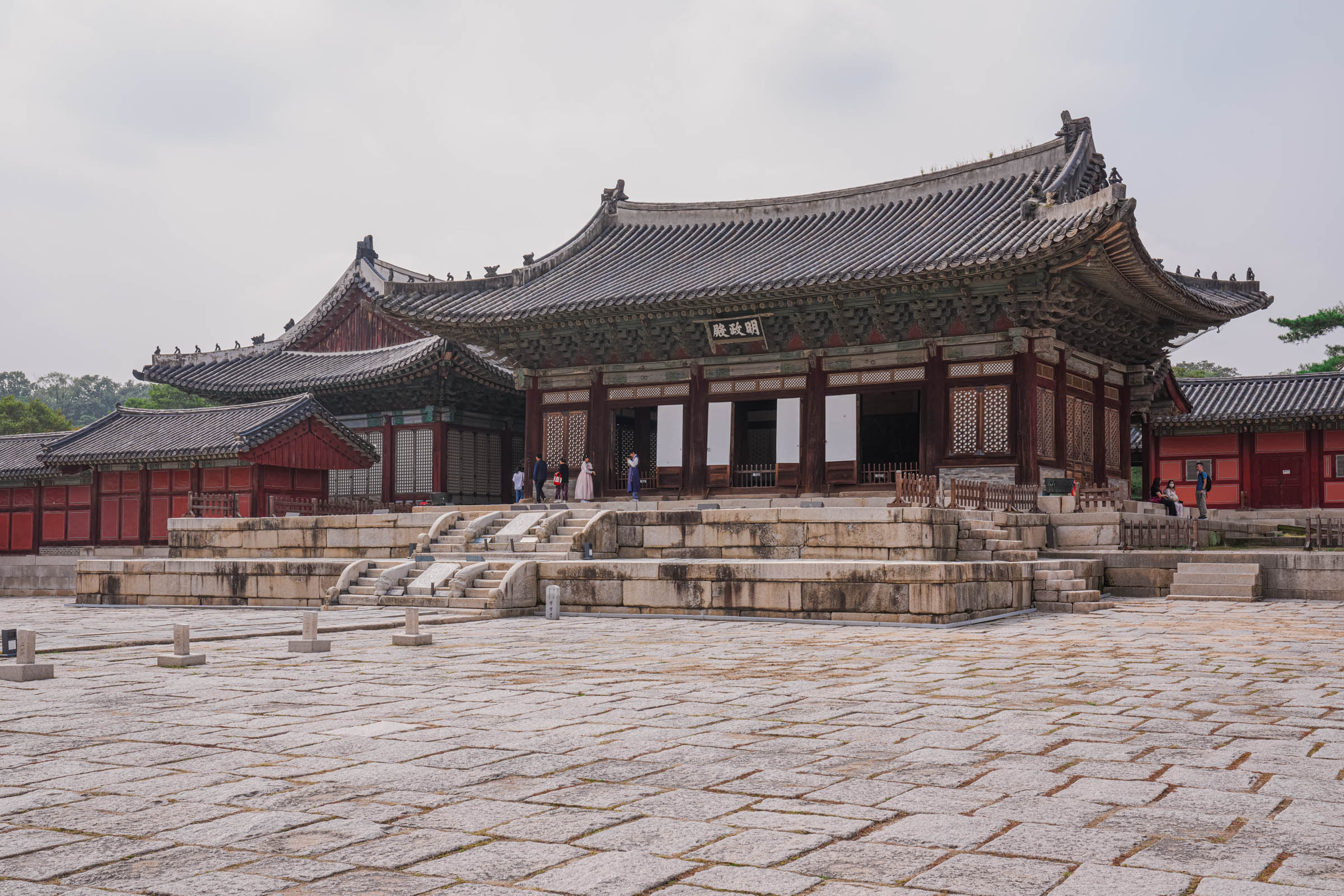
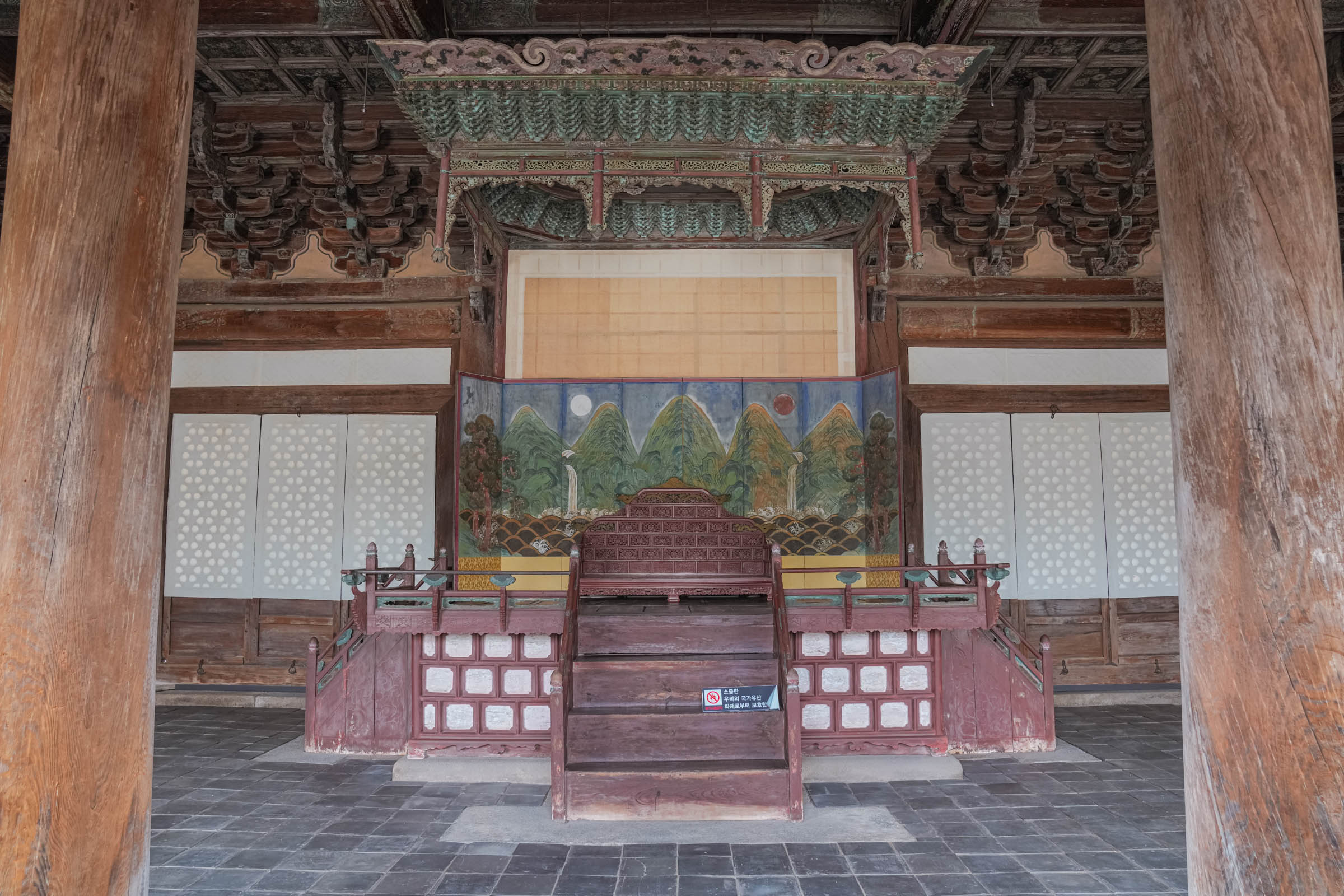
Myeongjeongjeon, the throne hall of Changgyeonggung, was rebuilt in 1616, and it is the oldest main hall of all the palaces in Seoul. It is smaller than the two-story throne halls of Gyeongbokgung and Changdeokgung. Unusually, it faces east, toward Mount Naksan, while most Joseon throne halls face south. Inside, a screen with the sun, the moon and five peaks stands behind the throne, just as in the other palaces.
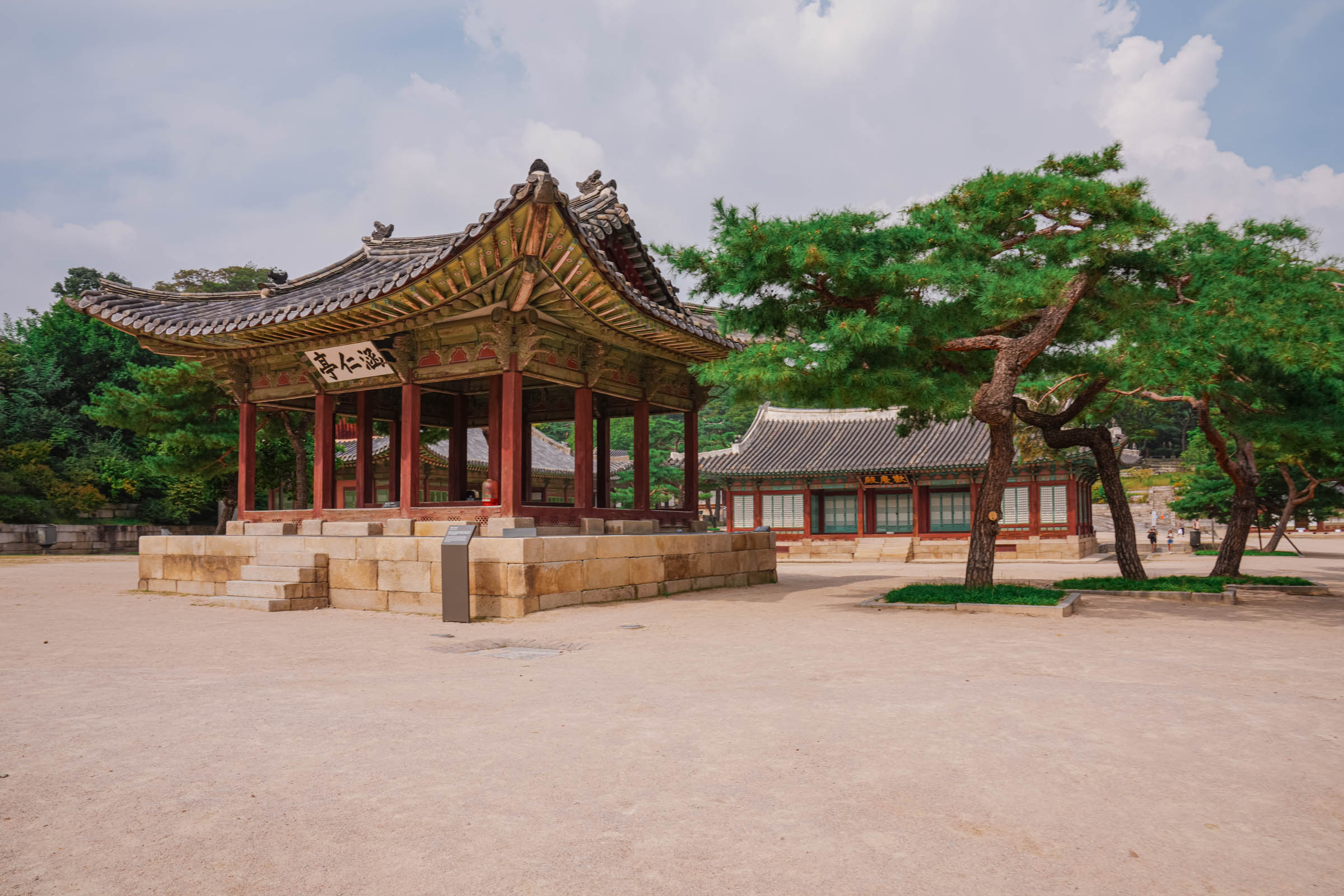
Behind it lie the royal living quarters. The largest building in the complex, Tongmyeongjeon, was built as the queen’s quarters. Most of the palace burned in a great fire in 1830, and the lost buildings were rebuilt four years later. Today, old pine trees and quiet courtyards make this one of the most peaceful corners of the palace.
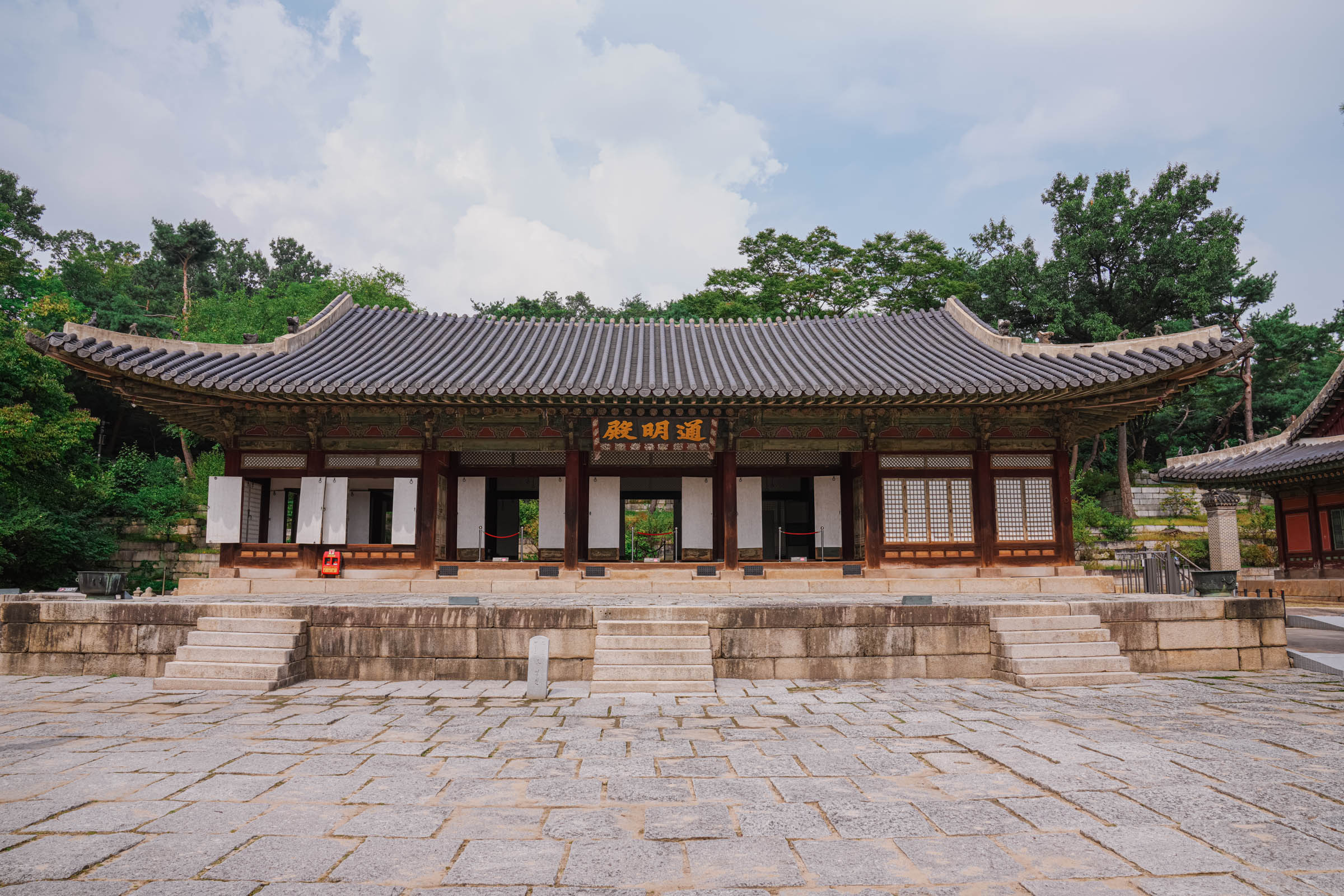
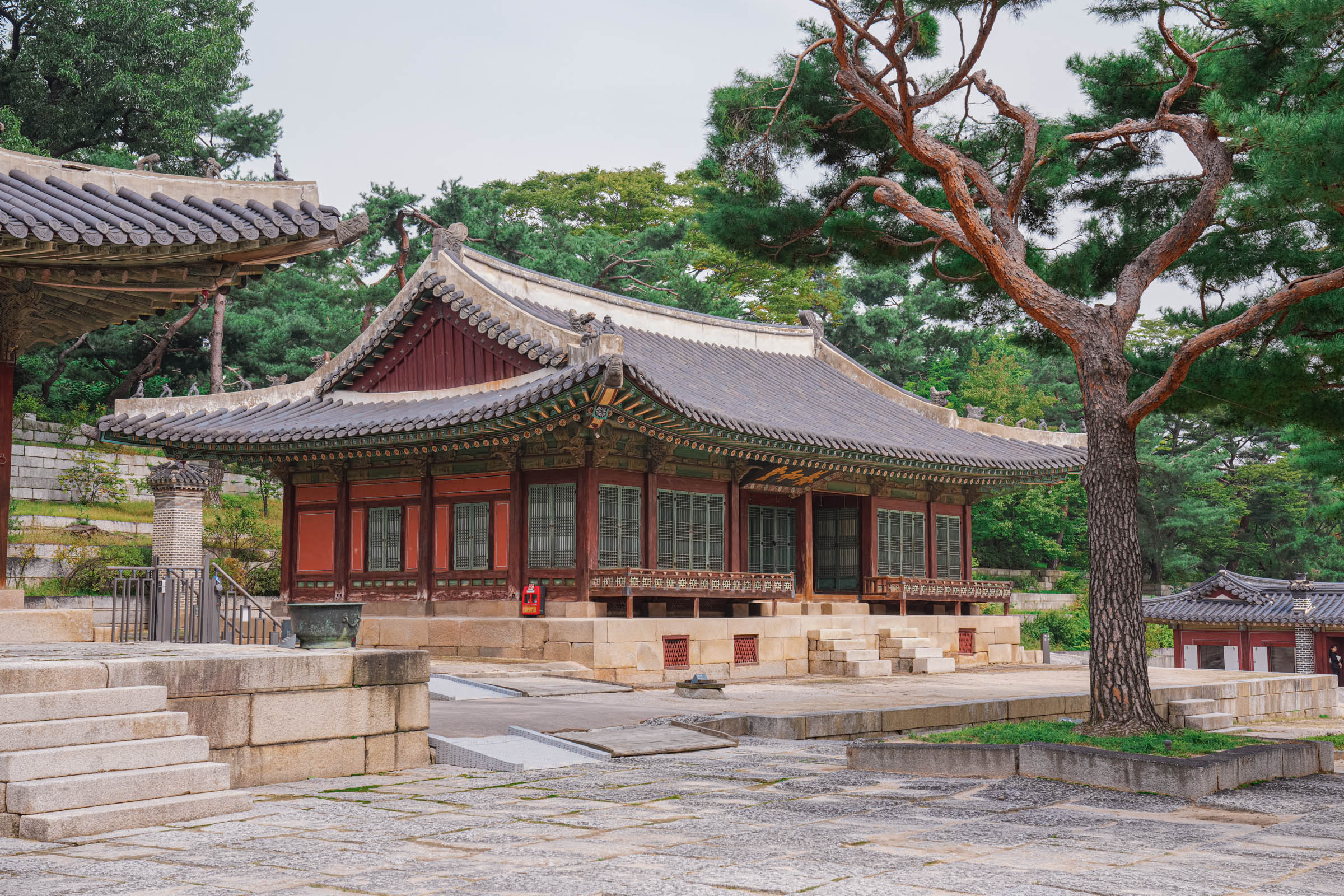
Changgyeonggung is open from 9 a.m. to 9 p.m., with last entry at 8 p.m., and it closes on Mondays. Thanks to these long hours, it is lovely in the evening too. As of 2026, an adult ticket costs only 1,000 won.
THE SECRET GARDEN: SEOUL’S HIDDEN ROYAL RETREAT
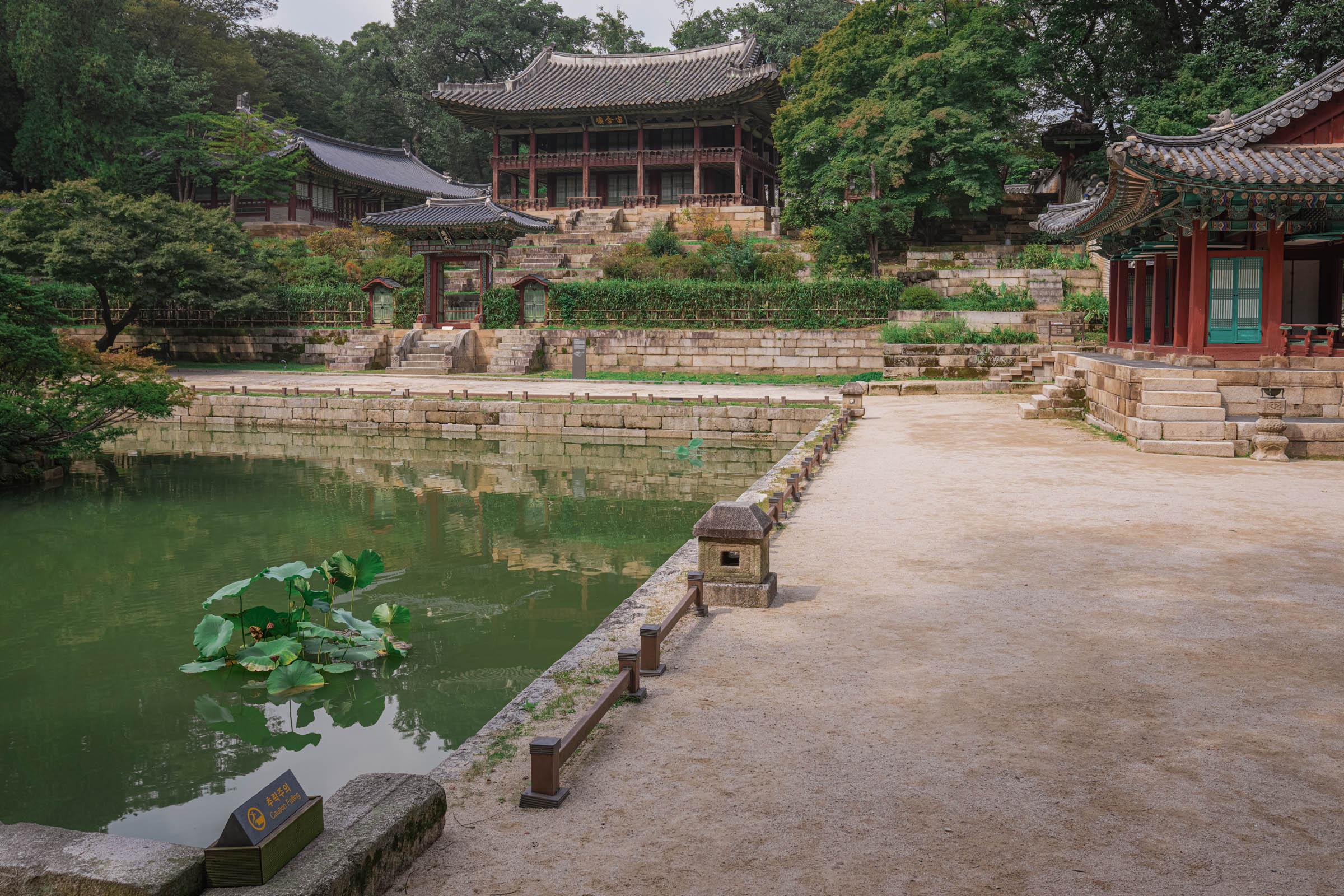
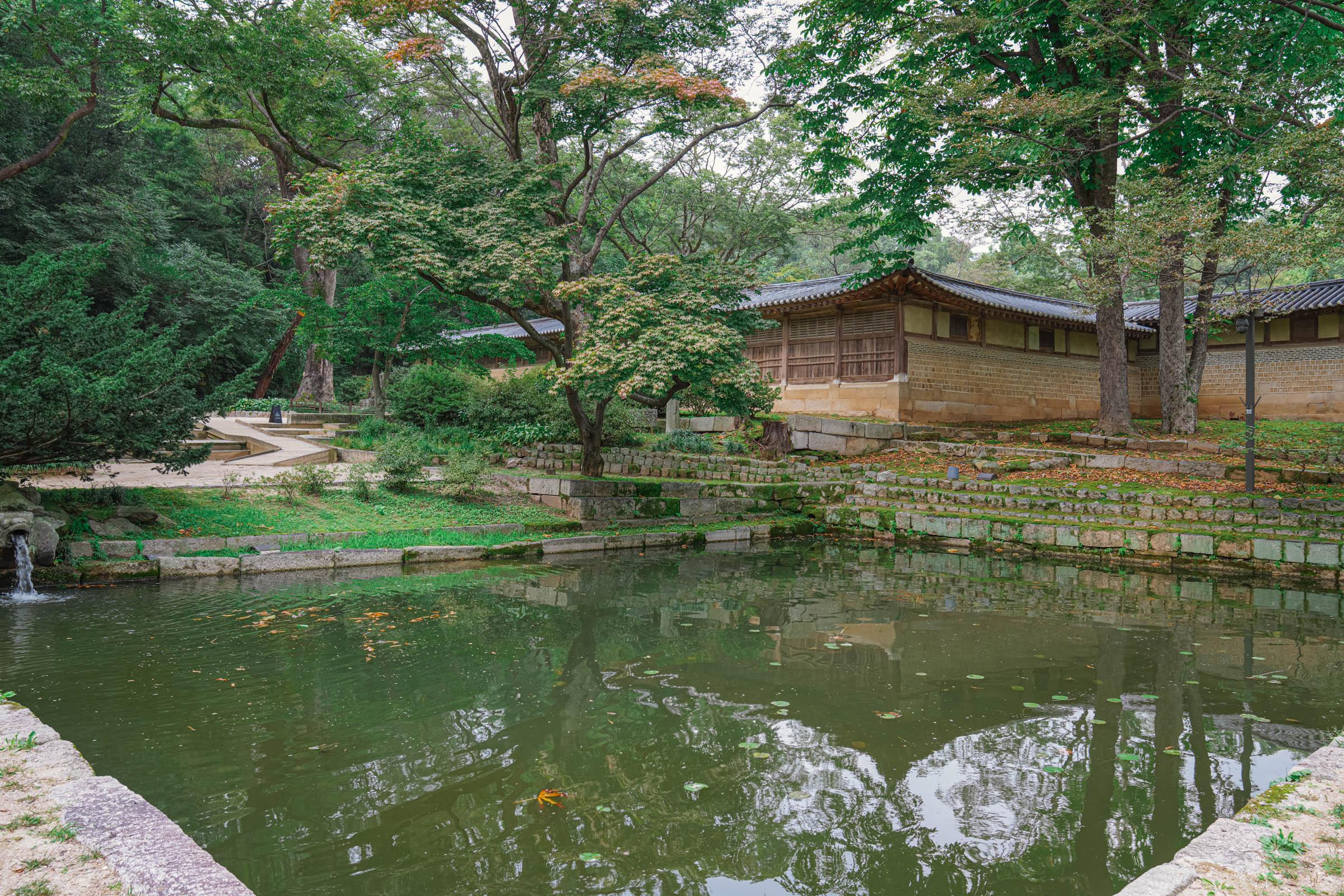
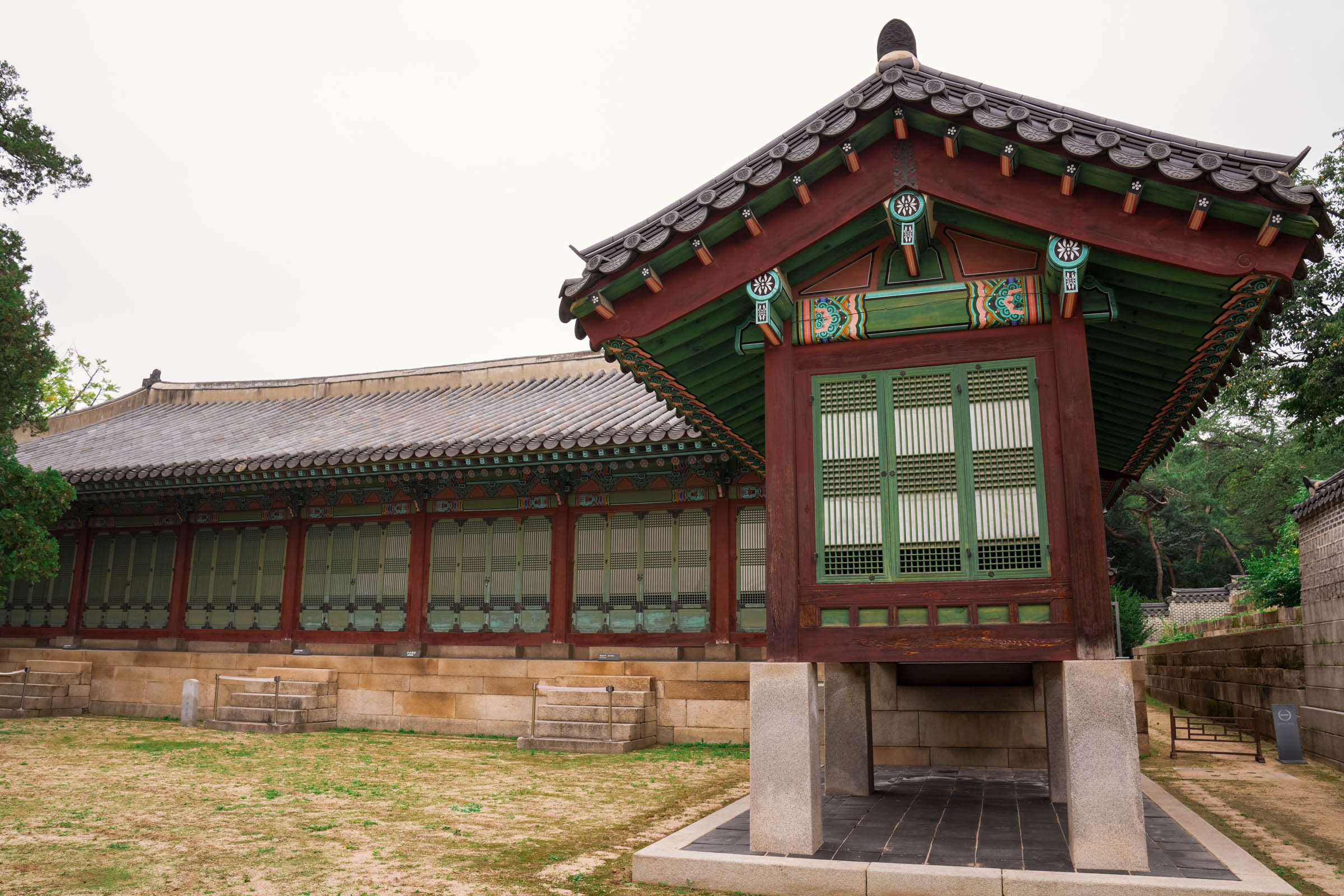
What makes Changdeokgung truly special is Huwon, the Secret Garden, also known as Biwon. It covers about 78 acres, roughly 32 hectares, behind the palace, and the royal family used it for leisure. Over the centuries, the kings expanded it while keeping it as natural as possible. More than 26,000 trees of about a hundred species grow here, and some of them are over 300 years old. In addition, a Chinese juniper near the exit is about 750 years old.
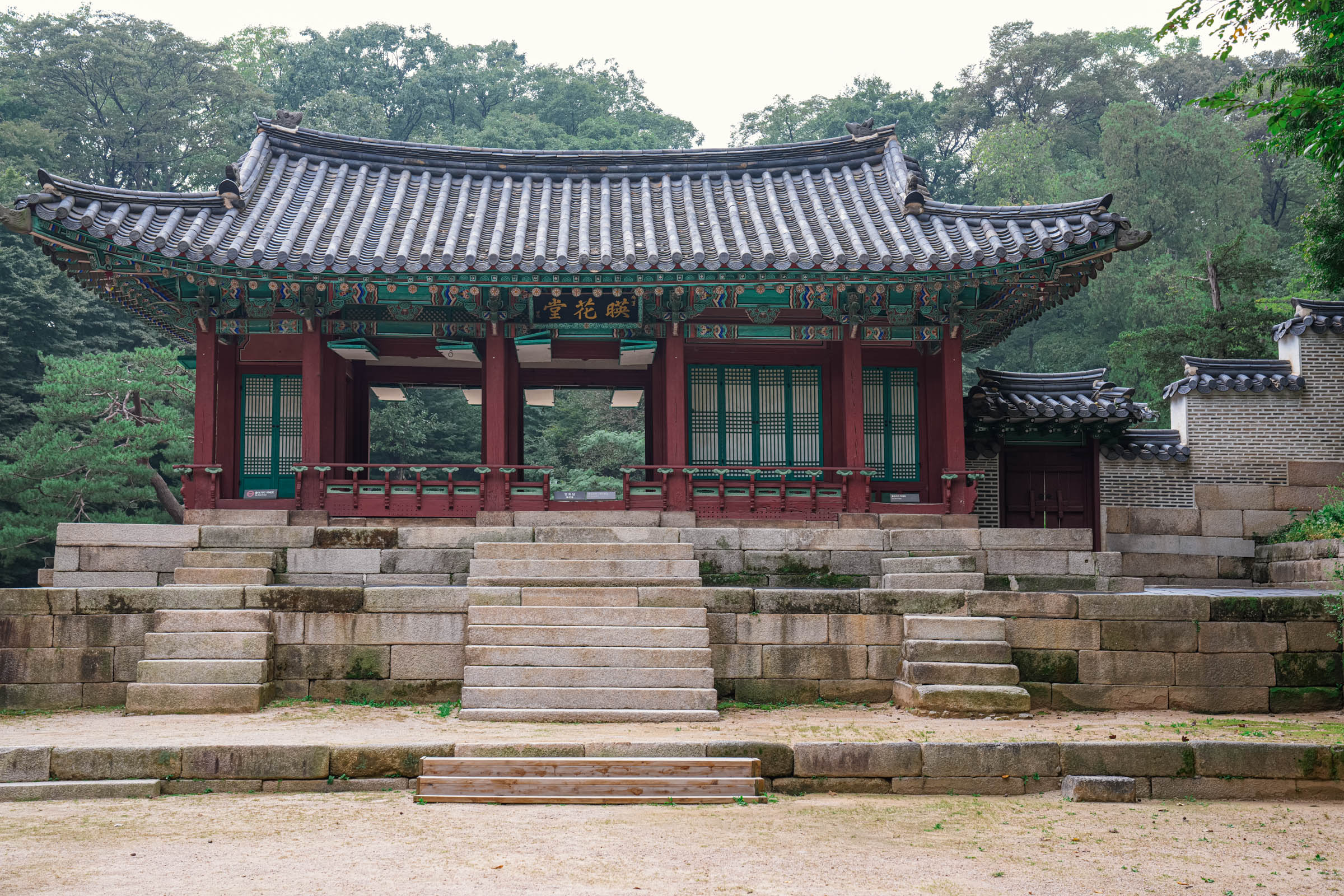
You can only visit the garden on a guided tour. The first stop is Buyongji, a square pond with the small Buyongjeong Pavilion. Above it, on higher ground, rises Juhamnu. King Jeongjo built this two-story pavilion in 1776, the year he came to the throne, and the royal library Gyujanggak was on its first floor. The reflection of the pavilions and trees in the calm water of Buyongji created an image I will remember forever.
YEONGYEONGDANG AND ONGNYUCHEON
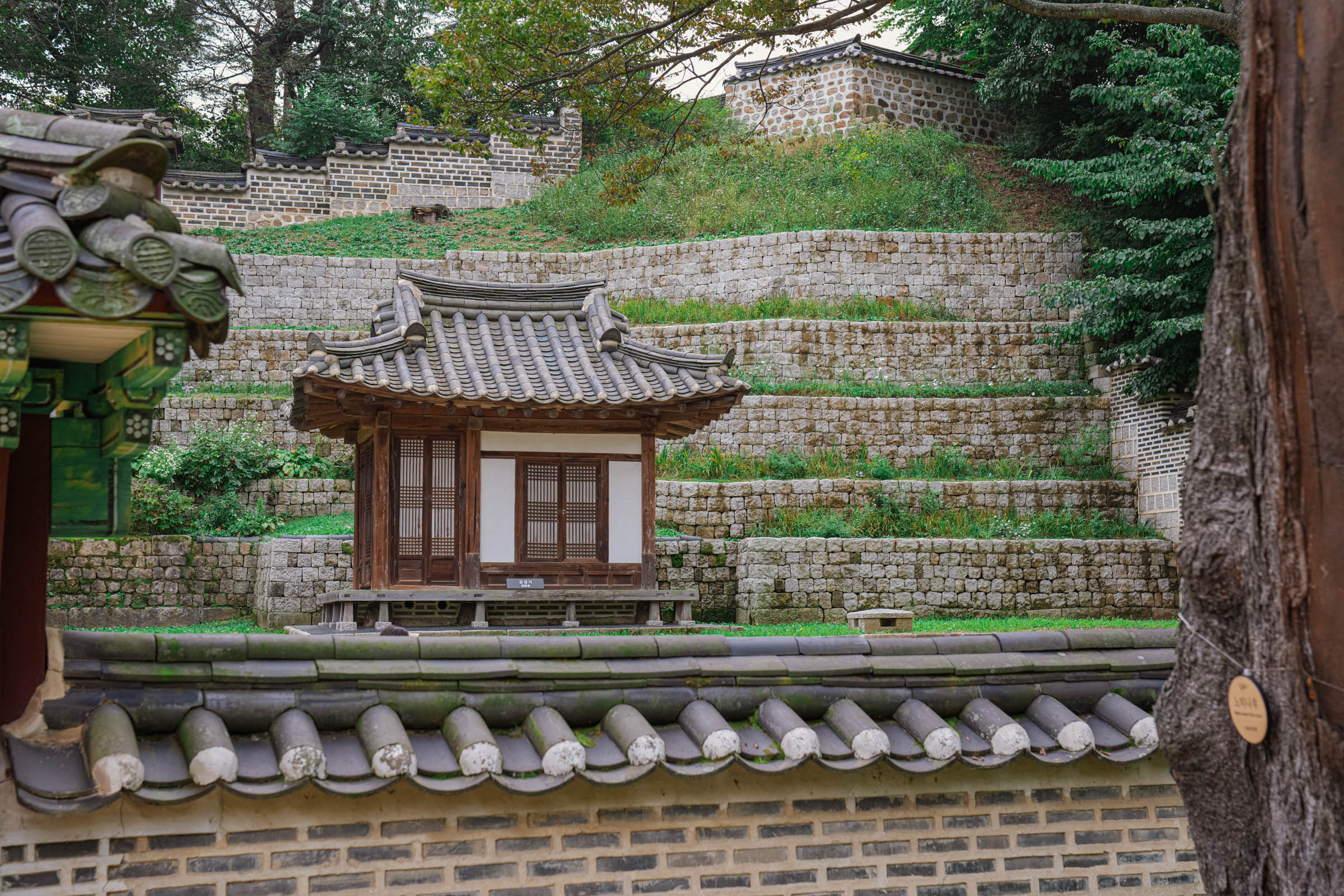
Deeper in the garden, the path leads past ponds and small pavilions hidden among the trees. Along the way, you pass Bullomun, a gate cut from a single stone. According to tradition, everyone who walks under it is blessed with a long life and good health.
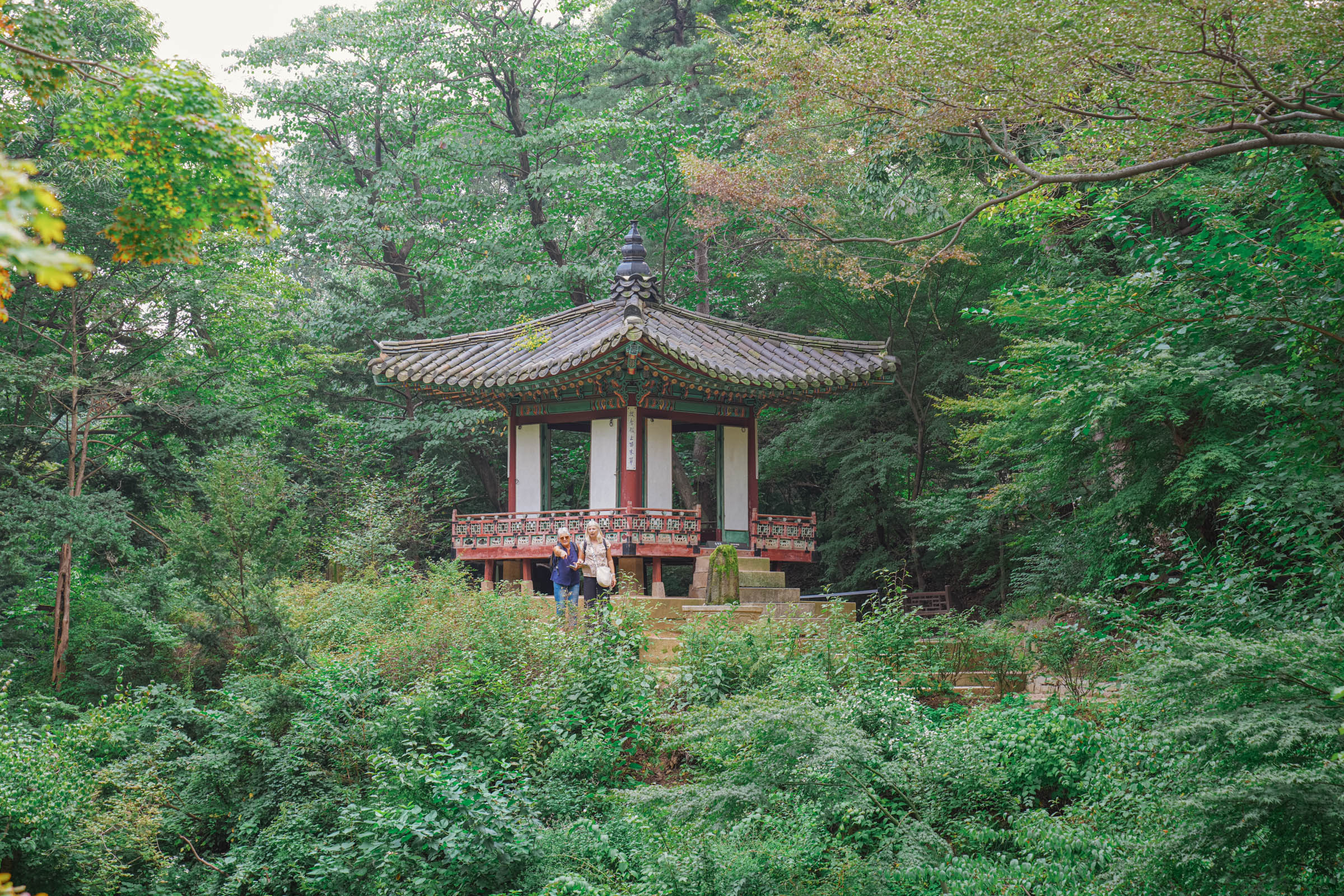
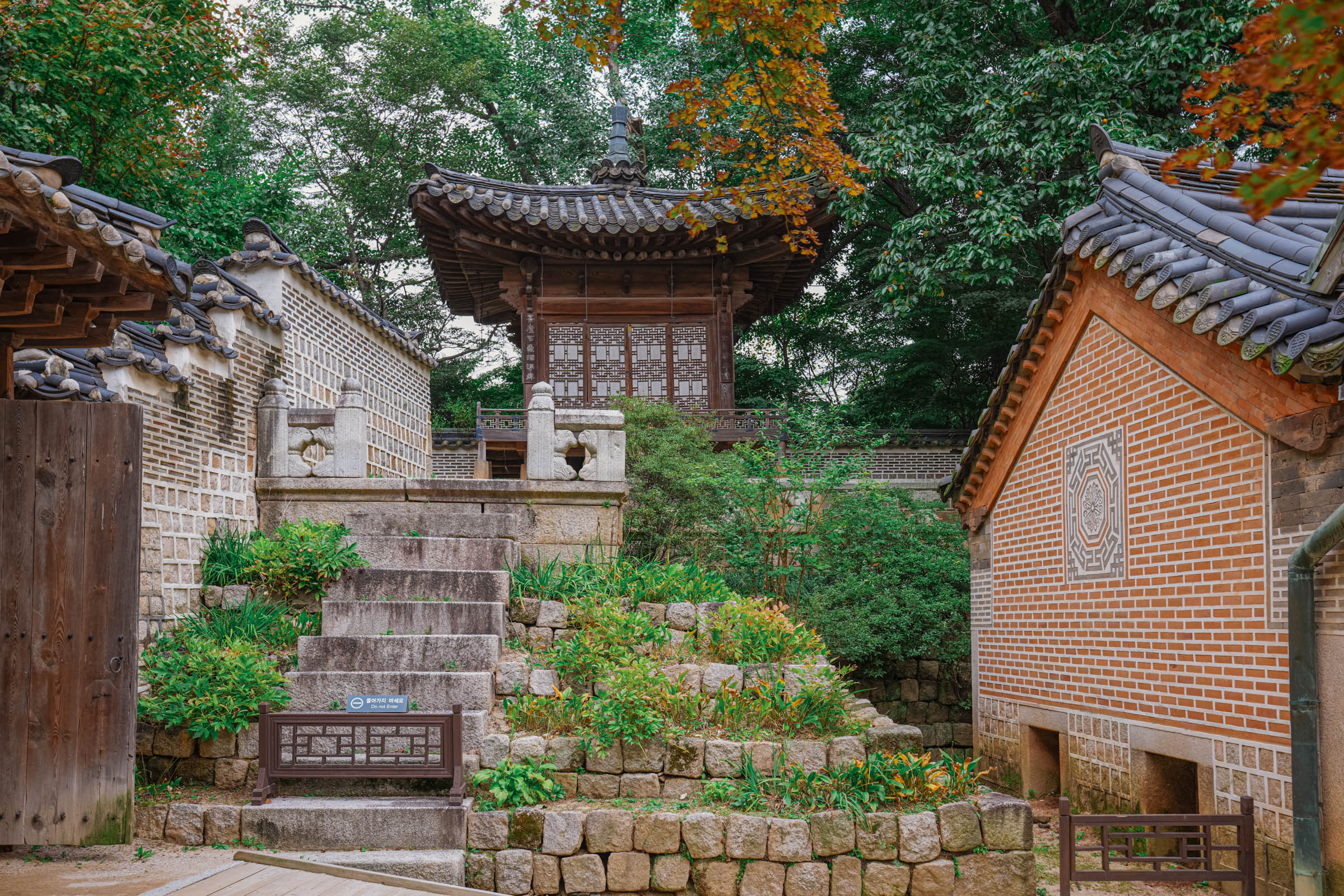
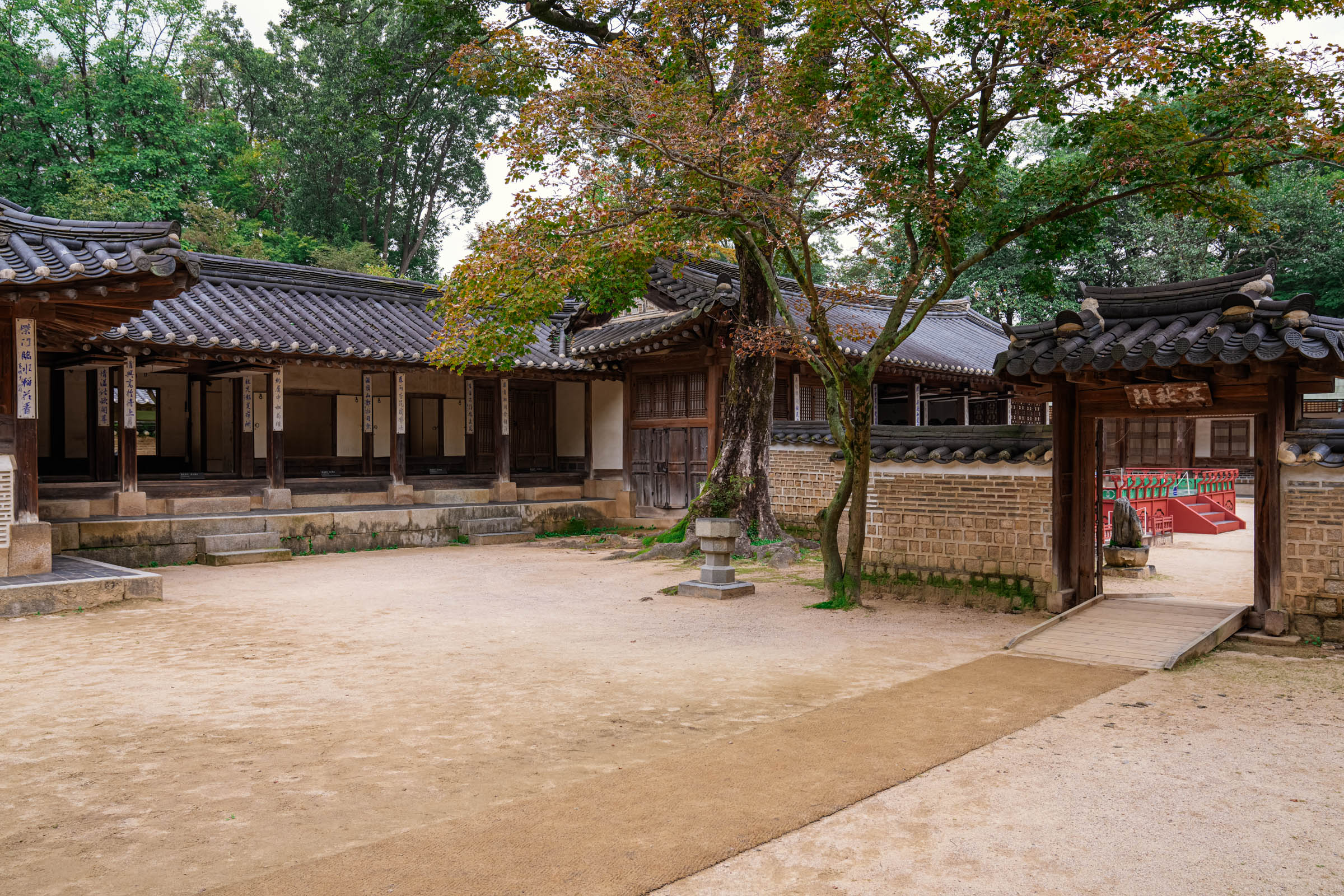
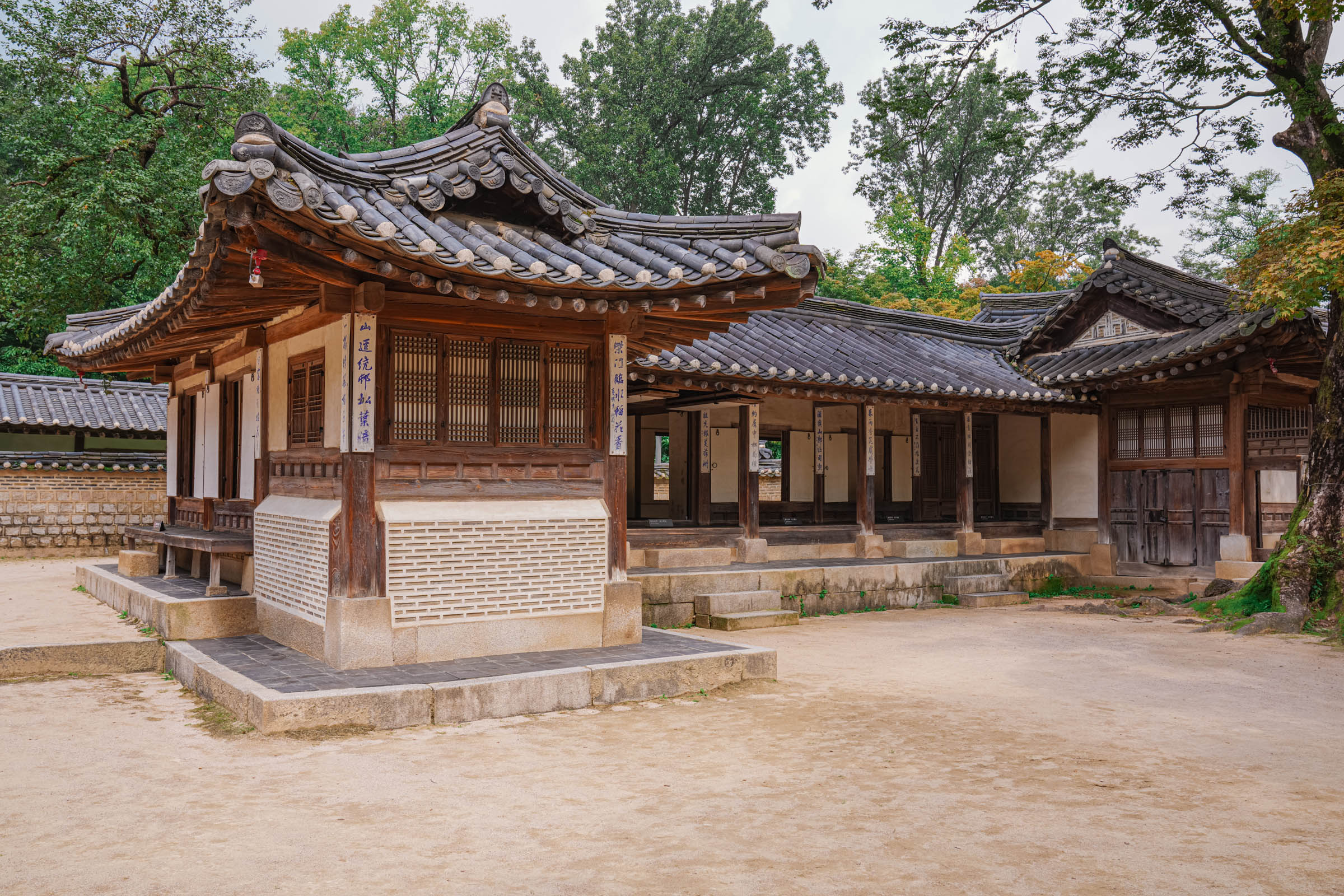
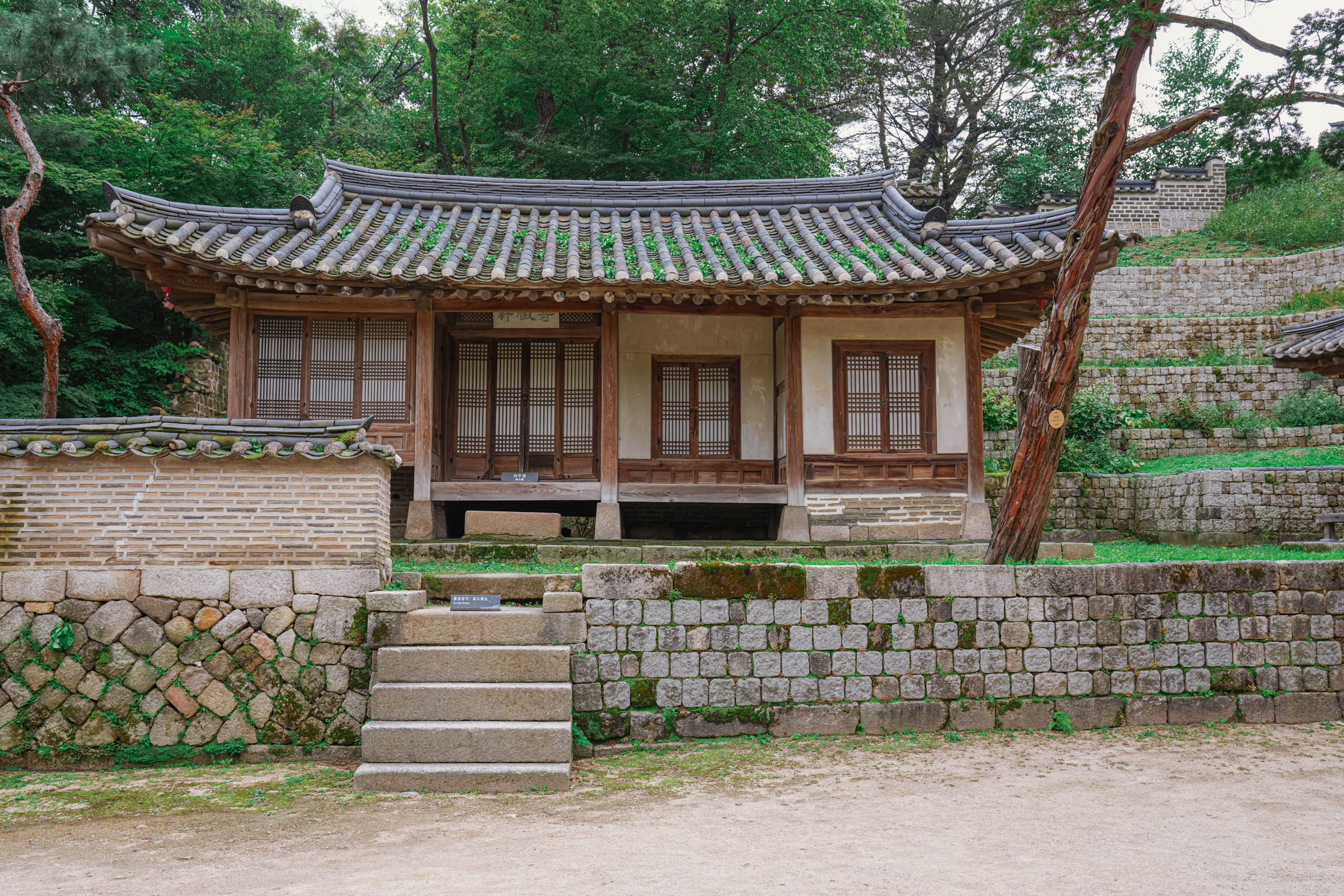
Yeongyeongdang is a unique complex, built in 1828, during the reign of King Sunjo. Unlike the painted palace halls, it follows the style of a Confucian scholar’s house, with plain, unpainted wood. As a result, walking through its courtyards feels like visiting a noble family home rather than a palace.
Another highlight is Ongnyucheon, the Jade Stream. Here, in 1636, a U-shaped channel was carved into the rock for floating wine cups, with a small waterfall and a poem inscribed on the boulder above it.
Autumn is especially spectacular, when the leaves turn red, orange and yellow. To walk through the Secret Garden is to find a rare kind of peace in the middle of a megacity.
CHANGDEOKGUNG AND THE SECRET GARDEN: PRACTICAL INFORMATION
As of late 2026, Changdeokgung opens at 9 a.m. It closes at 6 p.m. from February to May and in September and October, at 6:30 p.m. from June to August, and at 5:30 p.m. from November to January. The palace is closed on Mondays. An adult ticket costs 3,000 won, and free English tours of the palace start at 10:15 a.m. and 1:15 p.m.
The Secret Garden requires a separate ticket of 5,000 won for adults and 2,500 won for ages 7 to 18. Each session takes up to 100 people with a guide. Half of the tickets go on sale online at 10 a.m. Korean time, six days before the visit. The other half are sold on site from 9 a.m. on the day. From March to November, English tours start at 10:30 a.m., 11:30 a.m., 2:30 p.m. and 3:30 p.m., while winter has no 3:30 p.m. session. A tour lasts about 70 to 90 minutes, so be sure to respect the time on your ticket.
My advice: book online or arrive early, because English sessions sell out. Also, wear extremely comfortable shoes. The path climbs uphill, the ground is gravelly and dusty, and there is a lot of walking ahead of you. An integrated palace ticket also exists, but check its current price and conditions at the ticket office, since they have changed over time. The nearest metro stop is Anguk Station on Line 3.
BUKCHON HANOK VILLAGE: SEOUL’S LIVING TRADITION
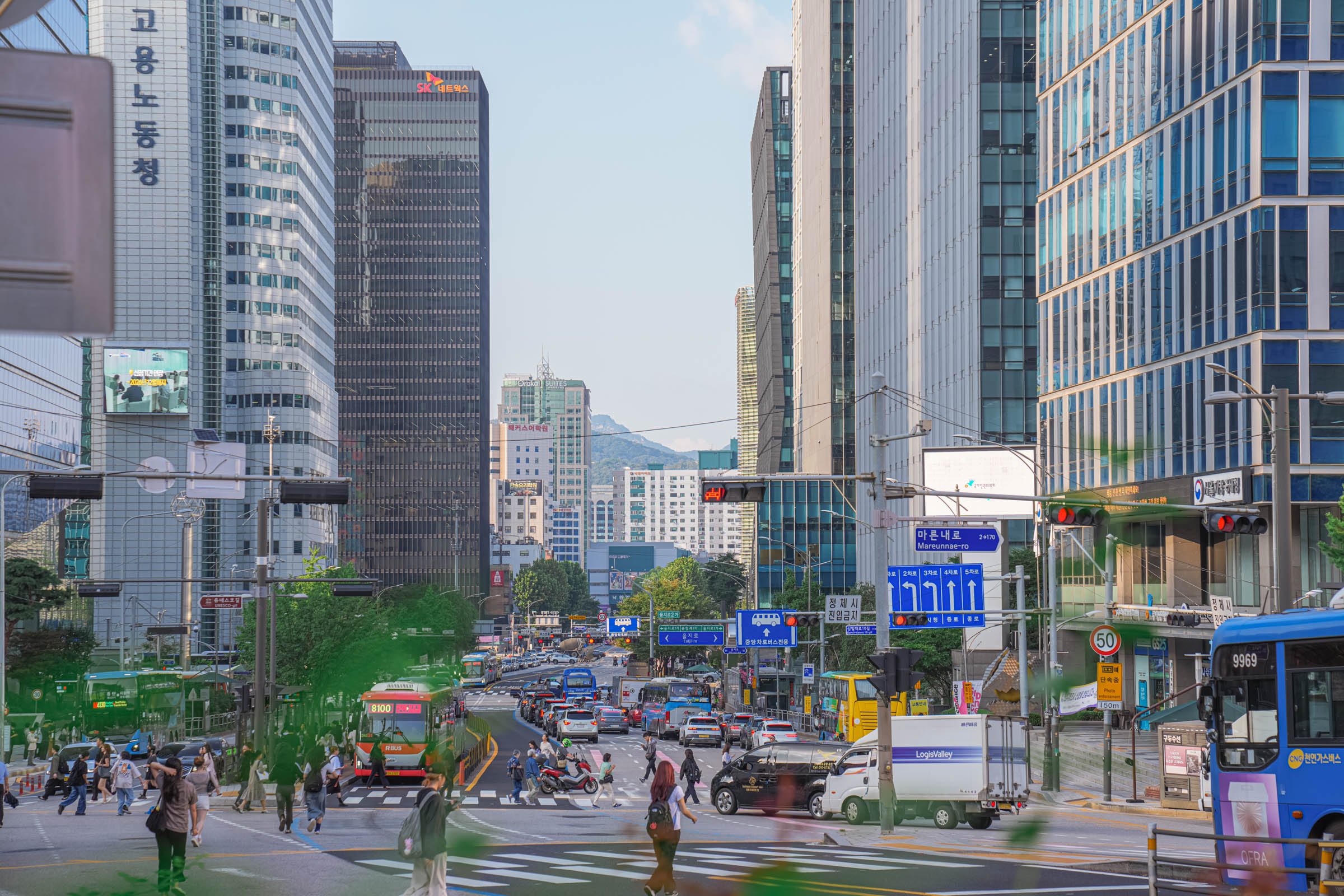
A visit to the royal palaces is not just sightseeing. It is a journey through Korean history, culture and philosophy. Nowhere is the contrast of this country clearer than in a palace courtyard, where glass towers rise behind traditional roofs.
Between Gyeongbokgung and Changdeokgung lies Bukchon Hanok Village, a neighborhood of traditional Korean houses known as hanok. Walking through its narrow, sloping lanes feels like traveling through time. Some of the houses have become guesthouses, teahouses and small cultural centers where you can experience Korean traditions firsthand.
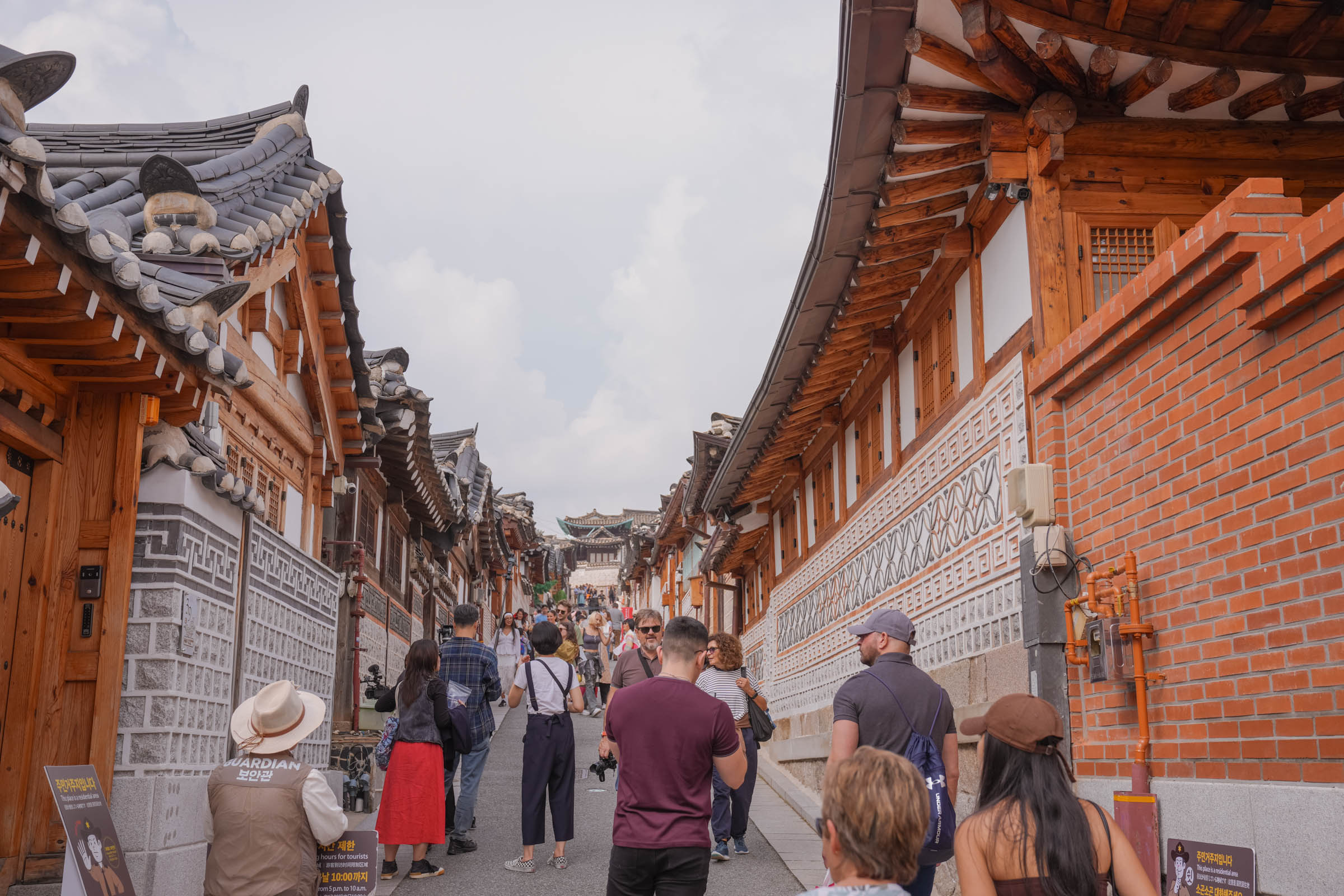
However, Bukchon is above all a place where people live. To protect residents from overtourism, the Jongno District Office made part of it a special management area in 2024. Since March 1, 2025, tourists may enter the red zone around Bukchon-ro 11-gil only between 10 a.m. and 5 p.m. Outside these hours, violators face a fine of 100,000 won. So please keep your voice down, respect private homes and plan your visit for the daytime.
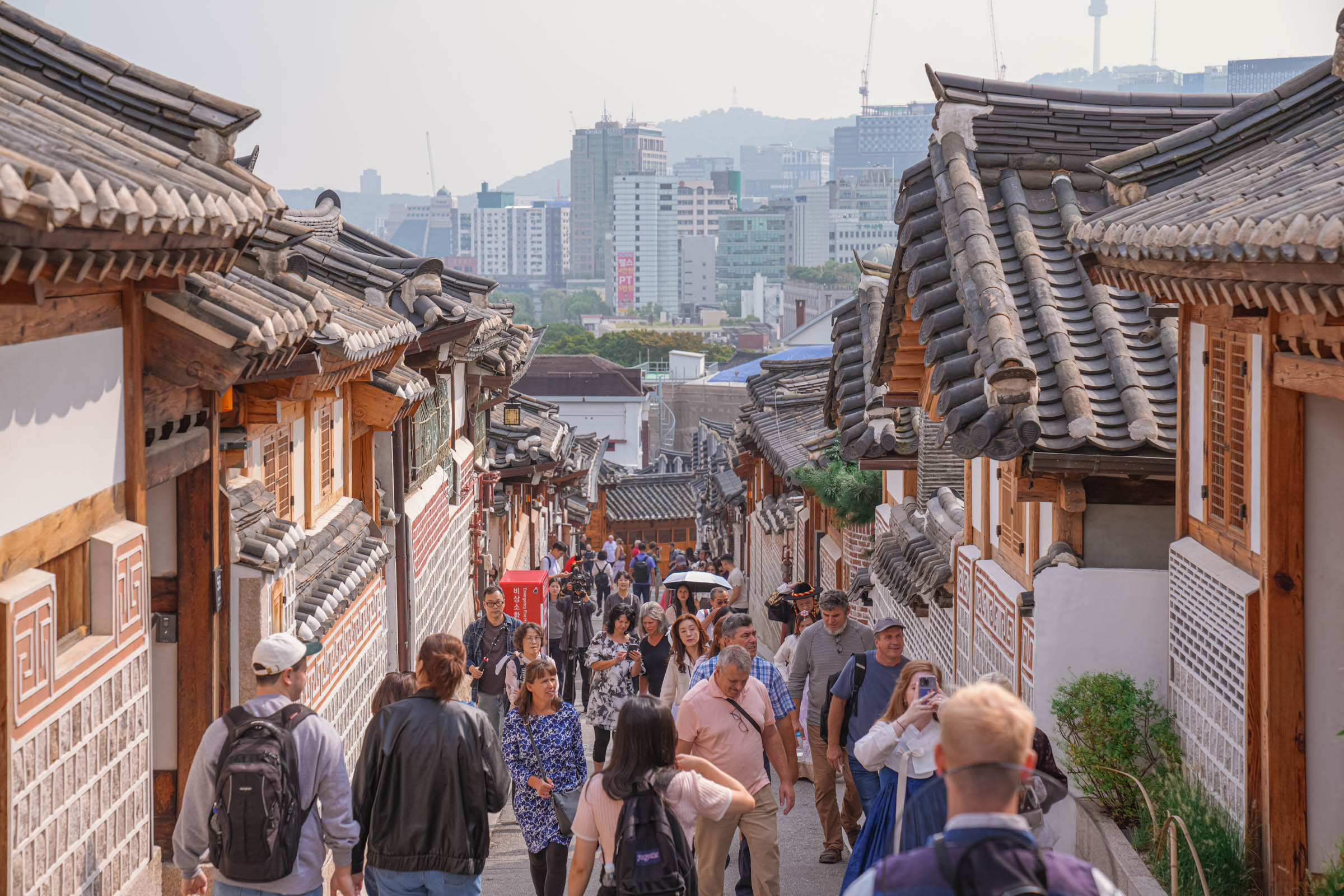
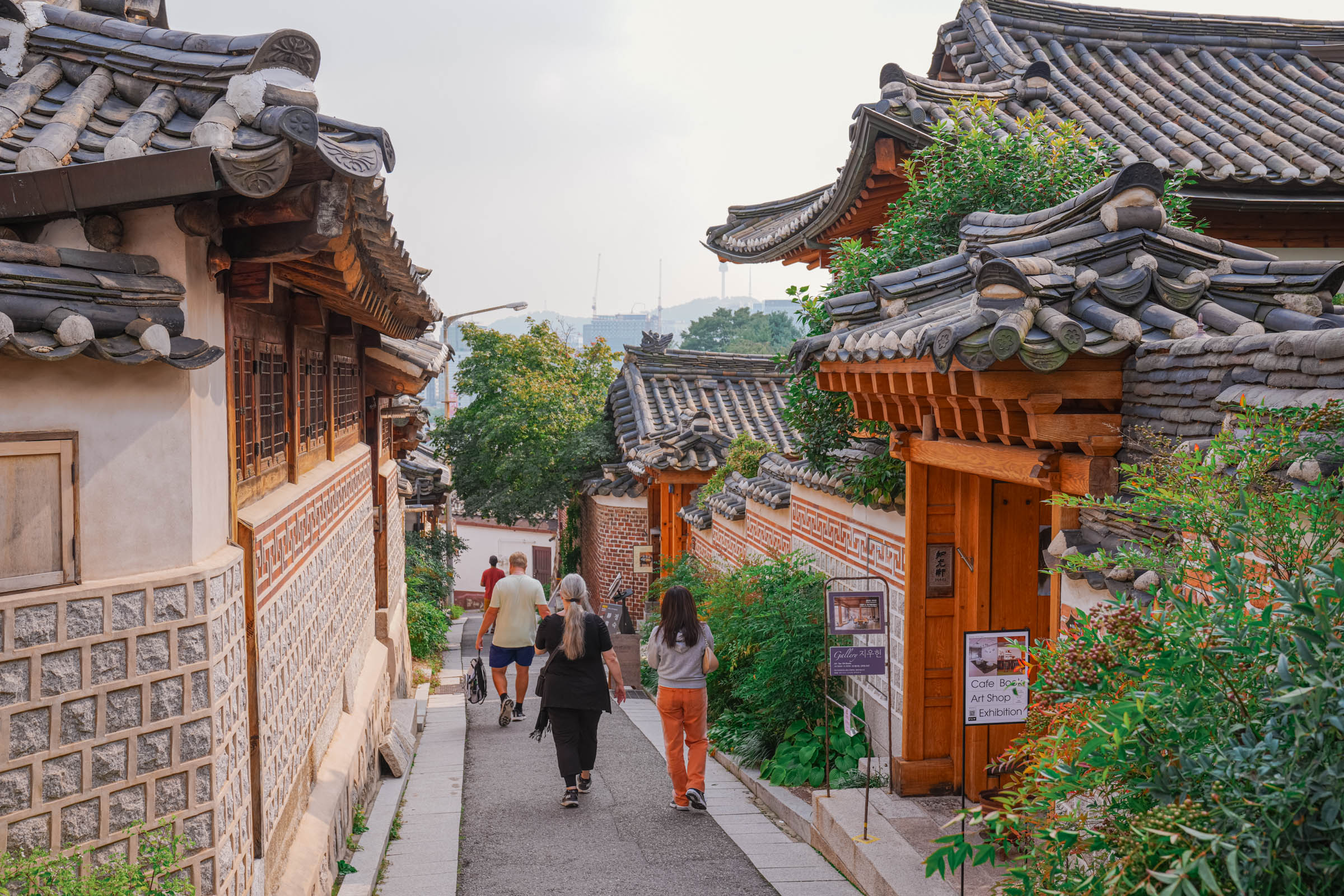
For a similar atmosphere with fewer tourists, I recommend Namsangol Hanok Village and the hanok alleys of Ikseon-dong. Both offer an authentic experience with more local spirit.
MYEONGDONG: SEOUL’S K-BEAUTY CAPITAL
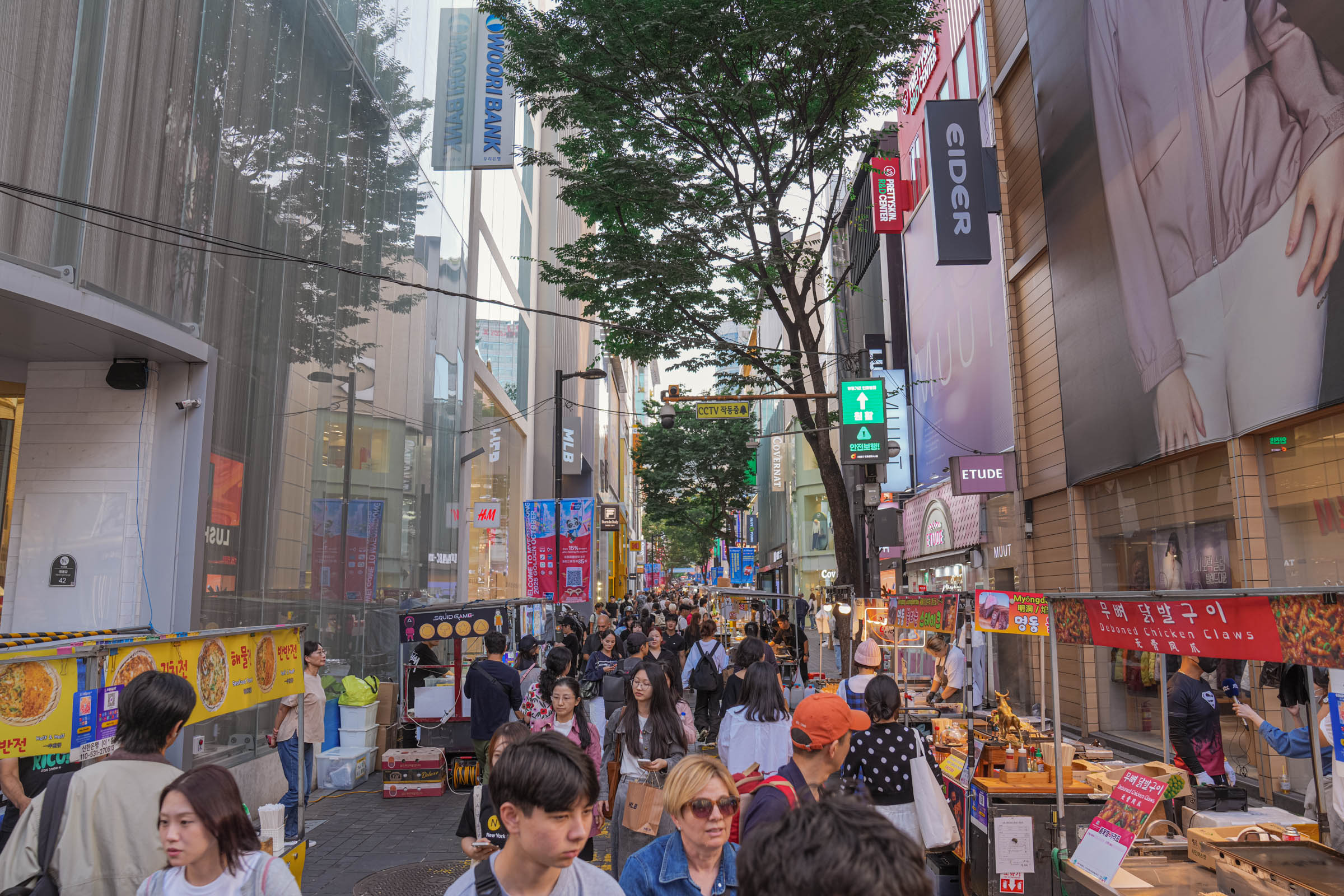
Seoul is rightly considered one of the beauty capitals of the world, and Myeongdong is its shop window. According to the Korea Tourism Organization, about 4.5 million foreign tourists visited Myeongdong in the first half of 2025 alone. That was the highest number of any major shopping district in the city.
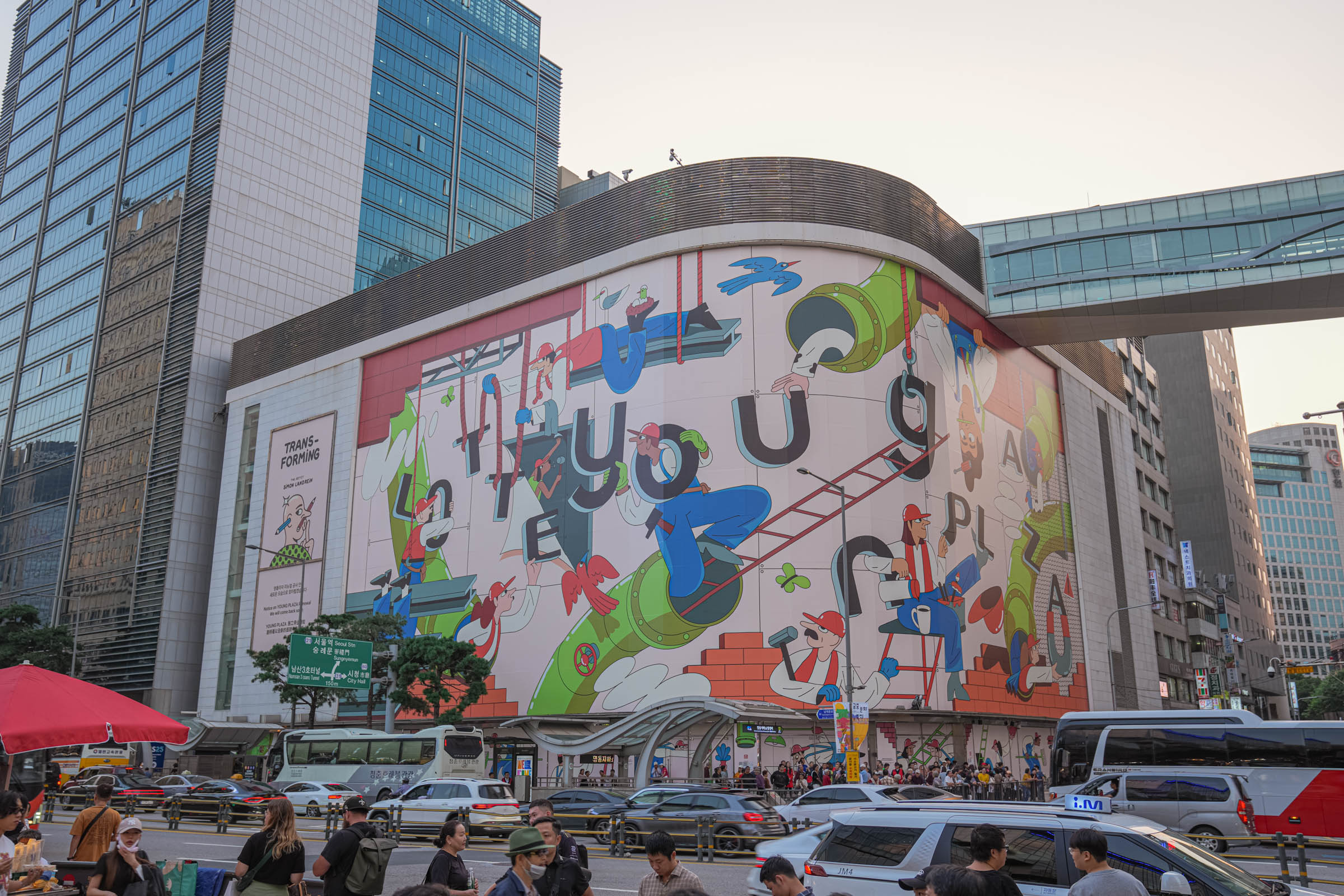
The Korean cosmetics industry, known as K-Beauty, has changed skin care around the world. The popular idea of “glass skin,” glowing and deeply hydrated, reflects the Korean approach that puts skin care before makeup. For cosmetics lovers, Olive Young is a true paradise, and Myeongdong alone has nine of its stores. The largest of them, Central Myeongdong Town, opened in March 2026 with more than 1,000 brands and about 15,000 products.
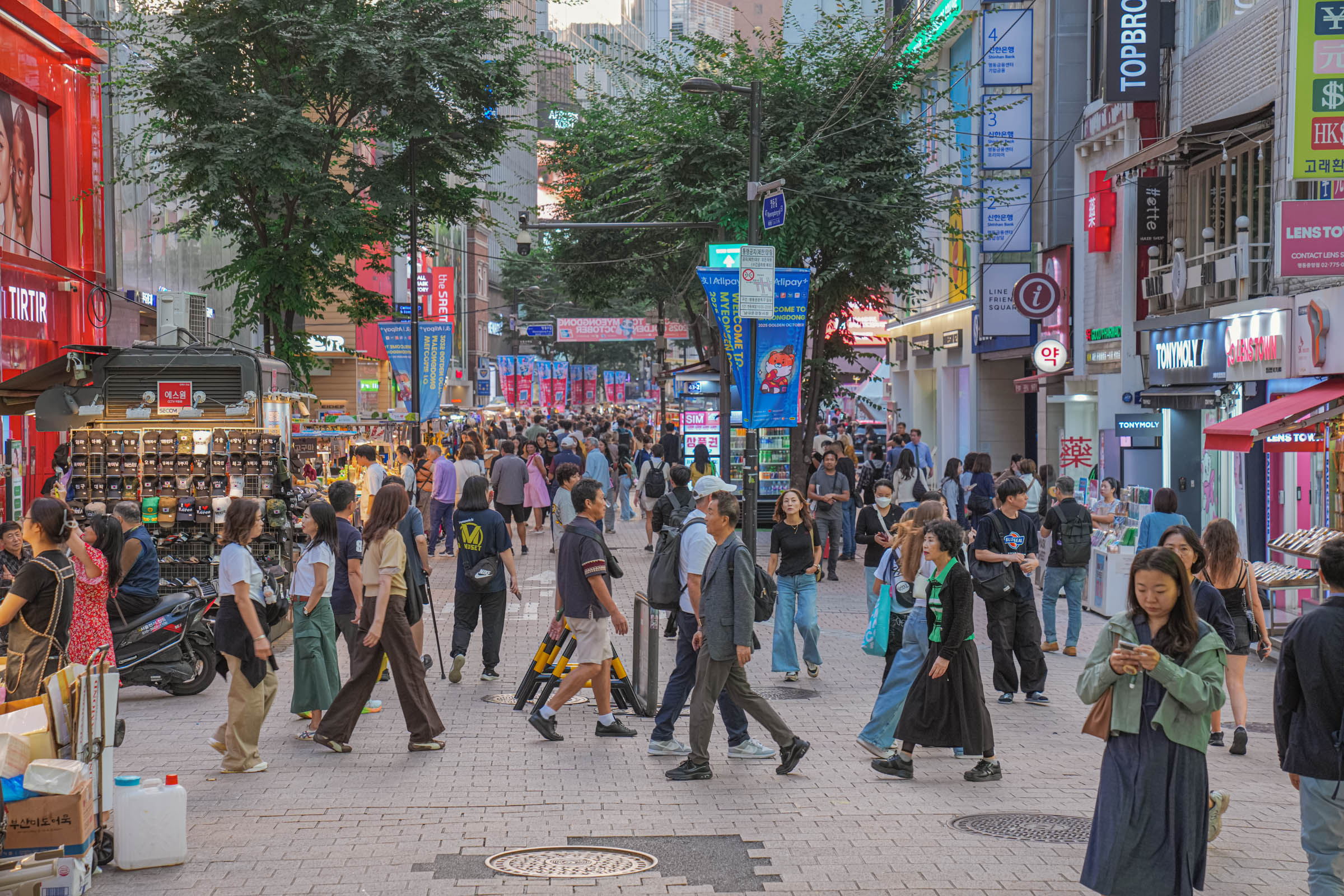
Sulwhasoo offers luxury products based on hanbang, traditional Korean medicine. Meanwhile, brands like COSRX and Some By Mi offer effective care at affordable prices. What fascinated me most was how affordable these products are. Face masks cost very little, and good creams and serums often cost far less than in Europe. During my stay, I bought a number of products for myself and as gifts for my loved ones, and the quality is truly exceptional.
N SEOUL TOWER: A VIEW OVER THE WHOLE CITY
N Seoul Tower, also known as Namsan Tower, is one of the most recognizable symbols of the city. The tower is 236.7 meters tall and stands on Namsan Mountain, which rises about 243 meters. As a result, its top reaches 479.7 meters above sea level. It opened to the public in 1980, and in 2005 it got its current name, with the “N” standing for new, Namsan and nature.
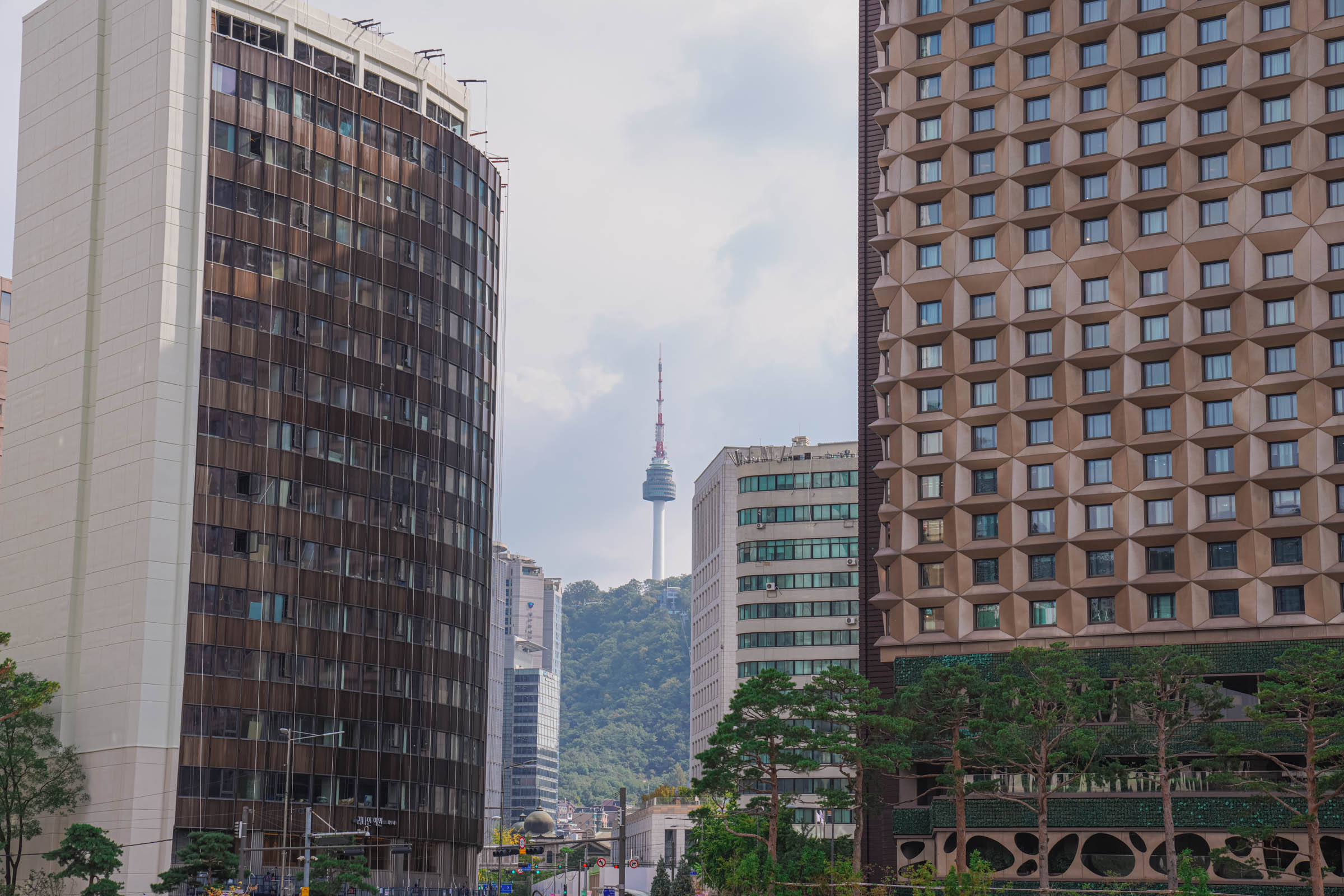
I recommend taking the Namsan cable car about an hour before sunset. That way, you can watch the city change from daylight to the glitter of millions of lights. Around the base of the tower, couples attach love padlocks to the fences as a symbol of eternal love. Namsan Park, on the slopes of the mountain, offers walking trails and free admission. From almost every corner, you will see a new view of the city.
SEOUL AS A GASTRONOMIC JOURNEY
Korean cuisine gave me one of the most exciting gastronomic experiences of my life. Kimchi, fermented vegetables with spices, comes with almost every meal and is considered the national dish. Besides the classic cabbage version, you will find kimchi made with radish and scallions. Bibimbap, which literally means “mixed rice,” combines warm rice with vegetables, meat, egg and spicy gochujang paste. Be sure to stir it well before you eat, because it is part of the ritual!
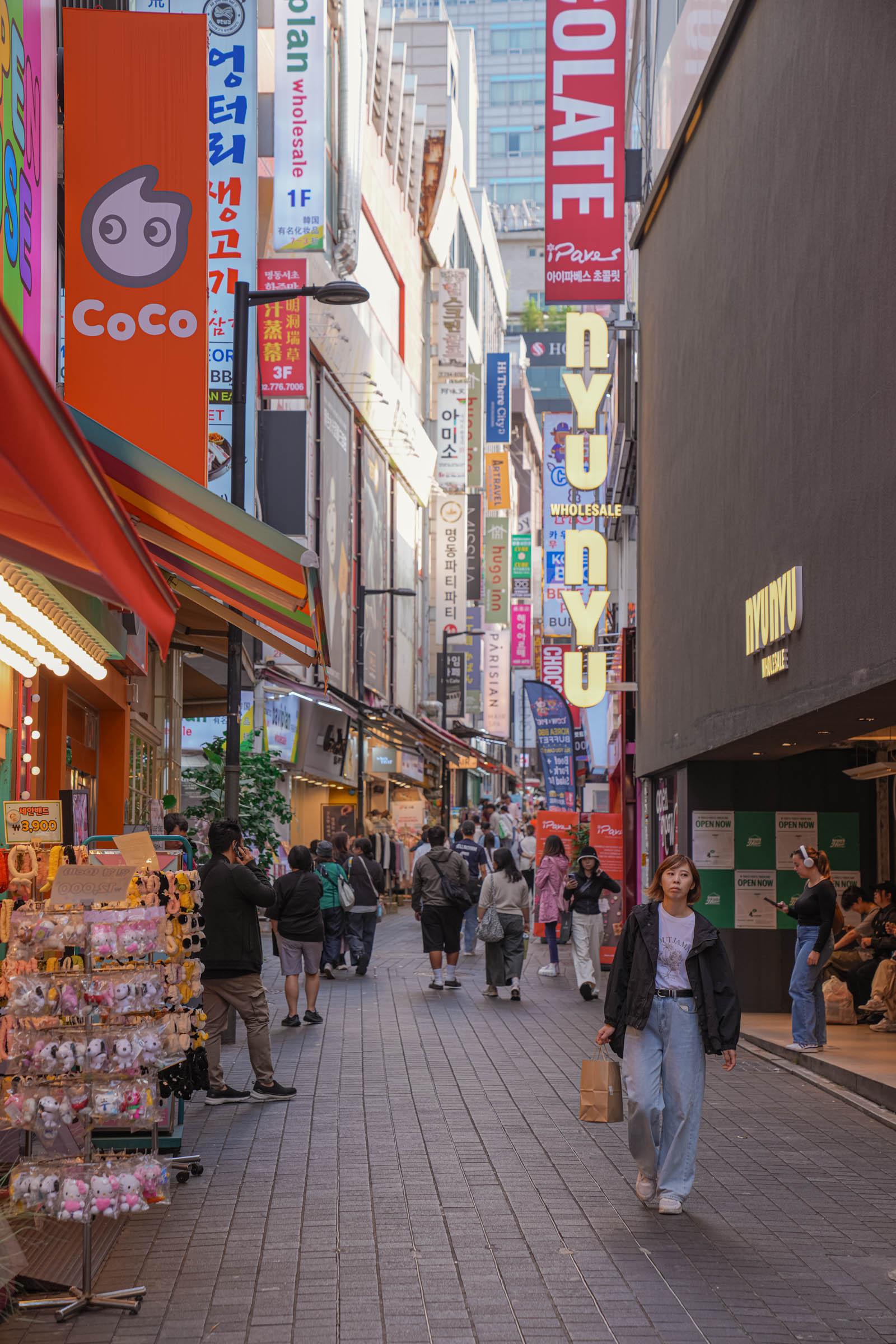
Korean barbecue is a must. Bulgogi, thin slices of marinated beef, and samgyeopsal, pork belly grilled at your table, form the heart of this culture. Every meal also comes with banchan, small side dishes that are usually free and refilled on request. In summer, try naengmyeon, cold noodles that originally come from Pyongyang.
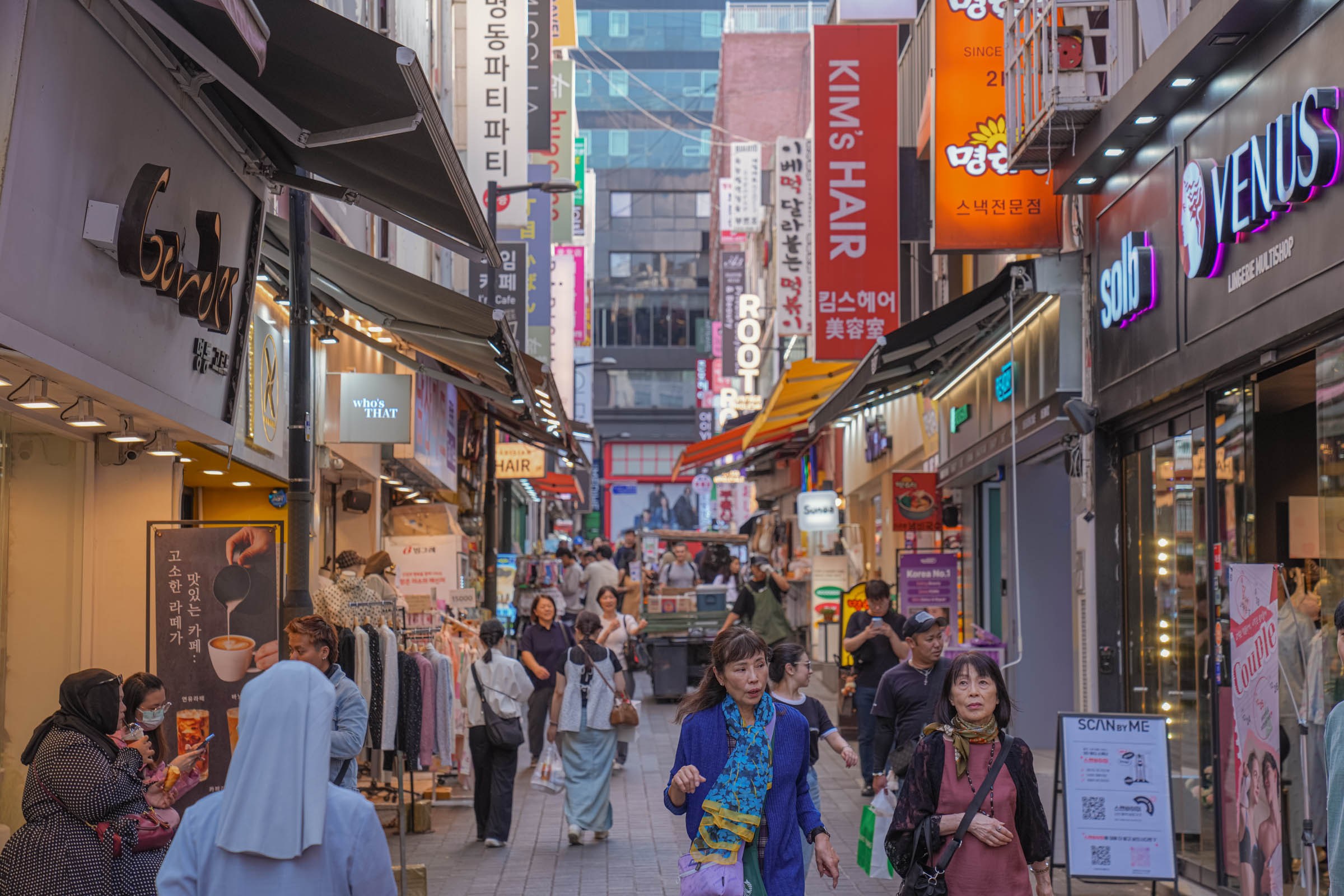
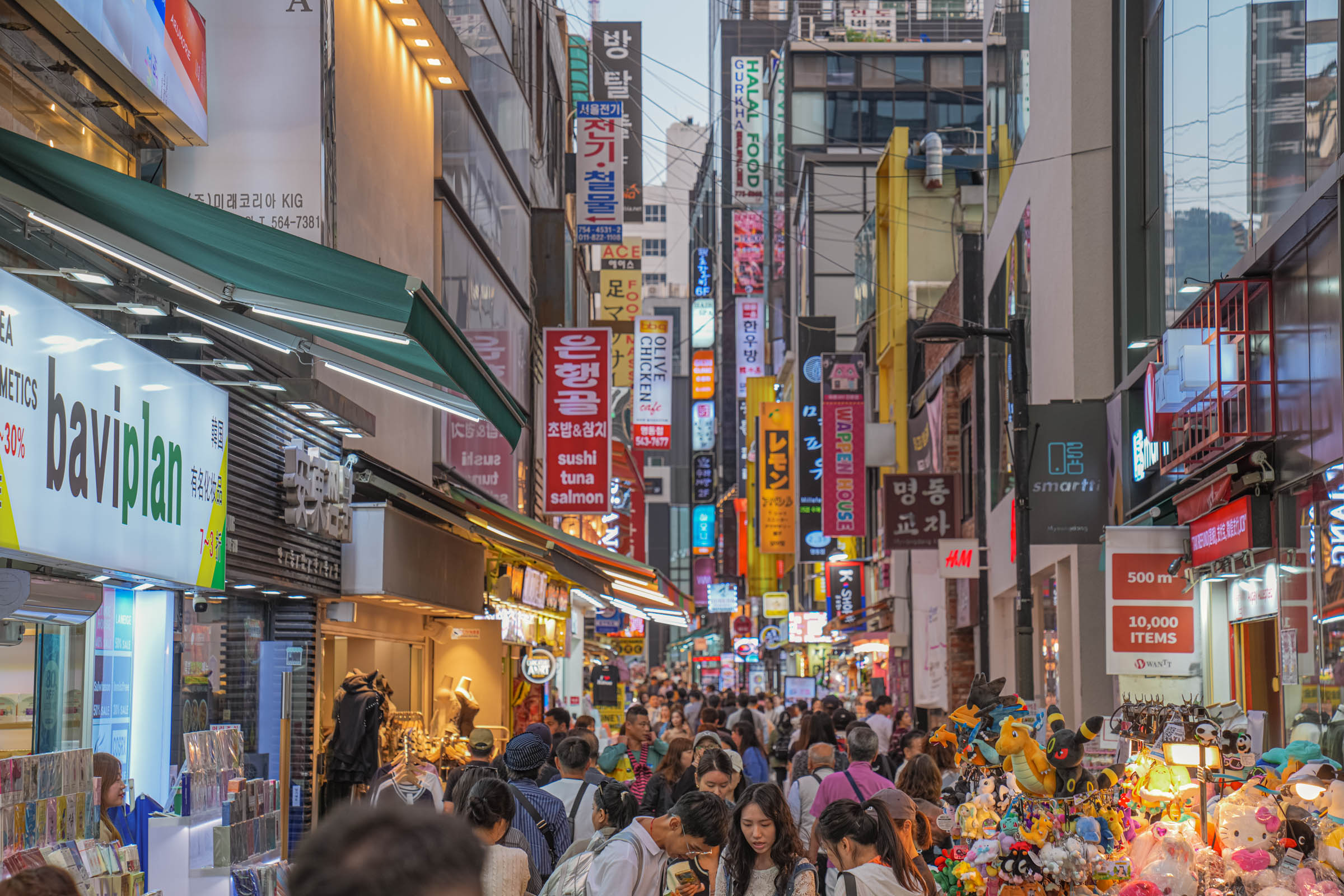
In the evening, the streets of Myeongdong turn into an open-air food court. Stalls sell everything from grilled seafood to colorful desserts, and the crowds are part of the experience.
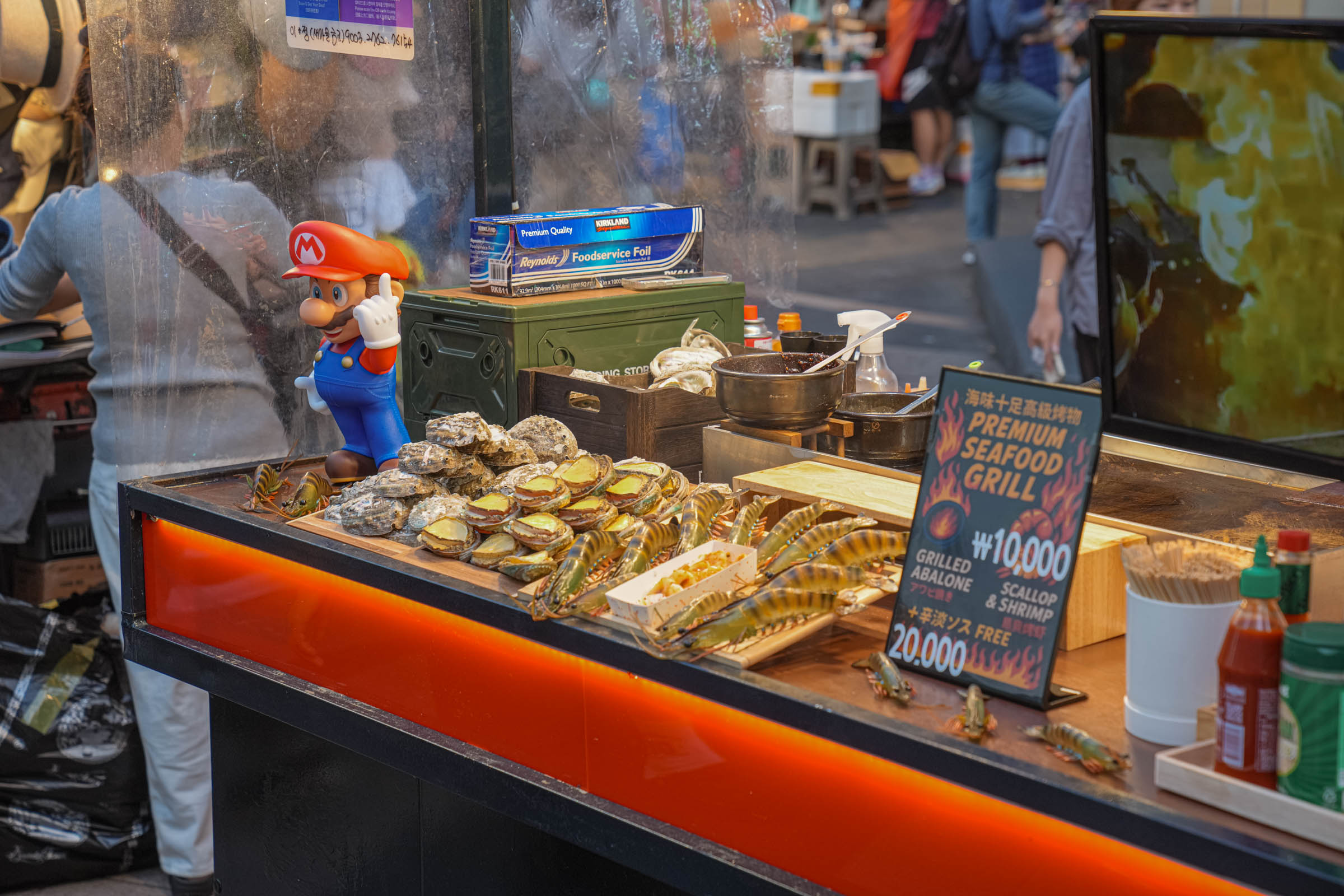
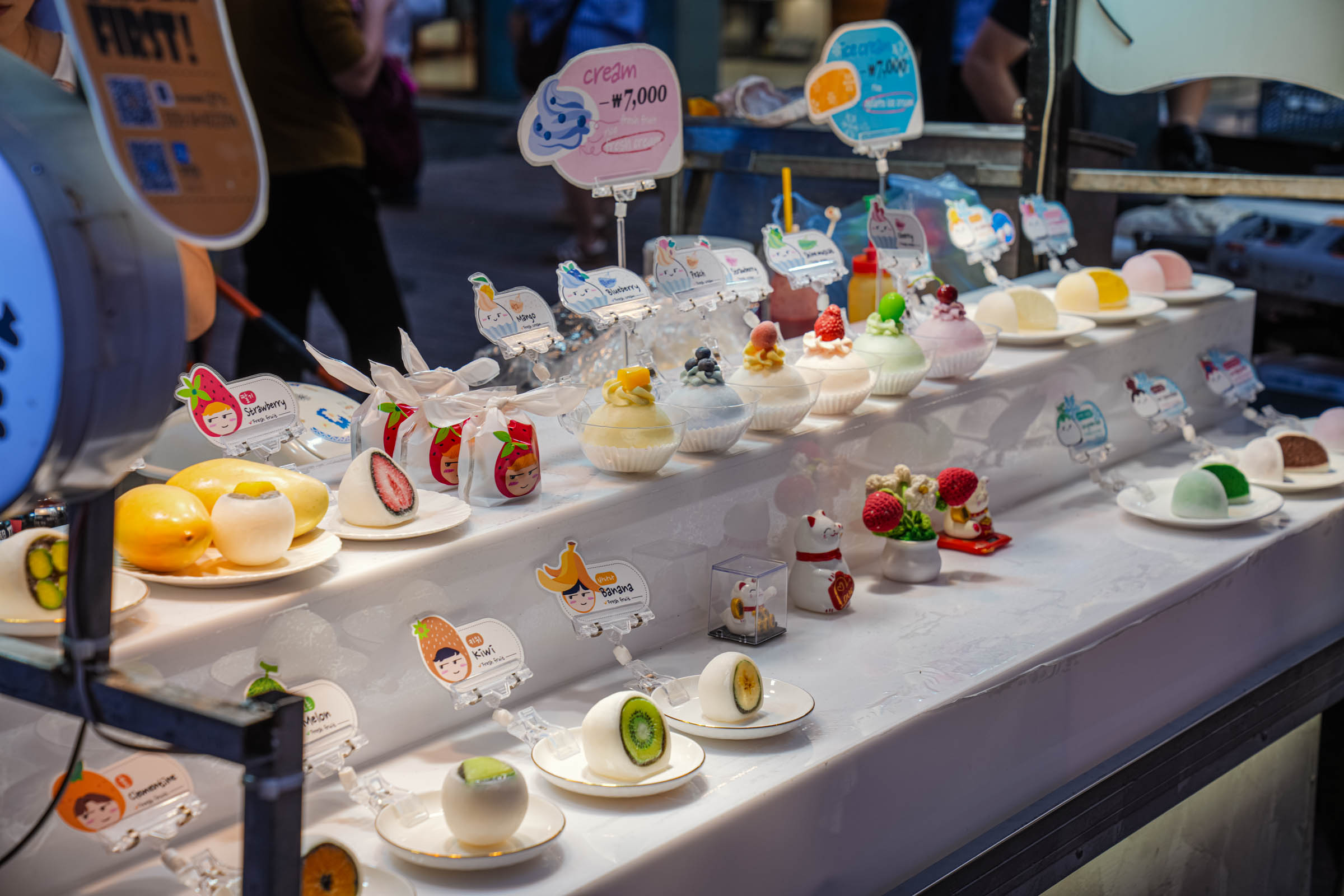
GWANGJANG AND NAMDAEMUN MARKETS
For an authentic market experience, head to Gwangjang Market. It opened in 1905 as the first permanent market in Korea, open every day of the week. Today, it is famous for bindaetteok, crispy mung bean pancakes, and for mayak gimbap, small rice rolls that were first made here.
Namdaemun Market, next to the old southern gate of the city, dates back to 1414. It is also the largest traditional market in Korea. Gimbap, rice with various fillings rolled in seaweed, is the perfect snack for a walk through its alleys.
GANGNAM: SEOUL SOUTH OF THE RIVER
Gangnam literally means “south of the river.” The district became world-famous in 2012 thanks to Psy’s song “Gangnam Style,” the first YouTube video to reach one billion views. However, this part of the city offers much more than a pop culture phenomenon. Gangnam is a business hub of the capital, with skyscrapers, luxury boutiques and excellent restaurants.
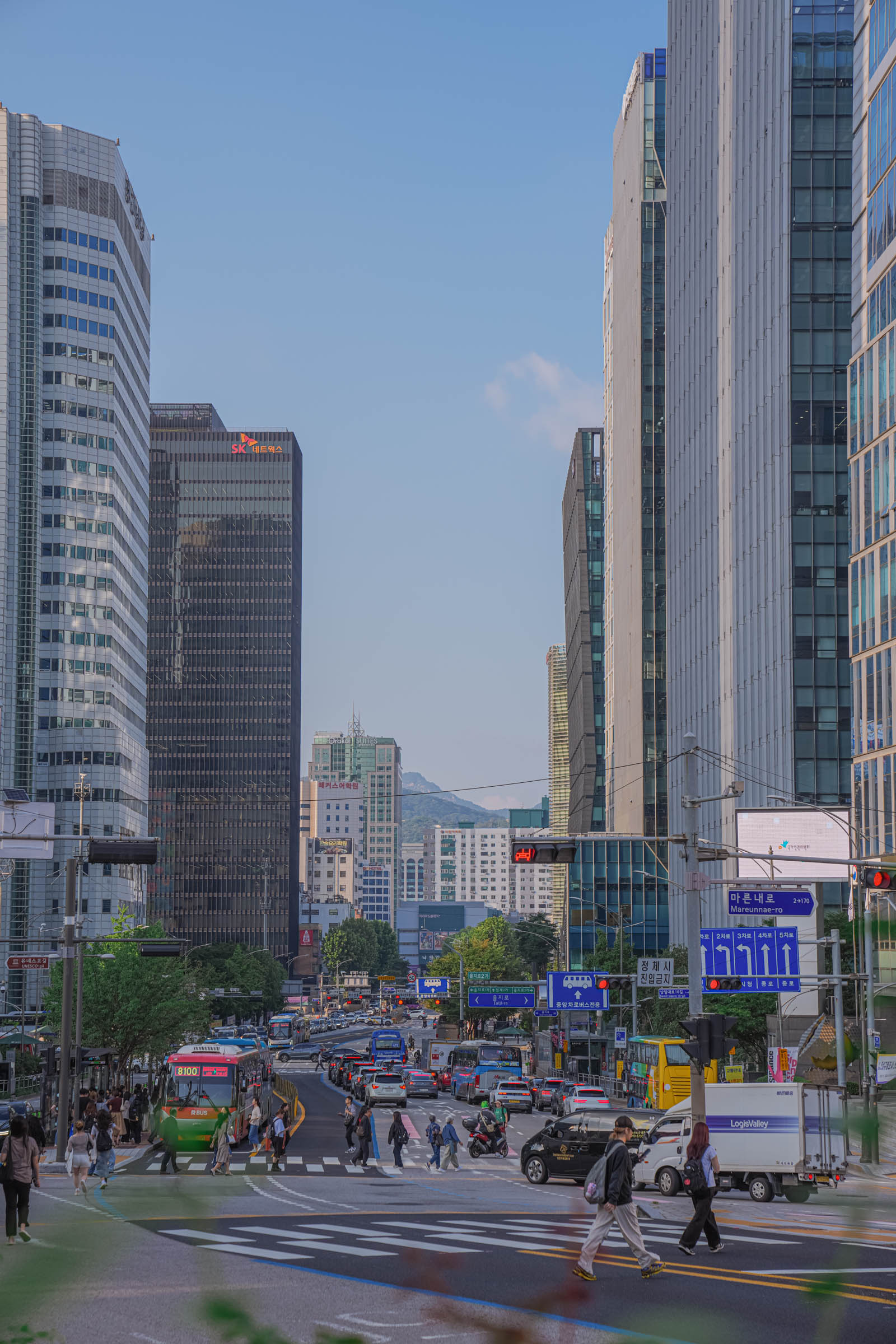
Teheran-ro, a hub of technology companies, is named after Tehran. In 1977, the mayors of the two capitals agreed to name a street in each city after the other. At its eastern end, the COEX complex hides the Starfield Library, which opened in 2017. Its bookshelves rise 13 meters and hold tens of thousands of books.
Further east, in Songpa, the Lotte World Tower rises 555 meters over 123 floors. It is the tallest building in Korea, and its Seoul Sky observatory has a glass floor high above the city. At its foot, the Lotte World theme park is a paradise for fun lovers, mostly under one roof.
AESTHETIC MEDICINE IN SEOUL
South Korea is also one of the world’s leading destinations for aesthetic medicine. According to the Ministry of Health and Welfare, 2.01 million foreign patients from 201 countries received treatment in Korea in 2025. That was nearly double the 1.17 million of 2024. More than 62 percent of them visited dermatology clinics, while 11.2 percent underwent plastic surgery. In 2025, about 1.76 million of them received treatment in Seoul.
These numbers show that skin treatments, rather than surgery, now drive most of this travel. Of course, every procedure carries risks, so research the clinic and the doctor carefully before you decide on any treatment.
GETTING AROUND SEOUL
The subway covers practically every part of the city, and stations have signs in English. Since June 28, 2025, the basic fare is 1,550 won with a transport card, or 1,650 won for a single-use ticket. Buy a T-money card at a convenience store or metro station, and you can use it on the subway, buses and taxis.
For navigation, Naver Map and KakaoMap are indispensable, because Google Maps works only partly in Korea. The metro is extremely clean and safe, and during my whole stay I did not experience a single unpleasant incident. Still, avoid the morning and evening rush hours, when trains get very crowded. City buses are a good alternative, and the same card works on them too.
JW MARRIOTT HOTEL SEOUL: MY LUXURY SANCTUARY
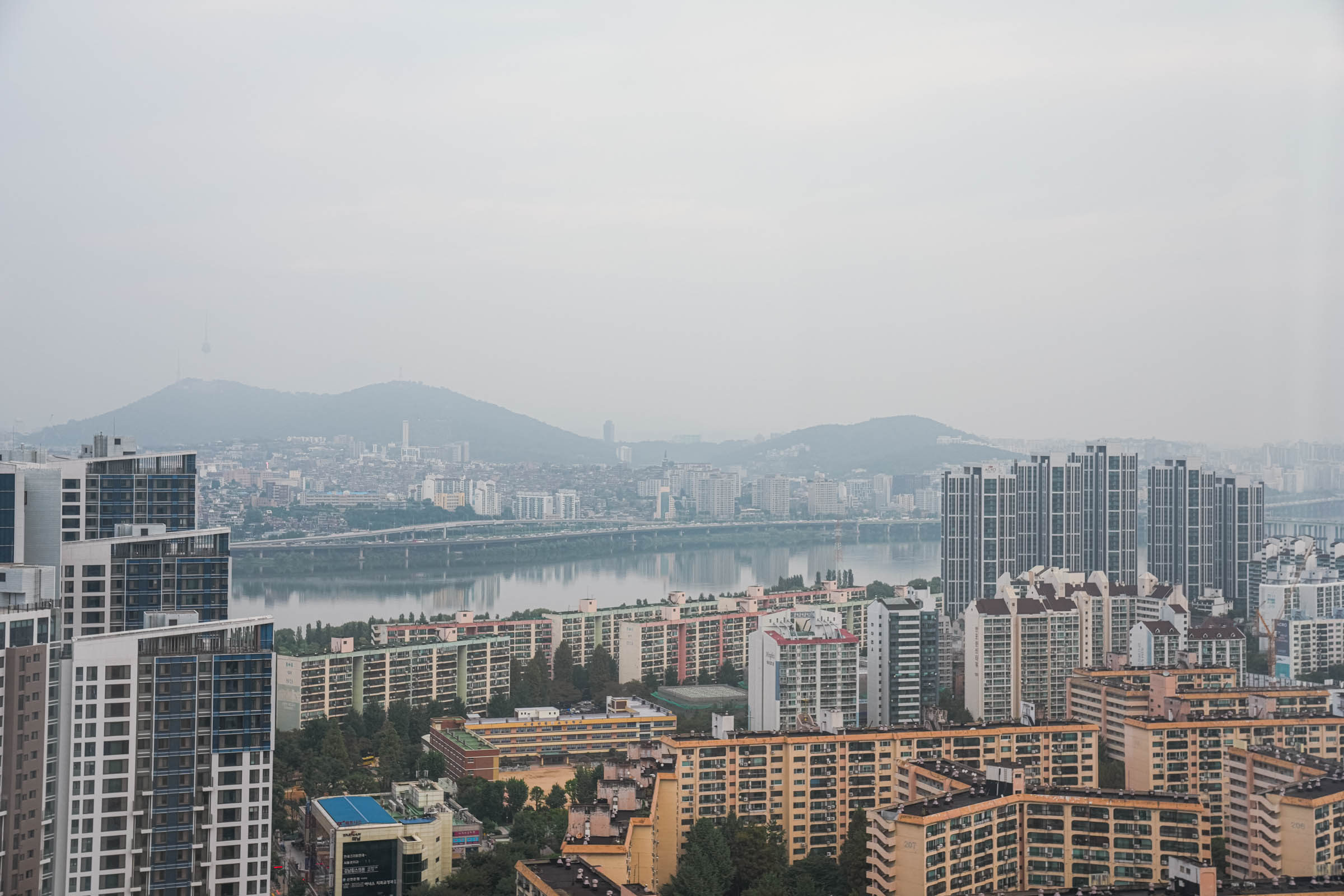
My stay in Seoul was enriched by an exceptional experience at JW Marriott Hotel Seoul. When it opened in 2000, it was Marriott International’s first luxury property in Korea. In 2018, it reopened after an eight-month renovation that combined modern aesthetics with timeless elegance. Today, the hotel offers 376 rooms, including 32 suites and two penthouses, with views of the city and the Han River.
The location is perfect for exploring. The hotel sits south of the river, in Seocho-gu in the Gangnam area. It connects directly to the Shinsegae department store and to three metro lines at Express Bus Terminal Station. Two bus terminals are right next door as well, so exploring the city and the rest of the country becomes incredibly easy.
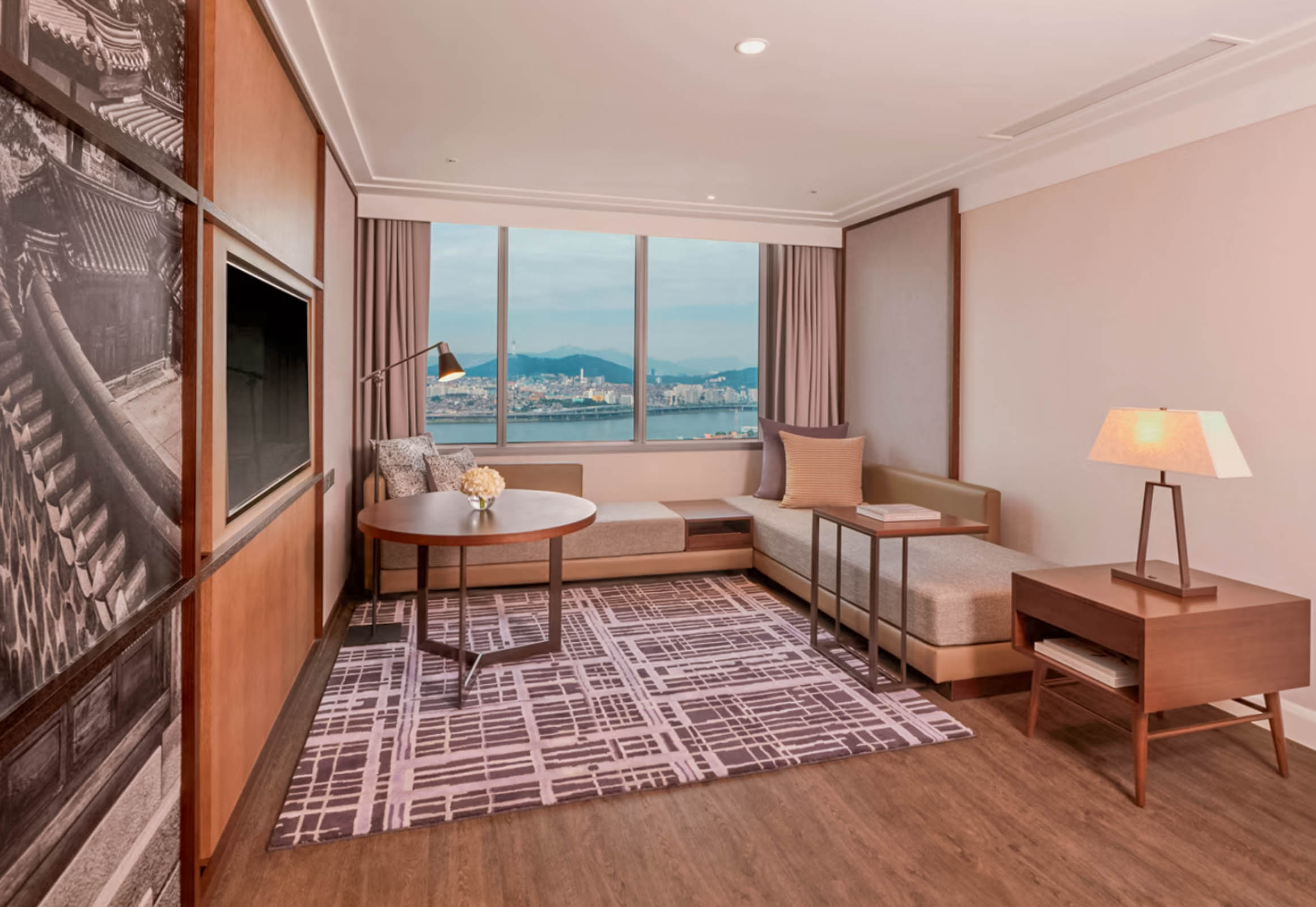
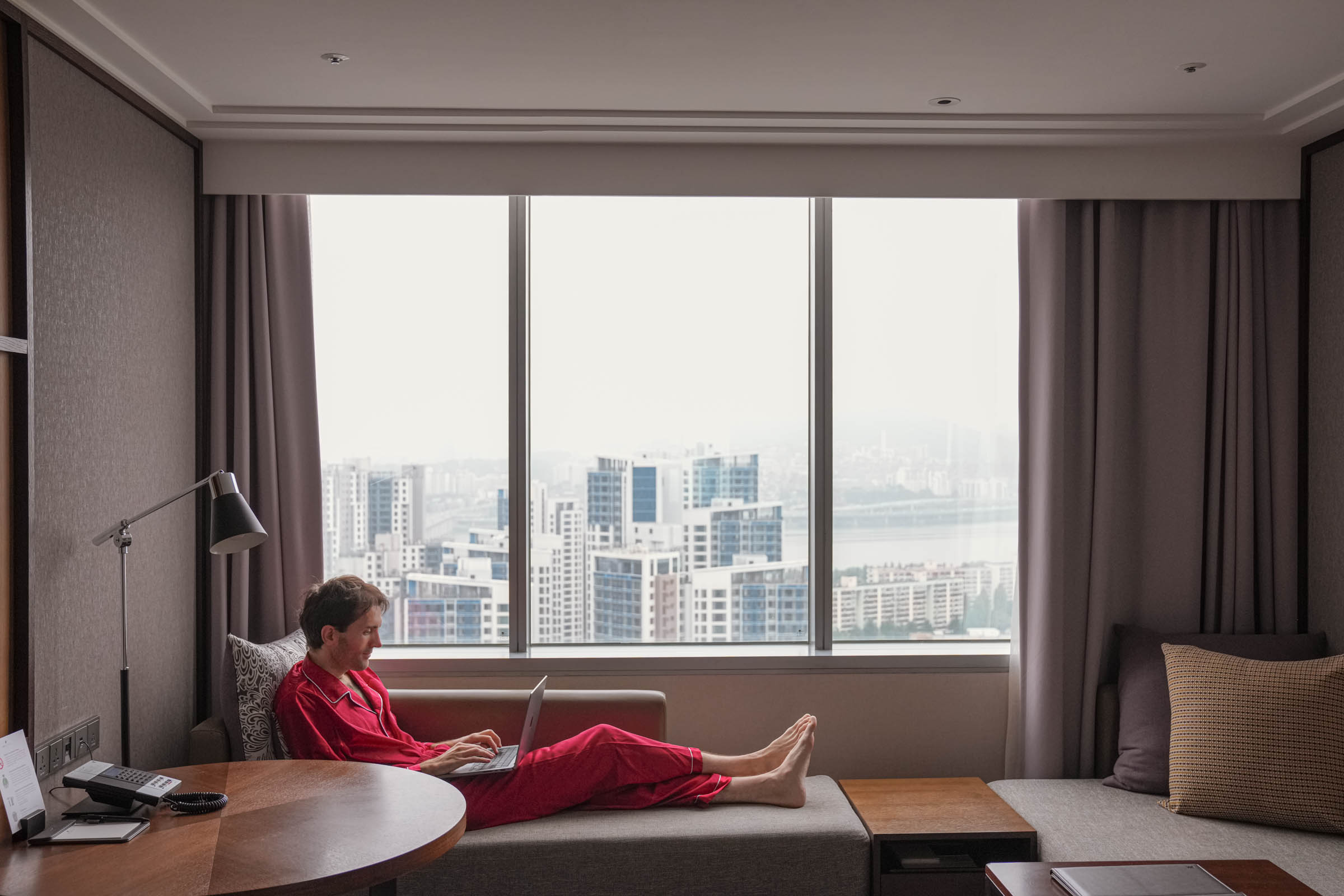
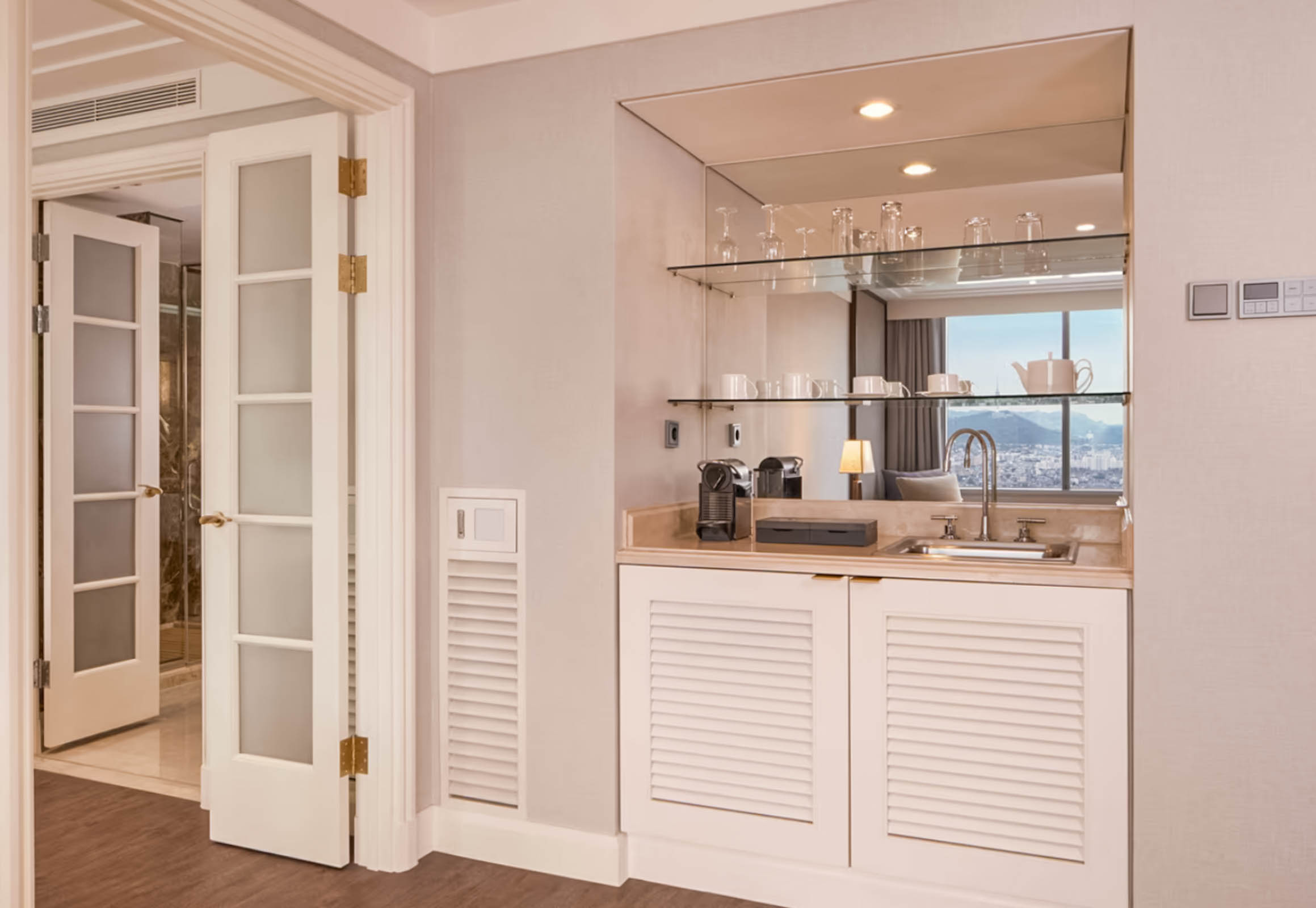
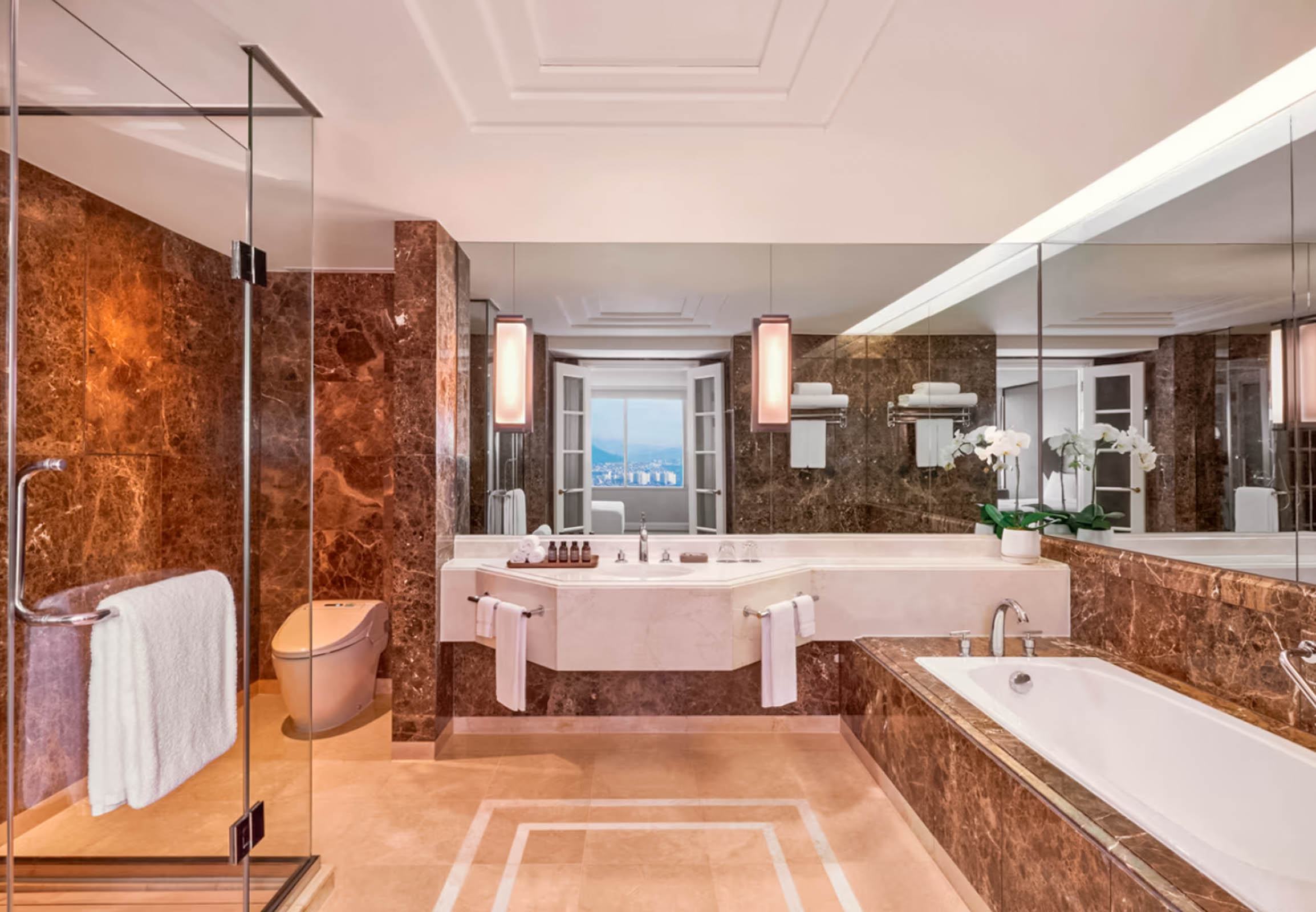
During my stay, I enjoyed their One Bedroom Suite, which truly exceeded all my expectations. The spacious interior, with dark gray tones and wooden accents, exudes sophistication, while polished marble floors create a striking first impression. By the window, a comfortable chair turns into a chaise longue, ideal for enjoying the view with a morning coffee or an evening glass of wine. Meanwhile, the elegant dining nook is perfect for in-room dining or for work on a laptop.
THE EXECUTIVE LOUNGE AND WARM HOSPITALITY
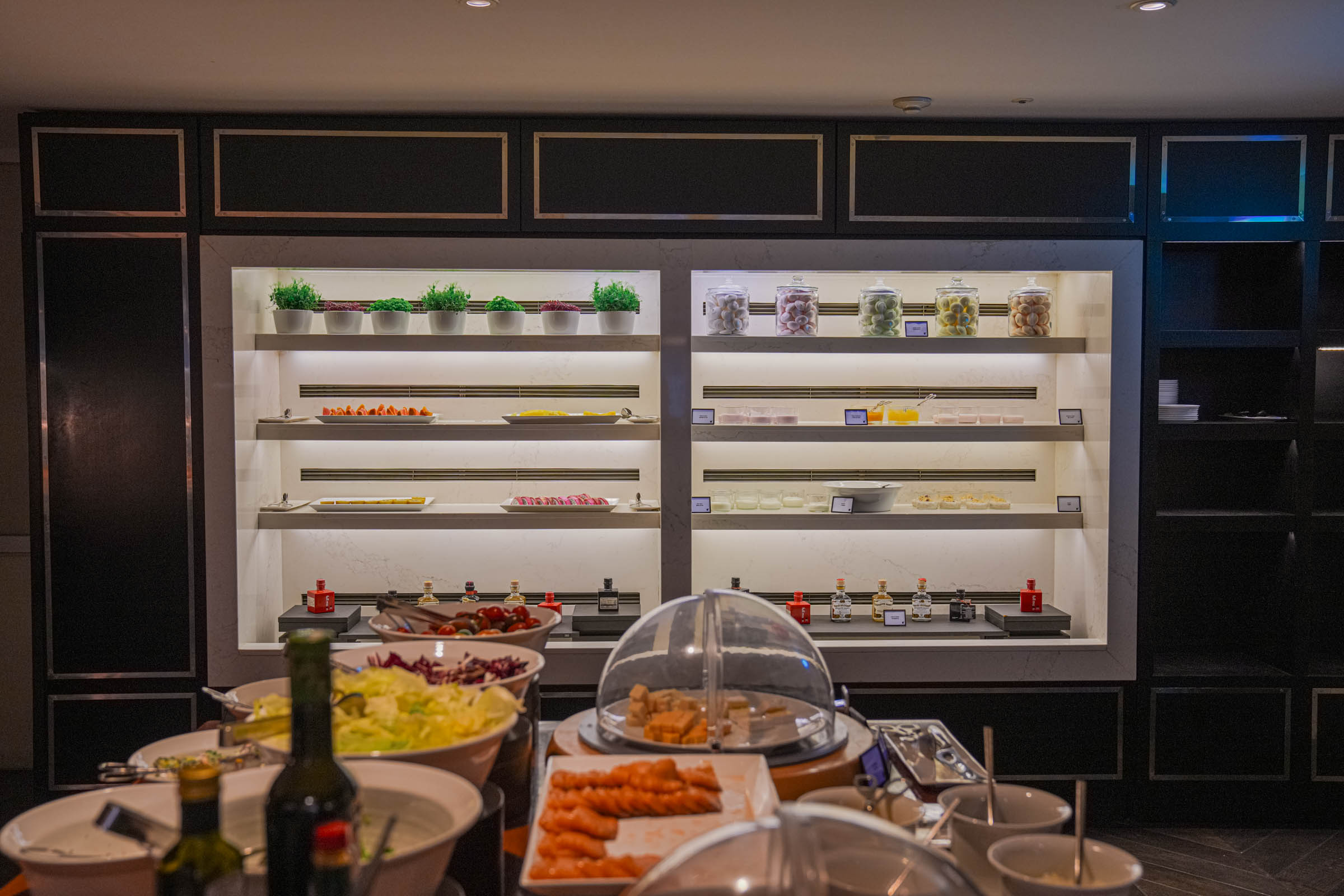
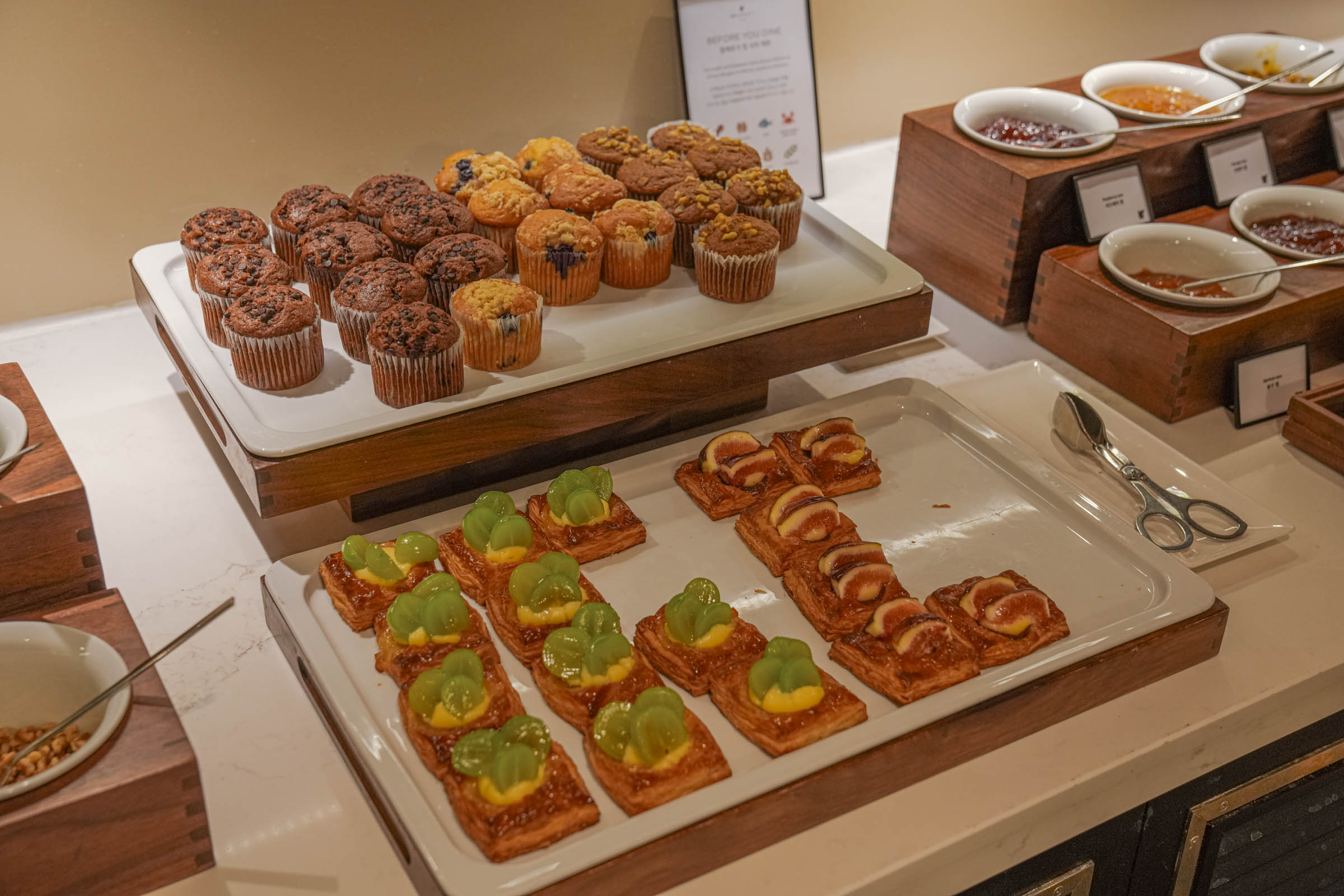
I especially appreciated access to the Executive Lounge on the ninth floor. In the morning, it served an impeccable breakfast with healthy options, and in the evening there were snacks with cocktails. In addition, the Marquis Fitness Club, with its indoor pool, is one of the highlights of the hotel.
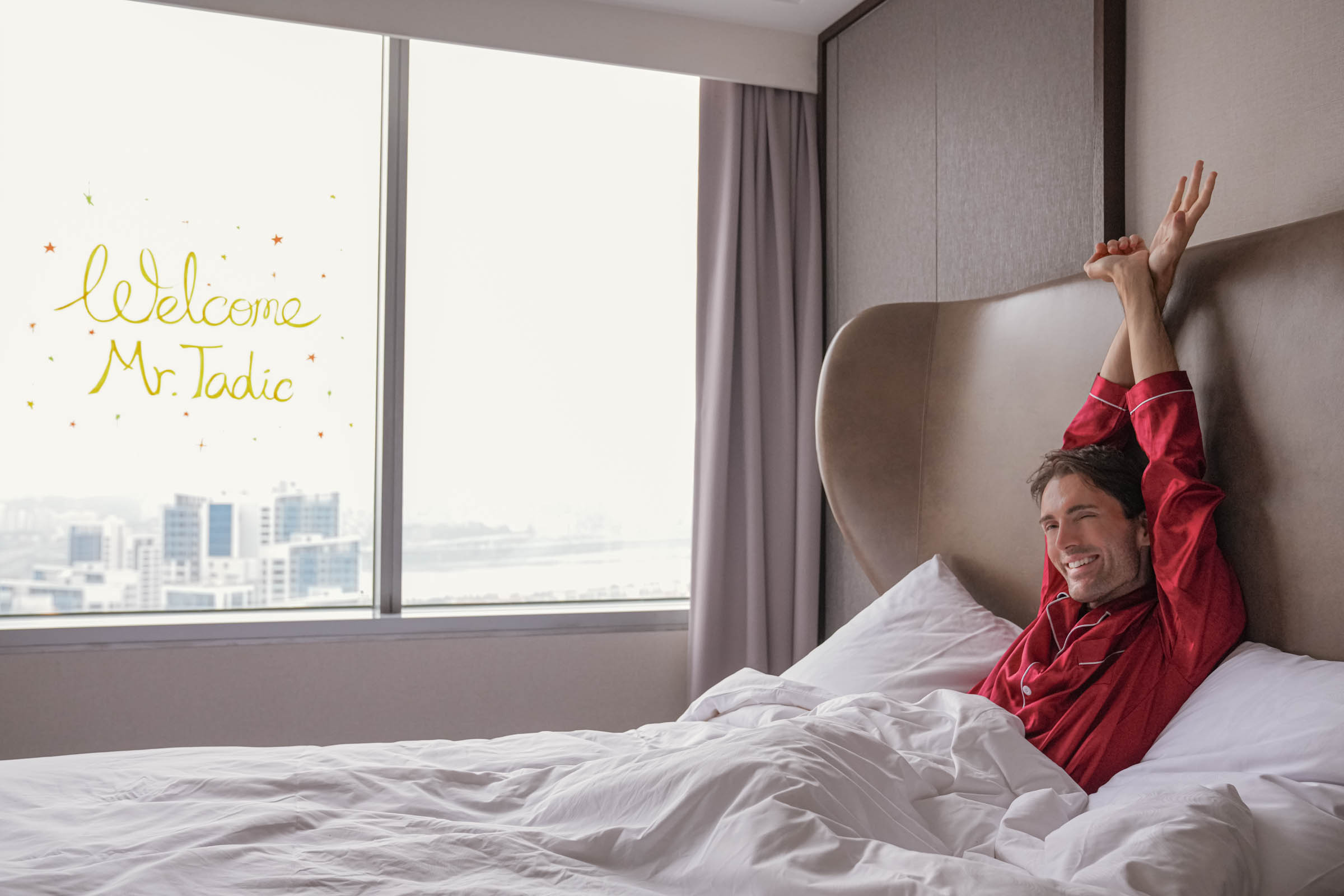
The staff were extremely friendly and professional, always ready to help with any request. I am grateful to the JW Marriott Seoul team for the unforgettable hospitality that made my stay in this fascinating city even more special.
MYEONGDONG CATHEDRAL: A GOTHIC LANDMARK
In the middle of the shopping streets of Myeongdong, a long flight of steps leads up to Myeongdong Cathedral. Built of red and gray brick between 1892 and 1898, it was the first brick church in Korea in the Gothic style. It stands on the site where Korean Catholics first gathered in 1784, and today it is the seat of the Archbishop of Seoul. Since 1977, it has also been a Historic Site of South Korea.
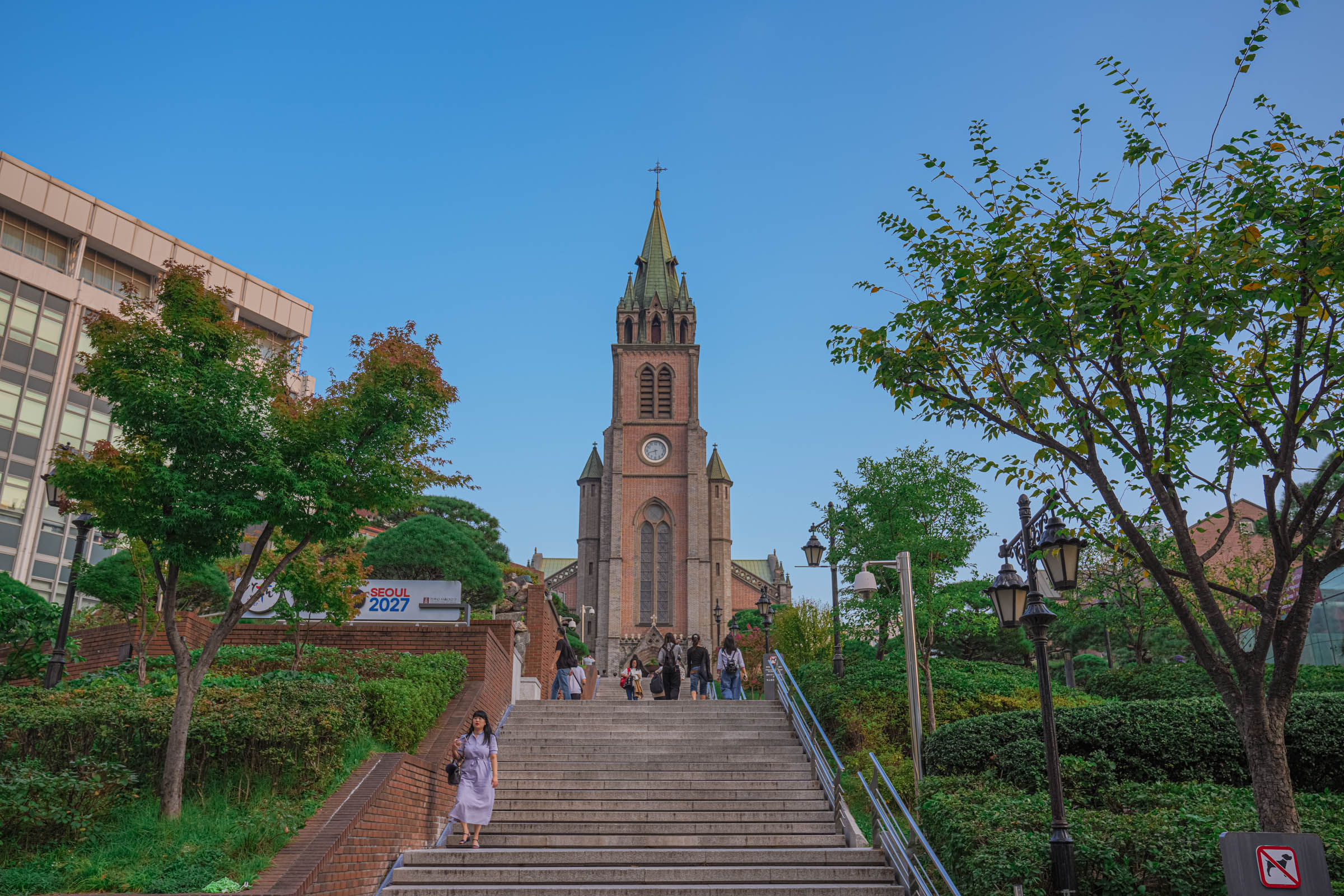
Inside, the vaulted ceiling and stained-glass windows create a quiet, almost meditative atmosphere, only a few steps from the busiest streets of the city.

SEOUL: PRACTICAL TIPS FOR TRAVELERS
For the best experience, I recommend a stay of five to seven days. That gives you time for the key sights, the food, the nightlife and perhaps a day trip to the demilitarized zone on the border with North Korea. We did not have time for the DMZ, because our travel program changed. Bukhansan National Park offers spectacular hiking trails and views of the city from above. In my opinion, spring and autumn offer the most pleasant conditions for sightseeing.
Cheonggyecheon, a stream that runs through the city center, is an oasis of calm. For decades, concrete and an elevated highway covered it, until the city removed them and restored the stream in 2005. I recommend an evening walk along its banks. If you love gardens, Seoul Botanic Park in Magok, opened in 2019, shows plants from 12 tropical and Mediterranean cities.
Card payments are widely accepted, but I recommend having some cash for small shops and market stalls. Korean etiquette includes removing your shoes in traditional restaurants and homes and speaking quietly on public transport. Also, people give and receive things with both hands as a sign of respect. Koreans are very hospitable and will help you even if you do not speak the language. In addition, translation apps such as Papago are a great help.
K-POP, MUSEUMS AND CULTURAL LIFE
It is impossible to talk about Seoul without K-pop, which has conquered the world. Hongdae is the epicenter of youth culture, with independent musicians, street performances and clubs open until the early morning. By the Cheonggyecheon stream, HiKR Ground, a K-culture center of the Korea Tourism Organization, opened in 2022. There, admission is free, and you can even dance and record your own K-pop video.
Korean culture goes far beyond music. The traditional teahouses of Insadong offer a peaceful, meditative experience, while Jogyesa Temple gives insight into the Buddhist side of Korean society. The National Museum of Korea, in its Yongsan home since 2005, is among the largest museums in the world by floor space. For art lovers, the Leeum Samsung Museum of Art presents Korean and international works. Korean fashion has a strong voice too, so read my story about WOOYOUNGMI and its urban, edgy elegance.
WHY SHOULD YOU VISIT SEOUL?
Seoul successfully balances respect for tradition with a love of innovation. From magnificent palaces that bear witness to a glorious past, to bustling markets full of tastes and smells, to futuristic skyscrapers and luxury malls, every corner of this city tells its own story. I felt Korean hospitality, known as jeong, at every step. It was there in small signs of kindness in the subway and in the exceptional care of a luxury hotel.
Don’t rush. Rent a hanbok, join a guided tour and talk to the locals. This city cannot be understood in passing; it has to be felt, lived and enjoyed in the moment.
SAYING GOODBYE TO SEOUL
On this occasion, I would once again like to thank UN Tourism, whose support made this unforgettable journey through Asia possible. Their work for sustainable and responsible tourism helps preserve the cultural heritage of destinations like Seoul for future generations. My heartfelt thanks also go to the JW Marriott Seoul team for their impeccable hospitality and attention. This city has left a deep mark on me, and I will surely return to continue exploring its endless wonders.
Have you already visited Seoul, or are you planning your first walk through its royal palaces?
Feel free to leave your impressions, comments or questions below, or contact me by email and on social networks. All information is on the CONTACT page.
With love from Seoul,
Mr.M
This post is sponsored by United Nations World Tourism Organization (UN Tourism) and JW Marriott Seoul Hotel, as well as other local partners who selflessly supported this project. This post is my personal and honest review of the destination experience.
Hello Marko, what an incredibly comprehensive guide to Seoul! I visited the city back in 2022 and your post brought back so many wonderful memories. The Gyeonghoeru Pavilion floating over the artificial lake on those 48 stone pillars was absolutely the most photogenic spot I found during my entire trip. Your tip about arriving 20 minutes early for the changing of the guard ceremony is spot on, I almost missed it because I underestimated how crowded it gets. This guide would have been so helpful back then!
Lieber Marko, vielen Dank für diesen ausführlichen Reisebericht! Ich plane eine Reise nach Seoul im nächsten Frühjahr und dein Beitrag ist unglaublich hilfreich. Die Information, dass man im Hanbok kostenlosen Eintritt zu den Palästen bekommt, wusste ich nicht. Du erwähnst, dass man Hanbok für 10.000-20.000 Won mieten kann, aber kannst du einen bestimmten Laden in der Nähe von Gyeongbokgung empfehlen? Ich möchte sicherstellen, dass ich einen seriösen Anbieter finde.
Cher Marko, quel article magnifique sur Séoul! J’ai eu la chance de visiter la Corée du Sud il y a trois ans et je dois dire que le Jardin Secret de Changdeokgung était l’un des endroits les plus paisibles que j’aie jamais visités. Les arbres de plus de 300 ans et les pavillons parfaitement espacés créent vraiment une atmosphère méditative. Ta remarque sur le fait que seulement 100 billets sont vendus par créneau horaire explique pourquoi j’ai dû attendre le lendemain pour obtenir le mien!
Hola Marko! Excelente guía sobre Seúl. Estuve en Corea del Sur hace dos años y me encantó la combinación de tradición y modernidad que describes. El metro de Seúl es realmente impresionante, con sus 23 líneas y 768 estaciones. Una pregunta: mencionas que Naver Maps funciona mejor que Google Maps en Corea, ¿está disponible en inglés o solo en coreano? Quiero estar preparado para mi próximo viaje.
Ciao Marko! Che articolo fantastico su Seoul! Ho visitato il Giappone due volte ma non sono mai stato in Corea del Sud, e il tuo post mi ha convinto che devo assolutamente andare. La storia del Palazzo Gyeongbokgung è affascinante, specialmente il fatto che più del 90% degli edifici furono distrutti durante l’occupazione giapponese e che il programma di ricostruzione continuerà fino al 2045. È incredibile come i coreani stiano preservando la loro eredità culturale.
This guide is absolutely fantastic, Marko! I was in Seoul last spring and visited the Seoul Botanic Garden you mentioned. The Glass Garden with its tropical and Mediterranean zones is truly stunning. I had no idea it only opened in May 2019, making it one of the newer attractions in the city. The bodhi tree and the staghorn ferns growing upside down in the artificial cave were highlights for me. Your photos capture the beauty of this place perfectly.
Hallo Marko! Ich war 2023 in Seoul und kann alles bestätigen, was du über die koreanische Küche schreibst. Bibimbap ist wirklich ein kulinarisches Erlebnis, besonders wenn man es in einem traditionellen Restaurant wie dem Jeonju Yuhalmeoni in Myeongdong probiert. Die Tatsache, dass dieses Restaurant seit vierzig Jahren authentisches Bibimbap nach Art der Joseon-Dynastie serviert, macht es zu einem Muss für jeden Feinschmecker. Danke für die tollen Empfehlungen!
Cher Marko, j’ai une question concernant les visites nocturnes du palais Gyeongbokgung. Tu mentionnes qu’elles ont lieu deux fois par an au printemps et en automne, avec seulement 3000 billets par jour. Comment peut-on réserver ces billets en tant qu’étranger? Tu dis que 300 billets sont réservés pour les étrangers et vendus au guichet le jour même, mais faut-il arriver très tôt pour les obtenir? Ce serait une expérience magique que je ne voudrais pas manquer.
Marko, your section on K-Beauty was incredibly informative. I had no idea that the Korean skincare tradition dates back over a thousand years to the Three Kingdoms period. The concept of “glass skin” has completely changed how I think about skincare. I visited Olive Young in Myeongdong during my trip to Tokyo with a side trip to Seoul, and the variety of products at such affordable prices was overwhelming. Do you have any specific product recommendations for men’s skincare?
Hola Marko! Tu artículo sobre Seúl es muy completo y útil. Visité Tokio y Osaka hace unos años, pero nunca he ido a Corea del Sur. Me interesa mucho la información sobre el Bukchon Hanok Village. Dices que está ubicado entre los palacios Gyeongbokgung y Changdeokgung, ¿cuánto tiempo recomiendas dedicar a explorar este barrio tradicional? También me gustaría saber si hay casas de té específicas que recomiendes para experimentar la cultura coreana de manera auténtica.
Bellissimo articolo, Marko! La sezione sul JW Marriott Seoul mi ha particolarmente interessato. Viaggio spesso per lavoro e cerco sempre hotel che combinino lusso e posizione strategica. Il fatto che l’hotel abbia connessioni dirette alla stazione della metropolitana e al centro commerciale Shinsegae lo rende perfetto per viaggiatori d’affari come me. La One Bedroom Suite che descrivi sembra incredibile, e l’accesso alla Executive Lounge è sempre un grande vantaggio.
Hey Marko, I visited Seoul in 2021 and your description of the Cheonggyecheon stream brought back wonderful memories. Walking along that revitalized waterway in the evening with all the art installations and lighting was one of the most peaceful experiences of my trip. It’s amazing to think it was once covered by an overpass and is now such a beautiful green path through the city center. Your tip about walking from Myeongdong to Gwangjang Market along the stream is perfect advice.
Hallo Marko! Eine Frage zum Geheimen Garten von Changdeokgung: Du erwähnst, dass die Tour etwa 90 Minuten dauert und man bequeme Schuhe tragen sollte. Wie anspruchsvoll ist das Gelände? Ich reise mit meinen älteren Eltern und möchte sicherstellen, dass sie die Tour genießen können. Gibt es viele Treppen oder steile Wege? Die Fotos von den über 300 Jahre alten Bäumen und den ruhigen Teichen sehen wunderschön aus und ich würde diese Erfahrung gerne mit ihnen teilen.
Quel article complet, Marko! J’ai visité Hong Kong et Shanghai l’année dernière, mais Séoul est définitivement sur ma liste maintenant. La section sur la chirurgie esthétique en Corée est fascinante, je ne savais pas que ce pays réalise environ 25% de toutes les interventions cosmétiques dans le monde. Le fait que le district d’Apgujeong à Gangnam soit connu comme “Plastic Surgery Street” avec des centaines de cliniques est vraiment surprenant. Merci pour ces informations détaillées!
Marko, excelente trabajo con esta guía de Seúl! Visité Japón hace tres años y siempre quise explorar Corea del Sur también. Tu descripción del contraste entre los palacios de 600 años y los rascacielos modernos de vidrio y acero captura perfectamente lo que hace única a esta ciudad. La información sobre el sistema de metro con código de colores para los autobuses es muy práctica. ¿Recomiendas comprar la tarjeta T-Money en el aeropuerto al llegar o es mejor esperar hasta llegar al centro de la ciudad?
This is hands down one of the most detailed Seoul guides I’ve ever read. I was there in 2022 and wish I had this information beforehand. The fact that Gyeongbokgung Palace covers more than 400,000 square meters and once had over 500 buildings is mind-blowing. I only spent about an hour there and clearly missed so much. Your recommendation to dedicate 2-3 hours is much more realistic. The Hyangwonjeong Pavilion on the island connected by the hexagonal wooden bridge was my favorite spot.
Lieber Marko, dein Beitrag über Seoul ist wunderbar! Ich war vor zwei Jahren in Südkorea und kann bestätigen, dass die koreanische Gastfreundschaft, das sogenannte “Jeong”, wirklich außergewöhnlich ist. Die Menschen waren so hilfsbereit, auch wenn wir die Sprache nicht sprachen. Dein Tipp, die Papago-App zu verwenden, ist goldwert! Die Information, dass Seoul die Bevölkerungsdichte von New York fast zweimal und von Rom sogar achtmal übertrifft, hat mich wirklich überrascht.
Salut Marko! Article très informatif sur Séoul. J’ai une question pratique: tu mentionnes que le meilleur moment pour visiter est au printemps ou en automne. J’envisage d’y aller fin septembre, est-ce que c’est une bonne période pour voir les couleurs d’automne dans le Jardin Secret de Changdeokgung? Tu décris les feuilles changeant en nuances de rouge, orange et jaune, et j’aimerais vraiment capturer cette beauté en photos. Aussi, est-ce que le temps est généralement agréable à cette période?
Ciao Marko! Grazie per questa guida così dettagliata su Seoul. Ho visitato Tokyo e Kyoto nel 2023, ma non sono mai stato in Corea. La sezione sulla gastronomia coreana mi ha fatto venire fame! Il fatto che ogni pasto sia accompagnato da banchan, quei piccoli piatti sempre gratuiti e ricaricabili, è fantastico. Una domanda: hai provato il naengmyeon, i noodles freddi che menzioni? Sono curioso di sapere come si confrontano con i noodles giapponesi che ho provato a Tokyo.
Marko, your guide has convinced me to add Seoul to my bucket list! I visited Japan twice but never considered South Korea until now. The information about the Blue House (Cheong Wa Dae) opening to the public in 2022 for the first time in 74 years is fascinating. As a history lover, visiting the former presidential residence would be an incredible experience. Your photos of the palaces are absolutely stunning and really capture the grandeur of Korean royal architecture.
Hallo Marko! Fantastischer Reisebericht! Ich habe eine Frage zum N Seoul Tower. Du empfiehlst, die Seilbahn etwa eine Stunde vor Sonnenuntergang zu nehmen. Wie lange dauert die Fahrt mit der Seilbahn nach oben, und muss man für die Aussichtsplattform separat bezahlen? Ich war vor einigen Jahren in Hongkong und habe den Victoria Peak bei Sonnenuntergang besucht, was atemberaubend war. Es klingt so, als ob der N Seoul Tower ein ähnliches Erlebnis bieten könnte.
Cher Marko, merci pour ce guide extraordinaire! J’ai visité Pékin et Shanghai il y a quelques années, mais Séoul semble offrir une expérience très différente. La partie sur le marché de Gwangjang m’a particulièrement intéressée. Tu mentionnes qu’on peut y essayer des bindaetteok et des tteokbokki, mais le marché est-il facile à naviguer pour quelqu’un qui ne parle pas coréen? Y a-t-il des stands que tu recommandes particulièrement pour une première expérience de street food coréenne?
Marko, che guida completa su Seoul! La storia del Palazzo Gyeongbokgung è davvero toccante, specialmente il fatto che sia stato bruciato durante l’invasione giapponese nel 1592 e sia rimasto in rovina per quasi 270 anni prima di essere ricostruito. Il programma di ricostruzione che continuerà fino al 2045 dimostra l’impegno della Corea nel preservare la propria eredità culturale. Le tue foto catturano magnificamente il contrasto tra antico e moderno che definisce Seoul.
This guide is absolutely invaluable, Marko! I’m planning a trip to Asia next year and was torn between Japan and South Korea. Your detailed information about Seoul has helped me decide to include both! The fact that Seoul’s population density is almost twice that of New York really puts the scale of this city into perspective. I love your tip about visiting the palaces early in the morning or later in the afternoon to avoid crowds. The combined palace ticket for 10,000 won valid for 3 months sounds like great value.
Hola Marko! Muchas gracias por esta guía tan detallada de Seúl. Visité Japón en 2022 y Corea del Sur está definitivamente en mi lista para el próximo viaje. Me encanta la información sobre el Jardín Botánico de Seúl con sus más de 3,000 tipos de plantas de 12 ciudades del mundo. La sección sobre K-pop y la cultura juvenil en el distrito de Hongdae también suena fascinante. Tu consejo de dedicar entre cinco y siete días para explorar la ciudad correctamente es muy útil para planificar el viaje.<