
My dear travellers and lovers of unusual journeys, welcome to the new series of travelogues on the Mr.M blog. There are cities that you visit once and forget as soon as the plane lands on your next destination. And then there are places like Kyoto, cities that change you forever, that get under your skin and stay there as a silent reminder that somewhere in this world beauty still has its sanctuary. Kyoto is not just a city. Kyoto is a time capsule, an open-air museum, a temple handed over to modern hands that preserve it instead of destroying it.
Before starting today’s travelogue about Kyoto, I want to express my special thanks to the United Nations World Tourism Organization – UN Tourism for supporting and promoting quality tourism around the world. Their dedication to connecting cultures and destinations is an inspiration to all of us who believe that travel enriches the soul.
When I first set foot on the streets of this incredible city, I felt something hard to describe, as if time here decided to flow more slowly, to respect what was before us. Kyoto was the capital of Japan for 1074 years, from 794 to 1868, and that millennium of rule left an indelible mark that can be felt at every step, in every temple, in every cup of ceremonially prepared tea.

KYOTO: HISTORY THAT BREATHES
To truly understand Kyoto, you must know its story. The city was founded in 794 under the name Heian-kyo, which means “capital of peace and tranquility”. Emperor Kanmu made the decision to move the capital from Nara to escape the growing influence of the Buddhist clergy on state affairs. The new capital was modeled after Chang’an, the then capital of China’s Tang Dynasty with a network of streets intersecting at right angles and a wide central boulevard, Suzaku-oji, as much as 84 meters wide.
During the Heian period (794-1185), Kyoto experienced its first golden age. This was an age of refined court culture, elegant literature and art. It was during this period that “The Tale of Genji” was written, a work by Mrs. Murasaki Shikibu, which is considered the first novel in the history of world literature. Imagine, while Europe was still in the early Middle Ages, a Japanese court lady was writing a psychologically complex novel about love, intrigue and the transience of life.

The city suffered massive destruction during the Onin War (1467-1477), a conflict between samurai clans that practically destroyed half of the city. Noble mansions were turned into fortresses, deep trenches were dug as fire barriers, and countless buildings burned down. The recovery was slow and lasted almost a century. Yet Kyoto always returned, like a phoenix from the ashes.
What makes Kyoto really special in the context of World War II is the fact that the city was spared from bombing. Henry Stimson, the US Secretary of State for War, personally intervened and removed Kyoto from the list of targets for the atomic bomb. Stimson visited the city several times and was deeply impressed by its ancient culture and religious significance. Thanks to his decision, Kyoto is today the only major Japanese city that still possesses an abundance of pre-war buildings, over 1,660 Buddhist temples, more than 400 Shinto shrines, and countless traditional machi houses.


KYOTO: SEVENTEEN GEMS OF THE WORLD AS UNESCO TREASURES
Kyoto has one of the largest concentrations of UNESCO World Heritage sites in the world. Since 1994, seventeen temples, shrines and castles have held this prestigious status, each telling a different story of Japanese history and spirituality.
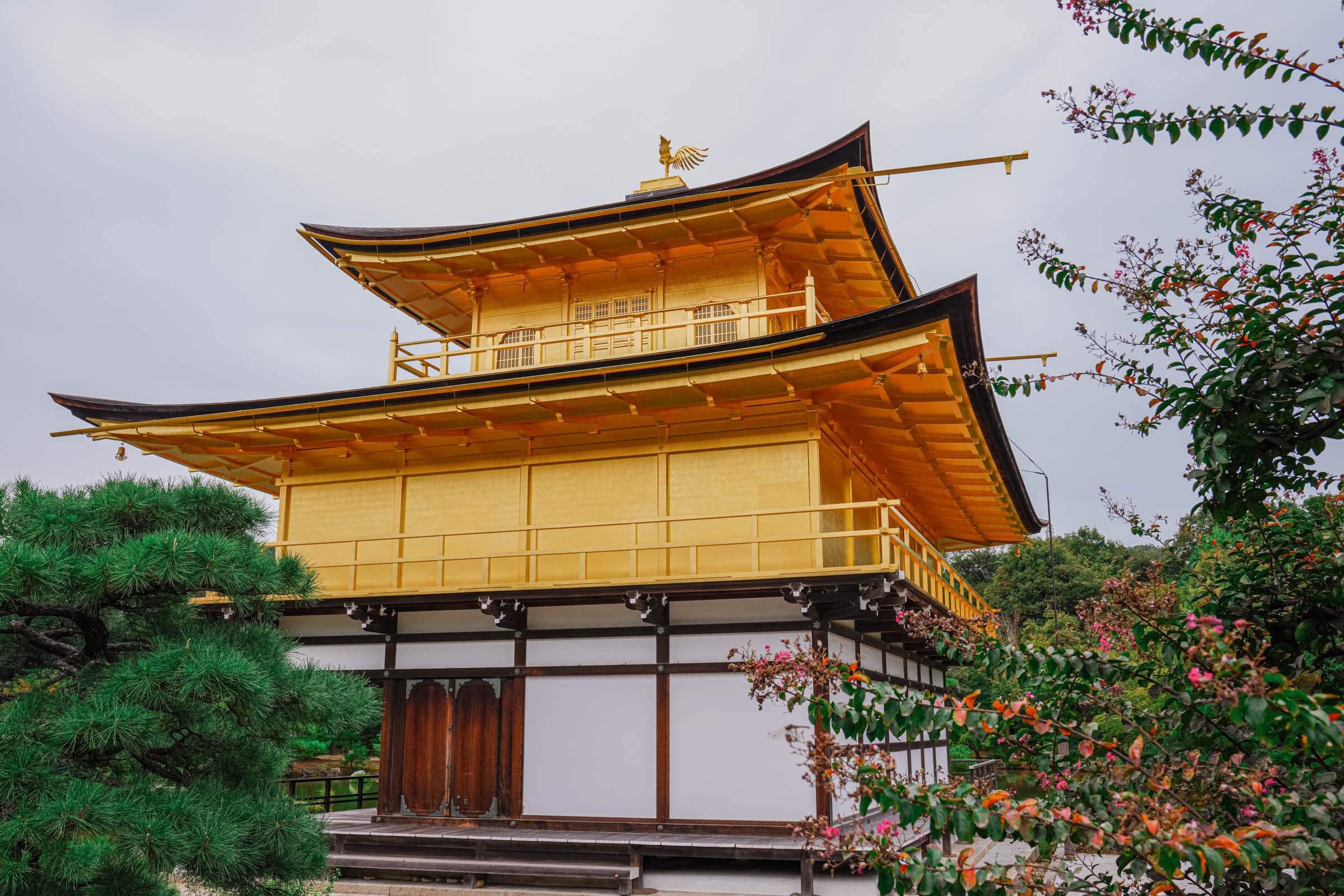
Kinkaku-ji, better known as the Golden Pavilion, is probably the most photogenic building in all of Japan. Originally built in 1397 as a villa for Shogun Ashikaga Yoshimitsu, today it serves as a Zen Buddhist temple. The upper two floors are completely covered with sheets of pure gold, and the reflection of the pavilion in the “mirror of the lake” in front of it creates a scene that seems almost unreal. It is important to note that the current structure is actually a reconstruction from 1955, the original was destroyed in a fire caused by a mentally disturbed monk in 1950, the event that inspired Yuki Mishima’s famous novel.


Kiyomizu-dera, the temple of pure waters, is one of the most visited sites. Its main hall stands on an impressive wooden platform that rises 13 meters above the hillside, without a single nail in its construction. From here, you can enjoy a spectacular view of the city, especially during cherry blossom season in spring or fall foliage. Below the platform is the Otova Falls whose water is considered sacred, visitors drink water from three jets, each supposedly bringing health, wisdom or longevity.


Ryōan-ji Temple hides one of the most enigmatic gardens in the world. The Karesansui garden, or dry landscape garden, consists of only fifteen stone blocks spread over an area of 250 square meters of white gravel. The stones are placed so that, from whatever vantage point you look, you can never see all fifteen at once. Zen Buddhists believe that only an enlightened person can see all the stone blocks simultaneously. This garden, which dates back to the late fifteenth century, still inspires landscape architects around the world.


Nijō Castle represents a completely different side of Kyoto’s history. Built in 1603 as the residence of the Tokugawa shoguns, the castle was designed to impress and intimidate potential rivals. The well-known “squeaky floors” in the interior of the hall intentionally creak when walking to warn of the presence of intruders. It was here in 1867 that the last Tokugawa shogun returned power to the imperial family, marking the end of the samurai era.


FUSHIMI INARI: TEN THOUSAND GATES TO HEAVEN
Although not formally on the UNESCO list, Fushimi Inari Taisha is probably the most recognizable sight in Kyoto, if not in all of Japan. This Shinto shrine, dedicated to Inari, the deity of rice and business success, was founded in 711, even before Kyoto became the capital.
What makes Fushimi Inari unforgettable is the approximately ten thousand cinnabar red torii gates that stretch along the four kilometer mountain trail on the 233 meter high Inari Hill. Each gate is a donation from an individual or company seeking the deity’s favor, a tradition that dates back to the Edo period. The gates are engraved with the names of the donors and the dates of installation.


Special tip for visitors: come as early as possible in the morning or in the evening. Senbon Torii, the main tunnel of a thousand gates just behind the main shrine, is the most photogenic spot, but turns into a real crowd during the day. If you continue climbing above the middle of the mountain to the Yotsuguji junction, the crowds thin out considerably and the views of Kyoto become more and more spectacular. The complete climb to the top takes about two to three hours, and the sanctuary is open 24 hours a day with no entrance fee, making it perfect for night hikes.


Along the path you will notice countless statues of foxes, they are not deities but messengers of the god Inari. Foxes often hold in their mouths a key (for a rice granary) or a jewel that symbolizes the spirit of the deity. Local cuisine offers specialties such as inari sushi (rice balls wrapped in fried tofu) and kitsune udon (noodles with fried tofu), as it is believed that foxes are particularly fond of fried tofu.


ARASHIYAMA BAMBOO FOREST: WHERE THE BAMBOO TOUCHES THE SKY
On the western edge of Kyoto lies Arashiyama, a district that has been a favorite resort of the Japanese aristocracy since the Heian period. The main magnet for visitors today is the Sagano Bamboo Forest, a sight that no photograph can fully capture.
A walk through this bamboo cathedral is an experience for all the senses. Tall bamboo stalks rise tens of meters above you, creating a green tunnel through which sunlight penetrates in vague rays. The sound of wind blowing through bamboo leaves has been recognized as one of the “100 Soundscapes of Japan” by the Japanese Ministry of the Environment. That rustling, that almost musical noise, has an unusually soothing effect.


The Chikurin no Komichi Trail, a main corridor about 400 meters long, stretches from Tenryu-ji Temple to Okochi Sanso Villa. Tenryu-ji, one of the five great Zen temples of Kyoto and a UNESCO site, has a garden designed by the famous gardener Muso Soseki in the fourteenth century, which has remained almost unchanged to this day. At the other end of the trail, Villa Okochi Sanso, the former home of legendary silent film actor Denjiro Okochi, offers one of the most beautiful views of the city.
Practical advice: visit the forest early in the morning, ideally before nine o’clock, to avoid the crowds of tourists. Alternatively, the bamboo forest is especially magical at dusk or even at night. The Togetsukyo Bridge, “the bridge over which the moon crosses,” provides the perfect introduction to this district, especially when the mountains in the background are covered in the colors of autumn leaves.

GION: WHERE THE SPIRIT OF THE GEISHA LIVES ON
If you want to step into Edo-era Japan, there’s no better place than Gion. This historic district, known as hanamachi or “flower district”, developed as an entertainment area in front of Yasaka Shrine and today represents the best-preserved environment of geisha culture in Japan.
It is important to note the terminological difference: in Kyoto, geisha are called geiko (literally “woman of the arts”), while their students are called maiko. Geiko and maiko are not entertainers in the western sense of the word, they are highly trained artists who perform traditional dances, play traditional instruments such as shamisen, lead tea ceremonies and entertain guests with sophisticated conversation.

Hanamikoji Street, the backbone of the Gion Kobu district, is the best-preserved row of traditional machiya houses, many of which now serve as exclusive restaurants and teahouses called ochaya. In the evenings, with a bit of luck, you might catch a glimpse of a maiko hurrying off to her engagement, recognizable by her elaborate hairstyle adorned with floral ornaments, white face paint, and colorful, long-sleeved kimono.
For those who want an authentic experience, I recommend a visit to Gion Corner, where short presentations of seven traditional Japanese arts are held daily, including the Kyomai dance performed by real maiko. Annual dance performances such as the Miyako Odori in April offer the chance to see geiko and maiko on stage, with tickets selling out months in advance.
Unfortunately, the number of active geiko and maiko in Kyoto has declined dramatically from nearly 80,000 before World War II to fewer than 300 today. This ancient tradition struggles to survive in the modern world, making every encounter with it all the more precious.
HIDDEN GEMS: KYOTO THAT TOURISTS MISS
Off the beaten track lies a completely different Kyoto, a little quieter, more intimate, perhaps even more authentic. If you want to experience the city as a local sees it, let me suggest a few lesser-known destinations.
Otagi Nenbutsuji, a temple nestled in the northern hills far from the main tourist routes, is home to over 1,200 stone statues of Buddha’s disciples. Each statue is a unique work of an amateur, a project launched in the 1970s to restore the neglected temple. The result is a moving open-air gallery of moss-covered, rain-worn faces, yet strangely human. A visit to this temple, especially on a misty morning, is an almost surreal experience.


The Philosopher’s Path, about two kilometers long, connects the silver pavilion of Ginkaku-ji with the shrine of Nanzen-ji and is a perfect alternative to the hustle and bustle of the city center. The paved path follows a canal lined with hundreds of wild cherry trees and is especially enchanting when they bloom in April. Along the way, you’ll find small Zen temples like Honen-in with its beautiful moss-covered gate, a place that most tourists never visit.
The Ohara area, an hour north of the city center, offers a complete escape from the hustle and bustle of the city. This mountain-surrounded village is home to several notable temples, including Sanzen-in with its famous moss garden and Gyako-in, where Empress Kenreimon-in spent the rest of her life after her family’s defeat in the civil war. Ohara is especially beautiful in the fall when the mountains are covered in color.

For tea lovers, the village of Wazuka offers an experience that Uji, better known for its tea, can no longer offer, an authentic village atmosphere without the crowds of tourists. Terraced tea fields spread across the hills, creating a sea of emerald green. Local farms offer bicycle tours through the plantations, tea-picking workshops, and overnight stays in traditional farms.
The Lake Biwa Canal, an engineering marvel from the Meiji era, offers another peaceful alternative. This waterway, which connects Kyoto to neighboring Shiga Prefecture, is lined with temples and shrines that most tourists overlook. A boat ride along the canal during cherry blossom season creates an almost dreamlike landscape.


KYOTO: PRACTICAL TRAVEL TIPS
Kyoto is not a city that you can truly experience in a day. I recommend a minimum of three to four days, and ideally a week or more if you want to explore the surrounding areas. The city is extremely well connected by rail from Tokyo, with the Shinkansen train taking around two hours and fifteen minutes, while Osaka is only fifteen minutes away.
The best time to visit depends on your preferences. Spring (March-May) brings cherry blossoms and pleasant temperatures, but also the most crowds. Autumn (October-November) offers spectacular foliage, especially at temples like Tofuku-ji and Eikando. Summer can be extremely hot and humid, while winter offers a more peaceful experience with occasional snow that transforms the temples into fairy-tale scenes.

When it comes to getting around the city, a combination of city buses and subways covers most destinations. A one-day bus pass costs around 700 yen and is worth it if you plan on taking more than three rides. For more remote destinations like Arashiyama, the railway is a more efficient option. Renting a bike is a great way to explore the flatter parts of the city, especially along the Kamo River.
As for etiquette, keep in mind that many temples require you to remove your shoes before entering, so wear socks and avoid elaborate footwear. Photography is allowed at most temples, but never take a picture of a geiko or maiko without permission; this is considered extremely rude.
LUXURY RESORT: PARK HYATT KYOTO
When it comes to accommodation in Kyoto, the choice is vast, from traditional ryokans to modern hotels. However, for those looking for a blend of Japanese tradition and modern luxury, the Park Hyatt Kyoto is a destination in itself.
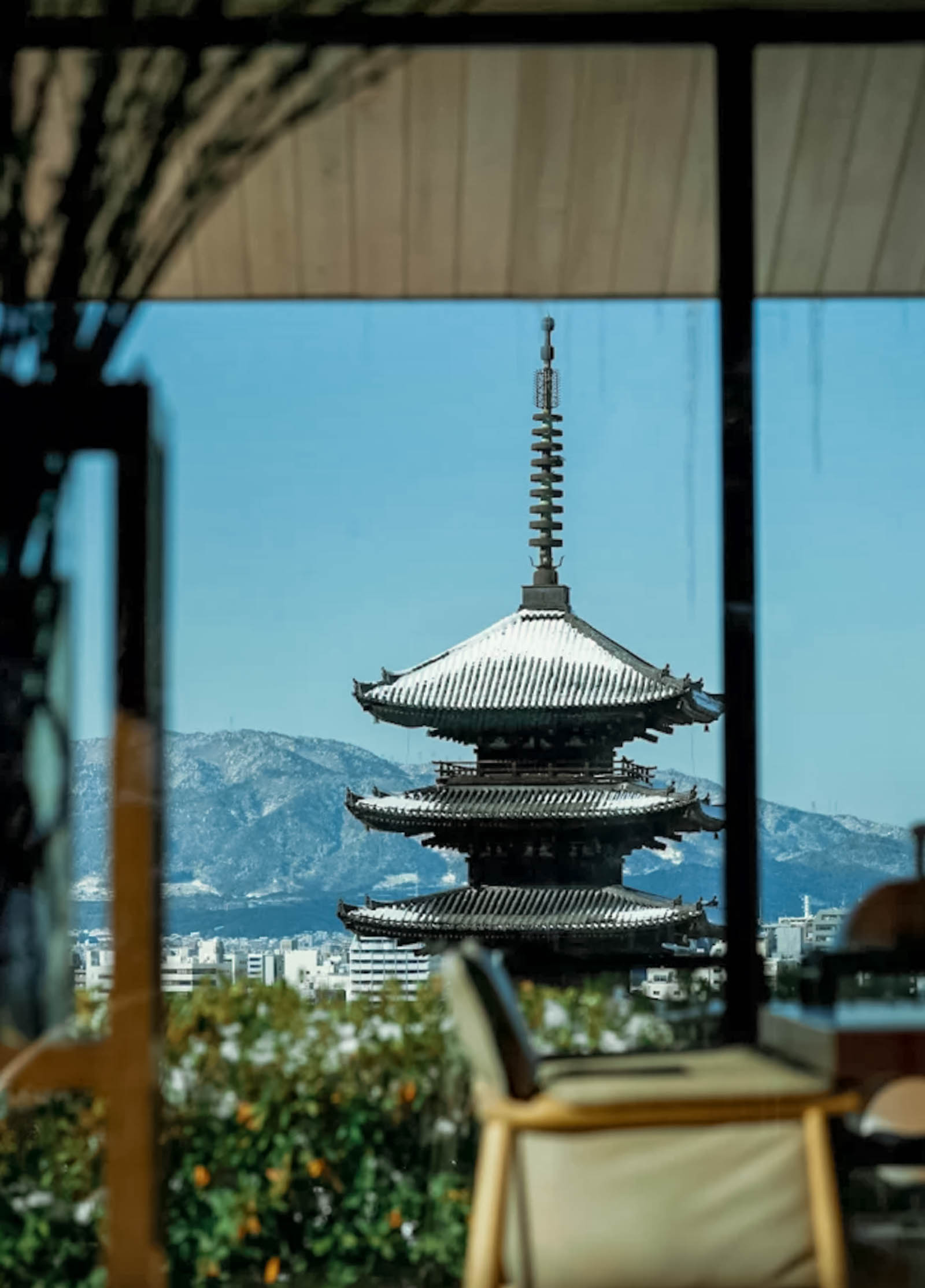
Located in the heart of the historic Higashiyama district, the hotel blends perfectly into the surrounding area of traditional houses and temples. The building, with its characteristic mukuri tiled roofs and Japanese gardens, doesn’t seem out of place in this ancient setting, despite only opening in 2019. The location is exceptional, with the Yasaka Pagoda visible from the window, Kiyomizu-dera Temple a ten-minute walk away, and the streets of Gion practically on your doorstep.




During my stay, I had the opportunity to experience the Park Suite, a 68-square-meter suite that embodies the hotel’s philosophy. The design, inspired by the Japanese mountains, uses local materials and fragrant tama wood, creating a space that is both modern and deeply rooted in tradition. The separate living room and bedroom provide a sense of privacy rarely seen in Japanese hotels, while floor-to-ceiling windows bring Kyoto directly into your space.
A special treat is the daily “Champagne Hour” in the Living Room, available to suite guests, where you can enjoy a sparkling wine in front of the fireplace while watching the city slowly fade into twilight through the windows. The rooftop restaurant, Yasaka, offers modern Japanese cuisine with breathtaking views, while the traditional restaurant, Kyoyamato, with a history spanning almost 150 years, offers an authentic kaiseki experience. An onsen and fitness center complete the offerings of this exceptional hotel.

KYOTO: A CITY THAT STAYS IN YOUR HEART
Kyoto is a city that won’t let you go. Months after you return home, you’ll close your eyes and see those red torii gates lining the mountaintop. You’ll remember the smell of incense in some forgotten temple, the sound of bamboo in the wind, the taste of ceremonially prepared tea. This city has a way of creeping into your soul and staying there.
Japan is a land of contrasts, hypermodern Tokyo and ancient Kyoto, robotic precision and Zen serenity, neon lights and moss-covered rock gardens. But it’s in Kyoto that you can understand where all that Japanese aesthetic comes from, where that dedication to beauty, that attention to detail, that ability to find eternity in transience comes from.
Kyoto’s temples aren’t just buildings made of wood and gold, they’re physical expressions of a philosophy that believes beauty is the path to enlightenment. Geisha culture isn’t just entertainment, it’s a commitment to perfecting an art. Even a simple cup of tea becomes a meditation when prepared with the right intention.


Perhaps this is what makes Kyoto so special to those of us who live in a fast-paced, fragmented modern world. This city reminds us that there is a different way of life, that tradition and modernization need not be at odds, that beauty deserves time and attention. In an age where we are all in a hurry, Kyoto invites us to slow down, to pause, to really see.
So I say, visit Kyoto. Not as a tourist ticking off a list of sights, but as a traveler ready to let go. Lose yourself in the labyrinth of alleys around Gion. Spend an hour in a Zen garden doing nothing but observing. Drink sake at a small izakaya and let the local waiters teach you how to pronounce “kampai.” This is not a city to rush. This is a city to experience.
Because Kyoto, as I said at the beginning, is not just a city. Kyoto is an invitation to stop for a moment and remember who we were before we became who we are today. And maybe, just maybe, in that memory we can find a way forward.

Have you already had the opportunity to visit Kyoto, this magnificent millennial capital of the Land of the Rising Sun, where tradition seamlessly intertwines with Zen gardens and the quiet whisper of bamboo forests? Or maybe you are just planning to discover the magic of this city, walk under thousands of red torii gates, feel the spiritual peace of ancient temples and step into the world of geishas that seems to have stopped in time?
Feel free to leave your impressions, comments or questions below the text or contact me via email and social networks. All information is available on the CONTACT page.
See you soon, with a new story from the heart of the Far East!
With Love from Kyoto,
Mr.M

This post is sponsored by the United Nations World Tourism Organization (UN Tourism) and Park Hyatt Kyoto, as well as other local partners who selflessly supported this project. This post is my personal and honest review of the destination experience.
Hello Marko, what an extraordinary piece of writing this is. I visited Kyoto back in 2019, just months before everything changed with the pandemic, and reading your article brought back such vivid memories. Your description of walking through the Fushimi Inari gates at dawn captured exactly what I felt that morning when I arrived at five in the morning to beat the crowds. The tip about continuing past the Yotsuguji junction is spot on because most tourists turn back before reaching the truly peaceful sections of the trail. I stayed at the Ritz-Carlton on the Kamo River during my visit… Read more »
Guten Tag Marko, ich muss sagen, dass dieser Reisebericht einer der besten ist, den ich über Kyoto je gelesen habe. Die historischen Details über die Heian-Periode und die Entstehung der Stadt sind faszinierend und zeigen, dass Sie sich wirklich mit der Geschichte auseinandergesetzt haben. Besonders interessant fand ich die Information über Henry Stimson und seine Rolle bei der Rettung Kyotos vor der Atombombe. Meine Frau und ich waren 2018 in Japan und haben damals im Four Seasons Kyoto übernachtet, das direkt an einem achthundert Jahre alten Teichgarten liegt. Der Vergleich mit dem Park Hyatt im historischen Higashiyama-Viertel wäre beim nächsten… Read more »
Bonjour Marko, quel récit magnifique vous nous offrez ici. J’ai eu la chance de visiter Kyoto avec mon mari en automne 2017 et je dois dire que vos photos capturent parfaitement cette atmosphère si particulière de la ville. La forêt de bambous d’Arashiyama était effectivement notre moment préféré du voyage, ce son du vent dans les bambous est vraiment inoubliable comme vous le décrivez. Nous avions séjourné au Suiran, un hôtel luxueux sur les rives de la rivière Katsura, mais votre description du Park Hyatt me donne très envie d’y retourner pour une nouvelle expérience. Votre conseil d’arriver tôt le… Read more »
Marko, this is simply outstanding travel journalism. Your section on the seventeen UNESCO World Heritage sites gave me chills, particularly the story behind Kinkaku-ji and how the current structure is actually a 1955 reconstruction after that tragic fire. I had no idea that Yukio Mishima wrote a novel inspired by that event. The historical context you provide about the Onin War and how Kyoto recovered like a phoenix from the ashes really helps visitors understand why this city feels so different from other Japanese destinations. I visited Osaka and Tokyo in 2022 but skipped Kyoto due to time constraints, something… Read more »
Ciao Marko, che meraviglioso articolo hai scritto su Kyoto. La tua descrizione del quartiere di Gion e della cultura delle geiko e maiko è davvero affascinante e rispettosa di questa antica tradizione. Ho visitato il Giappone nel 2016 con mia moglie e abbiamo trascorso tre giorni a Kyoto, ma leggendo il tuo post mi rendo conto di aver perso tantissime cose. Non conoscevo il tempio Otagi Nenbutsuji con le sue milleduecento statue di pietra, e questo sarà sicuramente nella mia lista per il prossimo viaggio. Abbiamo alloggiato al Hyatt Regency Kyoto che era molto confortevole, ma il Park Hyatt sembra… Read more »
Dear Marko, I have a question about the timing of a Kyoto visit. You mentioned that spring brings cherry blossoms but also the biggest crowds. My husband and I are planning our first trip to Japan for late March next year, and I’m wondering if the crowds during sakura season are truly overwhelming or still manageable if we follow your advice about arriving early at the main attractions. Also, do you have any specific recommendations for experiencing a traditional tea ceremony in Kyoto that would be suitable for visitors who don’t speak Japanese? Your description of ceremonially prepared tea throughout… Read more »
Hola Marko, muchas gracias por este increíble artículo sobre Kioto. Tu forma de escribir me transportó directamente a las calles de esta ciudad milenaria. Visité Japón en 2019 con mi esposa y pasamos cuatro días en Kioto, hospedándonos en el Ritz-Carlton junto al río Kamo. La ubicación era perfecta para caminar hasta Gion por las tardes y ver el atardecer reflejado en el agua. Tu descripción del Fushimi Inari Taisha me recordó la madrugada que subimos la montaña completa, una experiencia que recomiendo a todos los viajeros. El detalle que mencionas sobre los zorros como mensajeros del dios Inari y… Read more »
Marko, I absolutely loved your description of the Philosopher’s Path connecting Ginkaku-ji to Nanzen-ji. When I walked that path in April 2018, the cherry trees were in full bloom and it felt like walking through a pink tunnel of petals. Your recommendation of the hidden temple Honen-in is wonderful because I stumbled upon it by accident and it became my favourite spot in all of Kyoto, so peaceful and completely empty of tourists. I stayed at the Aman Kyoto which is tucked away in the forest outside the city center, and while the tranquility was extraordinary, I think for a… Read more »
Hallo Marko, vielen Dank für diesen wunderbaren Bericht. Ich hätte eine Frage bezüglich der Fortbewegung in Kyoto. Sie erwähnen den Tagespass für den Bus und die U-Bahn, aber wie praktisch ist es wirklich, die Stadt mit dem Fahrrad zu erkunden? Ich plane einen Besuch im November zur Herbstlaubsaison und würde gerne wissen, ob die Strecken zwischen den wichtigsten Tempeln für einen Radfahrer mittleren Alters machbar sind. Außerdem interessiert mich, ob das Park Hyatt Kyoto Fahrräder für Gäste zur Verfügung stellt, ähnlich wie es das Ritz-Carlton mit E-Bikes anbietet.
Cher Marko, votre article est une véritable œuvre d’art littéraire. La façon dont vous décrivez le jardin zen du temple Ryōan-ji avec ses quinze pierres que personne ne peut voir simultanément est absolument poétique. J’ai passé presque une heure assise devant ce jardin lors de ma visite en 2017, essayant de comprendre cette philosophie bouddhiste. Votre mention du roman “Le Dit du Genji” de Dame Murasaki Shikibu m’a particulièrement touchée car c’est l’un de mes livres préférés. C’est extraordinaire de penser qu’une femme japonaise écrivait un roman psychologique si complexe au onzième siècle pendant que l’Europe était encore dans l’obscurité… Read more »
Marko, what a comprehensive and beautifully written guide to Kyoto. I particularly appreciated your honest acknowledgment that the city requires at least three to four days minimum to truly experience, unlike those rushed day-trip itineraries you see everywhere online. Your hidden gems section introduced me to places I’d never heard of despite having read dozens of Kyoto guides. The Otagi Nenbutsuji temple with over 1,200 stone Buddha statues sounds absolutely magical, especially on a misty morning as you describe. I visited Japan twice before the pandemic and somehow always prioritized Tokyo, but your article has completely changed my perspective on… Read more »
Caro Marko, ho una domanda pratica per te. Nel tuo articolo menzioni che il Park Hyatt Kyoto si trova nel quartiere di Higashiyama, a pochi passi dal tempio Kiyomizu-dera. Quanto è faticoso raggiungere l’hotel a piedi dalla stazione ferroviaria di Kyoto con i bagagli, considerando che la zona è collinare? Mio marito ed io stiamo pianificando il nostro viaggio di anniversario per la prossima primavera e vogliamo assicurarci di scegliere un hotel che sia accessibile ma anche immerso nell’atmosfera tradizionale che descrivi così bene. Il Champagne Hour che menzioni sembra un’esperienza davvero speciale per celebrare un’occasione importante.
Hello Marko, your piece on Kyoto is exceptional in its depth and emotional resonance. The fact that you mentioned the significant decline in the number of active geiko and maiko from nearly 80,000 before World War Two to fewer than 300 today really puts the fragility of this tradition into perspective. It makes encounters with this culture all the more precious and reminds us as travellers to be respectful observers rather than intrusive tourists. I stayed at the Four Seasons Kyoto in 2021 which has that beautiful 800-year-old pond garden, but your description of the Park Hyatt being right in… Read more »
Querido Marko, me gustaría hacerte una pregunta sobre la gastronomía. Mencionas el inari sushi y el kitsune udon cerca del Fushimi Inari, pero me pregunto si tienes recomendaciones específicas de restaurantes tradicionales en Kioto donde se pueda experimentar un auténtico kaiseki sin necesidad de reservar con meses de anticipación. Mi esposa y yo visitamos Tokio hace tres años y quedamos fascinados con la cultura culinaria japonesa, pero no pudimos llegar a Kioto por falta de tiempo. Tu descripción del restaurante Kyoyamato en el Park Hyatt con casi 150 años de historia suena increíble.
Lieber Marko, Ihr Artikel über Kyoto hat mich tief berührt. Die Art, wie Sie die Stadt als Zeitkapsel beschreiben, trifft den Nagel auf den Kopf. Mein verstorbener Ehemann und ich besuchten Japan 2015 zu unserem Hochzeitstag, und Kyoto war der Höhepunkt unserer Reise. Das Gefühl, durch die roten Torii-Tore des Fushimi Inari zu wandern, ist etwas, das man nie vergisst. Wir übernachteten damals im traditionellen Ryokan-Stil, aber Ihre Beschreibung des Park Hyatt zeigt, dass man japanische Tradition und modernen Komfort wunderbar verbinden kann. Die Fotos sind atemberaubend schön und wecken schöne Erinnerungen.
Marko, I must commend you on your thorough research about Kyoto’s history. The detail about Emperor Kanmu moving the capital from Nara in 794 to escape the influence of Buddhist clergy on state affairs is fascinating context that most travel writers overlook. Your comparison of the city’s grid layout to Chang’an, the Tang Dynasty capital, shows a deep understanding of Asian urban planning history. I’m an architecture enthusiast and visited Kyoto in 2020 just before international borders closed, and the traditional machiya townhouses throughout the city were my favourite discovery. Your article has given me so many new places to… Read more »
Bonjour Marko, j’ai une question concernant le meilleur moment pour visiter le château de Nijō. Vous mentionnez ses parquets grinçants conçus pour alerter de la présence d’intrus, et c’est exactement le genre de détail historique qui me fascine. Le château est-il très fréquenté toute l’année ou y a-t-il des périodes plus calmes pour vraiment apprécier cette atmosphère de l’époque des shoguns? Nous avons séjourné au Mitsui Kyoto lors de notre dernière visite, qui se trouve juste à côté du château de Nijō, et l’expérience était remarquable. Votre description du Park Hyatt me donne envie d’essayer un autre quartier lors de… Read more »
Marko, your article is a masterclass in travel writing. What struck me most was your philosophical reflection at the end about how Kyoto invites us to slow down and remember who we were before we became who we are today. That’s precisely what I experienced during my week there in autumn 2019, sitting in various Zen gardens doing absolutely nothing but observing, something we rarely allow ourselves in our modern lives. The description of the Lake Biwa Canal as a Meiji-era engineering marvel lined with temples was news to me, and the idea of taking a boat ride during cherry… Read more »
Ciao Marko, complimenti per questo straordinario reportage di viaggio. La tua sezione sulla foresta di bambù di Arashiyama mi ha fatto venire i brividi ricordando la mia visita nel 2018. Hai perfettamente ragione quando dici che nessuna fotografia può catturare completamente quell’esperienza, è qualcosa che va vissuto con tutti i sensi. Il suono del vento tra le foglie di bambù riconosciuto come uno dei “100 Paesaggi Sonori del Giappone” è un dettaglio che non conoscevo e che rende l’esperienza ancora più speciale. Abbiamo soggiornato al Suiran che si trova proprio vicino alla foresta, ma il Park Hyatt sembra offrire una… Read more »
Hola Marko, qué artículo tan hermoso has escrito. Como amante de la literatura japonesa, me encantó que mencionaras “El Cuento de Genji” de Murasaki Shikibu como la primera novela de la historia mundial. Es un detalle cultural que muchos viajeros pasan por alto cuando visitan Kioto, sin entender la profundidad intelectual que esta ciudad ha tenido durante más de mil años. Tu descripción de la zona de Ohara como un escape completo del bullicio de la ciudad me intriga mucho, especialmente el templo Sanzen-in con su famoso jardín de musgo. ¿Recomiendas alquilar un coche para llegar o es mejor usar… Read more »
Dear Marko, your recommendation about visiting Fushimi Inari at dawn or dusk is invaluable advice that I wish I had known before my 2018 visit. We arrived around midday and the Senbon Torii section was so crowded that it was nearly impossible to appreciate the spiritual significance of the place. Your point about continuing past the Yotsuguji junction where crowds thin considerably is exactly the kind of local knowledge that makes the difference between a tourist experience and a traveller experience. I stayed at the Hyatt Regency during that trip and it was comfortable, but seeing your photos of the… Read more »
Hallo Marko, dieser Artikel ist wirklich außergewöhnlich. Die Information, dass das aktuelle Kinkaku-ji eine Rekonstruktion aus dem Jahr 1955 ist, nachdem das Original durch einen Brand zerstört wurde, war mir völlig neu. Es zeigt, wie wichtig es den Japanern ist, ihr kulturelles Erbe zu bewahren und wiederherzustellen. Mein Mann und ich haben Japan 2017 besucht und waren überwältigt von der Schönheit Kyotos. Wir haben im Aman Kyoto übernachtet, das zwar etwas außerhalb liegt, aber eine unglaubliche Ruhe bietet. Ihre Empfehlung des Park Hyatt für diejenigen, die mitten im historischen Geschehen sein möchten, ist sehr hilfreich für unsere nächste Reiseplanung.
Cher Marko, merci pour ce magnifique voyage virtuel à travers Kyoto. Votre description de la cérémonie du thé comme une méditation quand elle est préparée avec la bonne intention résume parfaitement la philosophie japonaise que j’ai découverte lors de mon séjour en 2019. J’ai eu la chance de participer à une cérémonie traditionnelle dans une maison de thé près de Gion et c’était une expérience transformatrice. La patience, le silence, l’attention portée à chaque geste, tout cela m’a profondément marqué. Votre article me rappelle que je dois absolument retourner à Kyoto pour explorer les endroits cachés que vous mentionnez, comme… Read more »
Marko, I found your article deeply moving and informative in equal measure. As someone who has travelled extensively in Asia, I can confirm that Kyoto holds a unique place among the great cultural capitals of the region. Your section on the Arashiyama bamboo forest perfectly captures that almost spiritual quality of the place. I visited during winter in 2020, just before travel restrictions began, and seeing the bamboo dusted with snow was otherworldly. The Tenryu-ji temple garden designed by Muso Soseki that you mention has remained almost unchanged since the fourteenth century, which is remarkable when you think about it.… Read more »
Estimado Marko, tu artículo sobre Kioto es simplemente magistral. La manera en que describes la ciudad como un santuario donde la belleza todavía tiene refugio resuena profundamente conmigo. Mi esposa y yo visitamos Japón para celebrar nuestro vigésimo quinto aniversario de bodas en 2018 y Kioto fue sin duda el punto culminante del viaje. Nos alojamos en el Four Seasons junto al jardín de estanque de ochocientos años y la serenidad del lugar era incomparable. Tu descripción del Park Hyatt con la Pagoda Yasaka visible desde la ventana suena igualmente impresionante, y definitivamente lo consideraremos para nuestra próxima visita.
Hello Marko, I have a practical question about the Park Hyatt Kyoto. You mentioned that the town becomes quiet after sundown with everything closing early, and I’m curious how this affects the evening experience for guests. Is there enough to do within walking distance of the hotel at night, or would you recommend staying elsewhere if someone prefers a more vibrant evening atmosphere? My wife and I typically enjoy having dinner options and perhaps a cocktail bar within easy reach of our accommodation. We visited Tokyo last year and loved the energy of the city at night, so I want… Read more »
Bonjour Marko, votre article m’a particulièrement touchée par sa profondeur historique. Le fait que Kyoto ait été la capitale du Japon pendant 1074 ans, de 794 à 1868, est vraiment impressionnant et explique pourquoi la ville possède une telle concentration de trésors culturels. J’ai visité Kyoto en 2016 avec mon groupe de voyage culturel et nous avons passé cinq jours merveilleux à explorer les temples et les jardins. Le jardin sec du Ryōan-ji avec ses quinze pierres reste mon souvenir le plus méditatif. Votre recommandation du Park Hyatt pour son emplacement au cœur du quartier Higashiyama est très précieuse pour… Read more »
Sehr geehrter Marko, Ihr Reisebericht über Kyoto ist absolut fesselnd. Die Details über den Philosophenweg, der den Silbernen Pavillon Ginkaku-ji mit dem Nanzen-ji-Schrein verbindet, haben meine Erinnerungen an meinen Besuch im Frühling 2019 wieder lebendig werden lassen. Die wilden Kirschbäume entlang des Kanals waren damals in voller Blüte, und es war eines der schönsten Erlebnisse meines Lebens. Ich schätze besonders Ihre Empfehlung des versteckten Tempels Honen-in mit seinem moosbedeckten Tor, denn solche Orte abseits der Touristenpfade machen das Reisen wirklich besonders. Das Park Hyatt klingt wie die perfekte Basis für eine solche Entdeckungsreise.
Marko, your article stands out from the countless Kyoto guides I’ve read because of its emotional depth and historical accuracy. The detail about Gion being known as hanamachi or flower district and the explanation that geisha are called geiko in Kyoto while their apprentices are maiko shows a genuine respect for local terminology that many writers ignore. I spent three days in Kyoto in 2017 and watched a Kyomai dance performance at Gion Corner, which you recommend, and it was absolutely mesmerising. The craftsmanship in every movement told centuries of artistic tradition. Your recommendation of the annual Miyako Odori in… Read more »
Caro Marko, grazie mille per questo meraviglioso articolo. La tua descrizione del castello di Nijō con i suoi pavimenti che scricchiolano intenzionalmente per avvisare della presenza di intrusi è affascinante e mostra quanto fossero ingegnosi i costruttori dell’epoca dei samurai. Ho visitato il Giappone nel 2019 con mio marito e il castello di Nijō è stato uno dei luoghi più impressionanti del nostro viaggio. La storia della fine dell’era dei samurai nel 1867, quando l’ultimo shogun Tokugawa restituì il potere alla famiglia imperiale proprio in quel castello, mi ha fatto venire i brividi. Il tuo articolo mi ha fatto capire… Read more »
Marko, what a beautifully crafted tribute to Kyoto this article is. Your observation that the temples are not just buildings of wood and gold but physical expressions of a philosophy believing beauty is the path to enlightenment perfectly encapsulates why this city affects visitors so deeply. I travelled to Japan with my sister in spring 2018 and we stayed at the Ritz-Carlton on the Kamo River, which was lovely but perhaps too far from the historical heart of the city. Your photographs of the Park Hyatt nestled right in the Higashiyama district with the Yasaka Pagoda visible make it seem… Read more »
Salve Marko, che coincidenza che condividiamo lo stesso nome! Il tuo articolo su Kyoto è davvero eccezionale e mi ha fatto tornare la voglia di viaggiare in Giappone. Ho visitato Tokyo e Osaka nel 2017 ma purtroppo non ho avuto tempo per Kyoto, e dopo aver letto il tuo post mi rendo conto di aver commesso un grave errore. La tua descrizione dei diciassette siti UNESCO della città è impressionante, e il fatto che tu fornisca così tanti dettagli storici rende l’articolo molto più prezioso di una semplice guida turistica. Il tempio Kiyomizu-dera con la sua piattaforma di legno costruita… Read more »
Dear Marko, your article has convinced me that Kyoto must be our next major trip. I’ve been to Singapore, Hong Kong, and Bangkok over the years but never made it to Japan, and your writing has shown me exactly what I’ve been missing. The way you describe the contrast between hypermodern Tokyo and ancient Kyoto, between neon lights and moss-covered rock gardens, paints such a vivid picture of Japan’s unique ability to honour tradition while embracing modernity. Your practical tips about the bus pass and the best times to visit various temples are extremely helpful for someone like me who… Read more »
Querido Marko, acabo de terminar de leer tu artículo y estoy genuinamente conmovido. Tu frase final sobre cómo Kioto es una invitación a detenerse y recordar quiénes éramos antes de convertirnos en quienes somos hoy es profundamente filosófica y captura la esencia de lo que hace especial a esta ciudad. Visité Japón en otoño de 2018 y los colores de las hojas en los templos de Kioto fueron indescriptibles, especialmente en el Tofuku-ji que mencionas como uno de los mejores lugares para el follaje otoñal. Nos alojamos en un ryokan tradicional, pero tu descripción del Park Hyatt como una mezcla… Read more »