My dear travellers and lovers of unusual journeys, welcome to the new travelogue on the Mr.M blog. After a series of travelogues from Asia that won your hearts, it’s time to focus on European metropolises. There are cities that enchant you immediately, at first sight. Paris does this to all tourists who stand under the Eiffel Tower for the first time. Rome overwhelms you the moment you step into the old Forum. Brussels, however, belongs to a completely different category of European capitals. This is a city that requires patience and a chance to give it a second look. It requires you to dive deeper than the surface, to turn from the main street to a side street, to stand in front of a facade that other passers-by do not notice.
Before starting today’s travelogue about Brussels, I want to express my special thanks to the United Nations World Tourism Organization – UN Tourism and Steigenberger Icon Wiltcher’s for supporting and promoting quality tourism around the world. Their dedication to connecting cultures and destinations is an inspiration to all of us who believe that travel enriches the soul.
That’s exactly why I decided to dedicate one of my travelogues to him. Brussels is not a postcard for social networks. It’s a true story written in stone, chocolate and sparkling Belgian beer. A city that is also the political capital of Europe and its most unpretentious host. During my stay I had the opportunity to feel exactly that contrast and I can tell you that Brussels is not easily forgotten. On the contrary, it remains in your mind as a special city to which you will return at least because of the delicious Belgian chocolates and waffles!
BRUSSELS: A CITY ORIGINATED ON A SWAMP THAT CONQUERED THE CONTINENT
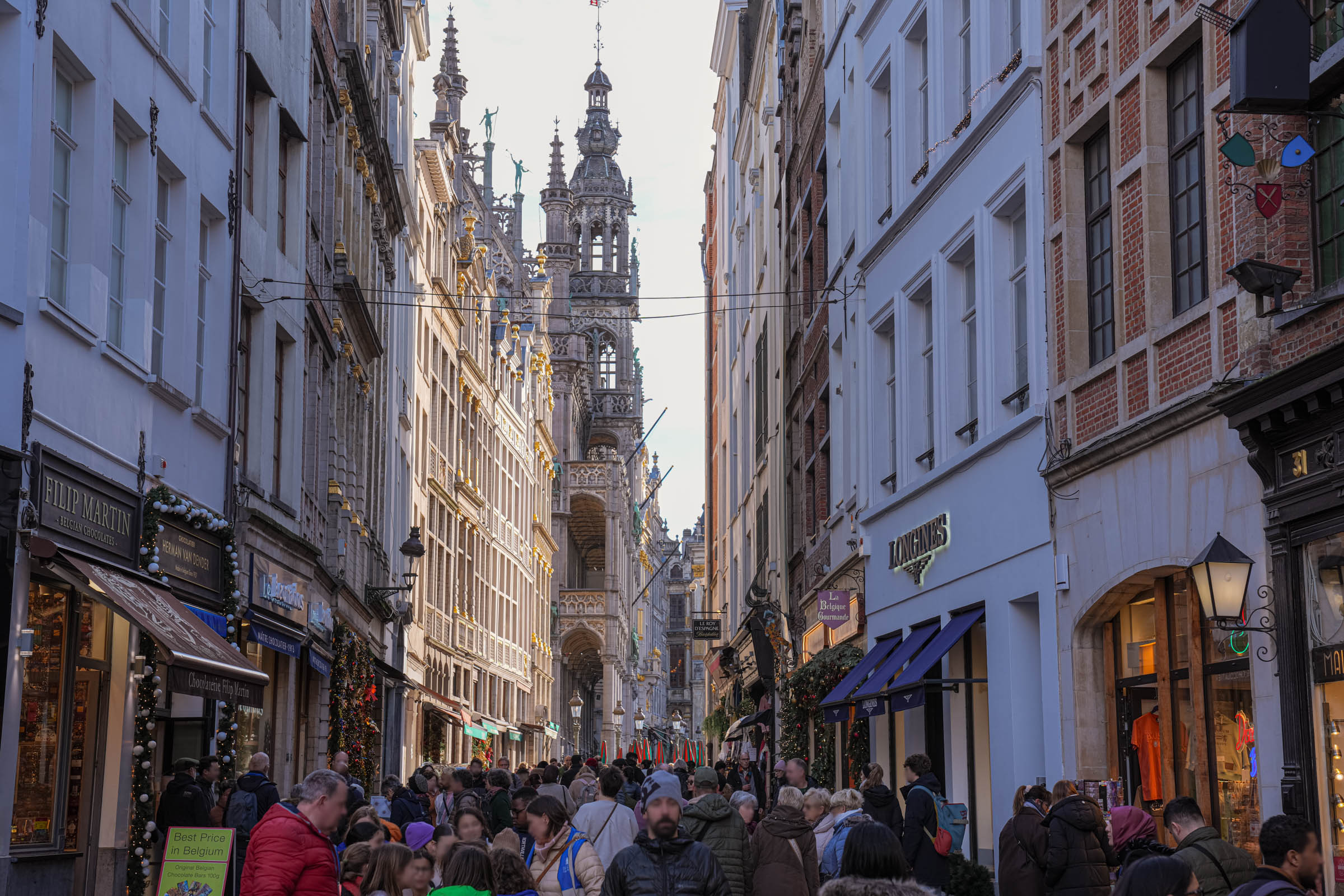
Few people know that the very name Brussels comes from the Old Dutch word Bruocsella, which means “settlement on the marsh”. The first written mention of the city dates back to the year 695, but the official foundation dates back to the year 979. That year, Duke Charles of Lower Lorraine built a fort on an island in the Seine River, laying the foundation of the future city. So, this city has more than a thousand years of stormy history.
During the Middle Ages, Brussels grew thanks to its exceptional geographical location. It was located on an important trade route that connected the rich Flemish cities of Bruges and Ghent with Cologne and other cities of the Holy Roman Empire. The production of luxury fabrics, tapestries and lace brought wealth to the first families of Brussels. Those wealthy patrician dynasties, known as Lineages, shared power in the city and shaped its character over the centuries.

Brussels experienced a special boom in the 15th century, when it became the capital of the Duchy of Burgundy under Philip the Good. It was an era of artistic and economic boom. Painter Rosie van der Weyden was named official city artist, and the monumental City Hall on the Grand Place began to rise with its ninety-six-meter tower, crowned by a statue of the Archangel Michael, considered the city’s patron saint.
After the Burgundian period, Brussels passed into the hands of the Habsburg dynasty. Emperor Charles V, born and raised in the Low Countries, made Brussels one of the most important centers of his vast empire. It is interesting that Charles the Fifth abdicated precisely in Brussels in 1556, which speaks of the importance this city had at that time. The city then went through Spanish rule, religious conflicts and the Eighty Years’ War, but each time it found the strength to rebuild.

GRAND PLACE: A BREATHTAKING SQUARE
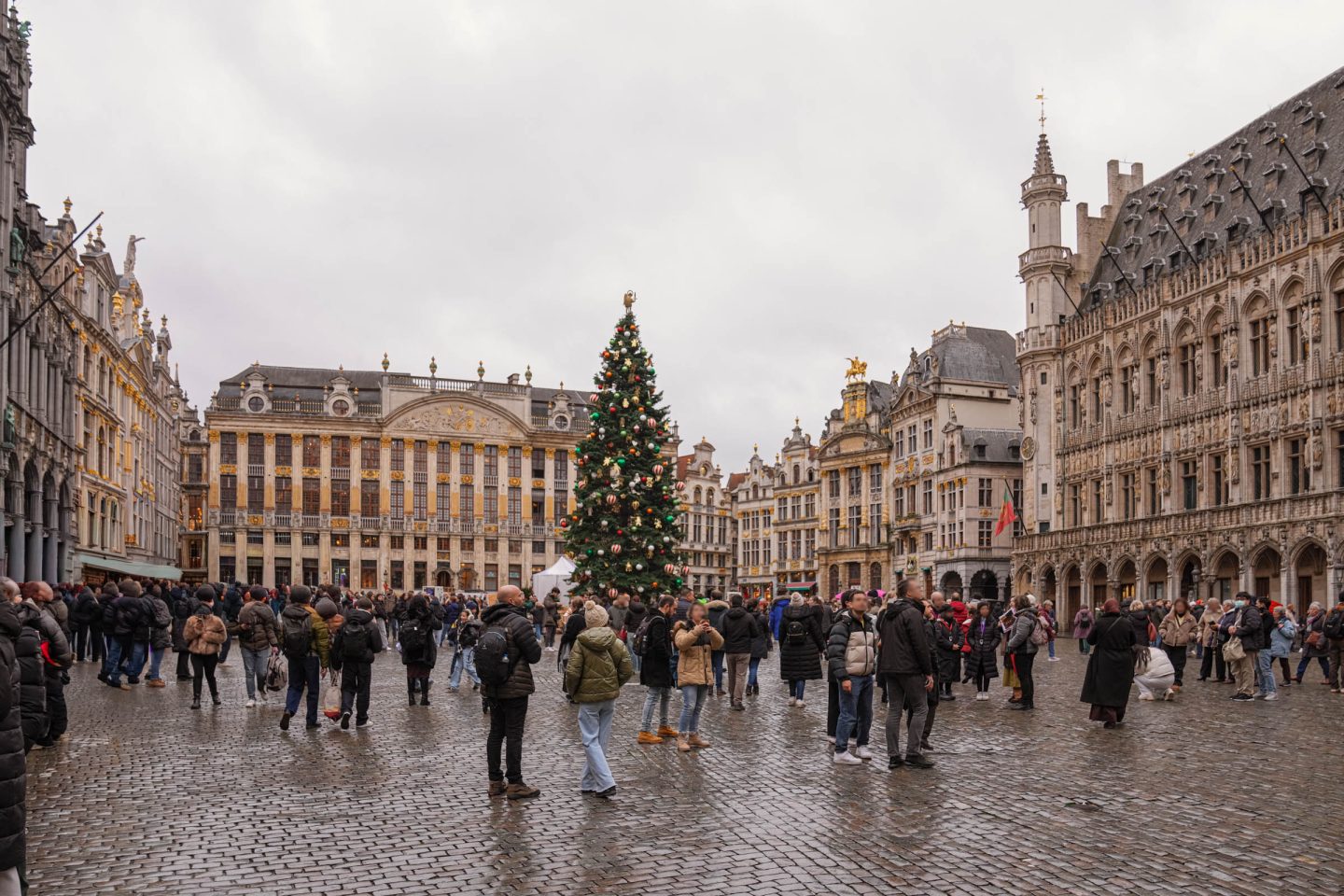
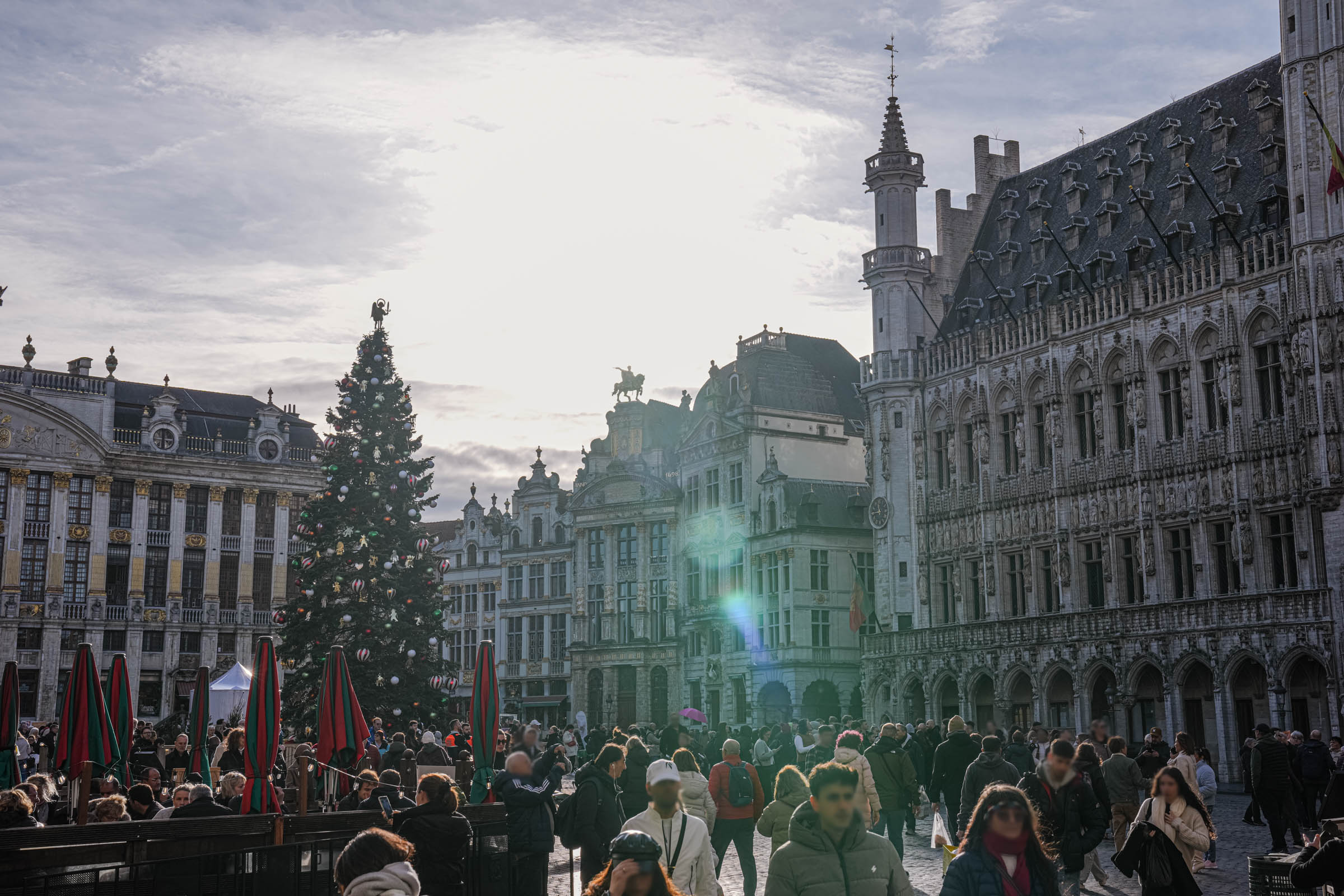
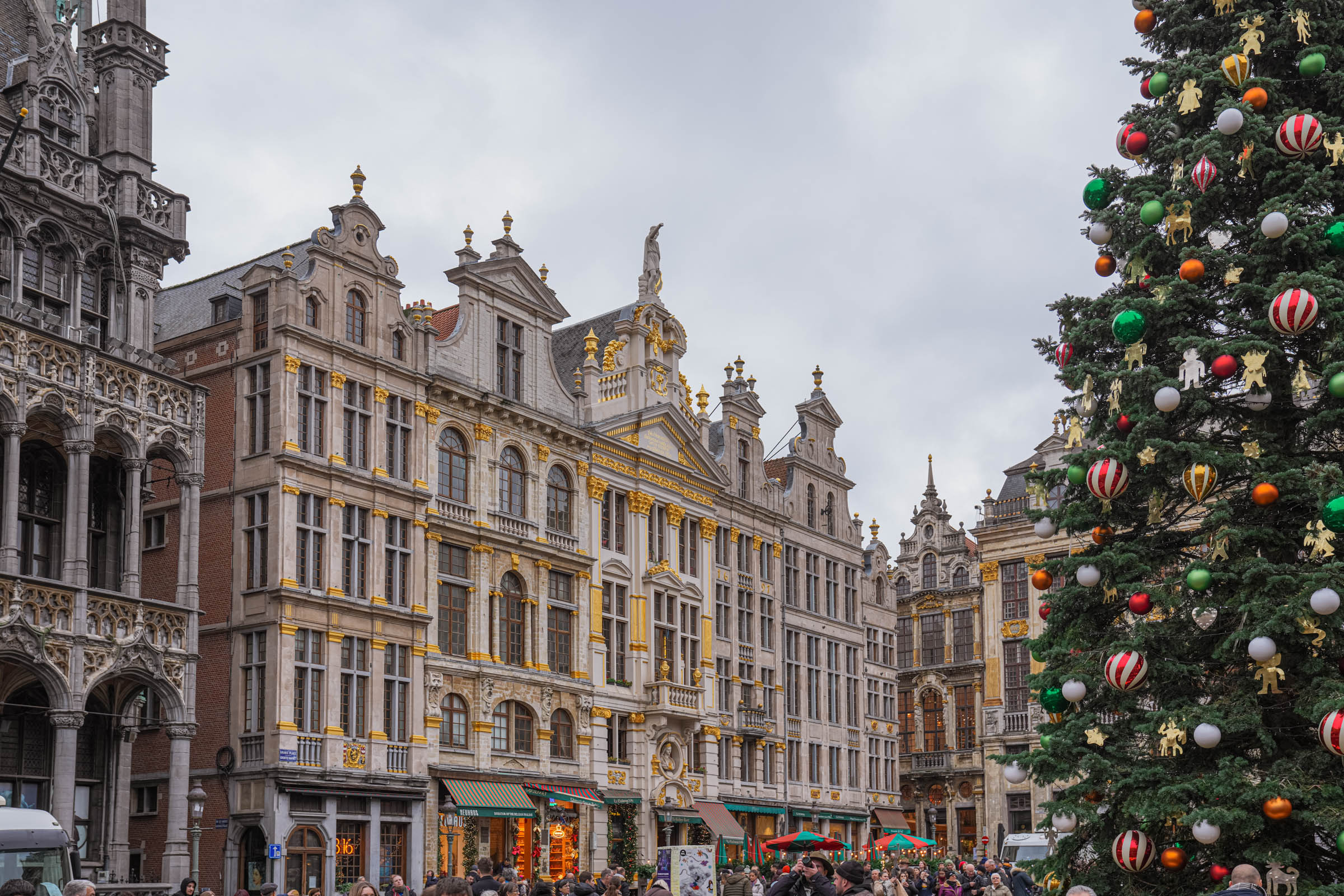
If there is one place in Brussels that you must visit, it is without a doubt the Grand Place. This central square has been on the UNESCO World Heritage List since 1998 and, thanks to Belgian artisans, holds the title of one of the most beautiful squares in the world. When I first stood on the edge of the square and looked around, I stopped in my tracks. It is difficult to describe in words how the symmetry of the baroque facades of the guild houses, gilded decorations and the Gothic Town Hall dominates the entire space.
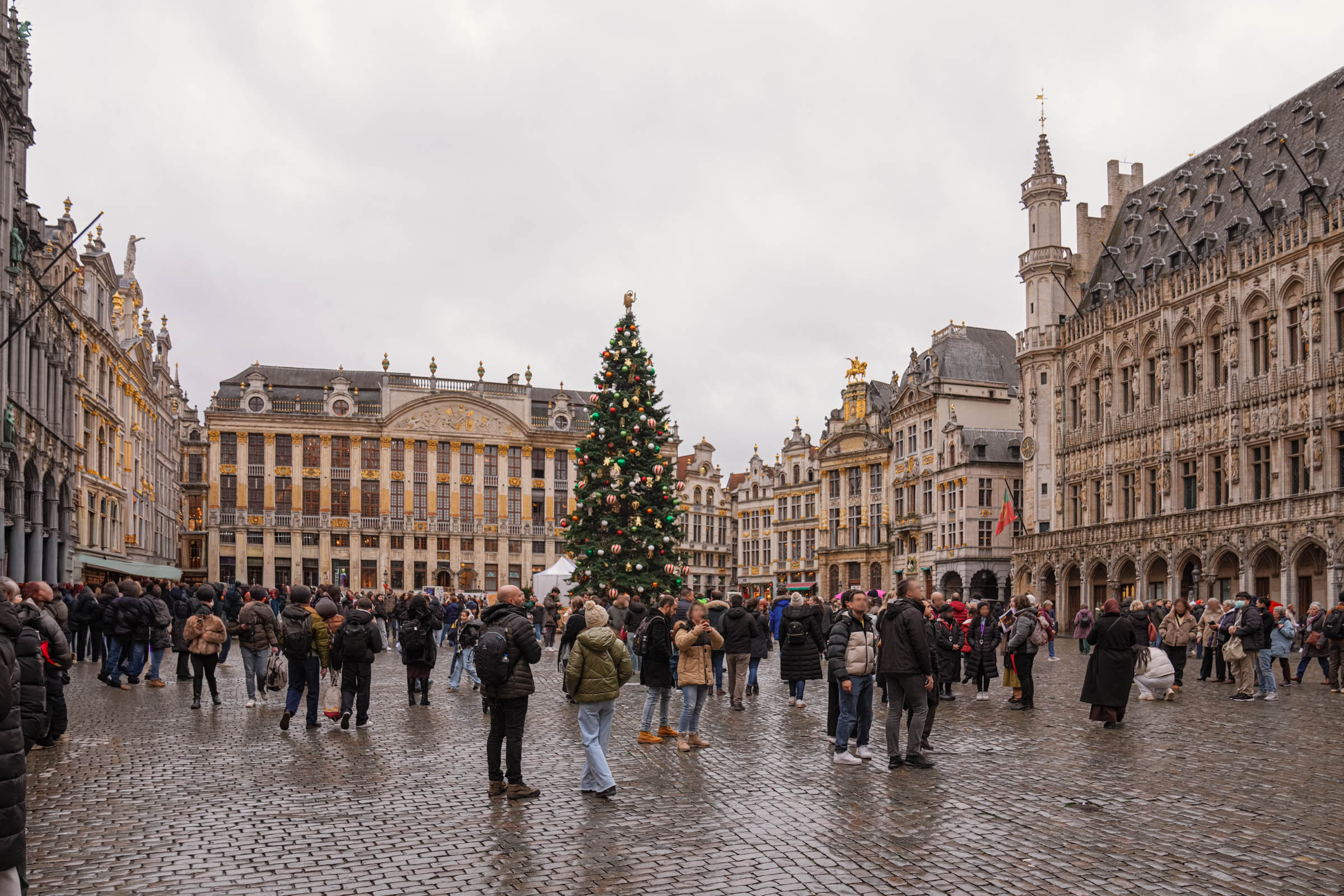

The history of this square is as dramatic as its appearance. In 1695, the French army under the command of Louis the Fourteenth bombarded Brussels for three days. More than four thousand houses were destroyed, and the Grand Place was turned into ruins. However, the Brussels craft guilds rebuilt the square in just four years, erecting the magnificent baroque guild houses we see today. Each of those buildings bears the name of the guild that built it, from bakers to brewers, from archers to boatmen.
A special experience is the evening Grand Place. When the lights are turned on, the gilding on the facades takes on a warm color and the entire square looks like a theater scene. During August, every other year, the square is transformed into a huge carpet of flowers, made up of more than half a million begonias. It is a sight that is hard to forget.


GALERIES ROYALES SAINT-HUBERT: THE OLDEST COVERED MARKET IN EUROPE
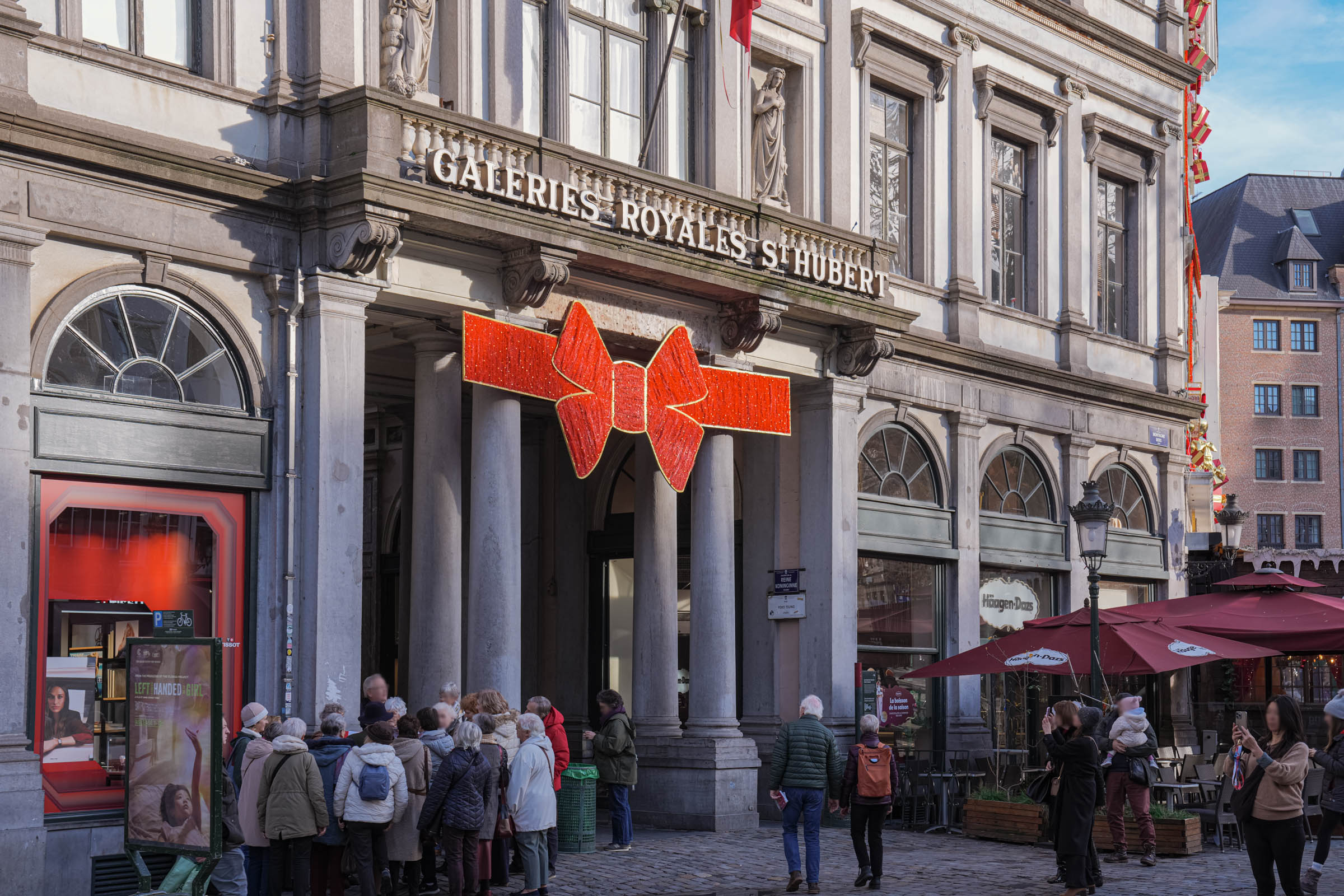
Just a step away from the Grand Place are the Galeries Royales Saint-Hubert, opened in 1847. This covered passage with a glass roof is considered one of the oldest shopping galleries in Europe and a predecessor of similar buildings such as Milan’s Galleria Vittorio Emanuele. It consists of three parts: the Gallery of the King, the Gallery of the Queen and the Gallery of the Princes. The total length exceeds two hundred meters.
The interior of the gallery leaves a strong impression. A high glass vault lets in natural light that falls on the marble floor and elegant windows. Here you will find luxury chocolatiers, bookstores, antique shops and buffets. The Toone Theatre, a famous puppet theater that has been around since 1830, is also nearby. A walk through the gallery represents a journey to a time when shopping was a social event, not an obligation.


MANNEKEN PIS AND THE BELGIAN SENSE OF HUMOR
No travelogue of Brussels would be complete without a mention of the Manneken Pis, a tiny bronze statue of a boy defecating. Only fifty-seven centimeters high, this fountain attracts thousands of visitors a day. I admit that I thought for a second that someone was playing a prank on me when I first heard about her. How can such a small sculpture be the symbol of an entire city?
The answer lies in the Belgian mentality. Brussels people like not to take themselves too seriously and Manneken Pis perfectly embodies that spirit. The original version of the statue dates back to 1619, although legends about the boy go back to the Middle Ages. One of the most popular stories says that a little boy extinguished the fuse of a bomb that was supposed to destroy the city walls. Today, the statue has a wardrobe with more than a thousand costumes donated by organizations from all over the world. On special days, Manneken Pis dresses up in different uniforms and costumes, from samurai to astronauts.


By the way, Manneken Pis also has a female counterpart named Jeanneke Pis, a small bronze fountain of a girl located in a hidden alley not far from the Grand Place. Also, there is the lesser-known Zinneke Pis, a dog sculpture. Together they form an unusual family that perfectly illustrates Brussels humor.
ATOMIUM: A VISION OF THE FUTURE FROM 1958
If the Grand Place is the heart of old Brussels, the Atomium is undoubtedly the symbol of the modern city. This spectacular structure, one hundred and two meters high, was built for the 1958 World’s Fair. It represents the crystal structure of iron atoms magnified one hundred and sixty-five billion times. Each of the nine spheres is eighteen meters in diameter, and they are connected by pipes containing escalators and escalators.
Originally, the Atomium was supposed to stand only for the duration of the exhibition. However, the people of Brussels loved it so much that it became a permanent part of the city landscape. Between 2004 and 2006, it underwent a thorough renovation, when the original aluminum panels were replaced with steel ones. Today, the upper sphere offers a panoramic restaurant with a view of the entire city, while the lower spheres serve as exhibition spaces. Entrance costs sixteen euros for adults, and the view is worth every cent. At the foot of the Atomium is Mini Europe, a park of models of the most famous European buildings in a scale of one to twenty-five.

BELGIAN GASTRONOMY: MUCH MORE THAN WAFFLES AND FRIES
It is impossible to talk about Brussels without paying special attention to food. Belgium is a country where gastronomy is understood as an art, and Brussels is its culinary epicenter. Let’s start with a fact that surprises many: French fries are not a French invention. The Belgians claim that they invented this edible symbol and in Brussels French fries are served in a paper cone with mayonnaise, never with ketchup. It is not just a habit, it is a matter of national pride.
Belgian waffles come in two basic varieties. The Brussels waffle is lighter, rectangular in shape, with a crispy exterior and airy interior. The Liješka waffle is thicker, sweeter and irregularly shaped. Both are excellent, but I recommend you try both and decide for yourself. At every step in the city center you will come across shops offering freshly baked waffles with chocolate, whipped cream or fruit.

Belgian beer deserves a special paragraph. This small country produces more than one thousand five hundred types of beer, and the Belgian brewing culture is on the list of intangible cultural heritage of UNESCO. In Brussels, be sure to visit the Delirium cafe, which holds the Guinness record with more than two thousand types of beer on offer. For fans of the authentic experience, the Kantillon brewery in the Anderlecht district is one of the last traditional lambic breweries in the city. There you can see the production process, which has not changed much since the nineteenth century.
I must not forget the Belgian chocolate. Brussels is a paradise for chocolate lovers, with chocolatiers on every corner. It is interesting that praline originated in Brussels. A nineteenth-century apothecary began coating his medicines with chocolate to make them more palatable. His grandson turned that idea into a confection that took the world by storm. Names like Pierre Marcolini and Laurent Gerbaud preserve that tradition at the highest level.


BELGIUM AS THE CAPITAL OF COMICS
Belgium is a country that is rightfully proud of the title of world capital of comics. Tintin was born in Brussels, the most famous character from the pen of Hergé, a Belgian cartoonist who created an entire school of comics in the 1950s. In addition to Tintin, Belgium gave the world the Smurfs, Luke Luke and numerous other characters that marked the childhood of generations all over the planet.
The Belgian Comic Center, housed in a beautiful Art Nouveau building in the city center, is dedicated to the history and art of the ninth art, as the Belgians call comics. Apart from the museum, the whole city is an open-air gallery. More than fifty murals with comic book heroes adorn the facades of buildings throughout Brussels. Walking from mural to mural is a special way to get to know the city, and maps with marked locations are available free of charge at tourist offices.


ART NOUVEAU AND ARCHITECTURAL TREASURES OF THE CITY
Brussels is one of the world’s most important centers of the Art Nouveau movement, and that’s a reason in itself worth a visit. In the late nineteenth and early twentieth centuries, architect Victor Orta revolutionized the way we think about living spaces. His house and studio, today converted into the Orta Museum, are on the UNESCO World Heritage List. The interior exudes organic lines, stained glass and wrought iron that bends like plant shoots.
In addition to Orta’s house, Brussels abounds in Art Nouveau pearls scattered throughout the residential districts. Solvay House, also Orta’s work, is considered one of the most beautiful private houses of the twentieth century. House of Hanon, House of Kausija and numerous other facades are revealed to architecture lovers who are ready to explore neighborhoods off the usual tourist routes. It is precisely this scattering of Art Nouveau buildings throughout the city that makes a walk through Brussels a continuous discovery.


ROYAL BRUSSELS AND MUSEUM TREASURES
The Upper Town of Brussels preserves the institutional and cultural power of the Belgian capital. The Royal Palace, although not the permanent residence of the royal family, serves as the administrative seat of the King of Belgium. Every year, from the end of July to the middle of August, the palace opens its doors to visitors. Special attention is drawn to the Hall of Mirrors, whose ceiling is covered by an installation by the Belgian artist Jan Fabre, made of one and a half million wings of a green beetle.
Mont des Arts, the artistic hill as it is called, represents the link between the lower and upper city. Its terraces offer a beautiful view of the rooftops of Brussels. In the immediate vicinity are the Royal Museums of Fine Arts of Belgium, which include collections of old masters, contemporary art and a special museum dedicated to René Magritte, the most famous Belgian surrealist. Magritte’s works, with their surreal logic and visual paradoxes, perfectly depict the Belgian spirit, which has always loved to question the obvious.

The Museum of Musical Instruments is housed in a stunning Art Nouveau building of the former Old England department store. It contains more than fifteen hundred instruments from all over the world, and each visitor receives a headset that automatically reproduces the sound of the instrument in front of him. On the roof of the museum there is a restaurant with one of the most beautiful views of the city. In addition, the Institute of Natural Sciences offers the largest dinosaur gallery in Europe, making it a great choice for families with children.

CATHEDRAL OF SAINT MICHAEL AND SAINT GUDULA
This Gothic cathedral, whose construction lasted from the thirteenth to the fifteenth century, dominates the skyline of the city center. The Brabant Gothic style is recognizable by two symmetrical towers sixty-four meters high and the rich stone decoration of the facade. The interior is decorated with stained glass windows that are more than five hundred years old, which even on a cloudy day fill the space with various colors.
The cathedral serves as the wedding and burial site of the Belgian royal family. Entrance is free, which is especially valuable information for travelers. However, a tour of the crypt and the archaeological remains of the former church is charged extra. The foundations of a Romanesque church from the eleventh century were discovered under today’s cathedral, which further testifies to the depth of the historical layers of this place.

THE FOURTH SABLON AND THE CITY’S HIDDEN GEMS
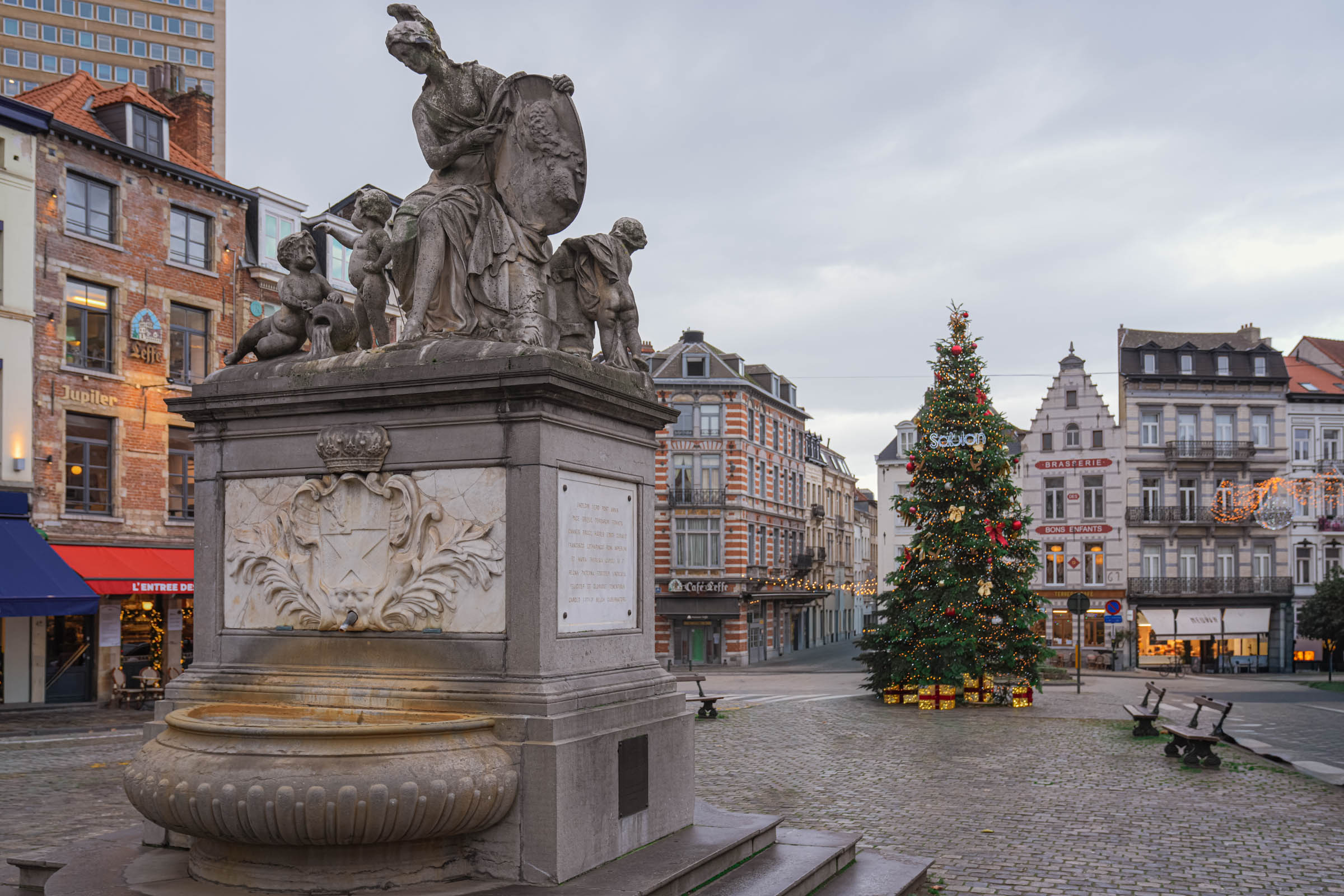
If Grand Place represents the tourist heart of Brussels, Sablon is its elegant suburb. This district is known for its antique shops, galleries and chocolatiers of the highest quality. Petit Sablon Square is surrounded by a small garden with statues representing medieval artisan guilds. There is a peaceful atmosphere that invites you to slow down and enjoy the details.
Not far from there is the neighborhood of Marolles, a traditionally working-class neighborhood that today attracts artists and curious travelers. The Jeu de Balle flea market is open daily and offers everything from vintage furniture to retro clothes and old books. It is precisely in the contrasts between the elegant Sablon and the down-to-earth Marolles that the diversity that makes Brussels such a special city is reflected. The Palace of Justice, a monumental nineteenth-century edifice towering over Marolles, is one of the largest court buildings in the world and offers spectacular views of the lower town.

BRUSSELS AS THE CAPITAL OF EUROPE
Apart from the Belgian capital, Brussels is also the unofficial capital of the European Union. The headquarters of the European Commission, the Council of the European Union and numerous other institutions are located in the so-called European Quarter. There is also the headquarters of NATO. This fact gives Brussels a cosmopolitan character that few cities can match. It is estimated that more than thirty thousand employees in European institutions live and work in the city, which gives a special dynamic to city life.
Particularly interesting for visitors is the Parlamentarium, an interactive center for visitors to the European Parliament. Entrance is free, and the exhibition in twenty-four languages explains how European institutions work. The House of European History, opened in 2017, offers a fascinating overview of Europe’s shared past over six floors. Both institutions are worth including in the itinerary, especially for those who want to understand the political dimension of the city. Leopold Park, a green oasis in the heart of the European Quarter, offers a pleasant respite from the urban pace.


STEIGENBERGER WILTCHER’S: A CENTURY OF ELEGANCE ON AVENUE LOUISE
During my stay in Brussels, I stayed at the Steigenberger Icon Wiltcher’s Hotel, one of the most famous luxury hotels in Belgium. This five-star hotel is located on the prestigious Avenue Louise, the city’s main shopping avenue, and its imposing Art Nouveau facade is impossible to miss. The white facade with black balustrades glistens in the daylight, and when you enter through the canopied entrance, a red carpet leads you to the opulent dark oak reception desk, lit by sparkling chandeliers.
The hotel was opened in 1913 and is named after Sidney Wiltshire, a member of the British expatriate family who bought the former residence of Baron Joseph de Crachet. Since then, the hotel has changed several owners, but it has kept the spirit of the great European hotels. Between 1993 and 2012, it was called Conrad Brussels, and today it is managed by the German chain Steigenberger. A 2015 renovation restored the luster to the polished brass fixtures and marble. With 267 rooms, including 42 suites, Wiltcher’s offers some of the most spacious accommodation in the city.


Loui Bar and Restaurant won the Prix Villégiature award for the best hotel bar in Europe, which speaks of the level of hospitality offered. The hotel’s library, a favorite place for both guests and locals, provides a pleasant atmosphere to relax with literature and hot drinks. On the terrace in front of the hotel you can enjoy watching the elegant life of Avenue Louise with a coffee or a glass of Belgian beer. The hotel’s position is excellent for exploring the city, with a tram stop directly outside the door and Louise metro a five-minute walk away.
My experience in the Executive Suite was exceptional. This apartment covers ninety square meters and offers a separate living room and bedroom, which gives the feeling of a real home away from home. The living room is equipped with a comfortable sofa, armchairs, a coffee table and a flat screen TV. A bedroom with a king-size bed and premium bedding guarantees a restful sleep. The marble bathroom with separate shower and bathtub is a special delight. The view through the large floor-to-ceiling windows overlooks Avenue Louise and the elegant rooftops of Brussels. Breakfast at Café Wiltcher’s, with its high ornate ceilings and large windows, is the perfect start to the day. Butler service in apartments of this level further enhances the stay experience. Undeniably, Steigenberger Wiltcher’s is an address that justifies every cent invested in a stay in Brussels.

BASILICA OF THE SACRED HEART AND A VIEW YOU REMEMBER
In the Kekelberg district, on the edge of the city, rises the Basilica of the Sacred Heart, the fifth largest church in the world. With a height of eighty-nine meters and a length of one hundred and sixty-seven meters, this Art Deco building leaves a strong impression. Its viewpoint, which offers a panoramic view of the whole of Brussels, is worth a visit in itself. Entrance to the church is free, while access to the viewpoint is charged a symbolic fee.
The construction of the basilica began in 1905 on the occasion of the seventy-fifth anniversary of Belgian independence, but it was not completed until 1969 due to interruptions caused by two world wars. The interior is a space that exudes peace and monumentality. The green copper roof of the basilica can be seen from many parts of the city and is a recognisable element of the Brussels skyline that tourists often skip, and they shouldn’t.


FIFTY PARK AND TRIUMPH ARCH
Parc du Cinquantenaire, also known as the Fiftieth Park, was built in 1880 to mark the fiftieth anniversary of Belgian independence. In the center of the park rises a monumental triumphal arch that resembles its Parisian counterpart, but carries its own Belgian character. The park is a favorite place for running, picnicking and socializing in the fresh air, especially during the warmer months.
There are three important museums inside the park. The Museum of Art and History has rich collections of antiquities from all over the world. Autoworld is a paradise for car lovers, with more than two hundred and fifty vintage and classic vehicles on display in one place. The Royal Museum of the Army and Military History offers free entry and a detailed exhibition on Belgian military campaigns through the ages. This park represents a perfect combination of culture, history and nature and is worth setting aside half a day for its tour.

NIGHT LIFE AND CAFE CULTURE
Brussels after sunset offers a different energy. The Saint-Géry district, named after the saint who founded the original chapel on the Seine, is today the center of nightlife. Bars and restaurants around the market of the same name attract a young and middle-aged crowd alike. The atmosphere is relaxed, far from the pretentiousness that sometimes accompanies European capitals.
For a different experience, I recommend an evening in one of the traditional Brussels cafes. These bars, with their wooden interiors, brass bars and huge selection of beers, are where the locals really come together. A la Mort Subite, a cafe founded in 1928, offers an authentic ambiance and lambic beer poured in a way that hasn’t changed in decades. Le Cirio, another historic cafe near the stock exchange, exudes Art Nouveau elegance with its gilded mirrors and chandeliers.
PRACTICAL TIPS FOR TRAVELING TO BRUSSELS
Brussels is a city best explored on foot, at least when it comes to the center. From the Grand Place to the Manneken Pis, you only need a five-minute walk. You will go to the Royal Palace and the museum complex in fifteen minutes. For more distant points like the Atomium or the European Quarter, the metro and tram network work great. Avoid renting a car as traffic is heavy and free parking spaces are almost non-existent.
As for language, French and Flemish Dutch are spoken in Brussels, and most people speak English very well. You will have no problem communicating in any language. The best time to visit is late spring or early fall, when the temperatures are pleasant and the tourist crowds bearable. Three to four days are enough to get to know the city thoroughly. Two days will be enough for the main sights of the center, but if you want to visit the Atomium, Mini Europe and the European Quarter, plan a longer stay.
Brussels is a city that is not attacked, does not show off and does not make a show of itself. Instead, it quietly draws you into its story and slowly wins you over. When you leave, you take with you the taste of pralines on your tongue, the memory of the gilded facades of the Grand Place, and the feeling that you’ve discovered something that other travelers skip over. This is precisely where its special charm lies. Brussels is not a city for those in a hurry. Brussels is for those who know how to enjoy themselves.
Have you already had the opportunity to visit Brussels, this fascinating capital where magnificent Art Nouveau façades and grand guild houses line the cobblestone squares, and tradition lives side by side with the cosmopolitan spirit of one of Europe’s most multilingual cities? Or maybe you are just planning to step into this urban labyrinth, get lost in the charming streets of Sablon, feel the energy of a city that breathes through its boulevards and hidden passages, but also find moments of silence in quiet courtyards and museums that store masterpieces of world art?
Feel free to leave your impressions, comments or questions below the text or contact me via email and social networks. All information is available on the CONTACT page.
See you soon, with a new story from the heart of old Europe!
With Love from Brussels,
Mr.M

This post is sponsored by the United Nations World Tourism Organization (UN Tourism) and the Steigenberger Icon Wiltcher’s Hotel, as well as other local partners who have selflessly supported this project. This post is my personal and honest review of the destination experience.
Marko, what a magnificent piece of writing. I visited Brussels back in 2023 and stayed at the Hotel Amigo near Grand Place, which was lovely, but reading your description of the Steigenberger Wiltcher’s makes me think I chose the wrong address. Your point about Brussels requiring patience is spot on I almost dismissed it after just half a day, but by the second evening I was completely charmed. The section about the guild houses being rebuilt in just four years after the French bombardment gave me chills. I’ll be returning next spring and this time Avenue Louise is on my… Read more »
Hallo Marko, ich verfolge deinen Blog schon seit einiger Zeit und dieser Beitrag über Brüssel gehört zu deinen besten. Die Geschichte über den Ursprung des Namens Bruocsella kannte ich tatsächlich nicht, obwohl ich als Deutscher ja quasi Nachbar bin. Besonders beeindruckt hat mich deine Beschreibung der Galeries Royales Saint-Hubert ich war vor zwei Jahren dort und habe mich sofort an die Galleria in Mailand erinnert gefühlt. Dein Schreibstil macht wirklich Lust, sofort den Koffer zu packen.
What a beautifully written travelogue. I spent four days in Brussels with my husband in autumn 2024 and we had the most wonderful time exploring the Sablon district and its antique shops. Your recommendation about the Marolles flea market is excellent we found a gorgeous vintage lamp there that now sits in our living room. One question though: did you manage to visit the Horta Museum, and if so, do you need to book tickets in advance? We missed it last time because it was fully booked.
Superbe article Marko, vraiment. En tant que Français, je dois reconnaître que Bruxelles est souvent injustement ignorée au profit de Paris ou Amsterdam. J’y suis allé il y a trois ans et j’ai adoré le quartier Saint-Géry le soir, exactement comme tu le décris. La brasserie Cantillon est un véritable trésor la dégustation de lambic là-bas m’a complètement changé ma vision de la bière belge. Ton passage sur la gastronomie belge est parfaitement juste, les frites avec la mayonnaise c’est sacré.
Brilliant post, Marko. I particularly appreciated the historical depth you brought to the Grand Place section. Most bloggers just post a photo and move on, but you actually explained the 1695 bombardment and the remarkable reconstruction effort by the guilds. I stayed at The Dominican hotel two years ago and loved how they converted a fifteenth-century abbey into a modern luxury hotel. Do you think three days is really enough for Brussels, or would you recommend four for someone who wants to visit both the Atomium and the European Quarter as well?
Geweldig artikel, Marko! Als Nederlander schaam ik me bijna dat ik Brussel altijd heb overgeslagen op weg naar het zuiden van Frankrijk. Je beschrijving van het Atomium en de renovatie tussen 2004 en 2006 was heel informatief. Ik wist niet dat het oorspronkelijk tijdelijk bedoeld was voor de Wereldtentoonstelling van 1958. Mijn vrouw en ik plannen nu een lang weekend Brussel en het Steigenberger hotel ziet er fantastisch uit. Heb je toevallig ook het panoramisch restaurant in de bovenste bol van het Atomium geprobeerd?
Querido Marko, qué publicación tan maravillosa. Visité Bruselas en 2022 y me alojé en el Warwick Brussels Grand Place, un hotel clásico con mucho encanto justo al lado de la plaza principal. Tu descripción de la Basílica del Sagrado Corazón en Koekelberg me ha sorprendido porque la mayoría de los turistas ni siquiera saben que existe. Me encantó el dato de que es la quinta iglesia más grande del mundo, eso es algo que voy a compartir con mis amigos. Tus fotos son realmente excepcionales.
Marko, I’ve been following your blog for years and this Brussels piece is outstanding work. The way you wove together history, architecture, food and personal experience is exactly why your writing stands above most travel blogs. I was particularly fascinated by the detail about Charles V abdicating in Brussels in 1556. My wife and I are planning a trip for September would you say the Executive Suite at the Steigenberger is worth the upgrade from a standard room, or is the regular accommodation already of a high standard?
Caro Marko, che articolo meraviglioso su Bruxelles. Sono stato lì nel 2023 per lavoro e ho soggiornato al Sofitel Brussels Le Louise, che si trova anche su Avenue Louise non lontano dallo Steigenberger che descrivi. Devo dire che la tua osservazione su Bruxelles come città che richiede pazienza è assolutamente vera il primo giorno ero deluso, il terzo giorno non volevo più partire. Il quartiere Sablon con le sue cioccolaterie è stato il mio momento preferito. La prossima volta voglio assolutamente visitare la birreria Cantillon.
Excellent travelogue, Marko. Your description of the Galeries Royales Saint-Hubert took me right back to my visit in 2024 that glass vault ceiling really is spectacular. I had no idea it predated the Galleria Vittorio Emanuele in Milan, which I always assumed was the original. The fact that the Toone puppet theatre has been running since 1830 is remarkable. Your photos capture the light beautifully, especially the Grand Place in the evening. This is travel writing at its finest.
Marko, großartiger Beitrag! Ich war letztes Jahr in Brüssel und habe im Hotel Metropole übernachtet, einem wunderschönen historischen Hotel am Place de Brouckère. Deine Empfehlung für das Café A la Mort Subite kann ich nur bestätigen die Atmosphäre dort ist einzigartig und das Lambic-Bier ist ein Erlebnis. Was mich besonders interessiert: Wie war das Frühstück im Café Wiltcher’s genau? Du erwähnst hohe verzierte Decken, aber gab es auch eine gute Auswahl an warmen Speisen? Als Deutscher lege ich großen Wert auf ein ordentliches Frühstück.
What a lovely read, Marko. I adore your writing style it feels like walking through the city alongside you. The section on Art Nouveau and Victor Horta was particularly inspiring. I visited the Horta Museum three years ago and was moved to tears by the stained glass and the way natural light flows through every room. Brussels really is an underrated gem for architecture lovers. I also appreciated your practical tips about avoiding car rental we made that mistake once and spent more time looking for parking than actually sightseeing.
Cher Marko, merci pour ce magnifique récit de voyage. Je suis un lecteur fidèle de ton blog et cet article sur Bruxelles est particulièrement réussi. La partie sur la gastronomie belge m’a beaucoup plu, surtout le détail sur l’origine des pralines inventées par un apothicaire qui enrobait ses médicaments de chocolat. Est-ce que tu as eu l’occasion de visiter la chocolaterie de Pierre Marcolini que tu mentionnes? J’aimerais savoir si la dégustation sur place vaut le détour. En tout cas, bravo pour la qualité de tes textes.
Marko, this is genuinely one of the best Brussels guides I’ve ever read, and I’ve read quite a few. The historical context you provide is remarkable most travel writers skip straight to restaurant recommendations. I visited Brussels in early 2024 and the Parlamentarium was one of the highlights, exactly as you describe. The fact that it’s free and available in twenty-four languages makes it accessible to everyone. I’m curious whether you visited the House of European History as well, and if so, how much time would you recommend setting aside for it?
Hallo Marko, fantastischer Artikel über Brüssel. Als jemand der beruflich oft in der EU-Hauptstadt ist, kann ich bestätigen dass du die Stadt perfekt eingefangen hast. Den Cinquantenaire Park besuche ich jedes Mal wenn ich dort bin das Autoworld Museum mit seinen zweihundertfünfzig Oldtimern ist wirklich beeindruckend. Dein Tipp zum Steigenberger Wiltcher’s ist interessant, da ich bisher immer im Stanhope Hotel in der Rue du Commerce übernachtet habe. Beim nächsten Besuch werde ich definitiv das Wiltcher’s ausprobieren.
Marko, fantástico post como siempre. Me encanta cómo describes la historia de Bruselas desde sus orígenes como un asentamiento en un pantano hasta convertirse en la capital de Europa. Estuve allí hace dos años y lo que más me impresionó fue exactamente lo que describes el contraste entre la elegancia del Grand Place y el carácter bohemio del barrio de Marolles. El mercadillo de Jeu de Balle es una experiencia que todo viajero debería vivir al menos una vez. ¿Podrías recomendar algún restaurante específico en el barrio de Sablon para una cena especial?
Superb writing, Marko. I must say your observation about Brussels not being a city for those in a hurry really resonated with me. I spent a weekend there in 2023 and felt I barely scratched the surface. The Delirium Café with its two thousand beers was an experience I’ll never forget, though I barely managed to try ten of them. Your description of the Steigenberger’s Executive Suite sounds absolutely dreamy ninety square metres with a separate living room is proper luxury. The butler service is a particularly elegant touch that you don’t find in many European hotels anymore.
Caro Marko, complimenti per questo bellissimo articolo. Come italiano, devo ammettere che spesso sottovalutiamo Bruxelles a favore delle nostre città, ma il tuo racconto mi ha fatto riconsiderare completamente. La descrizione delle Galeries Royales Saint-Hubert come predecessore della nostra Galleria Vittorio Emanuele a Milano è un dettaglio affascinante che non conoscevo. Ho visitato Bruxelles nel 2021 e ho soggiornato al Rocco Forte Hotel Amigo un hotel magnifico ma devo dire che lo Steigenberger sembra altrettanto impressionante. Le tue fotografie sono davvero di livello professionale.
Hallo Marko, wat een prachtig geschreven reisverhaal. Ik woon in Rotterdam en Brussel is eigenlijk maar anderhalf uur rijden, maar toch heb ik de stad nooit echt goed verkend. Na het lezen van jouw artikel sta ik te popelen om te gaan. De informatie over de Kathedraal van Sint-Michiel en Sint-Goedele was bijzonder interessant ik wist niet dat de glas-in-loodramen meer dan vijfhonderd jaar oud zijn. En het feit dat de toegang gratis is, maakt het nog aantrekkelijker. Bedankt voor deze inspirerende post!
Marko, outstanding post as always. The depth of research you put into each piece really shows. I was fascinated by the detail about the Basilica of the Sacred Heart taking from 1905 to 1969 to complete due to two world wars interrupting the construction. That’s over six decades of building. Your tip about the viewpoint there being worth the visit is noted most guides focus only on the Atomium for panoramic views. Quick question: is the area around Avenue Louise good for evening dining, or would you recommend heading to the Grand Place area instead?
Lieber Marko, was für ein hervorragender Reisebericht! Die Kombination aus historischen Fakten und persönlichen Eindrücken macht deinen Blog so besonders. Ich war 2022 in Brüssel und habe das Magritte-Museum besucht es ist wirklich faszinierend, wie Magrittes surrealistische Logik den belgischen Geist widerspiegelt, genau wie du es beschreibst. Das Museum der Musikinstrumente im ehemaligen Old England Kaufhaus kannte ich aber nicht. Dass man Kopfhörer bekommt, die automatisch den Klang des Instruments vor einem abspielen, klingt fantastisch. Das steht jetzt ganz oben auf meiner Liste.
Marko, I thoroughly enjoyed this piece. As someone who has visited over forty European capitals, I can confirm that Brussels is indeed one of the most underrated. Your description of the flower carpet made from half a million begonias every other August in the Grand Place is wonderful I was lucky enough to see it in 2022 and it was breathtaking. The Steigenberger Wiltcher’s sounds like a magnificent base for exploring the city. I especially loved your closing line about Brussels being for those who know how to enjoy themselves. Beautifully put.
Formidable, Marko! Ton article m’a donné envie de retourner à Bruxelles immédiatement. J’y étais l’année dernière et j’ai séjourné au Pillows Grand Hotel Place Rouppe, un très bel hôtel boutique. Mais ta description du Steigenberger avec sa façade Art Nouveau et le tapis rouge à l’entrée me donne vraiment envie d’essayer la prochaine fois. Une question pratique: est-ce que le Loui Bar du Steigenberger est accessible aux non-résidents de l’hôtel? J’adore découvrir des bars d’hôtel élégants quand je voyage. Le fait qu’il ait gagné le Prix Villégiature est très prometteur.
Marko, I’ve just spent twenty minutes reading this and I feel like I’ve been on a virtual tour of Brussels. The way you explained the history of each district gives proper context that most travel blogs completely lack. I had no idea that Belgium produces over fifteen hundred types of beer that’s staggering for such a small country. The Cantillon brewery in Anderlecht sounds like exactly my kind of place. My only regret from my 2023 visit was not spending enough time in the European Quarter. Next time I’ll follow your advice and allow four full days.
Marko, che bella sorpresa leggere questo articolo su Bruxelles. Ho visitato la città tre volte per lavoro ma non avevo mai esplorato il quartiere di Koekelberg con la Basilica del Sacro Cuore. Il fatto che sia la quinta chiesa più grande del mondo e che la maggior parte dei turisti la ignori è incredibile. La tua descrizione del Parc du Cinquantenaire mi ha fatto venire nostalgia ci andavo a correre ogni mattina durante i miei soggiorni lavorativi. Il museo Autoworld con le sue auto d’epoca è un gioiello nascosto. Complimenti per le foto, sono di altissima qualità.
Marko, als Vlaming die in Brussel heeft gewoond, moet ik zeggen dat je de stad heel goed hebt begrepen. De meeste buitenlandse bloggers missen de echte ziel van Brussel, maar jij hebt die perfect gevangen. Je opmerking over de tweetaligheid is belangrijk het is inderdaad een stad waar Frans en Vlaams naast elkaar bestaan, soms niet zonder spanning. De Marollen en de Zavel zijn mijn favoriete buurten en ik ben blij dat je ze allebei hebt beschreven. Geweldig werk, blijf zo doorgaan!
Great article, Marko. I particularly enjoyed the section on the comic book heritage of Belgium. Walking the mural route through Brussels was one of the most unexpectedly delightful things I did during my visit in 2024. Finding the Smurfs mural near Brussels Central station was a real highlight. Your mention of more than fifty murals throughout the city makes me think I only found about fifteen, so I clearly need to go back. Did you happen to pick up one of those free maps from the tourist office showing all the mural locations?
Marko, ein wunderbarer Beitrag! Besonders gut hat mir deine Beschreibung des Steigenberger Icon Wiltcher’s gefallen. Ich kenne das Hotel noch aus der Zeit als es Conrad Brussels hieß und muss sagen, dass die Renovierung von 2015 dem Haus wirklich gutgetan hat. Die Executive Suite mit neunzig Quadratmetern klingt traumhaft. Ich schätze besonders, dass du auch die praktischen Details erwähnst, wie die Tramhaltestelle direkt vor der Tür und die Nähe zur Metro Louise. Das sind genau die Informationen, die man als Reisender braucht.
Marko, what a comprehensive and wonderfully written guide to Brussels. I visited with my daughter two years ago and the Musical Instruments Museum was the absolute highlight for us. The headset system that plays the sound of each instrument as you stand in front of it is genius. And the rooftop restaurant with that spectacular view we had lunch there and it was unforgettable. Your point about the Art Nouveau building housing the museum is well made. Brussels has so many architectural treasures hiding in plain sight. Thank you for this beautiful piece of writing.
Hola Marko, excelente artículo. Lo que más me gustó fue tu sección sobre la Grand Place y cómo los gremios de artesanos reconstruyeron la plaza en solo cuatro años después del bombardeo francés de 1695. Eso dice mucho sobre el espíritu de Bruselas. Visité la ciudad en otoño de 2023 y me alojé en el Hotel Le Châtelain en la zona de Ixelles, un boutique hotel muy agradable. Tu descripción del Manneken Pis y su guardarropa de más de mil trajes me hizo reír es algo que solo los belgas podrían inventar. ¿Llegaste a ver al Zinneke Pis, la escultura… Read more »
Marko, this is travel journalism at its best. I appreciate how you gave Brussels the serious historical treatment it deserves rather than reducing it to waffles and chocolate. The fact that Duke Charles of Lower Lorraine built a fort on the Senne River in 979 and that the city grew from a marsh settlement is fascinating context. I visited the Grand Place on a rainy November evening in 2024 and the illuminated gilded facades were absolutely magical exactly the theatrical scene you describe. Your blog consistently delivers quality that most published travel magazines would envy.
Caro Marko, sono rimasto colpito dalla profondità del tuo racconto di viaggio. La sezione sulla cattedrale gotica di San Michele e Santa Gudula mi ha particolarmente interessato non sapevo che sotto la cattedrale attuale fossero state scoperte le fondamenta di una chiesa romanica dell’undicesimo secolo. Questo dettaglio dimostra la tua cura nella ricerca. Ho visitato Bruxelles nel 2022 e devo dire che il Parc du Cinquantenaire con il suo arco di trionfo è davvero un posto magnifico. Hai ragione quando dici che vale la pena dedicargli mezza giornata.
Cher Marko, quel plaisir de lire cet article. Je voyage beaucoup en Europe pour mon travail et Bruxelles est l’une de mes villes préférées. Ta description du café Le Cirio près de la bourse m’a rappelé de très bons souvenirs les miroirs dorés et les lustres Art Nouveau créent une atmosphère vraiment unique. J’apprécie aussi que tu mentionnes la culture de la bière belge inscrite au patrimoine immatériel de l’UNESCO. C’est un détail que beaucoup de voyageurs ignorent. Bravo pour ce travail remarquable.
Marko, wat een fantastisch stuk over Brussel! Ik heb de stad vorig jaar bezocht en verbleef in The Hoxton Brussels, een modern hotel met veel karakter. Jouw beschrijving van het Steigenberger Wiltcher’s klinkt echter als een heel andere ervaring veel klassischer en eleganter. De informatie over het Parlamentarium was heel nuttig; ik wist niet dat het gratis was en beschikbaar in vierentwintig talen. Dat gaat zeker op mijn lijst voor de volgende keer. Heb je ook het Leopold Park bezocht dat je noemt als groene oase in het Europese Kwartier?
Marko, splendid article. The section on Belgian chocolate was particularly informative I had no idea that pralines originated from a Brussels apothecary coating medicines in chocolate. That anecdote alone made the entire article worth reading. I visited Pierre Marcolini’s shop on Place du Grand Sablon during my trip in 2023 and the quality was extraordinary. Your description of the Steigenberger’s marble bathroom with separate shower and bathtub sounds wonderfully indulgent. This kind of detailed, personal account is exactly what separates your blog from the generic content flooding the internet these days.
Marko, impresionante artículo. Sigo tu blog desde hace años y cada post es mejor que el anterior. Me encanta el detalle sobre el Atomium no sabía que originalmente iba a ser una estructura temporal y que los ciudadanos de Bruselas lo salvaron porque lo amaban demasiado. La entrada de dieciséis euros por las vistas panorámicas parece muy razonable. También me interesa mucho el Mini Europa que mencionas al pie del Atomium. ¿Es realmente interesante para adultos o está más orientado a familias con niños? Gracias por compartir siempre contenido de tanta calidad.
Marko, this is a beautifully crafted travelogue. I was in Brussels just last year and your description of the Petit Sablon square with its statues of medieval guilds brought back wonderful memories. The garden there is such a peaceful escape from the busier parts of the city. I also loved your mention of the flower carpet event on the Grand Place I’ve been trying to time a visit for an even-numbered August to see it. Your writing has that rare quality of being both informative and genuinely enjoyable to read. Keep up the wonderful work.
Lieber Marko, herzlichen Dank für diesen ausführlichen und wunderschönen Beitrag. Als Architekturfan hat mich besonders die Passage über Art Nouveau und Victor Horta begeistert. Das Solvay-Haus als eines der schönsten Privathäuser des zwanzigsten Jahrhunderts zu bezeichnen ist keine Übertreibung. Ich habe es 2023 von außen gesehen und war schon beeindruckt. Deine Bemerkung, dass die Art-Nouveau-Gebäude über die ganze Stadt verstreut sind, macht Brüssel zu einer Art Freilichtmuseum. Das Steigenberger selbst mit seiner Art-Nouveau-Fassade passt perfekt in dieses Bild.
Marko, excellent travail! J’ai particulièrement aimé ta section sur la vie nocturne et la culture des cafés. Le quartier Saint-Géry est effectivement un endroit formidable pour passer une soirée détendue. Je connais bien A la Mort Subite ce café fondé en 1928 est une véritable institution bruxelloise. Le lambic qu’on y sert est exceptionnel. Ta remarque sur Bruxelles comme une ville loin de la prétention est très juste et c’est exactement ce qui la rend si attachante pour les voyageurs qui cherchent l’authenticité.
Marko, fascinating article. The detail about the Royal Palace opening its doors every summer and the Hall of Mirrors with Jan Fabre’s installation made from one and a half million beetle wings is extraordinary. I visited in August 2023 specifically to see the palace interior and it was worth every minute of queuing. Your knowledge of Brussels history, from the Burgundian period through the Habsburgs to modern times, gives this post real academic weight without ever feeling dry. The Steigenberger sounds like the perfect base that Loui Bar winning the Prix Villégiature is quite an endorsement.
Caro Marko, bellissimo post! La tua descrizione della Grand Place illuminata di sera come una scena teatrale è poetica e assolutamente vera. Ci sono stato tre anni fa in inverno e con i mercatini di Natale era ancora più magico. Mi ha colpito anche il tuo racconto sul Manneken Pis e il suo guardaroba di oltre mille costumi abbiamo riso molto quando lo abbiamo trovato vestito da chef belga. Una domanda: hai visitato anche Bruges o Gand durante il tuo soggiorno in Belgio? Sono curioso di sapere se hai in programma un articolo anche su quelle città.
Hallo Marko, ich lese deinen Blog regelmäßig und dieser Brüssel-Beitrag hat mich wirklich überrascht. Ich hatte die Stadt nie auf meiner Reiseliste, aber nach deinem Artikel habe ich sofort angefangen, Flüge zu suchen. Die Information über das Belgische Comic-Zentrum in einem Art-Nouveau-Gebäude klingt fantastisch als Fan von Tim und Struppi ist das ein Muss für mich. Auch der Hinweis, dass über fünfzig Wandgemälde mit Comicfiguren in der ganzen Stadt verteilt sind, macht einen Stadtspaziergang zu einem richtigen Abenteuer. Vielen Dank für die Inspiration!
Marko, what a thorough and engaging guide. I’ve visited Brussels twice and both times I missed the Basilica of the Sacred Heart in Koekelberg. Your description has convinced me it should be a priority next time. The fact that construction was interrupted by both world wars adds such poignancy to the building. I also want to compliment you on the photography the golden hour shot of the Atomium is stunning. Your collaboration with UN Tourism clearly allows you to produce content of exceptional quality, and it shows.
Marko, bravo pour cet article exceptionnel. En tant que grand amateur de bière belge, ta section sur la culture brassicole m’a particulièrement touché. Le Delirium Café avec ses deux mille bières est un lieu mythique que j’ai visité plusieurs fois. Mais ce qui m’a le plus impressionné dans ton texte, c’est la façon dont tu lies l’histoire à l’expérience personnelle. Le passage sur Charles Quint qui abdiqua à Bruxelles en 1556 est un rappel fascinant de l’importance historique de cette ville. Continue à nous inspirer avec tes récits.
Marko, absolutely first-rate travel writing. The comparison between how Paris and Rome enchant you immediately while Brussels requires a deeper look is the perfect way to frame the piece. I stayed at the Juliana Hotel Brussels last autumn and it was delightful, but your description of the Steigenberger with its 1913 heritage and the transformation from the former Conrad Brussels makes it sound like a truly special property. The detail about the view from the Executive Suite overlooking Avenue Louise and the rooftops of Brussels sounds magnificent. This post has genuinely moved Brussels up my list.
Caro Marko, seguo il tuo blog da tempo e questo articolo su Bruxelles è davvero speciale. La parte sulla cattedrale di San Michele e Santa Gudula con le sue vetrate di cinquecento anni mi ha particolarmente colpito è incredibile che l’ingresso sia gratuito. Apprezzo molto anche i tuoi consigli pratici alla fine dell’articolo, specialmente quello di evitare il noleggio auto. Quando sono stato a Bruxelles nel 2024, ho fatto l’errore di prendere una macchina e ho passato ore nel traffico. La metro e il tram funzionano davvero benissimo come dici tu.
Marko, ein herausragender Reisebericht! Die Passage über den Parc du Cinquantenaire und seine drei Museen war besonders hilfreich für meine Reiseplanung. Ich wusste nicht, dass das Königliche Museum der Streitkräfte freien Eintritt bietet das ist ein wichtiger Tipp. Auch deine Beschreibung des Steigenberger Wiltcher’s mit dem Butler-Service in den höherwertigen Suiten zeugt von echtem Luxus. Eine Frage noch: Gibt es in der Nähe des Hotels gute Restaurants für ein elegantes Abendessen, oder muss man dafür eher in die Innenstadt fahren?
Marko, what a wonderful conclusion to the piece Brussels being for those who know how to enjoy themselves. That line alone captures the entire spirit of the city. I spent five days there in 2024 and it still wasn’t enough. Your mention of the Institute of Natural Sciences having the largest dinosaur gallery in Europe was news to me and I wish I’d known before my trip. The level of detail in this post is remarkable, from the ninety-six-metre tower of the City Hall to the exact cost of Atomium tickets. This is the kind of meticulous, passionate travel writing… Read more »