My dear travellers and lovers of unusual journeys, welcome to the new travelogue on the Mr.M blog. After a series of travelogues from Asia that won your hearts, it’s time to focus on European metropolises. All those who travel know that there are two types of destinations, the cities you visit and the cities that visit you and win your heart at first sight. Amsterdam belongs to the latter type. That December 2025, when I stepped onto the wet cobblestone sidewalk outside Central Railway Station for the umpteenth time, I felt something I can’t quite describe: the mix of excitement, warmth, and quiet Dutch rebellious elegance that this city carries with it regardless of the season. It wasn’t snowing, but the air was crisp, the sky gray-blue, and the lights along the canals had already started to come on, turning the city into something like an open-air theater stage.
Before starting today’s travelogue about Amsterdam, I want to express my special thanks to the United Nations World Tourism Organization – UN Tourism and Waldorf Astoria Amsterdam for supporting and promoting quality tourism around the world. Their dedication to connecting cultures and destinations is an inspiration to all of us who believe that travel enriches the soul.

Amsterdam is not only the capital of the Netherlands, although many do not know that the government actually sits in The Hague. This is a city that has a soul, a city that breathes through its canals, bicycle pedals and four-century-old house facades. A city that receives almost nine million visitors a year and offers each of them something different. He offered me a winter fairy tale without snow and showed me that sometimes the most beautiful season to travel is the one that doesn’t appeal to you at first glance.
AMSTERDAM: A CITY BUILT ON WATER AND WOODEN PILLARS
What has always fascinated me about Amsterdam is the fact that the entire city literally stands on wooden stilts driven into the marshy ground. It sounds incredible, but it’s true because without those millions of pillars buried in the sandy layer below the marsh, the magnificent houses along the canal would have collapsed centuries ago. The Dutch have a saying that perfectly describes their relationship to nature and engineering: “God made the world, but the Dutch made Holland.” And indeed because so, because when you walk around Amsterdam, you realize how true that saying actually is.
Amsterdam was founded in the twelfth century as a small fishing village at the mouth of the Amstel River, which was dammed to control flooding, hence the name of the city, which literally means “dam on the Amstel”. From that humble beginning grew one of the most important trading centers of the world, especially during the seventeenth century, in a period called the Dutch Golden Age. During that period, Amsterdam was the center of world trade, finance and art. From here, the powerful Dutch East India Company managed trade routes that extended to Southeast Asia, and the wealth that flowed into the city made it possible to build the Amsterdam we know today.
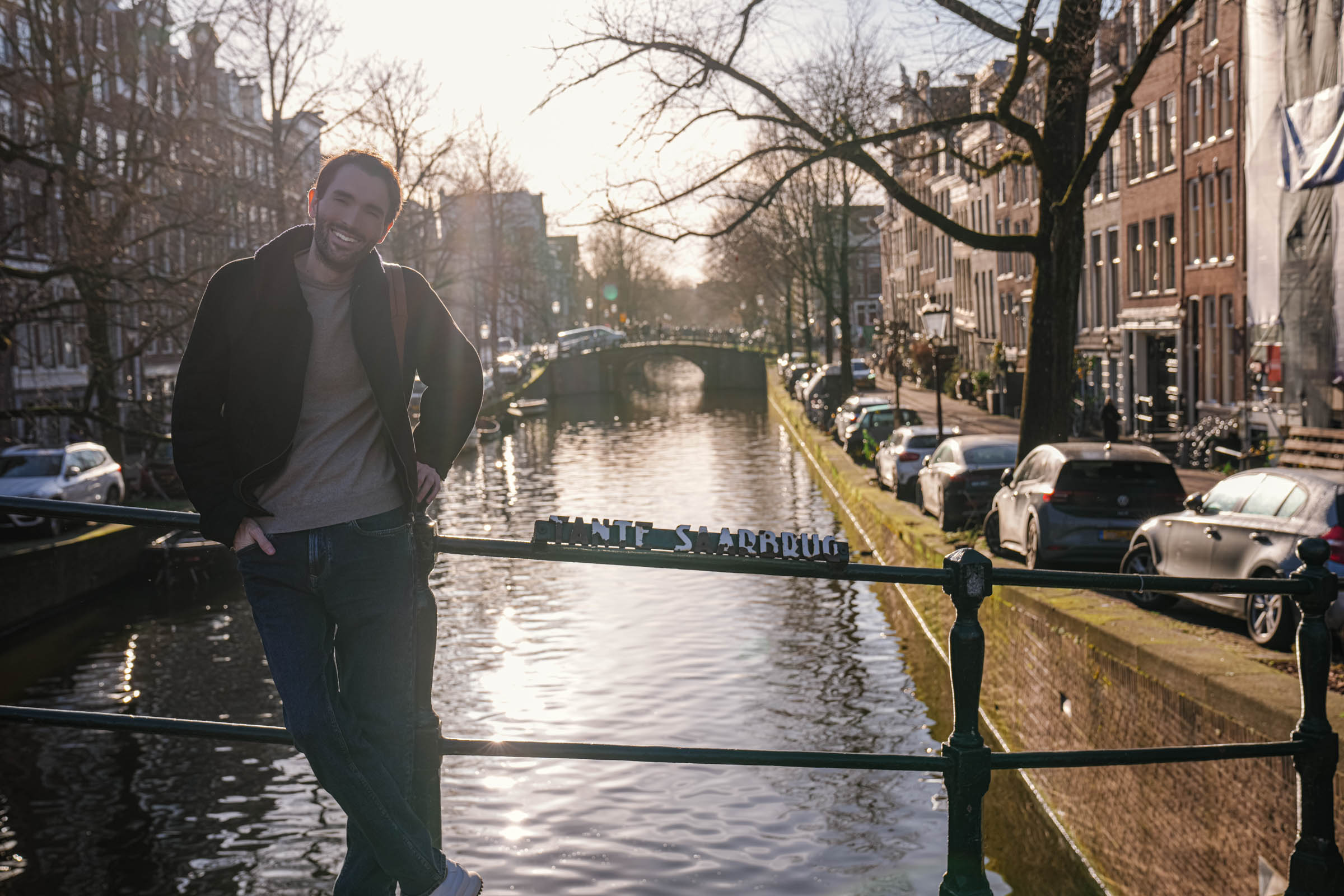
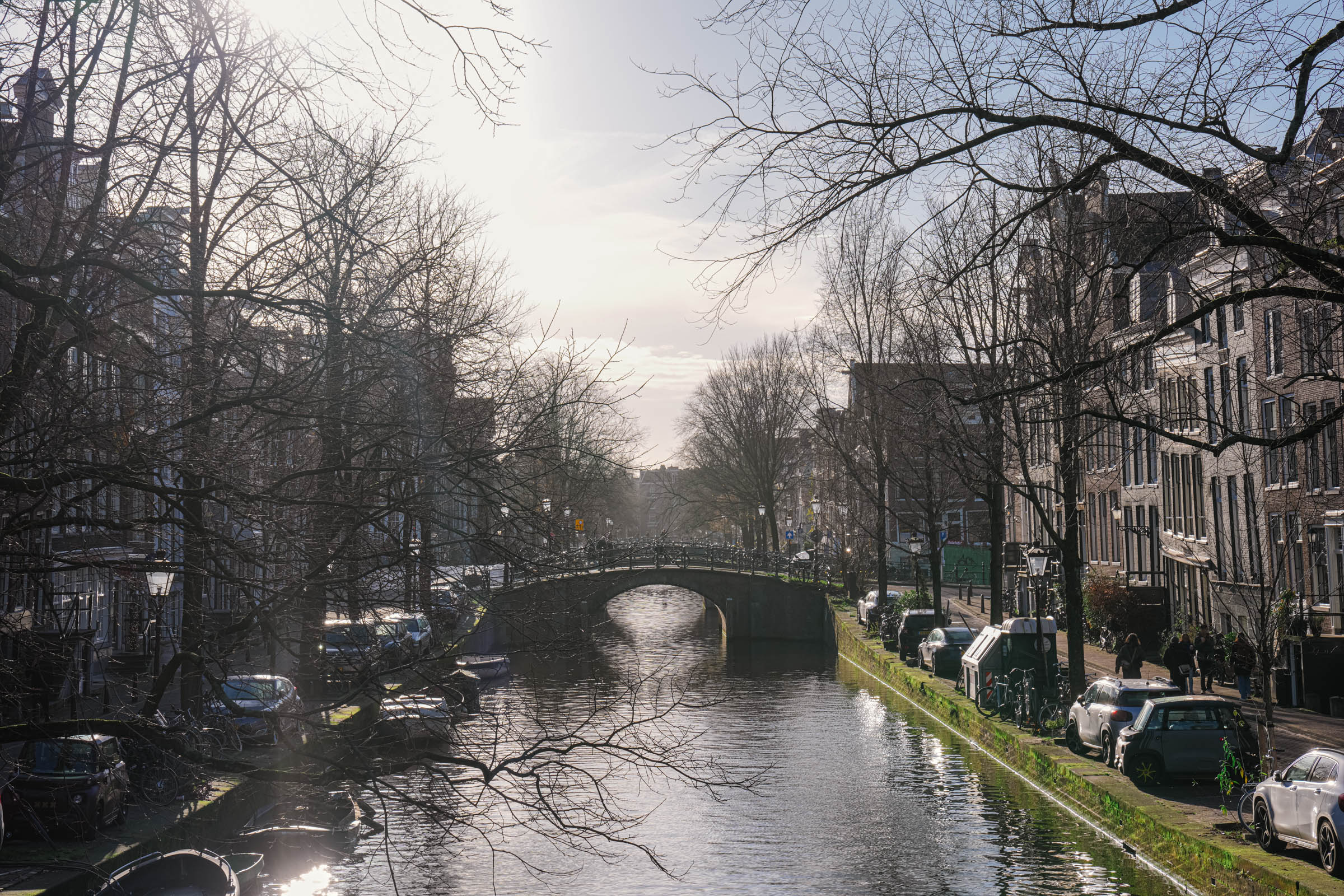
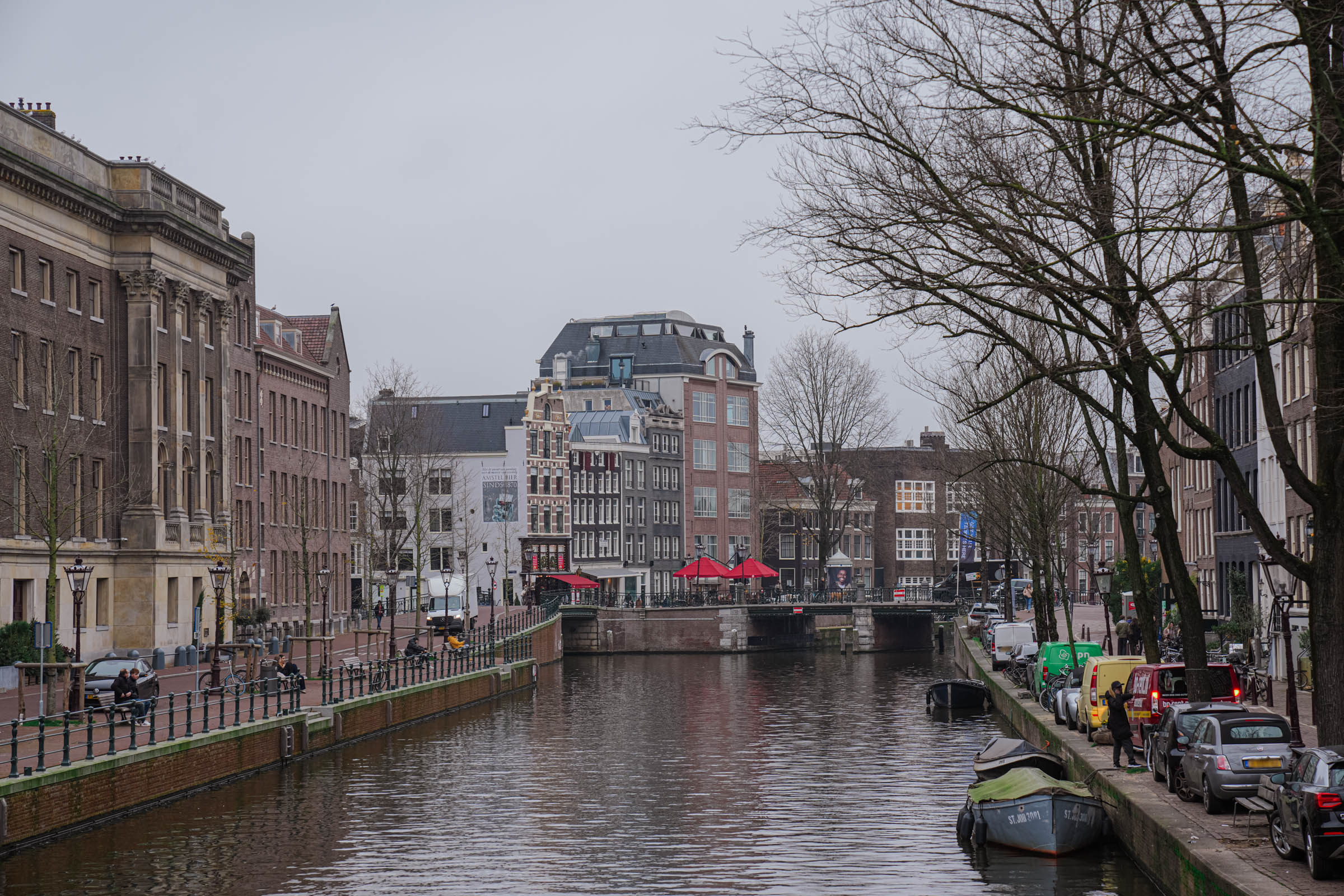
The canal system, which was built precisely during that golden period, forms the backbone of the city. Amsterdam has over a hundred kilometers of canals, about 165 waterways, 90 islands and more than 1,500 bridges, which, believe it or not, is three times more than Venice has. The three main canals: Herengracht (Lord’s Canal), Keizersgracht (Imperial Canal) and Prinsengracht (Prince’s Canal), form concentric semicircles around the old city center. In 2010, this entire system of canals was inscribed on the list of World Heritage under the protection of UNESCO, with which Amsterdam deservedly received a formal confirmation of what everyone who visits it already knows, that it is one of the most beautiful urban environments on the planet.
AMSTERDAM: HOW A SMALL FISHING SETTLEMENT BECAME THE WORLD CAPITAL
The story of Amsterdam is a story of human perseverance, ingenuity and vision. When the first inhabitants settled at the mouth of the Amstel in the 12th century, no one could have imagined that the small marshland would become one of the most important cities in the world. The first dam was built around 1270 and from that moment the rise of the settlement began, which in 1275 received free trading privileges from the Dutch Count Floris the Fifth.
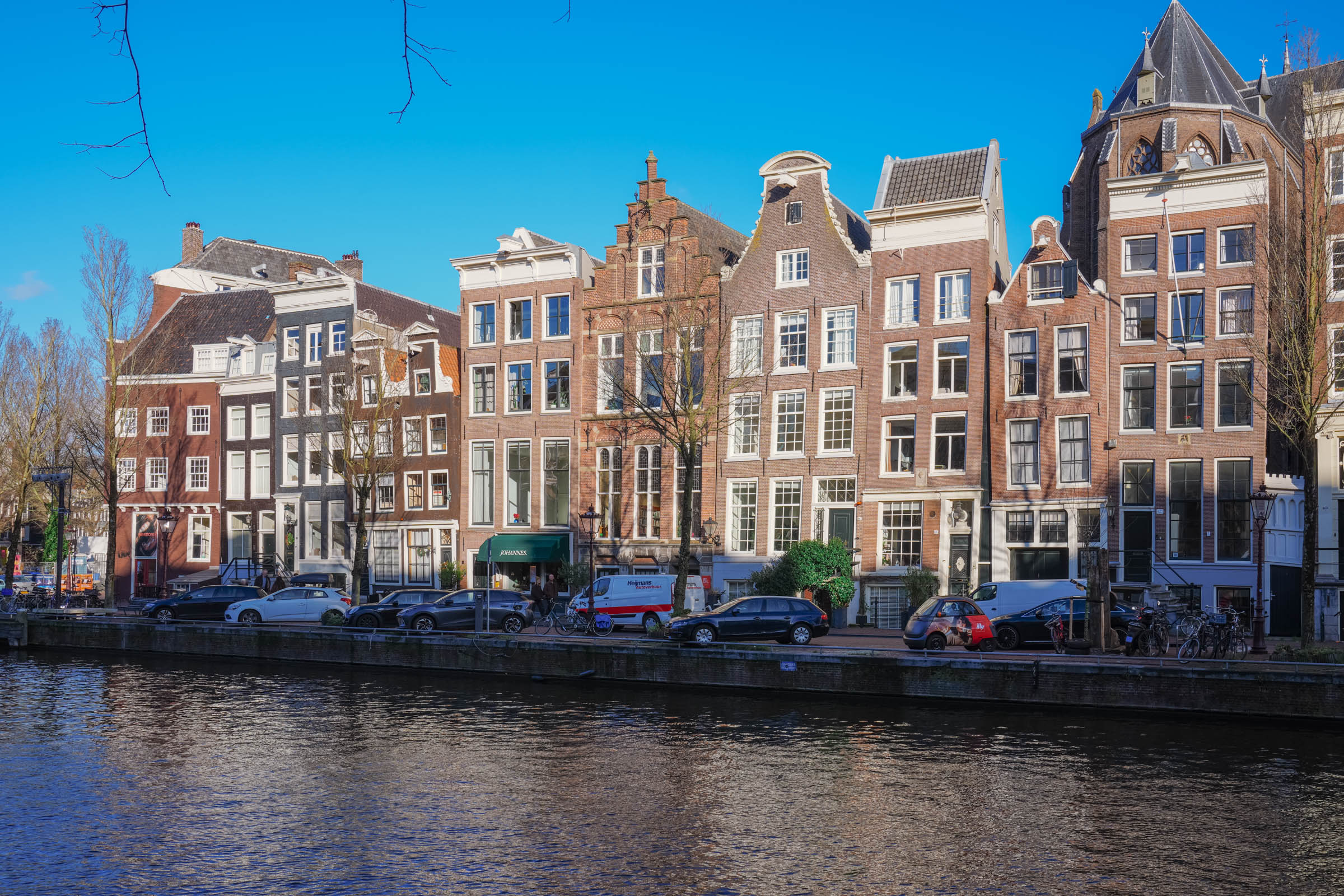

The real boom began in the 17th century. The Dutch fought for independence in the Eighty Years’ War, and Amsterdam assumed the role of world trade and financial center. The Dutch East India Company, founded in 1602, was practically the first multinational corporation and the first company to issue shares on the stock exchange, and its headquarters were located in Amsterdam. Wealth from all over the world flowed through the city, such as spices from Indonesia, silk from Asia, diamonds from Africa. That wealth made it possible to build a system of canals and magnificent houses whose facades still adorn the city today.

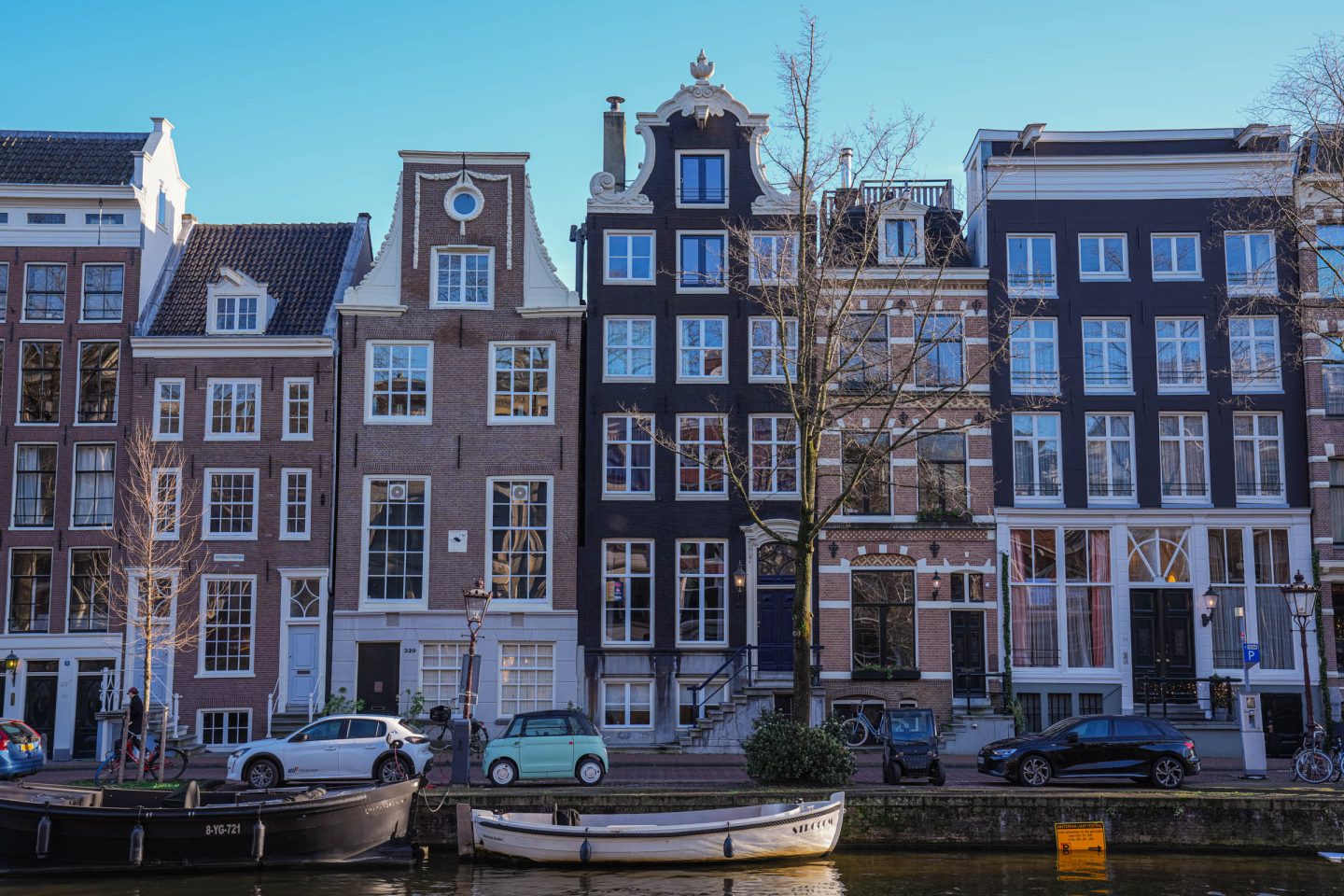
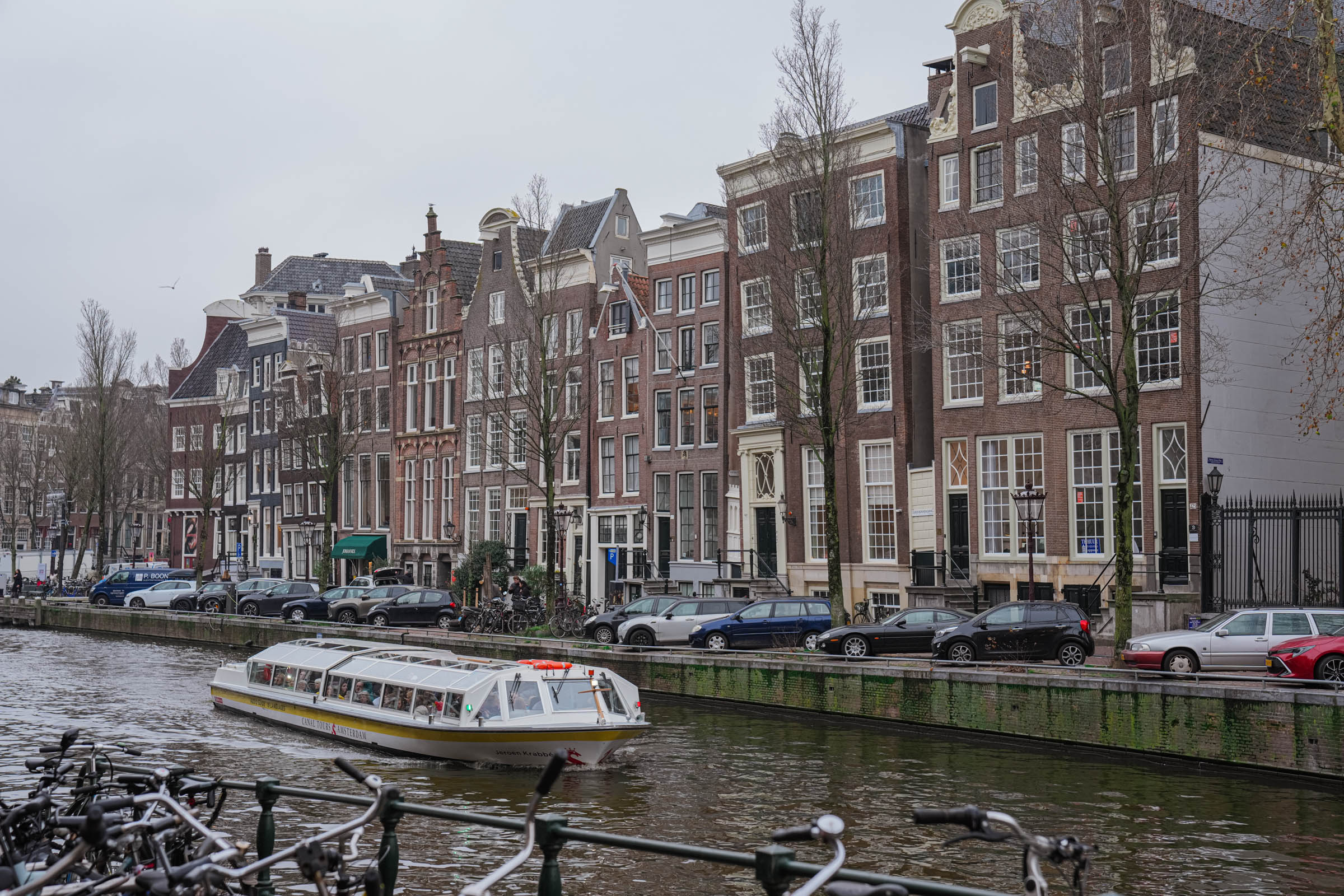
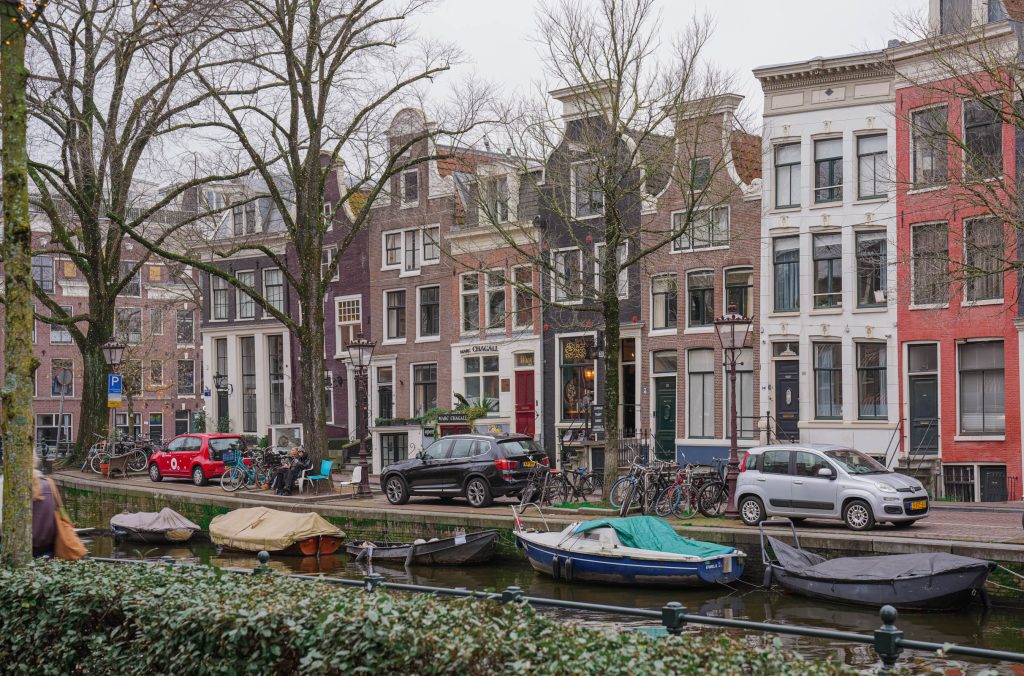
An interesting detail that I learned during numerous visits to this city is why Amsterdam houses are so narrow and tall. In the Dutch Golden Age, the tax was calculated according to the width of the facade, so resourceful merchants built houses as narrow and tall as possible. At the top of each house stands a hook that was used to lift loads using pulleys, as the narrow staircases were impractical for bringing in furniture and goods. Also, if you look closely, you’ll notice that many houses lean forward slightly. This is not a construction error, but a deliberate construction that made it easier to lift the load without the risk of hitting the facade.
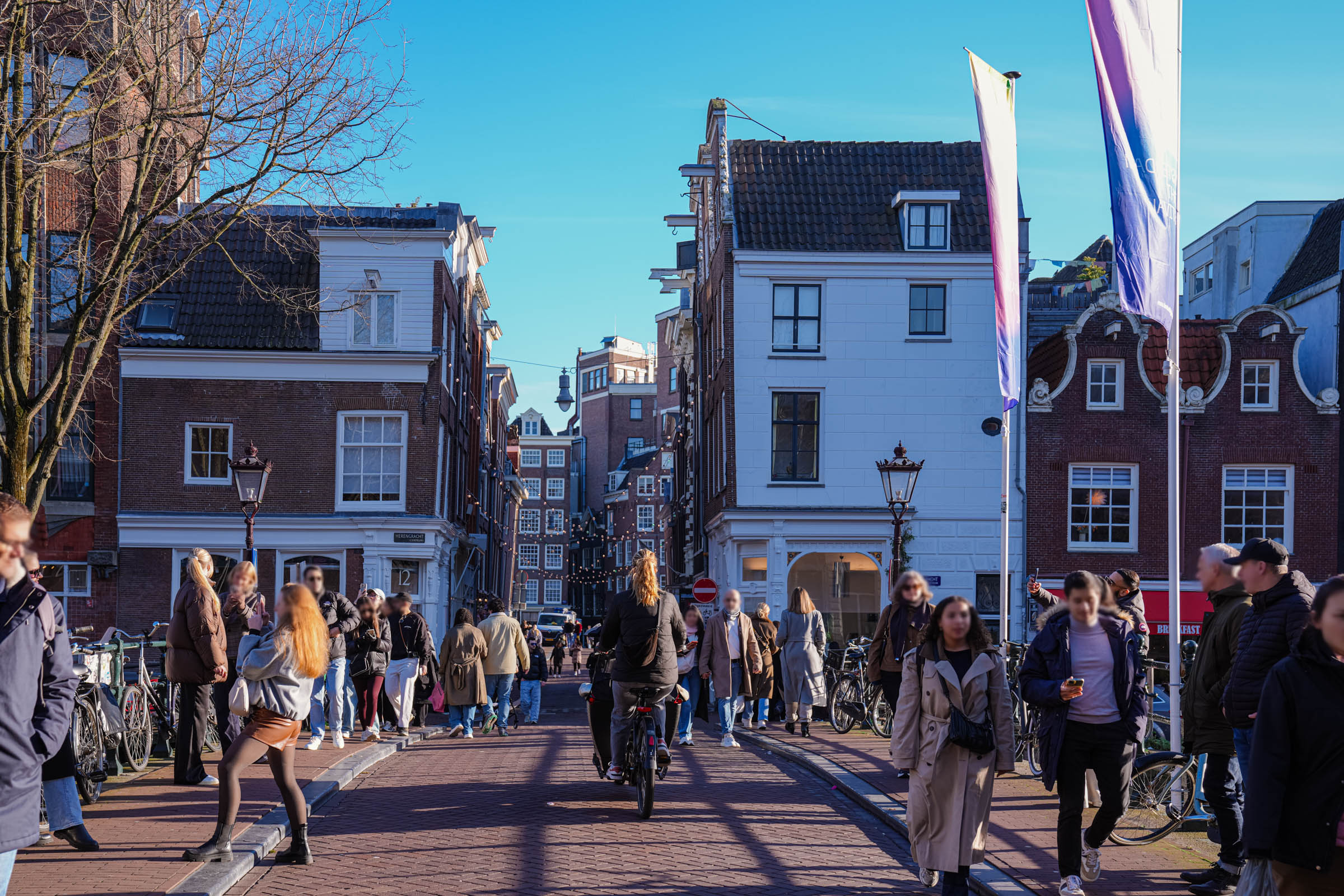

Another fascinating fact comes from 1660, when only 25% of the inhabitants of Amsterdam were Dutch. The other 75% were foreigners such as French Huguenots, Spanish Jews, German Protestants and many others fleeing persecution in their own countries. Amsterdam has always been a city of refuge, a city that accepts and that tradition is still felt today, when 120 different nationalities make up its population.
AMSTERDAM: WINTER DECEMBER MAGIC
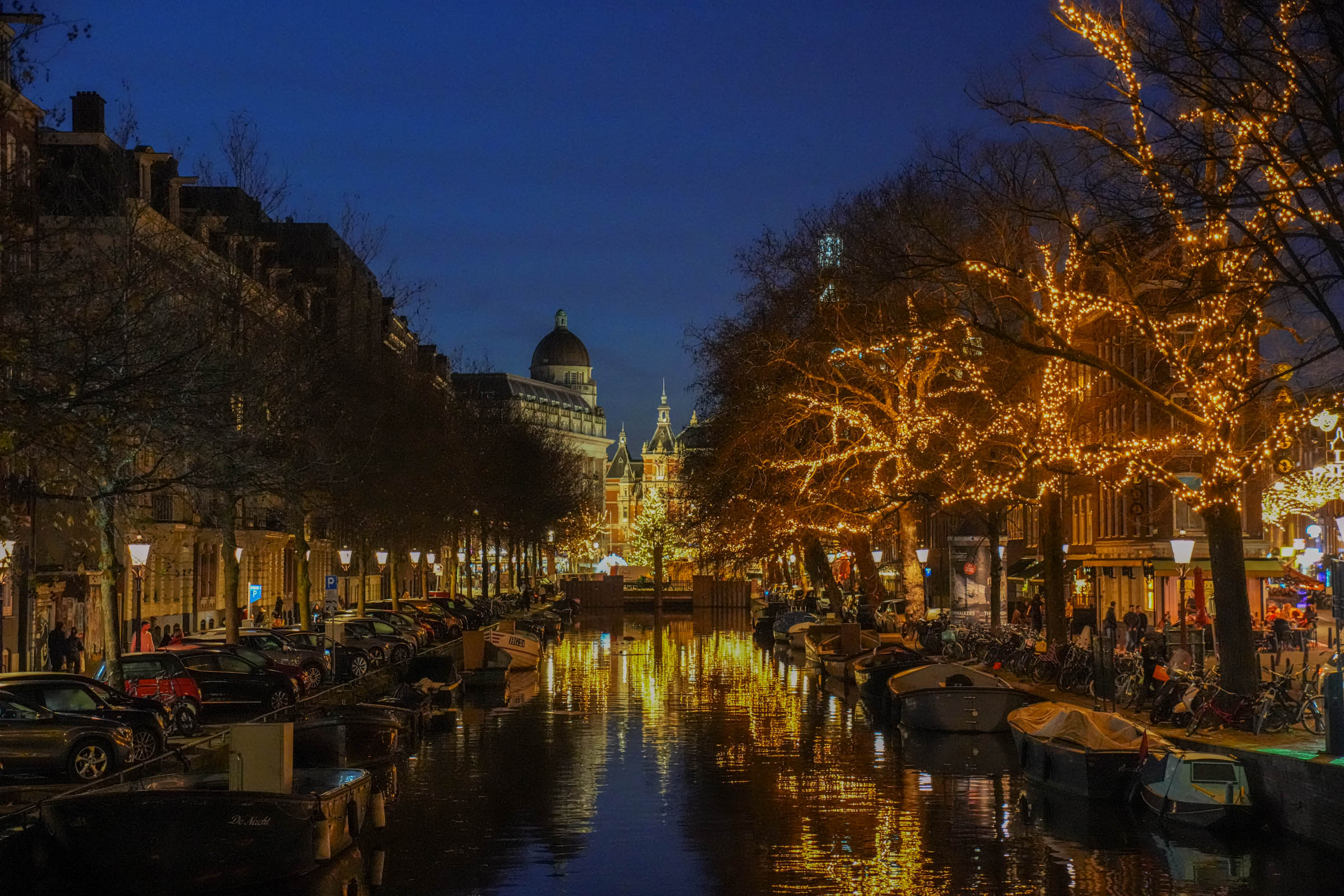
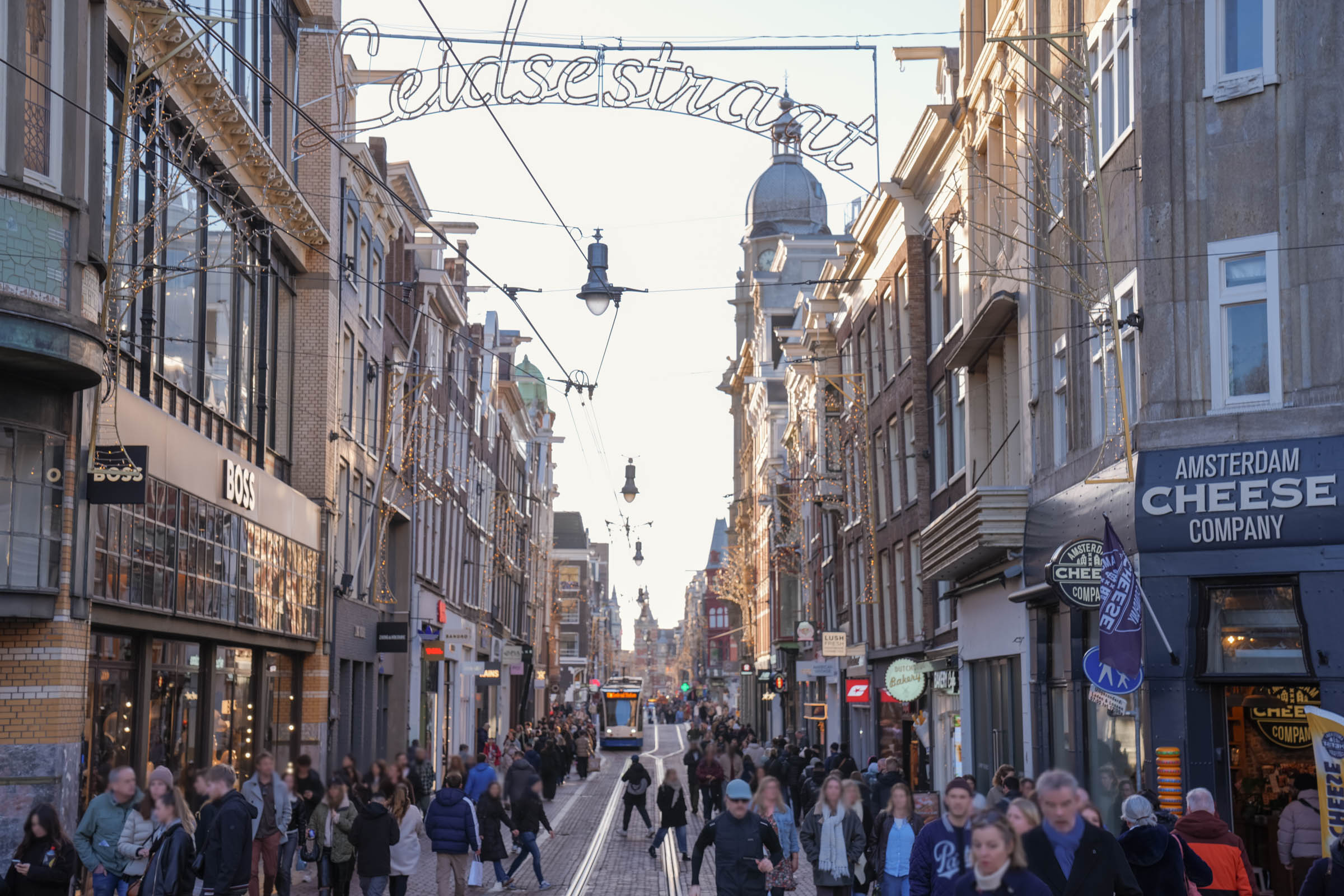
Many travelers visit Amsterdam in the spring, when the tulips bloom and the city is covered in color. But December brings a completely different, equally unforgettable atmosphere. The days are short, the sun sets around four in the afternoon, but that early darkness opens the space for the festival magic of light. During my visit, the city was decked out for the holidays, and Amsterdam’s Festival of Lights, held for the fourteenth time that year, turned the canals into an open-air gallery. Twenty light art installations arranged along the canal lit up the winter nights, each one carrying its own story inspired by the theme of heritage.

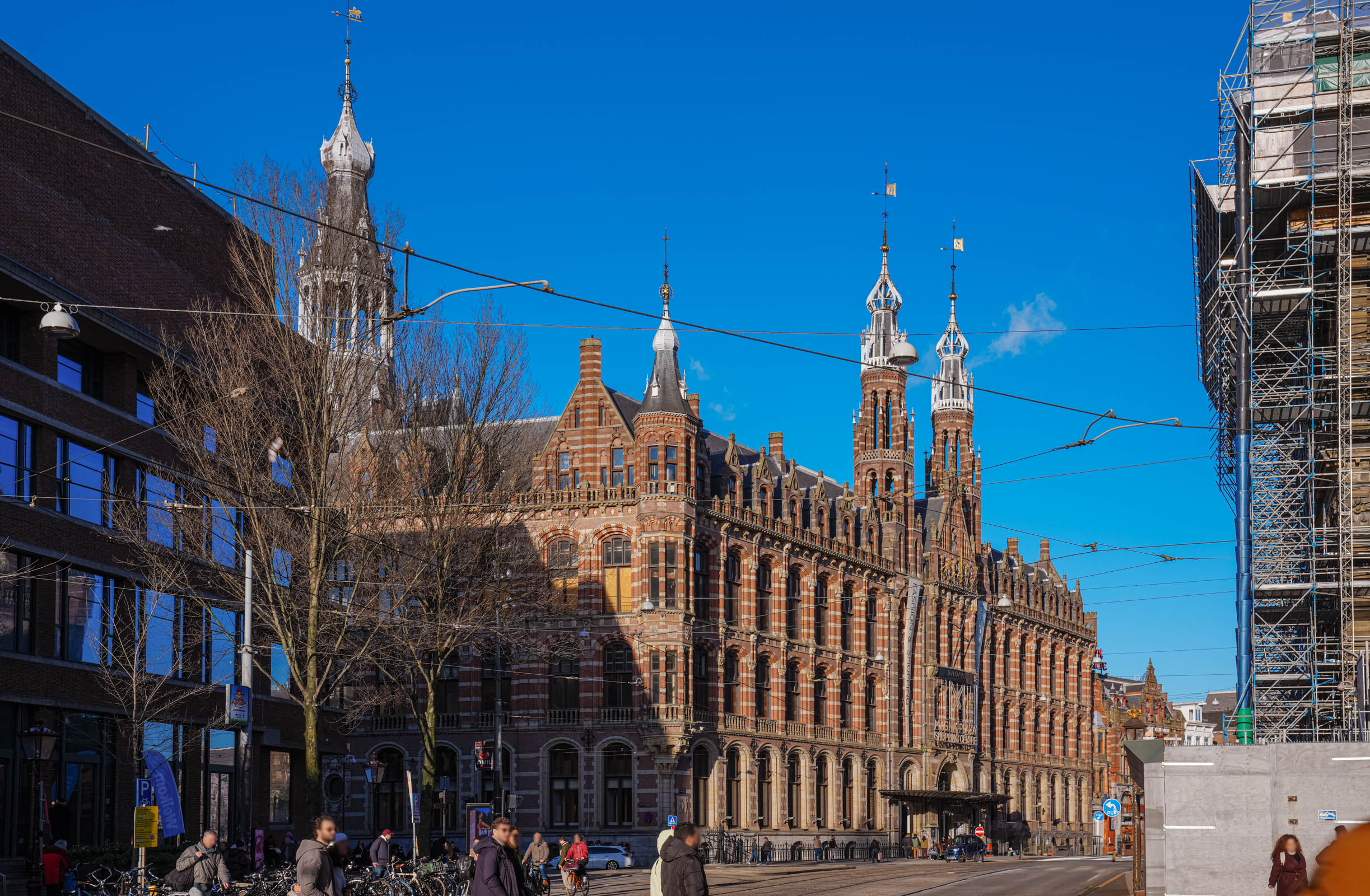
Temperatures hovered around six degrees a day, with the occasional wind from the North Sea forcing a man like me to wrap up well in winter gear. It wasn’t snowing, but the air had that specific winter freshness that makes you take a deep breath and take a closer look around you. Without the leaves on the trees, the architectural details of the canal houses were more visible than ever, the gable decorations, the load-lifting hooks at the top of the facades, the windows that got smaller with each floor. Each house told its own story.
The important thing to know about December in Amsterdam is that the Dutch experience the holiday season differently than the rest of Europe. Their most important holiday figure is not Santa Claus, but Saint Nicholas Sinterklaas, whose holiday is celebrated on December 5, when families exchange gifts. The whole city during the first days of December was still colored by the atmosphere of Sinterklaas celebrations, with traditional spiced cookies called pepernoten and kruidnoten at every turn. Christmas in the Netherlands is a quieter, more family-friendly holiday, without excessive commercialization, but with that warmth that can be felt in every decorated shop window and illuminated window of the canal houses.
A particularly impressive experience was a tour of traditional Dutch brown cafes bruine kroegen with dark wooden interiors, low ceilings and an atmosphere that is centuries old. In one such cafe on Prinsengracht, with a glass of Dutch genever, their traditional juniper drink, and a view of the illuminated canal, I understood why the Dutch have a special word for that feeling of comfort and warmth in good company. Gezelligheid doesn’t translate, but it’s felt, and Amsterdam in December is perhaps the best place in the world to experience it.
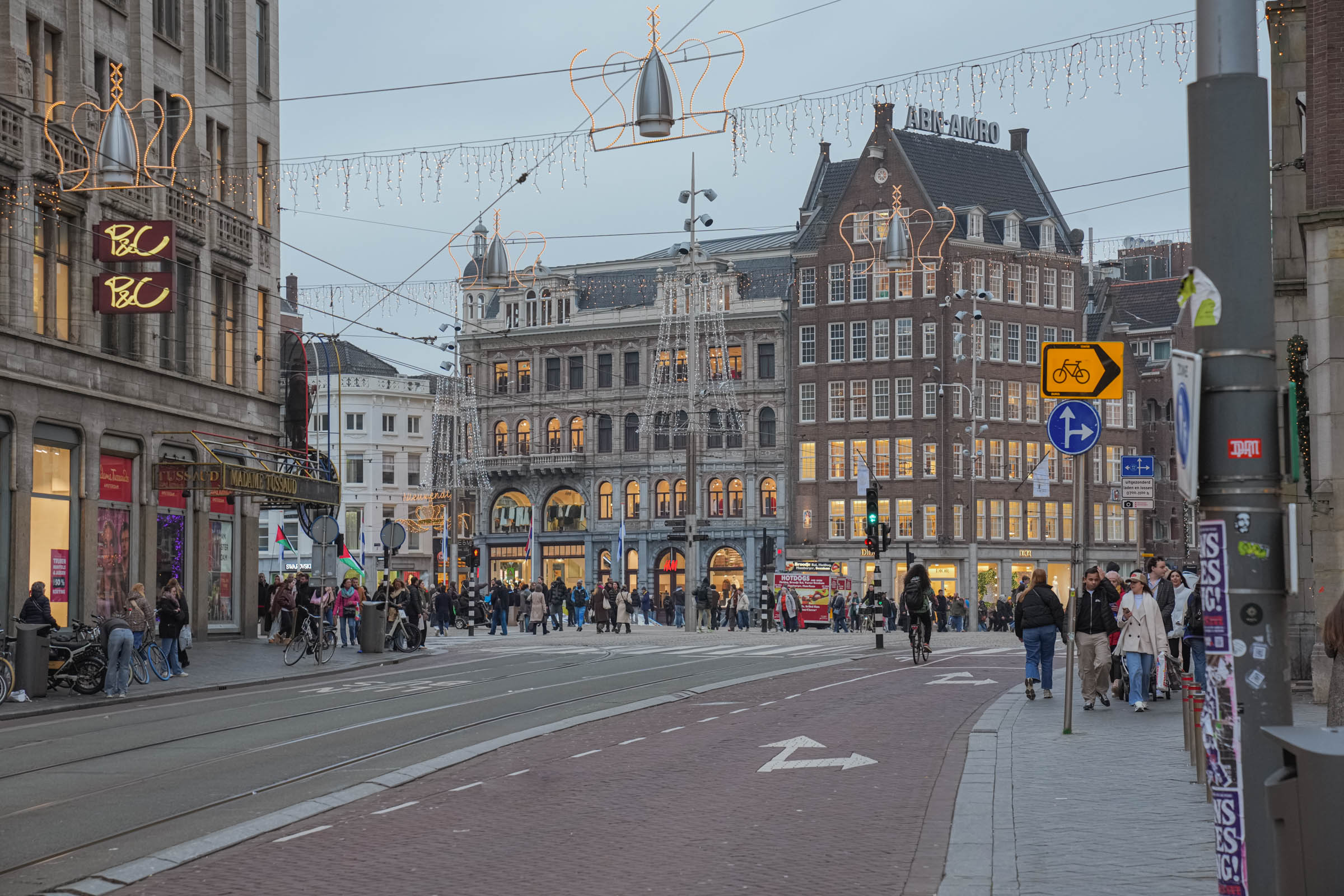
On Dam Square, a huge Christmas tree from the German Ardennes was decorated with forty thousand bulbs, while the facade of the department store De Bijenkorf shone in the light of thousands of lights. Walking along the canals after sunset was quite the experience, the glint of lights on the calm surface of the water, candlelit cafes, the smell of hot cocoa and olibol, the traditional Dutch donuts sprinkled with powdered sugar that are sold on every corner during the festive period.

THE SIGHTS YOU MUST VISIT IN AMSTERDAM
Amsterdam is a city that has so much to offer that it is almost impossible to visit it all in one weekend. However, there are a few places that are an absolute must for any visitor.
The Rijksmuseum is the national museum of the Netherlands and one of the most important art buildings in the world. Located on Museum Square, this magnificent facility houses works by Rembrandt van Rijn, Johannes Vermeer and many other Dutch and international masters. Remrandt’s “Night Watch” is the centerpiece of the museum and leaves even non-art lovers breathless. A tip is to book your ticket in advance, as the museum regularly fills up, especially during the holiday period.
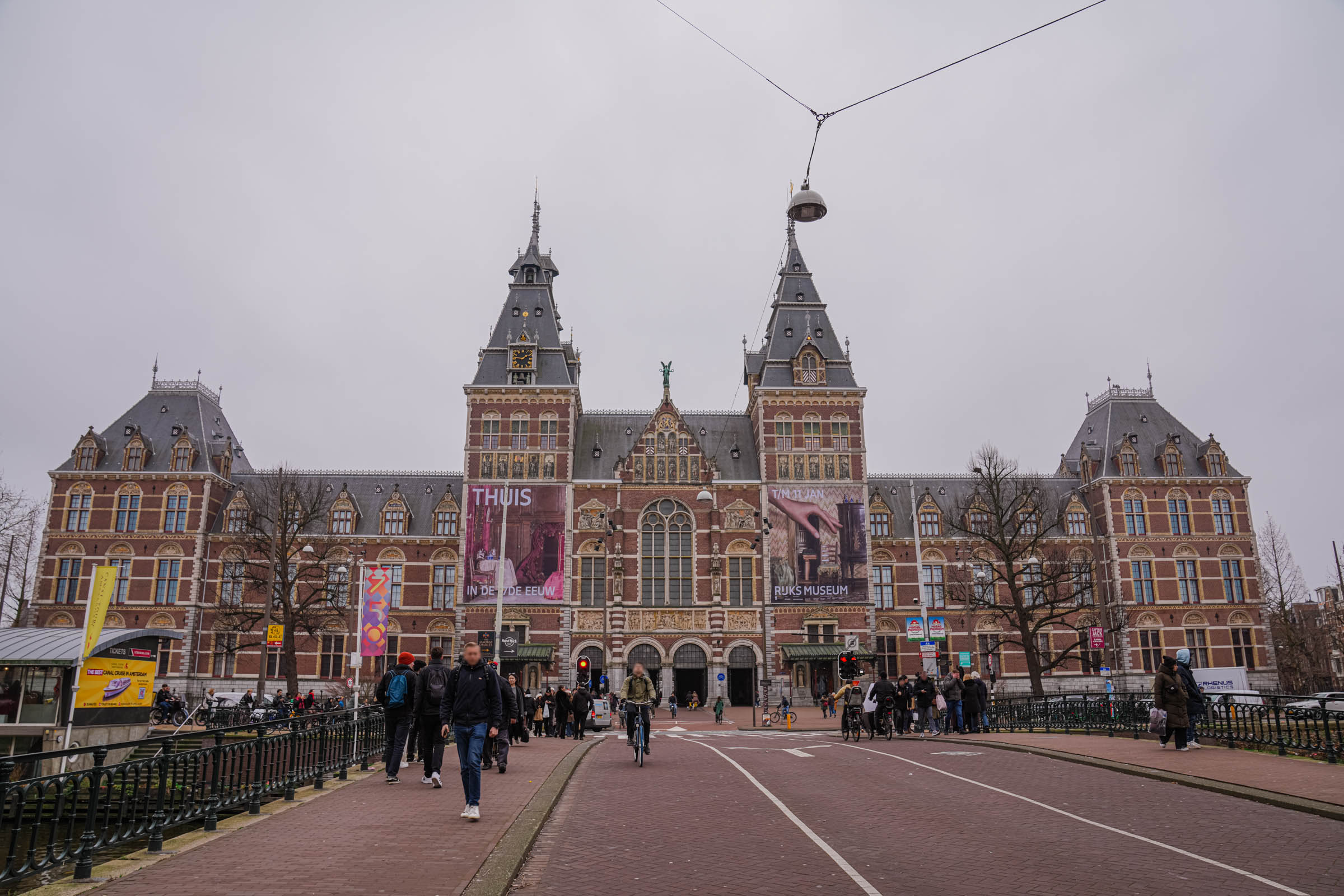

The Van Gogh Museum is located on the same square and houses the largest collection of Vincent van Gogh’s works in the world, over seven hundred works by this post-impressionist genius. The building, the work of architect Gerrit Rietveld, is an artistic value in itself. From “Sunflowers” to “Starry Night over the Rhone,” each step through the museum takes you deeper into the world of an artist whose life was as dramatic as his canvases.

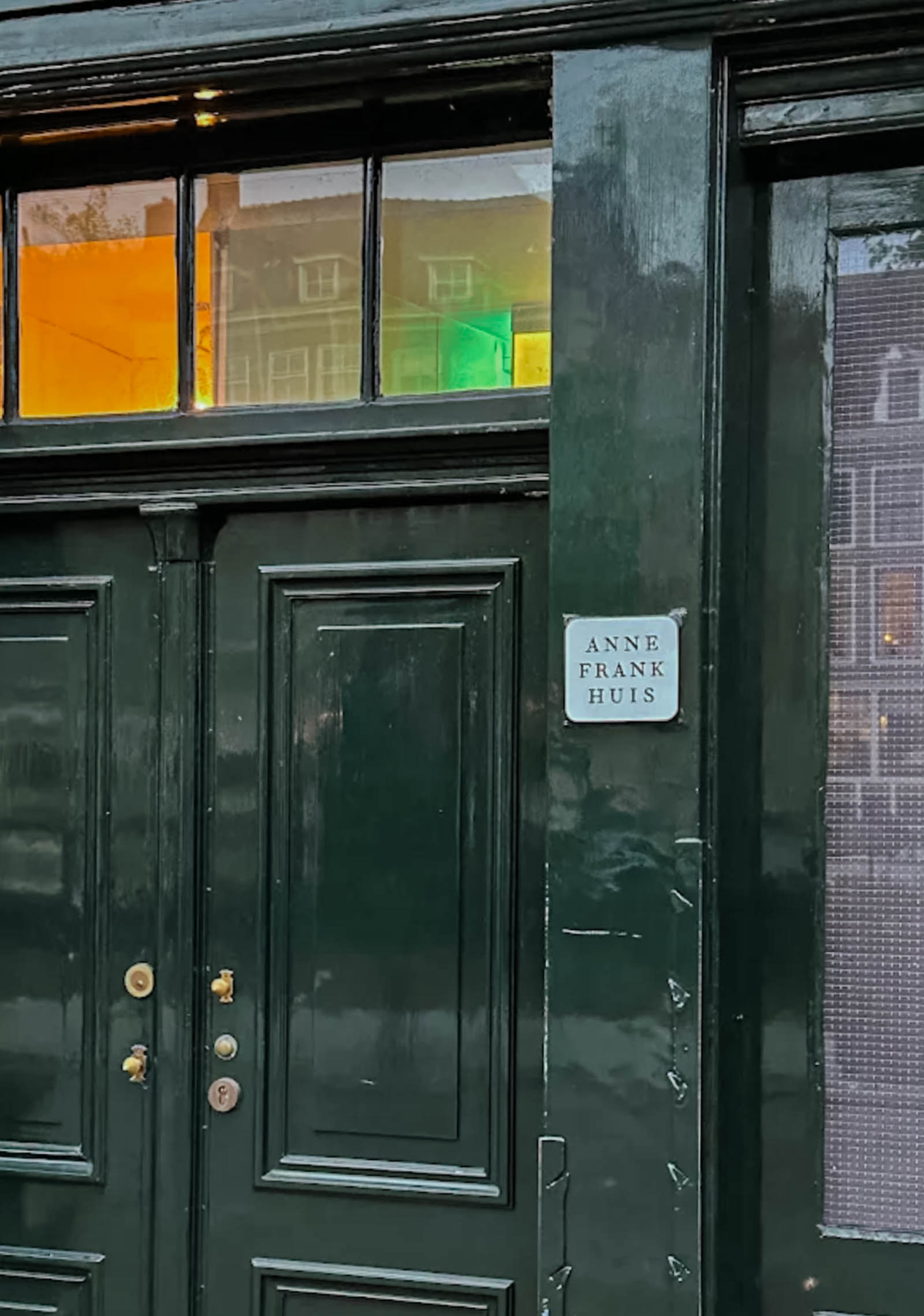
The Anne Frank House on Prinsengracht is one of the most moving museum experiences in Europe. In the secret annex of this canal house, the young Jewish woman Anne Frank hid with her family from the Nazis during World War II and wrote her famous diary there. The space has been preserved in its authentic form and the visit leaves a deep impression that is not forgotten. Tickets sell out very quickly, so it is necessary to reserve them through the official website, sometimes weeks in advance.

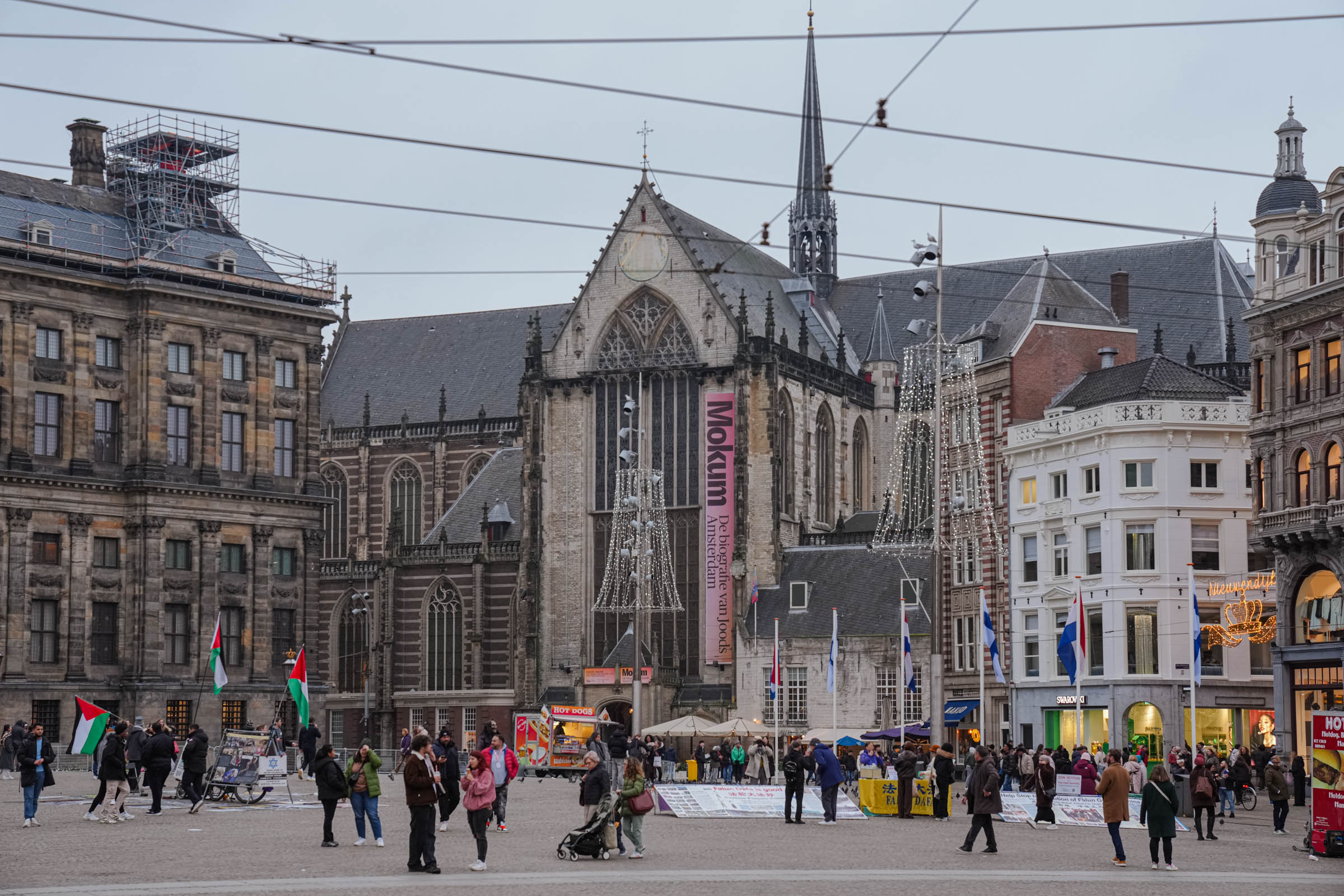
Dam Square is the central gathering place of the city and the place where Amsterdam began its story. On the square is the Royal Palace from the seventeenth century, which is still used for official ceremonies and receptions, even though the royal family lives in The Hague. Next to the palace stands the New Church, a Gothic building that today serves as an exhibition space, and there is also the National Monument erected in 1956 in memory of the victims of the Second World War.

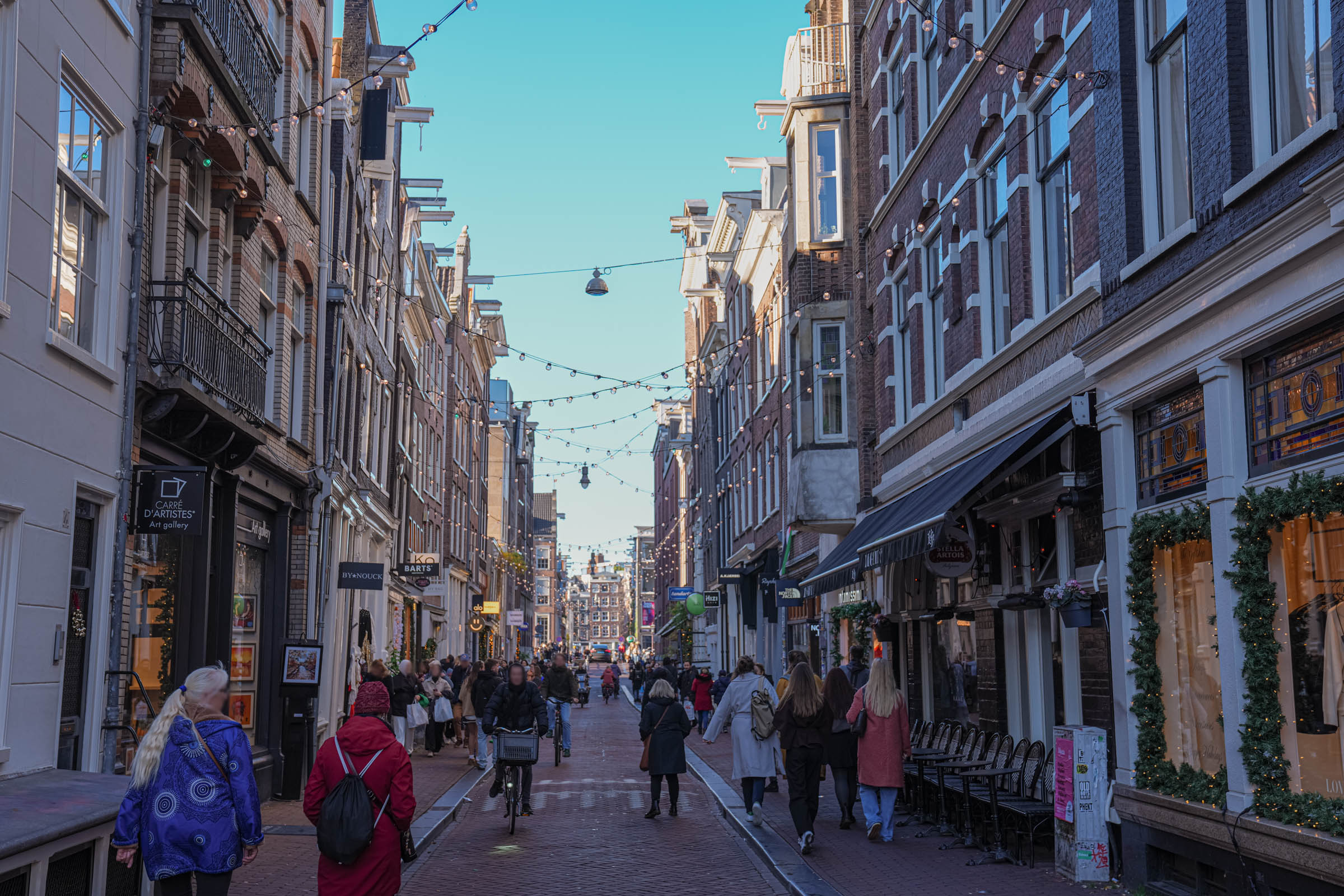
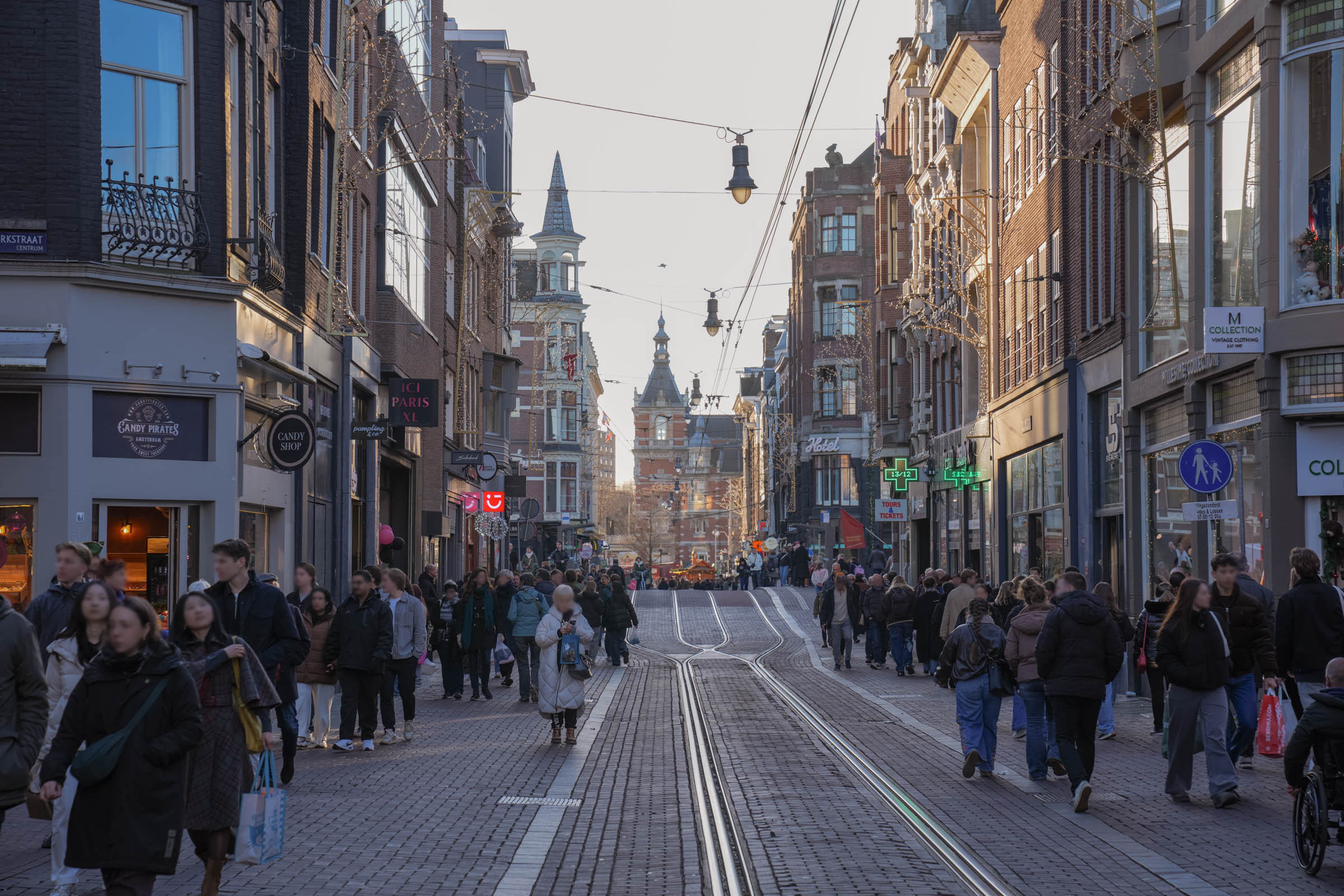
The Jordaan quarter, once a working class, is today one of the most charming areas of the city with narrow streets, independent shops, galleries and cafes that exude that authentic Amsterdam atmosphere. A stroll through the Nine Streets, a section of the city known as De Negen Straatjes, takes you through boutiques, antiques and designer shops, and along the way you’re treated to some of the most beautiful canal views in the entire city.
Vondelpark is a green oasis in the heart of the city and the most famous park in the Netherlands, which is visited annually by more than ten million people. Even in winter, a walk in the park offers peace and rest from the hustle and bustle of the city. The park covers one hundred and twenty acres and offers trails for walking, jogging and biking.

The floating flower shops on the Singel Canal, known as the Bloemenmarkt, are a unique sight that has existed since 1862. This is the only floating flower market in the world, and although during the winter the offer is more modest than in the spring, the atmosphere of the greenhouse on the boats alone makes it worth a visit.
The Heineken Experience is an interactive museum in the old brewery founded in 1867, where Gerard Adrian Heineken started the production of the beer that is now known all over the world. This attraction attracts a million visitors a year and offers an interesting experience for anyone who wants to learn more about the history of the most famous Dutch beer.
Rembrandt’s house on the Jodenbreesstraat is where the great painter lived, worked and taught during the seventeenth century. Today it is a carefully restored museum that allows you to step into the world of Rembrandt and see what the daily life of one of the greatest artists of all time was like.

WHY IS AMSTERDAM SO POPULAR?
Amsterdam’s popularity is no accident. This city of almost a million inhabitants has managed to combine tradition and modernity in a way that is unique in Europe. Above all, there is the atmosphere of freedom and tolerance that has characterized Amsterdam since the sixties of the twentieth century. In 2001, the Netherlands became the first country in the world to legalize same-sex marriage, and Amsterdam has always been a city that accepts diversity.
But what really sets Amsterdam apart is its human dimension. Despite being a metropolis, the city has no monumental boulevards or triumphal gates. Its narrow streets, squares and canals create the feeling of a city on a human scale. About a fifth of the working population still commutes by bicycle every day. There are over eight hundred thousand bicycles in the city, which is more than the number of inhabitants. Every year, about fifteen thousand bicycles end up at the bottom of the canal and have to be removed by special cranes, a fact that sounds comical, but perfectly illustrates the Amsterdam way of life.


Amsterdam is also the cultural capital with the largest number of museums per capita of any city in the world. In addition to those already mentioned, there are the Stedelijk Museum of Modern Art, the NEMO Science Museum, the STRAAT Museum of Street Art and many others. For music lovers, the Koncertgebau is one of the most famous concert halls in the world, with acoustics that are considered perfect. Built in 1888, this magnificent facility offers over nine hundred concerts a year, and during December the program is particularly rich, from classic Christmas concerts to contemporary performances. Visiting an evening concert in this building, after a walk along the illuminated canals, is one of those experiences that make a trip truly special. And the building itself, with its neoclassical facade, is an architectural gem worth seeing even if you don’t go inside.

Gastronomy in Amsterdam is far richer than many expect. In addition to traditional Dutch specialties such as struvaffle (thin caramel waffles), kibeling (fried fish), ertensoep (thick pea soups) and gouda cheese, the city offers exceptional international cuisine with a strong influence of Indonesian and Chinese traditions, a legacy of the Dutch colonial past. Amsterdam also has several restaurants with Michelin stars, which satisfy even the most discerning palates.

AMSTERDAM: USEFUL INFORMATION FOR TOURISTS
Getting to Amsterdam is extremely easy. Schiphol Airport is one of the largest and best connected hubs in Europe, only twenty minutes from the city center. The train from the airport to the Central Station runs directly and costs about five euros. There are direct flights or flights with one stopover from Serbia offered by different airlines.
Public transport in Amsterdam is well organized as trams, buses and the metro cover the entire city. However, the best way to explore Amsterdam is on foot or by bike. The city is relatively small and flat, so almost all the main sights can be visited on foot, with a simple walk. For cyclists, a network of almost eight hundred kilometers of bike paths makes moving around the city extremely easy. Many hotels offer free or discounted bike rental.

As for city cards, the I amsterdam City Card offers access to most museums, canal boat rides and free public transport for a period of one to several days. For those who plan to visit multiple museums, this card can be a worthwhile investment.
A canal boat ride is an absolute must, it’s an experience that gives you a completely different perspective of the city. During the winter period, especially during the Festival of Lights, an evening cruise on the canals is a real experience. I recommend the indoor and heated boats with hot drinks, the combination of the view of the illuminated works of art from the lights of the canal water is something to remember.


In terms of currency, the Netherlands uses the Euro. Most places accept cards, but it’s always good to have some cash, especially at markets and smaller markets. Tipping is optional, but it is customary to leave around ten percent in restaurants.
For shopping lovers, PC Hooftstraat is a destination for luxury brands, while Nine Street offers independent boutiques and designer shops. The Albert Cuyp Market in the De Pijp district is the largest daily street market in the city and the right place to enjoy local food and culture.
LUXURY SHOPPING IN AMSTERDAM? WHERE TO FIND TOP BRANDS?
At first glance, Amsterdam may not seem like a typical luxury shopping destination like Paris or Milan, but this city has its own, very special offer for those who value top quality and exclusive brands. What pleasantly surprised me is that luxury shopping in Amsterdam has a more relaxed atmosphere than in most European capitals, there is no excessive fanfare here, but the quality and selection are at the highest level.

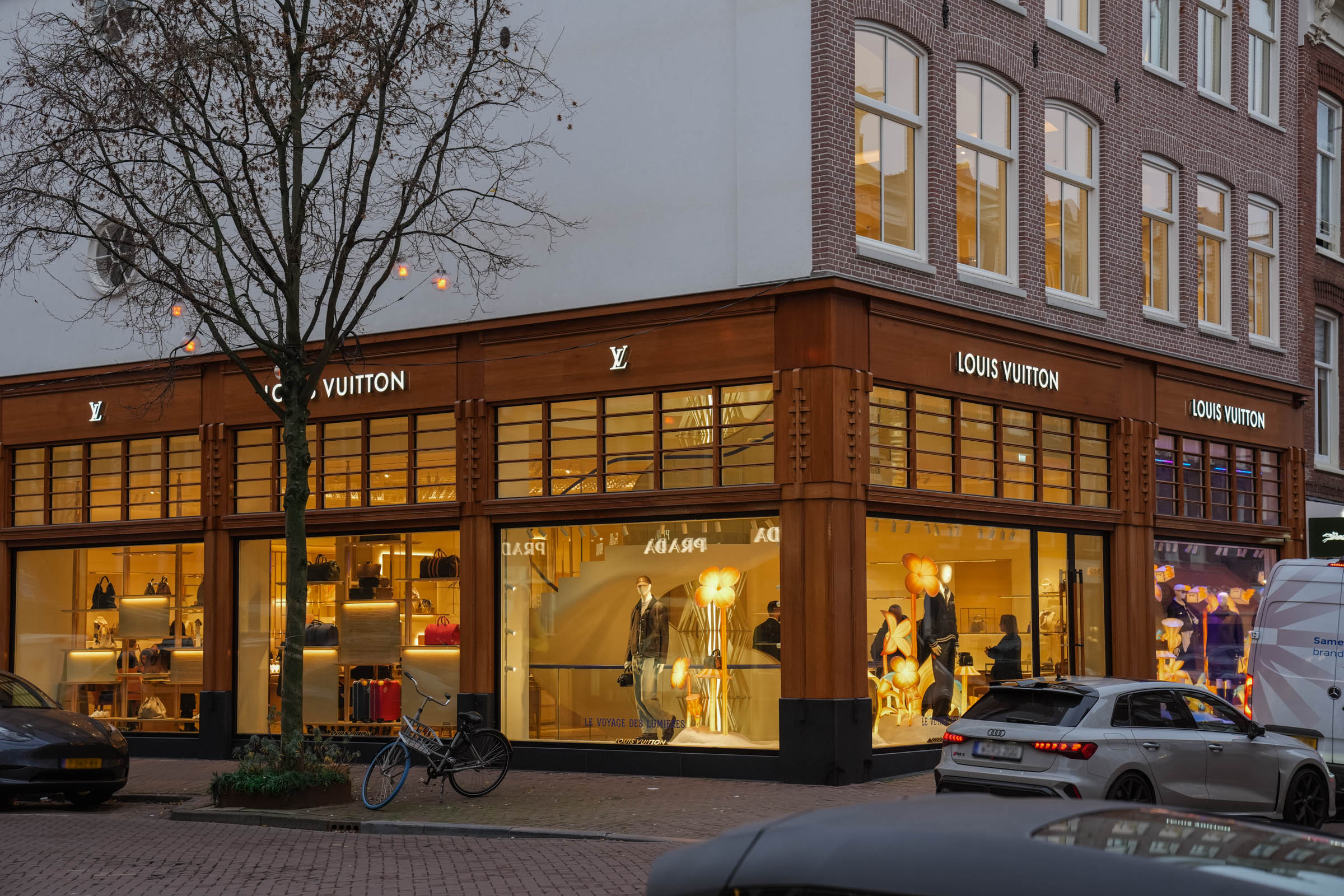
Peter Corneliszon Hoftstraat, which Amsterdammers simply call “PC”, is the most exclusive shopping address in the entire Netherlands and one of the most prestigious luxury streets in Europe. Named after a seventeenth-century Dutch poet and playwright, this street has become synonymous with luxury since the 1970s. Located in the immediate vicinity of the Museum Square, a fifteen-minute walk from my hotel, the PC Hooftstraat gathers over one hundred and sixty designer shops in a relatively short distance. There I found the boutiques of Dior, Prada, Gucci, Chanel, Louis Vuitton, Hermès, Ralph Lauren, Max Mara, Dolce & Gabbana, Burberry and Giorgio Armani. For lovers of high-end watchmaking and jewelry, Cartier, Tiffany & Co., Bvlgari and Breitling are on the same street. I was especially delighted by Oger, a Dutch boutique specializing in Italian tailored suits and refined men’s fashion, which is a real gem for any gentleman who appreciates a perfect fit and quality fabrics.

What makes PC Hooftstraat special is its atmosphere. The street is elegant but not overly formal, with beautiful architecture and a view of the nearby Vondelpark. You can often see luxury vehicles in front of boutiques, and just walking down the street, even without shopping, gives pleasure to those who love fashion and design. Shops are generally open from ten to six o’clock, on Thursdays to six o’clock, and on Sundays from twelve to six o’clock.
Not far from PC Hooftstraat, Van Berlestraat offers another dimension of luxury shopping, with an emphasis on Dutch designer brands. There I discovered Pauw, a brand known for elegant women’s and men’s clothing with a sophisticated cut, as well as Fred de la Bretonière – a Dutch house known for functional yet extremely elegant boots and bags made of the highest quality leather. The Van Berle Gallery inside the Conservatorium Hotel houses Bonebakker, one of the oldest Dutch jewelers with a tradition of more than two centuries, as well as La Casa del Habano with the most comprehensive collection of Cuban cigars in the entire Netherlands.


For a completely different but equally exciting shopping experience, there is the De Bijenkorf department store on Dam Square. This Dutch retail institution, which is often compared to Paris’ Galeries Lafayette or New York’s Macy’s, should not be missed. Designers such as Kenzo, Alexander McQueen and Prada are located on five floors, as well as high-end cosmetics, furniture and gourmet products. The rooftop restaurant overlooking the city center is a destination in itself. During my December visit, the facade of De Bijenkorf was spectacularly decorated with thousands of lights, and the shop windows were a real artistic endeavor that attracted the eyes of passers-by.
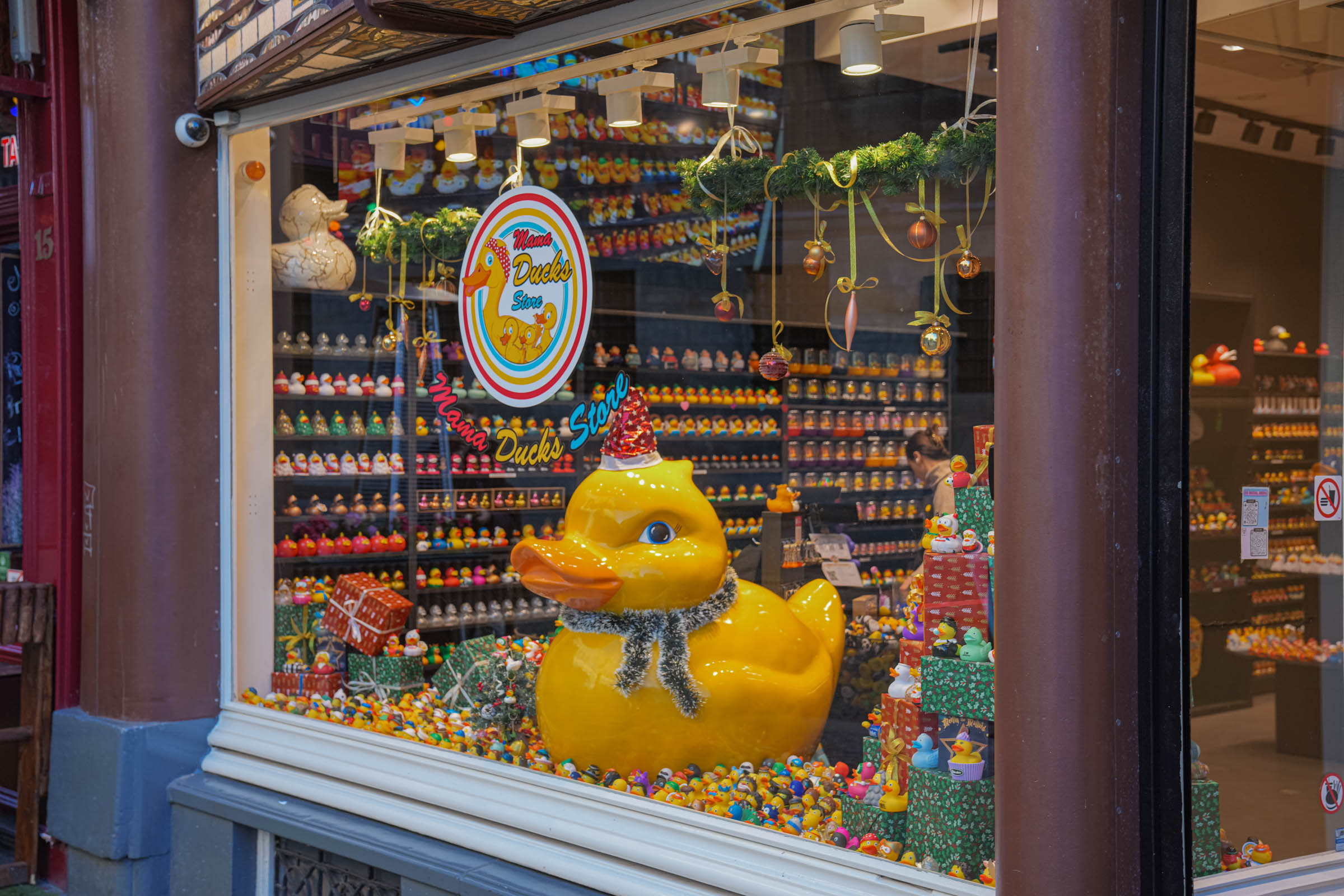
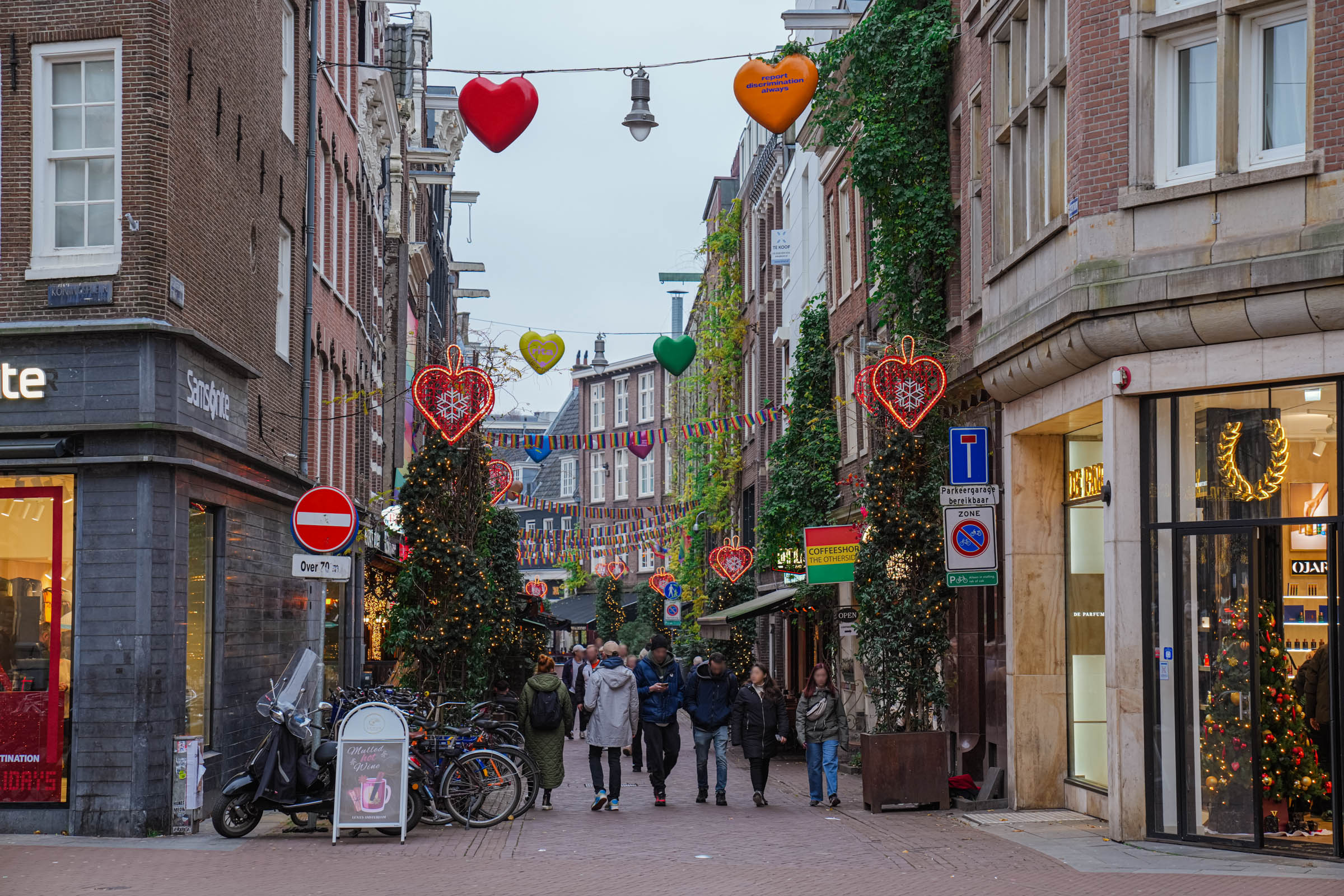
For those looking for more authentic, less ultra-branded shopping, De Negen Straatjes offers an exceptional selection of independent boutiques, designer shops and galleries. This part of the city, nestled between the main canals, is home to small fashion houses, vintage shops and artisan shops where you can find unique pieces you won’t see anywhere else. In winter, the windows of these boutiques are decked out in holiday decorations, and walking through these narrow streets overlooking the canals provides one of the most beautiful shopping experiences I’ve ever had.

Another address worth mentioning is the Beethovenstraat in the southern part of the city, quieter and more pleasant to walk than the central areas. There are Dutch designer brands, specialist cheese, wine and chocolate shops, as well as the English Hatter, a shop dedicated to hats for classy gentlemen, which is a real curiosity. For diamond lovers, and Amsterdam has been one of the world centers for diamond processing for centuries, I recommend a visit to the Gassan or Coster Diamonds workshops, where you can see the process of processing the precious stone and buy jewelry directly from the manufacturer.
Important note for tourists from Serbia and the region: if you are not a citizen of the European Union and spend more than fifty euros in one store, you are entitled to a refund of value added tax. Ask at the checkout about the Tax Free form, it can be a significant saving, especially when buying luxury items.
WALDORF ASTORIA AMSTERDAM: WHEN HISTORY BECOME LUXURY
Deciding where to stay in Amsterdam can significantly shape the overall impression of the city. I chose the Waldorf Astoria Amsterdam and it was one of the best decisions I made on this trip.
This hotel is located at Herengracht 542-556, on the most exclusive part of the Gospodski Canal, which is under the protection of UNESCO. What makes the Waldorf Astoria Amsterdam truly unique is that the hotel was not built from scratch, but was created by merging six monumental canal palaces from the 17th and 18th centuries. Each of those palaces bore the name of the family that built it and lived in it: De Wilt, Kemp, Hoft, Maro, Sautain and Brentano. These families were among the richest merchants and city dignitaries of Amsterdam during the era when the city was the commercial capital of the world.

The hotel was opened in 2014 after five years of careful restoration, as the twenty-fifth hotel in the Waldorf Astoria chain. During the renovation, the original wall murals and decorative motifs over four hundred years old were preserved, in accordance with UNESCO requirements. The result is a fascinating blend of baroque architecture and contemporary luxury. The monumental staircase at the entrance to the hotel is the work of Daniel Maraud, an architect who worked for the French King Louis XIV and who brought the Louis XIV style to the Netherlands. Every step on that staircase felt like a step back in time, but with all the amenities that a modern traveler expects.


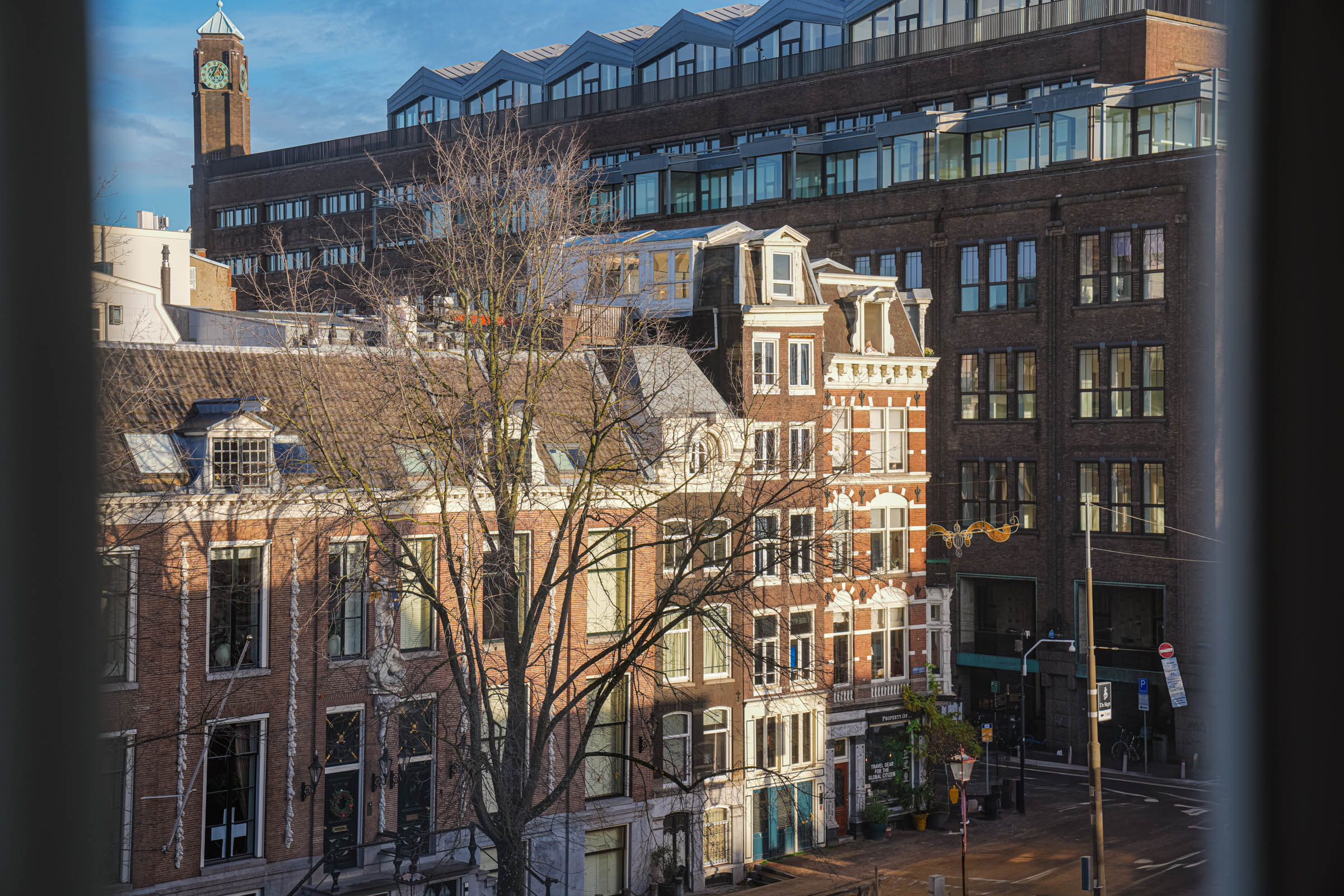
I stayed in their King One Bedroom Suite Canal View with the famous canal view and I can say that it was one of the most memorable hotel accommodations I have ever experienced. The apartment spans 56 to 74 square meters and offers a view of the famous Herengracht Canal. The bedroom with its signature Waldorf Astoria bed covered in the finest Egyptian cotton is an oasis of calm, while the living room is an elegantly furnished space with comfortable furniture, a desk and a flat screen TV. The bathroom is spacious, with a separate shower and bathtub, and the Aesop toiletries were a nice refreshment in that environment. What particularly delighted me was the view from the windows of the canal houses, the reflections on the water, the occasional passing of a boat, all of which created the feeling of watching a living painting from the Dutch Golden Age.


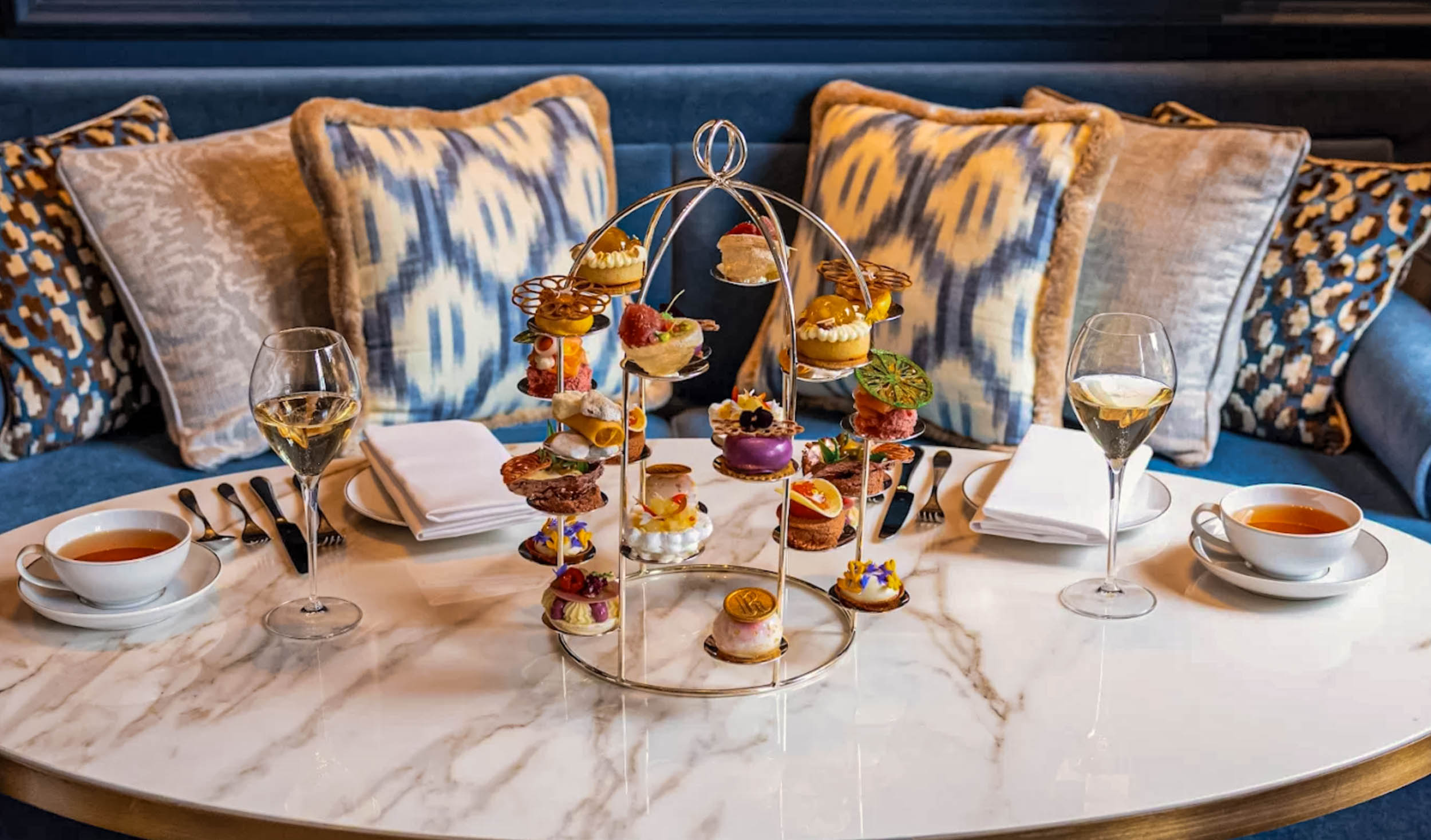
Waldorf Astoria Amsterdam hotel has ninety-three rooms and suites, each of which is unique thanks to the original architecture of the buildings. There’s also the two-Michelin-star restaurant Spectrum, the elegant Goldfinch Brasserie, the iconic Peacock Alley serving their famous afternoon tea and the atmospheric Vault Bar cocktail bar housed in a former bank vault with original safes converted into drinks racks. The Guerlain spa with an indoor pool, sauna and steam bath offers complete relaxation, and the hotel also has the largest private garden in the center of Amsterdam.

What is especially worth mentioning is the service, a personal concierge was assigned to each guest, and the feeling of attention and hospitality was present at every moment of the stay. From the welcome drink and selection of room perfumes from the Cire Trudon collection, to the organization of private museum tours and exclusive theater tickets, everything worked flawlessly. The hotel also has its own boat dock, from where private canal rides can be arranged, which in December, with all the lights and festive atmosphere, is a completely magical experience.


HIDDEN GEMS NOT TO BE MISSED IN AMSTERDAM
In addition to the big attractions, Amsterdam also hides many smaller, but equally valuable places. The Begijnhof is a fourteenth-century enclosed courtyard, hidden behind an impregnable door on Spui Square. Once inside, you find yourself in a completely different world, a peaceful space surrounded by historic buildings, including the oldest wooden house in Amsterdam from 1475. The inner courtyard also has a charming seventeenth-century English Reformed church that is still in use today. The visit is free, but visitors are expected to respect the peace and quiet of this unique place.
The Museum Ons’ Lieve Heer op Solder, or Our Lord in the Attic, is a former secret Catholic church housed in three floors of a seventeenth-century canal house. At that time, the Catholic faith was not allowed to be practiced publicly in Protestant Amsterdam, so believers built hidden churches in private homes. This one could accommodate up to one hundred and fifty people and causes an incredible feeling when you visit it.

For street art lovers, the STRAAT museum in the NDSM district on the north bank of the river IJ offers over one hundred and sixty works of art by one hundred and fifty artists from all over the world, housed in a former shipyard. It can be reached by free ferry from the Central Station in just ten minutes.
The De Pijp quarter, south of the center, is perhaps the liveliest quarter of the city with the Albert Cuyp market spanning five blocks and offering everything from fresh cheese and seafood to prepared foods and souvenirs. This daily street market is open every day except Sundays and is the right place to try freshly made struvaffles from the famous vendor Rudi or to taste marinated herring, one of the most authentic Dutch specialties.

For those who want to see Amsterdam from a different perspective, I recommend visiting the Amsterdam Noord district, on the north bank of the river IJ. The free ferry from the Central Station takes you to a completely different world, there is A’dam Toren with a panoramic view of the city, the Eye Film Museum and the interesting interactive experience This is Holland, where you can “fly over” the most beautiful landscapes of Holland in a five-dimensional flight simulator.
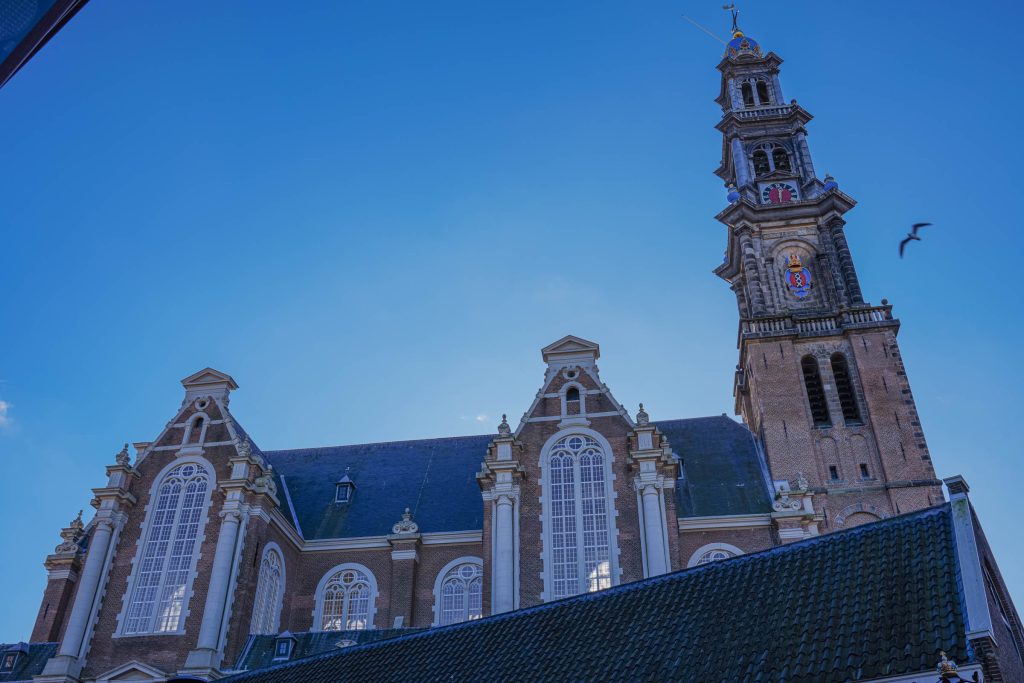
The Western Westerkerk Church on Prinsengracht is one of the most beautiful religious buildings in the city, built in 1631. Rembrandt van Rijn is buried here, although the exact location of his grave remains unknown. The tower of the church is eighty-five meters high and offers a spectacular view of the city, especially in winter when visibility is exceptional.
WHY SHOULD YOU VISIT AMSTERDAM?
Amsterdam surprised me with its winter warmth, not atmospheric, but human, cultural, emotional. A city that many associate only with tulips and canals in the spring showed me that it is just as, if not more, enchanting in December. Where there was a lack of sunlight, it was compensated by the light of festivals, cafes and that specific Dutch feeling they call gezelligheid, a mixture of comfort, warmth and good company.
The Dutch are a people who have learned to live with water, to tame it and turn it into an advantage. Their canals, which once served for defense and transport, are today a symbol of the city and a way of life. Houseboats, of which there are about 2,500 in Amsterdam, have been transformed from a sign of poverty into desirable addresses. Former warehouses for spices and silk have become luxury apartments. Everything transforms, but nothing is forgotten, and that is perhaps the most important lesson that Amsterdam teaches every visitor.

The Dutch concern for details in everyday life left a special impression on me. From the perfectly maintained bike paths, to the clean and functional trams, to the way the cafes are designed with large windows facing the canals, everything exudes thoughtfulness and respect for quality of life. This can be felt in museums where each exhibit is carefully illuminated and explained, and in restaurants where the waiter is never in a hurry, and in the very rhythm of the city which, despite millions of tourists, manages to keep its authentic character.
If you’re thinking about traveling to Amsterdam, my advice is don’t wait for the perfect season. Amsterdam is always perfect. And in winter, with fewer tourists and more authenticity, this city welcomes you with the love and warmth of the holidays, which is hard to find in the hustle and bustle of the summer season. Every canal, every bridge, every view through the window of the canal house, it’s all waiting to be discovered. And when you do, you’ll understand why Amsterdam isn’t just a once-in-a-lifetime experience.
Have you already had the opportunity to visit Amsterdam, this fascinating canal capital where magnificent houses from the Golden Age are reflected in the calm water of the canal, and tradition lives side by side with the libertarian spirit of one of Europe’s most cosmopolitan cities? Or maybe you are just planning to step into this urban labyrinth, get lost in the charming streets of Jordan, feel the energy of the city that breathes through its canals and bike paths, but also find moments of silence in hidden courtyards and museums that store masterpieces of world art?
Feel free to leave your impressions, comments or questions below the text or contact me via email and social networks. All information is available on the CONTACT page.
See you soon, with a new story from the heart of old Europe!
With Love from Amsterdam,
Mr.M

This post is sponsored by the United Nations World Tourism Organization (UN Tourism) and the Waldorf Astoria Amsterdam Hotel, as well as other local partners who have selflessly supported this project. This post is my personal and honest review of the destination experience.