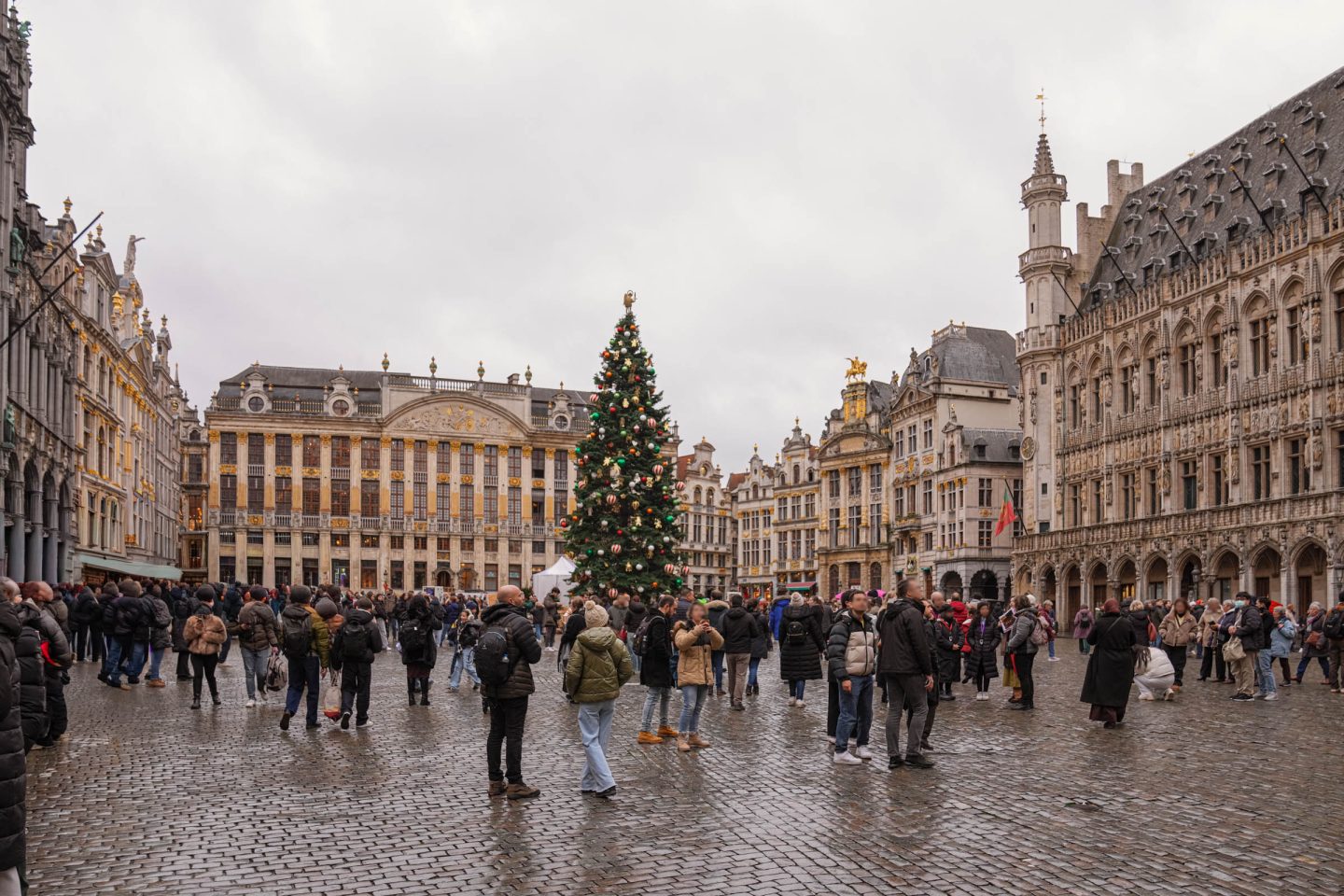
My dear travellers and lovers of unusual journeys, welcome to the new travelogue on the Mr.M blog. After a series of travelogues from Asia that won your hearts, it’s time to focus on European metropolises. There are cities that enchant you immediately, at first sight. Paris does this to all tourists who stand under the Eiffel Tower for the first time. Rome overwhelms you the moment you step into the old Forum. Brussels, however, belongs to a completely different category of European capitals. This is a city that requires patience and a chance to give it a second look. It requires you to dive deeper than the surface, to turn from the main street to a side street, to stand in front of a facade that other passers-by do not notice.
Before starting today’s travelogue about Brussels, I want to express my special thanks to the United Nations World Tourism Organization – UN Tourism and Steigenberger Icon Wiltcher’s for supporting and promoting quality tourism around the world. Their dedication to connecting cultures and destinations is an inspiration to all of us who believe that travel enriches the soul.
That’s exactly why I decided to dedicate one of my travelogues to him. Brussels is not a postcard for social networks. It’s a true story written in stone, chocolate and sparkling Belgian beer. A city that is also the political capital of Europe and its most unpretentious host. During my stay I had the opportunity to feel exactly that contrast and I can tell you that Brussels is not easily forgotten. On the contrary, it remains in your mind as a special city to which you will return at least because of the delicious Belgian chocolates and waffles!
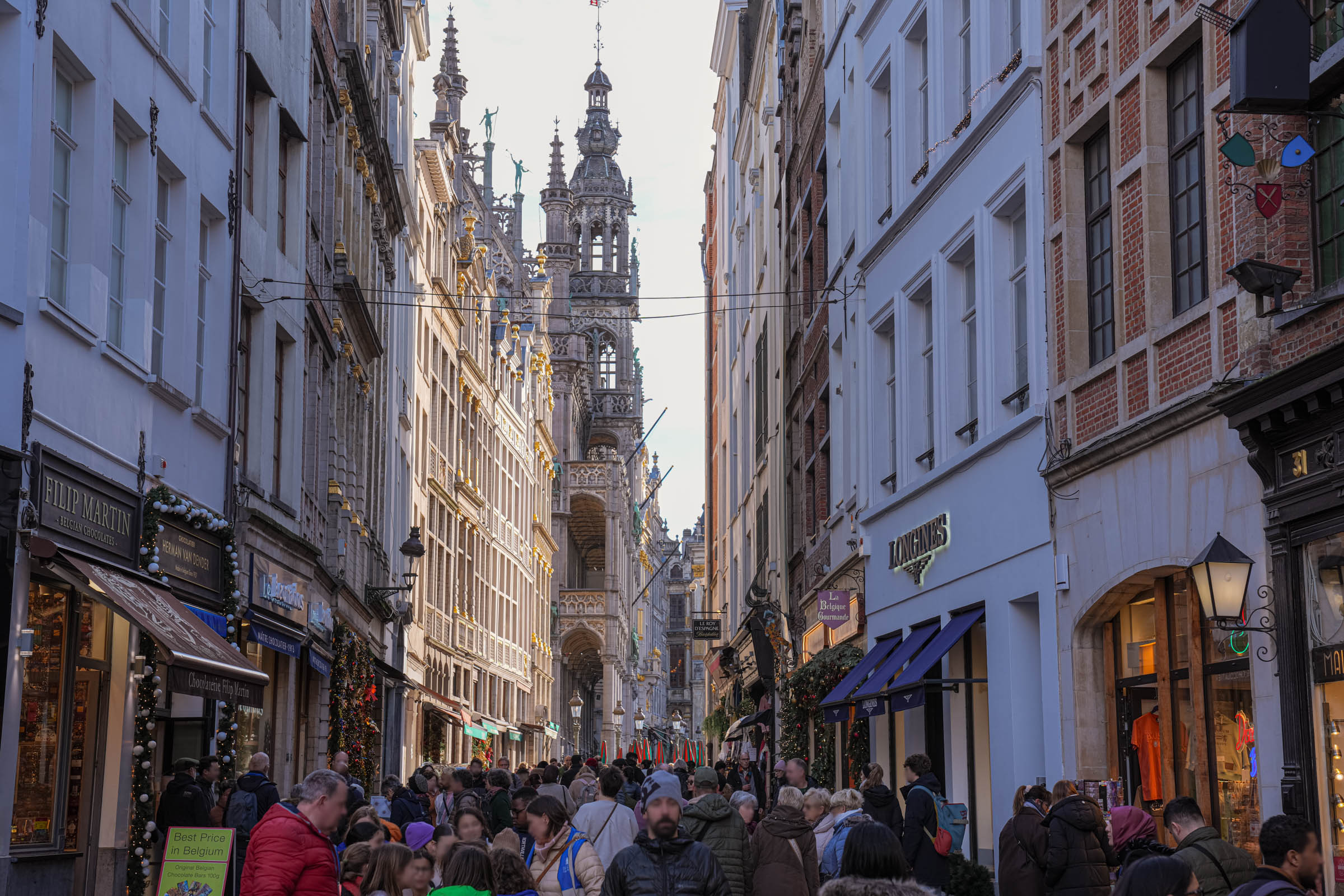
BRUSSELS: A CITY ORIGINATED ON A SWAMP THAT CONQUERED THE CONTINENT
Few people know that the very name Brussels comes from the Old Dutch word Bruocsella, which means “settlement on the marsh”. The first written mention of the city dates back to the year 695, but the official foundation dates back to the year 979. That year, Duke Charles of Lower Lorraine built a fort on an island in the Seine River, laying the foundation of the future city. So, this city has more than a thousand years of stormy history.
During the Middle Ages, Brussels grew thanks to its exceptional geographical location. It was located on an important trade route that connected the rich Flemish cities of Bruges and Ghent with Cologne and other cities of the Holy Roman Empire. The production of luxury fabrics, tapestries and lace brought wealth to the first families of Brussels. Those wealthy patrician dynasties, known as Lineages, shared power in the city and shaped its character over the centuries.

Brussels experienced a special boom in the 15th century, when it became the capital of the Duchy of Burgundy under Philip the Good. It was an era of artistic and economic boom. Painter Rosie van der Weyden was named official city artist, and the monumental City Hall on the Grand Place began to rise with its ninety-six-meter tower, crowned by a statue of the Archangel Michael, considered the city’s patron saint.
After the Burgundian period, Brussels passed into the hands of the Habsburg dynasty. Emperor Charles V, born and raised in the Low Countries, made Brussels one of the most important centers of his vast empire. It is interesting that Charles the Fifth abdicated precisely in Brussels in 1556, which speaks of the importance this city had at that time. The city then went through Spanish rule, religious conflicts and the Eighty Years’ War, but each time it found the strength to rebuild.

GRAND PLACE: A BREATHTAKING SQUARE
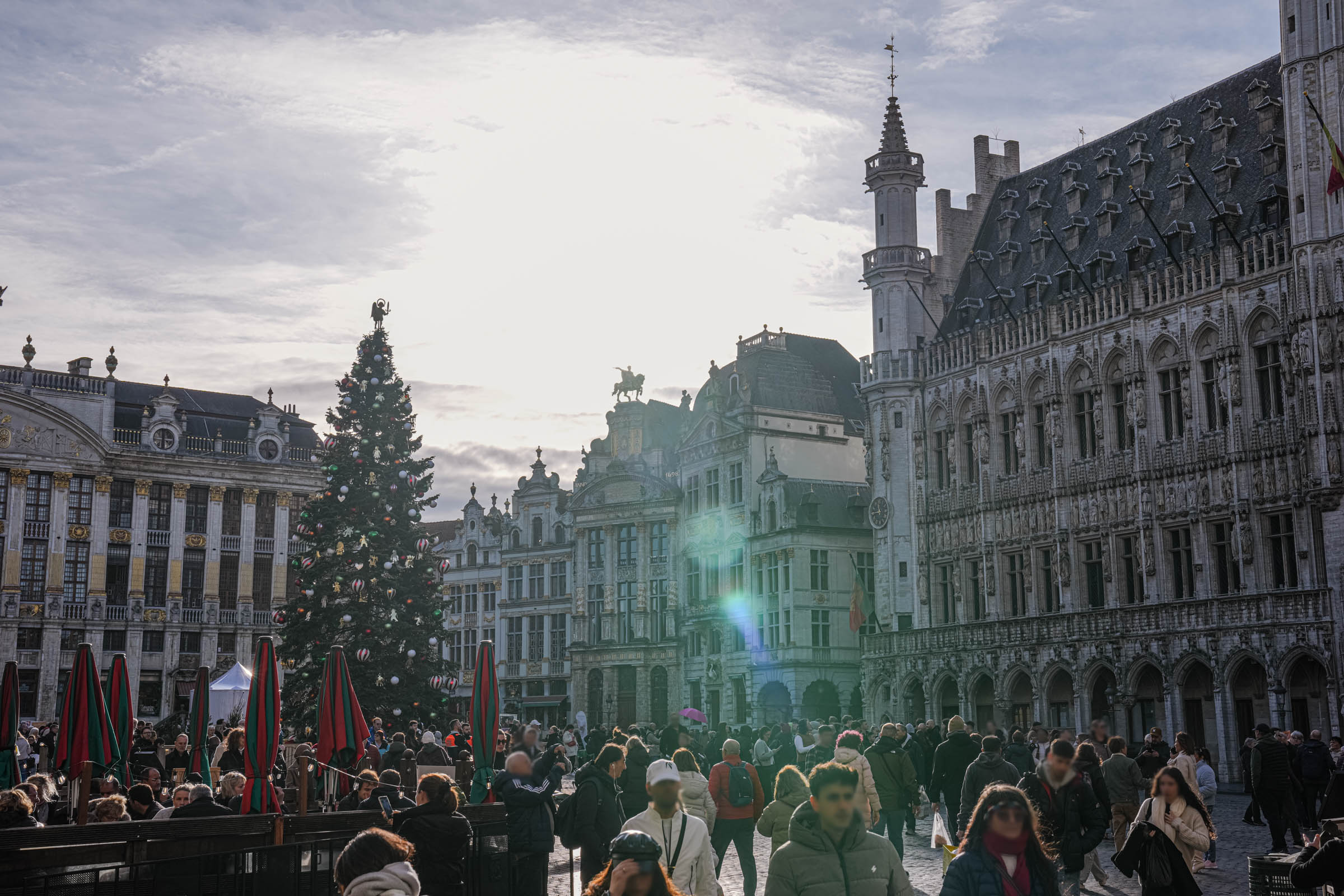
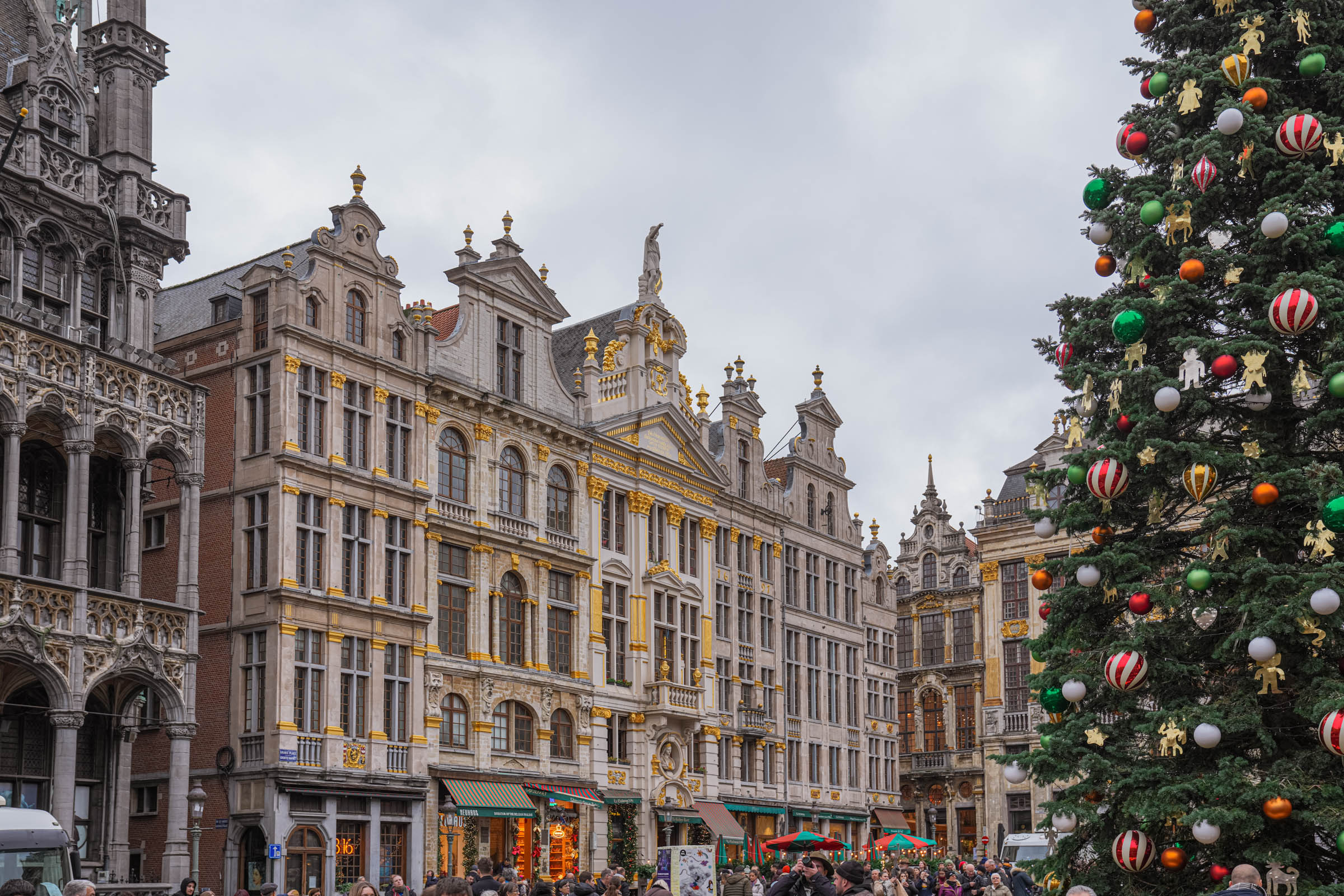
If there is one place in Brussels that you must visit, it is without a doubt the Grand Place. This central square has been on the UNESCO World Heritage List since 1998 and, thanks to Belgian artisans, holds the title of one of the most beautiful squares in the world. When I first stood on the edge of the square and looked around, I stopped in my tracks. It is difficult to describe in words how the symmetry of the baroque facades of the guild houses, gilded decorations and the Gothic Town Hall dominates the entire space.
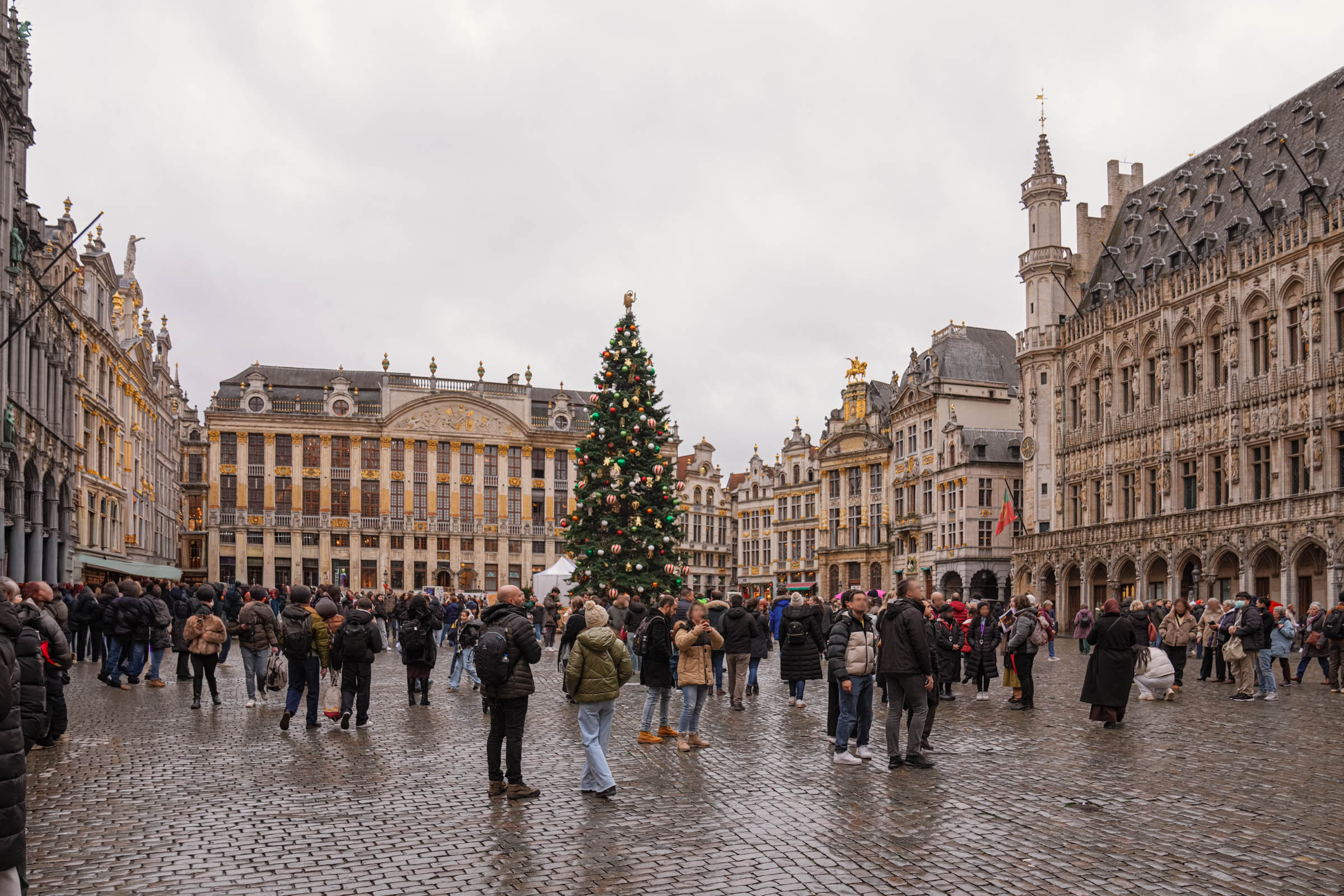

The history of this square is as dramatic as its appearance. In 1695, the French army under the command of Louis the Fourteenth bombarded Brussels for three days. More than four thousand houses were destroyed, and the Grand Place was turned into ruins. However, the Brussels craft guilds rebuilt the square in just four years, erecting the magnificent baroque guild houses we see today. Each of those buildings bears the name of the guild that built it, from bakers to brewers, from archers to boatmen.
A special experience is the evening Grand Place. When the lights are turned on, the gilding on the facades takes on a warm color and the entire square looks like a theater scene. During August, every other year, the square is transformed into a huge carpet of flowers, made up of more than half a million begonias. It is a sight that is hard to forget.


GALERIES ROYALES SAINT-HUBERT: THE OLDEST COVERED MARKET IN EUROPE
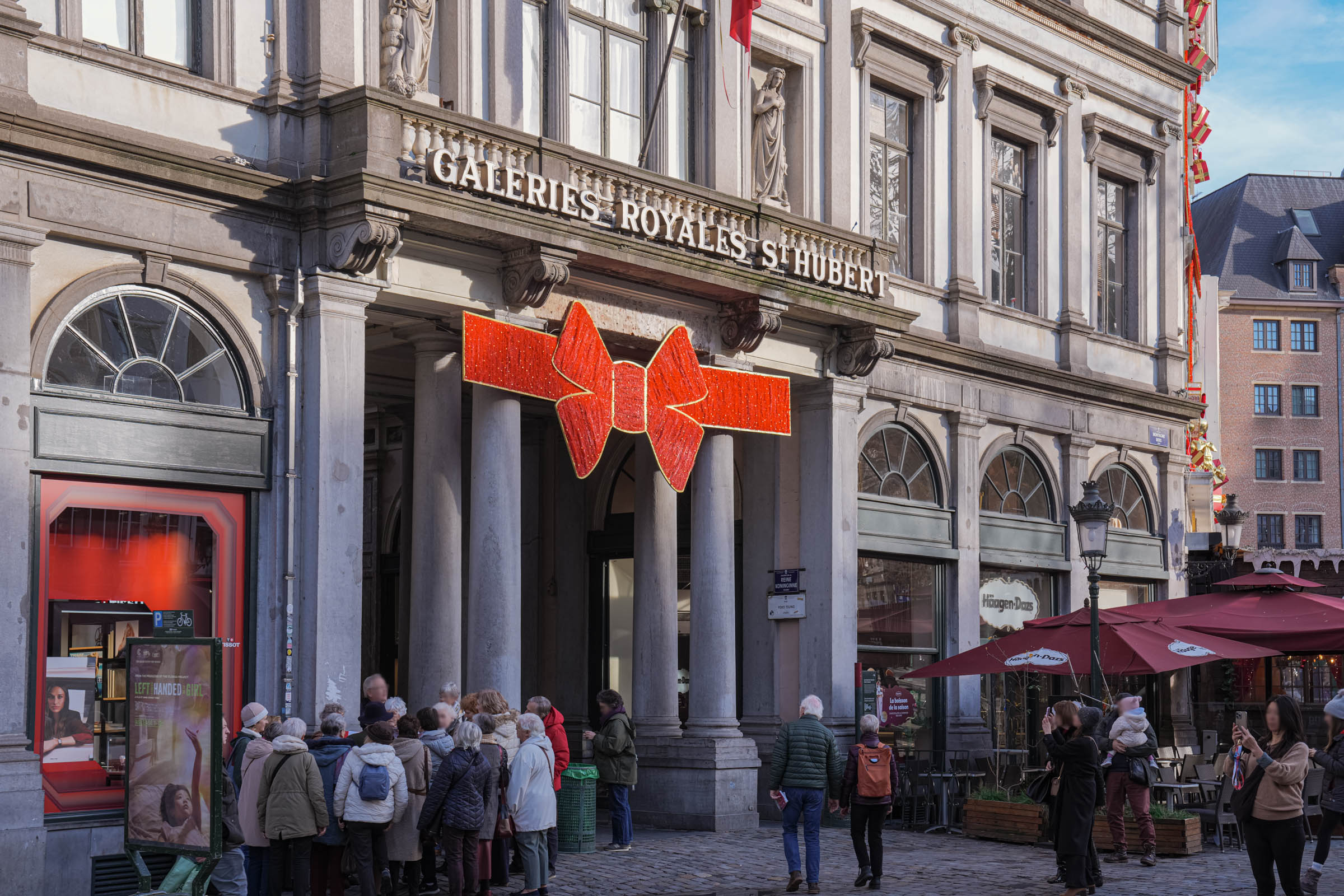
Just a step away from the Grand Place are the Galeries Royales Saint-Hubert, opened in 1847. This covered passage with a glass roof is considered one of the oldest shopping galleries in Europe and a predecessor of similar buildings such as Milan’s Galleria Vittorio Emanuele. It consists of three parts: the Gallery of the King, the Gallery of the Queen and the Gallery of the Princes. The total length exceeds two hundred meters.
The interior of the gallery leaves a strong impression. A high glass vault lets in natural light that falls on the marble floor and elegant windows. Here you will find luxury chocolatiers, bookstores, antique shops and buffets. The Toone Theatre, a famous puppet theater that has been around since 1830, is also nearby. A walk through the gallery represents a journey to a time when shopping was a social event, not an obligation.


MANNEKEN PIS AND THE BELGIAN SENSE OF HUMOR
No travelogue of Brussels would be complete without a mention of the Manneken Pis, a tiny bronze statue of a boy defecating. Only fifty-seven centimeters high, this fountain attracts thousands of visitors a day. I admit that I thought for a second that someone was playing a prank on me when I first heard about her. How can such a small sculpture be the symbol of an entire city?
The answer lies in the Belgian mentality. Brussels people like not to take themselves too seriously and Manneken Pis perfectly embodies that spirit. The original version of the statue dates back to 1619, although legends about the boy go back to the Middle Ages. One of the most popular stories says that a little boy extinguished the fuse of a bomb that was supposed to destroy the city walls. Today, the statue has a wardrobe with more than a thousand costumes donated by organizations from all over the world. On special days, Manneken Pis dresses up in different uniforms and costumes, from samurai to astronauts.


By the way, Manneken Pis also has a female counterpart named Jeanneke Pis, a small bronze fountain of a girl located in a hidden alley not far from the Grand Place. Also, there is the lesser-known Zinneke Pis, a dog sculpture. Together they form an unusual family that perfectly illustrates Brussels humor.
ATOMIUM: A VISION OF THE FUTURE FROM 1958
If the Grand Place is the heart of old Brussels, the Atomium is undoubtedly the symbol of the modern city. This spectacular structure, one hundred and two meters high, was built for the 1958 World’s Fair. It represents the crystal structure of iron atoms magnified one hundred and sixty-five billion times. Each of the nine spheres is eighteen meters in diameter, and they are connected by pipes containing escalators and escalators.
Originally, the Atomium was supposed to stand only for the duration of the exhibition. However, the people of Brussels loved it so much that it became a permanent part of the city landscape. Between 2004 and 2006, it underwent a thorough renovation, when the original aluminum panels were replaced with steel ones. Today, the upper sphere offers a panoramic restaurant with a view of the entire city, while the lower spheres serve as exhibition spaces. Entrance costs sixteen euros for adults, and the view is worth every cent. At the foot of the Atomium is Mini Europe, a park of models of the most famous European buildings in a scale of one to twenty-five.

BELGIAN GASTRONOMY: MUCH MORE THAN WAFFLES AND FRIES
It is impossible to talk about Brussels without paying special attention to food. Belgium is a country where gastronomy is understood as an art, and Brussels is its culinary epicenter. Let’s start with a fact that surprises many: French fries are not a French invention. The Belgians claim that they invented this edible symbol and in Brussels French fries are served in a paper cone with mayonnaise, never with ketchup. It is not just a habit, it is a matter of national pride.
Belgian waffles come in two basic varieties. The Brussels waffle is lighter, rectangular in shape, with a crispy exterior and airy interior. The Liješka waffle is thicker, sweeter and irregularly shaped. Both are excellent, but I recommend you try both and decide for yourself. At every step in the city center you will come across shops offering freshly baked waffles with chocolate, whipped cream or fruit.

Belgian beer deserves a special paragraph. This small country produces more than one thousand five hundred types of beer, and the Belgian brewing culture is on the list of intangible cultural heritage of UNESCO. In Brussels, be sure to visit the Delirium cafe, which holds the Guinness record with more than two thousand types of beer on offer. For fans of the authentic experience, the Kantillon brewery in the Anderlecht district is one of the last traditional lambic breweries in the city. There you can see the production process, which has not changed much since the nineteenth century.
I must not forget the Belgian chocolate. Brussels is a paradise for chocolate lovers, with chocolatiers on every corner. It is interesting that praline originated in Brussels. A nineteenth-century apothecary began coating his medicines with chocolate to make them more palatable. His grandson turned that idea into a confection that took the world by storm. Names like Pierre Marcolini and Laurent Gerbaud preserve that tradition at the highest level.


BELGIUM AS THE CAPITAL OF COMICS
Belgium is a country that is rightfully proud of the title of world capital of comics. Tintin was born in Brussels, the most famous character from the pen of Hergé, a Belgian cartoonist who created an entire school of comics in the 1950s. In addition to Tintin, Belgium gave the world the Smurfs, Luke Luke and numerous other characters that marked the childhood of generations all over the planet.
The Belgian Comic Center, housed in a beautiful Art Nouveau building in the city center, is dedicated to the history and art of the ninth art, as the Belgians call comics. Apart from the museum, the whole city is an open-air gallery. More than fifty murals with comic book heroes adorn the facades of buildings throughout Brussels. Walking from mural to mural is a special way to get to know the city, and maps with marked locations are available free of charge at tourist offices.


ART NOUVEAU AND ARCHITECTURAL TREASURES OF THE CITY
Brussels is one of the world’s most important centers of the Art Nouveau movement, and that’s a reason in itself worth a visit. In the late nineteenth and early twentieth centuries, architect Victor Orta revolutionized the way we think about living spaces. His house and studio, today converted into the Orta Museum, are on the UNESCO World Heritage List. The interior exudes organic lines, stained glass and wrought iron that bends like plant shoots.
In addition to Orta’s house, Brussels abounds in Art Nouveau pearls scattered throughout the residential districts. Solvay House, also Orta’s work, is considered one of the most beautiful private houses of the twentieth century. House of Hanon, House of Kausija and numerous other facades are revealed to architecture lovers who are ready to explore neighborhoods off the usual tourist routes. It is precisely this scattering of Art Nouveau buildings throughout the city that makes a walk through Brussels a continuous discovery.


ROYAL BRUSSELS AND MUSEUM TREASURES
The Upper Town of Brussels preserves the institutional and cultural power of the Belgian capital. The Royal Palace, although not the permanent residence of the royal family, serves as the administrative seat of the King of Belgium. Every year, from the end of July to the middle of August, the palace opens its doors to visitors. Special attention is drawn to the Hall of Mirrors, whose ceiling is covered by an installation by the Belgian artist Jan Fabre, made of one and a half million wings of a green beetle.
Mont des Arts, the artistic hill as it is called, represents the link between the lower and upper city. Its terraces offer a beautiful view of the rooftops of Brussels. In the immediate vicinity are the Royal Museums of Fine Arts of Belgium, which include collections of old masters, contemporary art and a special museum dedicated to René Magritte, the most famous Belgian surrealist. Magritte’s works, with their surreal logic and visual paradoxes, perfectly depict the Belgian spirit, which has always loved to question the obvious.

The Museum of Musical Instruments is housed in a stunning Art Nouveau building of the former Old England department store. It contains more than fifteen hundred instruments from all over the world, and each visitor receives a headset that automatically reproduces the sound of the instrument in front of him. On the roof of the museum there is a restaurant with one of the most beautiful views of the city. In addition, the Institute of Natural Sciences offers the largest dinosaur gallery in Europe, making it a great choice for families with children.

CATHEDRAL OF SAINT MICHAEL AND SAINT GUDULA
This Gothic cathedral, whose construction lasted from the thirteenth to the fifteenth century, dominates the skyline of the city center. The Brabant Gothic style is recognizable by two symmetrical towers sixty-four meters high and the rich stone decoration of the facade. The interior is decorated with stained glass windows that are more than five hundred years old, which even on a cloudy day fill the space with various colors.
The cathedral serves as the wedding and burial site of the Belgian royal family. Entrance is free, which is especially valuable information for travelers. However, a tour of the crypt and the archaeological remains of the former church is charged extra. The foundations of a Romanesque church from the eleventh century were discovered under today’s cathedral, which further testifies to the depth of the historical layers of this place.

THE FOURTH SABLON AND THE CITY’S HIDDEN GEMS
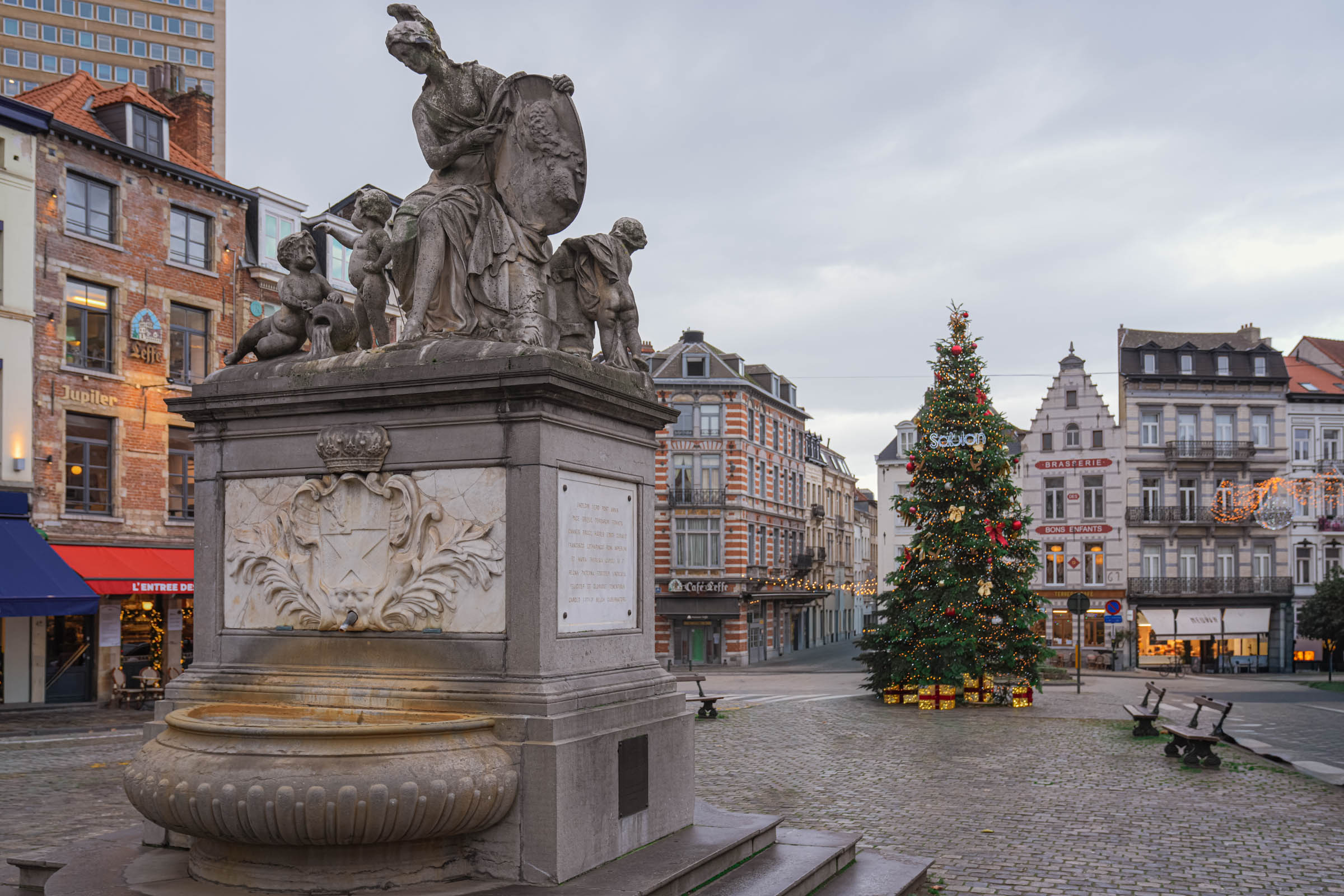
If Grand Place represents the tourist heart of Brussels, Sablon is its elegant suburb. This district is known for its antique shops, galleries and chocolatiers of the highest quality. Petit Sablon Square is surrounded by a small garden with statues representing medieval artisan guilds. There is a peaceful atmosphere that invites you to slow down and enjoy the details.
Not far from there is the neighborhood of Marolles, a traditionally working-class neighborhood that today attracts artists and curious travelers. The Jeu de Balle flea market is open daily and offers everything from vintage furniture to retro clothes and old books. It is precisely in the contrasts between the elegant Sablon and the down-to-earth Marolles that the diversity that makes Brussels such a special city is reflected. The Palace of Justice, a monumental nineteenth-century edifice towering over Marolles, is one of the largest court buildings in the world and offers spectacular views of the lower town.

BRUSSELS AS THE CAPITAL OF EUROPE
Apart from the Belgian capital, Brussels is also the unofficial capital of the European Union. The headquarters of the European Commission, the Council of the European Union and numerous other institutions are located in the so-called European Quarter. There is also the headquarters of NATO. This fact gives Brussels a cosmopolitan character that few cities can match. It is estimated that more than thirty thousand employees in European institutions live and work in the city, which gives a special dynamic to city life.
Particularly interesting for visitors is the Parlamentarium, an interactive center for visitors to the European Parliament. Entrance is free, and the exhibition in twenty-four languages explains how European institutions work. The House of European History, opened in 2017, offers a fascinating overview of Europe’s shared past over six floors. Both institutions are worth including in the itinerary, especially for those who want to understand the political dimension of the city. Leopold Park, a green oasis in the heart of the European Quarter, offers a pleasant respite from the urban pace.


STEIGENBERGER WILTCHER’S: A CENTURY OF ELEGANCE ON AVENUE LOUISE
During my stay in Brussels, I stayed at the Steigenberger Icon Wiltcher’s Hotel, one of the most famous luxury hotels in Belgium. This five-star hotel is located on the prestigious Avenue Louise, the city’s main shopping avenue, and its imposing Art Nouveau facade is impossible to miss. The white facade with black balustrades glistens in the daylight, and when you enter through the canopied entrance, a red carpet leads you to the opulent dark oak reception desk, lit by sparkling chandeliers.
The hotel was opened in 1913 and is named after Sidney Wiltshire, a member of the British expatriate family who bought the former residence of Baron Joseph de Crachet. Since then, the hotel has changed several owners, but it has kept the spirit of the great European hotels. Between 1993 and 2012, it was called Conrad Brussels, and today it is managed by the German chain Steigenberger. A 2015 renovation restored the luster to the polished brass fixtures and marble. With 267 rooms, including 42 suites, Wiltcher’s offers some of the most spacious accommodation in the city.


Loui Bar and Restaurant won the Prix Villégiature award for the best hotel bar in Europe, which speaks of the level of hospitality offered. The hotel’s library, a favorite place for both guests and locals, provides a pleasant atmosphere to relax with literature and hot drinks. On the terrace in front of the hotel you can enjoy watching the elegant life of Avenue Louise with a coffee or a glass of Belgian beer. The hotel’s position is excellent for exploring the city, with a tram stop directly outside the door and Louise metro a five-minute walk away.
My experience in the Executive Suite was exceptional. This apartment covers ninety square meters and offers a separate living room and bedroom, which gives the feeling of a real home away from home. The living room is equipped with a comfortable sofa, armchairs, a coffee table and a flat screen TV. A bedroom with a king-size bed and premium bedding guarantees a restful sleep. The marble bathroom with separate shower and bathtub is a special delight. The view through the large floor-to-ceiling windows overlooks Avenue Louise and the elegant rooftops of Brussels. Breakfast at Café Wiltcher’s, with its high ornate ceilings and large windows, is the perfect start to the day. Butler service in apartments of this level further enhances the stay experience. Undeniably, Steigenberger Wiltcher’s is an address that justifies every cent invested in a stay in Brussels.

BASILICA OF THE SACRED HEART AND A VIEW YOU REMEMBER
In the Kekelberg district, on the edge of the city, rises the Basilica of the Sacred Heart, the fifth largest church in the world. With a height of eighty-nine meters and a length of one hundred and sixty-seven meters, this Art Deco building leaves a strong impression. Its viewpoint, which offers a panoramic view of the whole of Brussels, is worth a visit in itself. Entrance to the church is free, while access to the viewpoint is charged a symbolic fee.
The construction of the basilica began in 1905 on the occasion of the seventy-fifth anniversary of Belgian independence, but it was not completed until 1969 due to interruptions caused by two world wars. The interior is a space that exudes peace and monumentality. The green copper roof of the basilica can be seen from many parts of the city and is a recognisable element of the Brussels skyline that tourists often skip, and they shouldn’t.


FIFTY PARK AND TRIUMPH ARCH
Parc du Cinquantenaire, also known as the Fiftieth Park, was built in 1880 to mark the fiftieth anniversary of Belgian independence. In the center of the park rises a monumental triumphal arch that resembles its Parisian counterpart, but carries its own Belgian character. The park is a favorite place for running, picnicking and socializing in the fresh air, especially during the warmer months.
There are three important museums inside the park. The Museum of Art and History has rich collections of antiquities from all over the world. Autoworld is a paradise for car lovers, with more than two hundred and fifty vintage and classic vehicles on display in one place. The Royal Museum of the Army and Military History offers free entry and a detailed exhibition on Belgian military campaigns through the ages. This park represents a perfect combination of culture, history and nature and is worth setting aside half a day for its tour.

NIGHT LIFE AND CAFE CULTURE
Brussels after sunset offers a different energy. The Saint-Géry district, named after the saint who founded the original chapel on the Seine, is today the center of nightlife. Bars and restaurants around the market of the same name attract a young and middle-aged crowd alike. The atmosphere is relaxed, far from the pretentiousness that sometimes accompanies European capitals.
For a different experience, I recommend an evening in one of the traditional Brussels cafes. These bars, with their wooden interiors, brass bars and huge selection of beers, are where the locals really come together. A la Mort Subite, a cafe founded in 1928, offers an authentic ambiance and lambic beer poured in a way that hasn’t changed in decades. Le Cirio, another historic cafe near the stock exchange, exudes Art Nouveau elegance with its gilded mirrors and chandeliers.
PRACTICAL TIPS FOR TRAVELING TO BRUSSELS
Brussels is a city best explored on foot, at least when it comes to the center. From the Grand Place to the Manneken Pis, you only need a five-minute walk. You will go to the Royal Palace and the museum complex in fifteen minutes. For more distant points like the Atomium or the European Quarter, the metro and tram network work great. Avoid renting a car as traffic is heavy and free parking spaces are almost non-existent.
As for language, French and Flemish Dutch are spoken in Brussels, and most people speak English very well. You will have no problem communicating in any language. The best time to visit is late spring or early fall, when the temperatures are pleasant and the tourist crowds bearable. Three to four days are enough to get to know the city thoroughly. Two days will be enough for the main sights of the center, but if you want to visit the Atomium, Mini Europe and the European Quarter, plan a longer stay.
Brussels is a city that is not attacked, does not show off and does not make a show of itself. Instead, it quietly draws you into its story and slowly wins you over. When you leave, you take with you the taste of pralines on your tongue, the memory of the gilded facades of the Grand Place, and the feeling that you’ve discovered something that other travelers skip over. This is precisely where its special charm lies. Brussels is not a city for those in a hurry. Brussels is for those who know how to enjoy themselves.

This post is sponsored by the United Nations World Tourism Organization (UN Tourism) and the Steigenberger Icon Wiltcher’s Hotel, as well as other local partners who have selflessly supported this project. This post is my personal and honest review of the destination experience.