
My dear travellers and lovers of unusual journeys, welcome to the new travelogue on the Mr.M blog. After a series of travelogues from Asia that won your hearts, it’s time to focus on European metropolises. There are cities that you visit once and forget about after a week. There are those where you spend a good time, but nothing pulls you back. And among them there is a city like Prague. A city that conquers you at first sight from the first step on the cobblestones of the Old Town and never lets you go with spectacular memories. Traveling to Prague was one of those experiences that reminded me why I travel in the first place, not for taking social media photos, but for that feeling when I stand on a six-and-a-half-century-old bridge and realise that I’m looking at a similar, if not the same, sight that kings, composers and poets have seen as so many others before me.
Before starting today’s travelogue about Prague, I want to express my special thanks to the United Nations World Tourism Organization – UN Tourism and The Mozart Prague Hotel for supporting and promoting quality tourism around the world. Their dedication to connecting cultures and destinations is an inspiration to all of us who believe that travel enriches the soul. This is my personal guide to this magnificent city, written with the desire to help all of you who are planning a trip to Prague understand what awaits you here.
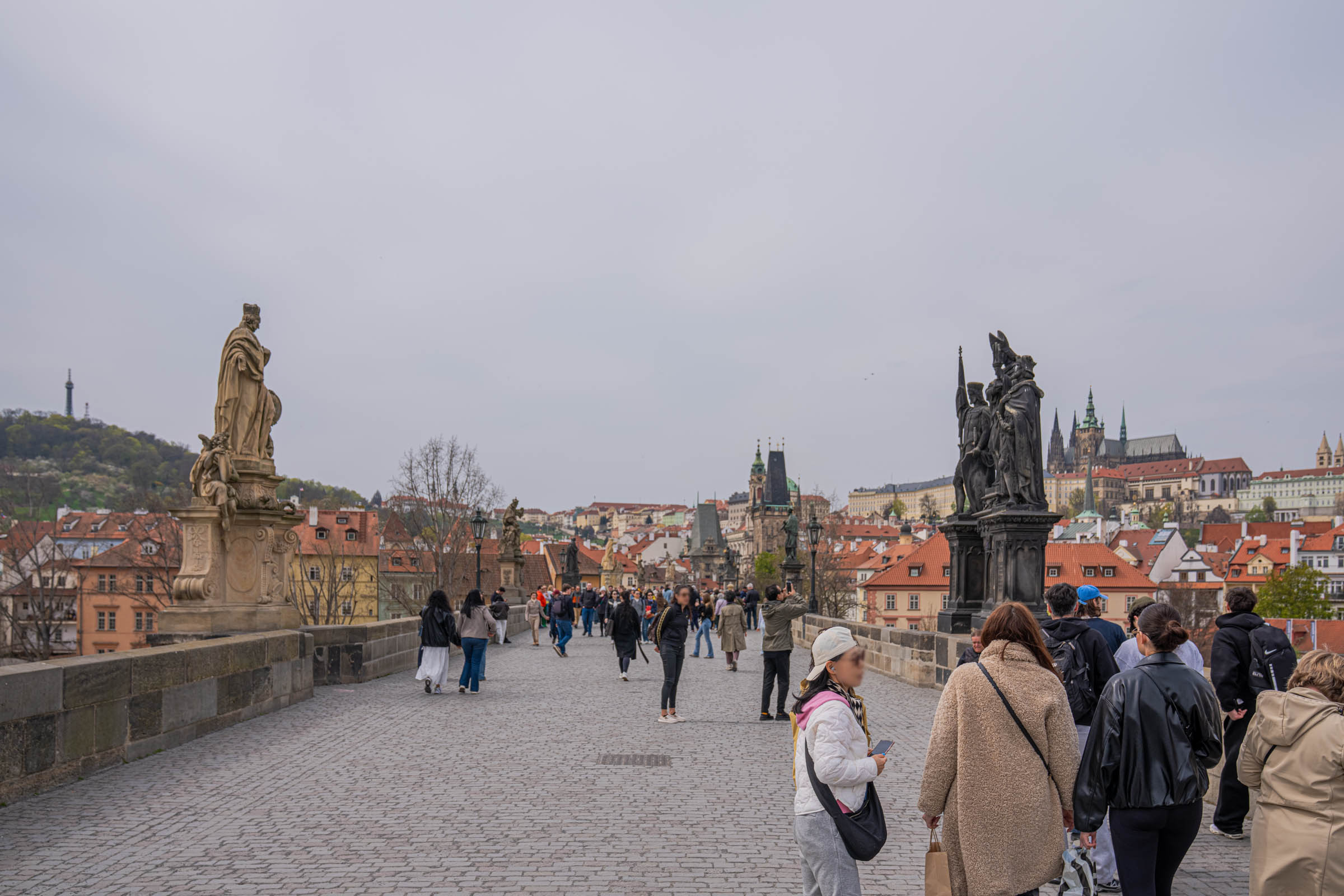

PRAGUE: A THOUSAND YEARS OF HISTORY ON THE BANK OF THE VLTAVA
To understand Prague in the best possible way, we must first go back in time. This city was founded in the ninth century and since then has been continuously one of the most important places in Central Europe. It was the capital of the Holy Roman Empire during the time of Charles IV, who in the fourteenth century built the Charles Bridge, founded the first university in Central Europe and turned Prague into one of the most brilliant capitals of his time.
Over the centuries, this city has survived wars, occupations, revolutions and political upheavals, but somehow managed to preserve its architectural integrity almost intact. That is precisely why the historical center of Prague is included in the list of world heritage under the protection of UNESCO. Today, walking through the streets of this city, you can see Gothic, Renaissance, Baroque, Rococo, Art Nouveau and Cubism all in one place, often on the same street. Few cities in the world can boast such a variety of styles.

The numbers speak for themselves. According to data from the Czech Statistical Office, Prague will attract over 8 million visitors in 2025. Germans make up the largest group of foreign tourists, followed by Americans and Britons. As many as sixty-six percent of visitors choose four- or five-star hotels, which clearly shows what kind of tourists this city attracts today. It is interesting that the number of tourists from Asia is growing the fastest, with an increase of twenty-eight percent in one year. Prague is increasingly positioning itself as a destination for more demanding travelers looking for cultural experiences, top gastronomy and quality accommodation.

PRAGUE: OLD TOWN SQUARE, THE HEART THAT BEATS FOR SIX CENTURIES
Every trip to Prague starts at Old Town Square. This is a place where all eras meet, where every building tells its own story and where you feel as if you have stepped into a living history book. I stood in this square in the early hours of the morning, before the crowds had formed and looked at the facades painted in pink, yellow, blue and green, each with its own baroque decorations, sculptures and coats of arms.


On one side of the square, the Tina Church dominates with its recognizable Gothic towers that rise like spears towards the sky. On the other side stands the tower of the Old Town Factory with the famous astronomical clock, known as Orloj. This clock was installed in 1410, making it one of the oldest surviving mechanical clocks in the world that is still working. Every full hour, figurines of the twelve apostles appear in the small windows above the dial, attracting hundreds of tourists who wait with their heads held high for this brief but unforgettable display.


In the center of the square stands a powerful monument to Jan Hus, the Czech reformer who was burned at the stake in 1415. The inscription on the monument calls for love of truth and justice for every human being, a message that still resonates strongly today. In addition to the monument, there is also the restored Marian column, which adds another dimension to this incredible space.


PRAGUE: THE STREETS OF THE OLD TOWN WHERE EVERY STEP IS LIKE A NEW DISCOVERY
Streets diverge from the Old Town Square, which in themselves deserve special attention. One of the most beautiful is Celetna, an old shopping street that leads to the Dust Gate. Walking along it, I noticed how the Gothic tower of the Dust Gate was slowly revealed in the distance, framed by facades on both sides. On every building you come across a new story, forged inscriptions with symbols of old crafts, golden coats of arms above the doors, statues of saints in the niches of the facades.


I was particularly attracted to the building of V.J. Rott near the square, the facade of which is painted with vivid frescoes in warm colors depicting artisans and farmers. This building dates back to the 19th century, but its frescoes look as if they have been there forever. A little further, on the corner of Mala Strana, stands the house Dům U Zlaté Studny with rich sculptural decoration on the facade, one of the most beautifully decorated buildings in the city.
Walking through the narrow cobbled streets was one of my favorite experiences. At every corner, a new view awaited me, a church tower appearing between the roofs, a forged lamp on the wall of an old house or a jewelry store window with Czech shells. The Old Town in Prague is not an open-air museum. The old town is a living organism in which everyday life and centuries-old history intertwine in the most natural way.


THE VLTAVA RIVER: THE MIRROR OF PRAGUE
Before moving on to the Charles Bridge, I have to say something about the river that gives this city a special dimension. The Vltava flows through Prague like a wide, peaceful lane that divides the city into two worlds: the Old Town in the east and the Lesser Town with its castle in the west. From the quay by the river, the view of Prague Castle with St. Vitus Cathedral is one of those unforgettable sights.
I noticed that many local residents come to the quay to walk, run or just sit on the benches and watch the river. On the Vltava I saw wooden boats, pedal boats and cruise ships passing under the arches of the Charles Bridge. On the other side of the river, the National Theater with its gold-rimmed dome is a magnificent sight, especially at sunset. This neoclassical building, a symbol of the Czech national revival, appears to rise out of the water when viewed from the shores of Mala Strana.

CHARLES BRIDGE: A WALK THROUGH LIVING HISTORY
If Old Town Square represents the heart of Prague, then Charles Bridge is its backbone. This stone bridge over the Vltava River is over five hundred meters long and decorated with thirty sculptures and groups of statues of saints. It was built by Emperor Karl IV in 1357, and according to legend, construction began on July 9 of that year at five thirty-one minutes in the morning. The date and time were chosen because they formed an increasing palindromic sequence, which astrologers of the time believed guaranteed the eternity of the bridge construction.
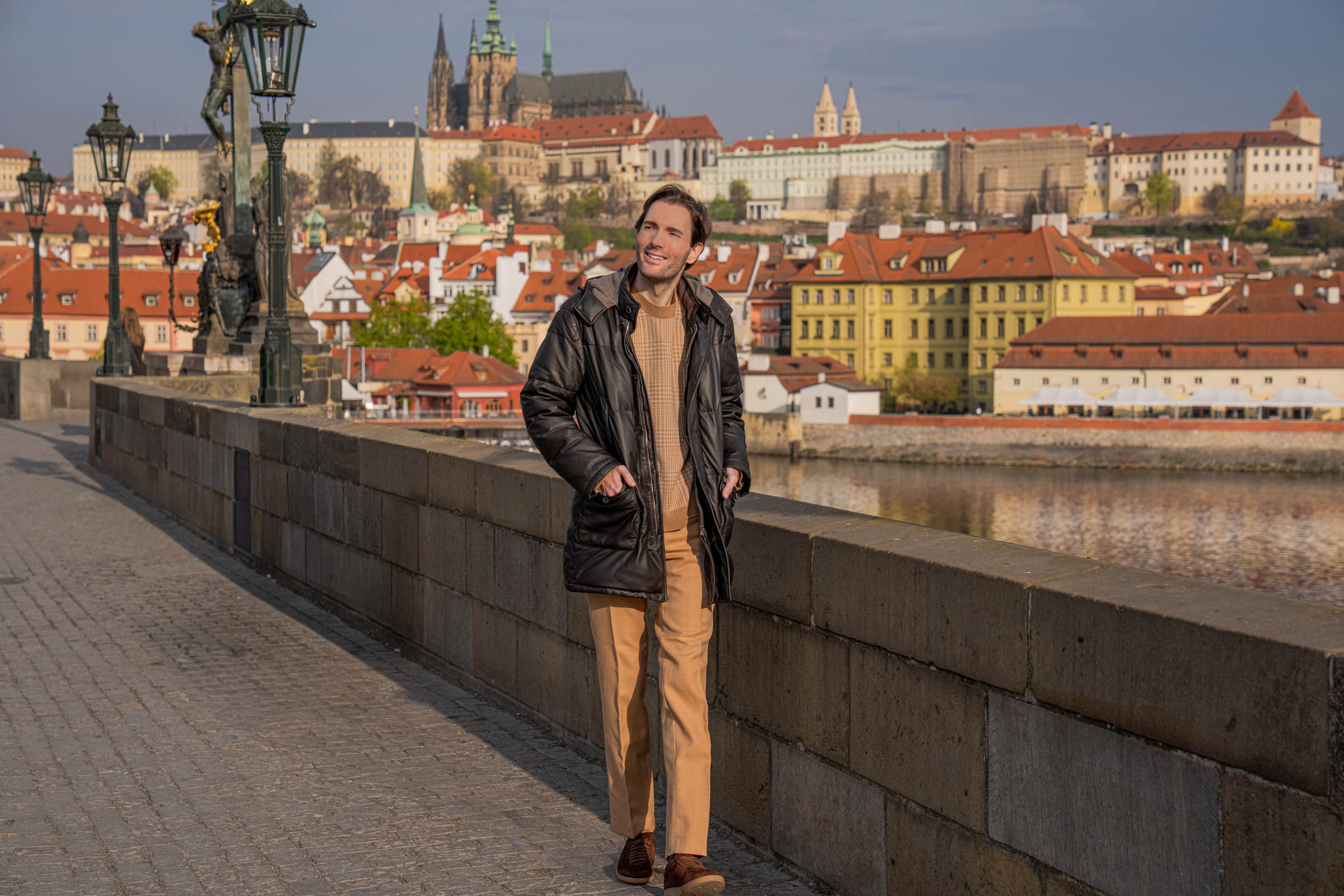


I walked the Charles Bridge several times during this visit to Prague. Each experience was special in its own way. In the morning I could look at each statue in peace, feel the texture of the old stone under my fingers and enjoy the view of the Prague Castle rising on the hill on the other side of the river. In the afternoon, however, I felt the energy of the city, heard conversations in twenty different languages and understood why this bridge is crossed by around five million pedestrians every year.
The bridge offers one of the most beautiful city views in all of Europe. On one side you see the silhouette of the Prague Castle with the towers of St. Vitus Cathedral, and on the other side the panorama of the Old Town with its towers and domes. The photos I took of the Charles Bridge are among the best of the entire trip.


PRAGUE CASTLE: THE BIGGEST CASTLE IN THE WORLD
After crossing the Charles Bridge and climbing through the narrow streets of Mala Strana, I reached Prague Castle. According to the Guinness Book of Records, this is the largest ancient castle in the world, with a total area of almost seven hectares. The castle was founded in the ninth century and since then has served as the seat of Czech rulers, from kings and emperors to the current president of the republic.


Entrance to the palace complex is free, and the first impression is monumental. You pass through a gate decorated with sculptures of fighters, past a guard of honor and enter a huge courtyard. There you will be greeted by the 18th-century Cole fountain, around which hundreds of visitors gather every day. You continue further and come to the Cathedral of St. Vitus, an imposing Gothic building whose construction took almost six hundred years. It was started in 1344 and completed only in 1929. Its southern portal is decorated with a magnificent mosaic of the Last Judgment from the fourteenth century, made up of over a million pieces of glass.


Inside the palace complex is the Basilica of St. George with its distinctive red facade, one of the oldest preserved churches in Prague. There is also the old Royal Palace, Golden Street with small painted houses where artisans and alchemists once lived, as well as beautiful gardens with an unforgettable view of the city. The view from the castle on the red roofs of Mala Strana and the Vltava river in the distance is simply breathtaking.

From Hradčany Square, in front of the entrance to the castle, you can see the Archbishop’s Palace with its elegant baroque facade, as well as the monument to Tomasz Garrigue Masaryk, the first president of Czechoslovakia. At the foot of the stairs leading to the castle, I came across a stone sculpture by one of the Czech artists, placed against the wall of an old house, a detail that you can easily miss, but which perfectly illustrates how rich this city is in cultural layers.


MALA STRANA: PEACE, QUIET, INTIMATE
After the castle, I descended back into Mala Strana, the district that stretches between the castle and the Vltava. Unlike the Old Town, which is teeming with tourists, Mala Strana offers a quieter rhythm. The streets are narrower, the houses are lower, and the atmosphere is more intimate. At every turn you come across small cafes, galleries, souvenir shops and unexpected views of the castle that appear around every corner.
Malostranski trg is dominated by the Church of St. Nicholas with its distinctive green dome and clock tower, one of the most beautiful Baroque buildings in Central Europe. Passing through Mostecka Street, which connects the Charles Bridge with this square, provided a special pleasure as I watched the church tower gradually reveal itself between the roofs of the surrounding houses.


One of the most interesting places in this part of the city is Campa Island, home to David Cerny’s famous sculptures, giant bronze babies crawling around the park. These sculptures have become one of the most recognizable symbols of modern Prague. Cerni’s work is provocative, witty and completely unexpected in the context of the baroque setting, but that’s exactly why it works perfectly. Prague is a city that knows how to combine past and present without conflict.

From Mala Strana, you climb the stairs to the castle, which are an experience in themselves. At the top of one of the stairs stands a baroque statue of a saint with a golden halo, and next to it is the green facade of a house with relief decorations and inscriptions on the way to the Sternberg Palace and the Prague Palace. These stairs are quieter than the main routes, and the view that opens up from each new level is worth every step. The streets of Mala Strana also hide small pubs, traditional Czech restaurants and antique shops where you can spend hours looking through old books and maps.


NOVÉ MĚSTO AND Wenceslas Square: MODERN PRAGUE
From the Old Town, the road took me to Nové Město, a district that, despite its name, dates back to the fourteenth century. The centerpiece of this part of the city is Wenceslas Square, a long boulevard that stretches from the National Museum at the top to the tram roundabout at the bottom. This square was the scene of key moments in Czech history from the declaration of independence in 1918 to the Velvet Revolution in 1989.
The National Museum at the top of the square impresses with its neoclassical facade with a golden dome. Today, the boulevard is filled with shops, cafes and restaurants, and the streets that branch off from it hide numerous architectural gems, from Art Nouveau facades to cubist buildings, such as the famous House near the Black Virgin. I passed by the building of the Czech National Bank, whose monumental facade with a statue on top leaves a strong impression.

Not far from there, on Celetna Street, which connects the Old Town Square with the Dust Gate, I found one of the most picturesque promenades in the city. The Dust Gate, a Gothic tower from the fifteenth century, is the former entrance to the Old Town. Next to it is the Municipal House, a pearl of Prague Art Nouveau whose facade decorated with mosaics and sculptures is one of the most beautiful buildings of that style in Europe. The mosaic on the facade of the Municipal House depicts allegorical scenes from Czech history and culture, and the building itself hides one of the most beautiful concert halls in Central Europe, the Smetana Hall, where the prestigious Prague Spring music festival opens every year.


PAŘÍŽSKÁ STREET: LUXURY IN A BAROQUE ENVIRONMENT
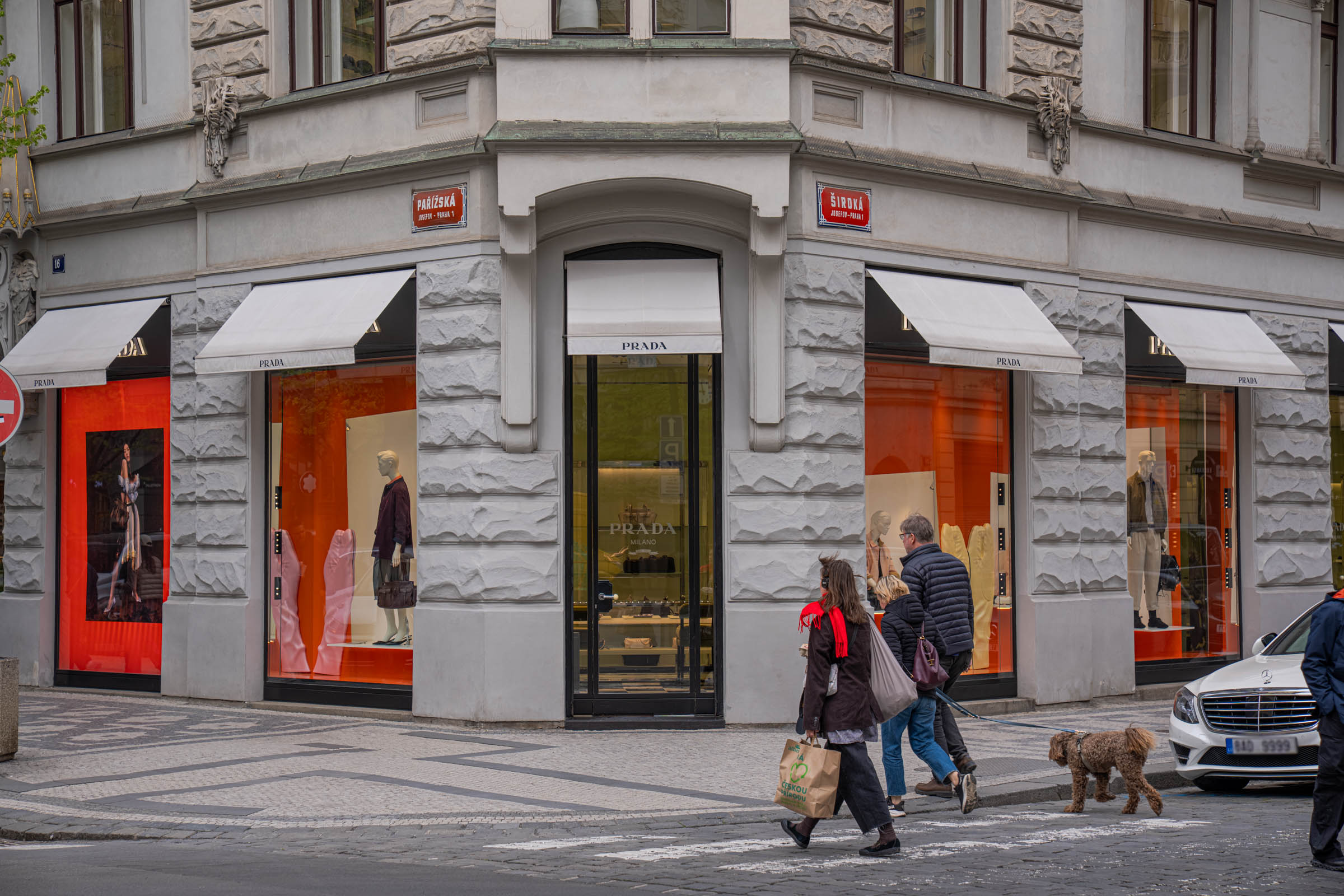
For those who love fashion and luxury, Pařížská Street is a must stop. This elegant street that stretches from Old Town Square to the banks of the Vltava is home to the world’s most famous brands. I passed by windows displaying the latest collections of leading fashion houses, housed in buildings with Art Nouveau facades. The combination of high luxury and historic architecture makes this street one of the most elegant shopping destinations in Europe. Here, the two worlds of fashion and history come together in a way that is unique to Prague. It is interesting that on the same street, in addition to fashion houses, there are also galleries, antiques and cafes that preserve the spirit of old Prague. It is this mixture of glamor and authenticity that makes Pařížská Street so special.

PRAGUE: CZECH GASTRONOMY AND PUB CULTURE
A trip to Prague would not be complete without a review of food and drink. Czech cuisine is hearty, hearty and perfect for cold days. During my stay, I tried pork knee roasted in beer sauce, svička beef in a creamy sauce with dumplings, and of course the famous trdelnik, a sweet cake baked on a roll and sprinkled with sugar and cinnamon. Czech beer is a special story, this country has the longest brewing tradition in Europe and the highest consumption of beer per capita in the world. In small pubs far from the tourist routes, a pint of beer costs less than two euros, and the quality is impeccable.
The pub culture in Prague has a long tradition. Back in the nineteenth century, taverns were places where writers, artists and revolutionaries met. In Pacht’s Palace, where The Mozart Hotel is today, there was a famous Slavonic Tavern, which in the revolutionary year of 1848 was a meeting place for young political activists. Today, you can drink coffee in one of the many elegant cafeterias of the Old Town and feel the spirit of that tradition.

THE MOZART PRAGUE: THE PALACE WHERE MOZART COMPOSED
During my stay in Prague, I stayed at The Mozart Prague Hotel, a luxurious five-star establishment located in the historic Pacht Palace, right on the banks of the Vltava River, literally a few steps from the Charles Bridge. This palace was built in 1770 according to the project of the architect Jan Jozef Virh, the same master who also designed the Archbishop’s Palace near the Prague Castle. Count Pachta, a passionate lover of art and music, turned his palace into the center of Prague’s cultural life. In these rooms, in February 1787, Wolfgang Amadeus Mozart composed six German dances in less than an hour, because the count did not allow him to attend the ball before he wrote something for him.


Today, the hotel has seventy rooms and suites, many of which are decorated with original frescoes from the eighteenth century. The interior pays tribute to the building’s rich past with baroque sculptures by Ignac Franz Placer, contemporary artworks, marble statues and the largest collection of historical maps in Prague. In 2021, the hotel was renamed from Smetana Hotel to The Mozart Prague, precisely to emphasize the deep connection of this palace with the world of music. Since that year, it has been a member of the prestigious organization of historical hotels of the world. Two elegant courtyards, a cafeteria and a restaurant complete the offer of this exceptional accommodation.
THE MOZART PRAGUE: MY EXPERIENCE IN THE CASTLE AND RIVER VIEW EXECUTIVE SUITE
I stayed in one of the most beautiful suites of the hotel, a spacious Executive Suite with a view of Prague Castle and the Vltava River. When I entered the room, the first impression was like entering a royal chamber. The walls were covered in refined burgundy wallpaper, and in the center of the room stood a four-poster bed made of dark wood, decorated with silk curtains in gold and beige tones. The parquet was immaculate, and Persian carpets lay on the floor, giving the space warmth and elegance.


The windows of the room look directly at the Vltava River, Charles Bridge and Prague Castle. A morning in this apartment was an unforgettable experience. I put on my red silk pajamas, sat down on the chaise longue by the window, opened my laptop and watched the morning sun illuminate the castle and the red roofs of Mala Strana. That sight is worth more than any awakening I can think of. The view was so good that I spent a good part of the morning just sitting and watching the boats on the Vltava and the walkers on the quay below the window.


The breakfast at the hotel was at a level befitting a five-star accommodation. The buffet of fresh fruits, vegetables, cheeses, smoked meats, kimchi and pickled vegetables in glass jars looked like something out of a magazine. In addition to the buffet, I ordered a warm variant of eggs benedict with smoked salmon, topped with creamy hollandaise and sprinkled with fresh chives. Everything is served on a black ceramic plate, elegant and delicious.


What makes this hotel special is not just the room or the breakfast, but the whole atmosphere. When you walk down the corridor and pass by baroque sculptures and contemporary works of art, you feel like you are in a small private museum. The hotel’s courtyard, with its colorful bull statue and elegant coffee tables, provides an oasis of peace in the midst of the city’s hustle and bustle. The staff is extremely friendly and professional, and the fact that the hotel is located in the palace where Mozart actually stayed adds an emotional dimension that no amount of money can buy. If you are planning a trip to Prague and looking for accommodation that combines history with luxury, The Mozart Prague is a place I highly recommend.


TIPS FOR FUTURE VISITORS TO PRAGUE
Based on my experience, here are some tips for anyone planning a trip to Prague. First, come in spring or fall, I was in April and the weather was perfect for walking. Summer can be very hot and the crowds are incomparably greater. Spring brings green leaves, flowering trees and pleasant temperatures, which make walking around the city a real pleasure.


Be sure to get up early at least one morning and walk across the Charles Bridge before eight o’clock. At that time the bridge is almost empty and you can take photos without hundreds of tourists in the frame. Visit the Prague Castle immediately after opening, as queues form very quickly. You don’t have to wait for Orloj on the Old Town Square, the clock strikes every full hour, so you can always catch the next opportunity.


For accommodation, I highly recommend choosing a hotel in the Old Town or on the banks of the Vltava. Location means everything in Prague, as the main sights are close enough to walk around. Prague is an extremely safe city to walk around, even at night. Public transport is excellent, and trams are a particularly practical way to travel long distances.
Another tip, don’t limit yourself to just the main sights. Turn into the side streets, have a coffee in one of the smaller bars away from the tourist routes and allow yourself to get lost. It is in those moments that Prague shows its true face through interesting quiet courtyards, hidden churches, unexpected views and inscriptions on the facades that speak of tools and crafts from several centuries ago.


As for currency, the Czech Republic uses the Czech crown, not the euro. Exchange offices in the city center often offer bad exchange rates, so it is best to use a card or exchange money in banks. Most restaurants, hotels and shops accept cards without problems. For transportation from the airport to the center, the simplest is to take a bus to the metro station and from there continue by subway, the whole journey takes about forty minutes and costs only a few euros.

PRAGUE: THE CITY THAT ALWAYS HAS SOMETHING ELSE TO SHOW
Leaving Prague for the fourth time, I had the feeling that I had seen a lot, but not everything. This city has so many layers that it would take you several visits to discover them all. From the medieval Old Town, through the baroque Lesser Town, the Gothic castle and art nouveau boulevards, to contemporary art on the island of Kampa, Prague is a city that combines eras in a way that few other cities can.


With over eight million visitors a year, Prague is one of the most popular destinations in Europe, and for good reason. You have it all here: history, architecture, culture, great food, affordable prices compared to Western European capitals and an atmosphere that keeps you coming back. The average price of a hotel room is around one hundred and twenty-three euros per night, which is comparable to Berlin or Vienna, and for that money you get something that neither Berlin nor Vienna can offer, a city that seems to have stopped time.

Prague is not just a destination. The threshold is an experience. And anyone who loves travel, history and beauty should put it at the top of their list. This city has a special power to make you slow down, look up at the facades, pause on the bridge and simply be present in the moment. In a world where everything is in a hurry, Prague reminds us that beauty requires time and attention.
Feel free to leave your impressions, comments or questions below the text or contact me via email and social networks. All information is available on the CONTACT page.
I will definitely come back, because this city simply does not get old.
With Love from Prague,
Mr.M


This post is sponsored by the United Nations World Tourism Organization (UN Tourism) and the The Mozart Prague Hotel, as well as other local partners who selflessly supported this project. This post is my personal and honest review of the destination experience.
Hello Marko, what a wonderful piece to wake up to. I have followed your blog for several years now, and your writing on Prague captures exactly the feeling I had when standing on Charles Bridge for the first time. The detail about Mozart composing those six German dances in less than an hour at Pacht Palace was completely new to me, even though I have been to the city twice. Pieces like this remind me why I keep returning to your travelogues before planning a trip.
Lieber Marko, dein Beitrag hat mich sofort an meinen letzten Aufenthalt in Prag erinnert, der nun fast vier Jahre zurückliegt. Damals habe ich genau wie du die Karlsbrücke im Morgengrauen überquert und kann bestätigen, dass es ein vollkommen anderes Erlebnis ist als am Nachmittag. Die Aussicht auf die Prager Burg von der Brücke aus bleibt für mich eines der schönsten Stadtbilder Europas. Eine Frage hätte ich noch: hast du auch das Strahov-Kloster mit seiner berühmten Bibliothek besucht?
Marko, il tuo racconto sulla Repubblica Ceca è scritto con una sensibilità che si trova raramente nei blog di viaggio. Sono stato a Praga nel 2019, poco prima della pandemia, e ricordo ancora il silenzio del mattino sul Ponte Carlo prima delle otto, esattamente come descrivi tu. Trovo affascinante il dettaglio sulla data palindroma scelta da Carlo IV per la posa della prima pietra del ponte, una storia che pochissime guide menzionano. Ho seguito anche il tuo reportage da Milano e attendo con curiosità le prossime tappe del tour europeo.
What a thoughtful review of The Mozart Prague, Marko. I stayed at the Four Seasons Hotel Prague three years ago, also right on the Vltava, and while the river view there is comparable, the historical layer you describe at Pacht Palace sounds genuinely irreplaceable. The fact that Mozart actually worked in those rooms in 1787 transforms a hotel stay into something closer to staying inside a museum. I will absolutely consider The Mozart for my next visit. Your description of the burgundy wallpaper and four-poster bed reads like a page from a Wes Anderson set.
Bonjour Marko, quel plaisir de lire un récit aussi soigné sur Prague. Je suis allé dans cette ville pour la première fois en 2017 et j’avoue que le pont Charles au lever du soleil reste pour moi l’un des souvenirs les plus marquants de tous mes voyages. Tu as raison de souligner la mosaïque du Jugement Dernier sur le portail sud de la cathédrale Saint-Guy, peu de visiteurs prennent le temps de s’arrêter devant ce million de tesselles. La cuisine tchèque mérite vraiment qu’on y consacre un peu de temps, surtout la svíčková dont tu parles, accompagnée d’une Pilsner Urquell.
Marko, llevo varios años siguiendo tu blog y este artículo sobre Praga es uno de los más completos que he leído sobre la ciudad. Estuve allí con mi esposa en septiembre del año pasado y recuerdo perfectamente esa sensación que describes al pisar las piedras de la Plaza de la Ciudad Vieja al amanecer. La parte del Castillo de Praga, especialmente la Catedral de San Vito y su construcción que duró casi seiscientos años, es algo que nunca dejo de admirar. Gracias por compartir el dato sobre la Taberna Eslava en el Palacio Pacht durante el año revolucionario de 1848,… Read more »
Marko, I have been planning a Central European trip for next spring and your post has confirmed Prague as a must. One question if I may: do you think four nights is enough to see the main areas you describe, or would you recommend a fifth day for a side trip such as Karlovy Vary or Kutná Hora? I love how you mentioned the variety of architectural styles within a single street, which is exactly what I am hoping to experience. Your tip about visiting the castle right after opening will be noted carefully.
Beste Marko, wat een prachtig geschreven reisverslag over Praag. Ik bezocht de stad voor het laatst in 2018 met mijn vrouw en we logeerden in Malá Strana, vlakbij de Sint-Niklaaskerk waarvan jij de groene koepel zo treffend beschrijft. Wat me destijds opviel was inderdaad de rustige sfeer aan deze kant van de Vltava, een wereld van verschil met de drukte rond het Oude Stadsplein. Het detail over Pacht Palace waar Mozart in 1787 die zes Duitse dansen componeerde, was zelfs voor mij nieuw.
Sehr schöner Reisebericht, Marko. Was mir besonders gefällt, ist deine Bemerkung über die Mischung von Gotik, Renaissance, Barock und Jugendstil in einer einzigen Straße. Genau das macht Prag in meinen Augen einzigartig, und ich bin schon dreimal dort gewesen. Bei meinem letzten Besuch im Herbst 2023 habe ich auch das Mucha-Museum besucht, das nur wenige Schritte vom Wenzelsplatz entfernt liegt. Eine Frage: war das Smetana-Museum am Ufer der Moldau Teil deines Programms?
The historical context you provided about Pacht Palace is exactly the kind of writing I come to your blog for, Marko. Most hotel reviews focus on thread counts and amenities, but you understand that places carry weight from what happened in them. The image of Mozart writing those six dances under pressure from Count Pachta because he would not be allowed at the ball is wonderful, almost cinematic. It also explains why the hotel chose to rebrand from Smetana to The Mozart in 2021. A genuinely meaningful change of name, not just marketing.
Caro Marko, leggere questo articolo è stato come fare una passeggiata virtuale per Praga. Sono stato nella capitale ceca nell’autunno del 2022 e ho avuto la fortuna di assistere alla Primavera di Praga al Comunale, nella Sala Smetana che tu menzioni. La facciata Art Nouveau di quell’edificio con i mosaici allegorici è davvero uno dei capolavori mitteleuropei dello stile. La tua descrizione della Suite Executive con vista sul Castello mi ha quasi convinto a tornare solo per dormire al The Mozart. La trdelnik, devo ammettere, l’ho mangiata troppe volte in tre giorni.
Marko, j’ai visité Prague pour la première fois en 2014 et j’y suis retourné en 2019 juste avant la pandémie. Chaque fois la ville m’a semblé différente tout en restant fidèle à elle-même, ce que tu exprimes parfaitement quand tu écris que c’est une ville qui combine les époques. La rue Pařížská avec ses boutiques de luxe dans des immeubles Art Nouveau reste pour moi le contraste le plus saisissant de Prague. Je suis curieux de savoir si tu as eu le temps de monter sur la tour de l’horloge astronomique pour la vue panoramique?
Marko, I followed your Rome and Milan pieces with great pleasure, and now Prague joins the trilogy beautifully. There is a consistent thread in your European travelogues, that respect for slow looking and historical depth which feels increasingly rare. The Pacht Palace having been designed by the same architect as the Archbishop’s Palace near the castle is a small detail that anchors The Mozart Prague within the larger story of the city. Looking forward to whatever destination comes next, Vienna I suspect.
Hola Marko, fantástica entrada como siempre. Visité Praga hace dos años y aún recuerdo el primer paseo por la calle Celetná hasta la Torre de la Pólvora con esa sensación de viajar en el tiempo. La fachada de la V.J. Rott con sus frescos en colores cálidos es uno de los detalles que muchos pasan por alto, me alegra que la hayas señalado. Una pregunta: ¿el Café Mozart del hotel está abierto al público o solo para huéspedes? Estoy considerando una visita corta solo por probar el desayuno que describes.
Marko, je verhalen over hotels behoren tot de meest doordachte die ik op het internet tegenkom. Het feit dat The Mozart Prague de grootste collectie historische kaarten van Praag bezit, was nieuw voor mij. Ik bewaar oude landkaarten zelf als hobby en zo’n detail wekt onmiddellijk mijn interesse. De combinatie van originele 18e-eeuwse fresco’s met hedendaagse kunst klinkt als een perfect evenwicht tussen geschiedenis en modern comfort.
Marko, your description of breakfast at The Mozart Prague has me genuinely curious. The mention of kimchi and pickled vegetables on a five-star Czech buffet feels unusual for the region. Was that a permanent part of their offering or perhaps a seasonal touch given the rising number of Asian visitors you mentioned? I appreciate hotels that adapt their service to a more international clientele without losing their local identity. Eggs Benedict with smoked salmon on a black ceramic plate sounds like the kind of detail Wes Anderson would film.
Marko, deine Worte über die Atmosphäre von Malá Strana treffen genau ins Schwarze. Bei meinem Besuch 2021 nach den ersten Lockerungen war dieser Stadtteil fast menschenleer, und ich konnte stundenlang durch die Gassen gehen, ohne mehr als einem Spaziergänger zu begegnen. Die Treppen hinauf zur Burg sind tatsächlich ein Erlebnis für sich, besonders wenn man langsam geht und auf jeder Ebene innehält. Das Detail mit der barocken Heiligenfigur mit dem goldenen Heiligenschein habe ich damals fotografiert, ohne zu wissen, was es darstellte.
Complimenti Marko, una guida completa e ben documentata. Mi è piaciuto particolarmente il passaggio su Kampa con le sculture dei bambini di David Černý, un’opera che divide l’opinione pubblica ma che a mio avviso rappresenta perfettamente lo spirito ceco contemporaneo, ironico e provocatorio. Ho visitato Praga nel 2016 con un gruppo di amici e ricordo che il nostro albergo era nel quartiere Nové Město, vicino a Piazza Venceslao. Dopo aver letto questo articolo, però, mi sembra evidente che alloggiare nei pressi del fiume cambia completamente l’esperienza.
The Charles Bridge palindromic date story is one I share with everyone who asks me about Prague, Marko. 1357, 9th of July, 5:31 in the morning. Whether or not the astrologers were right about eternity, the bridge has now stood for nearly seven hundred years, so there must have been something to it. Walking across it before sunrise, as you describe, is genuinely the only way to feel the weight of those centuries. The five million pedestrians per year statistic is staggering when you think the bridge predates Columbus.
Marko, j’ai été particulièrement touché par ta phrase sur le voyage qui doit ralentir le rythme. Trop souvent les voyages aujourd’hui se résument à une course aux photos pour les réseaux sociaux et tu défends une approche que je partage. La Vieille Ville de Prague comme un organisme vivant plutôt qu’un musée à ciel ouvert, voilà une formule juste. Je note ton conseil sur les changes de devises, j’avais effectivement été pénalisé par les bureaux du centre lors de mon dernier passage en 2019.
Marko, your post arrived at the perfect moment as I am planning a return to Prague for our anniversary. We previously stayed at the Mandarin Oriental Prague, which occupies a former Dominican monastery in Malá Strana, and we loved the cloistered courtyards and spa built around the original chapel. The Mozart Prague sounds like a very different but equally compelling proposition, more central to the Old Town side and tied to the Mozart legend in a way no other property can claim. The location near Charles Bridge is unbeatable for sightseeing on foot.
Querido Marko, qué grato es leerte después de tu serie sobre Italia. La descripción de la Plaza de la Ciudad Vieja al amanecer me transportó directamente a mi propia visita en abril de 2018. El detalle sobre el monumento a Jan Hus quemado en 1415 y la inscripción sobre el amor a la verdad y la justicia es un mensaje que se mantiene vigente. Tengo una duda: ¿la entrada al Castillo de Praga sigue siendo gratuita en los patios exteriores aunque haya que pagar para entrar a la catedral y a la Calle Dorada? Esa información cambia constantemente.
Wat een rijk artikel, Marko. Mijn vrouw en ik bezochten Praag in oktober 2022 en de herfstkleuren langs de Vltava waren onbeschrijflijk. Je opmerking over het uitzicht vanaf de kade richting Hradčany met de Sint-Vituskathedraal raakt precies de kern van waarom deze stad zo bijzonder blijft. We hebben helaas Kampa-eiland en de bronzen baby’s van David Černý gemist, maar dat geeft ons een goede reden om terug te keren. Bedankt voor het uitgebreide verslag.
The Orloj is honestly one of those landmarks that lives up to its reputation, Marko, and I think your advice not to wait specifically for the hourly show is wise. The mechanism itself, working continuously since 1410, is the real wonder rather than the brief apostle parade. I read somewhere that during the Prague Uprising in 1945 the clock was severely damaged and had to be painstakingly restored, which makes seeing it in operation today rather emotional. Your photograph of the clock face up close is one of the best I have seen of it.
Marko, sei riuscito a catturare ciò che molti scrittori di viaggio mancano: il fatto che Praga si rivela con il tempo, non in fretta. La quarta visita di cui parli alla fine dell’articolo lo dimostra bene, perché è proprio così, la città continua a mostrare cose nuove a ogni ritorno. Il caffè del The Mozart Prague affacciato sul cortile interno mi sembra il luogo ideale per una colazione lenta. La tua menzione delle scritte sulle facciate che parlano di mestieri di secoli fa rivela un viaggiatore attento, non un semplice consumatore di immagini.
Marko, ich verfolge deine Reiseberichte seit der Asien-Tour mit großer Begeisterung. Was du über die böhmische Bierkultur schreibst, kann ich nur bestätigen. Bei meinem Aufenthalt in Prag im Frühjahr 2024 habe ich in einer kleinen Kneipe in Žižkov ein Glas Pilsner Urquell für etwa fünfzig Kronen getrunken, und die Qualität war ausgezeichnet. Diese Bezirke abseits der Touristenrouten zu entdecken, lohnt sich wirklich. Hast du selbst auch außerhalb der Altstadt etwas erkundet?
Marko, a practical question about photography if you do not mind. Did you find the early light around six in the morning sufficient for capturing the bridge and castle without needing a tripod? I am a hobbyist photographer and your shots of the Charles Bridge at sunrise are remarkable, particularly the one looking towards Malá Strana. Also, was the Vltava embankment quiet enough at that hour to set up properly without disturbance? Your experience would help me plan my own visit in September.
Marko, je viens tout juste de terminer la lecture de ton récit et je me sens transporté. Mon souvenir le plus vif de Prague reste la place de la Vieille Ville un samedi matin avec les façades colorées illuminées par un soleil rasant. Tu mentionnes la maison Dům U Zlaté Studny et c’est précisément le genre de détail qu’on n’oublie pas. La sculpture façonnée et les inscriptions sur ses murs racontent plus qu’une visite guidée.
Your mention of the David Černý babies on Kampa Island brought back vivid memories, Marko. They were the first thing my children, who were teenagers at the time, actually paid attention to in 2016. Černý’s work scattered around Prague is one of the city’s hidden treasures, including the giant horse hanging upside down inside the Lucerna Palace. The fact that Prague embraces such provocative contemporary art alongside baroque churches is exactly what keeps the city alive rather than embalmed.
Marko, gracias por este recorrido tan minucioso por Praga. Hace varios años tuve la oportunidad de asistir al festival Primavera de Praga en la Sala Smetana de la Casa Municipal, y esa experiencia musical en un edificio Art Nouveau marcó mi visión de la ciudad para siempre. La fachada de la Casa Municipal con sus mosaicos alegóricos es probablemente uno de los ejemplos más bellos del estilo en Europa Central. Me alegra que dediques unas líneas a este edificio que muchos turistas pasan por alto. La calle Celetná que la conecta con la Plaza Vieja es un paseo que recomiendo… Read more »
Marko, ik ben drie keer in Praag geweest, voor het eerst in 1998 toen de stad zich nog aan het herstellen was na de Fluwelen Revolutie. De verandering tussen toen en mijn laatste bezoek in 2022 is enorm, maar gelukkig heeft het historische centrum zijn karakter behouden. Jouw opmerking over hoe Praag erin slaagt om verleden en heden zonder conflict te combineren, sluit precies aan bij wat ik de afgelopen vijfentwintig jaar heb waargenomen. Het Mozart Prague in het Pacht Palace klinkt als een waardige voortzetting van die traditie.
Marko, an honest question regarding the Executive Suite with castle and river view at The Mozart Prague. Did the windows have any sound insulation given the proximity to the embankment promenade? I have stayed in beautiful historic hotels before where the romance of the location was somewhat disturbed by traffic at night. The notion of opening those curtains to see the castle at sunrise sounds magical, and I would gladly trade absolute silence for that view, but it helps to know in advance.
Lieber Marko, deine Reflexion am Ende des Artikels über die Schönheit, die Zeit und Aufmerksamkeit braucht, hat mich besonders berührt. In einer Welt voller Eile ist Prag genau das richtige Gegenmittel. Bei meinem letzten Besuch im Sommer 2023 habe ich bewusst auf Karten und Apps verzichtet und mich einfach durch die Gassen treiben lassen. Die kleinen Höfe der Altstadt, die du beschreibst, habe ich genau auf diese Weise entdeckt. Manchmal ist sich verlaufen die beste Form des Reisens.
Marko, il tuo articolo è una piccola guida da conservare. Ho trovato particolarmente interessante il dato sui Tedeschi come gruppo più numeroso di turisti stranieri, seguiti da Americani e Britannici, ed il rapido aumento dei visitatori asiatici. Praga si sta posizionando sempre più come destinazione di lusso e questa scelta di alberghi a quattro o cinque stelle nel sessantasei per cento dei casi lo conferma. Quando l’ho visitata nel 2015 con mia moglie, alloggiavamo in una pensione modesta nel quartiere Vinohrady, ma capisco perfettamente l’attrazione di un albergo come The Mozart per chi cerca un’esperienza diversa.
The story of St Vitus Cathedral being started in 1344 and only completed in 1929 is one of the most extraordinary in European architectural history, Marko. Almost six centuries of construction, interrupted by Hussite wars, the Thirty Years War, and countless political upheavals. The mosaic of the Last Judgement on the southern portal, made of over a million glass pieces, deserves a slow look on its own. I remember spending nearly an hour just walking around the exterior on my visit in 2018.
Marko, ton article m’a donné envie de retourner à Prague immédiatement. Lors de mon dernier séjour en 2019 j’avais logé à l’Augustine, a Luxury Collection Hotel, qui occupe un ancien monastère augustinien du XIIIe siècle dans la Petite Ville. La proximité avec le château et le calme des cloîtres m’avaient beaucoup plu. The Mozart Prague semble offrir une expérience comparable mais sur l’autre rive, avec cet avantage évident d’être à deux pas du pont Charles. Le lien direct avec Mozart fait clairement la différence.
Marko, your discipline about visiting in shoulder seasons rather than summer is something every serious traveler eventually learns. Prague in April with green leaves and cooler temperatures is, in my experience, the absolute peak time to visit. I went in mid-July a few years back and the Charles Bridge was almost impossible to walk across in the afternoons. Your point that 8 million annual visitors essentially means you must adjust your timing rather than expecting solitude is the truth, kindly delivered.
Marko, la calle Pařížská es uno de mis lugares favoritos de Praga, y me gustó mucho cómo describes esa combinación entre arquitectura Art Nouveau y boutiques de lujo. La encuentro más elegante que la Avenue Montaigne en París por el contraste con el entorno barroco circundante. Estuve en Praga en 2017 y caminé por esa calle todas las tardes durante mi estancia. ¿Visitaste también el barrio de Josefov, el antiguo barrio judío justo detrás de Pařížská? La Sinagoga Española y el cementerio antiguo son lugares que añaden otra capa a la ciudad.
Marko, hartelijk dank voor dit zorgvuldige verslag. Wat me fascineert is je aandacht voor lagen, gotisch, renaissance, barok, art nouveau, kubisme, allemaal in één straat. Tijdens mijn bezoek in 2020, vlak voordat alles dichtging vanwege Covid, viel het Huis bij de Zwarte Madonna van Josef Gočár me bijzonder op als voorbeeld van Tsjechisch kubisme in de architectuur. Weinig steden in Europa hebben zo’n diversiteit binnen een wandelbare oppervlakte. Het Mozart Prague klinkt als een logisch verlengde van die laagopbouw.
Marko, you said it well at the end, Prague never gets old. I have been there four times since 1996, and each visit reveals something I missed before. The first time, I was a young man and I rushed through everything in two days. The fourth time, I spent five days and felt I had only scratched the surface. Cities like Prague reward the slow traveler, the rereader so to speak, the kind of visitor your blog speaks to so well.
Sehr beeindruckend, Marko. Die historische Tiefe deines Artikels über das Pacht Palace und Mozarts Aufenthalt im Februar 1787 ist genau die Art von Information, die einen Reiseblog von einem Prospekt unterscheidet. Die sechs deutschen Tänze, die er in weniger als einer Stunde komponierte, weil Graf Pachta ihn nicht auf den Ball lassen wollte, klingt wie eine Anekdote aus einem Roman. Solche Details bleiben im Gedächtnis lange nach der Reise. Ich werde dieses Hotel definitiv für meinen nächsten Prag-Besuch in Betracht ziehen.
Marko, ho letto questo articolo con grande piacere e mi ha riportato alla mente il mio viaggio a Praga del 2018 con i miei figli ormai adulti. Una città che si presta perfettamente alla camminata, dove ogni angolo riserva una sorpresa, esattamente come scrivi. Il consiglio di non limitarsi alle attrazioni principali e di entrare nei vicoli laterali è qualcosa che ho imparato proprio da quel viaggio. Una piccola tipografia nel quartiere di Žižkov, una chiesa nascosta dietro un cortile, un caffè con clienti locali, sono questi i ricordi che restano davvero.
Marko, the data you cited about the average hotel room costing roughly 123 euros per night struck me as fair given Prague’s positioning. A practical question: how does that compare to dining in the city? I assume the Old Town tourist restaurants are quite expensive but you mentioned beer in non-tourist pubs around two euros per pint. Do you have a sense of what an average dinner for two costs in a quality but non-tourist restaurant? Planning a four day trip and trying to budget realistically.
Marko, je suis depuis quelques années un lecteur régulier de ton blog et chaque article confirme ma confiance dans tes recommandations. Ton conseil sur l’utilisation des cartes plutôt que les bureaux de change du centre est valable pour beaucoup de capitales européennes, pas seulement Prague. La couronne tchèque comme monnaie locale est un détail que beaucoup de touristes oublient avant de partir. La ligne de métro depuis l’aéroport via le bus me semble la solution la plus économique, je l’avais utilisée moi-même en 2018.
Excellent piece, Marko. I have stayed twice at Hotel Paris Prague near the Powder Tower, which is a Belle Époque jewel from 1907 with original Art Nouveau interiors. The Pacht Palace setting of The Mozart Prague seems to offer a similar level of historical immersion but with a riverside position I always envied. Your photo of the four-poster bed with silk curtains in gold and beige is the sort of room that justifies travel for its own sake. I am genuinely tempted to switch hotels for my next visit.
Marko, esta entrada me ha hecho recordar mi viaje a Praga del 2019 con un grupo de amigos, dos años antes de la pandemia. Caminamos hasta el Castillo de Praga al amanecer y la vista desde Hradčany sobre los tejados rojos de Malá Strana es algo que no se puede describir, solo experimentar. Tu observación sobre el contraste entre la energía vibrante del Puente Carlos por la tarde y su tranquilidad por la mañana es exacta. Ojalá tu próximo destino europeo sea Budapest, que en muchos sentidos comparte ese espíritu danubiano con Praga.
Marko, dank je wel voor dit zeer doordachte stuk. Het detail dat de Sint-Vituskathedraal werd begonnen in 1344 en pas in 1929 voltooid is, zes eeuwen bouwen, blijft me altijd verbazen. Tijdens mijn bezoek in 2017 nam ik bijna een hele middag de tijd om de glas-in-loodramen van Alfons Mucha in een van de zijkapellen te bewonderen. Heb jij die kapel ook bezocht tijdens je laatste verblijf?
Marko, your description of Mostecká Street with the gradual reveal of the St Nicholas Church tower as you walk towards Malá Strana Square is exactly the sort of slow-cinema observation I love. Quick question: in your view, is the Lobkowicz Palace inside the castle complex worth the extra ticket given its private collection and concert program? Some friends recommend it strongly while others say the main castle visit is enough. Your judgment on these things tends to be reliable.
Marko, dein Bericht ist ausgezeichnet wie immer. Ich habe vor zwei Jahren im Grand Hotel Bohemia in der Nähe des Pulverturms übernachtet, einem klassischen Jugendstilhotel aus dem frühen 20. Jahrhundert. Die Lage war fantastisch für die Altstadt, aber dein The Mozart Prague mit dem direkten Blick auf die Karlsbrücke und die Burg klingt nach einem ganz anderen Kaliber. Die historische Verbindung zu Mozart selbst macht dieses Hotel meiner Meinung nach zu etwas Besonderem in einer Stadt voller schöner Hotels. Beim nächsten Aufenthalt werde ich definitiv dort buchen.
Marko, ho letto con grande piacere questo articolo e mi è rimasta in mente la frase finale, Praga semplicemente non invecchia. Hai colto perfettamente l’essenza di una città che sopravvive a tutte le mode senza mai sembrare datata. Sono stato a Praga nel 2013 con mio padre, ormai mancato, e ricordo che lui rimase incantato dall’orologio astronomico esattamente come tutti i turisti. Una città capace di emozionare visitatori esperti e principianti alla pari ha qualcosa di davvero speciale. Continuerò a seguire i tuoi prossimi reportage europei con grande interesse.