
My dear travellers and lovers of unusual journeys, welcome to the new travelogue on the Mr.M blog. After travelogues from Italy, France, Monaco, the Czech Republic and Slovakia that won your hearts, it’s time to dedicate ourselves to another pearl of imperial Europe – Austria. There are cities that one visits and forgets. There are also those to which he returns throughout his life. For me, Vienna belongs to this second group. It is less than an hour’s flight from Berlin, and a whole world of elegance, music and imperial history awaits you there.
Before I start today’s travelogue about Vienna, I want to express my special thanks to the United Nations World Tourism Organization – UN Tourism and Grand Ferdinand Vienna hotel for supporting and promoting quality tourism around the world. Their dedication to connecting cultures and destinations is an inspiration to all of us who believe that travel enriches the soul.
This spring I decided to experience the imperial capital as it deserves. Slowly, with a camera in hand and with an address on the most beautiful boulevard in the city. My home on the Ring was the Hotel Grand Ferdinand, so these letters from Austria begin right there. Below I share verified impressions: why Vienna is so popular, what you must see and what it’s like to stay in an apartment in one of the most interesting hotels in the city.


WHY IS VIENNA THE MOST PLEASANT CITY IN THE WORLD FOR YEARS?
Vienna is not at the top of the world charts by chance. For years, the capital of Austria has won the title of the most pleasant city to live in, based on prestigious international surveys. Understand the reasons as soon as you get off the plane or train. The city is clean, safe and perfectly organized. Public transportation works like clockwork, and green areas occupy almost half of the city’s territory.
However, the numbers do not explain everything. Vienna possesses something that cannot be measured by statistics, and that is a sense of measure. Here, luxury is not proven, but implied. Coffee is drunk for an hour, never on the go. Music is heard in halls where Mozart and Beethoven once performed. Even a simple walk through the center feels like a visit to an open-air museum.
For us from the Balkans, there is another important reason. Vienna is the closest major European capital. Direct flights from Belgrade take a little longer than an hour, and driving a car across Hungary takes about six hours. That’s why this city is ideal for both a long vacation and an extended weekend. In addition to all that, a large community of people from our area lives in Vienna, so you will never feel far from home.

A BRIEF HISTORY OF VIENNA: FROM THE ROMAN CAMP TO THE CAPITAL OF THE EMPIRE
The story of Vienna begins almost two millennia ago. The Romans built a military camp at Vindobona on the banks of the Danube, on the site of today’s city center. In the Middle Ages, the settlement grew at the crossroads of important trade routes. The turning point came in 1282, when the Habsburgs took over power. That dynasty would rule the city for more than six centuries and turn it into the capital of a vast empire.
The city resisted Ottoman sieges twice, in 1529 and 1683. It was after the second siege that his golden baroque era began. Empress Maria Theresa in the 18th century gave Vienna the opulence that we still see at every turn today. In the middle of the 19th century, Emperor Franz Joseph made a decision that forever changed the appearance of the city. He ordered the demolition of the old city walls and the construction of the magnificent Ringstrasse boulevard, officially opened in 1865.
At the turn of the 19th and 20th centuries, Vienna was the center of European culture. Klimt painted, Freud developed psychoanalysis, and Mahler composed. The empire disappeared in 1918, but the city retained its imperial bearing. Today, Vienna is one of the headquarters of the United Nations and home to numerous international organizations. The historical core of the city is on the UNESCO World Heritage List, which best speaks of its value.


VIENNA: THE CITY OF MUSIC, COFFEE AND GOOD MANNERS
No city in the world has given mankind so many great composers. Mozart, Beethoven, Schubert, Haydn and Strauss created right here. That is why Vienna rightfully holds the title of world capital of music. The New Year’s concert of the Vienna Philharmonic is still watched by the whole world, and the opera and concert halls are full every night.
Tavern culture represents another great Viennese story. The Vienna Tavern is not an ordinary restaurant, but a real institution. A waiter in an impeccable suit brings coffee on a silver tray, always with a glass of water. Newspapers on wooden holders are available to guests, and no one rushes you. In 2011, UNESCO included Viennese pub culture on the list of intangible cultural heritage, and it is well deserved.


In Vienna, music is not only heard in the halls, but is felt at every step. The house where Mozart composed “The Marriage of Figaro” still stands behind the cathedral and welcomes visitors. The Viennese boys’ choir sings on Sundays in the court chapel, just as it did five hundred years ago. Even street musicians in the city center perform classics at an enviable level.
Along with coffee and music goes the famous Viennese cuisine. Schnitzel is a religion here, tafelspitz is an imperial dish, and Zacher cake is a sweet symbol of the city. I will write more about the food, because my hotel particularly surprised me in this regard.


GRAND FERDINAND HOTEL: THE RETURN OF VIENNA ELEGANCE TO THE RING
We arrive at my favorite Viennese address. Hotel Grand Ferdinand is located at Schubertring 10-12, directly on the famous Ring, in Vienna’s first district. It is the only hotel on the entire boulevard that is run by an Austrian family, not a large international chain. Behind the project is Florian Weitzer, a passionate hotelier from Graz, whose family house Weitzer Hotels has a whole series of acclaimed properties behind it.
The building itself hides an unusual past. On the site of the palace from the 19th century, destroyed at the end of the Second World War, in the early 1950s a business building with strict, elegant lines emerged. Weitzer recognized a hidden gem in that state-protected building. In the fall of 2015, he opened a hotel that brings back the old Viennese elegance, but without pathos and false nostalgia. His idea sounds simple: tradition is not faked here, but lived.
The result is a space that feels imperial and contemporary at the same time. It is precisely this balance that makes the Grand Ferdinand special on the scene of Viennese luxury hotels.


GRAND FERDINAND VIENNA: HORSE IN THE LOBBY AND CHANDELIERS WITH REAL CANDLES
Already at the entrance it becomes clear that this is no ordinary hotel. In the lobby, you are greeted by a life-size stuffed horse, placed under a crystal chandelier. It is a tribute to the carriages that passed through Schubertring in the 19th century. An unusual sight, I admit, but perfectly captured the spirit of old Vienna.
Above the reception hangs a chandelier from the famous Viennese house Lobmeyr, a two-century-old family manufactory. Every day the staff lowers it by hand to light the real candles. Their light is reflected a thousand times in the crystals and bathes the lobby in a warm glow. There are three such chandeliers in the hotel, followed by mirrors in leather frames and porcelain from Vienna’s Augarten. Every detail is thought out, nothing is accidental.
The Grand Ferdinand hotel has close to 190 rooms and suites. The offer ranges from a witty dormitory with mahogany bunk beds, inspired by the Orient Express, to a large suite at the top of the building. Guests also have a gym, parking service and a friendly concierge at their disposal. A real surprise is hidden on the roof: a small outdoor swimming pool with heated water and a view of the entire city. Such a combination at this location does not exist anywhere else in Vienna.


GRAND FERDINAND: THREE RESTAURANTS UNDER ONE ROOF
The gastronomic offer of the hotel deserves a separate chapter. On the ground floor is Meissl & Schadn, a restaurant that many consider the institution of Viennese schnitzel. It is named after a legendary Viennese restaurant from the imperial era, and schnitzels are prepared here in front of the guests, according to all the rules of the trade. I highly recommend making a reservation, because the hall is always full.
Next to it, Gulasch & Söhne nurtures the tradition of Viennese tavern cuisine. Goulash, sausages and a glass of bubbly make for a perfect break after a day of sightseeing. Limón, a restaurant dedicated to southern European cuisine, is located on the eighth floor. Italy, France and Spain on a plate, and all of Vienna under you. Breakfast is also waiting for you on the eighth floor, on the so-called Grand floor, every morning from 7 am to 11 am.

MY GRAND FERDINAND SUITE: A TUB IN THE MIDDLE OF THE ROOM AND A VIEW OF THE ROOFTOPS
My suite was on the seventh floor, with access to the terrace. The space of about 45 square meters seems larger than it is, thanks to the smart layout and tall windows. The color palette is immediately captivating: walls in a deep blue-grey shade, a warm wooden floor and a green leather lounge chair with brass details. In the center of the room stands a bed measuring 200 by 220 centimeters, framed by a white baroque headboard. I slept like a king, no exaggeration.
The bathroom, open to the room, leaves the strongest impression. A free-standing bathtub on white decorative legs stands practically in the middle of the space, on a gray stone floor. Bathing with a view of the bedroom and the evening light sounds like a movie scene, but here it is everyday life. The shower is hidden behind a wall of glass prisms, a detail that wittily evokes the fifties. Two marble sinks accompany round mirrors suspended from leather straps, another small design signature of the house.
Instead of a classic minibar, a champagne bar awaits you in the suite. The windows perfectly block the sound of traffic from the Ring, so you can sleep in complete silence. Air conditioning, high-speed Wi-Fi and a rain shower are included. Everything works flawlessly, without a single complaint during the entire stay.

GRAND FERDINAND: THE DETAILS THAT BUY THE GUEST
The true measure of a Grand Ferdinand hotel can be seen in the little things. I was welcomed on the table: a bottle of Gradisca Blaufrenquish, a small chocolate cake with fresh raspberries and blueberries, and a handwritten note from the reception. On the plate was written in chocolate “Küss die Hand”, an old Viennese greeting which translates as “kissing hands”. That greeting perfectly describes the spirit of the whole house.
There was also a notepad with the hotel’s letterhead on the coffee table. On the first evening, I wrote my Viennese plan on it, quite old-fashioned: Belvedere, Hofburg, Schönbrunn, Stephen’s Cathedral, Albertina, Prater. There’s something beautiful about planning your day with pen on paper, while the city sparkles beneath the patio.
And the terrace was my favorite place. A morning coffee with a view over the rooftops of Vienna, with domes and towers on the horizon, is worth as much as a whole visit to a museum. In the evening, from the same terrace, you can watch the lights along the Ring. Such moments are not forgotten.


GRAND FERDINAND: BREAKFAST ABOVE THE ROOFTOPS OF VIENNA
A morning at the Grand Ferdinand begins with a ride in the elevator to the eighth floor. The grand floor is a bright hall with glass walls and access to the roof terrace. The menu combines Viennese classics and contemporary dishes, and eggs benedict with smoked salmon have become my morning ritual. It goes with fresh fruit, good pastries and hot chocolate like I remember from the best Viennese cafes.
The greatest value of this breakfast is not on the plate, but through the window. As you spread butter on a bun, your gaze sweeps over the rooftops of the first arrondissement. In the distance, the tower of Stephen’s Cathedral and the green dome of the Charles Church can be seen. It is hard to imagine a better start to the day in Vienna. After breakfast, a few steps separate you from the pool on the roof, so I recommend leaving half an hour for that pleasure as well.

GRAND FERDINAND ROOFTOP POOL: VIENNA FROM ANOTHER ANGLE
I admit, the rooftop pool was one of the reasons I chose this particular hotel. Few facilities in the very center of Vienna can offer outdoor swimming, with a view of the domes and towers. The water is pleasantly heated, so bathing is pleasant even when the morning gets cold.
I experienced the most beautiful moment before sunset. The city then turns golden, the lights slowly turn on along the Ring, and you watch it all from the water. There are deckchairs and a small bar next to the pool, so the entire roof turns into a private oasis above the hustle and bustle of the city. For apartment guests, this experience comes as part of the stay, and believe me, I used it every day. If you are traveling in the warmer part of the year, be sure to pack a bathing suit.

SURROUNDINGS OF GRAND FERDINAND HOTEL: SCHWARZENBERGPLACE AND CITY PARK
The position of Grand Ferdinand deserves special praise. The hotel looks directly onto Schwarzenbergplatz, one of the city’s most festive squares, with its equestrian monument and a view that stretches all the way to the fountain in the distance. Across the road begins the quarter of embassies and palaces, where each facade tells its own story.
The City Park, the first public green space in Vienna, opened way back in 1862, is a five-minute easy walk away. Viennese love it for its peace, and visitors love it for its gilded Johann Strauss monument, probably the most photographed statue in Austria. The famous Koncerthaus is also nearby, so classical music lovers can reach their evening performance on foot.
Practically speaking, it is easy to get everywhere from the hotel. It is a five-minute walk to the Opera House, a ten-minute walk to Stefansdom, and the subway station is just around the corner. It is this combination of peace and proximity that makes Schubertring an ideal base for sightseeing. You are returning from the hustle and bustle of the city, and you are greeted by the silence of an elegant boulevard.

VIENNA: STEFANSDOM, THE HEART OF THE CITY
Sightseeing in Vienna naturally starts from the Stefansdom. St. Stephen’s Cathedral has stood in the very center of the city since the 12th century and is its most recognizable symbol. The southern tower, about 136 meters high, is fondly called “Stefl” by the people of Vienna. The roof is covered with more than 230,000 glazed tiles, arranged in famous patterns that sparkle in the sun.


The interior is breathtaking in a different way. Gothic vaults rise to incredible heights, and colored light shines through the stained glass windows. Be sure to look for the stone pulpit, a late Gothic masterpiece, and the large winged altar in the side aisle. The cathedral also keeps the Pumerin bell, one of the largest in Europe, which is rung only on special occasions.
My advice is: come before nine in the morning. Then there is peace in the church, and the light is the most beautiful for photography. Entrance to the main part is free, while the towers, catacombs and treasury are charged separately. Those who are fit can climb the south tower. The reward is a view of the entire city and of those marvelous roof patterns from close range. Around the cathedral stretches Stefansplatz, a square where centuries collide, because opposite the Gothic facade stands the modern glass building of Hasshaus.


GRABEN AND KERTNER STRASE: A WALK THAT DOESN’T AGE
From Stefansdom, I start for a walk along Graben, the most elegant street of the city. There used to be a Roman moat here, and today it is a Viennese-style stage. In the middle of the pedestrian zone rises the Baroque Plague Column, erected after the great plague epidemic in 1679. The golden details on the pillar shine in the sun, and passers-by from all over the world take turns around it all day long.
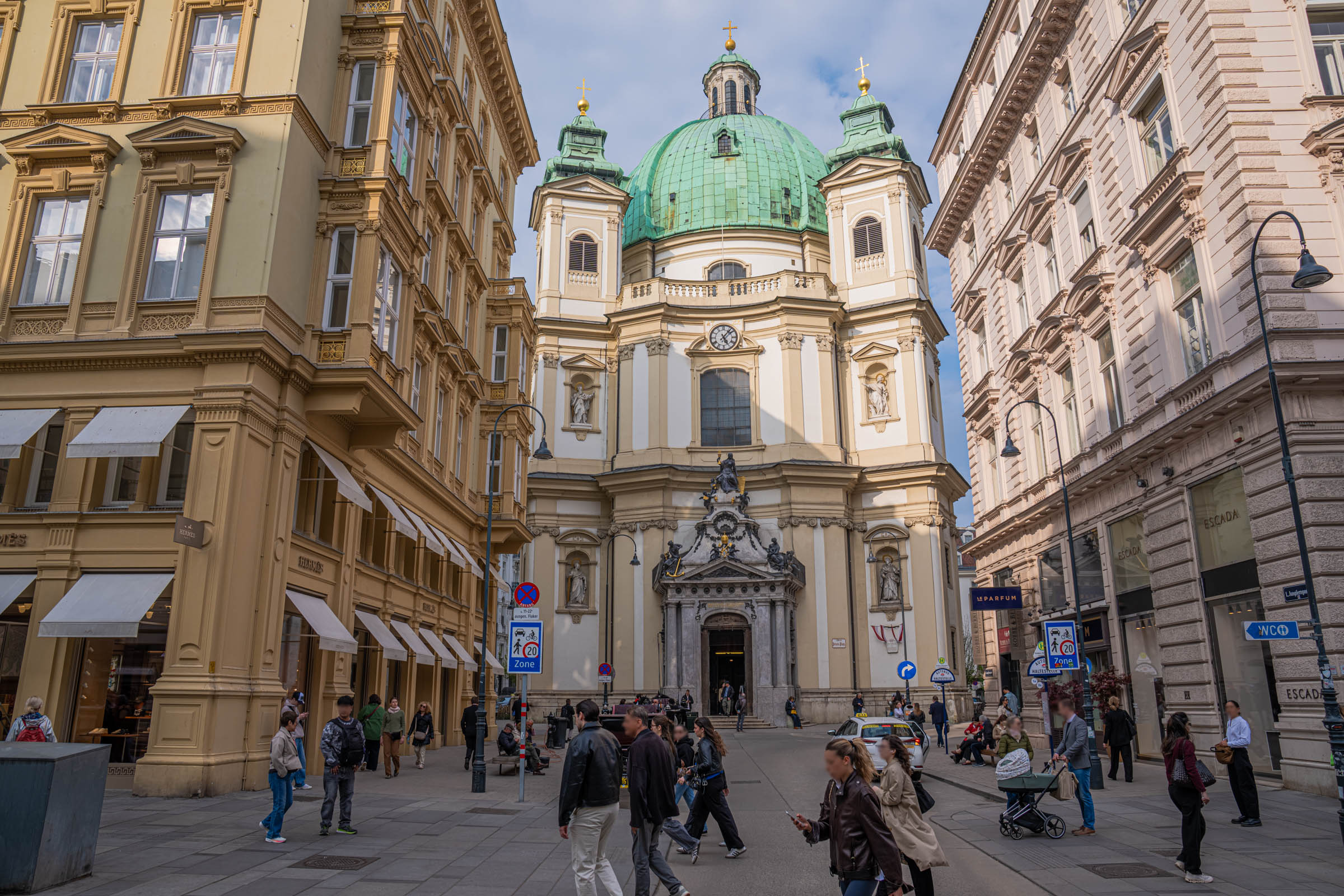
A few steps away, in a small side street, Peter’s church is hidden. Its green dome is one of the most beautiful baroque scenes in the city, and the interior simply shines with gilding. Then the walk continues along Kertner Strasse, the main shopping street that connects the cathedral with the Opera. Here are the windows of major international houses, as well as old Viennese shops with a tradition spanning several generations.
Lovers of fancy shopping, the road also leads to Kohlmarkt, a short street with the most expensive shop windows in the city. At the end of it, a prize awaits: a view of the green dome of the Hofburg, one of the most photogenic sights in Vienna. Along the way, be sure to stop by Demel patisserie, a former imperial supplier, and try their chocolate cake. After such a walk, it becomes clear why even those who have seen it ten times return to Vienna.


VIENNA’S TABS: A RITUAL YOU MUST EXPERIENCE
While walking through the center, be sure to take at least one long break in a real Viennese tavern. Not in a modern place with takeaway coffee, but in an establishment with marble tables, Tonet chairs and waiters in black suits. Such places have existed here for centuries and represent the living room of the city.
The ritual is always the same and in it lies all the beauty. Order a melange, the Viennese version of coffee with milk, and the waiter brings it on a silver tray, with the obligatory glass of water. Then comes the most important part: don’t rush anywhere. Read newspapers, watch people, write postcards. No one will look at you sideways even after two hours at the same table.
Coffee goes with cake, of course. Zacher cake is a classic among classics, but also try apfelstrudel with whipped cream or Ezterhazi cake. The prices in the most famous cafes are higher, but you pay for the experience, not just the coffee. After one afternoon like this, you will understand why Viennese people keep their pub culture as their greatest treasure.

THE HOFBURG: SIX CENTURIES UNDER ONE ROOF
The Hofburg was the winter residence of the Habsburgs and the center of an empire that stretched from the Adriatic to the Carpathians. Today it is a huge complex of palaces, squares and museums in the very heart of the city. The most beautiful approach leads through Michaelerplatz, where you are greeted by a monumental facade with a green dome. In the middle of the square are the excavated remains of Roman and medieval Vienna, so you can see two millennia of history in one place.
Inside the complex, everyone finds something for themselves. The Imperial Apartments and the Empress Sisi Museum reveal the private life of Europe’s most famous ruling family. The Spanish riding school, which is more than four centuries old, still organizes white Lipizzaner shows today. The National Library preserves one of the most beautiful baroque halls in the world, which I highly recommend to every book lover.
On the other side of the complex opens Heldenplatz, Heroes’ Square, with equestrian monuments and a view of the New Burg, the last great palace of the empire. From there, you can go out to the Ring through the ceremonial gate. Allow at least half a day to visit the Hofburg. The space is huge, and every corner offers a new story. I returned to the complex twice, once for the museum, and the other time just for the late afternoon light on the facades.


MARIA TERESA SQUARE AND THE EMPIRE MUSEUM
Across from the Hofburg, on the other side of the Ring, is Maria Theresa Square. In its center sits a bronze empress on a high pedestal, surrounded by her generals and advisers. On both sides of the square stand two identical palaces, mirrored to each other. In one is the Art History Museum with works by Brueghel, Vermeer and Velazquez. In the second is the Museum of Natural History with the famous Venus of Willendorf, a figure almost 30,000 years old.
Immediately behind the square begins MuzejsKvartir, the former imperial stables transformed into one of the largest cultural complexes in Europe. The Leopold Museum here houses the largest collection of Egon Schiele in the world. Lovers of contemporary art have another address nearby: Albertina and its new exhibition space Albertina modern. In front of the latter, I was greeted by a huge wooden sculpture by the artist Kavs, a perfect proof that Vienna knows how to combine the old and the new.
A simple rule applies to museums. Don’t try everything at once. Choose one or two a day and enjoy slowly, the way Viennese do.

RINGSTRASSE AND STATE OPERA
The Ringstrasse deserves a special walk, preferably in the late afternoon. The boulevard, more than five kilometers long, surrounds the old city center and is an open-air museum of architecture. The Opera House, the Parliament, the Town Hall, the University and the Burgtheater are lined up on it, all built in the second half of the 19th century. My hotel was right on this boulevard, so I visited the Ring at all times of the day.
The state opera is the crown of the whole story. The building was inaugurated in 1869 with Mozart’s “Don Giovanni” and since then it has not left the top of the world. If you can’t make it to the show, there’s a great solution. Every day, the opera sells standing tickets at symbolic prices, right before the start. For a few euros you can listen to top voices in one of the most beautiful halls in the world. Few investments in culture bring so much for so little money.


BELVEDERE: KLIMT’S “KISS” AND THE MOST BEAUTIFUL BAROQUE GARDENS
For me, Belvedere is the most beautiful baroque complex in Vienna. It was built at the beginning of the 18th century by Prince Eugene of Savoy, a famous military leader and great art lover. The complex consists of two palaces, Upper and Lower Belvedere, connected by terraced gardens with fountains and sculptures. The name itself means “beautiful view”, and the reason becomes clear from the upper terrace. From there, the view stretches across the gardens, all the way to the tower of Stefansdom on the horizon.


Gornji Belvedere today houses the most valuable collection of Austrian art. The star of the collection is Klimt’s “Kiss”, probably the most famous painting in this country. There is always a group of visitors standing in front of the golden canvas, but the crowds are easier to bear than in other large museums of Europe. In addition to Klimt, there are works by Schiele, Kokoska and the French Impressionists.
My advice: come in the morning, first tour the gallery, then slowly descend through the gardens to the Lower Belvedere. In the spring, the flower beds and fountains look like the background from old postcards. Entrance to the gardens is free, so even travelers with little time can feel the splendor of this place.


SCHÖNBRUNN PALACE: SPEND A DAY AT THE IMPERIAL SUMMER RESIDENCE
Leave all day for Schönbrunn. The summer residence of the Habsburgs is on the UNESCO World Heritage List and is one of the most visited castles in Europe. The Yellow Palace with 1,441 rooms was the stage of great history. Here Maria Theresa grew up with her many children, here the little Mozart played before the Empress, and Emperor Franz Joseph spent the last days of his empire in Schönbrunn.
The tour of the imperial quarters leads through sumptuous salons, ballrooms and the private rooms of the rulers. You must buy tickets online in advance, because entry is at a specific time. After the palace comes what I personally like the most: the park. The spacious gardens are open to all and free of charge.


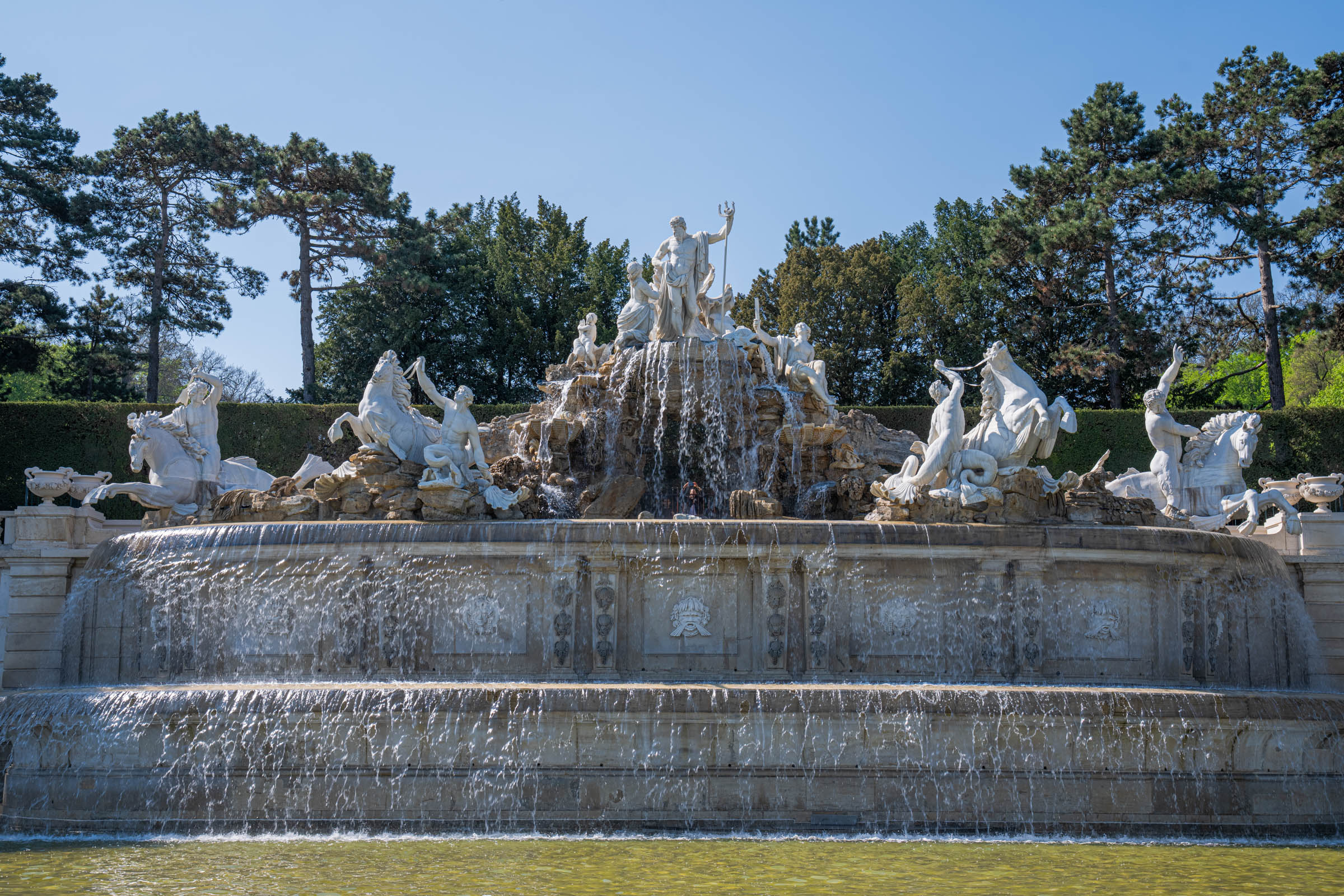

The main path leads to Neptune’s Fountain, a true Baroque spectacle in stone, and then up the hill to the Glorietta. From this elegant colonnade on the top of the hill there is the most beautiful view of the palace and all of Vienna. The ascent takes about twenty minutes and is worth every step. The oldest zoo in the world, founded in 1752 as an imperial menagerie, also operates within the park. Families with children can easily spend a whole day here, and photographers like me lose track of time.


KARLSPLATZ AND ST. CHARLES’S CHURCH: A BAROQUE MASTERPIECE IN VIENNA
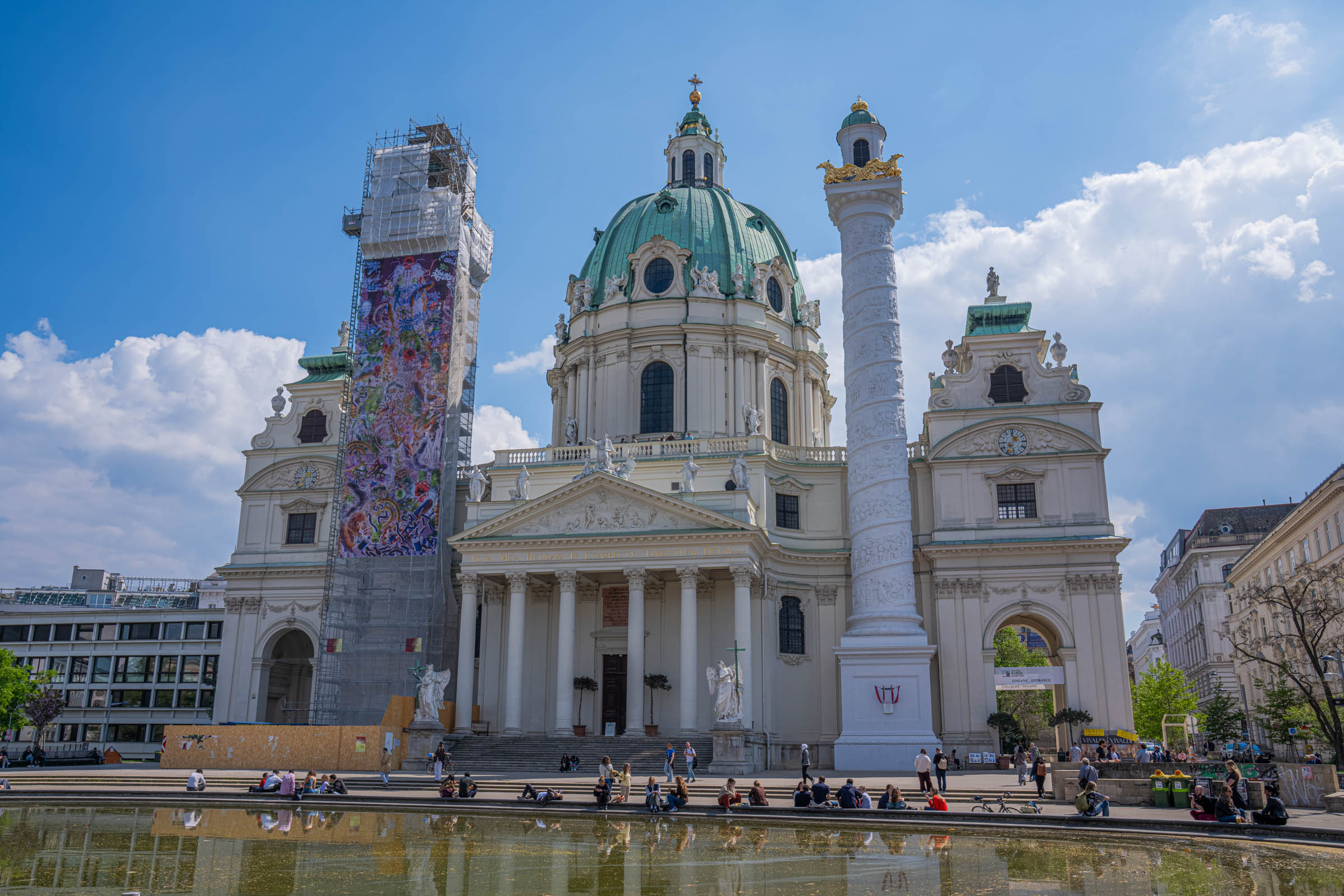
On the way back to the hotel, another baroque gem awaits. Charles’ Church on Karlsplatz was built after the plague epidemic in 1713, as a testament of Emperor Charles the Sixth. It was designed by the great Fischer von Erlach, and the building combines a Roman dome and two unusual columns decorated with reliefs, modeled after ancient models.
In front of the church is a shallow lake in which the facade is reflected as if in a mirror. Students from the nearby university, couples and tired walkers gather around the water. Bring a coffee, sit on the edge of the pool and watch the city. This square is a ten-minute easy walk from my hotel, so it has become my favorite evening stop.
VIENNA: WHAT TO SEE BEYOND THE MAIN LANDMARKS
Vienna offers much more than can fit into one stay, so here are a few more ideas for those staying longer. The Prater is an amusement park with the famous giant wheel from 1897, a symbol of the city that you know from numerous movies. The ride in vintage red cabs lasts about fifteen minutes and offers a view of Vienna from a completely new perspective.
Fans of unusual architecture should look for the Hundertwasser House, a colorful apartment building without a single straight line. Gourmets will enjoy Naschmarkt, the city’s largest market, where the aromas of spices mingle with the buzz of dozens of small restaurants. For a quieter day, there is also a walk along the Danube Canal, a favorite meeting place of younger people from Vienna.
Finally, leave some time for the most beautiful thing: wandering aimlessly. The narrow streets of the first district hide hidden courtyards, small galleries and shops of old crafts. Precisely in those moments, without a plan or a map, Vienna showed me its most beautiful face.


VIENNA: PRACTICAL TIPS FOR VISITORS
Finally, some first-hand advice. The fastest way to get from Belgrade to Vienna is by plane, in just over an hour. Drivers will arrive via Novi Sad and Budapest in about six hours, with an excellent highway the entire way. There are also affordable bus lines for those traveling on a tight budget.
In the city itself, forget the car. Public transport is fast, clean and punctual, and the metro, tram and bus network covers every corner. Multi-day tickets are far more profitable than single tickets, so buy them immediately upon arrival. The center is best explored on foot, as the main attractions are located a short distance from each other.
The best times to travel to Vienna are spring and early autumn. Then the parks are in full glory, and the temperatures are ideal for walking. December brings the magic of Christmas fairs, but also the biggest crowds. Plan three to four days for your first encounter with the city. Book tickets for Schönbrunn and the Opera in advance, and for restaurants like the ones in my hotel, be sure to ask a day in advance. And bring comfortable shoes, because you’ll be walking more in Vienna than you think.


VIENNA: MONEY, LANGUAGE AND OTHER USEFUL THINGS TO KNOW
Austria uses the euro, and cards are accepted almost everywhere. However, bring some cash, as some bars and smaller shops still prefer paper money. Tipping is optional, but it is customary to round the bill or leave five to ten percent for good service.
The official language is German, but you can easily communicate in English in hotels, restaurants and museums. Viennese people are kind and patient with guests, especially if you learn two magic words: “bitte” and “danke”. Stores are generally closed on Sundays, so plan your shopping on weekdays. Museums, on the other hand, are open and full on Sundays, so choose early morning times for them. The water from the tap is of excellent quality and comes straight from the Alps, so feel free to fill the bottle along the way.


WHY TRAVELERS KEEP RETURNING TO VIENNA?
I spent the last morning on the terrace of the apartment, with coffee and a view of the roofs that accompanied me throughout my stay. Vienna is not taken by storm. He rewards those who have patience, who sit in a bar without looking at the clock and who look up at the facades as they walk.
The Grand Ferdinand proved to be the perfect starting point for such a journey. A hotel that lives tradition instead of faking it, on a boulevard that is itself a monument to an era. If you are planning a trip to Vienna, feel free to put this address on the Ring at the top of your list.
This was another letter from Austria. The next one is coming soon, and until then follow me on Instagram for more scenes from the imperial capital. I will definitely come back again, because this city just finds a way to your heart!
With Love from Vienna,
Mr.M


This post is sponsored by the United Nations World Tourism Organization (UN Tourism) and the Grand Ferdinand Vienna hotel, as well as other local partners who selflessly supported this project. This post is my personal and honest review of the destination experience.
Hi Marko, I have been following your travel blog for quite some time and this Vienna article was one of your most enjoyable reads so far. What I appreciated most was how you combined the history of the city with your personal impressions of staying at Grand Ferdinand. Many articles focus entirely on Schönbrunn or St. Stephen’s Cathedral, but you managed to capture the atmosphere of Vienna itself. The section about coffee culture particularly resonated with me because I spent several afternoons in traditional Viennese cafés during my last visit. I stayed at the Hotel Sacher Vienna, which was wonderful,… Read more »
Ciao Marko, ho letto il tuo racconto con grande interesse. Vienna è una città che riesce sempre a sorprendermi e credo che tu abbia descritto molto bene il suo equilibrio tra eleganza imperiale e vita moderna. Mi ha colpito la parte dedicata al Grand Ferdinand perché non conoscevo bene questo hotel. Durante il mio soggiorno ho scelto Hotel Imperial e l’esperienza è stata straordinaria, soprattutto per l’atmosfera storica. Tuttavia, dalle tue fotografie e dalla descrizione delle camere, Grand Ferdinand sembra offrire uno stile più contemporaneo e rilassato. Mi è piaciuto anche il modo in cui hai raccontato la passeggiata lungo… Read more »
Bonjour Marko, quel plaisir de lire ce récit. J’ai visité Vienne plusieurs fois au cours de ma vie et pourtant votre article m’a donné envie d’y retourner. J’ai particulièrement apprécié les passages consacrés aux cafés viennois. Ils représentent à mes yeux l’essence même de la ville. Lors de mon dernier séjour, j’ai logé au The Ritz-Carlton, Vienna, qui bénéficie également d’un excellent emplacement. En lisant votre description du Grand Ferdinand, j’ai eu l’impression qu’il possédait une atmosphère plus décontractée tout en conservant un haut niveau de confort. Votre récit transmet parfaitement l’élégance discrète de Vienne. Pensez-vous que trois jours suffisent… Read more »
Beste Marko, dit was een bijzonder prettig reisverslag om te lezen. Ik vond vooral de combinatie van hotelreview en stadsverhaal goed werken. Veel bloggers behandelen die onderwerpen apart, maar hier voelde het natuurlijk aan. Tijdens mijn bezoek aan Wenen verbleef ik in Park Hyatt Vienna, een prachtig hotel in een voormalig bankgebouw. Toch moet ik zeggen dat Grand Ferdinand er erg aantrekkelijk uitziet dankzij de ligging aan de Ringstraße. De foto’s van de kamer en de gemeenschappelijke ruimtes maakten een uitstekende indruk. Daarnaast vond ik je beschrijving van de sfeer in de stad erg herkenbaar. Wenen heeft een rust die… Read more »
Hello Marko, this article brought back memories of a trip my wife and I made to Vienna a few years before the pandemic. We stayed at Bristol Vienna because of its proximity to the State Opera, and location ended up being one of the most important factors in our experience. Reading about Grand Ferdinand gave me a similar impression. Being able to walk to major sights rather than rely on transportation changes the rhythm of a city break completely. I also appreciated your section on Karlsplatz and Karlskirche. It remains one of my favorite areas in Vienna. The church is… Read more »
Hola Marko, excelente artículo. Lo que más me gustó fue la manera en que describiste la ciudad más allá de sus monumentos. Muchos viajeros visitan Viena por los palacios y los museos, pero tú lograste transmitir también el ambiente elegante y relajado que se siente al caminar por sus calles. Me llamó especialmente la atención la reseña del Grand Ferdinand. Durante mi visita me alojé en Rosewood Vienna y tuve una experiencia magnífica. Aun así, el diseño más clásico del Grand Ferdinand parece encajar perfectamente con el carácter de la ciudad. También disfruté mucho la sección sobre los cafés históricos.… Read more »
Hallo Marko, vielen Dank für diesen ausführlichen Bericht. Besonders gefallen hat mir die Beschreibung der Ringstraße und ihrer Bedeutung für das Stadtbild Wiens. Viele Besucher konzentrieren sich auf einzelne Sehenswürdigkeiten und übersehen dabei, wie beeindruckend die gesamte Umgebung ist. Ich habe vor zwei Jahren im Palais Hansen Kempinski Vienna übernachtet und war mit dem Aufenthalt sehr zufrieden. Dennoch wirkt das Grand Ferdinand auf mich deutlich moderner und vielleicht auch etwas entspannter. Deine Fotos haben einen sehr guten Eindruck vermittelt. Mich würde interessieren, ob das Frühstück den Erwartungen eines Hotels dieser Kategorie entsprochen hat.
Hi Marko, one thing I always enjoy about your travel writing is that you never rush through a destination. The section about simply walking around central Vienna and observing daily life was one of my favorites. Too many travel guides reduce a city to a checklist of attractions. Vienna deserves more time than that. I stayed at Sans Souci Vienna during my last visit and loved its atmosphere, but Grand Ferdinand seems to have a location advantage that would be difficult to ignore. Your photographs of the hotel lobby and surrounding streets looked excellent. I can easily understand why you… Read more »
Olá Marko, acompanho os teus relatos há bastante tempo e gostei muito deste sobre Viena. A cidade ocupa um lugar especial entre as capitais europeias que visitei. Existe uma elegância natural em Viena que é difícil de encontrar noutros lugares. O Grand Ferdinand parece combinar muito bem com esse ambiente. Durante a minha estadia fiquei no Anantara Palais Hansen Vienna Hotel e adorei o serviço, mas confesso que a localização do teu hotel parece mais conveniente para explorar o centro histórico a pé. Também gostei da parte dedicada aos cafés vienenses. Há algo de especial em sentar-se durante uma hora… Read more »
Hello Marko, this article reminded me why Vienna remains one of my favorite cities in Europe. I have visited Prague, Budapest and Bratislava several times, yet Vienna always feels different. There is a sense of order and elegance that is difficult to describe until you experience it yourself. Your review of Grand Ferdinand captured that feeling quite well. I was especially interested in the rooftop area because hotel rooftops often provide a completely different perspective of a city. The room also appeared spacious and thoughtfully designed. Did you find the hotel more suitable for couples or would it work equally… Read more »
Hi Marko, I have just finished reading your Vienna article together with the Grand Ferdinand review, and I honestly think this is one of your most balanced travel posts. What I liked most was that you never tried to oversell either the city or the hotel. Instead, you explained why Vienna continues to attract visitors year after year, from its imperial heritage to its famous coffeehouse culture. I visited Vienna shortly before the pandemic and stayed at Hotel Sacher Vienna. While Sacher certainly delivers old-world luxury, I must admit that Grand Ferdinand seems far more practical for travelers who want… Read more »
Hola Marko, llevo años leyendo blogs de viajes y pocas veces encuentro artículos que combinen tan bien la historia de una ciudad con una experiencia hotelera. Lo que más me gustó fue la manera en que describiste Viena como una ciudad que no necesita impresionar constantemente para demostrar su grandeza. Esa sensación de elegancia tranquila es exactamente la impresión que tuve cuando la visité. En mi caso me alojé en Hotel Imperial porque siempre había querido experimentar uno de los hoteles históricos de la ciudad. Sin embargo, al ver las fotografías y leer tu experiencia, Grand Ferdinand parece una alternativa… Read more »
Hallo Marko, dein Bericht hat mich sofort an meinen letzten Aufenthalt in Wien erinnert. Besonders die Passagen über die Ringstraße fand ich gelungen, weil sie verdeutlichen, wie wichtig diese Straße für das Verständnis der Stadt ist. Viele Reisende sehen nur einzelne Gebäude, ohne zu erkennen, dass die Ringstraße selbst eine der großen Sehenswürdigkeiten Wiens darstellt. Während meines Besuchs habe ich im The Ritz-Carlton, Vienna gewohnt. Das Hotel war hervorragend, aber ehrlich gesagt scheint Grand Ferdinand eine ähnlich gute Lage zu haben. Außerdem gefällt mir der etwas entspanntere Stil. Deine Beschreibung der Atmosphäre im Hotel hat mir sehr geholfen, mir den… Read more »
Bonjour Marko, j’ai beaucoup apprécié votre article car il m’a rappelé mon premier voyage à Vienne il y a déjà plusieurs années. À l’époque, j’avais été frappé par l’élégance de la ville et par la qualité de son architecture. Votre récit transmet parfaitement cette impression. J’ai également trouvé très intéressante votre analyse du Grand Ferdinand. Lors de mon dernier séjour, j’ai logé au Rosewood Vienna, qui est un établissement exceptionnel, mais aussi très coûteux. Grand Ferdinand semble offrir un excellent compromis entre confort, emplacement et atmosphère. Les photographies de la chambre étaient particulièrement réussies. Avez-vous eu l’occasion de profiter de… Read more »
Hello Marko, one thing that stood out to me throughout the article was how naturally Vienna seems to encourage slow travel. In many capitals I find myself rushing from one attraction to another, but Vienna rewards those who are willing to slow down, sit in a café and simply observe. Your writing captured that feeling very well. I also enjoyed the Grand Ferdinand review because it focused on practical aspects rather than marketing language. Too many hotel reviews read like advertisements these days. Years ago I stayed at Park Hyatt Vienna and loved it, but I remember wishing I were… Read more »
Ciao Marko, questo articolo mi è piaciuto davvero molto. Vienna è una città che conosco abbastanza bene eppure il tuo racconto è riuscito a farmela vedere da una prospettiva diversa. Ho apprezzato soprattutto la parte dedicata alla vita quotidiana della città e non solo ai monumenti più famosi. Per quanto riguarda l’hotel, durante il mio ultimo soggiorno ho scelto Bristol Vienna. È un albergo magnifico ma molto tradizionale. Grand Ferdinand invece sembra offrire un’atmosfera più contemporanea senza rinunciare all’eleganza. Le immagini della terrazza mi hanno colpito particolarmente. Secondo te vale la pena cenare lì oppure è più un luogo da… Read more »
Beste Marko, wat mij het meest aansprak in dit artikel was de aandacht voor details. Veel schrijvers besteden veel woorden aan bekende attracties, maar jij nam ook de tijd om de sfeer van Wenen te beschrijven. Dat maakt een groot verschil voor lezers die de stad nog nooit hebben bezocht. Ik verbleef ooit in Sans Souci Vienna en was daar zeer tevreden over. Toch moet ik toegeven dat Grand Ferdinand er bijzonder aantrekkelijk uitziet vanwege de centrale ligging. Vooral voor een eerste bezoek lijkt dat een groot voordeel. Je beschrijving van de wandelingen door het centrum maakte meteen duidelijk waarom… Read more »
Hi Marko, I found your observations about Vienna’s atmosphere particularly accurate. I have visited many European capitals over the years, including Paris, Rome, Madrid and Prague, yet Vienna always feels slightly different. It manages to be grand without feeling overwhelming and historic without feeling trapped in the past. Your article reflected that balance beautifully. I also appreciated the hotel review because it gave readers a realistic idea of what to expect rather than simply highlighting luxury features. I stayed at Palais Hansen Kempinski Vienna a few years ago and thoroughly enjoyed it, but Grand Ferdinand seems much more integrated into… Read more »
Olá Marko, este artigo despertou muitas recordações de uma viagem que fiz pela Áustria antes de continuar para Bratislava e Budapeste. Viena foi sem dúvida a cidade que mais me impressionou em toda essa rota. Gostei muito da forma como descreveste a combinação entre tradição imperial e conforto moderno. Em relação ao hotel, fiquei hospedado no Hotel Imperial e adorei a experiência, mas também senti que estava a viver quase dentro de um museu histórico. O Grand Ferdinand parece mais descontraído sem perder a elegância. As fotografias do quarto transmitiam uma sensação muito acolhedora. Uma pergunta: sentiste que o hotel… Read more »
Hello Marko, I have read your articles about Rome and Paris before, and what I admire most is your ability to place a hotel within the broader story of a destination. Grand Ferdinand did not feel like a separate review; it felt like part of the Vienna experience. That is exactly how travelers choose accommodation in real life. We are not simply booking a room, we are choosing where our memories of a city will begin and end each day. I stayed at Anantara Palais Hansen Vienna Hotel last year and was very impressed, but your article convinced me that… Read more »
Hello Marko, I spent almost an hour reading this article because I kept stopping to look more closely at the photographs and revisit certain sections. What impressed me most was that you managed to convey the personality of Vienna rather than simply describe its landmarks. Many cities have beautiful buildings, but very few have an atmosphere that remains with you long after you leave. Vienna is one of those places. I stayed at The Guesthouse Vienna during my last visit, which I absolutely loved because of its location near the Opera. Still, after reading your review, Grand Ferdinand seems to… Read more »
Olá Marko, acompanho o teu blog há bastante tempo e gostei especialmente deste artigo porque me pareceu muito pessoal. Não foi apenas uma descrição dos locais mais conhecidos de Viena, mas sim uma reflexão sobre aquilo que torna a cidade especial. Estive em Viena há cerca de três anos e fiquei hospedado no DO & CO Hotel Vienna. A localização era excelente, mas o ambiente era bastante diferente daquele que descreves no Grand Ferdinand. O teu hotel parece combinar melhor com a elegância clássica da cidade. Também gostei muito da parte sobre os cafés vienenses. Ainda hoje me lembro de… Read more »