My dear travellers and lovers of unusual journeys, welcome to the new travelogue on the Mr.M blog. After the travelogue from the City of Light, the capital of France – Paris, which won your hearts, it is time to devote ourselves to the pearl of the French Riviera. Nice is one of those cities that justify every day you dedicate to it. I spent a few days in it and left with a notebook full of impressions and advice.
Before I start today’s travelogue about Nice, I want to express my special thanks to the United Nations World Tourism Organization – UN Tourism and Boscolo Nice Hotel & Spa for supporting and promoting quality tourism around the world. Their dedication to connecting cultures and destinations is an inspiration to all of us who believe that travel enriches the soul.
First, let’s start with the most important one, which is where Nice is actually located. The city lies in the southeast of France, on the very coast of the Mediterranean Sea. It is the capital of the Côte d’Azur and the fifth largest city in the country. Since the Alps descend almost to the sea, here you have both a beach and a mountain in the same day.
I have divided this guide into parts for easy reference. I will guide you through the Promenade, the beaches, the Old Town and the famous market. At the end, the hotel where I stayed is waiting for you, with all the details.
WHY IS NICE ONE OF THE MOST POPULAR DESTINATIONS ON THE FRENCH RIVIERA?
Nice has been attracting visitors from all over the world for more than two centuries. The reason is simple: the sun shines here almost all year round. The mild Mediterranean climate brings warm winters and pleasant summers, so the city never stands still.
The glory of Nice began with the English aristocracy. Rich Englishmen came here to spend the winter away from their cold and gloomy homeland. Over time, they were joined by Russian nobles, artists and writers. Thus, the city became the winter refuge of the European elite.
Today, Nice carries a title that says it all. Namely, in 2021, UNESCO included it in the list of world heritage as “winter resort of the Riviera”. Experts believe that this city invented the very concept of the Riviera. It is a rare example of a place defining an entire lifestyle.
In addition to climate and history, Nice also offers the perfect mix of amenities. In one place you have beaches, museums, luxury shops and a picturesque old quarter. You can swim in the morning, and in the afternoon see the baroque churches. In the evening, dinner awaits you with a view of the sea.
The city is also an excellent starting point for further trips. Monaco is only half an hour’s drive away. Cannes, Antibes and the Italian border are equally close. That is why many choose Nice as a base for exploring the entire coast.
THE HISTORY OF NICE: FROM GREEK ROOTS TO RIVIERA ICON
The history of Nice begins long before we can even imagine. Archaeologists have found traces of human presence at the Tera Amata site that are about 400,000 years old. Therefore, people have loved this area since time immemorial.
The real city was founded by the ancient Greeks around 350 BC. Settlers from Massalia, today’s Marseille, built a settlement on the coast. They named it in honor of Nike, the Greek goddess of victory. This is how Nikaya was born, the forerunner of today’s Nice.
The Romans later built a separate city on a nearby hill. It was called Kemenelum, and today it is the district of Cimiez. For centuries, various masters and cultures have changed in this area.
Nice spent a large part of its past under the rule of Savoy and Sardinia. For a long time, the city looked more towards Turin than towards Paris. The Italian influence therefore still strongly marks the architecture and cuisine.
The turning point came in 1860. With the Treaty of Turin, Nice was annexed to France, and the decision was confirmed by a popular plebiscite. The official unification was celebrated in June of the same year. Since then, the city belongs to France, but it has never lost its Italian charm.
This dual soul is best seen at every step. Street names are written in French, but also in the old Niš dialect. Past and present live together here.
CASTLE HILL IN NICE: THE BEST VIEW IN THE CITY
I started my acquaintance with the city by climbing the hill of the castle. Colline du Château, as the French name reads, rises 92 meters above the sea. The whole of Nice used to start from this place.
It was here that the Greeks built their acropolis. Later, a medieval fortress with a cathedral emerged on the top. Over the centuries, the hill was the heart of the city’s defense and its most fortified place.
The fate of the fortress was, unfortunately, tragic. By order of King Louis the Fourteenth, the army demolished it in 1706. Today, only the foundations and some walls remain from the former fortification.
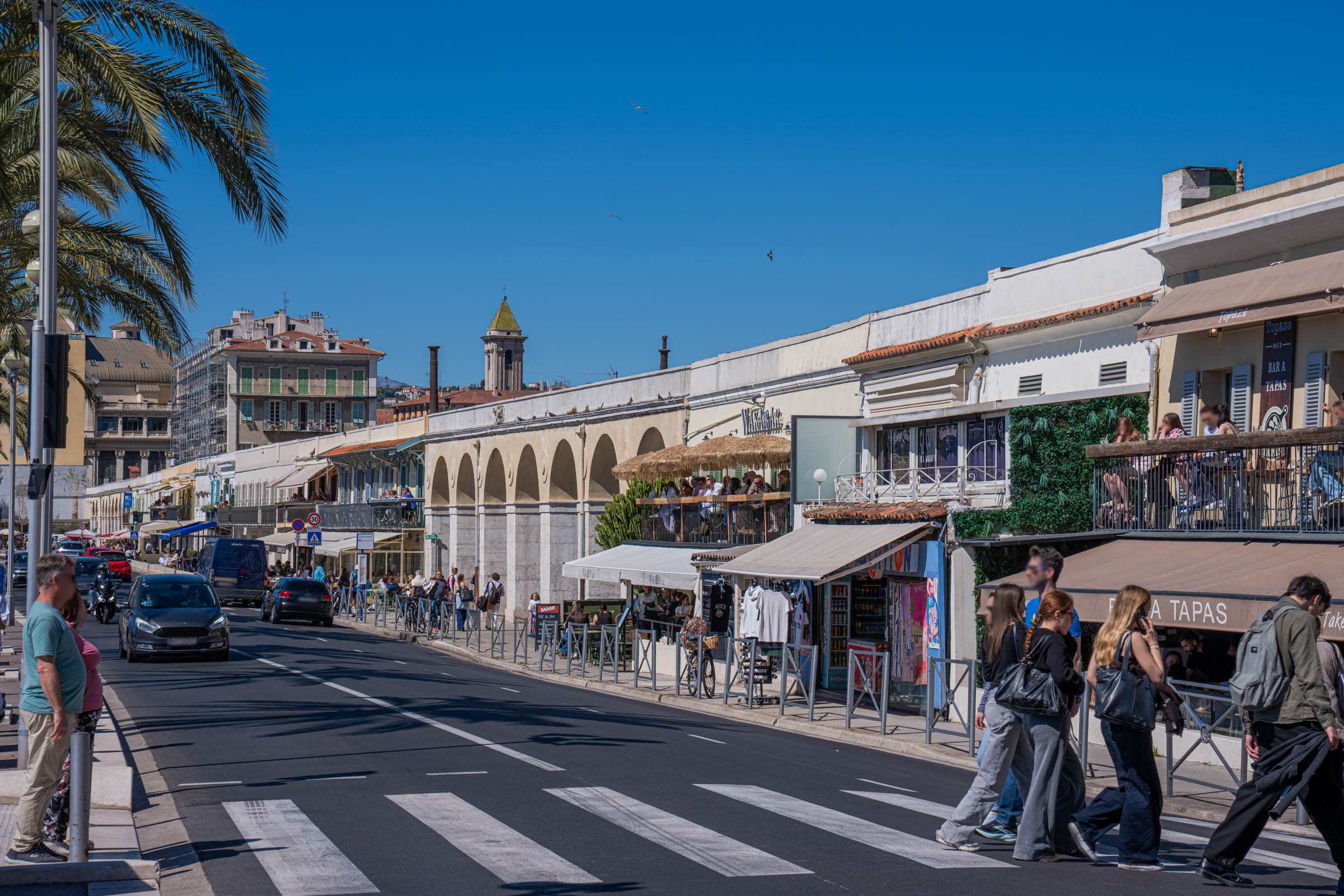
There is a beautiful park on the site of the ruins. The paths wind through pines and palm trees, and the shade is pleasant on a hot day. In the heart of the park there is an artificial waterfall, built way back in 1885.
The main reason for coming is the view. The view from the viewpoint offers a breathtaking panorama. Under your feet lie the Bay of Angels, the red roofs of the Old Town and the harbor full of yachts.
There are several ways to get to the top. The easiest is the elevator, which has been operating since 1912. Adventurers will prefer to choose the stairs and climb through the greenery. Regardless of the choice, the effort is well worth it. A little tip at the end: come before noon. That’s when the light is the most beautiful for photos, and the crowds are still small.
NICE: DISCOVERING THE LEGENDARY PROMENADE DES ANGLAIS
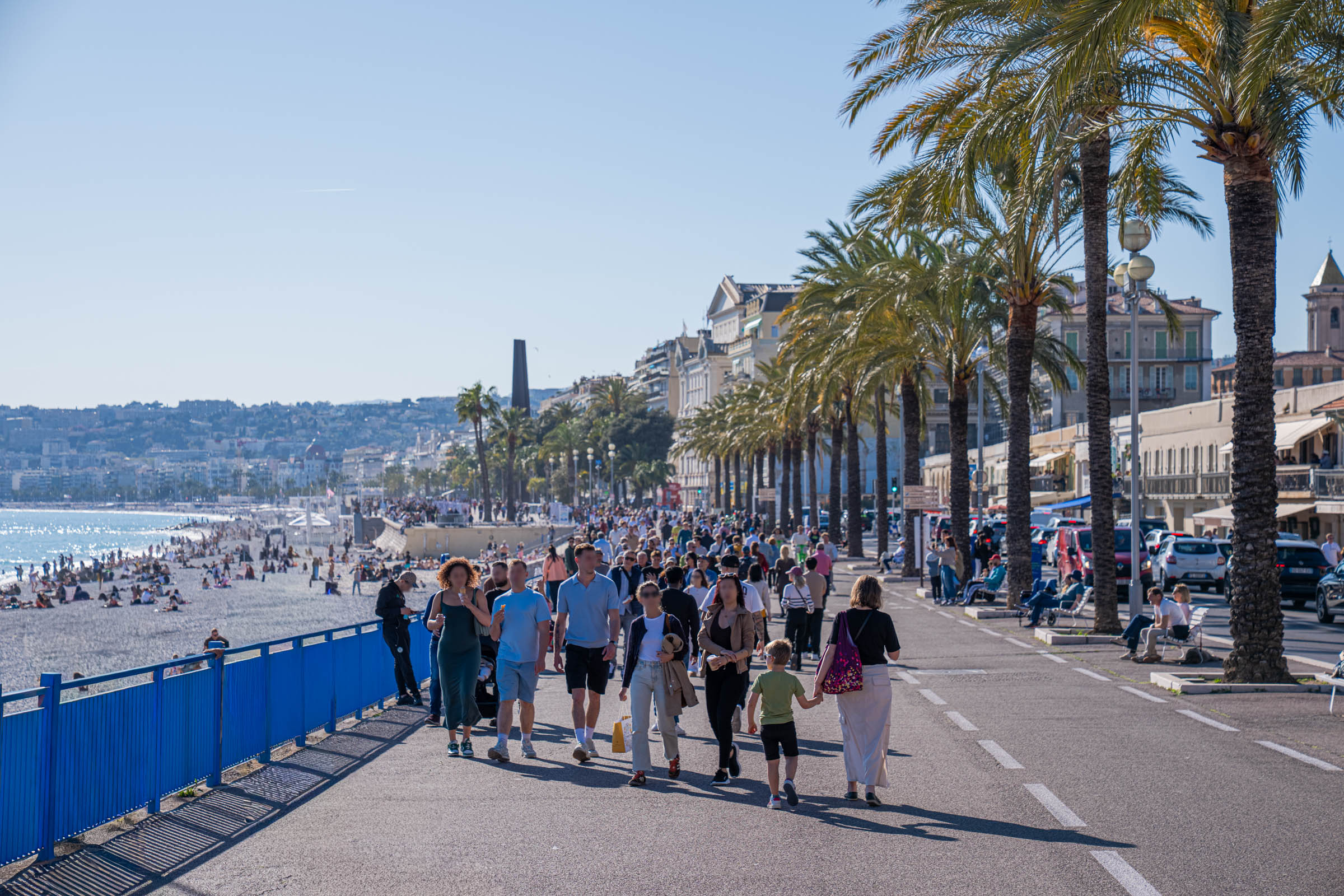
No description of Nice can bypass its famous promenade. The Promenade des Anglais stretches for about seven kilometers along the coast. It starts at the airport and ends at the edge of the Old Town.
The name of the promenade hides an interesting story. During the harsh winter of 1820, many poor residents lost their jobs. The English priest Lewis Way then financed the construction of a path along the sea. Thus, he provided work for the unemployed, and a permanent gift to the city.
The locals named the new path “The English Path” out of charity. The official name Promenade des Anglais was established around 1844. The English, in fact, were the first to winter en masse here.
Today, the promenade is the heart of city life. I walked along it in the early morning, when runners and cyclists share the path with the first tourists. Palm trees line up endlessly, while the sea shines on the left.
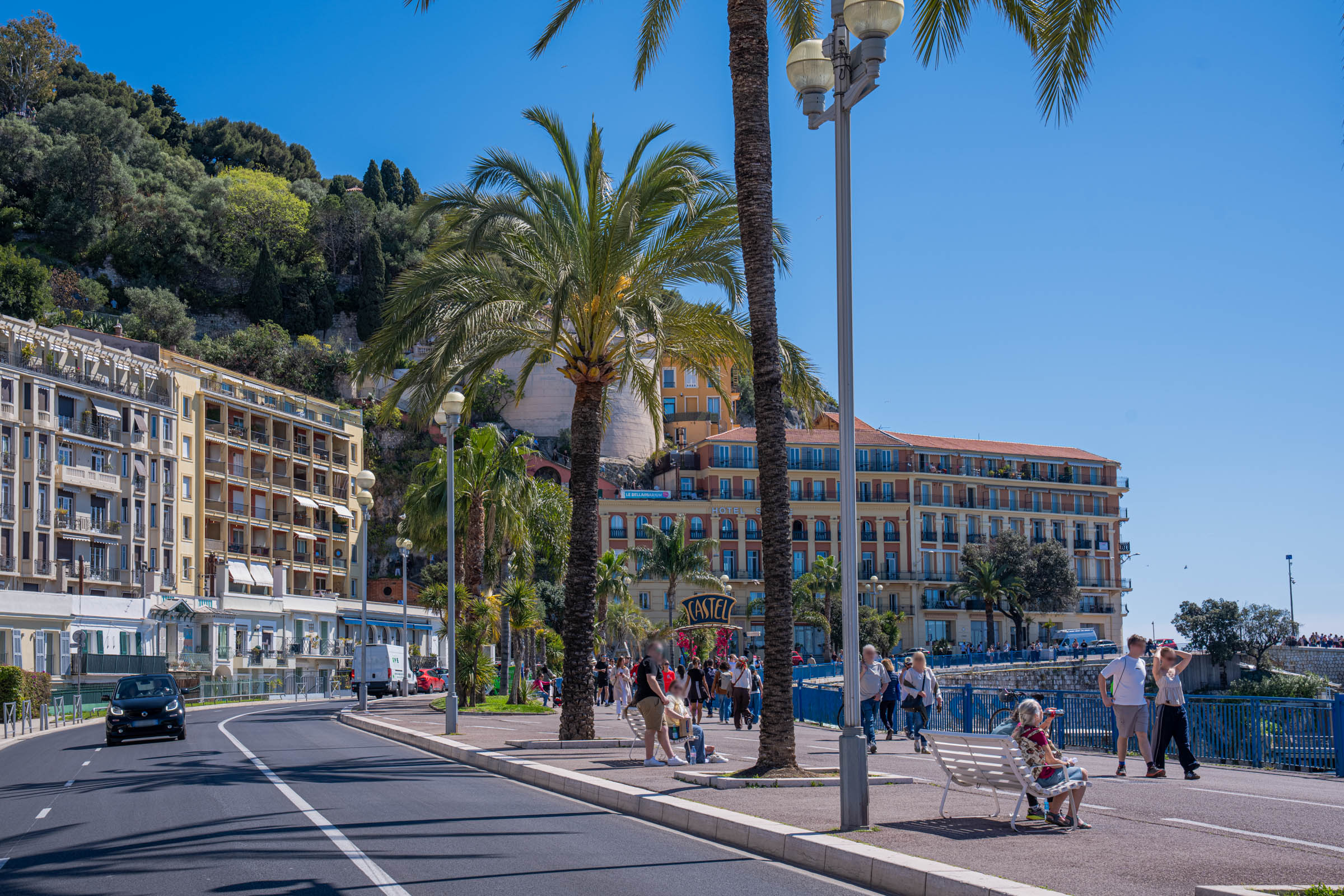
Luxurious hotels and villas from the Belle Epoque are lined along the promenade. Among them, the building of Hotel Suisse stands out, located right under the hill of the castle. Next to it, the famous inscription “Castel” lights up.
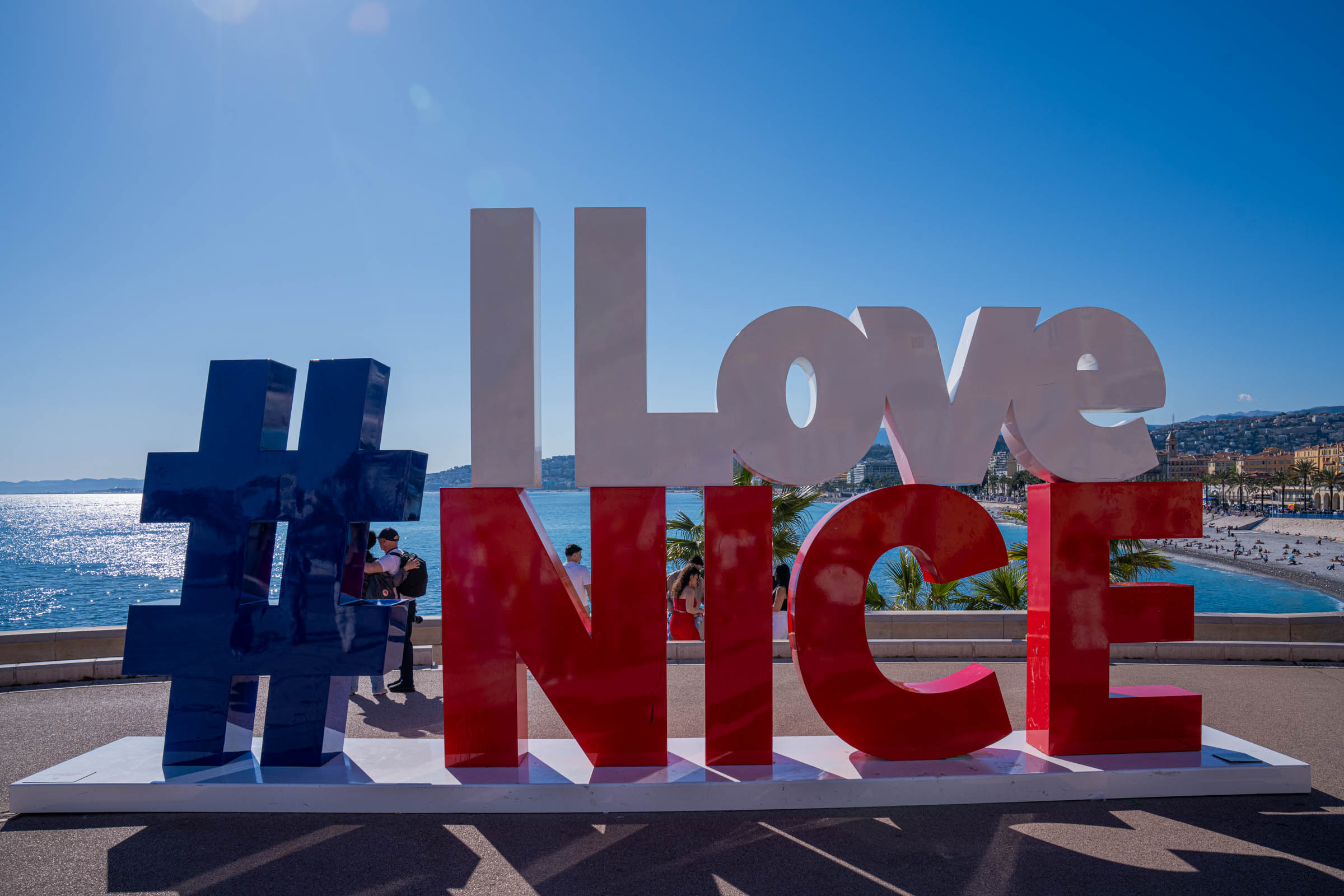
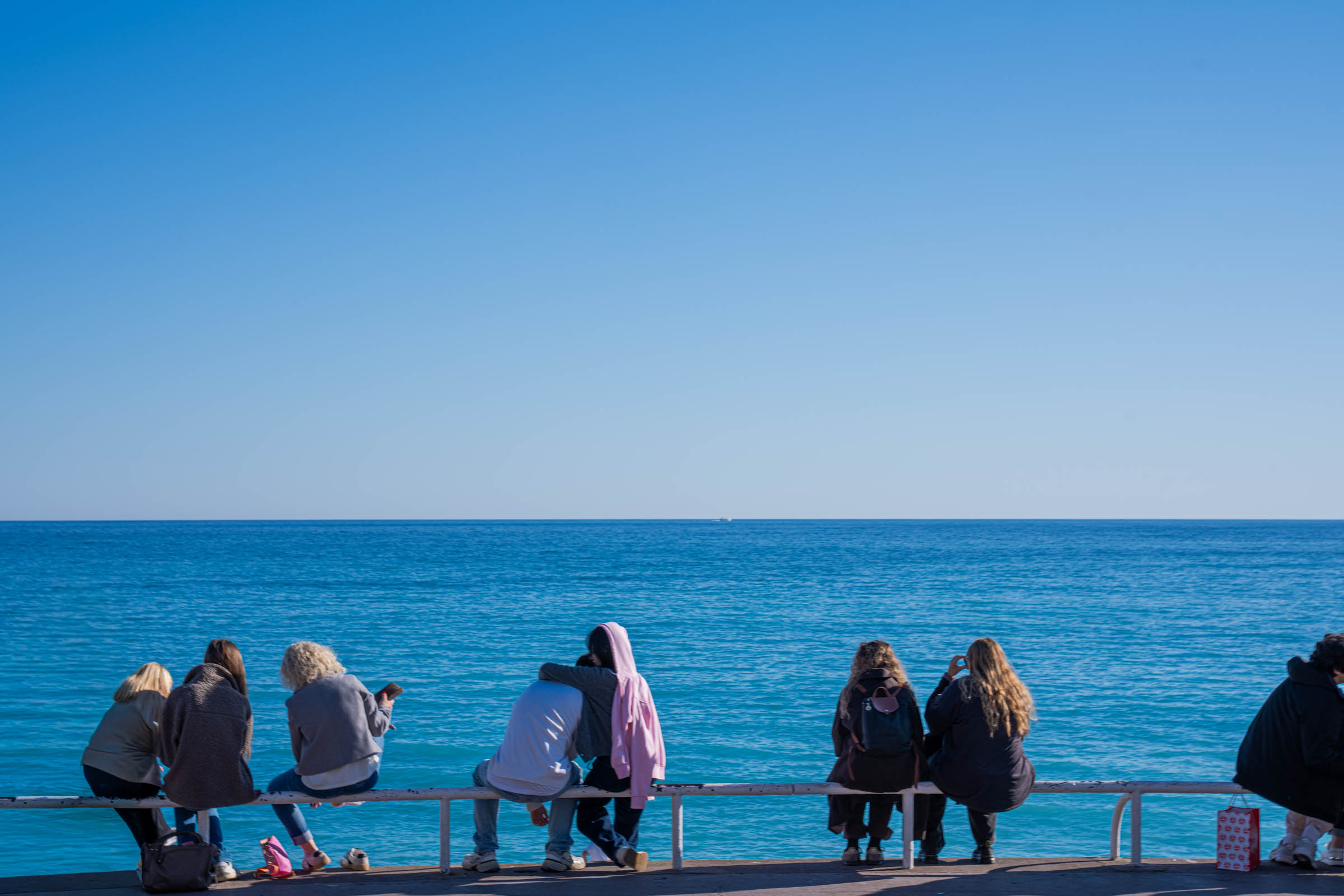
I was especially delighted by the sight of people on the white fence. Locals and tourists sit facing the open sea and are simply silent. At that moment, I realized the real charm of this city. The promenade is also a favorite spot for photos. The large inscription “#ILoveNICE” shines in the colors of the French flag. Tourists like to take pictures here, with the sea and the beach in the background.
THE BAY OF ANGELS AND THE BEAUTIFUL BEACHES OF NICE
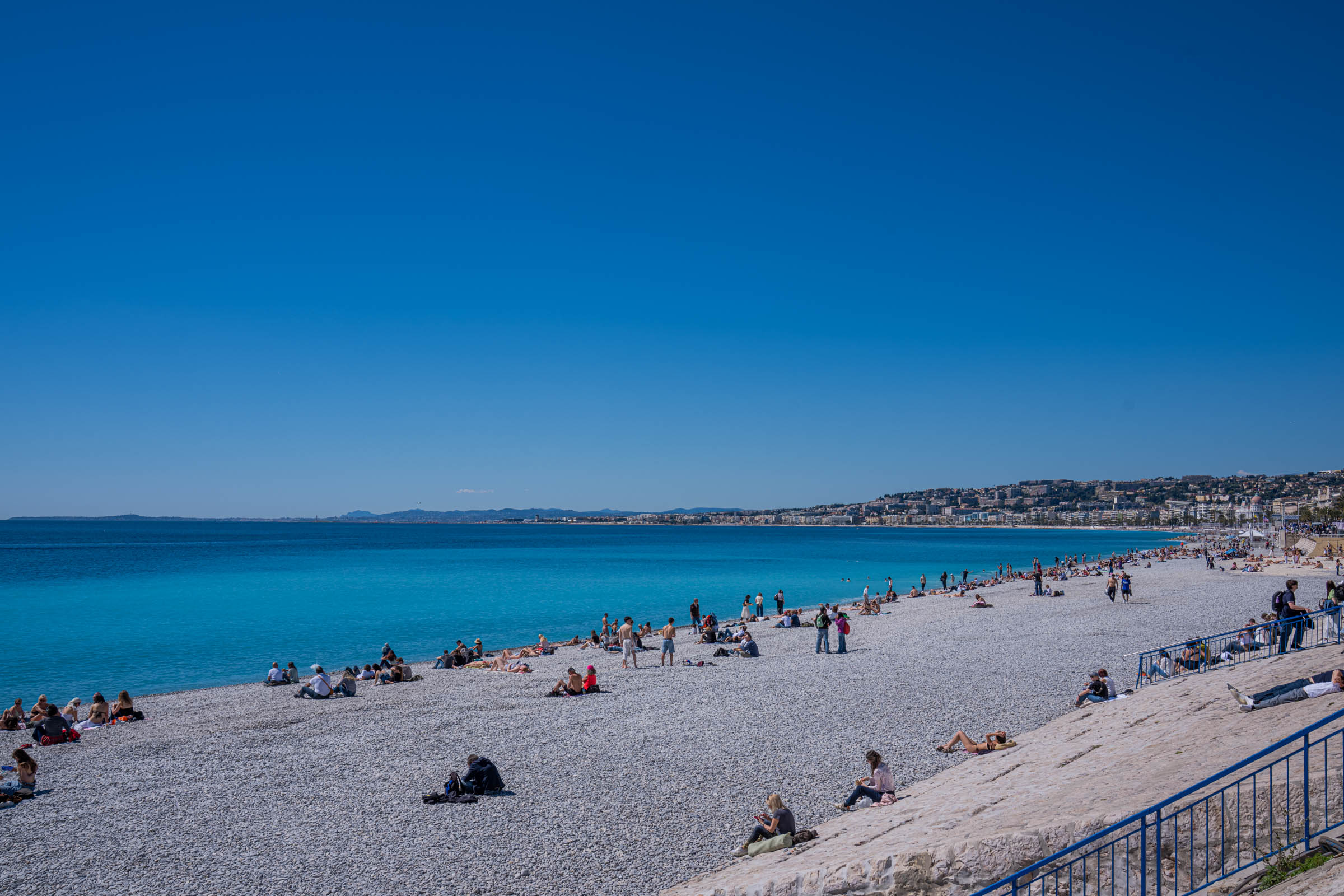
The sea in Nice has a poetic name. The Bay of Angels, or Baie des Anges, stretches out in a perfect arc in front of the city. The water in it changes color from light turquoise to deep cobalt.
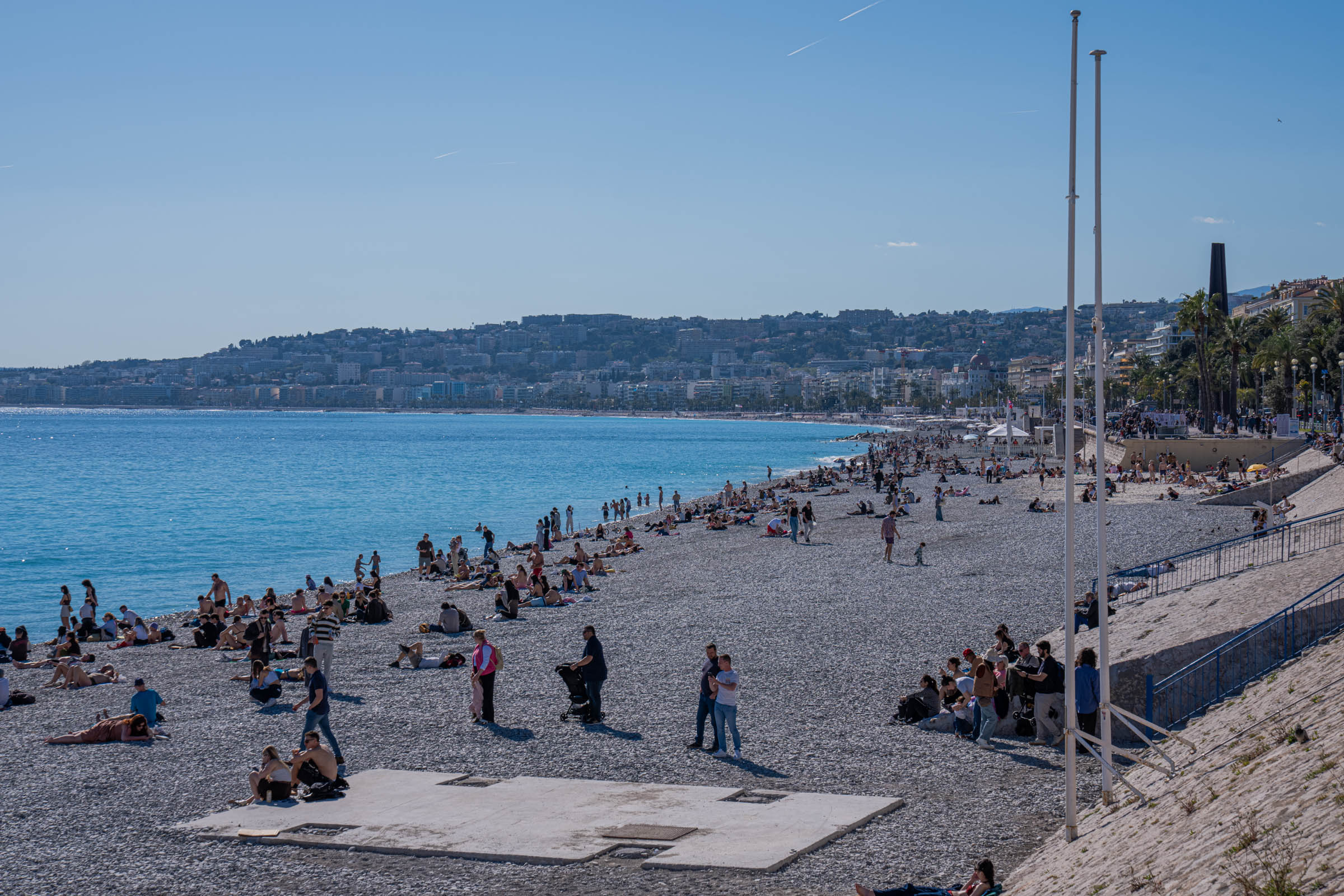
The beaches along the bay have one peculiarity. Namely, you will not find fine sand here, but small white pebbles. The pebbles may not be the most comfortable to lie on, but that’s why the water remains incredibly clear. Part of the beach is public and completely free. The other part belongs to hotels and clubs, which offer sunbeds and umbrellas for a fee. Everyone can find a place to their liking.
During warm days, the beach comes alive. People sunbathe, swim and play volleyball. The promenade above them, on the other hand, never stops pulsating. I visited the beach in the spring, off-peak season. The atmosphere then is completely different and much calmer. A few brave swimmers enjoyed the fresh sea, while the rest just soaked up the sun.
The beach offers a special view of the city. The hills in the background and ocher colored buildings create an unforgettable backdrop. This is why this sea is, without exaggeration, one of the most beautiful in the Mediterranean.
PLACE MASSÉNA: THE BEATING HEART OF NICE
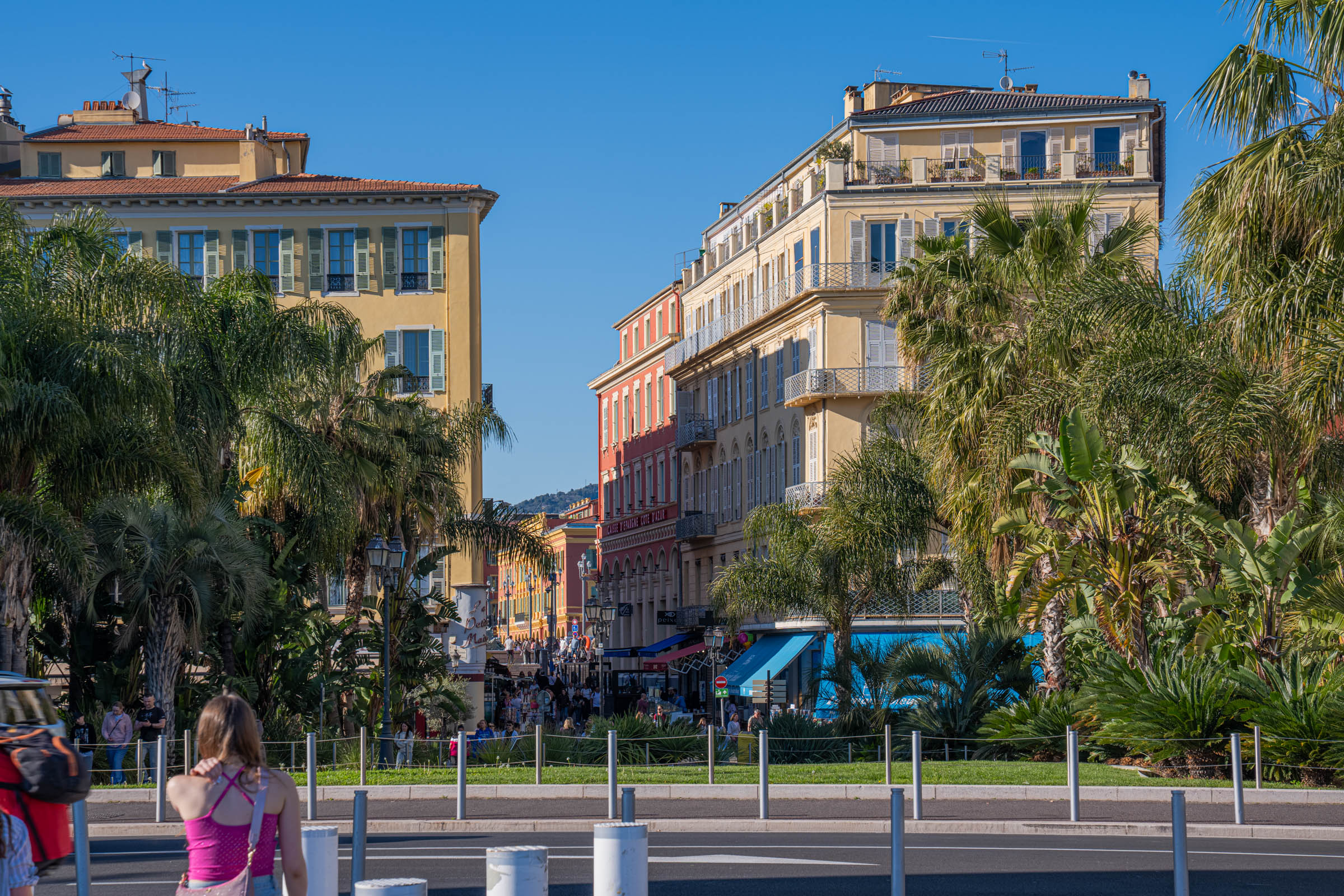
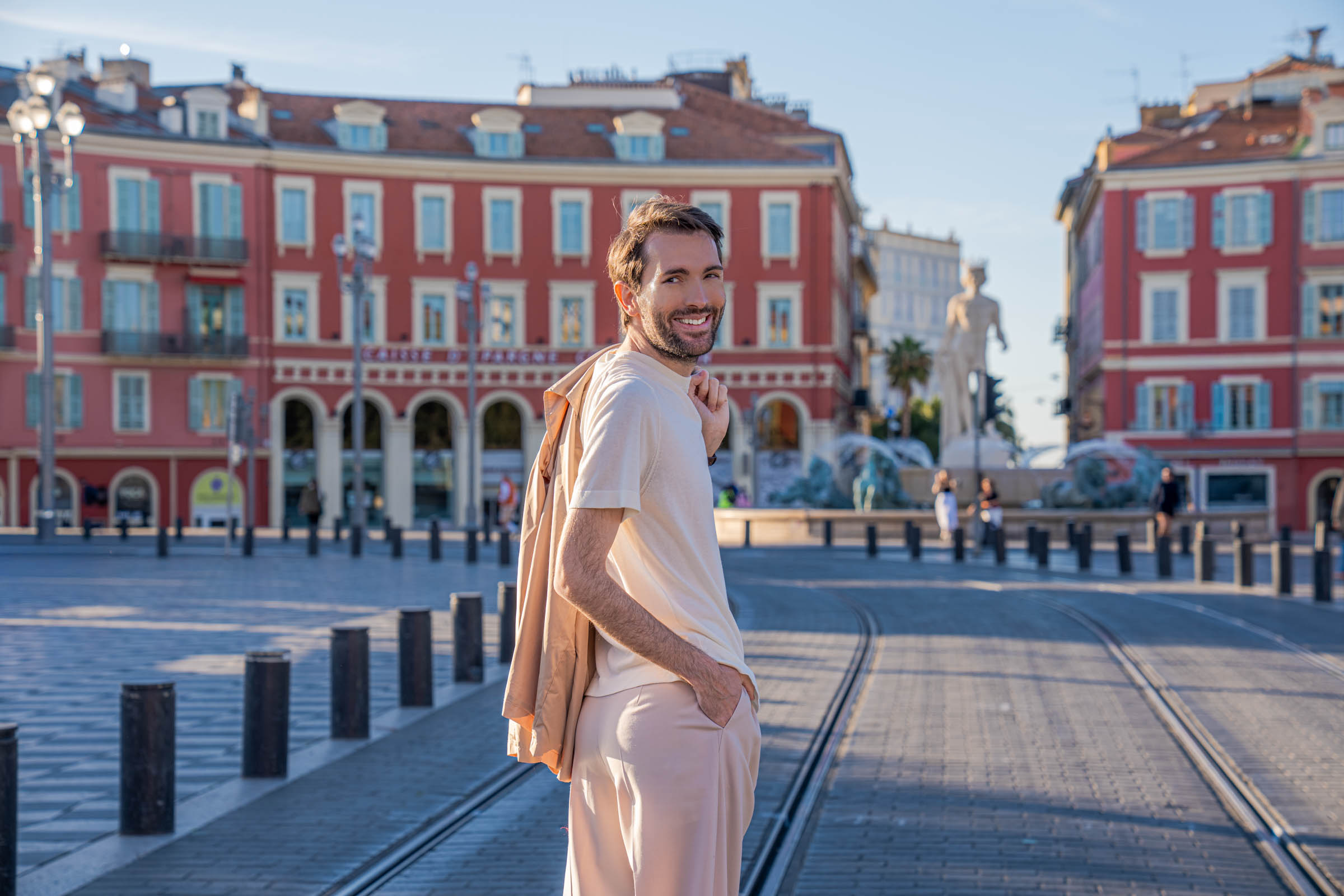
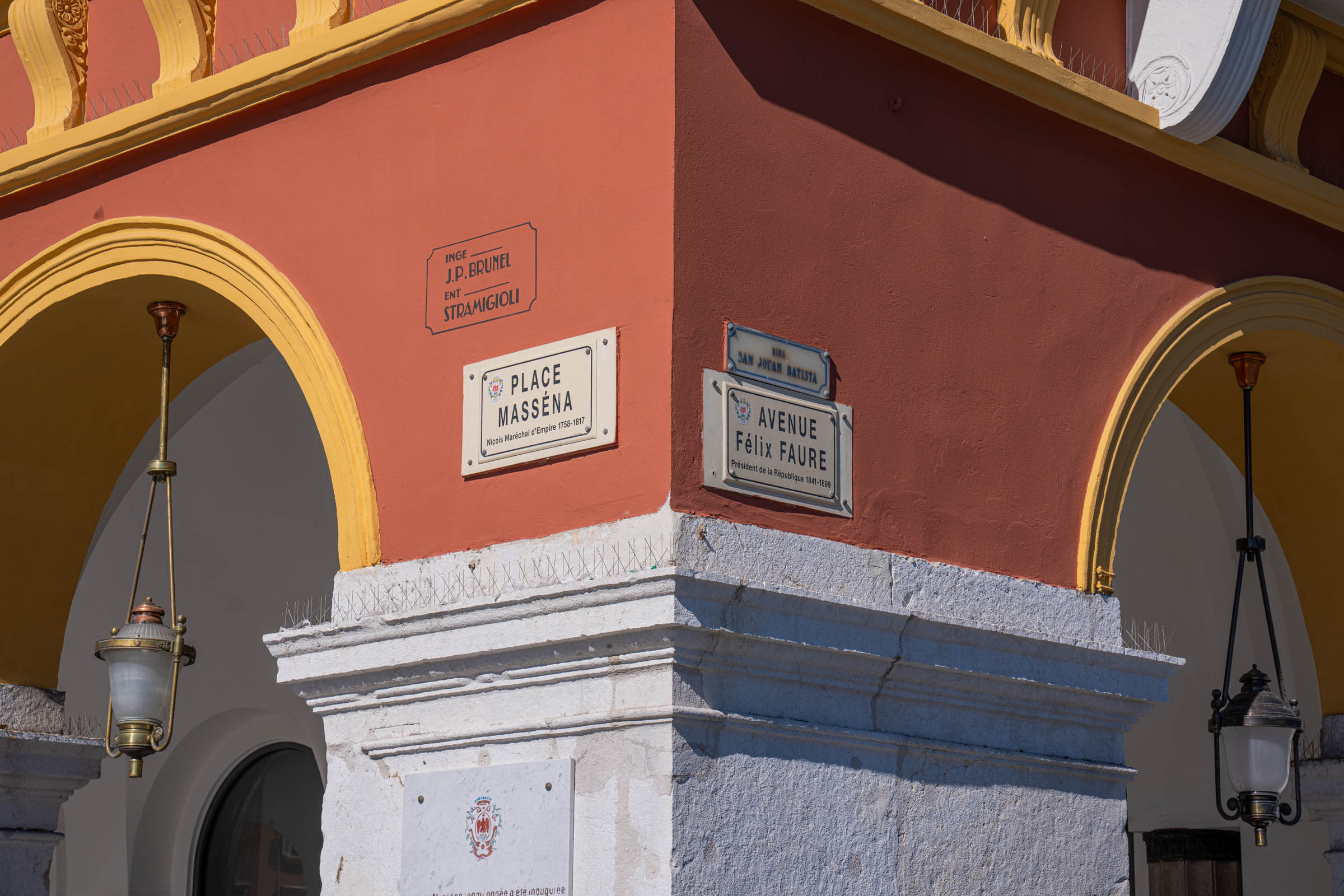
Every walk in Nice sooner or later leads to Massena Square. This spacious square is the most important gathering place in the city. It combines the Old Town, the promenade and modern shopping streets.
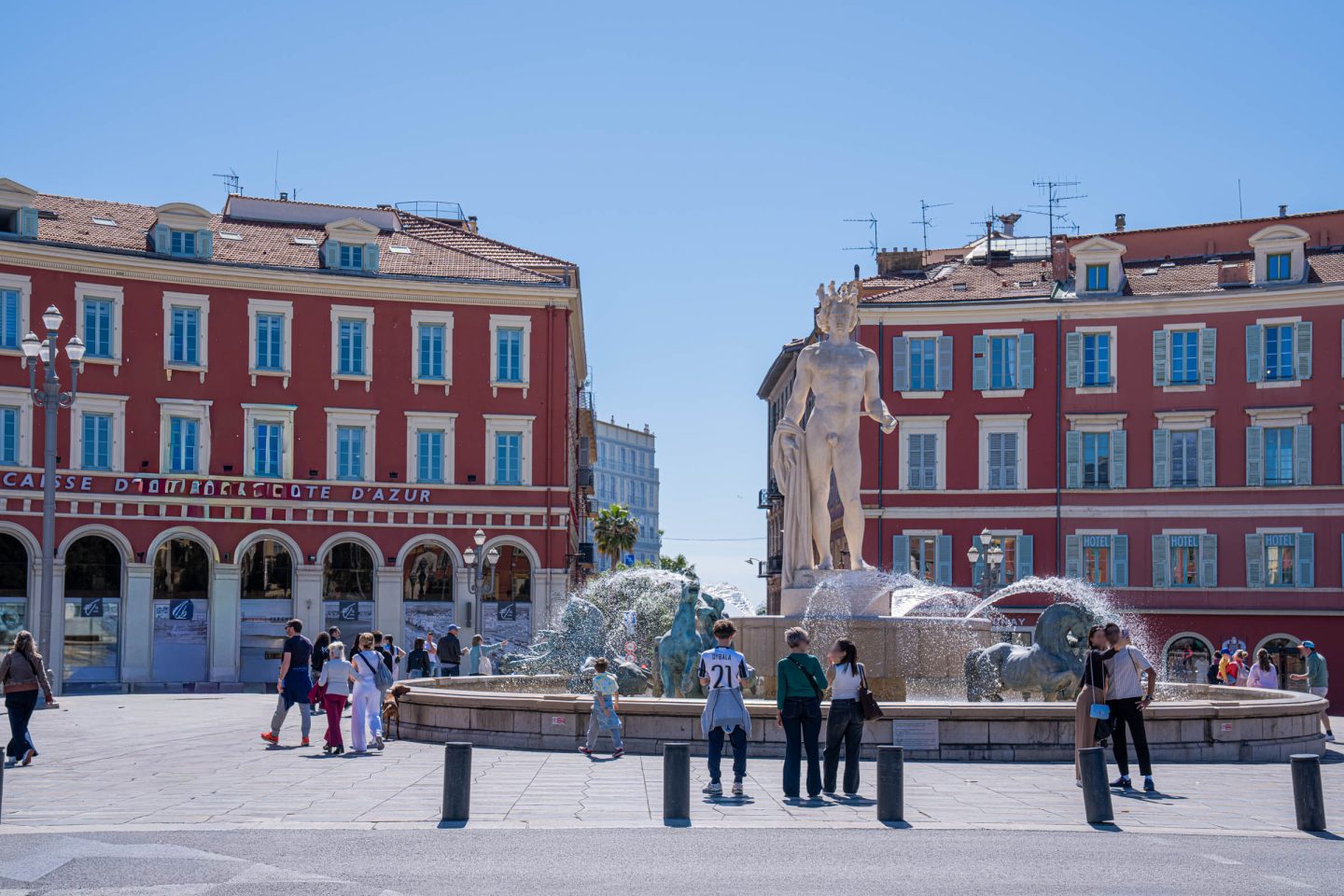
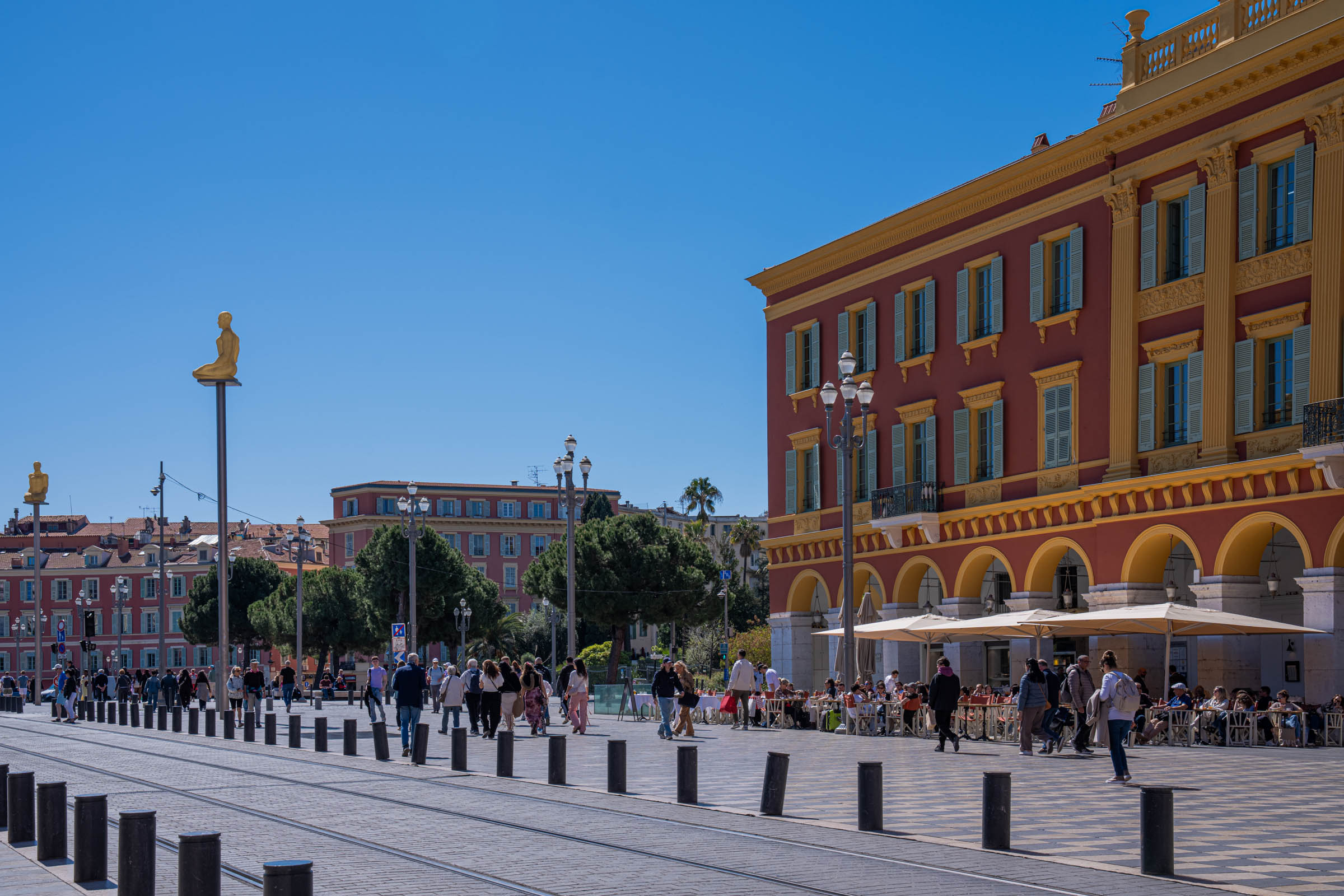
The square is named after the famous marshal Andre Massena. We are talking about a military leader born in Nice, who served under Napoleon. Today, the most beautiful city plateau proudly bears his name. You are first struck by the color of the buildings. Facades in shades of red ocher are reminiscent of Italian palaces. Many call this warm tone “Pompeian red”. Arcades, shops and the famous Galeries Lafayette are hidden under it.
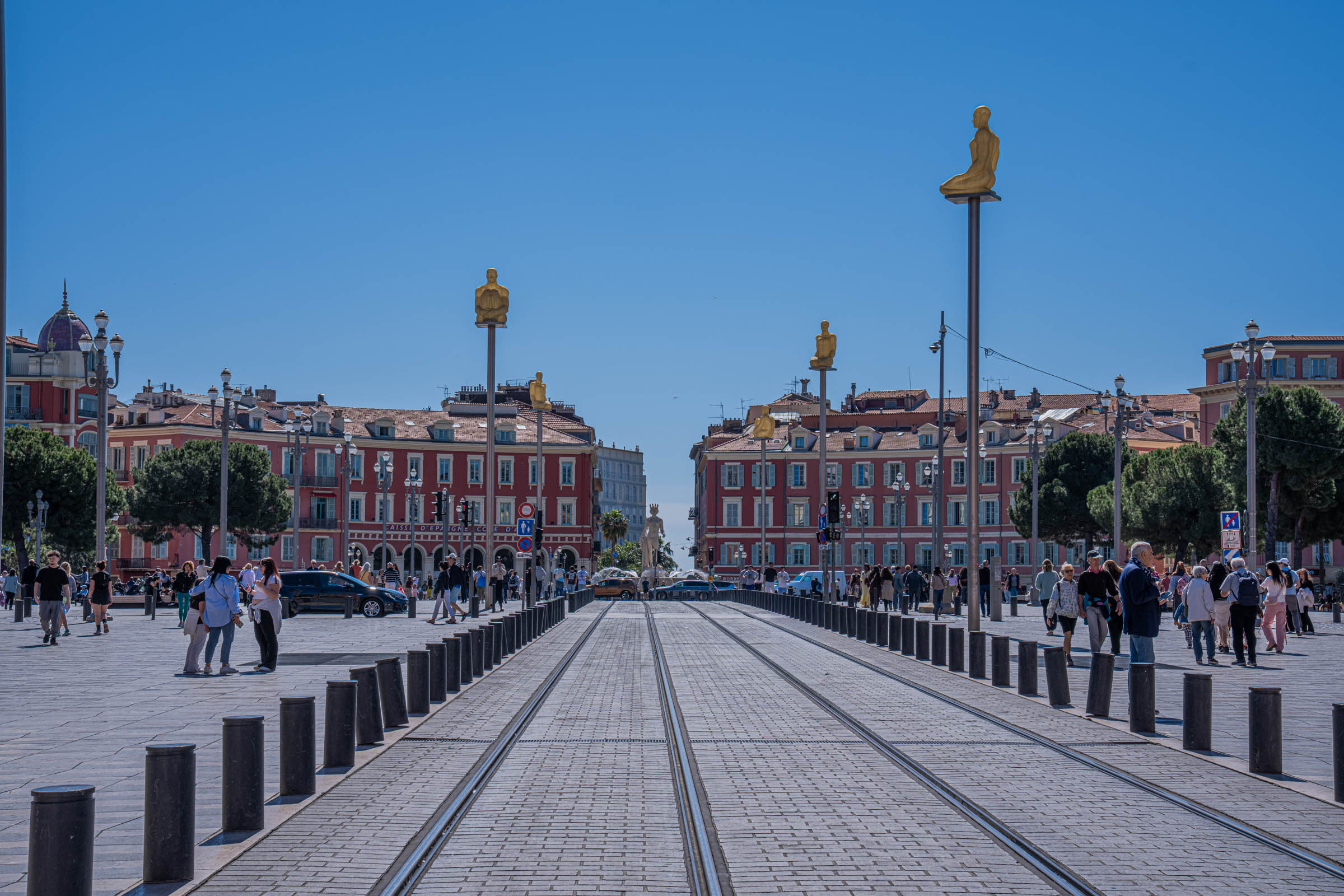
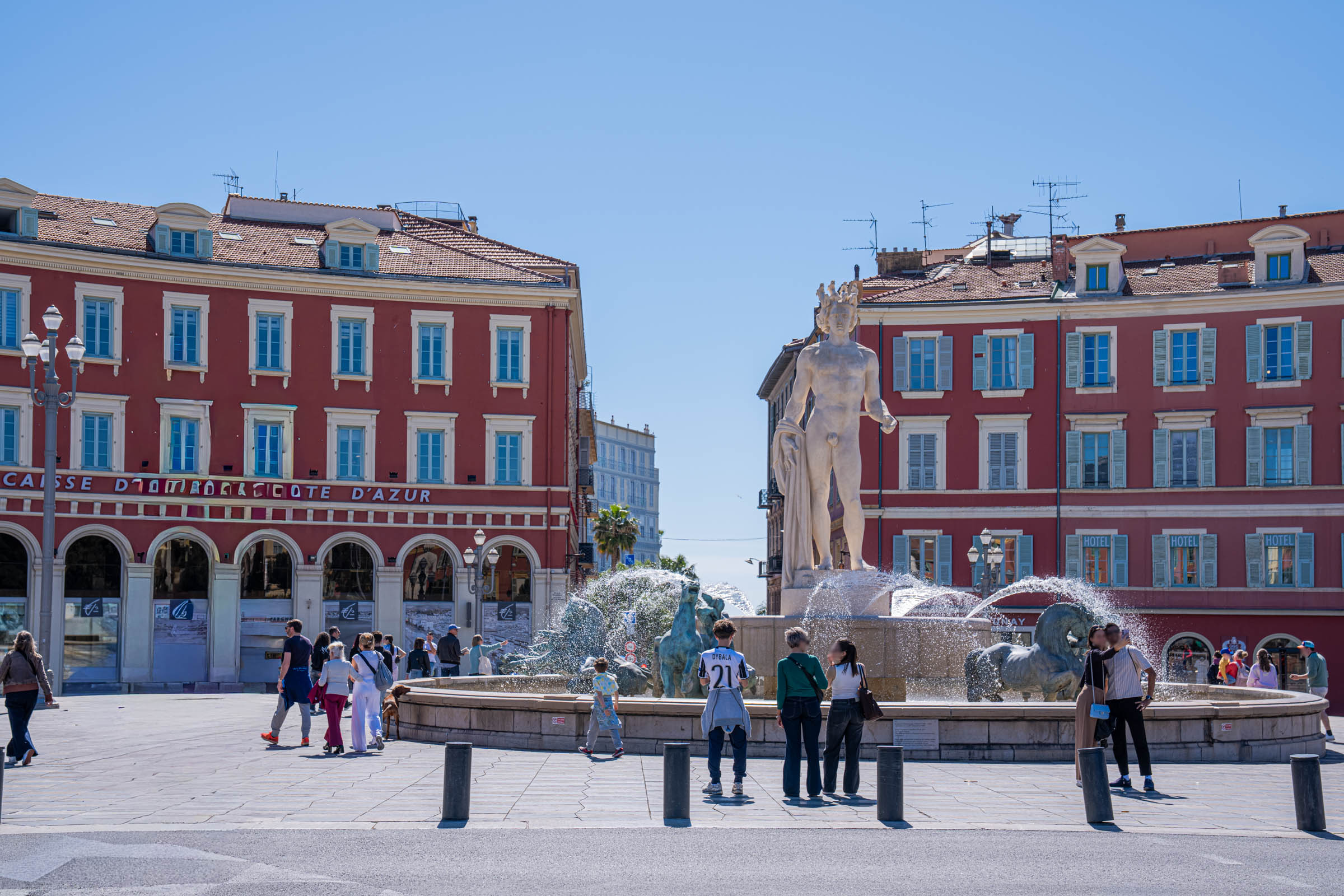
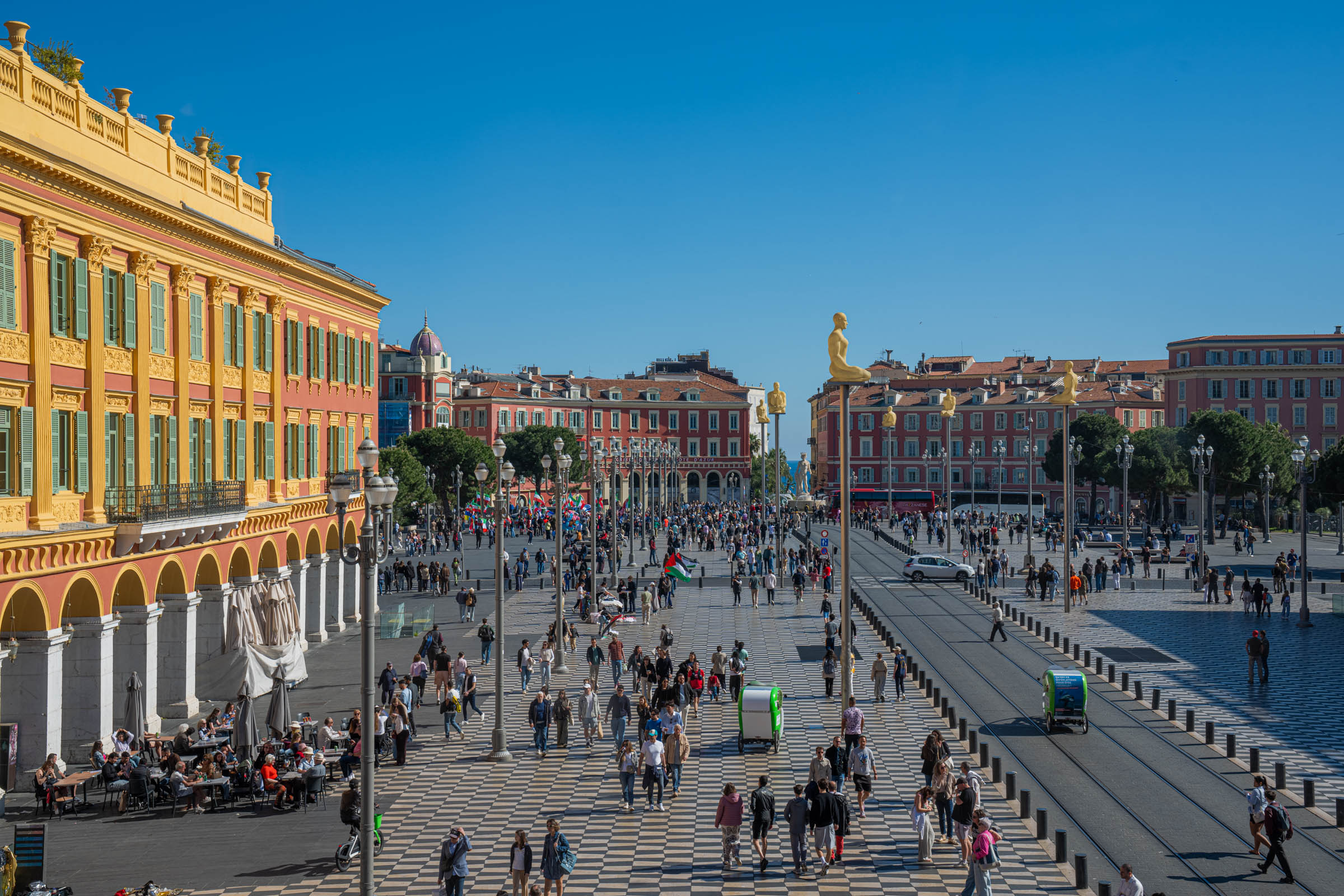
Under your feet is another symbol of the square. Namely, the entire surface is paved with black and white tiles in the shape of a chess board. This effective pattern has become a favorite motif of photographers. The Fountain of the Sun rises in the center of the square. On its top stands the bronze Apollo, about seven meters high. Figures representing the planets are arranged around him.
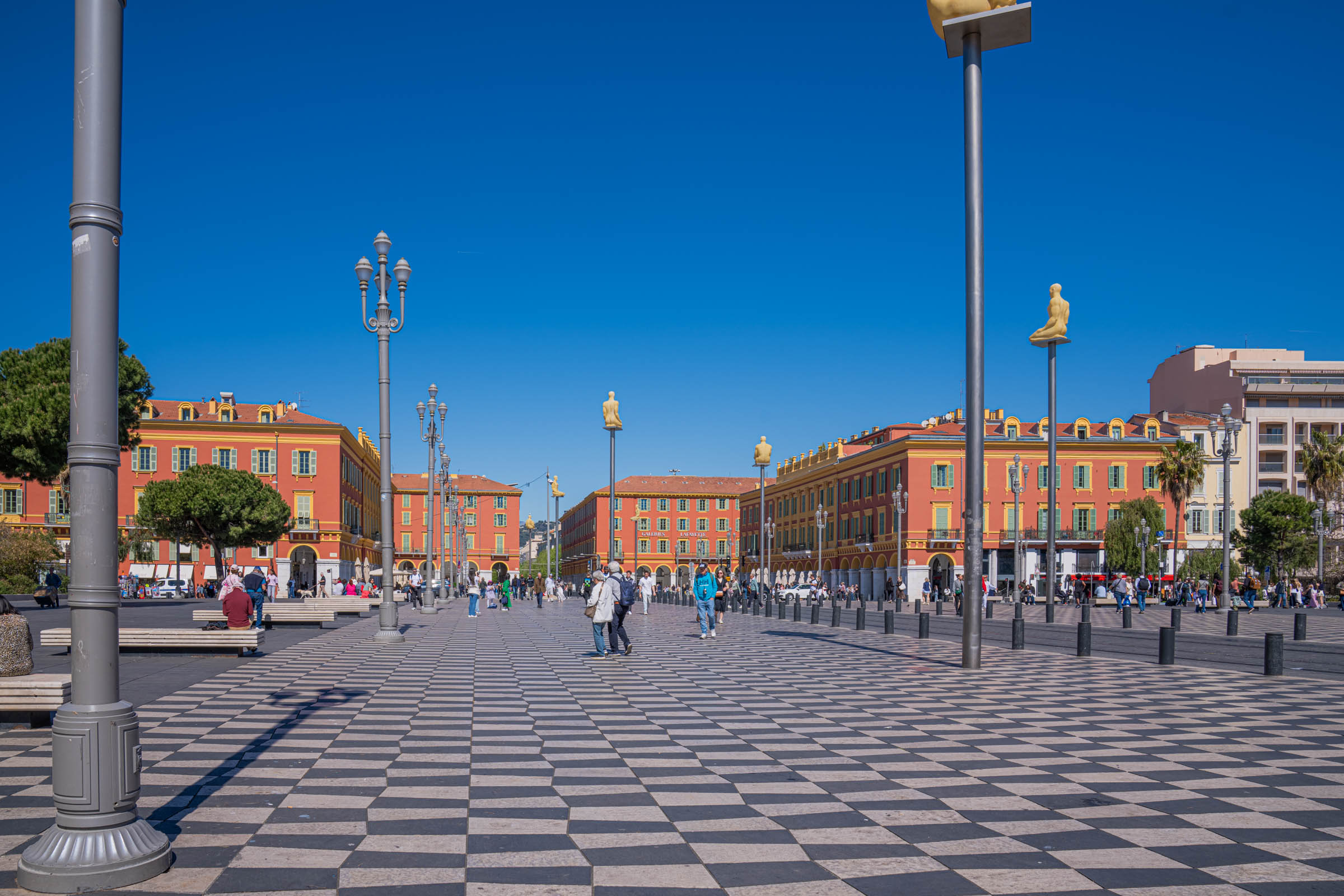
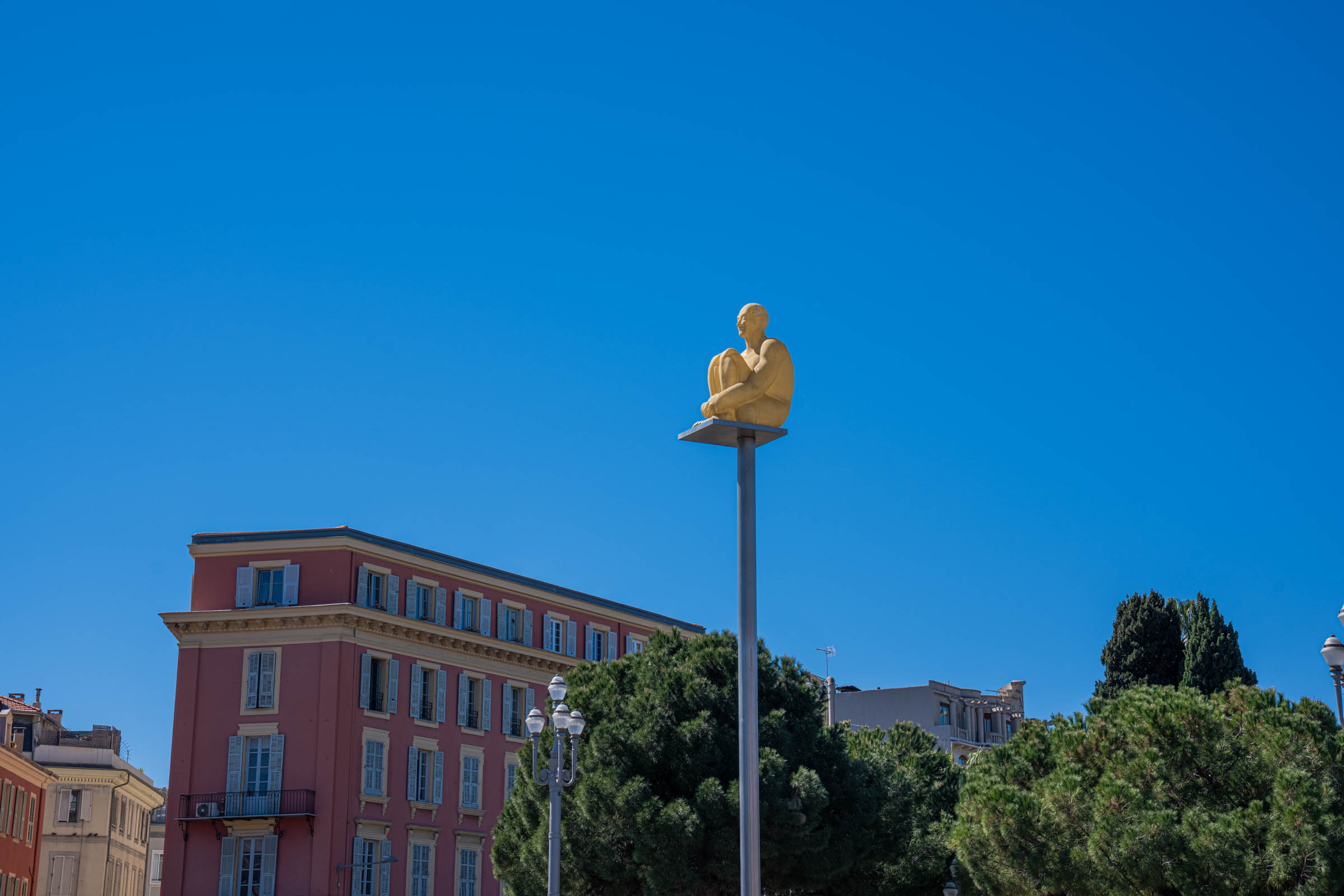
However, the statues on the tall pillars attract the most attention. The work of the Catalan artist Jaume Plense was installed in 2007. The seven illuminated figures represent the seven continents. At night, they change colors, so it looks like they are having a silent conversation. I visited the square during the day and in the evening. Believe me, every time it seemed completely different, but equally magical.
AVENUE JEAN MÉDECIN: NICE’S MAIN BOULEVARD AND THE BASILICA OF NOTRE-DAME
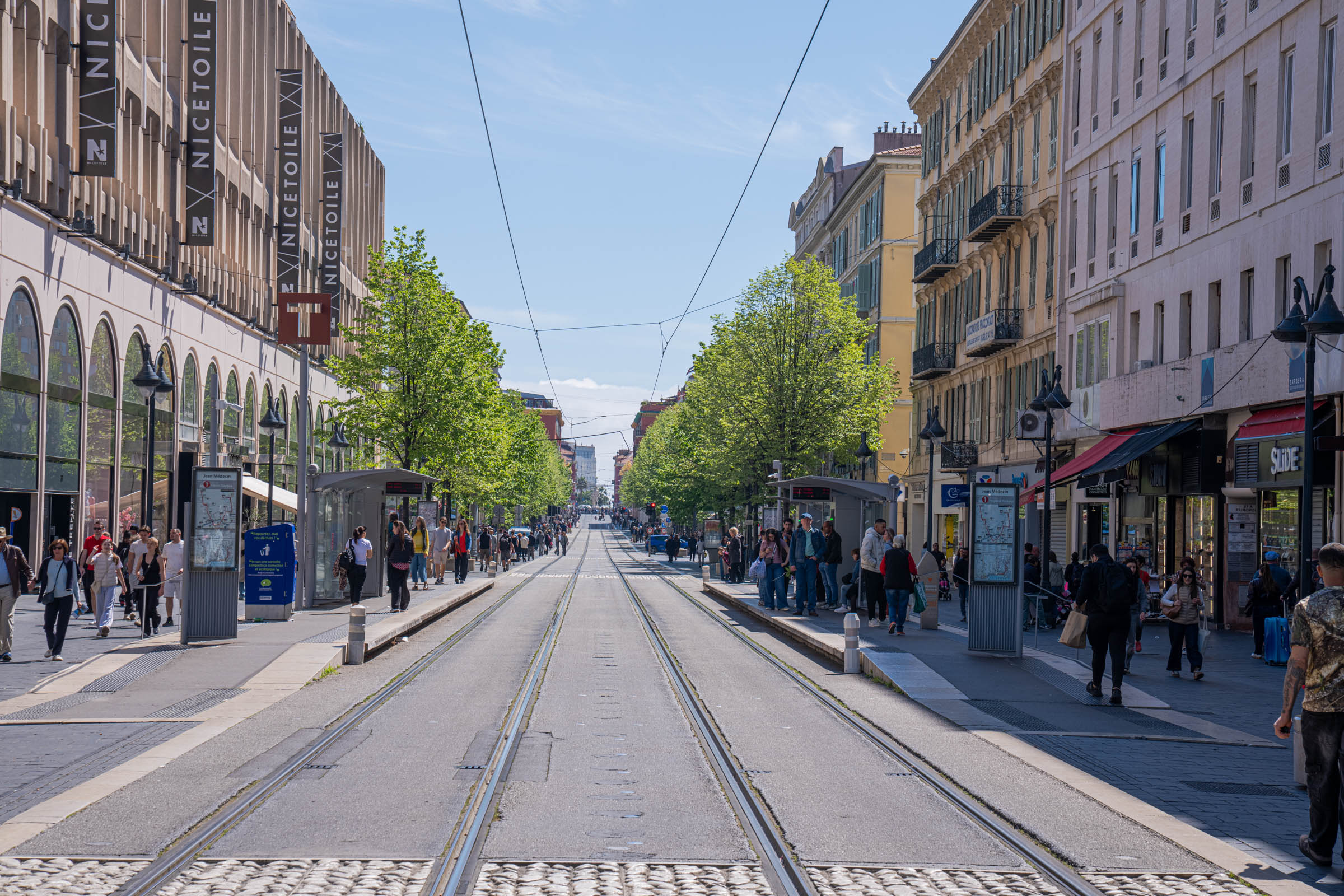
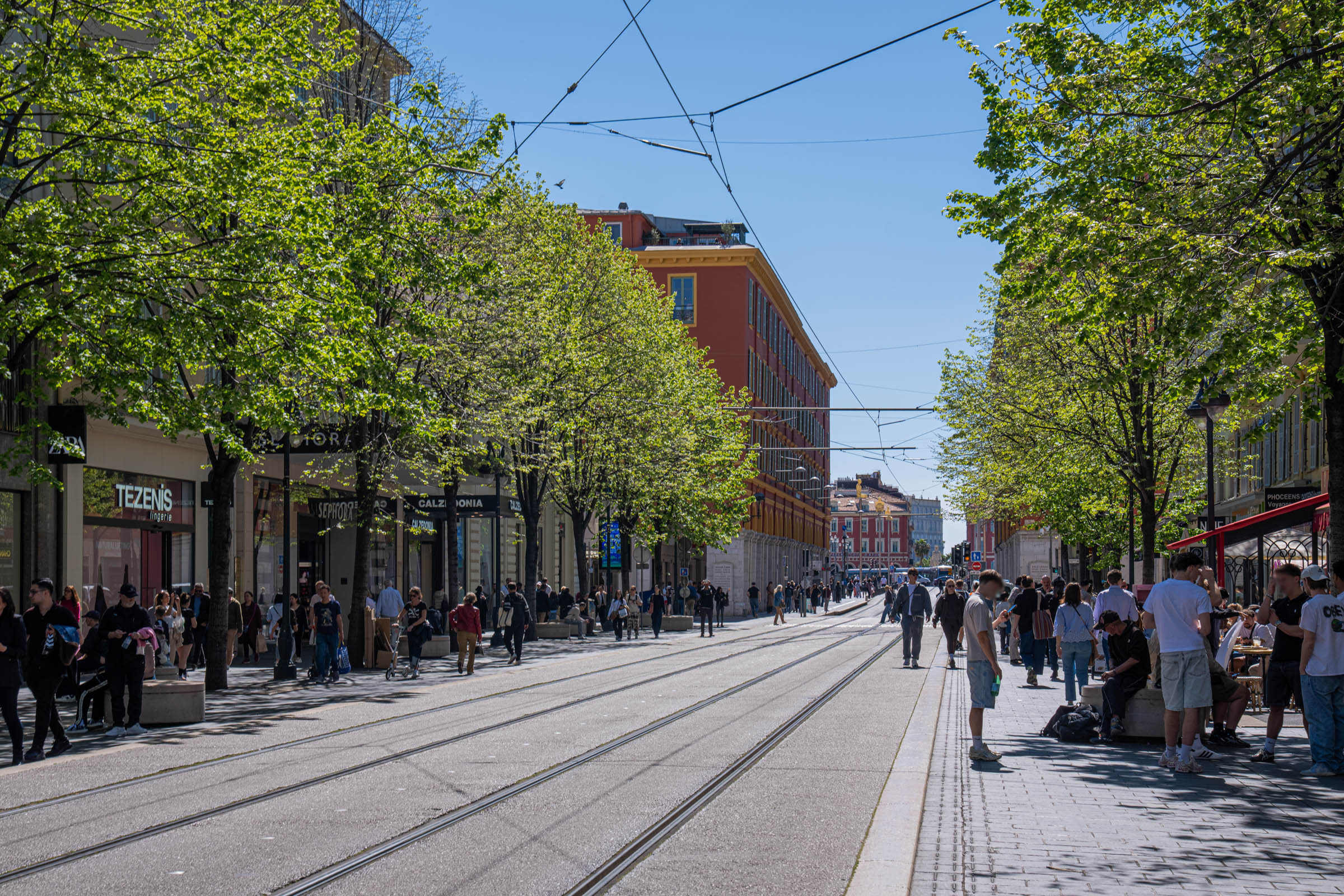
The main city artery starts from Massena Square. Avenue Jean Médecin is the most important shopping street in Nice. There are shopping malls, department stores and countless shops here. A modern tram glides down the middle of the avenue. Quiet and clean compositions connect the whole city, so driving is a real joy. Along the street, rows of trees and elegant buildings alternate.
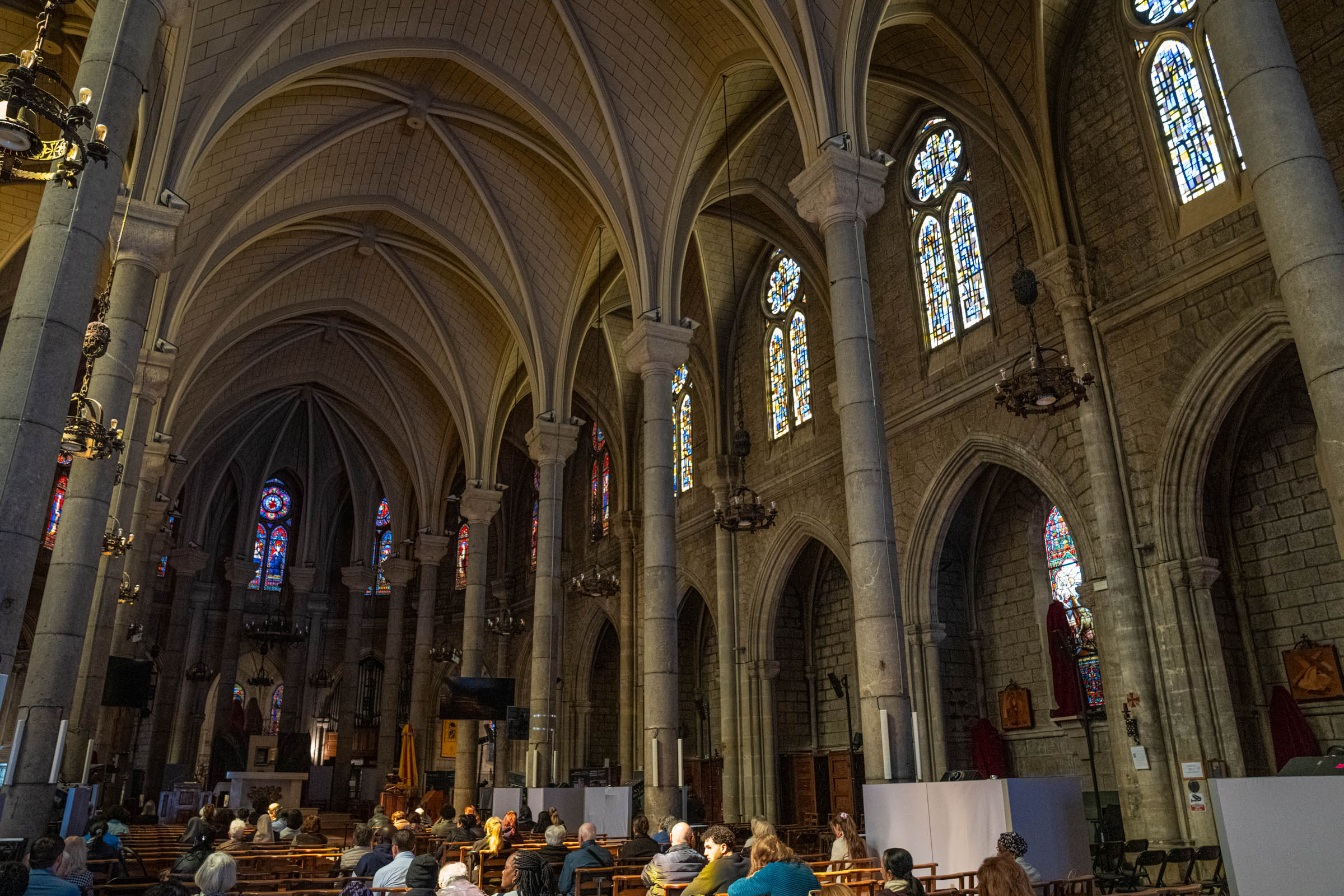
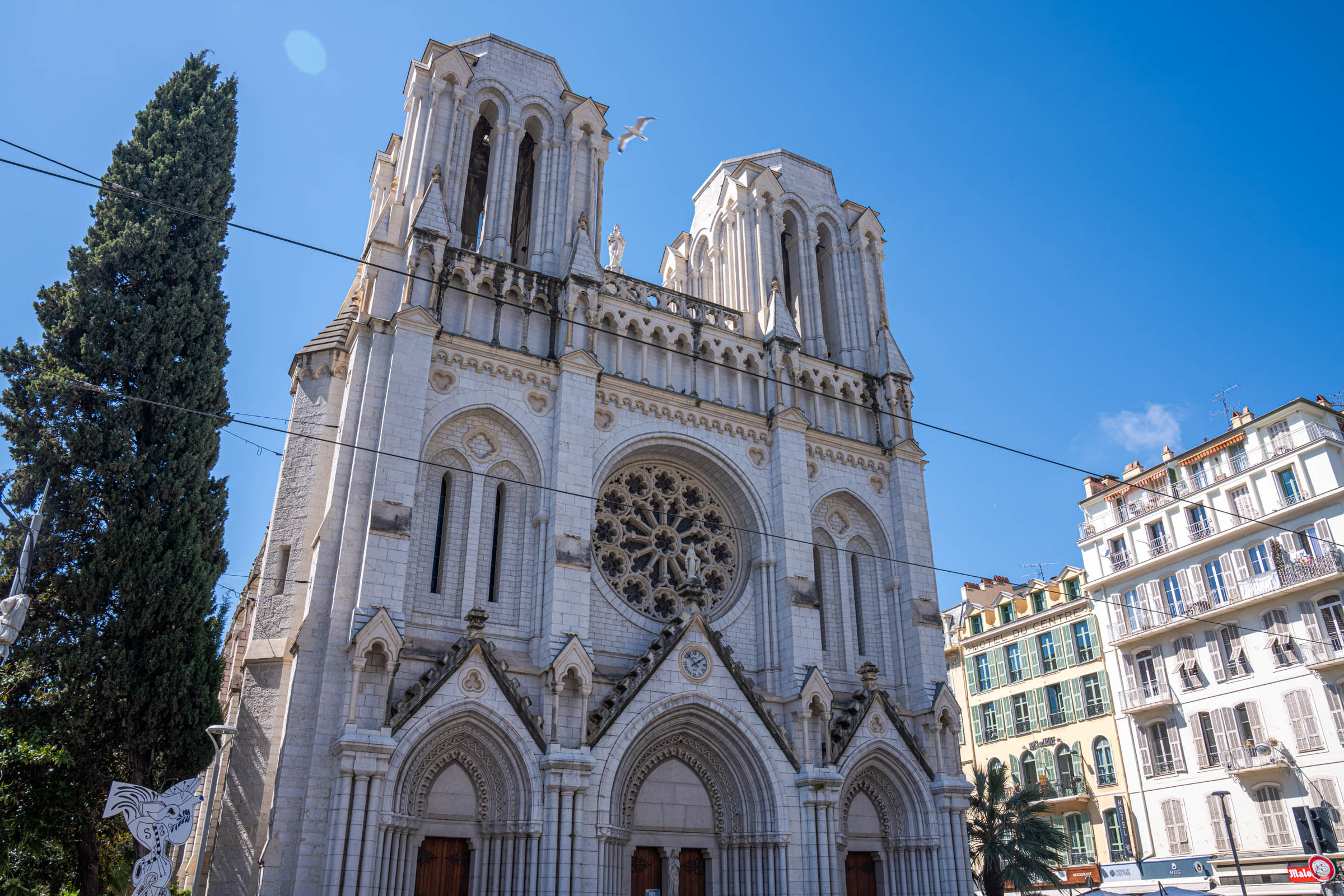
The greatest landmark of the avenue is the magnificent church. The Basilica of Notre-Dame is the largest place of worship in Nice. Although it resembles a cathedral, it is not formally so.
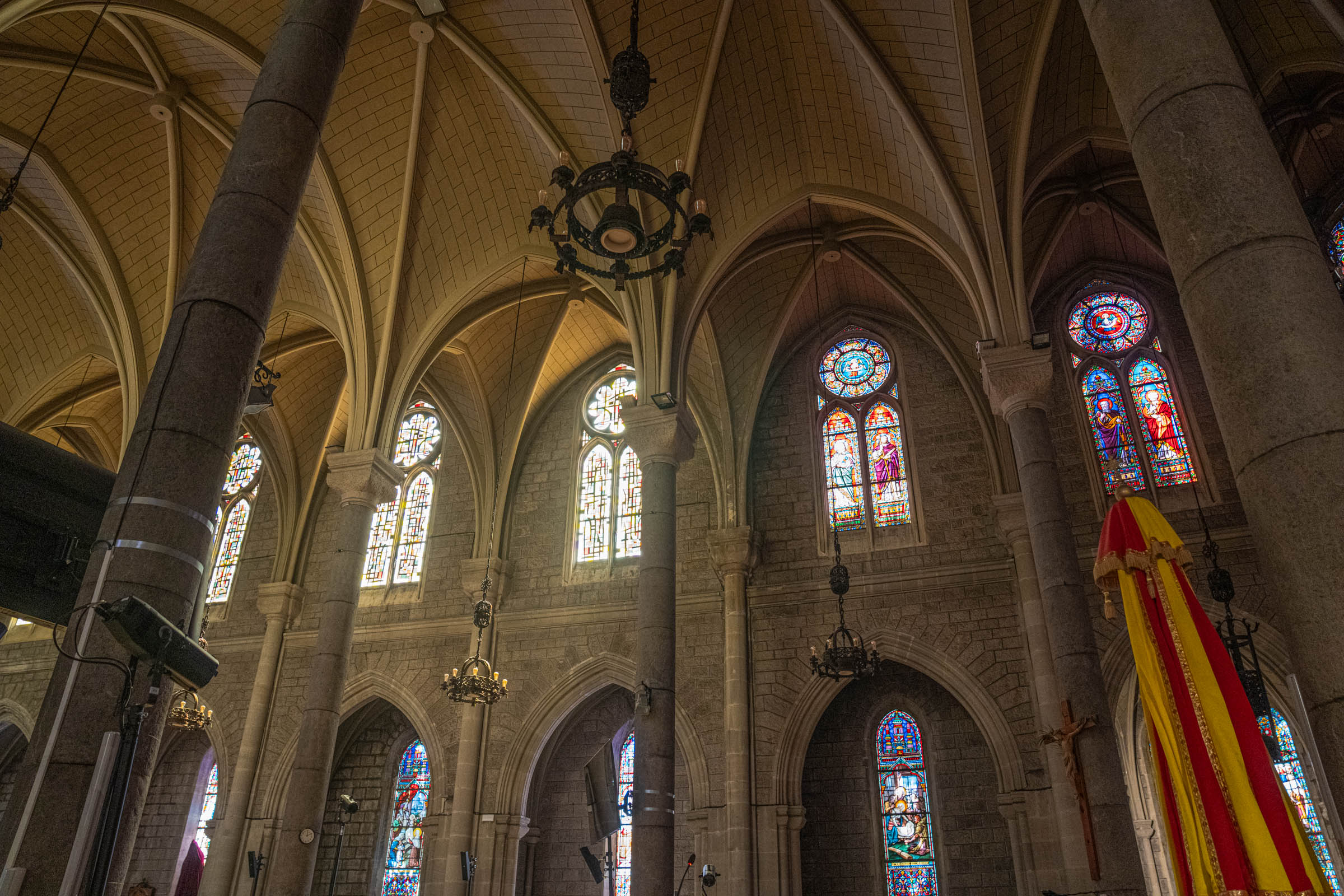
The church was built in the Neo-Gothic style between 1864 and 1868. The architect modeled himself on the famous cathedral in Angers and Notre Dame in Paris. Two slender towers reach a height of 31 meters. The reason for the construction was also symbolic. Namely, after joining France, the city wanted to emphasize its new identity. At that time, Gothic was considered a typically French style.
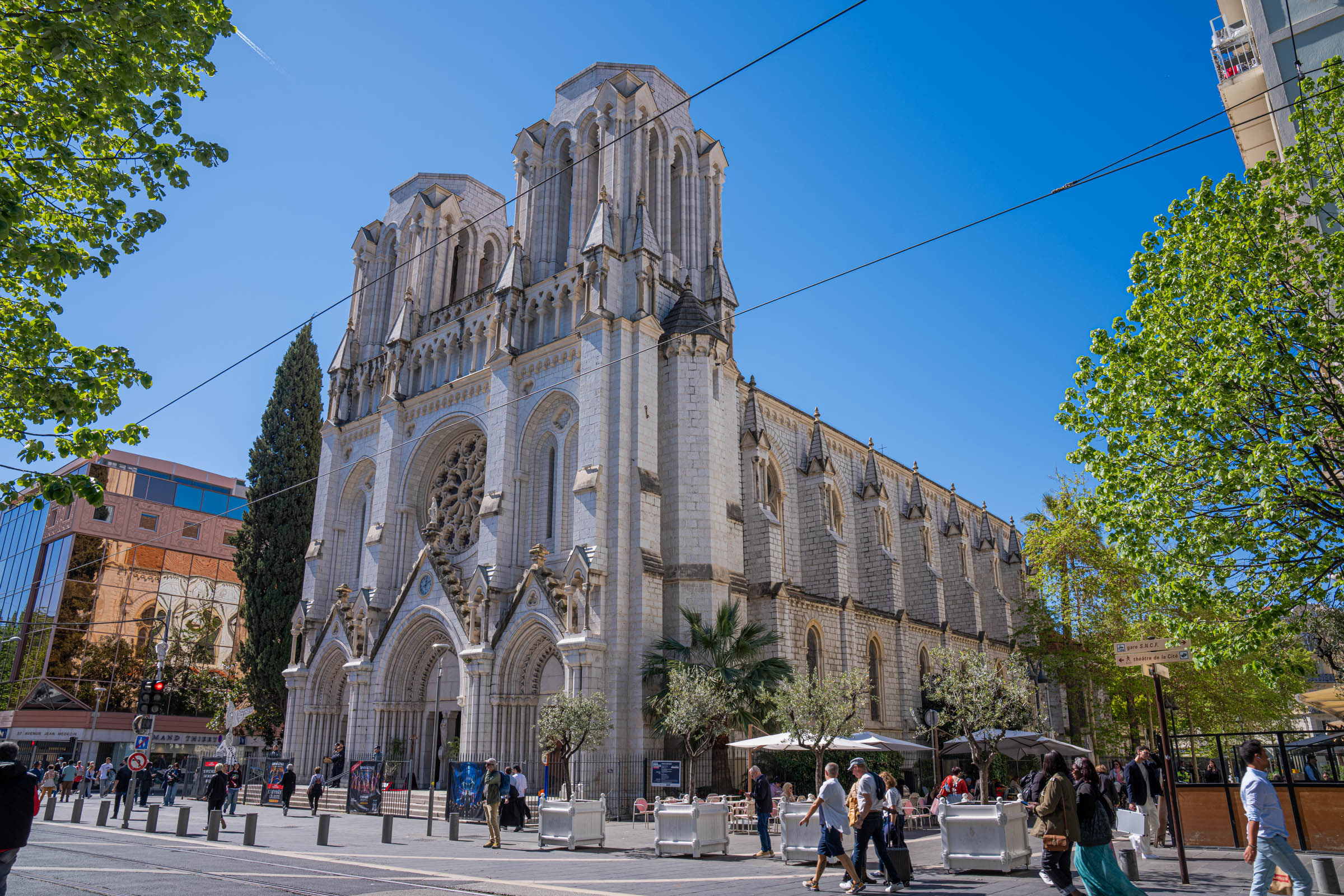
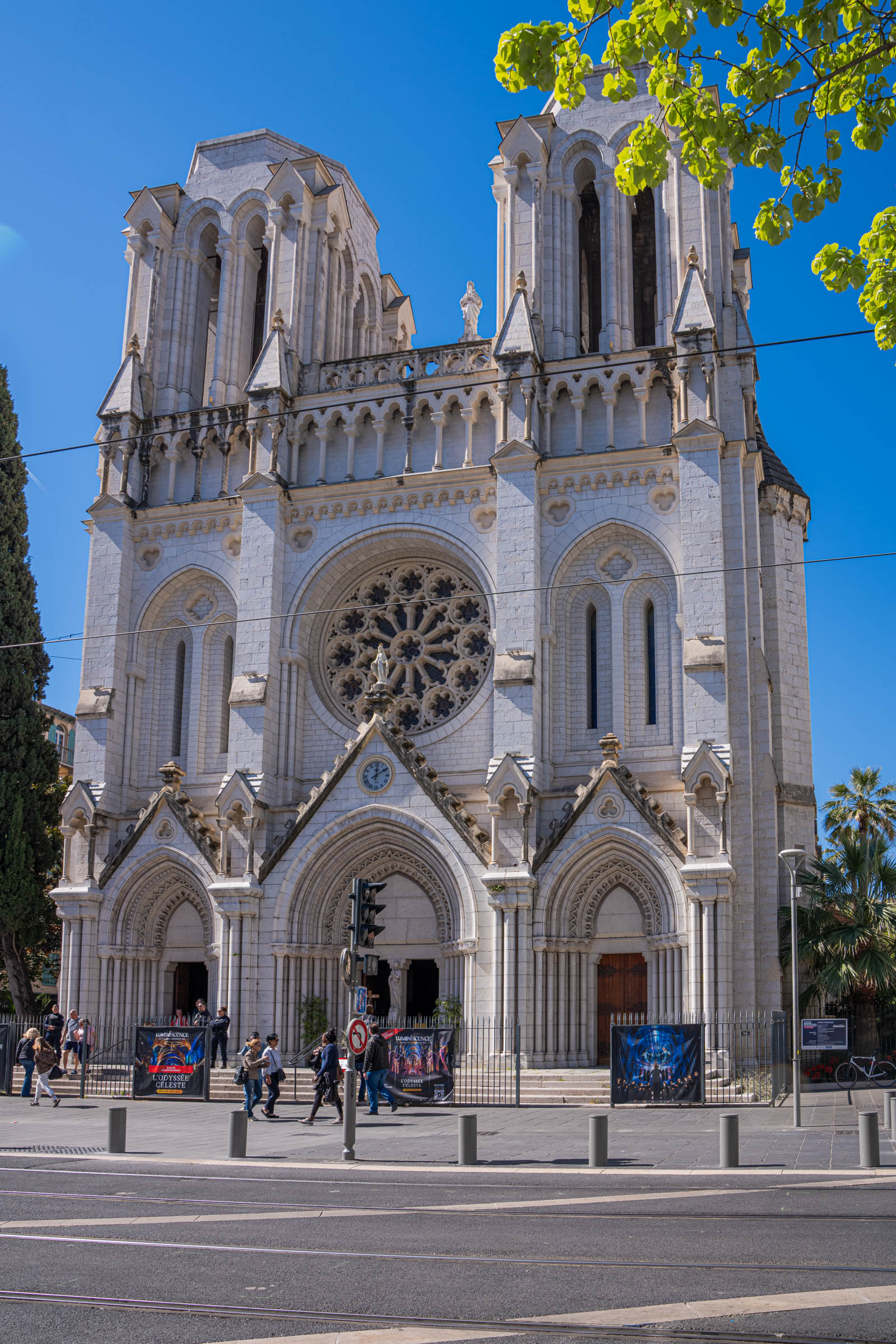
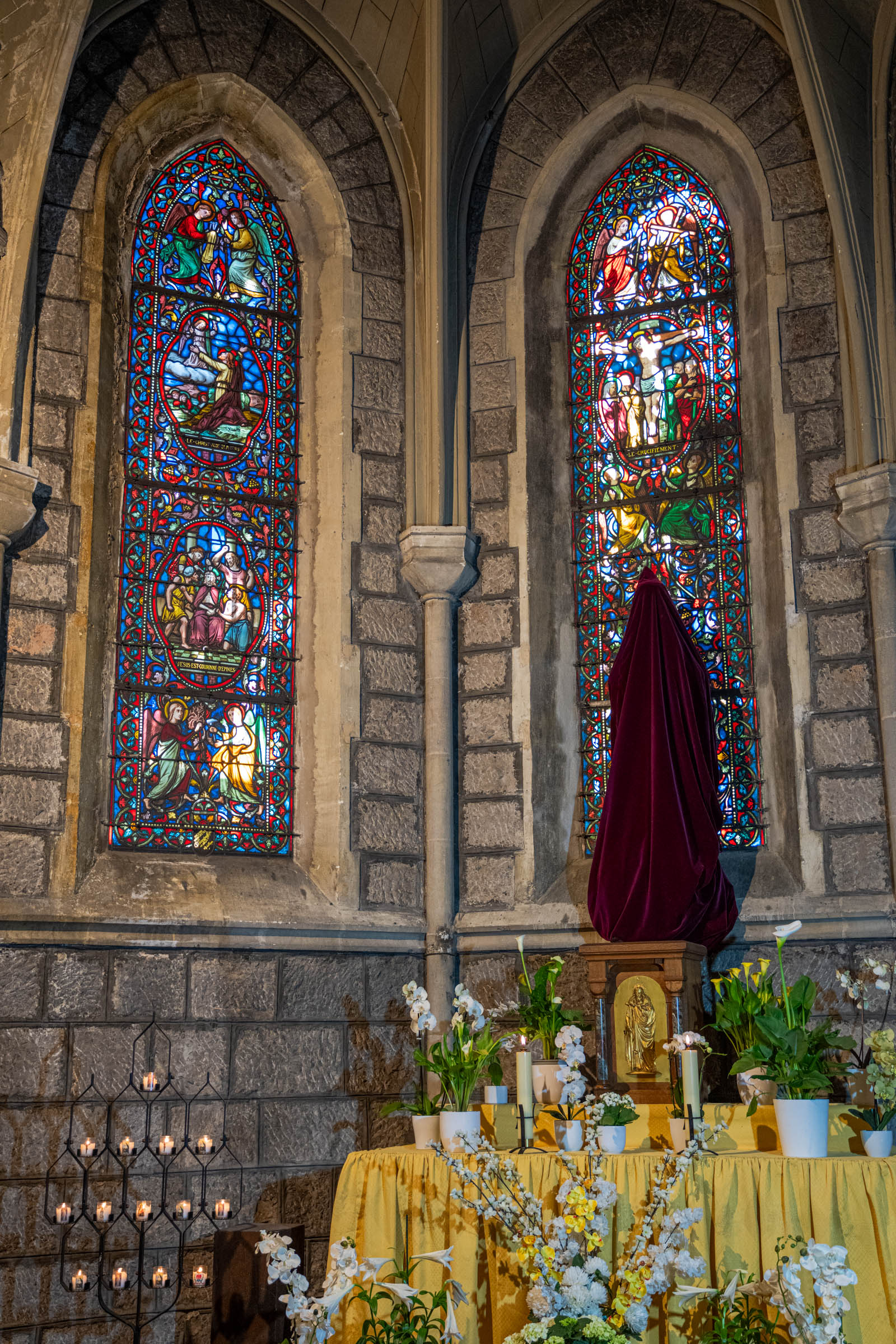
The facade is decorated with a huge rosette, a real lace in stone. The interior exudes peace and light that comes through the stained glass windows. I stopped for a moment to absorb the silence in the middle of the bustling city. In front of the basilica is a pleasant square with trees. From there, there is a beautiful view of the entire facade. This place is ideal for a short break during a walk.
OLD TOWN OF NICE: THE HISTORIC HEART OF THE CITY
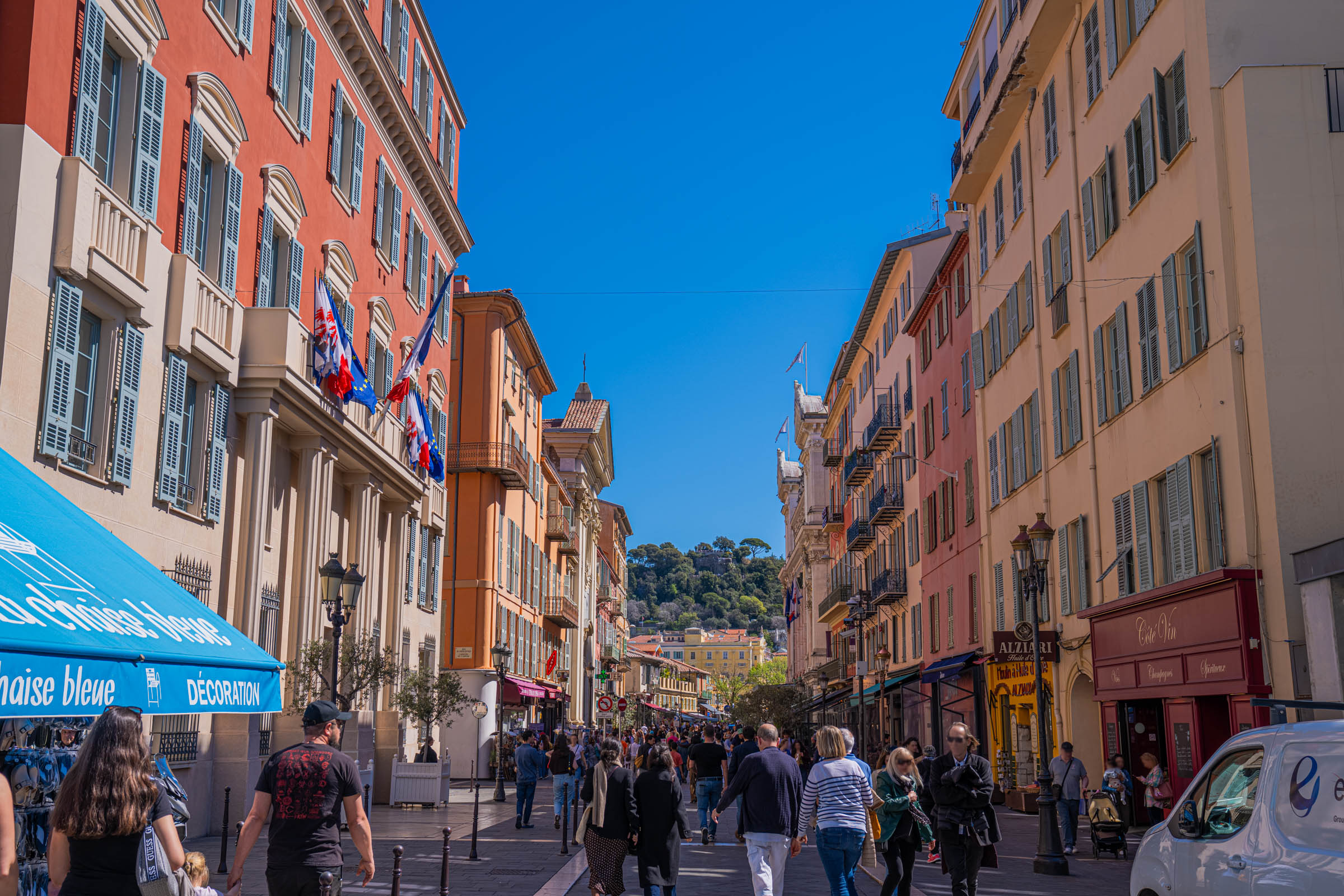
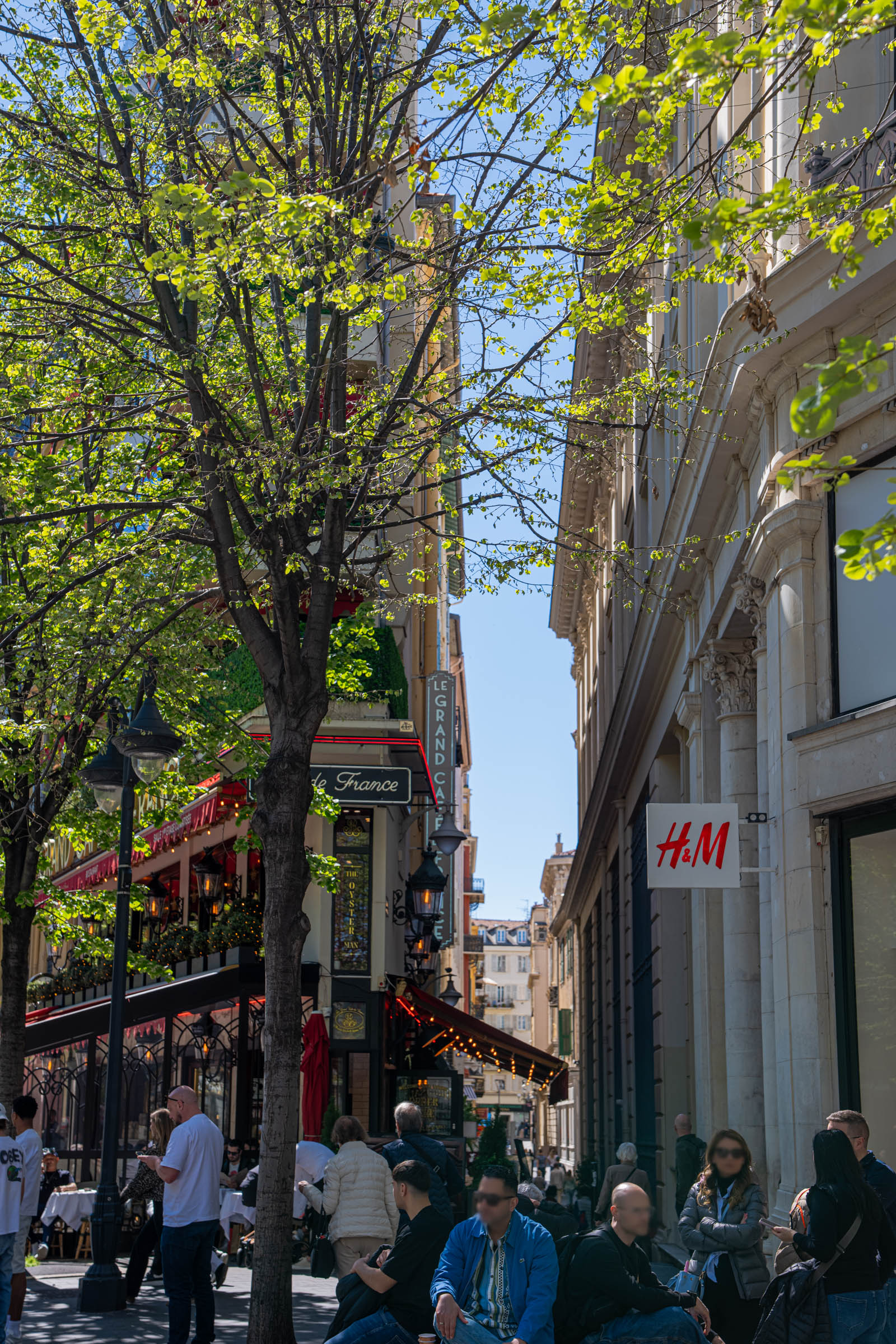
I found the real soul of Nice in its Old Town. Vieux Nice is a tangle of narrow and winding streets. Here, time seems to have stopped several centuries ago. The facades of the houses are painted in warm colors. Ocher, terracotta and red alternate at each step. Laundry is drying and flower pots are hanging from the window.
The streets are so narrow that the sun barely reaches the cobblestones. It is precisely in that shade that a pleasant freshness is hidden. A piece of blue sky occasionally appears above the heads.
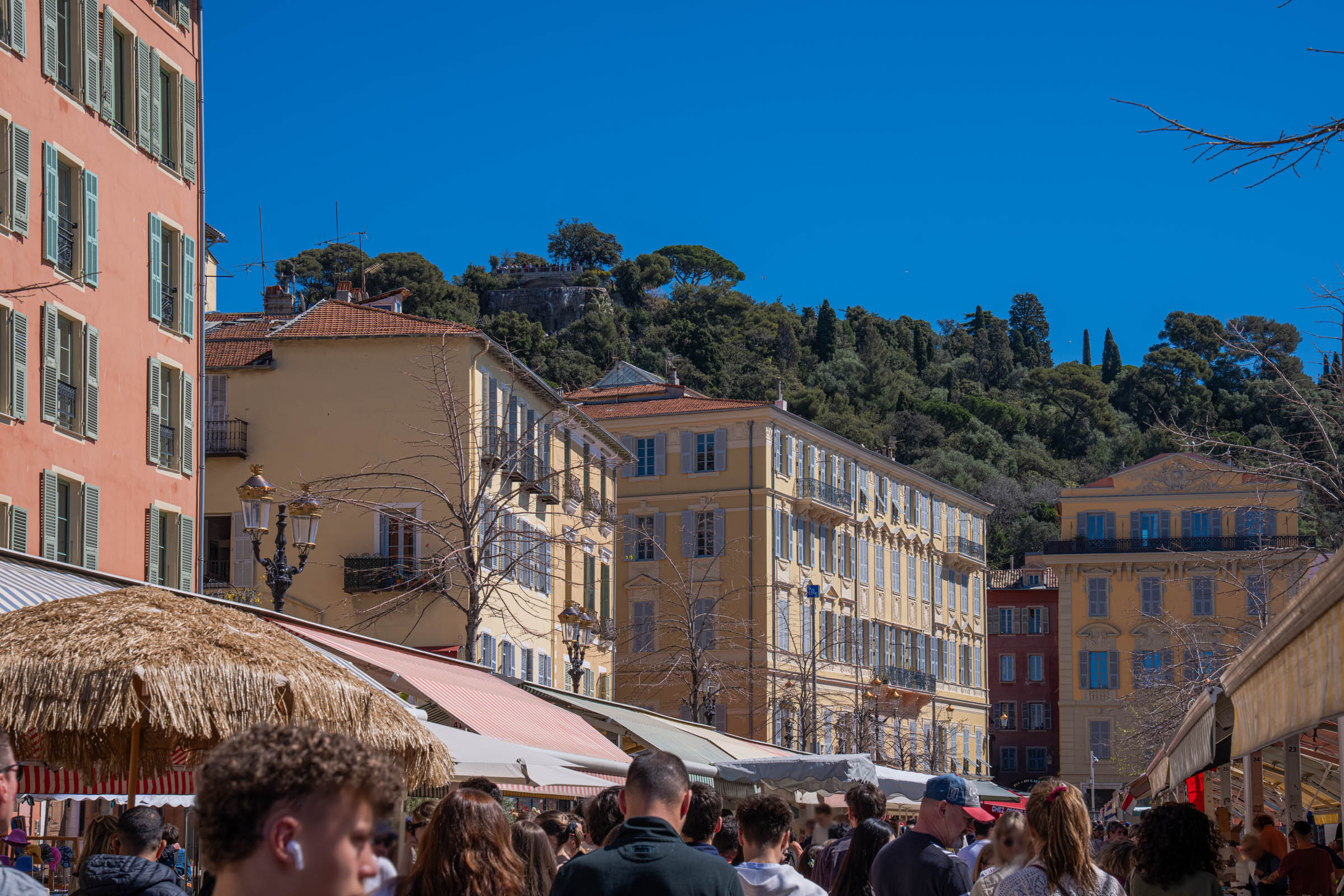
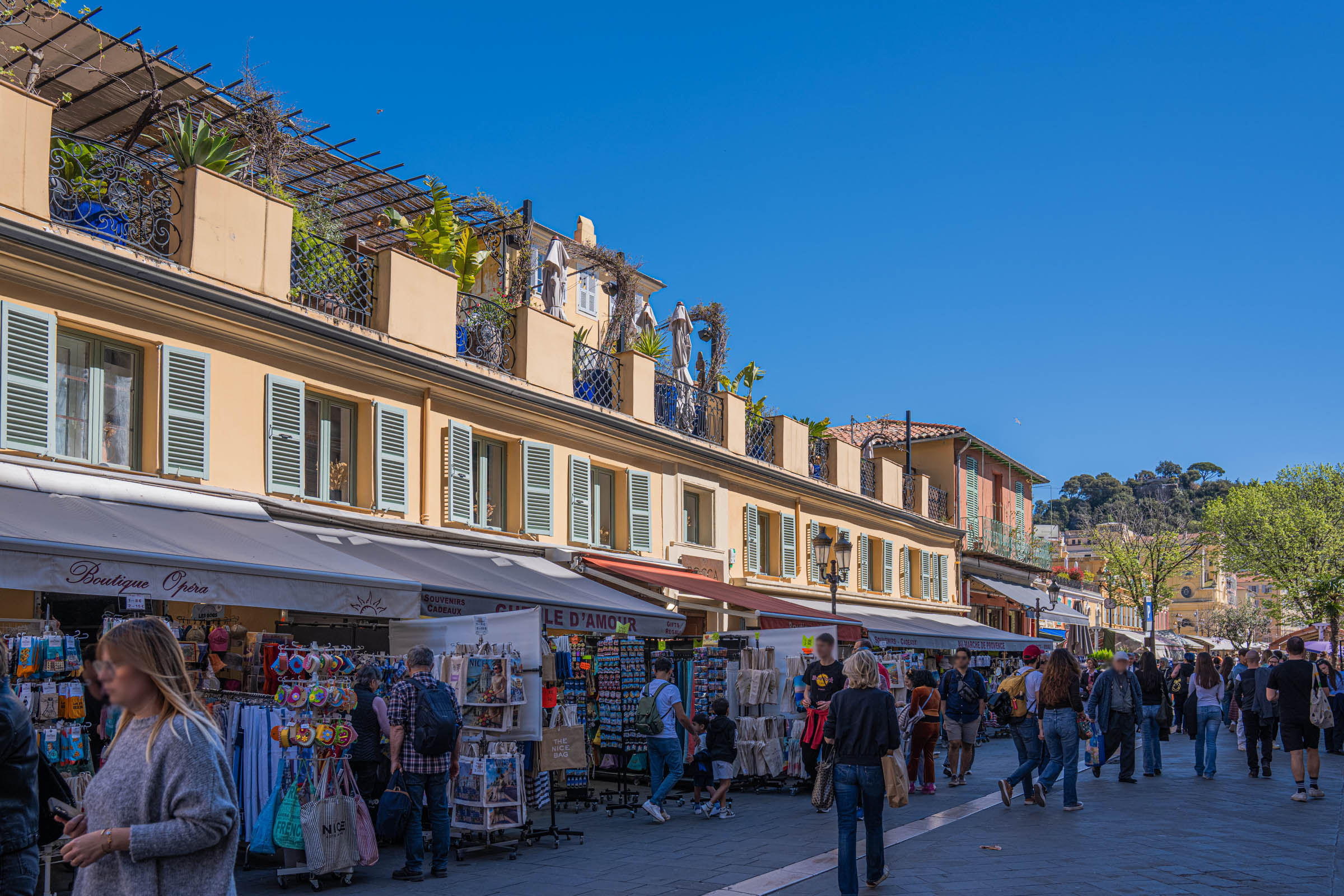
A discovery awaits at every corner. Small shops offer soaps, spices and local products. The smell of fresh pastries and juicy pizza wafts from the bakery. The old town is also full of baroque churches. Their vanilla-colored facades hide lavish interiors. Gilding, frescoes and domes leave a strong impression on the visitor.
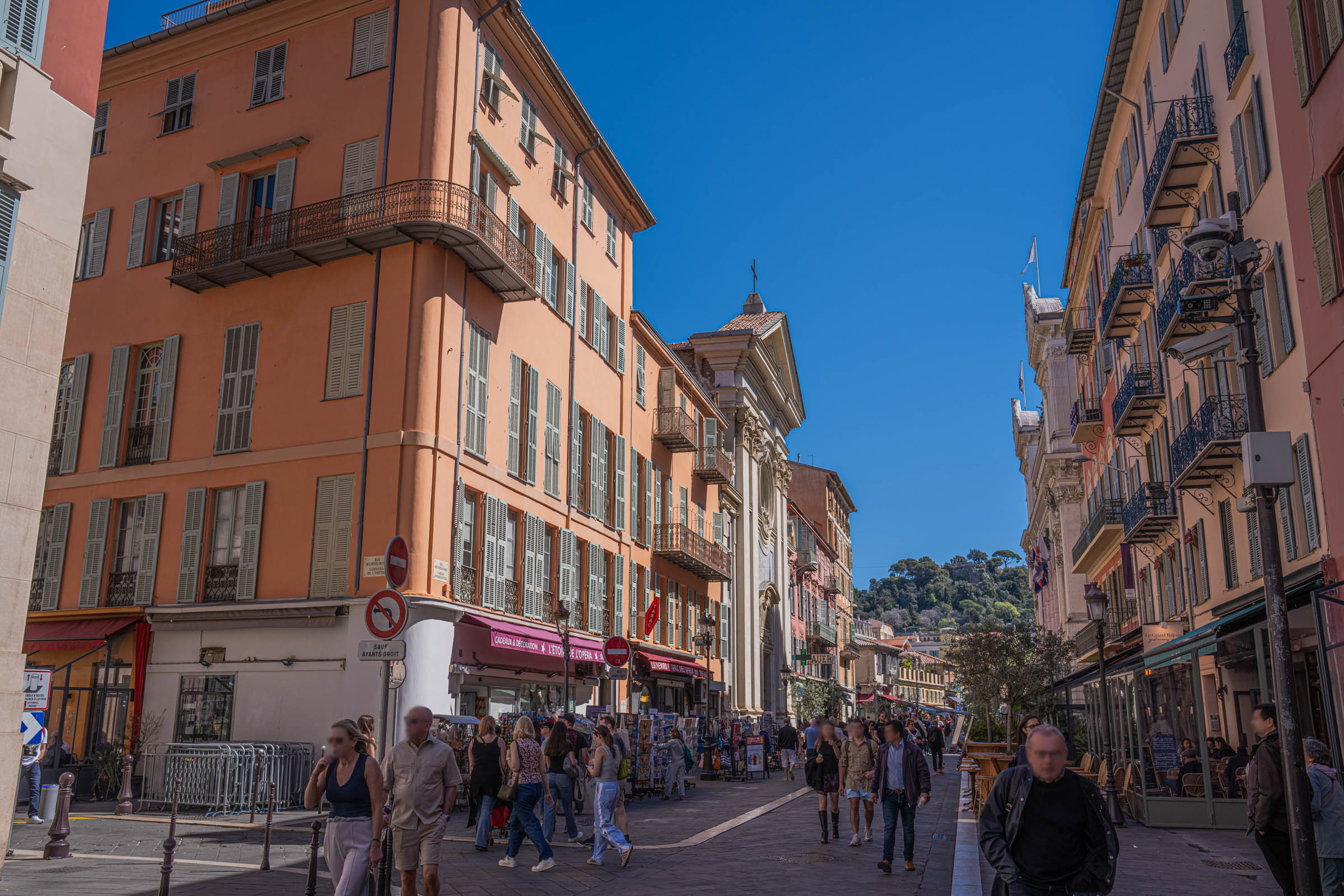
The hill of the castle is constantly visible above the roofs. It serves as a natural landmark in the maze of alleys. Whenever you get lost, all you have to do is look up. Walking through this neighborhood is a treat for the senses. The sound of footsteps on the cobblestones, the smell of the kitchen and the murmur of guests merge into one. The old town is, without a doubt, the place where I preferred to spend my time.
COURS SALEYA MARKET: A FEAST FOR THE SENSES IN NICE
In the heart of the Old Town is the most famous square. Cours Saleya is the city’s famous market and meeting place of life. It got its name from the salt that was once stored here.
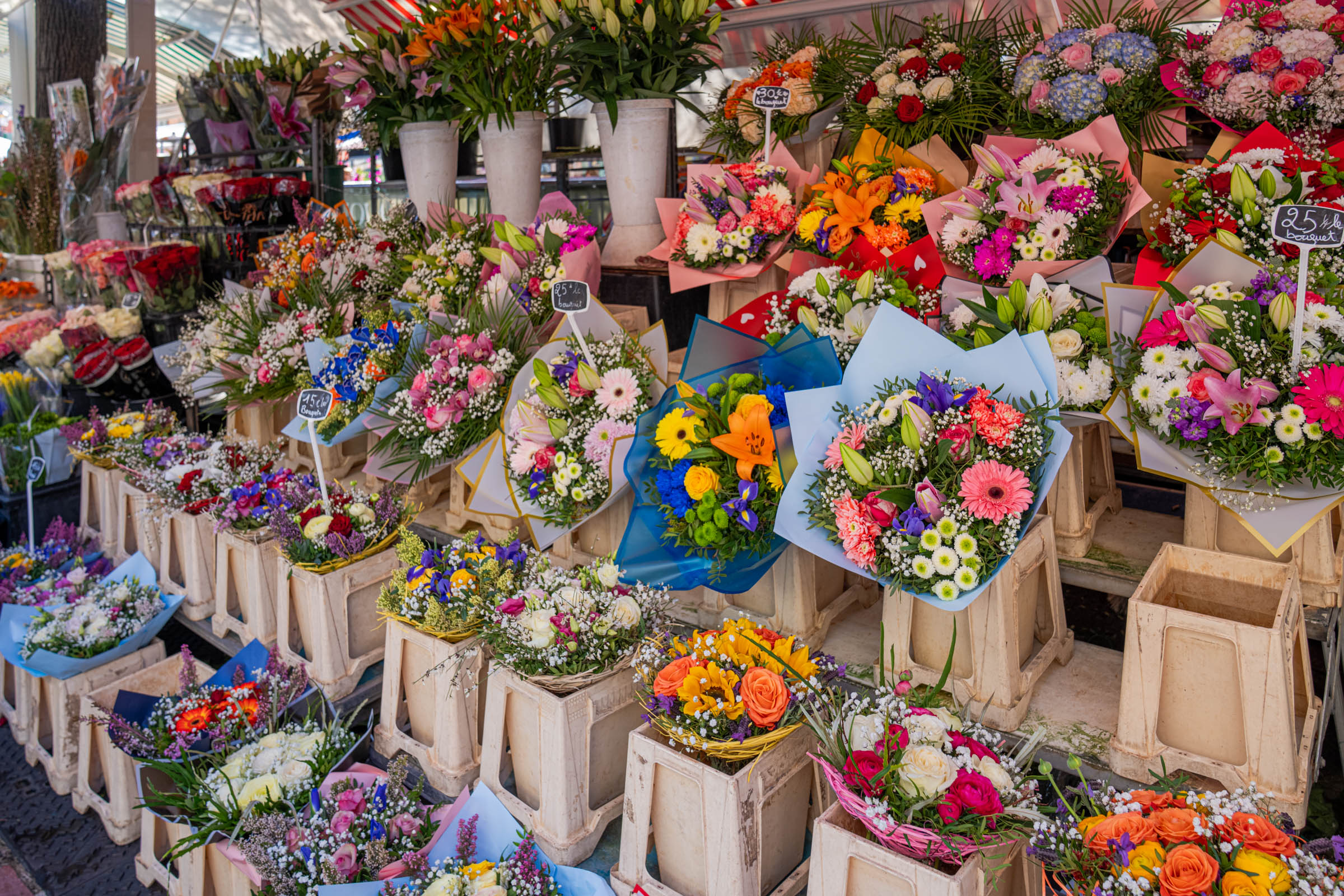
The market has existed in this place since 1816. The first flower market was opened in 1861. A few decades later, Nice received the world’s first wholesale cut flower market. The most beautiful part is definitely the flower market. Stalls bend under bouquets in all colors. Roses, lilies and tulips attract the gaze of passers-by and photographers.
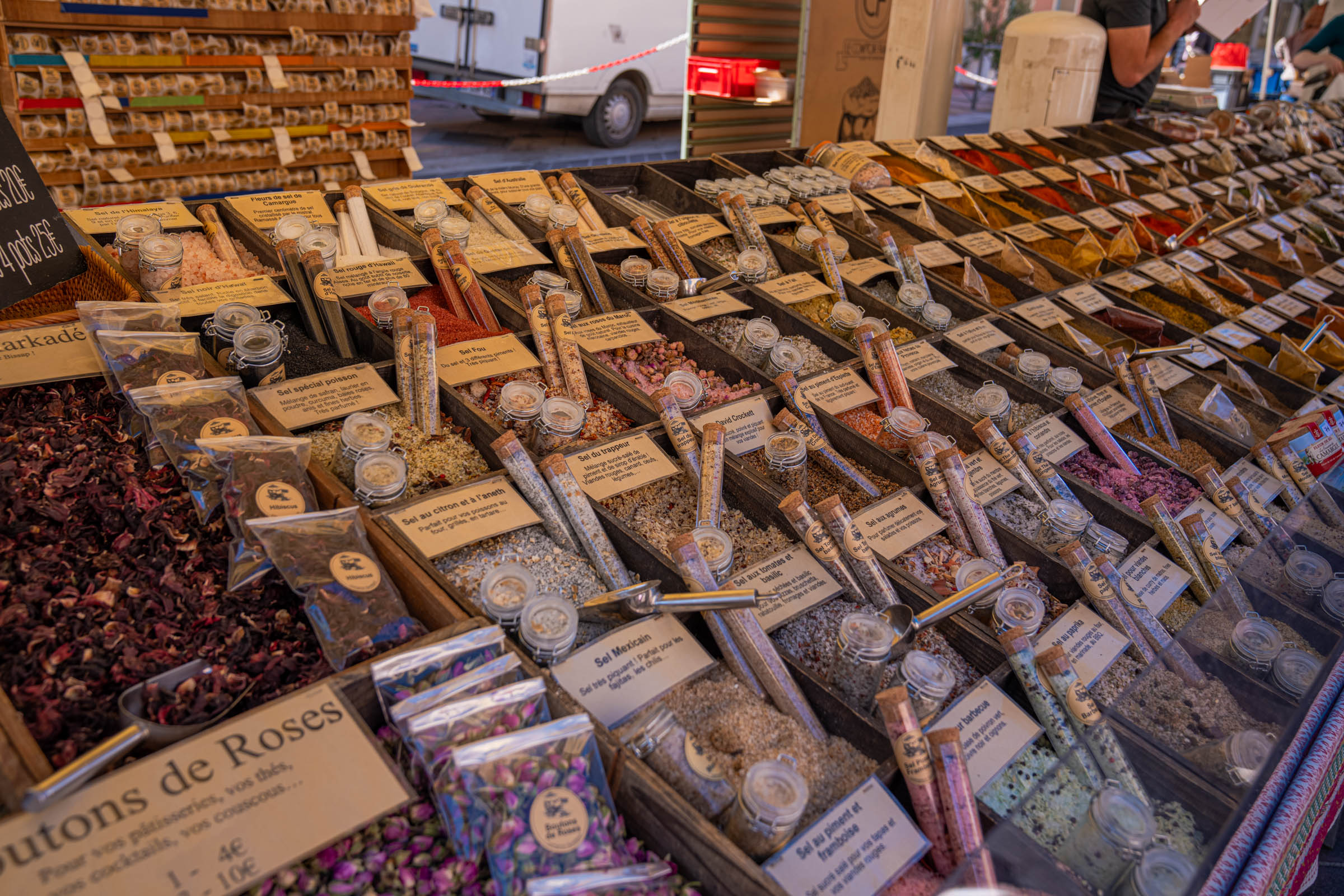
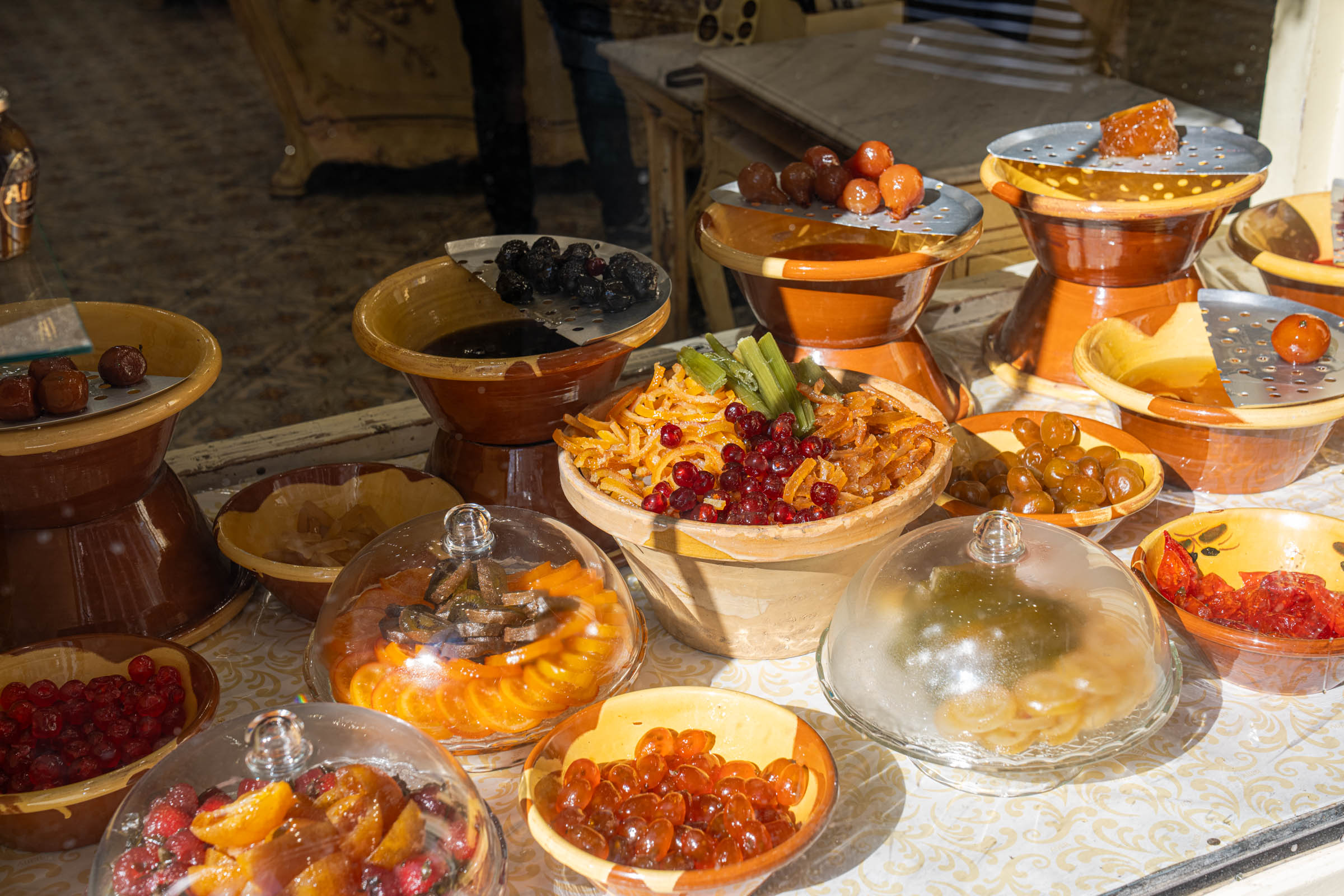
In addition to flowers, other scented products are also offered. I came across a stall full of salt and spices from around the world. Candied fruit, a real Niš specialty, also caught my attention. The market changes its character from day to day. Flowers, fruits and vegetables are sold from Tuesday to Sunday. On Mondays, however, the square turns into a flea market with antiques.
Around the market there are colorful terraces of restaurants. The red awnings of the Mamma Mia restaurant give the square a special charm. Here, with a glass of wine, the daily hustle and bustle is best observed. One historical detail is also interesting. Namely, the famous painter Henri Matisse lived in a building on this square. Without a doubt, he found inspiration precisely in these colors.
NICE’S MEDITERRANEAN CUISINE: FLAVORS OF THE SUN AND SEA
A trip to Nice is not complete without getting to know the local cuisine. Nice cuisine is part of France’s intangible heritage. It combines simple ingredients, olive oil and Mediterranean sun.
The most famous local dish is called soka. It is a thin pancake made from chickpea flour. It is baked at a high temperature and eaten warm and sprinkled with pepper. There is also the famous niçoise salad. It is made from tomatoes, tuna, eggs, anchovies and olives. Fresh and light, it is perfect for a warm summer day.
Pastry lovers must try the pissaladière. This savory pie is topped with caramelized onions, anchovies and black olives. The smell it spreads is hard to resist. For a quick meal, I recommend pan bagnat. It’s actually a salad niçoise housed in a soaked bun. It is ideal for lunch on the beach or on the go.
The tourte de blettes awaits those with a sweet tooth. This unusual pie is made from chard, and can be both salty and sweet. It sounds strange, but the taste pleasantly surprises. At the end of the meal there is the already mentioned candied fruit. Colorful slices adorn the windows of pastry shops throughout the city. This candy is the perfect souvenir that carries the taste of Nice.
I tried food both in restaurants and from stalls. Each bite carried a piece of the Mediterranean noon.
NICE’S OPERA HOUSE AND OLD PORT: TWO ICONIC LANDMARKS
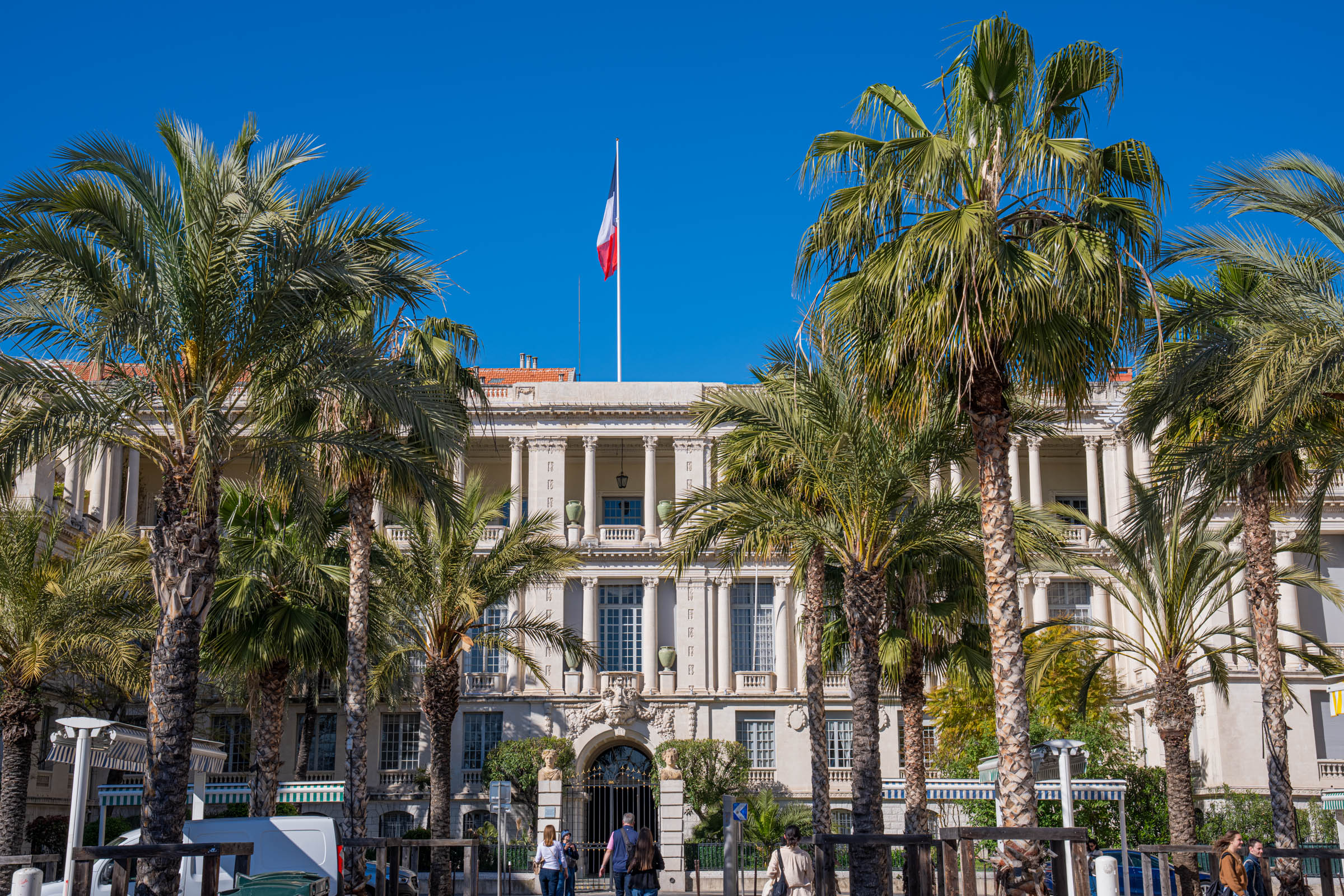
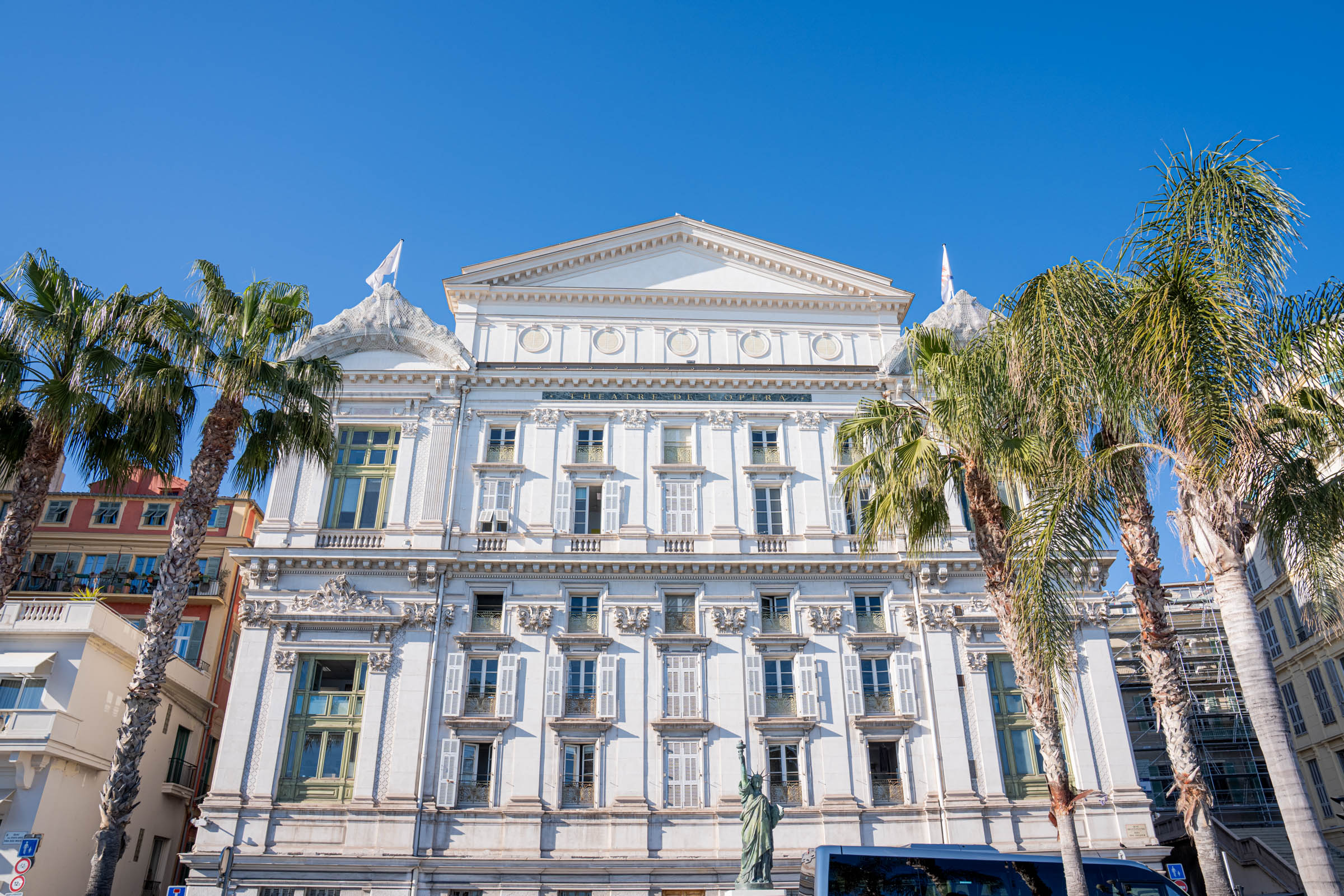
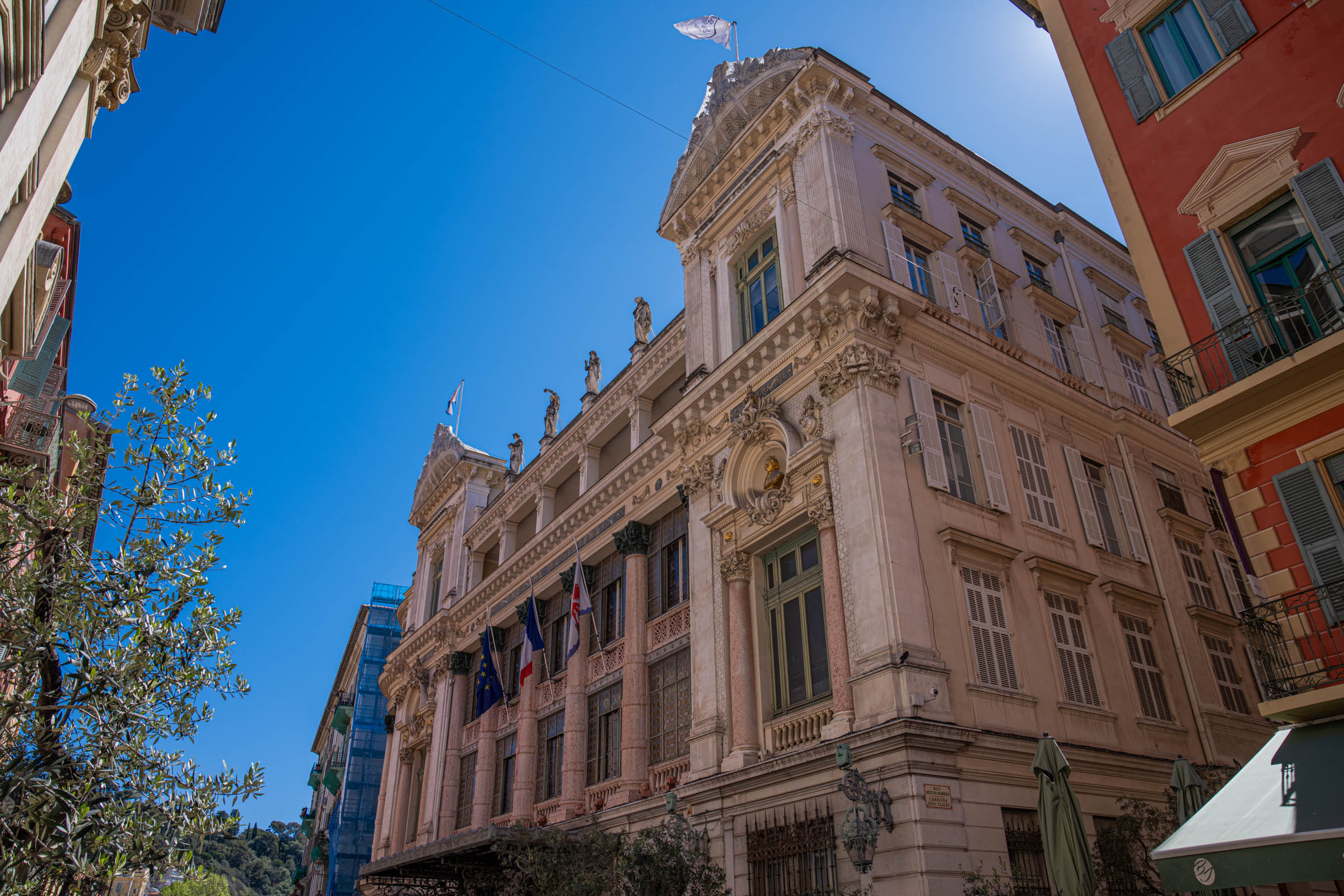
A walk along the Old Town reveals another gem. The Nice Opera House is one of the city’s most beautiful buildings. Its luxurious facade also hides a sad past. A wooden theater once stood in this place. During the play in 1881, a terrible fire broke out. Unfortunately, a large number of people died in the accident.
The new building was built only a few years later. The opera was inaugurated in 1885 with Verdi’s “Aida”. The architect was a student of the famous Paris school. The facade overlooking the sea radiates Italian elegance. Columns, statues and decorations give the impression of a large theater. The main entrance is, however, on the opposite side.
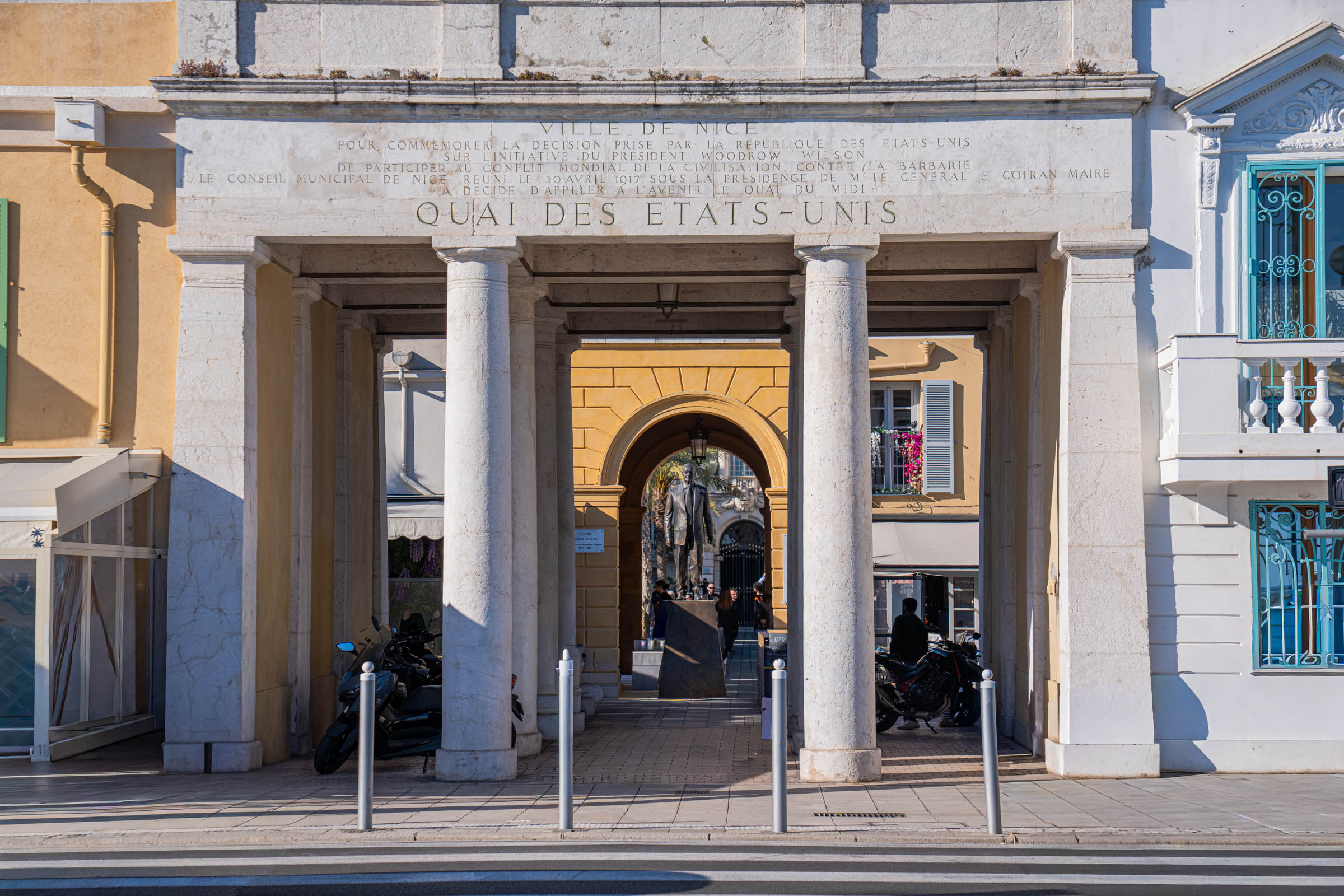
There is an unexpected detail in front of the opera house. Namely, there is a small copy of the Statue of Liberty. It is a reminder of the famous sculptor Bartoldi and his connections with America. Right next to it is the United States Quay. This seaside promenade used to have a different name. The name was changed in 1917, as a sign of gratitude to America.
A long inscription is carved on the monumental entrance. He explains that the city was honoring President Woodrow Wilson. The reason was America’s entry into the First World War. A bronze statue can be seen through the passage. It is a monument to Jacques Chirac, the former president of France. The square behind the gate bears his name.
CHURCHES OF NICE: TIMELESS BEAUTY CARVED IN STONE
Nice hides a large number of beautiful churches. Each of them tells a part of the city’s past. Styles range from baroque to neoclassical. Baroque churches dominate the Old Town. Their vanilla-colored facades appear modest from the outside. Inside, however, the gilding, frescoes and marble shine.
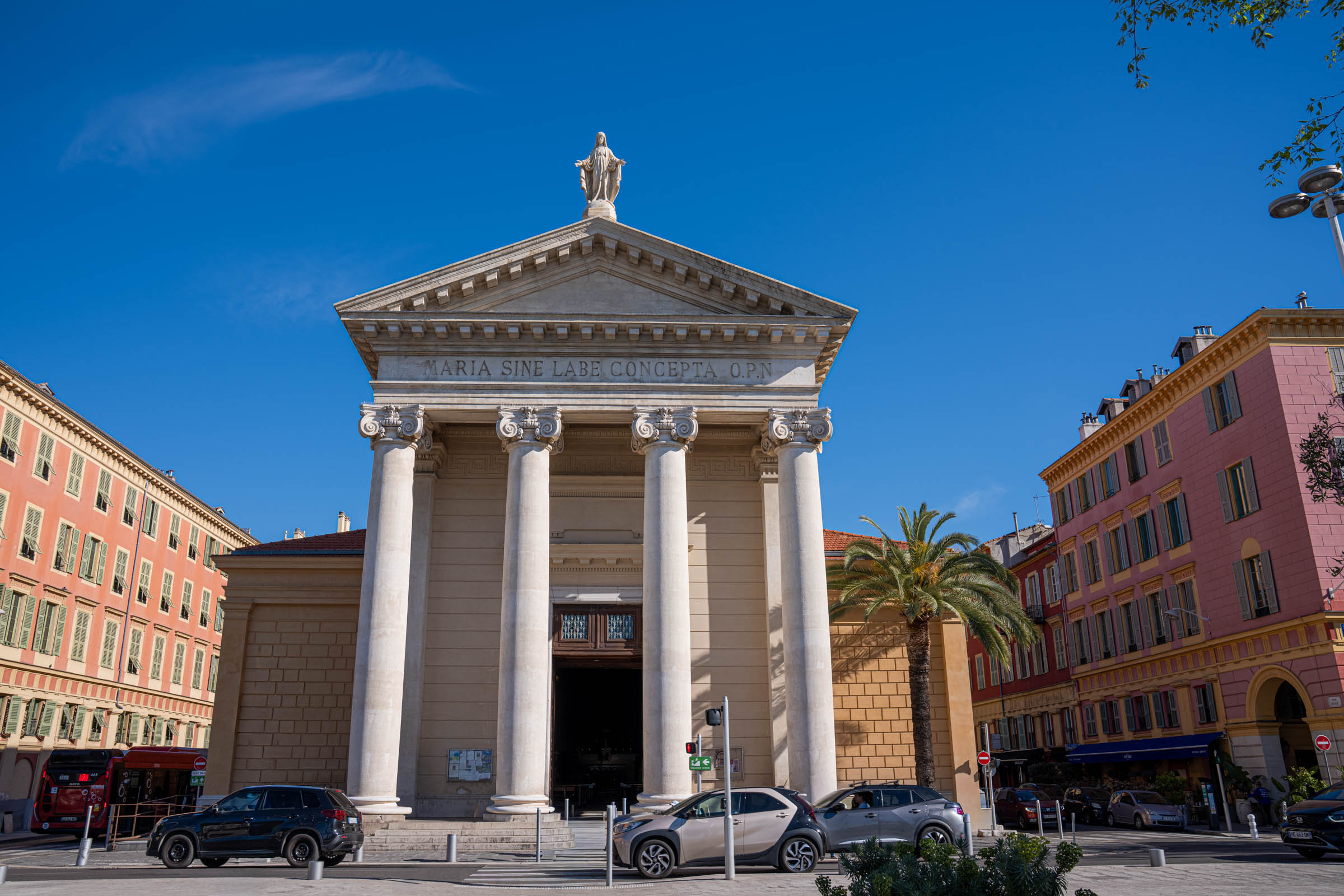
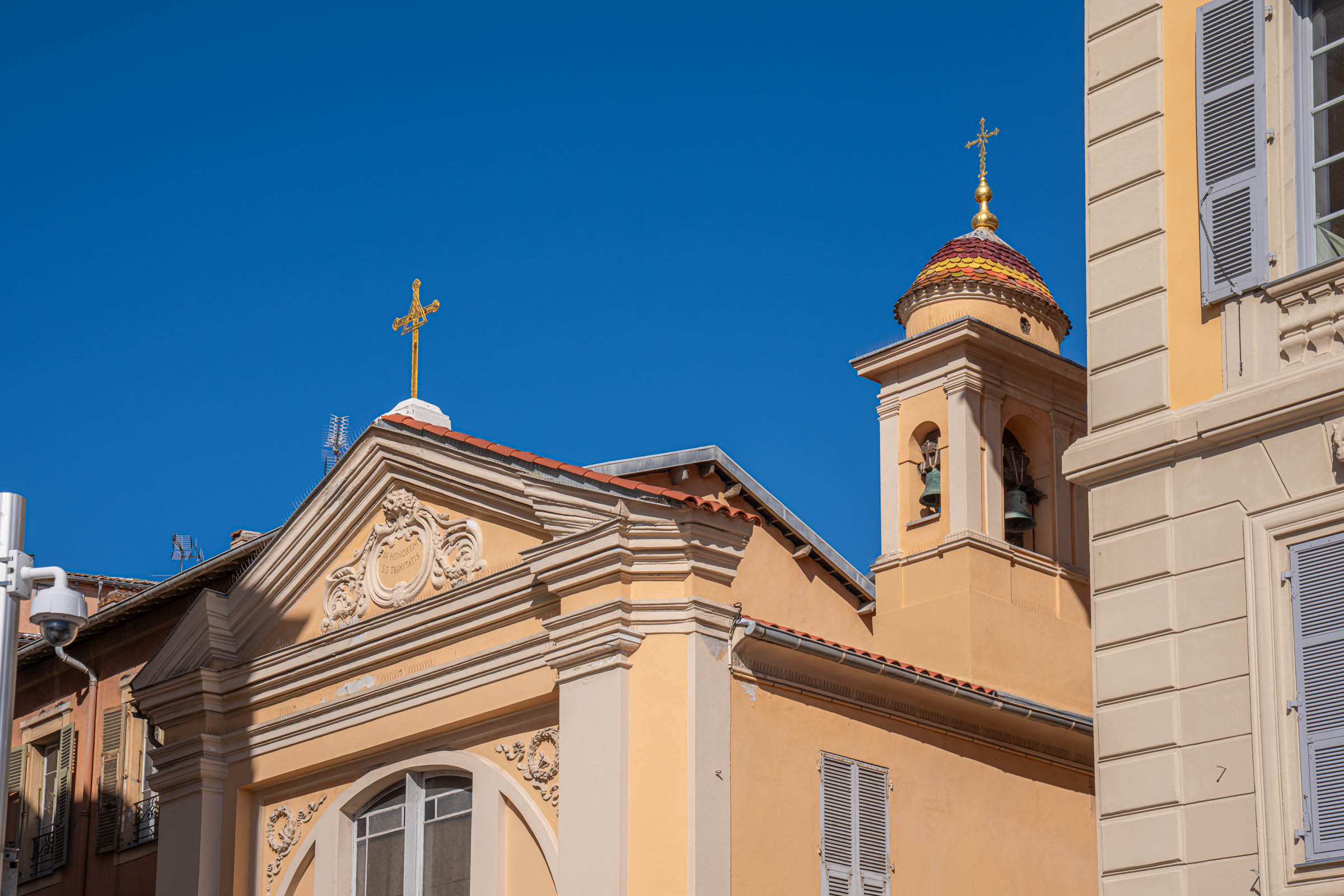
Colorful bell towers rise above the roofs. Many of them are covered with colorful tiles in different colors. This Italian detail gives the city a special touch. I was particularly impressed by a neoclassical church by the port. Its porch is supported by tall columns with sumptuous capitals. The inscription on the front is dedicated to the Immaculate Conception. At the top stands a statue of the Virgin with outstretched arms.
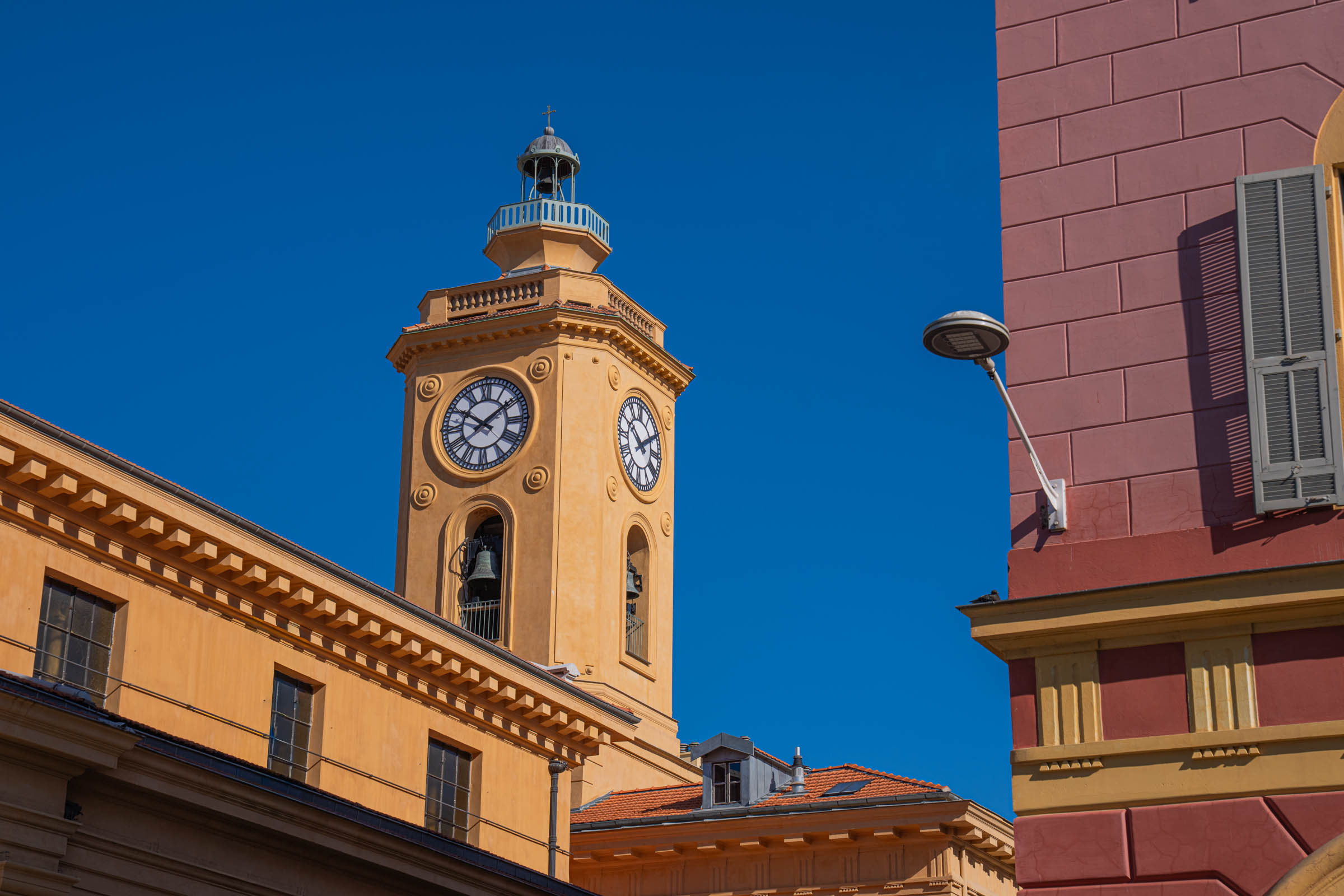
The high city tower with the clock also attracts attention. Its octagonal tower can be seen from many alleys. The bells in it still measure the time of the old town today. Churches are not only religious buildings. They are also a real treasure of art and history. Entrance to them is usually free, and the impression is priceless.
During my walk I stopped at several of them. Every time I was greeted by pleasant freshness and silence. In that silence, the city revealed its spiritual side.
LUXURY SHOPPING IN NICE: STYLE, GLAMOUR, AND ELEGANCE
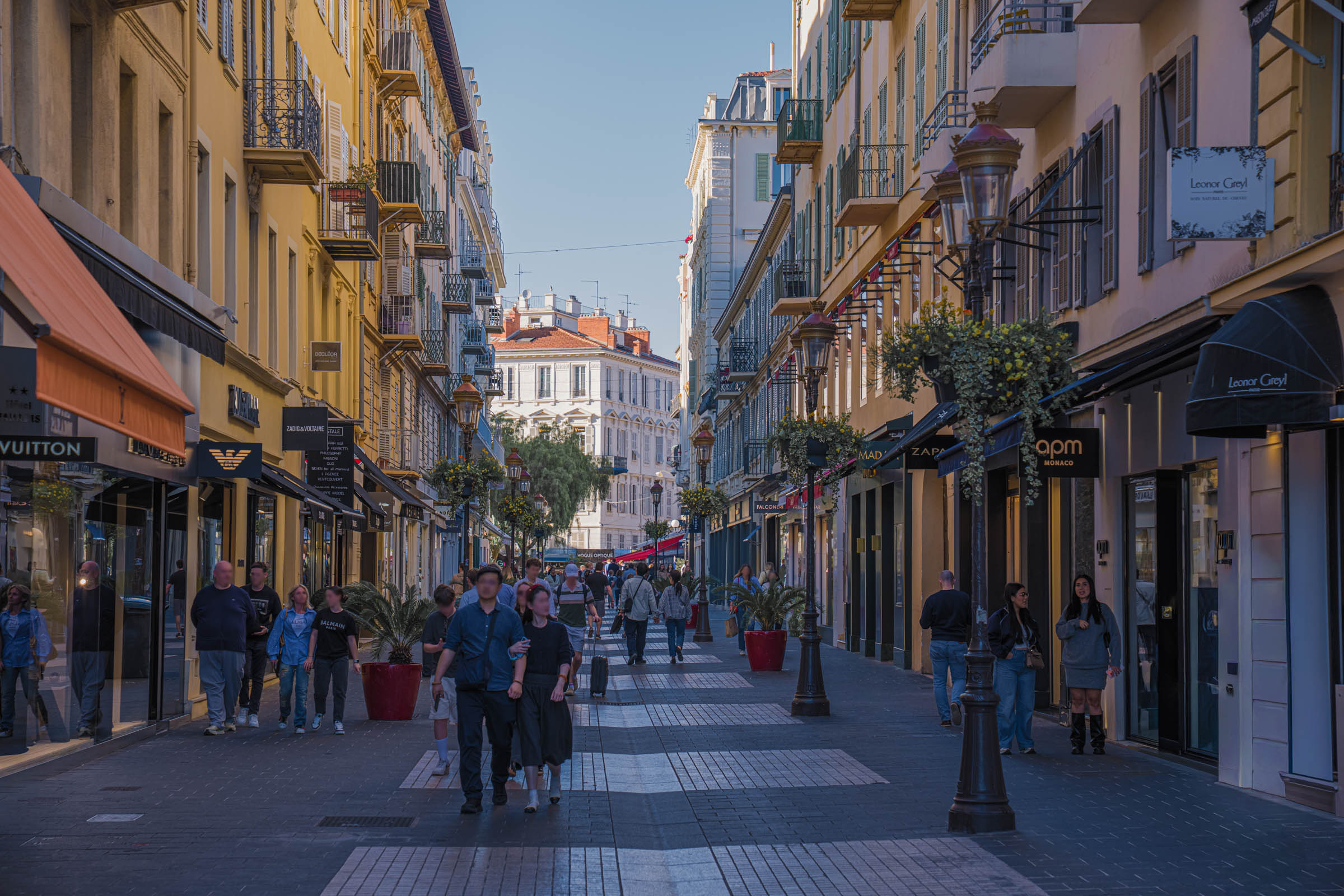
Nice offers more than just history and the sea. The city is also a real destination for fashion lovers. An exclusive shopping district is located in the very center. Several streets are reserved for the world’s biggest brands. The windows of Louis Vuitton, Gucci and Saint Laurent shine in the sun. There are also Balenciaga, Armani and many other fashion houses.
A walk through these streets is pleasant even without shopping. Elegant facades and neat storefronts are a sight in themselves. Street lamps decorated with flowers further enhance the ambiance. A local fragrance house also caught my attention. Namely, the famous Molinard brand has its store in the center. Provence has always been known for perfumes and flowers.
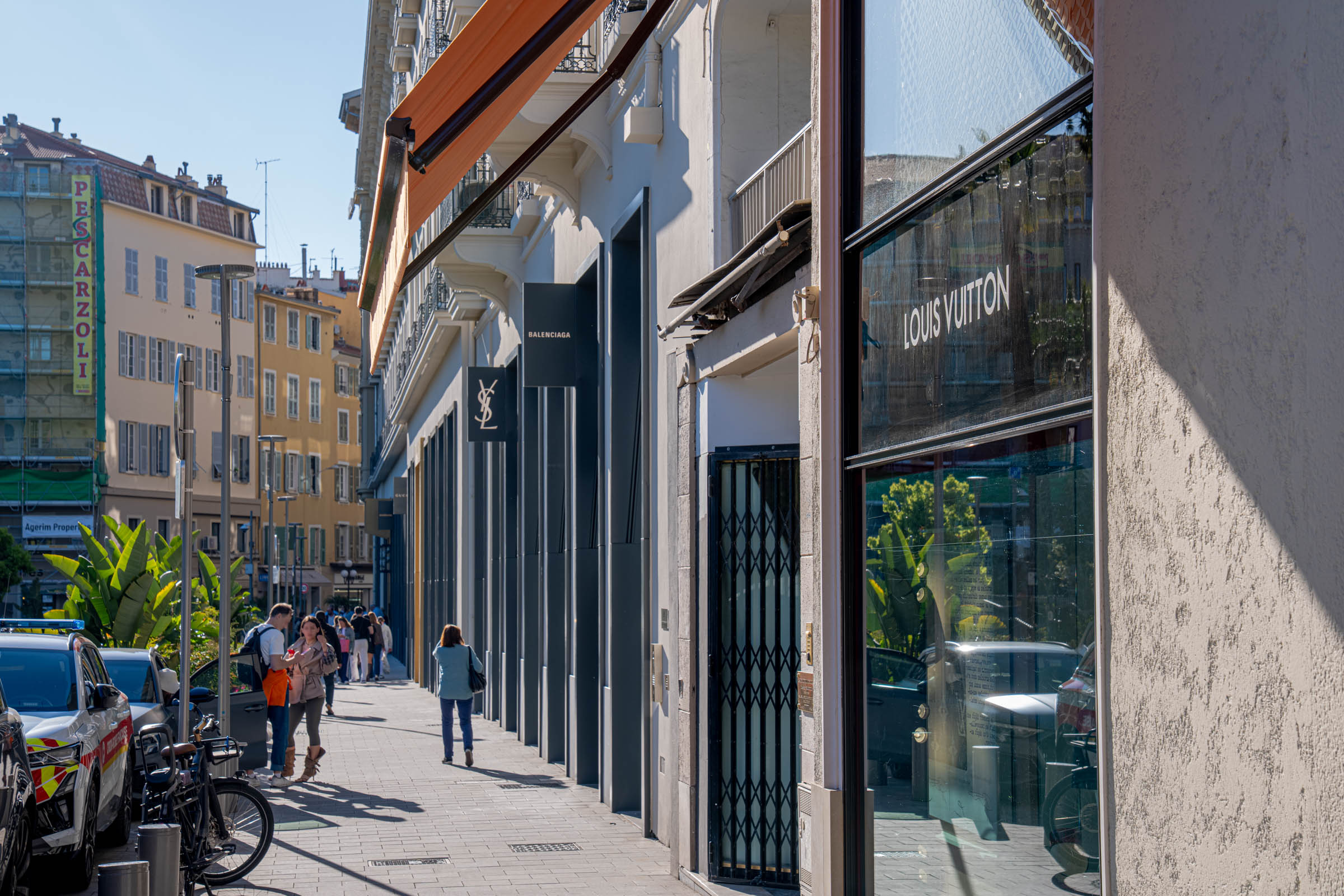
In addition to luxury, the city also offers more affordable shops. Famous chains are lined up along Avenue Jean Madsen. Everyone can find something for themselves. Fashion in Nice is not just about shopping. It is part of the everyday style and demeanor of the locals. People here cultivate that quiet, unobtrusive elegance.
It was this feature of the city that particularly attracted me. Luxury is not shown loudly, but is taken for granted. Nice knows very well that true luxury lies in simplicity.
THE PORT OF NICE: WHERE LUXURY YACHTS AND LOCAL LIFE MEET
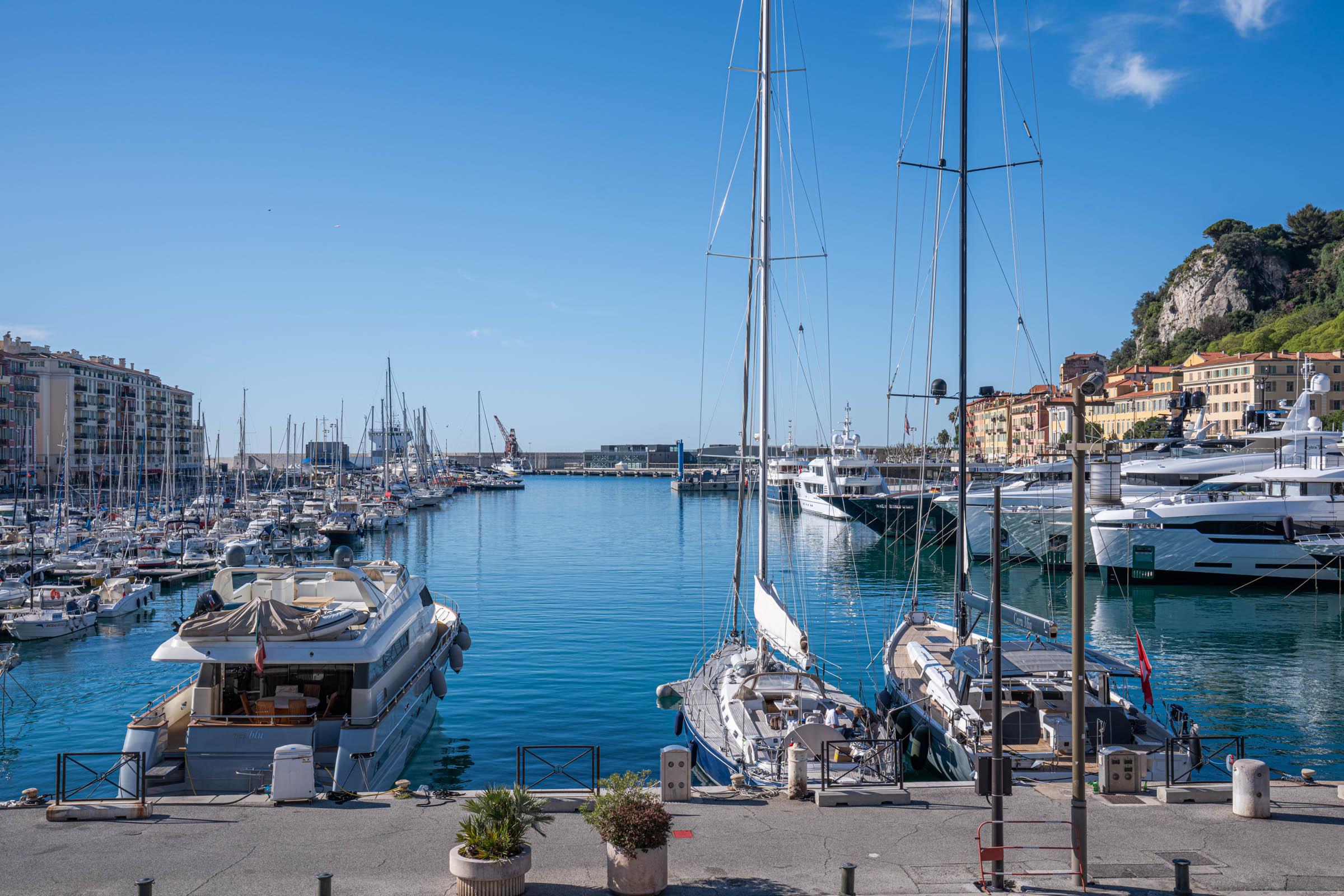
Another gem is hidden in the eastern end of the city. The port of Lympia, or Port Lympia, is a peaceful haven for ships. Here, the everyday hustle and bustle of the promenade replaces the tranquility of the water. Ships of all sizes are rocking in the harbor. In addition to modest sailboats, luxurious yachts are also moored. Their masts create a real forest above the calm sea.
Buildings in warm colors are lined up around the port. Ocher and terracotta facades are reflected in the water. Above them rises a rocky hill covered with greenery. The atmosphere in the harbor is completely relaxed. Fishermen mend nets, and crews prepare ships for departure. Everything happens slowly and without haste.
The port is also the starting point for sea trips. From here, boats depart for nearby towns and islands. The view of the city from the water, they say, is particularly beautiful. I walked along the shore and simply absorbed the scenery. The sun was shining and the water was sparkling in all shades of blue. In that peace, I felt a different face of Nice.
The port is an ideal place to escape from the crowds. Away from the tourist flow, here the city shows its relaxed side. I recommend it to anyone looking for a moment of silence.
HOTEL BOSCOLO NICE & SPA: ELEGANCE IN THE HEART OF THE CITY
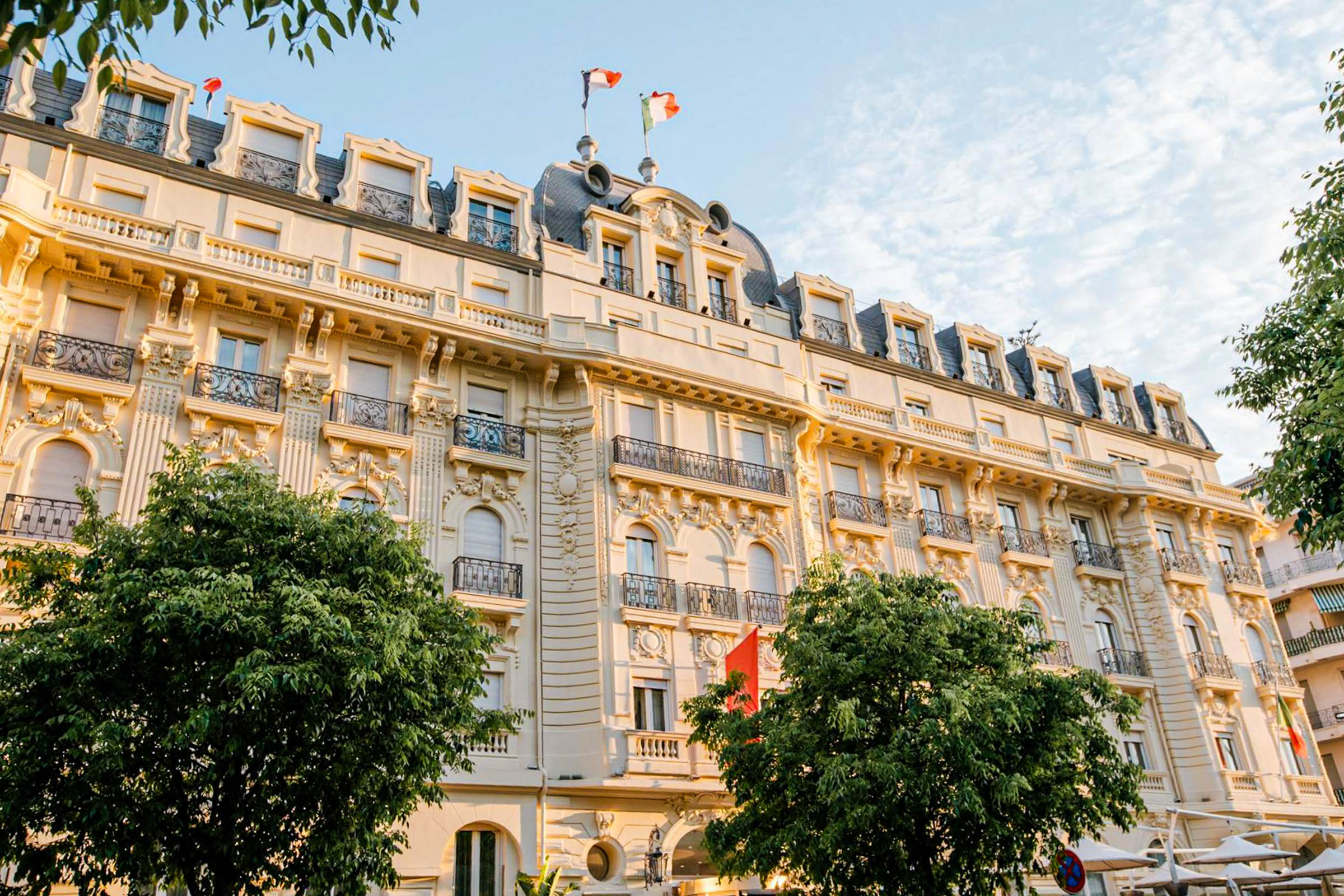
During my stay in Nice, I stayed in a special building. Hotel Boscolo Nice & Spa is located at Boulevard Victor Hugo. It is located in the very center, just a few steps from Avenue Jean Médecin. The location of the hotel is just perfect. The promenade, the beaches and the Old Town are only a few minutes’ walk away. The airport, on the other hand, is only seven kilometers away.
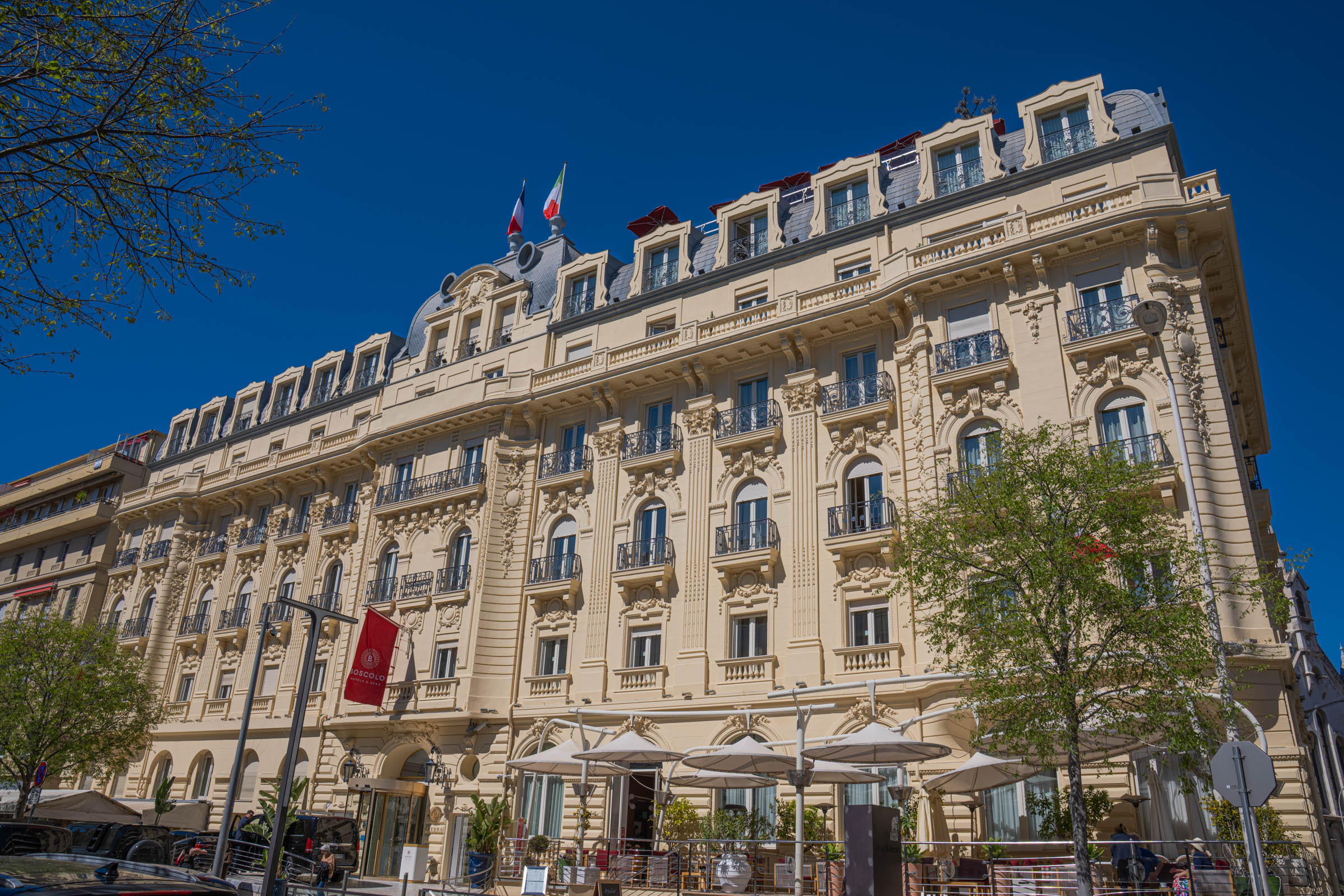
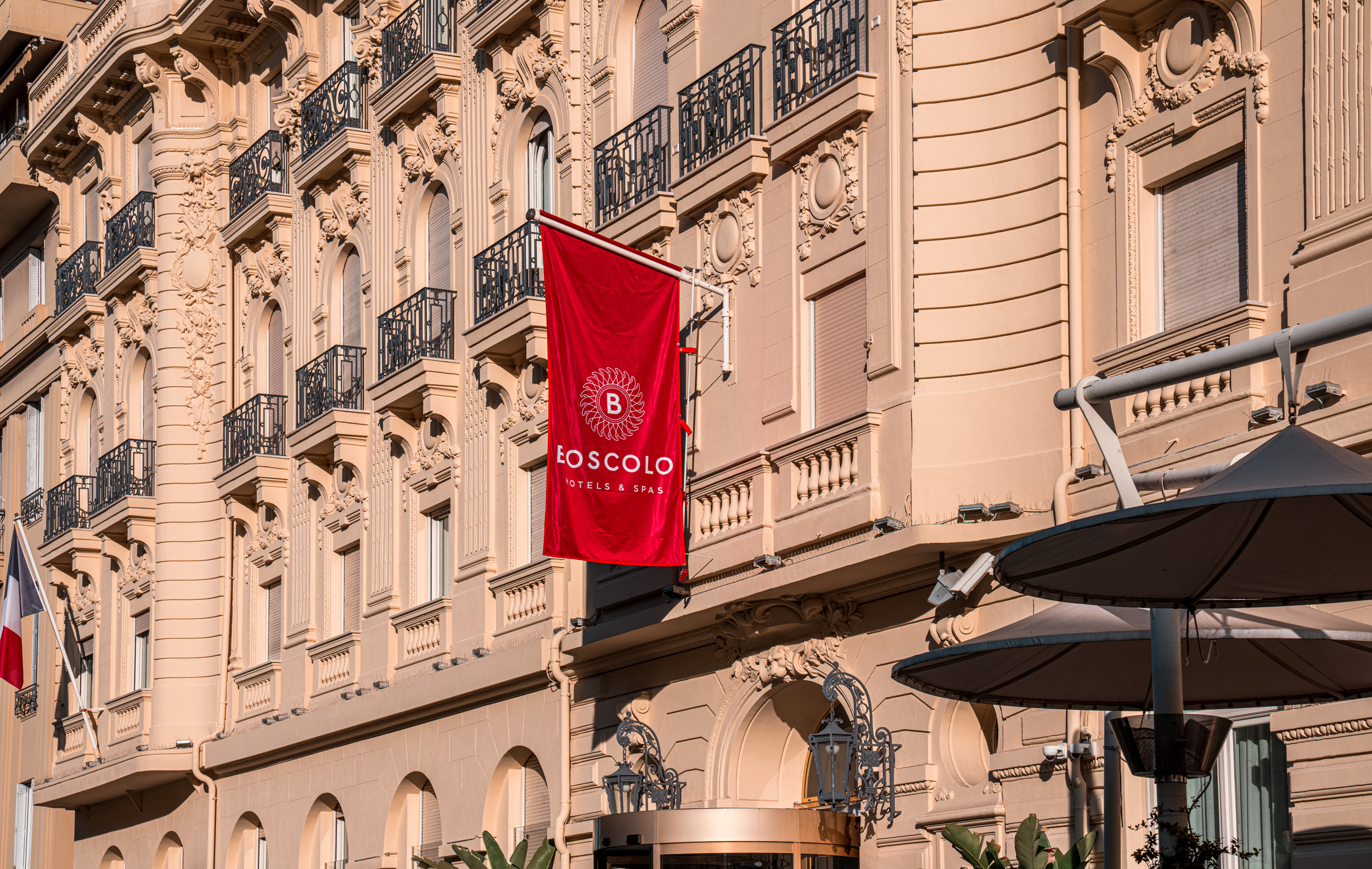
The building dates back to the beginning of the twentieth century. It is a luxurious building from the Belle Epoque era. Its facade is protected as part of the city’s heritage. The interior combines classic and contemporary design. White marble, parquet and shades of ivory create an impression of quiet opulence. A red flag with the letter “B” flies proudly over the entrance.
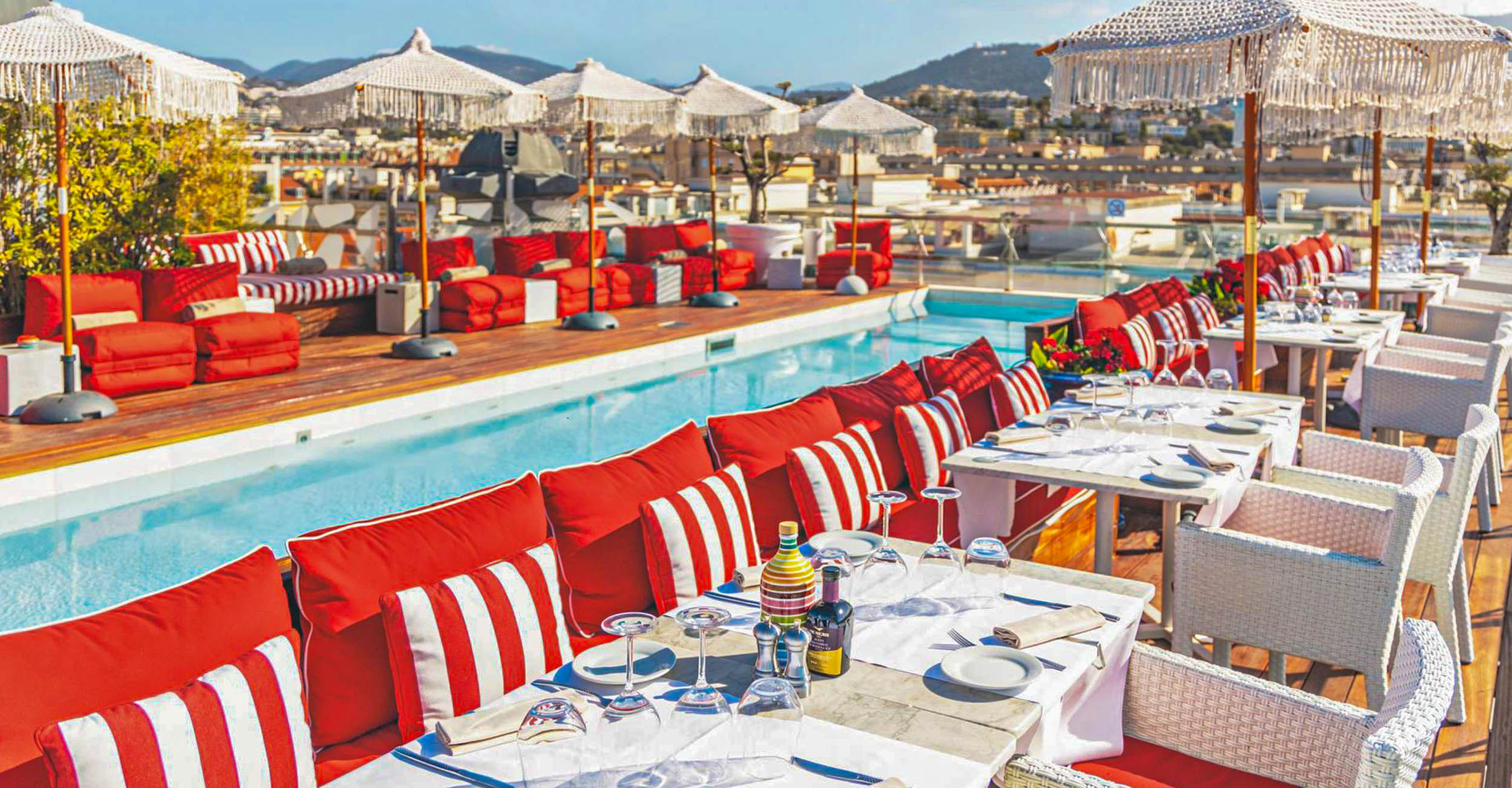
The hotel also has several important awards. It is counted among the historical hotels of Nice, and it also has an ecological certificate. Behind everything is the Italian Boscolo family and their love for France. The gastronomic offer is inspired by Italy. The hotel has as many as three restaurants: Angelo, Genesi and a rooftop bar. The roof terrace with heated pool deserves special attention.
From the roof there is a view of the whole city and the surrounding hills. Namely, this is the only hotel in Nice with even two swimming pools. In addition to the rooftop pool, guests can also enjoy the indoor pool in the spa center. The spa center covers more than five hundred square meters. It offers a sauna, a hammam and top-quality treatments. After a day spent walking, this was a real refreshment.
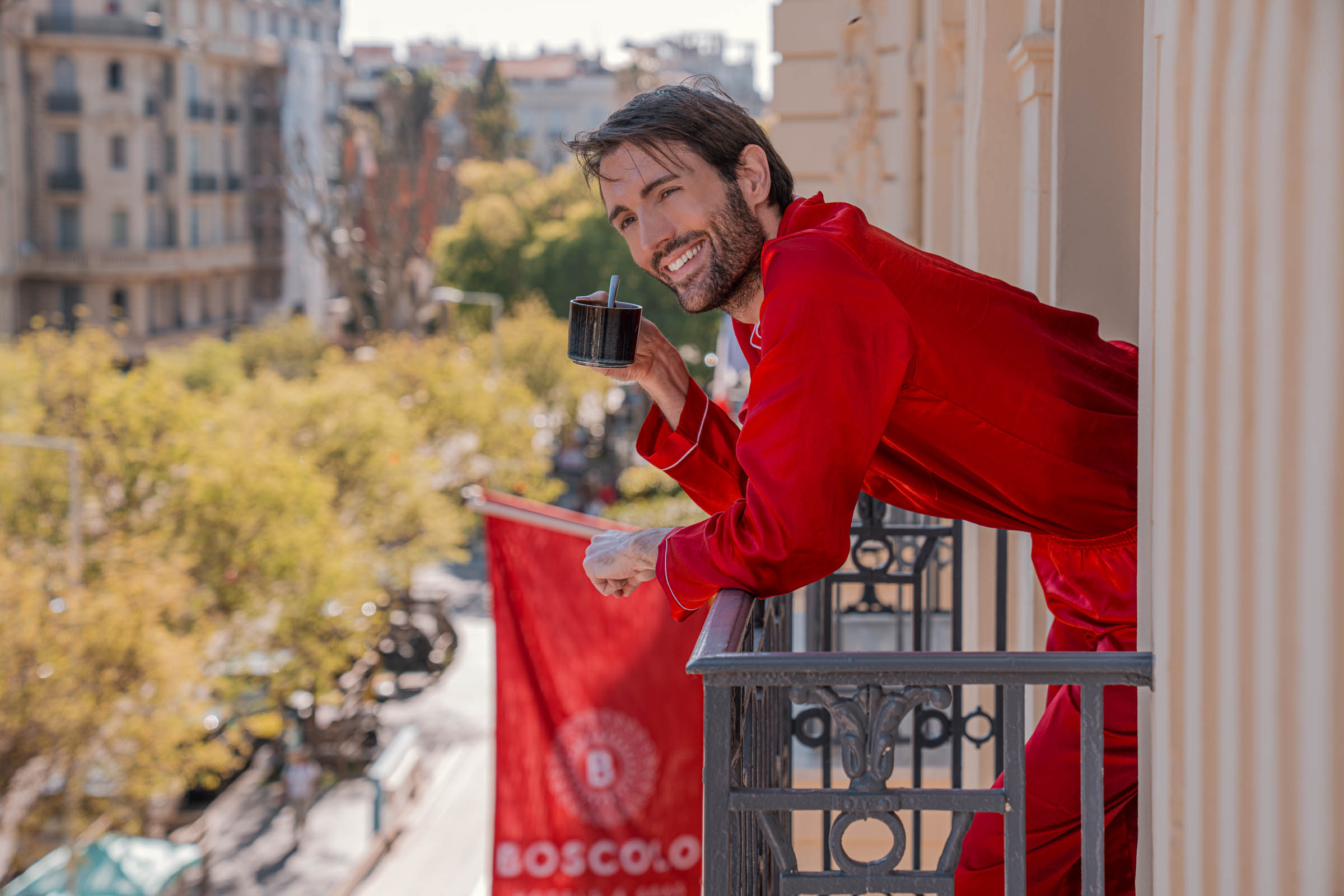
Hotel Boscolo Nice & Spa: My experience with the Exclusive Room with city view
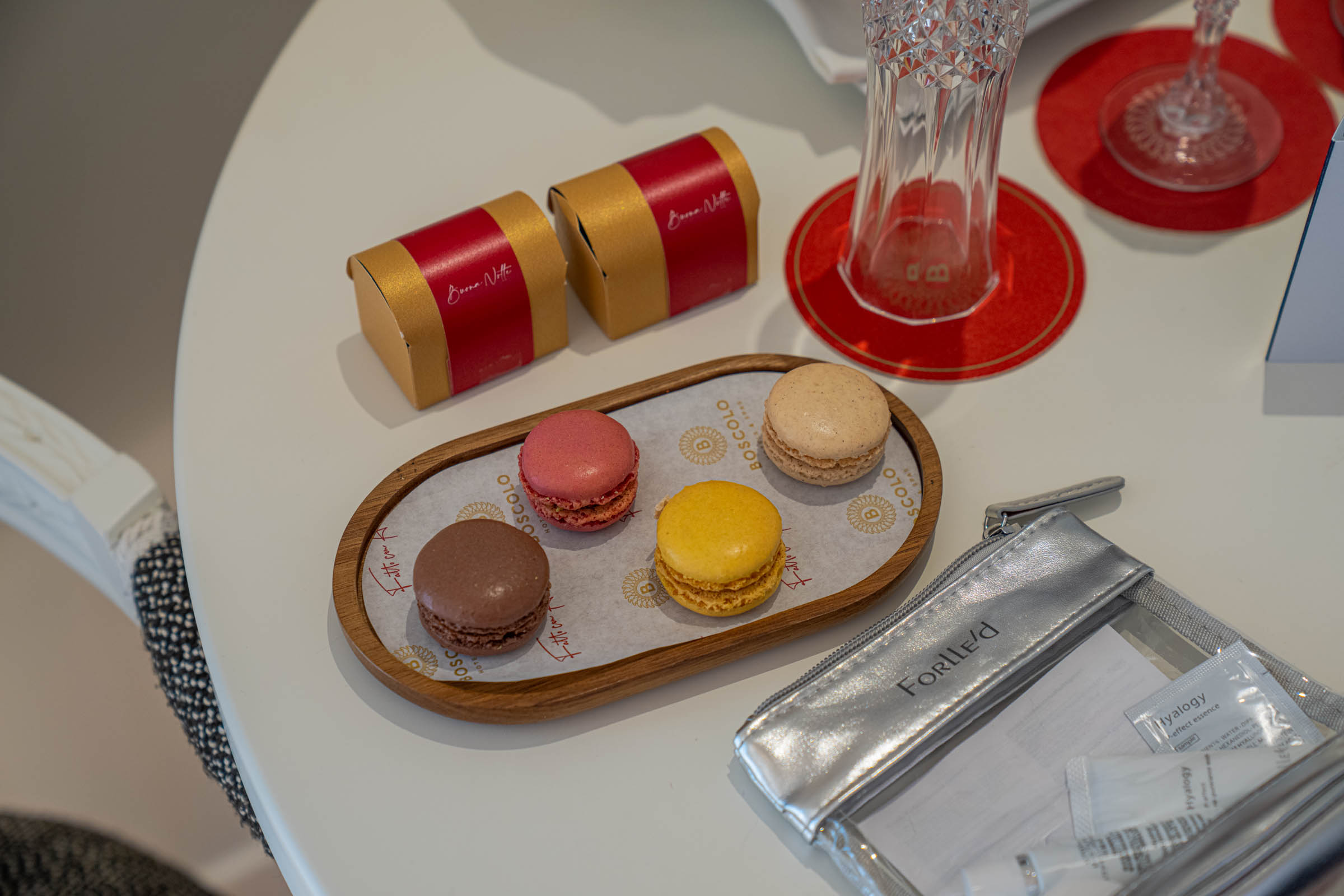
I stayed in an Exclusive Room with Terrace room. It won me over with her warmth at first glance. The combination of classic elegance and comfort was perfect. In the room, I was greeted by numerous details and small signs of attention. On the tray were macaroons and fine chocolates for good night. In addition to them, there were also local cosmetics for care.
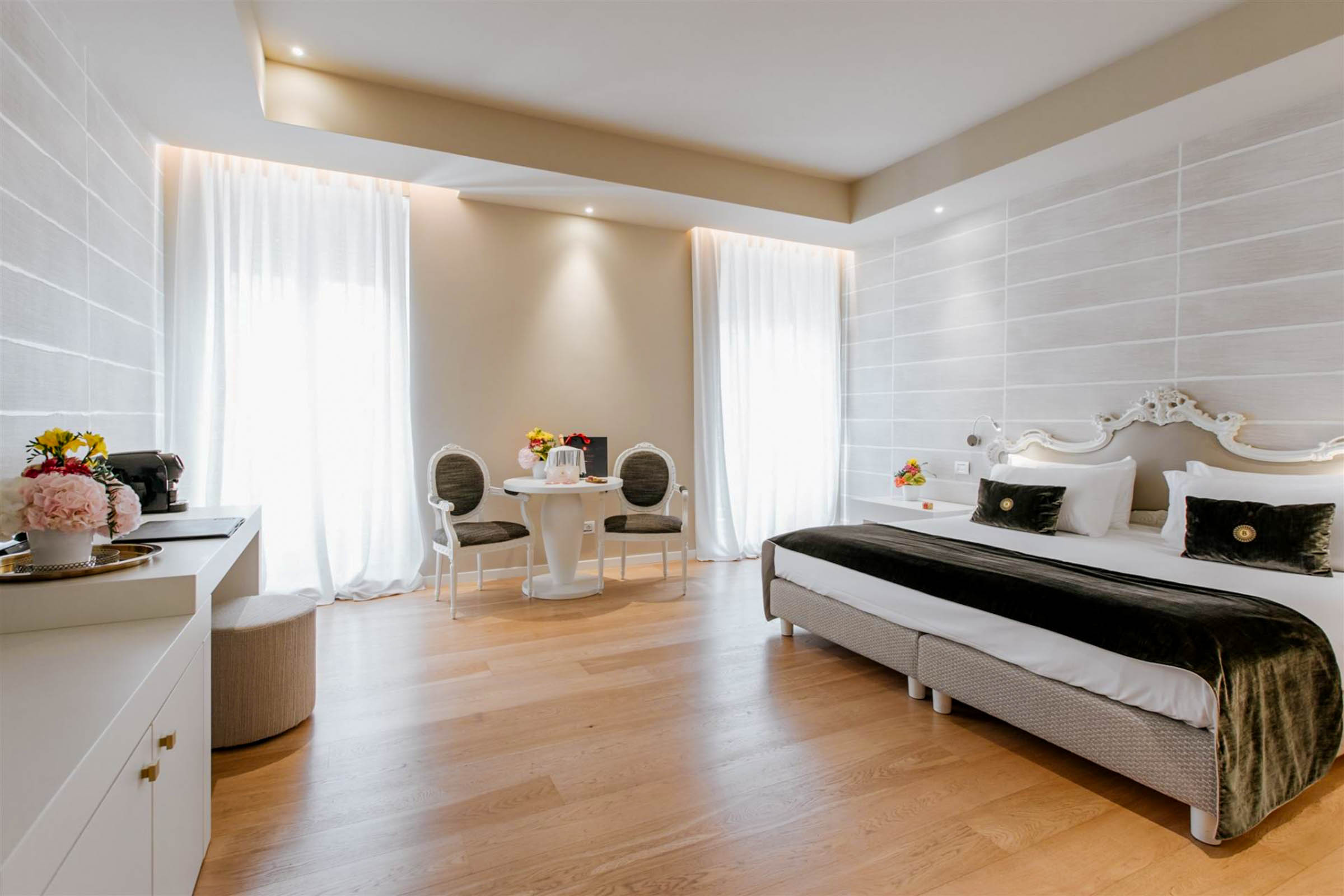
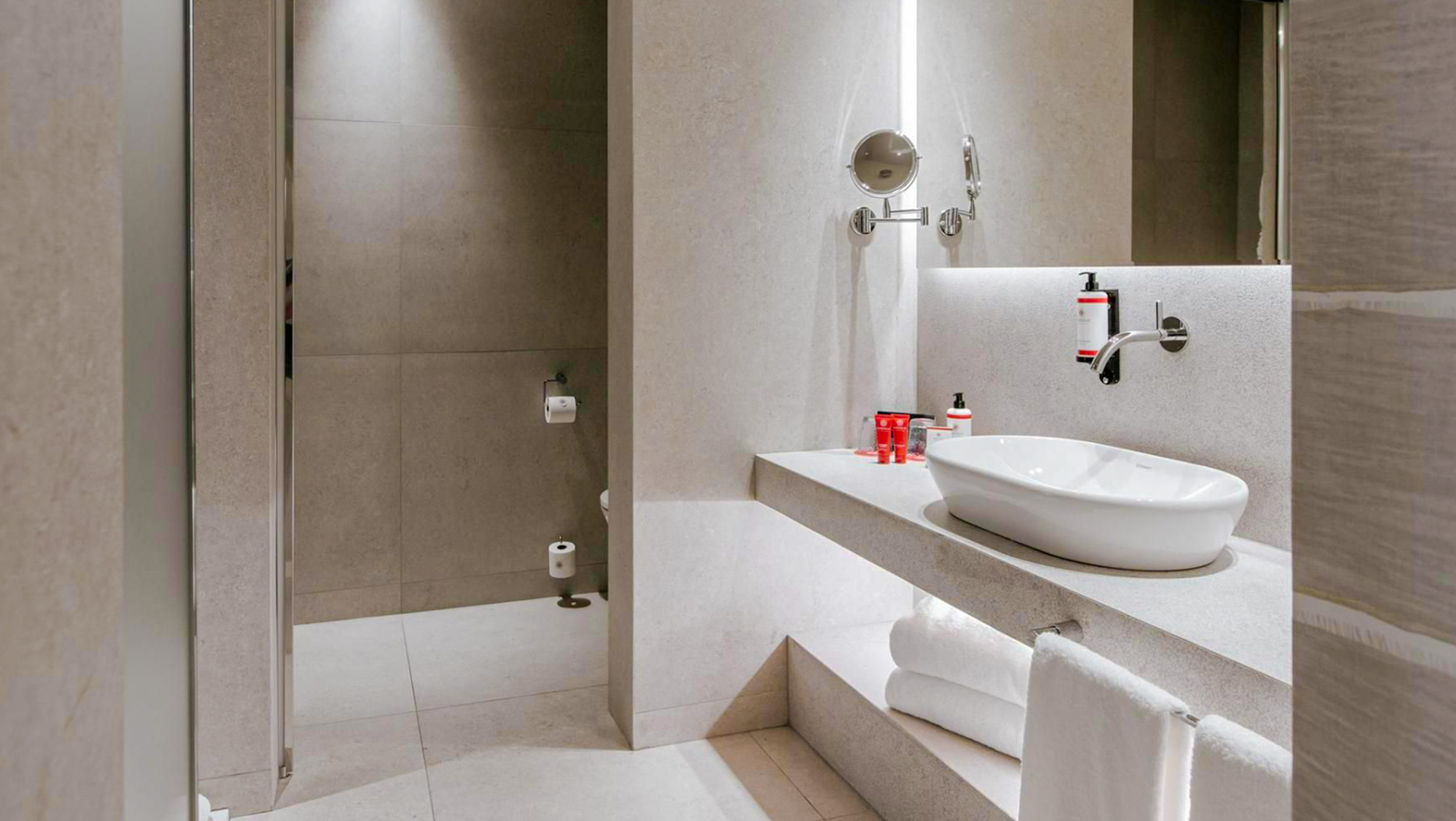
The most beautiful part of the room was, of course, the terrace. From it, I watched the city wake up every morning. With a cup of coffee and a view of the street, the day started right. The bathroom was decorated with a refined mosaic in warm tones. Every detail exuded attention and good taste. I felt at home in this room, only with the addition of opulence.
Hotel Boscolo Nice & Spa: Lunch at the Angelo restaurant
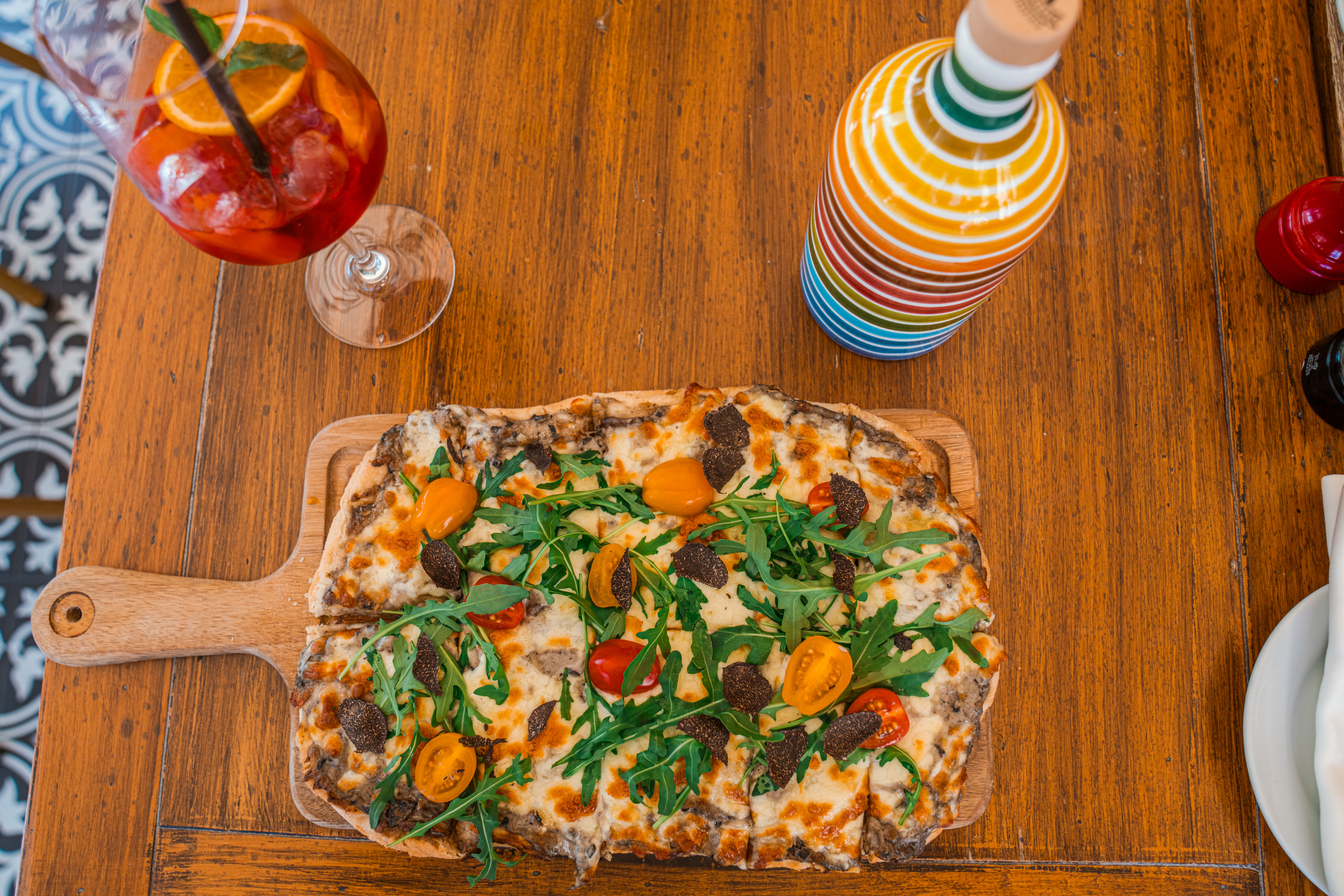
One day during my stay in Nice I decided to have lunch at a hotel. Angelo is an Italian restaurant within Boscolo Nice Hotel. That meal remained in my unforgettable memory. To start, I ordered the truffle pizza. It arrived with mozzarella fior di latte and cherry tomatoes. The thin crust and the aroma of truffles won me over right away.
As the main course, I chose beef fillet tagliatelle. It is Charolais meat, perfectly short-roasted. It was served with parmesan cheese and fresh salad. Finally, I couldn’t resist the tiramisu. It was decorated with fresh berries. I admit, I still think about that dessert today.
I enjoyed the signature Angelo cocktail with the meal. Everything arrived on beautiful wooden tables. The plates were hand painted, real small works of art. The whole lunch was pure Mediterranean delight. The combination of Italian cuisine and attentive service seemed flawless. That’s why I highly recommend Restaurant Angelo to every guest.
NICE TRAVEL GUIDE: PRACTICAL TIPS FOR FIRST-TIME VISITORS
Before departure, it is worth knowing a few useful things. These tips will make your stay easier and save you valuable time. It’s the little things that make a big difference. The best time to visit is spring or early autumn. Then the temperatures are pleasant, and the crowds are significantly less. Summer, on the other hand, brings heat and lots of tourists.
The easiest way to get around the city is on foot or by tram. The center is compact, so all sights are close. A tram line connects the airport with the heart of the city. Choose your shoes carefully. Namely, the streets of the Old Town are paved with cobblestones. Comfortable sneakers will be your best companion.
For the beach, bring water slippers. Since the beaches are rocky, pebbles can be uncomfortable. With slippers you will enter the sea much easier. Do not miss to try the local dishes. Juice and niçoise salad are real little discoveries. The Cours Saleya market is the ideal place for a first bite.
Drink water freely from the tap. The water in Nice is completely safe and tasty. This will save you money and reduce waste. Finally, leave time for rest. Nice is not a city to visit in a hurry, but rather a leisurely walk. Sit on the shore, breathe in the sea air and simply enjoy your Mediterranean experience.
WHY DO MILLIONS OF TOURISTS RETURN TO NICE YEAR AFTER YEAR?
After a few days in Nice, I left with a heavy heart. The city won me over again with its beauty and relaxed rhythm. He left me wanting to come back one day. Nice is a city with many faces. In the morning it is a quiet coastal town, and in the evening it is a glittering metropolis. It combines Italian charm and French elegance in a unique way.
Everyone finds something for themselves here. History lovers walk through the Old Town and see the churches. Those looking for rest, however, lie in the sun by the sea. Sea, sun and colors remain the strongest memory. The turquoise bay and ocher facades are hard to forget. That is precisely why Nice is the pearl of the Côte d’Azur.
I hope that today’s travelogue has captured the beauty of the city and provided you with some useful basic information for your vacation. Maybe she will be the reason for your next trip to Nice. Because Nice, believe me, is not just a city. It is a true Mediterranean paradise.
Feel free to leave your impressions, comments or questions below the text or contact me via email and social networks. All information is available on the CONTACT page.
I will definitely come back again, because this city just finds a way to your heart!
With Love from Nice,
Mr.M
This post is sponsored by the United Nations World Tourism Organization (UN Tourism) and the Hotel Boscolo Nice & Spa hotel, as well as other local partners who selflessly supported this project. This post is my personal and honest review of the destination experience.
Hello Marko, what a pleasure to read this after your Paris letter you have a gift for making a place feel lived-in rather than listed. I climbed Castle Hill on my own trip a few years back, and your description of that 92-metre viewpoint brought it all rushing back, with the red roofs and the harbour full of masts laid out below. The detail about the elevator running since 1912 is the kind of thing I never knew, even though I used it myself. You’re quite right that the morning is the moment to go; by midday the terraces are… Read more »
Bonjour Marko, votre carnet de voyage est un vrai régal pour qui aime la Côte d’Azur. J’habite à Lyon et je descends à Nice presque chaque année, mais toujours en plein été, ce que je commence à regretter. Vous conseillez le printemps ou le début de l’automne pour éviter la foule et la chaleur: selon vous, le mois de mai est-il déjà assez doux pour se baigner dans la baie des Anges? J’aimerais profiter de la mer sans subir l’affluence du mois d’août. Votre passage sur la promenade des Anglais et l’histoire du pasteur Lewis Way m’a beaucoup appris. Merci… Read more »
Lieber Marko, ein wunderbar geschriebener Bericht über eine Stadt, die ich seit Jahren liebe. Besonders der Abschnitt über das Boscolo hat mich neugierig gemacht, vor allem die Tatsache, dass es das einzige Hotel in Nizza mit gleich zwei Pools ist. Wir verbringen jedes Frühjahr eine Woche im Brenners Park-Hotel & Spa in Baden-Baden, dessen Wellnessbereich für uns lange der Maßstab war. Ein über fünfhundert Quadratmeter großer Spa mit Hammam und Sauna mitten im Zentrum von Nizza klingt aber nach einer ernsthaften Konkurrenz. Dass die Belle-Époque-Fassade des Gebäudes unter Denkmalschutz steht, macht das Ganze noch reizvoller. Beim nächsten Besuch an der… Read more »
Hola Marko, qué manera tan honesta de retratar el casco antiguo de Niza. Recorrí esas callejuelas estrechas hace tres veranos y reconozco perfectamente esa frescura a la sombra que describes, con la colina del castillo asomando siempre por encima de los tejados. Me ha encantado el dato de que Henri Matisse vivió en un edificio del Cours Saleya; no es de extrañar que encontrara allí su paleta de colores. Esa elegancia discreta que mencionas me recuerda al ambiente del Marbella Club, donde el lujo nunca grita, sino que simplemente se da por sentado. Niza y la Costa del Sol comparten… Read more »
Marko, this is travel writing at its most useful and least pretentious. I was struck by the story of the Promenade des Anglais and how Reverend Lewis Way funded the path back in 1820 to give the unemployed work during that harsh winter, a lovely piece of history I’d never come across. My question is about the beaches: you mention the white pebbles rather than sand, and you visited in spring off-season. For someone travelling with grandchildren in June, are those pebble beaches manageable for little feet, or would you steer us toward a particular stretch? Your tip about water… Read more »
Caro Marko, leggere il tuo racconto su Nizza è stato come ritrovare un pezzo d’Italia oltre confine. Hai colto perfettamente quell’anima italiana che la città conserva dopo l’annessione alla Francia nel 1860, dai nomi delle strade in dialetto fino ai campanili coperti di maioliche colorate. Anche il fatto che dietro il Boscolo ci sia una famiglia italiana, con tre ristoranti ispirati alla nostra cucina, mi ha fatto sorridere. Qualche estate fa ho soggiornato al Belmond Hotel Splendido di Portofino, e quella stessa fusione di eleganza e calore mi è rimasta nel cuore. Nizza sembra offrire proprio questo equilibrio tra raffinatezza… Read more »
Beste Marko, wat een rijk en sfeervol reisverslag, ik heb er met veel plezier van genoten. Het deel over het Place Masséna sprak me het meest aan, want ik herinner me nog goed die zwart-witte tegels in de vorm van een schaakbord. Vooral de zeven verlichte beelden van Jaume Plensa op de hoge palen, die de zeven continenten voorstellen en ‘s nachts van kleur veranderen, vond ik destijds betoverend. Dat ze er al sinds 2007 staan, wist ik niet, dank voor dat detail. Ik was er overdag, maar nu begrijp ik dat ik ‘s avonds had moeten terugkeren. Jouw blog… Read more »
Marko, I read this with a cup of coffee and ended up thoroughly hungry by the end. Your account of lunch at Angelo, the Boscolo’s Italian restaurant, was the highlight for me that truffle pizza with fior di latte and cherry tomatoes sounds exactly like my idea of a perfect meal. The hand-painted plates and the wooden tables are the sort of detail that tells you a place truly cares. I’m a sucker for a good tiramisu, and yours topped with fresh berries has me half-planning a trip already. It’s refreshing to read a hotel write-up that lingers on the… Read more »
Olá Marko, acompanho o teu blog há bastante tempo e este texto sobre Nice está entre os melhores. Fiquei especialmente curioso com o spa do Boscolo, que segundo escreves ocupa mais de quinhentos metros quadrados, com sauna e hammam. A minha pergunta é prática: os tratamentos e o acesso à piscina interior estão incluídos na estadia, ou pagam-se à parte como acontece em muitos hotéis cinco estrelas? Pergunto porque planeio uns dias tranquilos na Riviera e o bem-estar conta muito para mim. O pormenor de ser o único hotel de Nice com duas piscinas deixou-me ainda mais interessado. Obrigado por… Read more »
Lieber Marko, dein Bericht über Nizza steckt voller Geschichte, die man so in keinem Reiseführer findet. Am meisten fasziniert hat mich der Abschnitt über den Quai des États-Unis und die kleine Nachbildung der Freiheitsstatue vor der Oper. Dass die Promenade 1917 zum Dank an Amerika umbenannt wurde, nachdem die USA in den Ersten Weltkrieg eingetreten waren, war mir völlig neu. Auch die Bronzestatue von Jacques Chirac hinter dem Tor hast du schön eingefangen. Ich war vor der Pandemie in Nizza, bin damals aber achtlos daran vorbeigegangen. Beim nächsten Mal werde ich mit deinem Text in der Hand spazieren gehen.
Good morning Marko, and thank you for another beautifully measured travelogue. I’ve been reading your blog since the Rome series, and your eye for the quieter detail never disappoints. Some years ago my wife and I splurged on a few nights at the Hôtel du Cap-Eden-Roc at Cap d’Antibes, just along the coast, and your Boscolo write-up makes me think we missed a more characterful, city-centre alternative. There is something to be said for a hotel where the Promenade and the Old Town are both a few minutes on foot. The Eden-Roc is magnificent but rather isolated; the Boscolo sounds… Read more »
Bonjour Marko, quel plaisir de retrouver toute la magie du Cours Saleya sous votre plume. J’y suis allé il y a une dizaine d’années et le marché aux fleurs reste l’un de mes plus beaux souvenirs de Provence, avec ses roses et ses lys à perte de vue. Vous rappelez justement que le marché existe depuis 1816 et que le premier marché aux fleurs date de 1861 ; ces dates donnent une vraie profondeur au lieu. J’avais oublié que le lundi la place se transforme en marché aux puces, un détail précieux pour les amateurs de brocante comme moi. La… Read more »
Hola Marko, me ha parecido un relato magnífico y muy bien documentado. Mencionas que Niza es una base ideal para explorar la costa, con Mónaco a apenas media hora y Cannes y Antibes igual de cerca. Mi pregunta es sobre el transporte: para hacer esas excursiones de un día, ¿recomiendas el tren de cercanías o conviene alquilar coche para tener más libertad? Viajaré con mi mujer en septiembre, una época que tú mismo aconsejas, y queremos combinar Niza con un par de pueblos del litoral. El detalle de que los Alpes bajan casi hasta el mar, permitiendo playa y montaña… Read more »
Marko, I came to your blog through the Milan travelogue and have stayed loyal ever since. The passage on the Nice Opera House moved me, particularly the sad history of the 1881 fire and the rebirth of the house with Verdi’s Aida in 1885. As an opera lover, I find these threads irresistible. On my Milan trip I stayed at the Mandarin Oriental near the Quadrilatero and adored its calm in the middle of the city, your Boscolo hotel, tucked just off Avenue Jean Médecin, seems to offer that same central serenity. There’s real pleasure in a hotel you can… Read more »
Beste Marko, opnieuw een verslag dat je van begin tot eind vasthoudt. Het dakterras van het Boscolo met verwarmd zwembad en uitzicht over de hele stad sprak meteen tot mijn verbeelding. Twee jaar geleden logeerden wij in het Grand Hotel Tremezzo aan het Comomeer, waar het zwembad boven het water echt onvergetelijk was. Een vergelijkbaar gevoel hoog boven Nice, met de heuvels op de achtergrond, lijkt me prachtig. Dat het bovendien het enige hotel in Nice met twee zwembaden is, maakt het extra bijzonder. We overwegen al een tijdje een lentereis naar de Rivièra, en jouw stuk heeft de knoop… Read more »
Caro Marko, che bel viaggio gastronomico ci hai regalato in questo articolo. Mi hai incuriosito molto parlando della cucina nizzarda, dalla socca di farina di ceci alla pissaladière con cipolle caramellate e acciughe. La mia domanda riguarda i ristoranti: oltre all’Angelo del Boscolo, hai qualche indirizzo nel Vieux Nice dove assaggiare questi piatti tradizionali in modo autentico e non turistico? Vorrei evitare le solite trappole per turisti e mangiare dove vanno i locali. Trovo affascinante che la cucina nizzarda faccia parte del patrimonio immateriale francese. Grazie in anticipo per ogni suggerimento.
Hello Marko, your description of the Exclusive Room with Terrace was so vivid I could almost smell the morning coffee. The small touches you mention the macarons and fine chocolates left for the night, the local cosmetics are precisely what separate a good hotel from a memorable one. It reminded me of a stay at Le Sirenuse in Positano, where a private terrace over the sea made every morning feel like a gift. Your terrace overlooks the street rather than the water, but watching a Mediterranean city wake up has its own quiet romance. The mosaic bathroom in warm tones… Read more »
Lieber Marko, ich verfolge deinen Blog seit der Prag-Reihe und freue mich über jeden neuen Beitrag. Der Schlossberg hat es mir besonders angetan, vor allem dein Hinweis auf den künstlichen Wasserfall aus dem Jahr 1885 und den Aufzug, der seit 1912 fährt. Meine Frage: Lohnt sich der Aufstieg zu Fuß durch das Grün, oder sollte man bei Hitze lieber den Aufzug nehmen? Ich bin nicht mehr der Jüngste und möchte mir die Kräfte für den Tag gut einteilen. Dass von der einstigen Festung nach dem Abriss von 1706 nur noch Fundamente übrig sind, fand ich erstaunlich. Deinen Rat, vor Mittag… Read more »
Olá Marko, mais um relato encantador que se lê de uma só vez. O Boscolo, instalado num edifício da Belle Époque com a fachada protegida como património, despertou de imediato a minha imaginação. Há uns anos passámos uma semana no Reid’s Palace, na Madeira, outro hotel histórico onde se sente o peso elegante do tempo em cada salão. Há algo de especial em dormir num edifício que já viu passar mais de um século de viajantes. A bandeira vermelha com a letra B sobre a entrada, que descreves, dá-lhe um toque quase aristocrático. Nice subiu vários lugares na minha lista… Read more »
Bonjour Marko, votre texte sur Nice m’a transportée des années en arrière. J’ai visité la ville juste avant la pandémie et la basilique Notre-Dame m’avait profondément marquée. Vous rappelez à juste titre qu’elle fut construite entre 1864 et 1868 dans un style néo-gothique, avec ses deux flèches de trente et un mètres et sa magnifique rosace. Le silence à l’intérieur, au milieu de l’agitation de l’avenue Jean Médecin, reste l’un de mes plus beaux souvenirs. J’ignorais en revanche qu’elle n’est pas officiellement une cathédrale, malgré son allure. Merci de raviver de si jolis souvenirs avec autant de précision.
Marko, splendid work as always your French series is becoming required reading in our household. We celebrated an anniversary at Le Negresco a few years ago, with its pink dome and museum-like corridors, and it remains one of the grand dames of the Promenade. Reading your piece, though, I find myself drawn to the idea of the Boscolo’s understated Belle Époque charm just off Avenue Jean Médecin. The Negresco is theatrical; your hotel sounds warmer and more personal, with that Italian soul you describe. I love that you frame Nice as a city of two faces, quiet by morning and… Read more »
Hola Marko, tu manera de describir el puerto Lympia me ha parecido encantadora, ese rincón tranquilo lejos del bullicio del paseo. Cuentas que desde allí salen barcos hacia pueblos cercanos e islas, y eso me ha despertado mucha curiosidad. ¿Sabes si esas excursiones marítimas merecen la pena para ver la ciudad desde el agua, y si conviene reservarlas con antelación? Me encantaría contemplar las fachadas ocres de Niza reflejadas en el mar como tú las describes. Visité la Costa Azul hace un par de años, pero nunca llegué hasta esa parte oriental de la ciudad. Tu relato me ha convencido… Read more »
Beste Marko, wat een verfijnd portret van Nice als stad van stijl en elegantie. Het deel over het luxewinkelen viel me bijzonder op, met de etalages van Louis Vuitton, Gucci en Saint Laurent in het hart van de stad. Maar wat me het meest raakte, was je vermelding van het parfumhuis Molinard, want de Provence en haar geuren hebben me altijd gefascineerd. Dat ware luxe in Nice eerder vanzelfsprekend dan luidruchtig is, vind ik een mooie observatie. Die ingetogen elegantie past precies bij hoe ik de Franse Rivièra in herinnering heb. Dank voor dit stuk, het smaakt naar meer.
Hello Marko, I discovered your blog through the Prague travelogue and have been a devoted reader since. The historical depth here is what sets your writing apart I had no idea Nice was founded by Greeks from Massalia around 350 BC and named after Nike, the goddess of victory. The fact that UNESCO listed it in 2021 as the “winter resort of the Riviera” makes perfect sense given how it practically invented the very idea of the Riviera. You weave these layers in without ever sounding like a textbook. The image of the Alps descending almost to the sea, so… Read more »
Caro Marko, ho letto il tuo articolo con grande piacere, soprattutto la parte dedicata al pranzo all’Angelo. La tagliata di Charolais con scaglie di parmigiano e il tiramisù con frutti di bosco mi hanno fatto venire l’acquolina in bocca. Qualche anno fa ho festeggiato un anniversario al Belmond Hotel Cipriani di Venezia, dove la cucina e il servizio raggiungevano una cura simile a quella che descrivi. Mi ha colpito il dettaglio dei piatti dipinti a mano, dei piccoli veri capolavori. È raro trovare un hotel cinque stelle che dia tanta importanza all’anima italiana della tavola. Nizza, con la sua doppia… Read more »
Lieber Marko, dein Bericht hat meine Vorfreude auf unseren Sommerurlaub deutlich gesteigert. Der Abschnitt über die Strände an der Engelsbucht war für mich sehr aufschlussreich, vor allem dein Hinweis auf die weißen Kieselsteine statt Sand. Meine Frage: Wie steht es mit den kostenpflichtigen Strandabschnitten der Hotels und Clubs, lohnt sich dort eine Liege, oder genügt der öffentliche Teil völlig? Wir reisen mit leichtem Gepäck und überlegen, ob wir die Badeschuhe wirklich brauchen, die du empfiehlst. Dass das Wasser durch die Kiesel so klar bleibt, ist ein schöner Trost. Danke für die vielen praktischen Tipps, die deinen Blog so wertvoll machen.
Marko, this is a wonderfully complete portrait of a city I’ve long wanted to revisit. The Boscolo intrigues me, especially your point that it’s the only hotel in Nice with two pools the heated rooftop one and the indoor pool in the spa. My question is whether the rooftop pool is open year-round given that it’s heated, or only seasonally? I’m contemplating an early-spring stay and would love to swim with that view over the city and hills. The spa at over five hundred square metres sounds like the perfect antidote to a day on the cobblestones. Your attention to… Read more »
Bonjour Marko, votre passage sur la cuisine niçoise m’a mis l’eau à la bouche. Vous décrivez à merveille la pissaladière aux oignons caramélisés et anchois, ainsi que le pan bagnat, cette salade niçoise nichée dans un pain trempé. En gourmand de longue date, j’apprécie que vous ne vous contentiez pas des cartes postales et que vous parliez vraiment de ce que l’on mange. La socca, cette galette de pois chiches servie chaude et poivrée, est pour moi le goût même de la ville. J’ai séjourné à Nice il y a quelques années et je rêve d’y retourner rien que pour… Read more »
Olá Marko, sigo o teu blog desde a série sobre Roma e admiro a forma como combinas história e conselhos práticos. Escreves que a melhor forma de circular por Nice é a pé ou de tram, e que uma linha liga o aeroporto ao centro. A minha pergunta é simples: vale a pena comprar um passe de transporte para vários dias, ou os bilhetes avulsos chegam, tendo em conta que o centro é tão compacto? Viajo em outubro, uma época que recomendas pela temperatura agradável e pela menor afluência. O conselho dos ténis confortáveis para as ruas de calçada já… Read more »
Hola Marko, sigo tu blog desde hace años y este relato sobre Niza está a la altura de los mejores. Hace dos veranos nos alojamos en el Puente Romano de Marbella, con sus jardines subtropicales y ese ambiente de pueblo andaluz, y guardo un recuerdo maravilloso. Leyéndote, intuyo que el Boscolo ofrece algo distinto pero igual de especial: el encanto histórico de la Belle Époque en pleno centro de la ciudad. Me gusta que destaques que está a pocos pasos del Avenue Jean Médecin y del casco antiguo. Esa cercanía a todo es, para mí, el verdadero lujo de un… Read more »
Marko, few writers capture the simple poetry of a place the way you do. The image of locals and tourists sitting on the white fence of the Promenade, silently facing the open sea, is one I’ll carry with me. I remember photographing the #ILoveNICE sign in the colours of the French flag on my own visit, with the beach stretching behind it. Some summers ago we stayed at the Hotel Cala di Volpe in Sardinia, all sun and sea and slow afternoons, and your description of Nice’s relaxed seafront rhythm brought that same feeling back. There’s a particular magic to… Read more »
Beste Marko, ik heb genoten van je levendige beschrijving van het Place Masséna. De zwart-witte tegels in schaakbordpatroon en de Zonnefontein met de bronzen Apollo van zo’n zeven meter hoog maakten indruk op mij toen ik er jaren geleden stond. Mijn vraag gaat over het beste moment van de dag: jij bezocht het plein zowel overdag als ‘s avonds. Is het de moeite waard om speciaal terug te keren als het donker wordt en de beelden van kleur veranderen? Ik wil mijn dagen in Nice graag goed indelen. De warme okerrode gevels rond het plein, die je ‘Pompejaans rood’ noemt,… Read more »
Marko, the historical sections of this piece are a real treat for anyone who likes to understand a place rather than merely see it. I found the account of Nice’s long centuries under Savoy and Sardinia fascinating, and how the city looked toward Turin until its annexation to France in 1860. That dual soul, French and Italian at once, clearly still shapes everything from the architecture to the cuisine. It put me in mind of a stay at Villa d’Este on Lake Como, where that very Italian sense of timeless grandeur is everywhere. Your hotel, run by an Italian family… Read more »
Hola Marko, qué relato tan inspirador sobre Niza y el Hotel Boscolo. La terraza de la azotea con piscina climatizada y vistas a toda la ciudad y a las colinas me ha dejado soñando despierto. Mi pregunta es si esa azotea está reservada solo para los huéspedes o si también funciona como bar abierto al público por las tardes. Me encantaría tomar algo allí arriba contemplando los tejados de Niza al atardecer. El dato de que es el único hotel de la ciudad con dos piscinas lo hace aún más atractivo. Llevo tiempo siguiendo tu blog y tus reseñas de… Read more »
Beste Marko, ik volg je blog al sinds de reeks over Milaan en geniet steeds opnieuw van je verhalen. Twee jaar geleden logeerden wij in Cap Rocat op Mallorca, een oud fort omgebouwd tot hotel boven de baai van Palma, en die unieke sfeer is ons altijd bijgebleven. Jouw beschrijving van het Boscolo, een beschermd Belle Époque-pand in het hart van Nice, roept een ander maar even bijzonder gevoel op. Het idee van een hotel waar geschiedenis en comfort samenkomen, spreekt me enorm aan. Vooral het dakterras met verwarmd zwembad lijkt me een droom. Nice staat nu hoog op ons… Read more »
Hello Marko, a wonderfully rich travelogue that I read from start to finish in one sitting. The Basilica of Notre-Dame caught my attention, particularly your note that it’s the largest place of worship in Nice yet not formally a cathedral. My question is whether the interior is open to visitors throughout the day, and if there’s a quieter time to step inside away from the avenue’s bustle, as you so beautifully describe. I’m drawn to its neo-Gothic style and that great stone rosette you mention. Sacred spaces in busy cities have a particular pull for me. Thank you for the… Read more »
Caro Marko, leggere di Nizza dalla tua penna è sempre un piacere, soprattutto per noi italiani che vi ritroviamo tanto di casa. Il legame con l’Italia che descrivi, dalla cucina ai campanili maiolicati, rende la città ancora più affascinante. Qualche estate fa ho soggiornato al J.K. Place Capri, dove l’ospitalità calorosa e la cura dei dettagli mi avevano conquistato. Il tuo racconto del Boscolo, gestito da una famiglia italiana con tre ristoranti d’ispirazione nostrana, mi fa pensare a quello stesso spirito. Mi piacerebbe assaggiare quella pizza al tartufo con fior di latte che descrivi all’Angelo. Nizza è ufficialmente nella mia… Read more »
Olá Marko, mais uma carta de França que se lê com um sorriso nos lábios. A Promenade des Anglais, com os seus sete quilómetros de palmeiras ao longo da costa, é sem dúvida a alma desta cidade. Gostei especialmente da história do pastor inglês Lewis Way, que financiou o caminho em 1820 para dar trabalho aos desempregados durante aquele inverno rigoroso. São esses pormenores que transformam um simples passeio numa lição de história. A imagem das pessoas sentadas na cerca branca, em silêncio, de frente para o mar, é poética e verdadeira. Visitei Nice há uns anos e essa serenidade… Read more »
Marko, your description of the Cours Saleya brought the whole market to life on the page. I love that it has stood in that spot since 1816, and that the first flower market opened there in 1861. My question concerns timing: you mention that on Mondays the square becomes an antiques and flea market. As a keen collector of old prints and bric-a-brac, would you say the Monday market is worth planning a trip around, or is it fairly modest in scale? I’d hate to miss it if it’s a real treasure trove. The detail about candied fruit as the… Read more »
Bonjour Marko, je suis votre blog depuis la série sur Rome et chaque nouveau récit est un vrai bonheur. Il y a quelques années, nous avons séjourné au Château de la Chèvre d’Or à Èze, perché au-dessus de la mer, et le souvenir de ces panoramas reste gravé en moi. Votre portrait du Boscolo, niché en plein cœur de Nice plutôt que sur les hauteurs, propose une tout autre expérience, plus citadine mais tout aussi raffinée. J’aime l’idée d’un hôtel d’où l’on rejoint à pied la promenade, les plages et la vieille ville. Cette âme italienne sur le sol français… Read more »
Lieber Marko, was für ein stimmungsvoller Bericht über Nizza und das Boscolo. Der Spa-Bereich von über fünfhundert Quadratmetern mit Hammam und Sauna klingt nach genau der Erholung, die ich mir nach einem langen Tag auf den Beinen wünsche. Meine Frage: Kann man die Spa-Anwendungen auch als Tagesgast buchen, oder bleiben sie den Hotelgästen vorbehalten? Ich überlege, ob sich ein längerer Aufenthalt allein wegen des Wellnessangebots lohnt. Dass das Hotel über ein Umweltzertifikat verfügt, finde ich heutzutage besonders erfreulich. Vielen Dank für die liebevollen Details, die deinen Blog so lesenswert machen.
Marko, this is among the most complete city portraits you’ve written, and that’s saying something. I admire how you balance the grand sights with the quiet corners, like the white fence on the Promenade and the hush inside the basilica. Last year we stayed at Passalacqua on Lake Como, recently crowned one of the world’s finest hotels, and what made it special was precisely that sense of personal warmth over corporate polish which is exactly how you describe the Boscolo. It seems the best hotels, whether in Italy or on the Riviera, are the ones that feel like a home… Read more »
Hola Marko, tu descripción de la plaza Masséna al anochecer es simplemente hermosa. Las siete figuras iluminadas de Jaume Plensa, que representan los siete continentes y cambian de color como si conversaran en silencio, deben de ser un espectáculo inolvidable. Hace unos años nos alojamos en el Hotel Imperial de Viena, frente a una avenida igual de majestuosa, y entiendo bien ese placer de hospedarse en pleno corazón de una ciudad histórica. El Boscolo, tan céntrico y elegante, parece ofrecer esa misma sensación en Niza. Me ha gustado mucho cómo distingues la plaza de día y de noche, casi como… Read more »
Beste Marko, wat een waardevol en goed doordacht reisverslag over Nice. Je raadt aan om in de lente of de vroege herfst te reizen, wanneer de temperaturen aangenaam zijn en het minder druk is. Mijn vraag: als je echt moet kiezen tussen mei en september, welke maand heeft volgens jou de mooiste sfeer in de stad? Ik twijfel nog over de timing van onze reis. Je tip over comfortabele sneakers voor de geplaveide straatjes van de oude stad heb ik meteen genoteerd. Het is fijn dat je naast de schoonheid ook zoveel praktische wijsheid deelt. Dank je wel voor deze… Read more »
Marko, I do enjoy how you let a building’s history breathe in your writing. The Boscolo, a Belle Époque property with its façade protected as part of the city’s heritage and that red flag bearing the letter B over the entrance, sounds like a genuine survivor of a more elegant age. It reminded me of a stay at The Gritti Palace in Venice, where you feel the weight of centuries the moment you cross the threshold. There’s a reassurance in hotels that have witnessed so much and still wear it gracefully. That it also holds an ecological certificate shows a… Read more »
Caro Marko, il tuo articolo su Nizza mi ha tenuto compagnia per tutta la sera, e l’ho letto con grande piacere. Il pranzo all’Angelo, con i piatti dipinti a mano e il cocktail della casa, mi ha incuriosita moltissimo. La mia domanda è se il ristorante sia aperto anche agli ospiti esterni, o solo a chi soggiorna in hotel, perché mi piacerebbe provarlo durante una visita in giornata. Trovo affascinante che un hotel cinque stelle dia tanta importanza alla cucina italiana sul suolo francese. Il dettaglio della pizza al tartufo con fior di latte mi ha già conquistata. Grazie per… Read more »
Olá Marko, chego ao fim deste relato com o coração cheio e vontade de fazer as malas. Há uns anos passámos uns dias inesquecíveis no Four Seasons Hotel Firenze, num palácio rodeado de jardins históricos, e a tua descrição do Boscolo despertou a mesma sensação de elegância intemporal. Há algo de mágico em hotéis que habitam edifícios com séculos de história, como o que descreves em Nice. Gostei muito de saberes equilibrar o glamour com a serenidade, tal como a cidade que retratas. Acompanho o teu blog há muito tempo e esta série francesa é, para mim, das tuas melhores.… Read more »
Lieber Marko, mit diesem Beitrag schließt du deine Nizza-Reihe auf wunderbare Weise ab. Ich bin durch deinen Bericht über Mailand auf deinen Blog gestoßen und seitdem ein begeisterter Leser. Damals übernachteten wir im Bulgari Hotel Milano, versteckt in einem ruhigen Garten mitten in der Stadt, und genau dieses Gefühl von Ruhe inmitten des Trubels finde ich in deiner Beschreibung des Boscolo wieder. Dass eine italienische Familie hinter diesem französischen Haus steht, passt perfekt zu der doppelten Seele, die du Nizza zuschreibst. Deine Liebe zum Detail, von den Macarons im Zimmer bis zu den handbemalten Tellern im Angelo, macht das Lesen… Read more »
Bonjour Marko, quel magnifique point final pour votre voyage à Nice, la perle de la Côte d’Azur. Vous avez su rendre à la fois la lumière turquoise de la baie des Anges et le charme tranquille des ruelles ocre de la vieille ville. J’ai particulièrement aimé votre conclusion: Nice n’est pas seulement une ville, mais un véritable paradis méditerranéen. Après Paris et maintenant Nice, oserais-je vous demander quelle sera la prochaine étape de vos Lettres de France? Je rêverais d’un récit sur Menton ou sur la principauté de Monaco. En attendant, je relirai celui-ci avec le même plaisir. Merci pour… Read more »