My dear travellers and lovers of unusual journeys, welcome to the new travelogue on the Mr.M blog. After a series of travelogues from Asia that won your hearts, it’s time to focus on European metropolises. There are cities that we only visit out of curiosity, and there are cities that we fall in love with at first sight. Paris, the city of light, for me has long belonged to the other, much rarer type. Each of my arrivals is like returning to a home that I never had, and yet I recognize it at every corner. That’s exactly why I called this travelogue a letter, because Paris is my unsuspecting second home.
This spring I returned to the French capital with a camera and in no hurry in collaboration with the World Tourism Organization. I wanted to experience the city slowly, as it deserves. I walked along the quays of the Seine, sat in the gardens of castles and watched the light change over the rooftops. In addition, I stayed at a hotel whose name bears the stamp of history at the legendary Hôtel Napoléon, just a few steps from the famous Arc de Triomphe.
Before I start today’s travelogue about Paris, I want to express my special thanks to the United Nations World Tourism Organization – UN Tourism and Hôtel Napoleon Paris for supporting and promoting quality tourism around the world. Their dedication to connecting cultures and destinations is an inspiration to all of us who believe that travel enriches the soul. Today I will try to take you through the most beautiful squares, avenues and bridges of the capital of France. I will also reveal to you why this city is considered the capital of style, taste and inspiration.


WHY IS PARIS CONSIDERED THE CITY OF LIGHT?
Paris has been the world’s most visited metropolis for decades, and there is more than one reason for that. Namely, here history, art and everyday life intertwine in a way that I have not seen anywhere else. The city exudes a self-confidence that is not feigned, but inherited.
The nickname “city of light” has a double meaning. On the one hand, Paris was among the first to introduce street lighting in the 17th century. On the other hand, it was the focus of enlightenment, ideas and scientific progress. Light, therefore, is both literal and symbolic here.
Travelers, however, are not only attracted by the past. They are attracted by the atmosphere that can be felt after the first few steps. The smells of the bakery, the sound of the pavement under your shoes, the windows that look like small galleries, all of that makes the experience complete. That is why Paris is equally loved by those who come for the first time and those who return for the tenth time.
The city, in addition, nurtures a special relationship to beauty. Beauty here is not a luxury for special occasions, but part of everyday life. It can be seen in the decoration of the windows, in the serving of coffee and in the behavior of passers-by. Such an approach to life is hard not to notice.
For me, the essence of the city is in balance. Magnificent avenues live here alongside quiet, hidden streets. Luxury stands side by side with the simplicity of a good corner espresso. It is this balance that makes Paris timeless.


PARIS: A BRIEF HISTORY OF THE CITY ON THE SEINE
To understand Paris, it is worth going back in time. The city was founded on an island in the middle of the Seine, on the site of today’s Site island. Gallic tribes lived there in ancient times, and then the Romans arrived.
Centuries later, Paris became the capital of a powerful kingdom. Rulers were crowned there, cathedrals were built and the first universities were founded there. The city grew in circles, spreading from the river to the hills like Montmartre.
The French Revolution at the end of the 18th century fundamentally changed both the city and the world. Many squares that we visit today bear traces of those stormy years. Then came the 19th century, the age of grand boulevards and bold construction projects. That’s when Paris got the look we mostly know today.

The grand boulevards of the 19th century changed the face of the city. The old, tight alleys have given way to wide stretches. This is how the recognizable Parisian harmony of facades and roofs was created. It is this whole that enchants visitors from all over the world today.
It is from that era that the Eiffel Tower, lavish palaces and elegant apartment blocks originate. Each era has left its own layer, and the city carries them with ease. That’s why walking through Paris is like scrolling through living history.


HÔTEL NAPOLEON PARIS: AN ADDRESS WORTHY OF AN EMPEROR
I started my stay in the city of light at one of the most prestigious addresses in the city. Hôtel Napoléon Paris is located at 40 Avenue Friedland, in the eighth arrondissement. It is a five-star luxury hotel located just a three-minute walk from the Arc de Triomphe, in the heart of the so-called Golden Triangle.
The story of the creation of this building seems like a movie script. The hotel was opened in 1928, on the site of the former residence of the Tolstoy family. It was built by the architect Henri Porto, in the recognizable spirit of the era. Soon after, the hotel became a gift of love.
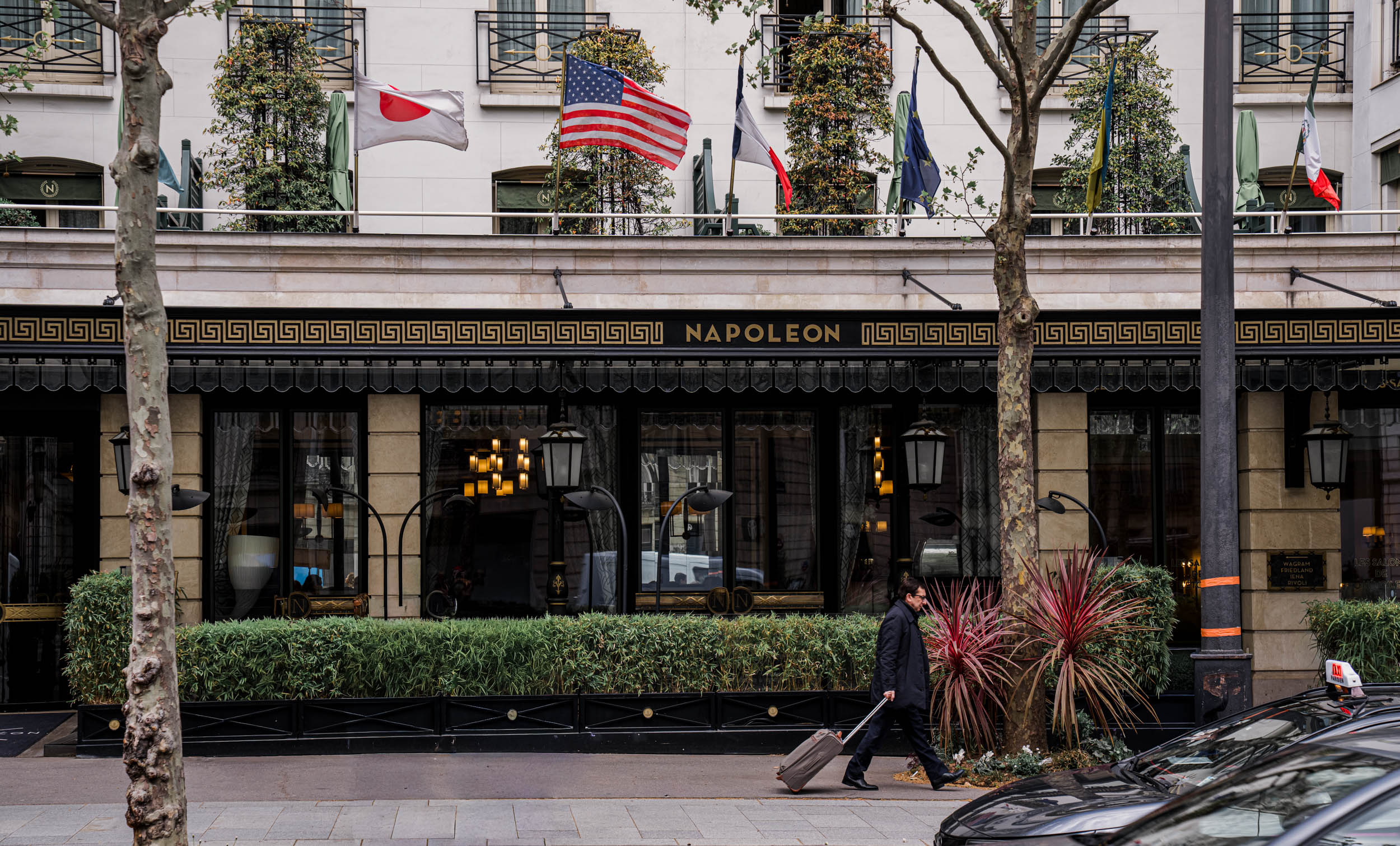
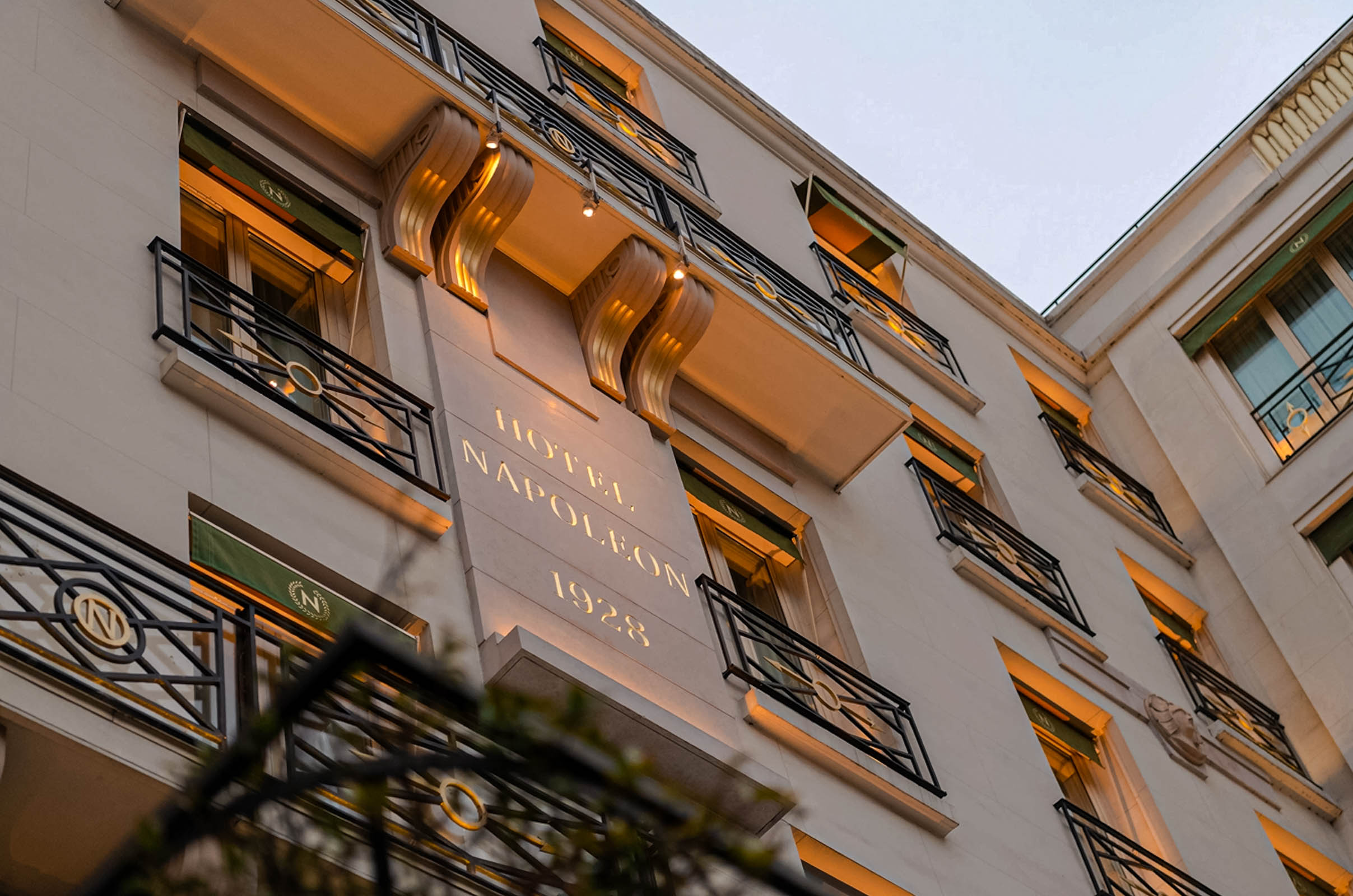
Namely, the rich Russian entrepreneur Alexander Pavlovich Klyagin gave it to his young French wife. He wanted to provide her with a home worthy of her studies and Parisian society. Interestingly, the hotel still belongs to the same family today, which is a real rarity in the world of luxury.
The Golden Triangle, in which the Hôtel Napoléon Paris is located, is one of the city’s most prestigious districts. This is where fashion, gastronomy and discreet wealth meet. The most beautiful avenues and shops are a few minutes’ walk away. A better starting point for discovering the city is hard to imagine.
Over the decades, many great names have passed through Napoleon’s doors. Hemingway, Fitzgerald, Picasso and Salvador Dali stayed there. Since 2011, the hotel has been a member of the prestigious Historic Hotels Worldwide association. Therefore, already at the threshold, I felt that I was entering not only accommodation, but a part of history.
HÔTEL NAPOLÉON PARIS: SUITE AVENUE, MY HOME ON AVENUE FRIEDLAND
For this special stay, I chose the Suite Avenue suite, connected to the neighboring room of the Superior category. Such a combination gave me the space and freedom of a real Parisian apartment. The apartment covers about 44 square meters and overlooks Friedland Avenue.
The room immediately won me over with its atmosphere. The high ceilings, king-size bed and imperial-era-inspired decor create a special feel. A sumptuous canopy in red and gold rises above the headboard, while white bed linen brings peace. I admit, I greeted the first mornings there without any haste.

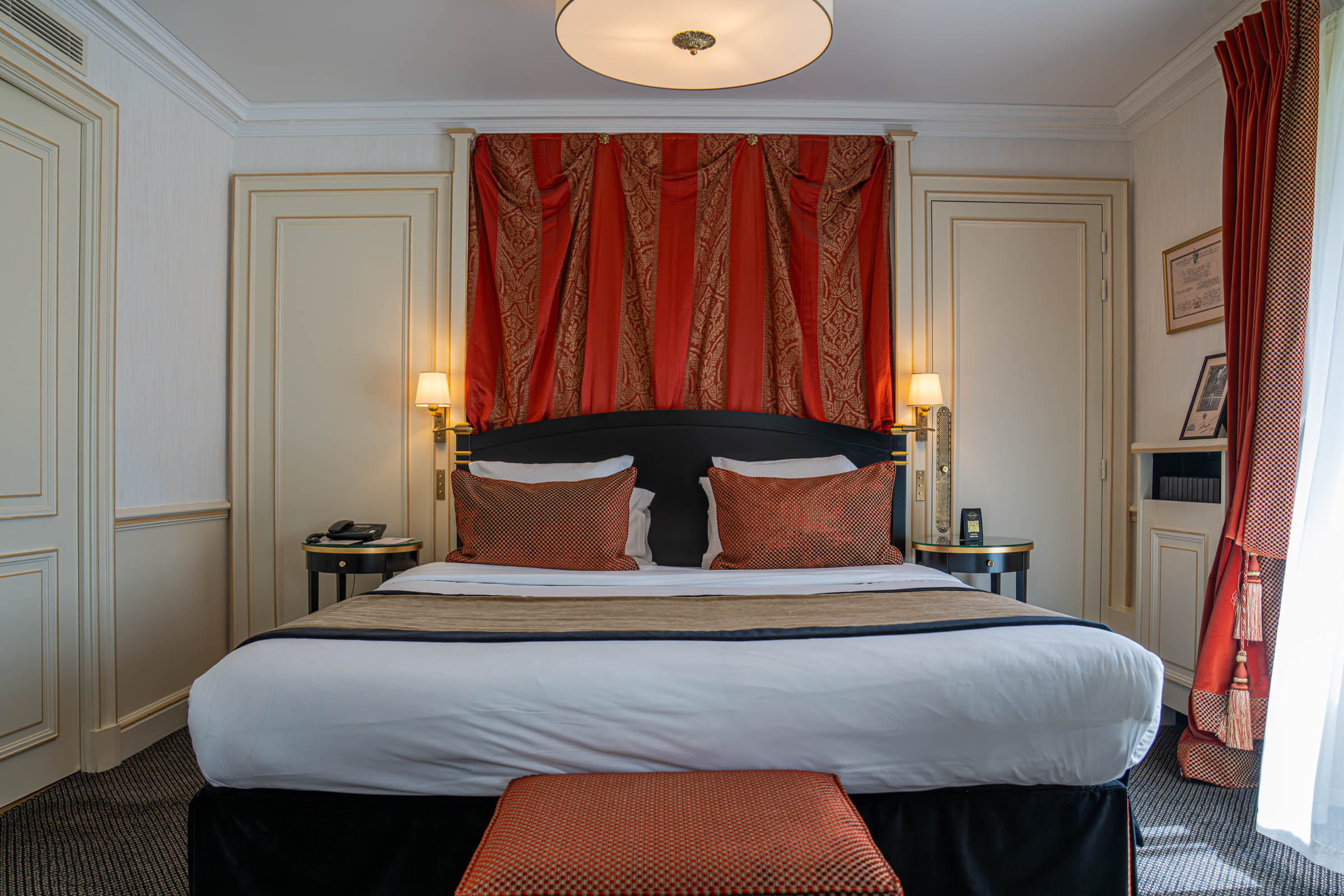
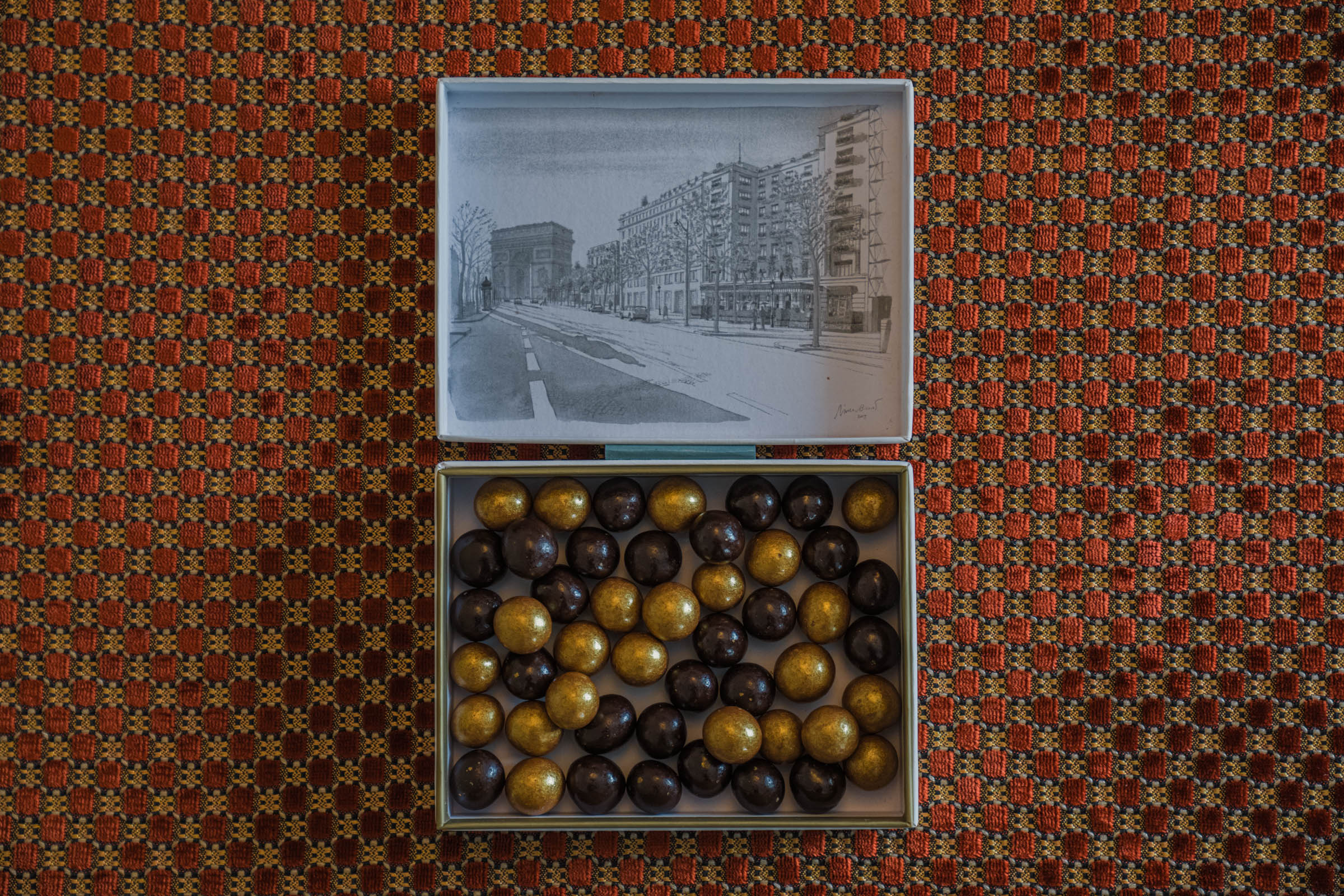
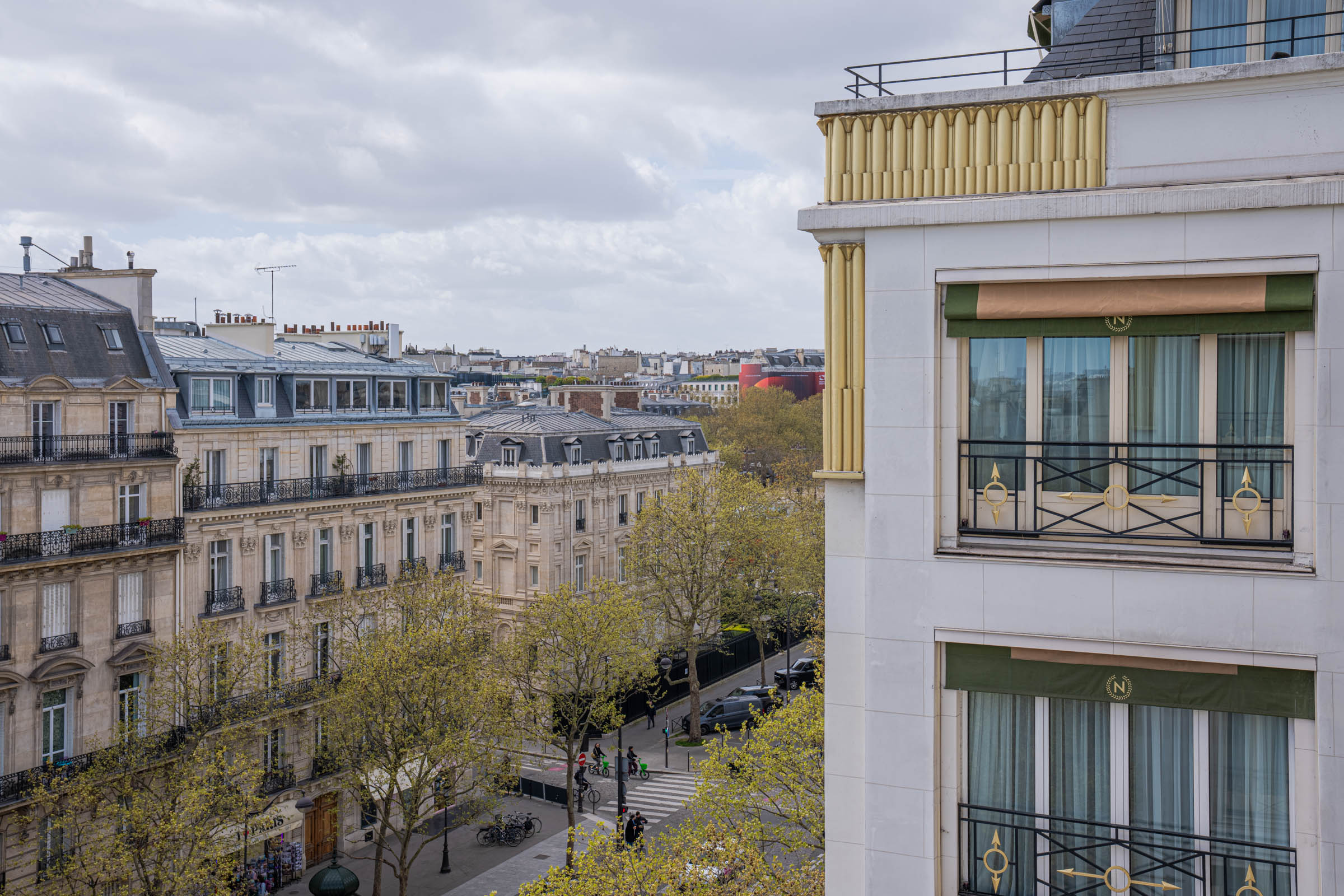
Fabrics, wood and subdued light created a sense of peace. Every detail seems to have been chosen to calm the eyes and thoughts. Technology is discreetly hidden behind a classic look. So old and new Paris live in the same room, in perfect harmony.
The connected Superior room gave me extra comfort and a sense of home. I used one area for rest, and the other for morning coffee and preparation. It is this division that makes this type of accommodation ideal for longer stays. The traveler thus gets the warmth of home with the standard of a top hotel.
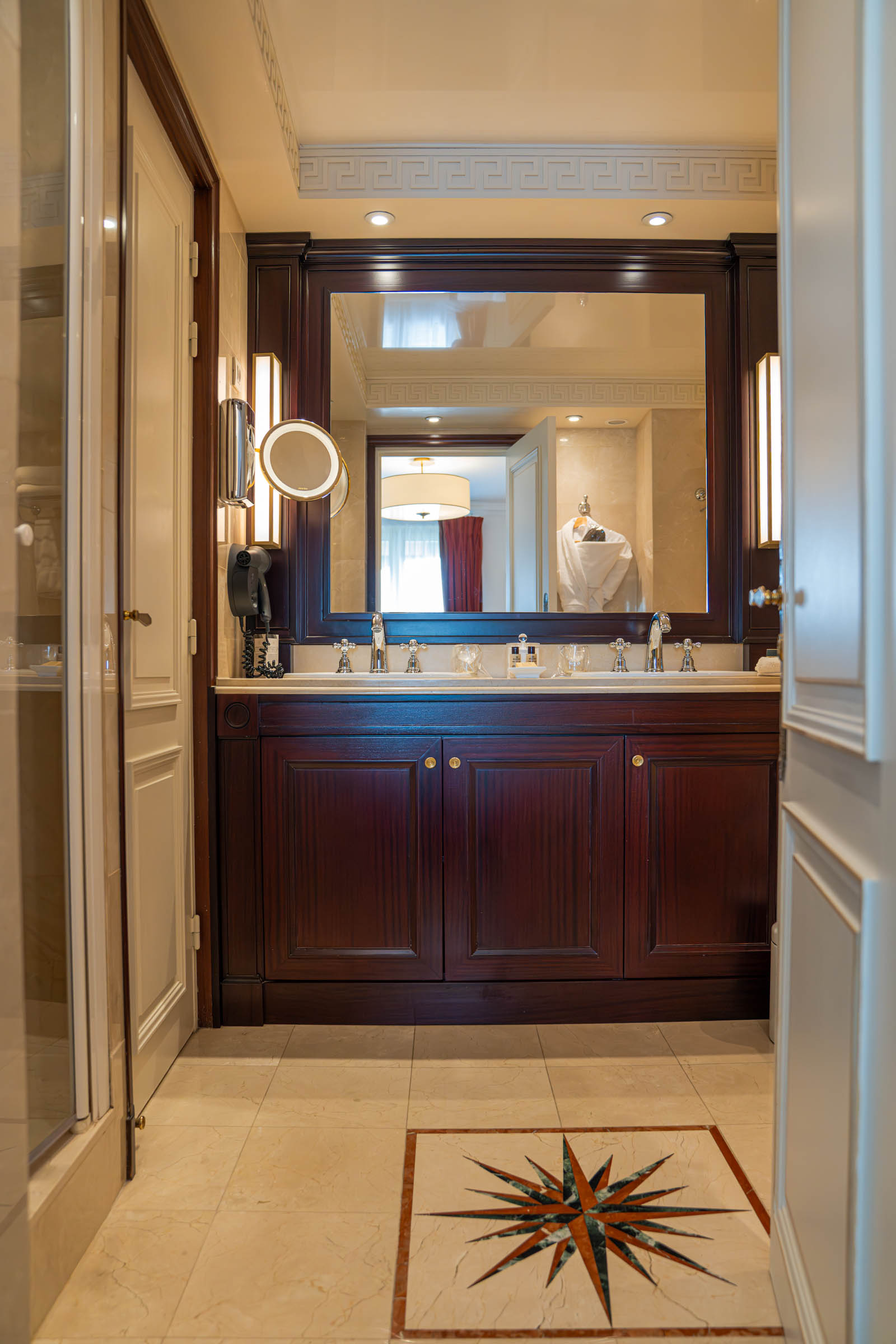

The bathroom completed the impression of imperial comfort. The double sink and marble surfaces exuded a lasting elegance. A mosaic in the shape of a compass stood out on the floor, as a small sign of travel. Selected French cosmetics were just a pleasant final detail.
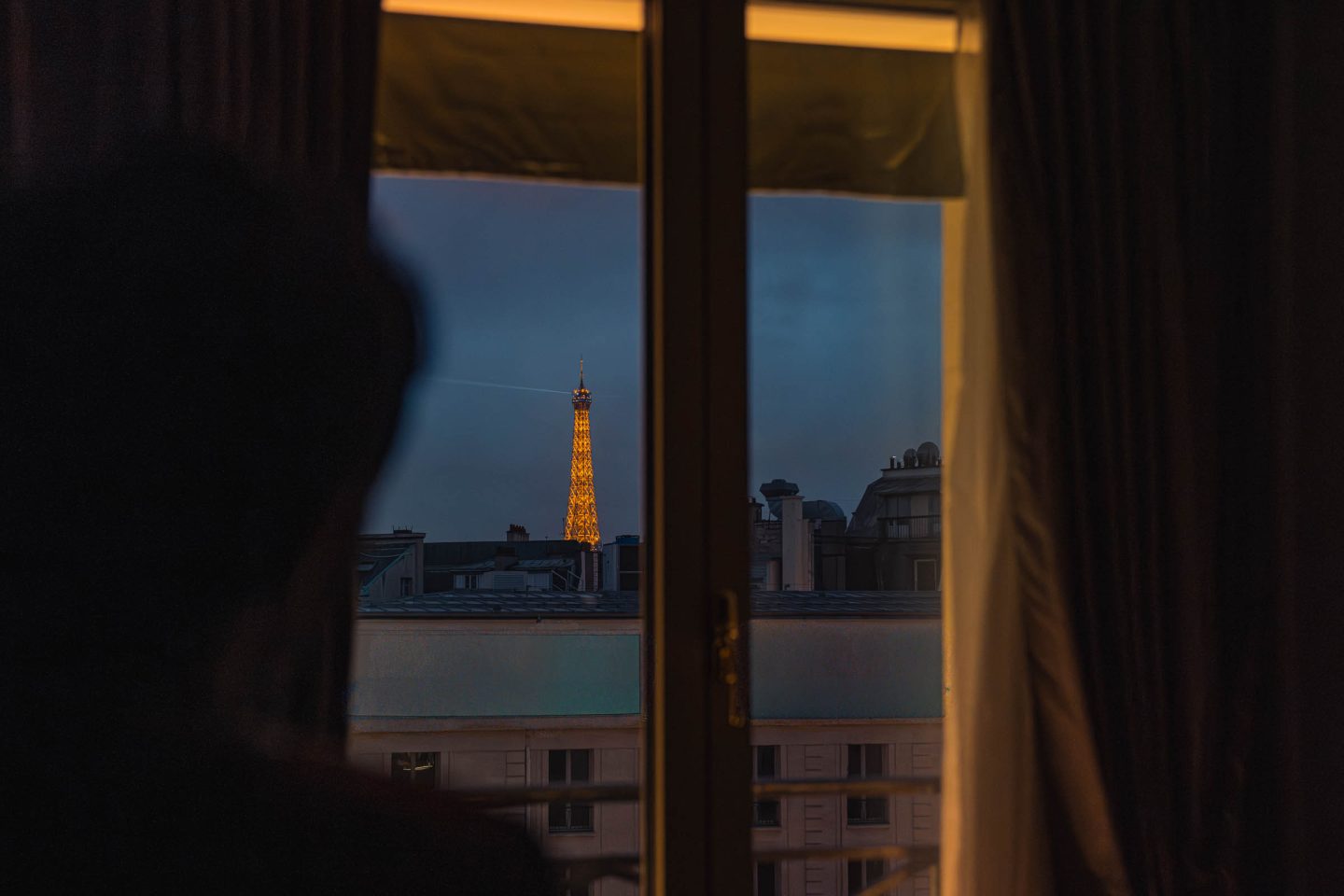
The most beautiful moment, however, was waiting for me in the evening by the window. As the city calmed down, the Eiffel Tower glowed in the distance. Its golden light flickered over the rooftops of Paris like a silent greeting. Then I realized why people return to this city all their lives.

HÔTEL NAPOLEON PARIS: LE 1807, THE LOBBY AND THE FAMOUS “N” BREAKFAST
The soul of every hotel is hidden in its common areas. The lobby of the Hotel Napoléon welcomed me with green velvet sofas and warm orange pillows. Next to it is a lounge with a fireplace, decorated with porcelain vases with imperial motifs. I happily sat there with a cup of coffee and followed the rhythm of the city.
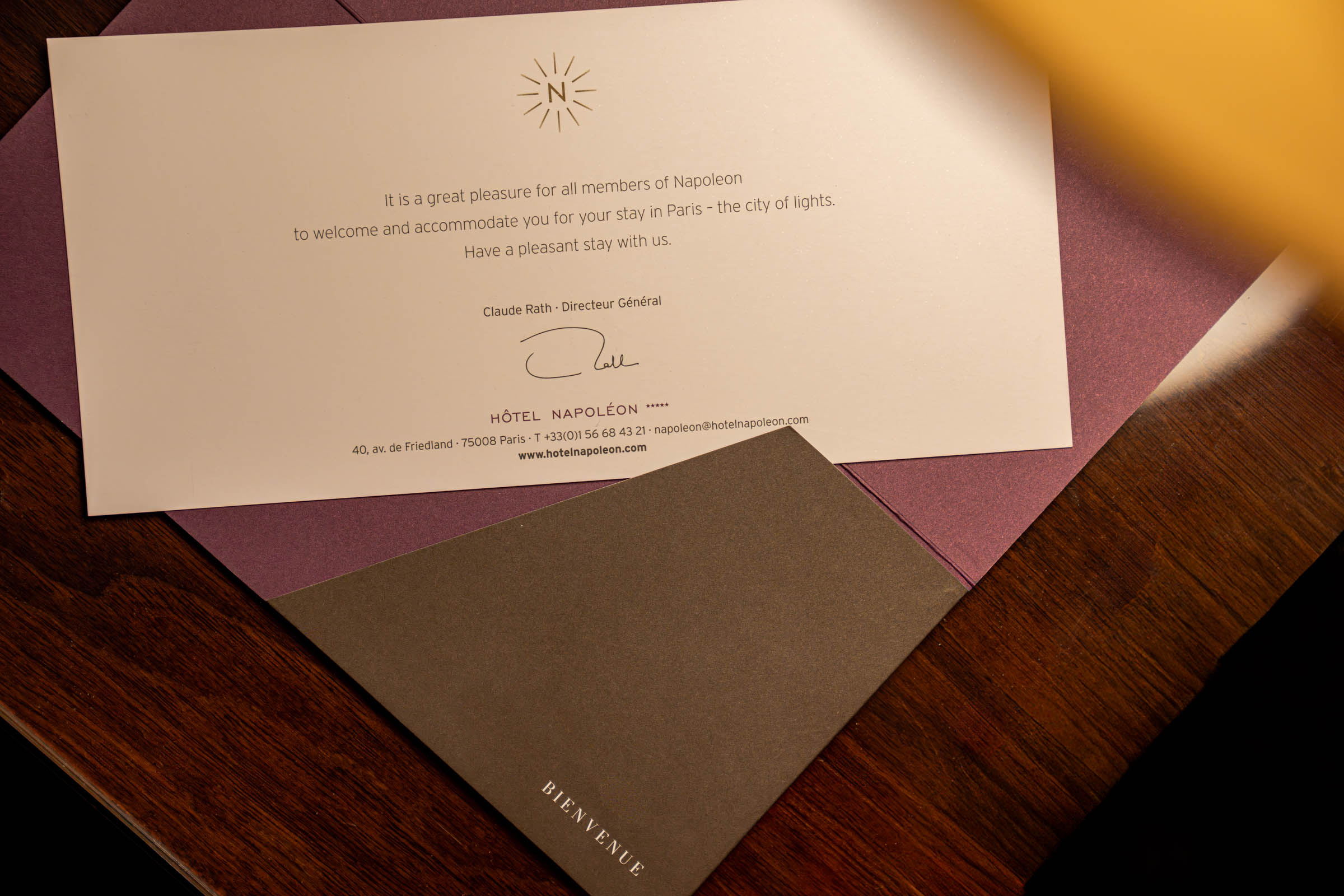
I was especially touched by the attention given to the guest. A personal welcome card was waiting for me in the room. It was signed by the general manager Claude Rath, with a warm greeting from the “City of Light”.


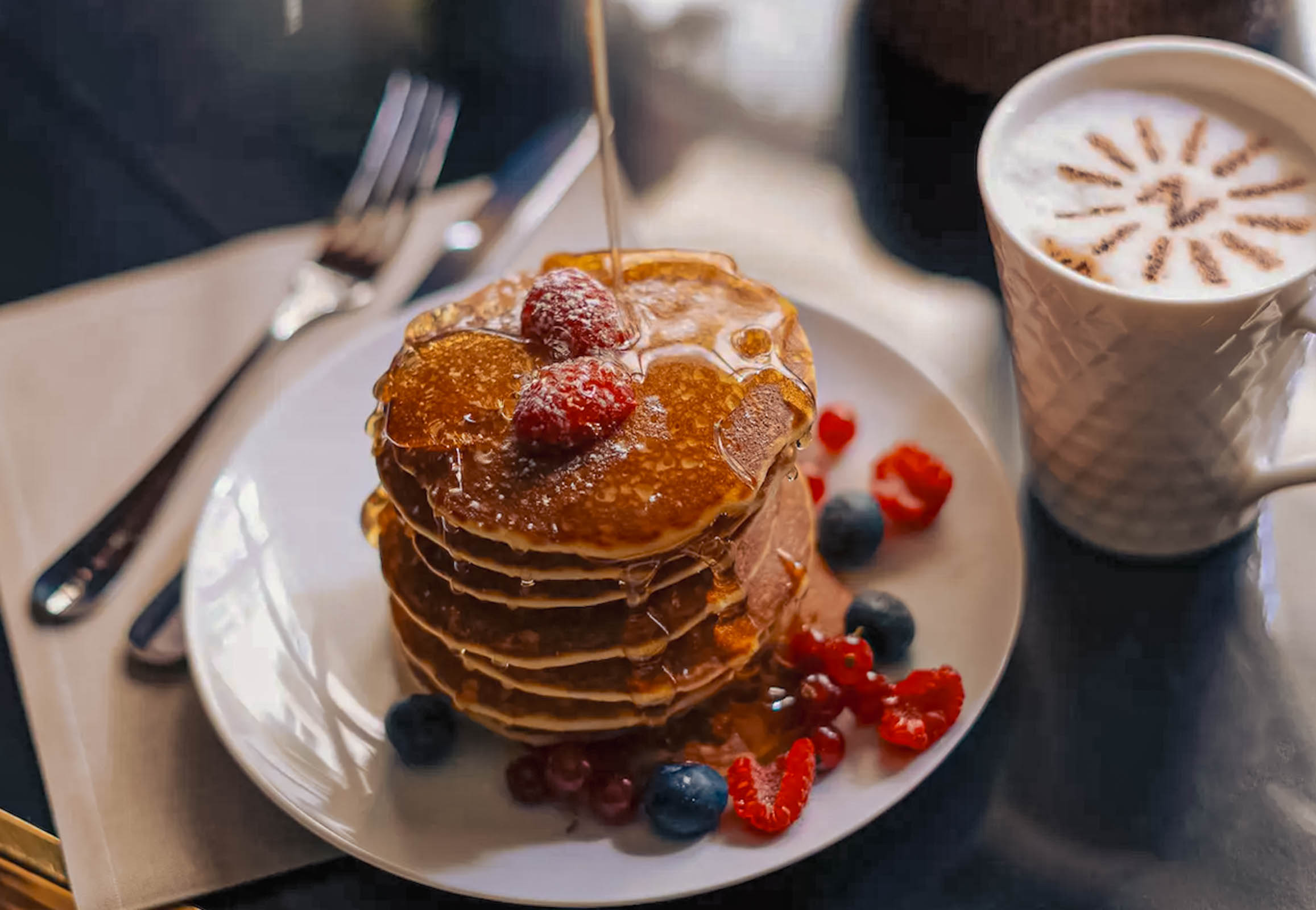
I spent my mornings in the Le 1807 bar, the heart of the hotel’s gastronomic offer. The space is decorated with wooden paneling, golden frames and dimmed light. Breakfast was generous and carefully served, just the way I like it. Pancakes with wild berries and cappuccino with the monogram “N” became my little ritual.


I especially appreciate the sense of space that prevails in the common lounges. Nothing here seems crowded or cold. Each piece of furniture was chosen with reason and taste. It is precisely from such details that the real warmth of a home is born.
The Hôtel Napoléon Paris also offers spa, fitness and concierge service with golden keys. It has been carefully designed even for travelers with small pets. All this together creates a feeling of discreet, unobtrusive opulence. That’s why I see Napoleon as the true definition of the Parisian lifestyle.


PARIS: TRIUMPHAL ARCH AND FIELDS OF ELYSY
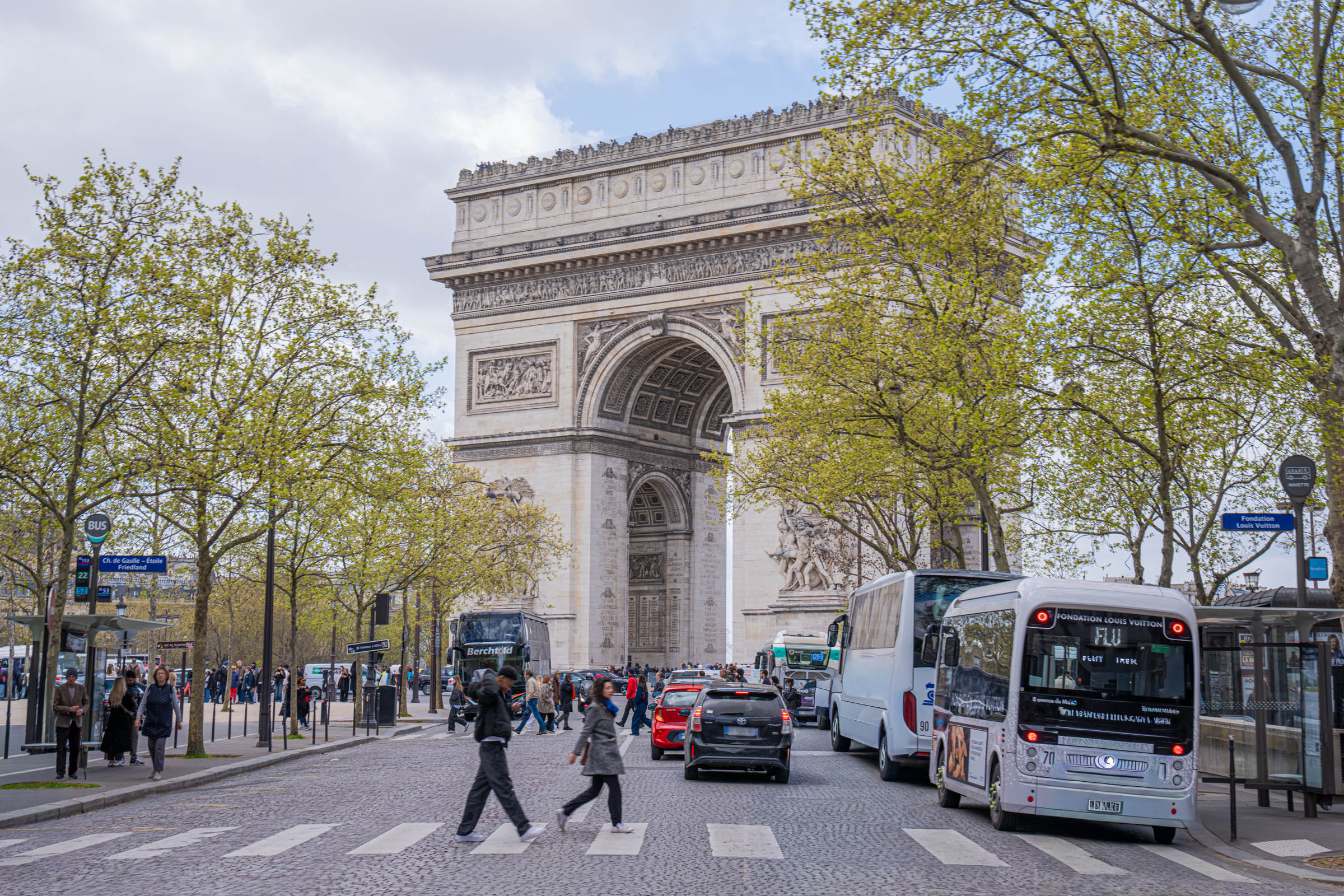
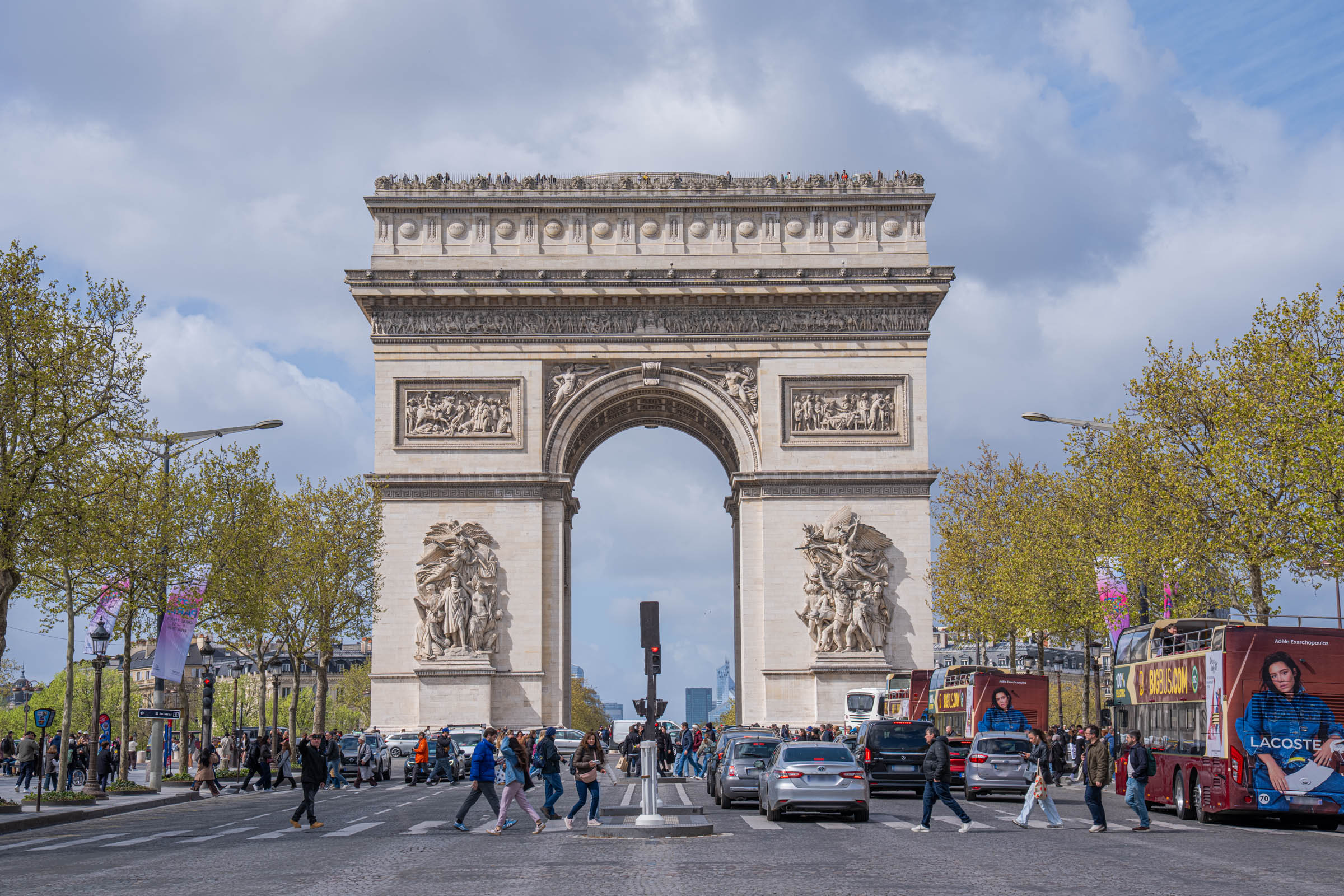
As soon as I left the hotel, the Triumphal Arch appeared in front of me. This magnificent monument was commissioned by Napoleon back in 1806. The occasion was his great victory at Austerlitz the year before. The gate was designed by the architect Jean-François Chalgren.
Construction, however, was not easy. The monument was completed only in 1836, long after the emperor’s death. It is about fifty meters high and was long considered the largest triumphal gate in the world. Under it lies the Tomb of the Unknown Hero from the First World War.
One of the best views of the city can be seen from the top of the gate. Climbing the stairs is rewarded with a breathtaking panorama. From there, you can clearly see how the avenues spread in all directions. From that height, Paris reads like a carefully drawn map.
The gate stands on the square from which twelve avenues spread like a star. The most famous among them are certainly the Elysian Fields. That famous avenue descends towards Concord Square in a gentle, elegant arc. A walk along it belongs to the obligatory Parisian program.
The fields are a combination of luxury shops, cafes and theaters. Tourists and Parisians alike move there, day and night. I liked to walk through them in the evening, when the lights of the shop windows come on. It was then that the avenue showed its true, shining face.

PARIS: CONCORD SQUARE AND LUXOR OBELISK
At the end of the Champs-Élysées opens the largest square in Paris. Concord Square seems almost theatrical with its width and symmetry. In its center rises an ancient Egyptian obelisk. It is one of the two obelisks that once stood in front of the temple in Luxor.
This stone pillar is over three thousand years old. It is covered with hieroglyphs celebrating the reign of Pharaoh Ramses II. Egypt gave it to France, and it arrived in Paris in 1833. Three years later he was installed in this place, in front of a huge crowd of people.


The square, however, also has a much darker past. During the French Revolution, the guillotine stood here. King Louis XVI and Queen Marie Antoinette were executed in that place. Today, only a modest plaque bears witness to this, while the square is ruled by peace and beauty.
On the north side of the square, a pair of neighboring palaces rises. They are separated by an elegant street that leads to the Church of the Madeleine. Those buildings are considered the pinnacle of the architecture of their time. This gives the square a festive, almost theatrical backdrop.
I was especially delighted by the view from here. From the square I simultaneously saw the obelisk, the fountains and, in the distance, the Eiffel Tower. Two sumptuous fountains with gilded figures further refine the space. Because of all this, I see the Concorde as a stage on which the entire history of Paris is reflected.


PARIS: AVENUE MONTAIGNE, THE TEMPLE OF HIGH FASHION
As a person who lives for style, Paris always draws me to Avenue Montaigne (L’avenue Montaigne). This elegant avenue is considered the world capital of haute couture. The windows of the most famous houses line up here, one more beautiful than the other. Walking through it is like visiting a living fashion gallery.
The avenue exudes calm, restrained opulence. There is no noise or crowd of big tourist streets. Instead, silence, attention to detail and impeccable service reign supreme. It is this spirit of quiet luxury that is closest to me.


I observed the decorations in the shop windows as small art installations. Each fashion house tells its own story through colors, materials and light. In addition, the very architecture of the buildings makes the experience complete. The white facades and wrought iron terraces here are part of the same aesthetic.
I also observed people moving here without hurry. Every passer-by seems to carefully choose their step and posture. In such an atmosphere, even an ordinary walk becomes a celebration. From this avenue, I always take some ideas for my own work.
For me, fashion is never just clothes. It is a reflection of the culture, crafts and heritage of a people. That’s why Avenue Montaigne always inspires me. That’s why I rarely come back empty-handed and even less often empty-handed.


PARIS: THE TUILERIES GARDEN, JARDIN DU PALAIS-ROYAL AND LOUVRE
Between Place de la Concorde and the Louvre lies the famous Tuileries Garden. This park was created in the 16th century, at the request of Queen Catherine de’ Medici. It was later remodeled by the famous gardener Andre Le Notre. Today it is a favorite meeting place of Parisians and travellers alike.
I got to know the garden at the most beautiful moment, in the middle of spring budding. Pink flowers towered over the statues and paths. There were green metal chairs around the large pool, and ducks and ducklings were swimming in the water. I sat down and just absorbed the sight.
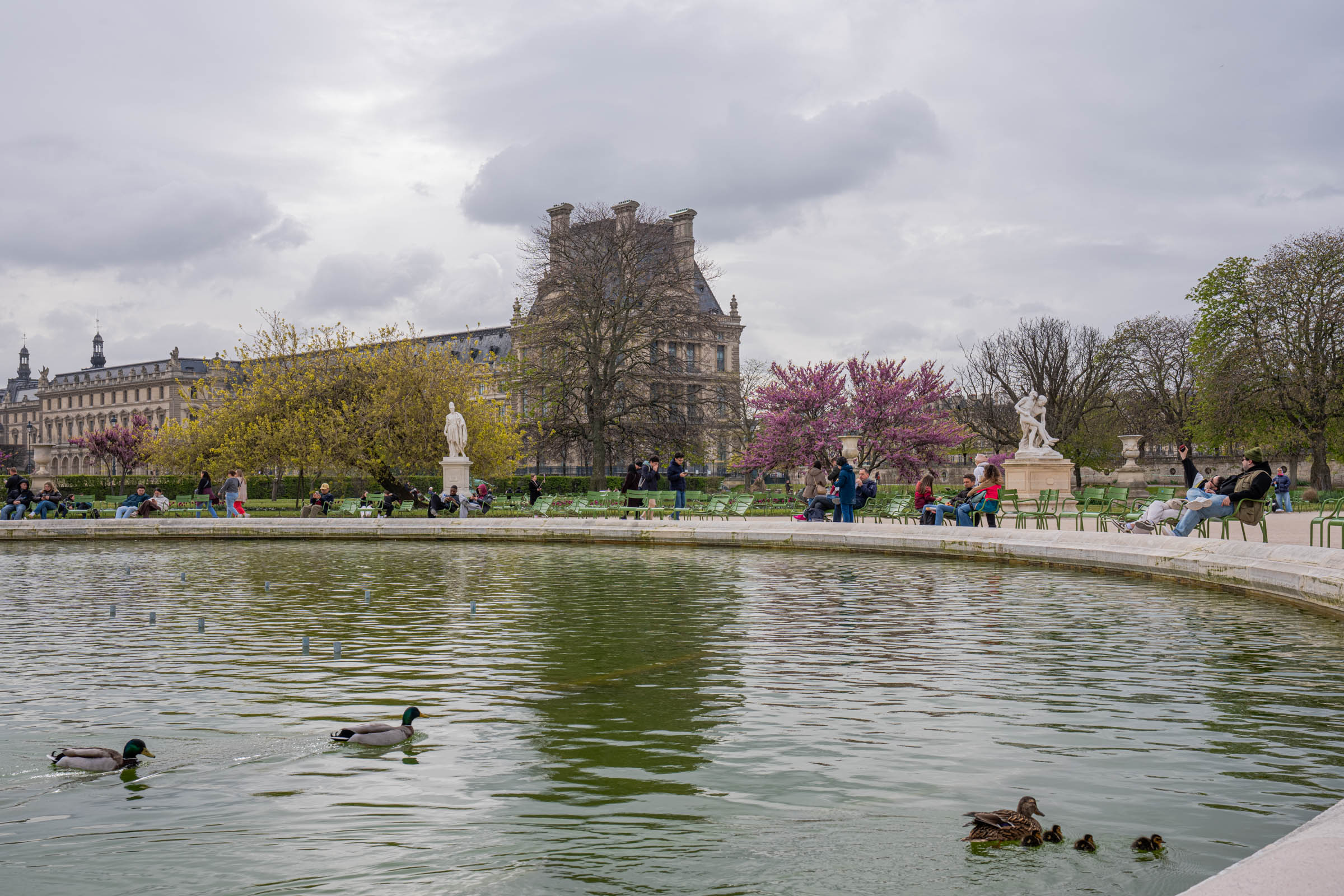


From the end of the garden there is a view of the Triumphal Gate Carousel. This smaller but lavishly decorated arch was built at the beginning of the 19th century. On top of it shines a gilded quadriga with horses. Behind him, the wings of the huge palace can already be seen.
The park is full of small joys for those who know how to look. Children launch sailboats on the water, while older people read in the shade. Stone statues peek out from the greenery like silent guardians of the past. All this creates a feeling of timeless, tame beauty.
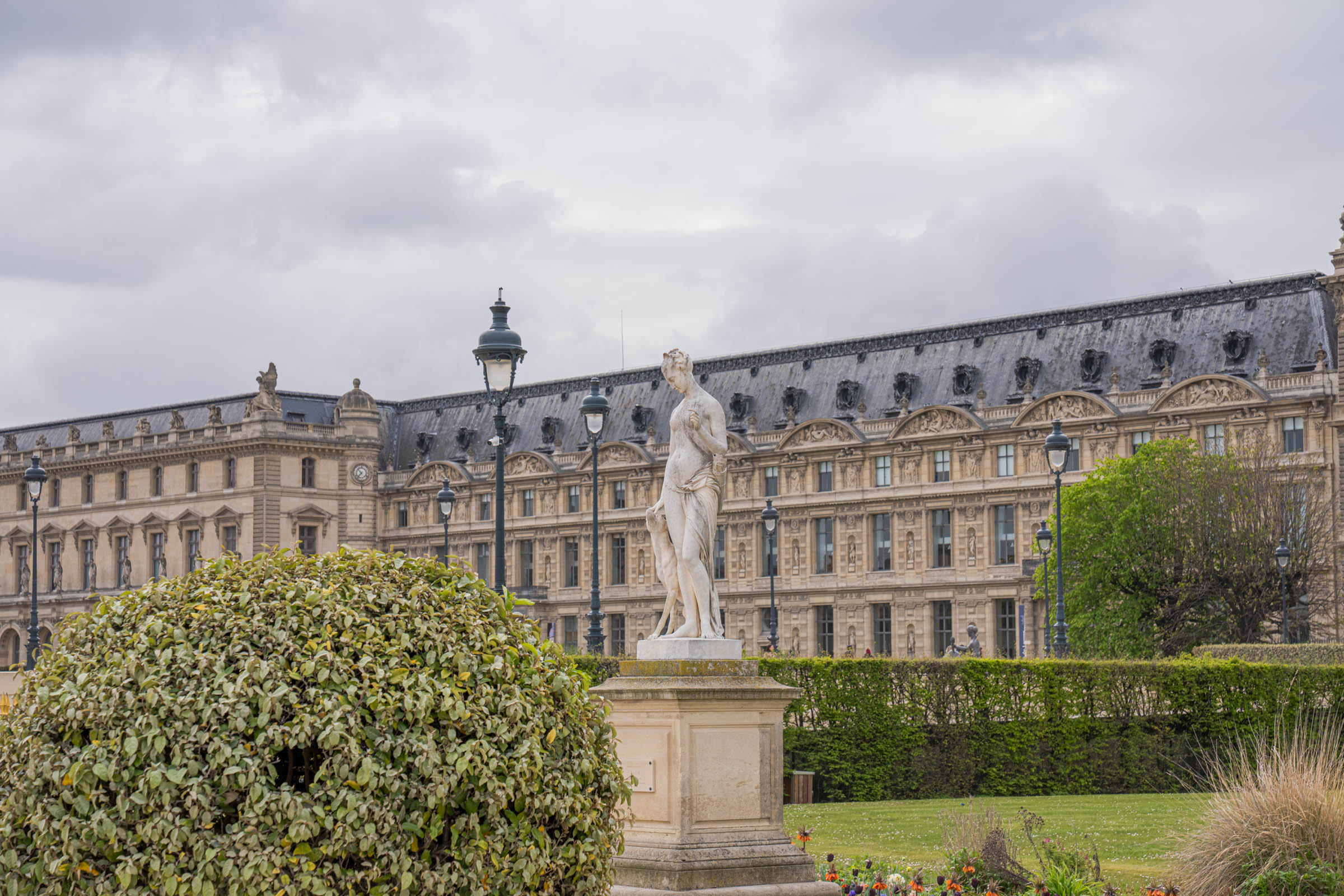

We are talking, of course, about the Louvre, the former royal residence. The garden and the palace together form one of the most beautiful parts of Paris. The walk from the fountain to the gate is like a journey through the ages. Therefore, I consider the Tuileries as a perfect introduction to the world’s largest museum.
LOUVRE MUSEUM: GLASS PYRAMID AND MONA LISA
The Louvre is the largest museum in the world and the former home of French kings. During the French Revolution, the palace became a public museum. Today, it stores tens of thousands of works of art. Among them are the Mona Lisa and the Venus de Milo.
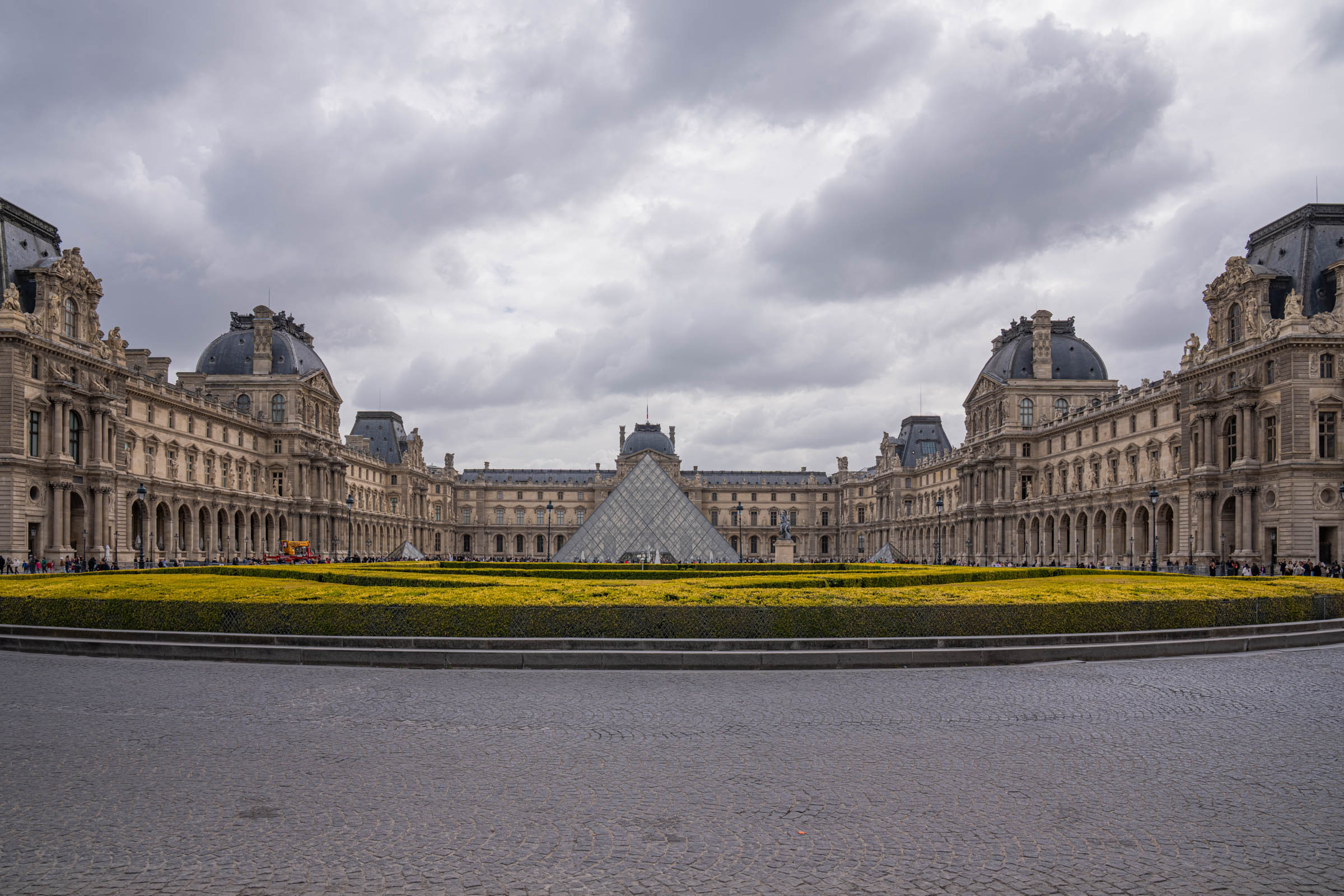
In front of the palace, I was greeted by the famous glass pyramid. This bold building was designed by architect Yu Ming Pei. It was opened in 1989 and at first caused heated debates. Over time, however, it became one of the symbols of the city.


I loved watching the play of light on the glass surfaces. The pyramid is reflected in the stone of the ancient palace and connects two ages. Rivers of visitors from all over the world moved around it. However, it is enough to go into the neighboring yard to find peace.
The museum itself is so big that it cannot be visited in one day. Many visitors flock straight to the famous Mona Lisa. It is, in truth, smaller than most expect. Still, a dense, quiet crowd always gathers around her.
That courtyard, the Cour Caré, is the oldest part of the Louvre. Silence and perfect Renaissance symmetry reign here. Through the stone arches and colonnades, views worthy of a painter can be seen. That’s why I spent more time here than in front of the pyramid itself.


PARIS: SQUARE VANDOM AND OPERA GARNIER
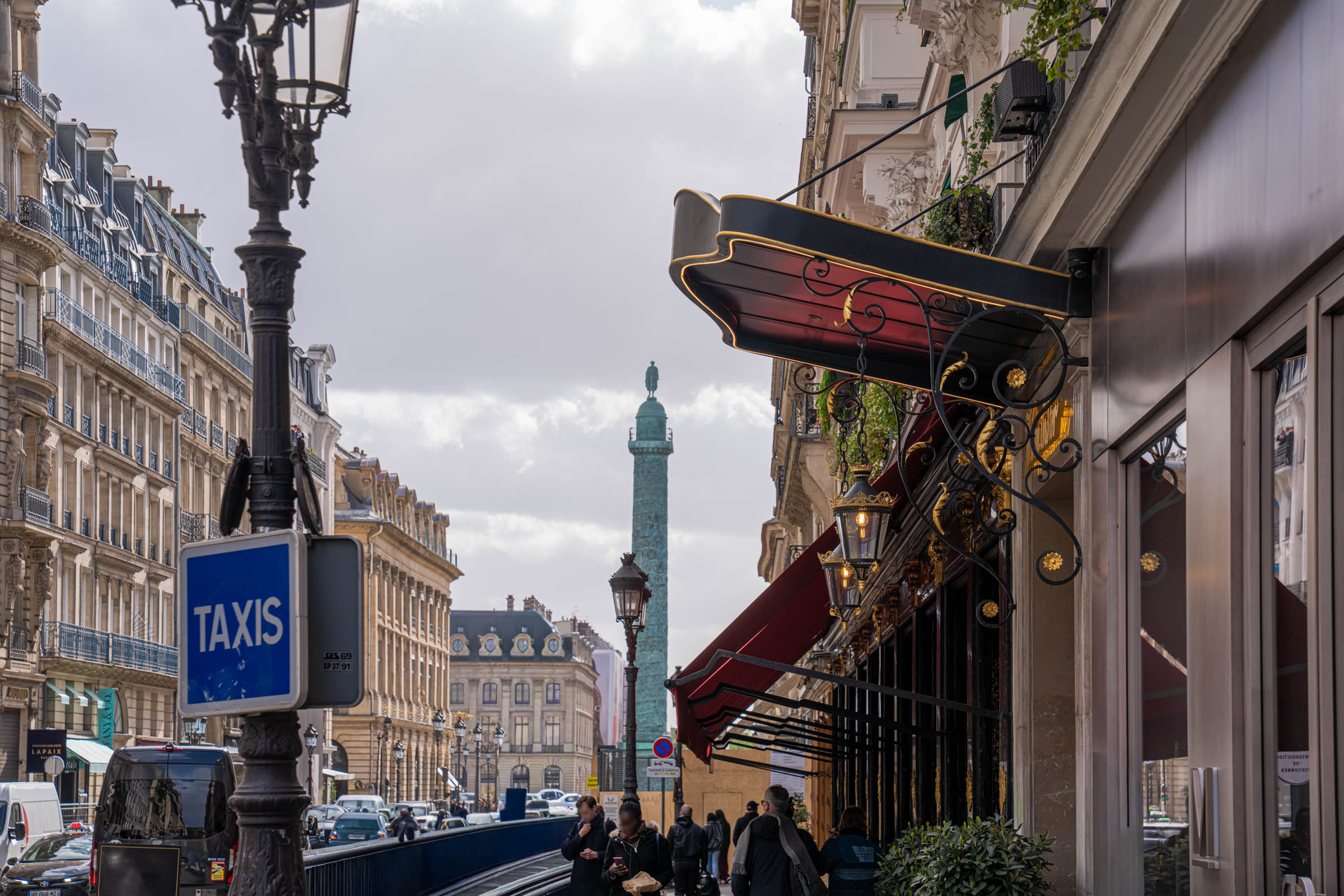
From the vicinity of the Louvre, it is easy to reach the elegant Place Vendôme. This octagonal square is one of the most elegant places in the city. It is surrounded by palaces where large jewelry houses operate today. In its center rises the tall Vendome column.
The square exudes a restrained, aristocratic elegance. There is no colorfulness here, just pure, classic harmony. I walked it slowly, enjoying the silence and the perfect proportions. Exactly such places reveal the other, quieter Paris.
The Vendôme pillar in the center carries its own story. It was built in honor of Napoleon’s victories at the beginning of the 19th century. On its top stands the figure of the emperor, high above the square. The pillar still acts as a silent guardian of this elegant space.

Not far from there is the opulent Opera Garnier. This building was designed by the architect Charles Garnier in the 19th century. It is one of the most beautiful operas in the world. Its facade looks like a huge gilded cake.
Garnier’s opera house was opened in the seventies of the 19th century. Its facade shines with sculptures, columns and gilded decorations. Even from the outside, you can sense how luxurious it is inside. Many consider it one of the masterpieces of its time.
This building also inspired the famous novel about the phantom from the basement. Inside, marble staircases, frescoes and huge chandeliers dominate. That sight leaves almost every visitor breathless. Therefore, I recommend the opera to those who do not plan to listen to music.

PARIS: GALLERY LAFAYETTE UNDER THE GLASS DOME
Paris can elevate ordinary shopping to the level of an experience. The best proof of that is the famous Lafayette Gallery. This department store looks more like a palace than a store. Its interior is breathtaking at first glance.
The central space is covered by a magnificent glass dome. This stained glass window comes from the beginning of the 20th century and shines with thousands of colors. When the light penetrates through it, the whole interior shines. I stood under the dome and simply forgot why I entered.

The Lafayette Gallery also offers a view that many overlook. From the upper floors and the terrace there is a panorama of the city’s rooftops. From there you can see the Opera House and parts of the city in the distance.
The department store, of course, is not only beautiful from the outside and overhead. Sections of the world’s largest fashion houses line up under the dome. Materials, colors and displays change like on the runway. It’s hard for a man who loves style to resist such a sight.
For me, the Lafayette Gallery is a monument to a special era. It was an era when trade and art went hand in hand. Today, they are visited by millions of people from all over the world. However, even in that crowd, the beauty of the building remains intact.
PARIS: ALEXANDER III BRIDGE AND MEETING THE EIFFEL TOWER
If Paris has the most beautiful bridge, then it is definitely the Alexander III Bridge. This magnificent bridge over the Seine was opened in 1900. It was erected on the occasion of the great World Exhibition of that year. Many consider it the most decorated bridge in the whole city.
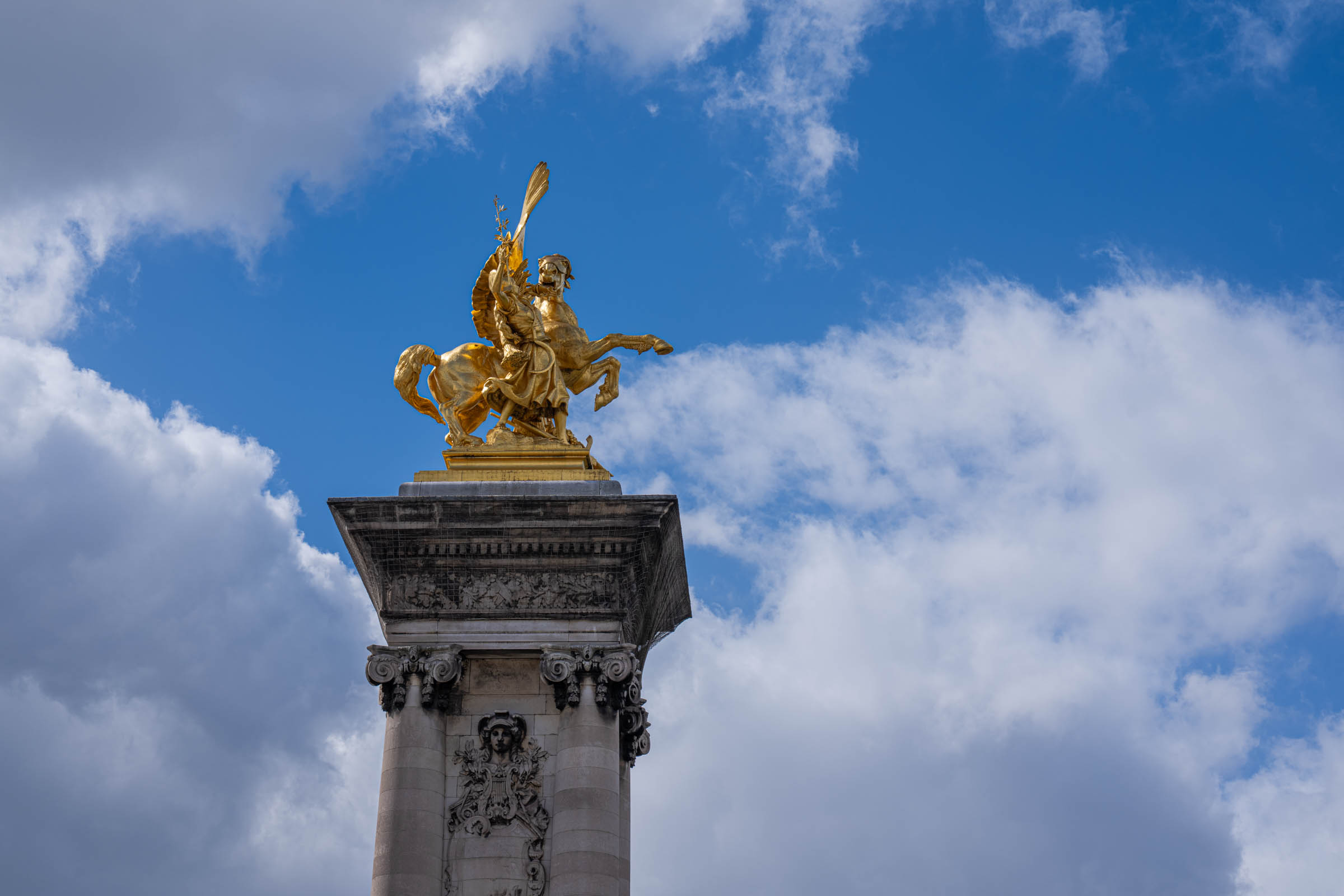
The bridge connects the Champs-Élysées area with the Home for Invalids. It is decorated with gilded statues, forged lamps and lush decorations. Every detail of it exudes the spirit of the so-called beautiful era. I walked along it slowly, pausing at each figure.

The bridge offers one of the most beautiful views of the city. The Seine flows below, and the Eiffel Tower rises in the distance. Right there I stopped and surrendered to the moment. The city looked almost unreal in that frame.
The bridge connects two coasts, but also two holy cities. On one side there are luxurious palaces, on the other green areas. Its steel structure is carefully designed so as not to obscure the view. That’s why the view slides freely down the entire river from him.
After the bridge, I started towards the tower itself, step by step. The closer I got to her, the more majestic she seemed. Its steel structure takes on a warm, coppery glow in the sun. That’s how I got to the most recognizable symbol of France.

PARIS: THE EIFFEL TOWER, THE IRON LADY CLOSE UP
The Eiffel Tower deserves special attention. It was built between 1887 and 1889. It was officially opened on May 15, 1889, for the World Exhibition. That exhibition marked the centenary of the French Revolution.
The tower was built by the company of engineer Gustave Eiffel. The conceptual solution, however, comes from two of his engineers. The construction was designed by Maurice Köklin and Emil Nougier, together with the architect Stefan Sovestro. Parisians quickly named her the “Iron Lady”.
The numbers still sound impressive today. The tower with the antenna reaches a height of about 330 meters. From 1889 to 1930, it was the tallest building in the world. The highest platform at 276 meters is still the highest public viewing platform in the European Union.
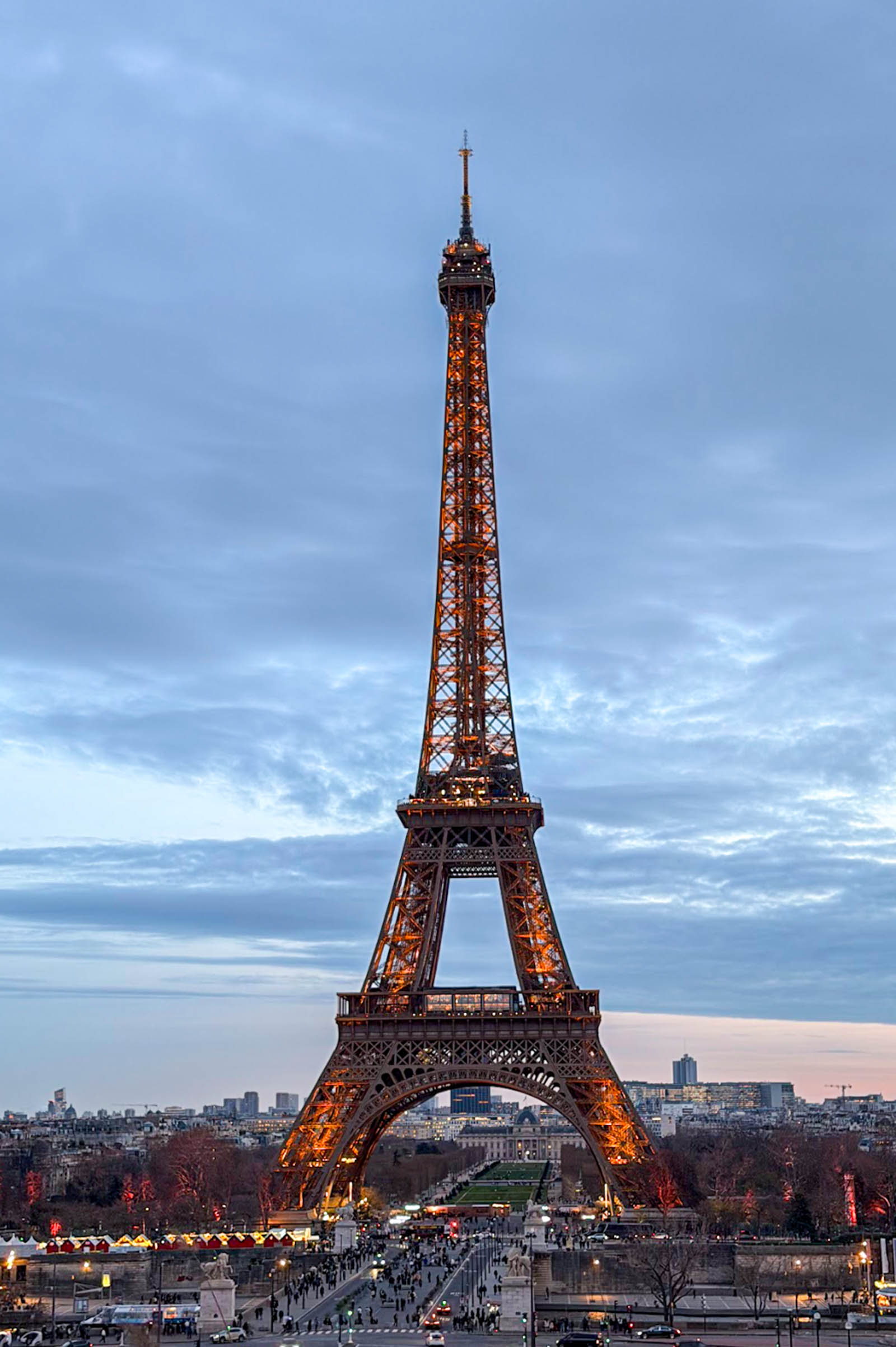
The numbers, however, don’t tell the whole story about this steel wonder. The tower initially caused harsh criticism from many artists. Over time, however, it became the most recognizable symbol of France. Today it is the most visited paid monument in the world.
The most beautiful view of the tower was offered to me from the Trocadero. There, in front of Shayo Palace, there are magnificent bronze statues. From that terrace, the tower seems to be floating over the city. In the evening, when the golden light comes on, the scene becomes unforgettable.

PARIS: ISLE OF SITE, NOTRE-DAME AND CONCIERGERS
The heart of Paris beats on a small island in the middle of the Seine. On the island of Site, a whole city was born many centuries ago. Its most famous church, the Notre-Dame Cathedral, also stands there. This Gothic beauty is over eight centuries old.
The cathedral was badly hit by a big fire in 2019. The fire then destroyed its famous tower and part of the roof. What followed was a restoration the world rarely remembers. The doors were reopened in December 2024, to the delight of the whole world.


I stood in front of the facade for a long time, staring at every detail. I was particularly delighted by the large rosette surrounded by stone figures of kings. Above the entrance are lined sculptures, arches and towers of incredible precision. So close, the cathedral seems almost alive.
For me, the restoration of the cathedral is a special story of perseverance. Hundreds of craftsmen have brought forgotten crafts back to life. Wood, stone and glass are assembled patiently, piece by piece. So Notre-Dame shone again, more beautiful than ever.
The Concierge and the Palace of Justice are also located on the same island. Conciergerie was once a royal palace and then a terrible dungeon. Queen Marie Antoinette was imprisoned there before her execution. From the banks of the Seine, with its towers, it looks like a real medieval castle.

PARIS: MONTMARTRE, SACRÉ-CŒUR BASILICA AND MOULIN ROUGE
No stay in Paris is complete without going to Montmartre. This hill in the north of the city has been attracting artists for centuries. Its narrow streets and staircases preserve the spirit of bohemian Paris. Climbing to the top is rewarded with one of the most beautiful views in the city.
At the very top rises the white basilica of Sacré-Coeur. It was built between 1875 and 1914, in the neo-Byzantine style. It was erected as a vow after the difficult years of war and unrest. From its steps, Paris stretches as far as the eye can see.


From the terrace in front of the basilica I watched the sea of roofs. The famous towers and domes could be seen in the distance. The city seemed endless and unreal calm from there. I stayed there for a long time, not wanting to move.
The narrow streets of Montmartre preserve the spirit of the old painters. Some of the world’s greatest artists used to create here. Even today, painters offer their canvases in small squares. That’s why this area seems like a living, open studio.
Another famous symbol awaits at the foot of the hill. The Moulin Rouge, the famous cabaret with the red mill, was opened in 1889. It was founded by Joseph Ohler and Charles Ziedler. The red mill on the roof has been shining over this area for a century and a half. In the evening, the surrounding streets are filled with lights and footsteps. Once bohemian, today the colorful neighborhood still attracts the curious. That’s why Montmartre for me is a city in miniature, with its own rhythm.
It was here that the modern cancan was born, a dance that traveled the world.

PARIS: A WALK ALONG THE BRIDGES OF THE SEINE
The Seine is not just a river, but the main lifeblood of the city. Its banks and bridges tell the story of all of Paris. I loved walking along the quays and crossing from one shore to the other. Each bridge reveals a new angle and a new mood.
Pon Nef, whose name paradoxically means “New Bridge”, is the oldest preserved bridge in the city. From it I watched the tourist boats slide under the stone arches. The river carried the reflections of the sky and surrounding buildings. The scene seemed almost painterly.
A little further on is the pedestrian Bridge of Art. It leads to the magnificent Institut de France with its golden dome. For years, couples in love hung padlocks on its fence. Although many have been removed, the romantic spirit of the place still lives on.
The walk continued towards Šatla Square and its Palm Fountain. There, the city once again rippled with bicycles, trams and footsteps. Sena, however, remained calm and steadfast. It is this balance of movement and peace that makes the Parisian quays irresistible.

PARISIAN GASTRONOMY AND THE ART OF ENJOYMENT
Paris is known not only with the eyes, but also with the palate. The French capital raises gastronomy to the level of true art. The very first morning revealed to me why this was so. The smell of fresh croissants wafted down the street before I even left the hotel.
Bakeries are sacred here, and the baguette is almost a national symbol. Parisians go to get fresh pastries every morning, as if it were a silent ritual. The crispy crust and soft center make it irresistible. With good butter and coffee, such a breakfast is worth more than many lunches.
For lunch and dinner, the city offers countless options. Classic inns serve dishes that have not changed for decades. There are soups, cheeses, seafood and carefully selected wines. Each dish tells the story of the region from which it originates.
At the end come the famous sweet bites. Macarons in all colors beckon from pastry shop windows. They are accompanied by fruit cakes, eclairs and creamy desserts. However, the real luxury here is not the quantity, but the attention to each bite.
It is worth going outside the main streets in search of flavors. Small, family-run shops often hide the best bites. Here, cheese, bread and wine are chosen with sincere care. It is in such houses that Paris shows its warm face.
For me, the French table is a school of patience and enjoyment. No one is in a hurry, because a meal is a moment, not an obligation. This is exactly where the secret of the French attitude towards life is hidden. Therefore, I turned every meal in Paris into a small holiday.

PARIS: SEINE RIVER CRUISES
Paris is also loved from the water, not only from the land. A cruise on the Seine reveals the city from a completely new angle. The ships slide slowly under the stone bridges, one after the other. From the deck there are scenes that are hard to connect on foot.
The banks of the Seine in the city center are on the World Heritage List. This is no accident, because the most beautiful buildings are right next to the river. There is the Louvre, the Conciergers, the Institute of France and countless palaces. The river, like a string of pearls, unites them into one whole.
During the day, the water carries reflections of the sky and facades. In the evening, however, the scene becomes almost magical. The lights are turned on one by one and reflected in the dark water. The city then shines in a way that must be seen live.

I especially remember the moment when the sun went down. The sky was colored in gentle tones, and the river faithfully mirrored them. The Eiffel Tower began to glow in the distance. The silence on deck said more than any words.
From the water, you can also see how layered the city is. Gothic towers stand alongside opulent domes and modern bridges. Each era left its mark along the coast. The river carries them all calmly, without a single superfluous word.
I recommend the cruise to everyone, regardless of the number of arrivals. It doesn’t last long, but it leaves a deep impression. In addition, it fits perfectly into the easy rhythm of the city. The Seine, in the end, is the real thread that holds all of Paris together.
PARIS IN SPRING: COLORS, SMELLS AND THE RHYTHM OF THE CITY
Paris is beautiful at any time of the year, but spring is especially good for it. That’s when the city wakes up from its winter silence and breathes with its full lungs. The rows of trees along the avenues are renewing their green clothes. Rows of tulips are blooming in the castle gardens.
I just got to know the city this spring. The Tuileries garden was full of blossoming trees in pink tones. Ducks were leading their newly hatched ducklings around the pool. Such scenes bring warmth to every frame.

The light in spring has a special, soft quality. It is not sharp like in summer, nor gray like in winter. Because of this, the photos acquire gentle, almost painterly tones. Every hour of the day, moreover, brings a new shade over the roofs.
The temperature is then pleasant for long walks. The city can be explored on foot without fatigue and without the crowds of high seasons. Cafes are moving their tables onto the sidewalks, and life is moving outside. This is how Paris shows its most relaxed face.
Of course, spring weather can also be moody. Clear skies quickly give way to clouds and vice versa. However, it is precisely this variability that gives the city its dramatic beauty. Therefore, I always carry a light jacket and a camera close at hand.
PARIS: PRACTICAL TIPS FOR TRAVELERS
Paris is best explored on foot, and only then by public transportation. Many sights are located next to each other, especially in the center. That’s why I recommend that you bring comfortable shoes and a lot of patience. The most beautiful sights are often hidden in side streets.
For crossing the city, the metro is fast and reliable. Hotel Napoléon, for example, is located right next to the Charles de Gaulle Etoile station. From there, you can reach almost any point in a few minutes. Tickets are easy to buy, and the lines are clearly marked.
The time of visits is worth planning carefully. Big sights, like the Louvre, are best enjoyed early in the morning. Then the crowds are smaller and the light for photos is the most beautiful. In the evening, on the other hand, the city takes on a romantic, golden glow.

It is worth booking tickets for the most visited places in advance. Thus, long waits at the entrance are avoided. Many churches and squares, on the other hand, are open for free. All they need is a little curiosity and good shoes.
Finally, leave room for spontaneity. Sit in a cafe, order an espresso and simply watch the passers-by. It is precisely in such moments that Paris shows its true soul. The best memories, in fact, are rarely created according to plan.
WHY I ALWAYS FIND MY WAY BACK TO PARIS?
At the end of this letter, it remains for me to summarize my impressions. Paris, the city of light, won me over again without any effort. It combined opulence and simplicity, history and modern life. This is precisely why I return to it again and again.
The choice of accommodation also made this stay special. Hôtel Napoléon gave me the warmth of home with true imperial elegance. His story, location and attention to the guest left a deep mark. Such places change the whole travel experience.


This time I got to know the city slowly and with full attention. From the Arc de Triomphe to Montmartre, every corner told me its own story. Sena gently tied it all together. That’s how a trip that I will remember for a long time was born.
Most of all, this city reminded me to slow down. Real beauty is rarely discovered in a hurry. It requires time, attention and open eyes. Paris, once again, patiently taught me that.
Therefore, Paris is not visited only once. It reveals itself in layers, through years and through moods. Each return brings new light and new detail. And I already know that this is not my last letter from France.
Feel free to leave your impressions, comments or questions below the text or contact me via email and social networks. All information is available on the CONTACT page.
I will definitely come back again, because this city just finds a way to your heart!
With Love from Paris,
Mr.M

This post is sponsored by the United Nations World Tourism Organization (UN Tourism) and the Hôtel Napoléon Paris, as well as other local partners who selflessly supported this project. This post is my personal and honest review of the destination experience.
Hello Marko, what a beautifully measured letter from Paris. I have always thought the Golden Triangle is the only place to base yourself, and the Napoléon sitting three minutes from the Arc de Triomphe proves the point perfectly. A few springs ago I stayed at the Ritz on Place Vendôme, which is faultless but can feel almost like a museum you are afraid to touch. Your Suite Avenue, with its red and gold canopy and that connecting Superior room, sounds far warmer and more like an actual home. The detail that the same family has owned the hotel since 1928… Read more »
Ciao Marko, che piacere ritrovare il tuo blog dopo i racconti dall’Asia. Ho sempre amato l’ottavo arrondissement perché unisce eleganza e una calma rara per il centro di Parigi. Mi ha colpito molto la storia dell’Hôtel Napoléon, nato nel 1928 come dono d’amore dell’imprenditore russo Klyagin alla giovane moglie francese. La Suite Avenue di quarantaquattro metri quadri con la camera Superior comunicante sembra perfetta per un soggiorno lungo. Una domanda: la vista sulla Tour Eiffel illuminata si gode davvero dalla finestra della suite, o solo da alcune camere ai piani alti? Vorrei capire se valga la pena richiederla espressamente al… Read more »
Hallo Marko, dein Brief aus Paris ist wieder einmal ein Genuss. Die Lage an der Avenue de Friedland ist ideal, denn von dort erreicht man die Champs-Élysées in wenigen Minuten zu Fuß. Vor einigen Jahren wohnte ich im Le Bristol in der Rue du Faubourg Saint-Honoré, das mit seinem Dachgarten und dem Pool großartig ist. Dennoch hat dein Hôtel Napoléon einen Charme, den ich an den ganz großen Häusern manchmal vermisse, nämlich das Gefühl, in einer echten Familiengeschichte zu wohnen. Dass Hemingway und Fitzgerald dort verkehrten, verleiht dem Haus eine literarische Aura. Der Empfang mit der persönlichen Karte von Direktor… Read more »
Bonjour Marko, quel bonheur de lire une lettre aussi sensible sur ma ville. Vous avez parfaitement saisi cette idée que Paris se donne par couches, à travers les années et les humeurs. J’habite près du parc Monceau, à deux pas de votre hôtel, et je passe souvent devant la façade illuminée de l’Hôtel Napoléon sans jamais y être entré. Votre description du hall aux canapés de velours vert et des vases en porcelaine impériale m’a donné envie d’aller y prendre un café. Le Triangle d’or reste à mon sens le vrai cœur du luxe discret parisien. Merci de redonner ses… Read more »
Beste Marko, wat een sfeervol reisverhaal over Parijs. Ik volg je blog sinds je serie over Praag en je weet de ziel van een stad altijd goed te vangen. De ligging van het Hôtel Napoléon, op drie minuten van de Arc de Triomphe en naast metrostation Charles de Gaulle Étoile, lijkt me ideaal om de stad te voet te ontdekken. Wij plannen komend voorjaar een week in Parijs en twijfelen nog over de buurt. Zou je het achtste arrondissement aanraden voor iemand die rust wil maar toch alles binnen loopafstand wil hebben? En is de wijk ‘s avonds ook prettig… Read more »
Marko, I have followed your letters since the Prague travelogue and the Mozart Prague review, and this Paris piece is every bit as evocative. There is a quiet confidence in how you let the city reveal itself slowly rather than rushing the landmarks. I last stayed in Paris just before the pandemic, at the Park Hyatt Vendôme, which I loved for its calm modern lines. Reading your account of the Napoléon, though, I think I would now choose history and that imperial canopy over minimalism. The compass mosaic on the bathroom floor is the kind of detail that stays with… Read more »
Hola Marko, magnífica carta desde París, como siempre. Me encanta que hayas elegido alojarte en el Triángulo de Oro, porque concentra lo mejor de la ciudad sin el bullicio de las zonas más turísticas. La historia del Hôtel Napoléon, regalo de un empresario ruso a su joven esposa francesa en 1928, parece sacada de una novela. Visité París en otoño hace tres años y recuerdo que el barrio alrededor de la avenida Friedland conserva una elegancia muy serena. Tu descripción del desayuno en Le 1807, con esos panqueques de frutos del bosque y el capuchino con el monograma N, me… Read more »
Olá Marko, que carta encantadora sobre Paris. Acompanho o teu blog desde os relatos da Ásia e admiro a forma como descreves cada cidade com tanta alma. A localização do Hôtel Napoléon, a três minutos do Arco do Triunfo, parece perfeita para quem gosta de explorar a pé. Estou a planear uma viagem a Paris no outono e fiquei curioso sobre uma coisa. O hotel oferece serviço de concierge para reservar bilhetes do Louvre e visitas guiadas, ou convém tratar de tudo por conta própria antes de chegar? Gostava de evitar as longas filas que mencionas no texto.
Dear Marko, this is such a graceful piece of writing about a city I adore. My husband and I celebrated an anniversary at the Four Seasons George V some years ago, surrounded by those famous floral arrangements, and it was unforgettable. Yet there is something I find more romantic in your Hôtel Napoléon, perhaps because it has stayed in one family rather than a global collection. The image of the Eiffel Tower glowing through your window at night is exactly why people keep returning to Paris. I also appreciated your reminder that the avenue Montaigne represents quiet luxury rather than… Read more »
Bonjour Marko, votre lettre m’a profondément touché. Je suis né à Paris et pourtant vous me faites redécouvrir des lieux que je crois connaître par cœur. Votre passage sur la place de la Concorde et l’obélisque de Louxor, vieux de plus de trois mille ans, est très juste, car peu de gens savent qu’il provient du temple de Louxor offert par l’Égypte. J’ai une question concernant l’hôtel: la Suite Avenue donne sur l’avenue de Friedland, mais le bruit de la circulation se fait-il sentir la nuit, ou les fenêtres sont-elles bien isolées? Je suis sensible au calme et j’hésite encore… Read more »
Lieber Marko, ein wunderbarer Reisebericht über die Stadt des Lichts. Besonders gefallen hat mir deine Erklärung, dass der Beiname doppelt zu verstehen ist, einerseits durch die frühe Straßenbeleuchtung im siebzehnten Jahrhundert, andererseits durch die Aufklärung. Der Triumphbogen, den Napoleon 1806 nach Austerlitz in Auftrag gab und der erst 1836 vollendet wurde, ist für mich das Herz dieses Viertels. Dass dein Hotel nur drei Gehminuten entfernt liegt, ist beneidenswert. Ich war zuletzt im Herbst in Paris und habe den Bogen bei Sonnenuntergang bestiegen, der Blick über die zwölf sternförmig auslaufenden Avenuen ist unvergesslich. Dein Text weckt sofort wieder Fernweh.
Caro Marco, leggere questa lettera da Parigi è stato un piacere autentico. Sono stato nella capitale francese poco prima della pandemia e alloggiai all’Hôtel Lutetia, sulla Rive Gauche, restaurato con grande gusto. Il tuo Hôtel Napoléon, però, racconta una storia diversa, più intima, legata a un’unica famiglia dal 1928. Mi ha colpito sapere che vi soggiornarono Hemingway, Fitzgerald e perfino Dalí. La tua descrizione del bar Le 1807 con le boiserie in legno e le luci soffuse mi ha riportato all’atmosfera della Parigi di un tempo. Tornerò presto e questa volta proverò il Triangolo d’Oro.
Hello Marko, a thoroughly enjoyable read from start to finish. Your point about visiting the Louvre early in the morning is sound advice that too few guides emphasise. I remember being overwhelmed by the crowds around the Mona Lisa, which as you say is smaller than everyone expects. You mention the Cour Carrée as the oldest and quietest part of the palace, and I confess I have never sought it out. When you visited, did you find it accessible without a museum ticket, or does one need to enter the galleries first to reach that courtyard? I would love to… Read more »
Beste Marko, opnieuw een prachtig geschreven brief, ditmaal uit Parijs. Je beschrijving van de Pont Alexandre III als de meest versierde brug van de stad klopt helemaal; ik stond er jaren geleden en kon mijn ogen niet van de verguld bronzen beelden afhouden. Die brug werd geopend in 1900 voor de wereldtentoonstelling, een detail dat je mooi verwerkt. Wat ik vooral waardeer aan je verhaal is dat je de stad te voet ontdekt en niet alles afraffelt. Het Hôtel Napoléon lijkt daarvoor de ideale uitvalsbasis, vlak bij de Étoile. Ik kijk al uit naar je volgende brief uit Frankrijk.
Hola Marko, qué carta tan elegante sobre París. Hace unos años me alojé en el Plaza Athénée, en la propia avenida Montaigne, y recuerdo aquellos famosos geranios rojos en los balcones. Sin embargo, tu Hôtel Napoléon me atrae por su discreción y por estar en manos de la misma familia desde 1928. La avenida Montaigne que describes, con su lujo silencioso y sin multitudes, es exactamente como la recuerdo. Me parece acertado que la consideres un templo de la alta costura más que una calle comercial cualquiera. Espero volver pronto para pasear de nuevo por allí sin prisa.
Marko, I have read your letters from Rome and Milan with great pleasure, and this Paris piece may be the finest of the series. You have a gift for weaving a hotel’s history into the larger story of a city. The fact that the Napoléon was built in 1928 on the site of the old Tolstoy family residence is a wonderful piece of trivia. I find your loyalty to the Golden Triangle understandable, since it places you within walking distance of the Champs-Élysées and the great fashion houses. Your photographs of the Tuileries in spring blossom are particularly lovely. Please… Read more »
Bonjour Marko, merci pour cette lettre pleine de délicatesse. J’ai eu la chance de séjourner à l’Hôtel de Crillon, place de la Concorde, après sa rénovation, et c’est une adresse somptueuse. Cela dit, votre Hôtel Napoléon, plus confidentiel et resté dans la même famille, correspond davantage à l’idée que je me fais d’un vrai chez-soi parisien. J’ai beaucoup aimé votre description de la salle de bains en marbre avec sa mosaïque en forme de boussole. Une question toutefois: avez-vous essayé le spa et la salle de fitness de l’hôtel, et valent-ils le détour? Je voyage souvent et la qualité du… Read more »
Olá Marko, mais uma carta magnífica, desta vez de Paris. Gostei muito de como descreves a Place Vendôme, octogonal e aristocrática, com a coluna erguida em honra das vitórias de Napoleão. Estive em Paris há dois anos e lembro-me bem do silêncio elegante daquela praça rodeada pelas grandes joalharias. O teu Hôtel Napoléon, tão perto do Arco do Triunfo, parece o ponto de partida perfeito para explorar a cidade a pé. Achei encantador o pormenor dos chocolates de boas-vindas com o desenho do Arco do Triunfo. É nesses detalhes que se reconhece um verdadeiro cinco estrelas.
Lieber Marko, was für ein atmosphärischer Bericht aus Paris. Deine Worte über die Seine als Lebensader der Stadt haben mich sofort gefesselt. Wir planen im Frühling eine Bootsfahrt auf der Seine, da die Ufer im Zentrum ja zum Weltkulturerbe gehören. Würdest du eine Fahrt am Tag oder lieber am Abend empfehlen, wenn die Beleuchtung angeht und der Eiffelturm golden leuchtet? Außerdem frage ich mich, ob man die Tickets vorab buchen sollte oder ob es vor Ort genügend Plätze gibt. Dein Tipp wäre uns eine große Hilfe.
Caro Marko, complimenti per questa lettera parigina davvero ispirata. Mi ha colpito la tua descrizione di Place Vendôme e della colonna eretta in onore delle vittorie napoleoniche. Da amante della bellezza discreta, condivido la tua preferenza per i luoghi silenziosi rispetto alle vie più affollate. Il tuo Hôtel Napoléon, con i suoi soffitti alti e il baldacchino rosso e oro, incarna perfettamente questo equilibrio tra grandezza e intimità. Ho apprezzato anche il richiamo agli artisti che vi soggiornarono, da Picasso a Dalí. Un racconto che fa venire voglia di partire subito.
Bonjour Marko, merci pour cette belle lettre depuis Paris. Votre conseil de réserver à l’avance les billets pour les sites les plus visités est très avisé. J’ai une question concernant les déplacements: vous indiquez que l’hôtel est juste à côté de la station Charles de Gaulle Étoile, mais conseilleriez-vous plutôt le métro ou la marche pour rejoindre le Louvre depuis l’avenue de Friedland? Je préfère marcher, mais j’ignore si la distance reste raisonnable. Votre description du quartier donne vraiment envie de s’y promener sans hâte. J’attends votre réponse avec impatience.
Dear Marko, what a tender and elegant letter from Paris. You describe the Suite Avenue so vividly that I could almost feel the calm of those first unhurried mornings. I have always believed that a hotel’s soul lives in its common spaces, and your account of the green velvet lobby and the fireplace lounge proves the point. The welcome chocolates illustrated with a little sketch of the Arc de Triomphe are a charming touch. It is clear that the Napoléon understands the difference between opulence and warmth. Thank you for sharing such a heartfelt impression.
Beste Marko, opnieuw een schitterende brief, nu uit Parijs. Ik verbleef ooit in het Hôtel Raphael aan de Avenue Kléber, beroemd om zijn dakterras met uitzicht op de Eiffeltoren, en dat was magisch. Toch heeft jouw Hôtel Napoléon een eigen charme door zijn keizerlijke geschiedenis en de ligging pal bij de Arc de Triomphe. Het detail dat het hotel sinds 1928 in dezelfde familie is, vind ik bijzonder waardevol. Je beschrijving van de marmeren badkamer met die kompasmozaïek op de vloer is prachtig. Een ware ontdekking voor mijn volgende reis naar Parijs.
Hola Marko, qué carta tan evocadora desde París. Me ha encantado tu paseo por Montmartre y la basílica del Sacré-Cœur, que recuerdo con mucho cariño de un viaje pasado. Tengo una duda sobre el barrio donde se encuentra tu hotel: ¿es el octavo arrondissement un buen lugar para cenar por la noche, o conviene desplazarse a otra zona para encontrar restaurantes con encanto? Viajo pronto con mi marido y nos gusta caminar tras la cena. Tu descripción de la gastronomía parisina, con los macarons y la baguette casi sagrada, nos ha abierto el apetito. Gracias de antemano por cualquier recomendación.
Marko, a superb letter that captures the spirit of Paris perfectly. I stayed at La Réserve near the Champs-Élysées a couple of years ago and found its discreet, residential feel utterly seductive. Your Hôtel Napoléon seems to share that quality, with the added romance of remaining in one family since 1928. The way you describe the avenue Montaigne as a temple of quiet luxury rather than a noisy shopping street is exactly right. I have always preferred that restrained side of the city. Your photographs and prose together make a compelling case for a return trip.
Lieber Marko, dein Bericht aus Paris ist wieder ein kleines Juwel. Die Passage über die Galeries Lafayette mit ihrer Jugendstilkuppel aus dem frühen zwanzigsten Jahrhundert hat mich begeistert. Ich erinnere mich, wie das Licht durch das bunte Glas fiel und den ganzen Innenraum zum Leuchten brachte. Dass man von der Dachterrasse einen Blick über die Dächer bis zur Oper hat, war mir neu. Dein Hôtel Napoléon, nur Schritte vom Triumphbogen entfernt, klingt nach dem perfekten Ausgangspunkt. Ich freue mich schon auf deinen nächsten europäischen Brief.
Caro Marko, che lettera incantevole da Parigi. La tua descrizione della crociera sulla Senna al tramonto, con le luci che si accendono una a una, è poesia pura. Viaggeremo a maggio e vorremmo viverla proprio al calar della sera, come la racconti tu. Mi è piaciuto molto il tuo invito a lasciare spazio all’imprevisto, sedendosi in un caffè a guardare i passanti. Trovo che tu colga perfettamente il ritmo lento e civile di questa città. Grazie per questo racconto così vivo.
Bonjour Marko, quelle jolie lettre parisienne. J’ai eu le plaisir de séjourner au Saint James Paris, ce château discret du seizième arrondissement avec son jardin, et j’en garde un souvenir précieux. Votre Hôtel Napoléon, plus central, offre cependant cette proximité immédiate avec l’Arc de Triomphe que je vous envie. J’ai trouvé très juste votre remarque sur l’équilibre parisien entre les grandes avenues et les rues calmes et cachées. C’est précisément ce mélange qui rend la ville intemporelle. Merci de nous faire voyager avec autant de finesse.
Hello Marko, a thoroughly captivating letter from Paris. Your description of Montmartre as a city in miniature, with its painters and narrow staircases, was my favourite passage. I climbed to the Sacré-Cœur years ago but never explored the artists’ square properly. Did you find the area around the Place du Tertre overly touristy, or is there still a genuine bohemian atmosphere if one wanders the side streets? I would like to give it more time on my next visit rather than just photographing the basilica. Your letters always make me want to slow down and look closer.
Olá Marko, que carta deslumbrante sobre Paris. Tive a sorte de me hospedar no Cheval Blanc Paris, junto à Pont Neuf, com aquela vista soberba sobre o Sena, e foi inesquecível. Ainda assim, o teu Hôtel Napoléon, com a sua história imperial e a localização ao lado do Arco do Triunfo, tem um encanto muito próprio. Achei fascinante saber que pertence à mesma família desde 1928, algo raríssimo neste mundo do luxo. A tua descrição do pequeno-almoço em Le 1807, com as panquecas de frutos silvestres, deixou-me com água na boca. Obrigado por mais uma viagem inspiradora.
Beste Marko, wat een mooie en doorleefde brief uit Parijs. Je verhaal over de Place de la Concorde met de obelisk van Luxor, ruim drieduizend jaar oud en bedekt met hiërogliefen, vond ik bijzonder boeiend. Dat hij in 1833 uit Egypte naar Parijs kwam, wist ik niet. Ik bewonder hoe je de donkere geschiedenis van het plein, met de guillotine, naast de huidige schoonheid plaatst. Het Hôtel Napoléon lijkt me een warme uitvalsbasis om dit alles rustig te ontdekken. Ik kijk uit naar je volgende reisbrief.
Marko, ever since your Prague letters I have made a point of reading everything you publish. This Paris piece is rich and generous, and your honesty about returning to the city again and again is refreshing. I was especially glad you covered the reopening of Notre-Dame in December 2024 after the terrible fire of 2019. The restoration was indeed a triumph of patience and craftsmanship, as you say. I visited the cathedral last winter and found the restored interior almost luminous. Your account does justice to that quiet miracle on the Île de la Cité.
Lieber Marko, dein Brief aus Paris hat mich verzaubert. Die Schilderung des Frühlings in der Stadt, mit den blühenden Bäumen in den Tuilerien und dem weichen Licht, ist wunderschön. Wir möchten im April reisen und überlegen, wie viele Tage man für Paris einplanen sollte, um es ohne Hetze zu erleben. Würdest du eher fünf oder sieben Tage empfehlen, wenn man die Stadt so langsam genießen möchte wie du es beschreibst? Dein Hinweis, stets eine leichte Jacke dabeizuhaben, ist notiert. Vielen Dank für die viele Inspiration.
Hola Marko, una carta espléndida desde París. He seguido tus viajes por Italia y siempre aprecio tu mirada serena sobre cada ciudad. Hace unos años recorrí la Costa Azul y me alojé en el Negresco de Niza, ese hotel legendario frente al Paseo de los Ingleses. París, sin embargo, tiene otra magia, y tu Hôtel Napoléon, junto al Arco del Triunfo, parece el refugio ideal. Me ha gustado tu descripción del Triángulo de Oro como punto de encuentro de la moda y la riqueza discreta. Espero que tu próxima carta nos lleve de nuevo por Francia.
Caro Marko, leggere questa lettera da Parigi è stato un autentico piacere. Trovo splendida la tua descrizione dell’avenue Montaigne come capitale mondiale dell’alta moda, con le sue vetrine simili a piccole installazioni d’arte. Da appassionato di eleganza maschile, condivido la tua idea che la moda sia il riflesso della cultura e dell’artigianato di un popolo. Il tuo Hôtel Napoléon, vicino alla Champs-Élysées, sembra il punto di partenza perfetto per un amante dello stile. Mi ha colpito anche il dettaglio del cappuccino con il monogramma N a colazione. Aspetto con ansia la prossima tappa europea.
Marko, an excellent and very useful letter from Paris. Your practical tips at the end are worth their weight in gold, especially the advice to walk first and take the metro second. You note that the Napoléon sits right by the Charles de Gaulle Étoile station, which sounds wonderfully convenient. For someone arriving from the airport with luggage, would you recommend the RER and metro, or is a taxi to the eighth arrondissement the more sensible option? I always struggle with that first leg of any Paris trip. Thank you for such a thoughtful and grounded piece.
Bonjour Marko, votre lettre depuis Paris est un ravissement. J’ai eu la chance de séjourner à l’Hôtel du Cap-Eden-Roc, au Cap d’Antibes, un lieu mythique face à la Méditerranée. Paris offre une tout autre atmosphère, et votre Hôtel Napoléon, chargé d’histoire impériale, en est un bel exemple. J’ai beaucoup aimé votre passage sur l’opéra Garnier, dont la façade ressemble à un gâteau doré et qui inspira le célèbre roman du fantôme. Votre regard sur la ville, attentif et sans précipitation, est précieux. Merci pour cette lecture pleine de charme.
Dear Marko, this letter from Paris is simply lovely. I was moved by your image of the Eiffel Tower glowing gold over the rooftops, seen from your hotel window in the evening. There is a tenderness in your writing that makes the city feel like a person one misses. I have long admired how you treat each hotel as a character in the story rather than mere accommodation. The Napoléon, with its imperial canopy and its family history since 1928, clearly earned that affection. I shall carry this letter with me on my own next visit.
Beste Marko, wat een betoverende brief uit Parijs. Je beschrijving van de Tuileries in de lente, met de roze bloesem en de eendjes bij de vijver, maakte me meteen vrolijk. We willen graag in het voorjaar gaan en de stad rustig te voet verkennen, zoals jij voorstelt. Heb je een tip voor een mooie wandelroute langs de Seine die de bekendste bruggen met elkaar verbindt? En begin je zo’n wandeling het liefst overdag of tegen de avond als de lichten aangaan? Bedankt voor deze inspirerende brief.
Lieber Marko, ein prachtvoller Brief aus Paris. Ich habe deine Berichte aus Italien verfolgt und schätze stets deinen Blick für das Wesentliche. Vor einigen Jahren wohnte ich im Hôtel de Paris in Monte-Carlo, gegenüber dem Casino, ein wahrhaft legendäres Haus. Paris hat jedoch eine ganz eigene Seele, und dein Hôtel Napoléon, drei Minuten vom Triumphbogen, scheint diese vollkommen einzufangen. Besonders gefiel mir, dass das Haus seit 1928 derselben Familie gehört, was heute eine echte Seltenheit ist. Danke für diesen stimmungsvollen und kenntnisreichen Bericht.
Hola Marko, qué carta tan bonita desde la ciudad de la luz. Me ha encantado tu descripción del jardín de las Tullerías, creado en el siglo XVI para Catalina de Médici y luego rediseñado por Le Nôtre. Recuerdo haberme sentado en aquellas sillas verdes junto al estanque, observando a los niños con sus barquitos de vela. Tu Hôtel Napoléon, tan cerca del Arco del Triunfo, parece el lugar perfecto para descansar tras un día de paseo. Aprecio mucho que destaques la primavera como la mejor estación para visitar París. Un texto que invita a regresar enseguida.
Hello Marko, a wonderfully immersive letter from Paris. Your description of the Opéra Garnier, with its marble staircases and great chandeliers, brought back memories of a guided tour I took some years ago. You make the intriguing point that one can visit purely for the architecture without attending a performance. Did you go inside on this trip, and if so, is a self-guided visit sufficient or is the guided tour worth the extra time? I have always wanted to see the auditorium that inspired the Phantom story. Thank you for rekindling that wish.
Olá Marko, que carta encantadora sobre Paris. Sigo o teu blog desde os relatos da Ásia e adoro a tua sensibilidade para captar a alma de cada lugar. A tua descrição da torre Eiffel a brilhar ao anoitecer, vista do Trocadéro, é simplesmente mágica. Estive em Paris na primavera há uns anos e reconheço bem essa luz suave que mencionas. O teu Hôtel Napoléon, ao lado do Arco do Triunfo, parece o ponto de partida ideal para explorar tudo a pé. Mal posso esperar pela tua próxima carta de França.
Caro Marko, una lettera parigina davvero magnifica. Qualche anno fa soggiornai all’Hôtel Barrière Le Fouquet’s, sugli Champs-Élysées, e ne conservo un ottimo ricordo. Tuttavia il tuo Hôtel Napoléon, più intimo e legato a un’unica famiglia dal 1928, racconta una storia che mi affascina di più. Ho apprezzato il tuo cenno agli illustri ospiti del passato, da Hemingway a Fitzgerald. La posizione nel Triangolo d’Oro, a pochi passi dall’Arco di Trionfo, è semplicemente perfetta. Complimenti per come sai unire storia, stile e calore umano.
Bonjour Marko, votre lettre depuis Paris est un pur plaisir. J’apprécie particulièrement votre amour pour les quais de la Seine, classés au patrimoine mondial en plein cœur de la ville. Vous évoquez le Pont Neuf, le plus ancien pont conservé, malgré son nom paradoxal qui signifie pourtant le pont neuf. Je prépare un séjour photographique et votre texte m’a donné mille idées de points de vue en fin de journée. Votre équilibre entre le mouvement de la ville et le calme du fleuve est très joliment décrit. Merci pour cette belle inspiration.
Marko, a beautifully composed letter from Paris. I once stayed at the Prince de Galles on the Avenue George V, a jewel of Art Deco design, and loved its quiet sophistication. Your Hôtel Napoléon clearly belongs in that same conversation, with the bonus of a single family’s ownership since 1928. The fact that it sits within the Golden Triangle, minutes from the Arc de Triomphe, makes it an ideal base. I was charmed by your account of the imperial porcelain vases in the fireplace lounge. This is the kind of place where history feels lived in rather than displayed.
Lieber Marko, was für ein gelungener Brief aus der Stadt des Lichts. Deine Worte über die Place de la Concorde, den größten Platz von Paris, mit dem Obelisken von Luxor in der Mitte, haben mich gefesselt. Dass dieser Stein über dreitausend Jahre alt ist und Ramses II. ehrt, ist beeindruckend. Ich stand selbst einmal dort und sah in der Ferne den Eiffelturm, genau wie du es beschreibst. Dein Hôtel Napoléon im achten Arrondissement scheint der ideale Ausgangspunkt für solche Spaziergänge. Ich danke dir für diesen lebendigen Bericht.
Hola Marko, una carta maravillosa desde París. Me ha fascinado la historia del Hôtel Napoléon, levantado en 1928 sobre el solar de la antigua residencia de la familia Tolstói. Tengo una pregunta sobre tu estancia: ¿la suite incluye acceso a algún salón privado o desayuno especial, o todos los huéspedes desayunan en Le 1807? Viajo a menudo por trabajo y me gusta conocer estos detalles antes de reservar. Tu descripción del barrio dorado, junto a la Étoile, me ha convencido por completo. Gracias por compartir una experiencia tan cuidada.
Marko, I have travelled vicariously through your entire European tour, from Rome and Milan to Bratislava and Prague, and this Paris letter is a fitting jewel in the crown. What I admire most is your consistency of voice, always elegant, always curious, never hurried. The Hôtel Napoléon, with its Historic Hotels Worldwide membership since 2011 and its unbroken family ownership, feels like the perfect home for a writer who values heritage. Your description of the Suite Avenue and its connecting Superior room makes the case for slow travel beautifully. I have rarely read a hotel review that doubles so naturally… Read more »
Beste Marko, wat een rijke en verfijnde brief uit Parijs. Je verhaal over de Arc de Triomphe, in 1806 door Napoleon besteld na de slag bij Austerlitz en pas in 1836 voltooid, vond ik bijzonder leerzaam. Ik wist niet dat onder de boog het graf van de onbekende soldaat uit de Eerste Wereldoorlog ligt. Dat jouw hotel op slechts drie minuten lopen van dit monument ligt, is werkelijk benijdenswaardig. Je beschrijving van de keizerlijke sfeer in de Suite Avenue maakt me nieuwsgierig. Ik verheug me al op je volgende brief uit Frankrijk.